






















Published Date: November 19th, 2026
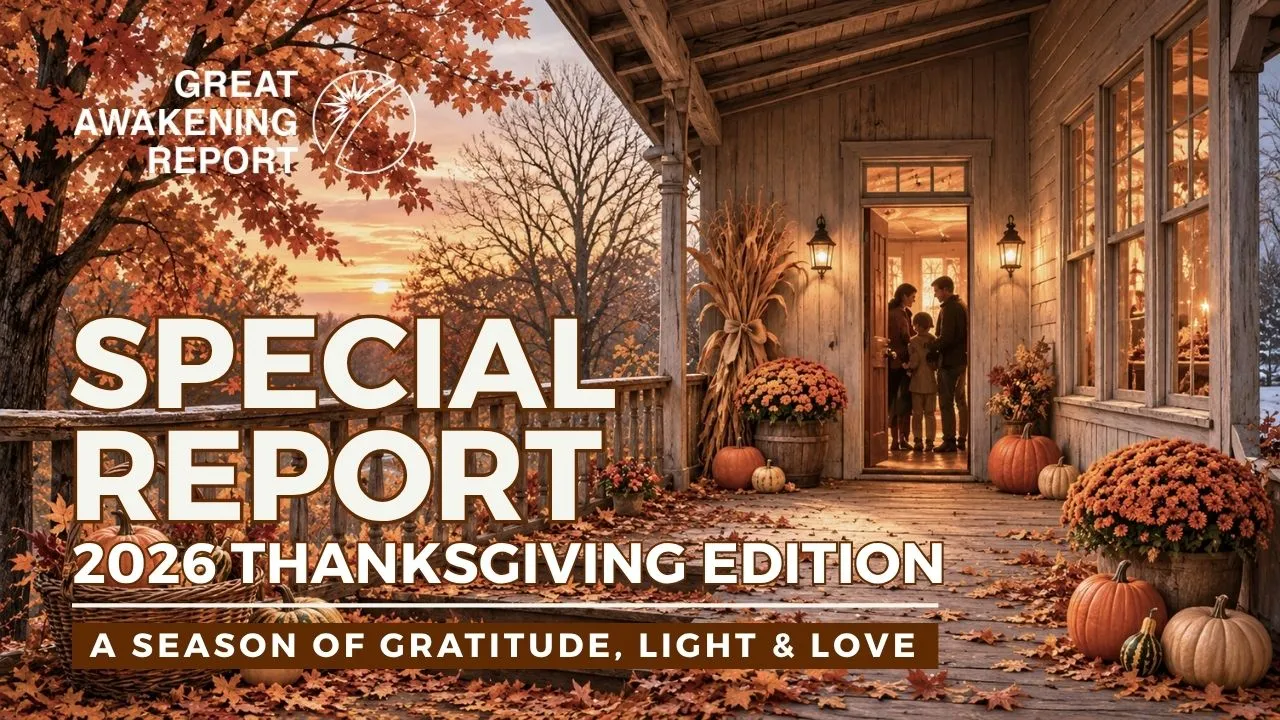
SPECIAL REPORT
TRUTH///AWAKENING///DISCLOSURE
A HOLIDAY MESSAGE TO OUR GAR FAMILY & FRIENDS
From all of us at the Great Awakening Report, we wish you a wonderful Thanksgiving and a holiday season filled with warmth, gratitude, and meaningful connections.
There is something special about this time of year. As the pace of everyday life begins to shift toward familiar traditions, shared celebrations, and moments of reflection, we’re reminded of the people and experiences that give our lives their deepest meaning. Whether gathered around a crowded table, reconnecting with someone far away, or enjoying a quiet moment of solitude, the spirit of Thanksgiving is found in the simple act of appreciating what matters most.
This year’s Thanksgiving collection is a celebration of those moments and the many ways gratitude enriches our lives. Within these pages, you’ll discover heartwarming stories, fascinating traditions from around the world, thoughtful perspectives on consciousness and well-being, seasonal inspiration, and meaningful ways to share kindness and generosity. We’ve brought together a rich collection of articles, videos, recipes, and experiences to enjoy throughout Thanksgiving and the holiday season.
Our hope is that you’ll find something here that makes you smile, sparks a cherished memory, inspires a new tradition, or simply reminds you of the extraordinary beauty woven into everyday life. Wherever this season finds you, may it bring opportunities for connection, moments of peace, and a renewed appreciation for the journey we share.
“The more grateful I am, the more beauty I see.” — Mary Davis
“Let them give thanks to the Lord for his unfailing love and his wonderful deeds for mankind, for he satisfies the thirsty and fills the hungry with good things.” Psalm 107: 8-9
Gathering in Gratitude • Hope & Renewal • Spirit of Giving • Family & Togetherness • Moments of Grace

Thanksgiving Edition Table of Contents
- A Thanksgiving Collection — New Stories of Gratitude, Joy & Unexpected Connections
- The Art of Gratitude — A Fresh Perspective on Thanksgiving
- The Thanksgiving Story — History, Traditions & Perspectives
- A World of Thanks — Gratitude Across Cultures
- The Consciousness of Gratitude — Appreciation, Presence & Well-Being
- The People Around Our Table — Family, Friendship, Forgiveness & Belonging
- Home for the Holidays — Decorating, Traditions & Creating a Welcoming Space
- The Flavors of Thanksgiving — Cherished Recipes, Culinary Traditions & Seasonal Inspiration
- The Spirit of Thanksgiving — Beloved Traditions, Entertainment & Holiday Experiences
- Gratitude in Action — Giving, Generosity & Community
- Carrying Gratitude Forward — From Thanksgiving into the Holiday Season
- Returning to the Heart of Thanksgiving — A Closing Reflection on Gratitude and Grace
THANKSGIVING 2026 | A Season of Gratitude, Light & Love | Audio Overview
Thanksgiving is more than a holiday gathering or a cherished meal. It is an invitation to reconnect with what matters most—the people we love, the traditions we share, and the everyday moments that give our lives meaning. In this special audio overview, we explore the many dimensions of gratitude, from its historical and cultural roots to its influence on consciousness, emotional well-being, and the relationships that enrich our lives.
We begin with a delightful collection of seven original Thanksgiving short stories, filled with family humor, unexpected friendships, heartfelt traditions, and small acts of kindness. Rather than revealing every twist and turn, this conversation offers a glimpse into the collection’s warmth and charm, inviting listeners to discover the complete stories for themselves.
From there, we journey through the evolving history of Thanksgiving, explore fascinating expressions of gratitude across cultures, and examine what research reveals about appreciation, resilience, and well-being. Along the way, we reflect on the importance of family, friendship, forgiveness, and belonging, while celebrating the familiar foods, traditions, and experiences that make the season memorable.
Ultimately, this conversation reaches beyond Thanksgiving Day itself. Through generosity, conscious appreciation, and meaningful human connection, we discover how the spirit of gratitude can become something we carry into the holidays and throughout the year. Join us for a thoughtful, uplifting exploration of what it means to live with greater presence, appreciation, and an open heart.
“Every good and perfect gift is from above, coming down from the Father of the heavenly lights, who does not change like shifting shadows.” James 1:17
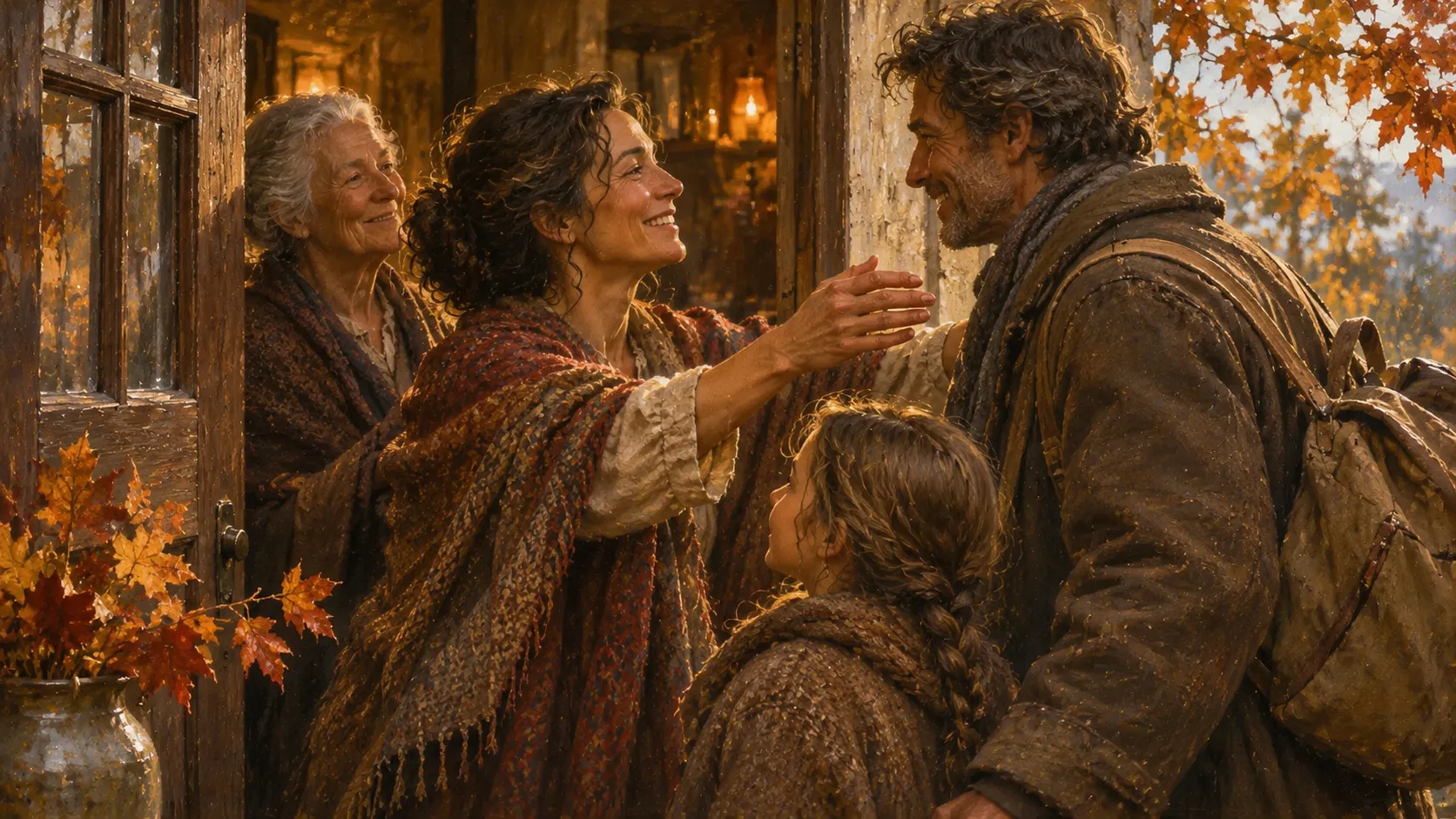
INTRODUCTION | A SEASON OF GRATITUDE AND RENEWAL
There is something about Thanksgiving that invites us to slow down, even if only for a moment. As autumn settles into its final weeks and the familiar rhythms of the holiday season begin, we find ourselves drawn toward the things that matter most—the people we love, the memories we cherish, the traditions that connect generations, and the simple pleasures that make everyday life meaningful. Thanksgiving offers a welcome opportunity to step away from the demands of our busy lives and rediscover the beauty of being present, of sharing our time and attention, and of appreciating the extraordinary gifts often hidden within ordinary moments.
At its heart, Thanksgiving is about far more than a gathering around the table. It is a celebration of connection, generosity, kindness, and the countless ways we enrich one another’s lives. It reminds us that some of our greatest blessings cannot be measured or purchased: the comfort of a familiar voice, the laughter of family and friends, an unexpected act of kindness, or the quiet reassurance of knowing someone cares. These are the experiences that give our lives depth and meaning, creating memories that linger long after the holiday decorations have been put away.
Yet gratitude is not always simple, particularly when life has brought unexpected challenges, loss, or change. For some, this season carries the bittersweet absence of someone deeply loved. For others, it may be a time of uncertainty, strained relationships, or circumstances that look very different from the celebrations they once imagined. Gratitude does not ask us to overlook these realities or pretend that everything is perfect. Rather, it allows us to recognize that love, hope, and moments of beauty can coexist with difficulty. Sometimes the smallest gestures—a thoughtful message, a welcoming invitation, or a hand extended in friendship—become the most meaningful expressions of the season.
Perhaps that is one of Thanksgiving’s greatest lessons: we do not need extraordinary circumstances to experience extraordinary gratitude. It often begins with noticing what is already here. The warmth of a home, the changing colors of the landscape, a favorite family recipe, a conversation that makes us laugh, or the peaceful pleasure of a few moments to ourselves. Even solitude can offer its own kind of nourishment, giving us space to reflect, reconnect with ourselves, and appreciate the journey that has brought us to this moment.
There is also a deeper dimension to gratitude, one that reaches beyond tradition and into the very nature of consciousness. What we choose to notice, appreciate, and nurture influences how we experience the world around us. When we approach life with greater awareness, compassion, and an open heart, we begin to recognize connections that might otherwise go unnoticed. Gratitude becomes more than an expression of thanks; it becomes a way of seeing, a practice of presence, and a reminder of our shared humanity. The love and kindness we extend to others have a way of reaching far beyond the moment in which they are given.
In a world that often seems consumed by division, uncertainty, and the relentless pace of change, these simple human qualities feel especially important. We may not always agree with one another, understand every circumstance, or know what tomorrow will bring, but we can still choose empathy over judgment, generosity over indifference, and connection over separation. We can listen more carefully, forgive more freely, and make room for people whose experiences differ from our own. Sometimes the most meaningful contribution we can make is simply helping another person feel seen, valued, and welcome.
As we gather this Thanksgiving, whether around a crowded table, in the company of a few cherished friends, or in the quiet comfort of our own space, may we remember that the spirit of the season is not defined by how elaborate our celebrations are. It lives in the sincerity of our appreciation, the warmth of our relationships, the memories we carry, and the kindness we offer without expecting anything in return. It is found in honoring those who came before us, embracing those who share our lives today, and creating a little more love and belonging for those who will follow.
Throughout this Thanksgiving collection, we invite you to explore the many expressions of gratitude—from the history and traditions that have shaped the holiday to the stories, flavors, experiences, and acts of generosity that continue to bring people together. Along the way, we celebrate not only the familiar comforts of the season but also the unexpected connections, moments of laughter, and quiet reflections that remind us how much there is to appreciate.
May this Thanksgiving bring warmth to your home, peace to your heart, and a renewed appreciation for the people and experiences that make your life uniquely yours. May we find opportunities to express our love more openly, extend compassion more generously, and carry the spirit of gratitude beyond a single day or season.
And perhaps most importantly, may we remember that gratitude is not simply about giving thanks for the life we have. It is also about recognizing the beautiful possibility of what we can create together, one thoughtful gesture, one meaningful connection, and one open heart at a time.

SEVEN SHORT STORIES FOR THE SEASON
Thanksgiving is a season of gratitude, but it’s also a celebration of the wonderfully imperfect moments that bring us together. From family kitchen rivalries and unexpected friendships to small acts of kindness and traditions that take on a life of their own, these stories capture the humor, warmth, and humanity that make the holiday memorable.
This year’s collection of original fictional stories reminds us that gratitude often reveals itself in the most unexpected ways—not through grand gestures, but through laughter, generosity, forgiveness, and the simple joy of connection. Sometimes the greatest blessings are the ones we never saw coming.
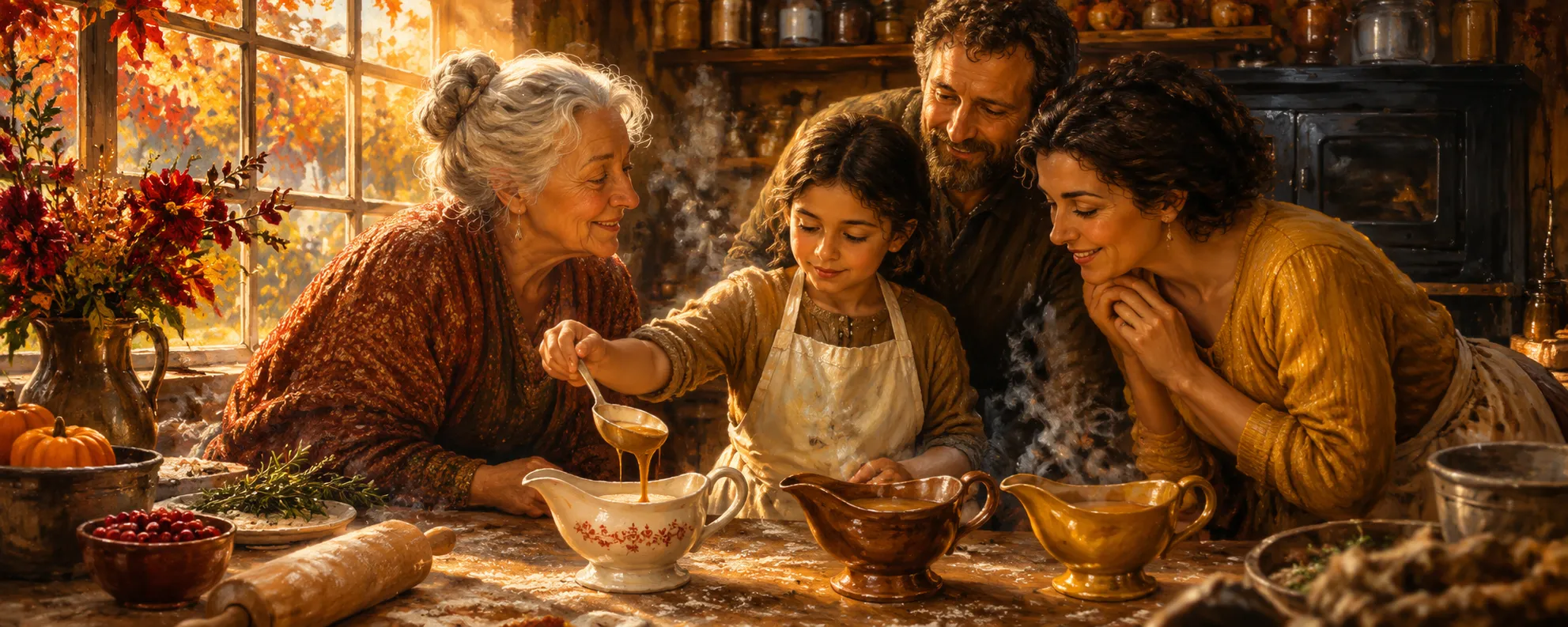
THE GREAT GRAVY SUMMIT
The trouble started, as it always did, with the word “original.”
“Mine is the original,” declared Grandma Rosa, tapping a wooden spoon against the rim of her copper saucepan. “My mother made it this way in 1961.”
“With respect,” replied Dad, who never began a sentence that way unless he was about to show none, “your mother used a packet. There is photographic evidence. You can see the packet sitting right there on the counter.”
“That packet,” Grandma Rosa informed him, without missing a beat, “was for emergencies.”
From the far burner, Aunt Lena raised her whisk like a conductor preparing to lead an orchestra. “I would just like to remind everyone that I am the only person in this family who has ever made a roux without burning it.” She gave Dad a pointed look, which he pretended not to notice.
Nine-year-old Maya had listened to some version of this argument every Thanksgiving of her life. The details changed slightly from year to year, but the outcome was always the same: three gravy boats appeared on the holiday table, and three otherwise reasonable adults spent the entire meal pretending not to watch which one everyone chose. Grandpa had long ago perfected the art of taking a little from each boat, a diplomatic maneuver he considered essential to maintaining family peace.
This year, however, Maya had come prepared.
“I will be conducting a blind taste test,” she announced, climbing onto a kitchen stool with a clipboard tucked beneath her arm. “Judges’ decision is final.”
There was something about a nine-year-old in an ankle-length apron holding a clipboard that made disagreement seem both pointless and vaguely dangerous. After a brief exchange of suspicious glances, the adults reluctantly agreed. Three identical bowls were placed on the counter, each filled with a different gravy. Grandpa shuffled them while Maya turned her back, taking his responsibility so seriously that he nearly knocked over the cranberry sauce.
The kitchen fell silent, a remarkable achievement in a household where someone was usually talking, laughing, or offering unsolicited cooking advice. Even the timer on the oven seemed to hesitate.
Maya dipped her spoon into the first bowl and frowned thoughtfully. She sampled the second, nodding slowly with the solemn expression of a television cooking-show judge. At the third, she paused, considered the flavor, and made a face so unexpected that Aunt Lena gasped and clutched her whisk to her chest.
“Well?” Dad finally asked, unable to bear the suspense.
Maya studied the three bowls, then reached for Grandma Rosa’s copper saucepan. Before anyone could object, she poured all three gravies together, gave the mixture several determined stirs, and tasted it once more. A satisfied smile spread across her face.
“The winner,” she announced, “is this.”
Three adults stared at her.
“Number one was too salty. Number two was too thin. Number three tasted like toast. But together?” She lifted her spoon triumphantly. “Perfect.”
For a moment, nobody spoke. Then Grandma Rosa began to laugh, the kind of helpless, contagious laughter that makes it impossible to remain standing. Aunt Lena joined in, partly because Grandma was laughing and partly because she knew exactly which gravy had tasted like toast. Dad tried to maintain his dignity, but after one last glance at the saucepan, he surrendered and laughed along with everyone else.
That Thanksgiving, the family served just one gravy. They called it Summit Gravy, and for the first time in anyone’s memory, nobody argued about whose recipe was best. Grandpa declared it the finest diplomatic achievement in the family’s history, although he wisely declined to identify which gravy had contributed what.
Later that evening, Maya wrote the new recipe on an index card in purple marker. It still hangs on Grandma Rosa’s refrigerator, tucked between a faded family photograph and a magnet from a long-ago vacation.
There are no measurements, no cooking temperatures, and no instructions for making a roux. Just three simple lines:
Pour together. Stir. Be nice.
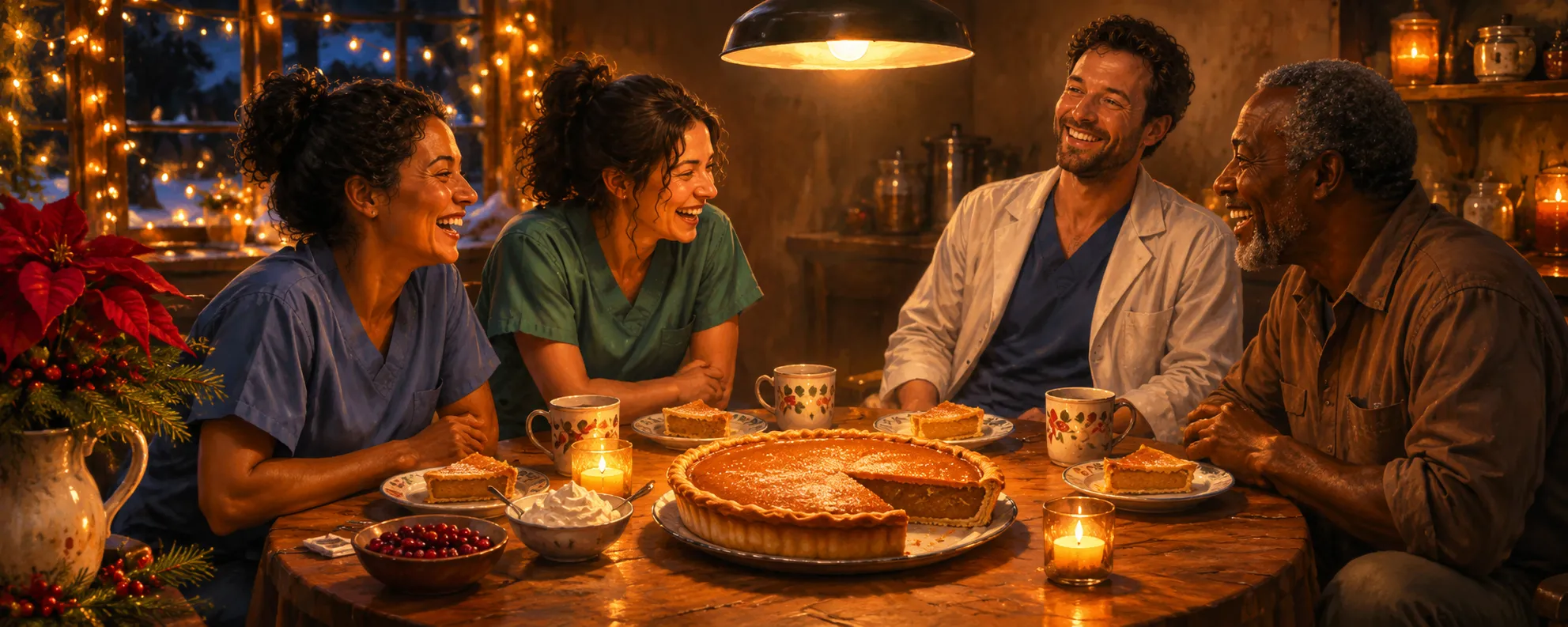
NIGHT SHIFT PIE
Priya had been a nurse for exactly eleven weeks when she saw her name next to Thursday 11/26, 7p–7a.
She told her family she didn’t mind. She minded through handoff, through a long evening of sprained wrists and a toddler who had swallowed a button, and at 1:45 a.m., when she considered eating a granola bar in the supply closet and calling it dinner.
“Absolutely not,” said Marcus, the custodian, appearing with his cart. “Break room. Two o’clock. Bring a fork.”
“I didn’t bring anything.”
“Nobody brings anything the first year. That’s how you know it’s your first year.”
At two o’clock the break room was unrecognizable. Someone had strung fairy lights across the window. The table held containers that did not match: stuffing from Dr. Okafor’s mother, Marcus’s macaroni and cheese, lumpia from Gloria in triage, and cranberry sauce that still bore the ridges of the can, served with pride. In the middle sat one pumpkin pie with a slice already missing.
“Quality control,” said Gloria.
Twice the overhead page interrupted them. Twice they went, did the work, and came back to cold plates and warm company. Nobody complained. Priya noticed that.
At 4 a.m., washing containers beside Gloria, she asked, “Doesn’t it get old, working the holiday?”
Gloria considered it. “Some years. But somebody’s going to need us tonight. And somebody,” she added, nodding at Marcus, who was solemnly cutting the last of the pie into five exactly equal pieces, “is going to make sure we eat.”
Priya worked the next Thanksgiving too. She volunteered for it. She brought rice pudding and a string of fairy lights, just in case.
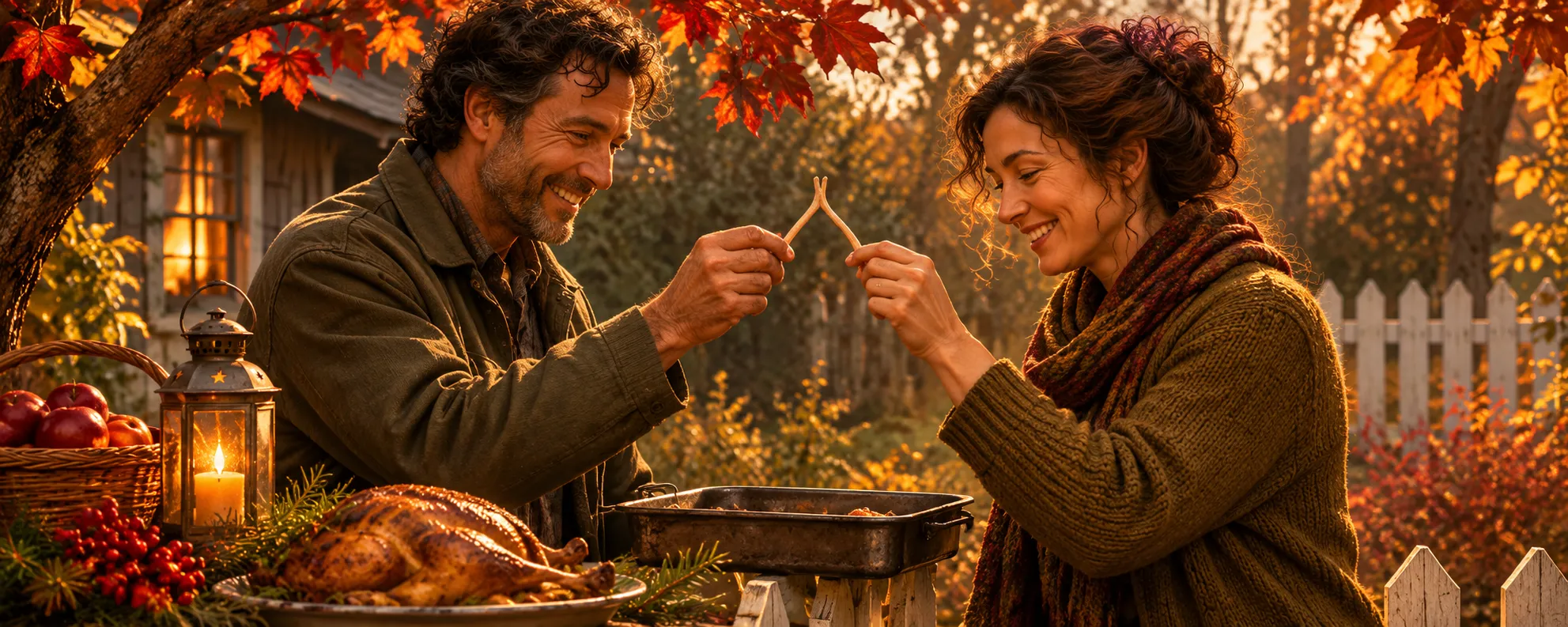
WISHBONE DIPLOMACY
Original inspirational fiction, not a documented event.
For six years, the fence between the Delgados and the Whitfields had been a demilitarized zone. It started with leaves. Ray Whitfield blew his onto Carmen Delgado’s lawn; Carmen blew them back. There were escalations: a leaf vacuum, a strongly worded note, a second leaf vacuum. The neighborhood watched like it was televised sport.
At 9:12 on Thanksgiving morning, Carmen’s oven sighed and went dark. Her nineteen-pound turkey sat pale and expectant. Sixteen relatives were due at two. Through the window she could see Ray cleaning a perfectly functional double oven.
It took her four minutes to walk over and two more to knock.
Ray looked at her. He looked at the turkey. “Top oven’s free,” he said. “It’s just me and Janet this year.”
Carmen came back every forty-five minutes to baste, and each time Ray had coffee poured. By the third trip she’d learned that Janet’s knees were bad, which was why the leaf vacuum had mattered so much. By the fourth, Ray had learned that Carmen’s late husband used to do the yard, and that blowing the leaves back had felt like the last thing she could hold onto.
At 1:40, the thermometer read 165°F in the thigh, wing, and breast. Ray checked it twice, out of what he called professional courtesy. Carmen invited them for pie.
After dinner, her grandson found the wishbone and handed one end to Ray and the other to his grandmother. “Winner gets the leaves.”
Carmen won. “Fine,” she said. “We’ll rake them together. Into the middle.”
That Saturday, two people in mismatched gloves raked one enormous pile and let the grandkids jump in. The neighborhood was very disappointed.
THE RECIPE WITH NO MEASUREMENTS
Some family recipes are written down. The best ones are remembered by heart.
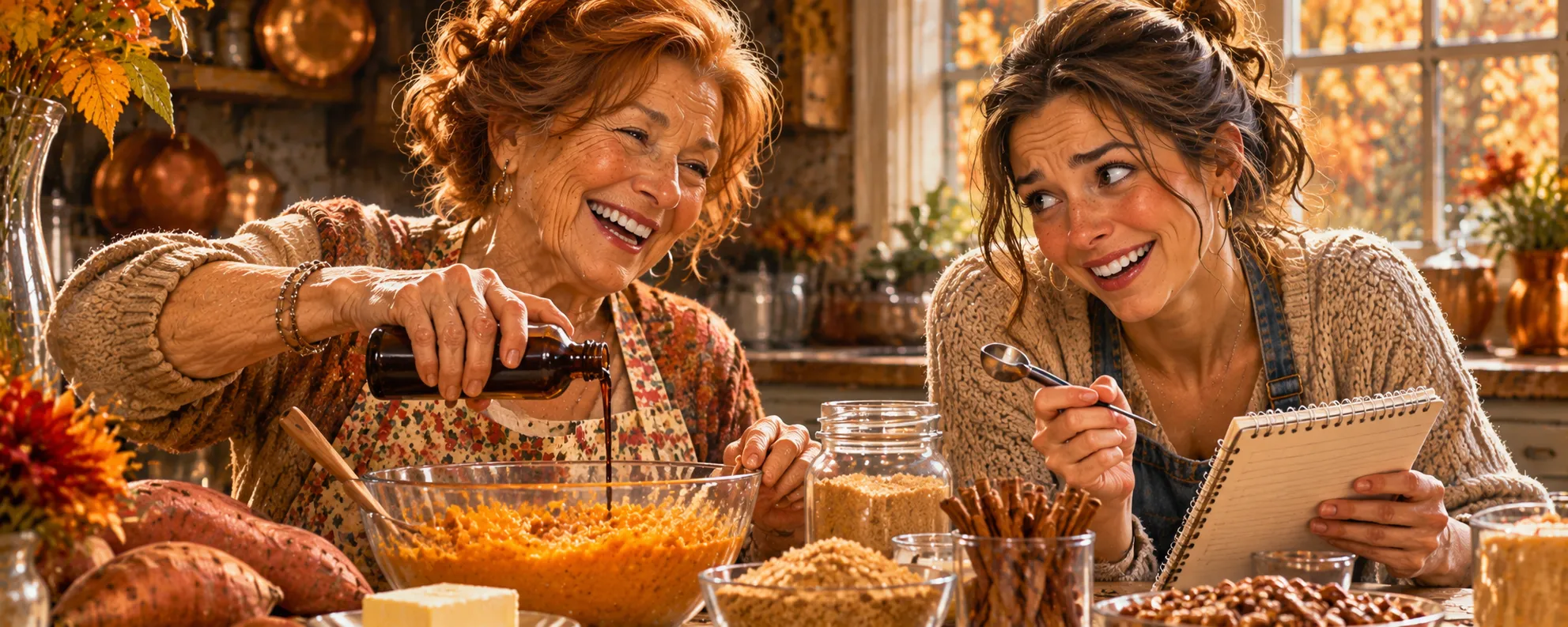
Every Thanksgiving, Grandma Rose made the same sweet potato casserole, a dish so beloved that no one could remember a holiday table without it. Its golden, buttery topping, delicate sweetness, and unmistakable hint of cinnamon had become as much a family tradition as the gathering itself. And every year, without fail, someone asked Rose for the recipe. Her answer was always the same: “A little butter, some brown sugar, a splash of vanilla, and enough cinnamon to make it interesting.”
“How much butter?” her granddaughter Sophie would ask.
“Enough.”
“And the cinnamon?”
“You’ll know.”
At twenty-six, Sophie had finally decided that this was no longer an acceptable culinary system. Family recipes were supposed to be preserved, passed down, and carefully documented for future generations. What would happen when Grandma Rose was no longer standing at the kitchen counter, casually tossing ingredients into a bowl as though guided by some mysterious internal measuring device?
Determined to solve the problem once and for all, Sophie arrived Thanksgiving morning armed with measuring cups, a notebook, several sharpened pencils, and the serious expression of someone preparing for an important scientific experiment. Rose watched her unpack the equipment beside the sweet potatoes and raised an eyebrow.
“Are we making casserole or conducting an investigation?”
“Both, Grandma.”
The kitchen was already alive with the familiar sounds of Thanksgiving morning. A turkey roasted in the oven, the scent of sage and onions drifted from the stovetop, and somewhere in the next room, Sophie’s father was explaining why the football game absolutely needed to be on before noon. Rose moved comfortably through the commotion, reaching for ingredients without hesitation, while Sophie positioned herself beside the counter, notebook open and pencil ready.
The trouble began almost immediately.
Rose scooped brown sugar directly from the bag, dropped a generous piece of butter into the bowl, and poured vanilla with the confidence of someone who had never met a measuring spoon.
“Wait!” Sophie cried, frantically scribbling. “Was that a teaspoon?”
“Probably.”
“Probably?”
“Could’ve been two.”
Sophie stared at her grandmother. Rose smiled innocently and reached for the cinnamon.
“Grandma, please. Just once, can we measure something?”
Rose paused, considered the request, and handed Sophie the cinnamon jar. “All right, sweetheart. You do it.”
Sophie carefully measured half a teaspoon and sprinkled it into the mixture. Rose leaned forward, studied the bowl, and shook her head.
“Needs more.”
“How much more?”
Rose took the jar and added another generous shake. “There. Now it’s interesting.”
By the time the casserole went into the oven, Sophie’s notebook contained three crossed-out measurements, two question marks, an unfinished calculation, and the increasingly frustrated observation Grandma refuses to cooperate.Rose, meanwhile, seemed entirely pleased with their progress.
Yet when the casserole emerged from the oven, its surface golden and fragrant, it tasted exactly as it had every Thanksgiving Sophie could remember. The familiar sweetness, the buttery richness, and that perfect whisper of cinnamon were all there, as though the dish had somehow ignored every uncertainty in her notebook.
“How do you do that?” Sophie asked, staring at her hopeless notes.
Rose smiled as she set the serving spoon beside the casserole. “I’ve been making it for fifty years, sweetheart. My hands remember what my head doesn’t need to.”
Sophie looked at her grandmother for a moment, then back at the notebook. Perhaps there was something to be said for a recipe learned through repetition, adjusted by instinct, and perfected through decades of feeding the people you loved. Still, she wasn’t quite ready to abandon her measurements.
After dinner, when the dishes had been cleared and the family had settled into the comfortable laziness of Thanksgiving evening, Sophie discovered a small envelope tucked inside her notebook. On the front, in Rose’s familiar handwriting, were the words The Official Family Recipe.
Her heart lifted. At last, she thought, the mystery had been solved.
Inside was a single index card listing sweet potatoes, butter, brown sugar, vanilla, and cinnamon. Beneath the ingredients, Rose had written:
Add until it tastes like Thanksgiving.
And below that, one final instruction:
Make it with someone you love.
Sophie laughed, shaking her head at the familiar stubbornness of the woman who had taught her so much more than cooking. She carefully slipped the card into the back of her notebook, deciding that perhaps some things were worth preserving exactly as they were.
The following Thanksgiving, Sophie stood beside Grandma Rose at the kitchen counter, helping prepare the casserole while her younger cousin watched with interest. When the cinnamon came out, the little girl leaned forward.
“How much do you put in?”
Sophie paused, tasted the mixture, and considered the question with exaggerated seriousness.
“Just enough to make it interesting.”
From across the kitchen, Grandma Rose gave her an approving wink.

THE ANNUAL TURKEY BOWL
Where family pride is on the line, and the rules are mostly suggestions.
Every Thanksgiving, the Henderson family gathered for two sacred traditions: a magnificent holiday feast and a backyard football game that had somehow become more competitive than the Super Bowl. Nobody remembered when the Turkey Bowl began, but everyone remembered who won last year. Especially Uncle Dave, who had been reminding the family about his winning touchdown since Christmas.
This year, Dave arrived wearing his old high school football jersey, which fit considerably tighter than it had twenty-five years ago. He announced that his team was going undefeated, despite the fact that they only played one game a year.
“Stretch first, Dave,” his sister Karen warned. “Last Thanksgiving, you needed three days and a heating pad to recover.”
“That was a strategic recovery period,” Dave replied.
The teams were assembled with the usual disregard for fairness. Cousins argued over captains, Grandpa appointed himself referee despite having misplaced his glasses, and eight-year-old Lily was assigned to Dave’s team because, as he explained, “We need someone to guard the snacks.”
The game began with enthusiasm that far exceeded anyone’s actual conditioning. Within ten minutes, Dave had called two questionable penalties, Karen had intercepted a pass while holding a paper plate of crackers, and Grandpa had awarded a touchdown to the wrong team. Twice.
With the score tied and the final play approaching, Dave gathered his team for what he described as a “championship-caliber strategy session.” His plan involved a complicated series of fake handoffs, misdirection, and a heroic touchdown pass to himself.
Unfortunately, nobody understood the instructions.
When the ball was snapped, Dave sprinted toward the end zone, waving his arms dramatically. The quarterback panicked, spotted Lily standing near the garden fence, and tossed her the ball.
Lily caught it, looked around in surprise, and ran.
Nobody moved at first. Then Karen shouted, “SOMEBODY GET HER!”
But Lily was already halfway across the yard, her ponytail flying, with six adults stumbling after her. She crossed the goal line just as Dave tripped over a lawn chair.
Grandpa raised both arms. “TOUCHDOWN!”
The yard erupted in laughter. Lily celebrated with a victory dance, while Dave lay in the grass reconsidering his athletic career.
At dinner, Grandpa presented Lily with the traditional Turkey Bowl trophy—a plastic golden turkey that had lost one wing sometime in 2017.
Dave insisted the final play had been illegal.
“Why?” Karen asked. “Because,” he said solemnly, “nobody told me we were allowed to throw to Lily.”
Lily grinned across the table. “That’s okay, Uncle Dave. Next year, I’ll let you be on my team.”
And for the first time in Turkey Bowl history, Uncle Dave had absolutely nothing to say.
The Extra Place Setting
Sometimes the most memorable Thanksgiving guest is the one nobody expected.
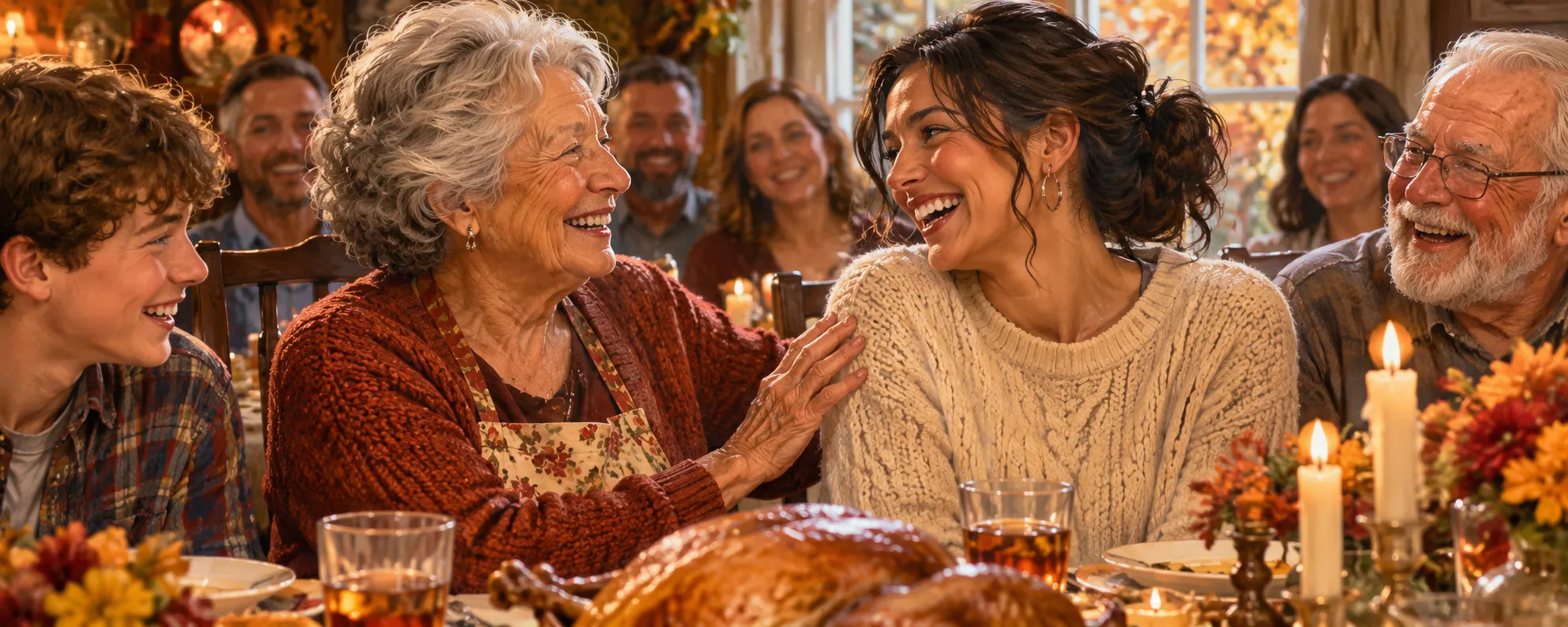
Every Thanksgiving, Eleanor set one extra place at the table. A proper place, too—her best china, polished silverware, a folded linen napkin, and a little handwritten card that read Welcome. It was a tradition her family had long since stopped questioning, although her grandson Ben still liked to ask who might be joining them.
“Who are we expecting this time, Grandma?” he asked, eyeing the empty chair.
“Someone who might need a place to belong,” Eleanor replied, straightening the napkin with a smile.
This year, however, her daughter had insisted they keep Thanksgiving small. Twelve people, one turkey, and absolutely no surprises. By late afternoon, the house was filled with the familiar aromas of roasting turkey and fresh-baked rolls, while laughter drifted between the kitchen and dining room. Eleanor’s daughter was putting the finishing touches on dinner when, at precisely four o’clock, the doorbell rang.
Standing on the porch was a young woman holding a foil-covered casserole dish. Her cheeks were flushed from the November chill, and she looked embarrassed.
“I’m so sorry. I think I have the wrong house. Someone told me there was a Thanksgiving dinner here for people who didn’t have anywhere to go.”
Eleanor glanced toward the kitchen, where her daughter was already counting chairs, then turned back with a welcoming smile.
“Well,” she said, “you’ve certainly found the right house. Come in before you catch cold.”
The young woman introduced herself as Maya. She had recently moved to town for work, and her family lived three states away. A neighbor had mentioned Eleanor’s tradition and encouraged her to stop by, although apparently nobody had thought to tell Eleanor. Her daughter appeared in the hallway, took one look at the unexpected guest, and sighed with the familiar resignation of someone who knew her mother’s generous heart could never be confined to a guest list.
Within minutes, Maya was seated between Ben and his grandfather, laughing at a story about the Thanksgiving when the family dog made off with half the turkey. Her casserole became an unexpected favorite, and by dessert, she had been recruited for the family’s fiercely competitive card game. What had begun as an uncertain knock on a stranger’s door had turned into an evening of laughter, second helpings, and the easy warmth of being included.
As everyone gathered their coats that evening, Maya lingered beside Eleanor.
“I almost didn’t ring the bell,” she admitted. “I was afraid I’d be intruding.”
Eleanor took her hand. “My dear, an empty chair is only an invitation waiting to be accepted.”
The following Thanksgiving, Maya arrived early, carrying her famous casserole and a carefully wrapped package. Inside was a beautiful new place card, handwritten in gold ink.
There’s always room for one more.
Eleanor smiled as she placed the card on the table beside her familiar Welcome sign. Then she opened the china cabinet, brought out another plate, and carefully arranged the silverware.
For the first time in years, Eleanor set two extra places at the table.
WHAT WE PLANTED IN NOVEMBER
Some of the most beautiful things begin long before we can see them.
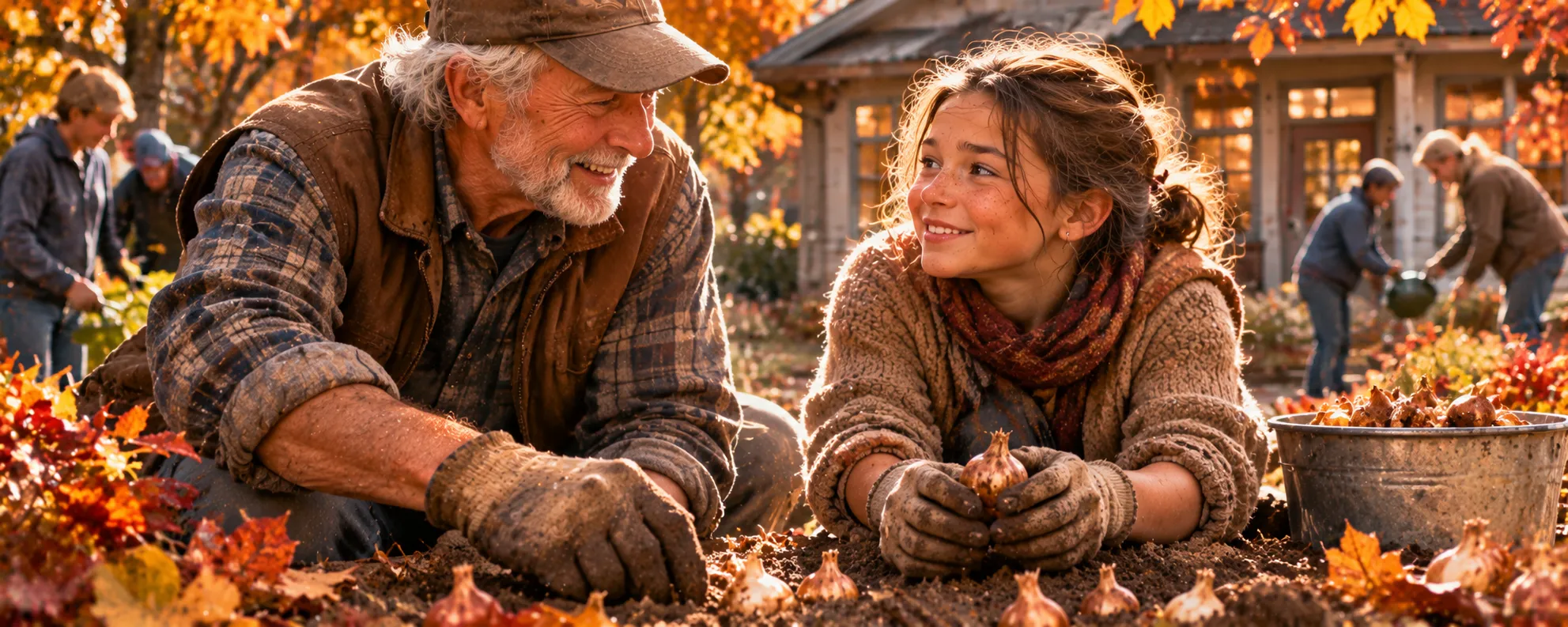
The Saturday after Thanksgiving, eleven-year-old Emma watched her grandfather unload a suspicious number of flower bulbs from the trunk of his car. The neighborhood was settling into winter, the trees had shed nearly all their leaves, and the November wind seemed to have a personal grudge against anyone foolish enough to spend the morning outdoors.
“Grandpa, you know it’s almost winter, right?”
“Excellent observation,” he replied, handing her a garden trowel. “That’s why we’re planting them now.”
Emma surveyed the bare patch of ground beside the neighborhood’s little community center. The flower beds looked thoroughly defeated, and the cold earth hardly seemed inviting. “Wouldn’t it be easier to plant flowers in the spring?”
“Easier, maybe,” Grandpa said, kneeling beside the garden. “But some things need a little time in the dark before they’re ready to bloom.”
Emma wasn’t entirely convinced, but she pulled on her gloves and started digging. At first, it was just the two of them, working their way along the empty flower beds while Grandpa explained which bulbs needed to be planted deepest. Before long, Mrs. Patterson from across the street appeared with a thermos of hot chocolate, curious about what they were doing. Then came the twins from the corner house, followed by a retired teacher who claimed to know absolutely nothing about gardening but proved exceptionally good at giving directions.
By lunchtime, their little project had become a neighborhood event. Someone brought sandwiches, another neighbor supplied extra gloves, and Grandpa somehow convinced everyone that planting three hundred bulbs in forty-degree weather was a perfectly reasonable way to spend a holiday weekend. There was laughter, plenty of friendly disagreement about where the tulips belonged, and more than one muddy shoe. Even Emma had to admit that the morning had turned out to be surprisingly fun.
When the last bulb was tucked beneath the soil, Emma stepped back to admire their work. After hours of digging, planting, and carefully covering each little hole, the garden looked almost exactly as it had that morning.
“That’s it?” she asked, disappointed. “We did all that, and there’s nothing to see?”
Grandpa brushed the dirt from his hands and smiled. “Not yet.”
Winter arrived with frost, rain, and the occasional dusting of snow. The garden disappeared beneath fallen leaves, and Emma gradually forgot about the bulbs as school, holidays, and everyday life filled her calendar. Then, one bright morning in March, Grandpa called with an invitation.
“You might want to come see what we planted.”
Emma arrived to find the community center surrounded by hundreds of daffodils, tulips, and purple crocuses. The once-barren beds had become a colorful patchwork of spring blossoms, their bright petals swaying in the breeze. Neighbors were stopping to take pictures, children were counting flowers, and Mrs. Patterson had already declared it the prettiest corner in town.
But what surprised Emma most wasn’t the flowers. It was the people gathered around them. Neighbors who had barely spoken before were chatting beside the garden, exchanging gardening advice, making plans for summer vegetables, and discussing where they might plant next. The little community center had become a place where people lingered, laughed, and looked forward to seeing one another.
Grandpa stood beside Emma, watching the familiar faces mingle among the flowers.
“See?” he said. “We thought we were planting flowers.”
Emma looked around at the gathering crowd and understood.
They had planted a community.
And that November, when Grandpa arrived with another trunk full of bulbs, Emma was already waiting with her shovel.
THE ART OF GRATITUDE | Finding Abundance, Connection & Joy in Everyday Life
“Gratitude does not ask us to overlook what is missing. It invites us to recognize the abundance already present.” — Great Awakening Report
There is something remarkable about the way Thanksgiving invites us to reconsider what matters. For one day, amid the preparations, family gatherings, and familiar traditions, we are encouraged to shift our attention away from everything demanding it and toward the people, experiences, and everyday blessings that give our lives meaning. In a world increasingly defined by constant information, competing priorities, and the pressure to keep moving forward, that simple change in perspective can feel surprisingly refreshing.
Yet gratitude is not necessarily something that comes naturally when life feels uncertain. The past several years have reminded us how quickly circumstances can change, how easily familiar routines can be disrupted, and how much of our attention can become consumed by events beyond our control. It is tempting to postpone appreciation until life becomes easier, more predictable, or more aligned with our expectations. But perhaps the greater opportunity is learning to recognize what remains meaningful even when everything around us is shifting.
This is where gratitude becomes more than a seasonal sentiment. It becomes a conscious choice about where we place our attention and how we interpret our experiences. We can acknowledge disappointment without allowing it to define our outlook. We can recognize uncertainty without surrendering our sense of possibility. And we can appreciate the ordinary moments of life without needing them to become extraordinary.
Sometimes abundance is found in the simplest expressions of connection: an unexpected phone call, a shared meal, a familiar voice, a neighbor who offers assistance, or a conversation that reminds us we are not navigating life alone. These experiences rarely make headlines, yet they quietly shape the quality of our days and the relationships we carry forward.
Thanksgiving also reminds us that appreciation and generosity are closely connected. When we recognize the contributions others make to our lives, gratitude naturally becomes something we want to express. A sincere thank-you, a thoughtful gesture, or a willingness to extend kindness can transform appreciation from a private feeling into a shared experience.
Perhaps that is the real art of gratitude—not pretending that life is perfect, but recognizing that beauty, meaning, and connection can exist alongside its imperfections. It is the ability to remain aware of what is good without becoming disconnected from what is difficult.
As we enter this Thanksgiving season, the invitation is simple: notice more, appreciate more, and allow the ordinary moments to reveal their extraordinary value. Because gratitude is not measured by how much we have accumulated, but by how fully we recognize the richness of what is already present.
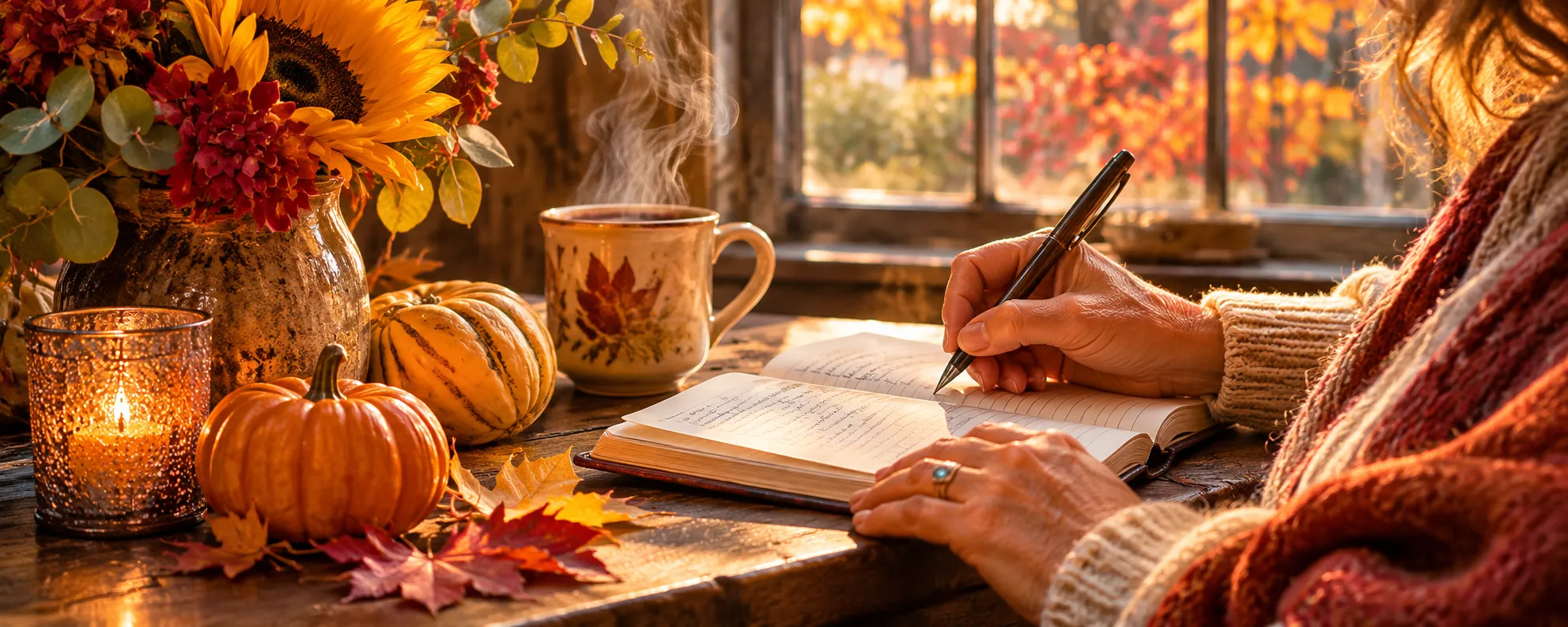
LIVING IN APPRECIATION | Finding Meaning in the Everyday
Gratitude often begins with something so ordinary that we might otherwise overlook it: the warmth of a morning cup of coffee, a familiar voice on the telephone, the kindness of a stranger, or the peaceful satisfaction of a day well spent. These moments may seem small, yet collectively they shape how we experience our lives. Learning to appreciate them is less about creating a perfect outlook and more about becoming present enough to recognize the goodness that already surrounds us.
The practice of appreciation invites us to slow down and pay attention. We might begin by acknowledging three things that brought us joy, expressing gratitude to someone whose presence makes a difference, or simply taking a few quiet moments to reflect on what went well. Over time, these small gestures can help us become more attentive to the relationships, experiences, and opportunities that enrich our everyday lives.
Perhaps the greatest gift of appreciation is that it reminds us how much of life’s abundance is found not in what we acquire, but in what we notice, nurture, and share.


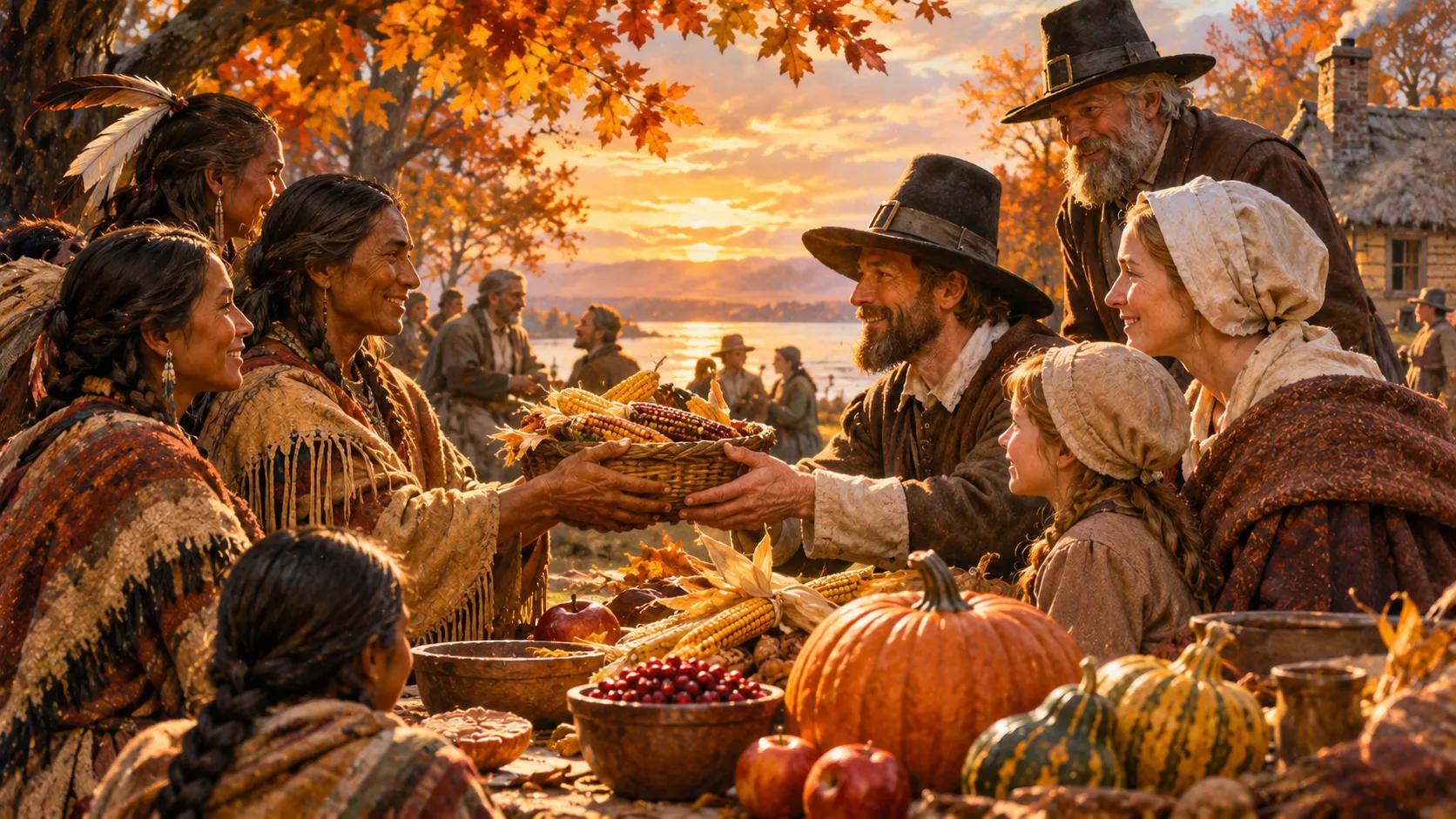
THE THANKSGIVING STORY | History, Traditions & Perspectives
“The farther backward you can look, the farther forward you are likely to see.” — Winston Churchill
Few American holidays carry the same blend of history, nostalgia, and cultural significance as Thanksgiving. Each November, millions of families gather around familiar tables, prepare recipes handed down through generations, and participate in traditions that connect the present with memories of the past. Yet behind the warmth of these celebrations lies a history far richer, more complicated, and more fascinating than the familiar images of Pilgrims, harvest feasts, and autumn abundance.
Thanksgiving was not created in a single moment, nor has its meaning remained unchanged. Its story stretches across centuries, drawing from Indigenous traditions of giving thanks, European harvest customs, colonial encounters, presidential proclamations, and the evolving experiences of generations of Americans.
Some chapters reflect cooperation, generosity, and the desire for unity. Others reveal conflict, displacement, and historical perspectives that were overlooked in the stories many of us learned as children. Understanding this fuller history does not diminish the meaning of Thanksgiving. Instead, it offers an opportunity to appreciate how traditions develop, how collective memories are shaped, and why acknowledging different experiences matters.
Perhaps that is one of the most interesting aspects of Thanksgiving in 2026. At a time when historical narratives are frequently debated and cultural traditions continue to evolve, the holiday invites us to explore the past with both curiosity and discernment. We can honor the traditions that bring people together while remaining open to a more complete understanding of their origins.
The Thanksgiving story is not simply about where we have been. It is also about the values we choose to carry forward.
Through its history, changing customs, and enduring celebrations, Thanksgiving offers a remarkable window into the American experience—and into the universal human desire for belonging, remembrance, and gratitude.
THANKSGIVING THROUGH TIME | From Harvest Celebrations to a National Tradition
Long before Thanksgiving became an official American holiday, people throughout the world marked the changing seasons with harvest celebrations, communal gatherings, and expressions of appreciation for the land’s abundance. Across North America, Indigenous communities maintained their own traditions of thanksgiving, recognizing the relationships among people, nature, and the resources that sustained life.
European settlers brought additional customs shaped by religious observances, agricultural cycles, and communal feasting. Over time, these different histories became intertwined with the development of the American Thanksgiving tradition, although the modern holiday emerged gradually rather than directly from one historical gathering.
The autumn harvest celebration held by English colonists and Wampanoag people in Plymouth in 1621 would eventually become central to the national story. Yet it was not immediately recognized as the beginning of an annual American holiday. Thanksgiving observances continued in different colonies and states for generations, often proclaimed in response to particular events, military victories, or periods of hardship.
A major turning point came in 1789, when President George Washington proclaimed November 26 as a national day of thanksgiving under the newly established Constitution. His proclamation reflected the young nation’s desire to recognize its circumstances and encourage public reflection, although Thanksgiving had not yet become a consistently observed annual federal holiday.
The transformation accelerated during one of the most difficult periods in American history. In 1863, amid the Civil War, President Abraham Lincoln called for a national Thanksgiving observance on the last Thursday of November. His proclamation acknowledged the nation’s blessings while also recognizing the suffering and divisions of war. Thanksgiving became not merely an expression of abundance, but an appeal for healing and national unity.
An important influence behind this development was Sarah Josepha Hale, the writer and editor who spent years advocating for a shared national Thanksgiving celebration. Her persistence helped turn a collection of regional customs into a more unified American tradition.
Even the holiday’s familiar date has its own unexpected history. In 1939, President Franklin D. Roosevelt moved Thanksgiving earlier in November, hoping to extend the holiday shopping season during the economic recovery from the Great Depression. The decision created considerable confusion as states observed different dates. Congress eventually established the fourth Thursday of November as the federal holiday in 1941.
Today, these milestones reveal something easily overlooked: Thanksgiving has continually adapted to the circumstances of its time. Its observance has been influenced by religion, politics, economics, community traditions, and the changing character of American life.
Yet through these transformations, one theme has remained remarkably persistent—the desire to gather, reflect, and recognize what sustains us.
The customs have evolved, the country has changed, and generations have come and gone. But the impulse to give thanks remains deeply human
BEYOND THE FAMILIAR STORY | Understanding the History Behind the Traditions
For generations, the Thanksgiving story was often presented through a simple and reassuring image: Pilgrims and Native Americans sharing a peaceful harvest feast, celebrating friendship and cooperation in a new land. This familiar account became part of American classrooms, children’s books, holiday decorations, and popular culture.
While a gathering did take place in Plymouth in 1621, the historical circumstances surrounding that event were considerably more complex than the traditional narrative suggests.
The Wampanoag people had lived in the region for thousands of years before English colonists arrived. They possessed established communities, agricultural knowledge, political relationships, and traditions of giving thanks that long predated European settlement. Their relationship with the newcomers was shaped not only by generosity, but also by diplomacy, strategic alliances, and concerns about survival.
The English colonists who settled at Plymouth faced severe hardships during their first year, including disease, food shortages, and the loss of many members of their community. Wampanoag assistance, agricultural knowledge, and a negotiated alliance contributed significantly to the colony’s survival.
In the autumn of 1621, the colonists held a harvest celebration attended by Wampanoag leader Ousamequin and approximately ninety Wampanoag men. Historical accounts describe a gathering that included food and shared festivities, although many details commonly associated with today’s Thanksgiving celebration were added to the story much later.
The cooperation of that period, however, did not establish lasting harmony. As English settlement expanded, conflicts over land, political authority, and resources intensified. Subsequent decades brought warfare, displacement, and devastating consequences for Indigenous communities.
These realities are essential to understanding why Thanksgiving carries different meanings for different Americans. For many families, it remains a beloved celebration of gratitude and togetherness. For some Indigenous communities, it is also a time of remembrance, reflection, and recognition of the suffering experienced by their ancestors.
Since 1970, the National Day of Mourning has been observed in Plymouth, Massachusetts, offering an opportunity to honor Indigenous ancestors and challenge incomplete historical narratives.
Recognizing these perspectives does not require abandoning the positive values associated with Thanksgiving. Rather, it invites a more thoughtful relationship with history—one that acknowledges both moments of cooperation and the consequences of what followed.
Historical understanding becomes richer when we move beyond simplified stories and make room for the experiences of everyone involved.
There is also a larger lesson here about collective memory. Every generation inherits stories that help explain its identity, traditions, and sense of belonging. As new research emerges and previously overlooked voices receive greater attention, those stories can become more complete.
The purpose of examining history is not to erase the past, but to understand it more fully.
Thanksgiving offers an opportunity to practice that kind of thoughtful reflection: appreciating the values we associate with the holiday while remaining willing to learn from the complexities of its origins.
THE TRADITIONS WE CARRY FORWARD | How Thanksgiving Became a Celebration of Family, Culture & Connection
If Thanksgiving’s early history explains where the holiday began, its evolving traditions reveal how it became woven into American life.
Over generations, Thanksgiving gradually developed its own recognizable customs. The gathering of extended families, the preparation of elaborate meals, the excitement of holiday parades, and the anticipation of a long weekend became part of the season’s familiar rhythm. These traditions were shaped not only by history, but by the creativity and experiences of ordinary people.
Food became one of the holiday’s strongest cultural connections. Turkey, stuffing, cranberry sauce, sweet potatoes, and pumpkin pie emerged as familiar elements of the Thanksgiving table, although regional variations and family recipes continue to make each celebration distinctive. For some households, the meal includes dishes reflecting Italian, Mexican, Caribbean, Asian, Southern, or countless other culinary traditions.
The Thanksgiving table has never been entirely uniform—and that diversity is part of its character.
Entertainment and shared experiences also helped define the modern holiday. Thanksgiving football became a longstanding tradition, while holiday parades brought music, elaborate floats, and larger-than-life balloons into living rooms across the country.
In 2026, the Macy’s Thanksgiving Day Parade marks a particularly notable milestone: a century since its inaugural parade in 1924, although the event itself was not held every year during that period. What began as a relatively modest New York celebration evolved into one of the country’s most recognizable holiday spectacles.
But beyond these public traditions, Thanksgiving’s deepest associations often emerge through personal memories.
For one family, it may be the familiar
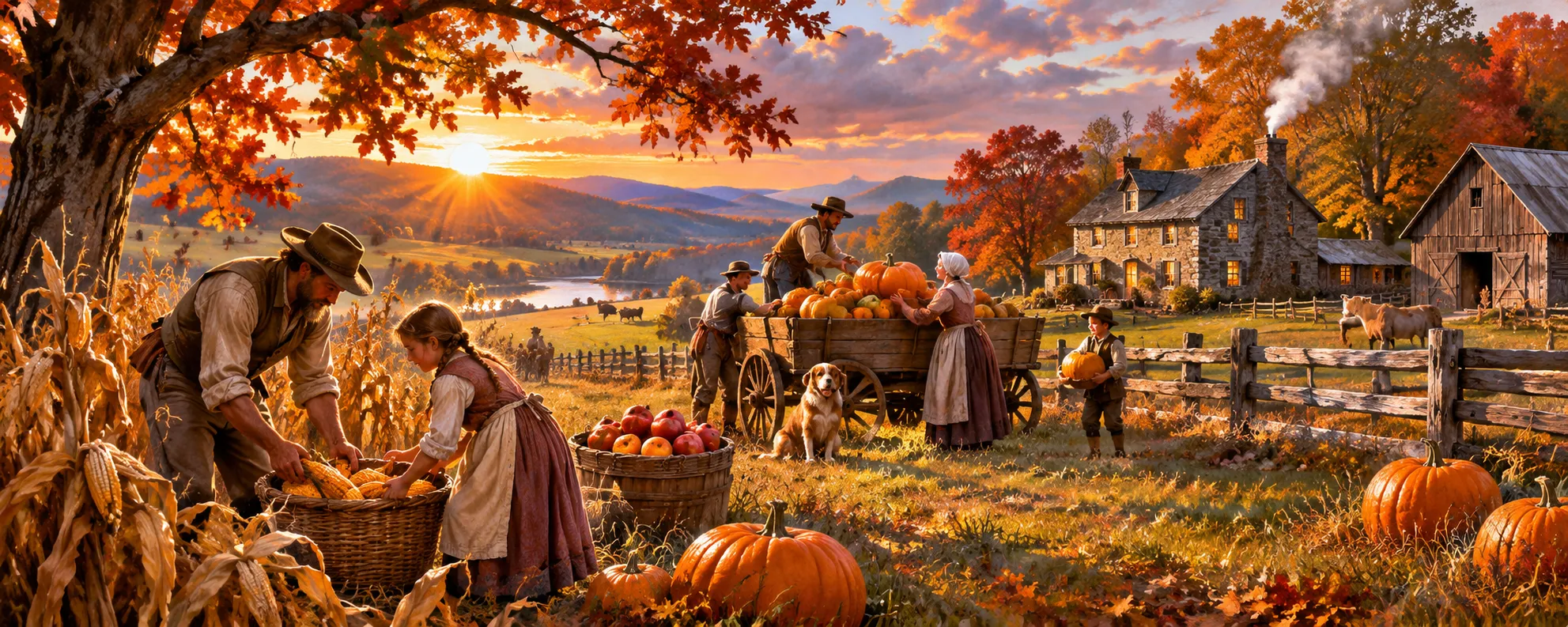
THANKSGIVING THROUGH TIME | From Harvest Celebrations to a National Tradition
Thanksgiving as we know it today is the result of centuries of evolving traditions, cultural influences, and defining moments in American history. Long before it became a national holiday, harvest celebrations and expressions of gratitude were woven into the lives of Indigenous communities and early European settlers, although their histories and experiences were often very different. The gathering commonly remembered as the First Thanksgiving in 1621 became part of a much larger American narrative, one that continues to be examined through historical records and Native American perspectives.
The holiday gradually took shape through presidential proclamations, changing national customs, and the determination of those who believed a shared day of gratitude could bring Americans together. George Washington proclaimed a national day of thanksgiving in 1789, Abraham Lincoln established an annual national observance in 1863, and Congress ultimately designated the fourth Thursday of November as Thanksgiving in 1941. Along the way, family gatherings, treasured recipes, football games, and the Macy’s Thanksgiving Day Parade became familiar parts of the celebration. As we approach Thanksgiving on November 26, 2026, including the 100th Macy’s parade, these milestones remind us that Thanksgiving has never been a static tradition. Its meaning continues to evolve as each generation brings new perspectives, experiences, and ways of celebrating.




Home What's On Explore Exhibits Thanksgiving: Historical Perspectives
Thanksgiving: Historical Perspectives
Featured Document 11/22/2021 - 10 a.m. - 01/26/2022 - 05:30 p.m. West Rotunda Gallery
A Harvest Celebration
During the autumn of 1621, at least 90 Wampanoag joined 52 English people at what is now Plymouth, Massachusetts, to mark a successful harvest. It is remembered today as the “First Thanksgiving,” although no one back then used that term.
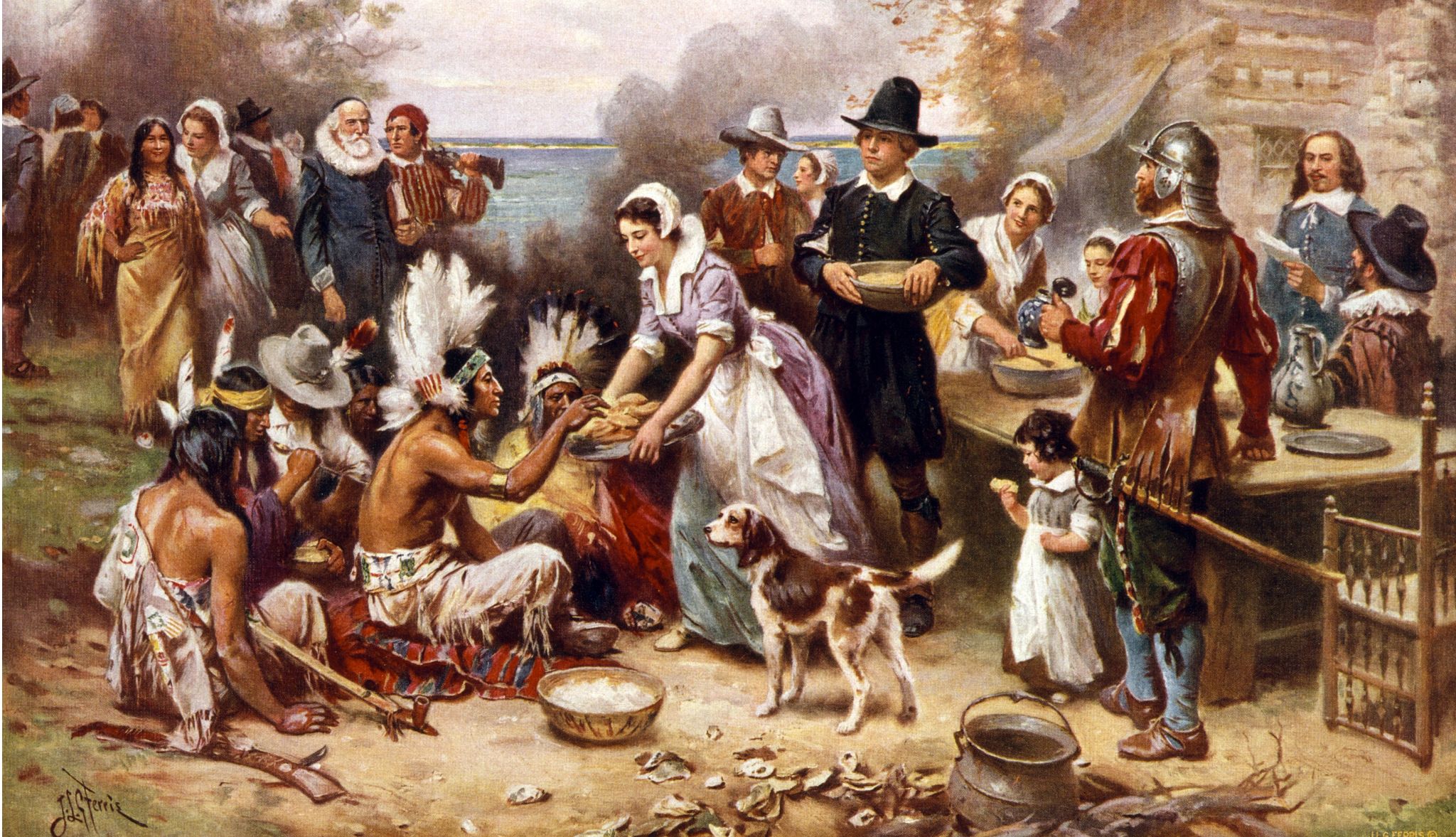
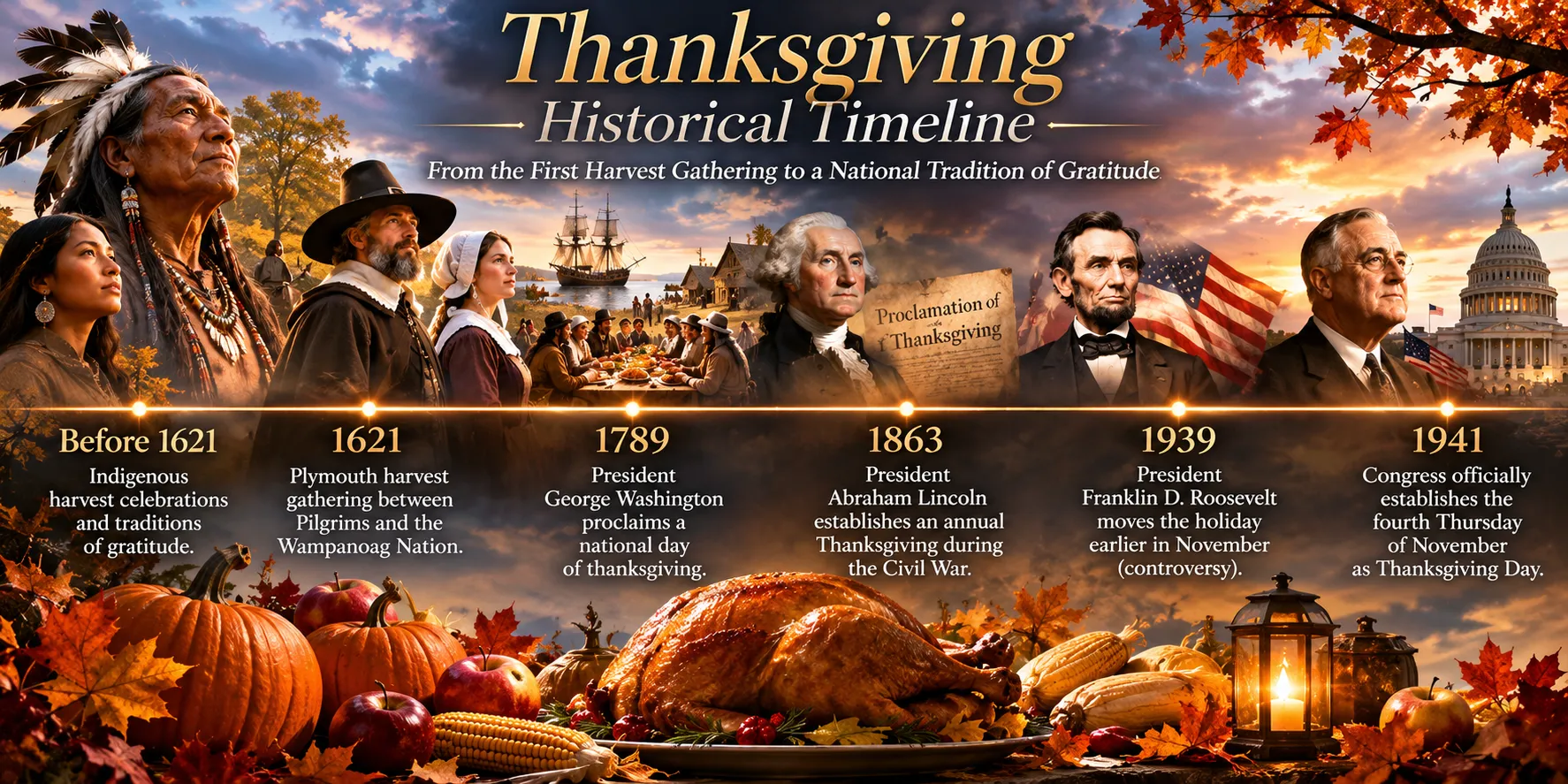
Featured Historical Timeline: Thanksgiving
From the First Harvest Gathering to a National Tradition of Gratitude
1621–2026 | Native American History • Colonial America • National Unity • Gratitude • Reflection • Giving Thanks
The history of Thanksgiving in America stretches back more than four centuries, beginning long before the arrival of European settlers, when Indigenous peoples practiced seasonal harvest celebrations, ceremonies of gratitude, and traditions honoring the relationship between humanity, nature, and the land. One of the most recognized historical milestones occurred in 1621 in Plymouth, Massachusetts, when English colonists and members of the Wampanoag Nation participated in a three-day harvest gathering. Following the Pilgrims’ difficult first winter, during which nearly half of the original settlers died, the successful harvest represented an important moment of survival and cooperation. The Wampanoag, whose knowledge of local agriculture and resources contributed to the colonists’ survival, played an essential role in this early encounter. Although this gathering later became associated with America’s Thanksgiving tradition, it was not originally called Thanksgiving, nor was it the first harvest celebration in North America. The relationship between European colonists and Indigenous nations subsequently deteriorated through territorial expansion, disease, displacement, and warfare, making the historical legacy of Thanksgiving more complex than its traditional portrayal.
The evolution of Thanksgiving into a national American holiday unfolded gradually over the following centuries. During the colonial period, communities observed various days of thanksgiving, prayer, and harvest celebration, often connected to significant events or periods of hardship. In 1789, President George Washington proclaimed a national day of thanksgiving, encouraging Americans to express appreciation for independence, constitutional government, and the nation’s emerging future. Throughout the nineteenth century, author and editor Sarah Josepha Hale campaigned for a unified national Thanksgiving celebration, believing it could strengthen family relationships and national solidarity. Her efforts helped influence President Abraham Lincoln’s 1863 proclamation, issued during the Civil War, establishing an annual national Thanksgiving observance on the final Thursday of November. Lincoln envisioned Thanksgiving as an opportunity for reflection, gratitude, healing, and unity during one of the most divisive periods in American history. In 1939, President Franklin D. Roosevelt moved the observance earlier in November, creating controversy, before Congress formally established the fourth Thursday of November as Thanksgiving Day in 1941, creating the federal holiday schedule Americans recognize today.
Today, Thanksgiving in 2026 represents 405 years since the Plymouth harvest gathering of 1621, reflecting the transformation of an early colonial encounter into one of America’s most widely celebrated family and cultural traditions. Observed this year on Thursday, November 26, 2026, the holiday brings together generations through family gatherings, shared meals, charitable giving, community service, and expressions of appreciation. At the same time, many Native Americans observe the occasion as a National Day of Mourning, recognizing the historical suffering, dispossession, and continuing experiences of Indigenous communities. Understanding these different perspectives allows Thanksgiving to become an opportunity for deeper historical awareness, reconciliation, compassion, and conscious reflection. Beyond its political, religious, and cultural origins, Thanksgiving offers a universal invitation to recognize life’s blessings, strengthen human connections, practice generosity, and cultivate gratitude as a conscious daily choice. Its enduring significance rests not simply in remembering the past, but in considering how appreciation, humility, forgiveness, and compassion can help shape a more connected and meaningful future.



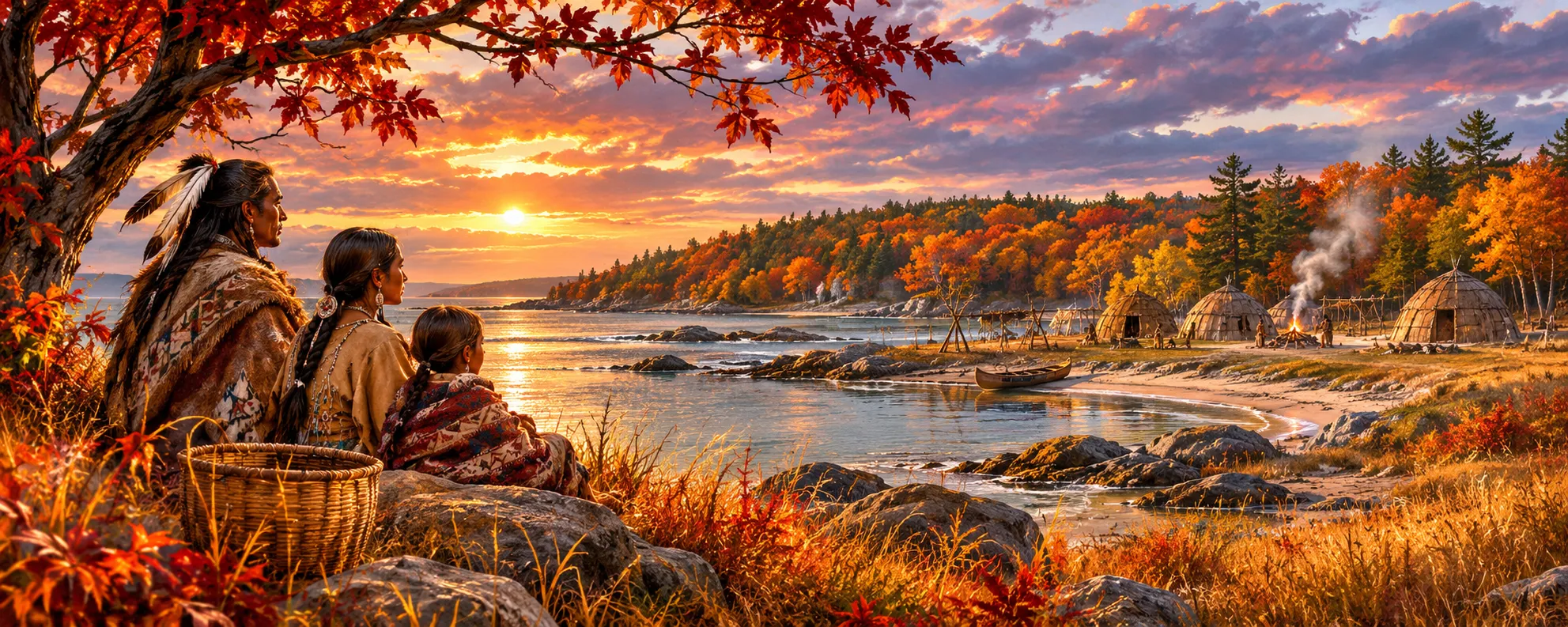
BEYOND THE FAMILIAR STORY | Understanding the History Behind the Traditions
Exploring the history, perspectives, and experiences that deepen our understanding of Thanksgiving.
For generations, the familiar Thanksgiving story has centered on a peaceful harvest gathering between the Pilgrims and the Wampanoag people in 1621. Yet the history surrounding that encounter is far more complex than the version many Americans learned in school. The Wampanoag had lived on their ancestral lands for thousands of years before European settlement, and their experiences cannot be understood through a single shared meal. The decades that followed brought profound changes, conflict, displacement, and loss for Indigenous communities, whose histories and perspectives were frequently overlooked in traditional accounts of the holiday.
Today, Native American historians, educators, and communities are helping bring greater depth and understanding to this history. For some, Thanksgiving remains an opportunity to celebrate family, gratitude, and cultural traditions; for others, it is also a time of remembrance, reflection, and mourning. Since 1970, the National Day of Mourning has provided an occasion for Indigenous people and their supporters to honor their ancestors, acknowledge historical injustices, and advocate for Native rights. Recognizing these different experiences does not diminish the value of gratitude. It invites us to approach the holiday with greater awareness, empathy, and respect for the many stories that form part of America’s shared history.


Feature Traditions Expert: Diana Muir Appelbaum
American Thanksgiving Traditions, History & Cultural Heritage
American Cultural History • Thanksgiving Traditions • New England Heritage • Family Customs • Historical Identity • Gratitude
Diana Muir Appelbaum, also known professionally as Diana Muir, is an American historian and author whose research explores the intersection of American culture, economic development, environmental change, and historical identity. Her work provides valuable perspectives on how traditions emerge, evolve, and become embedded in the cultural fabric of communities. Her book Thanksgiving: An American Holiday, an American History examines the origins and development of one of America’s most enduring national celebrations, tracing its evolution through colonial New England, religious observances, harvest gatherings, and changing American customs. Through her historical research, Appelbaum helps explain how Thanksgiving developed from diverse regional practices into a shared national tradition emphasizing family, community, gratitude, and collective remembrance.
Appelbaum’s contribution to understanding Thanksgiving traditions centers on the relationship between historical events, cultural storytelling, and the customs passed from one generation to the next. Thanksgiving’s familiar practices—including gathering around the family table, preparing traditional holiday meals, expressing appreciation, and participating in community celebrations—developed gradually over centuries rather than originating from a single historical event. Her historical approach provides a framework for examining how colonial harvest observances, nineteenth-century family customs, presidential proclamations, and evolving national identities helped shape the modern holiday. The familiar Thanksgiving narrative of Pilgrims and Native Americans represents only one part of a much broader historical story that includes Indigenous harvest traditions, religious influences, regional differences, and changing interpretations of American history. Understanding these developments encourages readers to appreciate both the enduring significance of Thanksgiving and the complexity of its historical origins.
From a broader cultural and historical perspective, Appelbaum’s work encourages Americans to recognize Thanksgiving as a living tradition that connects past generations with contemporary family and community life. Her scholarship offers an opportunity to reflect on how shared customs create continuity, strengthen relationships, preserve cultural memory, and contribute to a sense of belonging. While Thanksgiving has evolved considerably since the seventeenth century, its modern celebration continues to emphasize hospitality, generosity, appreciation, and the importance of gathering with loved ones. For the Great Awakening Report’s Thanksgiving Special Report, Appelbaum’s historical perspective provides a foundation for exploring how Americans can honor meaningful traditions while developing a more complete understanding of the past. Ultimately, Thanksgiving offers an annual opportunity to reconnect with family, acknowledge historical lessons, celebrate life’s blessings, and carry forward the values of gratitude, compassion, and community for future generations.



THE TRADITIONS WE CARRY FORWARD | How Thanksgiving Became a Celebration of Family, Culture & Connection
Honoring the past, celebrating the present, and creating memories for generations to come.
Every Thanksgiving, familiar traditions find their way back into our lives, bringing with them a wonderful sense of anticipation, nostalgia, and belonging. Some are deeply personal—a treasured family recipe, a favorite serving dish passed down through generations, or the simple ritual of gathering around the table to share what we’re grateful for. Others are woven into the broader celebration of the holiday, from the excitement of the Macy’s Thanksgiving Day Parade and the friendly competition of backyard football games to community Turkey Trots and the annual adventure of Black Friday shopping. Together, these traditions create the familiar rhythm of Thanksgiving, reminding us that the holiday is as much about the experiences we share as the meal itself.
For many families, Thanksgiving morning begins with traditions that have become almost as important as dinner. Some lace up their running shoes for a neighborhood Turkey Trot, enjoying a little exercise and camaraderie before the festivities begin. Others settle in with coffee and breakfast to watch the colorful balloons, marching bands, and elaborate floats of the Macy’s Thanksgiving Day Parade. Football enthusiasts eagerly anticipate the NFL’s holiday matchups, while backyard Turkey Bowls bring generations together for games where enthusiasm, laughter, and questionable officiating often matter more than the final score. These are the moments that give Thanksgiving its playful personality, creating stories that will be retold long after the holiday has passed.
Yet amid all the activity, some of the most meaningful traditions unfold in quieter moments. The family member who prepares the same beloved dish every year, the familiar stories shared while setting the table, or the moment before dinner when everyone pauses to express appreciation for the people and blessings in their lives. These simple rituals create a sense of continuity, connecting children and grandchildren to the generations who came before them. Traditions become more than familiar activities; they become a way of preserving memories, expressing love, and reminding one another that we belong.
As the meal concludes and Thanksgiving evening gives way to the holiday weekend, another collection of traditions begins. For some, Black Friday shopping is an annual adventure shared with family or friends, complete with early starts, favorite stores, and the excitement of discovering the perfect gift. Others prefer browsing online, visiting local shops, enjoying holiday movies, or beginning the annual transformation of their homes for the festive season ahead. These activities have evolved considerably over the years, but they continue to mark the transition from Thanksgiving into the broader holiday season.
Of course, traditions change as families grow and circumstances evolve. New relationships introduce different customs, children develop their own favorite activities, and sometimes the celebrations we once knew must be reimagined. Honoring the past doesn’t mean recreating it exactly as it was. It means preserving the love, joy, and meaning behind those experiences while welcoming new possibilities. A spontaneous gathering may become an annual tradition, an unexpected guest may become part of the family, and a simple gesture of kindness may inspire a custom that continues for generations.
Perhaps that is the enduring beauty of Thanksgiving traditions. Whether we’re cheering on a favorite football team, laughing through a family game, sharing memories around a candlelit table, or taking a quiet moment to appreciate those we love, each experience adds another chapter to our collective story. The traditions that matter most are not necessarily the oldest or most elaborate, but those that bring us together, make us feel connected, and create memories worth carrying forward.
And sometimes, the traditions we begin today become the ones future generations will treasure most.


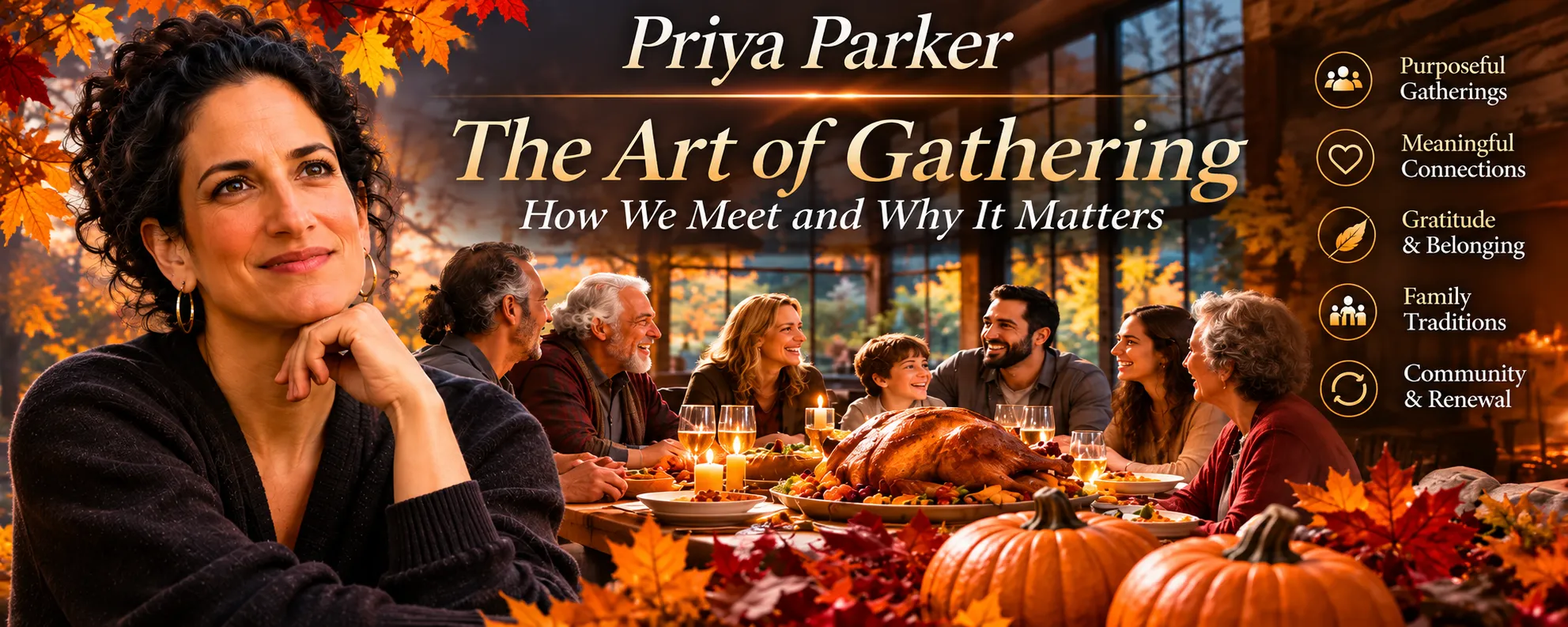
Modern Day Art of Gathering Author: Priya Parker
The Art of Gathering: Creating Meaningful Connections & Transforming Modern Traditions
Purposeful Gatherings • Human Connection • Family Traditions • Community • Gratitude • Conscious Relationships
Priya Parker is an internationally recognized facilitator, author, and strategic advisor whose work focuses on transforming the way people come together, communicate, and build meaningful relationships. As the author of the bestselling book The Art of Gathering: How We Meet and Why It Matters, Parker challenges conventional approaches to meetings, celebrations, family reunions, and community events. Drawing upon her experience in conflict resolution, organizational leadership, and group dynamics, she explores why some gatherings create lasting memories and meaningful connections while others become routine social obligations. Her central philosophy is that successful gatherings do not happen simply because people occupy the same space; they require intentional planning, a clear purpose, thoughtful participation, and an environment where individuals feel welcomed, valued, and connected. Through her writing, speaking engagements, and advisory work, Parker has encouraged individuals, families, organizations, and communities to reconsider how they gather and why those experiences matter.
At the heart of The Art of Gathering is the principle that meaningful connection begins with purpose rather than tradition alone. Parker encourages hosts to move beyond familiar expectations and ask a fundamental question: What is the deeper reason we are bringing these particular people together? Rather than focusing exclusively on decorations, menus, schedules, or entertainment, she emphasizes the importance of creating an experience that encourages genuine conversation, shared participation, and a sense of belonging. Her approach includes establishing a clear purpose, designing welcoming environments, creating meaningful openings and closings, and helping guests engage beyond superficial conversation. Applied to modern Thanksgiving celebrations, these principles offer families an opportunity to transform a traditional holiday meal into a more intentional gathering. Sharing personal stories, expressing gratitude, honoring family history, welcoming different perspectives, and creating new rituals can strengthen relationships while preserving the warmth and familiarity of established Thanksgiving traditions.
From a broader perspective, Parker’s philosophy provides a contemporary framework for understanding Thanksgiving as an opportunity for conscious connection, gratitude, and community renewal. In a society increasingly influenced by digital communication, demanding schedules, geographic separation, and social polarization, meaningful face-to-face gatherings offer valuable opportunities to rebuild trust, deepen relationships, and strengthen a shared sense of humanity. Her work suggests that the true value of Thanksgiving is not measured by the size of the gathering, the perfection of the meal, or adherence to inherited customs, but by the quality of the experience and the connections created among those participating. Families can embrace this philosophy by establishing gratitude circles, encouraging intergenerational storytelling, inviting thoughtful conversations, and making room for both celebration and remembrance. Ultimately, The Art of Gathering reminds us that Thanksgiving’s most enduring tradition may be the simple yet powerful act of bringing people together with intention, appreciation, generosity, and an open heart—creating experiences that continue to enrich relationships long after the holiday has passed.


A WORLD OF THANKS | Gratitude Across Cultures
“Across cultures and continents, gratitude takes many forms, yet each expression reminds us how deeply our lives are connected.” — Great Awakening Report
Across continents, cultures, and generations, people have found meaningful ways to express gratitude for life’s blessings. Some gather around abundant tables to celebrate a successful harvest. Others honor their ancestors, offer prayers, share food with neighbors, or participate in ceremonies that recognize humanity’s relationship with the natural world. Although these traditions differ in their histories, beliefs, and expressions, they reveal something remarkably consistent about the human experience: the desire to acknowledge what sustains us and share that appreciation with others.
Thanksgiving may be most closely associated with the United States and Canada, but the spirit of giving thanks extends far beyond North America. From the colorful harvest celebrations of Europe to the ancestral homecomings of Asia and the vibrant community festivals of Africa, gratitude has long been woven into the rhythms of daily life.
These observances are not simply different versions of the same holiday. Each reflects a distinctive cultural history, shaped by geography, agriculture, spirituality, family relationships, and the passage of generations. Yet exploring them offers an opportunity to recognize the values that connect people across borders while appreciating the traditions that make each culture unique.
In an increasingly interconnected world, where global events often emphasize our differences, these celebrations offer another perspective. They remind us that community, generosity, remembrance, and appreciation are not confined to any single country or belief system. They are expressions of our shared humanity, interpreted through countless cultural traditions.
The language of gratitude may change from one culture to another, but its ability to bring people together remains remarkably universal.
HARVESTS & HOMECOMINGS | Celebrating Abundance, Family & Ancestral Connections
For much of human history, the changing seasons determined the rhythm of everyday life. The success of a harvest could influence whether families and communities experienced abundance or hardship in the months ahead. It is little wonder, then, that harvest celebrations became deeply meaningful occasions for expressing appreciation, strengthening relationships, and recognizing the forces of nature upon which people depended.
In Canada, Thanksgiving is celebrated on the second Monday in October, reflecting a seasonal rhythm that arrives earlier than its American counterpart. While its history includes European harvest customs and earlier observances of thanksgiving, the modern holiday has developed into a familiar celebration of family gatherings, seasonal foods, and appreciation for the year’s blessings.
Across the Atlantic, Germany’s Erntedankfest, or harvest thanksgiving festival, expresses gratitude for the agricultural season through church services, music, decorated harvest displays, and community gatherings. Depending on the region, celebrations may include processions, produce-filled altars, and traditions that recognize both the gifts of the earth and the work required to cultivate them.
In South Korea, Chuseok is one of the country’s most important traditional holidays. Families travel to their ancestral hometowns, gather for special meals, and honor previous generations through remembrance rituals. Seasonal foods, including songpyeon—traditional rice cakes—reflect the holiday’s agricultural roots, while family reunions reinforce the importance of continuity and belonging.
These celebrations reveal how closely gratitude can be connected to both place and memory. A harvest is not simply the result of one season’s labor; it reflects the knowledge, traditions, and relationships passed from one generation to the next.
Gratitude becomes a bridge between those who came before us, those who share our lives today, and those who will carry our traditions into the future.
GRATITUDE ACROSS CONTINENTS | Distinctive Traditions, Shared Human Values
Beyond the familiar autumn harvest celebrations of North America and Europe, communities around the world observe festivals that express appreciation in ways shaped by their own histories and cultural identities.
In Ghana, the Ga people’s Homowo festival commemorates their ancestors’ triumph over famine. Its name is commonly translated as “hooting at hunger,” reflecting the joy of overcoming scarcity and celebrating renewed abundance. Traditional foods, music, processions, and community rituals transform the memory of hardship into an expression of resilience and collective identity.
Japan’s Labor Thanksgiving Day, observed on November 23, offers a different perspective. Known as Kinrō Kansha no Hi, the modern national holiday recognizes labor, production, and mutual appreciation. Its historical roots are connected to Niinamesai, an ancient imperial harvest ritual. Today, the observance reflects the value of work and the contributions people make to society.
Other cultures mark gratitude through festivals associated with the land, changing seasons, and the responsibilities of community life. Across India, for example, regional harvest celebrations such as Pongal in Tamil Nadu recognize agricultural abundance, the sun, cattle, and the relationships that make farming possible. These traditions carry their own religious and cultural meanings, illustrating the many ways gratitude can be expressed.
What makes these celebrations so fascinating is not simply their similarities, but their differences. Some are solemn and reflective, while others are exuberant and communal. Some center on ancestors and spiritual traditions, while others emphasize agricultural success, work, or the renewal of social relationships.
There is no single cultural expression of gratitude—and that diversity makes the human experience richer.
By exploring these traditions, we gain more than a collection of interesting holiday customs. We encounter different ways of understanding our relationship with the world and the people who help sustain it.
To appreciate another culture’s traditions is to recognize that wisdom and meaning can be expressed in many different forms.
HARVESTS & HOMECOMINGS | Celebrating Abundance, Family & Ancestral Connections
Across the world, the changing seasons have long inspired communities to gather in gratitude for the harvest, the nourishment of the earth, and the relationships that sustain everyday life. Although the customs, foods, and celebrations differ from one culture to another, many share a familiar spirit: honoring what has been received, recognizing the contributions of those who came before us, and celebrating the bonds that connect families and communities. These traditions remind us that gratitude is not confined to a single holiday, country, or season. It is a universal human expression, shaped by history, geography, and generations of shared experience.
In South Korea, Chuseok brings families together for one of the country’s most important holidays. Often described as a Korean harvest festival, it is a time for returning to ancestral hometowns, sharing traditional foods such as songpyeon rice cakes, and honoring family ancestors through remembrance and customary observances. In Japan, harvest appreciation is reflected in traditions such as Niinamesai, an ancient ceremony associated with offering newly harvested rice in gratitude for the year’s abundance. Across Germany, Erntedankfest celebrates the harvest through community gatherings, seasonal displays, music, and expressions of thanksgiving, reflecting the longstanding relationship between agricultural life and communal appreciation.
Elsewhere, harvest celebrations take on equally distinctive forms. In Ghana, the Homowo festival of the Ga people commemorates overcoming a historic period of hunger, transforming remembrance into a vibrant celebration of resilience, abundance, and community. In southern India, Pongal marks the harvest season with traditional foods, decorated homes, family gatherings, and expressions of gratitude for the sun, the land, and the animals that support agricultural life. These observances carry histories and meanings unique to their communities, yet each reflects an enduring recognition that prosperity is connected to the natural world and the collective efforts of those who sustain it.
Perhaps one of the most meaningful threads running through these traditions is the importance of homecoming. For many, the harvest season is an occasion to travel home, reunite with relatives, prepare cherished foods, and reconnect with customs learned in childhood. It is also a time when the presence of previous generations is felt through ancestral remembrance, inherited recipes, family stories, and the continuation of cultural practices. Gratitude becomes a bridge between past and present, connecting what we have received with what we hope to preserve for those who follow.
These celebrations also remind us that abundance is measured in more than material prosperity. A successful harvest may provide food for the coming months, but the gathering itself offers another kind of nourishment: belonging, continuity, generosity, and the reassurance of being part of something larger than ourselves. Whether expressed through elaborate festivals, quiet ceremonies, shared meals, or joyful reunions, the spirit of thanksgiving takes countless forms across the world.
In every culture, there are moments when people pause to honor the gifts of the earth, the wisdom of their ancestors, and the people who make life meaningful. Though the traditions may differ, the human desire to celebrate, remember, and give thanks remains a powerful connection across generations and borders.




GRATITUDE ACROSS CONTINENTS | Distinctive Traditions, Shared Human Values
Gratitude is a universal human experience, yet the ways we express it are as diverse as the cultures and communities that shape our world. In some societies, appreciation is communicated through words, gestures, and thoughtful gifts, while in others it is woven into traditions of hospitality, shared responsibility, and respect for elders. Although these expressions may look different, they often reflect a common understanding that our lives are enriched by the kindness, generosity, and contributions of others.
Across Africa, traditions such as Ubuntu, a philosophy often expressed through the idea that our humanity is interconnected, emphasize the importance of compassion, mutual care, and community. In Japan, the expression itadakimasu, spoken before a meal, acknowledges the food and the many lives and efforts that made it possible. In India, seva, or selfless service, reflects the belief that helping others can itself be an expression of appreciation and devotion. These examples remind us that gratitude need not always be spoken; it can be demonstrated through how we treat others and the responsibilities we willingly share.
In many Indigenous cultures, expressions of gratitude are deeply connected to relationships with the natural world, ancestors, and community. Ceremonies, storytelling, and practices of reciprocity may honor the gifts of the land and the importance of caring for what sustains life. Across Latin America, traditions of hospitality, family gatherings, and communal celebrations similarly reflect the value placed on relationships, generosity, and belonging. While each culture has its own history and customs, these practices illustrate how appreciation can become an enduring part of collective identity.
What makes these traditions especially meaningful is their ability to transform gratitude from a passing emotion into a way of living. Appreciation becomes something we practice through generosity, respect, reciprocity, and the recognition that our well-being is connected to the well-being of others. Whether expressed through a simple thank-you, an act of service, a shared meal, or a longstanding cultural custom, gratitude creates opportunities for connection that extend beyond language and geography.
Perhaps the most beautiful lesson we can draw from these diverse expressions is that gratitude does not require everyone to celebrate or believe in the same way. It invites us to recognize the humanity we share while honoring the differences that make our world so rich. Across continents and cultures, appreciation remains one of the simplest and most meaningful ways we acknowledge our connections to one another.

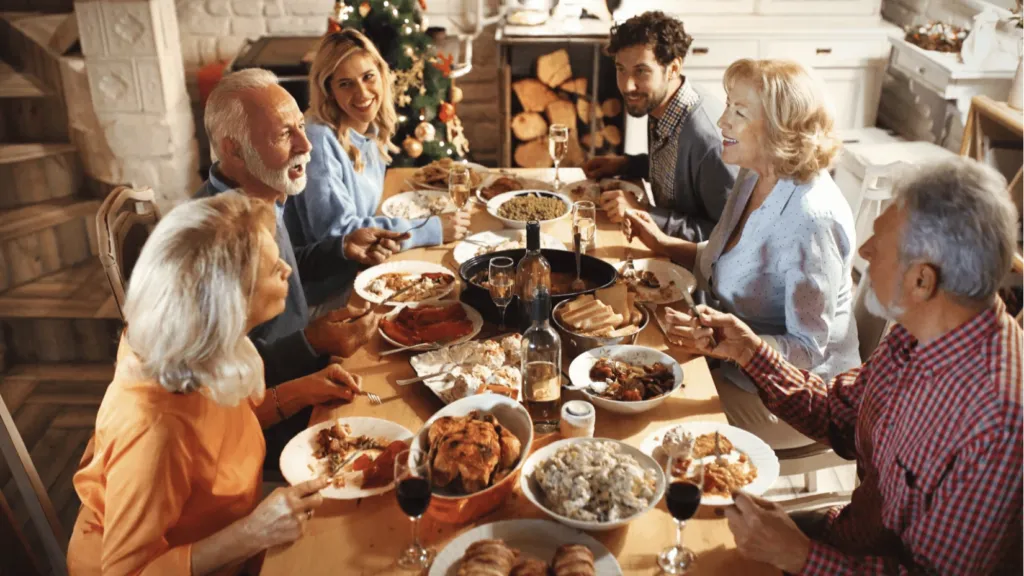



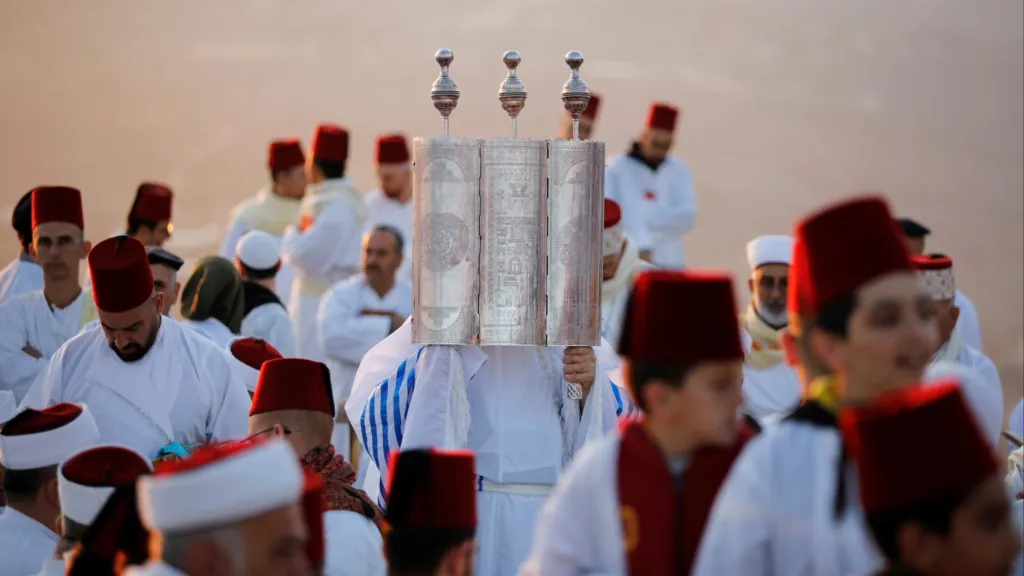
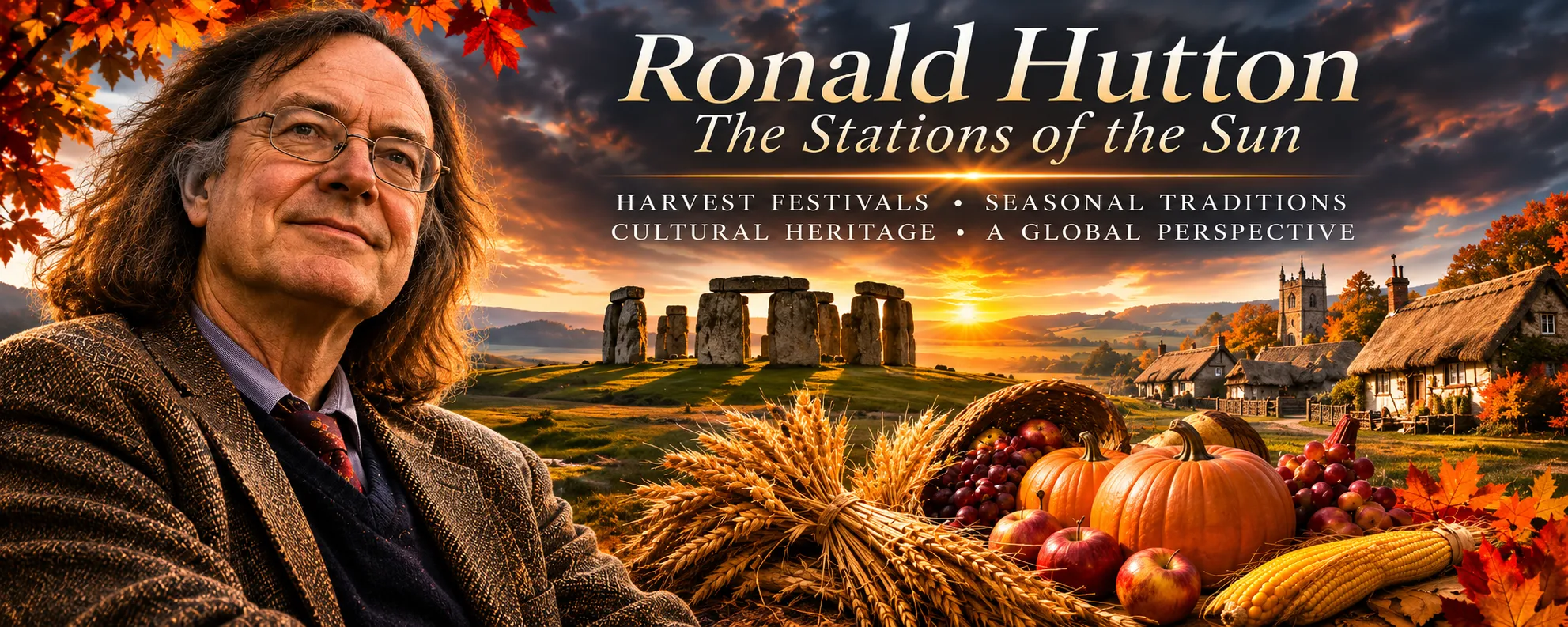
Thanksgiving Around the World Expert: Ronald Hutton
The Universal Traditions of Gratitude, Harvest & Human Connection
Global Harvest Celebrations • Cultural Heritage • Seasonal Traditions • Spiritual Gratitude • Community & Family • Historical Connections
Ronald Hutton is a distinguished British historian, professor at the University of Bristol, and internationally recognized authority on the history of seasonal festivals, religious customs, folklore, and traditional celebrations. His influential book, The Stations of the Sun: A History of the Ritual Year in Britain, explores how communities developed annual celebrations around agricultural cycles, seasonal transitions, religious observances, and shared cultural experiences. Through extensive historical research, Hutton examines the evolution of harvest festivals, midsummer gatherings, winter celebrations, and other customs that have shaped British cultural identity over centuries. His scholarship provides valuable historical context for understanding the broader traditions associated with Thanksgiving, particularly the human impulse to acknowledge successful harvests, express appreciation for nature’s abundance, and strengthen community relationships through shared celebrations. Although Hutton’s research focuses primarily on Britain rather than Thanksgiving holidays worldwide, his work offers a foundation for exploring how gratitude and seasonal observances became embedded in the cultural traditions of different societies.
Thanksgiving and harvest celebrations around the world reveal remarkable similarities in human values, even when their historical and spiritual origins differ significantly. In Canada, Thanksgiving is celebrated in October through family gatherings, traditional meals, and expressions of appreciation for the year’s blessings. Germany’s Erntedankfest reflects Christian harvest thanksgiving traditions, bringing communities together through church services, seasonal decorations, and celebrations of agricultural abundance. Japan observes Labor Thanksgiving Day in November, a modern national holiday recognizing work and mutual appreciation that has historical connections to ancient harvest ceremonies. South Korea’s Chuseok honors family ancestors and celebrates the autumn harvest through traditional foods, reunions, and remembrance rituals. India’s Pongal festival expresses gratitude to the Sun, nature, and agricultural communities for sustaining life, while Ghana’s Homowo commemorates overcoming famine through communal celebrations and traditional foods. These celebrations are not simply different versions of American Thanksgiving; each reflects distinct historical experiences, spiritual beliefs, and cultural identities. Together, they illustrate how gratitude, harvest appreciation, and community connection have become recurring themes across civilizations.
From a broader historical and consciousness perspective, Hutton’s work encourages us to recognize gratitude as an enduring human practice that transcends national borders, religious traditions, and cultural differences. Across generations, communities have gathered to celebrate survival, acknowledge the changing seasons, honor ancestors, share food, and recognize their dependence on the natural world. These traditions remind us that appreciation is not merely an individual emotion but also a collective expression of connection, responsibility, generosity, and belonging. When considered alongside Colleen Taylor Sen’s research into Indian food traditions and the work of Korean cultural historians examining Chuseok, Hutton’s scholarship helps illuminate both the similarities and important distinctions among global harvest celebrations. For the Great Awakening Report’s Thanksgiving Special Report, this international perspective expands the meaning of Thanksgiving beyond a uniquely American holiday into a broader exploration of humanity’s relationship with nature, family, community, and spiritual appreciation. Ultimately, these diverse traditions invite us to recognize gratitude as a shared human value—one capable of strengthening relationships, preserving cultural wisdom, encouraging compassion, and inspiring a more conscious and connected world.

Thanksgiving and Harvest Celebrations Across the World
Canada — Thanksgiving
Second Monday in October
A national holiday celebrating harvest, family, and gratitude, with traditions resembling American Thanksgiving.
Germany — Erntedankfest
Typically late September or early October
A harvest thanksgiving festival featuring church services, decorated harvest displays, music, and community celebrations.
Japan — Labor Thanksgiving Day
November 23
A national holiday recognizing workers, productivity, and mutual appreciation, with historical connections to harvest rituals.
South Korea — Chuseok
Eighth lunar month’s fifteenth day
A major autumn harvest festival honoring ancestors, family reunions, traditional foods, and appreciation for the harvest.
India — Pongal
Mid-January
A Tamil harvest celebration expressing thanks to the Sun, nature, farmers, and cattle for agricultural abundance.
Ghana — Homowo
Typically August–September
A festival of the Ga people commemorating overcoming famine and celebrating food, resilience, and community.

THE CONSCIOUSNESS OF GRATITUDE | Appreciation, Presence & Well-Being
Gratitude is often described as an emotion—a feeling of appreciation that arises when something good happens or when someone extends an unexpected kindness. Yet its influence reaches beyond those individual moments. When practiced intentionally, gratitude can become a way of directing our attention, interpreting our experiences, and engaging with the world around us.
In a culture that continually encourages us to pursue what comes next, it is easy to overlook what is already present. Our attention is frequently drawn toward unfinished responsibilities, uncertain outcomes, troubling headlines, and the endless comparison between where we are and where we believe we should be. Over time, this outward focus can make even a life filled with meaningful relationships and experiences feel somehow incomplete.
Gratitude offers a different relationship with attention. It encourages us to recognize what is supporting, enriching, and sustaining our lives without requiring us to ignore their difficulties.
This distinction is especially important. Genuine appreciation does not demand constant positivity, nor does it require us to dismiss grief, frustration, disappointment, or uncertainty. In fact, some of the most meaningful expressions of gratitude emerge during challenging periods, when we become more aware of the people, relationships, and simple experiences that help us find our footing.
Research in psychology has increasingly explored the relationship between gratitude and well-being, suggesting that intentional gratitude practices may support emotional resilience, positive relationships, and greater life satisfaction. These findings do not make gratitude a universal remedy, but they offer an interesting perspective on how the habits of our minds can influence our everyday experience.
From a consciousness perspective, gratitude invites us to become more aware of the thoughts and interpretations that shape our responses. Rather than allowing circumstances to determine the entirety of our emotional experience, we begin to recognize that where we place our attention can influence how we experience the present moment.
Gratitude does not change every circumstance. It can, however, change what we are able to notice within those circumstances.
As we explore the science, awareness, and practical applications of gratitude, a larger theme emerges: appreciation becomes most meaningful when it moves beyond an occasional feeling and becomes part of how we live.
THE SCIENCE OF GRATITUDE | What Research Reveals About Appreciation & Well-Being
Over the past several decades, gratitude has become an increasingly important subject within positive psychology, behavioral science, and research into emotional well-being. Rather than viewing appreciation solely as a virtue or social courtesy, researchers have explored how grateful thinking and behavior may influence mood, relationships, stress, and overall life satisfaction.
Among the leading contributors to this field is psychologist Robert Emmons, whose research has examined how intentional gratitude practices affect people’s experiences of everyday life. Studies involving gratitude journaling and other reflective exercises have found that participants sometimes report greater optimism, more positive emotions, and improved perceptions of well-being compared with certain control groups.
Other researchers have investigated gratitude’s relationship with interpersonal connection. Expressing sincere appreciation can reinforce positive social interactions, helping people recognize the contributions of others and encouraging behaviors that strengthen relationships. In this sense, gratitude is not simply an internal emotional experience; it can become a meaningful part of how people connect.
Research has also examined potential associations between gratitude and physical health, including sleep quality and perceived stress. Some findings are promising, although results vary across studies and populations, and the evidence does not establish that gratitude alone can prevent illness or produce specific medical outcomes.
What makes this research particularly interesting is its focus on relatively simple behaviors. Writing down a few meaningful experiences, expressing appreciation to another person, or deliberately reflecting on something positive may help some individuals become more attentive to aspects of life they might otherwise overlook.
The significance is not that gratitude eliminates life’s challenges, but that it may help us engage with those challenges from a broader emotional perspective.
There is also an important distinction between experiencing gratitude spontaneously and developing it intentionally. While appreciation often arises naturally after receiving help or experiencing something meaningful, deliberate practices encourage us to recognize value in ordinary moments, even when nothing particularly remarkable has occurred.
The growing body of research suggests that gratitude deserves attention not because it promises a perfect life, but because it offers a practical opportunity to examine the relationship between thought patterns, emotional experience, and human connection.
Sometimes a meaningful shift in well-being begins not with changing what surrounds us, but with noticing more of what is already there.
PRESENCE, AWARENESS & THE GRATEFUL MIND | How Conscious Attention Shapes Our Experience
Much of everyday life unfolds while our attention is somewhere else. We replay conversations, anticipate future responsibilities, respond to digital interruptions, and move through familiar routines with only partial awareness of what is happening around us.
Mindfulness invites us to recognize this tendency and return our attention to the present. Gratitude adds another dimension by encouraging us to notice what is meaningful, supportive, or beautiful within that moment.
The two practices are closely related, although they are not identical. Mindfulness emphasizes awareness without immediately judging or reacting to experience. Gratitude involves recognizing and appreciating something we perceive as valuable. Together, they can help create a more intentional relationship with everyday life.
Consider something as ordinary as a morning walk. It can become another task to complete, a time to mentally organize the day’s responsibilities, or an opportunity to become fully aware of the surrounding environment. The quality of the light, the changing seasons, the rhythm of movement, and the simple ability to spend time outdoors may all become sources of appreciation when we are sufficiently present to notice them.
Nothing about the external circumstances necessarily changes. What changes is the quality of attention.
This is where gratitude begins to intersect with consciousness: the recognition that our awareness influences which aspects of an experience become most prominent.
In contemplative traditions, appreciation is often connected to humility, interdependence, and the recognition that life is sustained through relationships extending far beyond the individual. A shared meal, for example, represents not only nourishment but the contributions of farmers, workers, communities, natural resources, and countless processes that make it possible.
This broader awareness can encourage a deeper sense of connection. It invites us to recognize that many of the things we consider ordinary are actually the result of remarkable cooperation and interdependence.
At the same time, cultivating gratitude requires discernment. Awareness does not mean overlooking injustice, suppressing difficult emotions, or accepting circumstances that need to change. We can appreciate the support available to us while remaining fully conscious of challenges that deserve our attention.
Presence allows us to experience life more fully. Gratitude encourages us to recognize its value.
When combined, these qualities can transform appreciation from a fleeting reaction into a more consistent expression of conscious living.
FROM APPRECIATION TO EMBODIMENT | Making Gratitude Part of Everyday Life
Understanding gratitude intellectually is one thing. Bringing it into the rhythm of daily life is another.
For many people, appreciation begins with familiar practices: keeping a gratitude journal, reflecting on meaningful moments before bed, or sharing something positive during a family meal. These approaches can be valuable, but gratitude need not become another obligation on an already crowded schedule.
Often, its most meaningful expressions are surprisingly simple.
A sincere thank-you offered without distraction. A few quiet moments outdoors. Recognizing the effort behind an ordinary act of kindness. Remembering someone who helped us during a difficult period. Allowing ourselves to fully enjoy an experience without immediately reaching for the next one.
The intention is not to accumulate grateful thoughts, but to become more receptive to experiences worthy of appreciation.
Some people find that beginning the day with a moment of reflection helps establish a more intentional mindset. Others prefer an evening review, recognizing small moments of connection, progress, or unexpected beauty that might otherwise disappear into the pace of daily life.
Gratitude can also become a shared practice. Families may invite everyone at the Thanksgiving table to express something meaningful from the past year. Friends might exchange messages acknowledging the difference they have made in one another’s lives. Communities may create traditions of appreciation that extend beyond the holiday season.
There is value, too, in recognizing gratitude during periods of solitude. Quiet reflection offers space to step away from external demands and reconnect with experiences that are meaningful on a personal level. A peaceful morning, a favorite place in nature, or time spent simply being present can provide a sense of renewal that is every bit as valuable as shared celebration.
Yet the deepest expression of gratitude may be found in how we respond to others. Appreciation becomes visible through patience, generosity, attentiveness, and the willingness to recognize contributions that often go unnoticed.
This is where gratitude moves from reflection into embodiment.
It is no longer something we remember to practice only on special occasions. It begins to influence how we communicate, how we approach relationships, and how we interpret the ordinary experiences of life.
Thanksgiving provides a beautiful opportunity to renew that intention, but its significance need not end when the holiday decorations are put away.
The greatest expression of gratitude is not simply saying that we are thankful. It is allowing that appreciation to influence the way we live.
When gratitude becomes part of our daily awareness, even the most ordinary moments can become opportunities for connection, meaning, and quiet joy.
THE SCIENCE OF GRATITUDE | What Research Reveals About Appreciation & Well-Being
Gratitude has long been recognized as a meaningful part of the human experience, but in recent decades, researchers have begun exploring something equally fascinating: what happens within our minds and bodies when we consciously practice appreciation. What was once considered primarily a personal virtue or philosophical ideal has become an increasingly studied area of psychology, neuroscience, and behavioral health. The findings suggest that gratitude is more than a pleasant emotion. It may influence how we interpret our experiences, respond to challenges, connect with others, and experience everyday life.
Studies in positive psychology have found associations between gratitude and greater life satisfaction, positive emotions, and stronger social relationships. In some controlled studies, participants who regularly reflected on things they appreciated reported improvements in aspects of psychological well-being compared with those assigned other reflective activities. Researchers have also examined gratitude’s potential relationship with sleep quality, perceived stress, and emotional resilience, although results vary and the evidence is stronger for some benefits than others. The emerging picture is that gratitude may help shift our attention toward meaningful and supportive aspects of life without requiring us to ignore its difficulties.
Neuroscience offers another intriguing perspective. Brain-imaging studies suggest that experiences of gratitude engage regions involved in social understanding, emotional evaluation, and decision-making. Researchers are investigating whether repeated expressions of appreciation can influence how we process positive experiences and relate to others over time. While the popular idea that gratitude simply “rewires the brain” often goes beyond what the research can establish, these findings suggest that appreciation is connected to complex processes involving attention, emotion, and human connection.
The relationship between gratitude and physical well-being is also receiving attention. Some studies have explored potential connections with sleep, cardiovascular health, and stress-related processes, but these findings remain preliminary or mixed. Gratitude is not a substitute for medical care, nor is it a guarantee of better health. Its value may lie in supporting the everyday behaviors and emotional resources that contribute to well-being, including healthier relationships, greater awareness of positive experiences, and a more balanced response to life’s demands.
Perhaps the most encouraging aspect of this research is the simplicity of the practices being studied. Keeping a gratitude journal, writing a heartfelt letter of appreciation, reflecting on a meaningful interaction, or pausing to acknowledge something good in an otherwise difficult day requires little time or expense. These small acts offer opportunities to become more intentional about where we place our attention and how we express appreciation to others.
The science of gratitude does not suggest that we must feel thankful for every circumstance. Rather, it invites us to recognize that even amid uncertainty, difficulty, and change, there may be moments of meaning, kindness, and connection worth noticing. As research continues to explore the relationship between gratitude and well-being, one idea remains especially compelling: appreciation is not merely something we experience when life is going well. It is also a capacity we can consciously cultivate throughout the ordinary moments of our lives.

THE GRATITUDE EFFECT | What Science Reveals About the Mind, Body & Human Connection
How appreciation influences our well-being, supports healthy aging, strengthens relationships, and shapes the way we experience life.
Gratitude is often associated with the simple act of saying thank you, yet its influence may extend far beyond a moment of appreciation. Over the past two decades, psychologists and neuroscientists have explored how gratitude relates to emotional well-being, physical health, and our ability to navigate life’s challenges. Pioneering research by psychologists Robert Emmons and Michael McCullough found that people who regularly reflected on things they were grateful for reported greater optimism and improvements in certain measures of well-being compared with those who focused on daily frustrations. Some participants also reported exercising more and making fewer visits to physicians. These findings helped establish gratitude as more than a pleasant emotion. It is a perspective that can influence what we notice, how we interpret our experiences, and where we direct our attention.
Emerging neuroscience offers a fascinating glimpse into what happens when we experience gratitude. Brain-imaging research has identified activity in regions such as the medial prefrontal cortex and anterior cingulate cortex, areas involved in social understanding, emotional evaluation, and decision-making. These findings suggest that gratitude engages neural systems associated with recognizing kindness, interpreting meaningful experiences, and connecting with others. Researchers are also exploring whether repeated experiences of appreciation can support emotional resilience and influence how we respond to stress. Although claims that gratitude permanently rewires the brain go beyond what current studies establish, the evidence points toward a meaningful relationship between appreciation, attention, and emotional processing. Gratitude may help us develop a more balanced perspective, allowing us to recognize moments of goodness even during difficult circumstances.
The connection between gratitude and physical health is equally intriguing, particularly in the emerging field of healthy aging and longevity. Studies have associated gratitude with better sleep quality, reduced psychological distress, and healthier patterns of thinking before bedtime. Research involving patients with heart failure has also found associations between gratitude and lower levels of certain inflammatory markers, while a small intervention study reported improvements in heart-rate variability and measures of inflammation following gratitude journaling. These findings raise important questions about the relationship between emotional well-being, autonomic nervous system regulation, cardiovascular health, and the body’s response to chronic stress. Scientists are continuing to investigate possible connections involving vagal activity, immune function, and cellular health, including mitochondrial processes. While these emerging mechanisms should not be mistaken for proof that gratitude directly extends lifespan, they suggest that our emotional lives may play a meaningful role in the broader picture of health and resilience.
Perhaps the most encouraging aspect of gratitude research is that appreciation can be cultivated through ordinary, intentional practices. Keeping a gratitude journal, writing a heartfelt note, recalling a moment when someone made us feel valued, or simply pausing to recognize a small kindness can deepen our awareness of life’s positive experiences. Gratitude also strengthens the social connections that contribute so much to our sense of belonging and purpose, encouraging generosity, trust, and meaningful relationships. These practices are not about denying hardship or forcing positivity when life is difficult. Rather, they invite us to recognize that appreciation and adversity can coexist. As Thanksgiving reminds us of the people, experiences, and everyday moments that enrich our lives, the science of gratitude offers a perspective worth carrying forward: we may not always be able to change our circumstances, but we can cultivate a greater capacity to recognize the connection, meaning, and goodness that exist alongside them.




Science of Gratitude Expert: Dr. Robert A. Emmons
How Appreciation Transforms the Mind, Strengthens Relationships & Enhances Well-Being
Positive Psychology • Neuroscience • Emotional Well-Being • Human Connection • Mindfulness • Conscious Appreciation
Dr. Robert A. Emmons is one of the world’s leading scientific authorities on gratitude and its relationship to human happiness, emotional well-being, and personal fulfillment. As a professor emeritus of psychology at the University of California, Davis, Emmons has spent decades investigating how gratitude influences thoughts, emotions, relationships, and everyday behavior. His pioneering research helped establish gratitude as a serious subject within positive psychology, moving it beyond traditional religious and philosophical discussions into systematic scientific investigation. Through controlled studies, academic publications, books, and educational presentations, Emmons has explored how intentionally recognizing life’s blessings can influence optimism, emotional resilience, interpersonal relationships, and overall life satisfaction. His work provides an important scientific foundation for understanding why gratitude has remained central to spiritual traditions, cultural celebrations, and personal-development practices throughout history.
At the heart of Emmons’ research is the discovery that gratitude is more than a temporary feeling of appreciation; it is a psychological practice that can be intentionally cultivated. His studies, including influential research conducted with psychologist Michael McCullough, examined the effects of regularly recording things for which individuals felt grateful. Participants assigned to gratitude exercises reported improvements in certain measures of well-being, optimism, and positive emotional experience compared with some comparison groups. Subsequent research has investigated connections between gratitude, sleep quality, stress, social relationships, and physical health, although findings vary and do not establish gratitude as a cure for illness. Emmons emphasizes two important dimensions of gratitude: recognizing that something valuable has been received and acknowledging that its source often exists beyond ourselves, whether through other people, nature, circumstances, or spiritual beliefs. This perspective encourages individuals to shift attention away from what is missing toward an appreciation of what is already present.
From a broader consciousness and Thanksgiving perspective, Emmons’ work offers a meaningful connection between scientific research and the timeless human practice of giving thanks. His findings suggest that gratitude can strengthen relationships, encourage generosity, support emotional balance, and help individuals develop a more appreciative outlook on life. Thanksgiving provides a natural opportunity to put these principles into practice through family conversations, gratitude journaling, expressions of appreciation, charitable giving, and intentional reflection. Yet Emmons’ research also suggests that the greatest value of gratitude may emerge when it becomes a consistent practice rather than an annual celebration. For the Great Awakening Report’s Thanksgiving Special Report, his work provides an evidence-based framework for exploring how appreciation can contribute to personal transformation, stronger communities, and more conscious relationships. Ultimately, the science of gratitude reinforces a powerful message: cultivating appreciation for life’s blessings can help individuals experience greater connection, meaning, generosity, and emotional well-being—not only during Thanksgiving, but throughout the entire year.



PRESENCE, AWARENESS & THE GRATEFUL MIND | How Conscious Attention Shapes Our Experience
So much of life unfolds while our attention is somewhere else. We move through familiar routines, replay conversations, anticipate tomorrow’s responsibilities, and navigate an almost constant stream of information. Meanwhile, the ordinary moments that give life much of its richness can pass largely unnoticed. A beautiful morning, a thoughtful gesture, the sound of laughter, or the simple comfort of being with someone we love may be right in front of us, yet our minds are often too occupied to fully appreciate them. Presence invites us to experience life as it is unfolding, rather than continually living in what has already happened or what might come next.
Mindfulness traditions have long emphasized the relationship between awareness and appreciation. Thich Nhat Hanh taught that conscious breathing and attention to the present moment can help us recognize the everyday conditions that make happiness possible. Eckhart Tolle similarly explores how identifying less strongly with the constant activity of the mind can create space for greater awareness. Although their approaches differ, both invite us to reconsider a familiar assumption: that fulfillment must always be found in some future achievement, improved circumstance, or long-awaited change. Sometimes, what we are seeking begins with recognizing what is already here.
Gratitude naturally becomes part of this experience. When we slow down enough to notice, we begin recognizing the countless ways life supports and enriches us. The warmth of sunlight through a window, a conversation that leaves us feeling understood, the changing colors of autumn, or an unexpected moment of kindness can take on greater meaning when we give them our full attention. These experiences do not need to be extraordinary to be valuable. Often, appreciation grows not because our circumstances have changed, but because the quality of our attention has changed.
Brother David Steindl-Rast has offered a particularly beautiful perspective on this relationship, encouraging us to approach each moment as an opportunity rather than something to be taken for granted. His familiar invitation to stop, look, and go reminds us that awareness creates a pause in which appreciation and intentional action become possible. We may not control every circumstance we encounter, but we can cultivate greater consciousness about how we respond, what we choose to focus on, and how we engage with the people and experiences around us.
Of course, living with awareness does not mean maintaining constant positivity or denying difficult emotions. Presence also asks us to acknowledge disappointment, uncertainty, grief, and frustration without becoming entirely consumed by them. Gratitude can coexist with these experiences, offering a broader perspective without diminishing their reality. A challenging day may still contain a meaningful conversation, a moment of beauty, or an opportunity to extend compassion to ourselves or someone else.
As we become more attentive to our inner world, we may also begin noticing the habits of thought that shape our experience. How often do we focus on what is missing rather than what is present? How frequently do we overlook kindness because we’re preoccupied with problems? And how might our relationships change if we listened more fully, responded more thoughtfully, and expressed appreciation more openly? These are not questions that require perfect answers, but invitations to become more conscious participants in our own lives.
Perhaps the greatest gift of presence is the realization that life does not have to become extraordinary before we can appreciate it. By bringing awareness to the moments already unfolding around us, we discover that gratitude is not simply something we feel after receiving a blessing. It can become a way of seeing, experiencing, and participating in the world.


Practice of Presence and Awareness Expert: Eckhart Tolle
Conscious Presence • Mindfulness • Inner Stillness • Self-Awareness • Spiritual Awakening • Gratitude • Living in the Present Moment
Eckhart Tolle is an internationally recognized spiritual teacher and bestselling author whose work has influenced millions of people seeking greater self-awareness, inner peace, and conscious living. Born in Germany in 1948, Tolle experienced a profound personal transformation in his late twenties, which he describes as a shift away from persistent psychological suffering toward a deeper experience of inner stillness and awareness. His teachings, particularly those presented in The Power of Now and A New Earth, emphasize that much of human distress arises from excessive identification with thoughts, emotional reactions, personal narratives, and concerns about the past or future. Rather than approaching spirituality primarily through religious doctrine or intellectual understanding, Tolle encourages individuals to recognize the present moment as the foundation of conscious awareness. Through books, public talks, guided meditations, and international retreats, he has developed an accessible approach to mindfulness and spiritual practice that emphasizes observing thoughts without becoming controlled by them, recognizing the difference between awareness and mental activity, and discovering greater peace through conscious presence.
At the center of Tolle’s philosophy is the practice of presence—the ability to become fully aware of the present moment without excessive judgment, resistance, or mental distraction. He teaches that individuals can cultivate this awareness by observing their thoughts, noticing emotional reactions, becoming conscious of breathing, and directing attention toward the immediate experience of being alive. A central concept in his work is the pain-body, his term for accumulated emotional suffering that can influence habitual reactions and relationships. Through conscious observation and acceptance, Tolle suggests that individuals can gradually reduce identification with these patterns and respond to life’s circumstances with greater clarity, patience, and compassion. Gratitude naturally complements this practice because genuine appreciation requires attention to what is present rather than constant preoccupation with what is missing. Whether observing the beauty of nature, appreciating a meaningful conversation, or recognizing simple everyday experiences, Tolle encourages a shift from compulsive thinking toward direct awareness. His teachings present stillness, acceptance, and appreciation as interconnected qualities of conscious living, although concepts such as the pain-body belong to his spiritual framework rather than established scientific diagnoses.
From a Thanksgiving and consciousness perspective, Tolle’s teachings offer a powerful reminder that gratitude begins with awareness of the present moment. Thanksgiving traditionally invites families and communities to reflect on their blessings, express appreciation, and strengthen relationships, yet the deeper experience of gratitude can become obscured by holiday expectations, personal disagreements, distractions, and emotional stress. Tolle’s approach encourages individuals to move beyond the external activities of celebration and become fully present with the people, experiences, and opportunities already available in their lives. A conscious Thanksgiving gathering might include moments of silence, mindful breathing, attentive listening, sincere expressions of appreciation, and the intentional release of unnecessary judgment or resentment. For the Great Awakening Report’s Thanksgiving Special Report, his work provides a meaningful connection between spiritual awakening, conscious awareness, emotional balance, and the practice of gratitude. Ultimately, Tolle’s message suggests that the greatest gift we can offer ourselves and others is our full presence—an awareness that transforms ordinary experiences into opportunities for connection, compassion, appreciation, and inner peace.


FROM APPRECIATION TO EMBODIMENT | Making Gratitude Part of Everyday Life
Gratitude often begins as a feeling—a moment of appreciation for an unexpected kindness, a meaningful experience, or something beautiful that briefly captures our attention. Yet its deeper potential emerges when appreciation becomes more than an occasional response to life’s blessings. When we begin carrying gratitude into our thoughts, relationships, and everyday choices, it gradually becomes part of how we experience the world. The transition from appreciating what we have to embodying gratitude in how we live is where awareness begins to influence our actions.
This shift rarely happens through grand gestures or dramatic changes. More often, it develops through the small, intentional choices we make throughout an ordinary day. We listen more attentively when someone needs to be heard, acknowledge the efforts of people whose contributions might otherwise go unnoticed, and become more generous with our patience, encouragement, and understanding. A heartfelt thank-you, a thoughtful message, or a willingness to help without expecting anything in return can transform appreciation from a private emotion into something another person can experience. Over time, these simple expressions become habits that strengthen our relationships and bring greater meaning to familiar routines.
Embodying gratitude also changes how we relate to ourselves. Rather than continually measuring our lives against what remains unfinished or what we believe we should have accomplished, we begin recognizing the value of our experiences, the lessons we’ve learned, and the progress we’ve made. This doesn’t mean abandoning ambition or becoming complacent. It means allowing appreciation and aspiration to coexist, recognizing that we can work toward a better future while still honoring the life we’re living today. We don’t have to wait until everything is perfect to recognize that something meaningful is already present.
There will inevitably be days when gratitude feels less accessible. Disappointment, exhaustion, grief, and uncertainty are natural parts of the human experience, and authentic appreciation does not require us to deny them. Sometimes embodying gratitude means allowing ourselves to receive support, extending compassion to someone navigating a difficult season, or simply acknowledging one small source of comfort when much of life feels unsettled. The practice is not about maintaining a particular emotional state, but developing a more conscious relationship with whatever life brings.
As appreciation becomes part of our everyday awareness, it can also influence how we participate in the world around us. We may become more mindful of the resources we use, more attentive to the people who support our communities, and more willing to contribute our time, talents, or encouragement where they are needed. Gratitude, in this sense, is not passive. It encourages reciprocity—the desire to care for what sustains us and to share something of what we’ve received.
Perhaps the most meaningful expression of gratitude is found not in how often we speak about it, but in the way others experience our presence. Do we make people feel valued? Do we recognize kindness and respond with kindness of our own? Are we able to appreciate life’s ordinary moments while continuing to grow, learn, and contribute? These questions invite us to move beyond gratitude as an idea and begin experiencing it as a way of being.
Ultimately, gratitude becomes embodied when appreciation is reflected in the way we live—through the attention we give, the kindness we extend, the choices we make, and the love we share. What begins as a moment of thankfulness can gradually become a lasting expression of who we choose to be.






Appreciation to Embodiment Author: Kristi Nelson
Appreciation to Embodiment: Making Gratitude Part of Everyday Life
Grateful Living • Conscious Awareness • Emotional Transformation • Daily Gratitude Practices • Heart-Centered Living • Personal Growth
Kristi Nelson is an internationally recognized author, speaker, nonprofit leader, and advocate for grateful living whose work explores how appreciation can evolve from a temporary emotional experience into a conscious and intentional way of life. As the author of Wake Up Grateful: The Transformative Practice of Taking Nothing for Granted and former executive director of Grateful Living, Nelson has dedicated much of her professional life to helping individuals cultivate deeper awareness, appreciation, and meaningful connections. Her personal journey as a longtime stage IV cancer survivor profoundly influenced her understanding of gratitude, teaching her that genuine appreciation does not require perfect circumstances or a life free from challenges. Instead, she encourages people to recognize the extraordinary value of ordinary experiences, relationships, opportunities, and moments that are frequently overlooked. Her philosophy emphasizes that grateful living is not simply about feeling thankful for what we have received, but about developing an ongoing awareness of life’s preciousness and responding to each day with greater presence, humility, generosity, and purpose.
At the heart of Nelson’s teachings is the transformation from appreciation to embodiment—the process of moving gratitude beyond intellectual recognition and emotional expression into daily attitudes, behaviors, relationships, and conscious choices. She distinguishes between gratitude as a passing feeling and grateful living as an intentional orientation toward life. While appreciation may begin with recognizing something positive, embodiment occurs when that recognition consistently influences how we think, communicate, respond to challenges, and interact with others. Nelson encourages practical habits such as pausing throughout the day, noticing what is available rather than focusing exclusively on what is missing, expressing sincere appreciation, and approaching ordinary activities with curiosity and awareness. Her work also acknowledges that grateful living does not require denying grief, frustration, uncertainty, or suffering. Instead, gratitude can coexist with difficult emotions, allowing individuals to remain connected to meaning and possibility even during challenging circumstances. Through these practices, appreciation gradually becomes less dependent on external conditions and more deeply integrated into personal identity, emotional resilience, and everyday experience.
From a Thanksgiving and consciousness perspective, Kristi Nelson’s philosophy offers a powerful invitation to transform an annual celebration of gratitude into a lasting practice of conscious living. Thanksgiving traditionally encourages families and communities to gather, reflect on their blessings, express appreciation, and recognize the importance of human connection. Nelson’s teachings expand this tradition by asking what happens when those same qualities become part of how we live throughout the entire year. Embodied gratitude may be expressed through attentive listening, acts of kindness, forgiveness, generosity, mindful awareness, and a deeper appreciation for the natural world and the people who enrich our lives. For the Great Awakening Report’s Thanksgiving Special Report, her work provides a meaningful bridge between the science of gratitude, the practice of presence, and the conscious transformation of everyday behavior. Ultimately, Nelson’s message reminds us that gratitude reaches its fullest expression when it moves beyond words and feelings into the way we show up in the world—transforming appreciation into compassionate action, ordinary moments into meaningful experiences, and daily living into an ongoing practice of awareness, connection, and love.


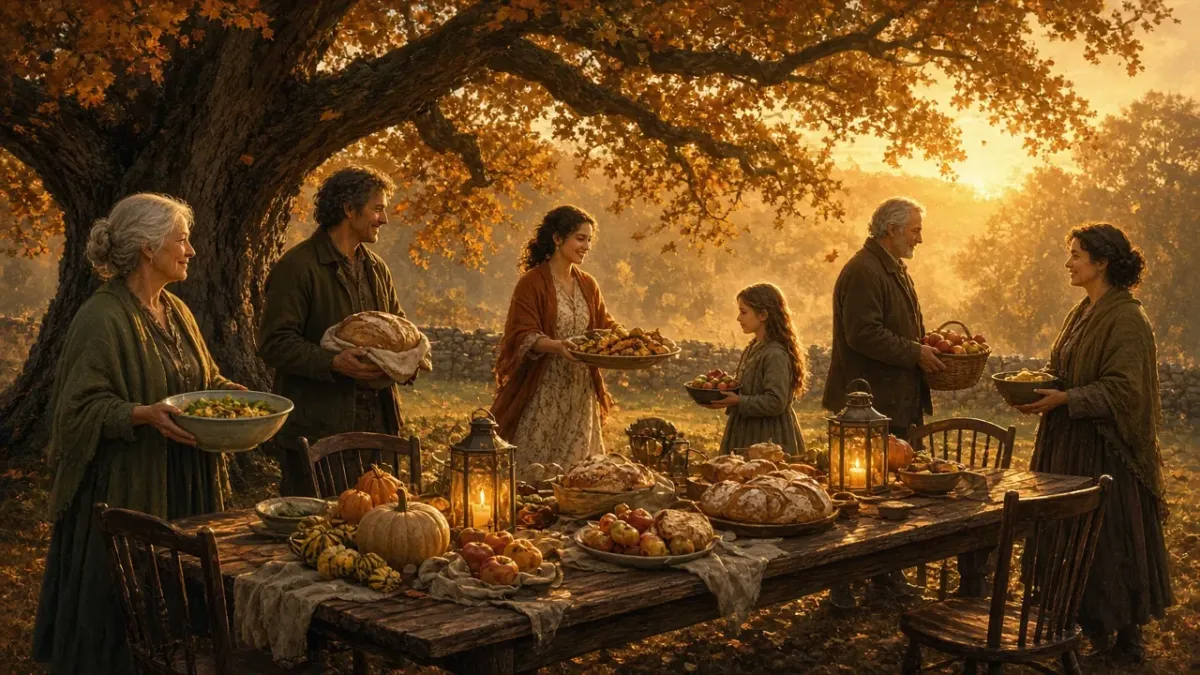
THE PEOPLE AROUND OUR TABLE | Family, Friendship, Forgiveness & Belonging
There is something wonderfully familiar about the sounds of Thanksgiving. The conversations drifting from the kitchen, the laughter that erupts over an old family story, the friendly disagreements about recipes, and the unmistakable energy of people gathering after months—or sometimes years—apart. For many, these moments become the memories that linger long after the last slice of pie has disappeared.
Yet what makes Thanksgiving meaningful is rarely the perfection of the gathering. It is the people who show up, the relationships that have endured, and the shared experiences that remind us where we belong.
The true abundance of Thanksgiving is often measured not by what fills our plates, but by the connections that fill our lives.
Family and friendship are among the most powerful influences on our sense of identity and well-being. They provide continuity through changing circumstances, offer encouragement during difficult seasons, and help us celebrate the moments that make life memorable. Some relationships have been with us since childhood, while others arrive unexpectedly and become just as important.
Of course, not every Thanksgiving gathering resembles the idealized scenes portrayed in holiday advertisements. Families can be complicated. Relationships evolve. Loved ones may be separated by distance, loss, or circumstances beyond their control. And sometimes the people who understand us best are not related to us at all.
Perhaps that is why the meaning of Thanksgiving continues to expand. Traditional family celebrations remain deeply cherished, but Friendsgiving gatherings, neighborhood meals, volunteer-hosted dinners, and smaller celebrations are creating new opportunities for connection.
These evolving traditions remind us that belonging is not defined exclusively by ancestry, geography, or the number of chairs around a table. It grows through kindness, shared experiences, mutual respect, and the willingness to make room for one another.
Thanksgiving offers an invitation not simply to gather with the people we love, but to recognize the many ways love and connection enrich our lives.
THE BONDS THAT BRING US TOGETHER | Family, Friendship & the Changing Meaning of Homecoming
For generations, Thanksgiving has been associated with the journey home. Airports fill with travelers, highways become crowded with families heading toward familiar destinations, and kitchens come alive with preparations for gatherings that may have been anticipated for months.
There is comfort in returning to places and people who hold pieces of our personal history. Familiar traditions reconnect us with childhood memories, family stories, and the relationships that have shaped our lives. Even the smallest rituals—the same serving dish appearing year after year, a favorite relative preparing dessert, or the annual retelling of an amusing family mishap—can create a sense of continuity in an otherwise changing world.
Yet the meaning of homecoming has evolved.
For some, home is the house where generations of family members have gathered. For others, it is wherever a circle of close friends comes together. Friendsgiving celebrations have become a beloved expression of this changing landscape, particularly among people whose families live far away or whose closest relationships have developed outside traditional family structures.
The family we are born into and the family we create can both provide extraordinary sources of belonging.
Thanksgiving also offers an opportunity to appreciate relationships across generations. Grandparents share memories that might otherwise be forgotten, children bring new energy to familiar traditions, and younger family members discover the stories behind recipes, photographs, and customs that have been passed down over time.
These exchanges are more than pleasant holiday conversations. They help preserve a family’s collective memory, giving each generation a greater understanding of where it came from and how its story continues to unfold.
Of course, gathering does not always require a large celebration. An intimate dinner for two, a quiet meal with a close friend, or a video call with someone far away can carry just as much meaning as a crowded holiday table.
And for those spending Thanksgiving alone, solitude need not be viewed as a lesser experience. Sometimes a peaceful day of reflection, personal traditions, and intentional self-care offers its own kind of renewal. Meaningful connection includes the relationship we cultivate with ourselves.
What matters most is not the size or appearance of the gathering, but the authenticity of the experience.
Home is not always the place we return to. Sometimes it is the connection we discover wherever we are.
MAKING ROOM FOR GRACE | Forgiveness, Reconciliation & the Beauty of Imperfect Relationships
The holidays have a remarkable ability to bring people together, but they can also bring unresolved emotions to the surface. Familiar family dynamics, differences in perspective, old misunderstandings, and expectations about how celebrations should unfold can create tension alongside the anticipation and joy.
For many families, Thanksgiving is a reminder that relationships are rarely simple. People change, circumstances evolve, and the experiences that shape our perspectives do not always lead us in the same direction.
Yet the holiday also presents an opportunity to approach these differences with greater awareness.
Grace begins when we recognize that understanding another person does not require agreeing with everything they believe or do.
Sometimes the most meaningful gesture is simply listening without immediately preparing a response. Other times, it may involve extending an apology, expressing appreciation that has gone unspoken, or choosing not to revisit an old disagreement during a gathering intended to bring people together.
Forgiveness can also play an important role in emotional well-being, although it is often misunderstood. Forgiving someone does not necessarily mean excusing harmful behavior, forgetting what happened, or restoring a relationship that is no longer healthy. It may instead involve releasing some of the emotional burden associated with an experience while maintaining appropriate boundaries.
Likewise, reconciliation requires more than one person’s willingness to move forward. Trust is built through consistent behavior, accountability, and mutual respect. Some relationships can be repaired through honest conversation and patience, while others may require distance or a different understanding of what connection should look like.
Compassion and healthy boundaries are not opposites. They can exist together.
During holiday gatherings, this perspective can be especially valuable. We do not need to resolve every difference, revisit every disagreement, or transform every complicated relationship into an ideal one. Sometimes creating a peaceful experience means accepting people as they are while remaining thoughtful about how we engage with them.
Humor can help, too. Many families have their familiar characters, predictable conversations, and amusing traditions that somehow survive every generation. Learning to appreciate these quirks without allowing them to overshadow the gathering can turn potential frustration into a shared memory.
And when difficult emotions arise, there is wisdom in remembering that everyone arrives at the table carrying experiences that may not be immediately visible.
Grace does not require perfect relationships. It asks us to bring greater understanding, compassion, and discernment into the relationships we have.
Thanksgiving reminds us that even imperfect connections can offer opportunities for growth, provided we approach them with honesty and respect.
THE GIFT OF BELONGING | Creating Space for Connection, Kindness & Shared Experience
One of the most beautiful qualities of Thanksgiving is its ability to bring together people whose lives may look very different throughout the rest of the year.
Around a shared table, generations mingle, friends reconnect, children discover family traditions, and neighbors become part of the celebration. The ordinary act of sharing a meal can create a sense of connection that transcends age, background, and circumstance.
But belonging involves more than receiving an invitation. It grows when people feel genuinely welcomed, included, and valued.
Sometimes the smallest gestures create the strongest sense of connection.
Making room for an unexpected guest, remembering someone’s favorite dish, inviting a quieter family member into a conversation, or checking on a neighbor who may be spending the holiday alone can transform an ordinary gathering into something memorable.
The holiday can also be a meaningful time to recognize those who are missing.
For families who have experienced loss, an empty chair may carry as much emotional significance as the people gathered around the table. Traditions that once brought uncomplicated joy can evoke a mixture of gratitude, sadness, remembrance, and love.
Acknowledging these emotions is not contrary to the spirit of Thanksgiving. In many ways, it deepens the meaning of the holiday by reminding us how profoundly relationships shape our lives.
Some families honor absent loved ones by preparing a favorite recipe, sharing a treasured memory, displaying a photograph, or continuing a tradition that person once cherished. These gestures allow remembrance and celebration to exist together.
Belonging also extends beyond familiar relationships. Community dinners, neighborhood gatherings, and shared celebrations offer opportunities to welcome people who might otherwise feel disconnected during the holidays.
And sometimes an unexpected friendship begins with something as simple as an extra place setting.
As we consider the people around our tables this Thanksgiving, perhaps the most meaningful question is not whether the gathering will unfold exactly as planned, but whether those who participate will leave feeling appreciated.
The lasting gift of Thanksgiving is not the meal itself, but the sense of connection we carry with us afterward.
Long after the table has been cleared and the holiday has passed, what remains are the moments when someone made us feel seen, welcomed, understood, or loved.
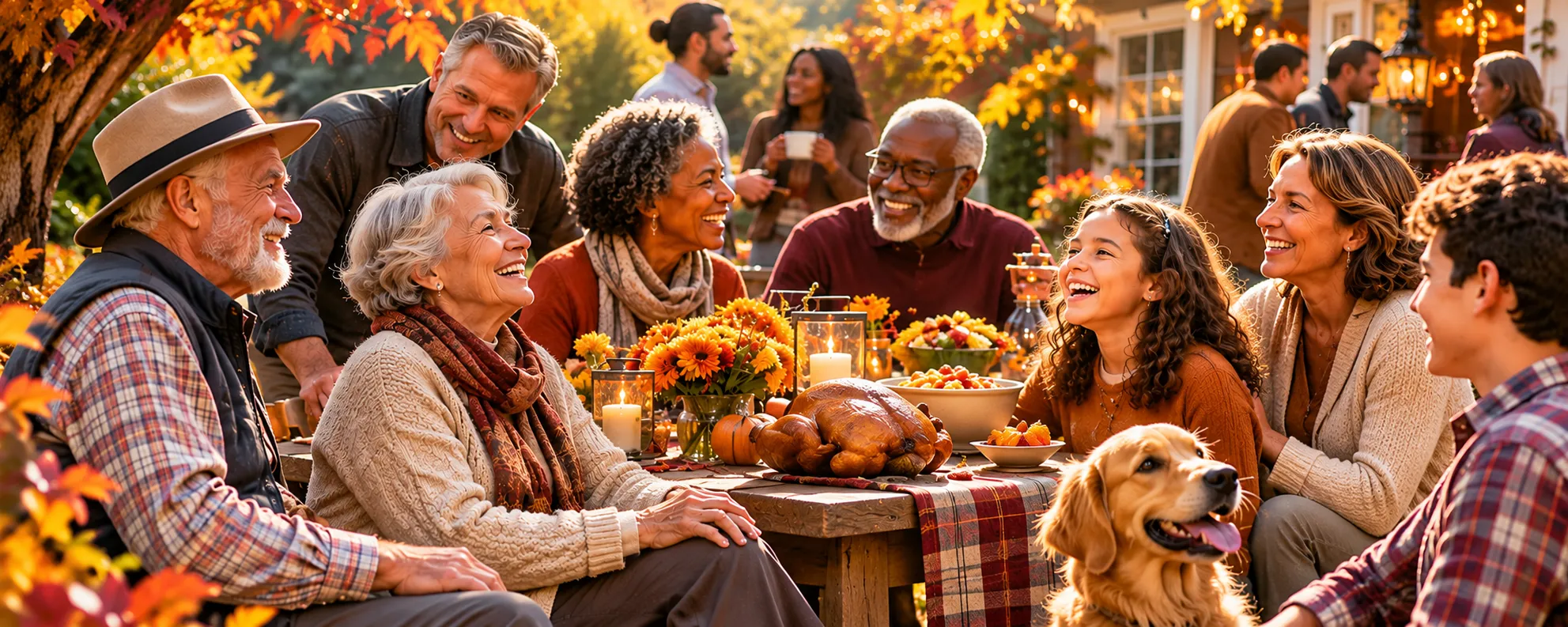
THE BONDS THAT BRING US TOGETHER | Family, Friendship & the Changing Meaning of Homecoming
There is something deeply familiar about coming home for Thanksgiving—the anticipation of seeing loved ones, the sound of familiar voices, and the comforting traditions that reconnect us with earlier chapters of our lives. For generations, the holiday has represented a return to family and the places where our stories began. Yet as our lives evolve, so does our understanding of home. Homecoming is no longer defined solely by a particular address or the family into which we were born, but by the relationships that give us a sense of belonging.
For some, Thanksgiving still unfolds around a familiar table surrounded by generations of family, where beloved recipes, shared stories, and treasured traditions create a sense of continuity. For others, the meaning of family has expanded to include close friends, neighbors, blended families, and communities built through shared experiences. Friendsgiving celebrations have become cherished traditions of their own, reminding us that the people who feel like family aren’t always those who share our last name, but those who make us feel welcomed, valued, and understood.
Of course, relationships and circumstances change. Children establish homes of their own, families become geographically scattered, and the holidays may bring an awareness of loved ones who are no longer present. Sometimes traditions must be reimagined, and new connections take the place of familiar gatherings. Whether through a video call across the miles, an unexpected invitation, or a celebration among newly found friends, meaningful connections can flourish in ways we might never have anticipated.
Perhaps the greatest gift of Thanksgiving is the opportunity to recognize that belonging is something we create together.It grows through shared laughter, thoughtful gestures, welcoming someone new, and making time for the people who enrich our lives. Ultimately, homecoming is less about returning to a particular place than reconnecting with those who make us feel at home. And wherever we find that connection, we discover something worth celebrating.



Feature Family Bonds Author: Dr. Anne Fishel
Home for Dinner: Strengthening Family Bonds Through Thanksgiving Traditions
Family Connections • Shared Meals • Thanksgiving Traditions • Intergenerational Relationships • Emotional Well-Being • Gratitude & Belonging
Dr. Anne K. Fishel is a distinguished clinical psychologist, family therapist, educator, and author whose work explores the importance of family relationships, meaningful communication, and shared experiences in strengthening emotional well-being. As a co-founder of The Family Dinner Project and author of Home for Dinner: Mixing Food, Fun, and Conversation for a Happier Family and Healthier Kids, Fishel has become a leading advocate for bringing families together around the dinner table. Drawing upon decades of clinical experience and research on family dynamics, she examines how regular family meals can support children’s development, encourage open communication, strengthen emotional connections, and create a greater sense of belonging. Her work emphasizes that family dinners are about much more than food or nutrition; they provide opportunities for parents, children, grandparents, and extended family members to share experiences, exchange stories, express appreciation, and develop lasting relationships. By translating psychological research into practical strategies, Fishel encourages families to recognize shared meals as valuable opportunities for connection, stability, and emotional support in an increasingly busy and digitally distracted world.
At the heart of Home for Dinner is the understanding that meaningful family relationships are strengthened through consistent moments of connection, conversation, and shared participation. Fishel highlights research associating regular family meals with positive outcomes, including stronger family communication, healthier eating patterns, and improved emotional well-being, while recognizing that family circumstances and relationship quality also influence these outcomes. She encourages families to move beyond the expectation of perfectly prepared meals and instead focus on creating welcoming environments where everyone feels comfortable participating. Her practical recommendations include inviting children into meal preparation, introducing conversation starters, sharing family stories, establishing enjoyable rituals, and reducing distractions such as television and mobile devices. These principles apply naturally to Thanksgiving, when multiple generations often gather around a shared table. Rather than allowing the holiday to revolve entirely around elaborate menus, cooking responsibilities, or social expectations, families can use the occasion to reconnect, celebrate meaningful traditions, express gratitude, and encourage conversations that strengthen understanding across generations. Thanksgiving becomes an opportunity to recognize that the most valuable part of the celebration is not simply what is served at the table, but the relationships and shared experiences created around it.
From a broader Thanksgiving and conscious-living perspective, Dr. Fishel’s work reminds us that the family dinner table can become one of the most meaningful places for cultivating gratitude, belonging, and intergenerational connection. Thanksgiving provides a natural setting for bringing her principles into practice through family storytelling, expressions of appreciation, shared cooking experiences, remembrance of loved ones, and conversations that encourage compassion and understanding. Families might establish traditions in which each person shares something meaningful from the past year, younger generations ask grandparents about their childhood experiences, or everyone contributes to preparing and serving the holiday meal. These simple activities can help transform Thanksgiving from an annual social obligation into a celebration of shared identity, emotional connection, and family heritage. For the Great Awakening Report’s Thanksgiving Special Report, Home for Dinner offers an accessible framework for exploring how intentional gatherings strengthen relationships and preserve meaningful traditions. Ultimately, Fishel’s message extends beyond Thanksgiving itself: when families make time to gather, listen, laugh, share stories, and appreciate one another, they create a foundation of connection and belonging that can enrich everyday life throughout the year.


MAKING ROOM FOR GRACE | Forgiveness, Reconciliation & the Beauty of Imperfect Relationships
The holidays have a way of bringing people together who share a lifetime of memories, affection, and sometimes unresolved differences. Around the Thanksgiving table, familiar personalities and family dynamics can reappear alongside the laughter and celebration. Yet perhaps one of the most meaningful gifts we can offer one another is the understanding that relationships don’t have to be perfect to be worthy of love, appreciation, and care. Every family and friendship carries its own history, shaped by moments of joy, misunderstanding, disappointment, and growth.
Forgiveness can be an important part of that journey, although it rarely happens all at once. Sometimes it begins with a conversation we’ve been avoiding, an apology sincerely offered, or a willingness to see someone through a more compassionate lens. Other times, forgiveness is a quieter, personal process of releasing resentment without necessarily restoring a relationship to what it once was. Reconciliation requires mutual effort, accountability, and trust, and not every relationship can or should return to its former closeness. Grace allows room for both compassion and healthy boundaries.
Thanksgiving also invites us to appreciate the imperfect beauty of the people who share our lives. We may disagree about important matters, approach life from different perspectives, or carry memories of times when we fell short of one another’s expectations. Yet meaningful connection often grows through patience, humor, honest communication, and the willingness to recognize our shared humanity. A thoughtful gesture, a moment of understanding, or simply choosing not to revisit an old disagreement can sometimes create space for a more peaceful gathering.
Ultimately, making room for grace means recognizing that we are all works in progress, navigating relationships with our own experiences, vulnerabilities, and hopes. We cannot rewrite every chapter of our shared history, but we can choose how we approach the next one. And sometimes the most beautiful expression of gratitude is appreciating the people in our lives as they are, while allowing ourselves and others the space to grow.


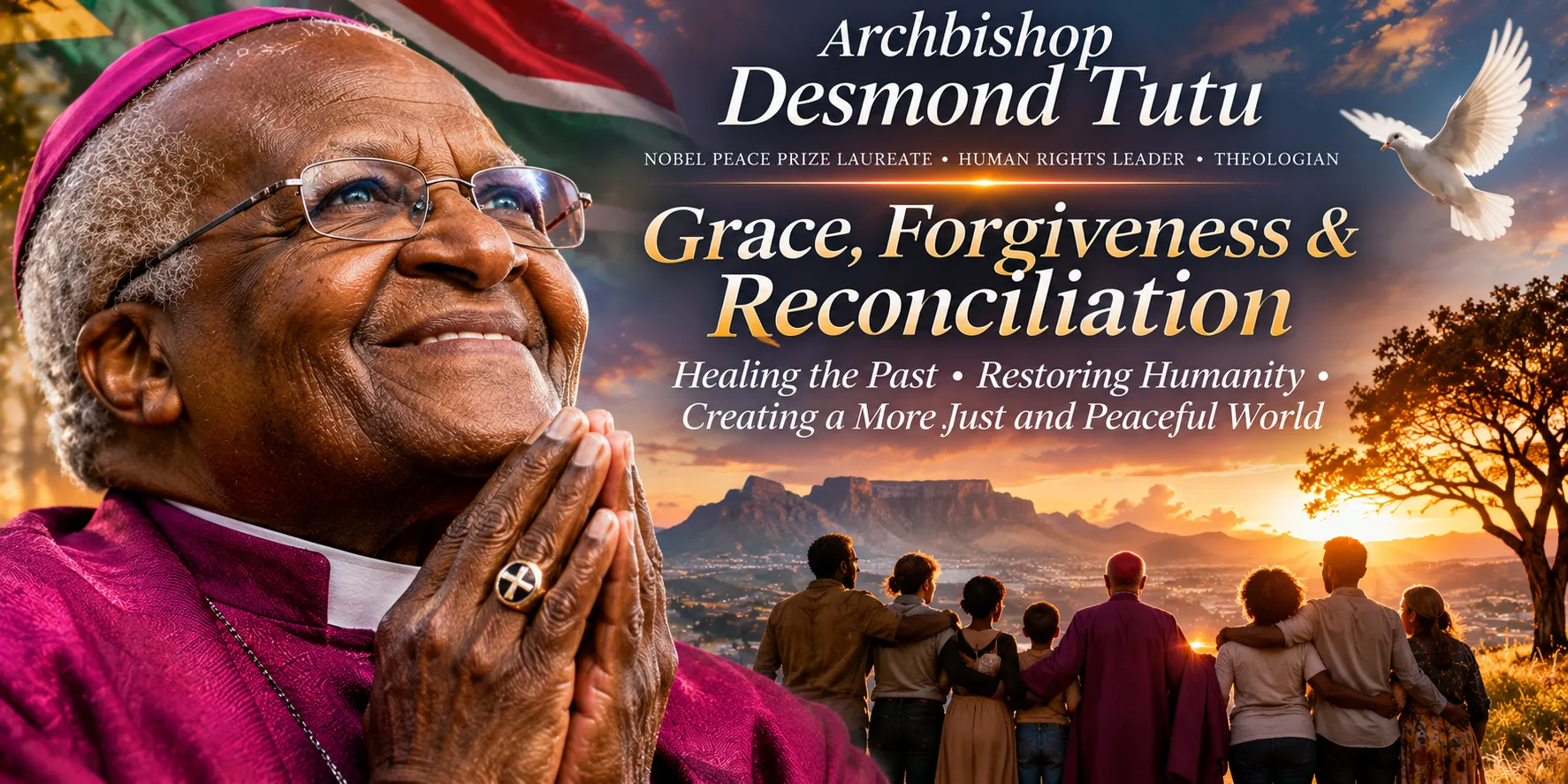
Grace Forgiveness & Reconciliation Expert: Archbishop Desmond Tutu
Healing the Past, Restoring Humanity & Finding Inner Peace
Compassion • Emotional Healing • Forgiveness • Reconciliation • Human Dignity • Spiritual Transformation • Peace & Unity
Archbishop Desmond Mpilo Tutu (1931–2021) was a South African Anglican spiritual leader, theologian, human-rights advocate, and Nobel Peace Prize laureate whose life’s work centered on compassion, forgiveness, justice, and reconciliation. Internationally recognized for his courageous opposition to apartheid, Tutu became one of the world’s most influential moral voices advocating peaceful transformation and the restoration of human dignity. Following South Africa’s transition to democracy, he served as chairman of the Truth and Reconciliation Commission, helping guide a national process of confronting historical injustices, acknowledging suffering, and seeking pathways toward healing. His spiritual philosophy was deeply influenced by the African concept of Ubuntu, which emphasizes humanity’s interconnectedness and the understanding that our individual well-being is inseparable from the well-being of others. Through his public leadership, spiritual teachings, and writings—including No Future Without Forgiveness and The Book of Forgiving, co-authored with his daughter Mpho Tutu—he demonstrated that forgiveness is not a sign of weakness or an excuse for wrongdoing, but a courageous commitment to breaking cycles of resentment, retaliation, and division while preserving the importance of truth, justice, and accountability.
At the heart of Tutu’s teachings is the belief that genuine forgiveness begins with acknowledging suffering rather than denying, minimizing, or forgetting painful experiences. In The Book of Forgiving, Tutu and his daughter present a fourfold path toward healing: telling the story, naming the hurt, granting forgiveness, and renewing or releasing the relationship. This approach recognizes that emotional wounds cannot be meaningfully addressed without first honoring the truth of what occurred and the feelings associated with it. Tutu distinguished forgiveness from reconciliation, explaining that individuals may choose to release resentment without restoring trust or returning to harmful relationships. Reconciliation, when possible, requires honesty, accountability, changed behavior, and a willingness to rebuild understanding. His teachings also emphasize grace—the capacity to recognize another person’s humanity even when their actions have caused pain. Through compassion, empathy, and spiritual reflection, he encouraged individuals to move beyond the desire for revenge and consider the possibility of healing. For Tutu, forgiveness was both an individual journey toward greater inner freedom and a collective responsibility capable of transforming families, communities, and societies divided by historical grievances.
From a Thanksgiving and conscious-living perspective, Archbishop Tutu’s philosophy offers a meaningful invitation to reflect on the relationships, emotional burdens, and unresolved conflicts that shape our lives. Thanksgiving traditionally brings families and communities together to express appreciation, celebrate shared blessings, and recognize the importance of human connection. Yet these gatherings can also reveal longstanding disagreements, disappointments, and emotional wounds that have remained unaddressed. Tutu’s teachings encourage individuals to approach such experiences with humility, compassion, patience, and an openness to understanding different perspectives without abandoning personal boundaries or accountability. His message suggests that gratitude becomes more meaningful when accompanied by grace—the willingness to acknowledge imperfection, recognize the humanity of others, and create opportunities for healing where circumstances permit. For the Great Awakening Report’s Thanksgiving Special Report, his work provides a powerful connection between spiritual awareness, emotional transformation, and the conscious practice of forgiveness. Ultimately, Tutu’s legacy reminds us that forgiveness is not about changing the past, but about choosing how we carry it into the future—releasing the hold of bitterness, restoring dignity, and opening the possibility of greater peace, compassion, and human connection.


The Gift of Belonging | Inclusion, Remembrance & Creating Meaningful Memories
One of the most beautiful aspects of Thanksgiving is the opportunity to make someone feel that they truly belong. Whether it’s welcoming a new neighbor, inviting a friend who lives far from family, or making room for someone experiencing a difficult season, the simplest gestures of inclusion can become the most meaningful memories. Belonging isn’t measured by the number of people gathered around a table, but by how welcomed, valued, and connected each person feels. Sometimes an extra invitation, a thoughtful introduction, or a genuine interest in someone’s story can turn an ordinary holiday into an experience they’ll remember for years.
Thanksgiving also offers a tender opportunity to remember those who are no longer with us. Their absence may be felt in a favorite recipe, an empty chair, or a familiar tradition that carries their memory forward. Rather than avoiding these reminders, families often find comfort in sharing stories, preparing a loved one’s signature dish, or creating small rituals that honor the place they continue to hold in our hearts. Remembrance and celebration can coexist, allowing us to appreciate the relationships that shaped our lives while embracing the people and experiences still unfolding around us.
The memories we treasure most rarely depend on elaborate decorations or perfectly orchestrated celebrations. More often, they emerge spontaneously through shared laughter, children helping in the kitchen, an unexpected conversation, or a family story that somehow becomes funnier with every retelling. Including different generations, welcoming new traditions, and allowing everyone to contribute something personal can transform a gathering into a shared experience of connection and belonging. These are the moments that become part of our family stories, carried forward and remembered long after the holiday has passed.
Ultimately, the gift of belonging is something we give one another through kindness, presence, and the willingness to make room for different experiences and perspectives. As our families and friendships evolve, so do the traditions and memories we create together. Thanksgiving reminds us that the most meaningful place at any table is one where people feel seen, appreciated, and loved—and where there is always room for another story, another connection, and another cherished memory.


HOME FOR THE HOLIDAYS | Decorating, Traditions & Creating a Welcoming Space
“There is nothing like staying at home for real comfort.” — Jane Austen, Emma
There is something unmistakably comforting about a home dressed for autumn. The warm glow of candlelight, the rich colors of changing leaves, the fragrance of cinnamon and freshly baked bread, and the familiar sight of a table being prepared for family and friends all signal the arrival of a season that invites us to slow down and savor life’s simple pleasures.
Thanksgiving has a way of making ordinary spaces feel extraordinary. A favorite serving dish brought out once a year, a wreath on the front door, a bowl of seasonal fruit on the kitchen counter, or a handwritten place card can transform familiar surroundings into a celebration of warmth and welcome.
Yet creating a beautiful Thanksgiving atmosphere is not really about elaborate decorations or picture-perfect arrangements. It is about the feeling a space creates and the experiences that unfold within it.
A welcoming home is not measured by how beautifully it is decorated, but by how comfortably people can be themselves within it.
For some, Thanksgiving means a bustling house filled with extended family, children playing, and conversations spilling from one room into another. For others, the holiday is quieter—a small gathering, an intimate dinner, or a peaceful day enjoyed at home. Each can be equally meaningful, and each offers opportunities to create an environment that reflects the people who live there.
The beauty of seasonal decorating lies in its flexibility. Natural materials, cherished family pieces, handmade details, and thoughtful arrangements can be every bit as inviting as expensive decorations. Often, the most memorable spaces are those that feel personal rather than professionally styled.
As we prepare our homes for Thanksgiving, perhaps the most meaningful intention is simply to create an atmosphere where people feel welcome, traditions come alive, and ordinary moments have room to become lasting memories.
The heart of a home is found not in its furnishings, but in the warmth, laughter, and connection it holds.
THE WARMTH OF AUTUMN | Bringing the Beauty of the Season Indoors
Autumn has a distinctive visual language. Its palette of amber, copper, russet, gold, and deep green evokes the changing landscape, while natural textures and soft lighting create an atmosphere of comfort and familiarity. Even in regions where the leaves do not change dramatically or the weather remains warm, these seasonal elements can bring a touch of autumn indoors.
One of the simplest ways to decorate for Thanksgiving is to draw inspiration from nature. Pumpkins, gourds, branches, dried grasses, pinecones, seasonal flowers, and fresh greenery can become beautiful arrangements with very little effort. A wooden bowl filled with miniature pumpkins, a vase of autumn branches, or a few carefully placed candles may be all that is needed to introduce the season’s warmth.
Nature offers an abundance of inspiration, and its beauty rarely requires elaborate arrangements.
Texture is another important element. Linen table runners, woven baskets, ceramic serving pieces, soft throws, and natural wood accents add depth and character without overwhelming a room. Combining familiar household pieces with a few seasonal touches often creates a more relaxed, collected appearance than purchasing an entirely new collection of decorations.
Lighting can be equally transformative. The gentle glow of lamps, lanterns, and battery-operated candles creates a softer atmosphere than harsh overhead lighting. When paired with seasonal colors and natural materials, even a modest space can feel inviting and festive.
Fragrance also contributes to the experience of home. The aroma of roasted apples, simmering spices, fresh herbs, or something baking in the oven can awaken memories and create an immediate sense of comfort. A simple stovetop mixture of orange slices, cinnamon sticks, and cloves offers a seasonal alternative to heavily fragranced products, provided it is monitored carefully while heating.
There is also something especially appealing about decorating with intention rather than excess. Reusing favorite pieces, incorporating items gathered from nature where appropriate, and choosing decorations that can transition into the winter season make the process both practical and environmentally thoughtful.
A beautiful home need not look identical to anyone else’s. Some people love traditional harvest colors and rustic accents, while others prefer a restrained palette of cream, sage, muted gold, and natural greenery. Still others embrace vibrant arrangements that reflect their family’s cultural traditions and personal style.
The most inviting spaces are those that tell a story about the people who live in them.
AROUND THE THANKSGIVING TABLE | Creating Beautiful Gatherings & Meaningful Moments
Few places capture the spirit of Thanksgiving more completely than the dining table. It is where favorite dishes are shared, family stories are revisited, new friendships are formed, and generations gather around traditions both old and new.
A thoughtfully prepared table can make these moments feel especially memorable, but elegance does not require extravagance.
Some of the most beautiful Thanksgiving tables begin with simple foundations: a neutral tablecloth or runner, familiar dinnerware, cloth napkins, and a centerpiece inspired by the season. Fresh greenery, small pumpkins, autumn flowers, or arrangements of fruit can create a festive focal point while leaving plenty of room for the food that will eventually take center stage.
The most successful Thanksgiving table is one that invites conversation, comfort, and connection.
Practical considerations matter just as much as appearance. Centerpieces should be low enough for guests to see one another, seating arrangements should allow people to move comfortably, and decorations should never compete with the meal itself. A beautifully styled table loses some of its charm if guests must navigate towering arrangements simply to pass the mashed potatoes.
Personal touches can make an even greater impression than elaborate centerpieces. Handwritten place cards, a favorite family recipe printed on decorative paper, or a small note of appreciation at each setting can transform an ordinary meal into something more meaningful.
For families who enjoy interactive traditions, the table can also become a place for shared reflection. A gratitude bowl filled with handwritten notes, conversation cards featuring thoughtful questions, or a simple invitation to share a favorite memory from the past year can encourage connection without making the gathering feel overly formal.
Children can participate by creating place cards, folding napkins, gathering safe natural decorations, or helping arrange a centerpiece. Their contributions may not be perfectly symmetrical, but they often become the details everyone remembers.
And there is no reason every Thanksgiving table must follow the same design rules. A lively outdoor gathering, a casual buffet, a collection of mismatched family dishes, or an intimate candlelit dinner can all be equally beautiful.
What matters is creating an experience that feels authentic to the occasion and welcoming to the people sharing it.
The finest table setting is one that leaves room for laughter, conversation, and a second helping of dessert.
TRADITIONS THAT MAKE A HOUSE A HOME | Personal Rituals, Creativity & the Joy of Togetherness
Every family develops its own collection of holiday traditions. Some are carefully preserved across generations, while others begin almost accidentally and become beloved rituals over time.
Perhaps it is the annual debate over who makes the best stuffing, the familiar holiday playlist that begins before breakfast, or the family member who insists on using the same serving platter year after year. Maybe it is an early morning walk, a neighborhood football game, or the moment everyone gathers to watch the Thanksgiving parade.
These traditions may seem ordinary, but they create a sense of continuity that becomes increasingly meaningful as life changes.
Traditions give memories a place to return to.
They also offer opportunities for creativity. Families might begin a Thanksgiving memory book, recording the year’s milestones and favorite moments. Children could contribute drawings or photographs, while older relatives share stories about celebrations from decades past. Over time, these collections become a remarkable record of family life.
Other traditions might involve preparing a treasured recipe together, creating handmade decorations, taking an annual family photograph, or setting aside time for a favorite board game. For households with guests from different backgrounds, incorporating foods, music, or customs from multiple cultures can make the celebration even more personal.
Not every tradition needs to be elaborate, and not every tradition needs to last forever. As families grow, children become adults, relationships change, and new people join the gathering, celebrations naturally evolve. Allowing room for new rituals can be just as meaningful as preserving old ones.
Thanksgiving can also provide a welcome opportunity to step away from the pace of modern life. Putting phones aside during dinner, spending time outdoors, or simply allowing conversations to unfold without a schedule can create space for the kind of connection that often gets lost in busy routines.
And for those who prefer a quieter celebration, personal rituals can be just as fulfilling. Preparing a favorite meal, enjoying seasonal music, reading beside a window, or taking time to reflect on the year’s experiences can turn a peaceful day at home into a meaningful tradition of its own.
The most enduring traditions are rarely the ones that require the greatest effort. They are the ones people look forward to, remember fondly, and eventually pass along.
In the end, the most beautiful holiday traditions are not the decorations we unpack each year, but the moments of joy and connection we create together.
As Thanksgiving approaches, may our homes become places of warmth, our tables places of welcome, and our traditions reminders of the people and experiences that make life extraordinary.

THE WARMTH OF AUTUMN | Bringing the Beauty of the Season Indoors
Autumn has a way of inviting us to slow down and appreciate the changing beauty of the world around us. As the days grow shorter and the air turns cooler, our homes become places of warmth, comfort, and seasonal celebration. The rich colors of falling leaves, the earthy fragrance of cinnamon and cedar, and the soft glow of afternoon sunlight inspire us to bring a little of nature’s beauty indoors. Creating an inviting autumn home isn’t about elaborate decorating or following the latest trends, but capturing the warmth and character of a season that encourages us to gather, reflect, and feel at home.
Some of the loveliest seasonal touches come directly from nature. Pumpkins and gourds in muted shades of cream, sage, and amber, branches of colorful leaves, dried grasses, pinecones, and late-blooming flowers can transform an ordinary room into a welcoming autumn retreat. Layering cozy throws, textured pillows, woven baskets, and natural fabrics adds depth and comfort, while candles and warm lighting create an atmosphere that feels especially inviting as evening approaches. These simple details allow the beauty of the season to become part of everyday living without overwhelming the spaces we enjoy.
The sensory pleasures of autumn are just as meaningful as its visual beauty. The aroma of something baking in the oven, a favorite blanket draped across a chair, or a softly illuminated reading nook can evoke cherished memories and create new ones. A bowl of freshly gathered apples, a vase of seasonal flowers, or a few thoughtfully arranged objects collected over the years can make a home feel personal and lived in. Often, it’s the smallest details that create the greatest sense of warmth, reminding us that comfort comes from how a space makes us feel rather than how perfectly it is arranged.
As Thanksgiving approaches, these seasonal touches become part of the welcome we extend to others. Whether our homes are filled with guests or we’re enjoying a quieter celebration, the atmosphere we create can encourage relaxation, conversation, and connection. Ultimately, bringing autumn indoors is less about decorating for a particular occasion than embracing the simple pleasures of the season—creating a space where beauty feels natural, comfort comes easily, and everyone who enters feels welcome.
EMBRACING THE BEAUTY OF AUTUMN | Seasonal Colors, Natural Textures & Inspired Decorating
Autumn brings a richness of color, texture, and natural beauty that offers endless inspiration for our homes. From the deep burgundy of changing leaves and the warmth of golden foliage to earthy textiles, gathered branches, and seasonal arrangements, decorating for fall is an opportunity to celebrate the beauty unfolding outdoors. Whether embracing traditional harvest colors or experimenting with more sophisticated, unexpected combinations, the most inviting autumn interiors capture the essence of the season while reflecting our personal sense of style.


CREATING SPACES OF COMFORT & WARMTH | Cozy Living Rooms, Thoughtful Details & Welcoming Atmospheres
As the season shifts, our homes naturally become places where we seek warmth, relaxation, and a greater sense of comfort. Soft lighting, layered fabrics, comfortable seating, and carefully chosen decorative accents can transform everyday rooms into inviting retreats. A glowing fireplace, a favorite reading corner, or a few seasonal touches thoughtfully arranged throughout the home can create an atmosphere that feels both elegant and lived in. The goal isn’t to redesign our surroundings, but to enhance the spaces we already love, making them especially welcoming during the autumn months.


THE LITTLE DETAILS THAT CELEBRATE THE SEASON | Distinctive Accents, Creative Inspiration & Thanksgiving Charm
Sometimes the most memorable seasonal decorations are the unexpected ones. A beautifully arranged collection of natural treasures, a distinctive autumn display, or a creative interpretation of a familiar holiday symbol can bring personality and charm to a room. Thanksgiving decorating offers an opportunity to move beyond conventional arrangements and explore ideas that feel fresh, playful, or uniquely meaningful. It’s often these small, imaginative touches that give a home its character, creating an atmosphere that celebrates the season without sacrificing individuality or elegance.




AROUND THE THANKSGIVING TABLE | Creating Beautiful Gatherings & Meaningful Moments
There is something especially inviting about a Thanksgiving table thoughtfully prepared for the people who will gather around it. From the soft glow of candlelight and the richness of autumn colors to treasured serving pieces and carefully arranged flowers, the table becomes more than a place to share a meal. It reflects the personality of the home, the traditions we carry forward, and the care we put into welcoming others. Whether elegantly styled or beautifully simple, a Thanksgiving table sets the stage for connection, celebration, and the memories that linger long after the holiday has passed.
The beauty of Thanksgiving entertaining lies in the freedom to make it our own. Some hosts favor timeless elegance, layering fine linens, heirloom china, and seasonal florals, while others embrace rustic textures, unexpected color palettes, or creative arrangements inspired by the natural world. Vintage treasures can sit comfortably beside contemporary pieces, and handmade details often become the most meaningful elements of all. A memorable table doesn’t have to follow a particular style or tradition; it simply needs to feel authentic to the people creating it.
Thoughtful hospitality also extends beyond beautiful place settings. The way a room is arranged, the ease of serving a large gathering, and the small considerations that make guests feel comfortable all contribute to the experience. A welcoming buffet, an inviting centerpiece that encourages conversation, or a cherished family serving dish can add warmth and personality without requiring elaborate preparation. These details allow the celebration to unfold more naturally, leaving more time for laughter, conversation, and the pleasure of being together.
Ultimately, the true beauty of the Thanksgiving table is found in the moments shared around it. The decorations may change from year to year, and the guest list may grow or evolve, but the spirit of hospitality remains. Whether we’re gathering a large extended family, welcoming friends, or enjoying a quieter celebration, the table offers a place to pause, appreciate the abundance before us, and celebrate the simple joy of sharing something meaningful together.
THE ART OF THE THANKSGIVING TABLE | Elegant Settings, Personal Style & Inspired Design
A beautifully arranged Thanksgiving table sets the stage for one of the season’s most cherished gatherings. Whether your style leans toward understated elegance, rustic warmth, or something more colorful and expressive, the possibilities are nearly endless. From layered linens and heirloom china to thoughtfully chosen glassware and unexpected decorative accents, today’s tablescapes celebrate individuality as much as tradition. The most memorable settings reflect the personality of the home and the spirit of the people gathered around them, creating an atmosphere that feels both beautiful and genuinely welcoming.


FROM HARVEST TO HEIRLOOM | Natural Beauty, Timeless Traditions & Meaningful Details
Some of the most captivating Thanksgiving tables draw their inspiration from the season itself, blending natural textures, autumn foliage, and the rich colors of the harvest with treasured pieces collected over time. A vintage serving dish, a beautifully patterned runner, or a traditional cornucopia can become a meaningful focal point, connecting generations through familiar objects and seasonal symbolism. By combining the beauty of nature with personal history, we create tables that tell a story, celebrating both the abundance of the season and the traditions that give Thanksgiving its enduring character.


CENTERPIECES & CREATIVE INSPIRATION | Seasonal Arrangements, Artistic Touches & Beautiful Focal Points
A thoughtfully designed centerpiece can bring an entire Thanksgiving table to life, adding color, texture, and a touch of artistry to the celebration. Whether it’s an abundant arrangement of seasonal flowers, a collection of pumpkins and gourds, or a simple composition of greenery and candlelight, the possibilities extend far beyond traditional holiday decorations. Natural materials and unexpected combinations can be especially striking, allowing each arrangement to reflect a personal sense of style. The most beautiful centerpieces invite appreciation without overwhelming the table, enhancing the gathering while leaving room for conversation and connection.


THE JOY OF GATHERING | Thoughtful Hospitality, Effortless Entertaining & Shared Celebrations
While beautiful table settings create a welcoming first impression, the experience of gathering together is what makes Thanksgiving truly memorable. Thoughtful planning, comfortable seating, and creative serving arrangements can help a celebration unfold naturally, allowing hosts to spend less time managing details and more time enjoying their guests. From beautifully organized buffets to simple, inviting table arrangements, the goal is to create an atmosphere where hospitality feels effortless and everyone can relax. Ultimately, the success of a Thanksgiving gathering isn’t measured by the elegance of the setting, but by the warmth, laughter, and meaningful moments shared around it.

TRADITIONS THAT MAKE A HOUSE A HOME | Creativity, Shared Rituals & Personal Touches
Every home has its own personality, shaped not only by the people who live there but by the little rituals and personal touches that make it unmistakably theirs. As autumn settles in and Thanksgiving approaches, familiar decorations emerge from storage, treasured keepsakes find their places, and the simple act of preparing for the season becomes a tradition in itself. Perhaps it’s an old quilt draped across a favorite chair, a collection of handmade decorations gathered over the years, or a special centerpiece that returns to the table each November. These meaningful details remind us that a welcoming home isn’t created through perfection, but through the memories and experiences woven into everyday life.
Some of the most enjoyable holiday traditions begin with a little creativity. Painting pumpkins, arranging autumn branches and flowers, making personalized place cards, or crafting decorations from leaves, pinecones, and other natural materials can turn an ordinary afternoon into a memorable experience. Children bring their imaginations, grandparents share their knowledge, and everyone contributes something uniquely their own. The results may be delightfully imperfect, but that’s often what makes them special. A handmade decoration created years ago can become more treasured than anything purchased, carrying the story of the people who made it and the laughter shared along the way.
Other traditions are less about what we create and more about the familiar rhythm of preparing our homes for the season. Playing favorite music while decorating, gathering fresh flowers from the garden, bringing out cherished serving pieces, or spending an afternoon baking while the house fills with comforting aromas can become small rituals we look forward to each year. As families grow and change, these customs naturally evolve. New partners, children, friends, and different cultural backgrounds introduce fresh ideas, creating opportunities to blend beloved traditions with something entirely new. The beauty of these rituals is that they don’t have to remain unchanged to preserve their meaning.
Ultimately, the traditions that make a house a home are rarely the most elaborate or expensive. They’re the personal touches that reflect our stories, the creative moments we share, and the welcoming atmosphere that grows from making a space our own. Whether we’re continuing a decades-old custom or beginning something for the first time, these simple expressions of care bring warmth and individuality to the places where life unfolds. And often, the things we remember most aren’t how beautifully everything was arranged, but how much we enjoyed creating it together.
CREATING A WELCOMING HOME
The spirit of Thanksgiving begins long before guests arrive, in the thoughtful details that make a home feel warm, comfortable, and inviting. From preparing gathering spaces and welcoming entryways to adding seasonal touches that reflect our personal style, creating a welcoming atmosphere doesn’t require perfection or elaborate preparations. It’s about making room for the people and experiences that matter, transforming familiar spaces into places where guests can relax, connect, and feel genuinely at home.


TRADITIONS OLD & NEW
Every family has its own way of celebrating Thanksgiving, shaped by cherished memories, familiar rituals, and traditions that evolve over time. Some customs have been passed down through generations, while others begin with a spontaneous idea that becomes an annual favorite. As families grow and different backgrounds and experiences come together, these celebrations take on new meaning. The most enduring traditions aren’t necessarily the oldest, but those that bring people together and make each celebration feel uniquely their own.



HANDMADE WITH HEART
There’s something especially meaningful about creating decorations and keepsakes with our own hands. A garland assembled around the kitchen table, a handcrafted ornament, or a personalized decoration can become much more than a seasonal accent—it becomes part of a family’s story. These projects offer opportunities to express creativity, share skills across generations, and enjoy the simple pleasure of making something together. Often, the most treasured decorations are those that carry a memory, a story, or the unmistakable charm of being handmade.



THE ART OF SEASONAL DETAILS
Sometimes it’s a single thoughtful detail that transforms an ordinary space into something memorable. A collection of dried flowers, a beautifully arranged mantel, or a creative centerpiece can reflect both the season and the personality of the home. Combining natural materials, collected treasures, and unexpected colors allows us to celebrate autumn in ways that feel fresh and individual. The beauty of seasonal decorating lies in finding inspiration and making it our own, rather than following a prescribed formula for how Thanksgiving should look.


THE FLAVORS OF THANKSGIVING | Cherished Recipes, Culinary Traditions & Seasonal Inspiration
“Cooking is like love. It should be entered into with abandon or not at all.” — Harriet Van Horne
Few holidays are as closely connected to food as Thanksgiving. Long before the first guest arrives or the table is set, the celebration often begins in the kitchen, where familiar aromas, treasured recipes, and the anticipation of sharing a meal bring the season to life. There is something wonderfully comforting about the fragrance of roasting turkey, the warmth of freshly baked bread, and the sight of favorite dishes appearing year after year.
Food has an extraordinary ability to connect us with memory. A single taste can transport us to childhood celebrations, remind us of someone we love, or bring back the unmistakable feeling of being surrounded by family. The recipes we cherish are often more than instructions written on a page. They are pieces of our personal histories, passed between generations and preserved through the simple pleasure of preparing something meaningful for others. Thanksgiving food nourishes more than the body. It preserves memories, celebrates heritage, and creates experiences that connect us across generations.
Yet the Thanksgiving feast also tells a much larger story. Many of the dishes we consider holiday essentials have surprising origins, shaped by Indigenous foodways, regional agriculture, cultural exchange, and generations of culinary innovation. From cornbread dressing in the South and wild rice in the Upper Midwest to coastal seafood specialties and the distinctive flavors of America’s multicultural kitchens, Thanksgiving traditions are far more diverse than a single holiday menu might suggest. Understanding the history behind these familiar foods adds another dimension of appreciation to the celebration, revealing how ingredients, cultures, and customs have come together over time.
The possibilities for today’s Thanksgiving feast are equally rich and varied. Some families embrace the comforting familiarity of traditional recipes, while others introduce contemporary interpretations, creative side dishes, or desserts that bring something unexpected to the celebration. Whether preparing an elaborate holiday menu or a smaller gathering, thoughtful planning can make the experience more enjoyable. Accommodating different dietary preferences, preparing dishes ahead of time, and finding imaginative ways to use leftovers allow us to celebrate abundance without unnecessary complexity or waste. The goal isn’t to prepare the most impressive meal, but to create something delicious, welcoming, and meaningful for everyone gathered.
There is also a special kind of joy in the preparation itself. The conversations that unfold while vegetables are chopped, the children learning to make a family recipe, the friendly debates over whether stuffing belongs inside the turkey or in a separate dish, and the inevitable last-minute adjustments all become part of the experience. These moments remind us that the kitchen is often where some of our most cherished holiday memories begin.
As we explore the surprising stories behind Thanksgiving’s culinary traditions and discover inspiration for creating a memorable feast—from beloved classics and seasonal desserts to practical preparation tips and creative new favorites—one theme remains constant: the most meaningful meals are those prepared and shared with appreciation. The recipes may change, the guest list may evolve, and new traditions may find their way into our celebrations, but the simple pleasure of sharing good food remains at the heart of Thanksgiving.
THE FOODS THAT TELL OUR STORIES | Origins of Thanksgiving Favorites, Family Recipes and Culinary Heritage
The Thanksgiving menu feels so familiar that it is easy to imagine Americans have always celebrated with roasted turkey, mashed potatoes, cranberry sauce, stuffing, and pumpkin pie. Yet the foods associated with today’s holiday developed gradually, shaped by regional agriculture, cultural traditions, changing tastes, and generations of home cooks.
The harvest gathering shared by English colonists and Wampanoag people in 1621 would have looked considerably different from a modern Thanksgiving dinner. Historical accounts indicate that wildfowl and venison were part of the celebration, while foods such as corn, squash, beans, and other locally available ingredients played important roles in the region’s food traditions. Many dishes now considered essential Thanksgiving favorites became established much later.
Turkey eventually emerged as the holiday’s most recognizable centerpiece, partly because it was widely available in North America and could feed a gathering. During the nineteenth century, influential writers, cookbooks, and popular illustrations helped establish a more recognizable national Thanksgiving menu.
Among those who championed the holiday was Sarah Josepha Hale, whose advocacy helped popularize Thanksgiving as a national celebration. Her descriptions of family gatherings and seasonal foods contributed to the imagery that Americans continue to associate with the holiday.
Over time, familiar dishes acquired their own histories. Cranberries, native to North America, became a natural accompaniment to roasted meats, eventually appearing in sauces and relishes that balanced the richness of the meal. Pumpkin, long cultivated in the Americas, found its way into the sweet, spiced pies that became synonymous with autumn celebrations. Stuffing and dressing evolved from older culinary traditions, adapting to local ingredients and family preferences.
What we now consider a traditional Thanksgiving dinner is actually the result of centuries of culinary exchange and adaptation.
Regional Flavors & Family Favorites
Travel across the United States during Thanksgiving, and the holiday menu changes in fascinating ways.
In the South, cornbread dressing often takes center stage, accompanied by dishes such as collard greens, macaroni and cheese, sweet potato casserole, and pecan pie. New England celebrations frequently reflect the region’s agricultural and maritime heritage, incorporating apples, cranberries, root vegetables, and occasionally seafood.
In the Upper Midwest, wild rice, hearty casseroles, and locally grown produce may appear alongside the familiar holiday staples. Southwestern tables can feature green chiles, tamales, roasted peppers, and regional seasonings, while Louisiana celebrations may include Cajun-spiced turkey, oyster dressing, or other dishes influenced by the state’s distinctive culinary history.
Thanksgiving has also become a celebration of America’s multicultural kitchens. Italian American families may serve pasta before the turkey, Mexican American households might include tamales, and Asian American families may incorporate dishes such as rice, dumplings, or preparations inspired by their cultural heritage.
These additions do not diminish Thanksgiving traditions. They enrich them, reflecting the personal histories of the people gathered to celebrate.
Family recipes offer another layer of meaning. Many households have at least one dish that must appear every year, regardless of how the rest of the menu changes. It might be a grandmother’s stuffing, an aunt’s cranberry relish, a parent’s sweet potato casserole, or a dessert whose recipe has never been formally written down.
Sometimes the instructions are delightfully imprecise: a handful of this, a little of that, and enough seasoning until it tastes right. Yet these recipes often become among the most treasured parts of a family’s culinary inheritance.
Preserving them can be a meaningful Thanksgiving tradition in itself. Writing down ingredients, recording the stories behind favorite dishes, or inviting younger generations to participate in their preparation helps ensure that these memories continue.
Every cherished recipe carries a story, and every generation has an opportunity to add a new chapter.
The Thanksgiving feast is not a fixed collection of dishes. It is a living tradition, shaped by the places we call home, the people who taught us to cook, and the flavors we choose to carry forward.
A FEAST FOR EVERY GATHERING | Menu Planning, Dietary Alternatives, Make-Ahead Preparations And Creative Leftovers
Thanksgiving cooking can be one of the season’s greatest pleasures, but it can also become overwhelming when expectations grow larger than the time and energy available.
Between coordinating recipes, shopping for ingredients, accommodating guests, and managing oven space, preparing a holiday meal requires more planning than many people anticipate. Fortunately, a memorable Thanksgiving celebration does not depend on an endless menu or a perfectly executed schedule.
Thoughtful preparation creates more room for the very experiences Thanksgiving is meant to celebrate.
Planning a Menu That Works for You
A successful Thanksgiving menu begins with the people who will be sharing it.
For a large gathering, a traditional centerpiece accompanied by several familiar side dishes may be the most practical approach. Smaller celebrations offer opportunities for simplified menus, individual portions, or alternative main dishes that require less preparation.
A useful starting point is to select one main dish, three or four complementary sides, a sauce or relish, and one or two desserts. From there, the menu can expand or contract according to the number of guests, available cooking space, and personal preferences.
It is also worth considering the balance of flavors and textures. Rich dishes benefit from lighter accompaniments, while roasted vegetables, fresh salads, and bright cranberry sauces provide contrast to traditional holiday favorites.
Not every dish needs to be prepared from scratch. A bakery pie, a favorite prepared side dish, or a contribution from a guest can ease the workload without diminishing the celebration.
Making Room for Different Dietary Needs
Modern Thanksgiving gatherings often include guests with a variety of dietary preferences, allergies, and nutritional considerations.
Vegetarian and vegan celebrations can feature roasted squash, stuffed mushrooms, lentil-based dishes, seasonal vegetables, and plant-based gravies. Gluten-free alternatives may include naturally gluten-free vegetables, rice dishes, and carefully prepared stuffing made with suitable ingredients.
For guests managing food allergies, clear communication about ingredients and preparation methods is especially important. Separate utensils and attention to cross-contact can help make the meal safer and more inclusive.
One of the simplest ways to accommodate different preferences is to build a menu around versatile seasonal ingredients, offering sauces, toppings, or optional additions separately when practical.
Hospitality is not about creating an entirely different meal for every guest. It is about making thoughtful choices that help everyone feel considered and welcome.
The Beauty of Preparing Ahead
Many Thanksgiving dishes actually benefit from being prepared in advance.
Cranberry sauce, pie dough, certain desserts, and some casseroles can be made ahead, reducing the number of tasks competing for attention on Thanksgiving Day. Vegetables can be washed and chopped, serving dishes can be labeled, and recipes can be reviewed before the holiday rush begins.
A simple preparation schedule can make a remarkable difference.
Several days before Thanksgiving: Finalize the menu, check pantry supplies, shop for ingredients, and begin safely thawing a frozen turkey in the refrigerator, allowing approximately 24 hours for every 4–5 pounds.
The day before: Prepare cranberry sauce, desserts, and appropriate make-ahead components. Set the table and organize serving dishes.
Thanksgiving morning: Begin roasting the turkey according to its size, prepare remaining sides, and allow enough time for resting, carving, and final reheating.
The most important ingredient in a successful schedule may be flexibility. A dish may take longer than expected, a guest may arrive early, or something may not turn out quite as planned. These moments rarely define the holiday unless we allow them to.
Making the Most of Thanksgiving Leftovers
For many families, the day after Thanksgiving is almost as enjoyable as the celebration itself.
Leftover turkey can become sandwiches, soups, pot pies, or hearty grain bowls. Mashed potatoes can be transformed into crispy potato cakes, while roasted vegetables can find new life in frittatas, pasta dishes, or warm seasonal salads.
Cranberry sauce is especially versatile, adding a sweet-tart accent to sandwiches, yogurt, oatmeal, or baked goods.
Food safety matters, however. Refrigerate perishable leftovers within two hours of serving, use refrigerated leftovers within three to four days, or freeze them for longer storage. Reheat leftovers to 165°F.
Creative leftovers offer an opportunity to extend the pleasure of the holiday while reducing food waste and simplifying meals in the days that follow.
Remembering What Matters Most
Perhaps the most valuable Thanksgiving cooking advice has little to do with technique.
It is easy to become so focused on preparing the perfect meal that we miss the experiences unfolding around us. The conversations in the kitchen, the laughter over a forgotten ingredient, the child proudly presenting a homemade dessert, and the quiet satisfaction of seeing people enjoy something we’ve prepared are often the moments that matter most.
A successful Thanksgiving does not require flawless execution. It requires a little preparation, a willingness to adapt, and an appreciation for the people and experiences that make the gathering meaningful.
The most memorable Thanksgiving meals are not necessarily the most impressive. They are the ones that leave us feeling nourished, welcomed, and connected.
When the dishes are cleared and the last piece of pie has been enjoyed, what remains is not a record of everything we served, but the warmth of the experience we shared.
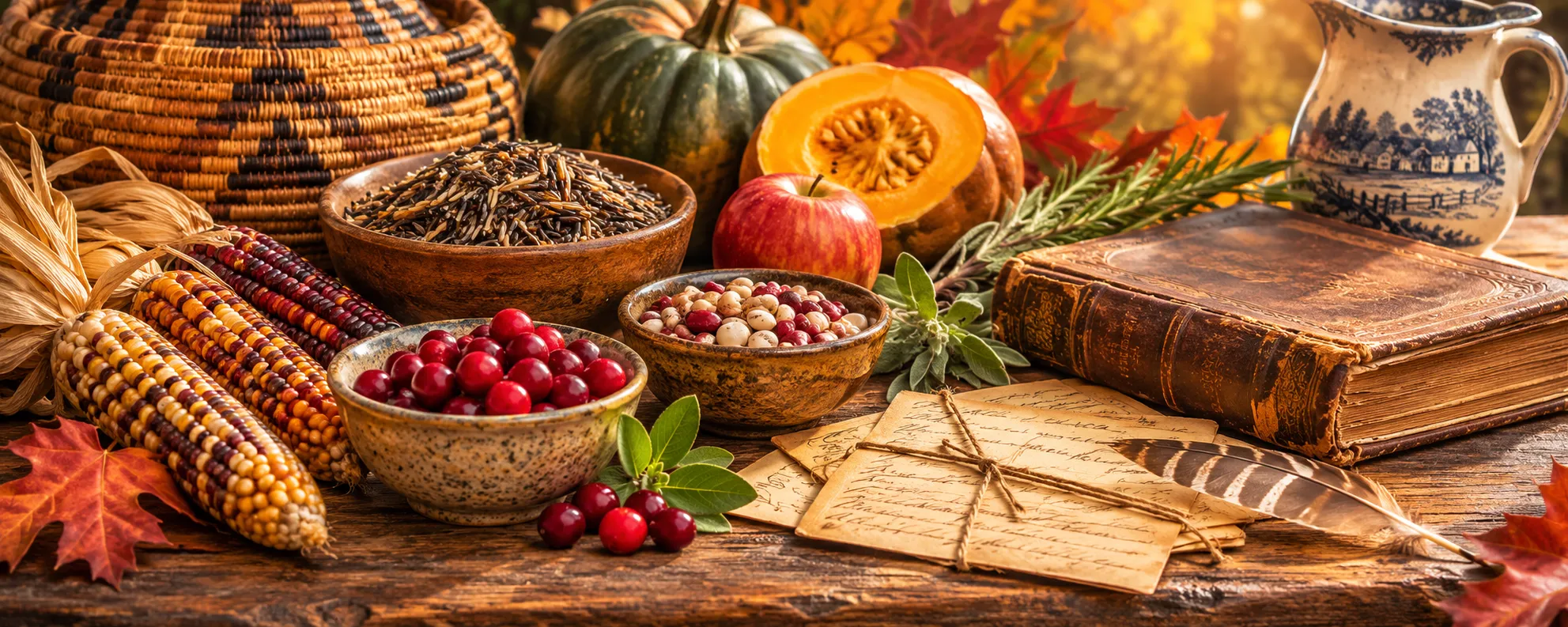
BEHIND THE THANKSGIVING FEAST | Surprising Food Origins, Regional Flavors & Culinary Heritage
The familiar flavors of Thanksgiving have histories far richer and more surprising than we might imagine. While roasted turkey, stuffing, cranberry sauce, sweet potatoes, and pumpkin pie have become synonymous with the holiday, the feast we recognize today evolved over centuries, shaped by Indigenous foodways, European culinary traditions, regional ingredients, and changing American tastes. Many dishes we consider Thanksgiving essentials weren’t part of the earliest harvest celebrations, while others have roots extending far beyond the holiday itself. Exploring these culinary origins reveals how history, geography, and cultural exchange helped create one of America’s most recognizable food traditions.
Some of the most fascinating stories begin with ingredients native to North America. Corn, squash, pumpkins, and cranberries were cultivated, harvested, or used by Indigenous peoples long before Thanksgiving became a national holiday. Other familiar favorites arrived or evolved much later. Green bean casserole, for example, emerged from a Campbell’s test kitchen in the 1950s, while the popularity of marshmallow-topped sweet potatoes reflects early twentieth-century food marketing. Even pumpkin pie, now a holiday staple, developed through centuries of adaptation as European baking traditions encountered ingredients native to the Americas. What feels timeless often has a surprisingly modern history.
Regional differences add another delicious dimension to the Thanksgiving story. Southern celebrations may feature cornbread dressing, macaroni and cheese, or sweet potato pie, while coastal communities have traditions of oyster stuffing and seafood dishes. Across the country, local ingredients, immigrant influences, and generations of family preferences have created distinctive interpretations of the holiday feast. Italian-American families might serve lasagna alongside turkey, while Filipino-American celebrations may include pancit or lumpia, reflecting the wonderful diversity of contemporary Thanksgiving traditions. These variations remind us that there has never been just one way to celebrate Thanksgiving through food.
Behind every familiar dish lies a larger story of adaptation, ingenuity, and cultural connection. Recipes evolve as ingredients become available, tastes change, and new generations introduce their own influences. Understanding where our Thanksgiving favorites originated adds another layer of appreciation to the foods we enjoy, transforming an ordinary holiday menu into a fascinating reflection of American history and culinary heritage. The Thanksgiving feast is more than a collection of beloved dishes; it’s a living record of the cultures, communities, and creative traditions that continue to shape it.



A FEAST FOR EVERY GATHERING | Menu Planning, Dietary Alternatives, Make-Ahead Preparations And Creative Leftovers
Thanksgiving is one of those wonderful occasions when food becomes an expression of generosity, creativity, and celebration. Whether preparing a traditional feast with all the familiar favorites or exploring contemporary flavors and unexpected combinations, the possibilities are as varied as the people gathering to enjoy them. From beautifully coordinated menus and irresistible desserts to regional specialties and healthier alternatives, today’s Thanksgiving celebrations offer something for nearly every taste and preference. The most memorable meals aren’t necessarily the most elaborate, but those prepared with thoughtfulness, shared with appreciation, and enjoyed in good company.
Planning a holiday feast also means recognizing that every gathering is different. Some families embrace time-honored recipes, while others welcome vegetarian dishes, gluten-free adaptations, lighter preparations, or flavors inspired by different cultural backgrounds. Creating a menu that accommodates these preferences can be an opportunity for culinary discovery rather than a complication. A colorful vegetable dish, an inventive side, or a fresh interpretation of a traditional favorite may become one of the most talked-about additions to the celebration. Making room for different tastes is another way of extending hospitality and ensuring everyone feels included.
Of course, even the most enthusiastic home cooks appreciate ways to simplify holiday preparations. Thoughtful menu planning, make-ahead recipes, practical cooking timelines, and a few reliable shortcuts can transform an otherwise demanding day into a more relaxed and enjoyable experience. And when the celebration winds down, the possibilities continue, as leftover turkey, vegetables, stuffing, and cranberry sauce become the foundation for entirely new meals. With a little imagination, yesterday’s feast can inspire everything from comforting soups and savory pastries to creative sandwiches and globally influenced dishes.
Ultimately, a wonderful Thanksgiving feast is about more than the dishes we prepare; it’s about the pleasure of sharing abundance and creating an experience everyone can enjoy. Whether cooking for two or hosting a houseful of guests, the goal is to find a balance between cherished favorites, fresh inspiration, and the freedom to enjoy the occasion ourselves. The following collections offer recipes, menu ideas, and practical guidance to help make Thanksgiving delicious, welcoming, and memorable—without losing sight of the simple joy at the heart of the celebration.
THE ART OF THE THANKSGIVING FEAST | Inspired Menus, Culinary Creativity & Celebrations for Every Gathering
Thanksgiving menus are as varied as the families and friends who gather to enjoy them. Some celebrations revolve around familiar dishes prepared exactly as they’ve been for generations, while others welcome fresh flavors, regional specialties, and creative interpretations of holiday favorites. Whether planning an intimate dinner or a feast for a houseful of guests, the most memorable menus balance cherished traditions with the freedom to make the occasion our own.From beautifully coordinated courses to unexpected culinary discoveries, these collections offer inspiration for creating a celebration that reflects personal tastes, family customs, and the simple pleasure of sharing good food.



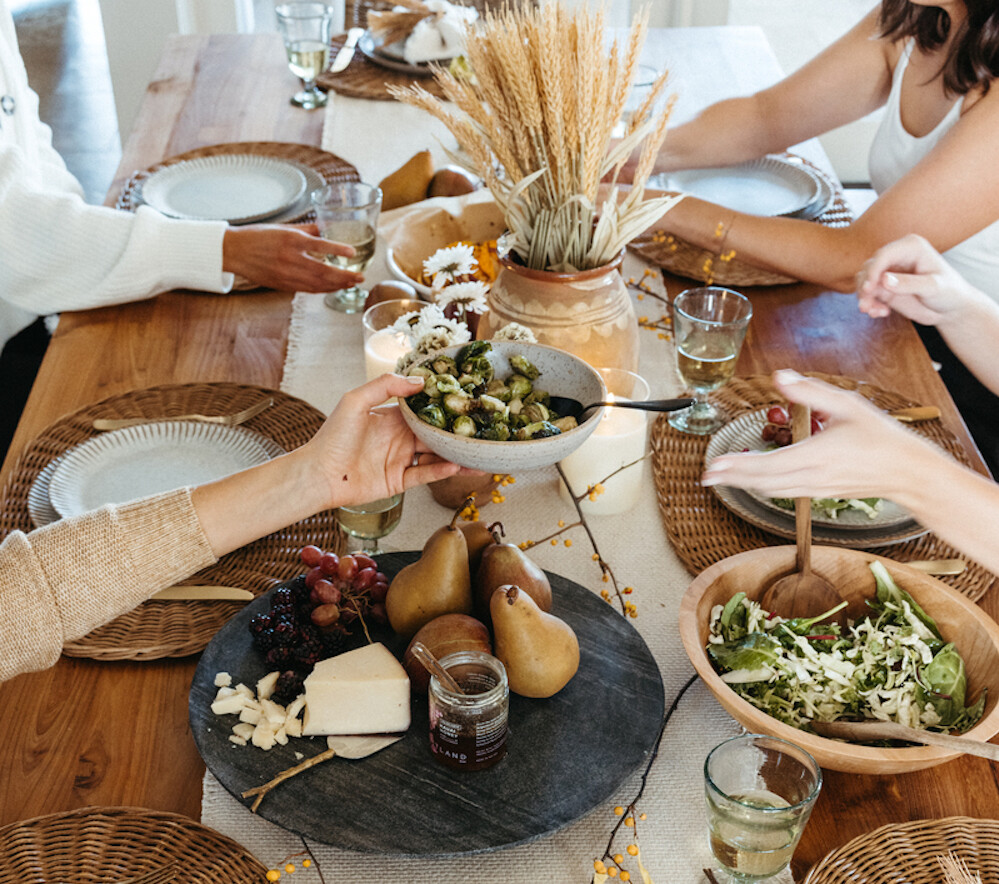


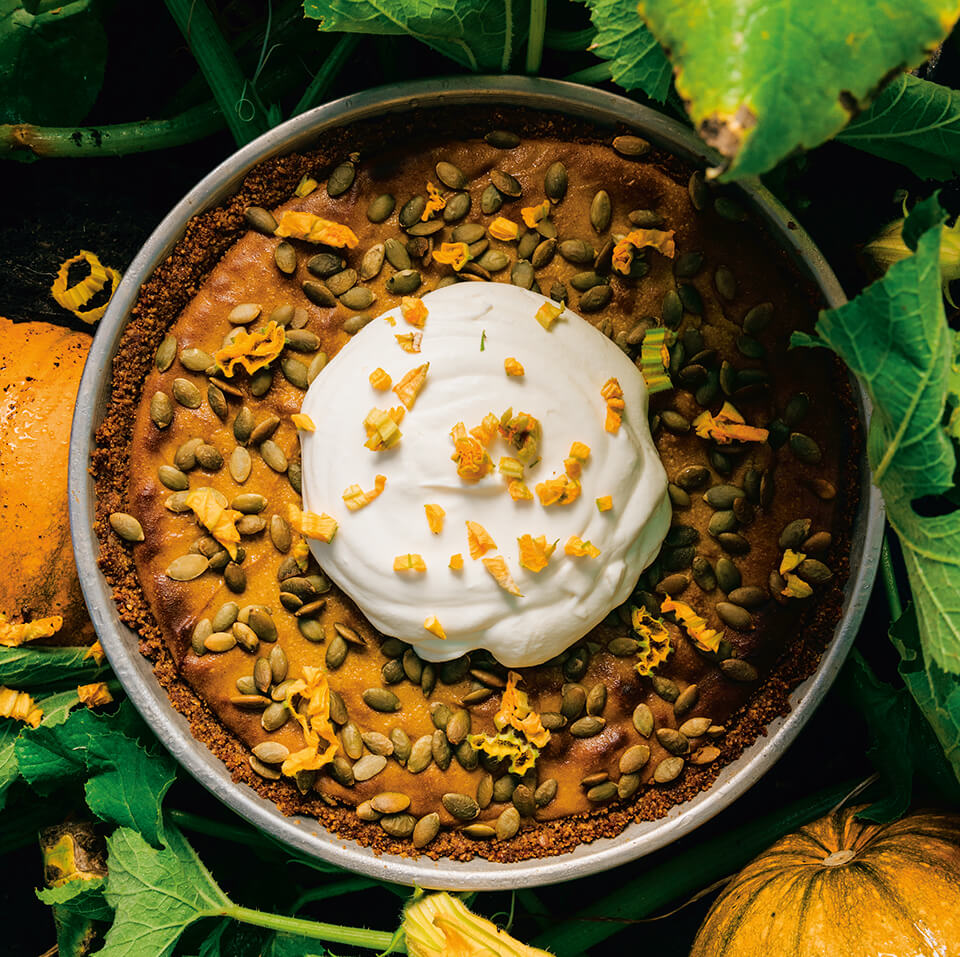
THE CLASSICS WE COME BACK TO | Beloved Holiday Dishes, Regional Favorites & Recipes Worth Repeating
Every Thanksgiving feast has its familiar favorites—the dishes that guests anticipate, request year after year, and sometimes insist must never change. From golden roasted turkey and savory stuffing to creamy potatoes, colorful vegetables, and the countless regional variations that make holiday cooking so interesting, these recipes carry a special place in our celebrations. Yet even the most beloved classics offer room for discovery, whether through a new cooking technique, an unexpected ingredient, or a treasured family variation. The beauty of Thanksgiving cooking lies in honoring the flavors we remember while remaining open to new favorites that may become traditions of their own.
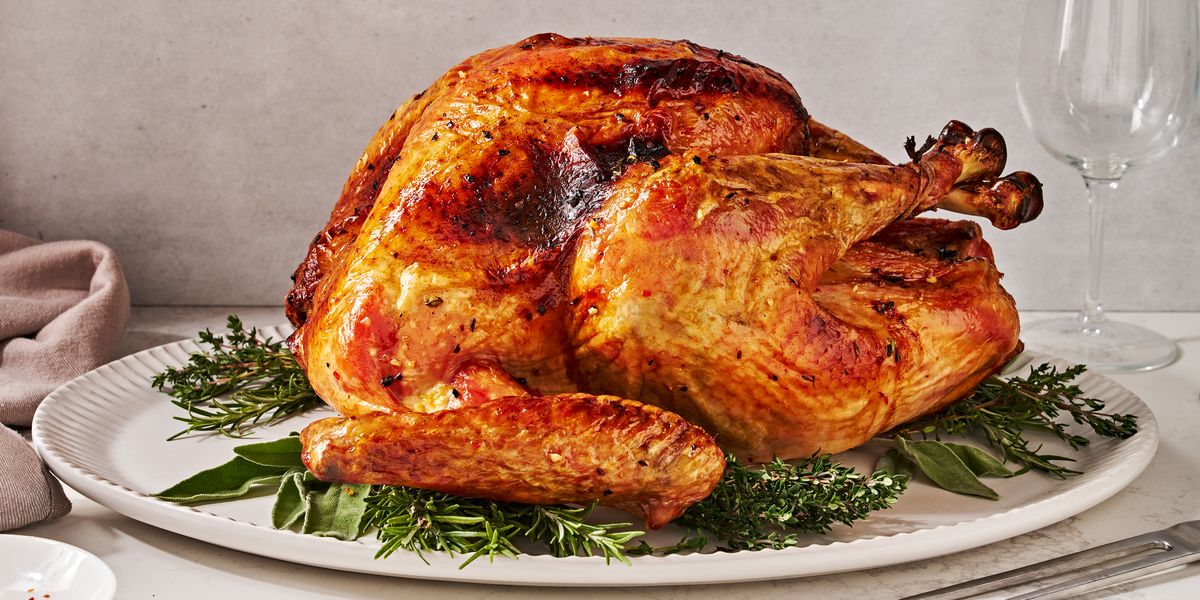

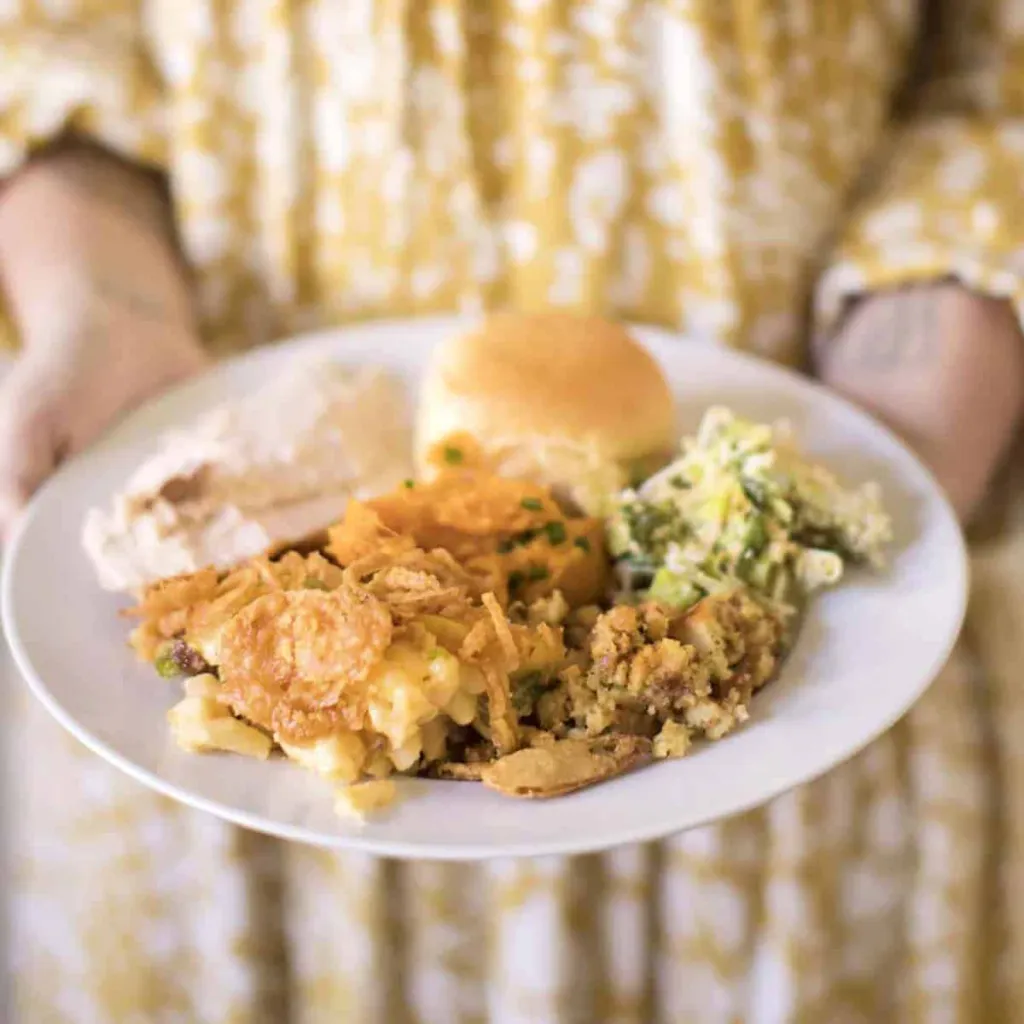


THE SWEET FINALE | Thanksgiving Desserts, Seasonal Flavors & Irresistible Holiday Treats
No Thanksgiving celebration feels quite complete without something sweet to finish the occasion. Traditional pumpkin, apple, and pecan pies may hold a special place in our holiday memories, but today’s dessert possibilities extend far beyond the familiar favorites. From beautifully layered cakes and creamy cheesecakes to festive cookies, fruit-filled creations, and lighter seasonal treats, there’s something to satisfy nearly every taste. Desserts offer a wonderful opportunity to blend nostalgia with creativity, introducing new flavors alongside recipes that have delighted families for generations. Whether prepared days in advance or baked fresh for the celebration, these sweet endings often become some of the most anticipated pleasures of Thanksgiving.

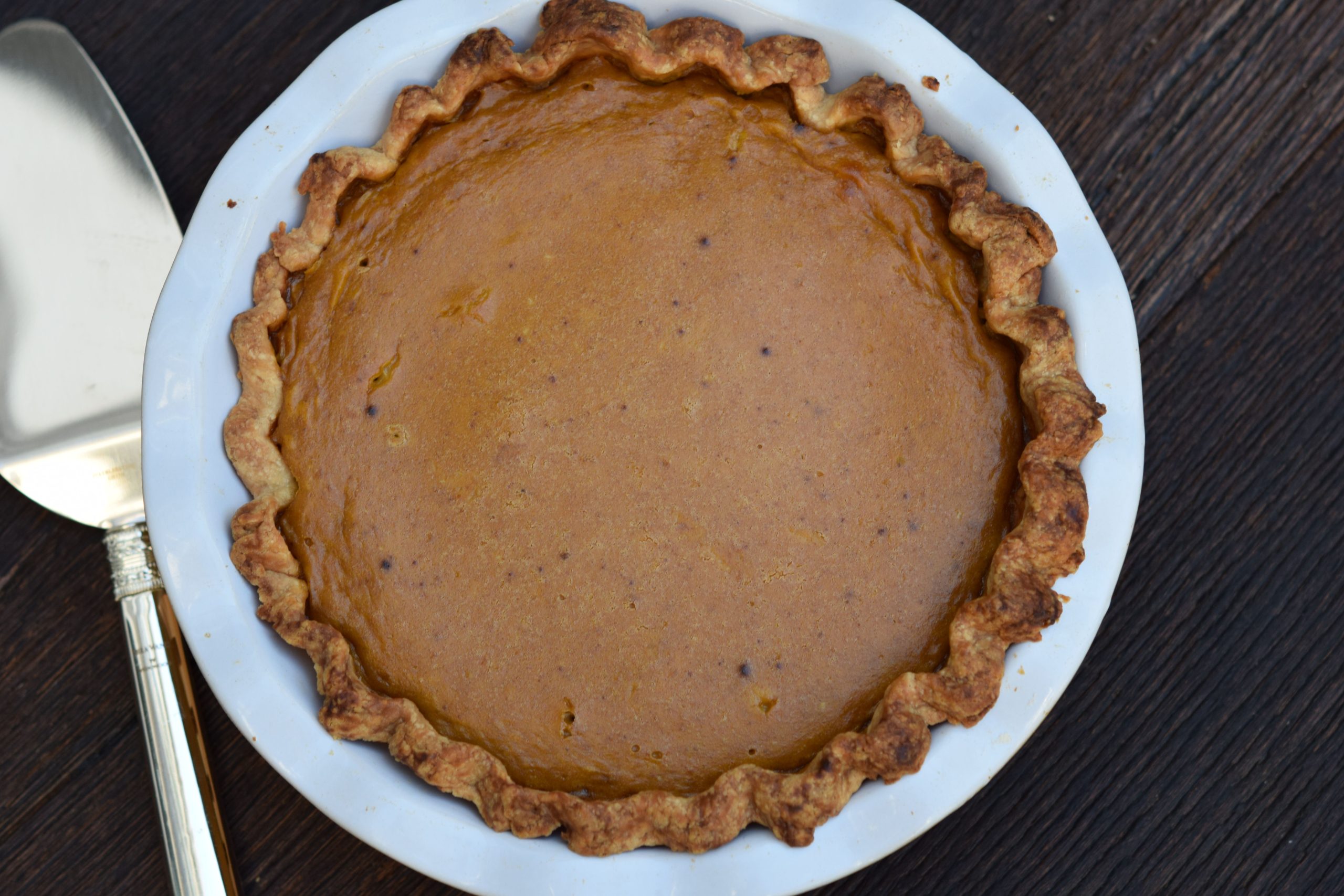


PREPARING THE FEAST WITH EASE | Make-Ahead Recipes, Practical Timelines & Stress-Free Holiday Planning
A wonderful Thanksgiving meal doesn’t have to mean spending the entire holiday in the kitchen. With thoughtful planning and a few well-chosen make-ahead recipes, much of the preparation can be completed before guests arrive, leaving more time to enjoy the celebration itself. From preparing side dishes and desserts in advance to organizing oven schedules, shopping lists, and serving times, a little preparation can make even an ambitious menu feel manageable. The goal isn’t simply to save time, but to create more opportunities to be present for the moments that matter. These practical resources offer strategies for simplifying holiday cooking while preserving all the warmth, flavor, and generosity of a memorable Thanksgiving feast.


THE FEAST CONTINUES | Creative Leftovers, Reinvented Favorites & Delicious Second Helpings
One of Thanksgiving’s most enjoyable traditions begins after the celebration itself, when the refrigerator is filled with delicious possibilities waiting to be rediscovered. Yesterday’s turkey, stuffing, roasted vegetables, and cranberry sauce can become the inspiration for entirely new meals, from savory pot pies and hearty soups to inventive breakfast dishes, flavorful sandwiches, and globally inspired creations. The art of transforming leftovers is about more than avoiding waste; it’s an opportunity to experiment, discover unexpected combinations, and enjoy the flavors of Thanksgiving in fresh and imaginative ways. With a little creativity, the holiday feast can continue for days, bringing new life to familiar favorites and making every last delicious bite worth savoring.



A FEAST FOR EVERYONE | Thoughtful Alternatives, Dietary Preferences & Delicious Possibilities
Thanksgiving is a celebration of abundance, and today’s holiday menus offer more possibilities than ever for accommodating different tastes, preferences, and dietary needs. Whether preparing gluten-free favorites, exploring lighter alternatives, or incorporating plant-forward dishes, thoughtful menu planning can ensure that everyone has something delicious to enjoy. Many traditional recipes can be adapted without sacrificing the flavors and comfort we associate with the season, while contemporary ingredients and creative techniques introduce entirely new possibilities. The beauty of an inclusive Thanksgiving feast is that it celebrates variety, making room for different needs while preserving the generosity and enjoyment at the heart of the holiday.


THE SPIRIT OF THANKSGIVING | Beloved Traditions, Entertainment & Holiday Experiences
There is a particular rhythm to Thanksgiving that distinguishes it from every other holiday. It begins with the anticipation of a long weekend, the familiar bustle of holiday preparations, and the excitement of reconnecting with people and traditions that make this time of year special. For many, it is a day filled with comforting routines—the Thanksgiving parade playing in the background, the aroma of a favorite meal drifting through the house, a football game on television, or the sound of children and adults laughing over a family game.
Yet the spirit of Thanksgiving extends far beyond the dinner table. It lives in the experiences that surround the celebration: the journey home, the annual neighborhood gathering, the morning walk through crisp autumn air, and the spontaneous moments that become stories retold for years. What makes Thanksgiving memorable is often not a single grand event, but the collection of familiar experiences that give the holiday its character.
Across the country, families and communities celebrate in wonderfully different ways. Some gather around the television for the Macy’s Thanksgiving Day Parade, while others head outdoors for a Turkey Trot, a friendly football game, or a walk through the neighborhood. Some travel hundreds of miles to reconnect with loved ones, while others embrace the pleasure of remaining home and enjoying a slower pace. These traditions offer something increasingly valuable in modern life: an opportunity to step away from everyday obligations and participate in experiences simply because they bring us joy.
Thanksgiving also creates space for new traditions. A family that once gathered around a crowded dining table may now celebrate across several households. Friends may create their own annual rituals, neighbors may organize community activities, and individuals may discover that a quiet day of reflection and relaxation offers its own sense of fulfillment. There is no single formula for a meaningful Thanksgiving. The beauty of the holiday lies in its ability to accommodate different generations, personalities, interests, and ways of celebrating.
As we explore the entertainment, activities, and journeys that have become part of the Thanksgiving experience, we are reminded that traditions are not simply routines we repeat. They are opportunities to create continuity, celebrate connection, and make memories that carry forward.
The most enduring Thanksgiving traditions are the ones that give us something to look forward to—and something wonderful to remember.
THANKSGIVING TRADITIONS & ENTERTAINMENT | Parades, Football, Favorite Films & Holiday Classics
Few holidays have developed such a recognizable collection of entertainment traditions as Thanksgiving. From the colorful spectacle of a nationally televised parade to the familiar excitement of football, these experiences have become part of the holiday’s shared cultural identity. For generations, they have provided a comforting backdrop to family gatherings, offering familiar moments that connect people across different households and stages of life.
The Macy’s Thanksgiving Day Parade | A Celebration of Imagination
Each Thanksgiving morning, millions of Americans welcome the holiday with one of its most recognizable traditions: the Macy’s Thanksgiving Day Parade. First held in New York City in 1924, the parade began as a festive procession featuring Macy’s employees, marching bands, and animals borrowed from the Central Park Zoo. The enormous character balloons that would eventually become its signature attraction first appeared in 1927. Over the following decades, the event grew into a nationally recognized spectacle of giant balloons, elaborate floats, musical performances, marching bands, and holiday pageantry.
For many households, watching the parade has become as familiar as preparing the Thanksgiving meal itself. It is often the soundtrack to a busy morning in the kitchen, a source of excitement for children, and a nostalgic tradition for adults who remember watching the same event decades earlier. The parade’s appeal extends beyond its scale and entertainment value. It reflects the imaginative, celebratory side of Thanksgiving—the pleasure of shared anticipation, colorful traditions, and the simple delight of seeing something extraordinary unfold.
While the event continues to evolve, its enduring popularity demonstrates how a public celebration can become woven into the private memories of countless families.
Thanksgiving Football | A Tradition of Friendly Rivalries
Football and Thanksgiving have been closely connected for more than a century. American football games were associated with Thanksgiving by the late nineteenth century, when college and community rivalries helped establish the holiday as a popular occasion for the sport. Professional football later expanded that tradition, with the Detroit Lions beginning their annual Thanksgiving Day game in 1934 and the Dallas Cowboys joining the holiday schedule in 1966.
Today, Thanksgiving football has become a familiar part of the celebration for millions of viewers. For some families, the games provide an afternoon of spirited competition, friendly rivalries, and animated conversations. For others, football is less about watching professional teams and more about heading outdoors for a casual neighborhood game. These informal Thanksgiving games—often affectionately called Turkey Bowls—bring together relatives, friends, and neighbors for an experience that is as much about laughter and camaraderie as it is about winning.
And, of course, not everyone loves football. The beauty of Thanksgiving entertainment is that there is room for many different traditions to unfold simultaneously, whether that means watching the game, playing cards, reading a book, or enjoying a quiet conversation in another room.
Thanksgiving Movies, Music & Family Entertainment
Thanksgiving has also inspired a collection of films, television episodes, and seasonal entertainment that capture different sides of the holiday. Some are humorous explorations of family gatherings and travel mishaps, while others celebrate friendship, generosity, nostalgia, and the unexpected ways people come together.
Planes, Trains and Automobiles remains a familiar Thanksgiving favorite, combining the frustrations of holiday travel with a surprisingly moving story about compassion and human connection. A Charlie Brown Thanksgiving offers a gentler, nostalgic perspective, reminding viewers that friendship and togetherness matter more than an elaborate celebration. Other households enjoy revisiting favorite television Thanksgiving episodes, watching a family-friendly comedy, or choosing an uplifting film that everyone can enjoy.
Music can also help establish the atmosphere of the day. Some families have favorite playlists that accompany cooking and gathering, while others enjoy jazz, acoustic music, familiar classics, or the simple pleasure of allowing conversation to provide the soundtrack. These traditions do not need to be elaborate or carefully scheduled. Often, their value lies in their familiarity.
The entertainment we return to year after year becomes part of the emotional landscape of Thanksgiving, connecting present celebrations with cherished memories of the past. Whether it is a parade, a football game, a favorite movie, or a familiar song, these experiences remind us that joy often grows from the traditions we share.
MAKING THANKSGIVING MEMORIES | Turkey Trots, Family Activities, Outdoor Adventures & Community Celebrations
While Thanksgiving is often associated with gathering indoors, some of the holiday’s most memorable experiences happen beyond the dining room. The long weekend creates opportunities for recreation, creativity, exploration, and simple pleasures that can be enjoyed by people of different ages and interests. And because Thanksgiving arrives during a season of transition, it offers a natural invitation to appreciate the changing landscape, enjoy time outdoors, and experience familiar places in a different light.
Turkey Trots | A Thanksgiving Morning Tradition
One of the most popular ways to begin Thanksgiving Day is with a Turkey Trot. These community running and walking events have become a beloved tradition in cities and towns across the country, bringing together participants of different ages and fitness levels for a festive morning of movement. The Buffalo Turkey Trot in New York, first held in 1896, is among the oldest continuously held footraces in North America and helped establish a tradition that has expanded across generations.
Today, Turkey Trots range from competitive races to relaxed family walks, often featuring creative costumes, charitable fundraising, and a lively community atmosphere. For many participants, the appeal is not about speed or athletic achievement. It is about beginning the day with fresh air, movement, laughter, and a shared sense of celebration. Families who prefer a less structured activity can create their own version with a neighborhood walk, a favorite hiking trail, or a leisurely stroll through a local park.
Sometimes the simplest way to celebrate abundance is to step outdoors and appreciate the world around us.
Family Games, Creativity & Shared Experiences
Thanksgiving offers a welcome opportunity to rediscover the pleasure of spending time together without a complicated agenda. Board games, puzzles, card games, backyard activities, and friendly competitions can bring different generations together in ways that feel natural and relaxed. For families with children, creative projects can become part of the celebration. Making autumn decorations, collecting colorful leaves, creating gratitude journals, or assembling a family memory book offers opportunities for both imagination and conversation.
One particularly meaningful tradition is inviting family members to share stories from earlier Thanksgiving celebrations. Grandparents might recall childhood holidays, parents may remember their first attempts at hosting, and younger family members can contribute their favorite memories from recent years. Recording these stories, whether through writing, photographs, or short videos, can create a treasured family archive.
Annual photographs offer another simple way to capture the passage of time. Looking back at years of Thanksgiving pictures often reveals far more than changing hairstyles and growing children. They tell the story of relationships, milestones, new beginnings, and the evolving shape of family life. For gatherings that include friends or guests who are new to the celebration, games and shared activities can also help create a comfortable atmosphere. A lighthearted activity often makes introductions easier and gives people something enjoyable to experience together.
HOMEWARD BOUND FOR THANKSGIVING | Holiday Travel, Road Trips & New Adventures
For millions of Americans, Thanksgiving begins not at home but on the road, in an airport, or somewhere along the journey toward the people and places they hope to see. The holiday has become one of the country’s most significant annual travel periods, as families and friends make their way across cities, states, and sometimes international borders to spend time together.
Airports fill with travelers carrying gifts and luggage, highways become crowded with families heading toward familiar destinations, and homes across the country prepare to welcome returning loved ones. Despite the challenges of holiday travel, the desire to reconnect remains remarkably strong. There is something deeply meaningful about the effort people make to be together, especially when distance and everyday responsibilities keep them apart for much of the year.
The Meaning of Coming Home
The idea of coming home carries a particular emotional significance during Thanksgiving. For some, it means returning to the house where they grew up, revisiting familiar neighborhoods, or sharing a meal with relatives they see only occasionally. For others, home is wherever their loved ones have gathered, whether that is a new apartment, a friend’s dining room, or a destination far from where they once lived.
The journey itself can become part of the tradition. Families may stop at the same roadside restaurant each year, listen to familiar music during a long drive, or make a favorite destination part of their holiday itinerary. These small rituals create a sense of continuity and anticipation that begins well before Thanksgiving Day.
Reunions can also bring a mixture of emotions. Alongside excitement and affection, there may be the recognition of how much has changed since the previous gathering. Children grow older, relationships evolve, and the people who once hosted the celebration may now be guests themselves. These changes are part of the passage of time, and Thanksgiving often makes them especially visible. Yet the enduring appeal of returning home lies in the opportunity to reconnect with the people, places, and memories that help shape our sense of belonging.
Making Holiday Travel More Enjoyable
Thanksgiving travel can be demanding, particularly when large numbers of people are moving through transportation systems during the same few days. A little advance planning can make the experience more comfortable and reduce unnecessary stress.
For those traveling by air, reviewing airline updates, allowing extra time for airport procedures, and keeping essential medications, chargers, and important belongings in carry-on luggage can help prevent common difficulties. Travelers driving long distances benefit from checking weather forecasts and road conditions, planning rest stops, and ensuring their vehicles are ready for the journey.
Families traveling with children may find that familiar snacks, games, audiobooks, and a flexible schedule make the trip more enjoyable for everyone. Whenever possible, building extra time into travel plans can provide a useful cushion against delays and unexpected changes.
It is also worth remembering that the journey need not be treated simply as an obstacle between departure and arrival. A scenic detour, an interesting roadside stop, or an unexpected conversation can become part of the holiday experience. Approaching travel with flexibility and a little patience can make the journey itself more enjoyable.
And perhaps that is the enduring beauty of Thanksgiving: the experiences we share today become the memories we cherish tomorrow, carrying the spirit of the holiday from one generation to the next.
THANKSGIVING TRADITIONS & ENTERTAINMENT | Parades, Football, Favorite Films & Holiday Classics
Some of Thanksgiving’s most beloved traditions unfold well beyond the kitchen, becoming part of the familiar rhythm that makes the holiday feel unmistakably its own. The colorful spectacle of the Macy’s Thanksgiving Day Parade, the excitement of afternoon football, and the pleasure of revisiting favorite holiday films have become cultural touchstones shared across generations. For many families, these experiences provide a comforting backdrop to the day’s celebrations, connecting childhood memories with present-day gatherings. Their enduring appeal lies not simply in the entertainment itself, but in the familiarity, anticipation, and shared enjoyment they bring to the occasion.
Few holiday traditions capture the imagination quite like the Macy’s Thanksgiving Day Parade. First held in New York City in 1924, the event began with Macy’s employees, marching bands, and animals borrowed from the Central Park Zoo. The enormous character balloons that would become its signature attraction made their debut in 1927, helping transform the procession into an extraordinary celebration of creativity and spectacle. Today, the parade’s elaborate floats, musical performances, marching bands, and larger-than-life balloons continue to delight audiences. For countless households, watching the festivities has become a treasured Thanksgiving morning ritual, filling homes with music, excitement, and a sense of celebration long before the holiday meal begins.
Thanksgiving football has an equally fascinating history, with roots extending back to nineteenth-century college and community rivalries. The Detroit Lions established their annual Thanksgiving Day game in 1934, followed by the Dallas Cowboys in 1966, helping cement professional football’s place in the holiday’s entertainment traditions. For some, the games inspire spirited competition and friendly rivalries, while others enjoy the atmosphere they create as family and friends gather throughout the afternoon. Beyond professional football, informal neighborhood Turkey Bowls have become traditions of their own, bringing generations together for laughter, camaraderie, and the occasional good-natured disagreement over a questionable play.
Movies, television, and music add another dimension to Thanksgiving’s entertainment traditions. Planes, Trains and Automobiles has become a holiday favorite for its memorable combination of humor, travel mishaps, and unexpected compassion, while A Charlie Brown Thanksgiving continues to charm audiences with its gentle reminders about friendship and togetherness. Favorite television episodes, classic films, jazz, acoustic music, and familiar seasonal playlists can all contribute to the atmosphere of the day. Whether it’s a parade watched over morning coffee, a football game enjoyed with friends, or a favorite movie revisited after dinner, these traditions become part of the emotional soundtrack of Thanksgiving, carrying familiar moments forward while making room for new memories.

MACY’S THANKSGIVING DAY PARADE 100 YEARS | Celebrations of Wonder, Imagination & Holiday Tradition
From a modest procession through Manhattan in 1924 to a century of towering balloons, spectacular performances, and cherished family memories, the Macy’s Thanksgiving Day Parade celebrates its historic 100th edition in 2026.
For generations of Americans, Thanksgiving morning has begun with a familiar scene: colorful balloons floating above the streets of Manhattan, marching bands filling the air with music, and excited spectators bundled against the November chill. In homes across the country, the parade plays in the background as families prepare their holiday meals, children marvel at their favorite characters, and adults revisit a tradition they remember from childhood. On November 26, 2026, the Macy’s Thanksgiving Day Parade will celebrate its 100th procession, marking an extraordinary milestone for an event that has become one of America’s most recognizable holiday traditions.
From a Neighborhood Celebration to a National Tradition
The parade’s story began in 1924, when Macy’s employees, many of them immigrants eager to celebrate their adopted country’s traditions, organized a festive procession through New York City. Featuring elaborate costumes, marching bands, decorated floats, and live animals borrowed from the Central Park Zoo, the original celebration was a lively expression of community spirit and imagination. Three years later, in 1927, enormous character balloons made their debut, introducing the spectacular visual tradition that would eventually define the event. As radio and television brought the festivities into American homes, the parade evolved from a local celebration into a shared national experience.
Its history has also reflected the changing circumstances of the country. The parade was suspended from 1942 through 1944 during World War II, when materials such as rubber were needed for the war effort. It returned in 1945, becoming a welcome symbol of celebration and continuity. Over the decades, the event has introduced unforgettable characters, innovative balloon designs, Broadway performances, and increasingly elaborate floats, while maintaining the familiar traditions that generations have come to cherish. Although 2026 marks the parade’s 102nd anniversary, it is officially its 100th edition, a distinction that makes this year’s celebration particularly meaningful.
A Centennial Celebration Unlike Any Other
For its landmark anniversary, Macy’s is planning a spectacular celebration featuring a record-breaking 100 inflatable elements, including familiar favorites, imaginative new characters, and special artistic creations. Among the newcomers are Bluey, Sorcerer’s Apprentice Mickey, Joe Cool and Woodstock, Hello Kitty Big Apple, and Billie Brightpaw, a new bear character created by Macy’s Studios. A special collection of artist-designed balloons will also return, featuring creations associated with Tim Burton, Keith Haring, Jeff Koons, and Yayoi Kusama, transforming the Manhattan skyline into a remarkable outdoor gallery of popular culture and contemporary art.
The entertainment lineup promises an equally memorable celebration, with performances from Megan Moroney, Teddy Swims, Queen Latifah, Natasha Bedingfield, Blues Traveler, DEVO, Natalie Merchant, Indigo Girls, Leslie Odom Jr., and many others. New floats will celebrate everything from the magical world of Hogwarts to beloved characters from the parade’s past, while marching bands from communities across the country will bring their own musical traditions and hometown pride to New York City. More than 11,000 volunteers and participants are expected to help bring the celebration to life, culminating in the familiar arrival of Santa Claus and the traditional beginning of the holiday season.
The Artistry Behind the Magic
While the towering balloons and elaborate floats appear almost effortless as they move through Manhattan, their creation requires months of planning, engineering, craftsmanship, and artistic collaboration. Inside Macy’s Studios, a dedicated team of more than 50 artisans transforms imaginative concepts into enormous three-dimensional creations, combining traditional techniques with modern design and production methods. Every character must be carefully constructed, tested, and prepared for its journey through the city’s streets, where enormous balloons must navigate buildings, changing weather conditions, and the coordinated movements of their handlers.
This remarkable behind-the-scenes artistry will receive special attention in a new documentary, America’s Parade: 100 Years of Macy’s Thanksgiving Day Parade, premiering November 20 on NBC. Featuring rare archival footage, interviews, and an inside look at the preparations for the centennial celebration, the documentary explores the people, creativity, and dedication behind one of America’s most ambitious annual spectacles. It offers viewers an opportunity to appreciate not only the finished celebration, but also the extraordinary collaboration required to bring it to life.
A Century of Shared Memories
Perhaps the parade’s greatest achievement is not its size, celebrity performances, or extraordinary balloons, but its ability to create a shared experience across generations. Grandparents remember the characters that delighted them as children, parents introduce familiar traditions to their own families, and younger audiences discover new favorites that will become part of their Thanksgiving memories. The parade has changed dramatically since its earliest years, yet its underlying appeal remains remarkably consistent: the pleasure of anticipation, the excitement of imagination, and the joy of celebrating something together.
As the 100th Macy’s Thanksgiving Day Parade makes its way through Manhattan this November, it will carry more than a century of artistry, innovation, and cultural history along its route. It will also carry the memories of countless Thanksgiving mornings, familiar family rituals, and the simple delight of watching something extraordinary unfold. Some traditions endure because they remind us of the past. Others remain meaningful because they continue to bring us together. The Macy’s Thanksgiving Day Parade has accomplished both for a hundred remarkable celebrations.
WATCH THE 100TH MACY’S THANKSGIVING DAY PARADE
Thanksgiving Day — Thursday, November 26, 2026
- Broadcast: 8:30 AM–12:00 PM in all U.S. time zones
- Where to watch: NBC, Telemundo, and Peacock
- Encore: 2:00 PM ET/PT on NBC
- Centennial documentary: November 20, 9:00 PM ET/PT on NBC; streaming November 21 on Peacock
- Parade countdown special: November 25, 8:00 PM ET/PT on NBC and Peacock
Sources: Macy’s official 100th Parade announcement and NBCUniversal’s November 13, 2026 broadcast announcement.


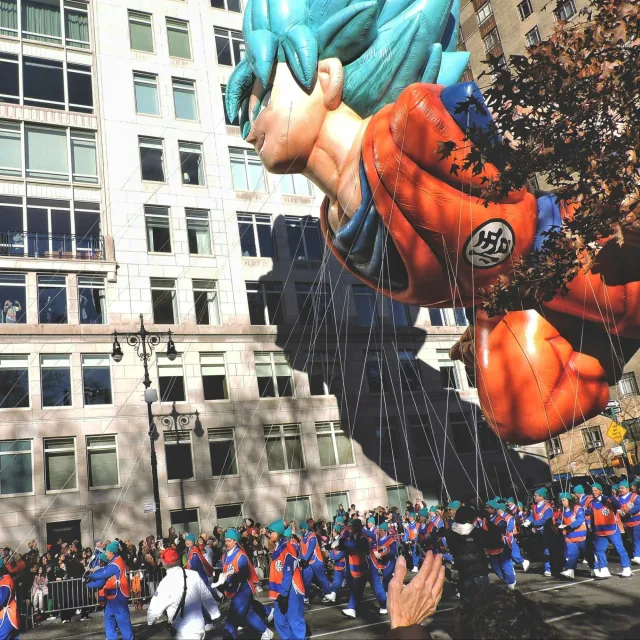
THANKSGIVING FOOTBALL | A HOLIDAY TRADITION ON AND OFF THE FIELD
Football has been woven into America’s Thanksgiving traditions for more than a century, bringing generations together through spirited rivalries, memorable matchups, and the excitement of the game. From the Detroit Lions’ longstanding holiday tradition to the Dallas Cowboys’ familiar Thanksgiving appearance, the NFL has helped make football an unmistakable part of the day’s celebrations. For devoted fans, the games are a highlight of the holiday, while others simply enjoy the energy, friendly competition, and lively conversations that unfold around them.
Thanksgiving 2026 brings another full lineup of football, including three NFL games on Thanksgiving Day, additional matchups surrounding the holiday, and college football rivalries that add to the excitement of the long weekend. Whether following a favorite team, gathering with friends to watch the games, or organizing a backyard Turkey Bowl, football continues to offer a familiar combination of tradition, entertainment, and camaraderie.


| Date | Matchup | Eastern | Arizona | Watch |
|---|---|---|---|---|
| Wed., Nov. 25 | Packers at Rams | 8 PM | 6 PM | Netflix |
| Thu., Nov. 26 | Bears at Lions | 1 PM | 11 AM | CBS |
| Thu., Nov. 26 | Eagles at Cowboys | 4:30 PM | 2:30 PM | FOX |
| Thu., Nov. 26 | Chiefs at Bills | 8:20 PM | 6:20 PM | NBC |
| Fri., Nov. 27 | Broncos at Steelers | 3 PM | 1 PM | Prime Video |
THANKSGIVING ON SCREEN | HOLIDAY SPECIALS, MOVIES & ENTERTAINMENT
Beyond the excitement of football and the spectacle of the Thanksgiving parade, the holiday offers a wonderful variety of entertainment for every mood and generation. From televised celebrations and beloved seasonal specials to classic comedies and newly released films, Thanksgiving weekend has become an opportunity to revisit familiar favorites while discovering something new. For many households, these viewing traditions are as much a part of the celebration as the holiday meal itself, providing opportunities for shared laughter, relaxation, and a little nostalgia.
The 2026 holiday entertainment lineup brings together familiar Thanksgiving favorites and fresh releases, offering everything from the National Dog Show and seasonal television programming to new movies arriving in theaters and on streaming platforms. Whether settling in for a family movie night, enjoying a quiet afternoon with a favorite film, or exploring the latest holiday releases, there are countless ways to make entertainment part of the Thanksgiving experience.



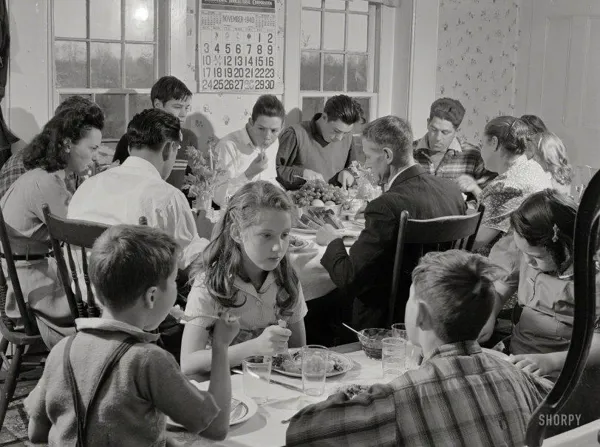


THE SOUNDTRACK OF THANKSGIVING | MUSIC FOR EVERY MOOD & MOMENT
Music has a remarkable ability to shape the atmosphere of a celebration, bringing warmth, energy, and a sense of familiarity to even the simplest gathering. On Thanksgiving, the right soundtrack can accompany everything from the quiet preparations of an early morning to the lively conversations of an afternoon spent with family and friends. Some households favor familiar classics and acoustic melodies, while others enjoy jazz, country, instrumental arrangements, or songs that celebrate gratitude and the changing seasons. There is no single soundtrack for Thanksgiving, only the music that makes the day feel especially meaningful to those sharing it.
The selections below offer a variety of musical experiences to complement the holiday, from smooth jazz and relaxing guitar to uplifting country songs and traditional hymns. Whether creating a welcoming atmosphere for guests, enjoying a peaceful moment of reflection, or simply allowing music to fill the background as the day unfolds, these playlists provide an easy way to add another layer of warmth and enjoyment to the celebration.
Warm & Relaxing Background Music


Thanksgiving Songs & Seasonal Favorites


MAKING THANKSGIVING MEMORIES | Turkey Trots, Family Activities, Outdoor Adventures & Community Celebrations
While Thanksgiving is often associated with gathering indoors, some of the holiday’s most memorable experiences happen beyond the dining room. The long weekend creates a welcome opportunity to enjoy activities that bring people together, encourage a little adventure, and offer a refreshing change from everyday routines. From lively community celebrations and outdoor recreation to friendly competitions and creative pursuits, the possibilities are as varied as the people participating. What makes these experiences meaningful isn’t necessarily their scale or originality, but the pleasure of doing something enjoyable together and allowing the holiday to unfold in unexpected ways.
One increasingly popular Thanksgiving tradition begins before the first dish enters the oven. Turkey Trots have become a fixture in communities across the country, inviting runners, walkers, families, and friends to start the holiday with movement, fresh air, and a festive atmosphere. The Buffalo Turkey Trot, first held in 1896, helped establish a tradition that now includes everything from competitive races to relaxed charity walks featuring creative costumes and enthusiastic spectators. For those who prefer a quieter beginning, a neighborhood walk, a scenic hike, or a leisurely bicycle ride can offer the same opportunity to appreciate the season. Whether beneath brilliant autumn foliage or enjoying the comfortable temperatures of warmer climates, spending time outdoors can bring a wonderful sense of balance to a holiday often centered around food and indoor gatherings.
Thanksgiving also provides an ideal setting for rediscovering the simple pleasures of play and creativity. Board games, puzzles, cards, backyard competitions, and friendly challenges can bring together people of different ages and interests, often generating some of the day’s most spontaneous laughter. Creative activities offer another opportunity for connection, whether assembling seasonal decorations, experimenting with a new craft, or working together on a project that becomes part of the celebration. These experiences needn’t be elaborate or carefully organized. Sometimes an impromptu game, a shared creative endeavor, or an unexpected burst of laughter becomes the highlight of the afternoon.
Beyond the home, the Thanksgiving weekend offers countless opportunities to explore and experience the surrounding community. Botanical gardens, nature preserves, seasonal festivals, local performances, neighborhood celebrations, and scenic destinations can provide refreshing alternatives to the familiar holiday routine. Yet there is equal value in choosing a slower pace. An afternoon spent reading, gardening, enjoying a favorite hobby, or simply relaxing without an agenda can be just as restorative as a day filled with activity. The beauty of Thanksgiving lies partly in the freedom to celebrate in ways that feel authentic to us, balancing connection and recreation with the equally important pleasures of rest, reflection, and unhurried time.
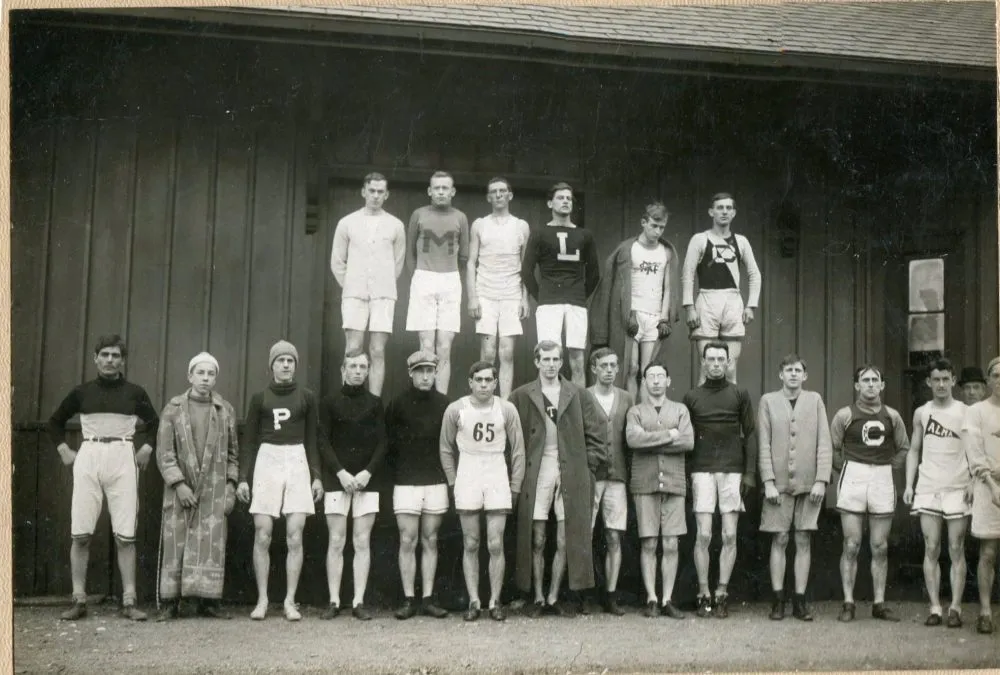
THE BUFFALO TURKEY TROT | 130 Years of Thanksgiving Tradition, Community & Colorful Characters
From six runners on dirt roads in 1896 to thousands of costumed participants today, America’s oldest continuously held footrace has become one of Thanksgiving’s most extraordinary traditions.
Every Thanksgiving morning in Buffalo, New York, thousands of runners and walkers gather along Delaware Avenue for a celebration unlike almost any other. Some arrive in traditional running gear, while others appear dressed as turkeys, gingerbread men, holiday characters, and even their favorite local foods. Spectators line the streets ringing cowbells and cheering as the colorful procession makes its way through the city. It’s part athletic competition, part neighborhood celebration, and part wonderfully eccentric Thanksgiving spectacle. But behind the costumes and laughter lies a remarkable tradition that began in 1896 and has continued for 130 years.
The Buffalo Turkey Trot began with just six male runners competing along dirt roads in a five-mile race organized by the local YMCA. Over the following decades, it survived wars, severe weather, and a global pandemic, eventually growing into an event attracting approximately 14,000 participants annually. The race has become an unmistakable part of Buffalo’s cultural identity, with registration regularly reaching capacity and proceeds supporting the YMCA’s community programs. For generations of residents, Thanksgiving simply wouldn’t feel complete without it.
What makes the Buffalo Turkey Trot especially memorable is the imagination participants bring to the occasion. One beloved group carries a traditional cedar-and-canvas canoe along the entire five-mile course, a custom begun in 2009 by former campers from Ontario’s Camp Pathfinder. Other participants transform themselves into elaborate representations of Buffalo’s favorite local foods, including hot dogs, mustard, hot sauce, and loganberry soda. Along the route, spectators have created traditions of their own, including a playful doughnut drop where runners attempt to catch airborne treats tossed from a bridge. These wonderfully unconventional rituals have transformed a historic road race into a living celebration of Buffalo’s personality, humor, and community pride.
Yet the event’s enduring appeal extends beyond its spectacle. Families return year after year, friends reconnect along the route, and spectators become as much a part of the tradition as the runners themselves. Some participants compete for personal records, while others simply enjoy the fresh air, camaraderie, and opportunity to begin Thanksgiving with movement and laughter. The race offers something increasingly valuable in a busy world: a shared experience that welcomes people of different ages, abilities, and backgrounds into a celebration larger than themselves.
As the Buffalo Turkey Trot marks its 130th anniversary in 2026, its remarkable longevity reminds us that the most meaningful traditions don’t have to be elaborate or solemn. Sometimes they begin with a handful of people willing to try something new and grow into experiences that generations come to cherish. For Buffalo, Thanksgiving gratitude is expressed not only around the dinner table, but along five miles of city streets filled with laughter, imagination, perseverance, and an extraordinary sense of belonging.
Adapted and summarized from Michelle Kearns’ feature, “The History of the Buffalo Turkey Trot: America’s Oldest Footrace,” published November 27, 2024, by Visit Buffalo Niagara. Read the original story at Visit Buffalo


GATHER, PLAY & MAKE MEMORIES | Games, Activities & Outdoor Adventures
Thanksgiving offers a welcome opportunity to step away from everyday routines and rediscover the pleasure of simply having fun together. Whether it’s a spirited board game, a friendly backyard competition, a creative activity, or an afternoon spent exploring the outdoors, shared experiences often become the moments people remember long after the holiday has passed. The best activities don’t require elaborate preparations or perfectly coordinated plans. Sometimes all it takes is a little imagination, a willingness to participate, and the freedom to enjoy one another’s company.
From lively group games and friendly competitions to outdoor adventures and quieter creative pursuits, the following ideas offer something for different ages, interests, and gathering sizes. Whether you’re hosting a large celebration, spending the day with a few close friends, or looking for a refreshing way to enjoy the long weekend, these activities provide inspiration for making Thanksgiving memorable in your own way.



HOMEWARD BOUND FOR THANKSGIVING | Holiday Travel, Road Trips & New Adventures
For millions of Americans, Thanksgiving begins not in the kitchen or around a familiar gathering place, but somewhere along the journey toward the people and experiences they hope to share. Airports fill with travelers, highways become crowded with families heading across the country, and familiar destinations take on renewed significance as the holiday approaches. Thanksgiving has become one of America’s most recognizable annual travel occasions, reflecting the extraordinary lengths people will go to reconnect, celebrate, and enjoy time away from their everyday routines. Whether the destination is a childhood home, a relative’s new residence, or an unfamiliar place chosen for a holiday adventure, the journey itself often becomes an important part of the Thanksgiving experience.
Holiday travel carries traditions of its own. Some families return to the same destination year after year, stopping at favorite roadside restaurants, revisiting familiar landmarks, or listening to cherished music during the drive. Others embrace the opportunity to explore somewhere new, combining Thanksgiving with a scenic road trip, a mountain retreat, a coastal getaway, or a visit to a city they’ve always wanted to experience. These journeys can offer more than a change of scenery. They create opportunities for discovery, spontaneous conversations, and memorable experiences that extend the celebration beyond a single afternoon. A favorite stop along the highway or an unexpected detour may become a tradition every bit as meaningful as the holiday gathering itself.
Of course, traveling during one of the busiest periods of the year requires a little preparation and flexibility. Crowded airports, unpredictable weather, congested highways, and changing schedules can complicate even the most carefully planned itinerary. Reviewing travel updates, allowing additional time, preparing for changing conditions, and keeping essential belongings accessible can make the experience considerably more comfortable. Families traveling with children may find that familiar snacks, games, audiobooks, and well-timed breaks transform a demanding journey into something more enjoyable. A thoughtful travel plan doesn’t eliminate every inconvenience, but it creates more room for patience, spontaneity, and the unexpected pleasures that often become part of a memorable trip.
Thanksgiving travel is also evolving as families and friendships span greater distances and celebrations take on new forms. Some households alternate destinations, while others gather at a central location, plan a multigenerational vacation, or extend their celebrations across the holiday weekend. Friends may organize their own getaways, and those unable to travel can still participate through shared photographs, video calls, and thoughtful connections across the miles. For others, spending Thanksgiving somewhere entirely new becomes an opportunity to establish a different kind of tradition. Ultimately, the spirit of Thanksgiving travels with us, finding expression in familiar homecomings, new destinations, shared adventures, and the anticipation of creating experiences worth remembering long after the journey ends.


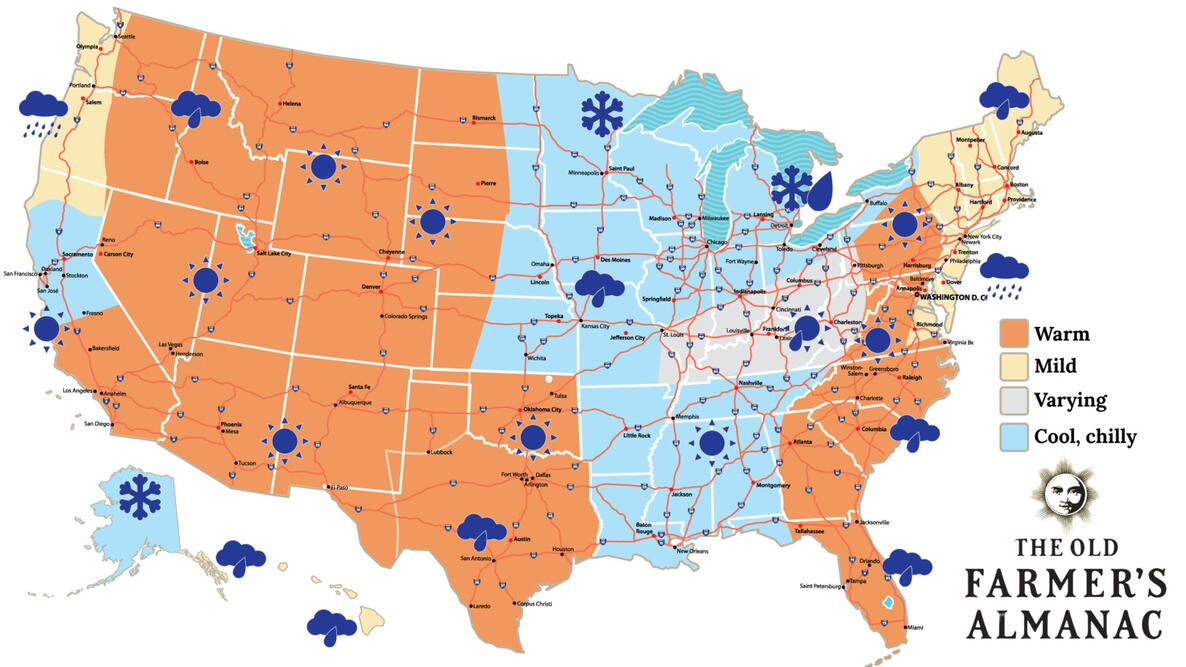
PLANES, TRAINS & AUTOMOBILES | Navigating the Thanksgiving Travel Rush
Thanksgiving is one of America’s busiest travel periods, transforming airports, highways, and transportation hubs into bustling corridors of holiday activity. For many travelers, the journey begins days before Thanksgiving and continues through the weekend, as families and friends navigate crowded terminals, congested roads, and tightly scheduled departures. Yet despite the challenges, the annual migration remains a remarkable expression of the desire to reconnect, revisit familiar places, and share meaningful experiences.
A little preparation can make a significant difference when traveling during the holiday rush. Understanding peak travel days, comparing transportation options, monitoring fares and fuel prices, and allowing flexibility for unexpected delays can help reduce stress and make the journey more enjoyable. The following resources explore 2026 travel projections, airline and rail developments, driving costs, and practical strategies for navigating one of the year’s most anticipated travel weekends.
Travel Outlook & Peak Travel Days




Airfare, Rail Travel & Travel Planning



Driving Costs & Holiday Travel Budgets



THANKSGIVING GETAWAYS | Destinations, Road Trips & New Holiday Adventures
While Thanksgiving traditionally brings to mind journeys home and familiar family gatherings, an increasing variety of holiday experiences invites travelers to celebrate somewhere different. Some families embrace the opportunity to explore a new destination together, while others turn the long weekend into a scenic road trip, a relaxing retreat, or an adventure they’ve been hoping to enjoy. From vibrant cities and coastal escapes to mountain landscapes and charming small towns, the possibilities offer something for nearly every travel style and interest.
Thanksgiving travel can be as much about discovering new places as returning to familiar ones. A holiday getaway might include exploring seasonal festivals, enjoying a scenic drive through autumn landscapes, visiting a national park, or gathering with loved ones at a destination that becomes a new family tradition. The following travel guides highlight popular destinations and emerging travel trends for 2026, offering inspiration for readers who want to experience the holiday from a different perspective.



Gratitude in Action — Giving, Generosity & Community
“No act of kindness, no matter how small, is ever wasted.” — Aesop
Thanksgiving is a time to recognize the abundance in our lives, but perhaps one of its most meaningful invitations is to consider how that abundance can be shared. Beyond the familiar gatherings, traditions, and expressions of appreciation lies an opportunity to extend gratitude outward—to the people who enrich our lives, the communities that support us, and those whose circumstances may be very different from our own. Gratitude takes on another dimension when it becomes something we actively share with others.
Generosity has always been woven into the spirit of Thanksgiving, from sharing meals and supporting neighbors to participating in charitable efforts that bring comfort to families facing difficult circumstances. Yet giving is not measured solely by financial contributions, organized volunteer work, or grand gestures. It can be expressed through our time, attention, knowledge, compassion, and willingness to recognize a need that might otherwise go unnoticed. A thoughtful act may ease someone’s burden, strengthen a relationship, or simply remind another person that they matter. Often, the smallest contributions carry meaning far beyond what we can immediately see.
The holiday also offers an opportunity to reflect on the countless people whose efforts sustain our everyday lives. Teachers, caregivers, first responders, volunteers, service workers, local business owners, and neighbors all contribute to the well-being of our communities, frequently without recognition. Their collective efforts remind us that the strength of a community is found not only in its resources, but in the relationships, cooperation, and mutual care that connect its people. When we recognize these contributions, we begin to see generosity not simply as something we offer occasionally, but as an essential part of how we live together.
The Power of Giving | From Individual Generosity to Collective Impact
The Thanksgiving season brings charitable giving and community service into sharper focus. Food banks organize holiday distributions, volunteers prepare meals, local organizations coordinate assistance, and neighbors come together to support families experiencing hardship. These efforts address immediate needs while offering something equally valuable: reassurance that people have not been forgotten. For individuals navigating financial uncertainty, illness, housing challenges, or unexpected loss, thoughtful assistance can provide both practical relief and a renewed sense of connection. Meaningful generosity begins with understanding what others genuinely need and responding in ways that preserve dignity and respect.
The possibilities for contributing are as varied as the communities themselves. Some people donate food, money, clothing, or household essentials, while others offer professional skills, volunteer their time, mentor younger generations, or help coordinate neighborhood initiatives. Community gardens, mutual-aid networks, local nonprofits, and shared-resource programs demonstrate how cooperation can turn individual contributions into something larger. When people bring different talents and resources together, they create opportunities that may not be possible through individual efforts alone. Giving becomes more than a charitable transaction; it becomes a way of participating in the health and vitality of the places we call home.
Perhaps the most lasting expression of generosity is found in the commitments we carry beyond the holiday. Community needs do not disappear when Thanksgiving ends, and neither must our willingness to contribute. Supporting a local organization throughout the year, participating in occasional service projects, or sharing useful skills when opportunities arise can create meaningful continuity without requiring an overwhelming commitment. Generosity is most sustainable when it grows naturally from our abilities, circumstances, and genuine desire to contribute. The goal is not to do everything, but to recognize that even modest, consistent participation can help create stronger, more resilient communities.
Everyday Kindness & Human Connection | The Extraordinary Power of Simple Gestures
While organized giving provides essential support, some of the most meaningful expressions of gratitude occur in ordinary moments that receive little attention. A handwritten note, a sincere conversation, an unexpected invitation, or a few minutes spent listening can bring comfort and connection to someone who needs it. During the holidays, these gestures may carry particular significance. Thanksgiving can be a joyful celebration, but it can also heighten feelings of loneliness, grief, separation, or uncertainty for people whose lives do not resemble the familiar images of a crowded holiday table. Compassion begins with remembering that everyone carries experiences and challenges we may not fully understand.
Extending kindness does not require us to solve another person’s difficulties or assume responsibility for their happiness. Sometimes it means checking on a neighbor who lives alone, acknowledging someone working through the holiday, reaching out to a friend navigating a loss, or offering companionship without expectation. Equally important is respecting the needs and boundaries of others. An invitation offered without pressure, a thoughtful gesture made without seeking recognition, or simply allowing someone the space to be themselves can communicate genuine care. These expressions of kindness remind us that connection is not always created through elaborate plans or shared celebrations, but through the simple experience of feeling seen, respected, and included.
Everyday compassion also shapes the atmosphere of our homes, workplaces, and neighborhoods. Patience with an overwhelmed employee, appreciation for someone whose work often goes unnoticed, or a willingness to listen before judging can influence the quality of our interactions. From a consciousness perspective, these moments invite us to become more aware of our automatic reactions and to choose understanding without sacrificing discernment or personal boundaries. We may never know how much a thoughtful word or compassionate gesture means to another person, and generosity need not depend on visible results. We may not be able to change every circumstance someone faces, but we can often change the quality of the moment we share with them.
Thanksgiving reminds us to appreciate the good in our lives. Gratitude in action invites us to become part of the good in someone else’s. Whether expressed through community involvement or a quiet act of compassion, generosity offers a way to carry the spirit of the holiday into everyday life—strengthening connections, encouraging understanding, and reminding us of the shared humanity that brings us together.
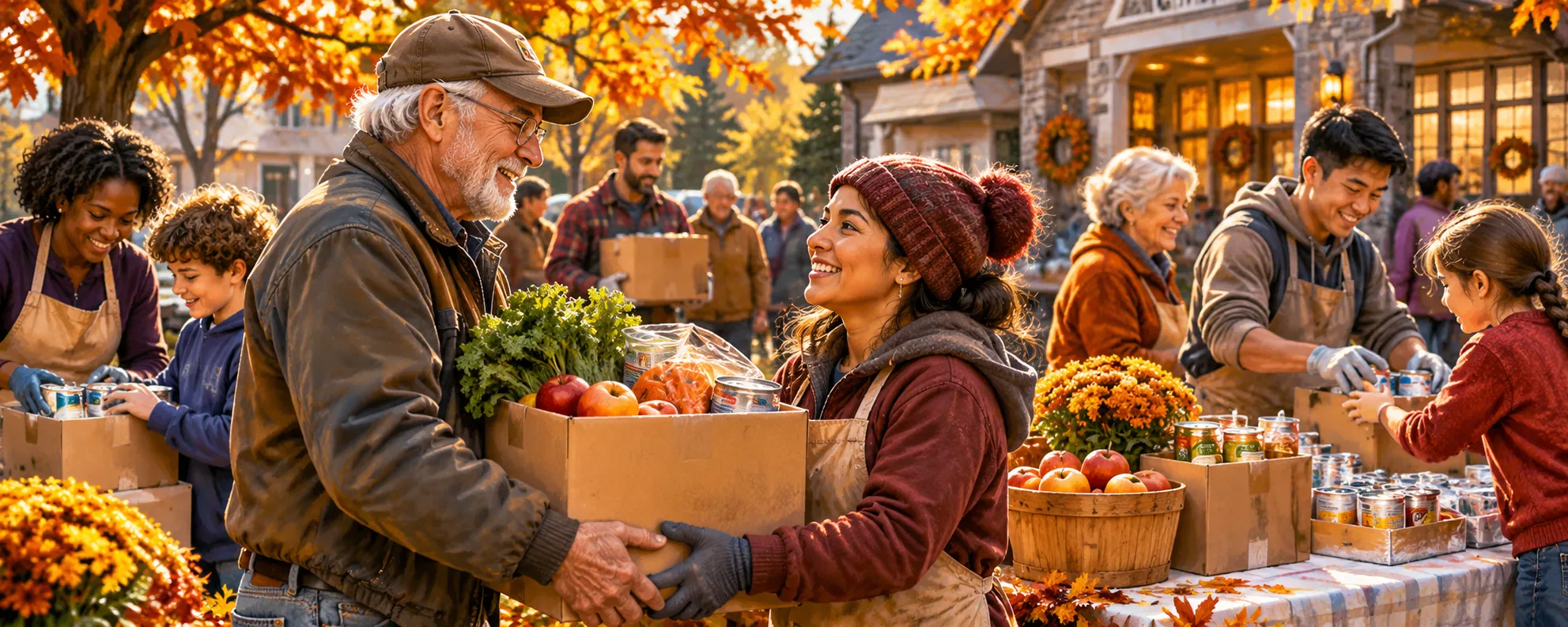
THE POWER OF GIVING | Volunteering, Charitable Support & Building Stronger Communities
Generosity has always been woven into the spirit of Thanksgiving, bringing people together through shared meals, charitable giving, and a willingness to help those facing difficult circumstances. Across the country, food banks, community organizations, and volunteers work to ensure that more families experience the comfort and dignity of the holiday. Yet the power of giving extends far beyond financial donations or a single day of service. Sharing our time, talents, resources, and expertise can make a meaningful difference while strengthening the communities we call home.
Whether supporting a local food pantry, volunteering with a charitable organization, helping a family through an unexpected hardship, or participating in a neighborhood initiative, there are countless ways to contribute. The most meaningful opportunities often begin with recognizing a genuine need and responding in a way that respects our own abilities and circumstances. Thanksgiving offers a wonderful starting point, but the lasting value of generosity lies in the connections we build and the positive changes we help sustain throughout the year.
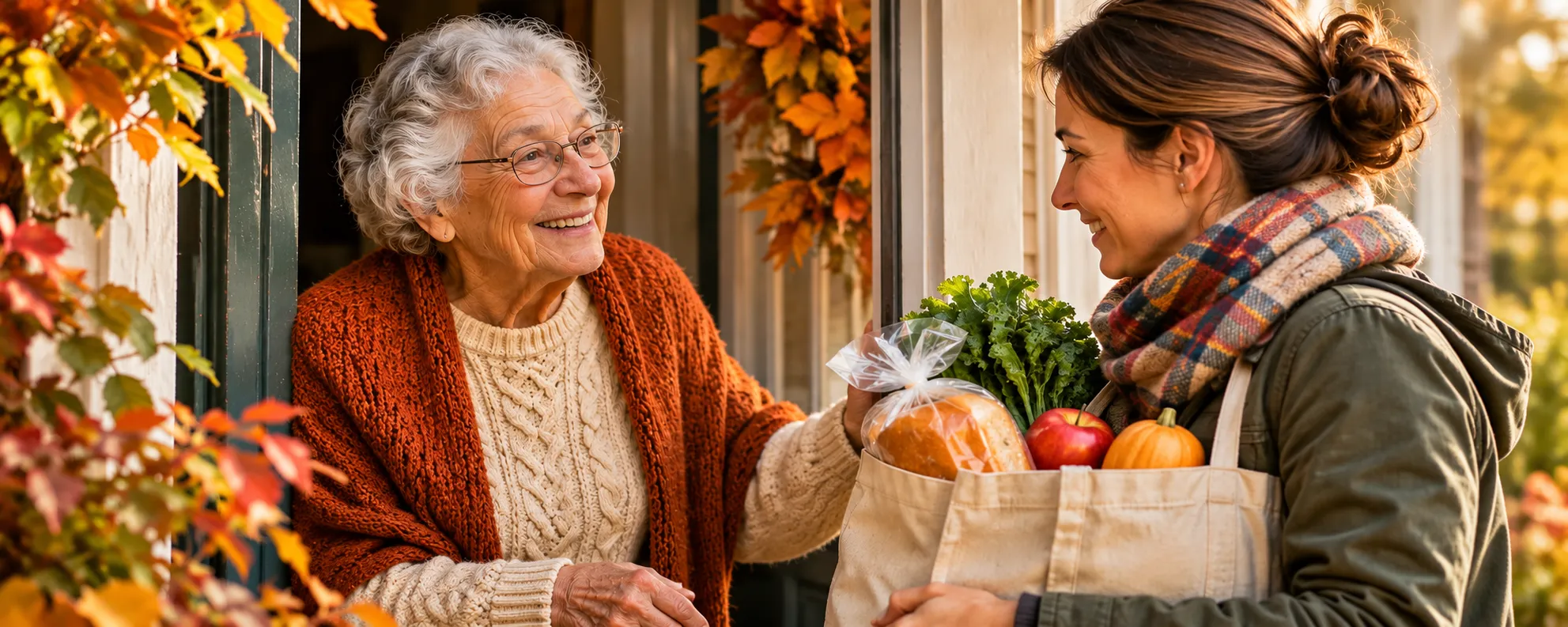
Giving With Purpose | 10 Meaningful Ways to Help Others This Thanksgiving
Small gestures, shared resources, and thoughtful acts of generosity can make a meaningful difference in the lives of others.
Thanksgiving has a wonderful way of reminding us how much there is to appreciate. We gather around familiar tables, reconnect with loved ones, celebrate cherished traditions, and reflect on the people and experiences that enrich our lives. Yet beyond these moments of gratitude lies another opportunity—one that invites us to turn appreciation into action and extend the warmth of the holiday to those whose circumstances may look very different from our own.
For some families, Thanksgiving arrives during a season of financial uncertainty, illness, grief, or unexpected hardship. Others may be separated from loved ones, working through the holiday, or struggling to meet everyday needs. While no single gesture can resolve every challenge, thoughtful generosity can offer practical relief, encouragement, and a reassuring sense of connection.
Giving with purpose isn’t about doing more than we can afford or taking on responsibilities beyond our capacity. It’s about recognizing opportunities to make a difference with the time, resources, talents, and compassion we already have. Here are twelve meaningful ways to share the spirit of Thanksgiving, each offering a different opportunity to contribute.
1. Help Fill a Thanksgiving Table
For households experiencing food insecurity, preparing a traditional Thanksgiving meal can be financially difficult. Supporting a local food bank, pantry, or holiday meal distribution program is one of the most direct ways to help. Consider donating requested grocery items, contributing financially, or helping assemble holiday meal boxes. Many organizations can stretch monetary donations through bulk purchasing and established food partnerships, making financial support especially useful.
Before purchasing supplies, contact the organization to learn what is most needed. A thoughtful contribution that matches actual demand can have far greater value than a well-intentioned donation that cannot easily be distributed.
2. Volunteer Where the Need Is Greatest
Thanksgiving brings increased attention to community service, but the need for volunteers extends well beyond the holiday itself. Food banks, shelters, community kitchens, and charitable organizations often need assistance with sorting donations, preparing meals, coordinating distributions, and supporting daily operations.
Holiday volunteer shifts can fill quickly, so consider opportunities during the preceding weeks or after Thanksgiving. Sometimes the most valuable contribution is showing up when fewer people are available to help. Even a few hours can support the dedicated teams who keep essential programs running throughout the year.
3. Support a Family Facing Unexpected Hardship
An unexpected medical expense, job loss, housing challenge, or family emergency can place tremendous pressure on a household, particularly during the holidays. Local assistance programs, school-based family support initiatives, and community organizations often help connect families with groceries, clothing, household necessities, or financial assistance.
Consider contributing to an established assistance fund, supporting a verified family sponsorship program, or providing items specifically requested by an organization. When helping directly, approach the situation with sensitivity and respect for privacy. Meaningful generosity should preserve dignity rather than draw attention to someone’s circumstances.
4. Share Your Skills, Not Just Your Resources
Some of the most valuable contributions have little to do with money. Professional experience, practical knowledge, and everyday abilities can help organizations and individuals overcome challenges they might otherwise struggle to address.
Someone with accounting experience might help a small nonprofit organize its finances. A technology professional could assist with a website or computer issue, while a skilled gardener, educator, or craftsperson might share knowledge through a community program. Even helping someone prepare a résumé, complete an application, or learn a useful skill can create opportunities that extend far beyond the immediate moment.
5. Remember the People Who Serve Our Communities
Thanksgiving is an opportunity to recognize the people whose work continues while others enjoy time away from their usual responsibilities. Healthcare workers, emergency responders, caregivers, transportation employees, hospitality staff, and countless others help keep communities functioning throughout the holiday.
A sincere note of appreciation, a thoughtful message, or a small gesture coordinated with an employer or organization can communicate gratitude. When appropriate, consider supporting programs that provide meals or recognition for those working holiday shifts. These contributions need not be elaborate. Sometimes being acknowledged for work that often goes unnoticed is a meaningful gift in itself.
6. Give Essential Items That Are Often Overlooked
Food donations receive considerable attention during Thanksgiving, but many individuals and families also need basic household and personal-care supplies. Hygiene products, diapers, menstrual products, socks, cleaning supplies, and other everyday necessities can represent significant expenses for households with limited resources.
Local shelters, family assistance organizations, and community pantries may maintain wish lists identifying their most urgent needs. Purchasing from these lists helps ensure that donations are appropriate and useful. It also broadens our understanding of generosity beyond the holiday meal to the everyday essentials that contribute to comfort, health, and dignity.
7. Support Older Adults and People With Limited Mobility
For someone who has difficulty leaving home, a simple errand or practical task can make a meaningful difference. Picking up groceries, helping with seasonal household preparations, providing transportation, or assisting with a small project may relieve a burden that has become increasingly difficult to manage.
Neighborhood associations, senior centers, and community organizations can sometimes help identify appropriate volunteer opportunities. When offering assistance directly, ask what would actually be helpful rather than making assumptions. Respecting independence and personal preferences is an important part of providing thoughtful support.
8. Make Giving a Family Tradition
Thanksgiving offers a wonderful opportunity to introduce children and younger generations to generosity through meaningful participation. Families might prepare care packages, assemble donated groceries, write appreciation cards, or choose a local cause to support together.
The experience becomes especially valuable when children understand why their contribution matters. Encourage them to ask questions, consider the needs of others, and participate in choosing an activity. A small annual tradition can grow into a lasting appreciation for service, cooperation, and community responsibility.
9. Strengthen a Local Community Initiative
Not every act of giving needs to address an immediate emergency. Community gardens, neighborhood improvement projects, literacy programs, local libraries, mentorship initiatives, and resource-sharing networks all contribute to the long-term well-being of the places we call home.
Consider joining a local project, donating needed materials, sharing expertise, or supporting an initiative that brings residents together. These efforts often create benefits beyond their original purpose, encouraging cooperation and relationships among people who might otherwise never meet.
A stronger community is built not only through assistance during difficult times, but through the everyday connections and shared resources that help people thrive.
10. Help Caregivers and Families Carry Their Responsibilities
For people caring for young children, older relatives, or loved ones experiencing illness, the holiday season can bring additional responsibilities rather than a welcome break. Offering practical assistance may provide valuable relief.
Consider preparing a meal, picking up groceries, helping with household tasks, or providing appropriate respite when welcomed and safely arranged. A few hours of assistance can give someone time to rest, attend to personal needs, or simply enjoy a quieter moment. The key is to ask what would genuinely help and offer something manageable rather than creating another obligation for the person receiving support.
The Gift That Extends Beyond the Holiday
The beauty of purposeful giving is that it offers something meaningful to everyone involved. For those receiving assistance, it may provide practical relief, encouragement, or a renewed sense of connection. For those contributing, it creates an opportunity to participate more fully in the communities and relationships that enrich their own lives.
Not every act of generosity will be remembered, recognized, or even visible to others. A meal may be enjoyed without the donor ever meeting the recipient. A few hours of volunteer work may become one small part of a much larger effort. A thoughtful contribution may help an organization continue work that most people never see. Yet these individual actions matter precisely because they become part of something greater.
Thanksgiving reminds us that abundance is not measured solely by what we possess. It is also reflected in our capacity to share, cooperate, and recognize the needs of others.
We don’t have to change the world in a single gesture. Sometimes, making a meaningful difference begins with one thoughtful choice—and the willingness to carry it forward.
SHARING THE HARVEST | Food Banks, Community Meals & Thanksgiving Outreach
Thanksgiving reminds us that abundance is most meaningful when it is shared. Yet for many individuals and families, the holiday season brings additional challenges, from putting a traditional meal on the table to meeting everyday necessities. Across the country, food banks, community kitchens, neighborhood organizations, and dedicated volunteers come together to help bridge that gap, offering not only nourishment but also dignity, comfort, and a sense of belonging. Whether through donating groceries, supporting a holiday food drive, preparing meals, or helping serve a community Thanksgiving dinner, these collective efforts reflect one of the season’s most enduring traditions: making room at the table for everyone.



GIVING BEYOND THE DONATION | Volunteering, Sharing Skills & Supporting Local Causes
Generosity isn’t measured solely by the amount we give financially. Sometimes our most meaningful contributions come through the time we offer, the skills we share, or our willingness to lend a hand when someone needs support. Volunteering at a local shelter, mentoring a young person, helping an elderly neighbor, supporting an animal rescue, or contributing professional expertise to a community organization can make a lasting difference. These acts of service also create something valuable for the giver: opportunities to connect with others, discover a deeper sense of purpose, and experience the satisfaction of making a tangible contribution. Giving becomes especially powerful when it draws upon what we already have to offer and connects it with what someone else truly needs.
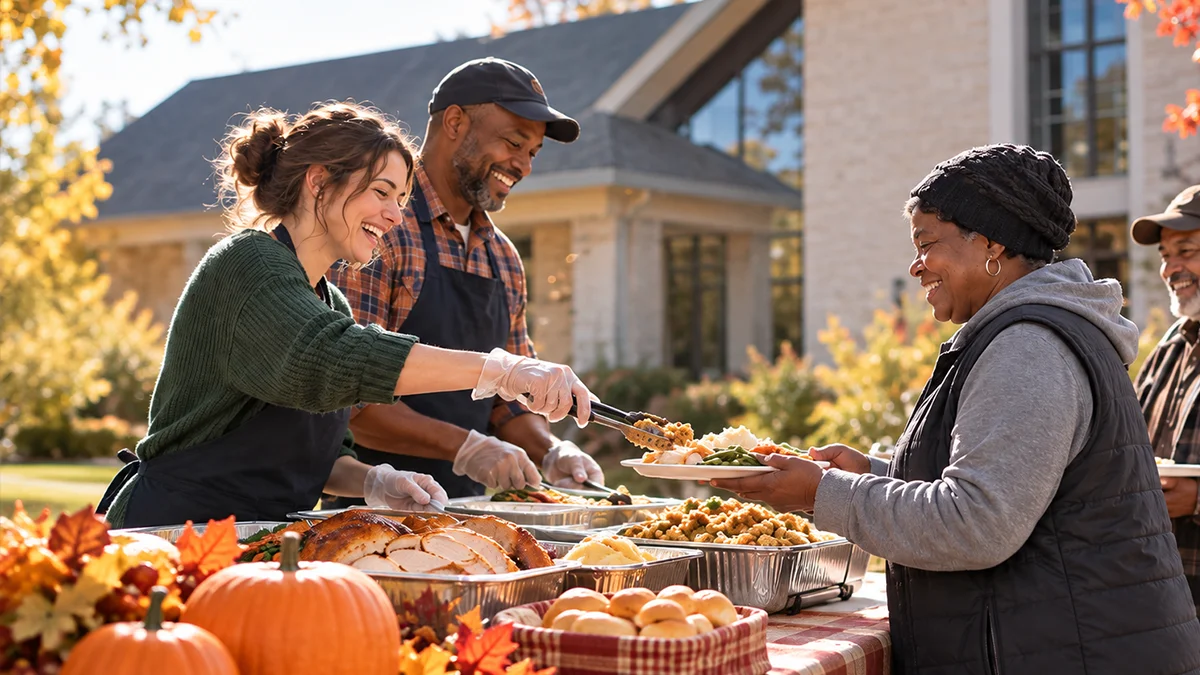


THE COMMUNITY WE BUILD TOGETHER | Local Initiatives, Mutual Support & Lasting Impact
Strong communities are built through countless everyday interactions, shared responsibilities, and the quiet understanding that we are better when we look out for one another. From neighborhood gardens and community improvement projects to mutual-aid networks, local nonprofits, and grassroots initiatives, collective action creates opportunities for people to contribute toward something larger than themselves. These efforts often begin with a simple observation that something could be better, followed by a few individuals willing to take the first step. Over time, those small beginnings can grow into lasting relationships, stronger neighborhoods, and a greater sense of shared belonging. The true measure of a thriving community isn’t simply what it provides, but the connections, trust, and spirit of cooperation that its people build together.

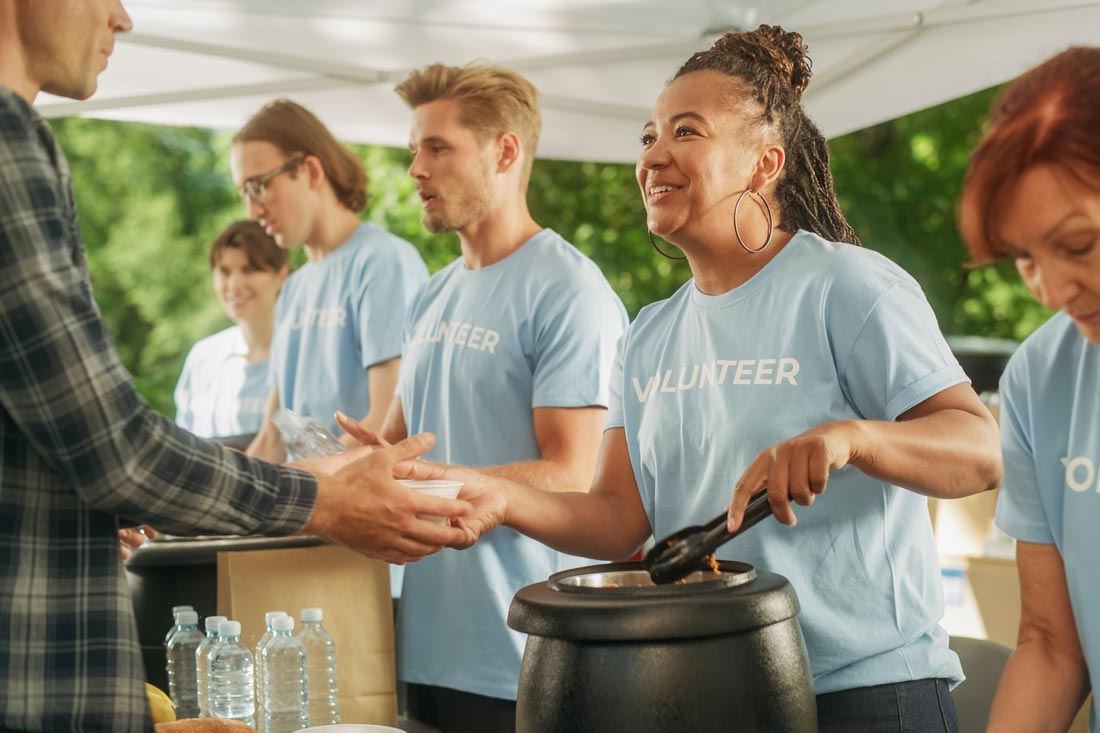


EVERYDAY KINDNESS & HUMAN CONNECTION | The Extraordinary Power of Simple Gestures
Not every meaningful act of generosity involves a donation, an organized volunteer effort, or a grand gesture. Sometimes, the most extraordinary expressions of kindness emerge in ordinary moments—a thoughtful conversation, an unexpected invitation, a helping hand, or a few minutes of genuine attention. These seemingly small exchanges can bring comfort, restore a sense of belonging, and remind someone that they matter, particularly during a season when loneliness, grief, or personal challenges may be felt more deeply.
Thanksgiving offers a wonderful opportunity to look beyond our familiar circles and recognize the people whose circumstances we may not fully understand. The extraordinary power of simple gestures lies not in their size, but in the human connection they create. Whether reaching out to someone spending the holiday alone, showing appreciation to an often-overlooked neighbor, or extending patience and compassion in everyday interactions, kindness becomes a way of putting gratitude into practice. And while these moments may seem fleeting, their influence can linger long after the holiday has passed.
THE GIFT OF BEING SEEN | Reaching Out, Including Others & Easing Holiday Loneliness
This is where we explore people who may be alone at Thanksgiving, those experiencing grief or estrangement, and the importance of reaching out without expectations. I’d feature one particularly moving real-life story about an unexpected Thanksgiving invitation or friendship, supplemented by resources about holiday loneliness and thoughtful inclusion.




KINDNESS IN EVERYDAY LIFE | Small Gestures, Unexpected Connections & Paying It Forward
This group should feel uplifting and accessible. Feature genuine stories of strangers helping strangers, neighbors supporting one another, acts of appreciation, and the contagious nature of kindness. A mix of inspiring human-interest stories and creative ideas would work beautifully.



CARRYING GRATITUDE FORWARD | From Thanksgiving into the Holiday Season
“The more grateful I am, the more beauty I see.” — Mary Davis
There is a particular feeling that settles in as Thanksgiving draws to a close. The kitchen grows quiet, the last guests make their way home, and the familiar bustle of the celebration gives way to a gentler rhythm. Perhaps there are leftovers tucked into the refrigerator, a few candles still glowing, or the lingering warmth of conversations that continued long after dinner was finished. The day may have unfolded exactly as planned, or it may have included the unexpected moments that so often become our favorite memories.
Whatever the experience, Thanksgiving leaves us with something worth considering. Beyond the meals, gatherings, and traditions, the holiday offers a rare opportunity to recognize the people, experiences, and ordinary blessings that give our lives meaning. It encourages us to appreciate what is present rather than becoming consumed by what is missing, and to recognize that even during uncertain times, there are moments of beauty, connection, and possibility worth acknowledging.
Yet the greatest value of Thanksgiving may lie in what happens after the celebration ends. Gratitude is not meant to be packed away with the decorations or reserved for a single day on the calendar. It is a perspective we can carry into the weeks ahead, shaping how we experience the holidays, our relationships, and the everyday moments of our lives.
As November gives way to December, the atmosphere around us begins to change. Homes and neighborhoods take on a festive glow, calendars fill with gatherings and celebrations, and attention turns toward the traditions that accompany the close of another year. For many, this is a season of anticipation, generosity, and joyful connection. For others, it can also bring complicated emotions, financial pressures, demanding schedules, or reminders of people and experiences that are no longer part of their lives.
Both realities deserve acknowledgment. The holiday season does not need to be perfect to be meaningful, nor does every moment need to feel joyful to hold something of value. Perhaps the most important gift Thanksgiving offers is the reminder that appreciation and awareness can help us approach the weeks ahead with greater intention, compassion, and perspective.
As we move toward the year’s final chapter, we have an opportunity to carry forward the best of what Thanksgiving represents—not simply through familiar traditions, but through the choices we make, the relationships we nurture, and the attention we give to the lives unfolding around us.
THE SEASON OF GRATITUDE | Bringing Thanksgiving’s Spirit of Appreciation, Connection & Generosity into December
Thanksgiving occupies a special place in the American calendar, arriving just as autumn begins its transition toward winter and the final weeks of the year come into view. It is a natural moment of reflection, positioned between the experiences of the past several months and the anticipation of what lies ahead.
The holiday season that follows brings its own distinctive traditions, from decorating homes and gathering with loved ones to exchanging gifts, attending community celebrations, and observing cultural or religious occasions that hold personal meaning. While these celebrations differ in their origins and customs, many share an emphasis on connection, generosity, remembrance, and the desire to bring warmth and meaning into our lives.
Thanksgiving offers a beautiful foundation for entering this season. Rather than moving immediately from one celebration to the next, we can allow the appreciation cultivated during Thanksgiving to influence how we approach everything that follows. The spirit of gratitude reminds us that the most meaningful parts of the holidays are not necessarily the things we purchase or the events we attend, but the experiences we create and the connections we strengthen along the way.
From Abundance to Appreciation
The weeks following Thanksgiving often bring a noticeable shift in attention. Holiday advertisements, shopping promotions, gift lists, and increasingly busy schedules can create the impression that a successful celebration requires more—more decorations, more activities, more purchases, and more effort.
There is certainly pleasure in choosing thoughtful gifts, preparing special meals, and creating beautiful celebrations. These traditions can express affection and bring genuine enjoyment. Yet the abundance of possibilities can also make it easy to lose sight of what matters most, particularly when expectations begin to overshadow the experience itself.
Gratitude offers a different perspective. Instead of measuring the season by how much we accomplish or acquire, we can consider the meaning behind our choices. A carefully selected gift may communicate appreciation more effectively than an expensive purchase. An afternoon spent with someone we love may become more memorable than an elaborate event. A familiar family tradition may provide greater comfort than an entirely new celebration designed to impress.
This does not mean abandoning the pleasures of the season. It means enjoying them with awareness, recognizing when something adds genuine value and when it simply creates another obligation. By approaching the holidays with intention, we can preserve their beauty without allowing the pressure to do everything to diminish our enjoyment.
Finding Joy in the Simple Things
Some of the most memorable holiday experiences are surprisingly ordinary. The warmth of a favorite blanket on a cool evening, a familiar song playing in the background, the scent of something baking, or the quiet pleasure of watching the neighborhood lights begin to appear can create a sense of comfort that requires very little planning.
These moments often pass unnoticed when our attention is fixed on the next task or commitment. Yet they are part of the richness of everyday life, inviting us to recognize that joy does not always arrive through extraordinary circumstances.
The weeks ahead may also offer opportunities to reconnect with people we have not seen recently, revisit cherished traditions, or create new experiences that reflect the changing needs of our families. Some celebrations will be lively and full of activity, while others may be quieter, offering welcome opportunities for rest and reflection.
There is value in both. Solitude can be just as restorative as companionship, and a peaceful evening at home can be every bit as meaningful as a festive gathering. What matters is allowing ourselves to experience these moments without constantly comparing them to an idealized version of what the holidays should look like.
When appreciation becomes part of our everyday awareness, even the simplest experiences can take on a deeper sense of meaning.
A MORE INTENTIONAL HOLIDAY SEASON | Finding Balance, Protecting Your Peace & Celebrating What Matters Most
The final weeks of the year often arrive with a mixture of excitement and responsibility. Alongside the anticipation of holiday celebrations come work obligations, family commitments, travel arrangements, shopping, entertaining, and the countless details involved in bringing everything together.
For many people, this can be one of the busiest periods of the year. The desire to create memorable experiences is understandable, but the pressure to meet everyone’s expectations can gradually transform a season intended for connection and enjoyment into one dominated by deadlines and obligations.
Thanksgiving’s invitation to slow down and appreciate the present offers a useful reminder as we navigate this transition. A meaningful holiday season is not defined by how much we manage to fit into it, but by how fully we experience the moments that matter.
Choosing Presence Over Perfection
It is easy to become attached to the idea of the perfect holiday. We imagine beautifully decorated homes, harmonious gatherings, thoughtfully selected gifts, and celebrations that unfold without complications. These images can be inspiring, but they can also create expectations that real life rarely accommodates.
Families are complicated, schedules change, budgets have limits, and even the most carefully planned celebrations encounter unexpected challenges. Recognizing this does not diminish the holidays. It allows us to approach them with greater flexibility and a more realistic understanding of what makes an experience meaningful.
Sometimes the most memorable moments arise precisely because things do not go according to plan. A spontaneous gathering may become a treasured tradition, an improvised meal may lead to unexpected laughter, or a quiet evening may provide the connection that a busy schedule has made difficult to find.
Choosing presence over perfection means allowing room for these experiences rather than measuring them against a predetermined ideal. It also means recognizing that our attention is one of the most valuable things we can offer the people around us.
A conversation without distractions, an afternoon spent helping someone prepare for a celebration, or the simple act of listening with genuine interest can communicate care more effectively than an elaborate gesture.
Creating Space for Rest & Renewal
As the year draws toward its conclusion, it is worth remembering that rest is not an indulgence to be earned after every obligation has been fulfilled. It is an essential part of maintaining the energy, clarity, and emotional balance that allow us to participate fully in our lives.
The holidays can be especially demanding for those who are responsible for organizing gatherings, caring for family members, managing household responsibilities, or balancing professional commitments with personal expectations. Even enjoyable activities can become exhausting when there is little opportunity to pause.
Creating space for renewal may involve simplifying plans, sharing responsibilities, setting reasonable boundaries, or intentionally leaving portions of the calendar open. It might mean spending time outdoors, returning to a favorite book, enjoying a quiet morning, or simply allowing an evening to unfold without an agenda.
These choices are not a rejection of holiday traditions. They are a way of ensuring that the season remains sustainable and enjoyable.
There is also freedom in recognizing that we do not need to participate in every activity or meet every expectation. Choosing what matters most allows us to bring more genuine enthusiasm and attention to the experiences we decide to embrace.
Celebrating With Compassion & Awareness
The holidays can bring people together, but they can also highlight differences in circumstances, expectations, and emotional experiences. While some individuals look forward to a season filled with gatherings and celebration, others may be navigating grief, loneliness, illness, financial uncertainty, or difficult family relationships.
Approaching the season with compassion means recognizing that not everyone experiences it in the same way. It may involve adjusting expectations, respecting personal boundaries, or offering companionship without assuming that everyone wants or needs the same kind of celebration.
It also means extending that understanding to ourselves. We can appreciate the beauty of the season while acknowledging that life may feel complicated. We can enjoy moments of happiness without pretending that every difficulty has disappeared, and we can honor memories of the past while remaining open to the experiences still ahead.
From a consciousness perspective, this balance reflects an important distinction between awareness and reaction. When we recognize our expectations, emotions, and habitual responses, we create room to choose how we engage with the people and circumstances around us.
Calm does not require the absence of activity, and peace does not depend on everything unfolding according to plan. Both can emerge from the way we choose to meet the moment before us.
Perhaps this is one of the most valuable lessons we can carry from Thanksgiving into the holiday season: the freedom to celebrate with appreciation rather than pressure, compassion rather than comparison, and presence rather than perfection.
THE GIFT THAT CONTINUES | Living With Gratitude Beyond the Holidays & Welcoming the Year Ahead
As the final weeks of the year approach, our attention naturally begins to turn toward reflection. We remember experiences that shaped us, relationships that brought meaning to our lives, challenges that tested our resilience, and moments of unexpected joy that reminded us of what matters most.
Some years leave us feeling accomplished and optimistic. Others are more complicated, marked by uncertainty, change, or experiences we are still trying to understand. Most contain a mixture of both, reminding us that life rarely unfolds in a simple progression from difficulty to resolution.
Thanksgiving offers an opportunity to approach this reflection with appreciation rather than judgment. We can acknowledge what went well without overlooking what was difficult, recognize the ways we have grown without demanding that every experience produce a lesson, and appreciate the people who have supported us along the way.
Gratitude does not require us to celebrate every circumstance. It invites us to recognize what remains meaningful, even when life is imperfect.
Reflecting on the Year With Perspective
The end of a year can become a time of evaluation, particularly as we consider goals, achievements, and experiences that did not unfold as expected. While reflection can be valuable, it is easy to focus disproportionately on unfinished plans or perceived shortcomings.
A more balanced perspective includes the quieter accomplishments that rarely receive much attention. Perhaps we maintained an important relationship, supported someone through a difficult period, developed a healthier habit, or found the courage to make a necessary change. Maybe our greatest accomplishment was simply navigating a challenging season with greater patience, resilience, or self-awareness.
These experiences may not appear on a traditional list of achievements, but they contribute to the quality and direction of our lives.
There is also value in recognizing the moments that brought genuine happiness: an unexpected conversation, a beautiful place, a meaningful reunion, or a simple experience that reminded us of the pleasure of being alive.
Remembering these moments does not erase the difficulties of the year. It creates a fuller picture, allowing us to acknowledge both the challenges we faced and the experiences that sustained us.
Carrying Forward What Matters
As we look toward a new year, it is natural to think about what we hope to change, accomplish, or experience. Yet before focusing on what comes next, Thanksgiving encourages us to consider what we already value and wish to preserve.
Perhaps it is the importance of meaningful relationships, the restorative quality of time spent in nature, the satisfaction of helping others, or the freedom that comes from living more intentionally. These values can serve as a foundation for future choices, helping us distinguish between goals that genuinely matter and expectations that may no longer reflect who we are becoming.
Carrying gratitude forward does not require an elaborate practice or a rigid set of resolutions. It may begin with something as simple as noticing what brings us peace, expressing appreciation more openly, or making time for experiences that nourish our sense of connection and purpose.
Over time, these choices can influence the rhythm of our lives. We may become more attentive to ordinary pleasures, more thoughtful in our relationships, and more discerning about where we direct our energy.
The aim is not to maintain a constant state of positivity. It is to cultivate a perspective that allows us to recognize possibility without denying reality, to remain compassionate without losing our boundaries, and to approach change without becoming consumed by uncertainty.
A Thanksgiving Reflection | What We Carry With Us
Throughout this report, we have explored Thanksgiving from many perspectives: its history and evolving traditions, the universal language of gratitude, the relationship between appreciation and consciousness, the importance of family and belonging, the beauty of welcoming spaces, the foods and experiences that connect generations, and the generosity that strengthens our communities.
Each of these themes reflects a different expression of the same underlying idea—that much of life’s richness is found in the relationships, experiences, and ordinary moments we sometimes overlook.
Thanksgiving provides a special occasion to recognize these gifts, but its deeper meaning is not confined to a celebration in November. It lives in the attention we give to the present, the appreciation we express to others, the compassion we extend during difficult times, and the choices we make as we continue moving forward.
The holiday season will bring its own experiences, traditions, and opportunities for connection. Some will be familiar, while others may surprise us. There will be moments of celebration and moments of quiet, opportunities to gather and reasons to pause. Through all of them, we can carry the perspective that Thanksgiving so beautifully encourages: an awareness of what matters, an appreciation for what is present, and an openness to the possibilities still unfolding.
As we close this Thanksgiving edition, may we remember that gratitude is not simply a response to life’s blessings. It is also a way of paying attention to life itself.
May we cherish the people who enrich our days, find comfort in the traditions that connect us, remain open to new experiences, and recognize the quiet beauty woven throughout our ordinary lives. May we offer kindness where it is needed, protect the peace we have cultivated, and approach the coming season with warmth, discernment, and a generous spirit.
And as Thanksgiving gives way to the holidays and the promise of another year, may we carry forward not only the memories of what we have celebrated, but the awareness of why those moments mattered.
Because the greatest gift of Thanksgiving is not simply the gratitude we feel for a day, but the appreciation we learn to carry through all the days that follow.
THE SEASON OF GRATITUDE | Bringing Thanksgiving’s Spirit of Appreciation, Connection & Generosity into December
Thanksgiving may mark a particular day on the calendar, but the appreciation, warmth, and sense of connection it inspires need not end when the gathering is over. As November gives way to December, the holiday season offers new opportunities to celebrate the people who enrich our lives, nurture cherished relationships, and find meaning in traditions both familiar and new. The spirit of gratitude can become a beautiful thread connecting Thanksgiving to the celebrations that follow.
Whether through thoughtful gestures, shared experiences, meaningful conversations, or simply making time for the people who matter most, carrying gratitude forward brings greater depth to the season. Rather than measuring the holidays by how much we accomplish or exchange, we can focus on the memories we create, the appreciation we express, and the connections we strengthen along the way.




A MORE INTENTIONAL HOLIDAY SEASON | Finding Balance, Protecting Your Peace & Celebrating What Matters Most
The weeks between Thanksgiving and the new year can be filled with wonderful experiences, but they can also bring crowded schedules, financial pressures, competing expectations, and the feeling that there is always something more to accomplish. Amid the celebrations, preparations, and commitments, it’s easy to lose sight of the very things that make the season meaningful. An intentional holiday season isn’t about doing everything perfectly; it’s about creating space for what genuinely matters.
Sometimes that means simplifying traditions, setting thoughtful boundaries, or choosing experiences over obligations. Other times, it means allowing ourselves moments of quiet, solitude, and rest without feeling the need to fill every available hour. By approaching the season with greater awareness and flexibility, we can enjoy its pleasures while preserving the balance, connection, and peace that make those moments worth celebrating.


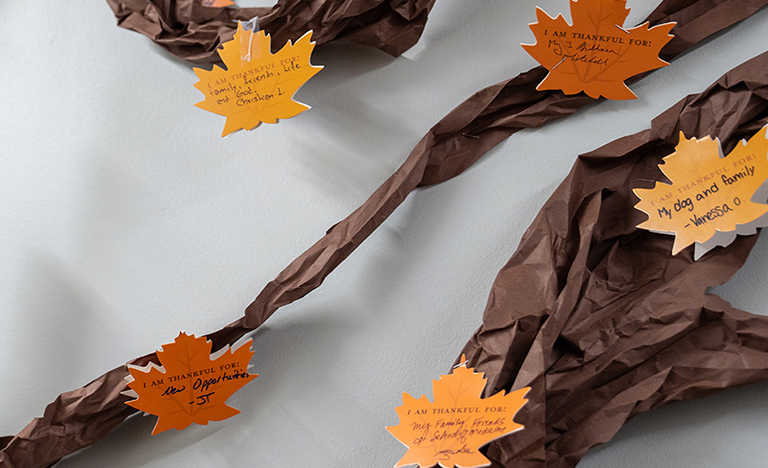

THE GIFT THAT CONTINUES | Living With Gratitude Beyond the Holidays & Welcoming the Year Ahead
As the holiday season draws to a close, the transition into a new year invites us to reflect on the experiences, relationships, and lessons that have shaped our lives. Some moments brought joy and celebration, while others may have required patience, resilience, or unexpected change. Gratitude does not ask us to overlook life’s difficulties; rather, it encourages us to recognize what has sustained us, what we’ve learned, and what we hope to carry forward.
The most meaningful gift of gratitude may be its ability to enrich ordinary life long after the holidays have passed.As we welcome the year ahead, we can choose intentions that reflect our values, nurture relationships that matter, and make room for experiences that bring greater purpose and fulfillment. Instead of approaching January with pressure to reinvent ourselves, we can begin with appreciation for where we’ve been and a thoughtful openness to what comes next.


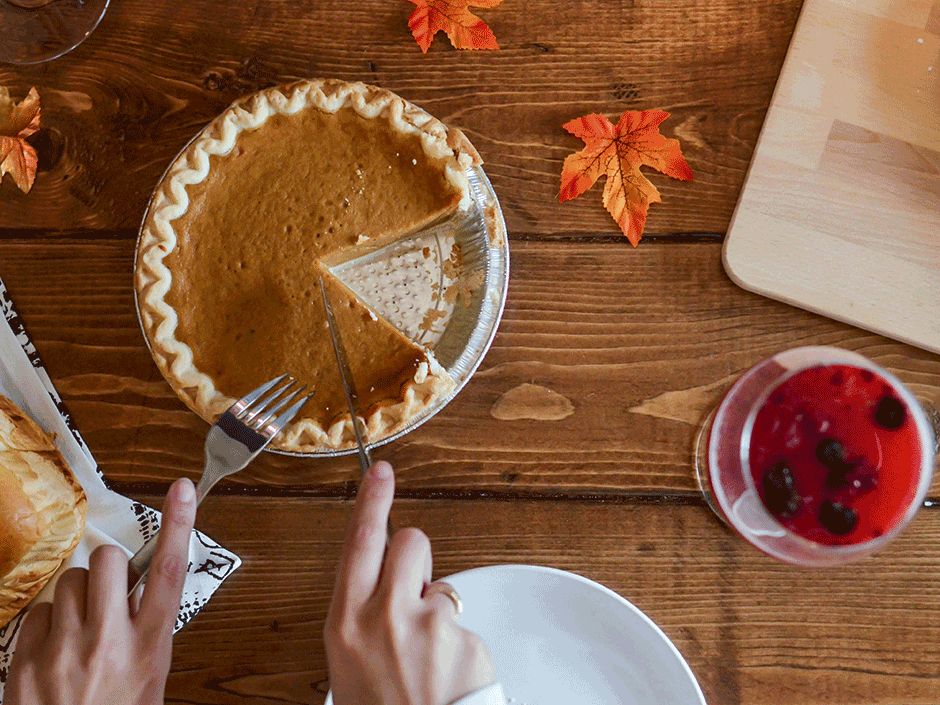



Returning to the Heart of Thanksgiving | A Closing Reflection on Gratitude and Grace
“Gratitude turns what we have into enough, and more. It turns denial into acceptance, chaos into order, and confusion into clarity.” Melody Beattie
As Thanksgiving draws to a close and the warmth of the day’s gatherings begins to settle into memory, there is something beautiful about the quiet that follows. The preparations are finished, the conversations linger, and the familiar rhythms of everyday life begin to return. Yet beneath the celebrations, the traditions, and the abundance of the holiday lies something far more enduring: the simple recognition of how much meaning can be found in the lives we share, the experiences we treasure, and the moments we might otherwise overlook.
Thanksgiving has always been about more than the gathering itself. It is an opportunity to reconnect with what anchors us, to appreciate the relationships that have shaped our lives, and to recognize the countless ways love, kindness, and generosity reveal themselves. Sometimes they arrive through grand celebrations or long-awaited reunions. More often, they appear quietly—in a familiar voice, a shared laugh, a thoughtful gesture, or the comfort of being with someone who knows us well. These are the experiences that become part of our personal histories, the memories we carry long after the occasion has passed.
Of course, not every Thanksgiving unfolds as we might have imagined. Some tables hold empty chairs, some relationships remain complicated, and some seasons ask more of us than we ever expected to give. Gratitude does not require us to overlook these realities or pretend that every experience has been easy. There is grace in acknowledging both the beauty and the difficulty of life, recognizing that appreciation and sorrow, joy and uncertainty, can exist alongside one another. The people we miss, the challenges we’ve navigated, and the changes we never anticipated are also part of the stories that make us who we are.
Perhaps this is one of Thanksgiving’s most meaningful gifts: the opportunity to see our lives with a little more perspective and compassion. We can honor those who have walked beside us, remember those whose presence continues to influence us, and appreciate the unexpected connections that have enriched our journey. We can also recognize our own resilience, the lessons we’ve learned, and the quiet strength that has carried us through difficult moments. And where there has been misunderstanding or distance, we may find room for greater patience, forgiveness, or simply the understanding that healing unfolds in its own time.
As we move from Thanksgiving into the holiday season and eventually welcome another year, the spirit of this day need not be left behind. Its most enduring qualities—appreciation, generosity, connection, and grace—are available to us in the ordinary moments of everyday life. They ask nothing extraordinary of us, only that we remain attentive to what matters, generous with what we can share, and open to the beauty that continues to emerge even when life feels uncertain.
There is something profoundly comforting in realizing that a meaningful life is not measured by the perfection of its circumstances, but by the richness of its connections, the depth of its experiences, and the love we bring to the moments we’re given. We may not always recognize their significance as they unfold, but these moments become the threads that weave together a life well lived.
And so, as the season continues, may we carry forward not simply the memories of Thanksgiving, but the awareness it has awakened within us. May we make time for the people who matter, find peace in moments of solitude, offer kindness without expectation, and remember to appreciate the extraordinary gifts hidden within ordinary days.
For in returning to the heart of Thanksgiving, we return to something timeless and deeply human: the desire to love and be loved, to belong, to find meaning, and to share what is good in our lives.
A life rich in presence.
A life shaped by gratitude.
A life rooted in love.

The 3 C’s of Life: “Choices, Chances, and Changes”,
You must make a choice to take a chance or your life will never change. – Zig Ziglar
Share This Report
Join the Discussion
Related Reports


Have questions?
At Great Awakening Report, we are dedicated to supporting your journey toward truth and enlightenment through our specialized Coaching and Consulting services.
Coaching Services: Our coaching programs are designed to guide you through personal awakening and transformation. We offer personalized sessions that focus on expanding consciousness, uncovering hidden truths, and fostering spiritual growth. Our experienced coaches provide the tools and insights necessary to navigate your path with clarity and confidence.
Consulting Services: For organizations and individuals seeking deeper understanding and strategic guidance, our consulting services offer expert analysis and solutions. We delve into areas such as global transitions, alternative news insights, and consciousness studies to provide comprehensive strategies tailored to your unique objectives.
Embark on a transformative journey with our Coaching and Consulting services, and unlock your highest potential. To learn more and schedule a session, visit our Coaching and Consulting pages.
Thank you
Thank you to our subscribers and readers for your continued support and dedication to truth and awakening. Your encouragement, engagement, and belief in our mission make everything we do possible. Together, we are expanding awareness and helping illuminate the path forward.
If you would like to further support the Great Awakening team and our ongoing efforts to share insight, knowledge, and truth, you can DONATE HERE.
With deep gratitude,
– Great Awakening Team
About the Author: Great Awakening Team

We are a community. We are cultural creatives and like minded people seeking the truth and focusing on disclosure, awakening and consciousness. Our focus is real news as researchers, reporters and truth seekers. We are here to teach, to spread the word, to serve and to help. We are a collective, a movement, free from all programing, not closed minded and not discriminatory. We are not political. We are not religious but we are spiritual. We study, research, and report on a wide range of subjects and topics, from the current geopolitical climate to health and wellness, from earth’s history to spiritual practices. We are forward thinkers and visionaries, we are guides for the transition as we usher in The Great Awakening.
THIS WEBSITE DOES NOT PROVIDE MEDICAL ADVICE: The information, including but not limited to text, graphics, images, and other material contained on this website, are for informational purposes only. No material on this site is intended to be a substitute for professional medical advice, diagnosis, or treatment. Always seek the advice of your physician or other qualified health care provider with any questions you may have regarding a medical condition or treatment and before undertaking a new health care regimen, and never disregard professional medical advice or delay in seeking it because of something you have read on this website.
DISCLAIMER: All statements, claims, views and opinions that appear anywhere on this site, whether stated as theories or absolute facts, are always presented by The Great Awakening Report (GAR) as unverified—and should be personally fact checked and discerned by you, the reader.Any opinions or statements herein presented are not necessarily promoted, endorsed, or agreed to by GAR, those who work with GAR, or those who read or subscribe to GAR.Any belief or conclusion gleaned from content on this site is solely the responsibility of you the reader to substantiate.Any actions taken by those who read material on this site are solely the responsibility of the acting party.You are encouraged to think for yourself and do your own research.Nothing on this site is meant to be believed without question or personal appraisal.
COPYRIGHT DISCLAIMER: Citation of articles and authors in this report does not imply ownership. Works and images presented here fall under Fair Use Section 107 and are used for commentary on globally significant newsworthy events. Under Section 107 of the Copyright Act 1976, allowance is made for fair use for purposes such as criticism, comment, news reporting, teaching, scholarship, and research.
COMMUNITY GUIDELINES DISCLAIMER: The points of view and purpose of this video is not to bully or harass anybody, but rather share that opinion and thoughts with other like-minded individuals curious about the subject.