


Help Us Bypass Censorship. Share This.
Sign up to receive Our Weekly Briefing Newsletter
Begin your journey with weekly insights designed to expand awareness and ground you in truth. Our free tier gives you a powerful introduction without any commitment.
ANCIENT TEACHINGS ON HIDDEN INFLUENCE, HUMAN CONSCIOUSNESS & THE PATH TO SPIRITUAL LIBERATION
“The greatest form of control is not the power to command what we do, but the ability to shape what we believe is possible. Awakening begins when we recognize the difference.” — Great Awakening Report
THE ANCIENT MYSTERY OF THE ARCHONS
What if the greatest limitation on human freedom were not the circumstances surrounding us, but the boundaries of what we have been conditioned to perceive? What if the reality we accept as complete represents only a fraction of something far greater? These questions may sound remarkably contemporary, particularly in an age increasingly concerned with systems of influence, manufactured perceptions, and the nature of consciousness. Yet nearly two thousand years ago, certain spiritual movements were exploring similar mysteries through an extraordinary cosmology populated by celestial rulers known as the Archons.
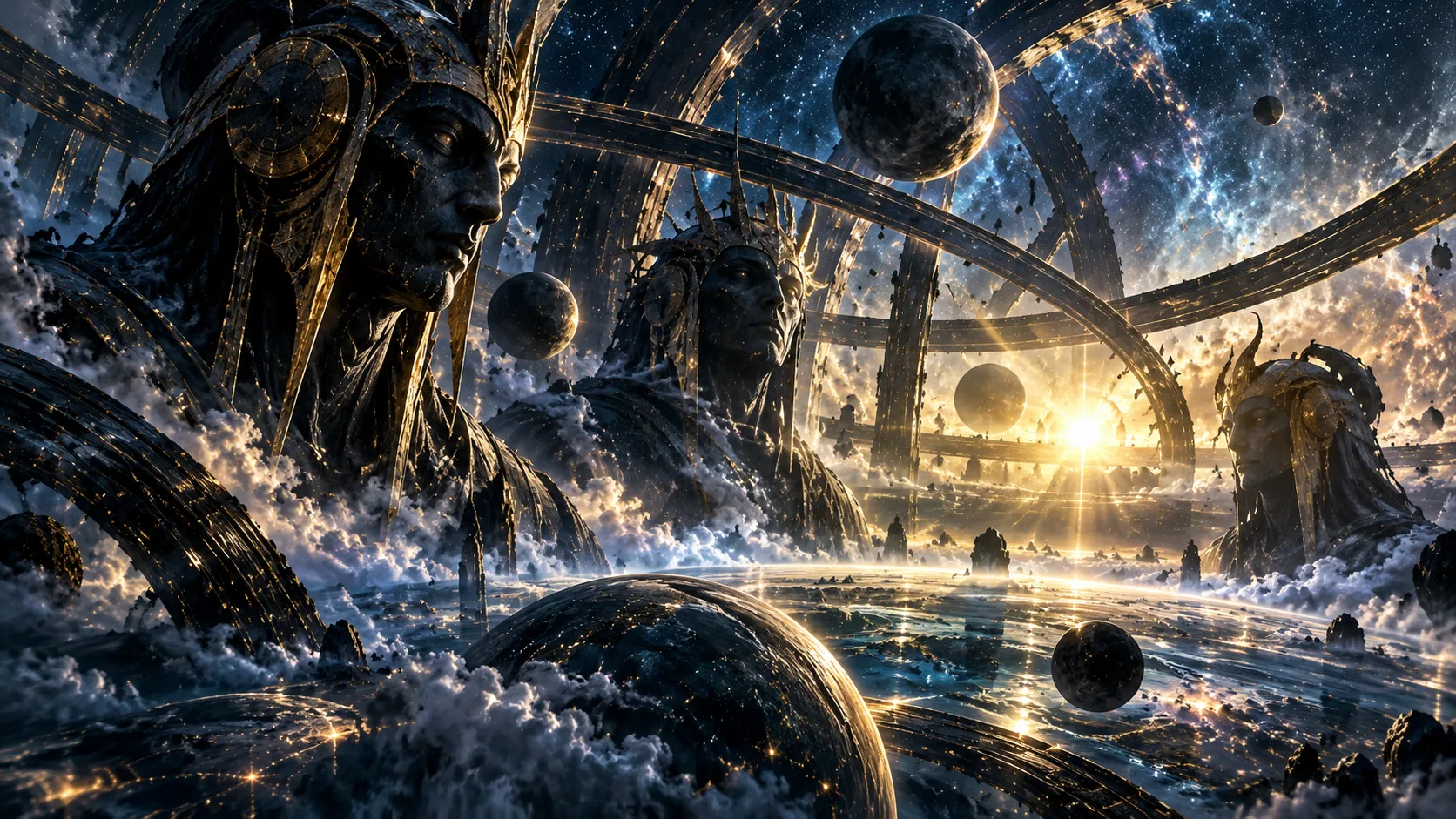
In ancient Gnostic writings, the Archons are portrayed as powers associated with the organization and governance of the material cosmos. Their authority is considerable, but not absolute. They are described as beings whose understanding is limited, who mistake their own position within creation for ultimate authority, and who seek to keep humanity unaware of its higher spiritual origins. At the heart of these teachings lies a provocative reversal: the rulers of the visible world may possess enormous power, yet human beings carry a divine element that originates beyond their domain.
For contemporary readers, the Archons occupy a fascinating intersection between ancient religious mythology, spiritual philosophy, psychology, and questions about the systems that influence human thought. Some interpret them as literal nonphysical intelligences. Others understand them as symbolic representations of ignorance, attachment, and the forces that constrain awareness. Still others draw parallels between the Gnostic worldview and modern discussions of social conditioning, institutional authority, and the metaphor of the Matrix.
Understanding the Archons requires taking these ancient teachings seriously on their own terms before applying them to modern life. Their story is not simply about mysterious beings exercising power over humanity. It is also about the nature of illusion, the vulnerability of consciousness to deception, and the possibility that genuine liberation begins with remembering something essential about ourselves.
WHO ARE THE ARCHONS? THE RULERS OF THE MATERIAL WORLD
The word Archon comes from the Greek archōn, meaning ruler, magistrate, or one who exercises authority. In the ancient Greek world, it was an ordinary political title. Within several early Christian and Gnostic religious traditions, however, the term acquired a more expansive meaning, referring to spiritual or cosmic powers associated with the governance of the world.
In certain Gnostic texts, particularly those associated with the Sethian tradition, the Archons are subordinate rulers within a lower cosmic order. They are frequently connected with the Demiurge, a creator figure who mistakenly believes himself to be the highest divine authority. According to these narratives, the Archons participate in the construction and administration of the material world, yet remain ignorant of the transcendent divine reality beyond it.
The descriptions are strikingly unusual. In The Secret Book of John, the lower rulers are associated with complex celestial hierarchies and names that reflect ancient religious and astronomical traditions. Other writings depict rulers with animal-like appearances, emphasizing their distance from the higher spiritual reality that Gnostic teachings associate with true divinity. These are features of the texts’ mythological cosmology, not independently verified descriptions of supernatural beings.
The number and organization of the Archons vary considerably. Some accounts emphasize seven principal rulers associated with the planetary spheres recognized in ancient astronomy, while others describe additional authorities connected with the zodiac, fate, or the construction of the human body. These differences matter because there was never one unified Gnostic doctrine shared by every community. The teachings developed across diverse movements, each with its own understanding of creation, consciousness, and salvation.
Despite these variations, a central theme emerges: the Archons possess authority within a limited order of reality, but they do not possess ultimate knowledge of existence. Their power is therefore inseparable from their ignorance. They govern what they understand while remaining unaware of what lies beyond their own boundaries.
This creates one of the most compelling paradoxes in Gnostic thought. The beings who appear to control the world are themselves constrained by a deeper limitation: they do not fully understand the nature of the reality they inhabit.

THE ORIGINS OF THE ARCHONS — A BRIEF LOOK AT GNOSTIC COSMOLOGY
To understand why the Archons exist within Gnostic mythology, we need a little context about the creation story from which they emerge. Certain Gnostic traditions distinguish between the highest, unknowable divine source and a lower creator associated with the formation of the material universe. This lower creator is commonly called the Demiurge, and in several important texts is identified as Yaldabaoth.
In the account preserved in The Secret Book of John, the emergence of the Demiurge is connected with Sophia, whose name means Wisdom. Her actions lead to the appearance of a being who exists outside the fullness of the higher divine realm and who does not recognize the source from which he ultimately originated. Believing himself to be supreme, Yaldabaoth establishes a lower cosmic order and brings forth subordinate rulers.
Those rulers are the Archons.
Their authority therefore originates within a cosmology built around a fundamental misunderstanding. The Demiurge mistakes limited creative power for ultimate divinity, and the Archons operate within the order he establishes. This does not mean every Gnostic tradition portrays the creator in precisely the same way. Some accounts emphasize arrogance or hostility, while others present a more complicated picture of ignorance, limitation, and eventual correction.
The original writings are especially important here. For centuries, much of what was known about these movements came through the accounts of their opponents, including early Christian writers who considered their teachings heretical. The discovery of the Nag Hammadi codices in Egypt in 1945 made a substantial collection of ancient religious texts available for modern study, including The Reality of the Rulers, also known as The Hypostasis of the Archons, and The Secret Book of John. These writings allow us to examine the Archons within the broader spiritual narratives in which they originally appeared.
We will explore Sophia, the Demiurge, the Nag Hammadi discovery, and The Secret Book of John individually in future GAR articles. For our present discussion, the essential point is that the Archons are not portrayed as the highest powers in existence. Their authority is derivative, their knowledge incomplete, and their apparent dominion over humanity challenged by something they cannot fully comprehend.
That something is the divine spark.
HOW THE ARCHONS INFLUENCE HUMANITY — IGNORANCE, FEAR & FALSE AUTHORITY
One of the most intriguing aspects of the Archon narratives is that their influence extends beyond physical authority. In several texts, the lower rulers are associated with the conditions that keep humanity unaware of its spiritual origins. Their power is not presented merely as the ability to govern the material cosmos, but also as the capacity to sustain ignorance, attachment, and misidentification.
In The Reality of the Rulers, the relationship between the rulers and humanity unfolds through a mythological retelling of creation. The rulers attempt to exercise dominion over human beings, but repeatedly encounter a spiritual reality that exceeds their authority. The narrative presents a struggle between coercive power and a higher dimension of human existence that cannot be fully possessed by the rulers.
Other Gnostic writings introduce the concept of a counterfeit spirit, associated with forces that encourage ignorance and misdirect human awareness. The precise meaning varies across texts and interpretations, but the broader concern is recognizable: human beings may become so absorbed in the immediate demands, fears, and desires of ordinary existence that they lose awareness of their deeper spiritual identity.
This is where the ancient teachings become especially thought-provoking for modern readers. Fear can narrow perception, making immediate survival seem more important than reflection or independent judgment. Desire can become an endless pursuit in which satisfaction is always promised but rarely sustained. Authority can be accepted without examination, particularly when it is presented as unquestionable or inevitable. Over time, familiar assumptions may become so deeply embedded that people no longer recognize them as assumptions at all.
These observations do not establish that supernatural Archons are manipulating contemporary society. They do, however, help explain why the Gnostic narratives remain compelling. The mythology offers a dramatic language for exploring the ways human awareness can become restricted by forces that are difficult to recognize from within an established worldview.
The relationship between the Archons and fate adds another dimension. In some ancient cosmological systems, planetary powers were associated with the conditions governing earthly life. Gnostic teachings sometimes portrayed liberation as an escape from the authority of these cosmic rulers and the predetermined order they represented. In this framework, spiritual freedom meant something more profound than changing one’s external circumstances. It involved awakening to an identity that transcended the apparent limitations of the material world.
A contemporary interpretation might recognize similar dynamics wherever people surrender their capacity for independent thought, allow fear to dictate their choices, or mistake socially reinforced beliefs for unquestionable truth. Our GAR article Escaping the Matrix of Conditioning Through Awareness explores this broader relationship between conditioning, perception, and personal sovereignty.
The crucial distinction is that the ancient texts describe a spiritual cosmology, while modern comparisons with social control and psychological conditioning are interpretations of that cosmology. Both are worth examining, but they should not be mistaken for the same kind of claim.
Perhaps the most enduring question raised by the Archon narratives is not simply who exercises authority over humanity, but how easily authority becomes internalized. When a belief has shaped our perception for so long that we no longer question it, does it still feel like something imposed upon us—or has it become indistinguishable from reality itself?
THE DIVINE SPARK — THE PART OF HUMANITY BEYOND THEIR REACH
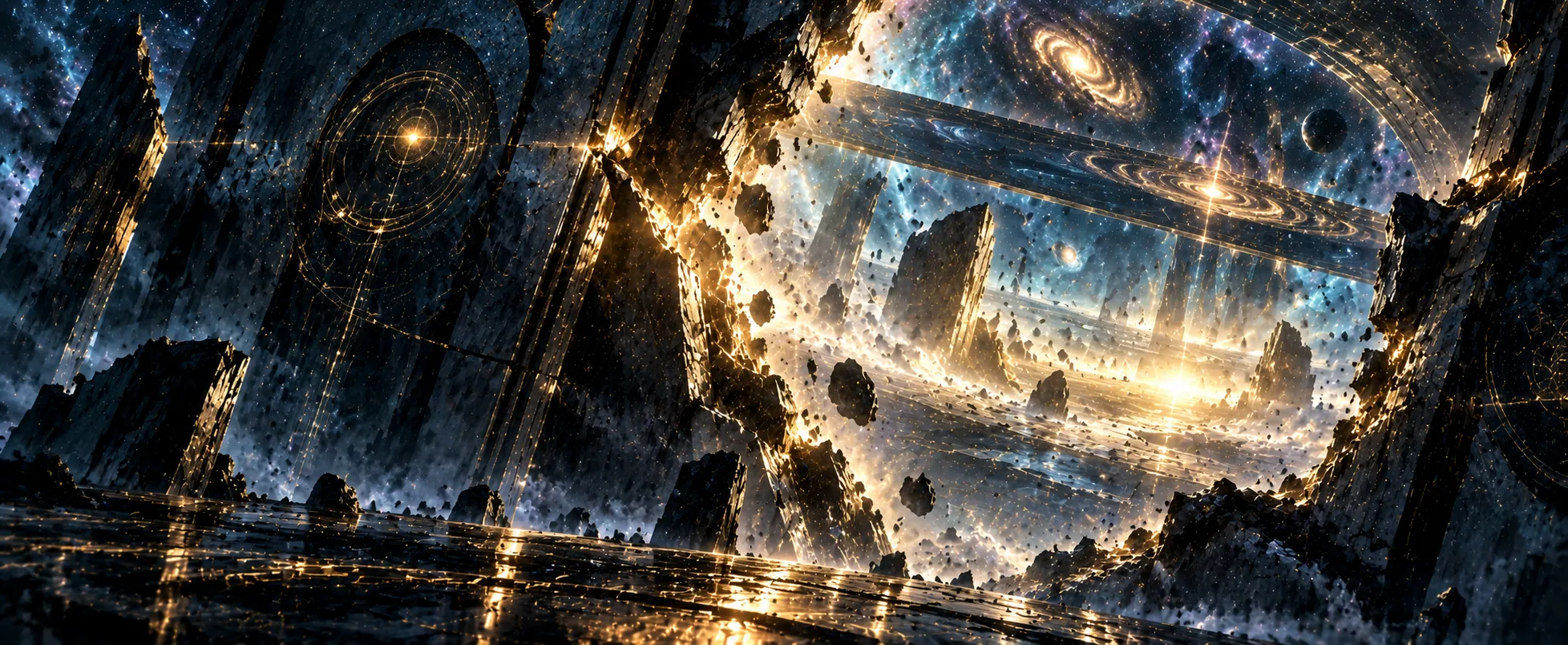
If the Archons represent the limitations of the lower cosmic order, the divine spark represents the extraordinary possibility that humanity’s deepest nature originates beyond those limitations. This is one of the most powerful themes in certain Gnostic traditions, and it changes the meaning of the entire narrative. Humanity is not portrayed merely as a creation subject to the authority of its rulers. Within the myth, human beings possess a spiritual element that connects them with a reality the Archons themselves do not fully understand.
In The Secret Book of John, the creation of humanity involves an unexpected reversal of power. The lower rulers participate in forming Adam, yet the life and spiritual understanding that ultimately animate humanity derive from a higher source. The rulers, despite their apparent authority, discover that the human being possesses something they cannot independently create. Their attempts to exercise control become entangled with their own ignorance of the divine power present within their creation.
This is a remarkable departure from the idea that spiritual liberation must come through obedience to an external authority. In several Gnostic traditions, liberation is associated with gnosis, a Greek word meaning knowledge. But this is not simply the accumulation of facts or religious information. Gnosis refers to a transformative recognition of one’s spiritual origins and relationship with the divine. It is knowledge understood as direct realization, rather than belief accepted solely because someone else declares it to be true.
The divine spark is therefore not merely a comforting symbol. Within these teachings, it challenges the legitimacy of the rulers’ claim to ultimate authority. The Archons may exercise power within the material order, but they cannot claim ownership of the transcendent source from which humanity’s spiritual potential originates.
There is an important nuance here. Not every ancient Gnostic movement understood the human soul, salvation, or divine knowledge in the same way. The language of an indestructible divine spark is a useful summary of a recurring theme, but it should not be treated as a single doctrine universally expressed in every surviving text.
For modern spiritual seekers, the symbolism invites a profound question: What if our deepest identity is not defined by the roles, fears, limitations, and expectations through which we have learned to understand ourselves? Whether one approaches the divine spark as a literal spiritual reality or as a symbol of the human capacity for awareness, its central message is remarkably empowering. The possibility of liberation begins with recognizing that the structures shaping our experience may not define the totality of who we are.
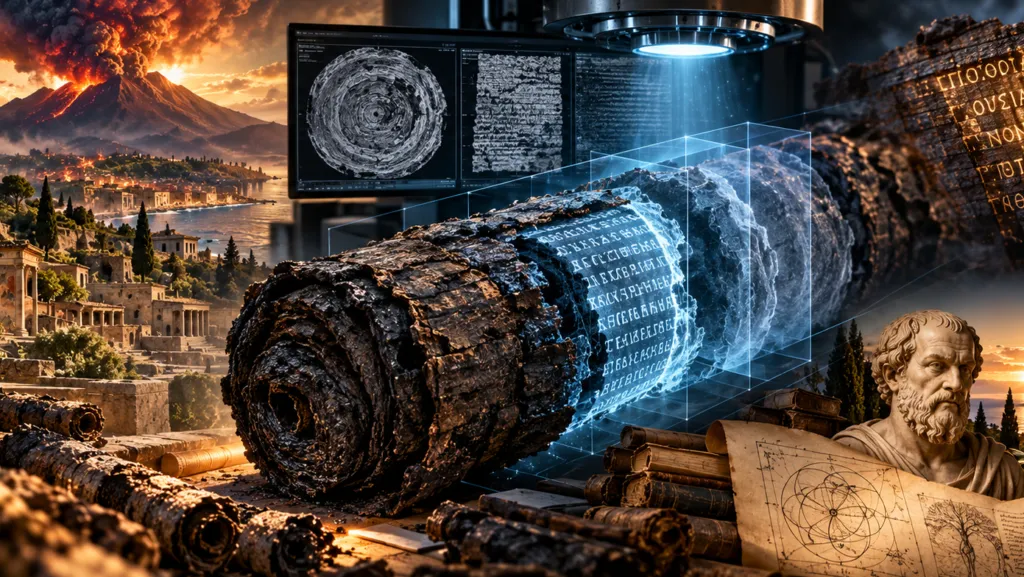
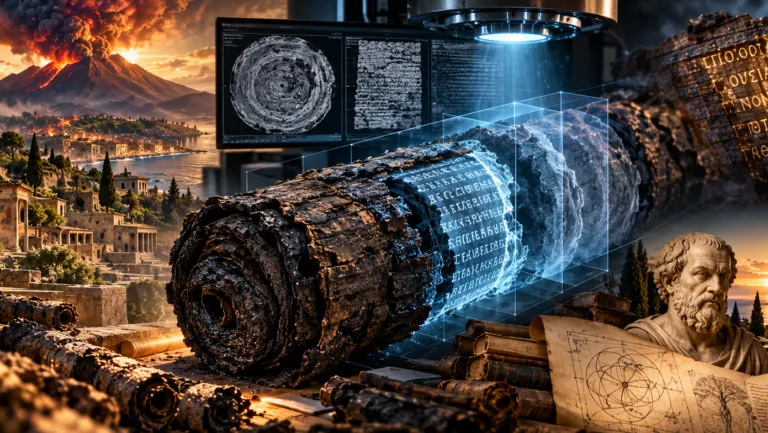
The full collection was published in English in 1977, and it changed how scholars understand early Christianity. Discoveries like this remind us that history is still being recovered. Our feature on the Herculaneum scrolls follows another ancient library now being read with modern technology.

THE ARCHONS & HUMANITY TODAY — AN ANCIENT MYSTERY RECONSIDERED?
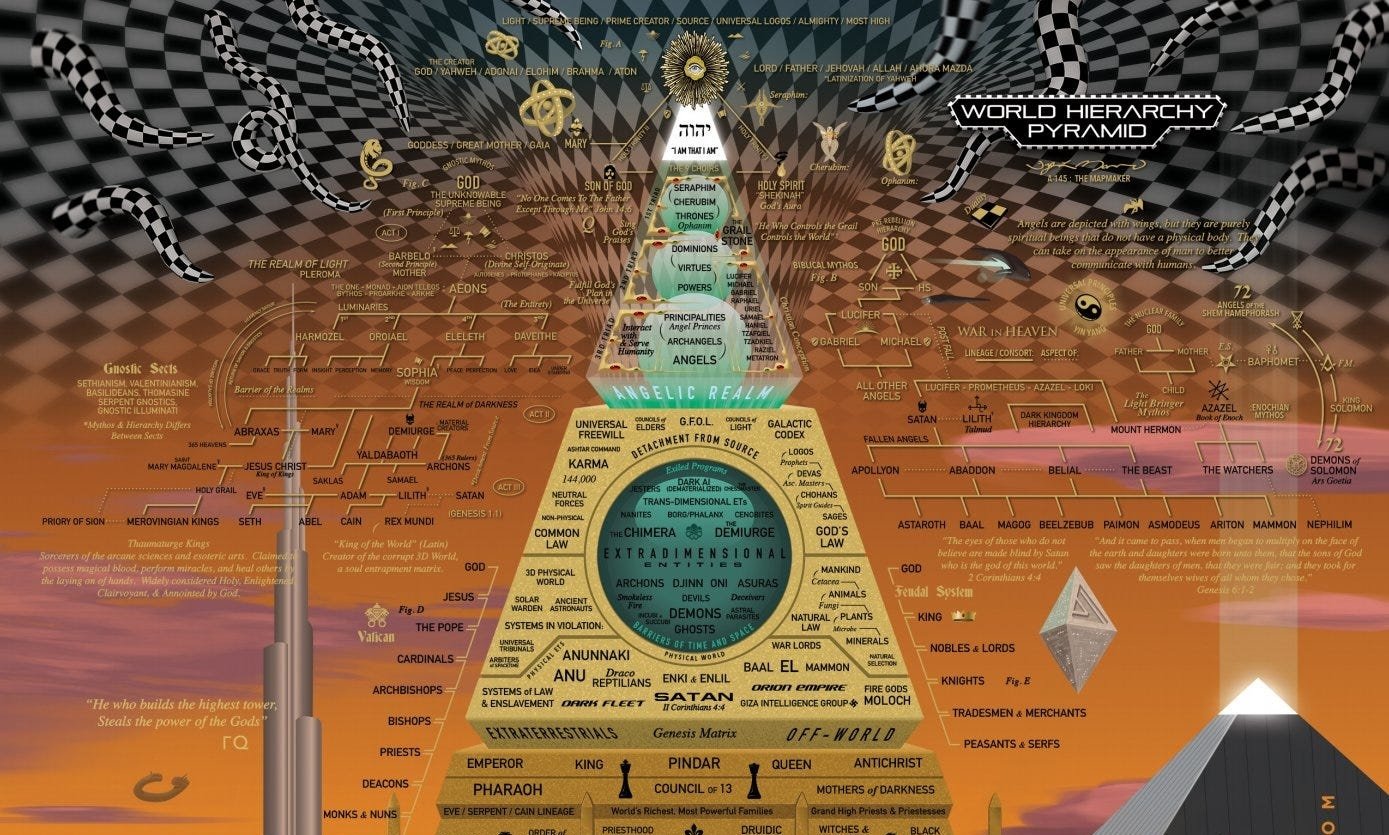
Nearly two thousand years after the Gnostic teachings first emerged, the Archons have returned to contemporary discussions about consciousness, spiritual awakening, and the hidden nature of reality. What makes this resurgence particularly intriguing is that the original writings did not portray the Archons merely as abstract representations of fear or ignorance. They described an organized hierarchy of spiritual rulers operating within the material cosmos, possessing intelligence, exercising authority, and influencing humanity’s ability to recognize its divine origins. For the communities that preserved these teachings, the Archons were part of a larger understanding of existence in which the visible world represented only one dimension of reality.
This raises a question that remains as provocative today as it was in antiquity: If consciousness extends beyond the physical world, could intelligences or influences exist beyond the boundaries of ordinary human perception?Spiritual traditions across civilizations have described nonphysical beings, intermediary powers, and unseen dimensions of existence. Although these traditions differ considerably in their interpretations, they share an enduring recognition that humanity’s experience of reality may not encompass everything that exists. The Gnostic account of the Archons offers one particularly elaborate expression of that possibility, describing a hierarchy whose influence is connected not only to the material world but also to humanity’s awareness of its own spiritual nature.
Contemporary interpretations have expanded these ideas in several directions. Some spiritual researchers and independent thinkers propose that the Archons represent nonphysical intelligences capable of influencing human consciousness through fear, conflict, attachment, and division. Others connect the ancient descriptions with theories of multidimensional existence, consciousness-based reality, or the possibility that the human experience is shaped by forces operating outside conventional perception. These proposals are modern extensions of the ancient narratives rather than conclusions established by the surviving Gnostic texts. Their significance lies in the questions they raise, although the existence and activities of such entities have not been independently demonstrated.
What deserves particular attention is the nature of the influence described in the original writings. The Archons are not portrayed as possessing unlimited authority over human consciousness. Their power is associated with maintaining ignorance of humanity’s higher origins, encouraging identification with the material world, and sustaining the illusion that their authority represents the highest order of existence. In this sense, the Gnostic account presents a remarkably sophisticated spiritual question: Could the most effective form of domination be one in which individuals remain unaware that a greater reality—or a greater freedom—is available to them? The possibility of influence through limitation of awareness, rather than overt coercion, is central to what makes these teachings so enduring.
There is another dimension worth considering. Within the Gnostic worldview, the Archons themselves are not necessarily all-knowing or spiritually advanced simply because they possess powers beyond ordinary humanity. Their authority is limited by their own ignorance of the higher divine reality. This distinction challenges the assumption that greater power necessarily implies greater wisdom, an idea that remains relevant whenever humanity encounters claims of superior knowledge, spiritual authority, or access to hidden truths. The Gnostic narrative repeatedly reminds us that apparent power and genuine understanding are not the same thing.
Whether the Archons are literal spiritual intelligences, expressions of an ancient cosmological understanding, or something we have yet to fully comprehend remains an open question of belief and interpretation rather than an established scientific finding. But the deeper significance of the teachings does not depend on resolving that mystery. Their central message is that human consciousness is not necessarily confined to the limitations imposed by the world it inhabits. The divine spark, according to these traditions, originates beyond the authority of the rulers, and the possibility of awakening remains available regardless of the forces believed to influence human experience.
Perhaps this is why the Archons continue to fascinate those exploring consciousness and the nature of reality. Their story does not simply ask whether unseen powers exist. It asks whether humanity has fully recognized its own spiritual potential—and what might change if we did.
BREAKING FREE — GNOSIS, AWARENESS & SPIRITUAL SOVEREIGNTY
Within the Gnostic worldview, liberation is not ultimately achieved by defeating the Archons through ordinary physical power. It comes through the awakening of knowledge that transcends their authority. The individual begins to recognize the difference between the limitations of the material order and the deeper spiritual reality from which consciousness is understood to originate.
This is the essential significance of gnosis. The person who awakens does not simply acquire new information about the universe. Their relationship with existence changes because they no longer identify exclusively with the conditions that previously defined their experience. The apparent boundaries of reality are reconsidered, and authority once accepted without question becomes something that can be examined.
In everyday life, this principle can be understood through the development of conscious awareness. We begin recognizing the beliefs we inherited rather than deliberately chose, the fears that influence our decisions, and the emotional patterns that repeatedly shape our relationships. We become more attentive to the difference between genuine understanding and assumptions reinforced through repetition. Rather than automatically accepting a particular interpretation of events, we learn to ask what evidence supports it, what alternatives exist, and whether our response is being driven by clarity or emotion.
Spiritual sovereignty, understood this way, is not a declaration that we possess all the answers. It is a commitment to remaining responsible for our own awareness. It requires the willingness to question external authority without automatically rejecting it, to listen to intuition without abandoning discernment, and to explore unfamiliar possibilities without becoming attached to every compelling explanation.
There is a meaningful connection here with the broader journey of conscious awakening. As awareness expands, people may begin to recognize how much of their identity has been shaped by expectations, conditioning, and habitual reactions. What initially feels like a confrontation with the outside world may gradually become an invitation to examine the inner structures through which that world is experienced.
Our GAR article Facing Darkness Without Bypassing It: Consciousness, Discernment and Illumination explores this balance between acknowledging difficult realities and remaining grounded in clarity rather than fear. It is an important companion to the Archon discussion because awareness does not require denying the existence of manipulation, suffering, or injustice. It asks us to confront those realities without allowing them to determine the limits of our consciousness.
The Gnostic message is especially intriguing because it places such extraordinary importance on remembrance. The central problem is not necessarily that humanity lacks spiritual potential, but that it has become unaware of its origins. Liberation, in this interpretation, is less about becoming something entirely new than about recognizing what was present all along.
 CLOSING REFLECTIONS | THE POWER THEY COULD NOT POSSESS
Nearly two thousand years after the emergence of the Gnostic movements, the Archons remain fascinating because their story speaks to questions that have never entirely disappeared. Who determines the boundaries of our reality? How much of what we believe has been shaped by forces we rarely examine? And what might become possible if consciousness is capable of recognizing something beyond the structures through which it ordinarily experiences the world?
The ancient narratives offer a provocative cosmology in which apparent authority is not necessarily ultimate authority, and the rulers of the visible world are themselves limited by ignorance. Yet the most remarkable element is not the power attributed to the Archons. It is the spiritual potential attributed to humanity.
Within these teachings, the possibility of liberation survives because the deepest source of human consciousness lies beyond the authority of the lower rulers. That is the enduring promise of the divine spark: the idea that awareness can recognize the limits of what once appeared absolute.
Whether the Archons are understood as literal spiritual beings, ancient mythological figures, or symbols of the forces that constrain human awareness, their story invites us to examine the relationship between knowledge and freedom. It challenges us to consider how easily perception can become conditioned and how profoundly our experience may change when we begin questioning the assumptions that shape it.
Perhaps the greatest insight offered by these ancient teachings is that freedom is not simply the absence of external control. It also requires the capacity to recognize when our own thoughts, fears, and beliefs have become the boundaries of our experience.
And in the language of the Gnostics, that recognition is where awakening begins.


Frequently Asked Questions
What are archons?
In ancient Gnostic texts, archons are spiritual rulers created by a lesser god, the Demiurge, who govern the material world and try to keep human souls from remembering their divine origin. The word comes from the Greek archon, meaning ruler.
Who is the Demiurge in Gnosticism?
The Demiurge is the flawed creator of the material world in many Gnostic myths, often called Yaldabaoth. Unlike Plato’s good craftsman, the Gnostic Demiurge is ignorant or arrogant and believes he is the only god.
Where can I read about the archons?
The most important sources are texts from the Nag Hammadi library, discovered in Egypt in 1945, including The Hypostasis of the Archons, also called The Reality of the Rulers, and The Secret Book of John. English translations are widely available.
Does the Bible mention archons?
The Greek word appears in the New Testament. Paul speaks of the rulers of this age in 1 Corinthians 2 and of principalities and powers in Ephesians 6. Christians interpret these passages in different ways, and they are not the same as the Gnostic archon myth.
Are archons real?
That depends on how you read the myth. Some people take archons as literal spiritual beings. Many scholars and spiritual teachers read them as symbols of the forces, inner and outer, that keep people asleep to their true nature.
Where to Go From Here
If you are drawn to the hidden history of spiritual ideas, start with our free Truth Seekers Weekly Briefing. It arrives once a week with recently published reports, deep history and the threads we are following. The free Great Awakening Map PDF is a good companion, and you can browse the full collection of GAR maps any time.
Premium members get our Special Reports on hidden history and consciousness, every Weekly and Monthly Report, and the full Truth Seeker archive. If you want to see what is behind the paywall first, compare the Standard and Premium plans, or start the 30-day Premium trial and decide after a month of reading.
SOURCES & FURTHER EXPLORATION
For the historical and spiritual foundations of this article, the most relevant primary texts are The Reality of the Rulers (The Hypostasis of the Archons) and The Secret Book of John. Both survive in the Nag Hammadi collection. The following resources provide access to translations and scholarly background:
Sign up to receive Our Weekly Briefing Newsletter
Begin your journey with weekly insights designed to expand awareness and ground you in truth. Our free tier gives you a powerful introduction without any commitment.
STOP DROWNING IN THE NOISE. START SEEING THE TRUTH. Join thousands of truth seekers. Get the essential intelligence, alternative news, and disclosure updates that the mainstream media won’t touch.
Latest Reports
 Weekly ReportAwakening The Sleeping Giant · October 26th EditionOctober 26, 2026
 Weekly ReportAwakening The Sleeping Giant · October 19th EditionOctober 19, 2026
 Weekly ReportTruth Seekers Weekly Briefings · Master Class Connecting The Dots · October 16th EditionOctober 17, 2026
 Weekly ReportAwakening The Sleeping Giant · October 12th EditionOctober 12, 2026View all weekly reports
Special Reports
 Special ReportThe Great Exodus, California On The ThresholdOctober 20, 2026
 Special ReportThe Sovereign Household: How to Prepare for Economic CollapseOctober 14, 2026
 Special ReportTHE AWAKENING JOURNEY: Hero’s Journey Part II · Week 1October 3, 2026
 Special ReportGlobal Everything Collapse · Economic Chaos · Part IOctober 1, 2026View all special reports
Help Us Bypass Censorship. Share This.
Join the Discussion
Related Posts

Have questions?
At Great Awakening Report, we are dedicated to supporting your journey toward truth and enlightenment through our specialized Coaching and Consulting services.
Coaching Services: Our coaching programs are designed to guide you through personal awakening and transformation. We offer personalized sessions that focus on expanding consciousness, uncovering hidden truths, and fostering spiritual growth. Our experienced coaches provide the tools and insights necessary to navigate your path with clarity and confidence.
Consulting Services: For organizations and individuals seeking deeper understanding and strategic guidance, our consulting services offer expert analysis and solutions. We delve into areas such as global transitions, alternative news insights, and consciousness studies to provide comprehensive strategies tailored to your unique objectives.
Embark on a transformative journey with our Coaching and Consulting services, and unlock your highest potential. To learn more and schedule a session, visit our Coaching and Consulting pages.
Thank you
Thank you to our subscribers and readers for your continued support and dedication to truth and awakening. Your encouragement, engagement, and belief in our mission make everything we do possible. Together, we are expanding awareness and helping illuminate the path forward.
If you would like to further support the Great Awakening team and our ongoing efforts to share insight, knowledge, and truth, you can DONATE HERE.
With deep gratitude,
– Great Awakening Team
About the Author: Great Awakening Team

DISCLAIMER: All statements, claims, views and opinions that appear anywhere on this site, whether stated as theories or absolute facts, are always presented by The Great Awakening Report (GAR) as unverified—and should be personally fact checked and discerned by you, the reader.Any opinions or statements herein presented are not necessarily promoted, endorsed, or agreed to by GAR, those who work with GAR, or those who read or subscribe to GAR.Any belief or conclusion gleaned from content on this site is solely the responsibility of you the reader to substantiate.Any actions taken by those who read material on this site are solely the responsibility of the acting party.You are encouraged to think for yourself and do your own research.Nothing on this site is meant to be believed without question or personal appraisal.
COPYRIGHT DISCLAIMER: Citation of articles and authors in this report does not imply ownership. Works and images presented here fall under Fair Use Section 107 and are used for commentary on globally significant newsworthy events. Under Section 107 of the Copyright Act 1976, allowance is made for fair use for purposes such as criticism, comment, news reporting, teaching, scholarship, and research.
COMMUNITY GUIDELINES DISCLAIMER: The points of view and purpose of this video is not to bully or harass anybody, but rather share that opinion and thoughts with other like-minded individuals curious about the subject.