








Help Us Bypass Censorship. Share This.
Sign up to receive Our Weekly Briefing Newsletter
Begin your journey with weekly insights designed to expand awareness and ground you in truth. Our free tier gives you a powerful introduction without any commitment.
EXPLORING THE HIDDEN CONNECTIONS BETWEEN ANCIENT MONUMENTS, SACRED GEOMETRY & THE ENERGETIC LANDSCAPE OF OUR PLANET
“The Earth may hold a language far older than our written histories, expressed through its landscapes, sacred places, and the invisible connections that unite them.” — Great Awakening Report
Across the world, ancient temples, stone circles, pyramids, and ceremonial monuments occupy landscapes that have inspired generations of explorers, historians, and seekers. Some share remarkable geographical alignments, while others reflect sophisticated knowledge of astronomy, geometry, and the natural cycles of the Earth. Their locations invite a fascinating question: What did ancient civilizations understand about the Earth that modern humanity may have forgotten?
The modern concept of ley lines emerged in 1921 when English researcher Alfred Watkins identified apparent straight-line connections between historical landmarks across the British countryside. What began as a theory of prehistoric trackways gradually evolved into a much broader exploration of sacred geometry, earth energy currents, and the possibility of an interconnected planetary grid.
Long before Watkins introduced the term, however, civilizations throughout the world recognized certain landscapes as sacred. Mountains, springs, rivers, and particular geographical locations became centers of ceremony, healing, spiritual practice, and astronomical observation. Within the energetic understanding of ley lines, these places represent more than historical landmarks; they may be points of connection within a living planetary system.
At Great Awakening Report, we approach ley lines as energetic pathways within Earth’s greater energetic architecture, while recognizing that their precise nature and mechanisms remain largely unexplored by conventional science. Their study opens a remarkable inquiry into ancient knowledge, consciousness, sacred geometry, and humanity’s relationship with the planet we inhabit.
WHAT ARE LEY LINES?
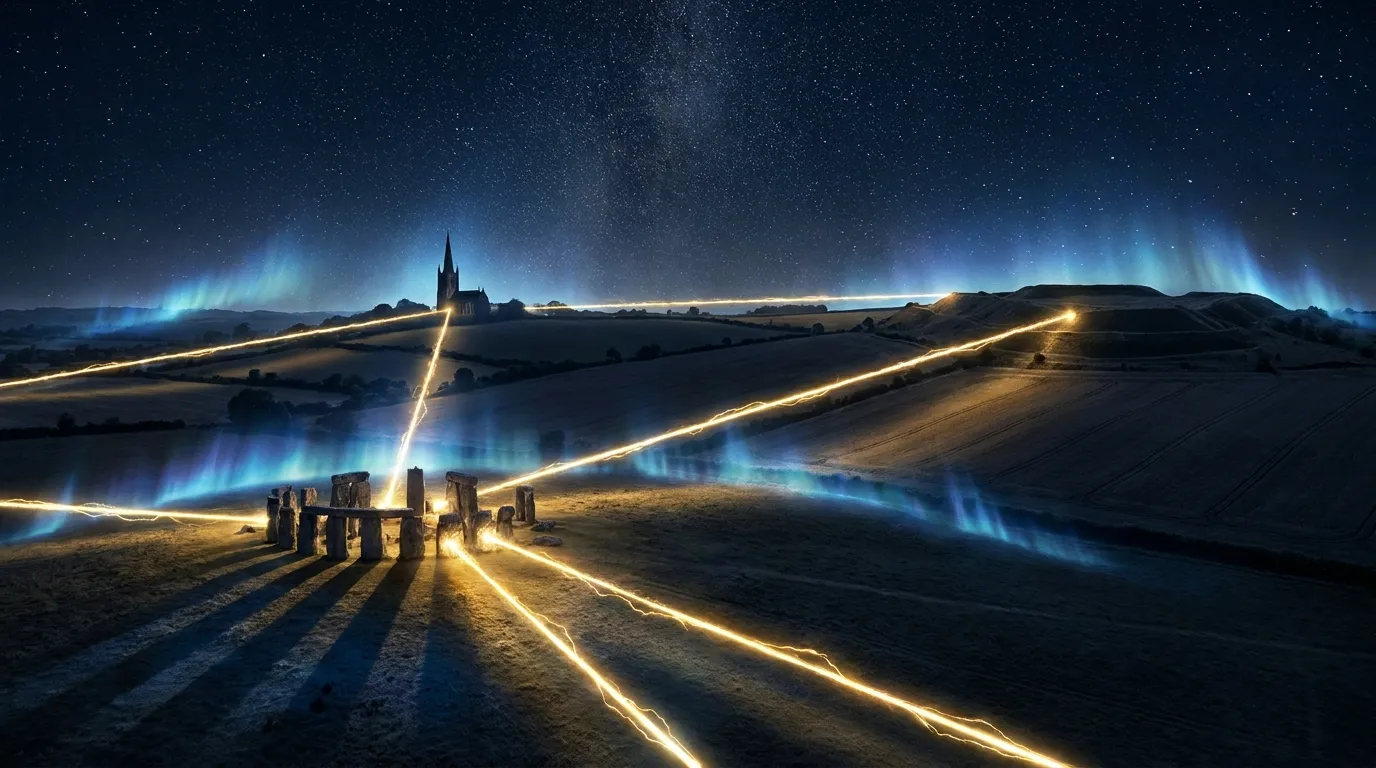
At their most basic geographical level, ley lines are alignments connecting ancient monuments, sacred sites, natural landmarks, and ceremonial structures. These may include standing stones, burial mounds, pyramids, holy wells, temples, churches, and prominent mountain peaks.
Within the broader energetic interpretation, however, ley lines are understood as invisible pathways through which subtle energy flows across the Earth, forming an interconnected network sometimes referred to as the planetary energy grid. Much like the meridians described in traditional Chinese medicine or the nadis of yogic philosophy, these pathways are believed to connect different regions of a larger energetic system.
Where multiple pathways intersect, practitioners and researchers often identify what are described as energy nodes or vortices—locations believed to possess particularly concentrated energetic qualities. Many sacred sites around the world have become associated with these intersections.
The distinction between geographical alignments and energetic pathways is important. A straight line drawn across a map does not necessarily identify an energy current, and energetic pathways, as described by dowsers and other practitioners, need not follow perfectly straight routes.
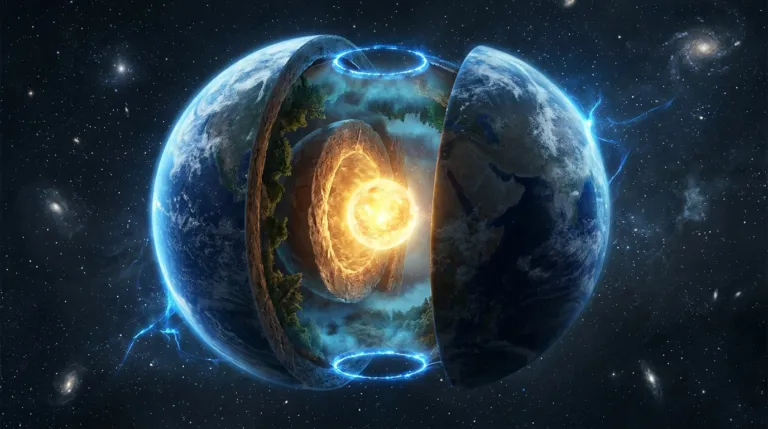
The possibility that ancient civilizations understood and worked with these subtle systems also connects to broader questions surrounding lost knowledge, explored in our article on Atlantis: Ancient Civilization, Hidden Technology, and the Future of Humanity.
WHO WAS ALFRED WATKINS AND HOW DID LEY LINES BEGIN?
Alfred Watkins was an English businessman, inventor, photographer, and antiquarian from Hereford. In June 1921, while examining the landscape and its historical landmarks near Blackwardine, Watkins recognized what appeared to be a network of straight alignments connecting ancient sites across the countryside.
He proposed that these alignments represented prehistoric trackways used by travelers and traders, established through visual sightlines between hilltops, standing stones, and other prominent landmarks. He called them leys, drawing upon terminology found in English place names.
Watkins published Early British Trackways in 1922, followed by his best-known work, The Old Straight Track, in 1925. His research inspired the formation of the Old Straight Track Club in 1926, whose members explored the countryside, documented alignments, and investigated the possible relationships between ancient sites.
Although Watkins himself regarded ley lines primarily as practical routes rather than energetic pathways, his work opened the door to a much larger field of exploration. Later researchers began asking whether the alignments he identified might reflect something beyond ancient transportation networks.
Watkins introduced a modern framework for examining connections that may have been recognized in very different ways by earlier civilizations.
HOW DID LEY LINES BECOME ENERGY LINES?
During the 1960s, interest in ley lines expanded beyond archaeology and ancient trackways. In 1961, former Royal Air Force pilot Tony Wedd proposed a possible relationship between ley lines and UFO sightings, suggesting that these alignments might have significance beyond conventional geographical navigation.
A more influential development came in 1969 when British writer John Michell published The View Over Atlantis. Michell explored the possibility that ancient monuments formed part of a sophisticated system of sacred geometry and earth energies, drawing connections between British ley lines, Chinese geomancy, and traditions associated with lost civilizations.
His work helped introduce the concept of a planetary energetic network to a wider audience, inspiring researchers to investigate not only the placement of sacred sites but also the qualities of the landscapes surrounding them.
In the following decades, British dowsers Hamish Miller and Paul Broadhurst explored these ideas through extensive fieldwork. Their 1989 book, The Sun and the Serpent, documented their journey across southern England, tracing two winding energetic currents they named the Michael and Mary lines.
Their observations suggested that subtle energy pathways might behave more like flowing rivers than rigid geographical lines, weaving through the landscape and occasionally converging at significant locations. This interpretation introduced a more dynamic understanding of ley lines—one in which the Earth is viewed not as a static collection of geographical points, but as a living, interconnected energetic system.
WHAT IS THE ST MICHAEL’S LEY LINE?
Among the best-known ley alignments is the St Michael’s line, which extends northeastward across southern England from Cornwall toward the Norfolk coast. Associated with this alignment are some of Britain’s most celebrated sacred locations, including St Michael’s Mount, Glastonbury Tor, and the ancient stone circle at Avebury.
John Michell observed that several sites associated with the alignment were dedicated to St Michael or St George, figures traditionally depicted overcoming dragons. Within his interpretation, the dragon represented the powerful energies of the Earth, a symbolism that also appears in other cultural traditions.
Miller and Broadhurst expanded upon this understanding by describing two intertwined energetic currents, the Michael and Mary lines. These were interpreted as complementary masculine and feminine energies moving through the landscape, occasionally converging at sacred locations.
The image of two currents weaving around one another recalls ancient symbolism involving serpents, polarity, balance, and the creative relationship between complementary forces. Although these associations are interpretive, they offer an intriguing connection to traditions that recognize the interplay of masculine and feminine energies throughout creation.
Today, the landscapes associated with the St Michael’s line continue to attract pilgrims, dowsers, researchers, and individuals seeking a deeper connection with the Earth. Glastonbury, in particular, remains a prominent center of spiritual exploration, where layers of ancient mythology, sacred architecture, and contemporary consciousness practices converge.
ARE LEY LINES REAL OR JUST CHANCE?
One of the challenges in studying ley lines is distinguishing meaningful alignments from patterns that emerge naturally when large numbers of geographical locations are plotted on a map. With thousands of ancient monuments, churches, and landmarks distributed across a region, some apparent alignments will inevitably occur by chance.
However, the existence of coincidental patterns does not diminish the remarkable evidence that ancient civilizations deliberately incorporated geometry, astronomical observations, and geographical relationships into their architecture.
Stonehenge reflects intentional alignments with the summer and winter solstices. The Nazca Lines of Peru demonstrate an extraordinary ability to create extensive geometric designs across the landscape. The ancestral Puebloan civilization of Chaco Canyon constructed remarkably straight roads extending across the surrounding terrain.
Elsewhere, the pyramids of Giza, the ceremonial architecture of Teotihuacan, the temples of Angkor Wat, and the sacred landscape surrounding Machu Picchu demonstrate sophisticated relationships between architecture, orientation, astronomy, and the natural environment.
These achievements invite us to consider the possibility that ancient builders worked with principles extending beyond those we have fully reconstructed.
Earth itself possesses a complex and measurable energetic environment. Its magnetic field, natural electrical currents, localized geomagnetic variations, and atmospheric electromagnetic resonances—including the Schumann resonances—demonstrate that our planet is far from energetically inert.
These established physical phenomena should not be confused with proof of ley lines. Nevertheless, they provide meaningful context for exploring the possibility that Earth’s energetic architecture contains additional relationships and properties that remain poorly understood.
The absence of a comprehensive scientific model for subtle earth energies does not close the inquiry. It highlights how much remains to be explored and the importance of developing methods capable of distinguishing subjective experiences, geographical patterns, and measurable physical phenomena.
WHAT ABOUT GLOBAL ENERGY GRIDS?
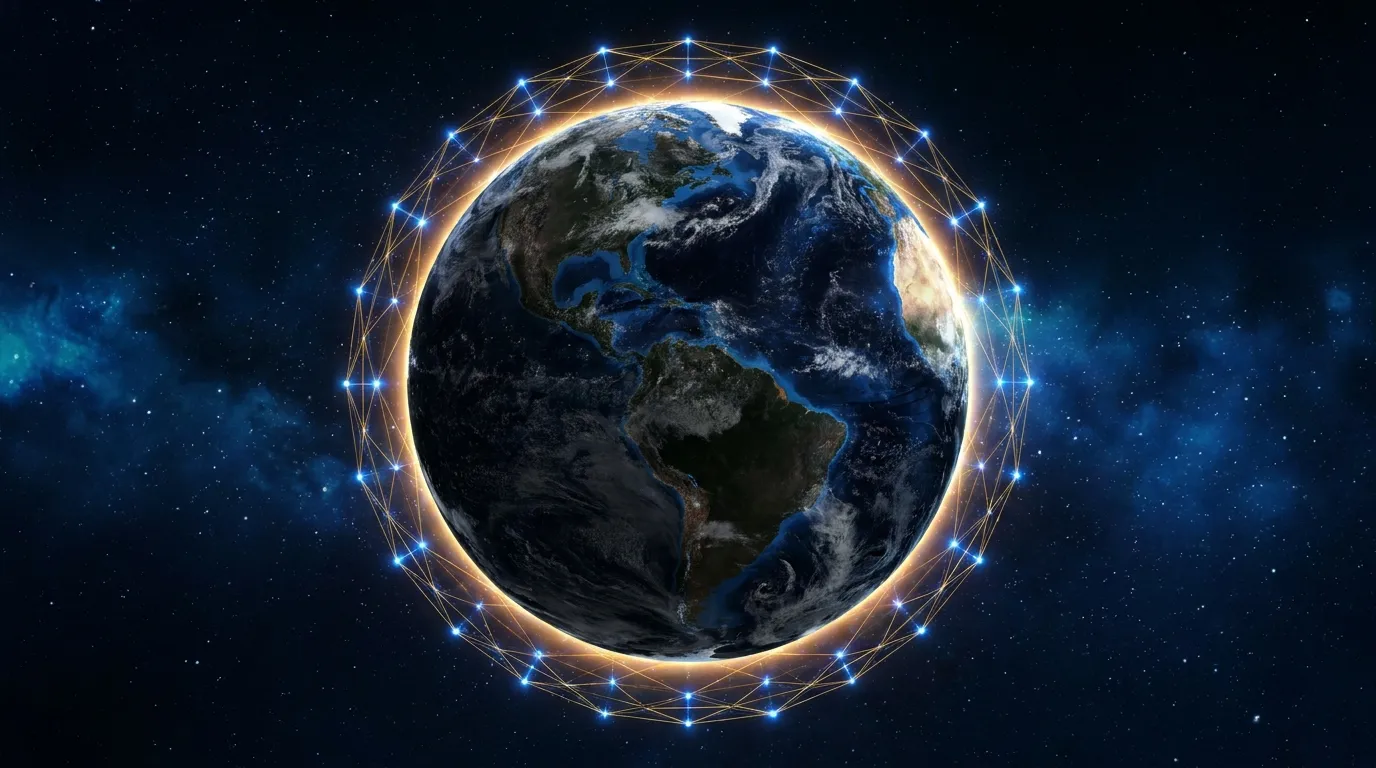
As research into ley lines expanded, attention gradually shifted from regional alignments to the possibility of a worldwide energetic network connecting significant geographical locations across the planet.
One of the better-known proposed models is the Becker-Hagens planetary grid, developed during the 1980s. Building upon earlier work by Russian researchers, William Becker and Bethe Hagens explored geometric relationships between Earth’s features using interconnected patterns derived from the icosahedron and dodecahedron, two of the five Platonic solids.
These geometric forms have long fascinated philosophers, mathematicians, and students of sacred geometry. Their symmetry and proportional relationships have inspired theories that the underlying architecture of nature may be expressed through recurring geometric principles.
Within planetary grid theories, ancient sacred sites are often interpreted as significant nodes within a larger network. Locations such as Giza, Glastonbury, Mount Shasta, and the Andes frequently appear in contemporary discussions of planetary energy, although different researchers identify different grids, pathways, and points of convergence.
The broader recognition of sacred landscapes extends far beyond modern ley line research. Traditional Chinese feng shui describes dragon veins associated with the movement of qi through mountains and valleys. In the Andes, the Inca ceque system connected sacred places through an organized network radiating from Cusco. Aboriginal Australian songlines connect landscapes with ancestral knowledge, cultural identity, navigation, and sacred responsibilities.
These traditions possess distinct meanings and should not be treated as interchangeable systems. Yet together, they reveal how deeply human civilizations have understood the landscape as something more than physical terrain.
The Hermetic concept of as above, so below, explored in our article on the Emerald Tablets of Thoth, offers another philosophical lens through which to consider the relationship between cosmic order, earthly patterns, and human consciousness.
HOW ARE LEY LINES LINKED TO ANCIENT WISDOM AND CYCLES?
One of the most compelling aspects of ley line exploration is the possibility that ancient civilizations possessed a more integrated understanding of the relationship between the Earth, the cosmos, and human consciousness.
Across continents, ancient builders incorporated celestial events, seasonal transitions, mathematical proportions, and geographical features into their sacred architecture. Temples and monuments were often oriented toward solstices, equinoxes, significant stars, or prominent features of the surrounding landscape.
These structures were not simply buildings. Many served as ceremonial centers, astronomical observatories, gathering places, and expressions of humanity’s relationship with the greater cosmos.
Within the energetic interpretation of ley lines, sacred architecture may have served an additional purpose: to recognize, interact with, or amplify the natural energetic qualities of particular locations. This possibility continues to inspire researchers exploring the relationships between sacred geometry, resonance, consciousness, and ancient technologies.
Such ideas also connect with traditions describing larger cycles of human civilization, including the yugas and the Great Year. These traditions suggest that humanity’s knowledge and awareness may change across vast periods of time, with certain understandings emerging, flourishing, and eventually being forgotten.
Our article on The Great Year and the Yuga Cycle explores these ancient perspectives on the rise and fall of civilizations and the cyclical nature of human development.
Perhaps some of the world’s most enduring monuments represent not only the achievements of ancient builders, but also fragments of a worldview in which humanity, the Earth, and the cosmos were understood as inseparable.
HOW CAN YOU EXPLORE LEY LINES YOURSELF?
Exploring ley lines does not necessarily require traveling to distant pyramids, ancient temples, or internationally recognized sacred sites. The journey can begin within your own landscape.
Historical maps, prominent hills, natural springs, ancient pathways, and local places of cultural significance offer opportunities to investigate the relationships between geography, history, and the natural environment.
Some individuals incorporate dowsing rods or pendulums into their explorations, while others practice meditation, quiet observation, or intuitive awareness. Although dowsing has not been established as a reliable scientific method of detecting subtle energies, it remains part of many contemporary earth energy traditions.
Approach these experiences with curiosity rather than predetermined expectations. Notice the qualities of the landscape, the surrounding vegetation, the sounds of nature, and your own physical and emotional responses. Keeping a journal may reveal patterns in your experiences over time, while helping you distinguish personal impressions from assumptions.
Above all, approach sacred places with respect for the land, its history, and the cultures that continue to hold these locations as meaningful.
In a world increasingly shaped by technology, artificial environments, and constant stimulation, reconnecting with the natural landscape offers something profoundly valuable. It reminds us that we are not separate from the Earth, but participants within its interconnected systems.
Perhaps the greatest significance of ley lines lies not simply in discovering where these energetic pathways flow, but in rediscovering our own relationship with the living planet.
The ancient monuments remain. The mountains, rivers, and sacred landscapes continue to tell their stories. And the possibility remains that, beneath the familiar geography of our world, there is an energetic architecture we are only beginning to understand.
Frequently Asked Questions
What are ley lines?
Ley lines are understood as energetic pathways connecting sacred sites, ancient monuments, and natural landmarks across the Earth. Alfred Watkins introduced the modern concept in 1921, initially describing geographical alignments that he believed represented ancient trackways. Later researchers expanded this understanding to include subtle earth energies, energetic nodes, and an interconnected planetary energy grid.
Who discovered ley lines?
English researcher Alfred Watkins introduced the modern concept of ley lines in 1921 after observing apparent alignments between ancient sites in the British countryside. He published Early British Trackways in 1922 and The Old Straight Track in 1925. However, traditions recognizing sacred landscapes and energetic pathways existed long before Watkins, including the Chinese practice of feng shui and its concept of dragon veins.
Are ley lines real?
At Great Awakening Report, we recognize ley lines as energetic pathways within Earth’s greater energetic architecture. While conventional science has documented Earth’s magnetic fields, natural electrical currents, and electromagnetic resonances, the specific nature of ley line energies has yet to be scientifically established. Ancient architectural alignments, sacred landscapes, and centuries of energetic traditions continue to inspire exploration into this fascinating subject.
What is the most famous ley line?
One of the best-known ley lines is the St Michael’s line, extending across southern England from Cornwall toward the Norfolk coast. Associated sacred sites include St Michael’s Mount, Glastonbury Tor, and Avebury. Researchers Hamish Miller and Paul Broadhurst also described two intertwined energetic currents, known as the Michael and Mary lines, representing complementary masculine and feminine energies within the landscape.
Is there a global ley lines map?
Several researchers have developed proposed planetary energy grid maps, including the Becker-Hagens grid, which incorporates geometric patterns derived from the Platonic solids. These models explore potential connections between sacred sites, geographical features, and energetic nodes around the world. Although no universally accepted scientific map of ley lines exists, these models offer fascinating starting points for exploring sacred geometry and Earth’s proposed energetic architecture.
Where to Go From Here
If ancient mysteries call to you, our free Truth Seekers Weekly Briefing is a steady companion. It arrives once a week with recently published reports, hidden history and the threads we are following. The free Great Awakening Map PDF helps you see the bigger picture, and you can browse the full collection of GAR maps any time.
Premium members get our Special Reports on hidden history and ancient wisdom, every Weekly and Monthly Report, and the full Truth Seeker archive. If you want to see what is behind the paywall first, compare the Standard and Premium plans, or start the 30-day Premium trial and decide after a month of reading.
Sign up to receive Our Weekly Briefing Newsletter
Begin your journey with weekly insights designed to expand awareness and ground you in truth. Our free tier gives you a powerful introduction without any commitment.
STOP DROWNING IN THE NOISE. START SEEING THE TRUTH. Join thousands of truth seekers. Get the essential intelligence, alternative news, and disclosure updates that the mainstream media won’t touch.
Latest Reports
 Weekly ReportAwakening The Sleeping Giant · November 23rd EditionNovember 23, 2026
 Weekly ReportAwakening The Sleeping Giant · November 16th EditionNovember 16, 2026
 Weekly ReportTruth Seekers Weekly Briefings · Master Class Connecting The Dots · November 13th EditionNovember 14, 2026
 Weekly ReportAwakening The Sleeping Giant · November 9th EditionNovember 9, 2026View all weekly reports
Special Reports
 Special Report2026 THANKSGIVING EDITION · A SEASON OF GRATITUDE, Light & LoveNovember 19, 2026
 Special ReportGlobal Everything Collapse · Crossing The Threshold · Part IIINovember 6, 2026
 Special ReportThe Next Plandemic, The Bird Flu VirusNovember 5, 2026
 Special ReportThe Great Exodus, California On The ThresholdOctober 20, 2026View all special reports
Help Us Bypass Censorship. Share This.
Join the Discussion
Related Posts
Have questions?
At Great Awakening Report, we are dedicated to supporting your journey toward truth and enlightenment through our specialized Coaching and Consulting services.
Coaching Services: Our coaching programs are designed to guide you through personal awakening and transformation. We offer personalized sessions that focus on expanding consciousness, uncovering hidden truths, and fostering spiritual growth. Our experienced coaches provide the tools and insights necessary to navigate your path with clarity and confidence.
Consulting Services: For organizations and individuals seeking deeper understanding and strategic guidance, our consulting services offer expert analysis and solutions. We delve into areas such as global transitions, alternative news insights, and consciousness studies to provide comprehensive strategies tailored to your unique objectives.
Embark on a transformative journey with our Coaching and Consulting services, and unlock your highest potential. To learn more and schedule a session, visit our Coaching and Consulting pages.
Thank you
Thank you to our subscribers and readers for your continued support and dedication to truth and awakening. Your encouragement, engagement, and belief in our mission make everything we do possible. Together, we are expanding awareness and helping illuminate the path forward.
If you would like to further support the Great Awakening team and our ongoing efforts to share insight, knowledge, and truth, you can DONATE HERE.
With deep gratitude,
– Great Awakening Team
About the Author: Great Awakening Team

DISCLAIMER: All statements, claims, views and opinions that appear anywhere on this site, whether stated as theories or absolute facts, are always presented by The Great Awakening Report (GAR) as unverified—and should be personally fact checked and discerned by you, the reader.Any opinions or statements herein presented are not necessarily promoted, endorsed, or agreed to by GAR, those who work with GAR, or those who read or subscribe to GAR.Any belief or conclusion gleaned from content on this site is solely the responsibility of you the reader to substantiate.Any actions taken by those who read material on this site are solely the responsibility of the acting party.You are encouraged to think for yourself and do your own research.Nothing on this site is meant to be believed without question or personal appraisal.
COPYRIGHT DISCLAIMER: Citation of articles and authors in this report does not imply ownership. Works and images presented here fall under Fair Use Section 107 and are used for commentary on globally significant newsworthy events. Under Section 107 of the Copyright Act 1976, allowance is made for fair use for purposes such as criticism, comment, news reporting, teaching, scholarship, and research.
COMMUNITY GUIDELINES DISCLAIMER: The points of view and purpose of this video is not to bully or harass anybody, but rather share that opinion and thoughts with other like-minded individuals curious about the subject.