
























Help Us Bypass Censorship. Share This.
Sign up to receive Our Weekly Briefing Newsletter
Begin your journey with weekly insights designed to expand awareness and ground you in truth. Our free tier gives you a powerful introduction without any commitment.
WHAT IT FEELS LIKE, HOW IT AFFECTS THE FIVE BODIES & WHAT HAPPENS AFTER AWAKENING
“Awakening is not simply about experiencing something extraordinary. It is about discovering how profoundly the ordinary experience of being alive can change.” — Great Awakening Report
WHEN SOMETHING WITHIN BEGINS TO CHANGE
There are moments in life when transformation begins so quietly that we barely recognize it. Perhaps meditation suddenly feels different. A familiar emotion rises with unexpected intensity. A wave of warmth travels through the body without an obvious explanation, or a moment of profound stillness leaves us feeling connected to something far greater than ourselves. For some, these experiences arrive gently and gradually. For others, they unfold with an intensity that changes their understanding of who they are and how they experience the world.
Within ancient yogic traditions, some of these experiences have long been understood through the concept of Kundalini awakening—the stirring of a latent spiritual energy associated with the base of the spine and its movement toward higher states of awareness. Although often portrayed as a dramatic surge of energy, Kundalini is traditionally understood as something far more significant: a process of spiritual development, inner purification, and the gradual transformation of consciousness.
What makes the subject so fascinating is that the experience is rarely confined to one dimension of life. People who identify with Kundalini awakening describe changes in their physical sensations, emotional landscape, thought patterns, relationships, intuition, and sense of identity. Some encounter periods of extraordinary joy and clarity, while others move through confusion, sensitivity, or the resurfacing of long-forgotten emotions. Frequently, the most meaningful changes emerge only after the initial intensity has passed.
To understand Kundalini, then, we need to look beyond the symptoms and explore the journey itself: what awakens, what it may feel like, how it is understood to affect the different layers of our being, and what it means to continue living after something within us has profoundly shifted.
WHAT IS KUNDALINI AWAKENING?
The word Kundalini comes from Sanskrit and is commonly translated as “the coiled one.” In several Hindu Tantric and yogic traditions, Kundalini is described as a form of divine feminine power, or Shakti, symbolically resting at the base of the spine. Its traditional image is a serpent coiled three and a half times, representing latent spiritual potential awaiting awakening.
According to these teachings, Kundalini rises through the central subtle-energy channel known as Sushumna Nadi, passing through the chakras, or energy centers, until reaching the crown of the head. This upward movement symbolizes the union of Shakti with Shiva, often understood as the union of dynamic creative energy and pure consciousness. The ultimate purpose is not to produce unusual sensations or extraordinary abilities, but to move beyond limited identification with the individual self toward deeper spiritual realization.
Two additional channels, Ida and Pingala, are traditionally associated with complementary qualities of human experience. They are often represented as winding around the central channel, symbolizing the relationship between opposing yet interconnected forces. Together, these concepts form an intricate spiritual map of consciousness, energy, and inner development. They belong to the traditional subtle-body framework rather than established physical anatomy.
Kundalini teachings developed across different Indian spiritual lineages, particularly within Tantric and Hatha Yoga traditions. Texts such as the Hatha Yoga Pradipika describe disciplined practices involving posture, breath, concentration, and internal energetic techniques. These traditions generally emphasize preparation, patience, and appropriate guidance rather than pursuing awakening as an immediate achievement.
In contemporary spirituality, however, Kundalini awakening has taken on a broader meaning. It may refer to a powerful meditation experience, a gradual transformation in awareness, or a spontaneous period of profound inner change. Although these experiences may share similarities, they are not necessarily identical, and no single definition captures every account.
The important distinction is that Kundalini is not simply something a person feels; within the traditional framework, it represents a transformation in how consciousness is experienced.
For readers interested in the underlying energy concepts, our related GAR article, Human Energy Field Explained: Biofields, Chakras, and Science, explores the relationship between traditional subtle-energy models and contemporary scientific inquiry.

THE AWAKENING EXPERIENCE — WHAT DOES IT ACTUALLY FEEL LIKE?
One of the most compelling aspects of Kundalini awakening is the remarkable variety of experiences people describe. There is no universal sensation that establishes whether an awakening has occurred, nor does every person experience the dramatic movement of energy so frequently portrayed in spiritual imagery. Some report a sudden and unmistakable event, while others recognize the transformation only after months or years of subtle changes.
Physical sensations are often among the first experiences people notice. A gentle warmth may develop near the lower spine and seem to travel upward, sometimes accompanied by tingling, vibration, pressure, or a sensation resembling a mild electrical current. Others describe spontaneous stretching, trembling, swaying, or changes in breathing during meditation. These movements are sometimes called kriyas in contemporary Kundalini discussions, although the term has several meanings across yoga traditions.
For some, the experience is less physical and more perceptual. Colors may appear unusually vivid, music may feel deeply moving, and ordinary moments may carry an unexpected sense of beauty or significance. During meditation, individuals sometimes report inner light, unusual sounds, expanded spatial awareness, or a profound feeling of stillness. Such experiences can be meaningful without necessarily proving the existence of a particular energetic mechanism.
The emotional dimension can be equally powerful. Feelings that once seemed manageable may suddenly become difficult to ignore. A person might experience unexplained sadness, spontaneous tears, waves of gratitude, or an overwhelming sense of love and compassion. Long-standing emotional patterns may become more visible, sometimes bringing memories or unresolved conflicts back into awareness. This process can feel liberating, uncomfortable, or both.
Perhaps the most difficult aspect to describe is the change in one’s relationship with the self. Some individuals report moments in which their ordinary internal dialogue becomes quiet and the familiar boundaries between themselves and the surrounding world seem less distinct. Others experience a deep sense of connection, as though the separation they previously felt from nature, other people, or life itself has temporarily softened.
Yet awakening experiences are not always peaceful. Heightened sensitivity, disrupted sleep, anxiety, emotional volatility, or difficulty concentrating can accompany intense contemplative experiences. Similar sensations can also arise from medical, neurological, or psychological conditions, making it important not to interpret every unusual experience as Kundalini activity.
The defining quality of the journey, for many who describe it, is not one particular sensation but the impression that their inner world is changing in ways they can feel before they can fully understand.
THE FIVE BODIES — HOW KUNDALINI MAY AFFECT EVERY LAYER OF OUR BEING
One of the most illuminating ways to explore Kundalini is through the yogic teaching of the Pancha Koshas, or five sheaths. This traditional model describes human experience through progressively subtler layers, ranging from the physical body to the deepest experience of bliss or spiritual presence. The koshas are philosophical and contemplative categories, not five separate anatomical bodies confirmed by modern science.
Although contemporary discussions often refer to physical, energetic, emotional, mental, and spiritual bodies, the classical kosha system is somewhat different. Its five layers are Annamaya, Pranamaya, Manomaya, Vijnanamaya, and Anandamaya. Understanding these distinctions allows us to explore the full range of reported awakening experiences without losing the depth of the original teachings.
The Physical Body | Annamaya Kosha
The physical body is where many people first become aware of unusual changes. Reported experiences include warmth, tingling, trembling, changes in posture, altered sleep patterns, fatigue, or periods of heightened bodily sensitivity. Some people feel energized and unusually alert, while others require additional rest as they adjust to intense contemplative experiences.
These sensations may be interpreted spiritually, but they are also influenced by ordinary physiological processes. Breathing patterns, muscle tension, nervous-system arousal, sleep deprivation, and underlying health conditions can produce overlapping symptoms. A grounded approach allows someone to explore the meaning of an experience while remaining attentive to physical health.
The Energetic Body | Pranamaya Kosha
Within yogic philosophy, the energetic sheath is associated with prana, the vital force traditionally understood to animate living systems. This is the layer most directly associated with Kundalini’s movement through the nadis and chakras. Practitioners may describe waves of energy, shifting sensations along the spine, warmth around particular energy centers, or alternating feelings of expansion and contraction.
Some experience these sensations during meditation or breathwork, while others notice them during quiet moments throughout the day. Traditional teachings interpret such experiences through the movement of prana, although scientific research has not established the nadis or chakras as measurable anatomical structures.
The Mental and Emotional Body | Manomaya Kosha
The Manomaya Kosha encompasses ordinary mental activity, emotional responses, sensory processing, and the patterns through which we interpret experience. During periods described as awakening, individuals may become more conscious of habitual reactions, unresolved grief, fears, attachments, or emotional defenses that previously operated beneath awareness.
This can be one of the most challenging aspects of transformation because increased awareness does not always feel peaceful. Sometimes it means recognizing uncomfortable truths about our behavior, relationships, or long-held beliefs. At other times, it brings unexpected tenderness, forgiveness, and an ability to experience emotions without immediately resisting them.
The Wisdom Body | Vijnanamaya Kosha
The Vijnanamaya Kosha is associated with discernment, deeper understanding, and the capacity to recognize patterns beyond habitual thought. In contemporary spiritual language, this dimension is often connected with intuition and the development of inner wisdom.
Individuals navigating significant contemplative change sometimes describe a growing ability to observe their thoughts rather than automatically identify with them. They may question assumptions that once seemed unquestionable, become more attentive to their values, or recognize that familiar ambitions no longer carry the same meaning.
Importantly, intuition and discernment are not the same as certainty. A meaningful awakening process may involve learning to distinguish genuine insight from fear, projection, wishful thinking, or emotional intensity.
The Bliss Body | Anandamaya Kosha
The innermost sheath, Anandamaya Kosha, is traditionally associated with bliss, deep contentment, and subtle states of spiritual absorption. Within Kundalini accounts, people sometimes describe extraordinary peace, unconditional love, profound unity, or a sense of existing beyond their usual personal identity.
These experiences can be deeply meaningful, but they are not necessarily permanent. Returning to ordinary emotional life after a powerful state of bliss does not mean that the experience was lost or that spiritual development has failed. Integration involves learning to carry whatever understanding emerged into the complexities of everyday existence.
Taken together, the five sheaths offer a way of understanding why Kundalini awakening is sometimes described as a transformation of the whole person. The journey is not confined to sensations along the spine. It may influence how the body feels, how emotions are processed, how thoughts are understood, and how someone relates to the deeper questions of existence.
THE STAGES OF KUNDALINI AWAKENING — FROM ACTIVATION TO EMBODIMENT
Although Kundalini awakening is often portrayed as a single dramatic event, many spiritual teachers describe it as a process that unfolds through recognizable phases. Contemporary frameworks, including the seven-stage model presented by YogaBasics, offer a useful way to understand the journey. These stages are not a universally established sequence, however, and individuals may experience them in different orders, revisit earlier phases, or encounter only some of them.
The first stage is commonly called activation, when someone becomes aware of a subtle shift in their internal experience. This may involve new sensations during meditation, a heightened interest in spiritual questions, or an unexpected feeling that something significant is beginning. For others, activation is not associated with any dramatic physical event. It may emerge as a growing dissatisfaction with old patterns or a deepening desire to understand themselves beyond familiar roles and identities.
The second stage, rising energy, is often associated with more noticeable physical and energetic experiences. People may describe warmth, movement along the spine, heightened creativity, emotional intensity, or an increased sensitivity to their surroundings. Some report moments of extraordinary clarity followed by periods of uncertainty. Within the traditional framework, these experiences are interpreted as Kundalini moving through the subtle-energy system, although the sensations themselves do not establish that such movement is occurring.
A third phase is frequently described as purification, a term that can be misunderstood. In spiritual language, purification refers to the recognition and gradual release of conditioned responses, attachments, and emotional patterns that may interfere with self-understanding. This does not mean that all difficult emotions are evidence of hidden trauma or that distress must be endured to achieve spiritual growth. Rather, increased self-awareness may make previously overlooked aspects of life more difficult to ignore. Relationships, personal expectations, fears, and unresolved conflicts can all become subjects of deeper reflection.
The fourth stage, integration, is where the experience begins to find a place within ordinary life. Insights that once seemed extraordinary must now be understood in practical terms. Someone who has recognized a pattern of people-pleasing may begin establishing healthier boundaries. A person who has experienced profound stillness may learn to approach conflict with greater patience. Integration asks whether inner experiences are becoming part of how someone actually lives, rather than remaining isolated moments of inspiration.
The fifth stage is often called illumination, associated with a growing sense of insight, clarity, and connection. People may describe seeing familiar situations from a different perspective, recognizing meaningful patterns in their behavior, or feeling more closely aligned with their values. Some interpret synchronicities or intuitive experiences as part of this process. Such interpretations can be personally meaningful, but discernment remains essential; not every coincidence is a message, and not every strong impression is reliable guidance.
The sixth stage, embodiment, represents the movement from understanding to action. Compassion becomes something expressed in relationships rather than simply contemplated during meditation. Authenticity begins shaping decisions, priorities, and commitments. The individual may still encounter frustration, grief, or uncertainty, but develops a different relationship with these experiences. Spiritual development becomes less about seeking extraordinary states and more about living consciously within ordinary circumstances.
The final stage is often described as union, reflecting the traditional understanding of Kundalini’s movement toward the realization of nonduality or interconnected consciousness. Accounts of this state frequently involve profound peace, unconditional love, or a temporary dissolution of the familiar boundaries of individual identity. Within the yogic framework, union is not merely an emotional high but points toward a deeper recognition of the relationship between individual awareness and universal consciousness.
Perhaps the most important insight is that these stages should not become another measure of achievement. Someone who experiences deep compassion without dramatic energetic sensations is not necessarily less spiritually developed than someone who reports an intense awakening. The value of the journey is better understood through its lasting influence on awareness, conduct, and the ability to engage meaningfully with life.

THE AFTEREFFECTS — WHEN THE AWAKENING CHANGES YOU
What happens after an awakening experience can be just as significant as the experience itself. In fact, some practitioners consider this the beginning of the deeper work. The initial sensations may diminish, the emotional intensity may settle, and the extraordinary moments may become memories, yet the person may find that their relationship with life has changed in ways that are difficult to reverse.
One of the most commonly described aftereffects is a shift in personal priorities. Activities, ambitions, or relationships that once provided a strong sense of identity may begin to feel less compelling. This does not necessarily mean abandoning a career, withdrawing from society, or rejecting material responsibilities. More often, it involves questioning whether familiar choices still reflect one’s values. Success may gradually become associated less with external recognition and more with meaningful work, authentic relationships, and a sense of internal alignment.
Relationships can become especially revealing during this period. Greater emotional awareness may bring a deeper capacity for empathy, but it can also expose patterns of overgiving, avoidance, dependency, or unresolved conflict. Some people find themselves seeking quieter environments or more meaningful conversations. Others discover that relationships improve as they become more capable of expressing their needs without guilt or responding to disagreement without immediately becoming defensive.
There can also be a sense of grief associated with personal transformation. Even positive change may involve releasing familiar identities, expectations, or ways of understanding the world. A person may recognize that the version of themselves who pursued certain goals or tolerated particular circumstances no longer feels entirely authentic. That recognition can be liberating, but it can also create uncertainty about what comes next.
Kara-Leah Grant’s reflections on her own Kundalini experiences illustrate an important distinction between an awakening event and the long process of living with its implications. In her account, the experience did not eliminate conditioned thinking or conclude the spiritual journey. Rather, it opened another dimension of practice, embodiment, and continuing self-inquiry.
For some, the aftereffects include greater creativity, a renewed appreciation for nature, a more consistent contemplative practice, or an increased sense of connection with others. For others, the adjustment can involve periods of exhaustion, heightened sensitivity, or uncertainty. These outcomes are not guaranteed, and similar life changes can arise through many forms of personal growth.
The most meaningful aftereffect may be a subtle change in how experience itself is approached. Instead of interpreting every difficult emotion as a problem to eliminate, someone may become more curious about what it reveals. Instead of measuring life entirely through external accomplishments, they may become increasingly attentive to presence, integrity, and the quality of their relationships.
The awakening may be remembered as an extraordinary moment, but the transformation becomes visible through the choices made afterward.
LIVING AFTER AWAKENING — HOW DO YOU MOVE THROUGH THE WORLD?
One of the most interesting questions surrounding Kundalini is not what happens during an awakening, but how someone experiences everyday life afterward. The external world may look exactly as it did before. Work responsibilities remain, relationships require attention, and ordinary frustrations continue to arise. Yet the internal experience of those circumstances may be noticeably different.
Some individuals describe a growing space between an event and their response to it. A disagreement that once triggered an immediate defensive reaction may become an opportunity to listen more carefully. An uncomfortable emotion may still arise, but it no longer feels necessary to act on it immediately. This capacity to observe thoughts and feelings without becoming entirely absorbed by them is also cultivated through mindfulness and other contemplative practices, whether or not someone identifies with Kundalini awakening.
Another frequently reported change is an increased sensitivity to personal alignment. Decisions that once seemed straightforward may invite deeper reflection. A person may become more attentive to whether their work, relationships, habits, and commitments reflect what they genuinely value. This can create a stronger sense of purpose, but it may also require difficult conversations and practical adjustments. Spiritual growth does not remove the need for patience, compromise, or responsibility.
Many people also describe a different relationship with solitude and stillness. Time in nature, quiet reflection, creative expression, or simple daily routines may become more nourishing. Experiences that once seemed insignificant—a conversation, a sunrise, the sound of rain, a moment of genuine connection—may carry a greater sense of presence. Rather than constantly seeking stimulation, someone may discover that ordinary life offers more depth than they previously recognized.
Intuition is another theme that frequently emerges in accounts of awakening. Some people describe feeling more attuned to subtle emotional signals, bodily responses, or patterns in their environment. These impressions can contribute to self-understanding, particularly when balanced with critical thinking and practical judgment. A mature relationship with intuition does not require abandoning evidence or assuming that every inner feeling represents a higher truth.
Perhaps most importantly, living after awakening does not mean becoming permanently peaceful or emotionally unaffected. Even experienced practitioners encounter grief, frustration, fear, and uncertainty. The difference, when transformation is genuinely integrated, may lie in a growing capacity to meet those experiences with awareness rather than resistance.
This is where the journey becomes less about Kundalini as an event and more about consciousness as a way of living. The question gradually shifts from What is happening to me? toward How am I choosing to participate in my life?
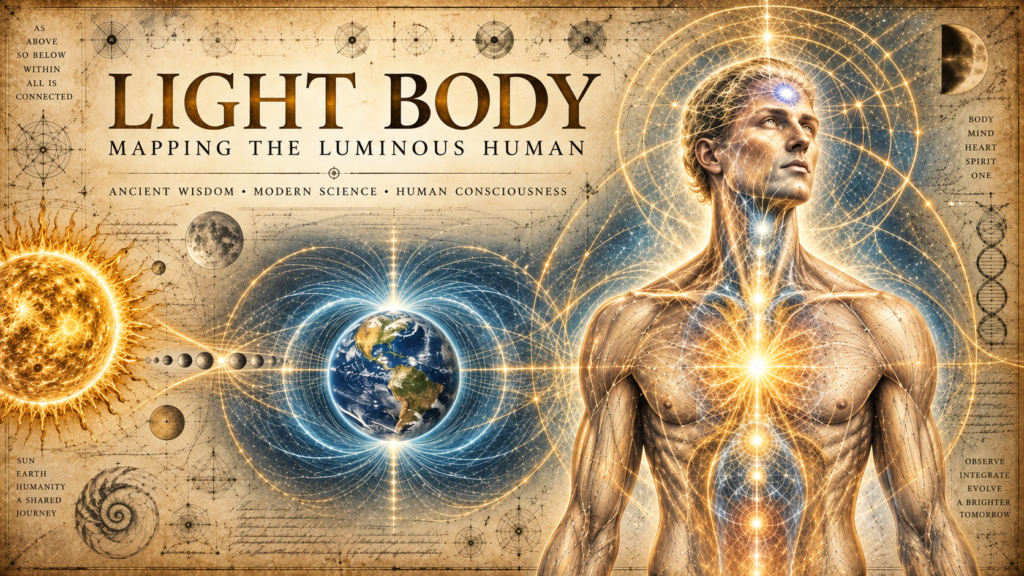
Our GAR explorations of Light Body | What It Is, Activation & the Luminous Human and The Rainbow Light Body | A Map of Consciousness, Energy & Human Transformation offer complementary spiritual perspectives on the relationship between inner development and the experience of consciousness.




Frequently Asked Questions
What is a kundalini awakening?
It is the experience, described in Tantric and yogic traditions, of a dormant energy at the base of the spine rising upward and bringing changes in awareness, emotion and bodily sensation.
What are the signs of a kundalini awakening?
People commonly report heat or tingling along the spine, waves of emotion, spontaneous movements, vivid dreams, changes in sleep and a strong sense of expansion or bliss. Many of these overlap with ordinary health issues, so get physical symptoms checked.
How long does a kundalini awakening last?
There is no fixed timeline. Some people describe a brief opening during practice, while others describe waves over months or years with calmer periods in between.
Is kundalini awakening dangerous?
For most people it is described as positive, but intense experiences can be destabilizing. Psychologists call severe cases a spiritual emergency, and anyone struggling with sleep, panic or reality testing should seek professional support.
Can you force a kundalini awakening?
Traditions generally warn against it. Aggressive breathwork, fasting or very long meditation sessions without guidance are the practices most often linked to difficult experiences.
How do I stay grounded during a kundalini awakening?
Simplify your practice, sleep and eat regularly, spend time outdoors, move your body, limit stimulants and talk with an experienced teacher or a therapist who respects spiritual experience.
Where to Go From Here
Our free Truth Seekers Weekly Briefing includes a conscious practices section every week, a simple way to stay grounded while this is moving through you. If you want to see how these inner experiences fit the larger picture, the free Great Awakening Map PDF is a good next step.
Premium members get the full Transformational Breathing program, our Special Reports on raising and maintaining your vibrational frequency, and every Weekly and Monthly Report. If you want to see what is behind the paywall first, compare the Standard and Premium plans, or start the 30-day Premium trial and decide after a month of reading.
Sources & further exploration
These sources offer traditional teachings, practitioner perspectives, and contemporary interpretations. Firsthand accounts and spiritual frameworks should be read as experiential perspectives rather than scientific confirmation of Kundalini energy.
- YogaBasics — The 7 Stages of Kundalini Awakening
- YogaBasics — Kundalini Yoga
- Kara-Leah Grant — What Is a Kundalini Awakening and Have I Had One?
- Kara-Leah Grant — When Kundalini Awakens. Now What?
- Yoga Journal — What Exactly Is a Kundalini Awakening?
- Brent Spirit — Kundalini Awakening Signs and Symptoms
Sign up to receive Our Weekly Briefing Newsletter
Begin your journey with weekly insights designed to expand awareness and ground you in truth. Our free tier gives you a powerful introduction without any commitment.
STOP DROWNING IN THE NOISE. START SEEING THE TRUTH. Join thousands of truth seekers. Get the essential intelligence, alternative news, and disclosure updates that the mainstream media won’t touch.
Latest Reports
 Weekly ReportAwakening The Sleeping Giant · October 26th EditionOctober 26, 2026
 Weekly ReportAwakening The Sleeping Giant · October 19th EditionOctober 19, 2026
 Weekly ReportTruth Seekers Weekly Briefings · Master Class Connecting The Dots · October 16th EditionOctober 17, 2026
 Weekly ReportAwakening The Sleeping Giant · October 12th EditionOctober 12, 2026View all weekly reports
Special Reports
 Special ReportThe Great Exodus, California On The ThresholdOctober 20, 2026
 Special ReportThe Sovereign Household: How to Prepare for Economic CollapseOctober 14, 2026
 Special ReportTHE AWAKENING JOURNEY: Hero’s Journey Part II · Week 1October 3, 2026
 Special ReportGlobal Everything Collapse · Economic Chaos · Part IOctober 1, 2026View all special reports
Help Us Bypass Censorship. Share This.
Join the Discussion
Related Posts



Have questions?
At Great Awakening Report, we are dedicated to supporting your journey toward truth and enlightenment through our specialized Coaching and Consulting services.
Coaching Services: Our coaching programs are designed to guide you through personal awakening and transformation. We offer personalized sessions that focus on expanding consciousness, uncovering hidden truths, and fostering spiritual growth. Our experienced coaches provide the tools and insights necessary to navigate your path with clarity and confidence.
Consulting Services: For organizations and individuals seeking deeper understanding and strategic guidance, our consulting services offer expert analysis and solutions. We delve into areas such as global transitions, alternative news insights, and consciousness studies to provide comprehensive strategies tailored to your unique objectives.
Embark on a transformative journey with our Coaching and Consulting services, and unlock your highest potential. To learn more and schedule a session, visit our Coaching and Consulting pages.
Thank you
Thank you to our subscribers and readers for your continued support and dedication to truth and awakening. Your encouragement, engagement, and belief in our mission make everything we do possible. Together, we are expanding awareness and helping illuminate the path forward.
If you would like to further support the Great Awakening team and our ongoing efforts to share insight, knowledge, and truth, you can DONATE HERE.
With deep gratitude,
– Great Awakening Team
About the Author: Great Awakening Team

DISCLAIMER: All statements, claims, views and opinions that appear anywhere on this site, whether stated as theories or absolute facts, are always presented by The Great Awakening Report (GAR) as unverified—and should be personally fact checked and discerned by you, the reader.Any opinions or statements herein presented are not necessarily promoted, endorsed, or agreed to by GAR, those who work with GAR, or those who read or subscribe to GAR.Any belief or conclusion gleaned from content on this site is solely the responsibility of you the reader to substantiate.Any actions taken by those who read material on this site are solely the responsibility of the acting party.You are encouraged to think for yourself and do your own research.Nothing on this site is meant to be believed without question or personal appraisal.
COPYRIGHT DISCLAIMER: Citation of articles and authors in this report does not imply ownership. Works and images presented here fall under Fair Use Section 107 and are used for commentary on globally significant newsworthy events. Under Section 107 of the Copyright Act 1976, allowance is made for fair use for purposes such as criticism, comment, news reporting, teaching, scholarship, and research.
COMMUNITY GUIDELINES DISCLAIMER: The points of view and purpose of this video is not to bully or harass anybody, but rather share that opinion and thoughts with other like-minded individuals curious about the subject.