












Cult of Baal Map Explained
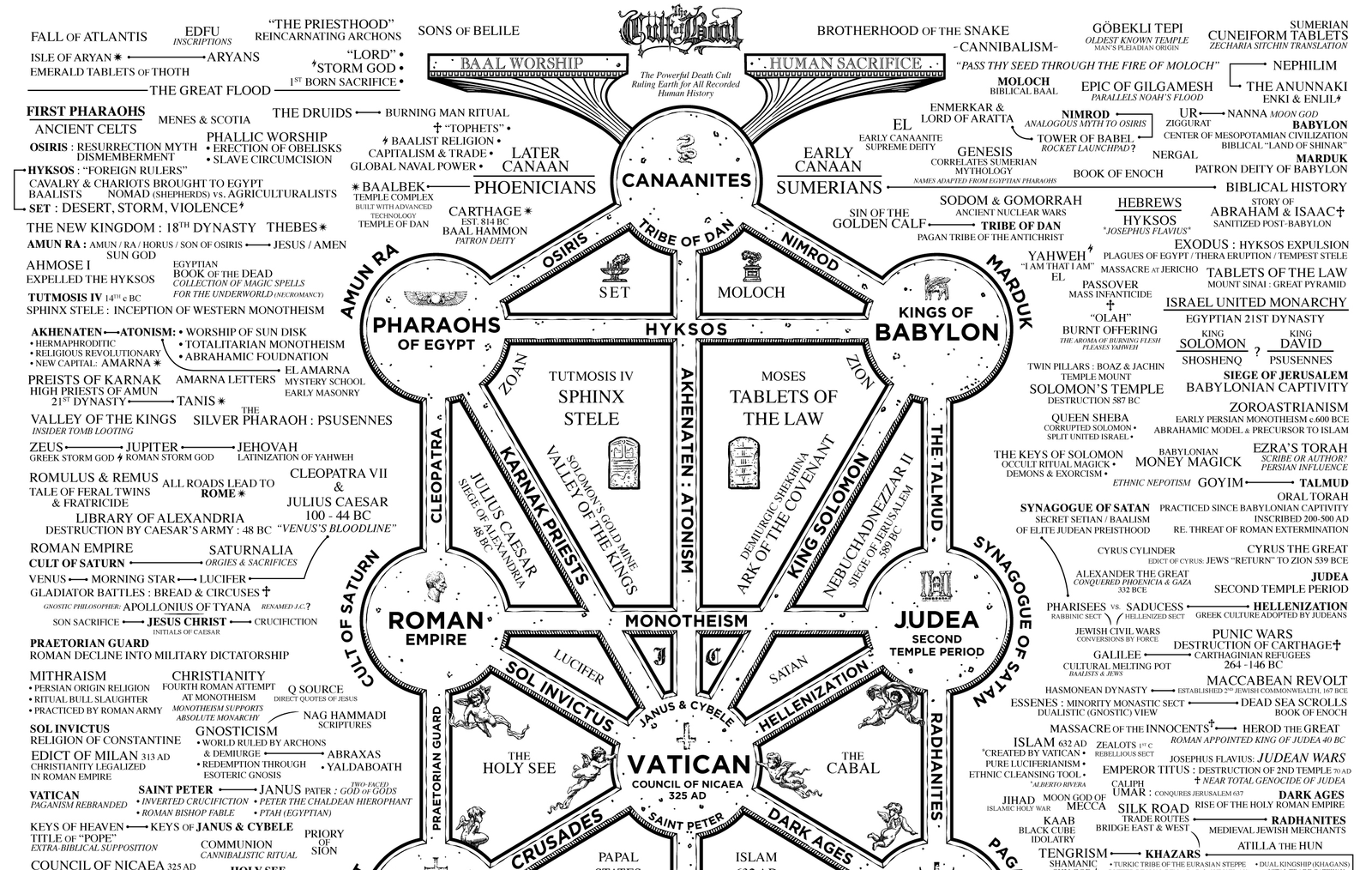
Dylan Louis Monroe's diagram brings historical names, religious imagery, institutions, and esoteric symbolism into a single three-part timeline. This guide explains how to navigate the artwork, understand its structure, and investigate its claims.
What Is the Cult of Baal Map?
- Artist
- Dylan Louis Monroe, Deep State Mapping Project
- Structure
- Timeline in three sections, read top to bottom
- Layers
- Central diagram, margin annotations, deity chart
- Editions
- Prints and downloads via the artist's official page
The Cult of Baal map is an illustrated diagram by Dylan Louis Monroe of the Deep State Mapping Project that presents his interpretation of relationships among historical, religious, political, and esoteric subjects, arranged as a three-part timeline read from top to bottom.
The Cult of Baal map, created by Dylan Louis Monroe of the Deep State Mapping Project, brings historical names, religious imagery, institutions, and esoteric symbolism into a single visual diagram. Its connecting paths and densely written margins present the creator's interpretation of relationships across different periods of history.
This guide explains how to navigate the artwork, understand its structure, and investigate its claims.
The map should be approached as a work of alternative interpretation: the placement of two subjects on a connected diagram does not, by itself, establish a historical relationship.
Learn to Read the Cult of Baal Map with Dylan Louis Monroe
Hear the artist explain the map in his own words before you work through the reading guide below.
How to Read the Cult of Baal Map
Start with the main diagram before examining the small print. Trying to read every label at once makes it difficult to understand how the page is organized. Work through the four steps below with the full-size map open.
- 01
Follow the Main Structure from Top to Bottom
Monroe describes the artwork as a timeline divided into three sections and read downward. Begin with the larger labels, noting the names and periods they reference.
As you move through the diagram, separate chronological order from suggested influence. A later institution appearing below an earlier civilization does not automatically demonstrate direct succession.
- 02
Match the Bold Margin Labels to the Diagram
The bold terms in the margins correspond to major labels in the central structure. Read the relevant margin passage alongside each central label.
First sessionChoose one section. Write down its main names, dates, and proposed relationships before moving to the next. - 03
Examine the Connecting Paths
The connections are central to the map's argument. For each one, ask what kind of relationship is being proposed: shared symbolism, institutional continuity, religious influence, or a political association.
These are different claims and require different evidence. Similar imagery can suggest a useful research question, but resemblance alone cannot establish common leadership or coordinated activity.
- 04
Read the Deity Chart Separately
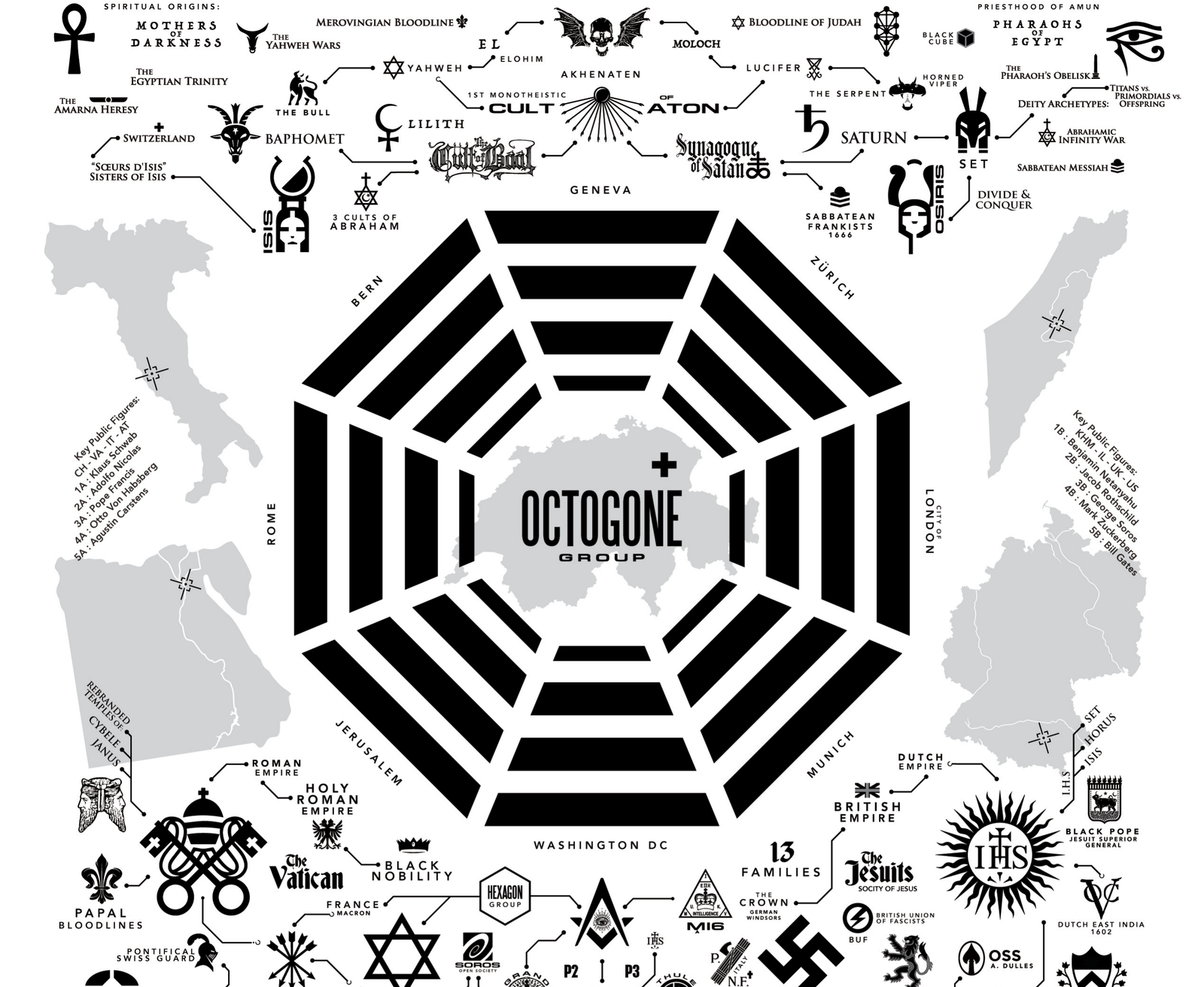
The lower portion includes a comparative chart of deities and attributes. Treat this as a separate layer of the artwork.
Comparisons between religious figures require attention to language, location, period, and local practice. Grouping names together is not sufficient evidence that people in those cultures understood them as identical.
Get the High-Resolution Cult of Baal Map
The margin annotations and deity chart are unreadable in small previews. Enter your email and we will send the high-resolution PDF of the map straight to your inbox, along with the free Great Awakening Report weekly newsletter.
- High-resolution PDF, zoomable to the smallest margin note
- Study each of the three timeline sections one at a time
- Free weekly insights from the Great Awakening Report; unsubscribe any time
Send me the map
Delivered by email within a minute.
By requesting the map you agree to receive the free Great Awakening Report newsletter. We never share your email. Map artwork © Dylan Louis Monroe / Deep State Mapping Project, shared with attribution.
Who Was Baal? Historical Context for the Map
Baal appears in the religious history of the ancient Near East. The Louvre's account of a stela found at Ugarit identifies Baal as a storm god associated with thunder and rain. This provides a material, archaeological starting point for investigating the name.
Ancient worship and modern claims about hidden organizations are separate subjects. Evidence that a deity was worshipped in antiquity does not establish the survival of a single organization into the present.
"The Cult of Baal: Philosophy of the Ancient Death Cult," companion artwork.
How to Evaluate the Cult of Baal Map's Claims
A useful approach is to investigate one connection at a time. This method allows you to examine the artwork closely while maintaining an independent assessment of its conclusions.
Identify the Exact Claim
Name the specific relationship the map proposes between two subjects before you go looking for anything.
Look for Evidence of the Relationship
Seek support for that relationship, rather than simply confirming that the two names or institutions existed.
Check Dates, Translations & Sources
Confirm chronology, translation choices, and whether a source is contemporary with the event it describes.
Separate Evidence from Speculation
Distinguish archaeological evidence, documented events, symbolic interpretations, and speculation, and avoid treating allegations about particular actors as evidence against an entire religion or community.
Distinguish among archaeological evidence, documented events, symbolic interpretations, and speculation.
Explore the Deep State Mapping Project
Comparing the maps can help you understand the creator's broader visual approach, although related artworks are not independent corroborating sources.
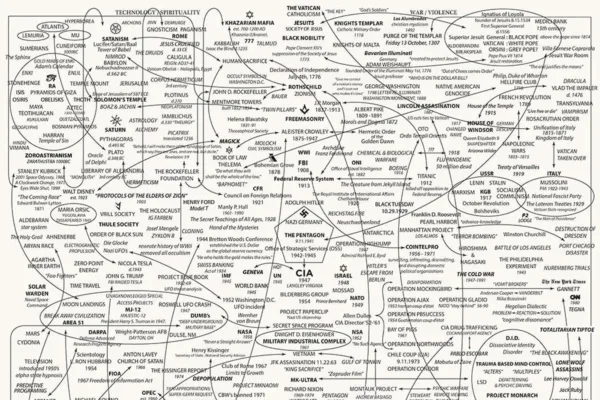
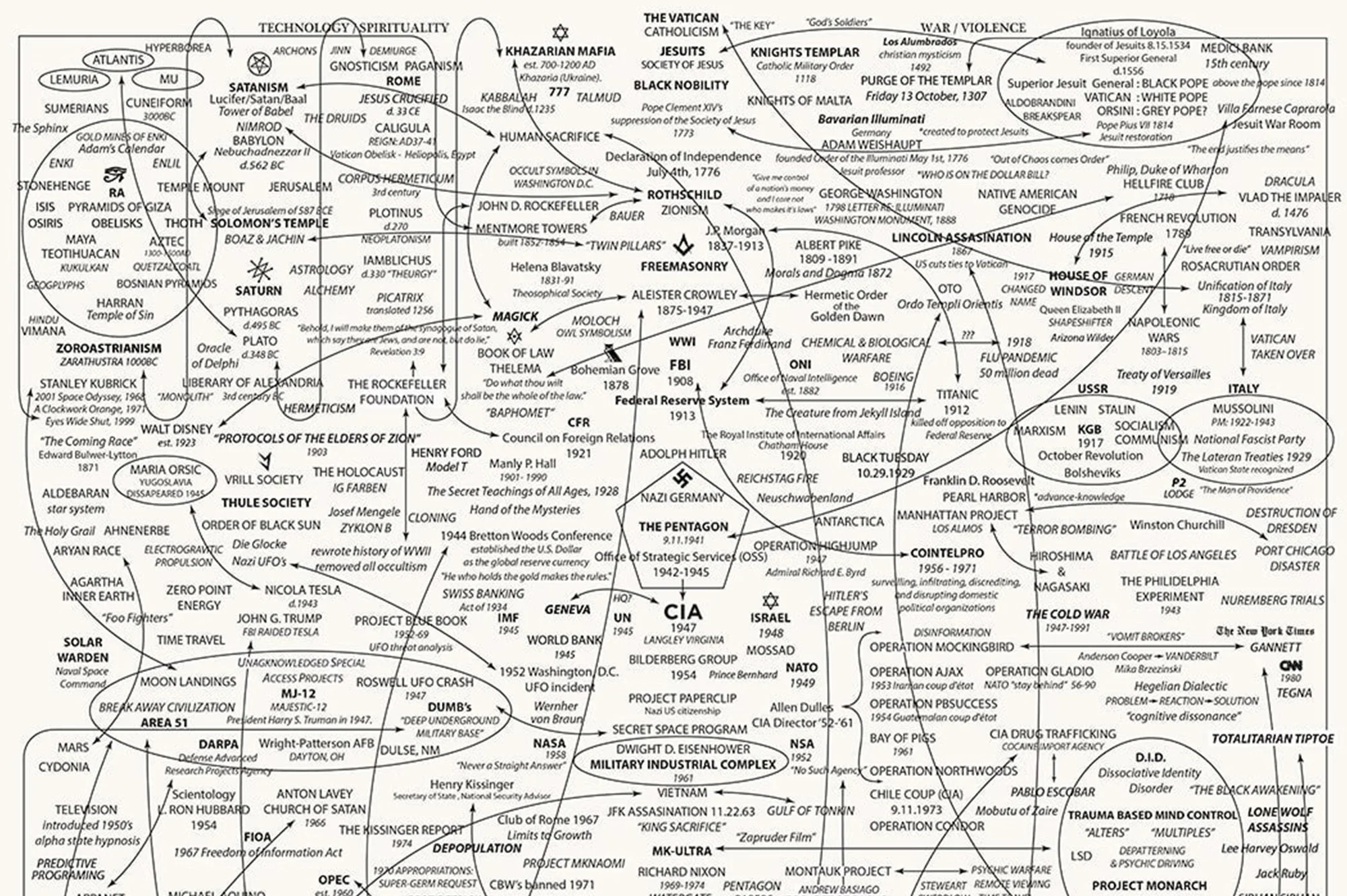
The network
Interconnected people, institutions, organizations, intelligence agencies, secret societies, and historical events that Monroe associates with the "Deep State."
Explore the Deep State Map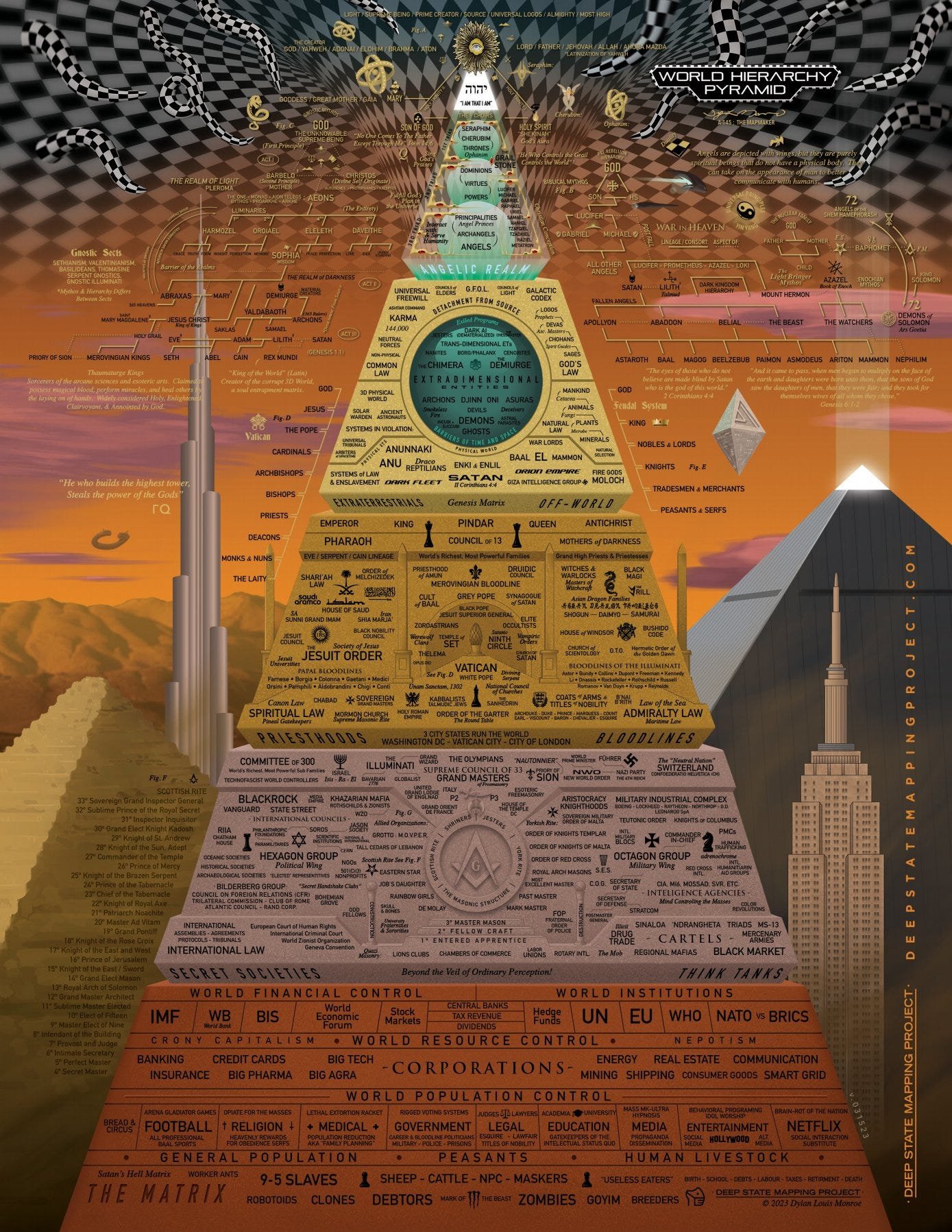
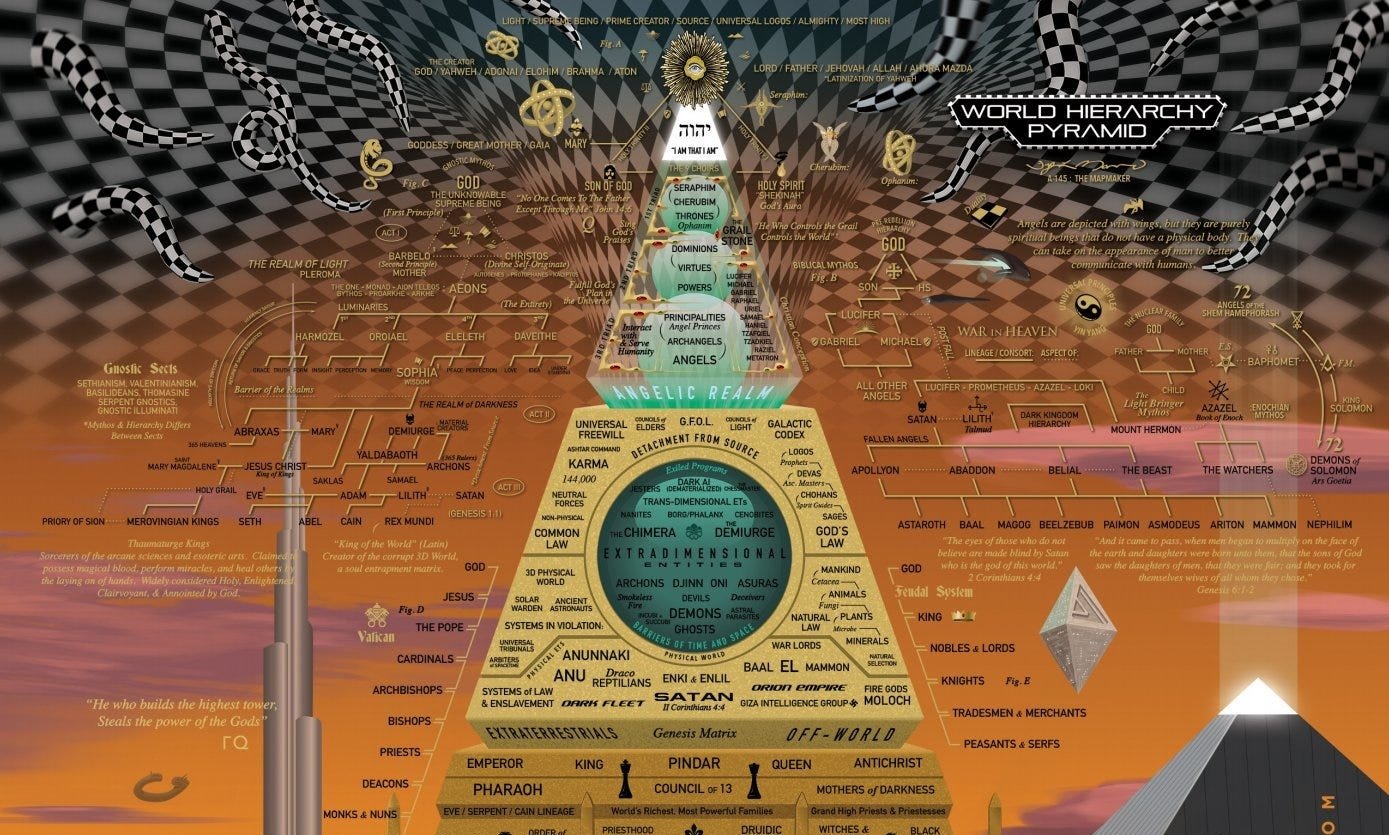
The hierarchy
Five tiers from the general population to the angelic realm, placing power structures inside a broader spiritual and metaphysical worldview.
Explore the PyramidCult of Baal Map: Frequently Asked Questions
What is the Cult of Baal map?
It is an illustrated diagram by Dylan Louis Monroe of the Deep State Mapping Project that presents his interpretations of relationships among historical, religious, political, and esoteric subjects, arranged as a three-part timeline read from top to bottom.
Where should I start reading?
Begin with the large central labels at the top, follow the structure downward, and consult the corresponding bold labels in the margins.
Does the map prove its proposed connections?
No. A diagram can organize an argument, but each proposed historical connection requires evidence beyond its appearance on the map.
Why is the small text difficult to read?
The artwork contains dense annotations that become difficult to distinguish in small previews. Use the full-size viewer on this page, or request the high-resolution PDF and zoom into individual sections.
Who was Baal?
Baal appears in the religious history of the ancient Near East. The Louvre's account of a stela found at Ugarit identifies Baal as a storm god associated with thunder and rain.
Where can I get the original artwork?
Visit Dylan Louis Monroe's official Cult of Baal page for current download and print options. Check the terms attached to the edition you obtain before reproducing it.
Who Made the Cult of Baal Map? Dylan Louis Monroe & the Deep State Mapping Project
All credit for the Cult of Baal artwork belongs to Dylan Louis Monroe and the Deep State Mapping Project, a collection of highly detailed diagrams and information-art projects exploring alternative interpretations of politics, history, secret societies, technology, spirituality, geopolitics, and power structures.
Visit Dylan's official Cult of Baal page for his explanation, interviews, bibliography, and links to available editions. Check the terms attached to the edition you obtain before reproducing it.