









Published Date; October 5, 2026
MONTHLY REPORT • OCTOBER 2026
TRUTH///AWAKENING///DISCLOSURE
CONSCIOUS PRACTICES HEADLINES
THE TIMELINE SPLIT IS HAPPENING NOW, CONSCIOUSNESS AT THE FRONTIER, THE LOST LIBRARY IS OPENING
Recover Forgotten Wisdom • Question What We Think We Know • Explore the Mystery of Consciousness • Strengthen Discernment • Choose Your Path Consciously • Practice What You Understand • Listen Within • Create Through the Choices You Make
“Our normal waking consciousness, rational consciousness as we call it, is but one special type of consciousness.” — William James
“Awakening is not simply discovering that reality may be larger than we once believed. It is becoming conscious enough to choose how we will live within it—what we give our attention to, what we carry forward, what we release, and what we choose to create.” — GAR

October Conscious Report AUDIO REVIEW | REMEMBERING, QUESTIONING & CHOOSING
This month’s Conscious Practices Audio Review brings October’s expansive journey into one connected conversation—beginning with the ancient voices emerging from the Herculaneum scrolls, moving to the scientific frontier of consciousness, and exploring the choices that may be shaping our individual and collective timelines. Together, these stories ask us to consider what humanity is recovering, what we are beginning to question, and what we are consciously choosing to create.
From Mary Magdalene, the Gnostic texts, William James and Paramahansa Yogananda to free will, spiritual sovereignty, the observer, heart consciousness, forgiveness, emotional release and the Golden Timeline, the discussion connects ancient wisdom with modern inquiry and everyday practice. Listen for the larger thread running through it all: awakening is not simply about what we come to know—it is about what we choose to embody.
Short Format Audio
Long Format Audio

THE TIMELINE SPLIT IS HAPPENING NOW | Humanity at the Crossroads of Consciousness, Choice & Free Will
“The timeline we experience may not be something we simply arrive at. It may be something we are building—choice by choice, thought by thought, moment by moment.”
INTRODUCTION | WHAT IF THE SEPARATION HAS ALREADY BEGUN?
For years, spiritual and metaphysical teachings have spoken of a coming separation in consciousness—a bifurcation of timelines, a divergence between 3D and 5D, the emergence of a New Earth, or a point at which humanity would begin moving toward profoundly different experiences of reality. It has often been described as something ahead of us: a threshold humanity would eventually reach, followed by a choice between two increasingly different paths.
But what if the separation is not approaching?
What if it has already begun?
Not as two Earths suddenly appearing or humanity physically dividing into different worlds, but as something quieter and perhaps far more consequential: people occupying the same physical reality while increasingly perceiving it, responding to it and participating in it from very different states of consciousness.
That possibility runs through the recent work of Sarah Elkhaldy, known as The Alchemist, and Shannon MacDonald of Golden Age Living. Their language and emphasis differ, but both describe humanity as moving through a profound choice point. Elkhaldy approaches it through alchemy, bifurcation, frequency, spiritual sovereignty and the relationship between consciousness and experienced reality. MacDonald approaches it through simultaneous timelines, inner knowing, free will and the soul’s choice between very different trajectories of experience.
Taken together, their perspectives offer a much more nuanced picture than the familiar idea of two timelines simply splitting apart.
Elkhaldy argues that even the concept of two timelines is only an introductory model. Bifurcation describes the larger divergence, but within it may exist numerous possible trajectories—some moving toward greater consciousness and integration, others remaining more deeply rooted in fear, separation and unconscious patterns. The important distinction is not necessarily where someone physically goes. It is what state of consciousness increasingly organizes their experience.
MacDonald reaches a remarkably similar crossroads from another direction. In her framework, multiple timelines already exist within the larger field of creation, and humanity retains the sovereignty and free will to choose among them. Most importantly, she insists that there is no wrong choice. The divergence is not presented as divine punishment or a sorting of worthy and unworthy souls. It is a choice of experience.
That distinction changes the entire conversation.
Perhaps a “positive timeline” is not somewhere the awakened are rewarded by being allowed to go, and a “negative timeline” is not somewhere everyone else is condemned to remain. Perhaps these terms describe directions of consciousness—different relationships with fear, love, separation, unity, external authority, inner knowing, reaction, creation and ultimately reality itself.
And perhaps we have been looking for the split in the wrong place.
Because if consciousness is the dividing line, we shouldn’t necessarily expect to see two worlds.
We should expect to see two—or many—very different ways of experiencing this one.
THE BIFURCATION | ALCHEMY & THE SEPARATION OF REALITIES
Sarah Elkhaldy describes the timeline split through the language of alchemy. In its deeper spiritual meaning, alchemy is not simply the transformation of one physical substance into another, but the transmutation of the person. As consciousness changes, the individual changes—and because consciousness and experienced reality exist in relationship with one another, that transformation does not remain confined to the inner world. Our experience of reality can begin changing with us. In this sense, the bifurcation is both internal and external: a separation occurring within consciousness that gradually becomes visible in the reality consciousness experiences.
Importantly, Elkhaldy does not describe this separation as one group becoming spiritually superior to another. She compares it instead to an alchemical process of purification, in which something is separated so it can be transformed and eventually understood or reintegrated at a different level of awareness. The distinction between 3D and 5D therefore becomes less about one group being “better” and more about differing states of awareness—particularly the degree to which a person recognizes consciousness as something that participates in their experience of reality.
Her radio-station analogy makes the idea much easier to understand. Imagine multiple frequencies broadcasting within the same physical space. The stations coexist, but they are carrying completely different signals. Elkhaldy suggests something similar can occur within humanity: people can inhabit the same world, encounter the same events and even stand beside one another while experiencing those circumstances through profoundly different states of consciousness. Eventually, trying to force incompatible frequencies onto the same station creates increasing friction.
The answer, in her view, is not to battle the other station or force everyone onto the same frequency. It is to hold one’s own signal clearly. Someone moving between perspectives then has something coherent to “tune into,” while remaining free to follow their own inner guidance. Bifurcation, viewed this way, is not abandonment or judgment. It is differentiation—and choice remains at the center of it.
BEYOND TWO TIMELINES | THE MODEL GETS BIGGER
In her more recent conversation with Alyssa Nobriga, Elkhaldy takes the idea another step. She describes the familiar image of two splitting timelines as the elementary version of the concept—useful in the same way basic mathematics is necessary before moving into algebra. At the broadest level, bifurcation describes two increasingly different trajectories of consciousness. But when we “zoom in,” as she puts it, the picture becomes considerably more complex.
Rather than only two fixed realities, Elkhaldy describes multiple conscious or ascending timelines and multiple trajectories associated with lower states of consciousness, including those in which fear remains a dominant orientation. The bifurcation therefore represents the larger directional split, while many possible experiences may exist within either trajectory. What we commonly call the “positive” and “negative” timelines may be better understood not as two predetermined destinations, but as directions of consciousness containing many possible paths within them.
That distinction matters. It moves the conversation away from waiting for one dramatic moment when humanity is divided into two worlds and toward something far more fluid: different people, communities and collectives increasingly moving in different directions according to the consciousness, choices and energy they bring to their experience. The timeline split, then, may not be a single event we are waiting to witness. It may be an ongoing divergence that becomes increasingly visible as those trajectories move farther apart.
THE CHOICE POINT | THERE IS NO WRONG CHOICE
If bifurcation describes the larger divergence, choice determines how we move within it. Elkhaldy describes humanity as arriving at another evolutionary choice point—not a moment in which everyone must make the same decision, but one in which increasing awareness creates greater opportunity for conscious participation. In her framing, even the human experience itself can be understood as a kind of “mass choice point”: we enter a world filled with uncertainty, contradiction and incomplete information, and somewhere within that uncertainty we decide how we will engage with it.
Shannon MacDonald approaches the same threshold through sovereignty and free will. In her New Earth Risingframework, the different timelines already exist as possibilities, and there is “no wrong choice.” Some may move toward greater unity, love, truth and liberation of consciousness, while others continue an experience more deeply rooted in fear, separation and illusion. Even a choice that appears to have been made is not necessarily permanent; free will allows movement, redirection and another choice. The timeline becomes less like a destination assigned to us and more like a trajectory we continually participate in creating.
This also changes how we view those who appear to be choosing differently. Elkhaldy cautions against imposing one person’s desired destination onto another, asking instead what that individual’s own spirit wants to experience and how they choose to move forward. She notes that even within an awakening collective, people do not necessarily share the same goals—and, importantly, they should not have to.
Seen this way, the separation of consciousness does not require judgment. One person may feel called toward awakening, deeper self-inquiry and conscious participation, while another may continue exploring reality primarily through the familiar structures of the material world. Different choices create different trajectories, but free will requires allowing each soul its own experience. The question is not whether everyone will choose as we do. It is whether we are becoming conscious of what we are choosing.
3D → 5D | FROM AMNESIA TO INTEGRATION
The language of 3D and 5D consciousness can easily sound as though it describes two physical places, but Elkhaldy uses it primarily to describe different states of awareness. In her esoteric framework, 3D consciousness is characterized by heavy judgment and strong identification with the singular human experience—what she calls a kind of spiritual amnesia. The individual becomes so identified with the body, personality and immediate circumstances that the larger nature of consciousness is temporarily forgotten.
5D consciousness, by contrast, does not require rejecting the human experience. Elkhaldy describes awakening as a journey through disruption, questioning and extremes that can eventually reach a point of integration. She calls this “paradox consciousness” or unity consciousness: the recognition that I may be more than this human identity, while still fully inhabiting and honoring the human experience. Rather than escaping the physical world, consciousness expands its sense of identity while remaining present within it.
That integration also changes the relationship between mind and heart. Elkhaldy does not portray the mind as something that must be defeated in order to awaken. Instead, she describes the mind as integrating into the heart, allowing intellect, compassion, discernment and inner knowing to operate together. Openness and sincerity become essential because transformation cannot occur while consciousness remains closed to what it is encountering.
From this perspective, moving from 3D toward 5D is not really about going somewhere else. It is a movement from unconscious identification toward awareness, from fragmentation toward integration, and from experiencing reality solely through the external world toward recognizing a deeper relationship between the world within and the world we experience around us.
HOW WE CHOOSE | ATTENTION, ENERGY & CREATION
If timelines represent different trajectories of consciousness, the question becomes surprisingly practical: How are those trajectories created? Elkhaldy repeatedly returns to attention. In a world saturated with competing narratives, outrage, “rage bait” and constant demands for engagement, she suggests that people can easily become pulled into perspectives and emotional states that were never consciously chosen. Her question cuts through the noise: “Is this where I want to put my energy?”
The alternative is not necessarily withdrawing from the world, but becoming more intentional about what we reinforce within it. Elkhaldy emphasizes creation as a way of moving beyond perpetual reaction: the more we create, the more empowered we become, and the less easily our attention is captured by every competing signal around us. Discernment then becomes more than deciding what is true or false. It also means recognizing what deserves our attention, what continually pulls us into fear or reaction, and what we are choosing to strengthen through our participation.
Seen through the lens of timelines, these seemingly small decisions begin to matter. A timeline may not be chosen through one dramatic declaration, but through thousands of ordinary moments: what we focus on, what we repeatedly fear, what we refuse to question, what we create, how we respond and where we continually place our energy. Choice becomes less about selecting a future reality and more about recognizing the reality we are reinforcing now.
SPIRITUAL SOVEREIGNTY | WHICH REALITY ARE WE CREATING?
For Elkhaldy, this ultimately leads to spiritual sovereignty. Rather than allowing prophecy, collective narratives or someone else’s spiritual destination to determine our path, she encourages a deeper inquiry: What is reality beyond what I have been told? Why am I here? What do I believe this experience is for? We may never have all the answers. The point is not absolute certainty, but becoming conscious enough to recognize what genuinely calls us and allowing our choices to become congruent with it.
This is where Elkhaldy’s ideas converge most strongly with MacDonald’s emphasis on sovereignty and free will. If there is no single required path—and no “wrong” choice—then awakening cannot be forced. We may offer another perspective, embody another possibility or live in a way that demonstrates a different path, but each individual retains the freedom to choose what they experience and where they place their attention. Sovereignty means choosing our own path while allowing others the freedom to choose theirs.
Perhaps, then, the timeline split was never going to arrive as one spectacular moment when humanity suddenly separated into different worlds. Perhaps it happens more quietly—choice by choice—as different states of consciousness create increasingly different experiences of the same reality. We may continue sharing families, communities, workplaces and a physical world while developing profoundly different relationships with fear and love, reaction and creation, separation and unity.
The question may no longer be which timeline humanity will choose. If bifurcation is already underway, the more immediate question is much closer to home:
Which reality are we creating now?
THE SEPARATION OF CONSCIOUSNESS | SAME WORLD, DIFFERENT REALITIES
Perhaps this is where the idea of the timeline split becomes most relevant to everyday life. We may be looking for a dramatic external separation when the more significant division is already occurring within consciousness itself. Two people can encounter the same event, live in the same community or even belong to the same family while interpreting reality through fundamentally different beliefs, values, fears, expectations and levels of awareness. The physical world has not separated, yet their experience of it increasingly has.
Seen this way, positive and negative timelines become less like destinations and more like trajectories built through repeated participation. One person may remain primarily oriented toward fear, external authority, division and reaction; another may increasingly choose discernment, personal responsibility, unity and conscious creation. Neither trajectory requires a portal or a sudden dimensional departure. Over time, thousands of choices can carry people toward remarkably different experiences while they continue standing on the same Earth.
And perhaps that is why the separation feels increasingly visible. We are not simply disagreeing about what is happening in the world; in many cases, we appear to be developing profoundly different relationships with reality itself. Yet if sovereignty is truly part of awakening, the task is not to drag everyone onto the same path. It is to become conscious of our own trajectory, respect the free will of others and recognize that another person’s choice does not prevent us from making ours.
Perhaps the timeline split was never going to be one spectacular moment when humanity suddenly separated into different worlds. Perhaps it would happen quietly—choice by choice, attention by attention, creation by creation—until different states of consciousness began producing increasingly different experiences of the same world.
The question may no longer be which timeline humanity will choose.
Perhaps the question is: Which one are we creating now?
WHICH REALITY ARE WE CREATING?
Perhaps the deepest question raised by the timeline split is not whether two worlds will eventually separate, but whether we are already participating in the creation of different realities through the consciousness we bring to this one. If attention, choice, intention and action continually shape our trajectory, then the future is not simply something approaching us. We are meeting it—and participating in it—with every choice we make.
That does not mean controlling every circumstance or pretending difficulty disappears when consciousness changes. It means recognizing where our power actually resides. We can choose what receives our attention, whether fear becomes our dominant orientation, how quickly we surrender our discernment, what we create rather than merely react to, and whether our lives increasingly reflect the values we say we hold. Sarah Elkhaldy ultimately brings the conversation back to this kind of spiritual sovereignty: becoming clear about why we are here and allowing that clarity to guide how we move through an uncertain world.
And perhaps we can release the need for everyone else to arrive at the same conclusion. Different people may choose different experiences, different lessons and different paths. If free will matters, that possibility has to remain part of the equation. Our responsibility is not to force the collective onto our timeline, but to become increasingly conscious of the one we are creating through the way we live.
The timeline split, then, may be less about waiting for a new world to appear and more about deciding what kind of world we are willing to help bring forward.
Because ultimately, the question is not simply where humanity is going.
It is what we are choosing to create along the way.


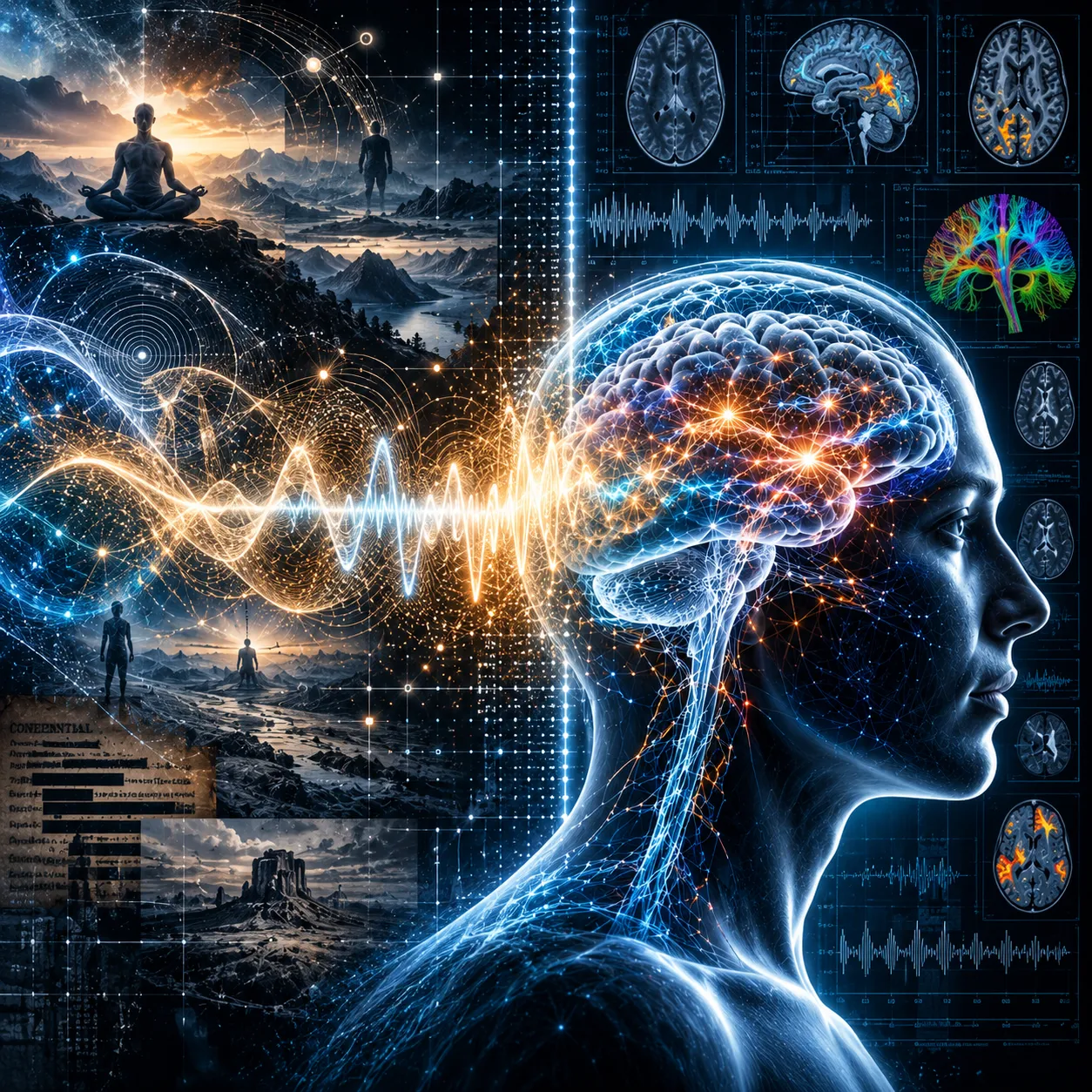
CONSCIOUSNESS AT THE FRONTIER
“The frontier of consciousness begins where what we can measure meets what we still cannot explain.”
What Happens When Science Begins Investigating Questions Once Left to Philosophy, Spirituality & Human Experience?
For most of modern science, consciousness has presented an unusual problem. Researchers can study the brain in extraordinary detail—watch neurons fire, map networks, alter brain chemistry, interrupt awareness with anesthesia and observe consciousness apparently disappear and return. Yet none of those accomplishments has resolved the most basic question of all: Why is there an experience happening in the first place?
A brain can process information without us consciously experiencing that information. It can respond to stimuli we never become aware of. Under anesthesia, sophisticated neural processing may continue even while ordinary conscious access appears absent. Meanwhile, experienced meditators report intentionally entering states in which the usual sense of self, time and bodily boundaries can radically change. At the edges of life and severe neurological impairment, people sometimes report experiences—or unexpectedly demonstrate capacities—that challenge simple distinctions between conscious and unconscious, present and absent, functioning and lost.
We are becoming remarkably good at identifying what happens when consciousness changes. That is not necessarily the same thing as explaining consciousness itself.
And this distinction is beginning to matter.
Because beyond the laboratories studying ordinary waking awareness lies a much larger territory: near-death experiences, paradoxical lucidity, lucid dreaming, altered states, anomalous cognition, reports of perception occurring under unusual physiological conditions, and controversial hypotheses proposing that consciousness may not be entirely reducible to activity inside the brain.
Some of those subjects have substantial bodies of research behind them. Others remain preliminary, disputed or difficult to replicate. A few may ultimately prove to have conventional explanations. Others may expose gaps in today’s models. But dismissing the entire territory because some of its questions are uncomfortable would be no more scientific than accepting extraordinary claims simply because we want them to be true.
Perhaps the real shift underway is therefore not a discovery about consciousness, but a change in what researchers are willing to investigate.
Questions once confined largely to philosophy, spirituality and personal testimony are increasingly encountering neuroscience, neuroimaging, electrophysiology, computational modeling and controlled experimentation. Previously inaccessible government research has entered the public record. Private institutions are funding investigations that conventional research structures have sometimes avoided. Ancient contemplative practices are becoming experimental tools. Experiences long described as subjective anomalies are increasingly being catalogued, compared and measured.
And still the fundamental question remains:
What is consciousness—really?
Does the brain generate it? Does consciousness emerge once biological information processing reaches sufficient complexity? Could the brain instead constrain, transmit or mediate something more fundamental? Or are we still missing a conceptual framework capable of describing what mind and matter actually are?
Science does not presently have an agreed answer.
That uncertainty isn’t a weakness in the story.
It is the story.
THE MYSTERY AT THE CENTER OF THE MIND
We Can Map Consciousness. Explaining It Is Another Matter.
There is no shortage of scientific theories attempting to explain consciousness. Global Neuronal Workspace Theory proposes that information becomes conscious when it is amplified and made widely available across brain systems, while Integrated Information Theory connects consciousness to the structure and integration of information within a system. Other models emphasize recurrent processing, higher-order representations and predictive processing.
In 2025, researchers put two of the leading theories—Global Neuronal Workspace and Integrated Information Theory—into an unusually rigorous head-to-head test. The collaboration involved 256 participants and multiple technologies, including fMRI, magnetoencephalography and intracranial EEG. Rather than producing a clear winner, the results challenged important predictions of both theories.
And beneath that technical debate remains a deceptively simple question. Neuroscience may eventually identify precisely what the brain is doing when we see red, recognize a face or experience pain. But why does any of that processing feel like something from the inside? Why is there an experience at all?
That gap between biological mechanism and subjective experience is why consciousness remains one of science’s deepest mysteries. We know that changing the brain can profoundly change conscious experience—through injury, drugs, stimulation, anesthesia or disease. But demonstrating that relationship does not necessarily settle the larger question of what consciousness is or whether the brain entirely produces it.
The familiar radio analogy illustrates the distinction without proving either side: damage a radio and the music changes, but that alone does not tell us whether the radio created the broadcast or received it. The brain is vastly more complex, but the underlying distinction remains important: correlation, dependence and causation are not necessarily the same thing.
Consciousness may ultimately prove to be entirely generated by biological processes. It may emerge from sufficiently complex information processing. Or today’s models may eventually prove incomplete. The purpose of Consciousness Studies is not to choose the most comfortable answer, but to keep testing the possibilities.
And some of the most interesting tests are now occurring precisely where ordinary waking consciousness begins to change.
WHEN CONSCIOUSNESS CHANGES—BUT DOESN’T FIT THE BOX
Meditation, Anesthesia & the Expanding Landscape of Awareness
For centuries, contemplative traditions have claimed that ordinary waking consciousness represents only a fraction of the states human beings can experience. Deep meditation can alter the perception of time, diminish bodily awareness, quiet internal narration and, in advanced practices, produce states in which the familiar sense of an individual self becomes extraordinarily faint—or seems to disappear altogether.
Science historically faced an obvious problem with such accounts: How do you study an experience that exists almost entirely inside another person’s awareness? One answer is surprisingly straightforward: study people who have spent thousands of hours learning how to enter those states deliberately.
Advanced meditators are increasingly valuable experimental models because some can repeatedly and intentionally alter aspects of conscious experience that occur unpredictably in others. Researchers can monitor physiology and brain activity as practitioners move between identifiable subjective states, allowing ancient introspective practices to become something unexpected: experimental tools for investigating consciousness itself. This doesn’t validate every metaphysical interpretation attached to meditation, but it does challenge the idea that subjective experience is scientifically useless simply because it cannot be placed beneath a microscope.
At almost the opposite end of the spectrum sits anesthesia. Propofol can profoundly disrupt ordinary conscious awareness, yet direct recordings from the human hippocampus have found that neurons can continue responding to surprisingly sophisticated aspects of spoken language—including semantic and grammatical information and predictions about upcoming words. The finding does not establish that anesthetized people consciously heard or understood those sentences. Instead, it demonstrates that complex information processing can continue without the conscious experience we normally associate with it.
That distinction cuts directly into the central mystery. If sophisticated neural processing can occur without ordinary awareness, identifying information processing in the brain cannot by itself explain why some neural events enter conscious experience while others remain outside it. Meditation approaches the question from the opposite direction: rather than suppressing consciousness pharmacologically, practitioners deliberately alter its contents and structure, sometimes reporting heightened awareness even as ordinary self-referential experience diminishes.
Together, these very different states suggest that “conscious” and “unconscious” may be considerably less binary than those words imply. And that becomes even more important when researchers move beyond controlled laboratories into circumstances where the brain is severely impaired—or the body itself approaches the boundary of life.
AT THE EDGE OF AWARENESS
Near-Death Experience, Unexpected Lucidity & Questions Science Cannot Yet Close
Sometimes the most revealing clues appear where our models seem least prepared for them.
Families and caregivers of people with advanced dementia have long described an extraordinary phenomenon: someone who has become profoundly cognitively impaired suddenly appears to return. They may speak clearly, recognize loved ones, recall memories or interact with a coherence that seemed to have disappeared. Episodes occurring near death have been called terminal lucidity, while the broader phenomenon is increasingly described as paradoxical or unexpected lucidity.
Once largely confined to family accounts, hospice observations and case reports, the phenomenon is receiving greater scientific attention. A 2026 nationally representative U.S. study surveying 5,940 observers of people with Alzheimer’s disease or other dementias found unexpected lucid episodes reported in 43.6 percent of represented cases. The limitation is important: these were observer reports, not episodes captured under laboratory monitoring. Researchers at NYU Langone are now attempting to do exactly that, using video EEG, audiovisual recording and daily tracking in people with severe end-stage dementia.
The phenomenon raises a remarkable question: What returns when lucidity returns? There may ultimately be neurological explanations involving temporary network changes or renewed access to preserved pathways. If so, the findings could transform our understanding of dementia by suggesting that some abilities presumed destroyed may sometimes be inaccessible rather than entirely lost. But paradoxical lucidity also leaves open a deeper question: are our ability to express consciousness and consciousness itself necessarily the same thing?
Near-death experiences push that question toward an even more difficult boundary. People revived after cardiac arrest and other life-threatening events have reported vivid experiences including heightened awareness, encounters with deceased relatives, panoramic memories, perceptions of leaving the body and profound interconnectedness. Neurological models offer several possible mechanisms involving changes in blood flow, neurochemistry, disinhibition, memory and brain activity during dying and recovery, while other researchers argue that some reported features remain insufficiently explained.
The relevant question is not whether a near-death experience proves an afterlife. It doesn’t. The more useful question is whether our present understanding of brain function fully explains what is being reported—and whether observations that remain unexplained deserve continued investigation.
That leaves two broad possibilities open. Increasingly sophisticated neuroscience may eventually explain apparently anomalous experiences entirely through biological processes. Or some observations may ultimately require us to reconsider aspects of the relationship between brain and consciousness. At present, neither should be treated as settled.
When an observation does not fit comfortably inside an existing explanation, the scientific response should not be to protect the explanation. It should be to investigate the observation.
And that principle becomes even more important as we move beyond near-death experience and onto an even less comfortable frontier.
THE FRONTIER
What Happens When Science Investigates the Questions It Cannot Yet Answer?
Say the words telepathy, precognition, remote viewing or extrasensory perception in many scientific settings and the subject itself can become the argument. These fields carry decades of cultural baggage—sensational claims, disputed experiments, methodological problems and conclusions that sometimes raced far ahead of the evidence. Skepticism did not emerge from nowhere.
But skepticism and prohibition are not the same thing.
In 2026, researchers published a PRISMA-informed synthesis examining 92 reports and studies using neuroimaging or neurophysiological methods to investigate ESP-related phenomena, including telepathy, remote viewing, anomalous cognition, precognition and presentiment. The review did not discover a “psychic region” of the brain. Instead, researchers found substantial differences in experimental design, methodology and neural findings, concluding that the evidence does not currently establish a unified neural signature for ESP. Nonlocal and quantum interpretations remain speculative frameworks requiring further testing.
And that may be precisely why the study matters. It demonstrates the kind of investigation needed at the frontier of consciousness: take the claim seriously enough to test it without becoming invested in proving it true.
A rigorous approach asks whether an effect can be replicated, whether controls are adequate, whether sensory leakage and conventional explanations have been eliminated, whether unsuccessful experiments are reported alongside successful ones, and whether independent laboratories can reproduce the findings. But after those questions have been answered, another remains: What happens if an anomaly survives?
If reliable information transfer were ever demonstrated under conditions that convincingly exclude ordinary sensory channels, the implications would extend far beyond guessing an image hidden in another room. It would raise fundamental questions about information, perception and whether consciousness can interact with reality in ways our current models do not describe. Those implications are enormous—which is precisely why the evidentiary threshold must be equally high.
The strength of the conclusion should match the strength of the evidence.
That standard works in both directions. An unexplained observation does not make its most extraordinary interpretation correct, but neither should an observation be dismissed simply because it challenges the prevailing model. Some anomalies disappear under better controls; others prove to be statistical artifacts or previously unknown conventional mechanisms. Occasionally, however, an anomaly persists long enough for the question to shift from Is this really happening? to What might our existing model be missing?
That is the uncomfortable territory consciousness research increasingly occupies: maintaining enough skepticism to distinguish genuine anomalies from experimental noise while preserving enough curiosity to investigate questions whose answers remain uncertain.
And there is another complication. Some controversial experiments were not merely proposed—they were conducted, funded and documented, while much of that history remained outside public view for years.
That brings us to Disclosure.
Because disclosure does not tell us what to believe about the evidence.
It gives us the opportunity to examine it.
DISCLOSURE
When the Experiments Already Happened
For years, remote viewing occupied an unusual space between Cold War rumor, parapsychology and intelligence folklore. The premise sounded improbable: could a person obtain meaningful information about a distant or unseen target without using the ordinary senses?
The surprising part is not that people claimed they could. It is that the United States government spent years trying to find out.
Beginning in the 1970s, remote-viewing research moved through several parts of the U.S. intelligence and defense establishment under programs including GRILL FLAME and eventually STARGATE. The surviving records span roughly two decades and include experiments, training sessions, operational tasking and internal evaluations. Remote viewers were even assigned to real intelligence problems, including work connected with the Iran hostage crisis.
The results resist the simple conclusion that remote viewing either “worked” or was entirely meaningless. Some sessions failed dramatically, while others produced results researchers considered difficult to explain. By the later years of the program, remote viewing had received more than 200 operational tasks from military organizations, yet analysts ultimately found the information too inconsistent, ambiguous and subjective to establish dependable intelligence value.
That ambiguity remained when the program underwent independent evaluation in 1995. One evaluator argued that experimental results showed statistically significant evidence of anomalous cognition; another concluded that such claims required more convincing independent replication. The government’s practical conclusion was ultimately straightforward: remote viewing was not sufficiently reliable for operational intelligence use.
But that conclusion contains an important distinction. “Not reliable enough for intelligence operations” is not the same scientific statement as “nothing anomalous ever occurred.” At the same time, statistical evidence of an anomaly does not establish what caused it. Somewhere between those two statements lies the question that remained unresolved.
Eventually, congressional review helped bring the records into public view. And that changes the conversation. We no longer have to rely solely on stories about whether the government investigated remote viewing. We can examine the records ourselves—the protocols, drawings, failures, unusual results, evaluations and disagreements.
That is what Disclosure can mean without the mythology surrounding the word. A declassified document does not prove the extraordinary interpretation attached to it. Classification does not make something true, and declassification does not turn an experiment into proof. What changes is access. Evidence previously available to a limited group becomes available for wider examination.
STARGATE therefore matters not because it settled the question of anomalous cognition, but because it preserved the complexity of the investigation. The experiments happened. The results were mixed. The debate was real. The program failed to demonstrate sufficient operational reliability—yet some of the scientific questions it raised did not disappear with it.
That is where Consciousness Studies, Consciousness Research and Disclosure ultimately meet: one expands the questions we are willing to ask, another develops ways to test them, and the third expands the information available for examination.
The purpose is not to prove the extraordinary.
It is to make sure the extraordinary is examined before we decide what it means.
THE QUESTION REMAINS OPEN
PERHAPS THE MYSTERY IS TELLING US WHERE TO LOOK NEXT
For all the sophistication of modern neuroscience, consciousness remains strangely close to us and remarkably difficult to explain. Every observation, memory, discovery and scientific experiment is ultimately known through awareness. We are using consciousness to investigate the universe while still trying to understand the consciousness doing the investigating.
Perhaps that is why the mystery refuses to remain inside a single discipline. Neuroscience can reveal what changes in the brain when awareness changes. Anesthesia shows that ordinary consciousness can disappear while surprising levels of information processing continue. Meditation allows researchers to observe deliberately altered states of awareness. Unexpected lucidity and near-death experiences push the questions toward the boundaries of brain function and life itself, while research into anomalous cognition asks whether information and awareness always behave within the boundaries we assume they should.
None of this demonstrates that consciousness exists independently of the brain. But neither does it establish that our present understanding of the relationship between brain and consciousness is complete. And that leaves one of the most consequential questions in consciousness research unresolved: Does the brain create consciousness entirely, or could it also participate in, filter or interface with something more fundamental?
The implications of either answer would be profound. If the brain produces consciousness entirely, science still faces the extraordinary challenge of explaining how biological activity creates subjective experience—why neural processes produce an inner world at all. If consciousness proves to be more fundamental, our understanding of identity, perception, information, death and perhaps even the relationship between mind and matter would require reconsideration.
For now, the most accurate answer remains: we don’t know. That is not a failure of science. At the frontier of knowledge, uncertainty creates room to remain curious without becoming credulous, skeptical without becoming closed, and willing to investigate possibilities without first requiring them to conform to what we already believe.
This is where Consciousness Studies, Consciousness Research and Disclosure converge. One expands the questions we are willing to ask. Another develops better ways of testing them. The third expands the information available for examination. None provides the answer alone, but together they enlarge the arena in which answers might emerge.
The next breakthrough may come from neuroscience, meditation, anesthesia or severe neurological impairment. Some anomalous phenomena may disappear under better experiments; others may persist. Information sitting quietly in an archive may acquire new meaning when examined with tools that do not yet exist. We should remain open to all of those outcomes, because exploring the frontier is not about proving that consciousness is stranger than science currently allows. It is about discovering how strange—or how explainable—it actually is.
The strength of the conclusion should match the strength of the evidence—but the boundaries of our questions should not be determined by the boundaries of our current answers.
We can measure consciousness’s footprints, alter its states and investigate its edges. Yet somewhere between the firing neuron and the experience of being alive, the central mystery remains:
Who—or what—is having the experience?
Perhaps that is not where the investigation ends.
Perhaps it is where it truly begins.

THE LOST LIBRARY IS OPENING
“Sometimes the past is not lost. It is simply waiting for the future to develop the capacity to hear it.”
After 2,000 Years, the Unreadable Scrolls of Herculaneum Are Beginning to Speak
In A.D. 79, Mount Vesuvius erupted with catastrophic force, burying Pompeii and Herculaneum beneath volcanic debris and bringing everyday life along the Bay of Naples to an abrupt end. Buildings disappeared, families vanished and entire streets were sealed beneath the eruption.
Inside one extraordinary villa, a library went silent.
Hundreds of papyrus scrolls were subjected to intense heat and carbonized into brittle, blackened objects resembling pieces of charcoal. Under ordinary circumstances, fire would have erased their words forever. Instead, Vesuvius created an extraordinary paradox: the same catastrophe that destroyed Herculaneum helped preserve part of its intellectual world for nearly 2,000 years.
When excavators began recovering the scrolls from the Villa of the Papyri in the 18th century, they encountered an almost impossible problem. The books had survived, but many could not safely be opened. Attempts to physically unroll the carbonized papyri could fracture or destroy them, leaving more than 600 unopened today.
Humanity possessed the books. We simply couldn’t read them.
Now, that is beginning to change.
In June 2026, researchers working with the Vesuvius Challenge announced that the surviving portion of one carbonized scroll, PHerc. 1667, had been virtually unwrapped, revealing nearly 1.5 meters of continuous text across approximately 20 columns. Another scroll yielded more than 70 columns, while researchers identified previously unknown books by the Epicurean philosopher Philodemus, including On Vices, Book 1 and On Gods, Book 8.
For scholars, the breakthrough goes far beyond recovering isolated words. They can begin following arguments across multiple columns, connecting ideas and reconstructing works as compositions rather than fragments. Books once considered essentially unreadable are becoming readable again.
And what they are beginning to say is just as intriguing.
PHerc. 1667 appears to contain a philosophical work concerned with ethics, human behavior, the arts, reason and the impulses that drive human action. Its author has not been established, although researchers say the text may reflect Stoic thought. Chrysippus—one of the most influential early Stoic philosophers, whose own writings are largely lost—is one possibility being considered, although scholars remain appropriately cautious.
Among the concepts emerging from the scroll are phronēsis—practical wisdom and the discernment needed to choose between virtue and vice—and hormē, the impulse or drive toward action, including what happens when impulse becomes excessive and reason no longer properly directs behavior.
One surviving passage feels remarkably immediate for words written more than two millennia ago:
“We will inquire into something, but we will not grasp it, if in some way we depart from ourselves and from our own nature.”
Researchers interpret “our own nature” within the philosophical context of the work, potentially referring to human rationality and an innate inclination toward goodness. There is no need to impose modern spiritual language onto it. The ancient questions are compelling enough on their own: How should we live? What governs human behavior? How do we distinguish wisdom from impulse? What is our nature—and what happens when we lose connection with it?
More than 2,000 years later, we are still asking.
WHAT WERE THE ANCIENTS TRYING TO TELL US?
Another recovered scroll carries the inquiry in a different direction. Researchers virtually reading PHerc. 139 discovered an identifying title at the end of the work: Philodemus, On Gods, Book 8. Until this discovery, only the first book of On Gods was known, meaning scholars now know the work extended through at least eight books.
Initial readings contain references to concepts translated as “providence,” “god,” “invisible entities,” “according to nature,” “living beings,” “future things” and an “intellective principle.” Researchers believe the material represents a sustained Epicurean philosophical treatment of theology, including the nature of the gods, providence and the structure of the universe.
That does not mean Herculaneum is about to reveal a secret spiritual doctrine or rewrite everything we know about antiquity. What it does reveal is perhaps more interesting: our surviving picture of the ancient intellectual world is incomplete.
We tend to encounter ancient philosophy through the works that survived—Plato, Aristotle, Epicurus, the Stoics and others whose ideas made the long journey through history. But history is partly a product of preservation. Countless works disappeared, leaving some philosophers known primarily through fragments or through the writings of others.
Herculaneum presents the tantalizing possibility that some of those lost voices may not actually be lost. They may still exist inside tightly rolled, blackened pieces of papyrus that no human being has read since antiquity.
What remains inside them—philosophy, history, poetry, science, theology, correspondence, familiar thinkers or authors whose names disappeared completely—no one yet knows.
And that uncertainty is part of what makes the story extraordinary.
The transformation underway is possible because archaeology has collided with technologies the ancient scholars—and even the archaeologists who first recovered the scrolls—could scarcely have imagined.
Powerful X-rays create detailed three-dimensional maps of the scrolls’ internal structures, with some scans generating as much as 300 terabytes of data. Computer systems trace the crumpled layers of papyrus and digitally flatten them, while machine-learning techniques assist in detecting ink. Papyrologists and classicists then undertake the painstaking work of recognizing letters, reconstructing words and interpreting the emerging texts.
It is not simply “AI reading ancient books.” It is a collaboration among physics, imaging science, chemistry, computer science, machine learning, archaeology, papyrology and classical scholarship.
And in September, that collaboration took a wonderfully strange turn: scientists started burning scrolls themselves.
Researchers created replica ancient scrolls using Egyptian papyrus, reed styluses and different inks—including lead-containing ink—and deliberately carbonized them. They then used X-ray imaging to determine whether the writing could still be detected after burning.
Nearly two thousand years after Vesuvius accidentally burned a library, scientists are intentionally burning scrolls to learn how to read the originals.
The experiment produced a promising result. Lead absorbs X-rays much more strongly than the carbonized papyrus surrounding it, causing letters written with lead-containing ink to become strikingly visible. Researchers also found that handheld X-ray fluorescence equipment could detect lead, potentially providing a relatively simple way to identify unopened scrolls worth prioritizing for the much more intensive process of high-resolution scanning and virtual reconstruction.
The method has limitations. Not every ancient ink contained lead, researchers still need to understand why it appears in some authentic Herculaneum scrolls, and experimental carbonization cannot perfectly reproduce what happened during Vesuvius. It is another tool, not a magic key to the entire library.
But that may be the most compelling part of what is happening at Herculaneum. There is no single miraculous breakthrough. There is a convergence.
Better scanning produces better internal maps. Improved algorithms reconstruct damaged layers. Ink experiments reveal new ways to distinguish writing from carbonized papyrus. Machine learning helps identify patterns. Scholars interpret the emerging Greek. Each advancement opens another window into material inaccessible for centuries.
The Vesuvius Challenge has accelerated that process by turning the problem into an open international effort. Launched in 2023, it released data and software and invited researchers, engineers and citizen scientists to help solve pieces of the puzzle. What began with attempts to detect individual hidden letters has progressed toward sustained passages and entire philosophical arguments.
And now the challenge itself is beginning to change.
For centuries, the question was whether these books could ever be opened without destroying them. More recently, it became whether technology could reveal the writing hidden inside.
Increasingly, the question is becoming something else:
Can we understand what the ancient world is finally telling us?
WHEN THE PAST SPEAKS AGAIN
There is something haunting about imagining those scrolls sitting in darkness for nearly two thousand years. The people who wrote them disappeared. The readers who once held them disappeared. The world outside the villa changed beyond recognition—empires rose and fell, religions spread across continents, languages evolved, civilizations transformed, and generations lived entire lives without knowing what remained sealed inside those blackened rolls of papyrus.
Yet the words were still there.
Not metaphorically. Not as quotations copied by another author or fragments preserved in a later manuscript. The actual marks made by ancient hands remained trapped inside layers of carbonized papyrus, inaccessible only because we had not yet developed the ability to see them.
That may be the most remarkable part of the Herculaneum story. The knowledge wasn’t waiting to be discovered somewhere else. It was waiting for us to become capable of reading what had been in front of us all along.
For centuries, recovering an ancient book meant physically opening it. But these scrolls created an impossible choice: reach for the knowledge and risk destroying it, or preserve the artifact and leave its contents unknown. Now researchers can peer inside without breaking the scroll apart, digitally separate layers that haven’t moved since antiquity and slowly watch letters emerge from what appears to the naked eye to be little more than charcoal.
First a shape. Then a letter. A word. A sentence.
Eventually, a voice.
And suddenly someone who lived two thousand years ago is asking a question again.
That is where this story becomes larger than archaeology. The recovered writings reveal people wrestling with enduring questions about impulse and reason, wisdom, human behavior, providence, the divine and the nature of the world itself. Their answers may not be ours. Age alone does not make an idea true, and a lost text does not become sacred simply because we recovered it.
But imagine what has been lost from the human conversation.
History naturally privileges what survived. We know certain philosophers because their works continued to be copied, translated and preserved. Others remain only in fragments—or through later writers describing what they supposedly believed. Entire books, arguments and perhaps entire ways of thinking disappeared with them.
Herculaneum gives us the rare possibility of reversing a small piece of that loss.
More than 600 scrolls remain unopened, and we cannot know what they contain. They may preserve additional works by familiar philosophers, histories, poems, scientific observations or authors whose names disappeared entirely. Some may reshape scholarly understanding of the ancient world; others may prove comparatively ordinary.
That uncertainty is part of the wonder. We are standing at the beginning of the recovery, not the end.
And there is an almost beautiful symmetry in how it is happening. Ancient hands made the ink and rolled the papyrus. Vesuvius brought the world around them to an end and unintentionally preserved what remained. Archaeologists recovered the scrolls centuries later but could not safely reach the words inside. Then another few hundred years had to pass before X-ray imaging, computer vision, chemistry, machine learning and human scholarship finally converged to make the invisible visible.
Two civilizations separated by nearly two millennia are now meeting on a screen.
One left the message.
The other finally developed the tools to receive it.
Perhaps that is why the Herculaneum scrolls feel so compelling at this particular moment. We live in an age increasingly focused on what comes next—artificial intelligence, emerging technologies, new discoveries and increasingly complex questions about consciousness and human experience. Yet one of the remarkable capabilities of that future may be its ability to recover what humanity left behind.
Somewhere inside those fragile blackened rolls, a philosopher may still be midway through an argument. A sentence may be waiting for its ending. An idea abandoned by history may be only a few layers of papyrus away from entering human consciousness again.
The library was never truly empty. We simply could not hear it.
Now, slowly—letter by letter, line by line, scroll by scroll—the past is beginning to speak again.
- University of Kentucky — “The Day the Herculaneum Scrolls Began Speaking Again”
- ScienceAlert — “Scientists Burned Their Own Scrolls. Then the Hidden Writing Lit Up”
- Chemical & Engineering News — “Reading 2,000-Year-Old Scrolls Without Unfurling Them”
- Smithsonian Magazine — “Scientists Have Deciphered the Surviving Fragments of a 2,000-Year-Old Philosophical Treatise Frozen in Time by Mount Vesuvius’ Eruption”
- Vesuvius Challenge — Herculaneum Scrolls Project

Thank you to our readers and paid subscribers for your continued support! If you would like to further support the Great Awakening Team and our efforts, you can donate here.
We offer both Personal Coaching and Consulting for executives and business owners. Providing guidance, intelligence briefings, and strategic planning to navigate the dynamic changes and shifts in the world.
– The Great Awakening Team –
“You’re Braver Than You Believe, Stronger Than You Seem, and Smarter Than You Think.” – AA Milne
“We are hard pressed on every side, but not crushed, perplexed, but not in despair, persecuted, but not abandoned, struck down, but not destroyed.” – 2 Corinthians 4:8-9
– MEDITATION & PRAYER FOR ALL HUMANITY –
“May I be a guard for those who need protection, a guide for those on the path, a boat, a raft, a bridge for those who wish to cross the flood. May I be a lamp in the darkness, a resting place for the weary, a healing medicine for all who are sick, a vase of plenty, a tree of miracles. And for the boundless multitudes of living beings, may I bring sustenance and awakening, enduring like the earth and sky until all beings are freed from sorrow and all are awakened.” Bodhisattva Prayer for All Humanity 700 AD

EDITOR’S CORNER
There is an interesting thread running through this month’s Conscious Practice Report. Much of what we are exploring seems to move in three directions at once: backward toward what humanity may have forgotten, inward toward what we are beginning to remember about ourselves, and forward toward what we consciously choose to create next.
That journey begins quite literally with the past. In The Lost Library Is Opening, technologies unimaginable even a generation ago are allowing researchers to read ancient Herculaneum scrolls that have remained sealed for nearly 2,000 years. Our exploration of the Gnostic texts, Mary Magdalene, ancient wisdom traditions, William James and Paramahansa Yogananda asks a related question from different perspectives: How much of humanity’s deeper inquiry into consciousness, purpose and the nature of reality is truly new—and how much are we rediscovering in a language suited to our own time?
Science is beginning to approach some of those questions from another direction. In Consciousness at the Frontier, we explore what happens when researchers investigate meditation, anesthesia, near-death experience, unexpected lucidity and anomalous cognition without demanding that the answers conform to either a strictly material or spiritual explanation. Perhaps one of the most important practices of consciousness is simply becoming comfortable enough with uncertainty to say, “We don’t know yet.” Curiosity and discernment do not have to oppose one another.
But this report has never been intended as an intellectual exercise alone. Knowledge becomes meaningful when we bring it into experience. Throughout these pages, we return again and again to the observer, the heart, the breath, forgiveness, emotional release, stillness, synchronicity and the journey within. These practices invite us to move from reading about consciousness to becoming more conscious of the thoughts, emotions, patterns and choices shaping our own lives.
And perhaps that is where October’s themes ultimately converge. Our exploration of free will, the Grand Experiment, spiritual sovereignty and the Timeline Split places choice at the center of the conversation. Whether we understand timelines metaphysically, symbolically or simply as the trajectories created through repeated choices, the underlying question remains surprisingly practical: What are we participating in? What are we giving our attention to? And what are we creating through the way we live each day?
Maybe awakening is not one dramatic moment when everything suddenly becomes clear. Perhaps it is an ongoing process of remembering, questioning, discerning and choosing—recovering what has been forgotten, remaining curious about what we do not yet understand, and becoming increasingly intentional about what we carry forward.
This month’s report travels across two thousand years of history, ancient spiritual traditions, emerging science and deeply personal practices. Yet beneath all of it may be one remarkably simple invitation:
Know yourself more deeply. Question more thoughtfully. Choose more consciously. And then bring what you discover into the way you live.
“The journey of consciousness may begin with what we seek to understand, but it becomes transformative through what we choose to embody.” — GAR
Supporting the Journey Together
Thank you to our readers and paid subscribers for your continued support. Your presence, engagement, and discernment make this work possible and meaningful. We’re deeply grateful for the trust you place in the Great Awakening Report and for the community that has formed around thoughtful inquiry, awareness, and preparation.
If you feel called to further support the Great Awakening team and our ongoing efforts, you’re welcome to do so through a voluntary donation. Contributions help sustain our research, content curation, platform development, and the time-intensive work required to track emerging signals, verify sources, and present information with care and clarity. Support also allows us to keep this work accessible, independent, and free from external influence.
There is no obligation and no expectation. Whether you support through subscription, sharing, feedback, or simply by engaging with the material at your own pace, your participation matters. Thank you for being part of this community and for supporting work rooted in discernment, service, and conscious awareness.
We offer both personal coaching and consulting for executives and business owners. providing guidance, intelligence briefings, and strategic planning to navigate the dynamic changes and shifts in the world.
-The Great Awakening Team
“The purpose of life is not to be happy. It is to be useful, to be honorable, to be compassionate, to have it make some difference that you have lived and lived well.” —Ralph Waldo Emerson
The Many Dangers of Spiritual Manipulation and Cult Practices
We are in a period where the light forces are working to free the surface population from negative entities, which are causing many people to act irrationally. This planetary-scale purification is unprecedented and will continue until humanity is fully liberated from these influences. Due to this, be extra vigilant in your daily activities and interactions with people outside of your inner circle.

The Sacred Balance of the Divine Feminine & Masculine
“The path to wholeness is found not in choosing one over the other, but in bringing both into harmony through conscious practice.”
Throughout history, many of the world’s great wisdom traditions have taught that spiritual maturity requires the harmonious development of two complementary forces within every human being. The Divine Feminine represents receptivity, intuition, compassion, creativity, contemplation, emotional intelligence, humility, and trust in the deeper movement of life. The Divine Masculine expresses integrity, courage, discernment, discipline, protection, purposeful action, and the capacity to remain steady in the presence of challenge. These qualities are not limited by gender, nor are they meant to compete for dominance. They are archetypal dimensions of consciousness that exist within us all. The Feminine listens, senses, nurtures, and allows; the Masculine clarifies, directs, protects, and acts. When separated or distorted, receptivity can become passivity, emotionality can become instability, strength can become control, and action can become aggression. When integrated, however, these energies become mutually strengthening expressions of a more complete and awakened self.
This sacred balance is developed through conscious practice rather than intellectual understanding alone. Meditation, contemplative prayer, silence, journaling, forgiveness, breathwork, mindful movement, service, time in nature, and honest self-observation help us recognize which qualities are underdeveloped, exaggerated, or wounded within us. A person who acts constantly without reflection may need to cultivate patience, listening, and surrender. A person who remains endlessly receptive without acting may need to strengthen boundaries, discipline, courage, and commitment. The work is not to suppress one side, but to restore right relationship between them. The Divine Feminine helps us remain connected to the heart, the body, intuition, and the subtle wisdom of the present moment. The Divine Masculine provides the structure, direction, and consistency required to protect what matters and bring higher values into form. Through practice, compassion becomes stronger because it is supported by boundaries, and action becomes wiser because it is guided by inner listening.
As these qualities mature together, a deeper form of wholeness begins to emerge. We become capable of holding tenderness without weakness, power without domination, humility without self-erasure, and conviction without rigidity. The heart becomes the source of direction, while discernment and disciplined action give that direction expression in the world. This inner union allows us to respond rather than react, to remain open without becoming unprotected, and to take decisive action without abandoning compassion. The goal is not to become more feminine or more masculine, but to embody the highest expression of both: a receptive heart joined with a steady will, intuitive wisdom joined with clear purpose, and loving presence joined with courageous action. In this balance, spiritual practice moves beyond personal healing and becomes a way of living—one that brings greater coherence to our relationships, leadership, service, and contribution to the world.
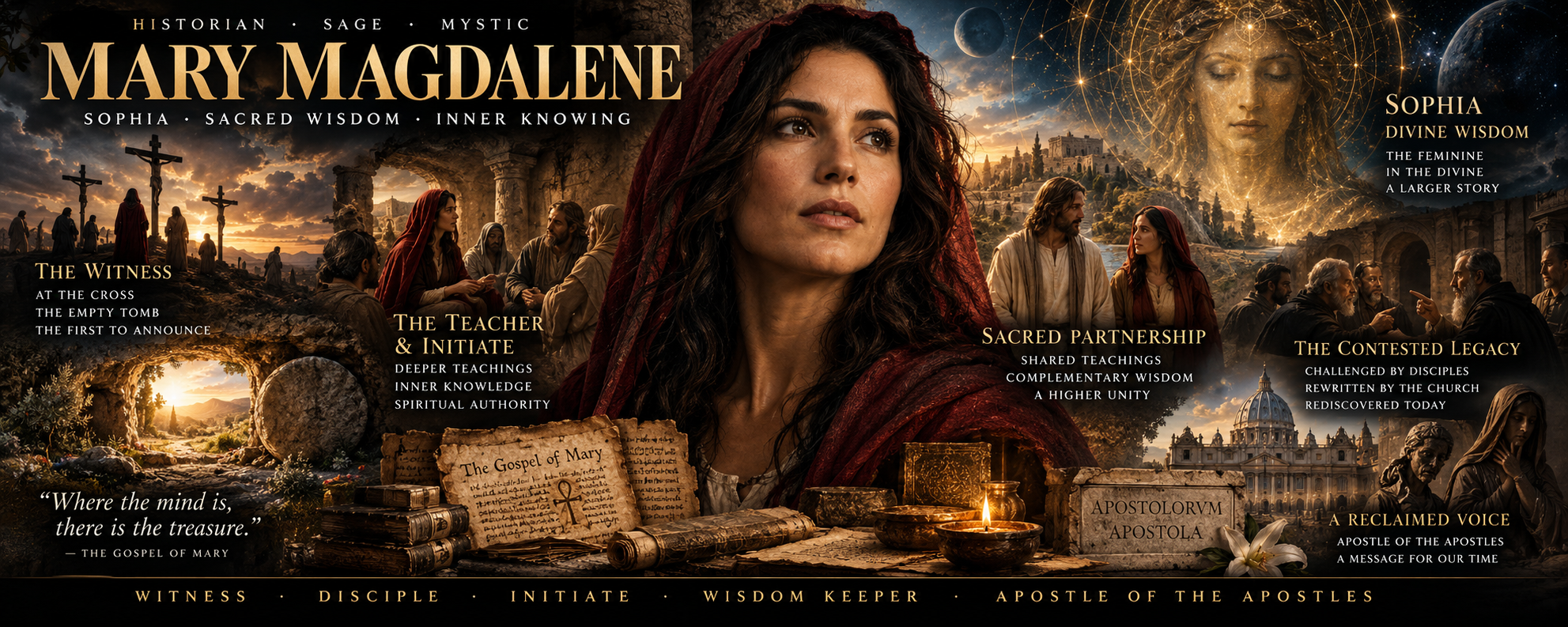
MARY MAGDALENE | SOPHIA, SACRED PARTNERSHIP & THE LOST FEMININE
“Surely the Savior knows her very well. That is why he loved her more than us.” — Levi, The Gospel of Mary
For nearly two thousand years, Mary Magdalene has occupied a complicated place within the Christian story. The canonical Gospels place her at some of its most consequential moments—following Jesus, witnessing the crucifixion, encountering the empty tomb, and becoming the first to announce the resurrection. Yet other early Christian writings present an even more provocative portrait. In the Gospel of Mary, Gospel of Philip, and Pistis Sophia, Mary emerges as a disciple of unusual spiritual understanding: questioning, interpreting, receiving deeper teachings, and at times encountering resistance from male disciples who challenge her authority. Far from the later image of Mary primarily as a repentant sinner, these texts invite us to reconsider her as teacher, initiate, wisdom keeper, and spiritual leader—a role increasingly acknowledged even within modern Christianity through the ancient title Apostle of the Apostles.
The deeper we follow this thread, the more Mary’s story intersects with Sophia—the feminine personification of Divine Wisdom found in Jewish wisdom traditions and developed extensively within several early Christian and Gnostic cosmologies. Some contemporary esoteric interpretations go further, seeing Mary as an embodiment of Sophia herself and her relationship with Jesus as a sacred partnership between complementary expressions of divine consciousness. Whether understood historically, symbolically, or metaphysically, this perspective raises an important question: What changes when we view Mary not as standing beneath Christ, but alongside him as a complementary carrier of spiritual wisdom? Within that possibility, the Divine Feminine is not passive or subordinate, and the Divine Masculine is not controlling or dominant. Receptivity and action, wisdom and will, intuition and discernment become partners in the spiritual path.
The resources below explore that possibility from several directions—from the surviving ancient texts and the historical reshaping of Mary’s identity to more esoteric interpretations of Sophia, the Monad, initiation, inner knowledge, and the ascent of the soul. Some examine what the texts actually preserve; others venture into interpretations that remain debated or outside conventional Christian scholarship. Taken together, they offer something larger than an attempt to reconstruct Mary Magdalene’s biography. They invite us to consider whether the recovery of Mary represents part of a broader recovery of the sacred balance between Feminine and Masculine consciousness—and whether teachings once expressed through initiation, inner knowing, contemplation, and direct spiritual experience still hold practices worth exploring today.
THE HISTORICAL RECORD | MARY MAGDALENE RESTORED
Before exploring the more esoteric dimensions of Mary Magdalene, it is important to begin with the surviving historical record and the changing ways she has been understood across the centuries. The canonical Gospels place Mary at pivotal moments in the Jesus story, while later Christian tradition often blurred her identity with other women and helped establish the enduring image of the repentant sinner. Other early writings—including Pistis Sophia—preserve a markedly different Mary, repeatedly questioning Jesus and demonstrating unusual spiritual understanding. Together, these resources explore what the earliest traditions preserve, how Mary’s reputation evolved, and why her role as disciple, witness, teacher, and “Apostle of the Apostles” is being reconsidered today.




MARY MAGDALENE RECONSIDERED
The discovery and renewed study of early Christian and Gnostic writings opened another window onto Mary Magdalene—one in which she appears not simply as a devoted follower, but as a recipient and interpreter of deeper spiritual teachings. The Gospel of Mary places inner knowledge, self-understanding, liberation from attachment, and the soul’s journey at the center of its message, while later interpretations explore the symbolic dimensions of Mary’s teachings and spiritual authority. These texts do not provide a conventional biography of Mary, but they invite a provocative reconsideration of her place within early Christianity: What if her significance rested not only in what she witnessed, but in what she understood?


MARY, SOPHIA & THE RESTORATION OF THE DIVINE FEMININE
Within some contemporary Gnostic and esoteric interpretations, Mary Magdalene becomes more than a prominent disciple: she is understood as a carrier—or even human expression—of Sophia, Divine Wisdom, and as a complementary spiritual counterpart to Jesus. These interpretations draw connections among Mary, Sophia, sacred partnership, the Monad, and the restoration of feminine spiritual authority, although many of these connections go beyond what the surviving ancient texts can establish historically. Whether understood literally, symbolically, or metaphysically, they offer a provocative lens through which to explore Mary’s story: not as a secondary figure standing behind the masculine, but as part of a sacred balance in which Feminine wisdom, intuition, receptivity, and inner knowing stand alongside Masculine action, discernment, protection, and will.


THE INNER TEACHINGS | PRACTICE, INITIATION & ASCENT
Beyond questions of history and identity lies another fascinating dimension of the Magdalene tradition: the inner journey of the soul itself. The Gospel of Mary describes a soul confronting powers that attempt to restrain its ascent, while later esoteric interpretations explore initiation, remembrance, liberation from material attachment, direct inner knowing, and communion with the Divine. Other teachings attributed to Mary in contemporary spiritual traditions move even further into ideas surrounding the Monad, consciousness, and direct communication with Source. Taken together—not as a single historical doctrine, but as a spectrum of ancient text and later interpretation—these resources invite us to consider whether the deeper message associated with Mary is ultimately experiential: awakening is not simply something we believe; it is something we practice, embody, remember, and gradually become.




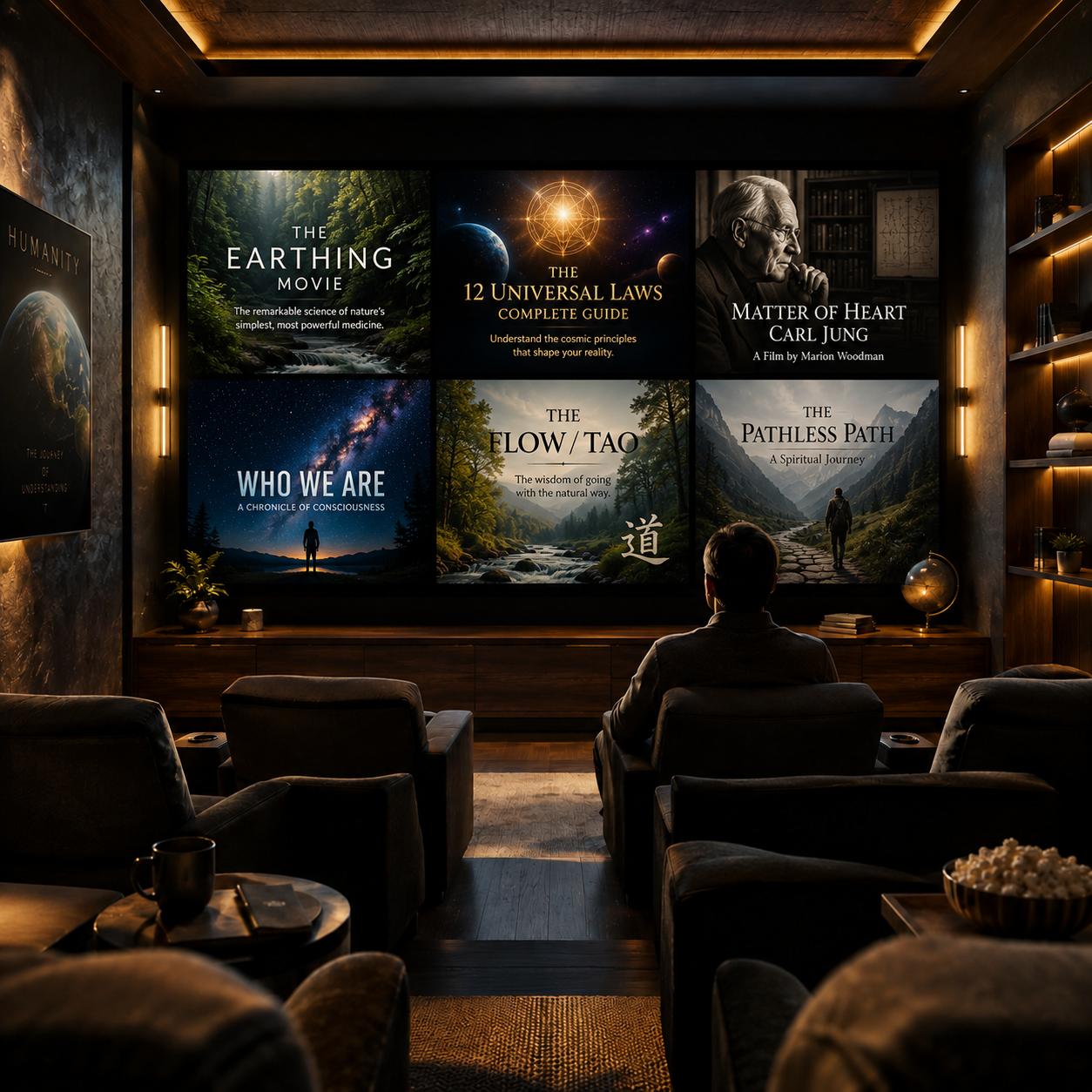
Documentaries
“The mind, once stretched by a new idea, never returns to its original dimensions.” — Ralph Waldo Emerson
DOCUMENTARY LIBRARY / 32 UNIQUE CATEGORIES / 300 DOCUMENTARIES
Documentaries have the power to do more than educate—they can inspire reflection, challenge long-held assumptions, and deepen our understanding of ourselves and the world around us. The films featured in this section have been selected not simply because they present compelling ideas, but because they encourage meaningful questions that support personal growth, spiritual exploration, and conscious living. Whether exploring ancient wisdom, the lives of great teachers, healing, mindfulness, history, science, or humanity’s enduring search for meaning, each documentary offers an opportunity to pause, reflect, and integrate new perspectives. Our Documentary Library has been thoughtfully organized into 32 unique categories featuring more than 300 carefully curated documentaries, providing subscribers with a comprehensive resource that can be explored at their own pace and revisited throughout their journey.
As you watch, consider approaching each documentary as a practice rather than passive entertainment. Notice which ideas resonate, which challenge your thinking, and which invite you to live with greater compassion, presence, humility, or purpose. We encourage you to view each film through the lens of discernment—remaining open to new perspectives while thoughtfully evaluating the evidence, the sources, and the broader context. Lasting transformation rarely comes from information alone; it emerges through reflection, application, and the conscious choices we make each day. The greatest value of a documentary often lies not in the answers it provides, but in the questions it inspires and the curiosity it awakens.
As your understanding expands, you may begin to recognize patterns and connections between subjects that once appeared unrelated—linking history with consciousness, science with spirituality, psychology with healing, and personal transformation with the evolution of society. These moments of integration are often where the deepest insights emerge. We encourage you to keep a journal, discuss what you learn with others, revisit important films over time, and most importantly, translate new understanding into daily practice. Knowledge becomes wisdom only when it is lived. Our hope is that this library serves not simply as a collection of exceptional documentaries, but as a lifelong companion for cultivating discernment, expanding awareness, and supporting your ongoing journey toward greater consciousness.



Inspiration for the Soul
Beauty • Wonder • Wisdom
“Yesterday I was clever, so I wanted to change the world. Today I am wise, so I am changing myself.” — Rumi
The soul is nourished through moments that awaken wonder, stir the heart, and remind us of the beauty woven throughout everyday life. Throughout history, great teachers, artists, musicians, poets, storytellers, and the natural world have inspired humanity not only through their words and creations, but by revealing deeper truths about compassion, gratitude, courage, and love. This section is designed to reconnect you with those timeless sources of inspiration through sacred nature, inspiring art, beautiful places on Earth, healing music, and quiet acts of kindness. These experiences invite us to slow down, become fully present, and rediscover the beauty, peace, and joy that exist both within us and throughout the world.
Inspiration also expands our sense of wonder by reminding us that there is always more to discover. From the breathtaking images of the James Webb Space Telescope and the mysteries of the cosmos to consciousness research, ancient civilizations, human potential, and the hidden intelligence found throughout nature, wonder awakens curiosity and encourages lifelong learning. It invites us to question, explore, and approach life with humility, recognizing that every new discovery has the potential to deepen both our understanding of the universe and our appreciation for the extraordinary gift of being alive.
Ultimately, inspiration becomes transformative only when it is lived. Beauty opens the heart, wonder expands the mind, and wisdom shapes the way we choose to live each day. Through timeless teachings, daily spiritual practice, intentional living, compassion in action, and a commitment to personal growth, inspiration evolves from a passing emotion into a way of being. Our hope is that the resources in this section not only uplift and encourage you, but also serve as gentle reminders that every moment offers an opportunity to choose gratitude, cultivate inner peace, and become a greater expression of love, wisdom, and conscious living.
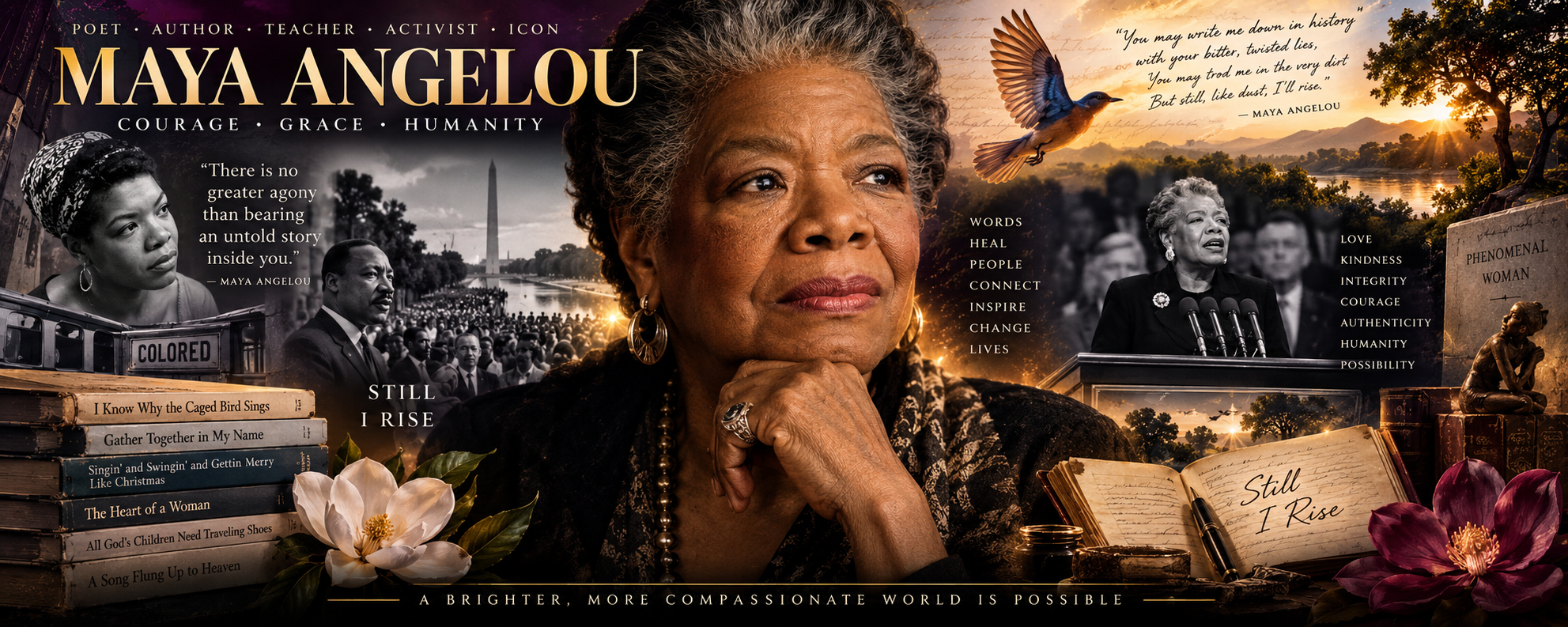
MAYA ANGELOU | COURAGE, GRACE & THE WISDOM OF A LIFE
Maya Angelou understood that courage is not the absence of fear or hardship, but the inner strength that allows us to remain true to ourselves in their presence. Her extraordinary life carried her through childhood trauma, years of self-imposed silence, discrimination, personal loss, creative reinvention, and ultimately international recognition as a poet, author, teacher, performer, and powerful voice for human dignity. Yet what makes Angelou’s wisdom so enduring is that she rarely separated spiritual strength from everyday behavior. How we respond when we are hurt, how we treat others, whether we maintain our integrity when challenged, and whether we find the courage to keep becoming more fully ourselves were, for Angelou, measures of a life consciously lived.
Her poetry and teachings repeatedly return to the possibility of rising beyond what has happened to us without denying the reality of what we have endured. Love may bring vulnerability and pain; adversity may test our confidence; disrespect may tempt us to surrender our peace. Yet Angelou’s message consistently points toward another choice: to know our worth without demanding that others recognize it, to meet difficulty without allowing it to define us, and to extend kindness without confusing kindness with weakness. Courage becomes the foundation that allows other virtues—compassion, authenticity, generosity, forgiveness, and love—to survive when life makes them difficult to practice.
Perhaps this is why Angelou’s words continue to feel less like lessons from the past than invitations for the present. Through poetry, storytelling, humor, honesty, and lived experience, she reminds us that wisdom is not simply something we acquire; it is something we embody in the way we move through the world. Her legacy asks us to rise after disappointment, remain open after heartbreak, speak when our voice is needed, recognize the humanity in one another, and become a source of dignity rather than division. In that sense, Maya Angelou’s greatest inspiration may not be found in any single poem or speech, but in the possibility her life represents: that whatever our history, we retain the power to choose what we carry forward—and what kind of presence we become for others.


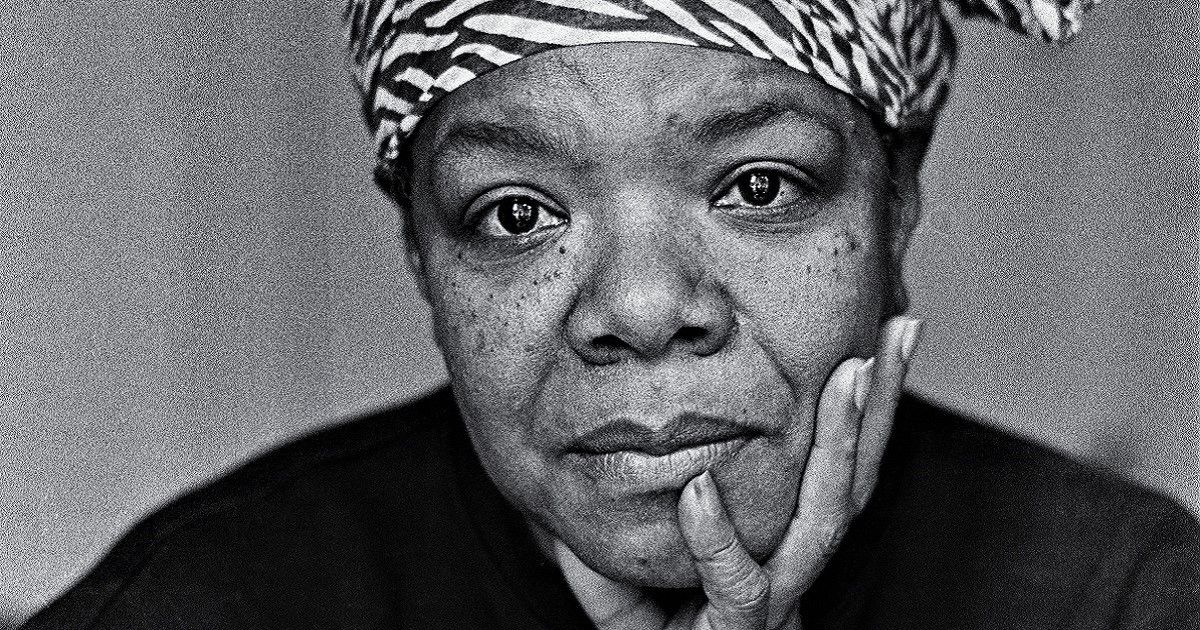
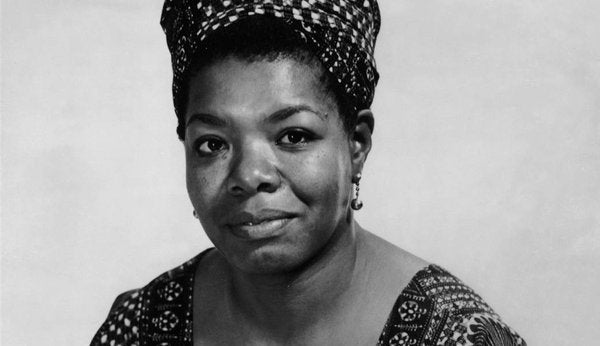
BEAUTY | Open the Heart
Beauty invites us out of thought and into direct experience, whether through art, the magnificence of the natural world, sacred sound, or moments of stillness. When we allow ourselves to truly see, hear, and feel what is before us, beauty becomes its own form of meditation—softening the heart and returning us to presence.


WISDOM | Transform the Way We Live
Wisdom is more than accumulated knowledge; it is understanding translated into the choices we make, the way we meet difficulty, and the quality of awareness we bring to everyday life. Across cultures and generations, the enduring teachings remain remarkably consistent: cultivate presence, know yourself, live intentionally, and allow what you learn to transform the way you move through the world.


What gives you a sense of awe? You might imagine standing on a wide-open plain with a storm approaching, or holding the tiny finger of a newborn baby. That word, awe - the feeling of being in the presence of something vast that transcends your understanding of the world - is often associated with the extraordinary. But you don’t need remarkable circumstances to encounter awe.


WONDER | Expand the Mind
Wonder begins at the edge of what we think we know, inviting us to explore the mysteries of the cosmos, ancient civilizations, sacred geometry, and the deeper patterns woven throughout creation. The more we discover, the more we are reminded that mystery is not something to overcome, but an invitation to remain curious, humble, and open to possibilities beyond our current understanding.

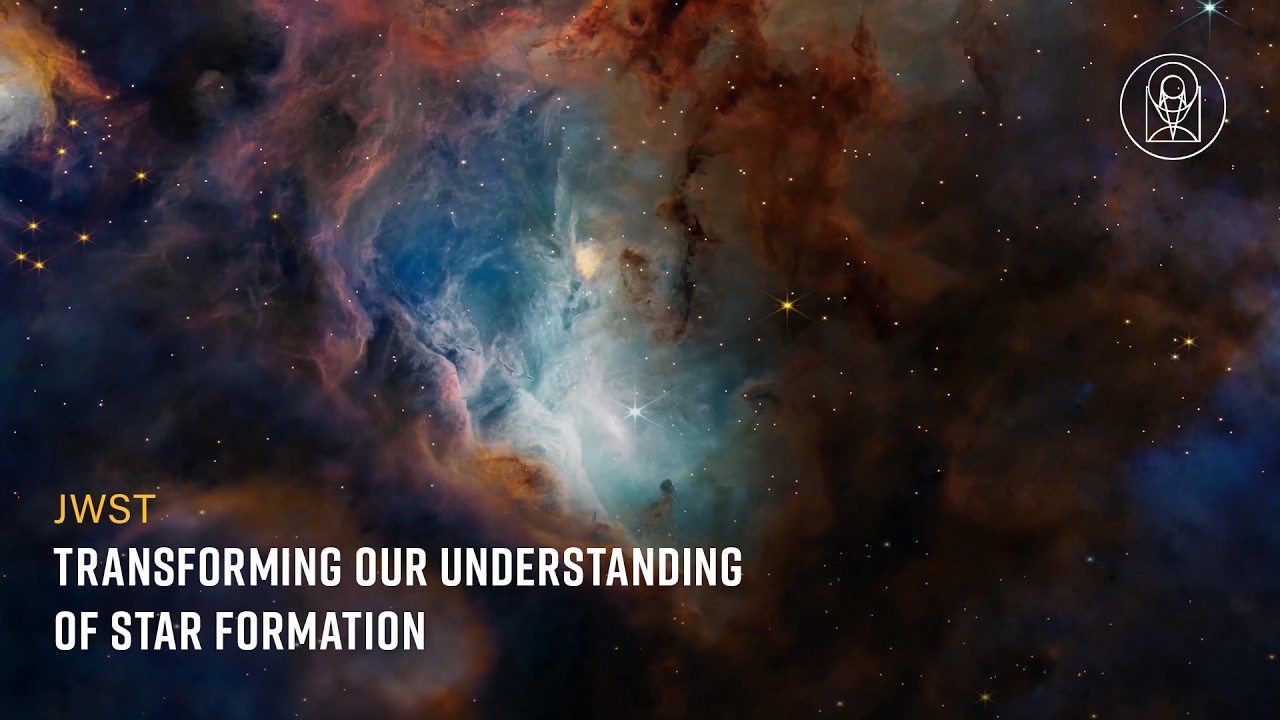



The Journey of Awakening
“Mastering others is strength. Mastering yourself is true power.” — Lao Tzu
The journey of awakening is not a destination to reach, but a lifelong process of becoming. It is the gradual unfolding of greater awareness through the countless choices we make each day—the moments we choose presence over distraction, forgiveness over resentment, compassion over judgment, courage over comfort, and love over fear. Awakening is not measured by extraordinary experiences or spiritual knowledge alone, but by how we think, how we respond to life’s challenges, and how we treat ourselves and others. It is an inward journey of personal transformation that invites us to live with greater intention, authenticity, humility, and purpose while continually deepening our relationship with the Divine, with others, and with our highest self.
Throughout history, the world’s great wisdom traditions have taught that lasting transformation is not achieved through a single moment of insight, but through the faithful practice of living consciously every day. Meditation, contemplation, forgiveness, gratitude, self-observation, service, and heart-centered living become practical disciplines that gradually reshape our character and expand our awareness. As we learn to observe our thoughts, release limiting beliefs, cultivate emotional resilience, and align our actions with our deepest values, we begin to experience awakening not as an abstract spiritual concept, but as a way of living. The inner journey becomes one of discovering greater meaning and purpose, developing discernment, and learning to respond to life from wisdom rather than habit.
This section has been created to support that lifelong journey by offering practices, reflections, and resources that encourage genuine inner growth. It explores many of the questions that arise along the path of conscious living: What does personal transformation really look like? How do we live with greater intention? How do we discover deeper meaning and purpose? What does a daily spiritual practice look like? And perhaps most importantly, what does awakening actually look like when someone lives it? Our hope is that these teachings serve not merely as information to be understood, but as practices to be experienced—helping you cultivate greater peace, compassion, wisdom, and presence as you continue your own unique journey of awakening.
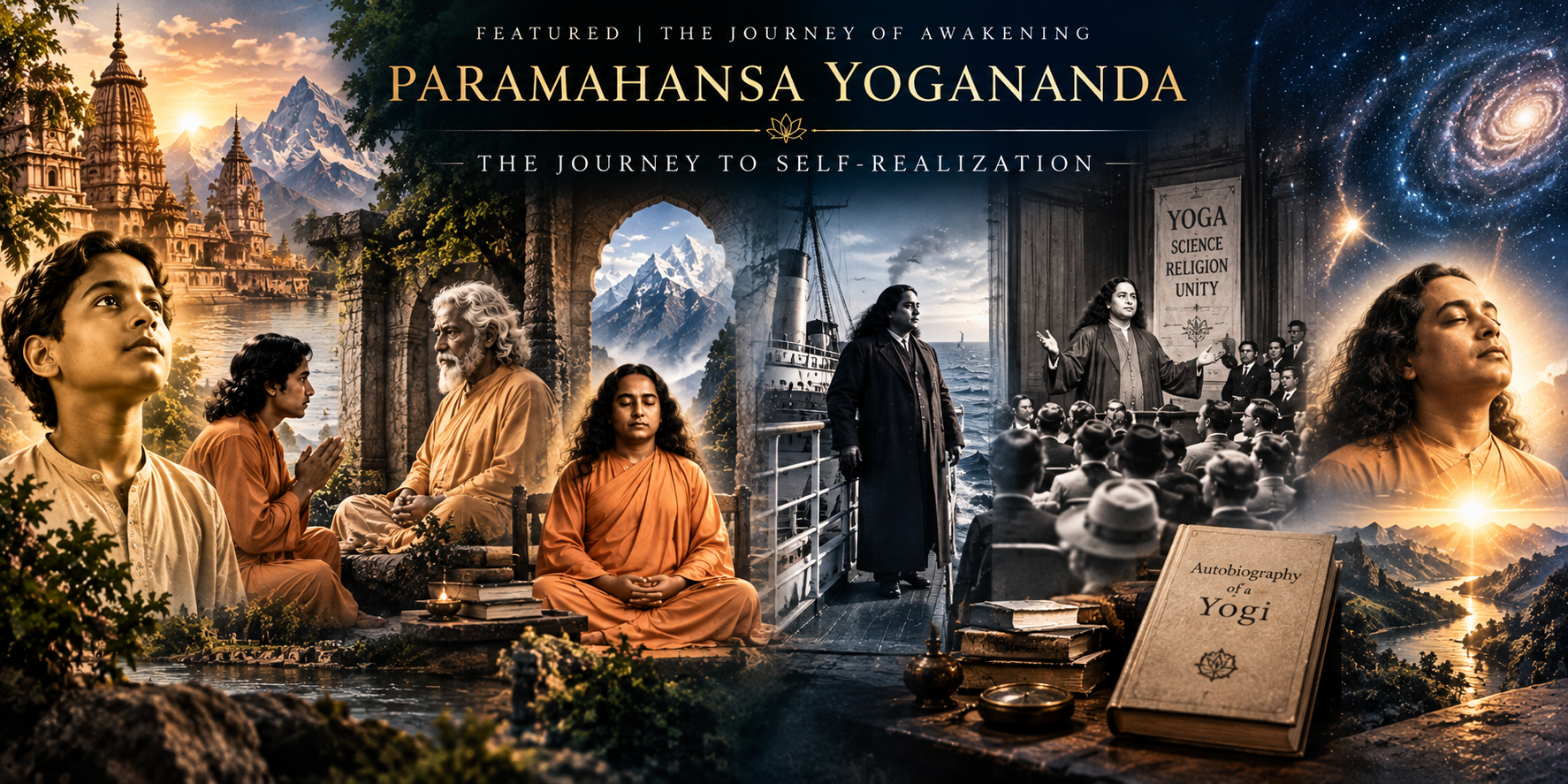
PARAMAHANSA YOGANANDA | THE JOURNEY TO SELF-REALIZATION
Paramahansa Yogananda’s life was shaped by a conviction that would ultimately define his teachings: the Divine was not simply something to believe in, but a reality that could be directly experienced. Born Mukunda Lal Ghosh in India in 1893, his spiritual search began remarkably early, leading him toward saints and teachers and eventually to Sri Yukteswar, the guru who would become one of the defining influences of his life. Under his guidance, Yogananda’s youthful longing for mystical experience developed into disciplined spiritual practice. Meditation, concentration, devotion, self-mastery, and Kriya Yoga became not ends in themselves, but methods for quieting the ordinary activity of the mind and turning awareness toward a deeper experience of consciousness.
In 1920, that inner journey took an extraordinary outward turn when Yogananda traveled to the United States, eventually introducing large Western audiences to meditation, yoga, and the possibility of direct communion with the Divine. At a time when these ideas were still unfamiliar to much of America, he presented Eastern spiritual practices in language intended to bridge East and West, spirituality and everyday life, ancient wisdom and the modern search for meaning. Through public lectures, teaching, and eventually Autobiography of a Yogi, his influence extended far beyond those who encountered him personally. At the center remained Kriya Yoga and the principle of Self-realization: that beneath the changing personality, habits, thoughts, and circumstances of our lives exists a deeper spiritual nature that can gradually be discovered through sustained inner practice.
Yogananda’s journey offers an important perspective on awakening because he did not present it simply as a moment of revelation. He presented it as a way of life. Spiritual realization required practice, perseverance, self-observation, devotion, right action, and the willingness to continually redirect attention toward what is highest within us. The teachings gathered here follow that progression—from the young seeker’s search for truth, through meditation and direct inner experience, to the larger task of bringing spiritual awareness into how we think, choose, love, serve, and live. In this sense, Self-realization becomes both the destination and the daily practice: an ongoing awakening to who we are beneath conditioning, and to the deeper consciousness Yogananda believed connects the individual soul with the Divine.
THE SEEKER | A LIFE ORIENTED TOWARD THE DIVINE
His childhood in India, early mystical experiences, search for teachers, meeting Sri Yukteswar, and the development of his spiritual discipline. This establishes awakening as a journey requiring both longing and practice.
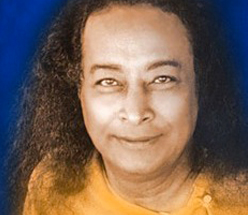
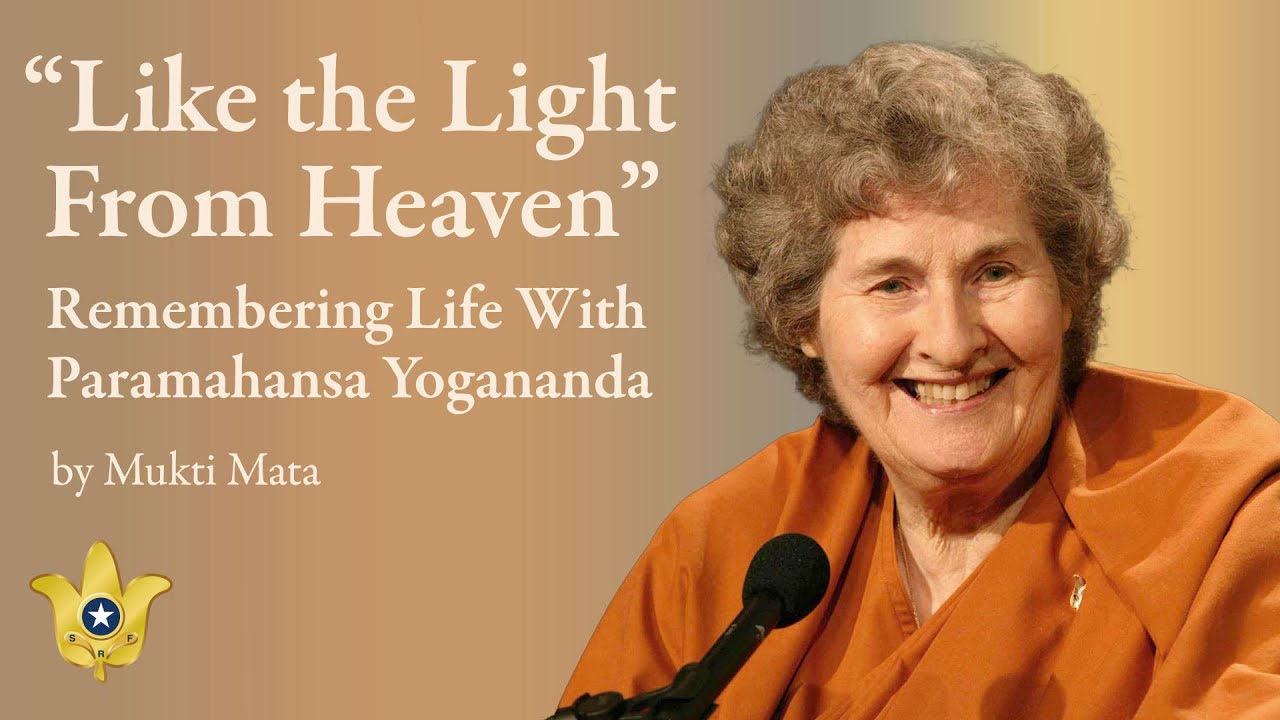
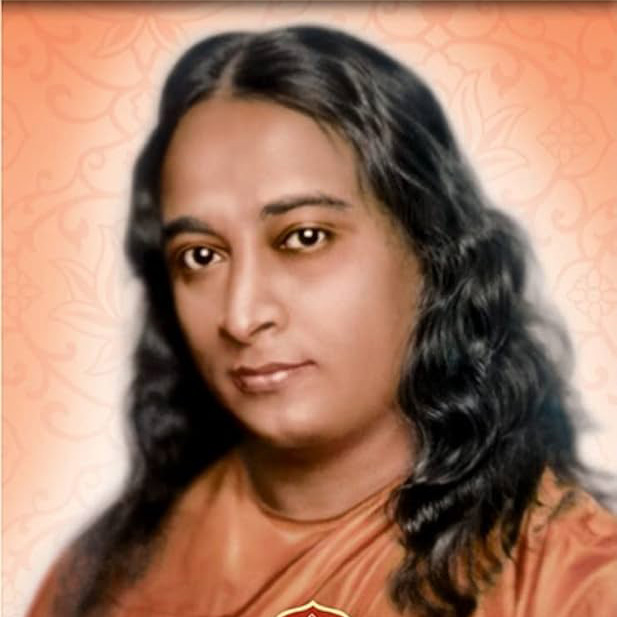

THE PATH | MEDITATION, KRIYA YOGA & INNER EXPERIENCE
This should be the heart of our collection. Yogananda taught that spiritual truth was something to be experienced directly, not merely accepted intellectually. Here we can explore meditation, concentration, breath/life-force, Kriya Yoga and the stilling of mental activity.
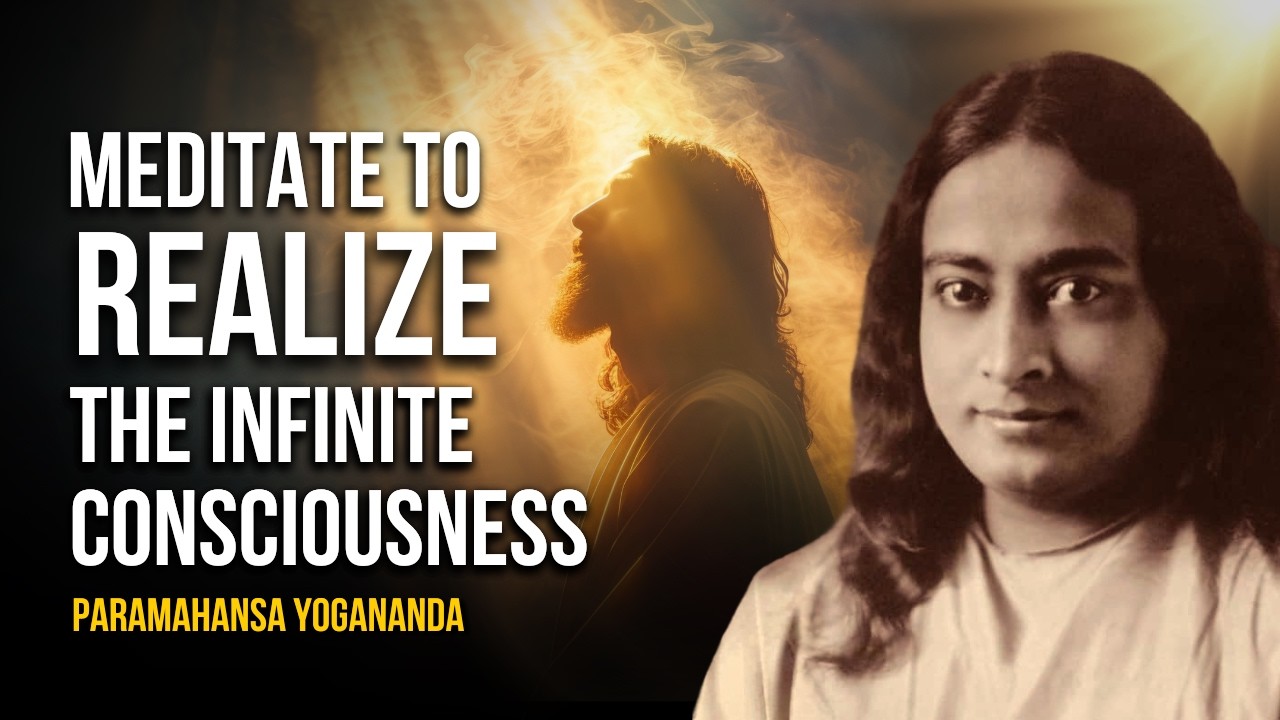


SELF-REALIZATION | AWAKENING AS A WAY OF LIFE
Bring it directly back to your CPR section: intuition, self-mastery, service, right action, relationship with the Divine and bringing spiritual awareness into ordinary life. Awakening becomes less about having a transcendent experience and more about gradually changing who is living our everyday life.

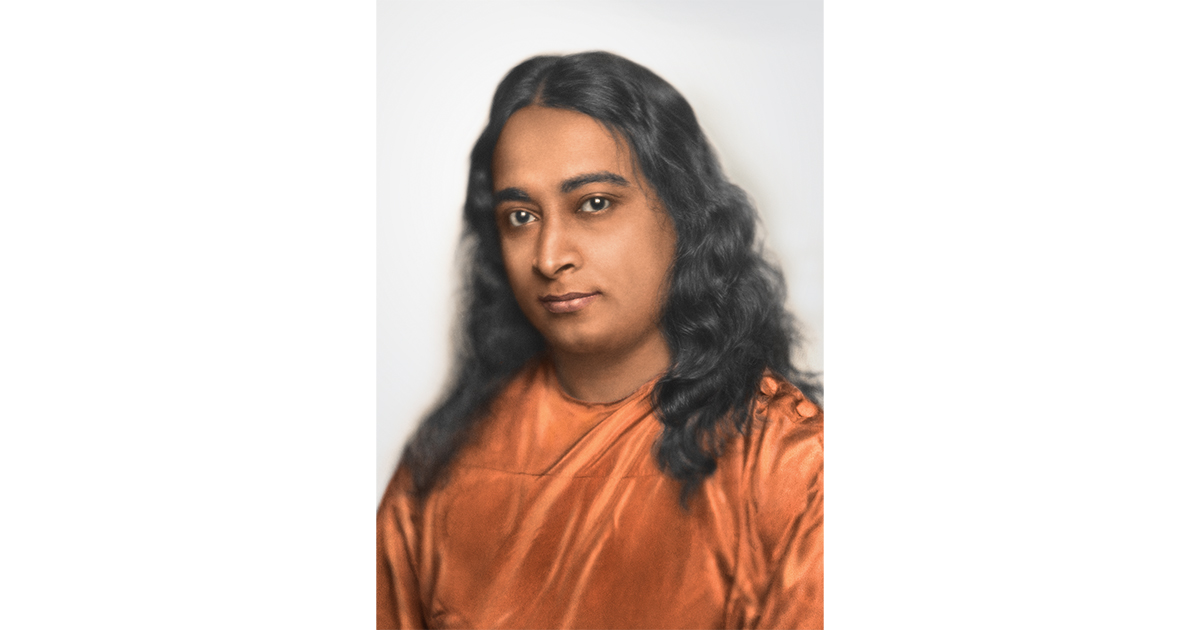

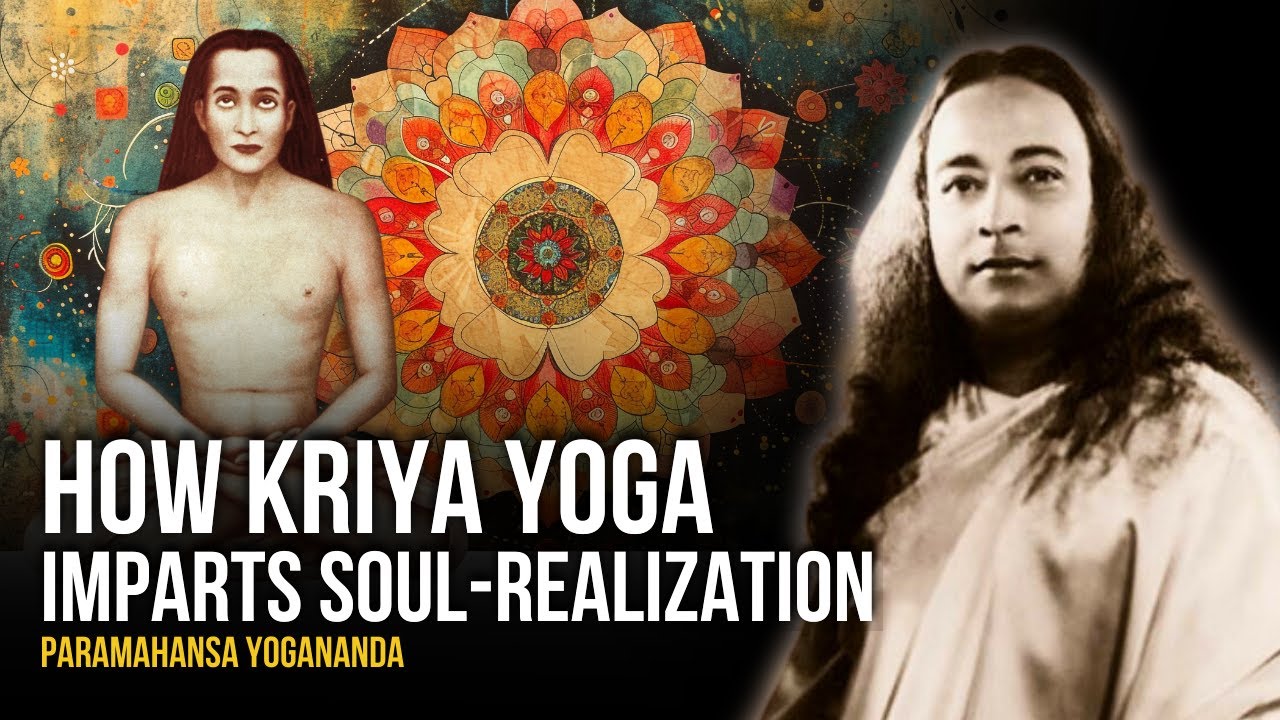

Navigating Fear & Negative Energy
Awareness • Discernment • Protection
“One does not become enlightened by imagining figures of light, but by making the darkness conscious.” — Carl Jung
Conscious growth is not only about seeking light, wisdom, and higher states of awareness. It also asks us to recognize the fears, influences, patterns, and experiences that can pull us away from clarity and inner balance. Fear itself is a natural human response, but when it becomes chronic, amplified, manipulated, or unconsciously reinforced, it can shape our perceptions and choices in powerful ways. Likewise, what we describe as negative energy may take many forms—from difficult environments, relationships, emotional patterns, and collective fear to experiences understood through spiritual traditions as unwanted energetic or nonphysical influences. Awareness begins by noticing what affects us without immediately becoming consumed by it.
Discernment allows us to decide what deserves our attention, what supports our well-being, and where stronger boundaries may be needed. This becomes especially important when exploring spiritual teachings, teachers, communities, altered states, energy practices, or other experiences that can leave us feeling vulnerable or uncertain. Healthy conscious practice should strengthen personal sovereignty rather than diminish it. Grounding, reflection, questioning, emotional awareness, clear boundaries, and remaining attentive to changes in our thoughts, behavior, and well-being can help us navigate unfamiliar territory while maintaining a strong connection to ourselves.
Protection, then, does not have to mean living defensively or viewing the world through fear. It can be understood as the conscious stewardship of our attention, energy, environment, relationships, and inner state. We can acknowledge difficult or negative experiences without giving them authority over us, choose what we allow into our lives, and intentionally cultivate the people, practices, environments, and perspectives that support greater clarity and peace. The goal is not to eliminate every uncomfortable experience, but to develop the awareness and inner stability to meet what arises with discernment rather than fear, boundaries rather than avoidance, and conscious choice rather than reaction.

SPIRITUAL BYPASSING | WHEN THE SEARCH FOR LIGHT BECOMES AVOIDANCE
Spiritual practice can help us cultivate peace, compassion, perspective, and a deeper relationship with the Divine. Yet even sincere spiritual beliefs can sometimes become a way of moving around difficult experiences rather than through them. Spiritual bypassing occurs when spiritual ideas, practices, or identities are used—often unconsciously—to avoid uncomfortable emotions, unresolved wounds, personal responsibility, conflict, or aspects of ourselves we would rather not confront. The language may sound positive—stay high-vibe, choose love over fear, don’t give energy to negativity, everything happens for a reason—but when positivity leaves no room for grief, anger, fear, doubt, or honest questioning, it can become another form of denial.
Bypassing can also be far subtler than toxic positivity. The spiritual path itself can become part of the ego’s identity, creating attachment to being awakened, enlightened, healed, peaceful, or somehow beyond ordinary human struggle. We may mistake emotional suppression for detachment, avoidance for surrender, certainty for intuition, or the appearance of serenity for genuine inner peace. Shadow work challenges that tendency by asking us to become curious about the parts of ourselves we resist—the fears, wounds, reactions, contradictions, and patterns that remain beneath the spiritual language. True presence does not require us to approve of everything we feel, but it does require enough honesty to recognize what is actually there.
The deeper work, then, is integration rather than perfection. Mature spiritual practice allows light and shadow, strength and vulnerability, gratitude and grief, compassion and boundaries to coexist without requiring one to cancel out the other. We can choose a positive orientation toward life while still acknowledging pain, pursue higher consciousness while remaining grounded in our humanity, and seek peace without becoming passive toward circumstances that require discernment or action. Awakening is not the elimination of everything uncomfortable; it is the growing capacity to meet the whole of our experience consciously. The resources that follow explore how to recognize spiritual bypassing, distinguish genuine awareness from spiritual ego, face what has been hidden or denied, and ultimately move through difficult experiences with greater honesty, presence, and wholeness.
RECOGNIZING THE BYPASS | WHEN SPIRITUALITY BECOMES AVOIDANCE
Spiritual bypassing can be obvious—using positivity, spiritual language, or practices to avoid painful emotions—but it can also be remarkably subtle. We may call suppression detachment, avoidance surrender, or convince ourselves that acknowledging fear, anger, grief, or doubt somehow lowers our consciousness. Recognition is therefore the first step: learning to notice when spirituality is helping us move through an experience and when it is helping us move around one. By becoming more honest about what we feel, what we resist, and the stories we use to explain it away, spiritual practice becomes a pathway toward greater awareness rather than another place to hide.



THE SPIRITUAL EGO | WHEN AWAKENING BECOMES IDENTITY
The ego does not necessarily disappear as consciousness expands; sometimes it simply learns a new language. Attachment to being awakened, enlightened, intuitive, healed, high-vibration, or spiritually advanced can quietly transform the path of self-discovery into another identity we feel compelled to protect. The spiritual ego invites us to look beneath the labels and ask whether our practice is making us more humble, compassionate, curious, and open—or more certain of our own superiority. Genuine awakening may ultimately require less investment in appearing spiritual and a greater willingness to remain teachable, grounded, and honest about how much we still have to learn.



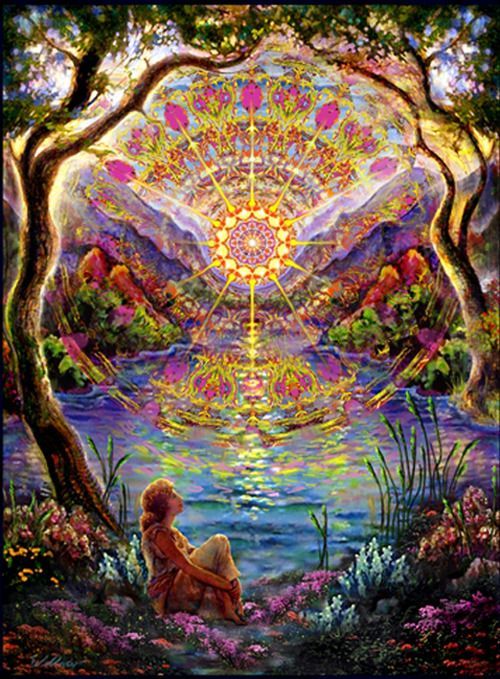
SHADOW & DENIAL | WHAT WE DON’T WANT TO FEEL
Shadow work turns our attention toward the emotions, wounds, reactions, contradictions, and hidden patterns we would often prefer not to see. These aspects of ourselves are not necessarily evidence that we have failed spiritually; they may instead reveal where healing and greater self-awareness are still asking to occur. Anger may expose a violated boundary, fear may reveal an unresolved wound, jealousy may illuminate an unmet need, and recurring emotional triggers may point toward patterns operating beneath conscious awareness. Rather than judging or suppressing what emerges, shadow work asks us to become curious about it—allowing what has remained hidden to become conscious enough to be understood, processed, and eventually transformed.


INTEGRATION | MOVING THROUGH RATHER THAN AROUND
Integration is where spiritual insight becomes lived experience. The objective is not to eliminate difficult emotions, permanently silence the ego, or maintain an idealized state of peace, but to develop the capacity to remain conscious while moving through the full range of human experience. Light and shadow, strength and vulnerability, gratitude and grief, compassion and boundaries can coexist without one invalidating the other. As we learn to recognize our patterns, feel what needs to be felt, question what needs to be questioned, and consciously choose how we respond, awakening becomes less about escaping our humanity and more about inhabiting it with greater awareness, honesty, compassion, and wholeness.




RECOGNIZE IT → SEE THE EGO → FACE THE SHADOW → INTEGRATE THE EXPERIENCE

THE SOUL’S CHOICE TO CONSCIOUSLY AWAKEN
A THREE-PHASE PROCESS
“There is a candle in your heart, ready to be kindled. There is a void in your soul, ready to be filled. You feel it, don’t you?” – Rumi
Awakening often begins with a question—a growing curiosity about who we are, why we are here, and whether there is more to our human experience than what we have been taught to see. Across cultures and throughout history, humanity has returned to these same questions through ancient teachings, spiritual traditions, philosophy, contemplation, and the personal search for meaning. What begins as curiosity can gradually become understanding, and what we come to understand can ultimately change the way we live.
The Conscious Practices report explores this journey through three interconnected phases. Phase I: Conscious History: Wisdom, Knowledge & Understanding examines the ideas, teachings, and enduring questions that provide a foundation for conscious exploration. Phase II: The Conscious Practices moves from learning into application through the intentional practices and daily choices that help cultivate awareness, presence, compassion, and inner growth. Phase III: The Conscious Experience explores what can emerge as knowledge and practice become integrated—changing how we understand ourselves, relate to others, experience the world, and connect with something greater than ourselves.
These phases are not rigid levels to complete, nor does awakening unfold in a straight line. We continually return to knowledge with new understanding, deepen practices through experience, and discover new questions along the way. The three-phase framework provides a way to explore that progression while honoring the deeply personal nature of the journey: first we seek to understand, then we consciously practice, and gradually we begin to experience life differently.

PHASE I: Conscious History: Wisdom, Knowledge & Understanding
ANCIENT TEXT • CONSCIOUS HISTORIANS, SAGES & MYSTICS • THE GAME • FREE WILL UNIVERSE • THE GRAND EXPERIMENT • THE EVENT • ASCENSION EVIDENCE, CYCLES & TIMELINES • LAW OF ONE
“The only true wisdom is in knowing you know nothing.” — Socrates
Long before awakening became part of modern conversations about consciousness and personal transformation, humanity was asking many of the same questions we ask today. Who are we? What is consciousness? Why are we here? What is the nature of reality? Across civilizations, philosophers, mystics, spiritual teachers, and wisdom traditions explored these questions through sacred texts, contemplation, observation, symbolism, philosophy, and direct experience.
Phase I provides the foundation for the journey by exploring this larger history of human inquiry. Ancient teachings, enduring spiritual concepts, the insights of sages and mystics, and evolving ideas about consciousness allow us to consider perspectives that extend beyond the assumptions of our own time. The purpose is not to accept every teaching as truth, but to explore, question, discern, and understand the ideas that have shaped humanity’s search for meaning.
Knowledge alone does not create transformation, but it can open the door. As we encounter new perspectives, we begin recognizing patterns, questioning old beliefs, and developing a broader understanding of ourselves and our place within the larger human story. That understanding becomes the foundation for Phase II, where what we have learned begins to move from the mind into practice.

Ancient Texts | Gnostic Texts/Nag Hammadi
In Phase 1, we begin by exploring ancient spiritual texts, conscious teachings, and the foundational concepts presented by many of history’s most influential wisdom traditions and thought leaders. These historical documents serve as guideposts for connecting the dots along your personal path of conscious awakening. Our first objective is to understand the nature of the Free Will Universe, often described as The Grand Experiment, and how it applies to your soul’s journey into the third-dimensional holographic, movie-like matrix of lessons, experiences, growth, and evolution. From this perspective, life is viewed not as a random sequence of events, but as a purposeful learning environment where consciousness expands through choice, challenge, and experience. We then examine the soul’s many incarnations, exploring what numerous traditions describe as The Game, or the many Games within the Grand Experiment—cycles of learning designed to cultivate wisdom, compassion, and spiritual maturity.
As we continue this exploration, many ancient and modern traditions describe humanity as approaching the completion of one of these great evolutionary cycles. Across cultures and throughout history, this transition has been referred to by many names, including The Event, The End of the Age, End Times, The Great Shift, The Harvest, The Great Awakening, or Ascension. While the terminology differs, many teachings point toward a profound transformation in both individual and collective consciousness. Among the numerous spiritual works we have studied, The Law of One stands out as one of the most comprehensive and internally consistent frameworks for understanding consciousness, free will, polarity, soul evolution, densities of awareness, and humanity’s place within a much larger cosmic reality. While we do not present any single source as absolute truth, we have found The Law of One to provide a valuable foundation for our research and a useful reference point from which to compare many other spiritual writings, philosophies, and esoteric traditions.
Ultimately, no book, teacher, philosophy, or channel can replace your own inner knowing. The most important guide on this journey is learning to recognize what genuinely resonates within your heart, your intuition, and your expanding awareness. Every individual’s path is unique, which gives these ancient texts and conscious teachings a living quality that continues to evolve alongside the reader. The lessons you discover, the meanings you draw, and the truths you carry forward will naturally change as your life experiences deepen and your consciousness expands. As new experiences become integrated with timeless wisdom, your perspective shifts, revealing entirely new layers of understanding that may not have been visible before. This unfolding process of study, reflection, discernment, and self-discovery never truly ends. It is a lifelong journey of conscious evolution. Above all, enjoy this inward journey through the heart, for it is likely to become one of the most challenging, transformative, and rewarding adventures of your entire life.

ANCIENT TEXTS | THE GNOSTIC TEXTS
Hidden Teachings • Divine Spark • Gnosis • Awakening
THE DISCOVERY | THE LOST LIBRARY OF NAG HAMMADI
For centuries, much of what was known about Gnostic Christianity came through the writings of those who opposed it. That changed dramatically with the discovery near Nag Hammadi, Egypt, in 1945, when thirteen ancient codices containing dozens of previously lost or little-known texts brought another stream of early Christian thought back into view. These writings revealed a far more diverse spiritual landscape—one concerned with direct knowledge, the nature of consciousness, humanity’s divine origin, and the possibility of awakening to truths believed to have been forgotten.




GNOSIS | THE DIVINE SPARK & REMEMBERING WHO WE ARE
At the heart of many Gnostic teachings is gnosis—direct inner knowing rather than belief alone. Texts such as the Gospel of Thomas and Gospel of Truth repeatedly turn the seeker inward, toward self-knowledge, remembrance, and recognition of a deeper spiritual identity. From this perspective, awakening is less about acquiring something we lack and more about remembering what we are, recognizing the divine spark within, and restoring our connection with the greater Source from which consciousness originates.


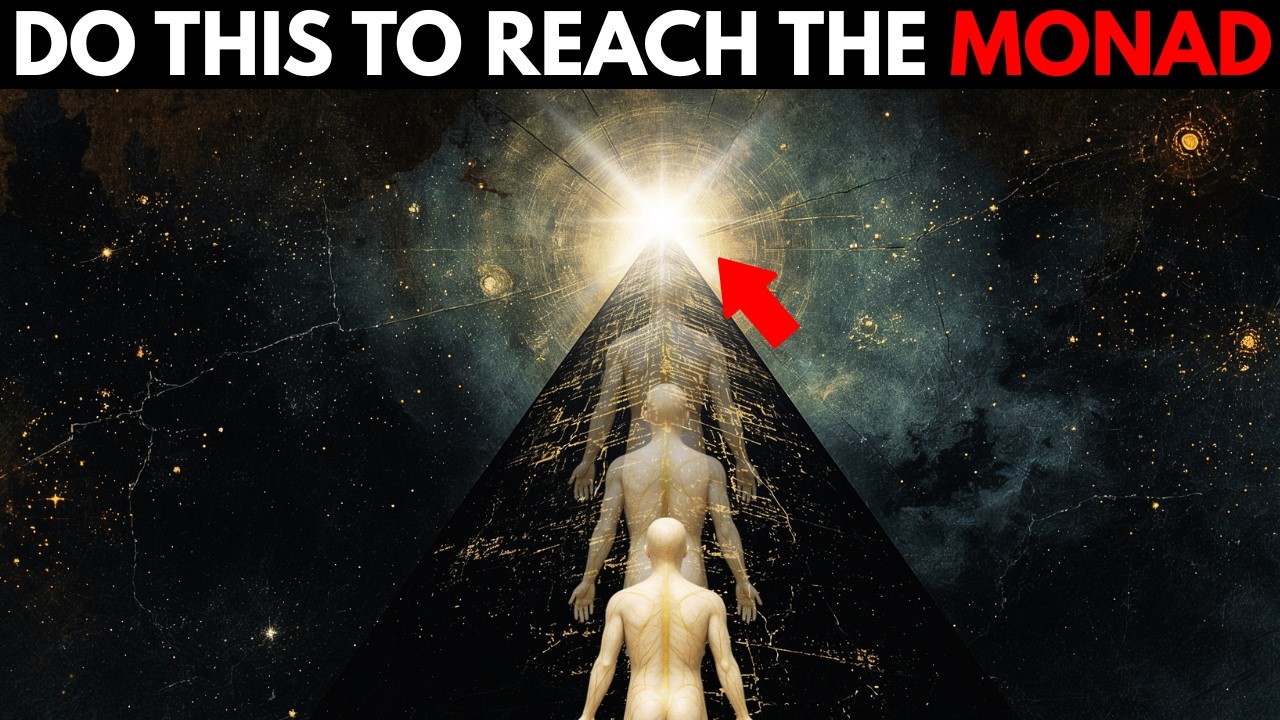
THE COSMIC STORY | SOPHIA, THE DEMIURGE & THE ARCHONS
Some Gnostic texts expand this search for self-knowledge into an extraordinary cosmology involving the Monad, Pleroma, Aeons, Sophia, Demiurge, and Archons. Works including the Apocryphon of John and Hypostasis of the Archons describe layers of divine reality, the emergence of the material realm, and humanity’s place within a much larger cosmic drama. Whether approached literally, symbolically, or as spiritual mythology, these writings raise enduring questions about the nature of reality, the origin of consciousness, and the forces that may obscure our awareness of who we truly are.


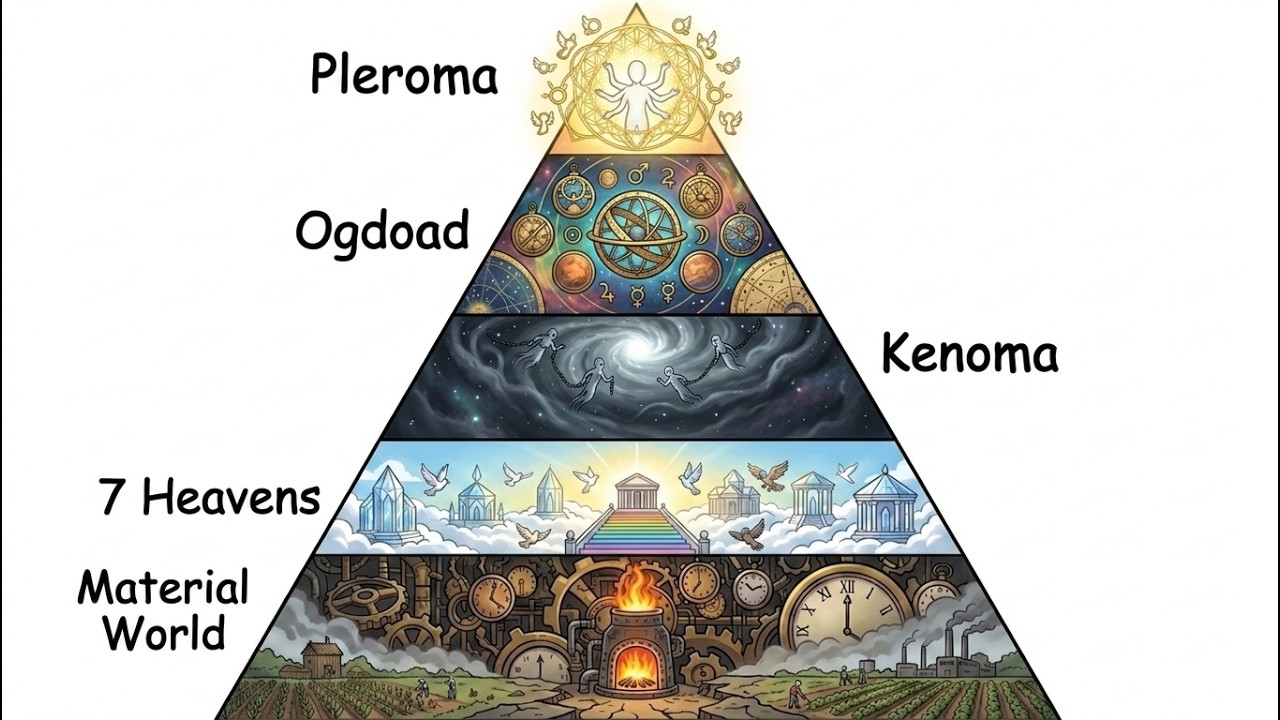
THE RETURN | AWAKENING, SELF-KNOWLEDGE & THE SOUL
Ultimately, Gnostic teachings do not end with cosmology; they return the responsibility for awakening to the individual. Through self-knowledge, discernment, inner practice, and direct experience, the seeker begins to recognize the patterns and illusions that keep consciousness bound to a limited understanding of itself. From the soul’s journey in Exegesis on the Soul to the paradoxical voice of Thunder, Perfect Mind, these texts present awakening as a process of remembering, reclaiming, and ultimately returning to a deeper awareness of our spiritual origin.


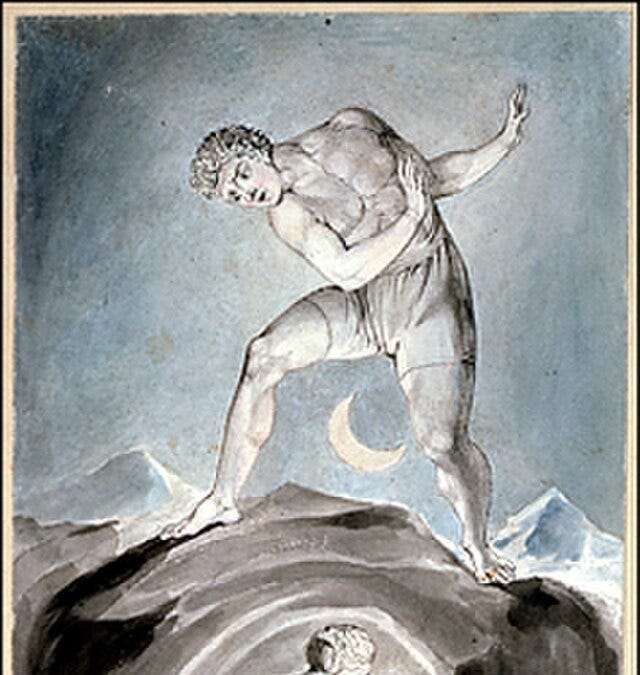


Conscious Historians, Sages & Mystics
Throughout history, sages, mystics, historians, philosophers, and spiritual teachers have sought to answer humanity’s deepest questions: Who are we? Why are we here? What is consciousness? Their writings, teachings, historical accounts, and contemplative traditions provide a living record of humanity’s ongoing search for wisdom, illuminating the relationship between mind, spirit, reality, and human evolution. From ancient sacred texts and oral traditions to modern spiritual writings, these voices preserve timeless insights that continue to inspire deeper inquiry and personal transformation.
The exploration of consciousness stretches back thousands of years through the world’s great wisdom traditions. The authors of the Upanishads described the unity of individual consciousness (Atman) with universal consciousness (Brahman), while Siddhartha Gautama (the Buddha) taught awakening through direct experience, mindfulness, and compassion. Lao Tzu revealed the harmony of living in accordance with the Tao, Patanjali outlined practical disciplines for mastering the mind through the Yoga Sutras, and philosophers such as Plato and Plotinus examined the nature of the soul and higher reality. Together, these enduring traditions established many of the foundational principles that continue to shape humanity’s understanding of consciousness.
Throughout history and into the modern era, historians, scholars, mystics, and spiritual teachers have continued to preserve, interpret, and expand upon these timeless teachings. Figures such as Carl Jung, Pierre Teilhard de Chardin, Jiddu Krishnamurti, Rudolf Steiner, Ramana Maharshi, Paramahansa Yogananda, Alan Watts, Eckhart Tolle, Michael Singer, and many others have each contributed unique perspectives on self-awareness, spiritual development, and the evolution of human consciousness. While their approaches differ, they share a common commitment to exploring the deeper nature of human experience and encouraging the ongoing pursuit of wisdom, compassion, and conscious living.
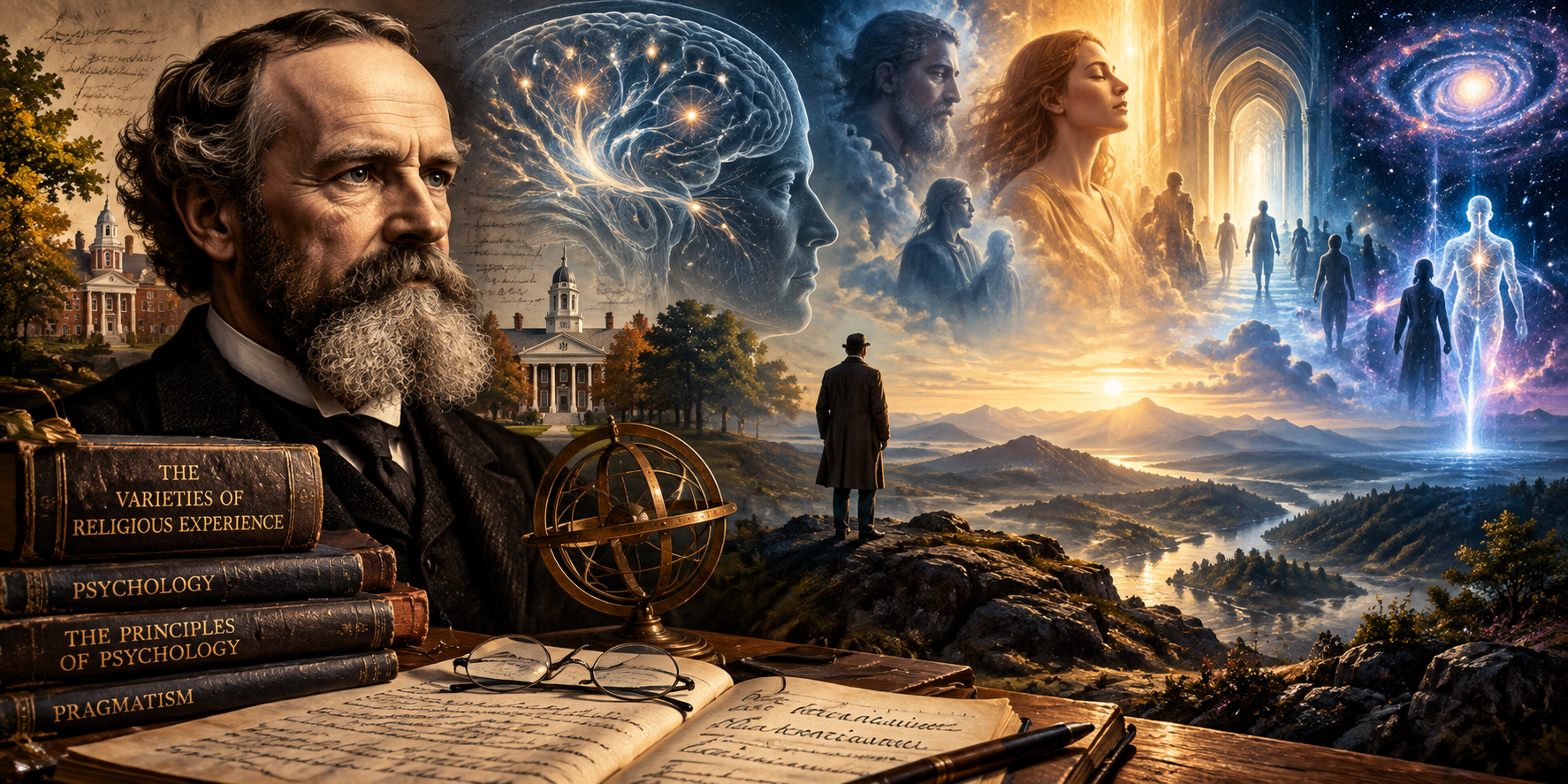
WILLIAM JAMES | MAPPING THE MYSTICAL EXPERIENCE
Consciousness • Mysticism • Experience • The Unseen
William James occupies a fascinating place at the intersection of psychology, philosophy, spirituality, and the unexplained. Born in 1842 and trained in medicine before becoming one of the most influential figures in American psychology and philosophy, James spent much of his life investigating the nature of consciousness and the extraordinary range of human experience. He helped introduce concepts such as the “stream of consciousness” and explored the relationship between attention, identity, perception, belief, and the self. Yet unlike many thinkers working within the emerging scientific study of the mind, James remained remarkably open to experiences that seemed to exist beyond the boundaries of ordinary waking consciousness.
That openness became especially important in The Varieties of Religious Experience, where James examined conversion, prayer, mystical states, spiritual transformation, and firsthand encounters with what individuals understood as the Divine or transcendent. Rather than beginning with the question of whether a religious belief was objectively true, James asked what the experience itself revealed—and what effect it had upon the person who experienced it. He identified four characteristics frequently associated with mystical states—ineffability, noetic quality, transiency, and passivity—providing a framework for examining experiences that often resist ordinary language while leaving individuals convinced they have encountered something profoundly meaningful.
James was also willing to venture into territory many of his academic contemporaries approached cautiously or rejected altogether. He investigated mediumship and psychical phenomena, participated in organized psychical research, and remained interested in whether consciousness might extend beyond the limits ordinarily assigned to the individual mind. He did not approach these questions with unquestioning belief; nor did he believe they should be dismissed simply because they challenged existing explanations. That combination of curiosity, discernment, direct experience, and intellectual humility makes James particularly relevant today. His work invites us to consider a question that remains unresolved more than a century later: How much of consciousness have we actually explored—and how much might still exist beyond the boundaries of ordinary awareness?
THE EXPLORER | PSYCHOLOGY AT THE EDGE OF CONSCIOUSNESS
Before William James turned his attention toward mystical and religious experience, he was deeply engaged with one of the most fundamental questions in psychology: What is consciousness? His explorations of the self, attention, perception, habit, and the continuous “stream of consciousness” helped establish a way of understanding the mind not as a collection of isolated mental events, but as a living, changing flow of experience.


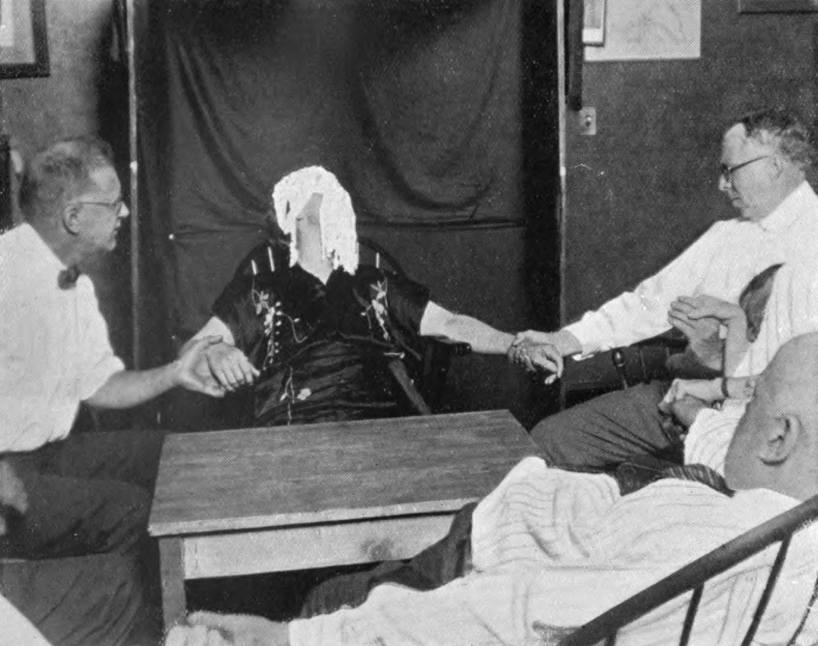
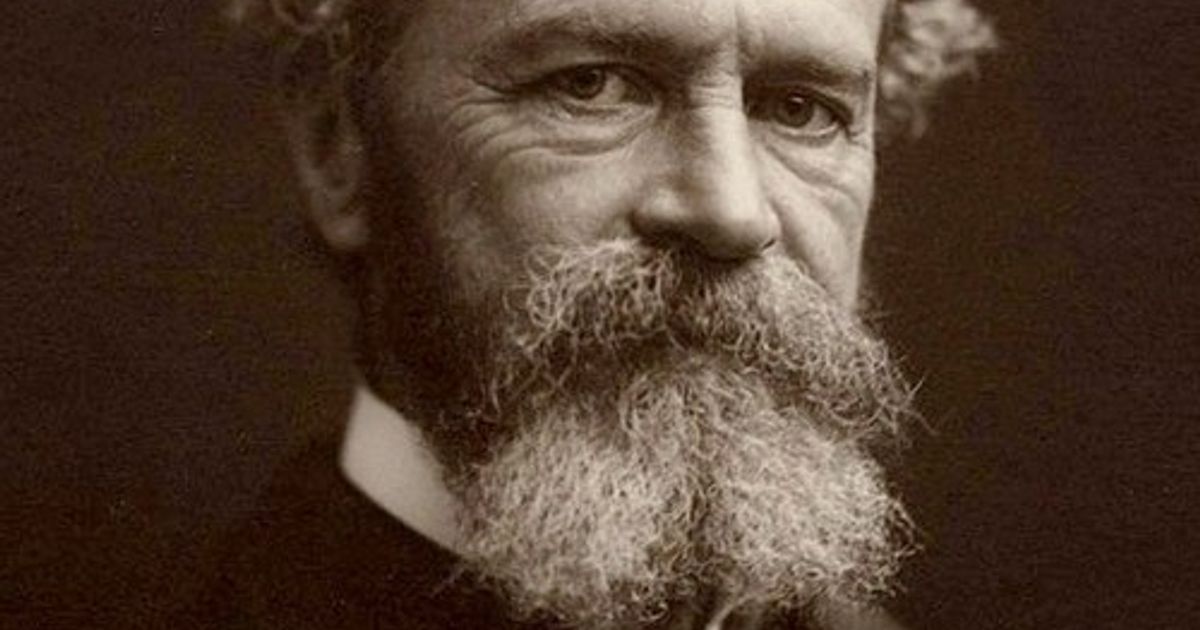
THE VARIETIES OF RELIGIOUS EXPERIENCE | STUDYING THE MYSTICAL
James approached religion primarily through the experiences of individuals rather than through institutions, doctrines, or theology. By examining conversion, prayer, despair, spiritual transformation, and what he called the “healthy-minded” and “sick soul,” he explored how encounters with the sacred can profoundly alter a person’s understanding of themselves, their lives, and reality.


THE MARKS OF MYSTICAL EXPERIENCE | WHAT MAKES AN EXPERIENCE MYSTICAL?
Mystical experience brought James to the edges of what ordinary language and rational analysis could describe. His four characteristics—ineffability, noetic quality, transiency, and passivity—offered a framework for recognizing experiences that may be brief and difficult to communicate, yet can carry an extraordinary sense of insight, meaning, or direct knowing for the person who experiences them.
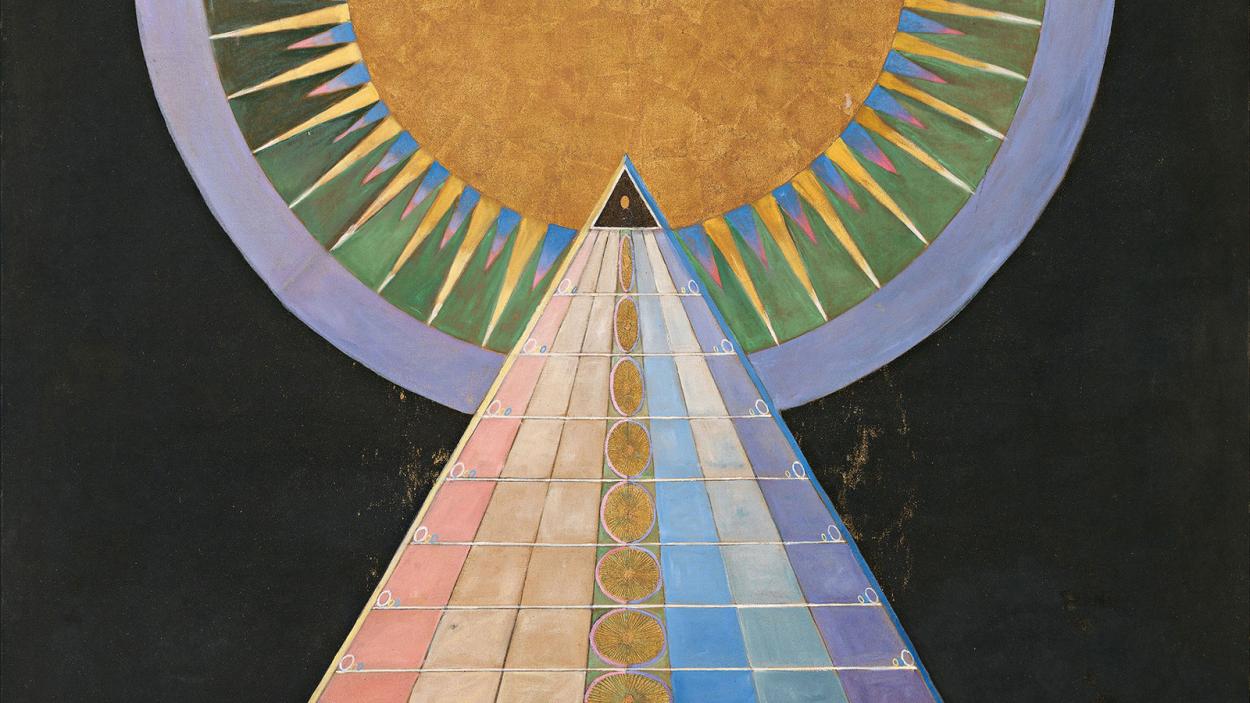


THE UNSEEN | CONSCIOUSNESS BEYOND THE ORDINARY MIND
James’s curiosity did not stop where conventional explanations became uncertain. His interest in psychical research, mediumship, unusual states of consciousness, and the possibility of realities beyond ordinary perception reflected his willingness to investigate difficult questions without demanding certainty in advance—leaving open the possibility that everyday waking consciousness may represent only a portion of the larger mystery of mind.
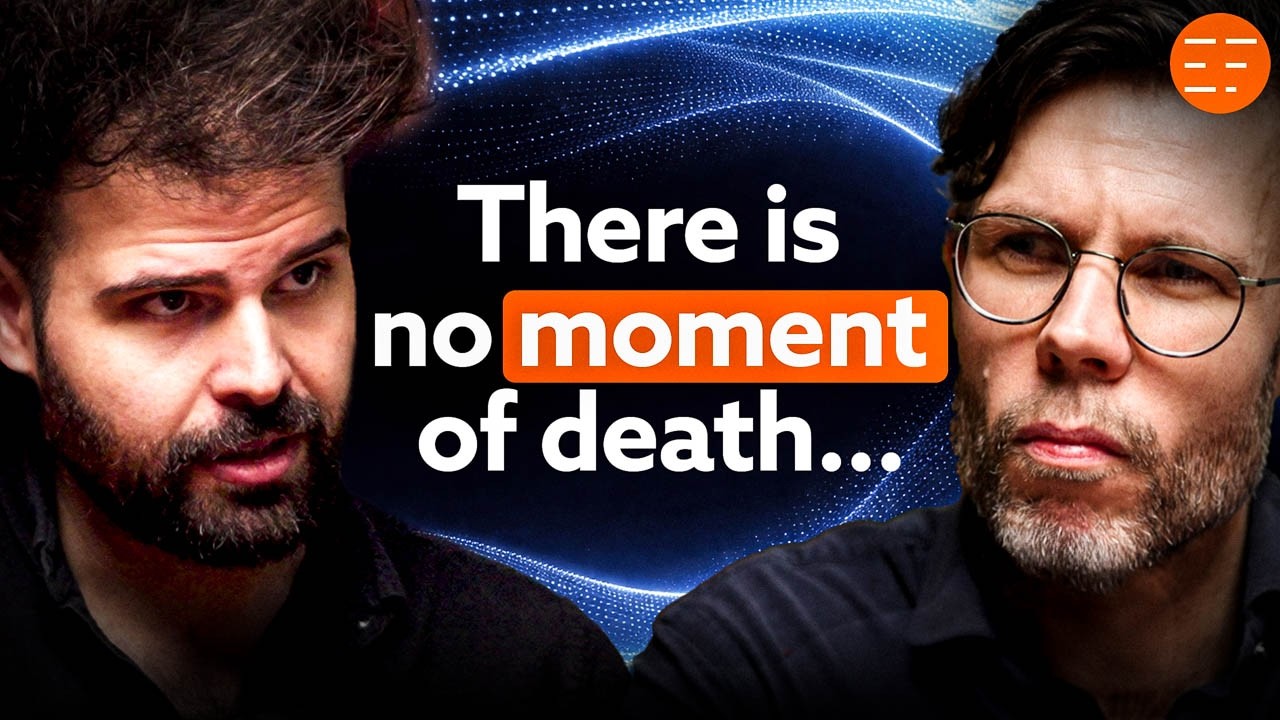

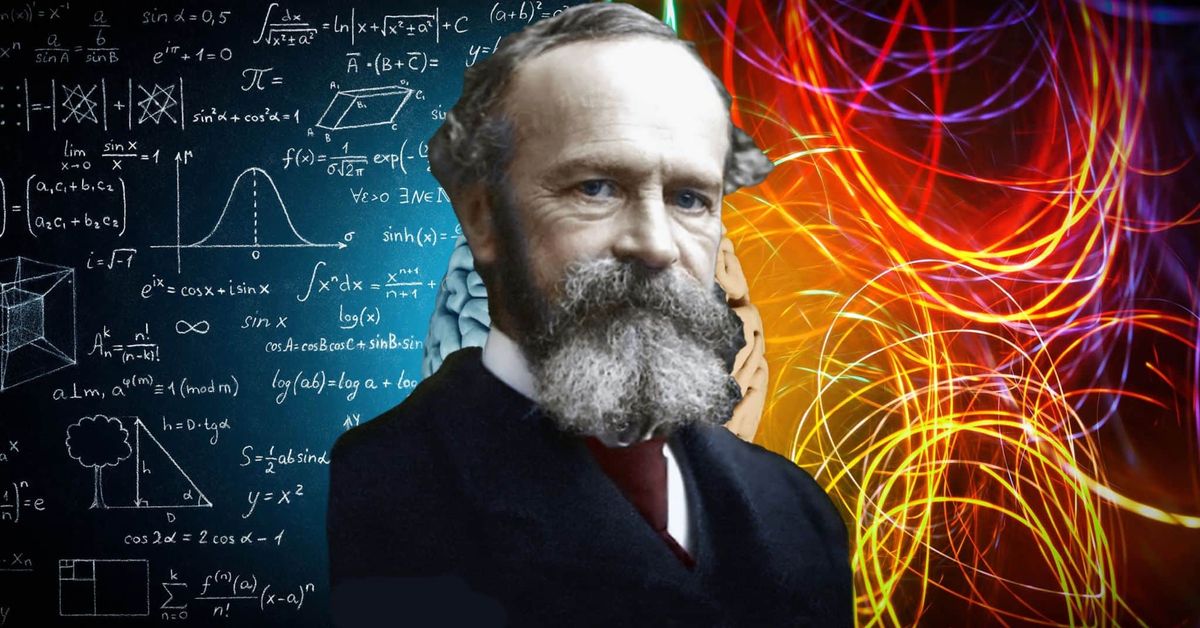
Free Will Universe
Understanding the dynamics of our Free Will Universe is one of the keys to unlocking many of life’s deepest spiritual questions and mysteries. By simplifying concepts such as polarity and duality, good and evil, catalyst, and the lessons and experiences of incarnation, we begin to see existence from a broader perspective of conscious evolution rather than random circumstance. From this viewpoint, every relationship, challenge, success, failure, joy, and hardship becomes an opportunity for the soul to learn, grow, and remember its true nature. Many spiritual traditions suggest that Earth is a unique learning environment where consciousness develops through choice. It is this capacity to choose—between love and fear, service and separation, compassion and control—that gives meaning to the human experience. Rather than eliminating adversity, the Free Will Universe allows each soul the freedom to explore every possibility and, through those experiences, gradually discover its own truth.
According to The Law of One, the First Distortion of the Infinite Creator is Free Will, also referred to as finity or the limitation of viewpoint. Ra describes free will as the Creator’s decision to know Itself through an infinite diversity of individualized experiences. This principle is also called the Law of Confusion, because complete knowledge of our spiritual identity is intentionally veiled during incarnation. Rather than beginning life with full awareness of our divine origin, each soul enters the physical experience with limited perception, allowing authentic choices to be made without certainty of the outcome. Within this framework, the Creator explores every possible perspective through billions of individual expressions of consciousness. Every life, every civilization, and every moment becomes another unique avenue through which the Creator comes to know Itself more completely. It is through this apparent separation that unity ultimately becomes rediscovered.
The Second Distortion, according to Ra, is Love, also called the Logos or the Creative Principle. Ra describes the Logos as “the focus” and the organizing intelligence that shapes intelligent infinity into intelligent energy, giving rise to creation itself. In this model, a Logos may generate an individual star system or an entire galaxy containing billions of stars, each operating according to its own unique set of natural laws, evolutionary pathways, and patterns of consciousness. Some researchers interpret each galaxy as possessing its own vast “cosmic mind,” expressing a distinct blueprint for creation while remaining part of the One Infinite Creator. Ra further explains that some evolved beings have journeyed into the creations of other Logoi and that these experiences “stagger the intellectual and intuitive capacities,” suggesting an almost unimaginable diversity throughout the universe. Within galactic systems, the earliest physical manifestation of a Logos is described as a cluster of central star systems, from which the remainder of the galaxy unfolds. Whether understood literally, symbolically, or philosophically, these teachings invite us to contemplate a universe that is not merely physical, but conscious, creative, and continuously evolving through the infinite possibilities generated by free will.

FREE WILL UNIVERSE | CHOICE, EXPERIENCE & THE VEIL OF FORGETTING
What if one of the fundamental purposes of human experience is not simply to learn, but to choose? Across philosophy, spirituality, theology, and the study of consciousness, free will raises one of our deepest questions: how much of our lives is determined by biology, conditioning, circumstance, or forces beyond our awareness—and how much remains ours to consciously shape? Within many spiritual frameworks, choice becomes even more significant. The uncertainty of incarnation creates an environment in which we must navigate relationships, challenges, opportunities, fear, love, and meaning without knowing precisely where each decision will lead.
The Law of One adds another dimension through its concept of the Veil of Forgetting: the idea that incarnation temporarily obscures our deeper spiritual identity and understanding of why we are here. Within that framework, forgetting and free will are intimately connected. If we entered life remembering everything—our purpose, our soul’s history, the nature of consciousness, and the consequences of every choice—the experience would be fundamentally different. Instead, uncertainty creates the space for discovery, discernment, and authentic choice. Together, these two sections explore the power of free will and the possibility that not knowing may itself be part of what makes meaningful choice possible.
FREE WILL | THE POWER & PURPOSE OF CHOICE
Free will sits at the center of the human experience, raising questions that have occupied philosophers, theologians, scientists, and spiritual traditions for centuries. Whether choice is understood as a fundamental property of consciousness, a gift of incarnation, or the mechanism through which the soul learns and evolves, the underlying question remains profound: Are we merely responding to forces beyond our control, or do our choices actively participate in shaping who we become? These resources explore free will from spiritual, philosophical, psychological, and scientific perspectives, allowing very different traditions to meet around one of humanity’s oldest questions.
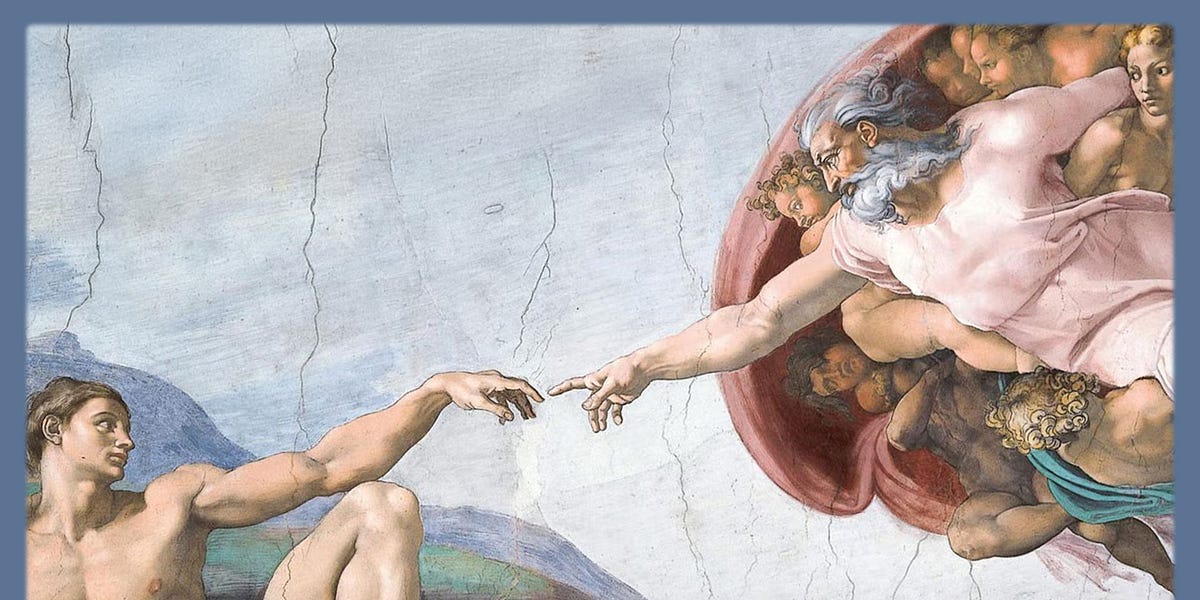

THE VEIL OF FORGETTING | CHOICE WITHOUT CERTAINTY
One of the most intriguing ideas within the Law of One is that free will depends, in part, upon not knowing everything in advance. The Veil of Forgetting describes the apparent separation between our everyday human awareness and a deeper knowledge of who we are, why we incarnated, and what may exist beyond physical experience. Within this framework, forgetting creates the conditions for genuine discovery: love must be chosen without certainty, meaning must be sought rather than remembered, and consciousness develops through experience rather than simply following a predetermined spiritual script.




The Grand Experiment | The Game
Many spiritual traditions describe creation as far more than the emergence of a physical universe. They suggest that existence itself is an ongoing exploration of consciousness, born from the Infinite Creator’s desire for companionship, relationship, creativity, and experience. Within this perspective, the Laws of the Universe, the principles of creation, and even the architecture of human DNA are viewed as components of a much larger evolutionary design. Earth becomes one classroom among countless worlds where consciousness experiences separation in order to rediscover unity. Life is often described as The Game, or more accurately, a series of incarnations within many interconnected Games inside The Grand Experiment. Each lifetime offers new opportunities for growth, learning, service, and self-discovery as the soul descends into increasingly dense levels of experience before gradually ascending once again through expanding dimensions and densities of vibrational frequency. Every incarnation contributes another chapter to the soul’s ongoing journey toward greater awareness and realization.
One of the central concepts presented in The Law of One is that the universe we perceive is fundamentally an illusion. Since all consciousness ultimately originates from one Infinite Creator, the appearance of separation, individuality, and many-ness is viewed as a temporary construct rather than ultimate reality. According to Ra, this illusion was carefully engineered to provide the Creator with the opportunity to know Itself from an infinite variety of unique perspectives. Within this framework, every individual life, every civilization, every challenge, every triumph, and every relationship becomes another expression through which the One experiences itself as the many. The apparent divisions between self and other, light and darkness, success and failure, birth and death create the conditions necessary for authentic choice, growth, and spiritual evolution. Without the experience of separation, there would be no meaningful path back to conscious unity.
Another foundational element of this cosmology is The Veil. According to Ra, our Logos desired to provide the Creator with the richest and most meaningful experience possible. To accomplish this, the conscious mind was intentionally separated from the subconscious and deeper spiritual mind during third-density incarnation. Unlike earlier creations, where beings reportedly retained a much clearer awareness of their divine nature and existed in a state resembling Edenic harmony, the introduction of the Veil created uncertainty, forgetting, and genuine free choice. This transformation initiated a profound movement away from effortless contentment and toward active seeking, questioning, learning, and conscious spiritual development. The result of what Ra describes as The Grand Experiment has been a far more vivid, diverse, emotionally rich, and transformative experience of the Creator by the Creator. Whether understood as metaphysical truth, symbolic philosophy, or a model for personal reflection, these teachings invite us to view every incarnation not as an isolated lifetime, but as an essential part of an extraordinary cosmic journey of awakening, remembrance, and conscious evolution.

THE GRAND EXPERIMENT | THE GAME
Across spiritual and metaphysical traditions, one of the great mysteries is why consciousness would enter a world of separation, limitation, uncertainty, and contrast at all. If our deeper nature originates from something larger than the individual self, perhaps incarnation is not simply an interruption of that unity but an opportunity to experience what cannot be known through unity alone. Individual identity creates perspective; relationships create connection and contrast; challenges create opportunities for growth; and free will allows consciousness to participate rather than merely observe. Within this framework, human life becomes an extraordinary field of experience through which consciousness explores itself.
The Grand Experiment describes the larger possibility, while The Game brings that idea into the individual soul’s journey. Each incarnation becomes an opportunity to experience, choose, create, learn, love, struggle, adapt, and gradually expand awareness. Different traditions describe the mechanics differently—and none provides a universally established map—but the underlying idea offers a compelling lens through which to view human existence: perhaps we are not here simply to escape the experience and return to where we began. Perhaps the experience itself is part of the purpose, and what consciousness discovers, expresses, and becomes along the way is the reason the Game exists at all.
THE GRAND EXPERIMENT | WHY EXPERIENCE EXISTS
If consciousness ultimately originates from a unified Source, why experience separation at all? The Grand Experiment offers one metaphysical answer: creation provides an infinite field of experience through which consciousness can encounter itself from perspectives that would not exist within undifferentiated unity. Individuality, free will, polarity, relationship, challenge, and uncertainty become features of the experiment rather than flaws within it. From this perspective, The Game is not simply about reaching the destination—it is about everything consciousness discovers along the way.


THE GAME | INCARNATION, EXPERIENCE & THE SOUL’S JOURNEY
Within the framework of The Game, incarnation becomes the arena through which consciousness encounters limitation, relationship, identity, choice, challenge, creativity, and transformation. A single lifetime may represent one chapter within a much larger journey of consciousness, with different traditions proposing reincarnation, rebirth, soul development, or continuing states of awareness as ways of understanding what that journey might involve. Rather than attempting to establish one definitive model of what occurs between lifetimes, these teachings invite us to consider a larger question: What might consciousness be learning through the experience of being human?


Uncover how understanding rebirth and reincarnation illuminates the nature of existence, the cycles of suffering, and the underlying mechanisms of cause and effect.

SPIRITUAL EVOLUTION | FROM SEPARATION TO REMEMBRANCE
The larger arc of the Grand Experiment is ultimately one of evolution—from limited awareness toward increasingly expansive states of consciousness. The Law of One describes this progression through densities, while other spiritual traditions use different language to describe stages of awakening, realization, or the soul’s return toward unity. Although these systems should not be assumed to describe the same process in precisely the same way, many share a striking theme: consciousness develops through experience, gradually remembers its deeper nature, and begins to recognize the unity that was present beneath the appearance of separation all along.



The Event | Ancient History
One of the central areas of our research is The Event—a term used by various spiritual, philosophical, and alternative frameworks to describe a period of profound planetary transition and accelerated change. We analyze geopolitical developments, geophysical activity, economic instability, technological disruption, social transformation, and shifts in human consciousness to identify patterns that may help us better understand this transition. Rather than attempting to predict exact dates, our objective is to observe emerging trends, connect seemingly unrelated developments, and provide a broader context through which readers can navigate an increasingly complex world. Many researchers describe the present era as one of compression before breakthrough, where financial instability, institutional restructuring, environmental change, and social upheaval converge simultaneously. Similar themes appear throughout many ancient traditions, including the Vedas, Upanishads, Bhagavad Gita, Buddhist teachings, Mayan calendars, Hopi prophecies, Zoroastrian writings, Biblical apocalyptic literature, Gnostic texts, and numerous Indigenous wisdom traditions. Although these traditions differ in language and symbolism, many describe recurring cycles of decline, renewal, and spiritual awakening preceding the emergence of a more conscious era. Within many contemporary consciousness teachings, this transition is also associated with Galactic Ascension Waves—periods of intensified energetic change believed to support both planetary evolution and individual awakening.
According to The Law of One, consciousness evolves through a series of densities, each representing a stage of learning and experience. At the conclusion of each cycle comes what Ra refers to as a Harvest, during which souls continue their evolution according to the lessons they have learned. Within this framework, the central lesson of third density is the conscious exercise of free will through a choice of orientation—service to others or service to self. The emphasis is not on punishment or reward, but on the natural evolution of consciousness through experience, choice, and personal responsibility. Similar concepts of cyclical evolution appear in the Yuga cycles of Hindu philosophy, the recurring world ages of Greek thought, and the cyclical cosmologies of many Indigenous cultures. While their descriptions differ, these traditions consistently portray civilization as moving through repeating phases of growth, decline, renewal, and transformation. Some modern spiritual perspectives suggest that Galactic Ascension Waves coincide with these larger evolutionary cycles, creating periods of accelerated spiritual growth and expanded awareness.
Ra further states that Earth’s approximately 75,000-year third-density cycle has reached its conclusion. Within the Law of One, the year 2011 was described as “an appropriate probable/possible time/space nexus for harvest,” while emphasizing that humanity’s collective choices create probability/possibility vortices, making precise timing inherently uncertain. Although Ra suggests the transition into fourth density may unfold over approximately 100 to 700 years, the teachings stress that the process remains dynamic because of humanity’s free will. Many contemporary researchers likewise describe this transition as occurring through successive Galactic Ascension Waves rather than a single event. When viewed alongside ancient writings, a remarkable pattern emerges: civilizations across thousands of years consistently described the ending of ages, periods of purification, expanded human consciousness, and the emergence of a renewed world. Whether interpreted as prophecy, symbolism, philosophy, or mythology, these traditions ultimately encourage discernment, personal responsibility, and inner transformation. The greatest preparation for any future timeline is not predicting when change will occur, but consciously cultivating wisdom, compassion, and higher awareness in the present.

INDIGENOUS WISDOM | CYCLES, BALANCE & RENEWAL
Ancient Memory • Earth Wisdom • Sacred Cycles • Renewal
CYCLES OF WORLDS | DESTRUCTION, RENEWAL & NEW BEGINNINGS
This is where we explore traditions describing worlds or ages ending and beginning again, including Hopi teachings surrounding successive worlds, Diné/Navajo accounts of emergence through the Four Worlds, and broader Indigenous creation traditions. Rather than assuming these traditions describe the same future event, we can consider each within its own cultural context while exploring the recurring themes of imbalance, transition, renewal, and humanity’s responsibility during periods of profound change.






WHEN BALANCE IS LOST | HUMANITY’S RELATIONSHIP WITH THE EARTH
This may actually become the strongest subsection. Across many Indigenous teachings, human well-being isn’t separate from the land, animals, water, community, ancestors, or future generations. Instead of “catastrophe as punishment,” we can explore the recurring principle that imbalance produces consequences and renewal requires restoration of right relationship. That fits your Event material extremely well without forcing modern Ascension terminology onto ancient teachings.




REMEMBERING THE SACRED | CONSCIOUSNESS, RESPONSIBILITY & RENEWAL
Here the emphasis shifts from prophecy to what the teachings ask people to do: remember relationship, live responsibly, preserve community, listen to the natural world, honor reciprocity, and make choices with future generations in mind. It gives the feature somewhere constructive to land instead of ending with predictions of upheaval.





Ascension Evidence, Cycles & Timelines
Ascension is described in many spiritual traditions as the completion of one evolutionary cycle and the beginning of another—a planetary movement into a higher density of consciousness accompanied by an expansion in awareness, perception, and human potential. Within our research, Ascension is not viewed simply as a single event, but as an ongoing transitional process involving both individual and collective transformation. We examine geophysical evidence, changes within Earth’s natural systems, societal and geopolitical developments, technological acceleration, and multiple competing timelines in an effort to better understand the larger transition often referred to as The Event and its relationship to humanity’s evolving consciousness. Our purpose is not to predict specific dates or outcomes, but to identify patterns, recognize recurring cycles, and provide context that may help readers navigate this period of unprecedented global change. Much of this evidence is readily available to anyone willing to observe with curiosity, think critically, compare multiple sources, and remain open to continued learning and personal discernment.
According to The Law of One, the evolution of consciousness operates through the natural dynamics of polarity. Just as a magnet possesses both positive and negative poles, consciousness also expresses two fundamental orientations: service to others and service to self. Third density is described as the stage in which each soul develops sufficient self-awareness to consciously choose one of these paths. Ra explains that progression along the positive path requires that at least 51 percent of an individual’s thoughts, intentions, and actions be oriented toward serving others with compassion, cooperation, and love. Conversely, the negative path requires an exceptionally high degree of dedication—approximately 95 percent—toward serving oneself through control, power, and separation. Between these two polarities lies what Ra calls the sinkhole of indifference, where individuals remain largely undecided, neither consciously embracing service to others nor fully committing to service to self. The teachings suggest that many people move through much of their lives before recognizing that their daily choices are gradually establishing the polarity of their own consciousness.
Whether one accepts these concepts literally, symbolically, or simply as useful philosophical models, they offer an invitation to examine how everyday decisions shape personal growth and spiritual development. Ascension, from this perspective, is not determined by dramatic external events alone, but by the cumulative effect of countless internal choices made over a lifetime. Every act of kindness, integrity, courage, forgiveness, responsibility, and compassion strengthens one trajectory, while every decision rooted in fear, manipulation, domination, or indifference strengthens another. As humanity appears to enter a period of accelerating change, many traditions suggest that these opportunities for conscious choice become increasingly significant. Our role is to study the available evidence, compare perspectives across ancient wisdom traditions and contemporary research, and encourage thoughtful discernment rather than unquestioning belief. Ultimately, the most compelling evidence for spiritual evolution is not found solely in world events or competing timelines, but in the observable transformation of human consciousness itself—one individual, one choice, and one awakened life at a time.

ASCENSION EVIDENCE, CYCLES & TIMELINES | EXPLORING THE PATHS BEFORE US
The concept of timelines offers a compelling way to explore the relationship between possibility, consciousness, and choice during periods of profound change. Across metaphysical and spiritual teachings, timelines are often described not as fixed destinations, but as potential trajectories shaped by individual and collective beliefs, intentions, decisions, and actions. Within this framework, humanity may be continually moving among different possibilities, with contrasting paths becoming more visible as consciousness, values, and choices diverge. Rather than attempting to predict which future will unfold, this section examines how timelines are believed to work, what positive and negative trajectories may represent, and how we can become conscious creators of the path we choose to strengthen. Ultimately, the question is not simply What timeline are we on? but What future are we actively helping to create?
UNDERSTANDING TIMELINES | POSSIBILITY, PROBABILITY & CHOICE
Within many metaphysical and consciousness traditions, a “timeline” describes a potential pathway through experience rather than a rigidly predetermined future. From this perspective, multiple possibilities may exist simultaneously, while individual and collective choices, circumstances, beliefs, intentions, and actions continually influence which possibilities become more likely to unfold. Timelines therefore become less about predicting one fixed future and more about understanding probability, direction, and the cumulative power of choice.


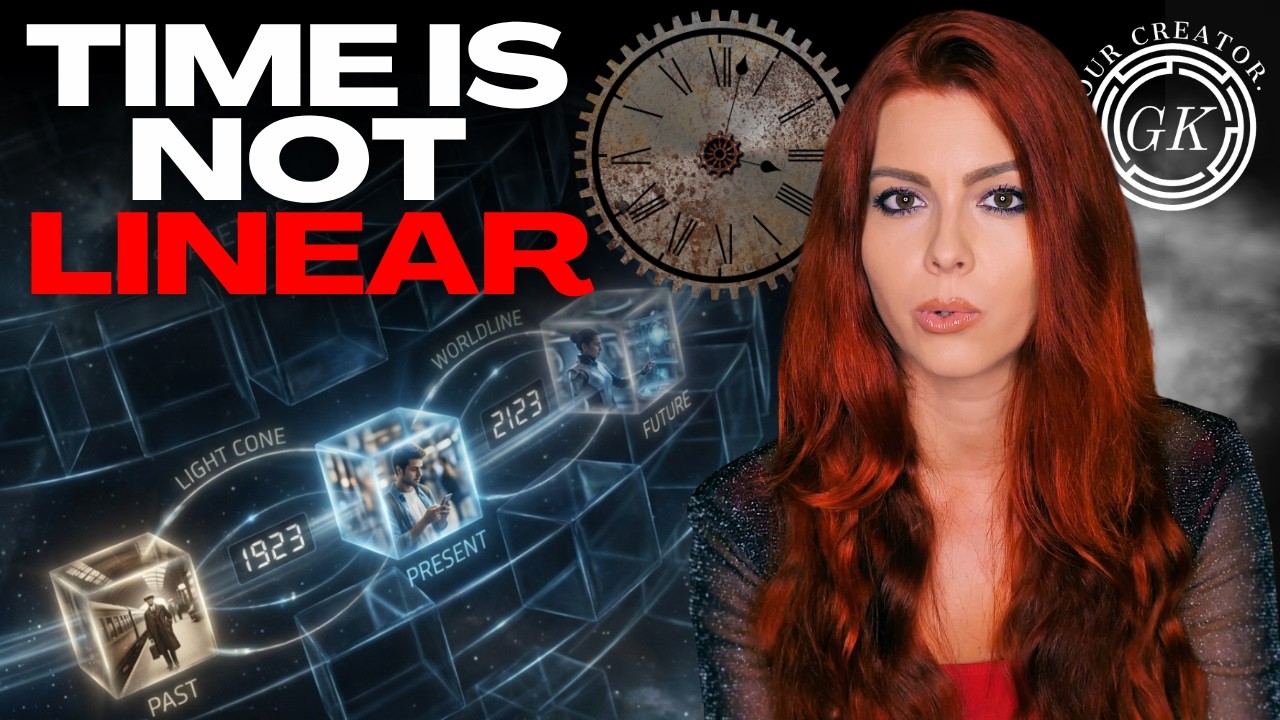

POSITIVE & NEGATIVE TIMELINES | DIVERGING PATHS OF CONSCIOUSNESS
Many contemporary spiritual teachings describe humanity as moving through a period in which contrasting trajectories are becoming increasingly visible. One path emphasizes cooperation, compassion, truth, personal sovereignty, creativity, service, and greater awareness; another emphasizes fear, separation, control, conflict, manipulation, and increasing fragmentation. Rather than viewing these as two literal Earths suddenly separating, we can explore positive and negative timelines as diverging patterns of consciousness and behavior—different directions strengthened by the choices individuals, communities, institutions, and societies repeatedly make.




CHOOSING YOUR PATH | BECOMING A CONSCIOUS CREATOR
If timelines represent potential trajectories rather than predetermined destinations, the most important question becomes deeply personal: What are we actively choosing to create? Every decision involving attention, intention, relationships, integrity, fear, compassion, service, boundaries, forgiveness, responsibility, and action strengthens a particular direction. Choosing a timeline is therefore not simply about hoping for a more positive future or avoiding an unwanted one; it is about consciously aligning our thoughts, choices, actions, and energy with the reality we intend to help create.
Becoming a conscious creator requires more than awareness—it requires choice followed by action. We choose what receives our attention, what beliefs and patterns we continue to reinforce, what we withdraw our energy from, and what qualities we deliberately embody in our daily lives. From this perspective, a positive timeline is not somewhere we wait to arrive; it is a trajectory we continually strengthen through the way we live. The path is chosen one decision at a time.


UNDERSTANDING TIMELINES → DIVERGING TIMELINES → CONSCIOUS CREATION

Laws of the Universe
Ancient Principles • Conscious Creation • Universal Order
Across cultures and throughout history, philosophers, mystics, spiritual teachers, and wisdom traditions have described existence as operating according to underlying principles or universal laws. The language varies considerably—from the Hermetic principles of Mentalism, Correspondence, Vibration, Polarity, Rhythm, and Cause and Effect to Eastern teachings surrounding karma, interconnectedness, balance, and impermanence. Other traditions speak of free will, attraction, intention, unity, divine order, or the relationship between consciousness and creation. Although these concepts should not all be treated as scientifically established laws, together they represent humanity’s enduring effort to understand whether deeper patterns connect consciousness, nature, human experience, and the larger universe.
At the heart of many of these teachings is a surprisingly consistent idea: our thoughts, choices, actions, relationships, and state of awareness influence the quality of the life we experience. Cause produces consequence. Opposing forces seek balance. Cycles of expansion and contraction appear throughout nature and human life. Our perception affects how we interpret experience, while our choices gradually shape character and direction. Some spiritual traditions extend these principles further, proposing that consciousness itself participates in creation and that all life ultimately emerges from a unified Source or Infinite Intelligence. The Law of One is one expression of this larger worldview, while Hermeticism, Buddhism, Hindu philosophy, Taoism, Stoicism, Indigenous wisdom, and numerous mystical traditions offer their own perspectives on many of the same fundamental questions.
The purpose of exploring the Laws of the Universe is not to memorize a fixed collection of rules or accept every metaphysical claim as literal truth. It is to observe, question, compare, and discover which principles become meaningful through lived experience. Meditation, journaling, conscious observation, emotional awareness, forgiveness, gratitude, intention, and service provide opportunities to test these ideas within our own lives. Over time, we begin recognizing recurring patterns in our thoughts, choices, relationships, challenges, and moments of synchronicity. Knowledge then becomes something more than information—it becomes a framework for living with greater awareness, responsibility, discernment, and alignment. The deeper invitation is not simply to understand the laws that may govern life, but to become increasingly conscious of how we choose to participate within them.
Spiritual Awakening; Eyes to See, Ears to Hear, and Hearts to Know
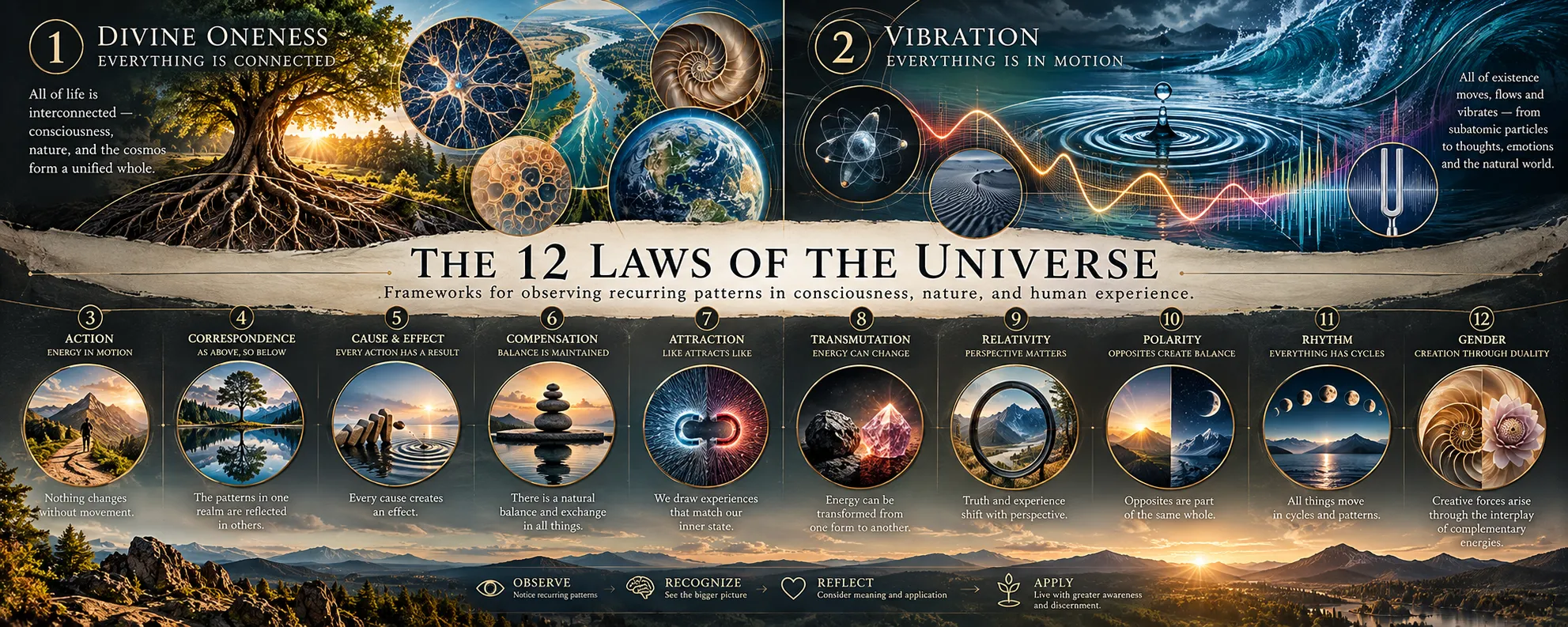
LAWS OF THE UNIVERSE | AN INTRODUCTION
The Laws of the Universe are a collection of spiritual and philosophical principles used to describe recurring patterns believed to operate throughout consciousness, nature, and human experience. There is no single ancient canonical list: today’s familiar “12 Universal Laws” draws from several streams of metaphysical thought, while principles such as Correspondence, Vibration, Polarity, Rhythm, and Cause and Effect were famously organized in The Kybalion in 1908. Rather than approaching these ideas as scientifically proven laws or rigid rules, we can explore them as frameworks for observation—asking where concepts such as interconnectedness, vibration, correspondence, causation, intention, and balance appear in our lives and whether understanding these patterns helps us participate in life with greater awareness, responsibility, and conscious choice.

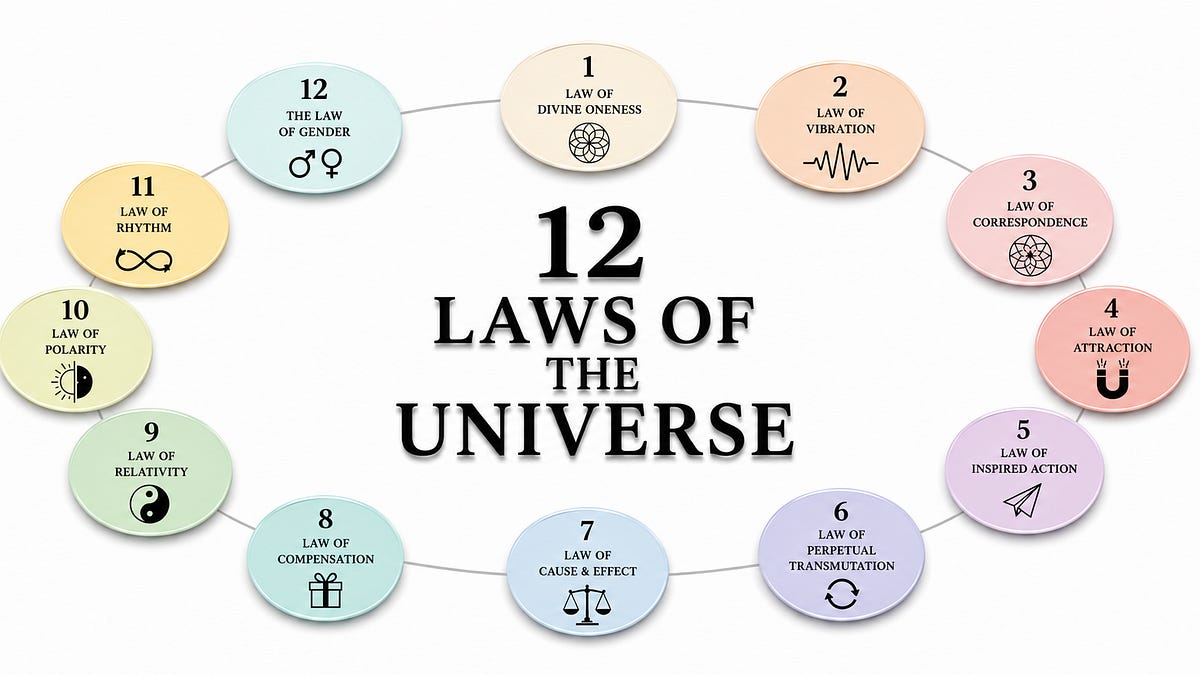

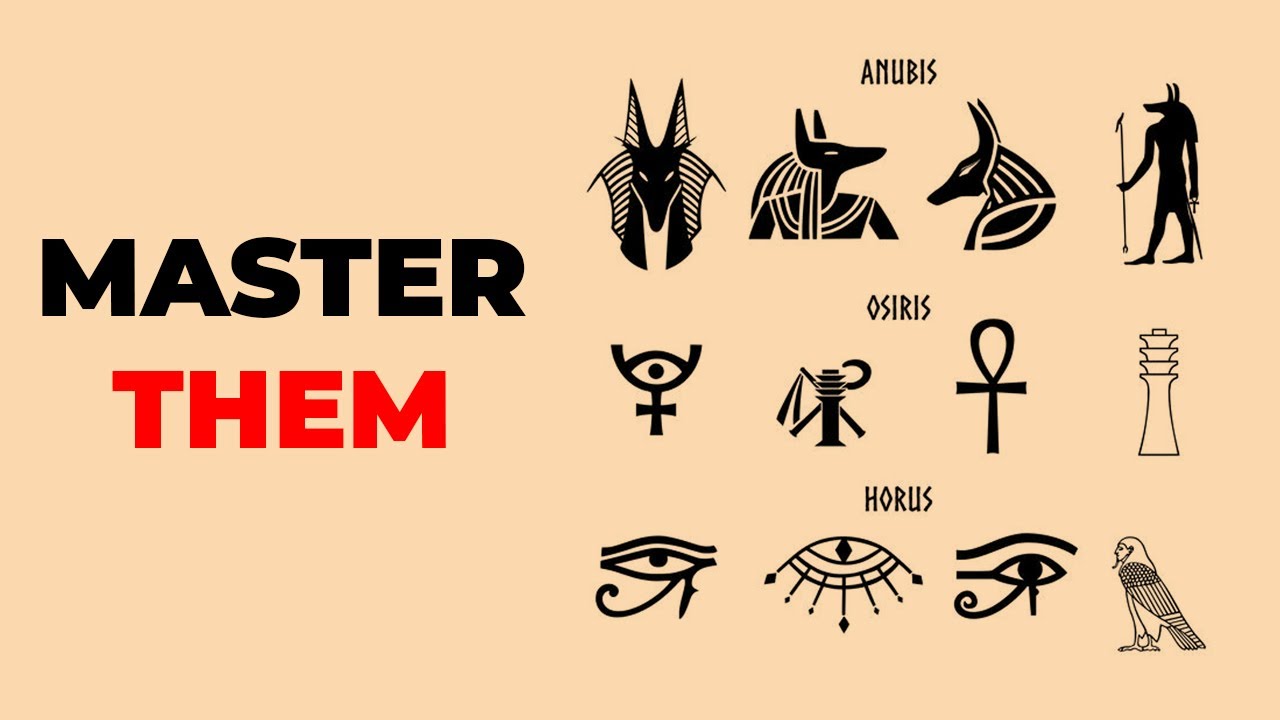
LAW OF DIVINE ONENESS | EVERYTHING IS CONNECTED
The Law of Divine Oneness proposes that beneath the apparent separation of individuals, nature, consciousness, and the cosmos exists an underlying unity. Variations of this idea appear throughout mystical and philosophical traditions—from Brahman in the Upanishads and the Tao to interconnectedness in Buddhist thought and the One Infinite Creator in the Law of One. The practical implication is equally important: if life is fundamentally interconnected, how we treat others, the natural world, and ourselves cannot be entirely separated.




LAW OF VIBRATION | EVERYTHING IS IN MOTION
The Law of Vibration holds that nothing is truly static; everything exists in states of movement and change. Ancient and modern spiritual traditions extend this physical observation into consciousness, suggesting that thoughts, emotions, environments, and states of awareness also possess different energetic qualities or “frequencies.” While metaphysical claims about vibration should be distinguished from the scientific meaning of frequency, the principle invites us to observe how profoundly our inner state can influence perception, relationships, behavior, and the environments we create.






PHASE II: The Conscious Practices
Forgiveness • The Observer • Ego Monkey Mind vs. Heart-Conscious Mind • Transformational Breathing • RELEASING EMOTIONS • Elevating Vibrational Frequency • Golden Timeline
“Knowing is not enough; we must apply. Willing is not enough; we must do.” — Goethe
Daily Practice Guidelines
Conscious awakening is not a destination reached through a single realization, inspiring book, or profound meditation experience. It is the cumulative result of small, intentional actions practiced consistently over time. Just as physical health is maintained through proper nutrition and regular exercise, the development of higher consciousness requires daily attention, observation, reflection, and disciplined practice. Every day presents new opportunities to become more aware of our thoughts, emotions, beliefs, reactions, and choices. It is through these ordinary moments that extraordinary transformation quietly unfolds.
Daily conscious practice strengthens the relationship between the conscious mind, the subconscious mind, and our deeper intuitive awareness. Meditation, mindful breathing, journaling, gratitude, forgiveness, visualization, emotional processing, and periods of quiet reflection each serve as practical tools for cultivating greater clarity and inner coherence. The objective is not perfection, but progress. Over time these practices help reduce mental noise, calm emotional reactivity, increase resilience, and develop the capacity to respond consciously rather than react unconsciously. As awareness grows, patterns that once operated automatically become visible, providing opportunities for healing, learning, and personal evolution.
Consistency is far more valuable than intensity. A focused thirty-minute daily practice performed every day will produce greater long-term transformation than occasional hours of concentrated effort. Each practice session builds upon the previous one, gradually creating new neural pathways, healthier emotional habits, and a more stable internal foundation. Spiritual growth, like any meaningful discipline, develops through repetition, patience, and commitment rather than sudden breakthroughs alone.
Throughout this Practice Report, each monthly lesson is designed to become part of your daily routine rather than simply information to read once and set aside. We encourage you to revisit key concepts, review your journal entries, observe your emotional patterns, monitor your thoughts, and continually evaluate how your daily choices align with your highest values and intentions. Reflection transforms information into understanding, while consistent application transforms understanding into wisdom.
Remember that conscious evolution is a lifelong journey rather than a race. There will be periods of rapid growth, moments of uncertainty, and times when little appears to be changing. Each phase serves an important purpose. Trust the process, remain patient with yourself, and continue showing up each day with curiosity, humility, and an open heart. Every conscious thought, every compassionate action, every moment of forgiveness, and every intentional practice contributes to the person you are becoming.
The ultimate goal of daily practice is not to escape the world, but to engage it with greater presence, balance, discernment, and love. As your awareness expands, your vibrational frequency naturally begins to stabilize, your intuition becomes clearer, and your ability to navigate life’s challenges with calmness and wisdom continues to grow. The path of conscious practice is built one day at a time, one choice at a time, and one moment of awareness at a time. These daily disciplines become the foundation upon which lasting transformation, authentic awakening, and a life of purpose are built.
The Challenge • The Trials • The Testing • The Purge

The Art of Forgiveness | Emotional Reset
The Art of Forgiveness has, in many ways, been reduced to little more than a passing acknowledgment or simple act of letting go. Yet genuine forgiveness is one of the most transformative practices available for healing the human mind, emotions, and spirit. Much of our behavior is influenced not only by conscious thought, but by deeply rooted subconscious and unconscious patterns that were formed through childhood experiences, relationships, trauma, beliefs, and repeated emotional conditioning. These ego-resistant programs often operate automatically, shaping our reactions without our awareness. Until they are recognized and brought into conscious observation, they continue to influence our lives from beneath the surface. Developing a consistently high vibrational state of consciousness is fundamental to stepping beyond habitual patterns, creating more positive life experiences, and cultivating greater inner peace. Many spiritual traditions suggest that this elevated state of awareness also supports humanity’s broader process of awakening and conscious evolution.
A daily practice of becoming the Observer allows us to witness our thoughts, emotions, beliefs, and reactions without immediately identifying with them. This simple shift in awareness creates the space necessary for genuine transformation. By incorporating releasing techniques, emotional processing, mindfulness, meditation, gratitude, and the consistent practice of forgiveness, we gradually dissolve accumulated emotional burdens that no longer serve our highest good. We recognize that the human experience is often an arduous and deeply challenging journey, filled with uncertainty, disappointment, loss, and personal struggle. It is not a path for the faint of heart. Discovering one’s authentic purpose—and remaining aligned with it despite life’s many distractions—can itself become a lifelong practice. Along the way, many traditions describe the accumulation of unresolved emotional patterns, attachments, and what is often referred to as karma, arising from unconscious choices and repeated reactions. These patterns require ongoing observation, personal responsibility, and the willingness to repeatedly transform negative mental and emotional states into greater understanding, compassion, and balance.
The mastery of any spiritual practice is found not in occasional inspiration, but in the consistent daily application of reliable tools that produce meaningful and lasting results. Small, intentional practices repeated over time gradually reshape the mind, strengthen emotional resilience, and cultivate greater coherence between thought, feeling, and action. Within the GAR Practice Framework, we describe Phase II as a Full Emotional Reset—a process of releasing accumulated emotional weight, healing limiting beliefs, depolarizing habitual negative thinking, and restoring greater clarity, inner stability, and conscious choice. As emotional burdens are released, energy that was once tied to past experiences becomes available for creativity, service, compassion, and personal growth. Forgiveness, ultimately, is not about excusing the past; it is about reclaiming the freedom to live more consciously in the present. It is through this ongoing practice that individuals strengthen their capacity to navigate life’s challenges with greater wisdom, resilience, and an open heart.
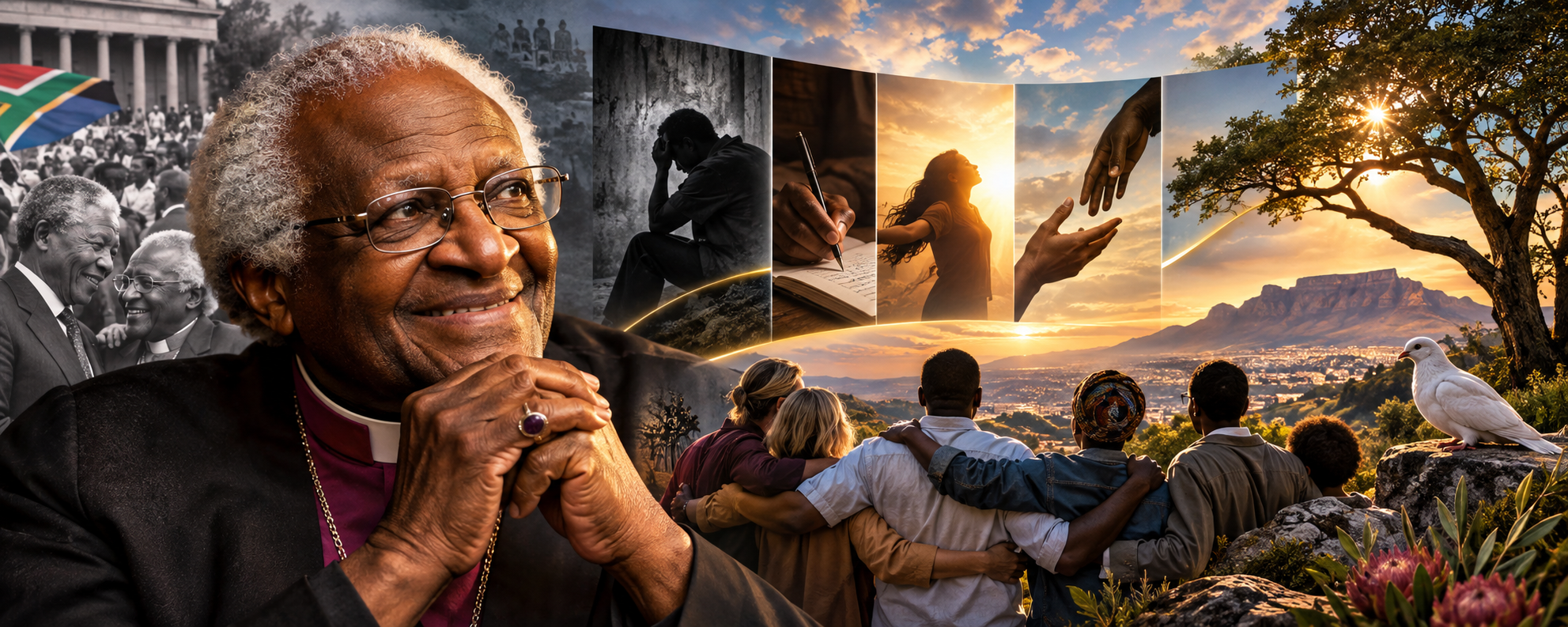
DESMOND TUTU | THE TRANSFORMATIVE POWER OF FORGIVENESS
WHY WE FORGIVE → WHAT FORGIVENESS REQUIRES → THE FOUR STEPS → HEALING & RELEASE → RECONCILIATION → FREEDOM
For the copy, I think we want three paragraphs, similar to Yogananda and William James, but not a generic Desmond Tutu biography. His experience with apartheid and the Truth and Reconciliation Commission should establish why forgiveness wasn’t an abstract spiritual concept for him; then we move into his philosophy and the Fourfold Path with Mpho; and finally bring it directly into our Emotional Reset theme—release without excusing, boundaries without resentment, and forgiveness as liberation from carrying the past forward.
Then for the 2:1 thought-leader compilation image, I already see it: Tutu prominent but not oversized, his wonderful warmth and expressive smile, with South Africa and the reconciliation story unfolding around him—crowds, hands reaching toward one another, perhaps subtle archival imagery transitioning into warmer light, and the Fourfold Path suggested visually through four stages rather than plastered across it as text. Rich burgundy, deep gold, warm amber, charcoal and touches of South African landscape color. More human and soulful than mystical.
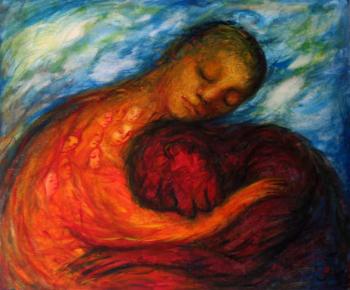
There were so many nights when I, as ...


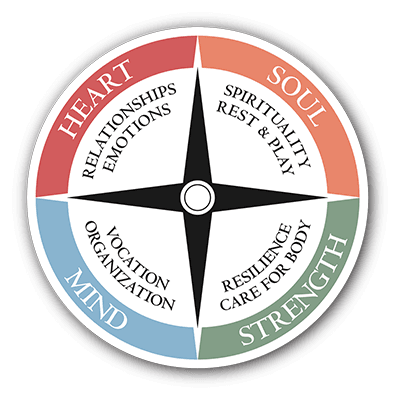
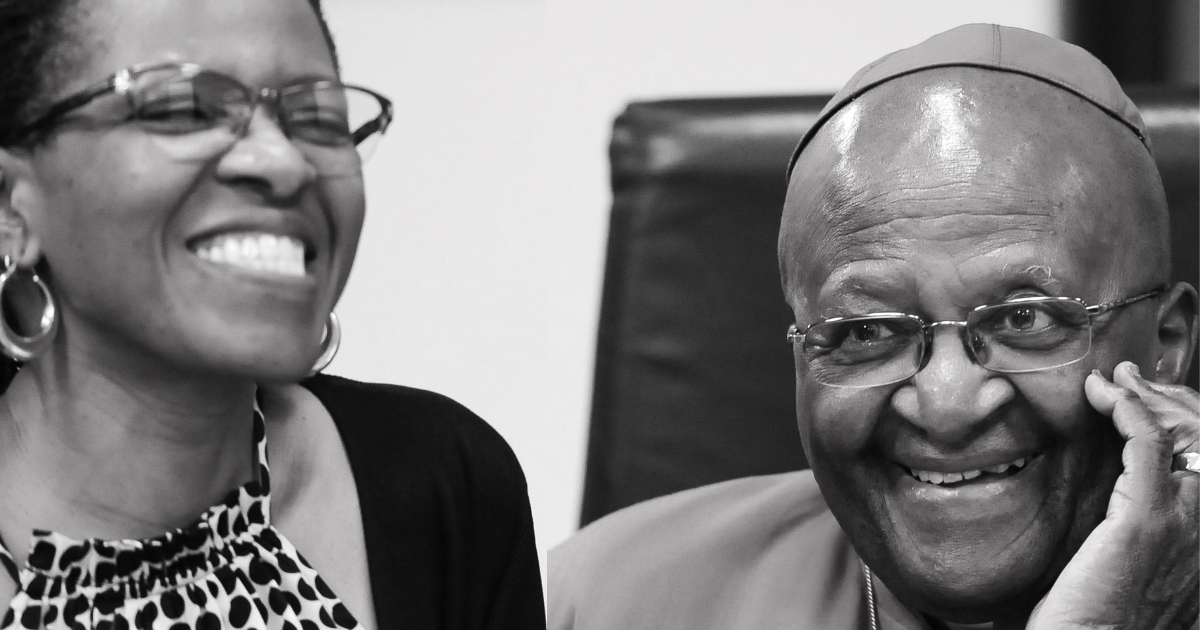
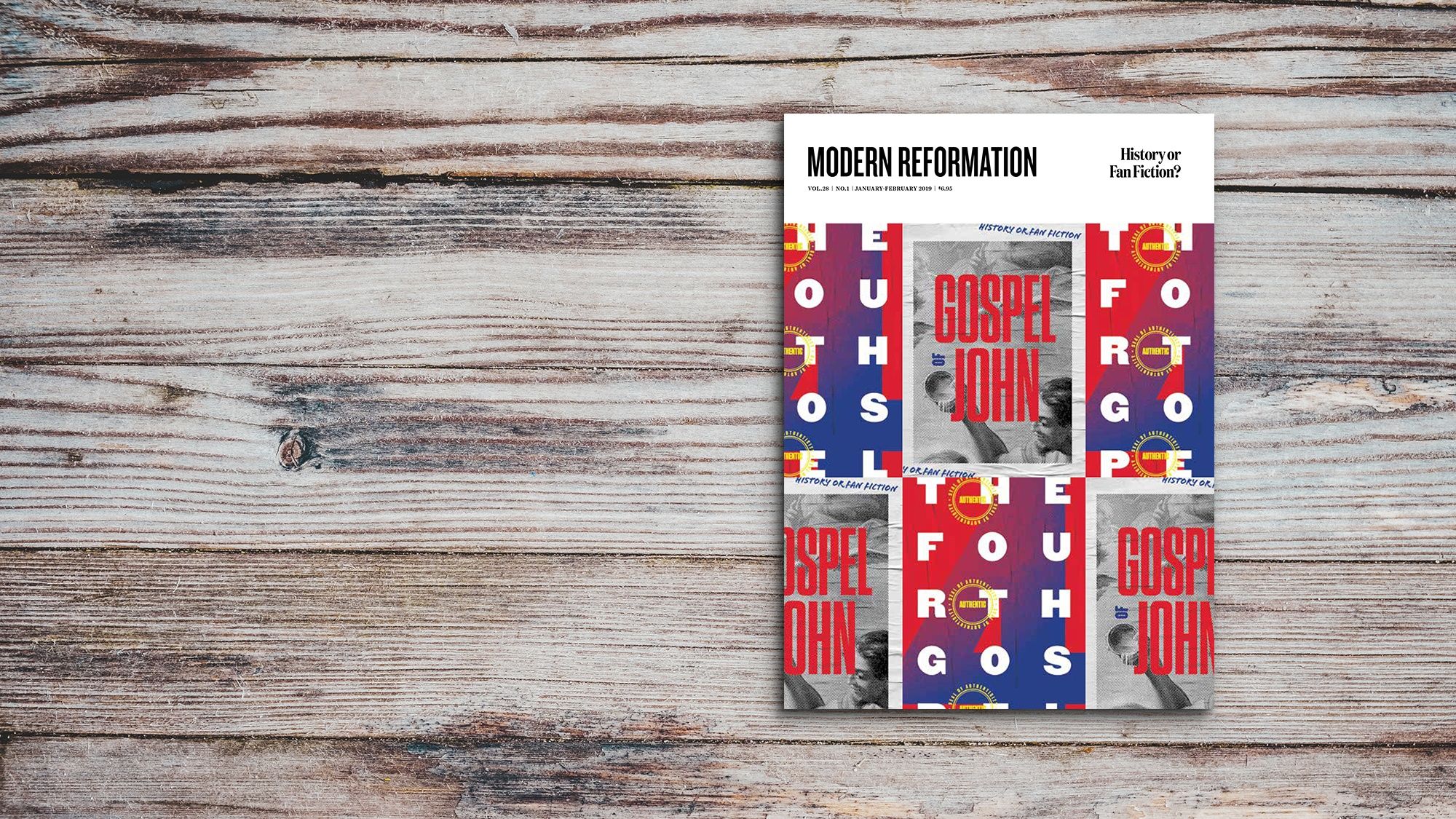
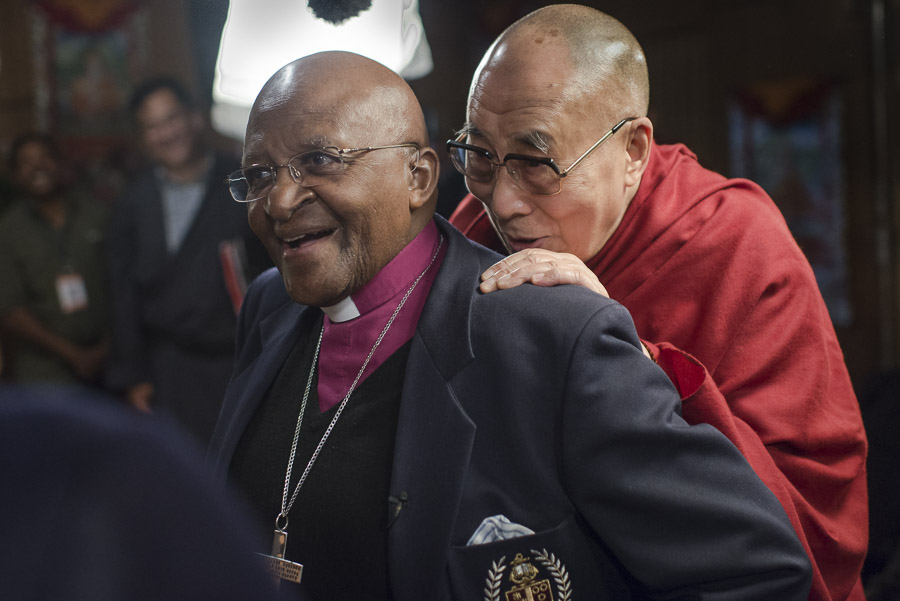

The Observer Practice
Step 1 in conscious practice is becoming the Observer—developing the ability to witness your thoughts, emotions, and reactions without immediately identifying with them. The first objective is to become aware of your mental thought atmosphere by observing the patterns that repeatedly occupy your mind, particularly the negative thoughts attached to strong emotional reactions. Every emotion carries information, and emotions such as fear, anger, resentment, guilt, shame, anxiety, frustration, jealousy, or sadness often point toward unresolved experiences that continue to influence your present life. Rather than resisting or suppressing these emotions, the observer simply notices them with curiosity and without judgment. This shift from reacting to observing creates the space necessary for self-awareness and lasting transformation.
Once you have identified the negative emotion connected to a recurring thought, you can begin tracing that thought back to its point of origin. In many cases, the emotional charge originates from a past traumatic event, painful memory, significant disappointment, limiting belief, or dramatic life experience that became associated with fear or emotional survival. Often these experiences involve another human being—parents, siblings, family members, friends, teachers, partners, employers, or other influential relationships formed throughout life. Although the original event may have occurred many years ago, the subconscious mind often continues replaying the emotional program whenever similar circumstances arise. Without conscious observation, these automatic patterns quietly shape perceptions, decisions, behaviors, and relationships, frequently without our awareness.
The more consistently you practice being the Observer, the more you strengthen your ability to recognize these unconscious programs before they control your thoughts or actions. Observation creates separation between your true awareness and the conditioned patterns of the mind. From this place of conscious awareness, you can set a clear intention to release negative emotional attachments, forgive yourself and others, and gradually dissolve limiting beliefs that no longer serve your highest good. This process is not about denying difficult experiences or pretending they never happened; rather, it is about freeing yourself from the emotional energy that keeps those experiences active in the present. Over time, the Observer becomes one of the most valuable tools in conscious practice, transforming reactive living into intentional living and creating the inner clarity, emotional freedom, and higher vibrational state necessary for continued spiritual growth and awakening.
The 7 Observer Senses: 1. Touch, 2. Smell, 3. Sight, 4. Hearing, 5. Taste, 6. Intuition, 7. Feelings

THE 7 OBSERVER SENSES | FEELINGS
Feelings are one of the Observer’s most immediate sources of information, continually offering clues about what is happening beneath the surface of our conscious awareness. Anger, fear, sadness, frustration, joy, excitement, peace, and even subtle feelings of unease can reveal our needs, boundaries, attachments, beliefs, unresolved experiences, and responses to the world around us. The practice is not to suppress difficult emotions or allow them to control our behavior, but to feel them without becoming them—creating enough space to ask, What is this feeling showing me? Where might it be coming from? Does it belong to this moment, or is something older being activated? As we learn to observe feelings with curiosity rather than judgment, emotion becomes less of an automatic trigger and more of a form of inner guidance, allowing us to move from unconscious reaction toward greater discernment, emotional balance, and conscious response.





FEEL IT → OBSERVE IT → UNDERSTAND IT → CHOOSE YOUR RESPONSE
The Observer Effect
The Observer Effect is one of the most powerful principles in conscious practice. In science, particularly in quantum physics, the observer effect refers to the idea that the act of observation can influence the behavior of a system being observed. While the scientific interpretation applies to specific physical experiments, many spiritual traditions use the Observer as a powerful metaphor for personal transformation. In conscious practice, becoming the Observer means learning to witness your thoughts, emotions, beliefs, and behaviors without immediately identifying with or reacting to them. Rather than being controlled by every thought that enters the mind, you begin to recognize that you are the awareness observing those thoughts. This subtle shift creates space between stimulus and response, allowing conscious choice to replace unconscious habit. Observation transforms reaction into reflection, bringing clarity to emotional patterns that may have operated unnoticed for many years.
As you strengthen the practice of being the Observer, your awareness naturally begins to change the quality of your inner experience. Thoughts that once triggered fear, anger, guilt, or frustration gradually lose their emotional intensity simply because they are being seen with greater consciousness rather than automatically believed. This increased awareness makes it possible to interrupt old subconscious programming, release limiting beliefs, and choose healthier responses that are aligned with your heart rather than your conditioned ego. The Observer becomes an anchor of calmness during challenging situations, allowing you to remain centered while life’s circumstances continue to unfold around you. Over time, this daily practice cultivates emotional freedom, greater discernment, inner peace, and a higher vibrational state. In many ways, lasting transformation begins not by trying to change the world around us, but by consciously observing the world within us.




Self-Love Practice
One of the greatest lessons of the human experience is learning how to genuinely love ourselves. While we often devote our attention to caring for others, achieving success, or meeting external expectations, many people spend very little time cultivating a compassionate relationship with themselves. Self-love is not ego, self-importance, or selfishness—it is the foundation of emotional well-being, healthy relationships, and spiritual growth. This practice begins by gently moving your awareness from the constant activity of the thinking mind into your heart space. Rest your attention consciously on the center of your chest and simply remain present there for several minutes. Become the Observer, noticing your thoughts, emotions, and physical sensations without attempting to change them. Allow yourself to simply be. This quiet space creates an opportunity to accept yourself exactly as you are in this moment, without judgment, criticism, or the need to become someone different before you are worthy of love.
As you continue this practice, notice what naturally arises from within your heart. Pay particular attention to your inner voice and the way you speak to yourself throughout the day. Is it kind, encouraging, patient, and forgiving, or is it critical, fearful, and demanding? The heart often reveals truths that the analytical mind cannot perceive. Developing a relationship with the universe, your Higher Self, or the Infinite Creator begins not with speaking, but with listening. In the stillness of the heart, intuition becomes clearer, compassion deepens, and inner guidance gradually emerges. With consistent practice, this simple daily exercise strengthens self-acceptance, quiets the ego, raises your vibrational state, and establishes a foundation from which authentic love for others can naturally grow. Every meaningful spiritual journey begins by coming home to yourself.





Self-Talk & Thoughts Practice
One of the most important aspects of conscious living is becoming aware of the ongoing conversation taking place within our own minds. Throughout the day, we are constantly communicating with ourselves through thoughts, interpretations, beliefs, and inner dialogue. The quality of this self-talk influences our emotions, decisions, relationships, confidence, and ultimately the direction of our lives. The primary purpose and lesson of this practice is to learn how to communicate authentically, compassionately, and truthfully with ourselves. Begin by observing your internal dialogue without judgment. Ask yourself: Am I responding consciously rather than reacting emotionally? Do I treat myself with the same kindness, patience, and respect that I offer others? Are my observations coming from my heart rather than my ego? Do I trust myself completely? Am I speaking words that encourage growth or reinforce fear? These reflective questions help bring unconscious thought patterns into conscious awareness, where meaningful change can begin.
The practice of Self-Talk Observation is not about eliminating every negative thought, but about becoming aware of the thoughts we repeatedly choose to believe. As the Observer grows stronger, you begin to recognize which thoughts arise from fear, conditioning, comparison, or self-judgment, and which arise from wisdom, compassion, truth, and inner knowing. With consistent practice, you can consciously replace limiting beliefs with thoughts that are aligned with your highest values and intentions. Over time, this transforms your relationship with yourself, creating greater emotional resilience, self-confidence, and inner peace. Every conscious thought becomes an opportunity to choose love over fear, clarity over confusion, and response over reaction. In this way, your inner dialogue gradually becomes one of your greatest teachers, guiding you toward greater authenticity, personal responsibility, and a more awakened way of living.
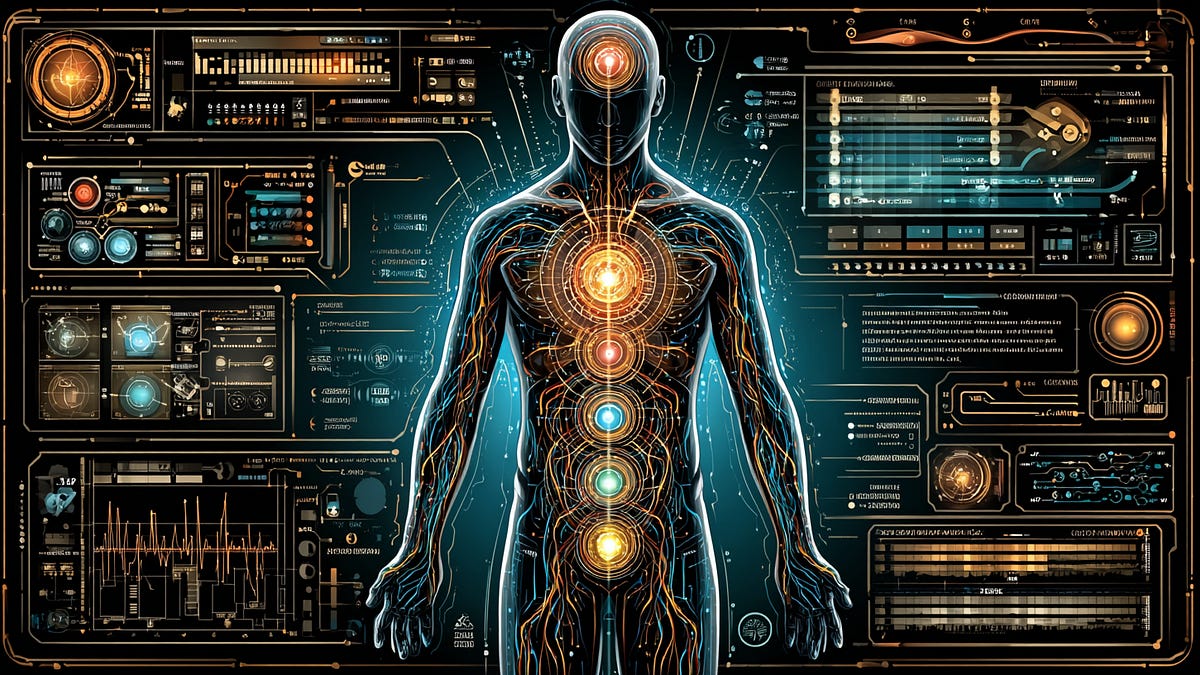



Unconscious Ego Monkey Mind vs. Heart-Conscious Mind
One of the greatest challenges on the path of conscious awakening is learning to move out of the Unconscious Ego Monkey Mind and into the Heart-Conscious Mind. The ego and monkey mind are constantly active, producing an endless stream of thoughts, worries, judgments, comparisons, fears, and imagined scenarios. Left unobserved, this mental chatter can dominate our attention and create the illusion that we are our thoughts. The first step toward greater awareness is recognizing that your thoughts are simply mental activity—they are not your true identity. Through conscious practice, you can gently shift your awareness away from the constant noise of the analytical mind and into the quieter, more centered awareness of the heart.
This practice is remarkably simple, yet profoundly transformative. Using active intention, consciously move your awareness from your mind space down into your heart space. Rest your attention over the center of your chest and simply remain present there for several minutes. Breathe naturally and allow your mind to settle without forcing it into silence. As you continue this practice, acknowledge the subtle feeling of being centered in your heart rather than your head. Notice the difference. The heart-conscious mind often feels calmer, more spacious, compassionate, intuitive, and accepting. Decisions become less reactive and more aligned with wisdom, empathy, and inner knowing. Over time, this shift develops into a familiar place of inner stability that you can return to throughout your day, especially during moments of stress or emotional challenge.
There is perhaps no greater discipline than learning to tame the wild, restless nature of the ego and monkey mind. The ego continually seeks certainty, control, approval, comparison, and self-protection, while the heart seeks understanding, connection, gratitude, forgiveness, and love. The goal of this practice is not to eliminate the ego, but to place it in service to a higher awareness rather than allowing it to dominate your life. Each time you consciously choose to return your attention to your heart, you strengthen new patterns of awareness that gradually replace automatic reactions with intentional responses. With patience and daily repetition, the heart becomes your primary center of perception, your intuition becomes clearer, and your thoughts begin to reflect greater peace, balance, and coherence. Mastering this transition—from the unconscious ego mind to the heart-conscious mind—is one of the foundational practices of emotional healing, conscious living, and spiritual awakening.

HEART COHERENCE | FROM REACTION TO ALIGNMENT
Heart coherence offers a practical bridge between the restless activity of the mind and the calmer, more integrated awareness we associate with heart-centered consciousness. Rather than attempting to eliminate thought or suppress difficult emotions, the practice begins by shifting attention away from automatic mental chatter and toward the heart area, slowing the breath and intentionally cultivating states such as appreciation, compassion, care, gratitude, or inner ease. Research into heart-rate variability and self-regulation provides a physiological dimension to this practice: slow rhythmic breathing can produce more ordered heart-rhythm patterns, while emotional state also influences these patterns and our capacity for self-regulation.
From the perspective of conscious practice, however, the larger purpose is alignment. When we interrupt an automatic reaction, return to the heart, settle our emotional state, and then reconsider the situation before us, we create an opportunity for a different quality of response to emerge. The analytical mind remains an essential tool, but it is no longer operating alone or automatically; thought can be integrated with compassion, intuition, emotional awareness, and deliberate choice. Over time, the practice becomes less about escaping the “monkey mind” and more about learning to move between mind and heart consciously—using each where it serves us best.
Heart-Focused Awareness • Emotional Balance • Intuition • Conscious Response


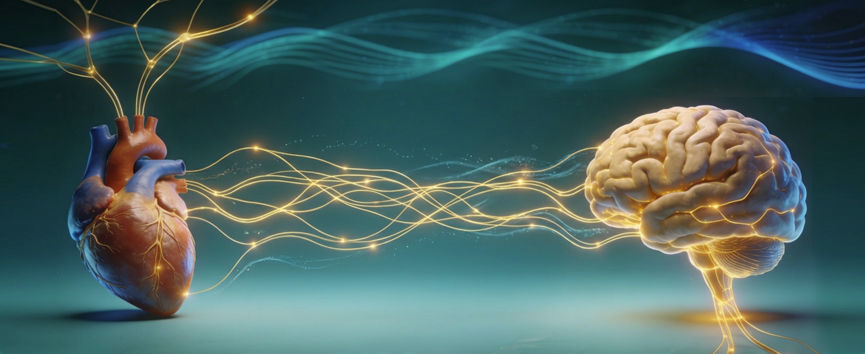



Transformational Breathing Meditation Practices
Once you have identified the source of a negative emotion, painful event, limiting belief, or challenging relationship—and have consciously moved that thought from your analytical mind into your heart space—you are ready to begin your Transformational Breathing Meditation Practice. Rather than avoiding or suppressing difficult emotions, this practice encourages you to acknowledge them with compassion and awareness. By remaining centered in your heart while using conscious breathing, you create a safe inner environment where emotional energy can be observed, processed, and gradually released. The breath becomes the bridge between the mind and body, allowing thoughts, emotions, and stored tension to surface naturally without becoming overwhelmed by them. Every slow, intentional breath invites greater calm, clarity, and presence into your awareness.
Transformational breathing is one of the primary core disciplines within conscious practice because it prepares the mind/body/spirit complex for deeper internal spiritual work. Conscious breathing activates the body’s natural relaxation response, quiets the constant activity of the ego and monkey mind, and helps regulate the nervous system. As breathing becomes slower, deeper, and more rhythmic, emotional resistance often begins to soften, allowing unresolved experiences that have been stored within the subconscious mind to be gently processed. The objective is not to relive painful experiences, but to observe them from the safety of your heart-conscious awareness, releasing the emotional charge while retaining the wisdom gained from the experience. Breath becomes both the catalyst for healing and the anchor that keeps you fully present throughout the process.
Like every meaningful spiritual discipline, transformational breathing becomes increasingly effective through daily practice. Each session strengthens your ability to remain centered, emotionally balanced, and consciously present regardless of external circumstances. Over time, the accumulated effects of conscious breathwork help raise your overall vibrational state, increase emotional resilience, improve mental clarity, and deepen your connection with your Higher Self. Combined with observation, forgiveness, meditation, gratitude, and heart-centered awareness, transformational breathing becomes an essential tool for emotional healing, personal transformation, and conscious awakening. It is not simply a breathing technique—it is a pathway to greater inner coherence, self-discovery, and lasting spiritual growth.
THÍCH NHẤT HẠNH | BREATHING INTO THE PRESENT MOMENT
For Thích Nhất Hạnh, the breath was far more than a technique for relaxation—it was a pathway home. The Vietnamese Zen master and peace activist spent decades teaching that one of the simplest ways to interrupt the constant movement of the mind is to return awareness to something that is always with us: the breath. Breathing in, we become aware that we are breathing in; breathing out, we become aware that we are breathing out. Within that seemingly simple practice, attention begins to shift away from worry about the future, attachment to the past, and the endless commentary of the mind toward direct experience of the present moment.
Conscious Breath • Presence • Inner Peace • Mindful Living


VIOLET FLAME OF LIGHT PRACTICE
Violet flame meditation is a visualization meditation technique that harnesses the power of the violet flame. Violet flame has various other names, including the “Flame of Transmutation,” “Flame of Mercy,” “Flame of Freedom,” and “Flame of Forgiveness. The Violet flame is the powerful symbol of the spiritual fire of self-transformation. It is a sacred fire with transformative spiritual energy that can help us move through many obstacles and challenges. It is believed that violet flame can heal many issues, including physical ailments, strong negative emotions, negative thoughts, and even relationship problems.






The Violet Flame Invocation

Releasing Emotions
Every forgiveness practice begins with a statement of love. Before attempting to release a painful memory, difficult relationship, or emotional wound, first establish the intention of love and compassion. As you identify the person, situation, or experience you desire to forgive, begin by consciously sending thoughts of love, understanding, and peace toward that person or circumstance—not because their actions were necessarily acceptable, but because you are choosing to free yourself from the emotional burden you have been carrying. Then gently shift your attention inward and focus on extending that same love toward yourself. Many of our deepest emotional wounds originate in childhood, making this practice equally valuable for healing and reconnecting with your inner child. By intentionally directing love toward others, yourself, and the younger parts of your own consciousness, you begin to change the energetic quality of your thoughts, emotions, and heart. Forgiveness is ultimately an act of liberation that restores your own peace rather than validating the past.
Step 4 of the emotional healing process is forgiveness through a conscious change in perception. Rather than remaining attached to the original emotional story, forgiveness invites us to see the experience from a higher level of awareness. One effective technique is the Sedona Method, using the simple sequence of questions: “Could I forgive ________?” “Would I forgive ________?” “When?” These questions gently bypass mental resistance and invite the subconscious mind to become willing to let go. We recommend repeating this process at least three times for each negative emotion, event, relationship, or recurring memory, allowing each repetition to deepen the release. Some individuals also find Emotional Freedom Techniques (EFT), commonly known as tapping, to be a valuable complementary practice for releasing emotional energy that has become stored within the body and nervous system.
An essential part of this work is recognizing the difference between forgiving others and forgiving yourself. Both are necessary, and often one cannot be fully accomplished without the other. Many people discover that while they have spent years blaming others, they have also been carrying hidden feelings of guilt, shame, regret, self-judgment, or disappointment toward themselves. Lasting emotional freedom comes when both forms of forgiveness are practiced with sincerity and consistency. Forgiveness does not erase the past, excuse harmful behavior, or require reconciliation with those who have caused pain. Instead, it releases the emotional attachment that keeps those experiences alive within us. Through daily practice, forgiveness gradually dissolves resentment, softens the ego’s need to remain wounded, raises our vibrational state, and creates space for greater compassion, emotional freedom, and inner peace. In many ways, forgiveness is one of the most powerful tools available for healing the mind, opening the heart, and continuing the journey of conscious awakening.
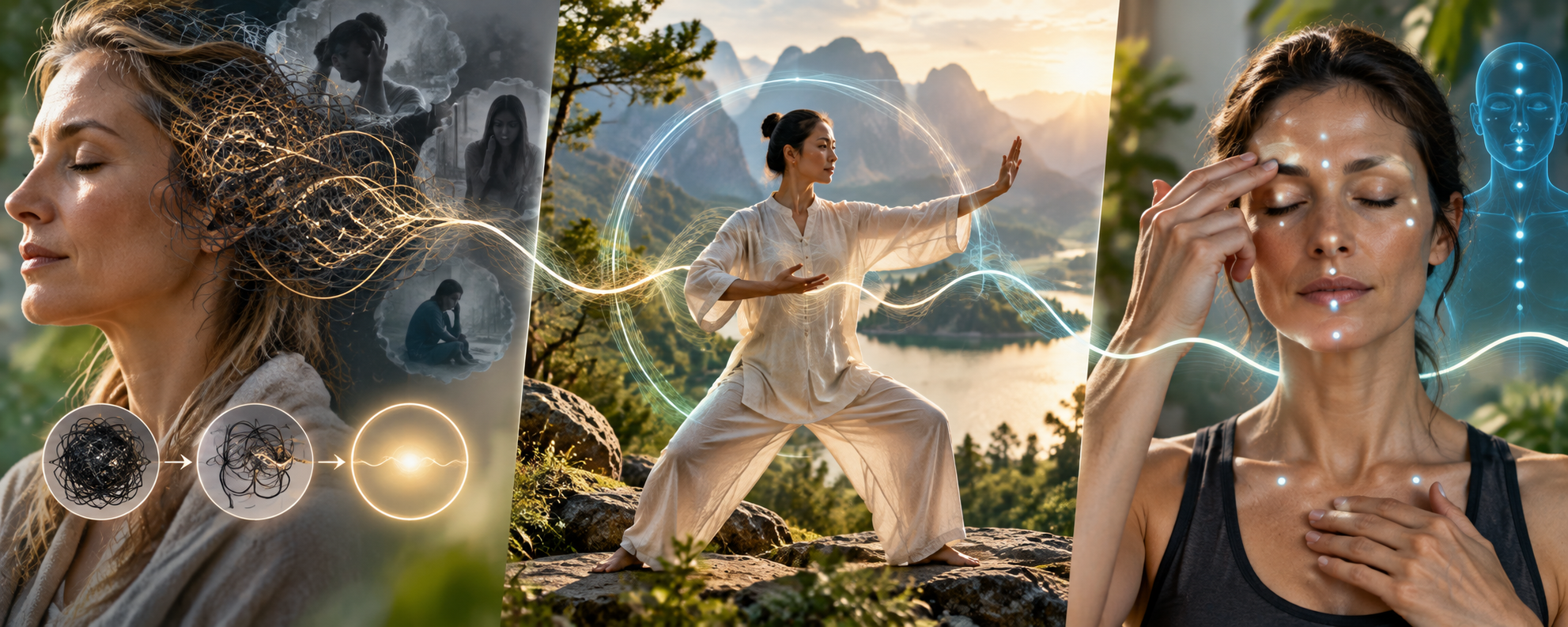
RELEASING EMOTIONS | FEELING, ALLOWING & LETTING GO
Releasing an emotion does not mean denying it, forcing it away or pretending an experience no longer matters. Often, release begins with the opposite: recognizing what is present, allowing ourselves to feel it without becoming consumed by it, and listening for what the emotion may be asking us to understand. Anger, grief, fear, resentment and regret can remain active long after the original experience has passed, especially when we continue replaying the story or resisting what we feel. The practice is not to erase the past, but to loosen its hold on the present—using awareness, breath, movement, reflection and other practices to help emotional energy move rather than remain something we continually carry.


Releasing Practice Tools
Once an emotion has been recognized, felt, and understood, the next step is allowing the emotional charge surrounding it to release. Different practices approach this process in different ways, which is why it can be helpful to experiment and discover what resonates with you. The Sedona Method uses simple questions to loosen our attachment to an emotion, Qigong uses breath and gentle movement to support relaxation, awareness, and the movement of qi within traditional Chinese practice, while EFT/Tapping combines focused attention with tapping on specific points of the body. These practices can also be incorporated into Transformational Breathing—using the inhale to become present with what is being felt and the exhale as the intentional moment of forgiveness, release, and letting go.
The Sedona Method approaches emotional release through a deceptively simple process of becoming aware of what we are feeling and gently exploring our willingness to let it go. During the releasing practice, identify the emotion, memory, person, or situation you are working with and ask: “Could I release this?” “Would I release this?” “When?” Rather than forcing an emotion away, the questions create space around it and invite a conscious shift in our relationship to what we have been carrying. Repeating the sequence several times can become a simple companion to breathing, forgiveness, and meditation practices. Combine all three practice tools; Transformational Breathing, Focus on inhale, then use the Forgiveness & Releasing tools on the exhale.




QIGONG PRACTICE:
Qigong is an ancient Chinese mind-body practice combining gentle movement, breathing, focused attention, and traditional concepts of qi, or vital energy. Within a releasing practice, its slow movements provide another way to step out of mental rumination and reconnect awareness with the body, while breath and movement can help create a calmer, more centered state. Rather than trying to think our way out of an emotion, Qigong gives us an embodied practice for settling, releasing tension, restoring balance, and consciously transitioning into a different inner state.
We suggest the practice habit of Qigong, taken from the 3,000 yr Taoist Energy Teachings. This clears all energy blocks and helps focus your intentions.. A Key practice habit to elevating your vibrational frequency.


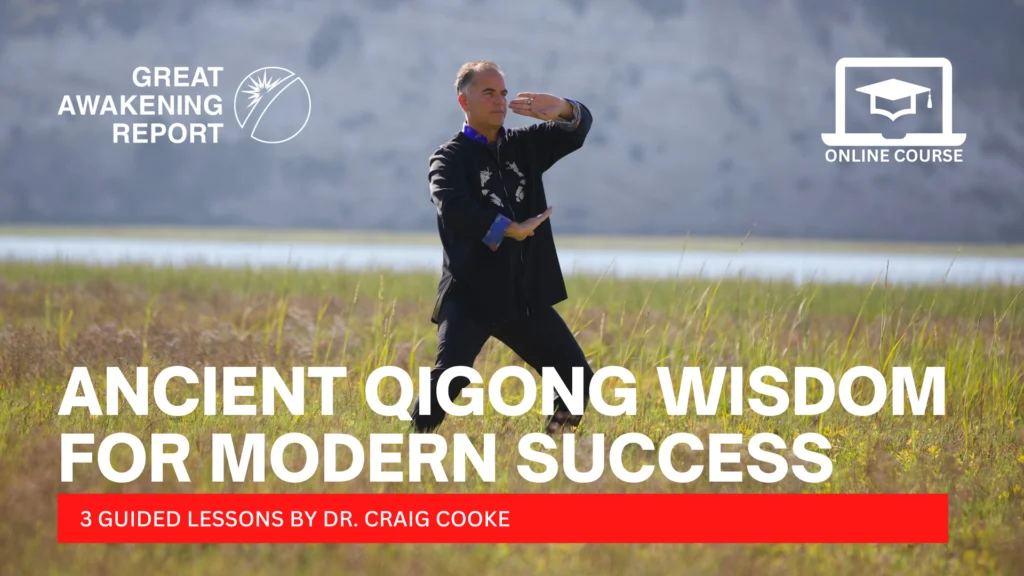
Tapping
Emotional Freedom Techniques, commonly called EFT or Tapping, combine focused attention on a difficult emotion or memory with rhythmic tapping on a sequence of points on the face and upper body. The practice encourages us to acknowledge what we are experiencing rather than suppressing it, while using tapping as a physical anchor during the process. Some people use EFT as a brief calming practice, while others incorporate it into deeper work surrounding fear, stress, painful memories, self-judgment, or recurring emotional patterns. Within the Emotional Conscious Reset, tapping offers another practical way to pause, acknowledge, process, and release before consciously returning to a more centered state.



Elevating Vibrational Frequency Practice
After working through the practices of observation, heart-centered awareness, transformational breathing, forgiveness, and emotional release, allow yourself to sit quietly for several minutes without attempting to do anything further. Simply rest in stillness and allow your mind, body, and emotions to naturally settle. This period of quiet integration is an essential part of the practice, giving your nervous system time to recalibrate and your energy to return to a more balanced state. As emotional tension begins to dissolve, you may notice a growing sense of lightness, spaciousness, and inner peace. The mind becomes quieter, the body feels more relaxed, and a subtle feeling of wellbeing begins to emerge from within rather than from external circumstances.
As your awareness continues to settle into your heart space, many people report experiencing a heightened sense of presence, clarity, and expanded perception. Some describe this as a higher vibrational state of consciousness or 5D awareness—a state characterized by greater compassion, gratitude, intuition, creativity, and connection with the present moment. Whether interpreted spiritually or psychologically, these experiences often reflect a shift away from fear-based thinking and toward greater coherence between the mind, emotions, and heart. Time seems to slow down, mental chatter fades into the background, and a gentle sense of openness replaces internal resistance. Creativity and inspiration begin to return naturally, not because they are forced, but because the mind is no longer occupied by unresolved emotional patterns and constant internal conflict.
With consistent daily practice, these moments of calm become increasingly familiar and accessible. Rather than being temporary experiences, they gradually develop into your natural baseline for living. You become more capable of responding thoughtfully instead of reacting impulsively, maintaining emotional balance during difficult situations, and remaining centered regardless of external events. Your attention naturally returns to the NOW, where life is actually being experienced. In this present-centered awareness, intuition becomes clearer, decisions become more aligned with your values, and relationships often become more authentic and compassionate. Elevating your vibrational frequency is not about escaping reality—it is about transforming the quality of your inner experience so you can meet life with greater wisdom, resilience, love, and conscious presence. It is within this state of coherence that lasting healing, personal transformation, and spiritual growth continue to unfold.

STILLNESS & INTEGRATION | ALLOWING THE SYSTEM TO SETTLE
This is the important piece that can easily get skipped: after Observer, heart work, breathing, forgiveness and release, stop doing. Give the mind, body and emotions time to integrate rather than immediately moving into another technique. This section can explore stillness, nervous-system settling, presence, quiet meditation and allowing rather than striving.




RAISING YOUR FREQUENCY | CULTIVATING THE STATE YOU WANT TO LIVE FROM
Then we move from clearing to cultivation. What do we intentionally strengthen once the emotional charge has been released? Gratitude, compassion, love, joy, creativity, service, nature, music, meditation and conscious attention all fit here. The point isn’t to chase a permanent “high vibe,” but to establish a more coherent emotional and conscious baseline that becomes easier to return to over time.




Manifesting Your Golden Timeline
The concept of The Golden Timeline represents the highest potential expression of humanity’s future—a future in which individual and collective consciousness evolve toward greater love, wisdom, cooperation, compassion, and unity. Rather than being a fixed destination, the Golden Timeline is created through the cumulative choices each of us makes every day. Every thought we think, every emotion we cultivate, every act of forgiveness, every expression of kindness, and every conscious decision contributes to the energetic field that shapes both our personal reality and the collective experience. From a fifth-dimensional (5D) perspective, reality is no longer viewed as something that simply happens to us; instead, it is something we actively participate in through our awareness, intention, thoughts, emotions, and vibration. Manifesting the Golden Timeline begins by choosing to become a conscious creator rather than an unconscious reactor. Every moment becomes an opportunity to align ourselves with the future we wish to experience, recognizing that the direction of our lives is determined less by external circumstances than by the quality of our consciousness. As our inner world becomes more coherent, our outer world increasingly reflects that coherence, allowing us to navigate life’s challenges with greater peace, resilience, and purpose.
Within many consciousness teachings, 5D Ascension is not understood as leaving the Earth or escaping the physical world. Instead, it describes a transformation in the quality of consciousness through which we gradually shift from living through the ego to living from the heart. Fear gives way to trust. Separation gives way to unity. Competition gives way to cooperation. Judgment gives way to compassion. Scarcity gives way to abundance. As we consistently raise our vibrational frequency through self-observation, meditation, forgiveness, gratitude, service, mindfulness, and heart-centered living, we naturally become more aligned with higher possibilities. Our intuition becomes clearer, synchronicities become more frequent, creativity expands, and we begin attracting experiences, relationships, and opportunities that reflect our inner state of coherence. Your Personal Golden Timeline begins with orientation—becoming clear about who you are becoming, what values guide your life, how you choose to serve others, and what future you are intentionally creating through your daily thoughts, habits, and actions. Orientation becomes the compass that keeps you centered during periods of uncertainty, enabling you to return continually to your highest vision rather than reacting to every external event.
Ultimately, manifesting the Golden Timeline is the practice of conscious living. It asks us to become intentional about where we place our attention, the information we consume, how we respond to adversity, and the energy we contribute to the world around us. Every day presents a choice between fear and love, reaction and response, division and unity, unconscious habit and conscious awareness. Through consistent daily practice, emotional mastery, disciplined thinking, forgiveness, gratitude, and service, we strengthen not only our own path of awakening but also contribute to the collective evolution of humanity. The Golden Timeline begins within each individual heart before it can ever emerge in the outer world. It is built one conscious choice at a time, one act of kindness at a time, one moment of forgiveness at a time, and one awakened life at a time. As each person becomes more coherent, compassionate, and purpose-driven, they become a stabilizing influence for their family, community, and the world. In this way, the Golden Timeline is no longer simply imagined or hoped for—it is intentionally created and consciously lived, one day, one choice, and one life at a time




As the veils between dimensions thin, many of us are feeling the call to move beyond old structures and identities, and return to something timeless within.

HEART OF A VOLUNTEER
There is no better Positive Mental Atmosphere Practice than giving back through volunteering. In fact, research has consistently shown that volunteering can have a multitude of benefits for mental health and overall well-being. Not only does volunteering provide a sense of purpose and fulfillment, but it also allows individuals to connect with others and develop meaningful relationships. The act of helping others can also give people a sense of control and positively impact feelings of self-worth. In addition to the personal benefits, volunteering can also have a ripple effect on society as a whole. By giving back to the community and supporting important causes, volunteers can help to create a stronger, more connected community and promote positive change. When it comes to volunteering, there are countless opportunities available. Whether it’s helping out at a local food bank, volunteering at a shelter, or even just lending a helping hand to a neighbor in need, every act of kindness and generosity can make a real difference. So if you’re looking to boost your mood, improve your mental health, and make a positive impact on your community, consider volunteering your time and skills. Not only will you be making a difference in the lives of others, but you’ll also be reaping the many personal benefits that come with giving back.
Positive Mental Attitude, defined as comprising the ‘plus’ characteristics represented by words as faith, integrity, hope, optimism, courage, initiative, generosity, tolerance, tact, kindliness and good common sense. – W. Clement Stone



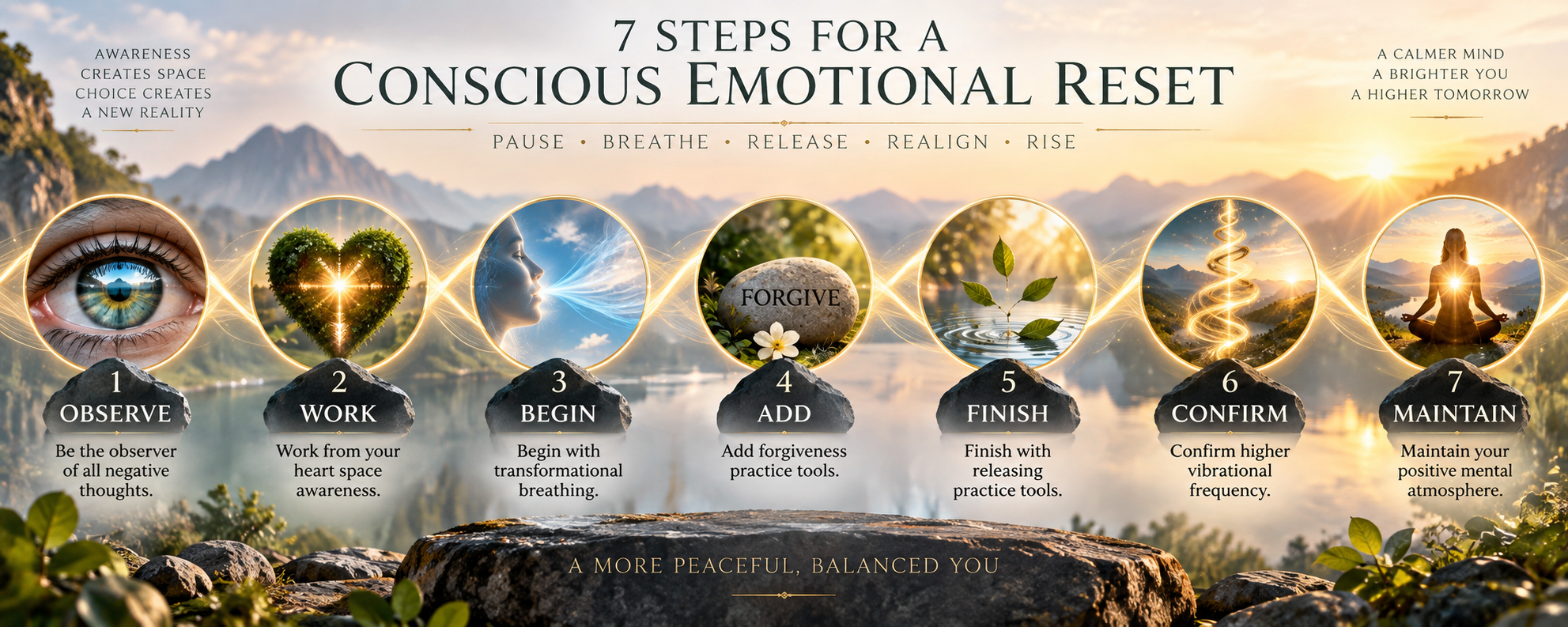
Emotional Conscious Reset
These 7 Steps to your daily practice are key to attaining and maintaining your ascension vibrational frequency. Our template is designed as a guideline for you to follow and will act to RESET you back to your higher frequency. Once practiced, you will come to rely on these 7 Steps to remove all negative reflexes, emotions, and reactions. The work will open pathways to new beginnings and, if needed, restoration of family and career relationships. The healing process is now complete with positive thoughts, words, or deeds returning you to your higher vibrational frequency.
Action Steps / Meditation / 5D Awareness / Vibrational Frequency







PHASE III: The Conscious Experience
Journey Home • 5D Awareness • Spiritual Gifts • The Event • Ascension
“The primary cause of unhappiness is never the situation but your thoughts about it.” — Eckhart Tolle
As knowledge deepens and conscious practices become part of everyday life, our experience of life itself begins to change. Phase III explores this evolving Conscious Experience—not as a destination to reach or a spiritual achievement to attain, but as the natural integration of everything we have learned, practiced, and embodied throughout the journey. It is the stage where information gradually becomes wisdom, practice becomes way of life, and awakening becomes something we live rather than simply study. Along this path, many people begin exploring themes such as the Journey Home, 5D Awareness, Spiritual Gifts, The Event, and Ascension. Whether understood through spiritual traditions, personal experience, or as symbolic frameworks for inner transformation, these subjects invite us to explore the deeper dimensions of consciousness while remaining grounded in daily life. The emphasis is not on escaping the world, but on experiencing it with greater presence, clarity, compassion, and purpose.
As our awareness expands, we often become more attentive to our intuition, our relationship with our thoughts and emotions, the energy we bring into every interaction, and our connection with others. Old beliefs and unconscious patterns become easier to recognize, allowing us to respond with greater discernment instead of automatic reaction. Moments of presence, gratitude, forgiveness, synchronicity, creativity, and inner peace may become more frequent, while our appreciation for nature, beauty, service, and meaningful relationships continues to deepen. Many people also report a growing sensitivity to subtle forms of guidance, a stronger sense of purpose, and the gradual awakening of their unique spiritual gifts—whether expressed through heightened intuition, compassion, creativity, healing, inspired leadership, or a deeper capacity to serve others. Regardless of how these experiences unfold, they remind us that genuine spiritual growth is measured less by extraordinary experiences than by the way we live, love, and contribute each day.
The Conscious Experience does not mean that life’s challenges disappear or that we exist in a permanent state of peace. Rather, it reflects a profound shift in how we meet those challenges. We become increasingly capable of choosing response over reaction, love over fear, presence over distraction, and wisdom over impulse while remaining aligned with our deepest values and inner knowing. This stage of the journey also reveals an important truth: awakening is never truly complete. Every insight opens the door to deeper understanding, every experience offers another opportunity to grow, and every season of life invites a new level of consciousness. In many ways, Phase III naturally leads us back to Phase I, where the cycle of learning begins again with greater awareness, humility, and purpose. The journey home is ultimately a journey inward—a lifelong process of remembering who we are, expressing our highest potential, and consciously participating in the ongoing evolution of ourselves and humanity.

The Choice to Awaken: Exiting the 3D Movie Matrix
Every journey of conscious awakening begins with a choice. For many people, that choice starts with a growing sense that the world is not exactly as it appears. Questions begin to surface about long-held beliefs, cultural conditioning, institutions, personal identity, and the deeper purpose of life itself. What once seemed unquestionable may gradually be reexamined through new experiences, study, observation, and personal reflection. Many describe this stage as awakening from the 3D movie matrix—a metaphor for recognizing the assumptions, narratives, and conditioned patterns that have shaped their perception of reality. As layers of illusion begin to fall away, individuals often experience a profound shift in awareness, realizing that much of what they once accepted without question deserves closer examination. Once this expanded perspective has been experienced, it can be difficult to return to previous ways of seeing the world. Many refer to this moment as crossing the truth bridge of no return, where the desire for deeper understanding becomes stronger than the comfort of familiar beliefs.
This transition marks the beginning of becoming a Truth Seeker. A Truth Seeker is not someone who claims to possess all the answers, but someone who is committed to asking better questions, examining evidence thoughtfully, and remaining open to continued learning. The path requires curiosity, humility, discernment, and the willingness to challenge one’s own assumptions as new understanding emerges. Along the way, individuals often discover that awakening is not only about uncovering information about the external world, but also about recognizing the internal beliefs, fears, emotional patterns, and conditioned responses that shape everyday experience. The search for truth gradually becomes both an outward investigation and an inward journey of self-discovery, revealing that personal transformation and expanded awareness develop together.
For many spiritual traditions, this process ultimately leads to what may be called the Soul’s Choice to Ascend. Rather than a single event, Ascension is viewed as an ongoing decision to live with greater awareness, compassion, integrity, and alignment with one’s highest values. It is the conscious choice to move beyond fear, separation, and unconscious reaction toward love, responsibility, service, and heart-centered living. Every day presents opportunities to reinforce that choice through the thoughts we cultivate, the relationships we nurture, and the actions we take. Exiting the “3D Movie Matrix” is therefore not about escaping the physical world; it is about seeing the world through a new lens of consciousness. As awareness expands, life is no longer experienced as something happening to us, but as an invitation to participate consciously in our own growth, our own awakening, and the collective evolution of humanity.
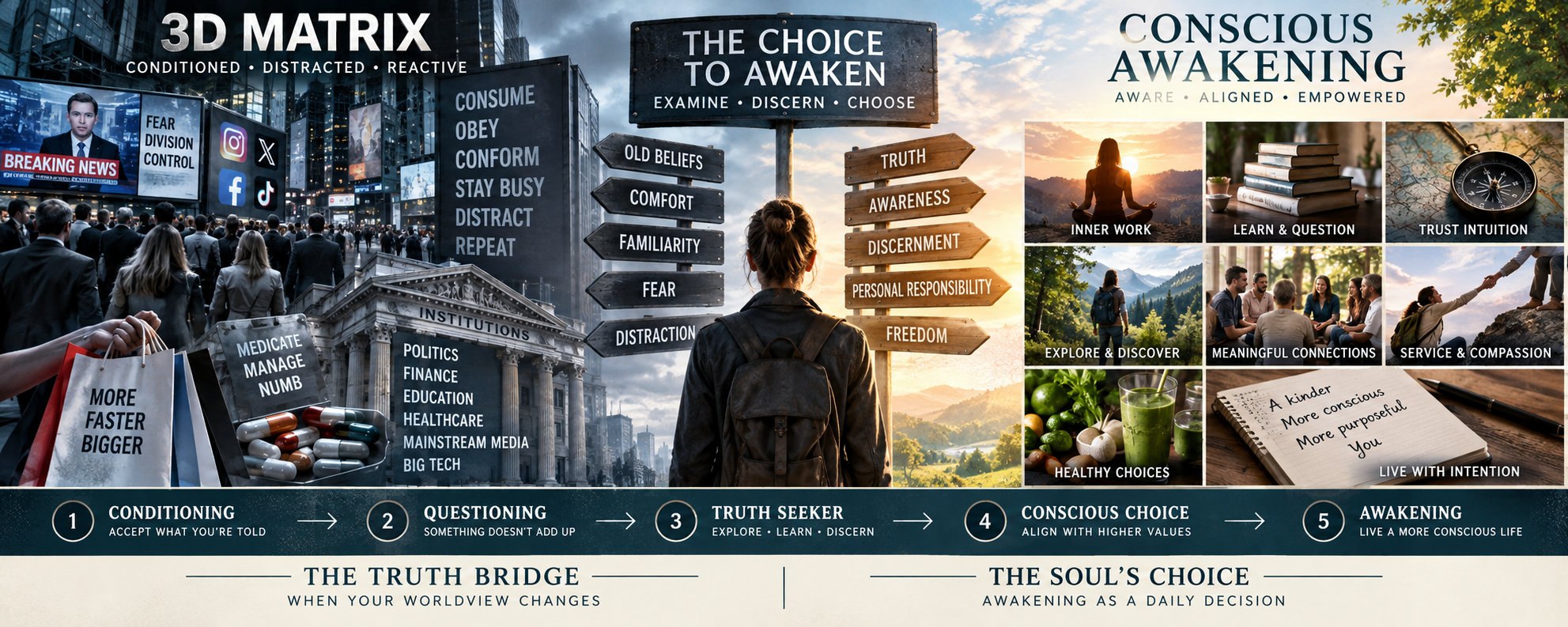
THE TRUTH BRIDGE | WHEN YOUR WORLDVIEW CHANGES
Awakening often begins quietly, with a question, an inconsistency, or an experience that no longer fits comfortably within our existing understanding of the world. As one assumption is reconsidered, others may follow, creating a period in which familiar beliefs, identities, institutions, relationships, and even our understanding of ourselves are viewed through a different lens. Crossing this Truth Bridge can be liberating, but it can also be disorienting; releasing an old worldview does not mean that every new explanation we encounter is automatically true. This is where discernment becomes essential. The Truth Seeker learns to remain curious without becoming gullible, skeptical without becoming closed, and willing to question both established narratives and alternative ones. Awakening is not simply replacing one belief system with another—it is developing the courage and humility to continually examine what we believe, why we believe it, and whether it still reflects what we have come to understand.



THE SOUL’S CHOICE | AWAKENING AS A DAILY DECISION
Eventually, awakening moves beyond what we know and becomes a question of how we choose to live. Greater awareness carries greater responsibility: to observe our reactions, act with integrity, practice forgiveness, cultivate compassion, serve others, establish healthy boundaries, and consciously decide what kind of energy and influence we contribute to the world around us. From this perspective, the Soul’s Choice to Ascend is not a single dramatic moment or destination, but a decision repeatedly made through ordinary life—choosing awareness over unconscious habit, courage over fear, response over reaction, unity over unnecessary division, and service over self-interest. We may not control every circumstance we encounter, but we continually choose the consciousness with which we meet it. Awakening opens the door; how we live afterward determines the path we walk.




Synchronicities
As our awareness expands, many people begin to notice an increase in what are often called synchronicities—meaningful coincidences that seem too timely or significant to dismiss as random chance. These experiences may include unexpectedly crossing paths with like-minded individuals, discovering exactly the right book, article, or teacher at the perfect moment, hearing the same message from multiple unrelated sources, or encountering opportunities that appear to arrive precisely when they are needed. These seemingly ordinary events often become powerful in-the-moment learning experiences that influence our decisions, reshape our perspective, and sometimes alter the entire direction of our lives. Whether understood spiritually, psychologically, or simply as heightened awareness, synchronicities encourage us to pay closer attention to the unfolding patterns within our everyday experience.
One of the most important conditions for recognizing synchronicities is learning to remain present. When our attention is consumed by regret about the past or anxiety about the future, we often overlook the subtle guidance that exists in the present moment. Being fully present allows us to notice conversations, opportunities, intuitive feelings, unexpected meetings, and recurring themes that might otherwise pass unnoticed. Many spiritual traditions describe this state of presence as a form of communication with the universe, the Higher Self, or the One Infinite Creator. As we cultivate greater awareness through meditation, observation, gratitude, and heart-centered living, our intuition often becomes clearer, helping us recognize meaningful connections that support our personal growth and conscious evolution.
Many people also report noticing repeating number patterns such as 11:11, 2:22, 3:33, 4:44, and other recurring sequences that seem to appear during important moments in their lives. While there is no universal scientific explanation for the significance of these numbers, many interpret them as personal reminders to pause, become present, or reflect on their current thoughts and direction. Others view them as symbolic markers of alignment, encouragement, or heightened awareness. Regardless of one’s interpretation, these experiences invite us to observe life with greater curiosity rather than certainty. Perhaps the greatest lesson of synchronicity is not proving that every event has a hidden meaning, but developing the awareness to recognize that life often unfolds through interconnected relationships, meaningful patterns, and opportunities that reveal themselves when we are fully awake to the present moment. In that sense, there may be far more connection in our lives than we first realize.
Consecutive Numbers • Crossing Paths • Conversations • Articles & Videos • Intuitive Knowing
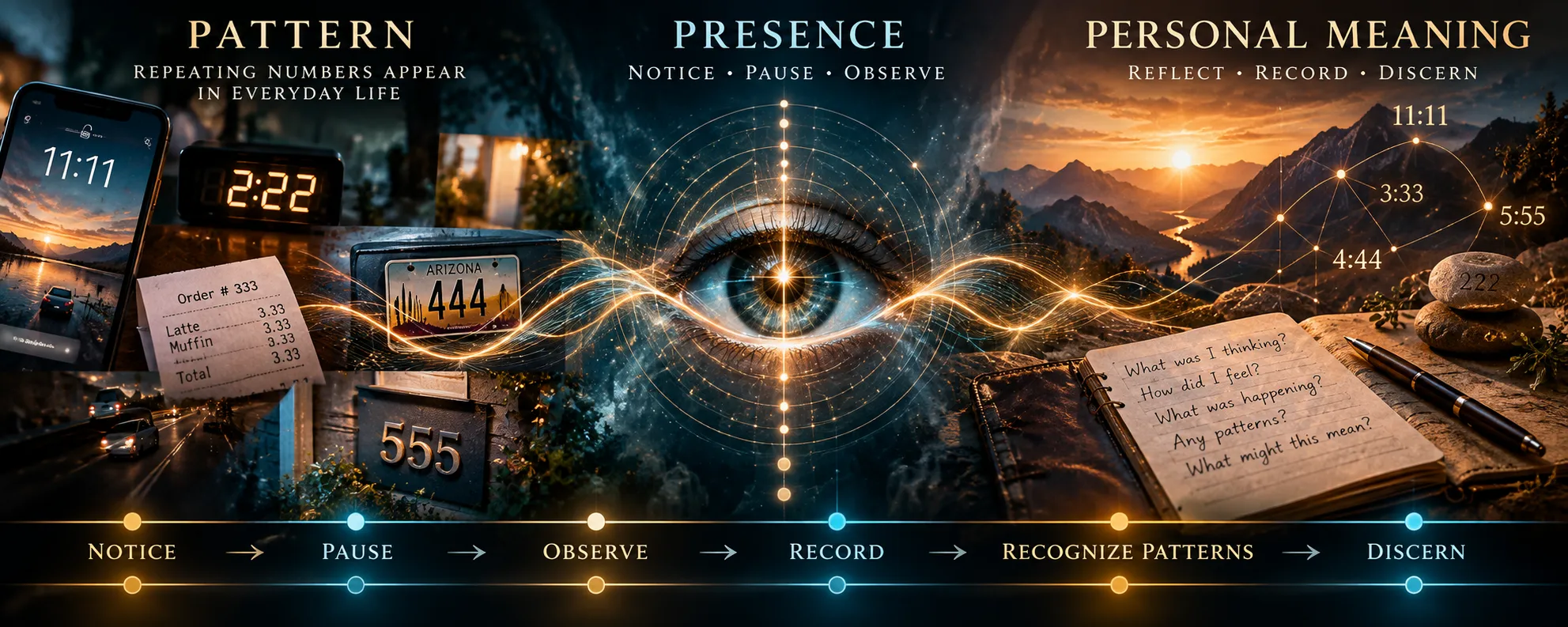
CONSECUTIVE NUMBERS | PATTERN, PRESENCE & PERSONAL MEANING
Repeating number sequences such as 11:11, 2:22, 3:33, 4:44, 5:55, and personally significant numbers are among the most commonly reported forms of synchronicity. Some spiritual traditions and contemporary numerology interpret these patterns as signs of alignment, transition, encouragement, or communication, while psychology offers another perspective: once something becomes personally meaningful, our attention becomes more likely to recognize it. Rather than needing to prove where the pattern originates, consecutive numbers can become useful moments of conscious pause—an invitation to notice what we were thinking, feeling, questioning, or experiencing when the number appeared. Over time, recording these moments may reveal whether certain numbers have developed a consistent personal meaning, transforming the experience from simply seeing a number into a practice of presence, observation, intuition, and discernment.
NOTICE → PAUSE → OBSERVE → RECORD → RECOGNIZE PATTERNS → DISCERN





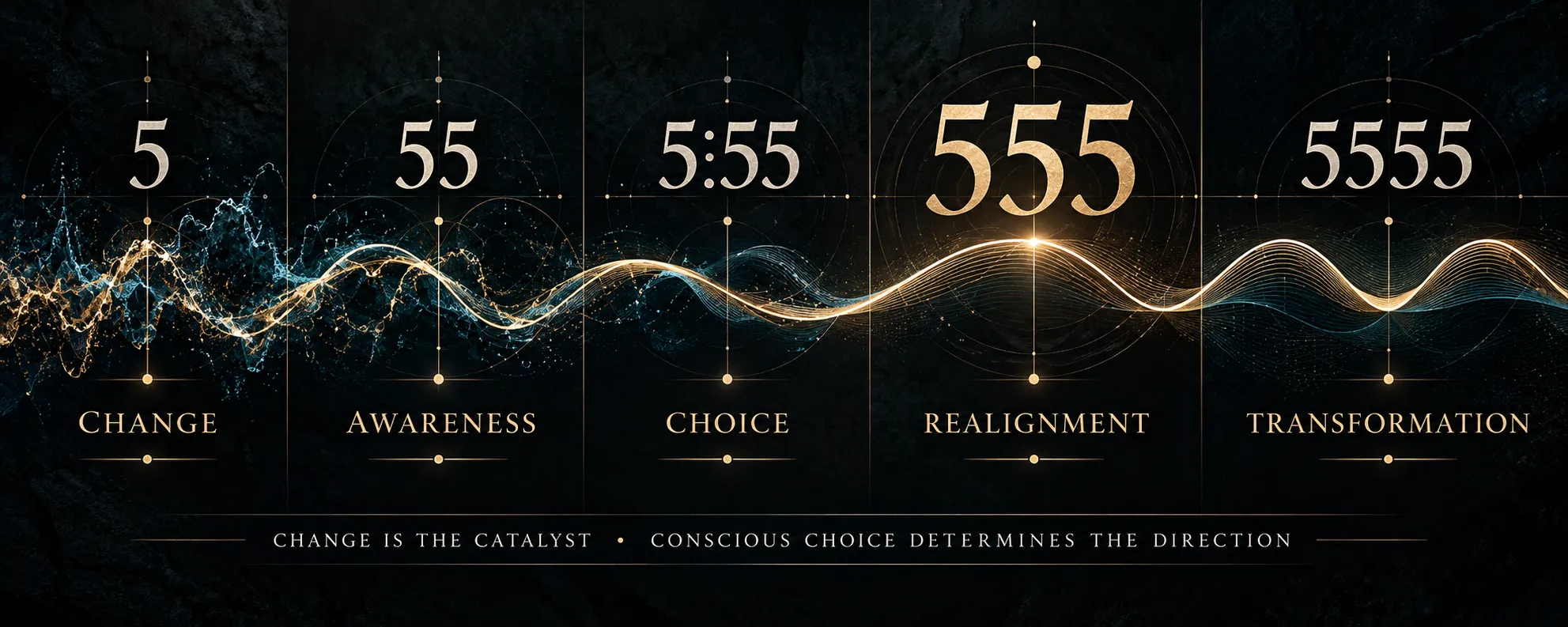
555 | THE THRESHOLD OF TRANSFORMATION
CHANGE IS THE CATALYST. CONSCIOUS CHOICE DETERMINES THE DIRECTION.
Across numerology and contemporary metaphysical traditions, the number 5 is strongly associated with change, movement, freedom, adaptability and new experience. Repeated sequences such as 55, 555 or 5:55 are often interpreted as amplifying those themes—a symbolic indication that familiar patterns may be shifting and that a period of transition or expansion is underway. Rather than treating these numbers as predictions, however, they can be approached as moments of awareness: an invitation to notice what is already moving, changing or asking to be reconsidered.
There is another interpretation of 5 that adds an important dimension. Within some numerological and esoteric traditions, the five-pointed figure symbolizes consciousness or spirit directing material experience. Five also occupies the center of the single-digit sequence from 1 through 9, making it symbolically a pivot or turning point. From this perspective, the deeper lesson of 5 is not simply change is coming. It is learning how to remain centered enough to respond consciously when change arrives. Adaptability becomes more important than resistance, but discernment remains more important than impulsivity.
This gives 555 a particularly useful meaning for the awakening journey. Change may provide the catalyst, but we still participate in what comes next. We can cling to what has become familiar, react impulsively simply because circumstances are moving, or become the Observer and ask what the transition is revealing. What needs to be released? What still belongs? Where is greater freedom trying to emerge? And which direction most closely reflects who we are becoming? Seen this way, 555 represents not a predetermined outcome, but a Threshold of Transformation—the space where change creates possibility and conscious choice begins shaping the direction.
555 = CHANGE → AWARENESS → CHOICE → REALIGNMENT → TRANSFORMATION





The Power of Heart Consciousness
The Path of Expansion & Experience
In a world that often rewards logic, achievement, external validation, and constant mental activity, learning to live from the heart is both a courageous choice and a profound return to our authentic nature. From an early age, many of us are conditioned to rely almost exclusively on the analytical mind—solving problems, measuring success, seeking certainty, and maintaining control. While the intellect is an invaluable tool, it was never intended to be our only guide. Many spiritual traditions teach that the heart possesses its own form of intelligence—one that perceives through intuition, compassion, wisdom, and direct knowing rather than analysis alone. It is through the heart that we experience our deepest connection with ourselves, with other people, with nature, and, for many, with the Universe or Source. The mind often separates, categorizes, and evaluates; the heart naturally seeks understanding, unity, and relationship.
Heart-conscious living invites us to gently shift our center of awareness from the constant activity of the thinking mind into the quiet presence of the heart. This does not require abandoning reason or ignoring practical realities. Instead, it is about bringing the mind into harmony with the heart so that our decisions reflect both wisdom and compassion. As we spend more time in our heart space through meditation, observation, gratitude, forgiveness, and conscious breathing, we begin to notice subtle changes within ourselves. We become less reactive and more responsive. Intuition becomes clearer. Synchronicities seem to occur more frequently. Relationships deepen. Creativity flows more naturally. Rather than forcing life to unfold according to our expectations, we begin learning to trust its deeper rhythm. It is often through this state of openness that the greatest insights, opportunities, and transformations emerge.
The path of heart consciousness is ultimately a path of continual expansion through experience. Every challenge becomes an opportunity to choose love over fear, understanding over judgment, and presence over distraction. It is not always easy, for the ego naturally seeks certainty, control, and self-protection, while the heart asks us to trust, surrender, and remain open even during uncertainty. Perhaps this is one of life’s greatest mysteries: the more we release our need to control every outcome, the more aligned we become with our highest potential. Living from the heart does not remove life’s difficulties, but it transforms how we meet them. As heart consciousness expands, we experience greater peace, resilience, compassion, and coherence. We begin to recognize that true spiritual growth is not found in escaping the world, but in meeting every moment with an open heart, an awakened awareness, and a willingness to continue growing through every experience life offers.

HEART INTELLIGENCE | BEYOND THE ANALYTICAL MIND
This explores the central idea in your opening paragraph: the intellect is enormously valuable, but analysis alone does not encompass the full range of human perception and decision-making. Heart-consciousness teachings invite us to integrate reason with intuition, compassion, emotional awareness, and inner knowing, creating a more balanced relationship between what we think and what we feel. The objective is not to choose heart instead of mind, but to bring the two into greater partnership—allowing discernment and logic to remain present while making room for the quieter information that emerges through empathy, intuition, relationship, and direct experience.




THE EXPANSIVE HEART | LOVE, CONNECTION & CONSCIOUSNESS
As heart consciousness develops, the focus naturally expands beyond the individual self toward relationship, compassion, connection, service, nature, and our sense of belonging within something larger than ourselves. Many contemplative and spiritual traditions describe this movement as an opening of the heart—a gradual loosening of fear, judgment, defensiveness, and separation that allows us to encounter life with greater openness. Expansion does not mean becoming passive or abandoning boundaries; it means increasing our capacity to remain compassionate and connected without losing discernment. In this sense, the heart becomes not simply the center of emotion, but a practice of how we relate to ourselves, other people, and the world.





Conversations with the Universe
The universe is always speaking—are you listening? One of the most profound shifts that occurs during conscious awakening is the realization that life is continually offering guidance, insight, and opportunities for growth. Learning to communicate with the Universe begins not by speaking, but through the Art of Observing. It is cultivated through stillness, presence, curiosity, and a willingness to pay attention to what is unfolding around and within us. Many spiritual traditions teach that guidance rarely arrives as a dramatic revelation. More often, it emerges quietly through intuition, recurring themes, meaningful encounters, moments of inspiration, or an unexpected sense of inner clarity. The more present we become, the more aware we are of these subtle forms of communication that are easily overlooked amid the noise and distractions of everyday life.
One simple yet powerful practice is to ask three heartfelt questions before going to sleep. These questions should arise from genuine curiosity rather than a desire to force a particular outcome. After asking them, release the need to immediately find an answer and simply remain open. Over the following days, observe the synchronicities, symbols, conversations, dreams, emotions, and opportunities that naturally present themselves. You may discover your answer in an unexpected passage from a book, a comment made by a stranger, a meaningful dream, a recurring symbol, a quiet intuitive feeling, or a sudden moment of inner knowing. Guidance often appears in forms that cannot be predicted, which is why patience and observation are such essential parts of the practice. The objective is not to search obsessively for signs, but to develop a greater awareness of the meaningful patterns already unfolding within your life.
As your relationship with the Universe deepens, these conversations gradually become less about receiving answers and more about developing trust. You begin to recognize that communication is not limited to words, but occurs through experience, intuition, relationships, nature, creativity, and the unfolding circumstances of daily life. The more consistently you practice observation, meditation, gratitude, and heart-centered awareness, the clearer this dialogue often becomes. At the same time, discernment remains essential. Not every coincidence carries profound meaning, and not every inner impression should be accepted uncritically. The practice is one of quiet listening, thoughtful reflection, and allowing wisdom to emerge naturally over time. In many ways, the greatest conversation with the Universe is the one that transforms you from within, teaching you to trust your intuition, live more consciously, and recognize that guidance has been available all along to those willing to pause, observe, and truly listen.
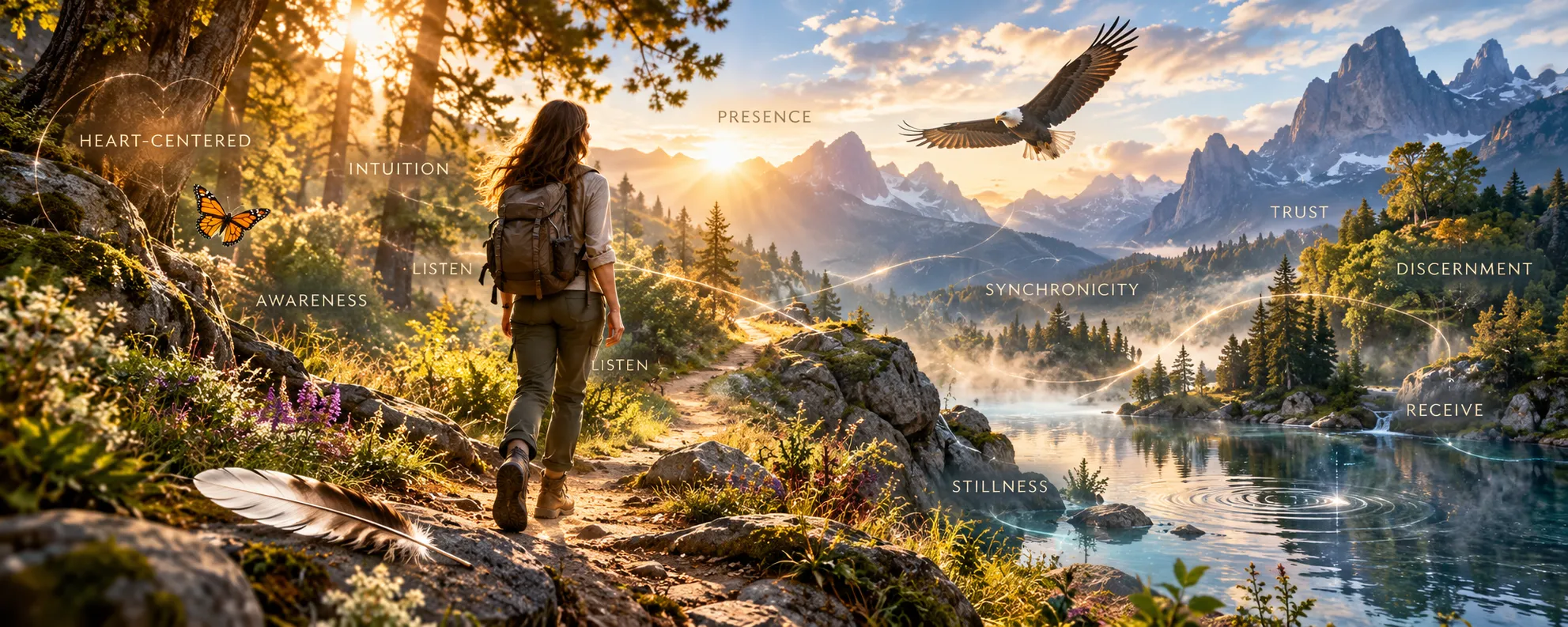
ASKING & LISTENING | CREATING A DIALOGUE
A conversation begins with both a question and the willingness to listen. Within spiritual practice, asking for guidance can be as simple as becoming still, forming a clear and sincere question, and then releasing the need to determine exactly how or when an answer should arrive. The three-question practice before sleep offers one way to develop this relationship: identify what you genuinely want greater clarity about, ask without demanding a particular outcome, and then allow the question to rest. The practice shifts our attention from continually searching for answers toward becoming receptive to insight—through reflection, intuition, dreams, experience, or simply a clearer understanding that develops with time.





LEARNING TO LISTEN | INTUITION, GUIDANCE & DISCERNMENT
Learning to listen may be the more difficult half of the conversation. Guidance is often described not as a loud external voice, but as a subtle impression, recurring insight, unexpected clarity, creative inspiration, dream, meaningful encounter, or quiet intuitive knowing. Developing this awareness requires both receptivity and discernment: noticing what arises without automatically assigning meaning to everything we experience. Journaling, meditation, time in nature, reflection, and periods of silence can help us recognize recurring patterns while giving impressions time to reveal whether they carry lasting significance. The goal is not to become dependent upon signs, but to develop a quieter relationship with our own awareness—one in which we become increasingly capable of distinguishing fear, wishful thinking, mental noise, and genuine inner guidance.







Awaken Your Spiritual Gifts
As your consciousness expands and you become more capable of attaining and maintaining a higher state of awareness, many spiritual traditions teach that your natural spiritual gifts begin to awaken. These abilities are not viewed as supernatural powers reserved for a select few, but as innate human capacities that become more accessible through consistent inner work, emotional healing, meditation, heart-centered living, and conscious practice. As your Ascension frequency becomes more stable, your perception often grows more refined, allowing you to experience greater intuition, inner clarity, creativity, compassion, and connection with life. The intention is never to seek spiritual gifts for personal status or recognition, but to allow them to develop naturally in service to your soul’s purpose and the well-being of others.
Among the gifts most commonly described across spiritual traditions are heightened intuition, inner knowing, discernment, empathy, compassion, healing presence, creative inspiration, expanded awareness, lucid dreaming, meaningful synchronicities, and a deeper sense of connection with nature and all living things. Some individuals report increased sensitivity to energy, stronger intuitive decision-making, vivid dreams, spontaneous insights, enhanced meditation experiences, or moments of profound inner peace. Others discover gifts for teaching, counseling, mentoring, artistic expression, problem-solving, leadership, or creating environments that help others heal and grow. Each person’s gifts unfold uniquely according to their life experiences, natural abilities, and soul’s purpose. There is no single path or timeline, and comparison with others only distracts from one’s own authentic development.
The awakening of spiritual gifts is best approached with humility, patience, and discernment. Genuine spiritual maturity is measured not by extraordinary experiences, but by the qualities we embody every day—love, kindness, integrity, forgiveness, service, gratitude, wisdom, and compassion. As these qualities deepen, the gifts that truly support your highest purpose naturally emerge at the appropriate time. Rather than striving to acquire special abilities, focus on becoming the kind of person through whom greater awareness can express itself. Continue your daily practices of observation, meditation, heart-conscious living, emotional healing, and forgiveness. As your inner world becomes more coherent and your vibrational state stabilizes, the gifts that are meant for you will unfold naturally, supporting both your own journey of awakening and your ability to contribute positively to the lives of others. The greatest spiritual gift is not what you can do—it is who you become.
Spiritual Gifts • Telepathy • Remote Viewing • Healing • Intuitive Empath • Miracles • Downloads
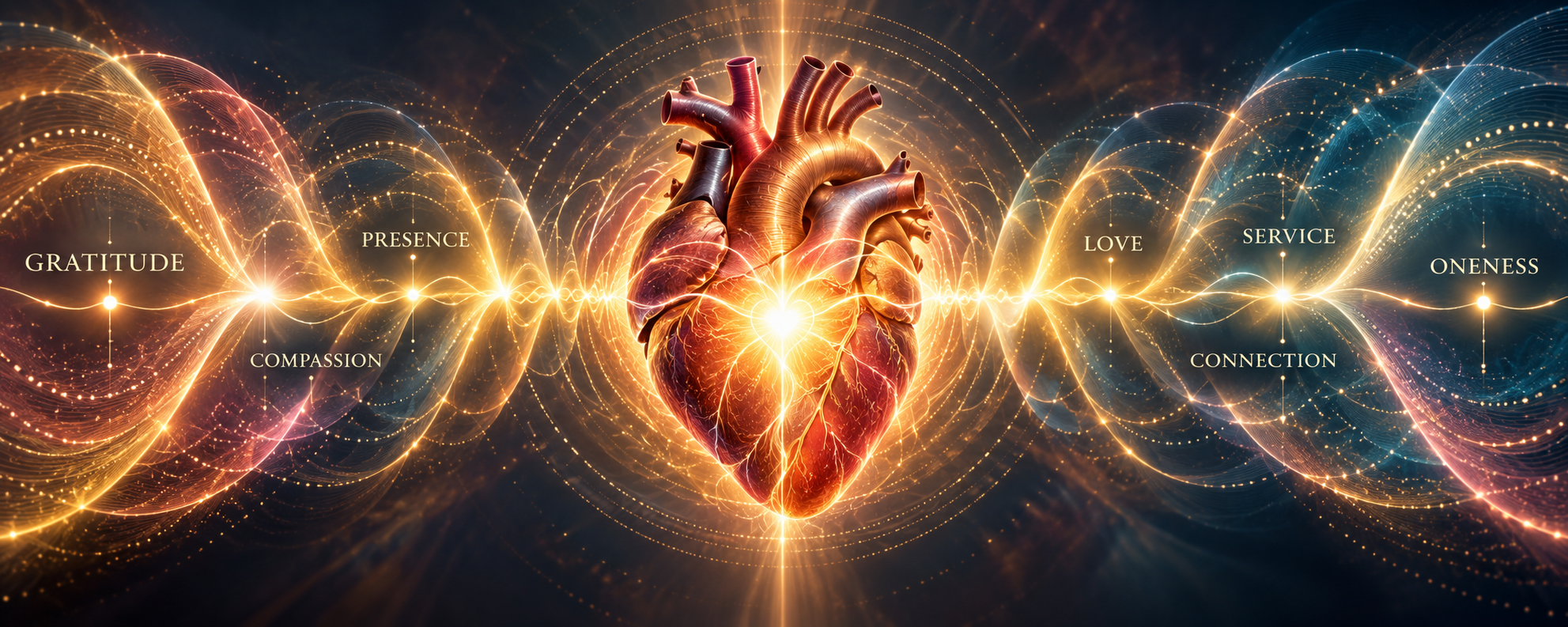
THE SOUL’S RESONATING FREQUENCY | GRATITUDE & UNCONDITIONAL LOVE
Within many consciousness traditions, gratitude and unconditional love are considered among the highest expressions of our inner state—not because they require us to ignore difficulty, but because they change the way we meet it. Gratitude redirects attention toward what is present, meaningful, and worthy of appreciation, while unconditional love asks us to move beyond judgment, expectation, and transactional relationships toward greater compassion and acceptance. Together, these practices offer a way of consciously cultivating the Soul’s Resonating Frequency: an inner orientation grounded in appreciation, openness, connection, and love.
Gratitude is perhaps the most accessible place to begin because it can be practiced immediately. We can pause and appreciate a person, experience, relationship, lesson, opportunity, moment in nature, or something as simple as the breath moving through the body. Research on gratitude also provides a grounded complement to its spiritual use, associating gratitude practices with aspects of emotional well-being, social connection, and stress regulation. The objective is not forced positivity, but the deliberate expansion of perspective—allowing what is good and meaningful to remain visible even when life is difficult.
Unconditional love extends that practice outward. It does not mean accepting harmful behavior, eliminating boundaries, or agreeing with everyone around us. Rather, it asks whether we can maintain our humanity, compassion, and deeper sense of connection without requiring another person to become who we want them to be. Within the larger journey of awakening, gratitude and unconditional love become more than emotions we occasionally experience; they become states we intentionally practice. And perhaps that is the deeper preparation for awakening our spiritual gifts: rather than concentrating first on what extraordinary abilities might emerge, we concentrate on the quality of consciousness through which those gifts would be expressed.
Attitude of Gratitude • 52% more Positive than Negative Mental Atmosphere • Unconditional Love








The Journey Inside vs. Outside
The outer world often mirrors the inner one. Much of modern culture encourages us to seek fulfillment through external achievement, recognition, material success, approval, status, and control. From an early age, we are taught to believe that happiness lies somewhere outside ourselves—that once we accomplish enough, acquire enough, or become enough, we will finally experience lasting peace. While external accomplishments certainly have value, they cannot replace the deeper sense of fulfillment that arises from knowing ourselves. Lasting transformation begins not by changing the world around us, but by changing the relationship we have with ourselves. As our inner world becomes more balanced, compassionate, and conscious, our perception of the outer world naturally begins to change as well.
The inward journey is a process of returning to the heart. Through self-awareness, meditation, observation, forgiveness, gratitude, and daily conscious practice, we gradually release the fears, judgments, emotional wounds, and limiting beliefs that have shaped our perception for much of our lives. As these layers begin to dissolve, a quieter and more authentic awareness emerges. The constant noise of the analytical mind begins to soften. Clarity replaces confusion. Intuition becomes stronger. Instead of attempting to think our way through every challenge, we begin to feel our way through life with greater trust, discernment, and presence. Decisions become less driven by fear and more aligned with our deepest values and inner knowing. Many people describe this as living from the heart rather than from the conditioned ego.
This is the path of heart expansion—a continual unfolding of consciousness that transforms not only how we see the world, but how we experience ourselves within it. As our vibrational frequency rises through consistent inner work, we naturally become more compassionate, resilient, creative, and connected to life. The search for meaning gradually shifts from seeking answers outside ourselves to discovering the wisdom that has always existed within. For many spiritual traditions, this inward journey is ultimately a journey home—a remembrance of our connection to the One Infinite Creator, Source, or universal consciousness from which all life emerges. The farther we travel inward with honesty, humility, and an open heart, the more we discover that what we have been searching for has never been separate from us. The journey home has always begun within.
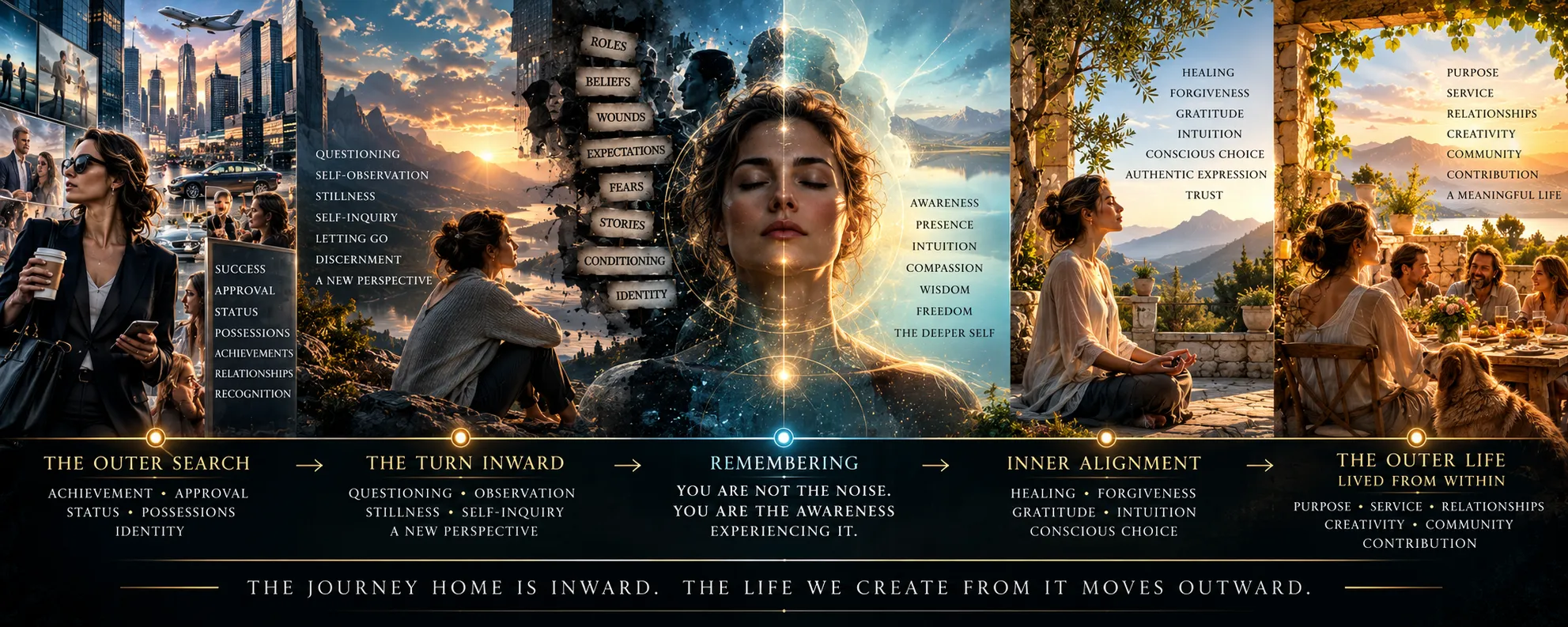
THE JOURNEY WITHIN | REMEMBERING WHO YOU ARE
You are more than the identity you have constructed within this lifetime. From the moment we enter the world, an identity begins forming around us—our name, family, culture, experiences, relationships, accomplishments, wounds, beliefs, roles, responsibilities, successes, and failures. Over time, the voice inside our head can become so familiar that we assume it is who we are. We identify with our thoughts, our history, our profession, our relationships, our possessions, and even the stories we repeatedly tell about ourselves. Yet many spiritual traditions offer a radically different perspective: beneath the personality and the changing circumstances of a human life exists a deeper awareness—the soul, consciousness, or witnessing presence experiencing life through the body. From this perspective, we are not simply bodies that happen to contain souls; we are souls temporarily experiencing physical life through human form.
If we approach life as a soul’s journey, our experiences begin to take on a different dimension. Challenges can become opportunities for learning. Relationships can reveal aspects of ourselves that still need healing or understanding. Loss can teach us what cannot be possessed. Love can expand our capacity for connection. Choice allows us to discover who we are becoming. This does not mean every painful event was deliberately chosen or that suffering should be spiritually rationalized. Rather, it invites us to ask a different question when life presents us with an experience: What can this teach me? The journey becomes less about constructing the perfect external life and more about developing wisdom, compassion, courage, discernment, forgiveness, love, and conscious awareness through the life we are actually living.
Awakening, then, can be understood as a process of re-remembering. We begin separating the Observer from the noise, the consciousness from the conditioning, and the deeper Self from the identity accumulated around it. The mind still thinks. The personality still exists. We still have responsibilities, relationships, preferences, and very human emotions. But they no longer have to define the entirety of who we are. Gradually, the question shifts from What should I become? toward What am I here to learn, experience, express, and contribute? Alignment occurs when the outer life begins reflecting those deeper answers—when our relationships, choices, work, service, priorities, and daily actions increasingly express the consciousness we have discovered within.
Perhaps that is what makes the inward journey a journey home. We travel inward not to escape the human experience, but to understand more fully who is experiencing it. The destination is not somewhere beyond this life; it is greater presence within it. We learn to inhabit the body without believing we are only the body, use the mind without believing we are every thought, participate in the world without allowing the world’s noise to determine our identity, and honor our individual story without forgetting the deeper consciousness beneath it. The journey inward ultimately brings us back outward—but differently: more awake, more intentional, more loving, and increasingly aligned with the soul we came here to express.
REMEMBERING WHO YOU ARE | BEYOND THE CONDITIONED IDENTITY
This is the realization piece: I have thoughts, but I am not my thoughts. I have a personality and identity, but something deeper is aware of them. Resources could explore the witness/Observer, consciousness beyond ego, spiritual identity, the soul, and remembering the deeper Self.




THE SOUL’S JOURNEY | LEARNING, ALIGNMENT & PURPOSE
This moves from realization into embodiment. If this life is an experience of consciousness, how do I live differently because I recognize that? This is where we explore soul growth, lessons, purpose, service, relationships as teachers, conscious choice, and bringing the inner realization into the way we actually live.







Finding Your Tribe
The final step in the Awakening Practice is finding your tribe—a community of like-minded individuals who share your commitment to conscious living, personal responsibility, spiritual growth, and service to others. As your awareness expands, it is common to discover that some relationships naturally deepen while others gradually fall away. This is not a judgment of those who remain on different paths, but a reflection of personal growth and changing priorities. Many people find themselves drawn toward individuals and communities that value authenticity, compassion, cooperation, resilience, and a shared vision for humanity’s future. Finding your tribe is ultimately about finding a place where you are encouraged to continue growing, contributing, and living in alignment with your deepest values.
Many consciousness traditions describe this next stage as the formation of intentional communities or “Islands of Light”—small groups of people who choose to build resilient, heart-centered ways of living during periods of significant social and economic change. Within the GAR framework, these communities are envisioned as Transition Villages: places where individuals and families can support one another through practical cooperation, conscious leadership, lifelong learning, wellness, food resilience, sustainable living, and spiritual practice. Whether located in rural areas, mountain regions, coastal communities, or other locations that members consider appropriate for their goals, these villages represent more than physical places—they represent living examples of a culture founded on trust, service, responsibility, and shared purpose. For some individuals, this may include relocating to areas they believe better support the life they wish to create, particularly if they seek greater resilience during future periods of uncertainty or disruption.
Ultimately, your true tribe is not defined by geography alone but by shared values, shared purpose, and a shared commitment to becoming the best version of yourselves. The New Earth is not simply a destination waiting to be discovered; it is something that is built through conscious relationships, compassionate leadership, and communities that embody the principles they wish to see reflected in the world. As more individuals awaken and choose cooperation over division, service over self-interest, and love over fear, these communities become centers of hope, resilience, and renewal. Finding your tribe is therefore both the culmination of your personal awakening and the beginning of a new chapter—one in which individual transformation naturally extends into collective transformation. Together, these communities become the foundation for a more conscious, connected, and compassionate future.

CONSCIOUS COMMUNITY | FROM INDIVIDUAL AWAKENING TO COLLECTIVE CREATION
Awakening may begin as an individual journey, but eventually the question becomes: How do we live these principles together? Conscious communities bring people together around shared values such as cooperation, personal responsibility, service, authentic relationship, conscious leadership, resilience, and respect for individual sovereignty. Unlike communities formed primarily around geography, convenience, or shared identity, intentional conscious communities are created around a deeper sense of purpose—people deliberately choosing how they want to relate, contribute, resolve differences, share resources, support one another, and participate in creating the culture in which they live.
At their best, these communities become laboratories for a different way of living. Intentional communities, ecovillages, regenerative communities, spiritual communities, and emerging models of cooperative living offer different approaches, but many share common principles: stronger human connection, local resilience, sustainable stewardship, shared learning, meaningful contribution, and decision-making that considers the well-being of both the individual and the whole. The challenge is not simply finding people who think alike; healthy community also requires boundaries, communication, accountability, adaptability, and enough diversity of thought to prevent shared purpose from becoming conformity.
Within the larger vision of Transition Villages and Islands of Light, conscious community represents the bridge between inner transformation and the New Earth we hope to create. If compassion, service, resilience, cooperation, freedom, and conscious living are values we believe matter, community provides a place to put those principles into practice. We do not have to wait for an entirely new society to appear before beginning to build differently. It can begin wherever people intentionally gather around a shared purpose and ask a remarkably powerful question: What would it look like to create a community that actually reflects the values we want for the future?







Experiencing Levels of Realization
Realizing who we are and what our essence is can help us live the lives we were created to enjoy and participate in. Creator consciousness constantly expands and enhances all beings. We have forgotten this to the extent that we have eliminated our innate creator consciousness from our awareness. We must live in ego-consciousness in the awareness of duality and degradation through entropy.
We can learn to read the energy of everything in any situation. We can learn to transform negative energy to its positive counterpart or resolve it into another dimension. Our situation can consist of grateful and joyous experiences in interaction with all that comes into our awareness. We can direct these feelings to our awareness, establishing a high-vibration state of being. In any situation we can intentionally interact in alignment with our heart-consciousness, knowing that we have infinite creative power.
Threats to our well-being or so-called accidents do not exist in the heart-consciousness dimension. We can be completely and intentionally creative in all aspects of life. We can learn to direct our attention entirely to the kinds of situations that we love. As we pay attention to how we want to imagine everything that we are aware of, we can intentionally modulate the energetic patterns around us into alignment with our intuitive knowing. We can be affected only by energies that we accept into our awareness and pay attention to. We are energy modulators and experience creators. This is what we do all the time, whether we are aware of it or not. We are constantly creating the qualities of our experiences by how we choose to be in every moment.
Where we are and what we are doing matters on an energetic level, but not necessarily on a physical level. It is our vibratory level that determines how smoothly our life goes. It is not important if we have a job or a business or any socially-acceptable style of life. What matters is the vibratory spectrum of our energetic signature. Our sustenance comes to us naturally at the level of our vibrations. This level is completely subject to our personal direction and choice. How we choose to feel in any moment is important for our creative direction.
When we are Self-Realized, we are infinitely powerful creators with our intentional visionary and emotional abilities. We can realize that the experiences that we love the most are the ones in alignment with our heart-consciousness. With all of our needs fulfilled, we are free to create a world of experiences that express the energy of our heart. Since these vibrations are unknown to ego-consciousness, we must open our awareness to heart-felt feelings and thoughts about everything and everyone. Heart-felt energy is life-enhancing in every way. It is true creative energy that we can be aware of within our greater consciousness.
By Kenneth Schmitt
Spiritual Awakening; Eyes to See, Ears to Hear, and Hearts to Know
The 3 C’s of Life: “Choices, Chances, and Changes, You must make a choice to take a chance or your life will never change.” – Zig Ziglar
DISCLAIMER: All statements, claims, views, and opinions that appear anywhere on this site, whether stated as theories or absolute facts, are always presented by The Great Awakening Report (GAR) as unverified—and should be personally fact checked and discerned by you, the reader. Any opinions or statements herein presented are not necessarily promoted, endorsed, or agreed to by GAR, those who work with GAR, or those who read or subscribe to GAR. Any belief or conclusion gleaned from content on this site is solely the responsibility of you, the reader, to substantiate. Any actions taken by those who read material on this site are solely the responsibility of the acting party. You are encouraged to think for yourself and do your own research. Nothing on this site is meant to be believed without question or personal appraisal.
THIS WEBSITE DOES NOT PROVIDE MEDICAL ADVICE: The information, including but not limited to text, graphics, images, and other material contained on this website, are for informational purposes only. No material on this site is intended to be a substitute for professional medical advice, diagnosis, or treatment. Always seek the advice of your physician or other qualified health care provider with any questions you may have regarding a medical condition or treatment and before undertaking a new health care regimen, and never disregard professional medical advice or delay in seeking it because of something you have read on this website.
Copyright Disclaimer: The citation of articles and authors in this report does not imply ownership. Works and images presented here fall under Fair Use Section 107 and are used for commentary on globally significant newsworthy events. Under Section 107 of the Copyright Act 1976, allowance is made for fair use for purposes such as criticism, comment, news reporting, teaching, scholarship, and research.
Community Guidelines Disclaimer: The point of view and purpose of this report is not to bully or harass anybody but rather to share that opinion and thoughts with other like-minded individuals curious about the subject.
HAVE QUESTIONS?
We offer personal coaching and consulting for providing guidance, intelligence briefings and strategic planning to navigate the dynamic changes and shifts in the world. Book a session here.
THANK YOU
Thank you to our subscribers for your continued support! If you would like to further support the great awakening team and our efforts, you can DONATE HERE.
– THE GREAT AWAKENING TEAM
Share This Report
Join the Discussion
Related Reports


Have questions?
At Great Awakening Report, we are dedicated to supporting your journey toward truth and enlightenment through our specialized Coaching and Consulting services.
Coaching Services: Our coaching programs are designed to guide you through personal awakening and transformation. We offer personalized sessions that focus on expanding consciousness, uncovering hidden truths, and fostering spiritual growth. Our experienced coaches provide the tools and insights necessary to navigate your path with clarity and confidence.
Consulting Services: For organizations and individuals seeking deeper understanding and strategic guidance, our consulting services offer expert analysis and solutions. We delve into areas such as global transitions, alternative news insights, and consciousness studies to provide comprehensive strategies tailored to your unique objectives.
Embark on a transformative journey with our Coaching and Consulting services, and unlock your highest potential. To learn more and schedule a session, visit our Coaching and Consulting pages.
Thank you
Thank you to our subscribers and readers for your continued support and dedication to truth and awakening. Your encouragement, engagement, and belief in our mission make everything we do possible. Together, we are expanding awareness and helping illuminate the path forward.
If you would like to further support the Great Awakening team and our ongoing efforts to share insight, knowledge, and truth, you can DONATE HERE.
With deep gratitude,
– Great Awakening Team
About the Author: Great Awakening Team

We are a community. We are cultural creatives and like minded people seeking the truth and focusing on disclosure, awakening and consciousness. Our focus is real news as researchers, reporters and truth seekers. We are here to teach, to spread the word, to serve and to help. We are a collective, a movement, free from all programing, not closed minded and not discriminatory. We are not political. We are not religious but we are spiritual. We study, research, and report on a wide range of subjects and topics, from the current geopolitical climate to health and wellness, from earth’s history to spiritual practices. We are forward thinkers and visionaries, we are guides for the transition as we usher in The Great Awakening.
THIS WEBSITE DOES NOT PROVIDE MEDICAL ADVICE: The information, including but not limited to text, graphics, images, and other material contained on this website, are for informational purposes only. No material on this site is intended to be a substitute for professional medical advice, diagnosis, or treatment. Always seek the advice of your physician or other qualified health care provider with any questions you may have regarding a medical condition or treatment and before undertaking a new health care regimen, and never disregard professional medical advice or delay in seeking it because of something you have read on this website.
DISCLAIMER: All statements, claims, views and opinions that appear anywhere on this site, whether stated as theories or absolute facts, are always presented by The Great Awakening Report (GAR) as unverified—and should be personally fact checked and discerned by you, the reader.Any opinions or statements herein presented are not necessarily promoted, endorsed, or agreed to by GAR, those who work with GAR, or those who read or subscribe to GAR.Any belief or conclusion gleaned from content on this site is solely the responsibility of you the reader to substantiate.Any actions taken by those who read material on this site are solely the responsibility of the acting party.You are encouraged to think for yourself and do your own research.Nothing on this site is meant to be believed without question or personal appraisal.
COPYRIGHT DISCLAIMER: Citation of articles and authors in this report does not imply ownership. Works and images presented here fall under Fair Use Section 107 and are used for commentary on globally significant newsworthy events. Under Section 107 of the Copyright Act 1976, allowance is made for fair use for purposes such as criticism, comment, news reporting, teaching, scholarship, and research.
COMMUNITY GUIDELINES DISCLAIMER: The points of view and purpose of this video is not to bully or harass anybody, but rather share that opinion and thoughts with other like-minded individuals curious about the subject.