



























Help Us Bypass Censorship. Share This.
Sign up to receive Our Weekly Briefing Newsletter
Begin your journey with weekly insights designed to expand awareness and ground you in truth. Our free tier gives you a powerful introduction without any commitment.
WHAT DID ONE OF THE LARGEST ANTARCTIC EXPEDITIONS IN HISTORY REALLY DISCOVER AT THE BOTTOM OF THE WORLD?
“There is that land beyond the Pole that is the center of the Great Unknown.” — attributed to Admiral Richard E. Byrd
THE GREAT UNKNOWN
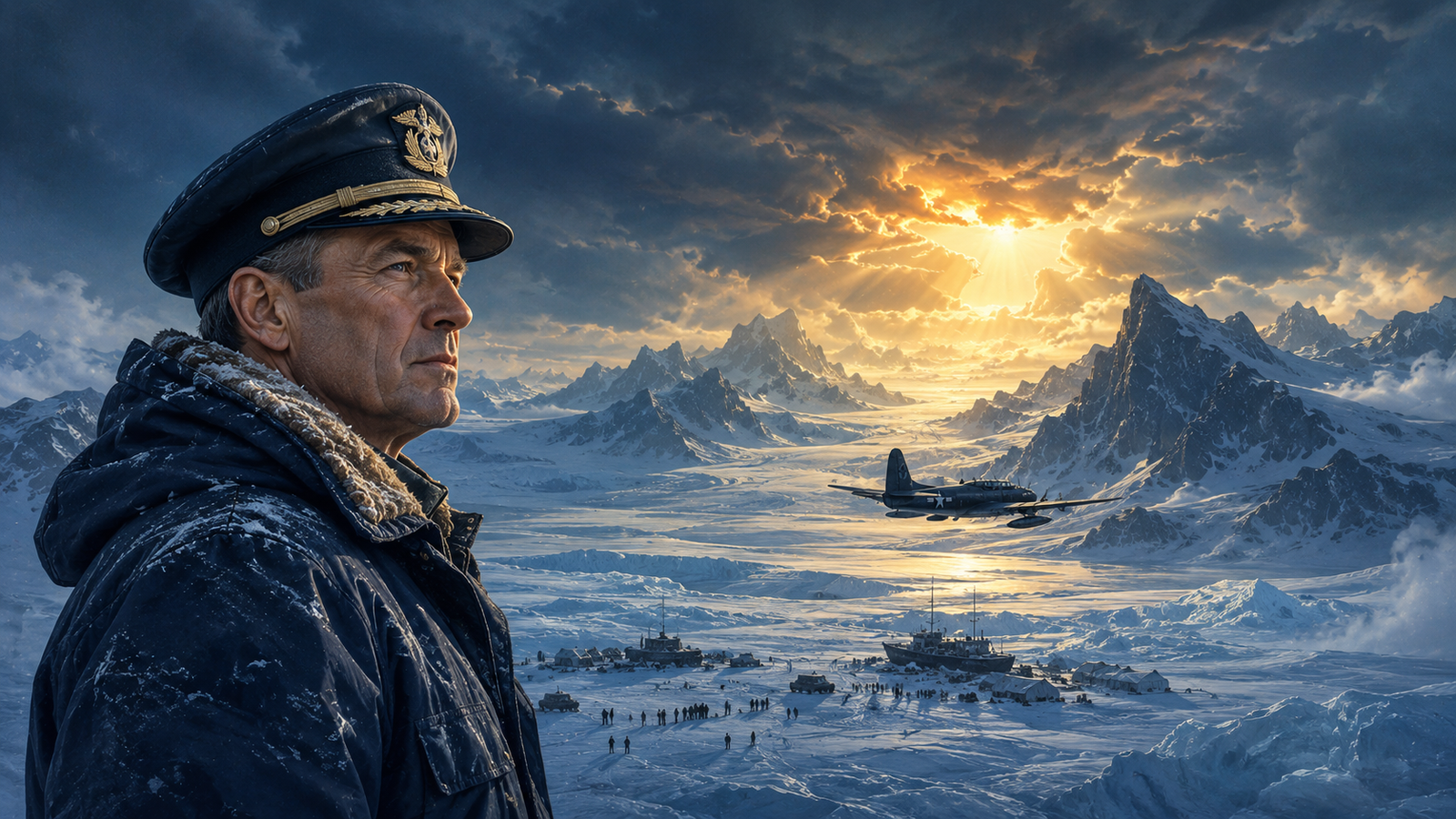
In December 1946, barely a year after the end of World War II, an extraordinary American naval force began moving south toward the most isolated continent on Earth. Officially designated Operation Highjump, the expedition assembled thousands of personnel, more than a dozen ships, numerous aircraft, helicopters, amphibious vehicles, and specialized equipment designed to operate in one of the most hostile environments imaginable. At its center was one of America’s most celebrated explorers: Rear Admiral Richard E. Byrd, a decorated naval aviator whose name had already become synonymous with the polar regions.
The stated objectives were substantial but understandable. The United States intended to train personnel and test equipment under extreme cold-weather conditions, establish and expand the Antarctic base known as Little America, conduct extensive aerial photography and mapping, evaluate the feasibility of maintaining bases on the continent, and strengthen American knowledge of a region whose strategic importance was becoming increasingly apparent. Contemporary Navy footage documents much of that history: ships battling pack ice, aircraft surveying enormous stretches of unexplored territory, men constructing bases, divers entering freezing water, dog teams crossing the ice, and sailors confronting conditions few human beings had ever experienced.
Yet over the decades, another story grew around Byrd’s expedition—one involving strange aircraft, unexplained encounters, Nazi installations, missing records, an alleged secret diary, polar openings, and a hidden civilization sometimes identified with the legendary subterranean realm of Agartha. Some of those claims can be traced to identifiable historical events, while others appeared years or even decades later. Some conflict with the documented record; others remain far more difficult to establish.
Somewhere along that boundary between documented history and extraordinary legend lies the enduring mystery of Operation Highjump. The expedition unquestionably happened, and much of what it accomplished is well documented. The question that has followed it for nearly eighty years is whether the official history tells us the entire story of what happened at the bottom of the world.
What exactly did Admiral Byrd and Operation Highjump encounter in Antarctica?
THE MAN WHO KNEW ANTARCTICA
Richard Evelyn Byrd was not an obscure figure whose story became important only after alternative researchers discovered him. By the time Operation Highjump began, he was internationally famous—a decorated naval officer, pioneering aviator, and polar explorer who had spent decades venturing into some of the most inaccessible regions on Earth.
Byrd participated in Arctic exploration during the 1920s and became famous for his controversial 1926 claim of having flown over the North Pole. Three years later, on November 29, 1929, Byrd and his crew completed a historic flight over the South Pole during his first Antarctic expedition, establishing his reputation as one of the defining figures of the heroic age of polar aviation. Antarctica would become a recurring chapter in his life, drawing him back repeatedly over the decades that followed.
During his second Antarctic expedition in the 1930s, Byrd spent months almost completely alone at a remote meteorological station. His account of the ordeal, later published in Alone, describes profound isolation, physical deterioration, and a near-fatal encounter with carbon monoxide poisoning. By the time the Navy returned to Antarctica following World War II, Byrd therefore understood the continent in a way few people alive could claim. He knew its geography, its dangers, and the enormous logistical challenges involved in operating there.
Perhaps most importantly for the mystery that would later surround him, Byrd possessed credibility. He had commanded major expeditions, received national honors, interacted with presidents and senior military officials, and participated directly in America’s exploration of both polar regions. So when stories eventually emerged claiming that Admiral Byrd had encountered something extraordinary in Antarctica, they were not attached to an anonymous witness or an unknown adventurer. They were attached to one of the most accomplished polar explorers of the twentieth century—and that would give them remarkable staying power.
AN ARMADA HEADS SOUTH
By late 1946, the preparations for Operation Highjump were complete, and what the United States Navy had assembled was unlike any previous American expedition to Antarctica. Formally designated the United States Navy Antarctic Developments Program, 1946–1947, the operation brought together approximately 4,700 men, 13 ships, and dozens of aircraft under Task Force 68. Rear Admiral Richard H. Cruzen commanded the task force, while Admiral Richard E. Byrd, already one of the world’s most experienced polar explorers, was placed in charge of the expedition itself. Together, they would lead an undertaking whose size reflected just how seriously the United States had begun to view the largely unexplored continent at the bottom of the world.
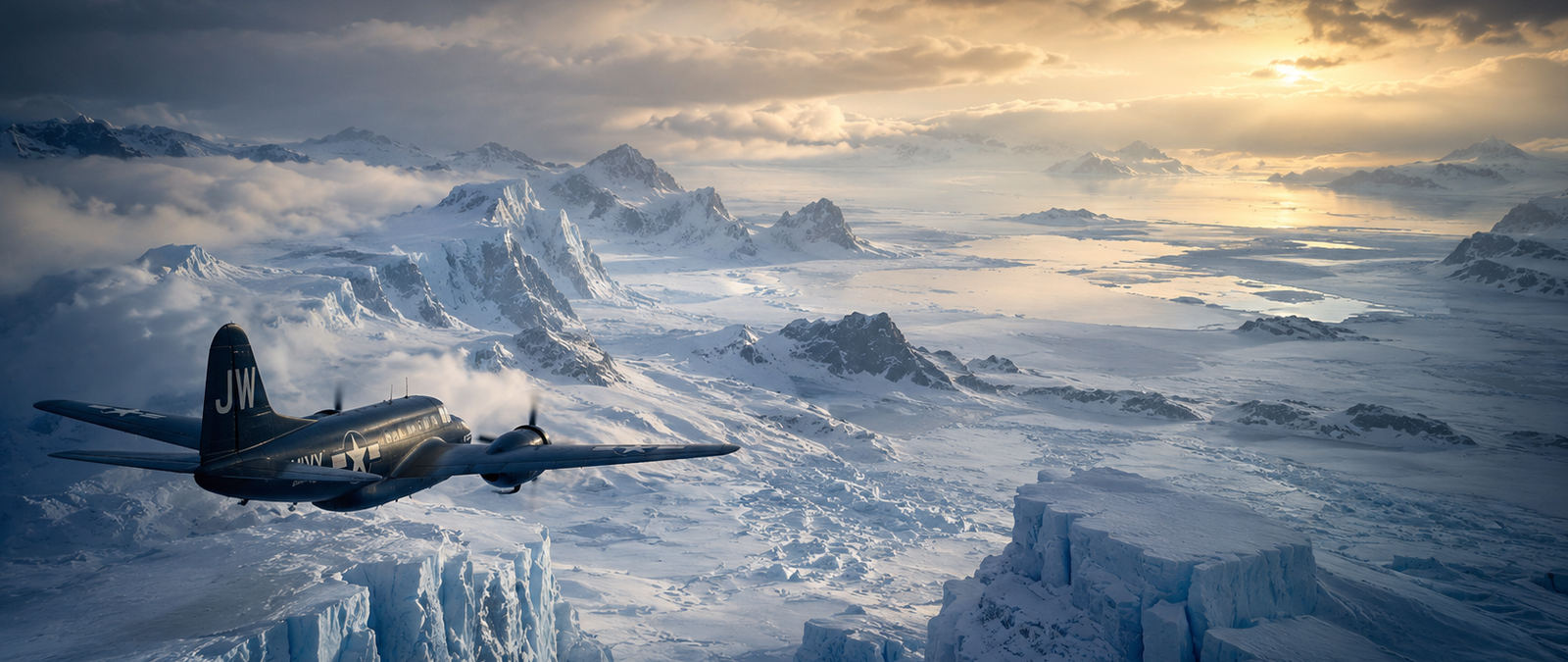
The fleet itself was formidable. The command ship USS Mount Olympus was joined by destroyers, seaplane tenders, cargo and support vessels, the Coast Guard icebreaker Northwind, the submarine USS Sennet, and the aircraft carrier USS Philippine Sea. The expedition also carried long-range photographic aircraft, PBM Mariner seaplanes, helicopters, amphibious vehicles, construction equipment, scientific instruments, dog teams, and the enormous quantities of food, fuel, and supplies necessary to sustain thousands of men in an environment where virtually nothing could be obtained locally. Seen together, the ships and aircraft created an image that would later become central to the Highjump mystery: this was not a small group of scientists traveling south to collect samples, but a major naval task force moving toward one of the least understood places on Earth.
That distinction, however, needs to be understood in the context of the time. Operation Highjump was never officially described as purely scientific. Navy objectives included training personnel and testing ships, aircraft, clothing, vehicles, and equipment under extreme polar conditions; reestablishing the American base at Little America; conducting extensive aerial photography and mapping; examining potential base sites; and strengthening American knowledge of a region whose strategic importance was becoming increasingly apparent. World War II had only recently ended, but the conflict had transformed aviation, rocketry, meteorology, navigation, communications, and military logistics. Military planners were beginning to understand that the polar regions, once regarded as remote barriers at the edges of civilization, might eventually become important avenues of transportation, surveillance, and even attack.
There was also a simpler motivation for an expedition of this scale: much of Antarctica was still unknown. Maps contained enormous areas based on incomplete surveys, distant observations, or little information at all. Coastlines remained imperfectly charted, mountain ranges had barely been explored, and vast portions of the interior had never been photographed from the air. Highjump’s aircraft offered the Navy an opportunity to survey enormous stretches of the continent in a single Antarctic summer, potentially transforming what the United States knew about its geography while simultaneously learning whether large-scale operations could be sustained there.
It is this combination of military capability, scientific exploration, and strategic ambition that makes Operation Highjump so interesting before any of the later mysteries are introduced. The size of the expedition does not, by itself, demonstrate that the Navy was searching for a hidden Nazi base, unidentified aircraft, or an entrance to another world. Yet it does establish something important that sometimes gets lost between the official history and the legends that followed: the United States considered Antarctica important enough to send thousands of men and a significant naval force into one of the most dangerous environments on the planet only a year after the end of World War II.
And as Task Force 68 began pushing farther south, the theoretical challenges discussed during months of planning quickly gave way to the reality of Antarctica itself. The continent would prove more difficult, more dangerous, and in several places more surprising than the men approaching it could have known.
INTO THE ICE
WHEN THE STORY BEGAN TO CHANGE
By early 1947, the Antarctic summer was beginning to close. Temperatures were falling, weather conditions were becoming increasingly unpredictable, and the same pack ice that had challenged Task Force 68 on its arrival threatened to trap ships if they remained too long. After weeks of aerial mapping, base construction, equipment testing, and exploration, the principal Antarctic phase of Operation Highjump began winding down and the fleet prepared to leave the continent.
In later accounts, however, Highjump’s departure would acquire a much more dramatic meaning. The expedition is frequently described as having been planned for six months or longer before being suddenly terminated after only a matter of weeks, suggesting that something unexpected forced the Navy to withdraw. The historical record presents a less sensational picture. Highjump had always been constrained by the short Antarctic summer, and contemporary Navy footage openly shows worsening ice conditions as the season progressed. The expedition did leave with some ambitions unrealized, but the evidence does not establish the panicked evacuation that would later become central to the legend.
What happened after Byrd left Antarctica is more interesting. During his return through South America, the famous explorer spoke publicly about what the polar regions might mean in the next major war. One interview, published by the Chilean newspaper El Mercurio on March 5, 1947, would eventually become one of the most frequently cited pieces of evidence in the entire Highjump mystery.
Byrd warned that the United States could no longer depend upon its oceans for protection and that a future enemy might attack America by approaching through the polar regions. In the emerging military environment of 1947, the concern was hardly unreasonable. World War II had produced dramatic advances in aircraft and rocketry, relations with the Soviet Union were rapidly deteriorating, and military planners were beginning to recognize that the shortest routes between portions of North America and Soviet territory crossed the Arctic.
But as Byrd’s words traveled through books, documentaries, interviews, and eventually the internet, the warning began to change. Later versions increasingly described him as speaking about hostile aircraft capable of traveling “from pole to pole at incredible speeds,” sometimes implying that Byrd was not predicting what future technology might make possible but describing something he had already encountered during Operation Highjump. That subtle shift transformed an understandable postwar military warning into something far more mysterious—and helped open the door to the stories that would soon surround what Byrd and his men had really experienced in Antarctica.
ADMIRAL BYRD’S WARNING
Of all the statements associated with Operation Highjump, none has been repeated more often than Admiral Byrd’s warning following the expedition. Published by the Chilean newspaper El Mercurio on March 5, 1947, the interview described a world in which the polar regions could no longer be regarded as distant, naturally protected frontiers. Byrd warned that if another major war occurred, the United States could be attacked by aircraft approaching across one or both poles—a striking observation at a time when most Americans still thought of Antarctica and the Arctic as remote places largely disconnected from national security.
In its historical setting, Byrd’s concern was understandable. Aviation had advanced dramatically during World War II, Germany had demonstrated the potential of long-range rockets, and the emerging rivalry between the United States and Soviet Union was forcing military planners to reconsider the geography of global conflict. Byrd had also just participated in an expedition specifically designed, in part, to determine how aircraft, ships, personnel, and bases could function in polar conditions. His comments therefore fit naturally within a broader realization that technology was shrinking the world and transforming previously inaccessible regions into strategically important territory.
The mystery lies in what happened to Byrd’s warning afterward. Over time, alternative accounts began quoting him as saying the United States needed protection against “hostile planes coming from the polar regions” and, in more dramatic versions, aircraft capable of flying “from pole to pole at incredible speeds.” Those words were increasingly interpreted as a veiled reference to something encountered during Highjump rather than a prediction about future military capabilities. Some researchers went further, arguing that Byrd had seen advanced flying craft over Antarctica and was attempting to warn the public without openly revealing classified information. The surviving historical material supports Byrd’s warning about the strategic vulnerability of the poles, but the more extraordinary interpretation—that he was describing unknown craft actually encountered during Highjump—has not been established by the interview itself.
One of the most persistent questions surrounding Operation Highjump concerns the way the expedition ended. In later accounts, Highjump is often described as a mission expected to continue for six months or longer, only to be abruptly terminated after several weeks in Antarctica. Within the alternative narrative, that shortened timeline became one of the strongest indications that something had gone wrong: the Navy had arrived with an enormous task force, encountered an unexpected threat, suffered losses, and withdrawn before the full mission could be completed.
The documented record offers a more conventional explanation. Highjump was operating within the narrow Antarctic summer, and worsening weather and rapidly changing ice conditions were already affecting operations. Contemporary Navy footage shows the difficulty ships experienced navigating the pack ice, while the expedition’s aircraft faced dangerous flying conditions and a limited window for mapping the continent. As winter approached, remaining indefinitely was never a realistic option. Highjump also accomplished many of its stated objectives, including establishing Little America IV, testing equipment and personnel, conducting scientific work, and photographing vast areas of the Antarctic coastline and interior.
What is less clear is where the frequently repeated six-month timeline originated and whether every objective envisioned during the planning stages was ultimately completed. Highjump was unquestionably ambitious, and some planned aerial photography proved unusable because adequate ground-control points had not been established. The expedition also experienced accidents, equipment difficulties, dangerous ice conditions, and the loss of three men in the George 1 crash. These realities provide a reasonable explanation for why operations unfolded differently than planners may initially have hoped, without requiring an unknown adversary to explain the departure.
Yet this is also where the official history and the later Highjump legend begin moving in very different directions. If worsening Antarctic conditions explain the withdrawal, the expedition’s conclusion is largely unsurprising. If, however, Highjump had another objective—one never included in its public mission statement—then leaving Antarctica takes on a different meaning entirely. That possibility became increasingly compelling to alternative researchers once they began looking backward from Byrd’s post-expedition warning toward an event that had occurred only eight years earlier: Nazi Germany’s expedition to Antarctica and the mysterious territory it called Neuschwabenland, or New Swabia.
THE NAZI ANTARCTICA QUESTION
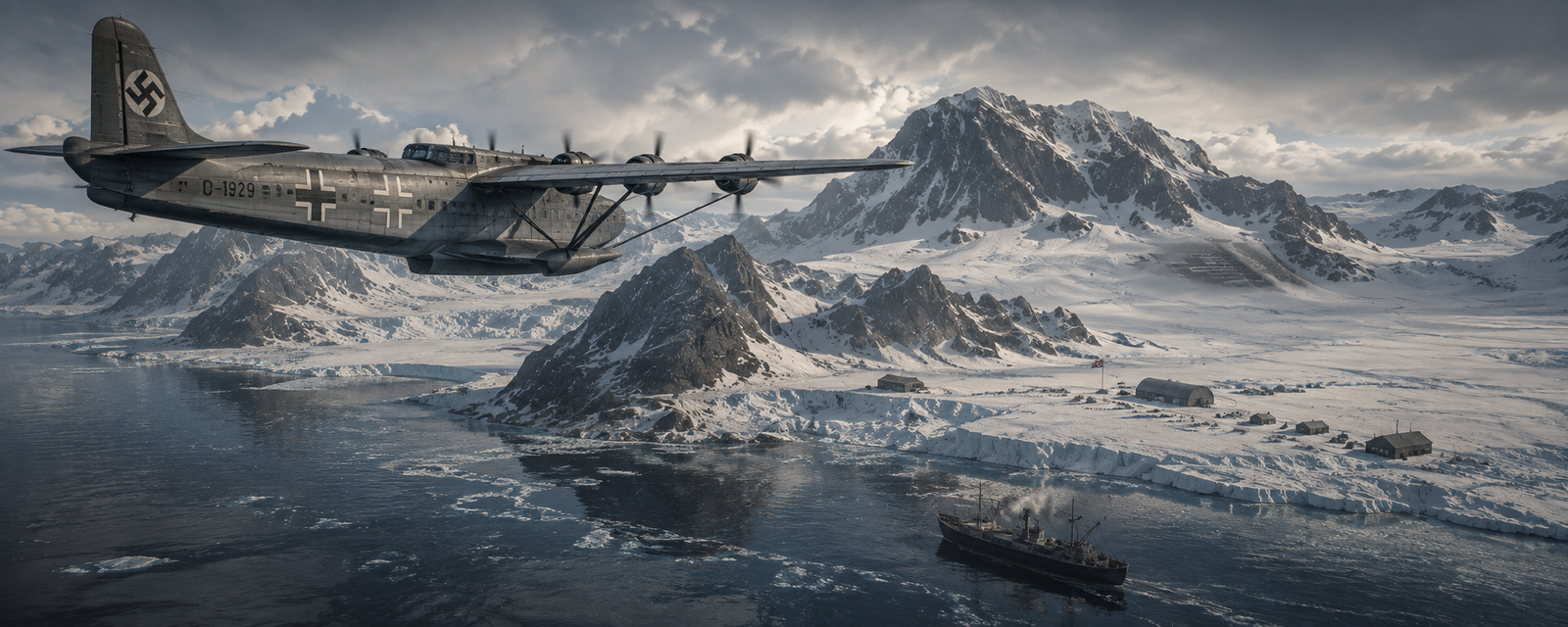
This is where the story of Operation Highjump moves decisively beyond the official record and into the account that has fascinated alternative researchers for decades. According to this version of events, Task Force 68 did not simply encounter difficult weather, dangerous ice, and the normal hazards of polar exploration. Somewhere during its operations around Antarctica, American aircraft reportedly encountered disc-shaped craft displaying capabilities unlike conventional aircraft of the period. Some accounts describe the objects rising from the ocean or appearing from behind the ice, accelerating rapidly and maneuvering around Navy aircraft with an ease that left American pilots unable to respond effectively.
As the story developed, these encounters became something closer to an undeclared military engagement. The mysterious craft were said to have attacked expedition aircraft, inflicting losses and demonstrating weapons or propulsion systems far beyond anything the Americans expected to encounter. In some versions, the discs were remnants of secret German Vril or Haunebu technology operating from the rumored Base 211; in others, the Germans had gained access to technology originating with a far older or non-human civilization. The accounts differ dramatically in their details, but share the same central claim: Highjump encountered an advanced presence in Antarctica and was unable to overcome it.
There are significant problems with treating the alleged Battle of Antarctica as established history. Contemporary Navy reports and surviving films document aircraft accidents, casualties, mechanical problems, severe weather, and dangerous ice conditions, but they do not describe combat with flying discs. The three documented deaths aboard the PBM Mariner George 1, for example, resulted from an officially recorded reconnaissance crash. Nor has an authenticated battle report, gun-camera footage, recovered craft, or other contemporaneous physical evidence emerged publicly to confirm such a confrontation.
Yet the story did not develop in a historical vacuum. Highjump really was an enormous military expedition; aircraft were lost and men died; Nazi Germany really had explored New Swabia; and Byrd returned from Antarctica with his much-discussed warning about the strategic vulnerability of the polar regions. In the official account, these events have conventional explanations. In the alternative account, they became pieces of a very different story—one in which Highjump’s losses and departure concealed a confrontation that could never be publicly acknowledged. And the timing would soon add another remarkable layer, because 1947 was about to become the year the skies changed.
1947 | THE YEAR THE SKIES CHANGED
Long before Admiral Byrd flew across Antarctica, stories of hidden worlds beneath the surface of the Earthappeared across cultures and spiritual traditions. Perhaps the most enduring is Agartha, sometimes spelled Agharta or Agarttha—a legendary inner kingdom said to exist beyond the ordinary boundaries of human civilization. In Western esoteric literature of the nineteenth and early twentieth centuries, Agartha became associated with a vast subterranean realm connected by tunnels and hidden entrances, inhabited by an advanced civilization whose knowledge and spiritual development far exceeded that of the surface world.
The concept draws from several traditions that are often blended together today. Tibetan and Buddhist teachings describe Shambhala, a hidden or sacred kingdom associated with wisdom and spiritual enlightenment, although traditional descriptions do not necessarily place it physically inside the Earth. Western occult writers gradually combined these ideas with older legends of subterranean civilizations, hidden masters, polar openings, and the Hollow Earth theory. By the time Byrd began his polar expeditions, books proposing inhabitable regions beyond the poles had already circulated for decades. In 1906, William Reed published The Phantom of the Poles, followed in 1920 by Marshall Gardner’s A Journey to the Earth’s Interior—both arguing that the polar regions concealed entrances to an inhabited interior world.
This earlier history matters because the Agartha story was not created around Admiral Byrd. Rather, Byrd’s extraordinary career eventually became attached to a mythology that already existed. The disputed Secret Diary seemed to provide exactly what Hollow Earth believers had long imagined: a respected polar explorer apparently describing green valleys beyond the ice, unfamiliar aircraft, an advanced civilization, and direct passage into a hidden realm. Whether the diary borrowed from those earlier traditions or preserved an extraordinary experience remains the dividing line between skeptics and believers.
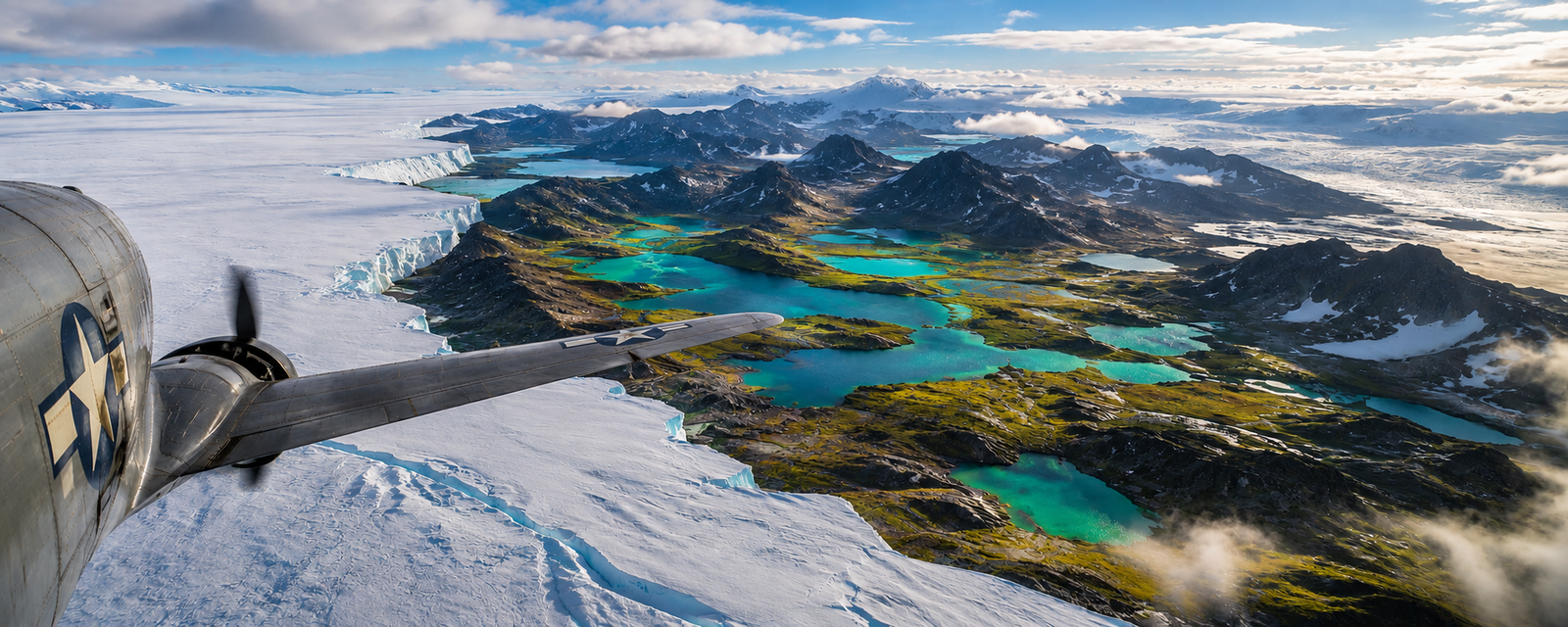
Modern geology does not support the idea of Earth as a largely hollow sphere containing another habitable world; seismic waves and our understanding of Earth’s crust, mantle, outer core, and inner core provide extensive evidence for the planet’s internal structure. Yet that does not entirely remove the deeper mystery that makes Antarctica so compelling. Beneath its ice are mountain ranges, enormous subglacial lakes, ancient river systems, deep canyons, and landscapes hidden from human sight for millions of years. Even today, sophisticated radar and satellite technologies continue revealing features beneath the Antarctic ice that previous generations could not have known were there.
Perhaps that is why the story of Agartha remains so powerful. It occupies the boundary between ancient tradition, spiritual symbolism, unexplored geography, and the enduring human suspicion that the visible world may not be the whole story. Operation Highjump did not prove that a civilization exists beneath Antarctica, nor does Byrd’s disputed diary establish that he entered one. But when an ancient legend of a hidden world became intertwined with the experiences of history’s most famous polar explorer, the two stories became almost impossible to separate.
And nearly eighty years later, Antarctica remains one of the few places on Earth capable of keeping that question alive.

THE POLAR GATES | FINAL THOUGHTS
The idea of polar gates sits at the very edge of the Operation Highjump mystery. For generations, Hollow Earth researchers have proposed that the regions surrounding the North and South Poles may contain entrances into vast spaces beneath the surface, while esoteric traditions describe hidden realms accessible only through remote or carefully guarded locations. In the Byrd mythology, Antarctica became one of those gateways—the threshold between the world we know and the legendary inner realm of Agartha.
Modern science provides no evidence for enormous openings at the poles leading into a habitable inner Earth. What science has revealed, however, is an Antarctic landscape far more complex than the featureless block of ice once imagined. Beneath the continent are vast mountain ranges, deep valleys, subglacial rivers and lakes, geothermal systems, and geological landscapes buried beneath kilometers of ice. Antarctica remains extraordinarily difficult to explore, and much of what lies beneath its frozen surface is still being mapped and understood.
That brings us back to Operation Highjump and the question that has followed Admiral Richard E. Byrd for nearly eighty years. We know the United States sent an enormous naval task force to Antarctica immediately after World War II. We know Nazi Germany had explored part of the continent before the war. We know Highjump suffered real losses, documented unexpected terrain, and operated for a shorter period than some later accounts claim was originally envisioned. We know Byrd returned warning that the polar regions had become strategically important in a rapidly changing world. And we know that within months, reports of strange objects in the skies would launch what we now recognize as the modern UFO era.
What we do not know is equally important. There is no authenticated evidence that Highjump fought a battle against advanced flying craft, discovered a surviving Nazi base, or entered an underground civilization. The famous Secret Diary remains disputed, and many of the most extraordinary elements of the Highjump story appeared or expanded years after the expedition itself. Those limitations should not be hidden; they are part of the investigation.
But neither should unanswered questions automatically be treated as meaningless.
Perhaps Operation Highjump was exactly what the official record describes: an extraordinarily ambitious military and scientific expedition into one of the most hostile environments on Earth. Perhaps later generations transformed genuine accidents, Byrd’s remarks, Antarctic discoveries, and older Hollow Earth legends into a mystery far larger than the events themselves. Or perhaps fragments of a more complicated story remain buried among incomplete records, disputed testimony, and a continent that still conceals much of its history beneath miles of ice.
Nearly eight decades later, that is where the story honestly remains.
Here is what we know. Here is what was claimed. Here is where the story changed. Here are the anomalies. And here is why people are still asking questions.
Antarctica has surrendered many of its secrets since Byrd first flew above its frozen landscape.
There may still be others beneath the ice.
“The greatest mysteries are not always those for which we have no answers. Sometimes they are the stories in which fact and legend have become so intertwined that discovering where one ends and the other begins becomes the mystery itself.” — Great Awakening Report
Sign up to receive Our Weekly Briefing Newsletter
Begin your journey with weekly insights designed to expand awareness and ground you in truth. Our free tier gives you a powerful introduction without any commitment.
STOP DROWNING IN THE NOISE. START SEEING THE TRUTH. Join over 99,000 truth seekers. Get the essential intelligence, alternative news, and disclosure updates that the mainstream media won’t touch.
Latest Reports
 Weekly ReportAwakening The Sleeping Giant · October 12th EditionOctober 12, 2026
 Monthly ReportConscious Practices · October 2026 EditionOctober 5, 2026
 Weekly ReportAwakening The Sleeping Giant · October 5th EditionOctober 5, 2026
 Weekly ReportAwakening The Sleeping Giant · September 28th EditionSeptember 28, 2026View all weekly reports
Special Reports
 Special ReportTHE AWAKENING JOURNEY: Hero’s Journey Part II · Week 1October 3, 2026
 Special ReportGlobal Everything Collapse · Economic Chaos · Part IOctober 1, 2026
 Special ReportCreating A Conscious Culture · Part ISeptember 3, 2026
 Special ReportThe Great Healing: Detox, Defense & Sovereignty In an Engineered World · Part ISeptember 1, 2026View all special reports
Help Us Bypass Censorship. Share This.
Join the Discussion
Related Posts

Have questions?
At Great Awakening Report, we are dedicated to supporting your journey toward truth and enlightenment through our specialized Coaching and Consulting services.
Coaching Services: Our coaching programs are designed to guide you through personal awakening and transformation. We offer personalized sessions that focus on expanding consciousness, uncovering hidden truths, and fostering spiritual growth. Our experienced coaches provide the tools and insights necessary to navigate your path with clarity and confidence.
Consulting Services: For organizations and individuals seeking deeper understanding and strategic guidance, our consulting services offer expert analysis and solutions. We delve into areas such as global transitions, alternative news insights, and consciousness studies to provide comprehensive strategies tailored to your unique objectives.
Embark on a transformative journey with our Coaching and Consulting services, and unlock your highest potential. To learn more and schedule a session, visit our Coaching and Consulting pages.
Thank you
Thank you to our subscribers and readers for your continued support and dedication to truth and awakening. Your encouragement, engagement, and belief in our mission make everything we do possible. Together, we are expanding awareness and helping illuminate the path forward.
If you would like to further support the Great Awakening team and our ongoing efforts to share insight, knowledge, and truth, you can DONATE HERE.
With deep gratitude,
– Great Awakening Team
About the Author: Great Awakening Team

We are a community. We are cultural creatives and like minded people seeking the truth and focusing on disclosure, awakening and consciousness. Our focus is real news as researchers, reporters and truth seekers. We are here to teach, to spread the word, to serve and to help. We are a collective, a movement, free from all programing, not closed minded and not discriminatory. We are not political. We are not religious but we are spiritual. We study, research, and report on a wide range of subjects and topics, from the current geopolitical climate to health and wellness, from earth’s history to spiritual practices. We are forward thinkers and visionaries, we are guides for the transition as we usher in The Great Awakening.
THIS WEBSITE DOES NOT PROVIDE MEDICAL ADVICE: The information, including but not limited to text, graphics, images, and other material contained on this website, are for informational purposes only. No material on this site is intended to be a substitute for professional medical advice, diagnosis, or treatment. Always seek the advice of your physician or other qualified health care provider with any questions you may have regarding a medical condition or treatment and before undertaking a new health care regimen, and never disregard professional medical advice or delay in seeking it because of something you have read on this website.
DISCLAIMER: All statements, claims, views and opinions that appear anywhere on this site, whether stated as theories or absolute facts, are always presented by The Great Awakening Report (GAR) as unverified—and should be personally fact checked and discerned by you, the reader.Any opinions or statements herein presented are not necessarily promoted, endorsed, or agreed to by GAR, those who work with GAR, or those who read or subscribe to GAR.Any belief or conclusion gleaned from content on this site is solely the responsibility of you the reader to substantiate.Any actions taken by those who read material on this site are solely the responsibility of the acting party.You are encouraged to think for yourself and do your own research.Nothing on this site is meant to be believed without question or personal appraisal.
COPYRIGHT DISCLAIMER: Citation of articles and authors in this report does not imply ownership. Works and images presented here fall under Fair Use Section 107 and are used for commentary on globally significant newsworthy events. Under Section 107 of the Copyright Act 1976, allowance is made for fair use for purposes such as criticism, comment, news reporting, teaching, scholarship, and research.
COMMUNITY GUIDELINES DISCLAIMER: The points of view and purpose of this video is not to bully or harass anybody, but rather share that opinion and thoughts with other like-minded individuals curious about the subject.