


Help Us Bypass Censorship. Share This.
Sign up to receive Our Weekly Briefing Newsletter
Begin your journey with weekly insights designed to expand awareness and ground you in truth. Our free tier gives you a powerful introduction without any commitment.
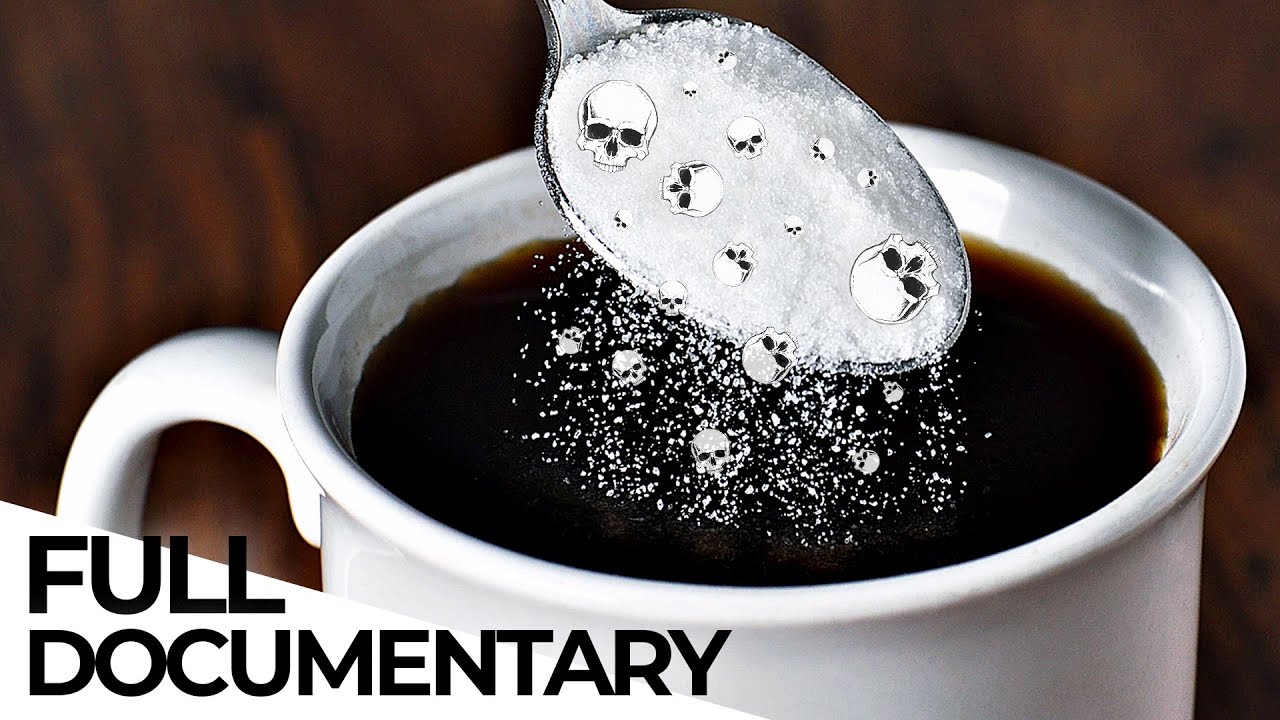
For roughly half a century, dietary fat was the designated villain of public health, and an entire food industry reorganized itself around removing it. Obesity rates rose anyway. The Sweet Death documentary asks the obvious follow up question that took decades to become respectable. If the advice was followed and the outcome got worse, was the advice wrong, and who benefited from it being wrong for so long. The film’s answer points at sugar, and at the commercial and scientific history that kept sugar out of the frame.
How fat took the blame
The film’s historical section is the part most viewers will find genuinely surprising. The mid twentieth century debate over what was driving rising heart disease had two serious contenders. One line of research, associated most prominently with the American physiologist Ancel Keys, pointed toward dietary fat. Another, argued forcefully by the British nutritionist John Yudkin in his 1972 book Pure White and Deadly, pointed toward sugar. The fat hypothesis won institutionally and became the basis of dietary guidance across the Western world. Yudkin’s position was marginalized for decades before being substantially revisited.
That revisiting was helped by documentary evidence rather than opinion. Research published in JAMA Internal Medicine in 2016 examined internal sugar industry papers and reported that in the 1960s the Sugar Research Foundation had funded Harvard researchers to produce a review that emphasized fat and downplayed sugar in relation to heart disease, without the funding being disclosed. The Sweet Death documentary treats this episode as the hinge of the whole story, the point at which a scientific question was answered partly by money.
What the low fat era actually produced
The practical consequence receives careful attention. Removing fat from processed food removes flavor and texture, and manufacturers replaced both with sugar. Products marketed as the healthy option frequently carried more sugar than the versions they replaced. Consumers following official guidance faithfully were therefore increasing sugar consumption while believing they were improving their diets. The film argues this is why the low fat era coincided with accelerating obesity rather than reversing it, and the timeline it lays out is difficult to dismiss.
The addiction question
The Sweet Death documentary devotes substantial time to whether sugar is addictive, and this is where viewers should apply the most care. Animal research has produced findings that resemble addiction, including bingeing patterns and withdrawal like behavior in rats given intermittent sugar access. Imaging work in humans shows sugar activating reward pathways. The film leans on this material heavily.
The scientific picture is less settled than the film suggests. Many researchers argue that the animal models depend on feeding schedules that do not resemble ordinary human eating, that human evidence for a clinical addiction syndrome is considerably weaker, and that what looks like sugar addiction is often better described as a response to highly palatable processed food combining sugar, fat and salt rather than to sugar alone. There is genuine disagreement here, and the honest framing is that sugar is strongly rewarding and habit forming for many people while its classification as an addictive substance remains contested.
What is not contested
Several points in the film rest on firm ground. High intake of added sugar, particularly through sweetened drinks, is robustly associated with obesity, type 2 diabetes and fatty liver disease. Fructose is metabolized largely in the liver and behaves differently from glucose, which is why liquid sugar is treated as a distinct concern. The World Health Organization recommends limiting free sugars to below ten percent of daily energy intake, with additional benefit below five percent. Most people in wealthy countries consume well above that, and a large share of it arrives in foods that do not taste sweet, which is the film’s most actionable observation.
Why it is worth watching
The value of this documentary is not that it identifies a single villain, which is the trap the fat hypothesis fell into. It is the demonstration of how dietary consensus is actually manufactured, through funded research, institutional inertia and industry reformulation, and how long a wrong answer can persist once it has been officially adopted. Viewers finish with a sharper eye for nutrition labels and a healthy skepticism about the next dietary certainty. Read the ingredient list, notice how many products contain added sugar, and treat confident nutritional pronouncements as provisional. That posture outlasts any particular nutrient debate.
This film was featured in the MONTHLY REPORT April 2026 Volume IX Chapter IV, and it is catalogued in the MUST WATCH Documentary Library, a curated collection built to give long form context to subjects that short form coverage tends to flatten.
Sign up to receive Our Weekly Briefing Newsletter
Begin your journey with weekly insights designed to expand awareness and ground you in truth. Our free tier gives you a powerful introduction without any commitment.
STOP DROWNING IN THE NOISE. START SEEING THE TRUTH. Join over 99,000 truth seekers. Get the essential intelligence, alternative news, and disclosure updates that the mainstream media won’t touch.
Latest Reports
 Weekly ReportAwakening The Sleeping Giant · October 12th EditionOctober 12, 2026
 Monthly ReportConscious Practices · October 2026 EditionOctober 5, 2026
 Weekly ReportAwakening The Sleeping Giant · October 5th EditionOctober 5, 2026
 Weekly ReportAwakening The Sleeping Giant · September 28th EditionSeptember 28, 2026View all weekly reports
Special Reports
 Special ReportTHE AWAKENING JOURNEY: Hero’s Journey Part II · Week 1October 3, 2026
 Special ReportGlobal Everything Collapse · Economic Chaos · Part IOctober 1, 2026
 Special ReportCreating A Conscious Culture · Part ISeptember 3, 2026
 Special ReportThe Great Healing: Detox, Defense & Sovereignty In an Engineered World · Part ISeptember 1, 2026View all special reports
Help Us Bypass Censorship. Share This.
Join the Discussion
Related Posts
Have questions?
At Great Awakening Report, we are dedicated to supporting your journey toward truth and enlightenment through our specialized Coaching and Consulting services.
Coaching Services: Our coaching programs are designed to guide you through personal awakening and transformation. We offer personalized sessions that focus on expanding consciousness, uncovering hidden truths, and fostering spiritual growth. Our experienced coaches provide the tools and insights necessary to navigate your path with clarity and confidence.
Consulting Services: For organizations and individuals seeking deeper understanding and strategic guidance, our consulting services offer expert analysis and solutions. We delve into areas such as global transitions, alternative news insights, and consciousness studies to provide comprehensive strategies tailored to your unique objectives.
Embark on a transformative journey with our Coaching and Consulting services, and unlock your highest potential. To learn more and schedule a session, visit our Coaching and Consulting pages.
Thank you
Thank you to our subscribers and readers for your continued support and dedication to truth and awakening. Your encouragement, engagement, and belief in our mission make everything we do possible. Together, we are expanding awareness and helping illuminate the path forward.
If you would like to further support the Great Awakening team and our ongoing efforts to share insight, knowledge, and truth, you can DONATE HERE.
With deep gratitude,
– Great Awakening Team
About the Author: Great Awakening Team

DISCLAIMER: All statements, claims, views and opinions that appear anywhere on this site, whether stated as theories or absolute facts, are always presented by The Great Awakening Report (GAR) as unverified—and should be personally fact checked and discerned by you, the reader.Any opinions or statements herein presented are not necessarily promoted, endorsed, or agreed to by GAR, those who work with GAR, or those who read or subscribe to GAR.Any belief or conclusion gleaned from content on this site is solely the responsibility of you the reader to substantiate.Any actions taken by those who read material on this site are solely the responsibility of the acting party.You are encouraged to think for yourself and do your own research.Nothing on this site is meant to be believed without question or personal appraisal.
COPYRIGHT DISCLAIMER: Citation of articles and authors in this report does not imply ownership. Works and images presented here fall under Fair Use Section 107 and are used for commentary on globally significant newsworthy events. Under Section 107 of the Copyright Act 1976, allowance is made for fair use for purposes such as criticism, comment, news reporting, teaching, scholarship, and research.
COMMUNITY GUIDELINES DISCLAIMER: The points of view and purpose of this video is not to bully or harass anybody, but rather share that opinion and thoughts with other like-minded individuals curious about the subject.