







Published Date: October 16th, 2025
WEEKLY REPORT
TRUTH///AWAKENING///DISCLOSURE
TRUTH SEEKERS WEEKLY BRIEFINGS, MASTER CLASS CONNECTING THE DOTS
The Great Global Convergence | Awakening Through the Transition
“As global pressures converge across economies, energy, technology, healthcare, and essential systems, the bigger picture begins to emerge. By following the signals, connecting the threads, and recognizing the patterns, truth seekers move beyond the headlines—strengthening discernment, reclaiming personal sovereignty, and preparing to navigate the Great Transition toward a more conscious and resilient world.”
Global Economic Pressures • Energy & Financial Realignment • AI & Digital Sovereignty • Healthcare & Longevity • Food Safety & Environmental Resilience • Ancient Civilizations & Consciousness • Connecting & Converging the Dots • Subscriber Q&A
Call to The Awakened
“Let these days be etched in history as the moment we rose to reclaim our Republic from the grip of those who have long exploited its people for their own gain. Stand strong, fight with honor, and let justice prevail. Together, we restore the nation to its true greatness.”
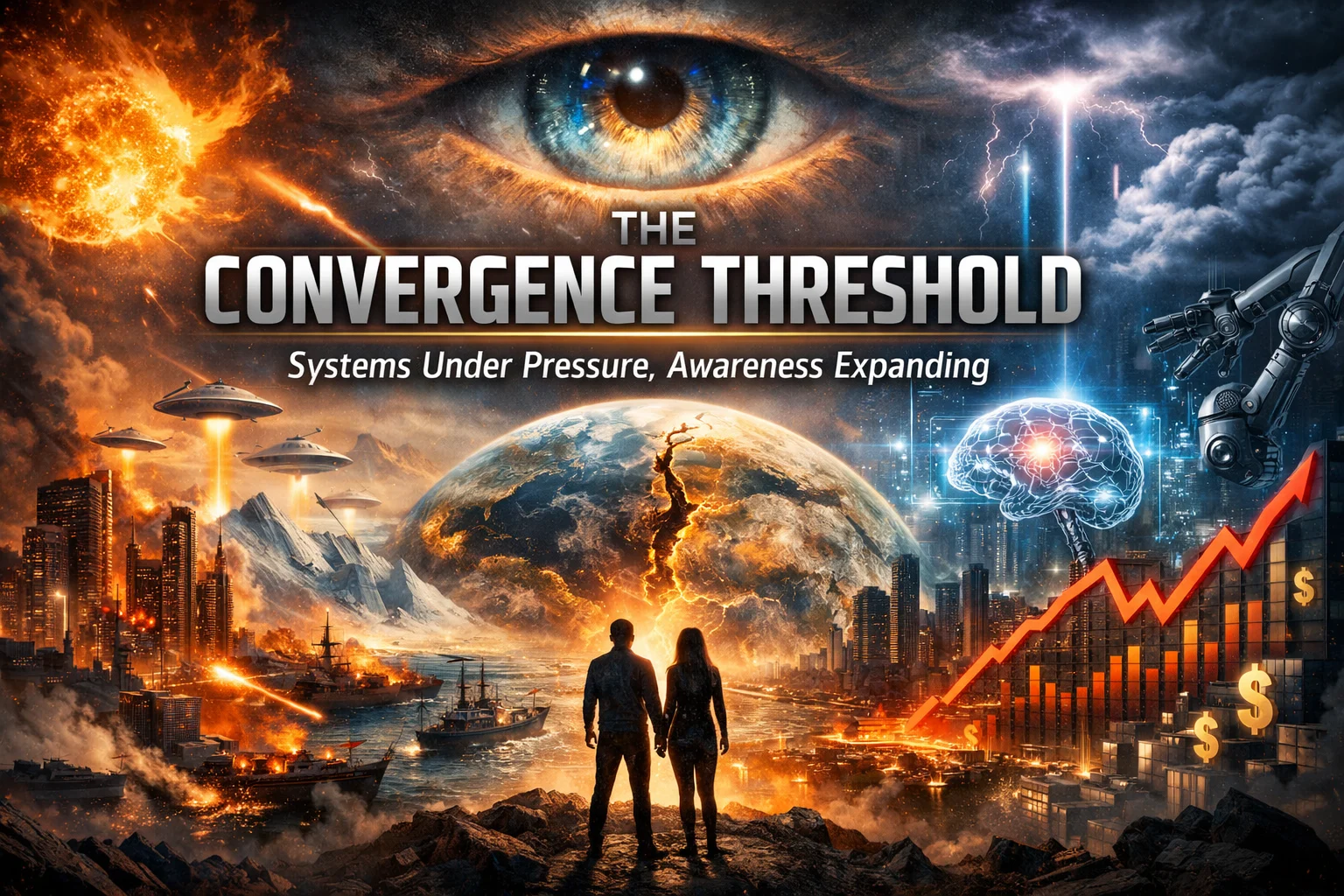
Civilizations Journey to The Precipice of Convergence Threshold
“Be Strong Enough to Stand Alone / Be Yourself Enough to Stand Apart / And When the Time Comes, Be Wise Enough to Stand Together”
The Great Reset | Roll Back Pricing of Everything
We are living through a period of profound global disruption. Institutions once viewed as stable pillars—government, finance, media, technology, and healthcare—are facing growing scrutiny as geopolitical conflict, economic instability, and political tension expose deeper systemic pressures.
Rather than isolated crises, these events point to a broader restructuring of global systems. Power structures, economic frameworks, and long-standing narratives are all being tested simultaneously, creating what many observers describe as a period of accelerated change.
This Weekly Report compiles insights from 57 independent sources, many highlighting overlapping signals across geopolitics, economics, and societal trends. By organizing these developments along a timeline of emerging events, we aim to provide a clearer view of the forces shaping this moment.
As always, we encourage readers to approach the information with discernment and calm awareness. Preparation in uncertain times is largely mental—understanding the landscape helps us remain grounded as events continue to unfold.
“We The People”
If we the people, as a nation, do not work together to restore our founding father’s visions for our Constitutional Republic, our children could be lost and our nation will be destroyed. We all have a part to play in this peaceful, faithful, informed, prayer-filled participation and with forgiveness in our hearts for the corruption of this nation that we have been a party to, either knowingly or unknowingly.

Truth Seekers Weekly Briefing | Master Class Series | Published Every Friday
Last Warning: Prepare for something that you never expected to see in your lifetime. The Media will never let you know! The things around us could change very fast. – QAnon Telegram
“Ye shall hear of wars and rumors of wars. See that ye be not troubled, for all these things must come to pass, but the end is not yet.” – Matthew 24:6
Methodology Behind the Master Class on Connecting the Dots
The Master Class on Connecting the Dots is built on a structured, multi-layered methodology designed to help individuals develop discernment, signal awareness, and pattern recognition in a world shaped by information saturation, narrative volatility, and declining institutional trust. Rather than offering conclusions, this approach trains participants to detect meaningful signals, place them in context, and orient themselves within complexity with clarity and composure.
At its core, the methodology integrates three foundational disciplines:
Analytical and Critical Reasoning – evaluating headlines, timelines, data points, and official narratives by separating signal from noise, testing claims against evidence, and identifying inconsistencies, incentives, and omissions.
Signal and Pattern Recognition – tracking weak signals, repeated motifs, coordinated messaging, symbolic cues, institutional overlap, and timing alignments that, when viewed collectively, reveal larger structural patterns or converging trajectories.
Discernment and Observer Awareness – cultivating emotional neutrality, recognizing narrative framing and psychological influence, and learning to observe unfolding events without premature conclusions or reactive interpretation.
The process begins with broad-spectrum signal intake—comparing mainstream reporting, independent analysis, historical precedent, and direct accounts. Participants are then guided to map the who, what, when, where, why, and how of events, while monitoring incentives, power dynamics, escalation markers, and cross-domain convergence across politics, finance, technology, culture, and belief systems.
Ultimately, Connecting the Dots is not about arriving at a fixed interpretation—it is about strengthening one’s capacity to track signals over time, recognize emerging patterns, and navigate uncertainty with coherence, resilience, and sovereignty. The Master Class functions as both a practical framework and an orientation lens, supporting the shift from passive information consumption to informed, self-directed understanding.
Great Awakening Featured Reports
The Great Awakening Featured Reports offer a comprehensive and multi-dimensional guide to understanding the rapidly unfolding events shaping our world. Designed for awakened minds and discerning truth seekers, these reports synthesize hard-to-find data, suppressed knowledge, and spiritual insight to help you navigate global transformation with clarity and confidence. Each report series serves a unique purpose—from decoding mainstream and alternative narratives to tracking the spiritual evolution of humanity and exposing hidden truths withheld from public view. Together, they form a powerful resource for those seeking not just information, but illumination, discernment, and alignment in the midst of chaos.
Great Awakening Featured Reports include:
📌 Monthly Reports – Covering the latest geopolitical, geoweather, economic, health, true history, suppressed technologies, ET disclosures, and seismic global shifts.
📌 Truth Seekers Weekly Briefings – Master Class in Connecting the Dots, Top 5 MSM News explained, Top 5 Alternative News reviewed, and Subscriber Q&A Top 5 most asked questions.
📌 Awakening Sleeping Giant Weekly Reports – Tracking global intelligence news and key events effecting a mass global awakening.
📌 Spiritual Practice Reports – Tools and techniques for maintaining alignment and higher heart consciousness coherence.
📌 Special Reports; New & Updated – Breaking revelations and disclosures you won’t hear or read anywhere else.
Get ready to expand your awareness, sharpen your discernment, and step fully into your sovereignty. The dots are there—it’s time to connect them.

Truth Seeker Report Audio Reviews
“When truth emerges, illusions shatter. As the old world crumbles, a new one rises—built on sovereignty, wisdom, and the unbreakable power of unity.”
At Truth Seekers Weekly Briefing, our research process begins with a comprehensive review of both Mainstream Media (MSM) and Alternative News sources. Our team tracks major stories, emerging patterns, and overlooked developments to identify the most relevant signals shaping the week’s events.
Using our “Connecting the Dots” approach, we analyze these developments through rational, critical, and logical thinking to reveal broader patterns often missed in surface-level reporting. The goal is not just to report the news, but to provide context that helps readers better understand the forces shaping the world around them.
To support this process, each section of the report includes a short audio review (approximately 12 minutes) summarizing the key findings of the week. These concise segments are designed for quick listening and help subscribers stay informed while developing their own discernment.
Our purpose is simple: not to tell you what to think—but to help you connect the dots and think for yourself.
“In a world clouded by distraction and deception, true power lies in seeing the bigger picture. When we sharpen our discernment, align with heart consciousness, and embrace the truth, we reclaim our sovereignty. The dots are there—it’s time to connect them.”
Truth Seekers Mainstream Media Audio Recap & Review, October 16th, 2026
Truth Seekers Alternative News Audio Recap & Review, October 16th, 2026
Truth Seekers Subscriber Q&A Audio Recap & Review, October 16th, 2026
Welcome, Truth Seekers Weekly Briefing — October 16th, 2026
“In a world clouded by distraction and deception, true power lies in seeing the bigger picture. When we sharpen our discernment, align with heart consciousness, and embrace the truth, we reclaim our sovereignty. The dots are there—it’s time to connect them.”
Welcome to your Master Class in Connecting the Dots.
In an era defined by information overload, narrative volatility, and engineered distraction, clarity no longer comes from consuming more content—it comes from learning how to recognize signals. Individual events rarely tell the full story on their own. But when signals repeat across different domains—politics, economics, media, and technology—they begin to form threads that reveal deeper forces shaping the world around us.
This process begins with grounded, rational thinking and the ability to separate meaningful signals from background noise. As signals accumulate, they form threads that stretch across institutions, policies, markets, and narratives. When multiple threads converge, patterns emerge—offering a clearer view of direction, momentum, and the structural shifts unfolding beneath the surface.
Discernment allows us to step into the observer position—recognizing how fear-based messaging, psychological pressure, and narrative framing are often used to keep populations reactive and divided. By focusing on signals rather than headlines, and patterns rather than personalities, we regain the clarity needed to navigate complexity without becoming overwhelmed by it.
Each week in the Truth Seekers Weekly Briefing, we track developments across geopolitics, economics, technology, and broader societal shifts—identifying signals, following threads, and revealing patterns of convergence as they emerge.
Our mission is simple:
to help you recognize signals early, follow threads intelligently, and understand patterns clearly—so you remain grounded, aware, and sovereign in a rapidly changing world.
Let’s dive in.
The following content is a compilation from various sources.
Lets review some of the Featured News for the Week; October 16th, 2026
MAINSTREAM NEWS & GLOBAL EVENTS
The Convergence of Global Pressure | Energy, Inflation, Financial Instability, Artificial Intelligence & Individual Sovereignty
The defining story emerging from the past two weeks is the growing convergence of geopolitical conflict, economic uncertainty, technological expansion, and the mounting pressures facing governments, businesses, and households around the world. What were once viewed as separate challenges are becoming increasingly interconnected, with developments in one sector creating consequences across several others. This week’s Truth Seekers Weekly Briefing examines five major areas of concern, beginning with THE GLOBAL ECONOMY | INFLATION RETURNS AS THE COST OF LIVING TAKES CENTER STAGE, as American households continue confronting elevated living expenses, energy costs, borrowing pressures, and uncertainty surrounding Federal Reserve policy. At the same time, GLOBAL ENERGY & THE PETRODOLLAR | THE STRAIT OF HORMUZ, RISING OIL PRICES & THE REALIGNMENT OF GLOBAL TRADE explores how instability in the Middle East threatens critical energy transportation corridors while raising broader questions about international trade, currency diversification, and the future of dollar-denominated energy markets. Together, these developments highlight an increasingly important reality: geopolitical instability is no longer confined to distant conflicts but can directly influence the cost of everyday life, the availability of essential resources, and the stability of the global financial system.
A second major theme involves the accelerating transformation of technological infrastructure and its growing dependence on enormous financial and physical resources. THE AI INFRASTRUCTURE & FINANCIAL BUBBLE | THE RACE FOR ENERGY, CAPITAL & CONTROL OF THE DIGITAL FUTURE examines the unprecedented investment flowing into artificial intelligence, data centers, electrical generation, semiconductor manufacturing, and supporting infrastructure. The central question is whether the energy systems, capital markets, and debt structures financing this expansion can sustain the pace of development without creating additional economic vulnerabilities. Closely connected is THE SURVEILLANCE ECONOMY | DIGITAL IDENTITY, DATA OWNERSHIP & PERSONAL FREEDOM, which investigates the expanding relationship between artificial intelligence, biometric identification, digital financial systems, interconnected databases, and institutional access to personal information. These technologies offer significant opportunities for innovation, security, and efficiency, but also introduce fundamental questions about privacy, financial independence, data ownership, and individual sovereignty. The broader concern is whether technological advancement will strengthen human freedom and economic opportunity or create new forms of dependency on increasingly concentrated digital and financial infrastructure.
From GAR’s broader perspective, these developments point toward a fifth and overarching theme: THE GREAT GLOBAL REALIGNMENT | FOLLOWING THE SIGNALS, THREADS & PATTERNS OF SYSTEMIC CHANGE. Across energy markets, inflation, technological infrastructure, debt financing, and digital governance, the common denominator is growing competition for essential resources, capital, infrastructure capacity, and institutional influence. Recent developments reinforce several of these connections, including renewed inflation pressures, disruptions affecting oil supplies, increased scrutiny of AI-related borrowing, and efforts to expand electricity generation for data centers.
Within GAR’s Three-Phase Transition Framework™, these developments raise questions about how geopolitical disruption and technological transformation may influence the next stage of economic and social change. Our objective is to look beyond individual headlines, identify the relationships connecting seemingly unrelated events, and distinguish temporary disturbances from longer-term structural shifts. The defining question for this week’s briefing is whether these converging pressures will remain manageable within existing institutions or accelerate a broader period of economic realignment, technological restructuring, and changing relationships between governments, corporations, and individuals. As always, GAR will continue following the signals, connecting the threads, and examining the emerging patterns to better understand the forces shaping the Great Transition.
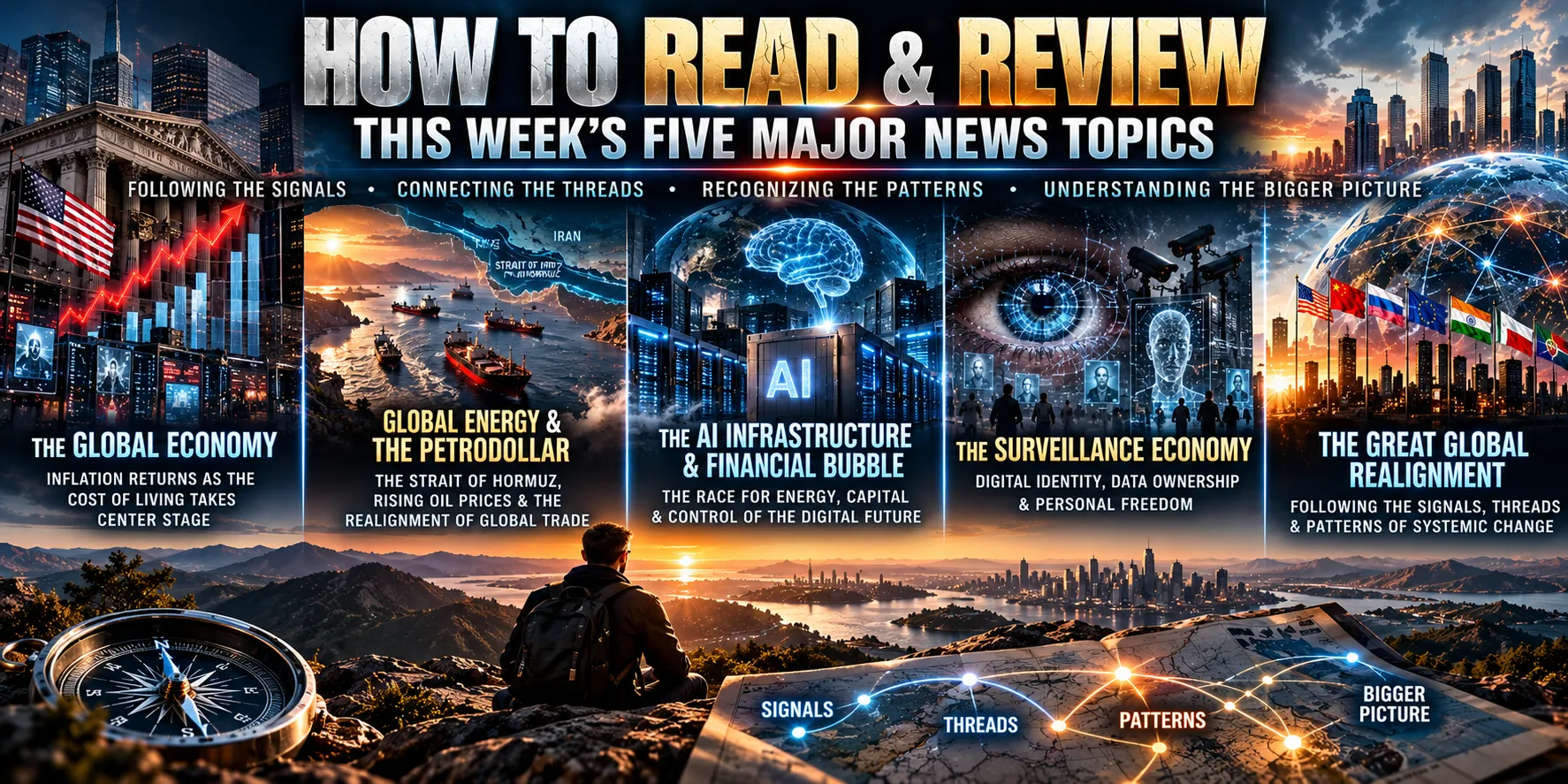
HOW TO READ & REVIEW THIS WEEK’S FIVE MAJOR NEWS TOPICS
Following the Signals • Connecting the Threads • Recognizing the Patterns • Understanding the Bigger Picture
This week’s five major news topics are designed to be examined not simply as individual headlines, but as interconnected developments revealing the economic, geopolitical, technological, and societal forces shaping the world around us. Begin by reviewing each topic independently, identifying the central issue, the most significant developments, the institutions and industries involved, and the potential consequences for governments, businesses, communities, and individuals. Pay particular attention to the relationship between inflation and the cost of living, global energy markets and the petrodollar, artificial intelligence and financial infrastructure, digital surveillance and personal sovereignty, and the broader realignment of global economic power. As you move through each report, distinguish documented developments from emerging risks, projections, and alternative interpretations. Consider which events represent immediate disruptions, which reflect longer-term structural changes, and which may become important indicators of future instability or transformation. Rather than focusing exclusively on what has happened, ask what forces are driving these developments, who may benefit or face greater exposure, what underlying vulnerabilities are being revealed, and how the consequences could extend beyond the original event. This approach encourages readers to move beyond isolated news coverage toward a more comprehensive understanding of the relationships connecting global events.
The second level of review involves applying GAR’s Signals, Threads & Patterns methodology to identify how these five topics intersect and potentially reinforce one another. A signal is an important development suggesting that conditions may be changing; a thread connects that development to other sectors, institutions, or events; and a pattern emerges when multiple signals and threads begin revealing a broader direction of change. For example, instability in the Strait of Hormuz can influence oil prices, transportation costs, inflation, interest-rate expectations, and household purchasing power. At the same time, expanding artificial intelligence infrastructure increases demand for electricity, capital investment, and financing, potentially adding pressure to energy systems, utility costs, and debt markets. The development of digital identity and financial technologies introduces another dimension involving institutional control, privacy, access to services, and individual sovereignty. The objective is to recognize where these separate developments converge, identify potential economic and societal pressure points, and determine which indicators deserve continued attention. Within GAR’s Three-Phase Transition Framework™, readers are encouraged to examine these developments through the overlapping processes of disruption, adaptation, transformation, and eventual regeneration. The most important question is not whether every event points toward a predetermined outcome, but whether the accumulating evidence reveals meaningful changes in the systems supporting modern society. Follow the signals, connect the threads, recognize the patterns, and maintain the discernment necessary to distinguish temporary instability from lasting systemic transformation.
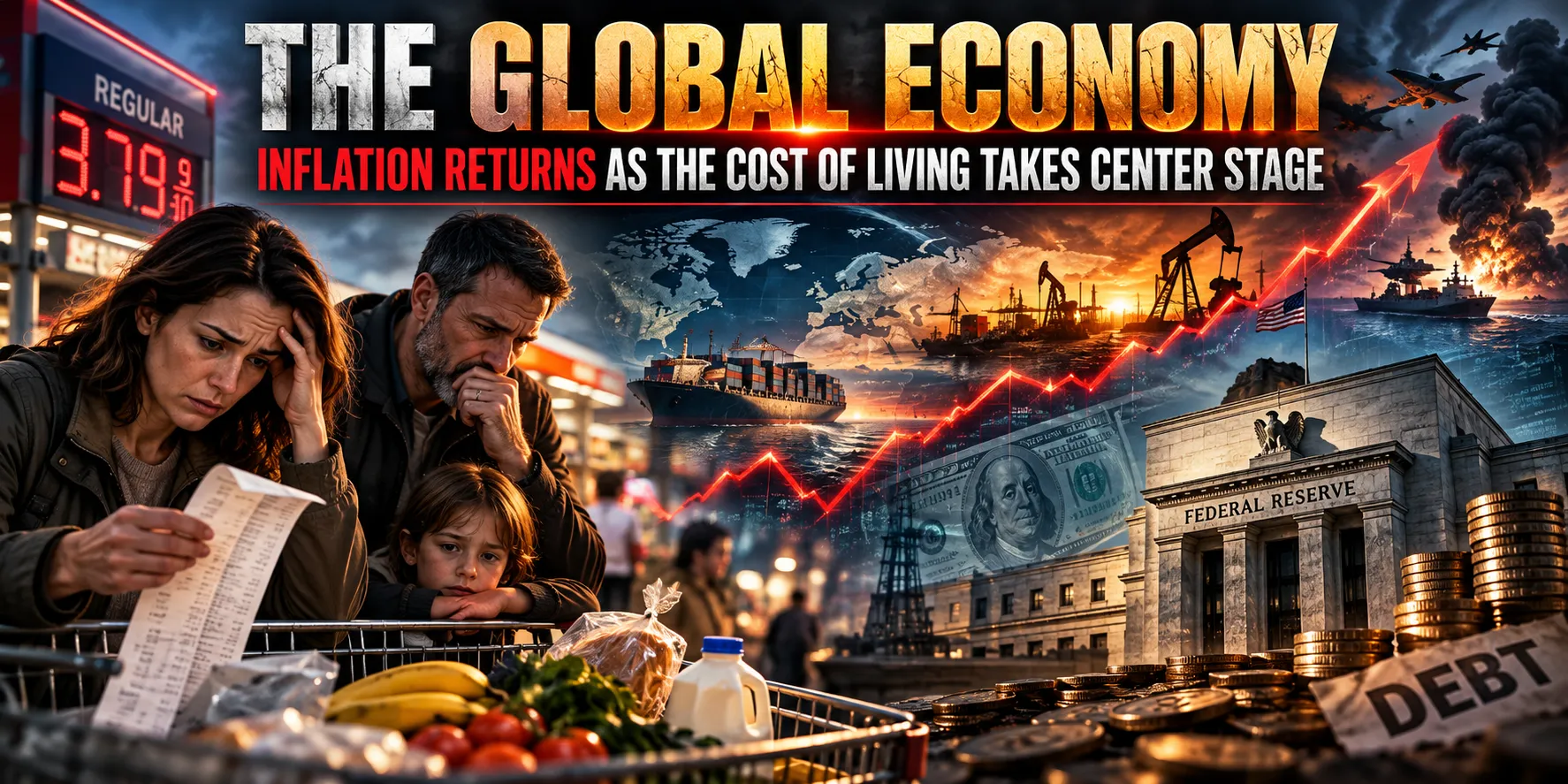
1. THE GLOBAL ECONOMY | INFLATION RETURNS AS THE COST OF LIVING TAKES CENTER STAGE
Inflation • Cost of Living • Energy • Consumer Spending • Federal Reserve • Household Debt • Geopolitical Conflict • Economic Instability
The American economy is confronting another wave of inflationary pressure as the cost of living returns to the center of the national conversation. September’s reported annual inflation rate of 3.7%, up from 3.4% in August, points to renewed price pressures, with rising energy costs contributing to the increase. After years of assurances that inflation was gradually coming under control, households continue to struggle with elevated grocery bills, housing costs, insurance premiums, utilities, transportation expenses, and everyday necessities. Even when inflation moderates, prices generally do not return to their previous levels; they simply increase more slowly. This distinction helps explain why many Americans feel little relief despite periods of improving economic statistics. The cumulative effects of higher prices have weakened purchasing power, particularly among middle-income families, retirees living on fixed incomes, and working households whose wages have struggled to keep pace with essential expenses. The central concern is whether the latest acceleration represents another temporary inflationary cycle or the beginning of a more prolonged period of economic pressure.
Geopolitical conflict is becoming an increasingly important driver of inflation, complicating the Federal Reserve’s efforts to restore price stability. Military escalation in the Middle East, threats to major shipping corridors, damage to energy infrastructure, and disruptions involving oil-producing nations can push fuel, transportation, manufacturing, and agricultural costs higher. Rising crude oil and diesel prices move through the economy, affecting everything from trucking and commercial aviation to food production, fertilizer, packaging, and retail distribution. At the same time, domestic economic conditions—including government spending, fiscal deficits, tariffs, labor costs, housing shortages, and monetary policy—continue influencing inflation. The Federal Reserve faces a difficult balancing act: maintaining restrictive interest rates may help contain demand-driven inflation but also increases borrowing costs for households, businesses, and government. Lowering rates could provide economic relief but risks stimulating demand while supply-side pressures remain elevated. The result is an increasingly complicated environment in which geopolitical instability and domestic economic policy can reinforce one another.
For American households, the consequences extend well beyond the monthly inflation report. Consumer spending, which remains a major engine of the U.S. economy, is increasingly vulnerable as families devote larger portions of their income to food, fuel, housing, healthcare, and debt payments. Credit card balances, auto loans, mortgages, and other financial obligations become more difficult to manage when borrowing costs remain elevated and real disposable income is constrained. Lower-income households face particularly difficult choices, while middle-class families increasingly reduce discretionary purchases, postpone major financial decisions, and draw upon savings to maintain their standard of living. Businesses face their own challenges as operating costs rise, profit margins narrow, and consumers become more selective. These conditions create the possibility of slower economic growth occurring alongside persistent inflation—a combination that raises concerns about stagflation. With the 2026 midterm elections approaching, affordability, economic security, and public confidence in government economic management are likely to become defining political issues. The question is no longer simply when inflation will decline, but whether household purchasing power and financial stability can recover before another economic disruption emerges.
GAR SIGNALS, THREADS & PATTERNS | FOLLOWING THE PRESSURE INTO THE REAL ECONOMY
From the Great Awakening Report’s broader Three-Phase Transition Framework™, the renewed inflation cycle represents another important signal in the movement from geopolitical disruption toward deeper economic and financial instability. The primary signal is that global pressure is increasingly reaching American households through energy costs, declining purchasing power, and higher borrowing expenses. The connecting threads are becoming more visible: military conflict threatens energy production and shipping routes; higher oil and diesel prices increase transportation and production costs; businesses pass those expenses along to consumers; persistent inflation complicates Federal Reserve policy; and elevated interest rates place additional strain on credit markets, commercial real estate, government debt, and household finances. The emerging pattern suggests that pressures once concentrated in geopolitics and financial markets are increasingly influencing everyday economic decisions. GAR’s central question is whether these forces remain manageable or begin reinforcing one another, producing a sustained period of economic compression. The next signals to monitor are oil and diesel prices, Treasury yields, consumer credit delinquencies, real wage growth, retail spending, corporate layoffs, and financial market liquidity. Together, these indicators may reveal whether the economy is experiencing another temporary inflationary shock or entering a more prolonged period of stagflation, financial restructuring, and systemic realignment.
GAR Pressure Transmission Chain: WAR → SHIPPING → ENERGY → INFLATION → FED POLICY → INTEREST RATES → CREDIT → BUSINESS → EMPLOYMENT → HOUSEHOLDS → CONSUMER SPENDING → ECONOMIC CONTRACTION


The Greatest Fraud In Human History | Prof. Richard Werner
The Peter McCormack Show
The Peter McCormack Show
348K subscribers
Subscribe
14K
Share
Ask
Save
954,129 views Sep 22, 2026 The Peter McCormack Show
Prof. Richard Werner is a world-renowned economist, professor of banking, and author of Princes of the Yen. Famous for coining the term "Quantitative Easing" (QE) and publishing the first empirical proof that private banks create money out of thin air through lending, he has spent decades exposing the central planning mechanisms that dictate global finance.

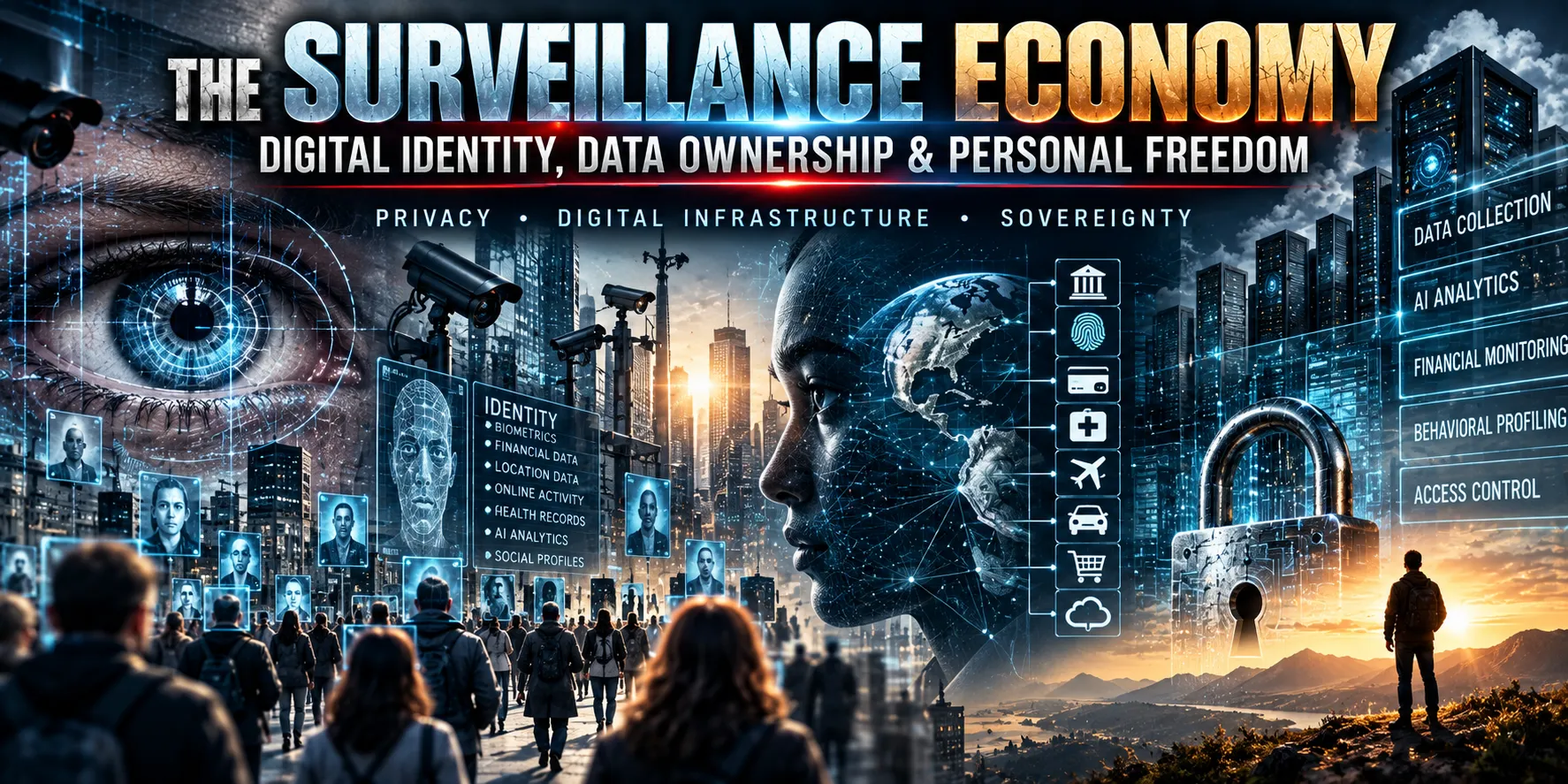
2. THE SURVEILLANCE ECONOMY | DIGITAL IDENTITY, DATA OWNERSHIP & PERSONAL FREEDOM
PRIVACY • DIGITAL INFRASTRUCTURE • DIGITAL IDENTITY • ARTIFICIAL INTELLIGENCE • BIOMETRICS • FINANCIAL SURVEILLANCE • DATA OWNERSHIP • INDIVIDUAL SOVEREIGNTY
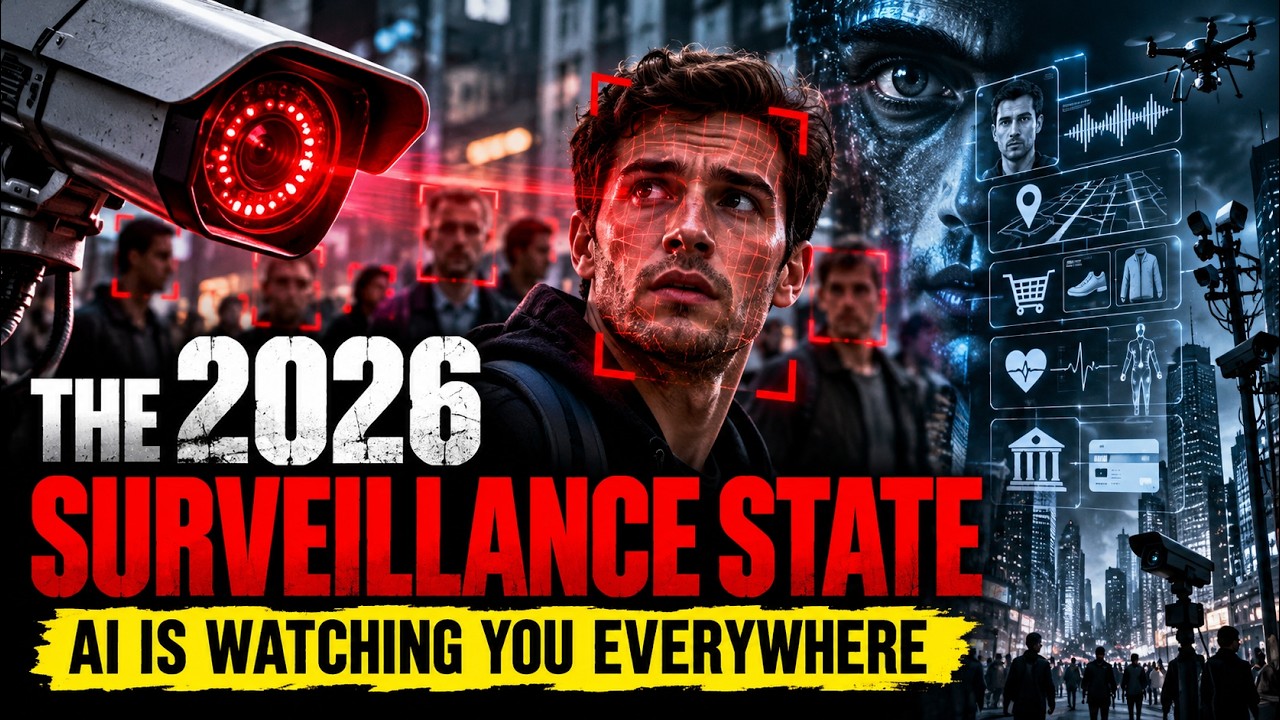
The rapid expansion of digital identity systems, artificial intelligence, biometric authentication, and interconnected financial technologies is transforming the relationship between individuals, corporations, and governments. What began as separate innovations designed to improve convenience, security, fraud prevention, and administrative efficiency is increasingly becoming part of a broader digital infrastructure capable of collecting, analyzing, and exchanging enormous amounts of personal information. Digital identification programs, facial recognition systems, behavioral analytics, mobile payment platforms, centralized databases, and AI-powered verification technologies are becoming more deeply integrated into everyday life. Governments and technology companies promote these systems as essential components of modernization, offering faster transactions, improved identity protection, streamlined public services, and greater financial transparency. However, their expansion raises fundamental questions about who owns personal information, who controls access to it, how long it is retained, and whether individuals can meaningfully refuse participation. As digital identification becomes more common across banking, healthcare, employment, travel, communications, and government services, the distinction between voluntary convenience and practical necessity could become increasingly difficult to maintain.
The deeper concern involves the convergence of technologies that were originally developed for different purposes but may eventually operate within interconnected systems of identification, financial monitoring, behavioral analysis, and institutional control. Biometric identification connects physical characteristics to digital records, while artificial intelligence enables organizations to identify patterns across vast collections of financial transactions, online activities, geographic movements, consumer behavior, and personal communications. Data brokers already participate in a multibillion-dollar information economy built around collecting, combining, analyzing, and selling consumer data, often with limited public understanding of how that information circulates. Financial institutions operate under extensive reporting and anti-money-laundering requirements, while emerging digital payment systems and identity-verification standards introduce additional questions about transaction privacy, access restrictions, and information sharing. The potential integration of these capabilities creates legitimate concerns about surveillance expansion, unauthorized profiling, cybersecurity vulnerabilities, discriminatory automated decisions, and the possibility that access to essential services could become dependent on increasingly comprehensive digital identification. Although these developments do not establish the existence of a single coordinated surveillance system, they reveal how separate technological and regulatory initiatives could create overlapping capabilities with significant implications for civil liberties and personal autonomy.
At the center of this transformation is a fundamental question: Will individuals retain meaningful control over their digital identities, personal information, financial transactions, and freedom of participation in society? Privacy advocates, independent technology researchers, cybersecurity specialists, and civil liberties organizations increasingly emphasize that technological progress must be accompanied by enforceable protections for individual rights. These safeguards include meaningful informed consent, limits on data collection and retention, restrictions on biometric surveillance, transparent government access procedures, independent oversight, strong encryption, decentralized identity solutions, and legal protections against discriminatory or arbitrary exclusion from essential services. Privacy-preserving technologies, including zero-knowledge proofs, selective disclosure credentials, and secure decentralized verification, demonstrate that identity authentication does not necessarily require unrestricted access to personal information. Equally important is preserving alternatives for individuals who cannot or choose not to participate in fully digital systems. The political and ethical challenge is not whether society should embrace technological modernization, but whether modernization can proceed without concentrating excessive power over personal identity, financial access, and individual decision-making. The outcome will depend on the architecture of these systems, the laws governing their use, and the ability of citizens to demand accountability before potentially intrusive infrastructure becomes deeply embedded in everyday life.
GAR SIGNALS, THREADS & PATTERNS | THE CONVERGENCE OF DIGITAL INFRASTRUCTURE & INDIVIDUAL SOVEREIGNTY
From the Great Awakening Report’s broader Three-Phase Transition Framework™, the accelerating convergence of digital identity, artificial intelligence, financial technology, and institutional databases represents a significant development in the relationship between technological innovation, centralized authority, and individual sovereignty. The primary signal is the growing dependence of modern society on digital systems that increasingly mediate access to financial services, employment, healthcare, transportation, communications, and government institutions. The connecting threads involve expanding biometric authentication, AI-driven behavioral analysis, digital payment infrastructure, data brokerage, cross-platform identity verification, and evolving regulatory requirements that could increase the ability of public and private institutions to identify, monitor, profile, or restrict individuals. The emerging pattern is a gradual shift from fragmented personal information toward more interoperable digital ecosystems, creating both opportunities for greater efficiency and risks associated with concentrated control, institutional dependency, and diminished privacy. GAR’s central question is whether these technologies will develop as tools of individual empowerment or mechanisms that enable greater institutional control over identity, information, financial participation, and personal freedom. The next signals to monitor include mandatory digital identification requirements, biometric data-sharing agreements, financial transaction monitoring policies, AI-based risk scoring, government access to private databases, the expansion of digital identity standards, and the adoption of privacy-preserving alternatives. Understanding who controls the infrastructure, who establishes the rules, and what protections remain available to individuals will be essential to distinguishing genuine technological advancement from systems that could undermine fundamental freedoms.
GAR Digital Convergence & Surveillance Risk Chain: DIGITAL IDENTITY → BIOMETRIC AUTHENTICATION → DATA COLLECTION → AI ANALYTICS → DATABASE INTEROPERABILITY → FINANCIAL MONITORING → BEHAVIORAL PROFILING → INSTITUTIONAL ACCESS CONTROL → PRIVACY RISKS → INDIVIDUAL SOVEREIGNTY

3. GLOBAL ENERGY & THE PETRODOLLAR | THE STRAIT OF HORMUZ, RISING OIL PRICES & THE REALIGNMENT OF GLOBAL TRADE
GEOPOLITICS • MIDDLE EAST CONFLICT • STRAIT OF HORMUZ • GLOBAL ENERGY • OIL PRICES • PETRODOLLAR • BRICS • CURRENCY REALIGNMENT • GLOBAL TRADE
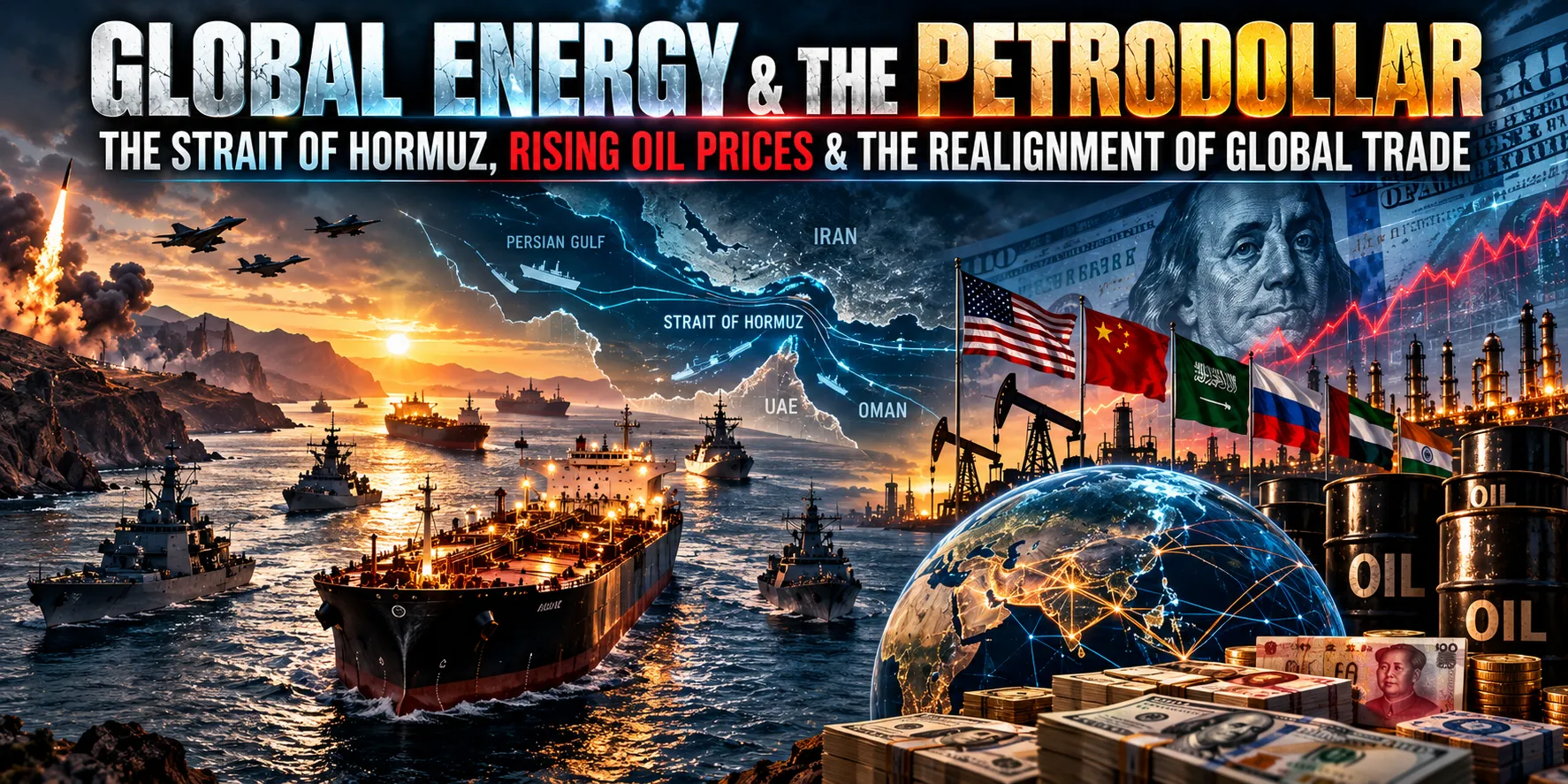
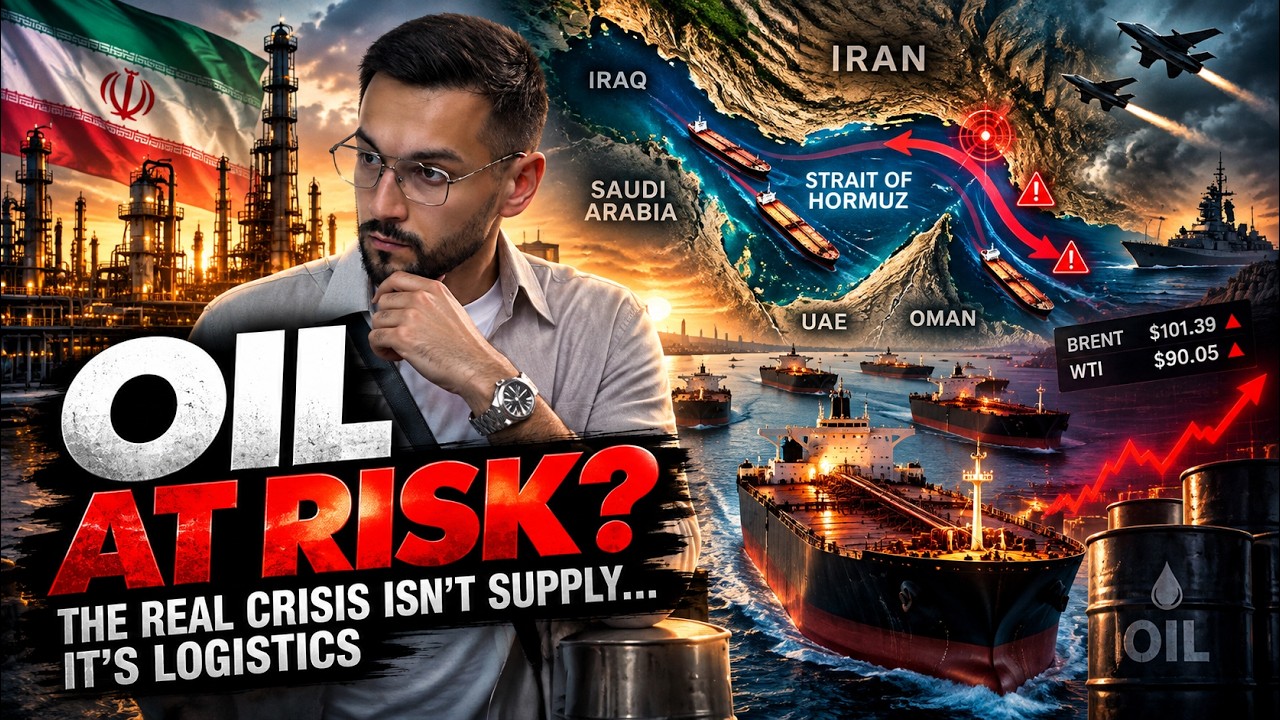
The escalating geopolitical instability surrounding the Middle East and the Strait of Hormuz is placing renewed pressure on one of the world’s most strategically important energy corridors, with consequences extending far beyond regional military conflict. The Strait of Hormuz, connecting the Persian Gulf to the Gulf of Oman and international shipping routes, carries approximately one-fifth of global petroleum liquids consumption, making it a critical chokepoint for international energy markets. Military confrontation, threats against commercial vessels, rising maritime insurance premiums, and potential disruptions to tanker movements can rapidly increase oil prices and create uncertainty across global supply chains. Even without a complete closure of the strait, heightened security risks can force shipping companies to reconsider routes, delay shipments, increase freight charges, and absorb additional operating expenses. Governments and energy-importing nations face the challenge of maintaining reliable fuel supplies while managing inflationary pressures, strategic petroleum reserves, refinery capacity, and alternative transportation arrangements. The consequences extend beyond gasoline prices, affecting diesel fuel, aviation, commercial transportation, industrial production, electricity generation, and agricultural operations. A prolonged disruption could create cascading economic pressures, particularly for countries heavily dependent on imported energy. The central concern is whether the Middle East conflict is evolving from a regional military confrontation into a sustained global energy and economic security crisis.
Beyond the immediate energy disruptions, the conflict raises deeper questions about the future of the petrodollar system, international trade settlements, and the geopolitical relationships that have supported the U.S. dollar’s global dominance for decades. Since the 1970s, the relationship between the United States, Saudi Arabia, and other Gulf energy producers has helped reinforce the dollar’s central role in international petroleum trading, global financial markets, and reserve accumulation. However, the international monetary environment is gradually becoming more diversified as China, Russia, India, Saudi Arabia, the United Arab Emirates, and other emerging economies explore expanded bilateral trade arrangements, local-currency settlements, and alternative financial infrastructure. China’s efforts to internationalize the yuan, the development of yuan-denominated oil futures, and BRICS discussions surrounding cross-border payment systems reflect growing interest in reducing reliance on traditional dollar-based settlement channels. Saudi Arabia and the UAE are also expanding commercial and strategic relationships with Asian economies, creating a more complex geopolitical environment in which energy partnerships increasingly overlap with currency arrangements, infrastructure investment, and long-term trade agreements. Nevertheless, the U.S. dollar remains deeply embedded in global oil markets, international banking, trade financing, and central-bank reserves, meaning that any significant monetary transition would likely unfold unevenly rather than through an immediate collapse of the existing system. The important question is whether continuing geopolitical confrontation, sanctions, and financial fragmentation could accelerate the gradual diversification of global energy settlement mechanisms.
The convergence of energy insecurity, rising oil prices, changing currency relationships, and expanding geopolitical competition creates the potential for a broader restructuring of international trade and economic influence. Higher crude oil prices increase the cost of producing and transporting essential goods, while rising diesel prices directly affect trucking, agricultural machinery, commercial shipping, and manufacturing. Fertilizer production and distribution are particularly sensitive to natural gas prices, maritime transportation, and regional supply disruptions, creating additional risks for agricultural production and global food affordability. At the same time, governments must balance energy security with inflation management, fiscal stability, military expenditures, and the need to maintain reliable international trade relationships. Countries facing rising import costs may experience currency depreciation, increased debt-servicing burdens, and deteriorating trade balances, while energy exporters could benefit from higher revenues but face greater security and infrastructure risks. These pressures may encourage nations to diversify suppliers, build strategic reserves, negotiate long-term energy contracts, expand domestic production, and reconsider the currencies and financial networks used in international commerce. The broader geopolitical struggle therefore involves more than control over petroleum resources; it increasingly concerns control over energy transportation corridors, financial settlement systems, strategic infrastructure, and the economic relationships that shape global power. Whether this produces a gradual multipolar adjustment or a more disruptive financial realignment will depend on the duration of the conflict, the resilience of global energy supplies, and the willingness of major trading nations to adopt alternative financial arrangements.
GAR SIGNALS, THREADS & PATTERNS | ENERGY CHOKEPOINTS, MONETARY PRESSURE & GLOBAL SYSTEM REALIGNMENT
Within the Great Awakening Report’s Three-Phase Transition Framework™, the convergence of Middle East military conflict, energy transportation vulnerabilities, rising oil prices, and evolving international currency arrangements represents a critical intersection of geopolitical disruption and global economic transformation. The primary signal is the increasing strategic importance of energy chokepoints as potential transmission points for broader economic instability, with the Strait of Hormuz serving as a leading indicator of how regional conflict can rapidly influence international markets. The connecting threads extend from military escalation and maritime security into oil supply, shipping insurance, diesel costs, fertilizer production, food prices, inflation expectations, central-bank policy, sovereign debt, and global capital flows. A second developing thread involves the relationship between energy trade and monetary influence, particularly as BRICS nations and Gulf economies explore alternative settlement arrangements and more diversified strategic partnerships. The emerging pattern suggests that energy security, financial stability, and geopolitical power are becoming increasingly interconnected, creating conditions in which disruptions in one system can amplify vulnerabilities across several others. GAR’s central question is whether these developments represent a temporary period of heightened instability or the early stages of a longer-term restructuring of the international energy and monetary order. The next signals to monitor include tanker traffic through Hormuz, maritime insurance costs, Brent crude prices, global diesel inventories, fertilizer availability, Gulf energy export agreements, yuan-denominated trade settlements, central-bank reserve allocations, Treasury yields, and changes in international capital flows. The defining pattern to watch is whether sustained energy disruption begins accelerating monetary diversification, financial fragmentation, and a broader realignment of global economic power.
GAR Global Energy & Monetary Realignment — Pressure Transmission Chain
MIDDLE EAST CONFLICT → STRAIT OF HORMUZ → SHIPPING DISRUPTIONS → OIL & DIESEL PRICES → GLOBAL INFLATION → CENTRAL-BANK POLICY → CREDIT & DEBT → INTERNATIONAL TRADE → CURRENCY DIVERSIFICATION → PETRODOLLAR PRESSURE → GLOBAL ECONOMIC REALIGNMENT
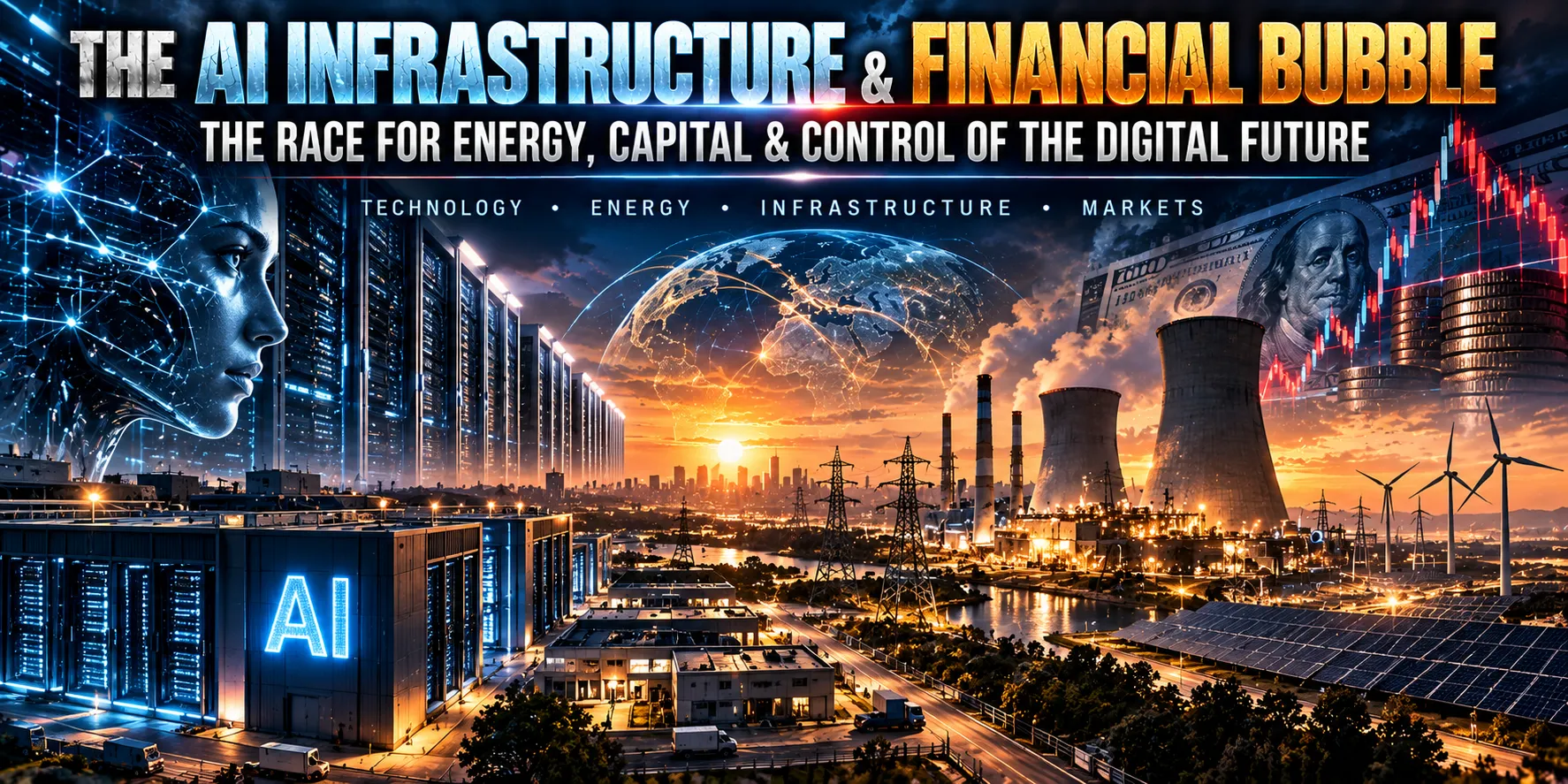
4. THE AI INFRASTRUCTURE & FINANCIAL BUBBLE | THE RACE FOR ENERGY, CAPITAL & CONTROL OF THE DIGITAL FUTURE
ARTIFICIAL INTELLIGENCE • GLOBAL ENERGY • ELECTRICITY DEMAND • DATA CENTERS • INFRASTRUCTURE • DEBT MARKETS • FINANCIAL BUBBLE • TECHNOLOGICAL TRANSFORMATION
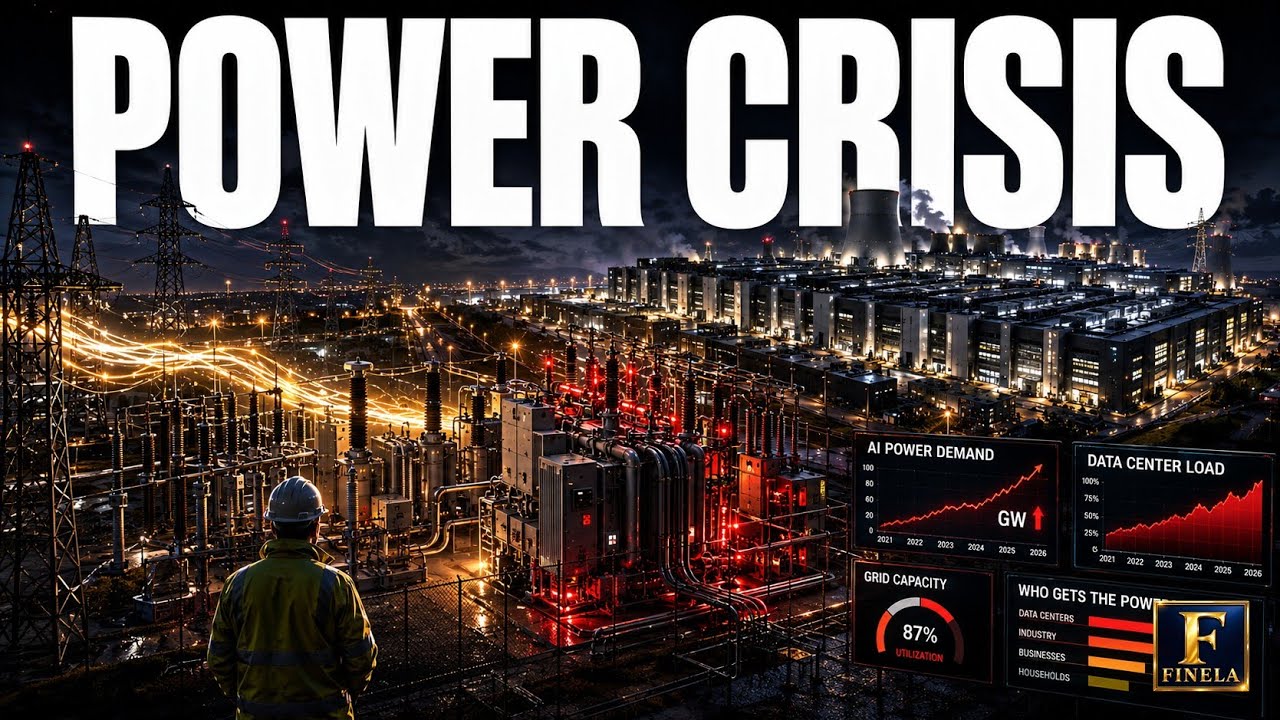
The accelerating expansion of artificial intelligence is creating one of the largest technology-driven infrastructure investment cycles in modern history, raising fundamental questions about whether the world’s energy systems, financial markets, and physical infrastructure can support the scale of development now underway. Technology giants, cloud computing providers, semiconductor manufacturers, and private investment firms are committing enormous amounts of capital to constructing AI data centers, expanding computing capacity, and developing the infrastructure required to power increasingly sophisticated artificial intelligence systems. Unlike earlier generations of digital technology, advanced AI requires extraordinary concentrations of electricity, high-performance computing equipment, cooling capacity, water resources, and reliable transmission networks. In several major technology markets, the availability of electricity and grid connections is becoming as important as access to advanced semiconductor chips. Utilities and regional power operators face growing challenges as data-center developers seek massive new electricity allocations, sometimes exceeding the capacity of existing local infrastructure. This has accelerated interest in nuclear reactor restarts, small modular reactors, natural gas generation, renewable energy installations, battery storage, and dedicated private power facilities. At the same time, communities are beginning to question whether expanding AI infrastructure could increase utility rates, consume limited water resources, strain electrical grids, and redirect public infrastructure investment away from households and local businesses. The emerging challenge is no longer simply how rapidly artificial intelligence can advance, but whether the physical systems supporting its expansion can keep pace without creating additional economic and environmental pressures.
Behind the extraordinary technological ambitions lies an increasingly complex financial structure built around corporate capital expenditures, private credit, infrastructure funds, bond financing, semiconductor valuations, and expectations of enormous future AI revenues. Major technology companies are investing heavily in data centers, specialized processors, networking equipment, energy infrastructure, and long-term computing contracts, while financial institutions and private investors are expanding their exposure to the AI development cycle. The central financial concern is the widening gap between the immediate costs of constructing AI infrastructure and the uncertain timing of future returns. Data centers require enormous upfront investment, sophisticated cooling systems, continuous electricity supplies, and expensive equipment that may become technologically outdated within relatively short periods. As competition intensifies, companies may face rising construction costs, higher electricity prices, increasing financing expenses, and pressure to demonstrate that AI services can generate sustainable profits. These conditions are drawing comparisons with previous investment booms in telecommunications, internet infrastructure, commercial real estate, and speculative technology markets. Artificial intelligence may ultimately transform productivity, healthcare, manufacturing, scientific research, education, and business operations while still experiencing a major financial correction if capital investment expands faster than commercially sustainable demand. The critical distinction is that a technology can become historically transformative while the financial structures funding its development experience severe instability. Should AI revenue growth disappoint, borrowing costs remain elevated, or investor confidence weaken, the consequences could extend into corporate bond markets, private credit portfolios, commercial real estate, utility financing, and broader equity valuations.
The convergence of energy demand, infrastructure limitations, speculative investment, and expanding debt exposure is creating a new set of interconnected risks for the global economy. Electricity shortages or delayed grid connections could postpone major data-center projects, reducing expected returns and increasing financial pressure on developers and investors. Conversely, aggressive utility expansion to accommodate AI demand could require substantial investment in power plants, substations, transmission networks, water systems, and supporting infrastructure, potentially transferring portions of those costs to residential and commercial ratepayers depending on regulatory decisions. The rapid growth of AI also introduces questions about land acquisition, water availability, environmental permitting, local government incentives, and the concentration of technological resources among a relatively small number of powerful corporations. Financial markets face the additional challenge of determining whether current AI valuations accurately reflect future earnings or depend on assumptions of continuous exponential growth. A sharp reduction in capital spending could affect semiconductor manufacturers, construction companies, equipment suppliers, energy developers, lenders, and communities that have committed resources to supporting data-center expansion. Meanwhile, governments increasingly view artificial intelligence as a strategic national security and economic competitiveness priority, potentially encouraging further public investment and competition for critical infrastructure. The defining question is whether the AI revolution will produce a sustainable expansion of economic productivity or whether the enormous capital requirements, resource constraints, and financial expectations surrounding its development will create a destabilizing investment cycle before its long-term benefits are fully realized.
GAR SIGNALS, THREADS & PATTERNS | WHEN ARTIFICIAL INTELLIGENCE COLLIDES WITH ENERGY, INFRASTRUCTURE & DEBT
Within the Great Awakening Report’s Three-Phase Transition Framework™, the convergence of artificial intelligence, electricity demand, infrastructure development, capital markets, and expanding financial obligations represents a significant emerging pressure point in the broader transformation of the global economy. The primary signal is the growing disconnect between the extraordinary pace of AI investment and the slower development of the physical energy and infrastructure systems required to support it. The connecting threads extend from AI computing demand into electricity generation, grid expansion, cooling technology, water availability, land development, construction costs, semiconductor production, corporate borrowing, private credit, and financial market valuations. A second critical thread involves the increasingly important relationship between energy security and technological competitiveness, as governments and corporations seek to secure reliable power supplies while maintaining economic growth and managing inflationary pressures. The emerging pattern suggests that AI is evolving from a technology investment cycle into a much broader infrastructure and capital allocation cycle, creating new dependencies between the technology sector, utilities, energy producers, financial institutions, and local communities. GAR’s central question is whether the financial and physical foundations of the AI expansion can withstand rising energy costs, elevated interest rates, infrastructure delays, and potentially disappointing investment returns. The next signals to monitor include hyperscaler capital expenditures, data-center construction delays, electricity demand forecasts, utility rate increases, nuclear and natural gas power agreements, semiconductor earnings, corporate bond spreads, private credit exposure, and changes in AI-related equity valuations. The defining pattern to watch is whether expanding infrastructure requirements and rising financial obligations begin outpacing the revenues and productivity gains needed to sustain the AI investment cycle, potentially transmitting financial stress beyond technology markets into the broader economy.
GAR AI Infrastructure & Financial Pressure Transmission Chain
AI EXPANSION → COMPUTING DEMAND → ELECTRICITY & WATER → GRID CAPACITY → ENERGY INFRASTRUCTURE → CAPITAL EXPENDITURES → CORPORATE BORROWING → PRIVATE CREDIT & BOND MARKETS → FINANCIAL VALUATIONS → INVESTMENT RETURNS → MARKET STABILITY → GLOBAL ECONOMIC IMPACT
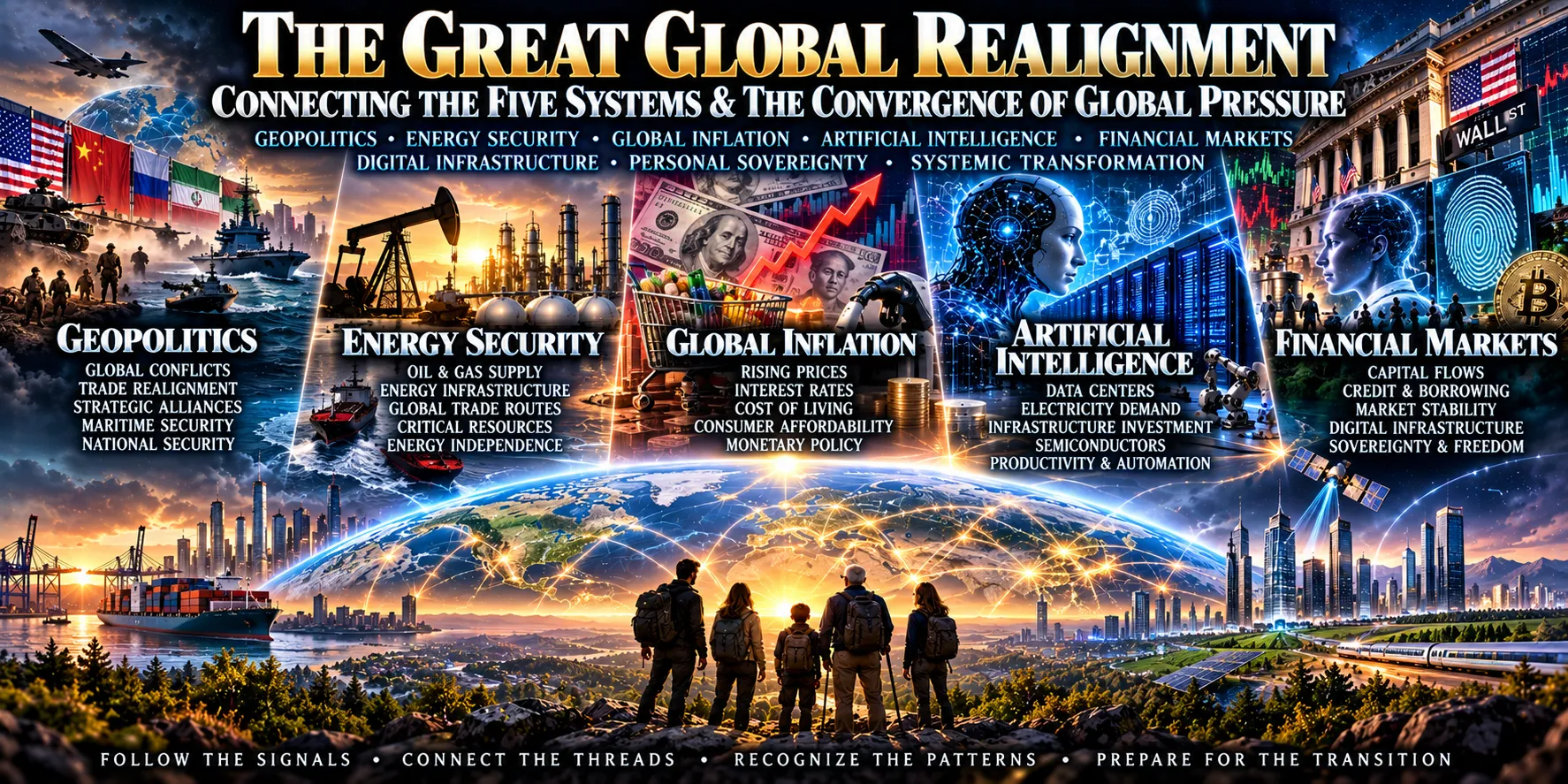
5. THE GREAT GLOBAL REALIGNMENT | CONNECTING THE FIVE SYSTEMS & THE CONVERGENCE OF GLOBAL PRESSURE
Geopolitics • Energy Security • Global Inflation • Artificial Intelligence • Financial Markets • Digital Infrastructure • Personal Sovereignty • Systemic Transformation
The first major development involves the accelerating realignment of geopolitical power, global energy markets, international trade, and financial relationships as governments and institutions respond to a changing international environment. Geopolitical conflicts, strategic competition between major economic powers, shifting trade alliances, and efforts to strengthen national security are influencing the movement of energy, commodities, investment capital, and critical technologies. The Strait of Hormuz and other strategic maritime corridors remain important because disruptions to international shipping and petroleum supplies can influence transportation costs, industrial production, consumer prices, and global economic expectations. At the same time, governments are reconsidering supply-chain dependencies, expanding domestic manufacturing incentives, and exploring alternative international trade and payment arrangements. These developments intersect with questions surrounding the petrodollar, the growing economic influence of emerging-market alliances, and the longer-term structure of the international monetary system. The central issue is not simply which nations gain or lose influence, but how changing geopolitical relationships affect the stability, affordability, and accessibility of the resources that support the global economy. When energy insecurity, trade restrictions, currency volatility, and strategic competition develop simultaneously, they can create additional pressure on inflation, financial markets, businesses, and households. The defining question is whether the international system is entering a period of prolonged economic fragmentation or adapting toward a more diversified arrangement of trade, energy security, and financial relationships.
The second major development is the growing intersection between inflation, interest rates, financial markets, and the extraordinary capital requirements of artificial intelligence and digital infrastructure. The expansion of AI data centers, semiconductor manufacturing, cloud computing, electrical generation, transmission networks, and digital communications requires enormous investment at a time when governments, corporations, and households must also manage debt, financing costs, and competing economic priorities. Rising electricity demand can place pressure on regional power grids and accelerate investment in natural gas, renewable energy, nuclear generation, and supporting infrastructure. However, the costs of this expansion raise important questions about corporate profitability, debt sustainability, utility rates, and the distribution of financial responsibility between technology companies, investors, businesses, and consumers. Meanwhile, persistent inflation and elevated borrowing costs can affect commercial real estate, government financing, corporate refinancing, consumer credit, and employment decisions. Financial markets must increasingly evaluate whether projected returns from AI investment justify the scale and timing of infrastructure spending. The emerging concern is that technological expansion and financial vulnerability can develop alongside one another, creating a situation in which the infrastructure required for future economic growth also introduces new pressures on energy availability, capital markets, and household affordability. The defining question is whether technological innovation will generate sufficient productivity, economic opportunity, and financial returns to support sustainable expansion or whether investment expectations and financing conditions will require substantial adjustment.
The third major development involves the transformation of digital identity, institutional governance, personal sovereignty, and society’s growing dependence on interconnected technological systems. Artificial intelligence, biometric identification, digital financial platforms, automated decision-making, and expanding data collection are changing how individuals interact with governments, employers, financial institutions, healthcare providers, and commercial services. These technologies can improve efficiency, security, accessibility, and service delivery, but they also introduce important questions involving privacy, surveillance, cybersecurity, individual autonomy, and the concentration of institutional power. As essential economic activities become increasingly dependent on digital infrastructure, disruptions involving electrical grids, communications networks, financial platforms, or cybersecurity can affect multiple areas of everyday life. The relationship between technological convenience and institutional dependence becomes especially important when access to financial services, identification systems, healthcare, employment, and communications relies on a relatively small number of interconnected platforms. Within GAR’s Three-Phase Transition Framework™, these developments illustrate the overlapping processes of Disclosure, Disruption & Deconstruction; Adaptation, Realignment & Transformation; and Reinvention, Innovation & Regeneration. The challenge is to understand how emerging technologies and institutional changes may reshape economic participation, personal freedom, and the relationship between individuals and governing systems. The defining question is whether the next generation of global infrastructure and digital governance will strengthen transparency, opportunity, resilience, and individual sovereignty—or create new concentrations of dependency and control that require greater public oversight and institutional reform.
GAR SIGNALS, THREADS & PATTERNS | THE EMERGING ARCHITECTURE OF GLOBAL REALIGNMENT
The primary signals are the measurable developments emerging across five interconnected systems: geopolitical realignment, energy security, inflation and financial conditions, artificial intelligence and infrastructure expansion, and digital governance and personal sovereignty. These include changing international alliances, strategic trade restrictions, maritime security risks, energy-price volatility, inflation trends, central-bank interest-rate decisions, government and corporate borrowing, AI capital expenditures, electricity-demand projections, utility infrastructure investment, and the expansion of digital identification and data-monitoring technologies. The connecting threads reveal how geopolitical instability can influence energy markets and international trade; how energy costs can affect inflation, interest rates, and household purchasing power; how financial conditions can determine the pace of AI infrastructure development; and how expanding digital systems can reshape institutional relationships, economic participation, and personal autonomy. The emerging patterns involve greater competition for strategic resources, increasing investment in technological and energy infrastructure, growing interdependence between physical and digital systems, financial sensitivity to borrowing costs, and heightened public concern about affordability, institutional accountability, and individual sovereignty. These patterns do not necessarily indicate a single coordinated transformation or an inevitable systemic collapse. Rather, they reveal multiple economic, political, and technological forces interacting within an increasingly interconnected international environment. The critical signals to monitor are sustained energy disruptions, persistent inflation, tightening credit conditions, unsustainable infrastructure financing, declining household resilience, significant changes in international trade and payment systems, and digital policies that materially affect privacy or access to essential services. The defining threshold emerges when pressures across several systems begin reinforcing one another, producing measurable consequences for economic stability, infrastructure reliability, institutional trust, and individual freedoms. Understanding these relationships allows truth seekers to move beyond individual headlines, recognize the larger patterns of systemic change, and evaluate whether the emerging global realignment is moving toward greater fragmentation and instability or toward adaptation, resilience, and constructive transformation.
GAR Global Realignment Pressure Chain
GEOPOLITICAL COMPETITION → ENERGY SECURITY & INTERNATIONAL TRADE → INFLATION & MONETARY POLICY → INTEREST RATES & CREDIT → FINANCIAL MARKETS & CAPITAL ALLOCATION → AI & ELECTRICAL INFRASTRUCTURE → DIGITAL GOVERNANCE & INSTITUTIONAL DEPENDENCE → HOUSEHOLD AFFORDABILITY & PERSONAL SOVEREIGNTY → SYSTEMIC ADAPTATION → GLOBAL REALIGNMENT
PRIMARY SIGNAL: Growing interaction between geopolitical competition, energy security, financial conditions, AI infrastructure investment, and digital governance.
EMERGING PATTERN: Increasing interdependence among global systems, with economic pressures, technological expansion, and institutional changes influencing one another.
CONVERGENCE THRESHOLD: Multiple sustained disruptions exceeding the capacity of governments, businesses, infrastructure providers, and households to adapt without significant economic, technological, or institutional adjustments.
THE DEFINING QUESTION: Are we witnessing a temporary period of global instability, or the early stages of a more fundamental realignment in how nations, economies, technologies, institutions, and individuals interact within an increasingly interconnected world?


Featured News Story
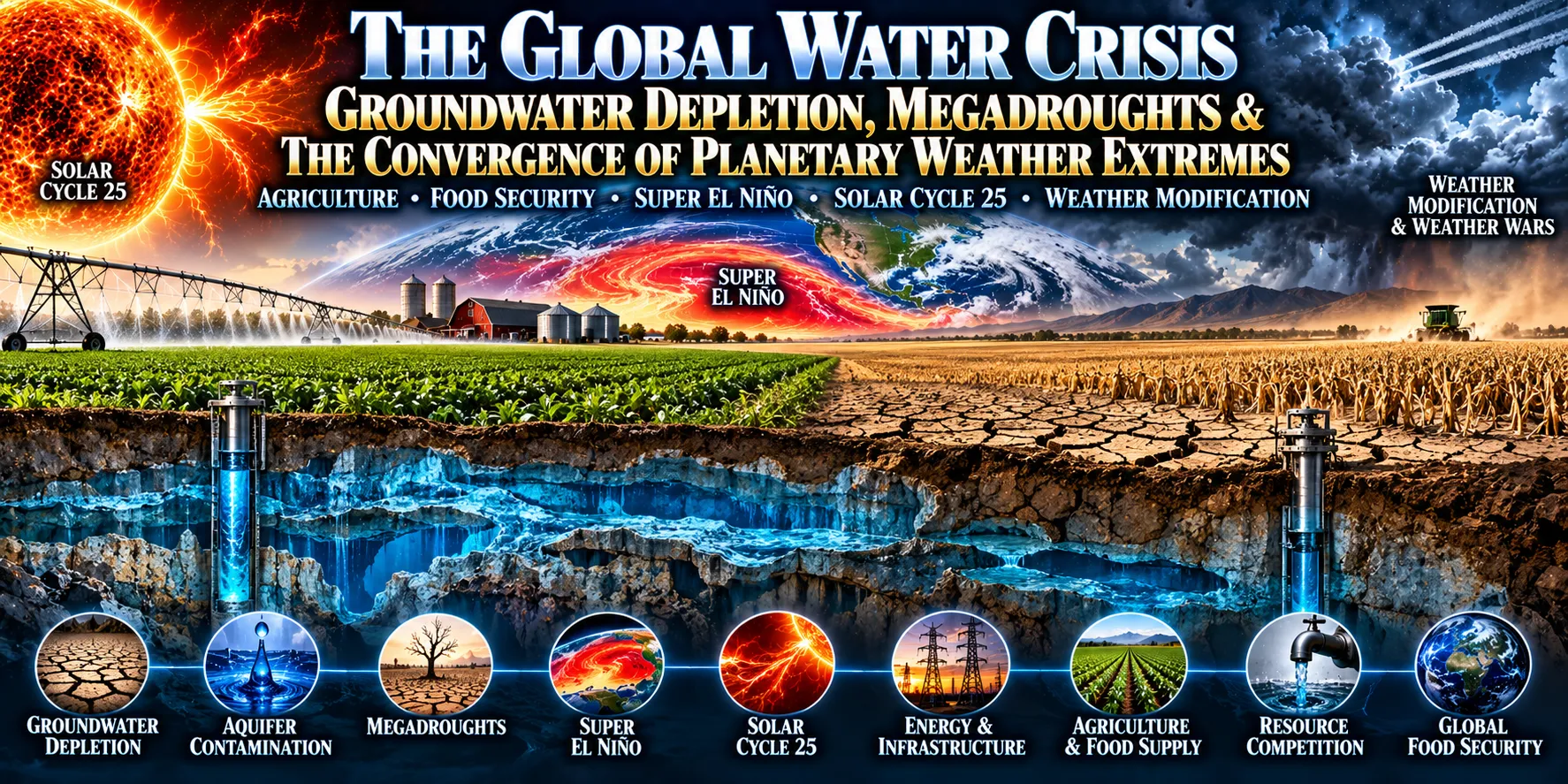
6. THE GLOBAL WATER CRISIS | GROUNDWATER DEPLETION, MEGADROUGHTS & THE CONVERGENCE OF PLANETARY WEATHER EXTREMES
America’s Underground Water Emergency • Super El Niño • Solar Cycle 25 • Weather Modification & Weather Wars • Agricultural Survival • Global Food Security
THE THREE MAJOR DEVELOPMENTS | GROUNDWATER, CLIMATE EXTREMES & SOLAR ACTIVITY
The first major development is the growing pressure on America’s underground freshwater reserves, particularly in agricultural regions where groundwater supports crop production, livestock, industry, and rural communities. On October 9, the U.S. Geological Survey published a new assessment examining groundwater recharge potential and water-resource conditions across five areas of eastern Nebraska. Researchers used airborne electromagnetic surveys and hydrogeological information to investigate how water moves through underground formations, where aquifers may be vulnerable to contamination, and what additional information is needed to manage future water availability. The findings identified concerns involving increasing agricultural, industrial, and residential water demand, nitrate contamination, and the possible expansion of rural water districts. Importantly, the study mapped recharge potential rather than establishing that all five areas are experiencing widespread groundwater depletion. Nevertheless, it highlights a much larger national concern: underground water reserves are essential to agricultural productivity, yet their availability depends on the relationship between rainfall, soil conditions, aquifer characteristics, pumping rates, and long-term replenishment. In drought-prone agricultural regions, groundwater withdrawals can exceed natural recharge over extended periods, lowering water tables, increasing pumping expenses, and potentially threatening irrigation capacity. Contamination introduces an additional challenge because water may remain physically available while becoming more expensive or difficult to use safely. The defining question is whether America’s agricultural heartlands can maintain sufficient clean groundwater as farming, industry, population growth, and future infrastructure development increase competition for limited freshwater resources.
The second major development involves the convergence of prolonged drought conditions, changing precipitation patterns, and the emergence of a powerful El Niño capable of influencing weather across multiple continents. NOAA’s October 8 climate assessment identified a strengthening El Niño, with strong-to-very-strong conditions considered likely through the early months of 2027. Its October 15 winter outlook projected increased chances of wetter conditions across portions of the southern United States, including California and the Southwest, alongside warmer conditions across much of the northern United States.
A very strong El Niño, sometimes called a Super El Niño, can substantially alter atmospheric circulation, storm tracks, seasonal rainfall, and regional drought conditions. However, increased rainfall does not automatically restore depleted aquifers. Groundwater replenishment depends on where precipitation falls, how quickly it arrives, whether it infiltrates soil and geological formations, and how much water is lost through runoff, evaporation, or consumption. Intense storms may produce destructive flooding while contributing relatively little to long-term groundwater storage in some locations. Meanwhile, other agricultural regions may experience reduced rainfall, persistent drought, or unfavorable growing conditions. The discussion also includes weather modification and claims of weather warfare, which should be examined separately from established climate mechanisms. Limited weather-modification techniques, such as cloud seeding, exist, but there is no credible evidence that present-day technology can create or direct El Niño, megadroughts, or large-scale planetary weather systems as weapons. The critical issue is how changing precipitation patterns, extreme weather, drought, and human water demand interact to influence groundwater replenishment, agricultural productivity, regional water security, and the stability of food production.
The third major development concerns Solar Cycle 25 and the broader relationship between solar activity, Earth’s electromagnetic environment, and modern infrastructure. The Sun operates through an approximately eleven-year cycle of increasing and decreasing magnetic activity, characterized by changing sunspot numbers, solar flares, coronal mass ejections, and geomagnetic disturbances. NASA and NOAA announced in October 2024 that Solar Cycle 25 had entered its solar maximum period, when heightened solar activity increases the likelihood of significant space-weather events.
Solar storms can affect satellites, navigation systems, high-frequency radio communications, and electrical infrastructure, making space-weather monitoring increasingly important for agriculture and water management systems that depend on electricity, GPS-guided equipment, automated irrigation, pumping stations, and digital communications. Solar variability also contributes to Earth’s natural energy balance, but the approximately eleven-year solar cycle is not an established explanation for the current pattern of megadroughts or the development of a strong El Niño. These climate phenomena are governed by complex ocean-atmosphere interactions, regional weather variability, long-term warming, and other environmental influences. The broader significance of Solar Cycle 25 is therefore its potential to introduce an additional infrastructure hazard at a time when agriculture, water distribution, and emergency management depend increasingly on interconnected technological systems. The defining question is whether modern water, energy, and agricultural infrastructure is sufficiently resilient to withstand the combined operational challenges posed by drought, extreme precipitation, rising resource demand, and occasional space-weather disturbances.
GAR SIGNALS, THREADS & PATTERNS | THE CONVERGENCE OF WATER SECURITY, CLIMATE VOLATILITY & AGRICULTURAL RESILIENCE
The primary signal is the increasing importance of groundwater availability and water quality as agricultural, industrial, and residential demand intersects with changing precipitation patterns, regional drought exposure, and expanding technological dependence. The October 9 USGS assessment provides a measurable research foundation for understanding groundwater recharge, aquifer vulnerability, and resource-management challenges in eastern Nebraska, while NOAA’s October climate outlook identifies a strong El Niño that may significantly influence precipitation and drought conditions during the coming winter. Solar Cycle 25 adds a separate infrastructure-related consideration through the potential effects of geomagnetic disturbances on electricity, communications, navigation, and automated agricultural systems. The connecting threads extend across aquifer recharge, groundwater pumping, nitrate contamination, agricultural irrigation, megadroughts, reservoir storage, extreme precipitation, El Niño, solar activity, electrical-grid reliability, food production, water treatment, and competition among farms, industries, and communities. Weather-modification programs and weather-warfare allegations can be included as a distinct investigative thread, but claims of deliberate large-scale weather manipulation require specific, independently verifiable evidence. The emerging pattern is that water security increasingly depends on the interaction of natural hydrological conditions, resource management, infrastructure investment, environmental protection, and economic demand. A region can experience temporary rainfall improvements while still facing long-term groundwater challenges, just as expanding irrigation capacity can support agricultural production while placing additional pressure on aquifers. Within GAR’s Three-Phase Transition Framework™, this subject highlights the need to move from identifying resource vulnerabilities toward adaptation through improved groundwater monitoring, efficient irrigation, aquifer recharge projects, contamination prevention, drought planning, and stronger regional water-management strategies. The critical signals to monitor include groundwater-level trends, pumping rates, nitrate concentrations, reservoir storage, soil moisture, drought classifications, El Niño forecasts, agricultural water demand, electricity reliability, and regional restrictions on groundwater withdrawals. The defining convergence threshold occurs when declining groundwater availability, deteriorating water quality, or persistent drought begins producing measurable reductions in agricultural output, higher water costs, restrictions on development, or sustained economic pressure on rural communities.
GAR Pressure Chain: GROUNDWATER DEMAND + DROUGHT + CLIMATE VOLATILITY → AQUIFER RECHARGE PRESSURE → WATER AVAILABILITY & QUALITY RISKS → AGRICULTURAL IRRIGATION COSTS → FOOD PRODUCTION & SUPPLY → FOOD PRICES & HOUSEHOLD AFFORDABILITY → REGIONAL ECONOMIC PRESSURE → WATER SECURITY & INFRASTRUCTURE ADAPTATION.
Additional infrastructure exposure: SOLAR CYCLE 25 → GEOMAGNETIC DISTURBANCES → ELECTRICAL & COMMUNICATIONS RISKS → WATER PUMPING, IRRIGATION & AGRICULTURAL OPERATIONS.
The defining question: As freshwater resources face increasing demand and more variable environmental conditions, are we approaching a period in which water security becomes one of the most consequential economic, agricultural, and national resilience challenges of the Great Transition?



CONNECTING THE DOTS | THE CONVERGENCE OF GLOBAL PRESSURES
Following the Signals • Connecting the Threads • Recognizing the Patterns • Understanding the Bigger Picture
The most important developments shaping our world are rarely isolated events. They are part of an increasingly interconnected global system in which geopolitical conflicts, economic pressures, financial markets, technological advancements, and institutional changes influence one another in ways that are not always immediately apparent. GAR’s Connecting the Dots analysis moves beyond individual headlines to examine the deeper relationships linking major news stories, identifying the forces driving events and the potential consequences extending across multiple sectors of society. This week’s five major topics—The Global Economy, Global Energy & the Petrodollar, The AI Infrastructure & Financial Bubble, The Surveillance Economy, and The Great Global Realignment—provide five different perspectives on a much larger transformation taking shape. Each represents a distinct area of investigation, yet together they reveal important connections involving energy security, inflation, monetary policy, capital investment, technological dependency, digital identity, international trade, and the changing balance of global economic influence. By following these connections, readers can begin recognizing how developments that appear unrelated may share underlying causes, transmit pressure through common systems, or contribute to broader economic and societal changes.
Connecting the Dots is the process of identifying relationships; the Convergence of Dots is the recognition of what happens when those relationships begin intersecting, reinforcing one another, and producing consequences beyond their original source. A geopolitical conflict affecting the Strait of Hormuz, for example, can influence oil transportation, global energy prices, inflation, interest rates, and household purchasing power. At the same time, the unprecedented expansion of artificial intelligence is creating enormous demand for electricity, data centers, infrastructure financing, and investment capital, potentially introducing additional pressures into already sensitive energy and financial markets. Meanwhile, digital identity systems, biometric technologies, artificial intelligence, and financial monitoring are reshaping the relationship between individuals, institutions, and the digital infrastructure increasingly supporting everyday life. These developments do not necessarily originate from a common plan or produce a predetermined outcome, but their interactions can reveal emerging vulnerabilities, concentrations of influence, and important turning points. GAR’s Signals, Threads & Patterns methodology provides a structured approach to examining these relationships: signals identify meaningful developments, threads reveal the connections between them, patterns indicate recurring or accelerating trends, and convergence highlights the points where multiple pressures begin affecting the same systems. The objective is to distinguish confirmed developments from emerging risks, identify measurable thresholds, and recognize where accumulating pressures may be creating conditions for significant change.
Within GAR’s Three-Phase Transition Framework™, this convergence analysis becomes an important tool for understanding the overlapping processes of Crossing the Threshold, The Great Transition, and Global Emergence. Phase I examines the forces of disclosure, disruption, and deconstruction challenging established systems; Phase II focuses on adaptation, realignment, and transformation as governments, businesses, communities, and individuals respond to changing conditions; and Phase III explores the possibilities of reinvention, innovation, and regeneration as new structures and approaches emerge. This week’s Connecting and Converging Dots section examines whether the combined pressures involving global energy, inflation, financial stability, artificial intelligence, digital governance, and geopolitical competition are creating temporary disruptions or contributing to more fundamental structural realignments. The central questions are increasingly important: Where is the pressure moving? Which systems are becoming more vulnerable? What happens when multiple pressures converge? Which developments signal meaningful change, and what opportunities for adaptation and resilience are emerging? Our purpose is not simply to anticipate future events, but to strengthen awareness, encourage discernment, and provide a broader perspective on the forces shaping our collective future. Follow the signals. Connect the threads. Recognize the patterns. Understand the convergence. Prepare for the transition.
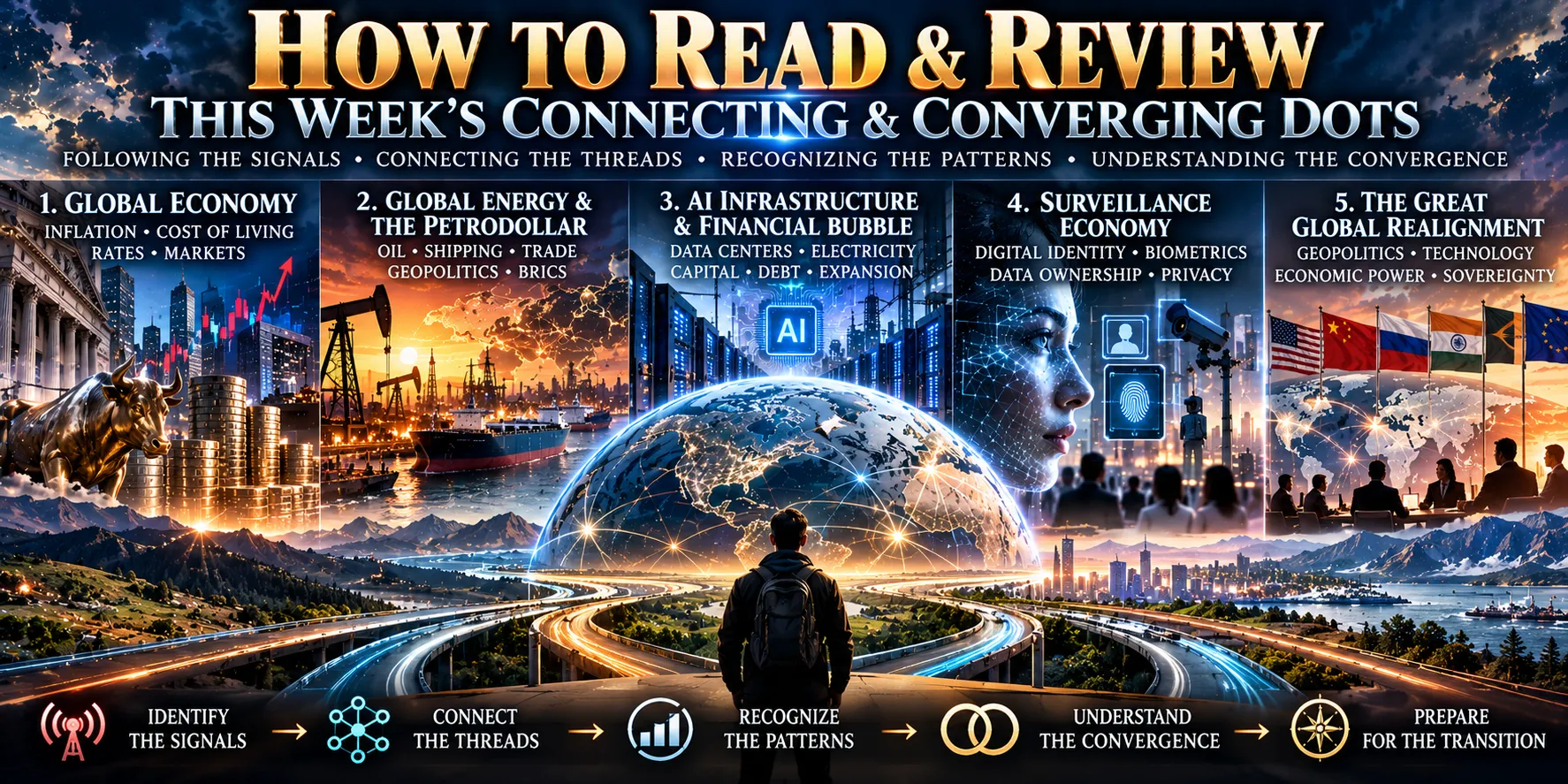
HOW TO READ & REVIEW THIS WEEK’S CONNECTING & CONVERGING DOTS
Following the Signals • Connecting the Threads • Recognizing the Patterns • Understanding the Convergence
This week’s Connecting & Converging Dots section is designed to take readers beyond the individual news stories and into a deeper examination of how the five major topics intersect, influence one another, and contribute to the larger forces shaping our world. Begin by reviewing each of the five Connecting the Dots analyses independently: The Global Economy, Global Energy & the Petrodollar, The AI Infrastructure & Financial Bubble, The Surveillance Economy, and The Great Global Realignment. Each analysis identifies the central developments, the underlying economic and geopolitical forces, the institutions and industries involved, and the pathways through which pressure can move from one sector into another. Pay particular attention to the GAR Pressure Chains, which illustrate how developments such as Middle East conflict, energy disruptions, rising inflation, monetary policy, AI infrastructure expansion, corporate borrowing, and digital identification systems can create consequences across multiple interconnected systems. As you read, identify the Primary Signals, which highlight developments that deserve immediate attention, and the Convergence Thresholds, which identify measurable conditions that could indicate a broader escalation or structural change. Consider which connections are already supported by observable developments, which represent emerging risks, and which require additional evidence before drawing conclusions. The objective is to develop a more comprehensive understanding of how individual events connect to larger economic, technological, financial, and societal trends.
The second level of review focuses on the Convergence of Dots—recognizing what happens when multiple signals, threads, and patterns begin intersecting and reinforcing one another across the five major topics. Rather than examining inflation, energy security, artificial intelligence, financial markets, digital surveillance, and geopolitical realignment as separate developments, look for the points where these pressures overlap, accelerate, or create new vulnerabilities. For example, rising energy costs can intensify inflation, influence interest rates, and increase the expense of expanding AI infrastructure, while higher borrowing costs can affect corporate investment, credit markets, and financial stability. Meanwhile, the growing integration of digital identity, AI analytics, and financial technology introduces additional questions involving institutional dependency, data ownership, privacy, and individual sovereignty. Use GAR’s Three-Phase Transition Framework™ to evaluate these developments through the overlapping processes of Disclosure, Disruption & Deconstruction; Adaptation, Realignment & Transformation; and Reinvention, Innovation & Regeneration. The most important exercise is to identify where pressure is accumulating, which systems are approaching critical thresholds, what developments could trigger wider consequences, and where opportunities for resilience and positive transformation may emerge. The purpose of Connecting & Converging Dots is not simply to understand what is happening today, but to recognize how the relationships between events may help reveal what comes next—moving from isolated headlines toward a clearer understanding of the bigger picture.
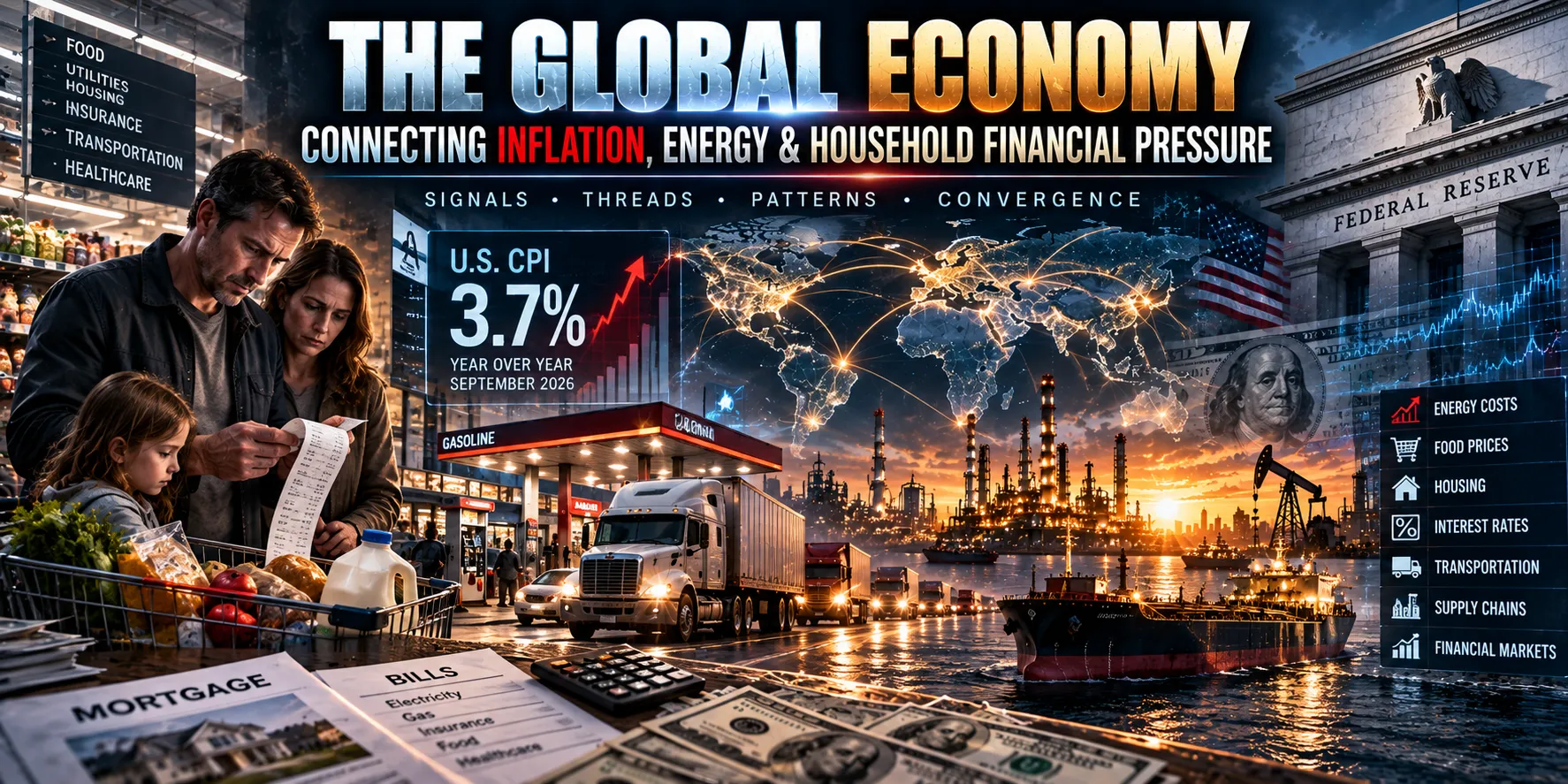
1. THE GLOBAL ECONOMY | CONNECTING INFLATION, ENERGY & HOUSEHOLD FINANCIAL PRESSURE
Inflation • Cost of Living • Energy • Federal Reserve • Credit • Consumer Spending
Connecting the Dots
The first connection begins with the renewed acceleration of inflation and the increasing influence of energy costs on the broader economy. September’s Consumer Price Index increased 3.7% year over year, while gasoline prices rose 9.1% during the month, accounting for more than half of the monthly increase in the overall index.
These figures illustrate how developments in international energy markets can rapidly influence domestic inflation. Higher fuel prices affect commercial transportation, agricultural operations, manufacturing, distribution, and household expenses. As businesses absorb rising costs, some are passed along to consumers, reducing purchasing power and increasing pressure on family budgets. The connection extends beyond gasoline to the cumulative burden of housing, insurance, healthcare, utilities, and debt payments, creating an environment in which economic growth can coexist with declining household financial confidence.
The second connection involves monetary policy and the financial system. Persistent inflation limits the Federal Reserve’s flexibility to reduce interest rates, potentially keeping borrowing costs elevated for consumers, corporations, commercial real estate, and government financing. Higher interest rates affect mortgage affordability, credit card balances, business expansion, refinancing activity, and investment decisions. As households allocate more income toward essential expenses and debt servicing, discretionary spending becomes vulnerable. Businesses facing weaker demand may respond by reducing hiring, postponing investments, or restructuring operations. The resulting transmission chain connects global energy developments to inflation, monetary policy, financial conditions, employment, and consumer behavior.
The Convergence of Dots
The convergence occurs when rising living costs, elevated borrowing expenses, weakening purchasing power, and slower economic activity begin reinforcing one another. Energy-driven inflation can persist even as economic growth weakens, creating a difficult policy environment in which measures intended to contain prices may also place additional pressure on employment, credit markets, and household finances. Within GAR’s framework, the critical threshold is reached when financial pressure moves beyond economic statistics and begins changing real-world decisions: consumers reduce spending, businesses postpone expansion, lenders tighten credit, and households increasingly rely on borrowing to maintain essential living standards. The emerging risk is a prolonged affordability crisis accompanied by weaker growth and financial fragility. This outcome is not inevitable, but the combination of persistent inflation and constrained financial flexibility deserves close attention.
GAR Pressure Chain
ENERGY → TRANSPORTATION → INFLATION → FED POLICY → INTEREST RATES → CREDIT → BUSINESS → EMPLOYMENT → HOUSEHOLDS → CONSUMER SPENDING
Primary signal: Sustained increases in essential living costs alongside weakening household purchasing power.
Convergence threshold: Rising consumer delinquencies, declining real spending, and employment deterioration occurring simultaneously.
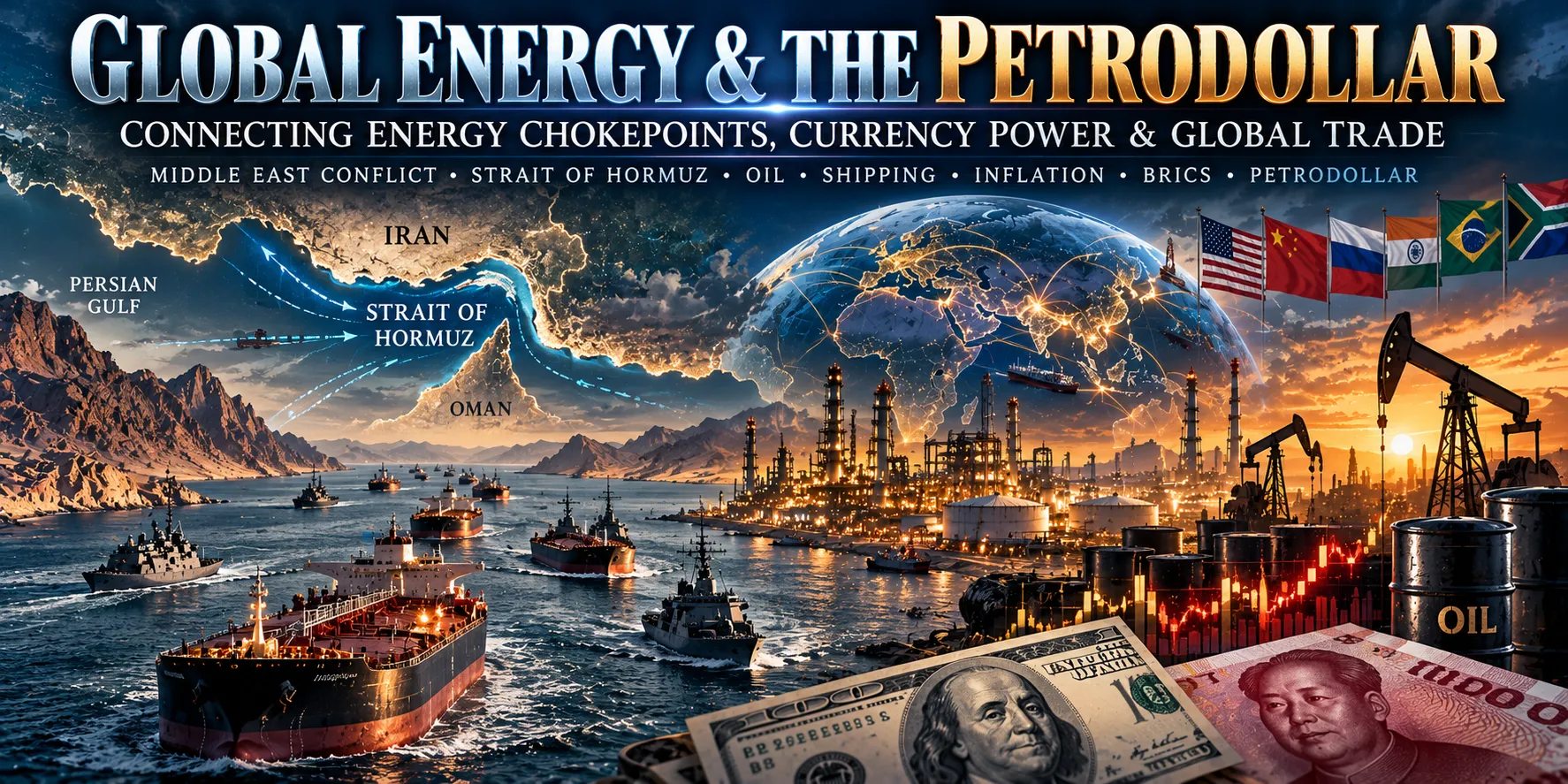
2. GLOBAL ENERGY & THE PETRODOLLAR | CONNECTING ENERGY CHOKEPOINTS, CURRENCY POWER & GLOBAL TRADE
Middle East Conflict • Strait of Hormuz • Oil • Shipping • Inflation • BRICS • Petrodollar
Connecting the Dots
The second major connection begins at the Strait of Hormuz, where geopolitical confrontation and maritime security threats can directly influence global oil transportation, energy prices, and international commerce. Shipping data published October 8 indicated that commodity vessel transits had fallen to a two-month low, while crude flows through the strait declined approximately 27% week over week. Alternative export routes were helping offset part of the disruption.
This illustrates how a geographically narrow shipping corridor can become a transmission point for economic pressure affecting multiple continents. Higher maritime insurance premiums, increased security expenses, shipping delays, and constrained energy supplies can raise costs throughout the global economy. The resulting pressure moves through diesel transportation, manufacturing, agricultural production, fertilizer distribution, food processing, and consumer prices.
The second connection involves the relationship between energy trade, international currencies, and geopolitical influence. The dollar’s established role in global oil markets is supported by deep financial markets, international banking networks, trade financing, and reserve-currency demand. However, geopolitical tensions, sanctions, and changing trade relationships are encouraging some nations to explore alternative settlement arrangements. China continues promoting yuan-denominated trade, while BRICS members and Gulf economies are examining ways to diversify commercial and financial relationships. The important distinction is that settling some oil transactions in alternative currencies does not automatically dismantle the dollar’s broader international role. Nevertheless, the expansion of alternative payment networks could gradually alter financial relationships, particularly if geopolitical conflict encourages countries to reduce their exposure to existing settlement systems.
The Convergence of Dots
The convergence occurs when energy transportation disruptions, higher commodity prices, inflation, international trade fragmentation, and currency diversification begin interacting within the same geopolitical environment. Countries dependent on imported energy face higher costs and potential trade imbalances, while exporters may gain pricing advantages but confront increased security and infrastructure risks. Sustained instability could encourage governments to develop alternative energy corridors, establish new long-term supply agreements, strengthen strategic reserves, and diversify payment arrangements. Within GAR’s framework, the broader issue is whether geopolitical conflict accelerates changes already underway in international trade and financial relationships. The critical threshold would involve sustained disruptions to energy flows accompanied by measurable changes in currency settlement practices, reserve allocations, and international capital movements.
GAR Pressure Chain: MIDDLE EAST CONFLICT → HORMUZ → SHIPPING → OIL & DIESEL → INFLATION → GLOBAL TRADE → CURRENCY SETTLEMENT → CAPITAL FLOWS → MONETARY REALIGNMENT
Primary signal: Persistent energy transportation disruption accompanied by changes in international trading relationships.
Convergence threshold: Significant and sustained diversification of energy settlement currencies alongside broader changes in global capital flows.
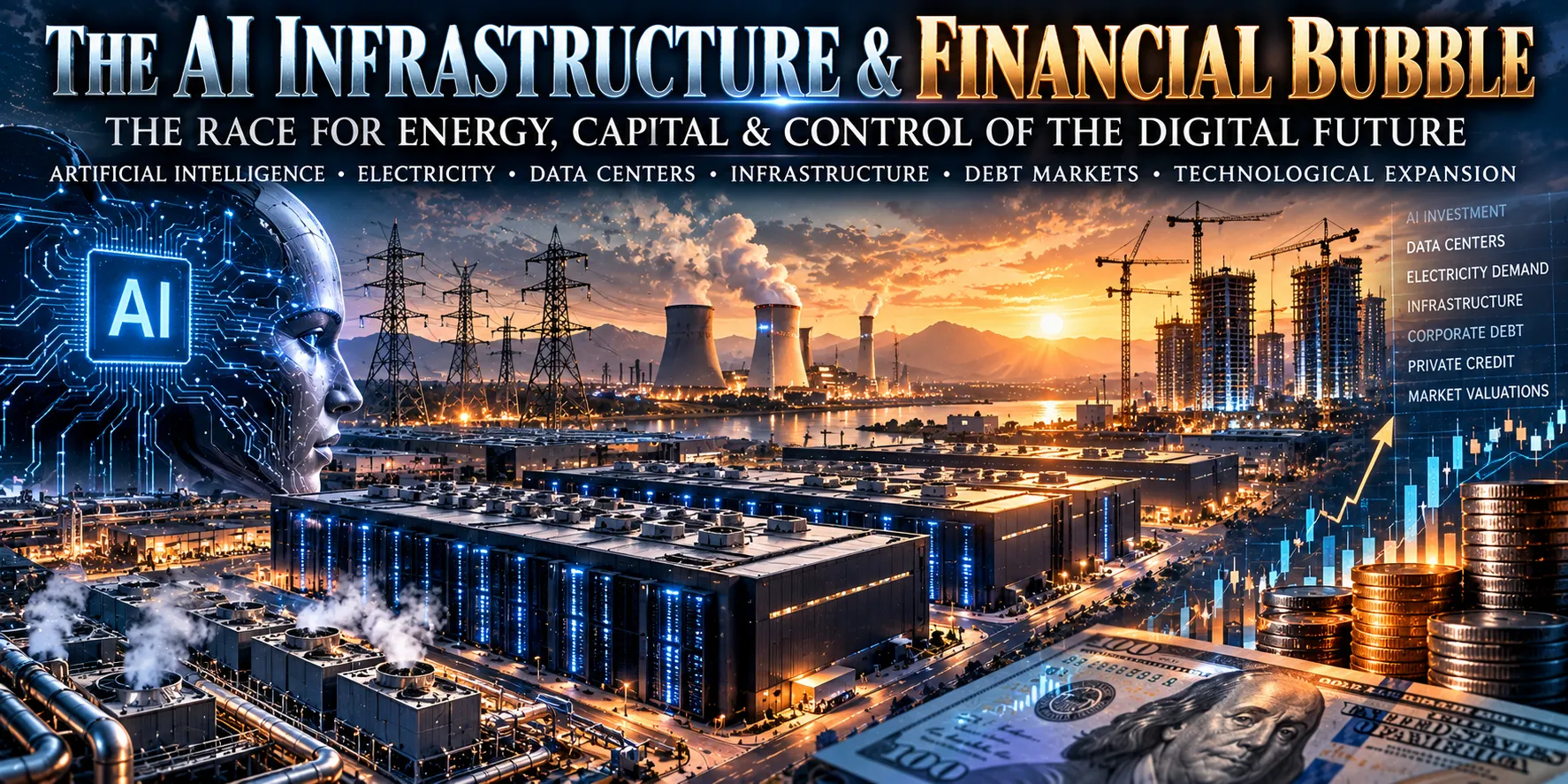
3. THE AI INFRASTRUCTURE & FINANCIAL BUBBLE | CONNECTING ELECTRICITY, CAPITAL, DEBT & TECHNOLOGICAL EXPANSION
Artificial Intelligence • Electricity • Data Centers • Water • Infrastructure • Private Credit • Financial Markets
Connecting the Dots
The third connection begins with the extraordinary physical requirements of artificial intelligence. AI is frequently presented as a software revolution, yet its expansion depends on an enormous industrial infrastructure involving data centers, semiconductor manufacturing, electricity generation, cooling systems, transmission networks, water supplies, and construction. As computing demand accelerates, technology companies are increasingly competing for access to reliable electricity and suitable development locations. This creates a direct relationship between technological expansion and local infrastructure planning. Communities may face increased competition for electrical capacity, pressure on water resources, and potential increases in utility costs. An October congressional investigation raised concerns that data-center developers are not consistently absorbing their full infrastructure costs and may be seeking subsidies from ratepayers and local governments.
The central connection is that AI growth can create costs and resource demands extending well beyond the technology companies developing it.
The second connection involves the financial structures supporting this expansion. Data-center construction requires enormous upfront capital, while expected revenues depend on future demand for computing services and AI applications. Financing increasingly involves corporate bonds, private credit, project-level borrowing, infrastructure funds, and long-term contractual arrangements. J.P. Morgan estimates that major hyperscalers’ capital expenditures could reach approximately $697 billion in 2026, illustrating the scale of investment underway.
These investments create dependencies between technology companies, utilities, construction firms, semiconductor manufacturers, financial institutions, and investors. If electricity availability delays projects, construction expenses rise, or AI revenues fall below expectations, financial pressure could spread through lenders and suppliers. The Federal Reserve Bank of Dallas has also examined the relationship between AI data-center expansion, bond financing, and long-term debt exposure.
The Convergence of Dots
The convergence occurs when the physical limits of energy and infrastructure intersect with the financial expectations supporting the AI investment boom. Technology companies require enormous amounts of electricity and capital to expand computing capacity, while investors expect that future productivity gains and commercial revenues will justify those commitments. Rising energy costs, elevated interest rates, infrastructure delays, or weaker-than-expected AI adoption could simultaneously affect project profitability, corporate borrowing, utility investment, and financial valuations. The potential consequence is not necessarily the failure of artificial intelligence as a technology, but a financial correction involving the infrastructure and investment structures surrounding it. Within GAR’s framework, this represents an important intersection between technological transformation and financial-system vulnerability, particularly if infrastructure investment expands faster than sustainable demand and revenue generation.
GAR Pressure Chain: AI EXPANSION → ELECTRICITY DEMAND → GRID CAPACITY → INFRASTRUCTURE COSTS → CAPITAL INVESTMENT → CORPORATE DEBT → PRIVATE CREDIT → INVESTMENT RETURNS → MARKET VALUATIONS → FINANCIAL STABILITY
Primary signal: AI infrastructure spending accelerating faster than electricity availability and demonstrated commercial returns.
Convergence threshold: Data-center project delays, financing stress, declining AI capital expenditures, and widening credit spreads occurring together.
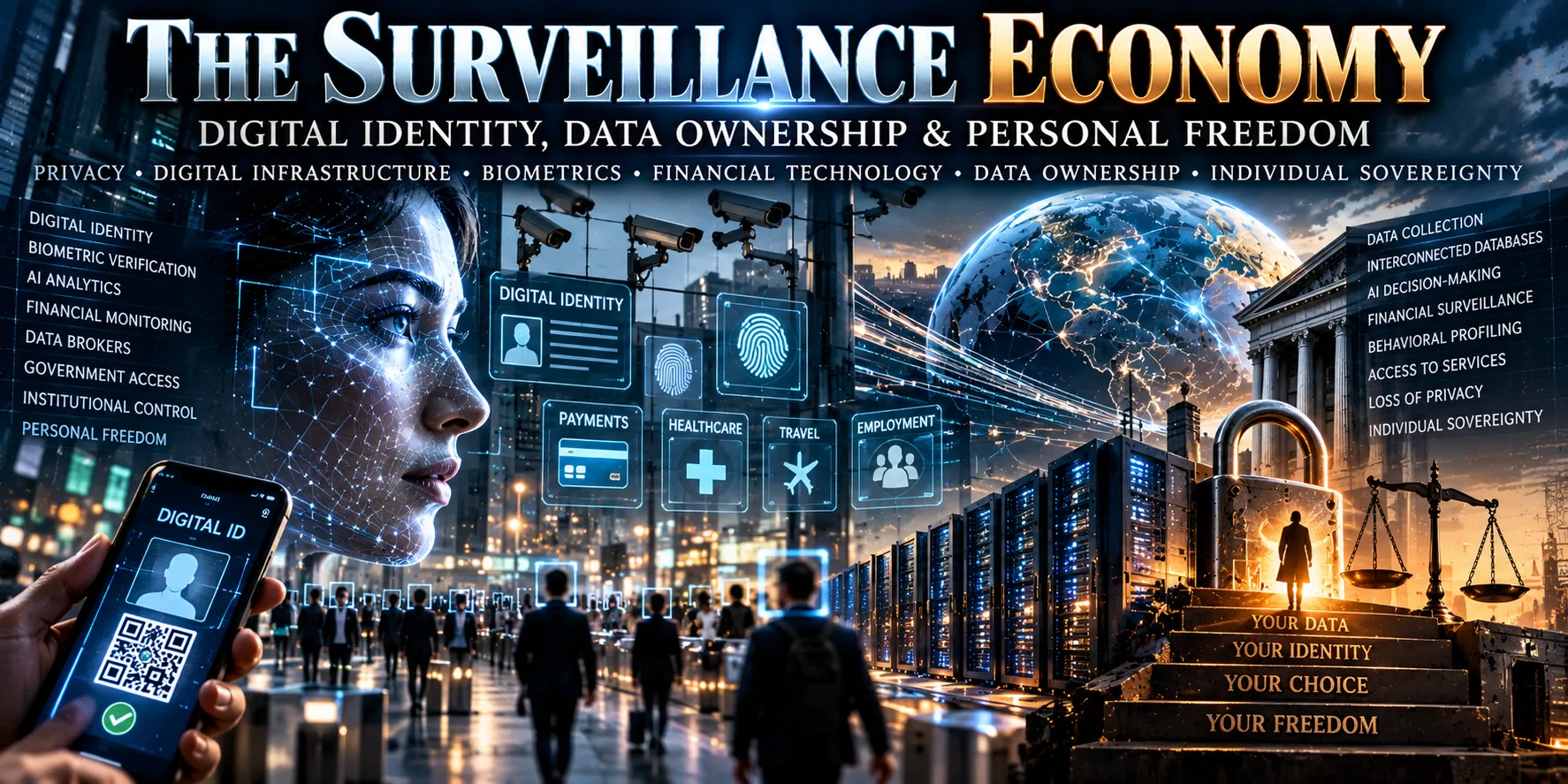
4. THE SURVEILLANCE ECONOMY | CONNECTING DIGITAL IDENTITY, FINANCIAL ACCESS & INDIVIDUAL SOVEREIGNTY
Digital Identity • Artificial Intelligence • Biometrics • Financial Technology • Data Ownership • Privacy • Personal Freedom
Connecting the Dots
The fourth connection begins with the growing role of digital identification and data collection in modern economic and social life. Governments, financial institutions, technology companies, healthcare providers, and online platforms increasingly rely on digital verification systems to authenticate individuals and authorize transactions. These systems can involve biometric identification, facial recognition, digital credentials, financial records, and artificial intelligence. Although many technologies are developed independently, their growing interoperability creates the possibility of linking information across multiple platforms and institutions. Digital identity systems can improve fraud prevention and access to services, but they also raise questions about who controls personal data, how information is exchanged, and whether individuals retain meaningful authority over their digital identities.
The second connection involves financial technology and institutional access to personal information. Digital payment platforms, banking verification systems, anti-money-laundering requirements, data brokers, and AI-powered risk assessments increasingly influence how individuals interact with financial institutions. As organizations develop more sophisticated systems for analyzing financial activity and verifying identity, questions emerge about transaction privacy, automated decision-making, data retention, and the potential consequences of inaccurate or discriminatory assessments. These developments intersect with government digital modernization programs and private-sector data collection practices. The critical issue is not simply the existence of digital identification or financial monitoring, but the degree to which individuals can understand, challenge, limit, or refuse the collection and use of their personal information.
The Convergence of Dots
The convergence occurs when digital identification, biometric verification, financial monitoring, AI analytics, and institutional databases become sufficiently interconnected that decisions made within one system can influence an individual’s access to services elsewhere. Such integration may improve efficiency and security, but it could also increase risks involving unauthorized surveillance, excessive data concentration, cybersecurity vulnerabilities, automated exclusion, and diminished personal autonomy. Within GAR’s framework, the defining question is whether technological modernization will preserve meaningful individual choice or create growing dependence on centralized digital infrastructure. This requires monitoring not only the expansion of digital identity standards, but also the legal protections, privacy technologies, oversight mechanisms, and alternatives available to individuals. Interoperability itself does not establish a coordinated surveillance program; the risks depend on how systems are designed, governed, and used.
GAR Pressure Chain: DIGITAL IDENTITY → BIOMETRIC VERIFICATION → DATA COLLECTION → AI ANALYTICS → SYSTEM INTEROPERABILITY → FINANCIAL MONITORING → ACCESS DECISIONS → PRIVACY & SOVEREIGNTY
Primary signal: Expanding digital identification and data-sharing requirements across essential services.
Convergence threshold: Digital identity or automated profiling becoming a practical requirement for accessing multiple essential services without meaningful alternatives, appeal rights, or privacy protections.
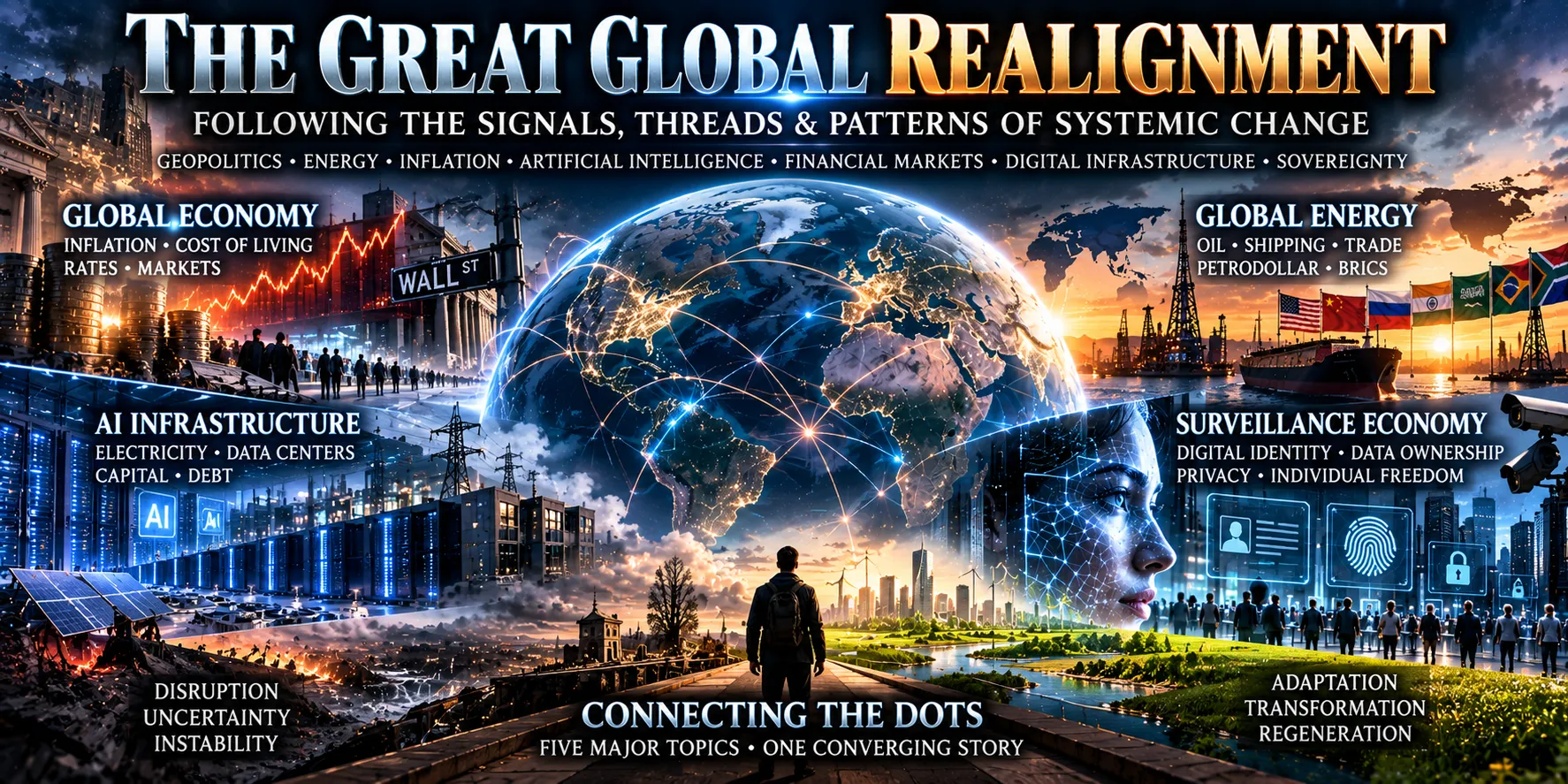
5. THE GREAT GLOBAL REALIGNMENT | CONNECTING THE FIVE SYSTEMS & THE CONVERGENCE OF GLOBAL PRESSURE
Geopolitics • Energy Security • Global Inflation • Financial Markets • Artificial Intelligence • Digital Infrastructure • Personal Sovereignty • Systemic Transformation
Connecting the Dots | The Transmission of Global Pressure
The first connection begins with geopolitical instability and the movement of pressure through global energy markets, international trade, inflation, and financial systems. Conflicts in strategically important regions, disruptions involving maritime shipping routes such as the Strait of Hormuz, competition for critical resources, and shifting international alliances can influence the availability and cost of energy, commodities, transportation, and industrial production. When energy prices rise, the effects extend beyond gasoline and electricity into agricultural production, food distribution, manufacturing, construction, and household living expenses. Persistent inflation can then influence central-bank interest-rate decisions, government borrowing costs, corporate refinancing, mortgage rates, consumer credit, and investment activity. Higher financing costs place additional pressure on commercial real estate, heavily indebted businesses, government budgets, and households already struggling with affordability. At the same time, efforts by major economic powers to diversify trade relationships, strengthen domestic manufacturing, develop alternative payment arrangements, and secure strategic supply chains are gradually reshaping international economic relationships. The critical connection is that geopolitical instability can become economic instability when disruptions to energy and trade begin influencing inflation, credit availability, business investment, employment, and consumer spending. These developments reveal how pressure originating thousands of miles away can move through financial institutions, infrastructure networks, businesses, and ultimately into the everyday financial decisions of ordinary families.
Connecting the Dots | Technology, Infrastructure & Institutional Dependence
The second connection emerges where financial conditions intersect with artificial intelligence, electrical infrastructure, digital systems, and the growing concentration of technological and institutional power. The global expansion of AI requires extraordinary investment in data centers, semiconductor manufacturing, electricity generation, transmission networks, cooling infrastructure, and communications systems. This creates additional demand for energy, natural resources, construction capacity, and financing precisely when geopolitical uncertainty, inflation, and borrowing costs may already be placing pressure on the global economy. Governments and corporations are competing to secure the physical resources and technological capabilities necessary to participate in the next generation of economic development. However, the scale of investment introduces questions concerning corporate debt, private credit, financial-market valuations, electricity affordability, and whether projected AI revenues will justify the infrastructure required to support continued expansion. As digital technologies become more deeply integrated into financial services, healthcare, employment, identification systems, commerce, and government administration, societies also become increasingly dependent on the reliability and governance of interconnected technological platforms. The critical connection is that the same technologies promising greater productivity, innovation, and economic transformation can simultaneously increase pressure on capital markets, energy infrastructure, household utility expenses, cybersecurity, and personal sovereignty. This convergence introduces a broader question about the future relationship between individuals, corporations, governments, and digital institutions: whether technological advancement will strengthen opportunity, resilience, and personal freedom or create new forms of economic dependency, surveillance, and concentrated institutional control.
The Global Convergence | When Five Systems Begin Reinforcing One Another
The broader global convergence emerges when geopolitical instability, energy insecurity, inflation and financial pressure, AI infrastructure expansion, and digital governance begin interacting in ways that reinforce existing vulnerabilities and accelerate systemic change. A prolonged energy disruption, for example, could increase inflation while raising operating expenses for data centers, manufacturing facilities, transportation networks, and households. Persistent inflation could contribute to restrictive financial conditions, making the financing of infrastructure projects, corporate debt, commercial real estate, and government obligations more difficult. Slower investment or inadequate electrical capacity could then constrain technological expansion, while growing dependence on digital infrastructure could amplify the consequences of electrical outages, cybersecurity incidents, or institutional failures. At the household level, these developments may converge through higher utility bills, healthcare expenses, food prices, borrowing costs, employment uncertainty, and greater reliance on digital financial and identification systems. The defining convergence threshold occurs when pressures across several interconnected systems become sustained and mutually reinforcing, exceeding the ability of governments, financial institutions, businesses, and households to adapt without significant economic, technological, or institutional adjustments. Within GAR’s Three-Phase Transition Framework™, this represents the intersection of Phase I—Disclosure, Disruption & Deconstruction; Phase II—Adaptation, Realignment & Transformation; and Phase III—Reinvention, Innovation & Regeneration. The outcome is not predetermined: stronger energy diversification, resilient infrastructure, sustainable financing, responsible AI development, institutional accountability, and privacy protections could reduce these vulnerabilities. The central purpose of connecting the dots is therefore to recognize where independent developments are becoming interconnected, identify which pressures are intensifying, and distinguish between temporary instability and deeper structural change. The defining question is whether the world’s major systems can successfully adapt to this convergence—or whether their growing interdependence will accelerate a more fundamental global realignment.
GAR GLOBAL CONVERGENCE PRESSURE CHAIN
GEOPOLITICAL INSTABILITY → ENERGY & TRADE DISRUPTIONS → GLOBAL INFLATION → INTEREST RATES & CREDIT CONDITIONS → FINANCIAL MARKETS & CAPITAL ALLOCATION → AI & ELECTRICAL INFRASTRUCTURE EXPANSION → DIGITAL SYSTEMS & INSTITUTIONAL DEPENDENCE → HOUSEHOLD AFFORDABILITY & PERSONAL SOVEREIGNTY → SYSTEMIC ADAPTATION OR DISRUPTION → THE GREAT GLOBAL REALIGNMENT
PRIMARY SIGNAL: Sustained economic, technological, financial, and geopolitical pressures developing across multiple interconnected systems.
CONNECTING THREAD: The movement of pressure from energy and international trade into inflation, credit, infrastructure investment, digital governance, and household financial security.
EMERGING PATTERN: Increasing global interdependence, competition for strategic resources and capital, expanding technological reliance, and growing pressure on institutional resilience.
GLOBAL CONVERGENCE THRESHOLD: Multiple systemic pressures reinforcing one another and producing measurable consequences across the real economy, critical infrastructure, financial stability, and individual freedoms.
THE DEFINING QUESTION: Are these developments simply overlapping periods of instability, or are they revealing the emerging architecture of a fundamentally different global economic, technological, and institutional order?
Featured News Story
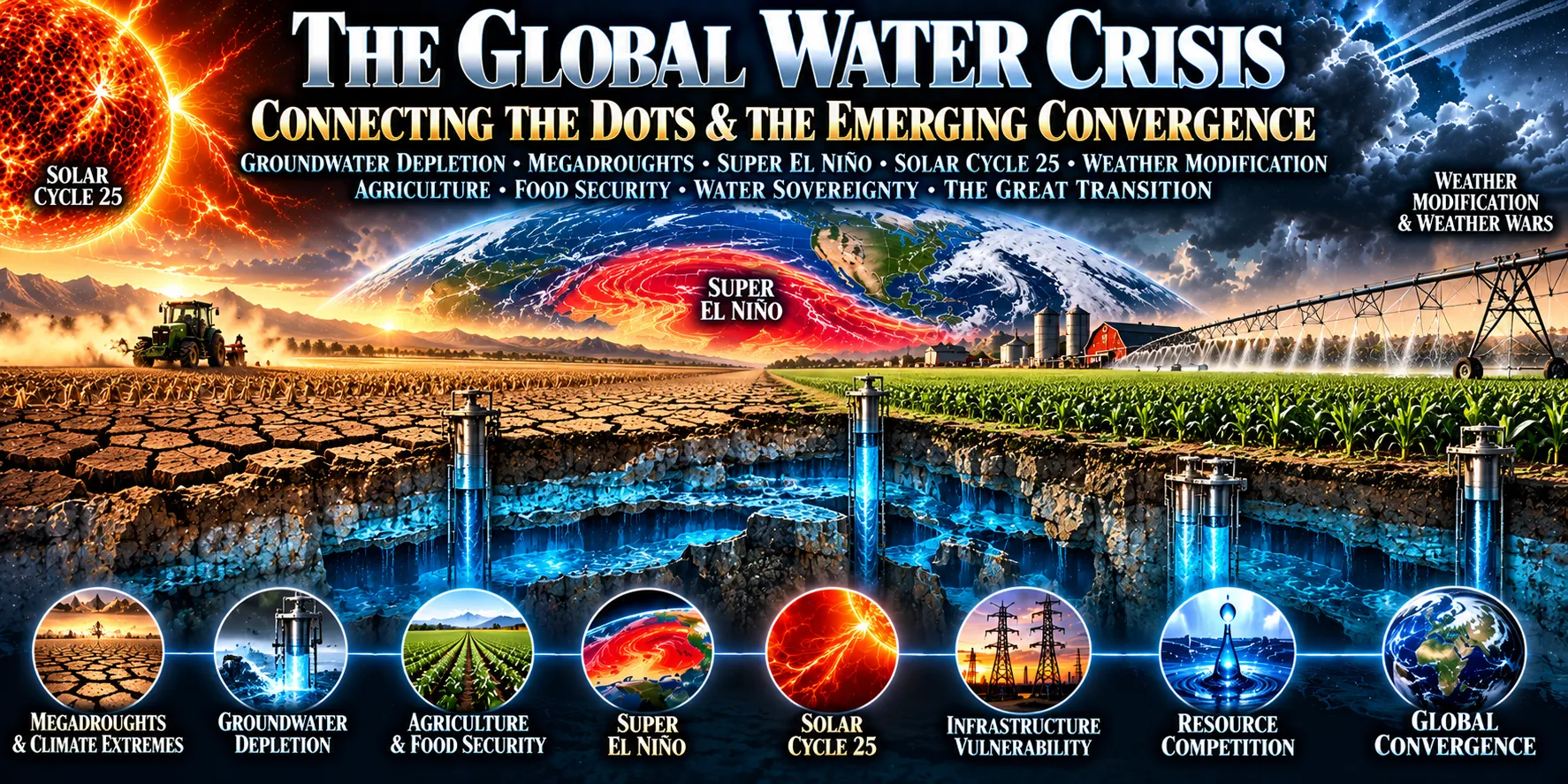
6. THE GLOBAL WATER CRISIS | CONNECTING THE DOTS & THE EMERGING CONVERGENCE OF PLANETARY RESOURCE PRESSURES
Groundwater Depletion • Megadroughts • Super El Niño • Solar Cycle 25 • Weather Modification • Agricultural Production • Food Security • Water Sovereignty • The Great Transition
Connecting the Dots | The Signals Emerging Beneath the Surface
The first connection begins with the growing pressure on groundwater resources and the emerging signals that America’s agricultural water systems may face increasingly difficult conditions in the years ahead. The October 9 USGS assessment of five areas in eastern Nebraska highlights the importance of understanding groundwater recharge, aquifer vulnerability, nitrate contamination, and increasing competition for underground freshwater supplies. These findings connect to a much broader national challenge involving agricultural irrigation, prolonged droughts, declining groundwater levels in some regions, expanding industrial water demand, and the growing financial costs of maintaining reliable water supplies. Unlike sudden natural disasters, groundwater depletion can develop gradually over decades, making its consequences less visible until pumping expenses increase, wells require deepening, water quality deteriorates, or agricultural production becomes more difficult to sustain. The primary signals to follow are declining aquifer levels, withdrawals exceeding replenishment, increasing contamination, higher irrigation costs, and growing competition between agriculture, industry, municipalities, and residential communities. As these conditions develop, water availability can become an increasingly important factor influencing farmland productivity, agricultural property values, rural economic stability, and regional development. The emerging concern is that groundwater may gradually shift from being viewed as a dependable agricultural resource to becoming a strategic economic asset requiring greater monitoring, investment, conservation, and management. The first major pattern is the growing relationship between underground water availability, agricultural productivity, and the long-term economic security of America’s food-producing regions.
Connecting the Threads | Droughts, Super El Niño, Solar Activity & Infrastructure Vulnerability
The second connection emerges when groundwater pressures intersect with changing weather patterns, prolonged droughts, the possibility of a powerful Super El Niño, Solar Cycle 25, and the increasing technological dependence of modern agricultural systems. A strong El Niño can influence atmospheric circulation, regional rainfall, storm intensity, and seasonal drought conditions, potentially bringing increased precipitation to some regions while contributing to drier conditions elsewhere. However, significant rainfall does not necessarily translate into meaningful groundwater recovery, particularly where aquifers replenish slowly, water runs off rapidly, or agricultural withdrawals continue exceeding natural recharge. The connecting threads therefore extend beyond drought and rainfall into soil moisture, reservoir storage, aquifer recharge, agricultural irrigation, electricity availability, water treatment, and the infrastructure required to transport and distribute freshwater. Solar Cycle 25 introduces an additional consideration because heightened geomagnetic activity can disrupt electrical grids, satellite navigation, and communications systems used in precision agriculture, pumping stations, and automated irrigation. Weather modification and weather-warfare allegations represent a separate investigative thread: cloud seeding is a documented, limited technique, while claims that modern systems can deliberately generate or control megadroughts, El Niño, or major planetary storms have not been substantiated. The important distinction is that these developments involve different physical mechanisms, yet their consequences can intersect through shared dependence on water, electricity, communications, and agricultural infrastructure. The emerging pattern is that agricultural resilience increasingly depends on the combined reliability of natural water cycles, groundwater management, electrical systems, technological infrastructure, and regional preparedness. A serious future challenge could arise when prolonged drought, inadequate aquifer recharge, contamination, and infrastructure disruption occur within the same agricultural region, placing simultaneous pressure on food production, water availability, and community stability.
The Emerging Global Convergence | How Water Scarcity Could Reshape the Future
The third connection reveals how localized groundwater challenges could evolve into broader economic, agricultural, geopolitical, and societal pressures as water demand increases and environmental conditions become more variable. When groundwater becomes more expensive or difficult to access, farmers may face higher pumping costs, reduced irrigation capacity, changes in crop selection, or declining agricultural yields. These pressures can move through food-processing operations, transportation networks, commodity markets, and grocery prices, ultimately influencing household affordability and regional economic conditions. Communities may confront competing demands from agriculture, manufacturing, energy production, data centers, residential development, and municipal water systems, creating difficult decisions concerning water allocation, land use, infrastructure financing, and environmental protection. In water-stressed regions, declining availability can also increase disputes over groundwater rights, river allocations, interstate agreements, and international water resources. The defining convergence threshold emerges when persistent water shortages, contamination, drought exposure, and increasing demand begin reinforcing one another, producing measurable consequences for agricultural output, food prices, property values, industrial development, and community resilience. Looking toward the remainder of the decade and into the 2030s, these pressures could accelerate investment in water recycling, advanced treatment, aquifer recharge, precision irrigation, drought-resistant agriculture, improved monitoring, and regional water-security planning. Within GAR’s Three-Phase Transition Framework™, this progression reflects Phase I—Crossing the Threshold, as previously overlooked vulnerabilities become more visible; Phase II—The Great Transition, as communities and industries adapt their water-management systems; and Phase III—Global Emergence, as innovation and regeneration offer opportunities to establish more resilient approaches to resource stewardship. The defining future pattern is that water security may become an increasingly important foundation of economic stability, food independence, infrastructure development, regional competitiveness, and personal sovereignty. The ultimate question is whether governments, industries, agricultural communities, and individuals will respond early enough to manage these challenges through adaptation and innovation—or wait until resource pressures produce more disruptive economic and social consequences.
GAR | THE GLOBAL WATER CONVERGENCE PRESSURE CHAIN
GROUNDWATER DEPLETION + MEGADROUGHTS + CLIMATE VOLATILITY → REDUCED AQUIFER RECHARGE & WATER QUALITY PRESSURES → AGRICULTURAL & INDUSTRIAL WATER COMPETITION → HIGHER IRRIGATION & INFRASTRUCTURE COSTS → FOOD PRODUCTION & SUPPLY-CHAIN PRESSURE → FOOD INFLATION & HOUSEHOLD AFFORDABILITY → REGIONAL ECONOMIC & RESOURCE SECURITY RISKS → WATER MANAGEMENT & TECHNOLOGICAL ADAPTATION → LONG-TERM RESOURCE RESILIENCE
Additional Infrastructure Thread: SOLAR CYCLE 25 → GEOMAGNETIC DISTURBANCES → ELECTRICAL & COMMUNICATIONS EXPOSURE → WATER PUMPING & AGRICULTURAL OPERATIONS.
PRIMARY SIGNAL: Increasing pressure on groundwater availability, aquifer recharge, water quality, and agricultural water demand.
CONNECTING THREADS: Groundwater depletion, drought, El Niño, agricultural irrigation, solar-related infrastructure vulnerability, industrial water consumption, food production, and economic affordability.
EMERGING PATTERN: Water availability and quality becoming increasingly important determinants of agricultural resilience, economic development, infrastructure investment, and community stability.
FUTURE CONVERGENCE THRESHOLD: Sustained groundwater stress, inadequate recharge, contamination, and rising demand producing measurable disruptions to agricultural production, regional economies, or essential water services.
THE DEFINING QUESTION: Are we witnessing the early stages of a global resource realignment in which freshwater availability becomes one of the defining economic, environmental, agricultural, and geopolitical challenges of the Great Transition?
ALTERNATIVE NEWS & RESEARCH | EXPLORING THE STORIES BEYOND THE MAINSTREAM HEADLINES
Following the Signals • Connecting the Threads • Recognizing the Patterns • Questioning Established Narratives • Expanding Conscious Awareness
The Alternative News & Research section of this week’s Great Awakening Report explores the developments, discoveries, emerging technologies, and deeper questions that often receive limited attention within conventional news coverage. While mainstream reporting generally focuses on immediate events, government announcements, economic indicators, and institutional responses, alternative research frequently examines the underlying forces, overlooked implications, and unanswered questions that may reveal a broader understanding of our changing world. This week’s investigations span longevity science and regenerative medicine, the future of medical sovereignty, ancient civilizations and human origins, America’s growing healthcare affordability crisis, solar activity and the Sun–Earth connection, food safety and environmental contamination, rising energy costs, and the expanding frontiers of human consciousness. Although these subjects appear to occupy different areas of research, they share important themes involving scientific discovery, institutional accountability, technological advancement, personal freedom, environmental vulnerability, and the evolving relationship between individuals and the systems that shape their lives. Each topic provides an opportunity to examine not only what is being reported, but what remains unresolved, what assumptions deserve reconsideration, and which developments could carry implications far beyond the original headlines.
At the center of GAR’s alternative research approach is the practice of following the signals, connecting the threads, and recognizing the patterns that emerge when seemingly unrelated developments begin revealing common underlying themes. Advances in peptides, regenerative medicine, and longevity research raise questions about the future of healthcare, regulatory authority, and individual medical choice, while declining insurance enrollment and changing Medicare coverage expose growing pressures on access to essential medical services. Archaeological discoveries challenge researchers to continually refine their understanding of ancient societies, prehistoric technologies, and human origins, while consciousness studies explore the relationship between the brain, subjective awareness, and the potential for personal transformation. Meanwhile, geomagnetic disturbances, extreme weather, food contamination, pesticide monitoring, and expanding electricity infrastructure reveal the vulnerabilities of interconnected environmental, technological, and economic systems. These developments also highlight a recurring tension between innovation and regulation, centralized institutions and individual sovereignty, scientific knowledge and unresolved questions, and technological progress and human well-being. The purpose of alternative research is not to assume that every unconventional explanation is correct, but to investigate meaningful questions, distinguish documented discoveries from emerging theories, and remain open to new evidence that may challenge established interpretations.
As humanity moves through an era of accelerating scientific advancement, economic uncertainty, institutional transformation, and expanding awareness, the ability to investigate information independently and recognize connections across disciplines becomes increasingly important. GAR’s Three-Phase Transition Framework™ provides a broader perspective for examining these developments through the overlapping processes of Disclosure, Disruption & Deconstruction; Adaptation, Realignment & Transformation; and Reinvention, Innovation & Regeneration. Some of the stories in this week’s Alternative News & Research section involve specific recent developments, while others represent continuing investigations into questions that may take years of research to resolve. Together, they encourage readers to move beyond passive consumption of information toward active inquiry, thoughtful discernment, and greater personal responsibility for their health, knowledge, choices, and future. The objective is to cultivate a deeper understanding of how scientific discoveries, environmental conditions, emerging technologies, economic pressures, and evolving ideas about consciousness may influence both individual lives and collective human development. The defining invitation is to remain curious, question thoughtfully, seek reliable evidence, recognize emerging possibilities, and consider how new knowledge can empower us to become more informed, resilient, self-reliant, and conscious participants in the world we are helping to create.
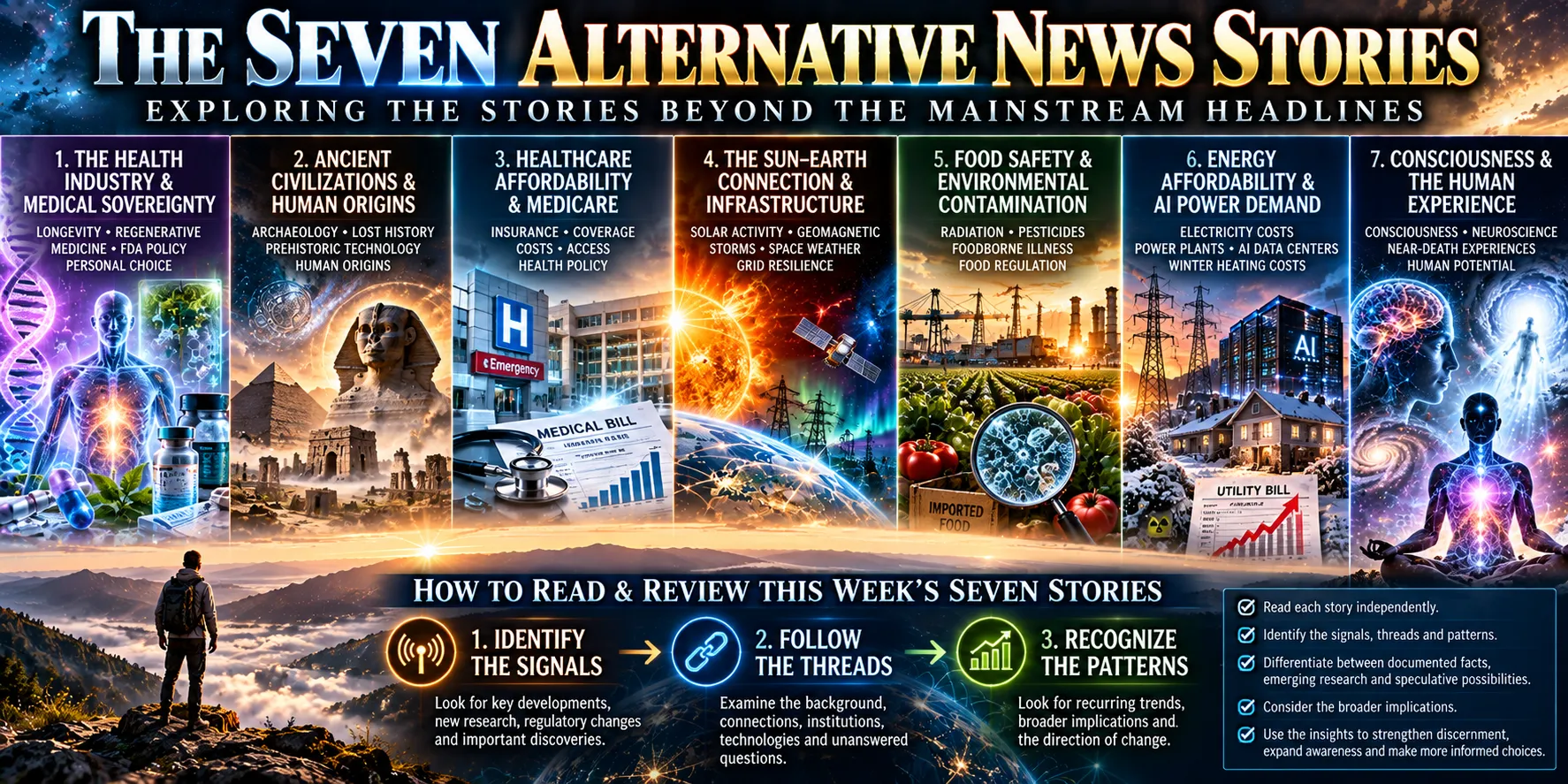
HOW TO READ & REVIEW THIS WEEK’S SEVEN ALTERNATIVE NEWS STORIES
Following the Signals • Identifying the Threads • Recognizing the Patterns • Expanding Awareness • Strengthening Discernment
This week’s seven Alternative News & Research stories are designed to encourage readers to look beyond conventional headlines and investigate the discoveries, emerging developments, unanswered questions, and overlooked perspectives that may be influencing our understanding of the world. Begin by reviewing each story independently, focusing on its central developments, underlying research, institutional involvement, and potential implications for individuals and society. The seven investigations explore The Health Industry & Medical Sovereignty; Ancient Civilizations & Human Origins; Healthcare Affordability & Medicare; The Sun–Earth Connection & Infrastructure Resilience; Food Safety & Environmental Contamination; Energy Affordability & AI Power Demand; and Consciousness & the Human Experience. As you read, concentrate on identifying three essential elements of GAR’s research methodology: Signals, Threads, and Patterns. The Signals represent important discoveries, documented developments, regulatory decisions, emerging research, or measurable changes that deserve closer attention. The Threads reveal the underlying circumstances, historical background, institutions, technologies, and unanswered questions associated with each development. The Patterns emerge when repeated findings, recurring concerns, or sustained trends begin suggesting a meaningful direction of change within a particular subject. Pay attention to the distinction between established facts, developing scientific research, informed interpretations, and speculative possibilities. Some stories involve specific events from the past several weeks, while others examine continuing investigations that may require years of additional research. The objective is to approach each topic with curiosity, open-mindedness, critical thinking, and intellectual integrity—allowing the available evidence to guide your understanding rather than relying exclusively on conventional explanations or alternative interpretations.
The second level of review focuses on examining the Signals, Threads, and Patterns within each individual story to develop a clearer understanding of what is changing, why it matters, and which developments deserve continued observation. In the health and longevity investigation, identify signals involving peptide research, regenerative medicine, and evolving FDA policies; follow the threads involving medical innovation, clinical research, regulatory oversight, and patient autonomy; and recognize patterns suggesting changes in healthcare research and treatment development. In ancient civilizations, examine newly uncovered archaeological evidence, historical interpretations, and recurring discoveries that expand our understanding of prehistoric intelligence and technological capabilities. For healthcare affordability, food safety, and energy costs, pay attention to measurable changes in insurance coverage, regulatory monitoring, contamination incidents, utility rates, and household financial pressures. Within the Sun–Earth investigation, distinguish established geomagnetic and infrastructure effects from emerging research involving biological responses, while monitoring patterns in solar activity and environmental preparedness. Finally, in consciousness research, examine advances in neuroscience, meditation studies, near-death experience investigations, and competing theories concerning the nature of subjective awareness. Throughout your review, ask three guiding questions: What is the most important signal being reported? What underlying threads help explain its significance? What recurring patterns suggest the direction this subject may be moving? Record the developments that warrant further investigation, identify the evidence needed to strengthen your conclusions, and consider how each story may influence your knowledge, choices, and personal awareness. The purpose of this review is to develop a disciplined approach to alternative research—one that strengthens discernment, expands understanding, and prepares readers to recognize meaningful developments as new information emerges.
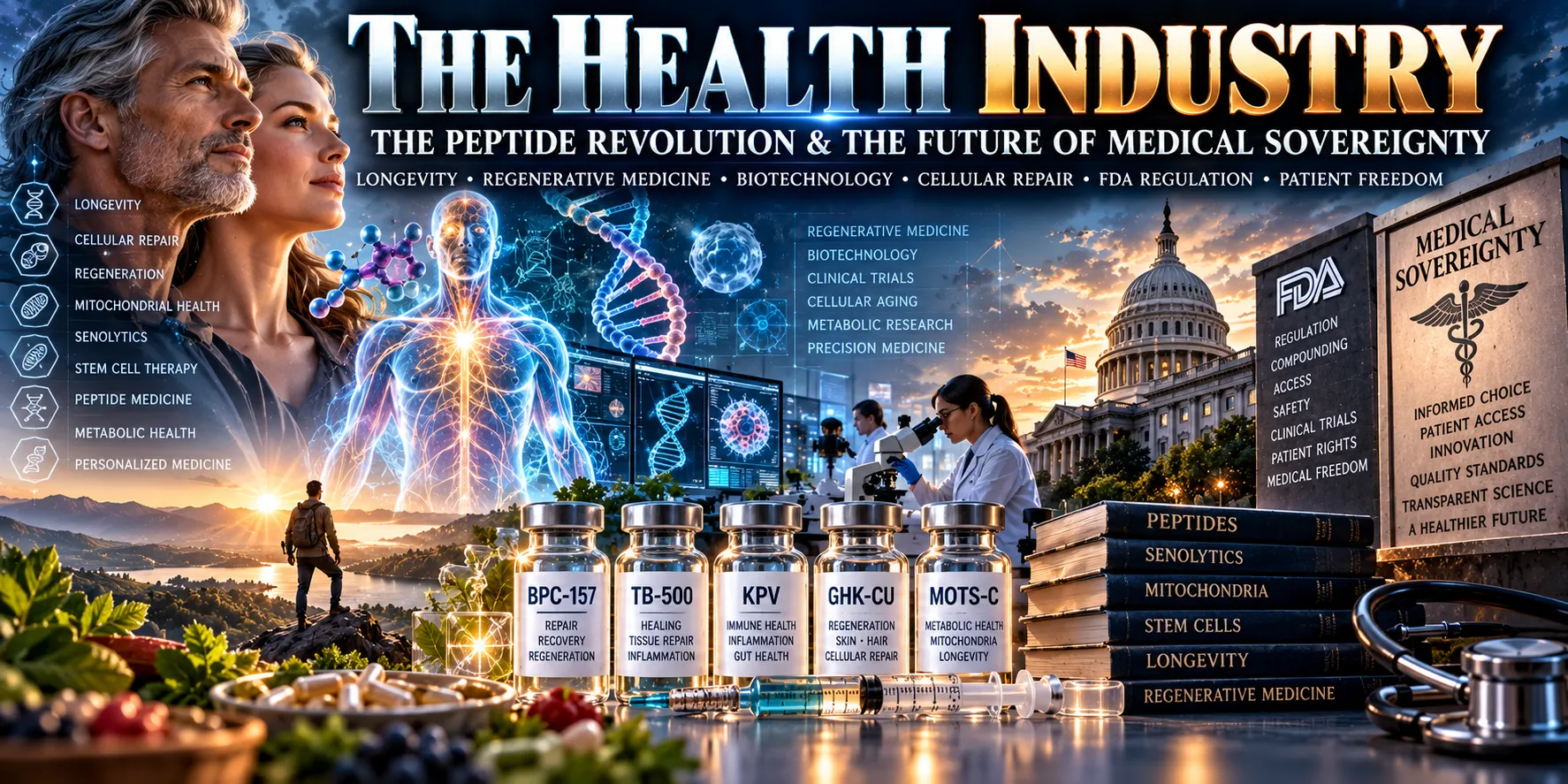
1. THE HEALTH INDUSTRY | THE PEPTIDE REVOLUTION, REGENERATIVE MEDICINE & THE FUTURE OF MEDICAL SOVEREIGNTY
Longevity • Biotechnology • Cellular Regeneration • Medical Freedom • FDA Regulation • The Next Medical Frontier
The global health industry is entering a period of significant transformation as advances in biotechnology, regenerative medicine, metabolic research, and longevity science begin challenging traditional approaches to healthcare. For decades, conventional medicine has focused primarily on diagnosing, treating, and managing diseases, often addressing symptoms and chronic conditions after they have developed. Today, a growing field of researchers, biotechnology companies, physicians, and longevity specialists is investigating whether medical science can move further toward understanding the biological mechanisms of aging, restoring cellular function, and improving the body’s capacity for repair and recovery. Peptide therapeutics, stem-cell research, senolytics, mitochondrial medicine, metabolic interventions, and emerging regenerative technologies are increasingly central to this discussion. Researchers are examining how cellular signaling, inflammation, metabolic dysfunction, mitochondrial activity, and age-related biological changes contribute to declining health and resilience. While some approaches already have established clinical applications, others remain experimental, with early laboratory findings or limited human studies that have not yet demonstrated reliable long-term benefits. Nevertheless, the growing interest in longevity and regenerative medicine reflects a broader shift in medical research—from treating individual diseases toward investigating the underlying biological processes that influence aging, recovery, and human performance.
At the center of this emerging medical frontier is the growing debate surrounding peptide therapies, regulatory oversight, and individual medical sovereignty. Peptides are short chains of amino acids that can act as biological signaling molecules, influencing processes such as metabolism, hormone regulation, inflammation, and tissue responses. Certain peptide-based medications, including established treatments for diabetes and obesity, have demonstrated substantial clinical benefits, while other compounds promoted for tissue repair, recovery, and longevity remain investigational. Among the most widely discussed is BPC-157, an experimental peptide frequently promoted within alternative health and regenerative medicine communities despite the absence of adequate human clinical evidence establishing its safety and effectiveness. The regulatory debate gained renewed attention following October 15 reports that a proposed federal policy addressing access to certain compounded peptides had been submitted for White House review. The proposal’s final provisions and implications remain uncertain. This development has intensified discussions involving the FDA’s approach to compounded substances, pharmaceutical quality standards, physician discretion, and patient access to emerging treatments. Supporters of broader access argue that existing regulatory restrictions can limit medical innovation and personal healthcare choices, while regulators and clinical researchers emphasize the importance of reliable safety testing, consistent manufacturing standards, accurate dosing, and evidence from controlled human trials. The distinction between an FDA-approved peptide medication and an experimental compounded substance remains essential to understanding this debate.
Beyond the immediate regulatory discussion, the peptide revolution represents a much larger question about the future direction of medicine and the relationship between patients, healthcare professionals, biotechnology companies, and government institutions. Longevity researchers are investigating senolytic compounds intended to target senescent cells, mitochondrial interventions designed to influence cellular energy production, stem-cell approaches for tissue restoration, and metabolic therapies that may affect age-related disease processes. Advances in genomics, proteomics, artificial intelligence, and precision medicine are also expanding the ability to study individual biological differences and identify potential therapeutic targets. These developments may eventually support more personalized approaches to prevention, recovery, and healthy aging, although many proposed interventions remain years away from established clinical use. At the same time, a rapidly expanding commercial longevity industry has introduced concerns involving aggressive marketing, unverified anti-aging claims, expensive experimental treatments, and inconsistent product quality. The central challenge is determining how to encourage responsible innovation without allowing commercial enthusiasm to outpace medical evidence. Medical sovereignty, within this discussion, involves informed consent, transparent access to research, meaningful patient participation in treatment decisions, and the freedom to evaluate medical options alongside qualified healthcare professionals. The emerging debate is not simply about whether experimental treatments should be permitted, but how healthcare systems can responsibly accommodate new discoveries while protecting patients from avoidable harm.
GAR SIGNALS, THREADS & PATTERNS | THE CONVERGENCE OF LONGEVITY SCIENCE, MEDICAL INNOVATION & INDIVIDUAL SOVEREIGNTY
The primary signal is the increasing intersection between rapidly advancing longevity research, expanding public demand for regenerative therapies, and renewed regulatory attention to experimental peptide access. The connecting threads extend across biotechnology investment, mitochondrial and cellular-aging research, pharmaceutical development, FDA compounding policy, physician oversight, pharmacy quality standards, patient autonomy, and the commercialization of emerging treatments. A broader pattern is developing in which healthcare innovation is moving beyond conventional disease management toward investigating the biological mechanisms associated with aging, metabolic dysfunction, inflammation, and cellular deterioration. However, the pace of scientific discovery, regulatory evaluation, and commercial promotion remains uneven, creating tensions between innovation, accessibility, medical freedom, and patient safety. Within GAR’s Three-Phase Transition Framework™, this development can be examined as part of a potential transformation in healthcare—one involving greater personalization, new regenerative technologies, evolving regulatory structures, and growing interest in individual participation in medical decisions. The critical signals to monitor include the final FDA policy concerning compounded peptides, publication of credible human clinical trials, independent pharmaceutical quality testing, progress in senolytic and mitochondrial research, and the expansion of evidence-based regenerative therapies. The central question is whether the next generation of medical innovation will establish a scientifically credible pathway toward cellular repair, improved healthspan, and more personalized healthcare—or whether commercial expansion will continue moving faster than clinical validation.
GAR’s emerging pattern: BIOTECHNOLOGY → LONGEVITY RESEARCH → PEPTIDE INNOVATION → REGULATORY REASSESSMENT → MEDICAL ACCESS → PATIENT AUTONOMY → REGENERATIVE MEDICINE → THE FUTURE OF HEALTHCARE.
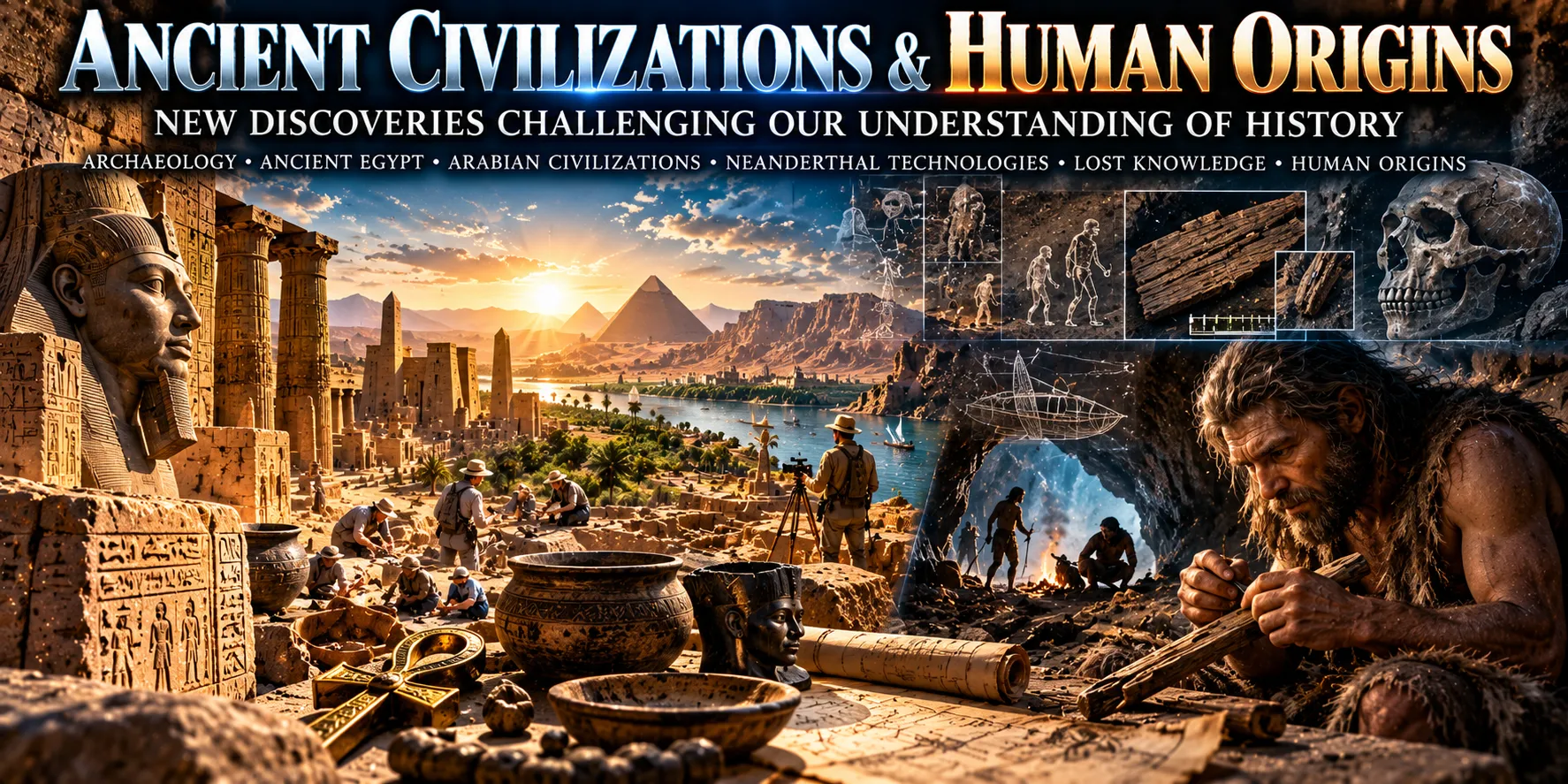
2. ANCIENT CIVILIZATIONS & HUMAN ORIGINS | NEW DISCOVERIES CHALLENGING OUR UNDERSTANDING OF HISTORY
Archaeology • Ancient Egypt • Arabian Civilizations • Neanderthal Intelligence • Lost Technologies • Human Origins
New archaeological discoveries across the Middle East and Europe are expanding our understanding of ancient civilizations, early human intelligence, and the development of complex societies. An October 13 archaeological roundup highlighted findings involving a Bronze Age tomb in the United Arab Emirates and evidence associated with an ancient Egyptian city, offering additional insights into burial traditions, settlement patterns, political organization, and the social structures of early communities. Discoveries throughout the Arabian Peninsula continue revealing the importance of ancient trade routes, regional cultural exchange, and the relationships connecting settlements across the Middle East. In Egypt, archaeological investigations are contributing new information about urban development, administrative organization, religious practices, and the everyday lives of populations whose achievements continue to shape our understanding of early civilization. These discoveries remind us that the historical record remains incomplete and that even extensively studied civilizations can produce unexpected evidence. Each newly uncovered settlement, burial chamber, artifact, and architectural structure adds another piece to the larger puzzle of human history, sometimes reinforcing established interpretations and sometimes requiring archaeologists to reconsider how ancient societies developed, interacted, and evolved.
An equally significant development involves new archaeological reporting concerning Neanderthal wooden technologies at the Abric Romaní rock shelter in Spain. Research highlighted on October 12 described impressions associated with wooden objects preserved within the archaeological deposits, potentially providing valuable evidence of Neanderthal woodworking, tool construction, and the use of organic materials in daily life. Unlike stone implements, which can survive for hundreds of thousands of years, wooden tools, woven materials, plant fibers, hides, and other organic technologies frequently decay, leaving little direct evidence of their original existence. This creates a fundamental challenge for researchers attempting to reconstruct the full range of technological abilities possessed by ancient human populations. Neanderthals are already known to have manufactured sophisticated stone tools, controlled fire, hunted large animals, and adapted to demanding environmental conditions. Evidence involving wooden objects adds another dimension to the discussion of their planning abilities, technical knowledge, and possible construction practices. The broader implication is that archaeological discoveries may represent only a fraction of the technologies, materials, and cultural practices once used by prehistoric populations. What survives in the ground is not necessarily a complete representation of what ancient humans knew, created, or accomplished.
Together, these discoveries raise important questions about the sophistication of ancient societies, the development of human intelligence, and the limitations of conventional archaeological interpretation. The expanding record of Bronze Age communities, Egyptian urban centers, prehistoric settlements, and Neanderthal technologies illustrates how new evidence can add complexity to historical narratives that once appeared relatively settled. Archaeologists increasingly rely on advanced technologies—including ground-penetrating radar, remote sensing, geographic information systems, microscopic residue analysis, ancient DNA research, and improved dating techniques—to identify evidence that earlier generations could not easily detect or interpret. These methods are revealing previously overlooked settlement networks, environmental adaptations, manufacturing techniques, and patterns of cultural exchange. For independent researchers and alternative-history investigators, such findings encourage renewed examination of questions involving lost knowledge, ancient engineering, forgotten trade networks, and the possibility that some early populations possessed capabilities not yet fully represented in the archaeological record. However, the distinction between evidence-based historical revision and speculative reconstruction remains essential: a discovery demonstrating greater technological sophistication does not automatically establish the existence of an unknown advanced civilization. The more compelling question is how much of humanity’s intellectual, cultural, and technological development remains hidden because archaeological evidence has been destroyed, buried, overlooked, or has simply not yet been discovered.
GAR SIGNALS, THREADS & PATTERNS | RECONSTRUCTING THE FORGOTTEN CHAPTERS OF HUMAN HISTORY
The primary signal is the continuing emergence of archaeological evidence revealing greater complexity in ancient societies and prehistoric human behavior than earlier interpretations sometimes recognized. The connecting threads extend across Egyptian urban archaeology, Bronze Age settlements in the Arabian Peninsula, ancient trade and cultural exchange, Neanderthal woodworking, organic-material preservation, prehistoric technological development, and increasingly sophisticated archaeological investigation methods. The emerging pattern is one of expanding historical understanding as discoveries fill gaps in the surviving record and provide new opportunities to reassess established interpretations. Findings involving ancient cities and burial traditions demonstrate the complexity of early organized communities, while evidence of Neanderthal wooden technologies highlights how preservation conditions can shape modern assumptions about prehistoric intelligence. Within GAR’s broader investigation of ancient civilizations, human origins, and forgotten history, these developments reinforce the importance of maintaining intellectual curiosity while carefully distinguishing confirmed discoveries from interpretations and unresolved questions. The critical signals to monitor include new archaeological dating results, peer-reviewed analysis of the Abric Romaní impressions, additional Egyptian and Arabian Peninsula excavations, discoveries involving perishable technologies, and evidence of previously unknown prehistoric settlement networks. The central question is whether continuing archaeological discoveries will primarily refine the existing historical timeline or reveal more substantial changes in our understanding of when and how complex technologies, organized communities, and sophisticated cultural practices first emerged.
GAR’s emerging pattern: NEW DISCOVERIES → ADVANCED ARCHAEOLOGICAL METHODS → RECOVERED EVIDENCE → REASSESSMENT OF ANCIENT TECHNOLOGIES → EXPANDING HISTORICAL CHRONOLOGIES → RECONSTRUCTING HUMAN ORIGINS → A DEEPER UNDERSTANDING OF CIVILIZATION.
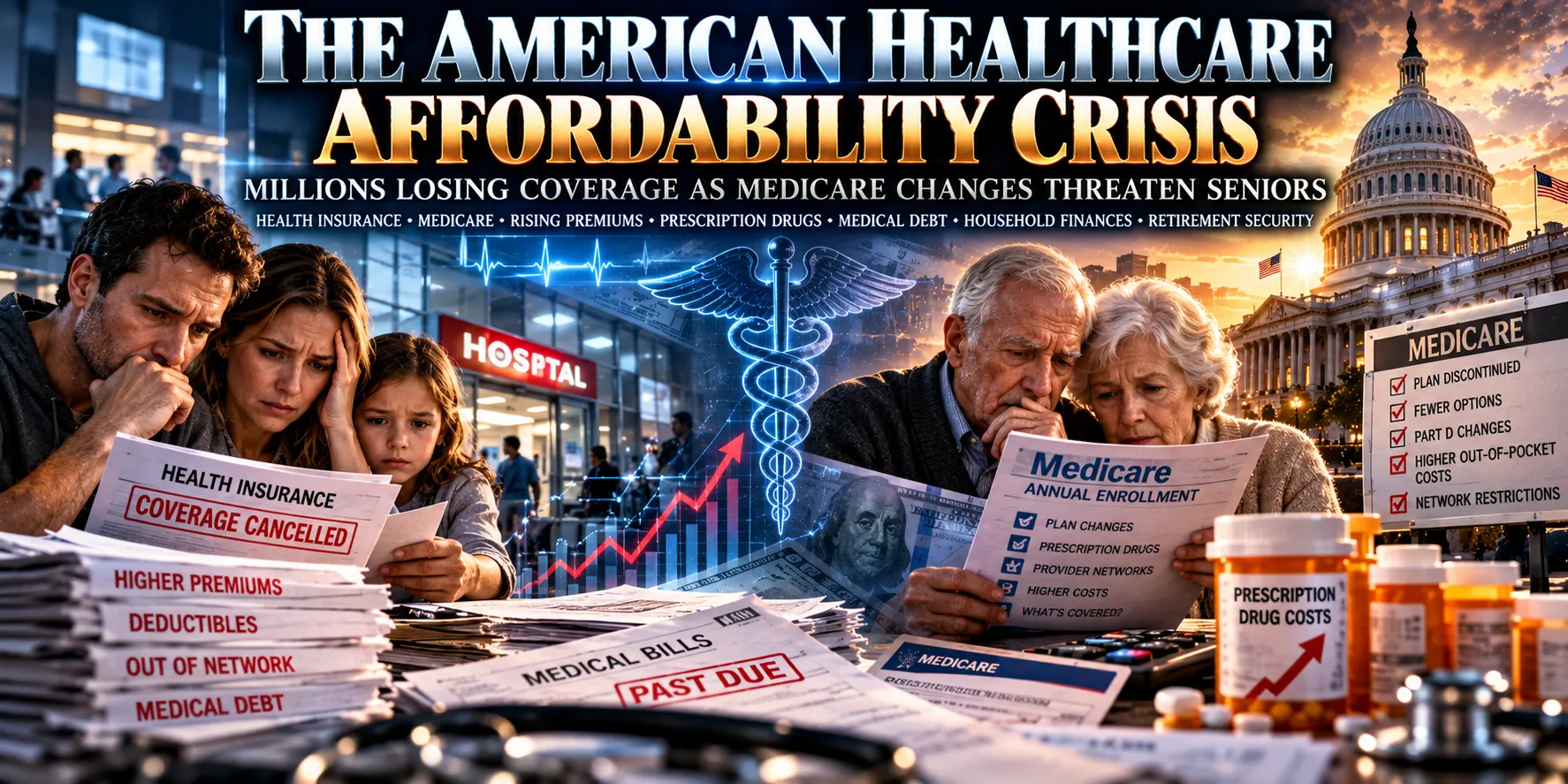
3. THE AMERICAN HEALTHCARE AFFORDABILITY CRISIS | MILLIONS LOSING COVERAGE AS MEDICARE CHANGES THREATEN SENIORS
Health Insurance • Medicare • Rising Premiums • Prescription Drugs • Medical Debt • Household Finances • Retirement Security
A growing healthcare affordability crisis is emerging across the United States as millions of Americans confront the combined pressures of rising insurance premiums, declining coverage enrollment, and increasing uncertainty over the cost of essential medical care. An October 14 analysis from KFF, reported by Reuters, indicates that enrollment in the individual health insurance market declined approximately 18%, falling from 25.2 million to 20.5 million over the previous year—a reduction of roughly 4.7 million enrollees. The expiration of enhanced federal premium subsidies has contributed to higher insurance costs for many households, placing additional financial pressure on individuals, families, self-employed workers, and those who do not receive employer-sponsored coverage. These developments extend far beyond the immediate question of monthly insurance premiums. When healthcare coverage becomes unaffordable, individuals may delay medical appointments, postpone diagnostic testing, discontinue treatments, or avoid seeking care until conditions become more serious. Others may attempt to maintain coverage by accepting higher deductibles, narrower provider networks, or greater out-of-pocket financial exposure. The deeper concern is that healthcare affordability is becoming another major pressure point in the American household economy, alongside housing, food, energy, transportation, and consumer debt. The decline in enrollment is a significant warning signal, although enrollment figures alone do not establish how many individuals became uninsured, since some may have transitioned to other forms of coverage.
At the same time, America’s senior population is confronting a separate but closely connected challenge involving Medicare Advantage plans, prescription drug coverage, and the changing economics of retirement healthcare. Medicare’s annual open enrollment period began October 15, bringing renewed attention to changes in plan availability, insurance benefits, provider networks, and prescription drug formularies. Reports indicate that the number of standalone Medicare Part D prescription drug plans is declining from approximately 360 to 316, while discontinued Medicare Advantage plans could affect roughly one million existing members. For retirees who depend on predictable healthcare expenses, these changes can create significant uncertainty, particularly when established physicians, hospitals, medications, or treatment arrangements are no longer covered under the same terms. A plan advertising a low or even zero-dollar monthly premium may still involve substantial deductibles, copayments, coinsurance, prescription expenses, and annual out-of-pocket obligations. Seniors must also consider whether their preferred doctors and specialists remain within the plan’s network, whether medications are included in the formulary, and whether prior authorization requirements could delay access to care. The central issue is not simply whether Medicare coverage remains available, but whether retirees can continue receiving the medical services they need without experiencing unexpected financial burdens or disruptions in care. For individuals living on fixed incomes, even relatively modest increases in healthcare expenses can require difficult adjustments to household spending and retirement planning.
Together, declining individual health insurance enrollment and changing Medicare coverage reveal a larger structural challenge involving the affordability, accessibility, and financial sustainability of the American healthcare system. Working-age adults, families, and retirees may experience these pressures differently, but the underlying relationships are increasingly similar: higher healthcare costs, changing insurance arrangements, administrative complexity, and greater financial responsibility being transferred to patients. As medical services, hospital operations, prescription medications, and insurance administration become more expensive, insurers and government programs face difficult decisions about premiums, benefits, reimbursement rates, and coverage structures. Those decisions ultimately influence the financial security of households and the ability of individuals to obtain timely medical care. The consequences can extend into the broader economy through rising medical debt, reduced discretionary spending, diminished retirement savings, delayed preventive care, and increased demand for public assistance. For seniors, the pressure is particularly significant because healthcare needs often increase with age while opportunities to replace lost income remain limited. The larger question is whether the United States is approaching a point where having health insurance no longer guarantees affordable access to healthcare—and where maintaining coverage itself becomes an increasingly difficult financial decision. The next phase of this discussion must examine not only insurance enrollment and premiums, but also actual healthcare utilization, medical debt, treatment delays, and the long-term consequences for families, retirees, and the nation’s overall health.
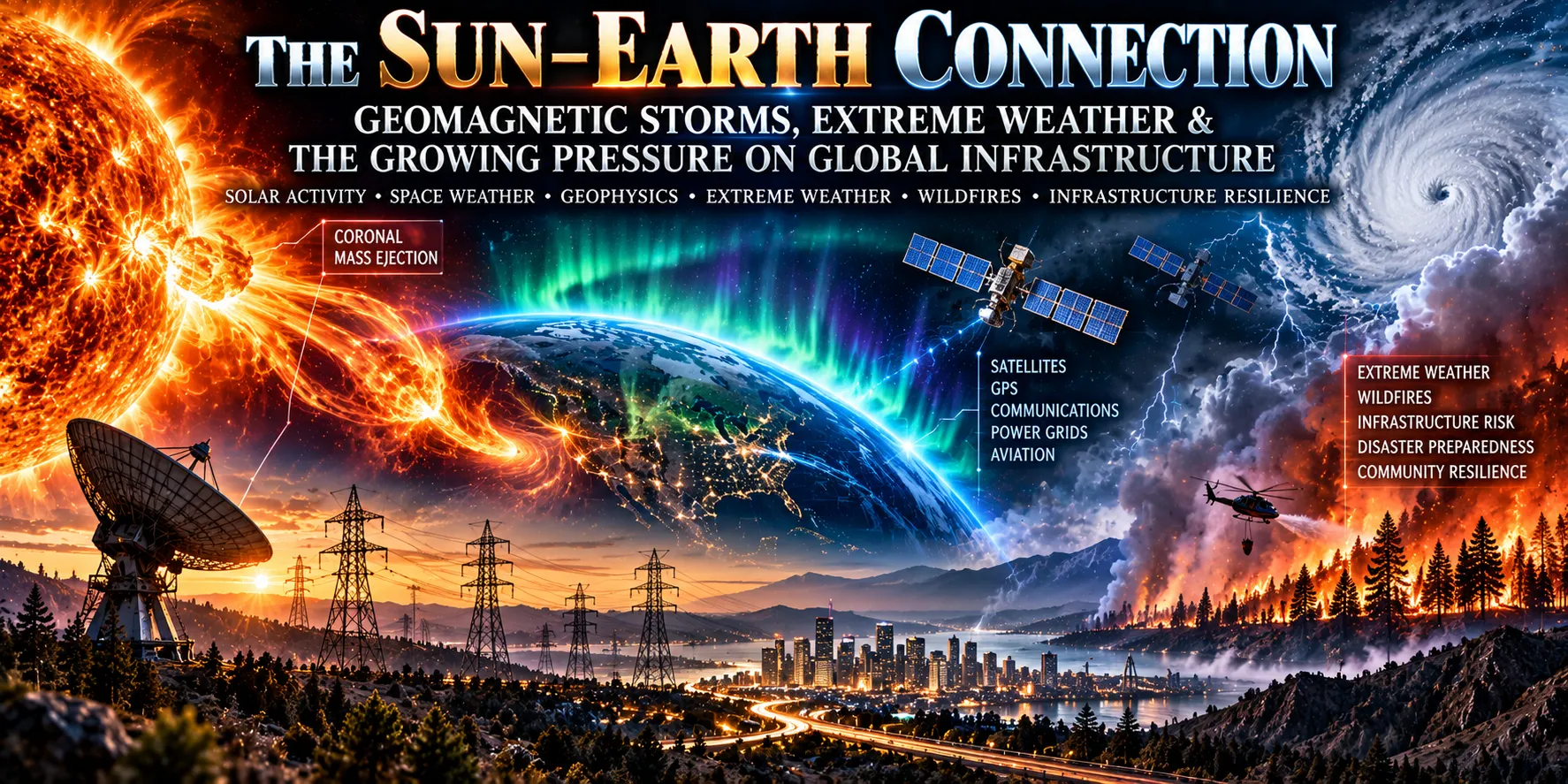
4. THE SUN–EARTH CONNECTION | GEOMAGNETIC STORMS, EXTREME WEATHER & THE GROWING PRESSURE ON GLOBAL INFRASTRUCTURE
Solar Activity • Space Weather • Geophysics • Extreme Weather • Wildfires • Human Biology • Infrastructure Resilience
The Sun–Earth relationship is receiving renewed attention as heightened solar activity, geomagnetic disturbances, and extreme terrestrial weather highlight the vulnerability of modern civilization to powerful natural forces. On October 10, NOAA’s Space Weather Prediction Center reported strong G3 geomagnetic storm conditions associated with the arrival of a coronal mass ejection (CME), following elevated solar activity earlier in the month. A coronal mass ejection releases enormous quantities of magnetized plasma from the Sun, which can interact with Earth’s magnetic field and produce disturbances throughout the magnetosphere and upper atmosphere. When sufficiently strong, these events can disrupt high-frequency radio communications, interfere with satellite operations, degrade GPS accuracy, affect aviation systems, and induce electrical currents in long-distance power transmission networks. NOAA’s October 12 outlook also identified the possibility of additional geomagnetic disturbances, reinforcing the importance of continued solar monitoring. These developments illustrate the growing dependence of modern society on technological systems that can be affected by space weather. The central concern is no longer limited to observing solar storms as distant astronomical events, but understanding how solar activity can influence the electrical, communications, navigation, and satellite infrastructure supporting everyday life. As economies become increasingly interconnected through digital technology, artificial intelligence, telecommunications, and automated infrastructure, the consequences of significant space-weather disturbances could extend across multiple sectors simultaneously.
Beyond the established technological effects of geomagnetic storms, the Sun–Earth connection is generating additional interest in the relationship between geomagnetic fluctuations, biological systems, and human physiology. Earth’s magnetic environment is constantly influenced by solar activity, and researchers have investigated whether variations in geomagnetic conditions correlate with changes in cardiovascular function, autonomic nervous system activity, sleep patterns, circadian rhythms, and other physiological processes. Some observational studies have reported associations between geomagnetic disturbances and selected biological measurements, although results are inconsistent and the mechanisms remain incompletely understood. Investigators have also explored possible interactions involving melatonin regulation, heart-rate variability, and biological sensitivity to environmental electromagnetic conditions. Within alternative health and consciousness communities, these questions extend into discussions involving emotional sensitivity, mental clarity, meditation, collective awareness, and human consciousness. However, direct causal effects of geomagnetic storms on consciousness have not been scientifically established. The distinction is important: solar activity demonstrably affects Earth’s electromagnetic environment, while the extent to which ordinary geomagnetic variations influence human health, behavior, or conscious experience remains an open research question. The broader opportunity lies in examining the relationship between the physical environment and biological systems through rigorous observation, interdisciplinary research, and improved monitoring technologies.
At the same time, extreme weather events, dangerous wind conditions, wildfire threats, and infrastructure vulnerabilities are creating another layer of environmental pressure across the United States, particularly throughout the western states. High winds, prolonged drought conditions, dry vegetation, heat, and changing precipitation patterns can combine to increase wildfire danger, threaten communities, disrupt transportation, and damage electrical infrastructure. Severe storms and other weather emergencies can also affect power distribution, telecommunications, water systems, emergency services, and regional supply chains. Although solar-driven geomagnetic storms and terrestrial weather emergencies operate through different physical mechanisms—and a geomagnetic storm should not be treated as a direct cause of ordinary wildfires, hurricanes, or windstorms—they can expose vulnerabilities in many of the same interconnected infrastructure systems. Power networks, communications facilities, satellites, emergency management operations, and digital services increasingly depend on continuous electrical and technological stability. As artificial intelligence data centers, industrial automation, electric transportation, and digital financial systems expand, the importance of infrastructure resilience becomes even more significant. The larger issue is whether governments, utilities, insurance providers, and emergency management agencies are investing sufficiently in prevention, grid modernization, wildfire mitigation, backup communications, and disaster preparedness—or whether society continues relying too heavily on emergency response after critical systems have already been disrupted. The convergence of space-weather exposure, extreme terrestrial weather, and rising infrastructure dependence creates an important discussion about national preparedness and the resilience of modern civilization.
GAR SIGNALS, THREADS & PATTERNS | THE CONVERGENCE OF SOLAR ACTIVITY, ENVIRONMENTAL INSTABILITY & INFRASTRUCTURE VULNERABILITY
The primary signal is the growing exposure of modern technological infrastructure to multiple environmental hazards, including geomagnetic disturbances, severe weather, wildfire conditions, and increasing demands on electrical and communications networks. NOAA’s reported G3 geomagnetic storm on October 10 provides an important example of how solar activity can introduce additional operational risks for satellites, navigation systems, radio communications, and power-grid infrastructure. The connecting threads extend across solar magnetic activity, Earth’s magnetosphere, satellite operations, electrical transmission networks, telecommunications, extreme terrestrial weather, wildfire preparedness, emergency management, insurance affordability, and the expanding energy requirements of artificial intelligence and digital infrastructure. A broader pattern is emerging in which society’s increasing technological sophistication is accompanied by greater dependence on interconnected systems that may be vulnerable to disruption. Within this larger investigation, the potential biological effects of geomagnetic fluctuations represent a separate research thread deserving continued scientific attention, particularly studies involving cardiovascular regulation, sleep, circadian rhythms, and environmental influences on human physiology. However, these investigations should be distinguished from established space-weather effects and should not be interpreted as evidence that solar storms directly alter human consciousness or trigger unrelated terrestrial weather events. The critical signals to monitor include NOAA geomagnetic storm forecasts, solar flare and CME activity, satellite and GPS disruptions, electrical-grid alerts, regional wildfire conditions, severe-weather warnings, utility preparedness investments, and improvements in emergency communications and infrastructure redundancy. Within GAR’s Three-Phase Transition Framework™, these developments highlight the importance of adaptation, technological resilience, infrastructure modernization, and community preparedness as essential elements of a changing global environment. The defining question is whether societies can strengthen their ability to anticipate and withstand multiple environmental disruptions before those pressures begin cascading through energy, communications, transportation, healthcare, financial services, and emergency response systems.
GAR’s emerging pattern: SOLAR ACTIVITY + EXTREME WEATHER → ENVIRONMENTAL DISTURBANCES → ELECTRICAL & COMMUNICATIONS EXPOSURE → INFRASTRUCTURE VULNERABILITY → ECONOMIC & COMMUNITY DISRUPTION → EMERGENCY PREPAREDNESS → SYSTEM RESILIENCE → ADAPTATION & TRANSFORMATION.
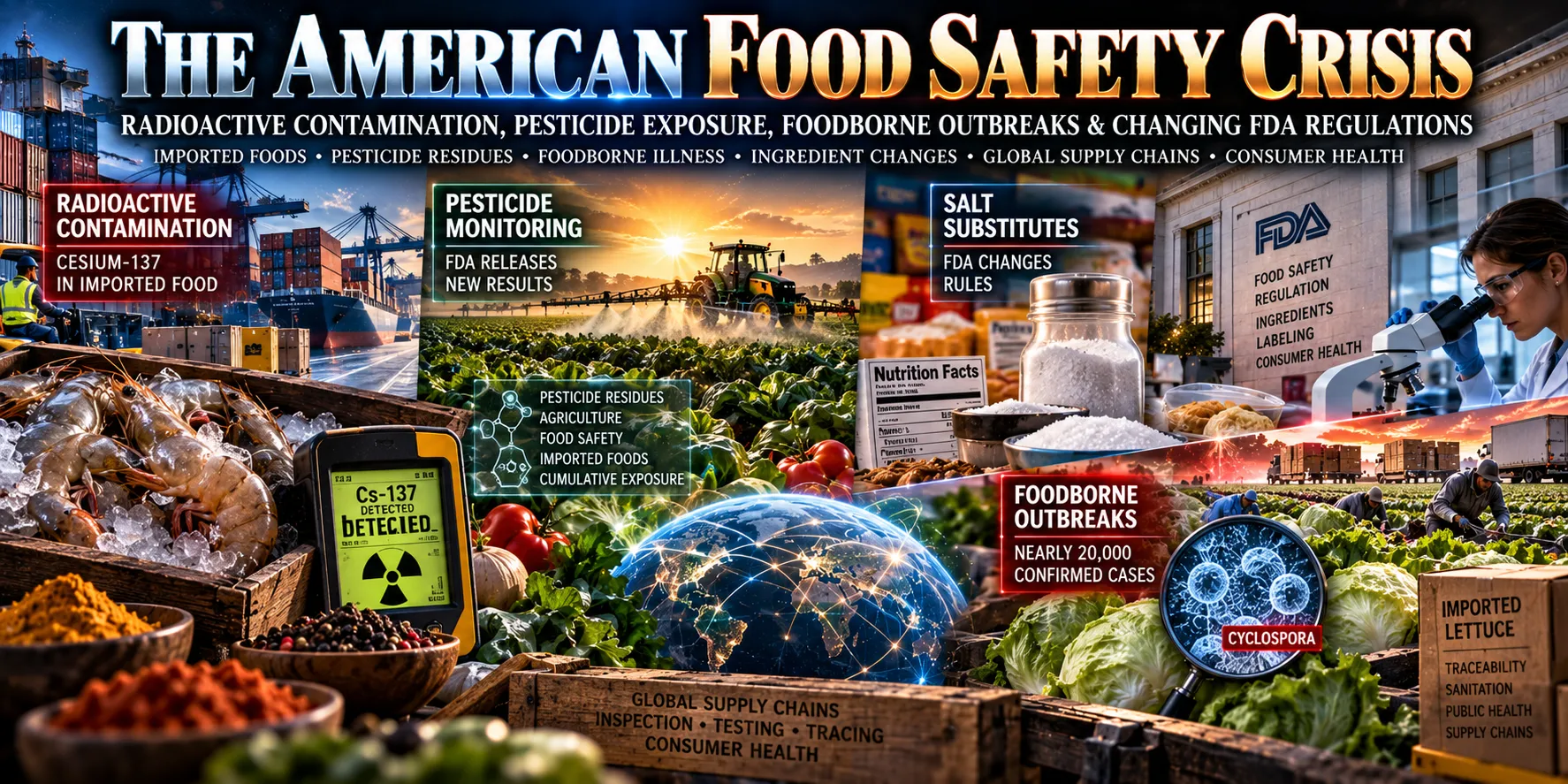
5. THE AMERICAN FOOD SAFETY CRISIS | RADIOACTIVE CONTAMINATION, PESTICIDE EXPOSURE, FOODBORNE OUTBREAKS & CHANGING FDA REGULATIONS
Food Safety • Cesium-137 • Pesticide Residues • Imported Foods • Cyclospora Outbreaks • Food Regulation • Consumer Health
A series of federal food safety developments is raising important questions about the integrity of America’s food supply, the effectiveness of international inspection systems, and the growing complexity of protecting consumers from environmental and biological contamination. On October 5, the FDA released an assessment of Indonesia’s certification procedures for shrimp and spices following earlier detections of radioactive Cesium-137 in imported food products. Cesium-137 is a radioactive isotope associated with nuclear fission that can enter the environment through industrial contamination, improperly managed radioactive materials, and other sources. Its detection in food products represents an unusual contamination concern because radioactive material can potentially move from an industrial source into agricultural production, processing facilities, transportation networks, and international trade. FDA inspectors identified deficiencies involving sampling and radiation-screening procedures, which Indonesian authorities subsequently corrected. The agency concluded that the certification program substantially satisfied its requirements, while the identified contaminated shipments were prevented from entering U.S. commerce. The incident illustrates the importance of international cooperation, reliable inspection equipment, standardized testing procedures, and effective documentation throughout the import process. The larger concern is that modern food supply chains extend across numerous countries, industries, processing facilities, and distribution networks, creating opportunities for contamination to occur far from the point where food is ultimately consumed. The central question is whether existing screening systems can consistently identify environmental hazards before contaminated products reach American grocery stores, restaurants, and households.
Additional FDA developments involving pesticide monitoring and food ingredient regulations are drawing attention to the substances Americans encounter through everyday food consumption and the standards used to evaluate their safety. On September 30, the FDA released its fiscal-year 2024 pesticide residue monitoring report, providing updated information about the agency’s testing of domestic and imported foods for agricultural chemical residues. Such monitoring is designed to identify residues that exceed established tolerances, detect unauthorized pesticide uses, and support enforcement decisions involving food products entering the marketplace. However, the distinction between regulatory compliance and broader questions about cumulative exposure remains an important area of public discussion. Individual pesticide tolerances are generally established through toxicological risk assessments, but questions persist regarding combined exposures, sensitive populations, long-term dietary patterns, and the potential effects of multiple substances acting through related biological pathways. The actual monitoring results must be examined before drawing conclusions about residue prevalence or differences between domestic and imported products. Separately, on October 9, the FDA issued a final rule addressing the use of salt substitutes in standardized foods, introducing another dimension to the conversation about food manufacturing, ingredient substitution, and consumer awareness. Salt substitutes may help manufacturers reduce sodium in certain products, but changes in formulation can also raise questions about ingredient transparency, nutritional labeling, and the suitability of particular substitutes for individuals with specific medical conditions. Together, these developments highlight the importance of understanding not only whether food products meet regulatory requirements, but also how ingredients are selected, evaluated, substituted, tested, and communicated to consumers.
The most immediate public-health concern involves the scale of foodborne illness associated with contaminated produce and the vulnerabilities of highly interconnected agricultural distribution systems. On October 2, the FDA closed its investigation into a major Cyclospora outbreak associated with iceberg lettuce sourced from Mexico. Federal records cited 19,883 laboratory-confirmed cyclosporiasis cases across multiple outbreaks during 2026, including more than 12,000 associated with the large lettuce-linked outbreak. Cyclospora cayetanensis is a microscopic parasite that can contaminate fresh produce through exposure to human fecal contamination, particularly where sanitation, agricultural water quality, or handling practices are inadequate. Infection can cause prolonged gastrointestinal illness, including diarrhea, fatigue, abdominal discomfort, and dehydration, with potentially greater consequences for vulnerable individuals. The reported scale of illness raises serious questions about agricultural water management, sanitation practices, imported produce inspections, farm-to-table traceability, and the ability of public-health agencies to identify contaminated products before they spread through national distribution networks. Centralized sourcing and extensive distribution networks can move fresh produce rapidly across large geographic areas, but they can also complicate efforts to identify the original contamination source and determine which shipments reached consumers. The convergence of radioactive contamination concerns, pesticide monitoring, ingredient reformulation, and a major foodborne illness outbreak illustrates that food safety is not a single regulatory issue—it is a complex system involving environmental protection, agricultural practices, international trade, manufacturing standards, public-health surveillance, and consumer access to accurate information. The larger question is whether the United States is investing sufficiently in preventive testing, contamination detection, transparent supply-chain monitoring, and food system resilience—or whether critical weaknesses are being discovered primarily after contamination or illness has already occurred.
GAR SIGNALS, THREADS & PATTERNS | THE CONVERGENCE OF FOOD CONTAMINATION, REGULATORY OVERSIGHT & GLOBAL SUPPLY-CHAIN VULNERABILITY
The primary signal is the growing importance of detecting and preventing multiple forms of food contamination across an increasingly interconnected agricultural, industrial, and international distribution system. The four developments reveal distinct but related vulnerabilities: radioactive Cesium-137 contamination in imported food products, pesticide residues in domestic and international agriculture, changes to permitted ingredients in manufactured foods, and widespread parasitic illness associated with contaminated fresh produce. The connecting threads extend across industrial pollution, agricultural water quality, pesticide application, food processing, international imports, inspection procedures, laboratory testing, ingredient transparency, public-health surveillance, and federal regulatory enforcement. The emerging pattern is the increasing complexity of food safety oversight as products travel through multiple countries, suppliers, processing facilities, and distribution networks before reaching consumers. While the successful interception of contaminated shipments demonstrates the value of existing safeguards, deficiencies in testing procedures and large-scale foodborne outbreaks underscore the consequences when prevention, sanitation, traceability, or detection systems fail. These developments also raise broader questions about cumulative chemical exposure, environmental contamination, the long-term health implications of dietary substances, and the degree to which consumers understand the ingredients and potential hazards associated with their food. Within GAR’s Three-Phase Transition Framework™, this convergence highlights the need for greater transparency, stronger preventive safeguards, modernized inspection technologies, diversified supply chains, and more resilient agricultural systems. The critical signals to monitor include additional radioactive contamination detections, detailed findings from the FDA’s pesticide residue monitoring report, future changes to food ingredient regulations, new foodborne illness outbreaks, imported food inspection failures, agricultural water testing, and improvements in product traceability. The defining question is whether America’s food safety system can evolve from identifying and responding to contamination toward preventing hazards before they enter the food supply.
GAR’s emerging pattern: INDUSTRIAL & AGRICULTURAL CONTAMINATION → GLOBAL FOOD PRODUCTION → IMPORTS & PROCESSING → INSPECTION & TESTING → DISTRIBUTION NETWORKS → CONSUMER EXPOSURE → PUBLIC-HEALTH CONSEQUENCES → REGULATORY RESPONSE → FOOD SYSTEM REFORM & RESILIENCE.
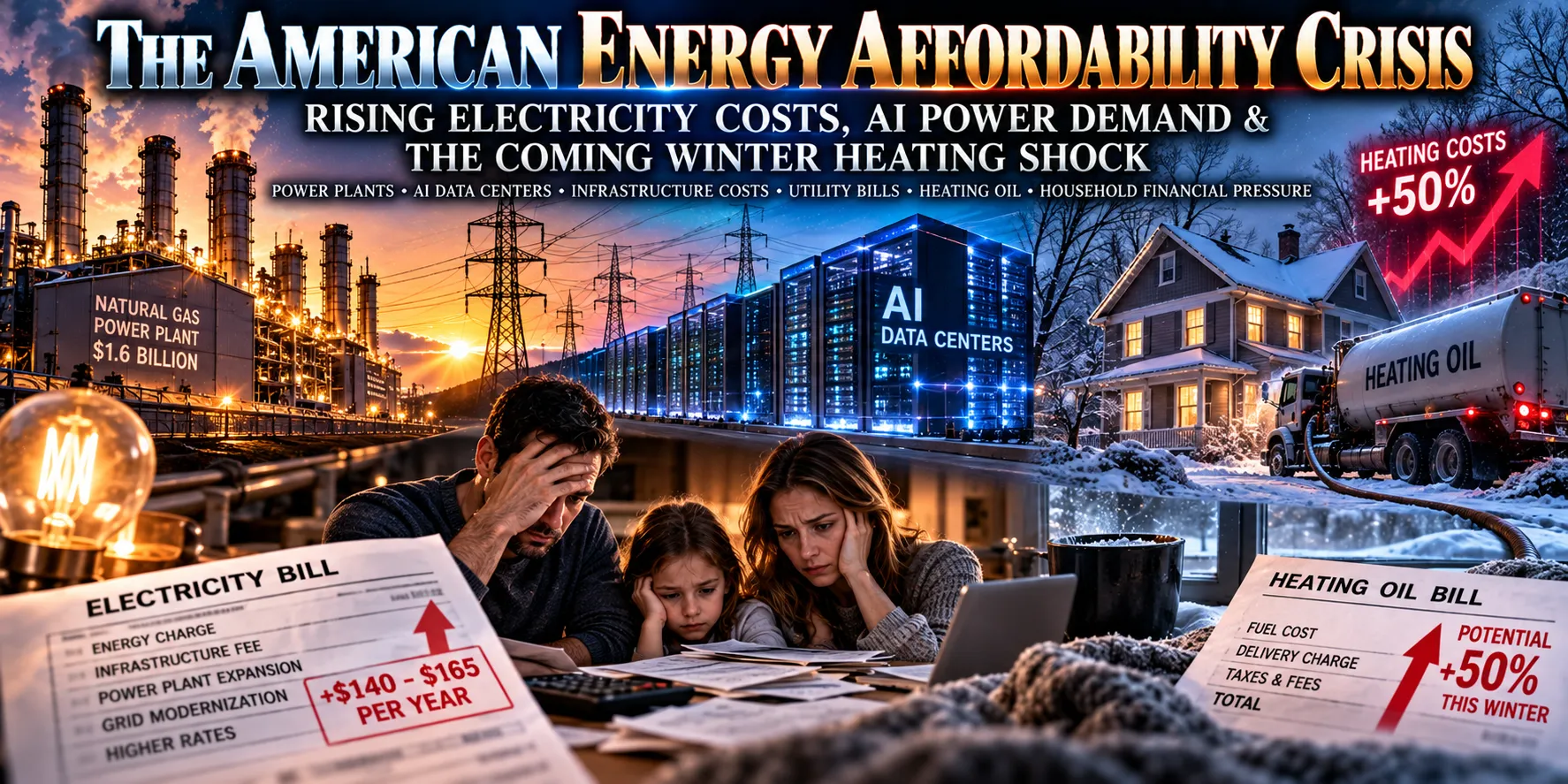
6. THE AMERICAN ENERGY AFFORDABILITY CRISIS | RISING ELECTRICITY COSTS, AI POWER DEMAND & THE COMING WINTER HEATING SHOCK
Electricity • Natural Gas • AI Data Centers • Power Infrastructure • Winter Heating • Utility Bills • Household Financial Pressure
A new phase of America’s energy affordability crisis is emerging as expanding electricity demand, major power-generation investments, and rising household utility expenses begin converging across the nation’s energy system. On October 16, Entergy Texas opened a new $1.6 billion natural-gas power station designed to strengthen regional electricity generation and accommodate growing demand. The investment arrives during a period of accelerating electricity consumption driven by industrial expansion, population growth, electrification, and the enormous energy requirements of artificial intelligence data centers. According to reporting by the Houston Chronicle, customers are expected to pay approximately $140–$165 more annually through an additional charge associated with the project. While new generation capacity can improve reliability, support economic development, and help meet future electricity requirements, it also introduces an increasingly important question about how infrastructure investments are financed. Traditionally, regulated utilities recover approved construction and operating costs through customer electricity rates, spreading expenses across residential, commercial, and industrial consumers. However, as major technology companies develop increasingly energy-intensive AI facilities, concerns are growing about whether ordinary households and small businesses could be required to absorb a disproportionate share of the costs associated with infrastructure expansion. The central issue is not simply whether America needs more electricity, but who should pay for the power plants, transmission systems, and grid upgrades required to support the next generation of industrial and digital development.
At the same time, another potential energy affordability shock is developing as American households approach the winter heating season amid uncertainty surrounding fuel prices, global energy markets, and regional supply conditions. October 14 reporting highlighted forecasts suggesting that heating-oil expenses could rise by approximately 50% for some households during the coming winter, with the northeastern United States particularly vulnerable because of its continued reliance on heating oil. This projection represents a potential future increase rather than a price change already experienced by consumers, and actual expenses will depend on weather conditions, fuel availability, global oil prices, refining capacity, and household consumption. Nevertheless, the possibility of substantially higher heating bills introduces another financial challenge for families already managing elevated housing costs, insurance premiums, food prices, healthcare expenses, and consumer debt. Energy-market disruptions can move rapidly through international supply chains, particularly when geopolitical conflict, shipping restrictions, refinery interruptions, or changes in global production affect fuel availability and pricing. For households dependent on heating oil, natural gas, propane, or electricity, these pressures can translate into higher monthly expenses precisely when colder weather increases consumption. The consequences can be especially difficult for retirees, lower-income families, and residents of older homes with limited insulation or inefficient heating systems. The overlooked concern is that an energy crisis may first become visible through oil markets and international headlines, but its most immediate consequences can arrive months later through ordinary household utility bills. When families must devote more income to electricity and heating, they have less available for groceries, healthcare, transportation, savings, and other essential expenses.
Together, the expansion of electricity infrastructure and the threat of higher winter heating costs reveal a deeper structural challenge involving America’s energy transition, industrial priorities, and the growing financial burden placed on consumers. The rapid development of AI data centers, cloud computing infrastructure, advanced manufacturing, and digital technologies is increasing demand for reliable electricity at the same time that utilities must replace aging equipment, modernize transmission networks, maintain reserve capacity, and comply with evolving regulatory requirements. These investments require substantial capital, and the associated financing, construction, and operating expenses can eventually influence electricity rates. Meanwhile, global oil and natural-gas markets remain vulnerable to geopolitical tensions, transportation disruptions, seasonal demand fluctuations, and supply constraints. The result is a potential convergence of long-term infrastructure costs and shorter-term fuel-price volatility, with households exposed to both. This raises fundamental questions about the economic relationship between technology companies, utility providers, regulators, investors, and the communities expected to support major infrastructure expansion. Should large AI developers finance more of the generation and grid capacity directly attributable to their facilities? Are state utility commissions adequately protecting existing customers from costs associated with speculative demand forecasts or projects serving a limited number of major corporations? And are federal and state energy policies sufficiently focused on affordability, rather than simply expanding supply? The larger question is whether the United States is entering a period in which electricity becomes more strategically important, more capital-intensive, and potentially more expensive for ordinary Americans—even as technological progress promises greater productivity and economic growth.
GAR SIGNALS, THREADS & PATTERNS | THE CONVERGENCE OF AI ELECTRICITY DEMAND, ENERGY INFRASTRUCTURE & HOUSEHOLD AFFORDABILITY
The primary signal is the growing financial pressure on American households as utilities expand generation capacity to meet rising electricity demand while global energy-market volatility threatens to increase winter heating expenses. Entergy Texas’s new $1.6 billion power station illustrates how major infrastructure investments can translate into higher customer bills, with the projected annual increase of $140–$165 becoming a measurable example of the cost of expanding electricity supply.
Meanwhile, forecasts from the National Energy Assistance Directors Association suggest that households relying on heating oil could face winter expenses approximately 50% higher than last year, although the U.S. Energy Information Administration projects a smaller increase of 21%, demonstrating the uncertainty surrounding seasonal energy costs.
The connecting threads extend across AI data centers, electricity generation, natural-gas infrastructure, utility financing, regulatory cost recovery, global oil markets, refining capacity, geopolitical conflict, inflation, and household purchasing power. The emerging pattern is the possibility that consumers will face overlapping pressures from long-term electricity infrastructure investments and shorter-term fuel-price disruptions, even when the economic benefits of new energy capacity are distributed unevenly among households, technology companies, industrial users, and utility investors. Within GAR’s Three-Phase Transition Framework™, these developments highlight the growing importance of energy affordability, infrastructure modernization, financial resilience, and the changing relationship between technological innovation and the cost of essential services. The critical signals to monitor include utility rate increases, state regulatory decisions, AI data-center electricity demand, large-customer cost-sharing agreements, natural-gas and heating-oil prices, refinery disruptions, winter weather forecasts, household energy arrears, and energy-assistance program demand. The defining question is whether America’s energy system can expand sufficiently to support the next generation of artificial intelligence and industrial development without transferring an unsustainable share of the financial burden onto ordinary consumers.
GAR’s emerging pattern: AI EXPANSION → ELECTRICITY DEMAND → NEW POWER GENERATION → INFRASTRUCTURE INVESTMENT → UTILITY RATE INCREASES + GLOBAL ENERGY DISRUPTIONS → HIGHER HEATING & ELECTRICITY COSTS → HOUSEHOLD FINANCIAL PRESSURE → REDUCED CONSUMER SPENDING → BROADER ECONOMIC VULNERABILITY.
7. CONSCIOUSNESS & THE HUMAN EXPERIENCE | EXPLORING THE FRONTIERS OF HUMAN AWARENESS, NEUROSCIENCE & THE NATURE OF REALITY
Consciousness • Neuroscience • Near-Death Experiences • Altered States • Meditation • Human Potential • The Mind–Body Connection
One of the most profound frontiers of modern scientific exploration involves the nature of human consciousness, the origins of subjective experience, and the relationship between the physical brain and the awareness through which we experience reality. For generations, neuroscience has investigated how the brain processes information, forms memories, regulates emotions, and generates the complex patterns of neural activity associated with perception, thought, and self-awareness. Yet a fundamental question remains unresolved: how do physical processes within the brain give rise to the personal, first-person experience of being conscious? This question, often described as the hard problem of consciousness, continues to generate debate among neuroscientists, philosophers, psychologists, and consciousness researchers. Emerging research involving brain imaging, neural networks, meditation, sleep, anesthesia, and altered states of awareness is providing increasingly detailed information about the neural correlates of conscious experience. At the same time, competing theoretical frameworks—including Global Neuronal Workspace Theory, Integrated Information Theory, predictive processing models, and non-reductionist philosophical approaches—offer different explanations for how consciousness emerges, operates, or relates to the physical world. The central scientific challenge is determining whether consciousness can ultimately be explained through the activity and organization of the brain, or whether a more comprehensive understanding of subjective experience will require new conceptual frameworks. This investigation reaches beyond conventional neuroscience into fundamental questions about identity, perception, free will, personal experience, and the nature of reality itself.
Research into near-death experiences, meditation, altered states of consciousness, and extraordinary subjective experiences is expanding the discussion about the range and potential of human awareness. Near-death experience researchers have documented recurring reports involving heightened awareness, profound emotional experiences, altered perceptions of time, encounters with deceased individuals, and sensations of observing one’s surroundings from outside the physical body. These experiences can be deeply meaningful to those who report them, and their similarities across some cultural and personal backgrounds have encouraged continued scientific investigation. Researchers are examining possible neurological and physiological explanations involving oxygen deprivation, changes in brain activity, neurochemical responses, memory formation, and altered states occurring during medical emergencies. Although certain experiences remain difficult to reconstruct or explain fully, existing evidence has not established that consciousness operates independently of the brain after death. Meanwhile, meditation and contemplative practices are providing another important research pathway. Studies involving mindfulness, focused attention, breathwork, and advanced meditation have investigated changes in attention, emotional regulation, stress responses, brain-network activity, and the subjective sense of self. Research into psychedelic-assisted therapy and other altered states is also contributing to a broader understanding of perception, self-referential processing, and the brain’s capacity to produce dramatically different conscious experiences. Together, these investigations suggest that ordinary waking awareness represents only part of the range of states human beings can experience, while leaving important questions about the underlying mechanisms and ultimate nature of consciousness unresolved.
Beyond laboratory research, the expanding investigation of consciousness carries significant implications for human development, personal transformation, spiritual exploration, and the way individuals understand their relationship with themselves and the world around them. Throughout history, contemplative traditions, philosophical schools, and spiritual teachings have explored awareness through meditation, introspection, breathwork, prayer, self-inquiry, and other practices intended to cultivate deeper states of understanding. Modern neuroscience is beginning to examine some of these practices using scientific instruments and experimental methods, creating opportunities for dialogue between ancient contemplative knowledge and contemporary research. This convergence does not establish that every traditional spiritual explanation is scientifically correct, but it does provide a framework for investigating the measurable effects of practices that have shaped human experience for centuries. As interest in consciousness expands, important distinctions remain between subjective experiences, philosophical interpretations, testable scientific hypotheses, and findings supported by reproducible evidence. The broader opportunity is to approach consciousness through multiple complementary perspectives without prematurely reducing every experience to a single explanation or accepting extraordinary claims without careful investigation. For GAR’s Awakening Journey and Conscious Practices initiatives, this exploration connects scientific inquiry with practical human development—encouraging greater self-awareness, emotional balance, discernment, compassion, reflective thinking, and conscious participation in everyday life. The defining question is whether humanity’s growing understanding of consciousness will ultimately transform not only how we explain the mind, but also how we approach health, education, relationships, personal growth, and the development of human potential.
GAR SIGNALS, THREADS & PATTERNS | THE CONVERGENCE OF NEUROSCIENCE, CONSCIOUS EXPERIENCE & HUMAN TRANSFORMATION
The primary signal is the continuing expansion of scientific and interdisciplinary research into consciousness, accompanied by growing public interest in meditation, near-death experiences, altered states, and the development of human awareness. Unlike the week’s specific regulatory, economic, and environmental developments, this topic represents an ongoing research frontier rather than a confirmed October breakthrough. The connecting threads extend across neuroscience, brain imaging, philosophy of mind, near-death experience investigations, contemplative practices, psychological research, neuroplasticity, artificial intelligence, and the study of subjective experience. The emerging pattern is a gradual movement toward more interdisciplinary approaches that examine consciousness through neurological, psychological, philosophical, and experiential perspectives, while maintaining active disagreements about which explanations are best supported. Advances in neural measurement and experimental research are helping scientists identify relationships between brain activity and conscious states, while meditation studies and altered-state investigations are contributing new information about attention, self-perception, emotional regulation, and human adaptability. At the same time, the persistence of unresolved questions concerning subjective awareness continues to challenge researchers to refine existing theories and develop more effective methods of investigation. Within GAR’s Three-Phase Transition Framework™, this research can be viewed through the broader processes of discovery, reassessment, adaptation, and human transformation, particularly as scientific knowledge becomes increasingly integrated with conscious living and personal development. The critical signals to monitor include new peer-reviewed consciousness studies, advances in near-death experience research, competing neuroscience theories, long-term meditation studies, developments in brain-computer interfaces, and research exploring the relationship between conscious experience and measurable physiological activity. The defining question is whether continued investigation will produce a more unified scientific understanding of consciousness while also revealing practical methods for improving human well-being, self-awareness, and personal development.
GAR’s emerging pattern: NEUROSCIENCE → CONSCIOUSNESS RESEARCH → ALTERED STATES & NEAR-DEATH EXPERIENCES → MEDITATION & CONTEMPLATIVE PRACTICES → EXPANDING SELF-AWARENESS → HUMAN POTENTIAL → CONSCIOUS LIVING → PERSONAL & COLLECTIVE TRANSFORMATION.
CONNECTING & CONVERGING THE DOTS | THE SEVEN ALTERNATIVE NEWS & RESEARCH STORIES
Following the Signals • Connecting the Threads • Recognizing the Patterns • Understanding the Convergence • Preparing for the Transition
This week’s Connecting & Converging the Dots section takes our seven Alternative News & Research investigations beyond their individual headlines to examine the deeper relationships, emerging developments, and underlying forces influencing our changing world. Throughout this week’s Great Awakening Report, we have explored seven important subjects: 1. The Health Industry & Medical Sovereignty | The Peptide Revolution, Regenerative Medicine & the Future of Healthcare; 2. Ancient Civilizations & Human Origins | Archaeological Discoveries, Forgotten Technologies & the Incomplete Record of Human History; 3. The American Healthcare Affordability Crisis | Declining Insurance Coverage, Medicare Changes & Household Financial Security; 4. The Sun–Earth Connection & Infrastructure Resilience | Geomagnetic Storms, Extreme Weather, Human Biology & Technological Vulnerability; 5. The American Food Safety Crisis | Environmental Contamination, Pesticide Exposure, Foodborne Illness & Global Supply-Chain Oversight; 6. The American Energy Affordability Crisis | Rising Electricity Costs, AI Infrastructure Expansion & the Coming Winter Heating Shock; and 7. Consciousness & the Human Experience | Neuroscience, Near-Death Experiences, Altered States & the Expansion of Human Awareness. Although these investigations span different scientific, historical, environmental, economic, and philosophical disciplines, they raise important questions about the direction of human development, the reliability of essential systems, the influence of institutional decision-making, and the expanding relationship between scientific discovery, technological innovation, personal sovereignty, and human well-being.
Connecting the Dots begins by examining how the Signals, Threads, and Patterns identified within each investigation relate to broader developments occurring across society. The accelerating exploration of regenerative medicine and longevity raises questions about medical innovation, regulatory authority, and patient autonomy at the same time that millions of Americans are confronting growing uncertainty over healthcare affordability and insurance coverage. Archaeological discoveries are expanding our understanding of ancient intelligence and technological capabilities, while modern neuroscience and consciousness research continue exploring the mysteries of human awareness, subjective experience, and personal transformation. Meanwhile, geomagnetic storms, extreme weather, radioactive contamination concerns, pesticide monitoring, and foodborne illness outbreaks reveal the importance of environmental protection, scientific investigation, regulatory oversight, and infrastructure resilience. The rapid expansion of artificial intelligence and electricity demand introduces another critical dimension, as major energy investments, changing global fuel markets, and rising household utility expenses raise questions about who benefits from technological advancement and who ultimately carries its financial burden. The connecting threads become increasingly significant when we recognize recurring themes involving institutional accountability, scientific advancement, economic vulnerability, centralized infrastructure, regulatory change, consumer protection, and individual freedom. Each connection provides another perspective on how developments in one field can influence decisions, conditions, and opportunities in another, while reminding us to distinguish documented relationships from emerging possibilities that require further evidence.
Converging the Dots takes this investigation to the next level by examining what happens when multiple developments begin intersecting, reinforcing one another, or creating broader consequences across essential systems and human experience. Rising electricity costs can intensify household financial pressures already associated with healthcare, insurance, food, and other necessities, while increasing technological dependence makes reliable power, communications, environmental monitoring, and supply-chain protection more important than ever. Advances in biotechnology and consciousness research offer new possibilities for human health and personal development, yet they also raise questions about scientific validation, accessibility, informed consent, and the responsible use of emerging technologies. Archaeological discoveries remind us that established interpretations can evolve as new evidence emerges, reinforcing the importance of curiosity, discernment, and intellectual integrity across every field of investigation. Through GAR’s Three-Phase Transition Framework™—Phase I: Crossing the Threshold (Disclosure • Disruption • Deconstruction); Phase II: The Great Transition (Adaptation • Realignment • Transformation); and Phase III: Global Emergence (Reinvention • Innovation • Regeneration)—these seven investigations provide an opportunity to consider both the challenges and possibilities accompanying periods of significant change. The purpose is not to assume that every development shares a common cause or points toward a predetermined outcome, but to recognize where pressures are accumulating, where new discoveries may challenge existing systems, and where meaningful opportunities for adaptation and renewal may emerge. The defining objective of Connecting & Converging the Dots is to move beyond isolated information toward a more comprehensive understanding of the bigger picture—strengthening discernment, expanding conscious awareness, encouraging personal sovereignty, and preparing individuals and communities to navigate the changes shaping our collective future.
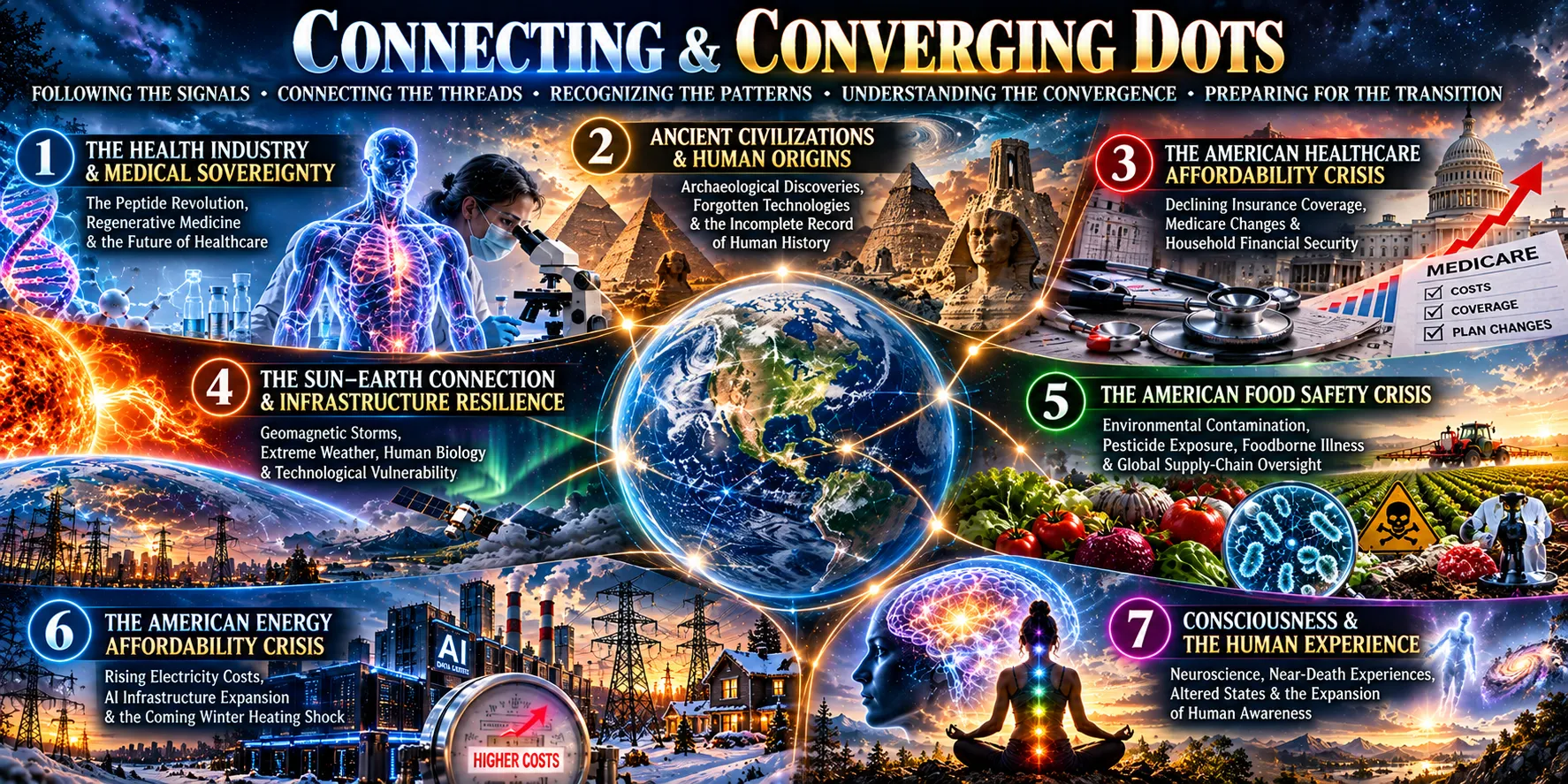
HOW TO READ & REVIEW THIS WEEK’S CONNECTING & CONVERGING DOTS
Following the Signals • Connecting the Threads • Recognizing the Patterns • Understanding the Convergence • Preparing for the Transition
This week’s Connecting & Converging the Dots section is designed to move readers beyond the individual Alternative News & Research stories and into a deeper examination of how the seven investigations relate to one another, reveal recurring themes, and contribute to the larger forces shaping our world. Begin by reviewing each of the seven analyses independently: The Health Industry & Medical Sovereignty; Ancient Civilizations & Human Origins; The American Healthcare Affordability Crisis; The Sun–Earth Connection & Infrastructure Resilience; The American Food Safety Crisis; The American Energy Affordability Crisis; and Consciousness & the Human Experience. Each analysis provides three levels of examination: Connecting the Dots, which identifies the underlying relationships, institutions, technologies, and developments influencing the subject; The Convergence of Dots, which explores where those relationships intersect with broader scientific, economic, environmental, technological, and societal changes; and The Emerging Pattern, which highlights the direction of change, important indicators, and conditions that may signal a meaningful transition. Pay particular attention to the GAR Pressure Chains, which illustrate how developments can move through interconnected systems, creating secondary consequences, vulnerabilities, or opportunities. As you read, distinguish established relationships from emerging possibilities, identify the evidence supporting each connection, and consider which developments deserve continued monitoring. The objective is to understand not simply what each story reveals independently, but how its underlying forces may relate to developments occurring across other areas of society.
The second level of review focuses on recognizing the broader convergence—identifying where multiple signals, threads, and patterns begin intersecting, reinforcing one another, or contributing to changes across essential systems and human experience. Consider how medical innovation and regenerative therapies intersect with healthcare affordability, regulatory authority, and individual medical sovereignty; how rising energy costs, AI infrastructure expansion, and environmental disturbances influence household finances and technological resilience; and how food safety, agricultural oversight, and international supply chains expose vulnerabilities involving public health and consumer protection. At the same time, examine how archaeological discoveries and consciousness research encourage deeper investigation into human intelligence, awareness, historical understanding, and the possibilities for personal development. Use GAR’s Three-Phase Transition Framework™ to evaluate these developments through Disclosure, Disruption & Deconstruction; Adaptation, Realignment & Transformation; and Reinvention, Innovation & Regeneration. Look for recurring pressures involving affordability, institutional accountability, scientific advancement, centralized systems, personal freedom, and the relationship between technological progress and human well-being. Ask which connections are already observable, which remain developing risks or opportunities, what additional evidence would strengthen the interpretation, and where meaningful changes could begin affecting individuals, communities, and society. The purpose of Connecting & Converging the Dots is to develop a more comprehensive understanding of the relationships shaping our world—moving from isolated headlines toward greater discernment, informed decision-making, personal resilience, and conscious participation in the unfolding transition.
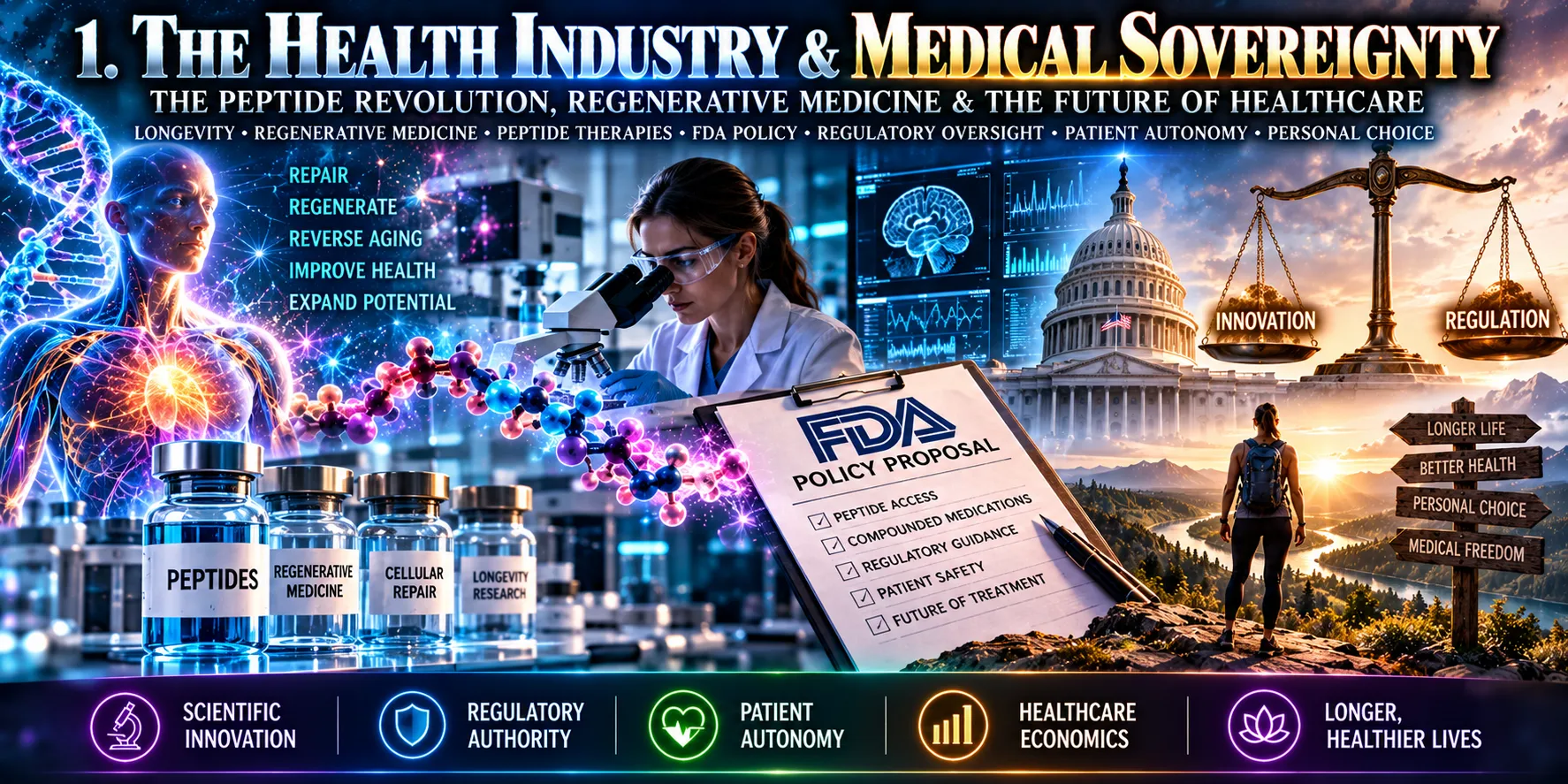
1. THE HEALTH INDUSTRY & MEDICAL SOVEREIGNTY
The Peptide Revolution, Regenerative Medicine & the Future of Healthcare
CONNECTING THE DOTS | Scientific Innovation, Regulatory Authority & the Changing Direction of Medicine
The expanding interest in peptide therapies, regenerative medicine, and longevity research represents more than a new category of medical treatments. It reflects a potentially significant change in how researchers and healthcare professionals approach aging, chronic illness, metabolic dysfunction, and the body’s capacity for repair. Traditional healthcare has achieved major advances in diagnosing and treating disease, while emerging biotechnology research is increasingly investigating the underlying biological mechanisms associated with cellular aging, inflammation, mitochondrial function, tissue regeneration, and metabolic health. Peptides, senolytic compounds, stem-cell technologies, and precision medicine are becoming important areas of investigation, although their clinical maturity varies considerably. Some peptide-based medications have demonstrated substantial benefits in human trials, while compounds such as BPC-157 remain experimental and lack adequate evidence establishing their safety and effectiveness in humans. The reported October 15 submission of a federal proposal concerning access to certain compounded peptides adds a regulatory dimension to this scientific discussion. The connecting thread is the growing tension between the speed of biotechnology innovation and the regulatory processes responsible for determining which treatments can be marketed, prescribed, compounded, and safely administered. As scientific interest expands, patients, physicians, researchers, pharmaceutical manufacturers, compounding pharmacies, and federal regulators are increasingly involved in defining the boundaries of medical innovation.
THE CONVERGENCE OF DOTS | Longevity Science, Medical Freedom & Healthcare Economics
The larger convergence becomes visible when regenerative medicine intersects with healthcare affordability, patient autonomy, biotechnology investment, and the financial structure of the medical industry. If future clinical research establishes that certain regenerative treatments can safely delay disease progression, improve recovery, or extend healthy years of life, the consequences could reach far beyond individual patients. Healthcare expenditures, pharmaceutical development, insurance reimbursement, retirement planning, workforce participation, and the economics of aging could all be affected. However, scientific promise does not automatically translate into accessible treatment. Emerging therapies can be expensive, inconsistently regulated, and marketed before adequate human evidence exists. This creates a second question involving medical sovereignty: whether individuals should have broader access to investigational interventions and what safeguards are necessary to ensure that access is informed, voluntary, and supported by transparent information. Regulatory decisions concerning compounded peptides may influence how emerging therapies reach patients, but they will not by themselves establish that those therapies are effective. The convergence therefore involves three competing pressures: the desire to accelerate innovation, the demand for greater personal choice, and the responsibility to protect patients from unsafe or unsupported medical claims. The future of regenerative medicine will depend on how effectively these priorities are balanced.
THE EMERGING PATTERN | From Disease Management Toward Personalized Health & Regeneration
The pattern worth following is the gradual expansion of medical research toward prevention, biological aging, cellular function, and individualized treatment. Advances in genomics, artificial intelligence, molecular biology, and clinical diagnostics may improve the ability to identify therapeutic targets and evaluate interventions for specific patient populations. At the same time, the growth of the commercial longevity industry demonstrates how rapidly public demand can develop around treatments whose scientific evidence remains incomplete. This distinction will become increasingly important as more biotechnology products enter the marketplace and regulatory agencies reconsider existing policies. The strongest indicators of meaningful progress will be well-designed human clinical trials, reproducible safety and efficacy findings, improved pharmaceutical quality controls, transparent regulatory decisions, and evidence that new therapies produce measurable health benefits. Within GAR’s Three-Phase Transition Framework™, this subject illustrates how scientific discovery can challenge existing treatment models, create pressure for institutional adaptation, and potentially support a longer-term transformation in healthcare delivery. The defining convergence threshold is reached when emerging regenerative treatments move from experimental promise into reliable, clinically validated, and responsibly accessible medical practice.
GAR Pressure Chain: BIOTECHNOLOGY → CELLULAR AGING RESEARCH → PEPTIDE & REGENERATIVE THERAPIES → CLINICAL VALIDATION → REGULATORY REASSESSMENT → PATIENT ACCESS → MEDICAL SOVEREIGNTY → HEALTHCARE TRANSFORMATION.

2. ANCIENT CIVILIZATIONS & HUMAN ORIGINS
Archaeological Discoveries, Forgotten Technologies & the Incomplete Record of Human History
CONNECTING THE DOTS | New Discoveries, Historical Chronologies & Ancient Human Intelligence
Archaeological discoveries involving Bronze Age communities in the Arabian Peninsula, ancient Egyptian settlements, and possible Neanderthal wooden technologies are expanding the information available to researchers reconstructing human history. Although these findings belong to different historical periods, they share an important underlying connection: the archaeological record is incomplete, and modern interpretations are shaped by the materials, structures, and evidence that happen to survive. Discoveries involving ancient burial practices, settlement organization, and regional trade can provide additional information about how early communities developed social institutions, exchanged resources, and established cultural relationships. Meanwhile, research at Spain’s Abric Romaní rock shelter raises questions about the range of materials and technological techniques used by Neanderthals. Stone artifacts frequently survive for extraordinary periods, while wooden tools, plant fibers, hides, and other organic materials often disappear. Consequently, the technologies preserved in archaeological collections may represent only a limited portion of what prehistoric populations actually produced. The connecting thread is the relationship between newly recovered evidence, preservation conditions, technological capability, and the historical assumptions built upon earlier discoveries.
THE CONVERGENCE OF DOTS | Archaeological Technology, Lost Knowledge & Reconstructing the Past
The deeper convergence emerges through advances in archaeology itself. Ground-penetrating radar, remote sensing, improved dating techniques, ancient DNA analysis, microscopic examination, and digital mapping are allowing researchers to investigate sites and materials with capabilities unavailable to earlier generations. These technologies can reveal buried settlements, clarify ancient migration patterns, identify manufacturing techniques, and reconstruct environmental conditions that shaped human development. As the available evidence improves, some established interpretations may require refinement or revision. This does not mean that every alternative historical theory is validated by a new discovery, but it does demonstrate why historical understanding must remain open to change. Ancient societies may have possessed more extensive trade relationships, more sophisticated material technologies, or more complex social organizations than surviving evidence previously suggested. The convergence between archaeological discovery and technological innovation is therefore changing not only what researchers know about the past, but also what they are capable of investigating. Questions involving forgotten technologies, cultural exchange, prehistoric intelligence, and the development of organized communities become more productive when examined through specific artifacts, reliable dating, environmental context, and independently verifiable evidence.
THE EMERGING PATTERN | An Expanding Historical Record & the Reassessment of Human Development
The emerging pattern is one of increasing historical detail and growing recognition of the sophistication of ancient human populations. Discoveries involving Neanderthal behavior contribute to a broader scientific reassessment of prehistoric intelligence, while archaeological findings in Egypt and the Arabian Peninsula continue revealing the diversity of ancient social and economic systems. These developments encourage a more nuanced understanding of human progress rather than assuming that technological and cultural development always followed a simple, uninterrupted sequence. Within GAR’s Three-Phase Transition Framework™, the relevance lies in discovery, reassessment, and the willingness to revise inherited explanations when credible new evidence becomes available. The most important indicators to monitor include reliable dating results, peer-reviewed interpretations of newly discovered artifacts, evidence of ancient manufacturing techniques, previously unknown settlements, and discoveries that demonstrably change established historical models. The defining convergence threshold is reached when multiple independent discoveries support a substantial revision to an existing interpretation of ancient technology, settlement, migration, or cultural development.
GAR Pressure Chain: NEW ARCHAEOLOGICAL DISCOVERIES → ADVANCED INVESTIGATION TECHNOLOGIES → RECOVERED EVIDENCE → REASSESSMENT OF ANCIENT CAPABILITIES → HISTORICAL REVISION → EXPANDED UNDERSTANDING OF HUMAN ORIGINS.
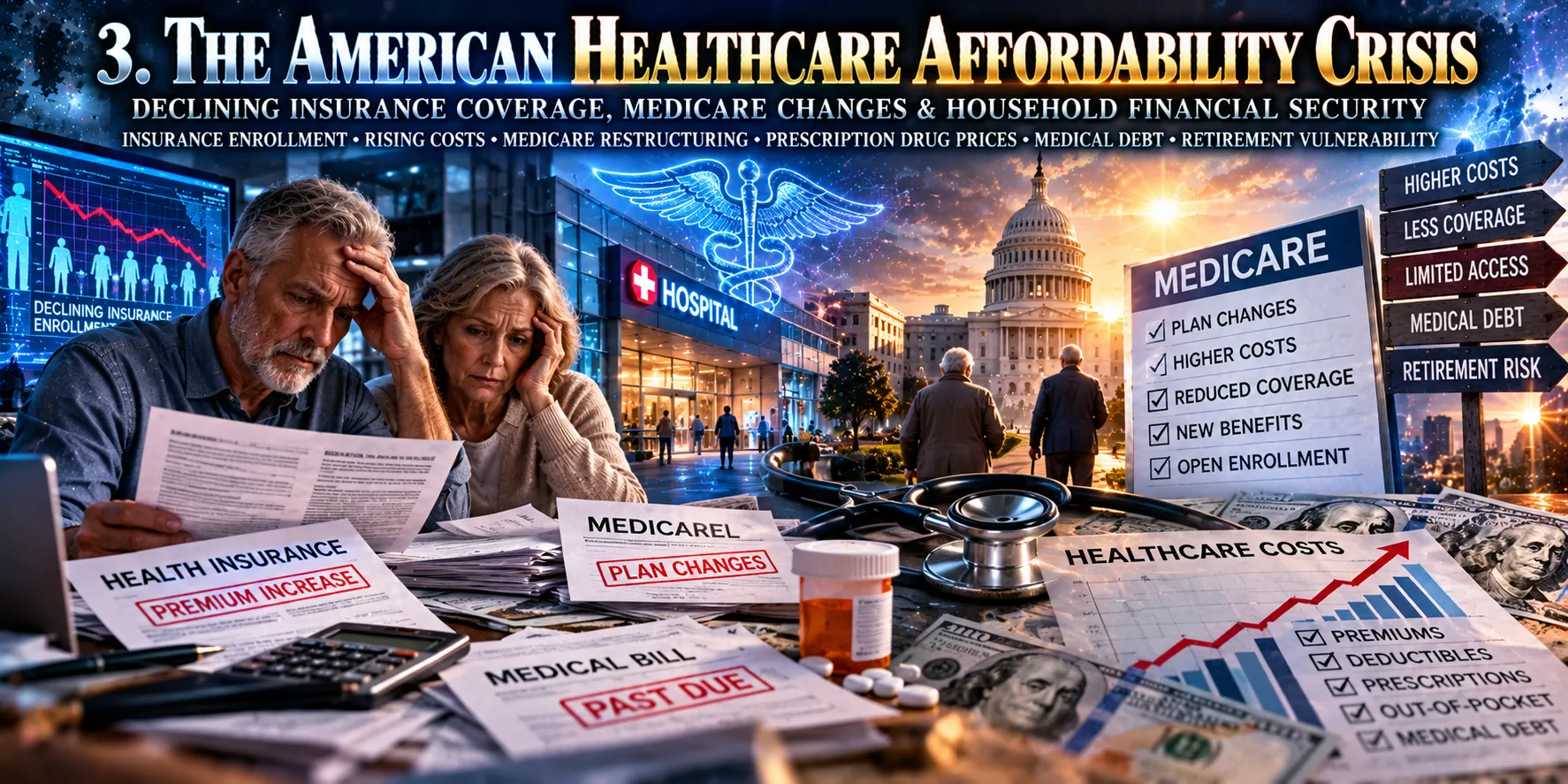
3. THE AMERICAN HEALTHCARE AFFORDABILITY CRISIS
Declining Insurance Coverage, Medicare Changes & Household Financial Security
CONNECTING THE DOTS | Insurance Enrollment, Medicare Restructuring & Rising Medical Costs
The reported decline in individual health insurance enrollment and the changing availability of Medicare plans reveal a shared challenge involving the affordability and reliability of healthcare coverage. The cited KFF analysis identified a reduction in individual-market enrollment from approximately 25.2 million to 20.5 million, while changes affecting Medicare Advantage and standalone prescription drug plans are creating additional decisions for retirees during annual open enrollment. These developments affect different populations, but the underlying threads are closely related: insurance premiums, public subsidies, medical inflation, insurer participation, prescription drug costs, provider networks, and household purchasing power. The expiration of enhanced premium subsidies can increase the amount some households must contribute toward insurance coverage, while Medicare plan discontinuations can require seniors to evaluate unfamiliar benefits, costs, and provider arrangements. Enrollment declines do not necessarily mean every former enrollee became uninsured, and Medicare plan changes do not necessarily mean every affected beneficiary loses access to coverage. Nevertheless, both developments demonstrate how changes in insurance policy and market conditions can introduce financial uncertainty into decisions involving essential medical care. The critical connection is between the formal availability of insurance and the practical ability of households to obtain affordable, dependable healthcare.
THE CONVERGENCE OF DOTS | Medical Debt, Household Inflation & Retirement Vulnerability
The convergence becomes more significant when healthcare expenses are examined alongside other pressures affecting American households. Rising housing costs, food prices, utility bills, insurance premiums, and borrowing expenses can reduce the financial resources available for medical care. For working families, higher health insurance premiums may compete directly with essential monthly expenses. For retirees, changing Medicare benefits, prescription costs, and out-of-pocket obligations can undermine carefully planned retirement budgets. When medical costs become difficult to manage, some households may delay preventive appointments, postpone diagnostic procedures, reduce discretionary spending, or take on debt. These responses can create secondary consequences for healthcare providers, insurers, public assistance programs, and the broader economy. The relationship with the longevity and regenerative medicine investigation is especially important: while medical research is developing increasingly sophisticated treatments, large numbers of Americans may struggle to afford existing essential services. A healthcare system can achieve remarkable technological progress while simultaneously becoming less financially accessible to parts of the population. The convergence therefore raises a fundamental question about whether future healthcare innovation will improve access and outcomes broadly or become increasingly divided according to financial resources.
THE EMERGING PATTERN | Insurance Coverage Does Not Always Equal Healthcare Affordability
The emerging pattern is the growing importance of evaluating healthcare through total household costs rather than insurance enrollment or advertised premiums alone. Deductibles, copayments, prescription coverage, provider networks, prior authorization requirements, and annual out-of-pocket limits can determine whether a plan is financially practical. For Medicare beneficiaries, yearly plan changes make careful comparison particularly important. For individuals purchasing private insurance, changes in subsidy eligibility and premiums can significantly affect affordability. The indicators deserving continued attention include uninsured rates, insurance enrollment trends, medical debt, skipped or delayed care, Medicare plan exits, prescription costs, and the proportion of household income devoted to healthcare. Within GAR’s Three-Phase Transition Framework™, this represents a potential period of disruption and adaptation in which individuals must become more informed about coverage while policymakers confront questions of affordability and financial sustainability. The defining convergence threshold is reached when rising healthcare expenses produce sustained, measurable increases in delayed treatment, medical debt, or loss of effective access to essential services.
GAR Pressure Chain: HIGHER MEDICAL COSTS → INSURANCE PREMIUM PRESSURE → COVERAGE CHANGES → GREATER OUT-OF-POCKET EXPOSURE → DELAYED CARE & MEDICAL DEBT → HOUSEHOLD FINANCIAL STRAIN → RETIREMENT INSECURITY → HEALTHCARE SYSTEM PRESSURE.
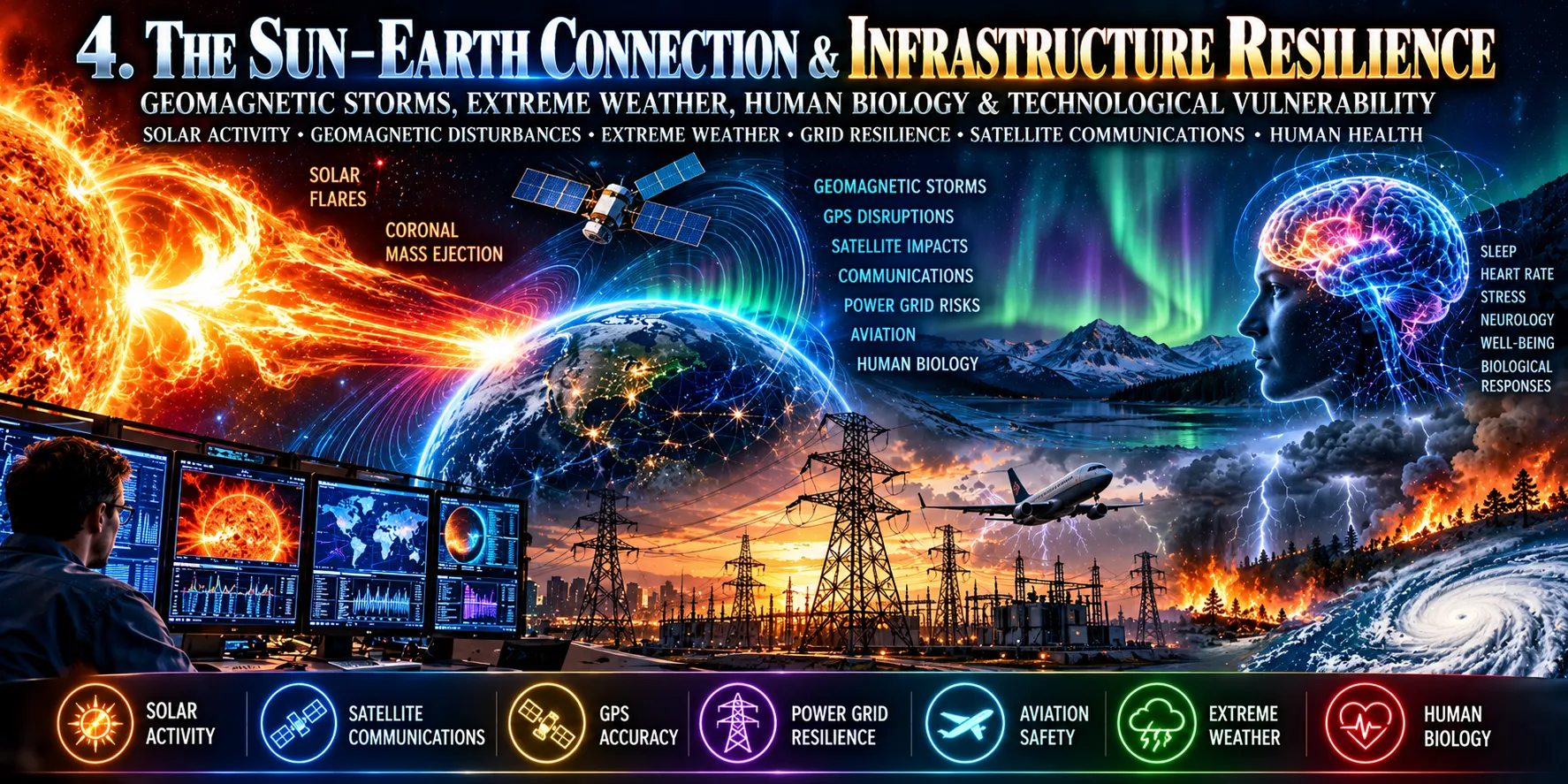
4. THE SUN–EARTH CONNECTION & INFRASTRUCTURE RESILIENCE
Geomagnetic Storms, Extreme Weather, Human Biology & Technological Vulnerability
CONNECTING THE DOTS | Solar Activity, Earth’s Magnetic Environment & Critical Infrastructure
The reported October 10 G3 geomagnetic storm highlights an important relationship between solar activity, Earth’s electromagnetic environment, and the technological systems supporting modern civilization. Coronal mass ejections can interact with Earth’s magnetic field, creating disturbances that affect satellite operations, high-frequency radio communications, GPS accuracy, aviation systems, and electrical transmission networks. These effects are well established, but their consequences are becoming increasingly relevant as societies expand their dependence on interconnected digital and electrical infrastructure. The connecting threads extend across solar monitoring, geomagnetic forecasting, satellite navigation, telecommunications, power-grid operations, transportation, emergency management, and the growing electricity requirements of artificial intelligence. At the same time, severe terrestrial weather, dangerous winds, and wildfire conditions create additional infrastructure challenges. These hazards have different physical causes, and ordinary weather events should not be attributed to geomagnetic storms without supporting evidence. Their common significance lies in the systems they can disrupt. Electrical grids, communication networks, transportation corridors, and emergency services must remain operational under a variety of environmental conditions. The central connection is therefore between natural environmental hazards and the expanding technological dependencies of modern society.
THE CONVERGENCE OF DOTS | Environmental Disturbances, Energy Dependence & System Resilience
The broader convergence emerges when space-weather exposure, extreme weather, aging infrastructure, and increasing electrical demand are examined together. A severe geomagnetic disturbance can create operational challenges for certain power and communication systems, while wildfires, high winds, flooding, and major storms can physically damage transmission lines, substations, roads, and telecommunications facilities. These events do not need to share a common cause to create overlapping consequences. As AI data centers, financial networks, hospitals, water utilities, logistics systems, and emergency services become increasingly dependent on continuous electricity and digital connectivity, the effects of an infrastructure failure can spread beyond the original point of disruption. A power outage can affect cellular communications, payment processing, refrigeration, fuel distribution, and access to medical services. Meanwhile, research into possible relationships between geomagnetic fluctuations and human physiology introduces another investigative dimension. Some studies have explored associations involving cardiovascular measurements, sleep, and autonomic nervous system activity, although findings remain uncertain and direct effects on consciousness have not been established. The convergence therefore includes both measurable technological risks and a separate, developing field of biological research that requires careful scientific evaluation.
THE EMERGING PATTERN | Increasing Environmental Exposure Meets Increasing Technological Dependence
The emerging pattern is that modern civilization is becoming more technologically capable while simultaneously becoming more dependent on infrastructure that must withstand diverse environmental hazards. More sophisticated forecasting, satellite monitoring, grid protection, backup generation, and emergency communication systems can reduce vulnerabilities, but they require sustained investment and coordination. This connects directly with the energy affordability investigation: the infrastructure needed to support reliable electricity and digital services also carries significant construction, maintenance, and financing costs. The most important indicators to monitor include NOAA space-weather forecasts, major solar eruptions, geomagnetic storm intensity, satellite and communications disruptions, regional wildfire danger, grid reliability reports, and investments in infrastructure protection. Within GAR’s Three-Phase Transition Framework™, the emphasis shifts toward adaptation, preparedness, technological resilience, and the development of systems capable of operating through periods of environmental disruption. The defining convergence threshold is reached when an environmental event causes sustained disruptions across multiple essential services, revealing that failures in one infrastructure network can affect several others.
GAR Pressure Chain: SOLAR ACTIVITY + EXTREME WEATHER → ENVIRONMENTAL HAZARDS → GRID & COMMUNICATIONS EXPOSURE → CRITICAL INFRASTRUCTURE DISRUPTION → ECONOMIC & COMMUNITY CONSEQUENCES → PREPAREDNESS INVESTMENT → SYSTEM RESILIENCE.
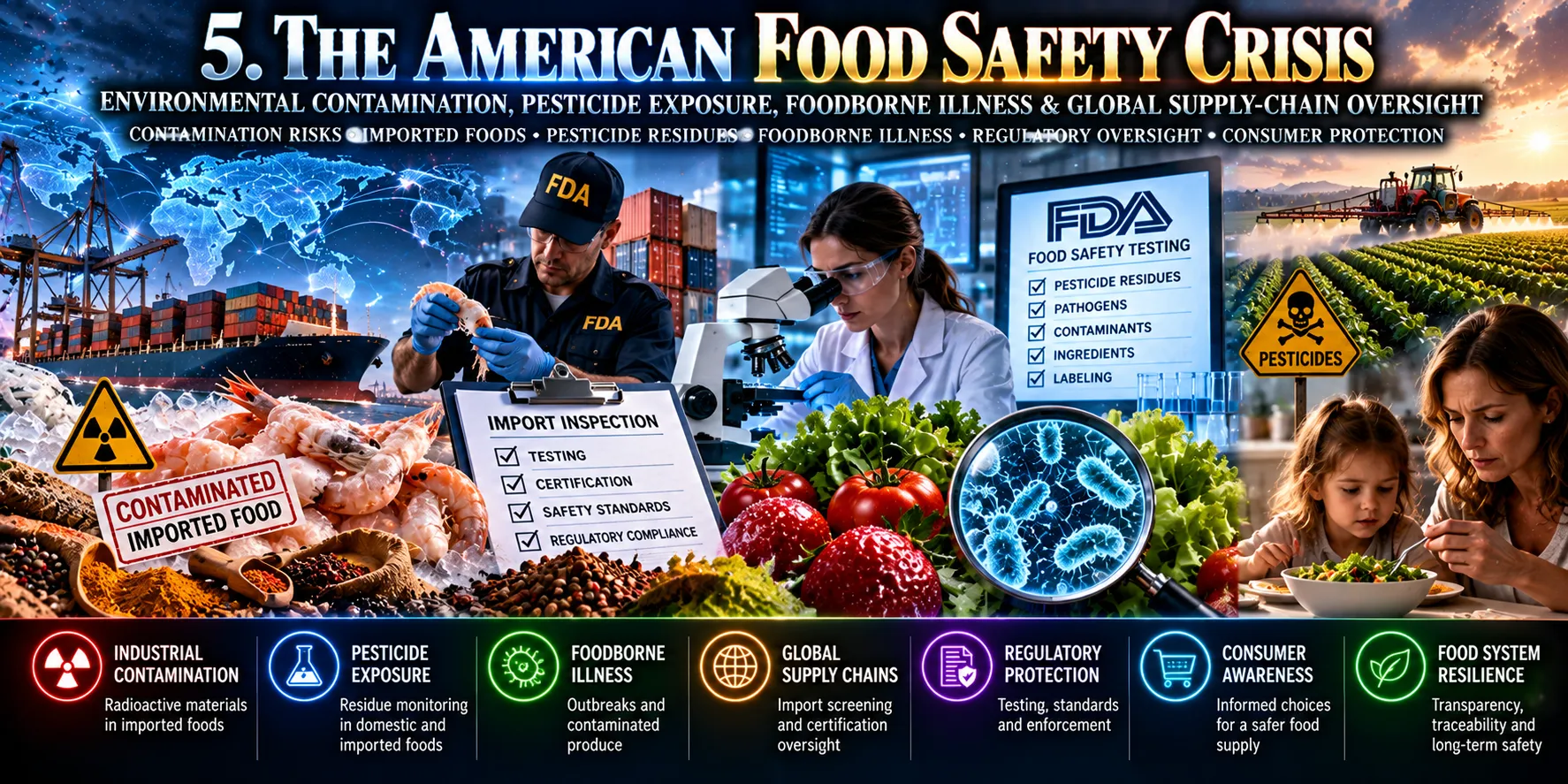
5. THE AMERICAN FOOD SAFETY CRISIS
Environmental Contamination, Pesticide Exposure, Foodborne Illness & Global Supply-Chain Oversight
CONNECTING THE DOTS | Food Contamination, International Trade & Regulatory Protection
The four food safety developments examined in this week’s report reveal different pathways through which contamination risks and regulatory decisions can affect the American food supply. The detection of radioactive Cesium-137 in imported shrimp and spices illustrates how industrial contamination can enter agricultural or food-processing environments and create concerns extending across international trade. The FDA’s assessment of Indonesian certification procedures identified deficiencies in testing and screening that were subsequently corrected, while the contaminated shipments were prevented from entering U.S. commerce. This demonstrates both the importance of existing safeguards and the need for reliable inspection procedures. Separately, the FDA’s fiscal-year 2024 pesticide residue monitoring report addresses agricultural chemical residues in domestic and imported foods, while the agency’s October salt-substitute rule concerns the ingredients manufacturers may use in certain standardized products. The reported Cyclospora outbreaks associated with contaminated produce introduce a different biological hazard involving sanitation, agricultural water, and distribution practices. The connecting threads extend across industrial activity, environmental protection, agricultural production, chemical use, food manufacturing, international imports, laboratory testing, regulatory standards, and public-health surveillance. Together, these developments illustrate the multiple points at which food safety depends on effective prevention, inspection, and oversight.
THE CONVERGENCE OF DOTS | Centralized Distribution, Environmental Exposure & Consumer Health
The deeper convergence appears when food contamination is examined as a supply-chain and public-health issue rather than a series of isolated incidents. Modern food systems depend on extensive agricultural networks, processing facilities, transportation providers, importers, wholesalers, and retailers. These networks can improve efficiency and make a wide variety of foods available year-round, but they also create opportunities for hazards originating in one location to affect consumers across a much larger geographic area. The reported scale of the 2026 Cyclospora outbreaks raises questions about how quickly contaminated produce can move through distribution systems and how effectively investigators can identify its source. Radioactive contamination introduces concerns about the relationship between industrial activity and food production, while pesticide monitoring highlights the importance of evaluating dietary exposure and enforcing established safety standards. Ingredient reformulation introduces another question involving transparency and informed consumer choice. These issues are not interchangeable: radioactive substances, pesticide residues, parasites, and salt substitutes involve different hazards, exposure pathways, and regulatory standards. Their convergence lies in the shared requirement for accurate information, effective testing, traceability, and timely intervention. The broader relationship with healthcare affordability is also significant, because foodborne illness and other adverse health outcomes can create medical expenses, lost productivity, and additional burdens for households already experiencing financial pressure.
THE EMERGING PATTERN | Food Safety Is Becoming an Infrastructure & Transparency Challenge
The emerging pattern is the growing importance of evaluating food safety across the entire production and distribution system, from environmental conditions and agricultural practices to processing, labeling, import screening, and consumer access. Regulatory compliance remains an important safeguard, but public confidence also depends on transparent reporting, reliable laboratory methods, effective enforcement, and clear communication about risks. The FDA’s pesticide monitoring data should be examined in detail before conclusions are drawn about residue levels, compliance rates, or differences between imported and domestic products. Likewise, the detection of contamination in a particular shipment should not be generalized to an entire food category or exporting country. The indicators deserving continued attention include contamination alerts, inspection deficiencies, foodborne illness surveillance, agricultural water testing, pesticide monitoring results, product recalls, and improvements in traceability. Within GAR’s Three-Phase Transition Framework™, this investigation illustrates the relationship between institutional accountability, adaptation, and the development of more resilient food systems. The defining convergence threshold is reached when repeated contamination events or widespread illness reveal persistent weaknesses in prevention and traceability that require substantial changes to agricultural, industrial, or regulatory practices.
GAR Pressure Chain: INDUSTRIAL & AGRICULTURAL HAZARDS → FOOD PRODUCTION & PROCESSING → INTERNATIONAL SUPPLY CHAINS → INSPECTION & TRACEABILITY → POTENTIAL CONSUMER EXPOSURE → PUBLIC-HEALTH RESPONSE → REGULATORY IMPROVEMENT → FOOD SYSTEM RESILIENCE.
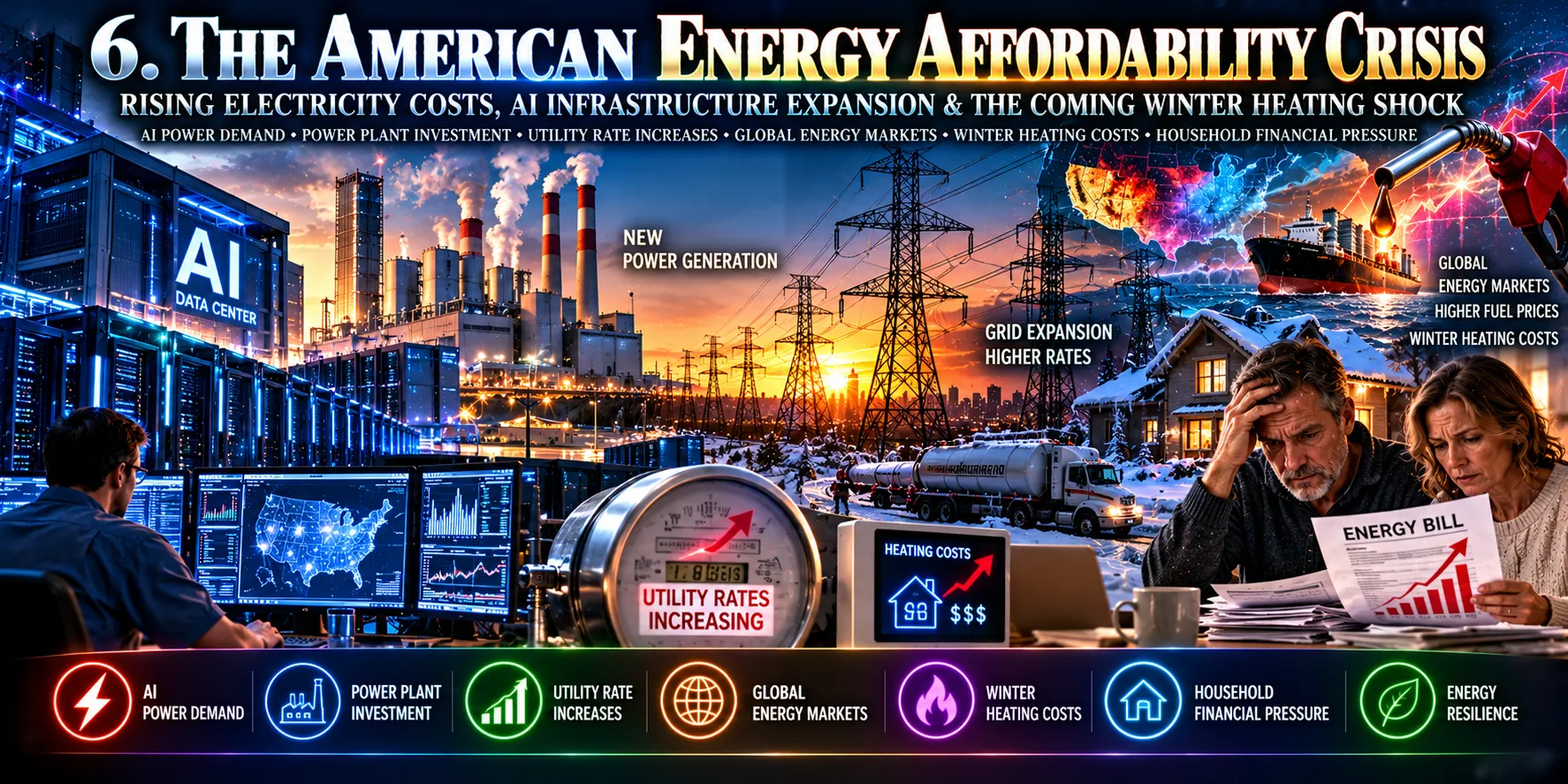
6. THE AMERICAN ENERGY AFFORDABILITY CRISIS
Rising Electricity Costs, AI Infrastructure Expansion & the Coming Winter Heating Shock
CONNECTING THE DOTS | AI Electricity Demand, Power-Plant Investment & Consumer Utility Bills
The expansion of electricity generation to support rising demand is becoming an increasingly important economic issue as artificial intelligence, data centers, industrial development, and electrification place additional requirements on America’s power infrastructure. Entergy Texas’s reported opening of a $1.6 billion natural-gas power station illustrates the scale of investment needed to increase generating capacity, while the projected additional annual customer charge of $140–$165 raises questions about how these investments are financed. Electricity infrastructure requires substantial capital for power plants, transmission lines, substations, grid modernization, and ongoing maintenance. In regulated utility markets, approved investments are generally recovered through customer rates, making the allocation of infrastructure costs an important matter of public policy. The connecting threads extend across AI development, corporate capital expenditures, natural-gas generation, utility financing, electricity demand forecasts, state regulatory commissions, and household energy expenses. Large technology companies may benefit from additional generating capacity, but the distribution of costs depends on utility contracts, regulatory decisions, and whether major electricity consumers contribute appropriately to the infrastructure required to serve them. The central question is whether America’s expanding digital economy can obtain the electricity it needs without shifting an excessive share of its infrastructure costs onto residential customers and smaller businesses.
THE CONVERGENCE OF DOTS | Global Energy Markets, Winter Heating & Household Financial Pressure
The convergence becomes more significant when long-term electricity infrastructure expenses intersect with shorter-term volatility in global energy markets. Forecasts suggesting substantially higher heating-oil costs for some northeastern households introduce another possible affordability challenge as winter approaches. Actual expenses will depend on international oil prices, refinery operations, regional fuel inventories, weather conditions, and household consumption. Nevertheless, the possibility of sharply higher heating bills demonstrates how global energy developments can affect household budgets thousands of miles from their original source. This creates a direct connection with the broader economic themes examined in GAR’s mainstream news investigations: geopolitical instability can influence energy prices, which can affect inflation, consumer spending, and financial conditions. At the household level, higher electricity and heating expenses compete with healthcare, food, housing, insurance, and debt obligations. At the industrial level, higher energy costs can affect manufacturing, transportation, agriculture, and the operating economics of AI infrastructure. The convergence is especially important because energy functions as an essential input throughout the economy. A sustained increase in energy expenses can therefore create consequences well beyond the utility sector, influencing both business investment and the financial resilience of families.
THE EMERGING PATTERN | The Cost of Power Becomes a Defining Economic & Technological Issue
The emerging pattern is the increasing strategic importance of electricity accompanied by growing questions about affordability, infrastructure financing, and the distribution of economic benefits. AI developers require reliable power, utilities must invest in additional capacity, regulators must determine how costs are allocated, and households must manage the resulting effects on monthly expenses. These competing priorities may become more pronounced as electricity demand grows and major technology companies seek new generation capacity and long-term energy contracts. The indicators deserving continued attention include utility rate cases, large-customer electricity agreements, AI data-center power requirements, natural-gas prices, heating-oil forecasts, transmission investments, winter fuel inventories, and household utility arrears. Within GAR’s Three-Phase Transition Framework™, this investigation illustrates the relationship between technological transformation, infrastructure adaptation, and economic resilience. It also connects with the Sun–Earth investigation because greater dependence on electricity increases the importance of grid reliability and protection against environmental hazards. The defining convergence threshold is reached when rising infrastructure and fuel costs produce sustained increases in household energy burdens, reduce consumer purchasing power, or create significant financial pressure on businesses and essential services.
GAR Pressure Chain: AI EXPANSION → ELECTRICITY DEMAND → POWER GENERATION & GRID INVESTMENT → UTILITY COST RECOVERY + GLOBAL FUEL VOLATILITY → HIGHER ENERGY BILLS → HOUSEHOLD & BUSINESS PRESSURE → ECONOMIC VULNERABILITY → ENERGY SYSTEM ADAPTATION.
7. CONSCIOUSNESS & THE HUMAN EXPERIENCE
Neuroscience, Near-Death Experiences, Altered States & the Expansion of Human Awareness
CONNECTING THE DOTS | Brain Research, Subjective Experience & the Unresolved Nature of Consciousness
The continuing investigation of human consciousness represents one of the most fundamental research frontiers connecting neuroscience, psychology, philosophy, contemplative practices, and human development. While scientists have made substantial progress identifying brain networks and neural processes associated with attention, memory, perception, and conscious awareness, the relationship between physical brain activity and subjective experience remains an active area of debate. Competing theories offer different explanations for how consciousness emerges, how information becomes consciously accessible, and why certain neurological processes are accompanied by first-person experience. Research involving meditation, altered states, sleep, anesthesia, and near-death experiences provides additional opportunities to examine how awareness changes under different physiological conditions. The connecting threads extend across brain imaging, neural activity, neuroplasticity, meditation research, emotional regulation, self-perception, philosophy of mind, and the study of extraordinary subjective experiences. Near-death experiences are particularly relevant because they raise questions about perception, memory, and conscious experience during medical emergencies, although current evidence has not established that consciousness continues independently of the brain after death. Unlike several other stories in this week’s report, this investigation is an ongoing research subject rather than a newly confirmed October breakthrough. Its importance lies in the persistence of fundamental questions that scientific investigation has not yet fully resolved.
THE CONVERGENCE OF DOTS | Consciousness Research, Personal Development & Human Potential
The broader convergence becomes visible when consciousness research intersects with healthcare, mental well-being, technological innovation, and the growing interest in personal transformation. Meditation and contemplative practices are being investigated for their potential effects on attention, emotional regulation, stress, and psychological well-being. Neuroscience is also contributing to the development of brain-computer interfaces, neurofeedback systems, and other technologies intended to measure or influence aspects of brain activity. These developments introduce questions about the relationship between scientific knowledge and individual experience: how can people use a better understanding of attention, perception, and emotional regulation to improve their everyday lives? How should subjective experiences be evaluated when they are personally meaningful but difficult to measure independently? And how can researchers remain open to new explanations without confusing philosophical possibilities with established scientific findings? The relationship with GAR’s medical sovereignty investigation is particularly relevant because both subjects involve personal autonomy, informed decision-making, and the interaction between scientific research and individual experience. The convergence also extends to artificial intelligence, where increasingly sophisticated computational systems are renewing philosophical debates about intelligence, awareness, and whether information processing alone is sufficient for consciousness. These questions remain unresolved, but they are encouraging dialogue across disciplines that historically developed largely independently.
THE EMERGING PATTERN | From Understanding Consciousness Toward Conscious Living
The emerging pattern is the growing integration of consciousness research with practical approaches to human development, self-awareness, and psychological resilience. Scientific investigations into meditation and attention are creating opportunities to evaluate contemplative practices using measurable outcomes, while philosophical research continues examining the fundamental nature of subjective experience. For GAR’s Awakening Journey and Conscious Practices initiatives, this creates an important distinction between investigating what consciousness is and exploring how greater awareness can influence individual choices and behavior. Practices involving reflection, meditation, mindfulness, breathwork, and deliberate attention may support personal development without requiring acceptance of unverified claims about the ultimate nature of reality. The most important research indicators include new peer-reviewed consciousness studies, advances in neural measurement, long-term meditation research, improved investigations of near-death experiences, and experimental tests of competing theories. Within GAR’s Three-Phase Transition Framework™, this subject relates most directly to personal adaptation, transformation, and the cultivation of qualities that can support conscious participation during periods of social and technological change. The defining convergence threshold is reached when advances in consciousness research produce reproducible explanations or practical interventions that substantially improve our understanding of subjective experience, mental functioning, or human well-being.
GAR Pressure Chain: NEUROSCIENCE → CONSCIOUSNESS RESEARCH → MEDITATION & ALTERED-STATE INVESTIGATIONS → IMPROVED UNDERSTANDING OF AWARENESS → PERSONAL DEVELOPMENT → INFORMED CHOICE → CONSCIOUS LIVING → HUMAN TRANSFORMATION.
TRUTH SEEKERS WEEKLY BRIEFING | SUBSCRIBER Q&A
October 16, 2026 | The 12 Major News & Alternative Research Investigations
Connecting the Dots • Understanding the Convergence • Strengthening Discernment • Preparing for the Transition
This week’s Truth Seekers Weekly Briefing brings together five major mainstream news investigations and seven Alternative News & Research stories, providing a comprehensive examination of the economic, geopolitical, technological, environmental, scientific, and societal developments shaping our rapidly changing world. Across these twelve investigations, we have explored global economic instability, inflation, energy disruptions, the changing international monetary system, financial-market pressures, artificial intelligence infrastructure, digital surveillance, and the expanding influence of technology over everyday life. Our Alternative News investigations have examined the peptide revolution and regenerative medicine, medical sovereignty, healthcare affordability, Medicare changes, ancient civilizations and human origins, geomagnetic storms and environmental vulnerabilities, food contamination and regulatory oversight, rising household energy costs, and the expanding frontiers of consciousness research. While these subjects may initially appear unrelated, they reveal recurring questions about the stability of essential systems, the consequences of institutional decisions, the distribution of economic and technological benefits, and the ability of individuals and communities to maintain greater independence and resilience. The underlying theme throughout this week’s report is that we are living through a period of significant change in which scientific advancement, technological innovation, economic uncertainty, and evolving institutional structures are creating both unprecedented opportunities and increasingly complex challenges. Understanding these developments requires looking beyond individual headlines to examine the deeper relationships influencing the direction of our society and the choices we face.
For this week’s Subscriber Q&A, we have developed five comprehensive questions reflecting the most important concerns, recurring themes, and broader implications emerging from our twelve news and research investigations. These representative questions are organized around five central areas: the possibility of a new global economic crisis and its impact on ordinary households; the expanding AI infrastructure and financial bubble concerns, including who ultimately pays for the electricity and power plants supporting technological development; the transformation of healthcare through regenerative medicine and longevity research while millions struggle with insurance coverage and medical affordability; the vulnerability of food, energy, communications, and essential infrastructure to environmental disturbances and contamination; and the relationship between ancient human history, consciousness research, artificial intelligence, digital surveillance, and personal sovereignty. Each question brings together multiple developments from the week’s report, encouraging readers to consider how changes in one sector can influence conditions in another. The answers examine the underlying economic, scientific, regulatory, and technological forces involved, identify the most important signals and emerging patterns, and explore the circumstances under which separate pressures could begin reinforcing one another. Rather than treating every development as evidence of an inevitable crisis or predetermined outcome, this discussion emphasizes informed investigation, critical thinking, thoughtful discernment, and the importance of distinguishing documented developments from emerging risks and longer-term possibilities. The objective is to help subscribers move from simply following events toward developing a clearer understanding of their significance, their potential consequences, and the practical decisions they may require.
At the heart of GAR’s Subscriber Q&A is a larger purpose: empowering individuals to become more informed, self-reliant, resilient, and conscious participants in a world undergoing profound economic, technological, institutional, and human transformation. Through GAR’s Three-Phase Transition Framework™—Phase I: Crossing the Threshold (Disclosure • Disruption • Deconstruction); Phase II: The Great Transition (Adaptation • Realignment • Transformation); and Phase III: Global Emergence (Reinvention • Innovation • Regeneration)—we examine these developments not only as individual challenges, but also as opportunities to reconsider established systems, strengthen personal responsibility, and explore more sustainable approaches to health, finance, technology, community, and human development. The questions raised throughout this week’s briefing ultimately lead to a common consideration: As the systems surrounding us become more complex, interconnected, and influential, how do we preserve our ability to think independently, make informed choices, protect our personal freedoms, and prepare responsibly for an uncertain future? The answers begin with knowledge, awareness, discernment, and the willingness to examine information from multiple perspectives while remaining grounded in credible evidence. By following the signals, connecting the threads, recognizing the patterns, and understanding where meaningful convergence may be occurring, we can begin transforming uncertainty into greater clarity and preparedness. The purpose of this Subscriber Q&A is not simply to anticipate what may happen next, but to help each reader develop the awareness, practical understanding, and personal sovereignty needed to navigate the Great Transition with greater confidence, resilience, and conscious intention.
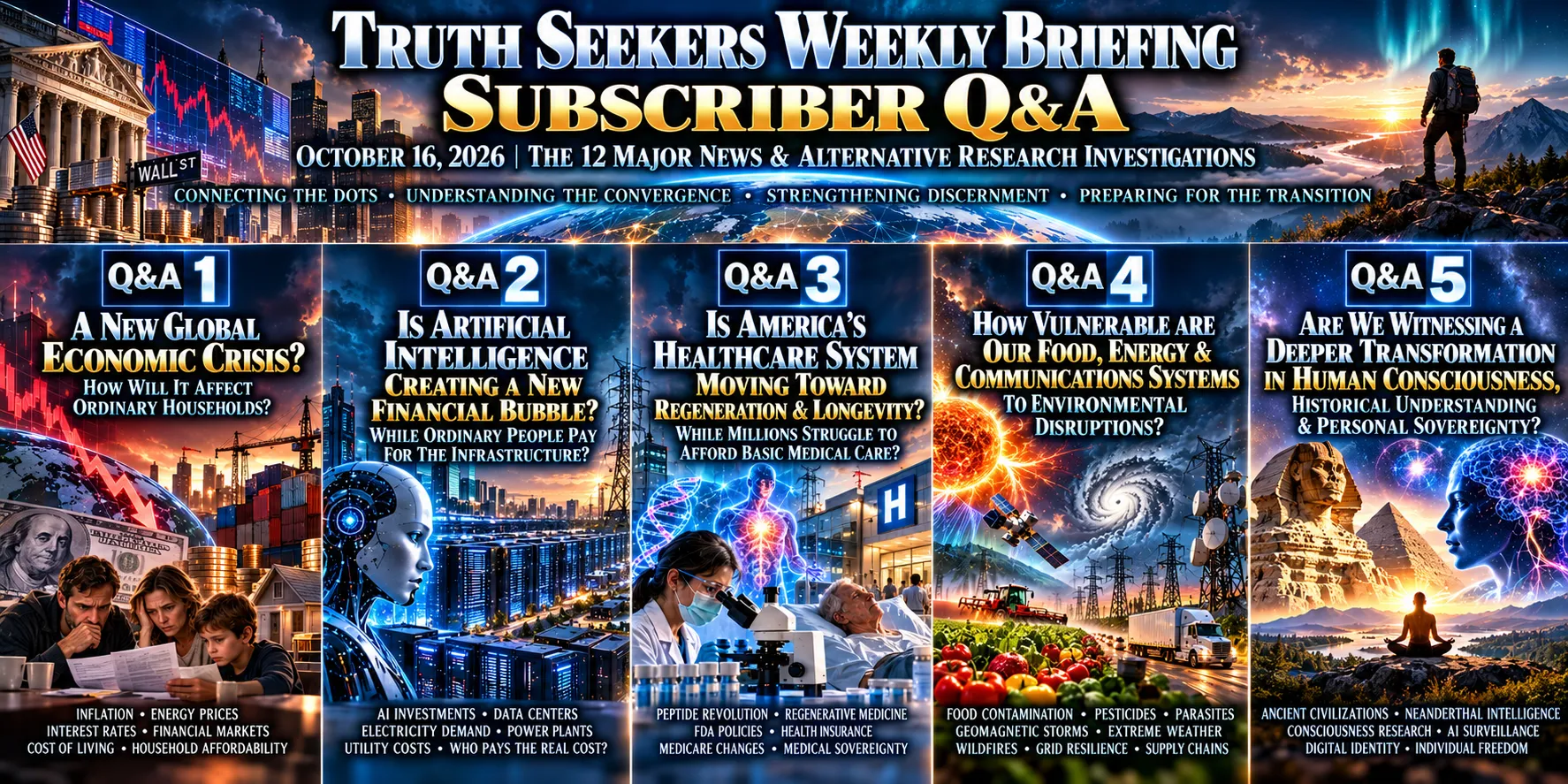
HOW TO READ & REVIEW THIS WEEK’S FIVE SUBSCRIBER Q&A QUESTIONS
Understanding the Questions • Examining the Answers • Recognizing the Connections • Strengthening Discernment • Preparing for the Transition
This week’s five Subscriber Q&A questions are designed to help readers move beyond the twelve individual news and research investigations and develop a clearer understanding of the larger issues, underlying relationships, and practical consequences emerging from this week’s Truth Seekers Weekly Briefing. Begin by reviewing each question independently, paying particular attention to the central concern being raised and the specific developments from the week’s report that contribute to the discussion. Question 1 examines the possibility of a new global economic crisis and its consequences for household affordability; Question 2 explores artificial intelligence, expanding infrastructure investments, financial-market risks, and who ultimately pays for the next generation of electricity; Question 3 investigates the future of regenerative medicine, longevity research, medical sovereignty, and the growing challenges surrounding healthcare affordability; Question 4 evaluates the vulnerability of food supplies, electrical grids, communications networks, and essential infrastructure to environmental disturbances and contamination; and Question 5 explores the expanding understanding of ancient human history, consciousness research, artificial intelligence, digital identity, and individual freedom. Each answer is organized into three explanatory paragraphs that progressively examine the underlying developments, identify the broader relationships and potential consequences, and consider the important signals, questions, and practical responses deserving further attention. As you read, distinguish between documented developments, reasonable interpretations, emerging risks, and longer-term possibilities. The objective is to understand not only the answer to each question, but also why the question matters and how the information may influence your understanding of the world and the decisions affecting your everyday life.
The second level of review focuses on identifying the recurring themes, meaningful connections, and practical lessons that emerge across all five questions. Pay particular attention to the GAR Convergence Chains accompanying each discussion, which illustrate how developments can move through interconnected economic, technological, environmental, healthcare, and societal systems. Consider how rising energy costs can influence inflation and household finances, how AI infrastructure expansion can affect electricity demand and utility bills, how medical innovation intersects with healthcare accessibility and personal choice, and how environmental disruptions can expose vulnerabilities in food production, communications, and essential services. At the same time, reflect on how discoveries involving ancient civilizations, neuroscience, and consciousness research encourage deeper inquiry into human intelligence, awareness, and potential, while digital surveillance and emerging technologies raise important questions about privacy, autonomy, and personal sovereignty. Use GAR’s Three-Phase Transition Framework™ to examine these developments through the processes of Disclosure, Disruption & Deconstruction; Adaptation, Realignment & Transformation; and Reinvention, Innovation & Regeneration. Throughout your review, ask yourself: What are the most important signals? Which threads help explain the underlying developments? What patterns are becoming more apparent? Where are multiple pressures beginning to converge? And what practical steps can I take to become better informed, more resilient, and more prepared? The purpose of this week’s Subscriber Q&A is to transform complex information into greater clarity, thoughtful discernment, informed decision-making, and conscious participation in the changes shaping our collective future.
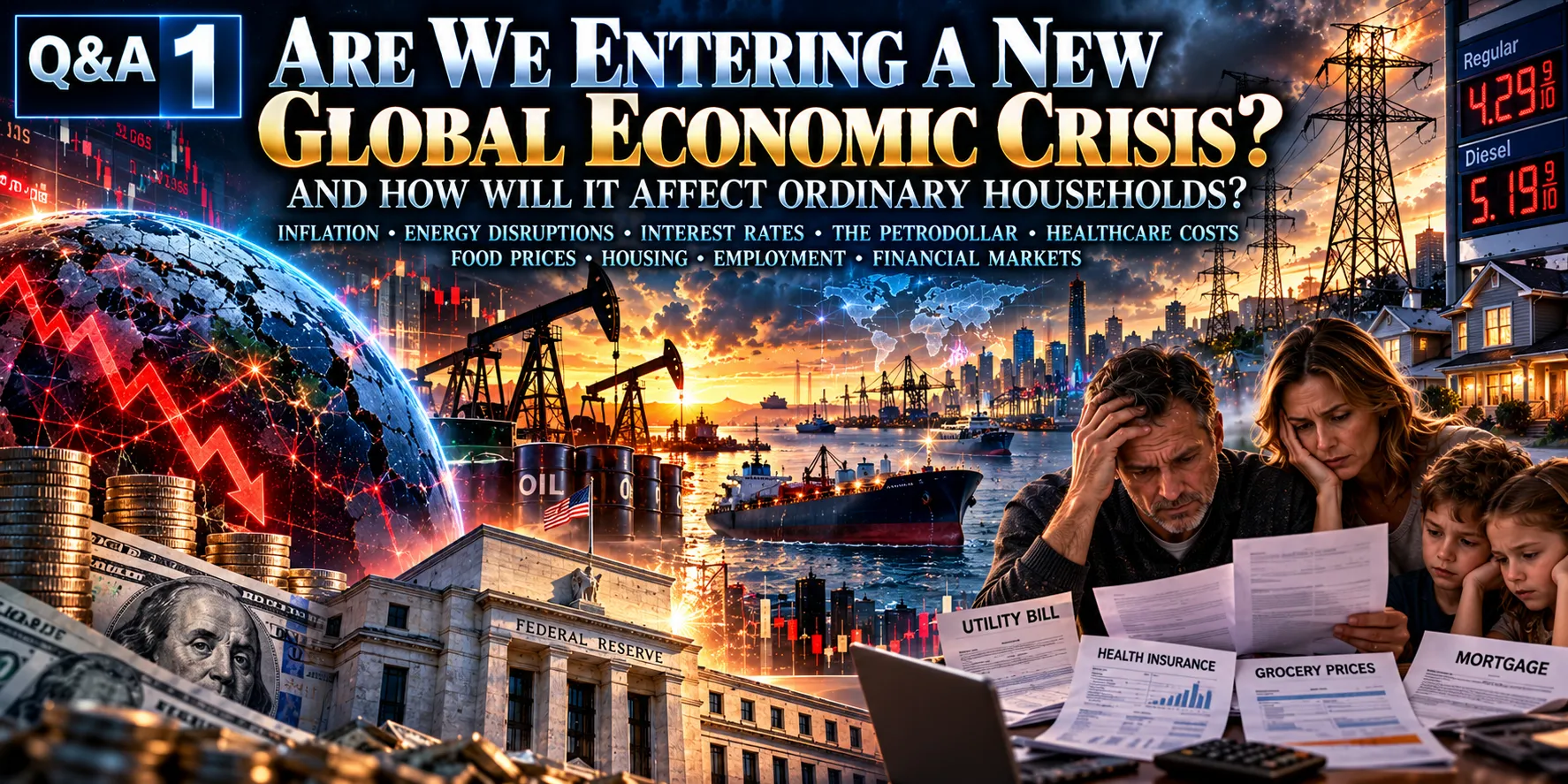
Q: 1 | ARE WE ENTERING A NEW GLOBAL ECONOMIC CRISIS, AND HOW WILL IT AFFECT ORDINARY HOUSEHOLDS?
Subscriber Question: “This week’s report discusses inflation, global energy disruptions, the petrodollar, rising interest rates, healthcare costs, and the possibility of another winter heating shock. Are these separate economic problems, or are they beginning to reinforce one another? What should ordinary Americans be watching, and how can families prepare if the cost of living continues to rise?”
Answer — Paragraph 1 | Understanding the Economic Pressure
The most important development to understand is that economic pressure can move through several interconnected systems before its full consequences become visible to households. Global conflict and disruptions affecting oil production, refining, and maritime transportation can increase energy prices, which influence the cost of manufacturing, agriculture, transportation, electricity, and consumer goods. When those increases become persistent, they can contribute to broader inflation and complicate decisions by the Federal Reserve concerning interest rates. Higher borrowing costs can then affect mortgages, credit cards, business financing, commercial real estate, and government debt. At the same time, changes in global trade relationships, currency arrangements, and the use of the U.S. dollar in international energy transactions may influence financial conditions over longer periods. These developments do not automatically produce a financial crisis, but they create pathways through which disturbances in one sector can influence several others. The central signal is whether higher energy costs and financial pressures remain concentrated in particular markets or begin spreading into employment, consumer spending, credit availability, and the broader economy.
Answer — Paragraph 2 | Where the Convergence Reaches the Household
The convergence becomes more significant when global economic developments intersect with expenses that families cannot easily avoid. This week’s report identified concerns involving rising electricity rates, potentially higher winter heating bills, declining individual health insurance enrollment, changing Medicare coverage, and the continuing costs of food, housing, and transportation. These expenses compete for the same household income, meaning that even moderate increases across several categories can create substantial financial pressure when they occur together. A family may be able to absorb a higher electricity bill or an increase in health insurance premiums independently, but the combination of higher energy, healthcare, food, and borrowing costs can force difficult spending decisions. For retirees and individuals living on fixed incomes, these pressures may be especially challenging because income does not necessarily adjust as quickly as essential expenses. The economic question is therefore not simply whether inflation is rising or falling, but whether household purchasing power, savings, and access to essential services are improving or deteriorating. A sustained reduction in disposable income can become an important warning signal because weaker household spending can eventually influence businesses, employment, and economic growth.
Answer — Paragraph 3 | What Subscribers Should Watch & How to Prepare
Subscribers should monitor several practical indicators rather than relying on a single prediction about economic collapse or recovery. These include oil and natural-gas prices, inflation trends, Treasury yields, credit conditions, unemployment, household debt, utility rate changes, health insurance costs, and the availability of essential goods and services. The most useful preparation begins with understanding personal financial exposure: reviewing recurring expenses, reducing unnecessary high-interest debt where possible, maintaining appropriate emergency savings, comparing insurance options, and evaluating household energy efficiency. Families should also consider whether they have adequate financial flexibility to manage unexpected medical expenses, temporary income disruptions, or significant changes in utility costs. Within GAR’s Three-Phase Transition Framework™, this represents the practical dimension of moving from recognizing disruption toward adaptation and greater resilience. The objective is not to assume that a severe economic crisis is inevitable, but to identify where pressure is accumulating and make informed decisions before financial conditions become more difficult.
GAR Convergence Chain: GEOPOLITICAL INSTABILITY → ENERGY PRICES → INFLATION → INTEREST RATES → CREDIT CONDITIONS → BUSINESS & EMPLOYMENT PRESSURE → HOUSEHOLD AFFORDABILITY → FINANCIAL RESILIENCE.
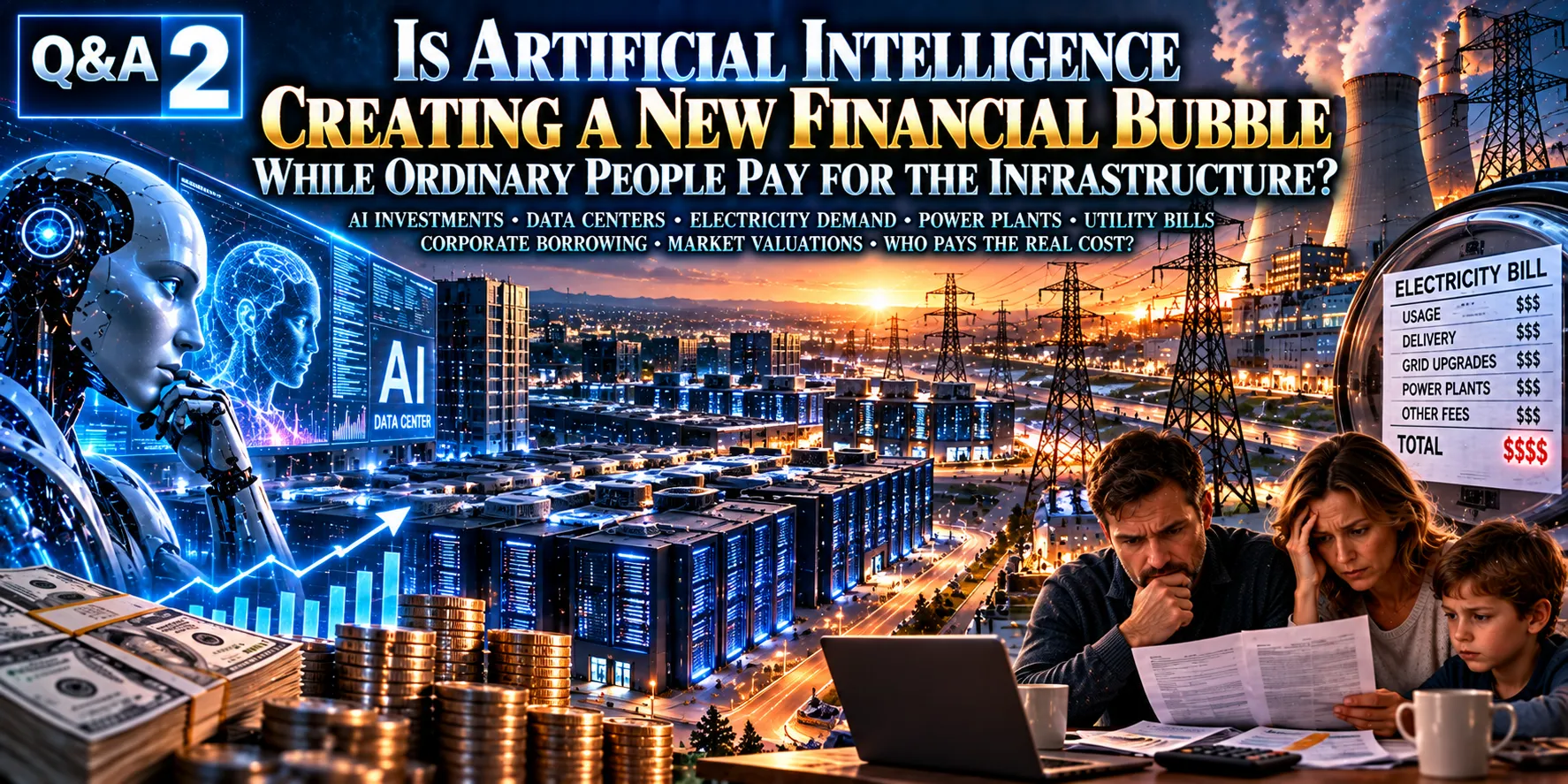
Q: 2 | IS ARTIFICIAL INTELLIGENCE CREATING A NEW FINANCIAL BUBBLE WHILE ORDINARY PEOPLE PAY FOR THE INFRASTRUCTURE?
Subscriber Question: “We keep hearing that artificial intelligence will transform the economy, but this week’s report also discusses enormous AI investments, rising electricity demand, corporate borrowing, new power plants, and higher utility bills. Are we building another speculative financial bubble? And why should residential electricity customers help finance infrastructure that may primarily benefit major technology corporations?”
Answer — Paragraph 1 | The Scale of AI Infrastructure Expansion
Artificial intelligence is creating a major expansion in demand for computing infrastructure, electricity, data storage, cooling systems, and high-capacity communications networks. Developing and operating advanced AI systems requires substantial investments in semiconductor manufacturing, data centers, electrical generation, transmission equipment, and supporting infrastructure. These expenditures are being financed through a combination of corporate earnings, equity investment, borrowing, infrastructure partnerships, and other capital arrangements. The financial concern emerges when expectations about future AI revenue, productivity gains, and market adoption become disconnected from the costs required to build and operate the infrastructure. Rapid investment does not automatically constitute a financial bubble, and many AI applications may generate lasting economic value. However, significant uncertainty remains about the timing and distribution of financial returns, the sustainability of current spending levels, and whether all planned infrastructure will ultimately be needed. The critical signal is whether AI-related capital investment continues producing measurable economic benefits sufficient to justify the financing costs, infrastructure commitments, and market valuations associated with its expansion.
Answer — Paragraph 2 | Who Pays for the Power?
The electricity question adds another important dimension because AI infrastructure depends on physical energy systems that are often financed through regulated utility arrangements. This week’s report highlighted Entergy Texas’s reported $1.6 billion natural-gas power station and projected additional customer charges, illustrating how new generation investments can influence electricity bills. However, determining who benefits from a particular power project requires examining the full customer base, regional demand forecasts, utility contracts, and regulatory cost-allocation decisions. A power plant may serve residential customers, industrial facilities, and data centers simultaneously. The central concern is whether major commercial electricity users contribute appropriately to the generation and grid capacity required by their operations, particularly when residential consumers have limited ability to avoid higher utility rates. State regulators play an important role in evaluating these investments and determining whether their costs are justified. The larger convergence occurs when corporate AI expansion, utility financing, electricity affordability, and financial-market expectations become increasingly dependent on the same assumptions about future demand and economic growth.
Answer — Paragraph 3 | The Signals of a Sustainable Expansion or an Emerging Bubble
Subscribers should follow AI capital expenditures, corporate debt levels, data-center utilization, electricity demand forecasts, utility rate cases, grid connection delays, and the profitability of AI services. A sustainable expansion would be characterized by growing demand for useful AI applications, improving financial returns, reliable electricity supply, and infrastructure investments whose costs are distributed appropriately. Warning signals would include repeated project cancellations, substantial financing stress, persistent overcapacity, rising defaults among highly leveraged infrastructure developers, or significant increases in consumer electricity costs without corresponding improvements in reliability and service. The surveillance economy adds another dimension because AI capabilities are also expanding the ability of institutions to analyze personal information, automate decisions, and integrate digital identity systems. This means the AI transition involves more than financial speculation; it also raises questions about privacy, accountability, data ownership, and institutional power. The defining issue is whether AI development produces broadly shared economic and social benefits or concentrates financial rewards and technological control while transferring disproportionate costs and risks to households and communities.
GAR Convergence Chain: AI INVESTMENT → DATA CENTER EXPANSION → ELECTRICITY DEMAND → POWER & GRID INFRASTRUCTURE → CORPORATE FINANCING + UTILITY COST RECOVERY → FINANCIAL RISK & HOUSEHOLD COSTS → ECONOMIC & SOCIAL CONSEQUENCES.
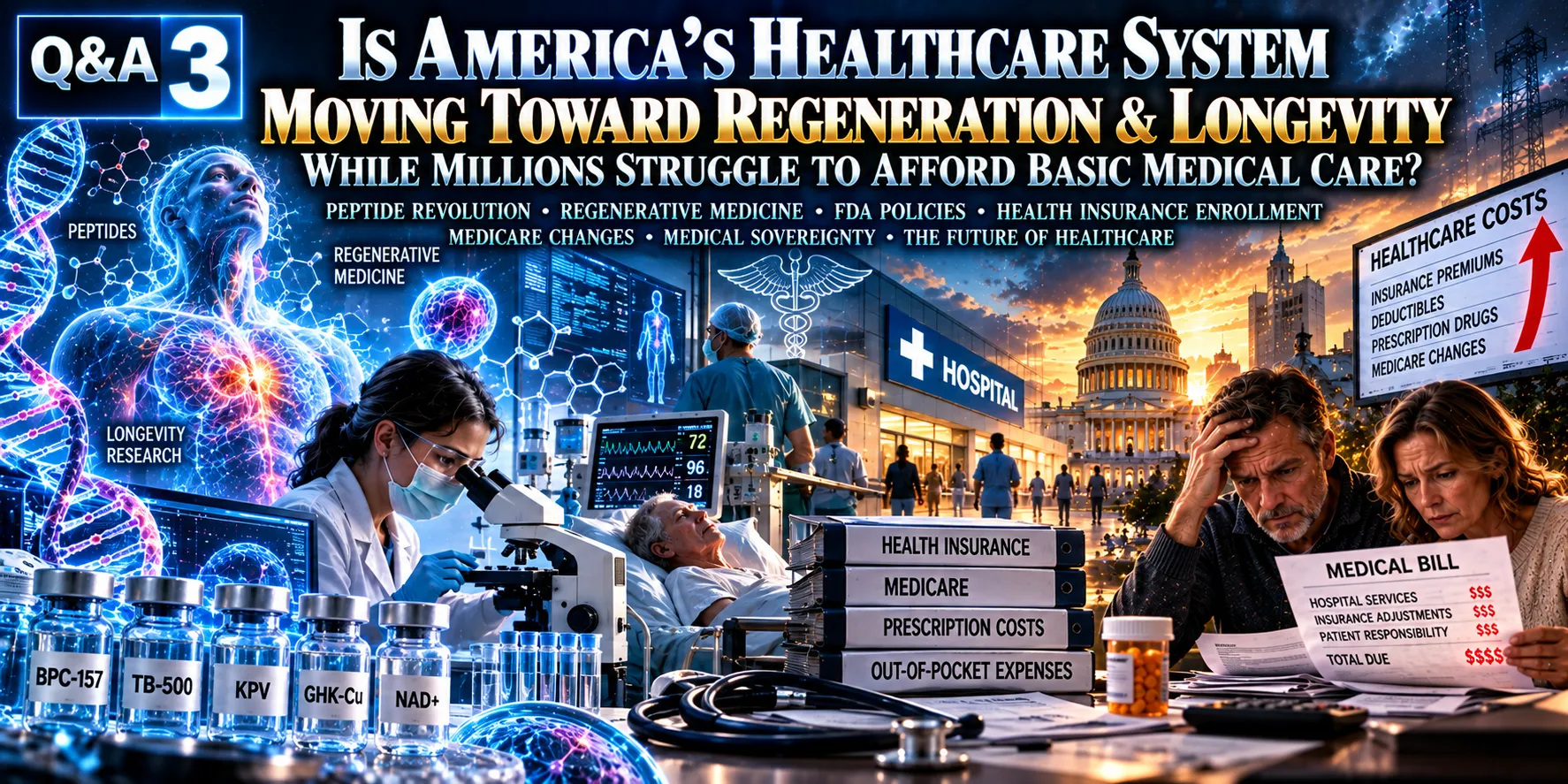
Q: 3 | IS AMERICA’S HEALTHCARE SYSTEM MOVING TOWARD REGENERATION & LONGEVITY WHILE MILLIONS STRUGGLE TO AFFORD BASIC MEDICAL CARE?
Subscriber Question: “This week’s report discusses the peptide revolution, regenerative medicine, longevity research, changing FDA policies, declining health insurance enrollment, and Medicare coverage changes. How can medicine be advancing toward cellular regeneration and longer, healthier lives while so many Americans are struggling to afford conventional healthcare? Are we approaching a major transformation in medicine, and what role should medical sovereignty play?”
Answer — Paragraph 1 | The Emerging Frontier of Regenerative Medicine
One of the most important developments in healthcare is the expanding investigation of the biological mechanisms associated with aging, inflammation, metabolic dysfunction, mitochondrial health, and cellular repair. Researchers are exploring whether interventions involving certain peptides, senolytic compounds, stem-cell technologies, metabolic therapies, and other emerging treatments can improve health outcomes or address processes associated with chronic disease and biological aging. This represents a potentially important direction in medical research: moving beyond treating symptoms toward understanding the underlying processes that contribute to disease, degeneration, and declining physiological function. However, the research remains at different stages of development. Some peptide-based medicines have demonstrated substantial clinical benefits, while other compounds frequently discussed in alternative health communities, including BPC-157, lack adequate human clinical evidence. The reported October 15 federal policy proposal concerning compounded peptides adds another dimension by raising questions about regulatory oversight, treatment access, and the standards used to evaluate experimental therapies. The central signal is the growing interest in preventive, personalized, and regenerative approaches to healthcare, accompanied by increasing debate over how emerging treatments should be researched, regulated, and made available to patients.
Answer — Paragraph 2 | The Convergence of Medical Innovation & Healthcare Affordability
The larger contradiction becomes visible when these scientific developments are examined alongside the financial pressures affecting the existing healthcare system. This week’s report highlighted a substantial decline in individual health insurance enrollment and changes to Medicare Advantage and prescription drug plans that may create uncertainty for seniors. While biotechnology companies are investing in therapies intended to improve longevity and cellular health, many Americans are facing higher insurance premiums, deductibles, prescription expenses, and out-of-pocket medical costs. This creates a fundamental question about the future of healthcare: will medical innovation improve access to better treatments across the population, or will advanced therapies become increasingly available only to those with substantial financial resources? The convergence also involves pharmaceutical development, insurance reimbursement, regulatory approval, physician education, and the commercialization of longevity treatments. Even when a therapy demonstrates meaningful clinical benefits, patients may face significant barriers involving cost, insurance coverage, provider availability, or eligibility. The defining challenge is whether the next generation of medicine can deliver both scientific progress and greater accessibility, rather than creating a widening divide between advanced medical capabilities and affordable everyday healthcare.
Answer — Paragraph 3 | Medical Sovereignty, Informed Choice & the Future of Health
Medical sovereignty should begin with the principle that individuals deserve accurate information, meaningful participation in treatment decisions, transparent discussion of risks and benefits, and appropriate access to qualified medical professionals. Greater personal autonomy does not require abandoning scientific standards or assuming that every experimental therapy is safe and effective. Instead, it involves ensuring that regulatory decisions are understandable, clinical research is transparent, product quality is reliable, and patients can make informed decisions based on their circumstances. Subscribers should monitor FDA compounding policies, clinical trials involving regenerative treatments, independent pharmaceutical quality testing, insurance coverage changes, and developments in preventive and personalized medicine. At the individual level, the most established opportunities for supporting long-term health still include appropriate preventive care, metabolic health management, physical activity, sleep, nutrition, and evidence-based treatment of existing medical conditions. Within GAR’s Three-Phase Transition Framework™, this subject represents the intersection of scientific discovery, institutional adaptation, and personal empowerment. The defining convergence threshold will be reached when clinically validated regenerative treatments become sufficiently safe, effective, affordable, and accessible to meaningfully change how healthcare is delivered.
GAR Convergence Chain: LONGEVITY RESEARCH → REGENERATIVE THERAPIES → CLINICAL VALIDATION → FDA POLICY & MEDICAL ACCESS → HEALTHCARE AFFORDABILITY → INFORMED PATIENT CHOICE → MEDICAL SOVEREIGNTY → HEALTHCARE TRANSFORMATION.
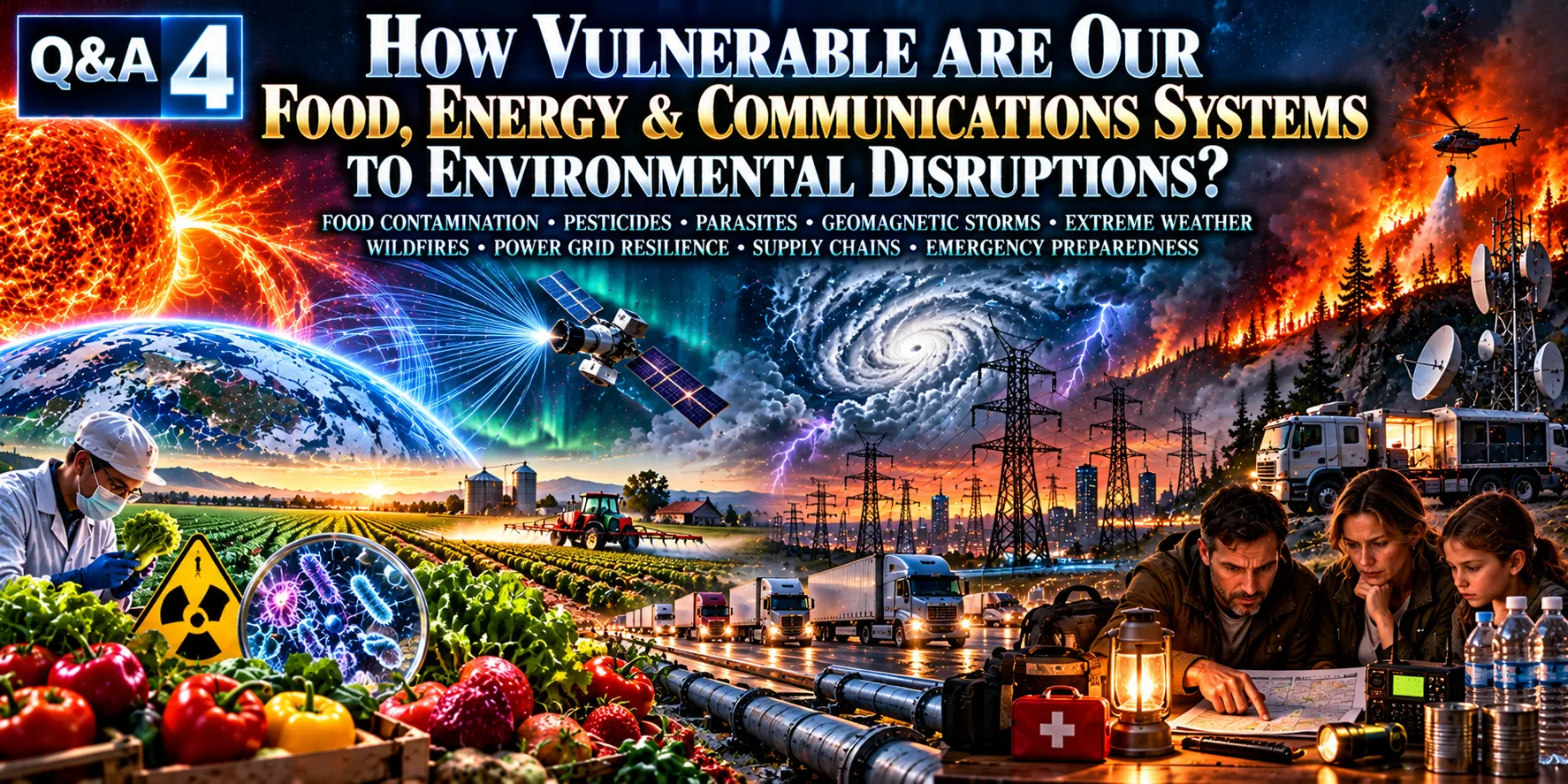
Q: 4 | HOW VULNERABLE ARE OUR FOOD, ENERGY & COMMUNICATIONS SYSTEMS TO ENVIRONMENTAL DISRUPTIONS?
Subscriber Question: “This week’s report covers radioactive contamination in imported food, pesticide residues, a major parasite outbreak, geomagnetic storms, extreme weather, wildfire conditions, and growing pressure on America’s electrical infrastructure. Are these isolated problems, or are they revealing deeper weaknesses in the systems we depend on? What happens when food distribution, electricity, communications, and emergency services become increasingly interconnected?”
Answer — Paragraph 1 | Understanding the Vulnerabilities of Interconnected Systems
Modern civilization depends on complex networks of agricultural production, food processing, international shipping, electrical generation, communications infrastructure, transportation, and public-health monitoring. These systems provide extraordinary benefits through efficiency, specialization, and the ability to move essential goods and services across enormous distances. However, their interconnectedness can also create vulnerabilities when a disruption affects an important supplier, transportation corridor, processing facility, or infrastructure network. This week’s food safety investigation examined several distinct concerns, including Cesium-137 contamination detected in imported products, federal pesticide residue monitoring, changes in food ingredient regulations, and the reported scale of Cyclospora infections associated with contaminated produce. Each represents a different category of risk, but all demonstrate the importance of effective prevention, testing, inspection, and traceability. The fact that contaminated shipments can be intercepted before entering commerce also illustrates that protective systems can work. The primary signal is not that every food or infrastructure system is failing, but that the consequences of weaknesses in oversight, contamination prevention, or operational reliability can extend far beyond the location where a problem originates.
Answer — Paragraph 2 | The Convergence of Solar Activity, Extreme Weather & Infrastructure Dependence
The environmental dimension becomes particularly important when examining the relationship between solar activity, extreme weather, and technological infrastructure. NOAA’s reported October 10 G3 geomagnetic storm illustrates how disturbances originating from the Sun can affect Earth’s electromagnetic environment and create risks for satellite operations, GPS navigation, radio communications, and certain electrical systems. Meanwhile, severe terrestrial weather, wildfires, and damaging winds can disrupt power lines, transportation routes, communications facilities, and emergency response operations. These hazards have different physical causes, and there is no established basis for attributing ordinary wildfires or storms to a particular geomagnetic event. Nevertheless, they can affect many of the same essential services. The convergence becomes more significant as artificial intelligence, financial transactions, hospitals, water utilities, logistics networks, and communications systems become increasingly dependent on continuous electricity and digital connectivity. A major electrical outage can interfere with fuel distribution, refrigerated food storage, payment processing, medical services, and communications, even when those systems were not directly affected by the original event. The larger pattern is that increasing technological dependence makes infrastructure resilience, operational redundancy, and coordinated emergency preparedness more important than ever.
Answer — Paragraph 3 | What Preparedness & Resilience Should Look Like
The practical response is to strengthen resilience at the household, community, institutional, and national levels without assuming that a widespread infrastructure failure is inevitable. Subscribers should monitor NOAA space-weather alerts, regional weather and wildfire warnings, utility reliability reports, FDA food safety notices, product recalls, and local emergency management guidance. Households can improve preparedness by maintaining reasonable emergency supplies, protecting important documents, establishing backup communication plans, understanding local evacuation procedures, and preparing for temporary interruptions in electricity, water, or transportation. Food safety awareness should include attention to recalls, proper food handling, and reliable public-health information rather than assuming that all imported or conventionally produced food is unsafe. At the institutional level, priorities include stronger agricultural water safeguards, improved contamination testing, modernized electrical grids, backup generation, emergency communications, and more effective supply-chain traceability. Within GAR’s Three-Phase Transition Framework™, these developments illustrate the transition from recognizing system vulnerabilities toward practical adaptation and regeneration. The defining convergence threshold is reached when a disruption in one essential system produces sustained consequences across several others, exposing weaknesses that require broader infrastructure reform.
GAR Convergence Chain: ENVIRONMENTAL HAZARDS + FOOD CONTAMINATION RISKS → SUPPLY-CHAIN & INFRASTRUCTURE EXPOSURE → OPERATIONAL DISRUPTION → PUBLIC-HEALTH & ECONOMIC CONSEQUENCES → EMERGENCY RESPONSE → PREVENTION & PREPAREDNESS → COMMUNITY RESILIENCE.
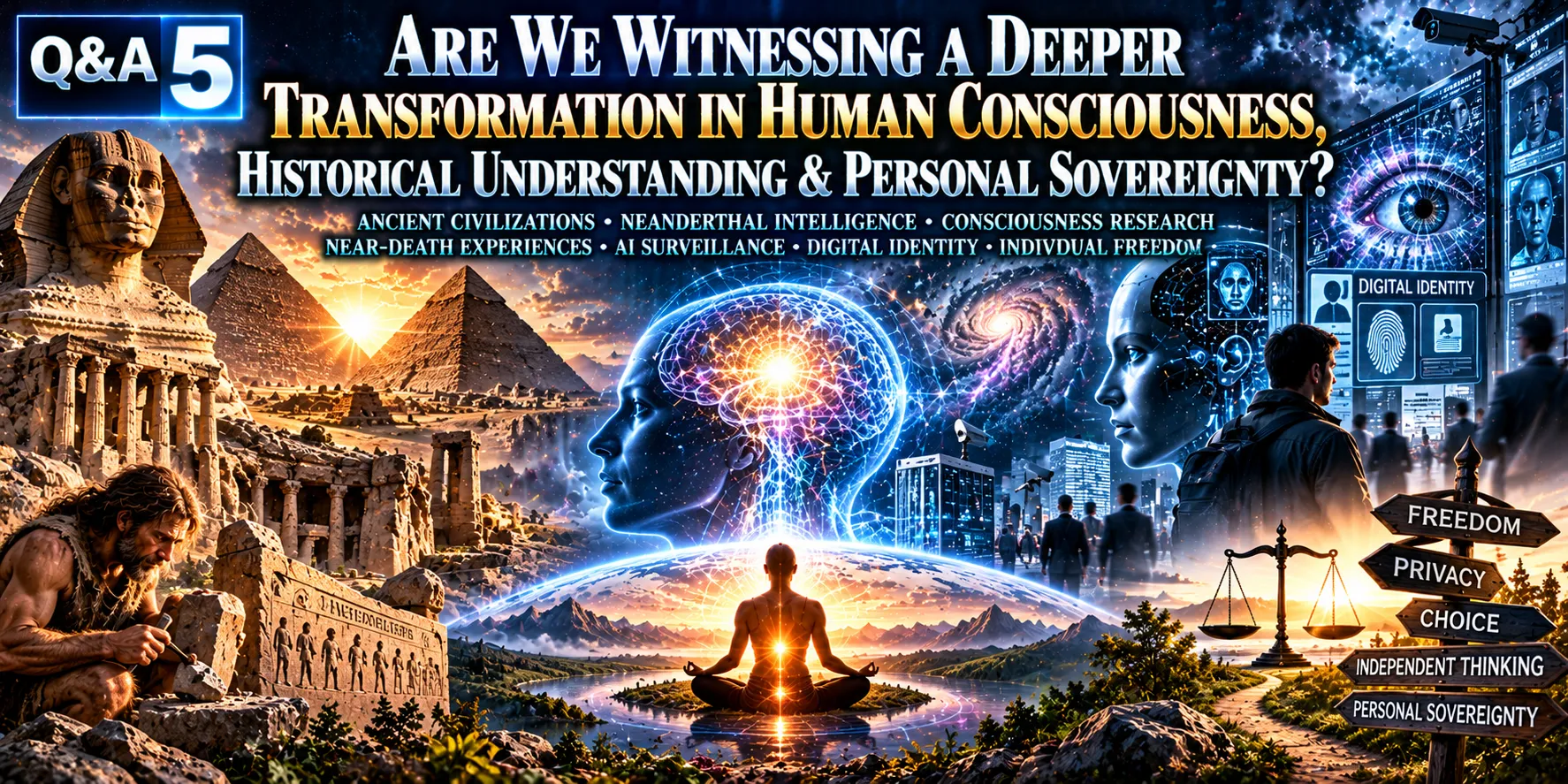
Q: 5 | ARE WE WITNESSING A DEEPER TRANSFORMATION IN HUMAN CONSCIOUSNESS, HISTORICAL UNDERSTANDING & PERSONAL SOVEREIGNTY?
Subscriber Question: “The report explores new discoveries involving ancient civilizations and Neanderthal intelligence, expanding research into consciousness and near-death experiences, and the growing use of AI surveillance and digital identity systems. Are we beginning to reconsider what we know about human history, awareness, and our potential? And as technology becomes more powerful, how do we preserve individual freedom, independent thinking, and conscious control over our lives?”
Answer — Paragraph 1 | Reconsidering Human History & the Nature of Consciousness
Archaeological research and consciousness studies approach different questions, yet both demonstrate how much remains to be understood about human experience. New discoveries involving ancient Egyptian settlements, Bronze Age communities in the Arabian Peninsula, and possible Neanderthal wooden technologies are adding detail to our understanding of early human intelligence, cultural organization, and technological development. These findings remind us that archaeological interpretations depend on surviving evidence and that much of the material culture of prehistoric societies may have disappeared through natural decay, environmental change, or the passage of time. At the same time, neuroscience continues investigating the relationship between brain activity and subjective awareness, while studies involving meditation, altered states, and near-death experiences raise questions about perception, identity, memory, and the range of conscious experience. These discoveries do not establish the existence of a forgotten technologically advanced global civilization or prove that consciousness exists independently of the brain. They do, however, demonstrate the importance of remaining open to new evidence and reconsidering interpretations when research justifies doing so. The central signal is the continuing expansion of human knowledge, accompanied by unresolved questions about our origins, cognitive capabilities, and the nature of conscious awareness.
Answer — Paragraph 2 | The Convergence of Human Awareness, Artificial Intelligence & Digital Control
The broader convergence becomes visible when questions about human intelligence and consciousness intersect with the rapid expansion of artificial intelligence, biometric identification, digital financial systems, and large-scale data collection. AI technologies are increasingly capable of analyzing behavioral patterns, processing personal information, automating decisions, and influencing how individuals interact with institutions. These capabilities can improve accessibility, security, healthcare, and public services, but they also create risks involving privacy, surveillance, algorithmic bias, data ownership, and unequal access to essential services. Digital identity systems can simplify verification and reduce fraud, yet their design and governance determine whether they protect individual autonomy or increase dependence on centralized institutions. This raises a fundamental distinction between technological intelligence and conscious human judgment. The ability of a computer system to process enormous quantities of information does not establish that it possesses subjective awareness, ethical understanding, or the human capacity for personal responsibility. As technology becomes more deeply integrated into everyday life, the importance of independent reasoning, informed consent, privacy protections, and accountability increases. The defining convergence is between humanity’s expanding technological capabilities and the need to preserve the personal freedom, ethical judgment, and conscious awareness required to use those capabilities responsibly.
Answer — Paragraph 3 | Conscious Participation in the Great Transition
The practical significance of these investigations lies in how individuals develop the knowledge, awareness, and discernment needed to navigate a changing world. Conscious living is not simply a matter of adopting particular spiritual beliefs or alternative explanations; it involves cultivating self-awareness, examining assumptions, evaluating evidence, respecting differing perspectives, and making deliberate choices about health, technology, relationships, and personal responsibility. Meditation, reflective practices, continued learning, and thoughtful engagement with scientific and historical research can provide opportunities for personal development. Equally important are practical safeguards involving digital privacy, informed consent, financial independence, and an understanding of how institutions use personal information. Within GAR’s Three-Phase Transition Framework™, the relationship between disclosure, adaptation, and regeneration can be understood as a process of learning, reassessing inherited assumptions, and developing more constructive ways of participating in society. The indicators worth monitoring include significant archaeological discoveries, reproducible consciousness research, advances in AI governance, digital identity legislation, privacy protections, and the development of technologies that strengthen rather than diminish individual agency. The defining question is whether humanity can combine scientific advancement, historical understanding, technological innovation, and expanding self-awareness to create a future that is not only more capable, but also more conscious, ethical, and respectful of individual freedom.
GAR Convergence Chain: ARCHAEOLOGICAL DISCOVERY + CONSCIOUSNESS RESEARCH → EXPANDING HUMAN UNDERSTANDING → AI & DIGITAL SYSTEMS → QUESTIONS OF PRIVACY, IDENTITY & AUTONOMY → CRITICAL THINKING & DISCERNMENT → PERSONAL SOVEREIGNTY → CONSCIOUS PARTICIPATION → HUMAN TRANSFORMATION.
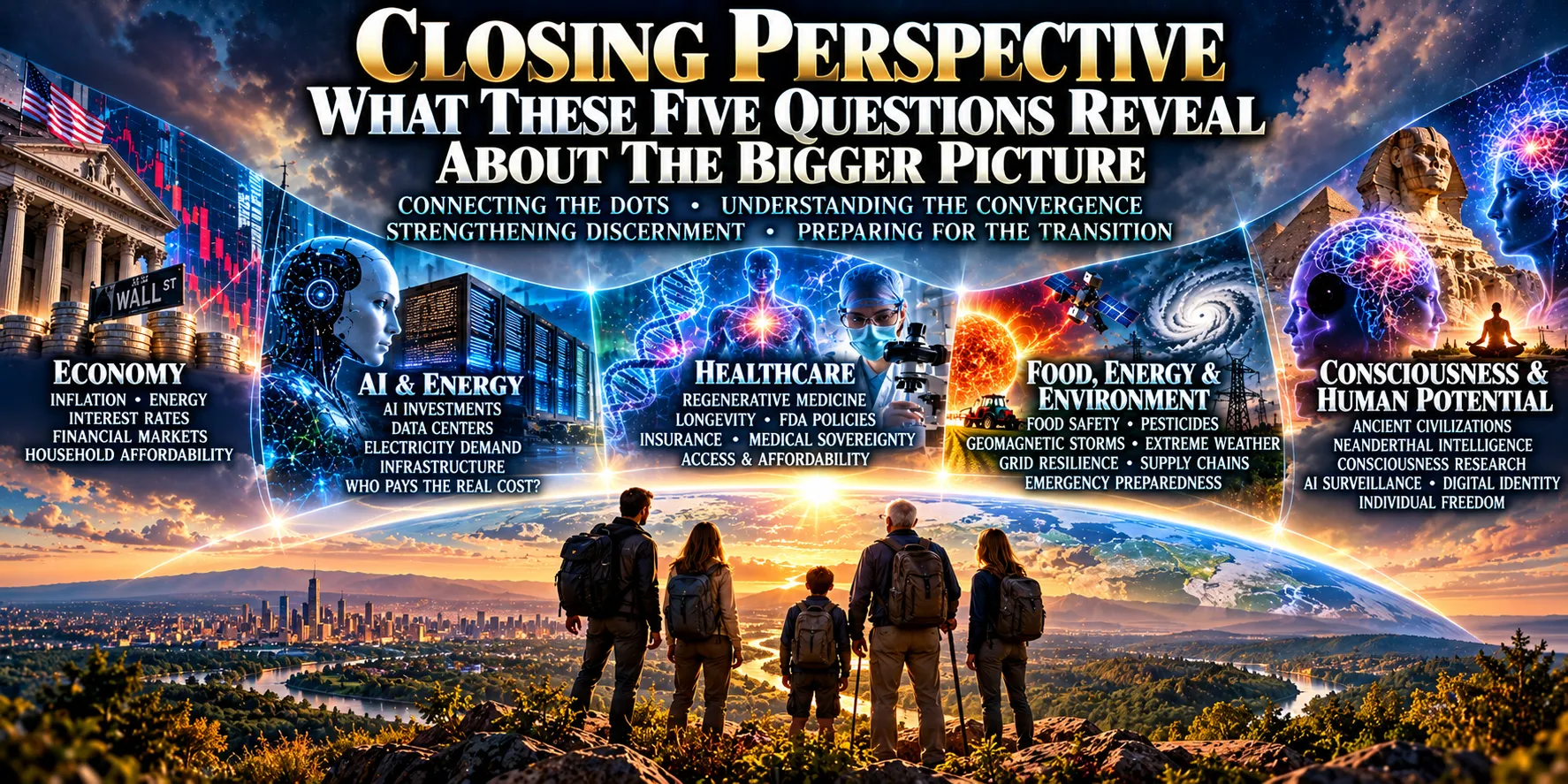
CLOSING PERSPECTIVE | WHAT THESE FIVE QUESTIONS REVEAL ABOUT THE BIGGER PICTURE
The five Subscriber Q&A discussions bring the twelve investigations together around a central observation: the systems shaping modern life are becoming increasingly sophisticated, interconnected, and consequential for individual decision-making. Economic instability can influence household affordability; technological expansion can create new financial and infrastructure requirements; medical innovation can advance while healthcare access remains under pressure; environmental disturbances can expose vulnerabilities in essential services; and scientific discoveries can challenge established interpretations of human history and awareness.
Across these discussions, several recurring themes emerge: affordability, institutional accountability, technological dependence, medical and digital sovereignty, infrastructure resilience, scientific discovery, and conscious human development. These are not evidence of a single predetermined outcome, but they provide a framework for identifying where different developments may intersect and where meaningful changes deserve attention.
The most important lesson from this week’s Truth Seekers Weekly Briefing is that understanding the future requires more than following individual headlines. It requires recognizing how developments move through interconnected systems, distinguishing observable evidence from emerging possibilities, and making informed choices based on the conditions that matter most.
GAR’s concluding perspective: FOLLOW THE SIGNALS → CONNECT THE THREADS → RECOGNIZE THE PATTERNS → UNDERSTAND THE CONVERGENCE → STRENGTHEN DISCERNMENT → BUILD RESILIENCE → PREPARE FOR THE TRANSITION.

The Big Picture | Four Defining Questions Revealing the Global Convergence
Connecting the Dots • Identifying the Patterns • Understanding the Forces Reshaping Our World
THE FIRST BIG PICTURE | GLOBAL PRESSURES ARE MOVING THROUGH AN INCREASINGLY INTERCONNECTED ECONOMIC SYSTEM.
This week’s twelve major news and alternative research investigations reveal a central theme: the world’s economic, geopolitical, technological, environmental, and institutional systems are becoming more interconnected, creating conditions in which pressure originating in one sector can influence developments across several others. The five mainstream news investigations highlighted the relationship between global energy markets, Middle East instability, the Strait of Hormuz, inflation, interest rates, financial markets, the evolving international monetary system, and the enormous capital requirements of artificial intelligence. The connecting threads reveal how disruptions to energy production or transportation can influence fuel prices, manufacturing expenses, food production, consumer inflation, and monetary policy. Higher borrowing costs can then affect corporate refinancing, government debt, commercial real estate, infrastructure development, and household finances. Meanwhile, changing international trade relationships, alternative payment arrangements, and questions surrounding the petrodollar introduce additional uncertainty about the longer-term structure of global finance. These developments do not establish that a worldwide financial breakdown is inevitable, but they demonstrate why isolated economic indicators may no longer provide a complete picture of emerging risks. The most important convergence occurs when energy costs, financial conditions, credit availability, and consumer affordability begin reinforcing one another, potentially moving pressure beyond financial markets and into the real economy. The defining signal to monitor is whether these forces remain manageable through existing economic and institutional mechanisms or begin producing sustained changes in business investment, employment, household spending, and access to essential goods and services.
THE SECOND BIG PICTURE | TECHNOLOGICAL EXPANSION IS COLLIDING WITH THE PHYSICAL AND FINANCIAL LIMITS OF INFRASTRUCTURE.
Artificial intelligence represents one of the most significant technological developments of our time, but this week’s investigations reveal that the digital future depends on an enormous physical foundation of electricity, data centers, semiconductors, water, cooling systems, transmission networks, and financial capital. The expansion of AI infrastructure is increasing demand for new power generation and grid investment, raising important questions about the sustainability of corporate borrowing, market valuations, energy availability, and the allocation of infrastructure costs. The reported opening of Entergy Texas’s $1.6 billion natural-gas power station, together with projected additional customer charges, illustrates how technological development can create financial consequences for ordinary electricity consumers. At the same time, global energy volatility and forecasts of higher winter heating expenses introduce additional pressure on household budgets. The Sun–Earth investigation adds another dimension by highlighting how geomagnetic storms, extreme weather, wildfires, and other environmental hazards can expose vulnerabilities in electrical grids, communications networks, satellite systems, and essential services. The Surveillance Economy investigation raises parallel questions about the growing integration of artificial intelligence, biometric identification, financial technology, and personal data into interconnected digital systems. The larger convergence is that technological progress is simultaneously increasing society’s dependence on energy, infrastructure, capital, and digital institutions—making affordability, reliability, privacy, and accountability central questions for the next phase of development. The defining threshold will emerge if infrastructure expansion, financing pressures, environmental disruptions, or inadequate safeguards begin creating measurable consequences for economic stability, essential services, and individual freedom.
THE THIRD BIG PICTURE | THE COST OF ESSENTIAL LIVING IS CONVERGING WITH QUESTIONS OF HEALTH, SAFETY & PERSONAL SOVEREIGNTY.
Beneath the global financial and technological developments, this week’s Alternative News investigations reveal another important pattern: the increasing significance of household affordability, access to essential services, and the ability of individuals to make informed decisions about their own well-being. Declining individual health insurance enrollment, changes affecting Medicare plans, rising electricity expenses, and potential winter heating increases demonstrate how institutional decisions and market conditions can influence everyday financial security. Food safety investigations involving Cesium-137 contamination in imported products, pesticide monitoring, food ingredient regulations, and major Cyclospora outbreaks highlight the importance of environmental protection, regulatory oversight, agricultural practices, and transparent supply-chain monitoring. Meanwhile, the growing interest in peptides, regenerative medicine, longevity science, and evolving FDA policies introduces questions about medical innovation, patient autonomy, clinical evidence, and the accessibility of emerging therapies. These developments reveal a recurring tension between scientific advancement and the practical ability of individuals to benefit from that advancement. A society may develop extraordinary medical technologies, sophisticated food distribution networks, and increasingly powerful digital systems while still confronting difficulties involving affordability, access, safety, and trust. The convergence becomes particularly important when higher household expenses, healthcare uncertainty, environmental risks, and increasing institutional dependence begin affecting personal resilience and the capacity to make independent choices. The defining question is whether the next generation of economic, medical, and technological systems will strengthen individual well-being and opportunity or create additional barriers that require greater adaptation, accountability, and reform.
THE FOURTH BIG PICTURE | HUMANITY’S NEXT TRANSITION WILL BE SHAPED BY HOW WE RESPOND TO CHANGE—NOT SIMPLY BY THE EVENTS THEMSELVES.
Beyond economics, infrastructure, healthcare, and environmental pressures, this week’s investigations into ancient civilizations, human origins, neuroscience, near-death experiences, and consciousness research introduce a deeper dimension to the larger picture: our understanding of human history, intelligence, awareness, and potential continues to evolve as new discoveries and scientific methods expand the boundaries of investigation. Archaeological findings remind us that the historical record remains incomplete and that established interpretations must be reconsidered when credible new evidence emerges. Consciousness research continues exploring the relationship between the brain and subjective experience, while contemplative practices offer opportunities to investigate attention, self-awareness, and personal development. These subjects reinforce the importance of intellectual curiosity, critical thinking, and the ability to distinguish meaningful discoveries from unsupported speculation. When viewed through GAR’s Three-Phase Transition Framework™, the twelve investigations reflect different aspects of Phase I: Crossing the Threshold—Disclosure, Disruption & Deconstruction; Phase II: The Great Transition—Adaptation, Realignment & Transformation; and Phase III: Global Emergence—Reinvention, Innovation & Regeneration. These phases provide an interpretive framework rather than a predetermined forecast, helping us examine where established systems face pressure, where adaptation is becoming necessary, and where innovation may create new possibilities. The ultimate convergence is between external transformation and internal human development: as economic, technological, institutional, and environmental conditions change, our capacity for discernment, resilience, informed choice, cooperation, and conscious participation becomes increasingly important. The defining lesson from this week’s report is that understanding the bigger picture requires more than predicting disruption—it requires recognizing the relationships between events, preparing responsibly for uncertainty, and identifying opportunities to participate constructively in the future we are helping to create.
GAR | THE BIG PICTURE CONVERGENCE CHAIN
GEOPOLITICAL INSTABILITY → ENERGY & GLOBAL TRADE → INFLATION & INTEREST RATES → CREDIT & FINANCIAL MARKETS → AI & INFRASTRUCTURE EXPANSION → ELECTRICITY & RESOURCE DEMAND → HOUSEHOLD AFFORDABILITY → HEALTHCARE & FOOD SECURITY → INSTITUTIONAL DEPENDENCE & DIGITAL SOVEREIGNTY → ENVIRONMENTAL & SYSTEM RESILIENCE → HUMAN AWARENESS & ADAPTATION → TRANSFORMATION & REGENERATION.
THE DEFINING SIGNAL: Watch where multiple pressures begin producing measurable consequences across the real economy, essential infrastructure, and household financial security.
THE DEFINING PATTERN: Growing interdependence between global systems is increasing the importance of resilience, transparency, responsible innovation, and individual sovereignty.
THE DEFINING CONVERGENCE: Economic pressures, technological expansion, environmental vulnerabilities, institutional changes, and human development are intersecting in ways that may shape the next stage of societal transformation.
THE DEFINING QUESTION: As the world around us continues to change, are we developing the knowledge, awareness, resilience, and personal responsibility necessary to navigate the transition—and help shape what comes next?
GAR’S CLOSING MESSAGE: FOLLOW THE SIGNALS. CONNECT THE THREADS. RECOGNIZE THE PATTERNS. UNDERSTAND THE CONVERGENCE. PREPARE FOR THE TRANSITION.

Truth Seekers Weekly Wrap-Up
The Journey from the Matrix to Higher Frequency Living
As we close out this week’s Truth Seekers Weekly Briefing, let’s take a moment to reflect on the essential keys to rising above the noise, breaking free from the matrix, and aligning with a higher vibrational state of being.
🔑 Key Pillars for Awakening:
- Let Go of Fear: Fear is the master key of control. Releasing it is the first act of sovereignty—and the doorway to true freedom.
- Practice Forgiveness & Emotional Clearing: Unshackle yourself from the past. Forgiveness dissolves energetic residue, restores clarity, and reclaims your power.
- Meditation & Transformational Breathing: Harness the breath as a tool for inner alignment, expanded awareness, and conscious presence in each moment.
- Live with the Heart of a Volunteer: Lead with authenticity, service, and unconditional love. Embody the values of integrity and compassion in all you do.
As we often say: “You’re either outside acting in the movie… or going within to watch it consciously.”
So, which role are you playing right now?
Are you being pulled by fear—or grounded in peace?
Caught in the chaos—or anchored in presence?
Your Personal Code of Mindset:
✅ Kindness & Respect
✅ Accountability & Responsibility
Ask yourself honestly:
- Are you observing your thoughts—or are they running the show?
- Is your mental atmosphere vibrationally aligned, at 50%+ or higher?
- Can you feel the resonance of your higher self?
- Are you responding with awareness—or reacting on autopilot?
Remember: The path out of the matrix and into higher consciousness isn’t a one-time decision—it’s a daily choice. A moment-by-moment commitment to awareness, sovereignty, and alignment.
Until next time, Truth Seekers: Stay awake. Stay empowered. And keep connecting the dots.
In Love & Light ❤️
The Great Awakening Team

The 3 C’s of Life: “Choices, Chances, and Changes”,
You must make a choice to take a chance or your life will never change. – Zig Ziglar
Share This Report
Join the Discussion
Related Reports
Have questions?
At Great Awakening Report, we are dedicated to supporting your journey toward truth and enlightenment through our specialized Coaching and Consulting services.
Coaching Services: Our coaching programs are designed to guide you through personal awakening and transformation. We offer personalized sessions that focus on expanding consciousness, uncovering hidden truths, and fostering spiritual growth. Our experienced coaches provide the tools and insights necessary to navigate your path with clarity and confidence.
Consulting Services: For organizations and individuals seeking deeper understanding and strategic guidance, our consulting services offer expert analysis and solutions. We delve into areas such as global transitions, alternative news insights, and consciousness studies to provide comprehensive strategies tailored to your unique objectives.
Embark on a transformative journey with our Coaching and Consulting services, and unlock your highest potential. To learn more and schedule a session, visit our Coaching and Consulting pages.
Thank you
Thank you to our subscribers and readers for your continued support and dedication to truth and awakening. Your encouragement, engagement, and belief in our mission make everything we do possible. Together, we are expanding awareness and helping illuminate the path forward.
If you would like to further support the Great Awakening team and our ongoing efforts to share insight, knowledge, and truth, you can DONATE HERE.
With deep gratitude,
– Great Awakening Team
About the Author: Great Awakening Team

We are a community. We are cultural creatives and like minded people seeking the truth and focusing on disclosure, awakening and consciousness. Our focus is real news as researchers, reporters and truth seekers. We are here to teach, to spread the word, to serve and to help. We are a collective, a movement, free from all programing, not closed minded and not discriminatory. We are not political. We are not religious but we are spiritual. We study, research, and report on a wide range of subjects and topics, from the current geopolitical climate to health and wellness, from earth’s history to spiritual practices. We are forward thinkers and visionaries, we are guides for the transition as we usher in The Great Awakening.
THIS WEBSITE DOES NOT PROVIDE MEDICAL ADVICE: The information, including but not limited to text, graphics, images, and other material contained on this website, are for informational purposes only. No material on this site is intended to be a substitute for professional medical advice, diagnosis, or treatment. Always seek the advice of your physician or other qualified health care provider with any questions you may have regarding a medical condition or treatment and before undertaking a new health care regimen, and never disregard professional medical advice or delay in seeking it because of something you have read on this website.
DISCLAIMER: All statements, claims, views and opinions that appear anywhere on this site, whether stated as theories or absolute facts, are always presented by The Great Awakening Report (GAR) as unverified—and should be personally fact checked and discerned by you, the reader.Any opinions or statements herein presented are not necessarily promoted, endorsed, or agreed to by GAR, those who work with GAR, or those who read or subscribe to GAR.Any belief or conclusion gleaned from content on this site is solely the responsibility of you the reader to substantiate.Any actions taken by those who read material on this site are solely the responsibility of the acting party.You are encouraged to think for yourself and do your own research.Nothing on this site is meant to be believed without question or personal appraisal.
COPYRIGHT DISCLAIMER: Citation of articles and authors in this report does not imply ownership. Works and images presented here fall under Fair Use Section 107 and are used for commentary on globally significant newsworthy events. Under Section 107 of the Copyright Act 1976, allowance is made for fair use for purposes such as criticism, comment, news reporting, teaching, scholarship, and research.
COMMUNITY GUIDELINES DISCLAIMER: The points of view and purpose of this video is not to bully or harass anybody, but rather share that opinion and thoughts with other like-minded individuals curious about the subject.