






















Help Us Bypass Censorship. Share This.
Sign up to receive Our Weekly Briefing Newsletter
Begin your journey with weekly insights designed to expand awareness and ground you in truth. Our free tier gives you a powerful introduction without any commitment.
EXPLORING THE CONNECTION BETWEEN SOUND, EMOTIONAL HARMONY, CONSCIOUSNESS & INNER TRANSFORMATION
“There are moments when sound reaches beyond what words can express, inviting us into a deeper experience of stillness, connection, and the rhythms of our own being.” — Great Awakening Report
THE FREQUENCY OF CONNECTION
There is something remarkable about the way sound can change how we feel. A familiar melody can transport us back decades, a single note can stir an unexpected emotion, and a gentle rhythm can bring a sense of calm to an otherwise restless mind. Long before we understood sound through the language of physics, humanity recognized its ability to influence our inner experience. Across cultures and spiritual traditions, chanting, singing bowls, sacred music, and rhythmic sound have been used to support meditation, ceremony, reflection, and a deeper connection with ourselves.
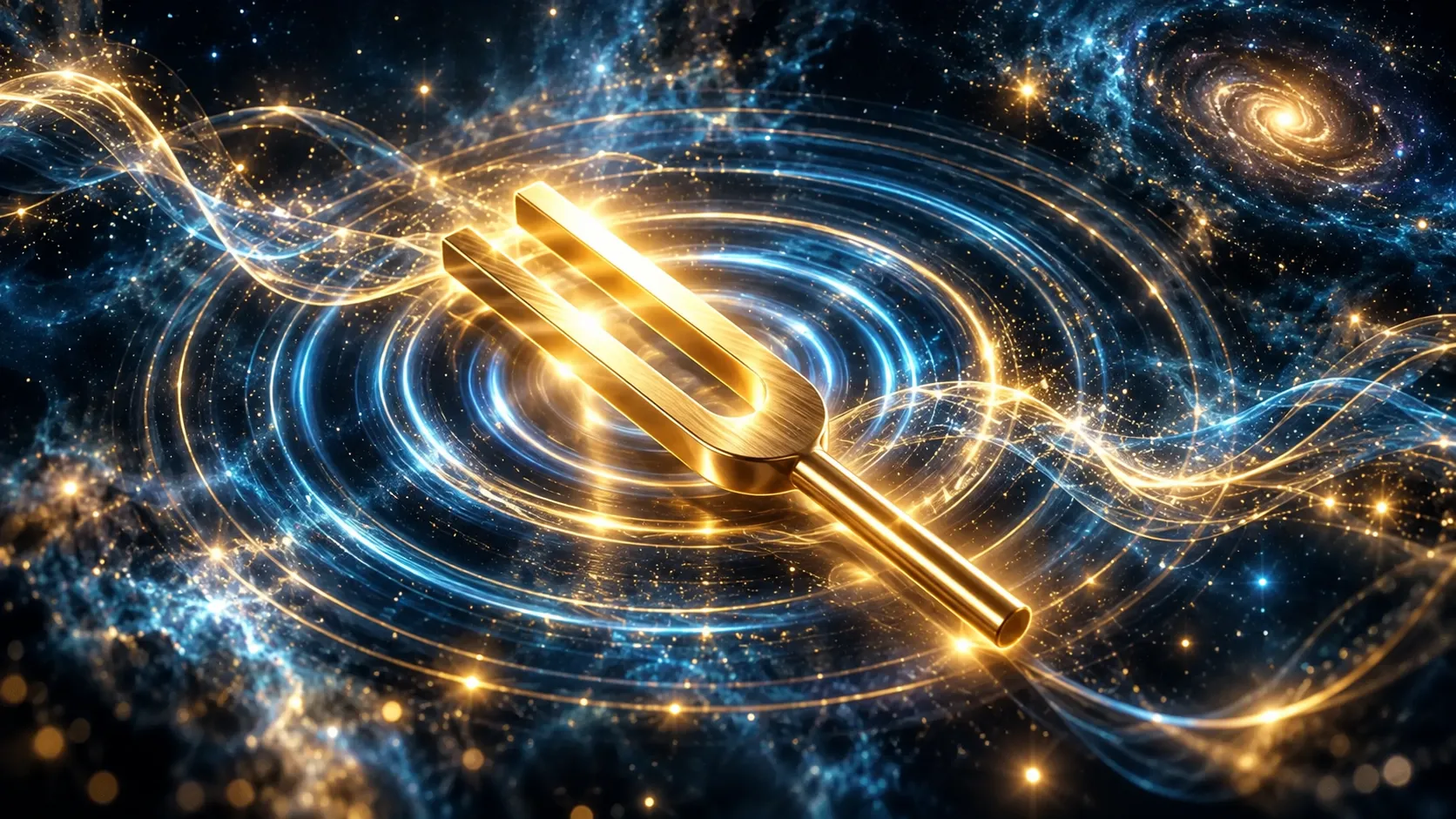
Among the many frequencies associated with contemporary sound healing, 528 Hz has become one of the most widely recognized. Often called the Love Frequency or Miracle Tone, it is associated in modern spiritual communities with harmony, emotional balance, compassion, and transformation. Many listeners describe its music as soothing, uplifting, or unusually comforting, while others incorporate it into meditation, breathwork, and personal healing practices.
What makes 528 Hz particularly intriguing is not simply the number itself, but the relationship between sound and our experience of consciousness. Why do certain tones seem to resonate with us more deeply than others? Can intentional listening influence our emotional state? And what might happen when we begin approaching sound not merely as background music, but as an opportunity to become more aware of what is happening within us?
The answers may be as individual as the people exploring them. Yet the growing interest in 528 Hz reflects a much broader curiosity about the relationship between vibration, well-being, and the ways we experience the world.
WHAT IS 528 HZ? UNDERSTANDING THE LOVE FREQUENCY
In physical terms, 528 hertz describes a sound frequency that completes 528 cycles per second. It falls within the range of human hearing and can be produced by musical instruments, electronic tones, and specially composed recordings. Within the modern solfeggio system, however, 528 Hz carries a meaning that extends beyond its measurable pitch.
It is commonly associated with love, harmony, transformation, and heart-centered awareness. Some sound-healing practitioners describe it as a frequency that encourages emotional openness or helps create an environment conducive to inner balance. These associations are part of contemporary spiritual interpretations rather than universally established properties of the frequency, but they help explain why 528 Hz has attracted such a devoted following.
For many people, the appeal is experiential. A 528 Hz meditation track may provide a gentle focal point for the mind, making it easier to settle into quiet reflection. Others find that the music encourages slower breathing, softens emotional tension, or creates a comforting atmosphere during periods of uncertainty. Some listeners describe a feeling of warmth, spaciousness, or greater connection with themselves.
These responses are not identical for everyone, nor do they need to be. Sound is deeply personal, shaped by our memories, emotional associations, attention, and individual sensitivities. What feels expansive to one person may feel neutral to another. The value of exploring 528 Hz lies partly in discovering how we respond rather than expecting a particular outcome.
This relationship between frequency and well-being is part of a much larger conversation explored in our GAR article Is Frequency Medicine the Future?, which considers the evolving interest in sound, vibration, and their possible applications.
THE POWER OF RESONANCE — WHY SOUND AFFECTS HOW WE FEEL
Resonance is a fascinating concept because it exists both as a measurable physical phenomenon and as a word we use to describe meaningful human experiences. In physics, resonance occurs when a system responds strongly to stimulation near one of its natural frequencies. In everyday life, we use the same word when something touches us emotionally, feels familiar, or creates a sense of connection that is difficult to explain.
The two meanings should not be confused, but together they offer an interesting way to think about our relationship with sound. Music engages multiple systems involved in hearing, attention, memory, emotion, and bodily regulation. Rhythm can influence the pace of movement and breathing, while melody and harmony can evoke emotional responses that extend well beyond the moment we hear them. A particular piece of music may bring comfort, encourage reflection, or create a sense of emotional release because of the associations and experiences we bring to it.
This helps explain why sound has played such an enduring role in spiritual practice. From the repetitive chanting of mantras to the sustained tones of singing bowls and the collective experience of sacred music, people have long used sound to shift their attention away from the demands of ordinary life. Repetition and sustained listening can provide an anchor for awareness, allowing thoughts to settle and creating space for deeper reflection.
Within sound-healing traditions, resonance is also understood through an energetic perspective. Practitioners may describe certain frequencies as supporting the flow of subtle energy, encouraging balance, or helping individuals become more attuned to their emotional and spiritual states. These interpretations belong to spiritual frameworks that extend beyond what conventional acoustic measurements can establish. Nevertheless, they offer a meaningful language through which many people understand their experiences.
Perhaps the most important distinction is that the experience of resonance does not have to be identical for everyone to be personally meaningful. A frequency may become part of a calming ritual, a moment of meditation, or a practice of reconnecting with oneself. The significance often emerges through the relationship between the sound, the listener, and the intention brought to the experience.
THE SOLFEGGIO FREQUENCIES — AN ANCIENT NAME, A MODERN EXPLORATION
The modern popularity of 528 Hz is closely connected with the solfeggio frequencies, a collection of tones commonly associated with different aspects of spiritual and emotional well-being. The best-known frequencies include 396, 417, 528, 639, 741, and 852 Hz, each assigned particular meanings within contemporary sound-healing practices.
The word solfeggio has genuinely ancient musical roots. It is related to the system of singing syllables developed through the work of the 11th-century monk Guido of Arezzo, who helped establish methods for teaching musical pitch. The syllables originated from the hymn Ut queant laxis, eventually developing into the familiar do, re, mi system used in musical education.
The specific numerical frequencies promoted today, however, belong to a much more recent interpretation. During the 1990s, Joseph Puleo and author Leonard Horowitz helped popularize the modern solfeggio frequency system, drawing connections between numerical patterns, spiritual symbolism, and the possibility of healing through sound. Their work introduced these particular tones to a wider audience and helped inspire the growing interest in frequency-based meditation music.
Although the modern frequency list cannot be directly traced to medieval musical practice, its popularity reflects an enduring human fascination with the relationship between music and spiritual experience. Ancient cultures may not have measured sound in hertz, but they certainly recognized that sound could shape atmosphere, attention, and emotional states.
Today, the solfeggio system offers listeners a structured way to explore different tones and their associated intentions. Some people choose 396 Hz when reflecting on fear or emotional release, 639 Hz when focusing on relationships, or 528 Hz when seeking harmony and compassion. These associations are best understood as part of a contemporary spiritual practice, offering a framework for intention and reflection rather than fixed outcomes guaranteed by particular numbers.
Related GAR reading

WHY 528 HZ IS CALLED THE LOVE FREQUENCY
Of all the modern solfeggio tones, 528 Hz has developed a particularly strong association with love. But the meaning of love in this context extends beyond romantic relationships. Within sound-healing communities, the frequency is often connected with compassion, forgiveness, emotional openness, self-acceptance, and a sense of harmony between the inner and outer worlds.
This interpretation makes 528 Hz especially appealing during meditation and reflective practices. Rather than using sound solely to quiet the mind, listeners may approach the experience with an intention to soften emotional resistance, reconnect with gratitude, or become more receptive to feelings that have been overlooked in the demands of everyday life.
There is something valuable about intentionally creating this kind of space. We often move through our days responding to responsibilities, information, and the expectations of others without taking time to notice our own emotional landscape. A quiet listening session can become an invitation to recognize what we are carrying, what needs attention, and where we might benefit from greater patience or compassion.
Some people describe experiencing emotional release while listening to 528 Hz music. Others report a subtle sense of peace or an increased ability to remain present. These experiences are personal and cannot automatically be attributed to the numerical frequency alone. The music, the listening environment, personal expectations, and the willingness to slow down may all contribute.
Yet that does not diminish the value of the practice. Sometimes the most meaningful aspect of sound is not what it does to us, but what it allows us to notice within ourselves.
The association between 528 Hz and love can therefore be approached as both a spiritual concept and a practical invitation. Whether or not a listener believes the frequency possesses unique energetic qualities, choosing to spend time cultivating compassion, emotional awareness, and inner harmony can be worthwhile in its own right.
WHAT RESEARCH IS BEGINNING TO EXPLORE
The relationship between sound and human well-being has attracted increasing scientific interest, particularly in areas such as stress, mood, anxiety, and emotional regulation. Music has been studied in clinical and therapeutic settings, and research suggests that listening to music can support relaxation and reduce anxiety in certain circumstances.
One interesting example is a 2018 study published in the journal Health, in which researchers in Japan examined responses to short listening sessions involving music associated with 528 Hz and 440 Hz. The study included nine healthy adults and reported changes in stress-related measures, including cortisol and oxytocin, alongside improvements in certain mood assessments following the 528 Hz listening condition.
The findings are intriguing, particularly because they explore whether differences in musical tuning might influence emotional or physiological responses. At the same time, the study was small and examined short-term effects, so it cannot establish that 528 Hz has unique or lasting healing properties. Larger, independently replicated studies would be needed to clarify whether the particular frequency contributes benefits beyond those associated with music and relaxation more generally.
The broader research on music provides a stronger foundation for understanding why listening can feel restorative. A 2013 Cochrane review examining music and anxiety before surgery found evidence that music interventions may reduce anxiety in patients preparing for medical procedures. Although this research does not establish special properties of 528 Hz, it demonstrates that sound and music can have meaningful effects on emotional experience.
Some of the more extraordinary claims surrounding 528 Hz, particularly the suggestion that listening to the frequency directly repairs human DNA, have not been demonstrated in clinical research. These claims should be distinguished from the genuine experiences of relaxation, emotional connection, and well-being that listeners may report.
What makes this field worth following is the opportunity to better understand how sound, attention, emotion, and physiology interact. Research continues to explore these relationships, while personal and spiritual practices offer another way of engaging with the experience of listening.
432 HZ, 440 HZ & 528 HZ — EXPLORING DIFFERENT SOUND EXPERIENCES
People interested in frequency music frequently encounter discussions about 432 Hz, 440 Hz, and 528 Hz. Although these numbers are often mentioned together, they do not all describe the same kind of musical choice.
In modern Western music, 440 Hz is the standard reference pitch for the note A above middle C. This convention allows instruments and musicians to tune consistently across different settings. Music tuned to A = 432 Hz uses a slightly lower reference pitch, creating a subtle difference in the overall sound when compared with the same composition tuned to A = 440 Hz.
528 Hz is different. It refers to a particular frequency rather than a complete tuning system, although music marketed as 528 Hz may be composed or tuned in different ways to emphasize that tone. This distinction is useful because a recording labeled with a particular frequency may contain many notes and harmonics rather than a continuous 528 Hz tone.
Some listeners describe 432 Hz music as softer or warmer, while others prefer the familiarity of conventional tuning. Similarly, 528 Hz recordings may appeal because of their musical arrangements, sustained tones, or the emotional associations people have developed with them.
There is no need to approach these differences as a competition between good and bad frequencies. Musical preferences are highly individual, and the emotional response to a recording depends on far more than its tuning reference.
For readers interested in the broader relationship between electromagnetic frequencies, modern environments, and human well-being, our GAR article EMF and Control | The Invisible Frequency War on Humanity explores a separate set of questions about frequency exposure. Audible sound and electromagnetic radiation are different physical phenomena, so their effects should be considered independently.
EXPERIENCING 528 HZ — BRINGING RESONANCE INTO DAILY LIFE
One of the most appealing qualities of 528 Hz music is how easily it can become part of an existing wellness or spiritual practice. There is no complicated technique required, no special equipment necessary, and no single correct way to experience it. The intention is simply to create a moment in which sound becomes something we consciously engage with rather than something playing unnoticed in the background.
A morning listening session may provide an opportunity to begin the day with greater awareness. Some people enjoy playing gentle frequency music while journaling, stretching, or sitting quietly with a cup of tea. Others prefer listening during meditation, using the sustained tones as a focal point when the mind begins to wander.
Breathwork offers another natural connection. As the music unfolds, attention can gradually shift toward the rhythm of breathing, the sensation of the body, and the emotional atmosphere of the moment. There is no need to force a particular experience. Simply observing whether the body begins to relax, whether thoughts become quieter, or whether certain emotions arise can be a meaningful practice.
Our Heart Rhythm Meditation | Synchronizing Breath, Heart and Higher Awareness offers a complementary approach for those who enjoy combining sound with conscious breathing and inner reflection.
Evening listening can serve a different purpose. After a demanding day, calming music may help create a transition between activity and rest. Lower lighting, comfortable surroundings, and a few minutes away from screens can make the experience more immersive. Listening at a comfortable volume is important, particularly with headphones, and those who experience sound sensitivity should choose recordings and listening conditions that feel appropriate for them.
The most useful approach is also the simplest: listen, observe, and allow your own experience to guide you. Some days the music may feel especially comforting; on others, another sound or silence itself may be more appealing. There is no need to chase a particular sensation or interpret the absence of one as a failure.

SOUND, CONSCIOUSNESS & THE JOURNEY INWARD
Perhaps the deeper appeal of 528 Hz lies in the way it invites us to reconsider our relationship with sound. Most of the time, we experience music as entertainment, atmosphere, or something accompanying another activity. But when we listen intentionally, sound can become a doorway into greater awareness of our emotional and internal experience.
A sustained tone encourages attention. A gentle rhythm offers something to return to when thoughts become scattered. A melody may evoke feelings that are difficult to access through ordinary conversation or intellectual reflection. These experiences remind us that consciousness is not limited to the constant activity of thinking. We also encounter the world through sensation, emotion, memory, and the subtle changes that occur when we become more present.
In spiritual traditions, sound has often been regarded as a bridge between the visible and invisible aspects of existence. Chanting, mantra, sacred song, and meditative tones reflect the longstanding belief that vibration can support inner transformation. Modern frequency music continues that exploration through a different musical and technological language.
Whether 528 Hz possesses unique energetic qualities remains a subject of spiritual interpretation and emerging inquiry. But its popularity points toward something meaningful: people are increasingly seeking practices that help them reconnect with stillness, emotional balance, and a deeper sense of themselves.
This exploration also connects with the wider questions raised in our GAR article on Quantum Healing, where we consider the evolving conversation around consciousness, energy, and well-being while distinguishing established mechanisms from emerging and speculative ideas.
Perhaps we do not need to begin with the expectation that a particular frequency will transform us. We can begin with curiosity, allowing the experience of sound to reveal how we respond when we give ourselves permission to become still.
CLOSING REFLECTIONS | FINDING YOUR OWN RESONANCE
The growing fascination with 528 Hz reflects something larger than interest in a particular musical tone. It speaks to a desire for harmony in a world that often feels increasingly fragmented, overstimulated, and demanding. It reflects our curiosity about the relationship between sound and consciousness, and our willingness to explore practices that may help us feel more connected with ourselves.
The Love Frequency has become a meaningful symbol within contemporary sound-healing communities, associated with compassion, emotional openness, and transformation. Its scientific properties as a sound frequency are measurable, while many of the deeper spiritual meanings attributed to it remain matters of interpretation and personal experience.
Those two perspectives do not have to compete. We can appreciate the measurable nature of sound while remaining curious about the emotional and spiritual significance it holds for different people. We can value research without requiring every meaningful experience to fit neatly into an existing explanation.
And perhaps that is the most inviting aspect of exploring 528 Hz. There is no requirement to believe in extraordinary promises or to arrive at a predetermined conclusion. We can simply listen with curiosity, observe what arises, and discover whether the music offers something meaningful in our own lives.
Sometimes the beginning of greater harmony is as simple as becoming quiet enough to notice what resonates within us.
Related GAR reading


Frequently Asked Questions
What is 528 Hz?
528 Hz is a sound frequency, a little above the C above middle C in standard tuning. In wellness circles it is called the love frequency and is one of the so-called solfeggio frequencies.
Does 528 Hz repair DNA?
There is no scientific evidence that listening to 528 Hz repairs DNA. That claim comes from popular books and online marketing, not from published research.
What does the research say about 528 Hz?
A small 2018 study of nine adults found that piano music tuned to 528 Hz was linked to lower cortisol and less self-reported tension than music at standard tuning. It has not been replicated, so it is an interesting early result rather than proof.
Where do the solfeggio frequencies come from?
The names borrow from Guido of Arezzo’s medieval singing syllables, but the modern list of frequencies was popularized in the 1990s by Joseph Puleo and Leonard Horowitz. There is no historical link between Guido’s syllables and specific frequencies in hertz.
Is it safe to listen to 528 Hz music?
For most people, yes, at a comfortable volume. It should not replace medical care, and anyone with hearing problems, seizures or tinnitus should be cautious with headphones and tones.
What is the difference between 432 Hz and 528 Hz?
432 Hz usually refers to an alternative tuning standard for the note A, while 528 Hz is a single frequency promoted as a solfeggio tone. Standard concert tuning sets A at 440 Hz.
Where to Go From Here
Our free Truth Seekers Weekly Briefing includes a conscious practices section every week, along with recently published GAR reports on health and frequency. If you want to see how these questions fit into the wider awakening, download the free Great Awakening Map PDF.
Premium members get our Health Watch Special Reports, the vibrational frequency series and every Weekly and Monthly Report. If you want to see what is behind the paywall first, compare the Standard and Premium plans, or start the 30-day Premium trial and decide after a month of reading.
Sign up to receive Our Weekly Briefing Newsletter
Begin your journey with weekly insights designed to expand awareness and ground you in truth. Our free tier gives you a powerful introduction without any commitment.
STOP DROWNING IN THE NOISE. START SEEING THE TRUTH. Join thousands of truth seekers. Get the essential intelligence, alternative news, and disclosure updates that the mainstream media won’t touch.
Latest Reports
 Weekly ReportAwakening The Sleeping Giant · October 26th EditionOctober 26, 2026
 Weekly ReportAwakening The Sleeping Giant · October 19th EditionOctober 19, 2026
 Weekly ReportTruth Seekers Weekly Briefings · Master Class Connecting The Dots · October 16th EditionOctober 17, 2026
 Weekly ReportAwakening The Sleeping Giant · October 12th EditionOctober 12, 2026View all weekly reports
Special Reports
 Special ReportThe Great Exodus, California On The ThresholdOctober 20, 2026
 Special ReportThe Sovereign Household: How to Prepare for Economic CollapseOctober 14, 2026
 Special ReportTHE AWAKENING JOURNEY: Hero’s Journey Part II · Week 1October 3, 2026
 Special ReportGlobal Everything Collapse · Economic Chaos · Part IOctober 1, 2026View all special reports
Help Us Bypass Censorship. Share This.
Join the Discussion
Related Posts


Have questions?
At Great Awakening Report, we are dedicated to supporting your journey toward truth and enlightenment through our specialized Coaching and Consulting services.
Coaching Services: Our coaching programs are designed to guide you through personal awakening and transformation. We offer personalized sessions that focus on expanding consciousness, uncovering hidden truths, and fostering spiritual growth. Our experienced coaches provide the tools and insights necessary to navigate your path with clarity and confidence.
Consulting Services: For organizations and individuals seeking deeper understanding and strategic guidance, our consulting services offer expert analysis and solutions. We delve into areas such as global transitions, alternative news insights, and consciousness studies to provide comprehensive strategies tailored to your unique objectives.
Embark on a transformative journey with our Coaching and Consulting services, and unlock your highest potential. To learn more and schedule a session, visit our Coaching and Consulting pages.
Thank you
Thank you to our subscribers and readers for your continued support and dedication to truth and awakening. Your encouragement, engagement, and belief in our mission make everything we do possible. Together, we are expanding awareness and helping illuminate the path forward.
If you would like to further support the Great Awakening team and our ongoing efforts to share insight, knowledge, and truth, you can DONATE HERE.
With deep gratitude,
– Great Awakening Team
About the Author: Great Awakening Team

DISCLAIMER: All statements, claims, views and opinions that appear anywhere on this site, whether stated as theories or absolute facts, are always presented by The Great Awakening Report (GAR) as unverified—and should be personally fact checked and discerned by you, the reader.Any opinions or statements herein presented are not necessarily promoted, endorsed, or agreed to by GAR, those who work with GAR, or those who read or subscribe to GAR.Any belief or conclusion gleaned from content on this site is solely the responsibility of you the reader to substantiate.Any actions taken by those who read material on this site are solely the responsibility of the acting party.You are encouraged to think for yourself and do your own research.Nothing on this site is meant to be believed without question or personal appraisal.
COPYRIGHT DISCLAIMER: Citation of articles and authors in this report does not imply ownership. Works and images presented here fall under Fair Use Section 107 and are used for commentary on globally significant newsworthy events. Under Section 107 of the Copyright Act 1976, allowance is made for fair use for purposes such as criticism, comment, news reporting, teaching, scholarship, and research.
COMMUNITY GUIDELINES DISCLAIMER: The points of view and purpose of this video is not to bully or harass anybody, but rather share that opinion and thoughts with other like-minded individuals curious about the subject.