









Help Us Bypass Censorship. Share This.
Sign up to receive Our Weekly Briefing Newsletter
Begin your journey with weekly insights designed to expand awareness and ground you in truth. Our free tier gives you a powerful introduction without any commitment.
“History rarely changes in a single moment. More often, it begins with a subtle shift that only becomes obvious in hindsight.”
Exploring André Barbault’s Rare Planetary Alignment and the Possibility of a Civilizational Turning Point
Throughout history, humanity has searched for patterns that might help explain periods of profound change. Historians study the rise and fall of civilizations. Economists analyze long-term financial cycles. Scientists observe recurring patterns within nature, climate, and complex systems. Astrologers, particularly those who specialize in mundane astrology, have spent generations examining another kind of pattern—the relationship between long planetary cycles and major turning points in collective human history. The configuration now known as Barbault’s Basket is the most discussed example of that pattern today.
Whether one views astrology as a symbolic language, a historical framework, or simply an intriguixfng field of study, something unusual is happening today. An increasing number of respected astrologers, working independently and often from very different traditions, have all identified the second half of July 2026 as an exceptionally significant period worthy of attention.
This growing interest is not centered on a single eclipse, a full moon, or an isolated planetary event. Instead, it focuses on a remarkably rare configuration of the outer planets first identified decades ago by renowned French astrologer André Barbault. He believed Barbault’s Basket, as the pattern is now called, represented one of the most harmonious celestial patterns of the century—a moment he famously described as the potential “relaunch of civilization.”
Nearly forty years after Barbault first proposed that idea, his work has returned to the forefront of astrological discussion. While no one can know with certainty what the future holds, the remarkable convergence of attention surrounding this period raises an intriguing question:
Why are so many experienced astrologers watching the same window in history?
Who Was André Barbault?
Long before July 2026 became a topic of conversation across podcasts, newsletters, and astrology conferences, André Barbault had already devoted much of his life’s work to studying the long-term cycles of civilization.
Widely regarded as one of the twentieth century’s most respected mundane astrologers, Barbault spent decades examining the movements of the outer planets—not to predict individual lives, but to better understand the rhythms of history itself. His research focused on geopolitical change, economic cycles, collective psychology, and the evolution of civilizations.
Rather than analyzing isolated astrological events, Barbault developed what became known as the Cyclic Index, a method of studying how the relationships between Jupiter, Saturn, Uranus, Neptune, and Pluto appeared to correspond with periods of contraction, crisis, renewal, and reconstruction throughout history.
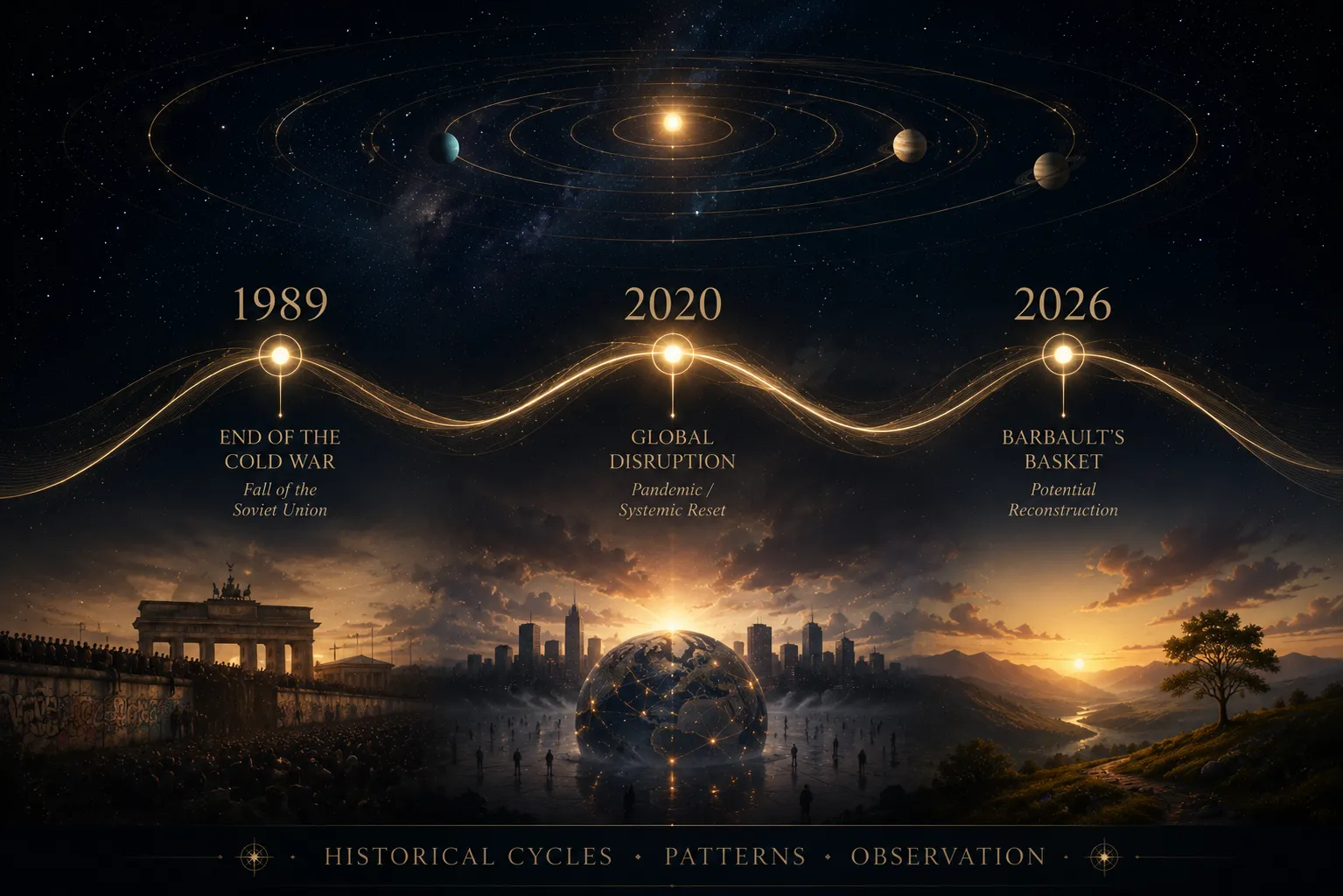
Supporters of his work often point to several long-range forecasts that later drew widespread attention, including his analysis of the geopolitical conditions surrounding the collapse of the Soviet Union and his warnings that the outer-planet alignments culminating around 2020 could coincide with a period of significant global disruption. Whether viewed as remarkable foresight or an interesting coincidence, those observations helped establish Barbault as one of the most influential voices in modern mundane astrology.
Yet among all of his research, one future date stood apart from the rest.
July 2026.
The Cyclic Index: Looking for Patterns Across History
Unlike many astrologers who focused primarily on individual birth charts, André Barbault devoted his career to studying the long rhythms of civilization itself. His Cyclic Index was built upon a simple but ambitious idea: rather than analyzing planets individually, what if the overall geometric relationships between the outer planets reflected periods of contraction, expansion, crisis, and renewal throughout human history?
Over decades of research, Barbault compared these planetary cycles with major historical events, searching not for isolated predictions but for recurring patterns. He believed that periods when the outer planets clustered into more compressed and discordant relationships often coincided with times of heightened global tension, conflict, and systemic stress. Conversely, when those same planets formed more harmonious distributions, history frequently entered periods characterized by rebuilding, innovation, and greater cooperation.
Supporters of his work point to several long-range observations that later attracted considerable attention, including his analysis of the geopolitical conditions surrounding the collapse of the Soviet Union and his assessment that the highly compressed outer-planet alignments culminating around 2020 could correspond with a period of significant global disruption. Whether viewed as remarkable foresight or historical coincidence, these observations established Barbault as one of the most respected researchers in the field of mundane astrology and continue to make his work a subject of study today.
The Rare Geometry of Barbault’s Basket
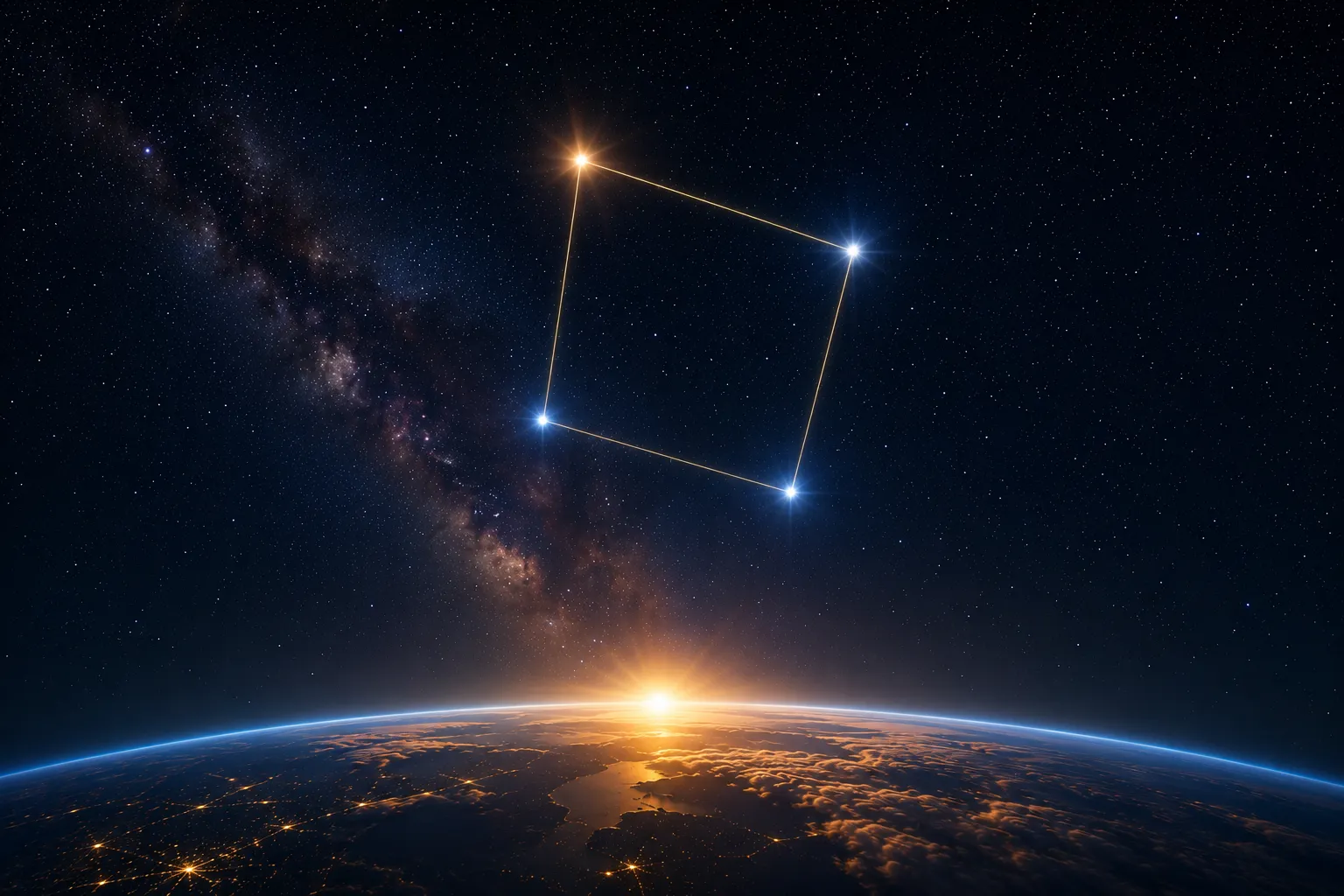
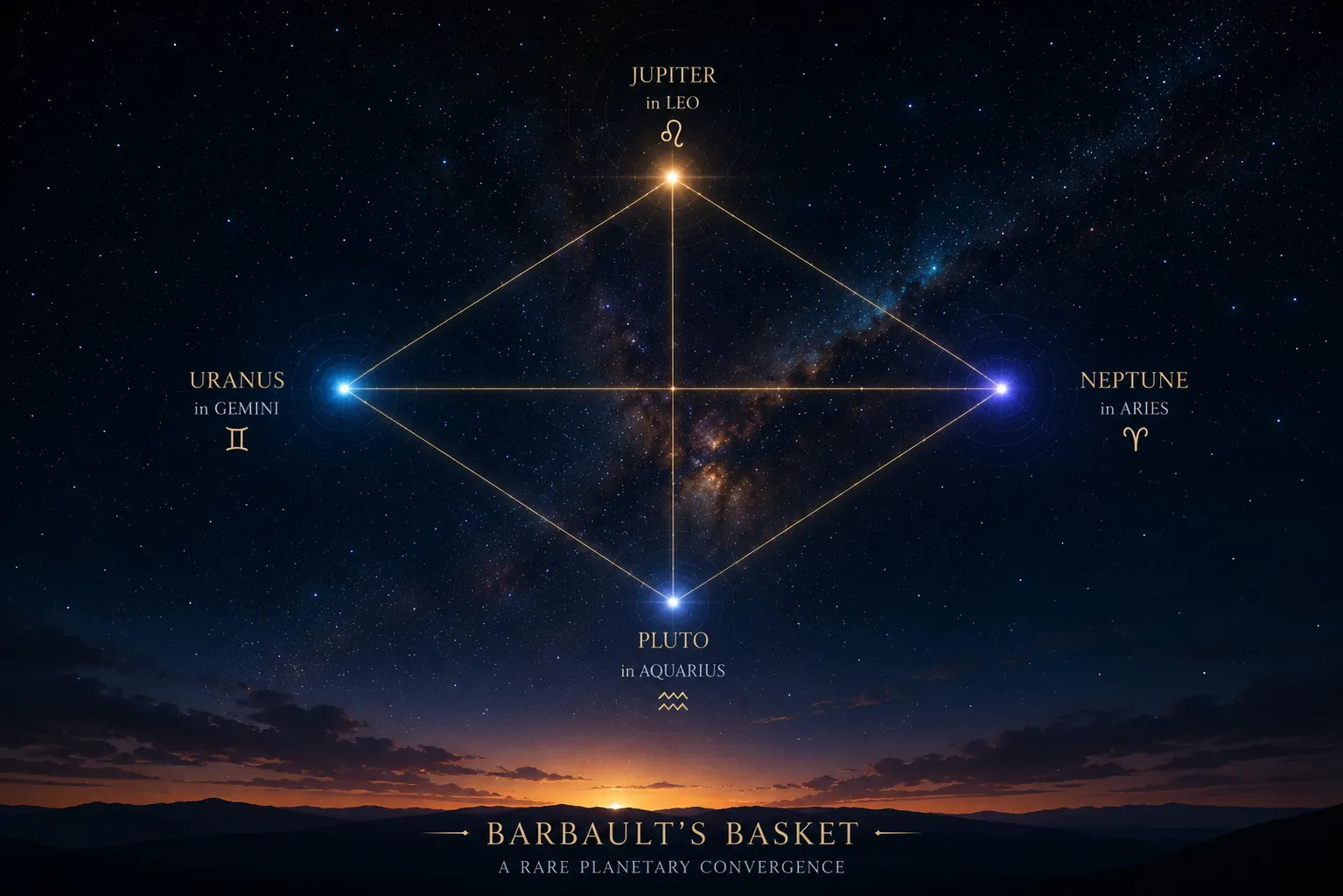
Between approximately July 19 and July 21, 2026, Jupiter, Pluto, Uranus, and Neptune form an exceptionally rare geometric relationship often referred to today as Barbault’s Basket.
At the heart of Barbault’s Basket is a remarkable coincidence: all four planets occupy approximately four degreeswithin their respective zodiac signs while forming a harmonious pattern known as a Half Grand Sextile.
For astrologers, geometry matters.
Rather than focusing on the symbolism of individual planets alone, many astrologers examine the relationships they form with one another. In Barbault’s Basket, Jupiter, Uranus, Neptune, and Pluto create an unusually balanced network of trines, sextiles, and one central opposition—a pattern many consider exceptionally constructive despite the transformational tension represented by Jupiter’s opposition to Pluto.
Barbault believed this alignment represented far more than an isolated astrological event. He viewed it as the symbolic conclusion of one historical cycle and the beginning of another—a threshold between eras rather than a prediction of a single dramatic day.
Perhaps most importantly, Barbault never suggested that civilization would suddenly transform overnight. Instead, he viewed Barbault’s Basket as an inception point—the planting of seeds whose full expression would unfold over years rather than days.
More Than One Voice
What makes this story particularly compelling is not simply Barbault’s work itself, but the growing number of respected astrologers who, working independently and often from very different traditions, have also identified the period of Barbault’s Basket as unusually significant.
Astrologer Rick Levine has repeatedly emphasized that history rarely changes through a single event. Instead, transformative periods begin with new patterns that only become fully recognizable in hindsight. In his view, July 2026 represents the opening of a larger historical process rather than a one-day prediction.
Pam Gregory approaches the same period from a consciousness perspective, describing it as an opportunity for humanity to move toward greater inner sovereignty, compassion, and spiritual maturity. Rather than focusing exclusively on external events, she emphasizes that lasting societal transformation begins within individuals before it becomes visible in the collective experience.
Similarly, Steve Judd speaks of July 2026 as an evolutionary threshold—not a moment of inevitable collapse, but an invitation for humanity to consciously participate in what comes next. His work consistently returns to themes of personal responsibility, creative adaptation, and the importance of choosing evolution over fear.
Although each arrives from a different perspective and emphasizes different aspects of the astrological landscape, their observations reveal a remarkable common thread. None claim to know precisely what the future holds, nor do they present July 2026 as a guaranteed turning point or utopian destination. Instead, they consistently describe this period as a rare window of possibility—a moment when several long-term planetary cycles appear to converge, creating conditions that may support profound change. It is this convergence of independent observations, rather than any single prediction, that makes Barbault’s Basket so compelling nearly four decades after it was first proposed.
A Threshold Rather Than a Prediction
Perhaps the greatest misconception surrounding discussions of July 2026 is the assumption that astrologers are predicting a single extraordinary event capable of changing the world overnight. In reality, nearly every respected astrologer exploring Barbault’s Basket makes exactly the opposite point.
History seldom transforms through isolated moments. The Industrial Revolution unfolded over generations. The Information Age emerged gradually through decades of technological innovation. Even history’s most profound scientific discoveries often required years before their implications fully reshaped civilization. Major transitions rarely announce themselves all at once; instead, they begin quietly before their significance becomes obvious in retrospect.
Many astrologers believe Barbault’s Basket should be understood in much the same way. Rather than marking a final destination, they describe it as a threshold—a symbolic opening into a new chapter whose direction will ultimately depend upon countless human choices still waiting to be made.
That distinction is important because a threshold is not the same as destiny. It represents possibility rather than certainty, suggesting a period when familiar structures begin giving way to new opportunities, new ideas, and new ways of organizing society. Whether those possibilities lead toward greater cooperation, technological innovation, spiritual maturity, or entirely unforeseen developments remains an open question. The alignment itself, according to this perspective, does not determine the outcome. It simply marks the beginning of a period in which new potentials become increasingly available.
History Often Turns Gradually
One of the most valuable lessons from studying long-term historical cycles is recognizing that profound change rarely announces itself all at once. Looking back, we often speak of the Renaissance, the Industrial Revolution, or the Information Age as though they arrived suddenly. In reality, each unfolded gradually over many years as new discoveries, technologies, and ideas quietly reshaped society before eventually transforming the world.
Astrologers who study long planetary cycles suggest that periods of transition may follow a similar pattern. Rather than viewing July 2026 as a dramatic conclusion, they see it as an inception point—a moment when new possibilities begin emerging while older systems continue completing their natural life cycles. If that perspective proves meaningful, the true significance of Barbault’s Basket may only become fully apparent years after it occurs.
This Matters Beyond Astrology
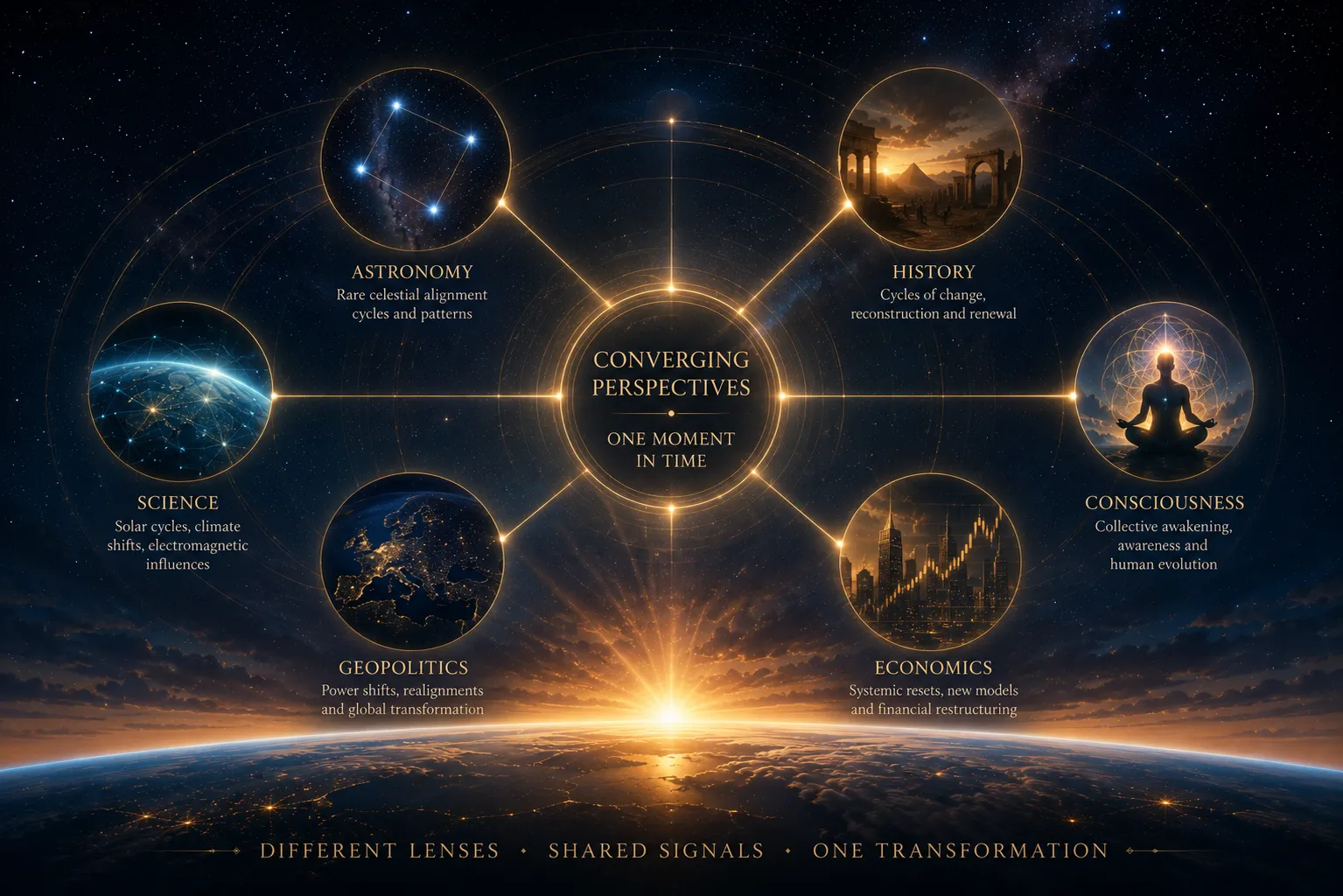
Perhaps the most intriguing aspect of this story has little to do with astrology itself. Instead, it lies in the broader pattern emerging across multiple disciplines, many of which have no connection to astrology whatsoever.
Researchers studying technology, economics, geopolitics, complexity science, and consciousness have increasingly described the mid-2020s as a period of accelerating transformation. Artificial intelligence continues reshaping nearly every industry at an unprecedented pace. Global institutions face mounting pressures to adapt to rapidly changing economic and geopolitical realities. Technological innovation continues to accelerate while public trust in many traditional systems undergoes significant realignment. At the same time, conversations surrounding human consciousness, personal sovereignty, and the future direction of civilization have moved steadily from the margins into the mainstream.
None of these developments depend upon astrology, nor should they be viewed as evidence supporting it. Yet together they create a fascinating backdrop against which Barbault’s Basket and his decades-old observations are being revisited with renewed interest. Whether one views planetary cycles as symbolic, synchronistic, or simply an intriguing historical framework, it is difficult to ignore the fact that so many independent disciplines appear to be describing the same historical moment as one of unusual transition.
Perhaps that is the real story.
Not that astrology predicts the future with certainty, but that multiple ways of observing the world—each using its own language, methods, and assumptions—are all drawing attention to the same period in history. Whether those converging observations ultimately prove significant is something only time can answer. For now, they invite us to do what the Great Awakening Report has always encouraged: remain curious, stay grounded, continue asking thoughtful questions, and observe the unfolding of history with both discernment and an open mind.
Perhaps that is what makes this conversation so intriguing. The growing interest surrounding July 2026 is not driven solely by astrology. Across multiple disciplines, researchers continue describing this period as one marked by accelerating technological innovation, institutional restructuring, shifting geopolitical dynamics, and expanding conversations around consciousness and human potential. Each discipline speaks a different language, yet many appear to be describing the same historical landscape from different vantage points.
Whether these observations ultimately prove connected is impossible to know. But the convergence itself invites thoughtful consideration. Sometimes the most valuable questions are not those that provide immediate answers, but those that encourage us to observe more carefully as history unfolds.
The GAR Perspective
At the Great Awakening Report, our mission has never been to tell readers what to believe or how to interpret the world around them. Instead, we strive to connect signals, recognize emerging patterns, and provide thoughtful context that encourages discernment in an increasingly complex and rapidly changing world. Whether the subject is geopolitics, economics, technology, health, Earth changes, or consciousness, our goal remains the same: to help readers step back from the daily headlines and better understand the larger forces shaping our collective future.
That is precisely why André Barbault’s work, and Barbault’s Basket in particular, remains so fascinating. Its value does not lie in offering certainty or claiming to predict the future with absolute precision. Rather, it invites us to consider the possibility that history may move through recognizable cycles, and that periods of profound transition often reveal themselves long before we fully understand their significance. Whether one views astrology as symbolic, historical, or simply another lens through which to explore human experience, the questions it raises can encourage us to observe our own moment in history with greater awareness.
Every generation eventually reaches periods when familiar structures begin evolving into something new. Looking back, these turning points often appear obvious, yet those living through them rarely recognized their full importance in real time. If July 2026 ultimately proves to be one of those historical thresholds, its significance will likely be understood only through the choices humanity makes in the years that follow. The planetary alignment itself does not determine our future; it simply provides an opportunity to pause, reflect, and become more conscious participants in the unfolding story.
Ultimately, that may be the greatest lesson of all. Regardless of whether one embraces astrology or approaches it with healthy skepticism, the future has never been something that simply happens to humanity. It is something humanity continuously creates. If this period truly represents the beginning of a new chapter, then the defining force will not be the movement of the planets above us, but the wisdom, compassion, discernment, and conscious choices we bring to the world below.
A Time for Reflection
Whether one views Barbault’s Basket as meaningful or simply as an intriguing historical curiosity, July 2026 has inspired individuals and communities around the world to pause, reflect, and consider the larger cycles shaping our time. Among them is an international meditation initiative organized by Cobra, inviting participants to join a synchronized global meditation during this period. While perspectives differ on the significance of such events, they reflect a broader desire shared by many—to meet moments of profound change with greater awareness, intention, and hope.
Readers interested in learning more about the meditation initiative can visit:
Ultimately, whether one chooses to participate or simply observe, the broader invitation remains the same: approach the future with curiosity, discernment, and conscious intention. If July 2026 proves to be an important threshold, it will be shaped not only by planetary cycles, but by the wisdom, compassion, and choices humanity brings to the moment.
Sign up to receive Our Weekly Briefing Newsletter
Begin your journey with weekly insights designed to expand awareness and ground you in truth. Our free tier gives you a powerful introduction without any commitment.
STOP DROWNING IN THE NOISE. START SEEING THE TRUTH. Join over 99,000 truth seekers. Get the essential intelligence, alternative news, and disclosure updates that the mainstream media won’t touch.
Latest Reports
 Weekly ReportAwakening The Sleeping Giant · October 12th EditionOctober 12, 2026
 Monthly ReportConscious Practices · October 2026 EditionOctober 5, 2026
 Weekly ReportAwakening The Sleeping Giant · October 5th EditionOctober 5, 2026
 Weekly ReportAwakening The Sleeping Giant · September 28th EditionSeptember 28, 2026View all weekly reports
Special Reports
 Special ReportTHE AWAKENING JOURNEY: Hero’s Journey Part II · Week 1October 3, 2026
 Special ReportGlobal Everything Collapse · Economic Chaos · Part IOctober 1, 2026
 Special ReportCreating A Conscious Culture · Part ISeptember 3, 2026
 Special ReportThe Great Healing: Detox, Defense & Sovereignty In an Engineered World · Part ISeptember 1, 2026View all special reports
Help Us Bypass Censorship. Share This.
Join the Discussion
Related Posts

Have questions?
At Great Awakening Report, we are dedicated to supporting your journey toward truth and enlightenment through our specialized Coaching and Consulting services.
Coaching Services: Our coaching programs are designed to guide you through personal awakening and transformation. We offer personalized sessions that focus on expanding consciousness, uncovering hidden truths, and fostering spiritual growth. Our experienced coaches provide the tools and insights necessary to navigate your path with clarity and confidence.
Consulting Services: For organizations and individuals seeking deeper understanding and strategic guidance, our consulting services offer expert analysis and solutions. We delve into areas such as global transitions, alternative news insights, and consciousness studies to provide comprehensive strategies tailored to your unique objectives.
Embark on a transformative journey with our Coaching and Consulting services, and unlock your highest potential. To learn more and schedule a session, visit our Coaching and Consulting pages.
Thank you
Thank you to our subscribers and readers for your continued support and dedication to truth and awakening. Your encouragement, engagement, and belief in our mission make everything we do possible. Together, we are expanding awareness and helping illuminate the path forward.
If you would like to further support the Great Awakening team and our ongoing efforts to share insight, knowledge, and truth, you can DONATE HERE.
With deep gratitude,
– Great Awakening Team
About the Author: Great Awakening Team

We are a community. We are cultural creatives and like minded people seeking the truth and focusing on disclosure, awakening and consciousness. Our focus is real news as researchers, reporters and truth seekers. We are here to teach, to spread the word, to serve and to help. We are a collective, a movement, free from all programing, not closed minded and not discriminatory. We are not political. We are not religious but we are spiritual. We study, research, and report on a wide range of subjects and topics, from the current geopolitical climate to health and wellness, from earth’s history to spiritual practices. We are forward thinkers and visionaries, we are guides for the transition as we usher in The Great Awakening.
THIS WEBSITE DOES NOT PROVIDE MEDICAL ADVICE: The information, including but not limited to text, graphics, images, and other material contained on this website, are for informational purposes only. No material on this site is intended to be a substitute for professional medical advice, diagnosis, or treatment. Always seek the advice of your physician or other qualified health care provider with any questions you may have regarding a medical condition or treatment and before undertaking a new health care regimen, and never disregard professional medical advice or delay in seeking it because of something you have read on this website.
DISCLAIMER: All statements, claims, views and opinions that appear anywhere on this site, whether stated as theories or absolute facts, are always presented by The Great Awakening Report (GAR) as unverified—and should be personally fact checked and discerned by you, the reader.Any opinions or statements herein presented are not necessarily promoted, endorsed, or agreed to by GAR, those who work with GAR, or those who read or subscribe to GAR.Any belief or conclusion gleaned from content on this site is solely the responsibility of you the reader to substantiate.Any actions taken by those who read material on this site are solely the responsibility of the acting party.You are encouraged to think for yourself and do your own research.Nothing on this site is meant to be believed without question or personal appraisal.
COPYRIGHT DISCLAIMER: Citation of articles and authors in this report does not imply ownership. Works and images presented here fall under Fair Use Section 107 and are used for commentary on globally significant newsworthy events. Under Section 107 of the Copyright Act 1976, allowance is made for fair use for purposes such as criticism, comment, news reporting, teaching, scholarship, and research.
COMMUNITY GUIDELINES DISCLAIMER: The points of view and purpose of this video is not to bully or harass anybody, but rather share that opinion and thoughts with other like-minded individuals curious about the subject.