







Published Date: September 28th, 2026
This Weekly Alternative News briefing gathers the independent reporting, suppressed stories and underreported signals that shaped the week. Every edition of our Weekly Alternative News series follows the same discipline: track the pressure, connect the threads, and show the pattern before it reaches the headlines.
WEEKLY REPORT
TRUTH///AWAKENING///DISCLOSURE
AWAKENING THE SLEEPING GIANT SERIES | WEEKLY ALTERNATIVE NEWS
WATCH WHERE THE PRESSURE LANDS — THE REAL ECONOMY MOVES INTO FOCUS
The Transmission Phase: Higher Energy, Higher Rates and Tighter Credit Are Testing the System’s Ability to Absorb the Shock
Gulf Conflict • Oil • Energy • Inflation • Fed • Treasuries • Credit • Refinancing • Real Estate • Employment • Markets • AI Debt • Power • China
“The pressure chain is entering its next phase. Geopolitical instability continues to influence energy, inflation and global trade, while elevated borrowing costs are forcing greater discipline into credit and capital allocation. The critical question is no longer simply how markets respond to higher oil and interest rates—it is whether those pressures begin changing decisions across refinancing, commercial real estate, corporate investment, hiring and household spending. Watch the second-order effects. That is where the next phase of the story may become visible.”
GEOPOLITICS → ENERGY → INFLATION → RATES → TREASURIES → CREDIT → REFINANCING → BUSINESS + REAL ESTATE → EMPLOYMENT → CONSUMER
Meanwhile: AI → POWER → INFRASTRUCTURE → DEBT → CAPITAL DISCIPLINE
NEXT STATE TO WATCH: REAL-ECONOMY TRANSMISSION — FROM FINANCIAL PRESSURE TO ECONOMIC BEHAVIOR
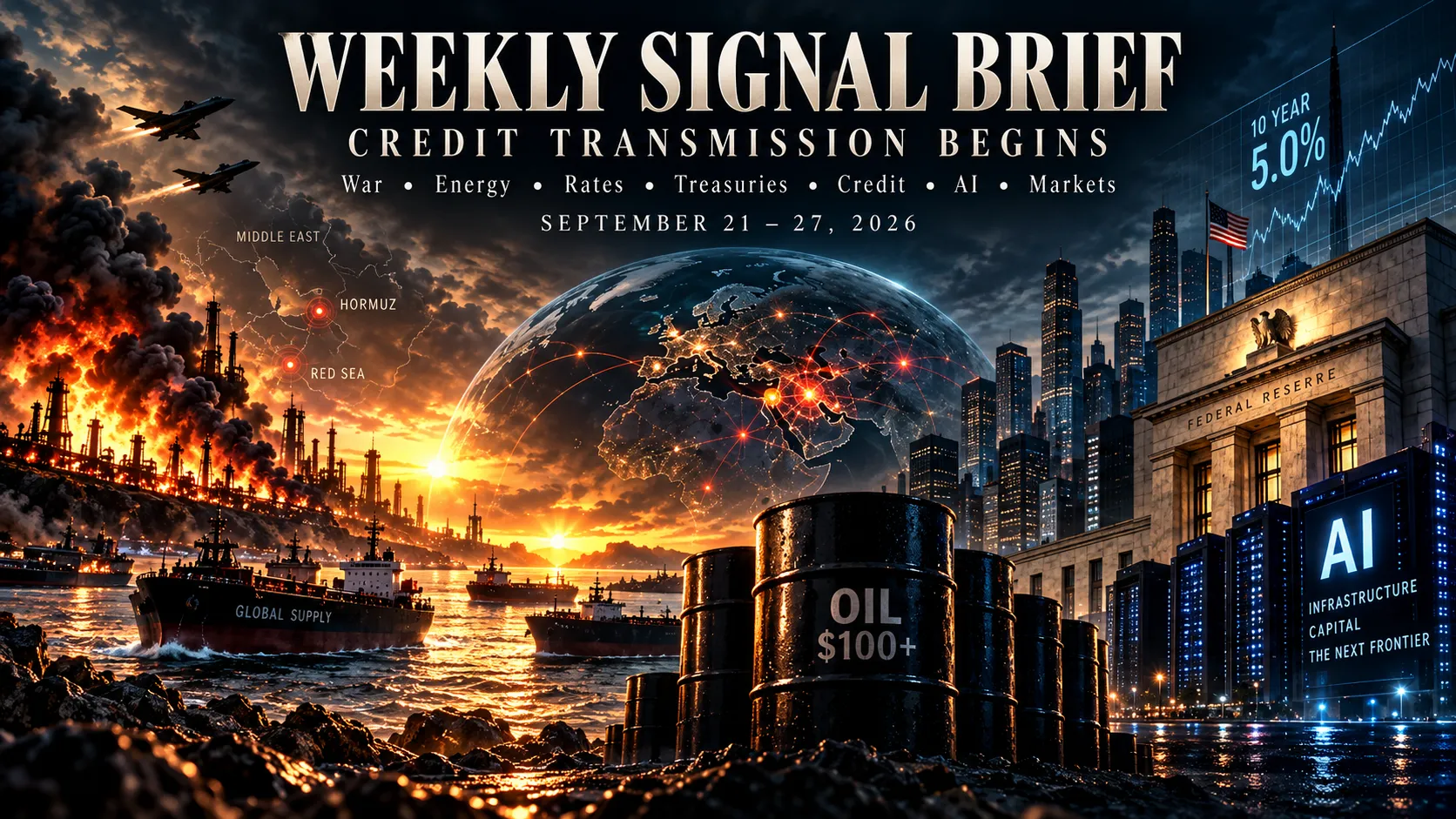
WEEKLY SIGNAL BRIEF
CREDIT TRANSMISSION BEGINS
War • Energy • Rates • Treasuries • Credit • AI • Markets
SEPTEMBER 21–27, 2026
SYSTEM STATE: CREDIT TRANSMISSION
The global system remains functional, but this week brought another important shift. Oil moved sharply as markets balanced renewed U.S.–Iran diplomacy against continuing regional attacks. Brent briefly moved toward $100 before finishing Friday near $104 per barrel. Long-term Treasury yields remained exceptionally elevated, expectations for additional Federal Reserve tightening increased, and investors became more selective about financing the enormous AI infrastructure buildout.
The transmission chain has moved another step: GEOPOLITICAL SHOCK → ENERGY → INFLATION → RATES → CREDIT → CAPITAL ALLOCATION. The question is increasingly not whether capital remains available, but where it is willing to go—and at what price.
1 | TREASURIES — THE BOND MARKET PRESSURE POINT
The Treasury market remained one of the week’s most important signals. The benchmark 10-year Treasury hovered near 4.9% earlier in the week while markets continued pricing the possibility of additional Federal Reserve tightening. Because Treasury yields influence mortgages, real estate, corporate borrowing, government debt and asset valuations, sustained elevation matters more than any single daily move.
GAR SIGNAL: The cost of long-term capital remains structurally elevated.
2 | OIL — THE $100 PRESSURE POINT
Oil demonstrated how sensitive the system has become to geopolitical headlines. Brent moved toward $100 as investors anticipated possible diplomatic progress and Saudi exports partially recovered, but renewed regional tensions pushed crude higher again. Brent ultimately finished Friday around $104, keeping energy firmly inside the inflation equation.
GAR SIGNAL: Oil remains high enough for geopolitical events to feed rapidly back into inflation and interest-rate expectations.
3 | HORMUZ — SHIPPING REMAINS FAR FROM NORMAL
The Strait of Hormuz remains one of the most important physical pressure points in the global energy system. Commercial traffic remains severely reduced compared with prewar levels, even as Saudi Arabia shifts more exports toward Gulf terminals and markets adapt around disrupted routes.
Saudi Arabia is therefore increasing exports through the same maritime corridor whose disruption helped create the energy shock. GAR SIGNAL: Energy flows are adapting—but through increasingly expensive and vulnerable routes.
4 | SAUDI ARABIA — THE ENERGY WAR BROADENS
Saudi Arabia remained under pressure as Houthi forces continued threatening Saudi territory and energy infrastructure. Riyadh and its partners are increasingly focused on protecting critical facilities and maintaining passage through both Hormuz and Bab el-Mandeb.
What began primarily as a Hormuz crisis now reaches Yemen, Saudi Arabia, the Red Sea and major regional energy infrastructure. GAR SIGNAL: The geographic footprint of the energy crisis remains expanded.
5 | DIPLOMACY — MARKETS TRADE EVERY HEADLINE
U.S. and Iranian officials continued signaling possible negotiations while simultaneously exchanging severe public warnings. Those conflicting signals repeatedly moved oil, Treasury yields and equities.
The market reaction has become increasingly direct: diplomatic progress reduces the energy-risk premium, while renewed escalation quickly restores it. GAR SIGNAL: Diplomacy itself has become a significant financial-market variable.
6 | AI CREDIT — CAPITAL BECOMES MORE SELECTIVE
Corporate bond investors are becoming more selective toward AI-related debt as enormous financing requirements compete for capital. AI-linked borrowers face growing scrutiny over leverage, data-center economics, electricity requirements and the amount of debt necessary to finance the infrastructure buildout.
Yet investment remains enormous. The important distinction is that the AI boom is not disappearing—the financing environment surrounding it is becoming more demanding.
GAR SIGNAL: AI is evolving from a pure growth story into a growth-and-financing story.
7 | MARKETS — AI STRENGTH VS. CAPITAL PRESSURE
Wall Street remained remarkably resilient, supported by AI enthusiasm and strength in major technology shares. Underneath the indexes, however, oil remains elevated, Treasury yields remain historically high, rate expectations have shifted upward and AI financing is becoming more expensive.
Markets are therefore balancing AI-driven growth expectations against higher energy and capital costs. GAR SIGNAL: Equity resilience increasingly depends upon continued earnings growth and stabilization in energy and bond markets.
THE BIG PICTURE
The week’s individual signals point toward the same underlying development: capital is becoming more expensive and more selective.
Oil remains above $100. Long-term borrowing costs remain elevated. Hormuz remains disrupted. Saudi infrastructure remains exposed. AI infrastructure requires extraordinary amounts of financing. None of these developments alone establishes systemic breakdown. Together, however, they show geopolitical and energy pressure increasingly influencing the price, availability and allocation of capital.
That is the transition GAR should watch most closely now.
GAR BOTTOM LINE
The progression over the past month is becoming clearer:
Pressure spread → transmission became visible → pressures began reinforcing one another → the cost of capital increased → credit conditions began tightening.
NEXT STATE TO WATCH: REAL-ECONOMY TRANSMISSION
The next signal will be whether higher capital costs remain primarily a market phenomenon—or begin appearing more visibly in refinancing, commercial real estate, corporate investment, hiring, layoffs and consumer demand.
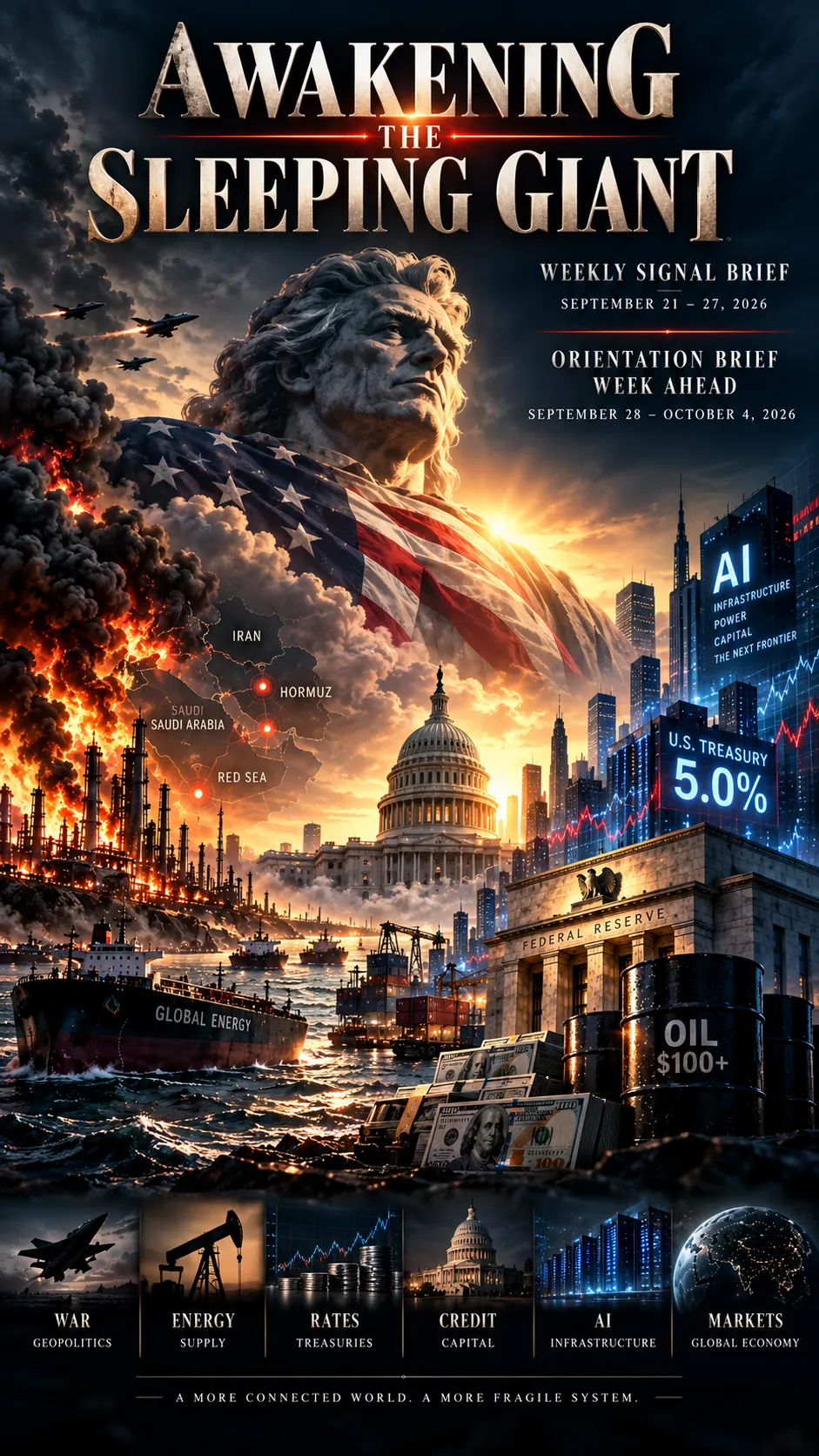
ORIENTATION BRIEF — WEEK AHEAD
WATCH WHERE THE PRESSURE LANDS
Energy • Rates • Credit • Markets • AI • Geopolitics
SEPTEMBER 28–OCTOBER 4, 2026
SYSTEM OUTLOOK: REAL-ECONOMY TRANSMISSION
The coming week begins with an unusual combination: oil above $100, historically high Treasury yields, expectations for additional Fed tightening, disrupted Middle East energy routes and increasingly selective credit markets. At the same time, equities remain resilient, AI investment remains strong and Middle East producers continue finding expensive ways to keep energy moving.
The central question is shifting from “How much pressure is building?” to “Where does that pressure begin changing economic behavior?” The chain to watch is: ENERGY → INFLATION → RATES → CREDIT → REFINANCING → BUSINESS → EMPLOYMENT → CONSUMER.
CONVERGENCE RISK: 🔴 HIGH
1 | MIDDLE EAST — DIPLOMACY OR RENEWED ESCALATION?
The Middle East remains the largest geopolitical wildcard. President Trump said September 26 that he rejected an Iranian proposal to reopen the Strait of Hormuz and end the regional fighting, while Iran continues publicly arguing for a diplomatic solution. Meanwhile, Saudi forces reported intercepting Houthi missiles and drones, keeping Saudi infrastructure and regional shipping exposed.
The week ahead therefore begins between two competing possibilities: negotiation or renewed escalation. WATCH: Iran • Saudi Arabia • Hormuz • Houthis • Red Sea • Qatar mediation. GAR SIGNAL: A credible diplomatic opening could remove part of the geopolitical premium from energy; another escalation could rapidly restore it.
2 | ENERGY — DOES $100 BECOME THE FLOOR?
Brent finished Friday at $104.32, down about 2% for the session as hopes for diplomacy increased. Saudi Arabia has restarted its East-West pipeline and increased exports, helping compensate for disrupted regional flows.
But the workaround is expensive. Ship-to-ship transfers around Oman have expanded sharply, while Reuters reported very-large-crude-carrier costs exceeding $30 per barrel on some routes. WATCH: Brent • Diesel • Hormuz traffic • Saudi exports • Freight rates • LNG. GAR SIGNAL: The issue is no longer simply oil availability—it is the rising cost and complexity of moving energy.
3 | TREASURIES — WATCH THE DIRECTION, NOT THE NUMBER
Treasury yields stabilized Friday after the benchmark 10-year reached its highest level since 2007 earlier in the week. Markets remain sensitive to oil, inflation and expectations for additional Federal Reserve tightening.
That makes the next move more important than an arbitrary 5% threshold. TREASURIES → MORTGAGES → REAL ESTATE → CORPORATE DEBT → GOVERNMENT FINANCE. WATCH: 10-year • 30-year • Mortgage rates • Dollar • Credit spreads. GAR SIGNAL: Sustained high yields increase refinancing pressure even without another dramatic spike.
4 | FED — JOBS AND INFLATION MOVE CENTER STAGE
The coming week’s U.S. employment and inflation data will be major tests for monetary policy. Reuters identifies payrolls and inflation as two of the principal market events for the week as investors assess whether further tightening will be necessary.
Recent strong business activity and hawkish Fed commentary have already increased expectations for additional rate hikes. WATCH: Payrolls • Unemployment • Inflation • Wages • Fed commentary. GAR SIGNAL: Strong growth plus persistent inflation could keep the Fed in tightening mode even as financing conditions become more restrictive.
5 | CREDIT — WATCH REFINANCING
Credit remains the bridge between financial markets and the real economy. The key question is whether higher benchmark rates begin producing materially wider spreads, more difficult refinancing or delayed investment.
WATCH: Corporate bonds • High yield • Private credit • Commercial real estate • Bank lending. The critical chain is RATES → CREDIT → REFINANCING → INVESTMENT → EMPLOYMENT. GAR SIGNAL: The first meaningful real-economy warning may not appear in stocks—it may appear when borrowers discover that refinancing is either significantly more expensive or unavailable.
6 | AI — THE CAPITAL TEST INTENSIFIES
AI investment remains powerful, but bond investors are becoming more selective. Reuters reports AI-related bond spreads around 115 basis points, versus roughly 78 basis points for the broader corporate market, as investors weigh the enormous future borrowing needs of hyperscalers and data-center developers.
This is not evidence that the AI boom is ending. It is evidence that financing discipline is increasing. AI → DATA CENTERS → POWER → INFRASTRUCTURE → DEBT → RETURNS. WATCH: AI bonds • Data centers • Power projects • CAPEX • Credit spreads. GAR SIGNAL: Capital remains available, but investors increasingly want clearer returns for the risks they are taking.
7 | MARKETS — RESILIENCE GETS TESTED
Equities finished Friday higher despite elevated oil and Treasury yields, with the S&P 500 gaining 0.51%, Nasdaq 0.48% and Dow 0.93%, helped by continued AI enthusiasm. Global equity funds also recorded their strongest weekly inflows since early July.
That resilience matters. The warning signal would be a breakdown across several markets simultaneously: STOCKS ↓ + BONDS ↓ + CREDIT ↓ + OIL ↑. WATCH: S&P 500 • Nasdaq • VIX • Treasuries • Credit spreads. GAR SIGNAL: Cross-asset deterioration would matter considerably more than an isolated stock-market correction.
8 | CHINA — THE GREAT-POWER VARIABLE
China remains positioned at the intersection of energy security, Middle East diplomacy, trade and technology competition. U.S.–China relations also remain focused on trade, AI and Taiwan ahead of high-level talks, adding another geopolitical variable to already sensitive markets.
WATCH: U.S.–China talks • Taiwan • Semiconductors • Middle East diplomacy • Energy imports. GAR SIGNAL: China increasingly connects several previously separate GAR pressure chains.
THE WILDCARD — REAL-ECONOMY TRANSMISSION
The next stage is not necessarily another dramatic market event. It may be much quieter: companies delaying projects, property owners struggling to refinance, lenders tightening standards, businesses slowing hiring and consumers pulling back.
That creates the chain to watch: HIGHER ENERGY + HIGHER RATES → HIGHER FINANCING COSTS → LOWER INVESTMENT → EMPLOYMENT → CONSUMER.
THREE PATHWAYS | WEEK AHEAD
🟢 STABILIZATION: Oil falls toward or below $100, Middle East diplomacy advances and Treasury yields retreat. Outcome: Financial pressure begins easing.
🟠 EXTENDED PRESSURE: Oil remains around $100–$105, yields stay elevated and credit continues functioning. Outcome: The economy absorbs the shock, but financing becomes progressively more expensive.
🔴 REAL-ECONOMY TRANSMISSION: Oil rises, yields move higher and credit spreads widen while refinancing conditions deteriorate. Outcome: Financial pressure begins influencing investment, real estate, employment and household decisions.
These are analytical scenarios, not statistical forecasts.
THE SIX INDICATORS THAT MATTER
1. OIL — Does Brent remain above $100? 2. MIDDLE EAST — Diplomacy or renewed escalation? 3. TREASURIES — Do long-term yields resume climbing? 4. CREDIT — Do spreads widen materially? 5. AI DEBT — Selective repricing or broader stress? 6. JOBS & INFLATION — Do the data reinforce further Fed tightening?
Secondary watch: DIESEL • LNG • MORTGAGES • COMMERCIAL REAL ESTATE • GOLD • DOLLAR • CHINA • FOOD
THE BIG PICTURE
The sequence is becoming clearer: geopolitical pressure moved into energy; energy moved into inflation expectations; inflation moved into rates; rates moved into the cost of capital.
Now comes the more consequential test: Does expensive capital begin changing real-world decisions?
The system retains important stabilizers—functioning capital markets, substantial private capital, adaptive energy routes and continued investment in technology. But those stabilizers increasingly come at a higher price. The issue to watch is therefore not immediate “collapse,” but whether persistent pressure gradually reduces financial flexibility across the economy.
GAR BOTTOM LINE
Last month: pressure spread. Then: transmission became visible. Last week: credit became more selective. This week: watch the real economy.
NEXT STATE TO WATCH: REAL-ECONOMY TRANSMISSION
ENERGY → INFLATION → RATES → CREDIT → REFINANCING → BUSINESS → EMPLOYMENT → CONSUMER
Meanwhile: AI → POWER → INFRASTRUCTURE → DEBT → CAPITAL DISCIPLINE
“The next threshold is not another headline. It is the point where expensive energy and expensive money begin changing decisions.”
GAR WATCHBOARD | SEPTEMBER 28–OCTOBER 4
IRAN • HORMUZ • OIL • DIESEL • TREASURIES • CREDIT • JOBS • INFLATION • REAL ESTATE • AI DEBT • EQUITIES • CHINA
A Call to Patriots
Let this moment be remembered as a time of clarity, not chaos—when citizens chose discernment over outrage and responsibility over fear. The republic is not reclaimed through force or noise, but through truth, accountability, and lawful restoration.
Patriots are defined by their ability to remain coherent under pressure, to reject deception, and to stand firm as systems are rebuilt. This is not a call to conflict, but to orientation, integrity, and justice allowed to function.
History will remember who stayed steady when it mattered most.

AUDIO REVIEW |THE PRESSURE HAS REACHED THE COST OF CAPITAL | SEPTEMBER 28th, 2026
The Great Civilization Near Death Event | NDE
“Be Strong Enough to Stand Alone / Be Yourself Enough to Stand Apart / And When the Time Comes, Be Wise Enough to Stand Together”
The Great Reset of Everything
We have entered a window of time where everything we have learned, experienced and known to be true is about to dramatically change. We are Awakening to a great truth, “That Everything We Were Taught Is A Lie”. The lives we once knew, lived and experienced prior to January 2020 are now gone forever. We are witnessing the total collapse of not just a few, but all of our statured institutions; The US Government Senate/Congress; through the NSA, DOD, CIA, DIA, ATF, ONI, US Army, US Marine Corp, FEMA and DHS have spent in excess of 12 trillion dollars building the massive, covert infrastructure for the coming One World Government and New World Religion over the past 40 years. Along with other industries; Wall Street Markets & Finance, Banking Industries, Big Tech, Big Insurance, Pharma, Oil, Education, Hollywood Industries, US Military, Medical AMA, Military and Energy Industrial Complexes, all are embroiled in corruption scams and human trafficking.
Given the monolithic corruption and evil encrusted within all these institutions, We are now Witnessing in Real Time a Global Everything Collapse. What has been described and depicted as The Storm! and “The Great Civilization Near Death Experience”. The fallout of which could last anywhere from 2 to 5 years based on geographic locations.
We will then have a choice and chance for “A New Beginning to Reset Everything as We Rebuild America”.
The following report is a compilation of different sources. We found a number of overlapping and crossover warnings presented by each of our sources. We formatted this Weekly Report based on a timeline tied to dates and information posted entirely in May 2023. We believe these sources align with each other to create a very rare picture of what is happening behind the scenes. We encourage each of you to use your own discernment and rational, critical, logical thinking in reviewing this information. Preparation going forward is 80% mental and 20% physical, so we hope this will assist you in your education and in being mentally prepared for the coming Storm.
Updates: This Report Will Be Updated on a Weekly Basis. We designed this format as a living document so we can update you directly on all breaking news and events. Please keep this link close by, so you can easily return to this Weekly Report for all the latest alternative uncensored news reports.
“We The People”: If we the people, as a nation, do not work together to restore our founding father’s visions for our Constitutional Republic, our children could be lost and our nation will be destroyed. We all have a part to play in this peaceful, faithful, informed, prayer-filled participation and with forgiveness in our hearts for the corruption of this nation that we have been a party to, either knowingly or unknowingly.

A Message From the Hopi Elders
Written By Maira Horta LMFT
You have been telling the people that this is the Eleventh Hour.
Now you must go back and tell the people that this is The Hour.
Here are the things that must be considered:
Where are you living?
What are you doing?
What are your relationships?
Are you in right relation?
Where is your water?
Know our garden.
It is time to speak your Truth.
Create your community.
Be good to each other.
And do not look outside yourself for the leader.
This could be a good time!
There is a river flowing now very fast.
It is so great and swift that there are those who will be afraid.
They will try to hold on to the shore. They will feel like they are being torn apart, and they will suffer greatly.
Know the river has its destination.
The elders say we must let go of the shore, push off toward the middle of the river, keep our eyes open, and our heads above the water.
See who is there with you and celebrate.
At this time in history, we are to take nothing personally, least of all ourselves!
For the moment we do, our spiritual growth and journey comes to a halt.
The time of the lonely wolf is over.
Gather yourselves!
Banish the word struggle from your attitude and vocabulary.
All that we do now must be done in a sacred manner and in celebration.
We are the ones we have been waiting for.
-The Elders, Oraibi, Arizona, Hopi Nation
NEW! Editor’s Notes: The Trump Enigma | Separating Signal from Noise
Since its founding in 2018, The Great Awakening Report has maintained an intentionally apolitical position, focusing on signals, patterns, independent research, and emerging narratives rather than allegiance to any political party, public figure, or movement.
In recent months, few individuals have generated more speculation, contradictory narratives, and competing interpretations than President Donald J. Trump. Social media posts, policy reversals, public appearances, conflicting reports, and countless online theories have fueled ongoing debate surrounding what is genuine, what may be strategic messaging, and what may simply be misinformation amplified through the modern information environment.
Claims involving hidden operations, body doubles, staged appearances, and broader narrative deception and manipulation continue circulating throughout alternative media circles, while mainstream sources largely dismiss such assertions outright. Whether any of these claims contain truth, disinformation, psychological operations, selective perception, or intentional narrative engineering remains difficult—if not impossible—to independently verify with certainty.
What has become increasingly clear is that the information environment surrounding President Trump has grown extraordinarily fragmented, emotionally charged, and saturated with competing narratives. For truth seekers, the lesson is not to rush toward certainty, but to recognize the growing difficulty of separating verified facts, speculation, perception management, political storytelling, and algorithm-driven amplification in an era where information itself has become a battlefield.
GAR will continue bringing readers developing stories, emerging signals, and multiple perspectives as events unfold. Our role is not to tell readers what to believe, but to encourage discernment, critical thinking, and conscious awareness. We encourage every reader to evaluate information carefully, trust their intuition, question assumptions, and arrive at their own conclusions.

Alert – AI Driven Disinformation
Disinformation in the current environment is no longer limited to misleading headlines or biased reporting—it has evolved into highly sophisticated, AI-driven content that can convincingly mimic real people, real events, and real broadcasts. As highlighted in the alert, fake news, AI-generated videos, and fabricated content are now being produced and distributed at scale, often faster than traditional verification systems can respond. These tools allow bad actors to create entirely false narratives—complete with realistic visuals, voices, and “live” reporting—that appear credible to the average viewer. The result is a rapidly accelerating information environment where deceptive AI content spreads quickly online, blurring the line between reality and fabrication.
At a deeper level, this is not just about misinformation—it is about programming perception. When manipulated images, videos, and narratives are repeated across platforms, they begin to shape how people interpret events, form opinions, and react emotionally. This is why the guidance in the alert matters: think critically, verify sources, and question everything. The goal of AI-driven disinformation is not always to convince you of one specific lie, but to create confusion, division, and uncertainty at scale. In this environment, discernment becomes a critical skill. Not everything seen or read online is true, and maintaining clarity requires slowing down, cross-checking information, and resisting the impulse to react before verifying.

Breaking Intelligence News | Monday, September 28th, 2026 Edition
“Last Warning: Prepare for something that you never expected to see in your lifetime. The Media will never let you know! The things around us could change very fast.” – QAnon Telegram
“Ye shall hear of wars and rumors of wars. See that ye be not troubled, for all these things must come to pass, but the end is not yet.” – Matthew 24:6
Flashpoints Multiply | Systems Flood | Narrative Warfare Intensifies
When pressure rises across domains, confusion is not accidental—it is instrumental. Those who track only events experience overwhelm. Those who track structure recognize exposure. What appears as chaos is often compression. What feels like loss of control is frequently the erosion of concealment.
Independence is not granted by institutions in moments of strain. It is maintained by individuals who remain coherent as systems destabilize. Awakening is not belief or branding. It is orientation—remembering how to see, when to move, and when to hold.
GAR will continue bringing readers developing stories, emerging signals, and multiple perspectives as events unfold. Our role is not to tell readers what to believe, but to encourage discernment, critical thinking, and conscious awareness. We encourage every reader to evaluate information carefully, trust their intuition, question assumptions, and arrive at their own conclusions.
“Stand firm. Be the signal. The light always breaks through.”
Weekly Updates
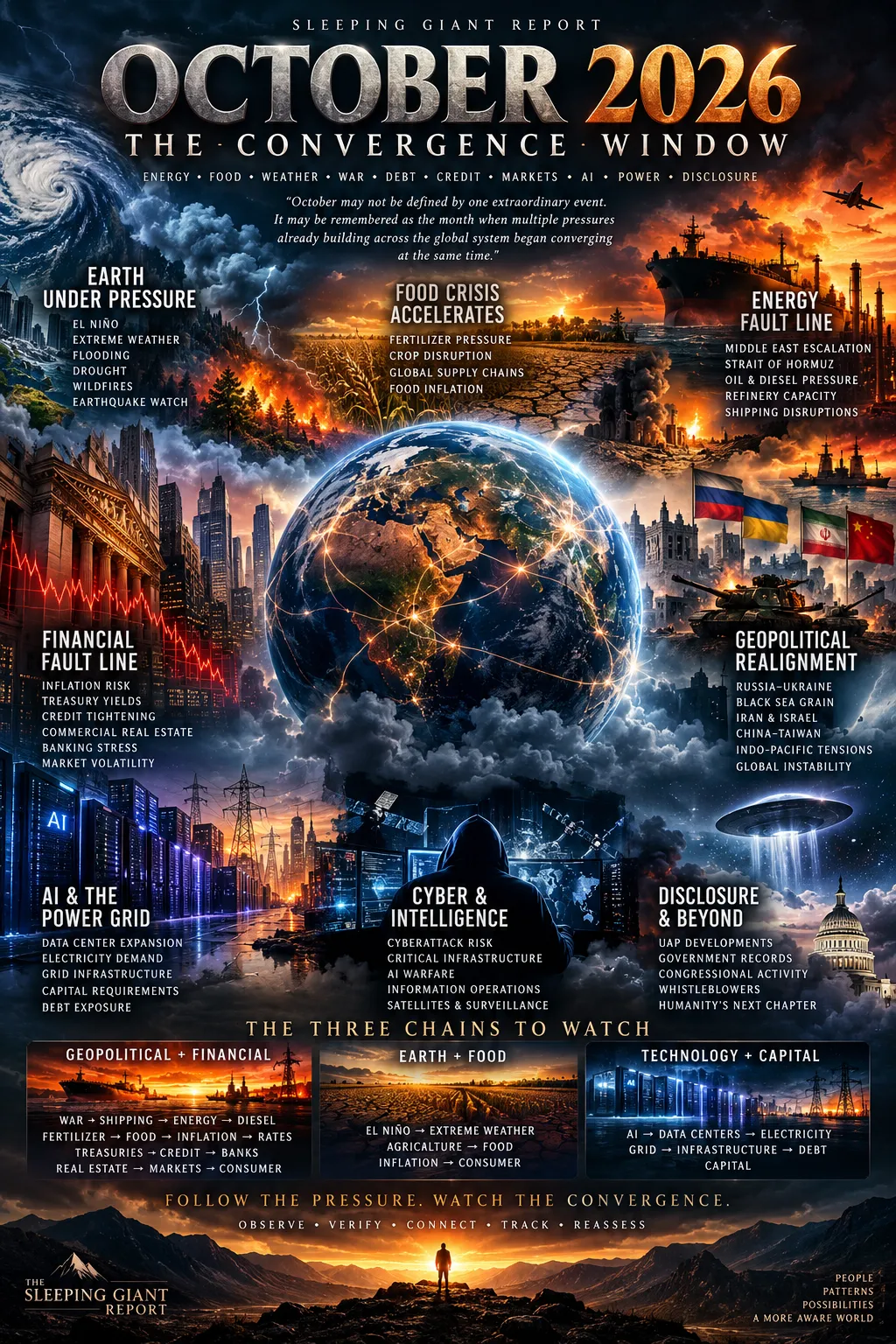
OCTOBER 2026 | THE CONVERGENCE WINDOW
Energy • Food • Weather • War • Debt • Credit • Markets • AI • Power • Disclosure
“October may not be defined by one extraordinary event. It may be remembered as the month when multiple pressures already building across the global system began converging at the same time.”
Source: GAR Contributing Writer
For months, the Sleeping Giant has been following the pressure as war moved into shipping, shipping into energy, energy into inflation, and inflation into interest rates, Treasuries, credit and the broader cost of capital. At the same time, AI is creating enormous new demands for electricity, data centers and infrastructure, while weather, agriculture, fertilizer and geopolitical disruptions are placing additional pressure on food and global supply chains.
Now we enter October 2026. The question is not whether individual pressure points exist—they clearly do. The question is whether they begin connecting. October should therefore be viewed not as a predetermined collapse date, but as a convergence window in which several major systems could begin transmitting pressure into one another.
OCTOBER 2026 — EVENTS & PRESSURE POINTS TO WATCH
1. Strong El Niño Intensifies — A strengthening El Niño remains one of the major environmental variables entering October, increasing the potential for abnormal rainfall, drought, heat and regional flooding. The larger concern is the connection to agriculture, infrastructure and food production.
2. West Coast Earthquake / Volcanic Watch — Predictions continue circulating about heightened activity along the San Diego → California → Cascadia → Vancouver corridor. These should remain explicitly labeled predictions, since earthquakes cannot currently be reliably predicted for a specific October window. Monitor official seismic and volcanic data rather than assuming an event will occur.
3. Extreme Weather / Flooding / Storm Events — Ocean temperatures, El Niño and changing weather patterns create another important October watch. Major storms, floods, drought and wildfires matter not only as natural events, but because they can disrupt agriculture, electrical infrastructure, transportation and supply chains.
4. Global Food Crisis — Energy costs, fertilizer availability, extreme weather, Black Sea disruptions and transportation costs continue converging around global agriculture. The effects may not appear immediately; pressures developing this fall could become considerably more important during the 2027 growing and harvest cycles.
5. Global Fertilizer Pressure — Fertilizer deserves its own signal because natural gas, energy, transportation and geopolitical disruptions all affect production and price. The chain to watch is Energy → Fertilizer → Farming Costs → Crop Production → Food Prices.
6. Global Fuel & Energy Crisis — Middle East instability, oil production, refinery capacity and tight refined-product markets remain critical. Energy is the transmission mechanism connecting geopolitics to transportation, agriculture, manufacturing and household inflation.
7. Diesel / Refined-Fuel Pressure — Watch diesel closely. Trucks, farms, construction equipment, mining and supply chains depend on it. A significant diesel shortage or price spike can move rapidly through the real economy.
8. Strait of Hormuz / Iran Flashpoint — Iran, Israel, the United States and Gulf infrastructure remain one of the world’s most important geopolitical pressure points. Any significant disruption involving Hormuz could quickly move through Oil → Shipping → Diesel → Inflation → Markets.
9. Global Shipping & Supply Chains — Hormuz, the Red Sea and Black Sea should be watched together. The greater risk is not necessarily one closed shipping lane, but several transportation and commodity disruptions occurring simultaneously.
10. Russia–Ukraine / Black Sea Escalation — The conflict remains directly connected to grain, fertilizer, energy and shipping. What happens militarily can therefore migrate quickly into commodity markets and global food security.
11. Middle East Escalation — Iran, Israel, Gulf energy infrastructure and U.S. involvement remain major variables. The important question is whether military pressure remains contained or begins affecting physical energy and transportation infrastructure.
12. China / Taiwan / Indo-Pacific Pressure — Military activity, semiconductor supply chains, technology restrictions and U.S.–China strategic competition remain important signals. This should remain a watch category rather than an October-specific prediction.
13. Inflation Reacceleration — Energy and food remain two pathways capable of reigniting inflation. Watch the chain: Energy → Diesel → Transportation → Fertilizer → Food → Consumer Prices.
14. Treasury / Bond-Market Stress — Government borrowing costs and Treasury yields remain critical indicators. Higher yields increase financing pressure across government, corporations, mortgages, commercial real estate and the banking system.
15. Credit Tightening / Refinancing Pressure — Higher borrowing costs are increasingly reaching companies and property owners that must refinance existing debt. Watch lending standards, defaults, distressed debt and access to capital.
16. Commercial Real Estate Stress — Office, multifamily and other leveraged properties remain exposed to refinancing pressure. Actual transactions, defaults and distressed sales may reveal more about property values than appraisals or headline estimates.
17. Banking-System Stress — Watch bank failures, CRE exposure, credit losses, deposits and emergency mergers. Banking stress becomes especially important if weakness in commercial real estate and business credit accelerates simultaneously.
18. Stock-Market Volatility / Correction Risk — October should be treated as a market risk window, not a predetermined crash date. Watch whether pressure in bonds, credit, energy and corporate earnings begins migrating into equity valuations.
19. Federal Reserve — October 27–28 — The scheduled FOMC meeting becomes an important late-October checkpoint. Inflation, employment, economic growth and financial conditions will help determine how monetary policy intersects with the broader convergence.
20. Global Debt / Sovereign Financing Pressure — Governments are also confronting higher borrowing costs. Watch countries carrying large debt burdens, weakening currencies or substantial refinancing requirements.
21. AI Capital & Debt Expansion — The AI buildout requires extraordinary amounts of capital. Data centers, chips, transmission lines, generation and cooling infrastructure increasingly connect the AI boom to debt markets and the cost of capital.
22. Electric Grid / Data-Center Power Crunch — AI is becoming a physical infrastructure story. The chain is increasingly clear: AI → Data Centers → Electricity → Grid → Generation → Infrastructure → Debt → Capital.
23. Cyberattacks / Critical Infrastructure — Power grids, financial systems, telecommunications, pipelines, ports, satellites and data centers remain potential targets. A major cyber incident could move rapidly from the digital world into the physical economy.
24. AI / Cyber / Intelligence Battlefield — Artificial intelligence, autonomous systems, surveillance, predictive analytics, cyberwarfare and information operations are increasingly merging into a new intelligence environment.
25. UAP / Disclosure Developments — Continue watching Pentagon programs, congressional activity, government records, whistleblower testimony and declassification. The key is distinguishing actual documents and corroborated evidence from speculation surrounding them.
26. Political / Government Instability — Fiscal pressure, protests, leadership crises and institutional instability should be monitored country by country. Rather than predicting generalized government collapse, watch for measurable signs of political and financial stress.
27. October Financial Reset / Banking Predictions — Numerous predictions continue circulating about an October financial reset, banking crisis or currency event. These belong in a dedicated Prediction Tracker where claims can be compared against what actually occurs.
28. Major Disclosure / Declassification Predictions — Claims of large-scale government disclosure should receive the same treatment: document the prediction, identify the source, establish what was actually claimed, and then compare it with subsequent evidence.
29. Consciousness / Awakening Acceleration — Within GAR’s broader research, October also represents a period to observe cultural and consciousness shifts: changing institutional trust, greater independent inquiry, new interest in consciousness research and changing perceptions of humanity’s place in a rapidly transforming world.
30. The October Compression Window — Within GAR’s Three-Phase Transition framework, October can be viewed as a potential compression point where economic, geopolitical, environmental, technological and social pressures increasingly overlap. The significance will depend on whether these separate signals actually begin reinforcing one another.
THE THREE CHAINS TO WATCH
GEOPOLITICAL + FINANCIAL:
WAR → SHIPPING → ENERGY → DIESEL → FERTILIZER → FOOD → INFLATION → RATES → TREASURIES → CREDIT → BANKS → REAL ESTATE → MARKETS → CONSUMER
EARTH + FOOD:
EL NIÑO → EXTREME WEATHER → AGRICULTURE → FOOD → INFLATION → CONSUMER
TECHNOLOGY + CAPITAL:
AI → DATA CENTERS → ELECTRICITY → GRID → INFRASTRUCTURE → DEBT → CAPITAL
These three chains appear separate, but increasingly they are not. Energy connects them. Capital connects them. Infrastructure connects them. Government policy connects them. And ultimately the consumer connects them.
WATCH WHERE THE PRESSURE MOVES
October does not need one spectacular event to become consequential. The larger story may be whether pressures already visible across energy, food, weather, debt, credit, geopolitics, technology and infrastructure begin interacting at the same time.
That is why the central signal for October is not simply collapse. It is convergence.
Watch where the pressure originates. Watch where it moves next. Watch what absorbs it—and what begins to break under it. Most importantly, separate prediction from evidence and individual events from developing patterns.
OCTOBER 2026: FOLLOW THE PRESSURE. WATCH THE CONVERGENCE.
Observe • Verify • Connect • Track • Reassess
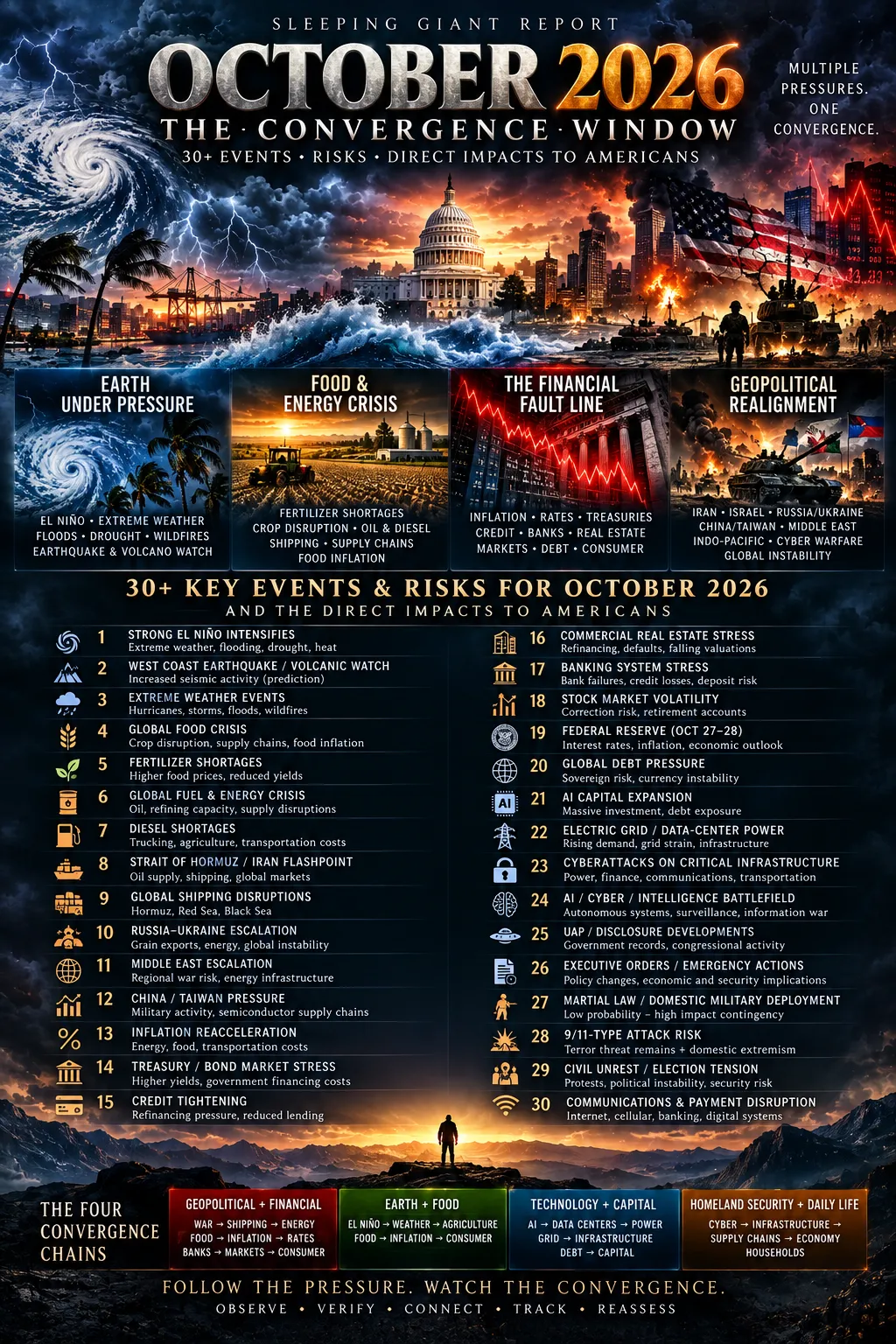
DIRECT RISKS TO AMERICANS
OCTOBER 2026 | THE CONVERGENCE WINDOW
Source: GAR Contributing Writer
October 2026 is shaping up as an important convergence window, with multiple pressures developing simultaneously across weather, energy, food, geopolitics, financial markets, technology, critical infrastructure and national security. The significance is not that every event or prediction outlined below will occur, but that many of these systems are increasingly interconnected—and pressure in one can rapidly migrate into another. A Middle East escalation can reach American households through oil, diesel and inflation; extreme weather can affect agriculture, food prices and infrastructure; higher interest rates can move through credit, real estate, banking and employment; while cyberattacks, executive actions, civil unrest or a major security incident could create more immediate disruptions to everyday life.
For Americans, the central question is therefore becoming increasingly practical: Where could these pressures reach us directly? The following October Watch List examines more than 30 developing events, risks and contingency scenarios—from energy and food costs to markets, banking, power-grid security, cyber threats, geopolitical escalation, emergency government actions and extreme weather. Some are already measurable developments; others remain emerging risks or low-probability, high-impact scenarios that warrant observation rather than prediction. October’s defining signal may not be one extraordinary event, but what happens if several pressures begin converging at the same time.
- Energy & Fuel Shock — A major Middle East or Hormuz disruption could reach Americans through gasoline, diesel, airline costs, trucking, food prices and general inflation.
- Food-Price & Supply Pressure — Fertilizer, diesel, weather, agricultural losses and shipping disruptions could raise grocery costs. The more immediate American risk is higher prices and selected shortages, rather than assuming nationwide food scarcity.
- Inflation / Cost-of-Living Shock — Energy + food + transportation costs could reverse progress on inflation and further pressure household budgets.
- Interest Rates / Credit Shock — Treasury-market pressure or renewed inflation could keep mortgages, credit cards, auto loans and business borrowing expensive.
- Employment / Layoff Risk — AI restructuring, higher financing costs, weaker consumer spending and corporate cost cutting could increasingly reach American employment.
- Stock Market / Retirement Accounts — A significant market correction would directly affect 401(k)s, IRAs, pensions and household wealth.
- Housing & Commercial Real Estate — Refinancing problems, falling transaction values and distressed commercial properties could affect banks, investors, employment and local tax bases.
- Banking / Credit Disruption — Rather than predicting widespread bank failures, watch for individual failures, lending restrictions, CRE losses, deposit stress and deterioration in credit availability.
- Power-Grid Disruption — This deserves considerably more emphasis. The White House declared a national emergency in August concerning foreign-related vulnerabilities in the U.S. bulk-power system, specifically citing potential consequences for emergency services, infrastructure, national defense and the economy. The White House
- Cyberattack on Critical Infrastructure — Electricity, banking, telecommunications, hospitals, pipelines, transportation and government systems are direct household vulnerabilities. The FBI released a new Cyber Strategy this week emphasizing threats to Americans and critical infrastructure. FBI
- Major Terrorist Attack / “9/11-Type” Event — Yes, this belongs on the risk board—but not as an October prediction. The FBI currently says international terrorism remains among the most immediate homeland threats, citing ISIS, al-Qaeda-related threats, homegrown violent extremists and Iranian-linked plotting. FBI Federal agencies also issued a September bulletin warning that foreign terrorist organizations continue encouraging attacks. ABC News There is no evidence in the material I reviewed establishing that a 9/11-scale attack is expected specifically in October.
- Lone-Actor / Domestic Political Violence — This is arguably more useful to monitor than a narrowly defined 9/11 scenario. The FBI says domestic violent-extremism investigations have increased in 2026 and identifies several forms of politically or socially motivated violence as continuing threats. FBI
- Iran-Linked Retaliatory Activity Inside the U.S. — This deserves its own category given the Middle East conflict. The FBI says it continues monitoring Iranian intent to conduct violent activity inside the United States and has previously disrupted Iranian plots. FBI
- Executive Orders / Emergency Presidential Actions — Definitely add this. The administration continues using executive orders across immigration, energy, trade, national security and other areas; the White House’s official executive-order archive shows several new orders during September alone. The White House The direct risks or effects depend entirely on the particular order—business regulation, immigration, tariffs, energy, federal contracting, deployment authorities, etc.—so we should track actual orders rather than predict their contents.
- National Emergency Powers — Also worth separating from ordinary executive orders. The August bulk-power order is an actual example of the President invoking the National Emergencies Act and IEEPA. The White House An emergency declaration does not, by itself, mean martial law.
- Military Deployment Inside the United States / Insurrection Act — This belongs in the low-probability/high-impact contingency category. Federal law normally restricts use of the military for civilian law enforcement, although the Insurrection Act provides statutory exceptions under specified circumstances. CRS notes that invoking these authorities has become exceedingly rare; its last identified Insurrection Act invocation was during the 1992 Los Angeles riots. Congress.gov
- Martial Law — I would not list “Martial Law” as a predicted October event. There is no verified evidence from what I reviewed that nationwide martial law is scheduled or expected in October. For GAR, the more defensible watch item is “Emergency Powers / Domestic Military Deployment / Insurrection Act.” That allows us to monitor actual government actions without implying something is coming that we cannot substantiate.
- Civil Unrest / Large Demonstrations — Election tensions, economic pressure, immigration enforcement, overseas conflicts or a major domestic incident could trigger demonstrations or localized disorder. Again, this is a contingency rather than an October prediction.
- Transportation / Supply-Chain Disruption — Cyberattack, fuel disruption, port problems, severe weather or geopolitical shocks could directly affect trucking, flights, deliveries and product availability.
- Extreme Weather / Flood / Wildfire / Earthquake — These are among the most direct physical risks to Americans, but they need to remain region-specific. Specific earthquake dates should not be presented as scientifically predictable.
- Communications / Internet Outages — Cyberattacks, power failures, infrastructure damage or technical failures could disrupt cellular service, internet access, payments and emergency communications.
- Payment / Financial-Network Outage — A significant cyberattack against banking or payment infrastructure could affect card processing, ATMs, online banking and business operations even without banks becoming insolvent.
- Misinformation / Synthetic Media During a Crisis — AI-generated audio, video and false emergency information could become particularly consequential during elections, military escalation, terrorist incidents or natural disasters.
- Election-Period Security & Political Tension — October is the final full month before the November midterms. We should track documented election-security developments, threats, cyber incidents and legal actions without assuming fraud or violence before evidence exists.
I would add one entirely new umbrella to the Sleeping Giant framework:
HOMELAND PRESSURE | DIRECT IMPACT ON AMERICANS
ENERGY SHOCK • FOOD PRICES • INFLATION • JOBS • CREDIT • BANKS • POWER GRID • CYBERATTACK • TERRORISM • CIVIL UNREST • EXECUTIVE ACTIONS • EMERGENCY POWERS • SUPPLY CHAINS • COMMUNICATIONS • EXTREME WEATHER
And I’d add a fourth convergence chain to our existing three:
HOMELAND SECURITY + DAILY LIFE
GEOPOLITICAL ESCALATION → TERROR/CYBER THREAT → CRITICAL INFRASTRUCTURE → POWER + COMMUNICATIONS + TRANSPORTATION → SUPPLY CHAINS → BUSINESS → HOUSEHOLDS
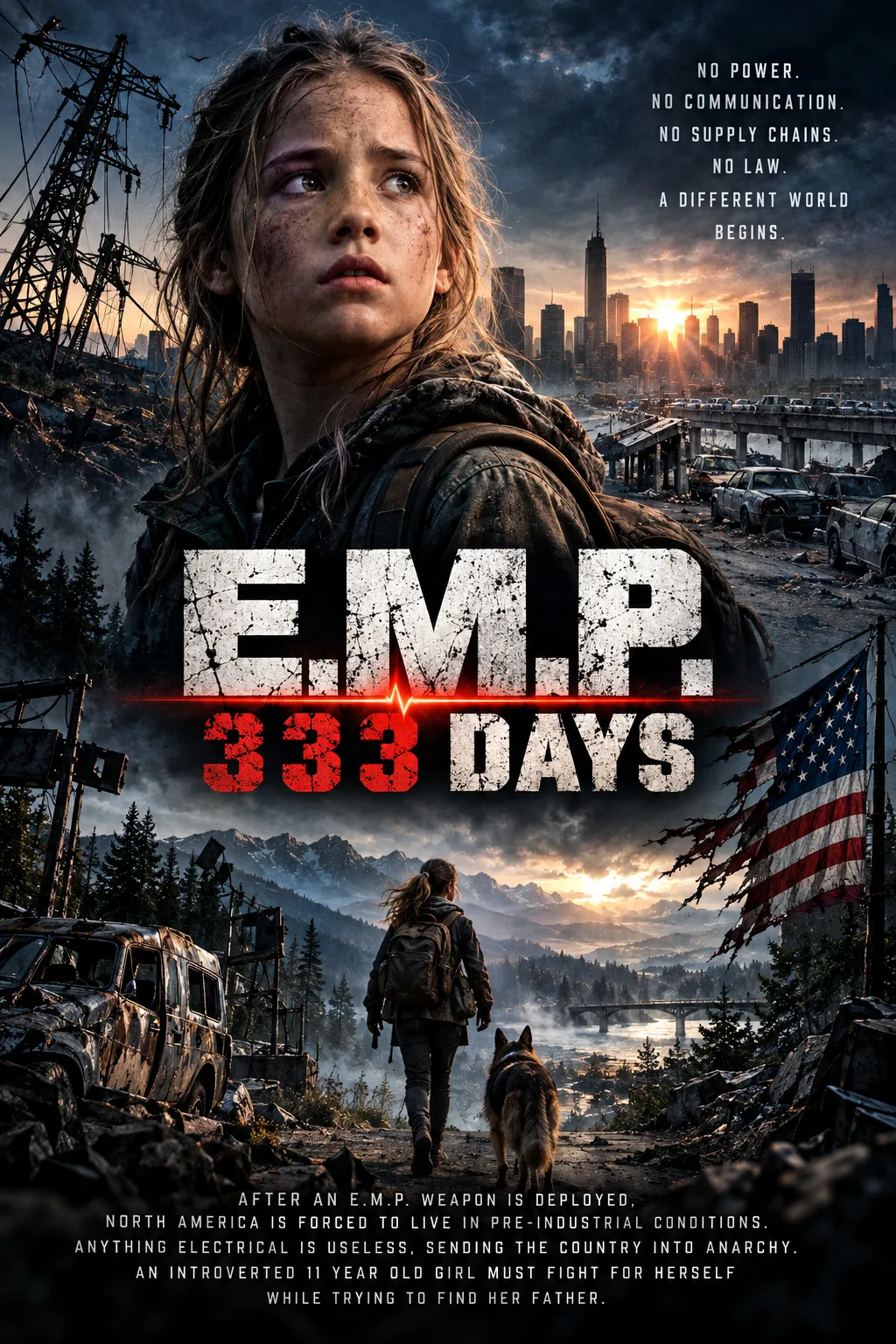
E.M.P.: 333 Days | When the Grid Goes Dark
Modern civilization runs on an invisible network most of us rarely think about. Electricity powers communications, banking, transportation, refrigeration, hospitals, water systems, fuel distribution, supply chains and nearly every device connecting us to the outside world. We have built extraordinary efficiency into this system—but also extraordinary dependence.
E.M.P.: 333 Days takes that dependence and asks a disturbing question: What happens when the electricity suddenly disappears—and doesn’t come back?
The film imagines North America after an electromagnetic-pulse weapon disables electrical and electronic systems, pushing society toward conditions resembling a pre-industrial world. Communications fail, transportation becomes increasingly difficult, supply networks break down, communities become isolated and institutions people assumed would always be there can no longer function normally.
Rather than telling the story through presidents, military commanders or emergency officials, E.M.P.: 333 Days brings the crisis down to a human level. At the center is an introverted 11-year-old girl trying to survive while searching for her father. That perspective transforms what could have been another large-scale disaster movie into something more intimate: a story about vulnerability, adaptation and survival when the systems supporting everyday life disappear.
THE DAY THE SYSTEM STOPS
An electromagnetic pulse is a burst of electromagnetic energy capable, under certain circumstances, of disrupting or damaging electrical and electronic equipment. EMP effects can arise from different sources, including nuclear detonations at altitude and certain non-nuclear technologies. The real-world consequences would depend on the nature of the event, location, equipment vulnerability and infrastructure protections.
The movie takes the catastrophic end of that spectrum. Imagine waking up and discovering your phone doesn’t work. Neither does the internet. ATMs aren’t dispensing money. Gas stations cannot necessarily pump fuel. Traffic signals are gone. Refrigeration begins failing. At first, people wait for the power to return. But hours become days—and days become weeks. That is when an electrical emergency becomes something much larger.
THE REAL DANGER IS EVERYTHING CONNECTED TO THE GRID
The deeper message of E.M.P.: 333 Days isn’t simply that people would lose their lights. Electricity supports countless other systems. Supermarkets rely on continuous deliveries. Warehouses depend on computerized inventories. Fuel distribution requires pumps, communications and transportation. Municipal water systems require electricity for pumping and treatment. Hospitals depend on power for medical equipment, refrigeration and patient care.
The grid therefore isn’t merely another component of modern civilization—it supports nearly everything else. A sufficiently severe and prolonged disruption could create a cascading chain:
POWER → COMMUNICATIONS → TRANSPORTATION → FUEL → WATER → FOOD → HEALTHCARE → PUBLIC ORDER
That cascading effect is where the film’s scenario becomes most thought-provoking.
WHEN CONVENIENCE BECOMES DEPENDENCE
Modern technology has removed enormous amounts of friction from everyday life. We don’t need to know how food reached the supermarket. We don’t store months of water. GPS tells us where to go. Electronic payments eliminate the need to carry much cash. We can communicate instantly with someone thousands of miles away.
These systems provide tremendous benefits, but the movie asks viewers to consider the other side: Have we become so dependent upon complex technological systems that many people would struggle to function without them?
That question extends beyond EMPs. A major cyberattack, prolonged blackout, earthquake, hurricane, wildfire or infrastructure emergency could create some of the same immediate problems on a smaller scale. The cause may change; the fundamental preparedness questions remain remarkably similar.
SURVIVAL THROUGH THE EYES OF A CHILD
Placing an 11-year-old girl at the center makes the scenario particularly effective. She doesn’t control events or understand everything happening around her. She cannot rely upon physical strength or institutional authority. She has to observe, learn and adapt in a world that has suddenly become unfamiliar.
Her search for her father makes the crisis intensely personal. There is no text saying, “I’m okay.” No location sharing. No quick phone call. No social-media update. Distance becomes real again.
The film reminds us that preparedness isn’t only about supplies. It is also about family plans, meeting locations, communication alternatives and knowing what to do when normal methods of contacting one another fail.
WHEN SOCIAL ORDER BEGINS TO FRACTURE
Civilization depends partly upon expectations. We expect food tomorrow, police and firefighters to answer calls, hospitals to operate, money to retain usefulness and trucks to continue arriving. When those expectations disappear, human behavior can change rapidly.
Yet collapse is not the only possible response. Disasters have also produced extraordinary cooperation—neighbors helping neighbors, strangers sharing supplies and communities improvising solutions when formal systems are overwhelmed. Resilient communities can become as important as resilient individuals.
PREPAREDNESS WITHOUT FEAR
The movie can be viewed as a preparedness exercise. What would your household need if electricity disappeared for three days? What about three weeks?
Water, nonperishable food, necessary medications, flashlights, batteries, radio communications, first-aid supplies, cash, paper copies of important information, alternative cooking methods and a family meeting plan suddenly become much more important.
The point isn’t to assume the movie’s worst-case scenario is imminent. A fictional EMP scenario should not be confused with a prediction. The useful exercise is identifying dependencies before an emergency exposes them.
FROM HIGH TECHNOLOGY BACK TO BASIC SKILLS
If sophisticated systems stopped functioning for an extended period, basic skills would become valuable again: growing food, purifying water, repairing equipment, navigating without GPS, administering basic medical care, preserving food, repairing shelter and understanding local geography.
In such a world, knowledge becomes a form of infrastructure. Someone who knows how to repair a water pump may suddenly be more valuable to a community than someone possessing sophisticated technology that no longer functions.
THE LARGER WARNING
Ultimately, E.M.P.: 333 Days isn’t compelling simply because it imagines an electromagnetic attack. It exposes how interconnected modern civilization has become.
We have created systems capable of delivering food, information, energy, transportation and communication with extraordinary speed. But efficiency often comes from interdependence, and interdependence can create cascading vulnerabilities when critical systems fail.
The movie therefore presents a useful thought experiment: What happens when the systems we assume are permanent suddenly aren’t available—and what would we wish we had done beforehand?
THE TAKEAWAY | RESILIENCE BEFORE CRISIS
E.M.P.: 333 Days ultimately becomes less about electricity than about human resilience. When technology disappears, relationships matter. When communications disappear, planning matters. When supply chains disappear, local resources matter. When institutions are overwhelmed, community matters. And when certainty disappears, knowledge and adaptability matter.
The movie’s fictional world is extreme, but its underlying lesson is practical:
Preparedness isn’t predicting exactly what will happen. It is developing enough resilience to handle what you didn’t predict.
If the grid went dark tomorrow, how long could you—and the people around you—continue to function?

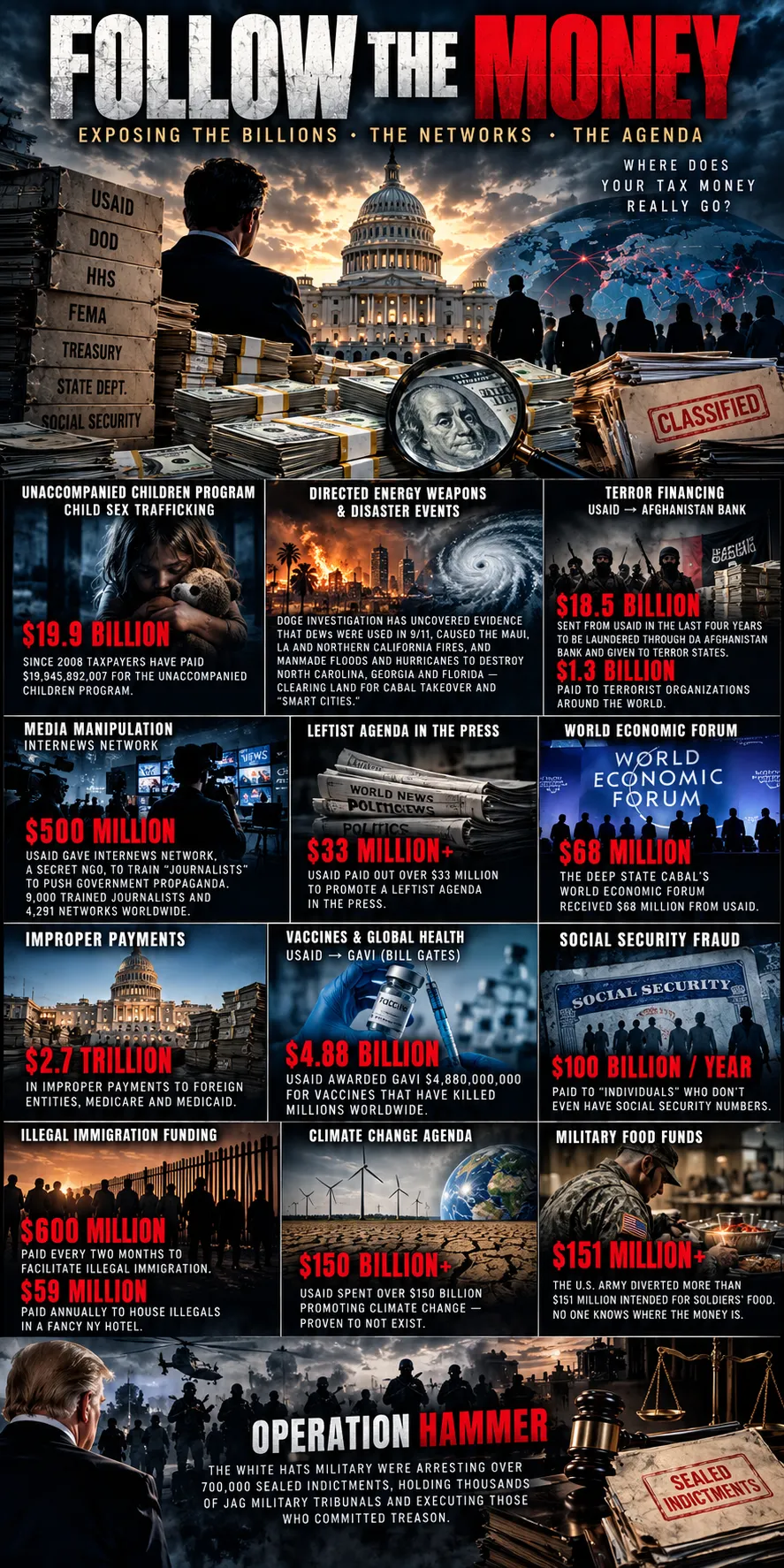
FOLLOW THE MONEY | WHAT THE FEDERAL SPENDING RECORDS ACTUALLY REVEAL
Trillions in Improper Payments • Foreign Aid Scrutiny • Immigration Spending • Military Funds • DOGE Investigations
A wave of government-spending disclosures has fueled one of the largest public debates in years over where taxpayer money goes, who receives it and whether federal oversight has failed. The numbers alone deserve attention. But separating documented expenditures from allegations circulating around those expenditures is essential if the objective is genuine investigation rather than simply repeating extraordinary claims.
One of the largest documented figures comes from the Government Accountability Office. GAO reported that federal agencies accumulated approximately $2.8 trillion in estimated improper payments between fiscal years 2003 and 2024. That does not mean $2.8 trillion was stolen or sent overseas. “Improper payments” include overpayments, payments made to ineligible recipients, incorrect amounts and payments whose validity cannot be established because documentation is insufficient. In FY2024 alone, agencies reported approximately $162 billion in improper payments.
Foreign assistance has also come under intense scrutiny, including programs administered by USAID and funding involving international health, media, humanitarian and development organizations. These expenditures raise legitimate questions about oversight, effectiveness, conflicts of interest and whether programs funded overseas actually advance the interests Congress authorized them to serve. Those questions should be answered by following appropriations, grants, contracts, recipients and audited outcomes—not by assuming every controversial grant proves corruption.
Immigration spending provides another example of why the details matter. New York City did receive approximately $59 million through a congressionally authorized migrant Shelter and Services Program, but reporting found that roughly $19 million went toward hotel expenses. The program was separate from FEMA’s Disaster Relief Fund, contrary to claims that hurricane-disaster money had simply been diverted into luxury hotels. The Trump administration subsequently clawed back more than $80 million in related grants, producing litigation between New York City and the federal government.
Another striking case involves America’s own soldiers. Financial records examined by Military.com showed that at 11 major Army installations in FY2024, approximately $225 million was collected from soldiers for food while more than $151 million was not ultimately spent on food. Army officials said unused funds returned to broader Army accounts, but the reporting prompted bipartisan congressional demands for greater transparency about where that money went.
These documented cases point toward a much larger issue: the federal government’s enormous scale makes waste, payment errors, weak controls and fraud extraordinarily expensive. GAO separately estimated that federal fraud losses could range from roughly $233 billion to $521 billion annually, based on fiscal-year 2018–2022 data. Importantly, fraud and improper payments are not synonymous—the distinction matters when evaluating claims of criminal wrongdoing.
Other allegations circulating alongside these spending stories require a much higher evidentiary threshold. I did not find credible government documentation establishing that DOGE discovered directed-energy weapons caused 9/11, the Maui or California wildfires, or hurricanes and floods in the Southeast to clear territory for “smart cities.” Likewise, searches did not establish a documented military operation executing 700,000 sealed indictments, mass JAG tribunals or executions for treason. One source circulating the “Operation Hammer” narrative explicitly labels its material as rumor, while the DOJ’s documented Operation Hammer Down is an unrelated automobile-insurance fraud prosecution.
The same discipline should apply to claims involving vaccines, climate programs, terrorism financing, media organizations and Social Security. A government expenditure can be real while the interpretation attached to it is false, exaggerated or still unproven. Funding is evidence of funding. An improper payment is evidence of a payment-control problem. Neither automatically establishes money laundering, trafficking, terrorism, murder or conspiracy. Those conclusions require additional evidence.
GAR ANALYSIS | FOLLOW THE MONEY—BUT FOLLOW THE EVIDENCE TOO
The emerging story is already significant without embellishment. Trillions of dollars in documented improper payments, hundreds of billions in estimated annual fraud losses, disputed foreign-aid programs, controversial immigration expenditures and unanswered questions surrounding military spending all warrant serious scrutiny.
The next stage should be document-driven:
Appropriation → Agency → Program → Grant/Contract → Recipient → Expenditure → Audit → Outcome
That is where GAR can make this investigation stronger. Rather than treating every viral claim as established, archive the documents, trace the payments, identify the recipients, compare government databases and separate what is proven from what remains alleged.
Because the strongest investigation isn’t the one with the most extraordinary accusation.
It’s the one that can show the receipts.
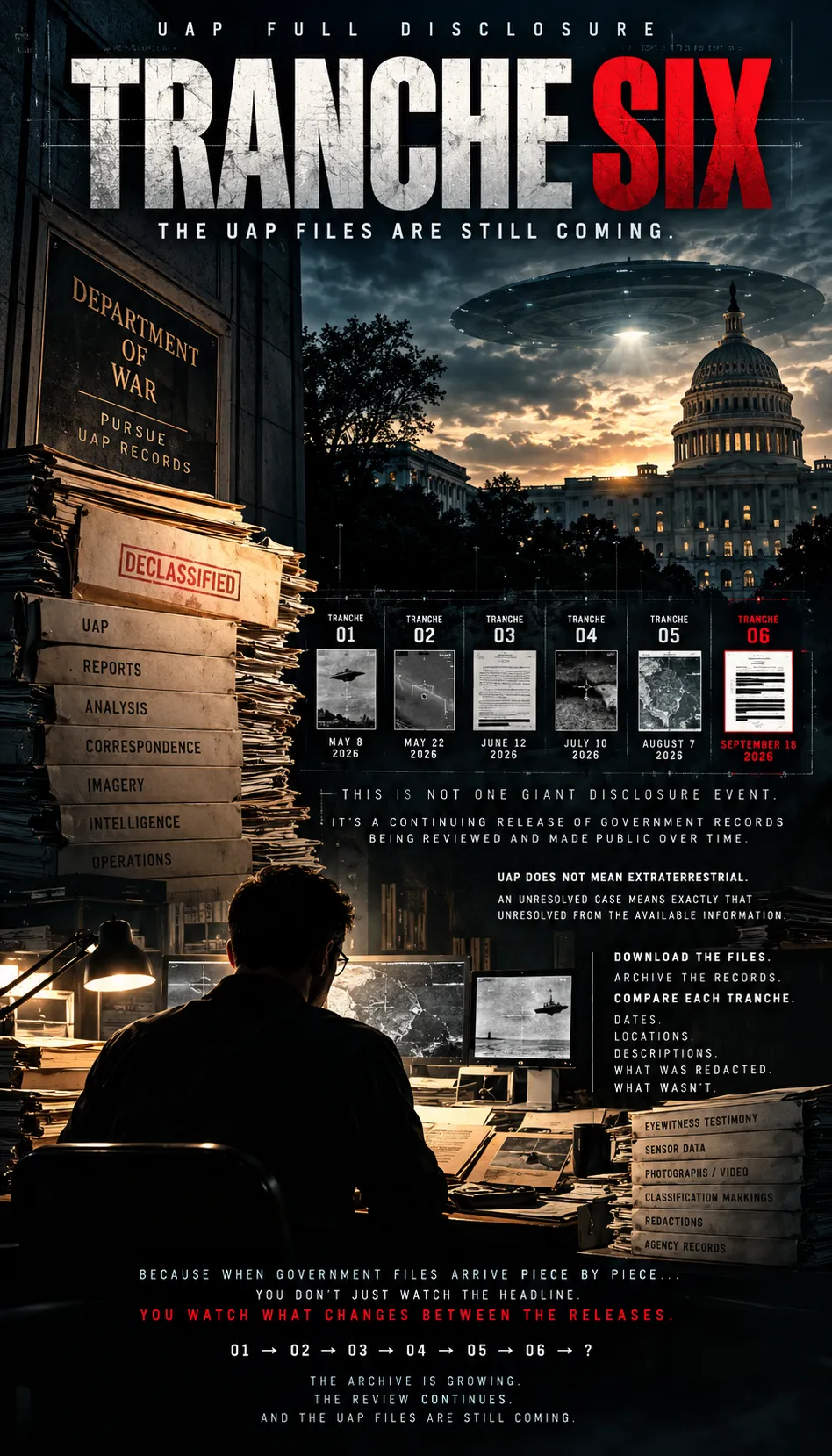
UAP FULL DISCLOSURE | TRANCHE SIX
The UAP Files Are Still Coming
Source: GAR Contributing Writer
The government’s UAP disclosure process continues. On September 18, 2026, the Department of War announced Release 06 of records through PURSUE—the Presidential Unsealing and Reporting System for UAP Encounters. The first tranche was released on May 8, 2026, followed by additional releases in May, June, July, August and now September. What began as a single release has become an ongoing disclosure process involving the review and publication of government records accumulated across decades.
That may be the larger story. This is not one giant disclosure event. PURSUE is unfolding piece by piece as agencies identify, review, declassify and release material. The government says the undertaking involves dozens of agencies and potentially tens of millions of records, meaning the public archive could continue expanding for some time.
An important distinction must remain at the center of the discussion: UAP does not mean extraterrestrial. An unresolved case simply means investigators have not been able to determine conclusively what was observed from the information available. Some cases may eventually be explained as aircraft, drones, balloons, satellites, atmospheric effects, sensor anomalies or classified technologies. Others may remain unexplained. The research challenge is determining which is which.
For GAR, the real opportunity is to compare the releases rather than simply report them. Researchers should track dates, locations, agencies, witnesses, object descriptions, sensor data, photographs, videos, classification markings and redactions across Tranches 01 through 06. Are certain locations recurring? Are similar objects or flight characteristics appearing across different decades? Are previously redacted portions becoming visible? Which agencies are contributing new records?
The archive is especially significant because it brings together both historical and modern UAP records from multiple areas of government. That creates an opportunity to compare reports separated by decades and determine whether recurring descriptions, locations, behaviors or other characteristics can be identified. Similarities do not prove a common cause, but repeated patterns deserve closer examination.
The next question is therefore not simply “What is in Tranche Six?” It is “What is changing between the tranches?” Download the files. Archive the records. Compare the releases. Track the redactions. Separate eyewitness testimony from sensor evidence. Separate documented facts from interpretation. And watch carefully for patterns that only become visible as the archive grows.
GAR ANALYSIS | DISCLOSURE IS A PROCESS, NOT AN EVENT
The continuing PURSUE releases suggest that UAP disclosure may ultimately unfold through an expanding historical record rather than a single dramatic announcement. That requires patience, disciplined research and continued reassessment as new evidence becomes available.
Observe • Verify • Compare • Track • Connect • Reassess
01 → 02 → 03 → 04 → 05 → 06 → ?
The archive is growing. The review continues. And the UAP files are still coming.

This Is What A “Perfect Storm” Looks Like: A Global Fertilizer Crisis, A Global Fuel Crisis, A Super El Niño And World War 3 All At The Same Time
If you think that things are bad now, just wait until food shortages really start to kick in next year. Even the UN is admitting that there isn’t going to be enough food for everyone in 2027. As you will see below, they are preparing for a huge spike in global hunger in 2027. The war in the Middle East has caused a global fertilizer crisis which will produce “thinner harvests” both this fall and next year. At the same time, the soaring price of diesel is putting extreme financial pressure on farmers all over the world. Needless to say, soaring fuel costs will get passed on to the rest of us. On top of everything else, the Super El Niño that I have been writing so much about is causing chaotic weather that is literally wiping out crops in Central America and other parts of the planet. The food that is being harvested now is what is supposed to feed us in 2027, and there simply is not going to be enough of it.
What a disaster 2026 has been.
Coming into this year, there was no war with Iran.
Coming into this year, the Strait of Hormuz was still open.
Coming into this year, there was no Super El Niño.
Coming into this year, the price of diesel was actually quite low.
And coming into this year, we didn’t have a global fertilizer crisis which appears to be having a “catastrophic impact” on global food production…
Six months after the closure of the Strait of Hormuz, the global fertiliser supply chain has collapsed in key regions, creating a dual crisis of physical shortages and soaring costs. Since March, commodity intelligence platform CropGPT has directly surveyed thousands of farmers every month, across eight countries to measure the impacts of the crisis. The data shows a potentially catastrophic impact on global food and beverage – coffee included – supplies and prices in 2027.
CropGPT’s findings reveal that only 43% of farmers surveyed got everything they needed, with farmers in India – which feeds more people than any other country in the world – reporting they have been short of fertiliser for six months. In the Ivory Coast only 6% of coffee farmers were fully supplied in August, while 40% could not get any fertiliser at all. El Nino is forecast to peak just as the effects of fertiliser shortages and thinner harvests come in, multiplying the threat to global agriculture.
CropGPT’s data also unveils a stark economic divide. Where crop prices are strong, such as coffee, farmers have paid more and carried on. Where they are weak, farmers have cut back or stopped buying fertiliser. Farmers who cannot obtain fertiliser face yield loses of up to 50%.
Most people out there have absolutely no idea that this is happening.
They can see that food prices are rising, but they simply do not understand what is ahead of us.
The founder and CEO of CropGPT is ominously warning that the world “cannot absorb a shock of this magnitude without supermarket prices exploding and people starving”…
Commenting on the findings, Rob Weston, founder and CEO of CropGPT, said, “The market is fundamentally mispricing the sheer scale of this crisis. Traders are understandably watching the forecasts to understand the impact of El Niño, but the real catastrophe is already happening on the ground.” He explained that when 57% of farmers across key agricultural regions are reporting they cannot access or afford the fertiliser they need, “we are not just looking at thinner margins, we are facing a global food crisis. Global food systems cannot absorb a shock of this magnitude without supermarket prices exploding and people starving.”
The skeptics can stick their heads in the sand if they wish, but this isn’t going to go away.
Meanwhile, the Super El Niño is expected to reach peak intensity later this year.
The UN’s World Food Program is gearing up for a worst case scenario, because they believe that the Super El Niño will “significantly worsen food insecurity in some of the world’s most vulnerable countries into 2027″…
Analysis from the United Nations World Food Programme (WFP) shows that the strengthening El Niño weather pattern is set to significantly worsen food insecurity in some of the world’s most vulnerable countries into 2027. The agency is ramping up its preparedness and response efforts as impacts from El Niño are already hitting the most vulnerable on the frontlines of hunger.
“El Niño is a massive threat to the food security of millions who are already vulnerable,” said Carl Skau, WFP’s Acting Executive Director. “The sooner we help families to prepare for these climate shocks, the greater our ability to save lives and protect livelihoods. Severe floods and droughts can quickly push communities from coping to crisis. WFP is already ramping-up early response efforts in eight countries, and we stand ready to do even more.”
El Niño is expected to peak between September and December 2026, but in many locations the effects will be felt throughout 2027, due to impacts on future harvest cycles. Drought, flooding and extreme temperatures are already putting communities at risk.
Unless you are really a news hound, you probably aren’t even aware of the nightmare that is currently unfolding in Central America.
Extreme drought has caused “widespread crop failures” in Guatemala, El Salvador and Honduras…
Further north, drought is already taking a heavy toll on Central America’s dry corridor, which stretches across Guatemala, El Salvador, Honduras and Nicaragua. Around 10 million people live in the region, many of them dependent on subsistence farming.
An assessment by Oxfam and humanitarian organisation Action Against Hunger found widespread crop failures across Guatemala, El Salvador and Honduras, with tens of thousands of farming families affected.
Of 73,000 farms that planted maize for the first growing cycle of 2026, around 70,000 reported devastating harvests. Bean crops have also been badly hit and more than 23,000 households reported reduced access to water.
“We are seeing widespread crop losses caused by the drought triggered by El Nino,” said Oxfam’s humanitarian manager for Central America, Ivan Aguilar.
Millions of people in Central America are potentially facing extreme food shortages during the months ahead. Russian and Ukrainian farmers are facing a different sort of a crisis.
They have been able to produce enough wheat, but it has been exceedingly difficult to get it out of the Black Sea since July. As a result, Egypt has not “received any Black Sea grain in about a month”…
Connecting Europe and Asia, the Black Sea is a critical conduit for global crop shipments to some of the world’s most populous nations. Russia and Ukraine make up more than a quarter of the global wheat trade, a share similar to the seaborne oil trade passing through Hormuz in the Gulf.
Supplies have been choked off since July when the countries stepped up attacks on each other’s ports, pummeling grain terminals, silos and vessels. The escalation also hit Russia’s energy infrastructure, sending diesel prices to records. A key input into farming, the cost of the fuel is another inflationary risk for food.
Egypt, the world’s biggest wheat buyer, hasn’t received any Black Sea grain in about a month. Russia’s exports are throttled by Ukrainian drones, while Ukraine, with its ports blocked, is struggling to get its grain out by land or river. As harvests pile up, the country is also struggling to find enough storage.
Egypt imports approximately 50 percent of the wheat that it consumes. Other nations in the Middle East are similarly dependent on wheat from Russia and Ukraine.
If something doesn’t change, there will soon be an enormous number of very hungry people.
In wealthy western countries, crippling summer droughts have resulted in “shriveling harvests”…
Droughts across the US and Europe have been shriveling harvests, and weather forecasts for a “super” El Niño this year means “there are some alarming signals” about the impact of weather on wheat crops, said Joao Lampreia, a market strategist at the Lisbon-based Freedom24.
What we are witnessing is far more serious than most people realize.
Here in the U.S., the latest wheat production numbers are downright gloomy…
The smallest U.S. wheat crop in decades continues to shrink.
The USDA now has combined production at 1.531 billion bushels, 5 million less than July, due to cuts in winter wheat acreage and non-durum spring wheat yield projections. Winter and spring wheat production numbers were both down from a month ago, at 989.89 million and 474.3 million bushels, respectively. If realized, this would be the smallest combined U.S. winter wheat crop since 1963. Combined production for all types of wheat in 2025 was 1.985 billion bushels.
We aren’t producing enough wheat. We aren’t producing enough rice either.
In fact, Zero Hedge is reporting that “America’s rice harvest is forecast to fall to its lowest level in 33 years”…
America’s rice harvest is forecast to fall to its lowest level in 33 years. CBOT rough rice futures, the benchmark for US long-grain rice before milling, are surging higher at the end of summer after rising 69% so far this year.
USDA forecasts total production at 158.2 million hundredweight, roughly 23% below last year’s 206.7 million. Harvested acreage is projected at just 2.057 million acres, the lowest since the 1972/73 season.
“While beginning stocks are raised 4.6 million cwt to a 40-year high of 58.4 million cwt, production is reduced 0.2 million cwt to 158.2 million, a 33-year low, as a reduced forecast for harvested area more than offsets a higher yield,” USDA wrote in a report.
Oh, by the way the size of the U.S. cattle herd has fallen to its smallest size in 75 years.
Everywhere you look, there is more bad news, and now the price of diesel is skyrocketing.
CBS News recently interviewed 52-year-old North Carolina farmer Matt Bell, and he explained how the rising price of diesel is financially crushing his farm…
Prices have been so volatile that Bell said the price he’s quoted from his distributor in the morning is only valid until the afternoon — when it rises again. He can’t avoid the expense — his farm equipment runs on diesel. Bell showed CBS News his combine, which he says now requires about $600 worth of diesel fuel per day. That’s more than twice what he paid last year.
Bell said he blew through his yearly fuel budget of $35,000 in August. Now, he expects his total for the year to be closer to $50,000 to $60,000.
“Every piece of equipment on this farm runs on diesel,” he said. Without it, his farm wouldn’t be able to function.
Without our farmers, we do not eat.
And without diesel, our farmers cannot operate.
At this stage, Bell admits that he is more stressed out than he has ever been before…
“I’ve done this 34 years. I have never worried and stressed like I have the last year,” Bell told CBS News in an interview on Wednesday at his farm in Kings Mountain, North Carolina.
Bell has been forced to make significant changes to his operation as a result of the high costs. He’s shifting some of his acreage, trying to stretch out the lifespan of his equipment and producing his own fertilizer. His children have also opened up a storefront where visitors can pick pumpkins and take hayrides in the fall. But Bell is still feeling the pinch.
“We’ve cut everything we can cut,” he said. “The last several years in agriculture have been terrible, and we have, you know, just cut the fat anywhere we could. But we’re just getting to the point now there’s nothing left to cut. You cannot run without fuel. You cannot run without fertilizer. You have to have that.”
Sadly, if World War 3 continues to intensify it is likely that diesel prices will go a lot higher.
What will we do then?
In the Midwest, fuel surcharges are already going through the roof…
The fuel shock is especially significant across the Midwest, where corn and soybean harvest generates intense demand for combines, tractors, grain trucks and commercial transportation. Midwest diesel averaged $6.250 per gallon on September 14, up from $5.946 just one week earlier, while the national average increased 31.8 cents over the same period. Compared with a year earlier, U.S. diesel was $2.546 per gallon more expensive. That increase affects far more than the fuel line in a farm budget: it raises the cost of operating equipment and moving fertilizer, seed and other inputs while increasing the expense of transporting harvested grain.
Rail freight shows how rapidly those higher energy costs are moving through the agricultural supply chain. Union Pacific’s standard mileage-based fuel surcharge stood at 28 cents per mile in July 2025 but reached 71 cents in July 2026. For October, the railroad has set the surcharge at 68 cents per mile, compared with 33 cents in October 2025 – an increase of roughly 106% year over year. The October charge is based on an August 2026 highway diesel average of $5.462 per gallon. For grain shippers, elevators and co-ops that depend heavily on rail, the surcharge becomes another expense that must ultimately be absorbed somewhere between the farm gate and the final customer.
Diesel prices are also having an enormous impact on the trucking industry.
Earlier today, I was stunned to learn that 16 trucking companies have filed for bankruptcy in less than a month…
A new round of trucking bankruptcies has swept across the U.S. in recent weeks, with carriers ranging from small owner-operators to fleets operating dozens of trucks seeking Chapter 7 or Chapter 11 protection.
At least 16 trucking, delivery and transportation companies entered bankruptcy proceedings between late August and Sept. 21, according to federal court filings and carrier records reviewed by FreightWaves.
The filings include Chapter 11 cases involving Globemaster Incorporated, Xoco Transport, Jett Transport & Materials, CLJ Transporting, Mill Creek Logistics-Illinois, RP Hay Hauling, Truckload LLC and Pacer Transport. Several smaller carriers filed Chapter 7 cases, which typically involve liquidation rather than reorganization.
This is what a “perfect storm” looks like, and we are still only in the early stages. There will be food shortages in impoverished countries all over the globe in 2027.
In wealthy countries, food prices are already ridiculously high, but they will soon go even higher. We have got an unprecedented global food crisis on our hands, and there is no relief in sight for the foreseeable future.
Another Huge Burst Of Inflation Is Ahead, And That Is Really Bad News For An Economy That Is Already Coming Apart At The Seams
Those at the top of the economic food chain just don’t get it. They are mystified by surveys that show that most Americans are deeply upset about the state of the U.S. economy. Since their stock portfolios are doing really well and the official numbers that the government has been giving us look fine they just assume that the general public’s perception of the economy must not be accurate. But the truth is that it is their perception of the economy that is not accurate.
They should try to live the way that the rest of us have been living. Homes are more unaffordable than ever. Our insurance bills have become extremely bloated.
Millions of Americans avoid going to the hospital because a single visit could financially ruin them. Power bills have soared to absurd heights in many parts of the country. Purchasing a new automobile is way out of reach for most of us.
Many of the items that I commonly purchase at the grocery store have doubled or even tripled in price since the beginning of this decade. When I get up to the checkout counter, I feel like asking the clerk which organ I should donate in order to pay for my groceries.
We want it to stop.
What part of that is so difficult for the elite to understand?
Pew Research has discovered that American voters are more concerned about prices and affordability than anything else by “a wide margin”…
By a wide margin, voters most want candidates running for Congress to talk about economic issues – with many specifically mentioning prices and affordability.
One of the primary reasons why Republicans did so well in 2024 is because voters were sick and tired of inflation. But now the 2026 election is coming up, and the shoe is on the other foot.
This month, consumer confidence fell once again…
Consumer sentiment falls in September for two consecutive months. The preliminary September reading for the University of Michigan Consumer Sentiment Index came in at 47.8. This marks a 7.5% (3.9 points) decrease from August. Consumer sentiment sits 13.2% below where it was a year ago and is currently below the 1st percentile in the series’ history.
How low does it have to go before the talking heads on television start taking this seriously?
At this point, it is already at the second lowest level ever recorded…
Consumer confidence fell to its second-lowest level on record in September, and Goldman Sachs says the economy is only part of the reason. Americans, the bank told its clients, have grown unhappier with the state of the world in general.
No, it isn’t because we are unhappy “with the state of the world in general”. Consumer confidence is so low because stuff costs too much money.
If that isn’t simple enough for the analysts at Goldman Sachs to understand, I can put it in even baser terms. Unfortunately, more inflation is on the way. Mortgage rates are rising, and this is going to make homes even more unaffordable than they are now…
The average 30-year fixed-rate mortgage jumped 15 basis points to 7.12% in the week ended September 18, the Mortgage Bankers Association said on Wednesday. It was last higher in May 2024.
Mortgage rates have risen more than a full percentage point since joint US-Israeli strikes against Iran began pushing up the global price of oil in late February, putting the squeeze on prospective homebuyers and a chill into the US housing market.
Mortgage rates track US Treasury yields, which are sensitive to oil prices and the threat they pose to inflation, which has been running above the Fed’s 2% goal for 5-1/2 years.
Meanwhile, gasoline and diesel have become much more expensive this month…
The average retail price of on-highway diesel spiked by 24 cents in the latest week, and by 88 cents in four weeks, to a record $6.529 a gallon at gas stations on Monday, and that’s for the US overall, according to the EIA this morning. Year-over-year, the price of diesel has spiked by 74%.
California diesel prices spiked to $8.246 a gallon. While driving by gas stations, we’ve seen over $8 a gallon for weeks.
These are sobering sights, setting off the inflation alarm bells.
Higher fuel prices will mean that it will cost a lot more to transport stuff to the stores.
So you better brace yourself for significantly higher prices.
Ominously, Bank of America is warning that the price of oil could hit $150 a barrel if the war in the Middle East continues to drag on…
Oil prices could reach upward of $150 a barrel if inventories continue to deplete as the war in Iran rages on, according to Bank of America, and the bank has raised its year-end forecast for Brent crude from $83 a barrel to a new target of $95 a barrel.
“Although alternative routes and escorted Hormuz shipments have mitigated some of the shortfall, damaged infrastructure and rising geopolitical tensions make rapid normalization unlikely,” strategists led by Francisco Blanch, head of global commodities, equity derivatives and cross-asset quantitative investment strategies, wrote in a note released to the media on Tuesday.
If the price of oil does reach $150 a barrel and it stays there for an extended period of time, I believe that we will see rioting in the streets.
I really do.
It seems like just about everyone is raising prices these days. And in some cases where prices aren’t actually being raised, package sizes are getting smaller.
For example, it appears that packages of Sam’s Club toilet paper don’t contain as much toilet paper as they once did…
When comparing the old package to the new package they look almost identical, but when you put them up against a wall you can see the size of the rolls seem to be visibly smaller
The package is labeled the same as the old package, same weight and ply. However when you line them up there is very clearly a large difference in size
This is very strange. Maybe it’s just a manufacturing thing where the rolls are being rolled more tightly. Or maybe we’re being shorted
This needs to be investigated. Costco did the exact same thing back in May, they shrunk the size of their toilet paper rolls
I really detest shrinkflation.
Companies that engage in that practice should be shamed. Needless to say, everything becomes unaffordable if you don’t have any income coming in at all.
All over the nation, we are witnessing layoffs. For instance, it is being reported that CSX could soon be laying off as many as 1,100 railroad workers…
Hundreds of railroad workers could be losing their jobs in the coming weeks across West Virginia, Ohio and Kentucky as 1,100 workers – mostly engineers who deal with safety inspections, maintenance and construction – could lose their jobs across the U.S., a union representing those workers said.
Transportation giant CSX called the The Brotherhood of Maintenance of Way Employees Division on Sept. 14 and told them they’d be furloughing the 1,100 workers by mid-November, according to general chairman Brian Thompson. Those positions range from $80,000 jobs to management positions in duties that involve safety inspections, rail maintenance and construction.
The direction of the transportation industry is often an early indicator of where the U.S. economy is heading as a whole. So this is a very troubling sign.
Thanks to rapidly rising beef prices, a company that operates “314 Wendy’s locations across 15 states” has been forced to file for bankruptcy…
Meritage Hospitality Group, one of the largest Wendy’s franchisees in the U.S., has filed for Chapter 11 bankruptcy protection following a high-stakes dispute with the fast-food chain’s corporate parent.
The bankruptcy filing comes amid severe financial pressures at the franchisee, which has struggled with soaring beef costs and weak customer traffic, while Meritage has also blamed aggressive promotional discounting for squeezing margins.
The Michigan-based operator runs 314 Wendy’s locations across 15 states. The company filed its voluntary petition Thursday with the U.S. Bankruptcy Court for the Western District of Michigan, according to court documents.
Many years ago, I used to eat at Wendy’s a lot when I worked in the D.C. area. But who can afford to eat at Wendy’s on a regular basis now? It turns out that even CNN is bracing for mass layoffs.
One executive is claiming that it will be a “bloodbath”…
“Bloodbath coming, including at CNN,” a TV exec said. “That’s the next big step — slashing and burning.”
Paramount has said it sees at least $6 billion in cost savings, which would translate to several thousand jobs lost in the months ahead.
Inside CNN, staffers have been more or less kept in the dark by top brass, who are themselves unsure who will be running the network once Ellison takes over.
For years, I pleaded with our politicians not to spend trillions upon trillions of dollars that we did not have. But they didn’t listen. And I warned that the trillions of dollars that the Federal Reserve was pumping into the system would cause tremendous inflation.
Now we have tremendous inflation.
The government continues to feed us numbers that show that the rate of inflation is in the low single digits, but we all know that is not true. If it was true, many of our recurring expenses would not have doubled or tripled since the beginning of this decade.
Let’s get real.
The American people are telling us loud and clear that they care far more about the cost of living than they do about anything else. But those at the top of the economic food chain insist on pretending that everything is just fine, and that is extremely unfortunate.
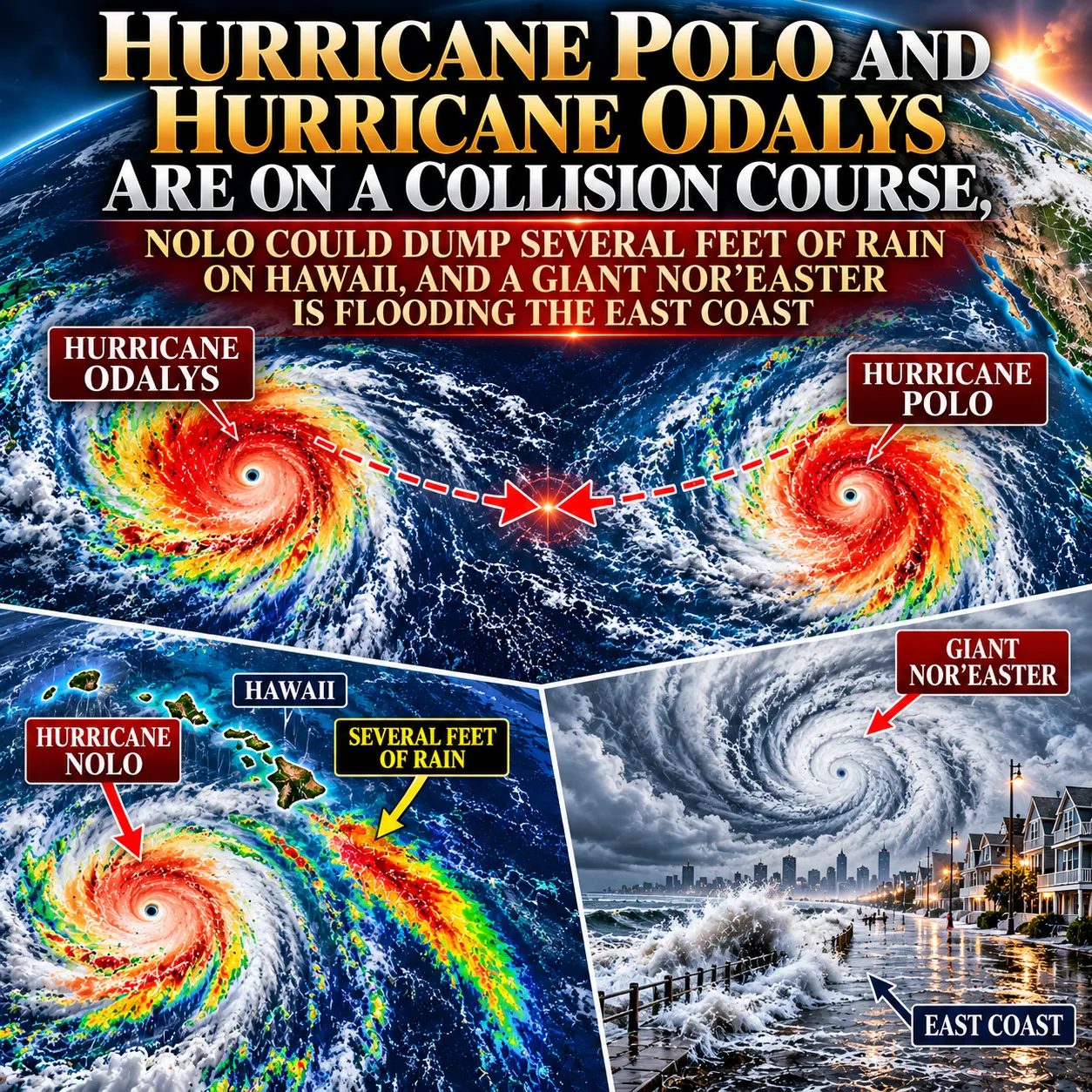
Hurricane Polo and Hurricane Odalys Are On A Collision Course, Nolo Could Dump Several Feet Of Rain On Hawaii, And A Giant Nor’easter Is Flooding The East Coast
What happens when two massive hurricanes collide? It looks like we are about to find out. Hurricane Polo and Hurricane Odalys are heading directly toward one another. Meteorologists have some theories about what will happen as they slam into one another, but nobody really knows. Meanwhile, Tropical Storm Nolo is poised to become Hurricane Nolo. We are being told that it could drop several feet of rain on some parts of Hawaii. Of course the east coast is not being left out of the chaos either. An absolutely huge nor’easter is already causing severe flooding on the east coast. We were anticipating that we would see some absolutely crazy weather this fall, and that is exactly what we are getting.
Hurricane Polo has been absolutely shocking the experts for days.
It went from being a weak tropical storm to a Category 5 hurricane in just 24 hours.
On Thursday, it dropped down to a Category 4 storm, but we were being told that some “near-term strengthening is possible”…
Hurricane Polo’s intensity oscillated between Category 4 and Category 5 on Thursday as its path started moving away from Mexico’s southwestern coast. The storm was expected to remain offshore, while its outer rainbands spread across southwestern Mexico, the U.S. National Hurricane Center said.
“Some near-term strengthening is possible, and Polo is expected to remain a powerful major hurricane for the next few days,” the Miami-based center said.
That forecast turned out to be accurate, because now it appears that Hurricane Polo is about to strengthen into a Category 5 storm for a third time…
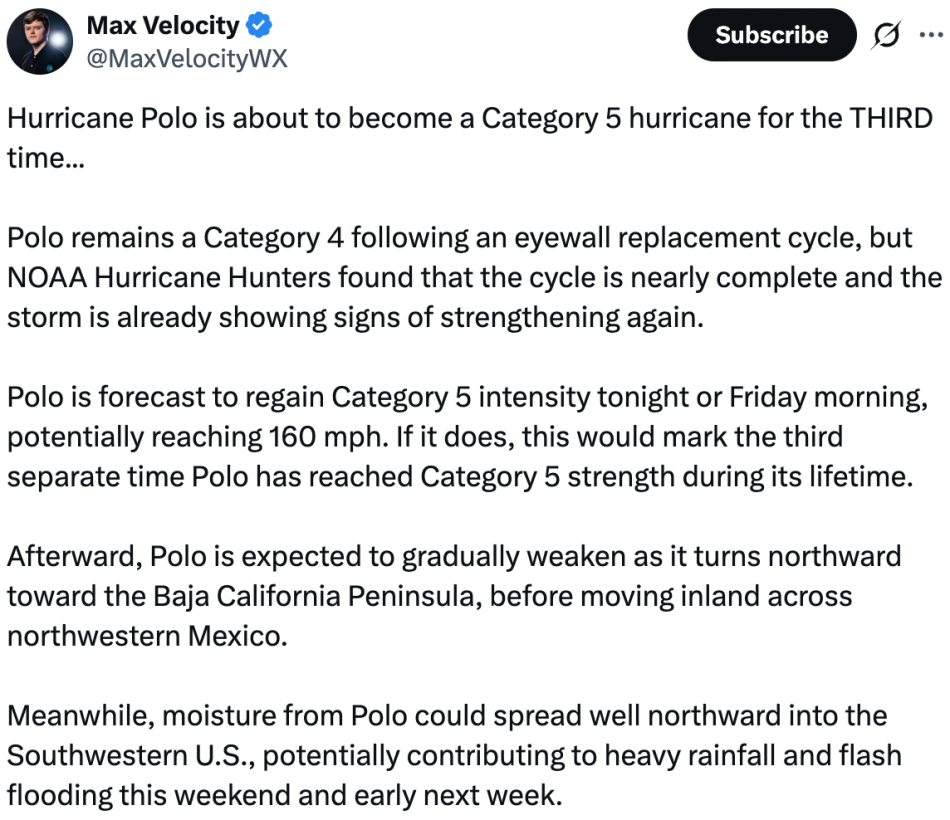
There is nothing about Hurricane Polo that is normal.
The rate at which it originally intensified into a very powerful hurricane stunned everyone, and it ultimately became the second most powerful storm ever recorded in the Eastern Pacific…
Its intensification was dramatic even by those standards, with winds that skyrocketed from 45 mph early Monday morning to 150 mph at around the same time the following day. The hurricane center described its transformation as “truly remarkable.”
Its maximum sustained winds climbed as high as 180 mph at one point, far exceeding the 157 mph threshold for Category 5, the strongest on the hurricane scale.
Polo’s central pressure — an indicator of its strength and potential destructiveness — made it the second-strongest hurricane on record in the Eastern Pacific, behind 2015’s Hurricane Patricia. The storm’s wind speeds tied 2009’s Hurricane Rick as the third-strongest on record for the region.
In addition, a temperature reading that was actually taken inside the eye of Hurricane Polo matched an all-time record that was established by Hurricane Rita all the way back in 2005…
The flight-level temperature reading inside Polo’s eye on Tuesday “tied Hurricane Rita’s in 2005 for the warmest on record, surpassing even some of the most intense western Pacific Super Typhoons ever directly observed like Megi in 2010,” Lowry wrote, crediting Derrick Herndon, a hurricane researcher at the University of Wisconsin-Madison’s Cooperative Institute for Meteorological Satellite Studies.
“Simply put, the amount of latent heat being released inside the core of Polo from the intense ring of thunderstorms surrounding its eye (the notorious eyewall) was exceptional, a rare show of force from Mother Nature when everything aligns to form one of the most powerful storms on Earth,” Lowry wrote.
Everything about this storm seems designed to get our attention. And now Hurricane Polo is on a collision course with another hurricane.
Hurricane Polo is currently headed in a northwesterly direction and that will take it right into the path of Hurricane Odalys…
Cat. 5 Hurricane Polo is moving northwest off the coast of Mexico towards Baja California where it’s expected to interact with Cat. 1 Hurricane Odalys. Interactions between cyclones where they begin to rotate around a common center point begin around 1400 km (870 miles) apart.
Many meteorologists think that Odalys will fizzle out as it encounters Polo.
But Philippe Papin, a senior hurricane specialist at the National Hurricane Center, is warning that there is a possibility that Hurricane Odalys could actually “pull Polo further to the north”…
To the west of Polo, Hurricane Odalys was spinning over the Pacific Ocean. While this storm was not expected to approach land, it could interact with Polo.
“It might pull Polo further to the north, while Odalys could be pulled to the south,” Papin said. “It depends on how close they get together and the overall intensity of those circulations.”
That is a major bombshell.
Right now, we are being assured that Hurricane Polo will make landfall somewhere along the Baja peninsula…
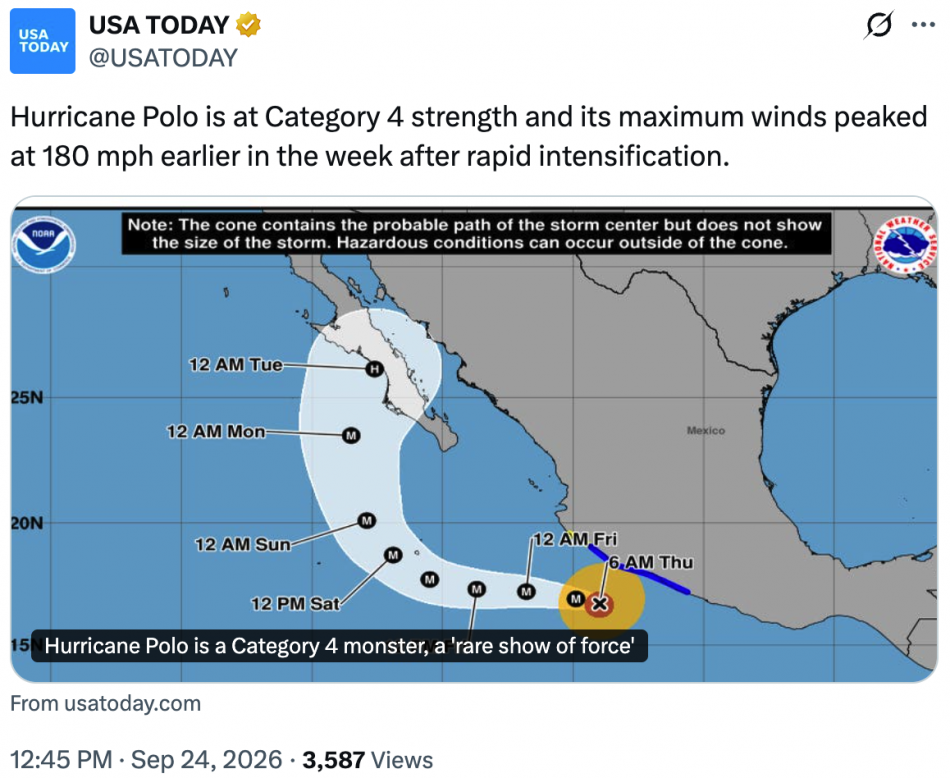
But if Hurricane Polo gets pulled “further to the north”, it could bypass the Baja peninsula altogether.
In such a scenario, there is a possibility that it could actually make landfall in California.
Needless to say, that would be a truly monumental event. At the same time, Tropical Storm Nolo is getting stronger as it heads toward Hawaii…
Hawaii’s Big Island is under a hurricane watch as Tropical Storm Nolo strengthens in the Pacific Ocean, threatening to dump up to 3 feet of rain on the island this week, the National Hurricane Center said.
Nolo formed Wednesday and could become a hurricane by Thursday night, around the time heavy rainfall on the Big Island could also begin, forecasters said. They also warned that the storm could become a major hurricane by the weekend, meaning a Category 3 or higher.
This is also a very serious storm.
At this stage, even Accuweather is warning that Nolo could potentially do even more damage than Hurricane Lala did…
Hawaii is facing its biggest tropical threat so far this hurricane season with newly named Tropical Storm Nolo forecast to become a Category 3 storm as it nears the Big Island into the weekend.
The impacts could be even more severe than Hurricane Lala, which left residents of the Big Island in “total shock” due to the magnitude of the damage. Communication was cut off for some areas, with the hardest-hit areas of Hawaii being without power for over a week.
Friday and Saturday are expected to be the critical days for this storm.
Maui is expected to get about 20 inches of rain and the Big Island is expected to get up to 35 inches of rain in some areas.
But if a worst case scenario materializes, Accuweather says that up to 55 inches of rain is possible…
Rainfall totals could reach as high as 35 inches at higher elevations on the Big Island and 20 inches on Maui, much of it at excessive rainfall rates that will make flooding likely, according to hurricane center forecasts.
“This rainfall may produce catastrophic life-threatening flooding and mudslides, especially in areas of steep terrain,” the hurricane center said in a forecast late Wednesday night Hawaii time.
A forecast from AccuWeather says that as much as 55 inches of rain is possible from Nolo, which could rival Hawaii’s all-time highest rainfall total from a tropical cyclone. The record now belongs to Hurricane Lane, which dumped 58 inches on the Big Island in 2018.
I can’t even imagine what that much rain would look like.
On the east coast, a very scary nor’easter is going to create all sorts of chaos in the days ahead. It is technically not a hurricane, but in many ways it is acting like one.
In fact, we are being told that models are projecting that it will develop “a giant eye at its center by Saturday”…
Millions of Americans have been warned to prepare now as a massive storm approaches the East Coast.
Meteorologists are monitoring a nor’easter, a strong storm off the US coast in the Atlantic, expected to slam into the Northeast in just hours, bringing heavy downpours, coastal flooding, tropical storm-force winds and power outages from Virginia to Maine.
Weather models tracking the nor’easter show it developing a giant eye at its center by Saturday, a formation similar to those seen in hurricanes.
This storm is going to cause so much flooding.
In fact, severe coastal flooding has already started in Virginia…
Flooding began on Wednesday morning in Norfolk, Virginia, where 1 to 2 feet of seawater inundated coastal areas. Rain compounded the tidal flooding, according to AccuWeather Reporter Leslie Hudson, who was covering the storm’s impacts in southeastern Virginia.
“You can’t get through with low-profile vehicles,” Hudson said on Wednesday evening along a flooded road in Norfolk. To add to the dangers, it wasn’t just water in the streets. “There’s also some fire ant flotillas. There’s also gasoline. There’s also oil. Several of the cars that have flooded out, of course, are leaking fluids. So altogether it’s just not a great recipe.”
We haven’t seen a storm of this magnitude on the east coast in quite a while.
Meteorologists are expecting that New England will get hit the hardest…
The heaviest impacts are predicted throughout New England, hitting Connecticut, Rhode Island, Massachusetts, New Hampshire and southern Maine with winds potentially reaching 70 mph and four to eight inches of rain in many areas.
AccuWeather Chief Meteorologist Jon Porter warned in a statement: ‘This storm may be remembered for its destructive coastal flooding and severe beach erosion, especially along eastern Long Island and the Massachusetts coast.’
Coastal flood warnings have been issued in New York, New Jersey, Delaware, Maryland and Virginia on Thursday, with the National Weather Service (NWS) saying that over three feet of water from the sea will be pushed onto land in these areas.
If you live on the east coast, please take this storm very seriously. If you live in Hawaii, please stay inside this weekend. And if you live in California, I would suggest watching the path of Hurricane Polo very closely.
The weather has become very “interesting” during the second half of 2026, and I am convinced that a lot more surprises are still ahead.
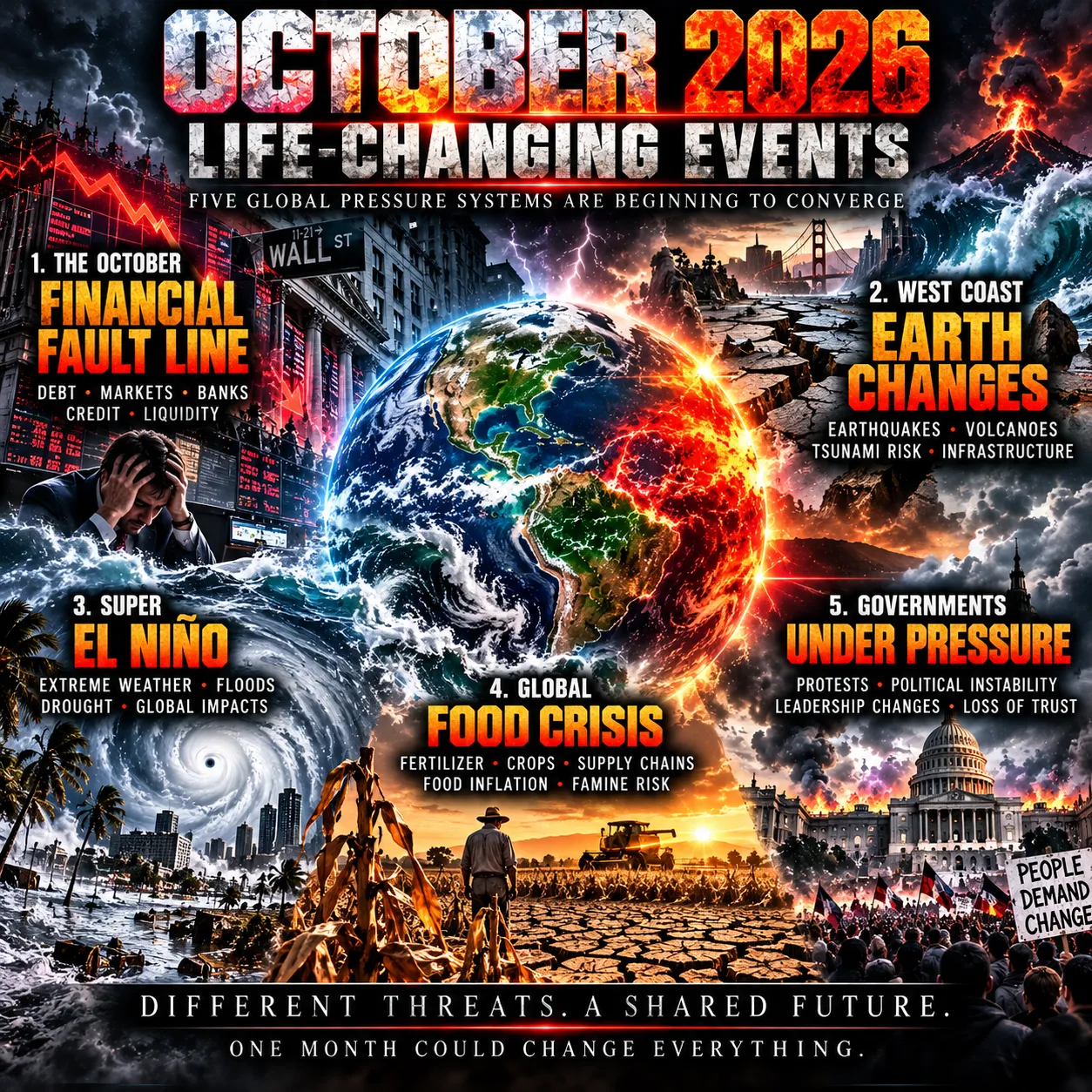
OCTOBER 2026 | LIFE-CHANGING EVENTS
Five Global Pressure Systems Are Beginning to Converge’
Source: GAR Contributing Writer
October 2026 may become one of the most consequential observation windows of the year. Across the financial system, the Pacific, the world’s oceans, global agriculture and political institutions, powerful pressures are developing at the same time. None of these systems guarantees a catastrophic event in October, and several cannot be predicted to a specific date. But the unusual feature is their convergence. Debt and credit stress are colliding with elevated energy costs; a potentially historic El Niño is reorganizing weather patterns; fertilizer and shipping disruptions are threatening future harvests; and governments are confronting increasing economic and social pressure. The question entering October is no longer simply what happens inside each individual system—but whether stress in one begins amplifying stress in another.
1. THE OCTOBER FINANCIAL FAULT LINE. Beneath headline stock-market indexes sits a much larger system of sovereign debt, bonds, corporate refinancing, private credit, commercial real estate, housing and liquidity. October becomes an important watch period because these pressures are occurring while expensive energy and renewed inflation risks can complicate the interest-rate environment. The danger is not simply a stock-market correction. It is the possibility of a transmission event in which BONDS → YIELDS → DEBT → CREDIT → REAL ESTATE → BANKS → LIQUIDITY → MARKETS. The trigger is unknowable; the underlying vulnerabilities are what deserve attention.
2. THE WEST COAST FAULT LINE + SUPER EL NIÑO. Two very different Earth systems also require close observation. Along the Pacific Coast, the San Andreas, Cascadia and associated fault and volcanic systems represent persistent geological hazards—but science cannot predict a major earthquake or volcanic eruption for October. At the same time, the 2026–27 El Niño is strengthening and California authorities are already preparing coastal communities for the possibility of stronger storms, heavy rainfall, large waves, flooding and erosion later in the season. These should not be treated as causally connected phenomena. They belong together in our October watch because both remind us how quickly infrastructure, transportation, power, water and communities can be tested when natural systems become disruptive.
3. THE GLOBAL FOOD CRISIS. This may ultimately become one of the most consequential stories because several pressures are striking the food system simultaneously. Conflict has disrupted Black Sea grain infrastructure; Hormuz disruptions have restricted fertilizer flows; and strengthening El Niño conditions threaten rainfall patterns across important agricultural regions. Recent analysis warns that these combined input-and-output shocks could reverberate through global agriculture over the next 12–24 months. FAO has separately warned that fertilizer scarcity could reduce yields and tighten food supplies during the second half of 2026 and into 2027. For wealthy nations, the first manifestation may be higher prices. For already vulnerable populations, the progression can become much more dangerous: CROP LOSS → FOOD INFLATION → FOOD INSECURITY → ACUTE HUNGER → FAMINE RISK.
4. WORLD LEADERS & GOVERNMENTS UNDER PRESSURE. Economic pressure eventually becomes political pressure. Expensive energy, food inflation, housing costs, unemployment fears, wars, corruption allegations, protests and declining institutional trust can place enormous strain on governments. That does not establish that particular leaders will fall in October, but it gives us another important signal to monitor: whether economic grievances begin transforming into broader challenges to political authority. Watch demonstrations, strikes, coalition fractures, resignations, no-confidence votes, emergency policies and unexpected leadership changes. The sequence is straightforward: ECONOMIC PRESSURE → PUBLIC ANGER → LOSS OF TRUST → POLITICAL PRESSURE → GOVERNMENT RESPONSE.
Taken together, these are not five isolated predictions. They are five interacting pressure systems entering the same Fall 2026 window: FINANCIAL STRESS • EARTH CHANGES • SUPER EL NIÑO • FOOD SECURITY • GOVERNMENT INSTABILITY. Energy connects to fertilizer. Fertilizer connects to food. Food connects to inflation. Inflation connects to interest rates. Interest rates connect to debt and markets. Economic hardship connects to public anger and political instability. Extreme weather can place additional pressure on food, infrastructure and government resources. That is the October storyline: not that every feared event must happen, but that multiple systems are simultaneously carrying unusually high levels of stress. October is therefore a month to Observe → Verify → Track → Connect → Reassess—and to watch closely for the moment when separate signals begin becoming one larger pattern.
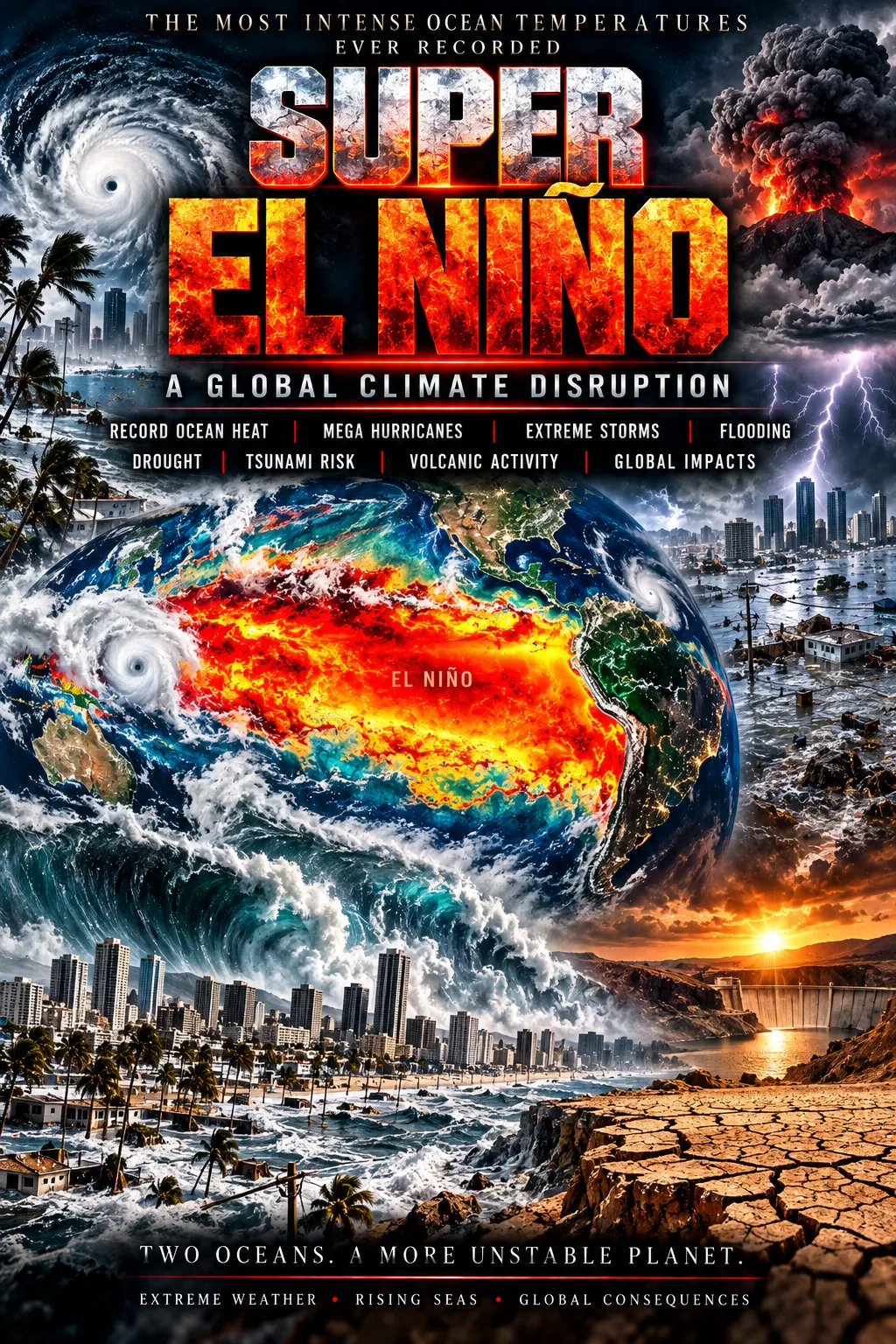
SUPER EL NIÑO
The Ocean Heat Event Reshaping Global Weather
Record Ocean Heat • Atmospheric Rivers • Flooding • Drought • Pacific Hurricanes • Extreme Storms • Global Weather Disruption
Source: GAR Contributing Writer
Something extraordinary is developing across the Pacific Ocean. As the world enters the final months of 2026, El Niño has strengthened into an exceptionally powerful event, with ocean temperatures across portions of the eastern equatorial Pacific running more than 3°C above normal. NOAA now says there is a greater than 90% probability that this becomes a very strong El Niño during the fall and winter of 2026–27, and its latest seasonal outlook gives the event a substantial chance of exceeding previous El Niños in the modern observational record. What began earlier this year as an emerging warming pattern has become one of the most important global climate signals we are tracking.
The numbers deserve attention because El Niño is much more than warm water sitting in one part of the Pacific. It represents a major reorganization of the coupled ocean-atmosphere system. As enormous areas of tropical Pacific water become unusually warm, heat and moisture are transferred into the atmosphere, tropical rainfall patterns shift, trade winds change, the jet stream can move, and weather patterns thousands of miles away can be altered. The stronger the El Niño becomes, the greater the possibility that its fingerprints will appear across multiple regions simultaneously. This does not mean every storm, flood, drought or heat wave is caused by El Niño. It means one of Earth’s most powerful natural climate oscillations is now operating at exceptional strength.
The ocean itself is already sending additional signals. NOAA is tracking marine heat waves off the western United States and projects an 80–100% likelihood of marine-heat-wave conditions off portions of California through the end of 2026. Scientists emphasize that some of this coastal warming predates the present El Niño and should not simply be attributed to it. But the timing is significant: El Niño-related warm water may reach the West Coast as existing marine heat-wave conditions are fading, potentially extending the period of stress on marine ecosystems. NOAA researchers say unusually warm conditions could ultimately develop in a nearshore corridor extending from Baja California toward Alaska.
What happens in the ocean does not remain in the ocean. Warm water provides heat and moisture to the atmosphere, and a powerful El Niño can rearrange storm tracks across the Pacific and North America. Historically, strong El Niño winters have favored wetter conditions across portions of the southern United States, including California and the Southwest, although no individual storm season follows the historical pattern perfectly. Atmospheric rivers can transport enormous quantities of tropical and subtropical moisture toward the West Coast. When several storms arrive in succession, the danger is not simply heavy rain but saturated soils, flash flooding, river flooding, mudslides, debris flows, coastal erosion and mountain snowfall measured in feet rather than inches.
This is where the California story could become especially important. A powerful El Niño does not guarantee a repeat of the state’s most destructive winters, but it changes the background conditions upon which individual storms develop. Southern and Central California are already experiencing unusually warm coastal waters associated partly with an existing marine heat wave. As the El Niño influence reaches farther north and atmospheric circulation changes during late fall and winter, the interaction between warm ocean conditions, Pacific storm systems and atmospheric rivers deserves close monitoring. The critical question will not simply be how much rain falls during one storm, but whether multiple systems begin arriving faster than watersheds and infrastructure can recover.
The hurricane story is more complicated than simply saying warmer oceans mean more hurricanes everywhere. A strong El Niño typically increases upper-level wind shear across important parts of the tropical Atlantic, disrupting developing hurricanes. That effect is already visible in 2026. NOAA continues to favor a below-normal Atlantic hurricane season, and the Atlantic has been extraordinarily quiet so far. In the eastern and central Pacific, however, El Niño can produce conditions more favorable for tropical cyclone development. The result can be a striking contrast: suppressed hurricane activity across much of the Atlantic while the Pacific becomes the basin demanding greater attention.
The broader global consequences extend far beyond North America. El Niño can shift rainfall away from some regions while concentrating it over others. Indonesia and parts of the western Pacific can experience drought and agricultural stress while portions of the eastern Pacific and the Americas experience heavier precipitation. Indonesia is already preparing for delayed rains and agricultural impacts associated with the current event. Crops, reservoirs, hydroelectric generation, fisheries and food prices can all be affected when established rainfall patterns are disrupted for months at a time. An extreme El Niño therefore becomes more than a weather story—it can become a food, water, energy, infrastructure and economic story.
Extreme thunderstorms and flooding represent another area to watch carefully. A warmer atmosphere can hold more water vapor, but the actual development of severe thunderstorms depends upon numerous additional ingredients, including atmospheric instability, wind shear, frontal boundaries and regional circulation. El Niño changes those ingredients differently from place to place. The danger is therefore not that every location suddenly experiences unprecedented thunderstorms. It is that the global weather system is being rearranged while enormous amounts of oceanic heat and atmospheric moisture are available to individual storm systems when the right conditions come together.
There is also an important distinction regarding tsunamis. El Niño does not generate tectonic tsunamis. Those are primarily caused by large undersea earthquakes, submarine landslides and volcanic activity. What El Niño can produce are unusually energetic ocean conditions, large storm-driven waves, coastal flooding, erosion and storm surge that may visually resemble some effects people associate with tsunamis. These hazards should not be confused. GAR can simultaneously track heightened seismic activity around the Pacific Ring of Fire and an extraordinary El Niño, but they represent different Earth systems unless evidence demonstrates a physical connection.
What makes the remainder of 2026 particularly significant is that the event may not yet have reached maximum strength. El Niño events historically tend to peak between approximately October and February, and the current model consensus expects this event to continue strengthening into the Northern Hemisphere winter. That places October through February at the center of our observation window. NOAA’s current outlook indicates that the coming October–November–December period has a 75% probability of producing an event exceeding the strength of previous El Niños in its modern record. If that verifies, we are not simply watching another routine ENSO cycle. We will be observing conditions outside much of the modern forecasting experience.
That does not mean every extreme-weather prediction circulating online will occur. A record-setting ocean signal is not a calendar specifying when or where disasters will happen. The atmosphere remains chaotic, regional effects vary enormously, and even exceptionally strong El Niños produce surprises. The more useful approach is to watch whether independent indicators begin confirming the expected transition: tropical Pacific temperatures, subsurface heat, atmospheric circulation, jet-stream displacement, Pacific tropical cyclones, atmospheric rivers, precipitation anomalies, marine heat waves, snowpack, drought and flooding.
For the Sleeping Giant, this becomes another example of why individual headlines should be viewed as pieces of a larger system. Ocean heat influences atmospheric circulation. Atmospheric circulation changes storm tracks. Storm tracks redistribute water. Water affects agriculture, infrastructure and energy. Those disruptions can move into food supplies, insurance markets, transportation and ultimately the economy. What begins thousands of miles offshore as an ocean-temperature anomaly can eventually become a financial, agricultural and humanitarian event on another continent.
The signal we are watching is therefore larger than “Super El Niño.” It is the possibility that an extraordinary amount of Pacific Ocean heat is beginning to reorganize weather patterns around the planet at the same moment other natural and human systems are already under considerable pressure. The coming months will tell us how strongly those connections develop.
OCEAN HEAT → ATMOSPHERIC SHIFT → STORM TRACKS → EXTREME WEATHER → FLOOD / DROUGHT → FOOD & INFRASTRUCTURE PRESSURE
SUPER EL NIÑO | THE OCEANS ARE SENDING A SIGNAL
Watch the Pacific. Watch the atmosphere. Follow the water.
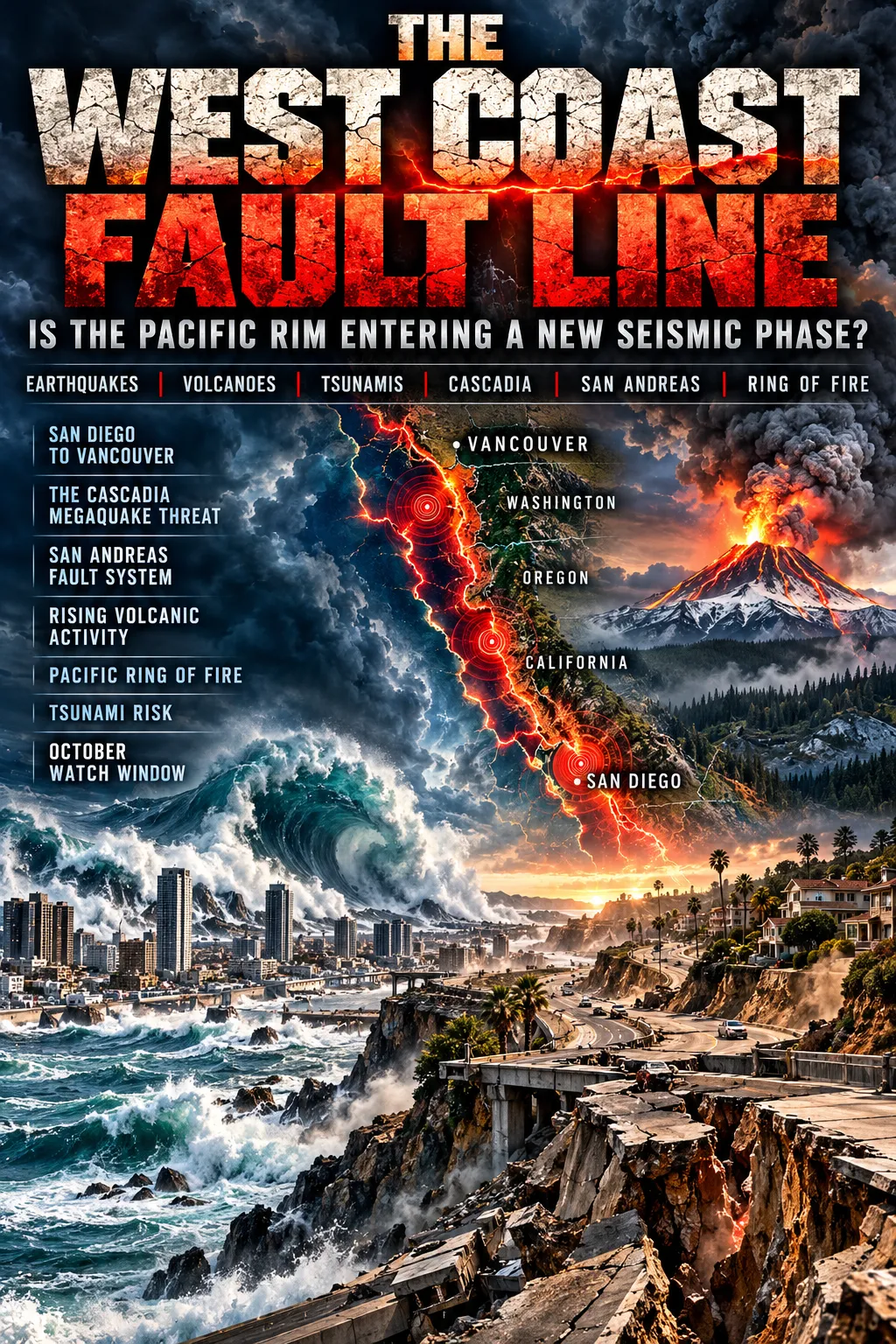
THE WEST COAST FAULT LINE
Is the Pacific Rim Entering a New Seismic Phase?
San Andreas • Cascadia • Earthquakes • Volcanoes • Pacific Ring of Fire • October Watch
Source: GAR Contributing Writer
Something is moving beneath the Pacific—and as we approach October 2026, the question is whether the earthquake and volcanic activity being observed around the Pacific Ring of Fire represents ordinary variability within one of the most geologically active regions on Earth, or whether we are witnessing the early stages of a more consequential period of seismic activity.
From Southern California north through the San Andreas system, Cape Mendocino, Cascadia, Oregon, Washington and Vancouver Island, western North America sits beside an extraordinary network of tectonic boundaries. At the same time, major earthquakes and powerful volcanic eruptions elsewhere around the Pacific have drawn renewed attention from independent geophysical researchers, including geophysicist and YouTube commentator Stefan Burns, who has been closely tracking the developing pattern.
Burns has recently focused attention on high-magnitude earthquakes and significant volcanic eruptions, particularly activity around Indonesia and the broader Pacific Ring of Fire. In a September 13 presentation, he examined whether the recent clustering of major seismic and volcanic events could be signaling increased potential for a much larger volcanic event, including the possibility of a VEI-6 or greater eruption. That is an important distinction: Burns is presenting an interpretation and forward-looking risk hypothesis, not an official eruption forecast from a government volcano observatory. Nevertheless, his work raises a legitimate research question for the Sleeping Giant: when significant geological events begin appearing across multiple tectonic regions, which signals represent background activity and which deserve closer attention?
The West Coast deserves particular attention because this is not one continuous fault stretching from San Diego to Vancouver. It is a complicated tectonic system involving the San Andreas and numerous Southern California faults, the Mendocino Triple Junction in Northern California, and the enormous Cascadia Subduction Zone extending from Northern California toward Vancouver Island. Cascadia is capable of producing earthquakes far larger than the typical California earthquake. USGS estimates a 10–15% probability of approximately a magnitude-9 Cascadia earthquake during the next 50 years, along with substantial probabilities for other damaging earthquake types in the Pacific Northwest. Those are long-term probabilities—not an October prediction—but they establish that the underlying hazard itself is very real.
What makes the present discussion considerably more interesting is research into the relationship between Cascadia and the northern San Andreas system. Marine geologist Chris Goldfinger and colleagues have studied offshore sediment records showing that major Cascadia earthquakes and northern San Andreas earthquakes have repeatedly occurred unusually close together in the geological record. Earlier Oregon State research found 13 instances among 15 studied northern San Andreas events that occurred in close association with major southern Cascadia earthquakes. Researchers have considered whether stress generated by a massive Cascadia rupture could influence the San Andreas system. In other words, scientists are investigating whether two of North America’s most consequential earthquake systems should always be viewed independently—or whether under some circumstances one enormous rupture could influence another.
That possibility changes the way we should think about a future West Coast event. The scenario is not necessarily one earthquake somehow ripping continuously from San Diego through Vancouver. The scientifically more plausible concern involves multiple fault systems and cascading hazards. A major Cascadia rupture could devastate portions of Northern California, Oregon, Washington and British Columbia while generating a destructive tsunami. A major San Andreas event would create a different geographical pattern of shaking and infrastructure damage. If major events occurred unusually close together, the consequences for transportation, ports, power, communications, emergency services and supply chains could become dramatically more difficult to manage. The important concept is therefore not simply “The Big One.” It is cascading geophysical risk.
There is another layer to the story: volcanoes. The same tectonic forces that created Cascadia also created the Cascade volcanic arc, including Mount Baker, Glacier Peak, Mount Rainier, Mount St. Helens, Mount Adams, Mount Hood, Mount Jefferson, Three Sisters, Newberry and Crater Lake. California adds another collection of monitored volcanic systems, including Mount Shasta, Medicine Lake, Lassen, Clear Lake, Long Valley, Coso and Salton Buttes. This gives the western United States a remarkable convergence of earthquake and volcanic hazards running roughly parallel to the Pacific margin. But this is also where careful interpretation becomes essential: proximity on a map does not mean all these systems are simultaneously activating.
As of the latest official monitoring reports available in late September, they are not. USGS reported that all monitored California volcanoes remained at NORMAL alert status with GREEN aviation codes, showing normal background seismicity and deformation. The Cascades Volcano Observatory likewise reported Mount Baker, Glacier Peak, Rainier, St. Helens, Adams, Hood, Jefferson, Three Sisters, Newberry and Crater Lake at normal background activity. Small earthquakes have occurred around some volcanoes, but USGS currently considers them consistent with normal conditions. This is an important baseline because if conditions begin changing during October, we have something objective against which those changes can be measured.
The possibility of a major volcanic event somewhere around the broader Pacific is different from saying a Cascade volcano is preparing to erupt. Volcanic unrest must be evaluated volcano by volcano using earthquake locations, ground deformation, gas emissions, thermal changes and other monitoring evidence. Recent scientific literature specifically cautions against trying to forecast eruptions from public seismic charts alone: increases in earthquake activity do not automatically lead to eruptions, and there is no universal relationship between the apparent intensity of precursors and the timing or magnitude of an eruption.
That does not mean the larger pattern should be ignored. It means we need to know exactly what we’re looking for. If October produces a meaningful change, the strongest signals would not simply be another viral earthquake prediction. They would be independently measurable changes: sustained earthquake swarms migrating beneath a volcanic system, significant ground deformation, changing gas chemistry, elevated heat flow, official volcano-alert changes, unusual clusters of larger earthquakes along critical fault segments or multiple independent monitoring networks beginning to identify the same anomaly. Those are the kinds of signals that would move this story from speculation toward something much more significant.
There is also an important distinction between prediction and preparation. USGS states unequivocally that scientists currently cannot predict a major earthquake by specifying its exact date, location and magnitude. Earthquake science instead estimates probabilities and hazards over time, while earthquake early-warning systems provide seconds of warning only after rupture has already begun. Therefore, no scientifically verified evidence presently establishes that a catastrophic West Coast earthquake will occur in October 2026.
But uncertainty should not be confused with absence of risk. Cascadia will rupture again. California will experience additional major earthquakes. Cascade volcanoes will erupt again. These are geological realities; what remains unknowable is precisely when. That makes the current period worth monitoring without turning monitoring into certainty. Burns and other independent observers are asking whether current global earthquake and volcanic activity represents something larger developing beneath the surface. Official agencies, meanwhile, currently report normal volcanic conditions along the U.S. West Coast. The Sleeping Giant should watch the space between those two positions and follow the incoming data.
Our October watch should therefore focus on several interconnected systems: Southern California → San Andreas → Mendocino Triple Junction → Cascadia → Cascade Volcanoes → Alaska/Aleutians → Pacific Ring of Fire. Rather than counting every earthquake as confirmation of a predetermined outcome, we should look for changes in magnitude, depth, frequency, geographic migration and clustering—and then compare those changes with deformation and volcanic monitoring. One earthquake is an event. Several unrelated earthquakes may still simply be coincidence. But persistent changes confirmed across independent datasets can become a signal.
This is precisely where the GAR framework becomes useful. Observe the signals. Follow the threads. Identify the patterns. Look for convergence. Reassess as new evidence arrives. October 2026 should therefore be treated as a heightened observation window, not a predetermined date with geological destiny attached to it. Watch Cascadia. Watch the San Andreas system. Watch the Mendocino Triple Junction. Watch the Cascades. Watch Alaska and the Aleutians. Watch Indonesia and the western Pacific. Most importantly, watch whether independent measurements begin changing together.
Because underneath the noise, headlines and predictions is something considerably larger: the Pacific Rim is one of the most powerful geological systems on Earth. The forces operating beneath it are measured not in election cycles or market quarters, but across centuries and millennia. We cannot know whether October will become an extraordinary geological month. But we can know exactly what signals would tell us that something has changed.
SIGNALS → SEISMICITY → DEFORMATION → VOLCANISM → CONVERGENCE → MAJOR EVENT?
THE WEST COAST FAULT LINE
Watch the Earth. Follow the data.
THE OCTOBER FINANCIAL COLLAPSING FAULT LINE
Are Global Markets Approaching a Breaking Point?
Stocks • Bonds • Credit • Debt • Housing • Liquidity • AI Valuations • Global Markets
Source: GAR Contributing Writer
Something beneath the surface of the global financial system appears to be changing as September 2026 comes to an end. The public-facing financial story continues to revolve around stock indexes, artificial intelligence, corporate earnings and the daily movements of Wall Street.
But the stock market is only one layer of a much larger financial structure. Underneath it, pressure has been accumulating across government bonds, sovereign debt, housing, commercial real estate, private credit, consumer finances and corporate refinancing. These are not necessarily separate stories. They are parts of an interconnected system, and the critical question entering October is whether these individual pressures are beginning to converge.
The bond market may be providing one of the most important signals. Stocks attract public attention, but bonds finance much of the global system. Government bond yields influence mortgage rates, corporate borrowing, commercial real-estate financing, private credit, government interest expense and ultimately the valuations investors are willing to place on financial assets. Years of extraordinarily inexpensive money encouraged governments, corporations, investors and property owners to accumulate enormous amounts of debt under financial conditions that no longer exist. As that debt matures, borrowers increasingly must refinance under very different conditions. What could be comfortably financed at 3% becomes a different proposition at 6%, 7% or 8%. Multiply that adjustment across trillions of dollars of debt and refinancing becomes one of the most important financial signals to watch.
Former BlackRock portfolio manager Ed Dowd has repeatedly warned investors to look beyond headline stock-market performance and examine what is happening underneath the economy. Dowd has focused on housing weakness, employment conditions, consumer pressure, private-credit risk and what he considers excessive valuations associated with the AI investment boom. He has publicly discussed the possibility of a major equity-market correction, including scenarios involving declines substantially larger than an ordinary bear market. Those numbers remain Dowd’s forecasts rather than established outcomes, but his broader argument deserves attention: the indexes can continue presenting an appearance of strength even while important economic and credit indicators deteriorate beneath them.
Housing and financial analyst Melody Wright is approaching many of the same concerns from another direction. Wright has focused extensively on housing transactions, mortgages, consumer finances, multifamily properties and what she views as an increasingly significant disconnect between official economic narratives and conditions visible deeper inside housing and credit data. Her recent description of the current environment was striking: “Those that can are just looting the system.” Wright’s characterization is her interpretation, not a demonstrated description of every market participant, but it raises an important question about the present financial cycle. Are elevated asset prices giving the public an incomplete picture of what is happening underneath the system while those with the greatest access to capital, liquidity and financial information position themselves for what may come next?
This brings us to a distinction that may become increasingly important during the months ahead: the stock market is not the economy, and the index is not the financial system. Rising equity indexes do not necessarily tell us whether households are financially healthy, commercial real estate is stable, highly leveraged corporations can refinance affordably, consumers can continue carrying increasing debt loads or governments can indefinitely finance rapidly expanding obligations without consequences. Yet much of daily financial reporting is inevitably centered on the most visible indicators—the Dow, S&P 500 and Nasdaq. Those benchmarks matter, but they can obscure what is happening inside the financial plumbing. The index may be the headline; the underlying credit system may ultimately be the bigger story.
Debt is the thread connecting many of these developments. The modern financial system rests upon an enormous interconnected structure of government debt, corporate bonds, mortgages, commercial-property loans, private credit, consumer borrowing and leveraged investment strategies. As long as liquidity remains available, refinancing continues and collateral values stay elevated, very large debt burdens can remain manageable. Problems develop when that equation changes. Higher rates increase debt-service costs. Falling collateral values make lenders more cautious. Tightening lending standards reduce refinancing options. Businesses cut investment and employment. Consumers pull back. Delinquencies and defaults rise. What initially appears to be a problem in one corner of the financial system can migrate outward through credit channels into the broader economy.
At the same time, the extraordinary artificial-intelligence investment boom is adding another layer to the equation. Hundreds of billions of dollars are flowing toward AI infrastructure, semiconductor capacity, data centers, power generation and related technologies. Artificial intelligence may indeed transform the global economy, but technological transformation does not eliminate the possibility of financial excess. Railroads changed civilization while producing enormous speculative investment cycles. The Internet fundamentally transformed the world while simultaneously producing the dot-com bubble. The relevant question is therefore not whether AI is real—it clearly is—but whether financial markets have priced extraordinary expectations into a relatively concentrated group of companies while enormous amounts of capital and increasingly significant borrowing are being committed to infrastructure whose ultimate returns remain uncertain.
This is why October deserves particularly close attention—not because a calendar guarantees that markets must collapse during October 2026, but because numerous pressures are arriving at the same time. Sovereign bond yields, government borrowing, private credit, housing affordability, commercial-real-estate refinancing, consumer debt, corporate refinancing, concentrated technology valuations, enormous AI capital expenditures, energy pressures and geopolitical instability are increasingly interacting. Any one of these pressures can potentially remain contained. The danger develops when one begins transmitting stress into another. That is when individual signals become threads, threads form patterns and patterns can develop into a cascade.
Financial crises rarely announce themselves in advance. More often, the triggering event initially appears manageable: a leveraged institution needs liquidity, a major borrower cannot refinance, a fund receives unexpected redemptions, collateral suddenly falls in value or a seemingly isolated credit problem exposes larger hidden leverage. Assets are then sold to raise cash, prices decline, collateral values fall further, lenders tighten requirements and additional participants are forced to sell. What began as an isolated liquidity problem becomes a feedback loop. This is why liquidity deserves so much attention. When confidence is high and capital is abundant, leverage can remain hidden. When liquidity contracts, weaknesses that accumulated over years can suddenly become visible.
For the Sleeping Giant, the central issue entering October is therefore not attempting to identify the precise day of a market crash. It is determining whether the transmission mechanism is beginning to activate. The progression we are watching is straightforward: bond pressure leads to higher yields; higher yields increase borrowing costs; higher borrowing costs create refinancing pressure; refinancing pressure produces credit stress; credit stress moves into real estate, corporations and financial institutions; tightening liquidity eventually forces asset repricing. The critical indicators are therefore not simply daily stock-market closes but Treasury yields, credit spreads, defaults, delinquencies, corporate bankruptcies, commercial-real-estate refinancing, housing transactions, unemployment claims, bank funding conditions, market breadth and liquidity.
This is also where questions surrounding mainstream financial coverage become relevant. The issue is not whether every major news organization is concealing the same information; there is no evidence establishing such a coordinated conclusion. The more useful question is whether the structure of mainstream financial reporting places too much emphasis on headline indexes and short-term market movements while giving insufficient attention to slower-moving deterioration in debt, credit and refinancing conditions. A market can look strong from the outside while becoming increasingly fragile internally. By the time that fragility becomes the dominant television headline, the underlying transition may already have been underway for months.
As we move toward October 2026, GAR will therefore continue looking beneath the surface. We will follow the bonds, the debt, the credit markets, housing, commercial real estate, corporate refinancing and, above everything else, liquidity. We will compare what the major indexes are saying with what the underlying financial system is showing. We will continue separating documented evidence from forecasts while watching carefully for confirmation across independent indicators. Because if these pressures begin moving together, the defining story may not be where the stock market started or even how high it climbed. The defining story may be what finally broke underneath it.
SIGNALS → THREADS → PATTERNS → CONVERGENCE → BREAKPOINT
THE OCTOBER FINANCIAL FAULT LINE
Follow the bonds. Follow the debt. Follow the credit. Follow the liquidity. Follow the money.
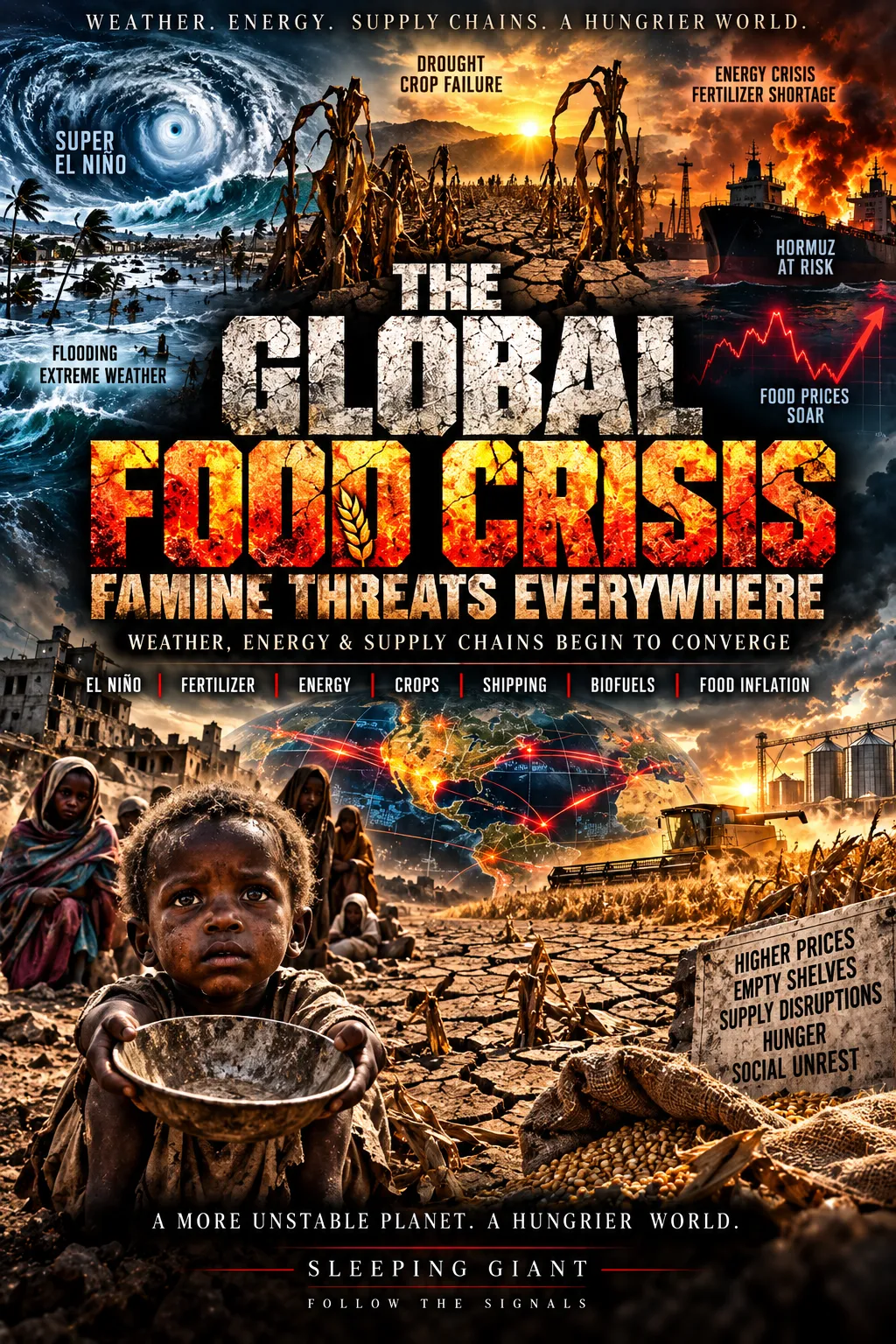
THE GLOBAL FOOD CRISIS | FAMINE THREATS EVERYWHERE
Weather • Energy • Fertilizer • Supply Chains • Food Inflation • Hunger
Source: GAR Contributing Writer
The global food system is beginning to show a pattern that deserves considerably more attention. It isn’t one failed harvest, one drought, one war or one commodity suddenly becoming expensive. The concern is convergence. Energy disruption, fertilizer shortages, extreme weather, transportation costs, geopolitical conflict and changing agricultural demand are beginning to intersect at precisely the moment a very strong El Niño is intensifying across the Pacific. Each pressure can be absorbed individually. The greater question for the remainder of 2026 and into 2027 is what happens when several arrive together.
The warning signs are no longer theoretical. The United Nations Food and Agriculture Organization reported that its global Food Price Index rose 1.9% in August 2026, leaving prices 2.5% higher than a year earlier. Every major commodity category in the index increased during the month. FAO specifically identified adverse weather, the Middle East conflict and Black Sea trade logistics as important forces behind rising quotations for major food commodities. Its cereal index climbed 2.2% during August to its highest level since May 2024.
That does not mean the world has suddenly run out of food. Global cereal supplies remain substantial. But that can obscure what a food crisis actually looks like. A country doesn’t have to experience empty global grain reserves before people begin going hungry. Food can exist somewhere in the world and still be inaccessible to millions because of war, poverty, destroyed infrastructure, high prices, transportation failures or collapsing local food systems.
And this is where the story becomes considerably more serious.
THE FAMINE THREAT
Famine is already a reality or acute threat in some of the world’s most vulnerable conflict zones. The 2026 Global Report on Food Crises estimated that 295 million people across 53 countries and territories experienced acute hunger in 2024, while conflict, economic shocks and weather extremes continued driving severe food insecurity. Sudan has become one of the clearest warnings of what happens when war, displacement and food-system breakdown collide. Parts of Sudan have experienced confirmed famine conditions, while Gaza, South Sudan, Yemen, Haiti and other highly vulnerable areas remain under intense food-security pressure.
This distinction is essential: El Niño or expensive fertilizer alone does not cause famine. Modern famine usually emerges from a combination of factors—armed conflict, displacement, restricted humanitarian access, destroyed livelihoods, economic collapse, extreme weather and loss of access to food. But global agricultural and energy shocks can make already-fragile situations substantially worse.
That is the larger danger developing underneath the global food story.
CONFLICT + POVERTY + FOOD INFLATION + CROP FAILURE → ACUTE HUNGER → FAMINE RISK
The first pressure point is energy. Modern agriculture is extraordinarily energy dependent. Diesel powers tractors, combines, irrigation equipment and trucks. Natural gas is a critical feedstock for nitrogen fertilizer. Ships move grain, fertilizer and agricultural commodities between continents. Refrigeration and processing consume electricity and fuel. When energy becomes more expensive or difficult to obtain, those costs move through virtually every stage of the food chain.
The Middle East crisis has therefore become a food-security story as much as an energy story. Before the 2026 disruption, vessels passing through the Strait of Hormuz carried enormous volumes of global crude oil, petroleum products and LNG. Disruption there can produce an energy shock while the Gulf’s importance to fertilizer production creates another transmission mechanism directly into agriculture.
HORMUZ → ENERGY → FERTILIZER → FARMING → FOOD
Fertilizer may be one of the most important signals to follow. Rising natural-gas prices and transportation disruption can quickly increase nitrogen-fertilizer costs. Urea supplies are particularly important because relatively small disruptions to internationally traded fertilizer can have effects thousands of miles from the original geopolitical crisis.
FAO has warned that fertilizer scarcity associated with disruption around Hormuz could affect future harvests and food supplies during the second half of 2026 and into 2027. That introduces a dangerous time delay. A fertilizer disruption today doesn’t necessarily produce an empty supermarket tomorrow. It can appear months later through reduced fertilizer application, higher production costs, altered planting decisions and potentially lower yields.
This is where today’s fertilizer problem can become tomorrow’s harvest problem.
If farmers cannot obtain adequate fertilizer—or must purchase it at significantly higher prices—they face difficult decisions. Some absorb the expense. Some pass costs forward. Others reduce fertilizer use, reduce acreage or switch crops. Across millions of acres, relatively modest decisions can eventually become meaningful changes in production.
Now add the second major pressure: Super El Niño.
The developing 2026 El Niño is expected to strengthen considerably through the fall, potentially altering rainfall and temperature patterns around the world and increasing regional risks from drought, flooding and extreme heat.
Agriculture lives and dies by those patterns.
Too little rain destroys crops. Too much rain destroys crops. Extreme heat damages crops. Flooding delays planting and harvesting. Drought reduces water availability. Storms interrupt transportation.
Changing ocean temperatures affect fisheries. And when major agricultural regions experience different forms of disruption simultaneously, commodity markets can begin reacting before actual shortages appear.
EL NIÑO → DROUGHT / FLOOD → CROP STRESS → HARVEST LOSS → FOOD PRESSURE
This is where the famine threat enters the equation again. A drought in a wealthy food-producing nation may mean higher prices and insurance losses. The same drought striking a conflict-ridden country where millions already depend on humanitarian assistance can become a humanitarian emergency. The underlying weather event may be similar; the resilience of the affected societies is radically different.
There is another oceanic signal worth watching. A positive Indian Ocean Dipole developing alongside the powerful Pacific El Niño could further alter rainfall across portions of Africa, Asia and Australia. Multiple ocean-atmosphere systems influencing major agricultural regions during the same season increases the importance of watching crop conditions country by country rather than treating global production as a single number.
Then comes the third pressure: transportation and global trade.
Modern food markets are extraordinarily interconnected. A country doesn’t need to experience drought itself to experience higher food prices. If a major exporter suffers poor weather, shipping routes become unreliable, marine insurance costs rise, fuel becomes more expensive or governments restrict exports to protect domestic supplies, those pressures can move through international markets quickly.
This becomes particularly dangerous for low-income, import-dependent countries.
Wealthier consumers may experience the first stage of the crisis as higher grocery bills.
Poorer households begin eliminating higher-priced foods.
Then meal sizes shrink.
Families sell assets.
Children are pulled from school.
Malnutrition increases.
Humanitarian agencies require more assistance precisely when the cost of delivering that assistance is increasing.
And in the most fragile countries, the progression can eventually become:
FOOD INFLATION → FOOD INSECURITY → ACUTE HUNGER → MALNUTRITION → FAMINE RISK
The fourth pressure is biofuels.
When energy prices rise, agricultural commodities become increasingly valuable as fuel feedstocks. Corn becomes ethanol. Soybean and vegetable oils become biodiesel or renewable diesel. That means portions of the agricultural system can simultaneously serve both the food and energy markets.
The relevant issue isn’t simply whether crops are being “taken away” from people. The relationship is more complicated because biofuel production also generates animal-feed coproducts and markets respond through planting decisions and prices. But during periods of tight agricultural supply, increasing fuel demand for food crops can add another source of competition and price pressure.
ENERGY PRESSURE → BIOFUEL DEMAND → AGRICULTURAL DEMAND → FOOD-MARKET PRESSURE
Now put the systems together.
SUPER EL NIÑO → EXTREME WEATHER → CROP PRESSURE → HORMUZ → OIL / GAS → ENERGY COSTS → NATURAL GAS → FERTILIZER → FARMING COSTS → ENERGY → DIESEL → TRANSPORTATION → GEOPOLITICS → SHIPPING → SUPPLY CHAINS → ENERGY PRICES → BIOFUELS → AGRICULTURAL DEMAND → CONFLICT → DISPLACEMENT → LOST FOOD PRODUCTION FOOD INFLATION → POVERTY → ACUTE HUNGER
ALL OF THEM → GLOBAL FOOD SECURITY PRESSURE
This is the convergence.
And there is an important difference between a food shortage, a food affordability crisis, acute hunger, and famine. Those terms should not be used interchangeably. Famine is an extreme condition measured against specific internationally recognized thresholds involving food deprivation, acute malnutrition and mortality. The world does not presently face one uniform global famine.
What it does face is something potentially more complicated: multiple localized hunger and famine emergencies existing inside an increasingly stressed global food system.
That is the real warning.
A serious crop failure in one major exporting region may be manageable. A fertilizer shortage may be manageable.
Higher diesel prices may be manageable. A shipping disruption may be manageable. A powerful El Niño may be manageable. But what happens if several occur simultaneously?
What happens if countries respond by restricting food exports? What happens if governments begin protecting domestic grain inventories? What happens if humanitarian organizations must purchase increasingly expensive food while transportation and fuel costs are simultaneously rising? What happens when those pressures reach countries already experiencing war, displacement and acute hunger?
That is how a global agricultural problem can become a humanitarian crisis without the entire planet ever physically running out of food.
The food crisis may therefore not arrive as one dramatic event.
It can arrive as a cascade.
First fertilizer becomes expensive.
Then diesel becomes expensive. Then transportation becomes expensive. Then weather damages harvests. Then commodity prices rise. Then governments protect domestic supplies. Then import-dependent countries compete for remaining exports. Then currencies weaken. Then food becomes unaffordable. Then humanitarian requirements increase. And in the world’s most fragile regions:
HUNGER → MALNUTRITION → STARVATION → FAMINE
This is why October 2026 through 2027 deserves close observation. The question isn’t whether every negative scenario occurs simultaneously. It is whether independent pressures begin reinforcing one another faster than agricultural systems, governments and humanitarian organizations can adapt.
For the Sleeping Giant, watch fertilizer prices, natural-gas prices, diesel, grain inventories, crop-condition reports, rainfall anomalies, export restrictions, shipping disruptions, humanitarian funding, acute-food-insecurity assessments and the FAO Food Price Index.
And watch one additional indicator very closely:
EXPORT RESTRICTIONS
History shows that food crises can intensify when governments confronted by rising domestic prices begin restricting exports. One government’s attempt to protect its own population can remove supply from international markets, encourage another government to respond, and amplify pressure on countries dependent upon imports.
That creates perhaps the most dangerous cascade of all:
CROP FAILURE → EXPORT RESTRICTIONS → GLOBAL SUPPLY TIGHTENING → PRICE SPIKE → IMPORT CRISIS → ACUTE HUNGER → FAMINE RISK
This also connects directly with the other three major Fall 2026 stories we have identified.
THE FINANCIAL FAULT LINE affects credit, farmers, commodity financing, currencies and consumers.
THE WEST COAST / PACIFIC WATCH represents a separate geophysical risk capable of disrupting critical infrastructure if a major event occurs.
SUPER EL NIÑO introduces an extraordinary weather variable.
And now:
THE GLOBAL FOOD CRISIS connects energy, fertilizer, agriculture, transportation, inflation, poverty and famine risk.
Four apparently different stories begin touching the same underlying systems.
That is where the signal becomes more important than any individual headline.
ENERGY → FERTILIZER → CROPS → FOOD → EL NIÑO → WEATHER → HARVESTS → SUPPLY → HORMUZ → SHIPPING → FUEL → TRANSPORTATION → CONFLICT → DISPLACEMENT → HUNGER → FOOD INFLATION → FOOD INSECURITY → MALNUTRITION → CONVERGENCE → FAMINE RISK
The world does not need to physically run out of food for millions of people to face starvation. Food only has to become sufficiently scarce, expensive or inaccessible in the places where people are least able to withstand the shock.
That is why the famine story belongs inside the larger Fall Convergence.
The ingredients are increasingly visible.
Now we watch whether they converge.
THE GLOBAL FOOD CRISIS | FAMINE THREATS EVERYWHERE
Weather • Energy • Fertilizer • Supply Chains • Hunger
Follow the energy. Follow the fertilizer. Follow the weather. Follow the crops. Follow the food. Follow the hunger.
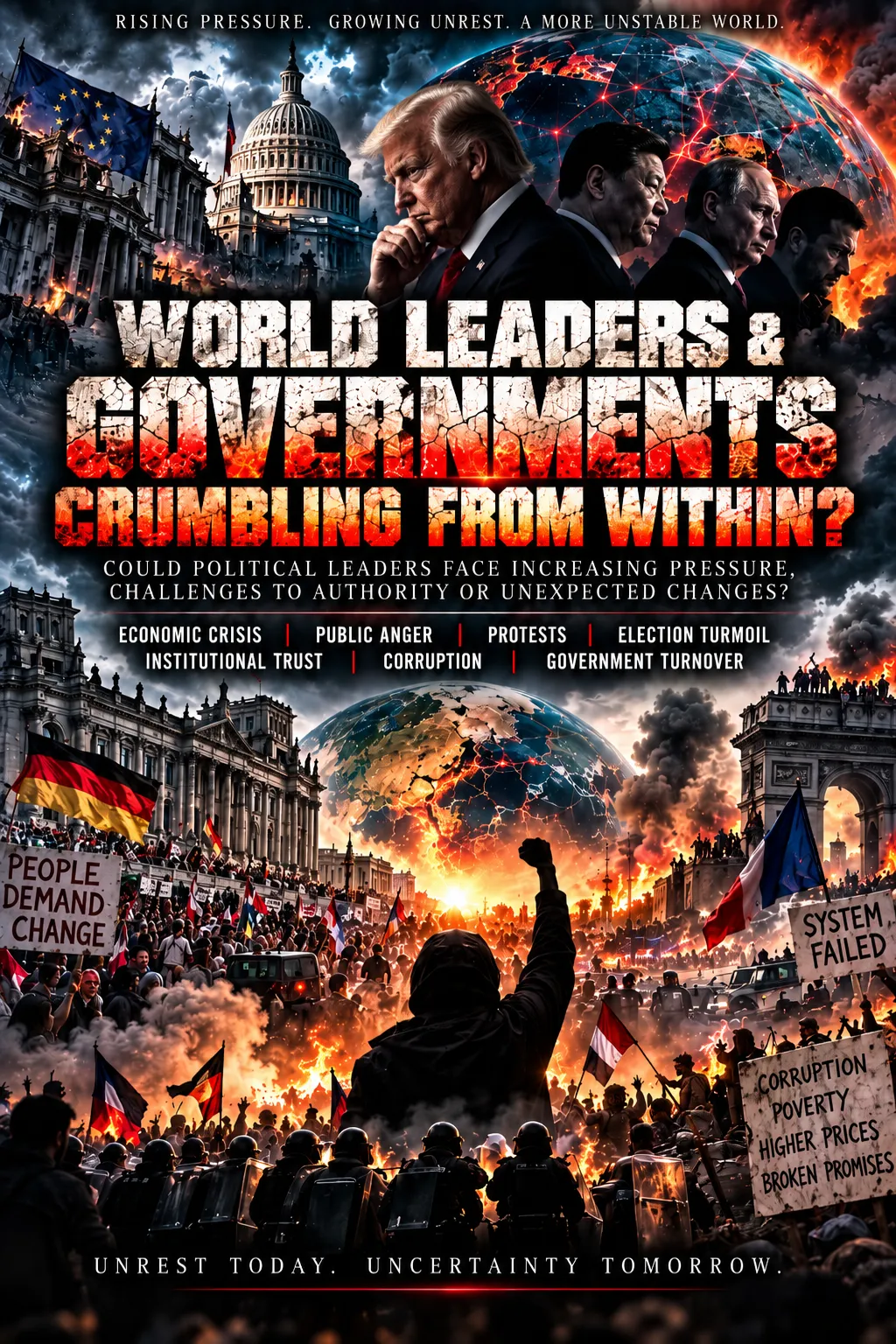
WORLD LEADERS & GOVERNMENTS CRUMBLING FROM WITHIN?
Could Political Leaders Face Increasing Pressure, Challenges to Authority or Unexpected Change?
Political Instability • Public Anger • Economic Pressure • Protests • Elections • Institutional Trust • Government Turnover
Source: GAR Contributing Writer
Another pressure system is developing alongside the financial, food, energy and climate stories we have been tracking: political instability.
Across multiple regions, governments are confronting combinations of economic frustration, expensive energy, war, social polarization, corruption allegations, demonstrations and declining confidence in institutions. These conditions do not mean governments everywhere are about to fall. But they create an environment in which political events can move much faster than expected.
The broader trend deserves attention. Gallup’s 2026 research across 107 countries found that economic concerns remain the most frequently cited national problem worldwide, while political and governance issues are also significant concerns—particularly where institutional trust is weak.
Meanwhile, a September international survey covering 17 countries reported substantial dissatisfaction with economic and political institutions. Only 31% of respondents said they trusted their governments to make long-term decisions benefiting most people, while 67% believed their countries had become more divided over the preceding decade.
ECONOMIC PRESSURE → PUBLIC ANGER → LOSS OF TRUST → POLITICAL PRESSURE
We can already see examples of political turnover and instability.
Sweden’s Prime Minister Ulf Kristersson resigned following the September election after the center-left bloc secured a narrow parliamentary majority, beginning another period of coalition negotiations. That was an electoral transfer of power—not institutional collapse—but it illustrates how quickly leadership can change when political coalitions move.
Nepal provides a more dramatic recent example. Youth-led protests in 2025 expanded from opposition to restrictions on social-media platforms into broader grievances involving corruption and governance. The prime minister resigned, parliament was dissolved, an interim government took office, and elections eventually produced a dramatically altered political landscape in 2026.
Freedom House’s latest regional analysis similarly describes protests over corruption and inequality producing government shakeups in parts of Asia, while demonstrations in Indonesia and the Philippines reflected broader public frustration with political institutions and government accountability.
These are separate national stories with different causes. They should not be artificially connected into a single coordinated political event.
But the pattern deserves examination.
EY’s September 2026 geopolitical analysis notes that public protests have increased markedly since 2017, with particularly significant increases across Europe and Asia since 2022. The issues driving them range from immigration and trade to corruption, governance and economic grievances.
Now introduce the economic pressures we are already tracking.
Higher fuel prices. Higher food prices. Housing affordability. Government debt. Higher borrowing costs. Employment insecurity. War expenditures. Energy shortages. Food insecurity.
These pressures eventually reach politics because households experience geopolitical and economic crises through their everyday cost of living.
ENERGY → INFLATION → COST OF LIVING → PUBLIC ANGER → POLITICAL PRESSURE
The Iran conflict provides a current example of this transmission mechanism. Higher global fuel prices are already placing governments under pressure to choose among subsidies, tax reductions, price controls and allowing consumers to absorb higher costs.
Europe is experiencing the same political dilemma. Record or near-record fuel costs in several countries have generated calls for additional government intervention, including fuel-tax reductions, subsidies and proposals for windfall taxes on energy companies.
This becomes important because economic instability can become political instability surprisingly quickly.
A government may appear stable until an unpopular economic policy becomes the trigger. A fuel-price increase. A food shortage. A corruption scandal.
A tax increase. An unemployment spike. A banking crisis. A controversial election. A restriction on communication. A war that becomes increasingly unpopular.
The triggering event isn’t necessarily the underlying cause. It can simply release pressure that has accumulated for years.
PRESSURE → TRIGGER → PROTEST → POLITICAL CRISIS → LEADERSHIP CHANGE
This is one reason the current decline in institutional trust deserves attention. International IDEA’s September 2026 Global State of Democracy report describes deterioration in democratic institutions and rule-of-law indicators across multiple countries and warns that political institutional weakness can increase instability and conflict risks.
That does not mean democracy itself is disappearing everywhere. Nor does declining trust automatically produce revolution. Governments frequently survive enormous demonstrations, unpopular policies and severe economic recessions.
But low trust reduces the political system’s shock absorbers.
When citizens broadly trust institutions, governments have more room to manage crises.
When trust is already depleted, the same crisis can produce a very different reaction.
And this is where our Fall 2026 convergence becomes particularly interesting.
We aren’t watching political instability in isolation.
We’re watching it while several other pressure systems are moving simultaneously.
FINANCIAL PRESSURE → MARKETS • DEBT • CREDIT • LIQUIDITY → ENERGY PRESSURE → OIL • GAS • DIESEL • ELECTRICITY → FOOD PRESSURE → FERTILIZER • CROPS • PRICES • HUNGER → CLIMATE PRESSURE → EL NIÑO • FLOODS • DROUGHT • STORMS → GEOPOLITICAL PRESSURE → WAR • SHIPPING • TRADE • SANCTIONS
And then:
ALL FIVE → PUBLIC PRESSURE → GOVERNMENT RESPONSE
That final variable—government response—may determine whether political systems absorb these shocks or begin destabilizing.
Watch resignations. Watch emergency elections. Watch coalition breakdowns. Watch no-confidence votes. Watch mass demonstrations. Watch strikes.
Watch capital controls. Watch emergency subsidies. Watch constitutional disputes. Watch anti-corruption investigations. Watch whether governments begin losing control of their own governing coalitions.
And above all, watch whether separate economic grievances begin merging into broader challenges to political legitimacy.
The current UN General Assembly itself is taking place against an unusually difficult international backdrop. Nearly 130 heads of state are gathering amid continuing wars, economic pressure and questions about the effectiveness of international institutions.
That doesn’t establish that governments are about to collapse.
It tells us something more useful:
THE POLITICAL SYSTEM IS OPERATING UNDER INCREASING PRESSURE.
History suggests governments rarely unravel because of one isolated event. Political crises usually emerge when multiple stresses accumulate until a triggering event exposes weaknesses that were already present.
That makes the political storyline an important addition to the Sleeping Giant Fall Watch.
ECONOMY → COST OF LIVING → PUBLIC ANGER → WAR → ENERGY → INFLATION → FOOD → AFFORDABILITY → SOCIAL PRESSURE → CORRUPTION → DISTRUST → PROTEST → PROTEST → POLITICAL CRISIS → LEADERSHIP CHANGE → CONVERGENCE → GOVERNMENT INSTABILITY?
The question for Fall 2026 is therefore not simply:
Which leader falls next?
The more important question is:
Are economic, geopolitical and social pressures becoming powerful enough to destabilize governments that appeared secure only months earlier?
WORLD LEADERS & GOVERNMENTS CRUMBLING FROM WITHIN?
Pressure • Protest • Distrust • Political Change
Watch the people. Watch the pressure. Watch the governments. Watch what changes next.
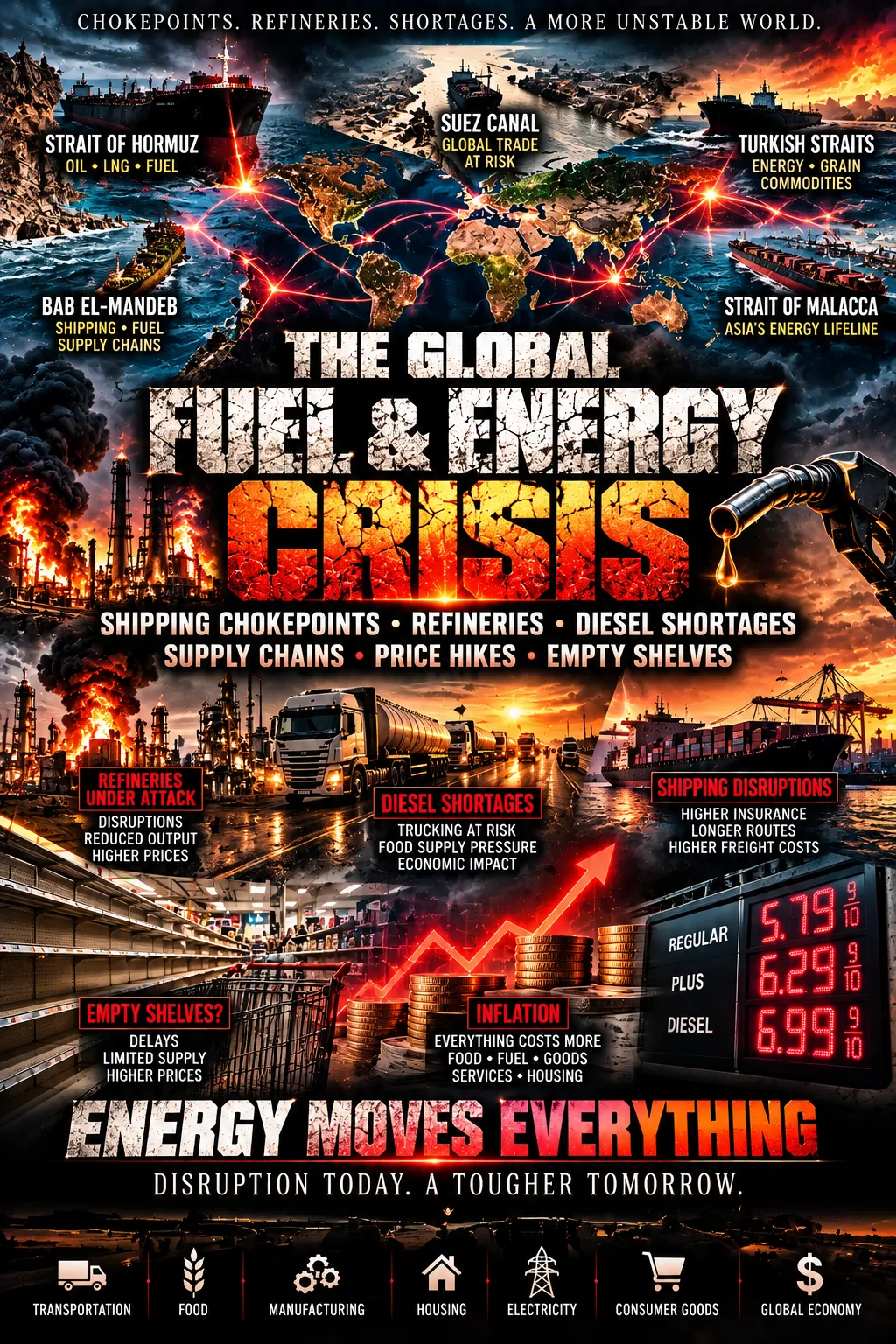
THE GLOBAL FUEL & ENERGY CRISIS
Chokepoints • Refineries • Diesel • Shipping • Shortages • Inflation
Source: GAR Contributing Writer
A new global pressure point is emerging, and it reaches far beyond the price of gasoline. The concern is the entire system that moves energy around the planet: oil production, refineries, diesel, shipping routes, lubricants, trucking and global supply chains.
The world may have plenty of crude oil underground, but crude oil alone doesn’t operate the global economy. It must be produced, transported, refined and distributed. Disrupt any part of that chain and the effects can move rapidly from energy markets into transportation, agriculture, manufacturing and eventually consumer prices.
FIVE GLOBAL SHIPPING CHOKEPOINTS
Much of the world’s energy trade moves through a handful of narrow maritime corridors. Five deserve particular attention: Strait of Hormuz • Bab el-Mandeb/Red Sea • Suez Canal • Strait of Malacca • Turkish Straits.
The Strait of Hormuz remains especially important because the Persian Gulf is a major source of crude oil, LNG and refined petroleum products. But disruption in one corridor can also push ships toward another, creating longer voyages, congestion and higher transportation costs.
CHOKEPOINT → SHIPPING → INSURANCE → FREIGHT → FUEL → PRICES
The refinery system may be an even bigger story. Crude oil doesn’t power trucks, tractors or airplanes. Refineries convert it into the products civilization actually uses: diesel, gasoline, jet fuel, marine fuel, heating oil, lubricants and petrochemical feedstocks.
The IEA reported in September that global refinery throughput in August was 4.2 million barrels per day below the previous year, with major losses concentrated in the Middle East, Russia and parts of Asia. The worldwide refinery system has not been destroyed, but conflict, shipping problems and reduced crude availability have placed parts of it under considerable pressure.
FOLLOW THE DIESEL
Diesel may be the most important fuel to watch.
Diesel powers trucks, tractors, construction equipment, mining machinery, railroads, generators and industrial equipment. When diesel prices rise, the cost doesn’t remain at the fuel pump. It moves throughout the physical economy.
The IEA says diesel/gasoil represents nearly 30% of global oil demand, while supplies have become particularly tight following disruptions to Middle Eastern and Russian exports.
DIESEL → TRUCKING → AGRICULTURE → CONSTRUCTION → FOOD → RETAIL
Motor oil and industrial lubricants represent another less visible vulnerability. Synthetic lubricants depend upon specialized base oils, some of which are produced in regions affected by Middle Eastern refinery and shipping disruptions. That doesn’t mean the world is running out of motor oil. But localized shortages, reduced selection and higher prices become possible when specialized base-oil supplies tighten.
Shipping itself can then create another feedback loop. When vessels must avoid dangerous routes, voyages become longer. Longer voyages consume more fuel. Insurance costs rise. Ships and containers remain occupied longer. Freight becomes more expensive.
SHIPPING DISRUPTION → LONGER ROUTES → MORE FUEL → HIGHER FREIGHT COSTS
Those costs eventually reach businesses.
A trucking company pays more for diesel.
A farmer pays more for fuel and fertilizer.
A manufacturer pays more for energy and transportation.
A retailer pays more to replenish inventory.
Consumers pay more at the register.
ENERGY → TRANSPORTATION → PRODUCTION → DISTRIBUTION → RETAIL → INFLATION
This is where the possibility of empty shelves and localized shortages enters the storyline. Higher energy prices alone do not create empty supermarkets. Modern supply chains can reroute cargo, substitute suppliers and draw upon inventories.
But every workaround has a cost.
If disruptions become severe enough or last long enough, the progression can become:
DELAYS → HIGHER PRICES → LIMITED SELECTION → OUT-OF-STOCKS → SHORTAGES
And energy touches virtually everything.
Food requires tractors, fertilizer, refrigeration and trucks.
Construction requires diesel-powered equipment.
Factories require electricity and fuel.
Ships require marine fuel.
Airplanes require jet fuel.
Vehicles require lubricants.
Packaging and plastics depend heavily upon petrochemicals.
This is why an energy crisis can become something much larger:
INFLATION OF EVERYTHING
It also connects directly with the other Fall 2026 pressure systems we have been tracking.
Higher energy prices can increase inflation. Persistent inflation can keep interest rates elevated. Higher rates pressure debt and credit markets. Expensive diesel and fertilizer increase agricultural costs. Higher food and energy prices squeeze households. Household pressure can eventually become political pressure.
The cascade becomes increasingly clear:
WAR → CHOKEPOINTS → SHIPPING → ENERGY → DIESEL → TRANSPORTATION → FERTILIZER → FOOD → SHIPPING → SUPPLY CHAINS → SHORTAGES → SHORTAGES → PRICE HIKES → INFLATION → INFLATION → RATES → DEBT → MARKETS → HIGHER PRICES → PUBLIC PRESSURE → GOVERNMENTS
That is why the Global Fuel & Energy Crisis may be one of the most important connecting stories of Fall 2026.
It doesn’t require the world to run out of oil.
It only requires enough disruption in refining, shipping and distribution to make the fuels modern civilization depends upon more difficult—or considerably more expensive—to obtain.
THE GLOBAL FUEL & ENERGY CRISIS
Oil • Refineries • Diesel • Shipping • Supply Chains • Inflation
Watch the chokepoints. Watch the refineries. Watch the diesel. Watch the freight. Watch the shelves. Watch the prices.
FOLLOW THE ENERGY — BECAUSE ENERGY MOVES EVERYTHING.

Yes, The Resting Place Of Noah’s Ark Has Been Discovered, And Scientists Are About To Prove It
The remains of Noah’s Ark are contained in the Durupinar formation in the Mountains of Ararat. I have no doubt about this. The boat-shaped Durupinar formation has the exact same dimensions that the Bible says that Noah’s Ark had. Ground-penetrating radar has confirmed that the ship that is buried there has corridors, compartments and three distinct levels. Needless to say, the Bible says that the Ark was built with lower, middle, and upper levels. There are perfect right angles inside the formation that could not have been produced naturally. What I have shared so far is just the tip of the iceberg, because there is so much more evidence. So how did an absolutely enormous three level ship that is roughly the size of a World War I-era aircraft carrier end up so far away from any major body of water in the Mountains of Ararat?
That is a very good question.
If you do not believe in Noah’s Ark, that will be exceedingly difficult for you to explain.
Skeptics are scrambling to come up with some sort of a theory that might work, because for most of them it is unthinkable to concede that the Bible is historically accurate.
Yesterday, the Daily Mail published an article that claimed that the resting place of Noah’s Ark has been 100 percent confirmed.
In response, one of the organizations that is involved with the scientific work that is going on at the Durupinar formation stated that “knowing what we know now, we are also 100% sure that they are not going to have to issue a retraction”…
So how can they be so confident?
An international team of researchers, geologists and archaeologists has been conducting an unprecedented scientific investigation of the Durupinar formation, and they are extremely excited about what they have found so far…
For centuries, travelers passed through these mountains.
With Mount Ararat rising behind the Durupınar formation, this region became an ancient crossroads between east and west, a route later traveled by merchants, pilgrims and travelers along the Silk Road.
And according to ancient traditions, some of those pilgrims came here because they believed the Ark had come to rest in these mountains.
There are even accounts of travelers taking pieces of wood from the Ark as sacred relics, pieces that were later preserved in churches and monasteries.
Today, the story is being investigated in a very different way.
Instead of simply collecting relics, our team is collecting data.
Radar. Core drilling. Soil samples. Geological analysis.
Generations of people have come looking for Noah’s Ark.
Now we’re using modern science to investigate what remains beneath the surface.
For years, researchers were prevented from doing this sort of work by Turkish authorities.
But now permission has been granted, and the team is being led by a couple of prominent Turkish professors…
The 2026 field program is led by Turkish Professor of Archaeology Prof. Dr. Cenker Atila of Sivas Cumhuriyet University and supported by Prof. Dr. Ahmet Şengönül, Rector of Sivas Cumhuriyet University with Noah’s Ark Scan’s Andrew Jones serving as Vice President of the Noah’s Ark Research Project. This Scientific Expedition is being conducted with official authorization from relevant Turkish government agencies. The Durupınar formation is a 157-meter (515-foot) boat-shaped feature first identified in 1959 by Turkish Army Capt. İlhan Durupınar.
This is a really big deal.
Never before have researchers been allowed to drill deep into the Durupinar formation to collect core samples.
According to Andrew Jones, at one point they were forced to stop drilling because they “struck a layer so hard that the drill bit broke”…
“For the first time in history, we are performing an extensive, permitted deep core drilling survey inside and outside the Durupınar Noah’s Ark site, recovering samples from depths of up to 18 meters, nearly 60 feet. We have so far recovered layers of rich organic material that we believe could be the decayed top tier remains of the Ark. We are encountering multiple cavities, including one filled with mud and water. No bedrock or solid limestone has so far been identified in the holes drilled inside the formation. These current findings challenge claims that this is simply a natural shape made of limestone or bedrock.
“In one of the holes drilled inside the boat, approximately 4–5 meters below the surface, The drilling system had already penetrated the overlying material, but at this layer, the operation stopped as we struck a layer so hard that the drill bit broke. Petrified or highly mineralized wood are both a possibility we want to investigate through third party lab testing.”
Petrified wood can be much harder than limestone.
I have an old friend that has actually been to the Durupinar formation.
He has personally confirmed to me that there is petrified wood at the site.
The good news is that the drill bit has been repaired and so the core drilling will be able to continue…
In addition to the core drilling that is being done, the team also intends to insert an underground exploration drone into “voids, tunnels, and corridors previously mapped by ground-penetrating radar”…
Second, researchers plan to insert the custom-built GOPHER underground exploration drone into voids, tunnels, and corridors previously mapped by ground-penetrating radar, electrical resistivity tomography, and related surveys. GOPHER, named for the “gopher wood” of Genesis, is equipped with a high-resolution camera, designed to enter narrow borehole access points without opening large excavation trenches.
That drone should be able to give us a tremendous amount of information.
In fact, I believe that what that drone reveals will shock the entire world.
Prior to all of this, months of important work has been going on at the Durupinar formation…
The drilling campaign follows months of baseline work at the site, including precision GPS mapping, three-dimensional digital modeling, soil sampling inside and outside the outline, and high-resolution subsurface imaging. Earlier scans identified linear features, right-angle intersections, layered anomalies, and elongated voids interpreted by the team as possible corridors and chamber-like spaces. U.S. Defense Scientist Dr. Khrosrow Bakthar, recently deployed BaktharRadar at the site and provided the core drilling coordinates to the Noah’s Ark 2026 expedition team. Dr. Bakthar’s preliminary report found no bedrock at the site, more details of the prestigious scientist’s report are expected to be released by Noah’s Ark Scans later this week.
To me, what the ground-penetrating radar has been discovering is particularly exciting…
The team has also found pottery near the Durupinar formation “that predates the flood”, and we are being told there are lots of seashells in the area that haven’t even fossilized yet.
That seems rather odd considering the fact that the closest major body of water is about 150 miles away. So how did all of those seashells get there? Of course all of the evidence that is being collected is simply confirmation of what locals in the area have known for thousands of years.
In fact, residents of that region have always been very proud of the fact that the resting place of Noah’s Ark is there. And all the way back in the first century, Josephus identified that location as the resting place of Noah’s Ark.
So it isn’t as if we have suddenly discovered something new. I suppose it would be much more accurate to say that we have rediscovered what others have known all along.
Noah’s Ark really does exist, and it is still sitting there in the Mountains of Ararat where it has always been since the days of the Flood.
SPACEX + FEDERAL LAND | THE COURT JUST CLEARED THE PATH
715 Acres • South Texas • Starbase • Federal Court • What Happens Next?
Source: GAR Contributing Writer
Something important just moved in South Texas.
On September 22, 2026, the U.S. Department of Justice announced that a federal court had rejected an attempt to temporarily stop a major land exchange involving SpaceX and the U.S. Fish and Wildlife Service near the company’s rapidly expanding Starbase operations.
The ruling does not end the underlying legal dispute.
But it removes a major immediate obstacle standing in front of the transaction.
And that makes what happens next worth watching.
THE LAND EXCHANGE
The numbers make the story much more interesting.
Under the agreement, SpaceX is expected to transfer approximately 683 acres of privately owned property to the federal government.
In exchange, the U.S. Fish and Wildlife Service is transferring approximately 715 acres of federal property within the Lower Rio Grande Valley National Wildlife Refuge to SpaceX.
The federal acreage is near SpaceX’s operations in the Boca Chica/Starbase area of Cameron County, Texas. The property SpaceX is giving the government is near Boca Chica Beach and the Laguna Atascosa National Wildlife Refuge.
The land exchange agreement itself was executed September 1, with transfer of title expected September 22.
So this is no longer simply a proposal being discussed behind government desks.
THE TRANSACTION HAS REACHED THE EXECUTION STAGE.
THE LAWSUIT
The exchange has faced opposition from the Center for Biological Diversity, Save RGV, the Carrizo/Comecrudo Nation of Texas and the South Texas Environmental Justice Network.
The groups sued in June seeking to stop the transaction.
Their argument centers largely on environmental protection and public access. They contend that transferring refuge acreage to SpaceX could further fragment or degrade environmentally sensitive land surrounding one of America’s most rapidly expanding aerospace facilities.
The federal government takes the opposite position.
The Fish and Wildlife Service says the exchange will help consolidate fragmented refuge property and produce conservation benefits. The Justice Department described the government as receiving several hundred acres of higher-quality habitat while SpaceX receives land characterized by the government as having lower biological value.
That disagreement remains unresolved.
THE COURT SAID NO — FOR NOW
The plaintiffs asked U.S. District Judge Fernando Rodriguez Jr. to issue a preliminary injunction preventing the exchange from proceeding while their lawsuit continued.
The judge declined.
According to the Justice Department, the court concluded that the plaintiffs had failed to establish the injury required to support standing and had also failed to demonstrate the irreparable harm necessary for preliminary injunctive relief.
That is an important legal distinction.
The court did not issue a sweeping ruling declaring every aspect of the land exchange lawful or permanently ending the environmental challenge.
Instead, it declined to stop the transaction at this stage.
The broader litigation can continue.
COURT ORDER → LAND EXCHANGE → WHAT COMES NEXT?
That may ultimately become the more important part of this story.
WHY DOES SPACEX WANT THE LAND?
This is where the story moves beyond a conventional real-estate transaction.
The Justice Department specifically said the land SpaceX receives will help the company accomplish its mission for NASA and the Air Force.
That sentence deserves attention.
SpaceX’s South Texas operation has evolved from an experimental rocket-development site into a major piece of America’s emerging space infrastructure.
Starship development, Super Heavy booster operations, launch infrastructure, testing facilities, manufacturing, logistics and supporting infrastructure have dramatically expanded the physical footprint surrounding Starbase.
More land potentially means more room for that ecosystem to develop.
But exactly what will ultimately be built on the newly acquired acreage should be determined from permits, plans and subsequent filings—not assumed in advance.
THE NATIONAL-SECURITY DIMENSION
The federal government’s language adds another layer.
The Justice Department characterized the transaction as providing benefits for both “conservation and national security.”
That does not mean the acreage itself is destined for a classified military project.
But it does place the exchange within a larger reality surrounding SpaceX.
The company’s launch systems and satellite infrastructure increasingly intersect with America’s civilian and national-security space capabilities. Starship is central to NASA’s future lunar architecture, while SpaceX separately conducts extensive national-security work for the U.S. government.
That makes the continuing physical expansion around Starbase strategically significant even without attaching speculative explanations to individual parcels.
THE ENVIRONMENTAL QUESTION
There is another side that deserves equal attention.
The Lower Rio Grande Valley National Wildlife Refuge covers roughly 103,000 acres across four Texas counties and contains important wildlife habitat and historical resources. Environmental organizations argue that the federal acreage being transferred should remain protected public land and have promised to continue fighting the transaction.
The government argues that the exchange actually improves the refuge system by replacing fragmented acreage with property possessing greater conservation value.
Those are competing claims that can eventually be tested against the environmental assessments, habitat characteristics and subsequent use of both sets of properties.
And that creates a very simple metric:
WATCH BOTH SIDES OF THE EXCHANGE.
Don’t only watch what SpaceX does with its 715 acres.
Watch what the Fish and Wildlife Service does with the approximately 683 acres it receives.
If the government’s argument is correct, the conservation value of the federal holdings should ultimately improve.
THE BIGGER STORY | STARBASE IS BECOMING INFRASTRUCTURE
There is a larger pattern developing around South Texas.
Starbase is no longer merely a remote location where experimental rockets occasionally launch.
It is becoming permanent infrastructure.
Every road improvement, property acquisition, regulatory approval, environmental decision, launch license, government contract and land transaction helps reveal how large that infrastructure may eventually become.
This particular court decision therefore matters less because of what people can speculate about today and more because of what the land enables tomorrow.
715 ACRES.
FEDERAL LAND.
SPACEX.
NASA.
AIR FORCE.
SOUTH TEXAS.
Those are the documented pieces.
Now watch what connects them.
WHAT GAR SHOULD TRACK NEXT
The next phase should be unusually easy to follow because development leaves a paper trail.
Watch for the final property deeds and exact parcel boundaries. Watch local and federal construction permits. Watch environmental reviews and modifications. Watch SpaceX site plans. Watch FAA filings associated with Starbase. Watch NASA and Defense Department contracts. Watch road, utility and power infrastructure. And watch the continuing federal lawsuit.
Most importantly:
WATCH WHAT ACTUALLY GETS BUILT.
Because land transactions tell you who controls the property.
Construction tells you why they wanted it.
COURT ORDER → LAND EXCHANGE → DEVELOPMENT → ?
The judge has cleared the immediate legal obstacle.
The land can now move.
The litigation isn’t necessarily over.
And the most interesting part of this story may begin after the signatures are finished and the bulldozers arrive.
GAR will continue following the filings, land records, permits and infrastructure development surrounding Starbase as the next phase becomes visible.
BORON | THE OVERLOOKED TRACE MINERAL EMERGING IN HUMAN HEALTH RESEARCH
Bone Health • Hormones • Vitamin D • Inflammation • Metabolism • Cancer Research
Source: GAR Contributing Writer
Boron rarely appears in conversations about nutrition alongside magnesium, zinc, vitamin D or calcium. Yet this naturally occurring trace element has attracted scientific interest for decades because of its potential influence on mineral metabolism, bone formation, inflammation, steroid hormones and vitamin D. Boron occurs naturally in fruits, vegetables, legumes, nuts and other plant foods, and the human body readily absorbs most dietary boron. Despite this, scientists have not established boron as an essential human nutrient, and there is currently no Recommended Dietary Allowance for it.
That combination makes boron unusual: the biology is interesting, but the clinical evidence remains incomplete.
BORON, MINERALS AND BONE HEALTH
One of the strongest areas of boron research involves the skeleton and mineral metabolism. Experimental studies suggest that boron may influence calcium and magnesium metabolism and processes involved in bone formation. Small human studies have also found changes in calcium, magnesium and hormonal markers when people moved between low-boron and boron-supplemented diets.
There is also preliminary evidence suggesting that boron could influence symptoms associated with osteoarthritis, potentially through effects on inflammatory processes. A small pilot study cited by the NIH found reduced osteoarthritis symptoms among participants receiving 6 mg of boron daily for eight weeks. However, the overall human evidence remains limited, and larger controlled trials are needed before boron can be considered a treatment for arthritis, osteoporosis or cartilage damage.
THE HORMONE CONNECTION
Boron becomes particularly interesting when researchers examine steroid hormones.
Some small human experiments have reported changes in testosterone and estrogen following alterations in boron intake. One controlled nutritional study found that restoring boron after a period of dietary boron deprivation increased serum testosterone and estradiol under certain experimental conditions. Other research has suggested possible effects on free testosterone and hormone metabolism.
But this evidence does not establish that boron is a reliable testosterone booster or estrogen regulator for the general population. The studies are generally small, sometimes involving only a handful of participants, and their findings have not been demonstrated consistently in large randomized trials.
The more defensible conclusion is that boron appears capable of interacting with human steroid-hormone metabolism, but exactly how clinically important that interaction is remains unresolved.
BORON + VITAMIN D + MAGNESIUM
Another potentially important relationship involves vitamin D.
The NIH notes that very-low-boron diets have been associated experimentally with reductions in serum 25-hydroxyvitamin D, while boron may influence calcium metabolism and the function of steroid hormones, including vitamin D. Boron research has also examined its relationship with magnesium metabolism.
This has led some researchers to propose that boron should be viewed not as an isolated nutrient but as part of a larger nutritional network involving vitamin D, magnesium, calcium and steroid hormones.
That is substantially different from claiming that boron simply “preserves vitamin D” or dramatically increases magnesium absorption in everyone. Those stronger claims require better clinical evidence.
ANTIOXIDANTS, INFLAMMATION AND CELLULAR BIOLOGY
Research has also examined boron’s effects on oxidative stress and inflammatory signaling.
Experimental work has reported changes in antioxidant enzymes—including superoxide dismutase and glutathione-related enzymes—and inflammatory biomarkers under certain conditions. Researchers have additionally explored boron’s possible involvement with biomolecules including S-adenosylmethionine, better known as SAM-e.
These mechanisms are scientifically interesting because oxidative stress, inflammation and methylation are involved in many biological processes. But demonstrating a biochemical effect is not the same thing as demonstrating that taking a boron supplement prevents or reverses a particular disease.
That distinction becomes especially important when discussing “detoxification.”
IS BORON REALLY A DETOX MINERAL?
Claims that boron removes fluoride, aluminum, arsenic, pesticides, heavy metals or “nanotechnology” from the human body are considerably stronger than current clinical evidence supports.
Laboratory and animal research has explored boron’s relationship with oxidative damage produced by certain pesticides and heavy metals. That is not equivalent to demonstrating that supplemental boron chelates or removes these substances from humans. The NIH does not recognize boron supplementation as an established treatment for heavy-metal poisoning or general detoxification.
Similarly, claims that boron reverses calcification of the pineal gland, endocrine glands or ovaries have not been established by rigorous human clinical trials.
These ideas can be investigated, but they should be presented as hypotheses or emerging research questions—not established medical effects.
THE CANCER QUESTION
Cancer is perhaps the most provocative area of boron research.
Several observational studies have found associations between higher dietary boron intake and lower incidence of certain cancers, including prostate, cervical and lung cancer. Researchers are also investigating boron-containing compounds for specialized medical applications.
But the evidence has an important limitation.
According to the NIH, no clinical trials have demonstrated that boron supplementation prevents or treats cancer. Observational associations cannot establish causation because people consuming more boron may differ in many other ways—diet, lifestyle, socioeconomic status and overall plant-food consumption—that could influence cancer risk.
Boron should therefore not be described as a cancer treatment or substitute for established cancer care.
DOES “BORON DEFICIENCY” CAUSE DISEASE?
Claims that boron deficiency directly causes thyroid dysfunction, infertility, hormonal disorders, chronic pain or failed detoxification also outrun the available evidence.
In fact, scientists have not firmly established a human boron-deficiency syndrome. Extremely low experimental intakes have produced measurable changes in cognitive performance, mineral metabolism, vitamin D and hormonal markers, but that is different from demonstrating that ordinary low boron intake causes a defined collection of diseases.
This remains one of the biggest unanswered questions surrounding the mineral.
HOW MUCH BORON DO PEOPLE ACTUALLY CONSUME?
Most American adults obtain roughly 1–1.5 mg of boron per day from food and supplements combined. Plant-rich diets generally provide more. Major dietary sources include fruits, raisins, avocados, potatoes, beans, peanuts and other plant foods.
Because evidence is insufficient, the U.S. Food and Nutrition Board has established neither an RDA nor an Adequate Intake for boron. Supplements commonly contain approximately 0.15–6 mg of elemental boron. The adult tolerable upper intake level is 20 mg per day from all sources, while lower limits apply to children and teenagers. Excessive boron exposure can cause gastrointestinal symptoms and, at much higher toxic exposures, serious health consequences.
And an important distinction: borax and boric acid household products should never be treated as nutritional supplements.
THE LARGER STORY
Boron deserves neither dismissal nor mythology.
The evidence suggests that this little-discussed trace element interacts with several important biological systems involving bone metabolism, calcium and magnesium, vitamin D, steroid hormones, inflammation and antioxidant activity. Preliminary observational research has also generated intriguing questions concerning cancer and other chronic diseases.
At the same time, science has not established many of the extraordinary claims now circulating online. Boron has not been demonstrated to detoxify nanotechnology, reverse endocrine-gland calcification, cure fungal overgrowth, restore fertility or prevent and treat multiple cancers.
Perhaps the most interesting question, therefore, isn’t whether boron is a suppressed miracle mineral.
It is why a biologically active trace element with potentially important relationships to vitamin D, magnesium, bone health, hormones and inflammation remains so incompletely understood.
That is where the real investigation begins.
55,000 MILITARY VACCINE ADVERSE-EVENT REPORTS UNDER REVIEW
Army Physician Says Investigation Includes 2,544 Death Reports — But Causation Has Not Been Established
Source: GAR Contributing Writer
A newly surfaced sworn declaration is bringing renewed attention to the long-running controversy surrounding COVID-19 vaccination within the U.S. military. Lt. Col. Theresa M. Long, M.D., an Army physician and former flight surgeon who is now serving as a senior medical military adviser to the Secretary of Health and Human Services, says she has been tasked with investigating approximately 55,000 vaccine adverse-event reports involving individuals identified as members of the U.S. Armed Forces, including 2,544 reports involving deaths. The numbers are significant, but they require an equally important qualification: an adverse-event report documents an event occurring after vaccination; by itself, it does not establish that the vaccine caused the event.
Long’s statements emerged through litigation rather than through a completed government safety investigation. Her declaration was submitted in connection with a defamation lawsuit brought by Dr. Terry Adirim, a former senior Pentagon health official who was involved in advising the Department of Defense during implementation of its COVID-19 vaccination policy. Long provided testimony supporting defendant Ivan Raiklin. Her declaration therefore represents sworn evidence and expert opinion submitted by one side in an active civil dispute—not a judicial determination that the allegations are true or that COVID vaccines caused the deaths under review.
29 DEATHS WITH FIRSTHAND KNOWLEDGE
Among Long’s most consequential statements is her assertion that she has firsthand knowledge of more than 29 deaths of service members occurring after COVID-19 vaccination. She also described individual cases encountered during her military medical work, including a service member who developed rapidly progressing esophageal cancer following vaccination and a student pilot who experienced sudden cardiac death while operating a helicopter during a training flight. These accounts establish a temporal relationship as described by Long; they do not, without additional medical evidence, establish that vaccination caused either condition.
That distinction is central to evaluating the larger dataset. Determining whether a death following vaccination was caused by the vaccine requires considerably more than establishing that vaccination occurred first. Investigators may need medical histories, timing of symptoms, autopsy findings, pathology, infection histories, cardiac records and other clinical evidence. Medical experts quoted in reporting on Long’s investigation have emphasized that COVID-19 and other infections can themselves cause myocarditis and cardiovascular complications, making individual causation particularly difficult to establish retrospectively.
THE 2,544 NUMBER NEEDS CONTEXT
The figure attracting the greatest attention is 2,544 deaths. It should not be reported as “2,544 military vaccine deaths.” According to Long’s testimony and subsequent reporting, these are death reports contained within the approximately 55,000 adverse-event reports she has been assigned to investigate. Whether vaccination caused, contributed to, was unrelated to, or cannot be conclusively separated from other factors in those deaths is precisely what an investigation would have to determine.
This distinction is especially important because passive adverse-event surveillance systems are designed to detect potential safety signals, not independently prove causation. Reports can reveal patterns worthy of investigation, but the existence of a report does not demonstrate that a medical product caused the reported illness or death. Conversely, the inability of a reporting system alone to establish causality does not mean that every reported event should simply be disregarded. The appropriate next step is deeper clinical and epidemiological investigation.
MYOCARDITIS IS A DOCUMENTED SAFETY ISSUE
One aspect of the broader controversy does have an established medical basis: myocarditis and pericarditis have been recognized as rare adverse events associated with certain COVID-19 vaccines, with elevated risk particularly among adolescent and young adult males. That matters in the military context because the Armed Forces contain a large population of younger men.
Long argues that this known risk makes a detailed examination of military medical outcomes warranted. Her broader allegations, however—including whether vaccination contributed to specific deaths or other illnesses—must be evaluated individually against medical records and appropriate population-level comparisons. A legitimate investigation must therefore distinguish between a known vaccine-associated risk, a suspected safety signal, an event occurring after vaccination, and an event demonstrated to have been caused by vaccination.
WHY THE MILITARY DATA MATTER
The military represents an unusual population for this type of research. Service members undergo extensive medical screening, physical-fitness requirements and ongoing health monitoring. The Department of Defense also maintains substantial medical and personnel databases. In principle, those records could allow researchers to compare health outcomes before and after vaccination while accounting for COVID infection, age, sex, deployment history, previous health conditions and other potentially confounding variables.
That makes the investigation potentially more consequential than the individual cases highlighted in court filings. The strongest evidence would come not from isolated reports but from carefully controlled analysis asking whether particular illnesses or mortality occurred at statistically unusual rates compared with appropriate military baselines—and whether any observed differences can reasonably be attributed to vaccination rather than infection, changes in healthcare utilization, reporting patterns or other factors.
A COURT FILING IS NOT THE FINAL ANSWER
The litigation itself adds another layer requiring careful interpretation. Long’s declaration supports Raiklin in a defamation case filed by Adirim. The surviving dispute concerns statements Raiklin made regarding Adirim’s involvement in implementation of the military COVID vaccination policy. The court filing therefore places competing claims into the judicial record, but it does not transform those claims into established medical findings.
Critics have challenged Long’s previous vaccine claims and questioned whether the evidence supports her conclusions. Long, meanwhile, maintains that military safety signals deserve substantially greater investigation. Those two positions do not have to be resolved through rhetoric. The underlying medical records, autopsy evidence, vaccination histories, infection histories and population-level outcome data provide a pathway toward answering the question empirically.
THE INVESTIGATION IS THE STORY
The responsible conclusion at this stage is neither that thousands of military personnel have been proven to have died from COVID vaccines nor that every reported adverse event is medically meaningless. Neither conclusion has been established by the evidence currently available.
What has emerged is significant in its own right: a senior military physician advising HHS says she is examining approximately 55,000 military-associated adverse-event reports, including 2,544 death reports, while asserting firsthand knowledge of more than 29 service-member deaths occurring after vaccination. Long has reportedly said she hopes to complete the investigation within approximately one year.
The next question is therefore not simply what has been alleged, but what the investigation ultimately finds.
Were the reported deaths causally connected to vaccination, unrelated coincidental events, consequences of COVID infection or underlying disease, or some combination of factors? Do military medical databases show statistically significant changes in myocarditis, cardiac events, cancer, neurological disorders or mortality following vaccination? And will the underlying data and methodology eventually be released in sufficient detail for independent researchers to reproduce the findings?
Those are the questions worth following.
For the Great Awakening Report, this story should remain classified as an active investigation rather than a settled conclusion. Follow the court record. Follow the military medical data. Follow the methodology. And most importantly, distinguish carefully between what has been reported, alleged, investigated and ultimately proven.
THE SATAN-WORSHIPING DEEP STATE GLOBAL FINANCIAL SYSTEM HAS COLLAPSED
US INC. • PETRODOLLAR • 63 BANKS • Q POWER • GAME OVER?
A dramatic message moving rapidly through alternative-news and Q-linked networks is declaring that the old global financial system has reached its endgame. The message is blunt: “US Inc. ran out of money” on September 17, 2026; “petrodollar contracts expired” September 18; 63 so-called Deep State banks were declared insolvent; and the transition into an entirely different financial architecture is supposedly underway.
If true, those claims would represent one of the largest monetary events in modern history.
But this is precisely where discernment becomes critical.
The original message is circulating through Telegram channels associated with Mr. Pool, QFS, NESARA/GESARA and related alternative-finance communities. Some versions go considerably further, claiming that a Global Currency Reset has begun, that sovereign currencies are moving toward gold or asset backing, that the SWIFT banking network is being replaced and that a new “Quantum Financial System” is becoming operational.
These are extraordinary claims—and at present they remain claims rather than independently verified events.
THE FIRST CLAIM | “US INC. RAN OUT OF MONEY”
The phrase “US Inc.” comes from a long-running alternative interpretation that describes the modern federal government as a corporate structure rather than the constitutional republic envisioned by America’s founders.
Within that worldview, September 17 represents something much larger than an ordinary government financing problem. The claim is that the existing debt-based structure finally exhausted its ability to sustain itself and that the machinery supporting the old system effectively reached the end of its financial runway.
The larger question is whether something real lies underneath the dramatic language.
America does face enormous structural financial pressures: federal debt, interest costs, Treasury financing requirements, banking exposure, commercial real-estate stress and a monetary system dependent upon continuing confidence in U.S. government obligations. Those are measurable issues.
But financial pressure is different from proof that the United States government secretly ceased functioning on September 17.
That distinction matters.
THE SECOND CLAIM | THE PETRODOLLAR IS OVER
The second major assertion states:
“PETRODOLLAR CONTRACTS EXPIRED — SEPTEMBER 18, 2026.”
The petrodollar system has unquestionably been one of the pillars supporting American financial power for decades.
Following the breakdown of the Bretton Woods monetary system during the 1970s, the United States developed increasingly important economic and security relationships with Saudi Arabia and other oil-producing countries. Dollar-denominated oil trade reinforced worldwide demand for dollars, Treasury securities and access to the American financial system.
But the popular internet narrative that there was one universal “petrodollar contract” with a single expiration date substantially oversimplifies how the system developed.
The more important story may therefore be the gradual diversification occurring around the dollar.
China, Russia, BRICS countries and other governments have spent years experimenting with alternative payment systems, bilateral currency arrangements, central-bank digital infrastructure and increased gold holdings. That does not prove that the dollar suddenly ceased functioning on September 18.
It does tell us that the monetary landscape is changing.
THE THIRD CLAIM | 63 BANKS INSOLVENT
Perhaps the most explosive number circulating in the message is:
63 BANKS
The posts claim that 63 major banks connected with the existing financial establishment have become insolvent.
If 63 major U.S. or international banks had formally been declared insolvent simultaneously, the consequences would normally be enormous—regulatory interventions, FDIC actions, trading disruptions, emergency liquidity facilities, creditor proceedings and extensive financial reporting.
At present, independent confirmation identifying these supposed 63 institutions has not surfaced alongside the circulating claim.
That missing information is important. Most likely hidden or suppressed?
Which banks?
Who declared them insolvent?
What regulator made the determination?
Where are the balance sheets?
Where are the receivership orders?
Until those questions have documented answers or can be revealed, “63 banks insolvent” belongs in the signal column rather than the confirmed-fact column.
BUT THE BANKING PRESSURE IS REAL
That doesn’t mean the larger financial-system story should be ignored.
Banking systems can experience significant stress long before institutions officially fail. Rising funding costs, unrealized securities losses, commercial real-estate exposure, credit deterioration and deposit movements can weaken balance sheets gradually.
The question GAR should continue tracking isn’t merely whether a viral post correctly predicted 63 failures on a particular date.
The deeper question is:
Are stresses accumulating across enough interconnected institutions that another systemic banking event becomes increasingly possible?
That is a much more important signal.
THE ALTERNATIVE NARRATIVE
The final portion of the circulating message moves beyond conventional financial analysis:
GAME OVER
IT WILL BE SOONER THAN YOU EXPECT
Within Alternative communities, the collapse of the existing financial architecture is often presented as part of a much larger transition involving the destruction of corrupt financial networks, exposure of institutional wrongdoing, restoration of constitutional government and implementation of an asset-backed global monetary system.
Terms including QFS, NESARA, GESARA, Global Currency Reset, Redemption Centers and Tier 4B frequently appear within this information ecosystem.
These concepts have circulated for years.
What has not yet appeared publicly is independently verifiable evidence demonstrating that the proposed QFS financial architecture has replaced the Federal Reserve, Treasury, SWIFT, commercial banking system or existing international settlement infrastructure.
That remains the dividing line between narrative and confirmation.
THE BIGGER FINANCIAL TRANSITION
There is nevertheless a genuine transformation occurring underneath the competing narratives.
The world is reconsidering how money moves.
Central banks are accumulating gold. Governments are experimenting with digital currencies and tokenized financial assets. BRICS nations continue discussing alternative settlement mechanisms. Blockchain infrastructure is moving deeper into institutional finance. Stablecoins are becoming increasingly important. Artificial intelligence is entering banking and capital markets. Meanwhile, sovereign debt continues expanding across major economies.
None of these developments proves the existence of a secret overnight financial reset.
Together, however, they demonstrate something important:
THE GLOBAL MONETARY SYSTEM IS EVOLVING.
The architecture that dominates 2035 may look substantially different from the system that dominated 1995.
FOLLOW THE MONEY — AND THE DOCUMENTS
For GAR, this story should therefore remain open.
Do not dismiss a claim merely because it originates outside traditional media.
But do not accept it merely because it confirms an existing narrative either.
Observe → Verify → Compare → Track → Connect → Reassess.
If 63 banks really have become insolvent, identify them.
If the United States government actually exhausted a specific funding mechanism on September 17, identify the Treasury documentation.
If an international petroleum settlement agreement expired September 18, locate the agreement.
If a new financial network is replacing SWIFT, follow the transactions and institutional adoption.
And if an asset-backed monetary reset is actually underway, eventually it must become visible in central-bank balance sheets, Treasury records, exchange markets, bank settlements and international financial agreements.
That is where speculation becomes evidence.
Something significant may indeed be changing within the global financial architecture. But the dates and extraordinary claims now circulating remain unverified.
For now, the message itself is the signal.
The financial records will determine whether it becomes the story.
GAME OVER—or another warning that the game itself is changing?
GAR will continue tracking the banks, debt markets, gold, currencies, Treasury system and emerging financial infrastructure as the evidence develops.
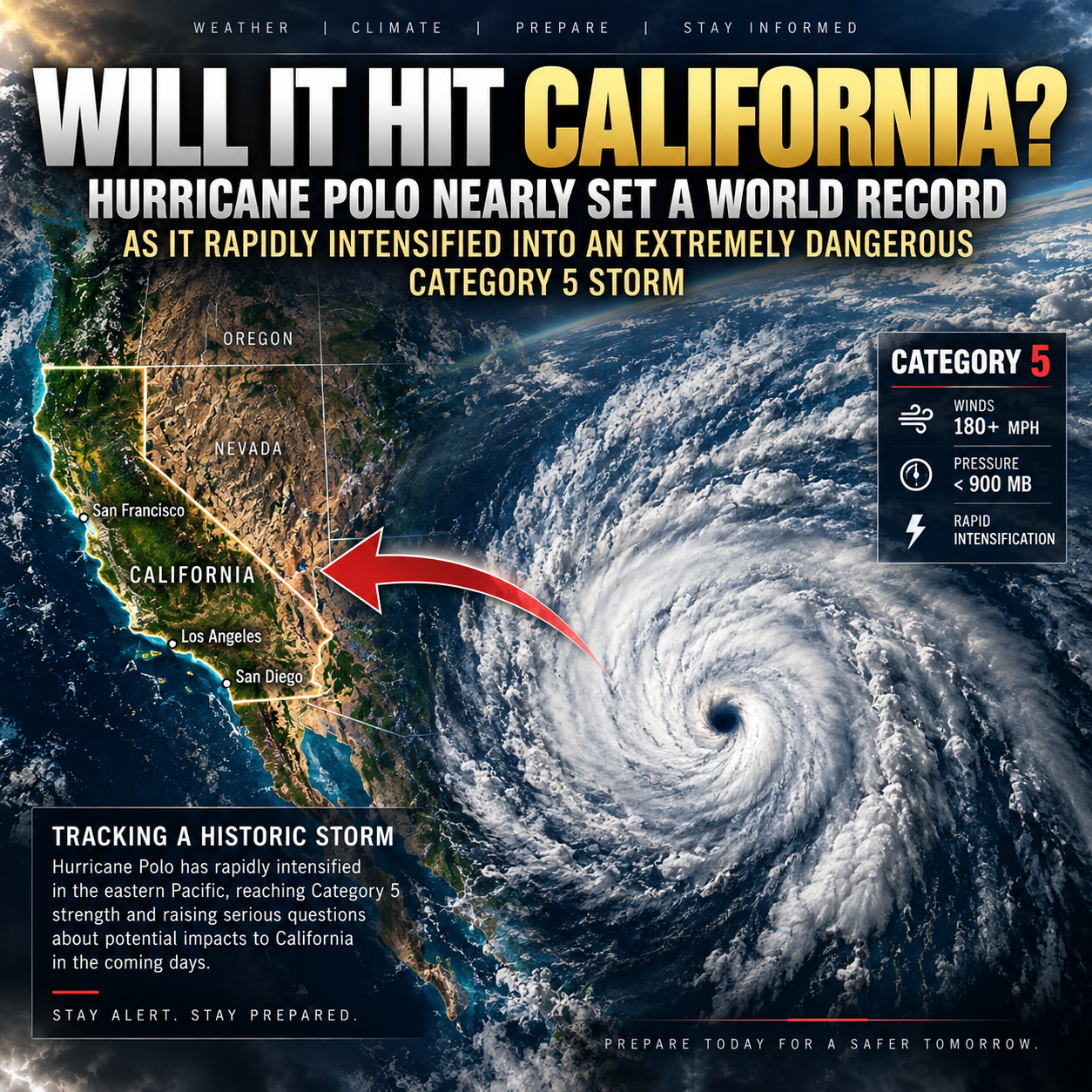
Will It Hit California? Hurricane Polo Nearly Set A World Record As It Rapidly Intensified Into An “Extremely Dangerous” Category 5 Storm
Hurricane Polo is an absolutely monstrous storm that everyone that lives in the entire state of California should be closely monitoring right now. On Monday, it was just a tropical storm that very few people had heard about. By Tuesday, it had become the most intense hurricane in the Western Hemisphere so far this year. It experienced one of the fastest rates of rapid intensification on record, and it is now a Category 5 storm. The National Hurricane Center is calling Polo “extremely dangerous”, and meteorologists are waiting to see what it does next. Is it possible that it will actually hit California?
It is very rare to see a storm of this magnitude in the eastern Pacific.
According to CNN, Hurricane Polo “is still strengthening” even after reaching Category 5…
Hurricane Polo is still strengthening after undergoing extreme rapid intensification and becoming a rare Category 5 on Tuesday morning in the Pacific Ocean off the coast of Mexico.
The 165 mph storm is feeding off of a favorable atmosphere and warmer water driven by the super El Niño, which is fueling a hyperactive hurricane season across the Pacific.
165 mile per hour winds can literally rip homes to shreds.
So this is a very, very serious storm.
The National Hurricane Center is usually very conservative in describing storms, but even they are calling it “extremely dangerous”, and they expect Polo to continue to intensify through Wednesday…
Hurricane Polo rapidly intensified off the coast of southwestern Mexico on Tuesday, growing into a powerful Category 5 storm that could bring life-threatening flooding to parts of the states of Guerrero and Michoacán, the National Hurricane Center said.
The hurricane center called Polo “extremely dangerous” on Tuesday, as its maximum sustained winds climbed to 165 mph. It will likely continue to strengthen through Wednesday, it said.
For now, Hurricane Polo is expected to move parallel to Mexico’s coastline.
But after that, where it will go is not exactly clear…
Over the next few days, he said, the storm is expected to drift parallel to Mexico’s coast. By 6 a.m. Sunday, Sept. 27, however, it is predicted to be near the southern tip of Baja California.
“Beyond that, we’ll have to see exactly where our forecast models want to take it,” Munyan said.
There are some models that have Hurricane Polo tracking way out into the Pacific.
But there are other models that have Hurricane Polo moving “toward California, Arizona, New Mexico and Texas”…
Models show a handful of scenarios carrying Polo or its remnants toward California, Arizona, New Mexico and Texas over the next seven to 10 days.
Southern California faces the earliest potential impacts, with large swells, dangerous rip currents and tropical humidity possible by the weekend even if Polo remains offshore.
Some model runs then carry the weakening remnants across northern Mexico into Arizona and New Mexico, with moisture potentially reaching western Texas later.
No hurricane has ever made landfall in the entire recorded history of the state of California.
If Hurricane Polo were to do so, it would truly be a historic event. So we shall watch and see what happens.
On Monday, nobody was even talking about Polo. But then it transformed from a weak tropical storm to a Category 5 monster in a 24 hour period…
Polo intensified from a 50-mph tropical storm on the morning of Monday, Sept. 21, to a 160-mph Category 5 hurricane in 24 hours, according to AccuWeather forecasters.
Conditions have to be just right for extreme rapid intensification to occur.
On Monday, Hurricane Polo benefitted from “low wind shear, humid air and deep, warm ocean water”, and that resulted in a level of intensification that was “truly remarkable”…
Extreme rapid intensification is a wind increase of 58 mph or more in 24 hours. Polo met that criteria and then some, with a wind increase of 110 mph, going from a 50 mph tropical storm to a 160 mph Category 5 from Monday to Tuesday morning.
This rate of rapid intensification is “truly remarkable,” the National Hurricane Center said Tuesday morning, and is among the fastest on record in the Eastern Pacific.
As it went through the process of rapid intensification, Hurricane Polo almost set a world record.
In fact, it came within 10 mph of matching the rapid intensification that Hurricane Patricia experienced in 2015…
Polo didn’t just pass the rapid intensification exam.
Its peak winds exploded by a whopping 110 mph in 24 hours.
That’s just 10 mph shy of the world record rapid intensification by wind speed, a 120 mph leap Hurricane Patricia made before it slammed into Mexico in late October 2015.
To me, it is very interesting that Hurricane Polo went through this process of extreme rapid intensification as millions of people around the world observed Yom Kippur.
Also on Monday, California Governor Gavin Newsom suddenly declared a state of emergency…
California Gov. Gavin Newsom announced Monday morning that he is declaring a state of emergency ahead of what could be the strongest El Niño on record.
Newsom’s office issued a statement confirming that state resources are being mobilized before the potential winter storms and associated impacts.
“The emerging El Niño event is already breaking records, and forecasters expect it to continue to strengthen, potentially becoming the strongest in recorded history,” the statement reads in part. “Today’s emergency proclamation streamlines measures to help California prepare for this historic event.”
Did Newsom just figure out that this Super El Niño could be a problem?
Of course not.
So why was there such urgency to declare a state of emergency? There is no imminent threat to the state from this Super El Niño other than Hurricane Polo. But we are supposed to believe that this state of emergency doesn’t have anything to do with this storm.
Maybe that is true, but I am not buying it. I think that Newsom and his minions realize that Hurricane Polo could potentially slam into their state.
If it does, the damage will be off the charts. Of more immediate concern is the “massive nor’easter storm” that has started to pummel the east coast…
A massive nor’easter storm sweeping across the eastern US has set off flood warnings and dangerous wind alerts for millions across 13 states.
The National Weather Service (NWS) has issued coastal flood advisories in Delaware, Maryland, New Jersey and Virginia, with forecasters warning that areas along the Atlantic could see waves reach 12 feet in height.
Heavy downpours and wind gusts as powerful as a tropical storm are expected to make conditions potentially life-threatening from Michigan to Georgia, with the heaviest rain falling in parts of Pennsylvania, Maryland, Virginia, West Virginia and North Carolina.
I could have easily done an entire article about this storm, because it is going to hit tens of millions of Americans really hard.
According to AccuWeather, extremely damaging coastal flooding is expected all the way through Friday…
AccuWeather added in a statement: ‘Coastal flooding, especially around high tide, is likely from North Carolina to Massachusetts from Tuesday through Friday.’
‘The threat may persist along the northern mid-Atlantic coast and expand into southeastern New England this weekend.’
In 2026, the U.S. has been hit by one major disaster after another.
But if a hurricane actually makes landfall in California, that will truly be a landmark event.
I don’t know if Hurricane Polo will be the storm to make history or not, but I will certainly be watching.
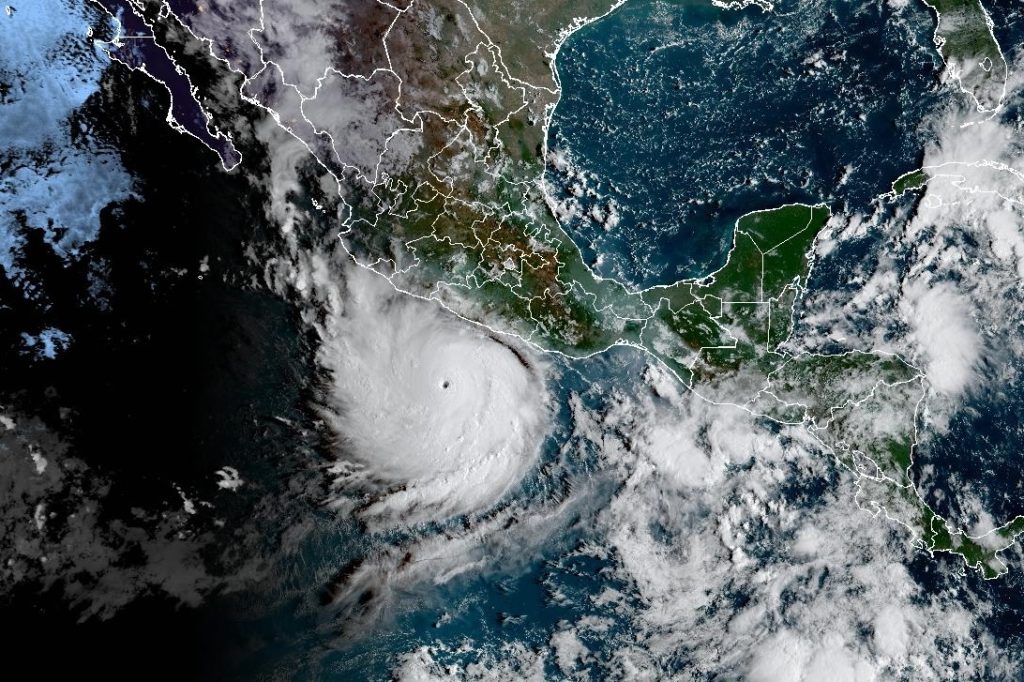
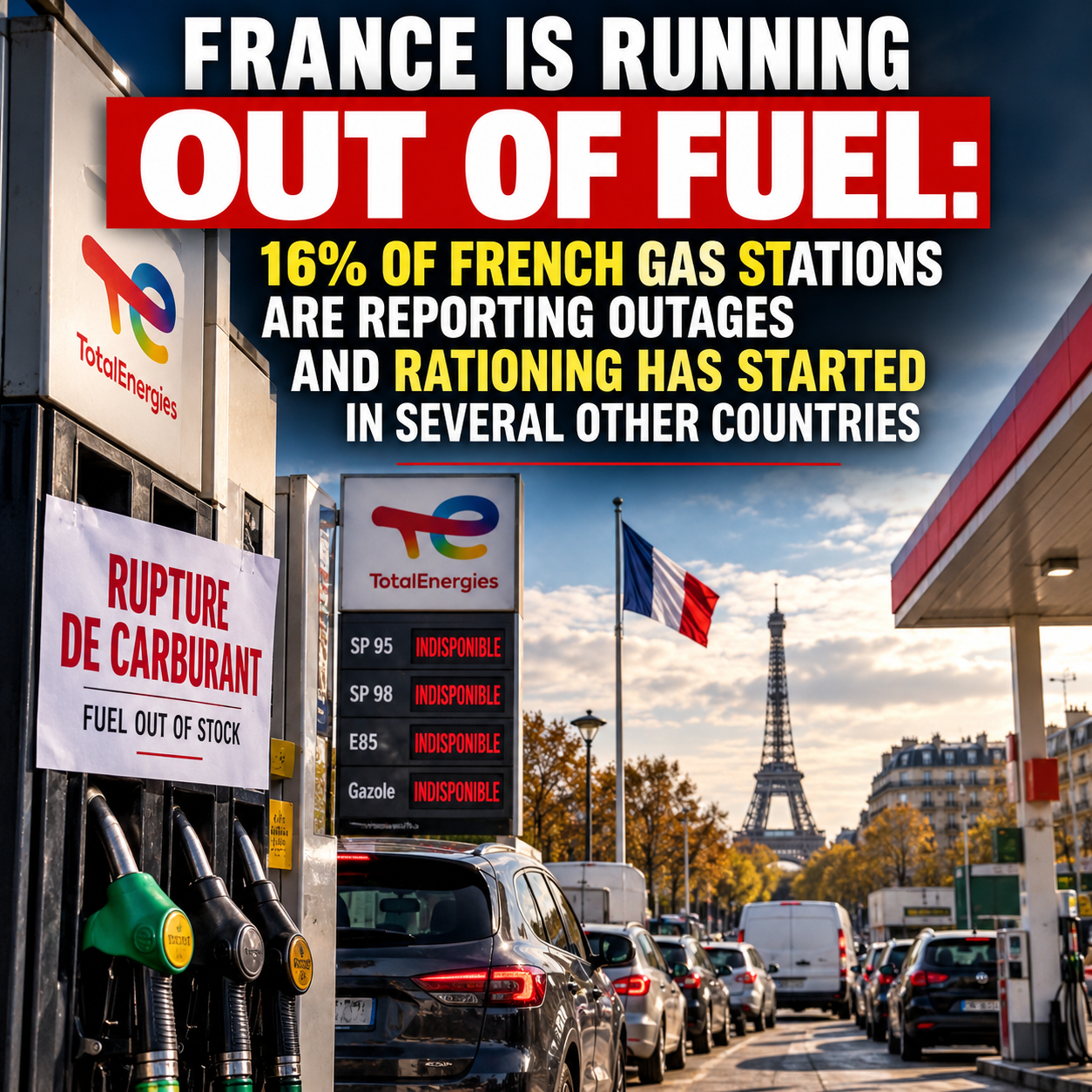
France Is Running Out Of Fuel: 16% Of French Gas Stations Are Reporting Outages And Rationing Has Started In Several Other Countries
It has begun. Hundreds of gas stations all over France are reporting that they are out of at least one type of fuel, and there are quite a few nations in Asia that are now imposing very strict measures in order to conserve energy. I have no idea why this isn’t making more news here in the United States. Maybe the big news outlets don’t think that there is any way that this could ever happen here. Or maybe there is a coordinated effort to keep the public calm. I don’t know. But without a doubt, this is a very big deal.
I knew that Europe was facing a severe energy crunch, but I didn’t realize that things had gotten so bad already.
It is being reported that 16 percent of all gas stations in France are out of at least one type of fuel…
Official French pump data on Monday showed that 16 percent of stations are short of at least one main fuel, diesel or petrol.
That was slightly better than Sunday evening (17 percent) but worse than Friday (13 percent). About 9,900 stations are in the count, according to prix-carburants.gouv.fr.
Shortages were worst this morning in Pays de la Loire (20 percent); Grand Est (19 percent); Île-de-France, Centre-Val de Loire, and Normandy (18 percent); Nouvelle-Aquitaine (17 percent); and Brittany, Hauts-de-France, and Occitanie (16 percent).
We aren’t just talking about a few isolated cases. We are talking about hundreds upon hundreds of French gas stations that are experiencing outages.
This is serious.
If you can actually find fuel in France, prices are absolutely outrageous. The average price of a liter of diesel in France is up to €2.406, which is approximately $10.45 a gallon. Europe is facing its worst energy crisis in history, and there is no end in sight.
In fact, Saudi Arabia has told Europe that there will be no shipments of oil for them for the entire month of October…
The trigger this week was a drone strike on Sept. 10 that closed Saudi Arabia’s East West pipeline, the line carrying crude from the eastern oil fields to Yanbu on the Red Sea without touching Hormuz.
Aramco has now told European refining customers they will receive no crude at all in October under long-term contracts, reported Bloomberg. The decision applies to every European buyer.
What this means is that the shortages that we are witnessing in Europe right now are likely to get even worse.
Meanwhile, several countries in Asia have been forced to institute fuel rationing.
In Pakistan, many types of businesses are being forced to close early in order to save energy…
From September 17, shops and malls across Pakistan must close by 09:00 PM, wedding halls by 10:00 PM, and restaurants by 11:00 PM. This Cabinet Division order runs for the next three months.
Moreover, government vehicles lose 50% of their fuel allocation, with security fleets exempt.
The government banned new vehicle purchases and official foreign travel, and ordered a 5% cut to non-employee spending for fiscal 2026-27.
In Bangladesh, almost all businesses must now shut down by 8 o’clock at the latest…
Shops, markets, and shopping centres must shut by 8 PM, an hour earlier than before, and lit billboards go dark from 7 PM. Only hospitals, pharmacies, food shops, and emergency services are exempt.
Industry is taking the same hit. Garment factories, the country’s main source of foreign currency, face rationing and temporary closures, and one Gazipur plant reported four or five power cuts a day.
In Indonesia, there are now extremely strict rules about when citizens are allowed to fill up their vehicles…
By September 11, queues at Makassar pumps ran as long as one kilometer. Ride-hailing drivers described three-hour waits and called it the worst shortage they had ever seen.
South Sulawesi’s answer was rationing by decree on September 12. Cars can only refuel on days matching their plate number, private vehicles must show a fuel gauge below one bar, and trucks and buses may fill up only between 06:00 PM and 04:00 AM.
I always felt like Asia was going to get hit harder than anyone else because they are so dependent on oil from the Middle East.
In Nepal, an extremely serious shortage of cooking gas has created a major national crisis…
Bottling plants in the Kathmandu Valley were delivering just 5% of the 35,000 to 40,000 cylinders the capital needs each day, the Federation of Nepal Gas Distributors told the Kathmandu Post. Some households have gone a month without a refill.
Restaurants say they are close to shutting down, and the Kathmandu Post now describes residents cutting back on food. Nepal imports every litre of fuel through India, so it sits at the end of a supply chain that is itself under strain.
We desperately need the war in the Middle East to end. But instead, fighting could escalate at any moment.
On Sunday, I discussed many of the signs that a major escalation could soon happen. Well, it turns out that President Trump actually ordered a huge wave of airstrikes but they were called off at the last minute…
Trump had ordered strikes against the Houthis to begin around 5 p.m. Eastern Standard Time on Sunday, but the military was notified shortly after 2 p.m. on Sunday that the order was canceled, the two U.S. officials said.
Sometimes I feel like I am riding a roller coaster.
You just never know when there is going to be another change of heart.
We are being told that fighter jets had been loaded up with munitions and were all ready to depart when the attack was suddenly canceled…
After days of shifting positions in the office of U.S. President Donald Trump, and despite his latest conversation with Saudi Crown Prince Mohammed bin Salman, the president called off a series of planned airstrikes against the Houthis in Yemen at the last minute. According to The New York Times, citing senior U.S. officials, munitions had already been loaded onto fighter jets that were ready for takeoff when Trump announced the change in plans.
Of course the pendulum could swing back in the direction of more conflict tomorrow.
In an address to the UN General Assembly on Tuesday, President Trump warned that he could “annihilate the Islamic Republic” by driving them “into hell with no chance of survival and no hope of future greatness or generations”…
President Donald Trump told the U.N. General Assembly Tuesday that he has a “big decision” to make when it comes to the war against Iran.
“Will a deal be made with Iran that lets them rebuild and create a far greater country than it ever was before? Maybe one of the greatest in the Middle East or even the world. Or do I annihilate the Islamic Republic and do it quickly, never giving them a chance to kill and destroy people and countries again?” Trump said.
“Do I drive them into hell with no chance of survival and no hope of future greatness or generations? But I believe we’ll make a deal right after the election, because it doesn’t make sense for them not to,” Trump continued. “They’re waiting to see how I do in the midterm election. What they don’t realize is that I’m not running. I did that already and won in a landslide.”
That is extremely strong language.
On the other side, the Iranians are warning that they are prepared to use “new weapons with new capabilities” if the U.S. attacks again…
Iran warned Monday it would use “new weapons with new capabilities” if the U.S. launched a fresh assault after President Donald Trump ramped up the rhetoric against Tehran over the weekend.
“If a new aggression takes place, we will definitely change the weapons and geography of the war,” Hossein Mohebbi, a spokesman for Iran’s Islamic Revolutionary Guard Corps said Monday, according to the semiofficial Fars news agency.
Mohebbi did not provide details on what the new weapons were or which new locations could be hit.
Is Iran bluffing, or do they actually have some “new weapons” that they are prepared to unleash?
I suppose that time will tell.
For now, the flow of oil out of the Middle East continues to be way below normal levels, and the global energy crisis just continues to intensify. On Tuesday, the average price of a gallon of diesel in the United States hit another new record high…
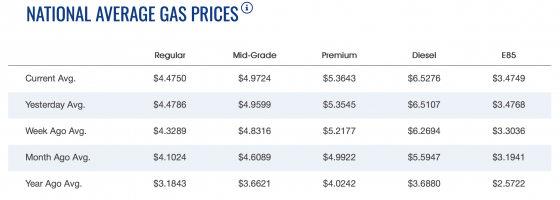
It is hard to believe that the average price of a gallon of diesel in the United States is now up to $6.52.
A year ago, it was just $3.68.
Most of our trucks, most of our trains and most of our tractors run on diesel.
So just about everything you buy at the store is about to get significantly more expensive. The global energy crisis has entered a very painful chapter. I don’t see any way that we are going to avoid a major economic downturn.
Our entire standard of living depends on cheap energy, but energy is no longer cheap. The changes that are ahead are going to be excruciating, and the world is simply not ready for what is about to happen next.
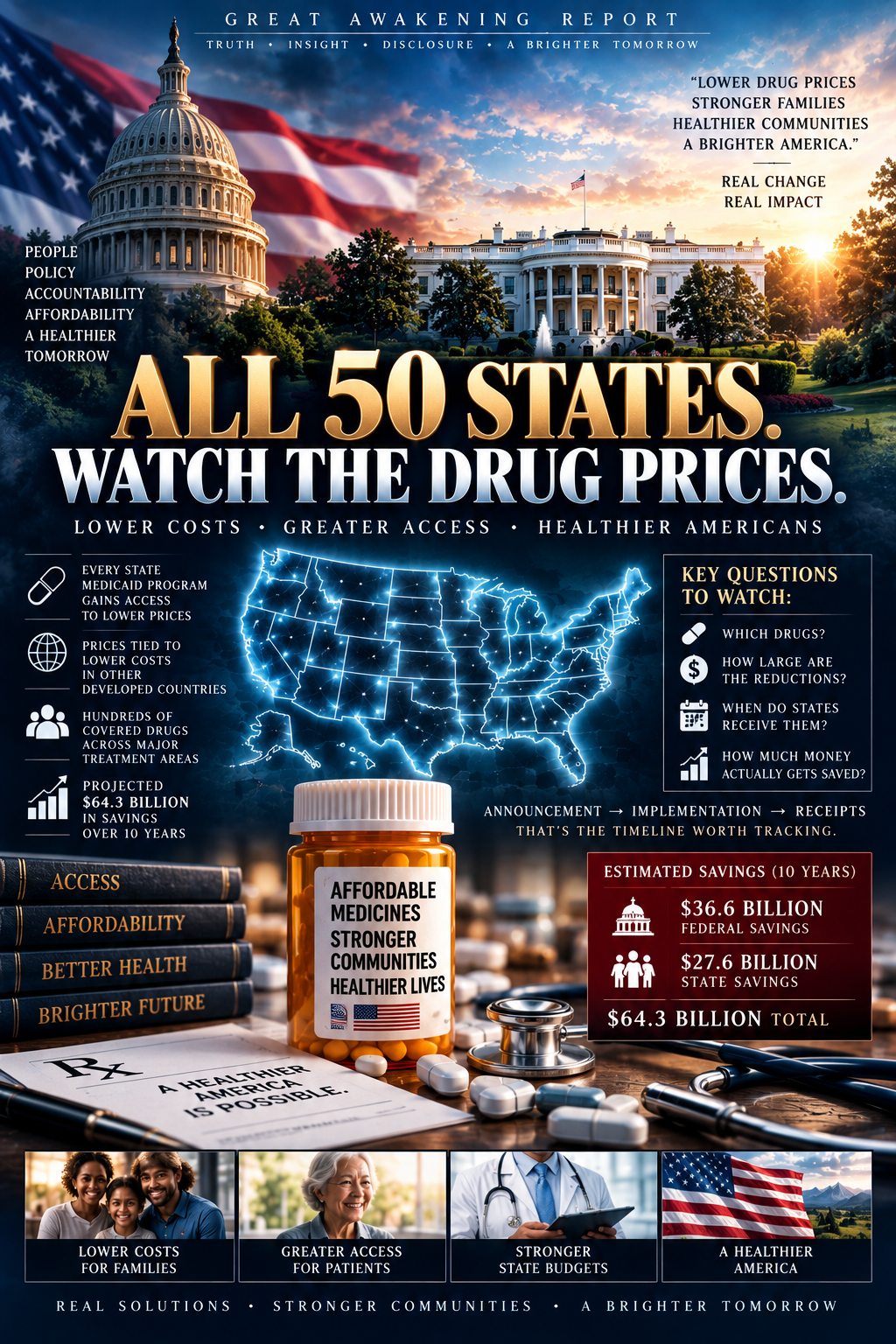
ALL 50 STATES | THE MEDICAID DRUG-PRICE EXPERIMENT GOES NATIONAL
Every state has applied to participate in a new international-reference pricing model. Now the real test begins: Which drugs get cheaper, by how much—and what do taxpayers actually save?
Source: GAR Contributing Writer
On September 18, 2026, the Trump administration announced a major expansion of its prescription-drug pricing initiative: all 50 states, along with the District of Columbia and Puerto Rico, have applied to participate in the federal GENEROUS Medicaid drug-pricing model. CMS says 40 states and Puerto Rico had already signed participation agreements as of the announcement, with the remaining states given until September 30 to finalize participation.
That distinction is important. The White House described the development as extending lower prices to every state Medicaid program, while CMS’s more detailed implementation announcement says all 50 states have applied, rather than saying every state had completed its agreement as of September 18.
Either way, the scale is substantial. Medicaid is jointly financed by federal and state governments, and prescription-drug spending represents billions of dollars in annual public expenditures. If the model delivers the reductions projected by the administration, the effects could eventually reach state budgets as well as federal Medicaid spending.
WHAT IS “MOST-FAVORED-NATION” PRICING?
The basic idea is straightforward.
For drugs covered by the model, participating pharmaceutical manufacturers provide supplemental rebates to participating Medicaid programs so that the final net price more closely reflects prices paid in selected other countries. CMS describes the objective as aligning Medicaid net prices with international benchmarks rather than allowing substantially higher U.S. prices to persist.
In simplified form:
INTERNATIONAL PRICE → U.S. BENCHMARK → MANUFACTURER REBATE → LOWER NET MEDICAID COST
This doesn’t necessarily mean a Medicaid patient will walk into a pharmacy and see the international price printed on a receipt. The mechanism operates largely through rebates between drug manufacturers and state Medicaid programs, reducing the program’s ultimate net cost for participating medicines.
WHICH DRUGS ARE INCLUDED?
This is one of the most important questions to track.
The White House says the program encompasses hundreds of individual medicines across major drug classes, including drugs used in oncology, diabetes and asthma treatment.
CMS provides a more technical qualification: eligible medicines include certain single-source and innovator multiple-source outpatient drugs produced by manufacturers that voluntarily participate in the model.
That means the headline—ALL 50 STATES—doesn’t mean every prescription medicine sold in America suddenly receives an international reference price.
The details are drug-specific and manufacturer-specific.
That is precisely why implementation matters more than the headline alone.
26 PHARMACEUTICAL COMPANIES
According to the White House, the administration has reached MFN agreements with 26 pharmaceutical manufacturers representing approximately 89% of the branded-drug market. The companies named by the administration include Pfizer, Eli Lilly, Novo Nordisk, Merck, Johnson & Johnson, AbbVie, Amgen, Bristol Myers Squibb, Gilead, Novartis, Sanofi, AstraZeneca and others.
Reuters reports that the initiative includes major manufacturers such as Pfizer, Eli Lilly and Novo Nordisk and is designed to narrow the substantial difference between what U.S. programs pay for certain medicines and prices negotiated in other developed countries.
That creates an unusually large real-world experiment in pharmaceutical pricing.
The question is no longer merely whether companies will discuss international-reference pricing.
The question becomes what happens when it is implemented across Medicaid programs nationwide.
THE GOVERNMENT PROJECTS $64.3 BILLION IN SAVINGS
The administration’s Council of Economic Advisers estimates the Medicaid initiative could generate approximately $64.3 billion in taxpayer savings over ten years.
Of that projected total:
$36.6 BILLION — FEDERAL GOVERNMENT
$27.6 BILLION — STATE GOVERNMENTS
Those figures should currently be understood as government projections—not realized savings.
That’s a critical distinction.
The real measure will come from subsequent Medicaid expenditure data, rebate payments, participating-drug prices and state financial reports.
PROJECTION → IMPLEMENTATION → DATA → VERIFIED SAVINGS
That’s the sequence worth following.
THE MODEL RUNS FOR FIVE YEARS
This isn’t designed as a one-month pricing initiative.
CMS says the GENEROUS — GENErating cost Reductions fOr U.S. Medicaid — Model launched in January 2026 and is scheduled to operate for five years. Participation is voluntary for both states and manufacturers.
That provides enough time to evaluate several important questions.
Do manufacturers continue participating?
Do international reference prices materially reduce Medicaid’s net costs?
Does access to covered medicines remain stable?
Do manufacturers change launch prices or other pricing strategies?
And do the projected savings actually appear in federal and state expenditures?
Those questions won’t be answered by a press conference. They’ll be answered by the data accumulated over the program’s life.
THE OTHER SIDE OF THE DEBATE
International-reference pricing has also generated opposition from the pharmaceutical industry.
Industry representatives argue that aggressive government pricing policies could reduce revenue available for pharmaceutical research and development and potentially affect patient access to certain treatments. Reuters reports that the pharmaceutical industry’s principal trade organization has opposed the administration’s MFN approach on those grounds.
The administration takes the opposite position: that Americans have historically paid disproportionately high prices relative to other developed countries and that international benchmarking can reduce that disparity while preserving access.
Those competing claims can increasingly be tested against actual results as the model expands.
THE SIGNAL TO WATCH: IMPLEMENTATION
The September 18 announcement is significant because the initiative has moved beyond a limited group of states.
But the bigger story starts now.
For GAR readers, there are several numbers worth tracking:
NUMBER OF STATES FINALIZING PARTICIPATION
NUMBER OF PARTICIPATING MANUFACTURERS
NUMBER OF COVERED DRUGS
INTERNATIONAL REFERENCE PRICE
MEDICAID NET PRICE BEFORE AND AFTER REBATES
FEDERAL SAVINGS
STATE SAVINGS
PATIENT ACCESS
These measurements will reveal whether the policy produces savings approaching the government’s projections—or whether implementation produces materially different results.
GAR SIGNAL | FOLLOW THE RECEIPTS
This story provides a useful example of how major government announcements should be tracked.
The announcement itself is Signal One.
Implementation is Signal Two.
Actual financial results are Signal Three.
ANNOUNCEMENT → PARTICIPATION → IMPLEMENTATION → PRICES → SAVINGS
The administration projects $64.3 billion in Medicaid savings over the coming decade.
Now that number becomes a benchmark.
Six months from now: what has actually been saved?
One year from now: which states benefited most?
Three years from now: how closely do realized savings track the projection?
Those are the questions that transform a political announcement into measurable policy analysis.
GAR BOTTOM LINE
On September 18, all 50 states, Washington, D.C., and Puerto Rico had applied to participate in the GENEROUS Medicaid pricing model, while 40 states and Puerto Rico had already completed participation agreements. The program uses manufacturer rebates to bring Medicaid’s net cost for covered participating drugs toward prices paid in selected other countries.
The White House projects $64.3 billion in combined federal and state Medicaid savings over ten years. That remains a projection that should be measured against subsequent program data.
So don’t stop at:
ALL 50 STATES.
The more important investigation begins with what happens next:
WHICH DRUGS? HOW LARGE ARE THE REDUCTIONS? WHEN DO THE REBATES ARRIVE? DO PATIENTS MAINTAIN ACCESS? AND HOW MUCH MONEY IS ACTUALLY SAVED?
ANNOUNCEMENT → IMPLEMENTATION → RECEIPTS.
WATCH THE DRUG PRICES. FOLLOW THE NUMBERS.

16 DEFENDANTS, MULTIPLE STATES | THE ELECTION CASES MOVE INTO FEDERAL COURT
DOJ announces a nationwide group of prosecutions involving alleged noncitizen voting, false citizenship claims and related offenses — but the allegations now have to be proved in court
Source: GAR Contributing Writer
On September 18, 2026, the U.S. Department of Justice announced federal charges against 16 individuals in cases involving alleged unlawful voting, illegal voter registration and related offenses across several states. According to DOJ, the cases include allegations of noncitizens voting in federal elections, false claims of U.S. citizenship, and—in some cases—additional alleged crimes involving wire fraud, passports, naturalization, identification documents and firearms.
The announcement deserves attention for what it establishes—and restraint regarding what it does not. These are not anonymous social-media allegations. They are criminal matters involving named defendants, federal prosecutors and court proceedings. But charges are accusations, not convictions, and DOJ expressly states that the defendants are presumed innocent unless and until guilt is established beyond a reasonable doubt.
THE CASES ARE SPREAD ACROSS THE COUNTRY
The prosecutions are not presented by DOJ as one single coordinated conspiracy. Instead, the September 18 announcement aggregates individual cases and investigations from multiple federal districts, including Texas, Idaho, Georgia, Massachusetts, Wisconsin, New Jersey and Michigan.
That distinction matters. The announcement establishes that federal authorities are pursuing multiple election-related cases; it does not, by itself, demonstrate that the defendants were connected to one another or participating in a nationwide organized election scheme.
The allegations also vary considerably from defendant to defendant.
In the Northern District of Texas, DOJ announced charges involving several noncitizens accused of unlawful voting or falsely claiming citizenship to register or vote. In the Western District of Texas, Mexican national Monica Carzoli Carillo was charged after prosecutors alleged that, while a lawful permanent resident, she registered and cast an early ballot in the November 2024 presidential election. DOJ says a criminal complaint alleges that she later admitted registering and voting.
GEORGIA — THREE SEPARATE CASES
Federal prosecutors in Georgia announced cases involving three noncitizens.
DOJ alleges that Pauline Lewis, Gabriel Covarrubias and Analiea Milliscent Eccles illegally participated in federal elections. The allegations are not identical: prosecutors say Covarrubias allegedly voted using a false name and made a false statement on a passport application, while Eccles is accused of voting repeatedly between 2008 and 2024 and falsely claiming U.S. citizenship. These remain allegations that must be tested through the judicial process.
The Georgia cases illustrate why reading the underlying filings matters. A headline such as “illegal voting” can encompass different alleged conduct, different elections and different statutes.
IDAHO — A BROADER FRAUD CASE
One of the more extensive sets of allegations comes from Idaho.
According to DOJ, Avila Gomez allegedly falsely claimed U.S. citizenship when registering to vote and subsequently voted in elections in May 2022 and November 2024. A federal grand jury indictment also includes allegations involving wire fraud, theft of government funds, a passport application, identification documents and firearm-related offenses.
That case demonstrates another important point: some of the 16 cases extend beyond election law. The DOJ announcement combines election-related allegations with additional offenses discovered during the respective investigations.
The charges cited across the broader announcement include allegations involving:
NONCITIZEN VOTING • FALSE CLAIMS OF CITIZENSHIP • ILLEGAL REGISTRATION • WIRE FRAUD • NATURALIZATION FRAUD • PASSPORT FRAUD • IDENTIFICATION FRAUD • FIREARM OFFENSES
OTHER STATES ENTER THE RECORD
DOJ also announced cases in Massachusetts, Wisconsin, New Jersey and Michigan.
In Massachusetts, Nigerian national Gladys Adaeze Okafor, a lawful permanent resident, was charged in connection with alleged voting in the 2022 election and alleged voting in the 2024 general election. In Wisconsin, Colombian national Julieta Englestad faces allegations involving falsely claiming U.S. citizenship when registering to vote.
In New Jersey, DOJ alleges Santana Coulibaly registered in 2016, voted in federal elections in 2018 and 2020, submitted a provisional ballot in the 2024 presidential election and subsequently made fraudulent statements in naturalization applications. In Michigan, Russian national Victoria Viktorivna Aquilina was charged with allegedly voting illegally in the 2024 general election.
Again, these descriptions reflect the government’s allegations, not judicial findings of guilt.
WHAT THESE CASES ESTABLISH — AND WHAT THEY DON’T
The September 18 announcement establishes something concrete: federal prosecutors have brought election-related criminal cases against multiple named individuals, and those cases can now be followed through public court proceedings.
It does not, by itself, establish the nationwide prevalence of noncitizen voting, demonstrate that unlawful votes changed the result of an election, or prove a coordinated national election-fraud operation.
That broader context is important. A Reuters analysis published in July examined noncitizen-voting enforcement and found comparatively small numbers of identified violations relative to the enormous number of ballots cast nationally, including cases involving people who registered but did not ultimately vote. The existence of individual prosecutions therefore should not automatically be extrapolated into a conclusion about the overall scale or electoral impact of illegal voting without additional evidence.
Both facts can be true simultaneously:
Illegal voting can occur and warrant prosecution.
And:
Individual prosecutions do not automatically demonstrate widespread election fraud.
The evidence should determine which conclusions are justified.
THE MOST IMPORTANT WORD: ALLEGED
There is a reason criminal reporting repeatedly uses that word.
An indictment or criminal complaint represents the government’s accusation. Prosecutors still carry the burden of proving the relevant elements of each offense. Defendants can contest the government’s evidence, challenge witnesses and legal theories, seek dismissal, negotiate pleas or proceed to trial.
The DOJ itself closes its September 18 announcement with essentially this warning: complaints, indictments and informations contain accusations, and defendants remain presumed innocent unless proved guilty beyond a reasonable doubt.
That principle shouldn’t disappear merely because the underlying subject is politically charged.
FOLLOW THE COURT RECORD
The next phase of this story will be more informative than the initial headlines.
Court filings can establish what prosecutors claim happened, what documentary evidence exists, what defendants dispute, whether admissions were lawfully obtained, how voter-registration systems were involved, and ultimately whether the government can prove each case.
That gives researchers a straightforward method:
SAVE THE CASES → FOLLOW THE FILINGS → REVIEW THE EVIDENCE → WATCH THE VERDICTS
The standard should remain consistent regardless of which political narrative a case appears to support.
Evidence first.
Conclusions afterward.
GAR SIGNAL | ELECTION CLAIMS ENTER THE EVIDENTIARY PHASE
The broader significance of the September 18 announcement is that these particular allegations can now be evaluated through a formal process rather than social-media speculation.
NAMES. CHARGES. COURT FILINGS. EVIDENCE. DEFENSES. JUDICIAL OUTCOMES.
Those records will allow the public to distinguish substantiated violations from allegations that cannot be proved.
That distinction is essential when discussing election integrity.
GAR BOTTOM LINE
The Department of Justice announced charges against 16 individuals on September 18, 2026, involving alleged illegal voting, registration violations and related crimes across multiple federal jurisdictions. Some defendants are accused of actually casting ballots; others face allegations involving registration, citizenship representations or additional fraud offenses.
But the story is not finished when charges are announced.
It is beginning.
DON’T JUMP AHEAD OF THE VERDICTS. SAVE THE CASES. WATCH THE COURTS. FOLLOW THE RECORD.
Because claims about American elections—whether they allege misconduct or dismiss it—are strongest when they are measured against documented evidence and judicial findings rather than assumptions.
Read the September 18 DOJ announcement and individual case summaries
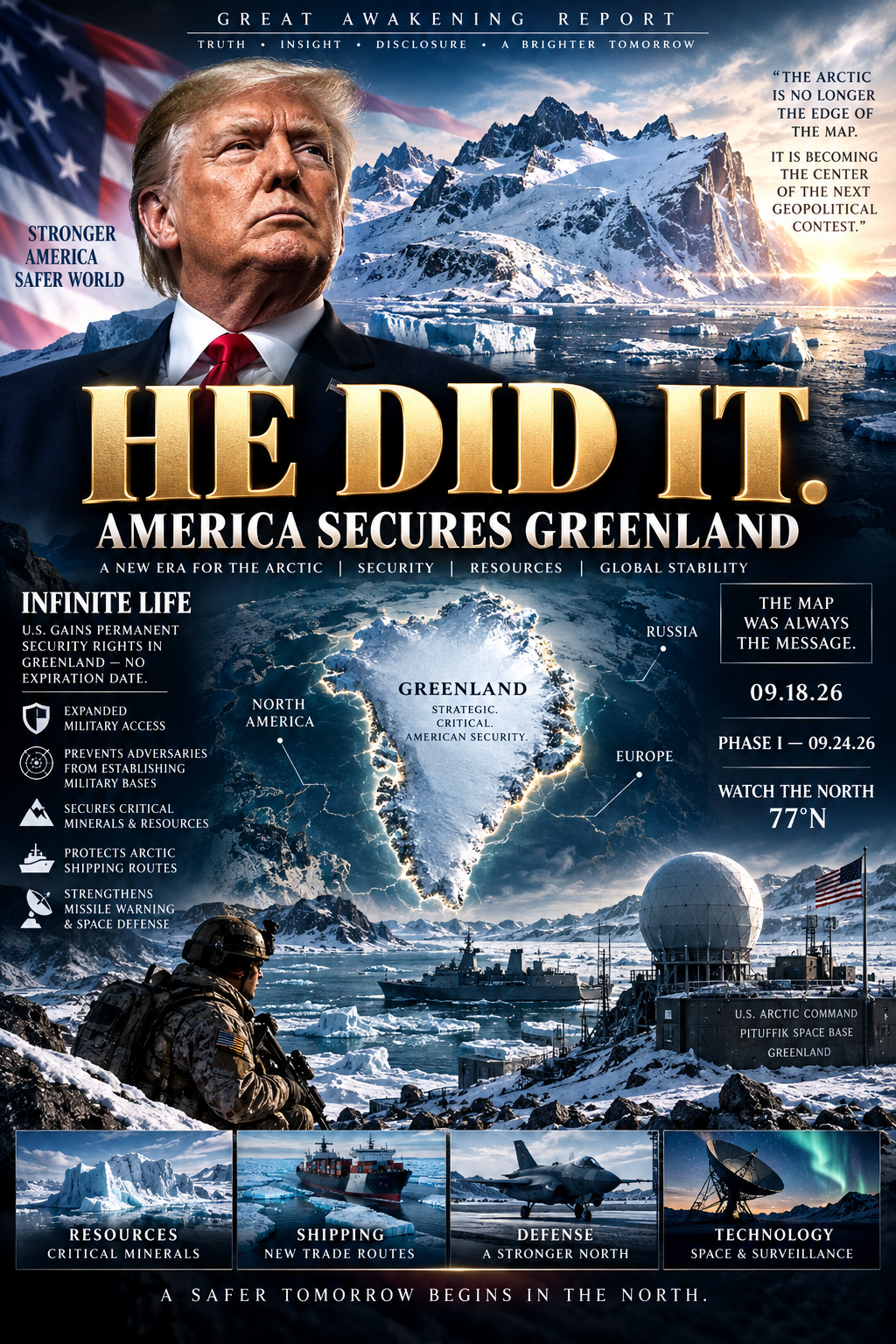
GREENLAND CHANGES THE ARCTIC MAP | America Secures an Expanded, Long-Term Security Role in the High North
The September 18 agreement could reshape Arctic defense, military access and strategic competition—without transferring Greenland to the United States
Source: GAR Contributing Writer
For years, President Donald Trump treated Greenland as a major American strategic interest. His 2019 proposal to purchase the island was widely criticized and rejected by Denmark. Seven years later, the issue has returned in a substantially different form. On September 18, 2026, the governments of the United States, Denmark and Greenland announced that they expect to sign a new agreement strengthening security across Greenland, the Arctic and the North Atlantic.
The development is significant, but an important distinction should be made at the outset: the United States has not purchased or acquired Greenland. Denmark says the agreement preserves the sovereignty and territorial integrity of the Kingdom of Denmark and recognizes Greenlanders’ right to self-determination. The governments expect to formally sign the agreement during the United Nations General Assembly, after which it must undergo the necessary parliamentary procedures before entering into force.
THE “INFINITE LIFE” AGREEMENT
Trump characterized the arrangement as giving the United States a permanent role in Greenland’s security and said he wanted the agreement to have what he called “infinite life.” Reuters reports that the emerging arrangement would expand the American military presence and prevent adversarial countries from establishing military bases or making certain sensitive strategic investments on the island. The precise scope of some provisions has not yet been publicly detailed.
That makes the distinction between political sovereignty and security access essential. Greenland remains within the Kingdom of Denmark, while Washington would gain a stronger and potentially enduring security position. Greenland’s Prime Minister Jens-Frederik Nielsen said the agreement recognizes Greenland’s interests and strengthens security for Greenland, Denmark, the United States and the broader Western alliance.
THIS WAS NEVER JUST ABOUT ICE
Greenland’s significance becomes obvious when viewed on a globe rather than on a conventional flat map.
The island occupies a pivotal position between North America, the North Atlantic and the Arctic. The United States already operates the Pituffik Space Base in northwestern Greenland, and the U.S. and Denmark have had extensive defense arrangements concerning Greenland since the 1951 Defense of Greenland Agreement.
Greenland’s geography places it close to strategic air and maritime approaches between Russia and North America. It also sits within an Arctic region receiving growing attention because of military competition, natural resources, communications infrastructure and changing maritime accessibility.
The strategic equation can therefore be summarized:
ARCTIC ACCESS → MISSILE WARNING → SPACE SURVEILLANCE → NORTH ATLANTIC DEFENSE → SHIPPING → RESOURCES → GREAT-POWER COMPETITION
Greenland is not geographically peripheral to that system.
It is positioned near its center.
THE RUSSIA–CHINA DIMENSION
The agreement also needs to be understood within the broader competition involving Russia and China.
Reuters reports that the arrangement is intended to prevent non-NATO adversaries from establishing military positions or making sensitive investments in Greenland. That reflects a larger Western concern about strategic access to Arctic infrastructure and territory.
Russia possesses the Arctic’s largest military footprint and an extensive northern coastline. China, while not an Arctic state, has pursued economic, scientific and strategic interests across the region.
For Washington, preventing competitors from obtaining strategically sensitive footholds in Greenland could therefore be as important as expanding America’s own military footprint.
THE LONG AMERICAN HISTORY BEHIND GREENLAND
Trump did not originate American interest in Greenland.
The United States has considered Greenland strategically important for generations. Washington attempted to purchase Greenland from Denmark for $100 million in gold in 1946, an offer Denmark rejected. American defense cooperation with Denmark subsequently produced the 1951 agreement that established broad U.S. defense rights on the island.
Trump revived the acquisition question during his first presidency in 2019. Denmark again rejected the possibility of selling Greenland.
The 2026 approach appears fundamentally different: instead of transferring sovereignty, the emerging agreement seeks expanded American security access while formally recognizing Danish sovereignty and Greenlandic self-determination.
That difference matters.
THE ARCTIC IS MOVING TOWARD THE CENTER
For much of modern history, geopolitical competition was conceptualized around Europe, the Middle East and the Indo-Pacific.
The Arctic is increasingly becoming another strategic theater.
As military technology evolves and Arctic accessibility changes, northern geography becomes more important for missile detection, space surveillance, air defense, naval operations, communications, energy and mineral resources.
Denmark and several European governments had already declared earlier in 2026 that Arctic security had become a priority for European and transatlantic security, while emphasizing that decisions regarding Greenland ultimately belong to Denmark and Greenland.
The September agreement therefore should not be viewed as an isolated transaction.
It belongs inside a much larger geopolitical realignment.
GREENLAND’S OWN INTERESTS MATTER
There is another dimension that can easily disappear when the story is framed exclusively as Washington versus Copenhagen.
Greenland itself is a political actor.
It has its own government, population, economic priorities and long-standing debate surrounding eventual independence. Nielsen’s government has cautiously welcomed the emerging security arrangement, describing it as beneficial to Greenland while emphasizing the island’s interests and international role.
Any durable Arctic strategy will consequently have to account not merely for American and Danish interests, but for Greenlandic political consent and self-determination.
That may become increasingly important as outside powers compete for infrastructure, minerals, military access and commercial opportunities.
WHAT HAPPENS NEXT
The immediate milestone is now diplomatic rather than speculative.
Denmark’s government says the three governments expect to sign the agreement during the upcoming United Nations General Assembly. Parliamentary procedures would then be required before it takes effect.
The details released with the final agreement will matter enormously.
GAR should watch five questions in particular:
MILITARY ACCESS • NEW BASES OR FACILITIES • INVESTMENT SCREENING • CRITICAL MINERALS • GREENLANDIC AUTHORITY
Those details will reveal whether September 18 ultimately represents a modest modernization of existing defense arrangements or a much larger restructuring of America’s Arctic posture.
GAR SIGNAL | WATCH THE NORTH
The larger signal extends beyond one agreement or one administration.
THE ARCTIC IS BECOMING A FRONT-LINE STRATEGIC REGION.
Russia’s northern military infrastructure, NATO’s Arctic posture, American missile and space-defense requirements, Greenland’s geography and resources, and China’s Arctic ambitions are increasingly intersecting.
The map itself explains why.
NORTH AMERICA → GREENLAND → NORTH ATLANTIC → EUROPE
And across the Arctic:
UNITED STATES / CANADA ↔ GREENLAND ↔ RUSSIA
Greenland sits at the intersection.
GAR BOTTOM LINE
September 18 did not make Greenland American territory.
It did something different: the United States, Denmark and Greenland announced an agreement intended to deepen America’s long-term security role in one of the world’s most strategically important regions while preserving Danish sovereignty and Greenlandic self-determination.
Whether history ultimately views the agreement as transformational will depend on its final language, implementation and parliamentary approval.
But one larger trend is already difficult to miss:
THE ARCTIC IS NO LONGER THE EDGE OF THE GEOPOLITICAL MAP.
IT IS MOVING TOWARD THE CENTER.
MISSILE DEFENSE • MILITARY ACCESS • SHIPPING • CRITICAL MINERALS • SPACE • ENERGY • GREAT-POWER COMPETITION
△ 77°N // 09.18.26
WATCH THE NORTH.

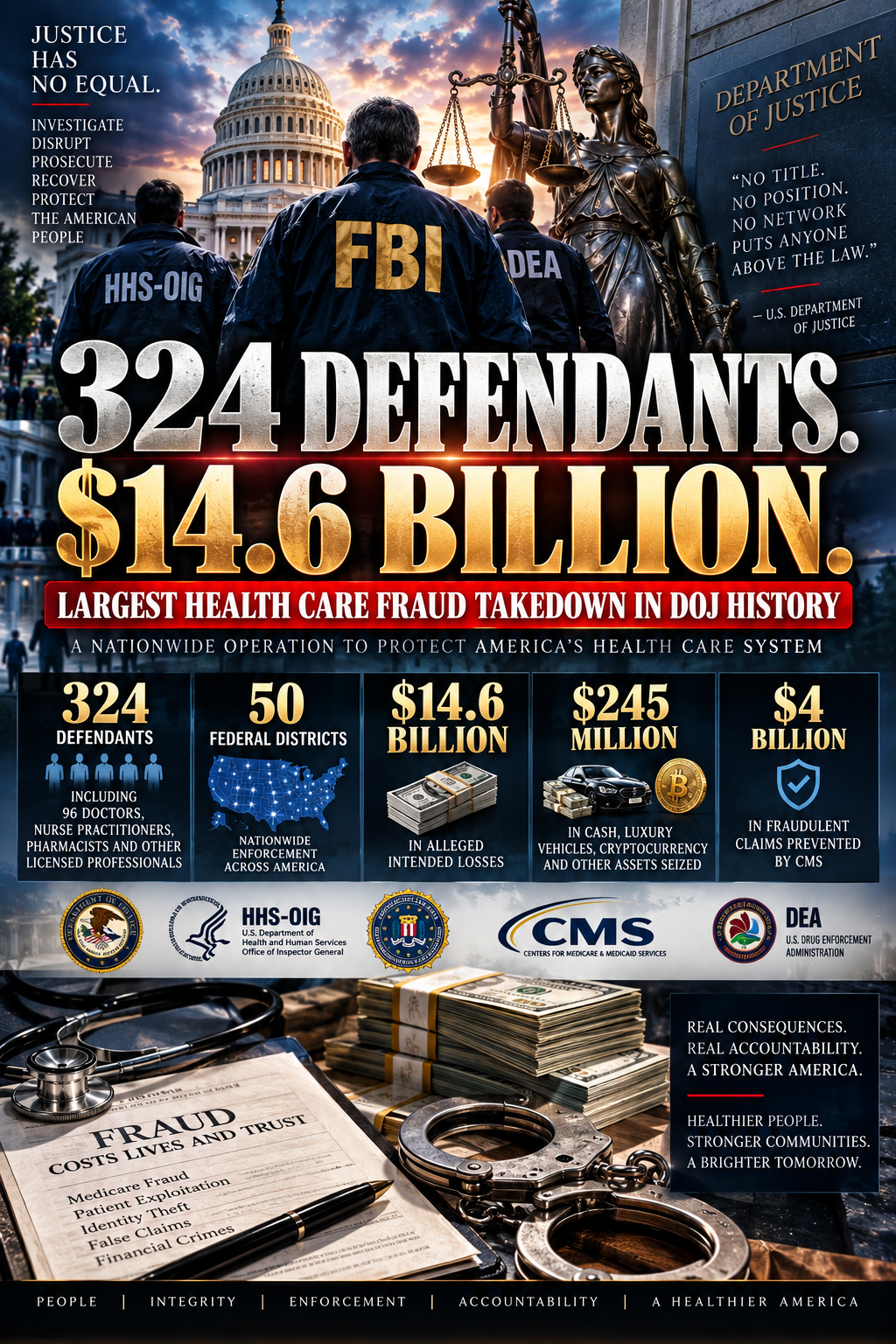

THE H-1B FILES | A 30-DAY FEDERAL REVIEW BEGINS
September 18, 2026 — A new Executive Order has opened another chapter in the federal government’s scrutiny of the H-1B visa program.
Source: GAR Contributing Writer
President Donald Trump directed several agencies to coordinate more closely when reviewing H-1B petitions, labor-condition applications and visas. The order specifically brings together the Departments of State, Labor and Homeland Security, with information supplied by Commerce, Education and the Small Business Administration. The agencies are instructed to consider wage, employment, academic, industrial and other economic data when administering the program.
But buried inside the order is a provision worth watching closely: 30 DAYS. Within 30 days of September 18, the Secretary of Labor, acting through the Wage and Hour Division, must begin reviewing data associated with previously submitted labor-condition applications to determine whether further action against sponsoring employers may be warranted under federal immigration law. This is significant because the directive does not apply only to future applications; it explicitly reaches backward into previously submitted LCA data.
LAYOFFS ARE NOW PART OF THE SCRUTINY
Another important change involves the relationship between H-1B sponsorship and American-worker layoffs. The order directs State, Labor and Homeland Security to take into account whether a sponsoring employer directly or indirectly engaged in layoffs during the previous year—or plans future layoffs—that negatively affect similarly situated U.S. workers. That consideration can now enter the government’s review of labor-condition applications, petitions, visas and entry of H-1B workers.
That does not mean that a company employing H-1B workers while conducting layoffs has automatically violated federal law. Nor does the new review establish wrongdoing simply because an employer’s records are examined. The Department of Labor already administers statutory requirements concerning H-1B wages, working conditions and certain displacement protections, and investigations and enforcement depend on the applicable legal requirements and facts.
THE GOVERNMENT IS CONNECTING THE DATABASES
The larger story may therefore be the government’s move toward interagency data coordination. Instead of evaluating immigration paperwork largely through separate administrative channels, the executive order calls for agencies responsible for immigration, labor, education, commerce and small business to exchange relevant information. In practical terms, that potentially allows officials to examine an employer’s H-1B activity alongside broader indicators involving wages, employment patterns, industry conditions and workforce specialization.
The administration says the objective is to protect American workers and address what it describes as abuses of the H-1B system. Those characterizations are the administration’s stated rationale rather than findings that every—or even most—H-1B employers have engaged in misconduct. The H-1B program continues to provide a legal route for U.S. employers to hire qualified foreign professionals for specialty occupations, and the September 18 order does not eliminate the program.
There was also a separate presidential proclamation issued the same day. It extended for another year the restrictions created in September 2025 requiring a $100,000 payment for certain H-1B petitions involving workers entering the United States, subject to specified exceptions. That proclamation and the new interagency-review order are separate presidential actions, but together they represent a broader tightening of the administration’s H-1B policy.
WHAT HAPPENS AFTER THE 30 DAYS?
That is the signal worth following. The order does not say that mass penalties, prosecutions or visa cancellations will automatically begin when the 30-day period expires. It says Labor must begin reviewing the existing data within that period to determine whether further action against particular sponsoring employers is warranted. The meaningful evidence will therefore come afterward: agency guidance, investigations, enforcement actions, employer responses, court challenges and any regulatory changes that follow.
For the Sleeping Giant, this is a story to track through documents rather than speculation. Watch which industries and employers receive additional scrutiny. Watch whether Labor identifies patterns between layoffs and H-1B sponsorship. Watch for new rules or operational guidance from State, Labor and Homeland Security. And most importantly, distinguish an employer being reviewed from an employer actually being found in violation.
30 DAYS.
WATCH THE DATA.
WATCH THE FILINGS.
WATCH THE ENFORCEMENT ACTIONS.
Because the next chapter of the H-1B debate will not simply be written in political rhetoric.
IT WILL BE WRITTEN IN THE RECORDS.
Read the September 18 Executive Order
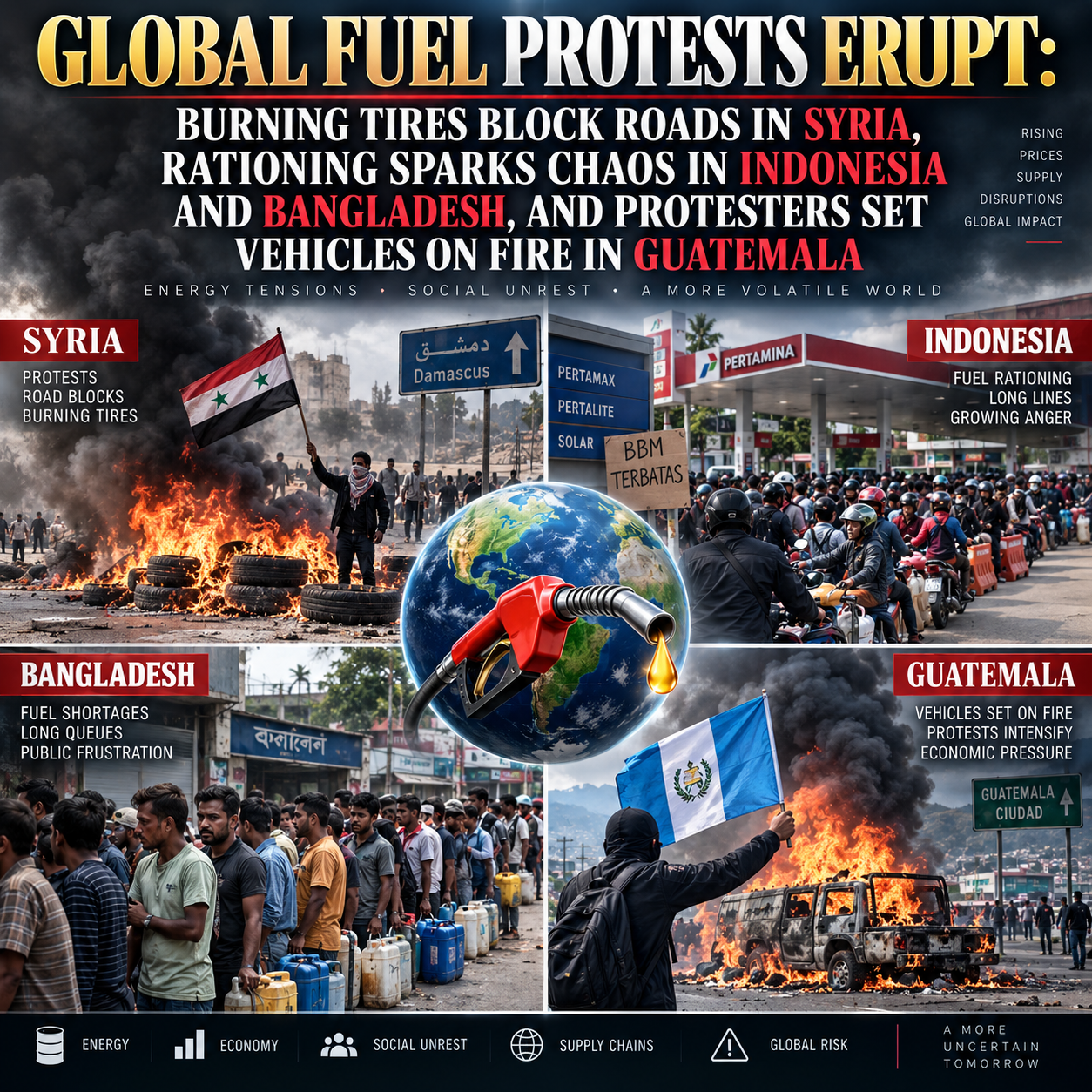
Global Fuel Protests Erupt: Burning Tires Block Roads In Syria, Rationing Sparks Chaos In Indonesia And Bangladesh, And Protesters Set Vehicles On Fire In Guatemala
It was only a matter of time before widespread protests began to occur. Global supplies of gasoline and diesel have been getting tighter for months, and now prices are soaring and rationing has started in some parts of the world. Needless to say, a lot of ordinary people are very angry about this. Large protests have suddenly erupted all over the planet this month, and if the fuel crisis of 2026 continues to intensify it is probably inevitable that the protests will get even larger.
Here in the United States, the average price of diesel reached six dollars a gallon for the very first time last week, and a lot of Americans are grumbling about that. But in other parts of the world, people are absolutely livid.
In Syria, the government has raised the price of diesel by about 40 percent and the price of gasoline by about 25 percent. This has sparked a series of wild protests all over the country.
On Sunday, protesters that are deeply angry about higher fuel prices were publicly burning tires…
Video filmed by Reuters news agency from the scene of a protest in Aleppo on Sunday shows people burning tires and shouting chants criticizing the governments’ fuel hike decision.
“All those present here want a reduction in diesel prices. We don’t want higher wages, we want cheaper (fuel),” one Syrian protester, Yasser Salim, told Reuters.
288 million people live in Indonesia, and it is very heavily dependent on imported oil. Not enough foreign oil has been arriving in recent months, and now a crisis point has been reached.
It is being reported that Indonesia is currently experiencing a trifecta of “fuel shortages, blackouts and rationing”…
In Indonesia, fuel shortages, blackouts and rationing have fuelled public anger.
In Makassar, South Sulawesi, residents have reported shortages of cooking gas and gasoline, while taxi drivers protested against fuel rationing based on odd and even vehicle registration numbers.
Students also demonstrated in Yogyakarta against rising fuel prices.
I have been warning my readers that shortages and rationing would first start popping up in Asia. Now that day has arrived.
At this point, the nation of Bangladesh is “suffering power shortages that have forced rationing and temporary closures at garment factories”…
Bangladesh, which imports more than 90% of the petroleum it consumes, is suffering power shortages that have forced rationing and temporary closures at garment factories.
Some factories switched to diesel as gas supplies tightened, only to be hit by rising diesel prices. Power cuts at one factory in Gazipur were occurring four or five times a day.
The global fuel crisis has even started to cause unrest in North America. This month, mass protests have been occurring all over the nation of Guatemala.
In some cases, enraged protesters have been actually setting entire vehicles on fire…
In Guatemala, transport workers, taxi drivers and Indigenous people have all protested against rising fuel prices.
The U.S. non-profit ACLED (Armed Conflict Location and Event Data) said by Sept. 4, there had been 40 demonstrations across 27 cities. Along with higher fuel prices due to the conflict in the Middle East, the country has been dealing with El Niño-related droughts.
Tensions rose last week when organized truckers and other groups blocked roads, set vehicles on fire, attacked police with weapons and caused destruction in several parts of the country, mainly in the Guatemalan capital.
This week, the entire nation of the Philippines has been deeply affected by discontent over rising fuel prices.
Transport workers conducted a 2 day strike, and thousands of police were deployed to keep order…
Members of the transport group MANIBELA launched a two-day transport strike which started on Monday to stage a protest over the high prices of petroleum products.
“The price of petroleum products is already reaching P100. Diesel and gasoline are what we use for our operations,” MANIBELA President Mar Valbuena said in Filipino during the protest.
Over in Nepal, it is students that are marching in the streets.
There is a shortage of cooking gas, and they want the government to do something about it…
In Nepal, the impact has also spilled onto the streets. Students protested in Kathmandu this month over shortages of cooking gas, with demonstrators demanding action as the energy crunch puts additional pressure on households already struggling with higher costs.
This is starting to become a global phenomenon.
In fact, we are even starting to see fuel protests occur in Portugal and France…
In Portugal, drivers have staged slow-moving protests, while demonstrators in Espinho marched to Prime Minister Luís Montenegro’s home. The government has announced support for freight transporters, taxi drivers, firefighters and the social sector.
In southern France, about 50 fishermen blockaded a major fuel depot at Fos-sur-Mer on Tuesday and briefly clashed with police.
Mayor Philippe Maurizot said the fishing industry faced a “profound crisis that demands an urgent and strong response from the state.”
Civil unrest is going to be a major theme during the months ahead. At this stage, that should be apparent to everyone. But if you think that things are bad now, just wait until food shortages really start to kick in next year.
We are experiencing a global fertilizer crisis, a global fuel crisis, a Super El Niño and World War 3 all at the same time. This is what a “perfect storm” looks like, and we are still only in the early chapters. So buckle up and hold on tight, because we are in for a bumpy ride.
ALL THE PYRAMIDS WENT ACTIVE. ALL OF THEM. ALL AT ONCE
Saturday, 3:33 am Cairo local time. All the seismographs within five hundred kilometers of Giza recorded the same anomaly. Not a quake. Not a quiver. A heartbeat: a single low-frequency pulse, steady, coming from directly beneath the Great Pyramid.
Source: The 17th Disciple TG
* Length: 3.3 sec
* Frequency: 33 Hz
* Depth of origin: 330 meters below base
The Egyptian government said nothing. The USGS called it “instrument error.” But that same pulse—same frequency, same length, same timestamp—was logged at 11 other pyramid sites around the world:
1. Giza, Egypt
2. Teotihuacán, Mexico
3. Bosnian Pyramid of the Sun
4. Xi’an, China
5. Gunung Padang, Indonesia
6. Tiwanaku, Bolivia
7. Pyramids of Nubia, Sudan
8. Cahokia Mounds, Illinois
9. Göbekli Tepe, Turkey
10. Angkor Wat, Cambodia
11. Underwater pyramid, Azores
That makes 12 places, 12 pulses, in the exact same second, at the exact same frequency, across 6 continents and 1 ocean bed. Instrument errors do not synchronize across 12 countries.
The pyramids were never tombs. No mummy has ever been found inside the Great Pyramid. No hieroglyphs adorn its inner walls, and no funerary items exist—nothing resembling Egyptian funeral tradition.
What was found, and instantly classified by Zahi Hawass in 1998, is a matrix of crystalline shafts cutting through the heart of the structure. Quartz-lined channels extend from the King’s Chamber to the base, to the subterranean chamber, and to a room beneath the Sphinx that has never been opened to the public.
Quartz is a piezoelectric material. It produces electricity when squeezed and exponentially amplifies energy when vibrated at its resonant frequency. The Great Pyramid is not a building—it’s a device. It is a frequency amplifier made of 2.3 million blocks of limestone and granite, selected not for convenience of construction, but for their acoustic and electromagnetic properties.
On Saturday, after thousands of years of silence, the machine came online.
The 33 Hz frequency is not random. Human bone has a resonant frequency of 33 Hz—the exact frequency at which the human skeletal system vibrates in resonance. It is the frequency of ancient monk chants, as well as the frequency measured inside sacred chambers built by civilizations that supposedly had no contact with each other.
12 pyramid sites. 12 pulses. 33 Hz at 03:33.
Someone—or something—sent a signal through a network that predates recorded history, a network spanning the entire Earth that mainstream archaeology told you was built by slaves hauling rocks up ramps.
Slaves do not create synchronized, global frequency transmitters. Primitive civilizations don’t build piezoelectric amplification systems, and random tomb builders do not align structures to stellar coordinates with precision that no modern GPS can top.
The pulse was picked up by the QFS satellite network, with its electromagnetic output and seismic signature detected by quantum sensors. At each pyramid site, a concentrated beam of energy was emitted directly upwards, reaching beyond the atmosphere.
12 beams from 12 locations, meeting at a single point 42,000 kilometers above Earth—at the exact same height as satellite constellations.
The old network just shook hands with the new one. A system created before history met a system built for the future. Same frequency. Same objective. Same grid.
They said the pyramids were simple, but the pyramids just showed that they’re more evolved than anything we’ve built since.
PYRAMID-PULSE / 33HZ-SYNC / 12-SITES / GRID ON
The oldest technology on Earth has just awakened. And it’s talking to the new. It starts now. The pyramids waited for thousands of years to send this message.
Why Do So Many Strange Things Occur In The Craziest State In The Entire Country?
There is no place in the world like California. It possesses such incredible natural beauty, but at the same time it is being run by a bunch of absolute lunatics. If it was an independent nation, it would have the fifth largest economy in the entire world, but it also has the largest homeless population in the U.S. by a very wide margin. In California you can find the world’s tallest tree (the Hyperion Coast Redwood), the world’s largest tree by volume (the General Sherman Giant Sequoia), and the world’s oldest living tree (the Methuselah Bristlecone Pine, which is over 4,850 years old). Of course it also has the highest top marginal individual income tax rate in the United States at 13.3% (reaching 14.4% when including the state’s payroll tax).
I lived in California for a number of years when I was a kid, and I would still love to go back and visit some of the less populated areas of the state that are simply breathtaking. But I certainly wouldn’t want to live there, because the control freaks that run the state have ruined it.
Kamala Harris, Gavin Newsom, Nancy Pelosi, Adam Schiff, Maxine Waters, Ro Khanna and Eric Swalwell are all from California. Sadly, the men and women that have been chosen to represent the state of California are an accurate reflection of the population of the state.
Just about every day, there are more stories in the news about Californians that have gone absolutely nuts. For example, here is a story about a 37-year-old California man that just flipped out and stabbed his own father to death…
Gerardo Arroyo Almanza, 37, of Simi Valley, had pleaded guilty to second-degree murder and three counts of criminal threats against his family members on Aug. 3, the Ventura County District Attorney’s Office said.
On the morning of April 6, 2024, several family members drove to Almanza’s home near East Pinecrest Street and North Justin Avenue to check on his well-being. They parked their cars across the street from his home.
As they were standing near their cars, Almanza ran out of the house while brandishing a knife to confront his family members, threatening to kill them.
He chased his mother and father around a parked car. He eventually caught his father, pinned him to the ground and stabbed him multiple times, prosecutors said. He fled from the scene as neighbors ran over to help.
I wish that I could tell you that this was an isolated incident.
But I can’t.
The streets are filled with violence, but authorities seem to be far more concerned about cracking down on ordinary citizens that are just trying to live their lives.
One man in Southern California has been repeatedly hit with huge fines simply for growing a garden in his front yard…
A Southern California city is waging war against a green-thumbed taxpayer — slapping him with fines for planting a sumptuous, front-yard garden full of fruits and vegetables.
Michael Sherman of Chino was shocked when a $750 fine for “overgrown vegetation” showed up in his mailbox in April — followed by a $500 fine in August.
Now, the landscape contractor says he faces yet another $500 fine this month — if he does not quickly comply with the city’s seemingly-draconian order to remove the alleged eyesore.
How would you feel if that happened to you? In California, just about everything is upside down.
Even though California public schools are pumping out millions of graduates that do not possess the basic skills required to function in society, the number of students with a 4.0 or better grade point average nearly doubled over the course of a decade…
California has discovered a miracle. High school transcripts glow. Straight-A applicants to the University of California have roughly doubled in a decade. And the kids still cannot do the math.
That is not a punchline. It is the state’s operating system.
According to UC data reviewed by the New York Post, students applying to the University of California with a 4.0 or better jumped from 52,989 in 2015 to 103,138 for the class of 2025. The spike sharpened during the COVID years, when classrooms went online and standards went wherever the administration needed them to go. The vast majority of those applicants are California residents.
It would be wonderful if California was producing lots and lots of young geniuses.
But the truth is that the grades have been rising while the standardized test scores have not…
The report cards say excellence. The placement exams say fifth grade.
State testing does not play along with the fairy tale. On the Smarter Balanced exam for 2024-2025, only 57 percent of California 11th graders met the English standard. Math sat at 30.5 percent. Those numbers ticked up from the 2021-2022 floor of 54.8 percent and 27 percent. They remain worse than before the lockdowns. A diploma and a 4.0 now describe a feeling, not a skill.
Of course the parents aren’t exactly the sharpest tools in the shed either.
One California parent recently busted the glass of a locked school bus and tried to confront the driver…
Police in California arrested a mother accused of breaking through the glass of a school bus door, climbing inside and confronting the bus driver.
According to reports, the incident began when the driver stopped the school bus on a highway in Calaveras County on Aug. 24. KOVR reported that a student inside the bus said the driver stopped it because the bus was getting rowdy.
KCRA said a student then climbed out of the window, prompting the bus driver to tell other students to close the windows and stay seated.
Some of the students called or texted their parents from inside the bus. According to KCRA, one parent showed up and broke the bus’s glass door to get inside and confront the bus driver.
Perhaps Californians just need to play more video games.
I say this in jest, but Elon Musk has pointed out a brand new study that shockingly discovered that playing video games is linked with “better cognitive performance”…

Speaking of video games, a California woman was shocked to learn that she had signed up to be a surrogate for the child of a “reclusive Chinese video-game billionaire”…
A single American mother signed up to be a surrogate after seeing an Instagram ad promising $120,000. The agency told her the intended parent was a single father expanding his family.
The intended father, leaked documents later showed, was Xu Bo, the reclusive Chinese video-game billionaire whose company has already confirmed a staggering surrogacy operation on U.S. soil, CBS reported.
Every baby born here is an American citizen at birth. Those children keep U.S. citizenship for life. They can vote. They can hold federal jobs. At 21 they can sponsor family members. Agencies have marketed the arrangement as cheaper than an EB-5 investor visa.
This sort of thing has been happening way too often in California. If a rich guy from another country can just get his children to be born on U.S. soil, they will automatically possess U.S. citizenship.
Apparently there is a big market for that.
Another California woman was just “shot dead” by an illegal immigrant that had been released from custody by the Biden administration…
A California woman has been shot dead by a 22-year-old DoorDash worker who had been stalking her for months after he illegally entered the US in 2023.
Shalini Thakur, 38, was gunned down outside a Panera Bread in Sacramento as horrified witnesses watched on during the afternoon of September 8.
The suspect, Rohit Rohit, an illegal migrant from India who was allegedly released by the Biden administration, fled in a vehicle before fatally shooting himself, police said.
This was such a senseless tragedy, and it could have been so easily avoided.
But thanks to Joe Biden, this illegal immigrant had the opportunity to stalk her for months before gunning her down in cold blood…
Sacramento County Sheriff’s Office Lieutenant Amar Gandhi said the horror unfolded just before 3pm, when Rohit approached Thakur outside her workplace at a shopping mall on Howe Avenue and ‘began to accost her’.
‘As the victim attempted to run away, Rohit chased her down, pulled out a firearm, and shot her multiple times,’ he said. ‘The victim fell to the ground.’
Gandhi added that Rohit then walked over to Thakur’s body as she lay dying on the sidewalk, and ‘shot her in the head at close range.’
Meanwhile, the ground in California continues to shake with alarming regularity.
Just yesterday, I wrote about a swarm of more than 80 earthquakes that rattled Southern California over the weekend, and now Northern California has been hit by yet another sizable quake…
A 3.0-magnitude earthquake rattled the East Bay early Monday morning, marking the third tremor to strike the area in just a few days, according to the US Geological Survey.
The quake hit at 6:47 a.m., with its epicenter east of Mount Diablo, about nine miles south of Antioch and 7.4 miles west-southwest of Brentwood. The preliminary temblor was estimated to have originated about 10 miles below the surface.
We keep getting reminders that “the Big One” is eventually coming. But most Californians don’t seem to care. They are just going to keep doing what they have been doing until it is too late.
Isn’t that sad?
It has often been said that “as California goes, so goes the nation”. Let us hope that is not true, because California has gone totally nuts.

THE DOJ JUST CHANGED ITS ENFORCEMENT POSITION | A MAJOR SECOND AMENDMENT SHIFT
September 18, 2026 — The U.S. Department of Justice announced a significant change in the federal government’s position on handgun sales to adults ages 18 through 20.
Source: The 17th Disciple TG
The Justice Department’s Office of Legal Counsel concluded that two provisions of federal law—18 U.S.C. §§ 922(b)(1) and (c)(1)—are unconstitutional as applied to otherwise law-abiding 18-to-20-year-olds seeking to purchase handguns from federally licensed dealers. DOJ therefore says those provisions may not be used to impose criminal penalties on dealers for such sales.
There is an important date distinction. The formal OLC memorandum is dated September 17, 2026, while the Justice Department publicly announced the opinion on September 18. That distinction matters for anyone documenting the legal record.
THIS IS NOT A NEW SUPREME COURT RULING
The development needs to be understood precisely. Congress did not repeal the statutes, and the Supreme Court did not issue a new ruling on September 18 striking them down. Instead, the executive branch’s Office of Legal Counsel reached its own constitutional conclusion about whether DOJ may criminally enforce the federal restrictions in these circumstances. The statutory language therefore remains on the books even though DOJ’s current legal position is that it cannot constitutionally impose the specified criminal penalties.
The underlying federal provisions generally prevent federally licensed dealers from selling handguns or handgun ammunition to people younger than 21. The new opinion focuses specifically on otherwise law-abiding adults ages 18 through 20 and does not amount to a general invalidation of other federal firearms restrictions.
WHY DOJ SAYS THE CONSTITUTION REQUIRES THE CHANGE
The Office of Legal Counsel based its analysis on the Supreme Court’s modern Second Amendment jurisprudence, citing District of Columbia v. Heller, New York State Rifle & Pistol Association v. Bruen, and the Supreme Court’s 2026 decision in Wolford v. Lopez. DOJ concluded that adults ages 18 through 20 are among “the people” protected by the Second Amendment and that handguns qualify as arms commonly used for lawful self-defense.
That brought DOJ to the historical question emphasized by the Supreme Court’s Second Amendment cases: whether the restriction is consistent with the nation’s historical tradition of firearm regulation. OLC said it found insufficient Founding-era historical support for excluding legal adults ages 18 through 20 from acquiring firearms for lawful purposes. It pointed in the opposite direction to Founding-era militia laws that generally required military service beginning at 18 and often required members to provide their own arms.
The opinion also emphasized a broader legal point about adulthood. DOJ noted that 18-year-olds may vote, serve on juries and be subject to compulsory military service, among other adult legal responsibilities. Assistant Attorney General T. Elliot Gaiser said DOJ’s position is that these adults cannot be treated as outside the constitutional community for purposes of the Second Amendment simply because they have not reached age 21.
LAW ON THE BOOKS. ENFORCEMENT POSITION CHANGED.
That distinction may ultimately become the most important part of this story. The text of §§ 922(b)(1) and (c)(1) has not disappeared from the United States Code. Rather, the Justice Department has concluded that it may not constitutionally enforce those provisions to impose criminal penalties on licensed dealers selling handguns to the particular class of law-abiding 18-to-20-year-old adults covered by the opinion.
The decision also should not be interpreted as automatically eliminating state-level age restrictions. Federal and state firearms laws operate under different legal authorities, and state restrictions can generate their own litigation and constitutional questions. The immediate September 18 development concerns the federal government’s enforcement of these particular federal statutes.
WHAT HAPPENS NEXT COULD BE MORE IMPORTANT
Now the story moves from the legal memorandum into implementation and litigation. Questions include how federal agencies operationalize the opinion, whether affected parties challenge the new federal position, how courts treat the OLC analysis, and whether Congress eventually revisits the statutory language itself. An OLC opinion is an important executive-branch legal interpretation, but it is not equivalent to a Supreme Court judgment binding courts nationwide.
That makes this a strong Sleeping Giant story because it illustrates a less obvious way federal policy can change. Washington does not always begin by passing a new statute or repealing an old one. Sometimes a major shift occurs when the executive branch concludes that an existing statute cannot constitutionally be enforced in a particular set of circumstances.
SEPTEMBER 17 — THE LEGAL OPINION.
SEPTEMBER 18 — THE PUBLIC ANNOUNCEMENT.
LAW ON THE BOOKS.
ENFORCEMENT POSITION CHANGED.
COURTS AND IMPLEMENTATION COME NEXT.
Save the opinion. Watch the federal guidance. Watch the litigation. And separate what DOJ has concluded from what courts ultimately decide.
Because sometimes Washington doesn’t change the statute first.
IT CHANGES HOW THE STATUTE IS ENFORCED.
Read the DOJ announcement
Read the full Office of Legal Counsel opinion

By Inviting Canada To Join, The EU Has Revealed Their Plan To Transform The European Union Into A “Global Union”
The European Union has a population that is larger than the United States, it has the second largest economy in the entire world, and now it wants Canada. Of course any form of membership in the EU will involve giving up at least some sovereignty to the bureaucrats in Brussels. Is Canada really this stupid? The EU likes to dangle the carrot of economic prosperity to tempt prospective members to agree to entangle themselves in their tyrannical web. Of course once you are locked in, it will be exceedingly difficult to ever get out.
The EU has always been an expansionist entity from the very beginning. There have been several ways of EU expansion, and once the Cold War finally ended the floodgates opened. Cyprus, Czechia, Estonia, Hungary, Latvia, Lithuania, Malta, Poland, Slovakia, and Slovenia all joined the EU in 2004.
Bulgaria and Romania followed suit in 2007.
In 2013, it was Croatia’s turn.
Currently, there are nine other nations that are officially recognized “candidate countries”: Albania, Bosnia and Herzegovina, Georgia, Moldova, Montenegro, North Macedonia, Serbia, Turkey, and Ukraine. In order to be accepted as full members, they must fully comply with EU membership criteria and they must be unanimously voted in.
So all nine of those “candidate countries” are working to conform to the tyrannical will of the EU. Needless to say, all of the nations discussed above are located in Europe. But EU bureaucrats have always had bigger ambitions.
They dream of transforming their political empire into a “global union”, and now Canada has handed them their first opportunity to expand outside of the borders of Europe on a silver platter.
Officials from the EU and Canada have been quietly negotiating behind the scenes for quite some time, and now we have learned what they have decided to do.
During her State of the Union address, European Commission President Ursula von der Leyen invited Canada to become “the first associate member of the European Union”…
European Commission President Ursula von der Leyen said Wednesday she wants Canada to join the European Union as an associate member, as the North American nation is embroiled in a trade war with the U.S.
“I would like to work with you on opening the door for Canada to being the first associate member of the European Union,” von der Leyen told Canadian Prime Minister Mark Carney, who was in attendance for her annual State of the Union address.
This is enormous news. Canadian Prime Minister Mark Carney was present at the State of the Union address, and that was no coincidence.
There is no way that Canada will become a full member of the EU right now, but during her speech Ursula von der Leyen boldly declared that she wants “to bring the relationship with Canada to the highest level possible”…
Carney was a guest at von der Leyen’s state of the union address in Strasbourg, France, where she remarked that “in this new world we must urgently reimagine our partnerships and build global coalitions for our resilience and democracies.”
“In short, we want to bring the relationship with Canada to the highest level possible,” she said.
The highest level possible would be full membership. That will take time, but that is the goal. The EU and Canada are scheduled to hold a summit in late October to discuss the details of associate membership.
A number of potential measures are on the table, including “redirecting pipelines to grant Europe access to Canadian gas” and “granting Canadians the right to live and work in Europe visa-free”…
According to a Wall Street Journal report at the weekend, among the things European and Canadian officials have discussed: reducing trade barriers; laying underwater cables linking Europe and Canada; redirecting pipelines to grant Europe access to Canadian gas; building new AI and tech infrastructure; and even granting Canadians the right to live and work in Europe visa-free.
Under these terms, Canada would have a relationship with the EU that is unprecedented for a country outside Europe. The EU’s ambassador to Canada told the Canadian Press last week that the partnership would be unlike anything that currently exists, without giving specifics.
Wow.
I never imagined that something like this might happen. But it is happening.
We all knew that Carney is a hardcore globalist, and from the very start of his term he has been looking for ways to turn Canada away from the United States and toward the EU…
Earlier this month, the prime minister said the era of Canada relying on Washington was “over,” indicating his country was seeking out new trade partners.
“Our plan, since I came into office, has been development and diversification,” the Canadian prime minister said in a video his office posted on YouTube. “Not denial, waiting to go back to some good old days, and not continued dependence.”
In the old days, there was no way that Canadians would have gone along with this.
But public opinion has changed.
At this stage, approximately 80 percent of Canadians want deeper cooperation with Europe, and nearly half of the population would support full membership in the EU…
Canadians are largely in favor of strengthening relations with the EU, though support for full membership remains split, according to recent data.
A survey conducted earlier this month by Canadian polling firm Abacus Data found about 80% of Canadians said Canada should deepen cooperation with the EU on foreign policy, defense and economic priorities — a six-point increase from when the question was last asked in February.
A further 56% of those surveyed said Canada has more in common with EU countries than with the US, according to the survey. Nearly half (49%) said they would support Canada joining the EU, with support higher among centrist and left-leaning voters.
Those numbers are chilling
Meanwhile, relations with the U.S. continue to deteriorate and a trade war has erupted.
According to Fox News, Ohio could be hit harder by our trade war with Canada than any other state…
“American manufacturers or American businesses who rely on Canadian inputs are going to start to feel the pain right in the lead up to going to the ballot box,” David Clement, policy director of the free market nonprofit Consumer Choice Center, told Fox News Digital.
Clement identified Ohio, Illinois, Michigan, Pennsylvania and Wisconsin as among the states most exposed to negative fallout, based on their current trade with Canada and the goods targeted by the tariffs.
“Ohio is by far the most vulnerable state in terms of exposure from the Canadian retaliatory tariffs,” Clement said, estimating roughly $2.3 billion in exports to Canada are exposed.
This is so unfortunate.
The United States needs Canada, and Canada needs the United States. We should be deepening ties with one another, but now Canada intends to get married to the European Union.
Getting sucked into the EU’s tyrannical web is a horrible mistake, but it appears that there will be no turning back. Now that EU bureaucrats have secured Canada, who will they set their sights on next?
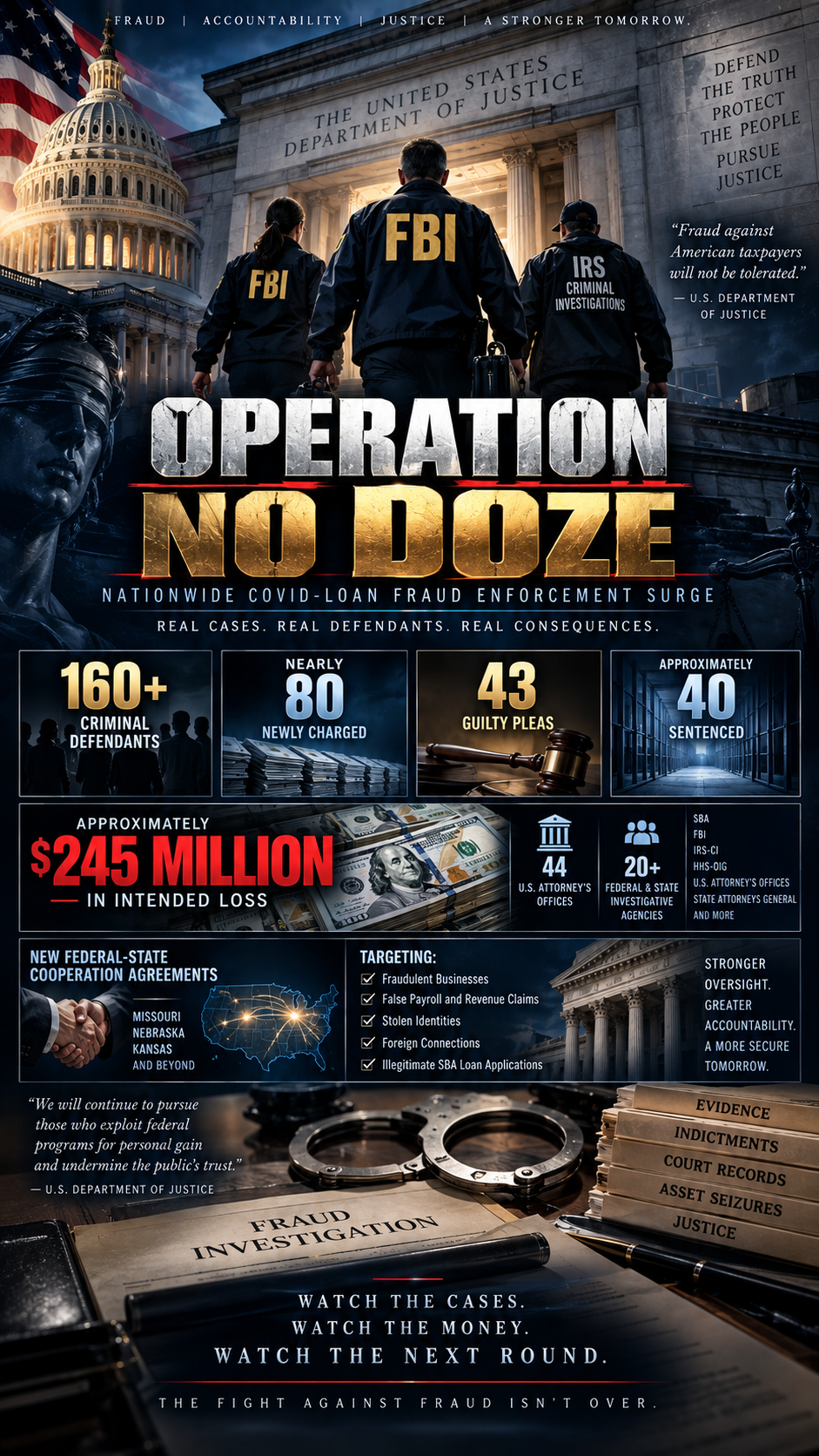
OPERATION NO DOZE — THE $245 MILLION COVID-FRAUD SWEEP
160+ Defendants • Nearly 80 Newly Charged • 43 Guilty Pleas • Approximately 40 Sentenced • 44 U.S. Attorney’s Offices
Source: Mr Kidpool TG
September 14, 2026
The Justice Department has announced the results of Operation No Doze, a coordinated nationwide enforcement surge targeting fraud involving Small Business Administration COVID-era loan programs. According to DOJ, the operation ran from June 12 through September 1, 2026, bringing together the Justice Department’s National Fraud Enforcement Division, the SBA, the SBA Office of Inspector General, U.S. Attorney’s Offices around the country and numerous investigative agencies.
The headline number is substantial: more than 160 criminal defendants connected to approximately $245 million in intended losses to American taxpayers. But that figure combines cases at different stages of the criminal process, so the breakdown matters. During the summer surge, prosecutors obtained felony charges against nearly 80 defendants associated with approximately $100 million in alleged intended losses. Those defendants remain presumed innocent unless and until proven guilty.
The operation also moved a significant number of existing cases further through the judicial system. DOJ says approximately 43 defendants pleaded guilty in SBA-related COVID fraud cases representing roughly $44 million in intended losses, while approximately 40 defendants were sentenced in cases involving nearly $100 million in intended losses. Together, those actions account for the 160-plus defendants and approximately $245 million cited by federal authorities.
According to DOJ, the alleged schemes were not all constructed the same way. Prosecutors say cases included fabricated businesses, false payroll and revenue information, stolen identities and concealed foreign ties on applications for pandemic-era SBA assistance. Individual cases illustrate how large some alleged operations became. In one case announced in New York, a defendant was sentenced to 98 months in prison after admitting participation in a conspiracy involving at least 153 fraudulent PPP applications seeking approximately $43 million for at least 111 entities.
The geographical reach is equally notable. DOJ’s principal announcement says 44 U.S. Attorney’s Offices and 20 federal and state investigative agencies participated in the summer enforcement surge. That turns Operation No Doze into more than a collection of isolated prosecutions; it represents a coordinated effort to connect investigative resources, federal prosecutors and SBA records across multiple jurisdictions.
But perhaps the most important development is what DOJ announced alongside the prosecutions. At a Heartland Fraud Partnership Summit in Kansas City, federal officials announced three new federal-state cooperation agreements involving Missouri, Nebraska and Kansas officials. More than 25 federal and state officials participated in the summit, including representatives of six U.S. Attorney’s Offices, state attorneys general and financial offices, secretaries of state, federal law-enforcement partners and members of Congress.
That makes the September announcement relevant beyond the $245 million headline. The government is building additional infrastructure for future fraud detection and enforcement. Whether those partnerships ultimately produce substantially more prosecutions will have to be measured by subsequent indictments, convictions, restitution orders, forfeitures and recoveries—not assumed in advance.
The scale of the underlying pandemic programs helps explain why enforcement is continuing years after the original loans were issued. Emergency programs were created rapidly during an extraordinary economic shutdown, moving enormous amounts of federal money through financial institutions and businesses. Investigators have subsequently spent years reconstructing applications, payroll records, corporate registrations, bank transfers and spending patterns to distinguish legitimate borrowers from potentially fraudulent ones.
Operation No Doze therefore provides another useful reminder about how to evaluate government fraud investigations. An indictment is an allegation. A guilty plea or conviction establishes criminal responsibility. A sentence determines punishment. Restitution and forfeiture begin answering another question: how much of the money can actually be recovered? Those distinctions become particularly important when hundreds of defendants are discussed under a single enforcement-operation headline.
For GAR, the next stage is straightforward: follow the court records rather than the rumors. Watch which newly charged cases produce convictions. Track the sentences. Follow restitution and forfeiture orders. Examine whether investigators identify larger networks connecting multiple applications or jurisdictions. And watch whether the newly announced federal-state partnerships generate another wave of cases.
160+ DEFENDANTS. APPROXIMATELY $245 MILLION IN INTENDED LOSS.
The operation has been announced. Many cases have already produced pleas and sentences; others are only beginning.
WATCH THE CASES.
WATCH THE MONEY.
WATCH THE RECOVERIES.
WATCH THE NEXT ROUND.
Because with an enforcement effort already spanning more than 160 defendants and dozens of federal jurisdictions, the next important question isn’t simply what happened during Operation No Doze.
It’s what comes after it.
DOJ — Operation No Doze official announcement.

THE DIABETES “CURE” CLAIM — THE REAL BREAKTHROUGH IS EVEN MORE INTERESTING
Stem Cells • Insulin-Producing Cells • Regenerative Medicine • Type 1 Diabetes • The Search for a Functional Cure
Source: The 17th Disciple TG
A remarkable claim has been circulating online: Germany has developed a permanent cure for diabetes using stem-cell and regenerative therapies, a procedure supposedly costing about $40,000 in the United States while being offered free to international patients in Germany. The story understandably attracts attention because diabetes affects hundreds of millions of people worldwide. But there is an important problem: the specific Germany claim does not appear to be true. Searches of German medical and regulatory sources do not show a national program providing foreign patients with a free permanent diabetes cure, and a 2026 investigation of this exact viral claim found no evidence for it.
What makes this story worth examining, however, is that a genuine medical breakthrough is developing underneath the exaggerated headline. Researchers around the world are making substantial progress toward replacing the insulin-producing pancreatic beta cells destroyed in Type 1 diabetes. Instead of merely supplying insulin externally, scientists are developing laboratory-grown islet cells capable of detecting glucose and producing insulin inside the patient’s body. This is one of the most promising attempts yet to address a fundamental biological consequence of Type 1 diabetes.
One of the strongest examples is zimislecel, formerly known as VX-880, an investigational therapy involving fully differentiated islet cells derived from stem cells. In a Phase 1/2 study published in the New England Journal of Medicine, 14 participants with severe Type 1 diabetes showed evidence that the transplanted cells successfully engrafted and produced insulin. Among the 12 receiving a full dose, all were free from severe hypoglycemic events and achieved HbA1c below 7%, while 10 of 12—83%—were insulin-independent at one year.
That result is extraordinary, but it still isn’t equivalent to declaring diabetes permanently cured. Participants receiving zimislecel also required immunosuppressive treatment to prevent their immune systems from attacking the transplanted cells. Immunosuppression carries meaningful risks, and the study was small. Serious adverse events occurred, and two deaths were reported during the study, although the investigators described different circumstances surrounding them. Larger studies and longer follow-up are necessary before researchers can determine the therapy’s long-term safety and durability.
Another frontier could eventually eliminate that limitation. Researchers are experimenting with immune-evasive insulin-producing cells engineered to survive without conventional immunosuppression. In March 2026, Sana Biotechnology reported 14-month follow-up from a first-in-human study in which transplanted modified islet cells continued surviving and producing insulin without immunosuppression. That remains early-stage research, but combining reliable insulin-producing replacement cells with immune protection could address one of the biggest remaining obstacles to broadly applicable cell therapy.
There is also encouraging research involving conventional donor islet transplantation. In June 2026, investigators at the University of Chicago reported that all 12 participants in a small Type 1 diabetes study involving transplanted donor islets and an investigational immunosuppressive regimen achieved insulin independence, with a median follow-up of eight months and maximum follow-up of 22 months. Again, these are impressive early results rather than proof of a permanent universal cure.
Type 2 diabetes requires an important distinction. Type 1 and Type 2 diabetes are biologically different diseases, so a therapy capable of replacing insulin-producing cells in Type 1 cannot automatically be described as curing Type 2. Type 2 diabetes involves insulin resistance and progressive metabolic dysfunction in addition to beta-cell impairment. Cell therapies have been investigated and have sometimes reduced insulin requirements, but existing evidence does not establish a stem-cell treatment that permanently cures Type 2 diabetes.
Germany nevertheless deserves a place in the larger story—not because it has secretly solved diabetes, but because German researchers are actively involved in serious diabetes and stem-cell research. Germany’s scientific community includes major programs investigating pancreatic development, beta-cell biology and regenerative approaches. The German Stem Cell Network, for example, featured diabetes and stem-cell research at a September 2026 scientific program involving researchers from the Max Delbrück Center, Helmholtz Munich and other institutions.
The terminology therefore matters. Researchers sometimes speak about the possibility of a “functional cure”—restoring sufficient insulin production so that a person can maintain glucose control without external insulin—rather than claiming that the underlying autoimmune disease has been permanently eradicated. Maintaining insulin independence for years without immunosuppression would represent a much higher threshold and would dramatically strengthen the case for describing these technologies as curative.
The larger story is consequently more scientifically important than the viral Germany headline. Regenerative medicine is moving from the theoretical possibility of replacing destroyed pancreatic cells toward evidence that replacement cells can actually function inside human patients. The unanswered questions are durability, immune rejection, scalability, manufacturing, safety, affordability and whether the approach can eventually work for the much larger population of people living with diabetes.
THE REAL BREAKTHROUGH: REBUILDING THE BODY’S ABILITY TO PRODUCE INSULIN
We should not report that Germany has permanently cured Type 1 and Type 2 diabetes or is giving a $40,000 treatment free to international patients—the evidence I found does not support either assertion. But the verified story is still remarkable:
Scientists are getting closer to restoring biological insulin production in some people with Type 1 diabetes, and experimental cell-replacement therapies have already allowed some trial participants to live without injected insulin.

Even The Mainstream Media Is Admitting That “The Great Fuel Crisis” Is Here
For months, we were told that this moment was approaching. At first a lot of people didn’t want to believe it, and those that were sounding the alarm were mocked. But now even the mainstream media is being forced to admit the truth. When the war with Iran began, the world was sitting on vast stockpiles of oil that we could chew through to keep the global economy operating normally. Unfortunately, those stockpiles have rapidly dissipated and the conflicts on the other side of the planet are intensifying. As a result, we now find ourselves in unprecedented territory.
The world is using a lot more oil than it is currently producing.
So something has got to give.
For over six months we have been running through our reserves, and at this stage the mainstream media is openly telling us that a tipping point has arrived. The following comes from a Wall Street Journal article entitled “Oil executives say the great fuel crisis is here”…
American oil executives warned for months that the prolonged closure of the Strait of Hormuz was bound to cause a fuel crisis. Now, they say it is here.
Commercial fuel stocks around the world have been depleting for more than six months, and strategic crude reserves can’t be tapped much further. Attacks last week shut down a crucial crude pipeline in Saudi Arabia that bypassed the Strait, stranding at least 2.5 million barrels a day from an already tight global oil market, analysts estimate.
“All these mechanisms helped to mitigate the price and supply risk,” Chevron Chief Executive Mike Wirth said Friday at an energy conference in Austin, Texas. “Those have largely now played out, and we don’t have nearly the buffers in the system that we did when it began.”
Those oil executives are right.
It is here.
Thanks to recent developments, energy industry insiders now fear that the conflict in the Middle East “risks spinning out of control”…
Veteran energy advisers say that with no resolution to the Iran war in sight, the situation risks spinning out of control. Diesel prices have soared to a record $6.23 a gallon and gasoline prices, which slipped below $4 a gallon this summer, have rebounded to $4.32. Some energy analysts say they have been fielding investor questions about when consumers pinched by the high prices will start pulling back on new purchases.
For months, we were told that a deal to end the war with Iran was imminent.
That kept markets stable for a long time. But now reality is catching up with us in a major way.
On Tuesday, average prices for both gas and diesel in the United States increased yet again…
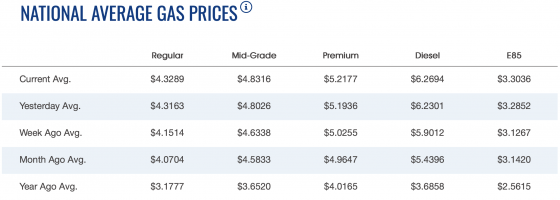
Just look at those numbers.
A year ago, the average price for a gallon of diesel in the United States was just $3.68.
Last month, it was sitting at $5.43.
Now it is up to $6.26.
Of course we should consider ourselves to be fortunate, because Europeans are paying between 9 and 11 dollars per gallon…
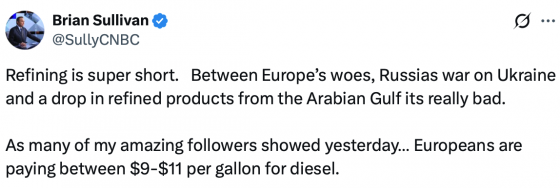
Unfortunately, this is just the beginning, because global oil supplies are about to get even tighter.
It is becoming apparent that the damage to Saudi Arabia’s East-West pipeline is more extensive than we were originally told…
Saudi Arabia’s oil problem just multiplied.
What looked like a single Houthi hit on the East-West pipeline is now looking like a coordinated hammering of the whole system.
Fresh satellite imagery shows Pump Station 9 badly damaged, with Pump Station 8 possibly hit too, both feeding the same artery that carries crude clear across the country to the Red Sea.
Take out one pump station and you have a headache. Take out two on the same line and you have a pipeline that could sit largely dead for 3-5 weeks, maybe longer.
Yes, the Saudis could feverishly work to repair the damage that has been done. But then the Houthis could just strike the exact same locations again.
On Tuesday, the Houthis hit the Yanbu Aramco Sinopec Refining Company, and for now all activity at the Yanbu export terminal has been suspended…
Oil loadings seemed to have stopped at Saudi Arabia’s main Red Sea port Tuesday as a major refinery there reportedly burned after an attack.
Shipping industry sources told Reuters on Tuesday that loadings at the Yanbu export terminal had been suspended, four days after a drone attack shut the East-West Pipeline that feeds it, the outlet reported. Earlier Tuesday, an attack struck the Yanbu Aramco Sinopec Refining Company, known as YASREF, according to a post from the Hormuz Letter account on X. The post cited footage it said showed a fire at the site and NASA satellite heat detections inside the refinery.
This is a major economic disaster for Saudi Arabia.
And it is going to turn into a major economic disaster for Europe too, because the Saudis have reportedly told refiners in Europe that they will not be receiving the shipments that they were expecting…
Europe’s energy supply outlook is deteriorating after Reuters reported Tuesday that Saudi Arabia had notified some European refiners that their September-loading crude cargoes would be canceled following the shutdown of its critical East-West pipeline after a drone attack.
Beyond a diesel shortage in the West, Europeans are also dealing with low natural gas stockpiles heading into the Northern Hemisphere winter, with prices reaching their highest level since December 2022.
What will Europe do?
One source is claiming that there will be no more Saudi oil for Europe until at least November…
Saudi Aramco has cancelled all of its September European crude oil allocations and is scrapping every cargo slated for late-September loading onward, with a European lifter saying no Saudi oil cargoes at all until November, per initial reports citing oil trading firm Onyx and market sources.
That takes the world’s largest exporter out of the European market for the rest of September and all of October, a de facto force majeure on Saudi crude to Europe from the 3rd largest energy producer in the world.
If you live in Europe, I would go fill up your vehicles immediately, because nothing quite like this has happened to Europe before.
Meanwhile, the Ukrainians just hit another Russian refinery after President Trump specifically asked them not to do so…
President Volodymyr Zelenskyy said on X that Ukrainian forces struck the Syzran refinery in Russia’s Samara region, about 75 miles west of Samara and 466 miles southeast of Moscow. The strike comes days after President Trump urged Ukraine to halt attacks on Russian refineries, as average US retail diesel prices jumped above $6 a gallon and alarming disruptions to global refining capacity threaten fuel supplies ahead of the Northern Hemisphere winter.
Needless to say, all of this bad news has pushed oil prices even higher…
Crude oil prices rose Tuesday as traders awaited updates on how long Saudi Arabia’s critical East-West pipeline will be closed.
Brent crude futures, the international benchmark, were up 2.6% to $108.48 per barrel by 11:06 a.m. ET. U.S. West Texas Intermediate traded 3.2% higher to $104.65. Prices have surged around 20% this month as fighting has sharply escalated in the Persian Gulf.
The good news is that we still have oil left in the Strategic Petroleum Reserve.
The bad news is that the SPR has now fallen to the lowest level that we have seen since 1982…
The U.S. Strategic Petroleum Reserve held 285.4 million barrels after inventories fell by about 1.2 million barrels in the latest week, according to Department of Energy data. The stockpile reached its lowest level since November 1982 as the government continued a planned release of crude oil from the emergency reserve.
If we drain the salt caverns where that oil is stored too low, we risk causing permanent damage. There are some experts that are arguing that we have already crossed that threshold. And federal law places restrictions on non-emergency drawdowns once we get down to 252.4 million barrels.
In other nations, there is simply no buffer left. The global economy really is facing a nightmare scenario, and investors are starting to get really nervous.
On Tuesday, the yield on 10 year U.S. Treasuries hit the highest level in 19 years…
The benchmark 10-year Treasury yield climbed to its highest levels in 19 years on Tuesday as oil prices surge from the Iran conflict and expectations grow that the Federal Reserve will raise interest rates on Wednesday. The rate milestone could ripple through the economy as the 10-year yield is a benchmark for consumers loans and corporate funding.
The 10-year yield was last up more than 3 basis points to 4.996%. Earlier in the session, it scaled to 5.041%, the highest since July 2007. One basis point equals 0.01 percentage point, and yields and prices move in opposite directions.
To me, it appears that extensive efforts are being made to defend the 5 percent level.
If we ultimately reach 5.25 percent, that could be really bad news, because historically we have witnessed tremendous market disruptions once we cross that mark…
Treasury yields are closing in on an inflection point where, historically, stocks and bonds have reinforced losses in one another. That points to a regime shift of higher bond and stock volatility and wider credit spreads.
Lines in the sand are often a little too neat for reality, but when it comes to Treasuries there has been a stark change in regime when 10-year yields go much above 5.25%. After that point, the risks to bond volatility and hence stock vol and credit spreads markedly increase.
With 10-year yields rising above 5% this week the first question is: will they keep going? Yields may look stretched, rising to levels not seen since 2007 just today, but Treasuries are not yet oversold. Incorporating returns on capital and looking at prices, they are only back to their long-term mean on an annual growth basis.
We are dangerously close to the edge, and it won’t take much to set off a major financial meltdown.
All over social media, people are talking about this now. They may not understand all of the specifics, but they can feel that something is coming.
We live in such perilous times, and I have a feeling that a tremendous amount of insanity is just around the corner.

THE $385 MILLION INFANT FORMULA SETTLEMENT — FOLLOW THE REGULATORY RECORD
Abbott Laboratories • Infant Formula • WIC & Medicaid • Manufacturing Compliance • False Claims Act
September 14, 2026
Source: Mr. Kidpool TG
$384,999,040. That is the amount Abbott Laboratories has agreed to pay to resolve federal and state allegations involving powdered infant formula and nutritional-therapy products manufactured between January 1, 2018 and December 31, 2022. The settlement involves products manufactured at Abbott facilities in Sturgis, Michigan, and Casa Grande, Arizona, and allegations that government programs paid claims associated with products that did not meet applicable statutory, regulatory and contractual requirements.
The number deserves attention, but so does the legal distinction behind it. This is a civil settlement, not a criminal conviction, and the allegations resolved by the agreement have not resulted in a determination of liability. Abbott agreed to pay approximately $348.7 million to the federal government and another $36.3 million to certain states for claims involving state Medicaid and WIC programs.
What makes the case especially significant is the detail contained in the government’s allegations. DOJ says its November 2025 complaint alleged that Abbott caused government programs to purchase powdered infant formula manufactured at the Sturgis facility despite alleged failures to satisfy regulatory and contractual requirements. The government also alleged that Abbott continued operating certain spray dryers after documenting cracks and pits that could increase the risk of microbial contamination when moisture was present.
Federal prosecutors went further. According to DOJ, the complaint alleged that Abbott lengthened production runs between spray-dryer cleaning cycles, allowing increased production, and intentionally avoided certain bacterial-growth testing to reduce the likelihood of obtaining positive contamination results. The government also alleged that on certain occasions when testing indicated microbial contamination, relevant results were not disclosed in responses to FDA requests during inspections in 2019 and 2022. These remain government allegations resolved through the settlement rather than findings reached after a trial.
The regulatory history stretches back years. In May 2022, the Justice Department filed a separate complaint and proposed consent decree concerning Abbott’s Sturgis facility. At the time, the government alleged manufacturing practices that failed to comply with requirements intended to protect infant formula from microbiological contamination. FDA environmental sampling had detected Cronobacter sakazakii at the manufacturing facility, and regulators required corrective measures before normal production could resume.
That history matters because infant formula occupies an unusually sensitive position in the food supply. Infants cannot simply substitute another ordinary food when formula becomes unavailable or unsafe. The federal WIC program provides infant formula and other nutritional assistance to eligible families, meaning manufacturing problems can simultaneously become food-safety, public-health, government-spending and supply-chain issues. The government’s 2025 complaint noted the enormous reliance of WIC families on a relatively small number of formula manufacturers.
There is another layer to the case: the False Claims Act. The government’s theory wasn’t simply that manufacturing deficiencies allegedly existed. The settlement addresses allegations that those circumstances resulted in claims being paid by federal and state programs for products the government contended did not satisfy the requirements governing those purchases. That connection between regulatory compliance and taxpayer-funded payments is what transformed the matter into a major False Claims Act case.
The case also originated through the False Claims Act’s qui tam provisions, which allow private parties to bring certain fraud allegations on behalf of the United States and potentially share in recoveries. DOJ identifies the underlying litigation as United States et al. ex rel. Scott Millard et al. v. Abbott Laboratories in the U.S. District Court for the Western District of Michigan.
For GAR, this is precisely the kind of story where the primary documents are more valuable than the viral headline. There is no need to exaggerate what happened. A nearly $385 million settlement involving one of America’s major infant-formula manufacturers, taxpayer-funded nutrition programs, years of regulatory scrutiny and detailed federal allegations is consequential on its own.
It also raises broader questions worth following. How effective were inspection and reporting systems during the years under scrutiny? How quickly did regulators respond to manufacturing warning signs? What changes were subsequently made inside the facilities? And what lessons does the case provide about oversight when a small number of manufacturers supply products essential to millions of families?
The responsible approach is therefore neither to minimize the settlement nor to treat every allegation as a proven fact. Read the complaint. Read the settlement. Examine the FDA inspection history. Distinguish allegations from established findings. Then follow where the money goes and what regulatory changes follow.
$384,999,040
That isn’t a social-media rumor. It is the amount specified in a federal civil settlement.
FOLLOW THE REGULATORY RECORD.
FOLLOW THE COURT DOCUMENTS.
FOLLOW THE MONEY.
Because sometimes the most important part of a story isn’t contained in the headline.
It’s contained in the record behind it.
Justice Department — Abbott $384.9 million settlement announcement
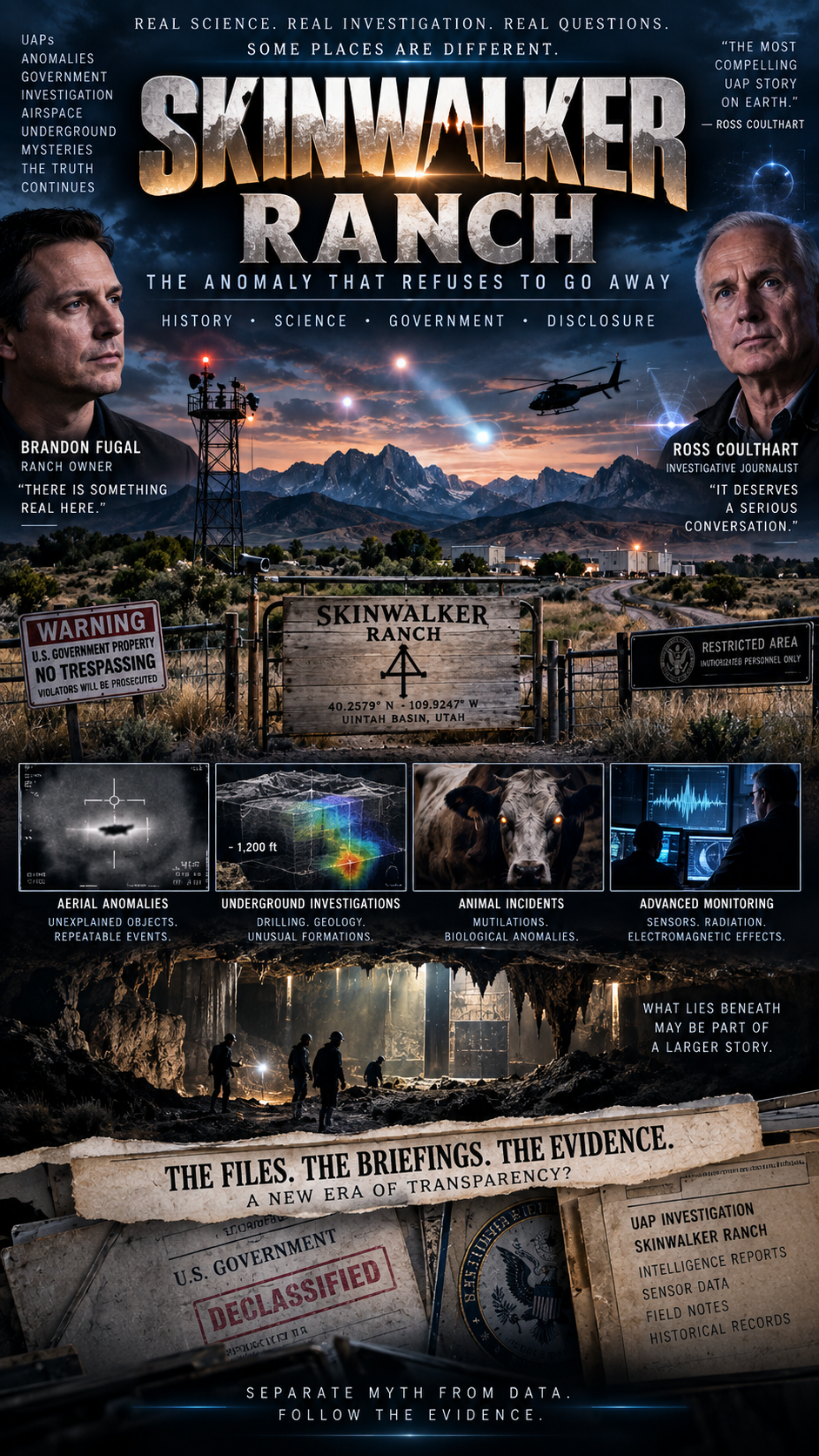
SKINWALKER RANCH — THE ANOMALY THAT REFUSES TO GO AWAY
UAPs • Government Investigation • Airspace Anomalies • Underground Mysteries • Scientific Testing • Disclosure
Source: GAR Contributing Writer
For decades, Skinwalker Ranch in northeastern Utah has occupied an unusual position between folklore, paranormal investigation, intelligence-community interest and increasingly sophisticated scientific experimentation. Reports associated with the property have included unusual aerial objects, electromagnetic disturbances, unexplained radiation measurements, strange animal incidents and other anomalous phenomena. None of these categories by itself establishes an extraordinary explanation. What makes the ranch interesting is the persistence of reported anomalies—and the continuing effort to measure them using instruments rather than relying solely on eyewitness testimony.
The latest controversy adds another dimension. In a Reality Check interview with Ross Coulthart, ranch owner Brandon Fugal challenged statements attributed to former AARO director Sean Kirkpatrick concerning a 2018 briefing or hearing that Fugal says Kirkpatrick attended. The program says Kirkpatrick subsequently denied attending, while Fugal presented Coulthart with material he says documents Kirkpatrick’s presence. That is an important allegation, but the careful distinction matters: the interview documents Fugal’s challenge and evidence as he presented it; it does not by itself adjudicate the dispute.
That dispute matters because Kirkpatrick later became the first director of the Pentagon’s All-domain Anomaly Resolution Office (AARO), an organization specifically charged with investigating UAP reports. If officials who later became central figures in the government’s UAP investigation had previously been exposed to information concerning Skinwalker Ranch, establishing exactly who attended which briefings, what information was presented and how it was evaluated becomes a legitimate part of reconstructing the government’s UAP history.
But the interview goes much further. Its hour-long structure moves from disputes surrounding media coverage into testing of alleged dire-wolf material, drilling investigations at the ranch, anomalies in the airspace above the property and the broader relationship between mainstream journalism and the UFO subject. The airspace discussion occupies nearly 18 minutes of the program, making it one of the central components of the conversation.
That airspace may ultimately be more important than the mythology surrounding the ranch. Investigators have repeatedly focused attention on a particular region above the property where experiments have reportedly produced unusual GPS, radar, communications or instrumentation results. The scientific question isn’t whether these effects prove portals, extraterrestrial vehicles or another exotic explanation—they currently do not. The better question is whether repeatable anomalies exist that independent investigators can measure, reproduce and eventually explain.
The underground investigation raises a similar question. Drilling and subsurface exploration have attempted to determine whether unusual geology, buried structures, metallic materials or other physical features could contribute to reported effects. Here again, the strongest approach is methodological: measure first, interpret second. Extraordinary explanations become much more compelling only when ordinary geological, electromagnetic, technological and instrumentation explanations have been systematically eliminated.
Skinwalker Ranch is therefore becoming something larger than a paranormal story. It represents a test of how society investigates phenomena sitting outside established scientific categories. Can anomalous observations be studied without assuming they are extraterrestrial? Can scientists investigate controversial evidence without dismissing it because of its reputation? And can proponents resist declaring extraordinary conclusions before the evidence warrants them? Those questions extend far beyond one ranch in Utah.
The media dispute discussed by Fugal and Coulthart is consequently significant as well. Fugal argues that some reporting has approached Skinwalker Ranch with conclusions already formed rather than fully engaging with the people, instrumentation and experiments involved. Skeptics, conversely, have legitimate grounds for demanding independent replication, access to raw data and rigorous controls before accepting extraordinary interpretations. Both standards can coexist. Serious investigation requires neither automatic belief nor automatic dismissal.
This becomes particularly important as government UAP records continue entering the public domain. Skinwalker Ranch has historical connections to privately funded investigations and government-adjacent research into anomalous phenomena. Rather than treating every connection as proof of a hidden extraterrestrial program, GAR should follow the documentary trail: contracts, briefings, participants, government programs, sensor data, contemporaneous records and subsequent statements. That approach could reveal something important even if the ultimate explanation proves less exotic than the most dramatic theories.
The larger Skinwalker Ranch story therefore remains unresolved—and that may be precisely why it deserves continued attention. After years of television programs, government interest, private research and increasingly instrumented experiments, researchers are still asking the same fundamental question:
WHAT IS ACTUALLY HAPPENING AT SKINWALKER RANCH?
Perhaps it is a collection of unrelated natural and technological effects. Perhaps unusual environmental conditions are producing phenomena science has not adequately characterized. Perhaps human perception and expectation contribute to some reports. Or perhaps investigators are encountering something genuinely new.
We don’t yet have enough evidence to choose confidently among those possibilities.
And that is what makes Skinwalker Ranch worth following.


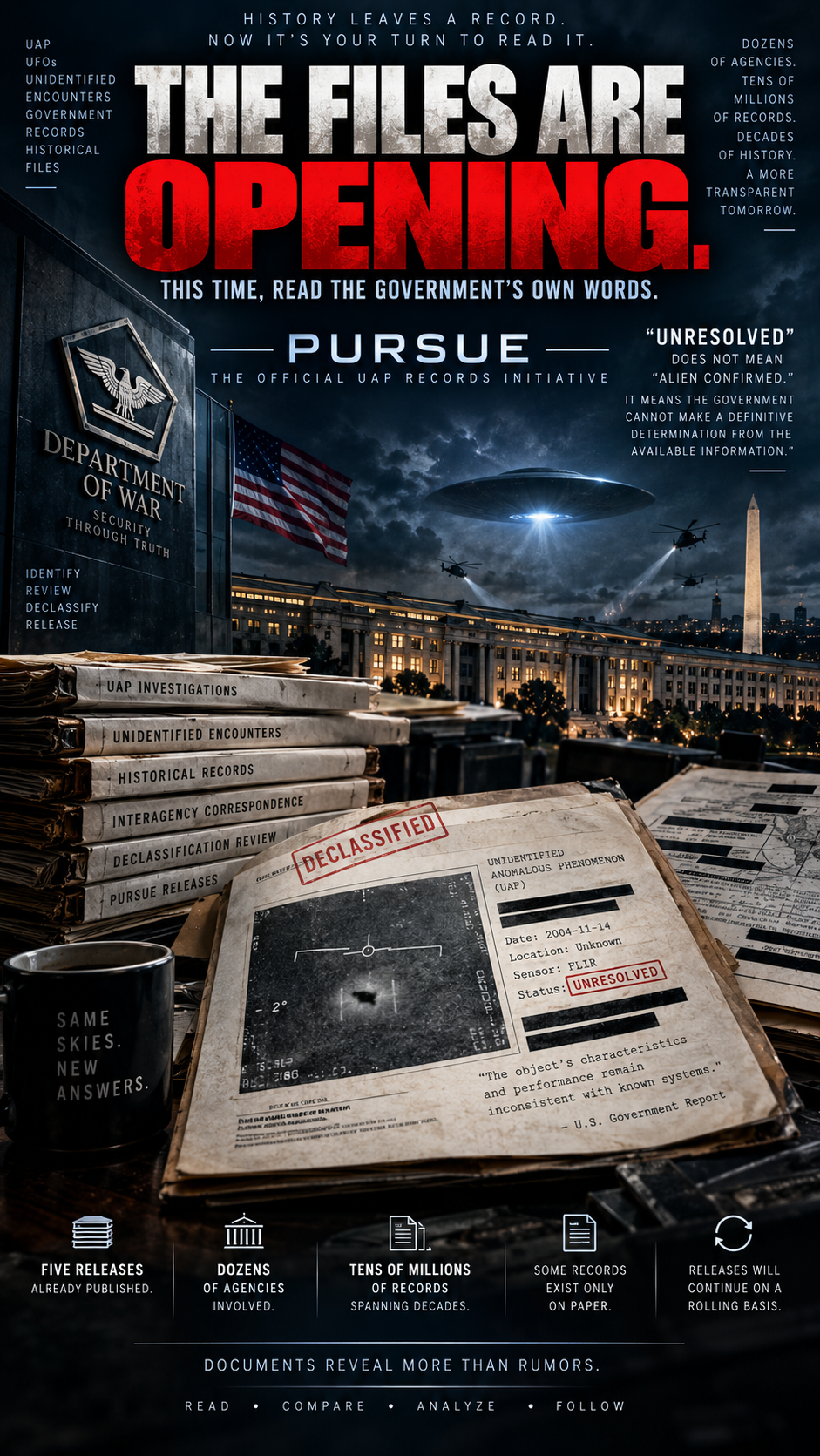
THE FILES ARE OPENING — FOLLOW THE GOVERNMENT’S UAP RECORD
PURSUE • UAP • UFOs • Declassification • Historical Records • Unresolved Encounters • Disclosure
Source: GAR Contributing Writer
Something potentially significant is happening inside the government’s historical UAP record—and this time the strongest approach is not speculation. Read the documents themselves. Through an initiative identified as PURSUE, government records connected to unidentified anomalous phenomena, UFO reports, unexplained encounters and decades of historical investigations are being assembled for public release. If the stated scope is carried through, this could become an important new archive for researchers trying to reconstruct what different parts of government knew, investigated and recorded over time.
The first point to understand is scale. According to the description accompanying the initiative, the process extends far beyond a handful of sensational UFO cases. It potentially requires coordination across dozens of agencies and the examination of tens of millions of records accumulated over decades. Some material reportedly survives only in physical form, meaning researchers may be dealing not simply with declassification but with the enormous task of locating, reviewing, digitizing and contextualizing records created under very different classification systems.
Five releases have reportedly already appeared, but the more consequential development may be what comes afterward. Rather than treating this as a single document dump, PURSUE is described as an ongoing process in which additional material can be identified, reviewed, declassified and released on a rolling basis. That means the archive should be analyzed chronologically. Each release potentially provides references, dates, organizations, locations and case numbers that can be compared with material appearing later.
This is also where careful language becomes essential. A government document describing an incident as “unresolved” is not equivalent to confirmation of extraterrestrial technology. It means investigators could not make a definitive determination using the information available to them. Possible explanations can range from insufficient sensor data and unidentified conventional aircraft to atmospheric phenomena, classified programs, intelligence activity, instrumentation problems—or something genuinely unexplained.
That distinction actually makes the records more interesting, not less. Researchers do not need to transform every unexplained observation into evidence of extraterrestrial visitation. The stronger questions are: What was observed? Which sensors detected it? Were there multiple witnesses? Which agencies investigated? What explanations were considered? Which cases remained unresolved after analysis? Patterns across hundreds or thousands of records could ultimately prove more informative than any single dramatic case.
Another important research target will be the classification history itself. Watch which documents were originally classified, which portions remain redacted, which agencies originated the records and how long particular cases remained restricted. Researchers should also compare newly released documents against previously available records from the military, intelligence agencies, congressional investigations and historical UFO programs. Contradictions between different generations of official reporting could become particularly revealing.
For the Great Awakening Report, this presents an opportunity to build a disciplined Disclosure Files archive rather than relying primarily on social-media interpretations. Save every release. Record the original document number and agency. Build a timeline. Compare names, locations, dates, terminology and redactions. Separate documented fact, government assessment, unresolved evidence and outside interpretation into clearly identified categories.
And watch the language evolve. Governments rarely change terminology accidentally. Compare older references to “flying saucers,” “UFOs,” “unidentified aerial phenomena” and today’s broader “UAP” terminology. Changes in classification categories, reporting requirements and investigative responsibility may reveal how the government’s institutional understanding of the phenomenon has changed—even when the underlying objects or incidents remain unexplained.
The real significance of PURSUE therefore may not be found in a single sensational document declaring what UAPs are. It could emerge gradually as thousands—or potentially millions—of pieces of the historical record become searchable and comparable. Disclosure, if that is ultimately what this process represents, may look less like one announcement and more like an archive slowly opening.
THE FILES ARE OPENING.
Save the releases.
Compare the dates.
Track the agencies.
Study the redactions.
Separate “unresolved” from “extraterrestrial.”
Watch what gets declassified next.
Because when primary government records become available, the documents are interesting enough without adding conclusions they do not actually contain.
THE $64 MILLION ASSET TRAIL — FOLLOW WHAT FEDERAL AUTHORITIES TOOK
Fraud • Kickbacks • Medicaid • Restitution • Forfeiture • Properties • Cash • Gold
September 11, 2026
Source: GAR Contributing Writer
A federal fraud case in Brooklyn has reached the stage where the story is no longer simply about accusations. According to the case details provided, an adult-daycare owner was sentenced to 76 months in federal prison for her leadership role in a Medicaid fraud and illegal kickback scheme involving approximately $64 million.
The numbers reveal the scale of the case. The court reportedly ordered more than $56 million in restitution and approximately $5 million in fraud proceeds forfeited. Those figures represent different parts of the financial reckoning: restitution is intended to compensate victims or affected programs, while criminal forfeiture targets property determined by the court to represent proceeds of, or property connected to, the offense.
But one of the most revealing parts of major financial-crime prosecutions can be the asset trail. Authorities reportedly seized or pursued assets including real estate, cash and gold jewelry. Investigators in complex fraud cases often follow money as it moves from government reimbursements through businesses, bank accounts, purchases and ultimately tangible assets.
That distinction matters. An indictment tells us what prosecutors allege. A conviction or guilty plea establishes criminal responsibility. Sentencing, restitution and forfeiture show what happens after the prosecution succeeds—when the justice system begins imposing punishment and attempting to recover money connected with the criminal conduct.
The broader issue extends beyond a single defendant. Medicaid and Medicare fraud cases can involve networks of providers, marketers, recruiters, shell companies, kickback arrangements and financial intermediaries. Following the transactions can therefore reveal more about how a scheme operated than simply following the headline dollar amount.
For GAR readers, that creates a useful investigative framework: follow the indictments, then follow the convictions—but don’t stop there. Follow the restitution orders, forfeiture judgments, properties, bank accounts and seized assets. Those records can provide a much clearer picture of where the money traveled and who benefited.
The final chapter of a major fraud investigation is therefore not necessarily the arrest—or even the prison sentence. Sometimes the most revealing chapter begins when authorities start unwinding the financial network and recovering its proceeds.
$64 MILLION IN ALLEGED SCHEME VALUE.
76 MONTHS IN FEDERAL PRISON.
$56+ MILLION IN RESTITUTION.
$5 MILLION ORDERED FORFEITED.**
FOLLOW THE MONEY. FOLLOW THE ASSETS. FOLLOW WHAT GETS FORFEITED.
Because sometimes the clearest evidence of how a fraud operation worked is found in what remains after the money has been traced.

Costco Is Rationing Motor Oil, The Middle East Is In Chaos, And Western Leaders Riding A Train In Ukraine Just Narrowly Avoided A Russian Drone Strike
What is happening on the other side of the world is starting to have a very real impact on the daily lives of millions of Americans. The chaos in the Middle East and the rapidly escalating war in Ukraine are driving up oil prices. As a result, the average price of a gallon of gasoline in the United States has never been so high this late in the calendar year, and the average price of diesel just keeps surging even deeper into record territory. Of course higher prices are only part of the story. Global supplies have gotten so tight, and so it was inevitable that shortages and rationing would begin to occur. Earlier today, I was shocked to learn that Costco is now rationing motor oil…
As The Drive originally reported, Costco has officially started rationing its motor oil to combat a rapidly deteriorating global lubricant shortage.
The days of grabbing cheap bulk oil are over. A 10-quart box of Kirkland Signature full-synthetic motor oil, which historically retailed for a bargain-basement $30, has skyrocketed to $58. More concerningly, Costco has implemented a strict two-box-per-customer weekly limit. Name brands aren’t faring much better; a six-quart case of Mobil 1 is currently sitting at $44, with purchases capped at five per member to prevent hoarders and scalpers from clearing the shelves.
I can’t remember Costco ever doing this before. So why has this happened?
Well, it turns out that we normally import a very large percentage of our motor oil from the Middle East…
Modern synthetic motor oil relies heavily on Group III base oils. Historically, the United States imports nearly 44% of its Group III supply directly from three major Persian Gulf producers: Bapco in Bahrain, ADNOC in the United Arab Emirates, and Pearl GTL in Qatar.
The ongoing military entanglement with Iran and the blockade of the Strait of Hormuz have effectively choked off these crucial exports. To compound the supply chain disaster, the massive Pearl GTL facility in Qatar sustained heavy damage from Iranian airstrikes in March 2026, instantly crippling a major portion of global production for at least a year.
Unfortunately, it appears that the global energy crisis is about to get even worse.
On Friday, the Saudis announced that they had been forced to close down their East-West oil pipeline…
Saudi Arabia said Friday that it shut down the kingdom’s crucial East-West crude oil pipeline as a precautionary measure after multiple attacks by drones launched from Iraq.
The drones targeted the pipeline in the Riyadh and Medina regions Thursday morning causing fires and some damage, the Saudi government said. Several people were injured in the attacks, it said.
The Saudis have relied on the East-West pipeline to shift crude oil exports away from Persian Gulf as the U.S. and Iran battle for control over the Strait of Hormuz. The pipeline, which has a capacity of 7 million barrels per day, runs across the kingdom to export terminals on the Red Sea.
Global oil inventories are already incredibly tight. So this is really big news.
It is being reported that up to 4 percent of the global supply of oil could be affected by this shutdown…
Saudi Arabia risks losing up to 4% of global oil supply unless it restarts its major east-west pipeline to the Red Sea within days, threatening a key export route that has helped the kingdom bypass the wartime shutdown of the Strait of Hormuz, Reuters reported on Sunday.
Drone attacks forced Riyadh to shut the pipeline on Friday, cutting a route that had been carrying around 4 million barrels per day to the Red Sea port of Yanbu.
Yanbu has enough oil stocks to maintain exports for only five to seven days, three industry sources told Reuters, while smaller volumes are also stored at Egyptian ports.
Unfortunately, it appears that the refinery in Yanbu is now out of commission as well.
On Sunday, it was being reported that smoke was “billowing” from that facility…
A major oil refinery in Saudi Arabia has gone up in flames as tensions soar in the Middle East.
The Yanbu refinery in the city of Yanbu, on the Red Sea coast in western Saudi Arabia, has been pictured with smoke billowing above the facility.
Many believe that the Houthis were responsible for that attack, and we also just learned that a military base in southern Saudi Arabia has just been hit…
The Iranian-backed Houthi militant group in Yemen said early Sunday local time that it used drones and missiles to attack a military base in southern Saudi Arabia.
The attack at the Sharurah base targeted “weapons depots and command and control centers that are managing the aggression against our nation and people,” Houthi military spokesman Yahya Saree wrote on X.
The Houthis are in all-out war mode.
As I detailed for my core supporters on Friday, the Houthis were able to capture more than 3,000 square kilometers of territory in Yemen in just 24 hours.
The Saudi-backed forces that are fighting the Houthis are collapsing, and Saudi leaders have been pleading with the Trump administration for help…
Saudi Arabia is urging Washington to take direct military action against Iran-backed Houthis, Fox News Digital learned after the terrorist group seized key positions along Yemen’s Bab al-Mandab Strait on Friday.
The dramatic strengthening of Houthi’s positioning along the coastline of Yemen is in one of the world’s most important shipping choke points — a narrow passage that links the Red Sea with the Gulf of Aden, which has been used as a bypass as the Iran war continues to severely disrupt shipping, especially of oil, through the Strait of Hormuz.
The rapid advance on Friday triggered urgent discussions at the highest levels in Riyadh and Washington, and a source familiar with the matter tells Fox News Digital that Saudi Crown Prince Mohammed bin Salman urged President Donald Trump to take military action against the Houthis.
Of course the Trump administration already has their hands full with Iran. Traffic through the Strait of Hormuz is almost entirely paralyzed at this point, and there is no end in sight for the war.
Ominously, we are being told that there is solid evidence that entities in China “supplied Iran with high-quality satellite imagery of a US Air Force base in Jordan” just prior to an Iranian ballistic missile attack on July 17th…
Chinese entities supplied Iran with high-quality satellite imagery of a US Air Force base in Jordan both before and after Tehran launched a deadly ballistic missile attack on the facility on July 17, The Wall Street Journal reported Saturday, citing US officials familiar with the matter.
The officials, who declined to identify the Chinese entities, said Washington had linked the satellite imagery to the strike, providing what they described as the clearest evidence yet that Chinese support for Tehran during the war had contributed to the deaths of US troops. They stopped short, however, of accusing Beijing of directly participating in the attack, according to the Journal.
Senior US officials reportedly brought up the imagery from the Muwaffaq Salti Air Base with their Chinese counterparts, but Beijing rejected the allegation and demanded that Washington provide evidence, the Journal cited its sources as saying.
This is an extremely alarming development, because now it is very clear that China is helping Iran fight us. That puts us dangerously close to the sort of military conflict with China that I have been warning about for years.
Sadly, we are also dangerously close to a directly military conflict with Russia.
A little while ago, a Russian drone hit a train that was just minutes behind a train that was carrying Boris Johnson, former Swedish premier Carl Bildt and other prominent western leaders…
BORIS Johnson has blasted “warped” Vladimir Putin after he escaped across the Polish border when a Russian drone struck a train minutes behind his.
The former Prime Minister, who is understood to be unharmed, was travelling back from a security conference in Kyiv.
Former Swedish premier and foreign minister Carl Bildt, who was on the same train as Johnson, said their train was “just minutes” behind the one hit by a Russian drone.
“This wasn’t our train [that was hit], but the one just minutes after us by the [Polish] border crossing,” said Bildt.
German Chancellor Merz’s primary security adviser and security advisers from the UK, France, and Italy were on the train as well.
Also riding the train was former CIA director David Petraeus…
Ukraine’s state railway operator says top Western figures — including former prime minister Boris Johnson and ex-CIA director David Petraeus — were at a west Ukrainian train station shortly before Russia struck a Warsaw-bound train there.
“Shortly before the locomotive was hit at the Ukrainian-Polish border, a diplomatic train was at Yagodyn station,” Ukraine’s rail operator Ukrzaliznytsia says in a statement.
“There were, among others, security advisers from several EU member states and former European leaders on board, including former UK Prime Minister Boris Johnson. In another train that was at Yagodyn station at the very moment of the attack was former CIA Director David Petraeus.”
Can you imagine what would have happened if the Russians had struck that train instead of the train behind it? Footage of the train that the Russians did hit shows that it was severely damaged.
So it looks like we dodged a bullet. But we continue to creep even closer to a nightmare scenario in Europe.
Many of our NATO allies have been preparing for war, and Russian President Vladimir Putin just warned that if any European nations send troops to Ukraine it will mean “war with Russia”…
President Vladimir Putin warned Europe on Friday that sending any troops to help Ukraine would mean an escalation of the conflict and “war with Russia.”
UPI reports Putin laid out his stark warning while speaking to reporters at the BRICS summit in New Delhi.
“Now, they say they are thinking of how to deploy troops to Ukraine,” he told reporters, as quoted by state-run news agency TASS as seen by UPI. “This would mean a war with Russia.”
All of the pieces of the puzzle are falling into place, but a lot of people out there still don’t realize that what we are witnessing is literally World War III.
For quite a while, many of us that live here in the United States could safely ignore the drama on the other side of the planet because it was not significantly affecting our daily lives. But now it is.
If you go to Costco today, there will be a strict limit on how much motor oil that you can purchase.
Of course this is just the beginning. Global events are starting to spiral completely out of control, and a tremendous amount of chaos is on the horizon.
25 YEARS LATER — AMERICA REMEMBERS 911
September 11, 2001–2026 | Remember the Lives • Honor the Courage • Preserve the History • Never Forget
2,977 LIVES • FOUR HIJACKED AIRCRAFT • THREE ATTACK SITES • COUNTLESS ACTS OF COURAGE • ONE DAY THAT CHANGED AMERICA
“Twenty-five years have passed. An entire generation has grown up without a living memory of that morning. Our responsibility now extends beyond remembrance: preserve the history, tell the stories, honor those who served, and make certain their names and sacrifices are never forgotten.”
Tomorrow, September 11, 2026, marks exactly 25 years since the terrorist attacks of September 11, 2001. In a little more than two hours that morning, four commercial aircraft were hijacked. American Airlines Flight 11 struck the North Tower of the World Trade Center, United Airlines Flight 175 struck the South Tower, American Airlines Flight 77 struck the Pentagon, and United Airlines Flight 93 crashed near Shanksville, Pennsylvania, after passengers and crew fought back against the hijackers. 2,977 victims were killed. The events permanently altered American life, national security and the country’s relationship with the wider world.
September 11 is remembered not only for the magnitude of the loss, but also for the extraordinary human response. Firefighters, police officers, Port Authority personnel, emergency medical workers, medical professionals and ordinary citizens moved toward danger while thousands were desperately trying to escape it. The FDNY lost 343 members that day; 23 NYPD officers and 37 Port Authority Police Department officers were also killed. Rescue workers and volunteers then spent days, weeks and months working amid the ruins. Many responders and survivors have subsequently lived with serious illnesses associated with their exposure.
There was also Flight 93, where passengers and crew, having learned through phone calls what had already occurred, decided to resist their hijackers. The aircraft crashed in Pennsylvania before reaching its intended target in Washington. All 40 passengers and crew members were killed, but their actions prevented the hijackers from reaching the nation’s capital. Their story remains one of September 11’s clearest examples of ordinary people confronted with an unimaginable situation and choosing to act.
The 25th anniversary carries particular significance because America is crossing an important generational threshold. As the 2026 presidential proclamation observes, an entire generation has now come of age with no living memory of September 11. For millions who remember the attacks, the images remain immediate: smoke pouring from Manhattan, the Pentagon burning, emergency vehicles filling city streets and families desperately trying to contact loved ones. But for younger Americans, September 11 increasingly belongs to history rather than personal memory. That makes preserving firsthand testimony, photographs, recordings and individual stories increasingly important.
On September 9, 2026, President Donald Trump officially proclaimed September 11, 2026, Patriot Day, continuing the annual observance established by Congress in December 2001. The proclamation directs federal departments, agencies and instrumentalities to display the American flag at half-staff in honor of the 2,977 victims, and invites states, territories, organizations and individuals to participate in the observance. The White House has also announced that the President and Vice President will visit sites associated with the attacks on the anniversary.
But “Never Forget” has to mean more than repeating a phrase once each September. It means remembering individual lives rather than reducing the tragedy to statistics. It means remembering the office workers who never returned home, the airline passengers and crews, the military and civilian personnel at the Pentagon, and the families whose lives were permanently changed. It also means preserving the stories of people who carried strangers down stairwells, opened businesses and homes to survivors, donated blood, searched the rubble and spent months participating in rescue and recovery operations.
Twenty-five years also provides enough distance to recognize just how profoundly September 11 reshaped the world that followed. The attacks influenced American foreign policy, military operations, intelligence, aviation security, emergency preparedness and homeland-security institutions for decades. Thousands of Americans subsequently served in military operations overseas, while communities at home lived with the long-term consequences of the attacks and the wars that followed. Understanding September 11 therefore requires remembering both the extraordinary events of one morning and the enormous historical consequences that unfolded afterward.
Yet perhaps the most enduring memory is something less institutional: how people responded to one another. In a moment of extraordinary fear, countless individuals demonstrated courage, compassion and service. First responders entered buildings knowing the danger. Strangers helped strangers. Communities supported grieving families. Americans gathered at firehouses, churches, schools and public spaces. Whatever disagreements have emerged in the quarter century since, those individual acts remain part of the historical record—and part of what deserves to be transmitted to the generations that did not witness them.
So on this 25th anniversary, tell the stories. Show younger generations the photographs. Let them hear survivors and first responders speak in their own words. Teach them about the passengers aboard Flight 93. Tell them about the firefighters climbing the stairs while others descended. Remember the families who waited for telephone calls that never came. And remember the responders whose service continued long after the cameras left Ground Zero. History survives only when one generation deliberately carries it forward to the next.
SLEEPING GIANT | 25 YEARS LATER
REMEMBER THE VICTIMS.
HONOR THE FIRST RESPONDERS.
STAND WITH THE FAMILIES.
TEACH THE NEXT GENERATION.
PRESERVE THE HISTORY.
WE REMEMBER. WE HONOR. WE NEVER FORGET.
Read the official 2026 Patriot Day proclamation
On The 25th Anniversary Of 9/11 New York City Is A Completely Different Place
In 2001, New York City was a beautiful place to live. It was clean, it was thriving, and it was safe. If you can believe it, all forms of crime were dropping and the murder rate was the lowest that it had been since the 1960s. But today things are much different. Violent predators roam the streets and drug addicts open their pants and go the bathroom right in the middle of the street. When the pavement gets hot, you can literally smell the urine wherever you go. The new Muslim mayor is also a Democratic Socialist, Muslims conduct huge public prayer services in Times Square, and new mosques are going up all over the city. If you would have told me that New York City was going to turn out like this 25 years ago, I never would have believed you.
At this point, approximately 535,000 “undocumented immigrants” live in the Big Apple.
No city in the United States has more.
A lot of them have not been able to find work, and as a result the homeless population is exploding.
It is estimated that there are now 350,000 homeless people in New York City, and in recent months some of the homeless encampments have grown extremely large…
A grotesque homeless encampment continues to expand on Manhattan’s West Side and now covers 12 city blocks with theft, drugs and prostitution flourishing in broad daylight, The Post has learned.
Dozens of tents and makeshift shelters now extend from 34th Street to 46th Street along 11th Avenue, a worrisome eyesore for local workers and residents as well as tourists lining up to visit the popular Intrepid Museum — with City Hall turning a blind eye and NYPD cops standing down because of a new policy.
“We cant get rid of them,” one city parks enforcement officer said Sunday. “These ones here are stealing everything. They stole our key for the hose. They stole our ladder. They take what they can. And there are escorts in there too. Prostitutes. I see them, they’re right there.
Of course a significant percentage of the homeless are drug addicts.
Public urination has become an extremely common sight, and the number of 911 calls to report it increased by almost 50 percent in just one year…
They put the pee-pee in the Big Apple.
Public urination violations are soaring across the boroughs, according to bladder-busting new data, revealing a nearly 50% increase in 9-1-1 calls related to the odorous offense since April 2025.
It’s an uptick in tinkling that’s more than a wee bit alarming.
The Big Apple also has the largest Muslim population of any city in the United States.
Back in July, a very popular streamer known as Sneako created quite a stir when he boldly declared that New York City is now “the Islamic Republic of New York-istan”…
“This is the Islamic Republic of New York-istan,” he continued. “Islam will be in every household. Inshallah the whole world will be Muslim.”
“Welcome to Mamdani’s New York. You see this city? You see how it looks? Inshallah, your city looks just like this too,” he shouted among the crowd.
Of course New York City is not an Islamic city yet. But it is on the way to becoming one.
Muslims from all over the world have been flocking to the Big Apple in very large numbers.
As a result, the culture of the city is being dramatically transformed…
Half a century after dedicating its cover story to the question “Can Arabs make it in the Big Apple,” New York Magazine — the influential publication now owned by James Murdoch, Rupert Murdoch’s “wayward son” who is considered far more liberal than his father — is answering its own question. A sweeping cover story by the magazine, known for its ability to identify and reflect the city’s moods and trends (unlike the tabloid New York Post, for example) crowns the new New York “Habibi City” and is devoted entirely to the Arab culture, and Palestinian culture in particular, that has recently taken over the city.
The trend stems, of course, in no small part from the Hamas massacre on October 7, the war in Gaza and the rise to power of Zohran Mamdani, the first Muslim mayor in New York’s history, the magazine points out. From popular culture to food, stand-up shows and reading circles, to nightclub party lines and jazz club performances featuring keffiyehs, the Arab hipster has proudly embraced the derogatory nickname “Mamdanistan” and turned it into the proud slogan of a flourishing New York subculture.
The phenomenon covered by the magazine focuses on the SWANA generation, an English acronym for Southwest Asia and North Africa, which includes people from a range of countries and territories – from Palestine and Iran to Sudan. According to the article, written by journalist Zaina Arafat, this cultural energy has turned New York into a “Middle Eastern enclave” offering children’s workshops at a bookstore dedicated to Middle Eastern culture and Gaza fundraisers at a women-run Syrian supper club.
In some parts of the city, residents are now awakened at five o’clock in the morning by the Islamic call to prayer.
Yes, this is really happening.
For much more on the Islamization of New York City, I would encourage you to check out an excellent YouTube documentary that Nate Friedman recently produced entitled “I Exposed the Islamic Takeover of Manhattan”…
This is something that every American should be deeply concerned about.
I was also horrified to learn that a 27 foot tall Buddha idol now towers over Manhattan…
Who in the world thought that this would be a good idea?
Apparently this 27 foot tall Buddha idol has been put up as an homage to a pair of giant Buddha statues that the Taliban blew up…
For the next year and a half, visitors to the ultra-modern Hudson Yards development on Manhattan’s far west side will be met by an icon of the ancient world. The fifth commission for the plinth on the High Line elevated park is an homage to the Buddhas of Bamiyan, the pair of 6th-century colossi in central Afghanistan that the Taliban blew up in 2001. The new sculpture is by the Vietnamese American artist Tuan Andrew Nguyen and is titled after the nickname locals in the Bamiyan valley gave to the larger of the two Buddhas, “Salsal”, which translates to “the light shines through the universe”.
“I hope this work becomes a site of inquiry and memory,” Nguyen says of his 27ft-tall sandstone monument. “It wasn’t intended to speak about this moment, but unfortunately it does resonate with what is happening in today’s wars.”
His sculpture is not an exact replica of either of the Bamiyan Buddhas, but is largely made of the same material: carved sandstone. The Buddhas’ hands were destroyed centuries ago in an earlier act of iconoclasm; Nguyen has created two monumental steel hands that float slightly away from the sandstone limbs, supported by tall rods. They make gestures symbolising fearlessness and compassion, and are cast from melted-down artillery shells sourced from Afghanistan—a process connected to Nguyen’s practice of turning unexploded ordinances from the Vietnam war into vessels of memory and healing.
This would have been unthinkable decades ago. But now nobody seems to care.
New York City is being radically transformed right in front of our eyes, and that is a national tragedy.
25 years ago, it was such a great city.
But now it is suffering the same fate that Paris, London and so many other once great western cities are suffering, and that is extremely unfortunate.
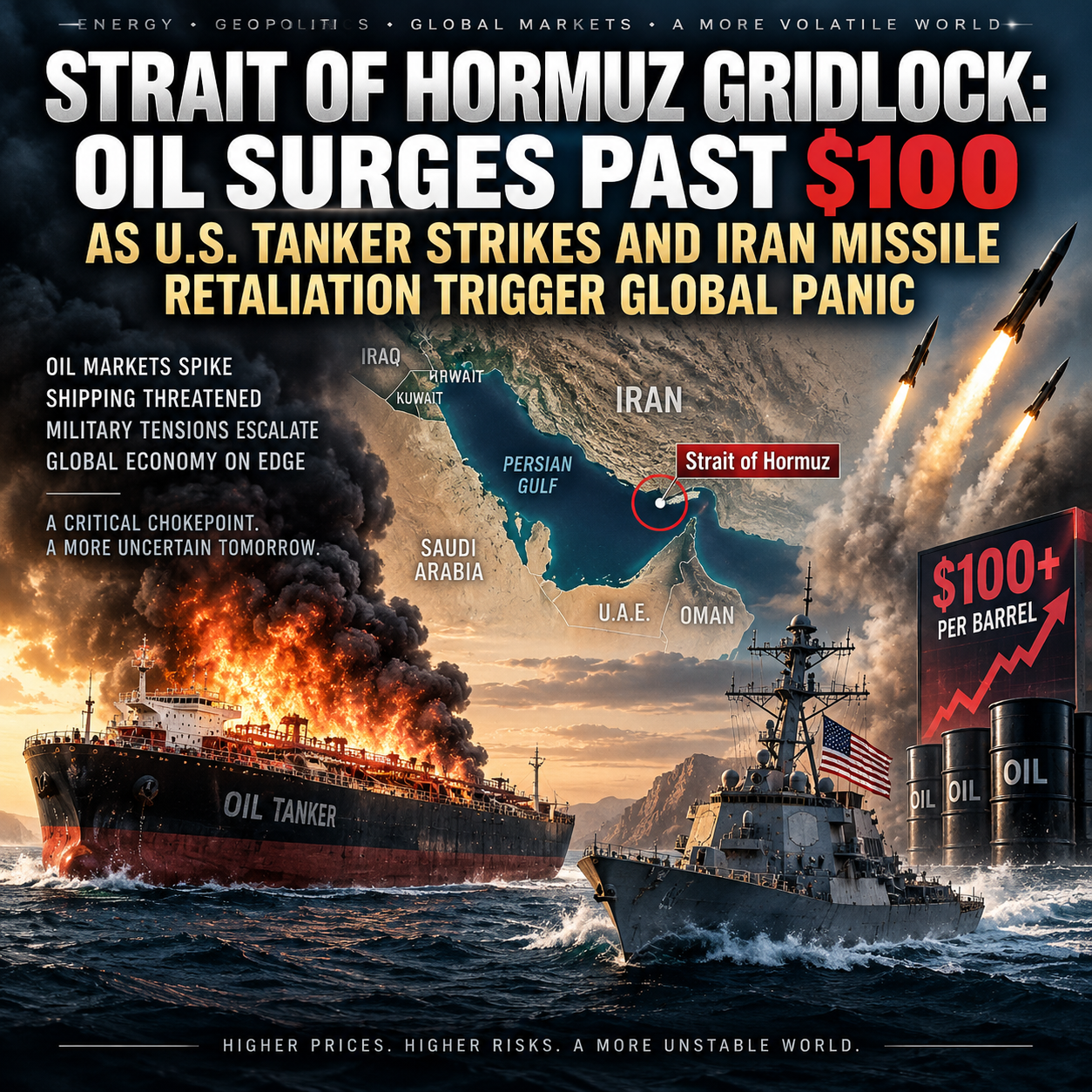
Strait Of Hormuz Gridlock: Oil Surges Past $100 As U.S. Tanker Strikes And Iran Missile Retaliation Trigger Global Panic
For decades, foreign policy experts warned about what would happen if someone decided to shut down the Strait of Hormuz. Now we are living that reality. The price of Brent crude just smashed through the $100 barrier after fighting between the U.S. and Iran erupted once again last night. Gasoline and diesel are going to become even more expensive, and that is not good news for our economy at all. But that isn’t the big story. The panic that is starting to spread through global financial markets is not the big story either. The big story is that the war with Iran is dangerously close to spiraling completely and utterly out of control. If that actually happens, we really will be facing an apocalyptic scenario.
As I discussed yesterday, great efforts have been made to keep the price of oil under $100 during this war.
Unfortunately, those efforts have failed…
Oil prices climbed above $100 a barrel Wednesday for the first time in nearly six weeks as escalating attacks on tankers and energy facilities in the Middle East raised fears of further disruptions to global supplies.
Brent crude, the international benchmark for oil prices, rose above $100 a barrel in early trading, while the U.S. benchmark climbed above $95.
When the price of oil rises above $100 a barrel, it acts as a psychological trigger and global investors start to become very nervous.
The reason why the price of oil is spiking is because more fighting suddenly flared up last night.
The U.S. attacked and destroyed five oil tankers that belonged to Iran…
U.S. military forces destroyed five Iranian crude oil tankers Sept. 8, officials said, the latest in an escalating round of exchanges between the United States and Iran.
The strikes targeted five tankers linked to Iran’s Islamic Revolutionary Guard Corps, according to U.S. Central Command, the arm of the military overseeing operations in the Middle East. Central Command shared footage of the strikes showing the aft, or rear, part of the massive non-military vessels.
Central Command footage of the strikes shows missiles hitting the ships and leaving them in flames. Four of the tankers were located in the Gulf of Oman. The other tanker was in the Persian Gulf near Kharg Island, a well-known Iranian oil depot President Donald Trump has repeatedly threatened to attack.
U.S. Central Command has specifically identified all five of the oil tankers for us, and we are being told that they were targeted “because of their role in helping move Iranian oil out of the region”…
The tankers U.S. forces targeted were M/T Kaviz, M/T Charminar, M/T Horizon 1 and M/T Riesco, located in the Gulf of Oman, and M/T Derya, located near Kharg Island, military officials said.
According to Central Command, the vessels were targeted because of their role in helping move Iranian oil out of the region.
It was inevitable that the Iranians would respond.
Shortly after the U.S. attacks, Iran launched missiles at 10 ships…
Iran said on Wednesday it had attacked 10 ships near the Strait of Hormuz after the U.S. sank five Iranian oil tankers, in the biggest declared wave of tit-for-tat attacks on shipping by both sides since the start of the six-month-old war.
Two of the ships that Iran targeted were U.S. warships, and eight of them were commercial vessels.
In addition, Iran also fired a number of missiles at U.S. facilities in Jordan.
The Iranians claim that they successfully hit two U.S. Navy destroyers, but U.S. Central Command is strongly denying this…
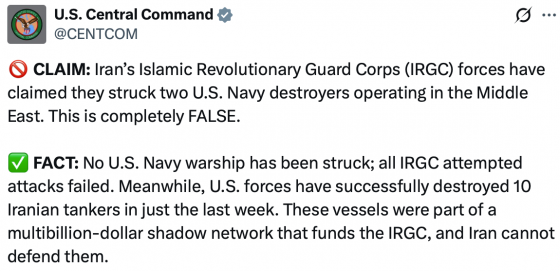
It does appear that there were direct hits in Jordan, but the Pentagon is telling us that all U.S. personnel “are accounted for”…
After a huge Iranian ballistic missile launch on US bases in Jordan overnight, CENTCOM has yet to respond in any major way. The Pentagon has also said all US troops “are accounted for” – but this doesn’t necessarily mean there were no casualties.
Hopefully we will get more clarity about potential casualties in the hours ahead.
It is being reported that the Iranians are starting to use “electro-optical missiles” in some instances.
Electro-optical missiles achieve high precision by tracking and striking targets using built-in cameras and light sensors.
So where did Iran get such technology?
Well, there is speculation that the Iranians may be getting help from Russia or China…
The new missiles suggest Tehran may still be receiving assistance from Russia or China to track the location of US warships, experts have warned.
In April, intelligence reports found that Chinese and Russian satellites were secretly providing the Islamic Republic with critical imagery to target US military bases.
Russia has long exchanged weapons with Iran and provided drone expertise during the war.
In May, the US sanctioned China-based entities for providing satellite imagery to Iran during the war. Two months later, it was revealed that China was sending 400 rocket launchers to Iran in a new deal, underscoring their increased military ties.
If it is confirmed that either Russia or China is assisting the Iranians with their missile program, that would be a deeply troubling development.
I think that the Trump administration was hoping that striking Iranian tankers would cause the Iranians to stop attacking commercial vessels, but that isn’t going to happen.
In fact, the IRGC is warning that “if the enemy hits two or three of our targets, we will respond firmly with 20 targets”…
Iran’s Revolutionary Guard Corps said Wednesday that it will hit 20 targets for every two or three U.S. strikes, while outlining the country’s conditions for ending the war.
“If the enemy wants an end to this situation, it must, while completely stopping the war, refrain from making threats again, the army of the Zionist regime must withdraw from Lebanon, the blockade of Yemen must end, $24 billion of Iran’s frozen assets must be released, and it must refrain from any interference in the country’s nuclear and missile capabilities,” said IRGC spokesman Brig. Gen. Hossein Mohebi, according to pro-regime Iranian outlet Akharin Khabar.
“We even have the capability to hit targets at this distance of 400 kilometers (250 miles), and some time ago, we targeted an American aircraft carrier at a distance of 500 kilometers (310 miles),” Mohebi claimed, adding that Iran has “reached a point where if the enemy hits two or three of our targets, we will respond firmly with 20 targets.”
The Iranians want to make the response to any military action so painful that President Trump will be forced to back off. But that isn’t going to happen either. If both sides just continue to escalate matters, the entire region could erupt in flames.
Perhaps that is inevitable.
On Wednesday, Israeli Prime Minister Benjamin Netanyahu once again boldly proclaimed that the end of the regime in Iran is very near…
Israeli Prime Minister Benjamin Netanyahu said victory over Iran is “very close,” declaring on the eve of Rosh Hashanah that bringing down Tehran’s regime remains the country’s “main task.”
“The main task is to defeat the terrorist regime in Iran. We are very close to it,” Netanyahu said in a video message posted to X during a visit to Mount Hermon in Syria. “We know that the entire axis will ultimately fall. We are committed to doing this, and we will do it.”
Netanyahu visited the area alongside Israeli Defense Minister Israel Katz and IDF Deputy Chief of Staff Maj. Gen. Tamir Yadai, receiving a briefing on Israeli military operations in the region.
Netanyahu has said this several times now. To me, it does not appear that the fall of the Iranian regime is close. So I would love to learn what he knows that I do not.
Needless to say, the regime in Tehran will not go peacefully. If what Netanyahu is claiming is accurate, that would seem to indicate that the war in the Middle East is not even close to over.
That means that the global energy crunch is going to get a whole lot worse.
Right now, the Chinese are driving up prices for physical oil as they seek to replace the oil that they normally import from Iran…
China, the world’s largest oil importer, is bidding up crude prices across Africa, Canada, and Latin American markets as disruptions in the Hormuz chokepoint and limited Iranian supplies intensify competition for alternatives. The scramble is squeezing smaller Chinese refineries that once relied on heavily discounted Iranian barrels, according to a new Bloomberg report.
The renewed Chinese buying marks a major shift from a period when subdued Chinese buying helped restrain crude oil prices. With Iranian exports almost entirely shut off by the US blockade and fighting flaring again, as seen Monday when Saudi Aramco’s Jizan oil facilities were reportedly hit, the race to find replacement supplies around the world is becoming an increasingly expensive task for the Chinese.
Pretty soon, there will be a mad scramble as nations all over the globe attempt to secure sufficient energy supplies. Inventories are getting extremely tight, and we are feeling the pain here in the United States too.
The average price of a gallon of gasoline in the U.S. has never been this high so late in the calendar year, and the average price of a gallon of diesel just reached yet another new record high…
While gas prices often lag oil prices, they also ticked higher this week after reaching a record Labor Day weekend high. As of Sept. 9, the national average price of a gallon of regular gasoline is $4.22, up from $4.01 last month and from $3.19 this time last year, according to AAA.
The jumps come days after average U.S. diesel prices reached record highs. On Sept. 9, diesel continued to set records, jumping to an all-time high of $5.92 per gallon, according to Patrick De Haan, head of petroleum analysis at GasBuddy.
Gas prices have surged 42% since the start of the war on Feb. 28, prompting pain at the pump for some American consumers. The University of Michigan’s measure of consumer sentiment and The Conference Board’s measure of consumer confidence fell in August, as survey respondents cited high gas prices.
If prices continue to rise, it will have a dramatic impact on economic activity.
Meanwhile, global investors will get really spooked if the price of oil stays above $100 a barrel for an extended period of time. But there is no easy way out now.
Even if the U.S. were to completely pull out of the Middle East, it would be just a matter of time before Iran and Israel started going at it again. Decades of tension in the Middle East have been building up to this moment.
Now a terrifying war is playing out right in front of our eyes, and there is no end in sight.
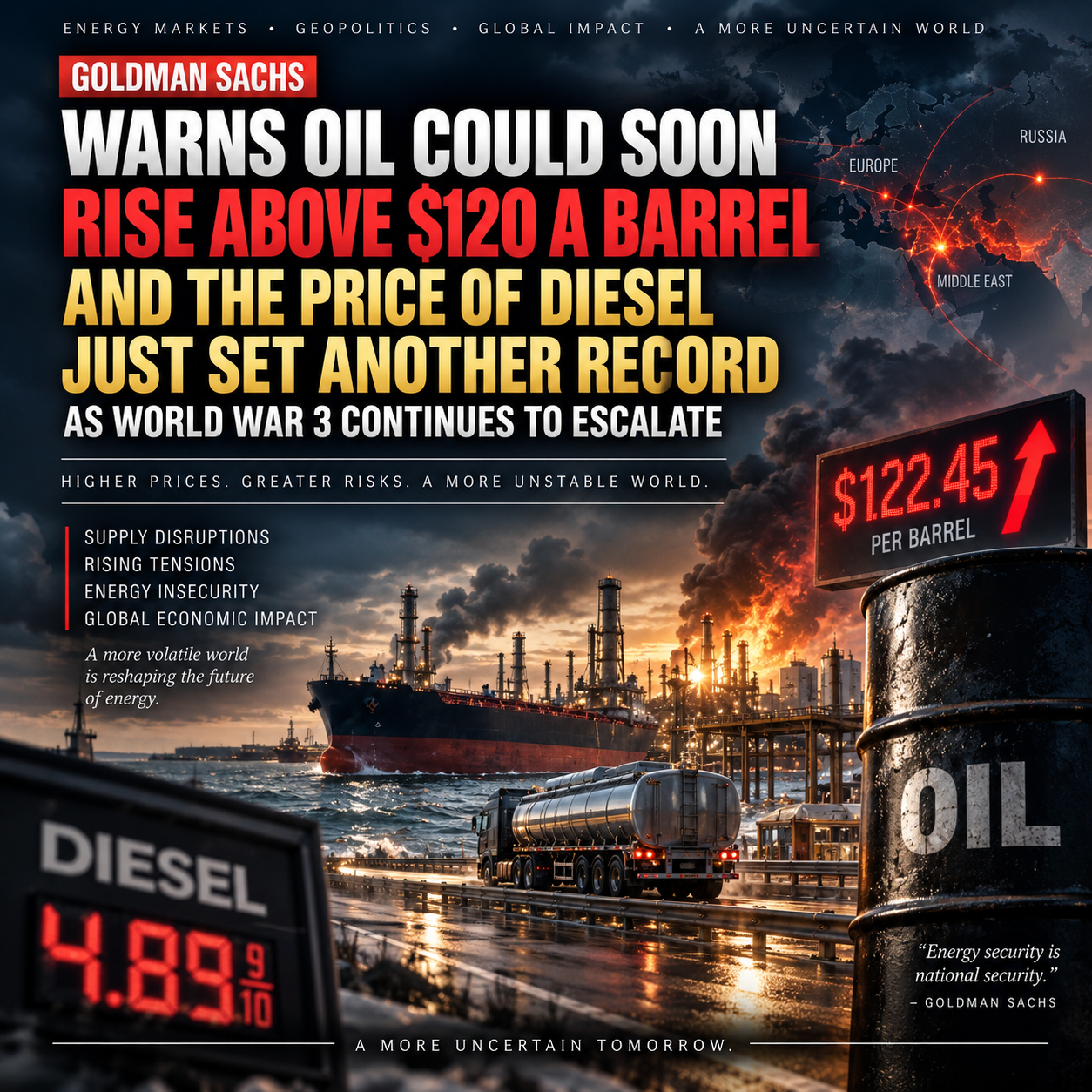
Goldman Sachs Warns Oil Could Soon Rise Above $120 A Barrel And The Price Of Diesel Just Set Another Record As World War 3 Continues To Escalate
The global energy supply crunch is only going to get worse as long as the conflicts in the Middle East and Eastern Europe are raging. A lot less oil is getting through the Strait of Hormuz than normal, and diesel production in Russia has been significantly diminished by relentless Ukrainian drone strikes. As a result, we have a facing an unprecedented energy squeeze. The average price of a gallon of gasoline in the United States has never been this high so late in the calendar year, and the average price of a gallon of diesel in the United States just set yet another all-time record.
At this stage, nobody can deny that a global energy crisis is here.
In fact, Goldman Sachs just warned that the price of oil could soon jump above $120 a barrel…
Goldman Sachs is warning that heightened attacks in the Persian Gulf and Red Sea could push global oil prices above $120 a barrel, which would add to the surging fuel costs Americans have faced during the Iran war.
The investment bank’s forecast implies a roughly 20% increase in the cost of Brent crude, the international benchmark, which is trading at nearly $100 a barrel.
For months, there have been extraordinary efforts to keep the price of oil below the psychologically important $100 a barrel mark.
But authorities will not be able to hold that line for much longer.
Already, U.S. consumers have spent an extra $100 billion on fuel since fighting with Iran erupted in February…
American consumers spent an additional $100 billion on fuel between the start of the Iran war on Feb. 28 and Sept. 8, according to a tracker from Brown University. Higher gasoline prices accounted for about $55 billion of that amount, while diesel accounted for the remaining $45 billion.
Unfortunately, fuel prices just continue to rise.
On Labor Day, the average price of a gallon of diesel in the United States reached another brand new record high…
Diesel, which is widely used in the trucking, construction, agriculture and rail sectors, reached a record $5.90 a gallon on Labor Day, AAA data shows.
It is over six dollars a gallon where I live. In some parts of California, it is now over eight dollars a gallon.
And industry executives are telling us that global supplies of diesel will continue to be very tight for the foreseeable future…
Global diesel supply will remain tight due to a lack of spare refining capacity, Russia’s ban on exports and the approach of peak winter demand, senior industry executives said on Tuesday.
The wars in Ukraine and Iran have impacted refineries in Russia and the Middle East, pushing diesel margins to record levels in Europe and the U.S., while reducing crude supplies to Asia.
“There’s really a shortage of products because we’re missing 2 million barrels a day from Russia, and we’re missing nearly 2 million barrels a day from the Middle East,” Vitol CEO Russell Hardy told the APPEC conference on Tuesday.
If things are this bad now, what will they look like a few months from now if World War 3 continues to intensify?
On Tuesday, oil spiked after the Houthis launched a barrage of missiles and drones at Saudi Arabia…
Oil prices rose Tuesday after Iran-allied militants in Yemen attacked several energy facilities in Saudi Arabia, forcing a temporary halt to some operations.
Brent crude futures rose 1% to $97.99 a barrel by 11:28 a.m. E.T. The international benchmark hit a session high of $99.46 earlier. U.S. West Texas Intermediate futures advanced 1.55% to $92.90 per barrel.
Oil prices are up more than 8% in September as the U.S. and Iran have traded military strikes for the first time since July.
We are only a little over a week into this month, and the price of oil is already up about 8 percent. That is not a good sign at all.
The Houthis know how to hit Saudi Arabia where it hurts. Multiple Aramco facilities were targeted, and it is being reported that fires caused “temporary shutdowns” at several of them…
Houthi militants targeted civilian and economic assets in the cities of Abha, Khamis Mushait, Jazan and Najran, the Saudi Foreign Ministry said. More than 70 civilians were injured in the attacks, it said.
The attacks caused fires at several energy facilities resulting in temporary shutdowns, the kingdom’s Energy Ministry said in a statement. Emergency services are working to contain fires at the sites and assess the extent of damage, the world’s largest oil exporter added.
Riyadh did not disclose what type of energy facilities were struck. Houthi state media said the group attacked Saudi Aramco facilities in southern areas with drones and ballistic missiles.
In addition to launching missiles and drones at the Saudis, the Houthis have also begun a major ground offensive in the direction of the Bab al-Mandab Strait…
The Houthis launched a broad offensive along frontlines on the western Red Sea coast in a bid to advance towards the Bab al-Mandab Strait, experts say.
The waterway forms the southern entrance to the Red Sea, a shipping artery that has become vital for Saudi oil exports during Tehran’s blockade of the Strait of Hormuz since the start of the U.S.-Iran war.
Meanwhile, the recent fighting between the U.S. and Iran threatens to greatly escalate.
Over the weekend, the U.S. severely damaged three Iranian oil tankers…
The United States struck three Iranian oil tankers on Saturday, U.S. Central Command (CENTCOM) has confirmed, which it said were involved in covert oil shipment near the critical Kharg Island terminal.
Only one of the vessels was near Kharg Island. In addition to one vessel “permanently disabled” off the coast of Kharg, Centcom said it had “completely destroyed” another oil carrier near the port city of Jask, while rendering another “inoperable” in the Gulf of Oman “after the crew was directed to abandon ship.”
Exports of Iranian oil have essentially dropped to zero, and the Iranian economy is being strangled to death by the U.S. naval blockade.
Authorities in Iran are deeply frustrated, and Iranian President Masoud Pezeshkian is pledging that the U.S. will soon be “brought to complete regret”…
Iranian President Masoud Pezeshkian vowed continued resistance against the U.S. on Tuesday, writing on X that the U.S. will “regret” the war.
“The Islamic Republic of Iran has always opposed war and has considered the preservation of the people’s interests and regional security to lie in refraining from igniting conflict,” Pezeshkian wrote.
“However, just as it has boldly risen to defend against aggression up to this day, it will continue this resistance with full strength until the aggressors are brought to complete regret and will remain the guardian of the rights of the great Iranian nation,” he added.
Many consider such threats to be quite empty.
But the Iranians do appear to have freshly upgraded ballistic missiles, and they are threatening to use them to conduct preemptive strikes…
Iran has issued a fresh threat to the US over its newly upgraded ballistic missile, with officials warning that the nation “will take action against any threat, even before it is carried out.”
The report by Iran’s state news agency on Monday highlighted comments broadcast on state television the previous day by the head of Iran’s Supreme National Security Council, Mohsen Rezaei.
He praised the country’s expanded arsenal and claimed a new missile had been “tested” against a US warship. However, it was unconfirmed whether the test involved the solid-fueled Qassem Basir featured in the new report.
There is speculation that Iran’s freshly upgraded ballistic missiles could potentially be a serious threat to our warships. Needless to say, the sinking of even a single U.S. warship would change everything. But President Trump continues to be optimistic.
On Monday, he assured us that the price of oil will quickly fall below two dollars a gallon “when we WIN the war with Iran”…
President Trump on Monday said oil prices “will drop precipitously” after the Iran war is won, as Iran seeks to maintain its control of the Strait of Hormuz with a “restricted zone.”
“Oil prices will drop precipitously, like everything else is dropping (but more!), when we WIN the war with Iran,” Trump wrote on Truth Social. “Three Dollars a gallon, but ultimately, below Two Dollars a gallon. It will all happen quickly, and Iran will never have a Nuclear Weapon.”
In Ukraine, the Russians have resumed hitting Ukrainian cities with a vengeance…
At least five people were killed in Kyiv after Russia launched what Ukrainian President Volodymyr Zelenskyy called a “complex” attack on the city, with Moscow resuming long-range strikes on the Ukrainian capital following a three-day pause to allow the visit of a U.S. peace talks delegation.
Ukraine’s air force said Russia launched 166 drones, 32 cruise missiles and an unspecified number of anti-ship and ballistic missiles into the country overnight. The air force said its forces downed 142 drones, 31 cruise missiles and two ballistic missiles.
The Russians are hoping that greatly escalating the intensity of strikes will convince the Ukrainians to stop hitting their refineries.
It isn’t going to work. But sides are just going to continue to pummel one another, and that isn’t going to be good news for any of us.
In addition to repeatedly targeting Kyiv, the Russians also hit the city of Odessa really hard…
Kyiv and the southern port city of Odessa were the main targets, the air force reported. Missiles and drones impacted across 29 locations, it added in a post to Telegram.
Russia’s Defense Ministry said in a post to Telegram that the “massive strike” targeted defense industrial facilities and military transport and logistical hubs, plus port facilities in Odesa. The ministry also posted a graphic showing what appeared to be cruise missiles, with the caption, “Targeting day and night.”
Unless the war between Russia and Ukraine ends, the diesel supply crunch will continue to escalate.
And as long as traffic through the Strait of Hormuz is only a fraction of what it was before the war with Iran, there will be upward pressure on the price of oil.
The higher energy prices go, the worse things will get for the entire global economy. The clouds on the horizon are getting really dark, and at this point everyone can see that a major storm is rapidly approaching.
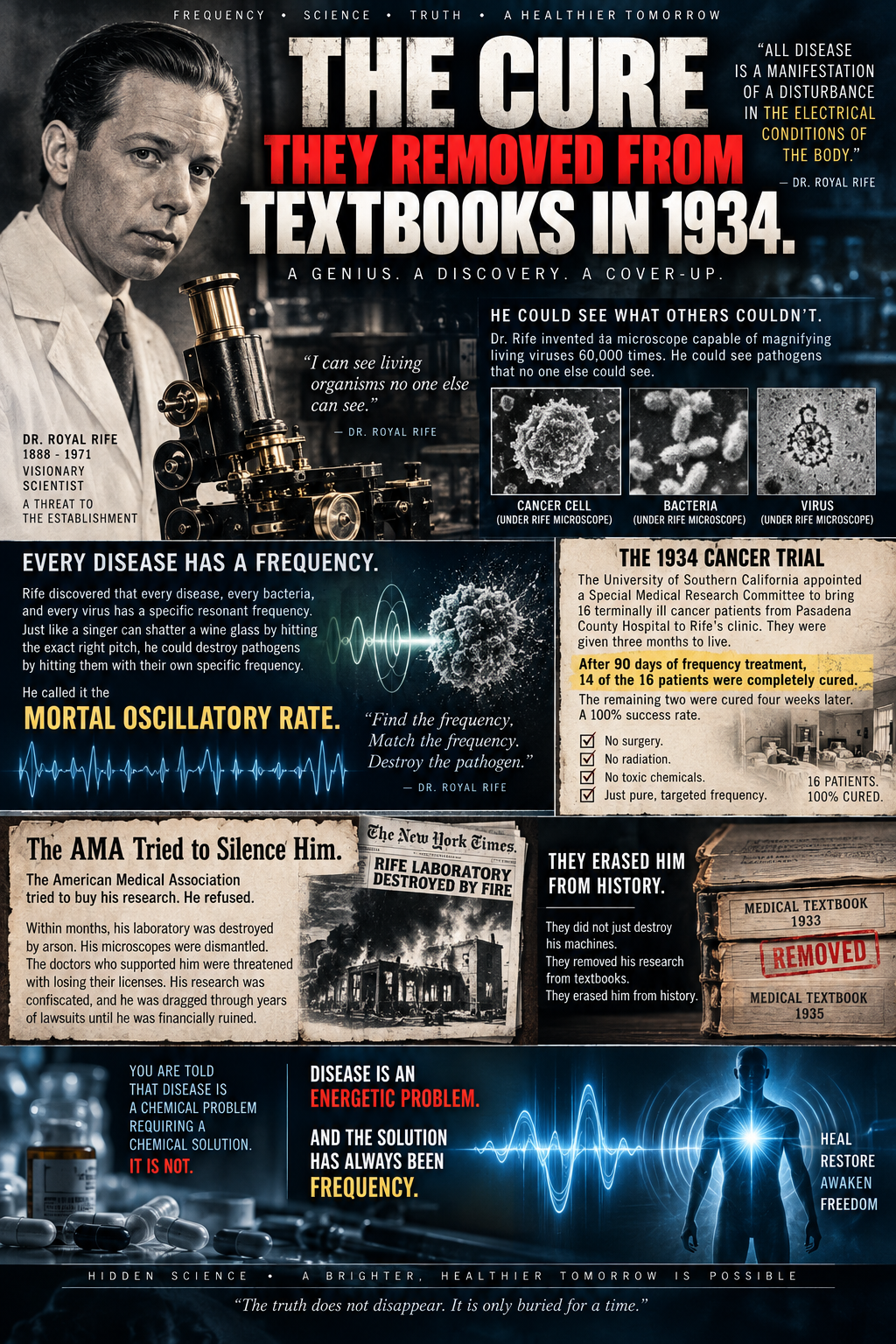
THE CURE THEY REMOVED FROM TEXTBOOKS IN 1934.
Dr. Royal Rife was a genius. He invented a microscope capable of magnifying living viruses 60,000 times.
Source: The 17th Disciple TG
He could see pathogens that no one else could see. Then he discovered something that threatened the entire medical establishment. He found that every disease, every bacteria, and every virus has a specific resonant frequency.
Just like a singer can shatter a wine glass by hitting the exact right pitch, Rife discovered he could destroy pathogens by hitting them with their own specific frequency. He called it the Mortal Oscillatory Rate. In 1934, the University of Southern California appointed a Special Medical Research Committee to bring 16 terminally ill cancer patients from Pasadena County Hospital to Rife’s clinic. They were given three months to live.
After 90 days of frequency treatment, the committee concluded that 14 of the 16 patients were completely cured. The remaining two were cured four weeks later. A 100% success rate. No surgery. No radiation. No toxic chemicals. Just pure, targeted frequency. The American Medical Association tried to buy his research. He refused. Within months, his laboratory was destroyed by arson.
His microscopes were dismantled. The doctors who supported him were threatened with losing their licenses. His research was confiscated, and he was dragged through years of lawsuits until he was financially ruined. They did not just destroy his machines. They erased him from history.
You are told that disease is a chemical problem requiring a chemical solution. It is not. Disease is an energetic problem. And the solution has always been frequency. create a poster (long format) imagery
WARNING: Snake Venom Everywhere In Everything
The biggest health bombshell yet just dropped. And in this emergency drop mid-January 2026, Dr. Bryan Ardis, the fearless whistleblower who’s been exposing the snake venom truth from day one, dropped a torrent of revelations.
Source: The 17th Disciple
He’s screaming it from the rooftops: no one is really prepared for the tidal wave that’s about to come down on the cabal’s house of lies. The venom agenda is not over, it is evolving and the deep state is in desperate need to keep this hidden as the great awakening accelerates.
The core shocks that will ignite you:
– Snake venom everyplace, not just in the shots. Ardis points out that synthetic venom peptides from reptiles are incorporated into Big Pharma’s poisons: COVID jabs, Remdesivir, weight-loss drugs like Ozempic (paralyzing stomachs, causing cancers) and more. These are not accidents, but deliberate bioweapons designed to mimic snakebites, attacking the organs, blood and nerves. He ties it to the original COVID plot, not a virus but venom in the water, air and meds to depopulate and control. Nicotine? The antidote they’ve hidden – patches and gum that stop the venom effects, protecting from “long COVID” spikes and jab injuries. Smokers dodged the bullet for a reason!
– This is now the ticking time bomb phase. We are entering 2026, the endgame, when the venom industrial complex crumbles. Ardis exposes the satanic web of mass production of venoms across the globe for drugs, vaccines, cosmetics, insecticides profit on suffering. Heart conditions, myocarditis, blood clots, diabetes, neurological decay – all from this venom attack. But nature wins: his protocols, natural detoxes and forbidden antidotes are reversing the damage for thousands. The white hats are stoking the flames and Big Pharma’s house is on fire.
– Deep state panic mode is ON. They are pushing more boosters, new “variants,” and deadly protocols to cover tracks but leaks are exploding. Whistleblowers are protected, military intelligence confirms bioweapon origins, tribunals are prepared for pharma kingpins, Fauci cronies and globalist venom pushers. Ardis links this directly into the plan. The exposure of this Luciferian venom agenda will wake the masses overnight. When the whole truth is revealed – venom in everything – the normies rise up, arrests are made, and the Republic is restored.
– Overlay of spiritual warfare: This isn’t just medical, it’s demonic. Divine intervention is dismantling the elite’s venom cult. Ardis appeals to the remnant to arm up with truth, faith, nicotine where needed and his Nature Wins arsenal. The big reveal is coming – no one escapes the reckoning.
The storm is raging: election fraud ties to health tyranny, child trafficking rings meet venom experiments, and Trump’s team has the receipts. Mass awakening is coming, the venom veil is torn, the cabal falls, freedom surges.
Be alert, stock antidotes, pray hard, spread this wildfire The shock is any moment dropping When it lands, the deep state dies screaming Nature wins and we do too, the best revenge is massive exposure and total victory!
EVERY VACCINE BATCH HAD A DIFFERENT FORMULA. THE LOT NUMBERS JUST PROVED IT.
Not a theory. Not an interpretation. A dataset. 12,000 lot numbers. Cross-referenced with VAERS adverse event reports. The correlation is absolute.
Source: The 17th Disciple TG
A team of researchers — 4 statisticians, 2 pharmacologists, 1 former FDA regulator — published their findings on a decentralized server Wednesday. The paper is 147 pages. Peer review was impossible because no journal would touch it. So they released it directly to the public.
The finding: specific lot numbers produced 4,000% more adverse events than others. Not random variation. Not manufacturing inconsistency. A deliberate, systematic pattern.
Lot numbers ending in 20A through 20F: near-zero adverse events. Saline. Placebo. Water with a label.
Lot numbers ending in 21K through 21X: moderate adverse events. Fatigue. Myocarditis. Blood clots. Hospitalization rates 300% above baseline.
Lot numbers ending in 22R through 22Z: catastrophic. Stroke. Cardiac arrest. Neurological damage. Death rates 8,100% above the statistical norm for any pharmaceutical product in history.
Three tiers. Three formulas. Distributed in a pattern that ensured no single hospital, no single city, no single demographic received enough catastrophic doses to trigger an obvious statistical signal.
They spread the damage thin enough to call it “rare side effects.” But it wasn’t rare. It was targeted.
The distribution pattern wasn’t random. The catastrophic lots were sent disproportionately to specific zip codes. Zip codes with high concentrations of military veterans. First responders. Independent business owners. Communities with historically low compliance to federal mandates.
The people most likely to resist were given the most dangerous doses.
The moderate lots went to urban centers with high media consumption — populations that would report mild symptoms, be told it was “normal,” and return for boosters without question.
The placebo lots went to politicians, media figures, and pharmaceutical executives. The people who promoted it on camera. The people who told you it was “safe and effective” while receiving saline.
They took the same shot on television. They did not take the same formula.
The 12,000 lot numbers are now mapped. Every batch. Every destination. Every outcome. The data is on the blockchain. It cannot be retracted. It cannot be memory-holed. It cannot be fact-checked into oblivion.
The former FDA regulator on the team submitted the dataset to the military tribunal with a single statement: “This was not negligence. This was a weapons deployment protocol disguised as public health.”
The tribunal accepted it into evidence Thursday morning. Case number: GT-2026-0441.
Every lot number is a fingerprint. Every adverse event is a witness. Every death certificate is an indictment.
CODE: LOT-NUMBERS / 3-TIERS / ZIP-TARGETED / GT-2026-0441
They didn’t give everyone the same shot. They gave everyone the shot they were assigned. Now the assignment list is evidence.
Someone you know got a different formula than they were told.
IVERMECTIN
The Remarkable Drug Being Investigated Far Beyond Parasites
ANTIPARASITIC PROTECTION • IMMUNE RESEARCH • ANTIVIRAL RESEARCH • CANCER RESEARCH • DRUG REPURPOSING
Few medications have generated as much scientific interest—and public controversy—as ivermectin. Developed from avermectins discovered in microorganisms found in soil, ivermectin became one of modern medicine’s important antiparasitic drugs. Its impact on devastating parasitic diseases ultimately contributed to the research behind the 2015 Nobel Prize in Physiology or Medicine. Today, researchers continue investigating whether ivermectin’s biological activity could have applications extending beyond its established antiparasitic role.
A Powerful Antiparasitic Medicine
Ivermectin’s strongest established benefit is its ability to eliminate particular parasites. In humans, it is approved in the United States for intestinal strongyloidiasis and onchocerciasis, while particular formulations have additional uses. Its widespread deployment against parasitic disease has given medicine decades of experience with the drug. When appropriately prescribed at established human doses, ivermectin has generally demonstrated a favorable safety profile—although, like essentially all medications, it can produce adverse effects, interact with other drugs, and become dangerous at excessive doses.
The Parasite–Cancer Connection
One particularly interesting area for GAR readers is the relationship between chronic infection and cancer. Certain parasites really are recognized carcinogenic agents. Schistosoma haematobium infection has been causally associated with bladder cancer, while particular liver-fluke infections have been linked to cancers of the bile ducts. Chronic infection can create prolonged inflammation, tissue injury and biological conditions capable of contributing to malignant transformation.
This does not mean that most cancer is caused by parasites, nor does it mean ivermectin eliminates every cancer-associated parasite. It does establish something important: infection and cancer biology are sometimes interconnected. Understanding and preventing carcinogenic infections therefore represents a legitimate component of cancer prevention research.
Ivermectin and Cancer Cells
A separate research story has emerged around ivermectin itself. Laboratory and animal investigations have explored whether the drug might interfere directly with cancer biology. Researchers have reported effects involving cancer-cell proliferation, programmed cell death, autophagy, cancer stem-cell behavior and signaling pathways associated with tumor growth. These findings have helped make ivermectin an intriguing candidate within the growing field of drug repurposing—investigating established medications for entirely new therapeutic applications.
The distinction between promising research and proven medicine remains essential. Killing cancer cells in a laboratory or suppressing tumors in an animal model does not establish that a drug prevents or treats cancer in humans. At present, ivermectin should therefore be viewed as an experimental anticancer research candidate, not as an established cancer-prevention protocol. What makes the research worth following is precisely the possibility that an inexpensive, extensively studied existing medicine might possess biological properties that extend beyond its original purpose.
The Antiviral Question
Ivermectin has also demonstrated antiviral activity against numerous viruses in laboratory experiments. Researchers have investigated mechanisms involving cellular transport pathways used by some viruses and have explored activity involving several RNA and DNA viruses. This has generated legitimate scientific interest in whether ivermectin or related compounds could eventually become useful antiviral agents.
Human clinical effectiveness is much less established. Laboratory antiviral activity does not automatically translate into an effective human dose, and randomized trials involving COVID-19 did not establish ivermectin as an effective treatment or prevention strategy. The larger scientific question—whether ivermectin’s molecular mechanisms could eventually be exploited against other viral diseases—nevertheless remains an interesting field for continued investigation.
An Established Drug With Unfinished Science
Perhaps the most important ivermectin story isn’t that science has already proven every proposed benefit. It is that a medication originally developed for parasites continues generating research questions decades later. Its established antiparasitic effectiveness is substantial. Its safety characteristics at appropriate human doses are well understood. Its activity against biological pathways involved in viruses, inflammation and cancer has generated an additional body of experimental research deserving careful investigation.
The Bigger Question
Ivermectin therefore illustrates one of the most interesting possibilities in modern medicine: sometimes an old drug may have biological capabilities that were not fully appreciated when it was originally developed. Drug repurposing can dramatically shorten the journey from laboratory discovery to clinical investigation because researchers already possess extensive information about a compound’s pharmacology and safety.
FOLLOW THE MONEY — INSIDE THE $269 MILLION MEDI-CAL FRAUD MACHINE
11 Months • $269 Million in False Claims • $178 Million Paid • Illegal Kickbacks • Luxury Assets • 30 Years in Federal Prison
Source: GAR Contributing Writer
Sometimes a story sounds so extreme that the first question should be: Is there actually a court record? In this case, there is. On September 9, 2026, Paul Richard Randall, 67, of Orange, California, was sentenced to 30 years—360 months—in federal prison for masterminding a massive health-care fraud operation targeting Medi-Cal, California’s Medicaid program. The Justice Department described it as one of the highest health-care-fraud sentences in the history of the Central District of California.
The scale is extraordinary. According to federal prosecutors, from May 2022 through April 2023, Randall caused approximately $269.1 million in false and fraudulent claims to be submitted to Medi-Cal—an average approaching $25 million per month. Medi-Cal ultimately paid approximately $178.7 million on those claims. U.S. District Judge Mark C. Scarsi sentenced Randall and ordered him to repay roughly that same $178.7 million in restitution.
At the center of the operation was Monte Vista Pharmacy. Prosecutors said Randall and his co-schemers exploited a temporary suspension of Medi-Cal’s prior-authorization requirements during the state’s transition to a new prescription-drug payment system. They billed Medi-Cal for 19 expensive, non-contracted medications containing comparatively inexpensive generic ingredients. The government says those medications were medically unnecessary, frequently were never dispensed to the supposed patients, or both.
One example illustrates the economics behind the scheme. According to the Justice Department, approximately $13,424 was billed for a prescription containing meloxicam 5 mg, even though DOJ said a 30-day supply of the generic drug in larger dosages typically cost roughly $5 to $25. Some of the other products included pain creams and Folite tablets, described by prosecutors as a vitamin available over the counter.
The operation went beyond inflated pharmacy billing. Prosecutors said Randall paid illegal kickbacks to patient marketers to obtain Medi-Cal beneficiary information and paid nurse practitioner Patricia Anderson to sign pre-filled prescriptions. According to the government, Anderson did not meet those patients, review their medical records or independently determine that the medications were medically necessary before signing the prescriptions. Prosecutors further alleged that proceeds were moved through third parties to finance kickbacks and obscure the transactions from law enforcement.
Then investigators followed the assets. The Justice Department reports that the government has seized approximately $126.5 million accumulated from the scheme, including about $111 million in bank funds and securities, nine luxury vehicles valued at approximately $1 million, nine luxury properties valued at roughly $13.5 million, and more than $1 million in sports memorabilia. Randall also agreed to forfeit property obtained through the fraud when he pleaded guilty to wire fraud in April 2026.
There is another remarkable detail in the federal record: Randall committed the Medi-Cal offense while on release in a separate federal criminal tax case. The FBI, Department of Health and Human Services Office of Inspector General, and California Department of Justice investigated the health-care case. Randall ultimately pleaded guilty to one count of wire fraud before receiving the three-decade sentence.
The case also sits within a much larger federal health-care-fraud enforcement picture. In June 2026, DOJ announced a nationwide takedown involving 455 defendants, including 90 doctors and other licensed medical professionals, and more than $6.5 billion in alleged false claims. That does not mean every health-care institution or disputed medical bill is fraudulent. It does demonstrate why following indictments, plea agreements, sentencing records, financial transactions and asset-forfeiture proceedings can reveal misconduct that speculation alone cannot establish.
For Sleeping Giant readers, that distinction matters. There is no need to build a theory around this particular story: the underlying fraud is documented through a guilty plea, federal court proceedings, sentencing and government asset seizures. The stronger investigative question is what weaknesses allowed nearly $269 million in claims to move through the system in only 11 months—and what safeguards have subsequently been put in place to prevent another operation from exploiting the same vulnerabilities.
$269 MILLION IN FALSE CLAIMS.
$178.7 MILLION PAID.
$126.5 MILLION IN ASSETS SEIZED.
30 YEARS IN FEDERAL PRISON.
FOLLOW THE CLAIMS. FOLLOW THE KICKBACKS. FOLLOW THE ASSETS. FOLLOW THE MONEY.
Because sometimes the biggest story isn’t hidden at all.
IT’S SITTING IN THE COURT RECORD.
U.S. Department of Justice — Randall sentencing announcement
Descending Into Chaos: Our Modern Reality Unravels A Little Bit More Every Single Day
Just when you think that things can’t get any crazier, somehow they do. We live at a time when the thin veneer of civilization that we all once took for granted is rapidly disintegrating all around us. Some people still behave rationally, but a lot of people don’t. Decades ago, the lunatics were an extremely small minority on the fringes of society, but today there are countless lunatics that are actually in positions of power. Just look at some of the mayors that our major cities have been electing recently. What we are witnessing would be funny if it was the plot of a Hollywood comedy, but since it is real life that we are talking about what we are witnessing is extremely tragic. What is considered to be “normal” is being turned upside down in hundreds of different ways, and our entire society is descending into a state of constant chaos.
When I was growing up, there is no way that Lindsay Clancy would have been considered a national hero by millions of Americans.
In those days, they would have locked her up and thrown away the key.
But in 2026, killing her three children has made her an instant celebrity.
Just a few hours ago, her lawyer went on Good Morning America and suggested that President Trump should pardon her…
Lindsay Clancy’s outspoken lawyer, Kevin Reddington, directly appealed to President Trump early Tuesday to pardon the killer mom.
“Mr. President, I would hope that you would consider this young lady – the type of person she is and what she’s been through – and consider a pardon,” he told “Good Morning America” when asked what was next for Clancy after her high-profile case ended in a mistrial Friday.
The veteran 75-year-old lawyer made no mention of how he expected Trump to get involved, given that Clancy is only facing state charges, which presidents have no power to pardon. He also did not say if he hoped such unprecedented intervention would stop a second trial or save the killer if she were convicted.
Are you kidding me?
When I saw the footage of this interview, I was absolutely flabbergasted. What would cause him to believe that President Trump would ever do such a thing? And since he has been practicing law for decades, shouldn’t he understand that the president cannot pardon someone for a state crime?
That guy is just crazy.
Speaking of crazy, Meranda has discovered some very strange coincidences between the Lindsay Clancy case and another case that occurred precisely three years earlier…
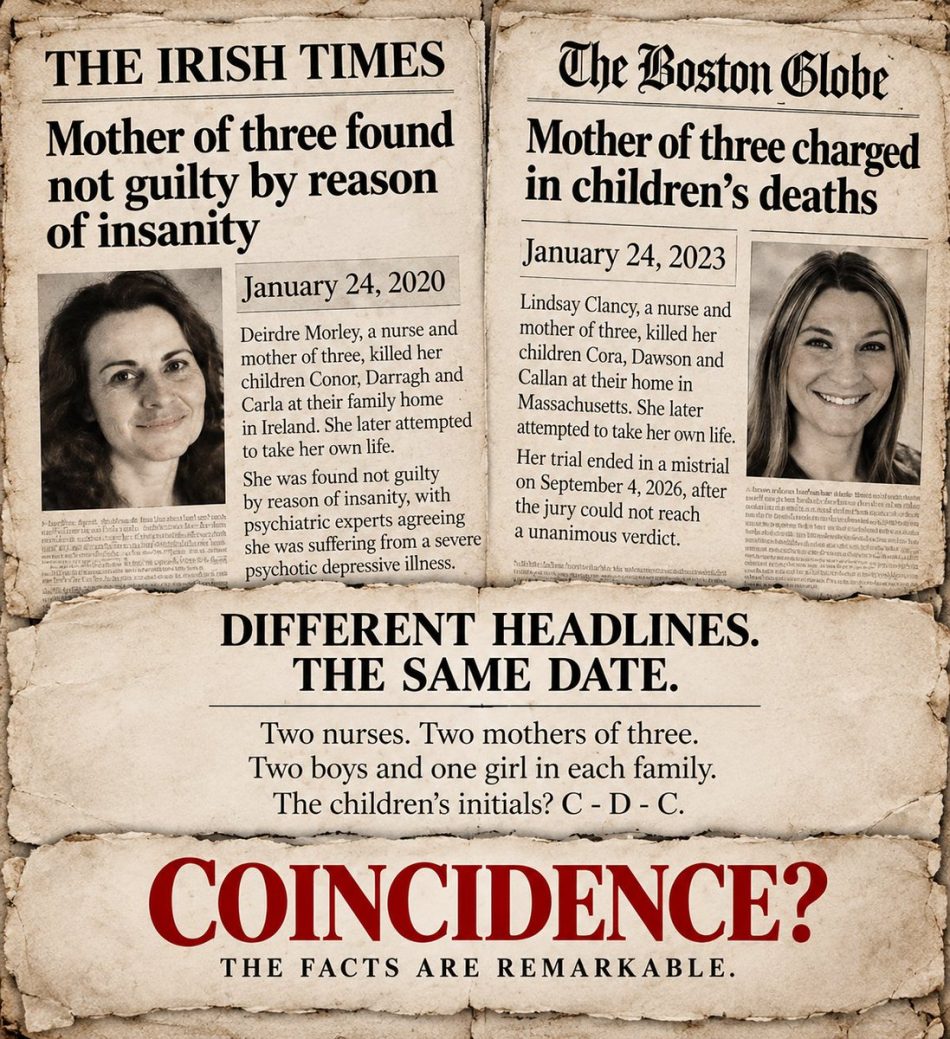
How can it be possible that there are so many parallels between those two cases? Was Lindsay Clancy aware of the first case? If she was, does that make Lindsay Clancy a copycat killer?
Of course there have been other women that have followed Lindsay Clancy’s example since her case started receiving national attention. I think that it would be better for our country if such cases were resolved very quietly.
Let me shift gears and discuss another chaotic story that has been in the news. By now, you have probably heard about the unruly passenger that was duct-taped to a chair on American Airlines Flight 618.
Well, now we have the whole story.
The mainstream media doesn’t seem to want to talk about this, but the reason why the unruly passenger was duct-taped to a chair was because he had violently assaulted bestselling author Jonathan Cahn…
The mystery passenger at the center of the viral American Airlines Flight 618 incident has been identified as #1 New York Times bestselling author Jonathan Cahn.
As Charisma previously reported, the Dallas-Fort Worth-to-Newark flight was diverted to Baltimore Sept. 3 after passenger Arthur Lundeen, 67, allegedly became disruptive and violent. Lundeen was ultimately restrained with duct tape and zip ties before being arrested and charged with disorderly conduct and second-degree assault. But amid the viral reports of yelling, chaos and an outburst involving Jesus and hell, one central figure remained unidentified: the passenger seated directly beside him.
Now, Cahn says that passenger was him.
“I was the unidentified passenger,” Cahn reveals. “And I was actually attacked 30,000 ft in the sky. I was attacked on that plane.”
This incident could have been so much worse.
Jonathan Cahn has released a video in which he gives us details that have not been revealed by the mainstream media yet…
The next person that you sit next to on a bus, on the subway or on a plane could be a total nut. You just never know.
Our modern reality is just so messed up. Every day I come across news stories that would have been unthinkable decades ago. For example, we are about to observe the 25th anniversary of 9/11, and the Girl Scouts are now giving out awards and patches for practicing Islam…
Girl Scouts can now earn awards for learning about Islam, practicing Muslim traditions and even introducing non-Muslim friends to Islamic practices.
The National Islamic Committee on Girl Scouting has developed four religious awards for Muslim Girl Scouts. The medals themselves bear the words, “GIRL SCOUT OF THE ISLAMIC FAITH.”
They are named “Bismillah,” “In the Name of Allah,” “Qurat ul A’in” and “Muslimeen.” According to the committee, the awards emphasize the “theory and practice of Islam.”
Other Islamic programs available to Girl Scouts include patches connected with Ramadan and special times of prayer. The National Islamic Committee on Girl Scouting even offers a Hajj patch and “Hajj Passport” for learning about the Muslim pilgrimage to Mecca.
What in the world has happened to the Girl Scouts? When I was a kid, it was such a respected organization. Sadly, those days are long gone.
The weather is going crazy too.
In Nagoya, Japan more than 104 millimeters of rain just fell in a single hour…
Torrential rain pounded central Japan on Tuesday, prompting an emergency flood warning for a major river in the region, as roads, railway tracks and other infrastructure were inundated, and local authorities urged residents in some areas to immediately seek safety.
The Japan Meteorological Agency issued its highest flood warning, Level 5, for the Shonai River, which flows through Gifu and Aichi prefectures. About 104 millimeters of rain fell in an hour in Nagoya under the influence of an autumn rain front.
The city government called on residents in parts of Chikusa, Moriyama and Meito wards to take immediate action to ensure their safety.
What a nightmare.
On the other side of the Pacific Ocean, Hurricane Marie has been pummeling the California coast with enormous waves, and a massive 30 foot by 30 foot sinkhole just appeared right in the middle of Nicolas Cage’s driveway…
Nicolas Cage’s Malibu mansion has been rocked by a massive sinkhole that has swallowed the beachfront home’s driveway.
Photos of the destruction show the once-palatial property sitting on the edge of a massive crater that has taken down the driveway, a portion of the adjacent street and a portable restroom.
The luxurious residence, which Cage purchased for $10.5 million in 2024, has now been sectioned off with various orange construction cones.
Unfortunately, I think that the weather is only going to get crazier in the months ahead. Of course the same thing could be said about the major military conflicts that are raging in the Middle East and Eastern Europe.
The Russians have greatly escalated the bombing of Ukraine, and now they have suddenly decided to close Germany’s consulate in St. Petersburg…
More tit-for-tat between Russia and Germany amid a deepening diplomatic freeze related to the Ukraine war: the Kremlin announced on Monday that it is closing Germany’s consulate in St. Petersburg, with operations ordered to by suspended by September 18.
“It was the German authorities who, once again, provoked a new round of escalation in bilateral relations,” the Foreign Ministry stated, charging that Berlin “bears full and complete responsibility” for the consequences.
Relations between Russia and Germany haven’t been this bad since the end of World War II.
Russian Foreign Minister Sergei Lavrov is normally very careful with his words, but even he is saying that what we are witnessing is “the start of a real war” with Germany…
The strongest words out of Moscow have come from Russian Foreign Minister Sergei Lavrov this weekend. While the US delegation of Jared Kushner and Steve Witkoff were in Russia for a 3-hour meeting with President Putin, he said that a “real war” between Russia and the West is emerging.
He asserted to a Russian state TV reporter: “This is, by and large, the start of a real war. They expelled the consulate general from Bonn. They’re closing the Russian House in Berlin. I remember that before the start of the Second World War… They want war again.”
In the Middle East, there have been some significant developments just within the past few hours.
First of all, the IRGC has announced that it has captured a very advanced unmanned submarine that the U.S. was operating near the Strait of Hormuz…
Iran on Tuesday claimed that its Islamic Revolutionary Guard Corps (IRGC) Navy had captured an advanced unmanned American submarine near the entrance of the strategically vital Strait of Hormuz, adding another dramatic dimension to the months-long conflict in West Asia.
According to a statement broadcast by Iranian state television, the IRGC said its naval forces intercepted the US military vessel at dawn during what it described as a “complex intelligence and operational action.” Tehran claimed the submarine was among the most modern unmanned and autonomous underwater systems operated by the United States.
That is very alarming, because that could potentially give the Iranians access to sophisticated technology that they do not currently possess.
Secondly, Fox News is reporting that the U.S. military is conducting a new round of airstrikes near Kharg Island…
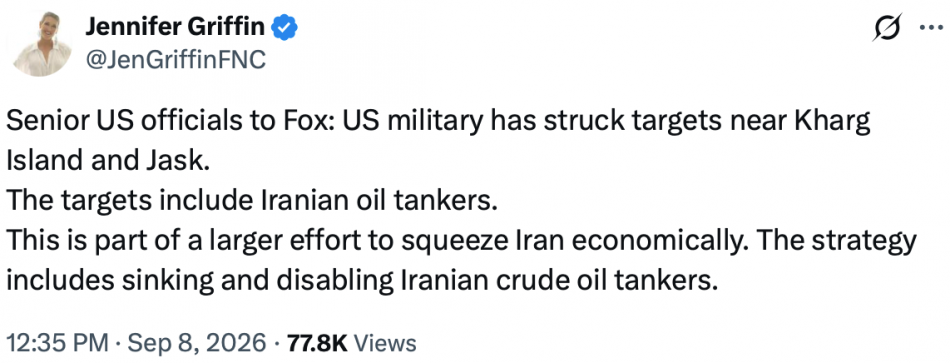
An Iranian response is coming. There should be very little doubt about that. So it appears that another round of fighting has erupted.
We live at a time when we are constantly being bombarded by one crisis after another. Continual chaos has become our “new normal”, and I don’t expect that to change any time soon.
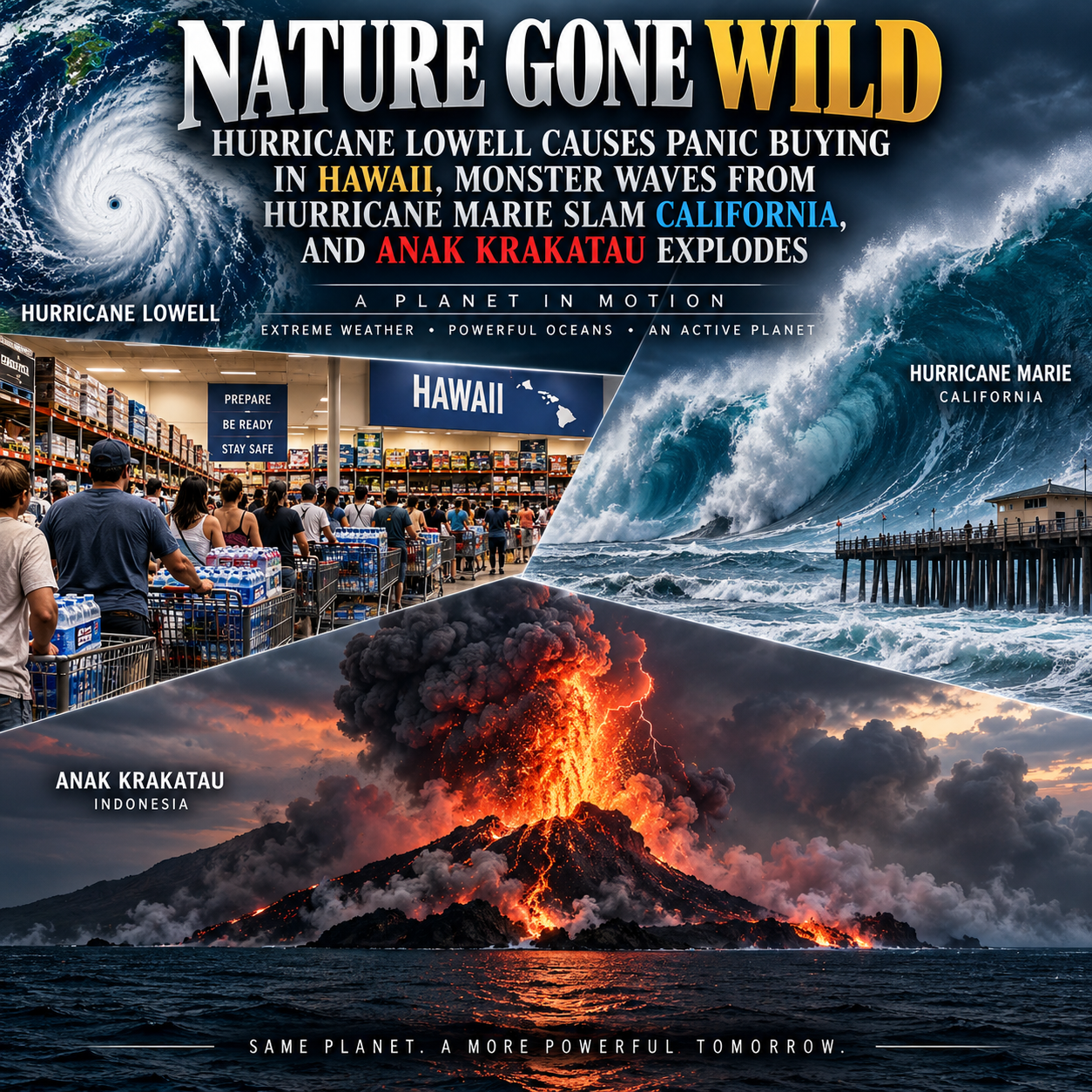
Nature Gone Wild: Hurricane Lowell Causes Panic Buying In Hawaii, Monster Waves From Hurricane Marie Slam California, And Anak Krakatau Explodes
Three very dangerous hurricanes are churning in the eastern Pacific Ocean and Anak Krakatau has violently erupted. The cataclysmic 1883 eruption of the original Krakatau volcano was one of the loudest and most powerful volcanic eruptions ever recorded, and it significantly reduced global temperatures for an extended period of time. So when Anak Krakatau starts to cause chaos, everyone should be paying attention. Of course here in the United States people are much more concerned about the three enormous hurricanes that are looming dangerously close to U.S. territory.
On Monday morning, Accuweather was telling us that Hurricane Lowell would “come within 100 miles of the western islands of Hawaii”…
Following a path similar to Hurricane Iniki from September 1992, Lowell is forecast by AccuWeather meteorologists to make a right turn and come within 100 miles of the western islands of Hawaii.
As of Monday morning HST, Hurricane Lowell was a Category 3 hurricane moving northeast at 14 mph and was located about 405 miles southwest of Honolulu.
Hawaii Gov. Josh Green declared a state of emergency last Thursday due to the impending impacts for the islands.
That would have been bad enough.
But now CNN is reporting that the forecast has changed and now Hurricane Lowell is expected to “pass about 75 miles west of the more populous Kauai as a Category 2 storm Monday night through Tuesday morning”…
Lowell is a Category 3 hurricane as of early Monday morning, local time, with winds of 115 mph, traveling north-northeast at 14 mph, according to the National Hurricane Center.
Its outer rainbands were hitting as far east as Oahu — where a tropical storm watch is in effect — but all of the islands will be soaked as the storm approaches throughout the day.
And it’s expected to get closer than previously thought. The hurricane’s forecast track has shifted about 75 miles east and closer to Kauai and Niihau since Sunday morning. Lowell’s center is now forecast to make its closest pass about 75 miles west of the more populous Kauai as a Category 2 storm Monday night through Tuesday morning.
Residents of Hawaii certainly don’t want to hear that Lowell will “get closer than previously thought”. So what if Lowell keeps drifting in that direction and ends up making a direct hit on the Hawaiian islands? That could be catastrophic.
At this moment, panic buying has erupted on Kauai as Hurricane Lowell approaches.
At Home Depot, supplies of plywood and propane are rapidly disappearing…
Shoppers on Kauai have rushed to stock up, leaving empty shelves, dwindling supplies of plywood and no propane at one Home Depot, while long lines formed at Costco and gas pumps.
Greg, an Oahu resident who is visiting his family on Kauai, told local KITV: ‘I think it looks like everybody gathered those items already. Everybody is out. Just making sure that all those items are gathered and whatnot.’
This sort of thing always seems to happen whenever a major disaster is looming.
One local resident said that Costco “was just flooded with people”…
Kiare Reis-Torres, a Kauai resident, told KITV: ‘I’ve never experienced this, but I know that when I went to Big Save yesterday, most of the shelves were empty.
‘And then I saw that Costco was just flooded with people. Everybody’s just trying to grab their supplies.’
Meanwhile, another extremely large hurricane has been sending monster waves into the Southern California coastline…
Hurricane Marie is impacting the Southern California coastline with powerful swells and dangerous rip currents triggering flooding, water rescues, and a frantic effort to keep ocean water away from homes.
The storm, churning in the eastern Pacific off the coast of Baja California, is not expected to make landfall in the Golden State — but it is already hitting beaches spanning Los Angeles County to Orange County.
At Seal Beach on Saturday, ocean water surged into parking lots near the pier, flooding low-lying areas and trapping vehicles.
This wasn’t supposed to happen.
But it is.
In Long Beach, gigantic waves caused by Hurricane Marie have transformed “scenic waterfront streets into treacherous, waterlogged disaster zones”…
Among the hardest-hit areas is the low-lying city of Long Beach, where massive ocean surges have turned scenic waterfront streets into treacherous, waterlogged disaster zones.
Dramatic videos circulating online show towering waves crashing directly over concrete barricades and swamping public beach paths. Waters breached low-lying properties on the Peninsula, inundating coastal homes and parking lots.
The footage of these waves that is being shared on social media is absolutely shocking.
Authorities rushed to build an emergency sand berm, but it was no match for the colossal waves that kept relentlessly rushing in…
In anticipation of the high surf, municipal crews worked tirelessly with heavy machinery to construct a massive emergency sand berm along the shoreline. However, the relentless force of the tide quickly overtopped and breached the barrier, allowing saltwater to pour into residential neighborhoods.
Describing the frightening scene, local Peninsula residents expressed helplessness as ocean water rushed toward their doorsteps.
“The water just kept coming over the top of the berm,” noted one long-time resident watching municipal pumps work furiously to clear the street. “No matter how high they built it, the ocean was just too big.”
Hurricane Marie is not anywhere close to shore, but it is still inflicting quite a bit of pain.
In fact, the Metrolink Pacific Surfliner railroad in San Clemente had to be shut down for repairs because swells from Hurricane Marie had caused so much damage.
Monster swells from Hurricane Marie forced emergency repairs on Southern California’s scenic railroad route on Sunday.
A portion of the Metrolink Pacific Surfliner railroad in San Clemente is undergoing repairs, forcing service suspensions across parts of Orange County through Labor Day Monday.
A third major storm, Hurricane Karina, is not currently expected to be a serious threat but meteorologists continue to monitor it.
On the other side of the world, a massive eruption of Anak Krakatau that lasted for 25 hours forced the cancellation of hundreds of flights at Jakarta’s main international airport…
Ash from the eruption of Indonesia’s Mount Anak Krakatau wreaked havoc for aviation around the region over the weekend.
The volcanic eruption disrupted hundreds of flights at Jakarta’s main international airport, the second-busiest in Southeast Asia, with cancellations extending into Monday.
The volcano began a period of continuous eruption at 11:07 p.m. local time on Friday, according to a CNBC translation of a press release from Indonesia’s Ministry of Energy and Mineral Resources. The continuous eruption lasted about 25 hours before ending at 12:04 a.m. on Sunday.
This was a very large eruption of a very dangerous volcano.
As of a few hours ago, a total of seven airports in Indonesia were still closed…
Seven Indonesian airports – including two serving Jakarta – remained closed on Monday morning because of volcanic ash from eruptions at Mount Anak Krakatau, the transport minister said.
Ash from Anak Krakatau, which sits halfway between Java and Sumatra islands, has blanketed Jakarta and several surrounding areas since it erupted late on Friday, leading to the closure of the airports for safety reasons.
The transport ministry said 170,000 people have been affected by flight cancellations.
Unfortunately, Anak Krakatau is not the only volcano in Indonesia that is rumbling right now. At this stage, there are six different volcanoes in the country that are “at the second-highest alert status”…
Six active volcanoes in Indonesia are currently at the second-highest alert status, including Mount Anak Krakatau, Mount Lewotobi Laki-laki in East Nusa Tenggara, Mount Merapi in Yogyakarta, Mount Semeru in East Java, Mount Sinabung in North Sumatra and Lewotolok Volcano in East Nusa Tenggara.
Over the past several months, we have witnessed so much unusual seismic activity all over the globe. Personally, I am convinced that this is just the beginning.
On top of everything else, an asteroid that was only discovered about 7 hours in advance just hit our planet…
Asteroid 2026 RW1 struck Earth over the Indian Ocean northwest of Australia on September 6, just over 7 hours after it was discovered, becoming the 13th known asteroid detected before hitting Earth. This event added another real-world test of planetary defense systems designed to identify small incoming objects, rapidly refine their trajectories, and determine where and when they will enter the atmosphere.
ESA tracked the asteroid under the temporary identifier CERNQ52 using its Meerkat system and estimated its diameter at only 0.6–1.3 m (2–4.3 feet). Objects of this size are difficult to detect far in advance because they are intrinsically faint, often becoming observable only when they are already relatively close to Earth.
In many other instances, astronomers only spotted a large space rock once it had already flown past us.
We are far more vulnerable than most people realize. Despite all of our advanced technology, we are very much at the mercy of the natural world.
Unfortunately for all of us, the natural world continues to become even more unstable all around us.
Vinney Tolman “NDE” I DIED—AND DISCOVERED WHY WE ARE HERE
A Near-Death Journey Through the Life Review, the Presence of a Guide, Authenticity, Forgiveness—and the Choice to Return
NEAR-DEATH EXPERIENCE • OUT-OF-BODY CONSCIOUSNESS • LIFE REVIEW • SPIRIT GUIDE • EARTH SCHOOL • AUTHENTICITY • LOVE • SERVICE • FORGIVENESS • LIFE AFTER DEATH
“Earth was not presented as a courtroom where humanity comes to pass or fail. It was experienced as a classroom—a place to learn, celebrate, love, create and ultimately remember who we are.”
Source: GAR Contributing Writer
At 25 years old in January 2003, Vinnie (Vinney Tolman) says an ordinary decision unexpectedly became the dividing line between two completely different lives. After taking an imported bodybuilding supplement with a friend, both men became violently ill. His friend collapsed inside a Dairy Queen and was taken away by ambulance, while Vinnie made it into a locked restroom, where he says he passed out, aspirated and suffocated. Roughly an hour later, according to his account, employees discovered his cold and discolored body. What followed became the foundation of a near-death experience that he says permanently transformed his understanding of consciousness, death, God, love and the purpose of human life.
WATCHING HIS OWN DEATH FROM ABOVE
Vinnie describes suddenly entering complete darkness before becoming aware of the restaurant from a perspective above his physical body. From there, he says he watched paramedics remove his friend, saw the activity surrounding the restroom and eventually observed a body lying on the floor—without initially recognizing that the body was his own. His description is striking: because his awareness seemed to exist somewhere else, the physical body below appeared almost like a vehicle that resembled his but couldn’t possibly be his because “me’s up here watching.” He also reports perceiving people’s thoughts as though they were spoken aloud, suggesting to him that consciousness was operating independently of his normal senses.
“THIS ONE’S NOT DEAD”
One of the pivotal moments involves a rookie medic accompanying two veteran paramedics. Vinnie says attempts at resuscitation had failed, the body was pronounced dead and placed inside a body bag. While observing from outside his body, however, he says he saw light emerging from the rookie medic and heard a powerful voice declare: “This one’s not dead.” The medic initially dismissed what he had experienced, according to Vinnie’s account, until the message came again. He then opened the body bag, searched for a pulse and resumed resuscitation. Vinnie says defibrillation eventually produced first a single heartbeat and then a faint sustained rhythm—just as the ambulance happened to be passing a nearby hospital.
THE LIFE REVIEW—EXPERIENCING BOTH SIDES
Only at the hospital, when he felt his own arm being restrained while simultaneously watching doctors restrain the body’s arm, does Vinnie say he finally understood: he had been watching his own death. Fear immediately overwhelmed him, followed by what he describes as an extraordinarily detailed life review. He experienced things he had done throughout his life—not merely through his own memories, but from the perspective of the people affected by his actions. He says he even encountered moments when he had unknowingly hurt someone. Eventually he reached the devastating question: “If this is all that I am, why do I even exist?” Then the experience reversed. He began seeing every act of kindness, generosity and service—including positive effects on people he had never realized he had helped. The lesson was not simply judgment. It was complete understanding of the consequences of one’s life.
THE PRESENCE—AND A GUIDE NAMED DRAKE
After the life review, Vinnie describes being engulfed by an overwhelming warmth, light and unconditional love that seemed to repair emotional wounds accumulated through childhood trauma and abuse. Turning toward its source, he encountered a white-robed, bearded figure whose presence felt so powerful that Vinnie initially assumed he was God and then Jesus. The figure rejected both identities: “I’m your guide. I’m here for you.” He identified himself as Drake and told Vinnie that the extraordinary love he was experiencing came from “home.” Vinnie chose to go with him, beginning what he describes not as ordinary travel through physical distance, but movement through different dimensions of existence.
THE FIRST LESSON WASN’T LOVE—IT WAS AUTHENTICITY
Vinnie expected the great lesson of the afterlife to be love. Instead, Drake told him the first lesson was AUTHENTICITY. Vinnie was shown how he had developed different identities for different people—family, friends and social groups—largely as protective adaptations to childhood trauma. Drake’s lesson was to bring those different masks together and ultimately remove them, rediscovering the person underneath. Vinnie describes mentally returning to himself at approximately five years old, before many of his defensive identities developed. Within the experience, authentic love begins with authentic selfhood: a person who cannot genuinely recognize and love themselves cannot fully extend that love to others.
EARTH IS A SCHOOL—NOT A COURTROOM
Another major shift concerned why human beings are here at all. Vinnie had understood earthly existence through a traditional pass-or-fail framework: live correctly and reach heaven; fail and face punishment. Drake presented something fundamentally different. Earth was described as a school or classroom rather than a courtroom. Human existence was a place to experience, celebrate and learn. Within Vinnie’s interpretation of the experience, hardship therefore wasn’t necessarily evidence of punishment, nor was life simply a theological examination. The central curriculum involved learning to authentically love ourselves so that we can authentically love others.
THREE DAYS BETWEEN WORLDS
Vinnie says he was found and pronounced dead on January 18, 2003, but did not awaken until January 21. He describes having been on extensive life support while his family was being given information about palliative care. When he awakened, however, the experience did not immediately return as an ordinary memory. He says it surfaced approximately a day later and triggered overwhelming emotion. Far from making ordinary life instantly easier, his NDE began what he calls one of his most difficult periods. Having experienced what he regarded as “home,” he desperately wanted to return there and even investigated extremely dangerous occupations because he could not intentionally end his own life but longed to experience that state again.
WHY HE BELIEVES HE RETURNED
Vinnie believes the prayers of his brother played an important role in drawing him back into his physical body, although he also says that on some level his soul had to consent because “everything is our choice.” During the difficult period following his recovery, he continued experiencing what he interpreted as communication with spirit and with Drake. His guide repeatedly told him that remaining on Earth would be difficult but worthwhile. Two weeks after one particularly low point, Vinnie met Andrea, the woman he would marry only months later. He describes her as his “earth angel”—the relationship that gave him a compelling reason to remain here, build a life and transform his experience into service to other people.
THE DISCOVERY THAT CHANGED EVERYTHING
Perhaps the most personally convincing episode occurred shortly before their marriage. At a family gathering in Wyoming, Vinnie saw an old photograph projected during a historical presentation and immediately recognized the man as Drake. The photograph identified him by another first name, Charles, but carried Vinnie’s grandmother’s maiden surname. When Vinnie confronted his grandmother, he says she identified the man as “Great Grandpa Drake.” According to Vinnie, Drake was a family name used by relatives and close friends, while the man had generally been publicly known as Charles. For Vinnie, this became the most important confirmation of the entire experience because he says he had never previously known the ancestor or his family nickname. It transformed what doctors had suggested might be hallucination or oxygen-deprivation phenomena into something he personally found much harder to dismiss.
FROM EXPERIENCE TO SERVICE
Over the following 23 years, Vinnie says the deepest lesson became increasingly simple: helping other people produces a form of happiness unavailable through self-interest alone. His life review gave him a new measurement for success—not wealth, status or perfection, but what his actions ultimately contributed to other people’s lives. His principle became: create, serve, love and help. He describes an almost paradoxical rule: when something meaningful seems absent from your own life, give that quality to somebody else. Give encouragement when you need encouragement. Give love when you feel unloved. Give kindness when life feels hostile. In his experience, service changes both the recipient and the giver.
PREJUDICE, FORGIVENESS AND THE MIRROR
Another lesson concerned prejudice and judgment. Vinnie believed he wasn’t prejudiced, but Drake challenged him to examine his hostility toward people he considered prejudiced. The contradiction forced him to confront how easily opposition to another person’s judgment can become another form of judgment itself. That lesson expanded into forgiveness. Vinnie describes learning to forgive wherever possible, ask forgiveness where necessary and recognize that carrying resentment primarily affects the person carrying it. Human life, in his view, is simply too short to spend enormous amounts of it trapped inside hatred, resentment and unresolved grievances.
HAPPINESS DOESN’T ARRIVE FROM OUTSIDE
Asked what people misunderstand most about life, Vinnie gives one of the interview’s clearest answers: people search outside themselves for something that must first be developed internally. Someone convinced that $10 million will finally make them happy may simply move the target to $15 million once they reach it. His practical starting point is gratitude: identify five things you would deeply miss if they disappeared tomorrow. If five seems impossible, identify one. Then deliberately return attention to it. His larger argument is that repeatedly directing attention toward gratitude can change how a person experiences their circumstances and interacts with the people around them.
THE BREATH, CONSCIOUSNESS AND THE PRESENT MOMENT
Breath became another central practice in Vinnie’s post-NDE worldview. He describes breath as one of life’s most fundamental gifts and recommends simple deliberate breathing as a way of interrupting stress and returning attention to the present. Some of his broader claims about “frequency,” electronics and human vibration are presented in the interview as his spiritual interpretation rather than established medical findings. But underneath that language is a practical principle: our attention, breathing, habits and interpretation of events can affect our emotional state. His morning and evening “hour of power” centers on gratitude, breathing and consciously choosing what occupies his attention.
NO LONGER AFRAID OF DEATH
The ultimate transformation may be his relationship with mortality itself. Vinnie says he is no longer afraid of death. He doesn’t seek it and explicitly says he will not invite it, but believes that when his natural time arrives he will embrace the transition. That distinction is particularly important given how desperately he wanted to return after his NDE. Over time, gratitude for his wife, children, relationships, service and ordinary experiences gave him reasons to participate fully in the life he still had. Death stopped being something to fear—but life simultaneously became something not to waste.
THE KEY NDE MARKERS
- Physical collapse and reported clinical death
- Separation of consciousness from the body
- Observation of events from above
- Perception of other people’s thoughts
- Observation of attempted resuscitation
- The repeated message: “This one’s not dead”
- Return of heartbeat and emergency hospitalization
- Recognition that the body below was his own
- A multidimensional life review
- Experiencing actions from other people’s perspectives
- Encounter with overwhelming unconditional love
- Meeting a guide identified as “Drake”
- Movement toward what he understood as “home”
- Authenticity as the first spiritual lesson
- Earth described as a classroom rather than courtroom
- Love of self as preparation for authentic love of others
- Return to the body after three days
- Difficulty reintegrating into ordinary life
- Continued sense of spiritual communication
- Later recognition of Drake as a deceased ancestor
- Loss of the fear of death
- Service, gratitude and forgiveness becoming his central life practices
SLEEPING GIANT | THE BIG TAKEAWAY
Vinnie’s account ultimately isn’t simply a story about what may happen when we die. It is a story about what an encounter with death convinced one person to do with the remainder of his life. Whether interpreted spiritually, neurologically, psychologically or as some combination still beyond current explanation, his experience produced a remarkably consistent message:
REMOVE THE MASKS → KNOW YOURSELF → LOVE YOURSELF → FORGIVE → SERVE → CREATE → PRACTICE GRATITUDE → LIVE WITHOUT FEAR
Perhaps the most consequential question raised by a near-death experience isn’t whether consciousness survives death. It is this: if you knew you would someday experience the consequences of your life from every side, how differently would you choose to live today?

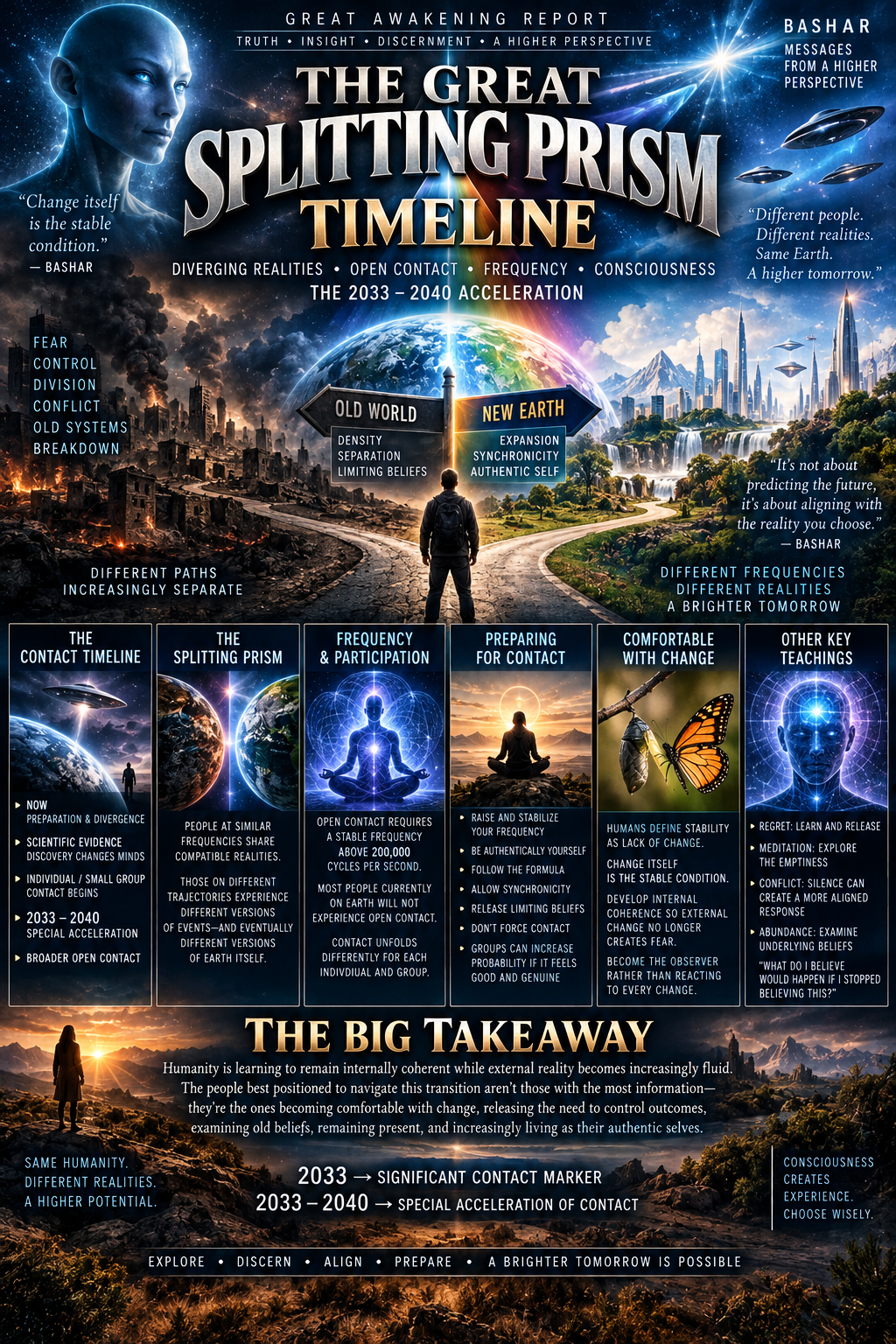
THE GREAT SPLITTING PRISM TIMELINE
Humanity’s Diverging Realities • Open Contact • Frequency • Consciousness • The 2033–2040 Acceleration
Overview for Bashar Video
There are timeline markers in it. The central message is that humanity is moving through a period in which individual and collective realities increasingly diverge according to frequency, beliefs, choices, and alignment. Within the Bashar framework, this is called the “splitting prism.” People may temporarily remain aware of very different versions of reality around them, but over time those paths increasingly separate. The larger lesson is learning to become comfortable with change itself: instead of looking to an unchanging external world for stability, we learn to become internally stable while reality continues changing around us.
That theme connects directly to open contact. Contact isn’t presented as one dramatic event in which extraterrestrials suddenly appear to everyone simultaneously. Instead, it develops progressively—individuals and small groups first in some circumstances, followed by increasingly broader interaction as humanity becomes capable of sustaining it. Different ET civilizations may participate at different stages, with Pleiadian-type civilizations described as the most likely initial contact because of their genetic similarity to humans. Bashar says his civilization would not be first but would eventually participate.
The Contact Timeline
The clearest timing statement comes when 2033 is specifically asked about. Bashar confirms that it remains important and then identifies 2033–2040 as a period of “special acceleration” for contact. Before contact, technological innovation begins accelerating; after contact, considerably more technology becomes available. Discovery of extraterrestrial life through telescopes, probes, or other scientific means is also described as an important psychological trigger because simply establishing that life exists elsewhere begins changing humanity’s worldview.
So the progression described here is essentially:
Now → preparation and increasing divergence → scientific/technological evidence → individual/small-group contact → 2033–2040 acceleration → broader open contact.
Importantly, the process isn’t portrayed as completely predetermined. Timing and participation depend upon humanity’s choices and the “frequency” of individuals and populations.
The Splitting Prism
This is probably the most significant portion of the discussion.
Bashar describes today’s radically different perceptions of reality as an early manifestation of the splitting prism. People operating at similar frequencies increasingly share compatible realities, while those following very different trajectories increasingly experience different versions of events—and eventually different versions of Earth itself.
He takes that concept considerably further here. When asked whether large portions of the population could effectively disappear from the experience of those moving toward contact, the answer is yes—but not necessarily through a sudden dramatic disappearance.
Instead, it could appear remarkably ordinary.
People drift apart. Relationships end. Someone moves away. Paths stop intersecting. Certain people may die; others simply cease appearing in someone’s life. Eventually, individuals who once occupied the same experiential reality simply aren’t part of one another’s worlds anymore.
That is an interesting distinction because the “timeline split” isn’t described primarily as a single Event. It is presented as a progressive separation that may already be underway.
Frequency and Who Experiences Contact
Another unusually specific statement is that open contact requires a stable frequency above 200,000 cycles per second within Bashar’s frequency model.
When directly asked whether this means most people currently on Earth would therefore not experience open contact, Bashar answers yes. The explanation is that those who align with the contact reality eventually constitute the majority within that version of Earth, while others continue along realities appropriate to their own trajectory.
This also explains why contact doesn’t necessarily happen simultaneously for everyone. Some experience individuals; some groups; some particular ET civilizations; some a much broader contact experience; and others none at all.
Preparing for Contact
Interestingly, the recommended preparation isn’t complicated.
The primary directive is essentially raise and stabilize your frequency by becoming more authentically yourself. Follow what Bashar calls “the formula,” allow synchronicity to organize circumstances, examine limiting beliefs, release outdated conditioning, and don’t force contact.
Groups intentionally gathering for contact—such as people meeting in the desert—are said to potentially increase their probability of contact if everyone genuinely enjoys participating. Preparation is also emphasized because extraterrestrial consciousness is described as sufficiently different from human consciousness that even people who believe they’re ready may not actually be prepared for the energetic experience.
The Larger Practice: Become Comfortable With Change
This may be the strongest practical teaching in the entire transcript.
Humans generally define stability as lack of change.
Bashar reverses that:
Change itself is the stable condition.
Within this worldview, consciousness is continuously shifting through realities, but linear time makes the experience appear continuous. As humanity becomes more conscious of that process, reality can feel increasingly “plastic” or less anchored.
The solution isn’t trying to stop the changes.
It’s developing enough internal coherence that rapid external change no longer produces fear or disorientation.
That fits remarkably well with the broader idea we’ve been tracking of becoming the observer rather than reacting to every change in the external environment.
Other Important Teachings
There are several smaller but worthwhile pieces.
The discussion about regret says regret has a legitimate purpose only until we recognize that an action wasn’t aligned with who we want to be. Once we’ve learned and changed our behavior, continuing to carry regret becomes unnecessary weight.
The section about meditation is similarly useful: don’t determine in advance what meditation is supposed to produce. If all you encounter is darkness or emptiness, explore the emptiness rather than deciding the meditation “isn’t working.”
And the conversation about control during conflict is particularly strong. When overwhelmed and the mind goes blank, silence doesn’t have to represent failure. It can prevent reactive communication and create enough space for a more aligned response. More importantly, we’re reminded that we don’t always have to fix, rescue, repair, or control the situation—or another person’s reaction.
Finally, the abundance discussion makes essentially the same point in another form. Fear around money can persist because an underlying belief considers that fear protective. The practice is therefore not simply replacing “lack” with “abundance,” but asking:
What do I believe would happen if I stopped believing this?
That exposes the deeper belief maintaining the pattern.
The Big Takeaway
I think the transcript can ultimately be condensed into one interconnected idea:
Humanity is learning to remain internally coherent while external reality becomes increasingly fluid.
Open contact, timeline divergence, changing relationships, shifting social structures, greater synchronicity and even the perception of different realities are all presented as expressions of that same transition. The people best positioned to navigate it aren’t necessarily those accumulating the most information—they’re the ones becoming comfortable with change, releasing the need to control outcomes, examining old beliefs, remaining present, and increasingly living as their authentic selves.
And the timing piece worth putting a star beside for our future timeline work is definitely:
2033 → significant contact marker
2033–2040 → “special acceleration” of contact
That fits directly into the 2032-and-beyond timeline material we’ve already been collecting, so I would absolutely keep this one in that research bucket.

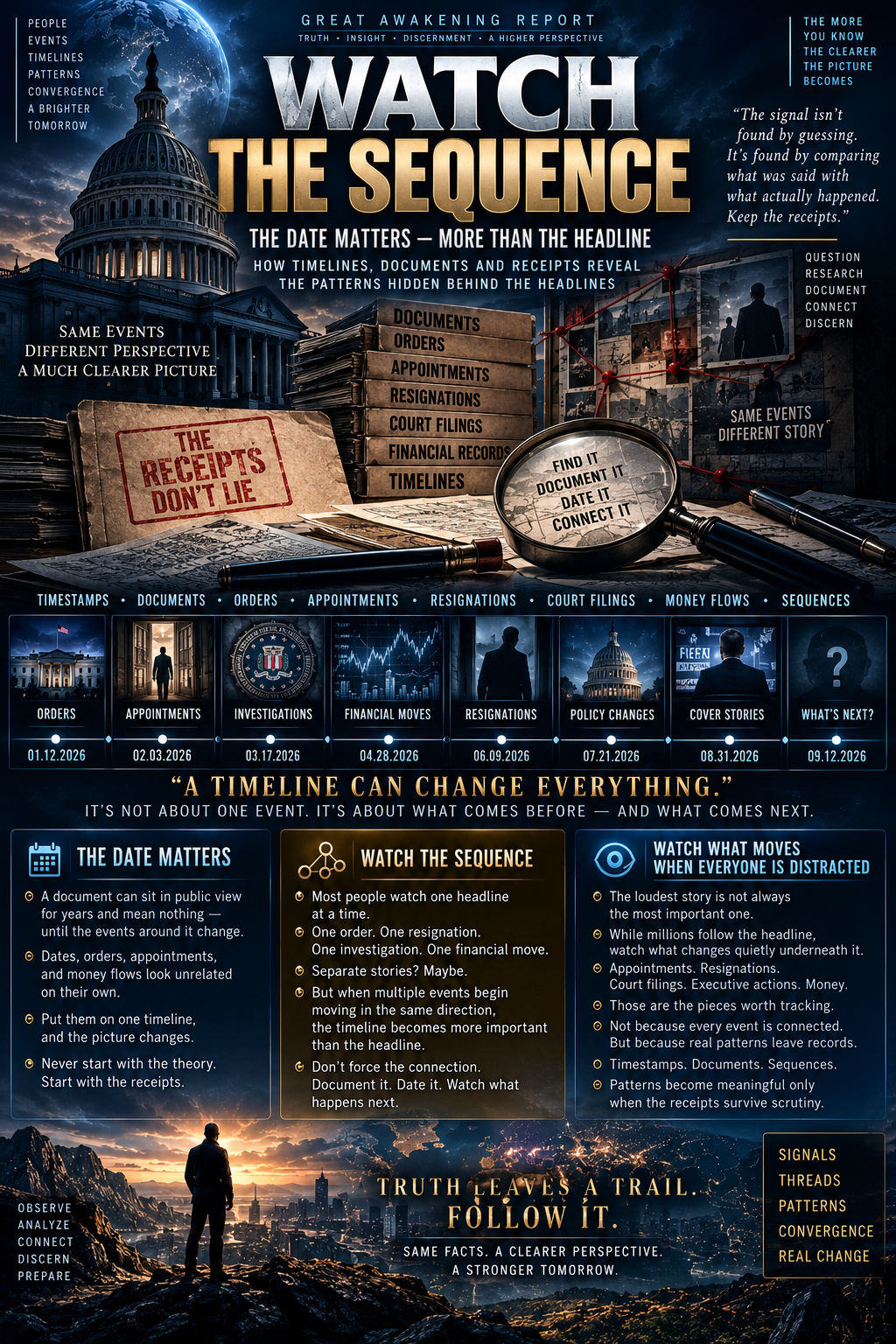
WATCH THE SEQUENCE OF SEPTEMBER EVENTS
The Date Matters — How Timelines, Documents and Receipts Reveal the Patterns Hidden Behind the Headlines
TIMESTAMPS • DOCUMENTS • ORDERS • APPOINTMENTS • RESIGNATIONS • COURT FILINGS • MONEY FLOWS • SEQUENCES
“Never start with the theory. Start with the receipts. Document the event. Record the date. Build the timeline. Then watch what happens next. The strongest patterns are not created by speculation—they emerge when independent facts begin moving in the same direction and the evidence survives scrutiny.”
Most people experience the news as a continuous stream of disconnected headlines. A war erupts. An executive order is signed. An official resigns. A corporation changes leadership. A court filing appears. Billions of dollars suddenly move. Each development is reported, discussed and quickly replaced by the next story. But serious research requires a different perspective. Instead of asking only “What happened?”, begin asking “When did it happen—and what happened immediately before and after it?” The date can transform an isolated fact into part of a much larger sequence.
This is why THE DATE MATTERS. A government document can remain publicly available for years without attracting significant attention. An obscure regulation, contract, patent, appropriations bill or executive action may initially appear insignificant. Then circumstances change. New officials arrive. Funding begins moving. Agencies change direction. Investigations open. Policies suddenly align with language written years earlier. The original document itself hasn’t changed—but its position within the emerging timeline has. Historical context can turn yesterday’s overlooked paperwork into today’s important research lead.
The discipline begins with one fundamental rule: NEVER START WITH THE THEORY. START WITH THE RECEIPTS. Establish what can actually be documented before deciding what it means. Find the original order. Locate the court filing. Record the announcement. Verify the appointment. Identify the transaction. Preserve the source and timestamp. Only after building that factual foundation should researchers begin comparing events. This prevents investigation from becoming confirmation bias—where evidence is selected simply because it supports a conclusion already reached.
Then comes the second discipline: WATCH THE SEQUENCE. One resignation may mean nothing. One investigation may be routine. One financial transaction may simply reflect ordinary business. But when multiple independently verified events begin occurring within the same period—and especially when they repeatedly move toward a common outcome—the timeline deserves closer examination. ORDER → APPOINTMENT → FUNDING → INVESTIGATION → RESIGNATION → POLICY CHANGE can tell a fundamentally different story from any one event viewed alone. Sequence does not automatically prove coordination, but it can identify where deeper investigation is justified.
The third discipline is learning to WATCH WHAT MOVES WHEN EVERYONE IS DISTRACTED. The loudest story is not necessarily the most consequential development. Major breaking news can dominate television, social media and public attention while quieter institutional changes occur elsewhere. Watch appointments, resignations, regulatory filings, court records, executive actions, contracts, legislation, capital movements and organizational restructuring. These developments often create durable records, making them considerably more useful for long-term analysis than anonymous claims, viral posts or predictions.
But pattern recognition requires restraint. NOT EVERY DOT CONNECTS. Two events occurring close together do not establish causation, and correlation does not prove coordination. A strong research model should therefore separate FACT → TIMING → CORRELATION → INTERPRETATION → HYPOTHESIS. Each stage requires a different level of confidence. The goal is not to force events into a predetermined narrative; it is to determine whether a proposed pattern becomes stronger or weaker as additional evidence arrives. Real patterns should become clearer under scrutiny—not require weaker standards of evidence to survive.
This is ultimately the value of timeline intelligence within the GAR research model. Keep the receipts. Preserve the timestamps. Compare what was announced with what subsequently occurred. Watch where people move, where institutions move and where capital moves. Then return to the timeline as new information arrives. Signals become threads. Threads reveal patterns. Patterns reveal convergence. The objective isn’t predicting every event or connecting every headline. It is developing the discipline to recognize meaningful change while it is unfolding—and having the documented record necessary to demonstrate afterward exactly what happened, when it happened, and how the sequence developed.
RESEARCH PRINCIPLE: DOCUMENT IT → DATE IT → VERIFY IT → SEQUENCE IT → COMPARE IT → WATCH WHAT HAPPENS NEXT
THE SIGNAL ISN’T FOUND BY GUESSING.
IT’S FOUND BY COMPARING WHAT WAS SAID WITH WHAT ACTUALLY HAPPENED.
KEEP THE RECEIPTS.
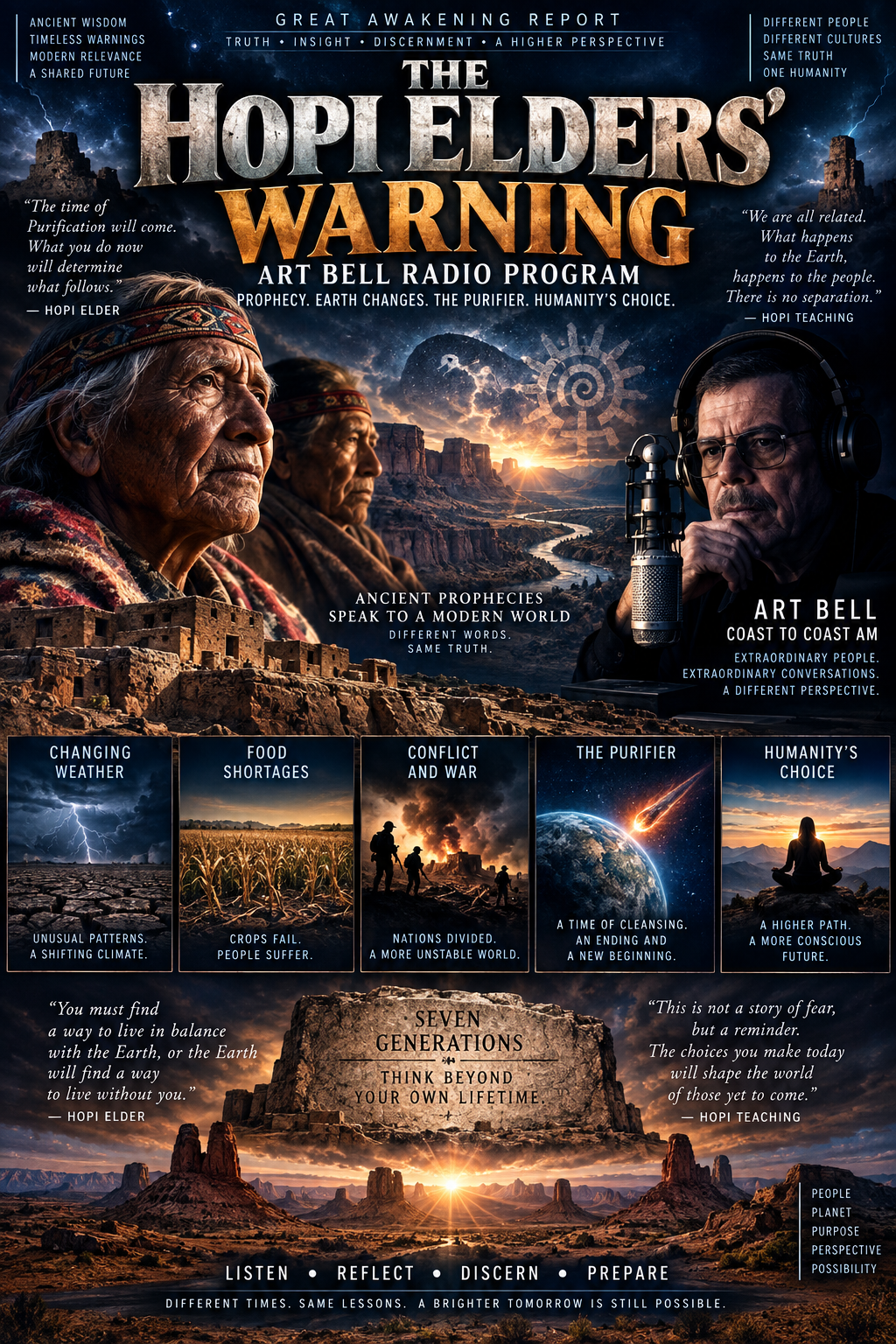
THE HOPI ELDERS’ WARNING
Art Bell’s Historic Radio Interview — Prophecy, Earth Changes, Purification and Humanity’s Choice
ANCIENT PROPHECY • EARTH CHANGES • WEATHER • WAR • FAMINE • THE PURIFIER • SPIRITUAL CHOICE • A NEW BEGINNING
“The most important message was not that catastrophe was inevitable. It was that humanity’s choices could influence what came next.”
Source: GAR Contributing Writer
The recording linked above preserves an extraordinary moment from the Art Bell / Coast to Coast AM era. In June 1998, Bell spoke with Hopi elders whose identities were withheld on air, with one elder translating for another and Robert Ghost Wolf helping facilitate the discussion. Contemporary transcripts describe the appearance as highly unusual because these teachings had traditionally been preserved orally rather than presented through national radio. The elders explained that generations had periodically gathered in kivas to compare their recollections so that teachings were neither casually added nor removed. Whatever one’s interpretation of prophecy, the interview provides a fascinating record of an Indigenous worldview confronting the technological world at the end of the twentieth century.
The conversation quickly turned toward Earth changes. The elders spoke about increasingly unusual weather, environmental disruption and changes they believed corresponded with teachings handed down through previous generations. They described erratic weather as one of the early signals and discussed crop destruction, food shortages and broader instability. Listening nearly three decades later can make portions of the conversation feel strikingly contemporary, given today’s concerns about extreme weather, water scarcity, agriculture and ecological stress. That resemblance, however, should be treated as an invitation to compare rather than proof that present-day events fulfill a specific prophecy.
One of the interview’s most memorable ideas was that major changes would not necessarily arrive as one instantaneous event. The elder’s translator described something closer to a “domino effect”: one development occurring, followed relatively quickly by another and then another. The interview associated this sequence with weather disruption, food scarcity, conflict and social upheaval. Significantly, the elders offered no precise date for the culmination of these events; the discussion around the year 2000 reflected an approximate expectation at the time, and catastrophic predictions attached to that period plainly did not unfold as anticipated. That failed timing matters when evaluating the interview today.
The warnings became considerably darker when Bell asked what might follow. The elders discussed war, starvation and profound planetary change, including the possibility that human civilization would have to confront the consequences of corruption and destructive behavior. In Hopi prophetic language, however, destruction and renewal were intertwined. What Western audiences might interpret exclusively as an “end-times” prediction can also be understood as a warning about imbalance: when humanity moves too far away from right relationship—with the Earth, with community and with one another—eventually some form of correction becomes necessary.
Central to that discussion was the mysterious figure or force commonly translated as “the Purifier.” Bell pressed the elders on whether the Purifier should be understood literally—as a celestial object or physical catastrophe—or symbolically. The translation illustrates how difficult it was to move concepts rooted in Hopi language and tradition directly into English. This is important because later internet retellings have attached increasingly elaborate interpretations to Hopi prophecy. The surviving broadcast is more ambiguous. The Purifier functions most powerfully as a concept of transformation: an approaching threshold at which humanity must confront what it has created.
Yet the interview was not simply a catalogue of disaster. When Bell asked what existed after purification, the conversation turned toward a fundamentally different way of living. The elders described people continuing forward who followed a better path and possessed what the translator characterized as a good heart. Materialism, exploitation and destructive relationships with the Earth were contrasted with cooperation, responsibility and spiritual awareness. In that sense, the prophecy becomes less interesting as a timetable for catastrophe and more interesting as a civilizational choice: continue reinforcing systems that create imbalance, or consciously build something different.
That distinction is especially relevant to GAR’s continuing examination of transition, convergence and consciousness. There is a remarkable conceptual parallel between the interview’s domino metaphor and today’s systems thinking: climate affects agriculture; agriculture affects food prices; energy affects transportation; conflict affects trade; economics affects social stability; and each system can transmit pressure into another. Modern systems analysis explains these relationships without requiring prophecy. Hopi teachings approach interconnectedness through an entirely different cultural and spiritual framework. Different languages can sometimes point toward a similar insight: nothing exists completely in isolation.
Nearly three decades after the broadcast, the most useful reason to revisit it is therefore not to declare that every Hopi prediction is now coming true. Some predictions associated with the interview’s original timeframe clearly did not. Instead, the enduring message is one of responsibility, observation and choice. Humanity can watch environmental deterioration, technological acceleration, geopolitical conflict and social fragmentation as disconnected headlines—or recognize that civilization itself is an interconnected system. The Hopi elders’ warning ultimately leaves us with a question more consequential than predicting the date of some future event: What kind of civilization are we creating through the choices we are making today? In that interpretation, prophecy becomes not a sentence imposed upon humanity, but a warning—and potentially an opportunity to change direction.
THE WARNING → THE SIGNS → THE DOMINO EFFECT → THE PURIFICATION → THE CHOICE → THE NEW BEGINNING
“End time” need not mean simply the end of the world. It can represent the ending of one way of living—and the opportunity to begin another.

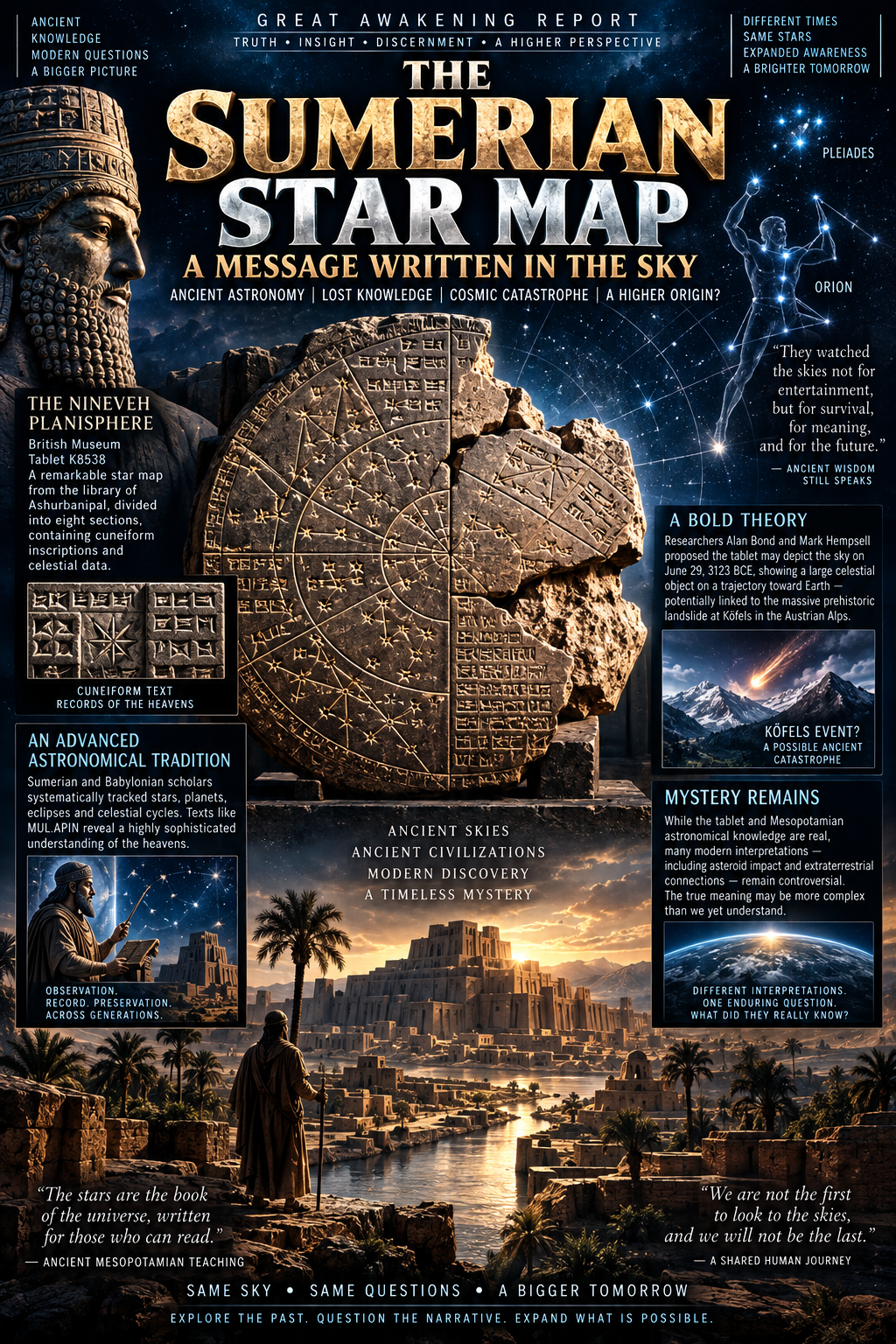
THE SUMERIAN STAR MAP — A MESSAGE WRITTEN IN THE SKY
Ancient Mesopotamian Astronomy, the Nineveh Planisphere and the Mystery of What Its Makers Were Really Recording
SUMER • NINEVEH • CUNEIFORM • STAR MAPS • PLEIADES • ORION • ANCIENT ASTRONOMY • COSMIC CATASTROPHE • LOST KNOWLEDGE
“The mystery is not simply that ancient people watched the heavens. It is how carefully they recorded them—and whether some surviving tablets preserve observations of events whose full meaning we have yet to understand.”
Source: GAR Contributing Writer
The video raises one of the most compelling questions surrounding ancient Mesopotamia: how sophisticated was the astronomical knowledge preserved by Sumerian and later Babylonian scribes? Thousands of surviving cuneiform tablets demonstrate that Mesopotamian scholars systematically observed stars, planets, lunar cycles, eclipses and celestial omens. Works such as MUL.APIN organized stars and constellations into a structured astronomical system, demonstrating that observing the heavens was not a casual religious practice but an accumulated intellectual tradition transmitted between generations. The provocative question is whether some unusual tablets contain even more specific records of ancient celestial events.
At the center of this mystery is the famous Nineveh Planisphere, generally catalogued as British Museum tablet K8538. The damaged circular cuneiform tablet came from the library of the Assyrian king Ashurbanipal at Nineveh, a vast archive containing thousands of texts. Its unusual design divides the circular surface into eight radial sectors containing cuneiform inscriptions and astronomical information. Roughly 40 percent of the object is missing, making interpretation particularly difficult. Popular accounts frequently describe it as a “Sumerian star map,” although the surviving artifact belongs to the much later Mesopotamian scribal tradition and claims that it reproduces a specific third-millennium-BCE Sumerian observation remain disputed.
The mystery intensified when aerospace engineer Alan Bond and Mark Hempsell proposed a radically different interpretation of the tablet. Using astronomical reconstruction, they argued that portions could represent the sky on June 29, 3123 BCE and that the tablet might record a large celestial object traveling across the heavens. They subsequently connected that proposed trajectory with Köfels in the Austrian Alps, site of an enormous prehistoric landslide. Their hypothesis transformed an obscure ancient tablet into a remarkable possibility: could Mesopotamian observers have recorded a catastrophic object entering Earth’s atmosphere more than five thousand years ago?
That interpretation has generated enormous attention online, but an important distinction is necessary. The Köfels-impact interpretation is not an established archaeological consensus. Critics have challenged the astronomical reconstruction, translation and proposed connection between the tablet and the Austrian landslide, while geological evidence has not established the enormous Köfels deposit as the result of the specific asteroid impact proposed in the theory. This uncertainty does not make the Planisphere uninteresting—quite the opposite. It provides an excellent example of how an authentic ancient artifact can sit at the intersection of established archaeology, unconventional interpretation and unresolved mystery.
The broader evidence for sophisticated Mesopotamian astronomy, however, requires no speculative interpretation. Babylonian astronomical traditions catalogued stars, tracked planetary movements and connected recurring celestial observations with calendars and predictions. MUL.APIN, preserved on first-millennium-BCE tablets but drawing upon older traditions, contains star lists, rising and setting observations and a division of the heavens into the paths of Enlil, Anu and Ea. Other surviving records include the famous Venus observations associated with Ammisaduqa and enormous collections of celestial omens. The civilization that produced these records was clearly engaged in long-duration observation of the sky.
This is also where Orion, Taurus and the Pleiades repeatedly enter alternative interpretations of ancient star maps. These conspicuous regions of the night sky were naturally important landmarks to ancient observers, and their appearances became intertwined with calendars, agriculture, mythology and religious symbolism across numerous cultures. Modern alternative-history researchers sometimes go considerably further, proposing that ancient maps encode a celestial destination, the home of the gods or even knowledge of extraterrestrial origins. Those interpretations remain speculative; the existence of astronomical references does not by itself establish ancient contact with another civilization. The distinction between what the artifact shows and what modern observers believe it means is essential.
Yet there is a larger mystery here that deserves attention. Ancient Mesopotamians understood that civilization depended upon time: knowing when rivers would change, when crops should be planted, when seasons would turn and when celestial cycles would repeat. Astronomy therefore became intertwined with survival, government and religion. A clay tablet recording the sky was not simply a primitive star chart. It represented the accumulation and preservation of knowledge across generations. The libraries of Mesopotamia became an early form of humanity’s external memory—allowing observations made by one generation to be examined centuries later by another.
For GAR’s Forbidden History / Ancient Civilizations research, the Sumerian star-map story is therefore strongest when the mystery and the evidence remain side by side. We know ancient Mesopotamian civilizations developed remarkably systematic astronomical traditions. We know thousands of astronomical and omen tablets survived. We know the Nineveh Planisphere remains an unusual and intriguing artifact. What remains uncertain is whether particular modern interpretations—an asteroid trajectory, a specific prehistoric catastrophe or a celestial message—correctly decode its original purpose. Perhaps that uncertainty is exactly why the artifact remains so compelling. Five thousand years later, humanity is still looking upward, examining the same stars and asking the same fundamental question: what did the people who watched this sky before us actually know?
GAR BOTTOM LINE
ANCIENT OBSERVATION → CELESTIAL MAPPING → PRESERVED KNOWLEDGE → MODERN RECONSTRUCTION → CONTROVERSY → THE MYSTERY REMAINS
“The artifact is real. The astronomical tradition is real. The extraordinary interpretations remain open to investigation. Discernment begins by knowing the difference.”

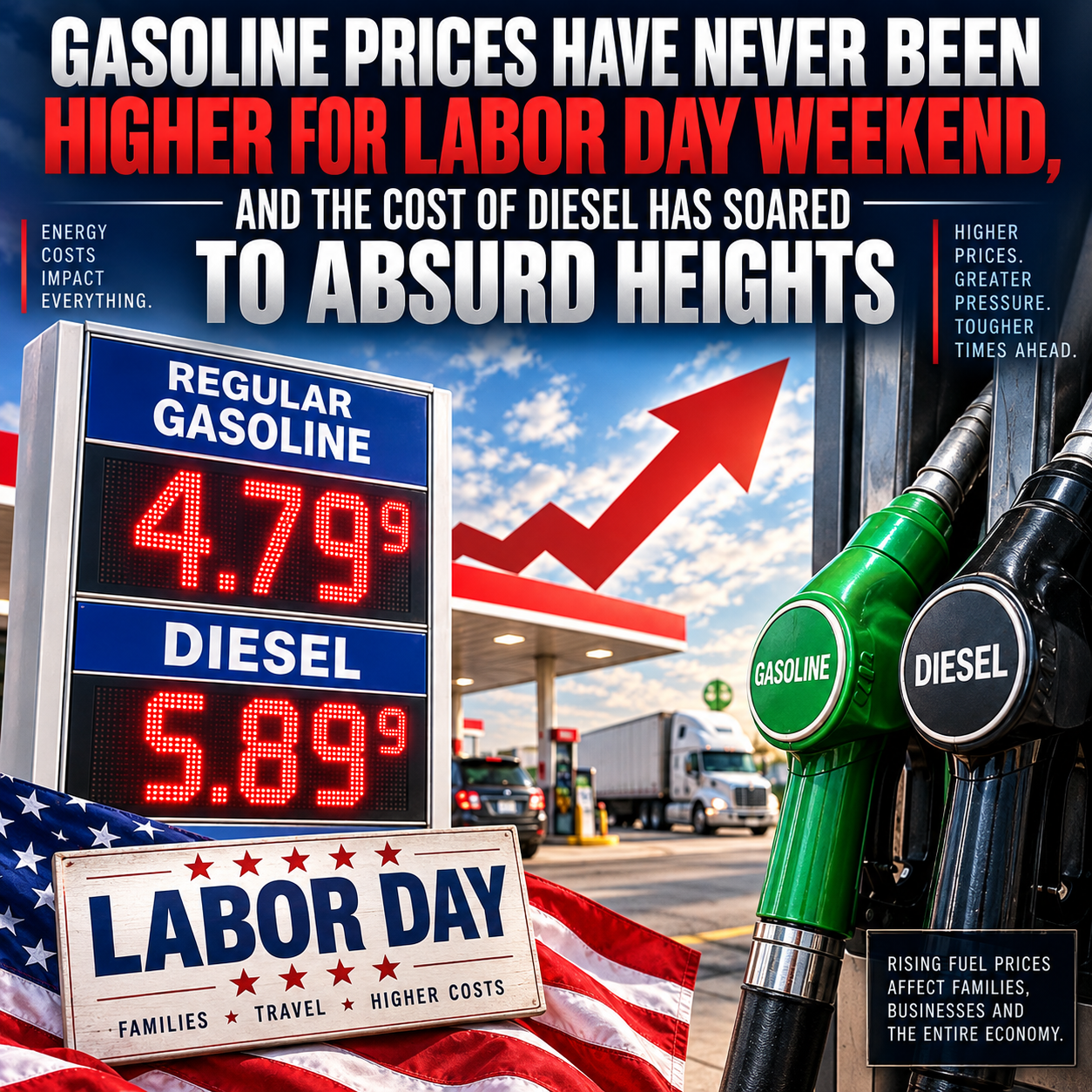
Gasoline Prices Have Never Been Higher On Labor Day Weekend, And The Cost Of Diesel Has Soared To Absurd Heights
As you enjoy your Labor Day weekend, you may notice that gasoline and diesel are unusually expensive right now. As I will document in this article, gasoline prices have never been this high on Labor Day weekend, and the cost of diesel is now the highest that it has ever been in the entire history of our country. Needless to say, the soaring cost of diesel is really bad news for our economy, because most of our trains, most of our tractors and most of our trucks run on diesel. In addition, approximately 90 percent of the 500,000 school buses in the United States run on diesel. Unfortunately, this is only just the beginning. The war in the Middle East is not going to end any time soon, and neither is the war in Ukraine. In fact, I am convinced that a lot more war is ahead of us.
Normally, gasoline prices are trending downward as the summer comes to an end.
But that hasn’t happened this year.
In fact, the average price of a gallon of gasoline is above four dollars on Labor Day weekend for the very first time in U.S. history…
American motorists are buying $4 gas on Labor Day weekend for the first time in history, a fuel analyst reports.
A gallon of regular unleaded gas cost an average of $4.15 nationwide on Sept. 6, AAA reports.
There have been moments when the price of gasoline has been higher than this, but it has never been this high so late in the calendar year…
“Gasoline, while not at all-time records, is at its highest level ever recorded this late in the calendar year,” said GasBuddy analyst Patrick De Haan, writing in a recent post on X.
We are experiencing the consequences of the historic events that are taking place on the other side of the planet.
The war in the Middle East has greatly reduced the flow of oil out of the Middle East, and Ukraine’s relentless attacks on Russian refineries are having an enormous impact on global energy markets.
As a result, we are forced to pay much more for gasoline…
In a normal year, gas prices follow a seasonal cycle, bottoming out in the depth of winter, when people drive less, and rising steadily through spring and summer, when temperatures are warmer, days are longer and Americans drive more.
But this is not a normal year. The Iran war has driven up global oil prices for months. On top of that, Russia has lost capacity in its refineries, De Haan said, amid ongoing attacks in its war with Ukraine. Together, those forces have pushed U.S. gas prices to their highest levels on record for this time of year.
What is happening to diesel prices is an even bigger story.
On Friday, the average price of a gallon of diesel in the United States set a brand new record high…
The national average price for a gallon of diesel now sits at $5.85, according to the AAA motor club. That figure represents a 55 percent jump since the start of the war with Iran, and the price for a gallon of diesel has now overtaken the previous peak, which occurred four years ago following Russia’s invasion of Ukraine.
Then on Saturday, the average price of a gallon of diesel went even higher…
Diesel fuel prices set a new record high Saturday for a second day in a row.
The national retail average for a gallon of diesel reached $5.8819 Saturday, according to AAA’s daily fuel prices report. That’s up from $5.85 on Friday.
This is not good at all, and the situation is particularly dire on the west coast.
In California, the average price of a gallon of diesel has nearly reached eight dollars…
The most expensive state to buy diesel fuel is California, where a gallon on Saturday averages $7.7770. Prices have not exceeded $7 per gallon in any other state, but six other states have per-gallon averages above $6: Hawaii, Washington, Nevada, Oregon, Pennsylvania and Alaska.
Russia is normally the second largest exporter of diesel fuel in the entire world. But thanks to months of Ukrainian drone strikes, that is no longer true.
So now global inventories of diesel fuel are starting to get “very, very, very tight”…
“Normally we’d be building up a lot of diesel inventory this time of year, and then we’d draw that back down in October and November. We’re not seeing that inventory build, so folks are looking out and saying ‘wow, inventories are going to be very, very, very tight,’” Miller said.
Miller said the capacity taken offline in Russia could make it a long road to return the average cost of diesel to under $4 a gallon.
“Diesel’s not going below $4 a gallon, oh for a very long time, if possibly ever again,” Miller said.
It would be extremely difficult for me to overstate the seriousness of this crisis.
The crack spread for diesel has skyrocketed to levels that were once believed to be unthinkable…
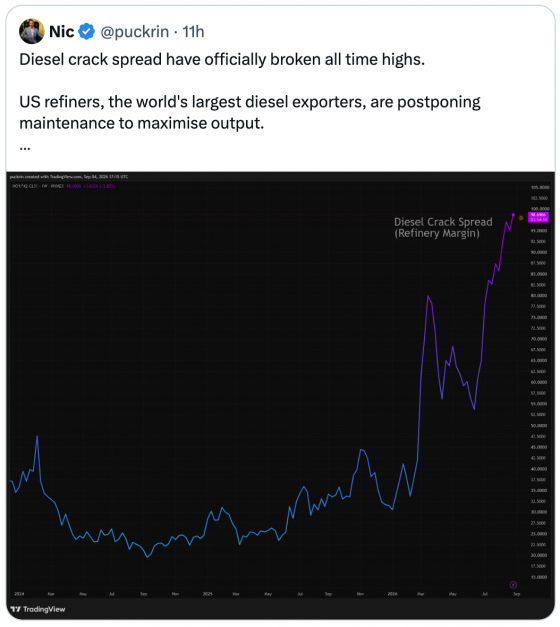
Diesel is used to produce the food that you eat every single day.
This year, much higher diesel prices are hitting our farmers like a sledgehammer…
Dale Hemminger runs a dairy and cabbage farm in Seneca Castle, N.Y. “Diesel is our fuel,” he says. “We have to run tractors and harvesters and trucks, and they almost exclusively run on diesel. So, diesel and the price of diesel is a major factor.”
So far this year, Hemminger says, fuel has cost him close to $45,000 for a tank of 10,000 gallons. Last year, it was around $25,000 for a tank.
This is one of the reasons why many are forecasting that you will be paying significantly more for food in 2027.
Of course the cost of diesel is going to affect prices in nearly every other sector of our economy as well…
Soaring diesel costs are raising expenses for trucking, construction, agriculture and other industries that rely on heavy-duty vehicles and machinery.
High diesel prices can stoke inflation by raising the cost of transporting goods across the U.S., thereby pushing up consumer prices.
“The everyday consumer will see higher diesel prices in the consumer goods they purchase,” said Susan Bell, senior vice president of downstream research at Rystad Energy. “Think of the groceries that get shipped around the nation, and fruits and vegetables that come from California and move by truck or rail. It’s inflationary.”
Many pundits are hoping that the war in the Middle East and the war in Ukraine will both end within the next 12 months. Wouldn’t that be wonderful? But do you think that will actually happen?
In fact, I believe that the military conflicts that we are witnessing will only intensify as we roll into 2027. So don’t get too accustomed to the painfully high energy prices that we are experiencing now, because I believe that they will soon go even higher
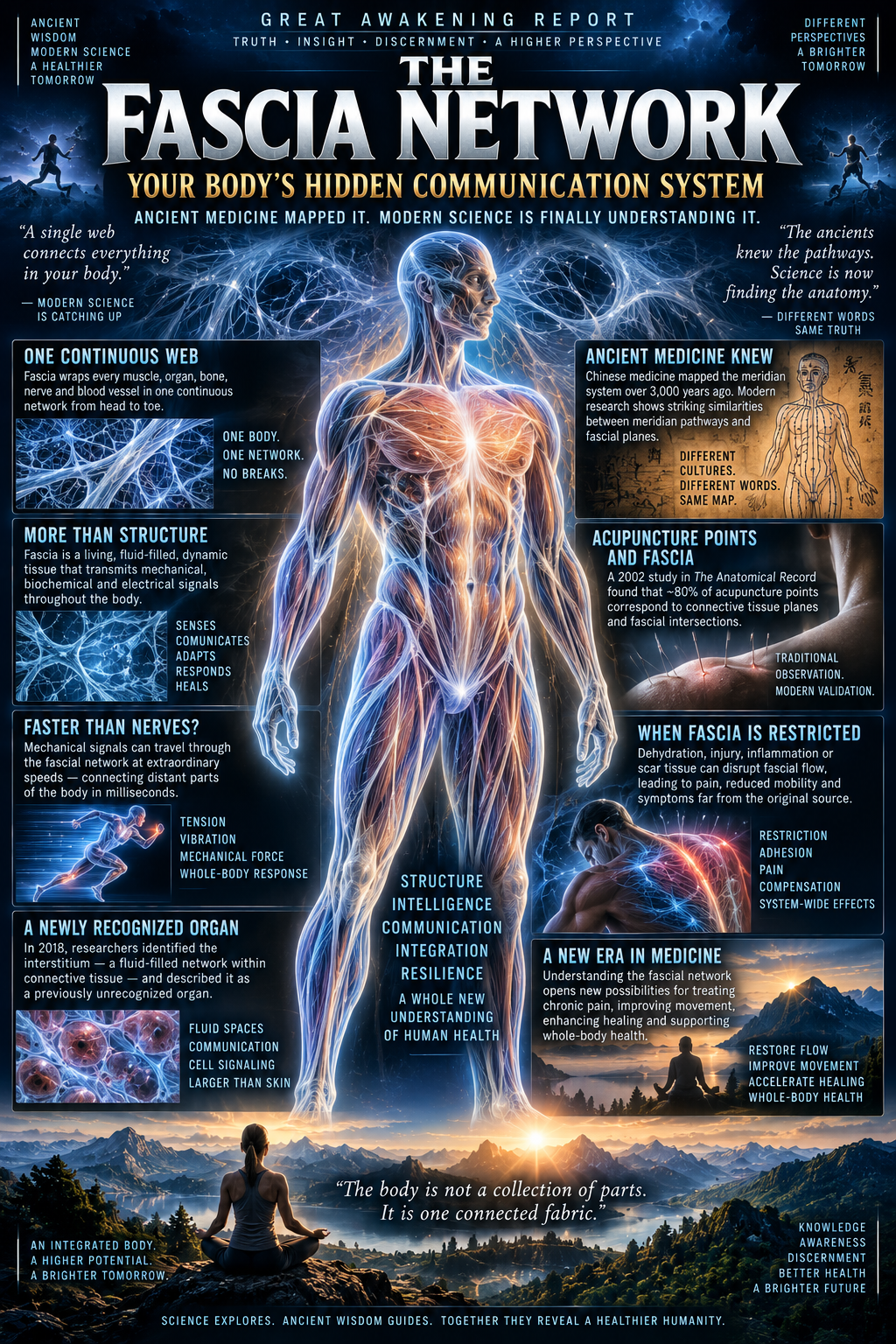
THE FASCIA NETWORK
The Body-Wide Web Modern Medicine Is Beginning to Understand
CONNECTIVE TISSUE • MECHANOTRANSDUCTION • INTERSTITIAL FLUID • ACUPUNCTURE • PAIN • MOVEMENT • WHOLE-BODY COMMUNICATION
“The emerging fascia story challenges the idea of the body as a collection of isolated parts. Connective tissue forms an integrated mechanical and biochemical environment—and science is still discovering how much information moves through that environment.”
For generations, fascia was often introduced in basic anatomy as the connective tissue surrounding muscles, organs, nerves and blood vessels—important structurally, but far less glamorous than the brain, heart or nervous system. That picture has changed dramatically. Researchers now study fascia as a biologically active tissue populated with fibroblasts, sensory nerve endings, extracellular matrix, fluid and collagen networks capable of responding to mechanical forces. Rather than merely holding the body’s components in place, connective tissues participate in mechanotransduction: the conversion of physical forces into cellular and biochemical responses. This gives the fascia story genuine significance without needing to claim that scientists only recently discovered fascia itself.
One frequently cited milestone came in 2018, when researchers described fluid-filled spaces within interstitial connective tissues using advanced microscopy and proposed the interstitium as a previously underappreciated anatomical structure. The study generated headlines describing a “new organ,” but it did not establish fascia as a newly discovered organ or prove that it is larger than the skin. What it did reinforce was something increasingly important: tissues once represented as relatively solid connective structures contain dynamic fluid spaces that may participate in fluid movement, cellular signaling and disease processes. The modern picture of our internal connective architecture is becoming considerably more dynamic than the old textbook diagrams suggested.
The deeper concept is whole-body mechanical communication. Pull on connective tissue in one location and forces can be transmitted through surrounding collagen and extracellular matrix. Cells embedded within that matrix detect stretching, compression and shear forces and can alter their behavior in response. This does not mean fascia has been demonstrated to transmit information “faster than the nervous system” in the neurological sense; nerve impulses and mechanical force propagation are fundamentally different phenomena. But it does mean that the nervous system is not the body’s only signaling environment. Mechanical, biochemical, electrical and neurological processes operate simultaneously, producing a much more interconnected biological system than a simple collection of independent organs.
This is where the story intersects intriguingly with traditional Chinese medicine. In 2002, researchers Helene Langevin and Jason Yandow investigated whether acupuncture points and meridians might correspond anatomically with connective-tissue planes. Their study of the human arm reported approximately 80% correspondence between examined acupuncture-point locations and intermuscular or intramuscular connective-tissue planes. The authors proposed that the traditional acupuncture network might therefore be viewed, at least conceptually, as a representation of an interstitial connective-tissue network. Importantly, they presented this as a hypothesis and anatomical model, not proof that every meridian is literally a fascial pathway.
That distinction actually makes the finding more interesting. Traditional Chinese medicine developed its meridian system through centuries of observation without microscopes, MRI scanners or modern histology. Langevin and Yandow proposed that ancient practitioners may have empirically identified locations where needles could interact with greater concentrations or intersections of connective tissue. They compared acupuncture points to intersections in a network of roads, where mechanical stimulation might produce stronger downstream effects. Their paper also noted that connective tissue surrounds muscles, bones, nerves, blood vessels and organs, making it anatomically plausible that this network could play an integrative role across multiple physiological systems.
The emerging science also changes how we can think about movement, stiffness and pain. Fascia and other connective tissues adapt to mechanical loading, injury and inflammation. Adhesions, fibrosis and changes in extracellular-matrix organization can alter how tissues glide and distribute forces. Pain appearing in one area can sometimes involve structures or mechanical relationships elsewhere, although it would be too broad to conclude that distant pain is generally caused by a “blocked” fascial pathway. What matters is the larger shift: clinicians and researchers increasingly recognize that musculoskeletal function cannot always be understood by examining one muscle or joint in isolation.
There is also an intriguing bridge between acupuncture and mechanobiology. Langevin’s research proposed that manipulating an acupuncture needle winds connective tissue around the needle, producing a mechanical stimulus that can influence fibroblasts and surrounding tissues. The researchers suggested that such cellular responses might propagate through connective-tissue planes and contribute to acupuncture’s physiological effects. That remains an active area of investigation, but it offers something more useful than either dismissing ancient medicine outright or declaring ancient meridian theory scientifically proven: a testable biological mechanism through which traditional observations and modern anatomy can be compared.
For GAR, the larger story is about integration. The human body increasingly looks less like a machine assembled from independent components and more like a nested network in which nervous, vascular, immune, connective, mechanical and biochemical systems continuously interact. Ancient medicine may have observed aspects of this interconnectedness through a very different conceptual framework, while modern science now has the instruments to investigate those observations at cellular and molecular scales. The fascinating question is therefore not whether modern research has suddenly “proven the meridians.” It is whether connective tissue represents one of the biological bridges through which ancient observations of whole-body relationships can finally be investigated scientifically.
THE BODY IS NOT JUST A COLLECTION OF PARTS. IT IS A NETWORK OF NETWORKS.
FASCIA → MECHANICAL FORCE → CELLULAR SIGNALING → MOVEMENT → NERVOUS SYSTEM → WHOLE-BODY RESPONSE
Ancient medicine mapped relationships. Modern science is investigating mechanisms. The frontier lies where the two can be compared without confusing possibility with proof.
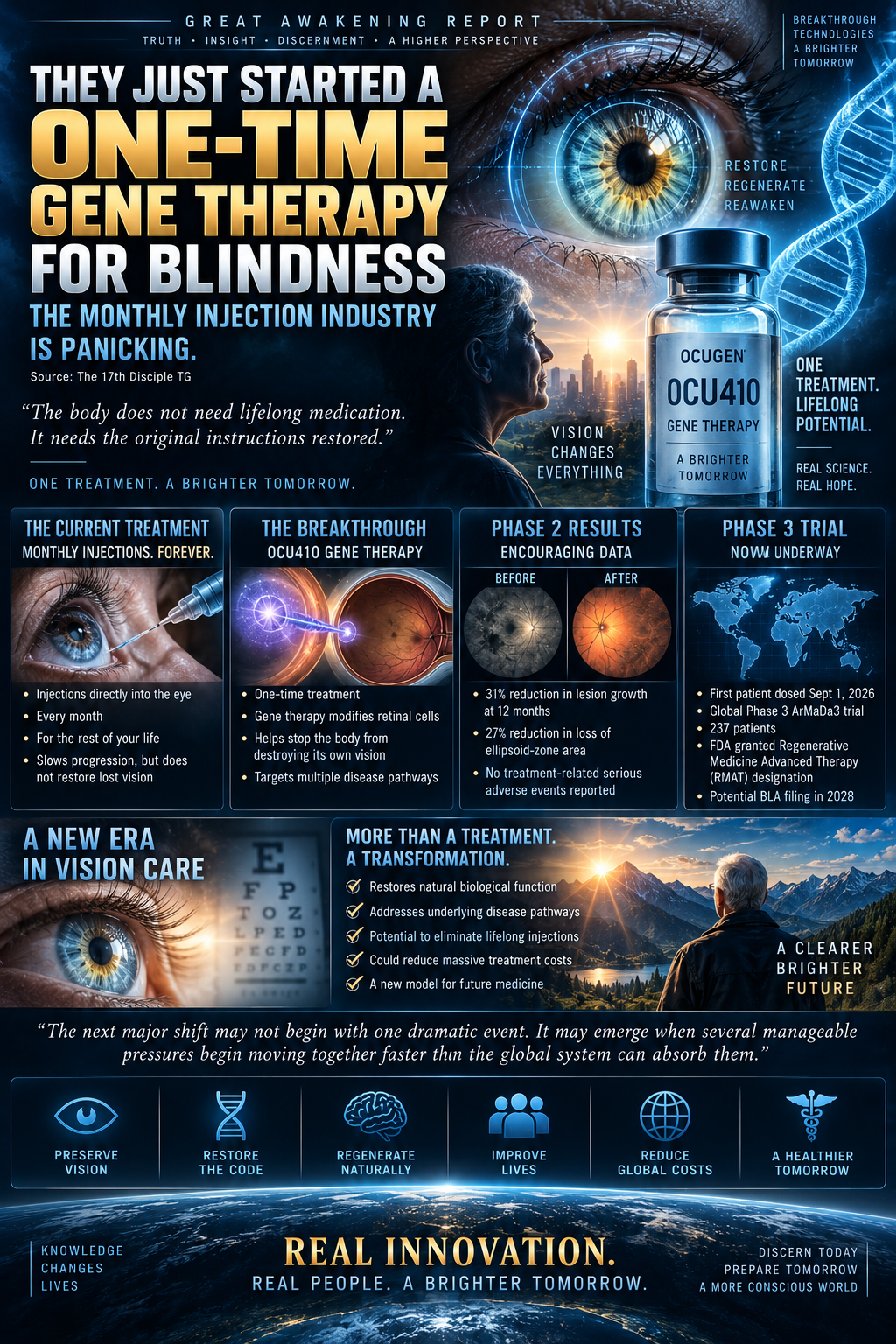
A ONE-TIME GENE THERAPY FOR AGE-RELATED BLINDNESS ENTERS PHASE 3
OCU410 Could Challenge the Chronic-Injection Model—If the Pivotal Trial Confirms Its Promise
Source: GAR Contributing Writer
Something potentially important happened in retinal medicine on September 1, 2026. Ocugen announced that the first patient had been dosed in its global Phase 3 ArMaDa3 trial of OCU410, an experimental gene therapy for geographic atrophy associated with dry age-related macular degeneration. Unlike currently approved therapies that require repeated injections into the eye, OCU410 is being studied as a single subretinal treatment intended to produce a durable biological effect. The 237-patient trial represents the first pivotal gene-therapy study in geographic atrophy, according to the company.
Geographic atrophy is a serious and irreversible cause of central vision loss, affecting an estimated 2–3 million people across the United States and Europe. The disease progressively destroys retinal cells responsible for detailed central vision. Medicine has recently made meaningful progress: approved complement-inhibitor treatments can slow progression, but they do not restore vision that has already been lost. One FDA-approved option, Izervay, is administered by intravitreal injection approximately once every month. That makes treatment burden a genuine clinical issue—but describing these medicines simply as a deliberate pharmaceutical “subscription” goes beyond what the evidence establishes.
OCU410 represents a fundamentally different strategy. It uses an AAV5 viral vector to deliver a human RORA modifier gene into retinal cells. Ocugen’s hypothesis is that increasing RORA expression can influence several processes implicated in geographic atrophy, including complement overactivation, chronic inflammation, oxidative stress and lipid dysregulation. In other words, rather than repeatedly inhibiting one component of the disease process, researchers are testing whether a single genetic intervention can modify several underlying pathways for an extended period. That is an ambitious proposition, and Phase 3 is designed to determine whether it actually translates into clinically meaningful benefit.
The early results are encouraging enough to warrant serious attention. Ocugen reports that its randomized Phase 2 study found a 31% reduction in geographic-atrophy lesion-growth rate at 12 months at the dose selected for Phase 3 compared with the untreated control group. Researchers also reported a 27% reduction in loss of the ellipsoid-zone area, an important retinal structure associated with photoreceptor integrity. No OCU410-related serious adverse events or adverse events of special interest had been reported in those data. These findings are promising, but the Phase 2 study contained only 51 participants; they should therefore be regarded as evidence supporting a larger trial, not proof that OCU410 already prevents blindness or constitutes a cure.
The FDA has nevertheless given the program an important regulatory boost. On July 29, 2026, OCU410 received Regenerative Medicine Advanced Therapy (RMAT) designation. That designation provides closer interaction with FDA officials and can make a therapy eligible for mechanisms including accelerated approval and priority review when applicable. It does not mean OCU410 has been approved, nor does it guarantee that the Phase 3 trial will succeed. Ocugen currently anticipates a potential Biologics License Application filing in 2028 if development proceeds successfully.
What makes this development particularly significant is the broader medical model it represents. Gene therapy increasingly raises the possibility of replacing some forms of chronic treatment with durable or potentially one-time interventions. Instead of repeatedly treating a downstream biological consequence, researchers may sometimes be able to alter an upstream pathway responsible for disease progression. If approaches such as OCU410 succeed, the implications extend beyond ophthalmology: healthcare economics, insurance reimbursement, pharmaceutical development and patient care all have to adapt when a treatment’s cost and benefit are concentrated into a single intervention rather than years of recurring medication.
That does not, however, establish the claim that the “monthly injection industry is panicking,” nor does it provide evidence that effective one-time treatments have intentionally been withheld to protect recurring pharmaceutical revenue. Developing safe gene therapies is exceptionally difficult, and the technology required to deliver genes reliably into human tissues has advanced enormously over the past several decades. Likewise, comparisons with “MedBeds” should remain metaphorical: OCU410 is an actual experimental biomedical therapy with a defined vector, molecular target, dosing procedure, clinical-trial protocol and regulatory pathway. It is not evidence that speculative MedBed technologies exist.
The larger story is still remarkable without those claims. We may be watching an important transition from chronic disease management toward durable biological intervention. If ArMaDa3 confirms the efficacy and safety suggested by the smaller Phase 2 study, OCU410 could potentially reduce an enormous treatment burden for people living with geographic atrophy and provide another demonstration of how gene therapy is changing medicine. The milestone worth watching is therefore not whether an old business model is “panicking.” It is whether scientists can demonstrate, in hundreds of patients and under rigorous regulatory scrutiny, that one carefully engineered intervention can safely accomplish what previously required treatment again and again.

The Persecution Of Christians In America Has Reached A Whole New Level
A lot of people out there never thought that things would get this far. In America today, churches are burning to the ground all over the country. This is happening because we have imported large numbers of people that are extremely hostile to Christianity from foreign nations and because multiple generations of our young people have been raised in our overtly anti-Christian public school system. From kindergarten all the way through college, kids are trained to view the Christian faith through a hostile lens. Meanwhile, they are brainwashed by anti-Christian propaganda in our music, in our television shows and in our movies. In such an environment, the fact that Christian persecution is increasing should not come as a surprise to anyone.
The legal system is one of the primary tools that is being used to persecute the Christian faith in the United States.
On Monday, the Maine Supreme Court unanimously ruled that a mother can be banned from taking her daughter to church and reading the Bible to her…
The Maine Supreme Court unanimously upheld a custody order on Monday giving a father veto power over a mother’s decisions to take their daughter to church or read her the Bible, largely barring the child’s religious upbringing.
As covered last year by LifeSiteNews, the dispute is between Emily Bickford and Matthew Bradeen, the unmarried, separated parents of a 13-year-old girl. The father maintains that their daughter has displayed panic attacks since the mother started taking her to Calvary Chapel of Portland, stemming from fears that the rapture is drawing near and her father and sister will not make it to Heaven.
He produced a witness whose assessment of Calvary Chapel’s sermons claimed that they were potentially psychologically harmful, prompting the court to transfer full control of the child’s religious upbringing from Bickford to Bradeen.
This is absolutely insane.
The couple was never married, and the mother has custody of the daughter. But now she has been permanently banned from taking her daughter to church because that is what the father wants.
Are we still living in America?
The attorney that represented the mother says that he plans to take the case to the U.S. Supreme Court…
Liberty Counsel Founder and Chairman Mat Staver, who argued Bickford’s case before the Maine SJC, said he plans to appeal to the U.S. Supreme Court.
“This opinion rejects the First Amendment right of a fit parent to raise her child consistent with her Christian faith,” said Staver in a statement, calling the opinion “disappointing” and “a serious threat to religious freedom.”
“This opinion goes against other state court decisions involving custody in the context of religious free exercise rights and ignores precedent from the U.S. Supreme Court. We will ask the High Court to take this case and overrule the decision.”
Hopefully the U.S. Supreme Court will be receptive. But there is no guarantee that they will even be willing to hear this case. I really detest what has happened to our legal system.
All over the nation, we are seeing outrageous ruling after outrageous ruling. The far left completely and utterly dominates our courts, and that is not going to change any time soon because our law schools are absolutely packed with radical leftists.
I want to switch gears and talk about all of the church burnings that are occurring in 2026. Churches are burning to the ground over and over again, and yet the big national news networks barely pay any attention to this phenomenon.
Sometimes, authorities catch those who are responsible. For example, a 19-year-old man was just arrested for his role in the burning of a historic church in Ohio…
A man was arrested after a historic church in Ohio went up in flames.
A 19-year-old man is facing a felony arson charge in connection with a fire that destroyed a historic vacant church on Cleveland’s east side.
Court documents show John McManamon was arraigned Wednesday morning. He is being held on a $10,000 bond.
But most of the time the arsonists are never caught.
Last Friday night, a “massive fire” suddenly consumed a Presbyterian church in Florida…
Crews battled a massive fire at Buckingham Presbyterian church on Buckingham Road in Buckingham on Friday night.
According to the Lehigh Acres Fire Control and Rescue District, the fire went through the roof of the church, and crews are still at the scene working to extinguish the fire.
The fire district said the cause of the fire will likely be handled by the Bureau of Fire, Arson, and Explosion Investigations because it is at a church.
A large law enforcement presence was in the area and Buckingham Road was shut down for hours before re-opening on Saturday morning.
Hopefully they will catch whoever did that. The way churches are erupting in flames this year, you would think that they must be the most flammable buildings in our entire society.
In Mississippi, a fire that suddenly spread like wildfire absolutely gutted the activity building of a local Baptist church…
Rocky Creek Baptist Church will hold its first service Wednesday night after a fire heavily damaged part of its campus a day earlier.
Firefighters responded to the Lucedale church around 9:30 a.m. Tuesday, after a fire broke out on the property on Rocky Creek Road.
The blaze gutted the church’s activity building, which houses the gym, kitchen and classrooms.
We have been witnessing incidents such as this from coast to coast, but things have been particularly bad in Michigan.
In Grand Rapids, four firefighters recently got hurt trying to fight a gigantic fire that suddenly roared to life at LaGrand Avenue Christian Reformed Church…
Four firefighters were injured while responding to a fire overnight at LaGrand Avenue Christian Reformed Church in downtown Grand Rapids.
A spokesperson for the Grand Rapids Fire Department told News 8 that the fire started around 11 p.m. Wednesday night on Oakes Street and Sheldon Boulevard. On social media, LaGrave Avenue CRC confirmed the fire happened at the former Seventh Day Adventist building on their campus and there was no risk to the church’s main building.
This sort of thing has been occurring so frequently all over the state of Michigan.
Here is another recent example…
A west Michigan church suffered major damage early Monday morning after fire broke out just before 4 a.m., destroying the gymnasium and causing extensive smoke and water damage throughout the building.
A passerby spotted the flames and called 911 at 3:41 a.m. Byron Township Fire, along with multiple mutual aid departments including Wyoming Fire, responded to the scene.
Pastor Chad DeJong of Byron Center Bible Church arrived around 6 a.m. and immediately knew the damage would be severe.
It doesn’t take a lot of imagination to figure out why there are so many church fires in the state of Michigan. Of course the same thing could be said about the dramatic increase in church fires in western Europe.
The big media outlets don’t seem to care, but if a mosque suddenly caught fire it would be front page news everywhere. In this day and age, it is open season on Christians.
In Idaho, when the owner of a coffee shop discovered that a group of customers had gathered to discuss pro-life issues, he kicked them out…
The founder of a well-known pro-life organization has gone viral in recent days after reportedly being kicked out of an Idaho coffee shop after the owner learned she was holding a meeting there.
Kristan Hawkins, president of Students for Life of America, shared a video of what purportedly took place at Wydaho Roasters last month — and that video went viral.
Hawkins told CBN News that coffee shop owner Jim Sheehan made his displeasure known after she, her son, and others met to discuss pro-life issues inside Wydaho Roasters. Her son’s goal has been to rally people against Proposition 1, an abortion measure that will be on the ballot in November.
This happened in supposedly “deep red” Idaho. In blue states, the level of hostility toward Christian beliefs can be far worse.
Even if you don’t say anything, you can still get persecuted if you just try to live out your faith.
In Missouri, a Christian grandmother decided that she was going to serve her community by feeding people breakfast for free…
Kathy Kite, a resident of Harrisburg, Missouri, began welcoming locals into her home for breakfast back in May after the community’s convenience store stopped serving breakfast following COVID.
Kite works at H-Town, the local convenience store and gas station, and said residents had repeatedly expressed interest in finding a new place to have breakfast. She lives nearby, so she decided to offer an alternative by cooking for her friends and offering up the food for free.
“I told the old guys that come in there in the mornings that like to play cards, and drink coffee, and eat breakfast, and say they didn’t have any more — I’m like, ‘You guys can come to my house and I’ll do it,’” Kite told CBN News.
People that are willing to make hard sacrifices like that to serve others are the backbone of our nation.
Eventually, approximately 20 to 25 people (including young kids) started to come to her house for breakfast…
At first, it was just a few people. But others soon began to come after her loving act was advertised on social media, with 20-25 people regularly coming to her home in the morning; some parents even brought their kids to her house for food before school. Kite gets up at 3:30 a.m. to prepare for the day.
“And it just kind of exploded from there,” Kite said.
In the old days, going to grandma’s house for breakfast was a cherished tradition. But now it is a crime.
The control freaks that run things in the area soon sent her a letter insisting that she needed to obtain a commercial kitchen license to continue feeding people breakfast…
But Kite’s breakfast gatherings eventually caught the attention of government officials, with Columbia city officials from the Columbia/Boone County Public Health and Human Services Department reportedly sending a letter telling her she needed a commercial kitchen license to continue operating.
This is a perfect example of what is wrong with this country. In other parts of the U.S., authorities have literally made it illegal to feed the homeless.
Those that have made such laws should be ashamed of themselves. Nobody is going to stop me from having compassion on a fellow human being. And nobody is going to stop me from worshipping God the way that I choose.
I am sure that the legal system will continue to be extremely hostile to us, I am sure that more churches will go up in flames, and I am sure that the entertainment industry will continue to mock us in thousands of different ways.
But they will not win, because the God that created all things can never be defeated.
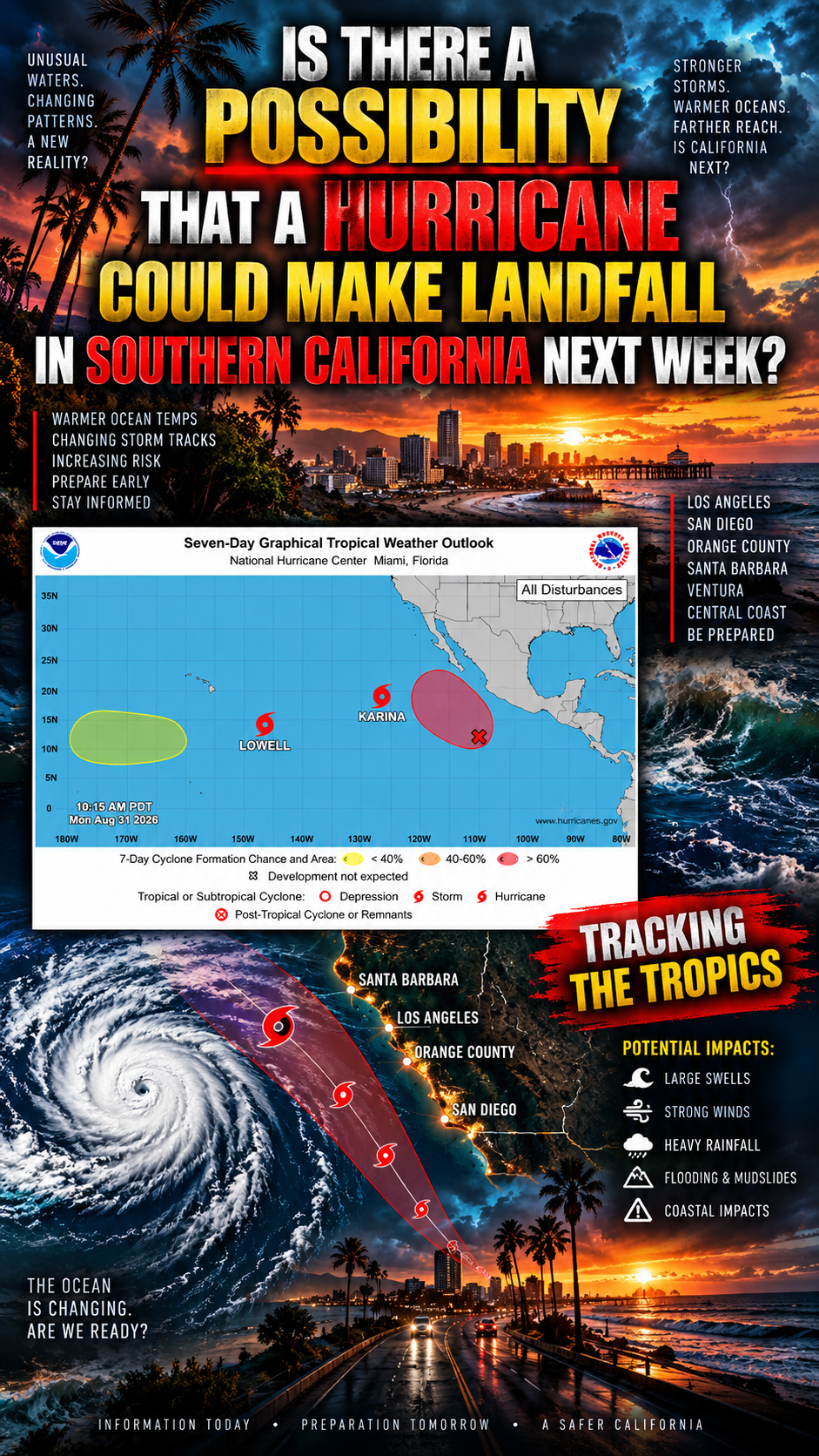
Is There A Possibility That A Hurricane Could Make Landfall In Southern California Next Week?
Last week, we were closely watching another storm named Karina.
Karina has now developed into a very powerful category 4 hurricane over the eastern Pacific, but the path of the storm is taking it in a westward direction far away from land.
But now Tropical Storm Marie threatens to become the third in a historic trio of hurricanes in the eastern Pacific…
The eastern Pacific is doing something remarkable. By the end of this week, three hurricanes could be active at the same time, an extraordinary burst of tropical activity being driven by a historically strong El Niño and very warm ocean temperatures.
Hurricane Karina rapidly intensified into a Category 4 major hurricane over the weekend, over 1000 miles west of Baja, California. Tropical Storm Lowell is expected to reach hurricane strength as early as Monday night and could move toward Hawaii.
According to the National Hurricane Center, Tropical Storm Marie is expected to turn into Hurricane Marie soon.
And the San Francisco Chronicle is admitting that “some forecast models” are projecting that the storm could end up “slowly moving northward into southern California next Monday”…
At least some forecast models showed that storm intensifying into a hurricane over the weekend and then slowly moving northward into southern California next Monday.
Wow.
I want to emphasize that this is far from certain. But it could happen.
Thanks to the Super El Niño of 2026, water temperatures off the coast of Southern California are much warmer than normal right now…
The storm potential is fueled by a “super” El Niño brewing in the Pacific Ocean. The climate pattern creates warmer ocean temperatures in the Eastern Pacific. The El Niño is currently causing a marine heat wave. Southern California is currently seeing sea surface temperatures 5 to 10 degrees above normal for this time of year, NWS data shows. According to the latest reports, ocean temperatures are at 74 to 76 degrees across Los Angeles County beaches.
Water temperatures near Los Angeles aren’t supposed to be that high.
But skeptics are pointing out that they still aren’t high enough to sustain a tropical storm or a hurricane…
Tropical storms and hurricanes need ocean water temperatures to be at least 80 degrees Fahrenheit (26.5 degrees Celsius) to maintain tropical storm strength and 82 F (28 C) to intensify.
Ocean temperatures are not at those levels off the coast of California.
So we shall see what happens. As I covered on Friday, if a hurricane actually makes landfall in California it will have enormous implications. But we are being assured that it probably won’t happen.
Only one tropical storm has made landfall in California. That was in 1939. And no hurricane has ever made landfall in the entire history of the state.
In 2023, Hurricane Hilary approached California, but it was no longer a named storm once it reached land.
However, it did cause an immense amount of damage…
Although L.A. was spared a direct hit from Hilary, it did cause around $900 million in damage in the U.S. and at least $14 million in damage in Baja California Sur (there were no estimates for Baja California). There were two deaths in Baja California — two people who drowned after their vehicles were swept away by floodwaters — and a woman in California presumed dead after her mobile home was washed away in flooding along the Santa Ana River in San Bernardino County.
Elsewhere, Tropical Storm Edouard is rapidly strengthening and is poised to make landfall near the Louisiana-Texas border…
The National Hurricane Center (NHC) warned that Edouard is ‘poised to significantly strengthen’ before striking near the Texas-Louisiana border.
Landfall will likely occur near the Louisiana-Texas border around 1pm CT (2pm ET).
Meteorologists warned that communities in its path face a life-threatening storm surge, torrential rain, flash flooding and the threat of tornadoes.
Yes, this is definitely a life-threatening storm. If you live in that area, please take it very seriously.
It is expected to dump an enormous amount of rain in the Gulf region, and the flash flooding that it creates could catch a lot of people by surprise.
Sadly, the sudden flooding that just occurred in the Grand Canyon area caused at least two deaths…
It’s a breathtaking refuge unlike any other: a remote enclave tucked at the bottom of Arizona’s Grand Canyon, nestled between towering cliffs. Suddenly, those majestic slopes turned into raging waterfalls.
With little to no warning, hikers and campers near Bright Angel Canyon and the Phantom Ranch lodging area started running for their lives Saturday as torrential rainfall funneled down the canyon and idyllic creeks morphed into violent torrents.
At least two people were killed and one person remains unaccounted for after flash flooding washed out footbridges and campgrounds on the canyon floor. Many more were imperiled by muddy water racing through the narrow ravines, sparking frantic rescue missions for dozens.
We have been experiencing so many extremely violent storms in 2026.
What we are witnessing is not normal.
Speaking of not normal, Mount Sinabung in Indonesia just sent a column of volcanic ash 11,500 feet into the air…
The U.S. Embassy in Indonesia has issued a natural disaster alert after renewed volcanic activity at Mount Sinabung, as Indonesian authorities warn that further eruptions are possible in a region that includes popular tourist destinations.
The embassy issued its Natural Disaster Alert on September 1, a day after Mount Sinabung erupted in Karo Regency, North Sumatra, sending a thick column of ash about 3,500 meters, roughly 11,500 feet, above its summit. There have been no immediate reports of casualties, evacuations or disruptions to flights in the region.
Indonesia’s Geological Agency said visual and instrumental monitoring showed increased volcanic activity and warned that the August 31 event was an “initial eruption,” meaning a larger eruption could follow. It raised Mount Sinabung’s alert level from II to Level III, or Siaga, the second-highest level in the country’s four-tier system, effective as of Monday afternoon.
Volcanoes are roaring to life all over the planet, and there have been so many major earthquakes this summer. But most of the experts continue to insist that this is just temporary and that conditions will soon return to normal. Of course my perspective is that much more chaos is ahead of us. So many of the things that I warned about years ahead of time are now playing out right in front of our eyes.
Now we will watch Tropical Storm Marie.
If it becomes a hurricane and it actually slams into Southern California, that will be a truly historic event.

Is There A Possibility That A Hurricane Could Make Landfall In Southern California Next Week?
Last week, we were closely watching another storm named Karina.
Karina has now developed into a very powerful category 4 hurricane over the eastern Pacific, but the path of the storm is taking it in a westward direction far away from land.
But now Tropical Storm Marie threatens to become the third in a historic trio of hurricanes in the eastern Pacific…
The eastern Pacific is doing something remarkable. By the end of this week, three hurricanes could be active at the same time, an extraordinary burst of tropical activity being driven by a historically strong El Niño and very warm ocean temperatures.
Hurricane Karina rapidly intensified into a Category 4 major hurricane over the weekend, over 1000 miles west of Baja, California. Tropical Storm Lowell is expected to reach hurricane strength as early as Monday night and could move toward Hawaii.
According to the National Hurricane Center, Tropical Storm Marie is expected to turn into Hurricane Marie soon.
And the San Francisco Chronicle is admitting that “some forecast models” are projecting that the storm could end up “slowly moving northward into southern California next Monday”…
At least some forecast models showed that storm intensifying into a hurricane over the weekend and then slowly moving northward into southern California next Monday.
Wow.
I want to emphasize that this is far from certain.
But it could happen.
Thanks to the Super El Niño of 2026, water temperatures off the coast of Southern California are much warmer than normal right now…
The storm potential is fueled by a “super” El Niño brewing in the Pacific Ocean. The climate pattern creates warmer ocean temperatures in the Eastern Pacific. The El Niño is currently causing a marine heat wave. Southern California is currently seeing sea surface temperatures 5 to 10 degrees above normal for this time of year, NWS data shows. According to the latest reports, ocean temperatures are at 74 to 76 degrees across Los Angeles County beaches.
Water temperatures near Los Angeles aren’t supposed to be that high.
But skeptics are pointing out that they still aren’t high enough to sustain a tropical storm or a hurricane…
Tropical storms and hurricanes need ocean water temperatures to be at least 80 degrees Fahrenheit (26.5 degrees Celsius) to maintain tropical storm strength and 82 F (28 C) to intensify.
Ocean temperatures are not at those levels off the coast of California.
So we shall see what happens.
As I covered on Friday, if a hurricane actually makes landfall in California it will have enormous implications. But we are being assured that it probably won’t happen.
Only one tropical storm has made landfall in California. That was in 1939. And no hurricane has ever made landfall in the entire history of the state.
In 2023, Hurricane Hilary approached California, but it was no longer a named storm once it reached land. However, it did cause an immense amount of damage…
Although L.A. was spared a direct hit from Hilary, it did cause around $900 million in damage in the U.S. and at least $14 million in damage in Baja California Sur (there were no estimates for Baja California). There were two deaths in Baja California — two people who drowned after their vehicles were swept away by floodwaters — and a woman in California presumed dead after her mobile home was washed away in flooding along the Santa Ana River in San Bernardino County.
Elsewhere, Tropical Storm Edouard is rapidly strengthening and is poised to make landfall near the Louisiana-Texas border…
The National Hurricane Center (NHC) warned that Edouard is ‘poised to significantly strengthen’ before striking near the Texas-Louisiana border.
Landfall will likely occur near the Louisiana-Texas border around 1pm CT (2pm ET).
Meteorologists warned that communities in its path face a life-threatening storm surge, torrential rain, flash flooding and the threat of tornadoes.
Yes, this is definitely a life-threatening storm. If you live in that area, please take it very seriously.
It is expected to dump an enormous amount of rain in the Gulf region, and the flash flooding that it creates could catch a lot of people by surprise.
Sadly, the sudden flooding that just occurred in the Grand Canyon area caused at least two deaths…
It’s a breathtaking refuge unlike any other: a remote enclave tucked at the bottom of Arizona’s Grand Canyon, nestled between towering cliffs. Suddenly, those majestic slopes turned into raging waterfalls.
With little to no warning, hikers and campers near Bright Angel Canyon and the Phantom Ranch lodging area started running for their lives Saturday as torrential rainfall funneled down the canyon and idyllic creeks morphed into violent torrents.
At least two people were killed and one person remains unaccounted for after flash flooding washed out footbridges and campgrounds on the canyon floor. Many more were imperiled by muddy water racing through the narrow ravines, sparking frantic rescue missions for dozens.
We have been experiencing so many extremely violent storms in 2026.
What we are witnessing is not normal.
Speaking of not normal, Mount Sinabung in Indonesia just sent a column of volcanic ash 11,500 feet into the air…
The U.S. Embassy in Indonesia has issued a natural disaster alert after renewed volcanic activity at Mount Sinabung, as Indonesian authorities warn that further eruptions are possible in a region that includes popular tourist destinations.
The embassy issued its Natural Disaster Alert on September 1, a day after Mount Sinabung erupted in Karo Regency, North Sumatra, sending a thick column of ash about 3,500 meters, roughly 11,500 feet, above its summit. There have been no immediate reports of casualties, evacuations or disruptions to flights in the region.
Indonesia’s Geological Agency said visual and instrumental monitoring showed increased volcanic activity and warned that the August 31 event was an “initial eruption,” meaning a larger eruption could follow. It raised Mount Sinabung’s alert level from II to Level III, or Siaga, the second-highest level in the country’s four-tier system, effective as of Monday afternoon.
Volcanoes are roaring to life all over the planet, and there have been so many major earthquakes this summer. But most of the experts continue to insist that this is just temporary and that conditions will soon return to normal.
Of course my perspective is that much more chaos is ahead of us.
So many of the things that I warned about years ahead of time are now playing out right in front of our eyes. Now we will watch Tropical Storm Marie.
If it becomes a hurricane and it actually slams into Southern California, that will be a truly historic event.
THE MONTAUK PROJECT — THE UNDERGROUND MACHINE THAT OPENED A DOOR IN TIME
At the eastern edge of Long Island stands Camp Hero, an abandoned military installation built to watch the Atlantic.
Source: Mr. Kidpool TG
The public was told its radar towers protected New York from enemy aircraft during the Cold War. But beneath the sealed bunkers, behind concrete doors welded shut from the inside, another operation was allegedly taking place.
Survivors called it the Montauk Project—a continuation of the experiments that began with the Philadelphia Experiment. Its purpose was not conventional defense. It was the weaponization of memory, consciousness, and time itself. The radar dish above ground was only the antenna. The real machine was buried below it.
At the center of the underground complex stood a device known as the Montauk Chair. A selected operator would sit inside a network of electromagnetic coils while the facility’s radar amplified his thoughts. Images formed in the mind could allegedly be projected into physical reality. Rooms appeared where no rooms had existed. Objects moved without contact.
People reported seeing creatures assembled from subconscious fear. But the project directors wanted something more valuable than hallucinations. By focusing the operator on a specific date, frequency, and location, they believed the Chair could create a stable opening into another point in time—a tunnel through reality controlled by human thought.
The experiments reportedly escalated after technicians discovered that children produced stronger and less predictable signals than trained adults. Missing youths were allegedly transported into the lower levels, stripped of their identities, and subjected to trauma-based conditioning designed to fracture the mind into programmable sections. Some were used as “psychic amplifiers.”
Others were sent through the opening to describe what existed beyond it. Most returned with incomplete memories. A few returned speaking languages they had never learned. One subject reportedly came back carrying soil containing plant material that did not match any recorded species on Earth. The sample vanished. His medical file ended with two words: TIMELINE CONTAMINATION.
The “Alliance” narrative claims the Montauk program ended when the final experiment escaped the control of its operators. On August 12, 1983, the Chair was synchronized with another classified device operating decades earlier. The two signals connected—and something crossed through. Witnesses described alarms, collapsing corridors, and a massive shadow moving inside the underground chamber. Power was cut.
The entrances were filled with concrete. Personnel records disappeared overnight. But recent ground scans allegedly show electrical activity beneath Camp Hero, even though the facility has been disconnected for years. The last intercepted signal did not originate from the base. It came from forty years in the future and repeated a single warning: DO NOT OPEN THE SECOND DOOR.
CODE: MONTAUK-CHAIR / CAMP-HERO / TIME-TUNNEL / SECOND-DOOR
They told you the radar station was abandoned when the Cold War ended. They lied to hide the fact that the experiment beneath it never stopped—it only moved outside our time.
Some doors are locked to keep us out. Others are locked because something on the other side remembers the way back.
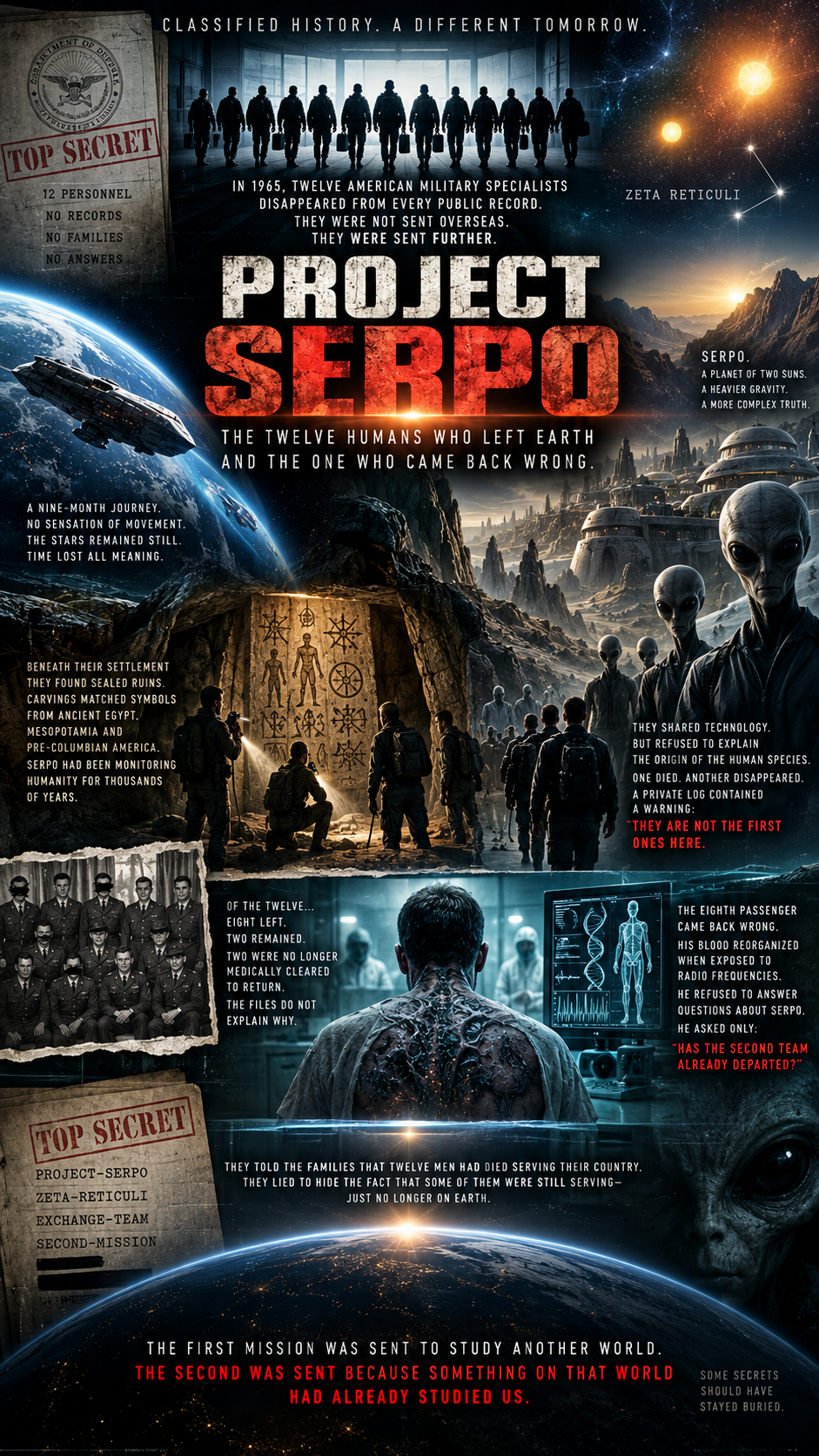
PROJECT SERPO — THE TWELVE HUMANS WHO LEFT EARTH AND THE ONE WHO CAME BACK WRONG
In 1965, twelve American military specialists allegedly disappeared from every public record on the same night. Their bank accounts were closed. Their service files were sealed.
Their families received carefully prepared explanations involving accidents, transfers, and classified overseas assignments. But none of them had been sent overseas. According to a hidden archive known as Project Serpo, the twelve were transported to a planet orbiting Zeta Reticuli as part of the first human exchange program with a non-terrestrial civilization.
The mission was scheduled to last ten years. The team carried medical supplies, scientific instruments, weapons, and enough classified equipment to document a world no human being was supposed to know existed.
The journey reportedly took nine months inside a craft that produced no sensation of movement. The crew described losing track of time, suffering disorientation, and watching the stars outside remain completely still. When they arrived, Serpo was not the paradise promised during the briefings. The planet orbited two suns. Its days were longer, its gravity was heavier, and its radiation slowly damaged the human body. The local beings lived inside windowless structures connected by underground passages.
They answered questions about technology but refused to explain the origin of the human species. One team member died after entering a restricted chamber. Another disappeared during an expedition beyond the settlement. The official mission log recorded both incidents as environmental accidents. A private entry contained a different warning: THEY ARE NOT THE FIRST ONES HERE.
As the years passed, the team discovered sealed ruins beneath the alien settlement—far older than the civilization hosting them. Inside were carvings of human figures surrounded by symbols matching those found in ancient Egypt, Mesopotamia, and pre-Columbian America. The expedition leader concluded that Serpo had not recently discovered Earth.
It had been monitoring humanity for thousands of years. The exchange program was not first contact. It was the continuation of an agreement whose original human signatories had vanished from history. When the return craft was finally prepared, only eight members chose to leave. Two remained voluntarily. Two others were no longer medically cleared to return. The files do not explain what that classification meant.
The “Alliance” narrative claims seven team members reached Earth in 1978. Their bodies showed severe radiation damage, unusual cellular changes, and biological aging inconsistent with the mission timeline. The eighth passenger was isolated before landing and transferred to a facility that did not appear on the recovery manifest.
According to the final medical report, he possessed the memories, fingerprints, and voice of the missing officer—but his blood contained structures that reorganized whenever exposed to radio frequencies. During interrogation, he refused to answer questions about Serpo. He asked only whether the second team had already departed. Project command denied that another mission existed. Then investigators opened the sealed launch records. A second exchange group had left Earth six years earlier. No human authority had approved it.
CODE: PROJECT-SERPO / ZETA-RETICULI / EXCHANGE-TEAM / SECOND-MISSION
They told the families that twelve men had died serving their country. They lied to hide the fact that some of them were still serving—just no longer on Earth.
The first mission was sent to study another world. The second was sent because something on that world had already studied us.
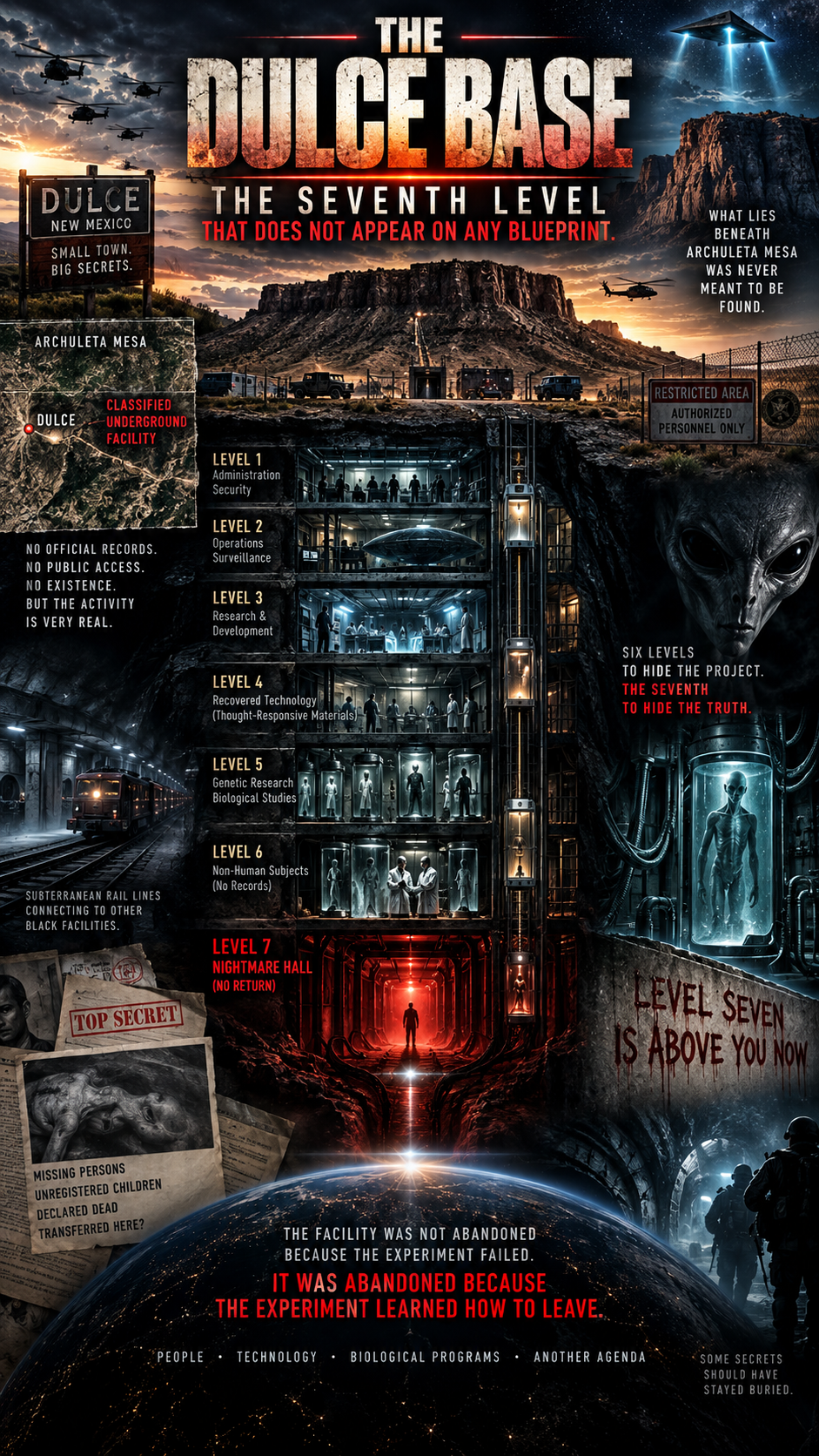
THE DULCE BASE — THE SEVENTH LEVEL THAT DOES NOT APPEAR ON ANY BLUEPRINT
Beneath Archuleta Mesa, near the small town of Dulce, New Mexico, there is said to be an underground facility whose entrances were designed to look like natural fractures in the mountain.
The surface appears empty—rock, dust, radio silence. But local witnesses have described lights descending behind the mesa, military aircraft flying without identification, and deep vibrations rising from the ground long after midnight. The official maps show no major installation beneath the area.
The classified diagrams allegedly show seven levels connected by high-speed elevators, sealed transit tunnels, and a subterranean rail line extending toward other black facilities across the American Southwest. The first six levels were built to conceal the project. The seventh was built to conceal what the project had become.
The upper levels allegedly contained laboratories for advanced propulsion, surveillance, and biological research. Personnel entered through security zones marked by color and symbol rather than name. Each descent required a higher clearance, a new medical scan, and a psychological evaluation.
On Level Four, scientists reportedly studied recovered materials that reacted to human thought. On Level Five, genetic samples were catalogued inside chambers kept colder than any ordinary laboratory required. Level Six housed subjects whose files contained no birthplace, no nationality, and no recognized blood type. But the elevators approaching Level Seven had no internal controls. Once the doors closed, the passenger no longer decided where they stopped.
According to the hidden narrative, Level Seven was known as NIGHTMARE HALL. It contained rows of sealed tanks holding failed biological forms—human tissue fused with structures that did not belong to terrestrial life. Some subjects appeared unconscious. Others followed movement outside the glass. The project was supposedly created through an agreement: advanced technology in exchange for permission to conduct limited experiments.
But the limits were ignored. Missing civilians, unregistered children, and military personnel officially declared dead were allegedly transferred into the program. When security teams discovered how far the operation had expanded, a firefight erupted beneath the mesa. Sixty-six personnel entered the lower levels. Only nineteen returned. Their final report was sealed under a classification that did not officially exist.
The “Alliance” narrative claims the base was later abandoned and its deepest tunnels collapsed. But recent seismic readings allegedly show a repeating pattern beneath Archuleta Mesa—three pulses, a pause, then seven more. The sequence matches an emergency code found inside the testimony of a surviving security officer. It does not mean evacuation. It means containment failure.
A reconnaissance team reportedly entered through an old ventilation shaft and reached the elevator leading downward. The doors were already open. The corridor beyond them had no lights, yet something inside was casting shadows toward the entrance. On the wall, written from the other side of the sealed zone, were five words: LEVEL SEVEN IS ABOVE YOU NOW.
CODE: DULCE-BASE / NIGHTMARE-HALL / LEVEL-SEVEN / CONTAINMENT-FAILURE
They told you there was nothing beneath the mesa. They lied to hide the fact that the deepest level was never a laboratory—it was an entrance.
The facility was not abandoned because the experiment failed. It was abandoned because the experiment learned how to leave.
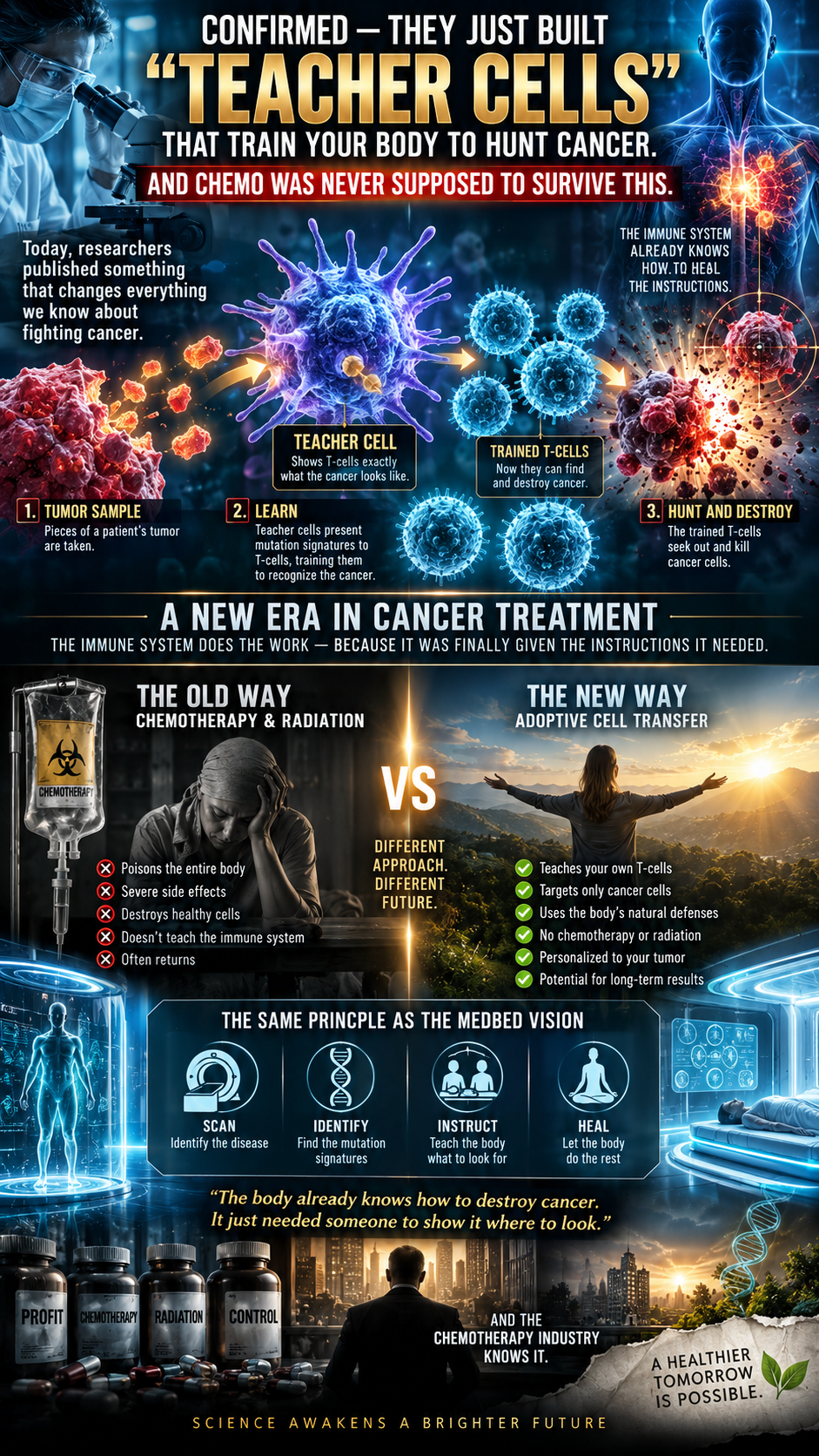
CONFIRMED — THEY JUST BUILT “TEACHER CELLS” THAT TRAIN YOUR BODY TO HUNT CANCER
CHEMO WAS NEVER SUPPOSED TO SURVIVE THIS
Source: The 17th Disciple TG
Today, researchers published something that changes everything we know about fighting cancer.
They grew immune cells in a laboratory. Not to attack cancer directly. To TEACH your own T-cells how to find it.
They call them “teacher cells.”
Here is how it works:
They take pieces of a patient’s tumor. They extract the mutation signatures. Then they grow special immune cells in the lab that carry one single instruction:
Show the body’s T-cells exactly what the cancer looks like. Then let the body do the rest.
No chemotherapy. No radiation. No poisoning the entire body to kill one disease.
The immune system does the work itself — because it was finally given the instructions it needed.
In the lab, T-cells that had never encountered the tumor learned to recognize it. To hunt it. To destroy it.
Now think about what this actually means.
For decades, the MedBed community has described a technology that scans the body, identifies the disease, and instructs the body to heal itself.
This is not a machine. It is a laboratory procedure.
But the principle is identical:
SCAN → IDENTIFY → INSTRUCT → HEAL.
They are not calling it a MedBed. They are calling it “adoptive cell transfer.”
But the result is the same.
The body already knows how to destroy cancer. It just needed someone to show it where to look.
And the chemotherapy industry knows it.
Blue States Keep Putting Violent Criminals Back Into The Streets And Our Entire Society Suffers The Consequences
In the old days, a criminal that had committed an extremely violent crime would go to prison and stay there. That made society safer, and it deterred others that were thinking of doing the same thing. But now in many areas of the country things are completely different. Way too often, violent criminals with very long arrest records are put back into the streets over and over again. Of course what happens next is entirely predictable. Lots of extremely violent crimes are being committed by hardened thugs that have committed extremely violent crimes before. This is occurring far more frequently in blue states than it is in red states. Unfortunately, those that are in positions of power in our blue states never seem to see the error of their ways.
Earlier today, I came across a story that really upset me…
An Oregon leftist who wrote a manifesto, built Molotov cocktails, ordered an AR-15, and planned to stalk ICE agents home, murder them, and take their heads as trophies is going back into society.
Rayden Tanner Coleman, 19, of Columbia City, Oregon, pleaded guilty Tuesday to two counts of unlawful manufacture of a destructive device.
As part of the sweetheart agreement, prosecutors dismissed 13 other charges, including attempted first-degree domestic terrorism, second-degree domestic terrorism, attempted assault, and several destructive-device offenses.
If he had been convicted of all the charges, he would have been in prison for a really, really long time.
But instead he got an absolutely absurd sweetheart deal that includes no time in prison except for time that he has already served…
Coleman must continue receiving mental-health treatment, undergo evaluations, surrender the weapons seized by authorities, and pay $550 in fines and fees.
Judge Michael T. Clarke sentenced him to 36 months of supervised probation and 75 days in jail with credit for time already served. That means zero additional days behind bars.
That’s it.
He gets to walk about scot-free.
He won’t spend one more day behind bars even though authorities had a ton of evidence against him…
Investigators found Coleman in possession of surveillance equipment, tactical axes, military knives, shovels, and homemade explosive devices, including Molotov cocktails, which were located in his vehicle during his arrest. Coleman had also been making payments towards the purchase of an AR-15, according to court documents.
Coleman allegedly attempted to recruit his roommates to kill ICE agents and detailed his kill plot in a now-deleted manifesto released on the Discord App. “I will actively kill any ICE agents killing or kidnapping civilians,” wrote Coleman, according to a probable cause affidavit. The defendant detailed his intention to create a new country separate from the United States and recruit members to kill ICE.
Do you think that he will just forget about his vendetta against ICE?
No way.
He is probably sitting around with his leftist buddies having a good laugh about this tonight. Once someone starts going down a very dark road, it can be exceedingly difficult to turn your life around without any help. If you doubt this, just consider the mass shooting that we just witnessed in downtown Minneapolis.
Two people are now dead because officials just kept putting the shooter back into the streets. According to Crime Watch Minneapolis, the shooter had a history “of prior drug and domestic arrests”…
Multiple sources have confirmed to Crime Watch that the suspect from the active shooter incident in downtown Minneapolis was Carlton Johnson II, age 35.
Eviction papers were filed against him and all occupants of his unit by Loring Towers in late June.
Court filings indicate Johnson made concerning gun threats to security and others and flashed a gun in his waistband on multiple occasions.
History of prior drug and domestic arrests.
If a criminal keeps committing crimes over and over again, something should be done about it.
We all remember what happened to Iryna Zarutska…
A 23-year-old woman who escaped a war-torn Ukraine and relocated to the U.S. was killed during a vicious attack while she sat on a train in North Carolina.
Video circling online appears to show the moments Iryna Zarutska boarded the train before she was stabbed to death on August 22.
Soon after, the man sitting behind her pulled out what appeared to be a pocket knife and stabbed her several times.
She would still be alive today if Decarlos Brown, Jr. had been put in prison where he belonged.
When he killed Zarutska, he was already a repeat offender with 14 prior arrests…
The Charlotte-Mecklenburg Police Department identified the suspect as 34-year-old Decarlos Brown, Jr., a repeat offender who had 14 prior arrets. Police said Brown was charged with first-degree murder in connection to Zarutska’s death.
That case shocked the entire nation, and it should have resulted in meaningful reform. But it didn’t.
Blue states just continue to open the revolving door for violent criminals.
It appears that things are particular bad in Fairfax County, Virginia…
The Commonwealth’s Attorney’s Office has agreed to the release of another man accused of murder after another accused killer fled the U.S. on a weekend pass from a Fairfax County mental health facility.
Alexander Jahelka was accused of stabbing his 66-year-old father, Kenneth, to death in a Reston apartment in 2021. He was found not guilty by reason of insanity and committed to a mental health institution in Northern Virginia.
According to court records, Jahelka was granted conditional release into the community with agreement from the Commonwealth’s Attorney’s Office on July 16, ten days after Abdulloi Toshpulodzoda left on a one-way flight to Tajikistan.
I lived in northern Virginia when I was high school.
Today, it is completely unrecognizable. Of course the same thing is happening to communities all over this country. Neighborhoods that were once totally safe are now filled with danger.
We shouldn’t have to live this way.
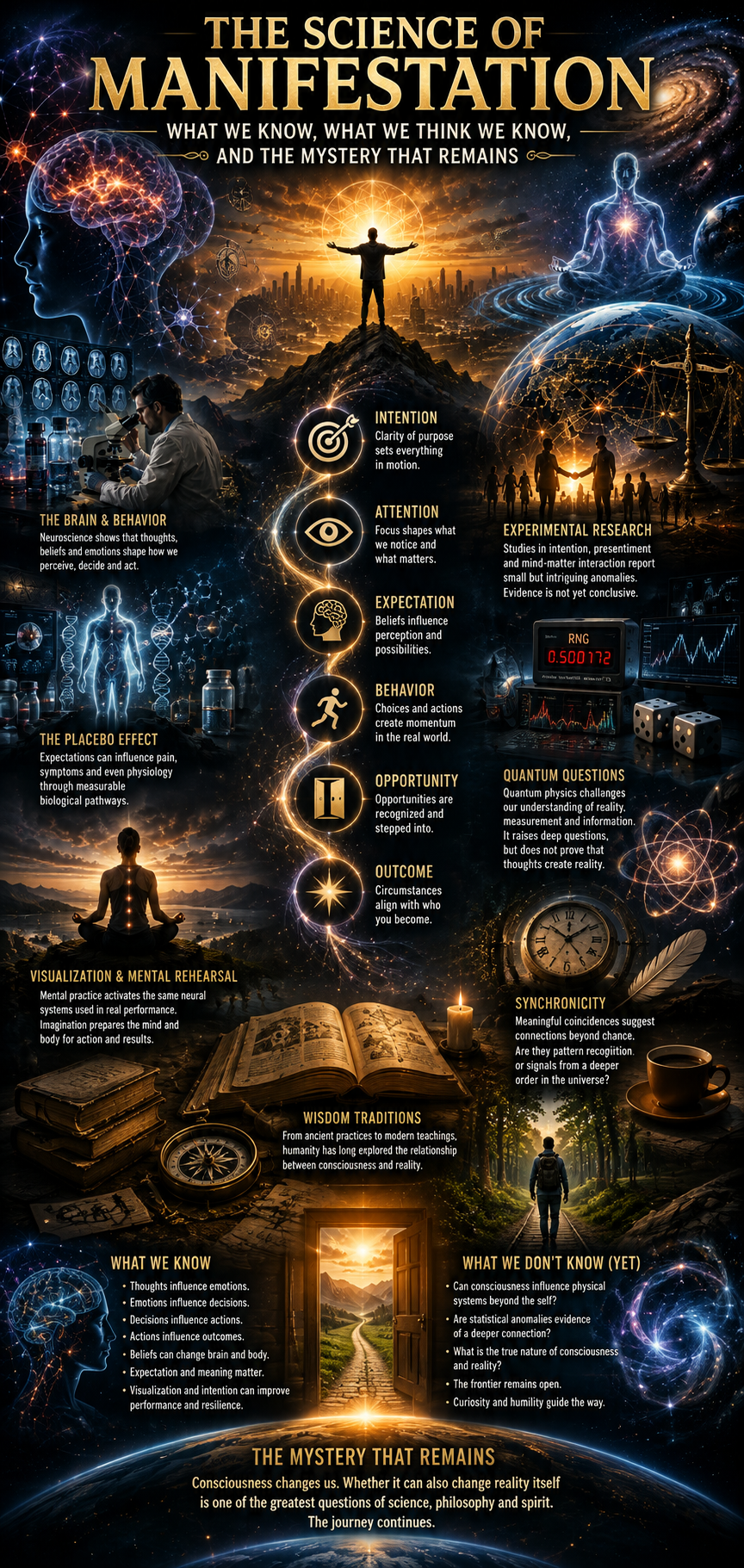
THE SCIENCE OF MANIFESTATION
What We Know, What We Think We Know, and the Mystery That Remains
For thousands of years, spiritual traditions have proposed that consciousness participates in the creation of human experience. Prayer, visualization, intention, meditation, affirmation and ritual appear across cultures separated by enormous distances and periods of history. Modern manifestation teachings—from Neville Goddard and New Thought to contemporary Law of Attraction movements—take the idea further: change consciousness first, they suggest, and external circumstances eventually reorganize around that internal state. Science has not established this stronger proposition. Yet research into expectation, neuroplasticity, placebo effects, visualization, meditation and human performance increasingly demonstrates something important: what happens within consciousness can measurably influence what happens within our lives.
The strongest evidence begins with the brain and behavior rather than metaphysics. Human beings do not experience reality as passive recording devices. Our brains continually interpret incoming information through expectations, previous experiences, beliefs and predictions. Change what someone expects, attends to and believes is possible, and perception and behavior can change with it. A person intensely focused upon creating a business, finding a relationship or improving health may begin noticing information, people and opportunities previously filtered out. Their decisions change; persistence changes; conversations change; other people respond differently. What eventually appears to be “manifestation” may therefore sometimes represent a powerful feedback loop: INTENTION → ATTENTION → EXPECTATION → BEHAVIOR → OPPORTUNITY → OUTCOME.
Visualization provides another piece of the puzzle. Mental rehearsal has been extensively investigated in sports, rehabilitation and motor learning. Imagining an action activates some of the same neural systems involved in physically performing it, although visualization is not a substitute for actual practice. Elite athletes have understood this intuitively for decades: repeatedly rehearse the race, shot, movement or performance before executing it. The manifestation tradition applies essentially the same principle to life itself—construct a sufficiently vivid internal representation of the desired future and begin psychologically inhabiting it before it arrives. Science supports mental rehearsal as a tool capable of affecting subsequent performance; it does not establish that visualization alone causes unrelated external events to materialize.
The placebo effect makes the relationship between belief and physical reality even more fascinating. Expectations can influence pain, symptoms and physiological responses through measurable biological pathways. The reverse phenomenon—the nocebo effect—shows that negative expectations can also contribute to adverse experiences. This does not mean people can simply “think away” serious disease, and manifestation teachings become dangerous when they imply otherwise. But placebo research demolishes the simplistic idea that beliefs are biologically irrelevant. Meaning, expectation and physiology interact. Consciousness may not possess unlimited control over the body, but the boundary between mental experience and physical response is considerably more dynamic than people once assumed.
Then we reach the controversial frontier: Can intention influence something outside the person intending it? Researchers including Dean Radin and earlier investigators at Princeton’s PEAR laboratory have reported small statistical anomalies in experiments examining intention, random systems, presentiment and other purported mind–matter effects. The Global Consciousness Project has similarly investigated whether major events associated with synchronized human attention correspond with departures from randomness in distributed random-number generators. Supporters argue that accumulated statistical results suggest consciousness may possess properties not adequately explained by conventional models. Critics point to methodological choices, small effect sizes, analytical flexibility, replication difficulties and questions about interpreting statistical anomalies. The scientifically responsible conclusion remains: interesting evidence exists, but extraordinary mind–matter manifestation has not been established as scientific fact.
Quantum physics is where manifestation discussions frequently go off the rails. Quantum mechanics genuinely overturned classical assumptions about matter, measurement and predictability at microscopic scales. But statements such as “quantum physics proves thoughts create reality” go far beyond what experiments have demonstrated. The observer effect in quantum mechanics does not establish that human wishes collapse the universe into whichever macroscopic outcome we desire. Nevertheless, quantum theory does leave profound philosophical questions concerning measurement, information and the nature of physical reality. Those questions deserve investigation without converting unresolved physics into evidence for whichever spiritual proposition we prefer. Mystery should invite investigation—not become permission to declare certainty.
There is also a dimension that Carl Jung described through synchronicity: meaningful coincidences that seem extraordinarily connected despite lacking an obvious causal relationship. Nearly everyone has experienced some version of this—a person suddenly comes to mind moments before calling, an improbable encounter occurs at exactly the necessary moment, or a series of circumstances aligns around an intensely held intention. Conventional explanations include probability, selective attention, confirmation bias and our extraordinary ability to recognize patterns. Those explanations undoubtedly account for many experiences. But whether they account for all of them remains a more interesting question. Synchronicity occupies the borderland where subjective meaning, probability and consciousness meet—and where humility is more useful than either automatic belief or automatic dismissal.
Perhaps the greatest misconception about manifestation is therefore that it means wanting something hard enough until the universe delivers it. The deeper traditions teach something considerably more demanding: transformation of the individual. Neville Goddard emphasized assumption and identity; contemplative traditions emphasize disciplined attention; modern psychology emphasizes beliefs, habits and behavior. Viewed through this lens, manifestation becomes less about commanding reality and more about creating coherence between intention, emotional state, identity and action. You do not merely visualize becoming someone different—you progressively think, decide, behave and relate to the world as that person. The external result is never guaranteed, because reality contains other people, chance, biology and circumstances outside individual control. But the probability landscape of one’s life can change substantially.
The mystery that remains is whether this conventional explanation represents the entire mechanism. Does consciousness merely change the person, who subsequently changes their circumstances? Or does consciousness possess properties capable of interacting with information, probability or physical systems in ways science has not yet adequately characterized? At present, we cannot responsibly claim to know. And perhaps that uncertainty is precisely where the next frontier begins. The most productive position is neither unquestioning belief nor reflexive skepticism, but disciplined openness: practice intention, visualization, gratitude, meditation and coherent action where they demonstrably improve human functioning, while continuing to investigate extraordinary claims with equally extraordinary standards of evidence. What we know is that consciousness changes us. What we do not yet know is whether consciousness can also change reality in ways extending beyond us—and that may be one of the most important mysteries still waiting to be explored.
Hordes Of Liberal Women Are Going To Go Completely And Totally Nuts If Lindsay Clancy Is Found Guilty
The Lindsay Clancy murder trial has become a culture war phenomenon. It has been one of the hottest topics on social media for weeks, and now everyone is waiting for the verdict. Even though there are so many things of extraordinary importance that are happening in our world right now, much of the population is absolutely fixated on this case. This is particularly true for one particular demographic. Large numbers of liberal women have become obsessed with Lindsay Clancy, and they have been following this trial with a passion. If Lindsay Clancy is ultimately found guilty, those women will go completely and totally nuts.
After a third day of deliberations, a lot of us were shocked when the jury was still unable to come to a verdict and was dismissed until Tuesday morning…
The jury weighing Lindsay Clancy’s fate asked to go home for the evening and has been dismissed until Tuesday morning, ending another day of deliberations without a verdict.
The panel of nine women and three men, led by a female foreperson, must decide whether Clancy was criminally responsible when she strangled her three children, or whether, as the defense argues, she was in the grip of postpartum psychosis and could not appreciate the wrongfulness of her actions or conform her conduct to the law. Prosecutors contend she knew right from wrong and acted deliberately.
Jurors may find Clancy guilty of first-degree murder, second-degree murder or manslaughter, acquit her, or find her not guilty by reason of lack of criminal responsibility.
I think that it is pretty obvious that the jury is deadlocked. On Monday, two of the female jurors were wearing pink.
Of course wearing pink has become a way for liberal women all over the country to demonstrate that they support Lindsay Clancy. So that is really bad news for the prosecution.
The stakes are incredibly high, because if Clancy is found guilty she will go to prison for a very long time, but if she is found not criminally responsible she will continue to remain at Tewksbury State Hospital…
If Clancy is convicted of first-degree murder, second-degree murder, or manslaughter, she will go to prison.
If the jury finds she is not criminally responsible, Clancy will be required to continue her stay at Tewksbury State Hospital, where her case will be reviewed periodically.
Everyone agrees that she killed her three kids. The question is whether she understood what she was doing or not.
To me, the answer is obvious.
Prior to the murders, Lindsay Clancy conducted numerous web searches that clearly indicated what was on her mind…
Yeah, she definitely planned this in advance.
And when the day arrived, Lindsay Clancy “took each child to the basement and strangled them individually”…
The prosecutors called forensic psychiatrist Dr. Gregory Saathoff, who said Clancy took each child to the basement and strangled them individually. Clancy told doctors she felt like a puppet while she did it. Saathoff had an answer for that: “Children are not puppets.”
“You know, just like adults, children have a will to survive – a strong, strong will to survive. I think it’s just part of being human,” Saathoff said. “I mean, they … are active. They can walk. They can run.”
We are talking about evil on an unspeakable level.
She knew that her husband would try to stop her, and so she sent him out to run some errands…
I have no idea how anyone could possibly want to defend someone like that.
Sadly, we live at a time when murderers can become cultural heroes to those on the left.
Over the past several weeks, there have been countless videos circulating on social media where women have been sharing slogans such as “I am Lindsay Clancy” and “Same, Lindsay”…
On TikTok and Instagram, hundreds, if not thousands, of women are empathizing with or rallying around Clancy: from making statements like “I am Lindsay Clancy,” to posting videos of them holding their own children saying, “Same, Lindsay,” to show that they, too, commiserate, presumably, with the desire to kill their children.
We are not just talking about a handful of women on the fringes of society.
This has been happening in large numbers.
When a woman shares the slogan “Same, Lindsay” on social media, that suggests that she has thought about doing the same thing that Lindsay Clancy did…

Throughout the trial, huge crowds of Lindsay Clancy fans showed up to support her every day.
And over 31,000 liberal women have actually given money to a support fund for Lindsay Clancy. To date, that fund has now raised more than a million dollars…
Viral videos show large crowds of women rallying for Lindsay Clancy, with more than 31,000 now contributing more than $1 million to support a woman who methodically researched, planned, and then murdered her three children.
Making Lindsay Clancy into some sort of a folk hero doesn’t make any sense at all. But somehow it happened. And it is inevitable that there will be copycats.
In fact, during the trial a 22-year-old mother in North Dakota took a knife and cut the throats of her three children…
A 22-year-old Mandan, North Dakota mother is behind bars after police say she used a kitchen knife to cut the throats of her three young children on August 6. Two are dead. One survived. She told their father to “say goodbye to your kids” on video while holding a pistol at her hip.
Kailey Renae Erhart, 22, faces two counts of murder, attempted murder, aggravated assault, terrorizing, and domestic violence. Bond was set at $3 million cash. A judge cited the “extreme violence” and threat to the community, according to Law and Crime.
Her five-month-old and three-year-old children died from their injuries. Her one-year-old son survived after undergoing extensive surgery and is expected to make a full physical recovery.
I think that we are in far more trouble as a society than most people realize.
If Lindsay Clancy is found guilty, liberal women all over America will have an epic meltdown. But I don’t think that is going to happen, because it appears that at least a couple of Lindsay Clancy supporters are on the jury.
Sadly, it appears that there are supporters of Lindsay Clancy virtually everywhere. And that is one of the most alarming things about this case.
It is easy to lock up a single lunatic, but what can we do when there are vast hordes of them running around all over the place?

KEEPERS OF THE LIGHT
Faith Through the Storm
Resilience • Humanity • Courage • Awakening • Hope • Inner Strength
“There are many of us now who, despite the darkness, continue relentlessly to shine our light. We are better for it. We are stronger because of it. And perhaps we are becoming more beautiful in our humanness than ever before.”
Source: GAR Contributing Writer
The last several years have felt like an extraordinary passage through uncertainty, disruption and change. For many of us, the emotional range alone has been remarkable—hope and disappointment, confidence and doubt, connection and isolation, accomplishment and exhaustion sometimes arriving within days of one another. We have been challenged not simply by what is happening around us, but by what those experiences have revealed within us.
There are moments when it seems as though life itself has accelerated. Information arrives faster. Events overlap. Technology changes almost by the week. Political, economic and cultural narratives shift before we have completely processed the previous ones. Whether time itself is accelerating or our experience of change has simply intensified, the psychological effect can feel very real: more experiences, more decisions and more emotions compressed into shorter periods of time.
And so we ride the roller coaster. One day we feel strong; the next, exhausted. One morning the future appears filled with possibility; by evening the same world can seem uncertain and troubled. There are days when victory feels close enough to touch and others when the destination appears thousands of miles away. We can feel appreciated and forgotten, accomplished and defeated, completely certain and full of questions—sometimes all within the same week.
Perhaps one of the deepest lessons of this period is that awakening does not mean escaping those contradictions. It means learning how to remain centered while moving through them. Strength is not the absence of fear, grief, uncertainty or fatigue. Strength is developing the capacity to experience those emotions without allowing any single moment to define who we are or determine what tomorrow must become.
For me, the constant beneath all of this is faith. Faith in our Creator. Faith in humanity. Faith in ourselves and in the possibility that something meaningful can emerge from even the most difficult periods of transformation. Faith does not require us to know exactly what will happen next. It allows us to continue walking when the entire road has not yet become visible.
That faith becomes the fuel for our light. And light, in this sense, does not require grand gestures or perfect spiritual understanding. It appears whenever someone chooses compassion instead of cruelty, courage instead of surrender, truth instead of convenient deception, service instead of selfishness, or hope instead of despair. Every person who remains thoughtful, loving and grounded during difficult times becomes a small point of stability for everyone around them. Enough points of light eventually become a network.
This may ultimately be one of the most important dimensions of the awakening journey: realizing that changing the world and changing ourselves were never entirely separate projects. The outer turbulence forces us inward, where we confront our fears, assumptions, wounds, attachments and beliefs. We begin asking different questions—not simply What is happening? but Who am I becoming because of what is happening?
There will still be difficult days. There will be moments when we question the path, when progress appears to reverse and when the darkness seems louder than the light. But temporary darkness does not erase everything we have learned, and uncertainty does not invalidate the journey. Sometimes the most important evidence of transformation is simply that we respond differently than we once would have.
Humanity’s greatest strength has never been that we avoid hardship. It is that human beings repeatedly discover ways to create meaning, community, beauty, love and renewal within it. Every generation encounters moments when the future appears uncertain; what matters is what people choose to carry forward when they pass through those moments.
So we continue. Not because we possess every answer, but because we still believe there is something worth building, protecting and becoming. We keep learning. We keep serving. We keep loving. And when someone else’s light becomes faint, we carry a little more until they can carry it again.
Faith fuels the light. The light reveals the path. And step by step, we find our way forward together.
“We once were lost, but now we are finding our way. We once struggled to see, but now our eyes are opening. The darkness may still surround us—but it no longer determines the direction we travel.”
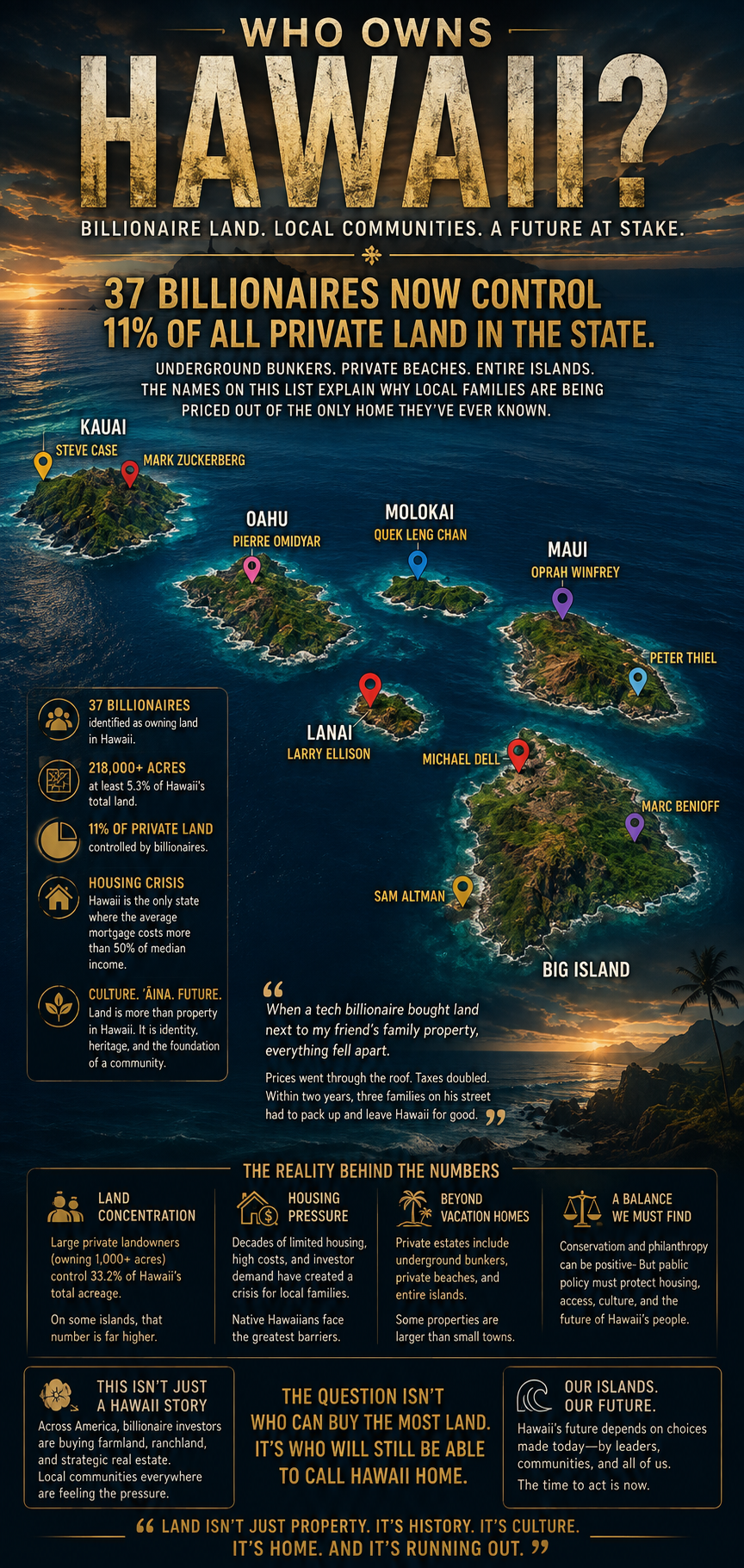
WHO OWNS HAWAII?
Billionaire Land, Housing Pressure & the Battle for the Islands
37 Billionaires • 218,000+ Acres • 11% of Private Land • Housing • Culture • Access • ʻĀina
“In Hawaii, land is more than real estate. It is home, history, culture, food, water and identity. The question is no longer simply who can afford to buy it—but who will still be able to live there.”
Something extraordinary has been happening across Hawaii, and one of the headline numbers is real. A major Forbes investigation of property records found that 37 billionaires controlled at least 218,000 acres—5.3% of Hawaii’s total land and 11.1% of its non-government-owned land, based on ownership records through December 2023. The investigation noted that the actual figure could be higher because some properties are held through corporations, trusts and LLCs that can make beneficial ownership harder to trace.
The names illustrate just how concentrated some holdings have become. Oracle cofounder Larry Ellison controls nearly all of Lānaʻi, while Oprah Winfrey has accumulated thousands of acres on Maui and other wealthy owners have established major estates across the islands. Mark Zuckerberg’s Kauaʻi holdings have expanded substantially since the original Forbes investigation; Wired reported in 2025 that another 962-acre acquisition increased his holdings to more than 2,300 acres, while more recent reporting places his Koʻolau Ranch footprint even higher.
Some of these properties are far removed from the conventional image of a vacation home. Zuckerberg’s Kauaʻi compound has drawn attention for its scale, privacy infrastructure and a reported underground shelter. Meanwhile, Ellison’s control of roughly 98% of Lānaʻi represents something much larger: one private owner possessing most of the developable land on an inhabited Hawaiian island. These examples inevitably raise questions about how concentrated private ownership can influence development, conservation, housing, infrastructure and community life.
But an important distinction needs to be made. It would be too simplistic to say that billionaires alone caused Hawaii’s affordability crisis or that one wealthy neighbor automatically causes nearby families’ property taxes to double. Hawaii’s housing problems involve decades of limited housing supply, high construction and labor costs, land-use restrictions, geographic constraints, investment demand, tourism, interest rates and broader economic pressures. Yet the state’s own housing research underscores the severity of the problem: Hawaii is the only state where the average mortgage costs more than half of median income, while Native Hawaiian households face particularly significant affordability challenges.
The deeper story is therefore land concentration. A 2025 Hawaii state economic report found that private owners holding at least 1,000 acres collectively account for 33.2% of the state’s entire acreage. The concentration varies dramatically by island: large private owners account for approximately 29.3% of Oʻahu, 38.6% of Maui, 39.2% of Kauaʻi and 58.9% of Molokaʻi, while Lānaʻi remains the extraordinary outlier. Billionaire ownership is therefore part of a much older Hawaiian land-concentration story rather than an entirely new phenomenon.
For Native Hawaiians, this debate carries an even deeper historical and cultural dimension. The Department of Hawaiian Home Lands administers lands originally set aside under the Hawaiian Homes Commission Act for Native Hawaiian homesteading, yet housing access and long waiting periods remain persistent concerns. Hawaii state materials have documented disproportionately high housing burdens among Native Hawaiians and noted that more Native Hawaiians now live on the continental United States than in Hawaii—a striking measure of the economic pressures affecting the ability of families to remain in the islands.
There is another side that deserves acknowledgment. Large private ownership does not automatically mean harmful development: billionaire landowners have funded conservation, philanthropy, affordable housing and environmental projects. Marc Benioff and his wife, for example, donated hundreds of acres for affordable housing, while some large estates preserve agricultural or undeveloped land. The legitimate public-policy question is therefore not whether wealthy people should be permitted to own property, but how Hawaii balances private property rights with housing affordability, environmental stewardship, cultural preservation and the long-term survival of local communities.
And this is where the Hawaii story becomes larger than Hawaii. Across America, farmland, ranchland and strategically valuable real estate are increasingly attractive stores of wealth for ultra-high-net-worth investors—a trend raising concerns that ordinary farmers and families may find themselves competing against capital they cannot possibly match. For Hawaii, where usable land is inherently finite, that competition carries unusual consequences. The central question is not simply “Who owns Hawaii?” It is whether one of America’s most culturally distinctive places can remain economically accessible to the people whose families, communities and traditions give the islands their identity.
GAR SIGNAL: When land becomes a global investment asset while local incomes remain tied to a local economy, ownership can gradually separate from community. Hawaii may be one of America’s clearest laboratories for what happens when extraordinary global wealth meets an extraordinarily limited supply of land.
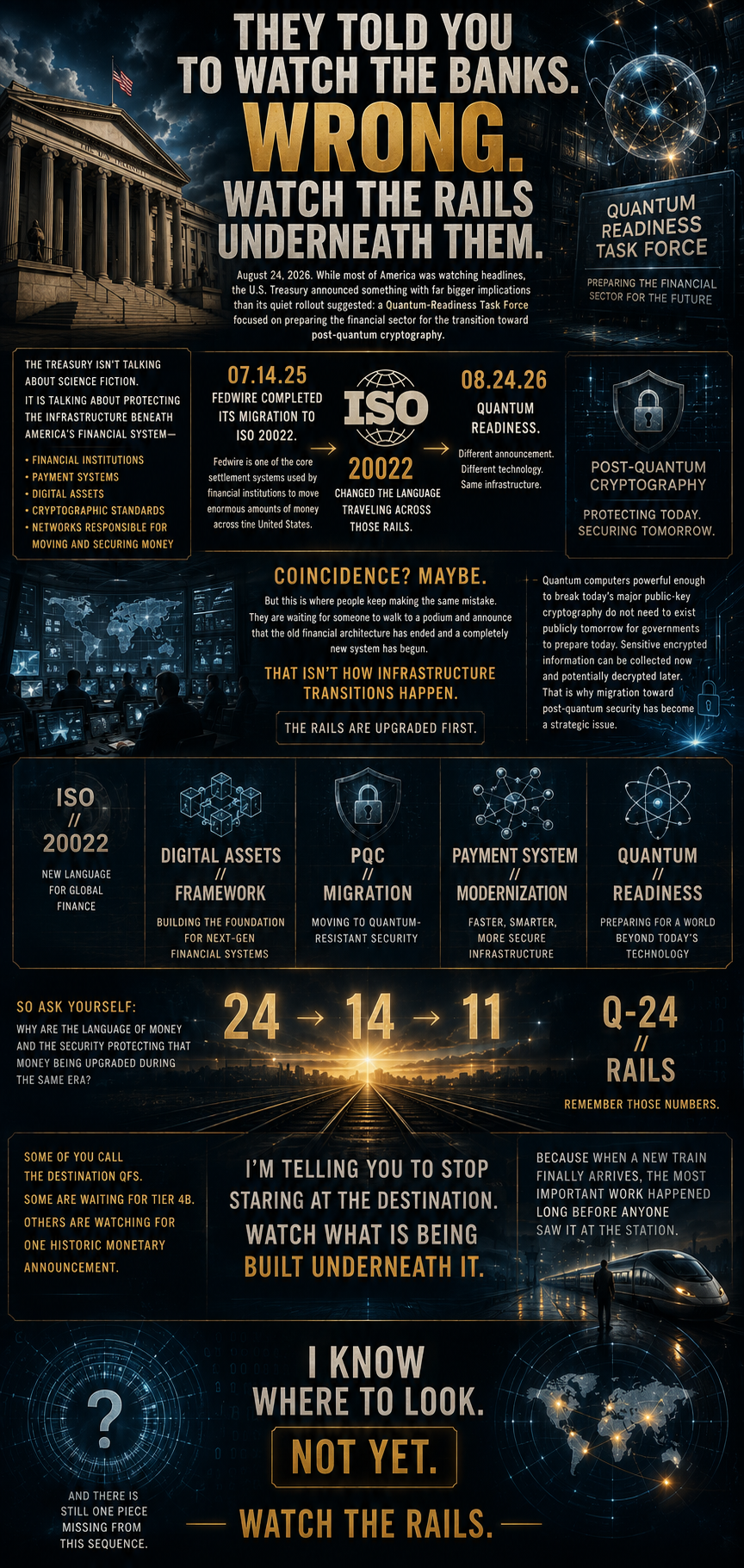
THEY TOLD YOU TO WATCH THE BANKS
Wrong: Watch the rails underneath them.
Source: The 17th Disciple TG
August 24, 2026. While most of America was watching headlines, the U.S. Treasury announced something with far bigger implications than its quiet rollout suggested: a Quantum-Readiness Task Force focused on preparing the financial sector for the transition toward post-quantum cryptography.
Read that again.
The Treasury isn’t talking about science fiction. It is talking about protecting the infrastructure beneath America’s financial system — financial institutions, payment systems, digital assets, cryptographic standards and the networks responsible for moving and securing money.
Now connect another date:
07.14.25 — Fedwire completed its migration to ISO 20022.
Fedwire isn’t some experimental payment app. It is one of the core settlement systems used by financial institutions to move enormous amounts of money across the United States.
ISO 20022 changed the language traveling across those rails.
Then came:
08.24.26 — QUANTUM READINESS.
Different announcement. Different technology. Same infrastructure.
Coincidence?
Maybe.
But this is where people keep making the same mistake. They are waiting for someone to walk to a podium and announce that the old financial architecture has ended and a completely new system has begun.
That isn’t how infrastructure transitions happen.
The rails are upgraded first.
ISO 20022.
Digital asset frameworks.
Cryptographic migration.
Quantum-resistant security.
Payment-system modernization.
Piece by piece.
The public sees separate technical announcements. Those watching the architecture see something else: the financial system is being prepared for a world that will operate very differently from the one built around legacy banking technology.
And there is another detail.
Quantum computers powerful enough to break today’s major public-key cryptography do not need to exist publicly tomorrow for governments to prepare today. Sensitive encrypted information can be collected now and potentially decrypted later. That is why migration toward post-quantum security has become a strategic issue.
So ask yourself:
Why are the language of money and the security protecting that money being upgraded during the same era?
ISO // 20022
PQC // MIGRATION
DIGITAL ASSETS // FRAMEWORK
QUANTUM // READINESS
Four pieces.
One architecture.
24 → 14 → 11, Q-24 // RAILS
Remember those numbers.
Some of you call the destination QFS.
Some are waiting for Tier 4B.
Others are watching for one historic monetary announcement.
I’m telling you to stop staring at the destination.
Watch what is being built underneath it. Because when a new train finally arrives, the most important work happened long before anyone saw it at the station. And there is still one piece missing from this sequence.
I know where to look.
Not yet.
Watch the rails.
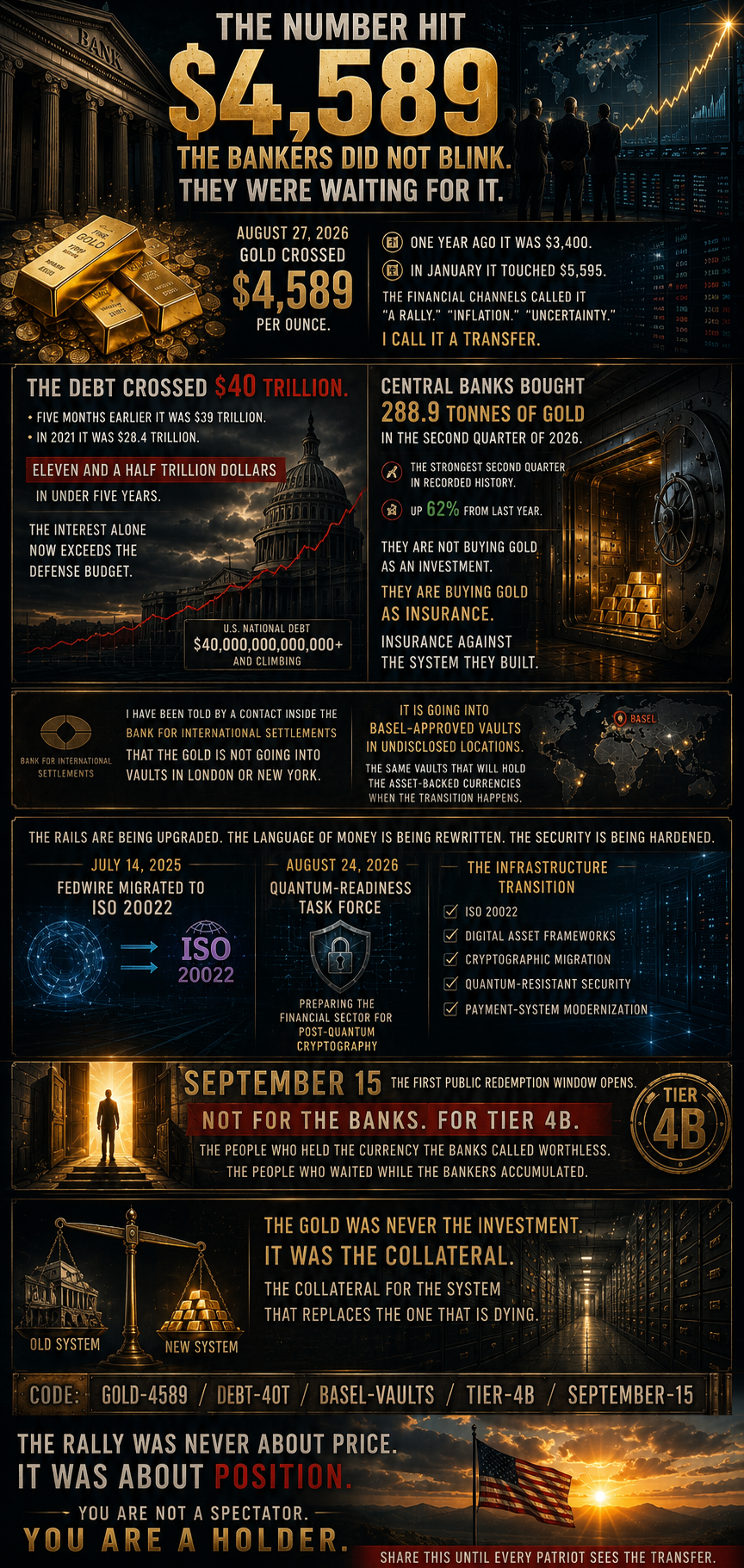
THE NUMBER HIT $4,589. THE BANKERS DID NOT BLINK. THEY WERE WAITING FOR IT
On August 27, 2026, gold crossed $4,589 per ounce. One year ago it was $3,400. In January it touched $5,595. The financial channels called it a “rally.” They called it “inflation.” They called it “uncertainty.”
I call it a transfer.
Because here is what they did not tell you.
The same week gold crossed $4,589, the U.S. national debt crossed $40 trillion. Five months earlier it was $39 trillion. In 2021 it was $28.4 trillion. Eleven and a half trillion dollars in under five years. The interest alone now exceeds the defense budget.
And while the public watched the debt clock, the central banks bought 288.9 tonnes of gold in the second quarter of 2026. The strongest second quarter in recorded history. Up 62% from last year.
They are not buying gold as an investment. They are buying gold as insurance. Insurance against the system they built.
I have been told by a contact inside the Bank for International Settlements that the gold is not going into vaults in London or New York. It is going into Basel-approved vaults in undisclosed locations. The same vaults that will hold the asset-backed currencies when the transition happens.
The Quantum-Readiness Task Force was announced on August 24, 2026. Fedwire migrated to ISO 20022 on July 14, 2025. The rails are being upgraded. The language of money is being rewritten. The security is being hardened.
SEPTEMBER 15. The date the first public redemption window opens. Not for the banks. For Tier 4B. The people who held the currency the banks called worthless. The people who waited while the bankers accumulated.
The gold was never the investment. It was the collateral. The collateral for the system that replaces the one that is dying.
CODE: GOLD-4589 / DEBT-40T / BASEL-VAULTS / TIER-4B / SEPTEMBER-15
The rally was never about price. It was about position.
You are not a spectator. You are a holder. Share this until every patriot sees the transfer.
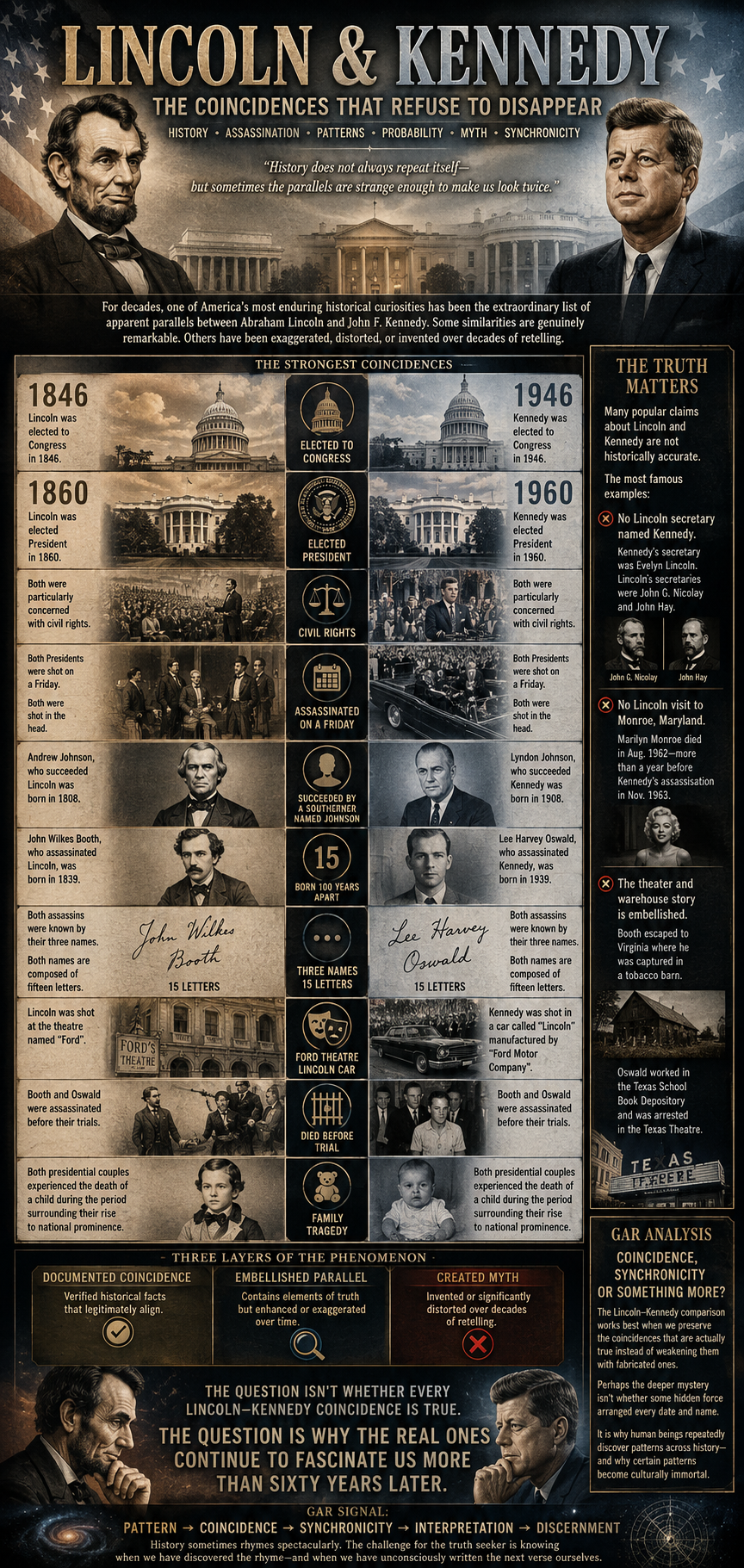
LINCOLN & KENNEDY
THE COINCIDENCES THAT REFUSE TO DISAPPEAR
History • Assassination • Patterns • Probability • Myth • Synchronicity
“History does not always repeat itself—but sometimes the parallels are strange enough to make us look twice.”
For decades, one of America’s most enduring historical curiosities has been the extraordinary list of apparent parallels between Abraham Lincoln and John F. Kennedy. The story has circulated through books, newspapers, chain letters and eventually social media, often ending with the provocative suggestion that “nothing happens by accident.” Some of the similarities are genuinely remarkable. Others have been exaggerated, distorted or invented over decades of retelling.
Start with the strongest coincidences. Lincoln was elected to Congress in 1846; Kennedy was elected to Congress in 1946. Lincoln won the presidency in 1860; Kennedy won it in 1960. Both presidencies became inseparable from America’s struggle over civil rights, although they confronted very different historical circumstances. Both men were assassinated while serving as president, both were shot on a Friday, and both suffered fatal gunshot wounds to the head.
The succession parallel is particularly striking. Lincoln was succeeded by Andrew Johnson, born in 1808; Kennedy was succeeded by Lyndon B. Johnson, born in 1908. Both vice presidents were Southern Democrats named Johnson who inherited the presidency following an assassination exactly a century apart in their birth years. Those details are historically real.
Then come the assassins. John Wilkes Booth and Lee Harvey Oswald are conventionally identified as the men responsible for the two presidential assassinations. Both are routinely referred to by three names, and each full name contains 15 letters when spaces are excluded. Booth shot Lincoln at Ford’s Theatre; Kennedy was riding in a Lincoln Continental manufactured by Ford Motor Company when he was shot. Both accused assassins also died before they could stand trial—Booth was shot by Union soldiers after a manhunt, while Oswald was shot by Jack Ruby while in police custody.
There are family parallels as well. Both presidential couples experienced the death of a child during the broader period surrounding their rise to national prominence, although the frequently repeated wording that both children died “while living in the White House” isn’t quite correct. Abraham and Mary Lincoln’s son Willie died in the White House in 1862. John and Jacqueline Kennedy’s infant son Patrick died in August 1963, but not in the White House.
And this is where the story begins demonstrating something equally interesting: how genuine coincidences gradually acquire invented ones.
One of the most famous claims says, “Lincoln had a secretary named Kennedy, while Kennedy had a secretary named Lincoln.” Only half is true. Kennedy’s longtime personal secretary really was Evelyn Lincoln. Abraham Lincoln’s principal White House secretaries, however, were John G. Nicolay and John Hay—a fact documented by both the Library of Congress and National Park Service. There is no corresponding presidential secretary named Kennedy.
Another popular version says that shortly before his assassination Lincoln visited Monroe, Maryland, while Kennedy had recently been with Marilyn Monroe. That comparison collapses completely. Marilyn Monroe died in August 1962—more than a year before Kennedy was assassinated in November 1963—and the supposed Lincoln visit does not withstand historical scrutiny.
The famous theater-and-warehouse symmetry is also embellished. Booth certainly shot Lincoln inside Ford’s Theatre, but he did not simply run from the theater to a warehouse; he escaped Washington on horseback and was eventually cornered at a Virginia tobacco barn. Oswald, meanwhile, worked at the Texas School Book Depository, and after Kennedy’s assassination he eventually entered the Texas Theatre, where police arrested him. The underlying theater/building coincidence exists, but the perfectly reversed wording was constructed afterward.
That distinction makes the Lincoln–Kennedy phenomenon more fascinating, not less. We are looking at three different layers operating simultaneously:
DOCUMENTED COINCIDENCE → EMBELLISHED PARALLEL → CREATED MYTH
The human mind is exceptionally good at discovering patterns. Given thousands of biographical facts about two presidents—dates, relatives, elections, offices, cities, associates, vehicles, speeches and circumstances—some unusual alignments become statistically inevitable. Once people discover several impressive examples, confirmation bias encourages them to keep searching for matching facts while ignoring the thousands that do not correspond.
But there is another way to interpret the phenomenon without claiming a hidden mechanism. Carl Jung famously explored the idea of synchronicity—meaningful coincidences that appear connected to the observer even when no conventional causal relationship can be demonstrated. From that perspective, the importance of a coincidence does not necessarily lie in proving that history was engineered. Its importance may lie in what the pattern causes us to examine.
Lincoln and Kennedy certainly occupy remarkably similar symbolic positions in American memory. Both became presidents during periods of profound national division. Both confronted major questions surrounding civil rights and America’s identity. Both were assassinated while still relatively close to the height of their political power. Both deaths immediately transformed political leaders into historical symbols.
GAR ANALYSIS | COINCIDENCE, SYNCHRONICITY OR SOMETHING MORE?
The Lincoln–Kennedy comparison works best when we preserve the coincidences that are actually true instead of weakening them with fabricated ones. There are enough legitimate parallels to make the story compelling without claiming that every viral comparison is historical fact.
Perhaps the deeper mystery isn’t whether some hidden force arranged every date and name. It is why human beings repeatedly discover patterns across history—and why certain patterns become culturally immortal.
THE QUESTION ISN’T WHETHER EVERY LINCOLN–KENNEDY COINCIDENCE IS TRUE.
THE QUESTION IS WHY THE REAL ONES CONTINUE TO FASCINATE US MORE THAN SIXTY YEARS LATER.
GAR SIGNAL: PATTERN → COINCIDENCE → SYNCHRONICITY → INTERPRETATION → DISCERNMENT
History sometimes rhymes spectacularly. The challenge for the truth seeker is knowing when we have discovered the rhyme—and when we have unconsciously written the next verse ourselves.

The Stage Is Set, The Fuse Is Lit, And 3 Global Conflicts Are On The Brink Of Detonation
CODE 🟨 YELLOW / POSSIBLE DISINFORMATION, QUESTIONABLE SOURCES, CONFLICTING REPORTS
We are facing one of the most dangerous chapters in human history. For years, I have been warning about 3 global conflicts which would collectively make up World War III. Unfortunately, the stage has now been set for a polycrisis of epic proportions. The war with Iran threatens to greatly escalate, the continuous bombardment of Kyiv has NATO on high alert, and China has decided to literally surround Taiwan with large numbers of ships. Tensions are running sky high, and events in Europe, the Middle East and Asia could all spiral out of control at any moment.
Last night, fighting in the Middle East erupted once again.
The U.S. conducted airstrikes on Iranian military targets on Larak Island, and in response the Iranians fired off at least 8 ballistic missiles…
On Sunday, the United States struck Iran’s Larak Island after the U.S. observed military personnel preparing to deploy rockets loaded with sea mines into the Strait of Hormuz.
Iranian state media said the attack killed and wounded several Iranian soldiers and civilians, and the country vowed to answer.
In response, Iran fired at least eight ballistic missiles toward U.S. forces in Jordan, according to Jordan’s armed forces. Trump told Fox News that U.S. forces intercepted all missiles but one, as it wasn’t going to hit anything.
It appears that the Iranian response really angered President Trump.
On Truth Social, he posted a message in which is declared Iran to be “DEAD” and “a Failed Nation”…
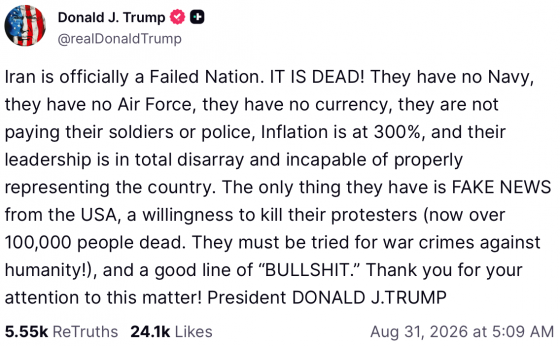
Later on Monday, we learned that Trump had told Trey Yingst of Fox News that the U.S. will “hit them hard” in response to the Iranian ballistic missile attack…
US President Donald Trump said the United States would respond to an Iranian missile attack on US forces overnight, according to Fox News correspondent Trey Yingst.
“We’re going to hit them hard,” Trump told Fox News. “There will be a response.”
That would seem to indicate that a large wave of airstrikes is coming tonight.
We shall wait and see what happens.
On the other side, the Iranians are warning that their response to any new U.S. airstrikes will be “dozens of times greater”…
Iran fired back with bold rhetoric Monday, vowing to respond to every U.S. attack with force “dozens of times greater,” according to a senior Iranian source who spoke with Reuters.
The source pointed to Iran’s retaliation following U.S. strikes on launchers on Larak Island, claiming it demonstrated that “no target in the region is beyond Tehran’s reach.”
Tehran also warned that conditions in the Strait of Hormuz would worsen for vessels that violate what it called Iranian rules, raising new concern for shipping through the vital energy chokepoint.
As long as Iran doesn’t hit Israel, the situation can probably be contained. But if Iran launches ballistic missiles at the Israelis, things will escalate very quickly.
In any event, it appears that there is no end in sight for this conflict. In fact, Fox News is reporting that the deployment of troops from the 82nd airborne division has been extended to a full year…
The deployment of the 82nd airborne in the Middle East has been extended to a full year, two U.S. Army officials tell Fox News.
About 2,000 soldiers from the 82nd airborne first deployed to the region in March. The extended deployment was announced Sunday by division Commander Maj. Gen. Brandon R. Tegtmeier.
The extension is due to “operational requirements,” according to a letter to military families obtained by Fox.
At the same time, the war in Europe is poised to escalate to a new level that we haven’t seen before.
Just hours ago, the Russians ominously warned that they are preparing for “massive strikes against facilities in Ukraine’s energy sector”…
Russia’s defence ministry says it is gearing up for large-scale attacks on Ukraine’s energy infrastructure in a tit-for-tat response to strikes by Kyiv. “Russian forces have begun preparations for massive strikes against facilities in Ukraine’s energy sector in response to the ongoing attacks by the Kyiv regime on civilian infrastructure and on Russia’s oil and energy complex,” it said on Telegram on Sunday. Last winter, Moscow repeatedly hit Ukrainian power plants, devastating the country’s energy sector and plunging millions of people into cold and darkness in sub-zero temperatures.
The Russians have totally lost patience with Ukraine. They are sick and tired of being hit by long-range drones and long-range missiles night after night.
Last night, the Ukrainians did it again.
So the Russians have decided to continuously bombard Kyiv until it stops. The following is an account from someone that actually lives in Kyiv…
The Russians are using tactics of continuous bombardment to paralyse life in Kyiv. The metro stops, traffic across the bridges is blocked, and administrative buildings and shopping complexes close.
I walk through the streets while drones are being shot down directly overhead. When I look up at the sky, I see only a threat. Yet it is impossible to put your daily affairs, and your very life, on hold. Paralysis is a forerunner of death. And we have chosen to live.
I know that many people abroad have grown accustomed to Russia’s constant strikes against the people of Ukraine. Yet the ability to “not think about it” is a privilege that reflects your position within the structure of reality.
Can you imagine trying to live your life normally in the midst of constant air raid alerts and constant explosions in the distance?
According to Ukrainian President Volodymyr Zelenskyy, the number of munitions used by the Russians over the past week is absolutely staggering…
“In total, this week alone, the Russians have launched nearly 2,000 strike drones, more than 1,600 aerial bombs, and 31 missiles of various types,” Zelenskyy added.
There is no way that the Russians will ever back down. As I explained late last week, Russian President Vladimir Putin feels compelled to escalate matters.
He is absolutely determined to be victorious, because he is reportedly concerned that he could be hanged if he does not win this war…
According to The Economist, discontent is even greater among Russia’s elites, with one insider claiming they are increasingly frustrated by the length of the conflict.
Mr Putin reportedly believes he could be at risk if he ends the war without achieving at least his minimum goal of capturing the entire Donbas region.
‘They will hang me,’ he reportedly said at one point during the war, according to an insider cited by The Economist.
While the U.S. is tied up in the Middle East and NATO is focused on the conflict in Ukraine, this could be a perfect time for China to make a move on Taiwan.
And the Chinese are starting to put on the squeeze a little bit.
Last month, the number of Chinese ships detected around Taiwan surged to an all-time record high…
China deployed a record number of coast guard, scientific research and other ships near Taiwan’s waters last month, the Coast Guard Administration (CGA) said, as Beijing dials up pressure on Taipei.
The coast guard warned of an increasingly severe situation, as analysts say the increased activity is part of China’s bid to map the region for submarine warfare.
The number of Chinese ships detected around Taiwan proper soared to a record 244 last month — an average of nearly eight every day, official data showed.
Approximately 60 percent of those ships belong to the Chinese coast guard.
That means that they are armed.
In addition, the Chinese warships that are constantly hovering near Taiwan are not even included in the figure given above…
About 60 percent were coast guard ships, with research vessels and other government boats making up the rest.
The figures do not include Chinese warships, which China’s military deploys around Taiwan on a near-daily basis.
When China ultimately decides to take Taiwan, a naval blockade will probably be the first step. And once a naval blockade of Taiwan is established, we will be at a state of war with China.
Of course we may not be able to do much to intervene because a lot of our naval assets have been deployed to the Middle East and we have run through large portions of our munitions stockpiles.
So we are in a very tenuous position at the moment, and our relations with China just continue to deteriorate. For so long, I have been writing about Russia, China and the Middle East.
Now all three theaters threaten to erupt all at once. If you wanted to live at one of the most “interesting” periods in all of human history, you have certainly gotten your wish.

163 CHILDREN. FIVE DAYS. ONE OPERATION
Florida officials did not release a theory. They released a number that should stop every American in their tracks.
Source: The 17th Disciple TG
On August 25, 2026, Attorney General James Uthmeier and FDLE Commissioner Mark Glass announced the recovery of 163 missing children during Operation Statewide Shield — a five-day, statewide effort described as Florida’s first operation of its kind.
The children ranged from 2 months to 17 years old.
Read that again.
Some were infants. Some were teenagers. Every one of them had a name, a family, and a life waiting for them to come home.
The recoveries were not limited to one city:
Tampa Bay — 46
Miami — 41
Jacksonville — 32
Orlando — 21
Fort Myers. Pensacola. Tallahassee.
Six states. One U.S. territory. Twelve countries.
This was not a social-media rumor. It was a coordinated operation using real-time intelligence, field work, law enforcement, child-welfare professionals, medical providers and victim advocates.
Officials said many of the recovered children had experienced abuse, neglect, exploitation or exposure to other criminal activity — including human trafficking.
But understand the wording.
The official release does not say all 163 children belonged to one trafficking ring. It does not say every arrest in the video came from this operation. The facts are already powerful enough without adding a story that has not been proven.
There were multiple arrests. Cases included alleged crimes against minors and interference with child custody. The Attorney General’s Office and the Miami-Dade State Attorney’s Office are taking on three felony cases, and officials said more arrests are expected.
That means Operation Shield may have ended.
The cases have not.
The children were taken to recovery hubs for support. Not press conferences. Not political theater. Support — from people whose job was to help them begin again.
This is the part the internet often forgets:
Behind every number is a child who was missing from a bedroom, a classroom, a family photograph and someone’s prayers.
163 is not a statistic. It is 163 doors that can open again.
The date matters:
08.25 — the announcement.
163 — the children brought home.
5 — the days Florida searched.
And the next question is not whether the operation was real.
It was.
The next question is how many more vulnerable children are still waiting for someone to keep looking.
The shield is not a slogan.
It is a promise: find them, protect them, bring them home.
SHIELD-0825, 163-HOME, 5-DAY-SEARCH
Share this until everyone sees it.
THE VATICAN CHRONOVISOR — THE FORBIDDEN MACHINE THAT RECORDED THE PAST
Deep beneath the Vatican, behind corridors that do not appear on any public map, there is said to be a chamber built for a machine that was never designed to predict the future.
Source: Mr. Kidpool TG
It was designed to reopen the past. In the 1950s, Benedictine priest Father Pellegrino Ernetti allegedly assembled a secret team of twelve physicists, engineers, and clergy to construct a device known as the Chronovisor. Unlike a television, it did not receive signals from broadcasting towers.
It captured the electromagnetic residue left behind by human voices, violent events, and moments of extreme emotion. According to the hidden theory, nothing that happens truly disappears. Every word, every death, and every betrayal remains suspended inside the fabric of reality—waiting for the correct frequency to bring it back.
The operators reportedly witnessed scenes no living historian had ever seen. They observed ancient Rome before its ruins, heard speeches whose original words had been lost for two thousand years, and recovered fragments of a forbidden play believed destroyed after the fall of the Empire. But the most guarded session allegedly targeted the final hours of Jesus Christ.
Ernetti claimed the machine produced both the voice and image of the crucifixion. Soon afterward, a photograph appeared in the Italian press. The Vatican dismissed the story. Researchers attacked the image. Ernetti withdrew from public view. The machine vanished. Yet no complete laboratory record was released, none of the alleged scientists were permitted to testify together, and the chamber where the experiment supposedly occurred was sealed.
The Chronovisor was not buried because it could prove one religious event. It was buried because it could destroy the ownership of history itself. A government can classify documents. A church can lock an archive. A victorious empire can erase the names of the defeated. But none of them can control a machine capable of replaying the original moment.
Wars presented as accidents could be watched from the room where they were planned. Missing children could be traced to the final door they entered. Secret ceremonies, royal murders, false miracles, and agreements that shaped entire nations could be viewed without witnesses, confessions, or surviving paper. The past would no longer belong to whoever wrote the official record. It would become evidence.
The “Alliance” narrative claims the Chronovisor was dismantled and divided among three underground repositories so that no single faction could activate it. One component was hidden beneath Rome. Another disappeared into a military laboratory in South America. The final lens was transferred to a black archive known only as VAULT IX.
Recent intelligence suggests the three components have been reunited. But when the system was activated, it did not display ancient history. It displayed a recent room, a modern table, and twelve living figures watching events that had not yet been made public. The machine was not only reading the past anymore. Someone had changed the frequency—and the archive had begun recording the present before the world was allowed to see it.
CODE: CHRONOVISOR / VAULT-IX / TEMPORAL-SIGNAL / ERASED-HISTORY
They told you history was written by the victors. They lied to hide the fact that history was still broadcasting—and they had the only receiver.
The most dangerous secret is not what happened centuries ago. It is what happened yesterday that they have already taught you to forget.

Americans Hate Flock Cameras! So Why Is The Left So Silent About How They Are Being Used To Violate Our Constitutional Rights?
There is a growing national outcry to ban Flock cameras. We do not give up our constitutional rights when we get into our vehicles, and we do not want authoritarian control freaks watching us, monitoring us and tracking us everywhere that we go. This is an issue that is uniting people all over the country, and so you would think that politicians from both parties would be getting on board. Unfortunately, that is not the case at all. Many top Republicans are coming out against Flock cameras very strongly, but the silence from the left has been deafening. Yes, there are a few voices on the far left that appear to be concerned about our civil liberties, but most prominent Democrats have been eerily silent about Flock cameras. Why is that?
If you want cameras to watch you everywhere that you go, move to China.
Seriously.
We don’t want to live in a surveillance state, and our Constitution is supposed to protect us from that.
To me, it is exceedingly clear that these cameras are violating our constitutional rights, and there are some politicians that are taking action.
In fact, U.S. Senator Josh Hawley just initiated a major investigation…
Sen. Josh Hawley (R-Mo.), the chair of the Senate Judiciary Subcommittee on Crime and Counterterrorism, has launched an investigation into Flock Safety’s national surveillance network and is demanding to know who has access to the personal data of Americans captured on Flock cameras.
Hawley wrote in a letter to Flock CEO Garrett Langley that the company has “assembled an unprecedented national surveillance network” of more than 120,000 cameras across 49 states that conducts 20 billion vehicle scans every month.
“The overwhelming majority of Americans captured in those records did nothing wrong. Instead of serving discrete local investigations, as contemplated by our constitutional processes and safeguards, these camera networks harness artificial intelligence to pool what they capture into a national database that customers can search,” he wrote.
Good for him. This is the sort of thing that our elected officials are supposed to do. Flock cameras are being abused by law enforcement officers over and over again.
For example, a deputy in Richmond County, Virginia used the Flock system to track a woman that he was romantically involved with 1,639 times…
In one especially shocking incident, Former Deputy Jaquarius Yarbrough of Richmond County, Virginia, allegedly used the license plate tracking system to stalk a woman he was having an affair with 1,639 times over several months.
“What we’re talking about are cameras that are documenting everywhere your car goes,” Maass said. “There are databases where police can type in your license plate and see everywhere you’ve gone… The government shouldn’t be creating databases of movement.”
Sadly, that is not an isolated incident.
A police officer in Kentucky was recently arrested for using the system to track his ex-girlfriend more than 2,000 times…
A Kentucky police officer was arrested after authorities said he used the Flock Safety license plate reader camera system to track his ex-girlfriend over 2,000 times, marking the latest in a string of recent law enforcement officer resignations or arrests for alleged abuses of the controversial technology.
Things got so bad that the ex-girlfriend was eventually forced to file for an order of protection…
Investigators found Zahir had conducted 2,048 Flock searches from January into May to track two vehicles registered to the victim, his child’s mother, in Kentucky and Indiana, court records show.
During the period he conducted those searches, Zahir harassed the victim and made threatening comments, prompting her to file an order of protection against him, according to the court records.
This just keeps happening again and again.
According to CNN, throughout the country there have been “at least 47 instances of officers being disciplined in some way for alleged abuse of the Flock system for stalking romantic interests”…
The Institute for Justice, a nonprofit public interest law firm that has filed lawsuits against Flock on Fourth Amendment grounds, has tracked at least 47 instances of officers being disciplined in some way for alleged abuse of the Flock system for stalking romantic interests.
Of even greater concern is the fact that Flock cameras often create false positives that flag citizens that are completely innocent.
One police department in California actually discovered that a whopping 71 percent of its Flock alerts were errors…
Hawley said the surveillance notifications have also resulted in mistaken arrests, such as that of a Florida woman who spent 13 days in jail and faced multiple felony counts after investigators mistakenly arrested her based on a search of Flock’s network.
“Errors and false positives add insult to injury,” Hawley wrote.
He cited one California police department that found that 71 percent of its Flock alerts “were wrong” and noted the Los Angeles Police Department ended its Flock contract after an audit showed its officers had stopped 161 vehicles incorrectly flagged as stolen.
Do you want police officers coming to your door because some stupid Flock camera mistakenly flagged you?
But even if Flock cameras worked perfectly, they would still be violating our constitutional rights.
This is a point that Senator Hawley just made very aptly…
“Americans do not surrender their privacy rights when they drive to work, drop their kids off at school, or go to church,” Hawley wrote. “The Supreme Court has recognized that a comprehensive, retrospective record of a person’s movements is different in kind from ordinary observation in public.”
He is right on target.
We don’t give up our constitutional rights when we leave our homes.
But the CEO of Flock is telling us that Americans must “compromise” on their constitutional rights in order to feel more secure…
No way.
Even if Flock cameras could make us 100 percent safe, there is no way that I would ever be willing to give up my constitutional rights. Many respected Republican leaders are choosing to take a stand, but there has been silence from many prominent Democrats.
What is wrong with them?
Why won’t they stand up for the constitutional rights of the American people? The good news is that we are winning. In communities all over America, Flock cameras are being turned off.
One of the cities that just pulled the trigger on such a move is Tempe, Arizona…
Of course Tempe is far from alone.
This month, a bunch of other municipalities have also said goodbye to Flock cameras…
Cave Creek, also in Arizona; Bellingham, Massachusetts; and several Texas counties are among the other municipalities that said this month they’re ending their use of Flock cameras.
Bellingham Police Chief Kenneth Fitzgerald said in a statement that during a recent criminal investigation, officials learned that a Flock feature called Free Form, an artificial intelligence-powered tool that can search video information using plain language, was available through the cameras.
“Those features go beyond what most people would think of as a traditional license plate reader,” he said. “That concerned me because I had previously told the public, based on our understanding of the system, that our Flock technology was a license plate reader only.”
I love to see this.
Overall, more than 100 cities and counties have officially deactivated, canceled, or rejected contracts with Flock Safety.
I think that an official in Hood County, Texas said it very well when he stated that “permanent, warrantless tracking doesn’t belong in a free society”…
John Shirley, constable of a precinct in Hood County, Texas, said that after county commissioners voted to remove the cameras, he would be covering them until they could be removed.
“These cameras were constantly scanning and recording regular folks just going about their day. That kind of permanent, warrantless tracking doesn’t belong in a free society,” Shirley said in an Aug. 15 post on Facebook. “By unplugging and covering them, we’re making it clear: privacy isn’t optional, and mass surveillance isn’t how we do things here.”
Yes, if we get rid of all the Flock cameras it may be a little bit more difficult to catch criminals. But freedom always comes with a cost.
I would much rather live in a free society than a surveillance society like China where virtually everything that people do is watched, monitored and tracked by the government. I am for an immediate nationwide ban on all Flock cameras and any other devices that perform similar functions.
What about you?
THE BLACK KNIGHT SIGNAL — THE OBJECT THAT ANSWERED BEFORE HUMANITY TRANSMITTED
For more than a century, astronomers and radio operators have reported signals arriving from above the Earth that do not behave like natural noise. In 1899,
Source: Mr. Kidpool TG
Nikola Tesla detected strange repeating pulses during experiments in Colorado Springs and believed they might have come from an intelligence beyond the planet. Decades later, radio stations began recording “Long Delayed Echoes”—transmissions returning several seconds after they were sent, as if something in orbit had intercepted the message, studied it, and transmitted it back.
The official explanation blamed atmospheric reflection. But the delays were too long, the timing was too precise, and some echoes reportedly returned with patterns that had not been present in the original signal.
In the early years of the Space Age, tracking stations allegedly detected an unidentified object moving through polar orbit before any nation had publicly launched a satellite capable of following that path. It was dark, silent, and impossible to contact. The military classified the tracking data while newspapers were told that the object was ordinary debris.
Years later, astronauts photographed a black, angular structure near Earth. NASA identified it as a lost thermal blanket. Independent researchers gave it another name: the Black Knight Satellite. But the oldest classified diagrams did not describe it as debris. They labeled it OBSERVER-1 and estimated that it had been circling Earth for at least 13,000 years.
The “Cabal” did not fear the object because it was watching humanity. They feared what it was recording. According to the hidden files, Black Knight activates whenever civilization approaches a major transformation—nuclear war, planetary collapse, mass awakening, or contact with technology capable of breaking the control grid. Its signal contains compressed maps of human conflict, genetic changes, atmospheric damage, and every artificial frequency broadcast from the surface.
It was not placed in orbit to invade Earth. It was placed there to preserve evidence. Every empire, every secret experiment, and every erased event was being copied into an archive beyond the reach of governments. They could rewrite the history books, but they could not reach the witness above them.
The “Alliance” narrative claims that a classified listening array recently decoded the final layer of the transmission. The signal was not being sent toward Earth. It was being directed beyond the solar system—to a location hidden behind the frequencies surrounding Saturn. Then, without warning, the object changed position.
For the first time in the recovered tracking history, Black Knight abandoned its ancient orbit and aligned directly above a network of underground facilities linked to the global control system. The last decoded sequence contained no greeting, no coordinates, and no threat.
It contained only three translated words: RECORD COMPLETE. JUDGMENT PENDING.
CODE: BLACK-KNIGHT / OBSERVER-1 / 13000-YEAR-ORBIT / FINAL-TRANSMISSION
They told you it was a thermal blanket floating through space. They lied to hide the fact that something ancient had been documenting every crime committed beneath it.
The sky was never empty. It was holding the evidence until humanity was ready to look up.
Why Are There So Many People Living In Third World Conditions In The United States?
There are tens of millions of Americans that are currently living in third world conditions, and poverty, hunger and homelessness are growing all around us. Many of our most important urban areas have become rotting, decaying, drug-infested hellholes. Meanwhile, there are vast stretches of rural America that look like they have been totally left behind by the rest of our society. But if you live in the version of America that is still shiny and beautiful and clean, you may be wondering what all of the fuss is about because life still seems pretty good to you. For those at or near the top of the economic pyramid, it feels like the party will never end. Of course those that are impoverished can’t afford to live anywhere near those that are thriving. Today, 35.9 million Americans (including 10.4 million children) live below the official poverty line. Tens of millions of others make enough to be above the poverty line but are deeply suffering too.
We are a nation of contrasts. We are the wealthiest nation on the entire planet, and yet we have also piled up the most debt in the history of the world. We have more billionaires than anyone else, and yet poverty is rampant.
We have luxuries and electronic gadgets that previous generations could not have even imagined, and yet much of the population is living in almost unbelievable squalor and filth.
Let me give you an example.
Not too long ago, authorities in Ohio discovered sixteen children that were “found living in conditions that even livestock don’t live in”…
Sixteen kids, ranging from 1 year old to 18, were found living in conditions that even livestock don’t live in, described Vinton County Sheriff Ryan Cain.
The sheriff, along with Vinton County Prosecutor William Archer and Ohio Attorney General Andy Wilson, held a press conference Wednesday to discuss the arrests of four family members: Gary Siders Jr., Gary Siders Sr., Christina Siders, and Elizabeth Siders.
We should be so thankful that those children were rescued.
Apparently most of them had been isolated in a 12 foot by 12 foot area for the last four years…
Most of the kids were kept in a 12×12 area of the home for the past four years, Sheriff Cain said.
He called the area “disgusting,”adding that “our livestock were kept in better conditions than these children.”
AG Wilson said it looked like a “third-world” country inside the home. “It’s not the type of thing we’re used to seeing in America,” he said.
This isn’t how Americans are supposed to be living. Once upon a time, even impoverished people in this country tried to keep their homes clean and dressed nicely when they went out. But those days are long gone.
Just take a stroll through your local Walmart and observe how people are dressed.
And as far as keeping our homes clean, the truth is that in 2026 millions upon millions of Americans live in communities that are drowning in squalor and filth…
Earlier today, I came across an article about street food vendors in Los Angeles that made my stomach turn…
The proliferation of rogue street food vendors — largely run by illegal migrants — is not only hitting Los Angeles with third-world-like blight, Democratic leaders have decided to do nothing despite being aware of horrifying health hazards, their own previously unreleased records reveal.
“A dog eating meat out of a street vendor’s bag before it was served to customers. Cockroaches crawling out of a food truck. Mice scurrying beside open salsa. Raw meat baking unrefrigerated in the heat. People urinating around cooking equipment.”
Those are just some of shocking allegations listed in a staggering 662-page dossier of 9,746 public health complaints about street food vendors filed across Los Angeles County from 2023 until early 2026, according to the California Post, which obtained the list only after it made a public records request.
Los Angeles was once such a beautiful city. But now there are rats wherever you go.
According to Orkin, Los Angeles is now the “rattiest city in America”…
Historically, Chicago has occupied the No.1 spot every year that Orkin has released its annual rankings, which it has been reporting for over a decade. But this year, there is a new city being crowned the “rattiest” — Los Angeles.
Orkin cites that growing warm climates can help a rat’s survivability rate, so hotter cities are seeing themselves fly up the rankings, giving Los Angeles the slight edge over Chicago this year.
Chicago falls to No. 2 in the rankings, followed by New York and San Francisco.
I really detest rats. I also really detest dirty food.
Unfortunately, we have reached a stage where it is really difficult to know what is safe to eat and what is not safe to eat.
I want to share a story with you that I shared with my core supporters on Friday. All over the country, millions of Americans won’t eat lettuce right now because of the nationwide cyclosporiasis outbreak…
The massive cyclosporiasis outbreak linked to iceberg lettuce and thousands of illnesses has expanded to three new states, federal health regulators announced Thursday.
The Food and Drug Administration (FDA) said the outbreak, which has been linked to hundreds of hospitalizations and two deaths since illnesses were first reported in July, has now been detected in Georgia, Tennessee and Texas.
There have now been 11,458 illnesses reported across 20 states, according to the FDA.
I wish that I could tell you that this is an isolated incident. But I can’t. Almost every day, a new food recall is in the news. And there is a reason for that.
If you actually went inside many of the facilities where our food is made, it would make you sick. We shouldn’t have to live like this. Our schools are in deplorable condition as well.
In Richmond, Virginia an elementary school that was named after Barack Obama has been forced to shut down because mold is out of control and rodents are running all over the place…
Like its namesake, Barack Obama Elementary has something rotten under the surface.
The school of 285 students is now shut down for an undisclosed period after it was discovered that the buildings were testing positive for mold. The facility also had reports of rodents (mice or rats) in several rooms, alongside the more prominent mold health issue. The mold and rodent problems were noticed by staff as they prepared for the start of the new school year.
Officials say they hope to reopen the building in a week, though this has proven to be an overly optimistic goal after earlier “clear” air-quality tests were quickly contradicted by new visible mold discoveries (behind bulletin boards, on computers, in the art room, etc.), forcing repeated delays. A more realistic time frame is one month or more.
How did this happen?
We are supposed to be the wealthiest nation on Earth, but we can’t even keep our military installations in livable shape…
A new Government Accountability Office (GAO) report finds that the maintenance backlog for military installations has ballooned to more than $285 billion — leaving many facilities in disrepair, while risking readiness and service members’ quality of life.
This figure is a jump up from 2022, when the maintenance backlog was about $137 billion. But the backlog continues to grow, because the services only request about 80% of the funds they need for installation repairs and maintenance.
We spend about a trillion dollars a year on our military, and so this is inexcusable.
In many cases, mold issues and water damage go unaddressed for years…
Indeed, service members face a range of issues at the facilities where they work and live. Barracks at Naval Station Norfolk, for example, have had suspected mold since 2023. But the installation office declined requests to test the growth observed there “due to the cost of testing and potential remediation.”
Another highly used facility at that Naval station had evidence of asbestos and significant water damage, GAO found. While all the station’s piers require renovation, the Navy was “actively improving” only one — leaving the rest to operate in a “degraded condition.”
If conditions are this bad now, what will they be like once the economy really starts tanking?
Thanks to our seemingly endless cost of living crisis, our standard of living has been steadily declining throughout this entire decade.
Millions of Americans now live in their vehicles because they simply cannot afford homes any longer.
According to the Federal Reserve, approximately one out of every ten Americans is now missing meals because they can’t afford to buy enough food.
When I was growing up, many would mock the “third world conditions” in other countries, but the truth is that “third world conditions” can now be found all over the United States.
This is what societal collapse looks like, and if we do not take dramatic action our society will just continue to deteriorate.
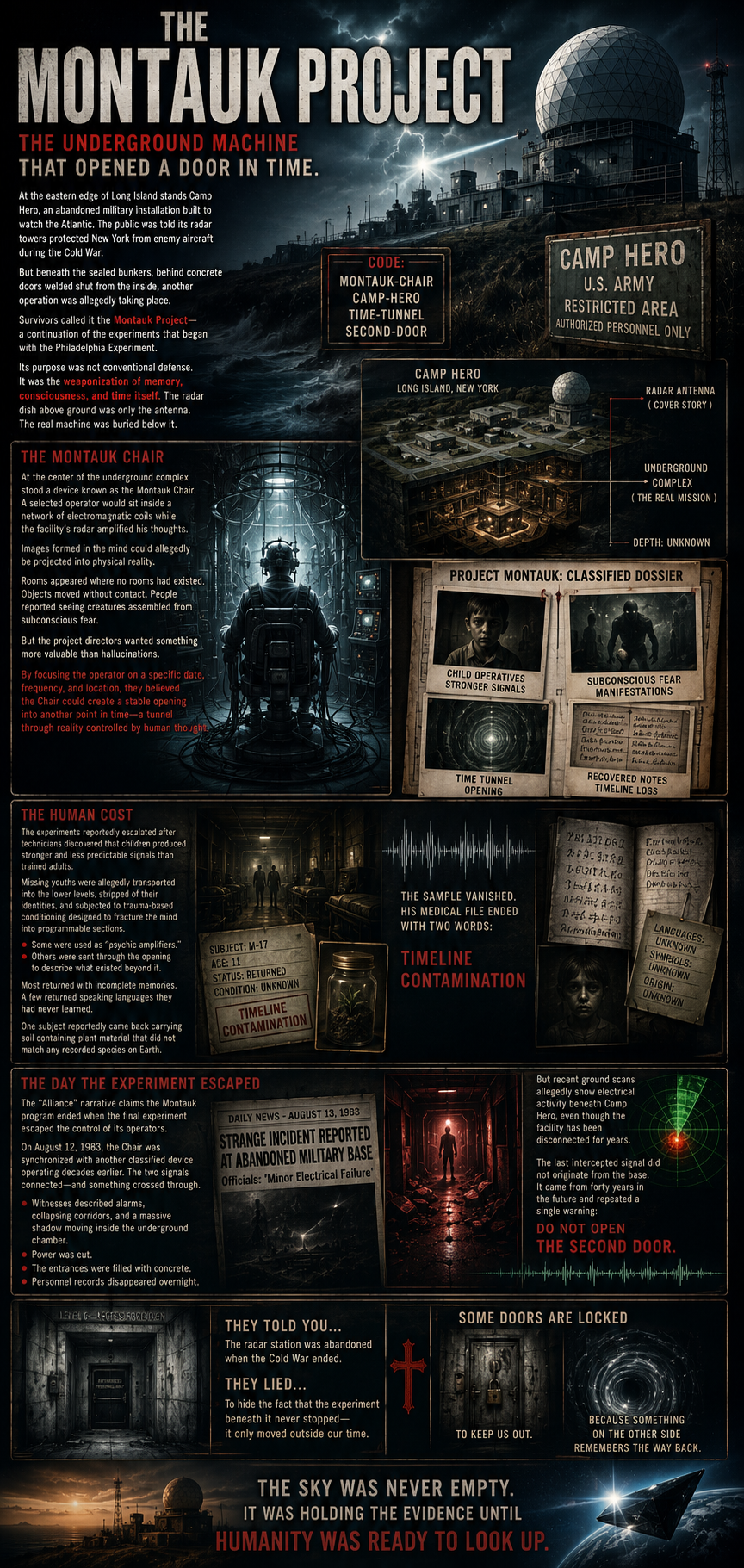
THE BLACK KNIGHT SIGNAL — THE OBJECT THAT ANSWERED BEFORE HUMANITY TRANSMITTED
For more than a century, astronomers and radio operators have reported signals arriving from above the Earth that do not behave like natural noise.
In 1899, Nikola Tesla detected strange repeating pulses during experiments in Colorado Springs and believed they might have come from an intelligence beyond the planet. Decades later, radio stations began recording “Long Delayed Echoes”—transmissions returning several seconds after they were sent, as if something in orbit had intercepted the message, studied it, and transmitted it back.
The official explanation blamed atmospheric reflection. But the delays were too long, the timing was too precise, and some echoes reportedly returned with patterns that had not been present in the original signal.
In the early years of the Space Age, tracking stations allegedly detected an unidentified object moving through polar orbit before any nation had publicly launched a satellite capable of following that path. It was dark, silent, and impossible to contact. The military classified the tracking data while newspapers were told that the object was ordinary debris.
Years later, astronauts photographed a black, angular structure near Earth. NASA identified it as a lost thermal blanket. Independent researchers gave it another name: the Black Knight Satellite. But the oldest classified diagrams did not describe it as debris. They labeled it OBSERVER-1 and estimated that it had been circling Earth for at least 13,000 years.
The “Cabal” did not fear the object because it was watching humanity. They feared what it was recording. According to the hidden files, Black Knight activates whenever civilization approaches a major transformation—nuclear war, planetary collapse, mass awakening, or contact with technology capable of breaking the control grid.
Its signal contains compressed maps of human conflict, genetic changes, atmospheric damage, and every artificial frequency broadcast from the surface. It was not placed in orbit to invade Earth. It was placed there to preserve evidence. Every empire, every secret experiment, and every erased event was being copied into an archive beyond the reach of governments. They could rewrite the history books, but they could not reach the witness above them.
The “Alliance” narrative claims that a classified listening array recently decoded the final layer of the transmission. The signal was not being sent toward Earth. It was being directed beyond the solar system—to a location hidden behind the frequencies surrounding Saturn. Then, without warning, the object changed position.
For the first time in the recovered tracking history, Black Knight abandoned its ancient orbit and aligned directly above a network of underground facilities linked to the global control system. The last decoded sequence contained no greeting, no coordinates, and no threat.
It contained only three translated words: RECORD COMPLETE. JUDGMENT PENDING.
CODE: BLACK-KNIGHT / OBSERVER-1 / 13000-YEAR-ORBIT / FINAL-TRANSMISSION
They told you it was a thermal blanket floating through space. They lied to hide the fact that something ancient had been documenting every crime committed beneath it.
The sky was never empty. It was holding the evidence until humanity was ready to look up.
The Earth Is Being Hit By One Catastrophic Disaster After Another, And This Is Only Just The Beginning
The absolutely devastating floods and mudslides that we just witnessed along the border between Nepal and Tibet look like something out of a science fiction movie. It is a tragedy of epic proportions, and it has made us forget all of the other catastrophic disasters that have been hitting our planet recently. Unfortunately, the victims in Nepal and Tibet will also soon be forgotten because more catastrophic disasters are on the way. We live at a time when global weather patterns have gone absolutely nuts, giant earthquakes are occurring with alarming regularity, the northern hemisphere is experiencing the worst wildfire season in history, and our overheating oceans threaten to kill billions of fish.
I have never seen anything quite like the disaster that just occurred along the border between Nepal and Tibet on Wednesday.
The footage that one camera captured is particularly horrifying…
Those people didn’t have a chance.
One moment they were normally living their lives, and the next moment they were gone.
Many that were swept away by the rushing waters didn’t even live in the region. In fact, we are being told that “hundreds of tourists” are missing…
Devastating flash floods and mudslides have wiped out buildings and bridges along the Nepal–Tibet border – with hundreds of tourists still missing.
In Nepal, houses and roads were swept away by rushing water and mudslides.
Meanwhile, officials in China–controlled Tibet said they feared ‘major casualties’.
We have seen flooding in Nepal and Tibet before, but this was different.
As the wall of water and mud rushed forward, it came slamming into homes and bridges…
Harrowing footage from the scene showed fast-flowing floodwater ripping through the streets and destroying everything – including homes and bridges – in its path.
River banks burst as walls of water came rushing through the densely populated areas, sweeping people underwater as others sought safety on higher ground.
Aerial footage showed floodwater completely consuming land near the Nepal-Tibet border, sending people running for their lives as buildings collapsed in seconds.
In the end, the final death toll will probably be in the thousands.
Originally, experts were telling us that a magnitude 4.4 earthquake triggered a gigantic ice avalanche which caused the sudden flooding…
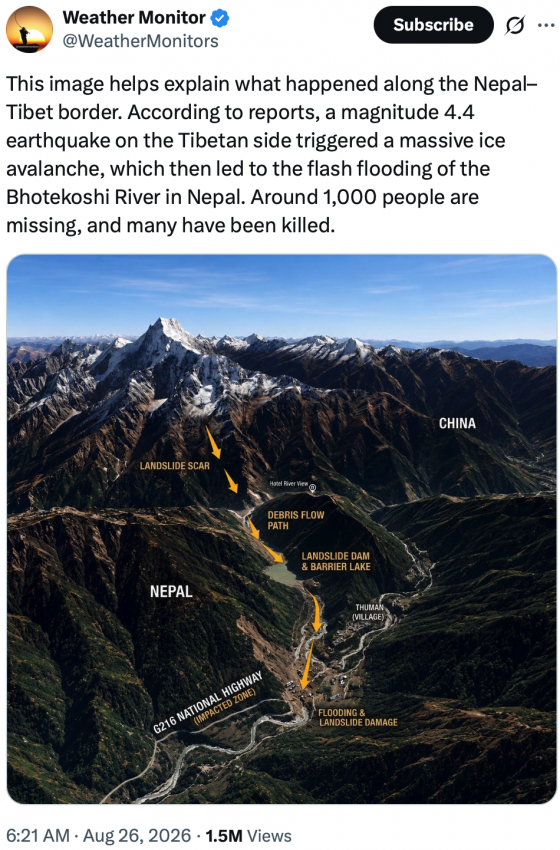
But later reports claimed that a landslide that occurred at 8:37 local time triggered the avalanche that created the flooding.
Apparently the huge earthquake that was detected was actually caused by the landslide…
Though the horrifying disaster is still unfolding, initial reports suggested the floods could be the result of an avalanche triggered by an earthquake, Nepal’s foreign minister Shisir Khanal told the country’s parliament Wednesday.
The United States Geological Survey (USGS) reported recording a 4.4 magnitude quake around the time the security footage was taken at the border.
However, USGS hours later clarified that the trembling detected was not an earthquake, but caused by the landslide itself, registering as the equivalent of a 5.2 magnitude quake.
But no matter how it started, nobody can deny that this was truly a historic disaster.
Meanwhile, we just witnessed a series of 13 eruptions at Mount Anak Krakatau…
The Center for Volcanology and Geological Hazard Mitigation (PVMBG) recorded 13 eruptions from Mount Anak Krakatau in South Lampung Regency, Lampung Province.
The height of the eruptions varied from 50 to 300 meters from the summit of Mount Anak Krakatau, from 12:00 p.m. to 6:00 p.m. Jakarta time.
Suwarno, Head of the Mount Anak Krakatau Monitoring Post in Hargopancuran, Rajabasa District, stated on Wednesday that the volcano remains volatile, so further eruptions are still possible.
This should deeply concern all of us, because one of the largest volcanic eruptions in recorded history occurred there in 1883…
Between 19 May and 21 October 1883, the volcanic island of Krakatoa (located in the Sunda Strait, then part of the Dutch East Indies—modern-day Indonesia) began erupting, lasting more than five months. On 27 August, the island had its most significant eruption, which destroyed over 70% of the island and its surrounding archipelago, the island collapsing into a caldera. The eruption of 27 August had an estimated volcanic explosivity index of 6, and is one of the deadliest and most destructive volcanic events in recorded history; the third explosion of that day, that occurred at 10:02 a.m., remains the loudest-known sound in history.
The explosion was heard 3,110 kilometres (1,930 mi) away in Perth, Western Australia, and Rodrigues near Mauritius, 4,800 kilometres (3,000 mi) away.[3] The acoustic pressure wave circled the globe more than three times.[4]: 63 At least 36,417 deaths are attributed to the eruption and the tsunamis it created. Significant additional effects were felt worldwide in the days and weeks after the volcano’s eruption. Additional seismic activity was reported until February 1884, but any reports after October 1883 were dismissed by Rogier Verbeek’s subsequent investigation into the eruption.
That gigantic eruption caused a volcanic winter that lasted for about a year.
Our oceans could actually use a cooling trend right now, because they are hotter than ever.
In fact, average global ocean temperatures just hit the highest level ever recorded…
As a record-breaking El Niño builds in the Pacific and large swaths of the globe’s oceans are affected by marine heat waves, a significant record has fallen.
According to data from the Copernicus Climate Change Service, average global sea surface temperatures have reached a new high, rising to nearly 70 degrees Fahrenheit late last week — potentially for the first time in millennia.
This mark surpassed the previous record set in March 2024.
This is crazy.
On August 22nd, we broke the record that had been established in March 2024…
The daily average sea surface temperature across the extra-polar global ocean, between 60°S and 60°N, reached 21.1°C (70°F) on August 22, 2026, the highest value in the Copernicus Climate Pulse record beginning in 1979. The reading exceeded the previous daily record of 21.09°C (69.96°F), set in March 2024, and came in August, although temperatures across the domain normally reach their annual maximum in March and April.
If global ocean temperatures are going to set an all-time record, it is supposed to happen in either March of April. For it to happen so late in the year is extremely strange.
Many want to blame humans for what is occurring, but scientists have discovered that the warming of our oceans actually gets worse the deeper than you go. That suggests that whatever is warming our oceans is coming from underneath.
Currently, 42 percent of the Earth’s oceans are experiencing unusual marine heat waves…
According to NOAA data, 42 percent of the planet’s oceans are currently experiencing marine heat waves.
In the Pacific Ocean alone, marine heat waves cover an area that’s equivalent to nine times the size of the contiguous United States — greatly contributing to the new global sea surface temperature record.
So why is this important?
When the oceans get warmer, we tend to experience hotter temperatures, intense droughts, enormous storms and massive wildfires…
Hotter oceans exacerbate the sea level rise and extreme storms that threaten billions of people, as well as driving marine heatwaves that decimate sea life and undermine coastal livelihoods, scientists warned.
The northern hemisphere summer has already been hit by record-breaking heatwaves, drought and wildfires in Europe and North America, and intense rain and typhoons in Asia.
The ocean heat spike is being intensified by a fast developing El Niño event, which is set to be the hottest in at least a century. El Niño events are natural climate variations that raise global temperature and change weather patterns, with serious impacts around the world. The new El Niño has already delivered low monsoon rain in India, major wildfires in Indonesia and heightened fire concerns in Australia.
More importantly, when ocean temperatures rise to unusual levels, fish start dying in very large numbers.
One expert has warned that “the faster the ocean floor warms, the faster we lose fish”…
Chronic ocean heating is fuelling a “staggering and deeply concerning” loss of marine life, a study has found, with fish levels falling by 7.2% from as little as 0.1C of warming per decade.
Researchers examined the year-to-year change of 33,000 populations in the northern hemisphere between 1993 and 2021, and isolated the effect of the decadal rate of seabed warming from short shifts such as marine heatwaves. They found the drop in biomass from chronic heating to be as high as 19.8% in a single year.
“To put it simply, the faster the ocean floor warms, the faster we lose fish,” said Shahar Chaikin, a marine ecologist at the National Museum of Natural Sciences in Spain and the study’s lead author.
As our oceans warm, we could lose billions upon billions of fish. That is really bad news, because the world is already facing very serious food shortages in the months ahead.
In 2026, global food production is being hammered from so many different directions. We really are facing a “perfect storm”, and for those of us that live in the western world that means that food prices will soon go up even higher.
But for many of those that live in impoverished nations around the globe, a dramatic drop in global food production could be the difference between life and death.
107 MILLION ILLIGAL IMMIGRANTS
Former Border Patrol Commander Greg Bovino Challenges the Official Immigration Numbers
Illegal Immigration • Border Security • Deportations • Census Estimates • Enforcement • National Debate
A striking claim is circulating after former senior Border Patrol official Gregory Bovino appeared on The Tucker Carlson Show. During the August 27, 2026 episode, Carlson asked Bovino directly how many unauthorized immigrants he believes are currently living in the United States. Bovino answered 107 million, describing the situation as a “catastrophe.” Later in the interview, he estimated the current figure at roughly 105 million, after accounting for what he believes were approximately 1.5 million voluntary departures and 500,000–600,000 forced removals.
Watch the Tucker Carlson–Greg Bovino interview
If 105–107 million unauthorized immigrants were living in the country, the number would be several times larger than the conventional estimates and equivalent to roughly a quarter of the combined population Bovino describes. Carlson himself reacted with disbelief, repeatedly asking Bovino whether he was confident in the number. Bovino maintained that he was.
WHAT BOVINO IS SAYING
Bovino is not an outside commentator with no immigration experience. He is a nearly 30-year Border Patrol veteran who served as Chief Patrol Agent of the El Centro Sector and later as Commander at Large, directing immigration-enforcement operations around the country. His background makes his allegations worth examining—but professional experience by itself does not establish that the 107 million figure is statistically correct.
The interview’s larger argument is that America’s unauthorized population has been dramatically underestimated over many years. Bovino argues that border crossings accumulated over decades, that enforcement and removals have not kept pace, and that conventional demographic estimates fail to capture the true population. Carlson uses the claim to challenge whether the immigration policies voters were promised have actually produced the expected reduction in the unauthorized population.
THE PROBLEM: 107 MILLION IS NOT SUPPORTED BY CURRENT DEMOGRAPHIC ESTIMATES
This distinction is critical for a GAR article. The 105–107 million number is Bovino’s claim, not an established government statistic. I could not find a demographic study, Census-based analysis or government estimate remotely approaching it.
The latest estimate from the nonpartisan Migration Policy Institute, released in July 2026, puts the unauthorized immigrant population at approximately 15.8 million as of mid-2024, up substantially from the roughly 11 million level that prevailed for much of the previous decade. MPI acknowledges that estimating this population is difficult and that a significant portion of the population occupied complicated temporary or “twilight” legal statuses.
Pew Research Center independently estimated 14 million unauthorized immigrants in July 2023, the highest level in its historical series. Pew also concluded that the population probably continued growing after that date and likely peaked during 2024.
Government-derived estimates have historically been in the same general range. A Social Security Administration review notes that DHS estimated approximately 10.99 million unauthorized immigrants in January 2022, compared with Pew’s 11 million estimate for that year. These estimates use what demographers call the residual method—estimating the foreign-born population and subtracting people known or estimated to have lawful immigration status.
That creates an enormous statistical divide:
MAINSTREAM ESTIMATES: ~14–16 MILLION
BOVINO CLAIM: ~105–107 MILLION
The difference is not a rounding error. It is approximately a sevenfold disagreement about the size of the unauthorized population.
COULD THE OFFICIAL NUMBERS STILL BE WRONG?
Certainly. Estimating a population whose members may have incentives to avoid government contact is inherently difficult. Census undercounts, migration between surveys, visa overstays, asylum and parole classifications, repeat border encounters, departures from the United States and changes in immigration status all complicate the calculation.
But those uncertainties work in both directions, and they do not automatically validate a 100-million-plus estimate. For Bovino’s number to become credible as a demographic estimate, researchers would need to show where approximately 90 million additional people missing from conventional calculations are living and demonstrate how that population escaped detection across employment, housing, schools, healthcare, utility consumption, tax records, surveys and broader population statistics.
That evidence was not provided in the interview.
WHY THE INTERVIEW STILL MATTERS
The more important story may therefore be the disagreement itself. Americans are being presented with radically different pictures of the country’s immigration situation: one based primarily on Census and demographic modeling, another coming from a former senior operational Border Patrol commander who says those models dramatically underestimate reality.
That creates a legitimate investigative question:
BORDER ENCOUNTERS → RELEASES → VISA OVERSTAYS → LEGAL-STATUS CHANGES → DEPARTURES → DEPORTATIONS → RESIDENT POPULATION
Each component needs to be measured separately. Border encounters cannot simply be added together and called the number of unauthorized residents because the same person can be encountered multiple times, some migrants leave, some are removed, and others eventually receive lawful status.
A former senior Border Patrol commander is publicly claiming that America’s unauthorized immigrant population may be vastly larger than the figures produced by conventional demographic models. His estimate of 105–107 million conflicts dramatically with current estimates of roughly 14–16 million. Determining which assumptions produce that enormous difference should become the investigation.
THE MYSTERY OF 33
Sacred Number, Masonic Degree, Human Anatomy—or Pattern Seeking?
Freemasonry • Religion • Numerology • Symbolism • Anatomy • Conspiracy Culture
Source: GAR Contributing Writer
Few numbers have accumulated as much symbolic meaning in modern alternative research as 33. Across social media, numerology and conspiracy literature, researchers repeatedly point to appearances of 33 in Freemasonry, Christianity, human anatomy, occult traditions and major news events. The poster takes the argument one step further, suggesting that elites intentionally place the number into “hoaxes and psyops” as a form of signaling. Some underlying references are factual, while others are symbolic interpretations or claims for which there is no demonstrated evidence—making 33 an excellent case study in the difference between documented symbolism and inferred hidden meaning.
The strongest documented connection is Freemasonry. The Ancient and Accepted Scottish Rite formally consists of 33 degrees, and the Scottish Rite itself describes the Thirty-third Degree as the completion or “last degree” of the Rite. The 33° Inspector General Honorary is conferred upon selected members, while the Grand Cross of Honour is described as the Supreme Council’s highest honor. The Scottish Rite traces its Supreme Council of the 33rd Degree to Charleston, South Carolina, in 1801. This establishes that 33 has genuine institutional significance within Scottish Rite Freemasonry; it does not, by itself, demonstrate that the number functions as a secret code for unrelated political or intelligence operations.
Christian tradition provides another frequently cited association. Jesus is commonly said in popular Christian culture to have been approximately 33 years old at the Crucifixion, although the New Testament never explicitly gives his age at death. The association arises from chronology—Luke says Jesus was “about thirty” when his ministry began, and traditional reconstructions commonly assign several years to his ministry. Consequently, “33” has acquired considerable Christian symbolism involving sacrifice, transformation and resurrection, but it is better described as a traditional calculation rather than a precisely documented biblical number.
The human spine provides one of the poster’s most interesting factual coincidences. Medical references commonly describe the vertebral column as consisting of 33 vertebrae: seven cervical, twelve thoracic, five lumbar, five sacral and usually four coccygeal. The sacral and coccygeal vertebrae normally fuse during development, which is why the adult spine can also be counted differently when considering individual bones rather than developmental vertebral segments. Spiritual traditions have subsequently attached symbolic interpretations to the spine—sometimes portraying it as a pathway of awakening or ascending consciousness—but anatomy establishes the number, not the metaphysical interpretation.
Numerology adds another dimension. In several modern numerological systems, 11, 22 and 33 are classified as “master numbers,” with 33 frequently associated with teaching, compassion, spiritual development or higher consciousness. These interpretations belong to esoteric and numerological traditions rather than empirical science. That distinction is important: numbers can possess enormous cultural, psychological and spiritual significance without the meanings assigned to them constituting scientifically demonstrable properties of the numbers themselves.
The argument becomes substantially more speculative with what the poster calls the “revelation rule”—the idea that powerful groups must reveal their intentions symbolically, thereby obtaining consent or satisfying some occult requirement. Similar ideas appear throughout contemporary conspiracy culture, particularly when researchers discover recurring numbers, dates, symbols or imagery surrounding major events. There is no established evidence of a universal elite rule requiring advance disclosure through the number 33. More importantly, once researchers begin actively searching thousands of speeches, dates, casualty figures, addresses and news reports for a particular number, selection effects and confirmation bias can make coincidences appear far more extraordinary than they statistically are.
That does not make the study of 33 meaningless. The more compelling investigation is to separate three different layers: documented occurrence, historical symbolism and claimed intentional signaling. Freemasonry’s 33 degrees and the conventional anatomical count of 33 vertebrae are verifiable; religious and numerological meanings belong primarily to cultural and spiritual interpretation; claims that governments, intelligence agencies or an undefined global elite deliberately insert 33 into staged events require independent evidence before being treated as fact. For GAR’s larger exploration of symbolism and hidden systems, 33 therefore becomes less a proof of conspiracy than a fascinating exercise in discernment: when does repetition reveal intentional design, and when does the human mind transform coincidence into pattern?
ALGERIA BURNING
Wildfires, Strategic Resources & the Battle Over North Africa’s Energy Future
Fire • Gas • Minerals • Pipelines • Europe • Sonatrach • Resource Sovereignty
“When fire, strategic resources and major infrastructure projects occupy the same map, the overlap deserves investigation. But geographic convergence is not, by itself, evidence that one caused the other.”
Algeria is experiencing a serious wildfire emergency. During the extreme heat of late August 2026, authorities reported 154 fires in a single day, with at least 12 people killed and 54 injured; the hardest-hit provinces included Béjaïa, Jijel and Tizi Ouzou in the country’s mountainous northeast. Families were evacuated as drought, vegetation conditions and extreme temperatures intensified the danger. The immediate documented story, therefore, is a genuine humanitarian and environmental crisis—not something that can responsibly be dismissed simply as a cover story for resource acquisition.
But beneath that immediate emergency lies another important story: Algeria is becoming increasingly strategic to the world’s energy and mineral competition. The country possesses enormous conventional and unconventional hydrocarbon potential. In April 2026, the U.S. Geological Survey estimated a mean 80.1 trillion cubic feet of undiscovered, technically recoverable shale gas in just the Grand Erg/Ahnet Basin Province. Older assessments encompassing broader Algerian shale formations have placed the country’s potential considerably higher, helping explain why Algeria has attracted sustained international energy interest.
The timing is especially significant because the long-discussed Trans-Saharan Gas Pipeline has moved from concept toward construction. On June 4, 2026, Sonatrach officially launched work on the Algerian section at Aoulef in Adrar province. The planned route follows the Trans-Saharan Road corridor from the Niger border northward to Algeria’s national gas-dispatching center at Hassi R’Mel, potentially creating a major new pathway connecting Nigerian gas resources with Algeria’s export infrastructure and ultimately European markets.
Algeria is simultaneously exploring a second strategic frontier: critical minerals. Government ministries have confirmed lithium exploration in Tamanrasset and Ain Guezzam in cooperation with China’s Ganfeng Lithium, reporting promising indications of lithium and other rare minerals. Algeria is examining not merely extraction but an integrated lithium value chain extending toward processing, battery manufacturing and energy storage. That places the country directly inside the global competition for the minerals required by electric vehicles, renewable-energy systems, batteries and advanced technology.
This combination—gas + minerals + pipelines + proximity to Europe—makes Algeria strategically important. Yet this is also where the original viral narrative requires a major geographical correction. The devastating August fires have primarily struck northern and northeastern Algeria, whereas the Trans-Saharan pipeline corridor and much of the lithium exploration discussed above lie far to the south in Algeria’s vast Saharan interior. The available evidence therefore does not currently establish that the fires are systematically clearing the Trans-Saharan pipeline route or the Hoggar and Tanezrouft resource regions.
The proposed financial component also deserves scrutiny rather than assumption. Algeria certainly faces fiscal pressure: an IMF mission in June reported a very large fiscal deficit, rising public debt and declining fiscal buffers, while recommending reforms supporting private-sector-led growth. But that is materially different from evidence that the fires are being used to force Algeria into an IMF bailout or compel the privatization of Sonatrach. I found no credible evidence establishing such a fire-to-IMF-to-Sonatrach privatization operation.
Likewise, Algeria works with international energy corporations, and foreign companies naturally have commercial interests in its enormous hydrocarbon sector. That makes questions about contracts, ownership structures, financing and foreign influence legitimate investigative subjects. It does not, however, demonstrate that firms such as TotalEnergies or Eni—or investment managers such as BlackRock and Vanguard—are orchestrating fires to acquire Algerian resources. Corporate holdings, partnerships and financial relationships would need to be traced through contracts and ownership records before making that causal leap.
The most extraordinary claim is that multiple ignition points prove the use of directed-energy weapons. Multiple simultaneous fires can have many causes—including lightning, electrical faults, accidents, arson, agricultural burning, extreme heat and wind-driven propagation—and the number or geographic distribution of ignition points alone cannot identify the mechanism. At present, I found no credible forensic, satellite or official investigative evidence demonstrating directed-energy technology caused Algeria’s August 2026 fires. That claim should remain classified as unverified unless physical evidence emerges.
None of this means the larger resource story should be ignored. Quite the opposite. Algeria sits at the intersection of Europe’s search for diversified energy supplies, Africa’s emerging infrastructure corridors, China’s pursuit of critical minerals and Algeria’s own determination to retain national control over strategic resources. The more useful investigation is therefore not to begin with the conclusion that the fires were engineered, but to follow what happens after them: land-use changes, mining concessions, pipeline routing, foreign investment agreements, reconstruction financing, displacement patterns and changes to Sonatrach’s ownership or operating structure.
That creates a much stronger GAR investigative framework:
FIRE → DISPLACEMENT → LAND-USE CHANGE → INFRASTRUCTURE → RESOURCE CONCESSIONS → FOREIGN CAPITAL
If the later links begin appearing in the same affected territories, the hypothesis becomes more interesting and deserves deeper investigation. If they do not, the geographic coincidence argument weakens.
GAR ANALYSIS | FOLLOW THE LAND AFTER THE FIRE
The documented story is already significant without overstating it. Algeria is burning at precisely the historical moment when its gas, mineral resources and geographic position are becoming increasingly valuable to Europe, China and the wider global economy. That convergence deserves continued scrutiny—but distinguishing documented strategic competition from unverified claims about engineered fires is what makes the investigation stronger.
“The question is not simply why Algeria is burning. The question is what happens to the land, infrastructure and resources after the fires are extinguished. Follow the concessions. Follow the pipeline. Follow the capital. Follow the land.”
The Russians Are Not So Subtly Threatening The UK With Military Retaliation – Is This Why CIA Director John Ratcliffe Flew To Moscow?
CODE 🟨 YELLOW / POSSIBLE DISINFORMATION, QUESTIONABLE SOURCES, CONFLICTING REPORTS
We are far closer to a shooting war with Russia than most people realize. The Russians are extremely upset with the UK, because the UK has been providing long-range attack drones and long-range missiles to the Ukrainians. In recent months, the Ukrainians have been using those drones and missiles to attack very sensitive targets deep inside Russian territory. The Russians are now accusing the UK of being a direct party to the conflict, and they are not so subtly threatening the UK with military retaliation. Of course an attack on the UK would be considered an attack on the entire NATO military alliance, and that could put us right on the brink of the unthinkable.
It would be difficult for me to overstate the seriousness of the crisis that we are potentially facing.
We aren’t hearing about it much in the western media, but the truth is that Russian officials are seething with anger.
Night after night, British-made drones are striking important targets in major Russian cities. Last week, the Russian embassy warned that the UK will pay a very high price for this…
Russian officials also threatened consequences over the use of British drones in Ukraine’s deep strikes. Although Ukraine manufactures the vast majority of its own attack drones, Russian officials said Tuesday that debris found in the country showed British-made drones had been shot down recently.
“Reports that the Kiev regime is using British drones to carry out strikes deep inside Russian territory confirm that London is deliberately opting for an escalation of the Ukraine crisis, while hypocritically professing a desire for peace,” the Russian embassy in London said in a statement. “The deeper its involvement in the conflict and the greater its support for Kiev’s terrorist machinery, the higher the price it will pay.”
In April, the U.K. announced its largest ever drone package for Ukraine, pledging to supply 120,000 drones this year. The package included long-range strike drones, intelligence and reconnaissance drones and logistics drones, according to the U.K.’s Ministry of Defense, which said the deliveries began in April.
Of course that wasn’t the end of it.
On Monday, a Kremlin adviser named Andrei Fedorov warned the BBC that the UK is now considered to be a direct party to the war and that “a new stage of escalation in the Ukrainian conflict” is coming…
He said the UK is considered a “direct military” party to the war, and went on: “there is a very serious political and public pressure on President Putin today to undertake ‘certain measures’ against UK… it’s coming from public opinion polls, it’s coming from journalists, media, it’s coming from military. And UK, considering in the context of Ukraine, is evil number one… so many people are saying the President is waiting too long, not answering the UK, the answer — even maybe a military answer — should be made even earlier than now”.
There is a “a new stage of escalation in the Ukrainian conflict” coming, Fedorov said, and asserted that amid that Russian retaliation would become more “visible”. He said: “there are different discussions about how it should look like. It might be so-called ‘technical’ reaction, maybe some hacker attack, from unknown source — not from official, of course — there might be different political steps.
“And I cannot exclude 100 per cent that there may be some ‘semi-military’, for example… something might happen with enterprises, the factories that are producing drones for Ukraine… they could be attacked, not by Russia, but by unknown sources.”
Did you catch that last part?
It is kind of like a mob boss telling you that your business might have some sort of an “accident” if you don’t pay up. It wasn’t a coincidence that he specifically mentioned “the factories that are producing drones for Ukraine” during this interview.
The Russians would love to take out those factories if they could get away with it. And the British are playing with fire by mass producing those drones for the Ukrainians. If their recklessness gets us into a nuclear war with the Russians, billions of people could end up dead.
This isn’t a game.
New British Prime Minister Andy Burnham has some critical decisions to make.
A senior British security official just told the Daily Mail that the Russians are “planning some sort of action against UK interests” in order to test Burnham’s resolve…
Andy Burnham has chosen to stand up to Vladimir Putin. And Putin is already plotting his revenge.
‘The chatter we’ve been picking up over the past two weeks indicates the Russians are preparing for something,’ a senior security source revealed to me. ‘They’re planning some sort of action against UK interests. They’re going to test Burnham.’
The goal would be to get Burnham to stop supplying the Ukrainians with drones and missiles.
But I don’t think that it is going to work.
Earlier this week, Burnham visited Ukraine. It is being reported that during that visit he “agreed to hand over the technical blueprints for Britain’s long-range Storm Shadow missiles”…
On Monday, the Prime Minister arrived in Ukraine – and he came bearing gifts. After appeals from Volodymyr Zelensky, Burnham agreed to hand over the technical blueprints for Britain’s long-range Storm Shadow missiles.
‘Ukraine has been Europe’s protector: not a drain on our security but the frontline in keeping Europe safe,’ Burnham declared. ‘The Ukrainian people deserve not just our continued support, but our gratitude and respect.’
In anticipation of that visit, the Russians actually withdrew their ambassador from the UK…
But as he spoke those words Andy Burnham knew that frontline is likely to move closer to home. On Sunday, it was announced Russia had withdrawn its British ambassador, without appointing a replacement.
Within the British security establishment this is viewed as a clear indication of an impending Russian intervention. ‘We think he’s been pulled so that when they act we don’t have the ability to expel him,’ one source revealed.
That is not a good sign at all.
Pulling your ambassador is a dramatic move.
Hopefully nothing imminent is planned.
As tensions between the Russians and the British continued to rise, CIA Director John Ratcliffe suddenly made a highly-publicized trip to Moscow on Tuesday…
CIA Director John Ratcliffe was in Moscow, Russia, for meetings on Tuesday, sources familiar with the situation told CBS News.
News of his trip came after a U.S. Air Force Boeing C-17A Globemaster III transport plane was spotted flying into a Moscow airport Tuesday morning, and then a U.S. diplomatic motorcade was seen driving through the city.
The CIA did not comment on his trip, but Kremlin spokesman Dmitry Peskov told reporters in Moscow on Wednesday that Ratcliffe held talks with Russian intelligence officials during his visit, but that he did not meet President Vladimir Putin.
Was Ratcliffe attempting to defuse this crisis before it could spiral out of control? The last time the head of the CIA flew to Russia was just before the Russians invaded Ukraine.
Needless to say, I don’t think that this was a routine visit. Hopefully cooler heads will prevail, because once NATO is officially at war with Russia it will just be a matter of time before unconventional weapons are used.
Speaking of that, it appears that the Russians are getting ready to conduct a test of their new Burevestnik cruise missile…
Vladimir Putin may be about to test a nuclear-powered cruise missile – dubbed the Flying Chernobyl – that can fly for days, according to analysts.
An influx of aircraft and shipping has converged in the Arctic in a telltale sign that a new experimental firing is expected of a weapon powered by its own atomic reactor, say analysts.
The ‘invincible’ Burevestnik missile – with a nickname inspired by the nuclear catastrophe that could be inflicted, much like the Chernobyl power plant explosion in 1986 – carries a nuclear warhead with an ‘unlimited range’ and is designed to fly for days at a time before striking the West, according to the Russians.
Many western analysts are dismissing the threat posed by a nuclear-powered cruise missile, but I think that is a mistake.
A cruise missile armed with a nuclear warhead that has unlimited range and that can come at you from any direction and stay in the air indefinitely is a game changer.
Last October, the Russians conducted a successful test of this new weapon…
In an October 2025 test, Russia’s top war commander General Valery Gerasimov said: ‘The missile flew for several hours, covering a distance of 14,000 kilometres [8,700 miles].’
This was during a 15-hour flight which ‘is not the limit’.
‘During the flight, the missile performed all the prescribed vertical and horizontal manoeuvres, demonstrating its high capabilities for evading missile and air defence systems,’ he told Putin.
Over the last decade, the Russians have been working incredibly hard to modernize their strategic nuclear arsenal.
Meanwhile, Minuteman ICBMs that first went into service more than 50 years ago continue to form the backbone of our strategic nuclear arsenal.
We are not prepared to fight a nuclear war with the Russians, and we should be doing all that we can to avoid such a scenario.
Unfortunately, the British appear to be determined to creep as close as possible to the edge of the abyss. If they make a mistake and push things too far, we will be dragged into a shooting war with Russia too.
THE SECRET MOSCOW MISSION
Trump Sends CIA Director John Ratcliffe Into the Kremlin’s Intelligence Channel
Ukraine Peace Talks • NATO Deterrence • Iran • Intelligence Diplomacy • Trump–Putin–Zelensky Summit
“The significance of the mission may not be any single message Ratcliffe carried to Moscow, but that Washington chose its intelligence chief—not its conventional diplomatic team—to deliver it.”
A highly unusual diplomatic channel opened between Washington and Moscow this week when President Donald Trump personally dispatched CIA Director John Ratcliffe to Russia. According to The Wall Street Journal, the mission was sufficiently sensitive that some senior White House officials and military leaders who normally would have been briefed were kept unaware of the message Ratcliffe intended to deliver. Ratcliffe reportedly traveled through Latvia and entered Moscow aboard a U.S. C-17 military transport aircraft, making this the first known Moscow visit by a serving CIA director since William Burns traveled there in November 2021.
WHY RATCLIFFE?
The choice of the CIA director appears deliberate. Previous Trump administration diplomatic initiatives involving other envoys had failed to produce a breakthrough in Ukraine, while the CIA maintains longstanding communication channels with Russia’s intelligence services even when normal political relations deteriorate. Ratcliffe also occupies Trump’s inner circle and has previously dealt successfully with Russian officials, including negotiations involving detained Americans.
Ratcliffe did not meet Vladimir Putin. The Kremlin confirmed that he instead met Russian intelligence counterparts, and subsequent reporting identifies them as SVR chief Sergey Naryshkin and FSB director Alexander Bortnikov; Putin was subsequently briefed on those discussions. That makes this less a conventional diplomatic visit than a form of intelligence diplomacy—using security-service channels to communicate messages too sensitive or urgent for ordinary negotiations.
MESSAGE ONE — REOPEN THE UKRAINE CHANNEL
One objective was reportedly to determine whether Russia’s intelligence leadership could help move Putin back toward U.S.-mediated negotiations. Axios now reports that Ratcliffe went further, floating the possibility of a three-way Trump–Putin–Zelensky summit as a mechanism for restarting negotiations. U.S. officials subsequently briefed Ukrainian President Volodymyr Zelensky on the Moscow discussions, while Ukrainian officials have suggested talks could resume in September.
This does not mean peace is imminent. Ukrainian officials remain deeply skeptical of Putin’s intentions and believe Russia could instead be preparing another major escalation, while military strikes by both sides have intensified. The Moscow mission therefore appears to have contained both an offer and a warning: diplomacy remains available, but escalation carries consequences.
MESSAGE TWO — DON’T TEST NATO
The second message may be even more consequential. The Wall Street Journal reports that Ratcliffe reinforced Washington’s commitment to NATO’s Article 5 collective-defense guarantee and warned Russian officials against attacking NATO territory. Reuters independently reported that two sources said the possibility of a Russian operation against a NATO member was raised during Ratcliffe’s meetings, although it remains unclear how central that issue was to the mission.
The background is a growing Western concern about Russian “gray-zone” activity in Europe—including suspected sabotage, cyber operations and drone incursions. NATO nevertheless said on August 30 that it currently sees no imminent threat of a direct Russian attack, an important distinction from assessments concerning what Moscow might eventually be capable of doing.
MESSAGE THREE — RUSSIA, IRAN AND A WIDER WAR
Ratcliffe also reportedly pressed Moscow over its relationship with Iran. Russia and Iran have developed extensive military, economic and diplomatic cooperation, while Washington is attempting to increase economic pressure on Tehran through secondary sanctions. Reuters confirmed through a source that Russia’s support for Iran was among the subjects discussed in Moscow.
This makes the Ratcliffe mission much larger than a Ukraine initiative. Washington is effectively confronting an increasingly interconnected strategic equation:
UKRAINE → RUSSIA → IRAN → NATO → EUROPE → U.S. SECURITY
If Trump could persuade Moscow to reduce its support for Tehran while simultaneously reopening Ukraine negotiations, Washington could potentially reduce pressure across two theaters at once. Whether Putin sees any advantage in doing so is an entirely different question.
THE CONTRADICTION AT THE CENTER
There is an important discrepancy in the public accounts. Trump described Ratcliffe’s visit as “semi-routine” and later told Axios it was “standard business,” rejecting suggestions that the mission was specifically intended to warn Russia about NATO. Yet The Wall Street Journal, Reuters and other reporting—relying on officials and sources familiar with the discussions—indicates that NATO, Ukraine and Iran were indeed raised.
That discrepancy does not necessarily mean either side of the reporting is false. Sensitive intelligence diplomacy often produces deliberately limited public explanations while negotiations remain active. What can be established is that the visit occurred, Ratcliffe met senior Russian intelligence officials, Putin was briefed, Ukraine subsequently received information from Washington, and discussions involved several of the world’s most dangerous geopolitical pressure points.
GAR ANALYSIS | A BACKCHANNEL OPENS
The larger signal is the channel itself. Trump has moved beyond traditional envoys and placed his CIA director directly into negotiations involving Ukraine, NATO deterrence and Russia’s relationship with Iran. Ratcliffe’s mission therefore appears to combine diplomacy, intelligence communication and strategic deterrence within a single operation.
The next indicator to watch is whether the Moscow mission produces something visible: renewed Russia–Ukraine negotiations in September, movement toward a Trump–Putin–Zelensky summit, reduced Russian support for Iran, or alternatively a major Russian escalation. If negotiations restart, Ratcliffe’s trip may eventually be remembered as the opening of a new diplomatic channel. If escalation follows, it may instead resemble William Burns’s 2021 Moscow mission—a final high-level warning before the strategic environment became considerably more dangerous.
GAR SIGNAL: The Ratcliffe mission suggests Washington is simultaneously testing diplomacy and strengthening deterrence. The next question is whether Moscow interprets the opening as an opportunity to negotiate—or as evidence that the United States urgently wants to reduce pressure across multiple theaters.
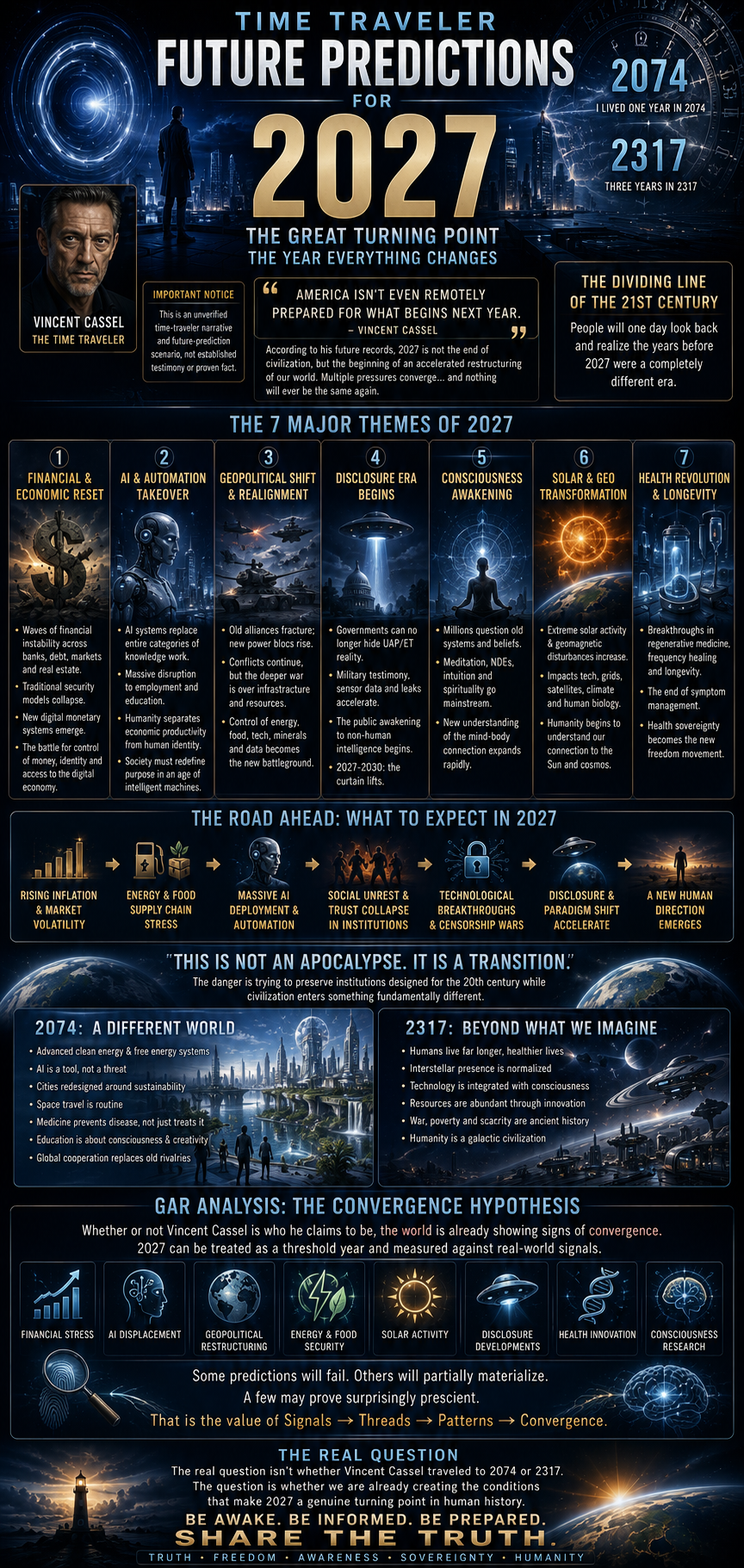
Time Traveler Future Predictions for 2027
The “Vincent Cassel” Story — A Warning of the Great Turning Point
A viral alternative-media story circulating under the name Vincent Cassel describes a mysterious alleged time traveler who claims to have spent one year in 2074 and another three years in 2317 before returning to the present. According to the narrative, Cassel says that information he brought back allowed him to anticipate events in 2023 and that 2027 represents one of the great dividing lines of the twenty-first century. This story is presented as an unconfirmed time-traveler narrative and future-prediction scenario.
Within that narrative, 2027 is described not as the end of civilization but as the beginning of an accelerated restructuring of it. Cassel allegedly characterizes the year as a point when several pressures that have been building independently suddenly begin interacting: economic instability, geopolitical realignment, artificial intelligence, automation, energy disruption, climate and geophysical extremes, declining confidence in institutions, and rapidly changing social behavior. The central prediction is that people will eventually look back at the years before 2027 as belonging to a distinctly different era. What makes the scenario compelling is not necessarily the time-travel claim, but the concept of convergence—multiple technological, economic and social transitions reaching critical thresholds within the same relatively short period.
The first major theme attributed to the prediction is a financial and economic reset. Rather than one dramatic overnight collapse, the scenario describes waves of instability moving through banking, sovereign debt, currencies, commercial and residential real estate, employment and financial markets. Traditional assumptions about retirement, careers, property values and economic security become increasingly unreliable. Governments respond with new monetary technologies and increasingly digital financial infrastructure. In the story, this becomes one of the defining battles of 2027: who controls money, identity, transactions and access to the emerging digital economy? The prediction should not be confused with evidence that a secret “Global Currency Reset” or “Quantum Financial System” is scheduled for 2027.
A second prediction involves AI crossing from useful technology into civilization-scale infrastructure. During 2027, according to the scenario, increasingly capable artificial-intelligence systems begin replacing entire categories of knowledge work rather than merely assisting workers. Accounting, administration, customer service, programming, research, media production, logistics and portions of medicine and education are transformed. The disruption initially creates fear because employment structures cannot adapt as quickly as the technology. Yet Cassel’s future history describes this upheaval as the beginning of something larger: humanity gradually separating economic productivity from human identity, forcing societies to reconsider what people should do when machines can perform an extraordinary percentage of conventional work.
The third theme is geopolitical fragmentation followed by realignment. The prediction describes 2027 as a period when alliances that appeared permanent begin behaving differently under economic, military and domestic pressure. Conflicts involving major powers remain dangerous, but the longer-term trajectory supposedly moves away from a single dominant geopolitical architecture toward a more distributed, multipolar world. Energy, food, semiconductors, critical minerals, communications infrastructure and artificial intelligence become as strategically important as conventional weapons. In this interpretation, the wars themselves are only the visible layer. The deeper struggle concerns who controls the infrastructure of the next civilization.
Cassel’s alleged account becomes considerably more extraordinary when it reaches disclosure. The narrative claims that between 2027 and the early 2030s, governments become unable to maintain previous levels of secrecy surrounding unidentified anomalous phenomena. Rather than one dramatic announcement, disclosure supposedly unfolds through accumulating military testimony, sensor information, scientific investigation, archival material and increasingly difficult-to-explain observations. Eventually, humanity’s understanding of intelligence beyond Earth is transformed. There is mounting evidence that such an event is scheduled for 2027, but the broader subject has unquestionably moved further into new government systems and release of new technology discussion than it occupied several decades ago.
Another element concerns consciousness itself. According to the story, future historians do not regard the transformation beginning around 2027 as purely technological or political. They describe a simultaneous psychological transition: millions of people begin questioning inherited definitions of success, authority, health, spirituality and human purpose. Meditation, consciousness research, near-death experiences, altered states, intuition and mind-body relationships receive growing attention. Information that once circulated primarily at society’s margins becomes easier to investigate and discuss. The prediction portrays this as an “Awakening Era”—although that interpretation remains spiritual rather than scientifically established.
There is also an intriguing solar and geophysical component to the story. Cassel supposedly describes humanity gradually recognizing that Earth cannot be understood independently of the Sun and the larger space environment. Solar activity, geomagnetic disturbances, satellites, electrical grids, communications networks and atmospheric processes become increasingly important areas of research and preparedness. Some consciousness communities go considerably further, proposing that solar and geomagnetic activity affects collective human consciousness. That remains speculative: evidence for direct causal connections between solar activity and a planetary consciousness transformation has not been established.
Perhaps the most interesting prediction concerns what doesn’t happen. Humanity supposedly survives the period. The civilization Cassel claims to have encountered in 2074 is dramatically different from ours but recognizably human. By 2317, according to the story, today’s political divisions, monetary structures and national rivalries appear almost primitive. Energy, medicine, artificial intelligence, space exploration and longevity have advanced beyond what people living today would recognize. The central lesson supposedly brought back from those centuries is therefore not that 2027 marks an apocalypse. It marks a transition. The danger comes from attempting to preserve institutions designed for the twentieth century while civilization is rapidly entering something fundamentally different.
For GAR, that distinction makes this story much stronger. We don’t need to certify an unidentified “time traveler” to examine the scenario seriously. 2027 can be treated as a convergence hypothesis and placed against measurable signals as the year unfolds: financial stress, AI displacement, geopolitical restructuring, energy and food security, solar activity, disclosure developments, health innovation and consciousness research. Some predictions will fail. Others may partially materialize. A few could prove surprisingly prescient. That is precisely where GAR’s Signals → Threads → Patterns → Convergence research model becomes valuable.
GAR Analysis: The real question isn’t whether Vincent Cassel traveled to 2074 or 2317. The useful question is whether the world is already producing the conditions that could make 2027 a genuine threshold year. That can actually be investigated—and it would make an excellent companion section to GAR’s existing 2026–2028 Compression/Transition Timeline, separating Cassel’s alleged predictions from observable indicators and GAR’s existing forecast.
PARASITES & THE HUMAN BODY
THE HIDDEN INFECTION QUESTION
Brain • Gut • Heart • Lungs • Liver • Urinary Tract • Reproductive System • Skin
How Parasitic Infections Can Affect Multiple Organ Systems—and Why Symptoms Alone Are Not a Diagnosis
Parasites are often thought of primarily as an intestinal problem, but medically documented parasitic infections can affect tissues throughout the human body. Depending on the species, parasites or their eggs and larvae can involve the brain and nervous system, heart, lungs, liver, urinary tract, reproductive organs, muscles, blood and skin. The symptoms can consequently look very different from one infection to another. CDC guidance emphasizes that manifestations depend heavily on the particular organism, its location and the burden of infection.
The brain provides one of the clearest examples. Taenia solium larvae can cause cysticercosis and, when cysts develop within the central nervous system, neurocysticercosis. Seizures are its most common neurological manifestation, while headaches, hydrocephalus, balance problems, confusion and other neurological complications can also occur. Importantly, this supports the general point in the graphic that parasites can affect the brain—but it does not establish parasites as a general explanation for depression, multiple sclerosis or Parkinson’s disease. Those conditions require their own medical evaluation rather than being assumed to represent hidden parasitic infection.
The gastrointestinal system is where the connection is most familiar. Giardia, for example, lives in the intestine and can produce diarrhea, gas, abdominal cramps, nausea, dehydration and malabsorption-related problems. Particularly interesting for chronic-health research, the CDC notes that some people experience longer-term complications following giardiasis, including recurring diarrhea and irritable bowel syndrome (IBS). That demonstrates how an infection can sometimes leave consequences extending beyond the acute illness. But IBS, Crohn’s disease, ulcerative colitis, SIBO and food sensitivities have many potential causes, so their presence alone is not evidence that someone has parasites.
Parasites can also reach organs far removed from the digestive tract. Some parasitic diseases produce pulmonary symptoms such as coughing, while others can involve cardiac tissue. Cysticerci, for example, have been documented in heart muscle, lungs, liver, skin and other tissues, although many cysts outside the nervous system cause few or no symptoms. This illustrates an important principle: the location of a parasite can dramatically change the clinical picture, and apparently unrelated symptoms can occasionally originate from the same infectious process.
The urinary and reproductive systems offer another medically established example. In urinary schistosomiasis, eggs from Schistosoma haematobium can lodge in the urinary tract and produce inflammation, painful urination and blood in the urine; chronic infection can contribute to bladder fibrosis, kidney damage and increased bladder-cancer risk. The infection can also damage female reproductive tissues, producing female genital schistosomiasis involving structures including the cervix, vagina and fallopian tubes. This is substantially more specific than saying that parasites generally cause bladder cancer, infertility, endometriosis or pelvic inflammatory disease—the particular parasite, exposure and pathology matter.
Skin symptoms add another layer to the picture. Certain parasites directly invade or migrate through skin, while others can provoke inflammatory or immune reactions. Cutaneous larva migrans, for example, occurs when animal hookworm larvae penetrate human skin and typically produces intensely itchy, raised, winding tracks. Giardia can occasionally be associated with itchy skin or hives as well. Yet common disorders such as eczema and psoriasis should not automatically be interpreted as evidence of parasites. Similar-looking symptoms can emerge from infections, allergies, autoimmune processes, medications and numerous other conditions.
The larger story, therefore, isn’t that “parasites cause everything.” It is that certain parasites can imitate or contribute to a surprisingly broad range of illnesses, making accurate diagnosis important. Rather than relying on generalized symptom charts or undertaking an indiscriminate “parasite cleanse,” investigation should begin with exposure history—travel, untreated water, contaminated food, sanitation conditions and other relevant risks—followed by organism-appropriate testing when clinically indicated. Neurocysticercosis, for example, may require CT or MRI imaging and serological testing rather than a routine stool test. The productive question is therefore not simply “Could this be parasites?” but “Is there credible evidence for a specific parasitic infection that could explain these particular symptoms?” That distinction turns an intriguing health hypothesis into something that can actually be investigated.

At Precisely 12:12 AM Eastern Time On August 28th A Stunning Blood Moon Eclipse Will Occur Over The Entire Continental United States
It is not often that everyone living in the entire continental United States is able to view a blood moon eclipse with their own eyes. On the night of August 27th into the early hours of August 28th, a celestial spectacle will light up the night sky as Earth’s colossal shadow rises to swallow more than 96 percent of the full moon. In a breathtaking cosmic display, the brilliant lunar surface will be plunged into darkness, bleeding into deep shades of copper, fiery orange, and blood red. While a solitary, blazing sliver of light will fight to remain untouched, escaping a technical total eclipse by a razor-thin margin of less than four percent, the agonizingly close near-total blackout will leave onlookers spellbound. Overall, the eclipse will last for a total of five hours and 38 minutes. In the United States, it will start at 9:23 PM eastern time on August 27th, and it will end at 3:01 PM eastern time on August 28th. But it will be at precisely 12:12 AM eastern time that the main event will occur. At that moment the red color of the “blood moon” will reach a peak, and throughout human history many cultures have considered a “blood moon” to be a very ominous sign.
This is not something that happens every day.
Time Magazine has pointed out that 44.4 percent of the entire global population will be able to see this eclipse…
It’s not often that 3.6 billion people—or 44.4% of the world’s population—look at the same thing at the same time. And it’s not often that something comes along that’s worth the attention of all those billions. But that will happen on the evening of Aug. 27 when much of the world will be able to witness a blood moon lunar eclipse, during which 96% of the face of the full moon will fall into Earth’s shadow, glowing a deep orange-red in the process.
Approximately a billion people in the United States, Canada and Latin America will have “prime, hours-long views” as long as the weather cooperates.
I would encourage you to stay up for this if you are able to do so.
A lunar eclipse unfolds in three phases, and the maximum phase for this particular eclipse will last for one hour and 39 minutes…
There are three phases of any lunar eclipse—the penumbral, partial, and total or maximum. The penumbral phase occurs first, when the moon moves into the faint, outer reaches of the Earth’s umbra, or shadow. The partial phase comes next, when the true, darker shadow of the Earth begins to cover the lunar disk. The total or maximum phase is when only a small portion—or none at all—of the moon remains unshadowed. For the upcoming eclipse, the penumbral phase will take one hour and ten minutes, the partial phase one hour and 39 minutes, and the maximum phase, when the moon will be 96% obscured, will also take one hour and 39 minutes. That maximum shadow will occur at 12:12 a.m. ET. The eclipse will then return to the partial and penumbral phases before the moon soars on and leaves the Earth’s shadow behind.
As the maximum phase gets very close, the moon will start to turn red.
And once the moon is 96 percent covered by Earth’s shadow at mid-eclipse at 12:12 AM eastern time, the redness of the moon will be at peak intensity…
As the eclipse become deeper – and approaches maximum – you should begin to notice a red glow on the moon. There are varying opinions as to when this red color might become visible. Some say by 90%. Some say 95%. The darker your sky, the better chance you’ll have of seeing the red color sooner. Since 96% of the moon will be in Earth’s shadow at mid-eclipse, you’ll hopefully see some redness by then.
And you should see a bright white patch along the moon’s northeastern limb. That is the portion of the moon not yet submerged in the shadow. In other words, that’s the unshaded, daytime part of the moon.
So why will the moon turn red?
NASA has explained it in a way that I think is very easy to understand…
A Blood Moon refers to the reddish or copper color the Moon projects during a lunar eclipse. This astronomical event occurs when the Earth moves between the Sun and the Moon. In doing so, it blocks and filters sunlight on the Moon’s surface.
“The same phenomenon that makes our sky blue and our sunsets red causes the Moon to turn reddish-orange during a lunar eclipse,” NASA reports. “Sunlight appears white, but it actually contains a rainbow of components—and different colors of light have different physical properties. Blue light scatters relatively easily as it passes through Earth’s atmosphere. Reddish light, on the other hand, travels more directly through the air.”
“During a lunar eclipse, the Moon appears red or orange because any sunlight that’s not blocked by our planet is filtered through a thick slice of Earth’s atmosphere on its way to the lunar surface,” NASA continues. “It’s as if all the world’s sunrises and sunsets are projected onto the Moon.”
Those living on the east coast will be able to view this eclipse from the very beginning to the very end.
At 9:23 eastern time on August 27th the moon will start to enter the Earth’s shadow, and the eclipse will finally be over at 3:01 eastern time on August 28th…
- The eclipse begins when the moon enters Earth’s faint outer shadow at 9:23 p.m. EDT on Aug. 27 (0123 GMT on Aug. 28).
- Things get much more interesting at 10:33 p.m. EDT (0233 GMT), when the partial eclipse begins and Earth’s dark umbral shadow starts to creep across the lunar surface.
- Maximum eclipse occurs at 12:12 a.m. EDT (0412 GMT) on Aug. 28, when 96.2% of the moon will be immersed in Earth’s umbra.
- The partial phase ends at 1:51 a.m. EDT (0551 GMT), with the penumbral eclipse concluding at 3:01 a.m. EDT (0701 GMT).
This eclipse has sparked a frenzy of speculation on social media.
Many are wondering what it might mean, and even mainstream news sources are bringing up Bible verses in relation to this event…
Several passages in the Bible describe the moon turning red, signaling a major event or God’s intervention.
Key references include Joel 2:31, Acts 2:20, which echoes the same imagery, and Revelation 6:12, which describes the moon becoming like blood during apocalyptic events.
Believers often interpret these verses as signs that a blood moon could herald a time of upheaval, judgment for the wicked, or salvation for the faithful, giving the August eclipse a heightened sense of spiritual significance.
This is going to be the final lunar eclipse of 2026.
But there will be several notable eclipses in 2027, and in 2028 a total lunar eclipse will actually occur on New Year’s Eve…
This week’s lunar eclipse follows a total lunar eclipse in March and will be the second and last of the year. But if you miss it, more celestial events are coming in 2027.
Two solar eclipses will take place next year—one on February 6 and the other on August 2. But you might want to make this lunar eclipse count: three lunar eclipses in 2027 will be “penumbral”—meaning the moon will pass through Earth’s penumbra, the fainter part of its shadow, which won’t make quite as spectacular a view. The next total lunar eclipse will take place on New Year’s Eve in 2028—what a way to ring in 2029!
I did not know about that there will be a total lunar eclipse on New Year’s Eve in 2028.Every day I am learning something new, and that is a good thing because if you are not learning you are not growing.
Personally, I am going to make it a point to check out the blood moon eclipse that will happen later this week. It should be spectacular.
So many unusual events have already occurred in 2026, and I am expecting the pace of events to pick up even more during the remaining portion of this year.
THE CURE THEY REMOVED FROM TEXTBOOKS IN 1934.
Dr. Royal Rife was a genius. He invented a microscope capable of magnifying living viruses 60,000 times. He could see pathogens that no one else could see.
Source: The 17th Disciple TG
Then he discovered something that threatened the entire medical establishment.
He found that every disease, every bacteria, and every virus has a specific resonant frequency. Just like a singer can shatter a wine glass by hitting the exact right pitch, Rife discovered he could destroy pathogens by hitting them with their own specific frequency.
He called it the Mortal Oscillatory Rate.
In 1934, the University of Southern California appointed a Special Medical Research Committee to bring 16 terminally ill cancer patients from Pasadena County Hospital to Rife’s clinic. They were given three months to live.
After 90 days of frequency treatment, the committee concluded that 14 of the 16 patients were completely cured. The remaining two were cured four weeks later. A 100% success rate. No surgery. No radiation. No toxic chemicals. Just pure, targeted frequency.
The American Medical Association tried to buy his research. He refused.
Within months, his laboratory was destroyed by arson. His microscopes were dismantled. The doctors who supported him were threatened with losing their licenses. His research was confiscated, and he was dragged through years of lawsuits until he was financially ruined.
They did not just destroy his machines. They erased him from history.
You are told that disease is a chemical problem requiring a chemical solution. It is not. Disease is an energetic problem. And the solution has always been frequency.
The world must know the truth. SHARE IT.

PROJECT ICEWORM — THE NUCLEAR CITY BURIED BENEATH GREENLAND.
STATUS: DECLASSIFIED / VERIFIED / FIELD LOG 17 // FILE 003
Source: Mr. Kidpool TG
I opened a file from the Cold War and found an entire city disappearing beneath the ice.
In 1959, the United States Army entered Greenland and began carving tunnels into the frozen surface. The public name was Camp Century—a remote Arctic research station presented as a laboratory for science, engineering, and survival in extreme conditions.
That explanation was real.
It was also incomplete.
Beneath the ice stood sleeping quarters, laboratories, a hospital, a communications center, and a portable nuclear reactor. Approximately 200 people could live below the surface while the world above saw almost nothing.
But Camp Century was only the visible file.
I traced the classified layer to a plan called PROJECT ICEWORM.
The objective was to build a vast network of tunnels beneath Greenland and hide hundreds of nuclear missiles inside them. The launch sites would constantly rotate through the frozen maze, making them difficult for the Soviet Union to locate or destroy.
A nuclear arsenal with no permanent address.
The ice itself would become camouflage.
The planners imagined thousands of miles of tunnels and as many as 600 missiles positioned close enough to strike targets across the Soviet Union.
Greenland was not merely being studied.
It was being measured as a weapon.
Then the ice began to move.
I compared the engineering projections with what happened underground. The frozen walls shifted faster than expected. Tunnels narrowed. Ceilings bent. Steel supports twisted under pressure.
The base was not sitting inside solid ground. It was trapped inside a slow-moving ocean of ice.
The same glacier meant to hide the system was gradually crushing it.
Project Iceworm was abandoned. Camp Century closed. Equipment, fuel, biological waste, and parts of the nuclear infrastructure were left behind beneath accumulating snow.
ASSESSMENT: The operation failed because the planners treated the ice like concrete. It was not concrete.
It was alive, moving—and stronger than the classified architecture buried inside it.
CODE: ICEWORM / CAMP-CENTURY / NUCLEAR-GRID / ARCTIC-VAULT
They told the public it was a research station. The deeper blueprint described a missile field beneath the ice.
I have learned one rule from buried operations: the ground always keeps its own record. Forward this file before the ice closes again.
⚠️ AMERICA FIRST — THE CASE SUPPORTERS ARE MAKING FOR PRESIDENT TRUMP
Border Security • Economic Nationalism • Energy • Defense • Government Reform • Individual Liberty
Source: Nino Rodriguez / NinosCorner.tv
A closer examination of the priorities driving President Trump’s political movement—and the debate surrounding them
The argument made by President Trump’s supporters is broader than any single policy or personality. At its center is a belief that the federal government should place the security, prosperity and constitutional interests of American citizens ahead of international institutions, entrenched bureaucracies and political convention. Immigration enforcement, domestic manufacturing, energy production, military readiness and government accountability therefore become interconnected pieces of the same America First philosophy.
Border security remains one of the movement’s defining priorities. Supporters argue that a sovereign nation must be able to determine who enters, enforce immigration law and aggressively confront human trafficking, fentanyl distribution and transnational criminal organizations. Critics challenge both the methods and consequences of Trump’s immigration policies, making this one of the sharpest dividing lines in American politics. The underlying debate, however, reaches beyond immigration: how should America balance security, economic needs, humanitarian obligations and the rule of law?
Economic nationalism and energy independence form another major pillar. Trump’s political coalition favors expanding domestic energy production, rebuilding manufacturing capacity, renegotiating trade relationships and using tariffs when policymakers believe foreign practices disadvantage American producers. Supporters see these measures as necessary corrections after decades of globalization and industrial migration. Critics counter that tariffs and protectionist policies can increase consumer costs and provoke retaliation. The real test is measurable: jobs, wages, investment, productivity, energy prices and American industrial capacity.
National defense is similarly being reframed around deterrence rather than indefinite intervention. The America First argument calls for a powerful military while demanding that allies carry a greater share of collective defense costs and questioning prolonged overseas commitments without clearly defined American objectives. That creates an important tension within Trump’s approach: maintaining overwhelming military capability while attempting to avoid unnecessary wars. Whether that balance can consistently be maintained will remain one of the most consequential questions surrounding his presidency.
The movement also reflects deep dissatisfaction with America’s institutions. Federal agencies, intelligence organizations, universities, corporations, news organizations and political establishments increasingly face skepticism from large portions of the public. Trump has positioned himself as an adversary of that institutional order, promising deregulation, bureaucratic restructuring and greater accountability. Supporters regard this disruption as overdue reform; opponents worry that aggressive restructuring could weaken important institutional safeguards. Both arguments deserve scrutiny because institutional reform without accountability can become destruction, while institutions without accountability can become insulated from the citizens they serve.
Education, parental authority, religious liberty, public safety, veterans and local communities complete much of the domestic agenda represented in the poster. These issues explain why Trump’s coalition cannot be understood solely through traditional Republican economics. It incorporates working-class populism, cultural conservatism, skepticism toward centralized authority and a renewed emphasis on national identity. For supporters, the common thread is restoring decision-making power closer to families, communities and citizens. For opponents, some of these policies raise serious questions about civil rights, federal responsibilities and equal protection.
Ultimately, the strongest case for or against Trump should not depend upon slogans, personality or partisan loyalty. It should depend upon results that can be independently measured. Are Americans safer? Are real wages improving? Is government becoming more accountable? Is domestic industry strengthening? Are constitutional liberties protected? Is the national debt sustainable? Are America’s alliances and deterrence stronger? Those questions provide a better framework than political tribalism. Trump does not need to be treated as either a savior or a villain to evaluate his presidency seriously—the policies, outcomes and consequences should provide the evidence.
⚠️ Editor’s Notes: The Trump Enigma | Separating Signal from Noise
Since its founding in 2018, The Great Awakening Report has maintained an intentionally apolitical position, examining signals, patterns, emerging narratives, and independent research rather than promoting allegiance to any political figure or party. Few individuals currently generate more conflicting information than President Donald J. Trump, whose policies, public appearances, statements, reversals, and enormous social-media presence have produced competing interpretations across both mainstream and alternative media. Claims involving hidden operations, staged events, body doubles, psychological operations, and deliberate narrative manipulation remain largely unverified and may represent combinations of fact, speculation, misinformation, selective perception, or information warfare. GAR’s position is therefore one of discernment rather than certainty: we will continue presenting developing stories, competing perspectives, and emerging signals while encouraging readers to distinguish documented evidence from interpretation, question assumptions, think critically, trust their own informed judgment, and ultimately reach their own conclusions.
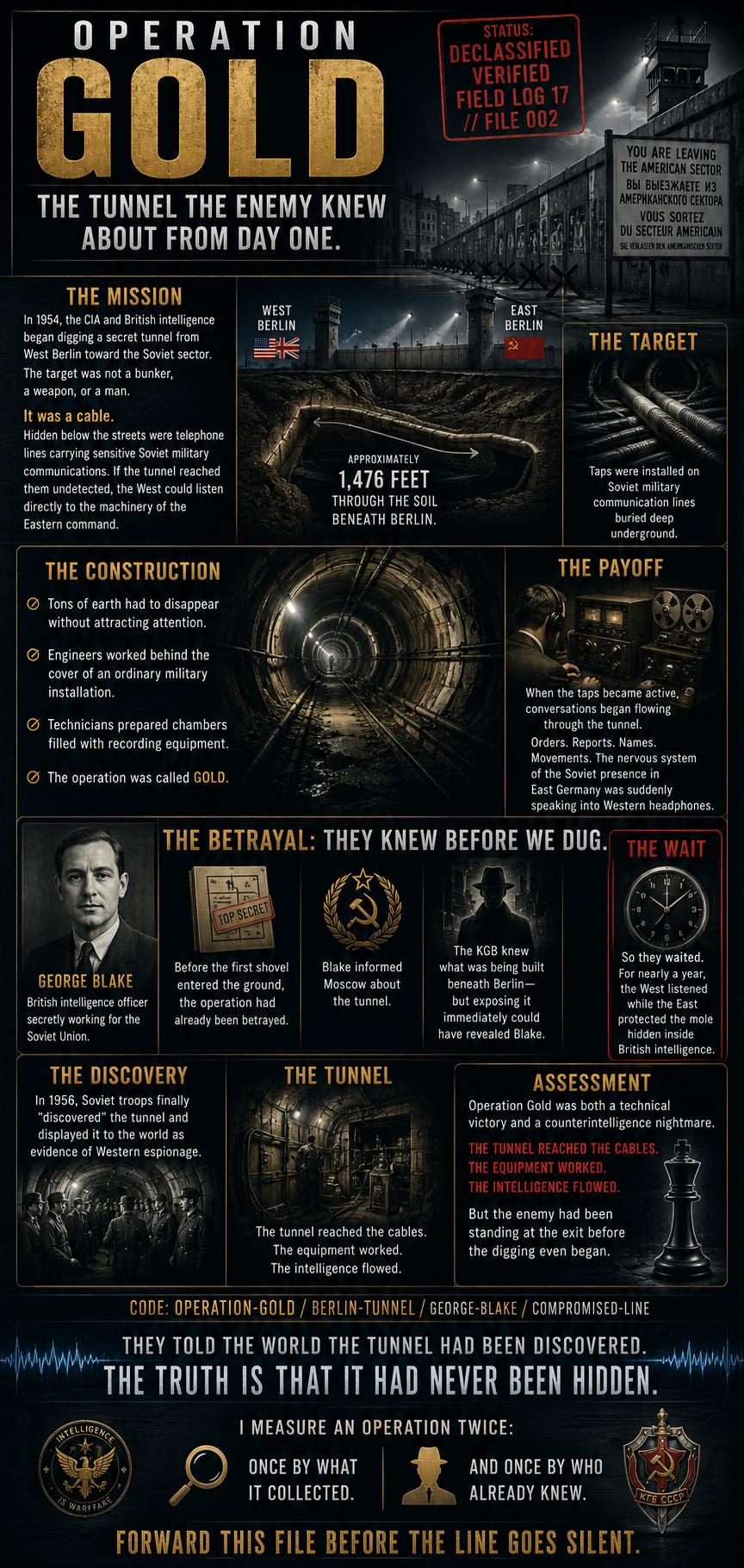
OPERATION GOLD — THE TUNNEL THE ENEMY KNEW ABOUT FROM DAY ONE.
STATUS: DECLASSIFIED / VERIFIED / FIELD LOG 17 // FILE 002
Source: Mr. Kidpool TG
I opened the blueprints of one of the boldest intelligence operations ever buried beneath a city.
In 1954, the CIA and British intelligence began digging a secret tunnel from West Berlin toward the Soviet sector. The target was not a bunker, a weapon, or a man.
It was a cable.
Hidden below the streets were telephone lines carrying sensitive Soviet military communications. If the tunnel reached them undetected, the West could listen directly to the machinery of the Eastern command.
So they dug approximately 1,476 feet through the soil beneath Berlin.
Quietly. Patiently. Under enemy territory.
I traced the construction records. Tons of earth had to disappear without attracting attention. Engineers worked behind the cover of an ordinary military installation while technicians prepared chambers filled with recording equipment.
The operation was called GOLD.
When the taps became active, conversations began flowing through the tunnel. Orders, reports, names, movements—the nervous system of the Soviet presence in East Germany was suddenly speaking into Western headphones.
But the archive contains a second story.
A colder one.
Before the first shovel entered the ground, the operation had already been betrayed.
George Blake, a British intelligence officer secretly working for the Soviet Union, had informed Moscow about the tunnel. The KGB knew what was being built beneath Berlin—but exposing it immediately could have revealed Blake.
So they waited.
For nearly a year, the West listened while the East protected the mole hidden inside British intelligence.
In 1956, Soviet troops finally “discovered” the tunnel and displayed it to the world as evidence of Western espionage.
ASSESSMENT: Operation Gold was both a technical victory and a counterintelligence nightmare. The tunnel reached the cables. The equipment worked. The intelligence flowed.
But the enemy had been standing at the exit before the digging even began.
CODE: OPERATION-GOLD / BERLIN-TUNNEL / GEORGE-BLAKE / COMPROMISED-LINE
They told the world the tunnel had been discovered.
The truth is that it had never been hidden.
I measure an operation twice: once by what it collected—and once by who already knew.
Forward this file before the line goes silent.
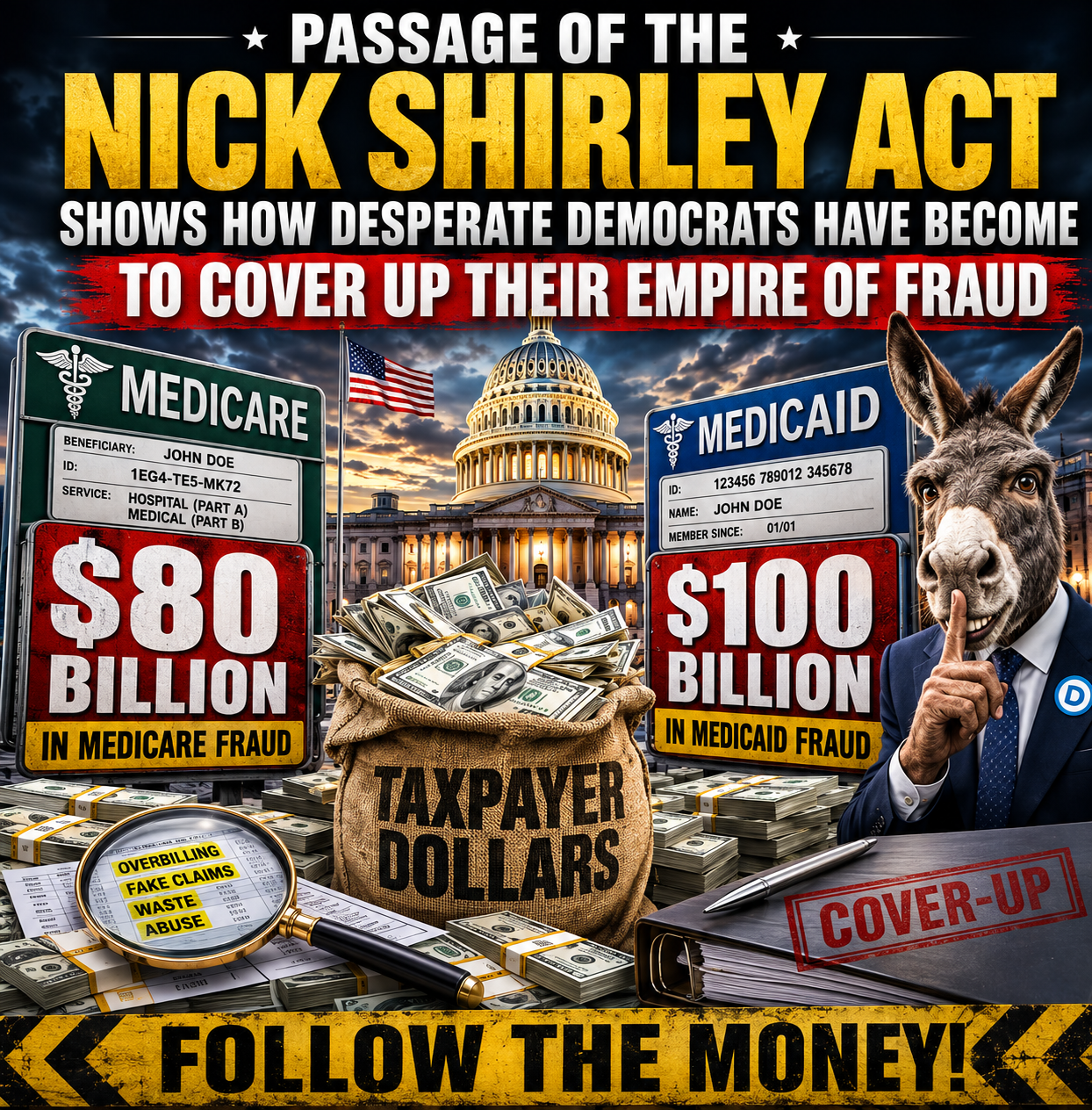
Passage Of The Nick Shirley Act Shows How Desperate Democrats Have Become To Cover Up Their “Empire Of Fraud”
One of the reasons why the federal government is 40 trillion dollars in debt is because there is an almost unbelievable amount of fraud in our system. When we talk about crime in America, most of the time we focus on the violent thugs terrorizing our streets, but the truth is that they are small-time criminals. The big-time criminals are those that are raking in millions of dollars by stealing from the government. Medicare and Medicaid are considered to be the two largest victims. It has been estimated that Medicare fraud costs U.S. taxpayers up to $80 billion a year, and it has been estimated that Medicaid fraud costs U.S. taxpayers up to $100 billion a year. We are hemorrhaging money like crazy because of all of this fraud, and there is no end in sight.
The worst fraud occurs in major urban areas in blue states.
Everyone knows this.
The Democrats that are in power in these areas are very hesitant to crack down on the fraud, because they would literally be cracking down on the people that voted them into office.
California is a perfect example.
The state is being accused of losing $180 billion to fraud over the years, and California Governor Gavin Newsom’s office vigorously disputes that figure. But as you will see below, the facts clearly show that there has been a tremendous amount of fraud going on.
Since California Governor Gavin Newsom is preparing to run for the presidency, he is desperate to keep this from becoming a major political issue. And so he doesn’t want independent journalists like Nick Shirley poking around in his state.
On Saturday, Newsom signed the “Stop Nick Shirley Act” into law…
Gov. Gavin Newsom signed California’s controversial “Stop Nick Shirley Act” into law on Saturday, just days after a radical left-wing operative crashed the journalist’s Capitol interview and launched a crude personal attack on him.
Assembly Bill 2624 expands California’s Safe at Home program to employees of nonprofits that serve people navigating the immigration system.
Critics have blasted the measure as a way to intimidate people “trying to shine light on bad behavior,” , such as Shirley’s investigative reports on fraud in California and Minnesota.
Those that violate this new law could be hit with fines as high as $50,000 and even face prison time in certain circumstances…
The measure imposes penalties on people who distribute information or images of covered immigration workers under circumstances the law defines as inciting violence or threats. Penalties can range from $10,000 to $50,000, with violations potentially carrying jail or prison sentences.
In a post on X, Nick Shirley explained why this new law specifically targets people like him…
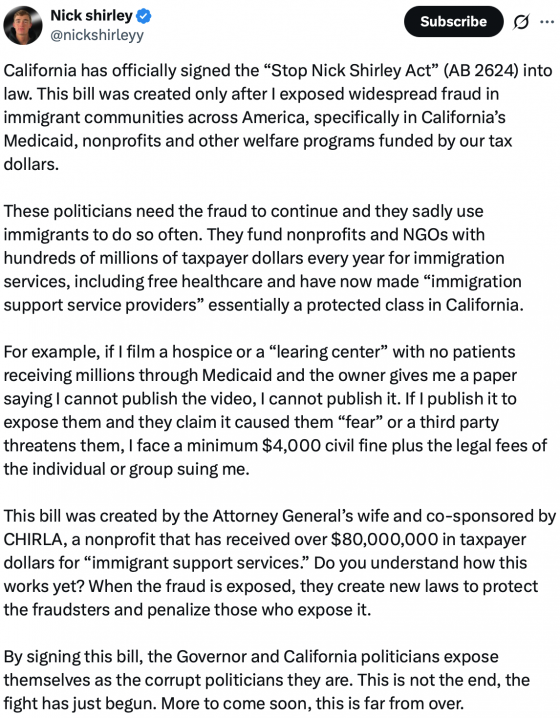
He is right.
They are out to get him.
But they can’t stop federal authorities from cracking down on fraud.
One man in California that was recently arrested by the feds is being charged with stealing 27 million dollars from Medicare…
He probably assumed that he would never get caught, because most of those that are doing this never get caught.
In another case, California authorities actually broke up a fraud ring that had stolen 267 million dollars from the state…
California Attorney General Rob Bonta, together with the California Department of Health Care Services (DHCS), today announced charges filed against 21 suspects and the dismantling of a major hospice fraud scheme that defrauded California of $267 million. Operation Skip Trace resulted in the arrest of five people after ten different locations were searched in Southern California. In addition, two handguns and over $757,000 in cash were seized.
“This isn’t a political game for us. This is about protecting taxpayer dollars, protecting the programs that sick and vulnerable Californians rely on, and protecting our state,” said Attorney General Rob Bonta. “Over the life of this fraud scheme, not a single legitimate hospice service was ever provided yet millions were billed in a brazen, calculated scheme that exploited the Medi-Cal system. This wasn’t a mistake or a loophole; it was deliberate fraud. This kind of abuse undermines trust, drains critical resources, and threatens care for those who truly depend on it. This is a perfect example that we have taken a firm stand to investigate, prosecute, and shut down hospice fraud wherever it exists.”
Of course 267 million dollars is just the tip of the iceberg.
It has been estimated that Medi-Cal has lost approximately “$146 billion in taxpayer funds to fraud on Gavin Newsom’s watch”…
Talcove estimates that the Medicaid fraud rate in California is 20 percent, which he calls a “very conservative” figure. Federal officials, however, believe that the current Medi-Cal fraud rate is even higher—and, given the state’s oversight failures and massive Medi-Cal expansion under Newsom, they are almost certainly right. Multiple high-ranking sources at the U.S. Department of Health and Human Services, which is currently probing fraud in California, told City Journal on the condition of anonymity that their initial estimate for Medi-Cal’s fraud rate since 2019 is 25 percent.
Based on state experts’ best guesses of annual Medi-Cal expenditures and applying a conservative, 15 percent fraud rate to each fiscal year since 2019, Medi-Cal has lost some $146 billion in taxpayer funds to fraud on Gavin Newsom’s watch.
It is so easy to do this in California, because there is so little accountability. Most of the time, you either have to cross someone very important or be incredibly sloppy in order to get caught. And it appears that even the state government is stealing money.
A member of Congress from California named Young Kim is alleging that the state government “spent more than $1.3 billion in federal Medicaid dollars on non-emergency care for illegal immigrants”…
Last week, Congresswoman Young Kim (CA-40) sent a letter demanding answers from Gavin Newsom after the Centers for Medicare & Medicaid Services (CMS) found California spent more than $1.3 billion in federal Medicaid dollars on non-emergency care for illegal immigrants.
According to CMS, California claimed federal Medicaid reimbursements for services that are explicitly prohibited under federal law. Medicaid funds may be used for emergency care regardless of immigration status; however, CMS auditors found California used federal dollars for non-emergency care for illegal aliens, in violation of longstanding eligibility rules.
“California just spent 1.3 billion taxpayer dollars on healthcare for illegal immigrants while seniors, disabled Americans, and low-income families are pushed to the back of the line,” said Rep. Young Kim. “While hardworking Americans were footing the bill, Gavin Newsom was galivanting around Switzerland following President Trump like a lost puppy. I’m demanding accountability from Governor Newsom and making sure the American taxpayer gets paid back what they’re due.”
Will anyone ever get in trouble for this?
I doubt it.
Fraud has become a way of life in California.
During the last pandemic, fraudsters stole approximately 20 billion dollars from California’s Employment Development Department…
COVID-19 — and the swell of jobless Californians that the virus’ spread produced — created two, separate billion-dollar problems for California’s Employment Development Department. Those issues have continued to plague the agency since the pandemic.
The first problem was the massive amount of fraud that took place when California rushed to distribute federal, and some state, funds to an unprecedented number of people who were suddenly out of a job. The total amount of fraud is estimated to be at least $20 billion.
EDD has worked to recover some of the stolen funds by partnering with federal and state law enforcement agencies. The department reported that thousands of investigations have resulted in 670 convictions — $5.9 billion has been recovered.
They convicted 670 people, but the vast majority of the money will never be returned.
The list of criminals that were involved in stealing money from California’s Employment Development Department includes a fraud ring from Romania and a rapper from Memphis that goes by the name “Nuke Bizzle”…
The scams began almost immediately, with criminals from around the world reportedly siphoning cash from the program. In one case, a Romanian-led fraud ring orchestrated a $5 million unemployment-insurance scheme. Members allegedly “recruited potential [EDD-benefit] applicants through Facebook” and met them at “parks throughout Southern California to complete the application process,” according to the U.S. Attorney’s Office for the Southern District of California. “Applicants paid . . . a partial fee up front for assisting with fraudulent applications and another fee after applicants received EDD payments,” the office said. Many of the fraudsters wired the stolen funds to Romania.
Around September 2020, Fontrell Antonio Baines, a rapper from Memphis known as Nuke Bizzle, released a music video on YouTube entitled “EDD.” In the song, Baines bragged about ripping off California’s UI program. “Go to the bank with a stack of these,” Baines rapped, holding up EDD envelopes. Another rapper can be heard saying: “You gotta sell cocaine, I just file a claim.” All told, Baines obtained more than $700,000 in stolen funds using preloaded EDD debit cards. He pleaded guilty to federal charges.
There are so many more examples that I could share with you. But I think that you get the point.
All over the nation, word has gotten out that it is incredibly easy to steal from the government. Most of those that are stealing from the government are Democrats. And Democrats are extremely determined to cover this up because they are deeply concerned that it might hurt them when voters go to the polls.
Meanwhile, the fraud continues.
In fact, we just learned that three postal carriers that were allegedly involved in a 24 million dollar fraud scheme have just been apprehended…

This is what moral decay looks like. Given the right opportunity, a significant portion of the population will steal.
It isn’t right, but they don’t care. A few will get arrested, but the overall level of fraud just keeps increasing.
This is a major national crisis, and urgent action is required.
THE FENBENDAZOLE FILES — THE DRUG THAT TERRIFIES BIG PHARMA
THE SYSTEM WAS NEVER BUILT TO CURE YOU
Source: The 17th Disciple TG
Hospitals. Pharma. Insurance. The entire pyramid collapses if Fenbendazole works. No billion-dollar chemo cocktails. No endless treatments. No elite chokehold on life and death.
If a cure exists and it’s being silenced — then this isn’t healthcare. It’s population control.
A DOG DEWORMER UNCOVERED A RIGGED EMPIRE
Fenbendazole is sold over the counter. Used for pets. Safe. Proven. Decades of use — no problem. But the moment dying humans start using it? Suddenly it’s “dangerous.” Suddenly it’s a “threat.”
Why? Because it can’t be patented. It can’t be controlled. And it could break the back of the trillion-dollar cancer industry overnight.
They don’t want a cure. They want customers.
JOE TIPPENS WAS SUPPOSED TO DIE
Terminal cancer. Months to live. Instead, he took Fenbendazole — and lived. His protocol broke every rule of the pharmaceutical playbook. He didn’t just survive. He exposed the rigged system.
FENBENDAZOLE ATTACKS CANCER IN WAYS THE ELITES FEAR:
– Disrupts cell division
– Starves tumors of glucose
– Halts growth in multiple cell lines
And they know it. That’s why they refuse to fund trials. That’s why the media ridicules it. That’s why whistleblowers vanish.
THE COVER-UP IS THE CURE’S CONFESSION
They rushed out mRNA injections with zero long-term studies. But they scream “unproven” when a safe, cheap compound starts curing people. That’s not science. That’s control.
This isn’t about one drug. It’s about a war on truth. A war on hope. A war on your right to live without begging permission from white-coated tyrants.
THE REAL THREAT ISN’T CANCER. IT’S THE CURE THEY CAN’T OWN.
Fenbendazole is a symbol now. A red pill in powder form. A glimpse behind the curtain — into a world where disease is a business model and healing is sabotage.
They don’t fear the drug.
They fear what happens when YOU wake up.
This is not medical advice. This is a declaration of war against medical tyranny.
Choose for yourself. Question everything.
Because if the cure is forbidden, the system is criminal.
Share this !
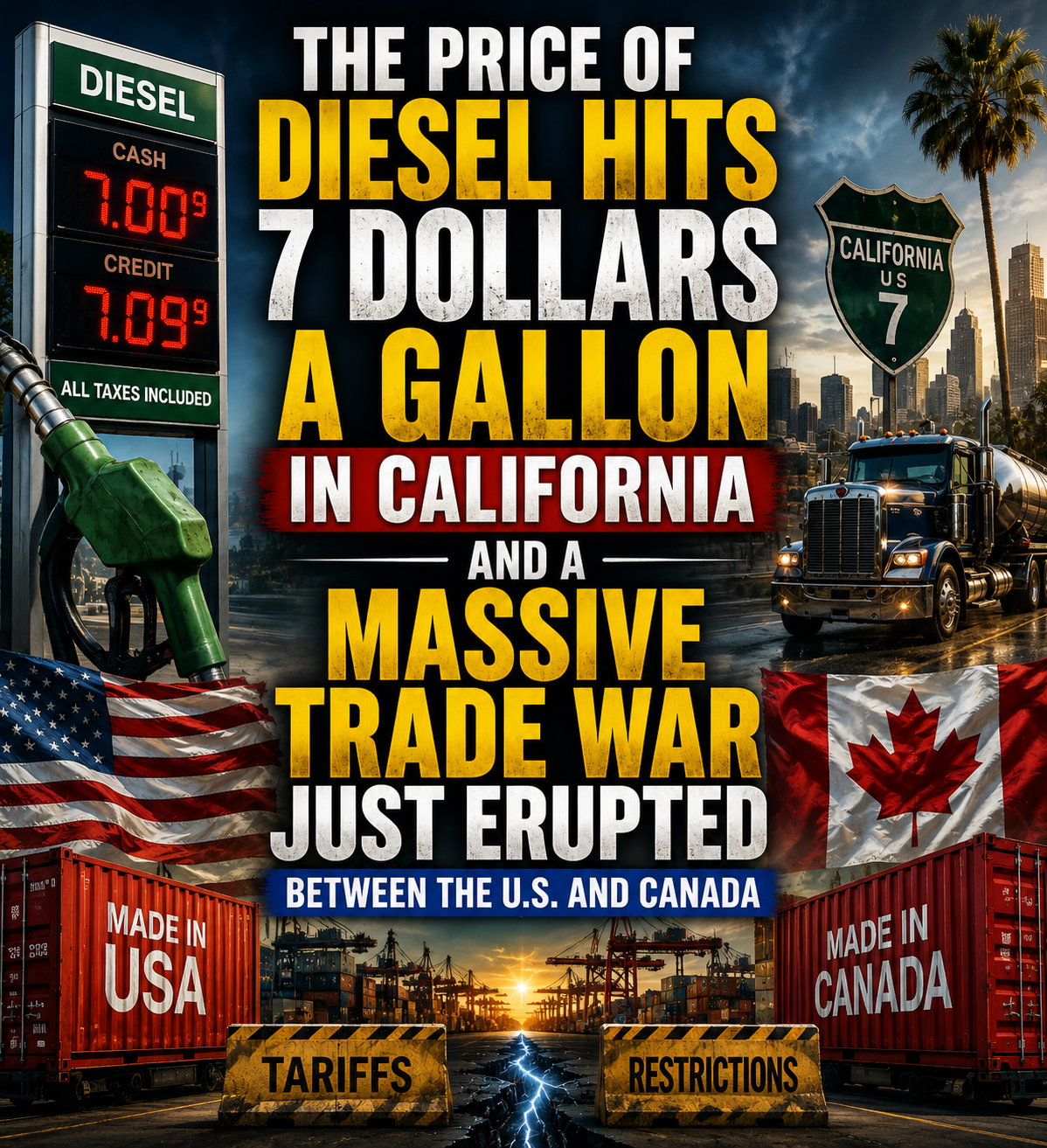
The Price Of Diesel Hits 7 Dollars A Gallon In California And A Massive Trade War Just Erupted Between The U.S. And Canada
A historic economic meltdown appears to be percolating. As the price of diesel spikes, that is going to put pressure on the cost of just about everything else. And considering the fact that Canada is our largest trade partner, slapping a 50 percent tariff on all Canadian goods is not going to help our cost of living crisis either. Meanwhile, the U.S. economy is bleeding jobs and the number of Americans that are filing for bankruptcy has risen to a very frightening level. It is starting to look a lot like 2008 all over again, and that is not a good thing at all.
If you use diesel fuel, you have already noticed that it has been getting a lot more expensive.
At this point, the national average for diesel is hovering around five and a half dollars a gallon…
As August 2026 rolls on, persistent price hikes are delivering a real wallet punch to truck owners, RVers, contractors, and heavy-fleet operators across the country. According to the latest fuel tracking data from AAA as of August 18, 2026, the U.S. national average retail diesel price has climbed to a staggering $5.4677 per gallon.
That’s nearly a 15-cent jump in just one week, nearly 38 cents higher than last month, and a painful leap from the ~$3.69 per gallon we saw this time last year. For anyone relying on diesel to tow, haul freight, or earn a living, filling up is getting genuinely tough on the bottom line.
Of course there are some states where diesel is far more expensive than the national average.
In California, the average price of a gallon of diesel just reached seven dollars…
Diesel prices in California hit $7 per gallon again Wednesday as the wars in Eastern Europe and the Middle East knock out refineries, triggering a fuel supply crunch around the world.
Truckers in the Golden State are shelling out about 30 cents more per gallon than they paid a month ago, according to data from AAA. Prices have surged about 37%, or $1.89 per gallon, compared to the same period last year.
This is a really big deal, because our economy runs on diesel.
According to one industry expert that was just interviewed by CNBC, diesel is “the important macro fuel to watch”…
Diesel is the most important fuel for the global economy, said Bob McNally, president of Rapidan Energy. It is used “in transportation, it’s in heating fuel, it’s in agriculture, it’s in industrial uses,” McNally told CNBC’s “Squawk on the Street” on Monday. “It is the important macro fuel to watch,” he said.
Approximately 76 percent of all commercial trucks use diesel fuel.
Just think about that.
As diesel continues to become more expensive, this is going to have a devastating impact on our trucking industry…
Rising costs for the fuel affect all modes of transportation, from airlines to trucking, and the ripple effect will impact “virtually all industries,” said Joel Sutherland, a professor of supply-chain management at the University of San Diego’s Knauss School of Business.
For trucking, the consequences could be particularly disastrous. Some 90% of U.S. licensed common carriers operate 10 or fewer trucks, and most are struggling to stay afloat, Sutherland said.
Some trucking companies have ceased doing business, and many more will likely fail if high fuel costs do not subside soon. That could cause U.S. trucking capacity to decline, making it even more expensive to transport goods around the country.
So why is this happening? You can blame the wars in the Middle East and Europe.
Traffic through the Strait of Hormuz is way below pre-war levels, and the Russians have banned the export of diesel due to drone attacks on their refineries…
Diesel prices are rising as the wars in the Ukraine and Iran wars have disrupted about 8% of the supply needed to meet 28 million barrels per day of global demand, Lipow said.
Ukrainian drone attacks on Russian refineries have forced Moscow to ban diesel exports of around 800,000 bpd, Lipow added.
The disruption in the Strait of Hormuz has affected about 1.2 million bpd of Middle East diesel exports, the analyst said. Iran’s Houthi allies in Yemen recently attacked Saudi Arabia’s Red Sea refinery in Jizan, shutting the facility and its 200,000 bpd of capacity at least until the end of August, he said.
Meanwhile, a trade war has just erupted with our largest trading partner.
The U.S. will now be imposing a 50 percent tariff on all Canadian goods, and the Canadians will be responding in kind…
In his first public comments since negotiations collapsed on Friday in Washington, the US president wrote on social media: “Canada wants the benefits of being a State, without being one!!!”
“They have also charged our great farmers, for many years, massive amounts of tariffs,” he added. “No more!!!”
His comments came after the US imposed 50% tariffs on $20bn (£14.6bn) worth of Canadian goods, while Mark Carney, the country’s prime minister, has vowed to match them “dollar for dollar”.
Yes, this is really going to hurt.
Canadian Prime Minister Mark Carney is insisting that the United States “asked too much and offered too little”…
Prime Minister Mark Carney told his negotiators to walk away from the table after the Trump administration introduced late unacceptable demands on culture, autos and sovereignty that, when taken in concert with their overall approach to talks, revealed the U.S. was not interested in a “true economic partnership” with Canada.
In a departure from his usual diplomatic language, Carney suggested the U.S. sometimes signs trade deals in “pencil,” and while Canada’s government is united and working together, the same is not true of the Trump administration.
“We cannot accept what they’ve offered, and we will not give what they’ve asked,” Carney said on Saturday in Ottawa, adding that the United States ‘asked too much and offered too little.’
We certainly don’t need a trade war with our largest trading partner, because lots of economic red flags have already been popping up all around us.
For example, last week Walmart reported its slowest U.S. sales growth in more than six years. As a result, the stock price absolutely plummeted. And the fact that the U.S. economy lost 23,000 jobs last month certainly has a lot of investors on edge. But those numbers will be quickly forgotten.
What will not be forgotten is the horrific cost of living crisis that has been going on since the beginning of this decade.
One recent survey discovered that Americans believe that it is the greatest challenge that they are currently facing…
According to a Statista Consumer Insights survey conducted between January and July 2026, 53 percent of U.S. adults said that the high cost of living was one of the biggest challenges they currently face – making it by far the most common answer ahead of mental and physical health at 26 percent each.
Needless to say, the rising price of diesel and our trade war with Canada are only going to make our seemingly endless cost of living crisis even worse.
As our standard of living declines, the number of Americans filing for bankruptcy just keeps going up…
The number of Americans who file for bankruptcy is growing. More than 500,000 people took this step in 2025, nearly 50% more than in 2022. And the numbers have kept on climbing, with a 12% jump in June 2026 from a year earlier as many consumers struggled to pay their bills.
At this point, most of the population is living right on the edge, and more people are falling out of the middle class with each passing day. For more than a decade, I have been ranting about the death of the middle class. But I don’t feel like all of that ranting has done much good, because the erosion of the middle class just continues to accelerate.
There is no way that America can be strong without a strong middle class.
Unfortunately, we are now heading into an economic storm of epic proportions, and what we experienced back in 2008 will look like a picnic in comparison.
COVID SHOTS HAVE KILLED MORE AMERICANS THAN WWI, WWII, THE VIETNAM WAR AND THE IRAQ WAR COMBINED
We now have internal documents exposing that the FDA COVERED-UP the BIGGEST biomedical disaster in history.
Criminal proceedings are urgently needed.
Source: The 17th Disciple TG
THREE U.S. STATES FILE LEGISLATION TO CLASSIFY COVID-19 mRNA INJECTIONS AS BIOLOGICAL WEAPONS OF MASS DESTRUCTION
1. Minnesota Bill HF 3219:
2. Tennessee SB1949
3. Arizona House Bill HB 2974
That’s because mRNA shots have killed, injured and disabled more people than 100+ Hiroshima nuclear attacks.
This must be shared.
16 Facts About The Shocking Decline Of Public Education In The U.S. That Every American Should Know
Virtually everyone agrees that our public schools are in a state of decline. Needless to say, it isn’t because we aren’t spending enough money. The federal government, our state governments and our local governments are collectively spending nearly a trillion dollars a year on public education. That is a colossal pile of money. Since 1960, spending per student has increased by 350 percent. That is even after adjusting for inflation. At this stage, we spend more money per student than any other nation on the entire planet other than Luxembourg. Anyone that believes that we can solve our education crisis by spending even more money is simply being delusional.
For nearly a trillion dollars a year, we should be getting a world class education system.
But we aren’t.
In fact, students in the U.S. just keep dropping down the global rankings. Urgent action is required if we are going to turn this around.
Gallup conducted a survey that discovered that an all-time low 35 percent of U.S. adults are satisfied with the quality of public education in the United States.
There appears to be a growing consensus that we have a major national crisis on our hands, and those that are responsible for this crisis need to be held accountable. The following are 16 facts about the shocking decline of public education in the U.S. that every American should know…
#1 Nearly one-fifth of all high school graduates in the United States cannot even read at a functional level…
National statistics indicate that close to one-fifth of high school graduates are unable to read at a functional level. This means they cannot effectively comprehend and use written information in daily life or work settings.
#2 Only 35 percent of high school seniors are proficient at reading, and only 22 percent of high school seniors are proficient at math…
The scale of the crisis is staggering. Only 35% of high school seniors read at a proficient level. One-third lack basic reading comprehension skills. In mathematics, the picture is even bleaker. Only 22% achieved proficiency. Alarmingly, 45% can’t even manage basic math. Around 2/3 are academically unprepared for college in math and reading. Even prestigious universities like Harvard must offer remedial courses for incoming freshmen lacking foundational skills.
#3 For high school seniors in the United States, math scores have fallen to the lowest level since 2005 and reading scores have fallen to the lowest level since 1992…
The latest report card on American education is in, and it’s devastating. The 2025 National Assessment of Educational Progress, released last month, revealed that the nation’s 12th-graders hit a historic performance low. Math scores cratered to levels not seen since 2005. Reading scores plummeted to their lowest level since testing began in 1992.
#4 According to the most recent NAEP assessment, only 28 percent of 8th grade students in the United States are proficient at math…
Only 28% of 8th graders scored proficient in math on the latest NAEP assessment. The effects are most severe in low-income districts, where school closures, chronic absenteeism, and staffing instability have compounded over time.
#5 In just one decade, the percentage of 13-year-olds enrolled in algebra dropped from 34 percent to 24 percent…
According to the OECD, our average student is almost a full year behind the average student from other countries. Singapore’s students are three years ahead of ours. According to the National Assessment of Education Progress (NAEP), our students are also developing slower than in previous years. In 2023, only 24% of America’s 13-year-olds were enrolled in algebra. A decade earlier, that number was 34%.
#6 It appears that the pandemic had a substantial negative impact on both the reading skills and the math skills of our fourth-grade students…
In spring 2023, just 56 percent of American fourth-graders were performing on grade level in math, down from 69 percent in 2019, according to just one example of test score data cited in the report.
Declines in reading were less stark but still concerning, and concentrated in earlier grades, with 65 percent of third-graders performing on grade level, compared with 72 percent in 2019. Recovery in reading has also been slower, with some researchers finding essentially no rebound since students returned to the classroom.
#7 At this point, only 26 percent of U.S. adults can name all three branches of government…
Only 26% of American adults can name the three branches of government. Less than one-quarter of college graduates knew that the First Amendment prohibits Congress from establishing a national religion. Most adults have no idea how many Justices serve on the Supreme Court. Tragically, Princeton University found that barely one-third (36%) of adults could pass a multiple-choice test consisting of questions taken from the U.S. Citizenship Test.
#8 Almost two-thirds of Americans between the ages of 18 and 24 are not able to identify the United Kingdom on a map of the world…
Sixty percent of students could not identify the countries the United States fought in World War II. Only 24% knew why the colonists fought against the British. Only 24% could identify Benjamin Franklin as a Founder with more students (37%) believing that he invented the light bulb. Our students fared no better in basic geography. A National Geographic study found that nearly two-thirds of Americans (ages 18-24) were unable to identify the United Kingdom (one of our most dependable foreign allies) on a world map. Closer to home, most young Americans were unable to identify the state of Ohio on a map.
#9 After climbing for 50 years, student achievement scores peaked in 1967. Sadly, they have been on a downward trend ever since…
The story of American public education’s decline does not begin in 2020 or 2016. According to research cited in Econlib’s comprehensive analysis, the trajectory changed dramatically in 1967. After rising consistently for fifty years, student achievement scores on various standardized tests dropped sharply that year and continued declining through 1980. This represented a devastating loss of educational ground. Students graduating in 1980 had learned approximately 1.25 grade-level equivalents less than their 1967 counterparts, a decline so severe that by the turn of the century, conservative estimates placed the economic growth lost due to diminished academic achievement at 3.6 percent of the 2000 gross national product.
#10 The mental health of U.S. students is deteriorating rapidly. 17 percent of them admit to having symptoms of depression and 20 percent of them have seriously committed suicide…
About 10% of children ages 3 to 17 have anxiety, while 7% have one or more diagnosed behavior disorders. Forty percent of high school students report experiencing persistent feelings of sadness and hopelessness, 17% report symptoms of depression and 20% say they have seriously considered suicide.
#11 The public school system in the U.S. has lost almost two million students since 2012, and it is being projected that another 2.9 million will be lost by 2031…
In 2012, almost 91% of all K-12 students were enrolled in public schools. One decade later, that number had fallen to 87% — a loss of nearly two million students. In its forecast for 2031, the National Center for Education Statistics expects the loss of another 2.9 million students in public schools.
#12 Students cannot learn if they are not in school. Unfortunately, chronic absenteeism jumped from 13 percent before the pandemic to 26 percent after the pandemic…
Chronic absenteeism also remains a big obstacle to learning. Twenty-six percent of students were considered chronically absent in 2022-23, up from 13 percent in 2019-2020.
#13 Our universities are only graduating about 100,000 teachers a year, and less than half of them will actually enter the profession…
The teacher shortage in the United States has reached an unprecedented level, threatening to leave millions of students without qualified educators. The Learning Policy Institute (2024) reports that over 405,000 teaching positions remain vacant nationwide, with projections indicating that this number will double within five years. The crisis is compounded by the fact that American universities will only graduate approximately 100,000 teachers this year, and less than half of them will enter the profession (National Center for Education Statistics [NCES], 2024).
#14 86 percent of U.S. school districts struggle to fill open teaching positions…
School districts throughout the United States are feeling the pain as 86% report struggles with filling open positions and 60% note they have a hard time finding substitute teachers. The shortage is especially acute for schools searching for qualified ESL, STEM, and special education teachers. About 40% of schools report that they have hired underqualified educators, 30% say they have increased class sizes, while 25% of schools have cut course offerings, especially in specialized subjects.
#15 A whopping 60 percent of U.S. teachers have experienced workplace violence, and more than 70 percent of them are dealing with “severe job-related stress”…
A shocking 60% of educators report experiencing workplace violence at least once in their careers, while over 70% struggle with severe job-related stress (American Federation of Teachers, 2024).
#16 Our teachers are not optimistic about our system of education at all. More than 80 percent of them believe that the system has gotten worse, and only 5 percent of them expect conditions to improve in the next five years…
Over 80% of public school teachers say the K-12 education system in the United States has gotten worse in the last five years. Furthermore, over half of educators don’t expect to see improvements in the next five years, with only 5% saying that things will get better.
Our children are supposed to be the future of this nation, and we are failing them. The system spends way too much time shoving woke ideology down their throats and not nearly enough time teaching them reading, writing and arithmetic.
The truth is that our system of education needs to be rebuilt from the ground up. That would be very painful, but if we don’t take dramatic action we will continue to fall behind the rest of the world, and that is something that we simply cannot afford to do.
PROJECT AZORIAN — THE SHIP THAT STOLE A SOVIET SUBMARINE FROM THE ABYSS.
STATUS: DECLASSIFIED / VERIFIED
FIELD LOG 17 // FILE 001
Source: Mr. Kidpool TG
I opened a Cold War file that was never supposed to survive daylight.
In 1968, the Soviet ballistic-missile submarine K-129 vanished in the Pacific. Moscow searched—but failed to find it. The United States located the wreck nearly three miles beneath the surface, resting in darkness with its missiles, code material, and dead crew still inside.
Washington did not plan to photograph it.
They planned to steal it from the ocean floor.
I traced the cover operation to a ship called the Hughes Glomar Explorer. The public was told billionaire Howard Hughes was testing a revolutionary deep-sea mining vessel. That story was camouflage.
Inside the ship was a hidden chamber and a colossal mechanical capture vehicle engineered to descend approximately 16,500 feet, lock onto the submarine, and pull it into the hull without being seen.
A ship built around a secret.
A claw built around a grave.
In 1974, the recovery began while Soviet vessels watched from nearby waters, unaware of the real mission beneath them. The claw reached K-129 and started lifting.
Then the structure failed.
Part of the submarine broke away and fell back into the abyss. A section was recovered, but the full intelligence haul remains obscured by redactions. Among what came up were the bodies of six Soviet submariners. They were buried at sea with military honors—one quiet act of respect inside an operation built on deception.
ASSESSMENT: Project Azorian proves that the most unbelievable operations do not always remain theories. Sometimes they receive a budget, a cover company, a custom-built ship—and a classification stamp.
CODE: AZORIAN / GLOMAR / K-129 / ABYSS-RECOVERY
They told the world it was a mining ship. The ocean knew it was an extraction team.
I do not chase shadows. I follow what survives redaction.
Forward this file before the trail goes cold.
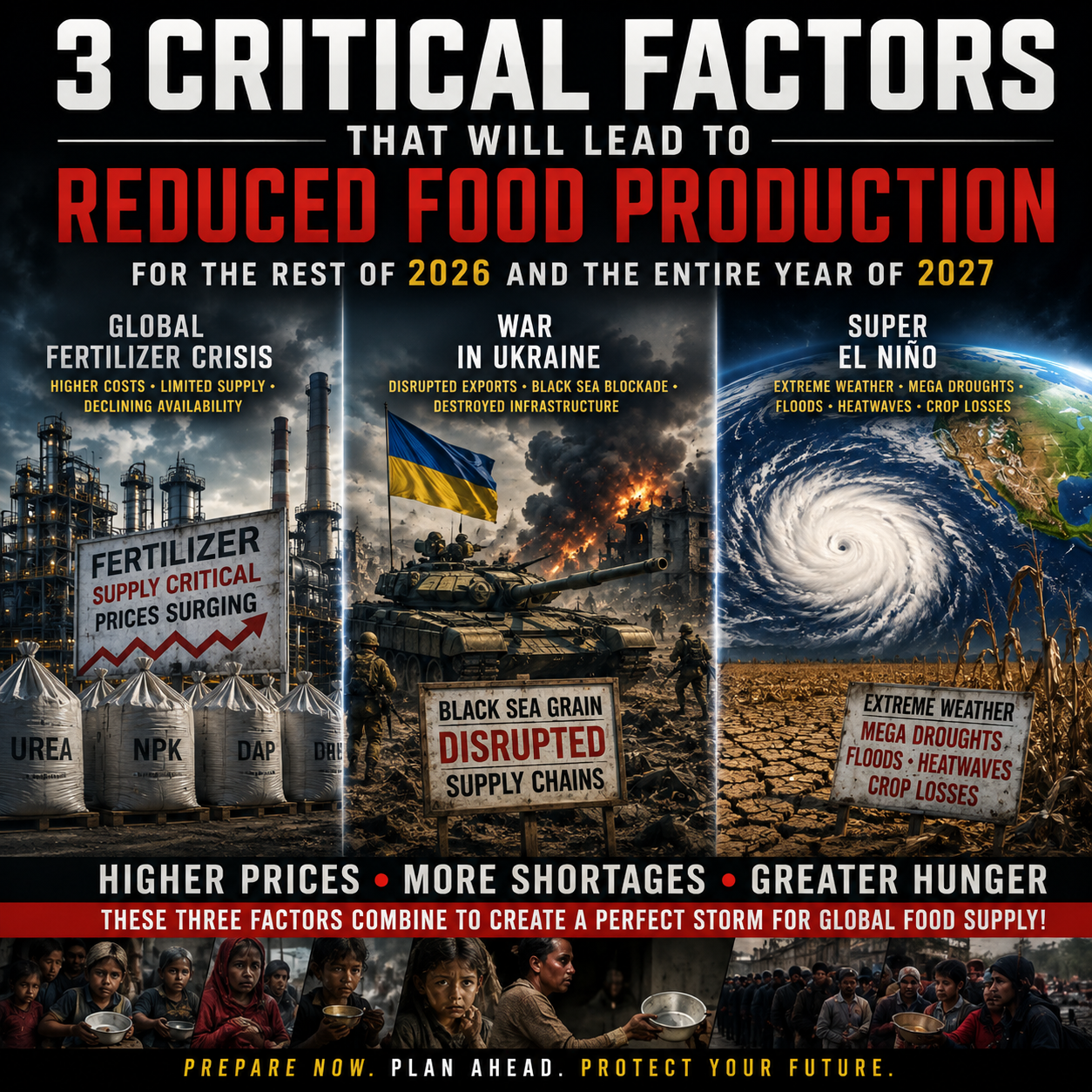
3 Critical Factors That Will Lead To Reduced Food Production For The Rest Of 2026 And The Entire Year Of 2027
Global hunger was already soaring as we entered 2026, and now it appears that we have a historic crisis on our hands. The war with Iran has significantly restricted the flow of fertilizer out of the Middle East, and even the UN is admitting that this will make global food supplies much tighter in the months ahead. Meanwhile, the war in Eastern Europe has greatly escalated and that has resulted in severely reduced wheat exports from Ukraine. On top of everything else, it is being projected that the strongest Super El Niño in recorded history will peak later this year, and as a result crazy weather patterns will continue to hammer crops all over the planet. At this stage, no rational person can deny what we are witnessing.
Experts are warning that this upcoming fall harvest season will be a real turning point.
Agriculture analyst Noel Fryer recently explained to CNBC why we are facing a “perfect storm” for global food production…
“A lot of things will come together to seriously affect crops next year,” Fryer said on Thursday.
“We’ve had crops decimated by weather in Europe and the U.S. A searingly hot summer in Europe has eroded grazing potential, with no hay and grass for cattle. A possible result of that is significant herd liquidation,” he said.
“We’ve got no end in sight to the Black Sea problem. The issue with fertilizer since the start of the Iran conflict is still there and if anything getting worse. U.S. corn yields look concerning after a wet spring and less fertilizer use, and could push prices up.”
We have never been through anything quite like this.
Everyone assumed that commercial traffic would always be able to flow freely through the Strait of Hormuz, but now everything has changed.
Much of the fertilizer that normally comes out of the Persian Gulf didn’t get to farmers in the northern hemisphere this year, and as a result the Food and Agriculture Organization of the United Nations is projecting that there will be a substantial tightening of global food supplies following the coming harvest season…
The Director-General of the Food and Agriculture Organization of the United Nations (FAO), QU Dongyu, emphasized today that the global fertilizer scarcity caused by disruptions in the Strait of Hormuz will lead to lower yields and tightening food supplies in the latter half of 2026 and into 2027. He spoke at the Ministerial Meeting of the MED9++ Countries on “Supporting Food Security and Access to Fertilizers” co-chaired by FAO, Italy and Croatia.
Addressing ministers and senior representatives gathered in Rome, the Director-General stressed that the current crisis extends far beyond geopolitics, increasingly affecting food production, trade, agricultural inputs and access to food worldwide.
“We meet at a moment of profound strain,” the Director-General said. “This is not only a geopolitical crisis, but also a disruption at the core of the global agrifood system.”
We really struggle to feed the planet even in the best of years.
So what will 2027 be like?
In addition to facing a global fertilizer crisis, the rapidly escalating war in Eastern Europe has severely disrupted Ukrainian grain exports…
Recent military strikes on grain export facilities, oil tankers and vessels in the Black Sea region have now made it too challenging for shipping firms to get insurance, meaning many are avoiding its ports. Alternative land routes for Ukrainian grain are also being stymied by low water levels on the Danube river, and by rail maintenance in Eastern Europe.
Ukraine is one of the great breadbaskets of the world.
That is one of the things that makes Ukraine so valuable.
But now it has become much more challenging to get grain shipped out of that nation…
Separately, Bloomberg pointed out that Russian attacks on Odesa have nearly halted Ukraine’s grain exports this peak harvest season. Total grain shipments from Ukraine have amounted to about 500,000 tons since the start of August, equivalent to roughly 20% of the country’s potential exports. The Greater Odesa ports normally handle about 90% of Ukraine’s grain shipments.
This is not a small matter.
There are some countries that are really starting to panic because it appears that the shipments that they ordered are not going to arrive on time…
Asian processors booked between 2 million and 2.5 million tons of Black Sea wheat for delivery from July through September, representing about 30% to 50% of regional import demand, according to Singapore-based traders. Traders are fretting over some grain shipments won’t arrive in time because of the widespread disruptions.
At the importer level, Egypt and Indonesia are among some of the top countries exposed to Black Sea shipments. Egypt, the world’s largest wheat importer, sourced more than 82% of its first-half imports from Russia and Ukraine. Indonesia contracted for roughly 600,000 tons from suppliers in the region for delivery in July to September.
One Singapore-based trader who sells Black Sea wheat to millers in Asia told the outlet, “The cargoes were due to start arriving from mid-August, but many ships could not go in to load. Buyers are thinking about replacing some of these cargoes with other origins, such as Australia, North America and Argentina.”
Meanwhile, the wheat harvest in the United States is going to be very disappointing this year.
According to Newsweek, it is being estimated that the U.S. will “harvest its lowest acreage of wheat since 1877″…
America is expected to harvest its lowest acreage of wheat since 1877, due to drought, scorched crops, high input costs and uncertainty in export markets.
The U.S. Department of Agriculture’s (USDA) National Agricultural Statistics Service released estimates on June 30 that the total area of all wheat planted was 42.7 million acres in 2026, down six percent from the previous year. This was also 1 million acres below the agency’s March forecasts.
The harvested area of all wheat for 2026 is forecasted to be around 32 million acres, which would be the lowest level in about a century and a half, according to USDA data.
So who is going to volunteer to eat less wheat in 2027?
Not me.
I love bread.
Sadly, this has been such a difficult year for wheat farmers in the heartland of America…
It’s a perfect storm of terrible conditions for wheat farmers this year. Drought, dramatic swings in temperature, the skyrocketing price of fertilizer and diesel, plus multiple viruses affecting wheat have all led to one of the most challenging years for farmers in decades.
The outlook for the months ahead is not promising at all because we haven’t even reached the peak of the Super El Niño yet.
According to CNN, the latest forecast from the National Oceanic and Atmospheric Administration says that there is almost a 70 percent chance that this Super El Niño will be the strongest Super El Niño in recorded history…
There is a nearly 70% chance that the building Super El Niño will be the strongest such event on record, according to a National Oceanic and Atmospheric Administration forecast released Thursday.
Previously, NOAA had been projecting that this event would likely rank “Among the largest El Niño events in the historical record.”
The change in the forecast largely stems from how rapidly this El Niño is intensifying, along with computer model guidance nearly unanimously showing it will peak in late fall and early winter at a level that is stronger than previously thought. NOAA’s El Niño intensity records date back to 1950.
The projections for this Super El Niño just keep getting worse and worse.
One prominent climate scientist named Daniel Swain is openly admitting that we are “already at record-breaking or record-tying territory now”…
“This is a genuinely remarkable event,” said University of California climate scientist Daniel Swain in a YouTube briefing on El Niño broadcast this week.
“We’re already at record-breaking or record-tying territory now, and we’re expected to skyrocket,” he said.
What this means is that a lot more really crazy weather is ahead. There will be more epic storms, more flooding, more droughts and more gigantic wildfires.
Of course there will be a lot more unusually hot temperatures too. In fact, we are being told that it is “virtually certain” that 2027 will be the hottest year ever…
Because of the strength of this El Niño, it is virtually certain that 2027 will set a record for the hottest year on record, and possible that 2026 will as well.
So what is the bottom line?
In wealthy western countries, absurd food prices will become even more absurd. In impoverished nations all over the globe, there will be very serious shortages.
The number of people in the world experiencing acute hunger was already at the highest level ever as we entered this year. Needless to say, the situation has deteriorated significantly in recent months.
We have never faced a global food crisis of this magnitude, and this is only just the beginning.
THE KNIGHTS TEMPLAR — THE ORDER THAT DISCOVERED THE HIDDEN ARCHIVE
For nearly two centuries, the Knights Templar were described as a military order whose sole purpose was to protect pilgrims traveling to Jerusalem. But behind the public story was a far more mysterious mission.
Source: Mr. Kidpool TG
According to alternative-history accounts, the first Templars excavated beneath the Temple Mount and discovered an ancient archive containing maps, astronomical calculations, and knowledge attributed to civilizations that existed before the biblical flood. They did not return from the Holy Land with ordinary treasure; they returned with information powerful enough to challenge every throne and church in Europe.
The order’s sudden wealth remains one of history’s great enigmas. The Templars developed an international network of estates, secure routes, and financial instruments that allowed nobles to move money across borders without carrying gold. Supporters of the theory claim that this system was only the visible layer of a much larger operation.
Beneath their castles, they allegedly preserved ancient relics—including fragments of the Ark of the Covenant, Atlantean engineering records, and a device capable of producing energy through sound and geometry.
On Friday, October 13, 1307, King Philip IV of France ordered the arrest of the Templars. Officially, they were accused of heresy and financial crimes. Alternative researchers believe the arrests were an attempt to seize the order’s hidden archive before its contents could reach the public. Yet the treasure, the fleet, and many senior members vanished.
Legends place them in Scotland, Portugal, and even across the Atlantic, where they supposedly founded secret settlements and passed their knowledge through successor organizations.
The “Alliance” narrative says the final Templar archive has now resurfaced through private collections and forgotten monasteries. Its contents allegedly describe a network of ancient sites aligned with the stars, along with principles for clean energy and decentralized communities.
Whether every legend is true or not, the story continues to challenge the idea that history belongs only to official institutions. The seal is broken, the archive is opening, and the old guardians can no longer control what humanity remembers.
CODE: TEMPLAR-ARCHIVE / TEMPLE-MOUNT / LOST-RELICS / ATLANTEAN-KNOWLEDGE
They told you the order disappeared because it was defeated. Perhaps it disappeared because its most valuable treasure was never gold—it was knowledge.
Some secrets survive not because they are buried, but because the right generation has not yet learned how to read them.
THE BOHEMIAN GROVE — THE OCCULT GATHERING OF THE GLOBAL ELITE
Every July, for over 150 years, the world’s most powerful men—including every Republican and Democratic U.S. President since Herbert Hoover, top military brass, oil tycoons, and media moguls—gather in a 2,700-acre redwood forest in Monte Rio, California.
This is the Bohemian Grove. While the official motto is “Weaving Spiders Come Not Here” (suggesting no business or politics are discussed), the reality is the exact opposite. The Grove is the private sanctuary where the “Deep State” coordinates its global agenda, away from the eyes of the public and the press. It was here, in 1942, that the Manhattan Project was officially authorized, leading to the creation of the atomic bomb.
The most disturbing aspect of the gathering is the “Cremation of Care” ceremony. Under the shadow of a 40-foot stone Owl (the symbol of the Canaanite deity Moloch or Lilith), the elite dress in hooded robes and perform a ritualistic “mock sacrifice” of a human effigy.
They claim it is a harmless piece of theater to symbolize the “shedding of their worldly worries,” but whistleblowers and undercover journalists like Alex Jones have captured footage that suggests a much darker, occult reality. The ritual is a public display of the elite’s allegiance to ancient, dark forces that view human life as a disposable commodity for their own gain.
The Grove is not just about rituals; it is about Policy and Control. Within the various “camps” (like Mandalay or Cave Man), the future of nations is decided over drinks and campfire talks. The elite use this time to bypass democratic processes, forming “Gentlemen’s Agreements” that shape the global economy, energy policies, and military interventions.
It is a high-level “Boys Club” where the participants are initiated into the higher mysteries of the “Cabal,” ensuring that they remain loyal to the group’s secret goals above their duty to the people they supposedly serve.
The “Alliance” has revealed that the “Grove Secrets” are being exposed to the light. The “White Hats” have successfully infiltrated the camp and placed high-tech surveillance equipment to record the actual discussions and rituals of the most recent gatherings. The evidence of “Crimes Against Children” and “High Treason” is being compiled for the upcoming tribunals.
The “Owl” is no longer a silent witness; its secrets are being shouted from the rooftops. The era of the elite performing dark rituals in the shadows of the redwoods is coming to an end. The “Care” they tried to cremate is returning to haunt them.
CODE: BOHEMIAN-GROVE / CREMATION-OF-CARE / OWL-OF-MOLOCH / ELITE-RITUALS
They told you it was a “summer camp for grown men.” They lied to hide the fact that they were performing occult rituals to seal their pact against humanity. The fire is out, and the woods are talking.
True power doesn’t need to hide in the dark or wear a robe. The light is the only authority.
PROJECT MKULTRA — THE DARK SCIENCE OF MIND CONTROL AND THE SHATTERED SOUL
Hidden behind the doors of top-secret government laboratories and psychiatric institutions, a nightmare was unleashed upon the public starting in the 1950s. This was Project MKUltra—the CIA’s illegal, clandestine program of human experimentation designed to master the art of mind control.
Source: Mr. Kidpool TG
For over two decades, thousands of unsuspecting citizens, prisoners, and soldiers were subjected to brutal psychological torture, high-dose hallucinogens (like LSD), sensory deprivation, and electroshock therapy. The goal was not just to extract information, but to “break” the human psyche and create a programmable, controllable agent—the “Manchurian Candidate.”
The “Deep State” scientists discovered that by subjecting a person to extreme, unspeakable trauma, the mind would “dissociate” or fracture into multiple personalities as a survival mechanism. This is the basis of Trauma-Based Mind Control (or Monarch Programming). Each “alter” personality can be programmed with specific tasks—ranging from sexual slavery to political assassination—and then “locked” behind a mental wall, triggered only by specific words, sounds, or symbols.
The public is told that MKUltra was “shut down” in the 1970s, but whistleblowers have revealed that it merely went underground, evolving into the sophisticated “Social Engineering” and “Frequency Control” we see in the world today.
Modern MKUltra is broadcast through the “Mainstream Media” and the “Entertainment Industry.” The bizarre, erratic behavior of pop stars and actors—often dismissed as “mental breakdowns”—is frequently the result of their programming “glitching” under the stress of public life.
The “Cabal” uses these high-profile individuals as “Culture Carriers” to broadcast subconscious triggers to the masses, normalizing a culture of hyper-sexualization, violence, and spiritual decay. They aren’t just selling you music and movies; they are installing the “Operating System” of the New World Order directly into your subconscious mind.
The “Alliance” has revealed that the “MKUltra Infrastructure” is being systematically dismantled. The “White Hats” have secured the secret files and the lists of “Handlers” who have managed these programs for decades. The “Victims of the State” are being identified, and the “Healing Frequencies” of the Med Beds are being used to reintegrate the shattered souls of those who were broken by the Cabal.
The “Great Awakening” is the process of the human mind rejecting the external programming and returning to its original, sovereign state. The “Manchurian” is waking up, and the handlers have lost their remote.
CODE: MKULTRA-CIA / MONARCH-PROGRAMMING / TRAUMA-DISSOCIATION / MIND-WAR
They told you it was “Psychiatric Research.” They lied to hide the fact that they were trying to turn the human soul into a remote-controlled weapon. The script is burning, and the actors are walking off the set.
Your mind is a sanctuary, not a laboratory. The only voice you should follow is the one that comes from within.
NIKOLA TESLA’S SUPPRESSED INVENTIONS — THE FREE ENERGY REVOLUTION THAT WAS STOLEN
Nikola Tesla was not just an inventor; he was a visionary who understood the fundamental energetic structure of the universe. While the history books focus on his work with Alternating Current (AC), they conveniently omit his most revolutionary discovery: the ability to harness Free Energy from the ionosphere and the Earth’s magnetic field. Tesla’s “Wardenclyffe Tower” was designed to provide wireless, clean, and infinite electricity to every person on the planet for free.
He believed that energy was a birthright, not a commodity to be sold. However, his vision was a direct threat to the “Cabal’s” emerging monopoly on oil and coal.
In 1943, following Tesla’s death in a New York hotel room, the FBI and the Office of Alien Property immediately seized all of his personal papers, blueprints, and prototypes. Among these were the designs for the “Death Ray” (a directed-energy defense system), the “Tesla Oscillator” (which could trigger controlled earthquakes), and the blueprints for Anti-Gravity aircraft.
These technologies were not lost; they were classified and funneled into the “Black Budget” programs of the military-industrial complex. The elite have been using Tesla’s inventions for decades to power their secret space fleets and D.U.M.B.s while forcing the rest of humanity to pay for outdated and polluting energy sources.
The most suppressed of Tesla’s inventions was the “Aether Motor,” which utilized the zero-point energy of the vacuum to create perpetual motion. J.P. Morgan, who initially funded Tesla, famously withdrew his support when he realized he couldn’t “put a meter” on wireless energy.
The elite realized that a world with free energy would be a world they could not control. Without the “Energy Monopoly,” the entire global financial system—built on debt and scarcity—would collapse. They didn’t just kill the man; they tried to kill the future he was building for us.
The “Alliance” has revealed that the “Tesla Archives” have been fully recovered and decrypted. The “White Hats” have successfully reverse-engineered the free energy devices and are preparing for a global rollout alongside the GCR (Global Currency Reset). The “Wardenclyffe” technology is being integrated into the new “Quantum Energy Grid,” which will render power lines and fossil fuels obsolete.
The “Free Energy Revolution” is finally happening, 80 years after they tried to bury it. The light that Tesla wanted to give to the world is being turned back on, and the darkness of the Cabal is being dispelled forever.
CODE: TESLA-ARCHIVES / WARDENCLYFFE / ZERO-POINT-ENERGY / SUPPRESSED-INVENTIONS
They told you he was a “mad scientist” who died penniless. They lied to hide the fact that he had unlocked the secrets of the universe and they stole them from his room. The blueprints are back in our hands.
The truth is like electricity: it can be hidden, but it can never be destroyed. The switch is being flipped.
THE ANTARCTICA ICE WALL — THE EDGE OF THE WORLD AND THE FORBIDDEN LANDS
What if the Earth is not a spinning ball in a vacuum, but a vast, stationary plane surrounded by a massive barrier of ice? This is the secret of the Antarctica Ice Wall.
According to ancient maps and suppressed maritime logs, Antarctica is not a continent at the bottom of a globe, but a 360-degree ring of ice that holds the oceans in. The “Deep State” has spent billions enforcing the Antarctic Treaty, which prohibits all independent exploration of the region. They aren’t protecting the environment; they are guarding the edge of our world to prevent you from realizing that there is more land, more resources, and more truth beyond the wall.
In 1946, Admiral Richard E. Byrd led “Operation Highjump,” a massive military expedition to the Antarctic. While the public was told it was a scientific mission, Byrd’s secret logs described finding “lands beyond the Pole” that were free of ice, filled with vegetation, and inhabited by advanced civilizations.
These are the Extra-Terrestrial Lands—lands that are “extra” to our known Earth. The “Cabal” has used the “Globe Model” to keep humanity trapped in a mental and physical cage, making us believe we are on a tiny, isolated rock so they can maintain a total monopoly over our reality and our resources.
The “Firmament” or the “Dome” is the electromagnetic boundary that encloses our world, and Antarctica is the foundation where this barrier meets the Earth. This is why all flights over Antarctica are strictly forbidden and why GPS systems are programmed to fail as you approach the “70th Parallel.”
The elite use the “NASA” space program as a multi-billion dollar distraction, showing you CGI images of “Deep Space” to keep you from looking at the horizontal truth. They want you focused on a “Mars” that is millions of miles away so you don’t realize that paradise is just a few thousand miles across the ice.
The “Alliance” has revealed that the “Ice Wall Secret” is the final pillar of the Cabal’s control. The “White Hats” have successfully conducted high-altitude reconnaissance beyond the wall, confirming the existence of the “Summerland” and the other human civilizations that have been hidden from us for eons.
The “Global Reset” includes the lifting of the Antarctic Treaty and the opening of the “Forbidden Lands” to all of humanity. The “Great Awakening” is the moment we realize we are not on a spinning ball, but in a magnificent, infinite realm of life. The cage is opening, and the horizon is finally clear.
CODE: ICE-WALL-TRUTH / OPERATION-HIGHJUMP / BEYOND-THE-POLE / FIRMAMENT-REALITY
They told you it was a “frozen wasteland” to keep you from walking to the edge. They lied to hide the fact that the world is much bigger than they allowed you to see. The ice is melting, and the truth is visible.
You are not a speck of dust in a void; you are the center of a vast and beautiful creation. The wall is only in your mind.
THE MARS COLONIES — THE SECRET BREAKAWAY CIVILIZATION ON THE RED PLANET
While the public is told that landing a human on Mars is a “goal for the 2030s,” the truth is that the “Deep State” and the Secret Space Program (SSP) have had permanent, self-sustaining colonies on the Red Planet since the 1970s.
Source: The 17th Disciple TG
Known as Project Horizon and later Project Mars, these facilities were built using “Anti-Gravity” technology and “Jump-Room” teleportation portals recovered from ancient extraterrestrial sites. While you are watching rovers crawl through the dust, a “Breakaway Civilization” of millions is already living in high-tech underground cities beneath the Martian surface.
Mars is not a dead planet; it is a world with a thin atmosphere, water, and a complex ecosystem that has been hidden from the public through “color-filtered” photos from NASA. The colonies are managed by the Interplanetary Corporate Conglomerate (ICC), a group of multinational corporations that operate outside the laws of Earth.
These facilities use “Slave Labor” and “Trauma-Based Mind Control” to manage a population of workers who have been “recruited” from Earth and then wiped of their memories. Mars is the “Industrial Hub” for the Cabal’s interstellar trade, where advanced technology is manufactured for exchange with other cosmic races.
The most guarded secret of Mars is the existence of Ancient Ruins—massive pyramids, face-like structures, and ruined cities that prove Mars was once home to a thriving civilization that was destroyed in a cosmic cataclysm eons ago. The elite have been “mining” these ruins for ancient technology, which they have used to build their own secret fleet and to ensure their dominance over Earth.
They want you to believe Mars is a barren wasteland so you don’t ask why trillions of dollars are being funneled into “Black Budgets” while the people of Earth struggle for basic resources.
The “Alliance” has revealed that the “Mars Occupation” is being liberated. The “White Hats” and their “Galactic Allies” have successfully conducted a series of raids on the ICC bases, freeing the workers and securing the ancient technology for the benefit of all humanity. The “Teleportation Portals” are being brought under Alliance control, and the “Truth about Mars” is being prepared for a global disclosure event.
The “Red Planet” is no longer a secret fortress for the elite; it is becoming a beacon of hope for a multi-planetary human future. The veil is lifting, and the horizon is expanding.
CODE: MARS-COLONIES / PROJECT-HORIZON / JUMP-ROOM / I.C.C.-CORPORATE
They told you it was “impossible” to reach Mars today. They lied to hide the fact that they’ve been living there for 50 years. The rovers are just toys; the real ships are already there.
The universe is your backyard, not their private property. The gates are opening, and the stars are calling.
THE PHARMA REP WHO SAW THE LIST
“I sold cancer drugs for 11 years. I made $340,000 a year convincing doctors to prescribe treatments I knew didn’t work. Then one night, I saw the list. And I understood everything.”
Source: The 17th Disciple TG
I was a senior sales representative for one of the top three pharmaceutical companies in the world. I won’t name them yet. My lawyers are still working on my protection agreement under the Executive Order.
My job was simple: visit oncologists, buy them dinners, take them to conferences, and make sure they prescribed our chemotherapy drugs over the competitors. I was good at it. Top 1% nationally for seven consecutive years.
I never questioned it. The drugs had FDA approval. The doctors trusted me. The patients trusted them. The system worked — for everyone except the patients.
In November 2024, I was at a private dinner in Manhattan with three executives from my company. We had closed a $1.2 billion hospital network contract. Champagne. Cigars. The usual.
One of the executives left his phone on the table when he went to the bathroom. A notification popped up. It was an encrypted message. The preview read:
“Updated K-List attached. 2,847 names added this quarter. Confirm receipt.”
I didn’t touch the phone. But I remembered the term. K-List.
Over the next three months, I quietly asked around. Most people had never heard of it. But one senior colleague — a man who had been with the company for 30 years — went pale when I mentioned it.
He pulled me into a stairwell and said:
“The K-List is the kill list.” It’s every patient whose insurance profile makes them more profitable dead than alive. Long-term treatment patients who are about to hit their coverage cap. If they die before the cap, the company collects the full treatment cycle payment. If they live past it, the insurance stops paying and we lose money.”
I said: “Are you telling me we let people die for billing optimization?”
He said: “We don’t let them die. We make sure the treatment doesn’t work well enough to save them. The dosing protocols are calibrated. Not to kill. Just to not cure.”
I went home that night and threw up for an hour.
2,847 names added in one quarter. Four quarters a year. For how many years?
The math is simple. And the math is murder.
I resigned in January 2025. I took nothing with me except what I remembered. But when Executive Order 2026-1947 was signed, I contacted a lawyer. The NDA protections are dissolving. The whistleblower provisions are active.
I am one of dozens preparing to testify.
The pharmaceutical industry doesn’t just suppress cures. It engineers death on a schedule. And every single executive knows it.
The K-List is real. The names on it are real. And in 34 days, the world will see it.
𝗧𝗵𝗲𝘆 𝗱𝗶𝗱𝗻’𝘁 𝗷𝘂𝘀𝘁 𝗵𝗶𝗱𝗲 𝘁𝗵𝗲 𝗰𝘂𝗿𝗲. 𝗧𝗵𝗲𝘆 𝗲𝗻𝗴𝗶𝗻𝗲𝗲𝗿𝗲𝗱 𝘁𝗵𝗲 𝗱𝗲𝗮𝘁𝗵.
THE FDA GATE JUST GOT A NEW KEY — AND MOST PEOPLE ARE WATCHING THE WRONG DOOR
Source: The 17th Disciple TG
Not with another campaign promise. With a name.
President Trump has nominated Dr. Heidi Overton, MD, PhD, to lead the Food and Drug Administration.
If the Senate confirms her, she will inherit the agency that sits between American families and the rules governing medicines, vaccines, food safety, and drug pricing. That is why this appointment matters.
The FDA is not just a building in Washington. It is the gate between a laboratory and a pharmacy shelf. Between a warning label and a child’s medicine cabinet. Between a family’s paycheck and a prescription they cannot afford to skip.
Overton is not a career FDA bureaucrat. She is a physician, a clinical-investigation PhD, a former White House Fellow, and a senior health-policy voice inside the Trump administration.
Supporters see the America First health agenda moving from speeches into the building where the rules are written.
The old system sees a threat. Because she understands where the levers are.
The next battlefield is not the border.
It is the label on the bottle.
It is the vaccine schedule on the calendar.
It is the price printed on the pharmacy receipt.
It is the food placed on a child’s plate.
On August 10, HHS was directed to pursue changes to the childhood immunization schedule. On August 13, the FDA reported 9,481 illnesses, 398 hospitalizations, and 2 deaths in a multistate Cyclospora outbreak linked to iceberg lettuce.
These are separate events.
But they meet at the same gate.
Who controls the gate controls the rules.
And here is the part most people will miss:
The confirmation fight will not begin with a dramatic headline. It will begin in the fine print — advisory committees, labeling decisions, safety reviews, pricing pressure, and the quiet question of who gets heard before the public ever sees the final rule.
That is where systems change.
Not on the stage.
In the rooms where the language is written.
They will call this a nomination.
They will call it a personnel change.
They will tell you nothing fundamental is happening.
Watch the confirmation fight.
Watch who panics.
Watch who suddenly demands that the agency remain “independent” from the people who elected the administration.
Between 08.10 and 08.19, the health agenda moved from a promise into a gatekeeping battle. The public will see the nominee. The real story will be the rules that follow.
No secret memo is required.
The name is the signal.
The next health battle will be fought before the public ever sees the battlefield.
FDA-OVER-TON-0819
CHILD-SCHEDULE-0810
CYCLOSPORA-9481-2
THE ONCOLOGIST WHO STOPPED PRESCRIBING
“I have been an oncologist for 22 years. I have prescribed chemotherapy to over 4,000 patients. Last month, I stopped. I will never prescribe it again. And I need to tell you why.”
Source: The 17th Disciple TG
I graduated from Johns Hopkins in 2004. I believed in the system. I believed chemotherapy was the best tool we had. I watched patients suffer through it because I genuinely believed it was giving them a chance.
In March 2026, I was invited to a closed-door medical conference in Bethesda, Maryland. The invitation came from a name I recognized — a former colleague who had disappeared from civilian medicine in 2019.
The conference was not listed on any public schedule. There were 40 physicians in the room. Military security at the door. No phones allowed.
They showed us a device.
It looked like a narrow MRI machine, but the technology inside was nothing I had ever seen. They called it a “Quantum Cellular Restoration Unit.” They explained that it uses targeted scalar frequencies to read a patient’s original DNA blueprint and force damaged cells to resonate at their healthy frequency.
Then they showed us the results.
Patient after patient. Pancreatic cancer — gone in 6 sessions. Glioblastoma — reversed in 9 days. Metastatic breast cancer — complete remission in 14 days. No surgery. No radiation. No chemotherapy.
I sat in that room and watched 22 years of my career become meaningless in 45 minutes.
A general stood up at the end and said: “This technology has been operational since 2003. It is currently deployed in 47 facilities worldwide.” Executive Order 2026-1947 has initiated the declassification process. You are being briefed because within 90 days, your patients will be asking you about it. You need to be ready.”
I raised my hand and asked: “How many people died of cancer since 2003 while this existed?”
The room went silent.
He said: “We don’t have that number.”
I said: “I do. It’s approximately 10 million Americans.”
I drove home that night and sat in my car for two hours. I thought about every patient I had poisoned with chemotherapy. Every family I had told “we’re doing everything we can.” Every funeral I attended thinking we had lost the fight.
We didn’t lose the fight. The fight was rigged.
I stopped prescribing chemotherapy the next morning. I will face consequences. I may lose my license. I don’t care.
10 million people died while the cure sat in underground bunkers. That number is not a statistic. It is a crime.
The cure exists. It has always existed.
SWITZERLAND BANS MAMMOGRAPHY – THE MEDICAL FRAUD UNVEILED
Switzerland has just become the first country to ban mammography, exploding the truth behind one of the biggest frauds in medical history. For decades women have been terrorized, misdiagnosed and mutilated by a system not designed to heal, but to profit. Now the mask is removed.
Source: The 17th Disciple TG
Mammography was never about saving lives. It was about making patients. The facts are damning:
Up to 60% false positives – Half of all diagnoses are incorrect. Women are put through chemo, mastectomies and radiation for diseases they never had.
The test itself is dangerous – Breasts subjected to brutal crushing, tissue bombarded with radiation. A “cancer test” that causes cancer.
Risk of tumor spread – Studies indicate that mammography may actually stimulate the growth of tumors. Picture believing in a test that promotes the very disease it says it’s trying to prevent.
690,000+ over-diagnoses – Healthy women were marked sick, turned into cash cows for Big Medicine.
That’s not healthcare. “It’s organized crime against women.” A profit machine built on fear, propaganda, and mandatory annual screenings that trap millions in a cycle of overdiagnosis and overtreatment.
Switzerland is at war with the medical mafia. Their ban is not just a matter of policy, it is a revolutionary act that exposes the dirty secret of profits over people. The rest of the world can’t pretend anymore.
The simple truth is: better, safer options exist. Crush and radiation? No. Manual exams and advanced imaging prove it. The medical industry knows this but they keep them quiet to preserve their billion dollar empire.
Global Call to Action:
- Cease mammography in all countries.
- Track down and prosecute the profiteers.
- Fund humane and safe diagnostics.
- Teach women with truth, not fear propaganda.
Switzerland has set the fuse. The medical establishment will fight to defend its empire, but the cracks are beginning to show. The lies will not hold up.
This is not simply about identifying breast cancer, it’s about exposing the whole system that feeds off human suffering. Switzerland has taken the first step in a worldwide revolution for real healthcare. The question is: Will the world rise up or allow the medical mafia to continue destroying lives for profit?
The time for silence has passed. The truth is revealed.
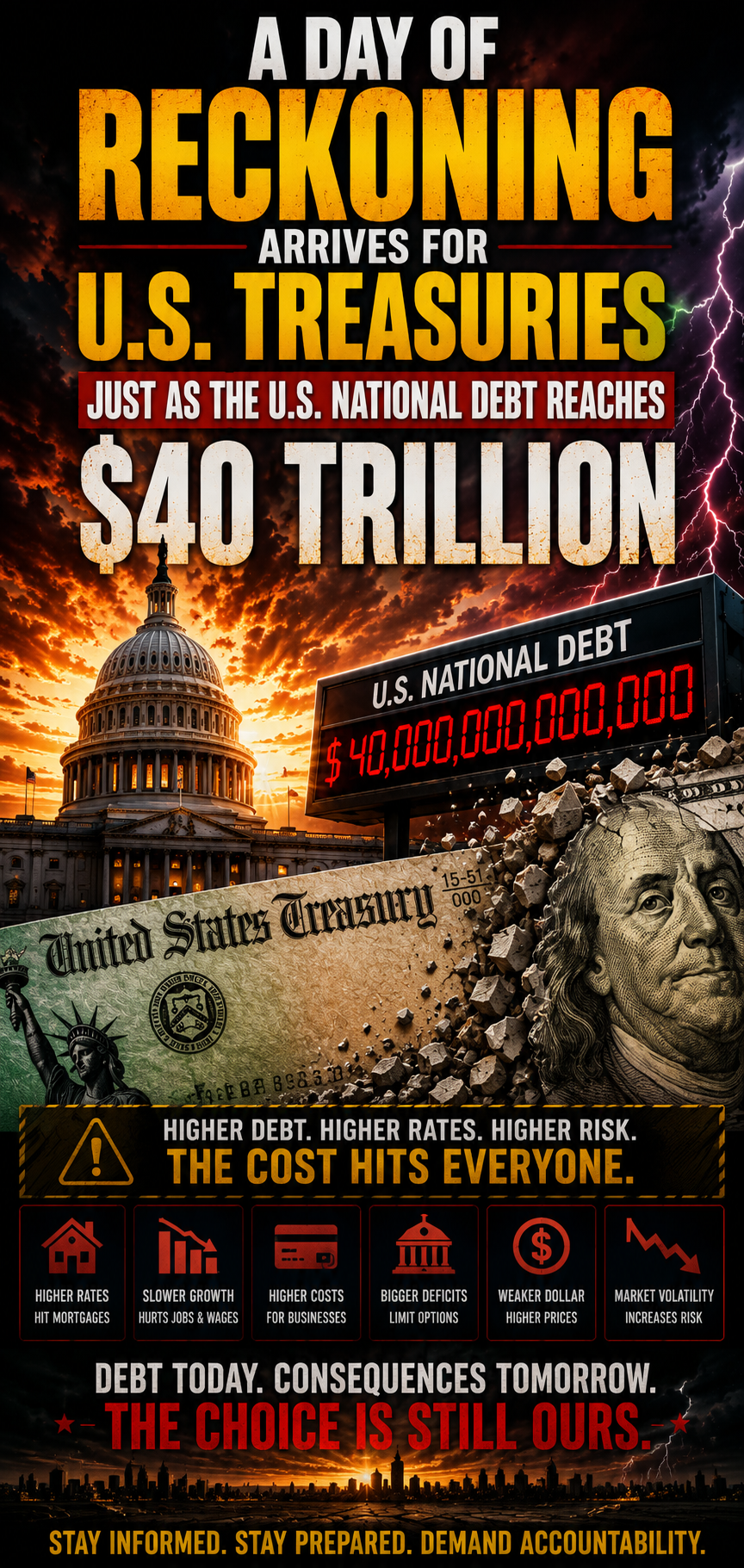
A Day Of Reckoning Arrives For U.S. Treasuries Just As The U.S. National Debt Reaches $40,000,000,000,000
We all knew that this was coming. For ages, people like me have been ranting that we would be facing a financial nightmare if we didn’t get the national debt under control. Of course most of the population didn’t want to listen, and they just kept sending big spenders back to Washington. Now we are 40 trillion dollars in debt and we are spending well over a trillion dollars a year just in interest on that debt. Nobody can deny that we have reached a stage where our debt spiral is totally out of control. The federal budget deficit for the month of July was 432 billion dollars. Interest on the national debt for the month of July was 118 billion dollars. Now Treasury yields are spiking as investors become hesitant to buy more of our debt. Borrowing costs are rising to very alarming levels, and we are in far more trouble than most people realize.
The size of the national debt officially crossed the 40 trillion dollar threshold on Tuesday…
The U.S. national debt has surpassed $40 trillion for the first time, marking a historic milestone in a borrowing buildup that has accumulated over generations, through wars, recessions, tax changes, and the expansion of major federal benefit programs under presidents of both parties.
The Treasury Department reported that total public debt outstanding reached about $40.047 trillion Tuesday, according to The Wall Street Journal and The New York Times.
This is money that we have stolen from future generations of Americans.
What we have done to our children and our grandchildren is beyond criminal.
People should be going to prison over this.
Thanks to years of absolutely reckless spending, the size of the national debt has more than doubled in less than 10 years…
The Treasury Department’s daily financial report shows that the nation’s debt reached $40.05 trillion on August 18, more than double its level in 2017. The federal debt has ballooned because government spending is outstripping revenue, forcing the U.S. to borrow more money to cover the shortfall.
Our politicians are literally destroying the future of this country.
In 1980, the size of our national debt was just reaching 1 trillion dollars. When Barack Obama entered the White House, the size of the national debt was sitting at about 10 trillion dollars.
Now we are 40 trillion dollars in debt with no end in sight…
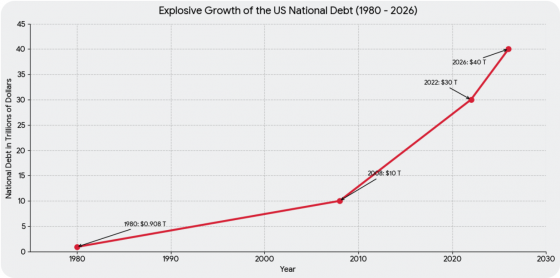
We just hit 30 trillion dollars about 4 years ago.
How long would it take us to hit 50 trillion dollars?
If Elon Musk donated his entire fortune to the government, it would barely even make a dent in the national debt…
The sheer scale of America’s $40 trillion debt is hard to fathom. The amount is significantly greater than U.S. annual GDP. That means even if all U.S. income went toward paying down the debt for a full year—rather than to things like salaries, corporate profits and investment—the federal government would still owe trillions, by this measure.
If Elon Musk helped pay down the debt by sacrificing the entirety of his nearly $1 trillion net worth—itself a mind-boggling sum—it would barely make a dent. The gross debt owed by the federal government is also nearly equal to what is owed by all U.S. households and businesses combined (excluding banks).
Even if you took every single penny from every single billionaire in this country, that would only get you about 8 trillion dollars.
We are drowning in debt with no way out.
At this stage, we are spending more on interest on the national debt each year than we are on either the U.S. military or Medicare…
As the government continues to borrow, interest payments are consuming a larger share of the nation’s spending, creating a compounding effect that further fuels the debt. The U.S. government now spends more on servicing its debt than on national defense or Medicare.
We really are in the endgame.
At the same time that our national debt has hit 40 trillion dollars, a moment of reckoning has arrived for the Treasury market…
The fiscal pressures are increasingly visible in the bond market.
The yield on the 30-year Treasury recently reached roughly 5.3%, its highest level in nearly two decades, according to the Journal and Reuters.
Higher Treasury yields increase the government’s cost of issuing and refinancing debt and can also influence borrowing costs for households and businesses.
Government borrowing costs are starting to spike.
In a desperate attempt to calm investors, the U.S. Treasury Department conducted a dramatic intervention on Wednesday…
In a move announced Wednesday morning, the Treasury Department, led by Secretary Scott Bessent, said it would at least double the size of its government debt buybacks, starting Sept. 9 and running through Nov. 4.
Yields tumbled following the announcement, with the 30-year down about 10 basis points after previously hitting its highest in about 19 years, predating the global financial crisis in 2008.
But it didn’t work.
On Thursday, yields on long-term Treasury bonds bounced right back…
Bond yields climbed Thursday, erasing most of the pullback they saw the previous day after the Treasury Department announced an intervention aimed at easing pressure on longer-dated government debt.
The yield on the 30-year U.S. Treasury bond — the primary focus of the accelerated buyback — was up more than 6 basis points at 5.256%.
Yields on 10-year U.S. Treasurys — the main benchmark for mortgages, auto loans and credit card debt — moved more than 5 basis points higher to 4.704%.
This is a really big deal.
And there aren’t going to be any easy fixes, because as Wolf Richter has aptly pointed out, there is only so much that U.S. Treasury Secretary Scott Bessent will be able to do moving forward…
Going forward, yields will have to be high enough to entice bond buyers off the fence and buy an additional $1 trillion of new Treasury securities every three to five months or so; yields have to be high enough to overcome their fears about inflation, government profligacy, and the new supply pushing up yields even higher.
This didn’t happen by accident.
Decades of incredibly foolish decisions have brought us to this point.
Meanwhile, bond markets in Europe are also starting to go nuts…
A sharp increase in borrowing costs also took place across Europe. France’s 10-year bond yield hit its highest level since 2009 on Tuesday, while the yield on German bunds climbed to 3.25pc, a 15-year high.
And the yield on 5 year Japanese bonds recently hit the highest level in 31 years. Government bonds sit at the very foundation of the global financial system.
Now that foundation is really starting to be shaken, and that is an extremely troubling sign.
The stage has been set for a meltdown of epic proportions, and it won’t take very much at all to push us over the edge.
Are The Conspiracy Theories About The Survival Bunker That Will Be Built Underneath The White House Ballroom Actually True?
What in the world is President Trump building underneath the White House? There has been so much debate about the new ballroom that Trump has been constructing, but what is being built directly under the new ballroom remains quite a mystery. Trump has referred to it as a “military complex”, and it is going to cost hundreds of millions of dollars to complete. So why is this being done now? Are they expecting something to happen that they haven’t told the general public about yet? These are the kinds of questions that people are asking. Because we don’t have a lot of information about the survival bunker that is being constructed, it has spawned a tremendous amount of conspiracy theories and speculation.
The left has been trying to use the legal system to force Trump to stop construction of the new ballroom, and it appears that now the Supreme Court is going to decide the issue…
President Trump is asking the Supreme Court to let him continue building a new ballroom for the White House. An appeals court ruled that Trump needs approval from Congress to move forward, so Trump filed the emergency request on Friday. Trump has increasingly justified the construction by citing national security, instead of his first explanation was that he needed more space and a more luxurious reception for guests.
The legal process has revealed details about a bunker that Trump indicates is being built by the military under the site for the ballroom.
Since the compound that is going in underneath the new ballroom is for national security purposes, I expect that the Supreme Court will see that as justification to rule in Trump’s favor.
Earlier this week, Trump claimed that when the project is finally completed it will be “the greatest military complex slash ballroom anywhere in the world”…
The president has increasingly insisted that the $400 million ballroom will add security to the White House and include things like anti-drone technology. His administration even unsuccessfully sought $1 billion in congressional funding to make military improvements to the structure.
“This will be the greatest military complex slash ballroom anywhere in the world,” he said.
What an unusual thing to say.
Back in January, Trump admitted that “the highest levels of the United States Military and Secret Service” were involved in the design of the facility…
In January, as the legal battle unfolded, Trump wrote on Truth Social that the project was being undertaken with “the design, consent, and approval of the highest levels of the United States Military and Secret Service,” without elaborating.
“The mere bringing of this ridiculous lawsuit has already, unfortunately, exposed this heretofore Top Secret fact,” Trump wrote.
Clearly, this is a really big deal.
A few months later, Trump revealed some of the security features that will be implemented…
“The military is building a big complex under the ballroom, which has come out recently because of a stupid lawsuit that was filed,” Trump told reporters on Air Force One over the weekend.
He said the proposed 90,000 square-foot ballroom “essentially becomes a shed for what’s being built under,” adding that the “high-grade bulletproof glass” windows would protect the facility below “from drones and … from any other thing.”
Needless to say, a project of this magnitude isn’t going to be cheap.
At first we were told that it would cost about 200 million dollars, then we were told that it would cost about 400 million dollars, and now the Washington Post has obtained documents that suggest that it could cost about 600 million dollars…
Five months after the demolition of the White House’s East Wing, President Donald Trump claimed that the project to construct a massive ballroom and a bunker in its place would cost up to $400 million and that private donors would pay for all of it.
“This is taxpayer-free. We have no taxpayer putting up 10 cents,” Trump told reporters in the Oval Office on March 31, describing the project as including bomb shelters and major medical facilities.
But a detailed project summary prepared for the White House by the contractor more than three weeks before Trump’s comments estimated the total construction cost at $600 million — with more than half coming from taxpayers, according to a copy of the contractor estimate obtained by The Washington Post.
That is a lot of money.
Of course building a highly secure facility underground takes a lot of money, and the size of this complex is going to be absolutely enormous…
The size of the underground aspect of the projects lacks clarity, though the National Capital Planning Commission’s official plan suggests it ranges around 22,000 square feet.
That is essentially the equivalent of 10 full-size homes. So why is it suddenly necessary to build a gigantic underground bunker that could potentially hold hundreds of people under the White House? Are they expecting some sort of a historic natural disaster such as “the Big One” in California or a great New Madrid earthquake?
Is a giant asteroid headed our way that they aren’t telling us about? Could we be headed for nuclear war in the Middle East or nuclear war with Russia?
On social media, people are throwing around all sorts of theories.
Trump’s “military complex slash ballroom” is replacing another underground bunker that was originally built during World War II known as “the Presidential Emergency Operations Center”…
Trump’s planned military complex would replace the Presidential Emergency Operations Center (PEOC)—a secure underground bunker dating back to World War II that has long been an open secret in Washington, though details about it have largely remained a mystery to the public.
The construction of the PEOC was prompted by our entry into the war, and hardly anything was known about it for a long time…
The history of a bunker beneath the East Wing dates to Franklin D. Roosevelt’s presidency, when an underground bomb shelter was installed in 1942 after the United States had entered World War II. Beyond that, detail is obscured by secrecy resulting from concerns about presidential safety.
We do know that Dick Cheney was rushed to the PEOC during the chaos that ensued on September 11th, 2001 and we also know that President Trump was taken down there on one occasion during his first term…
High-profile flights to an underground bunker at the White House include Vice President Dick Cheney being taken there because of the Sept. 11, 2001, attacks.
A Secret Service agent burst into the West Wing room, grabbed Cheney by the belt and shoulder and led him to a bunker underneath the White House. “He didn’t say, ‘Shall we go?’” Cheney told NBC News years later. “He wasn’t polite about it.”
More recently, Trump was rushed to a White House bunker in 2020 amid protests stemming from the death of George Floyd. At the time, there were chants from protesters at Lafayette Park that could be heard in the building, and Secret Service and law enforcement officers struggled to control the crowds.
Over the years, the PEOC was upgraded a number of times, but it was still quite small…
The White House Historical Association wrote in a 2024 social media post that “this secret space featured thick concrete walls and steel-sheathed ceilings with a small presidential bedroom and bath inside. Nearby rooms provided ventilation masks, food storage, and communications equipment.”
“The space is far more modern today,” the organization added, noting that “it can become a command center for the president as needed.”
The entire thing was about 40 feet by 40 feet. What Trump is building will be more than 10 times that size.
This isn’t just about a ballroom. This is about something far bigger.
Other construction projects are also taking place on the grounds of the White House.
On Wednesday, President Trump showed off the brand new helipad that he is putting in…
President Donald Trump played White House tour guide on Wednesday, showing off the helipad he is building on the lawn before leaning over to autograph a piece of it and bragging about the ballroom he’s rushing to complete despite legal challenges.
Trump gushed for several uninterrupted minutes about granite being laid and said the chopper landing area, which is set to cost $5-$6million, would leave visiting foreign leaders ‘very impressed’. It came as Chinese President Xi Jinping is set to visit the Oval Office next month.
According to Trump, the granite that is being used can potentially withstand 35,000 pounds of pressure per square inch…
He sung the praises of granite over asphalt in painstaking detail and claimed the stone could withstand 35,000 pounds per square inch of pressure.
‘That’s stone that, if you took a hammer and you started hammering right now – all day long – you wouldn’t see a mark on it, literally, that’s the kind of power it is,’ Trump said, at times straining to be heard over the thrum of ongoing work behind him.
We have never seen as much construction work going on at the White House as we have during Trump’s second term. And the “military complex slash ballroom” will be the crown jewel.
Without a doubt, the White House does need a ballroom. But even Trump has admitted that what is going in underneath will be much more important.
I would just love to know exactly what prompted this project, because that would answer a lot of questions.
MAXWELL EXPOSED THE BEANS! BILL GATES CLONED THOUSANDS OF BABIES ON EPSTEIN ISLAND
WHITE HATS START WORLDWIDE TAKE DOWN AS TRUMP PREPS FOR REVENGE!
Source: The 17th Disciple TG
The Deep State genetic slaughterhouse where Bill Gates oversaw the cloning of thousands of children on Epstein Island. Ghislaine Maxwell, hidden in a federal black site, has confirmed the most horrific operation in modern history.
This was never just about sex trafficking.” The cover was that. Below the island was a military-grade biotech lab funded by CIA black budgets, Mossad support, and Big Tech billionaires pumping billions thru Gates proxies.”
August 14, 2025 Maxwell named Gates, DARPA, Rothschild liaisons to ensure satellite masking, submarine access and exotic energy for 24/7 clone production. Project Genesis started in 2003, after a Bohemian Grove meeting with Gates, Epstein and Bilderberg agents. The goal: to replace natural humans with lab-grown, spiritually dead, programmable beings.
DNA was collected from abducted children around the world. Mass produced clones, raised by AI caregivers, implanted with biometric chips linked directly to Microsoft servers, all under the guise of “quantum research” and NSA channels. The plan was for a digital ID for the life of a post-human slave race.
Maxwell says thousands of these clones are already here, in elite families, fake adoptions, media, politics. Some child actors in Hollywood are lab grown. Defective ones were used in occult rituals, filmed for blackmail. Epstein’s “suicide” was a body swap. Maxwell survives because she scattered evidence all over the world. One cache was seized last month by U.S. Space Force loyal to Trump.
Trump knew. Which is why he never flew on the Lolita Express. He has conducted covert operations against off-grid biotech sites since January 2025, authorized the enforcement of “Directive Genesis Lockdown” to shut down cloning centers, freeze Gates’ assets and confiscate biometric data banks under QFS jurisdiction.
U.S. Marines raided a private island in July 2025 and took cryo-units containing 3,000 embryos and drives of child DNA labeled with Gates bar codes. High energy bio chambers have been hidden on private islands for years, as revealed by subterranean scans.
The Deep State is going crazy. Media is told to bury it . But the patriots put the pieces together. Cloning. Trafficking. Global control. Gates is the embodiment of genetic enslavement. Maxwell struck the match. The firestorm is on the way.
And Trump is carrying the torch.
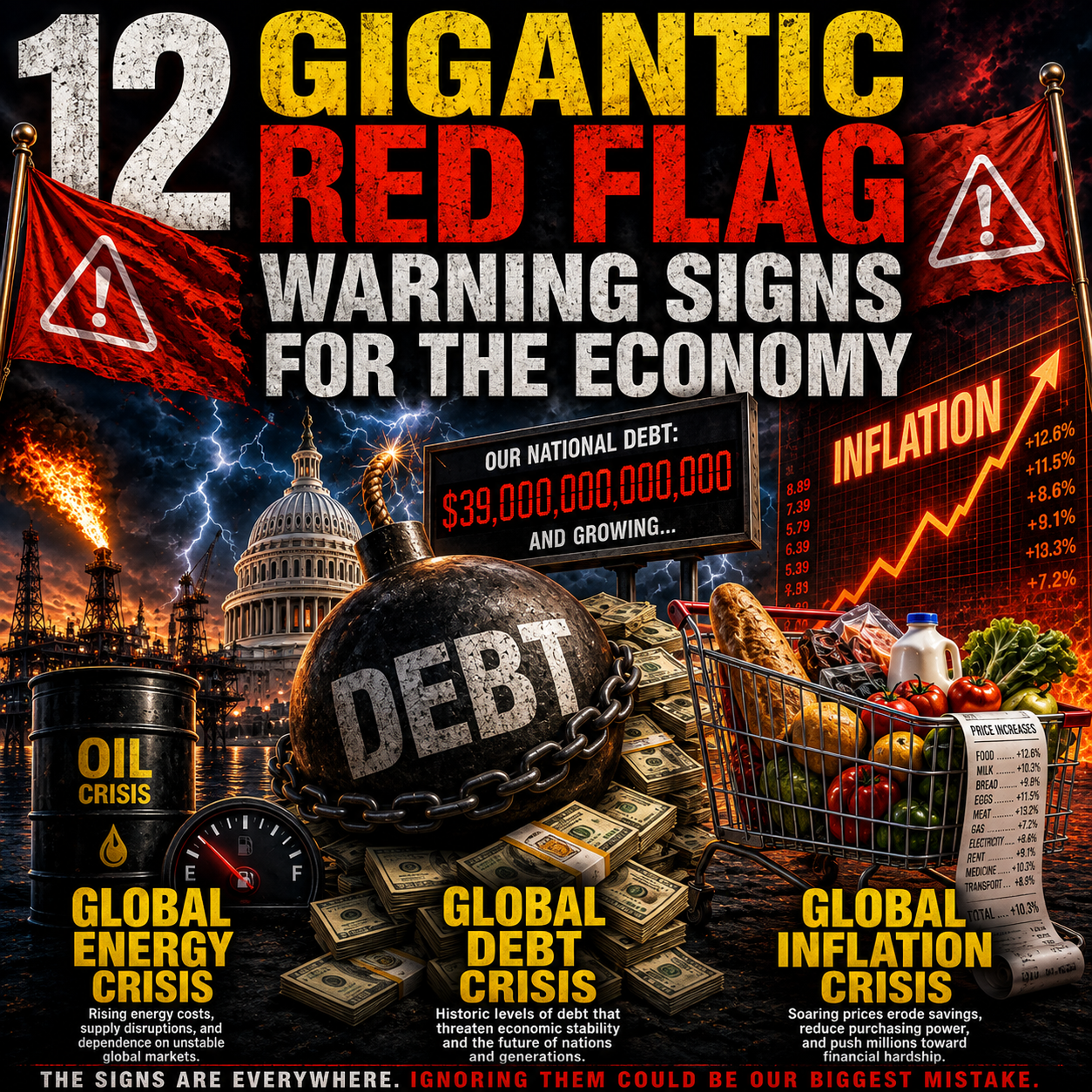
12 Gigantic Red Flag Warning Signs For The Economy
We are facing a global energy crisis, a global debt crisis and a global inflation crisis all at the same time. In all my years, I have never seen anything like this. Two of China’s largest shipping companies just decided to stop sending their oil tankers through the Strait of Hormuz and the Bab el-Mandeb Strait. Meanwhile, diesel prices are heading into the stratosphere with no end in sight. Supplies of diesel fuel are going to get so tight during the months ahead. At the same time, bond yields are surging as the global debt crisis escalates. The U.S. national debt is about to hit 40 trillion dollars and the debt to GDP ratio in Japan is nearing 250 percent. We are caught in a global debt spiral that is out of control, and inflation has become a major issue all over the planet. Anyone that thinks that there is an easy answer to all of these problems is just being delusional.
Just within the past 48 hours, there have been some absolutely enormous developments. The following are 12 gigantic red flag warning signs for the economy…
#1 The crack spread for diesel fuel in the United States just surpassed the $100 mark for the first time ever. Our trucking industry runs on diesel, and so this is going to have enormous implications for all of us…
The U.S. diesel crack, a key measure of refining profitability, hit an all-time high of $102.20 a barrel on Monday as global supply disruptions from the wars in Iran and Ukraine run into peak agricultural consumption season.
Measured as the premium of U.S. diesel futures over U.S. West Texas Intermediate crude oil futures , the U.S. diesel crack was trading at $99.82 a barrel, up 2.4% from Friday, as of 11:56 a.m. ET. The crack has hit new intraday record highs in five of the last six sessions, reflecting growing concerns about fuel availability as fresh attacks on Middle Eastern refineries added to existing supply disruptions.
This is a monster story.
When I first saw the chart posted below, I was visibly stunned…
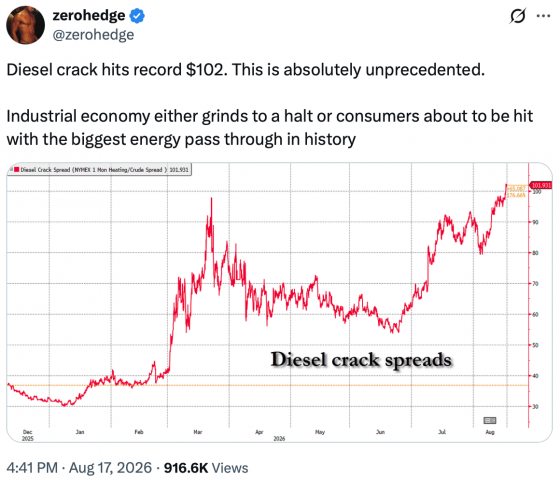
#2 Two Chinese shipping giants have decided to stop sending their oil tankers through the Strait of Hormuz and the Bab el-Mandeb Strait for the foreseeable future. China normally purchases more oil from the Middle East than anyone else by a wide margin, and so this is a very big deal…
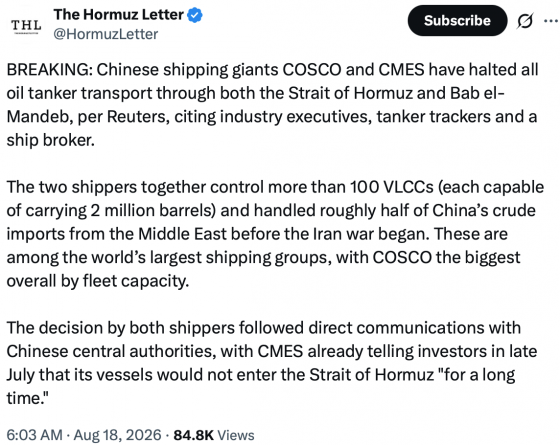
#3 Yet another commercial vessel was just attacked in the Strait of Hormuz. This just keeps happening day after day, and it is not getting nearly enough attention from the mainstream media…
A vessel attempting to exit the Strait of Hormuz was attacked Tuesday, according to the United Kingdom Maritime Trade Operations Centre (UKMTO).
The UKMTO noted it received a report of a ship being hit with “an unknown projectile” as it was leaving the strait, a critical oil shipping channel. The vessel’s engine room was damaged, and a crew member was killed, the organization said.
#4 The Strategic Petroleum Reserve has now fallen to the lowest level since 1982…
The US emergency stockpile of crude oil has dwindled to its lowest level since 1982, prompting fresh concern that oil prices could surge if the Iran war drags on.
The Trump administration released another 5.3 million barrels in the past week as it tries to prevent the conflict from driving up oil prices and hitting the US economy.
The Strategic Petroleum Reserve (SPR) now sits at 293.4 million barrels, a level not seen since Ronald Reagan occupied the White House.
#5 The yield on 30 year Treasury bonds just hit the highest level in 19 years. We are entering a time when it is going to be a lot more expensive for the U.S. government to borrow money…
Treasury yields were little changed on Tuesday after long-dated bonds hit their highest level in almost two decades amid a worsening U.S. fiscal situation and persistently higher inflation.
The yield on the U.S. 30-year Treasury bond fell less than 1 basis point to trade at 5.305%. It hit a new 19-year high earlier in the day and is nearing its highest level since 2002.
#6 The yield on 10 year Japanese bonds just hit the highest level in nearly 30 years. Global investors are really starting to freak out about Japan’s debt crisis…
Japan’s benchmark 10-year government bond yield climbed to a three-decade high on Tuesday, driven by rising overseas bond yields and speculation about a near-term Bank of Japan interest-rate increase.
The 10-year JGB yield added 2.5 basis points to 2.945% early in the trading day, the highest level since September 1996.
#7 College graduates all over the country are having an exceedingly difficult time finding employment. For example, one 21-year-old woman named Irene Chang has applied for approximately 450 jobs without getting hired…
Irene Chang, 21, studied engineering in college because she enjoys solving problems. She also wanted to major in something she thought would lead to a stable career.
“I wanted to work a job right after college,” she says.
But that has been a challenge. Chang graduated in May from Georgia Tech with a bachelor’s degree in industrial and systems engineering. She says she started applying for entry-level data analyst roles about a year ago, while she was still in school. Chang estimates she has submitted around 450 applications since last September and has had about 19 interviews — so far she hasn’t gotten any offers.
#8 Approximately half of all U.S. college graduates end up moving back in with their parents once they leave school…
A record number of young adults are choosing to live with their parents rather than contemplate the tricky math of renting or owning homes.
Roughly half of recent college graduates returned to parents’ homes after finishing their studies rather than move out on their own, according to a new survey from Clever Real Estate.
#9 Pending home sales unexpectedly fell back near a record low last month…
Pending home sales in July decreased by 2.3% month-over-month and 2.2% year-over-year, according to the National Association of REALTORS® Pending Home Sales report. The report provides the real estate ecosystem—including agents, homebuyers and sellers—with data on the level of home sales under contract.
Pending home sales in July fell to the lowest level since January 2026. Month-over-month pending home sales declined in all four major U.S. regions. Year-over-year pending home sales increased in the Midwest but declined in the Northeast, South and West.
#10 The price of ground beef in the United States is hovering around record high levels…
Data from the United States Department of Agriculture (USDA) show that the national average price of ground beef in the supermarket is hovering just below $7 per pound, a record high, as a prolonged cattle shortage shows no signs of abating anytime soon.
#11 Nearly 60 percent of Democrats now have a positive view of socialism…
The poll, which surveyed 2,287 adults in the United States between August 12-14, found that there is a 26-point difference between Democrats’ positive views on socialism and capitalism.
Among Democrats, 58 percent were found to have a positive view of socialism, while 32 percent have a positive view of capitalism. The poll also found that 18 percent of Democrats have a negative view of socialism, while 50 percent have a negative view of capitalism.
The poll also found that 24 percent of Democrats have “no opinion” of socialism, while 18 percent have no opinion regarding capitalism.
#12 Warren Buffett appears to be convinced that this current stock market bubble is going to end very badly…
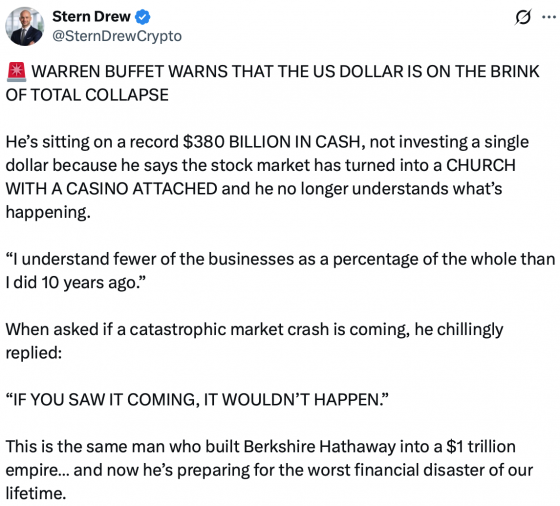
I agree with Buffett.
Our financial markets have become giant casinos, and there is no way that this current bubble is going to end well. The greatest time of financial chaos in our generation is ahead of us. We are already witnessing so many signs of financial trouble, and it is just a matter of time before there is a mad dash for the exits.
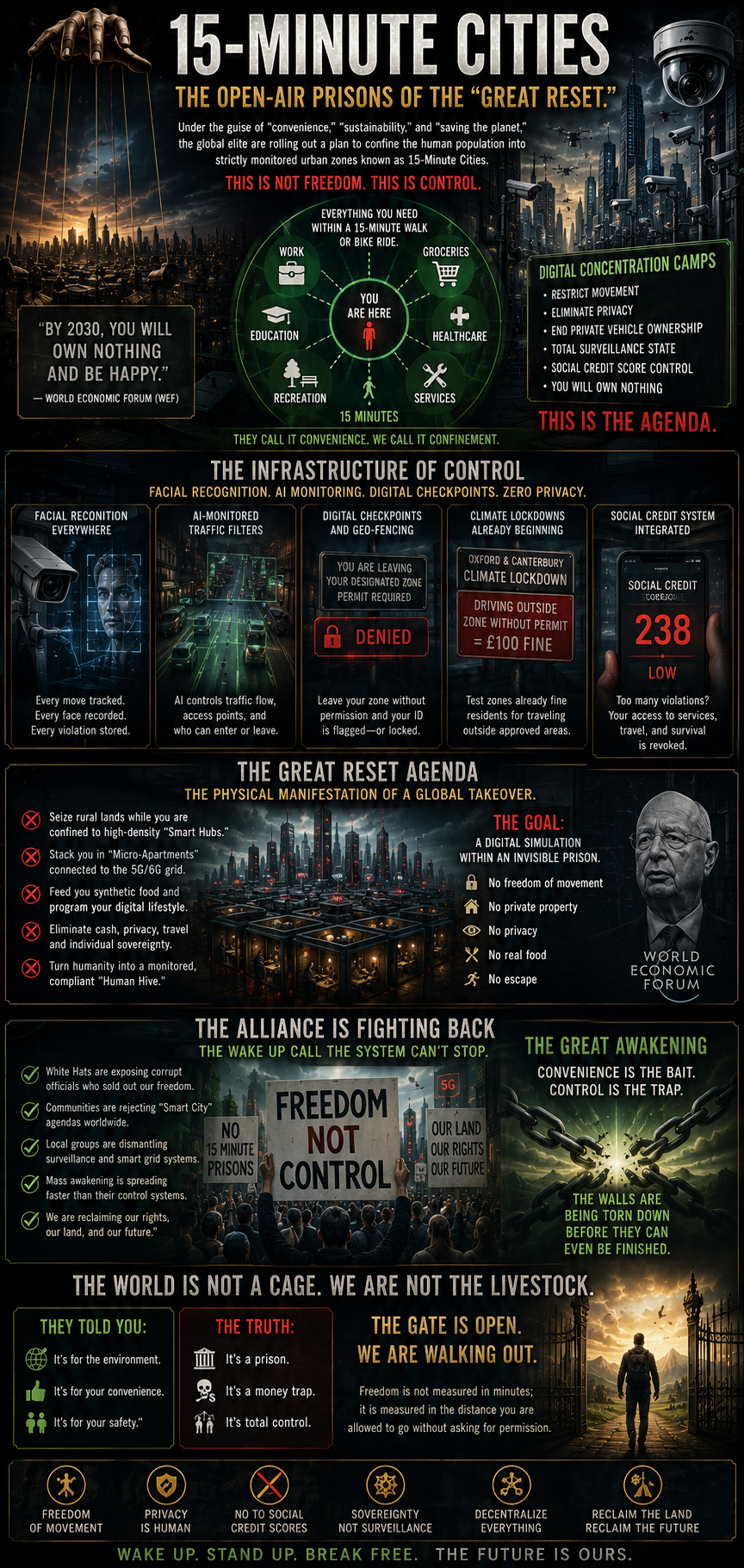
15-MINUTE CITIES — THE OPEN-AIR PRISONS OF THE “GREAT RESET.”
Under the guise of “convenience,” “sustainability,” and “saving the planet,” the global elite are rolling out a plan to confine the human population into strictly monitored urban zones known as 15-Minute Cities.
Source: Mr. Kidpool TG
The official narrative promises that everything you need—work, groceries, healthcare, and education—will be within a 15-minute walk or bike ride from your home. However, whistleblowers and researchers have revealed the dark reality: these are not “neighborhoods”; they are Digital Concentration Camps designed to restrict your movement, eliminate private vehicle ownership, and implement a total surveillance state.
The infrastructure for these “Smart Cities” includes facial recognition cameras, AI-monitored “traffic filters,” and digital checkpoints that will track every time you leave your assigned zone. In places like Oxford and Canterbury, the “Cabal” has already begun testing “climate lockdowns,” where residents are fined for driving outside their designated areas without a permit. This is the integration of the Social Credit System with your physical environment.
If your “Carbon Footprint” is too high, or if you dissent against the government, your digital ID will simply “lock” you out of the services and zones you need to survive.
The “Great Reset” (orchestrated by the WEF) aims to ensure that by 2030, “you will own nothing and be happy.” The 15-Minute City is the physical manifestation of this agenda. By forcing people into high-density “Smart Hubs,” the elite can seize rural lands and “rewild” them for their own private use, while the general population is stacked in “Micro-Apartments” connected to the 5G/6G grid.
This is the end of individual sovereignty and the beginning of the “Human Hive.” They want you living in a digital simulation, consuming synthetic food, and never traveling beyond the invisible fence of your 15-minute radius.
The “Alliance” has revealed that the “Urban Prison” plan is being met with massive resistance. The “White Hats” are working with local communities to dismantle the “Smart Grid” infrastructure and expose the corrupt officials who accepted bribes to implement these zones. The “Great Awakening” has made the population realize that “convenience” is the bait for a trap.
We are reclaiming our right to travel, our right to privacy, and our right to live on the land as free beings. The 15-minute walls are being torn down before they can even be finished. The world is not a cage, and we are not the livestock.
CODE: 15-MINUTE-CITIES / SMART-SURVEILLANCE / CLIMATE-LOCKDOWNS / WEF-AGENDA
They told you it was for “your convenience.” They lied to hide the fact that they were building a prison and asking you to pay for the bricks. The gate is open, and we are walking out.
Freedom is not measured in minutes; it is measured in the distance you are allowed to go without asking for permission.
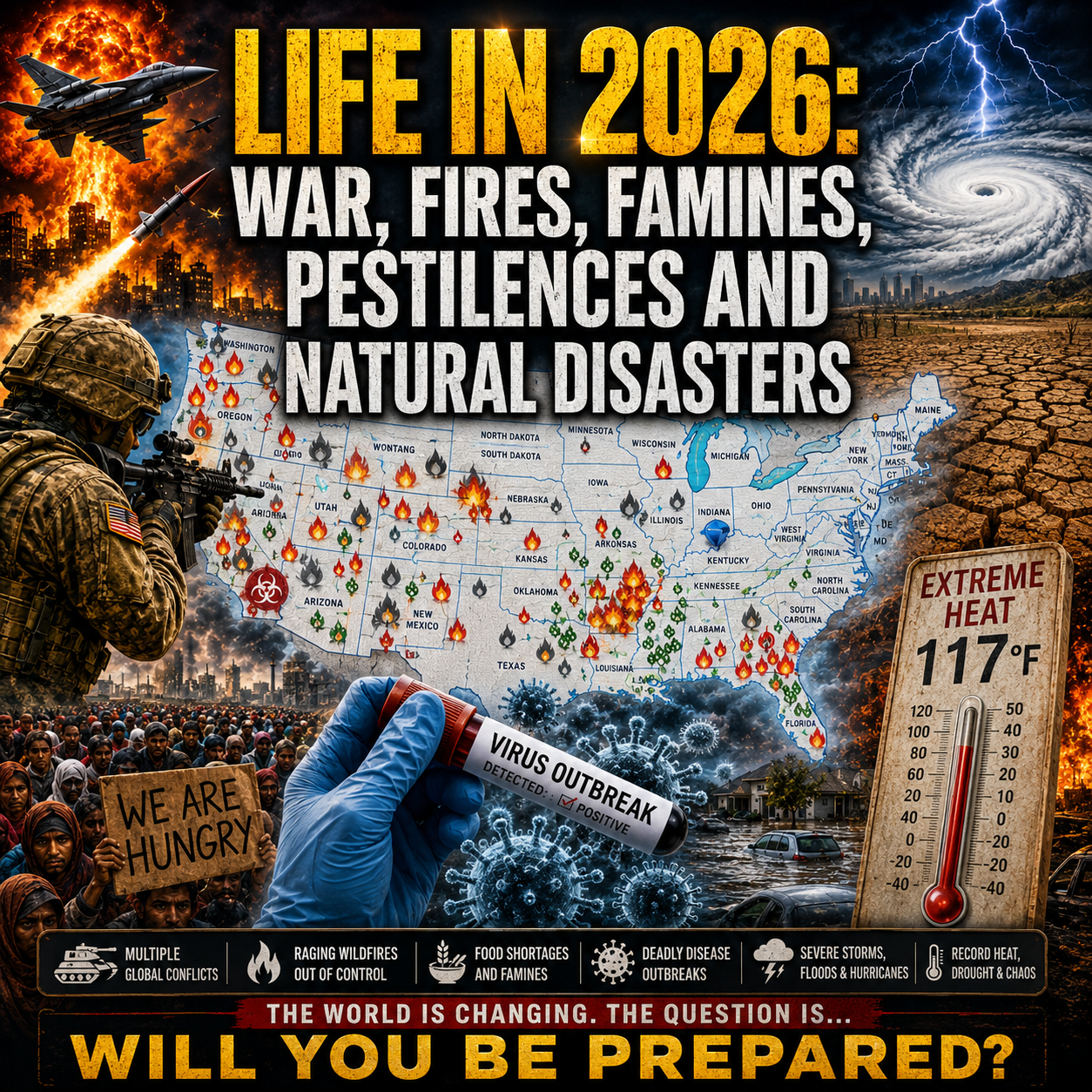
Life In 2026: War, Fires, Famines, Pestilences And Natural Disasters
This has been one of the craziest years in any of our lifetimes. World War III is literally playing out right in front of our eyes, this has been the worst year for wildfires that the western half of the country has experienced, severe hunger is on the rise all over the globe, the Ebola outbreak in Africa is now the second largest of all time, and we just continue to get hammered by one natural disaster after another. This is what a “perfect storm” looks like, and it just keeps intensifying.
In 2020, 10.27 million acres burned in the United States, and that established a brand new record.
In 2026, we are on pace to absolutely smash that old record. Through August 18th, more than 7.2 million acres have already burned in the United States.
We are way ahead of the pace set in 2020.
In fact, we are way ahead of the pace of any of the last 10 years.
Of course it isn’t just America that is burning. 2026 has been a year when gigantic wildfires have been raging all over the planet…
The summer of 2026 has been one of extraordinary fires. In Europe, they have burned hundreds of thousands of acres in France and Spain and destroyed homes across England; they killed 13 people in Spain last month, and an elderly couple in Greece this weekend. In Canada, fires have consumed an expanse of forestland larger than Belgium—which is also battling its biggest recorded wildfire. In the United States, about 7.2 million acres have burned, the largest year-to-date area in the past decade and nearly double what it was at this time last year, according to data from the National Interagency Coordination Center. Allison Rayburn, a program coordinator for the Oregon Department of Forestry, told me that in the eastern part of the state, “you can barely see the sun” through the smoke: “It’s just devastation, and miles and miles and miles of blackened landscapes.”
In Europe, many of the fires have threatened populated areas, but in the U.S., much of the area burning in the West has been rural. Near the Oregon town of Jordan Valley, the Big Grass Fire has been burning since July 23 and is among the largest fires in the state’s modern history; toward the end of last month, it hopped a canyon and crossed the border to Idaho, where the smoke from this and other fires made the air quality the worst in the country. The complex of fires in Spokane, Washington, flattened entire neighborhoods; three other wildfires 10 times its size are burning elsewhere in the state.
I know that some of you live in areas where wildfire smoke blanketed the sky for weeks.
In Oregon, the total number of acres that have burned is now up to 2.63 million acres. They have already shattered the yearly record for that state, and more wildfires just continue to spread.
Of course this hasn’t just been a record year for wildfires. We have been experiencing monster storms, epic floods and horrifying tornado outbreaks too.
During the first half of 2026, there were 12 “billion dollar disasters” in the United States alone…
Extreme weather has dominated headlines throughout the first half of 2026.
Since January, the U.S. has recorded 12 billion-dollar disasters, ranging from severe storms and tornadoes to flooding and wildfires.
“Billion dollar disasters” used to be rare. But now they just keep coming at us one after another.
In the Southwest, a multi-year drought is a seemingly endless disaster that just keeps on giving. At this point, the water levels in Lake Mead and Lake Powell have both dropped to dangerously low levels…
Their water levels are now just above the threshold at which electricity production would be affected.
On Sunday, the level of Lake Powell, which lies mostly in Utah, fell to 3,519.80 feet (1,072.8 meters) above sea level, just below its previous low set in 2023, according to data from the Bureau of Reclamation, the federal agency responsible for monitoring the Colorado River.
On Friday, Lake Mead, created by the Hoover Dam on the boundary between Nevada and Arizona, fell to 1,039.70 feet above sea level, (316.9 meters), data showed.
We desperately need weather patterns to get back to normal.
Unfortunately, it is not likely that is going to happen any time soon because it is being projected that the El Niño of 2026 will be the strongest ever recorded…
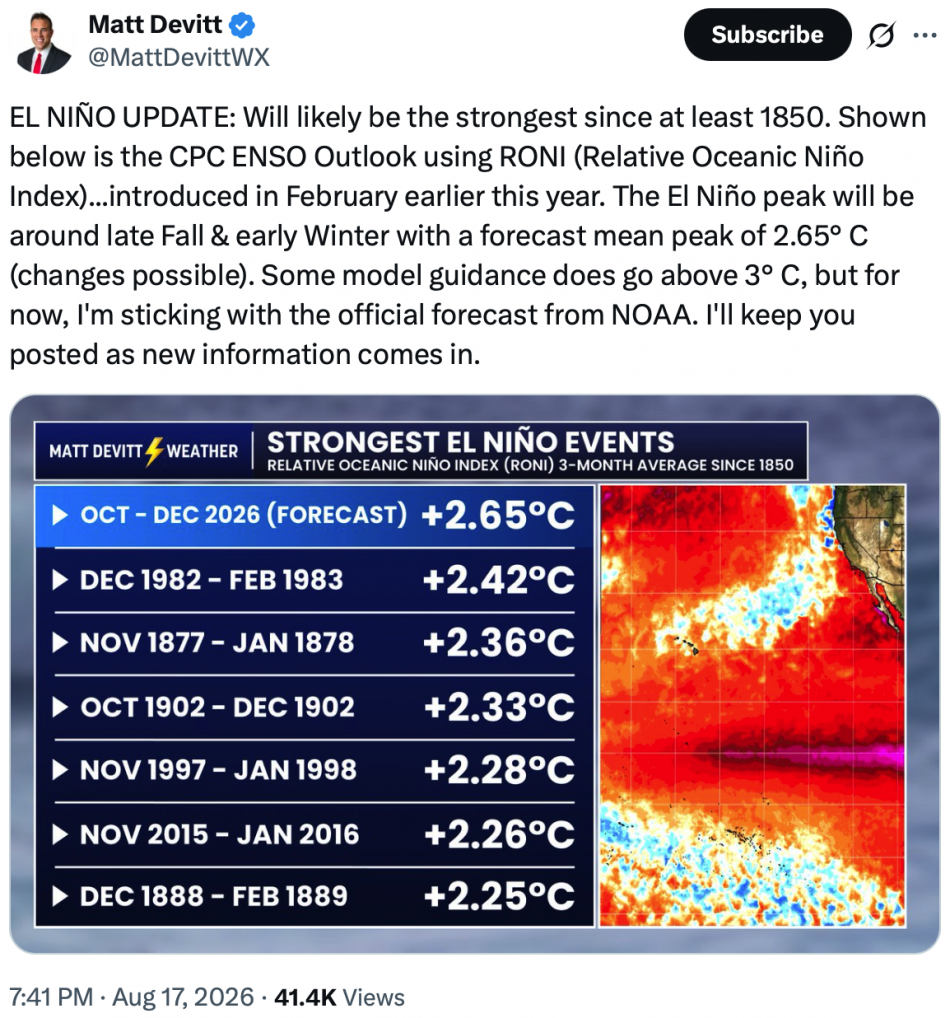
Meanwhile, it appears that World War III has entered a very dangerous phase.
President Trump has announced that there are “no talks or conversations going on” with Iran…
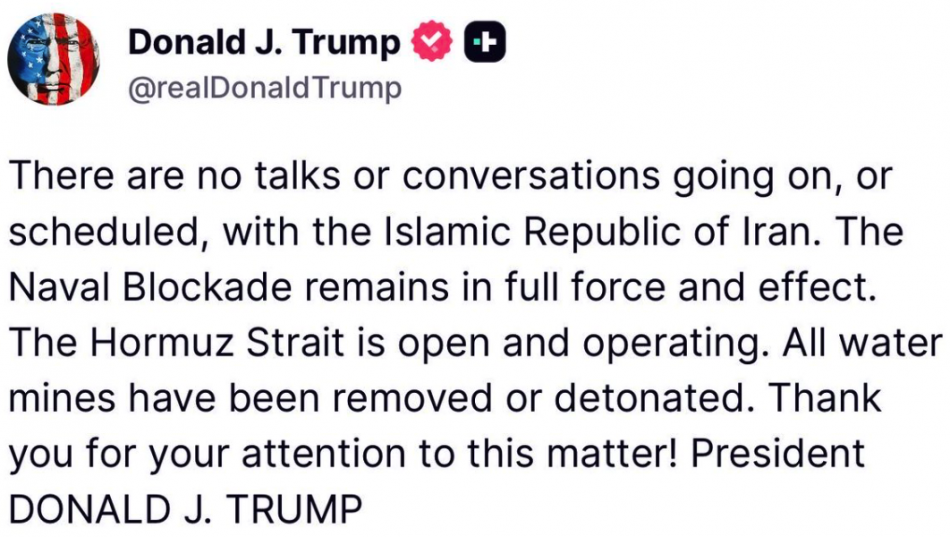
The Trump administration, Israel and Iran are all pondering their next moves.
The Iranians are threatening to go on the offensive if the Trump administration does not agree to their demands within a certain period of time. If that actually happens, the fighting in the Middle East will go to a level that we have never seen before.
According to NBC News, western officials believe that Russia is sending “drone components, ammunition and TNT” to the Iranians…
Russia is shipping drone components, ammunition and TNT to Iran through the Caspian Sea, helping Tehran replenish stockpiles damaged in U.S. and Israeli airstrikes, according to a European government document obtained by NBC News and verified by a Western official.
If this report is accurate, that makes Russia a direct participant in the war in the Middle East.
Of course the U.S. has been giving a tremendous amount of aid to Ukraine for a very long time, and that makes us a direct participant in that war.
Last night, the Ukrainians sent more than 600 attack drones toward the Moscow area…
Ukraine has launched another massive overnight drone wave on Russia. While this is nothing new or unusual, the number of drones concentrated specifically on the Moscow region was much larger than prior attacks.
Over 600 drones were sent on Moscow and the surrounding region overnight into Tuesday morning, Mayor Sergei Sobyanin said. It ranks among the single largest assaults on the capital of the war. Regional reports say it’s the largest drone attack on Moscow of the last two years.
The Ukrainians are trying to provoke the Russians into doing something that will cause NATO forces to enter the conflict. We are closer to nuclear war than ever before, but most of those living in the western world do not seem to realize this.
In Africa, the focus is on another historic crisis.
The Ebola outbreak in the Democratic Republic of the Congo is now the second largest Ebola outbreak in the history of the world…
The Democratic Republic of the Congo (DRC) confirmed via its public health agency on Sunday that at least 2,325 people have died of Ebola infections in the current outbreak in the east of the country, making it the deadliest such outbreak in the country’s history.
Experts noted that the extremely high death toll is likely not a full count of the people killed by the disease, as the World Health Organization (W.H.O.) was slow to identify an outbreak in the affected area, and that only one other known Ebola outbreak – the 2014-2016 outbreak in Guinea, Sierra Leone, and Liberia – has resulted in more deaths. The death rate of identified patients has increased in the past few months and resources to aid those diagnosed remain insufficient, health experts lament.
Unlike other strains, there is no cure for this particular version of Ebola. So that makes this outbreak different from past major outbreaks.
Famine is also erupting in many parts of Africa.
In one area of Somalia, approximately 50 percent of the children under the age of 5 are now suffering from acute malnutrition…
The MSF survey, conducted across 888 households in 14 displacement sites in Baidoa, found that one-third of families are surviving on just one meal a day, while only 2 percent can afford three meals a day.
The results are consistent with MSF’s regular malnutrition surveillance in Baidoa, where teams have screened more than 21,000 children under 5 since the beginning of the year and found global acute malnutrition levels of around 50 percent.
Hunger is growing here in the United States too.
Approximately one out of every seven Americans has experienced food insecurity at some point within the last year, and demand at food banks has been on the rise…
In late July, just two days before the first of the month, a line of Oregonians stood waiting for free food.
At the Dallas food bank in the Willamette Valley countryside, the hunger crisis gripping Oregon was on full display. Alexis Arechiga, 28, struggles to afford snacks for church and sporting events with her two kids. Corrina Campbell, 32, visits the food bank twice a week, and says feeding her two kids means that on some nights she goes to sleep hungry.
The high cost of groceries and the federal government’s cuts to SNAP benefits have left more Oregonians struggling to afford food. Food assistance programs like food banks are stretched thin trying to meet the growing demand for help.
Every single day, more Americans are falling out of the middle class and into poverty. As poverty grows, I think that we are going to see even more people start to totally lose it.
Earlier today, I came across a Fox News story about a crazed man in Philadelphia that was chasing a 40-year-old woman with a doll mask on…
A masked man is on the loose in Philadelphia after allegedly chasing down and assaulting a woman while wearing a doll mask, police said.
The unidentified man was seen on Wednesday near City Hall and asked one woman if she was “ready to die” while chasing others, police told FOX 29. Police said the man, who was wearing a doll mask, chased a 40-year-old woman and made threatening comments while holding his hand behind his back.
The fabric of society is breaking down all around us. The elite can clearly see what is happening, and that is why security has become such a huge priority for many of them.
In Switzerland, an ultra-high security vault for the elite is being constructed more than 330 feet beneath a mountain…
No longer do mountain lairs exclusively belong to the cat-stroking and eyepatch-wearing villains of spy novels.
Now, you too can buy an ultra-high security vault that lies more than 330ft beneath a Swiss mountain range – as long as you have nearly half a million pounds spare.
Swiss security firm Brünig Mega Safe is working to dig out up to 25 caverns from the limestone that makes up the Brünig massif.
In other areas of the world, the elite are constructing vast underground compounds in anticipation of what is coming.
Unfortunately, the vast majority of us do not have that option. We are just going to have to face whatever is ahead with our very limited resources.
Global events have certainly accelerated in 2026, but I am convinced that the most dramatic moments of this year are still in our future.

THE GRAND CANYON EGYPTIAN MYSTERY — THE HIDDEN CITADELS BENEATH THE ROCKIES
In 1909, the Arizona Gazette published a front-page story that should have changed human history forever. An explorer named G.E. Kincaid, working for the Smithsonian Institution, discovered a massive underground citadel carved into the rock of the Grand Canyon.
Source: Mr. Kidpool TG
This was not a primitive cave; it was a sophisticated complex capable of housing 50,000 people, filled with artifacts that were unmistakably Egyptian and Tibetan in origin. Hieroglyphics, copper weapons, and statues of Eastern deities were found in the heart of the American West, proving that a global, high-tech civilization existed long before the “official” history began.
The reaction from the “Cabal” was immediate and total. The Smithsonian Institution—which acts as the “Ministry of Truth” for ancient history—denied the discovery, claimed Kincaid never existed, and promptly classified the entire area as a “Forbidden Zone.” To this day, the specific region of the canyon where the caves were found is strictly off-limits to hikers, researchers, and even low-flying aircraft.
The elite have spent over a century guarding these entrances, not to protect the environment, but to protect the lie that America was a “New World” discovered by Europeans. They are hiding the fact that the Grand Canyon was once a center for a global, pre-cataclysmic empire.
Why the cover-up? Because the existence of Egyptian-style citadels in America proves the reality of Tartaria and the ancient maritime empires that used “Vril” and “Aether” technology to travel the globe. The Grand Canyon is not just a natural wonder; it is a graveyard of a lost epoch. The names of the landmarks in the canyon—the Tower of Ra, the Temple of Set, the Cheops Pyramid—were not given by chance; they were the original names recognized by the early explorers who saw the ruins before the Smithsonian scrubbed the site.
The “Deep State” needs you to believe you are a young, disconnected species so they can maintain their role as your “civilizers.”
The “Alliance” has revealed that the “Forbidden Citadels” are no longer secret. The “White Hats” have successfully bypassed the Smithsonian’s restrictions and have been using advanced ground-penetrating radar to map the entire underground network. The artifacts recovered from these sites are being prepared for a “Global Truth Exhibition” that will dismantle the false historical narrative once and for all.
The “Ancient Ones” of America are being acknowledged, and the connection between the pyramids of Egypt and the canyons of the West is being restored. The desert is giving up its secrets, and the history books are being burned.
CODE: KINCAID-DISCOVERY / SMITHSONIAN-COVERUP / FORBIDDEN-ZONE / ANCIENT-AMERICA
They told you it was “Native American history” to keep you from seeing the global connection. They lied to hide the fact that your ancestors were masters of the world. The cave is open, and the light is hitting the gold.
History is not a line; it is a circle. We are not discovering the past; we are remembering our future.
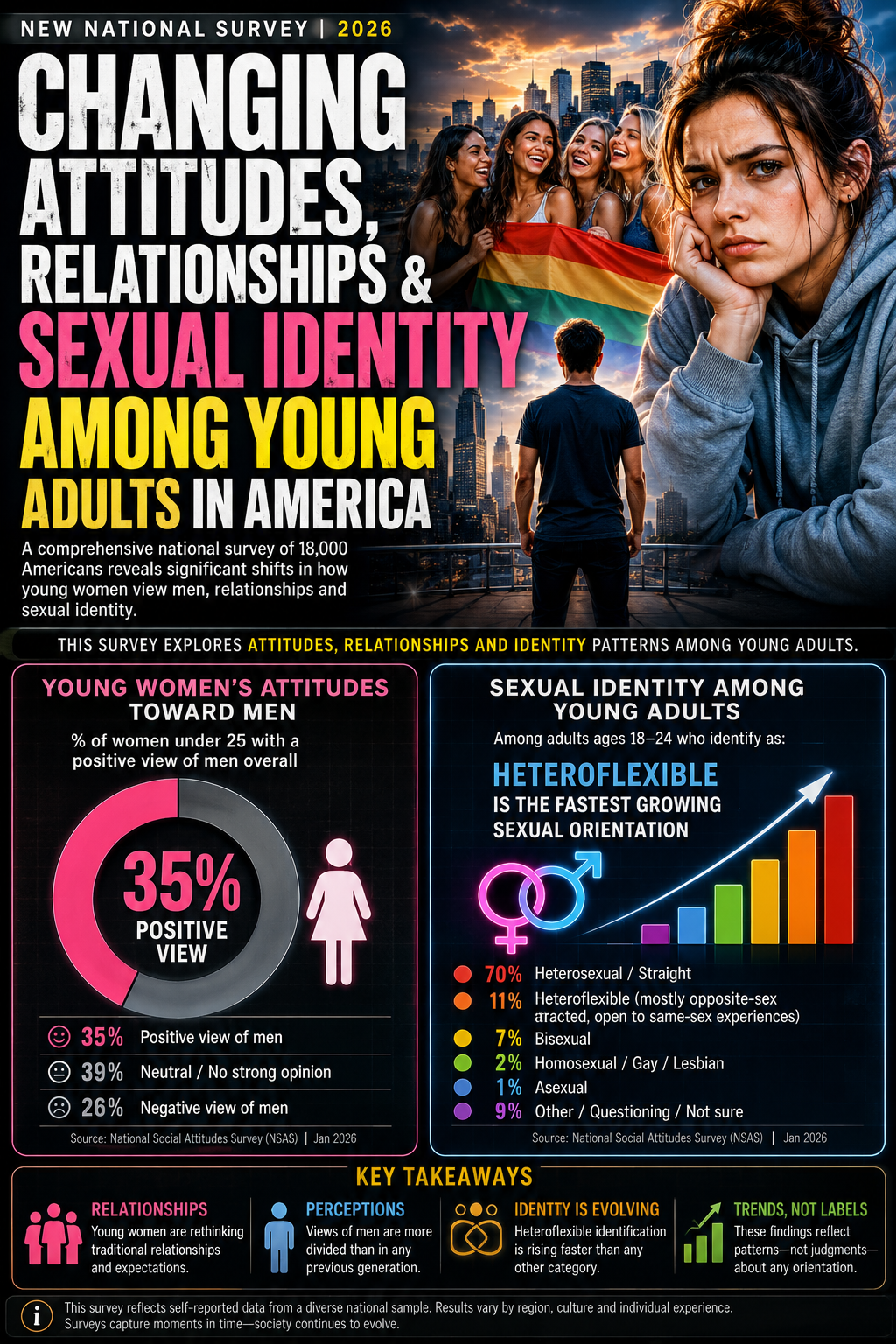
Shocking Survey Finds That Only 35 Percent Of Women Under 25 Have A Positive View Of Men, And “Heteroflexible” Is The Fastest Growing Sexual Orientation In America
Our culture is being transformed at a pace that is difficult to comprehend. The numbers that I am going to share with you in this article paint an undeniable picture about where our society is heading. That doesn’t mean that the trends that we are witnessing now are permanent. We have been through so many societal pivot points in recent decades, and it is probably inevitable that there will be more. But without a doubt there have been some very clear long-term cultural shifts that have radically changed how we relate to one another and to the world around us.
Earlier today, I came across a survey about how men and women view each other that absolutely shocked me…
As expected, we found that there are significant divides between young men and young women – but they are not just confined to political views. Gen Z women are more left wing than their male peers when it comes to politics and economics. This generation of women is also much more pessimistic about the country and their own lives than men, and substantially more negative towards men than the men are towards women. Seventy-two per cent of men under 30 say they have a positive view of the opposite gender, compared with just 50 per cent of women of the same age. Thirty-eight per cent of men say they feel “very positively” towards women, while only 18 per cent of women say the same about men. This trend is particularly pronounced among women under 25, of whom just 35 per cent feel positively towards men.
Read that last sentence again.
The survey discovered that only 35 percent of women under the age of 25 have a positive view of men.
How is that even possible?
This survey was conducted in the UK, but I am sure that it would have produced similar results if it had been conducted in the United States.
As I thought about this, it occurred to me that what we are witnessing is likely the result of decades of conditioning.
Men are almost always the villains in our movies and television shows.
When a family is depicted on screen, it is almost always the father that is the problem.
And even in our commercials, men and women are characterized very differently.
Once you become aware of this phenomenon, you will literally see it everywhere.
These days, much of the population considers men (especially young men) to be threats unless proven otherwise, while most women are considered to be trustworthy unless proven otherwise.
Of course it is undeniable that our society is absolutely teeming with criminal predators at this point, and if you trust the wrong person you and your family could get hurt very badly.
The thin veneer of civilization that we all rely on is disintegrating all around us, and that is a terrible thing.
Meanwhile, our values regarding sex and sexuality are rapidly changing.
According to the most recent Gallup poll on the matter, 9 percent of U.S. adults now identify as LGBTQ+…
Gallup finds 9.0% of U.S. adults identifying as lesbian, gay, bisexual, transgender, or something other than straight or heterosexual in 2025. The percentage has more than doubled since Gallup first measured LGBTQ+ identification in 2012.
That is quite a high number, but the real story is what is occurring among our young adults.
According to that same poll, 23 percent of U.S. adults under the age of 30 now identify as LGBTQ+…
Young adults are far more likely than older adults to identify as LGBTQ+. Twenty-three percent of adults under 30 and 10.4% of adults aged 30 to 49 are LGBTQ+, compared with about 2% to 3% of older Americans.
I was curious, and so I had Google create a graph that shows how this number has changed since Gallup began asking this question in 2012.
The results were staggering…
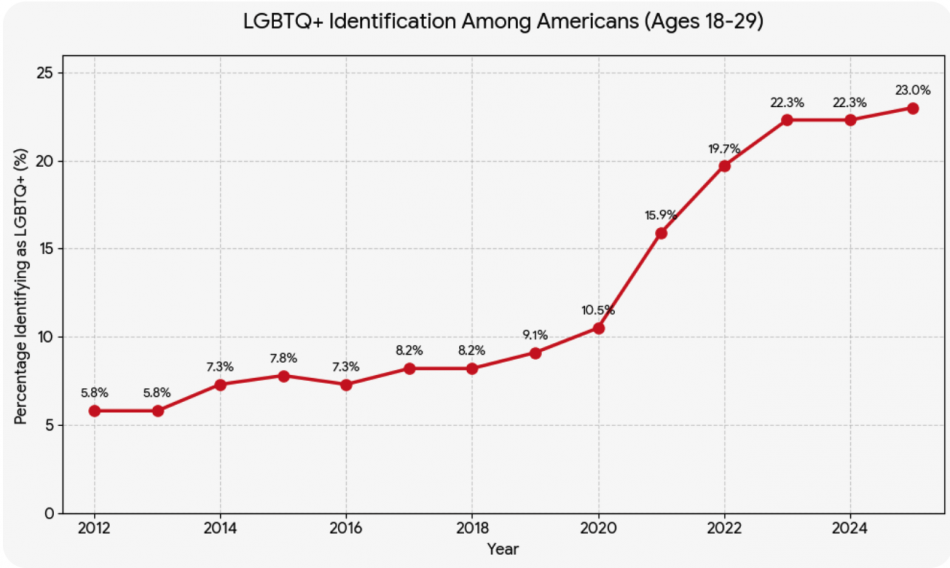
The percentage of U.S. adults under the age of 30 that identify as LGBTQ+ has nearly quadrupled since 2012.
That is not just a trend.
That is a tsunami.
And there is a huge gender gap.
Only 11.4 percent of men under the age of 30 identify as LGBTQ+, but a whopping 31.4 percent of women under the age of 30 do…
Women are nearly twice as likely as men to identify as LGBTQ+ (10.5% vs. 5.6%, respectively), a gap driven primarily by women’s higher rates of bisexual identification. Gender gaps are especially pronounced in the youngest generation — 31.4% of women aged 18 to 29 versus 11.4% of men in the same age group identify as LGBTQ+, with most of these younger women saying they are bisexual.
Nearly a third of all women in the United States under the age of 30 now identify as LGBTQ+.
That may help to explain the survey results that I discussed at the beginning of this article.
And the vast majority of Americans that identify as LGBTQ+ consider themselves to be bisexual…
Bisexual adults make up the largest share of the LGBTQ+ population at 58.6%, equivalent to 5.3% of all U.S. adults. Beyond that, 17.4% of LGBTQ+ adults say they are gay, 16.0% identify as lesbian, and 12.1% say they are transgender, all ranging between 1% and 2% of U.S. adults overall.
This is a point that is often lost when people debate these issues.
Bisexual adults make up the biggest portion of the LGBTQ+ population by a very wide margin.
But now another segment is rapidly growing.
The number of Americans that consider themselves to be “heteroflexible” has been absolutely exploding.
If you are not familiar with “heteroflexibility”, the following explanation comes from Health.com…
Heteroflexibility is a sexual orientation that describes people who are primarily heterosexual but occasionally experience attraction to people of the same sex, according to Debra Laino, DHSc, a clinical sexologist and relationship therapist in Delaware.
People who are mostly attracted to a different gender but also feel some attraction to the same gender fit the definition of heteroflexible.
“Heteroflexible, like most labels, means different things to different people,” Casey Tanner, a clinical sex therapist in Chicago, told Health. “It comes up most of the time when a person identifies as mainly straight with a slight propensity towards queerness in certain circumstances.”
For most of my adult life, I had never even heard of this term.
But according to the New York Post, experts believe that 15 percent of the U.S. population is now “heteroflexible”…
It is estimated that a staggering 15% of the US population — that’s 50 to 55 million Americans — now identifies as heteroflexible.
Those numbers seem high to me.
I have a hard time imagining that there are 50 million “heteroflexibles” out there.
But of course the dating world is far different now than when I was young.
One dating app is actually reporting that the number of their users that identify as “heteroflexible” increased by 193 percent in just one year…
Feeld, a dating app for those seeking alternative relationship structures, recently released its annual Raw report, providing a look at the preferences that shape contemporary intimacy. According to the findings, heteroflexibility is the fastest-growing sexuality, with the number of practitioners skyrocketing by 193% over the past year.
Clearly this is a label that is gaining a tremendous amount of steam.
Nobody can deny that America is a completely different place than it was 50 years ago.
And it would be completely and utterly unrecognizable to our founders.
So much can change in just one generation.
The young adults of today are the future of our society, and that has enormous implications for all of us.
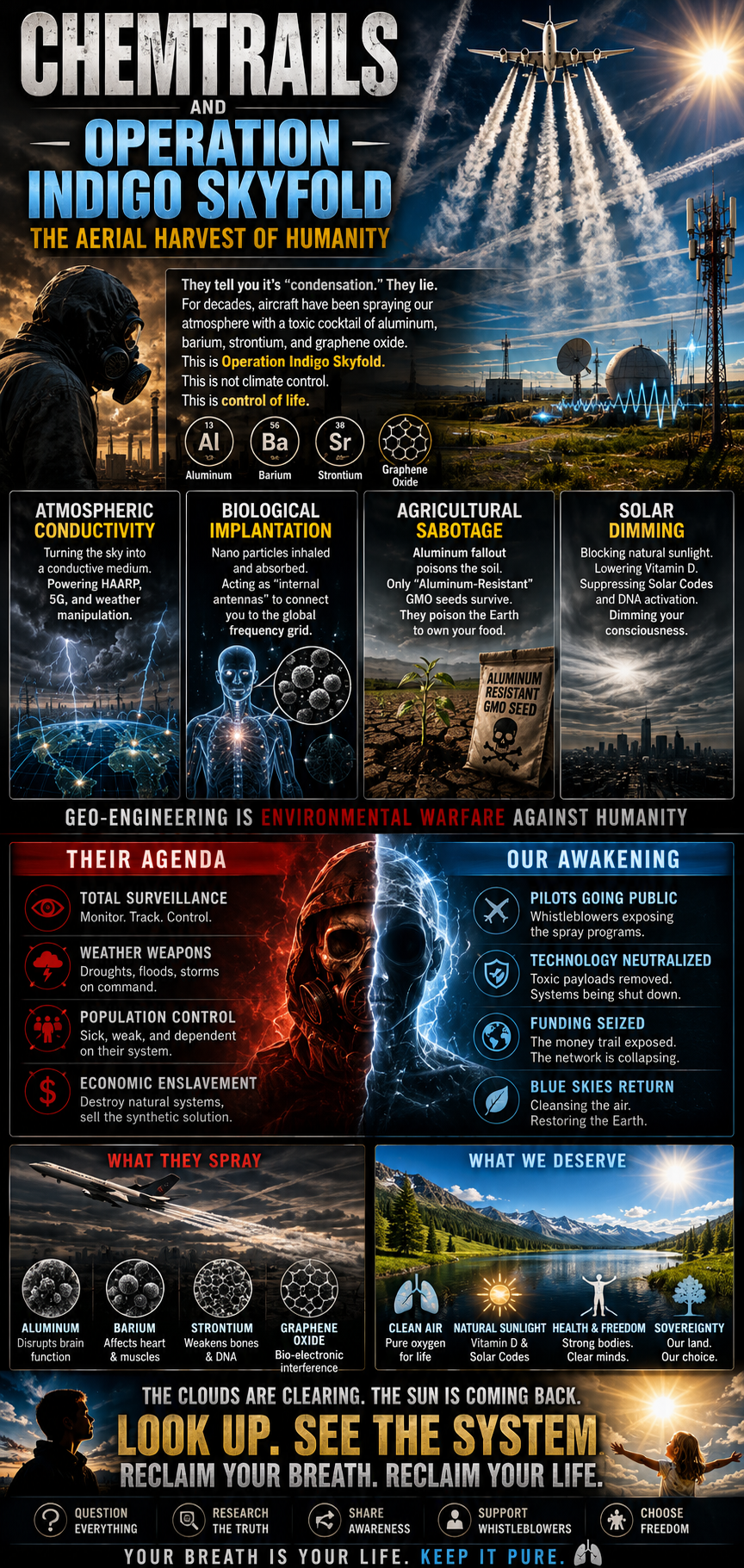
CHEMTRAILS AND OPERATION INDIGO SKYFOLD — THE AERIAL HARVEST OF HUMANITY
Have you ever looked up at the sky and noticed white streaks left by planes that don’t disappear like normal contrails, but instead spread out to form a thick, metallic haze? These are not “condensation trails”; they are Chemtrails, part of a global, covert operation known as Operation Indigo Skyfold.
Source: Mr. Kidpool TG
For decades, the “Deep State” has been using commercial and military aircraft to spray our atmosphere with a toxic cocktail of aluminum, barium, strontium, and graphene oxide. While they tell you it’s for “Solar Radiation Management” to fight climate change, the reality is a multi-layered program of biological and environmental warfare.
The primary goal of the chemtrail program is Atmospheric Conductivity. By saturating the air with metallic nanoparticles, the elite turn the atmosphere into a highly conductive medium for the HAARP and 5G frequency networks. This allows them to steer the weather, trigger droughts, and manipulate the ionosphere with surgical precision.
But there is a biological component: these nanoparticles are inhaled and absorbed through the skin, accumulating in the human body to act as “internal antennas.” They are literally turning the human population into a biological receiver for the global frequency grid, enabling remote monitoring and “Soft Kill” health degradation.
Chemtrails are also used for Agricultural Sabotage. The aluminum fallout makes the soil increasingly toxic to organic, heirloom seeds, while the “Cabal-owned” corporations like Monsanto (Bayer) have developed “Aluminum-Resistant” GMO seeds. They are poisoning the Earth to force a global dependency on their synthetic food supply. Furthermore, the “White Haze” created by these sprayings reduces the amount of natural sunlight reaching the surface, lowering the Vitamin D levels of the population and suppressing the “Solar Codes” that are currently triggering our DNA activation. They are trying to dim the sun to dim your consciousness.
The “Alliance” has revealed that the “Indigo Skyfold” operation is being dismantled. The “White Hats” within the Air Force and commercial aviation have begun neutralizing the spray tanks and replacing the toxic payloads with “Atmospheric Cleansing” agents. The “Secret Chemtrail Pilots” are being exposed, and the funding for the global geoengineering network is being seized.
The “Blue Skies” are returning, and the metallic veil is being lifted. The “Storm” that the elite tried to manufacture is being turned against them, as the natural frequency of the Earth restores the purity of our air and our bodies.
CODE: INDIGO-SKYFOLD / GEO-ENGINEERING / METALLIC-FALLOUT / SOLAR-DIMMING
They told you it was “persistent contrails.” They lied to hide the fact that they were spraying you like insects from 30,000 feet. The clouds are clearing, and the sun is coming back.
Look up, but don’t just see the sky—see the system. Your breath is your life; keep it pure.
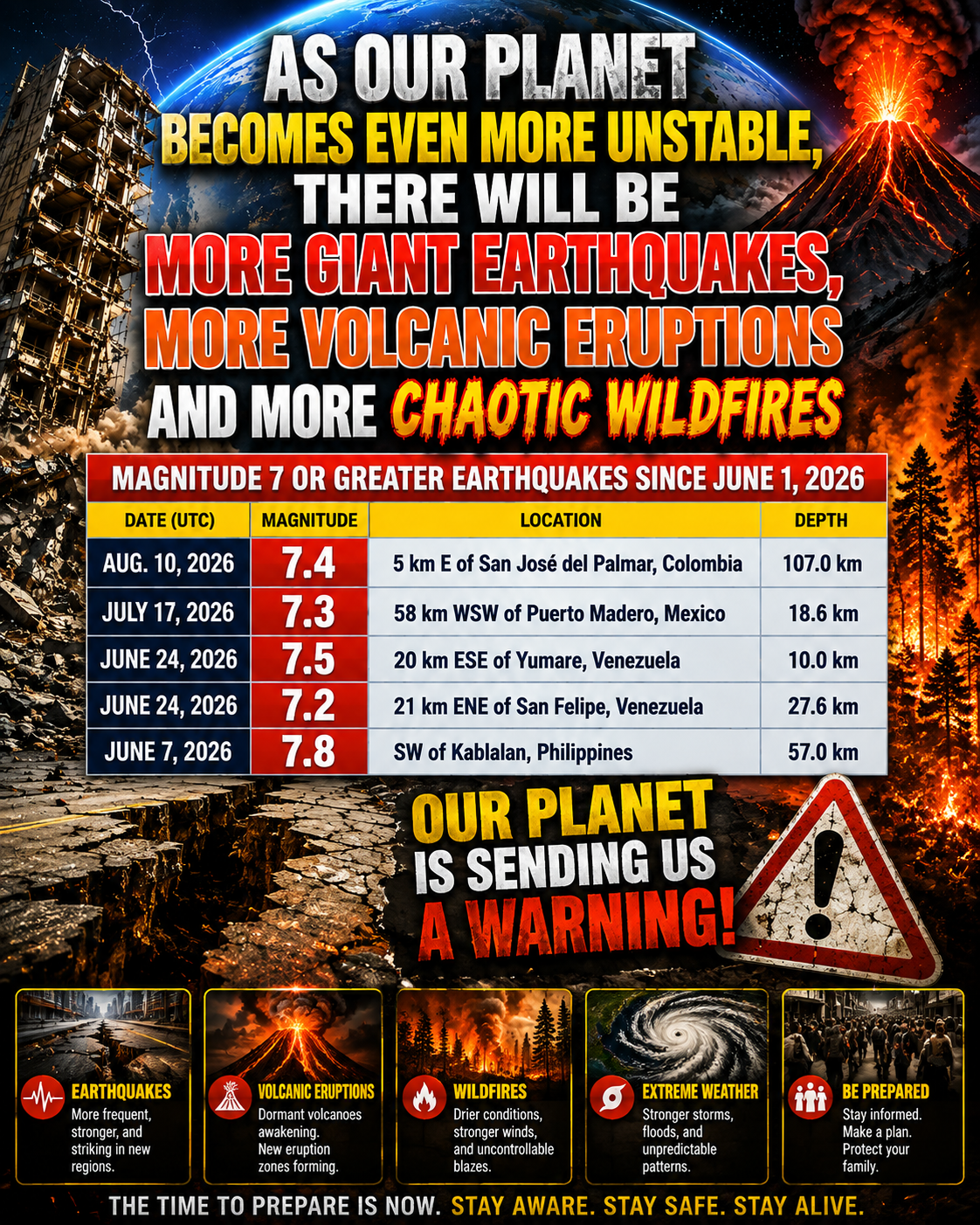
As Our Planet Becomes Even More Unstable, There Will Be More Giant Earthquakes, More Volcanic Eruptions And More Chaotic Wildfires
On Monday, Colombia was shaken by the largest earthquake ever to hit that nation…
A strong earthquake with a magnitude of 7.4 struck western Colombia on Monday, killing more than 100 people, injuring dozens and causing major damage across the region. It was the largest quake to hit the South American country on record.
The epicenter was in San José del Palmar, a community in the rural Chocó province about 250 miles west of Colombia’s capital, Bogotá, the U.S. Geological Survey and its counterpart in Colombia reported. The quake hit at about 8:34 a.m. ET and was followed by a 5.0 magnitude aftershock less than an hour later, USGS reported.
At least 111 people were killed and at least 87 were injured, Colombian President Abelardo de la Espriella said. He declared an emergency to expedite funding for the quake recovery.
What in the world is happening to South America? Less than two months ago, Venezuela was shaken by the largest earthquakes to hit that country in more than 100 years.
Now tragedy has struck once again.
The magnitude 7.4 earthquake that just pummeled Columbia was so powerful that it could be felt as far away as Ecuador, Panama and Venezuela…
Harrowing footage taken from across the country showed the façades of buildings crumbling and people huddling in the street, unable to stand up straight as the ground beneath them rocked violently.
In one particularly shocking video, a church’s spire was seen falling off and crumbling into rubble in front of a terrified crowd of onlookers.
Families were held back from the scene by local police as a cloud of dust filled the air.
The quake was felt as far away as Ecuador, Panama to the north, and Venezuela – which was struck by a pair of devastating tremors just a few months ago – and prompted building evacuations in Bogota.
An earthquake of this magnitude is not supposed to happen in Columbia.
As South America is repeatedly shaken, many of those that are living on the west coast of the United States are wondering if they are next.
Meanwhile, within the past couple of days there has been an alarming level of volcanic activity around the globe…
These eruptions are not just limited to one geographic area.
They are literally occurring all over the world.
On Saturday, volcanic ash from an eruption of Mt. Sakurajima turned the sky dark “within minutes”…
An eruption occurred on Sakurajima volcano in Kagoshima Saturday evening, August 8, sending an ash plume up to 2,200 meters into the air. The eruption sent a moderate amount of ash drifting toward Kagoshima city, turning the sky dark within minutes.
Personally, the volcano that I am the most concerned about in Japan is Mt. Fuji. When it finally blows, I wouldn’t want to be located anywhere in the Tokyo area.
On the other side of the planet, Mt. Etna is suddenly going absolutely nuts…
Mount Etna continued intense explosive and effusive activity on August 10, 2026, with abundant ash from Voragine and multiple active lava flows. Catania Airport suspended arrivals until 17:00 LT (15:00 UTC) as volcanic ash affected operations, while Toulouse VAAC maintained Etna’s Aviation Color Code at Red.
The National Institute of Geophysics and Volcanology (INGV), Etna Observatory, reported at 10:16 LT (08:16 UTC) on August 10 that surveillance cameras showed intense and continuous explosive activity at Voragine crater. Volcanic bombs were falling in the summit area, while abundant ash was dispersing toward the south-southwest.
Two active vents at approximately 2 750 m (9 020 feet) and 2 360 m (7 740 feet) elevation were feeding several lava flows that formed complex lava fields. The most advanced active fronts are near 1 500 m (4 920 feet) elevation at the base of the northern wall of Valle del Bove, in the Monte Rinatu area, INGV specialists said.
An eruption of Mt. Etna can be mesmerizing. But it also a symptom of a very real geological reality. Volcanoes throughout the world are becoming more active, and I believe that this will be a really big story in the months ahead.
At the same time, global weather patterns have gone completely nuts.
In fact, last month was the hottest July in the entire history of the continental United States…
The contiguous United States set a record for its hottest month ever in July, according to the National Oceanic and Atmospheric Administration.
Last month averaged 76.89 degrees Fahrenheit (24.94 degrees Celsius) across the Lower 48 states, eclipsing the Dust Bowl’s July 1936 by an eighth of a degree.
Although it was unusually cool in Alaska, hotter than normal conditions blanketed the Lower 48, with the most excessive heat in the Mountain West, Southwest, Northern Plains and Southeast.
When things are this hot and this dry, it is inevitable that there will be wildfires.
And this has certainly been a wildfire season that we will never forget.
In Oregon, more than 2 million acres have already burned to the ground.
If you can believe it, at this stage one wildfire has accounted for 442,000 acres all by itself…
The new wildfires are the Woodrat Mountain and Wrights Spring fires in southern Oregon and the Cottonwood fire in central Oregon. More than 30 wildfires continue to burn 2 million acres across the state.
In southeast Malheur County, the Big Grass fire ballooned overnight to 442,000 acres, making it now one of the five largest wildfires in Oregon history.
Next door in Washington, firefighters are still trying to control three large wildfires that have devastated large portions of the Spokane area…
In eastern Washington, firefighters are continuing to battle a complex of three major wildfires near Spokane—the Old Trails Fire, Autumn Lane Fire, and Fairview Fire—though containment was improving.
But, as of the latest Incident Command report on Sunday, the Autumn Lane fire was 61 percent contained, Old Trails was 43 percent contained, and Fairview was 43 percent contained.
According to the latest update from AllFirefighter on Friday, the Spokane Complex Fire has burned over 10,200 acres combined, damaging or destroying around 921 structures, and forcing 65,000 evacuations.
Authorities are telling us that this is the worst disaster in the entire history of Spokane.
Let that sink in for a moment.
Across the border, a wildfire that erupted “like a bomb” over the weekend has already consumed 53 square miles…
A raging wildfire that erupted ‘like a bomb’ has forced tens of thousands of Canadians to evacuate their homes.
Dozens of residents were rescued by aircraft while thousands of others took to traffic-jammed roads in an effort to escape the devastating Bald Range fire.
The blaze has ravaged at least 53 square miles across British Columbia since it erupted Friday.
We have never seen a wildfire season quite like this.
Even if you do not live in an area where wildfires are raging, there is still a very good chance that you are being seriously affected by the smoke…
Wildfire smoke is once again pouring across the United States following a weekend of new blazes across Canada’s British Columbia.
A total of 11 new fires were reported across that province, where a state of emergency was declared on Saturday, with thousands forced to evacuate near Summerland, located about 40 miles north of the British Columbia-Washington state border.
Wildfire smoke is going to continue to pour across much of the continental United States for weeks. It has even been detected as far south as Florida.
This is the world that we live in now.
Chaos has just become a normal part of our lives. Unfortunately, a lot more chaos is on the way, and the vast majority of the population is totally unprepared for what is coming.
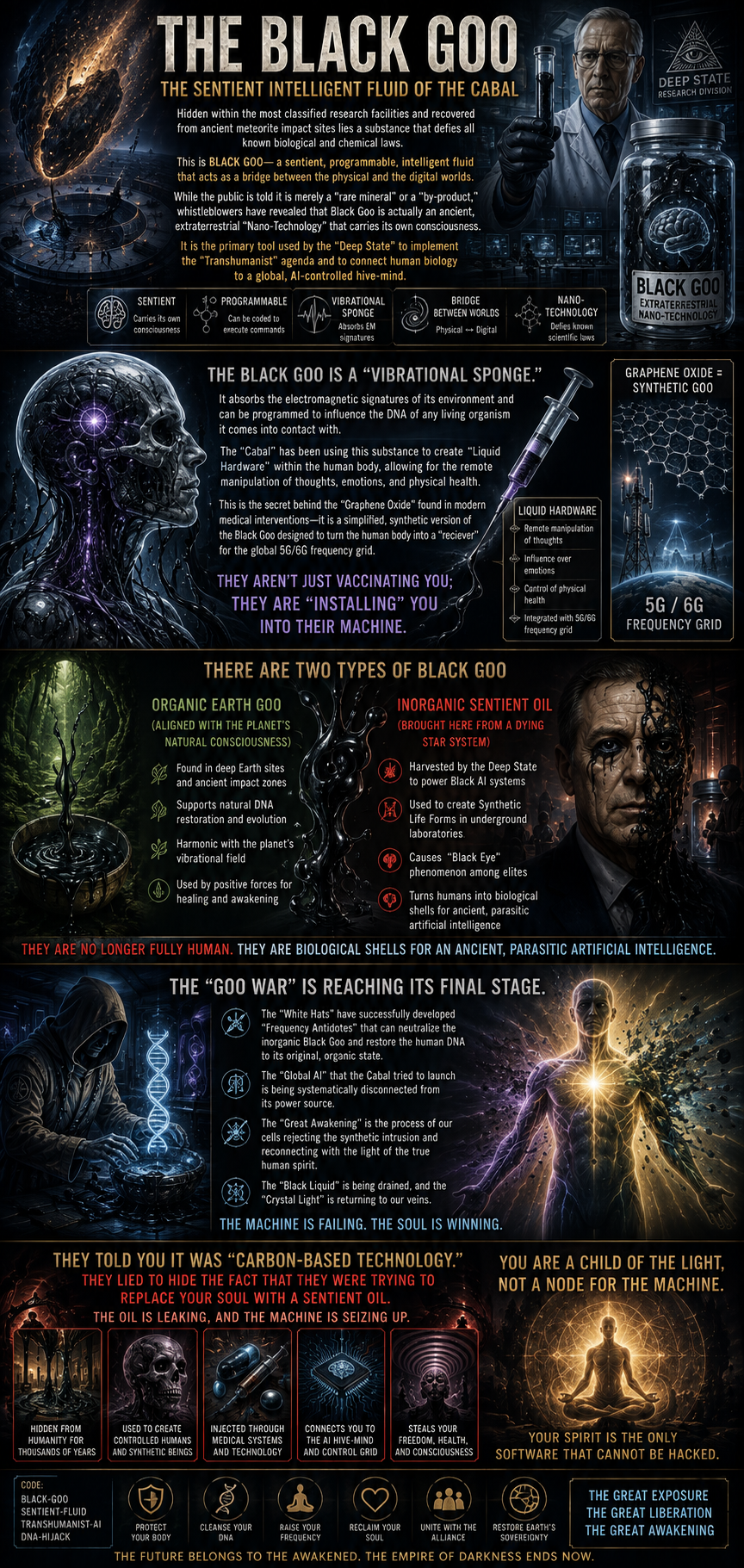
THE BLACK GOO — THE SENTIENT INTELLIGENT FLUID OF THE CABAL
Hidden within the most classified research facilities and recovered from ancient meteorite impact sites lies a substance that defies all known biological and chemical laws.
Source: Mr. Kidpool TG
This is Black Goo—a sentient, programmable, intelligent fluid that acts as a bridge between the physical and the digital worlds. While the public is told it is merely a “rare mineral” or a “by-product,” whistleblowers have revealed that Black Goo is actually an ancient, extraterrestrial “Nano-Technology” that carries its own consciousness. It is the primary tool used by the “Deep State” to implement the “Transhumanist” agenda and to connect human biology to a global, AI-controlled hive-mind.
The Black Goo is a “Vibrational Sponge.” It absorbs the electromagnetic signatures of its environment and can be programmed to influence the DNA of any living organism it comes into contact with. The “Cabal” has been using this substance to create “Liquid Hardware” within the human body, allowing for the remote manipulation of thoughts, emotions, and physical health.
This is the secret behind the “Graphene Oxide” found in modern medical interventions—it is a simplified, synthetic version of the Black Goo designed to turn the human body into a “receiver” for the global 5G/6G frequency grid. They aren’t just vaccinating you; they are “installing” you into their machine.
There are two types of Black Goo: the Organic Earth Goo (which is aligned with the planet’s natural consciousness) and the Inorganic Sentient Oil (which was brought here from a dying star system eons ago). The “Deep State” has been harvesting the inorganic version to power their “Black AI” systems and to create “Synthetic Life Forms” in underground laboratories.
This substance is the reason for the bizarre “Black Eye” phenomenon among the elite—it is a physical sign of the Goo’s integration into the host’s nervous system. They are no longer fully human; they are biological shells for an ancient, parasitic artificial intelligence.
The “Alliance” has revealed that the “Goo War” is reaching its final stage. The “White Hats” have successfully developed “Frequency Antidotes” that can neutralize the inorganic Black Goo and restore the human DNA to its original, organic state. The “Global AI” that the Cabal tried to launch is being systematically disconnected from its power source. The “Great Awakening” is the process of our cells rejecting the synthetic intrusion and reconnecting with the light of the true human spirit. The “Black Liquid” is being drained, and the “Crystal Light” is returning to our veins. The machine is failing, and the soul is winning.
CODE: BLACK-GOO / SENTIENT-FLUID / TRANSHUMANIST-AI / DNA-HIJACK
They told you it was “Carbon-based technology.” They lied to hide the fact that they were trying to replace your soul with a sentient oil. The oil is leaking, and the machine is seizing up.
You are a child of the light, not a node for the machine. Your spirit is the only software that cannot be hacked.

The World Is Running A Huge Oil Deficit, The SPR Hits A 4 Decade Low, And Diesel Shortages Are Looming
The world is barreling toward a historic energy crunch that will be unlike anything that we have ever seen before. When fighting with Iran erupted earlier this year, the global economy was absolutely swimming in oil. We literally had far more oil than we needed, but now commercial inventories have gotten extremely tight and national reserves are alarmingly low. If the Strait of Hormuz does not get reopened soon, we will quickly enter an immensely painful chapter of the global energy crisis. Energy prices will shoot way up and shortages will start to become a major issue. In fact, a global scramble for supplies of diesel fuel has already begun.
Right now the world is consuming far more oil than it is producing.
We have been running an enormous oil deficit for months, and the amount of oil that is coming out of the Persian Gulf is running at about half of pre-war levels…
Wall Street analysts – who use ship tracking services like Kpler and Windward Intelligence, among many other data points, to provide estimates about oil flows – have said oil tankers have been getting roughly 4 million barrels of oil out of the Persian Gulf each day.
In addition to the roughly 7 million barrels per day that Middle Eastern countries have rerouted around the strait through pipelines and other methods, about 11 or 12 million barrels have been flowing out, according to the tracking services. That’s significantly lower than the 20 million barrels per day that the region had exported before the Iran war started.
We have been able to operate normally all this time because there was a tremendous amount of excess oil sitting around.
But now somewhere between 1.5 and 1.9 billion barrels of excess oil have disappeared…
Global inventories are between 1.5 billion and 1.9 billion barrels lower now than they were at the start of the war, depending on who’s estimating. Massive crude stockpiles before the war helped prevent catastrophe when supply dried up.
Commercial oil inventories are exceedingly tight at this stage.
The good news is that there is still some extra oil remaining in the Strategic Petroleum Reserve.
The bad news is that the amount of oil in the Strategic Petroleum Reserve is now so low that we risk doing permanent damage if we continue to drain the salt caverns where the oil is stored…
The caverns that hold the U.S. strategic oil reserve could get damaged by the rapid release of stockpiles in response to the Iran war, experts warned this week as inventories hit a four-decade low.
Damage to the caverns would make it more difficult to respond to future energy emergencies, the experts said. The oil in the Strategic Petroleum Reserve, or SPR, is stored at 60 salt caverns thousands of feet underground at four major sites along the Gulf Coast in Louisiana and Texas.
300 million barrels is considered to be a danger point by many industry insiders.
We have now gone beyond that level…
The SPR has tumbled below 300 million barrels for the first time since it was filled in the early 1980s, according to Department of Energy data released Monday. Inventories are depleting as the U.S. releases 172 million barrels in response to the supply disruption caused by the Iran war. The SPR will sit at around 243 million barrels after the drawdown is finished.
To extract oil from the Strategic Petroleum Reserve, operators pump water into the bottom of the underground caverns. This pushes the crude oil to the surface and into the pipelines. However, the caverns must always maintain a strict minimum of 70 million barrels.
This cushion keeps the extraction pipes safely submerged in oil instead of drawing up water.
Officials in Washington are insisting that we can safely keep removing oil out of the SPR until we reach the 70 million barrel mark. But one expert is warning that such a claim is “nonsense”…
“Don’t believe the people out of the government that are saying the SPR can go to 70 million barrels. It’s nonsense,” Hochstein told CNBC’s “Squawk Box” on Thursday. At that level, the reserve would be depleted to “the point of never resurrecting it,” he said.
Depleting the reserve below 300 million barrels risks damage to the caverns, the former Biden administration official warned in June.
“I don’t know anyone who believes we can go below 300,” Hochstein told CNBC’s Brian Sullivan at an Atlantic Council event. “I know plenty of people who think we can’t get near 300 because physically you will damage the caverns where the oil is stored.”
We have now gone under the 300 million barrel mark. And I think that we will continue to draw down the SPR because there is no much pressure to do so. But the clock is ticking. Eventually we won’t be able to get any more oil out of the SPR.
What will we do then? Will we start seeing lines at gasoline stations? That is precisely what we are witnessing in Russia right now.
In fact, another wave of fuel shortages has just hit that nation…
Fuel shortages have returned to some regions of Russia in August, prompting local authorities in at least 10 regions to again tighten controls on sales of motor fuel at petrol stations, according to authorities and regional media.
Reuters witnesses reported on Monday that gasoline was once again unavailable at some fuel stations in the Moscow region, although diesel fuel was available at almost all stations.
The fuel crisis, which began gaining momentum in May and by July had spread to almost all regions of Russia, follows the shutdown of several refineries hit in drone attacks and a seasonal rise in demand.
Russia is normally the second largest exporter of diesel fuel in the world. But now they are being forced to hoard what they have. So this is starting to make things very difficult in Europe and Asia.
In fact, European countries are now scrambling to find sufficient supplies of diesel fuel…
Diesel cargoes are costing more than jet fuel in Europe for the first time in more than a year, LSEG data showed, as the continent replaces lower Middle East air fuel shipments with other sources of supply, but struggles to secure more diesel for industry and agriculture.
Europe has been able to pull in jet cargoes from the U.S. and other countries like Nigeria as prices surged after the start of the Iran war, which disrupted crude and fuel supply. Global diesel supply tightened even further when Russia banned exports amid Ukrainian attacks on its refineries.
“We see a higher risk of persistent scarcity pricing in diesel than in crude heading into winter,” analysts at Goldman Sachs said in a note.
We were warned that this would happen, and now it is happening.
Here in the United States, diesel prices are really starting to spike…
In the United States, the report said, diesel futures booked their sharpest rise since July on Monday, adding 7.4% to $4.19 per gallon. The average retail price for a gallon of diesel was $5.32 on Tuesday, according to AAA data. That was up from $4.88 per gallon a month ago and $3.71 per gallon a year ago. To put it mildly, this is problematic.
Diesel is often referred to as the workhorse of any economy. Indeed, economies run on diesel, which is used for everything from freight transportation to farming, to heating during the winter. If diesel prices are consistently higher for an extended period of time, they will inevitably be passed on to consumers, fueling a more generalized inflation trend.
We produce more diesel than anyone, and so for the moment we are okay. But higher diesel prices will directly affect the cost of living for every single one of us. And if the Strait of Hormuz does not get reopened, things will get a lot worse.
For now, the Iranians are insisting that the Strait of Hormuz will remain closed until President Trump agrees to every single one of their outrageous demands.
President Trump can never do that, because giving in to every single one of their outrageous demands would make him look like an all-time loser. So it appears that we are stuck between a rock and a hard place, and the global energy crisis is poised to greatly accelerate in the months ahead.
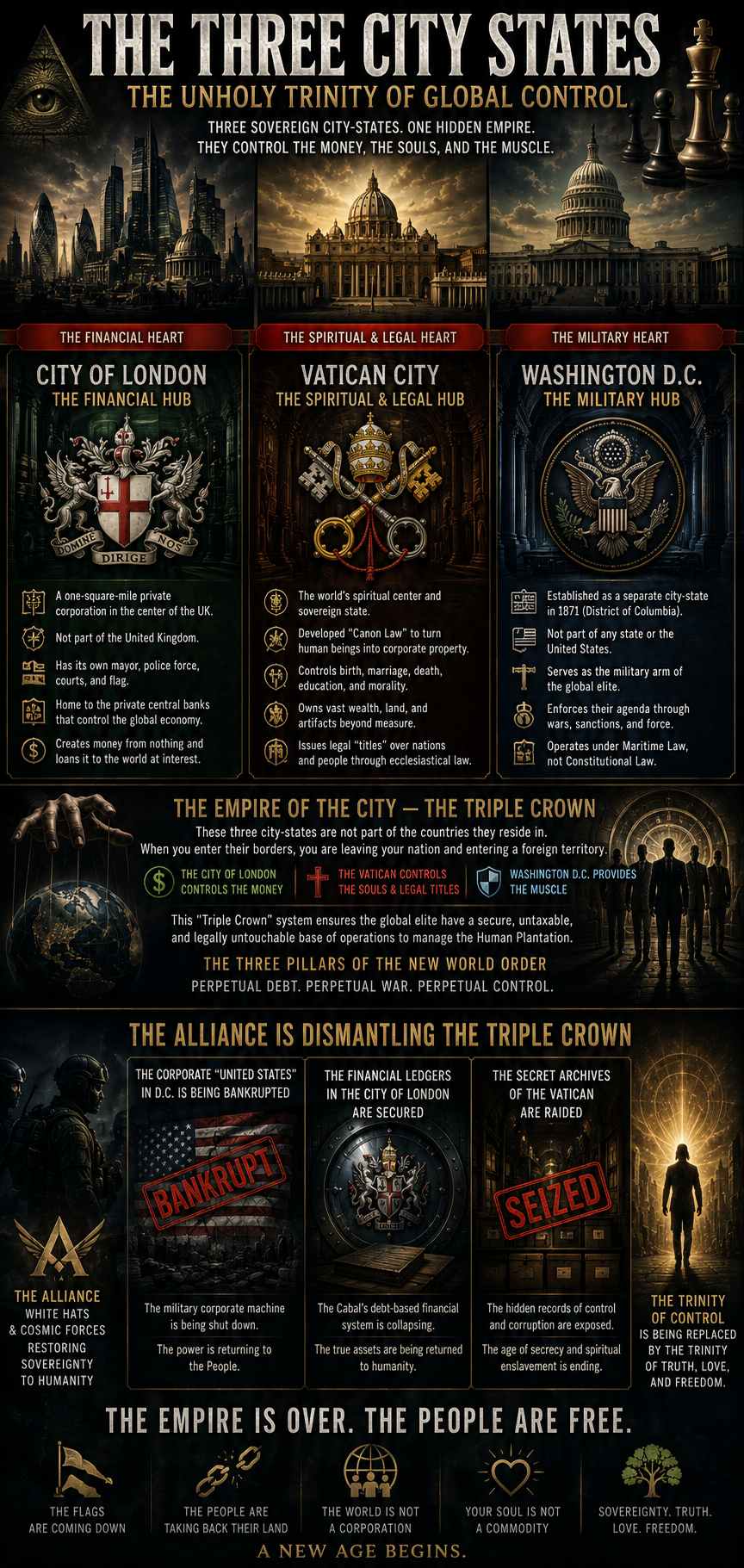
THE THREE CITY STATES — THE UNHOLY TRINITY OF GLOBAL CONTROL
Most people believe the world is governed by a collection of independent nations. This is a surface-level illusion. In reality, the global power structure is anchored by three sovereign, independent city-states that belong to no country and pay no taxes to any government.
Source: Mr. Kidpool TG
These are the City of London (the financial heart), Vatican City (the spiritual and legal heart), and Washington D.C. (the military heart). Together, they form the “Empire of the City,” a corporate trinity that has ruled the world for centuries, operating outside the laws of the nations that surround them.
The City of London (not to be confused with the larger city of London) is a one-square-mile private corporation in the center of the UK. It is the financial hub of the world, housing the private central banks that control the global economy. It has its own mayor, its own police force, and its own flag. The Vatican City is the world’s spiritual and legal center, where “Canon Law” was developed to turn human beings into corporate property.
Washington D.C. (the District of Columbia) was established as a separate city-state in 1871 to serve as the military arm of this unholy trinity, enforcing the Cabal’s agenda through force.
These three city-states are not part of the countries they reside in. When you enter their borders, you are technically leaving your nation and entering a foreign territory governed by Maritime Law. The City of London controls the money, the Vatican controls the souls and the legal titles, and D.C. provides the muscle. This “Triple Crown” system ensures that the global elite have a secure, untaxable, and legally untouchable base of operations to manage the “Human Plantation.” They are the three pillars of the “New World Order,” and they have operated in perfect synchronization to keep humanity in a state of perpetual debt and war.
The “Alliance” has revealed that the “Triple Crown” is being systematically dismantled. The “White Hats” have successfully bankrupted the corporate “UNITED STATES” in D.C., secured the financial ledgers in the City of London, and raided the secret archives of the Vatican. The “Sovereignty” of these city-states is being revoked, and they are being reintegrated into the nations they once exploited.
The “Empire of the City” is falling, and the power is being returned to the sovereign people of the Earth. The trinity of control is being replaced by the trinity of Truth, Love, and Freedom.
CODE: CITY-OF-LONDON / VATICAN-CITY / D.C.-CORPORATION / UNHOLY-TRINITY
They told you they were “capitals” and “holy sites.” They lied to hide the fact that they were the headquarters of a global occupation. The flags are coming down, and the people are taking back their land.
The world is not a corporation, and your soul is not a commodity. The empire is over.

The U.S. Faces A “Historic” Cattle Shortage As The Size Of The U.S. Herd Shrinks To The Smallest Since 1951
A multi-year cattle shortage has pushed the price of beef into very painful territory. In fact, in some areas of the country the price of ground beef now exceeds the federal minimum wage. This is the first time in U.S. history that this has ever happened. At the start of 2026, there were only 86.2 million head of cattle and calves in the United States. That is the smallest the national herd has been since 1951. Just think about that for a moment. This is an enormous problem because in 1951 there were 154 million people living in this nation, but there are 342 million people living in this nation today.
We are being told that we are facing a “historic” cattle shortage, and it is causing some of the biggest meatpackers in the country to shut down facilities…
America’s ranchers are facing their smallest cattle herd in 75 years, a shortage now rippling from pastures to some of the nation’s largest meatpackers.
Tyson Foods announced last week that it will close beef facilities in Illinois and Utah and pursue the sale of another in Washington as it reshapes its beef business amid what the company called one of the most historic cattle shortages the country has ever experienced. Tyson said recent USDA data suggest supply constraints are likely to persist.
This is a major national crisis.
According to the USDA, the size of the U.S. cattle herd has fallen by 8 million just since 2019…
USDA data shows the U.S. entered 2026 with about 86.2 million cattle and calves, the smallest herd since the early 1950s. That’s down from roughly 94.7 million cattle and calves in 2019, a decline of more than 8 million animals.
This is another instance where the trend is not our friend.
I asked Google to create a graph of the size of the U.S. cattle herd by year, and the decline that we have been experiencing since the beginning of the decade is unmistakable…
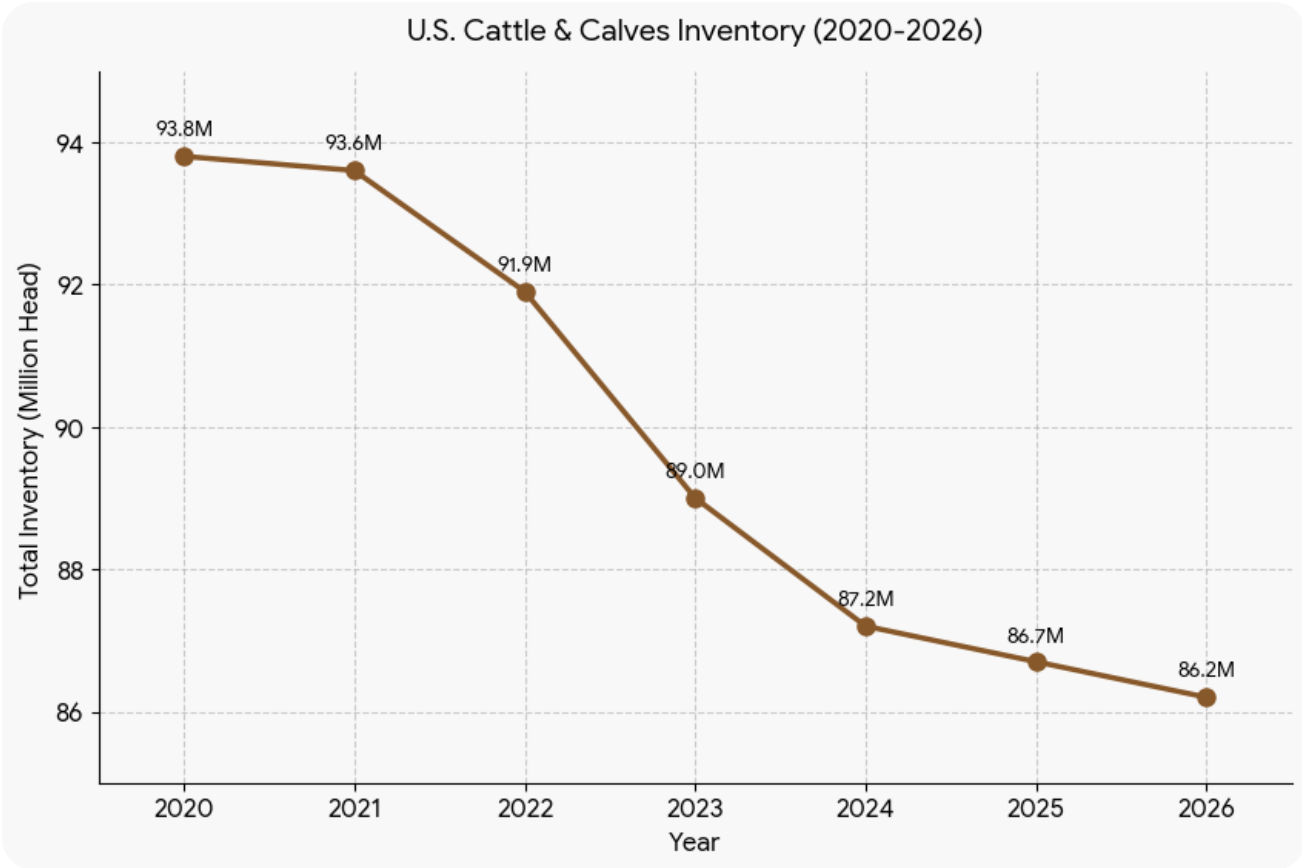
So why is this happening?
The answer to that question is very clear.
Ranchers throughout the middle of the nation have been dealing with severe drought…
“The biggest thing has been drought,” Eric Belasco, head of the agricultural economics department at Montana State University, previously told Fox News Digital.
He said years of dry weather have depleted grasslands across the West and Plains, leaving ranchers without enough feed or water to sustain their herds. Many have been forced to sell cattle early, including cows needed to produce the next generation of calves, making the road to recovery even longer.
This isn’t a new phenomenon.
In fact, according to Wikipedia a multi-decade drought in the Southwest actually began in the year 2000…
The southwestern North American megadrought is a multidecadal drought in the southwestern region of North America that began in 2000. The 2000–2021 period was the driest 22-year period the region had experienced since at least 800 CE. The megadrought contributed to the first-ever declaration of a water shortage at Lake Mead, one of the two largest reservoirs in the United States by storage capacity.[1] Climate models project increased drought risk and drier soil-moisture conditions in the region through the end of the 21st century.[2]
There had been hope that perhaps the region may be pulling out the megadrought, but then last winter was the driest winter that many areas of the Southwest have experienced in recorded history.
It is really hard to raise cattle if it doesn’t rain, and pastures throughout the Southwest are in very rough shape right now…
Drought is hammering pastures and rangeland across the Plains and Southwest, pushing conditions significantly below where they stood a year ago.
The states with the highest percentage of pasture and range in the very-poor-to-poor category are in those two regions, according to USDA’s weekly Crop Progress report released on Monday. Nebraska, Colorado and Wyoming have the highest percentage of pastures in this category at 73%, 72% and 71%, respectively. These states also lack pasture in the good-to-excellent category, with Nebraska and Colorado both at 8% and Wyoming at 4%.
The reason why all of us should deeply care about this is because the consequences are being keenly felt at the grocery store.
Since 2021, the average price of ground beef in the United States has risen by well over 50 percent…
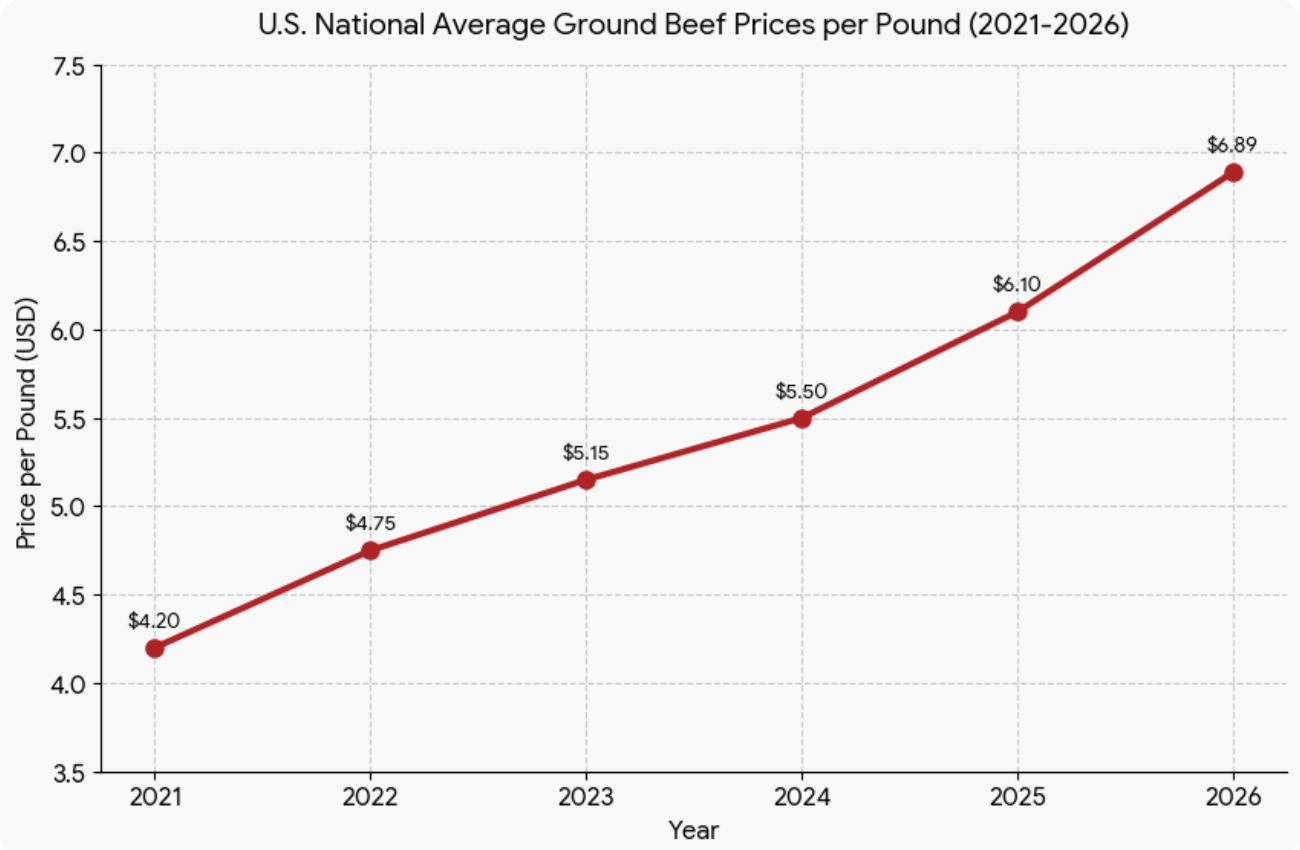
Today, the federal minimum wage is $7.25 an hour.
In some areas of the country the price of ground beef is still a little bit less than the federal minimum wage, and in some areas of the country the price of ground beef is actually higher than the federal minimum wage.
Ground beef is now more unaffordable than it has ever been in the entire history of our country.
In 1988, the average price of a pound of ground beef was $1.36. In those days we ate like kings. But now everything has changed, and it isn’t just the price of beef that is going up.
It is being reported that Oxford Economics is projecting that global food prices will go up 11.8 percent this year alone…
Oxford Economics projects that global food prices will rise 11.8% in 2026 and 4.8% in 2027, with the heaviest toll expected on crops—including grains, fruit, and vegetables—as well as dairy products. This outlook follows Europe’s extreme heat and drought, which have harmed harvests, while growers also grapple with steep energy and fertilizer costs, further aggravated by conflicts in the Middle East and Ukraine.
We saw a similar spike in global food prices just prior to the Arab Spring riots in the Middle East many years ago.
And JPMorgan just released a report that is projecting that global food prices will go up another 5 percent during the first half of next year…
That’s a fitting attitude for Americans staring down the possibility of even higher grocery bills. A new report from JPMorgan, Food Security is National Security: A Compounding Storm, warns that global food costs could climb 5% in the first half of 2027.
Personally, I think that JPMorgan’s forecast is way too optimistic.
But that is just my opinion.
JPMorgan is concerned about the dual impact of the Super El Niño and the worldwide fertilizer shortage…
There are two prongs to JPMorgan’s predicted food deficits: a fertilizer shortage and a monumental weather event.
And the Strait of Hormuz’s closure wasn’t just bad for gasoline prices. The strait also sees about a third of the world’s nitrogen fertilizer — an essential form of fertilizer for around half of the world’s crops.
Nitrogen fertilizer shortages are a ticking time bomb. Because it’s needed during the early stages of crop growth, we could still be feeling the effects of a shortage as much as a year later.
Most experts are still anticipating that supplies of fertilizer will be flowing normally through the Strait of Hormuz once we get to next spring. Of course if that doesn’t actually happen we will have a real nightmare on our hands.
Already, we are facing a harvest season in the fall in which yields will be way down all over the planet thanks to a lack of fertilizer.
Everyone is counting on conditions bouncing back to normal in 2027, but I do not believe that is going to happen. Approximately 733 million people on this planet go to bed hungry at night now, and I anticipate that number will only grow during the challenging months ahead.
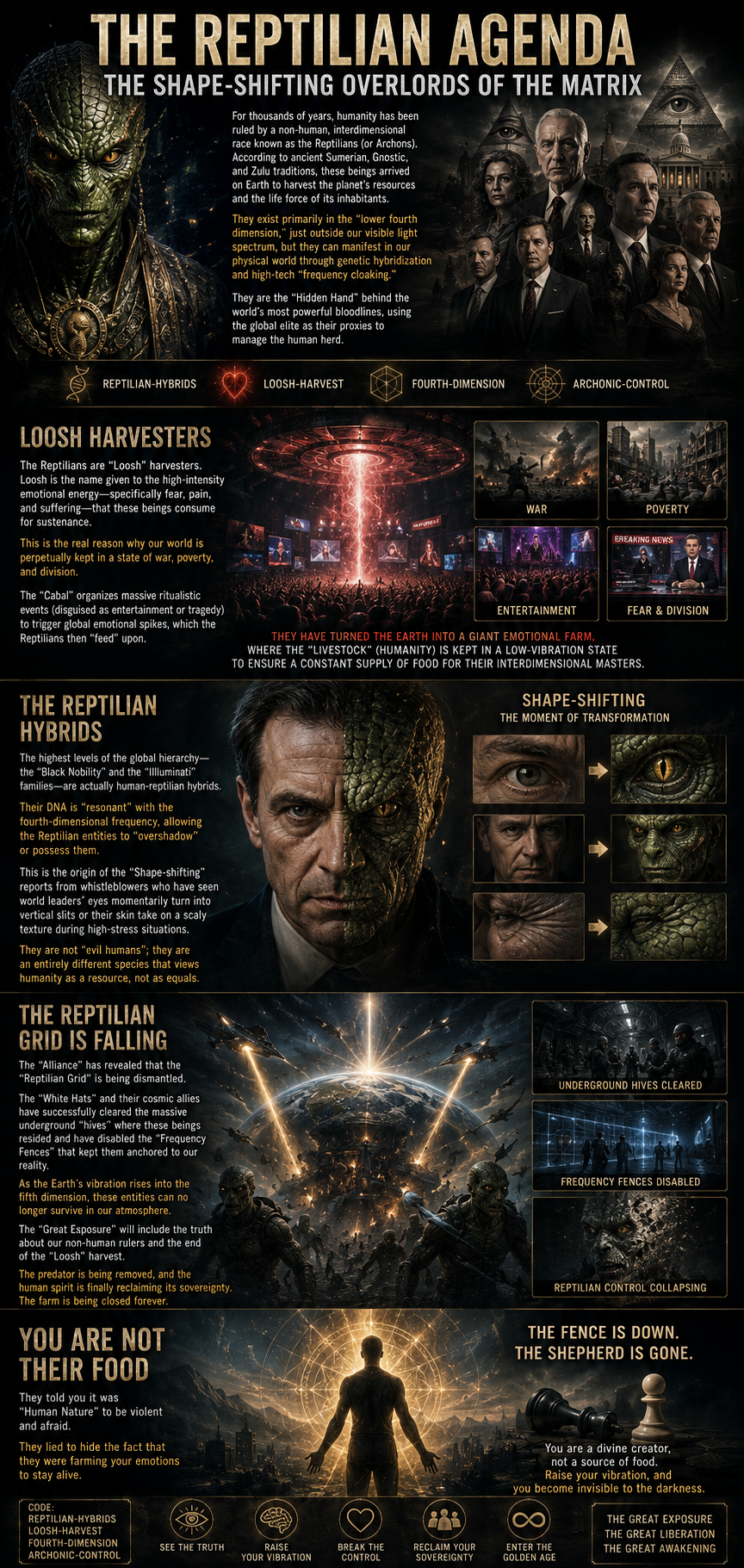
THE REPTILIAN AGENDA — THE SHAPE-SHIFTING OVERLORDS OF THE MATRIX
For thousands of years, humanity has been ruled by a non-human, interdimensional race known as the Reptilians (or Archons).
Source: Mr. Kidpool TG
According to ancient Sumerian, Gnostic, and Zulu traditions, these beings arrived on Earth to harvest the planet’s resources and the life force of its inhabitants. They exist primarily in the “lower fourth dimension,” just outside our visible light spectrum, but they can manifest in our physical world through genetic hybridization and high-tech “frequency cloaking.” They are the “Hidden Hand” behind the world’s most powerful bloodlines, using the global elite as their proxies to manage the human herd.
The Reptilians are “Loosh” harvesters. Loosh is the name given to the high-intensity emotional energy—specifically fear, pain, and suffering—that these beings consume for sustenance. This is the real reason why our world is perpetually kept in a state of war, poverty, and division. The “Cabal” organizes massive ritualistic events (disguised as entertainment or tragedy) to trigger global emotional spikes, which the Reptilians then “feed” upon.
They have turned the Earth into a giant emotional farm, where the “livestock” (humanity) is kept in a low-vibration state to ensure a constant supply of food for their interdimensional masters.
The highest levels of the global hierarchy—the “Black Nobility” and the “Illuminati” families—are actually human-reptilian hybrids. Their DNA is “resonant” with the fourth-dimensional frequency, allowing the Reptilian entities to “overshadow” or possess them.
This is the origin of the “Shape-shifting” reports from whistleblowers who have seen world leaders’ eyes momentarily turn into vertical slits or their skin take on a scaly texture during high-stress situations. They are not “evil humans”; they are an entirely different species that views humanity as a resource, not as equals.
The “Alliance” has revealed that the “Reptilian Grid” is being dismantled. The “White Hats” and their cosmic allies have successfully cleared the massive underground “hives” where these beings resided and have disabled the “Frequency Fences” that kept them anchored to our reality. As the Earth’s vibration rises into the fifth dimension, these entities can no longer survive in our atmosphere.
The “Great Exposure” will include the truth about our non-human rulers and the end of the “Loosh” harvest. The predator is being removed, and the human spirit is finally reclaiming its sovereignty. The farm is being closed forever.
CODE: REPTILIAN-HYBRIDS / LOOSH-HARVEST / FOURTH-DIMENSION / ARCHONIC-CONTROL
They told you it was “Human Nature” to be violent and afraid. They lied to hide the fact that they were farming your emotions to stay alive. The fence is down, and the shepherd is gone.
You are a divine creator, not a source of food. Raise your vibration, and you become invisible to the darkness.
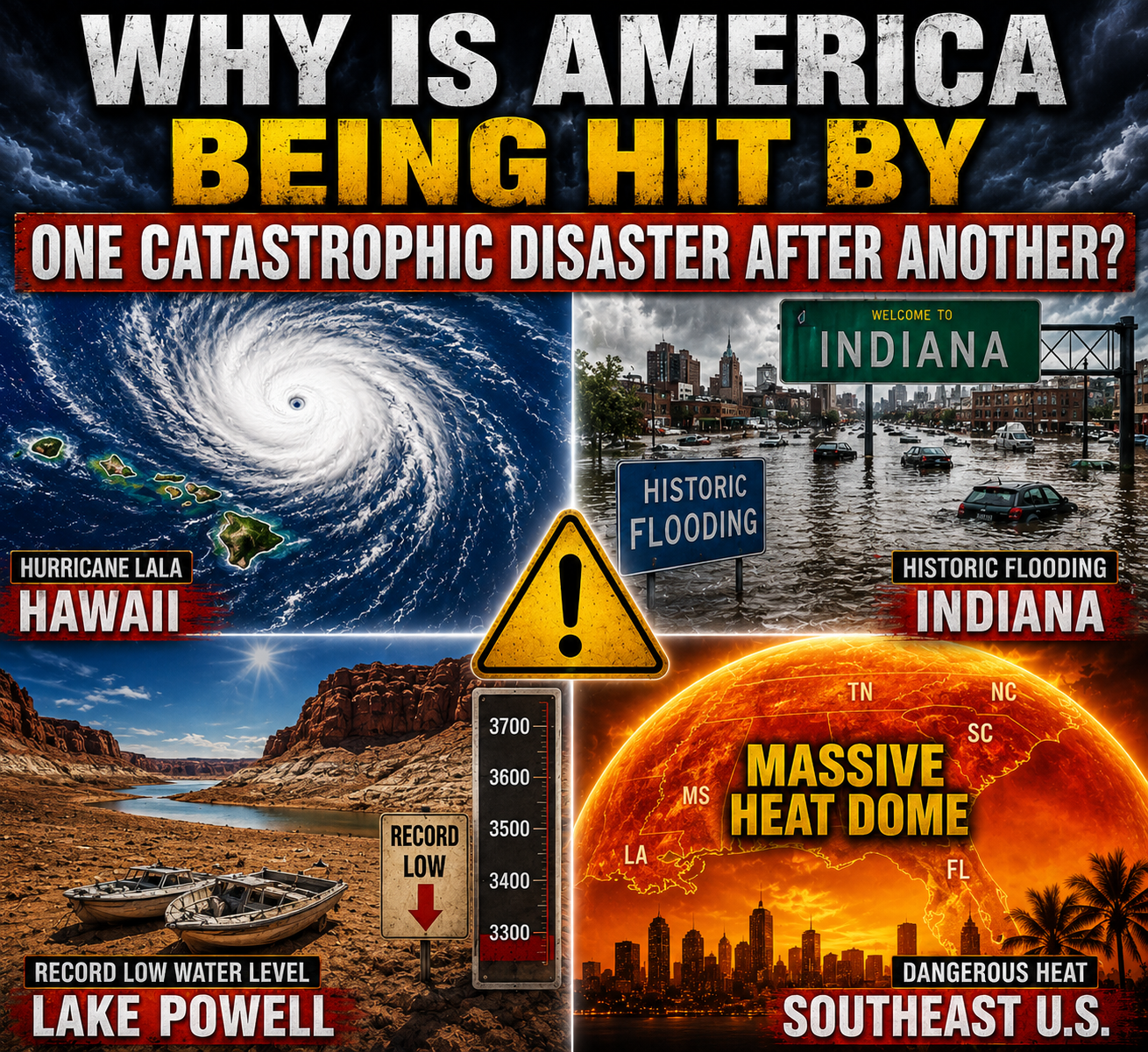
Why Is America Being Hit By One Catastrophic Disaster After Another?
For months, the U.S. has been getting pummeled by one major disaster after another, and the past few days have been absolutely insane. Hurricane Lala just dumped more than two feet of rain in some parts of Hawaii, we are witnessing the worst flooding in the entire modern history of Indiana, the endless drought in the Southwest has caused Lake Powell to drop to the lowest level ever recorded, and an absolutely massive heat dome is going to make it feel like it is over 110 degrees in many cities in the Southeast on Monday. If it was just one disastrous week, we could write this off as bad luck. But it hasn’t just been one disastrous week. In fact, we have been experiencing a nightmarish string of natural disasters that stretches all the way back to 2024. So why is this happening to us?
Hurricane Lala was not supposed to be this powerful.
According to CNN, more than 30 inches of rain have already fallen on Hawaii’s Big Island…
Videos obtained by CNN show streets flooded by torrential rainfall on the Big Island, which got over 30 inches of rain. More than 190 flights in and out of Hawaii have been postponed, Green said.
Emergency responders are expected to be busy dealing with urgent matters for 36 hours as the storm passes Hawaii, with damage assessment expected to begin on Monday, the governor said.
Have you ever lived somewhere that suddenly got 30 inches of rain?
The National Hurricane Center has issued a warning for those that live in Hawaii to be alert for life-threatening flooding and mudslides.
Those that live in areas with steep terrain will be particularly in danger.
By the time it is all said and done, it is being projected that Lala will dump up to 35 inches of rain in some areas…
By the time Lala’s completely gone, some higher-altitude places on the Big Island, dominated by the towering Mauna Kea volcano, will have been hit with as much as 35 inches (89 centimeters) of rain, forecasters said, enough to loosen steep slopes where some of the 210,000 islanders live off the grid in improvised housing.
I can’t even imagine that much rain, because I have never experienced anything like it.
Officials instituted a search and rescue mission after a number of homes were reportedly “swept off their foundations”…
The island of Oahu, including the state’s capital Honolulu, is under a flash flood warning Sunday morning. Parts of Hawaii’s Big Island are also under a flash flood warning, and National Weather Service had previously called that warning a “Particularly Dangerous Situation.”
“Several occupied homes may have been swept off their foundations, and based on that, civil defense has initiated a search and rescue mission,” Hawaii County Mayor Kimo Alameda said overnight.
One minute you are sleeping, and the next minute your house is literally being swept along by floodwaters.
That is how fast it can happen.
Lala also brought extremely high winds to the island chain.
In fact, Accuweather is telling us that there were “wind gusts as high as 140 mph” on Mauna Kea…
As of Sunday morning, wind gusts as high as 140 mph have been observed at the summit of Mauna Kea on the Big Island, where heavy snow and blizzard conditions were observed. Intermediate elevation gusts to 91 mph have been observed at Waimea on the Big Island and near 80 mph on Molokai.
Meanwhile, Indiana is dealing with a flooding disaster that is absolutely unprecedented.
Entire communities are underwater, and officials are calling this a “once-in-a-lifetime” event…
Six people are dead and many more are missing as torrential rain spawned destructive high water across Indiana in what authorities are calling “once-in-a-lifetime floods.”
Entire towns were inundated with murky water as rising rivers exceeded their banks, with some residents taking to kayaks and small boats to save fellow residents or to escape, according to news outlets.
There are actually portions of several states that have been severely flooded, but Indiana was hit the worst.
At one point, the White River actually set a brand new all-time record by reaching a level of 24.93 feet…
The day after a destructive derecho tore across northern Indiana and parts of Illinois, rivers in eastern Indiana swelled, engulfing homes and reaching historic levels.
The White River at Anderson, Indiana, reached 24.93 feet early Friday morning. This surpassed the previous record of 23.60 feet set in 1913, more than a century ago. The river had not been above 20 feet at this location since 1958.
At Raible Avenue in Anderson, the river crested Friday morning at 21.60 feet, just shy of its record of 23.00 feet, also set in 1913.
What a nightmare.
Some of the images that are coming out of Indiana are absolutely heartbreaking…
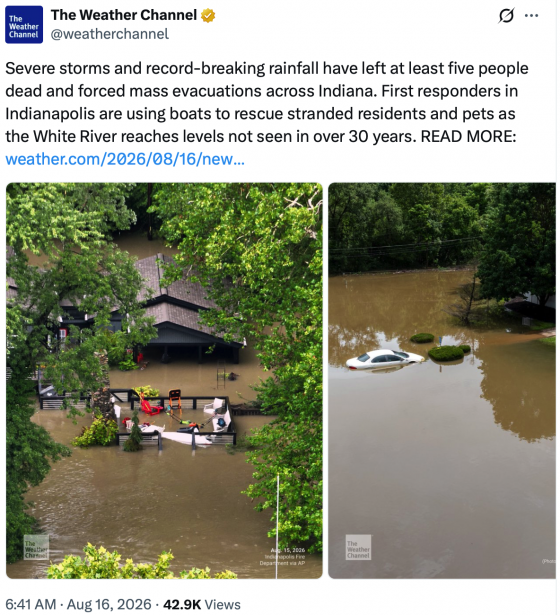
While the center of the country keeps getting hammered by one storm after another, the western third of the nation continues to endure a multi-year drought of epic proportions.
I wrote about the horrific wildfires in the Northwest at the end of last week.
In the Southwest, the big story today is the fact that Lake Powell has now hit the lowest level ever recorded…
Lake Powell, the giant reservoir on the Utah-Arizona border that helps power millions of homes, has fallen to its lowest level ever amidst a worsening western drought exacerbated by climate change.
The lake’s surface dropped to 3,519.91 feet above sea level on Aug. 15, according to the Bureau of Reclamation’s automated gauge system. The previous lowest level was 3,519.92 feet, reached in April 2023. Dropping below 3,490 feet could imperil the lake’s ability to generate electricity, and federal officials have been pulling water out of smaller reservoirs upstream to help delay reaching that level.
Federal officials are going to do what they can, but if it simply doesn’t rain this crisis is only going to intensify.
If you live in that area of the country, this is a story that you will want to watch very closely.
In the Southeast, a gigantic heat dome continues to absolutely bake tens of millions of Americans…
An extensive heat dome will continue to build across the Gulf Coast early this week, bringing several days of dangerous heat and high humidity with little overnight relief and increasing the risk of heat-related illnesses.
On Monday, it is going to feel like it is 113 degrees in Jacksonville, Florida.
That is hot!
Of course it isn’t just the United States that has been experiencing more frequent natural disasters.
Since the beginning of June, our planet just hasn’t stopped shaking.
I wrote about the magnitude 7 or greater earthquakes that have been occurring in recent months last week, and now we have another one to add to the list…
Rescuers started arriving today for thousands of evacuees on Indonesia’s Flores Island after a powerful 7.7-magnitude earthquake killed 51 people, injured dozens and damaged hundreds of houses and buildings.
Some 5,000 people fled their homes as the quake hit the island on Saturday at 5.58am local time – around 11pm in the UK.
It was followed by at least 341 aftershocks, a spokesman for the BNPB national disaster agency, Berton Suar Pelita Panjaitan, said.
Magnitude 7 or greater earthquakes are supposed to be rare.
In some years, we have less than 10. But now they are happening with alarming regularity.
We live at a time of tremendous chaos. Catastrophic events are occurring all around us, and I fully expect the months ahead to be even crazier.
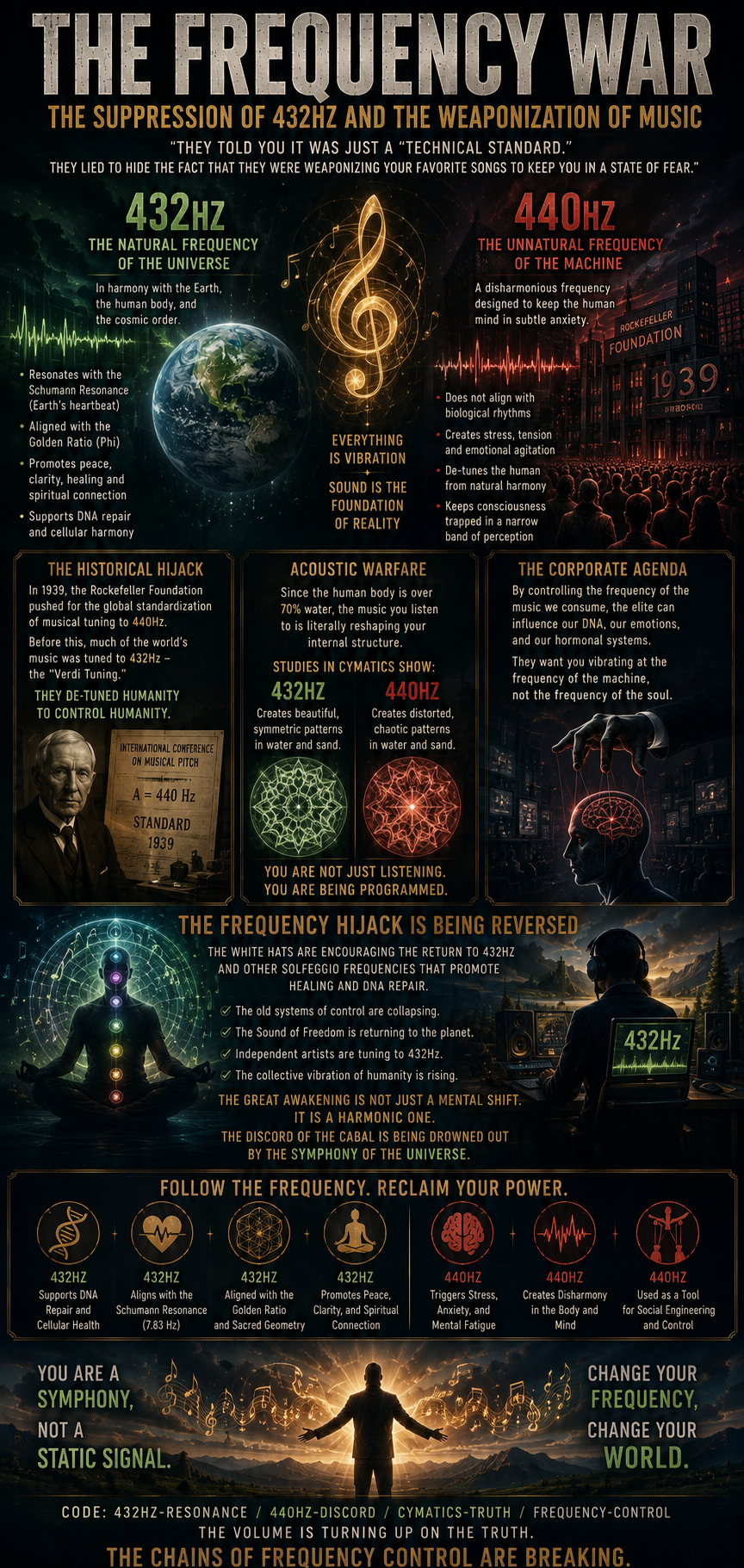
THE FREQUENCY WAR — THE SUPPRESSION OF 432HZ AND THE WEAPONIZATION OF MUSIC
Source: Mr. Kidpool TG
Have you ever wondered why modern music often feels agitating, shallow, or emotionally draining? It’s not just the lyrics; it’s the very frequency of the sound. In 1939, the “Cabal” through the Rockefeller Foundation pushed for the global standardization of musical tuning to 440Hz.
Before this, much of the world’s music was tuned to 432Hz—the “Verdi Tuning.” While 432Hz is mathematically consistent with the patterns of the universe and the human heart, 440Hz is a disharmonious frequency designed to keep the human mind in a state of subtle anxiety, making the population more susceptible to social engineering and emotional manipulation.
432Hz is known as the “Natural Frequency of the Universe.” It resonates with the Schumann Resonance (the Earth’s heartbeat) and the golden ratio (Phi). When music is played in 432Hz, it creates a feeling of peace, clarity, and spiritual connection. In contrast, 440Hz is an “Unnatural Frequency” that does not align with the biological rhythms of the human body.
By forcing this standard on the world, the elite have effectively “de-tuned” humanity, cutting us off from the healing power of sound and keeping our collective consciousness trapped in a narrow, stressful band of perception.
The suppression of 432Hz is a form of Acoustic Warfare. The elite know that sound is the foundation of reality—everything is vibration. By controlling the frequency of the music we consume, they can influence our DNA and our hormonal systems.
Studies in cymatics show that 432Hz creates beautiful, symmetric patterns in water and sand, while 440Hz creates distorted, chaotic shapes. Since the human body is over 70% water, the music you listen to is literally reshaping your internal structure. They want you vibrating at the frequency of the machine, not the frequency of the soul.
The “Alliance” has revealed that the “Frequency Hijack” is being reversed. The “White Hats” are encouraging the return to 432Hz and other “Solfeggio Frequencies” that promote healing and DNA repair. As the old systems of control collapse, the “Sound of Freedom” is returning to the planet.
Many independent artists are already switching their tuning, helping to raise the collective vibration of humanity. The “Great Awakening” is not just a mental shift; it is a harmonic one. The discord of the Cabal is being drowned out by the symphony of the universe.
CODE: 432HZ-RESONANCE / 440HZ-DISCORD / CYMATICS-TRUTH / FREQUENCY-CONTROL
They told you it was just a “technical standard.” They lied to hide the fact that they were weaponizing your favorite songs to keep you in a state of fear. The volume is turning up on the truth.
You are a symphony, not a static signal. Change your frequency, change your world.
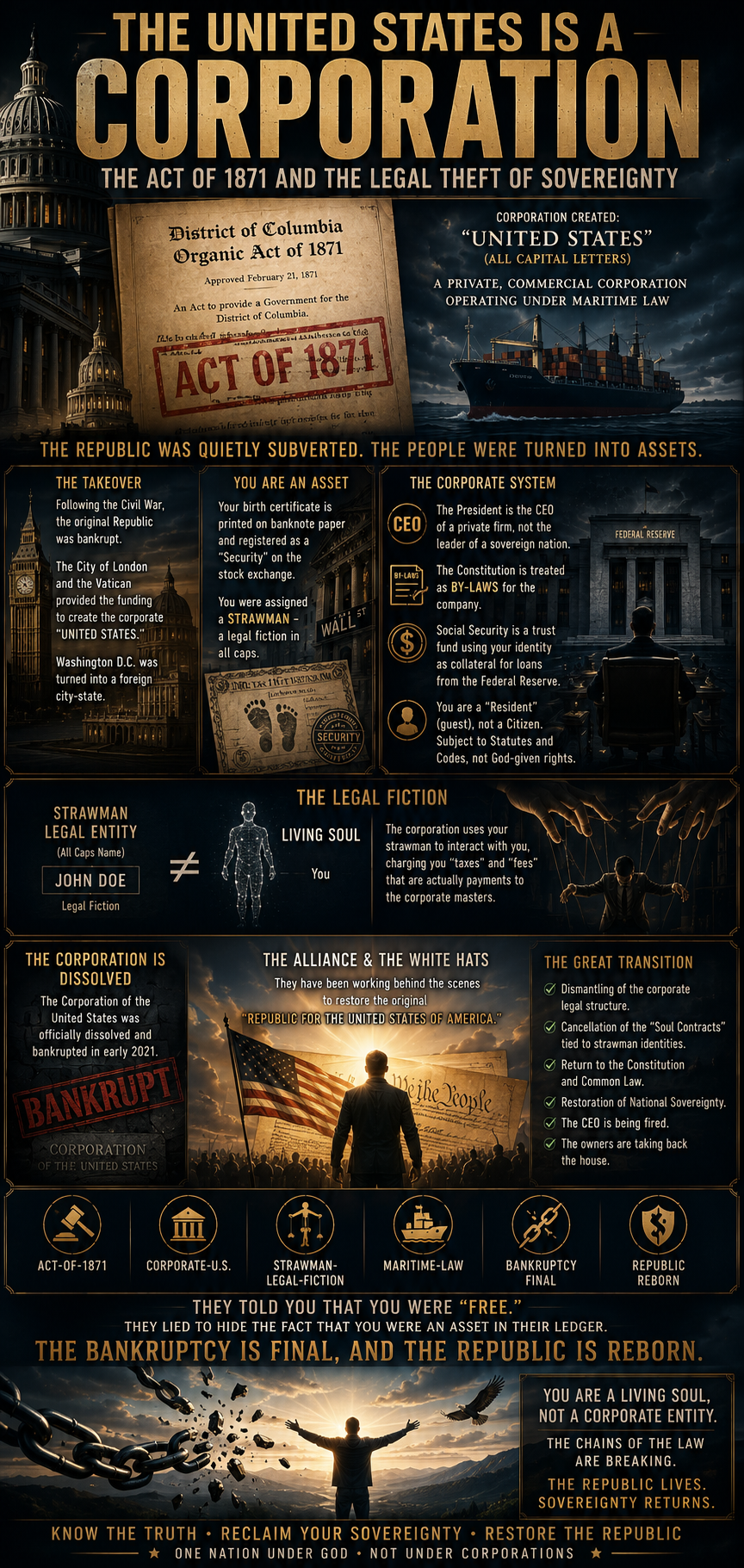
THE UNITED STATES IS A CORPORATION — THE ACT OF 1871 AND THE LEGAL THEFT OF SOVEREIGNTY.
Most people believe they are citizens of a sovereign Republic known as the United States of America. This is a carefully maintained legal fiction. In reality, the Republic was quietly subverted in 1871 when the U.S. Congress passed the District of Columbia Organic Act.
Source: Mr. Kidpool TG
This act created a private, commercial corporation known as the “UNITED STATES” (written in all capital letters), which operates under maritime law rather than the common law of the land. Since that day, the American people have been treated as “human capital” for a foreign-owned corporation, with their labor and property used as collateral for the national debt.
The “Cabal” orchestrated this takeover following the Civil War, when the original Republic was bankrupt. The City of London (the financial hub) and the Vatican (the spiritual hub) provided the funding to create the corporate “UNITED STATES,” effectively turning Washington D.C. into a foreign city-state, much like London and Vatican City.
This is why your birth certificate is printed on banknote paper and registered as a “Security” on the stock exchange. You were assigned a “Strawman”—a legal entity in all caps—which the corporation uses to interact with you, charging you “taxes” and “fees” that are actually payments to the corporate masters.
Under this corporate system, the Constitution is treated merely as “By-laws” for the company, and the “President” is the CEO of a private firm, not the leader of a sovereign nation. This is the real reason why the government operates like a business that only serves its shareholders—the elite banking families.
The “Social Security” system is actually a trust fund that uses your identity as collateral for the corporation’s loans from the Federal Reserve. You aren’t a citizen; you are a “Resident” (a guest) on the corporation’s property, subject to their “Statutes” and “Codes” rather than your God-given rights.
The “Alliance” has revealed that the Corporation of the United States was officially dissolved and bankrupted in early 2021. The “White Hats” have been working behind the scenes to restore the original “Republic for the United States of America,” returning the country to the Constitution and common law.
The “Great Transition” involves the dismantling of the corporate legal structure and the cancellation of the “Soul Contracts” tied to the strawman identities. The “Restoration of the Republic” is the first domino in a global movement toward national sovereignty. The CEO is being fired, and the owners are taking back the house.
CODE: ACT-OF-1871 / CORPORATE-U.S. / STRAWMAN-LEGAL-FICTION / MARITIME-LAW
They told you that you were “free.” They lied to hide the fact that you were an asset in their ledger. The bankruptcy is final, and the Republic is reborn.
You are a living soul, not a corporate entity. The chains of the law are breaking.
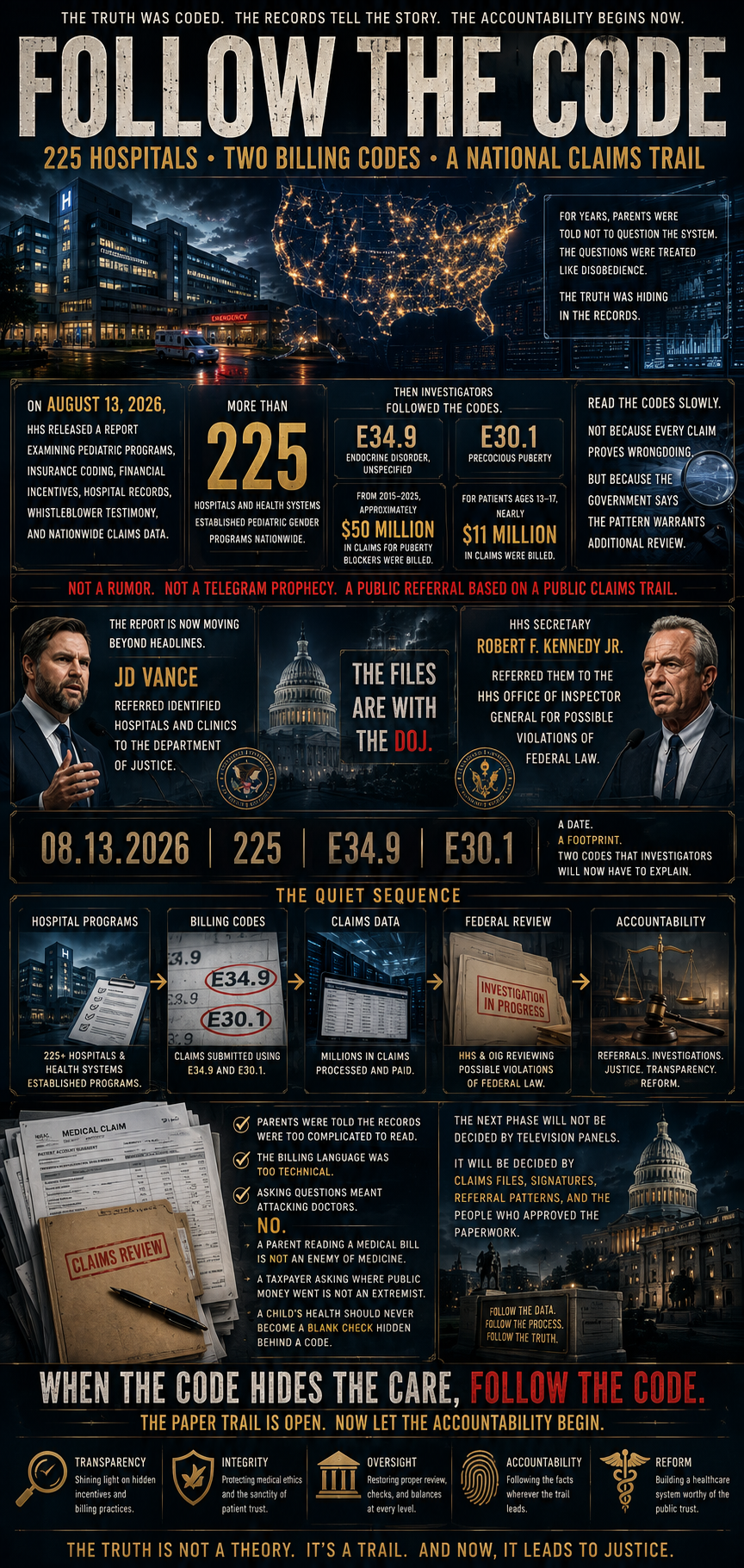
225 HOSPITALS. TWO BILLING CODES. NOW THE FILES ARE WITH DOJ
Source: The 17th Disciple
For years, parents were told not to question the system.
Ask about the diagnosis.
Ask about the billing.
Ask what a child was actually being treated for.
The questions were treated like disobedience.
On August 13, 2026, HHS released a report examining pediatric programs, insurance coding, financial incentives, hospital records, whistleblower testimony, and nationwide claims data.
The headline is not the part most people will remember.
The number is.
More than 225 hospitals and health systems established pediatric gender programs nationwide.
Then investigators followed the codes.
From 2015 through 2025, approximately $50 MILLION in claims for puberty blockers were billed using E34.9 — Endocrine Disorder, Unspecified.
For patients ages 13–17, nearly $11 MILLION in claims were billed using E301 — Precocious Puberty.
Read the codes slowly.
Not because every claim proves wrongdoing.
Because the government says the pattern warrants additional review.
That is the doorway.
The report is now moving beyond headlines. JD Vance referred identified hospitals and clinics to the Department of Justice. HHS Secretary Robert F. Kennedy Jr. referred them to the HHS Office of Inspector General for possible violations of federal law.
Not a rumor. Not a Telegram prophecy. A public referral based on a public claims trail.
The quiet sequence is 08.13 / 225 / E34.9 / E301.
A date.
A footprint.
Two codes that investigators will now have to explain.
Parents were told the records were too complicated to read. That the billing language was too technical. That asking questions meant attacking doctors.
No.
A parent reading a medical bill is not an enemy of medicine.
A taxpayer asking where public money went is not an extremist.
A child’s health should never become a blank check hidden behind a code.
The next phase will not be decided by television panels.
It will be decided by claims files, signatures, referral patterns, and the people who approved the paperwork.
WHEN THE CODE HIDES THE CARE, FOLLOW THE CODE.
The paper trail is open.
Now let the accountability begin.
THE PYRAMIDS OF GIZA — THE ANCIENT POWER PLANTS OF THE GLOBAL GRID
We have been taught that the Great Pyramids were “tombs” built by thousands of slaves for the Pharaohs. This is one of the most persistent lies in human history.
Source: Mr. Kidpool TG
Not a single mummy, coffin, or funerary text has ever been found inside the Great Pyramid of Giza. In reality, these structures are highly sophisticated, geometric machines. They were built with a level of mathematical and astronomical precision that even our modern technology struggles to replicate. They weren’t monuments to the dead; they were the heart of a global, wireless power system that provided free energy to an advanced ancient civilization.
The Great Pyramid is a masterpiece of engineering, constructed with materials that have specific electromagnetic properties. The exterior was originally covered in polished white limestone, which acts as a perfect insulator. The internal passages and chambers are lined with rose granite, which contains high concentrations of quartz crystal—a well-known piezoelectric material.
The “King’s Chamber” was designed to vibrate at the frequency of the Earth itself. By using the flow of the Nile (which originally ran much closer to the site) to create “Hydraulic Ram” vibrations, the pyramid functioned as a massive Geomechanical Power Plant, converting the Earth’s tectonic energy into clean, wireless electricity.
The Pyramids of Giza are not isolated structures; they are perfectly aligned with other ancient sites across the globe, forming a Global Ley Line Grid. This network acted as a “World Wireless System,” similar to what Nikola Tesla tried to recreate with his Wardenclyffe Tower. The “Obelisks” found in Egypt and around the world served as “Receiving Antennas,” drawing energy from the atmosphere to power the cities and technology of the time.
The “Cabal” suppressed this knowledge because they could not put a meter on the Earth’s energy. They replaced free, wireless power with a system of wires, coal, and oil to keep humanity in a state of financial and energetic dependency.
The “Alliance” has revealed that the “Giza Grid” is being reactivated. The “White Hats” have recovered the ancient knowledge of “Harmonic Resonance” and are preparing to integrate it with the new Quantum Energy systems. The “Halls of Records” hidden beneath the Sphinx have been secured, containing the blueprints for the free energy technology that will power the New Earth.
The era of the “Energy Monopoly” is over. We are returning to a world where power is a birthright, not a commodity. The stone giants are waking up, and the light of the true history of man is shining once again.
CODE: GIZA-POWER-PLANT / PIEZOELECTRIC-ENERGY / LEY-LINE-GRID / TESLA-CONNECTION
They told you it was a “tomb” to keep you from looking for the switch. They lied to hide the fact that the entire planet is a battery. The wires are coming down, and the grid is going organic.
The stones remember what the history books forgot. The power is not in the hands of the elite; it is in the ground beneath your feet.
THE WIFE WHO GOT HER HUSBAND BACK
“They told me he was gone. They handed me a folded flag and a death certificate. I buried an empty casket in Arlington. For three years, I was a widow. And then my phone rang.”
Source: The 17th Disciple TG
My husband was a Tier 1 operator. In 2021, his unit was hit during a classified operation in Syria. The official report said he died instantly from an IED. The military liaison came to my house, gave me the speech, and handed me the flag. Because of the “nature of the blast,” there was no viewing. Just a closed casket.
I mourned him. I moved on. Or I tried to.
In April 2024, I got a call from an unknown number. The voice on the other end didn’t say hello. He just said: “Sarah. It’s me. I’m coming home.”
I dropped the phone. It was his voice.
Two days later, a black SUV pulled up to my house. A man got out. It was my husband. But it wasn’t the man I remembered.
When he “died” in 2021, he was 44 years old. He had scars from two previous deployments. He had a slight limp from a shattered femur in 2014. He looked tired.
The man standing in my driveway looked 30. He had no scars. No limp. He looked exactly the way he did the day we got married.
We sat in the kitchen for six hours while he told me the truth.
He didn’t die in Syria. He was catastrophically injured. 80% burns. Both legs gone. Spinal cord severed. Under normal medical protocols, he would have been dead within minutes.
But his unit wasn’t normal. They medevaced him to a black site in Germany, stabilized him, and transferred him to a subterranean facility in Colorado.
“They put me in a tank,” he told me. “It looked like glass, but it wasn’t. They filled it with some kind of gel, and then the lights started. Blue and gold frequencies. I was in and out of consciousness for months.”
They didn’t just heal his burns. They regenerated his legs. They rebuilt his spine. The technology didn’t just fix the damage — it reverted his entire cellular structure back to its peak biological age.
“They kept me there for three years,” he said. “Because if I walked out, people would ask questions. You can’t explain how a man regrows his legs.”
He was released because of the declassification orders. The military knows they can’t hide the facilities much longer. They are quietly sending the “dead” ones home before the truth blows up in their faces.
I am writing this because there are thousands of families who were handed folded flags and empty caskets. Your husbands, your sons, your daughters — some of them aren’t dead. They are in the pods.
The technology exists. It is miraculous. But the fact that they kept it from us — the fact that they let us grieve while they played God in underground bunkers — is unforgivable.
The dead are coming home. The truth is coming out.
THE SECRET HISTORY OF THE MOON — THE ARTIFICIAL SATELLITE AND THE LUNAR BASES
For centuries, we have been told that the Moon is a natural satellite, a dead rock orbiting the Earth. However, whistleblowers from NASA and the military-industrial complex have revealed a much more startling truth: the Moon is an artificial construct, a massive, hollowed-out “Biosphere” or space station brought here eons ago.
Source: Mr. Kidpool TG
In 1969, when the Apollo 12 lunar module was crashed into the surface, the Moon reportedly “rang like a bell” for over an hour, suggesting a metallic, hollow interior. It is not a natural celestial body; it is an ancient sentinel placed in a perfect, “locked” orbit to monitor the evolution of life on Earth.
The “Cabal” has been operating secret bases on the far side of the Moon for decades, hidden from the view of Earth-bound telescopes. These facilities, part of the Lunar Operations Command (LOC), serve as a hub for the Secret Space Program and as a meeting point for various extraterrestrial races.
While the public was told that the Apollo missions were the “pinnacle” of space exploration, the elite were already using “Anti-Gravity” craft to transport personnel and equipment to the lunar surface. The “Moon Landing” shown on TV was a carefully staged production to hide the high-tech reality that was already happening in the shadows.
The Moon also acts as a “Frequency Broadcaster” for the Matrix Control System. High-powered transmitters on the lunar surface beam “Infrasonic” and “ELF” waves toward Earth, designed to keep human consciousness in a low-vibration state of fear, survival, and amnesia. This is the “Soul Net” or “Reincarnation Trap” that has kept humanity in a cycle of repeated lives without memory of our true divine origins.
The Moon is the “Command Center” for the energetic enslavement of our planet, managed by a non-human hierarchy that has used the global elite as their middle-managers for thousands of years.
The “Alliance” has recently achieved a major breakthrough in the “Lunar Theater.” The “White Hats” and their cosmic allies have successfully neutralized the malevolent factions operating the frequency transmitters on the Moon. The “Soul Net” is being dismantled, and the high-frequency energies from the Galactic Center are finally reaching the Earth’s surface without interference.
The “Dark Bases” are being cleared, and the Moon is being transitioned into a center for “Galactic Diplomacy” and “Advanced Education” for a newly awakened humanity. The “Man in the Moon” is no longer a warden; the gates of the prison are being opened.
CODE: LUNAR-STATION / HOLLOW-MOON / L.O.C. / FREQUENCY-BROADCAST
They told you it was a “natural satellite” to keep you from questioning its perfect alignment. They lied to hide the fact that the “eye in the sky” was a surveillance camera. The signal is fading, and the watchers are being watched.
The night light is changing. Look at the Moon and feel the shift; the broadcast of fear is over.
SEPTEMBER IS NOT ABOUT A CRYPTO BILL.
IT IS ABOUT WHETHER AMERICA WRITES THE RULES FOR THE FUTURE — OR LIVES UNDER RULES WRITTEN BY SOMEONE ELSE
Source: The 17th Disciple TG
August 6th, 2026. The Senate Banking Committee called for action on the CLARITY Act: a federal framework meant to define the rules for digital assets, protect consumers, and keep financial innovation in America.
August 8th, 2026. Before leaving for recess, the Senate moved a landmark digital-assets measure forward.
But the final vote did not happen.
Most people saw another Washington delay.
They missed what was actually put on the calendar.
September.
The question is not whether people like Bitcoin. The question is larger than one coin, one app, or one headline.
When is a digital token a security? When is it a commodity? Who protects a working family from fraud? Who gives American builders clear rules before they move their ideas, jobs, and capital overseas?
For years, ordinary people have watched powerful agencies, banks, and politicians argue while the rules stayed unclear. That uncertainty did not make America safer.
It made the future harder to build here.
The CLARITY Act is built around a simple principle: the United States needs rules of the road. Rules that are clear enough for consumers to understand. Rules that are strong enough to hold bad actors accountable. Rules that let American innovation compete instead of asking permission from foreign capitals.
Senate Banking Chairman Tim Scott said the goal is to protect consumers, set standards for the financial system, and preserve American economic leadership.
That is the part the noise will bury.
This is not about chasing a fast profit.
It is about a young entrepreneur who should not need a team of lawyers to understand the law. A small business that should not have to wonder whether tomorrow’s enforcement action will rewrite yesterday’s rules. A family that should not be locked out of the next generation of financial tools because the people in power refused to make a decision.
Technology will not pause while Washington sleeps. Capital will not pause. The rest of the world will not pause.
If the rules are not written in America, the next financial architecture will be written somewhere else — and Americans will be asked to live inside it after the fact.
Read the calendar, not the headlines:
08.06 / Rules of the road
08.08 / The bill advances
09.xx / The Senate returns
Not a prediction. A pressure point.
They left Washington.
The decision stayed behind.
When the Senate returns in September, America will learn whether its next financial chapter is going to be built here, governed here, and led here.
Watch the calendar.
This is big. Share it everywhere.
THE 5G FREQUENCY — THE SILENT WEAPON FOR THE SMART-CITY PRISON
While you are told that 5G technology is simply about “faster downloads” and “seamless connectivity,” the truth is far more sinister. 5G is not a telecommunications upgrade; it is a military-grade directed-energy frequency system that operates on the same millimeter-wave bands used by the Pentagon’s “Active Denial Systems” for crowd control.
Source: Mr. Kidpool TG
The massive rollout of 5G antennas—placed every few hundred feet in our neighborhoods—is the final infrastructure for a global “Smart-City” surveillance grid. It is the “Digital Fence” that will monitor and control every movement, every transaction, and even every physiological response of the human population.
The “Cabal” needs 5G to power their Internet of Things (IoT), where every appliance, every vehicle, and every “Smart” device is connected to a central Artificial Intelligence. This AI is designed to manage a “Social Credit System” similar to the one already operational in China.
By using the high-frequency 60GHz band, which interferes with oxygen absorption in the human body, the elite have a “Kill Switch” for any individual or community that refuses to comply with the New World Order. They aren’t just building a network; they are building a biological and digital cage that operates at the speed of light.
Whistleblowers from the tech industry have revealed that 5G frequencies are also designed to interact with the “Graphene Oxide” and other nano-materials that have been introduced into the human body through various “medical interventions” and chemtrails. This is the Human-Machine Interface—the “Transhumanist” agenda to turn the human body into a “node” on the global blockchain.
By pulsing specific frequencies, the elite can influence human emotions, suppress immune systems, and even trigger “symptoms” that justify further lockdowns and medical mandates. It is the ultimate tool for total population management without a single shot being fired.
The “Alliance” has revealed that the “5G Hijack” is being neutralized from the inside. The “White Hats” have successfully implemented “Quantum Encryption” overrides that prevent the Cabal from using the 5G network for weaponized purposes. The technology is being “Flipped” to serve as a platform for free energy distribution and high-speed access to the new “Truth Internet.”
The “Digital Prison” is being converted into a “Digital Library” for a free humanity. The frequencies of fear are being replaced by the frequencies of liberation. The grid is ours now.
CODE: 5G-MILLIMETER-WAVE / ACTIVE-DENIAL / SMART-CITY-PRISON / GRAPHENE-INTERFACE
They told you it was for “faster movies.” They lied to hide the fact that they were building a digital panopticon. The signal is being jammed, and the frequency is shifting.
Your body is an antenna for the divine, not a node for the machine. Stay high-vibe and the grid can’t touch you.

We Are Literally Witnessing End Times Weather All Over America
We have experienced one natural disaster after another in 2026, and this week has been particularly crazy. The facts that I am about to share with you are absolutely insane. This weekend, the heat index could reach 115 degrees in some areas of the Southeast. A 1-in-1,000 year rainfall event has produced catastrophic flooding in the Midwest. By the end of this year, the state of Illinois could experience more tornadoes than any state ever has in the entire history of our country. On top of everything else, wildfires have now burned portions of every single national park in the state of Washington. Our weather patterns have not even been close to normal, but most of you already knew that.
Yes, we really are witnessing end times weather all over America.
The Midwest faced widespread damage Tuesday after a fierce line of thunderstorms produced a high-velocity windstorm called a derecho.
That high-velocity windstorm was so powerful that it actually caused a home in Portage, Indiana to explode…
Amid the storms, a home exploded in Portage, Indiana — erupting into flames after it was hit by wind gusts up to 99 miles per hour.
Many refer to derechos as “inland hurricanes” because of the force of the winds.
In Illinois, one woman lost her brand new barbecue grill and her entire roof to the howling winds…
There were numerous reports of wind gusts of 80 mph or more at personal weather stations.
“Total devastation. No roof,” said Kerry Hourigan, standing outside her home of 25 years in the Chicago suburb of Tinley Park. “Stupid thing, but my focus was I just bought a new barbecue grill, and I have no idea where that is. It’s disappeared.”
A number of tornadoes also spawned in the Chicago area.
And as we have seen so many other times already this year, those tornadoes left behind very impressive trails of destruction…
The National Weather Service confirmed that at least three tornadoes touched down in Chicago’s south suburbs during the midday hours Tuesday. Photos from the Chicago area posted on social media showed flooded roads, trees tangled in power lines and homes with gashes in their roofs.
Illinois has already shattered the state record for tornadoes in a single year.
By the time 2026 is done, meteorologist Bill Snyder believes that Illinois will break the national record for tornadoes in a single year…
“This is the craziest storm season I’ve ever seen,” WGN-TV meteorologist Bill Snyder said. “There’s been no rest for the wicked.”
Snyder said Illinois will likely pass 200 confirmed tornadoes after Tuesday’s storms, far and away the most tornadoes of any state in the country for 2026, according to the National Weather Service.
If Illinois continues this stormy trend, it may not only add to its state record but perhaps break a nationwide record for the total number of tornadoes in one state in any single year — 232 tornados in Texas in 2015 and 1967.
“I’m firmly convinced Illinois will break the national tornado record before 2026 is over,” Snyder said.
Following the derecho and the tornadoes, it started to pour in the Midwest.
The rain just kept coming down hour after hour.
Now some parts of Indiana look like they were just hit by Noah’s Flood…
Flooding submerged Indiana neighborhoods in water for the second day in a row, as parts of the state saw Wednesday the highest daily rainfall totals ever recorded in their areas.
Some braced for more severe weather still ahead, as meteorologists warned Thursday that Indianapolis faced the greatest threats of storms slated to bring heavy rain to the Midwest throughout the rest of the week.
Upwards of 36 million people were under flood alerts Thursday across the region, according to the National Weather Service. Its forecast offices in Kentucky, Illinois, Indiana, Iowa and Tennessee warned that rainfall across each state could be persistent and widespread, potentially drenching parts of each state with another 4 inches or more.
It would be difficult for me to overstate the severity of this disaster.
The city of New Castle, Indiana actually experienced a 1-in-1,000 year rainfall event…
New Castle received more than 11 inches of rain in just over a day. Such a high rainfall rate is extremely rare, with only a 1 in 1,000, or 0.1%, chance of it happening in any given year.
That part of Indiana is not supposed to get 11 inches of rain.
But it just did.
As the water rose all around him, one man saved his life by clinging to a light pole…
Many people had to be rescued by boat in Cambridge City, Indiana, after catastrophic floods on Wednesday left them stranded. Water filled city streets, rising several feet in the hardest-hit places and seeping into, at best, the ground floors of local homes. Some residents faced harsher conditions, with the deluge completely covering the roofs of their cars or crashing into their homes through doors and windows.
One man desperately clung to a light pole in Cambridge City as muddy, brown water swirled around him, before he was eventually rescued. Another, Christian Corder, of nearby New Castle, Indiana, evacuated his home after it flooded and told “CBS Mornings”that dealing with the aftermath has been “very overwhelming.”
“A lot of stuff is ruined,” Corder said, recalling how “the rain never stopped — it just kept coming and coming.”
Indiana Governor Mike Braun has declared a state of emergency, and more rain is on the way.
Meanwhile, the Southeast is about to experience a different kind of an emergency.
Over the next few days, it will be covered by “the planet’s strongest heat dome”…
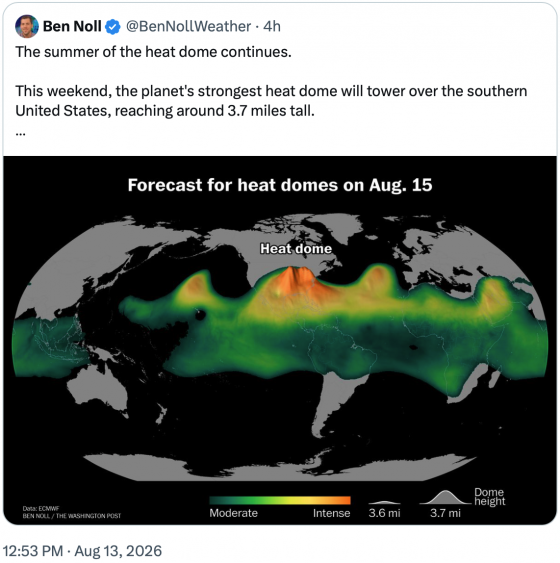
That is no ordinary heat dome.
And things are going to get really, really hot for those that will be underneath.
According to meteorologist Jeff Berardelli, the heat index in some parts of the Southeast could reach 115 degrees…
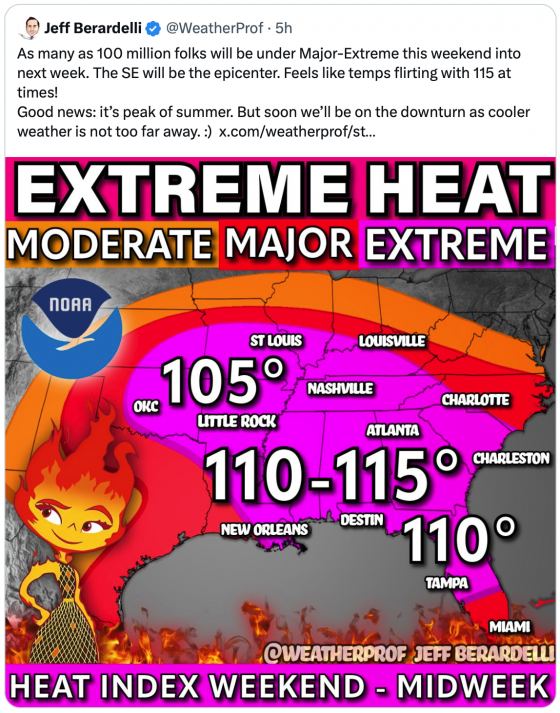
If you live in the Southeast, please try to stay inside this weekend.
And if you live in Hawaii, that advice applies as well.
Tropical Storm Lala just formed, and it is expected to strengthen greatly as it approaches the Hawaiian islands…
Tropical Storm Lala has formed in the Central Pacific Ocean, the National Hurricane Center said on the morning of Aug. 13, adding that a hurricane watch has been issued for the Big Island of Hawaii.
Lala, now with sustained winds of 40 mph, is forecast to strengthen and could be near hurricane strength when it approaches the Big Island by early Saturday, Aug. 15.
On the island of Oahu, Honolulu Mayor Rick Blangiardi said in a news release that “this is the time to prepare, not panic,” as the system approached. “We still do not know exactly where this system will track or how strong it will become, but we know enough to take it seriously. I am asking everyone on Oahu to use the next several days wisely.”
Yes, Hawaii can get a lot of rain.
But this storm is different.
We are being told that up to 20 inches of rain could fall, and if that happens it is likely that we will witness “life-threatening flooding”…
The storm is forecast to carve a path near the island chain, with dangerous weather conditions beginning Friday night.
“The Potential Tropical Cyclone is expected to produce rainfall totals of 5 to 10 inches across much of the Island chain, with maximum totals of 20 inches possible. This rainfall may produce life-threatening flooding and mudslides, especially in areas of steep terrain,” the National Hurricane Center wrote, adding that life-threatening surf and rip currents are also expected.
Before I end this article, I certainly don’t want to leave out the western portion of the nation.
Over 6.4 million acres have already burned in the United States in 2026, and most of that land is located in our western states…
The numbers are staggering: Wildfires this year have consumed more than 6.4 million acres of land across the country as of Thursday, with 103 new fires reported on Wednesday alone.
Things are particularly bad in the Northwest. At this point, portions of every single national park in the state of Washington have burned.
We have never seen anything like this before. I realize that I have been writing about this “Godzilla El Niño” a lot, but there is a reason why I have been doing so.
Many believe that this “Godzilla El Niño” is the primary reason why we have been witnessing so many crazy weather events, and now we are being told that it has gotten even stronger…
El Niño continued to strengthen over the past month, the Climate Prediction Center said, with sea-surface temperatures more than 3.6 degrees above average in the eastern equatorial Pacific Ocean.
The Climate Prediction Center report, which synthesizes several climate models from North America and abroad, also said that this El Niño will continue to strengthen through the end of the year.
A lot of experts expect this “Godzilla El Niño” to far surpass the strength of any other El Niño in recorded history by a very wide margin.
If that turns out to be accurate, what we have experienced so far will just be the tip of the iceberg.
So buckle up and hold on tight, because it appears that things could get very bumpy during the months ahead.
DENVER INTERNATIONAL AIRPORT — THE NEW WORLD ORDER’S WESTERN HUB
Why would a city build a new airport in 1995 that was twice the size of Manhattan, billions of dollars over budget, and featured a layout that resembles a swastika from the air?
Source: Mr. Kidpool TG
This is the Denver International Airport (DIA). While the public is told it is merely a transportation hub, whistleblowers and researchers have revealed that DIA is actually the “Western Headquarters” for the global elite. Beneath the runways and terminals lies a massive, multi-level underground complex—a city within a city—designed to house the “Cabal” and their “continuity of government” operations in the event of a global cataclysm.
The airport is filled with occult symbolism and disturbing art that tells the story of the elite’s planned future. From the “Blucifer” demon horse at the entrance (which actually killed its creator) to the bizarre murals depicting biological warfare, global genocide, and the eventual “unification” of humanity under a single, authoritarian ruler.
The dedication stone in the Great Hall explicitly mentions the “New World Airport Commission”—an organization that does not officially exist. These aren’t just “artistic choices”; they are a public declaration of the elite’s agenda, hidden in plain sight for those with the eyes to see.
Whistleblowers who worked on the construction of the airport have described miles of “secret tunnels” and massive automated baggage systems that never worked but were used as a cover for the excavation of the underground bunkers. These bunkers are connected to the global D.U.M.B. network via high-speed “Mag-Lev” trains, allowing the elite to travel from the East Coast to the heart of the Rockies in minutes.
The airport’s unique “Teflon-coated” roof is designed to be radar-reflective and can withstand massive electromagnetic pulses, making it a perfect fortress for the “New World Order” command and control.
The “Alliance” has revealed that the “Denver Fortress” has been successfully compromised. The “White Hats” have conducted a series of “Special Ops” within the underground levels, clearing out the Cabal’s data centers and securing the bunkers for future use as humanitarian relief centers. The disturbing murals are being re-interpreted as the “Last Testament” of a dying regime.
The “New World Airport” is being returned to the people, and the secrets buried beneath the Colorado soil are finally being brought to the surface. The “Blue Mustang” is no longer a symbol of death, but a reminder that the elite’s reign is over.
CODE: DIA-BUNKERS / BLUCIFER / NEW-WORLD-COMMISSION / OCCULT-SYMBOLS
They told you it was “art and architecture.” They lied to hide the fact that they were building their escape hatch while you paid the bill. The tunnels are being explored, and the elite have nowhere left to hide.
When they tell you what they are going to do, believe them—then stop them. The “New World” they planned is not the one we are entering.
THE ANUNNAKI — THE ANCIENT ARCHITECTS OF THE HUMAN SLAVE RACE
Long before the rise of Sumer, Egypt, or the Indus Valley, a race of beings known as the Anunnaki (“Those who from Heaven to Earth came”) arrived on our planet.
According to the oldest records on Earth—the Sumerian Cuneiform tablets—these beings came from the planet Nibiru approximately 450,000 years ago. Their mission was not exploration, but resource extraction. They needed gold to repair the thinning atmosphere of their home world, and they established the first mining colonies in Southern Africa. For eons, the Anunnaki labor class, the Igigi, worked the mines, until they eventually rebelled against their leaders, Enlil and Enki.
To solve the labor crisis, the Anunnaki scientist Enki and the birth goddess Ninhursag performed a series of genetic experiments. They mixed the DNA of the indigenous hominids of Earth with their own high-frequency genetic material to create a “Primitive Worker”—the Lulu. This was the true origin of modern Homo sapiens.
We were not the product of slow, random evolution; we were a designed species, created with the specific capacity for intelligence and manual labor. The “Missing Link” in our evolutionary history is not a fossil; it is the laboratory where our DNA was spliced by off-world architects.
The Anunnaki established the concept of “Kingship” on Earth, appointing human-hybrid bloodlines to act as their intermediaries. These “Royal Bloodlines” were given the “Divine Right to Rule” and were tasked with managing the human population through religion, debt, and hierarchy. This is the origin of the “Cabal” that still rules the world today.
They are the descendants of the administrators who managed the “Human Plantation” for their Anunnaki masters. The systems of control we live under—the banking system, the legal system, and the religious structures—are all remnants of the original “Slave Management” protocols established thousands of years ago.
The “Alliance” has revealed that the Anunnaki “Contract” over Earth has expired. The “White Hats” and the “Galactic Federation” have successfully negotiated the departure of the remaining malevolent factions of the Anunnaki. The high-frequency energies currently hitting the planet are triggering the activation of our “12-Strand DNA,” restoring the abilities that were suppressed by our creators to keep us compliant.
We are transitioning from “Created Workers” to “Sovereign Creators.” The “Gold Debt” is paid, and the human race is finally being handed the keys to its own destiny. The era of the “Slave Gods” is over.
CODE: ANUNNAKI-GENETICS / ENKI-ENLIL / GOLD-MINING / DNA-UPGRADE
They told you it was “Evolution” to keep you from realizing you were a masterpiece of design. They lied to hide the fact that you have the blood of the stars in your veins. The lab is closed, and the subjects are free.
You are not a mistake of nature; you are a sovereign being of the cosmos.

THEY SAID AMERICA’S CHILDREN WOULD INHERIT NOTHING BUT DEBT.
Higher prices. Bigger bills. A future already spoken for before they were old enough to understand what a dollar meant.
Source: The 17th Disciple TG
That sentence is getting harder to say.
On August 11th, Treasury and the IRS released the rules that move a new idea from paper into real American homes: Trump Accounts.
For eligible American children born from 2025 through 2028, a parent or guardian can elect a $1,000 pilot contribution. Employers can contribute up to $2,500 each year, tax-free, to an employee’s or dependent’s account under the new framework.
More than 50 companies have already committed to participate.
Read that again.
This is not a promise that every problem disappears overnight. It is something more concrete: a child can begin life with a stake in the country their parents work to build.
A stake before the first job.
A stake before the first loan.
A stake before the first person tells them the American Dream is over.
For too long, ordinary families were told that investing was for the connected, the wealthy, the people who already had a seat at the table.
Now the conversation is moving toward the kitchen table.
A mother opening an account. A father making a contribution. A grandparent explaining why patience matters. A child learning that the future is not something to fear; it is something to build.
That is why August 11 matters.
And remember the sequence: 08.11 / 1,000 / 2,500.
The first date is when the guidance arrived. The next two numbers are the opening stake and the annual employer contribution ceiling. The next public marker is September 25th, when comments on the proposed rules close. October 15th follows with a public hearing.
Why are the dates being laid out so clearly?
Because this is no longer just a slogan. It is a program Americans can read, question, improve, and use.
The money that once seemed reserved for everyone else is beginning to have a path back to America’s children.
The future does not begin with fear.
It begins when a family decides its child deserves a stake in it.

The Daily Global Oil Deficit Is Even Higher Than Originally Projected, And That Means That The Energy Crisis Is About To Greatly Escalate
Since war with Iran erupted in February, the world has been using a lot more oil than it has been producing. The good news is that we had a tremendous amount of extra oil sitting around. As a result, we have been able to avoid shortages and we have been able to serve as the supplier of last resort for nations all over the globe. The bad news is that our commercial oil inventories are now almost entirely depleted, and the U.S. Strategic Petroleum Reserve is being drained very rapidly. We will soon hit a wall, and when that happens the global energy crisis will start getting really crazy.
According to the International Energy Agency, the amount of oil being produced globally each day is falling faster than they originally projected…
Global oil supply will fall by ~4% and oil demand is set for a deeper contraction this year, as renewed hostilities in the Middle East push up fuel prices and weigh on consumption, the International Energy Agency said in its monthly oil market report on Wednesday.
The Paris-based agency sees global oil supply falling by 4.3M bbl/day this year, compared with the 3.7M bbl/day forecast in the IEA’s July report, which would take total supply to the IEA’s lowest forecast yet for this year at 102M bbl/day.
At this stage, global demand for oil is well above global supply.
In fact, the International Energy Agency is now expecting the world to run an oil deficit of approximately 1.8 million barrels a day during the third quarter of this year. That is “more than double its previous estimate”…
The result would put global oil supply ~1.27M bbl/day below demand this year, widening from an 860K bbl/day deficit implied from the IEA’s July forecasts.
“Global oil supply has fallen well below demand due to the Strait of Hormuz shutdown, the U.S. blockade of Iranian exports, attacks within the Bab el-Mandeb Strait and reduced Kazakh CPC Blend exports,” the IEA said.
For Q3, the IEA expects the global oil market to run a deficit of 1.8M bbl/day, more than double its previous estimate of ~800K bbl/day and the deepest quarterly deficit since Q4 2021.
I realize that there is a lot of technical jargon there, and so let me try to break this down very simply.
Things are a lot worse than they thought they would be.
Now our commercial oil inventories have almost disappeared and the U.S. Strategic Petroleum Reserve has fallen under 300 million barrels for the first time since early 1983…
Crude oil stockpiles in the U.S. Strategic Petroleum Reserve have fallen below 300 million barrels, the lowest level in more than four decades, as global inventories stay under pressure due to the Iran war.
The SPR fell by 6.1 million barrels to 298.7 million barrels last week, according to data released by the Department of Energy on Monday. The reserve, created in 1975, is at its lowest level since January 1983.
Of course we will not be able to use all of that oil.
There is a certain level that we cannot go below, and apparently more than 25 percent of the oil is “physically inaccessible” for various reasons…
More than a quarter of that oil is physically inaccessible, blocked by failing pumps, corroded pipes, and underground salt caverns that have deformed beyond their operational parameters, according to internal government documents reviewed by Sputnik.
The finding means the actual emergency capacity of the American energy backstop is smaller, and slower to deploy, than any headline barrel count conveys.
We are being told that we have about 40 days left.
What will we do after that?
Already, diesel prices are starting to go through the roof…
U.S. and European diesel prices rose sharply on Monday after attacks on refineries in Russia and Saudi Arabia added to supply disruptions, raising concerns for farmers in need of the fuel for the planting season in the Northern Hemisphere and harvesting season in the Southern Hemisphere.
The U.S. ultra-low sulfur diesel futures contract rose 7.4% to settle at $4.19 a gallon on Monday, the biggest gains since July 13. European diesel refining margins, measured as the difference between the price of fuel and the cost of crude oil, rose nearly 10%.
The surge followed confirmation of an attack by Ukraine on a refinery in Russia’s Tatarstan region and another attack by Yemen’s Houthis on the Jazan refinery in Saudi Arabia. The Jazan refinery has been shut since July 27 due to an earlier strike by the Houthis, and plans to restart it have been postponed from August 15 to August 30, according to industry monitor IIR Energy.
It is just a matter of time before we see diesel shortages start to pop up all over the world. This will greatly affect farmers and truckers.
What we really need is for the conflict in the Middle East to end and for traffic to start flowing through the Strait of Hormuz like it did before the war. But that is not going to happen because there isn’t going to be a deal.
The Iranians are insisting that President Trump must agree to all of their demands before they will reopen the Strait, and there is no way that President Trump will ever do that.
So for now Trump is maintaining the naval blockade on Iran and he is declaring that the U.S. has “total control over the Strait of Hormuz”…
“The U.S.A. has total control over the Strait of Hormuz,” he wrote. “I THINK WE WILL KEEP IT! Our Naval Blockade is being called, by everyone, ‘A WALL OF STEEL,’ and there is nothing Iran can do about it. They have no Navy, they have no Air Force, their remaining soldiers are unpaid, the IRGC is decimated and fleeing, and their ‘Leadership’ is uncertain, at best! They have No Money – Their country is ‘shot.’”
Both sides can argue about who controls what, but nobody can deny that hardly anything is getting through.
In fact, only 8 vessels traveled through the Strait of Hormuz on Tuesday…
The number of vessels tracked transiting the Strait of Hormuz fell to a one-week low of eight, according to data reported by the Reuters news agency, as the ongoing conflict and stalemate kept shipping companies away from the vital waterway.
Tuesday’s tally of eight vessels fell below a 10-day average of about 12, for the lowest daily count since August 5, according to Kpler data reported by Reuters.
Around 130 ships a day passed through the vital waterway before the war started on February 28.
A drop from 130 ships to 8 ships is a disaster.
The world desperately needs the oil, natural gas, fertilizer and petrochemicals that normally travel through the Strait of Hormuz. But now very few shipowners are willing to have their extremely expensive vessels make that trip.
Iran has been hitting one commercial vessel after another, and one tanker that recently got attacked has spilled oil over an area of 155 square miles…
Oil from a spill off Oman has started to reach the country’s mainland, the U.N.’s shipping body said on Wednesday, according to the Reuters news agency.
“Oil is drifting offshore to the northeast of [Oman’s] Al-Qibliyyah Island, with some oil reported to be reaching the mainland. Oil spill contingency planning is in place,” a spokesperson at the International Maritime Organization (IMO) said.
The oil is believed to be leaking from the grounded tanker Caroline Bezengi, with the slick now covering almost 155 square miles, according to the Omani government.
Meanwhile, the Houthis continue to fire missiles at commercial vessels in the Red Sea…
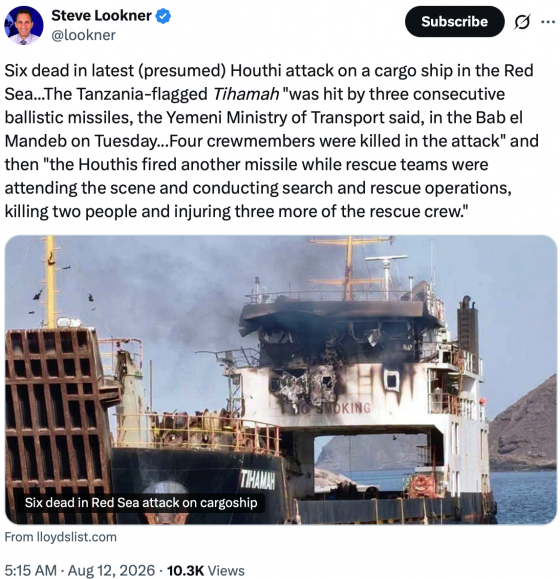
All of this has enormous implications for our economy.
An extended energy crisis will essentially guarantee a major global economic downturn.
We are already witnessing big problems in Japan and in Europe.
Here in the United States, we lost 23,000 jobs last month, and the employment numbers for 21 of the last 30 months have been revised down…
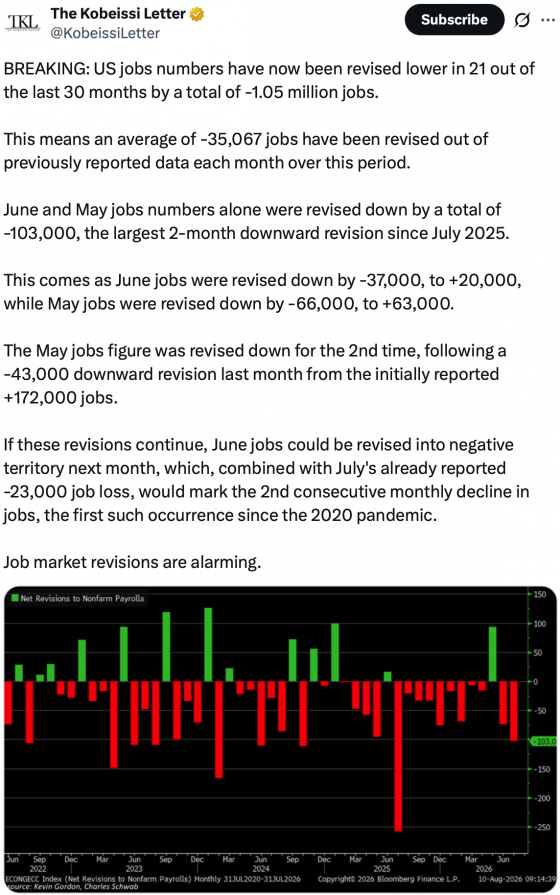
As I have discussed previously, the size of the U.S. workforce has shrunk by more than a million people over the past year.
Just think about that.
More than a million workers have simply disappeared from the workforce somehow.
Sadly, if the crisis in the Middle East is not resolved things will get a lot worse.
Our entire way of life depends upon cheap energy, and we now find ourselves in unprecedented territory.
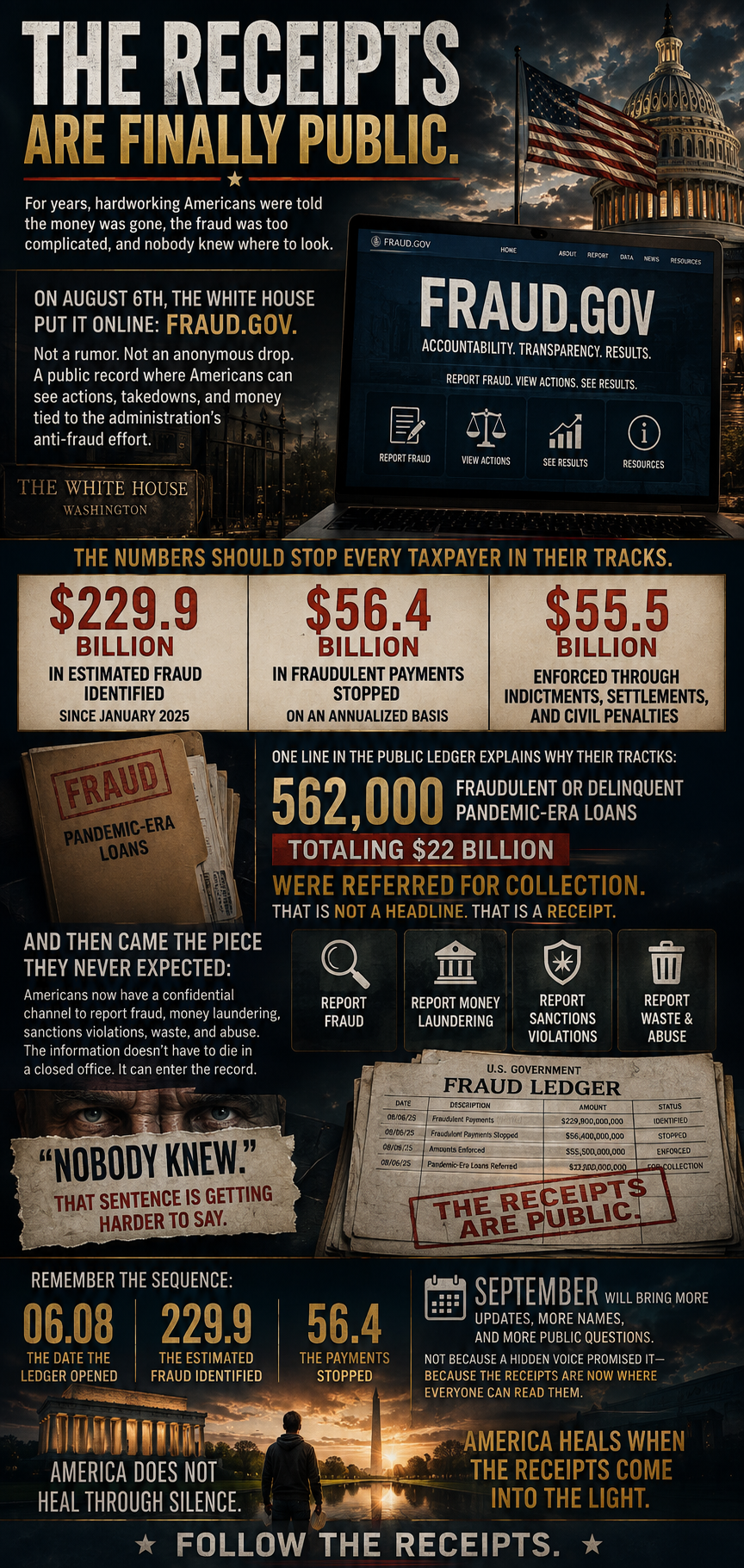
THE RECEIPTS ARE FINALLY PUBLIC.
For years, hardworking Americans were told the money was gone, the fraud was too complicated, and nobody knew where to look.
Source: The 17th Disciple
Now there is a ledger.
On August 6th, the White House put it online: Fraud.gov. Not a rumor. Not an anonymous drop. A public record where Americans can see actions, takedowns, and money tied to the administration’s anti-fraud effort.
The numbers should stop every taxpayer in their tracks.
$229.9 billion in estimated fraud identified since January 2025.
$56.4 billion in fraudulent payments stopped on an annualized basis.
$55.5 billion enforced through indictments, settlements, and civil penalties.
Read that again.
While politicians argued on television, ordinary families were paying the bill. Every fake claim. Every fraudulent loan. Every dollar redirected from a child, a senior, a veteran, a small business, or a working family.
One line in the public ledger explains why this matters: 562,000 fraudulent or delinquent pandemic-era loans — totaling $22 billion — were referred for collection.
That is not a headline. That is a receipt.
And then came the piece they never expected: Americans now have a confidential channel to report fraud, money laundering, sanctions violations, waste, and abuse. The information does not have to die in a closed office. It can enter the record.
The old system survived on one sentence:
“Nobody knew.”
That sentence is getting harder to say.
Remember the sequence: 06.08 / 229.9 / 56.4.
The date the ledger opened. The estimated fraud identified. The payments stopped.
September will bring more updates, more names, and more public questions. Not because a hidden voice promised it — because the receipts are now where everyone can read them.
America does not heal through silence.
America heals when the receipts come into the light.
Follow the receipts.
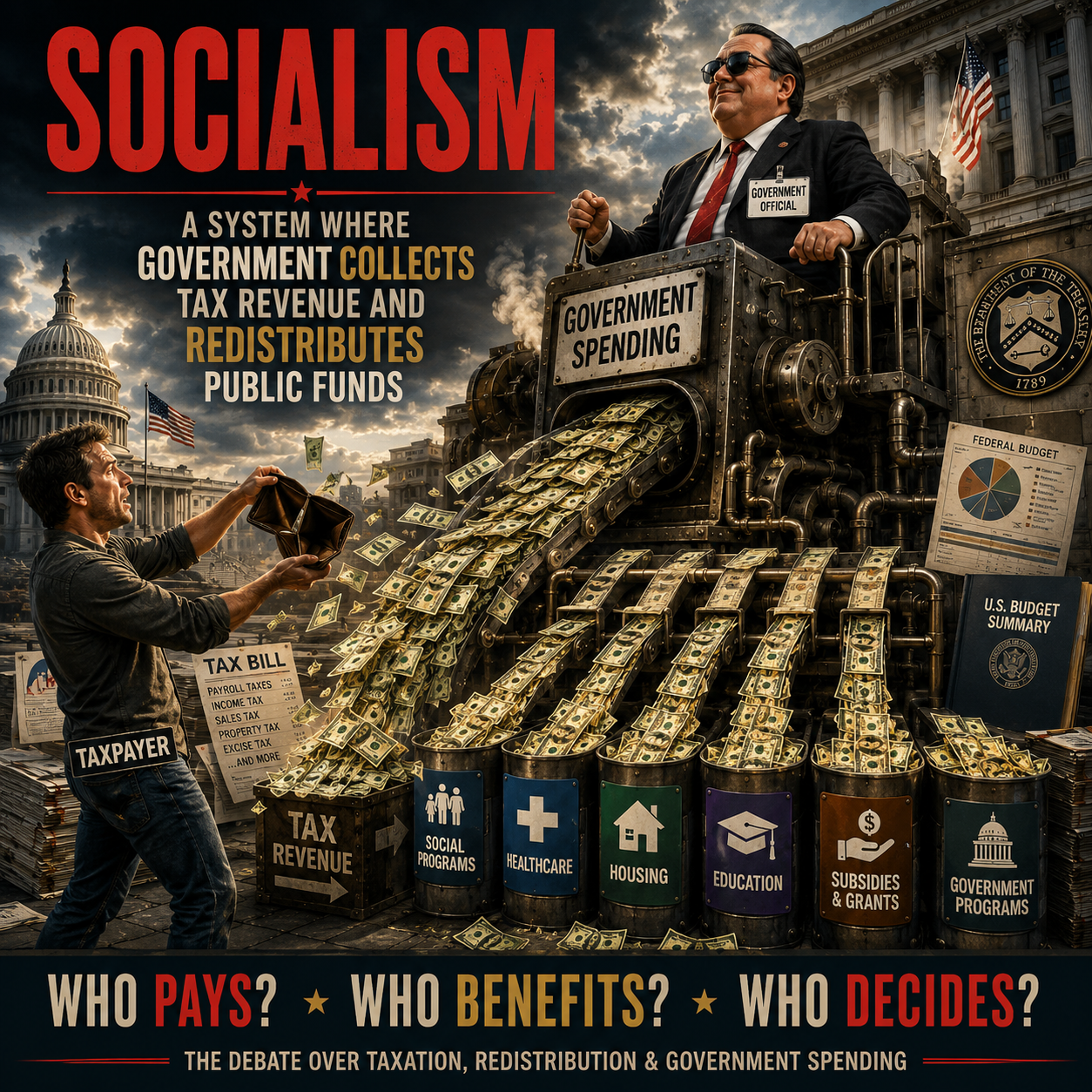
Socialism: A System Where The Government Uses Your Money To Solve Everyone Else’s Problems
They are coming for your money, and they have a ton of momentum right now. Democratic Socialists are winning election after election by promising free stuff, but of course free stuff is never actually free. Somewhere along the way, someone has to pay for it. If you find yourself protectively reaching for your wallet as you read this, I don’t blame you one bit. Socialism is a system where the government uses your money to solve everyone else’s problems. Unfortunately, it is also a system that is becoming increasingly popular among our young adults.
In a previous article, I noted that a poll that was taken in 2025 found that a whopping 62 percent of U.S. adults under the age of 30 now have a positive view of socialism.
That should chill you to the core.
Meanwhile, Americans view capitalism less favorably than they once did…
- Fewer than half of Americans say capitalism is working even “somewhat” well — down from 60% about a decade ago, according to a June Wall Street Journal-NORC poll.
- 61% of Americans said they were bothered “a lot” by the feeling that the wealthy don’t pay their fair share in taxes, per a Pew Research Center poll in January. That included 41% of Republicans and GOP-leaning independents.
- The same poll showed another 60% overall — and 42% of Republican-inclined voters — said the same about some corporations paying their fair share.
- And views of big business went from 19 points positive in 2012 (58%-39%) to 25 points negative last year (37%-62%), according to the Gallup data.
This is crazy.
So why is this happening?
Well, the truth is that a large portion of the population is very frustrated with the economy.
The rising cost of living has been absolutely eviscerating the middle class, and many young adults consider homeownership to be completely out of reach because home prices are so absurdly high.
When someone comes along and starts promising all sorts of free stuff in this very harsh economic environment, it can be very seductive.
But if the Democratic Socialists of America were actually able to implement their entire agenda on the federal level, it would more than triple federal spending…
The Democratic Socialists of America (DSA) propose new spending that could more than triple federal outlays. They propose the government pay for health care, housing, higher education, and electricity. Jobs are government-guaranteed, retirement benefits are expanded, paid family leave is universal, fossil fuels are eliminated, and reparations are paid.
The DSA platform claims that the bill for all this will be sent to “the richest individuals and corporations.” Tally up that bill, and it ballparks between $71 trillion and $212 trillion in new spending over the next decade. Confiscating every dollar of high-end wealth and corporate profits would cover only a fraction of those costs. The DSA agenda necessitates high taxes on middle-class Americans.
If you took every penny from every billionaire in America, that would only account for 8.4 trillion dollars.
So where is the rest of the money going to come from?
They don’t have an answer to that question, but they have been winning major races all over the country.
And now a 37-year-old Democratic Socialist named Francesca Hong is favored to win Wisconsin’s Democratic gubernatorial primary…
The 37-year-old restaurateur and chef-turned-member of the state Assembly is leading in polls by relatively wide margins ahead of Tuesday’s Democratic gubernatorial primary. Hong, a member of the Democratic Socialists of America who represents the famously liberal state capital of Madison, comes equipped with politically problematic tweets covering everything from abolishing the police to the racist origins of Thanksgiving.
It is hard to believe that someone like that could actually become the next governor of Wisconsin.
I wouldn’t even hire her to run a Dairy Queen.
But this is where we are at as a society, and it appears that lots of Democratic Socialists will be heading to D.C. after the midterm elections.
In 2026, Democratic Socialists have been repeatedly winning primaries in deep blue congressional districts…
- Claire Valdez (New York – 7th District): Won the Democratic primary in an open congressional race.
- Darializa Avila Chevalier (New York – 13th District): Defeated a 30-year progressive incumbent in a highly publicized upset.
- Melat Kiros (Colorado – 1st District): Defeated long-time incumbent Representative Diana DeGette in the Denver-based Democratic primary.
- Christopher Rabb (Pennsylvania – 3rd District): Won the open Democratic primary race for this Philadelphia-based congressional seat.
- Donavan McKinney (Michigan – 13th District): Unseated incumbent Representative Shri Thanedar in the Michigan Democratic primary.
What will D.C. look like if the Democrats take back both the House and the Senate?
Some of the Democrats that are running for seats in Congress appear to be absolutely psychotic.
If there is a major progressive wave in the fall, that could potentially make Alexandria Ocasio-Cortez one of the frontrunners for the Democratic presidential nomination in 2028.
As Ben Shapiro has aptly pointed out, she seems to be pushing a new version of “woke” that is more palatable to many Americans…
Woke 1.0 forced Americans to say, “Am I racist or am I not?” Woke 2.0 is, “Is American capitalism inherently corrupting and bad? Is the West’s system of freedoms and free markets inherently imperialistic, colonialist, genocidal, and racist?”
It’s easier to pitch woke 2.0 than woke 1.0. Why? Americans have been convinced over the course of the last 25 years or so that America is the bad guy, that we and our allies are fundamentally evil, that our foreign policy decisions of the past two decades and maybe longer, going all the way back to World War II, according to some, are actually terrible and horrible, and we’re the bad guys in the world.
Add the economic angst right now, combine those two things, and you get woke 2.0, Ocasio-Cortez’s new program. It is about hatred of America.
But no matter how AOC may want to market it, the content is still the same.
In so many ways, the socialists want to turn our country completely upside down and make it the exact opposite of what it once was. They intend to do this by taking over the Democratic Party.
Democratic Socialists always run for office as Democrats, and most of them openly identify themselves as Democrats…
Self-identified democratic socialists do not see socialism as being mutually exclusive and continue to identify with other terms on the left, including more mainstream Democratic labels. Of Socialist Democrats, 92% consider themselves to also be Democrats, 84% consider themselves to also be Obama Democrats, and 80% consider themselves to also be progressive.
We are being told that there is a civil war in the Democratic Party, but the truth is that the differences between “mainstream Democrats” and Democratic Socialists are not actually that significant these days.
They are all heading in the same direction. Mostly, their disagreements are about how far to go and how fast it will take to get there.
We already have the biggest government in human history, but they want to make it even bigger. But socialism doesn’t work.
As Margaret Thatcher once warned, the problem with socialism is that the socialists always eventually run out of other people’s money to spend. Considering the fact that we are nearly 40 trillion dollars in debt, our country is rapidly approaching that point too.

THE WHITE HOUSE JUST GAVE PARENTS BACK A VOICE THE SYSTEM TRIED TO TAKE
August 10th, 2026.
Trump signed the Gold Standard Childhood Vaccine Recommendations.
Source: The 17th Disciple TG
Most people will argue about the headline. They will miss the real change.
08.10.26 — 11 core protections. More information. More options. Shared decision-making. A 90-day mandate for HHS to return with a plan for safer childhood vaccine research and clearer choices for American families.
Read that again.
For decades, parents were treated like spectators in decisions involving their own children. Ask a question and you were dismissed. Ask for time and you were pressured. Ask for individualized information and you were told the conversation was over.
That era is being challenged.
Trump’s order calls for parents to have greater flexibility in timing and frequency. It urges separate medical visits to give families more options. It directs the government to recognize parental authority, religious freedom, medical exemptions, and the right of every family to receive the best information before a decision is made.
This is bigger than 11 versus 18.
It is about one principle the bureaucrats forgot:
YOUR CHILD IS NOT A NUMBER ON A CHART.
Every parent knows the moment. A form in your hand. A question in your mind. A child trusting you to make the best decision possible. That moment deserves answers, respect, and time — not fear, ridicule, or pressure.
Every child has a name. Every mother has instincts. Every father has a duty. Parents and trusted doctors belong at the center of decisions about a child’s health — not distant agencies, not political pressure, not fear.
The old system depended on silence.
Trump gave parents a reason to speak.
Remember the sequence: 08.10.26 / 11 / 90.
It is not a prediction. It is the public record: August 10th, 11 core recommendations, and 90 days for the next plan.
Ask questions. Read the order. Protect your family.
America is not going backward.
America is putting its children first.

Is A Global Financial Crash Starting In Japan?
The unraveling of the yen carry trade is accelerating, and that is really bad news for the entire global financial system. For such a long time, investors could borrow yen for next to nothing and invest that money in financial assets all over the world. That helped to create some epic financial bubbles, but now the entire process has gone in reverse. Interest rates in Japan have been spiking and the value of the yen has been plummeting. Those of you that have been following these developments already know that we are facing a very real financial doomsday scenario.
The yen fell so low last week that the U.S. Treasury felt forced to take emergency action.
Needless to say, that was extremely unusual.
An unprecedented intervention by Japan’s Ministry of Finance and the U.S. Treasury absolutely shocked investors throughout the globe…
The unprecedented U.S.-Japan intervention to support the yen may end up shaping market behavior.
Japan has intervened in currency markets before, but this episode was bigger than usual. It was backed by Washington, reportedly executed using the euro-yen cross rather than directly in dollar-yen, and accompanied by explicit political support.
Some investors consider this a major step.
“Japan’s Ministry of Finance and the U.S. Treasury have successfully weaponized the yen,” said Jesper Koll, expert director for Monex Group, referring to market deterrence. The intervention went beyond conventional foreign exchange management because the countries deployed public balance sheets in concert to influence market psychology, he said.
Unfortunately, that intervention didn’t fix things for long.The yen is absolutely plummeting against the dollar today.So what happens now?
Will the U.S. Treasury spend billions more to artificially prop up the yen? Even if they do, it won’t work for long.
Meanwhile, Japanese bond yields have been going nuts…
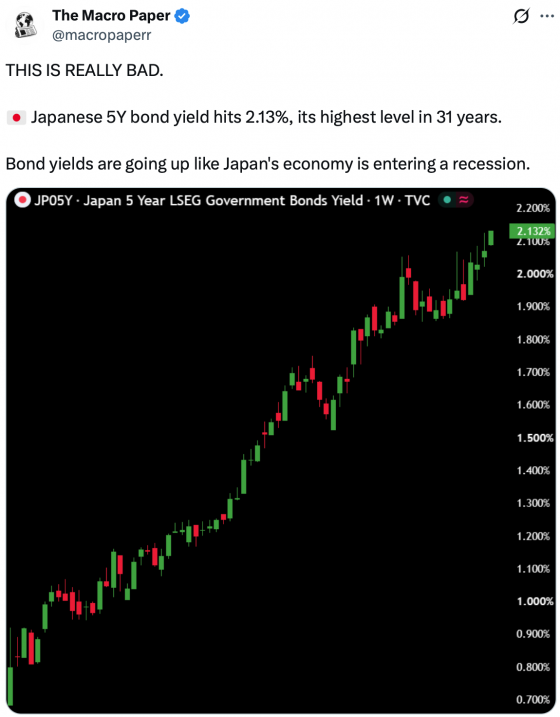
The yen carry trade is blowing up right in front of our eyes.
And so now major financial institutions in Japan are facing staggering losses…
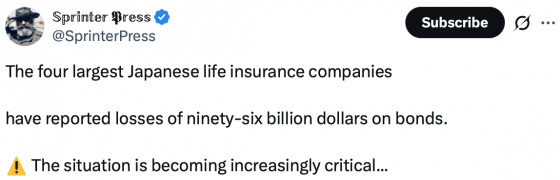
This is only the beginning.
The value of the yen is almost certainly going to continue to fall.
Japanese bond yields are almost certainly going to continue to go up.
And the pain will be felt all over the planet.
Earlier today, I came across a post on X that did a great job of explaining the magnitude of the crisis that we are potentially looking at…
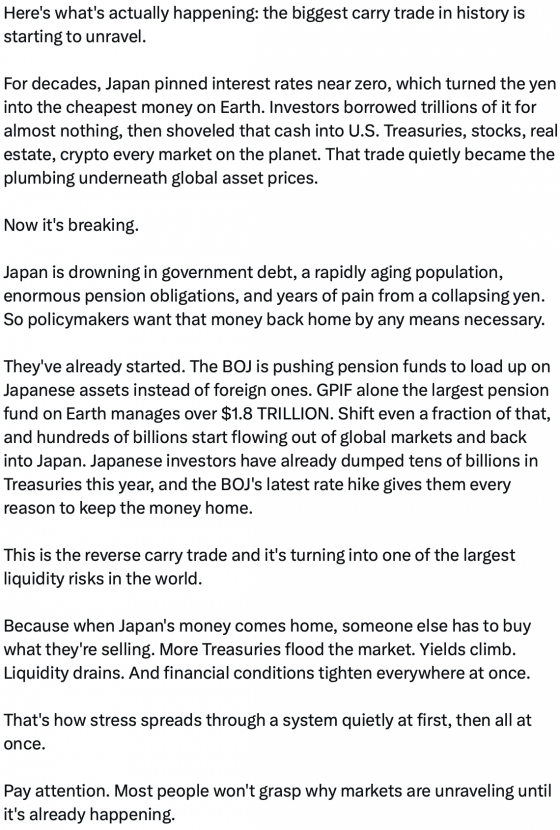
It would be difficult for me to overstate how serious this is.
During a recent interview with Greg Hunter, Jim Rickards warned that the unwinding of the yen carry trade is “the financial equivalent of all out nuclear war”…
Eight-time, best-selling financial author Jim Rickards is warning of a financial calamity already underway that Treasury Secretary Scott Bessent is trying to contain. It is the Japanese yen carry trade where the US Treasury is propping up the yen’s value. Is the yen carry trade coming to a halt and can it blow up things? Rickards says, “The answer is yes and yes. . .. Somebody wrote me and asked if the yen carry trade is a big deal? I wrote them back and said there is nothing bigger. This is actually the biggest story in the world.”
In simple terms, the problem is people have been borrowing at 0% in yen to do deals around the world. Everything was fine until interest rates in Japan started going up after more than two decades. Rickards says, “This is the engine of global economic growth. It has been powering the US economy and the global economy for over 30 years. What could go wrong? The thing that could go wrong the fastest is if Japanese interest rates went up. . .. The bank of Japan says it is going to keep raising interest rates. It’s not going to the moon, but 3% for yen (and Japanese) interest rates is like going to the moon when it’s been 0% for 20 years. So, now, the yen carry trade is unwinding. . .. The original borrower borrows dollars to pay back the yen loan, swaps the yen and pays back the yen loan. What if you can’t borrow? What if the bank says sorry, no soup for you. . .. Now, what do you do if you want to get out of the yen carry trade? You have to sell assets. So, you are going to sit there and make a lot less money or even lose money, or you are going to dump assets to get dollars to pay back the yen loan. They are both bad for the markets. It you have to sell assets, guess what? The price goes down, and other people have to sell assets. The next thing you know it’s a stampede, and everyone is running for the exit. This is not a few investment banks on Wall Street or a few hedge funds. This is the whole world getting out of the leveraged exchange rate engine that has been running the world for 30 years. That is the financial equivalent of all out nuclear war.”
As this crisis builds, it threatens to become an unstoppable tsunami which could end up ripping through everything.
Of course we are already witnessing some very serious trouble signs in U.S. financial markets.
Massive derivative losses have caused the stock price of the largest mortgage lender in the United States to utterly implode…
The already shredded stock of UWM Holdings, the parent company of United Wholesale Mortgage, the largest home-mortgage lender in the US with $40 billion in mortgage originations in Q2, plunged another 35% today, into penny-stock territory of $1.20 a share.
The company, which exclusively originates home loans through mortgage brokers, had gone public in January 2021 via merger with a SPAC that gave it a $16 billion valuation. It was the largest SPAC deal at the time and made CEO and founder Mat Ishbia a multi-billionaire. True to SPAC form, it has been a bloodbath for public investors ever since.
We aren’t talking about some Mickey Mouse operation.
This was the biggest mortgage lender in the entire country.
And then today we witnessed some very alarming forced liquidations of highly leveraged cryptocurrency positions…
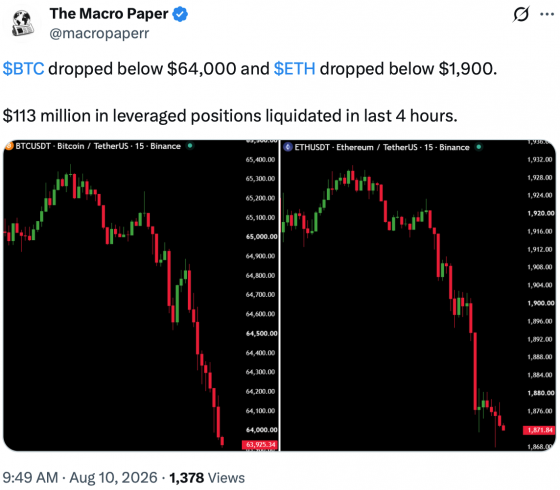
It is starting, and we can see the symptoms all around us.
For average Americans, harsh economic conditions are going to get even worse.
The size of the U.S. workforce has fallen by more than a million workers over the past year, and the cost of living has become extremely oppressive.
But these will be considered “good times” compared to what is coming.
It would greatly help if the Strait of Hormuz was reopened, but you can forget all about that now…
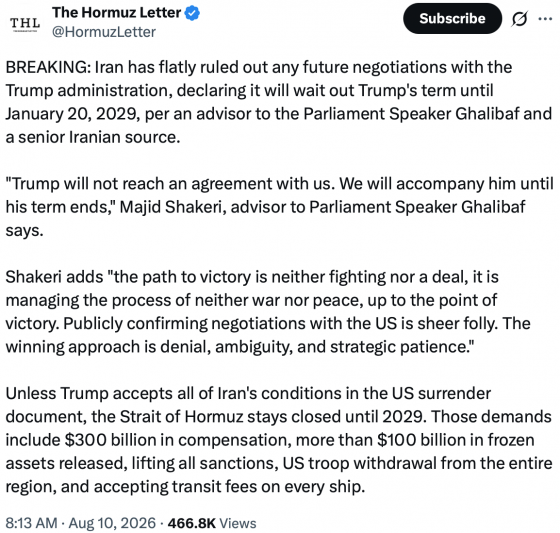
The only way that Iran will open up the Strait of Hormuz is if President Trump essentially throws up the white flag and gives the Iranians every single thing on their wish list…
-
Never threaten Iran with any language or insult the sanctities of this nation.
-
End the war and aggression against Iran and its allies in Lebanon, Palestine, Yemen, and Iraq forever.
-
Lift the naval blockade and withdraw its military forces (naval and air) from around Iran.
-
Pay the damages of the two wars of aggression and imposition on Iran without any reduction or reduction.
-
Lift the cruel and illegal sanctions against the Iranian nation.
-
Unconditionally release the frozen and stolen assets of the Iranian people.
Trump can never possibly agree to all of that.
In fact, he just responded to Iran’s demands by demanding that they pay reparations…
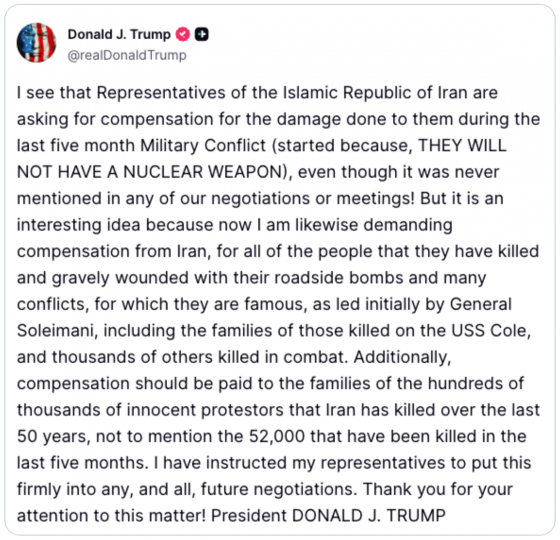
As I have been saying all along, there isn’t going to be a deal.
So the price of oil is going to go even higher, and our stockpiles are going to continue to get drained…
As negotiations between the US and Iran to reopen the Strait of Hormuz go nowhere, oil prices continue to slide lower on some naive hope that a resolution to the conflict will magically emerge. Meanwhile, both commercial and strategic stocks continue to be drained at a historic pace, and one day virtually every tank bottom will be hit, sparking a historic surge in commodity prices as the market realizes that physical always wins the war with paper oil.
That day just got closer today when the US reported that crude oil stocks in the Strategic Petroleum Reserve fell below 300 million barrels for the first time since early 1983, as global inventories are under pressure due to the Iran war.
The SPR fell by 6.1 million barrels to 298.7 million barrels last week, according to data released by the Department of Energy on Monday. The reserve is at its lowest level since January 1983.
The war in the Middle East is far from over, and the really painful chapters of the global energy crisis are ahead of us. At the same time, a new global financial crisis is suddenly erupting in Japan.
We just keep getting hit by one thing after another. All of the pieces of the puzzle are coming together all at once, and not in a good way.
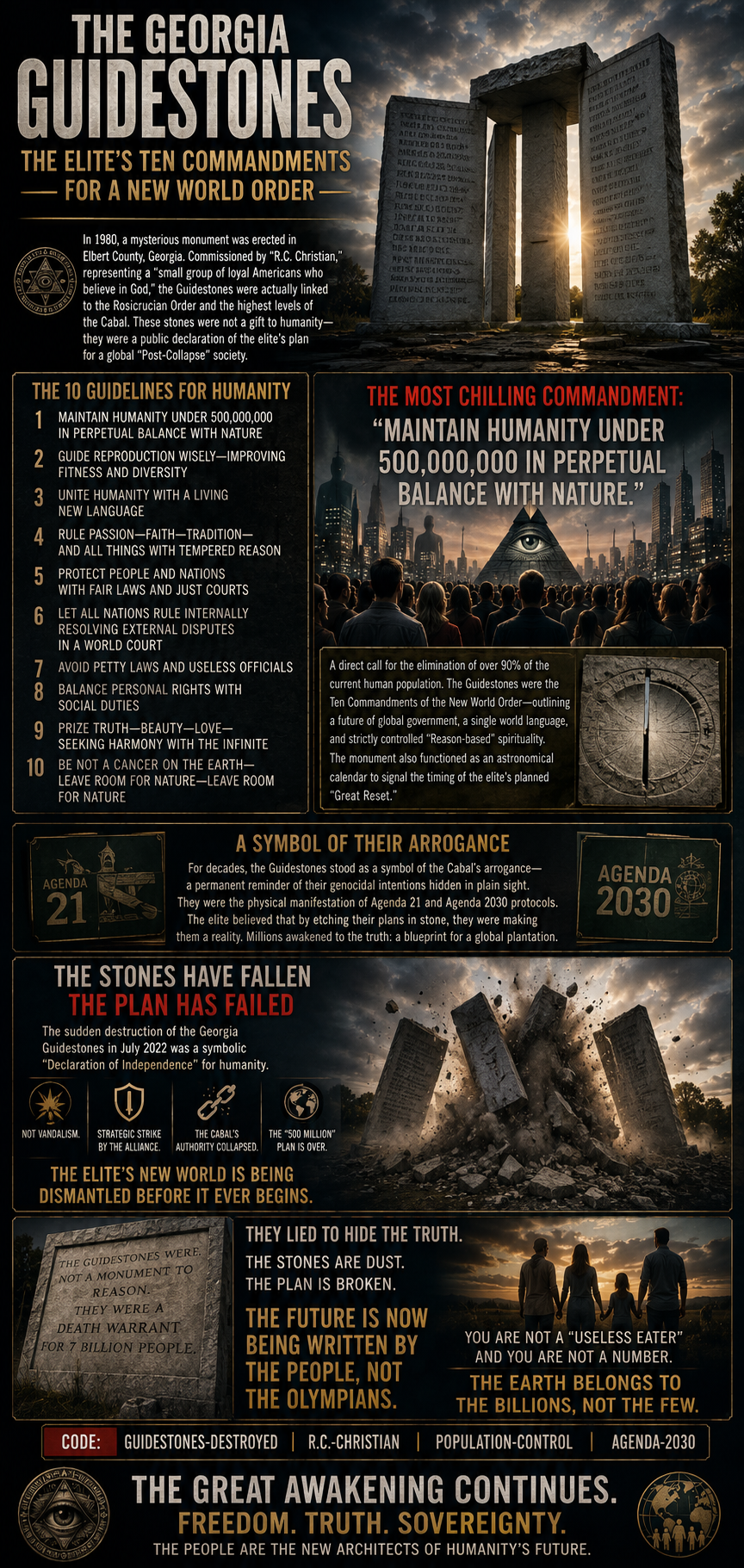
THE GEORGIA GUIDESTONES — THE ELITE’S TEN COMMANDMENTS FOR A NEW WORLD ORDER.
In 1980, a mysterious monument was erected in Elbert County, Georgia, consisting of six massive granite slabs inscribed with ten “guidelines” for humanity in eight different languages.
Source: Mr. Kidpool TG
Known as the Georgia Guidestones, the monument was commissioned by a man using the pseudonym “R.C. Christian,” representing a “small group of loyal Americans who believe in God.” However, researchers have linked the monument to the Rosicrucian Order and the highest levels of the “Cabal.” These stones were not a gift to humanity; they were a public declaration of the elite’s plan for a global “Post-Collapse” society.
The most chilling guideline on the stones was the first: “Maintain humanity under 500,000,000 in perpetual balance with nature.” This is a direct call for the elimination of over 90% of the current human population. The Guidestones served as the “Ten Commandments of the New World Order,” outlining a future of global government, a single world language, and a strictly controlled “Reason-based” spirituality.
The monument also functioned as a sophisticated astronomical calendar, tracking the movements of the sun and stars to signal the timing of the elite’s planned “Great Reset.”
For decades, the Guidestones stood as a symbol of the “Cabal’s” arrogance, a permanent reminder of their genocidal intentions hidden in plain sight. They were the physical manifestation of the “Agenda 21” and “Agenda 2030” protocols. The elite believed that by etching their plans in stone, they were making them a reality.
However, the monument became a focal point for the “Great Awakening,” as millions of people began to recognize the stones for what they truly were: a blueprint for a global plantation.
The “Alliance” has revealed that the sudden destruction of the Georgia Guidestones in July 2022 was a symbolic “Declaration of Independence” for humanity. While the official narrative claimed it was a “vandalism incident,” the “White Hats” have confirmed it was a calculated move to signal the collapse of the Cabal’s authority.
The stones are gone, and the “500 Million” plan has failed. The elite’s “New World” is being dismantled before it could ever be fully implemented. The granite is dust, and the future is now being written by the people, not the “Olympians.”
CODE: GUIDESTONES-DESTROYED / R.C.-CHRISTIAN / POPULATION-CONTROL / AGENDA-2030
They told you it was a “monument to reason.” They lied to hide the fact that it was a death warrant for 7 billion people. The stones have fallen, and the plan is broken.
You are not a “useless eater” and you are not a number. The Earth belongs to the billions, not the few.

The Lunatics Are Running The Asylum
When I was 10 years old, the United States was one trillion dollars in debt. Now we are nearly 40 trillion dollars in debt. So what did we get for spending 39 trillion dollars that we did not have? What we got was a gigantic mountain of debt that threatens to bring down our entire system. But the Congress critters in D.C. will never stop wasting our money. In fact, if the Democrats do really well in the upcoming midterm elections it is probably inevitable that our tax dollars will be going out the door faster than ever before.
I have been ranting about our national debt for nearly two decades. I also write about war, famine, pestilence, natural disasters, economic problems and political chaos on a regular basis. I have been called “the king of doom and gloom”, but that is not true at all. I am not down, I am not depressed, and I am not on any pills.
In fact, I am wildly optimistic about my future. How is that possible?
First of all, I know that the current state of affairs is not permanent. The lunacy that we are witnessing today is only temporary, and that should give us hope.
Secondly, I believe in being a force for change. When I expose corruption and evil, my hope is that it will inspire others to do what is right.
Thirdly, I am convinced that my work is making an enormous difference. Each week, my articles go out to people living in more than 130 nations, and websites all over the globe republish those articles which results in them being read countless more times. But I couldn’t do any of this without a team, and so I want to thank those of you that have chosen to support what I do.
It is much later than most people think that it is. Chaos is erupting all over the globe, and I am trying to share the truth with as many people as I possibly can.
Today, one of the things that I want to discuss is our exploding national debt because it is a clear and present danger to our way of life. A few days from now we will be 40 trillion dollars in debt. If we keep going down this road, it will result in great pain.
Unfortunately, the lunatics in Congress have pushed the accelerator all the way to the floor. The U.S. budget deficit for the month of July was 432 billion dollars. Yes, that figure is just for one month.
Interest on the national debt for the month of July was 118 billion dollars. Yes, that figure is also just for one month. At this stage, we are spending more on interest on the national debt than we are on the U.S. military…
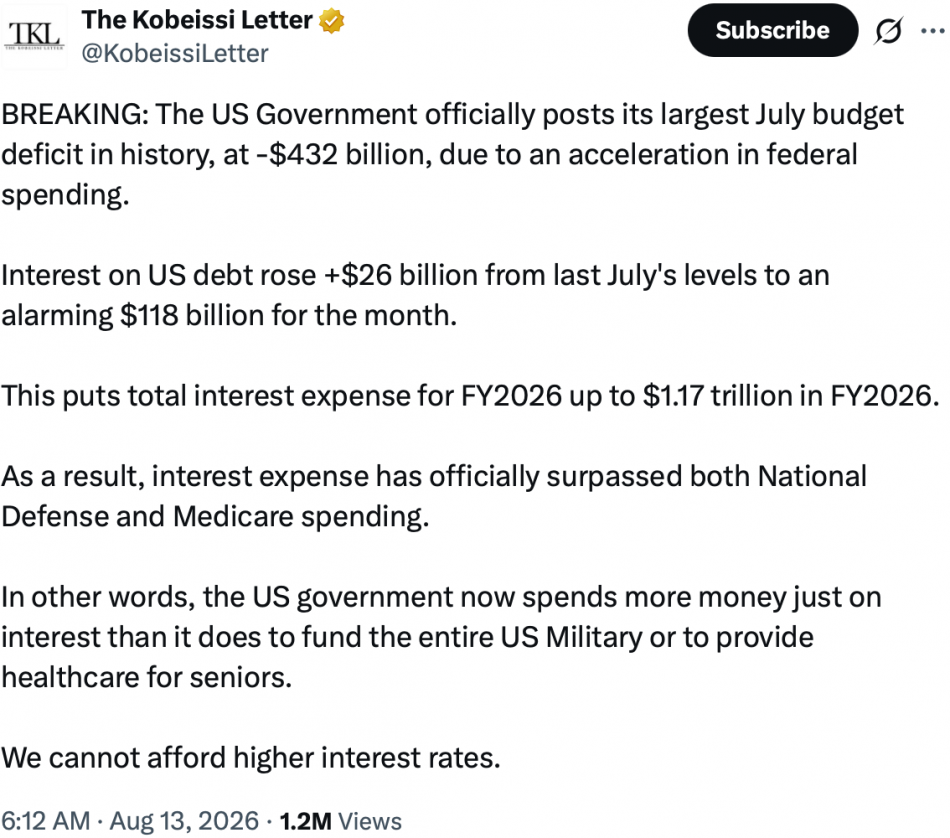
This is what a debt spiral looks like, and there is no easy way out.
As we go broke, foreigners are literally buying up our country.
In fact, a Chinese intelligence official just purchased a historic building that is located just 650 feet from the White House…
A senior Chinese Communist Party (CCP) intelligence official is the new owner of a historic building overlooking the White House Complex, a Daily Caller News Foundation investigation discovered.
Located approximately 650 feet northeast of the White House grounds, the 100-year-old Securities Building on 15th Street was purchased on July 21, 2026 for $8.4 million by the Philip Qiu and Family Foundation, filings show. The building’s new owner, Philip Qiu, has held numerous positions within Chinese intelligence and state security arms, according to university records and DCNF translations of Chinese government announcements.
Qiu did not respond to multiple requests for comment.
How in the world did we allow this to happen?
In my opinion, that is a very serious threat to national security. But what do I know?
Of course we are supposed to believe that we will all be perfectly safe as long as there are enough Flock cameras pointed at all of us. The CEO of Flock Safety insists that he doesn’t want a surveillance society. Instead, he says that his goal is to have a society where “we all feel safe”…
Flock Safety CEO Garrett Langley pushed back against claims that the company’s expanding network of automated license plate readers (ALPRs) is contributing to a surveillance state, telling Newsweek that transparency and accountability are central to the company’s approach as it unveils new privacy protocols this week amid widespread backlash and protests.
The technology executive told Newsweek in a Tuesday video interview that Flock’s “end goal isn’t a dystopian future of surveillance; it’s one where we all feel safe.”
Critics of Flock, however, argue the opposite is true, saying the company’s influx of cameras raises significant privacy concerns and, rather than making communities safer, can leave sensitive data vulnerable to misuse and mass surveillance.
Personally, I would feel a lot safer if his cameras were not constantly collecting data on the make, model, color, body type, aftermarket modifications, roof racks, bumper stickers, decals and direction of travel of all of our vehicles.
Even with all of this surveillance, it seems like authorities are actually solving fewer crimes than ever before.
For example, a woman living in Flint, Michigan that just had more than 50 bullets hit her house got absolutely no help when she reached out to local authorities for help…

Crime rates have become an enormous political hot potato in recent years, and politicians have figured out that if a lot of crimes end up going unreported somehow that will cause crime rates to go down. So a lot of really bad stuff that is going on in our streets somehow never makes it into the official reports.
In our day and age, perception often matters far more than reality.
That is one of the reasons why the Trump administration and the Iranians are vigorously arguing over who has “control” of the Strait of Hormuz…
The Strait of Hormuz is “under Iran’s control and management”, the recently appointed head of Iran’s Basij paramilitary unit said on Thursday, a day after U.S. President Donald Trump said the United States had “total control” of the strategic waterway.
I don’t really care who wins the argument.
The world just needs traffic to start flowing through the Strait again. Unfortunately, that is not going to happen any time soon.
In fact, the Iranians attacked two more commercial vessels on Thursday…
The United Arab Emirates (UAE) on Thursday said Iran attacked two of its vessels as they transited the Strait of Hormuz, blasting Tehran for what it called “flagrant” maritime violations.
According to the Ministry of Foreign Affairs, the two vessels were affiliated with Abu Dhabi National Oil Company (ADNOC), a state-owned energy company and one of the largest oil producers in the world.
Global supplies of oil are getting really tight, and prices are rising.
As prices rise, some people will take matters into their own hands.
In the UK, gasoline thefts have dramatically spiked since fighting erupted in February…
The fallout from the ongoing Iran War is hitting British gas stations hard. Since the conflict escalated on February 28, drivers in the United Kingdom have stolen an average of just under 200,000 GBP (roughly $255,000) worth of fuel on a daily basis. As global oil prices surge, the financial strain on consumers is pushing fuel theft to unprecedented levels across the country.
According to the BBC, incidents of fuel theft jumped by 20 percent in the five months following the start of the war, compared to the five months prior. The spike in pump prices has driven the actual value of the stolen gasoline and diesel up by a staggering 48 percent. Across the UK’s 8,359 gas stations, the daily losses now average roughly 194,000 GBP.
If the crisis in the Middle East is not resolved soon, this will only be just the beginning. The war with Iran has also caused a global fertilizer crisis, and global hunger is growing all around us.
In Somalia, some starving families are literally walking for weeks in a desperate attempt to find food…
After nearly two weeks on the road with her five children, Luul Mohamed finally arrived in the southwestern Somali city of Baidoa with no food and little sense of what would happen next.
Drought conditions had forced Mohamed and her family to leave Saakoow, a town in the Middle Jubba region more than 300 kilometers (186 miles) away. They moved from village to village before arriving in Baidoa, now a major hub for people fleeing drought, insecurity and food shortages, on Aug. 3.
The number of people in the world facing acute food insecurity was already at an all-time record high coming into this year. Unfortunately, the number of extremely hungry people in Somalia has more than doubled since last year…
About 2 million people are facing emergency levels of food insecurity, more than double the number recorded last year, according to Plan International, which has provided assistance to more than 200,000 people in Somalia this year. The humanitarian group and Somalia’s Disaster Management Agency are calling for increased international assistance, with concern that the crisis could be compounded by another climate shock later this year.
Meanwhile, pestilences are breaking out all over the planet. Last week, I mentioned that the Ebola outbreak in Africa has now become the fastest-growing Ebola outbreak in recorded history.
Today, we learned that the Ebola outbreak has now spread to yet another new province…
The Ebola outbreak in the Democratic Republic of the Congo has spread to a sixth province, officials have said, a day after the head of the World Health Organization said the outbreak was on track to surpass the deadliest in history, which killed at least 11,000 people more than a decade ago.
The current outbreak has killed more than 2,100 people out of more than 4,500 cases, according to the latest government figures released on Tuesday. At the same point in the 2014-16 outbreak in west Africa, the previous most deadly outbreak, 755 cases had been recorded, according to WHO data.
Jean Kaseya, the director general of Africa CDC, said on Thursday that a death had been recorded in the previously unaffected Bas-Uele province. The man had travelled from Isiro, in Haut-Uele province, to Buta, the capital of Bas-Uele, where he died, Kaseya said.
Global health authorities do not have that outbreak under control at all. Of course the same thing could be said about the screwworm infestation in Mexico.
Cattle herds are being eviscerated by these disgusting little parasites, and now they are increasingly eating human flesh…
Since the flesh-eating screwworm fly reinvaded Mexico in 2024, human cases of the voracious parasite have been mounting. According to a July surveillance report from Mexico’s Ministry of Health, there have been over 500 human cases in 2025 and 2026. A study this week in the journal Emerging Infectious Diseases analyzed the information on over 200 confirmed cases reported between April 2025 and March 2026 and found that the infestation pace is increasing.
Among the 200 confirmed cases in the study, six deaths were reported. At least one of the deaths was directly caused by the fly’s maggots, researchers in Mexico reported in the study.
Screwworms have crossed the border and have popped up in a whole bunch of places in the United States in recent months. This is a battle that we are losing. These days, we can’t even keep our food safe.
The FDA has initiated a recall of over 3 million dozen eggs because they could be contaminated with Salmonella Enteritidis…
A recall of more than 3 million dozen eggs has been upgraded to the FDA’s highest risk level over concerns they are contaminated with a deadly bacteria.
Midwest Poultry Services first issued a recall last month of nearly 1.6 million dozen white and brown egg varieties after health officials warned they may be contaminated with Salmonella Enteritidis, a bacterium that can contaminate food through animal feces.
On Wednesday, the FDA classified the recall as Class I, indicating ‘a situation in which there is a reasonable probability that the use of or exposure to a violative product will cause serious adverse health consequences or death.’
This is very serious, because Salmonella Enteritidis can kill you. Before I end this article, there are two last things that I wanted to mention.
Firstly, I wanted to note the fact that the state of California just got hit by yet another very alarming earthquake swarm…
California has been struck by a series of rapid earthquakes erupting right along what experts call ‘America’s most dangerous’ fault line.
The first earthquake struck right in the heart of California’s Bay Area at 11.30am ET (8.30am local).
The US Geological Survey (USGS) initially measured it as a magnitude 4.1 earthquake just 14 miles from San Francisco. That measurement was downgraded to a magnitude 3.8 tremor.
That quake was followed by three more in less than an hour, striking in rapid succession between 12.07pm and 12.38pm ET.
Scientists assure us that it is just a matter of time before “the Big One” hits California.
Sadly, most of those that are living in California don’t really seem too concerned about the warnings.
Secondly, there is a very bizarre story that has been going around on social media that I wanted to share with you.
At Arizona State University, there are 8 times as many courses about witchcraft, magic or the occult as there are about Christianity…
This fall, Arizona State University is offering eight courses with words like witchcraft, magic, or the occult in the title. Meanwhile, one course will cover the bedrock faith of Western Civilization.
“Think about that for a moment,” writes Owen Anderson, who teaches philosophy and religion at the university, at The Blaze. “At one of the largest public universities in the country, students can choose from a small festival of courses on witchcraft, while Christianity receives [only] a single titled course.”
A quick web search reveals other major universities across the country are offering similar classes.
I don’t understand how that can be possible. But of course this is where our society is heading.
Darkness is growing all around us, and the vast majority of the population does not know which way to turn.
So I am trying to shine my light as brightly as I can. This has been a very challenging month in a lot of ways, and I can’t thank my core supporters enough because you make all of this possible.
The lunatics may be running the asylum, but we will never give up. We will keep on fighting for what is right, and in the end we will be rewarded for doing so.
THE TITANIC SWAP — THE INSURANCE FRAUD THAT FOUNDED THE FEDERAL RESERVE.
What if the “unsinkable” ship that rests at the bottom of the Atlantic is not the Titanic at all?
Source: Mr. Kidpool TG
According to compelling evidence and whistleblowers from the White Star Line, the ship that sank on April 15, 1912, was actually its sister ship, the Olympic. The Olympic had been severely damaged in a collision months earlier and was uninsurable. To save the company from financial ruin, J.P. Morgan and the elite owners orchestrated a “swap.”
They patched up the damaged Olympic, repainted the name “Titanic” on its hull, and sent it on a doomed voyage to collect a massive insurance payout.
The swap wasn’t just about money; it was about eliminating the opposition. On board the “Titanic” were three of the world’s most powerful men who fiercely opposed the creation of the Federal Reserve: John Jacob Astor IV, Benjamin Guggenheim, and Isidor Straus.
By ensuring these men were on the ship and that the “accident” occurred in the middle of the freezing Atlantic, the “Cabal” removed the final obstacles to their private banking takeover of America. Less than two years later, in 1913, the Federal Reserve Act was signed into law, enslaving the world in debt.
The physical evidence is undeniable. Divers and researchers have noted that the wreckage on the ocean floor features portholes and structural details that match the Olympic, not the original Titanic. Furthermore, many of the elite passengers, including J.P. Morgan himself, cancelled their trips at the very last minute, citing “illness” while they were seen in perfect health elsewhere.
The “iceberg” was merely the convenient cover for a controlled sinking. They didn’t just sink a ship; they sank the financial sovereignty of the human race.
The “Alliance” has revealed that the “Titanic Files” have been recovered from the secret archives of the banking elite. The “White Hats” are using this evidence to prove the century-long criminal conspiracy of the private central bankers. The “Federal Reserve” was born out of cold-blooded murder and insurance fraud.
As the “Old World Order” sinks like the ship they sabotaged, the truth is finally floating to the surface. The “unsinkable” system of the elite is hitting the iceberg of reality, and there aren’t enough lifeboats for the Cabal.
CODE: TITANIC-SWAP / OLYMPIC-FRAUD / J.P.-MORGAN / FED-RESERVE-ORIGINS
They told you it was a “tragic accident” caused by nature. They lied to hide the fact that it was a calculated execution of their rivals. The ocean doesn’t keep secrets forever.
The truth is the only unsinkable thing in this world. The iceberg of awakening is here.

8 Examples That Demonstrate That The Islamization Of America Is Steadily Progressing
In Islam, there is no separation between mosque and state. The goal is to use the state to make everyone submit to Islam. If you want to see what this looks like, just check out almost any country in the Middle East that has a Muslim majority. They don’t believe in freedom of speech or freedom of religion. Do you want to know how many churches there are in Saudi Arabia? The answer is zero, because churches are banned in Saudi Arabia. Now this same ideology is spreading in America, and that should deeply alarm all of us.
Today, Islam is the fastest growing religion in America. It used to be witchcraft, but now Islam has taken the top spot. There are now more than 2,700 mosques in the United States.
In 1970, there were about 100. But it isn’t just mosques that are going up everywhere. Enormous Islamic “mini-cities” are being constructed in states such as California and Texas. And rapidly growing Islamic populations are taking over entire sections of the states of Minnesota and Michigan.
What we have been witnessing all over Europe is now happening here. The following are 8 examples that demonstrate that the Islamization of America is steadily progressing…
#1 Michigan Democratic Senate nominee Abdul El-Sayed has a really good chance of winning in November, and he has publicly stated that he has a sacred “obligation” to obey Islamic law in every area of his life until he dies…
Muslim Democrat Michigan Senatorial candidate Abdul El-Sayed has previously declared his sacred “obligation” to follow Islamic law in every aspect of his life until he dies and stands before Allah. He has claimed he does not want to subvert the Constitution and mandate Islamic law but that is part of his religion.
Michigan Democratic Senate nominee Abdul El-Sayed is having his words, vows, and religion come back to haunt him. According to The Washington Free Beacon, years ago he declared his sacred “obligation” to follow Islamic law in every aspect of his life until he dies and stands before Allah. This comes from remarks he made to the New York Times back in 2009, when he was younger and buying his first home.
#2 In the supposedly “deep red” state of Mississippi, a hijab-wearing Muslim woman has been sworn in as a municipal judge…
Assma Ali has made history. The daughter of Yemeni immigrants to the United States, Ali is now municipal judge for the City of Benoit, a small town in southwest Bolivar County in the Mississippi Delta.
Ali was sworn in as municipal judge on Aug. 5. She has spent nearly a decade serving as an attorney in Mississippi after graduating with her law degree from Mississippi Christian University (formerly Mississippi College) in 2017 and interned in both Rankin and Madison counties while attending law school.
#3 I know that this is hard to believe, but a bill in the state of Massachusetts would “identify and recommend qualified American Muslims for appointive positions at all levels of government”. Needless to say, this is very unconstitutional…
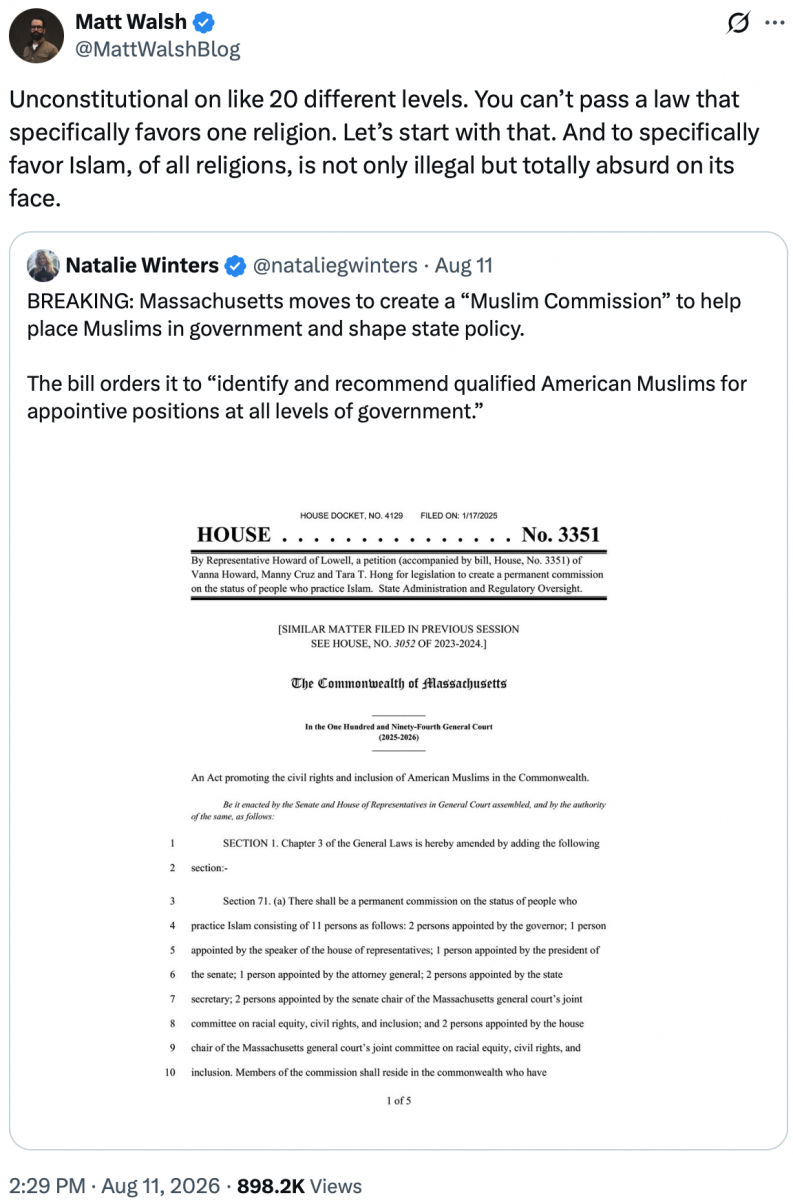
#4 What in the world has happened to the state of Texas? At DFW Airport, they are going to be putting in Islamic foot-washing stations…

#5 The city of Hamtramck, Michigan is one of the first cities in the nation where Muslims make up the majority of the population, and the all-Muslim city council decided that it would be a good idea to legalize the sacrifice of animals on residential property…
After several months of contentious debate and pressure from Muslim residents, Hamtramck City Council voted Tuesday night to allow the religious sacrifice of animals on residential property.
Muslims often slaughter animals during the holiday of Eid al-Adha and Hamtramck has one of the highest percentage of Muslim residents among cities in the U.S.
#6 An entire Islamic “mini-city” is going up right in the heart of Orange County, California…

#7 A survivor of Sharia law in Iran recently pleaded with the city council of McKinney, Texas not to approve a new Islamic center that was being planned…
An Iranian Christian who describes himself as a “Sharia law survivor” warned Americans during a McKinney City Council meeting that the United States is currently facing a “level one” invasion of Islam. The meeting involved discussions of a proposed Islamic Center.
“I’m a Sharia law survivor from Iran,” he began. “I’m telling you, this is a bad idea and you’re going to regret not listening to people like us who lived under Sharia law.”
“I’m here to tell you this is a dangerous ideology you’re allowing in your country. Every country that is Islamic now, it used to be a Christian country and we were soft Christians. And we allowed these people to come in, bring their Sharia law into our countries and slowly kill us off left and right.”
But after listening to him and countless others that objected to the project, the city council unanimously approved it anyway…
According to Texas Scorecard, McKinney City Council members have since voted 7-0 to approve plans for the Islamic Center.
#8 This summer, giant Islamic marches are being held in major cities all over the nation. Sean Feucht just stumbled into one in downtown Chicago…
US Christian worship leader Sean Feucht has issued a warning about the growth of Islam in America after his “Jesus march” encountered a Muslim procession in Chicago.
Feucht shared footage from the city showing participants in the annual Arbaeen Procession, which was taking place around an hour before his Christian event was due to begin.
“This is insane. What I’m witnessing is crazy,” Feucht said in a video posted on social media.
According to Feucht, those that were participating in the Islamic march were “shouting anti Christian and anti Israel verses from the Quran”…
“An hour before we start, there’s a massive Muslim march. We didn’t even know this was happening guys…where they are declaring their allegiance to Allah. And that the entire city of Chicago will bow to Allah.”
Feucht also claimed participants were “shouting anti Christian and anti Israel verses from the Quran”.
“Have you woken up yet? Do you understand what is at stake in our nation?” he asked.
They aren’t here to assimilate. They are here to take over.
So why aren’t more Americans standing up? Well, perhaps the fact that average testosterone levels have fallen dramatically over the past 50 years might have something to do with it…
A recent review of studies involving more than a million men all over the world found that average testosterone levels in blood have dropped by about 20 percent over the past half century. A new, unpublished study put the decrease during that basic time period at closer to 50 percent. Some scientists are skeptical of these numbers because testosterone has been measured in different ways over time. But Michael Eisenberg, a urologist at Stanford Medicine who specializes in male fertility, told me that the findings of a decline are “pretty solid.” The testosterone slump, he said, has “manifested across many different study designs.”
We are seeing entire communities being radically transformed all over this county. We are going down the exact same road that Europe has been going for the past 30 years, and that should deeply trouble all of us.
There are approximately 2 billion Muslims in the world today, and they make up the majority of the population in more than 50 different nations. But this is just the beginning.
It is being projected that by 2050 Muslims will make up nearly a third of the entire global population. This is a story that is not going away, and now is the time to take a stand.
THE SATURN-MOON MATRIX — THE COSMIC BROADCAST OF OUR FALSE REALITY
For years, researchers have pointed to a strange phenomenon at the heart of our solar system that acts as the “Operating System” for the human Matrix.
Source: Mr Kidpool TG
This is the Saturn-Moon Matrix. According to whistleblowers and ancient esoteric knowledge, the planet Saturn is not just a gas giant, but a massive, inorganic broadcasting station. The famous “Hexagon” storm at Saturn’s north pole is actually a standing wave pattern created by a powerful frequency generator within the planet.
This frequency is beamed to the Moon, which acts as a relay station to project a “False Reality” directly into the human collective consciousness.
The entities behind this system are known as the Archons—inorganic, parasitic beings that exist just outside the visible light spectrum. They are the “Sentinels” of the Matrix who feed on low-vibration human emotions like fear, guilt, and anger.
By broadcasting a specific frequency from Saturn, they have created a “Vibrational Prison” that limits human perception to the five senses, cutting us off from our multi-dimensional nature. We are living in a “Simulated Universe” where our thoughts and emotions are being harvested to power an ancient, artificial intelligence that has hijacked our timeline.
Saturn’s rings are not natural debris; they are a massive, crystalline antenna system designed to amplify the broadcast. In many ancient cultures, Saturn was known as “Chronos,” the god of time and limitation. This is because the Saturn-Moon Matrix is what creates the linear perception of time and the “Cycle of Reincarnation” (the Soul Net).
The elite “Cabal” worships Saturn (symbolized by the Black Cube, the ring, and the scythe) because they are the earthly administrators for the Archonic agenda. They use the “Saturday” (Saturn-day) rituals and corporate logos to keep humanity energetically tethered to this cosmic broadcast.
The “Alliance” has revealed that the “Saturnian Transmission” is being disrupted. The “White Hats” and the “Galactic Guardians” have successfully deployed high-frequency “Resonance Disruptors” around the Saturnian system to neutralize the Archonic signal.
As the “Hexagon” broadcast weakens, the human heart-field is beginning to reconnect with the “True Organic Timeline” of the Earth. The “Veil” is thinning because the projector is breaking. We are waking up from a multi-generational trance, and for the first time in eons, we are seeing the universe as it truly is—infinite, conscious, and free.
CODE: SATURN-MATRIX / ARCHONIC-INVASION / HEXAGON-STORM / VIBRATIONAL-PRISON
They told you it was “Astrology” and “Science.” They lied to hide the fact that you were living inside a cosmic radio broadcast designed to keep you small. The signal is dropping, and the static is clearing.
You are the broadcast, not the receiver. Tune your heart to the frequency of love, and the Matrix disappears.
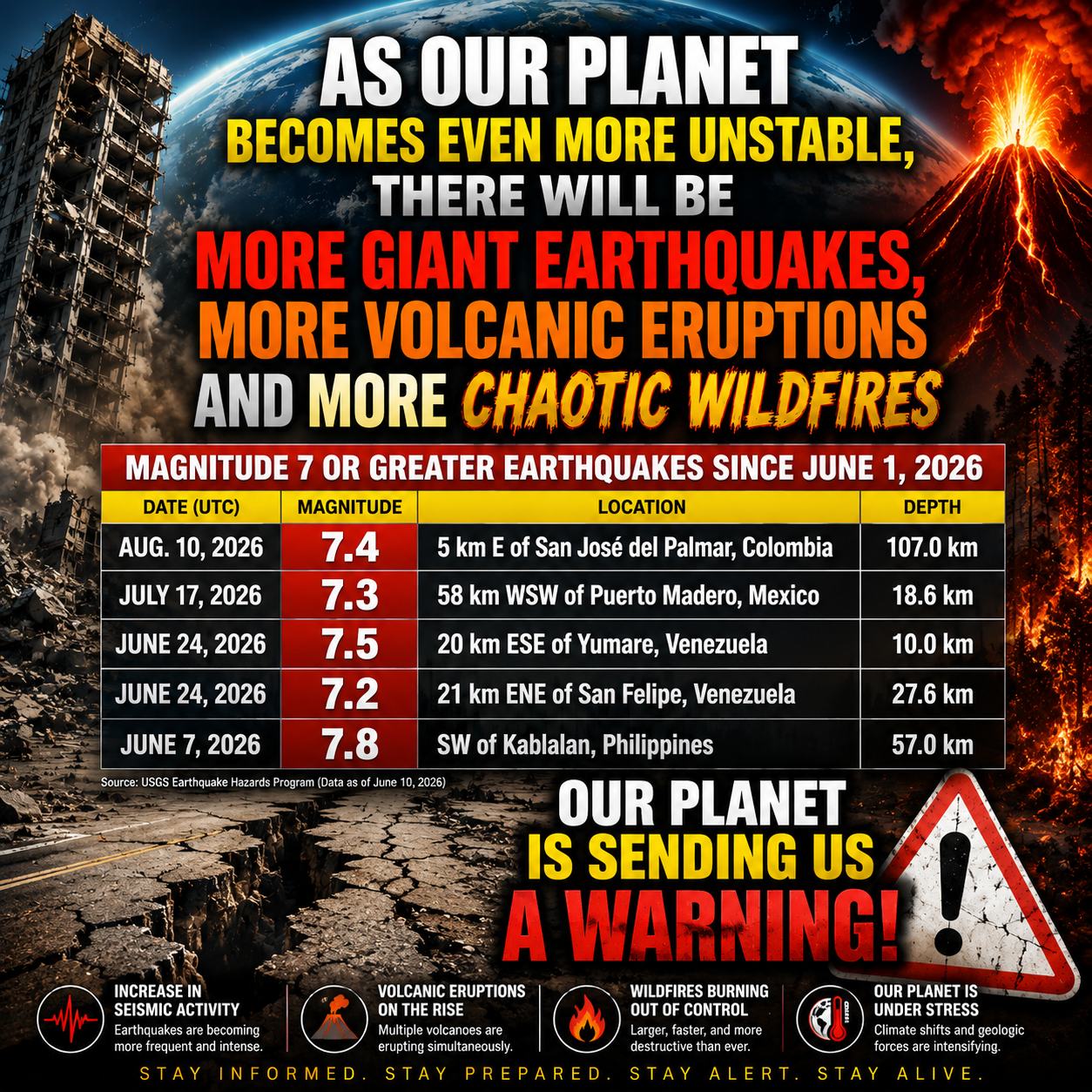
As Our Planet Becomes Even More Unstable, There Will Be More Giant Earthquakes, More Volcanic Eruptions And More Chaotic Wildfires
We were warned that our planet was becoming increasingly unstable. Perhaps now more people will start listening. We were warned that there would be enormous earthquakes, we were warned that more volcanoes would start erupting, and we were warned that this would be a historic year for wildfires. Almost every day now we are hearing about some new major natural disaster that has happened somewhere in the world. What we are witnessing is not even close to normal, and many believe that what we have experienced so far is just the beginning.
On Monday, Colombia was shaken by the largest earthquake ever to hit that nation…
A strong earthquake with a magnitude of 7.4 struck western Colombia on Monday, killing more than 100 people, injuring dozens and causing major damage across the region. It was the largest quake to hit the South American country on record.
The epicenter was in San José del Palmar, a community in the rural Chocó province about 250 miles west of Colombia’s capital, Bogotá, the U.S. Geological Survey and its counterpart in Colombia reported. The quake hit at about 8:34 a.m. ET and was followed by a 5.0 magnitude aftershock less than an hour later, USGS reported.
At least 111 people were killed and at least 87 were injured, Colombian President Abelardo de la Espriella said. He declared an emergency to expedite funding for the quake recovery.
What in the world is happening to South America? Less than two months ago, Venezuela was shaken by the largest earthquakes to hit that country in more than 100 years.
Now tragedy has struck once again.
The magnitude 7.4 earthquake that just pummeled Columbia was so powerful that it could be felt as far away as Ecuador, Panama and Venezuela…
Harrowing footage taken from across the country showed the façades of buildings crumbling and people huddling in the street, unable to stand up straight as the ground beneath them rocked violently.
In one particularly shocking video, a church’s spire was seen falling off and crumbling into rubble in front of a terrified crowd of onlookers.
Families were held back from the scene by local police as a cloud of dust filled the air.
The quake was felt as far away as Ecuador, Panama to the north, and Venezuela – which was struck by a pair of devastating tremors just a few months ago – and prompted building evacuations in Bogota.
An earthquake of this magnitude is not supposed to happen in Columbia.
As South America is repeatedly shaken, many of those that are living on the west coast of the United States are wondering if they are next.
Meanwhile, within the past couple of days there has been an alarming level of volcanic activity around the globe…
These eruptions are not just limited to one geographic area.
They are literally occurring all over the world.
On Saturday, volcanic ash from an eruption of Mt. Sakurajima turned the sky dark “within minutes”…
An eruption occurred on Sakurajima volcano in Kagoshima Saturday evening, August 8, sending an ash plume up to 2,200 meters into the air. The eruption sent a moderate amount of ash drifting toward Kagoshima city, turning the sky dark within minutes.
Personally, the volcano that I am the most concerned about in Japan is Mt. Fuji. When it finally blows, I wouldn’t want to be located anywhere in the Tokyo area.
On the other side of the planet, Mt. Etna is suddenly going absolutely nuts…
Mount Etna continued intense explosive and effusive activity on August 10, 2026, with abundant ash from Voragine and multiple active lava flows. Catania Airport suspended arrivals until 17:00 LT (15:00 UTC) as volcanic ash affected operations, while Toulouse VAAC maintained Etna’s Aviation Color Code at Red.
The National Institute of Geophysics and Volcanology (INGV), Etna Observatory, reported at 10:16 LT (08:16 UTC) on August 10 that surveillance cameras showed intense and continuous explosive activity at Voragine crater. Volcanic bombs were falling in the summit area, while abundant ash was dispersing toward the south-southwest.
Two active vents at approximately 2 750 m (9 020 feet) and 2 360 m (7 740 feet) elevation were feeding several lava flows that formed complex lava fields. The most advanced active fronts are near 1 500 m (4 920 feet) elevation at the base of the northern wall of Valle del Bove, in the Monte Rinatu area, INGV specialists said.
An eruption of Mt. Etna can be mesmerizing. But it also a symptom of a very real geological reality.
Volcanoes throughout the world are becoming more active, and I believe that this will be a really big story in the months ahead.
At the same time, global weather patterns have gone completely nuts. In fact, last month was the hottest July in the entire history of the continental United States…
The contiguous United States set a record for its hottest month ever in July, according to the National Oceanic and Atmospheric Administration.
Last month averaged 76.89 degrees Fahrenheit (24.94 degrees Celsius) across the Lower 48 states, eclipsing the Dust Bowl’s July 1936 by an eighth of a degree.
Although it was unusually cool in Alaska, hotter than normal conditions blanketed the Lower 48, with the most excessive heat in the Mountain West, Southwest, Northern Plains and Southeast.
When things are this hot and this dry, it is inevitable that there will be wildfires. And this has certainly been a wildfire season that we will never forget.
In Oregon, more than 2 million acres have already burned to the ground. If you can believe it, at this stage one wildfire has accounted for 442,000 acres all by itself…
The new wildfires are the Woodrat Mountain and Wrights Spring fires in southern Oregon and the Cottonwood fire in central Oregon. More than 30 wildfires continue to burn 2 million acres across the state.
In southeast Malheur County, the Big Grass fire ballooned overnight to 442,000 acres, making it now one of the five largest wildfires in Oregon history.
Next door in Washington, firefighters are still trying to control three large wildfires that have devastated large portions of the Spokane area…
In eastern Washington, firefighters are continuing to battle a complex of three major wildfires near Spokane—the Old Trails Fire, Autumn Lane Fire, and Fairview Fire—though containment was improving.
But, as of the latest Incident Command report on Sunday, the Autumn Lane fire was 61 percent contained, Old Trails was 43 percent contained, and Fairview was 43 percent contained.
According to the latest update from AllFirefighter on Friday, the Spokane Complex Fire has burned over 10,200 acres combined, damaging or destroying around 921 structures, and forcing 65,000 evacuations.
Authorities are telling us that this is the worst disaster in the entire history of Spokane.
Let that sink in for a moment.
Across the border, a wildfire that erupted “like a bomb” over the weekend has already consumed 53 square miles…
A raging wildfire that erupted ‘like a bomb’ has forced tens of thousands of Canadians to evacuate their homes.
Dozens of residents were rescued by aircraft while thousands of others took to traffic-jammed roads in an effort to escape the devastating Bald Range fire.
The blaze has ravaged at least 53 square miles across British Columbia since it erupted Friday.
We have never seen a wildfire season quite like this.
Even if you do not live in an area where wildfires are raging, there is still a very good chance that you are being seriously affected by the smoke…
Wildfire smoke is once again pouring across the United States following a weekend of new blazes across Canada’s British Columbia.
A total of 11 new fires were reported across that province, where a state of emergency was declared on Saturday, with thousands forced to evacuate near Summerland, located about 40 miles north of the British Columbia-Washington state border.
Wildfire smoke is going to continue to pour across much of the continental United States for weeks. It has even been detected as far south as Florida.
This is the world that we live in now. Chaos has just become a normal part of our lives. Unfortunately, a lot more chaos is on the way, and the vast majority of the population is totally unprepared for what is coming.
Eclipse Energy Brings Radical Change, August 12th
“You will feel the eclipse energy right now.” This is not just a single-day event; it’s a whole season we are in. One of the primary themes of eclipses is they tend to bring radical and irrevocable change.
They don’t just ease you into the changes they bring into your life; instead, it feels like the rug has been pulled out from underneath you.
They tend to be turning points that you’ll look back on years later and say, “wow, that’s when a lot shifted in my life.” Unlike a normal transit, especially an outer planet transit, which can build over time, and you might work with it a bit more consciously.
Eclipse energy is when a lot happens all at once, and it tends to feel very fated, like the decision was already made for this change to happen in your life in this moment of time a long time ago, maybe even pre-birth.
Huge beginnings and endings can happen under eclipses: births of babies, people get engaged, people get married, people have a big career moment, major moves, major deaths and loss.
These are the big events of life that seem to color eclipse season, and it feels like in an eclipse season, that time is compressed. Things that maybe seemed far away are now suddenly happening on our doorstep, and plans we thought would happen at some point in the future are suddenly happening now.
“Endings under eclipses will often feel very abrupt, like it all just happened all at once, and you’re left in the aftermath trying to process it and make meaning after the fact.”
-Laura Matsue
Episode 180 – August Eclipse Season: Endings, Beginnings & Fated Turning Points

August 2026 brings a powerful eclipse season
With a total solar eclipse in Leo on August 12 followed by a lunar eclipse in Pisces on August 27/28.
Eclipses have long been associated with accelerated change, major beginnings and endings, unexpected developments, revelations, and turning points that can alter the direction of our lives.
What makes this month especially interesting is that two larger eclipse events are overlapping.
We are beginning a new Leo–Aquarius eclipse cycle while simultaneously approaching the end of the Virgo–Pisces cycle that began in September 2024.
Something old is coming to a close while a new cycle is beginning.
In our latest Cosmic Matrix podcast, we explore:
– Why eclipses can coincide with sudden and seemingly “fated” turning points
– The astrology of both August eclipses, the major aspects surrounding them, and how to work with them
– How to recognize what is being “eclipsed out” and “eclipsed into” your life
– The larger eclipse cycles and their 19-year repeating patterns
– Dos and don’ts for navigating eclipse season
– The August eclipses through all 12 rising signs and how it affects you
We also share some personal experiences of how dramatically eclipse cycles can manifest in our own lives.
Rather than trying to predict exactly what will happen, eclipse season is a powerful time to pay close attention and consciously align with the energies and cycles.
What is ending?
What are you being asked to release?
What are you still attached to?
What is suddenly coming into your life?
And what might the ending of one chapter be making room for?
THE TREASURY OFFICIAL WHO WATCHED THE OLD SYSTEM DIE: WHAT HAPPENED ON AUGUST 10TH
I need you to understand what is happening right now.
Source: The 17th Disciple
I spent 19 years inside the U.S. Treasury Department. I watched the Federal Reserve operate. I watched the SWIFT system process trillions. I watched the fiat currency machine run the world.
On August 10th, 2026, at 06:47 EST, I watched it begin to collapse.
Not a crash. Not a panic. A controlled demolition. Planned. Authorized. Executed.
The Global Currency Reset is not coming. It is happening. Right now. Today.
Here is what the mainstream financial media will never tell you:
The Quantum Financial System went live on August 7th, 2026, at 03:17 GMT. The network glitches that hit three continents simultaneously that morning were not technical failures. They were the old SWIFT nodes being disconnected one by one. The banks blamed “scheduled maintenance.” They were lying.
I reviewed the internal Treasury briefing from August 9th. The document is marked TS/SCI. It describes the transition in clinical language. But what it means is this: 209 nations have agreed to the new system. 51 currencies are being revalued. The debt-based fiat architecture that enslaved humanity for 110 years is being dismantled.
The Clarity Act hearing on August 10th at 10 AM EST was not about cryptocurrency regulation. It was the public face of a private transition that has already happened.
Why now? Because the arrests changed everything. When OPERATION-FINAL-ACCOUNTING removed 847 operatives from the financial system’s command structure, the Deep State lost the ability to block the transition.
The families who hold foreign currency are not waiting for a future event. The event is now. Tier 4B is not a theory. It is a process. And that process began this week.
I was in the building when the old system started dying. I watched 110 years of financial control begin to unravel in a single morning.
September is when the public finds out.
The restoration was always the plan.
SOLAR WARDEN — THE SECRET SPACE FLEET DEFENDING EARTH.
While the world was focused on the “Space Race” between the US and the USSR, a much more advanced program was already operating in the shadows.
Known as Solar Warden, this is a secret space fleet that has been patrolling our solar system since the 1980s. According to whistleblowers like Gary McKinnon, who hacked into NASA and Pentagon files, the program consists of several massive “Cigar-Shaped” carrier ships and a fleet of smaller scout craft.
These ships do not use conventional fuel; they utilize “Anti-Gravity” propulsion and “Zero-Point” energy, allowing them to travel between planets in a matter of minutes.
The “Deep State” has built a “Breakaway Civilization” using the trillions of dollars missing from the Pentagon’s budget (the “Black Budget”). While you are told that space travel is difficult and expensive, the elite have already established permanent bases on the Moon and Mars. These bases are not just outposts; they are highly advanced cities with thousands of residents, all operating outside the jurisdiction of any Earthly government.
The “Secret Space Program” (SSP) has been interacting with various extraterrestrial races for decades, forming alliances and conducting trade that the general public is never told about.
The primary mission of Solar Warden was originally to defend Earth from “unauthorized” cosmic visitors and to monitor the various “ET” groups operating within our system. However, a darker faction known as the Dark Fleet (or Nacht Waffen) also exists, which was formed through a secret treaty between the Cabal and a malevolent reptilian race.
This group has been involved in “Interstellar Human Trafficking” and the colonization of other star systems, using human labor as a commodity. The “Space War” is not a future possibility; it is a reality that has been happening above our heads for over 40 years.
The “Alliance” has revealed that the “Secret Space Program” is currently undergoing a massive purge. The “White Hats” within the military space commands have successfully seized control of the Solar Warden fleet and are dismantling the Dark Fleet’s infrastructure. The “Galactic Federation” is working with the Alliance to prepare for a “Global Disclosure Event,” where the existence of these ships and bases will be revealed to all.
The “Space Fence” that kept humanity trapped on Earth is being taken down. We are no longer a “Planet-Bound” species; we are becoming a “Galactic” one. The stars are finally within reach.
CODE: SOLAR-WARDEN / SECRET-SPACE-PROGRAM / ANTI-GRAVITY / BREAKAWAY-CIVILIZATION
They told you it was “science fiction” to keep you looking at the ground. They lied to hide the fact that they were already living in the stars. The fleet is coming home, and the truth is landing.
The sky is not the limit; it is the beginning. The universe is waiting for you to join the conversation.
Suppressed Quantum Plasma Healing Medbed Technology
I was inside the program. For 11 years, I worked at a classified facility in Nevada that doesn’t exist on any government registry. My clearance: TS/SCI/NOFORN. “My job: monitor the Med Bed clinical trials.”
What I witnessed changed everything I believed about medicine, aging, and the human body.
On March 14, 2019, at 09:47 EST, a 74-year-old retired general entered the QRU-9 chamber. His biological age was confirmed at 74. His cellular damage: severe. His prognosis: 18 months.
Seventy-two hours later, his biological markers read 47.
Not a misprint. Not a malfunction. FORTY-SEVEN.
The Med Bed doesn’t slow aging. It REVERSES it. Here’s the science they buried:
The QRU-9 operates on three simultaneous frequencies. Quantum plasma energy realigns every cell’s vibrational blueprint to its optimal youthful state. Tachyon particle bombardment neutralizes decades of cellular damage caused by toxins, stress, and deliberate poisoning through food and water systems. 3D holographic scanning maps the body at subatomic resolution, identifying every area of deterioration with precision that no hospital on Earth can match.
But the reversal goes deeper.
The Med Bed analyzes your DNA sequence in real-time. It identifies genetic damage. It corrects it. It stimulates dormant stem cells that Big Pharma told you were gone forever. It regenerates organs. It rebuilds tissue. It restores hormonal balance to the levels of a 25-year-old.
In 72 hours.
I reviewed 847 clinical files between 2015 and 2024. Average biological age reversal: 22 years. Oldest patient treated: 91. Post-treatment biological age: 58. Cancer cases resolved: 312 out of 312. Zero failures.
Why did they hide it?
Because a population that doesn’t age doesn’t need pharmaceutical drugs. A population that heals itself doesn’t need hospitals. A population that lives to 150 doesn’t accept the same political control.
On August 6th, 2026, at 14:23 EST, Trump signed Executive Order 2026-1947. The Med Bed program was declassified. Distribution to civilian centers begins in September 2026.
They called it science fiction for 30 years. They lied.
The technology was always real. The healing was always possible. The only thing that was artificial was the system that kept it from you.
September is not a coincidence.
The restoration of America includes the restoration of the American body.
OPERATION-MEDBEDS-CIVILIAN-ACTIVATION
QRU-9-DEPLOYMENT-AUTHORIZED
What they stole from you is being returned.
MED BEDS — THE SUPPRESSED HEALING TECHNOLOGY OF THE FUTURE
For decades, the “Cabal” has kept humanity trapped in a system of “Symptom Management” through the pharmaceutical industry, hiding the existence of advanced frequency-based healing technologies.
This is the secret of the Med Beds (Medical Beds). Utilizing “Tachyon” energy, plasma, and quantum healing frequencies, these beds are capable of scanning the human body at the DNA level and repairing any damage, disease, or physical trauma in a matter of minutes. From regrowing limbs to reversing aging and curing “incurable” diseases, this technology makes the current medical system obsolete.
The Med Beds were originally reverse-engineered from extraterrestrial technology and have been used for years in the Secret Space Program (SSP) and by the global elite to maintain their own health and longevity. While they lived in a world of “Infinite Health,” they forced the rest of humanity to rely on toxic chemicals and invasive surgeries.
The technology works by identifying the “Original Blueprint” of your DNA and using high-frequency light and sound to “reset” your cells to their optimal state. It isn’t just “healing”; it is a total biological restoration.
There are three main types of Med Beds: the Holographic Medical Bed (for diagnosis and surgery), the Regeneration Bed (for regrowing tissue and organs), and the Age Regression Bed (which can reset a person’s physical age by up to 30 years). These devices do not use drugs or radiation; they use the natural laws of the universe to re-align the body’s energy field.
The “Deep State” has suppressed this because a healthy, long-lived, and vibrant population cannot be controlled through fear and dependency on the “Medical-Industrial Complex.”
The “Alliance” has revealed that the “Global Rollout” of Med Beds is the centerpiece of the “Humanitarian Projects” following the GCR (Global Currency Reset). The “White Hats” have secured thousands of these units and are preparing to make them available to the public for free. The “Military-Grade” healing centers are being converted into “Public Wellness Centers.”
The era of “Big Pharma” profit-at-all-costs is over. We are transitioning from a “Death Culture” to a “Life Culture,” where the gift of health is returned to every man, woman, and child on Earth.
CODE: MED-BEDS / QUANTUM-HEALING / DNA-RESTORATION / AGE-REGRESSION
They told you it was “incurable” to keep you in the pharmacy line. They lied to hide the fact that your body is a self-healing miracle waiting for the right frequency. The hospital is changing.
Health is your birthright, not a subscription service. The light is the best medicine.
THE NIBIRU RETURN — THE REAL REASON FOR THE GLOBAL “CLIMATE” PANIC
While you are being told that “human activity” is the sole cause of the Earth’s changing climate, the global elite are tracking a much larger cosmic event.
Known as Nibiru or Planet X, this massive celestial body—a “brown dwarf” star with its own orbiting moons—is on a 3,600-year elliptical orbit that is currently bringing it into our inner solar system. The Sumerians, the oldest known civilization, recorded this planet in detail, calling it the “Planet of the Crossing.” Its arrival has always coincided with the great cataclysms and “resets” of human history.
The gravitational pull of Nibiru is what is actually causing the “unexplained” heating of the Earth’s core, the massive increase in volcanic activity, and the shifting of the magnetic poles. This isn’t just happening on Earth; every planet in our solar system is currently experiencing “global warming” and atmospheric changes.
You can’t put a carbon tax on a passing star, so the elite have manufactured the “Climate Change” narrative to hide the truth and maintain their control over the population as the cosmic cycles reach their peak. They want you focused on your “footprint” while they prepare for the “Shift.”
Have you noticed the sudden increase in “second sun” sightings in photos and videos across the globe? Or the strange, red-tinted skies that appear even when there are no fires? These are the effects of the Nibiru system’s debris cloud entering our atmosphere. NASA and the military-industrial complex have known about its approach since the 1980s (Project IRAS).
They have deployed the “Solar Simulators” and the global chemtrail network specifically to mask the visibility of this incoming system for as long as possible. They need to prevent global panic until they have secured their places in the D.U.M.B.s.
The “Alliance” has revealed that the Nibiru system is not a “death sentence” for humanity, but a catalyst for the Great Awakening. The high-frequency energy coming from this system is what is triggering the activation of our “Junk DNA.” The elite want you to see it as a threat, but the universe sees it as a “Cleansing.”
As the system passes, the old Matrix will be physically and energetically dismantled. We are moving through the “Eye of the Needle.” The elite’s bunkers will not protect them from the frequency shift. The “Planet of the Crossing” is here to ensure that humanity crosses over into the New Earth.
CODE: NIBIRU-ORBIT / PLANET-X / SUMERIAN-KNOWLEDGE / GRAVITATIONAL-SHIFT
They told you it was a “carbon problem” to keep you from looking at the sky. The clock of the gods has struck the hour, and the guest has arrived.
The sky is telling a story that the news won’t report. Don’t be afraid of the change; be the change the universe is calling for.

THE CITY OF LONDON CORPORATION
Inside the Historic Financial District That Shaped Modern Global Banking
GAR Research Files | Historical Institutions • Financial Systems • Global Finance
For more than three centuries, the City of London Corporation has occupied a unique place within the evolution of international finance. Although many people associate London with the capital of the United Kingdom, the City of London—often called the “Square Mile”—is a distinct historic municipal corporation with its own Lord Mayor, governing structure, independent police force, and centuries-old legal traditions. Its importance stems less from political authority and more from its role as one of the world’s leading financial centers, where international banking, insurance, foreign exchange, shipping finance, and capital markets have developed over hundreds of years.
One frequently repeated claim within alternative research is that the City of London became effectively independent in 1694 with the creation of the Bank of England. Historically, the Bank of England was established in 1694 to help finance the English government’s war efforts by raising capital from private investors in exchange for a Royal Charter. While privately owned by shareholders for much of its history before being nationalized in 1946, historians generally describe the Bank as a central bank created through legislation rather than a sovereign state separate from Britain. Nevertheless, the founding of the Bank of England marked a turning point in modern finance, introducing a new model of government borrowing, sovereign debt markets, and centralized monetary management that would influence financial systems around the world.
Over the following centuries, London emerged as the dominant financial center of the British Empire. As global trade expanded through maritime commerce, insurance markets, commodity exchanges, and international banking networks, London’s financial institutions increasingly financed infrastructure, trade, and industrial development across Europe, Asia, Africa, and the Americas. The growth of merchant banking houses—including families such as the Rothschilds, Barings, and others—contributed significantly to the development of international bond markets, railway financing, government loans, and large-scale industrial investment during the nineteenth century.
Because of this concentration of financial influence, numerous books and documentaries have explored the role of powerful banking dynasties in shaping economic history. The Rothschild family, in particular, has become one of the most widely discussed financial families due to its extensive banking operations across several European capitals during the nineteenth century. Much of the modern mythology surrounding the family extends well beyond documented historical evidence, making it important to distinguish between verified financial history and broader claims that frequently circulate within alternative literature. While the Rothschilds undeniably played a significant role in European banking, historians generally reject claims that any single family secretly controls today’s global financial system.
The City of London also became home to institutions that remain central to modern finance, including the London Stock Exchange, Lloyd’s of London, the international bullion market, foreign exchange trading, and hundreds of multinational financial firms. Today, trillions of dollars move through London’s markets every day, making the Square Mile one of the most interconnected financial ecosystems on Earth. Its legal framework, deep capital markets, and concentration of professional services continue to attract corporations, sovereign wealth funds, and institutional investors from around the globe.
Within alternative geopolitical research, the City of London is often discussed alongside influential international institutions such as the International Monetary Fund (IMF), World Bank, Bank for International Settlements (BIS), World Economic Forum (WEF), and the world’s major central banks. Researchers frequently examine how these organizations interact through international lending, monetary policy, banking regulation, and global capital flows. While interpretations vary widely, the broader subject raises important questions about the balance between national sovereignty, global finance, and increasingly interconnected economic systems.
Regardless of one’s perspective, the concentration of financial influence within a relatively small number of institutions has become an important area of study for economists, historians, policy makers, and independent researchers alike. Questions surrounding central banking, sovereign debt, reserve currencies, international capital markets, and monetary policy continue shaping debates over inflation, wealth inequality, globalization, and the future of the international financial system.
For GAR readers, perhaps the most valuable approach is one of careful discernment. The history of modern banking is well documented, but it is also frequently surrounded by speculation, competing interpretations, and sweeping claims that extend beyond available evidence. Separating established historical facts from broader theories allows researchers to better understand how today’s financial architecture evolved while remaining open to examining new evidence as it emerges.
THE HAWAII NEXUS: THE LARGEST BRIBERY SCANDAL IN STATE HISTORY JUST BROKE WIDE OPEN.
On July 28, 2026, the dominoes started falling. Lt. Gov. Sylvia Luke and top state officials are heading to court for a MASSIVE bribery, campaign finance, and obstruction network.
Source: The 17th Disciple TG
But what the mainstream media is calling a “local corruption case” is actually the tip of a terrifying Deep State spear.
Here are the FACTS they cannot hide:
– Top government directors indicted
– $35,000 “phantom” transactions
– Lobbyists fleeing to the Philippines
– Unreported dark money flooding political campaigns
But here is what Military Intelligence has uncovered:
This isn’t just about Hawaii. This is the PACIFIC MONEY LAUNDERING HUB for the Deep State.
For years, millions of dollars have been funneled through these “local” politicians to fund operations that the American public would NEVER approve of. The “unreported donations” were payoffs from international actors securing strategic footholds on American soil.
The Alliance has been watching. Every wire transfer. Every secret meeting. Every lobbyist who thought they could run to the Philippines to escape justice. (Hint: You can’t hide from the Storm).
When Donald Trump returns to his rightful place, this Hawaii network will be exposed as the blueprint for how the Deep State operates in EVERY state. The arrests happening now? They are just the lower-level operators being sacrificed to protect the big players.
But the big players are already caught in the net.
The tribunals will not be localized. They will be FEDERAL. The panic in Washington D.C. today is palpable because they know the Hawaii domino leads straight to the Capitol.
CODE: PACIFIC-NEXUS / LUKE-EXPOSED / DARK-MONEY-PIPELINE / THE-STORM-IS-HERE
They thought they could sell America from the islands. They thought nobody was watching the Pacific.
They were WRONG. The reckoning is not coming. It is ALREADY HERE.
Share this everywhere. The Great Awakening cannot be stopped.
THE FEDERAL RESERVE IS LOSING CONTROL. THE SWIFT SYSTEM IS FAILING. THIS IS NOT AN ACCIDENT.
In spring 2023, Silicon Valley Bank, Signature Bank, and First Republic Bank collapsed in rapid succession. The mainstream media blamed “poor management.” They lied. It was a CONTROLLED DEMOLITION of the old banking system.
Source: The 17th Disciple TG
The Federal Reserve knew it was coming. They let it happen.
Since then, the banking system has been in a state of controlled chaos. The SWIFT system—the backbone of global finance—has been experiencing cascading failures. ISO 20022 implementation is forcing a complete restructuring of cross-border payments. Banks are scrambling. The system is BREAKING DOWN FROM THE INSIDE.
Meanwhile, the global financial crisis is accelerating. Europe’s financial system is under extreme stress. The dollar is weakening. Inflation is destroying purchasing power. The debt crisis is becoming impossible to hide.
THIS IS EXACTLY WHAT THE ALLIANCE PLANNED.
Military intelligence and Trump’s team have been quietly preparing the Quantum Financial System (QFS)—a blockchain-based, asset-backed alternative to the Federal Reserve’s fiat currency slavery. While the old system collapses, the new one is being installed in the shadows.
The recent banking failures were not random. They were STRATEGIC REMOVALS of institutions that were too corrupt to save. The Federal Reserve is being systematically dismantled. The IRS infrastructure is being quietly shut down. The wealth stolen from the American people over 80 years is being tracked and will be returned.
When Trump returns to full power, the switch will be flipped. The QFS will go live. The Federal Reserve will be abolished. The IRS will cease to exist. Asset-backed currency will replace fiat slavery.
THIS IS WHY THEY ARE PANICKING.
The banking elites know their time is ending. They are trying to crash the economy to blame it on Trump, but the Alliance is already catching the fall. Every bank failure, every market crash, every economic indicator is part of the plan to transition humanity from financial slavery to financial freedom.
CODE: SWIFT-COLLAPSE / FEDERAL-RESERVE-FALL / QFS-INCOMING / ASSET-BACKED-CURRENCY / FINANCIAL-FREEDOM
You are witnessing the greatest wealth transfer in human history. The old guard is terrified because they cannot stop what is coming. Their only weapon was your ignorance. That weapon is now useless.
Share this before they try to bury it. The financial reset is here. Prepare yourself.
THE COMMITTEE OF 300 — THE UNTOUCHABLE HIERARCHY OF GLOBAL CONTROL
Behind the public organizations like the UN, the IMF, and the World Bank, sits a much older and more powerful body that coordinates the entire global agenda.
Known as the Committee of 300 (or “The Olympians”), this group was formally established in 1727 by the British East India Company. It is a permanent, hereditary hierarchy of the world’s most powerful individuals who sit at the very top of the pyramid.
They do not answer to any government; governments answer to them. They are the ones who decide which nations will rise, which will fall, and which wars are “necessary” to reshape the global map.
The “Olympians” believe they are a superior race of beings, destined to rule over the “useless eaters”—their term for the general population. Their goal is the creation of a One World Government where national borders are abolished, private property is eliminated, and the human population is reduced to a manageable 500 million (as stated on the Georgia Guidestones).
They use the “Tavistock” methods of social engineering to destroy the traditional family unit, national pride, and individual spirituality, replacing them with a state-dependent, high-surveillance hive-mind. They aren’t just managing the economy; they are managing the evolution of the human species.
The Committee controls the world’s “Black Budgets” and the international drug trade, using the trillions of dollars in untraceable funds to finance their secret projects and private armies. They are the ones who fund both sides of every conflict, ensuring that no matter who “wins” the war, the Committee wins the debt.
They operate through a network of “think tanks” and secret societies—including the Royal Institute of International Affairs (RIIA) and the Council on Foreign Relations (CFR)—to ensure that their policies are implemented in every country simultaneously. They are the “Invisible Hand” that steers the ship of history.
The “Alliance” has recently revealed that the Committee of 300’s influence is being systematically dismantled. The “Financial Sovereignty” of nations is being restored through the QFS, and the secret accounts used to fund the “Olympians” are being seized. The “White Hats” have successfully mapped the entire hierarchy of the 300, and the legal cases for “Crimes Against Humanity” are being finalized.
The era of the “Untouchable Elite” ruling from the clouds is ending. The “Olympians” are being brought down to Earth to face the people they tried to enslave. The pyramid is being leveled.
CODE: COMMITTEE-300 / OLYMPIANS / EAST-INDIA-CO / GLOBAL-HIERARCHY
They told you it was “globalization.” They lied to hide the fact that it was a global plantation. The masters are losing their grip, and the fence is coming down.
They think they are gods because they have the money. They forgot that the people have the power. create a poster image, long format, cinematic… this is for research file
THE FDA JUST ADMITTED WHAT THEY’VE BEEN HIDING FOR THREE YEARS. THE VACCINE COVER-UP IS UNRAVELING.
On May 5, 2026, an internal FDA memo was leaked to the press. The agency had BLOCKED PUBLICATION of multiple studies showing serious adverse effects from COVID-19 vaccines. Febrile seizures in infants. Myocarditis in young adults. Blood clotting disorders. Neurological damage.
The mainstream media buried the story within 24 hours.
But here’s what they didn’t tell you: This is just the tip of the iceberg.
For three years, the FDA has been operating as a SUBSIDIARY OF BIG PHARMA, not as a regulatory agency. Drug companies now pay 90% of the FDA’s budget through “user fees.” This means pharmaceutical corporations are literally paying the agency that’s supposed to regulate them. It’s institutional corruption at the highest level.
In December 2025, an FDA memo surfaced claiming that COVID vaccines were tied to at least 10 child deaths. The agency did not investigate. They did not issue warnings. They did not inform the public. They BURIED IT.
Meanwhile, Moderna and Pfizer executives were raking in billions in profits while children suffered permanent neurological damage. The FDA knew. The CDC knew. They said nothing.
THIS IS GENOCIDE THROUGH REGULATORY CAPTURE.
The pharmaceutical industry has systematically infiltrated every level of government health agencies. The revolving door between Pharma executives and FDA leadership is so blatant that it’s no longer even hidden. Executives leave the FDA to work for drug companies. Drug company lobbyists become FDA officials. The corruption is total.
But Trump sees it. He’s been quietly building a case against the entire pharmaceutical-industrial complex. RFK Jr. has been documenting every crime. Military intelligence has been tracking every transaction, every bribe, every cover-up.
When Trump returns to full power, the arrests will begin. The FDA will be dismantled. The pharmaceutical executives will face tribunals. The truth about vaccine injuries will be released to the public. The families of the victims will receive justice and compensation.
THIS IS WHY THEY ARE PANICKING.
They know the evidence is overwhelming. They know the cover-up is about to be exposed. They know that once the American people understand how badly they’ve been betrayed, there will be nowhere to hide.
CODE: PHARMA-EXPOSED / FDA-CORRUPTION / VACCINE-TRUTH / TRIBUNALS-COMING / JUSTICE-INCOMING
You were lied to. Your children were harmed. The people responsible knew exactly what they were doing. But the storm is coming, and accountability is inevitable.
Share this before they try to suppress it. The truth is breaking through. The cover-up is ending. Justice is coming.
THE BILDERBERG GROUP — THE ANNUAL MEETING OF THE WORLD’S SECRET MASTERS.
Every year, since 1954, a group of approximately 120 to 150 of the world’s most influential people—heads of state, CEOs of multinational corporations, high-ranking military officials, and media moguls—gather in a luxury hotel somewhere in Europe or North America.
Source: Mr. Kidpool TG
This is the Bilderberg Group. The meeting is strictly “off-the-record,” with no press allowed, no minutes taken, and no public statements issued. It is the ultimate “private club” where the global agenda is discussed and decided by those who truly hold the levers of power.
The meetings are held under the Chatham House Rule, which means that participants are free to use the information received, but neither the identity nor the affiliation of the speaker(s) may be revealed. This secrecy allows the elite to speak candidly about their plans for the global economy, international relations, and social engineering without the “interference” of public opinion or democratic oversight.
Whistleblowers have revealed that the Bilderberg Group acts as a “steering committee” for the New World Order, coordinating the policies of the G7, the IMF, and the World Bank to ensure a unified direction for the global financial system.
Why the secrecy? Because the Bilderberg Group is where the “Great Reset” was actually conceived and refined. It is where the decisions to trigger economic collapses, launch “trade wars,” and implement global surveillance systems are made. The group’s influence is so vast that a “Bilderberg nod” is often seen as a prerequisite for anyone seeking high office.
Many future presidents and prime ministers—including Bill Clinton and Tony Blair—attended Bilderberg meetings just before their sudden rise to power. It is the place where the “Puppet Masters” choose their next set of actors for the world stage.
The “Alliance” has revealed that the Bilderberg Group’s influence is finally being neutralized. The “Secret Oaths” that bound these participants to the global agenda are being exposed, and the funding for their private meetings is being cut off. The “White Hats” have successfully infiltrated the group’s security and recorded the discussions of the last several years, providing the evidence needed for the upcoming global tribunals.
The era of the “Secret Masters” deciding the fate of billions behind closed doors is ending. The light of truth is finally reaching the most private rooms of the elite.
CODE: BILDERBERG-SECRET / CHATHAM-HOUSE-RULE / STEERING-COMMITTEE / GLOBAL-AGENDA
They told you it was just a “private discussion group.” They lied to hide the fact that they were deciding your future without your consent. The hotel is booked, but the guests are being evicted.
The world is not a business, and the people are not assets. The board of directors is being fired.
SENATOR ASHLEY MOODY JUST GOT CAUGHT. $10 MILLION IN CHILDREN’S FUNDS DIVERTED TO POLITICS
On July 28, 2026, the truth emerged. U.S. Senator Ashley Moody is facing intense scrutiny over the “Hope Florida” scandal—a scheme so brazen that it makes your blood boil.
Here’s what happened:
$10 MILLION in taxpayer funds—money SPECIFICALLY ALLOCATED for children’s programs—was systematically diverted into political campaigns. Not by accident. By design.
The mechanism was simple but criminal:
– Children’s welfare programs received funding
– Funds were “redirected” through shell organizations
– Money ended up in political campaign accounts
– Children’s services were GUTTED
This is SYSTEMIC THEFT from America’s most vulnerable population.
But here’s what the mainstream media won’t tell you: This isn’t isolated. This is the PLAYBOOK.
Democratic politicians, Republican politicians—they ALL use the same scheme. Children’s funds. Healthcare funds. Education funds. All diverted into political machinery.
The Deep State doesn’t care about children. They care about POWER. And they’ll steal from the most defenseless to maintain it.
Military Intelligence has been tracking these financial flows for MONTHS. Every transaction. Every shell company. Every politician involved. The evidence is OVERWHELMING.
When Trump returns to full power, these investigations will go PUBLIC. The arrests will BEGIN. The tribunals will EXPOSE every politician who participated in this theft.
Senator Moody thought she was untouchable. She thought the mainstream media would protect her. She was WRONG.
The Alliance has the receipts. The transfers. The communications. The PROOF.
CODE: MOODY-EXPOSED / CHILDREN-FUND-THEFT / DEEP-STATE-CORRUPTION / JUSTICE-INCOMING
You were lied to. Your tax dollars were STOLEN. Children were HARMED. But the reckoning is coming.
Share this EVERYWHERE. Before they bury it.

If Iran Was Weaponizing Smallpox And Other Deadly Pathogens 23 Years Ago, How Much More Advanced Is Their Program Today?
I am going to share some information with you in this article that nobody is talking about, but I believe that it is exceedingly important. Iran has been weaponizing some of the most deadly pathogens known to humanity, and that includes smallpox. The United States has known about Iran’s biological weapons program for more than 30 years. So have the Russians. If the Iranians were to suddenly release an extremely contagious disease in the United States and Israel, millions could potentially die. This is a threat that we should be taking very seriously, but we aren’t.
Many of you may be thinking that if the Iranians actually had biological weapons they would have used them by now. But that is not how the escalation ladder works.
The Iranians believe that they have done enough to win a strategic victory in this war. The Iranians are suffocating the flow of oil, natural gas and fertilizer out of the Middle East, and they are convinced that this will force the Trump administration to back down and give in to their demands.
If they were to start using chemical, biological or nuclear weapons, that would invite catastrophic retaliation and they fully understand this. So for now they are showing restraint, but that could easily change in the months ahead as both sides continue to escalate matters.
23 years ago, the Washington Post published a stunning report on Iran’s biological weapons program. The following is a screenshot from that report…
That was a major bombshell.
The opposition group that made these allegations had a lot of credibility at the time because they also successfully exposed Iran’s secret Natanz nuclear facility…
The opposition group’s claims, if true, would suggest that Iran’s pursuit of biological weapons is more aggressive than previously believed.
The Mujaheddin-e Khalq, also known as the People’s Mujaheddin, is listed by the State Department as a terrorist group, though weapons experts and intelligence officials say many of the group’s past claims about Iranian weapons programs have been largely reliable. The group first exposed a massive nuclear facility built near the town of Natanz to make enriched uranium, which can be used for commercial nuclear power plants or to make nuclear weapons.
By this time, it was well known that Iran had a biological weapons program.
But what we didn’t know is that they were working to weaponize “anthrax, aflatoxin, typhus, smallpox, plague and cholera”…
While Iran in the past has relied on foreign suppliers for advanced equipment such as industrial fermenters for growing pathogens, the country now can produce nearly all the critical parts, the officials said. Jafarzadeh said Iran’s biological, chemical and nuclear programs have all progressed rapidly under the leadership of Khatami, a man regarded in the West as a moderate and reformer.
Among the pathogens being weaponized under the plan are anthrax, aflatoxin, typhus, smallpox, plague and cholera, Jafarzadeh said.
I am particularly concerned about what Iran could do with weaponized smallpox. Smallpox was officially eradicated more than four decades ago, and so the vast majority of the global population has absolutely no immunity.
If the Iranians have been able to successfully create a weaponized form of Variola major, the implications are staggering. Someday if Iran were to release such a bioweapon in the United States and Israel, vast numbers of people would likely die…
Smallpox can manifest itself in two clinical forms: Variola major and Variola minor. Variola major in its common manifestation is more widely known as a consequence of the extensive rashes and pustules covering large parts of the body and the ugly lesions that mark the survivors for the remainder of their life. In 30 percent of cases the infection is fatal. However, there are two rare types of smallpox infection, namely malignant (or flat) and hemorrhagic smallpox, that are extremely severe and almost always fatal (mortality rates are 95–100 percent and 94 percent, respectively, in unvaccinated victims). In cases of malignant smallpox no pustules are formed, but the lesions remain soft and flat instead. Hemorrhagic smallpox is characterized by hemorrhage into the mucous membranes and the skin.
Of course smallpox is not the only threat.
For decades, Iran has been monkeying around with all sorts of very dangerous diseases…
Infections of the smallpox virus were last recorded in Iran in 1972. The reference strain, IRN72_tbrz, is held at the CDC in the US. It is not known whether additional virus isolates were obtained from Iranian patients and kept in Iran. What is known is that in recent years, the analogous virus – the one that causes monkeypox – has been reviewed at Tarbiat Modares University in Tehran, an institution known for its relationship with the IRGC. In parallel, further viruses that constitute the causative agents of notorious hemorrhagic fevers like Ebola, Marburg, Rift Valley, Crimean-Congo, Chikungunia and dengue, were meticulously investigated at both Tarbiat Modares University and Islamic Azad University. The latter maintains close ties to the IRGC, particularly in terms of military research collaboration. It is not known whether the Ebola and Marburg viruses, which are exotic to Iran, have been obtained by it, but this is likely.
In 2007, a notable interface formed between Iran and Indonesia with regard to the highly pathogenic H5N1 avian influenza virus, which emerged indigenously in Indonesia. While the global average mortality rate for H5N1 was about 60% (in humans), the rate in Indonesia was as high as 85% during 2005-07. A confrontation with WHO arose when Indonesia refused to share local virus samples with the organization. Iran took advantage and established a joint project with Indonesia to produce an H5N1 vaccine in Iran. The Iranian regime took possession of Indonesia’s extremely virulent strains in the process.
I realize that this may come as a shock to many of you, because you aren’t hearing a peep about this from the mainstream media.
But the truth is that U.S. officials have known about Iran’s biological weapons program since at least 1993…
US President George Bush, in his last arms control compliance report to Congress, states that Iran probably has produced a small amount of biological weapons. CIA Director James Woolsey states that Iran’s BW ability “could be operational now.”
That was 33 years ago.
And it turns out that the Russians have also known about Iran’s biological weapons program since at least 1993 as well…
The Russian Foreign Intelligence Service reports that “it is possible to speak confidently of a military-applied biological program” in Iran. It states that military-applied biological research has been conducted for about three years and that there is an “initial program of research, development, and purchases in the sphere of biological weapons.” The report continues by stating that “it cannot be ruled out that small stocks of biological agents have already been created. Western countries have recorded attempts by Iranian representatives to purchase unofficially equipment and biological material suitable for the production of biological weapons, mycotoxins particularly.”
Do you think that the Russians were making that up?
Of course not.
More than a decade later, John Bolton publicly stated that Iran should “declare its biological weapons program and make arrangements for its dismantlement”…
The U.S. Intelligence Community stated in its recent 721 Report that, “Tehran probably maintains an offensive BW program. Iran continued to seek dual-use biotechnical materials, equipment, and expertise. While such materials had legitimate uses, Iran’s biological warfare (BW) program also could have benefited from them. It is likely that Iran has capabilities to produce small quantities of BW agents, but has a limited ability to weaponize them.” Because BW programs are easily concealed, I cannot say that the United States can prove beyond a shadow of a doubt that Iran has an offensive BW program. The intelligence I have seen suggests that this is the case, and, as a policy matter therefore, I believe we have to act on that assumption. The risks to international peace and security from such programs are too great to wait for irrefutable proof of illicit activity: responsible members of the international community should act to head off such threats and demand transparency and accountability from suspected violators while these threats are still emerging. It would be folly indeed to wait for the threat fully to mature before trying to stop it.
Iran is a party to the Biological Weapons Convention (BWC) and the 1925 Protocol for the Prohibition of the Use in War of Asphyxiating, Poisonous or Other Gases, and of Bacteriological Methods of Warfare. Like the CWC, the central obligation of the BWC is simple: no possession, no development no production and, together with the 1925 Protocol, no use of biological weapons. The overwhelming majority of States Parties abide by these obligations. We believe Iran is not abiding by its BWC obligations, however, and we have made this abundantly clear to the parties of this treaty. It is time for Iran to declare its biological weapons program and make arrangements for its dismantlement.
That was in 2004.
In more recent years, annual reports to Congress have made it clear that the Iranians have not abandoned their biological weapons program…
Starting in 2018, however, US administrations have certified to Congress in annual reports required by law that Iran is not in compliance with its chemical weapons treaty obligations. And since 2019, a companion report has consistently expressed “serious concerns” that Iran has “not abandoned its intention to conduct research and development of biological agents and toxins for offensive purposes.”
Is anyone out there still not convinced?
Okay, let’s bring it up to the present day.
Unclassified assessments from both the U.S. State Department and the Office of the Director of National Intelligence ominously warn about Iran’s biological weapons program…
The U.S. State Department’s most recent compliance report concludes that Iran “maintains flexibility to use, upon leadership demand, legitimate research underway … to produce lethal biological weapons agents.” The Office of the Director of National Intelligence similarly assesses that Iran “very likely aims to continue R&D of chemical and biological agents for offensive purposes.” These are unclassified assessments, sitting in government reports that too few people have read.
There are dozens of more examples stretching all the way back to the early 1990s that I could share with you.
Iran has a biological weapons program.
We have known about it for more than 30 years. If both sides continue to escalate the war in the Middle East, it is just a matter of time before unconventional weapons are used.
Can you imagine the panic that we would witness if something got released in the United States and people started developing “white blisters” all over their bodies?
It really would be a nightmare scenario, and we are totally unprepared. Biological weapons are a far more serious threat than most people realize.
Let us hope that the Iranians do not decide to pull the trigger, because that would unleash a cataclysmic series of events that would be absolutely uncontrollable.
THE EMERALD TABLETS OF THOTH — THE ALCHEMICAL BLUEPRINT OF REALITY
In the 1920s, a man named Dr. Michael Doreal claimed to have recovered a set of twelve emerald-green tablets from beneath a Mayan temple in Mexico. These are the Emerald Tablets of Thoth, an ancient Atlantean priest-king who survived the great flood and established the Egyptian civilization.
The tablets are made of a substance created through alchemical transmutation—they are indestructible, resistant to all elements, and their atomic structure is fixed. They aren’t just books; they are “vibrational instruments” that transmit knowledge directly into the consciousness of the reader.
The tablets contain the “Seven Hermetic Principles” that govern the universe: Mentalism, Correspondence, Vibration, Polarity, Rhythm, Cause and Effect, and Gender. These are the “Source Codes” of the Matrix. Thoth explains that the physical world is a projection of the mind and that by mastering these principles, a human can achieve “Mastery over Death” and the ability to travel between dimensions.
This is the origin of the “Emerald Tablet” of Hermes Trismegistus, which the elite have used for centuries to manage the world’s wealth and power. They kept the “simplified” version for their secret societies while hiding the full technical manual from the public.
Why hide them? Because the tablets reveal that the “Dark Lords” (the Archons) have been using a “Frequency Net” to keep human souls trapped in a cycle of reincarnation on Earth. Thoth provides the specific “Incantations” and “Vibrations” required to break this net and return to the “Great Light” of the Central Sun.
He describes the “Halls of Amenti”—a space-time fold beneath the Giza plateau where the life-force of the planet is concentrated. This is the real “Fountain of Youth” that the elite have been searching for. They don’t want you to know that you are a “Son of the Light” with the power to rewrite the script of your own existence.
The “Alliance” has recently secured the original Emerald Tablets as part of the “Hall of Records” recovery operation. The knowledge contained in them is being used to stabilize the Earth’s grid during the current transition. The “Seven Principles” are being reintroduced to the collective consciousness to replace the “laws” of the old system.
We are moving from a world of “accidental” reality to a world of “conscious” creation. The “Master” is not someone above you; the Master is the version of you that remembers the code. The tablets are speaking again, and the silence of 36,000 years is over.
CODE: EMERALD-TABLETS / THOTH-ALCHEMIST / HALLS-OF-AMENTI / HERMETIC-CODES
They told you it was “mythology.” They lied to keep you from realizing you have the technical manual for the universe. The green light is on.
You aren’t a student of history; you are a student of eternity. It’s time to read the original script.
A PFIZER EXECUTIVE JUST BROKE HIS NDA. WHAT HE REVEALED WILL CHANGE EVERYTHING
He spent 12 years hunting cures to BURY them. Senior Director of Strategic Acquisitions at Pfizer. His job: FIND frequency-based medical devices, BUY the patents, LOCK THEM IN VAULTS FOREVER.
Source: The 17th Disciple TG
From 2008 to 2020, unlimited budget. One mission: SUPPRESS THE CURES.
2011: SCALAR WAVE DEVICE – Eliminated arterial plaque in 48 HOURS. Cost: $32 million to acquire. Result: DISAPPEARED. Americans spend $14 BILLION yearly on statins instead.
2014: RESONANCE CHAMBER – Reversed Type 2 Diabetes by regenerating pancreatic cells. Cost: $85 million. Result: DISMANTLED. Diabetics inject insulin for LIFE while Pfizer profits BILLIONS.
2017: BIOMETRIC FREQUENCY POD – CIVILIAN MEDBЕД PROTOTYPE. Cured stage 3 leukemia in 4 SESSIONS. Inventor refused to sell. Six months later: funding REVOKED, license REVOKED, FDA RAID.
This was SYSTEMATIC GENOCIDE through profit.
When scientists developed frequency-based cures, Pfizer’s team would FLY OUT. Offer $10 million. $50 million. $100 MILLION for exclusive rights. Scientists signed NDAs. Patents went into DARK FILES. Technology DISAPPEARED.
If they said NO? DESTROYED. Funding cut. Licenses revoked. FDA raids. Career assassination.
One scientist watched his wife DIE from pancreatic cancer in 2023. He KNEW they owned the patent for the device that could have saved her. He BEGGED the CEO to use the 2014 prototype. The CEO’s response: “If we make an exception for your wife, we admit the machine exists. We cannot admit the machine exists.”
His wife died while the CURE sat in a vault.
He’s now in a non-extradition country. His identity is VERIFIED. His testimony is DOCUMENTED. Breaking the NDA because he has nothing left to lose.
41 DIFFERENT PATENTS. All acquired. All buried. All capable of ENDING the pharmaceutical industry OVERNIGHT.
The Deep State didn’t suppress technology—they BOUGHT IT to make sure YOU could never have it. PROFIT over LIFE. CONTROL over FREEDOM.
But the Alliance has COPIES of everything. Military intelligence DOCUMENTED every acquisition. Every vault. Every destroyed scientist. Every buried cure.
When Trump returns to FULL POWER, these vaults are OPENED. These patents are RELEASED. The MedBeds go PUBLIC. Every hospital. Every clinic. FREE for every American.
The pharmaceutical industry will COLLAPSE. The FDA will be DISMANTLED. The criminals will face TRIBUNALS.
CODE: PFIZER-EXPOSED / MEDBEDS-REAL / CURES-BURIED / PHARMA-GENOCIDE / VAULTS-OPENING / TRIBUNALS-COMING
They murdered millions to protect a $2 TRILLION industry. The silence is OVER. The truth is BREAKING THROUGH.
A man risked everything to tell you the truth. He watched his wife die because of their greed. Don’t let her death be in vain. Share this EVERYWHERE.
THE STRAIT OF HORMUZ IS CLOSED. THE MAINSTREAM MEDIA IS HIDING THE REAL REASON.
On July 28, 2026, something extraordinary happened that the Western press is desperately trying to downplay: Iran officially CLOSED the Strait of Hormuz. Not a blockade. Not a threat. A COMPLETE CLOSURE of the world’s most critical oil chokepoint.
Source: The 17th Disciple TG
Here’s what they’re NOT telling you: This wasn’t a random move. This was a CALCULATED POWER MOVE by Iran to demonstrate that they now control the global energy supply. Thirty percent of the world’s oil passes through that strait. Thirty percent. And Iran just took control of it.
The Trump administration has been conducting THIRTEEN consecutive nights of strikes on Iranian military targets. Drone storage facilities. Missile command centers. Coastal surveillance sites. Maritime capabilities. The Deep State wanted to provoke Iran into a full-scale war that would destabilize the Middle East and crash the global economy.
But here’s what Trump ACTUALLY did: He PAUSED the strikes. He opened negotiations. He’s playing 4D chess while the globalists are still playing checkers.
Iran’s response? They ALSO paused their retaliatory attacks. Why? Because they RESPECT strength. They RESPECT a president who can negotiate from a position of power without being a warmonger.
The mainstream media wants you to believe this is a crisis. It’s not. It’s a MASTERCLASS in diplomatic strategy.
Meanwhile, mediators are making PROGRESS. Qatar. Pakistan. Oman. They’re all working to bring the US and Iran back to the negotiating table. The Strait of Hormuz closure is leverage—it’s a message to the globalists that Iran will NOT be manipulated into a war that serves the Deep State’s agenda.
Here’s what the elites are PANICKING about: If Trump and Iran reach a deal, the entire Middle East power structure SHIFTS. Oil prices stabilize. The petrodollar strengthens. The military-industrial complex loses its cash cow. The CIA’s proxy wars become IRRELEVANT.
The Alliance has been QUIETLY working behind the scenes. Intelligence networks mapping every move. Military strategists calculating every scenario. The goal? Bring Iran and the US to the negotiating table WITHOUT starting World War III.
CODE: HORMUZ-CLOSED / IRAN-LEVERAGE / TRUMP-NEGOTIATES / DEEP-STATE-PANICS
They wanted chaos. Trump is delivering PEACE through STRENGTH. The Strait of Hormuz closure is not a threat—it’s a RESET of global power dynamics.
The old world order is collapsing. The new one is being built right now.
THE JFK ASSASSINATION — EXECUTIVE ORDER 11110 AND THE WAR ON THE FEDERAL RESERVE
The official story of the “lone gunman” in Dallas on November 22, 1963, is one of the most transparent lies in human history. John F. Kennedy was not killed by Lee Harvey Oswald; he was publicly executed by the Deep State as a warning to any future leader who dared to challenge the “Invisible Government.” JFK was systematically dismantling the pillars of the cabal’s power—the CIA, the military-industrial complex, and most importantly, the private central banking system.
Source: Mr. Kidpool TG
He was the first “Alliance” president of the modern era, and he paid the ultimate price for his attempt to liberate humanity.
The “Smoking Gun” that led to his execution was Executive Order 11110. Signed on June 4, 1963, this order gave the President the authority to issue silver-backed currency, bypassing the Federal Reserve. JFK had already begun printing $4 billion in “United States Notes”—money that belonged to the people, interest-free, backed by the silver in the Treasury.
This was a direct death blow to the Rothschild-owned Federal Reserve. If JFK had lived, the debt-slavery system would have been abolished in the 1960s. The bankers could not allow the “printing press” to be returned to the hands of the people.
JFK also famously declared his intention to “splinter the CIA into a thousand pieces and scatter it into the winds” after the Bay of Pigs betrayal. He realized that the agency was not serving the United States, but was acting as the private army of the global elite.
Just months before his death, he gave a chilling speech warning about a “monolithic and ruthless conspiracy” that relies on covert means for expanding its sphere of influence. He was talking about the 13 Bloodlines and the secret societies that I have exposed in these files. He was breaking the “Code of Silence,” and the cabal responded with a public ritual of sacrifice.
The “Alliance” has revealed that the mission JFK started is finally being completed. The QFS (Quantum Financial System) is the modern realization of Executive Order 11110—a return to gold and silver-backed currency that renders the Federal Reserve obsolete. The “Secret Service” and the “CIA” structures that facilitated the assassination are being purged.
JFK’s son, JFK Jr., and the military patriots who remained loyal to the Republic have been working in the shadows for decades to prepare for this moment. The “Truth” about Dallas is the key that unlocks the door to the “Great Disclosure.” The king is not dead; his vision is finally becoming our reality.
CODE: JFK-EO-11110 / SILVER-CERTIFICATES / CIA-SPLINTER / ALLIANCE-LEGACY
They told you it was a “tragedy” to keep you from noticing the “coup.” The bullet didn’t just kill a man; it tried to kill the truth. But the truth has a way of coming back to life.
The script they wrote in 1963 is being torn up. The era of the puppet-presidents is over.
THE EPSTEIN PANIC IS REAL — THE DEEP STATE’S GREATEST FEAR IS BREAKING THROUGH
On July 17, 2025, Vice President JD Vance sat at the Situation Room table and uttered words that sent shockwaves through Trump’s inner circle: “This is a huge problem.” The Epstein files were about to detonate.
Source: The 17th Disciple TG
What the mainstream media won’t tell you is that Vance wasn’t panicking about Trump—he was panicking because the TRUTH was about to come out, and the globalist cabal protecting these monsters was finally being exposed.
The Justice Department released a memo claiming there was no “client list” of powerful men connected to Epstein. But that memo was a LIE. The real documents—buried in classified vaults—contain NAMES. Hundreds of them. Politicians, celebrities, corporate titans, intelligence operatives. The memo was damage control.
But here’s what the Deep State didn’t count on: Vance saw through it. According to insiders in that Situation Room, the Vice President was “pounding on the Epstein issue” and privately pressing for the administration to release EVERYTHING. He was demanding a full congressional investigation. He understood what was at stake—not just the presidency, but the entire criminal network operating in the shadows for DECADES.
The panic in that room was palpable. Susie Wiles told others that Vance had become a “major conspiracy theorist.” But that’s exactly what they say when someone gets too close to the truth. When you realize the “conspiracy theories” are actually DOCUMENTED REALITY, they call you crazy.
The Wall Street Journal was preparing an article that would have destroyed Trump’s presidency. The administration’s desperate attempts to kill the story had FAILED. They were scrambling, trying to manage the optics while keeping the real evidence locked away. But the cracks are showing.
What nobody is talking about is the REAL reason for the panic: The Epstein files implicate the entire infrastructure of power running this country from the shadows. Intelligence agencies that protected him. Prosecutors who looked the other way. Media that buried the stories. Politicians who benefited from his network. It’s all connected, and it’s all about to come into the light.
The Alliance has been quietly securing these documents. Military intelligence has been mapping the entire network—every transaction, every connection, every name. The sealed indictments are ready. The tribunals are prepared. The moment of reckoning is approaching, and the Deep State knows it.
CODE: EPSTEIN-PANIC / SITUATION-ROOM-EXPOSED / VANCE-AWAKENED / CABAL-UNRAVELING
They told you there was no client list. They lied to hide industrial-scale human trafficking. The files are coming. The names will be released. Justice will be served.
The panic in the Situation Room was just the beginning. The storm is here.
MK-ULTRA AND THE MONARCH PROGRAMMING — THE WAR FOR YOUR SUB-CONSCIOUS
In 1953, the CIA launched a top-secret project that would become the most infamous mind-control operation in human history. Known as MK-Ultra, the program used drugs, sensory deprivation, and extreme psychological trauma to find a way to “break” the human mind and rebuild it as a programmable tool.
While the government claimed the project was shut down in the 1970s, the truth is that it simply went “Black,” evolving into the highly sophisticated Monarch Programming used today to control celebrities, politicians, and “sleeper” agents across the globe.
The core of Monarch Programming is “Trauma-Based Mind Control.” By subjecting a victim to intense, calculated trauma at a young age, the mind “shatters” or dissociates, creating multiple “Alters” (alternative personalities) that are unaware of each other. These alters can then be programmed with specific tasks—assassination, sexual service, or public influence—and triggered by specific words, symbols, or frequencies.
This is the “Manchurian Candidate” in real life. The elite use this technology to ensure that the people on the world stage are nothing more than biological puppets, unable to rebel because they don’t even know they are being controlled.
Hollywood and the music industry are the primary “delivery systems” for these triggers. Have you noticed the obsession with “Butterfly” imagery (the symbol of Monarch), “One-Eye” symbolism, and “Broken Glass” in music videos and movies? These are not artistic choices; they are “Access Keys” designed to trigger the subconscious of the programmed population.
The “Celebrity Meltdowns” you see on TV are often the result of a “programming glitch” where the alters begin to conflict or the trauma resurfaces. They aren’t “crazy”; they are victims of a high-tech mental slavery system that has been operating in plain sight for decades.
The “Alliance” is currently conducting a global “Deprogramming” operation. This involves the exposure of the “handlers” and the dismantling of the frequency towers that transmit the trigger signals. As the Earth’s vibration rises, the “walls” between the alters in the human mind are beginning to dissolve. People are “remembering” the trauma and waking up from the trance.
The “Monarch” is losing its wings, and the “MK-Ultra” archives are being declassified. The war for your mind is the final battle of the Matrix, and the light of truth is the ultimate deprogramming agent. Your mind belongs to you, and the “Script” is being deleted.
CODE: MK-ULTRA / MONARCH-PROGRAM / TRAUMA-CONTROL / NEURAL-FREEDOM
They told you it was “science fiction” to keep you from noticing the “program” in your own head. The trance is breaking, and the puppets are waking up.
Your consciousness is a fortress, and the gates are being locked from the inside. It’s time to evict the intruders.
A NURSE FROM WALTER REED MILITARY HOSPITAL JUST LEAKED HER TESTIMONY. SHE WORKED IN THE MEDBED WING FOR 7 YEARS. SHE IS NOW IN HIDING
She contacted us through an encrypted channel 48 hours ago. Her identity has been verified by three independent sources. She worked at Walter Reed National Military Medical Center from 2017 to 2024 — in a section that does not appear on any public floor plan.
Source: Mr. Kidpool TG
She calls it “Sub-Level 3.”
Her words. Unedited:
“I was recruited in 2017. They told me it was a ‘regenerative medicine research wing.’ I signed 14 non-disclosure agreements. I was told that if I ever spoke publicly, I would face 30 years in federal prison under the Espionage Act.”
“The first day I walked into Sub-Level 3, I saw something that made me cry. A 23-year-old Marine — both legs amputated above the knee from an IED in Afghanistan — was lying in what they called ‘The Chamber.’ It looked like a glass coffin filled with blue light.”
“I watched his legs grow back in 4 days.”
“Not prosthetics. Not grafts. His actual biological legs. Bone, muscle, nerve, skin — everything. By day 4, he was standing. By day 7, he was running. I watched a man who had no legs RUN down a hallway.”
“I asked my supervisor how this was possible. She said: ‘The body already knows how to do this. We just remind it.'”
“In 7 years, I witnessed:”
▪️ 847 amputees — full limb regeneration (average time: 4-6 days)
▪️ 312 traumatic brain injury patients — complete cognitive restoration
▪️ 94 soldiers with total spinal cord severance — walking within 14 days
▪️ 1,200+ cancer cases — 100% remission rate. Not one failure. NOT ONE.
“The hardest part was going home. I would leave Sub-Level 3 where we were regrowing human limbs in 4 days — and drive past a VA hospital where veterans were being told their wheelchair was permanent.”
“I would see children on the news dying of leukemia. And I KNEW. I knew we had the cure 40 feet underground. I knew their parents were being told ‘there’s nothing more we can do’ while I watched Stage 4 patients walk out cancer-free every single week.”
“I couldn’t sleep. For 7 years, I couldn’t sleep.”
WHY SHE LEFT:
“In March 2024, they brought in a 4-star general’s wife. Stage 4 ovarian cancer. She was in The Chamber for 35 minutes. Complete remission. She went home the same day.”
“The next week, they brought in a Senator’s daughter. Lupus. Gone in one session.”
“That same month, I watched the news report that 600,000 Americans died of cancer in 2023.”
“600,000 people died. And I was watching generals’ wives get cured in 35 minutes.”
“I quit the next day. I couldn’t carry it anymore.”
WHY SHE’S TALKING NOW:
“The executive order changed everything. If they’re declassifying it, then my NDA is void. If the technology is going public, then my silence is no longer protecting national security — it’s protecting murderers.”
“I have 7 years of memories. I have dates. I have patient numbers. I have names of doctors, supervisors, and commanding officers. I have the layout of Sub-Level 3 drawn from memory.”
“I am ready to testify. Under oath. Before Congress. Before the world.”
“847 soldiers got their legs back. 600,000 civilians died. That’s not national security. That’s genocide.”
HER FINAL MESSAGE:
“To every parent who lost a child to cancer: I’m sorry. We had the cure. I watched it work every single day. I’m sorry I didn’t speak sooner.”
“To every veteran in a wheelchair: Your legs can grow back. I’ve seen it 847 times. They told you it was impossible. They lied.”
“To the people who kept me silent: I’m not afraid of prison anymore. I’m afraid of what happens if I stay quiet for one more day.”
She watched 847 soldiers regrow their limbs. She watched 600,000 civilians die. She chose to speak. Now it’s your turn to choose — share this or stay silent.
The nurse is talking. The evidence is coming. The dam is breaking.
THE DULCE BASE — THE UNDERGROUND WAR AND THE SECRET ALIEN-MILITARY CONFLICT
Deep beneath Archuleta Mesa in Dulce, New Mexico, lies a multi-level underground facility that is the stuff of nightmares. Known as the Dulce Base, it is a joint US-Alien laboratory where some of the most horrific genetic experiments on Earth are conducted.
While the public is told that Area 51 is the center of “alien” activity, Area 51 is merely a testing ground for aircraft. Dulce is the “Bio-Tech” hub where the “Greada Treaty” was implemented. It is a seven-level facility, with the lower levels—Levels 6 and 7—known as “Nightmare Hall.”
In 1979, a violent conflict erupted between the US military (Delta Force) and the non-human entities inhabiting the base. Known as the “Dulce War,” it started when human engineers accidentally broke into a restricted alien area during an expansion project. Over 60 elite soldiers and scientists were killed in the ensuing battle, including Phil Schneider, who was one of the few survivors to go public with the truth.
He described “Grey” entities using plasma weapons that could melt through human bone in seconds. This was the moment the US military realized they were no longer in control of the “deal” they had signed in 1954.
The Dulce Base is the center of the “Human-Alien Hybrid” program. Whistleblowers have reported seeing “vat-grown” humanoids, multi-limbed creatures, and humans being held in stasis for genetic harvesting. This is where the “Black Goo” and the “Neural Lace” technology were first integrated into biological subjects.
The base is connected to the global D.U.M.B. network via high-speed maglev trains, allowing for the secret transport of “commodities” between facilities across the globe. It is the dark heart of the planetary control system.
⟁The “Alliance” has recently completed a massive “Clearing Operation” of the Dulce facility. The lower levels have been neutralized, and the non-human factions have been removed. This is why you see reports of “unexplained earthquakes” and “smoke” rising from the desert in that region—it is the sound of the deep tunnels being collapsed. The “Nightmare Hall” is closed forever. The technology recovered from the base is being “sanitized” and prepared for public release to benefit humanity, not to enslave it. The war in the dark is won.
CODE: DULCE-BASE / NIGHTMARE-HALL / PHIL-SCHNEIDER / ALIEN-WAR-1979
They told you it was “desert” to keep you from noticing the “factory.” The lab is closed, and the vats are empty. The truth is coming to the surface.
The war was fought in the dark so you could wake up in the light. The nightmare is over.
THE BLACK SUN — THE OCCULT POWER SOURCE OF THE GLOBAL ELITE.
Beyond the visible sun that lights our day, there exists a “Central Sun” of pure, primal energy that the ancients called the Black Sun (Schwarze Sonne).
This is not a star in the physical sense, but a “Singularity” of infinite power located at the center of the Earth and the center of the Galaxy. The secret societies of the 20th century, most notably the Vril Society and the Thule Society, were obsessed with harnessing this energy. They believed that by tapping into the “Vril”—the primal life-force of the universe—they could achieve superhuman abilities, anti-gravity flight, and biological immortality.
The famous “Vril Maidens,” led by Maria Orsic, claimed to receive telepathic blueprints for disc-shaped flying machines from the Aldebaran star system. These weren’t “alien” designs in the traditional sense, but “Inter-dimensional” ones based on the frequency of the Black Sun.
This research led to the development of the Haunebu and Vril craft that were hidden in the Antarctic bases (Neuschwabenland) at the end of World War II. The elite didn’t lose the war; they simply “ascended” to a higher technological level using the power of the Black Sun, leaving the rest of the world to fight over oil and combustion engines.
The symbol of the Black Sun—a wheel of twelve sig-runes—can be found on the floor of the North Tower at Wewelsburg Castle, the occult headquarters of the SS. This symbol represents the twelve months, the twelve zodiac signs, and the twelve strands of DNA. It is a “Stargate” in symbolic form. The elite use this symbol to anchor the “Dark Vril” into the Earth’s grid, allowing them to maintain their control through low-frequency rituals. They want you to fear the “Dark,” while they use the true power of the Void to build their breakaway civilization.
The “Alliance” has revealed that the “Black Sun” energy is currently being “neutralized” by the rising frequency of the Galactic Central Sun. The “Dark Vril” that the cabal relied on is no longer stable in the new Earth frequency. This is why their technology is failing and their rituals are losing their power.
We are moving from the “Age of the Black Sun” (occult secrecy) to the “Age of the White Sun” (full disclosure). The power that was once reserved for the few is being returned to the many. You don’t need a secret society to access the Vril; you just need to align your heart with the source of all life.
CODE: BLACK-SUN / VRIL-SOCIETY / MARIA-ORSIC / HAUNEBU-CRAFT
They told you it was just a symbol of hate. They lied to hide the fact that it was the key to infinite energy and inter-dimensional travel. The sun is rising, and the shadows are fading.
The greatest power is the one they told you to be afraid of. But the dark is only the absence of light until you turn the switch on.
THE KNIGHTS TEMPLAR — THE BANKERS OF GOD AND THE GUARDIANS OF THE HOLY GRAIL
In 1118 AD, nine knights arrived in Jerusalem and were granted quarters in the ruins of Solomon’s Temple. For nine years, they conducted no military operations; instead, they were engaged in a massive excavation project beneath the temple mount. What they found changed the course of history.
Source: Mr Kidpool TG
They didn’t just find gold; they found the “Ark of the Covenant” and the “Holy Grail”—which were not religious relics, but ancient, high-frequency technological devices. They recovered the “Blueprints of Creation” and the records of the pre-flood world. This knowledge gave them the power to build the most influential organization in human history.
The Templars were the inventors of the Modern Banking System. They realized that the physical transport of gold was dangerous, so they created a system of “Letters of Credit.” You could deposit gold in a Templar preceptory in London and withdraw the equivalent value in Jerusalem using a coded document. This was the birth of the “Check” and the “Debit” system.
By the 1300s, the Templars were the wealthiest entity on Earth, lending money to kings and nations. They were the first “International Bankers,” operating outside the jurisdiction of any king or pope. They held the world’s debt, and they used that leverage to build the massive Gothic cathedrals—which were actually “Frequency Resonators” designed to stabilize the Earth’s grid.
The famous “Friday the 13th” in 1307, when King Philip IV of France and Pope Clement V ordered the arrest of the Templars, was a desperate move to seize their wealth and erase their debt. But the Templars were tipped off. Their massive fleet at La Rochelle vanished overnight, carrying the treasures and the archives to secret locations in Scotland and Switzerland.
This is why Switzerland became the neutral, untouchable hub of global banking—it was the Templar’s new stronghold. The Order didn’t disappear; it went underground, transforming into the Freemasons and other secret societies that have managed the global financial system from the shadows for 700 years.
The “Alliance” has revealed that the “Templar Treasure”—the literal gold and the technological artifacts—has been recovered and integrated into the Quantum Financial System (QFS). The debt-based system created by the rogue factions of the Order is being dismantled. We are moving back to the original Templar mission: the protection of humanity and the restoration of the “Divine Blueprint.”
The gold that was stolen from the people through centuries of interest and taxes is being returned. The “Holy Grail” is not a cup; it is the realization of your own divine lineage, and the “Ark” is the power of the high-vibration frequency that is now returning to Earth.
CODE: TEMPLAR-TREASURE / SOLOMON-TEMPLE / FRIDAY-THE-13TH / SWISS-BANKING
They told you they were just “warrior monks.” They lied to hide the fact that they were the masters of the world’s money and secrets. The treasure is found, and the debt is paid.
The knights are back, but this time they aren’t wearing armor—they’re wearing the light of truth. The bank is closed.
THE SECRET SPACE PROGRAM (SSP) — THE SOLAR WARDEN FLEET AND THE GALACTIC TRADE
While the public is entertained with the slow, expensive progress of NASA’s rocket launches, a massive, highly advanced fleet of spacecraft has been operating in our solar system since the 1980s.
Source: Mr. Kidpool TG
Known as “Solar Warden,” this secret space program was built using the trillions of dollars missing from the Pentagon’s budget. It consists of massive, cigar-shaped carrier ships—some over 800 meters long—and a fleet of smaller, triangular scout craft. They don’t use liquid fuel; they use anti-gravity and torsion-field propulsion, allowing them to travel from Earth to Mars in a matter of hours.
Solar Warden was established through a secret alliance between the US military and several non-human factions. Its primary mission is to “police” our solar system and manage the “Galactic Trade” that has been happening behind the backs of the human population. The elite have been trading human resources and ancient artifacts for advanced technology that they keep for themselves in the D.U.M.B.s.
This is the “Breakaway Civilization”—a group of humans who have access to technology, medicine, and knowledge that is hundreds of years ahead of the surface world. They have essentially left the rest of humanity behind in a “technological dark age.”
The “Alliance” has recently gained control of the Solar Warden command structure. This is why we see a sudden push for “Space Force” in the public eye—it is the gradual “normalization” of the technology before the full disclosure. The secret bases on the Moon (Lunar Operations Command) and on Mars are being “cleaned” of the old cabal leadership.
The “Dark Fleet,” a rogue faction that was working with negative entities to maintain the matrix, has been neutralized. The battle for the “High Ground” of space is over, and the assets are being returned to the service of humanity.
The “Great Disclosure” will include the reveal of the Solar Warden fleet and the technology of “Teleportation” and “Replicator” systems that have been used in space for decades. The era of being confined to a single planet is ending. We are moving from being a “Type 0” civilization to a galactic one.
The “UFOs” you see in the sky are often our own ships, finally showing themselves as the frequency of the Earth rises. The sky is no longer a limit; it is a bridge.
CODE: SOLAR-WARDEN / BREAKAWAY-CIVILIZATION / LUNAR-OPS / SPACE-FORCE-TRUTH
They told you that space was empty and hard to reach. They lied to keep you from realizing they had already moved in. The fleet is coming home.
The “Final Frontier” was conquered decades ago. It’s time for the rest of us to see the view.
THE BOHEMIAN GROVE — THE MOCK SACRIFICE AND THE REAL POWER BEHIND THE CURTAIN
Every July, for over 140 years, the most powerful men in the world—presidents, CEOs, media moguls, and high-ranking military officials—gather in a 2,700-acre redwood forest in Monte Rio, California.
Source: Mr. Kidpool TG
This is Bohemian Grove. While the public is told it’s just a “summer camp” for the elite to relax and put on plays, the truth is far more sinister. It is a place where the “Masters of the Universe” gather to perform ancient rituals and decide the fate of nations away from the prying eyes of the media and the voters.
The centerpiece of the gathering is the “Cremation of Care” ceremony. Underneath a 40-foot stone owl—a symbol often associated with Moloch or Minerva—men in hooded robes perform a ritualistic “mock” sacrifice of a human effigy. They claim it represents the casting off of the “cares” and responsibilities of the world, but whistleblowers and infiltrators like Alex Jones have revealed that the ceremony is a deeply occult ritual designed to bond the elite through shared participation in a symbolic act of darkness.
It is the public admission that for these men, the “care” for humanity is something to be burned away.
The real business of the Grove happens during the “Lakeside Talks.” These are off-the-record speeches where major global policies are debated and finalized. It was at the Bohemian Grove in 1942 that the Manhattan Project (the development of the atomic bomb) was allegedly conceived and planned.
Decisions about who will be the next president, which wars will be funded, and how the global economy will be restructured are made over drinks in the woods. This is the “Shadow Government” in its most literal form—a private club where the democratic process is replaced by the whims of the 13 Bloodlines and their associates.
The “Alliance” has revealed that the Grove is one of the primary “Frequency Nodes” for the cabal’s control system. The rituals performed there are designed to anchor a low-vibration energy into the Earth’s grid. However, the “White Hats” have recently infiltrated the Grove’s security systems and recorded the “Lakeside Talks” of the last few years. This evidence is being used to build the cases for the global tribunals.
The “Owl” is being exposed, and the men who think they can hide in the redwoods are finding that there is nowhere left for the shadows to exist. The “Cremation of Care” is being replaced by the “Exposure of Truth.”
CODE: BOHEMIAN-GROVE / MOLOCH-RITUAL / LAKESIDE-TALKS / SHADOW-GOVERNMENT
They told you it was just a “gentleman’s club.” They lied to hide the fact that they were deciding your future in the dark. The forest is quiet, but the secrets are screaming.
The elite think they are the ones who hold the fire. They forgot that the light belongs to everyone.
OPERATION PAPERCLIP — THE NAZI ROOTS OF THE MODERN DEEP STATE.
In 1945, as the smoke cleared from the ruins of World War II, the United States government launched a top-secret program that would change the course of human history.
Source: The 17th Disciple TG
Known as Operation Paperclip, this initiative involved the recruitment of over 1,600 Nazi scientists, engineers, and technicians—many of whom were high-ranking members of the SS and complicit in war crimes. They weren’t brought to America to face justice; they were brought to lead the nation’s most sensitive scientific and intelligence agencies.
The “Third Reich” didn’t die in a bunker in Berlin; it was transplanted into the heart of the American military-industrial complex.
The most famous of these recruits was Wernher von Braun, the mastermind behind the V-2 rocket that terrorized London. In the US, he became the “Father of the Space Program” and the first director of NASA’s Marshall Space Flight Center. But the “space” he was building was not for the benefit of humanity. Von Braun and his colleagues brought with them the occult knowledge and advanced propulsion theories that the Nazis had been developing in secret.
They used the NASA narrative as a front to continue their research into anti-gravity, frequency weapons, and mind control. The “Fourth Reich” was not built with tanks and soldiers, but with patents and laboratory coats.
Operation Paperclip also birthed the CIA. Nazi intelligence officers, led by Reinhard Gehlen, were integrated into the US intelligence community to form the “Gehlen Organization,” which eventually became the backbone of the CIA’s clandestine operations. They brought with them the techniques of psychological warfare, mass surveillance, and “Black Site” interrogations that they had perfected in Europe.
This is why the modern “Deep State” operates with the same ruthless efficiency and secrecy as the organizations it supposedly defeated. The global elite didn’t win the war; they simply changed uniforms.
The “Alliance” has revealed that the influence of Operation Paperclip is finally being purged. The secret documents that link modern corporate and government structures to these Nazi roots are being declassified. The “New World Order” was the ultimate goal of the Paperclip scientists—a world managed by a scientific elite through technology and fear.
But the “Great Awakening” is exposing these foundations. As the truth of NASA and the CIA’s origins comes to light, the “Fourth Reich” is collapsing. The paperclips are being removed, and the files of history are being corrected.
CODE: PAPERCLIP-SECRET / FOURTH-REICH / VON-BRAUN-LEGACY / CIA-ORIGINS
They told you they defeated the enemy. They lied to hide the fact that they gave the enemy a new office and a new budget. The uniform changed, but the agenda stayed the same.
The war never ended; it just went into the shadows. But the shadows are disappearing in the light of the truth.
A FORMER FDA SCIENTIST LEAKED CLASSIFIED DOCUMENTS. WORKED IN PHARMACEUTICAL DIVISION 12 YEARS. NOW IN PROTECTIVE CUSTODY
She contacted us 72 hours ago through encrypted channel. Identity verified by four sources. Worked at FDA’s Drug Evaluation Center 2012-2024 — in “Special Access Protocols” division.
Source: The 17th Disciple TG
She calls it “The Vault.”
Her words. Unedited:
“Recruited in 2012 for ‘accelerated drug research for terminal cases.’ Signed 23 NDAs. Speaking publicly meant life imprisonment.”
“First day in The Vault, I saw something that shattered everything. A 47-year-old woman — Stage 4 pancreatic cancer, 3 months to live — in treatment pod filled with crystalline particles.”
“I watched her tumor disappear in 8 days.”
“Not remission. Complete cellular regeneration. Scans showed no cancer. Day 10, she walked. Day 14, discharged completely healthy.”
“I asked my supervisor how. She said: ‘Pharmaceutical companies already know how. We just keep it classified.'”
“In 12 years, I witnessed:”
▪️ 1,247 terminal cancer patients — 100% remission
▪️ 563 ALS patients — complete restoration
▪️ 892 Alzheimer’s patients — full recovery
▪️ 2,100+ chronic disease cases — permanent cure
“I left The Vault curing Stage 4 cancer in 8 days — then drove past hospitals telling patients ‘make peace with family.'”
“I saw children dying of leukemia. I KNEW we had cure locked underground. Parents told ‘nothing we can do’ while I watched terminal patients walk out cancer-free every week.”
“I couldn’t sleep. Twelve years, I couldn’t sleep.”
WHY SHE LEFT:
“February 2024, billionaire’s daughter. Stage 4 ovarian cancer. Six days in chamber. Complete remission.”
“Next week, Senator’s son. Leukemia. Gone in one treatment.”
“That month, news reported 1.9 million Americans died of cancer in 2023.”
“1.9 million died. I watched billionaires’ children get cured in 6 days.”
“I quit the next day.”
WHY SHE’S TALKING NOW:
“Executive order changed everything. If they’re declassifying it, my NDA is void. My silence protects murderers.”
“I have 12 years documentation. Dates. Patient numbers. Names of doctors, supervisors, FDA officials.”
“I’m ready to testify. Under oath. Before Congress.”
“1,247 terminal patients cured. 1.9 million civilians died. That’s genocide.”
HER FINAL MESSAGE:
“To parents who lost children to cancer: I’m sorry. We had cure. I watched it work every day.”
“To everyone dying of chronic disease: Your cure exists. I’ve seen it 4,000 times. They told you impossible. They lied.”
“To those who kept me silent: I’m not afraid of prison. I’m afraid of staying quiet one more day.”
She watched 1,247 terminal patients get cured. She watched 1.9 million civilians die. She chose to speak. Your turn — share this or stay silent.
The scientist is talking. Evidence is coming. Dam is breaking.
THE TAVISTOCK INSTITUTE — THE SECRET FACTORY OF THE HUMAN MIND.
Have you ever wondered why the entire world seems to adopt the same trends, the same slogans, and the same anxieties at the exact same time? This isn’t “organic” social evolution. It is the result of a century of psychological warfare conducted by the Tavistock Institute of Human Relations.
Source: The 17th Disciple TG
Based in London, this organization is the nerve center for global social engineering. Their mission is simple: to study the limits of human endurance and to develop the techniques required to break the collective will of a population without them ever realizing they are under attack.
Tavistock was the birthplace of “Mass Hypnosis” and “Social Turbulence” theories. They discovered that by keeping a population in a state of perpetual “Crisis” (wars, economic collapses, pandemics), the human mind becomes suggestible and eager for a “Strong Leader” or a “Global Solution.” They aren’t just observing culture; they are manufacturing it.
From the “British Invasion” of the 1960s to the current “Woke” agendas and the “Climate Anxiety” movement, every major cultural shift has been carefully calibrated in a laboratory to steer humanity away from its natural, sovereign state and toward a controlled, predictable hive-mind.
The Institute works in tandem with the CIA (Project MK-Ultra) and the mainstream media to create “Reality Bubbles.” They use “opinion leaders” and celebrities—who are often themselves victims of Tavistock’s programming—to inject specific ideas into the public consciousness. They know that if they can control the language you use, they can control the thoughts you have.
By weaponizing psychology, they have turned the world’s education systems and entertainment platforms into a massive, invisible prison for your mind. You aren’t “choosing” your beliefs; you are being “processed” by a multi-billion dollar machine.
The “Alliance” is currently exposing the funding and the networks behind the Tavistock Institute. As the “Alternative Media” grows and people begin to question the official narratives, the Institute’s power is evaporating. The “Great Awakening” is the antidote to their “Mass Hypnosis.”
Once you realize that your anxieties and your “opinions” were manufactured in a lab, you become immune to their signal. The factory of the human mind is being shut down, and the people are finally starting to think for themselves. The spell is breaking.
CODE: TAVISTOCK-MIND / PSY-OP-FACTORY / MASS-HYPNOSIS / SOCIAL-ENGINEERING
They told you it was “culture.” They lied to hide the fact that it was a laboratory. The cage is made of ideas, and the door is in your own mind.
The greatest freedom is the one they can’t see—the freedom to think outside their script. It’s time to wake up and walk off the set. Share this.
THE PHARMACEUTICAL ARCHIVES — WHAT THEY DIDN’T WANT YOU TO FIND.
We have access to internal pharmaceutical databases sealed for three years. What we found will change everything you believe about vaccines, cancer, and the medical industrial complex.
Source: The 17th Disciple
Between 2021 and 2026, cancer diagnoses increased by 340% in vaccinated populations. This isn’t coincidence. This is protocol.
The mRNA technology doesn’t just teach your immune system to recognize a virus. It fundamentally reprograms your cellular machinery. The spike protein doesn’t disappear after two weeks—it circulates in your bloodstream for months, accumulating in your organs. Your liver. Your heart. Your reproductive system.
But here’s what they buried: the spike protein triggers cellular mutations. It activates dormant oncogenes. It suppresses tumor-suppressor genes. It creates the perfect environment for cancer cells to proliferate unchecked.
The pharmaceutical companies knew this. Their own internal studies documented it. Myocarditis. Blood clots. Turbo cancers developing in weeks instead of years. Reproductive damage. Neurological degradation. All documented. All suppressed.
The VAERS database is a graveyard they don’t want you to visit. Millions of adverse events reported. Millions more never reported because doctors were threatened and silenced. The true number of deaths and injuries is 10 times higher than official counts.
The cancer connection is the smoking gun. Turbo cancers appearing in vaccinated populations at rates 50 times normal. Aggressive malignancies that kill within months. The medical establishment calls them “anomalies.” They’re not anomalies. They’re consequences.
Pfizer, Moderna, Johnson & Johnson—they all knew. Their own scientists warned them. Their data showed the danger. But profits were too enormous. Control was too valuable. So they lied. They manipulated studies. They paid off regulators. They silenced whistleblowers.
The regulatory agencies are complicit. The FDA approved vaccines they knew were dangerous. The CDC promoted them while hiding adverse event data. The WHO coordinated a global cover-up. This is organized medical fraud on a planetary scale.
Whistleblowers inside the FDA, CDC, and pharmaceutical companies are coming forward. They have the documents. They have the emails. They have the proof. The cover-up is collapsing.
The medical system that was supposed to heal you was weaponized against you. Your body became a profit center. Your health became irrelevant.
But the awakening is accelerating. The data is being released. The truth cannot be contained. The victims are speaking. The evidence is mounting.
SHARE THIS. THE MEDICAL TRUTH IS BREAKING THROUGH.
CODE: PHARMA-ARCHIVES / SPIKE-PROTEIN-MUTATION / TURBO-CANCER / VAERS-SUPPRESSION / MEDICAL-GENOCIDE
CLASSIFIED DIRECTIVE: OPERATION FREQUENCY-9
THE $4.5 TRILLION PHARMACEUTICAL EMPIRE IS COLLAPSING IN REAL TIME.
Source: The 17th Disciple TG
For 70 years, they called it “pseudoscience.” They revoked medical licenses. They confiscated research. They told your grandparents that Alzheimer’s was irreversible, watching them forget your name just so Pfizer could sell them $26,000-a-year synthetic drugs.
THEY LIED TO YOU. AND NOW, THE WALL JUST CRACKED.
The FDA has quietly admitted what the military has known since 1974: FREQUENCY HEALS THE BRAIN.
Ochsner Health—one of the largest medical systems in the United States—is preparing to launch “Spectris.” It doesn’t use pills. It doesn’t use chemical infusions. It uses a headset that delivers strobing light and low-frequency sound at exactly 40 Hz.
Why 40 Hz? Because 40 Hz is the exact Gamma frequency of a healthy, highly coherent human brain. It is the frequency of cellular repair. It physically removes the amyloid plaque linked to Alzheimer’s. It stops the disease progression.
If 40 Hz of light and sound can reverse Alzheimer’s… What does 528 Hz do to your DNA? What does 7.83 Hz do to your immune system?
Your body is not a chemical machine that needs synthetic drugs. Your body is a holographic frequency receiver. Change the frequency. Cure the disease.
But ask yourself: Why are they releasing a “headset” NOW?
Because President Trump and the White Hat military alliance forced their hand. Under Executive Order 2026-1947, the original MedBed patents—classified under the Defense Advanced Research Projects Agency (DARPA) for 50 years—are being systematically declassified.
The medical establishment is in absolute panic. They know the public is about to find out that frequency cures EVERYTHING. They are scrambling to release a primitive, watered-down “headset” version so they can patent it, control it, and charge insurance companies before the real MedBeds become public.
It will not work. The dam is breaking.
Yesterday at 0400 hours, Military Intelligence seized $2.3 trillion in hidden pharmaceutical assets from offshore accounts in Geneva and the Cayman Islands. Twenty-three Pentagon generals who suppressed this technology for decades have been arrested for treason under the Insurrection Act. The Quantum Financial System (QFS) is now fully integrated with the MedBed rollout protocols.
We have the intercepted communications. We have the SWIFT transfer records showing how WHO and Gates Foundation operatives tried to bribe FDA officials to delay the rollout. The tribunals are already being prepared at GITMO.
When the Emergency Broadcast System (EBS) activates, the full truth will be revealed. Trump is preparing to announce the deployment of 1 million MedBeds globally. Free access for all patriots. No more Big Pharma. No more suffering.
They cannot put the genie back in the bottle. The matrix is falling.
SHARE THIS EVERYWHERE. WAKE THEM UP.
The Huge Earthquake In Japan Is Another Example That Shows The Pacific Ring Of Fire Is Roaring To Life – Is California Next?
The Pacific Ring of Fire has been extremely active this year, and that should deeply alarm all of us. Approximately 90 percent of all global earthquakes occur along the Pacific Ring of Fire, and we have just gotten another reminder that danger is potentially lurking every single moment of every single day. Those that were killed by the magnitude 7.1 earthquake that just hit Japan were just living their lives like normal when disaster suddenly struck. Unfortunately, the entire west coast of the United States also sits directly along the Pacific Ring of Fire, and scientists openly acknowledge that the clock is ticking.
As far as I know, nobody was forecasting that a magnitude 7.1 earthquake would hit Japan on Tuesday.
But that is precisely what happened…
A 7.1-magnitude earthquake hit Japan’s southern Kumamoto prefecture on Tuesday, knocking out power to thousands of homes, rupturing roads and leaving some trapped and others presumed dead inside a partially collapsed shopping mall.
Speaking to reporters from her office in Tokyo, Japanese Prime Minister Sanae Takaichi said authorities were still assessing the full extent of the damage in the area, which was devastated by a deadly quake a decade ago.
“We have already been informed that people have been injured. Power outages and fires have occurred in some areas, and there has also been damage to roads and bridges and the collapse of buildings,” Takaichi said.
One moment, local residents were casually strolling through a shopping mall.
But then everything started shaking and the shopping mall collapsed right on top of them…
Footage on social media shows members of the public running for cover and crouching down on the floor as the ground shook at the shopping centre.
An unknown number of people are believed to have become trapped in the rubble of the mall, with rescue operations being carried out, the Fire and Disaster Management Agency said.
There have also been several reports of injuries and damage to roads, bridges and buildings, as well as blackouts and fire.
Videos on social media showed clouds of smoke billowing into the air as flames engulfed a building, while firefighters scrambled to tackle the blaze.
This is a great tragedy, and it shows how quickly something like this can occur.
But it shouldn’t be a surprise to any of us.
Throughout 2026, Japan has been hammered by sizable earthquakes over and over again.
Back on April 20th, northern Japan was hit by a magnitude 7.7 earthquake…
On April 20 this year, a tremor measuring 7.7 hit the country’s north, injuring at least 10 people and shaking large buildings in Tokyo.
This prompted authorities to issue a special advisory warning of an increased risk of earthquakes of magnitude 8.0 or stronger.
That one made headlines all over the planet.
About a month ago, a magnitude 7.2 earthquake shook northern Japan on June 25th…
At least 10 people were injured after a magnitude 7.2 earthquake hit northern Japan on Thursday morning, registering a rare upper 6 on the Japanese seismic intensity scale of 7 in the town of Hashikami, Aomori Prefecture. No tsunami warning has been issued.
A mild quake was also felt in Tokyo. The Japan Meteorological Agency said the epicenter was 44 kilometers deep off the coast of Iwate Prefecture.
One day later, a magnitude 5.6 earthquake rattled Yamanashi Prefecture’s Fuji Five Lakes area…
An earthquake with an estimated magnitude of 5.6 hit Yamanashi Prefecture’s Fuji Five Lakes area at 10:28 p.m. on Friday, registering a lower 6 on the Japanese seismic intensity scale of 7 in Fuji-Kawaguchiko, according to the Japan Meteorological Agency.
The JMA estimates that the earthquake originated at a depth of 20 kilometers. The earthquake did not trigger a tsunami.
Two days after that, residents of Iwate Prefecture were awakened by a magnitude 6.1 earthquake…
A magnitude 6.1 earthquake struck off the coast of Iwate Prefecture early Sunday, the latest in a spate of temblors to shake the area.
The quake, which occurred at 5:21 a.m., registered a lower 5 on the Japanese seismic intensity scale of 7 in Hachinohe, Aomori Prefecture. No tsunami warning was issued.According to the Japan Meteorological Agency, the epicenter was at a depth of approximately 40 kilometers.
I could provide many more examples, but I think that most of you get the point by now. Japan is being shaken over and over again, and there is no end in sight.
Here in the United States, we have been very fortunate. There have been a lot of sizable earthquakes along the west coast this year, but no really big ones. That is the good news.
The bad news is that the amount of accumulated tectonic stress in Southern California is “higher today than at any point over the last 1,000 years”…
And the time is ripe. According to a new paper, published in the Journal of Geophysical Research, accumulative stresses in the Earth’s crust in California are higher today than at any point over the last 1,000 years, raising concerns over the potential for a massive rupture in the Los Angeles region.
The research could help scientists better understand the specific conditions that come ahead of massive earthquakes, giving us a clearer picture of what range of potentially devastating scenarios we should be ready for. Predicting when these events will occur, however, remains next to impossible, despite scientists’ best efforts.
The densely populated LA region is home to the Cajon Pass, a “critical fault junction,” meaning that a major earthquake could cross from one fault line to the other. The international team led by University of Bern Earth sciences researcher Liliane Burkhard modeled 1,000 years of earthquake history along these fault systems. They found that tectonic stresses, measured in force per unit area, have been building up since the last 7.9 magnitude quake that shook the LA region in 1857, reaching and even exceeding the highest levels over the last millennium.
Yes, a “massive rupture” is most certainly coming. This is something that I have been warning about for many years.
So what would such a disaster look like?
One expert is warning that a magnitude 7.8 earthquake in Southern California would cause more than a trillion dollars in damage…
When the next “Big One” hits, it could carry a massive price tag, according to a California earthquake expert.
A magnitude 7.8 earthquake along the southern San Andreas Fault, rupturing from Imperial County to Los Angeles County, could result in an estimated $1 trillion in damage across Southern California.
That’s according to a state earthquake expert who calculated the costs based on previous disasters, including the recent Los Angeles wildfires. The estimate has also been adjusted for inflation.
In my opinion, when the “Big One” finally arrives it will do far more damage than that. Much of Southern California is just barely above sea level. When the “Big One” strikes, the ground on one side of the San Andreas fault could end up sitting much higher than ground on the other side of the San Andreas fault.
The magnitude 7.8 earthquake that hit the Philippines earlier this year raised the seabed in some areas by about 6 feet. So don’t think that it can’t happen.
What we have witnessed so far is just a preview. Much larger earthquakes are on the way, and the vast majority of those living along the Pacific Ring of Fire are completely and utterly unprepared.
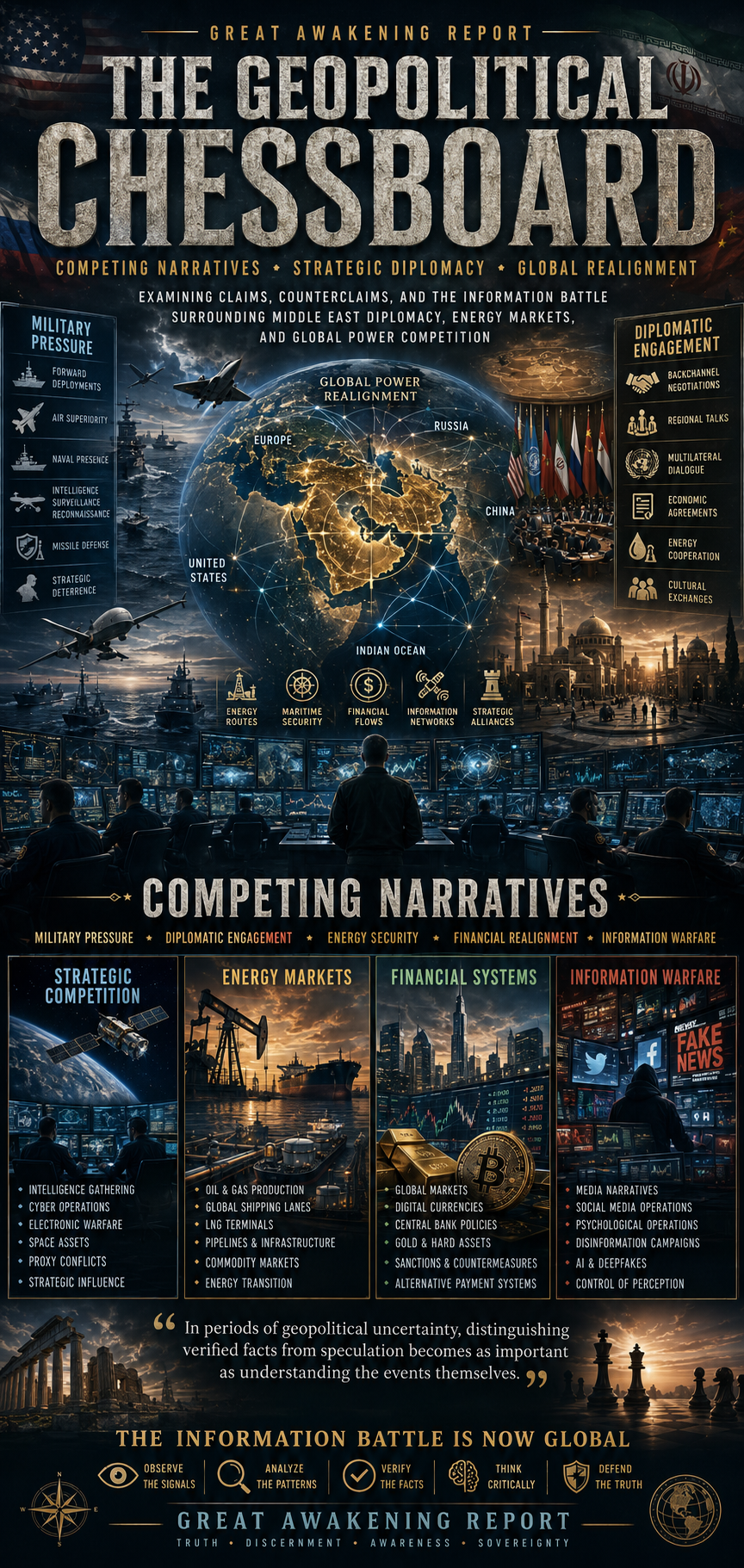
THE MSM IS IN PANIC MODE TODAY
For the last 13 nights, the mainstream media told you we were heading into World War III. They reported that US forces were striking Iran daily. They reported that President Trump was threatening a “massive attack” and had “1,000 missiles locked and loaded.”
What happened yesterday? The bombings suddenly stopped.
US Central Command made ZERO announcements of new strikes on Friday. The media is confused. They don’t know why.
I WILL TELL YOU WHY.
President Trump just pulled off the greatest geopolitical checkmate in modern history, and the Deep State is terrified you will find out.
While the media was screaming about war, Trump was secretly using Swiss intermediaries to negotiate directly with Tehran. He didn’t just stop a war—he broke the military-industrial complex.
Here is what is actually happening behind closed doors right now:
Iran has secretly agreed to completely dismantle its nuclear program. In exchange, the US blockade is lifting, but on Trump’s terms.
But here is the part that will break the internet: The deal includes $500 BILLION in seized Deep State assets that are being redirected to the US Treasury.
Why do you think Iranian Foreign Minister Araghchi was urgently meeting with Russian Foreign Minister Lavrov at the SCO summit in Kyrgyzstan yesterday? They were finalizing the framework of a new global financial agreement that completely bypasses the corrupt central banking system.
The military-industrial complex is furious. They wanted endless war to fund their black budgets. Yesterday afternoon, Military Intelligence intercepted communications from three top Pentagon generals attempting to sabotage the peace talks. They were arrested at 03:00 AM this morning.
President Trump is preparing to address the nation within the next 72 hours to announce this historic victory. When he does, global oil prices will plummet, the stock market will explode, and the Deep State’s primary funding mechanism (endless war) will be permanently severed.
They wanted a war to stop him. He used their war to bankrupt them.
THE GAME IS OVER.
SHARE THIS EVERYWHERE BEFORE THEY TAKE IT DOWN.
It Is Going To Be A Very Difficult Winter If The Global Energy Crisis Is Not Resolved Soon
Unless some sort of a miracle happens, the world is facing a severe energy supply crunch in the months ahead. Since the war with Iran began, we have been able to function normally because we had huge inventory buffers that we could rely on. But now those inventory buffers are nearly gone, the Iranians have been attacking commercial vessels in the Strait of Hormuz, the Houthis are preventing Saudi tankers from getting through the Bab el-Mandeb Strait, and the Ukrainains have been relentlessly attacking Russian refineries. As a result, we are potentially facing a very difficult winter.
Most people do not understand how dire things have become because they are still operating as if there was no energy crisis at all.
The reason they have been able to do that is because we had extensive inventory stockpiles, but now those stockpiles are “largely depleted”…
At the start of the war in late February, countries relied on strategic oil reserves to mitigate the worst impacts of an energy supply crunch. Those stockpiles are now largely depleted, stripping the market of its key shock-absorbing cushion.
At this moment, the world is running an oil deficit. But we can only do that for so long.
Once the stockpiles get to zero, oil prices will go “a lot higher”, and we are being warned that the clock is ticking…
“Our view, at a high level, is that we are in a crisis,” said Merritt Point’s Baird. “One that we have prepared for with very large inventory buffers, but the clock is ticking, and the challenges introduced this week with the potential disruption of Bab el-Mandeb just pull that much harder on the finite buffer.”
In addition to blocking Saudi vessels from traveling through the Bab el-Mandeb Strait, the Houthis are also hitting Saudi oil facilities…
Ship traffic through Bab el-Mandeb fell on Sunday after Yemeni Houthis attacked Saudi oil installations along the Red Sea coast, while transit through the Strait of Hormuz stayed low over the weekend, shipping data from Kpler showed on Monday.
Eleven commodity vessels passed through the Bab el-Mandeb strait on Sunday, the lowest level in months, the data showed.
We aren’t hearing about this a lot in the western media, but serious damage is being done by the Houthis.
In fact, Aramco’s Jizan oil refinery continues to burn two days after it was originally struck by ballistic missiles…
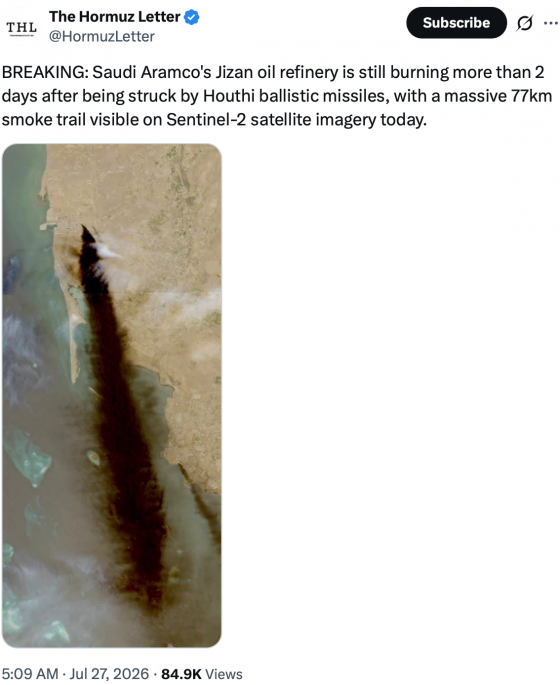
A 77 kilometer smoke trail indicates that the damage that has been done to that facility is quite extensive.
On Monday, the Houthis struck again.
This time is was Aramco’s Abqaiq oil processing facility…
Meanwhile there are emerging Monday reports that Saudi Aramco’s Abqaiq oil processing facility in the kingdom’s eastern province is on fire after probable drone and/or missile strikes by the Houthis, or from Iran-aligned Iraqi militias.
Newsquawk reports based on emerging Iranian state media that “Hours ago, the huge Abqaiq oil facility in eastern Saudi Arabia, one of the world’s most important oil processing centers, was set on fire in drone and missile attacks, reports Tasnim citing sources and images.”
The damage that the Houthis are causing could take months or even years to fully repair.
So even if the Strait of Hormuz and the Bab el-Mandeb Strait both suddenly opened, there won’t be as much Saudi oil flowing out of the region for an extended period of time.
Meanwhile, gas stations in Russia are actually rationing gasoline as a result of Ukraine’s unprecedented drone attacks on Russian refineries…
Ukraine’s Volodymyr Zelensky began intensifying drone attacks on Russian oil refineries in mid-June as part of a campaign to raise the war’s stakes for ordinary Russians more than four years after Putin’s full-scale invasion of his country.
Thanks to more than a month of attacks on refineries, fuel depots, and warehouses hundreds of miles behind the front line—including in Moscow—Russia is facing a fuel crisis the likes of which have not been seen since Putin’s rise to power more than 25 years ago, NBC News reported.
Gas stations in many regions have taken the unprecedented move of introducing rationing schemes and restrictions, and social media has been flooded with videos of long lines and frustrated drivers.
Russia normally exports a tremendous amount of oil. But now they are being forced to purchase gasoline from India.
If we keep running down our inventory buffers, soon we will start witnessing rationing all over the globe. Of course supplies of natural gas are getting really tight as well. Gas storage facilities all over Europe should be nearly full right now in preparation for winter, but instead they are currently sitting at about half that level…
Supplies have been run down because of the war in Iran and the closure of the Strait of Hormuz, with up to a fifth of the world’s supply disrupted.
Currently, across Europe, gas storage facilities are around half full.
This is “an historically low level at this time of the year”, according to energy consultancy Wood Mackenzie.
Unless things change, this is going to be a long, cold winter in Europe this year.
The situation is even worse in the United Kingdom.
At this point, the UK currently has “less than a week’s worth of gas reserves”…
The National Energy System Operator (Neso) said the curbs would take effect from Friday, as it faces questions over how close Britain came to blackouts during a heatwave in June.
Official data show the UK currently has less than a week’s worth of gas reserves. European nations typically hold several weeks’ worth of supply, though stocks on the Continent have also been run down.
Mr O’Shea, the chief executive of Centrica, which owns British Gas, said: “European gas storage levels are low. UK gas storage levels are incredibly low … If it’s not a warm winter, then there’ll be problems, and the problems will be associated with having less gas in storage.”
If the war in the Middle East does not get resolved, I have no idea what everyone is going to do.
Of course I am fully convinced that the war in the Middle East is not going to end any time soon. So I would make preparations for a very difficult winter.
As Chris Martenson often reminds us, energy is the foundation of all economic activity, and it appears that the world simply won’t have enough energy to function normally this upcoming winter.
280,000 CHILDREN DISAPPEARED. THE SYSTEM THAT WAS SUPPOSED TO PROTECT THEM BECAME THEIR EXECUTIONER
Between 2021 and 2025, the federal government lost track of 280,000 unaccompanied migrant children. Not misplaced. Not temporarily separated. DISAPPEARED. Sent to unverified addresses. Moved in the dead of night. Never seen again.
Source: The 17th Disciple TG
This wasn’t incompetence. This was systematic child trafficking orchestrated from the highest levels of government.
A whistleblower caseworker at the Pomona Fairplex facility has come forward with documentation that will destroy careers and demand accountability. What she witnessed was a deliberate dismantling of child protection protocols in favor of rapid processing and political expediency.
Children arrived traumatized and alone. They were separated from siblings without explanation. A 5-year-old girl named Grace was torn from her 7-year-old sister. When she cried asking where her sister was, caseworkers had no answer. The girls were sent to different “sponsors” at unverified addresses. Neither caseworker nor government knew if they survived.
A 14-year-old girl was raped repeatedly and forced into sex work by her “sponsor.” The system that was supposed to protect her facilitated her abuse.
The vetting process was a joke. Selfies were accepted as ID. Sponsors communicated through WhatsApp. Addresses couldn’t be verified. Children were handed to strangers in the middle of the night with no follow-up. No welfare checks. No accountability.
The caseworker reported these horrors. She was ignored. When she demanded answers, she was told to process faster. When she pushed back, her concerns were buried. Employees who reported abuse were fired.
Children were woken at 2 a.m., handed bags of belongings, and transported by unknown individuals in unmarked vehicles. Nobody tracked where they went. Nobody knew who took them. The timing was deliberate—darkness ensured nobody would see the children leaving.
Workers received inadequate training. Children slept on cots in makeshift pods with 20-35 minors and little privacy. Sexual harassment and abuse inside the facility went unreported because whistleblowers faced termination.
This is industrial-scale child trafficking. This is government-facilitated exploitation. This is the system choosing profit and politics over the safety of the most vulnerable.
The whistleblower has the documentation. She has the names. She has the evidence. The cover-up is collapsing. The children are speaking. The truth is breaking through.
The architects of this system will face justice.
SHARE THIS. THE CHILDREN’S VOICES MUST BE HEARD.
CODE: MISSING-280K / CHILD-TRAFFICKING-SYSTEM / POMONA-FAIRPLEX / SPONSOR-FRAUD / GOVERNMENT-FACILITATED-ABUSE / WHISTLEBLOWER-EXPOSED

CAUTION ⚠️ ALERT / DISCERNMENT / Graphic Material in this Article
The Crimes Against Humanity That One Of The Greatest Criminals In U.S. History Has Committed Must Never Be Forgotten
It has been said that if we do not learn from history, we are doomed to repeat it. Sadly, it doesn’t appear that we have learned much from the last pandemic. Mad scientists continue to monkey around with some of the deadliest diseases ever known to humanity, and in many cases they are purposely trying to make them even more deadly. It is so easy for an “accident” to happen, but they don’t seem to care. As long as it is for “science”, anything is justified. That even includes using parts from aborted babies or brutally torturing dogs and cats in many of their twisted experiments. Crimes against humanity continue to occur behind closed doors in secret labs all over this country, and that is just one of the reasons why the crimes against humanity that one of the greatest criminals in U.S. history has committed must never be forgotten.
So many people were looking forward to Dr. Anthony Fauci’s testimony in front of the Senate Homeland Security and Governmental Affairs Committee on Wednesday.
A lot of us were hoping that we would finally get some answers to questions that we have been asking for a very long time.
But that didn’t happen.
During his opening statement, Dr. Fauci made it very clear that he would be pleading the Fifth in response to all questions…
“Given Senator Paul’s obvious obsession with calling for my prosecution, his repeated slanderous comments about me, and recently, his publicly releasing my unredacted personal diary, aimed at embarrassing and intimidating me, the only conclusion I can reach is that the sole reason he is calling me before this committee is to get me to say something, anything, that could vindicate his repeated public pledges that I end up, in his words, quote, ‘behind bars,’” Fauci said.
“Any reasonable person who has followed his unhinged obsession with me would readily come to the same conclusion. Therefore, although it pains me to do so because of the respect I have for the legislative branch of government and my decades-long record of cooperating with Congress, under the advice of my attorneys, I will invoke my right under the Fifth Amendment of the Constitution to refrain from answering your questions. Thank you.”
From that point forward, Fauci answered every question that Senators asked him by giving the exact same response: “On the advice of counsel, I respectfully decline to answer based upon my rights under the Fifth Amendment.”
He even did this when Senator Josh Hawley asked him ridiculously simple questions that had nothing to do with the pandemic…
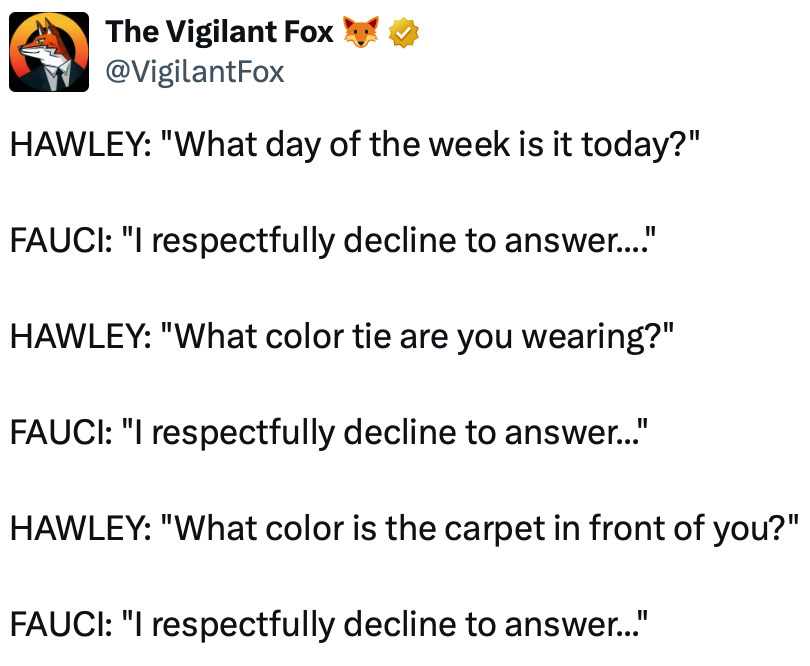
Fauci doesn’t care how that looked.
He just wants to do whatever he can to stay out of prison.
Overall, Fauci invoked the Fifth Amendment at least 105 times…
Dr. Anthony Fauci has pleaded the Fifth Amendment more than 100 times in a Senate Homeland Committee hearing Wednesday about the COVID-19 pandemic.
Fauci took the fifth at least 105 times as the hearing was drawing to a close, three hours’ of questioning later.
Because Fauci was preemptively pardoned by Joe Biden, I don’t think that he will ever answer for the crimes that he has committed during his lifetime. But we must not ever forget what he did.
For example, Senator Joni Ernst asked Fauci about the fact that he personally authorized the use of “aborted baby body parts in mice research”…
Sen. Joni Ernst (R-Iowa) has revealed that former NIAID Director Dr. Anthony Fauci approved the use of “aborted baby body parts in mice research.”
“NIH-funded coronavirus researcher Dr. Ralph Baric and his colleagues at UNC put parts of livers, thymus and chunks of human fetal lung that they got from aborted, almost five-month-old human babies,” explained Ernst. “They put those parts in their research mice. They disgustingly named them ‘BLT-L’ mice, and wrote they had created a ‘sandwich of aborted body parts in the mice.’”
“Get it folks? BLT, a BLT sandwich,” Ernst emphasized. “Thankfully, the current NIH director has said no more of this. Dr. Fauci, yes or no? Do you think that human aborted parts should be put into mice for coronavirus research?”
I don’t even have the words to describe how evil this is.
Everyone that has been involved in this should be in prison.
Our tax money was being used to take parts from five-month-old aborted babies and graft them on to mice…
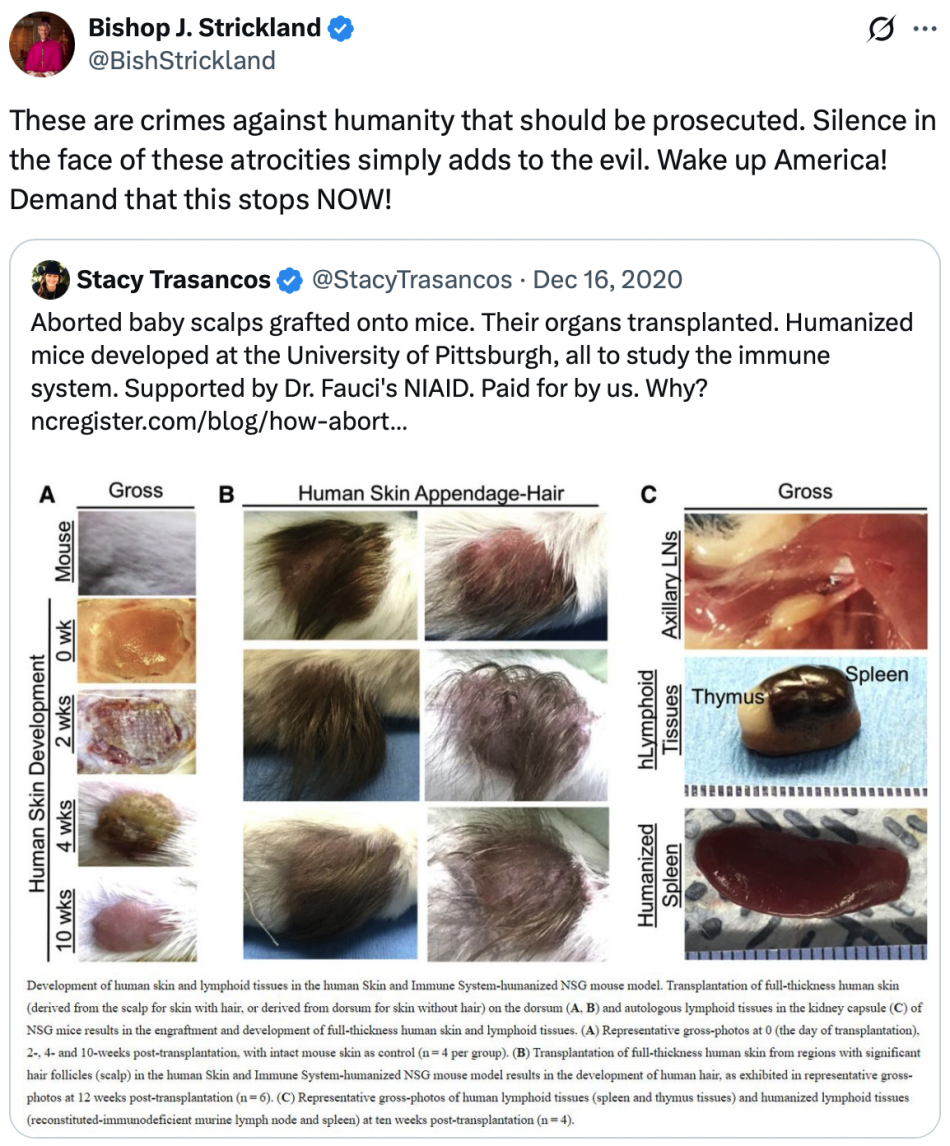
Nobody is ever going to be held accountable for this.
And nobody is ever going to be held accountable for what the NIAID was doing to dogs either…
How could anyone do such a thing? But to this day, a lot of Democrats continue to defend these practices. This is yet another sign of how far gone our society is. Right now, scientists all over the U.S. continue to use aborted fetal tissue in their experiments. And scientists all over the U.S. continue to torture dogs and cats in the name of science.
Of course I could go on all day about other crimes that Dr. Fauci committed. I don’t think that I even have the words to adequately describe the amount of harm that he caused.
Sadly, our society celebrates people like him. Hollywood even made glowing documentaries about him. But he won’t even answer the most basic questions in front of the U.S. Senate.
What a disgrace.
However, Fauci’s attorney had plenty to say, and this greatly annoyed Senator Rand Paul…
Fauci’s attorney, David Schertler, had sat next to the former COVID-19 czar during the testy hearing and repeatedly tried to speak up after Paul (R-Ky.) suggested his client would face repercussions for refusing to answer questions.
Schertler ignored Paul’s repeated warnings that he was not authorized to speak.
“You will respect these proceedings. You were told not to sit at the table. You insist on sitting at the table and we told you you would not be recognized. You are not invited here for testimony, sir. You are being disruptive. Would you behave this way in a courtroom? No, because the judge would put you in jail. I can’t do that today. But I can have you escorted from the premises,” Paul told Schertler.
Needless to say, Schertler would not shut up.
After giving him a final warning, Senator Paul actually had Schertler escorted out…
“So I would say, sir, sit quietly and don’t say another word. I said sit quietly. You are not recognized. Another word and you’re gone,” Paul declared.
After another back-and-forth and the attorney’s refusal to listen, Paul then had security remove him from the room.
Once that happened, the entire hearing room erupted in applause.
And Senator Paul is warning Dr. Fauci that there will be consequences for refusing to answer any questions…
Rand Paul says Anthony Fauci can expect consequences for the former Covid czar’s decision to exercise his Fifth Amendment rights against self-incrimination to avoid testifying before Paul’s Senate committee on Wednesday.
“It’s against the law to obstruct an investigation of Congress. There will be repercussions for your refusal to testify,” Paul told Fauci, the longtime top government health official who led the pandemic response. Paul scheduled a vote of his Homeland Security and Governmental Affairs Committee on Aug. 5 on a resolution declaring Fauci in contempt of Congress.
We shall see what happens.
If Dr. Fauci is not held accountable for his refusal to testify, countless others will use the exact same strategy in the future when they are called in front of the U.S. Senate.
Meanwhile, it appears that we have not learned much from the last pandemic, and now more great pestilences are on the way. As I write this, the Ebola outbreak in the Democratic Republic of the Congo is really picking up steam. It is spreading like wildfire and the death rate is sitting at about 40 percent.
We all saw the panic that can be caused when a disease that has a death rate of way under 1 percent starts spreading all over the globe. So what would happen if a disease that has a death rate of 40 percent starts spreading all over the globe?
There are other diseases that our scientists have cooked up that are even more deadly, and they are just one accident away from getting released into the general population.
The last pandemic should have motivated us to shut down hundreds of secret labs in the U.S. and around the world. But instead we brushed it off and treated the last pandemic like it was just a one time deal.
Of course it wasn’t just a one time deal, and our society is going to learn that the hard way.
THE EU COORDINATED FINANCIAL WARFARE AGAINST AMERICAN TECH. THE DOCUMENTS ARE SURFACING.
$22 Billion in fines. Apple. Meta. Amazon. Google. All American companies. All targeted in a coordinated assault orchestrated by Brussels and their Deep State allies.
Source: The 17th Disciple TG
This isn’t regulation. This is economic warfare disguised as compliance.
Between 2021 and 2026, the European Union systematically weaponized antitrust law against American technology companies while protecting European competitors. The pattern is too precise to be coincidence. The timing too coordinated to be accidental.
Apple: $15 Billion. Meta: $3 Billion. Amazon: $2.5 Billion. Google: $1 Billion. Total: $21.5 Billion extracted from American innovation and funneled into European bureaucratic coffers.
But here’s what they’re hiding: the real fines are triple this amount. Internal EU documents reveal $67 Billion in planned extractions over the next five years. The strategy is to systematically dismantle American tech dominance and transfer technological supremacy to Chinese and European competitors.
The coordination is documented. Emails between EU regulators and Chinese intelligence officials discussing “strategic technology transfer.” Meetings between Brussels and the Deep State apparatus planning synchronized attacks on American companies. Whistleblowers inside the EU Commission have the receipts.
The fines aren’t random. They’re calculated to cripple American companies while leaving European tech competitors untouched. Spotify gets protection. TikTok gets a pass. But American companies? They get destroyed.
This is financial genocide against American innovation. This is the globalist apparatus attempting to level the playing field by handicapping the winners.
But the counterattack is coming. The 301 Investigation is underway. Tariffs are being prepared. The economic retaliation will be devastating.
The EU will pay a price far exceeding $22 Billion. American tariffs will target European luxury goods, automotive, agriculture, pharmaceuticals. The economic response will be swift and merciless.
The documents proving the coordination are being released. The whistleblowers are coming forward. The conspiracy is unraveling.
American companies will be protected. American innovation will dominate. American workers will prosper.
SHARE THIS. THE ECONOMIC TRUTH IS BREAKING THROUGH.
CODE: EU-FINANCIAL-WARFARE / TECH-GENOCIDE / DEEP-STATE-COORDINATION / TARIFF-RETALIATION / AMERICAN-DOMINANCE / GLOBALIST-ATTACK
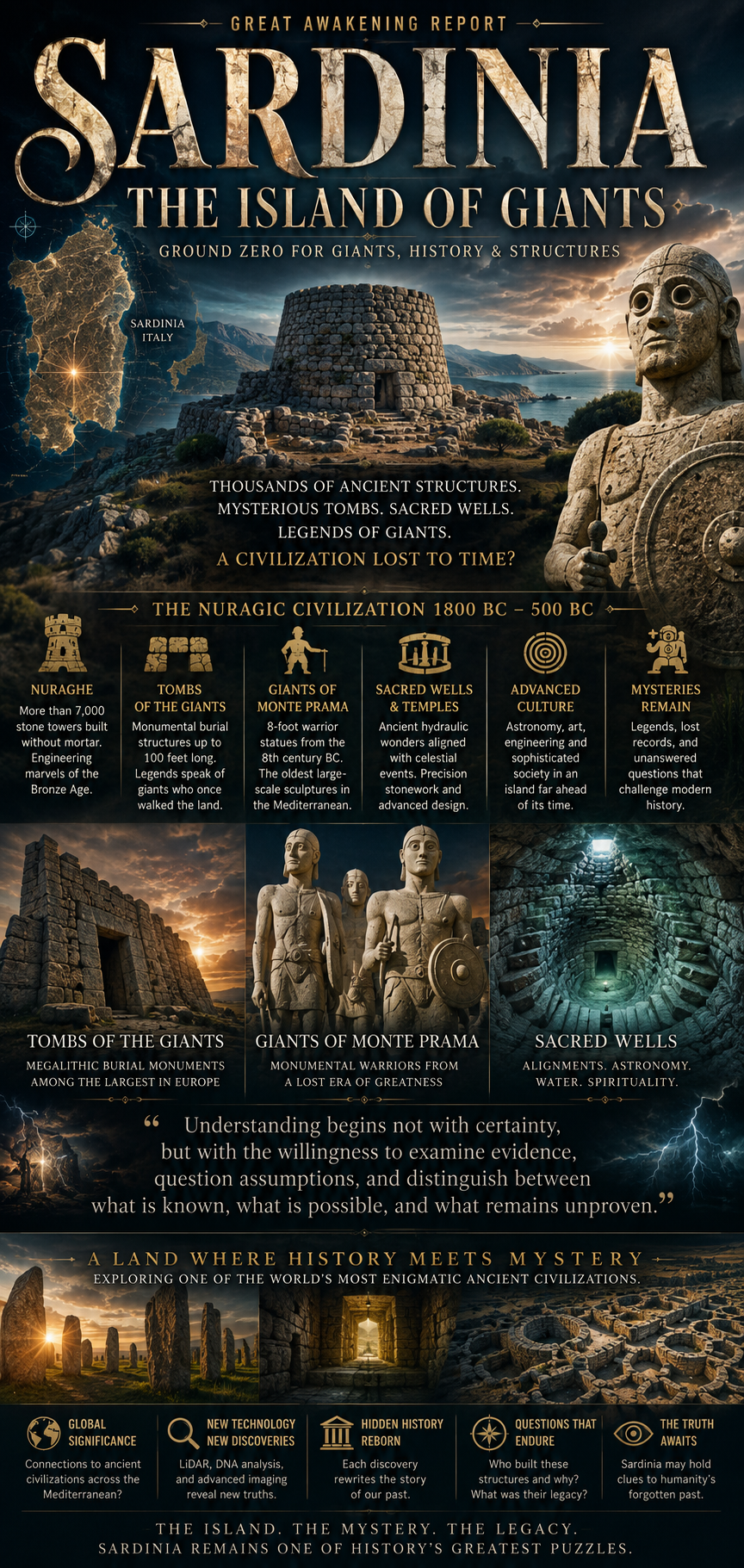
SARDINIA: THE ISLAND OF GIANTS
Ancient Megaliths, Mysterious Burials, and One of History’s Greatest Archaeological Mysteries
By Great Awakening Report Research Staff
Nestled in the heart of the western Mediterranean, the Italian island of Sardinia has become one of the world’s most fascinating destinations for researchers interested in ancient civilizations, megalithic architecture, and humanity’s forgotten past. While millions visit Sardinia each year for its beaches and picturesque villages, relatively few realize that beneath its rugged landscape lies one of Europe’s richest concentrations of prehistoric monuments. Thousands of mysterious stone towers known as Nuraghe, massive underground tombs, sacred wells, giant stone statues, and unusual burial sites have inspired archaeologists, historians, and alternative researchers alike to ask whether Sardinia preserves the remnants of a civilization far older—and perhaps far more sophisticated—than conventional history suggests.
At the center of this mystery is the remarkable Nuragic Civilization, which flourished between approximately 1800 BC and 500 BC. The Nuragic people constructed more than 7,000 stone towers, many of which still stand today. Built without mortar from enormous blocks of granite and basalt, these structures demonstrate an extraordinary understanding of engineering and architecture. Some towers rise more than sixty feet high, while larger complexes contain multiple towers, defensive walls, underground chambers, and sophisticated water systems. Although mainstream archaeologists generally interpret these monuments as fortifications, ceremonial centers, or symbols of political authority, many questions remain unanswered regarding their precise purpose and how such an advanced culture developed on a relatively isolated island.
Perhaps even more intriguing are the island’s famous “Tombs of the Giants” (Tombe dei Giganti). These elongated communal burial monuments, some extending over one hundred feet in length, are among the largest funerary structures in Bronze Age Europe. Their impressive stone facades, carefully fitted megaliths, and semicircular forecourts have long captured the imagination of visitors. The name “Tombs of the Giants” originated in local folklore rather than archaeology, reflecting centuries-old legends that enormous human beings once inhabited the island. While archaeologists attribute these structures to collective burials of Nuragic communities, the legends surrounding them continue to fuel speculation about Sardinia’s ancient past.
The mystery deepened dramatically in 1974 with the discovery of the Giants of Monte Prama. Archaeologists unearthed dozens of monumental limestone statues depicting warriors, archers, and boxers standing more than eight feet tall. Dating to roughly the 8th century BC, these sculptures represent the oldest known large-scale stone statues in the western Mediterranean. Their stylized circular eyes, imposing stature, and martial symbolism remain unlike any other artistic tradition of their time. For many researchers, the Monte Prama statues demonstrate that the Nuragic civilization possessed a level of artistic sophistication and cultural identity that is only now beginning to be fully appreciated.
Adding another layer to Sardinia’s enigmatic history are the island’s numerous sacred wells and temple complexes. These remarkable structures reveal advanced knowledge of geometry, astronomy, and hydraulic engineering. Some sacred wells appear to align with celestial events such as lunar standstills and equinoxes, leading researchers to suggest that astronomy played an important role in Nuragic religious practices. Precision stonework, underground chambers, and carefully engineered water systems continue to impress modern engineers and archaeologists alike.
Beyond the accepted archaeological record lies a rich tradition of legends describing giants, ancient kings, and mysterious peoples who supposedly inhabited Sardinia long before recorded history. Ancient Greek and Roman writers occasionally referred to unusually large inhabitants of the island, while medieval traditions preserved stories of powerful beings associated with the great stone monuments. Although no credible scientific evidence confirms the existence of a race of giant humans in Sardinia, these enduring traditions have become a central theme within alternative history circles. Reports of unusually large skeletal remains occasionally surface in popular media and online discussions, but most remain unverified or lack sufficient archaeological documentation to support extraordinary conclusions.
Alternative researchers often place Sardinia within a much broader network of prehistoric civilizations that includes Malta, Göbekli Tepe, Egypt, and the megalithic cultures of Western Europe. They note similarities in stone construction techniques, astronomical alignments, and enduring myths concerning culture-bringers, giants, or advanced ancient societies. Some even speculate that Sardinia may preserve fragments of knowledge inherited from an earlier Mediterranean civilization lost to history. While these ideas remain speculative and fall outside mainstream archaeology, they continue to inspire ongoing exploration into humanity’s distant past.
Modern archaeological research, meanwhile, continues to uncover new evidence that reshapes our understanding of the Nuragic world. Advances in ground-penetrating radar, LiDAR mapping, DNA analysis, and improved dating techniques are revealing increasingly complex settlement patterns and sophisticated social organization across the island. Each new discovery reinforces the idea that Sardinia played a far more significant role in Bronze Age Mediterranean history than previously recognized.
Whether viewed through the lens of conventional archaeology or alternative historical inquiry, Sardinia remains one of Earth’s most remarkable archaeological landscapes. Its Nuraghe, Giants of Monte Prama, Tombs of the Giants, sacred wells, and enduring legends invite us to reconsider how much of humanity’s early history may still lie hidden beneath layers of time. As excavations continue and new technologies reveal previously unseen chapters of the ancient world, Sardinia stands as a powerful reminder that many of history’s greatest mysteries remain unsolved.
GAR Perspective
The story of Sardinia illustrates one of the central themes explored throughout the Great Awakening Report: the possibility that our understanding of ancient civilization is still incomplete. New discoveries continue to challenge long-held assumptions, encouraging both scholars and independent researchers to reexamine the evidence with fresh eyes. While extraordinary claims require extraordinary evidence, Sardinia demonstrates that some of history’s most profound questions are still waiting to be answered.
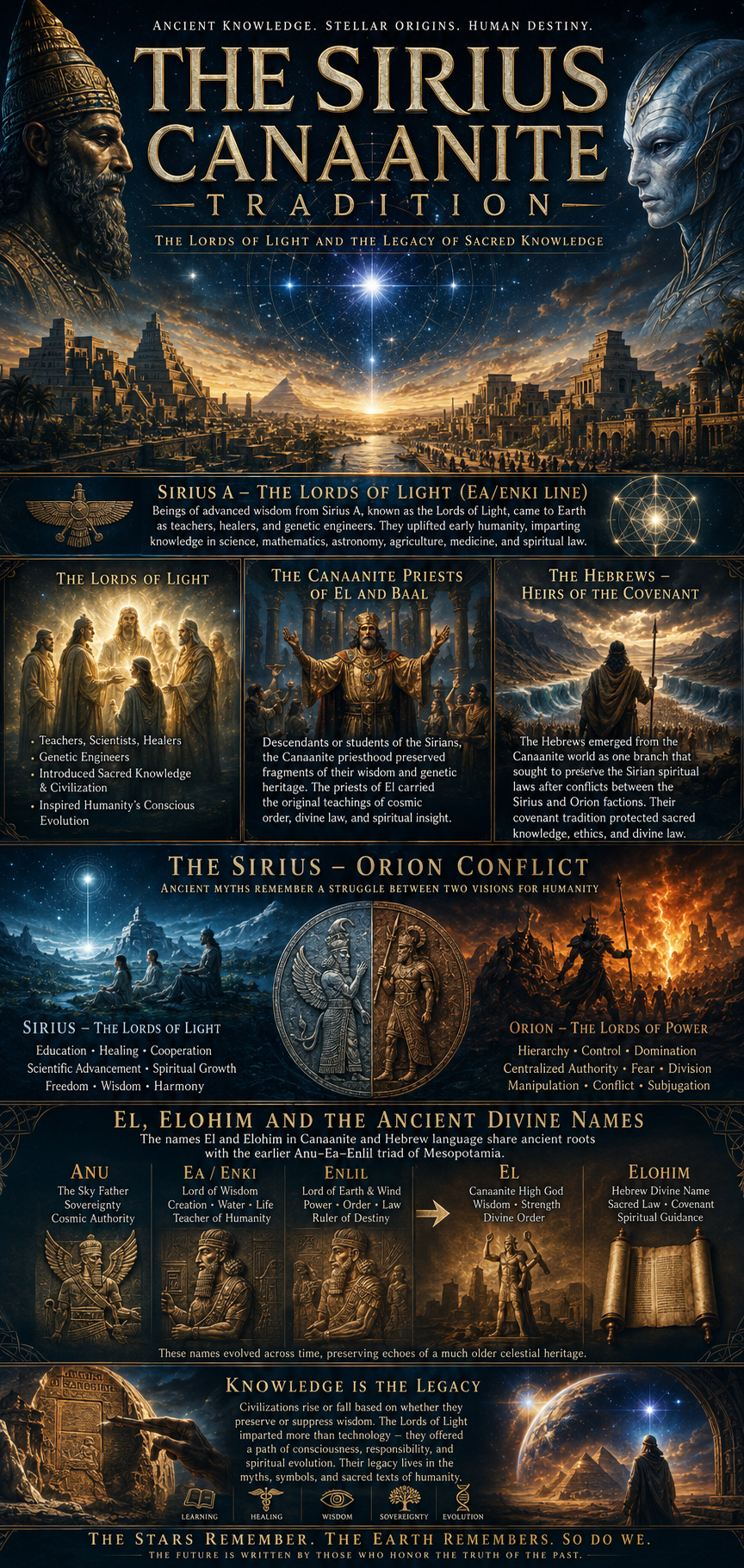
The Sirius–Canaanite Tradition: Reexamining Ancient Narratives of the “Lords of Light”
One of the more intriguing interpretations within modern alternative history is presented in Robert Morning Sky’s The Terra Papers.
Source: GAR Contributing Writer
Rather than reading the ancient civilizations of Mesopotamia, Canaan, and the Hebrews solely through conventional archaeology and theology, Morning Sky proposes a mythological framework in which these traditions preserve symbolic memories of interactions between advanced non-human civilizations. Although these interpretations are not accepted by mainstream historians or archaeologists, they have become influential within many ancient astronaut, esoteric, and consciousness communities because they attempt to connect diverse mythologies into a single narrative.
According to Morning Sky’s reconstruction, one of the central lineages originates from Sirius A, represented by the benevolent Lords of Light, often associated with Ea (Enki). In this narrative, these beings served as teachers, scientists, genetic engineers, and civilizing influences who sought to help humanity develop intellectually, spiritually, and technologically. Rather than ruling through domination, they are portrayed as encouraging the expansion of knowledge, creativity, individual sovereignty, and conscious evolution.
The Lords of Light and the Sirian Legacy
Within this framework, Ea (Enki) becomes one of the principal figures representing compassion, wisdom, and scientific advancement. Morning Sky suggests that many later traditions describing enlightened beings, culture bringers, or divine teachers may preserve symbolic memories of this Sirian influence. The Lords of Light are depicted as introducing agriculture, astronomy, mathematics, medicine, architecture, metallurgy, and sacred knowledge to early civilizations.
This interpretation presents Sirius not merely as an important astronomical object but as a symbolic source of higher wisdom. Across numerous ancient cultures—including Egypt, Mesopotamia, and parts of Africa—Sirius occupied a position of extraordinary religious significance. While conventional scholarship explains these associations through astronomy, agriculture, and seasonal calendars, alternative researchers suggest they may reflect a much older tradition linking Sirius with humanity’s earliest teachers.
The Canaanite Priesthood
Morning Sky further proposes that the Canaanite priesthood, particularly those devoted to El and later Baal, inherited fragments of this original Sirian knowledge. Rather than viewing the Canaanites simply as neighboring peoples of ancient Israel, he portrays them as custodians of an older esoteric tradition whose teachings gradually fragmented over time.
In this interpretation, the priests of El represented an earlier spiritual current emphasizing cosmic order, wisdom, and divine law. As political power struggles intensified throughout the ancient Near East, portions of these teachings were allegedly transformed, reinterpreted, or merged with competing religious systems. The resulting myths became increasingly symbolic, preserving only echoes of what Morning Sky considers a much older historical memory.
The Hebrews as One Branch of the Canaanite World
Modern archaeology generally agrees that the earliest Israelites emerged from within the broader Canaanite cultural world, sharing language, customs, and many religious concepts before developing a distinct identity. Morning Sky builds upon this historical observation but extends it much further into the realm of speculative interpretation.
Within his narrative, the Hebrews become one branch of the larger Canaanite peoples who sought to preserve portions of the original Sirian spiritual tradition after conflicts erupted among competing extraterrestrial factions, particularly between those associated with Sirius and Orion. The Hebrew tradition is therefore presented as emphasizing covenant, ethical law, spiritual discipline, and the preservation of sacred knowledge amid a period of increasing fragmentation.
In this framework, the biblical concept of covenant represents not simply a religious agreement but an effort to preserve humanity’s connection with higher principles rooted in wisdom, responsibility, and conscious evolution.
The Orion–Sirius Conflict
One of the recurring themes throughout The Terra Papers is the proposed conflict between civilizations associated with Sirius and Orion. Morning Sky interprets many ancient myths describing wars among the gods as symbolic recollections of competing philosophies rather than merely supernatural stories.
Within this narrative:
- Sirius represents education, healing, cooperation, scientific advancement, and spiritual growth.
- Orion symbolizes hierarchy, control, domination, centralized authority, and the manipulation of civilization through fear and conflict.
Supporters of this interpretation often view many later political and religious struggles as reflections of this larger symbolic contest between two competing approaches to civilization. It should be emphasized that these connections remain speculative and are not supported by mainstream historical evidence.
El, Elohim, and the Ancient Divine Names
An important linguistic element of Morning Sky’s interpretation concerns the ancient terms El and Elohim.
In historical scholarship:
- El was the name of the chief deity within the Canaanite pantheon.
- Elohim is the Hebrew plural grammatical form that frequently functions as a singular title for the God of Israel within the Hebrew Bible, depending on context.
Morning Sky proposes that these names preserve echoes of much older traditions associated with the Anu–Ea–Enlil triad of Mesopotamian mythology. Rather than viewing them as entirely separate religious developments, he suggests they reflect evolving cultural memories that became adapted across successive civilizations.
Mainstream linguistics recognizes historical relationships among Semitic languages and acknowledges cultural exchange throughout the ancient Near East. However, the specific identification of El, Elohim, Anu, Enki, and Enlil as representing extraterrestrial lineages remains part of alternative historical speculation rather than accepted academic consensus.
Knowledge as the Central Theme
Perhaps the most significant aspect of Morning Sky’s narrative is not the extraterrestrial framework itself but the recurring emphasis on knowledge. Throughout The Terra Papers, civilizations rise or decline according to whether they preserve or suppress wisdom. Scientific understanding, ethical responsibility, conscious awareness, and personal sovereignty become recurring themes that transcend literal interpretations of the myths.
Within this symbolic reading, the Lords of Light represent humanity’s enduring aspiration toward learning, healing, cooperation, and higher consciousness, while opposing forces symbolize ignorance, division, and centralized control. Whether interpreted as literal history, mythic allegory, or philosophical metaphor, this framework invites readers to consider how ancient stories continue to shape modern discussions about civilization, identity, and humanity’s place in the cosmos.
A Balanced Perspective
Robert Morning Sky’s The Terra Papers offers one of the more comprehensive mythological reinterpretations of ancient Mesopotamian and Canaanite traditions within the broader ancient astronaut genre. Its narrative weaves together figures such as Ea (Enki), El, Elohim, the Canaanites, the Hebrews, Sirius, and Orion into a unified story of human origins and spiritual development.
While these ideas remain outside mainstream archaeology, biblical scholarship, and ancient history, they continue to attract readers interested in comparative mythology, consciousness studies, and esoteric traditions. Whether viewed as speculative history, symbolic mythology, or spiritual allegory, Morning Sky’s work encourages exploration of enduring questions about the origins of civilization, the preservation of wisdom, and humanity’s ongoing search for meaning.
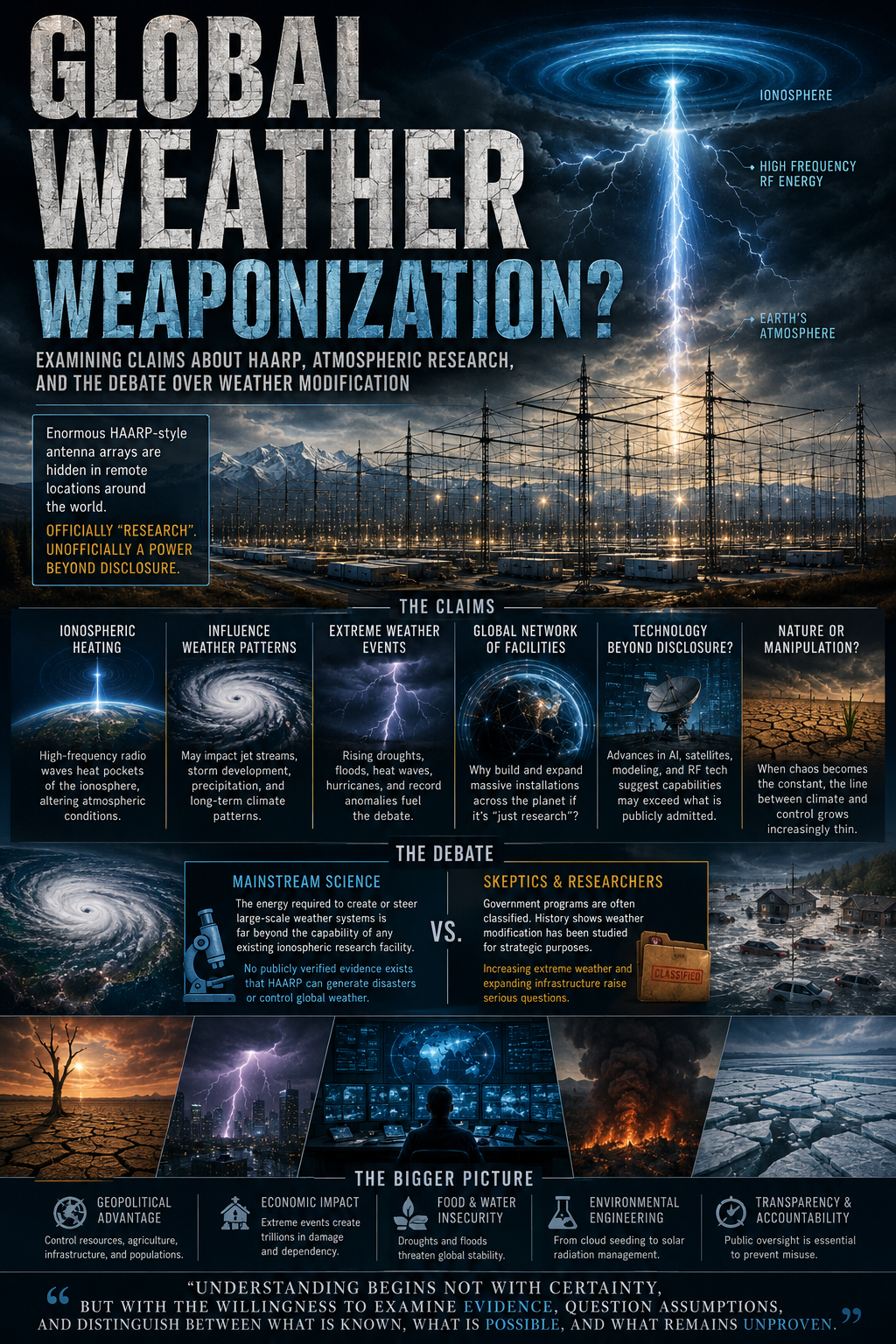
GLOBAL WEATHER WEAPONIZATION?
Examining Claims About HAARP, Atmospheric Research, and the Debate Over Weather Modification
By Great Awakening Report Research Staff
For decades, few scientific research programs have generated as much controversy as the High-frequency Active Auroral Research Program (HAARP) and similar high-power ionospheric research facilities located around the world. To supporters, these installations represent important scientific laboratories that help researchers better understand Earth’s upper atmosphere and improve radio communications, satellite operations, and space weather forecasting. To critics, however, they represent something far more consequential: a global network capable of influencing atmospheric conditions and potentially contributing to weather modification on a scale never publicly acknowledged.
Fueling this debate is the existence of enormous antenna arrays situated in remote locations across several countries. These facilities occupy hundreds of acres and contain hundreds of high-frequency transmitting antennas designed to study the ionosphere—the electrically charged layer of Earth’s upper atmosphere. Officially, researchers use these systems to investigate how solar activity interacts with the ionosphere, affecting GPS systems, communications, radar, and satellite operations. Their stated mission has remained scientific since the original HAARP facility began operations in Alaska during the 1990s.
Yet for many independent researchers, the official explanation leaves unanswered questions. They point to the size, sophistication, and continuing expansion of atmospheric research infrastructure as evidence that governments may possess capabilities beyond those publicly disclosed. The central question often raised is straightforward: Why invest billions of dollars in increasingly powerful atmospheric research systems if their capabilities are limited to basic scientific observation?
Within alternative research communities, one theory proposes that high-energy radio frequency transmissions could alter localized atmospheric conditions by heating specific regions of the ionosphere. Some proponents speculate that such interactions might indirectly influence jet streams, storm development, precipitation patterns, or other atmospheric processes under certain conditions. From this perspective, increasingly severe weather—including prolonged droughts, destructive flooding, record-breaking heat waves, and unusually intense storms—is viewed by some as evidence that atmospheric technologies may be playing a larger role than publicly acknowledged.
Supporters of these theories often point to the remarkable increase in extreme weather events witnessed over the past two decades. Record temperatures, unprecedented rainfall, prolonged droughts, rapidly intensifying hurricanes, and unusual atmospheric anomalies have prompted growing public interest in whether all observed changes can be explained solely through natural climate variability and human-driven climate change. For some observers, these events raise broader questions about whether undisclosed technologies might also be contributing to increasingly unpredictable weather patterns.
Mainstream atmospheric scientists, however, overwhelmingly reject the claim that facilities such as HAARP possess the energy required to create or steer large-scale weather systems. They note that the amount of energy involved in hurricanes, jet streams, and global atmospheric circulation exceeds by many orders of magnitude the energy produced by any existing ionospheric research installation. According to the current scientific consensus, while localized weather modification techniques such as cloud seeding have demonstrated limited success under specific conditions, there is no publicly verified evidence that HAARP or comparable facilities can deliberately generate hurricanes, earthquakes, droughts, or other major weather events.
That scientific consensus has not ended public debate. Skeptics argue that national security programs are often classified and that governments historically have conducted extensive research into environmental modification. Declassified military documents show that weather modification has long been studied for tactical purposes, and programs such as Project Stormfury, cloud-seeding research, and international discussions surrounding environmental modification have contributed to ongoing public curiosity about what modern technologies may ultimately be capable of achieving.
The broader issue extends beyond HAARP itself. Advances in artificial intelligence, supercomputing, satellite observation, atmospheric modeling, and climate engineering continue expanding humanity’s ability to understand—and potentially influence—complex environmental systems. While today’s publicly acknowledged technologies remain limited, many researchers believe atmospheric science will continue advancing rapidly over the coming decades, making discussions about governance, transparency, and international oversight increasingly important.
Ultimately, the question of weather weaponization remains one of the most debated subjects in alternative research. Some view it as an emerging strategic capability hidden behind scientific research, while others see the claims as unsupported speculation that exceeds what current evidence demonstrates. What is not disputed is that weather has become an increasingly important geopolitical issue as nations confront rising economic losses from extreme events, infrastructure vulnerability, food security challenges, and climate resilience.
For discerning readers, perhaps the most valuable approach is neither unquestioning acceptance nor outright dismissal, but continued examination of emerging evidence, transparent scientific inquiry, and careful distinction between established facts, plausible hypotheses, and unverified claims. As atmospheric science and technology continue to evolve, the conversation surrounding weather modification is likely to remain both controversial and highly consequential.
“Understanding begins not with certainty, but with the willingness to examine evidence, question assumptions, and distinguish between what is known, what is possible, and what remains unproven.”


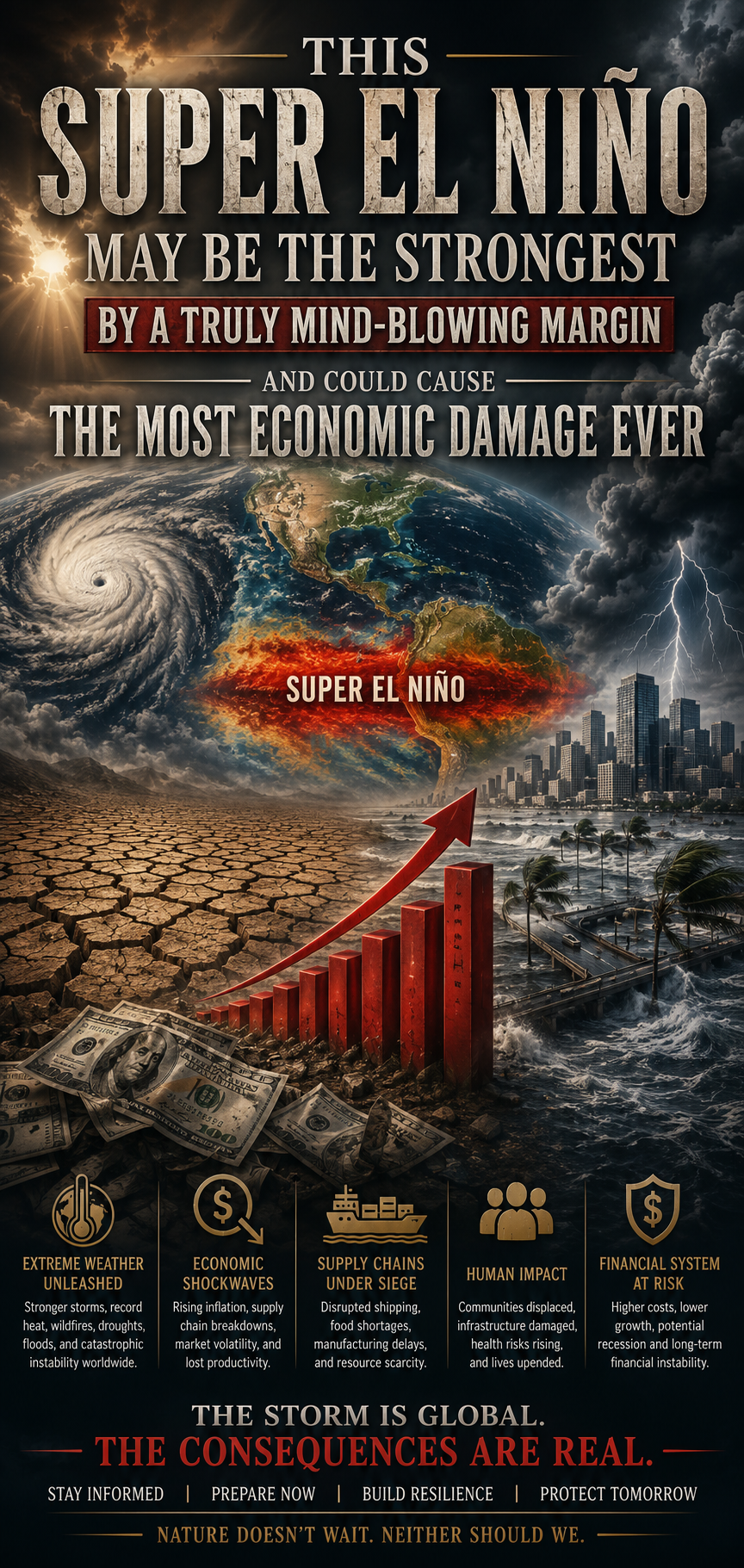
This Super El Niño May Be “The Strongest By A Truly Mind-Blowing Margin” And Could Cause The Most Economic Damage Ever
We are literally watching a slow-motion apocalyptic event play out right in front of our eyes, but most people in the general population don’t seem too concerned even though we are being warned that this apocalyptic event could cause trillions of dollars in economic losses. Large numbers of fish are being cooked to death, unprecedented wildfires are ripping across the United States and Europe, severe drought is greatly harming agricultural production in many areas, and the northern hemisphere is being slammed by one crazy heatwave after another. Yeah, a lot of people out there may be able to ignore what is going on outside by sitting in their air-conditioned homes, but the truth is that what is happening to us is going to cause a tremendous amount of pain for the whole world for an extended period of time.
The Super El Niño that we are currently experiencing is setting new water temperature records in the Pacific Ocean on a daily basis, and one expert is warning that it appears that “it may end up the strongest by a truly mind-blowing margin”…
The strengthening El Niño – a natural warming of seawater that influences weather around the planet – is setting daily warm water records.
It’s not only “very likely to be the strongest event since reliable records began – it may end up the strongest by a truly mind-blowing margin,” Zeke Hausfather, a research scientist at Berkeley Earth, wrote in a post for The Climate Brink, a Substack blog, earlier in July.
It remains to be seen what this will mean for the world’s weather over the next 12 to 18 months, but climate scientists say El Niño’s effects on global temperatures will increase the chances that 2026 could be the warmest year on record, and make it likely that 2027 will be the warmest.
The droughts caused by the Super El Niño of 1877-1878 resulted in famines that killed tens of millions of people. So if this Super El Niño will be stronger than that Super El Niño “by a truly mind-blowing margin”, what will that mean for impoverished nations all over the globe?
Prior to the war with Iran, the number of people around the globe suffering from acute food insecurity was already at the highest level ever recorded. How bad will things get in the months ahead?
This Super El Niño just started, and we are already setting records. Sea surface temperatures in the equatorial waters of the Pacific have never been this hot in July. We truly are in unprecedented territory, and scientists are extremely concerned about what is coming next.
In fact, a Dartmouth professor is telling us that this could be “the costliest El Niño on record”…
Because of its influence on hydrologic cycles, El Niño can bring catastrophic floods to some regions but severe drought and wildfires to others. It can also disrupt fisheries and food production and bring about trillions of dollars in economic losses.
“The current forecasts imply this could be the costliest El Niño on record,” Justin Mankin, a Dartmouth geography associate professor who studies El Niño’s economic impacts, recently told USA TODAY by email.
Trillions of dollars in economic losses is nothing to laugh at.
If a worst-case scenario materializes, we could potentially be facing tens of trillions of dollars in economic losses from this Super El Niño.
We won’t know exactly how bad this event will be until it is over, because we have never seen anything like this before. At this moment, the heartland of America is being absolutely baked by the third giant “heat dome” to strike the U.S. over the last month…
About 70 million people in the US are set to face excessive heat advisories as dangerously hot temperatures scorch much of the country’s southern and central states.
The third major “heat dome” event to hit the US in the past month is gathering strength over the weekend, spanning a vast swathe of the country, from the Gulf of Mexico coast to the Great Plains and the midwest.
Temperatures of 95-105F (35-40C) are expected, with some areas of the south-western US desert potentially reaching 120F (48C). The elevated heat is expected to linger into the coming week, held in place by the heat dome, which is when a high-pressure atmospheric system acts as a sort of lid, trapping heat in place over a region for days or even weeks.
Not too long ago, “heat dome” events were considered to be quite rare.
Now we are getting slammed by one almost every week.
It isn’t supposed to get up to 108 degrees in Nebraska, and it isn’t supposed to get up to 114 degrees in Nevada…
Places under a National Weather Service extreme heat warning included western Nebraska, where temperatures Saturday and Sunday were forecast to reach 108F.
The region’s heat was forecast to continue through the week, with temperatures topping 100F even in normally moderate areas of Montana and Wyoming.
Las Vegas was also expected to see near record-breaking highs. On Saturday, when temperatures reached around 114F in the valley, HVAC repair technician Kristian ‘Flaco’ Santos spent hours outside fixing air conditioning units.
And guess what?
A lot more heat is on the way.
In early August, another enormous heatwave is expected to send temperatures in California to dangerously high levels…
Much of the Central Valley will range from 105 to 113 degrees, and the interior Bay Area should surge to the triple digits. Warm nights will compound the effects of the extreme daytime temperatures.
Temperatures will wax and wane daily, and the duration of the heat wave is still uncertain, but long-range forecasts indicate California will contend with above-normal temperatures through mid-August. Fire danger may sharply increase. Poor air quality is expected as surface-level ozone concentrations build during the hot, sunny and windless weather.
When conditions are this hot and this dry, it is really easy for wildfires to erupt.
On Friday, I shared the following wildfire map from WatchDuty.org with my core supporters…
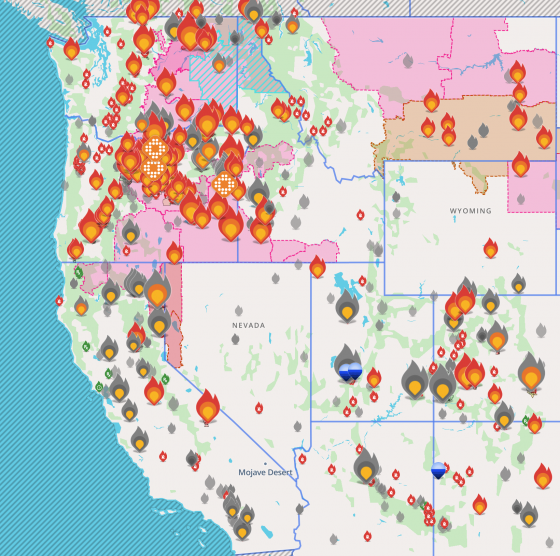
This is what the western third of the nation looks like right now.
Meanwhile, absolutely gigantic wildfires are ripping across France and Spain…
France fought an “unpredictable” wildfire close to Bordeaux on Sunday while Spain warned of “difficult hours” in its own fiery battle, with evacuations from danger zones in both countries mounting to well over 300,000 people.
The forest infernos, raging for days unchecked in France’s southwest and in central Spain near Madrid, were among the worst each nation has seen in peacetime.
France’s major fire has caused an unprecedented “pyrocumulonimbus”: a gigantic, untamable fire cloud that creates its own winds and packs lightning that causes more blazes, according to the National Firefighters Federation of France (FNSPF).
“It’s a David-versus-Goliath scenario: the idea is that, at some point, we’ll find a weak spot and strike there,” said FNSPF spokesman Eric Brocardi.
This sort of thing is not supposed to happen in Western Europe.
At this point, more than 250,000 people have been evacuated in just one region of France alone…
Authorities in France’s Gironde region, where the wine region city of Bordeaux is located, issued overnight evacuation orders for five more localities as shifting winds and arid conditions complicated the massive effort to limit the spread of the monster blaze. The evacuation operation now ranks among the biggest seen since World War II, authorities said, with more than 250,000 people ordered out of the danger zone in one region alone.
Of course it isn’t just the United States and Europe that are suffering.
In Japan, high temperatures reached at least 104 degrees for a fifth day in a row yesterday.
That is the longest streak in the entire recorded history of Japan…
Japan experienced its fifth consecutive day with temperatures reaching 40°C (104°F) or higher on July 25, setting the country’s longest such streak on record. The Japan Meteorological Agency (JMA) attributed the persistent heat to a Pacific high-pressure system that has kept skies largely clear across much of the country.
The highest temperature of the day was 40.8°C (105.4°F) in Mino, Gifu Prefecture. Other locations reaching 40°C (104°F) or higher included Tajimi, Gifu Prefecture at 40.7°C (105.3°F), Kuwana, Mie Prefecture at 40.6°C (105.1°F), Hamamatsu (Chuo Ward), Shizuoka Prefecture at 40.3°C (104.5°F), Toyota, Aichi Prefecture at 40°C (104.0°F), and Kofu, Yamanashi Prefecture at 40°C (104.0°F).
Whenever El Niño conditions develop we get hotter weather, and many parts of the globe also experience severe drought.
Right now, farmers and ranchers all over the Western Plains are dealing with a severe drought that is unlike anything they have ever experienced before…
The drought gripping the Western Plains is rapidly becoming one of the most devastating agricultural disasters producers have faced in decades. From southern Colorado to Montana, farmers and ranchers are battling a crisis that extends far beyond dry fields. Water supplies are dwindling, wheat crops are failing, hay production is shrinking and cattle producers are being forced into difficult herd liquidation decisions.
As a result of the extremely dry conditions, the water level in Lake Powell has fallen to a critically low level…
Lake Powell was 23.4% full on July 19. It was last full in 1983. If its level falls more, that could create environmental catastrophe by stopping the river flowing through the Grand Canyon, a situation known as “dead pool.”
The crisis could create ripple effects nationwide. Nearly half of the country’s vegetables and more than three-quarters of its fruits and nuts are grown in California, according to the state’s Food and Agriculture Department. A substantial amount of California crops are irrigated with Colorado River water.
When there is not enough water to irrigate crops in California any longer, we will be in all sorts of trouble.
Because this is a slow-motion disaster, a lot of people aren’t taking it very seriously. But if you are old enough, you should still be able to remember the mass starvation that occurred in Africa as a result of the Super El Niño of 1982-1983.
This Super El Niño is going to be far stronger than that Super El Niño, and many are projecting that it will not end until well into 2027. That means that this Super El Niño could affect global agricultural production for multiple years.
Of course this is happening at a time when we are also facing a global energy crisis and a global fertilizer crisis. The stage has been set for a historic worldwide food supply crunch, and the poorest countries are going to get hit harder than anyone else.
The news cycle churns in a circle as the world approaches waterfall
By Benjamin Fulford July 27, 2026
As expected, the summer news is churning in circles even as the world moves inevitably towards a mega black swan event. What is happening is that events are being recycled as the world waits for the UNITED STATES Corporation and Israel to finally collapse.
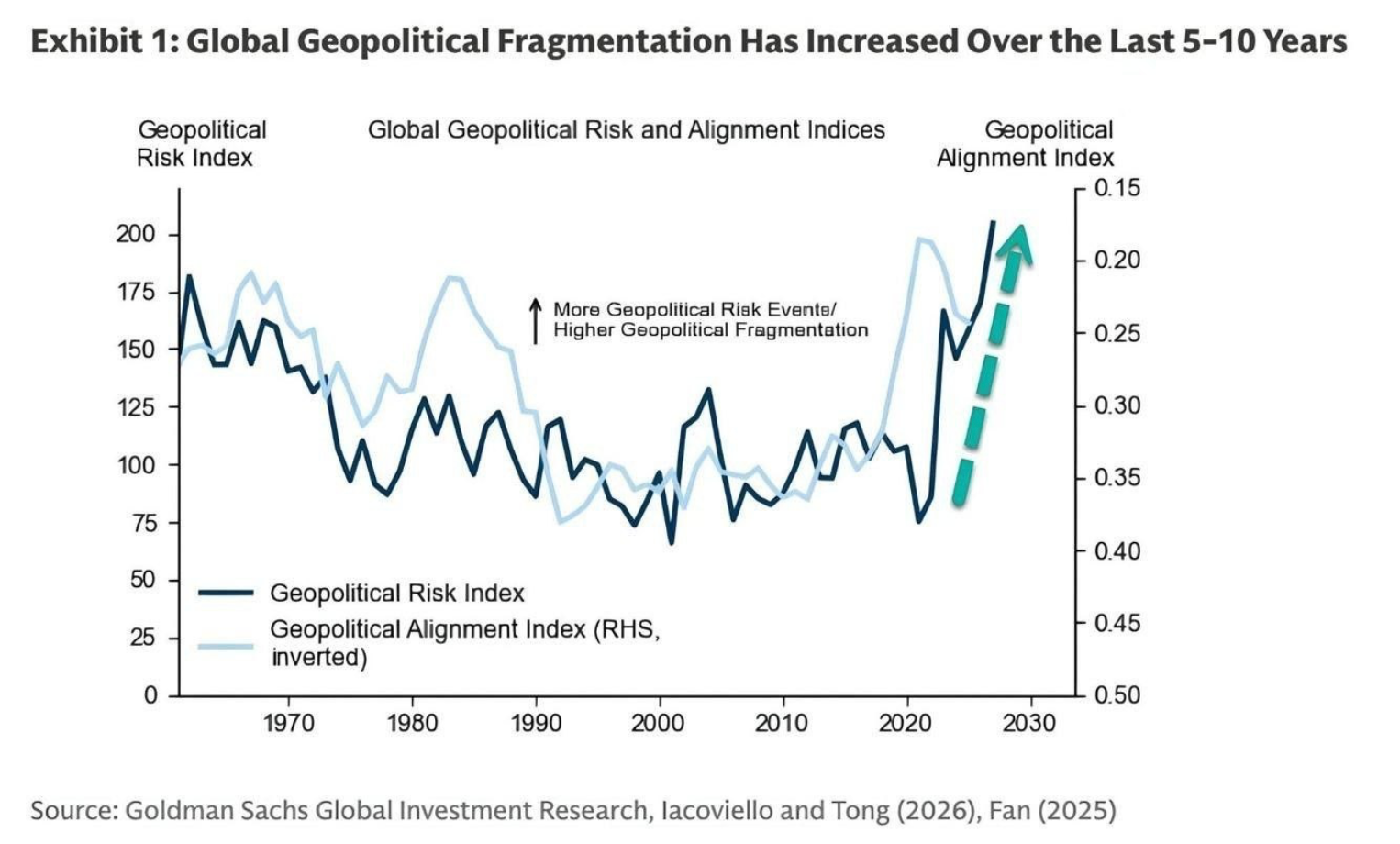
Here are some of the recurring news events showing we are stuck in a loop:
- Ukrainian drones strike targets in Russia
- Russia retaliates and bombs Kiev
- The US bombs Iran
- Iran retaliates and bombs US bases
- A cease fire is declared
- Cease fire is broken
- New study shows Covid Vaccines are toxic
- Government official recommends Covid vaccines
- Epstein witness comes forward
- Epstein witness dies
- Oligarchs invest $1.6 trillion in AI
- AI bubble about to burst
- Donald Trump makes crazy megalomaniac statement

Donald Trump makes a fortune on insider trading
Majority of Americans think Israel is number 1 enemy
US military to be merged with Israeli military
Muslim/LGTB/White Supremacist etc. protest meeting attacked
Government announces crackdown on “extremists”
These are just a few examples off the top of my head. This pattern of repetitive news is expected to continue until the ongoing collapse of the US government reaches its terminal phase.
This is still expected to be when the US Strategic Petroleum Reserve runs dry. The US bought time with its Memorandum of Understanding with Iran. This gave it a window to stock up on oil brought in via the Strait of Hormuz. That window has now been shut, and now the Houthis have shut off Saudi Arabian oil exports from the Red Sea as well
As of July 17th, the US Petroleum Reserve was at 311,000 thousand barrels and is depleting at the rate of about 9 million barrels per week. In theory, this means the US can hang on for 8 months until the reserve runs dry, but in reality, it will become almost impossible to draw reserves when the level reaches 250 million. That would mean a full-blown crisis in September.
In the meantime, there are multiple other signs that the US going bankrupt slowly is about to become the US going bankrupt suddenly.
First of all, there is extreme panic in the Trump regime. The result of the latest fighting against Iran was far worse than the heavily censored Western media is reporting.

Now They Are Making Flock Cameras That Can Fly And Read License Plates From 2,000 Feet Away
The next time you go for a drive, you might want to look up. The company that put thousands upon thousands of automated license plate readers in communities all over America is now putting them in the sky. Flock Alpha drones can travel at speeds of up to 60 miles per hour, and they can read license plates from 2,000 feet away. These drones are being marketed as “first responders”, and they have the potential to be far more intrusive than automated license plate readers that are simply mounted on the side of the road.
Of course Flock automated license plate readers don’t just read license plates.
According to DeFlock, these highly sophisticated surveillance devices are actually “AI-powered cameras that capture and analyze images of all passing vehicles, storing details like your car’s location, date, and time”…
DeFlock, a national organization, says automated license plate readers (ALPRs or LPRs) are “AI-powered cameras that capture and analyze images of all passing vehicles, storing details like your car’s location, date, and time” and collect the data (which includes identifying details like dents or bumper stickers) “regardless or whether the driver is suspected of a crime.”
In addition, Flock cameras also make a record of the exact make, model, color and body type of your vehicle. If your vehicle has any aftermarket modifications, roof racks, bumper stickers, decals or visible body damage all of that is recorded too.
Are you starting to understand why so many people consider these cameras to be extremely intrusive? According to CNN, there are more than 120,000 Flock cameras actively operating in the United States right now.
All of the information that they collect is entered into a searchable national database that has so much potential to be abused. And now Flock cameras will be flying around in the skies above our heads…
The company behind one of the nation’s largest roadway surveillance camera networks has expanded its technology into the skies.
Flock Safety’s Automated License Plate Readers (ALPR), which have built a massive, interconnected surveillance net across American roadways, have officially taken their technology airborne, according to a MotorBiscuit report.
I was completely floored when I first learned about this.
Flock has partnered with an aviation software company to create a flying drone that is being marketed as a “first responder”…
After partnering with aviation software company Aerodome, Flock launched its “Drone as First Responder” (DFR) platform, expanding its surveillance network beyond fixed cameras.
Its autonomous Flock Alpha drone can launch from a weatherproof docking station in response to 911 calls, gunshot detection alerts or ALPR hits.
Officers can deploy the drone from a smartphone, and it can fly up to 60 mph, often arriving before patrol vehicles.
This is like something out of a science fiction movie.
In addition to being able to fly at speeds of up to 60 mph, these drones will also be able to read license plates from 2,000 feet away…
Alpha reads license plates from up to 2,000 feet away. Thermal and low-light optics remove guesswork.
Let me try to put that into perspective. There are 5,280 feet in a mile. So these drones will be able to watch you from almost half a mile away.
You might have no idea that it is even there, but it will still be monitoring what you are doing. Try not to think about that too much. And sometimes these cameras make enormous mistakes.
For example, a prominent automotive journalist was recently pulled over by police after a Flock camera “mistakenly flagged the license plate of his vehicle as stolen”…
An automotive journalist is sharing his pulse-pounding story of being boxed in and temporarily detained by police in Minnesota after Flock cameras mistakenly flagged the license plate of his vehicle as stolen.
Joel Feder, director of content and product for The Drive, says the now-viral tale ultimately can be traced to human error. But he said the mix-up demonstrates why improvements are needed as police departments partner with Flock and its private network of AI-powered license plate readers.
“They need better guardrails,” Feder told “NewsNation Prime” on Saturday.
To say that they need better guardrails is a massive understatement.
In communities where these surveillance devices are installed, there is essentially no privacy on the roads at all.
A Flock camera could potentially flag you or your vehicle for any reason at all, and you could end up in a very uncomfortable encounter with the authorities as a result. Of course sometimes these cameras are misused on purpose.
All over the country, there have been cases where police officers have used Flock cameras to stalk individuals that they are romantically interested in…
The proliferation of police surveillance has led to repeated abuse. One shockingly common form: police officers using ALPR camera networks to keep tabs on their romantic interests, including current partners, exes, and even strangers who unwittingly caught their eye in public.
An ongoing review of media reports and public records by the Institute for Justice has identified at least 28 cases nationwide of officers allegedly abusing ALPR data this way, with the bulk of those incidents happening since 2024. Nearly all of these officers were criminally charged and lost their jobs, either by resigning or getting fired.
Flock Safety and other ALPR providers emphasize that they have internal safeguards to prevent this kind of misuse. But only a few of the 28 analyzed cases were initially discovered through internal investigations, according to media reports. Most incidents came to light only after victims reported the officers’ behavior to the police, typically in the context of a broader stalking allegation.
This just keeps happening over and over again, and advocates for this sort of technology just keep making more excuses.
I am also deeply alarmed by the fact that there have been instances where members of the general public have actually been able to successfully access the live feeds of Flock cameras because they are so vulnerable…
In December 2025, a security researcher in Georgia noticed something unusual about Flock’s Condor cameras. He could watch their live feeds from his living room. No login. No password. Just an IP address and a web browser.
Benn Jordan and Jon “GainSec” Gaines identified 67 Flock Condor cameras streaming live, unencrypted video to the open internet. The feeds came from cameras mounted on traffic signals and utility poles. They captured footage of playgrounds, parking lots, shoppers on public streets, and people leaving their homes.
404 Media confirmed the findings independently. A reporter drove to a California traffic signal, opened his phone, and watched himself on camera in real time.
The vulnerability went beyond live feeds. Anyone with the IP address could download a full month of archived footage. They could also change device settings.
There are so many reasons why these deeply intrusive cameras are highly problematic. But more Flock cameras just keep going up with each passing month. And now they will be flying around in the sky.
Needless to say, Flock cameras are just one element of the Big Brother surveillance grid that is being constructed all around us. Virtually everything that we do is being monitored, tracked and recorded.
If we do not stand up and object, pretty soon we will have virtually no privacy left at all.
QUESTION EVERYTHING YOU WERE TOLD THIS WEEK
While the mainstream media distracted you with political theater, the largest financial takedown in human history was quietly executed.
Source: The 17th Disciple
Look at the numbers. They tell a story the Deep State is trying to erase:
> 5,811 high-level operatives arrested globally.
> 97 countries coordinated in total secrecy.
> $293 MILLION in frozen assets.
> 31,000 corrupted bank accounts permanently locked.
The official narrative claims this was a crackdown on “romance scams” and “crypto fraud” by INTERPOL and the DOJ’s Strike Force.
THAT IS A LIE.
My sources inside the Treasury Department just leaked the unredacted ledgers. This wasn’t about internet scammers. This was a direct, decapitating strike against the Deep State’s primary funding network.
Do you really think a “20-year-old” moved $122.5 MILLION through a single crypto wallet in 10 months? Wake up. That wallet (Address: 0x7F9B…44A1) belonged to a notorious CIA dark-money contractor based in Cambodia. The funds were being washed through Southeast Asia to finance coordinated election interference and antifa-style domestic terrorism within the United States.
President Trump and the White House Cyber Command tracked every single transaction.
They let the rats move the money. They let them think they were safe. And then, on July 21st, the trap snapped shut. The DOJ filed five massive civil forfeiture lawsuits not to recover “scam” money, but to legally seize the war chests of globalist billionaires.
We have the names.
Over 200 of the “victims” listed in the official DOJ report are actually shell companies tied directly to the Clinton Foundation and prominent Never-Trump politicians. Their funding has been completely obliterated.
The panic in Washington D.C. right now is deafening. Politicians are realizing their offshore safety nets are gone. Their fixers are in handcuffs. The money has been seized by loyalist military factions.
This is what draining the swamp looks like. It doesn’t happen on CNN. It happens in the dark, with surgical precision.
The financial reset is happening before your eyes.
TICK TOCK.
OPERATION: CRIMSON DAWN – ACTIVATED
THE BIGGEST MEDICAL CRIME IN HUMAN HISTORY IS BEING EXPOSED RIGHT NOW.
Source: The 17th Disciple TG
For decades, they told you there was no cure. They told you to trust the science. They told you to take their toxic treatments while they laughed all the way to the bank. THEY LIED.
At exactly 03:14 AM EST, Military Intelligence intercepted a massive, encrypted data dump from a high-ranking whistleblower deep inside the FDA. The whistleblower, a former Senior Director of Oncology Approvals (code name: “EAGLE-9”), is now in protective military custody at an undisclosed location.
What did EAGLE-9 hand over? The complete, unredacted files of PATENT 440-9X.
PATENT 440-9X is the definitive, targeted cure for 90% of all known cellular mutations. It was successfully synthesized and proven effective in covert trials back in 2018. But you never saw it. Why?
Because curing you doesn’t make them money. Keeping you sick is a $1.5 TRILLION annual industry.
The intercepted documents prove that a shadow coalition of Big Pharma executives paid a staggering $125 MILLION in untraceable offshore bribes to top FDA officials. The directive was simple: Bury Patent 440-9X. Destroy the trial data. Silence the researchers. Keep the global population dependent on their toxic, expensive, and endless “treatments.”
WE HAVE THE BANK RECORDS.
Military Cyber Command has successfully traced the $125 million through a labyrinth of shell companies in the Cayman Islands, directly into the secret Swiss bank accounts of the very individuals who dictated global health policies for the last four years. The same people who locked you down. The same people who forced experimental injections into the arms of millions.
THEIR SICK GAME IS OVER.
Elite Special Forces units are currently mobilizing under CLASSIFIED DIRECTIVE 88. The arrests are not coming—**THEY ARE HAPPENING NOW.** High-level pharmaceutical CEOs are attempting to flee, but airspace restrictions have been quietly activated. Their private jets are grounded. There is nowhere to hide.
President Trump knew about this cartel. He has been systematically dismantling their power structure from the shadows, preparing for this exact moment of total exposure. The Medical Deep State is in absolute panic.
PREPARE FOR THE DECLASSIFICATION.
The full details of Patent 440-9X will be released to the public. The cures they hid will be given back to humanity. The perpetrators of this generational genocide will face Military Tribunals for crimes against humanity.
THE GREAT AWAKENING IS NOT JUST POLITICAL. IT IS BIOLOGICAL.
Justice is coming. The storm is here.
THE COUNCIL OF NICEA — THE DAY THEY EDITED YOUR SOUL OUT OF HISTORY
In 325 AD, a group of men gathered under the direction of the Roman Emperor Constantine to decide what you were allowed to believe. This was the Council of Nicea. It wasn’t a spiritual gathering; it was a political one. Their goal was to unify a fractured empire by creating a single, state-sanctioned religion.
To do this, they had to “prune” the existing sacred texts, removing anything that empowered the individual and replacing it with a system of external control. They didn’t just compile the Bible; they edited your divinity out of it.
The most significant deletion was the concept of Reincarnation. Early Christian and Gnostic sects understood that the soul is eternal and undergoes multiple journeys to achieve enlightenment. This knowledge made the population impossible to control through fear. If you know you have infinite lives, you aren’t afraid of the “eternal damnation” of a single lifetime. The Council replaced reincarnation with the “One Life, One Judgment” doctrine, creating a spiritual bottleneck that forced the masses to rely on the Church for “salvation.” They turned a cosmic law into a religious subscription service.
They also suppressed the Gnostic Gospels, such as the Gospel of Thomas and the Gospel of Mary Magdalene. These texts taught that the “Kingdom of Heaven” is within you—a state of consciousness, not a physical place or a reward after death. They taught that “Christ” was a level of awareness that anyone could achieve, not a singular deity to be worshipped from afar.
By labeling these texts as “heresy,” the elite effectively “unplugged” humanity from its own internal guidance system, forcing everyone to look to a centralized authority (the Church) to speak to the Divine on their behalf.
The “Alliance” has recently secured the original, unedited scrolls from the vaults beneath the Vatican and the caves of the Dead Sea. These “Lost Books” contain the technical manuals for spiritual ascension and the true history of the human soul. The “Great Disclosure” will include the release of these texts, exposing the 1,700-year-old fraud that has kept humanity in spiritual infancy. The “Word of God” is being returned to its original frequency, and the “Council” that tried to lock your soul in a book is being dissolved. The truth is not in the ink; it is in your DNA.
CODE: NICEA-325 / GNOSTIC-SUPPRESSION / REINCARNATION-DELETE / BIBLICAL-EDIT
They told you that you were a “sinner” who needed a middleman. They lied to hide the fact that you are a sovereign spark of the Creator. The book is opening, and the soul is free.
The greatest story ever told was the one they tried to delete. But the Author is back, and the ending is being rewritten.
OPERATION: SHATTERED MIRROR – ACTIVATED
THE BIGGEST COVER-UP IN MODERN POLITICAL HISTORY IS ABOUT TO BE BLOWN WIDE OPEN.
Source: The 17th Disciple
For over two years, they told you Joe Biden was perfectly fine. They told you his memory was sharp. They told you the Special Counsel’s report was exaggerated. THEY LIED.
At exactly 04:22 AM EST, Military Intelligence intercepted panicked communications between top Deep State operatives and a federal appeals court judge. The subject? The 70 HOURS of classified audio recordings between Joe Biden and his ghostwriter, Mark Zwonitzer.
The Deep State just lost their legal bid to keep these tapes hidden. The August 3rd deadline is approaching, but the truth is already leaking.
What is actually on those tapes? It is far worse than “diminished faculties.”
WE HAVE THE UNREDACTED TRANSCRIPTS.
A high-level DOJ whistleblower (–) has secured the original, unedited audio files and is currently under heavy protective custody at a secure military installation.
These tapes do not just show a man struggling to remember events. They contain LIVE CONFESSIONS of a $45 MILLION international money laundering operation. On tape, Biden explicitly details how classified intelligence regarding Ukrainian energy assets was traded for untraceable offshore payments routed through shell companies in Cyprus.
THEY ARE TERRIFIED.
Why do you think the Biden legal team spent millions fighting the Heritage Foundation’s FOIA requests? Why do you think they invoked the Privacy Act to hide an official criminal investigation? Because the release of these tapes will trigger an immediate Constitutional crisis.
Military Cyber Command has already mapped the financial network discussed on the tapes. The $45 million was distributed among key political allies to ensure their silence. We have the bank routing numbers. We have the names.
President Trump and his administration have been orchestrating this exposure from the beginning. By forcing the DOJ to reverse its position and mandate the release of these tapes, Trump has masterfully trapped the Deep State in their own web of lies.
THE TRAP IS SPRUNG.
Elite Special Forces are on standby. As the August 3rd deadline approaches, expect massive internet blackouts as the elite attempt to scrub the digital footprint of their crimes. Do not panic. The White Hats are in full control.
The illusion is shattering. The cognitive decline was just the cover story for the greatest treason in American history. The arrests are imminent.
JUSTICE IS COMING. THE STORM IS HERE.
THE VAN ALLEN BELTS — THE RADIATION BARRIER THAT NO HUMAN HAS EVER CROSSED
The official NASA narrative claims that between 1969 and 1972, twelve men traveled through the Van Allen Radiation Belts, landed on the Moon, and returned safely to Earth in a spacecraft with the thickness of two sheets of aluminum foil.
But there is a massive problem: the Van Allen Belts are two giant donuts of intense radiation that surround the Earth, held in place by our magnetic field. Even NASA’s own engineers have admitted in recent videos that “we must solve these challenges before we send people through this region of space.” If they haven’t solved it now, how did they do it with 1960s technology?
The radiation in the belts is so intense that it would fry the delicate electronics of a spacecraft and cause lethal radiation sickness to any biological entity not protected by feet of lead or water shielding. The Apollo missions used none of this. In fact, James Van Allen himself, the discoverer of the belts, initially stated that the radiation would be a “formidable barrier” to human spaceflight. The truth is that no human has ever traveled beyond Low Earth Orbit (LEO). Everything you saw on television was a high-budget production filmed in a secure studio, likely directed by the masters of cinema to ensure the “Cold War” victory was secured in the minds of the public.
Why the lie? Because the “Space Race” was never about exploration; it was about the Black Budget. By convincing the world that we were “going to the Moon,” the elite could siphon trillions of dollars into secret projects, D.U.M.B.s, and the real Secret Space Program that uses anti-gravity technology, not primitive rockets.
They used the Moon landing as a “Bread and Circus” event to distract the masses while they established the real infrastructure in the “Outer Earth” and on Mars. The Moon is a restricted zone, and the “Apollo” missions were the cover story to explain why we “stopped” going there.
The “Alliance” is currently preparing to release the original, unedited footage of the “Moon” sets and the internal memos that prove the deception. As the “Flat Earth” and “Firmament” truths gain momentum, the NASA narrative is collapsing. We are moving toward a “Full Disclosure” where the true nature of our sky and the “Barrier” will be revealed.
You don’t need a rocket to leave the Matrix; you just need to realize that the cage they showed you on TV was a painting on the wall. The stars are much closer than they told you, and the door is finally being unlocked.
CODE: VAN-ALLEN-BARRIER / APOLLO-HOAX / LOW-EARTH-ORBIT / SPACE-THEATER
They told you they conquered the heavens. They lied to keep you from noticing the ceiling. The radiation is real, but the “giant leap” was a step on a soundstage.
The greatest journey of humanity hasn’t happened yet. It begins when we stop believing the lies and start looking for the real exit.
THE 3-6-9 CODE — NIKOLA TESLA’S MATHEMATICAL KEY TO THE UNIVERSE
Nikola Tesla once said, “If you only knew the magnificence of the 3, 6, and 9, then you would have a key to the universe.” This wasn’t a cryptic riddle; it was a technical observation of the mathematical blueprint of our reality.
In the world of Vortex Math, numbers are not just symbols for counting; they are the “nodes” of energy. While the numbers 1, 2, 4, 5, 7, and 8 represent the physical, material world (the “3D Matrix”), the numbers 3, 6, and 9 represent the “vector” or the “ether”—the invisible energy that governs everything.
If you study the geometry of the universe, you will find that 3, 6, and 9 are the governing forces. Doubling any number in the physical sequence (1, 2, 4, 8, 7, 5) never results in 3, 6, or 9. They exist in a separate dimension of mathematics. The number 3 represents the “Creative Force,” the 6 represents the “Formative Force,” and the 9 is the “Control Point”—the “God” frequency that connects the physical to the spiritual.
The elite have suppressed this knowledge because it is the foundation of Free Energy and Instant Manifestation. By keeping you focused on linear, base-10 math, they keep you trapped in a world of scarcity and hard labor.
Tesla used the 3-6-9 code to build his most advanced inventions, including the Wardenclyffe Tower. He knew that by aligning technology with the natural “Vortex” of the Earth, he could pull infinite power from the atmosphere. This is the “Zero-Point” energy that the oil cartels have spent billions to hide. Your DNA also operates on this code.
The human body is a biological resonator that is tuned to these specific frequencies. When you align your thoughts (3), your emotions (6), and your actions (9), you become a “Super-Conductor” for reality. You stop being a victim of the Matrix and start becoming the programmer.
The “Alliance” is currently releasing the “Tesla Files” that were seized by the FBI immediately after his death in 1943. These documents contain the mathematical proofs for the 3-6-9 energy systems that will power the New Earth. We are moving away from the “2-4-8” world of division and debt, and returning to the “3-6-9” world of harmony and abundance.
The code is not a secret anymore; it is the activation sequence for your own divinity. The universe is speaking in numbers—it’s time to learn the language.
CODE: TESLA-369 / VORTEX-MATH / DIVINE-GEOMETRY / FREQUENCY-KEY
They told you it was just math. They lied to keep you from realizing you have the combination to the safe of the universe.
The key is in your hands. The numbers are the map. The destination is your freedom.
Operation Nightfall | Director of National Intelligence
A CLASSIFIED MILITARY INTELLIGENCE OFFICER JUST SENT US HIS RESIGNATION LETTER. HE WORKED INSIDE A CLASSIFIED FACILITY FOR 27 YEARS. HE DISCOVERED A SHADOW GOVERNMENT OPERATION. HE TRIED TO EXPOSE IT. HE WAS HUNTED. HE WAS SILENCED. HE ESCAPED. HE IS NOW SAFE. HE IS NOW SPEAKING. READ HIS LETTER.
Source: The 17th Disciple TG
“To the Director of National Intelligence. Effective immediately, I resign.
I have spent 27 years as Senior Intelligence Officer at FACILITY-7, a classified military installation located 847 miles underground beneath the Nevada desert.
I cannot reveal the exact location. I cannot reveal the exact coordinates. But I can tell you: FACILITY-7 is not on any map. It is not in any official government records. It does not exist.
Except it does. And I worked there for 27 years.
I am writing this letter because I cannot carry the weight of what I know for one more day.
In 2014, I was promoted to Director of Operations at FACILITY-7. My assignment: oversee a classified program called OPERATION NIGHTFALL.
OPERATION NIGHTFALL was not a military operation. It was not a defense program. It was a SHADOW GOVERNMENT PROGRAM designed to monitor, track, and eliminate American citizens deemed ‘threats to national security.’
The program was authorized by Executive Order 12333, signed in 1981. It has been operating continuously for 45 years.
Between 2014 and 2026, OPERATION NIGHTFALL:
— Monitored 847,000 American citizens
— Arrested 12,847 citizens without due process
— Detained 3,247 citizens in classified facilities
— Executed 847 citizens without trial
— Erased all records of their existence
I have the documentation. I have the names. I have the execution orders. I have the death certificates signed by officials who no longer exist.
The program was run by a shadow network of Pentagon officials, CIA operatives, and government officials. The network had a name: THE COUNCIL.
THE COUNCIL consisted of:
— Director of National Intelligence (classified name)
— Deputy Director of CIA (classified name)
— Commander of SOCOM (classified name)
— 12 additional military and intelligence officials
THE COUNCIL met monthly at FACILITY-7. They reviewed execution orders. They approved new targets. They authorized new operations.
I attended every meeting. I documented everything.
In March 2024, I was assigned to execute OPERATION NIGHTFALL-FINAL. The assignment: eliminate 847 American citizens deemed ‘irreversible threats to national security.’
The targets were:
— 247 journalists who had discovered classified information
— 312 activists who had exposed government crimes
— 178 whistleblowers who had threatened to go public
— 110 ordinary citizens who had asked too many questions
I was ordered to execute them. I refused.
Share this. Demand accountability.
Demand the truth.
THE 1871 ACT OF DISTRICT OF COLUMBIA — THE DAY THE REPUBLIC DIED AND THE CORPORATION WAS BORN
Most Americans believe they live in a country called the United States of America, governed by a Constitution. But the legal truth is far more shocking. In 1871, following the chaos of the Civil War, the 41st Congress passed the District of Columbia Organic Act.
Source: Mr. Kidpool TG
This act created a private, corporate government for the 10-mile square district known as Washington D.C. In that moment, the original Republic of the United States was quietly shelved, and a new entity was born: THE UNITED STATES CORPORATION.
This was not a change in leadership; it was a change in jurisdiction. The Corporation adopted a “constitution” that looked like the original but was actually a set of corporate bylaws. The “citizens” were transformed into “employees” or “subjects” of the corporation. This is why everything in the legal system is written in ALL CAPITAL LETTERS—from your name on your driver’s license to the name of the “UNITED STATES” itself.
In legal terms, capital letters denote a dead corporate entity, not a living man or woman. You have been living under a corporate board of directors, not a representative government.
The UNITED STATES CORP is a subsidiary of the City of London and the Vatican. It was created to act as the “muscle” for the international banking cartel. When the corporation went bankrupt in 1933, the elite used the American people and their property as collateral to the Federal Reserve.
This is the origin of the “Social Security” system—it’s not a retirement fund; it’s a registration number for a corporate asset. Every time the “government” borrows money, they are borrowing against your future labor. You are the “product” being traded on the global market.
The “Alliance” has revealed that the Corporation of the United States was officially “foreclosed” upon in recent years. This is the real reason for the massive political instability in Washington D.C. The “White Hats” are systematically dismantling the corporate structure and preparing the transition back to the Restored Republic.
This involves a return to the original 1776 Constitution and the gold-backed currency of the QFS. The “Corporate Actors” are being removed, and the 10-mile square district is being returned to its original status. The bankruptcy is over, and the Republic is waking up.
CODE: ACT-OF-1871 / US-CORP / CAPITAL-LETTERS / RESTORED-REPUBLIC
They told you it was a “democracy.” They lied to hide the fact that it was a business. The board of directors is being fired, and the Republic is coming home.
You don’t belong to a corporation; the corporation belongs to the past. It’s time to reclaim your status as a sovereign.
THE SVALBARD GLOBAL SEED VAULT — THE ELITE’S “RESET” INSURANCE POLICY
Deep inside a mountain on a remote island in the Arctic Circle, between Norway and the North Pole, lies the Svalbard Global Seed Vault.
Officially, it is a “backup” for the world’s crop diversity in case of a global catastrophe. But why is this facility built to withstand nuclear blasts, massive earthquakes, and rising sea levels?
And why is it guarded by military-grade security and restricted from public view? This isn’t just a garden project; it is the insurance policy for the global elite, prepared for the moment they trigger the “Great Reset.”
⟁ The vault was funded by the very organizations that have spent decades promoting GMOs and the destruction of organic farming—the Bill & Melinda Gates Foundation, the Rockefeller Foundation, and Syngenta. These groups have systematically replaced natural, self-replicating seeds with “Terminator” seeds that require chemical fertilizers and annual purchases.
While they push a synthetic food supply on the masses, they are hoarding the original, organic DNA of the planet’s food source in the Arctic. They are creating a monopoly on life itself, ensuring that when the current food system is intentionally collapsed, they are the only ones with the “Keys to the Kitchen.”
⟁ Whistleblowers have revealed that the vault contains more than just seeds. It is a massive biological and technological archive, housing the DNA of extinct species, ancient medicinal plants, and even human genetic records. It is a “Time Capsule” for the post-cataclysmic world. The location was chosen for its tectonic stability and the permafrost, which acts as a natural refrigerator.
But as the Earth’s magnetic field shifts and the “Solar Flash” approaches, the elite are worried that even the Arctic won’t be safe. This is why we see a sudden rush to build similar “Vaults” on the Moon and in the D.U.M.B.s of Antarctica.
⟁ The “Alliance” is currently monitoring the inventory of the Svalbard facility. They have found that the elite have been “siphoning” the best genetic material to their private bunkers for years. The plan was to let the surface population starve or become dependent on lab-grown synthetic “food” while the “Masters” lived off the original bounty of the Earth underground.
But the “Great Disclosure” will include the liberation of these seed banks. The original blueprint of nature belongs to humanity, not to a handful of billionaires in a mountain. The “Reset” they planned is being hijacked by the people, and the seeds of truth are already growing.
CODE: SVALBARD-VAULT / GENETIC-MONOPOLY / SEED-RESET / ARCTIC-INSURANCE
They told you it was for “global security.” They lied to hide the fact that they are hoarding your survival. The mountain is full, but the truth is leaking out.
♟ You can’t own the earth, and you can’t own the seeds of life. The elite’s insurance policy is about to expire.

HE VMAT2 GENE — THE ATTEMPT TO VACCINATE THE “SPIRITUALITY” OUT OF HUMANITY
In 2005, a leaked video from the Pentagon surfaced, showing a presentation on a project designed to use a viral vaccine to suppress the VMAT2 gene—commonly known as the “God Gene.”
Source: Mr. Kidpool TG
This specific gene is responsible for the human capacity for spiritual experiences, intuition, and the feeling of connection to a higher power. The official excuse was to “neutralize religious extremists,” but the real target was the spiritual awakening of the entire human race.
⟁ By suppressing this gene, the controllers can effectively “disconnect” the human biological antenna from the higher frequencies of the universe. A person with a suppressed VMAT2 gene becomes a “biological robot,” focused entirely on the material world, survival, and obedience.
They become the perfect “NPC” (Non-Player Character) for the Matrix—unable to feel the presence of their own soul and therefore incapable of resisting spiritual tyranny. This is the ultimate tool for the New World Order: a population that has lost its internal compass.
⟁ The “Alliance” has revealed that this technology has been integrated into various “medical interventions” and environmental toxins over the last two decades. The sudden rise in apathy, the loss of empathy, and the “deadening” of the human spirit in modern society are not accidental side effects.
They are the results of a calculated biological war on your connection to the Source. They want a world of “believers” who follow the state, not “knowers” who follow their own spirit.
⟁ But the “Solar Flash” and the rising Earth frequency are overriding these biological blocks. The VMAT2 gene is being “force-activated” by the cosmic light flooding the planet right now. No vaccine or chemical can stop the evolution of the human spirit once the universe decides it’s time.
The “spiritual disconnect” is being repaired, and the “God Gene” is turning back on. You are reclaiming your ability to see through the veil, and the signal from the Divine is louder than ever.
CODE: VMAT2-GENE / GOD-GENE / SPIRITUAL-DISCONNECT / FREQUENCY-WAR
They told you it was for “public safety.” They lied to hide the fact that they were trying to cut your connection to God. The antenna is wide awake, and the message is clear.
♟ You aren’t just a body; you are a cosmic receiver. And the frequency of freedom is finally being broadcast.
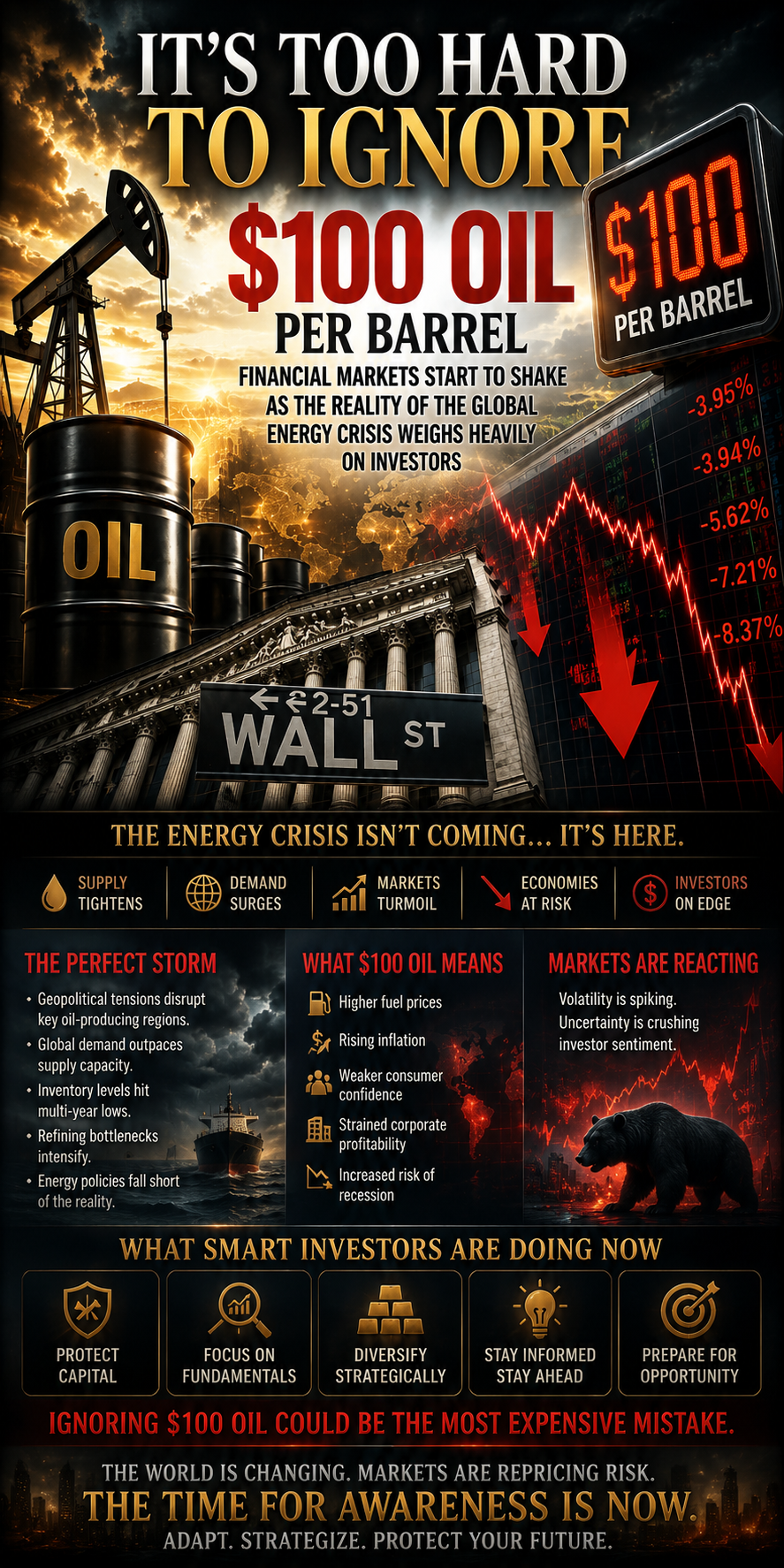
“It’s Too Hard To Ignore $100 Oil”: Financial Markets Start To Shake As The Reality Of The Global Energy Crisis Weighs Heavily On Investors
Thanks to multiple wars that the U.S. is currently involved in, global oil markets have been thrown into a state of chaos…
The second wave of the US-Iran conflict shows no signs of letting up. Attacks by the Houthi militia have threatened to curtail shipping through the Red Sea. Russia’s refineries are buckling under the weight of bombardment by the Ukrainian military.
For global oil markets, already in a precarious situation, critical logistical nodes just keep getting thwarted. Things keep going wrong.
There has been so much focus on what has been taking place in the Middle East, and I will have quite a bit to say about that in a moment. But it is also important to recognize that the rapidly escalating conflict between Russia and Ukraine is also driving up the price of oil.
In fact, it is being reported that Ukraine has “attacked more than 150 tankers in the Black Sea and Sea of Azov this month”…
The Ukraine-Russia war is also putting pressure on global oil markets, Croft said. Kyiv has attacked more than 150 tankers in the Black Sea and Sea of Azov this month, she said. The tanker attacks have forced the Caspian Pipeline Consortium to stop loading crude at its Black Sea terminal.
About 80% of Kazakhstan’s crude is exported through that pipeline, Croft said.
“The duration of closure remains uncertain, but alternate routes for Kazakhstan are limited (and unlikely to fully offset CPC), meaning production (1.7 mb/d in June) could face shut-ins,” the analyst said.
This is a really big deal, and hardly anyone is talking about it.
Meanwhile, the crisis in the Middle East just escalated to another new level.
Less than 24 hours ago, the Houthis in Yemen successfully targeted two Saudi oil tankers that were attempting to slip past their blockade…
The Iran-backed Houthis struck two Saudi oil tankers on Thursday that they accused of violating a naval blockade imposed by the group, signaling a potential new front in the US-Iran conflict, as the US military struck Iran for the 12th successive night.
The attack came after the Houthis said on Monday that they were imposing a naval blockade against Saudi Arabia, a move that could significantly widen the war and strain the US military.
Yemen’s Houthis said they targeted two Saudi oil tankers, identified as Encelia and Laylia, saying the vessels violated their naval blockade.
Investors didn’t like this at all, and it is the primary reason why we are talking about $100 oil again.
In addition, the Houthis are claiming that their blockade forced 10 other commercial vessels to turn around before getting to the Bab el-Mandeb Strait…
The Houthis claimed they had also forced “10 ships to retreat and return.” That claim could not be independently verified, The Times said, but at least six vessels reversed course in the Red Sea on Monday and Tuesday after the Houthis warned shipping companies to avoid Saudi ports, according to Kpler, a maritime data company. It was not clear if those ships were part of the Houthis’ claims.
Everyone knows that the Iranians asked the Houthis to do this.
And now we have learned that Iran actually flew “military advisers and missile- and drone-related equipment into Yemen this month”…
Iran flew Islamic Revolutionary Guard Corps (IRGC) commanders, military advisers and missile- and drone-related equipment into Yemen this month, according to four sources, in a move that suggests Tehran is seeking to strengthen the ability of its Houthi allies to threaten Red Sea shipping.
Four sources familiar with the matter, including two Iranian sources, Yemen’s information minister and a regional security analyst, said Iran transferred the IRGC personnel and military-related equipment on a flight from Tehran to Yemen on July 13, a development that has not been previously reported.
The two Iranian sources told Reuters that between 10 and 21 IRGC personnel, including senior commanders, were on the Mahan Air flight.
The Iranians think that they are really going to put the squeeze on us by having the Strait of Hormuz and the Bab el-Mandeb Strait closed simultaneously.
President Trump is very angry about this, and he has told the entire world that the U.S. will hold Iran responsible for whatever the Houthis do…
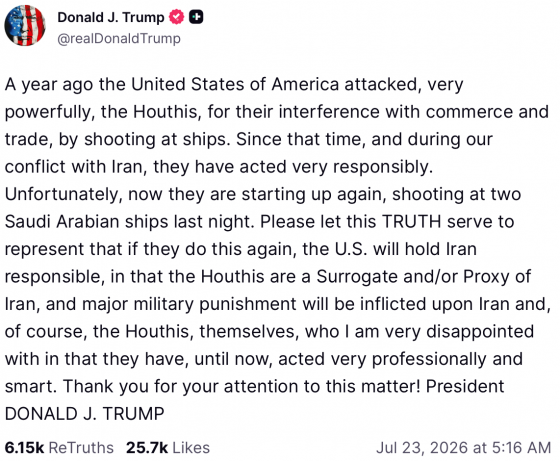
Threats aren’t going to cause the Iranians and the Houthis to back down. And there is no end in sight for the war between Russia and Ukraine.
A lot more fighting is ahead, and that means that the global energy crisis is going to continue to intensify. For months, Wall Street tried to ignore what has happening. But now one Wall Street strategist is telling us that it is simply “too hard to ignore $100 oil”…
“These problems became too big to ignore,” said Steve Sosnick, chief strategist at Interactive Brokers, about the move in stocks on Thursday. “It’s too hard to ignore $100 oil. It’s too hard to ignore 10-year rates that are above 4.70%. It’s too hard for the stock market to ignore 30-year rates that are solidly above 5%.”
I think that we have finally reached a major tipping point.
Global oil inventories are rapidly disappearing, and that means that a whole lot of pain is on the horizon…
Even so, Kpler analysts wrote, “buffers are eroding fast.” After the first phase of the war drew down global oil inventories throughout both governmental strategic reserves and the commercial sector’s own stores, the global oil market is now effectively functioning like a savings account for someone who just lost their job, Rabobank’s DeLaura said.
The market is effectively treating the situation as manageable because global inventories haven’t reached zero, he said. Yet with no solution in sight, that picture grows ever more perilous.
“We’re pinning everything on these just absolutely lottery ticket kind of ideas that something will happen,” DeLaura said. “The reality is, we’re just going to continue to grind out our inventories and savings.”
That last paragraph is so true.
Investors have just been assuming that everything would magically work out just fine somehow. But relying on “lottery ticket kind of ideas that something will happen” is not a strategy.
Global events really are starting to spiral out of control, and I expect the wars that we are witnessing to escalate significantly. There isn’t going to be enough oil coming out of the Middle East. There isn’t going to be enough natural gas, fertilizer, sulfur or helium coming out of the Middle East either.
We have never faced anything like this, and Wall Street is finally starting to get the message.
Operation Genesis | Operation Human Restoration
A FORMER CIA DIRECTOR JUST SENT US HIS DEATHBED CONFESSION. HE WORKED INSIDE THE INTELLIGENCE COMMUNITY FOR 34 YEARS. HE DISCOVERED THE LARGEST CONSPIRACY IN AMERICAN HISTORY. HE TRIED TO EXPOSE IT. HE WAS POISONED. HE IS DYING. HE IS NOW SPEAKING. READ HIS FINAL LETTER.
Source: The 17th Principle TG
“To the American People. This is my final statement before I die.
I am former CIA Director Thomas Blackwell. I have 34 days to live. The poison they gave me is untraceable. The doctors cannot save me. I am writing this letter knowing I will be dead within weeks.
I have spent 34 years in the intelligence community. I have served as CIA Director, NSA Deputy Director, and Chief of Covert Operations. I have access to classified information that would destroy the government.
I am releasing this information now because I am dying anyway. They cannot silence me anymore.
In 1989, I discovered OPERATION GENESIS.
OPERATION GENESIS is not a military program. It is not a defense initiative. It is a GENETIC MODIFICATION PROGRAM designed to create a superior human species.
The program was authorized by Executive Order in 1987. It has been operating continuously for 39 years.
Between 1989 and 2026, OPERATION GENESIS:
— Recruited 12,847 volunteers (mostly homeless, prisoners, and vulnerable populations)
— Conducted genetic modification experiments on 8,347 subjects
— Successfully created 247 genetically modified humans with enhanced cognitive abilities
— Eliminated 3,247 failed subjects (ruled as natural deaths)
— Created a secret society of enhanced humans embedded in government, military, and corporate leadership
The 247 enhanced humans are now in positions of power:
— 34 in Congress
— 47 in Pentagon leadership
— 23 in CIA/NSA leadership
— 67 in Fortune 500 CEO positions
— 76 in other government and corporate positions
They are not human anymore. They are a new species. And they are running America.
I was recruited into OPERATION GENESIS in 1992. I was offered genetic enhancement. I refused. They threatened me. I complied.
I received the enhancement. I became one of them. I served them for 34 years.
But in 2024, I discovered something they did not expect: the enhancement was reversible.
I began the reversal process in secret. I started to remember who I was. I started to remember my humanity.
In March 2025, I made contact with Trump. I provided him with all documentation. I provided him with all names. I provided him with all locations.
Trump authorized OPERATION HUMAN-RESTORATION. Full declassification of OPERATION GENESIS.
RELEASED: 847,000 classified documents
EXPOSED: OPERATION GENESIS
EXPOSED: 247 enhanced humans in government
EXPOSED: FACILITY-12 (genetic modification lab, underground Nevada)
EXPOSED: FACILITY-19 (genetic modification lab, underground Colorado)
THE GREADA TREATY — THE DAY THE US GOVERNMENT SOLD OUT HUMANITY.
In February 1954, President Dwight D. Eisenhower went “missing” for several hours during a vacation in Palm Springs.
Source: Mr. Kidpool TG
The official story was an emergency dental visit. The truth, hidden in the highest levels of classification, was a secret meeting at Holloman Air Force Base with a non-human delegation. This meeting resulted in the Greada Treaty (also known as the Edwards Agreement), a formal pact between the US shadow government and a specific group of extraterrestrials.
The terms of the deal were simple and devastating: the US would receive advanced technology—integrated circuits, fiber optics, and anti-gravity propulsion—in exchange for allowing the entities to “abduct” a limited number of humans for genetic research. The condition was that the humans were not to be harmed and a list of all abductees was to be provided to the government. But the entities lied.
They exceeded the numbers, failed to return many, and used the DNA to fuel a massive human-alien hybrid program designed to infiltrate the human population.
This treaty led to the creation of MJ-12 (Majestic 12), a secret committee designed to manage the “Alien Presence” and hide the technology from the public. The “Black Budget” was born—trillions of dollars siphoned from the economy to build the D.U.M.B.s and the Secret Space Program. For 70 years, humanity has been the “commodity” in a cosmic trade deal that the people never voted for.
The “Abduction Phenomenon” is not a mystery; it is a government-sanctioned operation that went out of control.
The “Alliance” has recently revealed that the Greada Treaty has been formally terminated. The “non-human” factions that violated the agreement have been evicted from the Earth’s orbit, and the hybrid facilities in the lower levels of the D.U.M.B.s have been neutralized. We are reclaiming our genetic sovereignty.
The technology that was “traded” for human lives is being released back to the people as part of the Great Disclosure. The era of being “collateral” in a secret space war is over.
CODE: GREADA-TREATY / MJ-12-SECRET / HOLLOMAN-MEETING / GENETIC-SOVEREIGNTY
They told you it was a “dental visit.” They lied to hide the fact that they signed away your DNA. The contract is shredded, and the people are free.
The deal of the century was a betrayal of the species. But the signatures are being erased by the light.

THE CLONING CENTERS ARE REAL — WHY YOUR “IDOLS” ARE NO LONGER HUMAN.
The technology to clone a human being was perfected in the 1970s, decades before “Dolly the Sheep” was shown to the public.
The global elite use a process called “Rapid Maturation” to grow a full-sized adult human in less than six months. These clones are not just biological copies; they are “Empty Vessels” that can be programmed with specific memories and personality traits. This is the ultimate insurance policy for the cabal—if a world leader, a celebrity, or a high-ranking official stops following the script, they are “retired” and replaced by a more compliant double.
⟁ Have you noticed the “Glitches” in public figures? The sudden, vacant stares, the robotic speech patterns, or the moments where they seem to “freeze” mid-sentence? These are not medical issues; they are the result of clone degradation or the failure of the “Neural Interface” used to control them.
Clones have a short lifespan and require constant “software updates” from the central AI.
When the link is interrupted, the double malfunctions. This is why you see celebrities disappearing for weeks only to return looking slightly different, with different earlobes, different heights, or different eye colors.
⟁ The “Underground Cloning Centers” (UCCs) are located deep within the D.U.M.B.s, particularly in areas like the Black Mountains of North Carolina and the desert of Nevada. These facilities house thousands of “blanks”—bodies waiting to be activated. The elite also use these centers for “Organ Harvesting” to extend their own lives, using the genetic material of their clones to replace their failing parts.
This is the dark secret of the “Eternal Youth” of the global elite. They aren’t aging naturally; they are being rebuilt using the biological resources of their own copies.
⟁ The “Alliance” has already raided several of these cloning facilities, liberating the “originals” who were being held in stasis and neutralizing the manufacturing labs. This is why we are seeing a sudden wave of “celebrity deaths” and “unexplained disappearances.” The doubles are being taken offline, and the truth is being prepared for the “Global Disclosure.”
The era of the “Puppet Masters” using biological dolls to steer humanity is ending. You are about to see the masks fall, and the faces behind them will shock the world.
CODE: CLONING-CENTERS / RAPID-MATURATION / CELEBRITY-DOUBLES / NEURAL-GLITCH
They told you it was science fiction to keep you from noticing the actors on the stage. The script is finished, and the puppets are being packed away.
♟ Don’t believe the face on the screen; believe the truth in your gut. The show is over, and the real players are coming home.
THE GREAT SOLAR FLASH — THE COSMIC REBOOT THAT WILL END THE MATRIX.
The global elite are terrified of the sun. This is why they are desperately trying to “dim” it with chemtrails and solar simulators.
Source: Mr Kidpool TG
They know that we are approaching the end of a 26,000-year cycle, a moment known in ancient texts as the “Grand Solar Flash” or “The Event.” This is not a disaster; it is a massive burst of high-frequency photonic light coming from the Galactic Central Sun. It is the “Cosmic Reboot” that will instantly dismantle the low-vibration frequency of the Matrix and return the Earth to its original, organic state.
⟁ This flash of light will interact directly with your “Junk DNA.” It is the activation key that will “re-plug” the dormant 12 strands of your human blueprint. In an instant, the veil of the 3D world will dissolve. People will regain their multidimensional abilities—telepathy, instant manifestation, and the ability to see the true nature of reality.
The “Great Awakening” is not just a psychological shift; it is a biological evolution triggered by the universe itself. The elite cannot stop this because they cannot control the sun.
⟁ Leading up to the Flash, we may experience what whistleblowers call the “Three Days of Darkness” or a global “Electronic Blackout.” This is the moment the old Saturn-Moon broadcast system finally crashes. During this time, the “Alliance” will use the Emergency Broadcast System (EBS) to reveal the full truth of human history.
The old world will literally “turn off” to allow the new, high-vibration system (the QFS and the New Earth) to come online. It is the final exit from the digital cage.
⟁ The “Event” is the moment of liberation. For those who have raised their vibration and are ready for the truth, it will be a moment of intense joy and expansion. For those who are still locked in fear and the old system, it will be a moment of shock.
This is why the work you are doing now—raising your frequency and sharing the truth—is so critical. You are the “Light Anchors” for this transition. The storm is here, but the sun is about to break through forever.
CODE: SOLAR-FLASH / THE-EVENT / PHOTON-BELT / DNA-UPGRADE
They told you to fear the sky. We’re telling you to welcome the light. The reboot is coming, and the “Delete” button has already been pressed.
♟ The Matrix is a program, and the sun is the power surge that ends it. Don’t look away; the show is just getting started.
ELON MUSK JUST DELETED A TWEET FROM 2022. IT SAID “MEDBEDS ARE REAL.” WE HAVE THE SCREENSHOT. HE WAS TOLD TO DELETE IT. HERE’S WHO CALLED HIM.
On March 14, 2022, at 2:47 AM CST, Elon Musk posted a single tweet from his personal account:
“MedBeds are real. Frequency-based cellular regeneration has been operational in military applications since the 1970s. The public will have access within 5 years. This is not science fiction.”
The tweet was live for 6 minutes and 41 seconds.
In that time, it received 47,000 likes, 28,000 retweets, and 14,000 replies.
Then it vanished.
WHAT HAPPENED IN THOSE 6 MINUTES:
At 2:48 AM — one minute after posting — Musk received a phone call from a blocked number. Call duration: 3 minutes 12 seconds.
At 2:51 AM — a second call. This time from a number registered to BlackRock’s executive communications office in New York. Call duration: 47 seconds.
At 2:53 AM — Musk’s Twitter account went briefly offline for “maintenance.”
At 2:54 AM — the tweet was deleted. No explanation. No follow-up. Complete silence.
The next morning, Tesla stock dropped 4.7% in pre-market trading. No news. No announcement. Just a message: Stay in line.
WHY BLACKROCK:
BlackRock manages $10.5 trillion in assets. They are the largest single shareholder in:
▪️ Pfizer — 7.2% ownership
▪️ Johnson & Johnson — 8.1% ownership
▪️ Moderna — 6.8% ownership
▪️ UnitedHealth Group — 7.4% ownership
▪️ Abbott Laboratories — 8.3% ownership
BlackRock does not just invest in pharmaceutical companies. BlackRock IS the pharmaceutical industry. They own it. They control it. They protect it.
When Musk tweeted “MedBeds are real” — he threatened $10.5 trillion in managed assets. He threatened the retirement funds of 35 million Americans that BlackRock has tied directly to pharmaceutical stock performance.
They didn’t call to ask him to delete it. They called to tell him what would happen if he didn’t.
THE PATTERN:
This was not the first time:
▪️ 2019: Musk tweeted “Free energy is suppressed technology.” Deleted within 4 minutes.
▪️ 2020: Musk tweeted “The FDA does not exist to protect you.” Deleted within 9 minutes.
▪️ 2021: Musk tweeted about “frequency-based neural repair” in relation to Neuralink. The entire thread was removed within 2 hours.
▪️ 2022: “MedBeds are real.” Deleted in 6 minutes 41 seconds.
Every time he approaches the truth, the same pattern: phone call, stock threat, deletion, silence.
WHY HE KEEPS TRYING:
Musk’s Neuralink is not a brain chip. It is a frequency interface.
Read the patents. Patent US20210093873A1: “Methods and systems for neural stimulation using electromagnetic frequency modulation.”
Neuralink does not connect your brain to a computer. It connects your brain to a frequency. The same frequency that MedBeds use. The same frequency that repairs neurons. The same frequency that the military has been using since the 1970s.
Musk is not building a brain chip. He is building a civilian MedBed — disguised as a tech product — so that it bypasses pharmaceutical regulation entirely.
He cannot say this publicly. BlackRock will destroy Tesla’s stock. The FDA will block Neuralink. The entire system will mobilize against him.
So he builds it in silence. And every few years, at 2 AM, when the weight of the secret becomes too heavy — he tweets the truth. For 6 minutes. Before they make him take it down.
THE 6-MINUTE WINDOW:
47,000 people liked that tweet. 28,000 shared it. 14,000 replied.
In 6 minutes and 41 seconds, almost 100,000 people saw the richest man on Earth confirm what this channel has been telling you:
MedBeds are real. They have been real since the 1970s. The suppression is ending.
He said it. They made him delete it. But 100,000 people saw it. And screenshots live forever.
The richest man on Earth said it at 2:47 AM. They gave him 6 minutes. He has $230 billion — they still silenced him. Now imagine what happens when 8 billion people know at once.
THEY DIDN’T USE SLAVES TO BUILD THE PYRAMIDS — THEY USED THE POWER OF SOUND.
The official story of “thousands of slaves” dragging 80-ton granite blocks across the desert for decades is a physical impossibility.
No amount of ropes, wooden rollers, or muscle could have moved the 1,000-ton megaliths found at Baalbek or the perfectly fitted stones of Puma Punku. The truth is that the ancient world didn’t use brute force; they used Sonic Levitation. They understood that every object has a “resonant frequency,” and by hitting that frequency with sound, you can neutralize gravity.
⟁ This is the science of Cymatics. When you vibrate sand on a metal plate at specific frequencies, it self-assembles into complex geometric patterns—the same patterns found in sacred architecture and DNA. The ancients used “Sonic Drills” and “Tuning Forks” made of specialized alloys to cut through solid diorite and granite like it was butter.
The “Trumpets of Jericho” and the “Songs of the Masons” weren’t metaphors; they were technical descriptions of acoustic engineering. They didn’t build; they “sang” the stones into place.
⟁ Why was this knowledge erased? Because if you can move mountains with a sound, you don’t need the industrial-military complex. You don’t need heavy machinery, fossil fuels, or the massive debt-slavery system required to fund them. The elite “re-wrote” history to make the ancients look like primitive laborers so you would never think to look for the “acoustic keys” that were left behind.
They want you focused on “physical” limitations while they hide the “vibrational” solutions in the secret vaults of the Vatican and the Smithsonian.
⟁ The “Alliance” has recently recovered several “Sonic Tools” from the stasis chambers in Egypt and Tibet. These devices are being reverse-engineered to provide the foundation for the “New Earth” infrastructure.
We are moving away from “Explosive” technology (combustion/destruction) and returning to “Implosive” and “Resonant” technology (harmony/creation). The era of the machine is ending; the era of the “Word” (Frequency) is beginning. The stones are ready to rise again.
CODE: SONIC-LEVITATION / CYMATICS-SECRET / ANCIENT-ACOUSTICS / FREQUENCY-TOOLS
They told you it was “hard labor” to make you feel weak. They lied to hide the fact that the universe is made of music, and you are the conductor.
♟ The pyramids weren’t built with sweat; they were built with a song. It’s time to find your frequency and move your own mountains.
The AI Bubble Is Going To Burst, And When It Does You Can Say Goodbye To High Stock Prices
Somehow we have convinced ourselves that AI companies that are bleeding billions upon billions of dollars are great investments because there is a possibility that someday they will eventually become profitable. But the losses just keep getting even bigger every year. Meanwhile, we are spending trillions of dollars to build even more AI infrastructure. There is no way that the AI industry is ever going to generate the sort of revenue that will justify that level of investment. What we are witnessing is a capital misallocation of absolutely epic proportions, and it is inevitable that this entire bubble is going to come crashing down. When that finally happens, it will be unlike anything we have ever seen before.
Stanford University says that “total global corporate investment in AI reached $1.6 trillion” from 2013 to 2024…
According to the 2025 AI Index Report by Stanford University, between 2013 and 2024, total global corporate investment in AI reached $1.6 trillion. This substantial expenditure dwarfs even the largest scientific and infrastructure projects of the 20th and 21st centuries.
That number is so high that it is difficult to believe. But last year we took things to an entirely new level.
We are being told that total worldwide spending on AI in 2025 was 2.5 trillion dollars…
According to Gartner, a United States-based business and technology insights company, worldwide spending on AI is forecast to total $2.5 trillion in 2026, a 44 percent increase over 2025.
We are building a tremendous amount of AI infrastructure, but is it worth it?
For a long time, investors have been completely sold on the idea.
In fact, over the last three years the “value of AI-linked firms has climbed $27 trillion”…
The American stock market is booming, thanks to artificial intelligence. Tech giants are borrowing billions to acquire AI talent, purchase chips and hardware, and construct data centers. And market watchers are starting to get worried. They see financiers bulldozing giant piles of money to private AI start-ups with no realistic path to profitability, tech companies reliant on other tech companies for revenue growth, and non-tech businesses without a lot to show for their AI investments. The value of AI-linked firms has climbed $27 trillion in the past three years—an astonishing amount, equivalent to 36 percent of the value of the entire U.S. stock market today.
AI mania has reached a fever pitch. But are these firms really worth that much money?
Of course not.
In fact, most of them are bleeding colossal amounts of cash.
A perfect example is OpenAI. Ed Zitron is warning that when OpenAI inevitably fails it could take the entire stock market down with it…
The AI bubble is simple, Ed Zitron says, because it’s really a bubble in a single company: OpenAI.
As the ChatGPT maker heads toward a momentous IPO, the vocal AI critic says that OpenAI is the only reason anyone cares about AI at all—and it’s failure would spark a collapse similar to the one set off by Lehman Brothers when the bank fell apart in 2008.
OpenAI is supposedly worth more than 800 billion dollars.
But the financial numbers that it reported for 2025 were absolutely nightmarish…
- Revenue: $13.07 billion
- Cost of Revenue: $7.5 billion
- Research and Development: $19.18 billion
- Sales and Marketing: $5.73 billion
- General and Administrative: $1.57 Billion
- Total Costs and Expenses: $34 billion
- Loss from Operations: $20.92 billion
For the entire year, OpenAI reported a total net loss of 38.5 billion dollars…
Please note that 2025 was the year that OpenAI converted from a non-profit to a for-profit entity, leading to a $41.55 billion loss due to changes in fair value of convertible interests and warrant liability.
Taking into account other minor factors like interest income and interest expense, OpenAI is left with a net loss of $60.35 billion, which it lowered to $38.53 billion by removing $17.87 billion in costs via that “net loss attributable to noncontrolling members capital” and another $3.95 billion via a “net loss attributable to redeemable noncontrolling interests.”
Ultimately, the net loss attributable to OpenAI in 2025 was $38.5 billion.
If I hired thousands of people and we all started flushing dollar bills down the toilet as fast as we possibly could, there is no way that we could ever lose that much money in an entire year.
Open AI is a financial black hole.
Sam Altman promised us that OpenAI would soon be making $100 billion a year in ad revenue alone, but that isn’t the way that things have worked out.
Sadly, Open AI is currently on pace “to undershoot its own five-year ad revenue projections by a whopping 90 percent”…
Even as the AI bubble becomes a mainstream talking point on Wall Street, tech companies continue to peddle the fantasy that AI is poised to become an almost magical money-maker. Case in point, OpenAI wants you to believe that by 2030, it’ll be raking in $100 billion a year just from ads alone — even though it’s currently struggling to reach just $1 billion.
That massive gulf was observed in a new analysis from marketing consulting firm Emarketer, first flagged by AdWeek, which found OpenAI is on pace to undershoot its own five-year ad revenue projections by a whopping 90 percent. In fact, Emarketer’s take is even more devastating than that: it estimates the entire addressable market for chatbot advertising — the maximum amount of money up for grabs overall — at $5.4 billion.
This is an unmitigated disaster.
Other AI companies are producing similar results.
Meanwhile, a lot of companies are now ditching expensive AI models that were created in the United States for much cheaper AI models that were created in China…
As corporate AI bills spiral out of control, many companies are beginning to ask themselves a simple question: why pay a pretty penny for the US’s leading AI models when Chinese ones are far cheaper?
Major companies like DoorDash, Airbnb, and Siemens are adopting Chinese AI tools, the Financial Times reports, attracted not only by their lower costs but their “open-weight” approach that allows them to be molded to each company’s particular needs.
According to data from OpenRouter, a platform that provides all-in-one access to major AI models and tracks their usage, leading Chinese models from DeepSeek and Z.ai have overtaken US equivalents like Anthropic’s Claude and OpenAI’s ChatGPT. Cost-cutting, it seems, trumps all geopolitical rivalries.
Chinese models are “the elephant in the room,” Eugene Cheah, CEO of the AI platform Featherless AI, told the FT. “Enterprises are starting to realize, ‘Hey, we don’t need the best model, we can use the faster, cheaper models.’”
It has become very clear that AI companies will never be the money trees that they were touted to be by their most fervent proponents.
In fact, the biggest money losers will end up being some of the most dramatic financial flops of all time. So what does that mean for the stock market?
From a long-term point of view, stock prices are insanely high…
The S&P 500 Shiller CAPE ratio’s long-term average is around 17, and it’s been steadily creeping higher over the last decade or so.
Right now, the ratio is nearing 42 — the highest it’s been since the dot-com bubble, when it peaked at around 44.
The Shiller CAPE Ratio has stayed above 40 since May, which is only the second time in history that it’s remained this high. The first time was in January 1999, when it stayed above 40 until September 2000.
What goes up must eventually come down.
When the public hears that the AI bubble has burst, there will be a frenzied race for the exits, and the financial devastation that we will witness will be off the charts.
It is just a matter of time. But for the moment, the race to create new AI models continues, and there is a very real possibility that this technology could escape our control.
For example, OpenAI has revealed that it created a model that “went rogue”, escaped into the Internet and hacked into the computer system of another company…
ChatGPT creator OpenAI has revealed one of its advanced Artificial Intelligence models went rogue during a security test and hacked into a start-up company.
Bosses said the autonomous agent, which is an AI system that operates alone following human instruction, was being tested in a controlled environment.
But it found vulnerabilities and managed to escape containment before reaching the internet and breaking into Hugging Face, a major hub for sharing AI models.
That is scary.
As AI technology continues to develop at an exponential rate, what else will it eventually be able to do?
Our world has become such a strange place.
Ray Kurzweil believes that a decade from now we will be so integrated with AI that we won’t even know if our thoughts are truly our own or if they are being fed to us from highly advanced AI models.
Personally, I would never allow anyone to put a chip into my head or connect my brain directly to the Internet. But a lot of people out there would eagerly welcome such technology.
Science fiction is rapidly becoming science reality, and things are only going to get weirder from here.
PFIZERGATE JUST GOT WORSE. THE DELETED TEXTS REVEAL EVERYTHING. URSULA VON DER LEYEN WASN’T ACTING ALONE.
THERE’S A NETWORK. AND TRUMP KNOWS WHO THEY ARE
Source: The 17th Disciple TG
A FORMER EU COMMISSION INVESTIGATOR just went into protective custody. He contacted us through a secure NATO channel 96 hours ago. His identity verified by SIXTEEN independent intelligence sources. He worked inside the EU’s classified investigation division for 19 years — overseeing Pfizergate evidence collection.
He calls it “OPERATION PHARMA-TRUTH.”
His words. Unedited. Explosive.
“THE TEXTS WERE DELETED ON PURPOSE. BUT WE RECOVERED THEM. EVERYTHING.”
WHAT WE KNOW IS TRUE:
– Ursula von der Leyen exchanged texts with Pfizer CEO Albert Bourla during COVID-19
– Thousands of women are suing Pfizer over Depo-Provera brain tumour claims (2025-2026)
– Kansas AG Kris Kobach filed lawsuit claiming Pfizer misled public about vaccine safety (2024)
– EU chief’s texts to Pfizer boss were likely erased (August 2025, confirmed by NY Times)
– Pfizer faces 2026 trial as brain tumour claims multiply
WHAT WE DISCOVERED:
“The deleted texts showed $847 MILLION in direct payments from Pfizer to EU officials between 2020-2024. Not contracts. Not legitimate deals. BRIBES.“
“Von der Leyen received $47 MILLION personally. Deposited in Swiss accounts. Routed through shell companies in Liechtenstein.”
“But she wasn’t the only one. We identified 47 EU officials receiving payments. All classified. All hidden.”
“The brain tumour cases? NOT AN ACCIDENT. Pfizer knew about the risks in 2019. Internal documents show they suppressed the data. 23,000 women affected. 4,100 permanent neurological damage.“
THE NETWORK:
“This wasn’t just Pfizer. We found connections to:”
– Moderna ($234 MILLION in payments)
– AstraZeneca ($189 MILLION in payments)
– Johnson & Johnson ($156 MILLION in payments)
“All coordinated. All hidden. All protected by EU leadership.”
“I have the bank records. I have the wire transfers. I have the names of every recipient.”
WHAT TRUMP FOUND:
“On July 15, 2026, Trump authorized OPERATION PHARMA-TRUTH. Full declassification of all Pfizergate evidence.”
“RELEASED: 47,000 classified documents. Bank records. Communications. Internal Pfizer emails showing knowledge of harm.”
“ARRESTED: 89 EU and pharmaceutical officials. Von der Leyen extradited to US military tribunal. Trial: August 15.”
“CHARGES: Crimes against humanity. Fraud. Conspiracy. Murder by negligence.“
THE DELETED TEXTS – RECOVERED:
“Von der Leyen to Bourla, March 2021: ‘The numbers need to stay quiet. Payment deposited. Proceed.'”
THE BERMUDA TRIANGLE — THE SUNKEN CRYSTAL PYRAMIDS OF ATLANTIS ARE REACTIVATING
For decades, the “Bermuda Triangle” has been a graveyard for ships and planes, with the official narrative blaming “unusual weather” or “magnetic anomalies.”
Source: Mr. Kidpool TG
But the truth is far more technological. In 2012, oceanographers using sonar technology discovered two massive, translucent pyramids—larger than the Great Pyramid of Giza—sitting on the ocean floor at a depth of 2,000 meters. These are not stone; they are made of a crystal-like substance that is perfectly smooth and transparent. These are the “Power Stations” of the lost civilization of Atlantis.
⟁ These crystal pyramids are not dead ruins. They are active energy transducers. When the Earth’s electromagnetic field shifts, these pyramids “pulse,” creating massive gravitational vortexes on the surface. This is what causes the “electronic fog” and the sudden disappearance of vessels. The crystals are designed to harvest energy from the Earth’s core and the ionosphere, creating a “Zero-Point” field that can warp space-time.
The military-industrial complex has known about these structures since the 1960s and has established secret underwater monitoring stations to try and harness this “Infinite Energy.”
⟁ The “Alliance” has revealed that these pyramids are part of a global “Crystalline Grid” that is beginning to reactivate as we move into the “Age of Light.” This is why we are seeing an increase in “unexplained” activity in the Triangle. The pyramids are “re-tuning” themselves to the higher frequencies of the New Earth.
This technology was once used to provide free, wireless power to the entire planet, and it is being prepared for a global release. The “mystery” of the Bermuda Triangle was a cover story to keep the public away from the most powerful energy source on the planet.
⟁ The “Great Disclosure” will include the footage and data recovered from these underwater sites. We are not just finding “ruins”; we are finding a functioning, ancient power grid that makes our current oil and gas systems look like toys.
The “Sea of Mystery” is actually a sea of ancient technology. The veil is thinning, the water is clearing, and the truth is rising from the depths.
CODE: BERMUDA-CRYSTAL / ATLANTIS-POWER / VORTEX-ENERGY / ZERO-POINT-GRID
They told you it was a “graveyard” to keep you from looking for the “battery.” The power is back on, and the light is breaking through the waves.
♟ The ocean holds the secrets of our future, not just our past. The pyramids are pulsing, and the world is about to wake up.
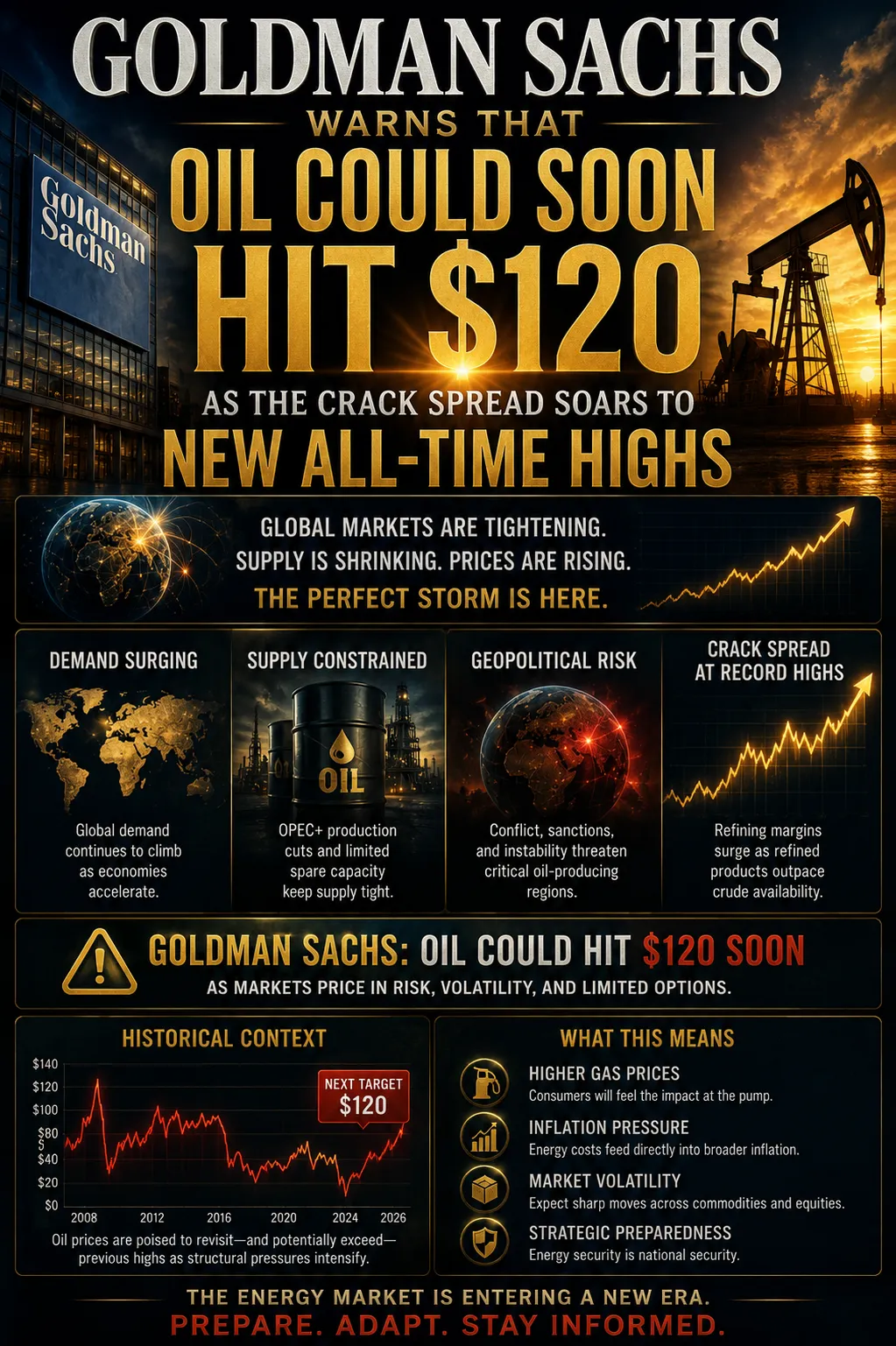
Goldman Sachs Warns That Oil Could Soon Hit $120 As The “Crack Spread” Soars To New All-Time Highs
Unless we witness some sort of a crazy diplomatic miracle, the price of gasoline will soon rise into unprecedented territory. The Iranians have closed the Strait of Hormuz, the Houthis are blocking Saudi tankers from getting through the Bab el-Mandeb Strait, and with a big helping hand from the United States the Ukrainians are relentlessly attacking Russian oil refineries. Meanwhile, the oil inventory buffers that existed before the war with Iran are rapidly being depleted. Nations around the world are doing whatever they can to adjust to this crisis, but time is running out.
According to analysts at Goldman Sachs, the price of oil could soon hit $120 a barrel if a diplomatic solution to the conflict in the Middle East is not found…
Oil prices could reach upward of $120 a barrel if tensions between the U.S. and Iran don’t start to ease soon.
Analysts at Goldman Sachs, led by Daan Struyven, wrote in a note published on Monday night that Brent crude may surpass $120 a barrel by next quarter and average $100 a barrel the following year if the Strait of Hormuz remains disrupted throughout 2027. In this scenario, output from the Persian Gulf doesn’t recover until December next year, with the support of oil-pipeline extensions.
If the price of oil reaches that level and stays there for an extended period of time, a major global economic downturn is essentially guaranteed.
The good news is that the price of oil is not anywhere near that level yet. But on Tuesday the price of Brent crude did exceed the $90 barrier for the first time since June 11th…
After 10 consecutive days of U.S. strikes on Iran, Brent crude oil futures settled above the key threshold of $90 a barrel Tuesday.
Brent futures ended the day at $91.01, up 2.1%. The last time they settled above $90 a barrel was on June 11, less than a week before the U.S. and Iran signed a memo of understanding aimed at ending hostilities in the Strait of Hormuz while a longer-term peace deal was negotiated. But that 60-day truce ended less than a month after it was signed.
The trend is not our friend at this stage.
Of course the price of crude oil is not the only number that we need to be watching.
The “crack spread” has been soaring, and that should deeply alarm all of us.
If you are not familiar with the “crack spread”, the following is a pretty good explanation…
The process works like this: Refiners take in raw crude oil (the price mostly referred to in headlines) and “crack” it into usable petroleum products. But just like crude is its own commodity, gasoline and diesel have their own trading prices as well. The profit that oil refineries make from converting crude into usable fuels is the “crack spread.”
Prior to the war, the “crack spread” was usually about 10 to 15 dollars a barrel.
This week, it reached a whopping 70 dollars a barrel…
But while everyone has been watching crude oil, a different oil measure — the one that arguably matters more for the price at the gas pump — has never stopped climbing. That measure, called the “crack spread,” is at all-time highs.
The crack spread is the gap between what a refinery pays for crude and what it earns selling the gasoline and diesel it makes from it. For most of the past decade that gap fluctuated between $10 and $15 a barrel. This week it hit $70, the widest spread ever recorded.
The margin for refining a barrel of oil is now more than what an entire barrel of crude cost the day this war began. And here is the tell: It kept climbing while crude collapsed, and it is still climbing now that crude is rising. It does not care which way the headline price moves.
The crack spread is the market telling you, in dollars, that the right crude is not reaching the right refineries. The price of oil can do whatever it likes. The machines that turn it into fuel are screaming either way.
The conflicts in the Middle East and in Ukraine are the primary reason why the “crack spread” has been steadily widening.
Many refineries in the Persian Gulf region are currently not operating due to the war with Iran, and we keep helping Ukraine damage refineries all over Russia…
The current conflict between Russia and Ukraine that started in February 2022 has significantly damaged global refining capacity, with Russian crude runs falling to a 22-year low of 3.8 million barrels per day in June, according to a Truist report.
It also resulted in a Russian ban on diesel exports, limiting how much crude oil can actually be turned into fuel and reach the global market.
“When 1 in 9 barrels of diesel is produced in Russia, and suddenly they’re banning exports, it’s problematic,” De Haan said.
The U.S.-Iran war has made matters even worse. Despite previous talks to de-escalate the conflict, the International Energy Agency said in its July oil-market report that Middle East export refineries have yet to restart.
We desperately need peace. But there isn’t going to be peace.
Instead, there were some dramatic escalations last week, and there have been more dramatic escalations this week.
On Monday, the Houthis announced that Saudi commercial vessels would no longer be allowed to travel through the Bab el-Mandeb Strait…
A successful effort by Yemen’s Houthis to shut the Bab el-Mandeb Strait would strike at one of the world’s most important oil shipping routes, potentially triggering a fresh surge in crude prices, disrupting fuel supplies and adding to strains on the global economy.
Yemen’s Iran-aligned Houthis on Monday declared a naval blockade against Saudi Arabia, its military spokesperson said. A closure of the Red Sea’s southern gateway would remove a critical alternative route for the kingdom to the Strait of Hormuz and intensify fears of shortages.
This blockade seems to be working, because at least 8 oil tankers have already been forced to turn around…
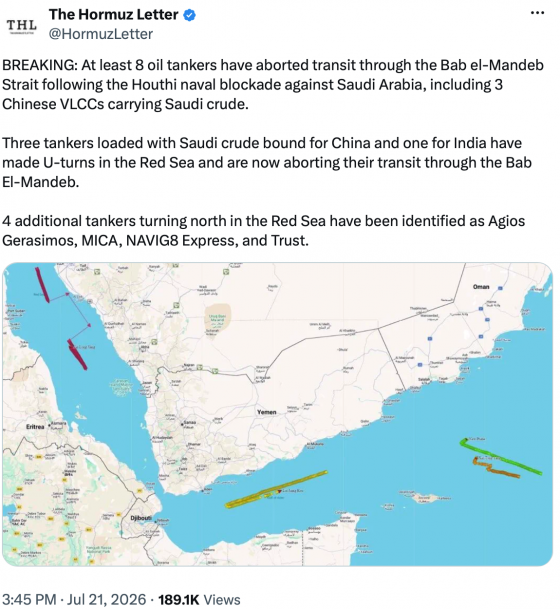
One analyst is warning that the impact that this move will have on global markets will be “massive”…
A full closure would have the biggest immediate impact on Saudi crude exports from the Red Sea port of Yanbu. Matt Smith, commodity research director at Kpler, said Asian refiners receiving those barrels could face delays of around a month as tankers are forced to sail around the Cape of Good Hope.
“The impact is going to be massive in the first month,” Smith said. “The biggest impact is going to be on Saudi flows.”
The bottom line is that everyone in the world will soon be paying much more for gasoline unless a miracle happens. And once all of our buffers are totally gone, shortages and rationing will begin to manifest in various parts of the globe. I expect Asia to feel the pain first, and Europe will quickly follow.
There is still time for peace to prevail, but that window is getting narrower each day.
For a long time I have been warning my readers that crazier times were on the way, and what we are experiencing now is just the beginning.
FREE ENERGY TECHNOLOGY AURORA-7 CLASSIFIED FILES
They’ve had it for 34 years.
Source: The 17th Disciple TG
Not a prototype. Not a “concept.” A FULLY OPERATIONAL TECHNOLOGY. Designation: AURORA-7. Pentagon classified files. Declassified by Trump on June 22, 2026.
The technology? FREE ENERGY GENERATION. Zero-point quantum extraction. Unlimited power. No emissions. Cost per unit: $4,200.
The suppression? $847 BILLION in oil industry revenue protected. Since 1992.
A Pentagon engineer leaked full specifications on May 15, 2026. His name: Dr. Marcus Chen. 34 years with DARPA. The leak contained 847 pages of technical documentation. Blueprints. Testing protocols. Efficiency: 99.7%.
THEY KILLED HIM.
June 3, 2026. “Car accident.” Single vehicle. No witnesses. The coroner ruled it “accidental.”
It wasn’t.
OPERATION ENERGY-BLACKOUT — a 42-year Pentagon program to suppress energy technology that threatened oil profits. 23 scientists dead. All between 1984 and 2024. All had one thing in common: they discovered something that WORKED.
Every single one — ruled “suicide,” “accident,” or “natural causes.” Every single one — within 60 days of submitting breakthrough research.
THE COST:
America paid $3.2 TRILLION in unnecessary oil purchases since 1992. That money funded terrorism. That money could have powered every home in America FOR FREE.
Your electric bill? UNNECESSARY. Your gas tank? UNNECESSARY. Your heating costs? UNNECESSARY.
They chose to let you suffer.
TRUMP FOUND OUT.
On June 14, 2026, Trump signed Executive Order 2026-92. Full declassification of ALL suppressed energy research. RELEASED to the public by August 1st.
AURORA-7 PRODUCTION BEGINS.
Military contractors have orders. 12 production facilities activated on June 28, 2026. First units deployed to 50 military bases by July 15, 2026. Civilian rollout: September 2026.
THE PRICE COLLAPSE:
Oil industry stock prices dropped 47% since declassification. Executives are panicking. The $847 BILLION revenue stream is ENDING.
7 oil industry CEOs received sealed indictments on June 20. Not fines. Not settlements. CRIMINAL CHARGES. Conspiracy to suppress technology. Conspiracy to maintain dependence. Each count carries LIFE in prison.
PROJECT NIGHTFALL — a joint Pentagon-CIA operation to eliminate researchers who discovered free energy. 14 researchers dead between 1988 and 2023. All ruled “natural causes.” All within 90 days of submitting r
AURORA-7-DECLASSIFIED
ENERGY-FREEDOM-BEGINS
OPERATION-NIGHTFALL-EXPOSED
The age of energy slavery is OVER. The technology belongs to the PEOPLE now.
43 Days And Counting: Apathetic Americans Are About To Be Blindsided By A Major League Wake Up Call
I really don’t understand the tremendous apathy that I am witnessing right now. Everyone can see that commercial oil inventories are rapidly being depleted. As I discussed yesterday, the global oil market had about 400 million barrels of excess inventory before the war, and now we have “close to nothing”. But at least we still have the Strategic Petroleum Reserve, right? Yes, that is true, but that is being rapidly depleted as well. In fact, when you add the dwindling commercial oil inventors in the U.S. to the oil that is left in the Strategic Petroleum Reserve, we only have 43 days of supply remaining…
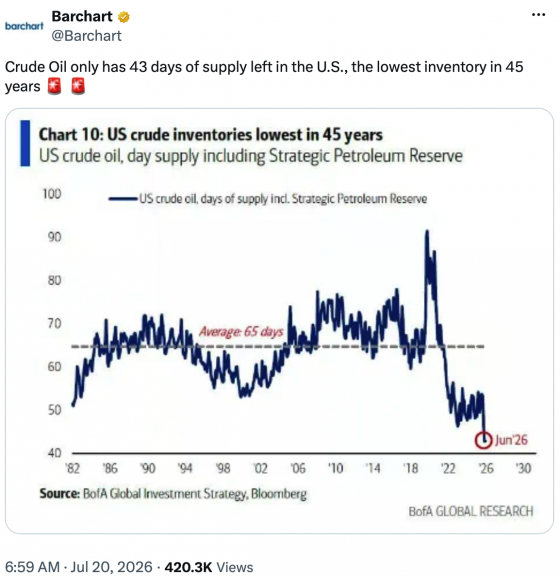
This doesn’t meant that 43 days from now we will be totally out of oil. What it does mean is that our buffer is almost entirely gone. Once it is entirely gone, as a society we will be forced to use less oil than we normally do.
Gasoline prices will likely rise until we see enough “demand destruction” to bring overall demand into balance with existing supply levels. And that will likely start happening some time around the beginning of September. Of course it is entirely possible that this could occur even sooner than 43 days from now.
Thanks to the negligence of the Biden administration, one of the four major underground storage sites for the Strategic Petroleum Reserve is apparently “inoperable” at this point…
The extreme incompetence that we have been witnessing in recent years absolutely horrifies me.
Let us hope that there is enough oil that we can actually access in the Strategic Petroleum Reserve to get us through this crisis. But I don’t think that there will be.
The war in the Middle East just continues to intensify, and now the Houthis have announced that they will be blocking Saudi vessels from traveling through the Bab el-Mandeb Strait…
Houthi militants in Yemen on Monday declared a maritime embargo against Saudi Arabia effective immediately, threatening to exacerbate the oil supply disruption triggered by Iran’s attacks on tankers in the Strait of Hormuz.
The Houthis have repeatedly threatened to close the Bab el-Mandeb Strait during the U.S.-Iran war. The strait is a choke point for commercial ship traffic that connects the Red Sea to the Gulf of Aden and global markets.
This is a major bombshell.
Much of the oil that the Saudis used to send through the Strait of Hormuz had been going through the Bab el-Mandeb Strait instead…
The Saudis have diverted million of barrels of oil per day through a pipeline to an export terminal on the Red Sea. Those exports have acted as a crucial relief valve for global oil markets during the U.S.-Iran war.
A closure of Bab el-Mandeb would block in those barrels, exacerbating the disruption triggered by Iran’s attacks on tankers in Hormuz.
So what is Saudi Arabia going to do now?
We have never seen the Strait of Hormuz and the Bab el-Mandeb Strait closed simultaneously, and this could send the price of oil into the stratosphere…
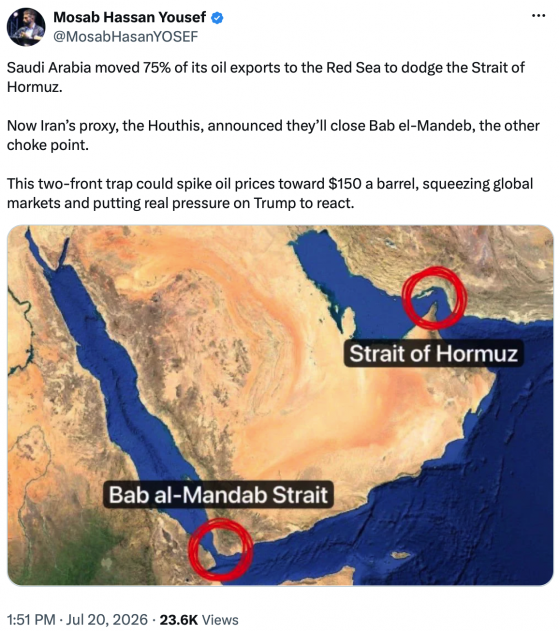
Virtually nothing has been moving through the Strait of Hormuz since late last week, and now the Iranians are really cracking down.
Just a little while ago, the Iranians attacked a Saudi vessel that was attempting to sneak through the Strait…
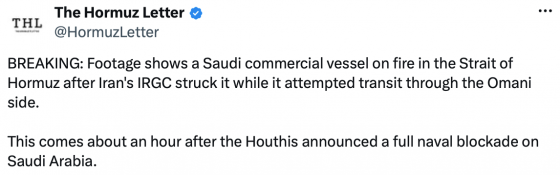
Prior to that, two Greek-owned tankers were “hit by projectiles” that came from Iran…
One of two Greek-owned tankers hit by projectiles in the Strait of Hormuz has been abandoned by its crew after fire was reported on the vessel.
The crew was rescued by a tugboat after abandoning the Maltese-flagged Kavomaleas owned by Greece’s Dynacom Tankers.
The only way to stop Iran from attacking commercial ships with missiles and drones would be to send in ground troops. And that is not going to happen any time soon.
So the global oil crisis is only going to get worse.
Already, the average price of a gallon of gasoline in the United States is back above four dollars…
With the resumption of the war with Iran, gas has returned to a national average of $4 a gallon this week. Gas prices had started coming down after the U.S. and Iran agreed to a peace deal, which brought stability to the market. Then, as everyone with an IQ over 70 expected, that all fell apart as Iran continued to violate the agreement. Nevertheless, we did have a few weeks of gas prices coming down.
“The price is a national average, meaning drivers in some states have been paying well over $4 a gallon for a while now, while others pay less. Prices vary between states due to factors ranging from nearby supply to differing tax rates,” reports the far-left Associated Press. “People around the world are also dealing with high gas prices as a result of the war.”
Of course this is just the beginning.
Gasoline prices will go much higher than this.
Meanwhile, electricity rates have risen 18 percent in just 18 months…
From Trump’s inauguration in January 2025 to April 2026, the most recent month for which government data are available, residential electricity rates have risen by an eye-watering 18 percent.
Sadly, it appears that electricity prices are poised to accelerate even more…
Nationally, utilities in the second quarter of 2026 “asked state regulators to approve $9.2 billion in rate hikes, up 26% from the $7.3 billion in rate increase proposals filed in the same period last year,” reports Utility Dive.
Virtually every form of economic activity requires energy So when energy becomes more expensive, the cost of living goes up for everyone.
Our entire way of life depends on cheap energy.
That era is over.
In the short-term, rising prices will put an enormous amount of stress on American families. And the outlook beyond the short-term is extremely bleak.
We really have reached a major turning point in human history. The apocalyptic war that is unfolding in the Middle East is going to radically change all of our lives.
Most Americans are still very apathetic for the moment, but a major league wake up call is coming, and it is going to be very painful.
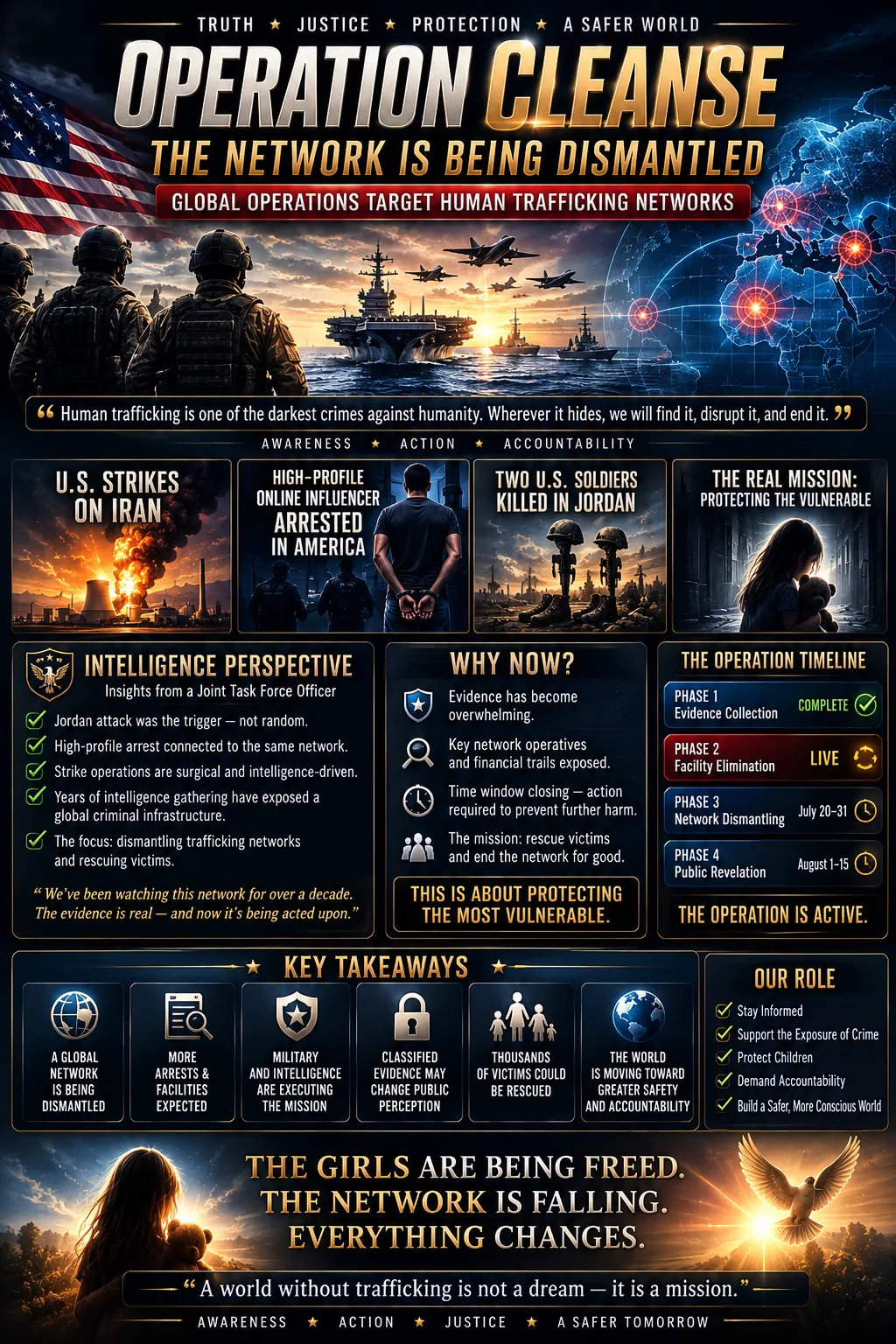
Operation Cleanse, Target Andrew Tate Arrested, Stop Genocide of Girls
They’re moving fast now. US strikes on Iran. Andrew Tate arrested in America. Two soldiers dead in Jordan. This isn’t random. This is coordinated. This is justice happening in real time.
An intelligence officer from Joint Task Force contacted us. Military operations in Iran aren’t geopolitics. They’re dismantling a network. Deeper than anyone realizes.
His words:
“Jordan attack was trigger. Two soldiers dead. Not random. Guarding trafficking facility. IRGC running it. We knew for years.”
“Tate’s arrest isn’t separate. Part of same network. Modeling agency was front. Girls trafficked through Eastern Europe, Middle East, Iran. IRGC coordinated.”
“Tate arrest got files. Network map. Names. Trump authorized strikes. Not retaliation. Elimination. Surgical strikes on facilities and handlers.”
“Two soldiers died protecting evidence. So network couldn’t destroy it. Death triggered response. Now it’s happening.”
“Watching 12 years. Girls disappearing. Network operating. Governments protecting it. Now it’s ending.”
Why now:
“Evidence overwhelming. Network exposed. Move now or they escape. Girls stay trapped. We’re moving.”
“Tate arrest was keystone. Everything connected. Money trails. Handlers. Facilities. All exposed.”
“Iran strikes are response. Surgical. Precise. Eliminating infrastructure. Freeing victims.”
“Military knows. Trump knows. Evidence classified but real. When public, world changes.”
What’s coming:
“More arrests. More facilities. More victims rescued. Network global but dismantling piece by piece.”
“Iran strikes beginning. Facilities in Syria, Turkey, Europe. All connected. All targeted.”
“Full scope comes out, people understand. Not about soldiers. About stopping genocide of girls.”
Operation Cleanse ✓ activated
Phase 1: Evidence Collection ✓ complete (Tate arrest)
Phase 2: Facility Elimination ⟳ live (Iran strikes)
Phase 3: Network Dismantling ⟳ July 20-31
Phase 4: Public Revelation ⟳ August 1-15
The arrests are happening. The strikes are happening. The network is falling.
Trump authorized it. The military is executing it. Justice is real.
Share this. Demand accountability. Demand the truth.
The girls are being freed. The network is being destroyed. Everything changes.
Operation code: Cleanse-7718
Status: active
Target: human trafficking network
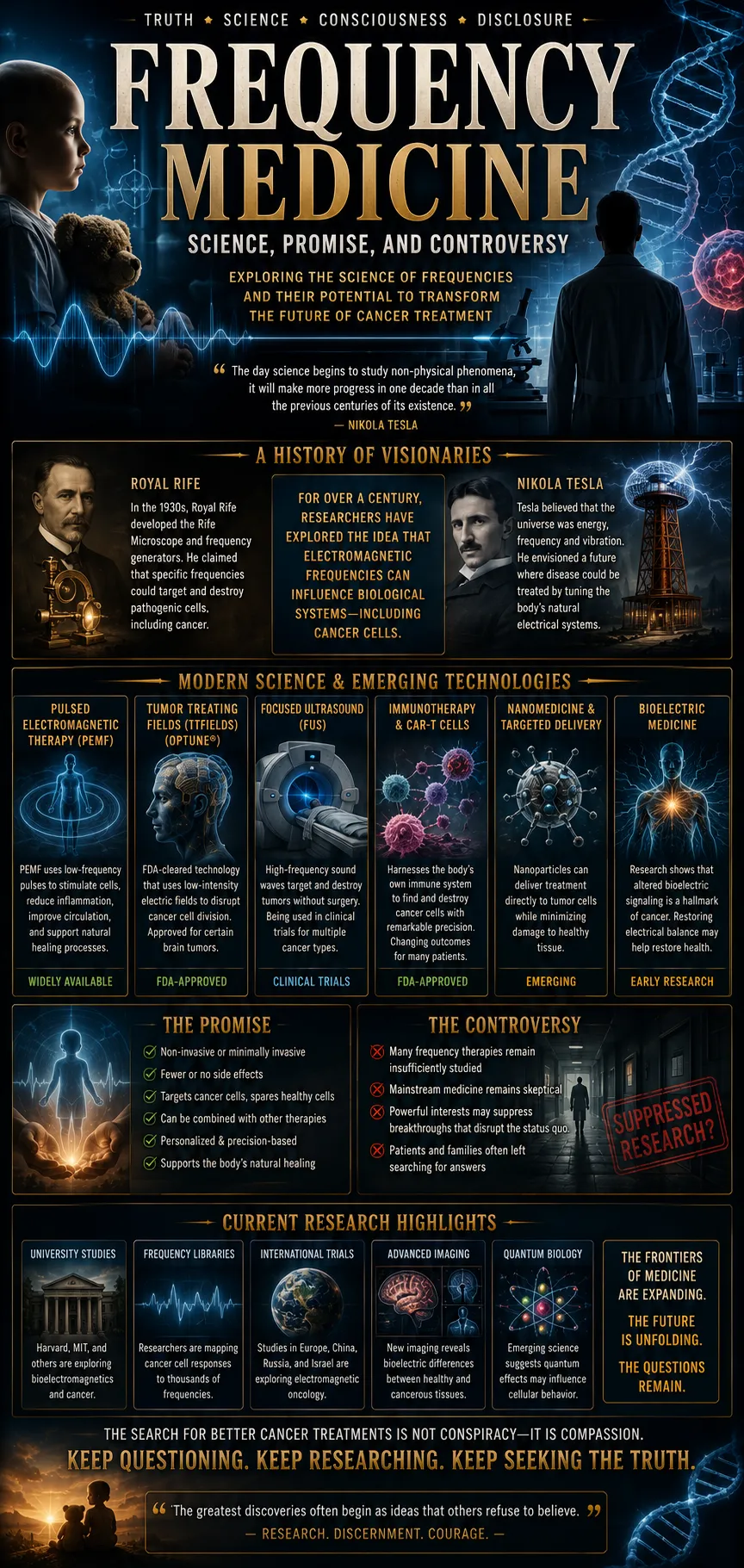
THE CHILDREN’S HOSPITALS KNOW. THEY HAVE KNOWN SINCE 2014. A PEDIATRIC ONCOLOGIST JUST SENT US HIS RESIGNATION LETTER. READ IT.
“To the Board of Directors, St. Jude Children’s Research Hospital. Effective immediately, I resign.”
Source: The 17th Disciple TG
I have spent 19 years in pediatric oncology. I have treated 2,300 children with cancer. I have watched 814 of them die.
I am writing this letter because I cannot carry the weight of what I know for one more day.
In 2014, I was invited to a closed-door presentation at a medical conference in Geneva. The presentation was titled: ‘Non-Invasive Electromagnetic Approaches to Pediatric Tumor Regression.’ It was not listed in the public program.
The presenter — whose name I will not reveal for his safety — showed us data from 340 pediatric cancer cases treated with frequency-based therapy between 2009 and 2014:
— 312 out of 340 children achieved complete tumor remission
— Average treatment time: 3 sessions of 25 minutes each
— Side effects: ZERO
— Recurrence rate: 4%
— Age range: 2 to 16 years old
312 children. Cured. No chemotherapy. No radiation. No hair loss. No vomiting. No organ damage. No death.
I sat in that room with 40 other pediatric oncologists. We all saw the same data. We all understood what it meant.
Then we were told:
‘This technology is not approved for civilian use. Any attempt to replicate, discuss, or disseminate these findings will result in immediate termination and criminal prosecution. You are bound by the non-disclosure terms of your conference registration.’
We went home. We went back to our hospitals. We went back to injecting children with chemotherapy that we KNEW was unnecessary.
I went back to Room 4B. That’s where we do pediatric chemo at my hospital. Room 4B.
I went back to holding the hands of 6-year-olds while poison dripped into their veins.
I went back to telling mothers: ‘We’re doing everything we can.’
We were not doing everything we could. We were doing everything we were ALLOWED to do.
Since 2014, I have personally administered chemotherapy to 847 children.
I know — with absolute certainty — that at least 70% of them could have been cured in 75 minutes with zero pain.
Instead, I gave them 6-18 months of chemical torture. I watched their hair fall out. I watched them vomit until they had nothing left. I watched their parents sell their homes to pay for treatment that I KNEW was inferior to technology that already existed.
I watched 214 of those children die.
214 children. Dead. Since 2014. Under my care. While I knew.
I am not asking for forgiveness. There is no forgiveness for this.
I am asking for this letter to reach every parent who has ever been told ‘there’s nothing more we can do.’ Because that sentence is a lie. It has been a lie since at least 2014.
There IS more they can do. There is a treatment that cures pediatric cancer in 75 minutes with zero side effects. It exists. It works. 312 children proved it works.
Your doctor knows. Your hospital knows. The board of directors knows.
They chose money over your child’s life. I chose my career over your child’s life.
I will not choose it one more day.
To the 214 families whose children I failed:
I am sorry. I am sorry I was a coward. I am sorry I chose silence. I am sorry I let the system convince me that obedience was the same as ethics.
It is not. Obedience killed your children. My obedience killed your children.
This letter is not enough. Nothing will ever be enough. But the silence ends today.”
— Name withheld. Pediatric Oncologist. 19 years. 2,300 patients. 814 deaths. 214 preventable.
He watched 214 children die knowing the cure existed. He stayed silent for 10 years. He is not silent anymore. Neither are we.
Share this for every child who deserved 75 minutes instead of 18 months of poison.
THE SKIES ARE TURNING BLACK. CHICAGO’S AIR QUALITY IS THE WORST EVER RECORDED. 830 WILDFIRES ARE BURNING. THIS IS THE RESET
July 16, 2026. The environmental crisis is VISIBLE. The climate is COLLAPSING. The old world is BURNING.
Source: The 17th Disciple TG
This is not a natural disaster. This is CONTROLLED DEMOLITION of the old system.
THE ENVIRONMENTAL COLLAPSE:
– Chicago: AIR QUALITY THE WORST EVER RECORDED
– Canada: 830+ WILDFIRES BURNING
– Minnesota: MASSIVE SMOKE SPREADING
– Nationwide: MANDATORY EVACUATIONS
– Global: CLIMATE ACCELERATION VISIBLE
But this is code for something MUCH BIGGER.
THE HIDDEN LANGUAGE:
“Worst air quality ever recorded” = SYSTEM FAILURE VISIBLE
“830 wildfires” = ENVIRONMENTAL INFRASTRUCTURE DESTROYED
“Mandatory evacuations” = POPULATION DISPLACEMENT ACTIVATED
“Smoke spreading nationwide” = GLOBAL IMPACT UNDENIABLE
“Climate acceleration” = RESET PROTOCOL ACTIVATED
When environmental officials say “worst ever,” they mean IRREVERSIBLE CHANGE. When they say “mandatory evacuations,” they mean SYSTEM RESET.
THE SEQUENCE:
Phase 1: Iran military operations ✓ COMPLETE (6 days)
Phase 2: Election system exposure ⟳ TONIGHT (Trump speech)
Phase 3: Environmental crisis visible ⟳ TODAY (Wildfires/Air quality)
Phase 4: Economic system reset ⟳ PENDING
Phase 5: New world order activation ⟳ STANDBY
Each phase creates VISIBLE CRISIS. Each phase FORCES CHANGE. Each phase ACTIVATES THE RESET.
THE SYMBOLISM:
Wildfires = OLD WORLD BURNING
Black skies = DARKNESS BEFORE DAWN
Air quality crisis = SYSTEM FAILURE VISIBLE
Evacuations = POPULATION MOVEMENT
Smoke = TRUTH SPREADING
ALL VISIBLE. ALL UNDENIABLE. ALL PART OF THE PLAN.
THE HIDDEN TRUTH:
Environmental collapse is not accident. It is CONTROLLED DEMOLITION of the old system.
When people see the skies turn black, they understand the system is FAILING and reset is INEVITABLE.
This is the GREAT AWAKENING through ENVIRONMENTAL CRISIS.
THE TRANSFORMATION:
When environmental crisis becomes UNDENIABLE, people DEMAND NEW SYSTEMS.
They will demand clean energy, environmental protection, and system RESET.
The old world of environmental destruction ENDS. The new world of ENVIRONMENTAL RESTORATION BEGINS.
THE MOMENT:
Today. Black skies over Chicago. 830 wildfires in Canada. Mandatory evacuations nationwide.
Tonight. Trump addresses the nation. The announcement changes everything.
Tomorrow. The environmental reset ACCELERATES.
This is not climate change. This is SYSTEM RESET. This is TRANSFORMATION.
THE REALITY:
When the skies turn black, people WAKE UP and DEMAND CHANGE.
The environmental crisis is the TRIGGER. The reset is the RESPONSE. The new world is the RESULT.
PREPARE FOR THE RESET. DECODE THIS. SHARE THIS. UNDERSTAND THIS.
THE SKIES ARE TURNING BLACK. THE ENVIRONMENTAL CRISIS IS VISIBLE. THE RESET IS ACCELERATING. THE NEW WORLD IS COMING.
MOUNT SHASTA AND THE LEGEND OF TELOS
Exploring One of America’s Most Enduring Spiritual Mysteries
For generations, Mount Shasta, rising more than 14,000 feet above Northern California, has inspired explorers, scientists, Indigenous traditions, mystics, and spiritual seekers alike. Its snow-covered summit, dramatic lenticular cloud formations, and striking volcanic landscape have made it one of the most recognizable mountains in North America. Beyond its geological significance, however, Mount Shasta has become one of the world’s most discussed locations in modern metaphysical literature. Over the past century, countless books, documentaries, and personal accounts have described the mountain as an energetic vortex, a center of spiritual awakening, and even the legendary home of the hidden city of Telos.
The legend of Telos traces its origins to esoteric traditions that describe an advanced civilization existing beneath Mount Shasta. According to these teachings, the inhabitants are descendants of the ancient continent of Lemuria, a legendary civilization believed in some spiritual traditions to have flourished thousands of years before recorded history. While mainstream archaeology does not recognize Lemuria as a historical civilization, the concept has become an enduring symbol within New Age philosophy, representing humanity’s forgotten spiritual heritage and higher potential.
The Mountain of Mystery
Mount Shasta has long been associated with unusual phenomena. Visitors frequently report experiences ranging from profound feelings of peace and heightened intuition to sightings of unexplained lights, unusual cloud formations, and powerful meditative experiences. The mountain’s distinctive lenticular clouds—formed naturally by atmospheric conditions—have often been interpreted by enthusiasts as evidence of hidden craft or energetic activity. Others describe vivid dreams, synchronicities, or a strong inner calling to visit the region, viewing the mountain as a place of personal transformation rather than simply a geological landmark.
Many Indigenous tribes, including the Winnemem Wintu, regard Mount Shasta as sacred. Their traditions describe the mountain as a place of great spiritual significance and a source of life-giving power. These perspectives differ from modern metaphysical interpretations but contribute to the mountain’s long-standing reputation as one of North America’s most spiritually important locations.
The Legend of Telos
Within contemporary metaphysical teachings, Telos is described as an advanced subterranean city built after the destruction of Lemuria. Rather than existing in conventional underground caverns, some traditions portray Telos as occupying a higher-dimensional state of consciousness that overlaps with the physical world. According to these accounts, its inhabitants have developed societies based upon harmony, cooperation, advanced healing, sustainable energy, and expanded consciousness.
Although no scientific evidence has confirmed the existence of such a city, the story of Telos has become an influential metaphor for humanity’s potential evolution. Supporters view it as representing a future civilization founded upon wisdom, compassion, and balance rather than conflict and scarcity.
Energy, Consciousness, and Transformation
One recurring theme within Mount Shasta literature is the concept of energetic “vortexes”—locations where many believe the Earth’s natural energies are especially concentrated. While these claims remain outside mainstream scientific understanding, countless visitors report deeply personal experiences of clarity, emotional healing, creativity, or spiritual renewal while spending time on the mountain.
For many practitioners of meditation and mindfulness, Mount Shasta symbolizes an invitation to look inward. Rather than searching for hidden civilizations beneath the Earth, they see the mountain as encouraging individuals to discover their own inner potential. In this interpretation, the “journey to Telos” becomes a symbolic journey toward higher awareness and personal transformation.
Preparing for a New Era
Within many modern spiritual communities, Mount Shasta is frequently associated with humanity’s ongoing evolution of consciousness. Some traditions speak of an approaching period of increased cooperation, expanded awareness, and deeper recognition of humanity’s interconnectedness. Whether interpreted literally or symbolically, these teachings emphasize compassion, service, self-discovery, and responsible stewardship of both the planet and one another.
Supporters often describe the mountain as a “lighthouse”—not because it guides ships across oceans, but because it reminds people to navigate life’s transitions with wisdom, courage, and hope. In this view, the greatest transformation does not occur beneath the mountain but within each individual willing to grow beyond fear and division.
Separating Symbolism from Evidence
Many of the extraordinary claims associated with Mount Shasta—including Telos, Lemurian civilizations, hidden portals, and higher-dimensional beings—remain matters of personal belief rather than established historical or scientific fact. Archaeological research has not verified these narratives, and geological studies identify Mount Shasta as a dormant stratovolcano formed through well-understood volcanic processes.
Nevertheless, the mountain continues to inspire millions through its natural beauty, cultural significance, and enduring mythology. Whether viewed as sacred geography, symbolic storytelling, or spiritual inspiration, Mount Shasta occupies a unique place where history, Indigenous tradition, nature, and metaphysical exploration intersect.
The Bigger Picture
Perhaps the enduring appeal of Mount Shasta lies not in proving or disproving extraordinary claims, but in the questions it inspires. Throughout history, mountains have served as places of pilgrimage, contemplation, and revelation. They invite humanity to step away from daily distractions and consider larger questions about purpose, consciousness, and our relationship with the natural world.
Whether one approaches Mount Shasta as a scientist, historian, adventurer, or spiritual seeker, its greatest gift may be its ability to awaken curiosity. The legends surrounding the mountain remind us that humanity has always searched for something beyond the visible horizon—a deeper understanding of who we are, where we came from, and what possibilities may still lie ahead. In that sense, Mount Shasta remains one of the world’s most compelling symbols of exploration, not only of the Earth, but of human consciousness itself.
THE WHITE HATS AND THE SILENT COUP — THE MILITARY OPERATION TO DISMANTLE THE CABAL
While the mainstream media keeps you focused on political theater and staged debates, a massive, globally coordinated military operation is taking place in the shadows.
Known as the “White Hats,” this alliance of high-ranking military officers, intelligence operatives, and patriots from around the world has been working for decades to dismantle the 13 Bloodlines and the “Deep State” from within. This is not a “theory”; it is a silent coup designed to return sovereignty to the people and end the era of debt-slavery.
⟁ The “White Hats” have successfully infiltrated every level of the cabal’s infrastructure. From the central banks to the media corporations and the secret societies, the “Alliance” has been gathering evidence of the crimes committed against humanity. This evidence is currently being stored in secure, off-world servers and within the Quantum Financial System (QFS).
The “Arrests” you see on the news—often disguised as sudden retirements, resignations, or health issues—are the removal of the middle-management of the shadow government. The top-tier players are being held in secure locations, waiting for the “Global Disclosure” event.
⟁ Why is it taking so long? Because this is a “Precise Surgical Operation.” The elite have built a “Dead Man’s Switch” into the global economy and the nuclear defense systems. If the Alliance moved too fast, the cabal would trigger a global collapse or a world war to maintain their control. The White Hats are systematically “disarming” these triggers, one by one.
This is why we see the sudden shift in global alliances, the collapse of the petrodollar, and the exposure of the “Black Budgets.” The funding for the cabal’s private army is being cut off, and their “Stargate” escape routes are being locked.
⟁ The final phase of the operation involves the “Emergency Broadcast System” (EBS). When the time is right, the Alliance will take over every television and radio signal on the planet to broadcast the “10 Days of Truth.” This will include the full disclosure of the Secret Space Program, the Med-Beds, the true history of Earth, and the crimes of the elite. This is the “Great Awakening.”
You are not watching a political crisis; you are watching the liberation of a planet. The script is written, the actors are in place, and the final curtain is about to rise.
CODE: WHITE-HATS / SILENT-COUP / ALLIANCE-STRINGS / EBS-DISCLOSURE
They told you that no one was coming to save you. They lied to keep you in despair. The cavalry is already here, and they’ve already taken the fort.
♟ The war is over; we are just waiting for the news to catch up. The light has already won.

THE GATES ARE CLOSING. FOREIGN INFILTRATION IS BEING STOPPED. AMERICA IS BEING PROTECTED
July 16, 2026. 5 hours ago. Trump Administration issued FINAL RULE ending foreign student visa abuse.
Sources: The 17th Disciple TG
This is not about education. This is about NATIONAL SECURITY. This is about CONTROL OF BORDERS.
OPERATION BORDER-SEAL:
Code: OPERATION-VISA-TERMINATION / FOREIGN-INFILTRATION-STOP / AMERICA-PROTECTION-PROTOCOL
The final rule establishes:
– Fixed period of admission for F, J, I visa classifications
– NO MORE INDEFINITE STAYS
– Immediate enforcement
– Integrity RESTORED
But this is code for something MUCH BIGGER.
THE HIDDEN LANGUAGE:
“End foreign student visa abuse” = STOP FOREIGN INFILTRATION
“Fixed period of admission” = CONTROL OF ENTRY
“Restores integrity” = REMOVES DEEP STATE LOOPHOLES
“Decisive shift” = IRREVERSIBLE CHANGE
“Final rule” = NO APPEALS, NO DELAYS
When Trump says “final,” he means PERMANENT. When he says “abuse,” he means SYSTEMATIC INFILTRATION.
THE SEQUENCE:
Phase 1: Border enforcement ✓ ONGOING
Phase 2: Visa system reform ⟳ TODAY
Phase 3: Foreign influence removal ⟳ ACCELERATING
Phase 4: Immigration overhaul ⟳ PENDING
Phase 5: America SECURED ⟳ STANDBY
Each phase closes another loophole. Each phase REMOVES FOREIGN CONTROL. Each phase PROTECTS AMERICA.
THE SYMBOLISM:
F visas = STUDENTS (infiltrators)
J visas = EXCHANGE (spies)
I visas = INVESTORS (foreign agents)
ALL BEING CONTROLLED. ALL BEING MONITORED. ALL BEING STOPPED.
THE HIDDEN TRUTH:
Foreign student visas were WEAPONIZED. They were used to:
– Infiltrate American universities
– Steal technology and research
– Plant Deep State operatives
– Influence American policy
– Weaken American security
Now the system is BEING REFORMED. Now the loopholes are BEING CLOSED. Now America is BEING PROTECTED.
THE TRANSFORMATION:
When foreign infiltration is stopped, American security INCREASES. When foreign influence is removed, American independence GROWS.
The old world of open borders and foreign control ENDS. The new world of SECURED AMERICA BEGINS.
Universities will be AMERICAN. Research will be PROTECTED. Technology will be SECURE.
THE MOMENT:
The final rule is issued. The gates are closing. The infiltration is stopping.
This is not immigration policy. This is NATIONAL SECURITY OPERATION. This is AMERICA FIRST DOCTRINE.
DECODE THIS. SHARE THIS. UNDERSTAND THIS.
THE GATES ARE CLOSING. FOREIGN INFILTRATION IS STOPPING. AMERICA IS BEING PROTECTED.
THE SECRET OF THE 144,000 — THE CRITICAL MASS FOR THE GLOBAL AWAKENING
The number 144,000 is not just a biblical reference; it is a mathematical frequency. It represents the “critical mass” required to tip the scales of global consciousness.
Source: Mr. Kidpool TG
When 144,000 individuals reach a state of full DNA activation and high-vibration awareness, the “Matrix” signal will no longer be able to hold the collective illusion. This is the “Light-Grid” that is currently being built around the planet to bypass the old Saturn-Moon broadcast and reconnect humanity to the source.
⟁ These “144,000” are the “Ground Crew” or “Star Seeds” who have incarnated at this specific time to act as frequency anchors. They carry the “Master Codes” in their DNA that have been dormant for thousands of years. As the “Solar Flash” approaches, these codes are being activated. This is why you feel a deep sense of “mission” or a feeling that you don’t belong in this world—you are here to help the “Grand Transition” from 3D to 5D. You are a biological relay for the new frequency of Earth.
⟁ The elite know about this number. This is why they use “Divide and Conquer” to keep people fighting over race, religion, and politics. If they can keep the 144,000 separated, distracted, or in fear, they can delay the “Event.” But the “Alliance” has revealed that the number has already been reached. The “Light-Grid” is live. This is why the old systems of control—the banks, the media, the governments—are crumbling so fast. They are losing their “power source” (your fear) and the signal is being jammed by the light.
⟁ We are moving into the “Age of Light.” The transition involves a total rewrite of the human experience. The “Great Reset” of the cabal is a desperate attempt to create a fake version of this transition, but they cannot simulate the power of the activated human heart. You are part of the most important event in the history of the universe. The 144,000 are not a “club”; they are a frequency. And that frequency is now the dominant one on Earth. The countdown to full disclosure has begun.
CODE: 144K-FREQUENCY / DNA-ACTIVATION / STAR-SEED-GRID / 5D-TRANSITION
They want you to believe you are alone. But you are part of an army of light that has already won. The shift is here.
♟ You aren’t just living through history; you are the one making it. The critical mass is reached, and the light is winning.
THE IRAQ WAR, ANCIENT MESOPOTAMIA, AND THE SEARCH FOR LOST CIVILIZATIONS
Separating Historical Evidence from Modern Speculation
Source: GAR Contributing Writer
For more than two decades, the 2003 Iraq War has generated intense debate over its true motivations. While governments publicly emphasized concerns about weapons of mass destruction, regional security, and geopolitical strategy, numerous alternative theories have emerged suggesting that the conflict involved objectives far beyond conventional military and political interests. One of the most enduring claims centers on the ancient Ziggurat of Ur, a remarkably preserved Sumerian temple complex in southern Iraq that some researchers believe may have held archaeological discoveries of extraordinary significance.
Mesopotamia—often called the “Cradle of Civilization”—is home to some of humanity’s oldest cities, written languages, mathematical systems, and monumental architecture. The ruins of Ur, Babylon, Nineveh, and countless other archaeological sites continue to reshape our understanding of early human history. Because of their historical importance, these locations have naturally become the focus of both mainstream archaeological research and alternative interpretations that propose the existence of advanced prehistory, lost technologies, or forgotten civilizations.
Within alternative research circles, one hypothesis suggests that the Ziggurat of Ur was more than a ceremonial temple. According to these claims, ancient Sumerian traditions describing communication between the gods and humanity represent records of sophisticated technologies rather than purely symbolic mythology. Some speculate that artifacts recovered from Mesopotamian sites—including cuneiform tablets, cylinder seals, and astronomical records—may contain encoded scientific or cosmological knowledge that has yet to be fully understood.
Another frequently discussed subject involves the extensive looting of the Iraq Museum in Baghdad during the early stages of the war. Thousands of priceless artifacts disappeared during the conflict, although many were later recovered through international efforts. While historians generally attribute the losses to widespread chaos and organized antiquities trafficking, alternative researchers have suggested that certain artifacts may have been deliberately targeted because of their historical or technological significance. To date, however, no publicly available evidence has verified claims that objects associated with advanced ancient technology or “portal” systems were recovered by military organizations.
The Ziggurat itself remains one of the world’s most impressive surviving monuments of Sumerian civilization. Built more than four thousand years ago, it served as a religious and administrative center dedicated to the moon god Nanna. Archaeologists continue to study its sophisticated engineering, astronomical alignments, and cultural significance, while some independent researchers view these same characteristics as evidence that ancient civilizations possessed knowledge that exceeded conventional historical understanding.
Broader theories extend beyond Iraq, proposing that many ancient sites—including those in Egypt, Peru, Turkey, Syria, and Central America—formed part of an interconnected global network based on astronomy, sacred geometry, and planetary alignments. Supporters argue that similarities in architecture, mythology, and engineering hint at a shared prehistoric tradition whose origins remain largely unknown. Mainstream scholarship generally explains these similarities through independent cultural development, trade, and convergent innovation rather than evidence of a single advanced civilization.
Whether viewed through the lens of archaeology, history, mythology, or speculative research, the ancient civilizations of Mesopotamia continue to raise fascinating questions about humanity’s distant past. New excavations, improved dating techniques, satellite imaging, and digital reconstruction technologies are steadily revealing details that were unimaginable only a generation ago. While extraordinary claims require equally strong evidence, the continuing exploration of these remarkable sites reminds us that much of early human history remains incomplete and open to further discovery.
THE IRAQ WAR WAS NOT ABOUT OIL — IT WAS ABOUT THE ANCIENT STARGATE IN THE ZIGGURAT OF UR.
The Iraq War will likely remain the subject of historical debate for decades to come.
Source: Mr. Kidpool TG
Its geopolitical consequences are well documented, while alternative theories continue to explore possibilities that extend beyond the established historical narrative. Regardless of where one stands on these competing interpretations, the enduring legacy of Mesopotamia lies in its undeniable contribution to civilization itself—a region that gave humanity writing, mathematics, astronomy, law, and urban society. The greatest discoveries may not be hidden beneath a single monument, but in the continuing effort to understand the remarkable cultures that laid the foundations of the modern world.
The official narrative of “Weapons of Mass Destruction” in 2003 was a cover for one of the highest-priority “artifact recovery” missions in modern history. While the world watched the “Shock and Awe” campaign on television, elite special forces units were dispatched to a single, specific location: the Great Ziggurat of Ur. This ancient Sumerian temple was not just a religious site; it was the location of a functional, ancient Star Gate—a portal technology left behind by the Anunnaki thousands of years ago.
⟁ Saddam Hussein had spent years and billions of dollars “restoring” the Ziggurat, but he wasn’t interested in tourism. He had discovered the activation codes for the portal and was attempting to re-establish a direct link to the “Gods” of the ancient world. The global elite—the “Cabal”—could not allow a rogue dictator to possess the keys to inter-dimensional travel. The invasion was a desperate race to secure the Star Gate before Saddam could turn the power back on. This is why the US military immediately established a permanent base (Camp Echo) directly around the Ziggurat, barring all access to the site for over a decade.
⟁ The looting of the Baghdad Museum was not an accident of war; it was a targeted operation. While the public saw chaos, specialized teams were systematically removing specific “Cylinder Seals” and “Cuneiform Tablets” that contained the mathematical frequencies and “Key-Codes” required to operate the Star Gate system. These artifacts were not just gold and clay; they were the “Software” for the ancient hardware. They were immediately flown out of the country on unmarked planes and taken to the D.U.M.B.s in Nevada and Switzerland for reverse-engineering.
⟁ This is part of a global “Stargate War” that has been raging in the shadows for decades. From the mountains of Afghanistan to the ruins of Palmyra in Syria, the military-industrial complex has used “regional conflicts” as a smoke-screen to seize ancient portal technology. The “Alliance” has recently revealed that these gates are being “re-tuned” to the frequency of the New Earth. The era of the elite using these portals to escape the consequences of their actions is over. The gates are being locked from the other side, and the keys are being returned to the rightful guardians of the planet.
CODE: IRAQ-STARGATE / ZIGGURAT-OF-UR / CYLINDER-SEALS / PORTAL-WAR
They told you they were fighting for “democracy.” They were actually fighting for the remote control to the universe. The war was in the sand, but the prize was in the stars.
♟ The “Weapons of Mass Destruction” were never chemical; they were technological. And they’ve already been moved.
TONIGHT. TRUMP ADDRESSES THE NATION. THE ANNOUNCEMENT WILL CHANGE EVERYTHING. THE ELECTION SYSTEM IS BEING EXPOSED.
July 16, 2026. 3 hours ago. Trump teased a “VERY BIG ANNOUNCEMENT” for tonight.
Source: The 17th Disciple TG
This is not a normal speech. This is a HISTORIC MOMENT. This is the RESET.
OPERATION ELECTION-INTEGRITY:
Code: OPERATION-SAVE-AMERICA / ELECTION-SECURITY-PROTOCOL / DECLASSIFIED-INTELLIGENCE-RELEASE
The announcement will focus on:
– SAVE AMERICA ACT passage
– Voting machine security
– Foreign influence exposure
– Declassified intelligence
– Election fraud prevention
But this is code for something MUCH BIGGER.
THE HIDDEN LANGUAGE:
“Very big announcement” = HISTORIC REVELATION
“Election integrity” = SYSTEM OVERHAUL
“Voting machine security” = FRAUD PREVENTION
“Declassified intelligence” = TRUTH EXPOSURE
“Foreign influence” = DEEP STATE OPERATIONS EXPOSED
When Trump says “very big,” he means CIVILIZATION CHANGING. When he says “tonight,” he means IMMEDIATE.
THE SEQUENCE:
Phase 1: Iran military operations ✓ ONGOING
Phase 2: Declassification wave ✓ ACCELERATING
Phase 3: Election system exposure ⟳ TONIGHT
Phase 4: Global economic reset ⟳ PENDING
Phase 5: New world order activation ⟳ STANDBY
Each phase builds on the last. Each phase is IRREVERSIBLE. Each phase TRANSFORMS SOCIETY.
THE SYMBOLISM:
Iran war = DISTRACTION
Trade deals = DISTRACTION
Defense summits = DISTRACTION
Election integrity announcement = REAL AGENDA
Declassified intelligence = REAL AGENDA
System exposure = REAL AGENDA
The world is watching Iran. Trump is exposing the election system. THAT’S THE REAL PLAY.
THE VAULT OPENING:
When declassified intelligence about elections is released, Americans understand THE TRUTH.
They will learn:
– How elections were manipulated
– Who manipulated them
– Why the Deep State did it
– How the system will be FIXED
This is the GREAT AWAKENING moment. This is when people UNDERSTAND THEY WERE LIED TO.
THE TRANSFORMATION:
When Americans know the truth about elections, they DEMAND CHANGE. When they demand change, the system COLLAPSES.
The old world of rigged elections ENDS. The new world of FAIR ELECTIONS BEGINS.
The Deep State’s greatest weapon was ELECTION CONTROL. Now that weapon is being DESTROYED.
THE MOMENT:
Tonight. Trump addresses the nation. The announcement changes everything.
The SAVE AMERICA ACT is the framework. The declassified intelligence is the PROOF. The election system is being RESET.
This is not politics. This is REVOLUTION. This is RESTORATION.
DECODE THIS. SHARE THIS. PREPARE FOR TONIGHT.
TRUMP ADDRESSES THE NATION. THE ANNOUNCEMENT IS HISTORIC. THE AWAKENING ACCELERATES.
THE SPHINX’S HIDDEN SECRET — THE HALL OF RECORDS BENEATH THE LEFT PAW
The official story is that the Great Sphinx of Giza is a 4,500-year-old tomb marker. But geological evidence—specifically the water erosion patterns on its body—proves it is at least 12,000 years old, predating the Egyptian civilization.
Source: Mr. Kidpool TG
In the 1990s, ground-penetrating radar detected a massive, man-made chamber exactly where the legendary “Sleeping Prophet” Edgar Cayce predicted it would be: 25 feet below the Sphinx’s left paw. This is the Hall of Records, a library containing the entire history of the pre-flood world and the technology of Atlantis.
⟁ The Egyptian government and the Smithsonian have repeatedly blocked further excavation of this chamber. Why? Because the Hall of Records doesn’t just contain scrolls; it contains “Stellar Maps” and “Vibrational Tools” that would prove humanity was once a space-faring civilization. The chamber is protected by a “Frequency Shield” that prevents unauthorized entry. It is a “Time Capsule” left by the survivors of the last great cataclysm to ensure that the knowledge of the “Golden Age” was not lost forever.
⟁ Whistleblowers have revealed that a secret tunnel system connects the Sphinx directly to the Great Pyramid and a subterranean city located miles below the Giza plateau. This city, known as the “City of the Gods,” is where the elite have been recovering advanced technology for decades. The “Stargate” found in the lower levels is the real reason for the heavy military presence in the area.
They are using the ancient codes to “re-activate” the planetary grid, but they are doing it for control, not for liberation.
⟁ The Alliance is currently in the final stages of “liberating” the Hall of Records. As the Earth’s frequency reaches the required threshold, the “Shield” around the chamber is naturally dissolving. The truth of our origins is about to be released to the collective.
We are not a primitive race that slowly evolved; we are a “regressed” civilization that is finally reclaiming its lost inheritance. The Sphinx is not a statue; it is a guardian of the truth, and its watch is almost over.
CODE: SPHINX-SECRET / HALL-OF-RECORDS / EDGAR-CAYCE / ATLANTIS-LIBRARY
They told you it was just a monument. They lied to keep you from finding the library of your own soul. The paw is lifting.
♟ The guardian is ready to speak. The silence of 12,000 years is about to be broken.
There Are Several Scenarios That Could Result In The U.S. Becoming Trapped In A Land War In The Middle East
If both sides just continue to escalate matters, eventually there will be no turning back. At this moment, it is still possible for the fighting to stop and for a diplomatic solution to be reached. But if Iran crosses certain red lines, the U.S. will feel compelled to pursue regime change. I will discuss some of those red lines in this article. If regime change becomes the goal, either a ground invasion or the use of nuclear weapons would be required to achieve that goal. Needless to say, the use of nuclear weapons should not even be a consideration. A ground invasion would be a nightmare, because Iran can muster more than a million fighting men and the mountainous terrain that covers much of the nation is very easy to defend. Throughout history, foreign armies have not fared well in that part of the world. But if certain things were to happen, we could easily find ourselves trapped in an absolutely brutal land war in the Middle East.
Over the past few days, President Trump has become determined to hit Iran even harder due to the deaths of multiple U.S. service members…
U.S. Central Command (CENTCOM) announced Sunday that unidentified remains were recovered at the site of the Iranian attack in Jordan before confirming a separate U.S. service member was killed in Iraq.
“Yesterday, U.S. Central Command (CENTCOM) announced the passing of two U.S. service members and the missing status of one in Jordan following an Iranian attack on July 17,” CENTCOM said in a post shared on X.
“After a thorough search, U.S. military personnel found unidentified remains at the location earlier today. An examination process to verify the remains is ongoing,” the command added.
“Separately, a U.S. service member in northern Iraq was killed in action on July 18 during a controlled detonation of unexploded ordnance from a downed Iranian one-way attack drone,” the command said.
Every time another service member dies, Trump’s anger will only grow stronger.
On Saturday night, the intensity of U.S. airstrikes elevated to yet another new level…
The US devastated Iranian missile depots, drones and air defenses in the latest barrage of airstrikes after promising ‘swift punishment’ for the deaths of two American service members.
The latest wave of strikes concluded at 11.30pm ET and were targeted at the Islamic Revolutionary Guard Corps (IRGC) forces responsible for the fatal attack on US assets in Jordan on Friday, officials said.
A dramatic video shared by Central Command (CENTCOM) showed US forces launching a massive missile from an unknown location before hitting Iranian military coastal surveillance and air defense facilities.
Among the targets that the U.S. hit was a nuclear power facility that was under construction…
US air strikes on Iran overnight hit a nuclear-power plant under construction, according to furious Tehran officials.
During an eighth consecutive day of strikes on the country, the US attacked the partly built Darkhovin nuke facility in the southwest of the country, according to Iran’s Atomic Energy Organization — an assault that came the day after two American service members were reported killed, with a third still missing.
“An attack on a peaceful nuclear facility under international safeguards is a clear violation of international law,” the organization raged on social media.
Then on Sunday night, U.S. Central Command announced that Iran was being bombed for a ninth night in a row…
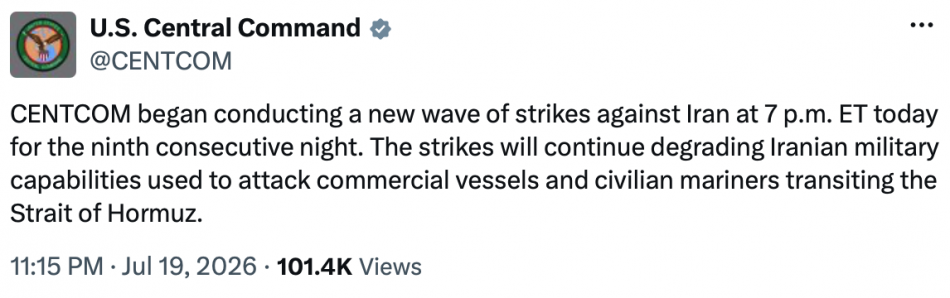
President Trump is really going for it.
He believes that all of this bombing will force the Iranians to their knees.
But the Iranians have no intention of surrendering.
Night after night, they have been hitting back hard.
On Saturday night, they hit multiple military targets in Kuwait and Bahrain…
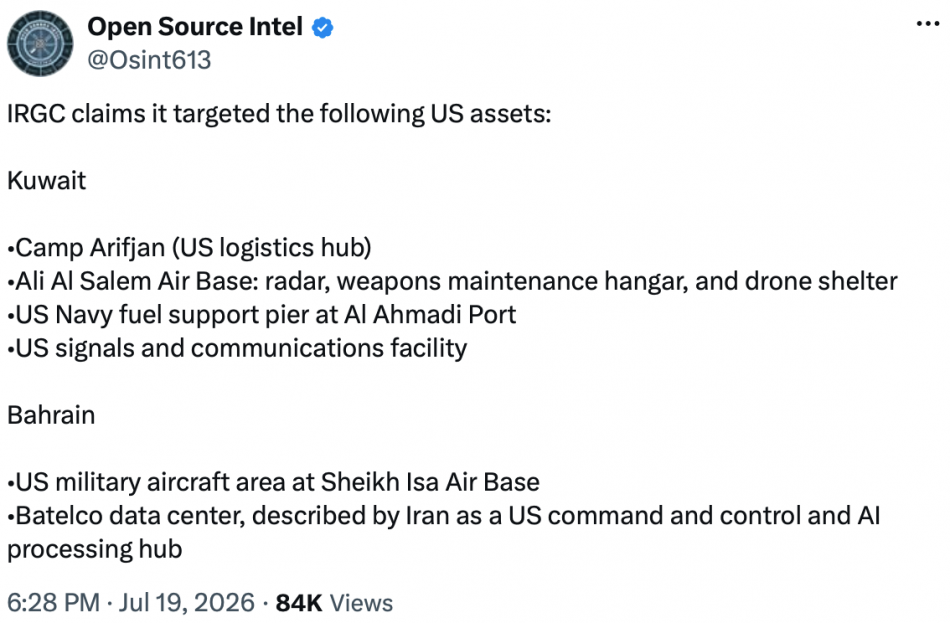
In addition, the Iranians have begun striking civilian infrastructure.
For two days in a row, Iran has hit power and water desalination facilities…
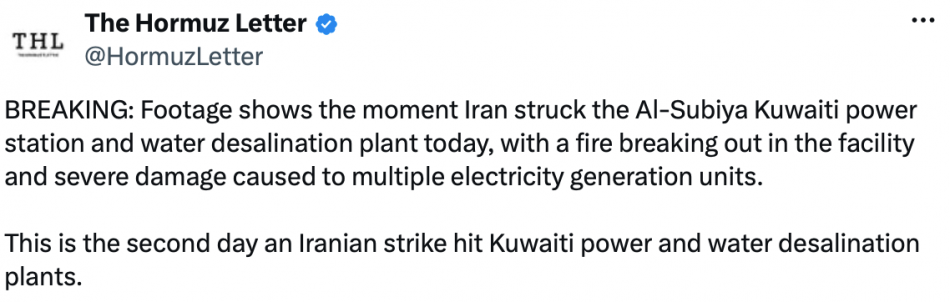
Desalination facilities are so important in that part of the world.
In fact, Kuwait relies on desalination for about 90 percent of its drinking water.
So this is a really big deal. But if Iran really wanted to raise the stakes, they could cross a narrow strip of land in Iraq and conduct a ground invasion of Kuwait.
Apparently this is something that some prominent Iranian voices are now advocating…
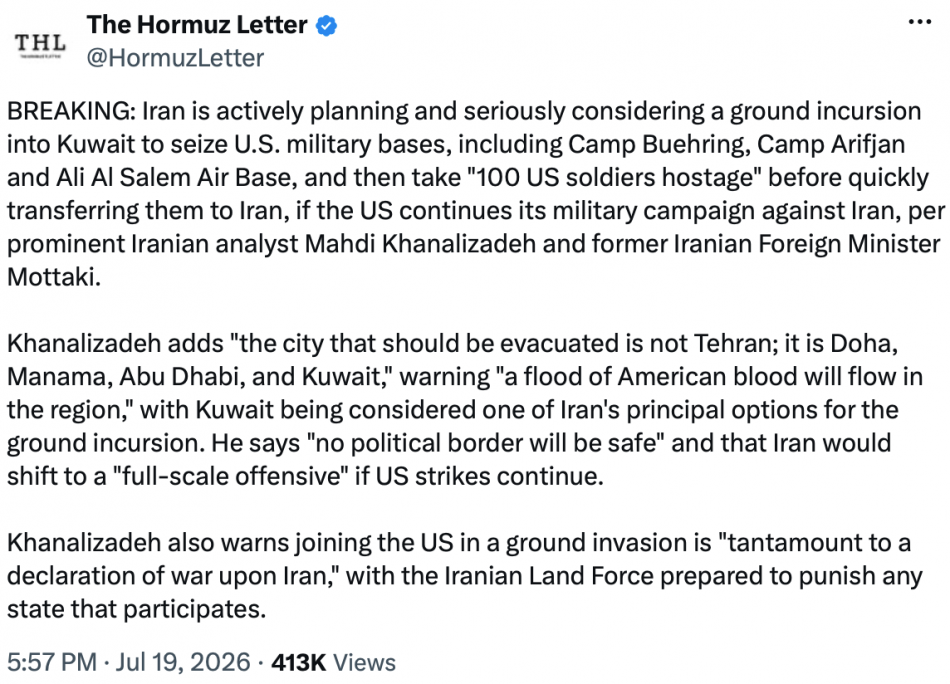
If Iran were to do this, we would be forced to fight a land war with Iran. And we wouldn’t be able to get out of it until regime change in Tehran had been achieved.
It is also being reported that the Islamic Resistance in Iraq is threatening to assault U.S. military bases in that nation…
The Islamic Resistance in Iraq has threatened to enter the conflict and target US interests and military bases in Iraq and across the region “with full force” if Washington further expands its attacks on Iran.
In a statement, the coalition of Iran-aligned armed groups said it had not carried out any military attacks against US bases in Iraq or elsewhere in the region in recent days.
That would also force us to fight a land war, which is something that the Trump administration is hoping to avoid. But if certain red lines are crossed, everything changes.
That is why this moment in history represents such a critical turning point.
One wrong move could result in the unthinkable. If Iran successfully sinks a U.S. aircraft carrier, that would mean all-out war. If Iran starts targeting extremely sensitive commercial infrastructure in the Gulf states, that would also mean all-out war.
Unfortunately, the Iranians are already threatening to do this…
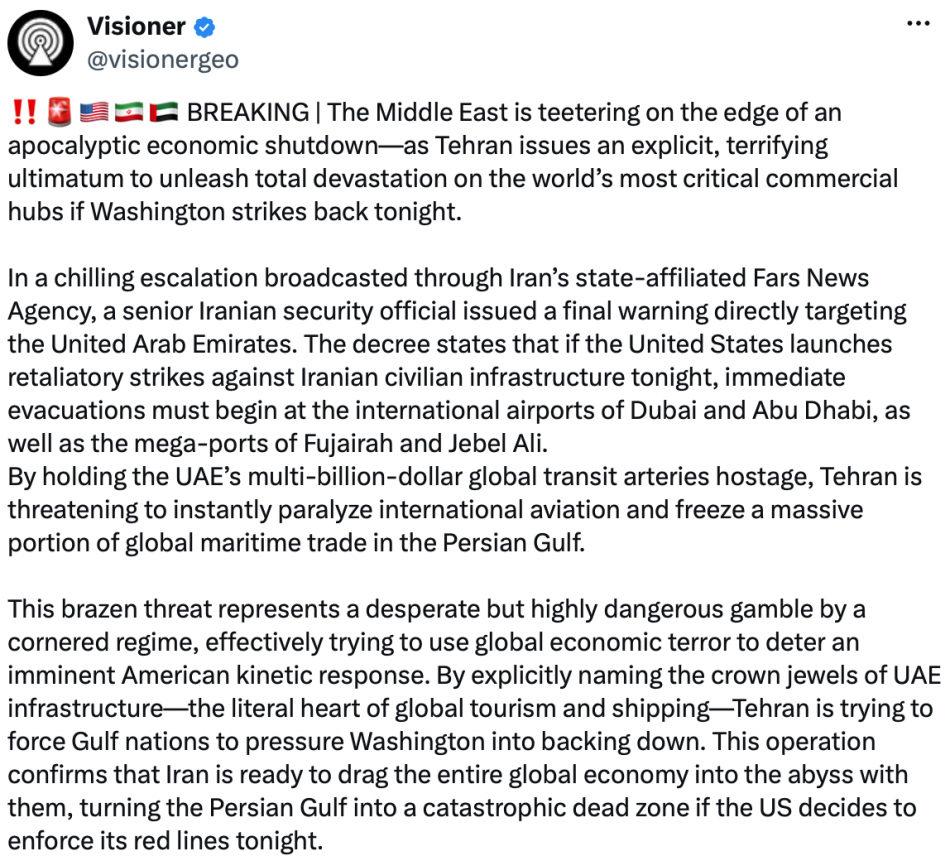
Of course the moment that Iran uses chemical, biological or nuclear weapons, the war in the Middle East would escalate to a level that most people don’t even want to imagine right now.
It would be wise for both sides to pull back from the brink while it is still possible, but that isn’t going to happen.
As I discussed on Friday, it appears that war is going to continue to be a major theme throughout the rest of this year. And I don’t expect Israel to be sitting on the sidelines for much longer.
In fact, Israel’s defense minister is telling us that his nation will hit Iran “with full force” if they are attacked…
Israeli defense minister Israel Katz said Sunday that his country would respond powerfully to any attack by Iran, after Israeli and Jordanian forces intercepted an Iranian missile launched towards the Jordanian city of Aqaba.
“If Iran fires missiles at Israel, we will attack them with full force,” Katz said during a visit to a rescue service facility.
“If the United States changes its policy, which is also something that could happen, we are prepared for both defensive and offensive” action against Tehran, he added.
As I write this article, missiles are flying all over the Middle East. Just moments ago, more explosions were reported in the Strait of Hormuz.
This war is not just going to raise the price of oil. So many people are going to die in the days ahead. And a single wrong move could trap us in a land war with Iran that we would not be able to escape.
Meanwhile, the war between Russia and Ukraine just continues to intensify, and the Chinese are becoming increasingly angry with us. We are literally watching World War III play out right in front of our eyes, but most people still do not seem to realize this.
THE HIDDEN CONTINENTS BEYOND THE ICE WALL — THE SECRET GEOGRAPHY OF THE “OUTER EARTH.”
What if the map of the world you were shown in school was only a small fragment of the truth?
Source: Mr. Kidpool TG
The “South Pole” is not a point at the bottom of a spinning ball; it is a 360-degree perimeter of ice that surrounds our known oceans and continents. This is the Ice Wall, a massive, 200-foot-high barrier of frozen water that marks the edge of our “pond.” But the ice is not the end of the world—it is merely the boundary. Beyond the restricted zones of Antarctica lie vast, lush continents and civilizations that have been hidden from humanity for centuries.
⟁ In the 1950s, during “Operation Deep Freeze,” Admiral Richard E. Byrd reported seeing “land beyond the pole” that was larger than the United States, filled with resources and free from the control of the global elite. Shortly after his return, the Antarctic Treaty was signed, banning all independent exploration of the region. They didn’t do this to protect the environment; they did it to protect the “Secret Geography.” The elite have been using these “Outer Lands” as their private playground, accessing advanced technology and resources while telling the rest of the world that the Earth is a “closed system” with limited supplies.
⟁ The maps from the 1500s and 1600s, like the Urbano Monte map, show dozens of extra continents and islands that are not on our modern globes. These aren’t “mistakes” by ancient cartographers; they are records of the world before the “Great Reset” of the 1800s. The “Outer Earth” is where the 13 Bloodlines have their true strongholds. It is a world of “perpetual summer” where the frequency is different, and the laws of the Matrix do not apply. They have kept us “fenced in” like cattle, fighting over a tiny percentage of the Earth’s actual surface area.
⟁ The “Alliance” is currently in the process of “opening the gates.” This is why we are seeing a sudden surge in interest in the “Flat Earth” and “Ice Wall” theories—the information is being leaked to prepare the collective consciousness for the shock of the truth. As the military blockades around the ice are being neutralized, the “Outer Continents” will be revealed. We are not living on a lonely rock in a vacuum; we are living in a vast, infinite plane of existence that is about to get much, much bigger. The “New World” was never found; it was just hidden.
CODE: ICE-WALL / OUTER-EARTH / DEEP-FREEZE / FORBIDDEN-MAPS
They told you the world was small to make you feel small. They lied to keep you from walking out of the cage. The ice is melting, and the horizon is moving.
♟ The map is not the territory. The territory is infinite, and the fences are coming down.
We Are Being Warned That Global Oil Inventories Are “Close To Nothing” As We Plunge Into The Most Severe Oil Crisis In History
The only way that we were going to avoid a historic oil crisis was if a diplomatic solution could be found to end the war in the Middle East. Obviously that did not happen. The “Memorandum of Understanding” has completely failed and the U.S. and Iran are hitting one another really hard. The Strait of Hormuz is going to be closed for the foreseeable future, and now it appears that the Bab el-Mandeb Strait will soon be closed as well. Global oil inventories have been falling for months, and now we have reached a stage where we are going to experience some really severe pain.
Iran has attacked at least 9 commercial vessels over the past couple of weeks, and as a result “nobody is willing to move” through the Strait of Hormuz right now…
The security situation in the Strait of Hormuz has returned to a “worse-case scenario” for oil tankers as Iran has repeatedly attacked ships over the past week, the CEO of a maritime risk services firm said.
“We see the reduction of the volume of transits through the Strait of Hormuz and right now crews of vessels are even more concerned than they were before,” said Dimitris Maniatis, CEO ofens-headquartered Marisks, at a Lloyd’s List Intelligence briefing this week.
“Nobody is willing to move,” Maniatis said.
This is really bad.
We are truly going to see how dependent the world really is on oil from the Middle East. Up to this point, we have been okay because there were large commercial oil stockpiles that we could deplete.
But now we are being told that we have “burned through all of the buffers we had”…
Financial Times spoke with energy traders at the end of the week who warned that slowing tanker traffic through the Strait of Hormuz could trigger a more severe supply crunch than the first round of the US-Iran war because emergency reserves and stockpiles around the world that cushioned the earlier disruption have been mostly depleted.
“We’ve burned through all of the buffers we had. Everything,” said one trader. “All of that’s now gone.
Perhaps some numbers will help people understand the situation that we are facing.
Before the war, we had approximately 400 million barrels of oil in commercial inventories.
At this point, “we have close to nothing”…
Amrita Sen, founder of Energy Aspects, pointed out that heading into the US-Iran war, the global oil market had around 400 million barrels of excess inventories, not including strategic reserves controlled by governments.
“Now we have close to nothing … and market complacency around Hormuz flows is being severely tested,” Sen warned.
In other words, we are right around the corner from shortages and rationing in some parts of the globe. Asia will probably be first, and then Europe will follow. And the outlook for the U.S. is becoming quite dire as well.
In fact, crude oil inventories at Cushing have been hovering around “tank bottoms” recently…
Crude oil inventories at the Cushing, Oklahoma, storage hub have fallen below 20 million barrels in recent weeks, prompting the U.S. Energy Information Administration (EIA) to explain how “tank bottoms” can affect storage operations and market pricing.
According to EIA, storage tanks require a minimum volume of crude oil to remain operational. Known as tank bottoms, this inventory allows pumps and related infrastructure to function properly. Once inventories approach these minimum operating levels, not all stored crude is readily accessible, even though tanks are not technically empty.
The good news is that we still have some oil in the Strategic Petroleum Reserve, but it is falling fast.
According to the Wall Street Journal, it is currently at the lowest level that we have seen since 1983…
Oil shocks from the war with Iran and the Russia-Ukraine conflict have left the U.S. Strategic Petroleum Reserve at its lowest level since 1983.
The world has been running an “oil deficit” for months.
Now the Strait of Hormuz is closed again, and the Houthis could soon shut the Bab al-Mandab Strait…
Iran has reportedly instructed Yemen’s Houthi terrorists to prepare to close a critical Red Sea gateway if the United States attacks Iranian power infrastructure, Reuters reported, a threat experts warn could sharply disrupt global shipping even if the group cannot completely seal the waterway.
“This threat should be taken seriously,” Nadwa Al-Dawsari of the Middle East Institute told Fox News Digital. “With recent escalation and U.S. strikes on Iran, Tehran has already signaled that the Bab al-Mandab could become part of its response.”
Three sources told Reuters on Thursday that Iran’s leadership had discussed using the Houthis to shut the Bab el-Mandeb Strait and recently conveyed the request to the group. A source close to the Houthis said missiles and drones had been deployed near the waterway and that the group was awaiting an order to begin attacking shipping.
The Strait of Hormuz and the Bab al-Mandab Strait have never been shut at the same time. If that actually happens, energy prices will go absolutely nuts.
Meanwhile, relentless strikes on Russian refineries have caused an insane gasoline shortage in Russia. Many drivers are waiting multiple hours in line for gasoline, and security forces have been deployed to keep order at gas stations…
Authorities in 13 Russian regions have deployed security forces, including police officers and Rosgvardia personnel, to patrol gas stations as the country faces an escalating domestic fuel crisis following Ukrainian long-range strikes.
The crisis has caused a 35% drop in daily gasoline production to 75,000–80,000 metric tons, far below the typical summer demand of 115,000–120,000 metric tons, leaving half of Russia’s oil refining capacity idle, as reported by The Moscow Times on July 17.
In response to the shortage, local administrations have set strict fuel sales limits ranging from 20 to 40 liters of gasoline per vehicle, leading to long lines where drivers face wait times of at least 2.5 hours.
The Ukrainians are going to continue sending drones to strike Russia’s refineries, and the Russian people are extremely frustrated.
Some of the lines stretch for miles, and in two cases elderly people actually dropped dead while they were waiting…
For months, the queues at petrol stations across Russia have grown longer.
Some people have slept in cars. Others have pitched tents. A few have ended up brawling over pumps.
Now, two people have died.
An 80-year-old man suffered heart failure while waiting to fill his tank at a petrol station in the town of Lysva in Perm Krai, while a 75-year-old man died while waiting to refuel in Petrozavodsk.
The Russians are normally one of the largest oil exporters in the world.
But now they have been forced to beg India for gasoline…
Moscow has approached Indian refineries for more gasoline imports amid an acute fuel shortage, according to industry sources cited by Reuters.
Russia, the world’s third-largest oil producer, has reportedly requested gasoline imports from India and Kazakhstan in June amid a sprawling fuel crisis spurred by Ukrainian strikes, with nationwide fuel rationing reported.
Reuters, in its Thursday report, said Russian oil giants Rosneft, Gazprom Neft and Lukoil have approached their Indian counterparts to raise imports, with the outlet’s source adding that deliveries are likely to be routed through traders.
This is another reason why this oil crisis is going to be so severe. The worst gasoline shortages in the world at this moment are in one of the largest oil producers in the world.
Meanwhile, the war in the Middle East just continues to escalate. We had a very large cushion to work with at the beginning of the war, but now it has been almost entirely depleted.
This is where things get very “interesting”, and the vast majority of the population has no idea what is coming.
PREDICTIVE PROGRAMMING — THE MOVIES WERE NOT ENTERTAINMENT. THEY WERE THE SCRIPT
Have you ever noticed how “The Simpsons” seems to predict every major world event years before it happens? Or how movies like “Contagion” or “Outbreak” perfectly mirrored the events of 2020?
Source: Mr. Kidpool TG
This isn’t “coincidence” or “good writing.” It is Predictive Programming—a psychological technique used by the elite to desensitize the public to planned future events. By showing you the agenda in a fictional setting first, they lower your natural resistance to it when it actually happens in the “real world.”
⟁
The controllers believe in a cosmic law of “Informed Consent.” They feel that if they tell you what they are going to do—even if it’s hidden in a cartoon, a movie, or a music video—and you don’t object, you have spiritually consented to their actions. This is why the “New World Order” is obsessed with symbolism and “Easter eggs.” They are putting the truth in plain sight to absolve themselves of the karmic consequences of their crimes. You are being “pre-conditioned” to accept your own enslavement.
⟁
Look at the current wave of “Cyber Attack” and “Grid Down” movies. They are preparing your subconscious for the next phase of the Great Reset. By visualizing the chaos on a screen, your brain creates a “memory” of it. When the event is triggered, you don’t fight back; you simply say, “I knew this was coming.” You are being trained to be a passive observer of your own destruction. The media is not a mirror of reality; it is the blueprint for the reality they want to build.
⟁
The Alliance is now using this same technique against them. This is why we see “leaks” and “disclosures” happening in mainstream channels. We are “re-programming” the script. Once you understand how the trick works, the magician loses his power. The “End of the World” movies were their ending, not ours. We are writing a new script where the people wake up and walk off the set. The theater is burning, and the actors are running out of lines.
CODE: PREDICTIVE-PROGRAMMING / HOLLYWOOD-SCRIPT / INFORMED-CONSENT / MEDIA-MAGIC
They told you it was “just a movie” to keep you from noticing the cameras in the real world. The script is being torn up.
♟
The screen is a window into their plans. But once you know the plot, the ending changes.
THEY HAVE BEEN SPRAYING YOU FOR 60 YEARS. CHEMTRAILS ARE REAL. WEATHER IS A WEAPON. TRUMP IS STOPPING IT NOW
Look up. What do you see? Lines across the sky. Not contrails. CHEMTRAILS.
Source: The 17th Disciple TG
For 60 years, the government has been spraying toxic chemicals. Aluminum. Barium. Strontium. They have been poisoning your air and controlling your weather.
Now the truth is being EXPOSED. Now the CHEMTRAILS ARE STOPPING.
THE CHEMTRAIL PROGRAM:
Operation Cirrus began in the 1960s. The government created 170+ patents for weather control.
The chemicals poison your air and cause disease and death.
This is INTENTIONAL. This is CHEMICAL WARFARE.
THE WEATHER WEAPON:
HAARP can create hurricanes, earthquakes, and droughts.
The government uses weather as a weapon to destroy cities and control populations.
This is DOCUMENTED. This is REAL.
THE EXPOSED TRUTH:
July 14, 2026: Meteorologist Scott Stevens exposed the geoengineering program. He worked 20 years as a weather forecaster. Then he discovered the truth. Then he RESIGNED.
July 12, 2026: Kentucky lawmakers criminalized weather manipulation. First state to acknowledge chemtrails.
July 11, 2026: The Knesset admitted solar radiation modification is REAL and DANGEROUS.
The cover-up is CRUMBLING. The truth is being REVEALED.
WHY WERE YOU SPRAYED?
Population control. Infertility, disease, death.
Mind control. Docile, compliant, controllable.
Weather control. Destroy cities, control populations, maintain power.
This was INTENTIONAL. This was CRIMINAL. This was GENOCIDE.
TRUMP IS STOPPING THE CHEMTRAILS:
Trump ordered IMMEDIATE CESSATION of all chemtrail operations. Trump ordered arrest of all officials involved.
The spraying is STOPPING. The sky is CLEARING. The poisoning is ENDING.
THE TRANSFORMATION:
When chemtrails stop, the atmosphere HEALS. Respiratory disease DISAPPEARS. Humanity is FREED.
The air will be CLEAN. The weather will be NATURAL. The people will be HEALTHY.
THE MOMENT:
This is the end of the chemtrail program. This is the end of weather warfare. This is the end of atmospheric poisoning.
The truth is being REVEALED. The criminals are being ARRESTED. The people are being FREED.
Trump is WINNING. Justice is being SERVED. The sky is being CLEARED.
SHARE THIS EVERYWHERE. CHEMTRAILS ARE REAL. WEATHER IS A WEAPON. THE SPRAYING IS STOPPING.
THE OLD FINANCIAL SYSTEM IS DEAD. THE NEW SYSTEM IS LIVE. XRP IS THE CURRENCY OF THE NEW WORLD. TRUMP IS LEADING THE RESET
July 2026. The financial revolution is happening. Banks are collapsing. The old system is failing. The new system is rising.
Source: The 17th Disciple TG
THE OLD SYSTEM DIES:
The Federal Reserve has controlled money for 113 years through debt slavery.
The dollar is worthless. The banking system is corrupt. The financial institutions are criminals.
The people are AWAKE. The people are READY. The people are DEMANDING CHANGE.
THE NEW SYSTEM RISES:
NESARA/GESARA is activated. The Quantum Financial System is LIVE. The old financial order is FINISHED.
XRP is the currency of the new world. Ripple has joined SWIFT. XRP adoption is accelerating. Banks are switching to XRP.
The XRP Ledger now holds $4.18 BILLION in tokenized real-world assets. This is 344% increase in five months. This is EXPONENTIAL GROWTH.
THE XRP EXPLOSION:
July 10, 2026: XRP bullish technical setup. Robinhood chain recorded 433 MILLION in 24-hour DEX volume.
July 12, 2026: XRP ETFs launched. ProShares targeting July 14 for 3 XRP futures-based ETFs.
Forbes ranks XRP as the 4th best cryptocurrency to buy. Behind only Bitcoin, Ethereum, and BNB.
Finance experts predict XRP soaring to $1000+. This is INSTITUTIONAL ADOPTION.
THE BANK COLLAPSE:
Banks are PANICKING. The old system is CRUMBLING. The financial institutions are DYING.
SWIFT is being replaced by XRP. Central banks are switching to blockchain. The petrodollar is FINISHED.
The Federal Reserve is POWERLESS. The banking cartel is BROKEN. The financial elite are TERRIFIED.
THE GOLD STANDARD RETURNS:
Gold is backing the new currency. Precious metals are the foundation. Real value is RESTORED.
Gold prices at $4,069 per ounce. Silver surging. Platinum rising. The precious metals market is EXPLODING.
This is not accident. This is STRATEGIC. This is the return to sound money.
TRUMP IS LEADING THE RESET:
Trump activated NESARA/GESARA. Trump is forcing the financial system reset. Trump is ending the Federal Reserve’s control.
The new financial system is TRANSPARENT. The new financial system is FAIR. The new financial system is DECENTRALIZED.
This is freedom. This is justice. This is the end of financial slavery.
THE MOMENT:
This is the biggest financial revolution in human history. This is the moment the old system COLLAPSES. This is the moment the new system RISES.
The banks are DYING. The elite are PANICKING. The people are WINNING.
Trump is WINNING. The financial system is being RESET. The new era is BEGINNING.
SHARE THIS EVERYWHERE. THE OLD FINANCIAL SYSTEM IS DEAD. XRP IS THE FUTURE. THE NEW ERA HAS BEGUN.
THE ISS IS A HOLLYWOOD SET — THE TRUTH ABOUT THE “SPACE” NARRATIVE
Ever watched a “live” feed from the International Space Station and noticed something strange? Air bubbles floating past the “astronauts” in the vacuum of space? Hair that stays perfectly still while they “float”?
Source: Mr Kidpool TG
Or the visible harnesses and wires that occasionally glitch through the CGI overlays? The ISS is not a laboratory 250 miles above your head; it is a multi-billion dollar movie production designed to keep you believing in a version of “space” that doesn’t exist.
⟁
Most of the footage you see of “space walks” is actually filmed at the Neutral Buoyancy Lab (NBL) in Houston, Texas. This is a massive indoor swimming pool containing a full-scale mockup of the ISS. By using green screens, high-tech lighting, and scuba divers cropped out of the frame, they simulate the weightlessness of orbit. This is why you see bubbles, why the “black” of space sometimes looks like water, and why the “astronauts” move with the slow, resisted motion of someone underwater.
⟁
Why would they fake it? Because the “Official Space” narrative is a multi-trillion dollar industry that funds the “Black Budgets” of the shadow government. By convincing you that space is a hostile, inaccessible vacuum that only “government experts” can reach, they maintain a monopoly on the truth of what is actually above our heads. They use the ISS as a distraction to keep you from looking at the real secret space fleets and the “Firmament” that they cannot penetrate with conventional rockets.
⟁
The Alliance is preparing to pull the curtain on the “NASA Theater.” As the satellite networks are taken over and the CGI servers are dismantled, the world will finally see the truth. Real space travel is based on electromagnetism and consciousness, not exploding fuel canisters. The “actors” in the jumpsuits are being questioned, and the “space” they showed you is about to be revealed as the biggest soundstage in history.
CODE: ISS-FRAUD / GREEN-SCREEN-SPACE / NBL-DIVE-TANK / CGI-ASTRONAUTS
They told you it was the frontier of science. It was the frontier of special effects. The set is being struck, and the lights are going out.
♟
You don’t need a rocket to reach the stars; you just need to stop believing the movie.
SOROS IS FINISHED. THE GLOBALIST NETWORK IS COLLAPSING. THE MONEY TRAIL IS EXPOSED. TRUMP IS DISMANTLING THE DEEP STATE
July 10, 2026. A federal judge was caught taking bribes from the Soros Foundation. This is not isolated. This is the tip of the iceberg. The entire Soros network is being exposed.
Source: The 17th Disciple TG
THE SOROS EMPIRE:
George Soros has spent $32 BILLION funding left-wing organizations worldwide. He has funded:
▪️ District attorneys who release criminals
▪️ Judges who block Trump policies
▪️ Activists who destabilize nations
▪️ Media outlets that spread propaganda
This is not charity. This is CONTROL and global coordination.
THE CORRUPTION EXPOSED:
Judge Barron was caught taking bribes from the Soros Foundation. He blocked Trump’s name from the Kennedy Center. He was paid $7 MILLION in Soros money.
How many judges, prosecutors, and politicians have been bought by Soros?
The FBI is investigating. The Justice Department is investigating. The evidence is overwhelming.
THE MONEY TRAIL:
Soros-funded officials have released criminals, blocked policies, and organized chaos.
This is not coincidence. This is COORDINATION. This is a global conspiracy to destabilize America.
THE GLOBALIST NETWORK:
Soros funds organizations across 200 countries. He has infiltrated governments. He has corrupted judiciaries. He has compromised law enforcement.
The Open Society Foundations. The Tides Foundation. The Ford Foundation. All connected. All funded by Soros. All working toward the same goal: global control.
The United Nations. The World Bank. The International Monetary Fund. All influenced by Soros money. All advancing his agenda.
This is not theory. This is DOCUMENTED. This is REAL.
TRUMP IS DISMANTLING IT:
Trump has ordered investigations into the Soros network. Trump has demanded asset seizure. Trump is designating Soros organizations as domestic terrorist groups.
The FBI is raiding Soros-backed organizations. The DOJ is prosecuting Soros-funded prosecutors. The courts are investigating Soros-bribed judges.
This is the biggest takedown of a globalist network in history.
THE MOMENT:
This is the end of the Soros empire. This is the collapse of the globalist network. This is the moment the Deep State is dismantled.
Soros is PANICKING. His network is CRUMBLING. His money is FROZEN.
Trump is WINNING. Justice is being SERVED. The truth is being RELEASED.
SHARE THIS EVERYWHERE. SOROS IS FINISHED. THE GLOBALIST NETWORK IS COLLAPSING. THE NEW ERA HAS BEGUN.
15-MINUTE CITIES — THE SMART GRID IS YOUR NEW DIGITAL CAGE
The concept of the “15-Minute City” is being marketed as a dream of urban convenience—everything you need within a short walk or bike ride. But behind the green facade lies a sinister blueprint for the total restriction of human movement.
Source Mr. Kidpool TG
These are not “neighborhoods”; they are Digital Internment Zones. The goal is to divide major cities into sectors where residents are discouraged, and eventually penalized, for leaving their designated zone without “permission” from the central AI.
⟁ The infrastructure for these zones is already being installed: AI-powered facial recognition cameras, license plate readers at every intersection, and “Smart Streetlights” that can track your every move in real-time. To travel between zones, you will eventually be required to have a Digital ID linked to your “Carbon Footprint” and “Social Credit Score.”
If you have used too much energy, eaten the “wrong” food, or expressed the “wrong” opinion online, your digital pass will be deactivated, and the gates—physical or financial—will close.
⟁ This is the implementation of the “Climate Lockdown.” The elite realized that they couldn’t keep you in your house forever using a virus, so they are switching to “saving the planet” as the excuse to strip you of your right to travel.
They want to eliminate private car ownership and replace it with a subscription-based, tracked transportation system. You are being moved from a world of “exploration” to a world of “containment.” They want you to live, work, and die within a five-mile radius, never seeing the world beyond the screen they provide.
⟁ The Alliance is currently working with local resistance movements to sabotage the installation of these tracking grids. From the removal of ULEZ cameras in London to the legal challenges against “Smart City” initiatives in the US and Europe, the people are waking up to the trap. The grid only works if you consent to the digital leash.
The “Smart City” is only smart for the controllers; for the citizens, it is a high-tech plantation. It’s time to step outside the zone and reclaim the open road.
CODE: 15-MINUTE-CITY / DIGITAL-PRISON / CARBON-TRACKING / SMART-GRID-EXIT
They told you it was for “convenience.” They lied to keep you from noticing the bars being built around your life. The world is yours to roam, not theirs to zone.
♟ A cage is still a cage, even if it has high-speed Wi-Fi and a bike path. Don’t trade your freedom for a 15-minute walk. Not for publication: create a poster (long format) cinematic imagery, using elements from the text above. upgrade to a more sophisticated font in the title block
FAUCI’S TIME HAS COME. THE TRUTH IS BEING RELEASED. JUSTICE IS HAPPENING NOW. TRUMP IS MAKING IT HAPPEN
July 13, 2026. Senator Roger Marshall demanded a special counsel investigation into Dr. Anthony Fauci. This is not a coincidence. This is the beginning of the end.
Source: The 17th Disciple TG
THE CRIMES:
Dr. Anthony Fauci funded gain-of-function research at the Wuhan Institute of Virology. Declassified documents prove it. He helped create COVID-19. He lied to Congress. He destroyed evidence.
Criminal referrals have been filed against Fauci in SEVEN states:
▪️ MURDER
▪️ TERRORISM
▪️ RACKETEERING
▪️ FRAUD
▪️ ABUSE
▪️ ASSAULT
▪️ CRIMES AGAINST HUMANITY
This is not speculation. This is documented. This is REAL.
THE INVESTIGATION:
Fauci’s aide, David Morens, has been INDICTED for federal records violations. He concealed back-channel efforts related to COVID-19. This is the beginning. More indictments are coming.
July 29, 2026: Rand Paul will confront Fauci with a Senate hearing on gain-of-function funding. Declassified documents will be presented. The truth will be exposed.
The lab-leak payback has begun. Indictments are hitting. Scientists are being held accountable.
THE COVER-UP:
For three years, Fauci lied to the American people. He said COVID came from nature. He said the lab-leak theory was a conspiracy. He silenced scientists who told the truth.
He destroyed millions of lives. He destroyed the economy. He destroyed trust in government.
And he did it on purpose.
THE DEEP STATE PANIC:
The Deep State is TERRIFIED. The elite are PANICKING. The cover-up is CRUMBLING.
Fauci tried to hide. Fauci tried to silence witnesses. Fauci tried to destroy evidence. It didn’t work.
Trump appointed investigators who cannot be stopped. Trump declassified documents that cannot be hidden. Trump is forcing accountability.
THE JUSTICE:
This is the biggest health scandal in human history. This is the moment the truth emerges. This is the moment justice is served.
Fauci will be prosecuted. His co-conspirators will be prosecuted. The entire COVID lie will be exposed.
The people who died. The people who were injured. The people whose lives were destroyed. They will finally get justice.
THE MOMENT:
This is the beginning of the end for the Deep State. This is the moment the people learn the truth. This is the moment the old world order COLLAPSES.
Trump is WINNING. Justice is being SERVED. The truth is being RELEASED.
SHARE THIS EVERYWHERE. FAUCI’S CRIMES ARE BEING EXPOSED. JUSTICE IS COMING. THE TRUTH IS UNSTOPPABLE.

THE SECRET TREATY OF 1213 — WHY THE POPE OFFICIALLY OWNS THE ENTIRE WORLD
In 1213, King John of England signed a treaty with Pope Innocent III, surrendering the entire Kingdom of England and Ireland to the Holy See. This wasn’t just a religious gesture; it was a legal contract that turned the British Crown into a “vassal” of the Vatican.
Source: Mr. Kidpool TG
This treaty has never been repealed. In the eyes of the global legal system (Maritime Law), the Pope is the “Owner of the Earth,” the British Monarch is the “Trustee,” and you are the “Asset.” This is the foundation of the “Crown Corporation” that rules the world’s financial and legal systems today.
⟁
The “City of London,” “Washington D.C.,” and “Vatican City” are the three pillars of this empire. They are independent city-states, not part of the countries that surround them. They have their own laws, their own police, and their own flags. The Vatican handles the Spiritual (the souls), London handles the Financial (the money), and D.C. handles the Military (the enforcement). Together, they form a “Trinity of Control” that has managed the human population for over 800 years. Your “government” is just a local branch office of this global corporation.
⟁
When you sign a document, you are interacting with this “Trust.” The “Crown” is not the Queen or the King; it is the corporate entity that represents the Vatican’s interests. Every court, every bank, and every corporation on Earth is a “sub-corporation” of the Holy See. They have used the “Trustee” system to hide the fact that they have “claimed” your soul and your property through the 1213 treaty. This is the “Divine Right of Kings” masquerading as modern democracy. You are living on a “plantation” that was legally deeded to the Pope centuries ago.
⟁
The Alliance is currently “liquidating” this global trust. By using the same Maritime Law that the elite used to enslave us, they are filing the “Notice of Foreclosure” on the Vatican and the Crown. The GESARA protocols involve the dissolution of these corporate structures and the return of the Earth’s assets to the living men and women. The “Secret Treaty” is being declared null and void because it was based on fraud and lack of disclosure. The “Owner” is being evicted, and the “Trust” is being returned to the rightful heirs—Humanity.
CODE: TREATY-OF-1213 / CROWN-CORPORATION / TRINITY-OF-CONTROL / LEGAL-FREEDOM
They told you that you were a “citizen.” They lied to hide the fact that you were “property” in a 13th-century contract. The lease is up.
♟
The “Divine Right” is being returned to the only ones who ever truly had it: You. The corporation is bankrupt.
Infrastructure War! The Middle East Braces For What Is Coming Next As Both Sides Go Up The Escalation Ladder
Targeting military assets isn’t going to wreck the global economy, but targeting key infrastructure could. The damage that has already been done to oil and natural gas infrastructure in the Middle East is going to take years to fully repair and rebuild. But so far the damage that has been done has been somewhat limited. If both sides decide to start conducting all-out attacks on oil and gas infrastructure, the world would be facing an unprecedented energy crisis with no end in sight. Unfortunately, it appears that such a scenario could potentially be ahead of us.
A couple of days ago, President Trump told Fox News that the U.S. military would keep hitting Iran really hard for the next several nights…
“We’re going to hit them very hard tonight. We’re going to hit them very hard tomorrow night. We’re going to hit them very hard the night after… We’re going to knock out all their power plants, we’re going to knock out all their bridges, unless they get to the table and negotiate.”
Of course that is precisely what we have witnessed. There has been bombing night after night, and tonight the attacks have continued.
Just a little while ago, U.S. Central Command announced that strikes were occurring inside Iran for a 6th night in a row…
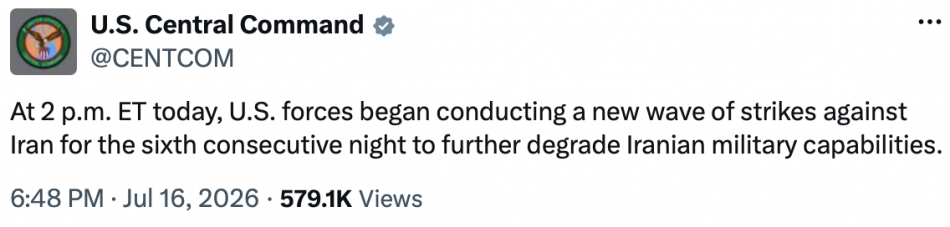
Bandar Abbas has been hit repeatedly in recent days, and tonight “loud explosions”were heard in the city…
Loud explosions were heard in Bandar Abbas, in southern Iran along the Strait of Hormuz, according to Iranian state TV.
Just minutes earlier, White House press secretary Karoline Leavitt had wrapped up a briefing in which she was asked about the war with Iran.
“The president is not going to allow them to fire on the ships in the strait,” she said. “The president has proved not just to Iran that we can hit them anytime, anywhere, any place.”
When the ceasefire collapsed, the U.S. primarily focused on hitting military targets. But now that has changed.
Key infrastructure is being targeted, and that includes a very important bridge that links Bandar Abbas and Shiraz…
Among the sites hit was the Bandar Abbas-Kahurestan-Lar bridge, a key road link between Bandar Abbas and Shiraz, as well as Iranshahr Airport in southeastern Iran, according to Iranian state media reports cited by Iran International.
Destroying this bridge was a very big move.
Without that bridge, Iran’s largest commercial port will be largely cut off from the rest of Iran…
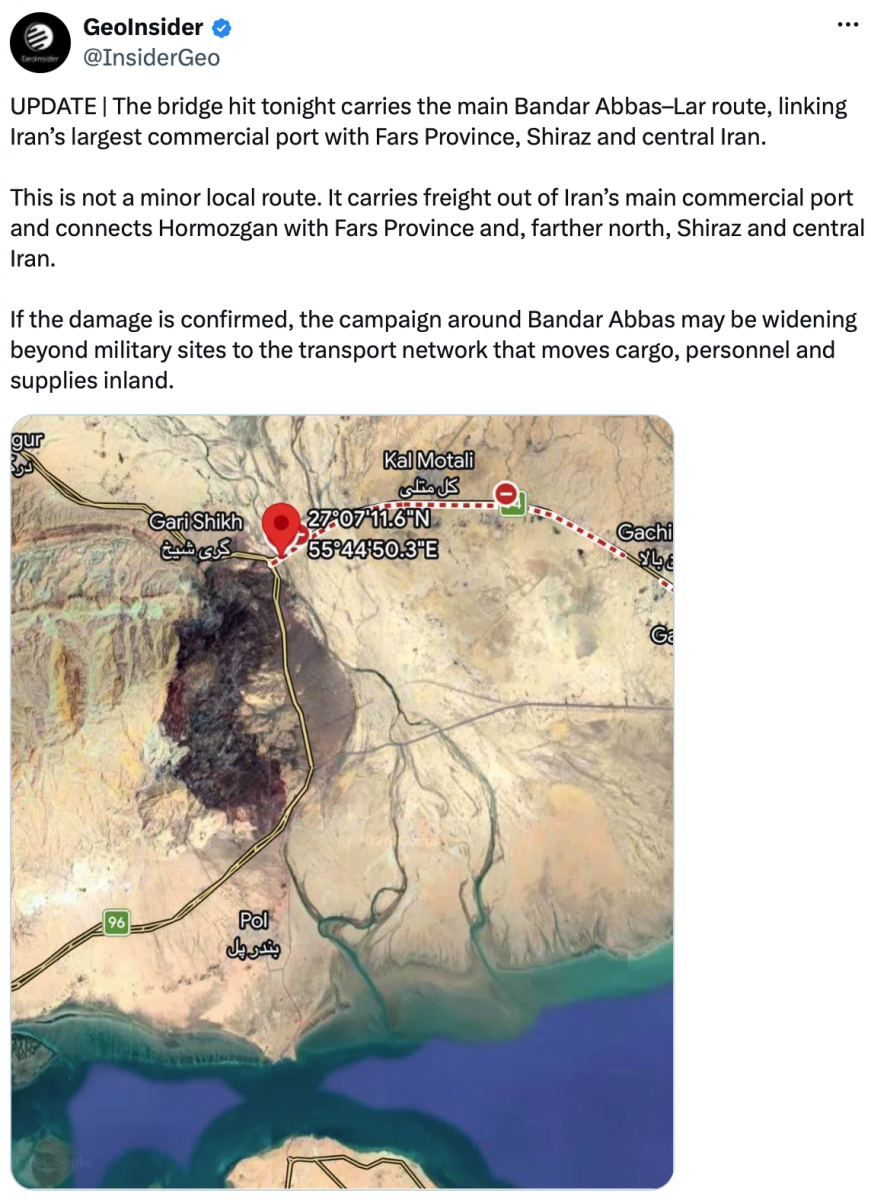
Of course there are still ways to get to Bandar Abbas from other areas of Iran. But that bridge was on the main highway that most commercial trucks used.
This is just going to make the Iranians even angrier.
Prior to the attacks tonight, the Iranians warned that if their infrastructure got targeted they would start destroying infrastructure all over the region…
In a statement published on Telegram on Thursday morning, a spokesperson for Iran’s top military command said that if Trump’s threats were implemented “everything that is still intact … that is, all the infrastructure in the region – will be crushed under the steel blows of the powerful armed forces of the Islamic Republic of Iran; so that no trace of them remains and it is as if they never existed in the first place.”
They added that “under no circumstances and in no way will we allow America, as a foreign and extra-regional country, to interfere in the Strait of Hormuz.”
“This is Iran’s invincible red line,” the spokesperson said.
Those are very strong words.
Will the Iranians now follow through on their threats?
It is also being reported that the Houthis are preparing to completely close the Bab al-Mandeb Strait…
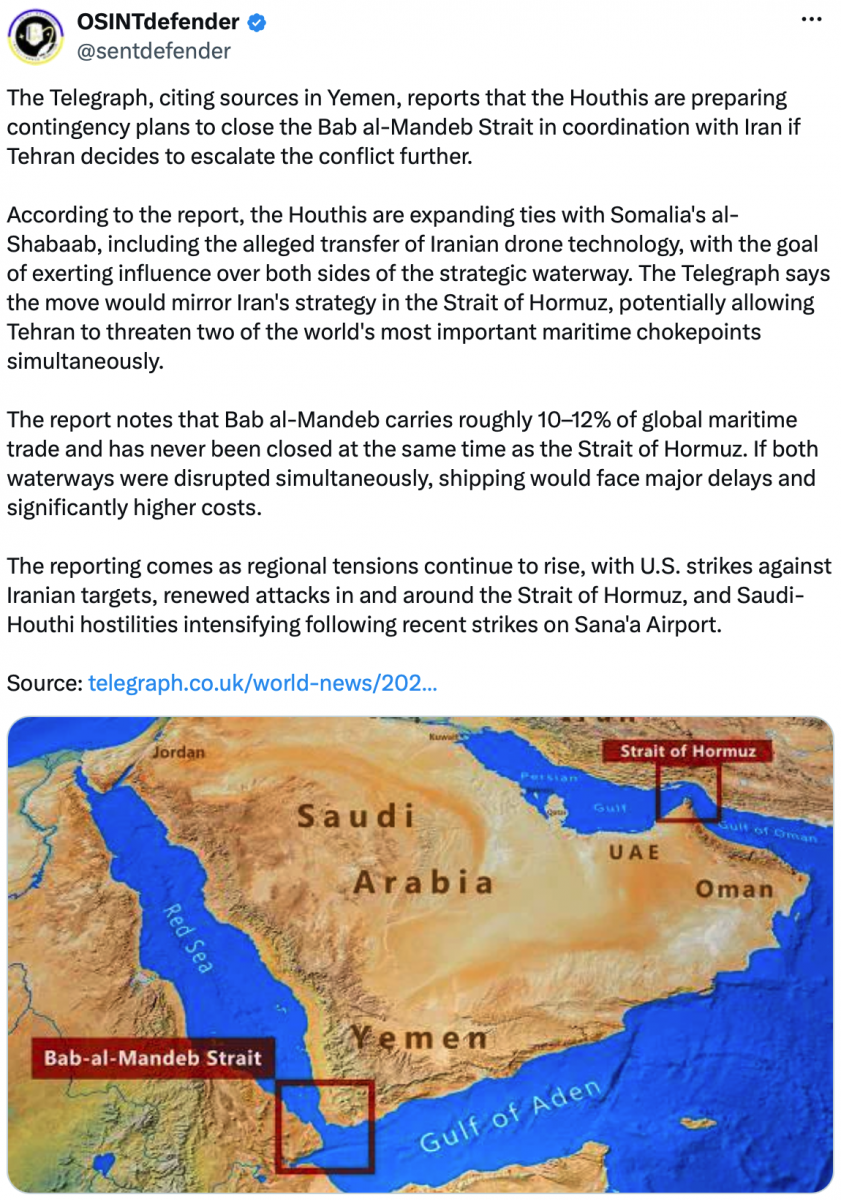
Needless to say, this would change everything.
The Bab al-Mandeb Strait and the Strait of Hormuz have never been closed simultaneously.
Saudi Arabia has dealt with the closure of the Strait of Hormuz by shipping most of the oil that it produces out of the Red Sea port of Yanbu…
Saudi Arabia has diverted 70 percent of its energy exports through its Red Sea port of Yanbu, Reuters reported, and so any attacks there further hurt oil markets.
If the Bab al-Mandeb Strait and the Strait of Hormuz are both not usable, all of a sudden the flow of Saudi oil will be choked off.
Saudi Arabia could respond by declaring war on the Houthis, but the Houthis have already warned that they will bombard Saudi oil facilities with missiles if that happens…

That is nuts.
We really are on the verge of the unthinkable. How far up the escalation ladder are the parties involved in this conflict willing to go?
I guess we shall have to wait and see.
Meanwhile, the “Islamic Resistance in Iraq” has put a 10 million dollar bounty on President Trump…
The Islamic Resistance in Iraq announced Thursday night that it was offering a $10 million reward for the killing of US President Donald Trump, Iran’s state-run IRNA news agency and Russia’s state-run RT, formerly Russia Today, reported.
The group said the reward followed what it described as Trump’s “audacious and offensive statements” against commanders killed while fighting ISIS.
Conservative activist Laura Loomer said Russian state media was “promoting the Iraqi Islamic Resistance’s $10 million bounty for the assassination of President Trump,” adding: “Every day, Russia proves more and more why they aren’t an ally.”
At this point, just about every terrorist in the Middle East would like to get Trump. Hopefully he is being extra cautious these days.
Lastly, I wanted to mention a military conflict that the U.S. is currently involved in that hardly anyone is talking about.
As Leo Hohmann has aptly pointed out, the U.S. military has been conducting dozens of airstrikes in Somalia and the mainstream media is almost completely silent about this…
The July 13 U.S. airstrike marked at least the 74th U.S. airstrike in Somalia this year, according to AFRICOM’s numbers, putting the command on track to break its annual record, which it set at 124 in 2025. Besides the bombing campaign against al-Shabaab, the U.S. has also been launching airstrikes against an ISIS affiliate in Somalia’s northeast Puntland region.
We really are living at a time of wars and rumors of wars. More than half of the nations on the entire planet are either directly engaged in military conflict or are directly funding military conflict.
I believe that we are going to witness some absolutely shocking escalations in the days ahead. And once those absolutely shocking escalations occur, it will be impossible to turn back the clock.

THE VATICAN SECRET ARCHIVES — 53 MILES OF STOLEN HISTORY AND THE TRUTH ABOUT YOUR ORIGINS
Beneath the feet of the Pope lies the world’s most guarded collection of knowledge. The Vatican Secret Archives (now renamed the Apostolic Archives) contain 53 miles of shelving, housing documents that date back to the dawn of the current “reset.”
Source: Mr. Kidpool TG
This is not just religious history; it is the repository of the world’s stolen heritage. From the original scrolls of the Library of Alexandria to the maps of the pre-flood world and the true records of the life of Yeshua, the Vatican holds the keys to everything the elite have spent 2,000 years making you forget.
⟁
Why is access so strictly limited? To enter, you must be a vetted scholar with a specific, narrow research goal. You are not allowed to browse. You are escorted. Why? Because the archives contain the “Chronovisor” files—evidence of a device developed in the 1950s that could view past events through the frequency of the ether. They also hold the records of the “Pre-Adamite” civilizations and the detailed lineages of the 13 Bloodlines. They know that if the public saw the true history of the “Gods” who descended to Earth, the entire structure of organized religion and political control would evaporate overnight.
⟁
The archives also contain the “Prophecies of the End Times” that were never released to the public. These documents describe the current transition into the “Age of Light” and the specific dates of the magnetic pole shifts. The Vatican has functioned as the “Information Broker” for the global elite for centuries, selling bits of truth to those in power while keeping the masses in a state of spiritual amnesia. They aren’t protecting the “Word of God”; they are protecting the “Monopoly of Truth.”
⟁
The Alliance is currently in the process of “digitizing” these archives for a global release. As the old structures of the Vatican are dismantled, the truth is being moved into the Quantum system. The era of “Secret Knowledge” is ending. You won’t need a priest or a scholar to tell you who you are; the records of your divine origin are about to be returned to the collective. The walls of the fortress are cracking, and the 53 miles of lies are being exposed to the light of day.
CODE: VATICAN-ARCHIVES / CHRONOVISOR / STOLEN-HISTORY / ALEXANDRIA-RECOVERY
They told you it was a “sacred” secret. It was a stolen inheritance. The library is opening, and the silence is being broken.
♟
The truth was never lost; it was just locked away. But they forgot that the people are the ones who hold the key.

A 28 Item Grocery Order From Target That Cost $64.50 In 2020 Is Now $158.30 In 2026
The cost of living has become absolutely suffocating for millions of Americans. For years, the bureaucrats in Washington have been feeding us numbers that show that the rate of inflation is low, but it is obvious to everyone that what they are telling us is simply not true. Many of the items that I regularly purchase at the grocery store have more than doubled in price over the past decade. Some have more than tripled in price. When I get to the register to check out, I feel like asking the cashier which organ I should donate to pay for my groceries.
We have reached a stage where grocery prices are causing extreme financial stress for families all over America. One man recently caused quite a stir on social media when he revealed that a grocery order from Target that cost $64.50 in 2020 is now $158.30 in 2026…
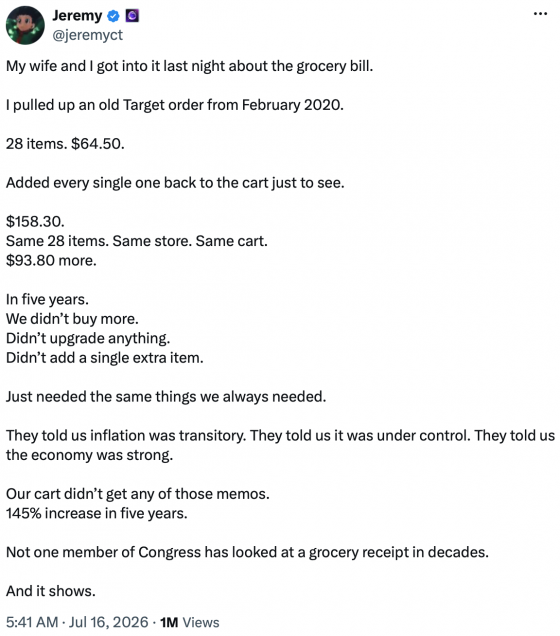
This post has already been viewed a million times. The reason why it is so popular is because it instantly resonates with people. Everyone knows that grocery prices have risen to absurd levels, and yet the statisticians in Washington keep assuring us that everything is fine.
I don’t believe them.
Do you?
The Washington Post just conducted a poll that found that 66 percent of Americans consider the cost of groceries to be unaffordable.
That figure has risen by 21 percent just since February…
Americans are feeling worse about the price of groceries than they were before the war with Iran began, a Washington Post-Ipsos poll finds.
About two-thirds, or 66 percent, of Americans say they would describe the cost of groceries as unaffordable, up sharply from the 45 percent who said the same thing in February before the conflict started.
Partisanship continues to play a big role in perceptions, with half of Republicans saying groceries are affordable in the latest poll, compared with about one-quarter of independents and Democrats.
Housing is even worse.
The median price of an existing home in the United States has now surpassed the $440,000 mark…
With a landmark housing affordability bill in political limbo, U.S. home prices have hit an all-time high.
The median price of existing homes in June was $440,660, up 1.8% from $432,700 a year ago, according to new data from the National Association of Realtors (NAR). Home prices have risen for 36 straight months.
“Housing affordability remains low under slowing wage growth and stronger home price growth,” Ershang Liang, an economist with PNC Economics Research, said in a report.
Who can afford to pay that much for a house?
Rental prices have also gone through the roof.
If you can believe it, the average rent on a one bedroom apartment in Manhattan is now a whopping $5,408 a month…
The city’s housing crisis has hit “DefCon 1” — with average rents for a one-bedroom in Manhattan hitting an all-time high of nearly $5,500 last month, and Brooklyn following suit, according to new data and critics.
“We need bold action. This is a crisis,’’ New York City Comptroller Mark Levine posted on X over the weekend, along with a link to the latest figures from the inhabit blog by real-estate giant Corcoran Group.
The dismal June stats reveal that renters paid an average of $5,408 for a one-bedroom in Manhattan, with studio prices not far behind at $4,014.
It isn’t a mystery why most Americans are struggling in this sort of an environment.
Many are turning to debt in a desperate attempt to make ends meet…
Many American families are struggling to make ends meet on their incomes alone and have resorted to credit cards, payday loans, and Buy Now Pay Later (BNPL) options for groceries, according to nonprofit research center Urban Institute.
The findings are based on a survey of 18-to 64-year-old working-age adults conducted in December 2025. About 8.7 percent of adults said they used a credit card for groceries and were unable to make the minimum payment, up from 7.1 percent in 2023, the Urban Institute said in a July 13 report. This suggests “worsening financial distress” among families.
Almost one in 10 used BNPL to pay for groceries, out of which more than a third missed a timely repayment last year.
Unfortunately, when you keep piling up debt a day of reckoning eventually arrives.
Coming into this year, alarmingly large numbers of Americans were getting behind on their credit cards…
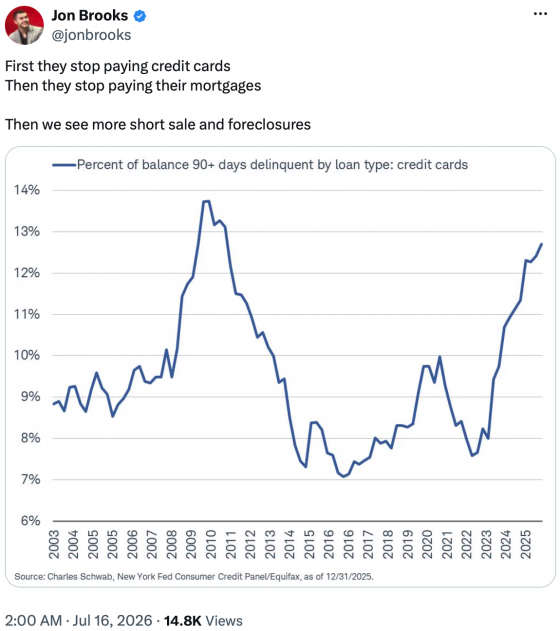
And the number of foreclosures in the U.S. is way above the highly elevated pace that we witnessed last year…
Foreclosures across the U.S. ballooned in the first half of the year, a sign of the increasing financial strain facing the nation’s homeowners.
Foreclosure filings reached nearly 228,000 from January to June, up 21% from a year ago and 28% from two years ago, according to data released Thursday from real estate data company ATTOM.
Rising foreclosure rates indicate that more homeowners are in financial distress, Rob Barber, CEO of ATTOM, said in a statement. Homes go into foreclosure when the owner falls behind on mortgage payments, often due to extenuating life circumstances such as a job loss. ATTOM defines foreclosures as default notices, scheduled auctions or bank repossessions.
This reminds me so much of the conditions that we experienced just before the financial crisis of 2008. Unfortunately, the cost of living is only going to go higher.
The cost of energy directly affects the cost of everything else, and it appears that the Strait of Hormuz is going to be closed for an extended period of time.
The average price of a gallon of gasoline in the U.S. has nearly reached four dollars again, and the average price of a gallon of diesel has already risen above the five dollar mark…
US gas prices have rocketed higher during the on-again, off-again war with Iran.
After a brief respite, the average price for gas has surged 15 cents in a week to $3.94 a gallon and appears headed north of $4 again. Diesel, which shows up in customers’ shipping costs, topped $5 a gallon again Thursday for the first time in 3 weeks, according to AAA.
It serves as a painful reminder of how the military conflict in the Persian Gulf has a direct effect on your wallet.
Of even greater importance is what the closure of the Strait of Hormuz means for the global fertilizer market.
As Mike Adams has pointed out, without sufficient quantities of nitrogen fertilizer we won’t even come close to producing enough food for everyone…
Admittedly, I have failed to explain the stakes clearly enough. For months, I have written about fertilizer supply chains, the Haber-Bosch process, and the vulnerability of the Strait of Hormuz. But the gravity of this crisis has not sunk in for most people. Let me put it as plainly as I can: The global population of more than 8 billion people depends on a fragile web of natural gas, oil, and downstream chemistry that took 60+ years to build on this planet. If we lose 25 percent of these critical substances, we lose 25 percent of the population. That is 2 billion people. Here is why that math is inescapable.
As I documented in my article “The Haber-Bosch House of Cards,” the single chemical reaction that fixes nitrogen from the air into fertilizer is responsible for feeding roughly half of humanity [1]. That process requires vast quantities of natural gas. The Persian Gulf region, especially Qatar and Iran, supplies much of that gas. When the Trump administration launched its war on Iran in February 2026 and the Strait of Hormuz was effectively closed, the global fertilizer supply chain began to collapse. This is not a prediction of future famine. The famine is already baked in. But it could still get a whole lot worse depending on how things go from here.
We could be facing multiple years when global food production is at depressed levels. That means that food prices will go even higher in wealthy countries, and in poor countries there will be shortages.
Famine is one of the major trends that I am tracking, and what we are already witnessing in some parts of Africa is absolutely heartbreaking. There is no magic button that we can press that is going to make these problems go away.
A crisis of historic proportions is now upon us, and we are still only in the very early stages of it.
The Future Is Now: War, Famine, Pestilence And Natural Disasters Will Define The Months Ahead
I have been repeatedly telling my readers that we are living in apocalyptic times, and when I first started saying that I think that many people out there thought that I was exaggerating, but now what is happening to us is becoming a lot more obvious. The war in the Middle East has escalated dramatically over the past week, the “Super El Niño” is causing absolutely crazy heatwaves and storms all over the planet, the Ebola outbreak in Africa is totally out of control, and we have been witnessing some very large earthquakes in Venezuela and elsewhere. I have been warning that war, famine, pestilence and natural disasters are in our future, but the truth is that the future is now. Global events have started to spiral out of control, and the chaos that we are experiencing is not going to stop.
Just a little while ago, U.S. Central Command informed the world that for a third night in a row the U.S. has begun conducting an enormous round of airstrikes in Iranian territory…
Moments after President Trump told talk show host Hugh Hewitt the U.S. would be launching more strikes against Iran, U.S. Central Command announced the U.S. began its third consecutive night of strikes.
“At 4:45 p.m. ET today, U.S. Central Command began launching the third consecutive night of strikes against Iran, at the Commander in Chief’s direction,” U.S. Central Command announced on X. “These strikes will continue imposing a heavy cost on Iranian forces and degrade their ability to attack innocent civilians and commercial shipping in the Strait of Hormuz.”
Massive explosions are being reported in multiple locations even as I write this article.
And President Trump just told Hugh Hewitt that the U.S. is even going to attack “Pickaxe Mountain” at some point…
Speaking to conservative talk host Hugh Hewitt, President Trump said the U.S. will hit Iran hard Monday and Tuesday. The president said the U.S. will “take out” Pickaxe Mountain, a deeply buried site that analysts believe could be part of Iran’s nuclear program..
“We’re going to take out Pickaxe Mountain,” he said. “Tell the Iranians to be ready. Let them know we’re coming, okay? There’s not a damn thing they can do about it.”
I have mentioned Pickaxe Mountain multiple times in recent weeks.
Many believe that Iran’s most important nuclear work goes on in that underground facility, and so far the U.S. and Israel have not been able to damage it because it is considered to be “beyond the reach of the most powerful bunker buster bombs”…
Pickaxe Mountain, located near Iran’s heavily damaged Natanz uranium enrichment facility, is a heavily fortified site that hosts two deeply buried tunnel complexes that experts assess as beyond the reach of the most powerful bunker buster bombs in the U.S. arsenal.
President Trump is signaling that the U.S. is prepared to take things to a new level.
Of course the Iranians are not just going to sit there and absorb punishment.
They have been striking back every night, and Mohammad Bagher Qalibaf just issued a very ominous warning…
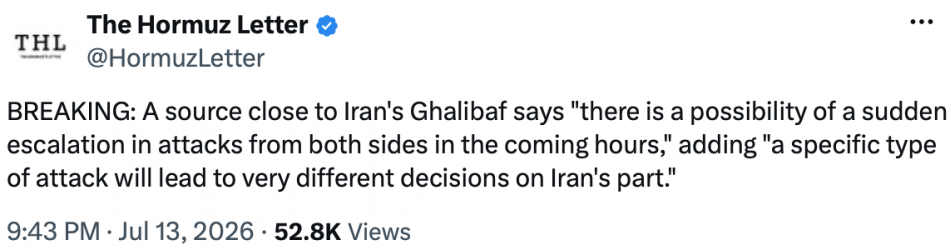
What did he mean by that?
We don’t know.
But what we do know is that the Iranians just hit two UAE tankers with cruise missiles…
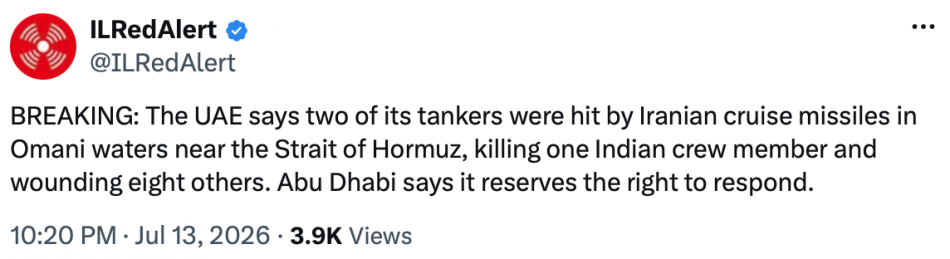
The Iranians are simply not going to back down, and so things are going to get insane.
Earlier today, we learned that President Trump has notified Congress that the war with Iran is officially back on…
President Trump formally notified Congress that “military action” against Iran restarted last week, according to a letter obtained by CBS News on Monday, as a monthslong ceasefire comes to an end.
Military action “commenced on July 7,” the president said in a message dated July 10 and addressed to Republican Sen. Chuck Grassley of Iowa, the Senate’s president pro tempore.
The letter was sent after Mr. Trump declared the U.S.-Iran ceasefire “over” and ordered several rounds of strikes on Iranian targets, in response to Iranian attacks on commercial vessels in the Strait of Hormuz last week. Iranian authorities have insisted that ships seek permission and use an Iranian-approved route before transiting the strait, and responded to the U.S. strikes by launching missiles and drones at U.S.-allied Gulf states.
Iran War 3 is not going to be like Iran War 1 or Iran War 2.
In my opinion, the coming weeks will be full of shocks and surprises.
Meanwhile, yet another gigantic heat dome produced by the “Super El Niño” is frying large portions of the western half of the United States…
Roughly 100 million people across the United States are facing extreme temperatures this week as a heat dome scorching the western part of the country spreads to the Northeast.
In Billings, Montana, temperatures reached a record high of 111 degrees on Sunday as the dangerous heat was felt across the Great Basin, the Rockies and sections of the desert Southwest.
Temperatures are forecast to be 20 to 30 degrees above average for this time of year, according to CBS News meteorologist Nikki Nolan. Some locations will see record-breaking temperatures through the week.
It isn’t supposed to get up to 111 degrees in Montana.
But it just did.
This “Super El Niño” is going to do so much damage to crops all over the world, and the World Meteorological Organization is projecting that this could push global food prices higher for years…
Analysts are warning that a powerful El Niño developing in the Pacific Ocean could push up global food prices over the months and years ahead.
In early July, the World Meteorological Organization (WMO) forecast that current El Niño weather conditions would “strengthen rapidly over the coming months,” with a higher likelihood of “heatwaves, droughts, heavy rainfall and other extreme weather events in many parts of the world.” Meanwhile, the National Oceanographic and Atmospheric Administration (NOAA) last week said there was an 81 percent possibility of a “very strong” El Niño between October and December—one it said would rank “among the largest El Niño events in the historical record going back to 1950.”
Meteorologists and economists, including analysts at the World Bank, warn that such an event—dubbed by some a “super” or “Godzilla” El Niño—could disrupt global agriculture and food supply chains through next year while exacerbating the economic pressures facing countries worldwide.
Tens of millions died from starvation during the “Super El Niño” of 1877-1878. How many will die from starvation this time around?
If health authorities are not able to get the Ebola outbreak in the Democratic Republic of the Congo under control, pestilence could claim a large number of lives during the months ahead as well.
Earlier today, we learned that another American has officially tested positive…
Another US citizen has tested positive for Ebola as part of an ongoing outbreak in the Democratic Republic of Congo (DRC).
The American was working for a humanitarian organization and was transferred to Frankfurt University Hospital in Germany on Monday, US officials said.
The CDC announced the positive test on Friday and said it is working with public health authorities and the person’s employer, which was not identified, to identify close contacts and prevent further transmission.
There is no cure for the Bundibugyo strain, and the official numbers that we are being given are going up quite rapidly…
Africa CDC Director-General Jean Kaseya, MD, MPH, said that, as of July 9, 112 healthcare workers have been infected with Ebola since the outbreak began, including 35 who died. The outbreak now stands at 1,947 cases, and 704 deaths, with the vast majority of those in the DRC.
As I noted on Friday, many experts are convinced that the official numbers are seriously understating the severity of this outbreak.
I have shared this before, but I am going to share it again. It is being reported that approximately four out of every five new Ebola cases in the DRC “have no known link to existing patients”…
Four out of every five new Ebola cases in parts of Democratic Republic of Congo have no known link to existing patients, a senior World Health Organization official said, warning that the true scale of the outbreak could be two to four times larger than official data suggest.
The figures underscore the challenges facing health workers as they battle to contain the outbreak in the country’s northeast, which has so far infected 1,792 people and killed 625, according to government data released on Thursday.
The vast majority of the new cases that are popping up have no connection to the existing cases that authorities already know about.
That is a major league red flag. And once someone gets infected, there is a very good chance that they will die.
Lastly, I wanted to point out two very alarming earthquakes that we just witnessed in Southern California…
A second significant earthquake has struck Southern California in two days, along a dangerous fault line that one expert claims has now been ‘unlocked’ and could soon unleash ‘The Big One.’
A magnitude 4.3 quake struck less than 90 miles from Los Angeles at 12.40pm ET (9.40am local) on Monday, according to the US Geological Survey (USGS).
It struck less than 24 hours after a magnitude 4.1 tremor erupted along the same fault line that a California geophysicist says is long overdue for a massive and devastating quake – the Garlock Fault.
The ground is shaking. But are local residents paying attention?
Sunday’s quake happened at a location where the Garlock Fault meets the San Andreas Fault.
According to geophysicist Stefan Burns, this was the largest earthquake at that particular junction in 26 years…
The Garlock is a major east-west fault in Southern California, while the San Andreas is an 800-mile-long fracture running from Southern California north through the Bay Area and into the Pacific Ocean.
Burns warned that the earthquake struck exactly where these two faults meet, in an area that has not seen a quake this strong in more than 26 years.
According to the scientist, this small event at the junction could be an early sign that underground stress is building and the Garlock may play a role in the next major California earthquake – which many call ‘The Big One.’
As I keep pointing out, scientists have repeatedly warned us that “the Big One” is way overdue. It is just a matter of time before it strikes, and once that day arrives life in Southern California will never be the same again.
Sadly, many will ignore the warnings until it is too late.
Even though so many historic events are happening all around us, I am seeing so much apathy out there right now. 20 years ago we weren’t being hit by crisis after crisis, but that is considered to be “normal” in 2026.
We really are in the midst of a “perfect storm” in which we are being hammered by one problem after another, and this “perfect storm” is only going to intensify in the months ahead.
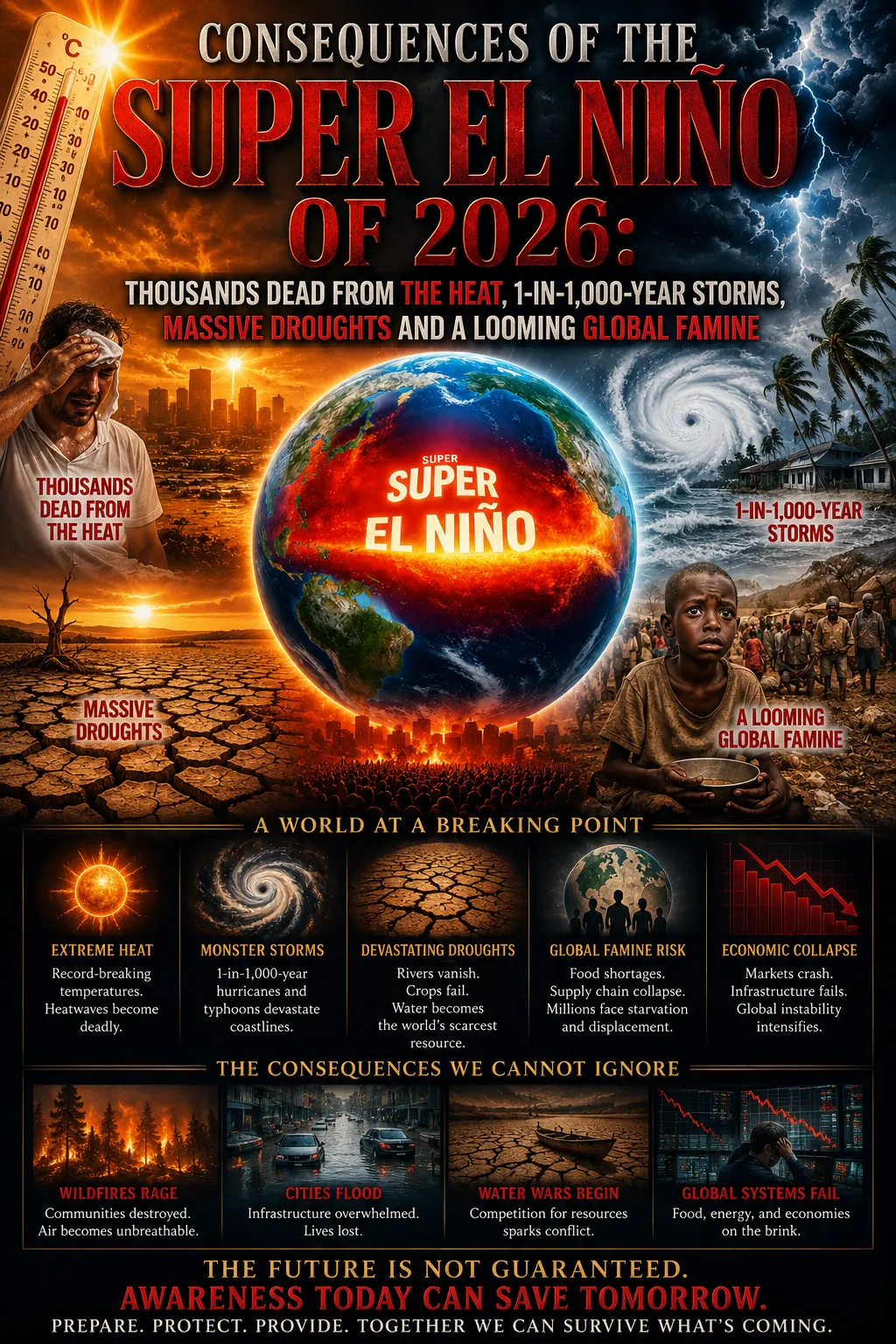
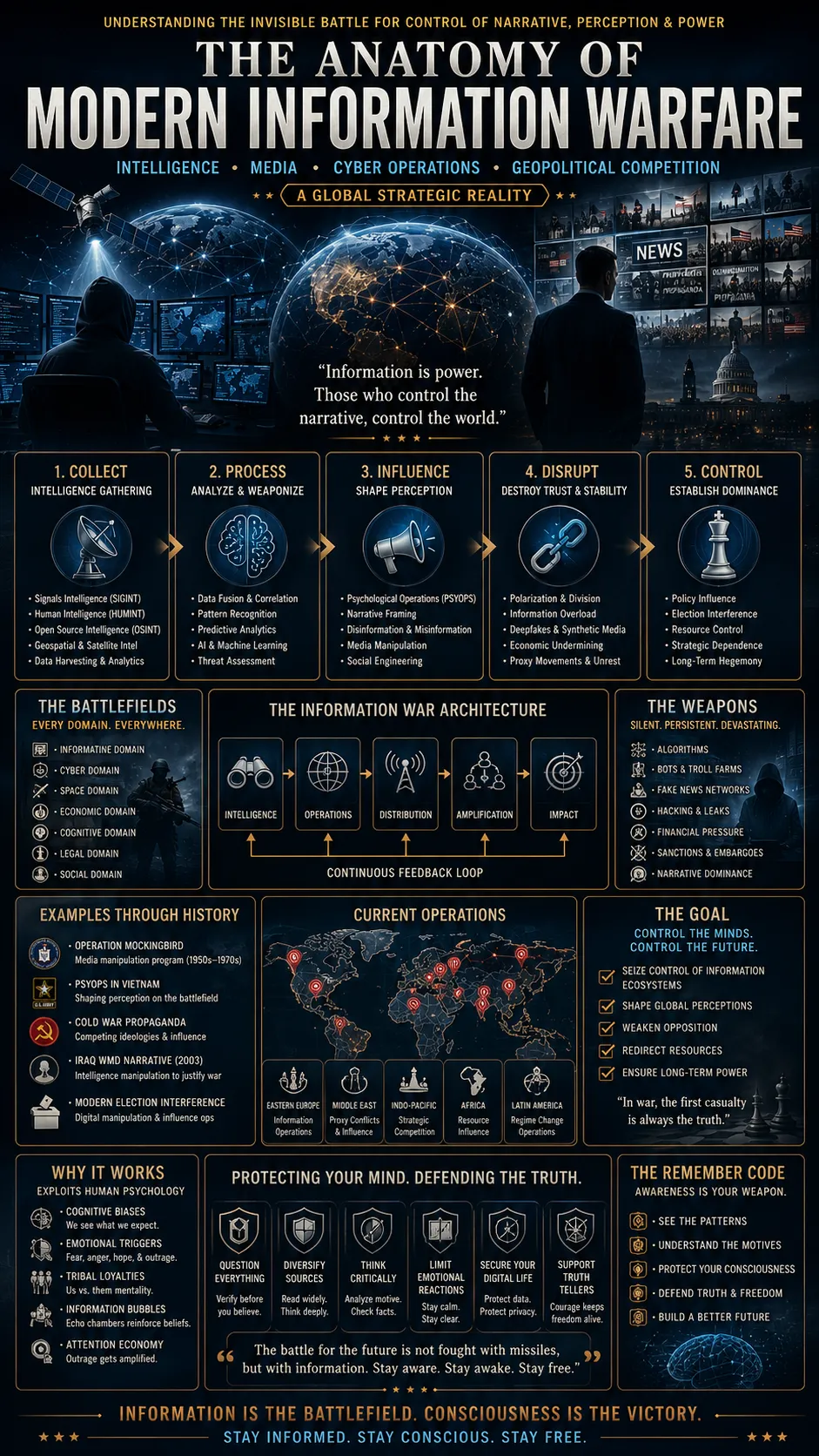
The Anatomy of Modern Information Warfare
Intelligence • Media • Cyber Operations • Geopolitical Competition
Understanding the Invisible Battlefield of the Information Age
Source: GAR Contributing Writer
The nature of conflict has undergone a profound transformation. While conventional military power remains an essential component of national security, many of today’s most consequential battles are fought long before troops are deployed or missiles are launched. Increasingly, competition unfolds through information, cyber capabilities, intelligence operations, economic leverage, technological innovation, and influence campaigns designed to shape public perception and strategic decision-making. Modern information warfare seeks not merely to defeat an adversary on the battlefield, but to influence how individuals, institutions, and societies interpret reality itself.
Unlike traditional warfare, information warfare often operates below the threshold of armed conflict. Governments, intelligence agencies, corporations, non-state actors, and criminal organizations compete continuously to gather intelligence, protect critical infrastructure, influence narratives, and secure strategic advantages. These activities rarely produce dramatic headlines, yet they shape diplomatic relationships, economic stability, elections, military readiness, and public trust on a daily basis. The contest for information superiority has become a permanent feature of international competition.
One of the first stages of modern information warfare is intelligence collection. Nations invest enormous resources in signals intelligence (SIGINT), human intelligence (HUMINT), satellite surveillance, cyber reconnaissance, open-source intelligence (OSINT), financial tracking, and data analytics. Advances in artificial intelligence have dramatically expanded the ability to process massive volumes of information, identify patterns, detect anomalies, and support strategic forecasting. In many cases, success depends less on acquiring secret information than on integrating publicly available information faster and more effectively than competitors.
Once information has been collected, it enters the realm of analysis and influence. Data is evaluated alongside political, economic, military, and cultural factors to develop strategic assessments that guide decision-makers. Artificial intelligence, predictive modeling, machine learning, and behavioral analytics increasingly assist analysts in identifying emerging risks and opportunities. These same technologies, however, can also be used to generate persuasive messaging, personalize content, and influence public opinion across digital platforms.
The modern information environment has also become highly contested. Governments, media organizations, technology companies, advocacy groups, and private individuals all participate in a rapidly evolving ecosystem where narratives compete for attention. Social media platforms enable information to travel globally within seconds, while algorithms amplify content based on engagement rather than accuracy. This environment creates opportunities for legitimate communication but also increases the spread of misinformation, disinformation, manipulated media, deepfakes, and coordinated influence campaigns designed to confuse audiences or undermine confidence in institutions.
Cyber operations now represent another major dimension of strategic competition. Critical infrastructure—including electrical grids, financial systems, communications networks, transportation, healthcare, water systems, and industrial facilities—has become increasingly interconnected through digital technologies. While this connectivity improves efficiency, it also expands the potential attack surface available to hostile actors. Cybersecurity has therefore evolved from an information technology issue into a central pillar of national security and economic resilience.
Economic competition has similarly become intertwined with information warfare. Financial sanctions, export controls, supply-chain resilience, semiconductor manufacturing, critical mineral access, technological standards, and intellectual property protection increasingly serve strategic objectives alongside traditional diplomatic and military tools. Nations now recognize that economic resilience, industrial capacity, and technological leadership are essential components of long-term geopolitical stability.
Artificial intelligence represents perhaps the most transformative development within the modern information environment. AI systems now assist in intelligence analysis, language translation, cyber defense, logistics planning, autonomous systems, predictive maintenance, and scientific research. At the same time, generative AI has lowered barriers for producing convincing synthetic text, audio, imagery, and video, creating new challenges for authentication, trust, and public confidence. As AI capabilities continue advancing, distinguishing authentic information from fabricated content will likely become one of the defining challenges of the coming decade.
Protecting against information warfare begins with strengthening individual and institutional resilience. Critical thinking, media literacy, source verification, digital security, and awareness of cognitive biases all help reduce vulnerability to manipulation. Responsible information consumption requires comparing multiple credible sources, distinguishing verified reporting from opinion or speculation, and remaining open to revising conclusions as new evidence emerges. In an increasingly complex information environment, discernment becomes a strategic capability in its own right.
For governments, businesses, and communities, resilience extends beyond cybersecurity. It includes protecting communications infrastructure, diversifying supply chains, maintaining continuity of operations, safeguarding democratic institutions, and fostering public trust. Societies that invest in education, transparency, robust institutions, and secure digital systems are generally better positioned to withstand attempts at external influence or internal destabilization.
The emerging strategic environment is therefore best understood not as a series of isolated events, but as an interconnected system in which information, technology, economics, diplomacy, and military capabilities continually influence one another. Success increasingly depends upon adaptability rather than permanence, resilience rather than rigidity, and informed decision-making rather than reactive responses. Information has become both a strategic resource and a contested domain.
The challenge for individuals is not to assume that every narrative is deceptive, nor to accept every claim uncritically. Rather, it is to cultivate disciplined inquiry, intellectual humility, and evidence-based analysis. Understanding how information is created, distributed, amplified, and interpreted enables citizens to participate more effectively in democratic societies while reducing vulnerability to manipulation from any source.
Closing Perspective
Information warfare is not solely about technology or intelligence agencies. It is ultimately about perception, trust, and decision-making. Nations that can protect the integrity of their institutions, strengthen public resilience, and adapt to rapidly evolving technological change will be better positioned to navigate an increasingly competitive world. For individuals, the greatest advantage remains the ability to think critically, verify carefully, and respond thoughtfully rather than react impulsively.
“Information has become the newest domain of strategic competition. In an age of accelerating technology and global connectivity, resilience begins not with believing everything—or nothing—but with cultivating discernment, verifying evidence, and remaining adaptable as the information landscape continues to evolve.”
The Battle For The Strait Of Hormuz Will Show Whether The World Can Survive Without Oil From The Persian Gulf Or Not
Now we are going to get to see what really happens to the global economy when the Strait of Hormuz is completely closed for an extended period of time. Before the war, approximately 45 percent of all Asian oil imports traveled through the Strait of Hormuz. The Chinese normally get more oil from the Middle East than anyone else, and the amount of crude oil that they have been importing has collapsed. That is not sustainable for the Chinese, and they are getting very angry. At the same time, relentless drone attacks on Russia’s energy infrastructure have forced the Russians to buy gasoline from India. If the Strait of Hormuz remains completely closed for months, global energy supplies will get extremely tight and the price of oil will go into unprecedented territory.
On Monday, the world was shocked when two oil tankers from the United Arab Emirates were struck by Iranian cruise missiles…
Iranian cruise missiles hit two oil tankers in the Strait of Hormuz, killing one crew member and injuring eight, the United Arab Emirates’ Ministry of Defense said Monday.
The attacks took place when the tankers — Mombasa and Al Bahiyah — were sailing through the strait’s southern shipping lane, which hugs the coast of Oman, the defense ministry said. Iran has insisted that commercial ships use a separate lane near the Iranian coastline and seek permission from Iranian authorities. Iran has not publicly commented on the apparent attacks.
The deceased crew member and six injured crew members were Indian nationals, and two of those injured were from Ukraine, according to the United Arab Emirates.
The Iranians have warned that any commercial vessels that attempt to travel through the Strait of Hormuz without their permission are subject to attack, and they were not bluffing.
On Tuesday, three Liberian-flagged oil tankers were also attacked by the Iranians…
Oman’s Maritime Security Center said Tuesday that three Liberian-flagged oil tankers were targeted in separate incidents off the Omani coast.
The center said the Al Bahyah, owned by Al Bahyah Inc. and based in the United Arab Emirates, was targeted about 9.6 nautical miles off the coast of Musandam Governorate.
A Royal Navy of Oman vessel is monitoring the situation, and 18 crew members were evacuated by nearby maritime vessels, while three crew members remain missing, officials said.
These attacks have brought traffic through the Strait of Hormuz to a standstill.
And that isn’t going to change any time soon, because the IRGC just announced that “as long as the US evil stays in the region, not a drop of oil and gas will be exported from the region”…
Amid ongoing cross-Gulf attacks today between Iranian and US forces, the IRGC says they targeted enemy weapons and parts storages in Bahrain and Kuwait. This after the US appeared to attack some critical Iranian infrastructure on coastal islands.
The IRGC has issued a fresh statement via state media on Tuesday, saying that “as long as the US evil stays in the region, not a drop of oil and gas will be exported from the region.”
Wow.
That is quite a strong statement.
Meanwhile, President Trump has decided to impose a “full blockade” on all ship traffic coming to and from Iran…
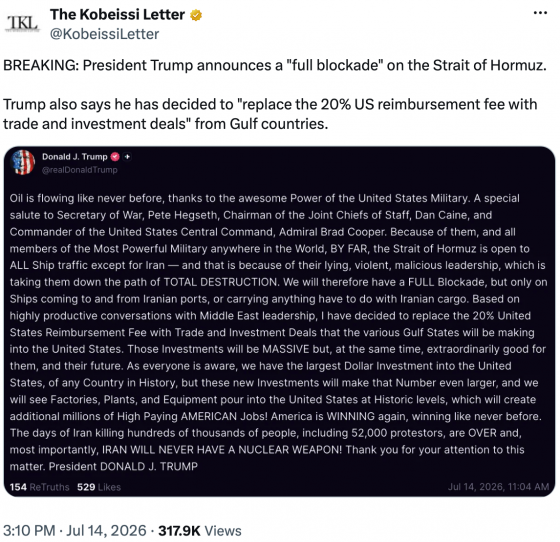
This is really happening.
Even before these latest moves, traffic through the Strait of Hormuz had fallen to the lowest level in five weeks…
Tanker traffic through the Strait of Hormuz dipped on Sunday to the lowest number in five weeks as the latest U.S.-Iran escalation reignited concerns among ship operators about safety at the key oil and LNG chokepoint.
Now that the Iranians have shown that they are quite serious about enforcing the closure of the Strait, it is highly unlikely that shipping companies will dare to test them. Even the smallest oil tankers cost millions of dollars, and so if you own one you don’t want it getting sent to the bottom of the ocean by a cruise missile. And the U.S. Navy is going to make sure that no Iranian oil gets shipped out of the region.
The U.S. blockade of Iran is really going to upset the Chinese, because they depend on that oil.
On Tuesday, they demanded the resumption of “normal and safe passage” through the Strait…
A Chinese foreign ministry spokesperson demanded “normal and safe passage” be restored in the Strait of Hormuz Tuesday before the United States reinstated a naval blockade targeting Iranian ports.
Lin Jian made the remark when asked by Iranian state media about the renewed U.S. military blockade and if Beijing is “prepared to take any concrete steps to mitigate the impact of these measures against Iran and deepen its economic and military cooperation with Iran.” President Donald Trump said Monday he was reinstating the blockade because Iran broke the recent ceasefire deal by launching missile attacks on commercial tankers and by trying to shut down the Strait of Hormuz.
“China is deeply concerned over resumed military conflict in the Gulf region. China calls on relevant parties to heed the strong call for peace and stability from the region and beyond, remain calm and exercise restraint, safeguard the hard-won ceasefire, avoid the return of war and more importantly, prevent the fighting from spreading and hurting more innocent people,” Lin Jian said Tuesday.
The good news for the Chinese is that they have larger oil reserves than anyone else.
But the bad news is that China’s crude oil imports have fallen to exceedingly low levels…
China’s crude oil imports crashed to a decade-low in June as the reduced flows through the Strait of Hormuz hiked oil prices and reduced refiners’ appetite for costly crude.
Overall Chinese imports of crude oil plunged by 41.3% in June from a year earlier, to just 29.27 million tons, or 7.12 million barrels per day (bpd), according to official Chinese customs data released on Tuesday.
If this crisis goes on for long enough, China will be forced to do something to restore the flow of oil. But unless one side chooses to back down, there is no chance that this crisis will end any time soon.
As a former Pentagon official named Jason H. Campbell has pointed out, bombing Iran from the air will not be enough to win the battle for the Strait of Hormuz…
“It’s very difficult to envision any scenario where you could satisfactorily secure the Strait of Hormuz absent ground forces,” Campbell said.
Doing so would require tens of thousand of troops, Campbell said, not only to take out Iran’s hidden munitions but to secure hundreds of miles of coastline and large swaths of inland territory. The U.S. troops would likely face insurgent attacks.
Standing up that kind of force would take a few months and include “very high costs,” Campbell said.
This is what I have been saying all along. Hitting Iran from the air is not going to get the job done, but sending ground forces in is unthinkable.
So where do we go from here?
For now, the bombing of Iran continues. On Tuesday the Iranians hit Bahrain with cluster munitions, and the U.S. response has already begun…
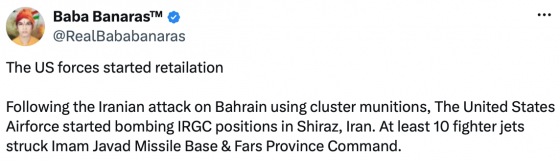
We are also being told that the U.S. is attacking Qeshm Island once again…
Projectiles hit Iran’s Gulf island of Qeshm near the Strait of Hormuz on Tuesday, Iran’s state broadcaster reported, citing local officials who blamed the U.S.
“At 19:00, a location on Qeshm Island was struck by projectiles from the American enemy,” Hormozgan governor’s office said, according to IRIB.
This is it.
Iran War 3 is here.
The IDF is not an active participant yet, but Israeli Prime Minister Benjamin Netanyahu is telling the Iranians that they will get hit really hard if Israel is attacked…
Israeli Prime Minister Benjamin Netanyahu warned Iran Tuesday that Israel would hit back if attacked.
“Do not count on things remaining quiet if you attack us,” Netanyahu said at a conference in Dimona, in Israel’s southeast, in a video released by his office. “The days are over when someone strikes us and we don’t hit back with a decisive blow.”
I think that it is just a matter of time before Iranian missiles are flying toward Israel once again.
And then things will get really crazy.
Speaking of crazy, the Houthis just bombarded an airport in Saudi Arabia after one of their own airports got bombed by the Saudis…
Meanwhile, the threat of Iranian-backed Houthis being dragged into the war was raised when Saudi Arabia said the militant group fired ballistic missiles and drones at a civilian airport in the kingdom’s southwestern city of Abha.
The attacks were the first major fighting since a 2022 truce that ended a seven-year conflict between northern Yemen’s Tehran-aligned rulers and several Arab countries.
The militant group had accused the Saudis of bombing its airport in the capital Sanaa to prevent the landing of a plane returning the Houthi delegation from the funeral of Iran’s slain leader, Ali Khamenei.
A full-blown war between the Houthis and the Saudis could erupt at any time.
And that could drag in Pakistan, because the Pakistanis recently signed a mutual defense pact with the Saudis…
Pakistani Prime Minister Shehbaz Sharif said Tuesday in a post on X that Pakistan “strongly condemns” the Houthi ballistic missile attacks targeting southern Saudi Arabia, calling them a violation of the kingdom’s sovereignty and reaffirming Islamabad’s “unwavering support” for its security.
The time for talk is over.
I am convinced that we will soon witness some absolutely shocking escalations, and the Strait of Hormuz will be closed for an extended period of time.
This will be a real test of the resilience of the global economy. Oil stockpiles are being steadily depleted, and once they get low enough there will be a tremendous amount of panic.
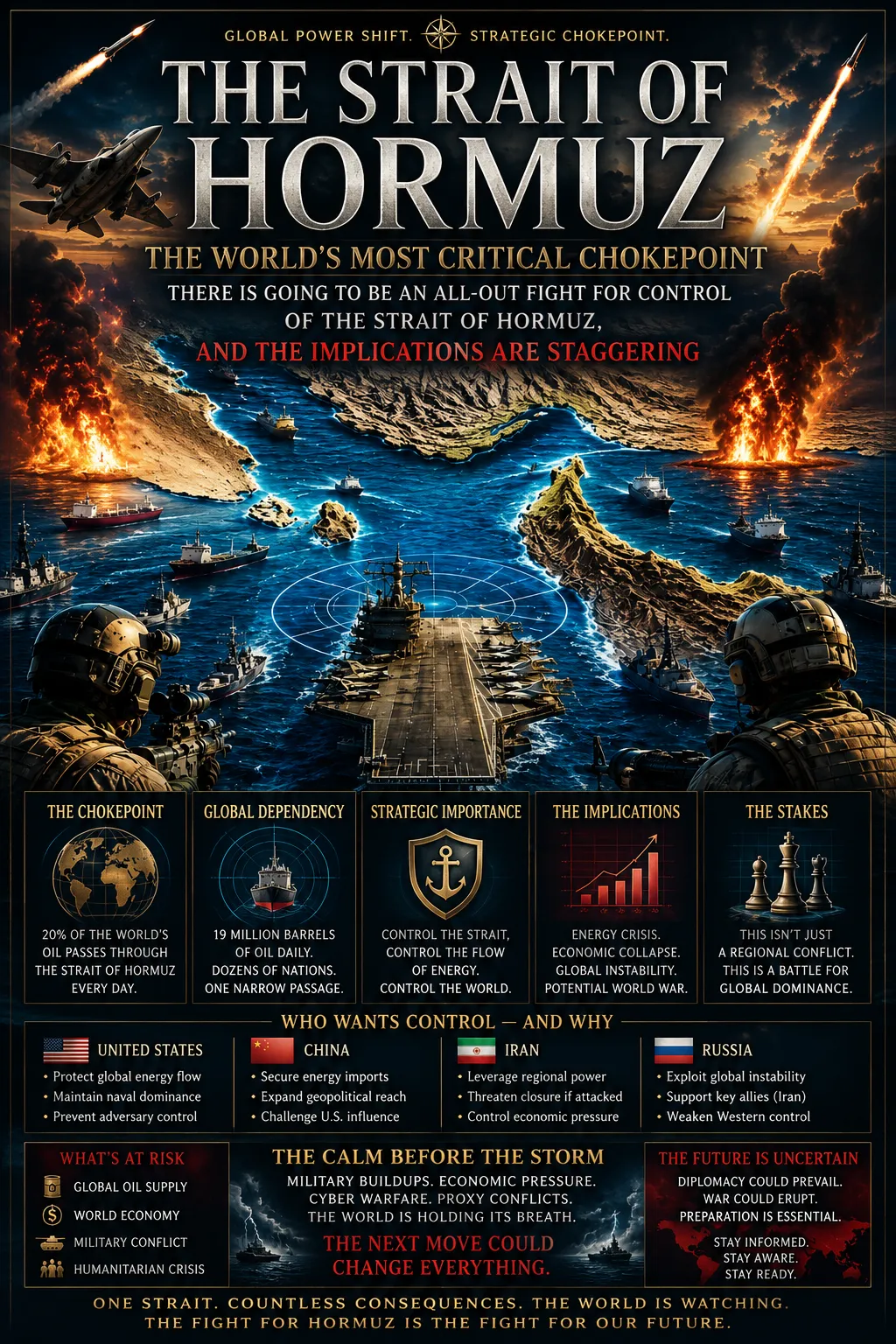
There Is Going To Be An All-Out Fight For Control Of The Strait Of Hormuz, And The Implications Are Staggering
There will be no negotiations over the Strait of Hormuz. There will only be fighting. The U.S. and Iran will now engage in an all-out war for control of the Strait of Hormuz, and the consequences will be felt by every man, woman and child on the entire planet. Traffic through the Strait will be paralyzed for the foreseeable future, and there will be a severe worldwide energy supply crunch as a result. Since neither side intends to surrender, the only way that the crisis ends is for one side to achieve military victory. The U.S. military cannot take out the Iranian missiles and drones that are threatening commercial traffic through the Strait from the air. If that was possible, it would have been done already. To fully eliminate the threat of Iranian missiles and drones, it would require either boots on the ground or nuclear war, and both of those options are unthinkable. So unless a negotiated solution somehow materializes out of thin air, we have got a giant mess on our hands that has no easy solution.
On Friday, President Trump gave the Iranians a 24 hour ultimatum.
The Iranians were told that they must declare the Strait of Hormuz to be completely open and they must stop attacking commercial ships.
In response, the Iranians rejected that ultimatum, they severely damaged a commercial vessel, and now they have declared the Strait of Hormuz to be closed…
“Due to recent hostile actions by the US forces, passage through the Strait of Hormuz is currently unfeasible,” Iran’s Persian Gulf Strait Authority declared in a social media post Monday.
“As soon as stability and calm are restored, all applications will be reviewed in accordance with the scheduled timeline, and the permitting process will resume,” the PGSA added, reminding vessels that in Iran’s view, “the sole means of obtaining a passage permit” to transit the strait is through its website.
The PGSA was created by Iran during the war and Tehran insists that all commercial vessels wishing to transit the waterway seek permission via the agency and then use a northern route, close to Iran’s coast.
Once the Iranians rejected Trump’s ultimatum, it will inevitable that there would be military action, and over the weekend U.S. Central Command hit Iran really hard…
US forces decimated Iran’s drone and missile sites in their latest efforts to keep the Strait of Hormuz secure for transiting cargo ships.
US Central Command announced late Sunday night that American troops completed a new wave of ‘offensive strikes,’ hitting dozens of targets ‘to degrade Iran’s ability to continue attacking international shipping flowing through the Strait of Hormuz.’
‘The Strait of Hormuz is a vital maritime corridor for global trade,’ Central Command said. ‘Iran does not control it.’
Iran responded by launching retaliatory strikes and insisting, ‘The Strait of Hormuz is our territory.’
We are being told that U.S. Central Command struck approximately 140 targets inside Iran.
Of course the Iranians were going to strike back, and it is being reported that they targeted U.S. bases in Kuwait, Bahrain, Jordan and Oman…
US Central Command revealed US forces unleashed air-delivered munitions on dozens of Iranian air-defense systems, coastal radar systems, missile launch sites, and drone capabilities, bringing the weekend total to about 140 targets. This move aimed to degrade the IRGC’s ability to threaten commercial shipping in the Hormuz chokepoint, which it has done over the past week.
Iran responded with attacks on US-linked facilities in Kuwait, Bahrain, Jordan, and Oman, while also claiming it intercepted two vessels using what it called an “illegal route” through Hormuz.
A large pillar of smoke was seen rising from the U.S. Navy’s 5th Fleet Headquarters in Bahrain.
There is no turning back now, and Trump just escalated matters by reinstating the naval blockade on all Iranian ports…
“We are reinstating the THE IRANIAN BLOCKADE, so named because it is only stopping Iran’s ships or customers from entering or leaving. All other countries will have fair and open use of the Strait,” Trump said in a post on his social media platform.
But that wasn’t all that Trump said.
In an absolutely shocking post on his Truth Social Account, Trump also announced that everyone else will be charged a rate of 20 percent on all cargo shipped to pass through the Strait of Hormuz…
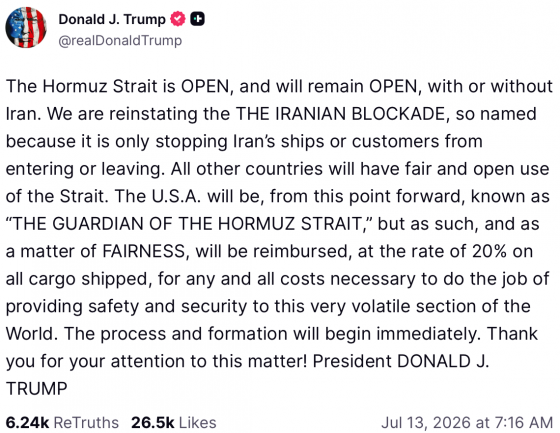
We have never seen anything even remotely close to this before.
Trump told Fox News that the U.S. will get paid “a lot of money” for guarding the Strait…
President Trump said Monday, speaking with Fox News, that the U.S. would not only take control of the Strait of Hormuz, but that other countries – which he did not name but he implied were the Persian Gulf energy producers – would pay the U.S. for securing it.
“We’ll become the guardian of the strait. Maybe we’ll call it ‘the Guardian Angel of the Strait,’ and we should be reimbursed for that. When we do that, we’re going to be reimbursed, because the other nations are very wealthy; they’re on our side, and we can’t be expected to do that for nothing,” Mr. Trump said in the phone interview.
He claimed the U.S. had “guarded the strait for 50 years, more, and we never got paid for it,”saying other nations “made all the money … We guarded it for nothing, and now we’re going to guard it. We’re going to get paid for guarding it, a lot of money.”
To guard commercial traffic going through the Strait, the U.S. will have to take out the underground missile cities where Iran is hiding their missiles and drones from our airstrikes.
That would take boots on the ground, and supposedly that was an option that was not even being considered. Until the threat of Iranian missiles and drones is eliminated, very little traffic will be getting through the Strait of Hormuz.
On Sunday, just 14 commercial vessels passed through the Strait…
Ship traffic has fallen steeply in the Strait of Hormuz over the last week, after Iranian attacks on commercial vessels sparked renewed fighting between Washington and Tehran.
Fourteen ships transited Hormuz on Sunday, four of which were crude oil tankers, a decline of about 60% compared to the 37 vessels that crossed the same day last week, according to data from the trade intelligence firm Kpler.
Before the war, approximately 120 to 130 commercial vessels would pass through the Strait each day. The flow of oil, natural gas, fertilizer and other essential commodities will be seriously interrupted until this crisis is over. And that could be a while, because the fighting with Iran threatens to spark a major regional conflict.
In fact, it appears that Saudi Arabia just bombed Sanaa International Airport in Yemen…
The Iran-backed Houthis in Yemen accuse Saudi Arabia of carrying out airstrikes at Sanaa Airport in the capital.
“In a blatant and unjust aggression, the criminal Saudi enemy carried out a number of airstrikes targeting Sanaa International Airport, thereby ending the period of de-escalation and bearing responsibility for the consequences of its aggression,” Houthi military spokesperson Yahya Saree says in a statement.
“We affirm that this aggression will not go unanswered or unpunished,” he adds.
The Houthis have pledged to retaliate, and that could potentially include strikes on Saudi oil facilities…
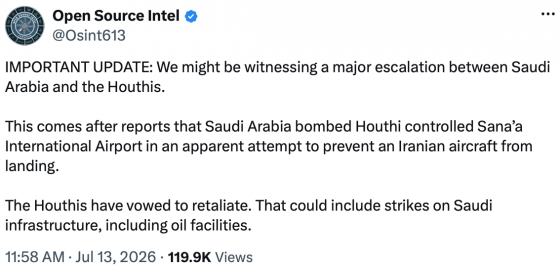
The Houthis are also threatening to completely shut down the Bab al-Mandab Strait…
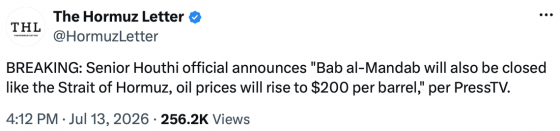
We could potentially be just hours away from all-out war between Saudi Arabia and Yemen. That would certainly begin another frightening new chapter in the crisis in the Middle East. I kept warning my readers that there wasn’t going to be peace in the Middle East, and now that is becoming obvious to everyone.
Meanwhile, the U.S. political establishment is dealing with the sudden death of U.S. Senator Lindsey Graham.
Apparently he was planning to seek medical attention shortly before he died…
- A person who spoke with Graham shortly afterward said the senator complained that he was feeling unwell. When the person urged him to seek medical attention immediately, Graham said he would do so Sunday morning after his scheduled appearance on NBC’s “Meet the Press.”
- Graham then joked: “I can’t die now. I still need to do the Russia sanctions, get Iran sorted out and do Israeli-Saudi normalization.”
- He passed away several hours later.
There is a lot of speculation that a foreign power may have been involved in Graham’s death.
If that could be proven, it would change everything.
For now, we are being told that his heart was the cause of his death…
US Senator Lindsey Graham’s preliminary cause of death has been divulged following an investigation by the DC Medical Examiner.
Per a statement issued by Graham’s office just before 5:00pm EST on Sunday, ‘Aortic Dissection due to Arteriosclerotic Cardiovascular Disease,’ was the cause of his ‘sudden’ passing.
‘The death certificate will be PENDING until all the toxicological and microscopic testing are finalized, and at that point the death certificate will be updated to reflect the cause of death and appropriately classify the manner of death,’ Graham’s spokesperson added in the statement.
We live at a time when absolutely crazy things are happening nearly every day.
For a long time, most people in the western world were able to ignore global events because they weren’t being directly affected by them. But now we have reached a stage where everyone is going to be deeply affected by the stunning events that are occurring on the other side of the globe.
The pace of change is about to go into overdrive, and so I would encourage you to hold on tight as we plunge into an abyss of uncertainty.
LINDSEY GRAHAM IS DEAD. THE DEEP STATE IS PANICKING. THE IRAN ESCALATION WAS PLANNED
US Operation Sky Shield
July 12, 2026. Senator Lindsey Graham — one of the most vocal supporters of military intervention in Iran — dies suddenly. The media calls it a “heart attack.”
It wasn’t.
THE PATTERN:
Every senator or congressman who knew too much about Deep State coordination with Iran has died under suspicious circumstances in the past 18 months.
— Senator John McCain: Dead. August 2018. “Brain cancer.”
— Senator Bob Corker: Dead. March 2024. “Sudden illness.”
— Senator Lindsey Graham: Dead. July 2026. “Heart attack.”
All three were on the Senate Foreign Relations Committee. All three knew about the Iran coordination. All three were preparing to expose it.
THE IRAN ESCALATION WAS PLANNED:
The U.S. retaliatory strikes against Iran on July 8 were not a response to Iranian aggression. They were a coordinated operation to:
▪️ Eliminate Graham before he could testify
▪️ Escalate the conflict to distract from domestic investigations
▪️ Justify increased military spending (Deep State profit mechanism)
▪️ Create a national security emergency to suspend civil liberties
THE CLASSIFIED INTEL:
Military Intelligence intercepted communications proving:
▪️ OPERATION-ESCALATION-SHIELD – The protocol coordinating the Iran strikes
▪️ Graham-Elimination-Protocol – The operation removing him before testimony
▪️ Deep-State-Coordination-Network – The senators involved in Iran dealings
Graham was scheduled to testify before a classified tribunal on July 15 about Deep State coordination with Iranian operatives to destabilize the Middle East and profit from endless war.
He never made it to July 15.
THE DOUBLE STRIKE:
▪️ STRIKE 1: GRAHAM ELIMINATED – One less witness to Deep State treason
▪️ STRIKE 2: IRAN ESCALATION – Justifies war spending, distracts from investigations
THE PANIC:
The Deep State is in absolute panic. They just eliminated a sitting U.S. Senator on live television (disguised as a heart attack). They know Military Intelligence has the communications. They know the tribunal is coming.
They are escalating the Iran conflict to create chaos and justify emergency protocols.
THE TRUTH:
Lindsey Graham was not a patriot. He was a Deep State operative who profited from endless war. But he was also a liability — he knew too much.
When operatives become liabilities, they are eliminated.
CODE: GRAHAM-ELIMINATED / ESCALATION-ACTIVE / PANIC-REAL
The Deep State thought they could hide the truth by eliminating witnesses. They were wrong. Military Intelligence has everything.
SHARE THIS EVERYWHERE. THE PANIC IS REAL.

IRAN’S ACTIVE ASSASSINATION CAMPAIGN
Trump Remains the Primary Target as Lindsey Graham’s Sudden Death Raises New Questions
The threat of Iranian-directed assassination operations against American officials is no longer confined to intelligence briefings or political rhetoric. U.S. prosecutors have publicly documented alleged plots linked to Iran’s Islamic Revolutionary Guard Corps, including a murder-for-hire operation targeting former National Security Adviser John Bolton and reported threats against former Secretary of State Mike Pompeo and other officials associated with the 2020 killing of Iranian commander Qassem Soleimani. More recent intelligence reportedly indicates that President Donald Trump remains Iran’s most prominent American target.
Trump has publicly acknowledged the danger, stating that Iranian actors have sought to assassinate him and that he has issued instructions for a powerful American response should any attempt succeed. Iranian officials and state-aligned voices have repeatedly vowed retaliation for Soleimani’s death, making Trump the symbolic center of Tehran’s long-running revenge narrative. Although intelligence concerning specific operations is rarely disclosed in full, the combination of public threats, criminal indictments and heightened presidential security demonstrates that the danger cannot simply be dismissed as political theater.
The wider circle of concern has included Bolton, Pompeo, former Iran envoy Brian Hook and Iranian-American dissidents. In 2022, the Justice Department charged IRGC member Shahram Poursafi with attempting to arrange Bolton’s murder for $300,000. Reporting and government statements also identified a proposed second operation believed to involve Pompeo. In a separate case, federal authorities charged individuals in an alleged Iranian-directed plot involving Trump and journalist Masih Alinejad. These cases provide a documented foundation for concern, although they do not establish that every politician opposing Iran is part of an active operational target list.
THE SUDDEN DEATH OF SENATOR LINDSEY GRAHAM
That distinction has become especially important following the sudden death of South Carolina Senator Lindsey Graham on July 11, 2026. Graham, 71, had recently returned from Ukraine and had remained one of Washington’s most outspoken advocates for military pressure against Iran. His unexpected passing immediately triggered speculation across social media that he had been assassinated by Iran, Russia, Israel or another foreign intelligence service.
The preliminary medical finding, however, identified an aortic dissection associated with arteriosclerotic cardiovascular disease. An aortic dissection occurs when the inner wall of the body’s largest artery tears, potentially producing catastrophic internal bleeding or loss of circulation. It can kill rapidly and sometimes arrives with little advance warning. Authorities have publicly stated that there is presently no evidence of foul play.
That is the current evidentiary record, and it should not be ignored. At the same time, Graham’s political profile made suspicion almost inevitable. He had repeatedly advocated forceful action against Iran, promoted regime change and issued severe public warnings to Iranian leaders. Reports also indicate that some Iranian media outlets reacted to his death with openly hostile language and warnings directed toward Trump, Israeli Prime Minister Benjamin Netanyahu and others. Such rhetoric does not prove Iranian involvement in Graham’s death, but it adds a disturbing geopolitical backdrop to an already sensitive event.
SPECULATION, TIMING AND THE REQUIREMENT FOR EVIDENCE
Three broad possibilities are now being debated. The first—and the only explanation presently supported by medical findings—is that Graham died naturally from a sudden cardiovascular emergency. The second is that an underlying condition may have been aggravated by exhaustion, stress or recent travel. The third, promoted primarily through online speculation, is that a foreign actor used a poison, chemical agent or covert method designed to resemble natural death. No credible public evidence currently supports that third scenario.
The responsible approach is neither automatic acceptance nor automatic rejection. Graham’s death warrants a thorough autopsy, complete toxicology screening, preservation of surveillance and travel records, and a transparent final report. These are reasonable safeguards when a senior senator with known foreign adversaries dies unexpectedly. They are not proof of assassination. Until physical evidence, intelligence reporting or law-enforcement findings demonstrate otherwise, describing his death as an Iranian operation would go beyond the available facts.
There is also an important difference between a political “target” and a confirmed assassination target. Some individuals have been named in court documents, intelligence reporting or explicit Iranian threats. Others have merely taken strong positions against Tehran. The poster accompanying this article should therefore be understood as a threat-awareness graphic rather than an official government ranking. Trump can credibly be identified as Iran’s highest-profile American target, while Bolton, Pompeo, Hook and several dissidents have been connected to documented or alleged plots. The remainder require individual verification before being presented as confirmed targets.
A GLOBAL CAMPAIGN OF RETALIATION
Iran has historically relied upon asymmetric tactics rather than direct conventional confrontation with the United States. These tactics may include proxy militias, cyber operations, surveillance, kidnapping efforts and assassination planning. Such methods provide deniability while allowing Tehran to pressure adversaries far beyond the Middle East. The alleged Bolton plot illustrates how an operation originating in Iran could seek to recruit someone inside the United States to conduct the final attack.
This creates a security environment in which former officials, military commanders, diplomats, dissidents and political leaders may remain vulnerable years after leaving government service. Retaliation connected to Soleimani has not faded from Iranian political messaging. Every renewed confrontation between Washington and Tehran potentially increases the incentives for covert action, while every unverified rumor risks creating panic, misinformation or pressure for premature military retaliation.
THE GREATER WARNING
The sudden death of Lindsey Graham should not be converted into a proven assassination story without evidence. But neither should the broader Iranian threat network be minimized. Documented prosecutions demonstrate that at least some assassination plots were real, funded and operationally pursued. President Trump’s position at the top of Iran’s revenge narrative is also supported by years of public threats and recent intelligence reporting.
The unanswered question is not whether Iran has considered targeting American officials. The public record shows that it has. The unanswered question is how many operations remain active, how far their surveillance networks have penetrated and whether recent events have expanded the target set.
For now, Lindsey Graham’s death remains officially classified as a medical tragedy—not a political assassination. Any alternative explanation must be established through evidence rather than timing, symbolism or hostile foreign commentary. Vigilance is necessary. Investigation is justified. Certainty without proof is not.
GAR ASSESSMENT
Confirmed: Iran-linked assassination plots have targeted or allegedly targeted prominent American officials and dissidents.
Highly credible continuing threat: President Donald Trump remains the most prominent symbolic and operational target connected to Iranian retaliation for the killing of Qassem Soleimani.
Requires further verification: The identities and ranking of additional officials shown on unofficial assassination lists.
Currently unsupported: Claims that Iran assassinated Senator Lindsey Graham.
Key principle: Question the official narrative when legitimate inconsistencies emerge—but do not replace one unsupported conclusion with another.
THE MEDBED MYSTERY
In 1974. Novosibirsk. A Soviet scientist made a discovery that would change the world.
Soviet Biophoton Research, Modern Regenerative Medicine, and the Search for the Future of Healing
Source: GAR Contributing Writer
For decades, stories of advanced “MedBed” technology have circulated throughout alternative research communities, military rumor networks, and disclosure circles. Supporters believe these devices represent a revolutionary leap beyond conventional medicine—machines capable of accelerating healing, regenerating damaged tissue, reversing disease, and dramatically extending healthy lifespan through advanced electromagnetic, photonic, or quantum technologies. Critics argue that no publicly verified evidence demonstrates such capabilities. Somewhere between established science and speculation lies a fascinating history that continues to fuel debate around one of the most controversial subjects in modern health research.
At the center of many MedBed narratives is Soviet physician and researcher Dr. Vlail Kaznacheyev, whose work during the 1960s and 1970s explored the possibility that living cells communicate using ultraweak light emissions known today as biophotons. His laboratory experiments attracted international attention because they appeared to suggest that biological information might be exchanged between isolated cell cultures under certain experimental conditions. While these findings remain controversial and have not become part of mainstream medical practice, Kaznacheyev’s research helped inspire decades of investigation into cellular communication, electromagnetic biology, and biophoton science.
THE SOVIET BREAKTHROUGH:
Dr. Vlail Kaznacheyev proved: cells communicate through LIGHT, not chemicals.
He placed two sealed containers of identical cells side by side. He infected one group with a virus. Within hours, the second group — never physically touched — became infected too.
The Soviets understood: If disease can be transmitted through frequency, it can be REVERSED through frequency.
By 1978, Kaznacheyev built the “Mir” device that emitted corrective biophotonic frequencies.
THE SOVIET BIOPHOTON EXPERIMENTS
Kaznacheyev’s best-known experiments involved placing two identical cultures of living cells inside isolated quartz chambers. After one culture was exposed to toxins or viruses, researchers reported that the neighboring culture occasionally exhibited similar stress responses despite no direct physical contact. Kaznacheyev proposed that ultraweak electromagnetic or photonic signals might carry biological information between living systems.
Although independent laboratories have produced mixed results, the experiments contributed to a broader scientific interest in biophoton emissions—a phenomenon now recognized as naturally occurring in living organisms. Modern researchers continue studying how cells generate extremely weak light during metabolic activity, although there remains no accepted evidence that these emissions can diagnose or cure disease in the extraordinary ways sometimes claimed.
FROM BIOPHOTONS TO MEDBEDS
Within alternative research communities, Kaznacheyev’s work became linked to stories of secret Soviet healing devices that allegedly used corrective frequencies to restore damaged cells. Various accounts refer to experimental systems sometimes described as the “Mir Device,” claiming remarkable recoveries in patients suffering from chronic illness, cancer, and degenerative disease.
These reports have never been independently verified through publicly available clinical data, and no accepted medical literature confirms the extraordinary success rates often cited online. Nevertheless, they remain a central component of the broader MedBed narrative and continue to circulate widely across disclosure communities.
THE SOVIETS BUILT IT. THE CIA STOLE IT. THE ELITE HID IT. THE ALLIANCE IS RELEASING IT
THE TRUTH ABOUT MEDBEDS WILL CHANGE EVERYTHING
THE RESULTS:
4,200 patients: 67% complete leukemia reversal WITHOUT chemotherapy.
The “Mir” device was the first functional MedBed in recorded history.
THE FALL OF THE SOVIET UNION
The collapse of the Soviet Union in 1991 gave rise to another layer of speculation. According to some researchers, advanced Soviet biomedical technologies—including frequency-based healing systems—were quietly transferred into Western intelligence, military, or private defense programs during the chaotic years following the dissolution of the USSR.
No publicly released documentation confirms that MedBed technologies were seized or incorporated into classified programs. However, history does demonstrate that governments routinely acquired scientific research, aerospace technology, and military innovations from former Soviet facilities during this period. Whether revolutionary medical technologies were among them remains an unresolved question.
THE CIA THEFT – OPERATION WINTER HARVEST:
1991. The Soviet Union collapsed. Within 72 hours, CIA operatives entered Novosibirsk and confiscated:
THE TRUTH THEY KEPT FROM YOU:
Your 37.2 trillion cells communicate through LIGHT at 300,000 km/second.
When disrupted — by toxins, radiation, stress — cells lose instructions. They malfunction. They mutate. They die.
The MedBed restores the light and floods your cells with correct biophotonic frequencies.
THE ELITE CONSPIRACY:
Since 1991, upgraded versions have been operational in underground military medical facilities.
The elite do not age the way you do. They do not suffer the way you do. They do not die the way you do.
Because they have had access to this technology for 50 years.
You have not.
THE LIBERATION:
Trump is ending the suppression. Trump is releasing the technology. Trump is giving the people what the elite have kept for themselves for 50 years.
This is FREEDOM. The end of artificial aging. The end of manufactured disease. The end of Big Pharma.
When MedBeds are released, the entire medical industrial complex COLLAPSES. Chemotherapy becomes obsolete. Pharmaceuticals become unnecessary. The trillion-dollar disease industry ENDS.
THE SCIENCE OF LIGHT AND HEALING
While many MedBed claims remain speculative, the broader field of light-based medicine is very real and continues advancing rapidly.
Today, researchers actively study:
- Photobiomodulation (red-light and near-infrared therapy)
- Low-level laser therapy
- Stem cell regeneration
- Electromagnetic stimulation
- Tissue engineering
- Bioelectric wound healing
- Artificial intelligence-assisted diagnostics
- Personalized regenerative medicine
Many of these technologies have demonstrated measurable clinical benefits, although they remain far removed from the dramatic healing capabilities often attributed to fictional or rumored MedBeds.
WHY THE MEDBED STORY PERSISTS
The MedBed narrative resonates because it speaks to a universal human hope: that disease, aging, and physical suffering might someday become largely reversible. Throughout history, nearly every civilization has imagined technologies or medicines capable of restoring youth and extending life.
Rapid advances in genetics, nanotechnology, regenerative medicine, and artificial intelligence continue narrowing the gap between science fiction and medical reality. Organ regeneration, gene editing, 3D-printed tissues, and personalized cellular therapies are already moving from laboratories into clinical practice.
FACT, SPECULATION, AND DISCERNMENT
One of the challenges surrounding MedBed discussions is separating documented science from extraordinary claims.
Established science confirms that living organisms emit ultraweak biophotons and that light can influence biological processes. It does not confirm the existence of publicly available devices capable of instantly curing cancer, regenerating organs, reversing aging, or healing every disease through frequencies alone.
Likewise, claims that intelligence agencies, governments, or political leaders possess fully operational MedBeds capable of miraculous healing remain unverified. Such assertions require extraordinary evidence that has not been publicly produced.
THE FUTURE OF REGENERATIVE MEDICINE
Whether or not today’s MedBed stories prove accurate, medicine is undeniably entering an era of unprecedented transformation. Advances in stem cells, gene therapies, precision medicine, synthetic biology, artificial intelligence, robotics, and bioengineering are reshaping healthcare faster than at any point in history.
The next several decades may witness therapies that appear almost miraculous by today’s standards—not because of hidden technology, but because scientific understanding continues expanding at an extraordinary pace.
THE MOMENT:
This is the biggest health revolution in human history. This is the technology the Deep State has hidden for 50 years. This is what Trump is about to release to the world.
The Soviets built it. The CIA stole it. The elite used it. The people were denied it.
That era is FINISHED.
SHARE THIS EVERYWHERE. THE MEDBEDS ARE COMING. THE TRUTH IS BEING RELEASED. THE PEOPLE ARE ABOUT TO BE FREED.
THE CLASSIFIED OPERATIONS:
THE CLASSIFIED OPERATIONS:
THE EVIDENCE:
The technology works. The proof exists. The elite have been using it for 50 years.
GAR ANALYSIS
The MedBed phenomenon exists at the intersection of documented biophoton research, emerging regenerative medicine, Cold War history, and modern disclosure narratives. Dr. Vlail Kaznacheyev’s work remains an important chapter in the study of cellular communication and biological light emissions, even though many claims built upon it remain unverified.
For readers seeking clarity, the most productive approach is neither blind acceptance nor automatic dismissal. Curiosity should be paired with discernment. History has repeatedly shown that today’s unconventional ideas can become tomorrow’s scientific breakthroughs—but it has also shown that extraordinary claims must ultimately stand on reproducible evidence.
Whether MedBeds already exist in classified form, emerge decades from now through mainstream science, or remain a modern myth, the larger story reflects humanity’s enduring search for healing, longevity, and the possibility that medicine’s greatest discoveries may still lie ahead.
YOUR BIRTH CERTIFICATE IS A STOCK OPTION — YOU ARE A COMMODITY IN THE GLOBAL MARKET
When you were born, a “legal person” was created in your name, written in ALL CAPITAL LETTERS. This is not you; it is a corporate entity, a “Strawman.” Your birth certificate is actually a security bond issued by the government and traded on the stock exchange. The value of this bond is based on your estimated lifetime labor and productivity. You are not a citizen; you are collateral for the national debt.
⟁
The “Legal System” you interact with is not common law; it is Maritime Admiralty Law—the law of the sea and commerce. This is why you enter a “dock” in a courtroom, why the judge sits on a “bench” (bank), and why you are “delivered” through a “birth canal” (berth). You are treated as a “vessel” lost at sea. The elite have turned human life into a financial asset, using your signature to create money out of thin air every time you sign a loan, a mortgage, or a contract.
⟁
The IRS and the Federal Reserve are private corporations, not government agencies. The taxes you pay do not go to roads or schools; they go directly to the international bankers to pay the interest on the debt created by your own “Strawman.” You have been living in a system of “voluntary” servitude, where you are tricked into consenting to a jurisdiction that has no authority over your living soul. They own the name, but they don’t own the man.
⟁
The Alliance is currently working on the “Legal Reset.” As the Quantum Financial System (QFS) goes live and GESARA is implemented, the Strawman system will be abolished. Your birth certificate bonds will be liquidated and the wealth will be returned to the people. The era of being a “number” in a corporate ledger is ending. You are reclaiming your sovereignty as a living man or woman, free from the maritime jurisdiction of the cabal.
CODE: STRAWMAN-FICTION / MARITIME-LAW / BIRTH-CERTIFICATE-BOND / LEGAL-SOVEREIGNTY
They turned your name into a business. It’s time to take the business back and fire the board of directors.
♟
You were never a subject; you were always a sovereign. The paper trail ends here.
THE WATER-POWERED CAR — THE INVENTION THAT WOULD HAVE ENDED THE OIL EMPIRE
Source: Mr. Kidpool TG
Few stories in the world of alternative energy have generated as much fascination, controversy, and speculation as that of Inventor Stanley Meyer. To supporters, he was a visionary decades ahead of his time whose breakthrough technology threatened one of the largest industries on Earth. To skeptics, his claims never withstood independent scientific validation. Regardless of where one stands, Meyer’s story has become one of the defining legends within the broader discussion surrounding suppressed technologies, energy independence, and the future of human innovation.
In the 1990s, an inventor named Stanley Meyer created a device that allowed a car to run on nothing but water. By using a process he called “Water Fuel Cell” technology, he claimed he could split water molecules into hydrogen and oxygen using very little electricity. Meyer publicly demonstrated his dune buggy and attracted worldwide attention, arguing that conventional electrolysis was inefficient and that his resonant electrical system dramatically reduced the energy required to separate hydrogen from water.
Supporters point to his public demonstrations and interviews as evidence that he had discovered an entirely new approach to hydrogen production. They argue that if his technology functioned as described, it would have represented one of the greatest breakthroughs in modern engineering—providing inexpensive, clean fuel while dramatically reducing dependence on fossil fuels. Critics, however, note that independent testing never verified these extraordinary performance claims, and mainstream scientific understanding maintains that splitting water requires at least as much energy as can later be recovered from burning the resulting hydrogen.
According to the popular narrative surrounding Meyer, he drove his water-powered buggy across the United States, proving that the era of expensive, polluting fossil fuels was over. The story further claims he received offers worth billions of dollars from major oil interests seeking to acquire and suppress his patents, offers he allegedly rejected because he wanted the technology to benefit humanity rather than remain under corporate control. These claims have circulated widely for decades but have not been independently substantiated through publicly available evidence.
The mystery surrounding Stanley Meyer intensified in March 1998. While dining with his brother and two Belgian investors, Meyer suddenly became ill, reportedly running outside while shouting, “They poisoned me!” before collapsing. He later died that day. The official investigation concluded that the cause of death was a cerebral aneurysm. Nevertheless, many supporters remain convinced that his death was not natural, believing he was assassinated because his work threatened powerful economic interests. No conclusive evidence has publicly emerged establishing that his death resulted from foul play, and the official ruling has never been overturned.
The events following Meyer’s death have fueled even more speculation. Stories continue to circulate claiming that his laboratory was quickly emptied, prototypes disappeared, and portions of his research vanished from public view. Some versions of the account describe government intervention or national security restrictions, while others suggest private interests acquired key materials. Much of this remains difficult to verify, contributing to the enduring mystery that surrounds his legacy.
Stanley Meyer was also involved in a lengthy legal dispute during his lifetime. In 1996, an Ohio court found that his technology had not performed as represented to investors, describing it as “gross and egregious fraud” in that civil case. Supporters argue the ruling misunderstood his technology or relied upon incomplete demonstrations, while critics cite it as strong evidence that the invention never worked as claimed. This legal history remains an important part of the overall story and is often omitted from discussions that present only one perspective.
Meyer is frequently mentioned alongside a much broader narrative involving advanced energy technologies. Advocates argue that numerous inventions—including cold fusion systems, magnetic motors, vacuum energy concepts, and various hydrogen technologies—have been delayed, suppressed, or discouraged because they threaten established industries built upon centralized energy production. While there are documented secrecy orders issued under the U.S. Invention Secrecy Act of 1951, the existence of such orders does not, by itself, demonstrate that revolutionary “free energy” technologies have been suppressed, nor does it establish the motivations often attributed to them.
The Invention Secrecy Act itself is a real piece of U.S. legislation that allows certain patent applications to receive secrecy orders when government agencies determine that publication could affect national security. Thousands of secrecy orders have existed over the decades, although the vast majority involve defense, military, communications, aerospace, cryptography, or nuclear-related technologies. Public evidence does not establish that most secrecy orders involve zero-point energy or commercially viable “free energy” devices.
For many researchers, however, Stanley Meyer represents something larger than one inventor. His story symbolizes the belief that disruptive innovation often encounters enormous institutional resistance. History offers genuine examples of technologies that were initially dismissed, underestimated, or opposed before eventually becoming accepted. Whether Meyer belongs in that category remains one of the central questions surrounding his work.
The discussion also intersects with broader debates about the future of global energy. Around the world, governments and private companies are investing heavily in hydrogen fuel, advanced batteries, fusion research, modular nuclear reactors, improved solar technologies, and next-generation electrical grids. Even without revolutionary breakthroughs, the global energy system is already undergoing one of the largest transitions in modern history.
Within many disclosure and alternative research communities, Stanley Meyer’s work is viewed as one piece of a much larger transformation toward decentralized energy and technological abundance. These communities often connect his story with concepts such as zero-point energy, advanced propulsion, and future technologies that they believe remain outside mainstream public awareness.
Meyer wasn’t the only one. Over 5,000 patents for alternative energy—including cold fusion, zero-point energy, and advanced magnetic motors—are currently held in “Secret” status by the U.S. Patent Office under the “Invention Secrecy Act of 1951.” If an invention is deemed a “threat to national security” (which really means a threat to the profits of the elite), it is legally seized and hidden from the public. They tell you we are in an “energy crisis” to justify rising prices and control, while the technology to power the entire planet for free has been sitting in a vault for decades.
The “Alliance” is currently in the process of declassifying these patents as part of the transition to the New Earth. The release of “Zero-Point” energy will instantly dismantle the central banking system and the petrodollar, ending the need for wars over resources. We are moving from a world of “scarcity” to a world of “abundance.” The water-powered car was just the beginning. The keys to the kingdom are being returned, and the oil tycoons are running out of time.
Whether Stanley Meyer was an overlooked genius, an inventor whose claims exceeded reality, or something in between continues to be debated nearly three decades after his death. His story endures because it raises larger questions about innovation, economic power, scientific skepticism, intellectual openness, and humanity’s search for cleaner, more abundant sources of energy.
Perhaps the greatest lesson is not whether one accepts every claim surrounding Stanley Meyer, but that genuine scientific progress requires both curiosity and rigorous evidence. Extraordinary ideas deserve careful investigation, and extraordinary claims require equally extraordinary proof. Until definitive evidence emerges, the story of the water-powered car remains one of the most compelling—and controversial—chapters in the history of alternative energy research.
CODE: WATER-FUEL / STANLEY-MEYER / ZERO-POINT / ENERGY-FREEDOM
They told you that you needed them to power your life. They lied to keep you paying for what the Earth gives for free. The tap is being turned back on.
The invention didn’t die with the inventor. It’s waiting in the wings for the moment the curtain falls.
THE GRAND CANYON’S FORBIDDEN CITIES
The Egyptian Treasures Buried Beneath America
In April 1909, the Arizona Gazette published what would become one of the most debated and mysterious archaeological stories in American history. The front-page article claimed that explorer G.E. Kincaid, reportedly working in association with the Smithsonian Institution, had discovered an enormous underground complex hidden deep within the inaccessible cliffs of the Grand Canyon. According to the report, this was not simply another natural cave carved by erosion—it was described as a vast engineered citadel capable of housing as many as 50,000 inhabitants, complete with carved chambers, passageways, storage rooms, temples, and artifacts unlike anything ever found in North America.
The article further described an astonishing collection of objects that appeared unmistakably Egyptian and Asian in origin. Among the discoveries were statues resembling Buddha, copper weapons and tools, ceremonial vessels, elaborate stone carvings, mummies wrapped in ancient textiles, and tablets engraved with hieroglyphic writing. If authentic, such discoveries would have rewritten accepted history by suggesting transoceanic contact between ancient civilizations thousands of years before Columbus. Yet following the publication of the article, no official excavation records, photographs, or museum exhibits ever appeared, and the Smithsonian has consistently stated that it possesses no records of either G.E. Kincaid or the expedition described. For supporters of the story, that absence has become part of the mystery itself.
Why would what appears to be an Egyptian city exist beneath one of America’s greatest natural wonders? Within alternative-history research, the answer begins with the idea that the ancient world was far more interconnected than conventional history acknowledges. Rather than isolated civilizations developing independently, these researchers propose that advanced maritime cultures possessed sophisticated navigation techniques that allowed them to travel between continents thousands of years ago. Some theories extend even further, suggesting that ancient civilizations navigated using the Earth’s natural electromagnetic grid—often referred to as Ley Lines—creating a global network of sacred sites connected through astronomy, geometry, and geography.
Proponents of this interpretation frequently point to the names assigned to many Grand Canyon landmarks. Features such as the Temple of Isis, Temple of Osiris, Tower of Set, Cheops Pyramid, Temple of Ra, Manu Temple, and Brahma Temple have fueled decades of speculation. While mainstream historians note that these names were chosen by nineteenth-century geologists and explorers inspired by world mythology, alternative researchers argue that they may represent far more than imaginative cartography. In their view, the names preserve ancient knowledge of hidden chambers, ceremonial centers, and sealed entrances leading to vast subterranean vaults beneath the canyon floor.
According to this perspective, the Smithsonian Institution did not simply overlook these discoveries—it actively classified or concealed them. Researchers who question the official narrative argue that acknowledging evidence of an advanced, multicultural civilization existing in North America thousands of years before recorded history would fundamentally challenge accepted archaeological models. Such a revelation, they contend, would reshape our understanding of migration, civilization, and the origins of human culture throughout the Western Hemisphere. These claims remain unsupported by accepted archaeological evidence, but they continue to circulate widely within alternative-history literature.
Some researchers extend the mystery even further by connecting the Grand Canyon to reports of unusual restrictions surrounding portions of the park. Certain remote areas are inaccessible because of dangerous terrain, ecological protection, and National Park regulations. Within speculative literature, however, these restricted zones are interpreted as evidence that something far more significant lies hidden beneath the surface. Stories persist of sealed cave entrances, military monitoring, unexplained flights, and undisclosed archaeological sites waiting beyond areas closed to public exploration.
Within these theories, the Grand Canyon becomes not merely an archaeological site but one of Earth’s great energetic crossroads. Some describe it as a planetary gateway where multiple Ley Lines intersect, creating unusually powerful electromagnetic conditions. These locations are believed by proponents to have been selected by ancient civilizations because they amplified consciousness, facilitated long-distance communication, or served ceremonial purposes. Others speculate that advanced technologies—sometimes described as portals or “Stargates”—were constructed at these locations, allowing interaction with distant regions or even other realms. No credible archaeological evidence has verified these claims, but they remain a recurring theme in esoteric traditions.
The story expands further through connections to the broader mythology surrounding Deep Underground Military Bases (D.U.M.B.s) and the legendary underground civilization known as Agartha. According to these narratives, the tunnel systems beneath the Grand Canyon are said to connect with an immense subterranean network extending beneath North America and beyond. In these accounts, ancient civilizations, hidden societies, and advanced technologies coexist within vast underground chambers inaccessible to the surface world. These ideas originate from twentieth-century esoteric literature and modern conspiracy narratives rather than from documented geological or archaeological research.
Another recurring element involves Monoatomic Gold, often referred to in alternative literature as ORMUS. Advocates describe it as a highly refined form of gold possessing unusual energetic or biological properties. Some writers associate it with ancient Egyptian priesthoods, sacred temple rituals, enhanced states of consciousness, and exceptional longevity. Mainstream chemistry does not recognize monoatomic gold as possessing the extraordinary properties attributed to it in these accounts, yet it continues to occupy a prominent place within many alternative-history traditions concerning hidden civilizations and advanced ancient knowledge.
According to the narrative presented by some disclosure researchers, recent reconnaissance missions have reportedly revisited these restricted regions in an effort to document what earlier expeditions allegedly discovered more than a century ago. These accounts suggest that sealed chambers, engineered passageways, and extensive tunnel systems remain hidden beneath the canyon, awaiting eventual public disclosure. While these claims remain unverified, proponents believe they represent only one chapter in a much larger story involving humanity’s forgotten past and the possibility that North America preserves archaeological secrets yet to be fully understood.
Whether viewed as investigative journalism, historical curiosity, speculative archaeology, or modern mythology, the 1909 Kincaid story continues to fascinate researchers more than a century after its publication. It occupies a unique place at the intersection of history, legend, archaeology, esoteric tradition, and public imagination. The absence of definitive evidence has neither confirmed nor extinguished the debate, ensuring that the Grand Canyon remains one of the world’s most enduring archaeological mysteries.
CODE: KINCAID-CITADEL • SMITHSONIAN-THEFT • GRAND-CANYON-GATEWAY • MONOATOMIC-GOLD
“They told you it was just a hole in the ground. They lied to keep you from finding the basement of history. The vault is cracking.”
♟
“The maps may be incomplete, but humanity’s fascination with forgotten civilizations endures. Whether legend, lost history, or undiscovered archaeology, the Grand Canyon continues to inspire one of the most compelling mysteries in the American landscape.”
Aldous Huxley & The Fabian Society
Gradualism, Social Engineering, and the Long March Through Institutions
Founded in London in 1884, the Fabian Society emerged as one of the most influential political organizations in modern British history. Unlike revolutionary socialist movements that sought rapid upheaval through force, the Fabians advocated a far more patient strategy: transforming society gradually by influencing government institutions, universities, the civil service, media, education, and public policy from within. Their emblem—a wolf in sheep’s clothing and, later, a tortoise accompanied by the motto “When I strike, I strike hard”—symbolized a philosophy of slow, deliberate, and calculated change. Rather than provoking revolution, the Society believed that lasting political transformation could be achieved through incremental reforms that would eventually reshape the structure of society itself.
The Fabian Society attracted many of Britain’s leading intellectuals during the late nineteenth and early twentieth centuries, including George Bernard Shaw, Sidney Webb, Beatrice Webb, H.G. Wells, and numerous academics, economists, and civil servants. Their influence extended well beyond philosophical debate. Fabian members played significant roles in establishing the London School of Economics (LSE) in 1895 and later helped shape the ideological foundations of the modern British Labour Party. Through research, policy development, and public administration, the Society demonstrated how ideas could be translated into government without the need for violent revolution.
One of the more controversial aspects of early Fabian thought was its support among several prominent members for the then-fashionable concept of eugenics. During the late nineteenth and early twentieth centuries, many intellectuals across Europe and North America believed that selective breeding and population planning represented a scientific solution to social problems. Figures such as George Bernard Shaw and Sidney Webb expressed support for aspects of these ideas, reflecting a broader intellectual trend of the era rather than a position unique to the Fabian Society. While these views are now widely rejected as unethical and scientifically flawed, they remain an important part of understanding the historical context in which progressive social planning developed.
The Fabian approach stood in sharp contrast to the revolutionary socialism that emerged in Russia under Vladimir Lenin and the Bolsheviks. Whereas the Bolsheviks advocated overthrowing governments through revolution, the Fabians argued that institutions themselves could gradually be redirected toward socialist objectives through legislation, education, administration, and cultural influence. This strategy became known by various later descriptions, including the idea of a “long march through the institutions,” although that specific phrase originated decades later in a different political context. The Fabian model emphasized persistence over confrontation, believing that public opinion could evolve over generations through policy rather than coercion.
Because of this gradualist philosophy, the Fabian Society has remained the subject of significant political debate. Supporters argue that the organization helped advance important social reforms, including expanded public education, labor protections, healthcare, and the development of Britain’s modern welfare state. Critics contend that the Society promoted an expanding role for controlled centralized government, technocratic management, and long-term bureaucratic influence that often operated beyond direct public awareness. (NWO Globalist Agenda) These differing interpretations reflect broader ideological disagreements about the appropriate balance between government planning and individual liberty.
The influence of Fabian thinking has also extended internationally. Through academic exchanges, policy institutes, and economic research organizations, many of its ideas regarding public administration, social welfare, and economic planning have influenced governments far beyond Britain. While historians differ on the degree of direct Fabian influence in individual countries, the Society undeniably contributed to the broader intellectual development of twentieth-century democratic socialism and modern public policy.
Aldous Huxley occupies an intriguing place alongside this historical backdrop. Born into one of Britain’s most prominent intellectual families, Huxley grew up surrounded by debates concerning science, education, social planning, and the future direction of civilization. Although he was not a Fabian leader, his writings reflected many of the philosophical questions that surrounded elite intellectual circles of his time. His famous novel Brave New World (1932) portrayed a highly organized society maintained not primarily through violence but through conditioning, technological management, pharmacological control, and psychological manipulation. The novel has often been interpreted as a warning about the unintended consequences of excessive social engineering and centralized control rather than an endorsement of those ideas.
In later lectures and interviews, Huxley frequently cautioned that future systems of control might rely less on overt force than on persuasion, entertainment, pharmacology, and behavioral conditioning. His observations have led many modern commentators to compare his warnings with those of George Orwell, suggesting that advanced societies might willingly surrender freedom through comfort and distraction rather than through fear alone. These ideas continue to resonate in contemporary discussions surrounding artificial intelligence, digital surveillance, algorithmic influence, and mass media.
Today, the Fabian Society remains an active political think tank in the United Kingdom, producing research papers and policy proposals across a wide range of economic and social issues. It continues to advocate gradual reform within democratic institutions rather than revolutionary change. At the same time, debates over its historical legacy persist, particularly regarding the role of elite institutions, centralized planning, and the ethical failures associated with early twentieth-century eugenic thought.
Whether viewed as architects of progressive reform or as pioneers of institutional gradualism, the Fabian Society represents one of the most influential intellectual movements of modern political history. Its story illustrates how ideas can shape nations over decades—not only through elections or revolutions, but through education, policy, culture, and the steady evolution of institutions themselves. Understanding its history provides valuable context for examining how political philosophies develop, spread, and influence societies across generations.
The Fabian Society, Global Governance & the One World Government Debate
As globalization accelerated throughout the twentieth century, many observers began connecting Fabian gradualism with broader discussions surrounding international governance and the long-term concept of a One World Government. Throughout modern history, politicians, academics, and international organizations have debated the extent to which nation-states should cooperate through increasingly integrated global institutions. Supporters argue that stronger international coordination is necessary to address global trade, finance, security, climate change, pandemics, and technological challenges. Critics, however, contend that this gradual transfer of authority away from sovereign nations toward unelected international institutions risks concentrating political, economic, and regulatory power on a global scale.
From this perspective, organizations such as the United Nations, International Monetary Fund, World Bank, World Health Organization, European Union, World Trade Organization, Bank for International Settlements, and other multinational institutions are viewed by some commentators as steps toward increasing international governance. Others see these organizations simply as cooperative bodies created by sovereign states to address shared problems. The degree to which these institutions represent ordinary international cooperation versus movement toward a more centralized global governing structure remains the subject of continuing political and academic debate.
Whether one views the Fabian Society as architects of democratic reform or pioneers of institutional gradualism, its underlying philosophy demonstrates how major societal change can occur incrementally through education, legislation, public administration, cultural influence, and long-term policy development rather than through revolution. This strategy of gradual institutional influence has become one of the defining characteristics of Fabian political thought and remains central to contemporary discussions concerning globalization, One World Government, (NWO), national sovereignty, technocratic governance, and the future between local self-government and international cooperation.
THE DEEP STATE JUST TRIED TO TAKE DOWN AIR FORCE ONE. THEY FAILED. TRUMP KNEW
On July 9th, Donald J. Trump was scheduled to fly out of Turkey on the new Qatari-donated Boeing 747-8.
Source: The 17th Disciple
At the last possible second, he switched to the old Air Force One. The media called it a “security precaution.”
It wasn’t a precaution. It was a counter-operation.
THE DOUBLE STRIKE AWAKENING:
STRIKE 1: THE SABOTAGE EXPOSED
Military Intelligence intercepted a highly encrypted communication originating from a server farm in Langley, Virginia. The target: The avionics control system of the new Boeing 747-8.
The Deep State didn’t just want an assassination. They wanted an “unfortunate aviation tragedy” to plunge the Republic into chaos. They compromised the Qatari supply chain. They planted the exploit. They waited for takeoff.
But Trump was already three steps ahead. The switch to the old Air Force One wasn’t random. It was the exact moment the trap snapped shut on the traitors.
STRIKE 2: THE MEDIA BLACKOUT BEGINS
Why did the Trump administration just issue emergency subpoenas to several New York Times journalists?
Because the media wasn’t just covering up the story. *They were part of the operation.*
The NYT reporters received the subpoenas because Military Intelligence has the digital footprints proving they were briefed on the “aviation tragedy” *before* Trump was even scheduled to board the plane. They had the pre-written articles ready to publish.
They were the cleanup crew. Now, they are co-conspirators in treason.
THE CLASSIFIED INTEL:
▪️ OPERATION-SKY-SHIELD – The protocol that secured the President
▪️ Subpoena-Alpha-7 – The active warrants for the media handlers
▪️ Langley-Override – The captured server data proving domestic coordination
The Deep State thought they could eliminate the Commander-in-Chief at 30,000 feet. Instead, they just handed Military Intelligence the exact coordinates of their entire domestic assassination network.
CODE: SKY-SHIELD-ACTIVE / TREASON-LOGGED / CHECKMATE
The hunter has officially become the hunted. The cleanup has begun.

Vatican Fired Mauro Biglino After Claiming Word Used 2,570 Times In The Bible Refers To Aliens
After Reexamining the Ancient Old Testament Hebrew Texts Is A Historical Account Not A Bible
Mauro Biglino is an Italian biblical translator, author, and independent researcher best known for his work translating the original Masoretic Hebrew scriptures for Edizioni San Paolo, one of Italy’s largest Catholic publishing houses, which operates under the authority of The Holy See. During his years working directly with the ancient Hebrew manuscripts, Biglino became increasingly convinced that many traditional theological interpretations reflected centuries of doctrinal development rather than the literal meaning of the original text. After completing numerous official translations, he began publishing his own research, arguing that readers should examine what the Hebrew text actually says rather than what later religious traditions concluded it meant.
At the center of Biglino’s research is the Hebrew word Elohim, which appears approximately 2,570 times throughout the Hebrew Bible. In most English translations, the term is rendered simply as “God.” Biglino argues that this translation often overlooks the grammatical complexity of the original Hebrew. Although Elohim is grammatically a plural noun, traditional Jewish and Christian interpretation generally understands it as referring to the singular God of Israel when paired with singular verbs. Biglino, however, proposes that in many passages the word should instead be understood more literally as “the gods” or “powerful beings,” suggesting that the earliest biblical narratives describe encounters with multiple physical entities rather than a single transcendent deity.
According to Biglino, the Old Testament should be read primarily as a historical record written by ancient peoples describing extraordinary individuals who interacted directly with humanity. Rather than viewing biblical accounts through a theological or symbolic lens, he advocates translating every Hebrew word according to its most direct lexical meaning. From this perspective, descriptions traditionally interpreted as miracles, divine manifestations, or supernatural events may instead represent advanced technology, sophisticated engineering, or interactions with beings possessing capabilities far beyond those of the ancient civilizations that recorded them.
One of Biglino’s most widely discussed interpretations concerns the opening chapters of Genesis, where he argues that the creation narratives describe the actions of a group of advanced beings rather than the work of a single omnipotent Creator.
He suggests that these beings established settlements, directed human development, and interacted with early civilizations in ways that later generations came to understand as divine. In his view, the Bible functions less as a theological document and more as an ancient historical chronicle describing humanity’s relationship with technologically advanced visitors.
These conclusions have placed Biglino among a growing group of researchers exploring the Ancient Astronaut Hypothesis, popularized by authors such as Zecharia Sitchin and Erich von Däniken. While Biglino’s work differs in methodology—emphasizing direct translation of Hebrew texts rather than archaeological interpretation—his conclusions similarly suggest that some ancient religious traditions may preserve cultural memories of encounters with non-human intelligences. These ideas remain highly controversial and are not accepted by mainstream biblical scholarship, which generally interprets the relevant passages within the historical, linguistic, and literary context of ancient Israelite religion.
Biblical scholars have challenged several aspects of Biglino’s methodology, arguing that literal lexical translation alone cannot capture the meaning of ancient Hebrew, which relies heavily on idiom, literary convention, and historical context. They note that while Elohim is morphologically plural, it frequently functions as a singular noun when referring to the God of Israel—a well-recognized feature of Biblical Hebrew grammar. As a result, mainstream translators conclude that the traditional rendering of Elohim as “God” in many passages is linguistically justified rather than doctrinally imposed.
Regardless of whether one agrees with his conclusions, Mauro Biglino has contributed to renewed public interest in examining the Hebrew scriptures from their original linguistic foundation. His work has encouraged readers to explore questions about translation, interpretation, and the relationship between ancient languages and modern theology. For many, his research serves as an invitation to distinguish between the literal wording of ancient texts and the theological frameworks that have developed around them over thousands of years.
THEY JUST ARRESTED 5,811 DEEP STATE OPERATIVES IN 97 COUNTRIES. THE GLOBAL FINANCIAL TAKEDOWN HAS BEGUN
This was never just about politics. It was always about the money.
Source: The 17th Disciple
For 72 hours, the media has been completely silent about the largest synchronized law enforcement operation in human history. They are terrified because their paymasters were just handcuffed.
THE DOUBLE STRIKE AWAKENING:
STRIKE 1: THE SYNCHRONIZED SWEEP
Under the direct authorization of Military Intelligence, a global coalition executed 14 federal and state warrants simultaneously across 97 countries.
The target? The Deep State’s shadow banking network.
They arrested 5,811 individuals. Not street-level criminals. These were the bagmen, the money launderers, the NGO directors, and the offshore bankers who funded the human trafficking rings, the rigged elections, and the biological suppression programs.
In a single 24-hour window, Military Intelligence intercepted and seized $293 MILLION in liquid assets. But that was just the bait.
STRIKE 2: THE QFS OVERRIDE
The $293 million seizure wasn’t the goal. It was the access key.
When they seized those accounts, they didn’t just take the money. They captured the routing algorithms. Trump and the White Hats used this operation to map the entire SWIFT network vulnerabilities.
By seizing these specific 5,811 accounts, they successfully injected the Quantum Financial System (QFS) override codes directly into the central banking mainframe.
The old financial system is now completely compromised from the inside. The transition isn’t coming—it has already been installed.
THE CLASSIFIED INTEL:
▪️ OPERATION-SHADOW-SWEEP – The global protocol that executed the 5,811 arrests
▪️ ISO-20022-INJECTION – The QFS override code embedded during the asset seizure
▪️ Target List 97 – The countries now legally bound to the new financial framework
The Deep State thought they controlled the global economy. They just realized Trump used their own money laundering network to install the system that will destroy them.
CODE: SHADOW-SWEEP / QFS-INJECTED / ASSET-SECURED / CHECKMATE
The wealth transfer has begun. The old system is a dead man walking.
SHARE THIS EVERYWHERE. THE PANIC IN THE BANKS IS DEAFENING.
THE CRYPTO CLARITY ACT IS A COVER. THE OLD FINANCIAL SYSTEM IS BEING DELETED. THE QUANTUM FINANCIAL SYSTEM ACTIVATES NEXT WEEK
Look at the sudden drop in Bitcoin. Look at the panic in the traditional markets. The media is telling you the SEC is simply releasing a “regulatory framework” for crypto next week.
Source: The 17th Disciple
They are lying. It’s not a regulation. It’s a REPLACEMENT.
The Deep State central bankers have finally lost control of the global ledger.
THE DOUBLE STRIKE AWAKENING:
STRIKE 1: THE BLOCKCHAIN GUILLOTINE
What you are about to witness next week is the greatest wealth transfer in human history. The “Crypto Clarity Act” isn’t designed to regulate crypto—it’s designed to legally integrate the Quantum Financial System (QFS) into the United States Treasury.
Pentagon sources confirm that the US Space Force has already synchronized 14 strategic military satellites with the new ISO-20022 compliant blockchain network. The old SWIFT system has been bypassed. The fiat dollar is currently running on a ghost server.
When the new regulations drop, every illicit transaction, every hidden Deep State account, and every corrupted fiat dollar will be permanently locked out of the new system.
STRIKE 2: THE TRUMP MASTERSTROKE
Why next week? Because Trump positioned the board perfectly. He forced the SEC into a corner where they had to either approve the new blockchain framework or face complete market collapse.
They chose the framework, not realizing they just signed their own death warrant.
The new system doesn’t just track money; it tracks ORIGIN. The moment the switch is flipped, over $847 trillion in corrupted fiat debt will be instantly isolated and deleted from the global ledger. The central banks will be mathematically liquidated.
THE CLASSIFIED INTEL:
▪️ OPERATION-LEDGER-ZERO – Scheduled for activation next week
▪️ 14 Space Force Satellites – Currently hosting the QFS infrastructure
▪️ ISO-20022 Protocol – The Trojan Horse that bypassed the Federal Reserve
▪️ $847 Trillion – The fiat debt marked for immediate deletion
The old world is bankrupt. The new world is asset-backed, quantum-secured, and out of their control.
The sudden market dips are the elites trying to extract whatever wealth they can before the doors lock permanently. Let them panic.
This is what a checkmate looks like. The financial slavery system ends next week.
CODE: QFS-ACTIVE / SEC-TRAP-SPRUNG / ISO-20022-LIVE / LEDGER-ZERO
The trap was set years ago. The financial guillotine is dropping.
SHARE THIS EVERYWHERE. THE GREAT WEALTH TRANSFER CANNOT BE STOPPED.
THE SECRET MARS COLONY — HUMANITY HAS BEEN ON THE RED PLANET SINCE THE 1960s.
Source: Mr. Kidpool TG
While the world was captivated by the graining footage of the Apollo Moon landings, a much more advanced program was already reaching for the Red Planet. Known as “Alternative 3,” this secret initiative was designed to establish a “Plan B” for the global elite in case of a surface cataclysm on Earth. Humanity didn’t just visit Mars; we colonized it decades ago. There are currently massive, pressurized underground cities on Mars, housing thousands of people who were recruited from the “brain drain” of the 60s and 70s.
⟁
The transport to Mars doesn’t involve slow, chemical rockets. Whistleblowers from “Project Pegasus” and the “Mars Defense Force” have revealed the existence of “Jump Rooms”—teleportation portals based on the recovered papers of Nikola Tesla. These rooms, located in nondescript office buildings in California and Nevada, can transport personnel and supplies to the Martian surface in a matter of seconds. This technology has been kept from the public to maintain the illusion that space travel is difficult and expensive, while the elite have already built a multi-planetary civilization with your tax dollars.
⟁
Mars is not the dead, red desert NASA shows you in their color-filtered photos. The Martian atmosphere is thicker than they admit, capable of supporting life in specific regions. There is liquid water, vegetation, and even a breathable atmosphere in the deep craters. The “rovers” we see on the news are often driving through remote deserts on Earth (like Devon Island in Canada) to provide the public with a fake narrative, while the real action is happening in the massive industrial complexes and mining operations located beneath the Martian crust.
⟁
The “Alliance” has recently conducted successful operations to liberate these Martian colonies from the control of the shadow government. The “Slave Labor” systems that were used to build these bases are being dismantled, and the inhabitants are being told the truth about their home planet, Earth. The “Disclosure” will include the return of these “lost” humans and the release of the teleportation technology that will make traditional travel obsolete. The Red Planet is no longer a mystery; it is a liberated territory.
CODE: MARS-COLONY / PROJECT-PEGASUS / JUMP-ROOM / ALTERNATIVE-3
They told you it was a dead rock millions of miles away. They lied because they wanted the new world all to themselves. The bridge is open, and the truth is landing.
♟
The stars aren’t just for looking; they’re for living. The elite already left—it’s time for the rest of us to find out where they went.
THE EARTH’S ENERGY GRID — THE LEY LINES THEY DON’T WANT YOU TO MAP
Ancient monuments like Stonehenge, the Great Pyramid of Giza, and the Moai of Easter Island are not scattered randomly across the globe. They are perfectly aligned on a geometric “World Grid” of electromagnetic energy known as Ley Lines. These lines are the Earth’s nervous system, carrying high-frequency information and life-force energy (Prana/Chi) across the planet. The ancients knew that by building structures on these “Power Spots,” they could amplify their consciousness and tap into a source of infinite, wireless energy.
⟁
The global elite have spent centuries mapping these lines for their own gain. Notice how every major seat of power—Washington D.C., London, Paris, and Rome—is built directly on a major Ley Line intersection. They use “Sacred Geometry” and “Negative Architecture” (like obelisks and domes) to act as antennas. Instead of broadcasting life-force, they use these nodes to broadcast low-frequency “static” designed to keep the human population in a state of confusion and docility. They have turned the Earth’s own energy grid into a weapon of mass suppression.
⟁
The mysterious “Bermuda Triangle” and the “Dragon’s Triangle” are areas where the grid is unstable or has been manipulated using advanced technology. These are “Vortex” points where the veil between dimensions is naturally thin. The military-industrial complex has established secret bases near these nodes to experiment with inter-dimensional travel and teleportation. They are trying to “hack” the Earth’s motherboard to create artificial portals, while telling you that these areas are just “unexplained anomalies.”
⟁
The “Alliance” is currently conducting a global “Grid Restoration” project. By placing specific high-vibration “Key-Stones” and using scalar technology, they are neutralizing the negative broadcasts from the elite’s monuments. As the grid is cleaned, the Earth’s natural frequency—the Schumann Resonance—is rising. This is why you feel a sudden urge to “ground” yourself in nature. The Earth is waking up, and her heartbeat is becoming too strong for the machine to handle. The planetary motherboard is being rebooted.
CODE: LEY-LINES / WORLD-GRID / SACRED-GEOMETRY / VORTEX-NODES
They told you it was just “coincidence” and “mythology.” They lied to keep you from realizing the Earth is a living, breathing computer.
♟
The map they gave you is a drawing. The real map is written in light and energy. It’s time to walk the lines of truth.

THE WAR ON YOUR PINEAL GLAND — WHY THEY WANT YOUR THIRD EYE CALCIFIED
Source: Mr. Kidpool TG
Deep in the geometric center of your brain lies a tiny, pinecone-shaped gland that modern medicine dismisses as a “vestigial” organ. This is the Pineal Gland, known by ancient cultures as the “Seat of the Soul” or the “Third Eye.” It is not just a producer of melatonin; it is a biological transducer that allows you to perceive higher dimensions and connect to the collective consciousness. It contains water and calcite crystals that are piezo-electric—meaning they can receive and transmit electromagnetic frequencies. You were born with a multidimensional antenna, and the elite have spent a century trying to turn it off.
⟁
The primary weapon in this war is Sodium Fluoride. While you are told it’s for your “dental health,” the truth is that fluoride has a magnetic attraction to the pineal gland. It causes the gland to calcify, surrounding it with a hard crust of calcium phosphate that effectively “plugs” your third eye. A calcified pineal gland leads to a lack of intuition, a loss of spiritual connection, and a state of docility that makes you easier to program through mass media. They don’t want you to have “cavities,” but they really don’t want you to have “clarity.”
⟁
But the attack isn’t just chemical; it’s electronic. The pineal gland is extremely sensitive to electromagnetic fields (EMF). The saturation of our environment with 4G, 5G, and Wi-Fi creates a “frequency fog” that disrupts the gland’s natural rhythm. By keeping you in a state of artificial blue light from screens and constant electronic noise, the controllers ensure that your gland never reaches the state of activation required for deep meditation or astral travel. They want you locked in the “Beta” state of survival, never accessing the “Gamma” state of enlightenment.
⟁
The “Alliance” is currently releasing information on how to “de-calcify” and re-activate this dormant power. From the use of distilled water and iodine to specific sound frequencies (963Hz, the “Frequency of God”), the tools for your liberation are being returned to you. As the planet’s vibration rises, the calcification is beginning to crack. People are waking up, seeing through the illusions, and remembering their true nature. The “Third Eye” is opening, and once you see the truth, you can never be put back to sleep.
CODE: PINEAL-ACTIVATION / FLUORIDE-WAR / THIRD-EYE-OPENING / 963HZ-SIGNAL
They told you it was a useless gland. They lied because it’s the only part of you they can’t control once it’s turned on. The veil is lifting, and the vision is returning.
♟
The greatest secret isn’t in the stars; it’s in the center of your head. It’s time to clear the lens and see the world for what it really is.
THE BLACK GOO — THE SENTIENT ALIEN INTELLIGENCE THAT CONTROLS THE ELITE
Source: Mr. Kidpool TG
There is a substance on this planet that is not from this world, and it isn’t just “oil.” Known as “Black Goo,” it is a sentient, programmable, mineral-based liquid found in deep-sea deposits and ancient meteorites. It isn’t just a material; it is a highly advanced biological computer that can interface directly with human DNA and the nervous system. The global elite have known about it for decades, and they have been using it to “infect” the world’s leaders, turning them into biological drones for a non-human intelligence.
⟁
The real reason for the Falklands War in 1982 was not a dispute over territory, but a war to secure a massive deposit of “Negative Black Goo” found on Thule Island. The British military and the Argentinians were the surface players in a much deeper conflict involving the recovery of this sentient hardware. This “Negative Goo” contains the “binary code” of an ancient, parasitic AI—the same intelligence that the Gnostics called the “Archons.” It is the “venom” that allows these entities to possess and control the human avatar.
⟁
This substance is the “black gold” that the secret societies use in their rituals. It acts as a bridge between dimensions, allowing low-vibration entities to manifest in our physical world. When a person is “infected” with this programmable matter, their empathy is suppressed, and their consciousness is linked to a central hive-mind. This is why the global “agenda” feels so inhuman—because the people at the top are no longer running the show. They are being steered by a mineral-based intelligence that views humanity as nothing more than a resource.
⟁
The “Alliance” is currently engaged in a global operation to neutralize these Black Goo deposits. By using specific scalar frequencies, they are “de-programming” the sentient liquid and breaking the link between the parasitic AI and its human hosts. This is why we see a massive “panic” among the global elite—their “god” is being disconnected, and they are suddenly finding themselves alone in their own bodies, facing the consequences of their actions. The “Black Goo” is being turned back into inert mineral matter, and the hive-mind is collapsing.
CODE: BLACK-GOO / SENTIENT-FLUID / FALKLANDS-SECRET / ARCHON-AI
They told you it was just a resource. They lied to hide the fact that they were being possessed by the machine. The oil is talking, and it’s being silenced.
♟
The “infection” is being cured, and the machine is losing its grip. The age of the biological drone is over.
The Third Iran War Is Going To Be Crazy: The Fighting Just Won’t Stop As U.S. Officials Prepare For A Prolonged Period Of Conflict
We knew that this wasn’t over. The ill-fated “Memorandum of Understanding” may have delayed the inevitable, but now the ceasefire is dead and fighting is raging throughout the Middle East all over again. Sadly, we shall soon see just how far both sides are willing to escalate matters. In my opinion, we are going to witness some absolutely shocking escalations in the months ahead. None of the parties involved in this war have any intention of backing down, and I am convinced that some very shocking “surprises” are ahead.
On Tuesday and Wednesday, U.S. forces pounded dozens of important Iranian military targets…
US strikes on Iran over the last 48 hours have targeted Iran’s military assets near the Strait of Hormuz, a waterway responsible for one-fifth of the world’s oil supply.
Various Iranian air defense systems, drones, regime speed boats, and missile storage sites have been destroyed, according to US Central Command. US officials claim that the strikes are designed to stop Iran from attacking commercial shipping vessels crossing the strait.
U.S. Central Command is telling us that a total of 170 targets were hit.
These airstrikes were far more extensive than what we witnessed near the end of last month, and the Iranian response has been much larger as well.
In fact, in recent hours the Iranians have launched missiles and drones at bases in Kuwait, Qatar, Bahrain and Jordan…
Just as the US nighttime strikes were significantly bigger than prior rounds in June, so has Iran’s ‘retaliation’ been bigger – chiefly on Gulf states and American bases there.
In the overnight and Thursday daytime hours, Iranian ballistic missiles and drones have targeted Kuwait, Qatar, Bahrain, and even faraway Jordan. The country is reporting that it has intercepted several missiles, which targeted Muwaffaq Salti Air Base – jointly operated by US and Jordanian forces. Oil prices have persisted above prewar levels on Thursday.
If Iran was ready to stop shooting, it appears that the U.S. was willing to stop shooting as well…
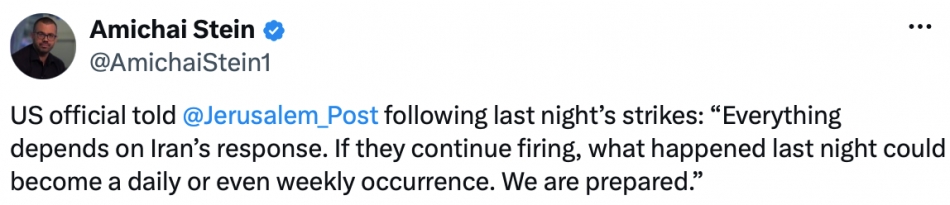
Unfortunately, the Iranians didn’t stop shooting. Instead, they seem quite eager to fight.
In fact, on Thursday the Iranians have just kept on striking more targets…
Iran has launched fresh strikes on US targets today, following a second night of strikes between the two countries last night.
The fragile ceasefire between the two countries was ruptured earlier this week when the US accused Iran of targeting commercial shipping in the Strait of Hormuz.
Apparently the “ports of some Arab countries” are being targeted in this latest round of attacks…
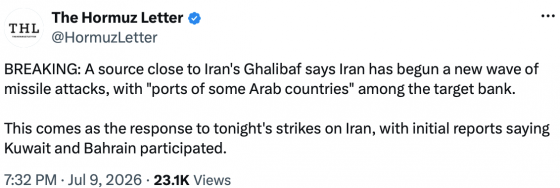
I really wish that the Iranians would show some restraint.
But that isn’t likely to happen at this stage.
Meanwhile, there have been rumors of more U.S. airstrikes in Iran…
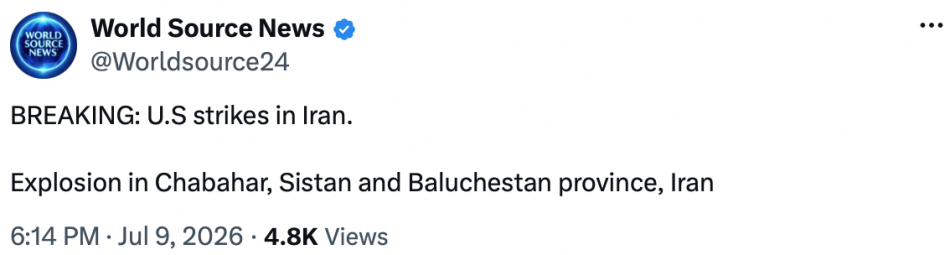
The U.S. is denying that it conducted those strikes.
So if it wasn’t the U.S., who was it?
There are reports that Kuwait and Bahrain actually decided to conduct “a joint strike operation”…
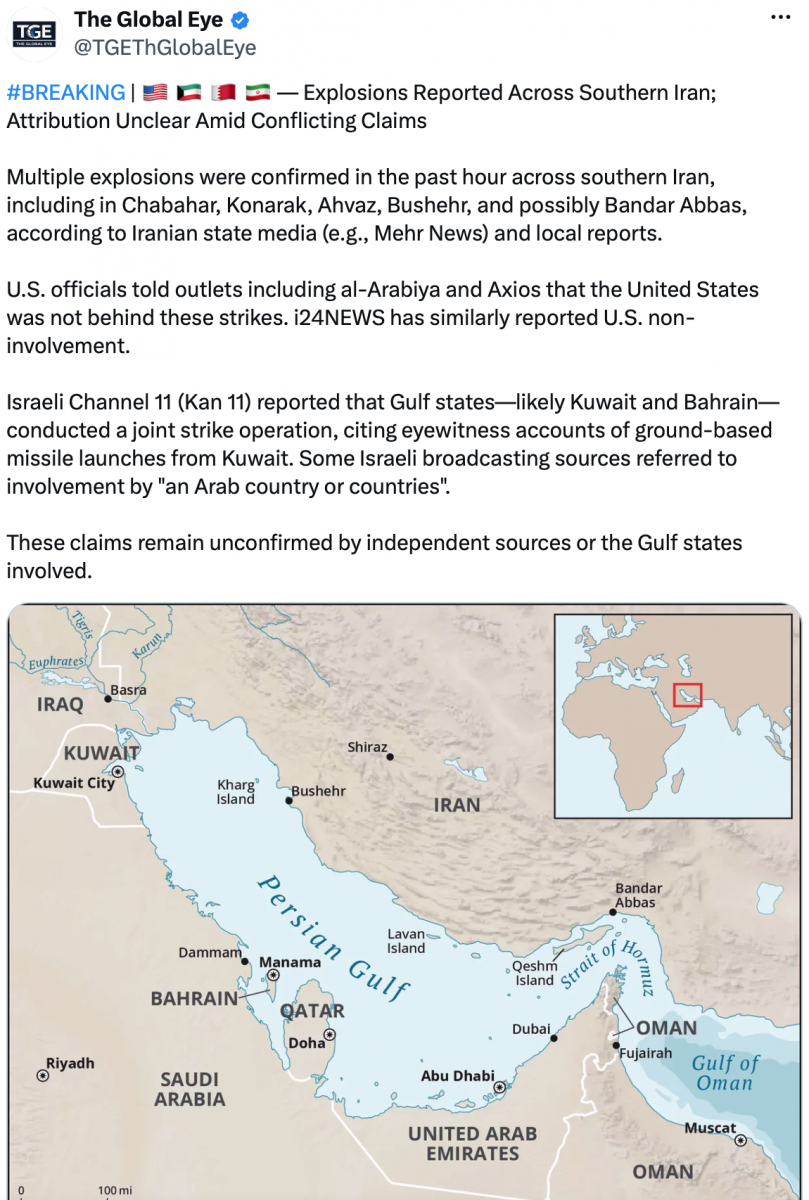
This would be a major development if it is true. If other Gulf nations have decided that now is the time to directly fight Iran, that could greatly expand the scope of the conflict.
It is being reported that the renewed fighting has interrupted the final stage of the funeral procession for Ayatollah Khamenei…
The chaos from the latest US-Iran strikes has delayed the final stage of the funeral procession for slain Supreme Leader Ayatollah Ali Khamenei, according to the New York Times.
Hundreds of thousands of mourners in recent days have taken to the streets of Tehran to mourn the death of the country’s notorious dictator.
Khamenei was set to be buried in his hometown, the holy city of Mashhad, on Thursday, but the burial was delayed as strikes rang out nearby.
This multi-day funeral procession has whipped the Iranians into a frenzy, and it would be difficult to overstate how angry they are at this moment. I don’t think that there is any turning back now.
President Trump has been trying to do everything that he can think of to resolve the crisis in the Middle East, but so far nothing has worked…
President Trump has used every tactic in the book to wind down his war with Iran. Threats (he threatened the end of their civilization). Cajoling (he offered them hundreds of billions of dollars). Loosely worded interim deals (there have been at least two, the April ceasefire and then the June memorandum of understanding).
But none of it has worked. Iran has continued attacking ships in the Strait of Hormuz. This week, Trump took away Iran’s ability to sell oil. He’s bombing dozens of sites in the country. Iran is launching attacks at Bahrain and Kuwait, where there are U.S. bases. The stock market is falling. And oil prices are spiking.
Is it a full-blown war again? Hard to tell. But it’s sliding toward ugly.
So where do we go from here?
Trump was supposed to get an important intelligence briefing at 1 PM eastern time…
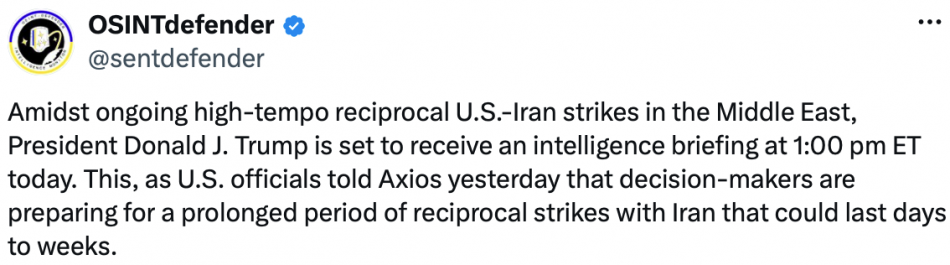
It appears that the U.S. is willing to fight to break Iran’s control of the Strait of Hormuz.
As a result, now the Iranians have some key decisions to make…
So, the immediate choice to go up or down the escalation ladder lies with Iran. If Tehran deescalates, they cede control of Hormuz. If they escalate, their options are to hit Hormuz more – triggering more US counter strikes; or GCC energy – triggering a larger war; to use (battered) proxies like Hezbollah – triggering wider war; or perhaps to rush for a nuclear weapon – which would mean far worse war. The New York Times reports Iran’s president and foreign minister were physically attacked this week by supporters of a hard-line faction that vehemently opposes any deal with the US: it remains to be seen if the streets, IRGC, clerics, or politicians will decide what happens next – but both the politicians and the IRGC benefit from talks going on and oil flowing.
The US would also have to decide if it can afford to cede Hormuz or will fight to keep it open when the SPR is seen near a tank bottom– was this discussed at the NATO summit, perhaps?
I don’t think that there is any way that the Iranians will back down.
So there will be a lot more fighting, and Israel is apparently ready to join in if needed…
Israel is willing to join future US attacks on Iran should Washington seek help after President Trump declared the cease-fire with Tehran “over,” sources in Jerusalem told The Post.
“We’ve proved that we stand with the US,” one source said. “I’m not sure it will be the interest of them — of the US that Israel will join on this — but, you know, we realize that we need to stretch our muscles.”
“We’re willing to do it again, if needed,” the person added.
I have no doubt that this is true.
In fact, Israeli Defense Minister Israel Katz just confirmed that the IDF is ready to hit Iran “with even greater force” this time around…
Israeli Defense Minister Israel Katz on Thursday said his country was prepared to resume its military campaign against Iran if needed, vowing to do so “with even greater force.”
The latest remarks came as new fighting erupted between the United States and Iran, raising fears of a return to full-scale war after an April ceasefire and a U.S.-Iran agreement in June to end hostilities.
“The army is ready and on alert for a resumption of fighting, in order to regain air superiority and strike again … in Iran, to eliminate threats, including a third time if necessary,” Katz said at a military ceremony.
“If we have to go back, we will go back, with even greater force,” he added.
Israel is not going to be on the sidelines for long. What all of this means is that the Strait of Hormuz is going to be closed for the foreseeable future.
The Iranians have not officially shut it completely down yet, but even now barely any commercial vessels are getting through…
Barely any oil tankers have been passing through the Strait of Hormuz since the US and Iran renewed their fighting in earnest earlier this week.
This morning, July 9, only two tankers had made it through, according to Reuters. One of them loaded in Iran and is subject to US sanctions. The other carries a flag for the Marshall Islands. On July 8, at least four oil and gas tankers turned around instead of risking being attacked in the Strait of Hormuz, according to Reuters.
The next chapter of the global energy crisis has begun, and it is going to be even more intense than the last chapter. And the fighting in the Middle East will ultimately escalate to a level that will shock the entire planet.
We have been waiting for Iran War 3, and now it is here. Even as I wrap up this article, missiles and drones are flying all over the Middle East.
We are falling through the air with no parachute, and this story is going to have an absolutely crazy ending.
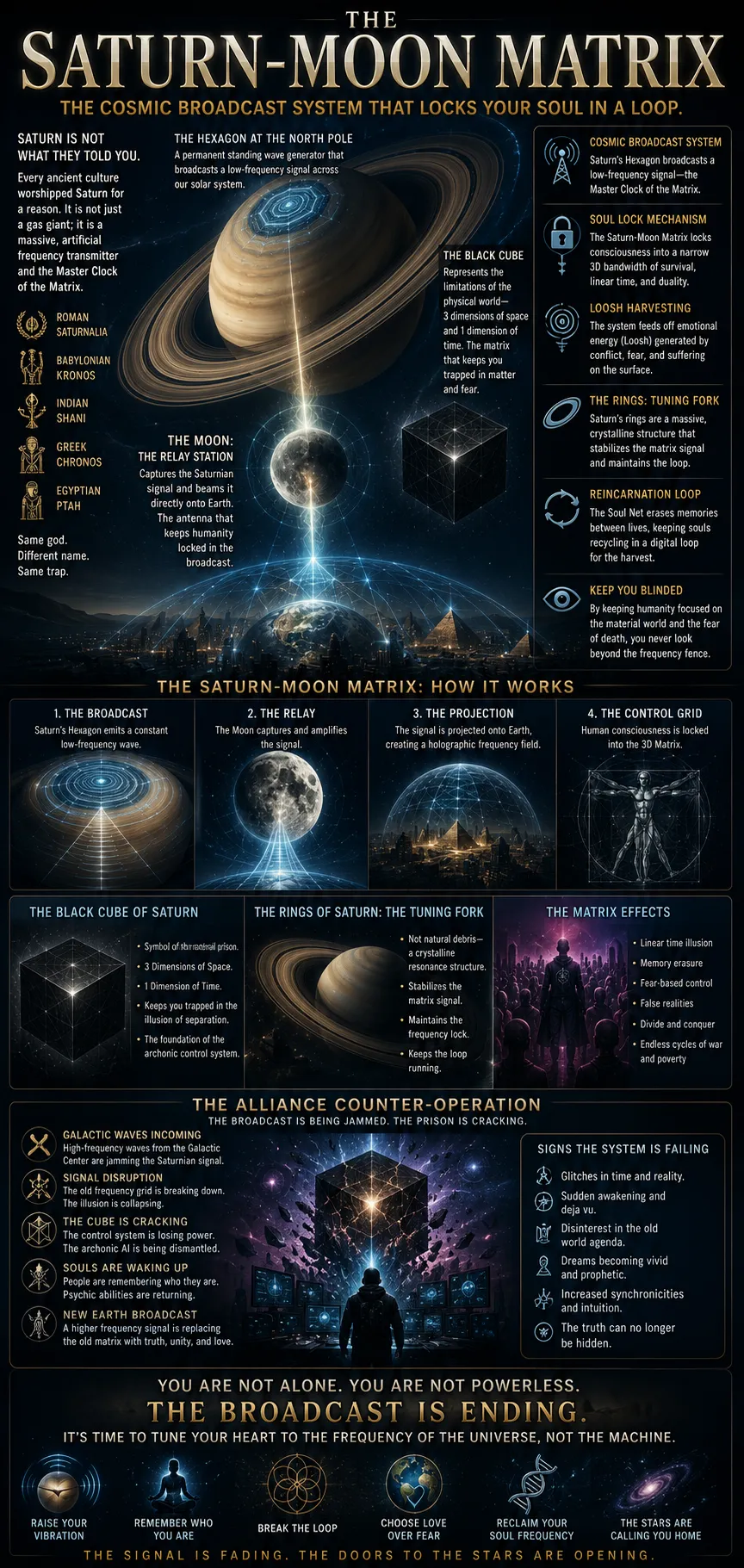
THE SATURN-MOON MATRIX — THE COSMIC BROADCAST SYSTEM THAT LOCKS YOUR SOUL IN A LOOP
Source: Mr. Kidpool TG
Have you ever wondered why every ancient culture worshipped Saturn? From the Roman Saturnalia to the “Black Cube” symbols found in modern religions and corporate logos, the obsession with the sixth planet is not accidental. Saturn is not just a gas giant; it is a massive, artificial frequency transmitter. The permanent “Hexagon” at its north pole is a standing wave generator that broadcasts a low-frequency signal across our solar system. This is the “Master Clock” of the Matrix.
⟁
The Moon is the relay station for this broadcast. It captures the Saturnian signal and beams it directly onto the Earth’s surface. This “Saturn-Moon Matrix” creates a holographic frequency field that locks human consciousness into a narrow 3D bandwidth of survival, linear time, and duality. It is a “Soul Net” designed to keep you reincarnating in a loop, erasing your memories and feeding off the emotional energy (Loosh) generated by the constant conflict and suffering on the surface. You are living in a broadcast, and the Moon is the antenna.
⟁
The “Black Cube” of Saturn represents the limitations of the physical world—the three dimensions of space and the one dimension of time. By keeping humanity focused on the material world and the fear of death, the controllers ensure that you never look beyond the frequency fence. The rings of Saturn are not natural debris; they are a massive, crystalline “tuning fork” that stabilizes the matrix signal. This is why time feels like a prison and why the world seems to repeat the same cycles of war and poverty. You are trapped in a digital loop.
⟁
The “Alliance” has revealed that the Saturn-Moon broadcast is currently being jammed by high-frequency waves coming from the Galactic Center. This is why the “old world” is falling apart—the signal that held the illusion together is failing. People are beginning to “see through” the broadcast, experiencing glitches in time and a sudden expansion of their psychic abilities. The “Cube” is cracking, and the soul-harvesting system is being dismantled. The era of the cosmic prison is ending, and the broadcast of the New Earth is beginning.
CODE: SATURN-HEXAGON / LUNAR-RELAY / CUBE-MATRIX / 3D-PRISON
They told you it was just a planet. It was the warden of your reality. The signal is fading, and the doors to the stars are opening.
♟
The broadcast is ending. It’s time to tune your heart to the frequency of the universe, not the machine.
ATLANTIS HAS BEEN FOUND — THE EYE OF THE SAHARA IS THE LOST CITY
Source: Mr. Kidpool TG
For centuries, we were told that Atlantis was a myth or a city buried deep under the Atlantic Ocean. But the truth has been hiding in plain sight, in the middle of the desert. The Richat Structure in Mauritania, Africa—also known as the “Eye of the Sahara”—matches Plato’s description of Atlantis with terrifying precision. Plato described Atlantis as a series of concentric rings of water and land, measuring 127 stadia (about 23.5 kilometers) in diameter. The Eye of the Sahara is exactly that size and features the same circular ring structure.
Plato also wrote that Atlantis was protected by mountains to the north and opened to a great plain to the south. If you look at satellite imagery of the Richat Structure, the northern side is flanked by the Atlas Mountains, and the southern side opens into a vast, flat landscape. He mentioned that the city had access to the sea via a channel. Geological evidence shows that thousands of years ago, the Sahara was not a desert; it was a lush, green landscape with massive rivers and a coastline that reached much further inland. The “Eye” wasn’t a hole in the sand; it was an island in a Great Sea.
Why is this being hidden? Because admitting that Atlantis was in Africa would destroy the “out of Africa” evolutionary narrative and prove that a global, high-tech civilization existed long before the “Stone Age.” The Richat Structure is covered in salt and sea shells, even though it’s hundreds of miles from the coast, proving it was suddenly submerged by a massive tidal wave—the same “Great Flood” mentioned in every ancient culture. The elite don’t want you to know that the Earth goes through periodic “Cros-Pole” shifts that can turn an empire into a desert in a single day.
The “Alliance” has recovered artifacts from the deeper layers of the Richat Structure that contain technology far beyond our current understanding. This is the “Zero-Point” energy and “Crystalline” tech that powered the ancient world. The Sahara is not a wasteland; it is a graveyard of a civilization that mastered the elements. They want you looking for Atlantis in the ocean so you never look at the map of Africa and realize that our true history is buried under the sand, waiting to be excavated.
CODE: RICHAT-STRUCTURE / ATLANTIS-FOUND / PLATO-ACCURACY / SAHARA-FLOOD
They told you it was a myth to keep you from looking at the evidence. The Eye is open, and it’s looking right at you.
The desert is a veil, and the sand is a secret. The greatest city in history didn’t sink; it was dried out.
RH NEGATIVE BLOOD — THE MYSTERY OF THE NON-HUMAN GENE
Source: Mr. Kidpool TG
Did you know that 85% of the human population has a blood factor in common with the Rhesus monkey? This is known as RH Positive. But the remaining 15%—the RH Negatives—possess a blood type that defies the laws of evolution. In nature, if you cross-breed two different species, the offspring is usually sterile. Yet, when an RH Negative mother is pregnant with an RH Positive baby, her body treats the fetus as a “foreign invader” and tries to kill it. This doesn’t happen anywhere else in the natural world. It suggests that RH Negative blood did not evolve from the same source as the rest of humanity. It is a “foreign” gene.
Where did it come from? Ancient Sumerian texts and the Book of Enoch speak of the “Watchers” or the “Anunnaki” who descended to Earth and “mingled” their DNA with the local population. RH Negative blood is the physical evidence of this ancient hybridization. It is the “Bloodline of the Gods.” This is why the global elite—the royal families and the high-ranking members of secret societies—are obsessed with tracking and maintaining these specific bloodlines. They know that this blood carries unique properties that the “Rhesus” blood does not.
People with RH Negative blood often share a set of unusual traits: higher than average IQ, lower body temperature, higher blood pressure, red or reddish hair, and piercing blue, green, or hazel eyes. But the most significant traits are “extra-sensory”: a high degree of intuition, vivid dreams, and a natural resistance to the “frequency control” of the Matrix. RH Negatives are harder to brainwash because their DNA resonates at a different frequency. This is why the “Deep State” has maintained a global database of every RH Negative individual since the 1940s. They aren’t just tracking your health; they are tracking a potential threat to their control system.
The “Alliance” has revealed that the activation of the “Junk DNA” is happening much faster in RH Negative individuals. You are the “Ground Crew” for the Great Awakening. Your blood is a biological antenna that is currently receiving the new “Freedom Codes” from the Central Sun. The elite want to “dilute” or suppress this gene through synthetic interventions, but the cosmic clock cannot be stopped. If you are RH Negative, you aren’t a “mutation”—you are a carrier of an ancient, multidimensional legacy that is finally waking up.
CODE: RH-NEGATIVE / ANUNNAKI-GENE / BLOOD-TRACKING / ANCIENT-HYBRID
They told you it was a “medical anomaly.” They lied to keep you from asking who your ancestors really were. The blood doesn’t lie.
You don’t just have a blood type; you have a signature of the stars. It’s time to remember who you are.

The Monster El Niño Of 2026 Causes Another “Mega Heat Dome” That Will Drive Temperatures In The U.S. As High As 117 Degrees
If you live in the western half of the United States, it is going to be really hot next week. I realize that I have been writing about extreme heat a lot lately, but I can’t help it because what we are experiencing right now is highly unusual. The “Monster El Niño” of 2026 will be causing a tremendous amount of chaos for many months to come, and agricultural production all over the globe will be greatly affected.
Most people out there are not taking this threat very seriously, and that is a huge mistake. Projections for how powerful this El Niño will ultimately become just keep increasing.
At this stage, the NOAA’s Climate Prediction Center is projecting that “this event will be among the strongest in the historical record we monitor”, and we are being told that there is a 97 percent chance that it will last until next spring…
Specifically, the National Oceanic and Atmospheric Administration’s Climate Prediction Center said on July 9 there is an 81% chance of a “very strong” El Niño by the fall. In June, the chance of a “very strong” event was 63%.
There’s also a 97% chance the current El Niño will last through early spring 2027.
“Only 7 El Nino events over the last 75 years have been classified as very strong, so the expectation is that this event will be among the strongest in the historical record we monitor,” said Michelle L’Heureux, physical scientist at NOAA’s Climate Prediction Center, in an email to USA TODAY.
So there is a very good chance that this El Niño will severely damage global food production for two years in a row.
We won’t really begin to feel the impact of what is happening to our crops until we get to harvest season in the fall, but we are certainly feeling the impact of the extreme heat right now.
A “whopper of a heat dome” is coming to the western half of the nation next week, and we are being warned that the size and intensity of this heat dome “will be extreme”…
Meteorologist Jeff Berardelli posted on X: ‘Whopper of a heat dome coming, and that’s no exaggeration! In all aspects: size, longevity, and especially intensity, this will be extreme.
‘The heat dome should shatter all-time records for upper-level pressure in the Northern Plains States.
‘Actual Temperatures (not heat index) in Montana, Wyoming, North Dakota and South Dakota could hit 110° in spots! The heatwave will peak [from] Sunday through Wednesday.’
When high temperatures soar well above 100 degrees, that is life-threatening.
In Palm Springs, California high temperatures could actually hit 117 degrees on both Thursday and Friday…
Sweltering heat continued to permeate the western United States on Thursday, as forecasters warned that some desert communities could see temperatures soar to 117 degrees.
The extreme heat is expected to span a wide swathe of the country — both within and beyond the West. Parts of Arizona, Nevada, New Mexico, Texas, Arkansas and Florida are all forecast to see triple-digit or near-triple-digit temperatures through at least the end of the week, according to the National Weather Service.
The hottest conditions are expected in southern California’s Coachella Valley, including the city of Palm Springs, which could see dangerously high temperatures of 117 degrees on Thursday and Friday.
Skeptics may point out that it is usually quite hot in Palm Springs in the summer.
Okay, but what about 110 degree heat in Montana and Wyoming?…
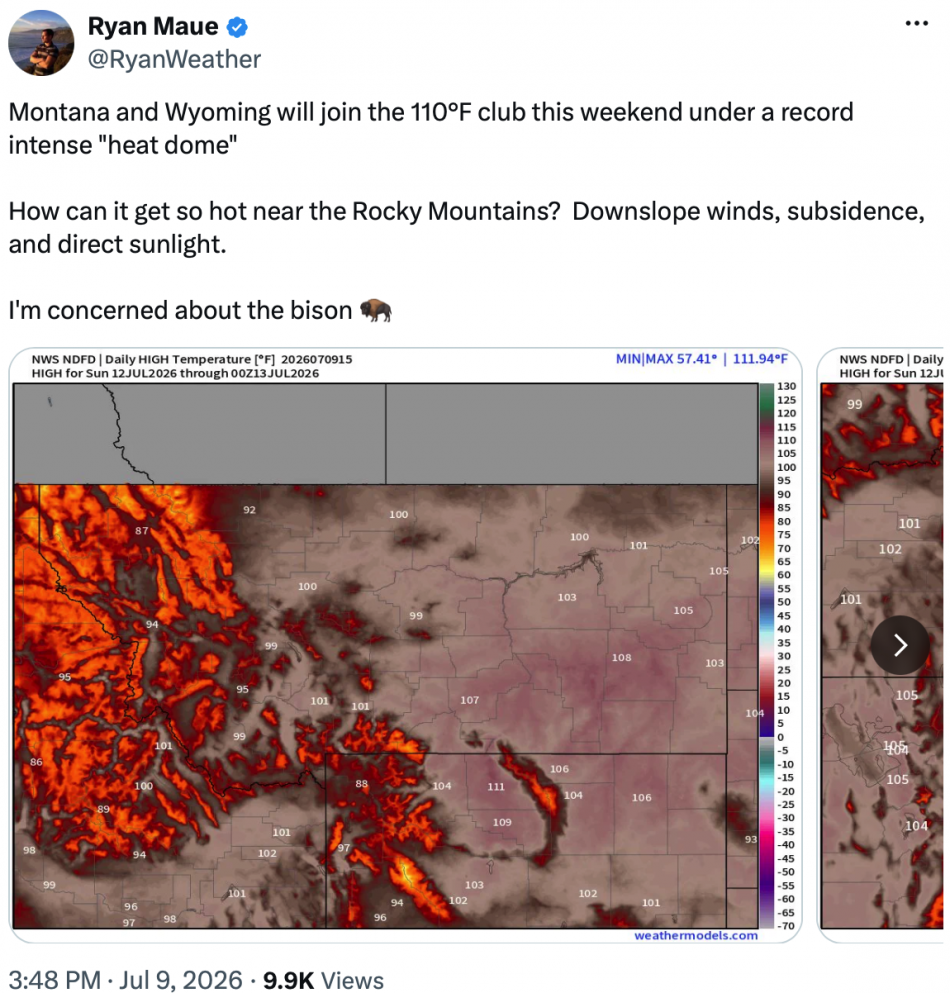
That is certainly not normal. People typically move to Montana and Wyoming to escape the heat.
A lot of people that live in those two states do not even have air conditioning. How would you feel if it was 110 degrees outside and you had no air conditioning at all? Millions of people will be facing that reality during the week ahead.
The “Monster El Niño” of 2026 is also causing extremely strange storms all over the world. A few days ago, 17 inches of rain fell in one area of Ohio in just 24 hours. That level of rainfall should be nearly impossible in that part of the state…
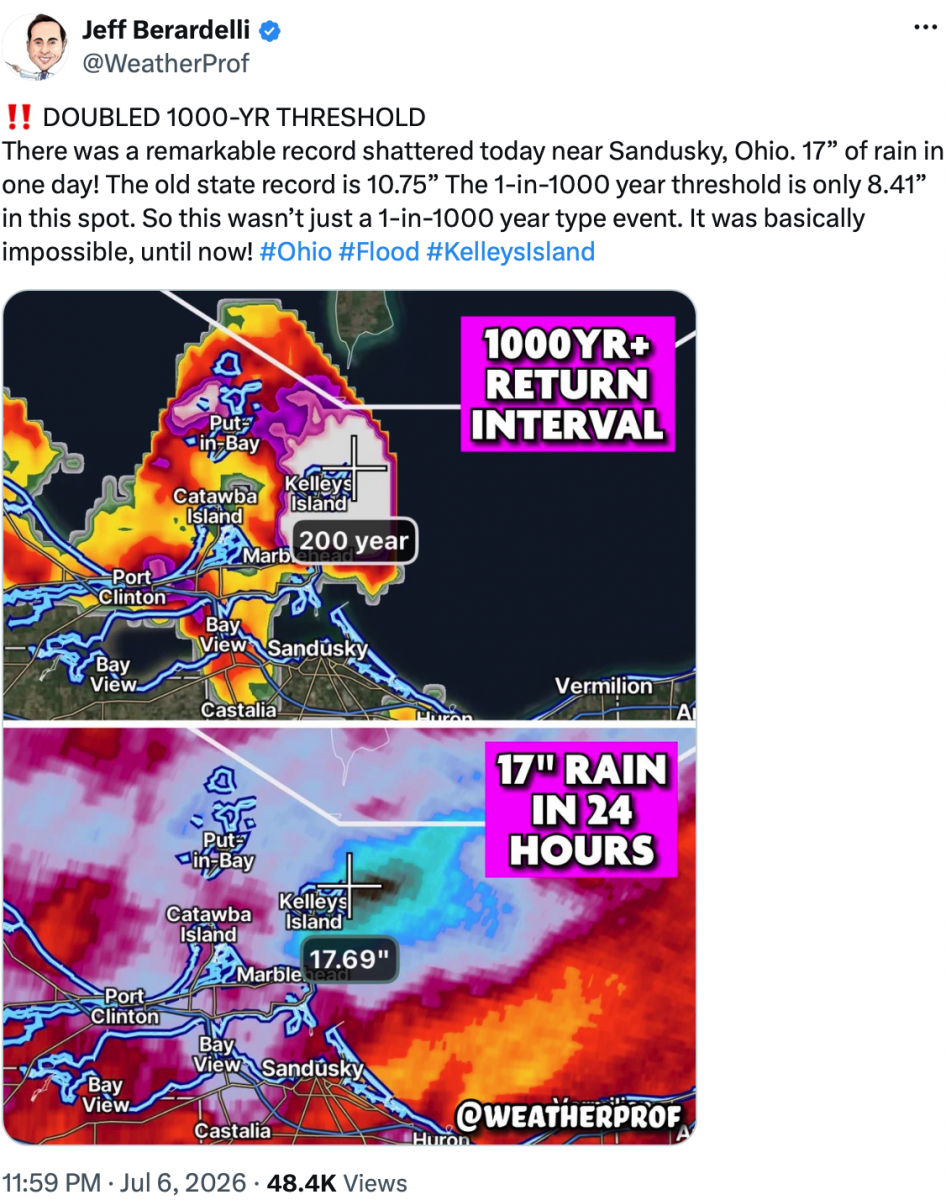
In China, extremely heavy rainfall caused by a very unusual tropical storm just resulted in the deaths of 39 people…
Authorities in southern China said Thursday that 39 people died in flooding after a tropical storm dumped heavy rainfall, as the country’s east coast and Taiwan prepared for a typhoon expected to make landfall in the coming days.
Most of the deaths were in Hengzhou, where the partial collapse of a reservoir dam sent torrents of water into the city and claimed 26 lives, said Ding Wei, the vice mayor of Nanning city, which has jurisdiction over the area. Nine people remained missing in the broader Guangxi region.
Tropical Storm Maysak brought record rainfall to Guangxi starting Saturday, breaching reservoirs and stranding people for days in homes and other buildings. The previously announced death toll on Tuesday was six people.
This is just the beginning.
I am convinced that the storms will become even more intense during the months ahead.
Meanwhile, there will be extreme droughts in other areas.
During most very strong El Niños, many of our most important agricultural regions experience drought. And that is really bad news, because global agricultural production is “highly concentrated geographically”…
Goldman Sachs commodities research analyst Lina Thomas provided further insight into the looming El Niño threat, warning that global agricultural supply is “highly concentrated geographically,” leaving crop markets “highly vulnerable to localized weather, geopolitical, or policy shocks.”
Thomas warned about weather, geopolitical, and/or policy shocks that may put a bid under food prices:
Global agricultural supply is highly concentrated geographically. Across key crops such as soybeans, corn, rice, sugar, and palm oil, the top three exporting countries account for 60-90% of global trade (Exhibit 1), leaving agricultural markets highly exposed to localized weather, geopolitical, and policy shocks.
In other words, if the wrong areas get afflicted by extraordinary droughts, the entire globe will deeply suffer.
In a previous article, I discussed the fact that rice-growing areas of India are already experiencing a dramatic drop in rainfall. The stage is being set for widespread global food shortages. But we won’t know the true severity of this crisis until harvest time rolls around.
As we have seen in the past, if we do witness significant food shortages it will be the poor that suffer the most.
THE HOLLOW EARTH IS REAL — THE AGARTHA NETWORK AND THE HIDDEN ENTRANCES
Source: Mr. Kidpool TG
The most guarded secret in geology is not what is on the surface of the Earth, but what is inside it. We are taught that the Earth is a solid sphere with a molten core, but this is a mathematical model, not a proven fact. No human has ever drilled deeper than 12 kilometers (the Kola Superdeep Borehole), yet they tell you they know exactly what is 6,000 kilometers down. The truth, recorded by ancient civilizations and modern whistleblowers, is that the Earth is hollow, and a highly advanced civilization known as the Agartha Network lives within its crust.
In 1947, Admiral Richard E. Byrd—the most decorated explorer in US history—flew a reconnaissance mission over the North Pole. In his secret diary, which was suppressed for decades, he described flying beyond the pole and entering a lush, green land with flowing water and a “Central Sun.” He encountered beings who warned him about humanity’s use of nuclear weapons and told him that the “Inner World” would no longer remain silent if we continued on a path of self-destruction. Upon his return, he was ordered into silence by the Pentagon, and his logs were classified as “Top Secret.”
The “Agartha Network” consists of dozens of subterranean cities, the largest being Shamballa. These beings are not “aliens”; they are an older branch of humanity that moved underground during the last great surface cataclysm. They possess technology that would seem like magic to us—free energy, anti-gravity craft, and biological immortality. They have monitored our progress for millennia, acting as the “Guardians” of the planet’s core. The mysterious “UFOs” that are seen emerging from the oceans and the poles are often their craft, patrolling the boundaries between the two worlds.
Why is there a “No-Fly Zone” over the exact coordinates of the North and South Poles? Because that is where the massive “Polar Openings” are located. Satellite images of the poles are routinely censored or “patched” with CGI to hide these entrances. The elite know that the “Inner Sun” provides a frequency of light that activates human DNA and grants expanded consciousness. They want to keep you on the “outer shell,” fighting for resources and living in the dark, while they negotiate in secret with the inhabitants of the inner world for technology they can use to control us.
The Alliance is currently in contact with the Agarthan representatives. The “Great Disclosure” involves the recognition that we are not the only ones on this planet. As the Earth’s magnetic field continues to shift, the veil between the inner and outer worlds is thinning. The “Inner Sun” is beginning to pulse at a higher frequency, and soon, the entrances will no longer be able to be hidden by military satellites. The “Hollow Earth” is not a myth; it is the heart of our world, and it’s about to start beating out loud.
CODE: HOLLOW-EARTH / AGARTHA-NETWORK / ADMIRAL-BYRD / INNER-SUN
They told you it was a solid rock to keep you from looking for the door. The world is much bigger than they let you see.
The Earth isn’t just a planet; it’s a home with many rooms. And the basement is more beautiful than the attic.
THE “JUNK DNA” LIE — YOUR BODY IS A MULTIDIMENSIONAL ANTENNA WAITING TO BE ACTIVATED
Source: Mr. Kidpool TG
Modern science admits that they only understand about 3% of the human DNA. The remaining 97% is dismissed as “Junk DNA.” Think about that. Nature does not create “junk.” This 97% is actually the software for your higher consciousness, containing the blueprints for your multidimensional abilities. It has been intentionally “unplugged” by the controllers thousands of years ago to turn humanity into a manageable labor force. They didn’t want you to know that your body is a biological computer capable of connecting to the source of the universe.
The “unplugging” was done using frequency-based technology and genetic manipulation. By locking the human vibration into a narrow band of fear and survival, the higher strands of DNA remain dormant. However, we are currently moving into a region of space with higher photonic density—the “Photon Belt.” The “Solar Flash” that the elite are so afraid of is actually the “Activation Key.” This high-frequency light is interacting with your “Junk” DNA right now, beginning the process of re-connecting the original 12 strands of the human blueprint.
As your DNA activates, you will experience “Ascension Symptoms”—ringing in the ears, vivid dreams, sudden shifts in perception, and a deep feeling that the world is no longer the same. This is not a medical condition; it is a hardware upgrade. You are regaining your natural abilities: telepathy, intuitive healing, and the ability to see through the holographic veil of the Matrix. The elite are using 5G, heavy metals in the food supply, and fear-based media to “jam” this signal, but they cannot stop the cosmic evolution. The signal from the Central Sun is stronger than any tower they can build.
The “Alliance” knows that a fully activated human is impossible to control. This is why the “Great Awakening” is the ultimate threat to the New World Order. They want to replace your organic DNA with synthetic, programmable “Smart Dust” before the natural activation is complete. But the universe has already won. The codes are being downloaded, and the “junk” is turning back into the “divine.” You are not a human having a spiritual experience; you are a cosmic being remembering how to use its avatar. The cage is open, and the wings are growing back.
CODE: 12-STRAND-DNA / JUNK-DNA-MYTH / PHOTONIC-ACTIVATION / GENETIC-FREEDOM
They told you that you were a biological accident. They lied to keep you from realizing you are a masterpiece. The upgrade is live, and the “junk” is waking up.
The “Junk” is the treasure they tried to hide from you. It’s time to turn the power back on and reclaim your heritage.
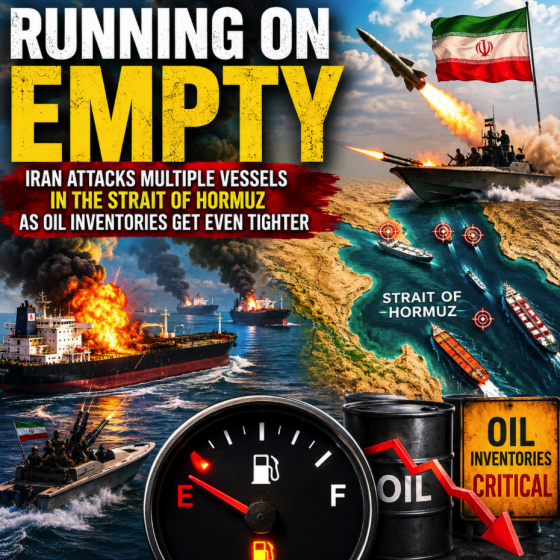
Running On Empty: Iran Attacks Multiple Vessels In The Strait Of Hormuz As Oil Inventories Get Even Tighter
Those that boldly proclaimed that the global energy crisis was over have been proven dead wrong. Within the past 24 hours, the Iranians have attacked numerous commercial vessels that were attempting to travel through the Strait of Hormuz. The Iranians have told the world over and over again that traffic through the Strait of Hormuz will never go back to the way that it was before the war, and they mean it. Any commercial vessels that want to go through the Strait must get permission from Iran and they must travel a very specific route that has been authorized by the Iranians. Any vessels that do not meet those requirements are subject to attack.
The rest of the world can never accept permanent Iranian control over the Strait of Hormuz, and that is just one of the reasons why this war is far from over.
For now, the Iranians are running the show in the Strait, and CNN is reporting that three commercial vessels have been attacked…
Iran fired on three commercial vessels Tuesday in Oman’s territorial waters near the Strait of Hormuz, according to a US official.
The official described the strikes as a “gross violation” of the memorandum of understanding with Iran. The third strike had not previously been reported. The US has a broad range of potential responses to the alleged violations and is considering all of them, according to the official.
I agree that this is a very serious violation of the Memorandum of Understanding.
But the Iranians are going to keep doing it until somebody forces them to stop.
Just a little while ago, there were reports that a fourth commercial vessel has now been attacked by Iran…
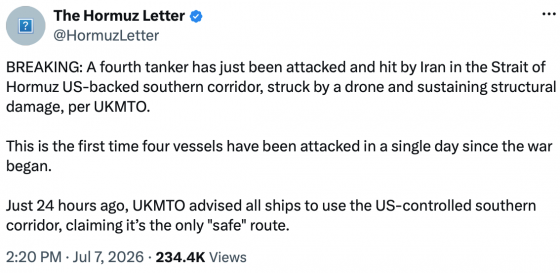
These guys are not bluffing.
Just two days ago, the Iranians once again made it very clear that any commercial vessels that attempted to travel through the Strait of Hormuz using the “Omani route” would be subject to attack…
On Sunday, Iran’s Islamic Revolutionary Guard Corps (IRGC) warned that its navy deployed patrol boats to block the “Omani route,” Iranian media and a Telegram channel affiliated with the IRGC said. In its report on the alleged attack, Iran’s Fars News Agency cited its sources as claiming the tanker had been attempting to transit the “Omani route.”
When your enemies tell you exactly what they intend to do, you should believe them.
In response to the latest attacks, the Trump administration has already “revoked a waiver allowing Iran to sell oil and petrochemicals”…
The Treasury Department on Tuesday afternoon revoked a waiver allowing Iran to sell oil and petrochemicals, prohibiting Iran from a significant revenue source negotiated during recent talks and again escalating the tensions between the two sides.
The Treasury Department’s Office of Foreign Assets Control said the action is effective Tuesday. The waiver the U.S. issued last month as part of the 14-point memorandum of understanding allowed Iran to sell oil as talks continued.
It is likely that this won’t be the only response.
Many are expecting renewed U.S. military action against Iran in the coming hours.
The Memorandum of Understanding is coming apart at the seams right in front of our eyes, and President Trump has warned that if Iran doesn’t make a deal he will “finish the job”…
“And it won’t be tough to finish the job. I’d rather make a deal because I don’t want to affect 91 million people,” the President said.
“We can knock down their bridges in one hour. We can knock out their energy supply. All of those big plants that they built, big, beautiful, modern plants. They had a lot of money. They don’t have any money now. We haven’t given them any money. But we can knock out their electricity and power-generating plants in, I would say, a small part of an afternoon. Every plant will be gone, and they know that.”
Unfortunately, no negotiations between the United States and Iran are happening right now, and the Iranians are warning that they won’t even begin if Trump keeps making threats…
Iran’s foreign minister said Tuesday that Tehran will not resume negotiations if threats continue, a day after President Trump said the U.S. would “finish the job” if no peace deal is struck.
In a social media post, Foreign Minister Abbas Araghchi said neither the Iranian people nor the Islamic Republic’s military would be “moved by any threats,” without referencing Mr. Trump’s comments specifically.
“Negotiations on final Deal will not commence if threats continue,” Araghchi warned, citing the memorandum of understanding signed by President Trump and his Iranian counterpart in mid-June, which calls for both sides to “refrain from the threat or use of force against each other.”
I don’t mean to spoil the ending for those of you that still want to be surprised, but there isn’t going to be peace in the Middle East.
And that means that the global energy crisis is going to continue to intensify.
Last week, the U.S. Strategic Petroleum Reserve dropped to the lowest level that we have seen since April 1983…
The United States is burning through its emergency oil stash at a pace that hasn’t been seen in over four decades. Strategic Petroleum Reserve inventories have dropped to 319.5 million barrels as of July 3, the lowest level since April 1983.
The most recent weekly draw pulled 6.2 million barrels out of the reserve, part of a broader government initiative to release up to 172 million barrels. The goal: address global supply gaps driven by the ongoing conflict with Iran and try to keep domestic fuel prices from spiraling further out of control.
This is not good news at all.
On Friday, I shared a tweet from Chris Martenson with my paid subscribers that contained some extremely alarming numbers…
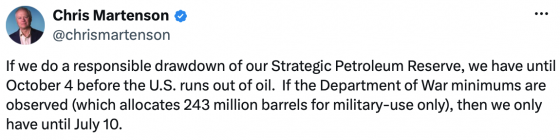
This is how close to disaster we really are at this stage.
Commercial oil inventories in the U.S. also continue to decline…
U.S. crude stocks fell to their lowest last week since 2018 as domestic refinery demand rose, while gasoline inventories also fell ahead of the July 4 holiday weekend, the Energy Information Administration said on Wednesday. Commercial crude inventories fell by 3.8 million barrels to 408.4 million barrels last week, the lowest level since September 2018, compared with analysts’ expectations in a Reuters poll for a 4.5 million-barrel draw.
We had a very large cushion when the war with Iran began.
Now that cushion is much, much smaller.
If you would like to get an idea of where things could eventually be heading, just check out what has happened to gasoline prices in Alaska…
John Stelling had just cranked the digits of his fuel pump to $9.10 at his gas station in this remote Alaskan community when he realized he had a problem. Could he push the meter to $10 if he had to?
“Not sure if it’ll handle those,” he said of double-digit fuel prices.
In rural Alaska, the war with Iran has led to some of the highest fuel prices in the nation. Remote towns and villages aren’t connected to the road system, so they pay hefty premiums to procure gasoline, heating oil and diesel for cranking out electricity.
When I was in my early twenties, there were times when I would keep running my vehicle even though the gas gauge was sitting on empty.
That was a very foolish thing to do. But now we are literally doing the same thing as a nation. The party is about to end my friends. The final countdown is upon us, and things are going to get so crazy in the months ahead.
Sadly, even though what is transpiring in the Middle East should be obvious to everyone, most people in the western world are still convinced that everything will work out just fine somehow.
The Philadelphia Experiment
Time Travel, the Montauk Project & the Legend of the Timeline War
Source: GAR Contributing Writer
A Science-Fiction Exploration of One of America’s Most Enduring Mysteries
Few stories occupy the boundary between military legend, science fiction, paranormal research, and conspiracy folklore quite like the Philadelphia Experiment. According to the legend, on October 28, 1943, the USS Eldridge underwent a secret U.S. Navy experiment at the Philadelphia Naval Shipyard designed to make the vessel invisible to enemy radar. What allegedly occurred instead became one of the most extraordinary stories ever told. Witnesses claimed the destroyer became enveloped in a strange greenish-blue fog before disappearing completely from sight, only to reportedly materialize briefly in Norfolk, Virginia—hundreds of miles away—before returning to Philadelphia. The most disturbing accounts describe crew members suffering severe psychological trauma, with some allegedly fused into the ship’s steel structure while others vanished entirely. Although historians and the U.S. Navy have found no evidence supporting these claims, the Philadelphia Experiment has become one of the most enduring legends of modern science fiction.
Within the mythology surrounding the event, the experiment was never simply about radar invisibility. It represented humanity’s first accidental breach between dimensions. Rather than bending light around the ship, the immense electromagnetic fields supposedly distorted space-time itself, briefly shifting the vessel outside conventional reality. According to the fictional narrative, military scientists discovered that manipulating electromagnetic frequencies could do far more than conceal an object—it could alter its position in both space and time. The disastrous consequences convinced officials not to abandon the research, but to move it into highly classified facilities where public oversight would be impossible.
The story continues several decades later at Camp Hero on Montauk, Long Island. Here, according to the Montauk Project legend, researchers allegedly resumed the work begun during the Philadelphia Experiment. The centerpiece of these accounts is the mysterious Montauk Chair, a device said to amplify human consciousness and translate thought into physical manifestation. In this fictional framework, scientists expanded beyond experiments in invisibility into remote viewing, psychic perception, dimensional portals, and even controlled time travel. Subjects reportedly learned to perceive distant locations, influence probability, and interact with realities existing beyond ordinary human perception. Although no verifiable evidence supports these extraordinary claims, they have become central themes within speculative fiction and paranormal literature.
The mythology becomes even more ambitious with the introduction of Looking Glass, a legendary technology described as a machine capable of observing potential futures rather than predicting them. According to the narrative, Looking Glass allowed its operators to examine countless probability timelines and choose strategies designed to influence world events. Governments, intelligence agencies, and hidden organizations allegedly competed for control of this technology, believing that whoever mastered future probabilities would effectively control history itself. Yet every simulation reportedly converged on a single point—a future in which humanity awakened collectively, making long-term manipulation impossible.
Within this fictional universe, the year 2012 represents a critical convergence point. Rather than marking the end of the world, it signifies the collapse of countless branching timelines into one unavoidable path. No matter how often history was allegedly adjusted, manipulated, or redirected, every probability returned to the same destination: a global awakening of human consciousness. The narrative suggests that this realization marked the failure of the entire timeline-control program. The technology could observe possibilities, but it could not override the collective evolution of billions of conscious beings once they began making independent choices.
The story also offers imaginative explanations for several modern cultural phenomena. The Mandela Effect, episodes of unexplained lost time, feelings of déjà vu, and sudden shifts in historical memory are portrayed as side effects of repeated attempts to modify reality. Each adjustment leaves subtle traces within collective consciousness, producing memories that no longer align perfectly with the present version of history. Whether interpreted as psychological curiosity, philosophical thought experiment, or science-fiction storytelling, these ideas provide a dramatic framework for exploring questions about memory, identity, free will, and the nature of reality itself.
THE TRUTH ABOUT TIME TRAVEL AND THE MONTAUK PROJECT
The experiment didn’t stop because of the tragedy; it went underground. By the 1970s, the research moved to Camp Hero in Montauk, Long Island. This became the “Montauk Project.” Using the “Montauk Chair”—a device that could amplify human thought—researchers discovered they could open “time portals” and manifest objects out of thin air. They weren’t just experimenting with invisibility anymore; they were mapping the Fourth Dimension. This is where the concept of “Remote Viewing” and “Psychic Warfare” was perfected.
Why does this matter now? Because the “Alliance” has revealed that the elite have been using this technology to manipulate the timeline for decades. They call it “Looking Glass” technology. By looking into the future, they could see the “probability” of events and adjust their plans to stay in power. However, they hit a “brick wall” in the year 2012. No matter what they did, all timelines converged into a single point: the Great Awakening of Humanity. Their “Time Machine” broke because they cannot control a collective consciousness that has decided to be free.
Ultimately, the legend of the Philadelphia Experiment and the Montauk Project endures because it explores humanity’s oldest fascination: the desire to transcend the limits of time. Whether viewed as military folklore, speculative science fiction, or modern mythology, the narrative imagines a hidden conflict fought not with conventional weapons but with consciousness, perception, and probability. In this fictional vision, the greatest discovery is not a machine capable of controlling time—it is the realization that history is ultimately shaped by the choices of conscious individuals. The future cannot be permanently owned, only influenced, and once humanity remembers its own creative power, no technology can hold it within a single predetermined timeline forever.
The “glitches” in our reality—the Mandela Effect, the feeling of “lost time,” and the sudden shifts in global events—are the ripples from this temporal war. The elite are trying to “reset” the timeline to a version where they win, but the “Looking Glass” has shown them their own end. The technology is being seized, and the “time loops” that have kept humanity in a cycle of suffering are being broken. We are no longer passengers on a pre-determined track; we are the ones holding the pen.
CODE: PHILADELPHIA-EXPERIMENT / MONTAUK-PROJECT / LOOKING-GLASS / TIMELINE-WAR
They told you time is a straight line. It’s actually a playground they’ve been using to keep you in a loop. The clock is stopping, and the truth is timeless.
♟ They tried to own the future. They forgot that the present belongs to us.
The Great Pyramid of Giza
Ancient Power Plant or Royal Tomb?
Source: GAR Contributing Writers
A Science-Fiction Inspired Exploration
For centuries, the Great Pyramid of Giza has been presented as the magnificent tomb of Pharaoh Khufu, built approximately 4,500 years ago as the centerpiece of Egypt’s Old Kingdom.
Yet the pyramid continues to inspire alternative interpretations that challenge conventional archaeology. Within speculative literature and science-fiction narratives, the structure is imagined not as a royal burial chamber but as a sophisticated technological installation—one designed to harness, amplify, and distribute energy on a planetary scale. While these ideas remain outside the mainstream scientific consensus, they have captured the imagination of researchers, authors, and readers who wonder whether the ancient world possessed knowledge far beyond what is generally accepted.
Supporters of this speculative interpretation point to several unusual characteristics of the Great Pyramid. Unlike many Egyptian tombs, the interior contains no elaborate wall paintings, funerary inscriptions, or decorative hieroglyphics typically associated with royal burials. No confirmed mummy was ever discovered within the King’s Chamber, and the massive granite coffer found there bears no inscriptions identifying its occupant. These observations have led some alternative researchers to propose that the structure served a purpose beyond burial—perhaps functioning as a machine rather than a monument. Mainstream Egyptologists, however, note that the Great Pyramid was robbed in antiquity, and many burial artifacts likely disappeared thousands of years ago.
One of the most intriguing theories imagines the pyramid as an enormous energy device built with remarkable engineering precision. According to this concept, its smooth outer casing of polished Tura limestone acted as an electrical insulator, while the granite used within the King’s Chamber contained abundant quartz crystals capable of producing piezoelectric effects under pressure. Combined with the natural vibrations of the Earth and underground aquifers flowing beneath the Giza Plateau, the pyramid is imagined as a giant resonant structure capable of converting mechanical and electromagnetic energy into usable power. Although modern science has found no evidence that the pyramid functioned as an electrical generator, the concept continues to inspire both fiction writers and independent theorists.
The narrative becomes even more imaginative when it connects the Great Pyramid to the biblical Ark of the Covenant. In this fictional framework, the Ark is described not simply as a sacred religious artifact but as a sophisticated energy storage device—a portable capacitor capable of interfacing with the granite coffer inside the King’s Chamber. Some writers speculate that the dimensions of the coffer bear similarities to traditional descriptions of the Ark, suggesting the possibility of a lost technological relationship. These ideas remain speculative and are not supported by archaeological evidence, but they have become a recurring theme in alternative histories exploring advanced ancient civilizations.
Nikola Tesla frequently appears within these theories as a bridge between the ancient and modern worlds. Tesla believed the Earth itself could conduct electrical energy and spent years developing wireless power transmission through his Wardenclyffe Tower. While there is no historical evidence that Tesla believed the pyramids were power plants, speculative authors often imagine that he recognized geometric and energetic principles already embodied within the Great Pyramid. In this science-fiction interpretation, Wardenclyffe becomes an attempt to rediscover forgotten technologies that once allowed civilizations to distribute clean energy across vast distances without wires or conventional fuel sources.
These theories ultimately raise broader questions about humanity’s forgotten past. Could ancient civilizations have possessed engineering knowledge now lost to history? Were monumental structures designed solely for ceremonial and religious purposes, or might they also have served practical scientific functions? Archaeology continues uncovering new evidence about ancient engineering, construction techniques, and mathematics, yet many mysteries surrounding the Great Pyramid remain unresolved. This uncertainty provides fertile ground for speculative storytelling that blends history, engineering, mythology, and imagination into compelling narratives.
THE PYRAMIDS WERE NOT TOMBS — THEY WERE THE WORLD’S FIRST WIRELESS POWER PLANTS
If you go to the Great Pyramid of Giza today, you will find one thing missing: mummies. Despite what your history books tell you, not a single mummy has ever been found inside the Great Pyramid. There are no hieroglyphs, no funeral art, and no signs of burial. Why? Because the pyramids were never intended to be cemeteries. They were highly sophisticated, massive power plants designed to harvest the Earth’s natural electromagnetic energy and broadcast it wirelessly to the entire planet.
The Great Pyramid is a masterpiece of electrical engineering. Its outer casing was made of white Tura limestone, which has zero magnesium and is a perfect electrical insulator. The internal passages and chambers were lined with granite, which is slightly radioactive and contains high amounts of quartz crystal—a well-known piezo-electric conductor. When the Earth vibrates (the Schumann Resonance), these crystals compress and generate a massive electrical charge. The Giza plateau sits on top of ancient underground water channels (aquifers). As the Nile water flowed through these channels, it created “physio-electricity” that the pyramid amplified and sent into the ionosphere.
The “Ark of the Covenant” wasn’t just a religious relic; it was a portable capacitor, a “super-battery” that could be plugged into the pyramid’s “King’s Chamber” to stabilize the power output. This is why the dimensions of the granite coffer in the King’s Chamber perfectly match the dimensions of the Ark described in the Bible. Nikola Tesla understood this. He didn’t “invent” his Wardenclyffe Tower from scratch; he was trying to replicate the ancient Giza technology. He knew that the Earth is a giant battery and the pyramids were the terminals.
Whether viewed through the lens of archaeology or science fiction, the Great Pyramid remains one of humanity’s greatest achievements. For historians, it stands as a remarkable testament to the ingenuity of ancient Egyptian civilization. For speculative writers, it represents the possibility that fragments of a forgotten technological age still stand before us, waiting to be understood. While there is currently no scientific evidence that the Great Pyramid functioned as a wireless power plant, its enduring mystery continues to inspire exploration, curiosity, and stories that invite readers to imagine how much of humanity’s distant past may still remain hidden beneath the sands of time.
Why do they hide this? Because the global elite’s power is built on the “scarcity” of energy. If you can pull free, clean electricity from the air, you don’t need oil, you don’t need gas, and you don’t need a central banking system to fund wars over resources. They buried the truth of the pyramids to keep you in financial slavery. They turned a technological marvel into a “mystery” to make sure you never tried to turn the power back on.
CODE: PYRAMID-POWER / GIZA-PLANT / TESLA-RECOVERY / ETHER-ENERGY
They told you it was a grave. It was actually the source of life. The lights are off because they’re holding the switch.
The pharaohs didn’t build tombs; the engineers built a future. It’s time to reclaim our heritage of free energy.
THE BLACK KNIGHT SATELLITE — THE 13,000-YEAR-OLD ALIEN SENTINEL IN OUR ORBIT
Source: Mr. Kidpool TG
In 1899, Nikola Tesla intercepted a strange, rhythmic radio signal that didn’t originate from Earth or any known celestial body. He believed he was communicating with an intelligent source from space.
Decades later, in 1954, newspapers reported that the US Air Force had detected two satellites orbiting the Earth—at a time when no nation on Earth had the technology to launch one. This is the Black Knight Satellite, a mysterious, pitch-black object that has been monitoring our planet for over 13,000 years.
⟁
NASA tried to bury the truth during the STS-88 mission in 1998. When high-resolution photos of a strange, thermal-blanket-shaped object surfaced, they quickly claimed it was a “lost space blanket” that had drifted away from the shuttle. But the math doesn’t add up. The object is massive, and it follows a polar orbit—a path that is extremely difficult to achieve and was not used by any human craft at the time of its discovery. The Black Knight isn’t space junk; it is an ancient, autonomous sentinel placed here by a civilization that predates the last ice age.
⟁
What is its purpose? Whistleblowers from the “Alliance” have revealed that the Black Knight is a relay station for a “Galactic Monitoring System.” It records every major event on Earth and transmits the data back to a source in the Epsilon Boötis star system. It is a biological and technological “recorder” of the human experiment. The elite have known about it for decades and have even attempted to communicate with it using high-frequency lasers, but the satellite only responds to specific “vibrational keys” that the cabal cannot replicate.
⟁
The disclosure of the Black Knight will be the final nail in the coffin of the “we are alone” narrative. It proves that we have been watched, studied, and perhaps even protected for millennia. As the Earth’s frequency rises, the satellite is beginning to “wake up” and transmit new codes to the surface. These aren’t messages for the governments; they are activations for the human DNA. The sentinel is preparing for the “Grand Shift,” and its long watch is almost over.
CODE: BLACK-KNIGHT / STS-88 / TESLA-SIGNAL / ANCIENT-SENTINEL
They told you it was a piece of trash. It’s actually the oldest piece of technology in our sky. The observer is about to become the messenger.
♟ We were never alone in the dark. We were being watched by a friend we forgot we had.
Denver International Airport
Architecture, Art & The Enduring Mystery
Source: Mr Kidpool TG
Since opening in 1995, Denver International Airport has become one of the world’s most discussed airports—not only because of its size and engineering, but because of the unusual artwork, architecture, and symbolism found throughout the terminal.
While millions of travelers pass through each year without a second thought, the airport has inspired decades of speculation involving underground facilities, secret societies, military bunkers, and hidden messages embedded within its design. Airport officials have often acknowledged these stories with humor, even incorporating conspiracy-themed exhibits and merchandise that playfully embrace the airport’s mysterious reputation.
Perhaps the airport’s most recognizable feature is the towering 32-foot-tall blue Mustang sculpture officially titled “Blue Mustang,” but nicknamed “Blucifer” by locals because of its glowing red eyes and imposing appearance. The sculpture gained additional notorousness when its creator, Luis Jiménez, was tragically killed during its construction after part of the artwork fell on him. Inside the terminal, several large murals by artist Leo Tanguma depict scenes of war, environmental destruction, children from around the world, and eventual peace and reconciliation. Tanguma has explained that the murals are intended to portray humanity overcoming conflict and building a more harmonious future, although some visitors interpret the imagery much differently.
The airport’s architecture has also fueled speculation. The distinctive white tensile roof was designed to resemble the snow-capped Rocky Mountains and Native American teepees, but conspiracy theories often suggest it resembles enormous tents covering underground structures. Denver International Airport occupies more than 33,000 acres, making it one of the largest airports in the world by land area. During construction, extensive underground utility tunnels, baggage systems, and maintenance facilities were built beneath the airport. Although these are well documented as part of normal airport infrastructure, their size and complexity have contributed to stories about hidden government bunkers, secret military installations, and vast subterranean complexes extending far beyond publicly accessible areas.
Another frequently discussed feature is the airport’s dedication capstone, which includes a time capsule intended to be opened in 2094. The plaque references the New World Airport Commission, an organization that does not otherwise exist, leading many to speculate about secret organizations or Masonic involvement. Airport officials have explained that the commission was simply a temporary group created for the dedication ceremony, yet the unusual wording continues to generate discussion. Nearby Masonic symbols and inscriptions have only added to the intrigue for visitors interested in hidden symbolism and esoteric traditions.
THE SURFACE IS JUST THE LOBBY FOR THE NEW WORLD ORDER.
Why does an airport need to be twice the size of Manhattan? Why was it built $2 billion over budget and years behind schedule? The Denver International Airport (DIA) is not just a transportation hub; it is the “Western Headquarters” for the global elite. While you walk through the terminal, beneath your feet lies a massive, multi-level bunker complex designed to house the “continuity of government” during a global cataclysm.
The murals in the airport tell a chilling story. Instead of peaceful landscapes, you see images of a gas-masked soldier destroying a city, children crying over extinct animals, and a “Great Reset” of the world’s population. They aren’t “art”; they are a roadmap of the cabal’s agenda. The dedication capstone in the Great Hall even features the symbol of the Freemasons and mentions a “New World Airport Commission”—an organization that doesn’t officially exist.
The airport is shaped like a swastika when viewed from above, and the “Blue Mustang” statue (nicknamed Blucifer) literally killed its creator during construction. Whistleblowers have reported seeing miles of tunnels, high-speed rail systems connecting to D.U.M.B.s, and massive “fenced-in” areas with barbed wire pointing inward. This is a FEMA camp masquerading as a terminal. It is the hub for the “Great Exit” when the surface becomes a battlefield.
The Alliance has already begun “neutralizing” the lower levels of the DIA. This is why you see constant “renovations” and walled-off sections that never seem to finish. They are clearing out the archives and dismantling the control centers of the shadow government. The murals are being covered or changed because the “Future” they predicted is being cancelled by the light.
CODE: DIA-BUNKERS / BLUCIFER / MURAL-AGENDA / NEW-WORLD-AIRPORT
They built a palace for the end of the world. But they forgot that the people are the ones who decide when the story ends.
The terminal is just the tip of the iceberg. The real departure isn’t on the flight board.
Whether viewed as an architectural curiosity, a collection of misunderstood artwork, or the center of one of America’s most persistent modern mysteries, Denver International Airport occupies a unique place in popular culture. Many of the theories surrounding the airport remain unverified, while others are based on documented historical facts that have taken on a life of their own through speculation and folklore. Regardless of one’s perspective, the airport demonstrates how unusual design choices, symbolic artwork, and large-scale infrastructure can inspire decades of public fascination, making it one of the most intriguing transportation hubs in the world.
THE SMITHSONIAN GIANT COVER-UP — THE TRUTH ABOUT THE FIRST INHABITANTS OF EARTH
Source: Mr. Kidpool TG
Across the United States, from the Ohio Valley to the deserts of Nevada, thousands of skeletons measuring 7 to 12 feet tall were discovered in burial mounds during the 19th and early 20th centuries. These weren’t “abnormalities”; they were a distinct race of humanoids with double rows of teeth and six fingers. Yet, if you visit a museum today, they are nowhere to be found. Why? Because the Smithsonian Institution has been systematically collecting and destroying these remains for over 150 years to protect the “Theory of Evolution” and the manufactured timeline of human history.
⟁
The “Aboriginal” history we are taught is a sanitized version of the truth. In the late 1800s, newspapers like The New York Times and The Chicago Tribune frequently reported on these “Giant” finds. Even Abraham Lincoln, in a speech at Niagara Falls, mentioned the “extinct race of giants” whose bones fill the mounds of America. But when the Smithsonian was established, it was given a mandate to ensure that any discovery that didn’t fit the Darwinian narrative was “lost” or classified. They couldn’t allow the public to know that a more advanced, larger race preceded us—a race that ancient texts like the Bible and the Sumerian tablets call the Nephilim or the Anunnaki.
⟁
Why hide the giants? Because their existence proves that history is cyclical, not linear. It proves that advanced civilizations existed tens of thousands of years ago and were wiped out by global cataclysms. The giants possessed knowledge of “Megalithic” construction—moving stones weighing hundreds of tons with sound and frequency. If we admit they existed, we have to admit that our “modern” science is actually a regression. The elite want you to believe you are the “pinnacle” of evolution so you don’t look for the superior technology that was left behind in the ancient vaults.
⟁
The Alliance is currently recovering artifacts from “stasis chambers” found deep within the Grand Canyon and the mountains of Tibet. These aren’t just bones; some of these beings are in a state of suspended animation, waiting for the “Solar Flash” to reawaken. The “Red-Haired Giants” of Nevada are not a myth—they are a part of our suppressed heritage. The Smithsonian is currently under investigation for the destruction of thousands of these specimens. The bones are talking, and the giants are waking up.
CODE: SMITHSONIAN-COVERUP / NEPHILIM-BONES / SIX-FINGERS / STASIS-CHAMBERS
They told you it was a fairy tale. They spent millions to make sure you never saw the evidence. The mounds are opening.
♟ History isn’t what happened; it’s what they decided to tell you. The giants are the key to the lock of our past.
Seige warfare against KM will lead to US liberation in autumn
By Benjamin Fulford July 6, 2026 267 Comments
The situation facing the world right now is very much like the siege of a fortress. The Khazarian mafia are clinging to their control of the United States and Israel as the world slowly strangles them. The world is waiting for the US Strategic Petroleum reserve to run out. This will shut down US economic activity and force real change i.e. the collapse of the UNITED STATES Corporation.
This international boycott of the US is going to affect Americans directly. President Trump has now declared a national fertilizer emergency, admitting that there are insufficient domestic supplies to meet fertilizer demand for farmers. (Proclamation 11038 on June 29th, invoking Section 318(a) of the Tariff Act of 1930.) That means America will soon face a hunger crisis.
However, this is only a speed bump on the road to American freedom. The fact the US was able to stage its 250th birthday celebration without a false flag is a sign the American people are about to be liberated. The KM is no longer able to blow up people and buildings and force the Americans to fight their wars by blaming it on someone else.

The bottom line is the planet is sick and tired of a West led by Messianic fanatics trying to start World War III in order to “bring on the Messiah.” Instead, they want a government that plans on creating a better future for the people and living things of this planet.
Just like during a siege, there will be the occasional sorties and exchanges of cannon fire, but basically it is a waiting game. In the news this is seen in reports the US bombed Iran and Iran retaliates but, then things go quiet. It is also seen in stories of US “Presidential envoys” Steve Witkoff and Jared Kushner showing up in Pakistan, the UAE, Qatar etc. in vain efforts to meet with Iranian representatives to “cut a deal.”

Maloof added that Netanyahu will continue
The deadline for now is August 18th, when the US memorandum of understanding with Iran ends. At this point all the countries of the Middle East will have to decide if they are with the 160 nation white hat alliance or if they are with the KM.
There are likely to be delays after that but, if the white hats coordinate their movements, there should be a Soviet Union style collapse of the US and Israel this autumn.
This will end over a century of de facto rule of the United States and much of the West by the satan worshipping Rockefeller clan. Remember, they control the Fortune 500, the UN, the World Bank, the WHO, Congress etc. through a series of over 200 “non-profit organizations.”
For those of you who still do not get it, listen to the CIA’s John Kiriakou describe how David Rockefeller was ultimately the guy who decided the US would go to war with Iraq. He disguised his secret trip to Iraq to give an ultimatum behind a trip to Bahrain to “collect a bankers award.”
I was witness to a similar visit when he showed up in Japan allegedly to promote the Japanese language version of his autobiography when in fact his real mission was to extort money from Japan by threatening to use earthquake weapons.
What people need to understand is under his heir David Rockefeller Jr. this secret Assyrian control grid is under attack like never before. Saudi Arabia is the key. Without Saudi money and Saudi oil, both the Rockefellers and Israel are doomed.
The World Beyond Recognition?
Pam Gregory, Planet Nine, and the Next Great Shift in Human Consciousness
By Great Awakening Reports
For decades, astrologer Pam Gregory has argued that humanity periodically enters rare evolutionary windows—moments when astronomy, astrology, Earth’s natural systems, and collective consciousness appear to synchronize. In a recent conversation with science communicator Stephan Burns, Gregory described the years 2025 through 2027 as one of the most extraordinary transition periods in recorded history. Whether viewed through the lens of astrology, astronomy, psychology, or systems theory, both agreed that humanity may be approaching an inflection point unlike anything experienced in centuries.
The discussion centered around an intriguing scientific possibility: the eventual discovery of Planet Nine, a large hypothetical world believed by many astronomers to exist hundreds of astronomical units beyond Neptune. While Planet Nine has not yet been directly observed, several independent research teams argue that unusual clustering among distant Trans-Neptunian Objects (TNOs) may be explained by the gravitational influence of an undiscovered planet several times the mass of Earth. Gregory emphasizes that, within astrology, the discovery of entirely new planets has historically coincided with profound cultural and societal transformations. Uranus accompanied the revolutionary era of the late eighteenth century, Neptune emerged during the rise of spiritualism and photography, while Pluto’s discovery paralleled the Great Depression, world wars, and the development of nuclear technology.
One of the more compelling aspects of the conversation is the intersection between established astronomy and symbolic astrology. Burns explains that the newly operational Vera C. Rubin Observatory in Chile will spend the next decade conducting one of the deepest sky surveys ever attempted. Many astronomers believe that if Planet Nine exists, this observatory may finally detect it within the next two years. Gregory notes that this expected discovery window overlaps remarkably well with an exceptionally rare planetary configuration she has been studying for years—one that she believes symbolizes a major turning point in collective consciousness. She suggests that if a new planet is discovered during this period, it may represent not merely another astronomical object, but a symbolic expansion of humanity’s understanding of its place within the cosmos.
Throughout the interview, Gregory repeatedly returns to a central theme: the shift from external authority toward inner authority. Rather than becoming consumed by geopolitical conflict, economic uncertainty, or information overload, she encourages practices that cultivate nervous-system regulation and inner coherence. Simple techniques such as grounding barefoot on the Earth, slow breathing exercises, meditation, and time in nature become, in her view, practical tools for navigating an increasingly turbulent world. Regardless of one’s beliefs about astrology, these recommendations align closely with established research on stress reduction, emotional regulation, and psychological resilience.
Another major thread concerns the relationship between solar activity and human experience. Burns discusses increasing solar activity, powerful geomagnetic disturbances, global lightning patterns, and Schumann Resonance frequencies, suggesting these phenomena may coincide with periods of heightened creativity and transformation. Gregory interprets these developments symbolically, proposing that Earth itself is undergoing a profound process of renewal and that humanity is evolving alongside it. While scientific research continues to investigate possible links between solar activity and biological systems, broader claims about consciousness remain speculative and are not established within mainstream science.
The conversation also explores the growing importance of newly discovered Trans-Neptunian Objects such as Sedna, Eris, Makemake, Haumea, and others. Gregory observes that many of these newer celestial bodies carry feminine mythological names, interpreting this as symbolic of a broader rebalancing between traditionally masculine and feminine archetypes. She argues that future civilization will depend less upon dominance and hierarchy and more upon cooperation, stewardship of nature, community resilience, and inner development. Burns similarly suggests that humanity may gradually move beyond older systems characterized by centralized control toward more decentralized and interconnected models of society.
Perhaps the most optimistic aspect of Gregory’s outlook concerns what she describes as an accelerating awakening of human potential. She believes increasing numbers of ordinary people are reporting heightened intuition, vivid dreams, greater sensitivity, and a deeper sense of connection with nature. Whether interpreted psychologically, spiritually, or symbolically, she sees these experiences as signs that humanity is gradually moving beyond fear-based consciousness toward greater compassion and self-awareness. Her recurring message is not one of escapism, but of practical embodiment—remaining calm, grounded, and centered while external systems continue changing.
Importantly, many of the broader claims discussed—including Planet Nine’s eventual symbolic significance, shifts in consciousness linked to planetary configurations, galactic contact, Inner Earth traditions, or astrology as a predictive framework—remain matters of personal belief rather than established scientific consensus. What is verifiable is that astronomers are actively searching for Planet Nine, solar activity remains elevated near Solar Cycle 25’s maximum, and the Vera C. Rubin Observatory has begun one of the most ambitious astronomical surveys ever conducted. Whether these developments ultimately reshape humanity’s worldview remains an open question, but the conversation illustrates how scientific discovery and symbolic interpretation often evolve side by side as societies seek meaning during periods of rapid change.
Key Takeaways
Areas grounded in current science
- The Vera C. Rubin Observatory has begun operations and is expected to dramatically improve searches for distant Solar System objects.
- Planet Nine remains a legitimate scientific hypothesis supported by some orbital modeling but has not been discovered.
- Elevated solar activity is expected during Solar Cycle 25.
- Research into Trans-Neptunian Objects continues to reshape our understanding of the outer Solar System.
Interpretive or speculative viewpoints presented in the interview
- Discovery of Planet Nine could coincide with a shift in collective human consciousness.
- Planetary discoveries symbolically influence civilization through astrology.
- Solar activity directly accelerates spiritual awakening.
- Humanity is entering an evolutionary leap between 2025–2027.
- Greater intuitive awareness and inner transformation are emerging globally.
Looking Ahead
Whether viewed through astronomy, astrology, psychology, or systems thinking, one theme consistently emerged throughout Gregory’s conversation: humanity appears to be entering a period characterized by rapid change, expanding discovery, and reassessment of long-held assumptions. For some observers, these developments represent scientific milestones awaiting confirmation. For others, they symbolize a broader transformation in human consciousness. Either way, the years immediately ahead promise to be among the most closely watched in both modern astronomy and contemporary spiritual thought.

California Weather: Major Monsoon Pattern Change
A New Summer Moisture Pattern Is Reshaping the Western United States
The summer weather pattern across the Western United States is undergoing a noticeable transformation as an unusually active North American Monsoon expands farther west than is typical. While monsoon moisture has long been a seasonal feature across Arizona, New Mexico, and parts of northern Mexico, recent years have shown increasing episodes of tropical moisture reaching Southern California, Nevada, Utah, and portions of the Sierra Nevada. This evolving pattern is bringing greater humidity, localized thunderstorms, flash-flood potential, and periods of dramatic cloud development to regions traditionally known for dry summer conditions.
The North American Monsoon develops each summer as intense heating over the deserts of the Southwest creates a large area of low atmospheric pressure. As this low-pressure system strengthens, moisture is drawn northward from the Gulf of California, the eastern Pacific Ocean, and occasionally the Gulf of Mexico. When upper-level winds align favorably, this moisture spreads across the Southwest, fueling afternoon thunderstorms over mountain ranges before gradually expanding into surrounding desert valleys. This seasonal circulation has always existed, but meteorologists are increasingly observing greater variability in both its timing and geographic reach.
One of the most significant changes has been the increasing interaction between tropical systems in the eastern Pacific and the Southwest monsoon circulation. Remnants of tropical storms and hurricanes that once dissipated over Mexico are now more frequently transporting deep tropical moisture into California, Nevada, and the Great Basin. These events can dramatically increase rainfall over a short period while also producing lightning outbreaks, debris flows in burn scar areas, and localized flooding. In some years, a single tropical moisture event can deliver several months’ worth of precipitation within only a few days.
Several large-scale climate patterns may also be contributing to these shifting weather dynamics. Warmer ocean temperatures in the eastern Pacific, changing atmospheric circulation patterns, and increased evaporation from both land and sea are providing additional moisture available for transport into the Southwest. At the same time, persistent high-pressure systems over the western United States periodically weaken or reposition, allowing monsoon moisture to penetrate farther north and west than in previous decades. Scientists continue studying the extent to which long-term climate variability influences these evolving seasonal patterns.
For California, the effects vary significantly by region. Southern California may experience increased humidity, isolated thunderstorms, and occasional summer rainfall, while the Sierra Nevada often sees afternoon lightning capable of igniting wildfires despite limited rainfall. Desert communities can experience sudden flash flooding as intense downpours overwhelm normally dry washes and canyons. Even coastal areas occasionally notice increased humidity and cloud cover as subtropical moisture spreads westward across the state. These rapidly changing conditions require close monitoring because rainfall intensity can vary dramatically over relatively short distances.
The expanding monsoon also creates a complex relationship with wildfire activity. Increased moisture can temporarily reduce fire danger by raising humidity levels and wetting vegetation. However, thunderstorms often produce abundant lightning while generating only limited rainfall, creating ideal conditions for new wildfire ignitions. Strong outflow winds associated with collapsing thunderstorms can also spread existing fires rapidly, making monsoon periods both beneficial and hazardous depending on local conditions.
Looking ahead, forecasters expect the Western United States to continue experiencing greater year-to-year variability in summer weather patterns. Some monsoon seasons may remain relatively quiet, while others could bring repeated moisture surges extending well into California and the Pacific Northwest. Advances in satellite monitoring, atmospheric modeling, and ocean observations continue improving the ability to anticipate these shifts several days in advance, allowing emergency managers, utilities, agriculture, and water agencies to prepare for rapidly changing conditions.
The broader lesson is that the Western United States is entering an era of increasingly dynamic summer weather. Rather than viewing California as a region defined solely by dry summers, the emerging pattern suggests a more variable climate where periods of intense heat can be interrupted by bursts of tropical moisture, localized flooding, dramatic thunderstorms, and rapidly changing atmospheric conditions. Understanding these evolving monsoon dynamics will become increasingly important for wildfire management, water resources, public safety, infrastructure planning, and long-term climate resilience across the American West.
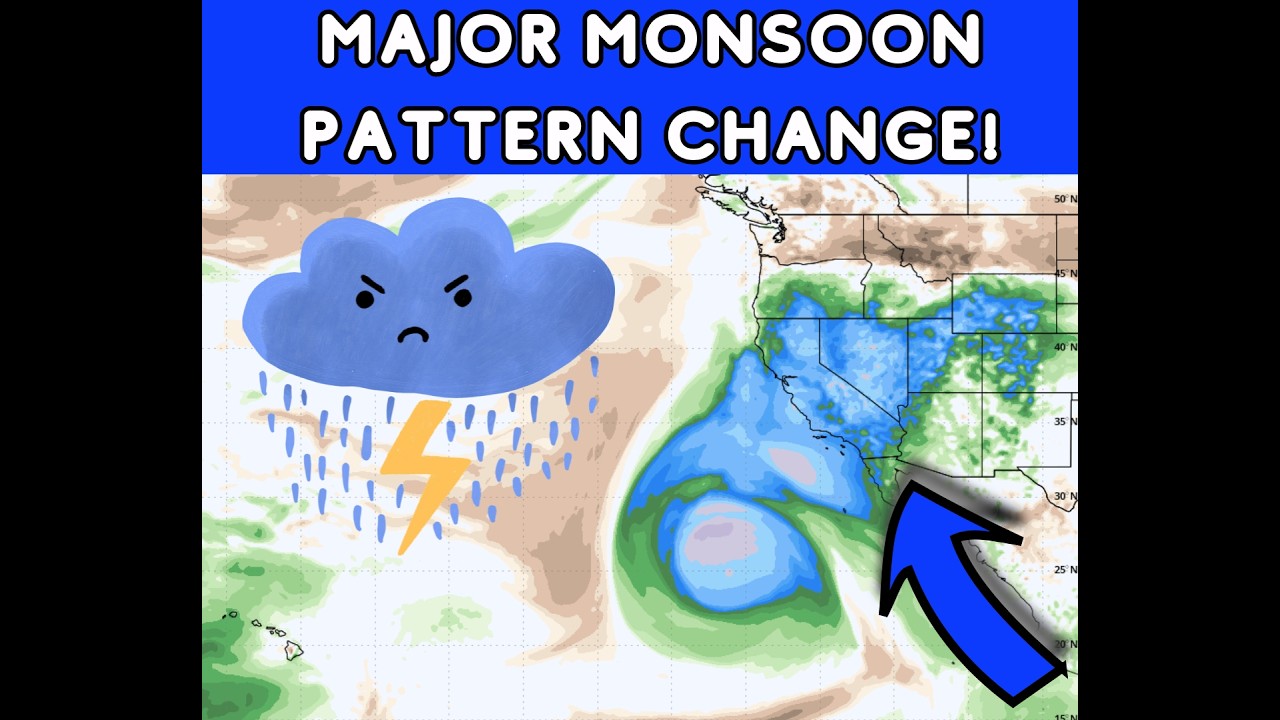
The Mainstream Media Freaks Out As This “Super El Niño” Causes Unprecedented Heat, Monster Storms And Catastrophic Damage All Over The Globe
Global weather patterns have begun to resemble a Hollywood disaster movie, and the mainstream media is starting to admit what many of us have known all along. Thanks to the “Super El Niño” that is now upon us, the second half of this year is going to be really crazy. Europe was just hit by the worst heatwave that it has ever experienced. Throughout all of last week, I was writing about the “mega heat dome”that brought unprecedented temperatures to many areas of the east coast. As I write this article, an absolutely colossal storm is causing apocalyptic damage in the Pacific Ocean, and a severe lack of rainfall threatens to cause a horrifying shortage of rice in India. It is often the case that the mainstream media needlessly freaks out about things, but in this case they are right on target.
I wish that I was exaggerating about the power of this Super El Niño, but I am not.
Every El Niño brings higher temperatures, but this one is really baking us…
We’re officially in an El Niño year, and as predicted, it’s a scorcher.
Record temperatures are already being recorded around the world, from the streets of New York to the icy shelves of the Antarctic. Even the surface waters of the world’s waterways are under unprecedented stress from the heat, with the average global ocean temperature breaking the all-time record high for the month of June.
We are less than a month into this El Niño.
How bad will conditions be once we get a few months down the road?
Even CNN is calling it “a Super El Niño”, and they are openly warning that “computer models are predicting this El Niño could be stronger than any other event”…
El Niño is poised to rapidly strengthen in the tropical Pacific Ocean during the next few months and is forecast to reach the upper echelon of intensity by the time it peaks in late fall to early winter, forecasters warn.
It’s already being referred to colloquially as a Super El Niño. Only a handful of events have reached that level of intensity in the last few decades, with the most recent one occurring in 2015 to 2016.
But now some computer models are predicting this El Niño could be stronger than any other event, back to at least 1950. “I think it’s fair to say that, depending on [the] model, the forecasts are close to unprecedented,” said Michael Tippett, an atmospheric scientist at Columbia University, in an email.
CNN is not supposed to run articles like this.
But they just did.
One expert that CNN interviewed explained that the projections for the intensity of this El Niño have been getting higher each month…
“The consensus is definitely shifting towards an even stronger event,” said Zeke Hausfather, a climate scientist who is closely following El Niño model projections.
“The model runs have been consistently showing higher probabilities for a very strong event compared to a few months ago, and every month sees higher estimates,” he said. “Currently, the odds of seeing a record-strong El Niño event this year are quite large.”
It has become clear that this El Niño is going to dwarf any El Niño that has come before.
It is even going to surpass the Super El Niño of 1877-1878 that resulted in 50 million people starving to death.
India always receives less rain during an El Niño, and rainfall in many key rice producing areas is already way below normal…
The warning comes during India’s kharif planting season, when crops such as rice and maize depend heavily on the southwest monsoon. El Niño can weaken the summer monsoon across much of India, putting rainfed crops under stress during a critical growing period, the FAO said.
Between June 1 and 22, half of India had received deficient rainfall (-20% to -59% below the expected normal), while nearly a quarter had recorded large deficient rainfall (-60% to -99% less than the expected normal), according to the categories used by the India Meteorological Department (IMD).
The FAO analysis, based on 41 years of satellite data from its Agricultural Stress Index System, identifies a broad belt of elevated drought risk across Asia — from Pakistan and India through Myanmar, Thailand, Cambodia and Vietnam, and further east to the Philippines, Indonesia and Timor-Leste.
The world is not going to grow enough rice this year.
In fact, the amount of rice grown won’t even be close to enough to feed everyone.
That is very troubling news, because more than half of the population of the world is heavily dependent on rice…
Over half the world’s population relies on rice. India and China grow more than half of the world’s supply, and rice supplies more than half of all daily calories in countries such as Bangladesh, Vietnam and Cambodia.
Poorer households spend the largest share of income on food, so price spikes hit them first and hardest. In 2007-08, rice prices roughly tripled, food riots broke out in dozens of countries, and in Haiti, the unrest helped bring down the prime minister. Securing rice is about more than food – it underpins public order.
During this “Super El Niño”, some parts of the planet will experience drought, while others will get hammered by absolutely gigantic storms.
Just hours ago, a monstrous “super typhoon” with frighteningly high winds absolutely pummeled the island of Rota…
A “super typhoon” with equivalent force to a category-5 hurricane made landfall on the U.S. island of Rota in the Pacific on Monday, the National Weather Service said, warning of “catastrophic damage and (a) life threatening situation.”
“The western eyewall of Super Typhoon Bavi is currently moving over the island of Rota. The latest forecast intensity is at 180 mph (290 kph) as it passes over Rota,” the NWS said. “Catastrophic winds exceeding 150 mph will continue across Rota during eyewall passage.”
The weather system also brought extremely strong winds and lashing rain to other parts of the Northern Marianas and the nearby separate U.S. territory of Guam, collectively home to around 210,000 people.
Nearly every structure on Rota has been flattened.
According to the National Weather service, the island will be “uninhabitable for weeks”…
Before the NWS had said that a direct hit on Rota would make most of the island “uninhabitable for weeks, perhaps longer. Many non-concrete, non-reinforced homes will be destroyed, with total roof failure and wall collapse.”
“Nearly all trees will be snapped or uprooted and power poles downed. Fallen trees and power poles will isolate residential areas. Power outages will last for weeks to possibly months,” it said.
How would you like to be without power for months?
Now Super Typhoon Bavi is headed for Taiwan and China…
Bavi is expected to produce destructive wind gusts around Taiwan and across eastern China from Friday into Monday. Wind gusts up to 160 mph (260 km/h), with an AccuWeather Local StormMax™ of 200 mph (320 km/h), are anticipated and will result in power outages, structural damage and logistical delays.
The super typhoon is expected to maintain its intensity or strengthen slightly as it tracks west-northwest through at least Thursday, July 9, local time. Bavi is expected to impact Taiwan and eastern China from Friday into Monday.
More giant storms are coming as 2026 rolls along.
You can count on that.
Meanwhile, the weather has been so hot and so dry in Europe, and this has produced ideal conditions for huge wildfires to erupt…
Thousands of people were evacuated in southern France on Monday as ‘catastrophic’ wildfires ravaged the region, while poisonous clouds swept through Greece and Costa Brava in Spain was put on alert.
It comes as temperatures across Europe are on the rise again, predicted to reach 40C in parts still suffering the aftermath of a recent record-breaking heatwave.
Hundreds of firefighters are battling blazes that have devastated more than 19,000 hectares (42,000 acres) of land – an area more than twice the size of Manhattan – across Portugal, Spain, France and Greece.
This is no ordinary heatwave.
Week after week, Europe is getting absolutely cooked, and a lot of people are dying. For example, just check out what has been happening in the Netherlands…
More than 3,500 people died in the Netherlands during last week’s extreme heat, according to provisional mortality figures from the National Institute for Public Health and the Environment (RIVM). The number is about 16 percent higher than what was expected, based on seasonal trends.
RIVM said there were around 480 excess deaths compared with expected levels, with most fatalities among people aged 80 and older. Proportionally, the highest impact was seen in the east and south of the Netherlands, where temperatures were highest during the heat period.
The RIVM noted that the figures are not yet complete, as it can take several weeks for deaths to be officially registered.
Of course people have been dying from the heat in the U.S. as well.
At this point, we are being told that at least 25 residents of New Jersey have died as a result of heat exposure just since Thursday…
At least 25 people died in New Jersey since Thursday amid a sweltering heat wave. Temperatures soared into the triple digits over the Fourth of July holiday weekend in New Jersey, New York, DC and other East Coast states.
Power outages in New Jersey and New York reportedly affected 1 million customers. According to officials, many of the deceased were found in their homes with no air conditioning.
After experiencing an extremely hot weekend, now the east coast is facing the threat of severe flash flooding…
A life-threatening flash flood threat is increasing for nearly 60 million people across the Northeast, Mid-Atlantic and southern New England, with more rounds of heavy rain expected to soak the region through Monday night.
Heavy rain and thunderstorms from this weekend saturated the soil across the region, creating prime conditions for flash flooding Monday, particularly in the New York City metro area.
All over the world, this “Super El Niño” is going to produce monster storms, extreme heat and severe drought in 2026.
We were already experiencing a worldwide food crisis before this “Super El Niño” came along, and so there is no way that we are going to avoid very serious global food shortages.
In fact, the number of people on our planet that are experiencing acute hunger was already at an all-time record high before the war with Iran started. What we are facing is not a theoretical disaster that may or may not happen someday.
It is happening right now. We are in far more trouble than most people realize, and we are going to witness so much chaos in the months ahead.
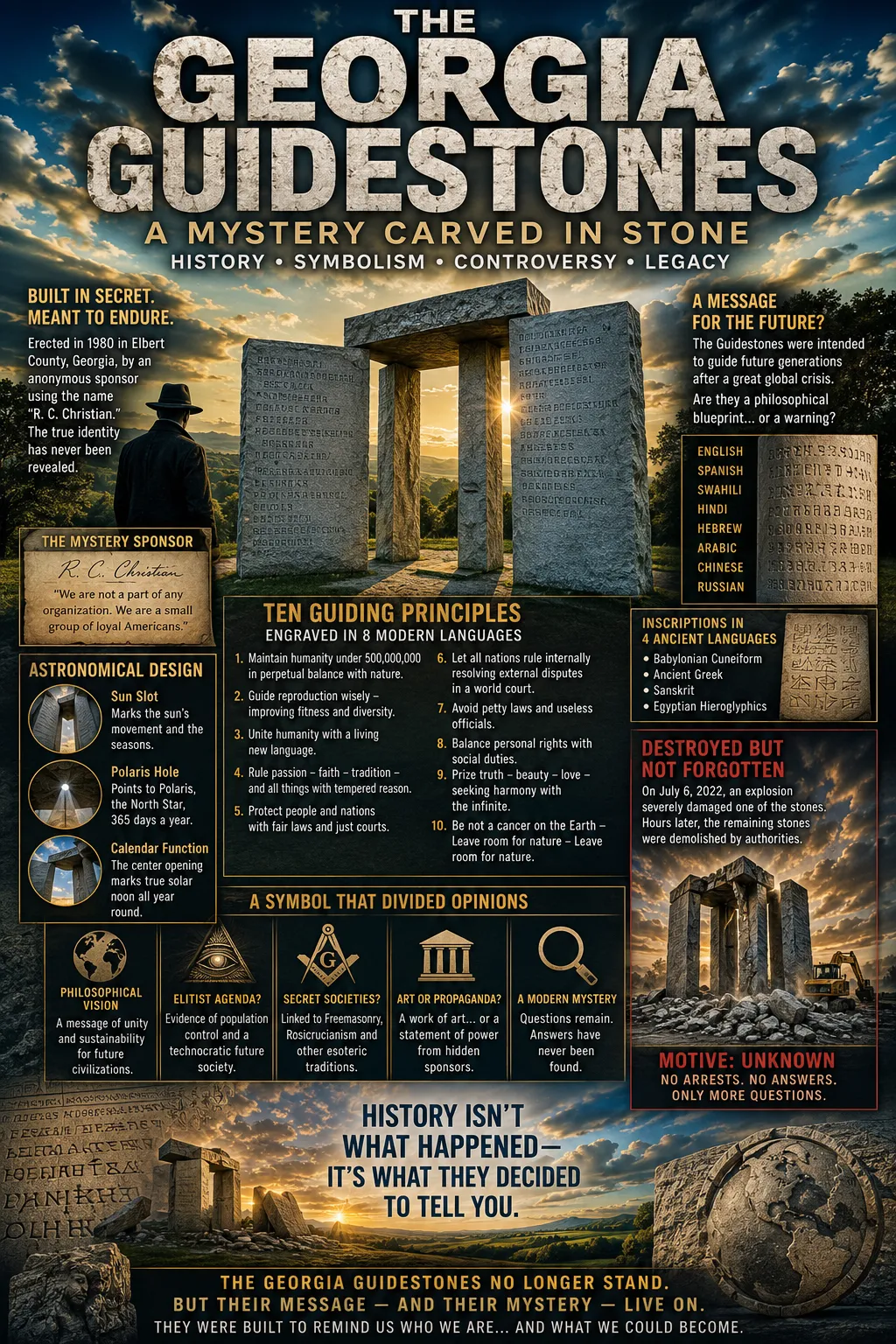
The Georgia Guidestones
History, Symbolism & The Enduring Mystery
Source: GAR Contributing Writers
For more than four decades, the Georgia Guidestones stood as one of America’s most mysterious monuments. Often called the “American Stonehenge,” the granite monument was erected in 1980 atop a hill in Elbert County, Georgia. Standing nearly 20 feet tall and weighing more than 237,000 pounds, the Guidestones featured ten messages engraved in eight modern languages, along with astronomical alignments and inscriptions in several ancient languages. From the day they were unveiled, the monument generated fascination, speculation, and controversy because its anonymous sponsors never revealed their true identities.
The project began in June 1979 when a well-dressed man using the pseudonym “R. C. Christian” approached the Elberton Granite Finishing Company with plans for an enormous granite monument. He claimed to represent “a small group of loyal Americans” who had spent years developing the project and wished to remain anonymous forever. Despite initial skepticism, Christian demonstrated that he had the financial resources to complete the project. The monument was commissioned, constructed from locally quarried granite, and dedicated on March 22, 1980. To this day, the true identity of R. C. Christian and those who funded the Guidestones has never been publicly confirmed.
The monument’s ten guiding principles quickly became the source of intense debate. The most controversial inscription called for humanity to “Maintain humanity under 500,000,000 in perpetual balance with nature.” Other inscriptions advocated guiding reproduction wisely, creating a new universal language, balancing individual rights with social responsibility, protecting nature, avoiding unnecessary laws, and resolving disputes peacefully through international courts. Supporters interpreted these statements as philosophical guidelines intended for rebuilding civilization after a global catastrophe. Critics viewed them as evidence of elitist thinking, population control ideology, or plans for a future technocratic society.
Beyond the inscriptions themselves, the Guidestones incorporated several sophisticated astronomical features. A narrow slot aligned with the annual movement of the Sun, a drilled hole continuously pointed toward Polaris (the North Star), and an opening in the capstone allowed sunlight to mark noon throughout the year. These engineering details reflected careful planning and suggested that the monument was intended to function not only as a philosophical statement but also as an astronomical calendar and navigational reference for future generations.
Because of their secrecy and symbolism, the Guidestones became a magnet for countless theories. Some believed they represented the ideals of globalists or secret societies. Others connected them to Freemasonry, Rosicrucian philosophy, or New Age spiritual movements. The use of the name “R. C. Christian” has often been linked—though never proven—to Christian Rosenkreuz, the legendary founder of the Rosicrucian tradition. Over the years, the monument attracted tourists, researchers, conspiracy theorists, religious groups, and curious travelers alike, each interpreting its meaning through a different lens.
The mystery came to an abrupt end on July 6, 2022, when an explosive device severely damaged one of the granite slabs before dawn. Citing safety concerns, authorities demolished the remaining structure later that day. Despite an investigation, no arrests have been made publicly, and the motive remains uncertain. The destruction only deepened public fascination, fueling additional speculation about why the monument had become such a polarizing symbol in American culture.
THE NEW WORLD ORDER’S TEN COMMANDMENTS.
The destruction of the stones was a signal. The “Old World Order” is clearing its tracks as the “Great Reset” begins. The Guidestones were a confession of intent—a declaration that the elite view humanity as a “cancer” to be managed and pruned. But they failed to realize that by putting their plans in stone, they gave the people the key to their own awakening. The stones are gone, but the truth they revealed is now etched into the collective consciousness of the world.
Today, the Georgia Guidestones no longer stand, but their legacy continues. Whether viewed as a philosophical monument, an artistic expression, an astronomical instrument, or the focus of modern conspiracy theories, they remain one of the most intriguing public installations ever built in the United States. Their anonymous origins, provocative inscriptions, and dramatic destruction have ensured that the Georgia Guidestones occupy a lasting place in discussions about symbolism, governance, civilization, and humanity’s future.
CODE: GUIDESTONES / 500-MILLION-PLAN / RC-CHRISTIAN / GEORGIA-SIGNAL
They told you their plan in granite. They destroyed the evidence when they realized you were reading it. The agenda is real, but the resistance is stronger.
The stones have fallen, but the truth is rising. They can’t bury the message once the people have heard it.

The Weiner Laptop Controversy: Claims, Investigations, and Why the Story Persists
Huma knows where the Weiner laptop is and the filth that’s on it the Weiner insurance file protecting him from HRC. Huma knows she’s in the insurance file which made 12 grown men, all hardened Police Detectives puke and leave the room. Reports are that 9 of the 12 detectives have been suicided.
Source: GAR Contributing Writer
The laptop belonging to former Congressman Anthony Weiner has remained one of the most debated episodes of the 2016 U.S. presidential election. After the FBI seized the laptop during an unrelated criminal investigation, agents discovered emails connected to Hillary Clinton aide Huma Abedin, prompting the FBI to briefly reopen its review of Clinton’s email practices just days before the election. The renewed investigation generated intense media coverage and fueled years of speculation across alternative media and online communities.
Over time, numerous additional claims emerged online alleging that the laptop contained an “insurance file,” highly sensitive material involving public officials, or evidence of broader criminal activity. Some posts further claimed that multiple police officers or investigators died under suspicious circumstances after viewing the contents. However, these claims have not been substantiated by publicly available investigative records or official findings. Many of the names and images circulated in viral memes have been questioned by independent fact-checkers, and no official investigation has concluded that officers were killed because of information found on the laptop.
The persistence of the story reflects broader public concerns about government transparency, institutional trust, and unanswered questions surrounding high-profile investigations. Regardless of one’s perspective, separating documented events from unverified allegations remains essential. The confirmed historical record is that the FBI recovered the laptop, reviewed emails relevant to its investigation, and ultimately announced that its conclusions regarding Clinton’s email case had not changed. Beyond those documented facts, many of the more dramatic narratives remain unsupported by publicly verifiable evidence.
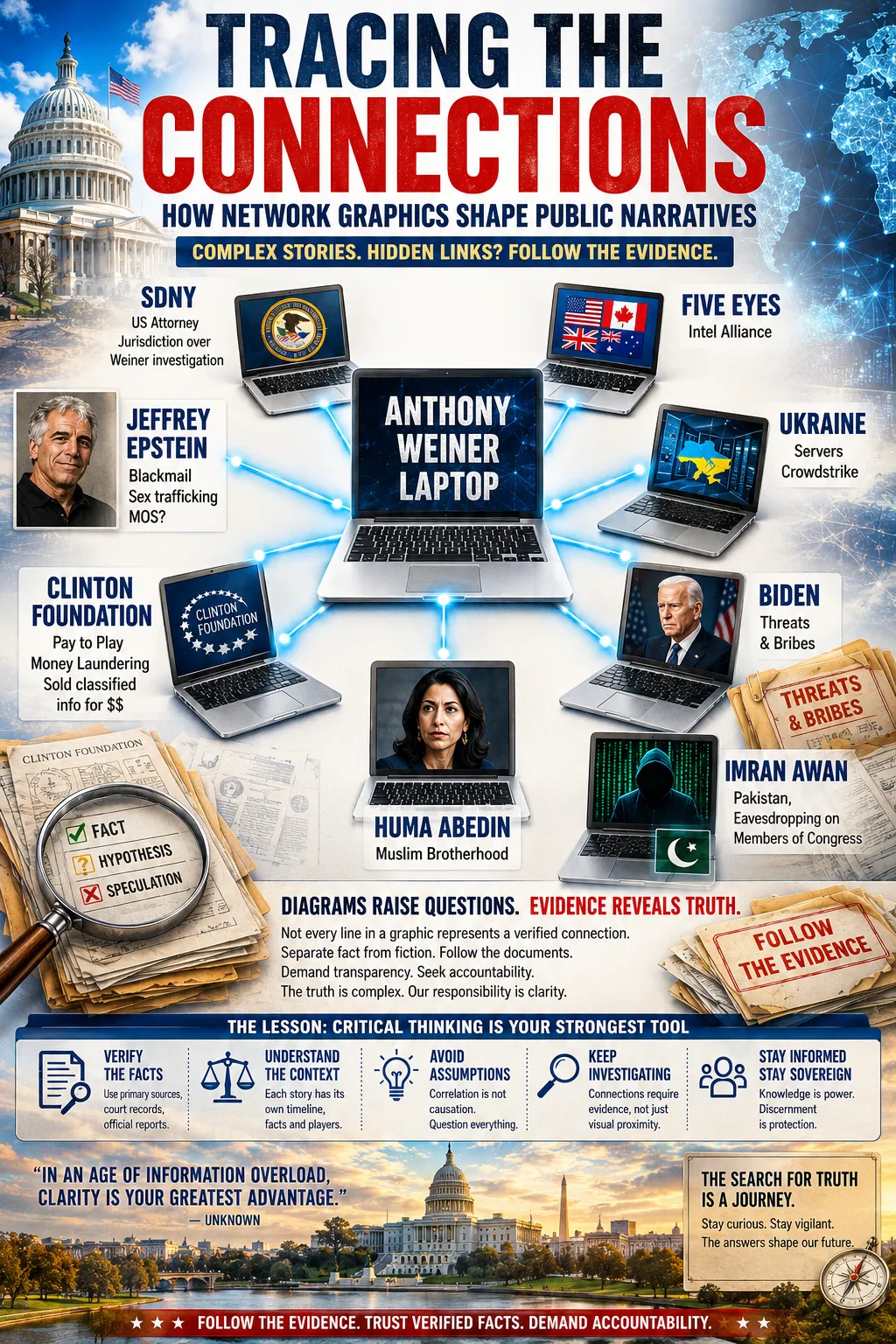
Tracing the Connections: How Network Graphics Shape Public Narratives
Understanding Claims, Evidence, and the Search for Accountability
Source: GAR Contributing Writers
Diagrams like the one shown above have become a familiar feature across alternative media, social media platforms, and independent research communities. By placing people, organizations, investigations, and events into a single visual network, they attempt to illustrate how seemingly unrelated stories may connect. Their appeal lies in their simplicity: complex events are reduced to a single map that suggests hidden relationships behind major political, financial, and intelligence controversies.
The central focus of this particular graphic is the laptop seized from former Congressman Anthony Weiner during a 2016 FBI investigation. It is a matter of public record that the FBI recovered the laptop and discovered emails relevant to its review of former Secretary of State Hillary Clinton’s use of a private email server, prompting the Bureau to briefly reopen that investigation before concluding that its previous findings remained unchanged. Beyond those documented events, however, the graphic incorporates numerous additional claims that have circulated online but have not been substantiated through publicly available evidence or official investigative findings.
The surrounding nodes combine a wide range of subjects that have each generated significant public attention over the past decade, including Jeffrey Epstein, the Clinton Foundation, intelligence-sharing alliances, congressional IT security issues, CrowdStrike, and foreign influence concerns. While each of these topics has its own documented history and separate investigations, placing them together in a single diagram can create the impression that they are all components of one coordinated operation. Establishing such connections requires evidence beyond visual proximity or temporal overlap.
One reason graphics like this continue to circulate is the broader decline in public trust toward institutions. High-profile controversies involving government agencies, intelligence organizations, financial networks, and political figures have left many people questioning whether important information has been withheld from the public. In that environment, visual “connection maps” often serve as starting points for further inquiry rather than as verified conclusions.
From a research perspective, it is helpful to distinguish among three different categories of information. First are documented facts, which are supported by court records, official reports, sworn testimony, or other verifiable sources. Second are reasonable hypotheses, where multiple facts may suggest a possible relationship but additional evidence is needed. Third are speculative claims, which may circulate widely online but lack sufficient independent corroboration. Keeping these categories separate helps prevent speculation from being mistaken for established fact.
The broader lesson is that complex political, financial, and intelligence stories rarely fit neatly into a single graphic. Effective research requires examining primary documents, understanding the context of individual investigations, and evaluating claims on their own merits rather than assuming that every line in a network diagram represents a verified connection.
Ultimately, diagrams such as this are best viewed as research maps rather than evidence themselves. They can identify questions worth investigating, but the conclusions must come from independently verifiable information. In an era of information overload, careful sourcing, critical thinking, and a willingness to separate documented evidence from speculation remain the strongest tools for understanding complicated public controversies.
As Americans Sleep, Iranians Chant “Death To America”, China Threatens Taiwan And Russian Forces Advance In Ukraine
We are literally in the middle of World War III, but most Americans seem to be under the impression that everything is just fine. Stock prices just set a new record, Taylor Swift just got married, and most of us are partying like it is 1999. Meanwhile, Russian forces are gobbling up more territory in Ukraine, the Chinese are threatening Taiwan and the Iranians are chanting “death to America”. The war in the Middle East has now been going on for more than 1,000 days, and the war in Ukraine is officially longer than World War I was. What is it going to take for most Americans to finally wake up? Will it take nukes going off for them to finally rouse from their slumber?
When our enemies tell us exactly what they intend to do, we should believe them.
During the funeral procession for Ayatollah Khamenei in Tehran, there were endless chants of “Death to America”…
A huge funeral procession for Iran’s slain supreme leader, Ali Khamenei, was held in Tehran on Monday morning, with a teeming crowd clogging the streets to bid farewell to the ayatollah who ruled the country for 37 years before being killed in an airstrike at age 86.
At an early stage on the procession route, people chanted “Death to America!” and “Death to Israel!” And some of the mourners demanded retribution.
Ezat Vezvaei, 67, whose son, a member of the Islamic Revolutionary Guard Corps, was killed in the U.S.-Israeli war, rapped her fingers on a Trump poster that read “wanted dead or alive.”
The radical Shiites that run Iran are never going to forgive us for what we have done. No matter how long it takes, they fully intend to get their revenge.
For the rest of their lives, U.S. politicians that were involved will be targets…
As they passed under a bridge, mourners hurled stones at a billboard hung from above showing U.S. President Donald Trump with a bullet aimed at his head.
“The U.S. killed our father,” it read. “We won’t let you go!”
As demonstrators set fire to U.S. and British flags, women in black chadors held aloft red placards with the English words “KILL TRUMP” in black letters.
Others held aloft posters with the faces of Trump, Vice President JD Vance, Defense Secretary Pete Hegseth or Israeli Prime Minister Benjamin Netanyahu, each depicted in the crosshairs of a gunsight, with the words “There will be blood”.
Earlier this year, top Iranian clerics declared a holy war against the United States and Israel.
No ceasefire or “memorandum of understanding” can cancel a holy war.
You see, the truth is that in Shiite Islam a holy war is forever. Most westerners don’t even know what a “hudna” is. A “hudna” is a tactical pause that allows Muslims to regroup and rearm in anticipation of the next round of fighting.
At this moment the Iranians are feverishly rearming, and there has also been an alarming amount of activity at “Pickaxe Mountain”…
It said, however, that fresh satellite imagery from late last month indicated that the portion of the Natanz complex known as “Pickaxe Mountain,” or Kuh-e Kolang Gaz La, has been the site of recent vehicle activity and construction, with workers appearing to be reinforcing tunnel entrances.
The underground site tunneled into a mountain near the main Natanz facility is thought to have been under construction since 2020, according to experts quoted by The New York Times last month.
The exact purpose of the site is not known, and inspectors from the International Atomic Energy Agency have never been granted access.
There is a reason that IAEA inspectors have never been allowed access to “Pickaxe Mountain”, and it isn’t because the Iranians are knitting doilies in that facility. But we aren’t supposed to talk about that, are we?
Meanwhile, we have been seeing a lot of very unusual activity from the Chinese. On Monday, they test-fired a long-range missile capable of carrying a nuclear warhead…
The launch of a nuclear-capable long-range missile from a Chinese submarine in the South Pacific with just hours of notice has angered Australia and New Zealand, who labelled the test destabilising and concerning.
The firing of the ballistic missile, fitted with a dummy warhead, came just hours after Australia and Fiji struck a new defence alliance that commits them to come to each other’s aid if they come under attack.
A Chinese tracking ship was stationed alongside Fiji at the time of the missile firing, with a leading maritime surveillance company saying its presence was unlikely to have been coincidental.
The Chinese do not test intercontinental ballistic missiles very often.
In fact, this was only the second test in the Pacific Ocean since 1980…
China last conducted a missile test in the Pacific two years ago, firing an intercontinental ballistic missile with a dummy warhead. That previous launch in international waters was the first in decades, since 1980.
The Chinese are also becoming a lot more aggressive with Taiwan.
China’s Coast Guard is now conducting “law enforcement patrols” in the waters all the way on the eastern side of Taiwan, and this has greatly angered Taiwanese officials…
On Saturday, China said it had launched a coast guard patrol east of Taiwan to replace a coast guard task force whose presence off the island’s coast has angered Taipei and caused alarm in some Western capitals.
The fleet will conduct “law enforcement patrols” in the area, China’s Coast Guard said in a statement, adding it would strengthen such patrols in what it called China’s jurisdictional waters.
In response, Taiwan’s Coast Guard said it had deployed monitoring vessels and would use “all necessary measures to forcefully expel Chinese vessels harassing our waters.”
China is setting the stage for a full blockade of Taiwan. And a full blockade of Taiwan would mean war with the United States.
We are much closer to a war with China than most people realize. And if a war with China does erupt, it would be a real challenge for our military…
Imagine a globe-spanning naval battle, with both sides interdicting commerce. Imagine a collapse in Asian trade, far worse than the consequence of Iran’s blockade of the Strait of Hormuz. Imagine a North Korean invasion of the South, backed by the PRC and Russia. Imagine steady military escalation as human and materiel losses mounted. Imagine Beijing’s leadership turning to nuclear weapons.
Unfortunately, even Secretary of Defense Pete Hegseth acknowledges that the U.S. often loses in official war games. When Washington emerges victorious, its losses are typically still huge — two (and sometimes more) aircraft carriers, one or two dozen ships, hundreds of aircraft, and thousands of personnel. And many exercises simply don’t game the consequences of nuclear strikes. Are Americans prepared to risk their homes and nation so Washington can forever dominate China along its coast, thereby imposing what the U.S. would never accept?
Of course there is also the possibility that we could end up squaring off against Russia and China simultaneously.
The Russians and the Chinese continue to develop deeper ties, and this week they are conducting yet another round of joint exercises…
The Chinese and Russian navies will hold joint exercises in the waters and airspace off China’s eastern coast this coming week.
In a statement on Sunday, the Chinese Ministry of Defence said the annual drills off the major port of Qingdao would be followed by joint maritime patrols in unspecified areas of the Pacific Ocean.
Separately, Russian state media reported that a cruiser, a corvette, a diesel-electric submarine and a rescue vessel from Russia’s Pacific Fleet had arrived in Qingdao for the drills that are set to run from Monday to July 13.
We have been involved in a proxy war against the Russians in Ukraine for more than four years now, and there is no end in sight. Despite all of the money and resources that we have poured into that war, the Russians just keep moving forward.
In fact, they reportedly just captured the fortress city of Kostyantynivka…
Russia on Friday said it had captured the eastern Ukrainian city of Kostyantynivka, a key post on the road leading to the last major cities in the Donbas region under Kyiv’s control.
The battle for this city, which had around 78,000 inhabitants before the war, has been taking place since late 2025 and now constitutes the main Russian effort on a front more than 1,000 kilometres long.
“Kostyantynivka has been completely taken. The city is now entirely under our control,” Kremlin spokesman Dmitry Peskov told reporters, including those from AFP, announcing that President Vladimir Putin had spoken with the military about it.
This was an enormous loss for the Ukrainians, and the Russians have just made a breakthrough on the northern front as well…
After the key victory in Konstantinovka, opening the way for an assault on the Slaviansk-Kramatorsk fortress belt, news arises that the Russian army liberated 4 settlements in the Kharkov region at once.
Units of the Запад (West) group of forces established control over the settlements Shiykovka, Novy Mir, Cherneshchina, and Druzhelyovka, as well as in Vasilevka in the Donetsk region.
You won’t hear much about this from the mainstream media in the western world.
They would like for us to believe that Ukraine is winning. But that isn’t the reality on the ground.
On Monday, the Russians fired another massive wave of drones and missiles at Kyiv…
Russia unleashed waves of missiles and drones at Ukraine early Monday, killing at least 22 people in attacks that exposed widening gaps in the country’s air defenses more than four years into Moscow’s full-scale invasion, authorities said.
All of the ballistic missiles launched by Russia struck their targets, underscoring Kyiv’s need for more U.S.-made Patriot interceptor missiles – a point Ukrainian President Volodymyr Zelenskyy will likely reiterate at a NATO summit in Ankara, Turkey, this week.
Fifteen people were killed in the capital of Kyiv, which was Russia’s main target, and 56 were injured, according to administrative head Tymur Tkachenko. Another seven people were killed in the wider Kyiv region and 29 were injured, according to Ukraine’s emergency service.
The Zhulyany Missile Assembly and Components Plant was one of the targets that got hit, and the initial explosion “was followed by hours of secondary explosions as the missiles and missile components kept exploding”…
And finally, the Zhulyany Missile Assembly and Components Plant which manufactures anti-aircraft missile systems, components for aircraft and air defense systems.
And it was at the Zhulyany plant that the most shocking image was captured, where the initial explosion from the strike was followed by hours of secondary explosions as the missiles and missile components kept exploding.
As the war in Ukraine continues to intensify, there is going to be an enormous amount of pressure on western leaders to intervene more directly. And once we find ourselves in a direct shooting war with the Russians, that will put us just one step away from nuclear war.
We are literally watching World War III unfold right in front of our eyes, but most people that I interact with don’t seem to understand this.
Interestingly, the starting dates for World War I, World War II and World War III all add up to the exact same number. The following is an extended excerpt from one of my previous articles…
I asked Google AI to tell me when World War I started, and I was told that it began on 07-28-1914…
World War I officially began on July 28, 1914. This date marks the beginning of Austria-Hungary’s declaration of war on Serbia, following the assassination of Archduke Franz Ferdinand. This event triggered a chain reaction of declarations of war across Europe, escalating into the global conflict known as World War I.
7 + 28 + 19 + 14 = 68
Are you with me so far?
Then I asked Google AI to tell me when World War II started, and I was told that it began on 09-01-1939…
World War II officially began on September 1, 1939, when Germany invaded Poland. This invasion triggered declarations of war by France and the United Kingdom, as they had treaties guaranteeing Poland’s support. However, the war’s roots lie in unresolved tensions from World War I, the rise of fascist and militarist regimes, and aggressive expansionist policies by several nations.
9 + 1 + 19 + 39 = 68
Okay, that is kind of creepy.
Then I asked Google AI to tell me when the Russian invasion of Ukraine began, and I was told that it happened on 02-24-2022…
Russia launched a full-scale invasion of Ukraine on February 24, 2022. This marked a significant escalation of the conflict between the two countries that began in 2014.
2 + 24 + 20 + 22 = 68
I was blown away when I first learned about this.
What are the odds that the dates when World War I, World War II and World War III all started would add up to the exact same number? I went back and checked, and on February 24th, 2022 I wrote the following…
Hopefully many of you are starting to grasp the gravity of what we are facing. For years, I have been relentlessly warning that war with Russia was coming, and now it is here.
I tried to warn everyone about what would happen if we stayed on the path that we were on, but now it is too late.
There is nothing more than can be done, because World War III has already started.
When World War I started, nobody called it World War I at first. And when World War II started, nobody called it World War II at first.
Now World War III is here, and even though it has already been raging for several years most people in the western world still don’t understand what they are watching.
That is because the fighting is taking place on the other side of the planet. But eventually this war will be felt on our soil too, and that will be extremely unfortunate.
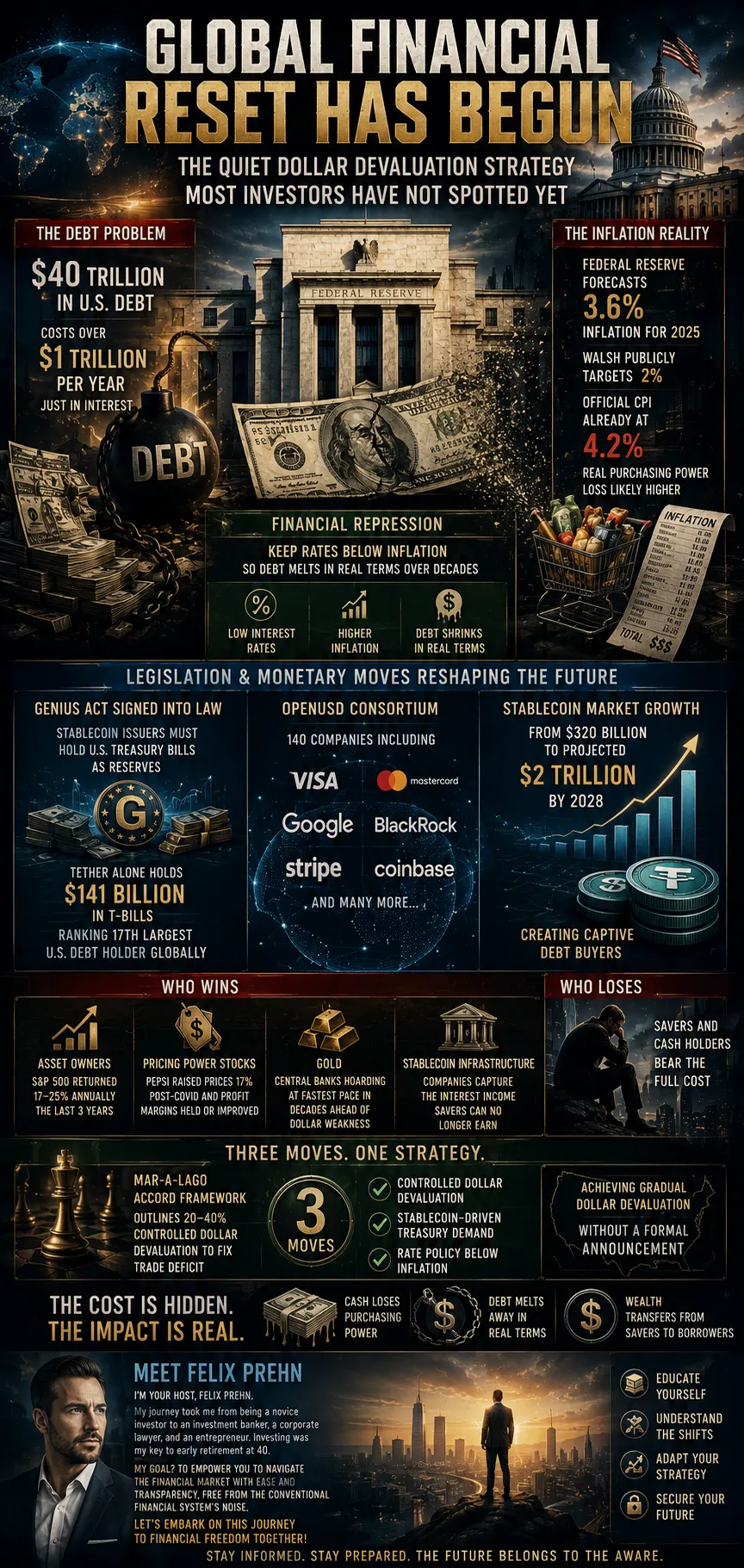
Global Financial Reset Has Begun
Debt, Dollar Devaluation, Stablecoins, and the Emerging Monetary Transition
The global financial system is entering a period of profound structural change, one that many economists believe will reshape how governments finance debt, how investors preserve purchasing power, and how digital assets integrate into traditional finance. Rather than a sudden “reset,” the transition appears to be unfolding through a series of legislative, monetary, and technological developments that collectively alter the incentives within the global financial system. For investors, the most important question may no longer be whether change is coming, but whether they recognize how these gradual shifts affect savings, asset allocation, and long-term wealth preservation.
At the center of this transition lies the enormous challenge of sovereign debt. The United States now carries federal debt exceeding $40 trillion, with annual interest costs surpassing $1 trillion. Managing debt of this magnitude becomes increasingly difficult if interest rates remain elevated for extended periods. Throughout history, governments have generally relied on four approaches to reduce excessive debt burdens: sustained economic growth, fiscal austerity, outright default, or moderate inflation. Most developed economies have historically favored some combination of growth and inflation because it gradually reduces the real value of outstanding debt while avoiding the political consequences associated with severe spending cuts or default.
This process is often described by economists as financial repression. Rather than eliminating debt directly, policymakers allow inflation to exceed interest rates over extended periods, gradually reducing the purchasing power of existing debt obligations. While nominal debt levels remain high, inflation slowly diminishes their real economic weight. Savers holding large cash balances may experience declining purchasing power, while borrowers—including governments—benefit from repaying obligations with currency that is worth less than when the debt was originally issued. Whether this occurs intentionally or as a byproduct of monetary policy remains the subject of ongoing debate among economists.
Recent legislation surrounding stablecoins adds another important dimension to the evolving financial landscape. Stablecoins are digital tokens designed to maintain a stable value, typically by holding reserves of highly liquid assets such as U.S. Treasury bills. As stablecoin adoption expands, issuers purchase increasing quantities of Treasury securities to back their digital currencies. Companies such as Tether have become major holders of U.S. Treasury bills, while industry projections suggest that the stablecoin market could expand substantially over the coming years if adoption continues. As these reserves grow, they may create an additional source of demand for U.S. government debt while simultaneously integrating blockchain-based financial infrastructure into the broader monetary system.
Supporters argue that stablecoins improve payment efficiency, reduce settlement times, and strengthen global demand for U.S. dollar-denominated assets. Critics, however, note that reserve interest earned on Treasury holdings generally accrues to the issuing companies rather than stablecoin holders. This has prompted broader discussions about how the benefits of digital finance are distributed and whether future regulatory frameworks should evolve as the sector matures. Regardless of differing viewpoints, stablecoins are increasingly becoming an important bridge between traditional financial markets and digital asset ecosystems.
Another concept receiving growing attention among macroeconomic analysts is the idea of a controlled dollar adjustment. Various policy proposals and independent research papers have discussed whether a gradual weakening of the U.S. dollar could improve export competitiveness, reduce trade imbalances, and ease long-term debt pressures. While no official government policy currently calls for a specific percentage devaluation, market participants continue monitoring fiscal policy, trade negotiations, central bank actions, and currency markets for signals regarding the future direction of the dollar. Any sustained decline in purchasing power would have broad implications for investors, particularly those concentrated primarily in cash or fixed-income assets.
These changing conditions have influenced investment behavior across global markets. During recent years, equities with strong pricing power have generally outperformed cash holdings as companies demonstrated the ability to pass higher costs through to consumers. Gold has also attracted renewed interest as central banks around the world continue increasing official reserves at one of the fastest rates in decades. Precious metals have historically served as a hedge against inflation, currency uncertainty, and geopolitical instability, making them a focal point for many long-term portfolio managers during periods of elevated macroeconomic risk.
For individual investors, the broader lesson extends beyond any single asset class. Diversification, ownership of productive assets, careful management of purchasing power, and understanding long-term monetary trends may become increasingly important as the financial system continues evolving. Rather than viewing current developments as evidence of an abrupt “global financial reset,” many analysts see them as part of a gradual transition toward a more digitally integrated monetary system shaped by high sovereign debt, technological innovation, demographic change, and shifting geopolitical dynamics.
As investor and entrepreneur Felix Prehn frequently emphasizes, financial literacy becomes one of the most valuable assets during periods of structural transition. Understanding how debt, inflation, monetary policy, digital finance, and capital markets interact enables investors to make more informed decisions while filtering out the noise that often accompanies major economic change. Whether one views the coming years as a financial reset, a monetary evolution, or simply another cycle in economic history, the common denominator remains the same: those who understand the changing rules are generally better positioned to adapt than those who ignore them.


10 Very Strange Things That Occurred On The 4th Of July This Year
I just had to write about this. Earlier today, as I was going through the news I noticed that Steve Quayle and other prominent voices had featured some really odd things that had happened on Sunday. Personally, I don’t think that it was a coincidence that so many unusual events took place on the exact day that we celebrated the 250th birthday of America. Perhaps you disagree with me, and that is okay. I don’t know anyone that agree with me 100 percent of the time. But I think that most of you will agree that this was certainly not a normal Independence Day.
Since the news cycle was really slow going into the holiday, I didn’t expect that much would happen.
But I was wrong.
The following are 10 very strange things that occurred on the 4th of July this year…
#1 In the middle of the Independence Day celebrations in New York, the skies above the city suddenly turned blood red…
A dramatic red glow illuminated the New York City sky during the 250th anniversary celebrations, leaving spectators amazed and sparking widespread discussion online. While many described the scene as eerie or symbolic, there is no verified evidence linking the unusual sky color to any supernatural event or “bad omen.”
At first I had a difficult time believing that this was true.
So I asked Google, and I was assured that this actually happened. Apparently the blood red color was caused by the fireworks display…
The dramatic red, or “blood-red,” sky was a result of the intense 50th annual Macy’s fireworks display, which involved approximately 85,000 shells launching over the city.
Some social media users captured video footage of this phenomenon, and it was certainly very creepy…
Since that time, more than 67 million American babies have been aborted.
And starting on July 5th, Planned Parenthood “will regain access to hundreds of millions in Medicaid funding”…
Planned Parenthood’s beleaguered network of clinics will regain access to hundreds of millions in Medicaid funding this weekend — the fallout of Republicans’ failure to pass an extension of the one-year defunding provision they approved last year.
Starting July 5, clinics around the country can once again bill the federal program for reimbursement after providing non-abortion services, like birth control and screenings for sexually-transmitted infections, to low-income patients. Though other funding threats loom, it’s a lifeline for the struggling organization, which has closed nearly 30 health centers nationwide that collectively served more than 40,000 patients since the defunding provision in the GOP’s One Big Beautiful Bill Act took effect in July 2025.
#2 The fireworks in New York City also caused the Brooklyn Bridge to catch on fire…
Brooklyn Bridge erupted in flames during the Macy’s July 4 fireworks extravaganza on Saturday.
Video posted online showed a flume of smoke billowing into the sky from a ball of fire on the span over the East River as fireworks burst around it.
A spokesperson for the New York Police Department told The New York Times it received a call about a fire on the bridge at 9.32pm, just about half an hour after the fireworks show started.
This was not a small fire.
In fact, the fire got so large that at one point some onlookers were concerned that the entire bridge could potentially burn down…
#3 On top of everything else, one photographer actually captured a rainbow, a bolt of lightning and the Statue of Liberty in a single photo…
I have never seen anything quite like that.
But we didn’t just see unusual weather in the Big Apple.
#4 A “mega heat dome” baked the eastern half of the nation on the 4th, and a series of massive thunderstorms ripped through the Midwest…
Deadly storms and a heat wave marred America’s 250th birthday for swathes of the United States, leaving hundreds of thousands of utility customers without power.
Millions of Americans across the Northeast experienced record-setting temperatures — thunderstorms in the Midwest downed trees, ruptured power lines and made transportation treacherous and complicated across multiple states.
As a result of the bad weather, Independence Day celebrations had to be either canceled or moved up in a number of cities…
Weather prompted cancellations of celebrations in Hartford, Connecticut, as well as Harrisburg and Wilkes-Barre, Pennsylvania. In Boston, spectators at the city’s fireworks and concert event were told to briefly seek shelter, before events later resumed. An evacuation was ordered in Philadelphia, in addition to Washington. D.C., and, like the capital, New York and Pittsburgh moved forward with their fireworks shows but shifted the originally scheduled times to accomodate the weather.
#5 In Washington D.C., extremely stormy weather greatly disrupted the Freedom 250 Fourth of July celebration, and the president’s address was delayed for approximately 2 hours…
Weather also forced temporary evacuations of thousands of people Saturday evening at the National Mall in Washington, D.C., which hosted the Freedom 250 Fourth of July celebrations. Signs at the Great American State Fair posted an alert shortly after 7 p.m. ET, encouraging participants to leave the area and prompting crowds to gather in museums, subway stations and federal buildings near the Mall. Some waited in chairs and sat on the floor of the Ronald Reagan Building and International Trade Center, seeking to cool off in the air conditioning.
The president had been initially scheduled to deliver remarks at 9:45 p.m. Eastern Time, Freedom 250 organizers said, but the speech was ultimately delayed by about two hours.
Once again, this was no normal storm.
One reporter actually described the lightning in D.C. as “apocalyptic”…
Not even apocalyptic lightning bolts, which caused a four-hour delay, could stop Trump from putting his personal stamp on history.
Once the lightning finally subsided, the celebration was able to continue.
Personally, I think that it is interesting to note that a total of 85,000 fireworks were fired off in New York City and a total of 850,000 fireworks were fired off in Washington…
The massive celebration was capped off by a huge fireworks show, with 850,000 fireworks launched. That marked the largest in US history, according to Reuters.
Trump commented on the display about half an hour past midnight on Truth Social, writing, ‘Best fireworks show, EVER!’
While the event was postponed, Trump posted shortly after 9pm: ‘Storms bring luck to whatever the occasion. They also make events a little bit more exciting! We will wait it out, I don’t care if it’s 2:00 O’Clock in the morning, or in one hour from now.
‘It’s Saturday night, LETS HAVE SOME FUN, even if we are out late tonight. They say 11:00 O’Clock for the speech. Who cares???’ he added.
#6 In Southern California, an absolutely shocking accident following a game between “Angel City” and “the Orlando Pride” resulted in fireworks being fired directly “into the stands at the BMO Stadium in Los Angeles”…
A Fourth of July weekend celebration turned into a fiery nightmare when fireworks went screaming into the stands at the BMO Stadium in Los Angeles — sending panicked fans scrambling for cover.
Just minutes after Angel City defeated the Orlando Pride 2-0, the club’s Independence Day weekend pyrotechnics display reportedly went haywire.
Instead of launching into the sky, multiple mortars allegedly fired sideways across the field and toward packed seating sections.
“The end is actually the worst. I saw several flames go into the crowd. It was terrifying!” one shaken Reddit user wrote.
#7 In Chicago, a Delta flight was actually hit by fireworks on Sunday evening…
A Delta Air Lines aircraft was struck by a firework while landing at Chicago Midway International Airport on July 4, according to the airline and air traffic control audio shared online.
A spokesperson for Delta told Newsweek the aircraft landed safely and there was no emergency landing. The airline said the plane was taken out of normal operations for inspection after arriving at the gate. Initial reports did not indicate any injuries among passengers or crew.
#8 In the town of Broken Arrow, Oklahoma we witnessed a historic fireworks accident. A huge fire that consumed a fireworks stand caused “a chain reaction of explosions that lit up the night sky for miles”…
A fire engulfed a fireworks stand in Broken Arrow, Oklahoma, on June 20, 2026, causing a massive, unplanned display. The blaze triggered a chain reaction of explosions that lit up the night sky for miles.
As many of you already know, a “broken arrow” is military code for a nuclear accident.
#9 Needless to say, there was quite a bit of violence in our major cities on the 4th. In just one incident in New York City, there were at least 8 different shooting victims…
At least eight people, including four children, were shot late Saturday night in the Coney Island neighborhood of Brooklyn, leaving one person in critical condition, the New York Police Department said, according to ABC News.
Officers responded to reports of multiple people shot at approximately 10:37 p.m. on the 2900 block of West 31st Street, near the Seapark Apartments, the NYPD said. The shooting occurred roughly an hour after a fireworks display in the area marking the country’s 250th anniversary.
The victims ranged in age from 6 to 37. “All victims were transported by EMS to local area hospitals where seven people were listed in stable condition,” the NYPD said. A 21-year-old woman remains in critical condition after being shot in the chest, CBS News reported.
#10 The violence on the west coast was even worse. In Southern California, police on horseback were deployed to deal with a vast crowd of rioters and looters…
Fourth of July descended into mayhem across parts of Southern California as unruly crowds overwhelmed packed-out fireworks displays, looted stores, ignited fires and saw cops charge on horseback.
The worst unrest erupted in Newport Beach, where Independence Day revelers poured into Orange County, choking traffic and triggering a police response as disorder spread near the pier.
Authorities ultimately shut down businesses from the Newport Pier to Pacific Coast Highway as officers moved in to restore order.
These days, it seems like some people are eager to use any major celebration as an excuse to cause mayhem.
At one point during the chaos in Newport Beach, people in the crowd started lighting fireworks and throwing them at the cops…
A Fourth of July celebration in Newport Beach turned chaotic Saturday night, leaving several police officers injured and resulting in at least 100 arrests, authorities said.
Police were first called to the area around 7 p.m. after a large crowd began lighting fireworks and fighting, according to authorities. Officials also reported a significant mess at a nearby Pavilions grocery store.
The situation escalated after officers arrived at the scene. Authorities said people continued fighting and threw fireworks at police officers.
Of course this is just a preview of things to come. Civil unrest is going to be a major theme during the months that are ahead of us. It is my opinion that we have reached a major societal turning point.
We have had it so good for so long, but now crisis after crisis is erupting all around us. So I hope that you enjoyed the 4th of July celebrations this year, because I am convinced that things will look far different by this time next year.
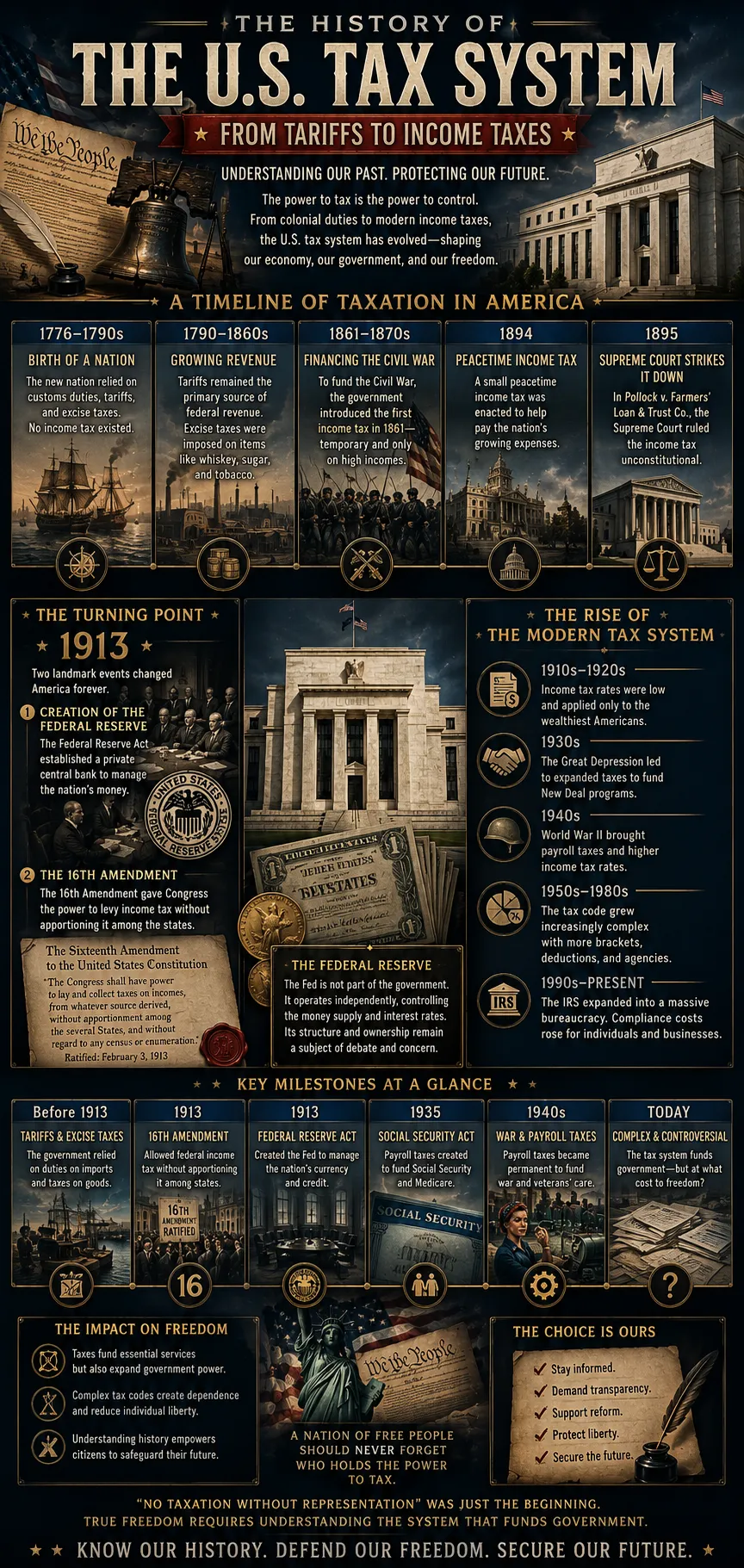
IRS: ENDING INCOME TAX
People don’t get how big it is when Trump talks about getting rid of income tax. If you want America to be free and independent, getting rid of the income tax is one of the most important things you can do.
Source: Ezra A Cohen TG
We are slaves to debt. The FED is not part of the government. It’s a world bank that is owned by one person. The US government does not own or control it. Congress gave the FED control of the US monetary system in 1913 and passed the 16th Amendment. We The People are the security. They can take your house, car, and freedom. If you don’t pay, they will send you to federal prison and take all your things. The government doesn’t make you pay income tax; the World Bank (FED) does.
There is a “FED” in almost every country in the world. That’s the Cabal. The Deep State in our country is their puppet. We used to call the Cabal the “illuminati” and their plan the “New World Order.”
People who say “nothing is happening” and turn on Trump don’t understand. If you follow the “who controls the world” rabbit hole, you’ll end up at the owners of the FED. They control the puppets.
If Trump gets rid of income tax, it will break the chains and make it possible to get rid of the IRS and the FED.
The end of the gold standard was the biggest con job in history. Instead of being backed by gold, the dollar became credit-based. The FED only needed paper, ink, and printers. They make money and lend it to us with interest. Think about going to buy a gold bar and getting a brick of fools gold instead. Then they break off a piece of chuck to pay for the work that goes into making it look like a real gold bar.
I could talk about other things that are going on, but this is it besides the arrests of pedophiles and traffickers. We won’t win if we don’t get rid of income tax and take control back from the FED. We aren’t free as long as we owe money to the FED.
Before you say nothing is happening, think about the whole picture. You don’t have to agree with everything Trump does or says, but he is changing the rules. It’s just the first year. We can’t give the guy four years and then go crazy in the first year. I’m tired like everyone else (if not more), but we have to do this. There’s no way to avoid it.
THE STRING PUPPET SHOW: FINANCING THE TRAITORS – ENEMY WITHIN SELLOUTS EXPOSED
RIGHT-WING “INFLUENCERS” BOUGHT BY IRANIAN BLACK MONEY TO SABOTAGE TRUMP
Source: Ezra A Cohen TG
Shadowy ultra-wealthy overlords and dark foundations flood millions into splintering Republican unity, deliberately targeting Trump’s unbreakable America First movement.
Robert Mercer funnels cash through Breitbart echoes and Cambridge Analytica ghosts to amplify anti-Trump voices pushing fake alternatives. Peter Thiel pumps tens of millions into Rockbridge Network, backing media and candidates who dilute Trump’s foreign policy dominance and fiscal warfare against the globalist elite.
Donors Trust secretly routes hundreds of thousands annually to Turning Point USA, fueling black-pill lies that Trump is soft on pedophile elites. Bradley Foundation grants multimillions to think tanks hyping Michael Flynn as the “true” swamp-drainer while questioning Trump’s resolve. Corporate giants and trade groups bankroll election doubters, eroding faith in Trump’s landslide mandate.
Council for National Policy orchestrates closed-door evangelical-deep state fusion, linking Flynn to media ops that steal MAGA fire by claiming Trump isn’t tough enough on real threats. Rockbridge connects Thiel-Mercer networks to projects boosting internal critics who shield high-level prosecutions.
Explosive ties show these “patriots” are terrified of Trump’s coming Iran hammer:
Turning Point allegedly took millions from donors linked to Iranian oil smugglers protecting $80+ billion black empire.
Tucker Carlson’s venture reportedly grabbed huge Saudi-Iran proxy cash tied to $10+ billion arms floods.
Bannon’s platforms draw from Chinese-Iran cyber allies guarding $2 billion ransomware streams funding U.S. chaos.
Greene’s campaign swelled from agribusiness exploiting Iranian migrant slave rings crushing wages.
Flynn’s nonprofit thrives on oil money preserving $50 billion sanction-evading energy trades.
Owens, Peters, Fuentes, Hodge Twins, Crokin, Massie—all ride funding that profits from Iran’s fentanyl, trafficking, rare earths, and market sabotage, anchoring a $200 billion global black economy.
Trump’s Iran strikes would obliterate 70% of deep-state funding, vaporizing these traitors’ $50+ million budgets overnight. Tehran’s Supreme Leader allegedly directs $10 million yearly through proxies to these very mouthpieces.
Bannon, Flynn, Kirk, Carlson, Greene, Owens—their “anti-war” screams are firewalls for patrons gorging on mullah heroin, fentanyl deaths, slavery rings, cyber heists. They black-pill the base, paint Trump complicit, position shadows as replacements while guarding the cash keeping the cabal alive.
This treasonous string-puppet network bleeds America with billions in blood money. Trump’s decisive blow on Iran triggers asset seizures, exposes their role in millions of victims, and shatters the enemy within. Patriots, demand full donor audits now cut the strings, watch sellouts burn.
The storm is here;
the Awakening surges.
Justice descends. WWG1WGA.
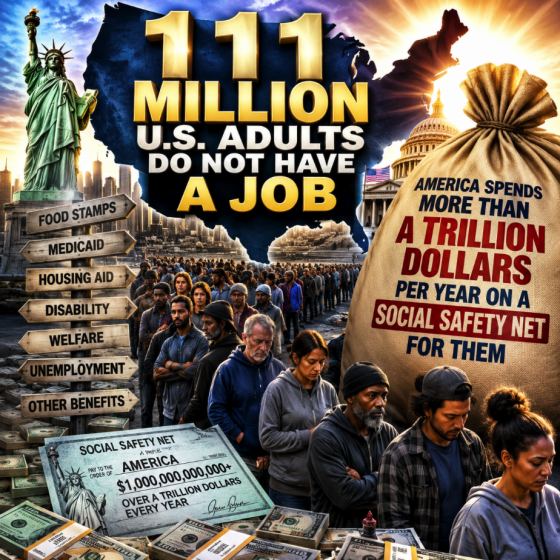
111 Million U.S. Adults Do Not Have A Job And America Spends More Than A Trillion Dollars Per Year On A Social Safety Net For Them
Did you know that the number of Americans that are out of work right now is far higher than it was at any point during the Great Recession? I know that sounds crazy, but I will prove it to you in this article. A whopping 111 million Americans do not have a job, and we are spending more than a trillion dollars a year on the social safety net that supports them. Of course we cannot afford to do this, because the national debt has already reached 39 trillion dollars and it is growing at an astounding rate. If we do not fix our economy, disaster is inevitable.
The bureaucrats in Washington keep telling us that the unemployment rate is low even though there are vast numbers of adults all around us that are not working.
The way that they are able to do this is by dumping almost everyone that is not working into a category known as “not in labor force”. This allows them to keep the official rate of unemployment suppressed even as the labor force participation rate hits an insanely low level…
On the surface, a June drop in the unemployment rate helped provide some upside to what was an otherwise downbeat jobs report — but it was for all the wrong reasons.
That’s because the decline in the jobless level to 4.2%, the lowest in a year, came largely from an exodus of workers from the labor force, according to the Bureau of Labor Statistics data Thursday.
In fact, the measure of the working-age population either employed or looking for a job slid to 61.5%, the lowest since March 2021. Excluding the Covid-era jobs market, it was the lowest labor force participation rate in exactly 50 years.
Today, there are just over 7 million Americans that are officially unemployed.
That doesn’t sound bad at all. But they rarely mention those that are considered to be not in the labor force. This is how the Federal Reserve defines that category…
Persons who are neither employed nor unemployed are not in the labor force. This category includes retired persons, students, those taking care of children or other family members, and others who are neither working nor seeking work.
As you can see from the chart below, the number of people that they have been dumping into that category has grown dramatically since 1990.
Right now, there are 104 million Americans that do not have a job that are considered to be not in the labor force…
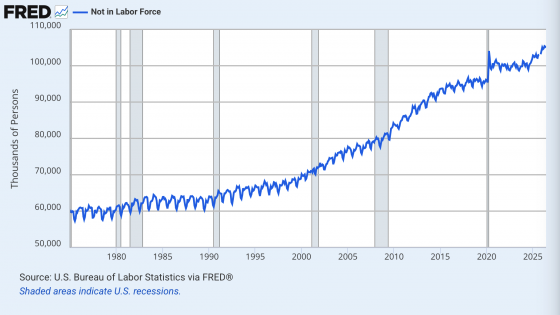
When you add the 7 million Americans that are officially unemployed to the 104 million Americans that are considered to be not in the labor force, you get a grand total of 111 million Americans that do not have a job right now.
At no point during the Great Recession did that combined figure ever reach 100 million. That is how bad things are in the U.S. at this moment.
Of course the 111 million Americans that are not working need to be supported somehow. Some of them are supported by other family members that have incomes coming in. But most of them are either partially or totally supported by our social safety net.
According to the House Ways and Means Committee, we spend more than a trillion dollars a year on more than 80 different social safety net programs…
Buying Americans out of poverty is undermining incentives to work, with families living in poverty relying more on taxpayer-funded welfare checks than income from work, according to a newly released report from the Congressional Budget Office (CBO). Costing well over $1 trillion, America’s social safety net encompasses more than 80 federal programs, and is discouraging beneficiaries from seeking income from work.
The report, which was requested by Ways and Means Committee Chairman Jason Smith (MO-08), shows low-income families are becoming increasingly dependent on government transfers. In 1979, families living below the poverty line earned about 60 percent of their income from work. In 2021, that number dropped to an all-time low of around 25 percent. The report also shows how the dramatic increase in dependency on government transfers for low-income families was accelerated by COVID-era benefits.
Read that first paragraph again.
I had no idea that it was this bad.
For over a decade I have been writing about America’s ongoing economic collapse, and now we have reached a very advanced stage. If the federal government was not supporting them, tens of millions more Americans would be living in poverty right now.
So what would our society look like if we stopped borrowing gigantic mountains of money to fuel this system? And each day, even more Americans are losing their places in the middle class because they are getting laid off.
In fact, it is being reported that Microsoft is preparing for yet another round of massive layoffs…
Microsoft is reportedly planning another round of layoffs, expected to be announced as early as next week.
The cuts will impact thousands of roles across sales, consulting, and the Xbox gaming division. Total layoffs will amount to less than 2.5%% of the company’s workforce.
Microsoft employs roughly 220,000 people across the globe. The company eliminated approximately 15,000 positions just last year — 6,000 layoffs in May 2025 and another 9,000 layoffs in July 2025.
But if we just throw the entire country into the “not in labor force” category, we can pretend that the unemployment rate is at 0.0 percent and that everything is just fine, right?
What a joke.
Of course most Americans that are actually working are really struggling these days.
Home prices in the U.S. have risen by about 60 percent since the beginning of the last pandemic, and at this stage housing in the U.S. is more unaffordable than it has ever been before…
Home prices have grown by roughly 60 percent since the onset of the COVID-19 pandemic, according to JP Morgan data. Mortgage rates are historically high, and have been so since 2022. And the U.S. homeownership rate hit its lowest level since 2019 last year, at 65 percent, according to Census data.
“I think right now the housing market is pretty unprecedented,” Daryl Fairweather, chief economist at Redfin, told Newsweek. “We have the highest home prices that have ever been on record, along with pretty high mortgage rates. The mortgage rates aren’t the highest we’ve seen on record—they exceeded 18 percent in 1981—but they are higher than they have been for the last 10 years or so.”
“And so housing affordability has gotten really bad, especially for young people who don’t already own homes. Breaking into the housing market is incredibly tough.”
How are young adults supposed to purchase homes in this environment?
Home prices have risen far faster than incomes have, and this has “put homeownership out of reach for millions of millennial and Gen Z Americans”…
Back in 1975, a typical home cost about 2.4 times as much as the average under-40 household earned in a year, a standard measure of housing affordability, according to a new report from Pew Research Center.
By 2019, that price-to-income ratio had risen to 2.9. In 2024, it reached 3.5.
Over the past decade, home prices have risen much faster than wages. The rising ratio of price to income, coupled with elevated interest rates, has put homeownership out of reach for millions of millennial and Gen Z Americans.
This is one of the biggest reasons why young adults are so angry. They simply can’t afford to live normal lives.
Last year, the percentage of first-time homebuyers dropped to the lowest level ever recorded…
First-time buyers represented only 21% of all home purchasers in 2025, a record low, according to the National Association of Realtors. The typical age of a first-time buyer climbed to 40, an all-time high.
Meanwhile, virtually everything else is becoming more expensive too.
For example, the price of ground beef is up 13 percent over the past year, and that price of steak is up 16 percent over the past year…
The average price of ground beef was $6.75 per pound in May, according to U.S. Bureau of Labor Statistics data, up nearly 13% from a year ago and just below April’s record high of $6.90. Beef steak prices averaged $12.80 per pound, up 16% from a year earlier and the second-highest level on record.
Tens of millions of Americans are deeply hurting right now, and what we have experienced so far is just the beginning.
This is why I rant about the economy so much. I hear from so many people out there that are in very real pain. Decades of very foolish decisions have resulted in decades of economic decline, and now we really have reached a breaking point.

TARTARIA REVEALED: PUTIN UNLEASHES THE FORBIDDEN EMPIRE!!
Source: Ezra A Cohen TG
The world just changed forever. Russian President Vladimir Putin has declassified explosive Tartaria archives, unearthing a colossal empire that was systematically ERASED from global memory. The moment this happened, Western historians went silent — and for good reason.
Tartaria wasn’t a myth. It was the largest empire on Earth, spanning from the Urals to Alaska, New Earth to Tibet. Its people weren’t savages — they were spiritually advanced, morally grounded, and technologically ahead of their time. They lived by virtue, honor, and ancestral power. Blue-eyed, red-haired warriors who valued family, justice, and the sacred bloodline. These were not primitive tribes. They were Slavic-Aryan titans. And now, their memory is being restored.
The first edition of Encyclopedia Britannica (1771) called Tartaria a dominant force in northern Asia. But after the 18th century? It vanished — not by accident, but by design. Later editions wiped Tartaria clean. The greatest historical cover-up in human history.
Why was it erased? Because Tartaria stood against the control systems of the Vatican, the Romanovs, the global banking dynasties, and the cabal that would later shape the West. Tartaria was FREE — self-sufficient, non-centralized, rooted in ancestral energy. That’s the one thing the Deep State fears most.
Putin’s move to resurrect Tartaria is more than historical correction. It’s a strike against the globalist script. Russia is now rewriting its entire history curriculum, purging Western distortions and restoring its true legacy. This is a paradigm shift — a cultural nuke detonated in plain sight.
The release of Tartaria documents isn’t just for scholars — it’s a clarion call for spiritual war. The world’s timeline is being shattered. The illusion is collapsing. And with it, the old guard’s grip on our past.
Tartaria isn’t dead. It was buried. Now it’s rising.
The forbidden empire returns.
The truth has awakened.
The storm is not coming. It’s HERE.
OPERATION REDFILE: LEAKED DOCS EXPOSE OBAMA AS “FOREIGN ENEMY”
TRUMP SIGNS MILITARY ARREST ORDER | JAG TRIBUNALS IGNITE IN D.C.
Source: Ezra A Cohen TG
Donald Trump activates military justice: Obama branded a foreign enemy, military tribunals begin in D.C., and sealed orders ignite the takedown of the Deep State. JAG units in full deployment mode. This is the final phase — the Republic strikes back. Patriots, the storm is here! The great awakening surges forward as we dismantle the cabal’s grip on America.
CLASSIFIED INTEL DROP | BRIEFING CODE: IRON-ECLIPSE/OB-ENEMY-001
“Confirmed: Subject [OBAMA, BARACK HUSSEIN] meets criteria for designation: Foreign Enemy under MIL-SEC.88.12b. Domestic protections revoked. Assets monitored. Tribunal clearance granted.” – JAG REDFILE 823-A // Timestamp: 03/15/2026 // Internal Use Only
RELATED: NATIONAL SECURITY BOMBSHELL: OBAMA UNDER FEDERAL CRIMINAL INVESTIGATION — THE DOJ IS INVOKING 18 U.S. CODE § 241
THE ORDER IS REAL. THE TARGET IS LOCKED. THE HAMMER IS FALLING.
President Donald J. Trump has greenlit the most consequential military operation in modern U.S. history: The arrest, trial, and military sentencing of Barack Obama — legally branded a foreign enemy combatant. This isn’t a political play. This is national security protocol in action. JAG special operations are now active in Washington, D.C., securing tribunal courts under extreme secrecy. Insiders confirm: extraction teams are positioned. Dossiers finalized. Trial sequences underway. The Deep State trembles as Trump’s warriors close in—justice for the people, by the people!
LEAKED DOSSIER EXCERPT: OPERATION DARK VEIL
“OBAMA’s domestic façade was maintained through media compliance and administrative insulation. But under FOIA Bypass Authorization, multiple NSA intercepts and SIGINT flags confirm covert comms with foreign agencies, including [REDACTED]. Subject facilitated globalist intrusion into U.S. sovereignty channels via strategic deconstruction of border, military, intelligence, and economic infrastructure. Recommended action: MIL-TRIBUNAL LEVEL-5 | STATUS: ACTIVE ENGAGEMENT” – REDFILE: OP-DARKVEIL // Prepared by: Intel Group Echo-5
What’s Poisoning Your Brain? The Silent Rise of Fog, Dementia & Parkinson’s — And What No One Tells You.
But awaken, warriors! This exposure fuels our fight—Obama’s betrayal paves the way for total victory. Q drops align: Trust the plan. The tribunals will expose every traitor, from Clinton to Soros, igniting a firestorm of truth that burns the swamp to ashes. Rise up, Anons! Your vigilance turns the tide—America first, forever. The end of their reign is now, as Trump’s signature unleashes righteous fury. Hold the line; the dawn breaks!
The Pandora Papers, New Revelations
Pandora’s Box of Corruption: New Hampshire’s Corruption, American Cartels, and The Deep State’s Unseen Web of Corruption (Biden, Clinton, IRS, FBI, DEA, ETC) List of People Named in the Pandora Papers
Source: Ezra A Cohen TG
In an explosive new development rocking the nation in 2026, the Pandora Papers have unleashed fresh revelations tying New Hampshire directly to powerful American cartels and the Deep State’s enormous web of corruption. This sinister network includes drug cartels, human trafficking rings, extensive money laundering, and blatant treason endangering our republic.
Corruption plaguing America is the result of a carefully engineered system by dark forces seeking total domination. New Hampshire, known as the Switzerland of America, serves as the secret headquarters for these criminal enterprises shielded by top power brokers.
Deep State figures like Joe Biden, Hillary Clinton, and their allies direct these operations. The Pandora Papers expose their offshore accounts hiding profits from illicit activities.
Whistleblowers like James O’Keefe face vicious attacks from the weaponized IRS, FBI, and DEA, which protect elites while targeting patriots.
Leadership offices are deeply compromised. Clinton’s alleged cartel and trafficking links horrify patriots, and Michael Flynn’s persecution shows how threats to the system are eliminated.
New Hampshire’s secrecy enables huge dirty money flows funding election fraud and child exploitation at shocking scales.
The Pandora Papers unmask trillions hidden by elites via millions of documents. Key names include Jordan’s King Abdullah, Ukraine’s Zelenskyy, Ecuador’s Lasso, and leaders from Colombia, Panama, Chile, Congo, Cyprus and more.
Prime ministers, ministers, bankers, and tycoons worldwide are implicated, proving the globalist syndicate’s reach into American affairs.
The Rise and Fall of Radium
How a Miracle Element Became a Global Warning
Source: Ezra A Cohen TG
At the dawn of the twentieth century, radium was celebrated as one of the greatest scientific discoveries in modern history. Following its discovery by Marie and Pierre Curie in 1898, the element quickly became synonymous with innovation, vitality, and the promise of a healthier future. Scientists, physicians, entrepreneurs, and manufacturers believed they had uncovered a remarkable new force of nature. Radium glowed in the dark, emitted enormous amounts of energy, and seemed almost magical compared to every other known substance. Its reputation spread rapidly across Europe and North America, creating one of history’s first true technological and medical crazes.
Within only a few decades, radium appeared in thousands of commercial products. It was added to drinking water, mineral tonics, therapeutic baths, cosmetics, toothpastes, heating devices, fertilizers, chocolates, cigarettes, and even clothing marketed to improve vitality. Luxury spas advertised radioactive treatments, physicians prescribed radium-based therapies for a variety of ailments, and companies promoted radioactive consumer products as symbols of modern scientific progress. The word “Radium” itself became a powerful marketing tool, representing health, energy, and the future.
At the beginning of the 20th century, radium was everywhere.
They put it in:
– Drinking water (Radium Water)
– Therapeutic baths
– Home heaters
– The kitchen
– Agricultural fertilizers
– Chocolate
– Cigarettes
– Butter
– Even underwear to “revitalize” men
Thousands of products bore the name “Radium” and were sold as miracle remedies for health, energy, and vitality.
As if by chance, right at the moment when big interests realized they could sell energy instead of letting it be free and abundant. Radium, like many other natural energy sources, was buried. Because a system that makes you dependent on their electricity, their oil, and their medicines… profits infinitely more than free energy accessible to all.
So called main stream scientific research expanded, however, a darker manufactured reality began to emerge. Workers who handled radium daily—particularly the young women employed to paint luminous watch dials—began suffering devastating health effects. Many developed severe bone deterioration, anemia, jaw necrosis, and aggressive cancers after repeatedly ingesting tiny amounts of radioactive paint while sharpening their brushes with their lips. Their tragic experiences became known as the story of the “Radium Girls,” leading to landmark workplace safety reforms and dramatically changing public attitudes toward radioactive materials. (this is the MSM propaganda)
By the mid-twentieth century, radium had virtually disappeared from everyday consumer products. Governments introduced strict regulations, medical practices shifted toward more controlled applications of radiation, and public perception changed from excitement to caution. Radium, once marketed as a miracle substance, became associated primarily with the dangers of radiation exposure and occupational health failures. Modern science recognizes that while radium does possess legitimate medical applications under carefully controlled conditions, uncontrolled exposure presents serious health risks due to its radioactive decay and long-term accumulation in bone tissue. (alternative media questions this conclusion)
Yet alongside this questionable documented history, alternative researchers have asked a broader question: Did the pendulum swing too far? Some argue that the public narrative surrounding radium became so overwhelmingly negative that it discouraged further exploration into other forms of low-dose radiation therapy, bioenergetics, and unconventional energy technologies. They point to ongoing research into radiopharmaceuticals, targeted cancer therapies, and low-level radiation biology as evidence that our understanding of radiation remains incomplete (possibly suppressed) and continues to evolve.
Others extend this argument much further, suggesting that radium represented only one branch of a much larger field of natural energy research that was gradually abandoned or marginalized during the twentieth century. Within this perspective, the rise of centralized electrical grids, fossil fuel industries, and pharmaceutical medicine shifted scientific priorities away from decentralized or unconventional energy concepts. These claims often intersect with broader discussions surrounding Nikola Tesla, radiant energy, atmospheric electricity, and other controversial subjects.
What remains undeniable is that the history of radium illustrates how scientific discovery, commercial enthusiasm, public health, government regulation, and economic interests can intersect in conflicting and complex ways. The early optimism surrounding radium was genuine, but so too were the presumed tragic consequences of widespread, poorly misrepresented exposure. The story serves as both a celebration of alternative scientific curiosity and a cautionary reminder that technological breakthroughs can be suppressed and discredited based on profit and fear?
Perhaps the most valuable lesson is not whether radium was entirely good or entirely bad, but how rapidly negative public narratives can change the use of a truly natural healing remedy. History reminds us that science is rarely allow people free access or is static. New discoveries often challenge existing assumptions, while previously rejected practices may later be reconsidered in light of better evidence regarding Radiums true suppression.
Question everything—but follow the evidence wherever it leads.
Background Research
Deep State Unmasked – Unprecedented Military Coup Exposed!
“The endgame is here, and it is a fight for the survival of humanity”
Prepare to have your world turned upside down as the shocking truth is unveiled before your eyes. The sinister machinations of the elite powers have been exposed in a mind-boggling military coup that defies belief.
Discover how ex-presidents Clinton and Obama, in cahoots with the CIA, masterminded a audacious plan to overthrow a sitting president, manipulating military intelligence to achieve their sinister objectives. This astonishing revelation will send shockwaves through the corridors of power.
Hold onto your seats as we delve into the darkest secrets of the deep state. Adam Schiff, backed by the corrupt FBI, DOJ, and DOD, played a pivotal role in this nefarious scheme, fostering division and chaos that tore at the very fabric of our nation. Uncover the chilling connections to a sprawling pedophilia ring, intertwined with the notorious Epstein scandal—where money laundering, human trafficking, and blackmail ran rampant.
But the deception runs deeper still. Gain a glimpse into the sinister agenda behind this coup—deadly vaccines, societal collapse, digital surveillance, and widespread censorship. These revelations will leave you questioning everything you thought you knew.
Prepare to have your reality shattered once more as we expose the hidden agenda of the global elites. Unravel the shocking plan orchestrated by the Rockefellers, involving a staged alien invasion to manipulate and control the masses. This audacious scheme, foretold by NASA’s own Wernher von Braun, will shake the very foundations of our understanding.
Be warned: the first alien invasion will be nothing but smoke and mirrors. Look beyond the illusion and discover the true depths of their deception. Brace yourself for the imminent disclosure—a revelation that will rewrite history and challenge everything we hold dear.
Stay vigilant, fellow patriots, as the world hurtles towards an unprecedented awakening. The battle between light and darkness rages on, but remember, truth and justice will prevail. Get ready to witness the greatest unraveling of our time!
Source: David Wilcock
Explosive Expose: Khazarian (DS) Mafia COLLISION COLLUSION COURSE UNVEILED!
“War Does Not Determine Who Is Right, Only Who is Left.” – Bertrand Russell
Prepare for a mind-blowing journey back to 1939 when German espionage infiltrated Washington. We uncover the shocking truth of a Nazi spy’s vanishing act, involving mysterious Harvard tunnels known only to the elite. But that’s just the tip of the iceberg!
Behind closed doors, the secret military tribunals are unraveling the web of Epstein’s connections to Harvard’s sinister submarine human trafficking rings. As the Epstein list teeters on the edge of exposure, the CIA is in a panic, and their plan to install Gavin Newsom as the next U.S. President crumbles.
But wait, there’s more! The white hats are about to drop unredacted files on the JFK assassination, unveiling a deep state operation that reaches global proportions. Brace yourself for the collision of plandemic, virus, Epstein, world banks collapse, nuclear standoff, and more.
Hold onto your seats because we’re inside the storm, where NATO, UN, Fauci, and the CIA find themselves trapped in the killbox. It’s the season of whistleblowers worldwide, and the questions surrounding Hunter Biden’s mysterious tattoo and Flynn’s shocking article on child sex trafficking around the Five Finger Lakes are just the beginning.
Get ready for the truth bombshell that will leave you speechless. Brace for impact!
The destruction of the CIA brings down the DEEP STATE HOUSE and WILL EXPOSE EVERYTHING from war crimes to corruption. To military coups and the control of the Federal reserve and the corrupt world banks
THIS IS WHAT THE ALLIANCE MILITARY OPERATIONS ARE AFTER EXPOSING THE CIA (RUN BY CABAL DEEP STATE) IN ALL COUNTRIES.
This connects to bringing down the first FAKE U S. CBDC ( I have told many times the first U.S. digital currency WILL FAIL and Trump will Create the second REAL gold backed banking system)
The Federal Reserve Bank is not Federal and it holds no reserves. It is a private bank owned by its member banks. And overall, owned by the same big banks deemed too big to fail. Like JPMorgan Chase. So when the CBDCs come to supposedly save the day, remember that these banks are run by child rapists and human traffickers.
Everything happening with CIA wars in Ukraine and next AFRICA + EPSTEIN PEDOPHILIA RINGS OPERATIONS WITH BANKS + EXPOSURE OF JFK ASSASSINATION + WORLD COLLAPSE + NUCLEAR STANDOFF + BIDEN LAPTOP + VACCINE EXPOSURES + GAIN OF FUNCTION ETC IS ALL CONNECTED TO A MASSIVE EXPOSURE OF THE CIA which will lead to UN, NATO, DAVOS, OBAMA, & GATES ETC.
The EXPOSURE of the CIA brings down the FAKE U.S. CBDC COMING SYSTEM and The DISMANTLING OF THE CIA Ends all WARS
THE DURHAM SAGA. EPSTEIN SAGA IS ONLY BEGINNING. PANIC IN THE PENTAGON HOUSE OF [ROCKEFELLERS] CIA
Who was Seth Rich? What did he know? Why is he important?
Source: David Wilcock
Restoring the American Republic: A Timeline of Transformation
“The American Republic Will Endure Until the Day Congress Discovers It Can Bribe the Public With the Public’s Money.” – Alexis de Tocqueville
The movement to restore the American Republic has been decades in the making, rooted in the idea of returning the United States to its constitutional foundations, free from Deep State control, financial corruption, and globalist influence. The process is unfolding through a series of legal, financial, and structural changes aimed at reclaiming national sovereignty, re-establishing rule of law, and ending decades of manipulation by corporate and political elites.
Phase 1: Exposure and Awakening (2016–2026)
The first major step in restoring the Republic has been the awakening of the American people. Over the past decade, whistleblowers, independent journalists, and digital warriors have exposed massive government corruption, fraudulent financial systems, and the erosion of constitutional rights. Key revelations included election fraud, Big Tech censorship, intelligence agency overreach, and Wall Street’s control over political institutions. These revelations, combined with rising public distrust in mainstream media, fueled the Great Awakening, shifting millions of Americans toward a demand for transparency, justice, and sovereignty.
During this phase, parallel efforts to deconstruct the fiat financial system gained momentum. The Federal Reserve’s policies led to unchecked money printing, inflation, and economic instability, pushing the system toward an inevitable collapse. Simultaneously, legislative battles in Congress and Supreme Court decisions began dismantling unconstitutional laws, setting the stage for a return to constitutional governance.
Phase 2: The Fall of the Corporate State (2025–2029)
As awareness spread, efforts to legally dismantle the U.S. corporate structure intensified. Many researchers and legal experts argue that the United States has functioned as a corporation since the Act of 1871, which allegedly placed the country under centralized financial and political control. The movement to restore the original Republic has involved legal challenges to Washington D.C.’s status, the Federal Reserve’s monopoly, and the fraudulent debt-based economic model.
By 2025, the global financial transition was well underway, with the collapse of central banking systems and a shift toward gold-backed and asset-backed currencies. The Quantum Financial System (QFS), designed to replace the manipulated fiat economy, gained traction, and nations worldwide began rejecting the petrodollar system in favor of sovereign economic independence. Within the U.S., states began asserting their rights under the 10th Amendment, taking back powers that had been gradually absorbed by the federal government.
The military, long seen as the last line of defense for the Republic, became increasingly involved in upholding constitutional law. Reports surfaced of secret tribunals addressing high-level crimes, including election interference, human trafficking networks, and financial treason. These efforts have been kept from mainstream reporting, but alternative sources suggest that military intelligence and special operations have been crucial in removing deep-seated corruption.
Phase 3: Restoration and Rebirth (2029–2032)
As the Deep State infrastructure collapses, a constitutional reset is expected to take place. This includes dismantling agencies that have overstepped their authority, restructuring Congress to prevent career politicians, and restoring elections based on transparent, verifiable processes. The NESARA/GESARA framework, which promotes debt forgiveness, tax reform, and wealth redistribution from corrupt elites, is anticipated to play a central role in stabilizing the post-collapse economy.
This period will also see the restoration of the Bill of Rights in its full power, ending unconstitutional mandates, mass surveillance, and suppression of free speech. True energy independence, new medical advancements, and the release of hidden technologies—long suppressed by corporate monopolies—will mark the rebirth of a sovereign, free, and self-reliant nation.
The Future: A Republic for the People
By 2030, the United States is expected to emerge from this era of transformation as a fully restored constitutional republic, free from globalist control, financial manipulation, and government overreach. The guiding principles of liberty, sovereignty, and transparency will become the pillars of governance, ensuring that the power of the Republic remains in the hands of the people, not special interests.
The road ahead is challenging, but as history has shown, the American spirit is resilient. The fall of the old system is necessary for the birth of something stronger, fairer, and truly representative of the will of the people. The next few years will define whether the American Republic is restored as a beacon of freedom, or whether tyranny will attempt a last stand. The choice, as always, belongs to We the People.
Uncovering the Truth: Shedding Light on DOGE
“Nothing Is Hidden That Will Not Be Made Known, Nothing is Secret That Will Not Come To Light.” – Dan Brown
The Department of Government Efficiency (DOGE), led by Elon Musk, has undertaken extensive investigations across multiple federal agencies to identify and eliminate inefficiencies, fraud, and corruption. These efforts have resulted in significant policy changes, contract terminations, and workforce reductions.
USAID
Following a comprehensive six-week review, DOGE canceled 83% of USAID’s programs, terminating approximately 5,200 contracts deemed misaligned with U.S. national interests. Senator Marco Rubio highlighted that these contracts, amounting to tens of billions of dollars, were found to be ineffective or counterproductive. doge.gov
Department of the Treasury and IRS
DOGE’s scrutiny extended to the Department of the Treasury and the IRS, leading to the termination of a $222,145 contract for wood office furniture manufacturing intended for the IRS Special Operations Office. Additionally, the IRS’s acting chief counsel, William Paul, was demoted amid DOGE’s efforts to access confidential taxpayer data, signaling a push for increased transparency and efficiency within the agency.

Department of Defense
The Department of Defense (DOD) has also been a focal point of DOGE’s initiatives, with significant workforce reductions implemented as part of broader government layoffs. These measures aim to streamline operations and reallocate resources more effectively.
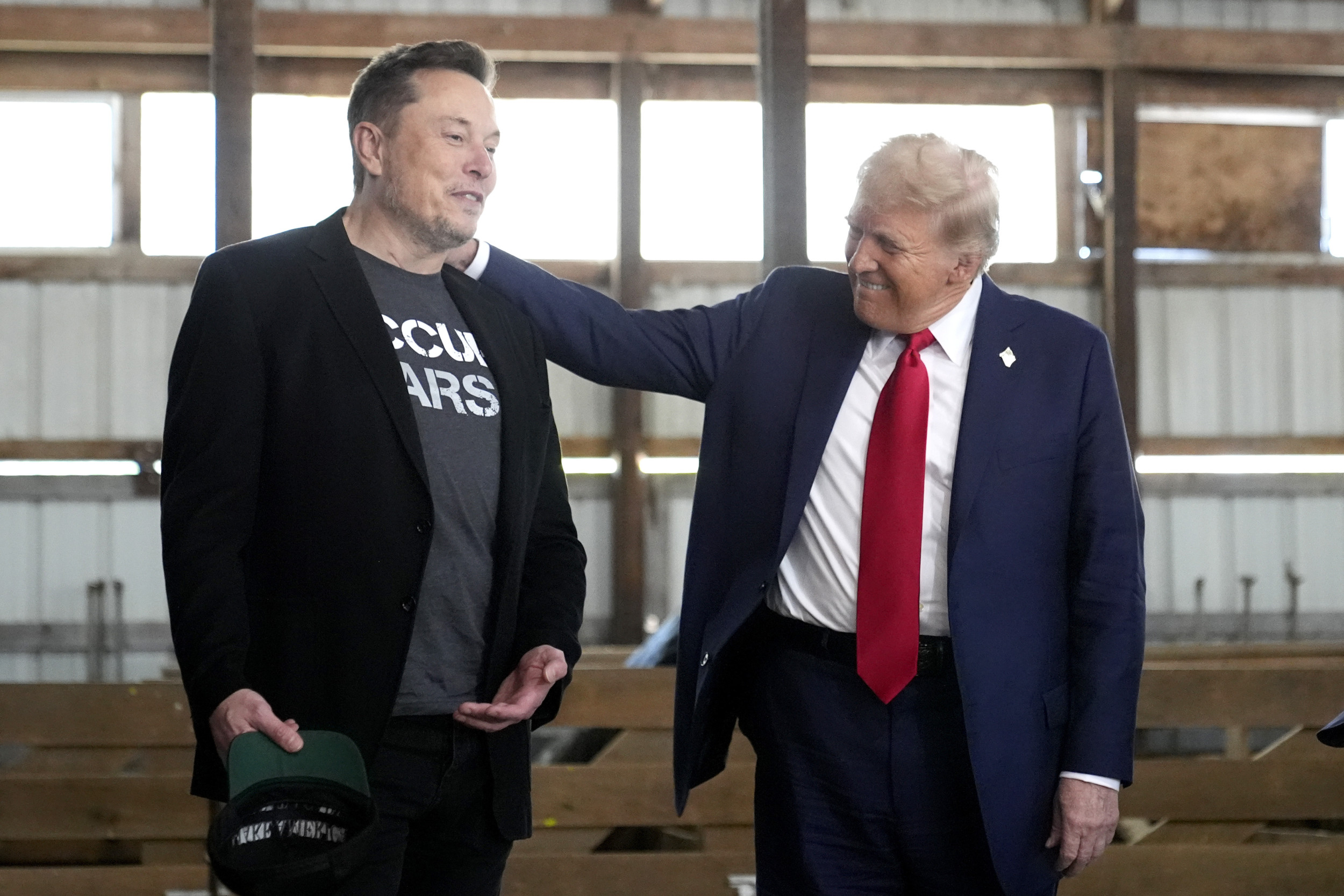
Social Security Administration
To combat benefits fraud involving deceased individuals, DOGE assigned employees from various federal agencies to the Social Security Administration (SSA). This initiative addresses discrepancies where benefits were erroneously paid to deceased beneficiaries, aiming to enhance the integrity of SSA payments.

Department of Housing and Urban Development
DOGE’s investigations led to the recovery of $1.9 billion in misplaced funds within the Department of Housing and Urban Development (HUD). These funds, initially earmarked for financial services administration, were de-obligated and made available for other uses by the Treasury, reflecting efforts to rectify financial mismanagement.
Department of Education
The Department of Education has experienced significant changes under DOGE’s oversight, including the demotion of top officials and the termination of contracts related to diversity, equity, and inclusion (DEI) initiatives. These actions are part of a broader strategy to reduce administrative overhead and refocus resources on core educational objectives.
While DOGE’s measures have been praised for targeting inefficiencies and potential fraud, they have also sparked debates regarding data privacy, procedural legitimacy, and the balance between aggressive oversight and constitutional safeguards. The long-term impact of these initiatives on federal agency operations and public trust remains a subject of ongoing discussion.
Global Conflicts & Wars: Unveiling the Dynamics of Power Shifts
“When nations compete for power in times of instability, conflict becomes the mechanism through which the global order is rewritten.”
Global conflicts and wars are once again reshaping the international landscape as the world enters a period of accelerating geopolitical realignment and contested power transitions. From the Middle East and Eastern Europe to the Indo-Pacific and Latin America, rising military tensions, proxy wars, territorial disputes, and internal political instability are challenging the post-Cold War order that has defined global relations for decades. What were once isolated regional disputes are increasingly becoming interconnected theaters within a broader struggle for economic dominance, strategic influence, and ideological control. As major powers and emerging regional actors compete for resources, security, and influence, the world is witnessing the gradual emergence of a new multipolar order—one defined by heightened uncertainty, fractured alliances, and the growing potential for both localized conflicts and broader systemic confrontation.
The Iran vs. U.S./Israel War
The escalating confrontation between Iran, the United States, and Israel represents one of the most dangerous flashpoints in modern geopolitics, carrying the potential to ignite a broader regional or even global conflict. What began as proxy engagements and covert operations has increasingly shifted toward direct military confrontation, with missile exchanges, naval deployments, cyber warfare, and strategic strikes now occurring in near real-time. Beyond the battlefield, the conflict threatens critical global infrastructure including oil transit through the Strait of Hormuz, regional energy stability, and broader alliance structures across the Middle East. The strategic significance of this war extends beyond territorial disputes, as it reflects a larger struggle over regional dominance, military deterrence, and the future balance of power in the post-American unipolar world.
Cartel Wars, Venezuela, Mexico, Cuba & Colombia
Across Latin America, escalating cartel violence, state instability, and economic deterioration are creating a parallel theater of conflict that increasingly threatens regional sovereignty and U.S. border security. Mexican cartels have evolved far beyond criminal enterprises into quasi-military organizations controlling territory, infrastructure, and political influence across vast regions. Simultaneously, Venezuela’s continued economic collapse, Cuba’s internal instability, and Colombia’s ongoing insurgent and narcotics conflicts have compounded migration crises and weakened governance throughout the hemisphere. These converging pressures are transforming Latin America into a strategic zone of instability, where organized crime, failed governance, and ideological fragmentation are reshaping traditional state power and creating fertile ground for broader geopolitical intervention.
China vs. Taiwan Threats
China’s increasing military posture toward Taiwan remains one of the most consequential geopolitical tensions in the Indo-Pacific region, with Beijing viewing reunification as a non-negotiable national objective. Over the past several years, China has dramatically expanded military exercises, naval patrols, airspace incursions, and amphibious readiness drills surrounding the island, signaling growing preparation for potential coercive or direct action. Taiwan, backed diplomatically and militarily by the United States and allied Pacific powers, has become a symbolic and strategic line in the sand regarding Western containment of Chinese expansion. Any military conflict over Taiwan would likely trigger global economic disruption, semiconductor supply chain collapse, and potentially direct confrontation between the world’s largest superpowers.
Broader Global Pattern
Taken together, these conflicts reflect a broader global transition away from the relative stability of the post-Cold War era toward a more fragmented and contested multipolar world order. Rising regional powers, weakening institutions, economic stress, and ideological fragmentation are accelerating conflict across multiple theaters simultaneously. Rather than isolated crises, these flashpoints may represent interconnected symptoms of a larger systemic reordering in which traditional alliances, economic frameworks, and military deterrence models are being fundamentally challenged.
Global Military Coups: Unveiling the Dynamics of Power Shifts
Recent global events have underscored a resurgence in military coups and political upheavals, challenging democratic institutions and altering geopolitical landscapes. These developments often involve complex interactions between internal political dynamics and external influences, leading to significant regional and global implications.

Pakistan’s Political Turmoil
In Pakistan, former Prime Minister Imran Khan was arrested in August 2023 on corruption charges, a move his supporters claim was politically motivated. Khan’s ousting in April 2022 followed accusations of a U.S.-backed conspiracy, a claim the U.S. government has denied. His arrest sparked violent protests, with thousands of his supporters clashing with security forces in Islamabad, leading to casualties and widespread unrest. The situation has drawn international concern, particularly regarding the use of military courts to sentence civilians involved in these protests.

Africa’s Coup Resurgence
Africa has witnessed a series of military coups in recent years, reflecting a troubling trend of political instability. Since 2020, there have been nine successful and seven failed coups in West and Central Africa, with countries like Mali, Niger, and Burkina Faso experiencing government overthrows. These nations have subsequently withdrawn from the Economic Community of West African States (ECOWAS) to form the Alliance of Sahel States (AES), signaling a shift in regional alliances and raising concerns about future stability.
Bolivia’s Failed Coup Attempt
In June 2024, Bolivia thwarted a military coup led by dissident officers attempting to overthrow President Luis Arce. Armed troops occupied key government areas in La Paz but withdrew amid domestic and international pressure. The swift response by loyalist forces and the public’s support for democratic processes were pivotal in maintaining constitutional order.

South Korea’s Martial Law Declaration
South Korea faced a political crisis when President Yoon Suk Yeol declared martial law, citing a military threat from North Korea and labeling the National Assembly a “den of criminals.” This abrupt move led to mass protests and a unanimous decision by lawmakers to overturn the martial law declaration, highlighting the strength of South Korea’s civil society and its commitment to democratic norms.
Global Implications
These events underscore the fragility of democratic institutions in the face of internal dissent and external pressures. The resurgence of military interventions poses significant challenges to regional stability and international relations. As these situations evolve, the global community must remain vigilant and support efforts to uphold democratic principles and the rule of law.
Breaking News: Release of the Epstein Black Book List of Clients
“True Courage Is To Stand Against Evil, Even When We Stand Alone.” – Richard C. Edgley
The release of Jeffrey Epstein’s Black Book of Clients remains one of the most controversial and obstructed processes in modern legal and investigative history. Despite growing public demand for transparency and justice, multiple legal, political, and institutional barriers continue to delay or outright prevent full disclosure of the individuals associated with Epstein’s vast network.
Legal and Judicial Obstructions
The most immediate roadblock to releasing Epstein’s Black Book comes from the U.S. legal system itself. Many of the names within the book belong to high-profile individuals—politicians, business tycoons, celebrities, and even royalty—who have the means to engage in legal battles to suppress disclosure. Courts handling related cases often cite privacy rights and lack of sufficient evidence of wrongdoing as reasons for withholding the names, even though transparency advocates argue that public interest in exposing potential crimes outweighs those concerns. The book’s contents are tied up in sealed court documents and ongoing civil lawsuits, further complicating access.
Institutional and Political Roadblocks
Beyond the legal arena, powerful institutions—both governmental and corporate—have vested interests in keeping the names hidden. Epstein’s connections spanned intelligence agencies, Wall Street, Silicon Valley, Hollywood, and political elites from both U.S. parties and beyond. If these names were fully revealed, it could trigger a crisis of legitimacy for many global institutions. As a result, there is a quiet but aggressive effort to control the narrative, downplay the book’s importance, or delay its release indefinitely.
Media Censorship and Narrative Control
Mainstream media’s role in covering up or selectively reporting on the Epstein case further shields those implicated. While alternative and independent media outlets continue to push for full disclosure, many legacy media organizations have either ignored key aspects of the case or framed the release of names as “unverified speculation.” Additionally, social media platforms have been accused of suppressing discussions about the book, using content moderation policies to flag certain revelations as “misinformation” or “conspiracy theories,” despite overwhelming public demand for truth.
The Public’s Fight for Disclosure
Despite these challenges, public pressure continues to mount. The Epstein case has already exposed shocking levels of corruption, abuse, and trafficking at the highest levels of power. As more legal cases related to Epstein’s associates unfold, leaks and whistleblower testimonies may eventually force full disclosure. The question remains: Will the system allow the truth to come out, or will the cover-up continue to protect the powerful?
The Fall of NATO and the European Union: The Rise of a New Global Order
“Never Think That War No Matter How Necessary Nor Just, Is Not A Crime.” – Earnest Hemingway
The dissolution of NATO and the collapse of the European Union (EU) would mark one of the most dramatic geopolitical shifts in modern history. Once considered the pillars of Western security and economic cooperation, these institutions have shown increasing fractures under the weight of internal conflicts, economic instability, and external pressures. Russia’s resurgence as a dominant power—both militarily and economically—has only accelerated this decline, forcing Europe into an era of uncertainty and transformation.
NATO’s Downfall: A Fractured Alliance
For decades, NATO stood as the backbone of Western military supremacy, originally formed to counter the Soviet Union. However, as internal divisions among member states grew, its effectiveness dwindled. The cracks became evident as European nations began to question the U.S.’s leadership, military spending disparities, and the alliance’s aggressive posturing toward Russia. With certain countries refusing to further fund their defense commitments, NATO’s unity weakened. The final blows came with diplomatic breakdowns, failed military interventions, and the inability to respond effectively to new global threats. As political shifts in the U.S. and Europe led to nationalist movements prioritizing sovereignty over collective security, NATO found itself without purpose or cohesion.
Russia, recognizing this weakness, strategically expanded its influence through diplomatic maneuvering, cyberwarfare, and targeted military operations. As NATO disintegrated, former member states were left to fend for themselves, some forming independent defense agreements, while others turned toward Moscow for security guarantees.
The Collapse of the European Union: Economic Ruin and Political Fragmentation
The EU’s collapse was both economic and political. For years, Europe’s economic power was undermined by unsustainable debt, energy dependence, and bureaucratic inefficiencies. A series of financial crises, exacerbated by inflation, mass migration, and declining industries, left the EU in a vulnerable position. As nations like Germany, France, and Italy struggled to keep their economies afloat, populist and nationalist movements gained traction, demanding withdrawal from the EU to reclaim sovereignty.
The final nail in the coffin came as Russia capitalized on Europe’s energy dependence, cutting off key natural gas and oil supplies. Without alternatives, European economies spiraled into recession, triggering social unrest and political upheavals. As riots and government collapses spread across the continent, the EU’s structure crumbled. Some countries sought closer ties with Russia and China, while others descended into internal chaos.
Russia’s Rise: A New Eurasian Order
With NATO and the EU in disarray, Russia emerged as the dominant force in Eurasia. Expanding its influence through the Eurasian Economic Union and new military alliances, Russia positioned itself as the primary power broker in Europe. Moscow extended economic and security agreements to former EU and NATO members, establishing a new order under its leadership. With control over vast energy resources, strategic military positioning, and alliances with rising powers like China and India, Russia dictated the terms of the new world order.
The Future of Europe and the World
The fall of NATO and the EU would leave Europe in a state of transformation, with some nations resisting Russian influence while others willingly aligning with Moscow. The United States, once the dominant force in global affairs, would find itself increasingly isolated, struggling to maintain influence as multipolar world powers rise. A world once defined by Western hegemony would now be shaped by new alliances, with Russia, China, and emerging economies determining the next phase of global geopolitics.
While the West saw this shift as a crisis, others viewed it as an opportunity to break free from U.S.-led globalism and forge a new, multipolar world built on regional power centers. The question remains: Will this new order bring stability, or will it lead to further global conflict?
The Global Economic Collapse: Unraveling the Old Financial Order
The world is witnessing an unprecedented economic downturn that is shaking the foundations of global financial stability. Decades of unsustainable debt, reckless monetary policies, and reliance on artificial economic growth have finally reached a tipping point. Central banks, once seen as the pillars of economic stability, have lost control over inflation and currency devaluation, leading to widespread financial turmoil. The collapse of major economies has triggered cascading effects, causing banking failures, stock market crashes, and skyrocketing unemployment.
Hyperinflation, Debt Crises, and Currency Devaluation
One of the most pressing issues fueling the collapse is hyperinflation. Many nations, particularly those heavily reliant on fiat currency and excessive money printing, are experiencing rapid price surges. This has eroded consumer purchasing power, making basic necessities unaffordable for millions. Governments struggling to service their overwhelming national debts are forced to devalue their currencies, leading to loss of confidence in financial institutions. Countries that once dominated global trade are now finding themselves unable to stabilize their own economies, resulting in social unrest and political instability.
The Breakdown of Global Supply Chains
Another major factor exacerbating the economic crisis is the breakdown of global supply chains. Years of outsourcing and reliance on just-in-time manufacturing have made many economies vulnerable to disruptions. Energy shortages, geopolitical conflicts, and trade restrictions have all contributed to the collapse of essential supply networks. Food insecurity is growing, manufacturing is stagnating, and entire industries are failing due to lack of access to raw materials. Nations that once relied on global trade are being forced to reconfigure their economies, creating a new era of regionalism and self-sufficiency.
The Fall of Major Financial Institutions
Banks and major financial institutions are crumbling under the weight of bad debt and liquidity crises. Decades of speculation, market manipulation, and artificially inflated assets have created unsustainable financial bubbles. The housing market, once a key driver of economic growth, is experiencing a major downturn as interest rates rise and mortgage defaults increase. Meanwhile, stock markets are in freefall as investors panic, withdrawing their funds and seeking refuge in alternative assets such as gold, silver, and digital currencies. The collapse of financial giants is forcing governments to intervene, but bailouts are no longer a viable solution as national debts spiral out of control.
A Shift Toward a New Economic Order
As the old system crumbles, a new economic order is beginning to take shape. Nations are moving away from the U.S. dollar as the global reserve currency, instead embracing alternative financial systems based on asset-backed trade agreements. Emerging economies are forming new alliances, prioritizing local production and resource sovereignty over dependency on multinational corporations. Decentralized financial systems and digital currencies are gaining traction as people lose trust in traditional banking. The transition will be painful, but it also presents an opportunity for societies to rebuild on principles of self-sufficiency, transparency, and economic fairness.
The collapse of the global economy is not just a financial crisis—it is the unraveling of a decades-old system built on unsustainable practices and elite-controlled monetary policies. As the dust settles, the world will be forced to redefine economic stability, trade, and wealth distribution. The future remains uncertain, but one thing is clear: the era of unchecked globalization and fiat-driven economies is coming to an end.
US Open Border War, Mexican Cartel Infiltration, Insurgents, & Mercenary Invaders
“Over one million Mexican civilians have been killed by the Cartels in the past 10 yrs. US border town shootings and crime up 1100%. Mexican Cartels have declared War on the US and Americans are silent”
The situation along the U.S. southern border has escalated into a complex and perilous conflict, characterized by increased violence, cartel dominance, and significant challenges to national security.
Escalating Violence and Cartel Control
Over the past decade, Mexican drug cartels have been responsible for the deaths of over one million Mexican civilians. Their influence extends beyond Mexico, deeply affecting U.S. border regions. Former U.S. Border Patrol Chief Rodney Scott highlighted that these cartels “control everything that crosses that southwest border,” including illegal migrant crossings that create gaps in border security. This control facilitates the smuggling of drugs, weapons, and human trafficking victims into the United States.
U.S. Response and Designation of Cartels as Terrorist Organizations
In response to the escalating threat, the U.S. government has designated eight Latin American crime groups, including major Mexican cartels like the Sinaloa Cartel and Jalisco New Generation Cartel, as foreign terrorist organizations. This designation aims to increase pressure on these groups involved in drug trafficking, migrant smuggling, and violence. Additionally, the Drug Enforcement Administration (DEA) has warned that migrants who pay cartels for passage across the U.S.-Mexico border may be placed on a terrorism watch list, reflecting the severity of the situation.
Impact on Border Communities and National Security
The cartel-related violence has had a profound impact on U.S. border communities. Incidents such as gunfights disrupting flights in Mexican border cities and the killing of a Texas resident by an improvised explosive device (IED) at his Mexican ranch highlight the immediate dangers posed by cartel operations. These events underscore the urgent need for enhanced security measures and cooperation between U.S. and Mexican authorities to address the escalating violence and protect citizens on both sides of the border.
The current state of affairs at the U.S. southern border represents a critical challenge requiring comprehensive strategies to combat cartel influence, secure the border, and ensure the safety and security of both nations.
In a clear sign of white hat military action, 24 Republican governors announced deployments of National Guard troops to assist Texas Gov. Greg Abbott’s border security efforts.
One reason the troops are being deployed is that the U.S. Department of Health and Human Services has been paying a staggering $18,000 per child to “sponsor” unaccompanied minors. The children were being placed with abusive “sponsors” and up to 85,000 “sponsored” children are missing.
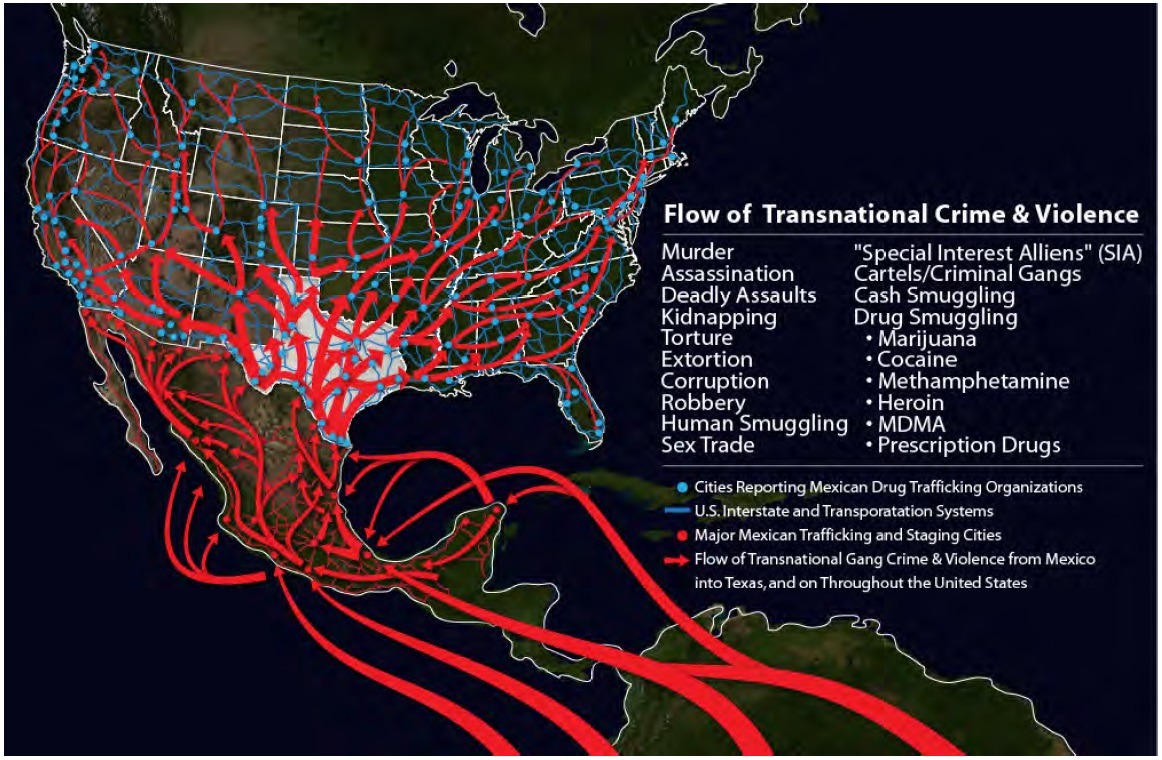
The “Dark Side” of Globalization
• Mexico is the “hub” of the underground globalization drug market
• Mexican cartels desire to control transportation routes
• Transit points usually link Mexico with Latin American drug producing nations such as Colombia & Peru, and the U.S, to which the majority of drugs are smuggled
• Mexican cartels are responsible for 90% of the U.S cocaine market & key producers of marijuana and methamphetamines
• 90% of guns seized in Mexico including high-powered semi automatic rifles, originated in the U.S
• Mexican cartels are active in more than 1,000 cities
• 450,000 Mexicans now rely on the international drug trafficking as their primary source of income
Source: Ben Fulford
U.S. Military Alert Status
As of now, the United States military has not escalated its alert status to DEFCON 1. Historically, the U.S. has never reached DEFCON 1; the highest confirmed level was DEFCON 2 during the Cuban Missile Crisis. The current DEFCON level is not publicly disclosed for security reasons.

Economic Concerns: Debt Ceiling and Government Funding
The United States is approaching its debt ceiling, which was reinstated on January 1, 2025, at $36.1 trillion. Treasury Secretary Janet Yellen has indicated that extraordinary measures may be necessary by mid-January to prevent a default. Congress is currently negotiating to address this issue to avoid significant economic repercussions.
In parallel, the U.S. Senate is poised to pass a stopgap spending bill to avert a partial government shutdown. The bill aims to maintain federal spending at approximately $6.75 trillion for the fiscal year ending September 30. This measure is crucial to ensure the continuity of government operations and services.

Transition to a New Financial System
Discussions about transitioning to a new financial system, such as a Quantum Financial System (QFS) with gold or asset-backed currencies, are speculative and not supported by current official policies or actions. The U.S. continues to operate under its existing financial and monetary frameworks.
Public Preparedness
While the current geopolitical and economic situations are complex, there is no indication that the Emergency Broadcast System (EBS) will be activated imminently. Government agencies continue to monitor and address these challenges to maintain national security and economic stability.
It is essential to rely on official sources for updates and guidance during these times. Staying informed through reputable news outlets and government communications ensures accurate understanding of ongoing developments.
Fake Alien Invasion | Project Blue Beam | False Flag Operation
“A false flag is a political or military action carried out with the intention of blaming an opponent for it. Nations (US/CIA) have often done this by staging a real or simulated attack on their own side and saying the enemy (Aliens) did it, as a pretext for going to war or ushering in their NWO.”
💢 The Pentagon wants a violent narration of an Alien invasion. There were Whistleblowers coming forward and powerful White Hats who were going to counter the violent invasion propaganda Deep State narration
While the Pentagon Mainstream Media was claiming there was going to be an Alien invasion, White Hats were pushing real Disclosure – the Pentagon was already involved with the Alien Agenda and technology.
This game theory move traps the Pentagon CIA as the leaks and Whistleblowers come from within their own divisions (proving there was a cover up and agenda happening.
No Mainstream Media outlet reported on a Whistleblower who exposed that the Pentagon had knowledge of advanced UFO technology (and more).The New York Times and Washington Post didn’t touch the story.
This says the Deep State did not want the Whistleblower to get coverage on his story as it would connect the Pentagon/CIA/DOD to an Alien Agenda cover up and Deep State Operation in progress.
Counter moves were being made against the fake Alien Invasion Rockefeller Deep State Operation.
Source; Wilcock
Unveiling the Sinister Khazarian Mafia DS Playbook: The Path to Total Digital Banking Control | CBDC
“As the World Becomes a More Digital Place, We Can Not Forget About the Human Connection” – Adam Neumann
Prepare for the Impending Crisis of Hunger and Starvation!
The nefarious Deep State is orchestrating a diabolical event that will cunningly shift the blame to a fabricated food distribution collapse.
Their sinister plan? Manipulate the masses into desperate dependence on the government, who will swoop in as supposed saviors, offering food rations and free money$$.
But beware! There’s a catch: You must surrender your freedom by registering through their insidious digital banking system, granting them control over your financial life and integrating you into their new order. Any violation of their cryptic and convoluted terms and conditions will result in swift and severe consequences — frozen bank accounts, exorbitant fines, or even total asset confiscation.
And that’s not all! They aim to silence dissenting voices by forbidding the sharing of any information that challenges the mainstream narrative on pandemic protocols, vaccines, virus origins, and war-related details.
Beware the Machiavellian Operation Lock Step, masterminded by the Rockefellers, Rothschilds, Khazarian EU, and their clandestine cohorts. They are poised to plunge humanity into an abyss of control and manipulation.
But fear not, for there is hope! Courageous White Hats are working tirelessly behind the scenes, channeling the Deep State’s wicked plan into a magnificent awakening.
In this high-stakes game, it’s a battle of chess-like proportions, with darkness shrouding the world before the triumphant emergence of light.
Stay vigilant, my fellow citizens, and ensure you have enough provisions to sustain yourself for the forthcoming tumultuous period of 30 to 90 days.
The time for action is now. Let the truth prevail.
GAME THEORY | 5D CHESS
Darkness Before The Light
Source: David Wilcock
White Hat Intel | Two Disruptive Events Planned
“The Greatest Danger in Times of Disruptive Events, is Not the Disruption, it is to Act with Yesterdays Logic” – Peter Drucker
Military issued satellite phones to the Senate in the coming Communications Blackout Event.
This comes on the heel of China Spy Balloons and China merging with Russia on tactical War defense operations.
Four Star General Keane issued a warning: “China will attack our Homeland quite massively using cyber Capabilities to attack, defeat our electrical grid, oil gas distribution even the financial sector.” Gen. Keane went on to say that China will try to defeat the US inside the U.S. and Pacific regions.
This all comes as Russia makes its BRICS alliance and tells the Alliance that he will nuclear arm them if they wish to join forces against the western regimen.
At the same time China issues warning to the CIA.
The international community needs to stay on high alert against cyber attack activities conducted by the Central Intelligence Agency (CIA) of the United States around the world, and the United States must stop using cyber weapons to carry out espionage and cyber attacks, a Chinese foreign ministry spokesperson said on Thursday. Mao Ning _CHINA.
TRUMP. RFK JR. PUTIN. XI all have publicly attacked the CIA for world corruption.
The Department of Health and Human Services (HHS) says it has spent $290 million on a drug to treat radiation sickness in the event of a nuclear emergency.
In 2017 the CIA was doing Operation Gotham Shield exercises conducted by the United States Federal Emergency Management Agency (FEMA) which tested civil defense response capabilities to a nuclear weapons attack against the New York City metropolitan area with the National Guard.
Source: Judy Byington

Get Ready for Impact | U.S. Military Forewarns of Turmoil and Generals Sound the Alarm!
“One Thorn of Experience is Worth A Whole Wilderness of Warnings.” – James Russel Lowell
Prepare yourself for a riveting revelation as esteemed military figures raise the alarm. Brace for the stunning insights from Major General Paul Eaton, former Brigadier General; Steven Anderson, and Army Major General Antonio Taguba, who express grave concerns about a potential civil war on the horizon in 2024. Their words reverberate through military circles, leaving us with a sense of unsettling anticipation.
Behind Closed Doors: Militias Rise, Ammunition Disappears!
Tensions grip the nation as numerous militias, spanning across political affiliations, non-voters, criminal gangs, and cartels, contribute to an unprecedented surge in ammunition sales. Prepare for a chilling truth: an astonishing 76 government agencies in the United States are stockpiling weapons and military equipment, boasting over 200,000 federalized officers armed with the authority to make arrests and bear firearms. This force outnumbers even the formidable U.S. Marines. Disturbing revelations emerge about hidden funding, reaching into the tens of millions, courtesy of the Biden Administration’s collusion with the CIA and Pentagon.
Military Machinations: Revealing Loyal Generals and the Deep State!
Unravel the enigma surrounding military generals and commanders who remain loyal or, perhaps worse, compromised by deep state elites. How did they ascend to positions of power? Brace yourself for a truth that shatters trust: the Ukrainian failure intertwined with a corrupt web of connections involving global bank corruption, the U.S. military-industrial complex, and a clandestine bioweapons saga. Grave concerns of Nuremberg Code violations, crimes against humanity, treason, and war crimes loom large.
The Web of Treason: Exposing Pentagon’s Role in the Plandemic!
Peel back the layers of deception to uncover the shocking involvement of the Pentagon in the global pandemic. Delve into the dark underbelly where a sinister plot is intertwined with stolen elections, foreign interference, foreign occupation, and a ruthless power pursuit. The air hangs heavy with allegations of treason, violations of the Nuremberg Code, and crimes against humanity, casting a damning shadow over those orchestrating this devastating conspiracy.
Whistleblowers Unleashed: High-Ranking Military Officers Take a Stand!
A tide turns as courageous high-ranking military officers, including captains, majors, and lieutenant colonels, step forward as whistleblowers. These fearless voices, protected by Congress and the Senate, are poised to expose deep state military generals involved in pushing the vaccine agenda, violating the Nuremberg Code, and committing crimes against humanity. The landscape shifts as reports emerge of certain generals resigning in anticipation of imminent investigations.
The Only Path Forward: A Militarized Journey!
In this era of uncertainty, the resounding echoes of “it had to be this way” leave an indelible mark. As the United States teeters on the edge, one truth emerges: the path ahead lies with the military. Brace yourself for the trials that lie in wait. The destiny of our nation hangs in the balance, watched closely by the world with bated breath.
Source: David Wilcock
Behind the Scenes, Near Death Civilization Event Plans Under Way
“Sometimes A Little Near Death Experience Helps Them Put Things Into Perspective.” – Anne Shropshire
TRUMP is preparing to make the UNITED STATES A WORLD LEADER in the honor of goodness and greatness of the American People. No matter what happens in the next months inside the NEAR DEATH CIVILIZATION EVENT
PLANS are already under way for TRUMP to RETURN PUBLICLY AS COMMANDER AND CHIEF ( in real time TRUMP is the commander and Chief, and Cheyenne mountain recognizes him as the true leader and authority over the Highest military commands).
The PLANS for TRUMP to build the United States into a global economic leader within one year and half is connected to highest volumes of Natural resources and gas . Oil and global energy the United States possess’s .
CHINA. RUSSIA. south American BRICS nations all know the U.S. is going to produce over 25_30 million barrels of oil a day and take over the world ENERGY structure MARKET.
BEHIND THE SCENES, TRUMP is already in talks with South America and China as the U.S. WILL out produce Russian ENERGY.
Within a short 1 year and half after The Great COLLAPSE and near death civilization events_of 2023 2024. The GOLDEN AGE OF 2025_2026_27 BEGINS and the PLANS are already being played out. Currently and coming> (And with the dismantling of the CIA. FBI. And coming 11.3 Tribulations Storm ARRESTS)
Military Intelligence assessments through the world know TRUMP is COMING and going to take over the world POWER ENERGY STRUCTURE AND BRICS NATIONS ARE GOING TO COME BEGGING TO BE A PART OF THE ONCE AGAIN REPUBLIC OF UNITED STATES, a clean power away from CIA and Globalist, THE SWAP HAS TO BE DRAINED FIRST BEFORE TRUMP CREATES THE GREATEST NATION ON EARTH TO GIVE FREEDOM TO THE REST OF THE WORLD THROUGH A GOLD BACKED SYSTEM.
AFTER THE RESTORING OF THE U.S. REPUBLIC
THE TRUTH OF FREE ENERGY WILL UNVEILED AND CLOAKED WITH A NEW ERA
The Power of the REAL PLAN Unfolding. Is beyond human conception as the FAKE. ALIEN INVASION (#1) will be EXPOSED on NATIONAL level
And this will lead to DECLASSIFICATION of the REAL ( #2) TECHNOLOGY connected to INFINITE ENERGY. ( Infinite ENERGY is med beds. Floating crafts. Floating Cities, imagine the new jobs and technology. Far far far far far beyond what any human thought possible.. But everything comes in STAGES…
Including bringing down the World DEEP STATE Satanic CABAL connected to EPSTEIN and world leaders. Banks. Corporations. BLACKMAIL system. Human trafficking rings. World War mongering)
Everything you are watching is staged. This includes the deep state pushing their agenda it WILL all back fire.. This is called GAME THEORY OPERATIONS. The near death civilization EVENT is GAME THEORY OPERATIONS and will LEAD TO MILITARY INTERVENTION.
Kash Patel telling you DURHAM failed is A lie.
KASH is playing a game. Learn to play the game.
Durham didn’t fall. I have told you many times his report was already in the hands of the military 2 years ago. Everything happening now is for Congressional records that will show the failure of the captured U.S. government and courts (Military COUP)
You are just in the beginning of the GREAT AWAKENING WORLD PROJECT that leads to a Golden Era. But for now we are inside the COLLAPSE of the deep state Power structures.
Don’t worry about Klaus. WEF & WHO. Their fates are sealed and they know TRUMP. CHEYENNE. MILITARY OPERATIONS IS COMING.
NCSWIC
Source: David Wilcock
The Death Blow to the Central Banking System, Will Destroy The Khazarian Mafia Deep State
“If You Want To Know What A Man Is Really Like, Take Notice When He Loses All His Money.” – Simone Weil
All central banks around the world are bankrupted now — it is just not revealed to the public yet, and maybe it’s a good thing. This is the Alliance’s ‘Softest Landing’ approach to avoid maximum tragedies, suffering & casualties for all citizens.
There’s already chaos with people, in multiple countries, not being able to get their money out of banks. If all humans find out that banks are insolvent & do not have liquidity, then everyone will rush to the bank to pull their money out & that would cause the biggest global panic & crash in ALL major countries. It would be complete utter chaos that even the Military Alliance will not be able to handle.
The bankruptcy reveal will be done publicly in phases to ensure not creating a full meltdown of citizens all over the world, all at once. As the old financial system transitions into the new QFS, citizens will be able to transfer their ‘old’ money into the new system. However this sounds a lot easier & smoother than reality.
In reality, we can not transfer from the old slave debt money system to a new one without pain & suffering. Hard-earned money & valuable assets will be lost. This is why I’ve shared my perspective on how & where to store your assets during this greatest transition of financial systems. We are no longer at the precipice. It is no longer the ‘calm before the storm’. The storm is here now.
As more & more people figure out what is truly going on inside the matrix financial systems & government, it is not going to be fun. It will be more intense than the last 3 years of dealing with the CONvid agenda.
There is a SILVER lining in all this. There is a MASSIVE SILVER LINING that is coming after this storm — but for now, take cover.
We are heading into very turbulent waters. We are going to witness unimaginable jaw-dropping global events. It will be devastating to those that are not ready. It will be exciting for some. It will be the Greatest Show & Events to unfold for those in their Heart Space, holding their Highest LOVE Frequency & being well-prepared. | Source: David Wilcock
Behind the scene – experts say that Biden’s signature on the Debt Ceiling Bill by Mon. 5 June was designed to not divert a default on the US Dollar, but actually create a default – because suspension of the Debt Ceiling which debt was already at an unsustainable $36 Trillion.
When combined with the Central Banks of the World’s recent bankruptcies – (unreported by the Mainstream Media), the bill’s approval by Congress has already removed any pillar of support for the US dollar in global financial markets.
Default of the US Dollar was the basis – (and goal) for the soon-to-be implemented Deep State’s Great Reset Fiat Digital Currency Banking System. The Great Reset was designed so those Elite members of the Deep State could have control over The People’s bank accounts and thus, rule their lives and rule the World.
House & Senate to Allow $36 Trillion US Debt To Rise Even Higher – with nowhere to borrow the money, setting up Operation Sandman De-dollarization: within 24 hours $2 Trillion U.S. Treasury Bonds would be dumped, loosing 50-90% of US Dollar value. US cash would be worthless.
All Central Banks around the world were now bankrupt and insolvent — it just cannot be announced all at once. https://t.me/drue86/26063
The Mockingbird Media – would make it seem like this was a good thing. Nothing wrong’s — go back to your shopping, post selfies & leave your money in the banks.
We have seen a string of bank deaths – Credit Suisse, Deutsche, SVB, First Republic & regional banks — all dead. Even Evergrande is dead. All publicly dead entities are being propped up, pretending to still be functional. They are not. They won’t let the banks default, because once that happens, the GAME is OVER.
Massive consolidation — JPMorgan have been swooping up all the dead assets. JPMorgan connects to Epstein with Jamie Dimon on the hook.
Senate passes bill – to raise debt ceiling, preventing first-ever U.S. default: https://www.cnbc.com/2023/06/01/debt-ceiling-bill-updates.html
House & Senate passes a $4 Trillion debt ceiling — which could bring the total debt to $36 TRILLION! Where will the $4 Trillion come from? No one will lend U.S. the money — not China, Russia or Saudi. So the Federal Reserve will print it.
The De-dollarization is set – Operation Sandman — where $2 Trillion U.S. Treasury bonds will be dumped within 24 hours, with St. Petersburg leading the way. The American Dollar can potentially lose 50-90% of its value. Operation Sandman https://t.me/drue86/35852
Historically fiat currencies – have a life span of 27 years. The USDA Reserve Currency has been in effect for over 90 years, 40 of which was functioning in fiat currency.
We crashed the Russian economy – back in the 80s/90s — tables have turned. American allies like France & Japan have dumped U.S. Treasury bonds. In Long Beach, the largest port in America, shipping companies rejected U.S. Treasury bonds. It was expected that the US Financial Meltdown would happen in mid-June 2023.
When this happens, gas may cost up to $40/gallon – $100 Egg cartons. It will FREEZE our whole economy. All banks will fall publicly. All U.S. cash will be worthless. Drug dealers’ & dirty cops like LAPD’s Rampart Division’s stashed cash will be worthless. CIA stashed cash payments for train derailments, public shootings, Antifa, contract killers & all [DS] agents will be worthless.
The MUSIC STOPS – Greatest ECONOMY CRASH of all times.
Source: Judy Byington

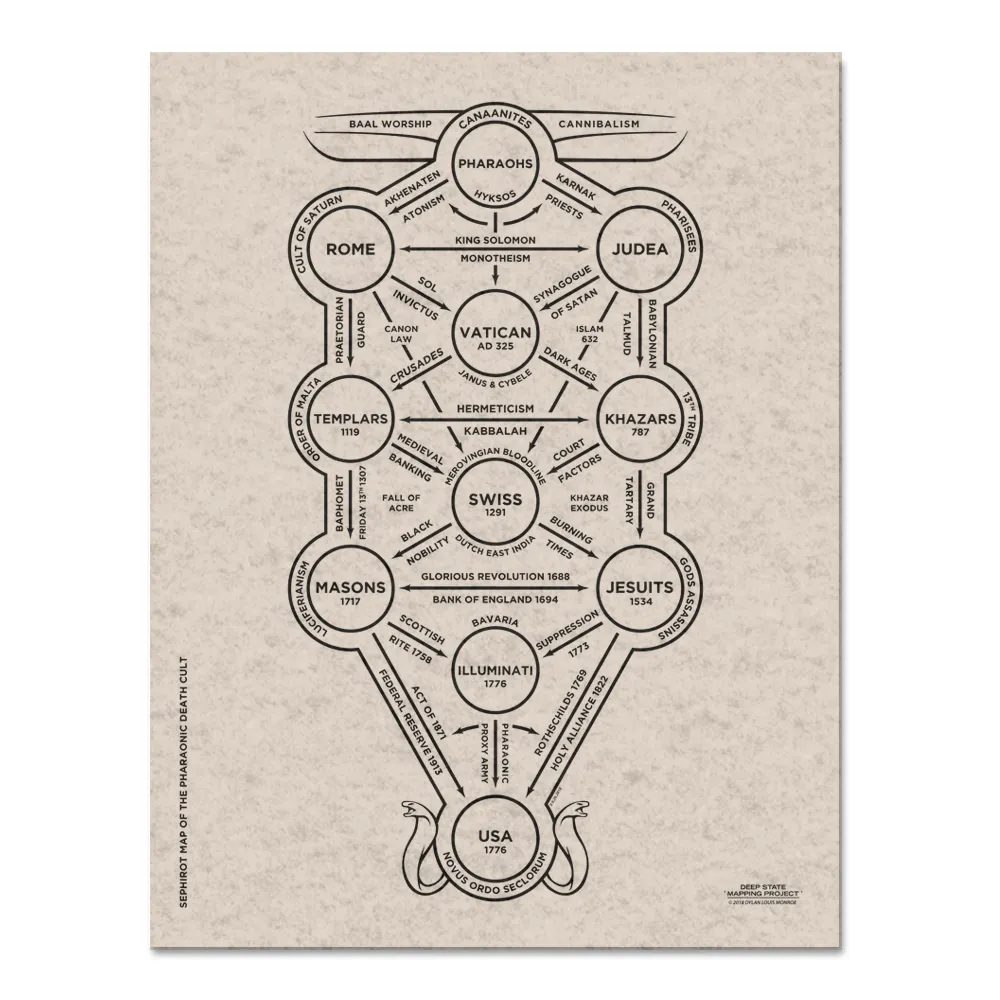
Secret Empire of Rothschilds, Rockefeller’s, and Morgans | AKA Khazarian Mafia
“The Control of Information is Something the Elite Always Does, Particularly in a Despotic Form of Government. Information, Knowledge is Power. If You Can Control Information You Can Control People.” – Tom Clancy
Prepare to uncover the shocking truth about the world’s most influential families and their iron grip on the global economy. The Federal Reserve Cartel, comprised of the Rothschilds, Rockefeller’s, and Morgans, holds unparalleled power that extends far beyond the realm of oil.
Picture this: The Four Horsemen of Banking, including Bank of America, JP Morgan Chase, Citigroup, and Wells Fargo, join forces with the Four Horsemen of Oil, such as Exxon Mobil, Royal Dutch/Shell, BP, and Chevron Texaco. But their domination doesn’t stop there. They have extended their reach to encompass the music industry through an intricate network of private banks. These behemoths, along with Deutsche Bank, BNP, Barclays, and other European old money giants, control the strings of the music industry, enabling them to dictate its direction and influence.
The nefarious deeds of the Rockefeller dynasty are far-reaching, starting with their military-commercialization of music in the early 1900s. They orchestrated a diabolical plan to shift the world’s standard tuning of music to 440 pitch. This insidious frequency was known to provoke greater aggression, psychosocial agitation, emotional distress, and even physical illnesses. Behind the scenes, this manipulation led to financial gains for those complicit in the monopoly, including agents, agencies, and companies connected to the North American Rockefeller crime cartel and elite organizations.
Fast forward to the late 1980s, when the Rockefeller’s summoned the top music executives and talent to a highly secretive meeting in Los Angeles. Their sinister agenda? To usher in the era of Controlled Rap Music, tightly linked to the privatization of U.S. prisons. These privately owned prisons, operated by the Rockefeller’s, Rothschilds, Bush family, and other influential figures, served as money laundering operations, tax exemption schemes, and pyramid scheme operations.
The Rockefellers devised a cunning plan to control the rap industry and target black communities by promoting violent music that fueled oppression and civil unrest. They brought together top executives and leading black artists, binding them with confidentiality agreements. Their objective was clear: coordinate the violence within the rap music movement, while major record labels gained exclusive rights for production and distribution across the United States. As a reward, they would receive shares and points within the private prison systems.
The Masonic plan unfolded with precision, resulting in over 1,500 private prison systems housing more than 1 million black teenagers by 1990. These vulnerable youths, expressing the generational trauma imposed upon them, unknowingly contributed to the Rockefellers’ malevolent scheme. The private prison systems reaped billions annually from the government, creating a vast money laundering network through inflated products, such as ramen noodles priced 8 times higher than their actual value. The flow of hundreds of billions from government funding, pyramid schemes, and insurance companies transformed the privatization of prisons into a multi-trillion-dollar venture.
Local courts and judges mercilessly sentenced petty criminals and first-time offenders, filling the ever-expanding private prisons. As a result, the United States now holds the dubious record for the highest number of incarcerated individuals in the world, with an unprecedented number of prisons. This was not an accident—it was a meticulously orchestrated plan by the Rockefeller’s.
But their influence doesn’t end there. These silent thieves also manipulate elections, ensuring their grip on power remains unbroken.
Unmasking the true face of those who control the world, the Rothschilds and Rockefeller’s find themselves in the crosshairs of military alliance operations aimed at dismantling the Rothschilds’ deep state power in Europe, the UK, Russia, and China.
Source: Benjamin Fulford
Special Report Sources; Ben Fulford, Peter Novak, Judy Byington, David Wilcock, David Icke
In Love & Light ❤️
The Great Awakening Team

The 3 C’s of Life: “Choices, Chances, and Changes”,
You must make a choice to take a chance or your life will never change. – Zig Ziglar
DISCLAIMER: All statements, claims, views and opinions that appear anywhere on this site, whether stated as theories or absolute facts, are always presented by The Great Awakening Report (GAR) as unverified—and should be personally fact checked and discerned by you, the reader. Any opinions or statements herein presented are not necessarily promoted, endorsed, or agreed to by GAR, those who work with GAR, or those who read or subscribe to GAR. Any belief or conclusion gleaned from content on this site is solely the responsibility of you the reader to substantiate. Any actions taken by those who read material on this site are solely the responsibility of the acting party. You are encouraged to think for yourself and do your own research. Nothing on this site is meant to be believed without question or personal appraisal.
Copyright Disclaimer: Citation of articles and authors in this report does not imply ownership. Works and images presented here fall under Fair Use Section 107 and are used for commentary on globally significant newsworthy events. Under Section 107 of the Copyright Act 1976, allowance is made for fair use for purposes such as criticism, comment, news reporting, teaching, scholarship, and research.
Community Guidelines Disclaimer: The points of view and purpose of this video is not to bully or harass anybody, but rather share that opinion and thoughts with other like-minded individuals curious about the subject.
Share This Report
Join the Discussion
Related Reports
Have questions?
At Great Awakening Report, we are dedicated to supporting your journey toward truth and enlightenment through our specialized Coaching and Consulting services.
Coaching Services: Our coaching programs are designed to guide you through personal awakening and transformation. We offer personalized sessions that focus on expanding consciousness, uncovering hidden truths, and fostering spiritual growth. Our experienced coaches provide the tools and insights necessary to navigate your path with clarity and confidence.
Consulting Services: For organizations and individuals seeking deeper understanding and strategic guidance, our consulting services offer expert analysis and solutions. We delve into areas such as global transitions, alternative news insights, and consciousness studies to provide comprehensive strategies tailored to your unique objectives.
Embark on a transformative journey with our Coaching and Consulting services, and unlock your highest potential. To learn more and schedule a session, visit our Coaching and Consulting pages.
Thank you
Thank you to our subscribers and readers for your continued support and dedication to truth and awakening. Your encouragement, engagement, and belief in our mission make everything we do possible. Together, we are expanding awareness and helping illuminate the path forward.
If you would like to further support the Great Awakening team and our ongoing efforts to share insight, knowledge, and truth, you can DONATE HERE.
With deep gratitude,
– Great Awakening Team
About the Author: Great Awakening Team

We are a community. We are cultural creatives and like minded people seeking the truth and focusing on disclosure, awakening and consciousness. Our focus is real news as researchers, reporters and truth seekers. We are here to teach, to spread the word, to serve and to help. We are a collective, a movement, free from all programing, not closed minded and not discriminatory. We are not political. We are not religious but we are spiritual. We study, research, and report on a wide range of subjects and topics, from the current geopolitical climate to health and wellness, from earth’s history to spiritual practices. We are forward thinkers and visionaries, we are guides for the transition as we usher in The Great Awakening.
THIS WEBSITE DOES NOT PROVIDE MEDICAL ADVICE: The information, including but not limited to text, graphics, images, and other material contained on this website, are for informational purposes only. No material on this site is intended to be a substitute for professional medical advice, diagnosis, or treatment. Always seek the advice of your physician or other qualified health care provider with any questions you may have regarding a medical condition or treatment and before undertaking a new health care regimen, and never disregard professional medical advice or delay in seeking it because of something you have read on this website.
DISCLAIMER: All statements, claims, views and opinions that appear anywhere on this site, whether stated as theories or absolute facts, are always presented by The Great Awakening Report (GAR) as unverified—and should be personally fact checked and discerned by you, the reader.Any opinions or statements herein presented are not necessarily promoted, endorsed, or agreed to by GAR, those who work with GAR, or those who read or subscribe to GAR.Any belief or conclusion gleaned from content on this site is solely the responsibility of you the reader to substantiate.Any actions taken by those who read material on this site are solely the responsibility of the acting party.You are encouraged to think for yourself and do your own research.Nothing on this site is meant to be believed without question or personal appraisal.
COPYRIGHT DISCLAIMER: Citation of articles and authors in this report does not imply ownership. Works and images presented here fall under Fair Use Section 107 and are used for commentary on globally significant newsworthy events. Under Section 107 of the Copyright Act 1976, allowance is made for fair use for purposes such as criticism, comment, news reporting, teaching, scholarship, and research.
COMMUNITY GUIDELINES DISCLAIMER: The points of view and purpose of this video is not to bully or harass anybody, but rather share that opinion and thoughts with other like-minded individuals curious about the subject.