







Help Us Bypass Censorship. Share This.
Sign up to receive Our Weekly Briefing Newsletter
Begin your journey with weekly insights designed to expand awareness and ground you in truth. Our free tier gives you a powerful introduction without any commitment.
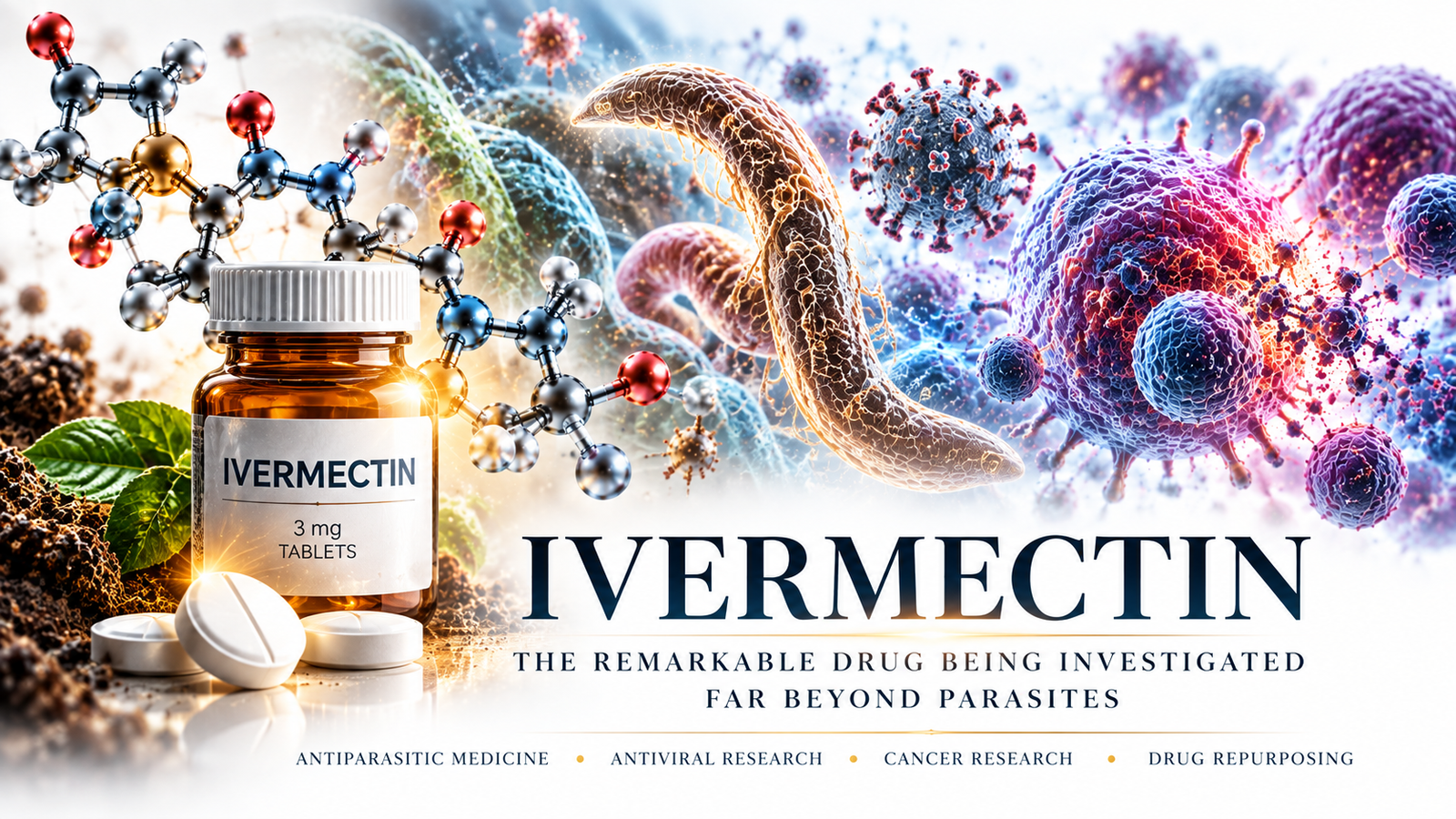
ANTIPARASITIC MEDICINE • CANCER RESEARCH • ANTIVIRAL RESEARCH • DRUG REPURPOSING
“The most interesting thing about an old medicine may be what we have not yet learned to do with it.” — Great Awakening Report
LONG BEFORE THE CONTROVERSY
Long before ivermectin became a punchline, it was a medical breakthrough.
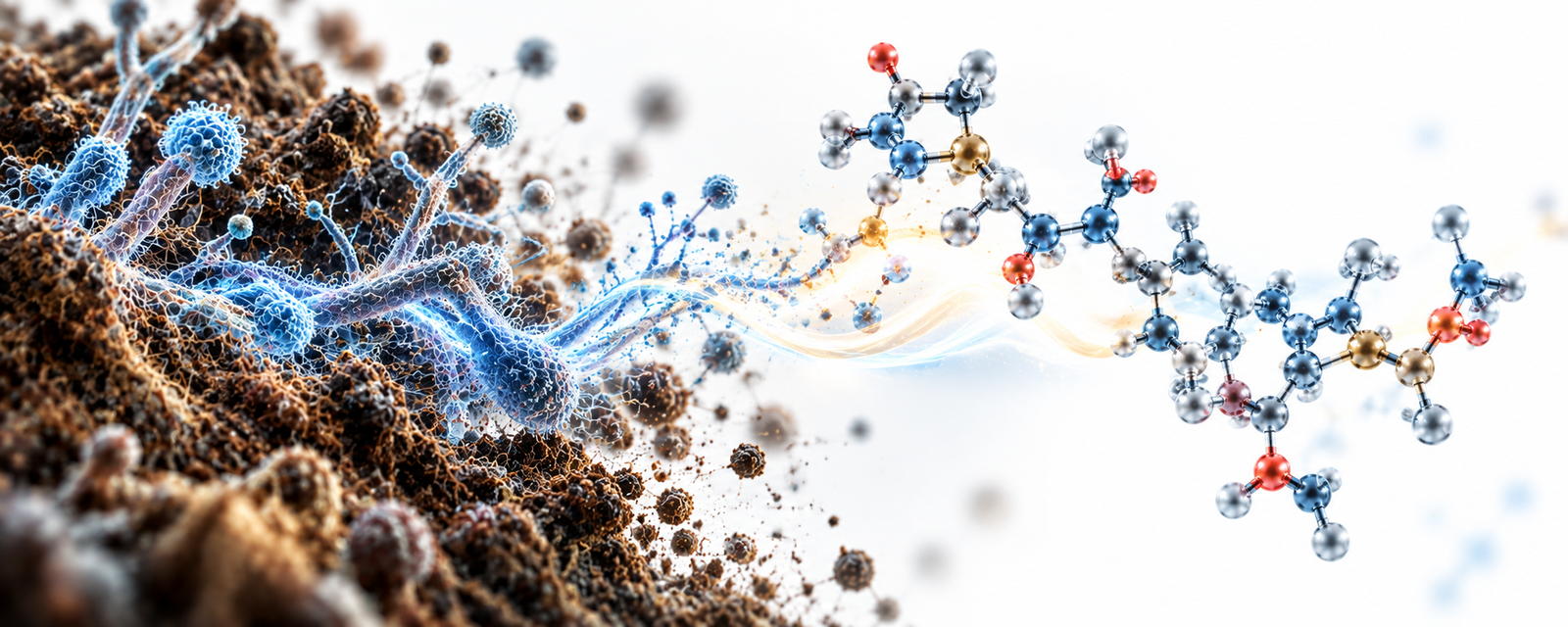
Decades before COVID-19 turned the word ivermectin into one of the most politically charged names in medicine, researchers were using the drug to fight devastating parasitic diseases in human beings. Its story began with avermectins derived from a soil microorganism discovered by Japanese microbiologist Satoshi Ōmura and developed with William C. Campbell and colleagues. Human trials followed in the early 1980s, and ivermectin ultimately became an enormously important treatment in the fight against diseases including river blindness. The discoveries behind avermectin and ivermectin contributed to Campbell and Ōmura receiving half of the 2015 Nobel Prize in Physiology or Medicine.
That history matters because ivermectin did not enter human medicine during COVID. It had already been used in people for decades. Its established antiparasitic effectiveness was well known, as was a substantial body of information about its pharmacology and safety at appropriate human doses. Researchers had also begun asking whether some of its biological activity might extend beyond parasites. Reviews published around the beginning of the pandemic were already discussing experimental antiviral, antimalarial, metabolic and anticancer effects.
Then came 2020.
Almost overnight, ivermectin acquired another identity. It became inseparable from COVID-19, veterinary formulations, social-media battles and one of the most bitter disputes of the pandemic. A medicine with a Nobel-recognized scientific history became known to millions of people primarily through two words:
Horse dewormer.
Ivermectin hadn’t suddenly become a veterinary drug in 2020. It was used in veterinary medicine, certainly—but it was also an established human medicine.
Its history hadn’t changed. The framing had.
WHEN A HUMAN MEDICINE BECAME “HORSE DEWORMER”
There was a legitimate safety issue underneath some of the warnings. As interest in ivermectin for COVID surged, some people obtained veterinary products intended for animals rather than human formulations. That distinction mattered. Veterinary preparations can contain different concentrations and formulations, and self-dosing an animal product can create genuine risks.
But two different ideas increasingly became fused together in the public conversation: ivermectin is used in animals, and ivermectin is an animal medicine.
Only the first statement tells the whole story.
The distinction became especially visible in August 2021, when the FDA published its now-famous social-media message: “You are not a horse. You are not a cow.” The message was memorable, intentionally so. It warned people against using animal ivermectin products, but it also helped cement an association between the word ivermectin and livestock in the public imagination.
The scientific dispute underneath that cultural battle was more complicated. Laboratory findings had created genuine interest in ivermectin’s potential antiviral activity, and researchers investigated numerous proposed mechanisms and viral targets. But promising laboratory activity did not translate into convincing clinical effectiveness against COVID-19. Subsequent randomized-trial reviews and meta-analyses have not demonstrated meaningful benefits on outcomes such as mortality, hospitalization or clinical recovery.
That deserves to be acknowledged without qualification.
But something else deserves acknowledgement too.
COVID-19 was one proposed application of ivermectin. It was not the entirety of ivermectin science.
The cultural battle surrounding the drug became so intense that it became increasingly difficult to separate the question Does ivermectin effectively treat COVID-19? from the much broader question What biological effects does ivermectin have, and might any of them eventually prove medically useful?
Those are not the same question.
And researchers never entirely stopped asking the second one.
THE SCIENCE THAT CONTINUED AFTER COVID
Ivermectin is interesting to researchers precisely because its biological activity does not appear to end with the parasites for which it became famous.
Over the years, laboratory investigators have explored effects involving ion channels, cellular signaling, nuclear transport and other biological processes. Antiviral research has examined ivermectin against multiple RNA and DNA viruses, with cell-culture studies reporting activity involving viruses such as dengue, Zika, West Nile and others. Some researchers proposed that interference with cellular nuclear-transport machinery might help explain portions of that activity.
None of that establishes ivermectin as a broad-spectrum antiviral medicine in people. In fact, ivermectin provides an excellent example of why laboratory findings must be treated cautiously: concentrations producing effects in cells may not always be achievable safely in the human body, and more recent research has explored why some promising in vitro SARS-CoV-2 effects failed to translate clinically.
But a failed application does not make the underlying scientific questions illegitimate.
That distinction becomes even more important when we move into another rapidly developing area of drug-repurposing research.
Cancer.
THE PARASITE–CANCER CONNECTION
There is an unexpected bridge between ivermectin’s original purpose and the cancer story, although it is important not to confuse the two.
Some parasites really are associated with cancer. Schistosoma haematobium infection has been causally associated with bladder cancer, while certain liver flukes are associated with cancers of the bile ducts. The connection is not mysterious: years of chronic infection can produce inflammation, repeated tissue injury and biological changes capable of contributing to malignant transformation.
That does not mean cancer is fundamentally a parasitic disease, nor does it mean killing parasites amounts to treating cancer. But it does reveal how much more interconnected cancer biology can be than the familiar image of a rogue cell simply beginning to grow. Infection, inflammation, immune activity and the surrounding tissue environment can all play a role.
And then researchers encountered something even more unexpected. Ivermectin’s possible relationship with cancer might not end with the parasites it was designed to kill.
WHEN AN ANTIPARASITIC DRUG MEETS CANCER BIOLOGY
Cancer researchers have increasingly examined existing drugs for unexpected anticancer properties. The appeal is easy to understand. Developing an entirely new compound can require years of work before researchers even understand its basic pharmacology and safety characteristics. An established drug arrives with much of that history already known, making the possibility of finding an entirely different use especially intriguing.
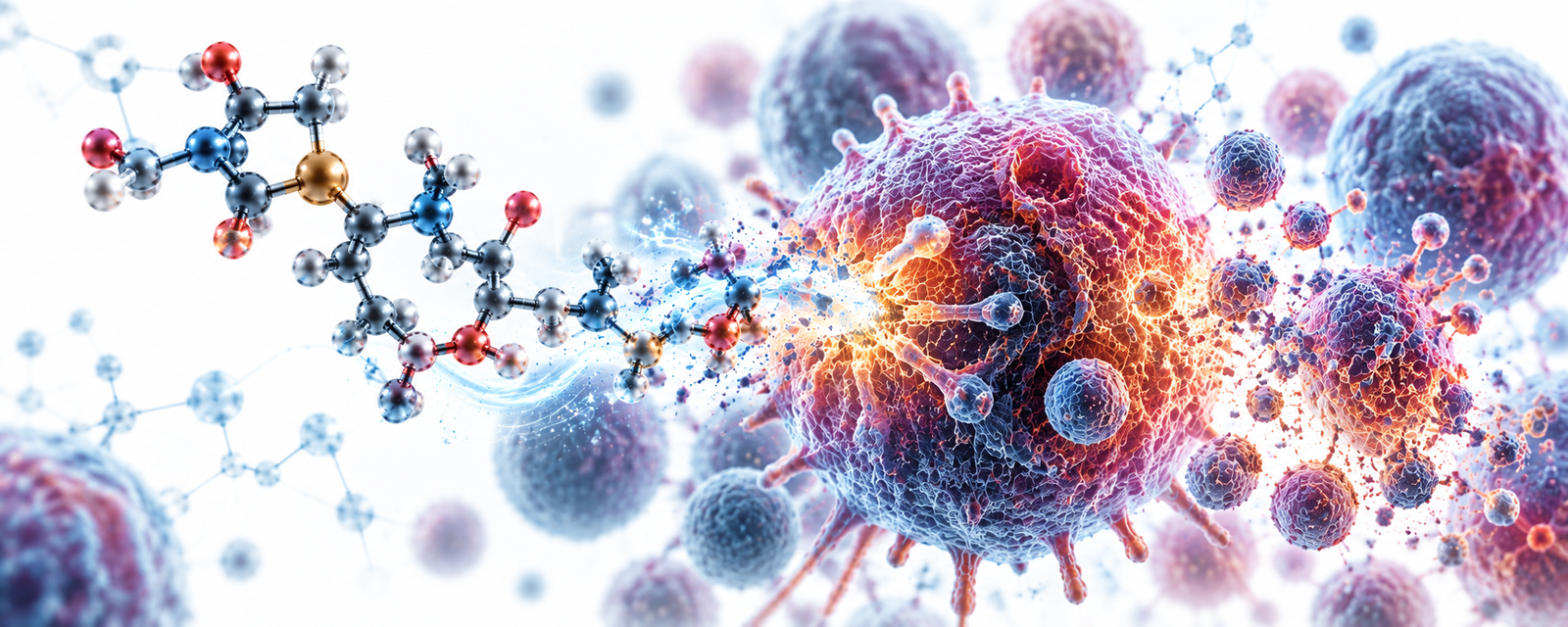
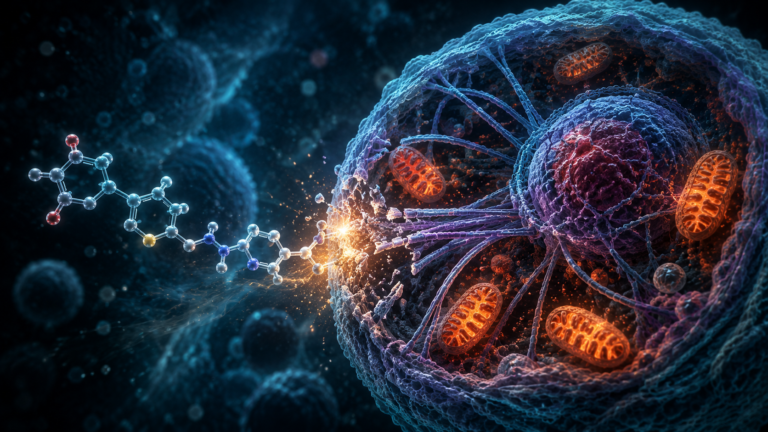
Ivermectin has become one of several antiparasitic drugs attracting attention in this field. Researchers looking at ivermectin began encountering something that had very little to do with worms. In cancer cells and animal models, the drug appeared capable of interfering with several of the processes tumors depend upon to survive and spread. Different studies began pointing toward effects on proliferation, programmed cell death, cancer stem-cell behavior and signaling networks associated with tumor growth.
No single mechanism suddenly transformed ivermectin into a cancer medicine. Instead, a pattern began accumulating. Researchers reported activity involving pathways such as Wnt/β-catenin and Akt/mTOR, while other experiments explored whether ivermectin might make certain cancer cells more vulnerable to existing treatments. Enough findings accumulated that ivermectin became part of a much larger drug-repurposing conversation: could a medicine developed for an entirely different purpose contain anticancer properties worth pursuing?
That question remains unanswered in humans. Cancer cells dying in a laboratory dish are not the same thing as cancer disappearing in a patient, and promising animal studies do not substitute for randomized human trials. Large clinical trials have not established ivermectin as an effective cancer treatment. But that is precisely what makes the research question interesting: the preclinical evidence has generated a signal, while the rigorous human evidence needed to determine what that signal actually means remains remarkably limited.
Why hasn’t the human research caught up?
THE PROBLEM WITH OLD, INEXPENSIVE DRUGS
Eventually, every promising laboratory finding runs into a much less glamorous reality: someone has to pay to find out whether it actually works.
Moving from intriguing preclinical evidence to rigorous human trials can cost enormous amounts of money. For a pharmaceutical company developing a proprietary molecule, that investment comes with an obvious commercial possibility. If the medicine succeeds, patents and market exclusivity may provide years in which the company can recover its investment and generate a return.
An old generic medicine presents a very different equation. Once a compound is widely available from multiple manufacturers, spending millions to establish an entirely new indication may create a benefit that competitors can quickly share. The scientific opportunity may still exist while the commercial incentive to pursue it becomes considerably weaker.
That isn’t simply speculation from critics of the pharmaceutical industry. In September 2026, the National Institutes of Health launched its Repurposing Generic Drugs Evidence Package Challenge and explicitly acknowledged the problem. NIH noted that although tens of thousands of generic medicines are available, there is “little incentive for the pharmaceutical industry to invest in studies” establishing new indications when generic versions already exist. The agency identified limited financial incentives, regulatory pathways and ownership of the development process among the barriers standing between promising repurposing ideas and the evidence necessary to evaluate them.
That acknowledgment is important because it establishes the structural problem without requiring us to speculate about anyone’s motives. It does not prove that pharmaceutical companies suppressed ivermectin, that regulators opposed it because it was inexpensive or that profitable treatments were deliberately favored over a generic alternative. Establishing any of those claims would require evidence of intent.
But it does establish something considerably harder to dismiss: the financial incentives for developing a new patented medicine and repurposing an inexpensive generic one are not the same.
And once that reality is acknowledged, the question becomes unavoidable:
If an inexpensive generic drug shows potentially useful activity outside its original indication, who has a strong financial incentive to spend the money necessary to prove—or disprove—that possibility?
Perhaps that is one reason the history of ivermectin remains so interesting. The scientific question and the economic question eventually collide. Researchers can continue identifying intriguing mechanisms in laboratories, but until someone funds the expensive human trials necessary to test them, promising signals can remain exactly that—promising signals.
The problem extends far beyond ivermectin.
It is one of the unresolved challenges at the heart of generic drug repurposing itself.
WHAT HAPPENS WHEN A DRUG BECOMES A SYMBOL?
Perhaps the strangest chapter in ivermectin’s history isn’t pharmacological at all. It is cultural.
Before 2020, most Americans had probably never heard of ivermectin. Within a remarkably short period, the drug became a proxy for much larger battles over COVID policy, medical authority, censorship, pharmaceutical companies, physician autonomy, alternative treatments and public trust.
People stopped merely disagreeing about a molecule. They began disagreeing about what the molecule represented. That creates a problem for science because molecules don’t belong to political tribes.
A drug can fail for one indication and succeed spectacularly for another. It can produce an intriguing laboratory result that never translates into humans. It can be safe at one dose and dangerous at another. It can be useful against one organism and useless against another.
Science is supposed to permit all of those possibilities simultaneously.
The COVID evidence surrounding ivermectin should therefore be judged on the COVID evidence. The cancer research should be judged on the cancer evidence. The antiviral research should be judged on the evidence for each virus and clinical application. And ivermectin’s established antiparasitic role should not somehow become less legitimate because an entirely different proposed use became politically radioactive. Perhaps that is the larger lesson.
Once a medicine becomes a cultural symbol, investigating it objectively becomes harder—not less necessary.
AN OLD DRUG WITH UNFINISHED SCIENCE
Ivermectin does not need to cure cancer to have an extraordinary history. It already does.
A compound originating from research into microorganisms found in soil helped transform treatment for devastating parasitic diseases and contributed to discoveries recognized with one of medicine’s highest scientific honors. Decades later, researchers continue asking whether some of its biological properties might be useful in entirely different contexts. Some possibilities may fail.
Others may prove impossible to reproduce at safe human concentrations. Some may lead researchers toward modified molecules rather than ivermectin itself. And perhaps somewhere among the cancer, antiviral and other repurposing investigations, something genuinely useful will survive the difficult journey from laboratory observation to human clinical evidence, but we don’t know yet.
And “we don’t know yet” is not a weakness of science. It is an invitation to do the science.
The appropriate response to exaggerated claims about ivermectin is not to exaggerate in the opposite direction. Nor should legitimate criticism of its proposed use for COVID become a reason to dismiss unrelated research before the evidence exists. Ivermectin didn’t become scientifically interesting during COVID.
And it didn’t stop being scientifically interesting when COVID moved out of the headlines.
The next chapter should be determined neither by the mythology surrounding ivermectin nor by the stigma attached to it. It should be determined by evidence.
And after everything this remarkable old drug has already taught medicine, it seems entirely reasonable to keep asking what else we haven’t learned yet.
Sign up to receive Our Weekly Briefing Newsletter
Begin your journey with weekly insights designed to expand awareness and ground you in truth. Our free tier gives you a powerful introduction without any commitment.
STOP DROWNING IN THE NOISE. START SEEING THE TRUTH. Join over 99,000 truth seekers. Get the essential intelligence, alternative news, and disclosure updates that the mainstream media won’t touch.
Latest Reports
 Weekly ReportAwakening The Sleeping Giant · September 21st EditionSeptember 21, 2026
 Weekly ReportTruth Seekers Briefing · Master Class Connecting The Dots · September 18th EditionSeptember 18, 2026
 Weekly ReportAwakening The Sleeping Giant · September 14th EditionSeptember 14, 2026
 Monthly ReportSeptember 2026 • Volume IX • Chapter IXSeptember 7, 2026View all weekly reports
Special Reports
 Special ReportCreating A Conscious Culture · Part ISeptember 3, 2026
 Special ReportThe Great Healing: Detox, Defense & Sovereignty In an Engineered World · Part ISeptember 1, 2026
 Special ReportThe Newly Released Fauci DiariesAugust 8, 2026
 Special ReportPersonal Meditation Protocols for Manifestation Series · Part 1August 5, 2026View all special reports
Help Us Bypass Censorship. Share This.
Join the Discussion
Related Posts


Have questions?
At Great Awakening Report, we are dedicated to supporting your journey toward truth and enlightenment through our specialized Coaching and Consulting services.
Coaching Services: Our coaching programs are designed to guide you through personal awakening and transformation. We offer personalized sessions that focus on expanding consciousness, uncovering hidden truths, and fostering spiritual growth. Our experienced coaches provide the tools and insights necessary to navigate your path with clarity and confidence.
Consulting Services: For organizations and individuals seeking deeper understanding and strategic guidance, our consulting services offer expert analysis and solutions. We delve into areas such as global transitions, alternative news insights, and consciousness studies to provide comprehensive strategies tailored to your unique objectives.
Embark on a transformative journey with our Coaching and Consulting services, and unlock your highest potential. To learn more and schedule a session, visit our Coaching and Consulting pages.
Thank you
Thank you to our subscribers and readers for your continued support and dedication to truth and awakening. Your encouragement, engagement, and belief in our mission make everything we do possible. Together, we are expanding awareness and helping illuminate the path forward.
If you would like to further support the Great Awakening team and our ongoing efforts to share insight, knowledge, and truth, you can DONATE HERE.
With deep gratitude,
– Great Awakening Team
About the Author: Great Awakening Team

We are a community. We are cultural creatives and like minded people seeking the truth and focusing on disclosure, awakening and consciousness. Our focus is real news as researchers, reporters and truth seekers. We are here to teach, to spread the word, to serve and to help. We are a collective, a movement, free from all programing, not closed minded and not discriminatory. We are not political. We are not religious but we are spiritual. We study, research, and report on a wide range of subjects and topics, from the current geopolitical climate to health and wellness, from earth’s history to spiritual practices. We are forward thinkers and visionaries, we are guides for the transition as we usher in The Great Awakening.
THIS WEBSITE DOES NOT PROVIDE MEDICAL ADVICE: The information, including but not limited to text, graphics, images, and other material contained on this website, are for informational purposes only. No material on this site is intended to be a substitute for professional medical advice, diagnosis, or treatment. Always seek the advice of your physician or other qualified health care provider with any questions you may have regarding a medical condition or treatment and before undertaking a new health care regimen, and never disregard professional medical advice or delay in seeking it because of something you have read on this website.
DISCLAIMER: All statements, claims, views and opinions that appear anywhere on this site, whether stated as theories or absolute facts, are always presented by The Great Awakening Report (GAR) as unverified—and should be personally fact checked and discerned by you, the reader.Any opinions or statements herein presented are not necessarily promoted, endorsed, or agreed to by GAR, those who work with GAR, or those who read or subscribe to GAR.Any belief or conclusion gleaned from content on this site is solely the responsibility of you the reader to substantiate.Any actions taken by those who read material on this site are solely the responsibility of the acting party.You are encouraged to think for yourself and do your own research.Nothing on this site is meant to be believed without question or personal appraisal.
COPYRIGHT DISCLAIMER: Citation of articles and authors in this report does not imply ownership. Works and images presented here fall under Fair Use Section 107 and are used for commentary on globally significant newsworthy events. Under Section 107 of the Copyright Act 1976, allowance is made for fair use for purposes such as criticism, comment, news reporting, teaching, scholarship, and research.
COMMUNITY GUIDELINES DISCLAIMER: The points of view and purpose of this video is not to bully or harass anybody, but rather share that opinion and thoughts with other like-minded individuals curious about the subject.