










Help Us Bypass Censorship. Share This.
Sign up to receive Our Weekly Briefing Newsletter
Begin your journey with weekly insights designed to expand awareness and ground you in truth. Our free tier gives you a powerful introduction without any commitment.
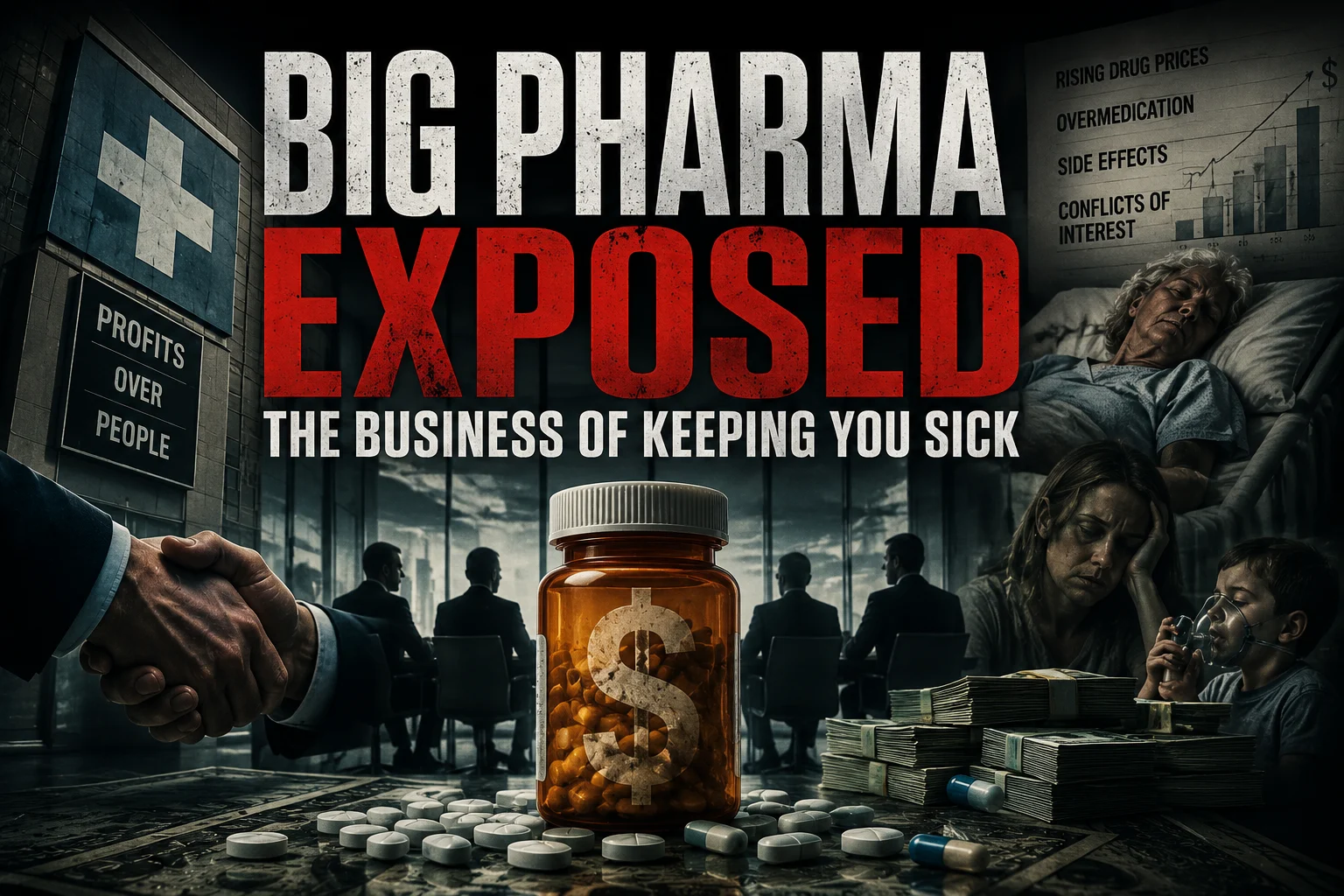
The global pharmaceutical industry generated over $1.7 trillion in revenue in 2024, according to BioSpace market analysis. Not by curing disease. By managing it. A patient cured is a customer lost. That single economic reality explains more about the state of modern medicine than any conspiracy theory ever could. This is not speculation, it is the documented business model of an industry that has spent decades capturing the regulators meant to police it, sidelining treatments that threaten its revenue streams, and ensuring that the most profitable patient outcome is one who is sick enough to need medication indefinitely, but never sick enough to stop buying it.
This is what the pharmaceutical industry truth looks like when you follow the money rather than the marketing. Across fourteen years of Health Watch research, the pattern is consistent, documented, and sourced. We present. You decide.
Explore the full Health Watch archive →
The Business Model: Disease Management, Not Cures
The economics of modern medicine are not complicated once you understand who profits from what. A one-time curative treatment generates a single payment, typically at a lower price point than the lifetime of prescriptions it would replace. A chronic condition requiring daily medication for thirty years generates predictable, compounding revenue that no cure can match. This is not a conspiracy; it is basic financial modeling, and it shapes every incentive in the pharmaceutical industry’s research and development pipeline.
The shift from acute disease treatment toward chronic disease management became the dominant pharmaceutical business strategy in the 1980s, the era that produced the blockbuster drug model. Statins for cholesterol. SSRIs for depression. ACE inhibitors for blood pressure. Metformin and later GLP-1 agonists for diabetes. These drugs are not designed to resolve the underlying conditions. They are designed to be taken daily, indefinitely, by the largest possible patient population. A blockbuster drug, as defined by Investopedia, is one generating over $1 billion annually, and the blockbuster model depends entirely on lifetime prescriptions, not cures.
The mechanism for expanding that patient population is documented in peer-reviewed medical literature under the term “disease mongering.” A landmark paper published in PLOS Medicine and archived on PMC/NIH defines it as “extending the boundaries of treatable illness to expand markets for those who profit from treatments.” A companion study in PMC asks directly: “Does the pharmaceutical industry manufacture diseases as well as drugs?” The documented answer involves conditions like metabolic syndrome, “pre-diabetes,” and “pre-hypertension”, diagnostic categories that, as a forty-year review in PMC found, have had their thresholds systematically lowered over decades, expanding the treatable population with each revision.
Lower the threshold. Expand the diagnosis. Grow the market. Repeat. This is the documented architecture of the pharmaceutical industry’s disease management system, not a theory, but a peer-reviewed and named phenomenon in academic medicine.

Regulatory Capture: When the FDA Works for Pharma
The structural problem at the heart of pharmaceutical regulation is not corruption in the conventional sense. It is something more systemic and, in many ways, more difficult to address: regulatory capture, the documented process by which a regulatory agency mandated to act in the public interest instead comes to advance the commercial interests of the industry it oversees.
In the pharmaceutical context, this begins with funding. The Prescription Drug User Fee Act (PDUFA), created by Congress in 1992 and tracked on the FDA’s own website, authorizes the FDA to collect user fees directly from pharmaceutical companies when they submit drugs for approval. As Wikipedia’s PDUFA article, sourced from official FDA reporting, documents, these user fees now cover approximately 65% of the drug approval process. The agency reviewing whether a drug is safe and effective is funded predominantly by the companies submitting those drugs for review.
The personnel pipeline compounds the problem. Science magazine’s documented investigation of the FDA revolving door found that pharmaceutical companies routinely hire FDA staffers who managed their drug’s successful approval, creating a career incentive structure that rewards approval-friendly decisions. A Stanford Law School analysis describes it plainly: “The revolving door is one persistent source of undue influence that overshadows the discharge of FDA regulators’ duties to the public.” Health Affairs research confirms: “A revolving door between government and industry can render government agencies more vulnerable to regulatory capture.”
A peer-reviewed analysis in PMC specifically examining PDUFA’s consequences raises documented concern about whether industry funding of the approval process has “modified the risk appetite” of the FDA, accelerating approvals in ways that may not always serve patient safety. A separate PMC study found that PDUFA has “instituted a broad range of changes to FDA policy, including evidentiary standards for drug approval”, meaning the bar for what counts as sufficient evidence has shifted alongside the funding structure.
The result: a regulatory architecture in which the agency responsible for protecting patients from unsafe drugs is largely funded by, and substantially staffed from, the industry producing those drugs. This is FDA big pharma corruption not as individual bad actors, but as a systemic design, one that policy researchers have named, documented, and published in mainstream academic journals.
Suppressed and Buried: Treatments That Threatened the Model
The most significant dimension of the big pharma exposed story is not what the industry sells. It is what it has not pursued, and in some documented cases, actively opposed. The common thread across the most compelling suppressed treatments: they cannot be patented at scale, which makes them commercially unviable for an industry whose R&D model depends on proprietary exclusivity.
Cancer, Dichloroacetate (DCA). In 2007, researchers at the University of Alberta published findings showing that dichloroacetate, an inexpensive, long-used compound for metabolic disorders, demonstrated the ability to selectively target and kill cancer cells in lab and early human studies by reactivating mitochondrial function in tumor cells. Alberta Cancer Foundation’s own publication reported on the glioblastoma findings. The problem: DCA is not patentable. A 2024 PMC review confirms the compound remains under independent research but has received no significant pharmaceutical industry investment. Without patent protection, there is no commercial return. Without commercial return, there is no drug development. The patients wait.
Cancer, High-Dose Intravenous Vitamin C. Multiple peer-reviewed studies archived on PubMed and NIH have documented the potential of high-dose IV Vitamin C as a cancer therapy adjunct. A 2022 PMC review found intravenous delivery raises plasma Vitamin C concentrations 70-fold compared to oral delivery, with documented antitumor mechanisms. The National Cancer Institute’s Frederick research center has acknowledged that studies show “improved quality of life for cancer patients” through IV Vitamin C therapy. Vitamin C cannot be patented. It remains outside mainstream oncology protocol.
Mental Health, Psychedelic-Assisted Therapy. The Multidisciplinary Association for Psychedelic Studies (MAPS) has conducted over two decades of documented research into MDMA-assisted therapy for PTSD and psilocybin-assisted therapy for treatment-resistant depression. These compounds, unpatentable and effective in limited doses, were classified as Schedule I substances for decades, blocking research entirely. NPR’s reporting on the FDA’s 2024 rejection of MDMA therapy approval, despite decades of clinical evidence, and MAPS’ April 2026 welcome of new federal action on psychedelic research, together illustrate the full arc: decades of scheduling-driven suppression, followed by grudging institutional movement as the evidence became undeniable.
The Opioid Crisis, Suppression in Reverse. The Purdue Pharma and Sackler family case represents the inverse pattern: not the suppression of an effective treatment, but the aggressive promotion of a known-harmful one because it was profitable. A multistate coalition reached a $7.4 billion settlement with Purdue Pharma and the Sackler family, confirmed by the Texas Attorney General’s office, for their documented role in creating the opioid epidemic, including evidence that the company knew OxyContin’s addiction risk and marketed it aggressively regardless. The regulatory apparatus failed to intervene. The financial incentives explain why.
These are not fringe allegations. They are documented in peer-reviewed journals, court settlements, and government research archives. We present. You decide.
For our related investigation into suppressed medical technology, see the Med Beds & Plasma Technology report.
Access 872+ reports on suppressed medicine, health freedom, and alternative treatments. Standard subscription →

The Health Freedom Movement: What’s Emerging
The story of pharmaceutical industry suppressed cures does not end with the suppression. It continues with the researchers, physicians, and policymakers who are breaking through anyway, and with a growing institutional movement that is bringing these questions into mainstream policy debate for the first time.
Functional medicine, integrative oncology, and naturopathic medicine have grown significantly as documented alternatives to the pharmaceutical management model. The Institute for Functional Medicine maintains a practitioner directory of thousands of clinicians trained in root-cause medicine, treating the underlying metabolic, nutritional, and environmental drivers of chronic disease rather than managing symptoms with lifetime prescriptions.
At the policy level, the most significant development in the 2025–2026 window is the Make America Healthy Again (MAHA) movement, led by HHS Secretary Robert F. Kennedy Jr. The official HHS MAHA page describes a federal initiative targeting chronic disease, and directly examining the pharmaceutical, food industry, and regulatory conflicts of interest that have perpetuated it. Wikipedia’s MAHA entry documents the February 2025 establishment of the MAHA Commission, chaired by Kennedy, tasked with studying psychiatric medications, childhood disease drivers, and anti-obesity medication. STAT News’ analysis confirms the policy agenda is substantive and advancing.
For the first time in decades, the structural conflicts at the heart of pharmaceutical regulation are being examined at the cabinet level. The health freedom movement, long operating in alternative media, functional medicine clinics, and legislative advocacy at the state level, now has its most visible institutional platform in American history.
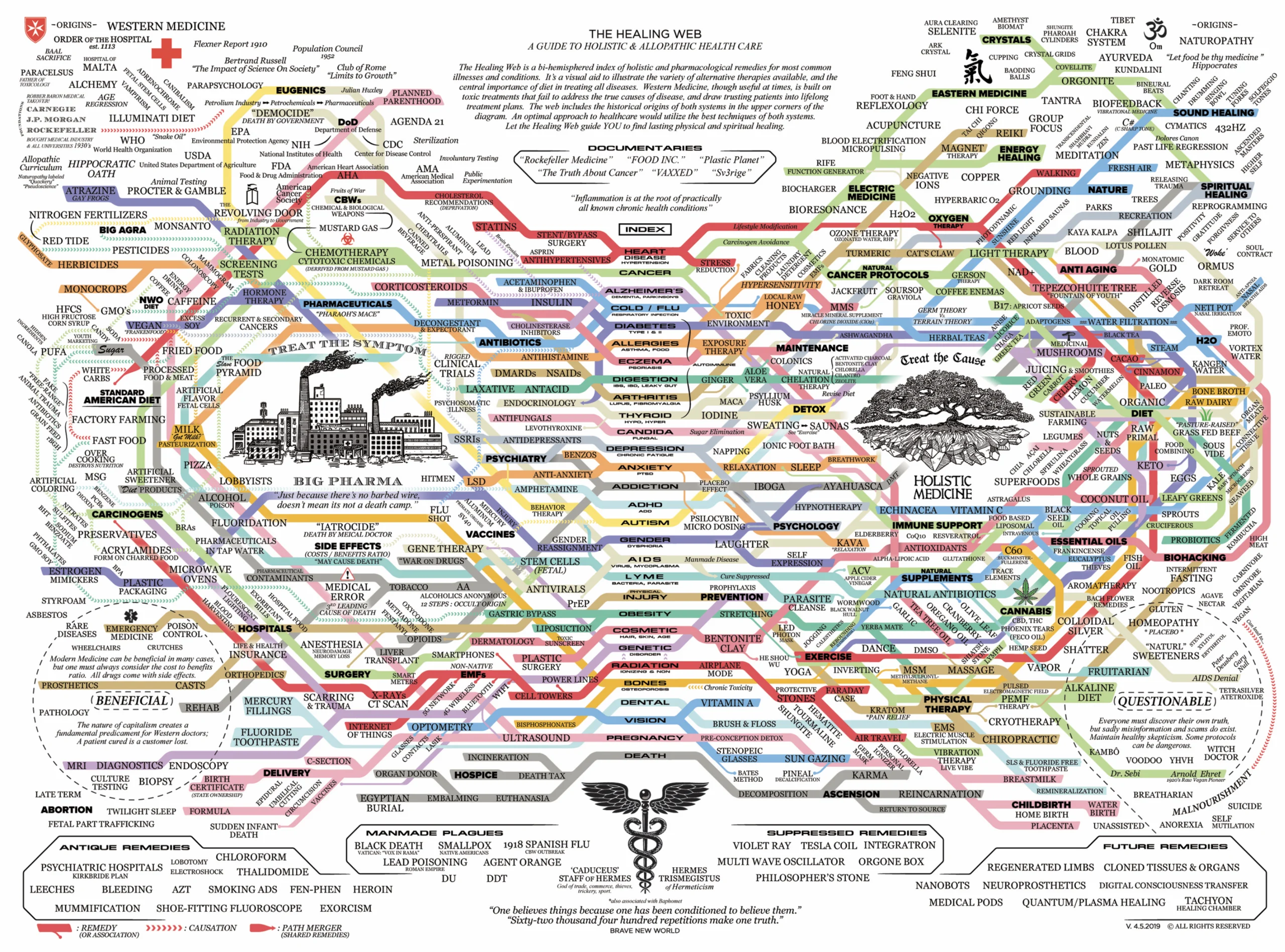
GAR’s own Healing Web aggregates peer-reviewed and practitioner-vetted protocols across suppressed health knowledge categories, cancer, autoimmune, mental health, detoxification, as a starting resource for readers building a relationship with their own health outside the pharmaceutical management framework. It is one of the most comprehensive alternative health reference resources available on any platform in this space.
See also: our Heavy Metal Detox Guide and the full Health Watch archive for 14 years of suppressed medicine coverage.
What You Can Do: Practical Health Sovereignty Steps
Information without agency is just anxiety. Here is what the research supports as practical steps toward genuine health freedom:
- Research your medications’ clinical trial data. ClinicalTrials.gov is a public government database of all registered clinical trials, including funding sources, outcomes, and trial design. Before accepting any long-term prescription, look up the trials behind it. Note who funded the study.
- Find a functional medicine practitioner. The Institute for Functional Medicine’s practitioner directory lists clinicians trained in root-cause, whole-system medicine. These practitioners typically run comprehensive metabolic and nutritional panels that conventional medicine rarely orders.
- Get a second opinion for any major diagnosis. For cancer diagnoses specifically, an integrative oncologist, one trained in both conventional oncology and evidence-based complementary protocols, provides a materially different set of options than a standard oncology consult.
- Use The Healing Web. GAR’s Healing Web is organized by condition and modality, giving you a navigable starting point for researching alternative and suppressed protocols in your specific area of concern. Always work with a qualified practitioner before making treatment decisions.
- Support health freedom legislation. State-level health freedom bills, protecting patient access to alternative practitioners, supplements, and off-label treatments, are advancing in multiple states. Contact your state legislators. The policy window is open in a way it has not been in decades.
- Build your health, don’t just manage it. The structural alternative to outsourcing your health to a system with documented conflicts of interest is building a personal health practice, nutrition, sleep, movement, stress management, and regular functional medicine monitoring, that reduces your dependence on the pharmaceutical management model over time.
New to GAR’s Health Watch coverage? Start Here →
Is Big Pharma suppressing cancer cures?
There is documented evidence that multiple promising cancer treatments, including high-dose intravenous Vitamin C, dichloroacetate (DCA), and antineoplaston therapy, have received limited mainstream adoption despite peer-reviewed research showing efficacy. The common factor: none can be patented at scale, making them commercially unviable for an industry dependent on proprietary drug revenue. Independent researchers continue to study these compounds, and the evidence base is accessible in public databases including NIH and PubMed.
What is regulatory capture in the pharmaceutical industry?
Regulatory capture occurs when a government agency meant to act in the public interest instead advances the commercial interests of the industry it regulates. In the pharmaceutical context, this includes the FDA’s user-fee funding model, where pharmaceutical companies fund approximately 65% of their own approval process through PDUFA, the documented revolving door of personnel between the FDA and pharma companies, and advisory committees with disclosed financial conflicts of interest. These are not allegations; they are documented in academic journals, government reports, and Stanford Law School research.
Why does Big Pharma prefer disease management over cures?
The economics are straightforward: a one-time cure generates a single payment. A chronic condition requiring daily medication generates revenue for decades. The pharmaceutical industry’s blockbuster drug model, statins, antidepressants, blood pressure medications, diabetes drugs, is built on lifetime prescription revenue. Additionally, peer-reviewed research has documented “disease mongering,” the practice of expanding diagnostic thresholds to increase the treatable patient population. This is the documented financial structure of the industry, named, published, and archived in NIH literature.
What is the health freedom movement?
The health freedom movement is a growing coalition of physicians, researchers, patients, and policymakers advocating for access to alternative and suppressed treatments, transparency in pharmaceutical research, and reform of regulatory agencies with documented conflicts of interest. It spans functional medicine, integrative oncology, naturopathic practice, and, as of 2025, the federal MAHA (Make America Healthy Again) Commission chaired by HHS Secretary Robert F. Kennedy Jr., which is actively examining pharmaceutical and food industry drivers of chronic disease.
What are the best alternatives to mainstream pharmaceutical medicine?
Functional medicine, integrative oncology, and naturopathic medicine represent the most documented alternative frameworks, addressing root causes rather than managing symptoms. Resources like GAR’s Healing Web aggregate peer-reviewed and practitioner-vetted protocols across categories including cancer, autoimmune conditions, mental health, and detoxification. ClinicalTrials.gov provides public access to clinical trial data for any medication. Always consult a qualified practitioner before making medical decisions.
The full Health Watch archive, 872+ reports on suppressed medicine, Big Pharma, health freedom, and alternative treatments, is available to Standard and Premium subscribers at the Great Awakening Report.
Get the free weekly briefing → | View all subscription plans →
Sign up to receive Our Weekly Briefing Newsletter
Begin your journey with weekly insights designed to expand awareness and ground you in truth. Our free tier gives you a powerful introduction without any commitment.
STOP DROWNING IN THE NOISE. START SEEING THE TRUTH. Join over 99,000 truth seekers. Get the essential intelligence, alternative news, and disclosure updates that the mainstream media won’t touch.
Latest Reports
 Monthly ReportConscious Practices · October 2026 EditionOctober 5, 2026
 Weekly ReportAwakening The Sleeping Giant · October 5th EditionOctober 5, 2026
 Weekly ReportAwakening The Sleeping Giant · September 28th EditionSeptember 28, 2026
 Weekly ReportAwakening The Sleeping Giant · September 21st EditionSeptember 21, 2026View all weekly reports
Special Reports
 Special ReportTHE AWAKENING JOURNEY: Hero’s Journey Part II · Week 1October 3, 2026
 Special ReportGlobal Everything Collapse · Economic Chaos · Part IOctober 1, 2026
 Special ReportCreating A Conscious Culture · Part ISeptember 3, 2026
 Special ReportThe Great Healing: Detox, Defense & Sovereignty In an Engineered World · Part ISeptember 1, 2026View all special reports
Help Us Bypass Censorship. Share This.
Join the Discussion
Related Posts

Have questions?
At Great Awakening Report, we are dedicated to supporting your journey toward truth and enlightenment through our specialized Coaching and Consulting services.
Coaching Services: Our coaching programs are designed to guide you through personal awakening and transformation. We offer personalized sessions that focus on expanding consciousness, uncovering hidden truths, and fostering spiritual growth. Our experienced coaches provide the tools and insights necessary to navigate your path with clarity and confidence.
Consulting Services: For organizations and individuals seeking deeper understanding and strategic guidance, our consulting services offer expert analysis and solutions. We delve into areas such as global transitions, alternative news insights, and consciousness studies to provide comprehensive strategies tailored to your unique objectives.
Embark on a transformative journey with our Coaching and Consulting services, and unlock your highest potential. To learn more and schedule a session, visit our Coaching and Consulting pages.
Thank you
Thank you to our subscribers and readers for your continued support and dedication to truth and awakening. Your encouragement, engagement, and belief in our mission make everything we do possible. Together, we are expanding awareness and helping illuminate the path forward.
If you would like to further support the Great Awakening team and our ongoing efforts to share insight, knowledge, and truth, you can DONATE HERE.
With deep gratitude,
– Great Awakening Team
About the Author: Great Awakening Team

DISCLAIMER: All statements, claims, views and opinions that appear anywhere on this site, whether stated as theories or absolute facts, are always presented by The Great Awakening Report (GAR) as unverified—and should be personally fact checked and discerned by you, the reader.Any opinions or statements herein presented are not necessarily promoted, endorsed, or agreed to by GAR, those who work with GAR, or those who read or subscribe to GAR.Any belief or conclusion gleaned from content on this site is solely the responsibility of you the reader to substantiate.Any actions taken by those who read material on this site are solely the responsibility of the acting party.You are encouraged to think for yourself and do your own research.Nothing on this site is meant to be believed without question or personal appraisal.
COPYRIGHT DISCLAIMER: Citation of articles and authors in this report does not imply ownership. Works and images presented here fall under Fair Use Section 107 and are used for commentary on globally significant newsworthy events. Under Section 107 of the Copyright Act 1976, allowance is made for fair use for purposes such as criticism, comment, news reporting, teaching, scholarship, and research.
COMMUNITY GUIDELINES DISCLAIMER: The points of view and purpose of this video is not to bully or harass anybody, but rather share that opinion and thoughts with other like-minded individuals curious about the subject.