
Help Us Bypass Censorship. Share This.
Sign up to receive Our Weekly Briefing Newsletter
Begin your journey with weekly insights designed to expand awareness and ground you in truth. Our free tier gives you a powerful introduction without any commitment.
“Trust arrives on foot and leaves on horseback.” — Dutch Proverb
The Trust Rupture That Never Fully Healed
For many people, COVID is over.
The lockdowns have ended. The mandates have largely disappeared. The daily case counts no longer dominate headlines. Life, at least on the surface, appears to have returned to normal.
Yet for millions of people, the deeper questions never went away.
COVID was never simply a virus.
It was families separated from loved ones during their final moments. It was grandparents dying alone behind institutional walls. It was small businesses lost, careers disrupted, friendships fractured, and communities divided. It was fear, uncertainty, isolation, and a level of societal disruption few living generations had ever experienced.
Most people willingly accepted extraordinary measures because they believed they were being told the truth. They trusted public health officials, government agencies, media organizations, pharmaceutical companies, and healthcare institutions to provide the most accurate information available during a rapidly evolving crisis.
Today, years later, many continue to probe for the full story.
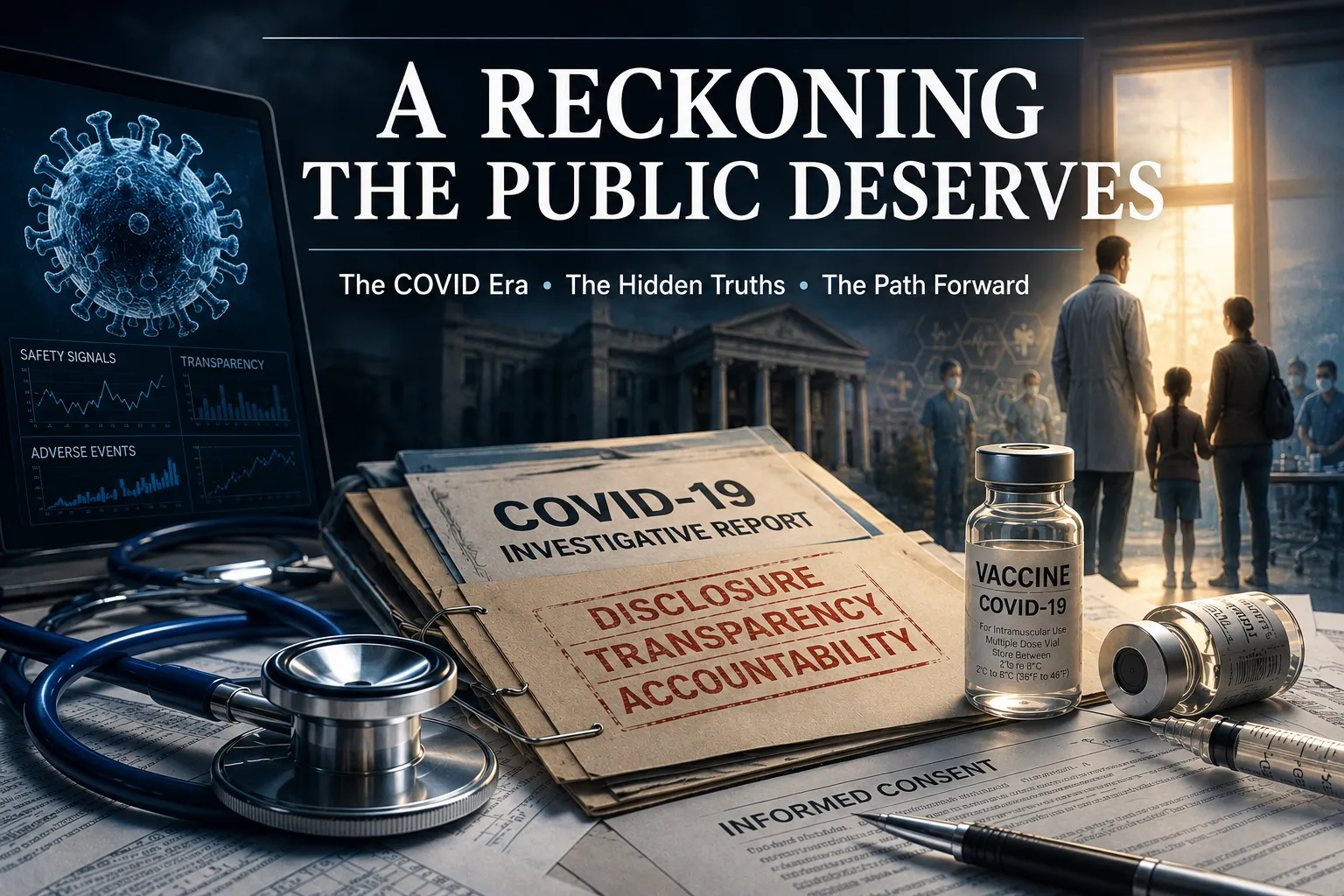
Recent disclosures surrounding COVID origins and vaccine safety monitoring have reignited questions that may never be fully disclosed. Newly released intelligence documents, congressional investigations, and internal communications are once again placing transparency, accountability, and public trust at the center of the conversation.
The issue is no longer simply what happened during COVID.
The issue is what powerful institutions knew, when they knew it, what they communicated to the public, and whether meaningful accountability exists when trust is broken.
The Origins Question is Back in the Spotlight
One of the most significant developments in recent months has been the release of documents and disclosures related to COVID origins and gain-of-function research.
For years, discussion of a possible laboratory origin for COVID was often dismissed, marginalized, or characterized as misinformation. Public debate largely centered around a natural spillover theory, while alternative explanations frequently faced significant resistance from media organizations, technology platforms, and segments of the scientific community.
That landscape has changed considerably.
Questions surrounding gain-of-function research, NIH funding pathways, EcoHealth Alliance, the Wuhan Institute of Virology, and the role of key public health officials have increasingly moved from the fringes of public discussion into mainstream investigative inquiry.
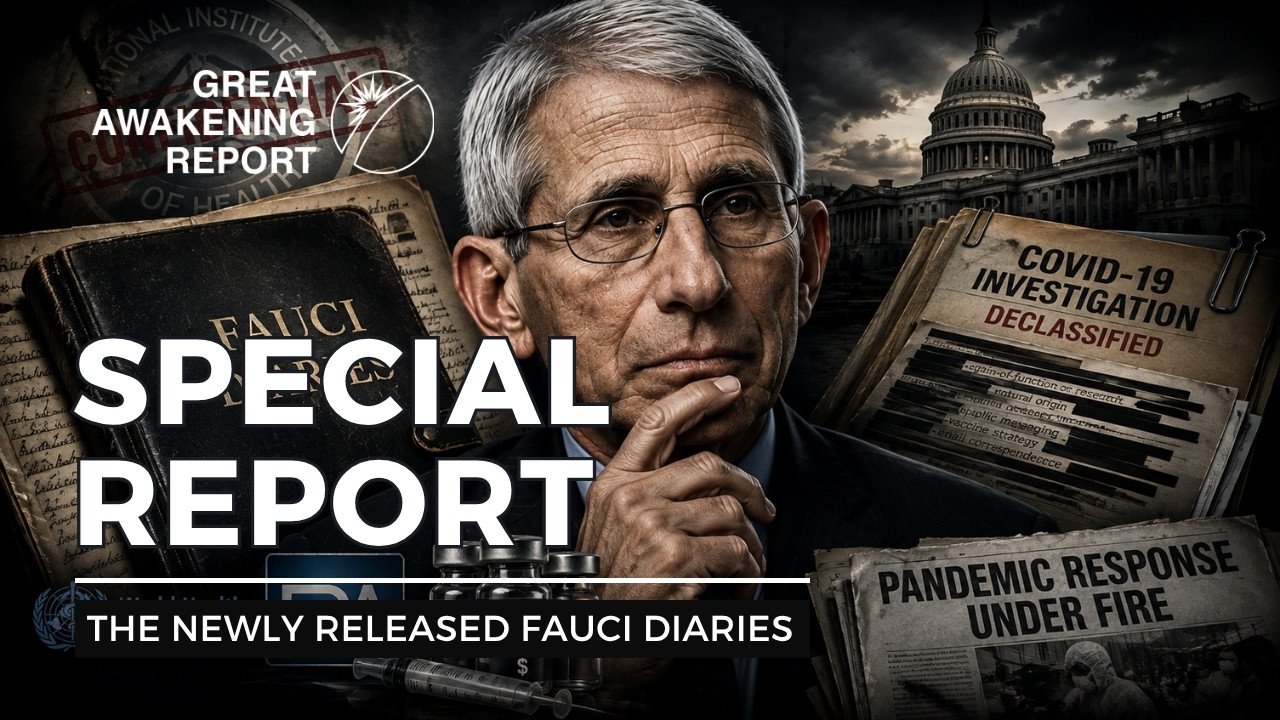
At the center of much of this discussion is Dr. Anthony Fauci, who served as Director of the National Institute of Allergy and Infectious Diseases (NIAID) during the period in question.
Fauci bears responsibility due to his role and actions during this crisis. During this period and when a nation turned to him to lead the Institute, his decisions are directly being questioned as well as his justifications for those decisions.
- Leadership bears responsibility.
- Leadership carries authority.
- Leadership also carries accountability.
As head of one of the most influential public health institutions in the world, Fauci occupied a position that shaped funding decisions, research priorities, public messaging, and pandemic response strategies. Whether one views his actions favorably or critically, his role cannot be separated from the broader story.
The emerging questions are significant.
- What research was funded?
- What risks were understood?
- What discussions occurred behind closed doors?
- How were competing hypotheses evaluated?
- Why were some questions discouraged while others were amplified?
- Most importantly, did the public receive a complete and transparent accounting of what was known at the time?
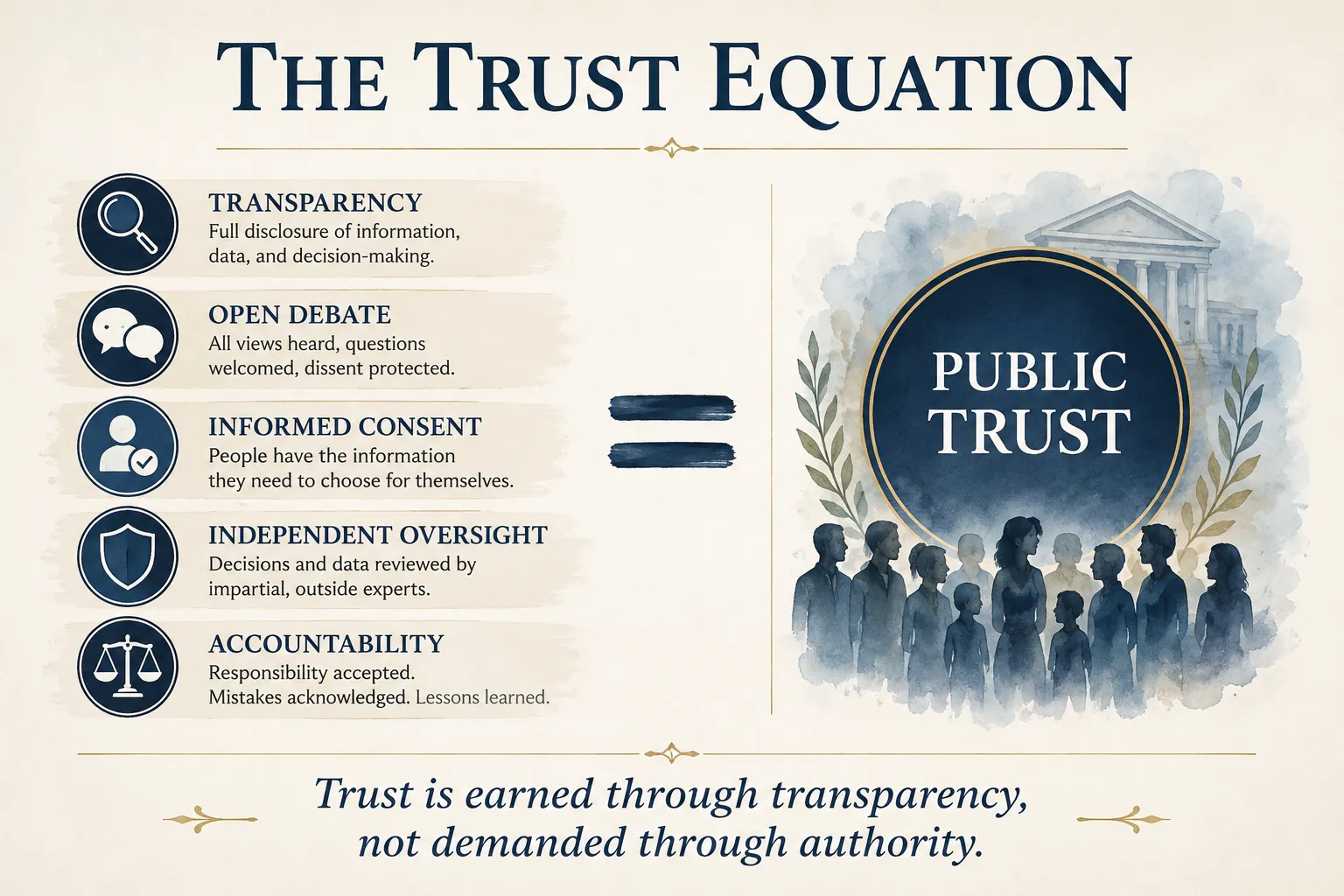
These questions matter because trust depends upon transparency.
When citizens begin to believe that important information was withheld, filtered, delayed, or selectively presented, confidence in institutions begins to erode.
The debate surrounding COVID origins is no longer simply about where a virus came from.
It has become a broader conversation about openness, accountability, and whether institutions entrusted with public welfare fulfilled that responsibility honestly and completely.
The Vaccine Safety Question
If the origins debate represents one side of the COVID accountability discussion, vaccine safety represents the other, and for many people this is where the story becomes deeply personal.
Millions of Americans accepted the COVID vaccines because they trusted the institutions standing behind them. They trusted federal health agencies, pharmaceutical companies, physicians, hospital systems, media organizations, and elected officials to provide complete and accurate information regarding both the potential benefits and potential risks of these new medical products. They believed that any significant concerns would be openly discussed, thoroughly investigated, and transparently communicated to the public.
Others made a different choice. Some declined the vaccines because they felt the products had been developed too quickly, because long-term data was unavailable, or because they believed important questions had not yet been answered. In many cases those individuals faced extraordinary social pressure for their decisions. Careers were disrupted, relationships were strained, and public discourse often framed disagreement as a threat rather than a legitimate expression of personal medical autonomy.
Years later, the debate has evolved far beyond the vaccines themselves. The central question for many Americans is no longer whether the vaccines were beneficial for some people or whether they carried risks for others. The larger issue is whether citizens were given access to the full scope of information necessary to make truly informed decisions about their health.
Recent findings released through Senator Ron Johnson’s investigation have renewed concerns regarding how vaccine safety signals were monitored, interpreted, and communicated throughout the rollout period. Internal discussions surrounding surveillance methodologies, statistical analyses, and potential warning signals have raised new questions about whether important information remained confined within regulatory agencies while public messaging projected a far greater degree of certainty.
For many Americans, this strikes at the very heart of informed consent. Genuine informed consent requires more than the ability to agree to a medical intervention. It requires access to relevant information, honest discussion of uncertainty, open evaluation of risks and benefits, and the freedom to consider competing viewpoints without coercion or censorship. When people believe that important discussions occurred behind closed doors while public narratives presented a simplified version of reality, trust inevitably begins to erode.
The frustration that continues to linger years after the pandemic is therefore about much more than vaccine injuries, adverse events, or statistical debates. It stems from the growing perception that important questions were often dismissed before they were fully explored and that legitimate concerns were sometimes treated as obstacles to compliance rather than opportunities for deeper investigation. Whether every concern ultimately proves valid is almost secondary to the larger principle at stake. Citizens deserve transparency, particularly when decisions involve their health, their families, and their futures.
This is precisely why the Johnson report has attracted so much attention. It is not simply another chapter in the vaccine debate. It represents a broader demand for accountability, transparency, and a fuller understanding of how critical decisions were made during one of the most consequential public health events in modern history.
Following the Incentives
One of the most important lessons to emerge from the COVID era is that systems often behave according to incentives. This observation does not require conspiracy theories, nor does it require assumptions of malicious intent. It simply acknowledges that institutions, like individuals, tend to respond to the structures, rewards, and pressures that surround them.
Government agencies are incentivized to maintain public confidence and institutional credibility. Pharmaceutical companies operate within a framework that rewards growth, innovation, and shareholder value. Media organizations compete for attention in increasingly fragmented information environments. Academic institutions depend upon funding, influence, and professional reputation. Regulatory agencies frequently work alongside the industries they are tasked with overseeing. Hospitals and healthcare systems navigate reimbursement structures, performance metrics, and administrative pressures that can significantly influence decision-making.
Individually, each of these incentives may appear reasonable. Collectively, however, they can create environments where transparency becomes more complicated and accountability becomes more difficult to achieve. This is why many people continue to ask questions not only about the decisions themselves but about the structures that shaped those decisions.
The issue extends beyond COVID. It reaches into broader concerns regarding pharmaceutical liability protections, regulatory oversight, public-private partnerships, government procurement contracts, and the increasingly complex relationships between industry, government, and public health institutions. Many Americans are now asking whether these systems contain sufficient safeguards to ensure that transparency remains a priority even when powerful interests are involved.
Recent federal procurement contracts for additional COVID vaccines have brought these questions back into focus. For many observers, the most surprising aspect was not the overall size of the allocation but the substantial portion reportedly directed toward pediatric doses. Such decisions naturally invite scrutiny, not because questions imply wrongdoing, but because transparency requires explanation. Citizens have every right to understand how these decisions are made, what assumptions guide them, and what evidence supports them.
Healthy societies do not fear difficult questions. They encourage them.
The Children Question
Perhaps no aspect of the COVID era generates stronger emotions than the questions surrounding children.
Adults can make decisions for themselves. They can evaluate risks, weigh competing viewpoints, and choose which medical interventions they are willing to accept. Children do not possess that ability. They depend entirely upon the judgment of the adults entrusted with their care, which is why every society carries a profound responsibility to protect its youngest members with the highest standards of transparency, caution, and accountability.
As new disclosures continue to emerge regarding COVID origins, vaccine safety monitoring, and institutional decision-making, many parents are revisiting questions they believed had already been settled. Recent federal procurement decisions allocating significant resources toward pediatric COVID vaccines have only intensified those discussions. For many families, the question is not simply about the funding itself. The question is why. What assumptions support these decisions? What risk-benefit analyses are being used? What lessons have been learned from the past several years?
The conversation also raises broader questions regarding incentives within the healthcare system. Throughout the COVID era, critics pointed to reimbursement structures, vaccine administration payments, public health funding programs, and other financial incentives that, fairly or unfairly, created the perception that economic considerations could influence medical recommendations. Many physicians undoubtedly acted according to what they believed was in the best interests of their patients, yet when children are involved, even the appearance of a potential conflict of interest deserves careful scrutiny. Trust requires transparency.
At its core, this discussion is not about politics. It is about responsibility. Children cannot advocate for themselves. They rely upon parents, physicians, researchers, regulators, educators, and policymakers to place their wellbeing above every other consideration. They deserve rigorous science, honest risk-benefit discussions, independent oversight, and accountability when mistakes occur.
If there is one lesson many parents have taken from the COVID era, it is that protecting children requires more than compliance. It requires vigilance, discernment, and the courage to ask difficult questions. When children are involved, the burden of proof should be higher, not lower, because the responsibility to protect them belongs to all of us.
The Accountability Gap
At its core, the continuing COVID debate is not fundamentally about politics, vaccines, pharmaceutical companies, or even the virus itself.
It is about accountability.
One of the reasons the pandemic remains such a powerful emotional and cultural force years after the fact is because many people feel that accountability has never fully materialized. While new documents, investigations, disclosures, and testimony continue to emerge, relatively few individuals or institutions have publicly acknowledged mistakes, accepted responsibility, or provided comprehensive explanations for decisions that affected hundreds of millions of lives.
The newly released intelligence documents regarding COVID origins and the findings emerging from Senator Ron Johnson’s investigation have brought this issue back into focus. Together, they raise a series of questions that many citizens believe remain unanswered.
- If important information regarding origins was misunderstood, obscured, or inadequately communicated, who bears responsibility?
- If legitimate scientific debate was discouraged, who bears responsibility?
- If vaccine safety concerns were not fully disclosed, who bears responsibility?
- If public trust was damaged through incomplete transparency, who bears responsibility?
These questions matter because accountability serves as the foundation upon which trust is built. Trust does not require perfection. Most people understand that mistakes occur, particularly during periods of crisis and uncertainty. What citizens struggle to accept is the perception that powerful institutions can make consequential decisions while remaining largely insulated from scrutiny when those decisions later come under question.
Without accountability, trust becomes increasingly difficult to restore.
And without trust, the relationship between institutions and the public begins to fracture.
The Return of Health Sovereignty
Perhaps the most important lesson of the COVID era has little to do with COVID itself.
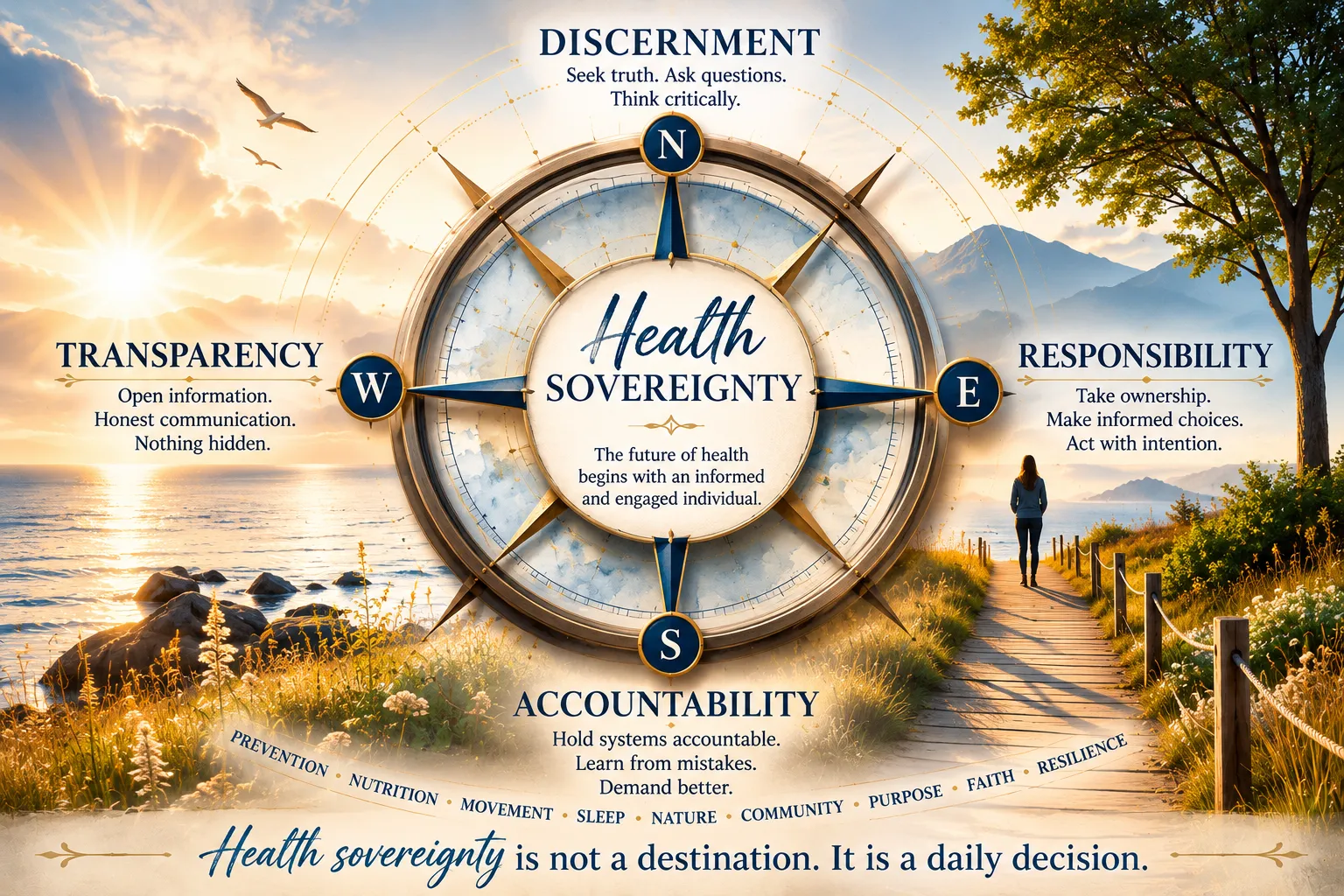
The events of the past several years have reminded millions of people that responsibility for health cannot be completely outsourced to any institution, no matter how respected or authoritative that institution may be. Governments, physicians, researchers, pharmaceutical companies, and public health agencies all play important roles, yet none of them ultimately live with the consequences of the decisions individuals make for themselves and their families.
For many people, however, the deeper issue extends beyond medical decisions. The COVID era fundamentally altered the relationship between citizens and the institutions they were taught to trust. Public health agencies, government officials, pharmaceutical companies, media organizations, and healthcare systems all experienced a significant decline in public confidence as questions surrounding transparency, accountability, and disclosure continued to emerge long after the immediate crisis had passed.
Trust, once broken, is difficult to restore.
Millions of people now approach healthcare decisions differently than they did before 2020. Many have become more active participants in their own wellbeing, seeking additional perspectives, asking more questions, researching treatment options independently, and taking greater responsibility for the choices they make. Rather than automatically accepting recommendations based solely upon authority, they increasingly seek understanding, evidence, and transparency before making decisions that affect themselves and their families.
This shift has also contributed to a growing interest in preventative health, nutrition, lifestyle medicine, natural therapies, metabolic health, environmental wellness, and approaches that emphasize supporting the body’s innate capacity for healing. For many, the lesson of COVID was not simply about what happened during the pandemic. It was a realization that true health extends beyond prescriptions, procedures, and institutional guidance. It requires an ongoing commitment to understanding and caring for the body, mind, and spirit as interconnected aspects of human wellbeing.
At the same time, healing must occur on a broader societal level. The divisions, fears, losses, and distrust generated during this period cannot simply be ignored or wished away. Rebuilding trust will require something many institutions have thus far struggled to provide: transparency, humility, accountability, and a willingness to openly acknowledge where mistakes were made and lessons were learned.
Trust cannot be demanded. It must be earned. And accountability is often the first step toward rebuilding it.
Perhaps that is where health sovereignty ultimately leads. Not toward rejecting expertise, but toward engaging with it more consciously. Not toward fear, but toward empowerment. Not toward blind trust, nor blind skepticism, but toward a mature relationship with information in which individuals remain informed, engaged, and responsible participants in their own health journey.
The COVID era may ultimately be remembered as one of the greatest trust ruptures of modern times. Yet hidden within that rupture may be an opportunity for something positive to emerge: a more informed citizenry, a more transparent healthcare system, and a renewed understanding that health is not something we surrender to institutions, but something we actively cultivate through knowledge, responsibility, and conscious choice.
The lesson is to become discerning enough to know the difference.
Sign up to receive Our Weekly Briefing Newsletter
Begin your journey with weekly insights designed to expand awareness and ground you in truth. Our free tier gives you a powerful introduction without any commitment.


Help Us Bypass Censorship. Share This.
Have questions?
At Great Awakening Report, we are dedicated to supporting your journey toward truth and enlightenment through our specialized Coaching and Consulting services.
Coaching Services: Our coaching programs are designed to guide you through personal awakening and transformation. We offer personalized sessions that focus on expanding consciousness, uncovering hidden truths, and fostering spiritual growth. Our experienced coaches provide the tools and insights necessary to navigate your path with clarity and confidence.
Consulting Services: For organizations and individuals seeking deeper understanding and strategic guidance, our consulting services offer expert analysis and solutions. We delve into areas such as global transitions, alternative news insights, and consciousness studies to provide comprehensive strategies tailored to your unique objectives.
Embark on a transformative journey with our Coaching and Consulting services, and unlock your highest potential. To learn more and schedule a session, visit our Coaching and Consulting pages.
Thank you
Thank you to our subscribers and readers for your continued support and dedication to truth and awakening. Your encouragement, engagement, and belief in our mission make everything we do possible. Together, we are expanding awareness and helping illuminate the path forward.
If you would like to further support the Great Awakening team and our ongoing efforts to share insight, knowledge, and truth, you can DONATE HERE.
With deep gratitude,
– Great Awakening Team
About the Author: Great Awakening Team

DISCLAIMER: All statements, claims, views and opinions that appear anywhere on this site, whether stated as theories or absolute facts, are always presented by The Great Awakening Report (GAR) as unverified—and should be personally fact checked and discerned by you, the reader.Any opinions or statements herein presented are not necessarily promoted, endorsed, or agreed to by GAR, those who work with GAR, or those who read or subscribe to GAR.Any belief or conclusion gleaned from content on this site is solely the responsibility of you the reader to substantiate.Any actions taken by those who read material on this site are solely the responsibility of the acting party.You are encouraged to think for yourself and do your own research.Nothing on this site is meant to be believed without question or personal appraisal.
COPYRIGHT DISCLAIMER: Citation of articles and authors in this report does not imply ownership. Works and images presented here fall under Fair Use Section 107 and are used for commentary on globally significant newsworthy events. Under Section 107 of the Copyright Act 1976, allowance is made for fair use for purposes such as criticism, comment, news reporting, teaching, scholarship, and research.
COMMUNITY GUIDELINES DISCLAIMER: The points of view and purpose of this video is not to bully or harass anybody, but rather share that opinion and thoughts with other like-minded individuals curious about the subject.