




Published Date: June 16th, 2026
This special report on conspiracy theory vs fact gathers independent reporting, suppressed material and underreported evidence on the subject. Our aim with conspiracy theory vs fact is the same as always: show the record, connect the threads, and let readers weigh it for themselves.
SPECIAL REPORT
TRUTH///AWAKENING///DISCLOSURE
CONSPIRACY THEORY VS CONSPIRACY FACT | THE ARCHITECTURE OF HIDDEN POWER & CONTROL | CONSPIRACY THEORY VS FACT
Conspiracy Classifications • Institutional Deception • Narrative Control • Global Exposure • Galactic Disclosure
“The CIA created the term/phrase (1964) Conspiracy Theory after the JFK assassination to divert public attention away from the true conspiracy and real assassins involved.”
Introduction: Conspiracy Theory vs. Conspiracy Fact
Few subjects expose the fracture lines of modern society more powerfully than conspiracy theories. To some, they represent dangerous misinformation, paranoia, and speculation untethered from reality. To others, they represent a necessary challenge to institutions that have repeatedly concealed information, manipulated narratives, and violated public trust throughout history. The truth is that conspiracy culture exists because history itself contains real conspiracies. Governments have conducted covert operations. Intelligence agencies have manipulated media narratives. Corporations have hidden harmful information. Financial institutions have engineered corruption. Scientific authorities have, at times, protected institutional interests over transparency. The public knows this not because of rumor, but because many once-dismissed theories were later validated through declassified documents, congressional investigations, whistleblower testimony, court records, investigative journalism, and historical disclosure.
This reality creates one of the defining psychological tensions of the modern era. When institutions are repeatedly caught withholding the truth, public trust begins to erode far beyond the original event itself. Citizens no longer question only isolated incidents — they begin questioning entire systems of authority, information, history, science, media, and governance. Into that uncertainty enters a vast landscape where documented facts, unresolved mysteries, alternative narratives, speculation, pattern recognition, propaganda, symbolism, fear, intuition, manipulation, and mythology all begin to overlap. Some theories collapse under scrutiny. Others evolve into partially confirmed reality. Some remain unresolved decades later. The result is a civilization increasingly unsure where truth ends, narrative begins, and perception itself becomes vulnerable to manipulation.
This report does not ask readers to blindly accept every conspiracy theory, nor does it ask them to blindly trust institutional narratives simply because they are official. Instead, it explores one of the most important questions of the twenty-first century: what happens to society when trust in centralized authority begins to collapse? Across government operations, intelligence agencies, financial systems, media influence, psychological manipulation, health systems, elite networks, disclosure movements, historical revisionism, technological control systems, and spiritual narratives, this report examines not only the theories themselves, but the deeper forces that caused millions of people to begin questioning reality in the first place. The goal is not fear. The goal is not belief. The goal is discernment — the ability to think critically, question honestly, evaluate evidence carefully, and navigate a world where information itself has become one of the most contested battlegrounds in modern history.
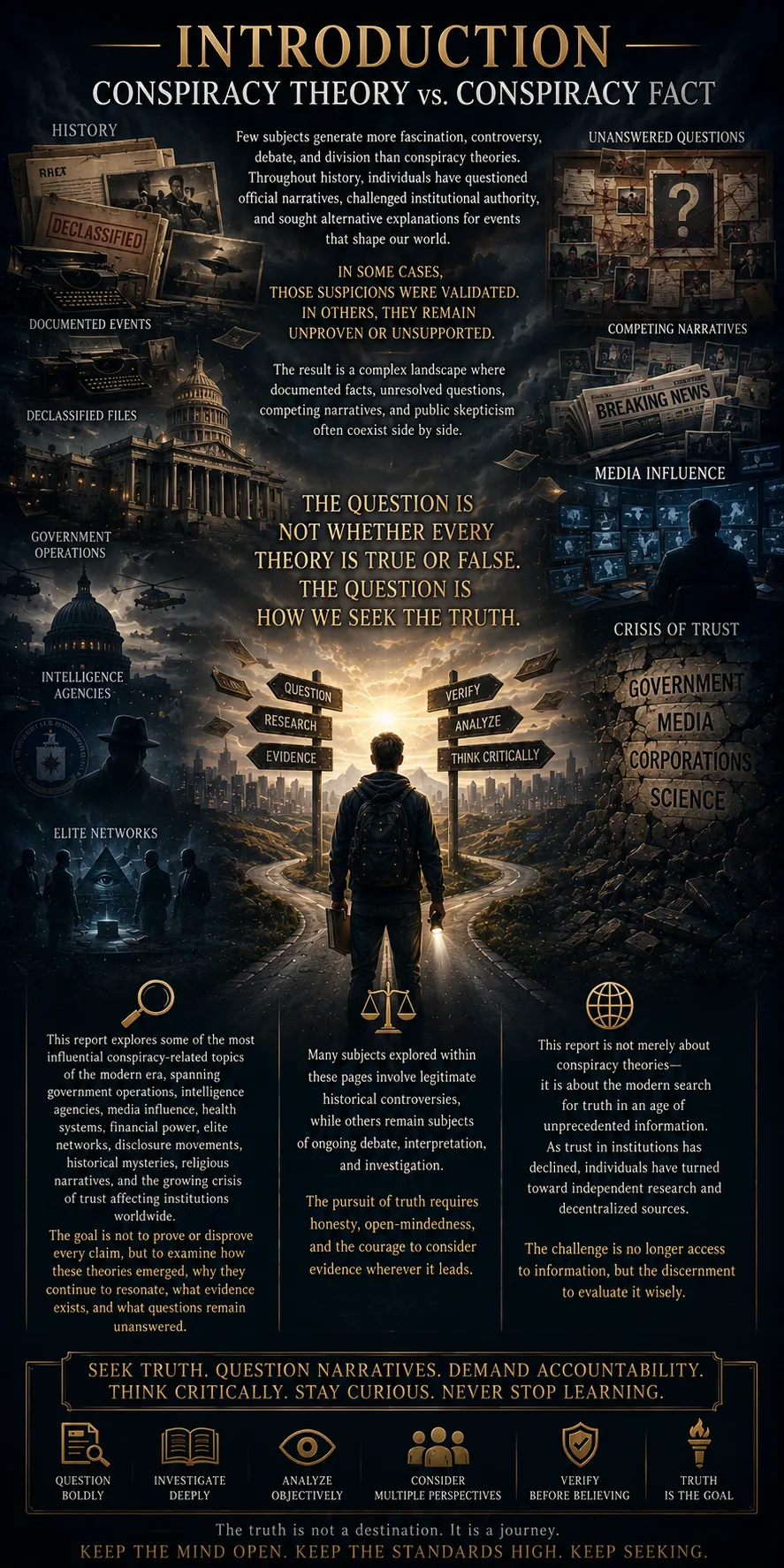
CORE REPORT PREMISE
“Yesterday’s Conspiracy Theory, Today’s Conspiracy Fact”
This report is not designed to argue that “everything is true.”
Nor is it designed to blindly defend governments, corporations, media institutions, scientific authorities, financial systems, or official narratives simply because they hold institutional power.
Instead, this report examines a deeper historical reality: many theories once dismissed as impossible, paranoid, or dangerous were later revealed to contain elements of truth through declassified files, whistleblower testimony, investigative journalism, court records, and official investigations. Programs such as MK-Ultra, COINTELPRO, Operation Mockingbird, mass surveillance systems exposed by Edward Snowden, the Tuskegee experiments, and financial manipulation scandals demonstrated that institutional deception is not merely theoretical. It is historically documented. That realization fundamentally changed public consciousness.
At the same time, not every conspiracy theory proves true. Some remain unresolved. Some are exaggerated through fear, ideology, internet mythology, or pattern over-interpretation. Others collapse entirely under scrutiny. The modern challenge is that humanity now exists inside an information environment where facts, narratives, algorithms, propaganda, psychological manipulation, artificial intelligence, emotional amplification, censorship, and decentralized media ecosystems interact continuously in real time. The result is a world where truth itself increasingly feels fragmented.
This report therefore investigates:
- where governments, corporations, intelligence agencies, financial systems, and media institutions demonstrably concealed information
- how secrecy and power structures shaped public distrust
- which conspiracy theories later became partially or fully validated
- which theories remain unresolved, speculative, or mythological
- how narratives evolve in the digital age
- how propaganda, fear, symbolism, trauma, psychology, and perception influence public belief
- where legitimate investigation ends and unsupported mythology begins
The deeper issue explored throughout this report is not merely conspiracy theories themselves, but the growing crisis of epistemic trust within modern civilization. When populations no longer know who to believe, reality itself becomes unstable. In that environment, discernment becomes one of the most important human skills of the modern age.
The goal is not belief.
The goal is discernment.
Conspiracy Theory Realities
Source: GAR Contributing Writer
People think that if they stick their head in the sand, they will somehow be spared of not only facing evil, but also of the consequences of that evil. But the opposite is true.
Cowardice to confront harsh realities comes at a very high price; you will end up in the slaughter house sooner or later.
I remember how desperately I tried to inform people against the Covid ‘vaccines’; I presented information, research, logic and common sense arguments, but there were many that still preferred to ignore the greatest crime against humanity ever committed, and paid the price for it. I would not want that poison running through my veins, that’s for sure.
Ignorance is no longer bliss. Ignorance these days will get us enslaved, transhuman or dead. So take your pick: wake up and smell the coffee or say goodbye to life as you know it.
Your choice matters extremely, because you will either contribute to the problem or be part of the solution.
So please make the courageous choice. Fears never leads anywhere good.
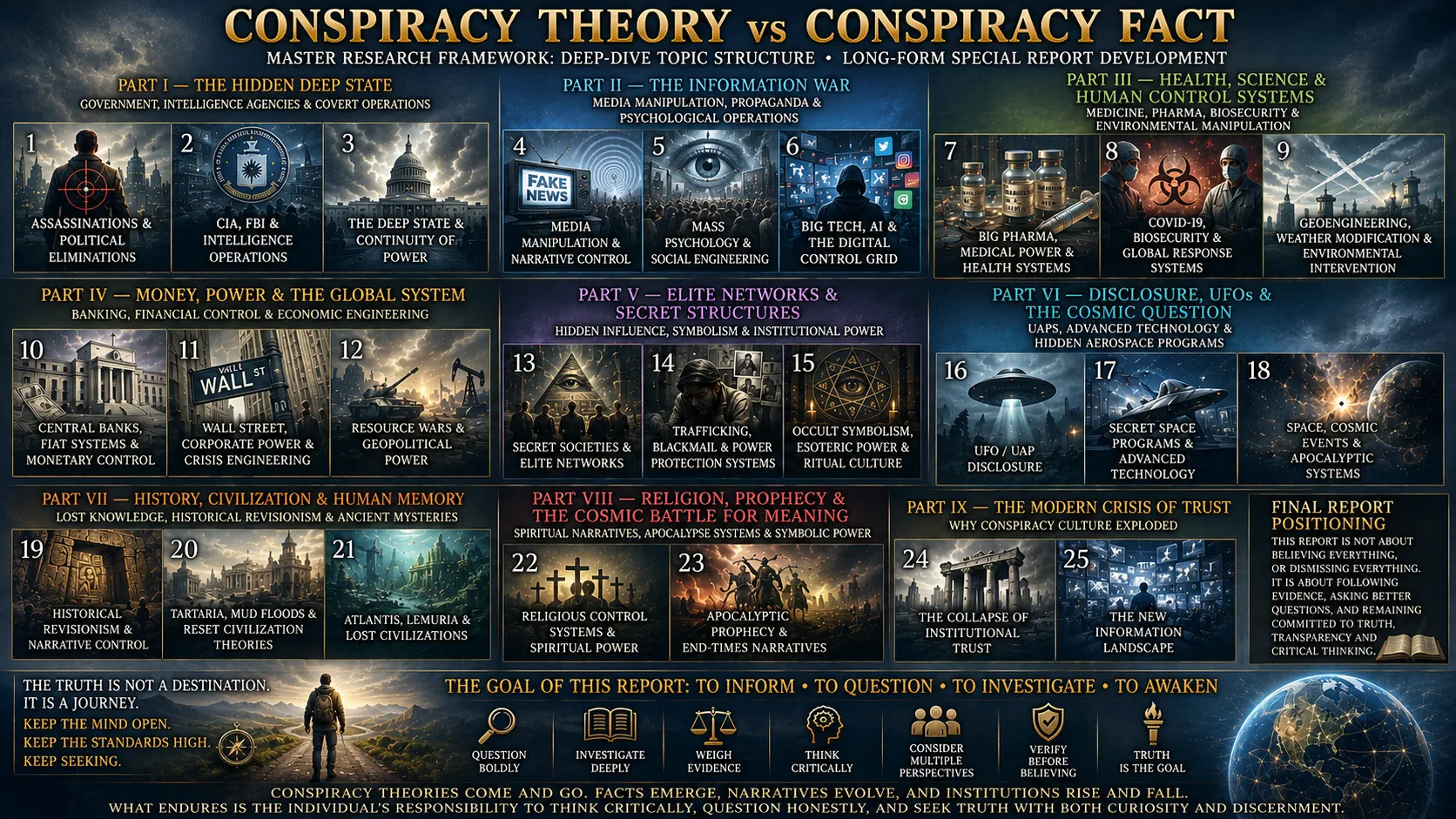
Conspiracy Theory vs Conspiracy Fact Topic Titles
MASTER RESEARCH FRAMEWORK: Deep-Dive Topic Structure • Long-Form Special Report Development
The Conspiracy Theory vs. Conspiracy Fact Master Research Framework was developed to examine some of the most influential, controversial, psychologically charged, and culturally transformative subjects shaping modern conspiracy culture. Organized into major thematic sections spanning government secrecy, intelligence operations, media influence, psychological warfare, surveillance systems, financial power structures, elite influence networks, disclosure movements, historical revisionism, religious narratives, technological control systems, and the collapse of institutional trust, the report seeks to move beyond simplistic labels of “true” or “false” and instead investigate the deeper architecture beneath modern perception itself.
Each section explores not only the theories, but the historical conditions that allowed those theories to emerge and spread globally. Repeated institutional deception, propaganda campaigns, classified operations, financial corruption, censorship systems, information warfare, and technological manipulation have fundamentally altered the relationship between populations and authority. As centralized trust weakens, millions of people increasingly turn toward alternative media, independent research, decentralized information networks, and collective pattern recognition in search of answers. In some cases, these investigations uncover legitimate inconsistencies and suppressed truths. In others, speculation expands beyond available evidence into mythology, fear, or ideological extremism. Understanding where those boundaries exist is one of the central purposes of this report.
Ultimately, this framework is designed not simply as a catalog of conspiracy theories, but as an exploration of one of the defining crises of the modern era: the battle over truth itself. In an age dominated by algorithmic media, psychological manipulation, AI-generated content, information overload, narrative warfare, and collapsing public trust, humanity faces an increasingly difficult challenge — learning how to think critically in a world where reality is constantly being shaped, filtered, emotionally amplified, and contested. The purpose of this report is to encourage readers to ask deeper questions, confront uncomfortable possibilities, examine evidence honestly, and develop the discernment necessary to navigate a civilization where power, perception, secrecy, and truth have become deeply intertwined.
PART I — THE HIDDEN DEEP STATE
Government, Intelligence Agencies & Covert Operations
1. ASSASSINATIONS & POLITICAL ELIMINATIONS
2. CIA, FBI & INTELLIGENCE OPERATIONS
3. THE DEEP STATE & CONTINUITY OF POWER
PART II — THE INFORMATION WAR
Media Manipulation, Propaganda & Psychological Operations
4. MEDIA MANIPULATION & NARRATIVE CONTROL
5. MASS PSYCHOLOGY & SOCIAL ENGINEERING
6. BIG TECH, AI & THE DIGITAL CONTROL GRID
PART III — HEALTH, SCIENCE & HUMAN CONTROL SYSTEMS
Medicine, Pharma, Biosecurity & Environmental Manipulation
7. BIG PHARMA, MEDICAL POWER & HEALTH SYSTEMS
8. COVID-19, BIOSECURITY & GLOBAL RESPONSE SYSTEMS
9. GEOENGINEERING, WEATHER MODIFICATION & ENVIRONMENTAL INTERVENTION
PART IV — MONEY, POWER & THE GLOBAL SYSTEM
Banking, Financial Control & Economic Engineering
10. CENTRAL BANKS, FIAT SYSTEMS & MONETARY CONTROL
11. WALL STREET, CORPORATE POWER & CRISIS ENGINEERING
12. RESOURCE WARS & GEOPOLITICAL POWER
PART V — ELITE NETWORKS & SECRET STRUCTURES
Hidden Influence, Symbolism & Institutional Power
13. SECRET SOCIETIES & ELITE NETWORKS
14. TRAFFICKING, BLACKMAIL & POWER PROTECTION SYSTEMS
15. OCCULT SYMBOLISM, ESOTERIC POWER & RITUAL CULTURE
PART VI — DISCLOSURE, UFOs & THE COSMIC QUESTION
UAPs, Advanced Technology & Hidden Aerospace Programs
16. UFO / UAP DISCLOSURE
17. SECRET SPACE PROGRAMS & ADVANCED TECHNOLOGY
18. SPACE, COSMIC EVENTS & APOCALYPTIC SYSTEMS
PART VII — HISTORY, CIVILIZATION & HUMAN MEMORY
Lost Knowledge, Historical Revisionism & Ancient Mysteries
19. HISTORICAL REVISIONISM & NARRATIVE CONTROL
20. TARTARIA, MUD FLOODS & RESET CIVILIZATION THEORIES
21. ATLANTIS, LEMURIA & LOST CIVILIZATIONS
PART VIII — RELIGION, PROPHECY & THE COSMIC BATTLE FOR MEANING
Spiritual Narratives, Apocalypse Systems & Symbolic Power
22. RELIGIOUS CONTROL SYSTEMS & SPIRITUAL POWER
23. APOCALYPTIC PROPHECY & END-TIMES NARRATIVES
PART IX — THE MODERN CRISIS OF TRUST
Why Conspiracy Culture Exploded
24. THE COLLAPSE OF INSTITUTIONAL TRUST
25. THE NEW INFORMATION LANDSCAPE
FINAL REPORT POSITIONING
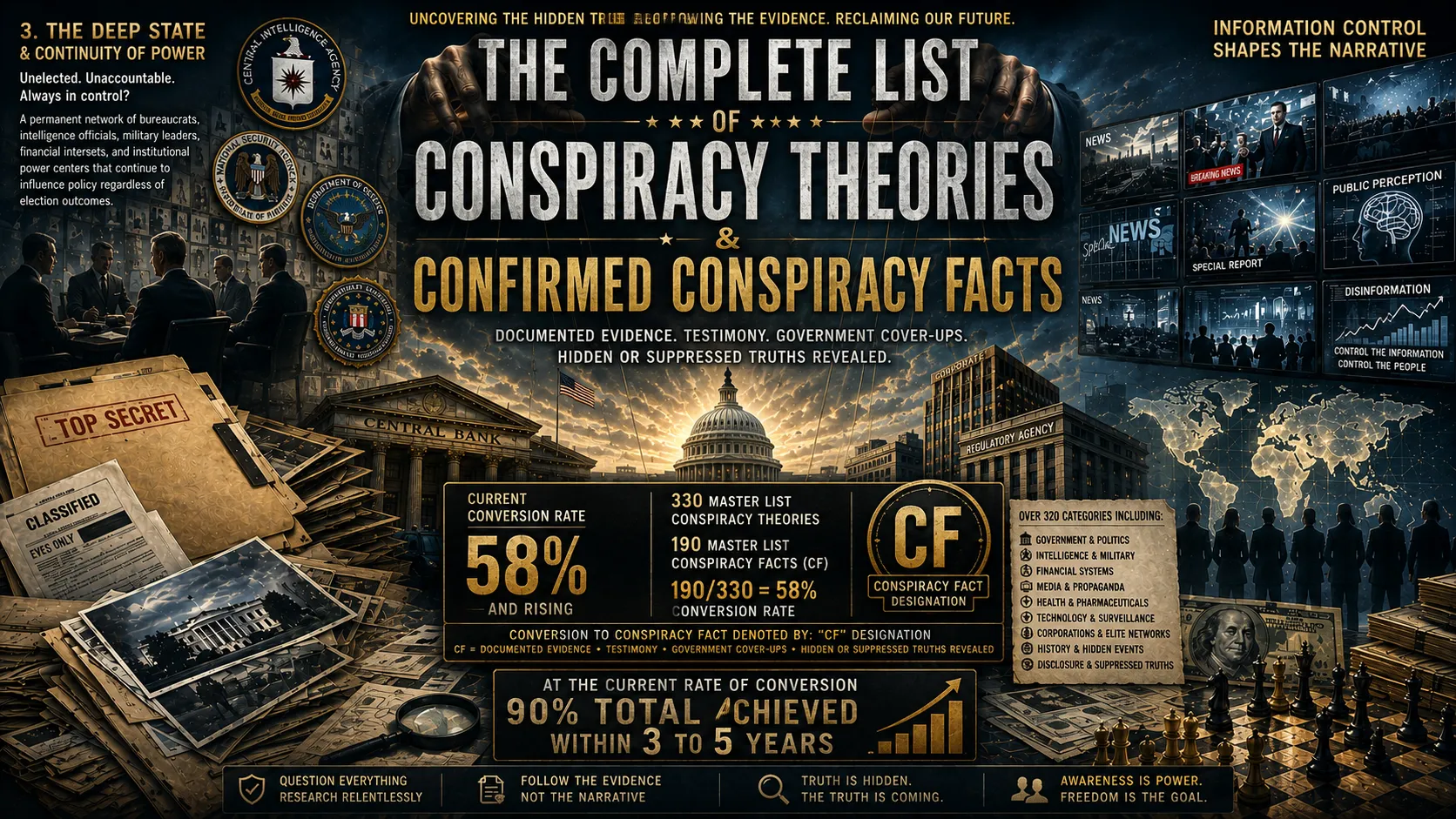
The Complete Conspiracy Theories List & Confirmed Conspiracy Facts
One of the primary goals of this Special Report is to provide readers with a comprehensive catalog of some of the most significant conspiracy theories, disclosures, controversies, and hidden-history narratives discussed over the past century. More importantly, it seeks to examine which subjects remained speculative, which evolved into documented historical fact, and which continue to occupy the vast territory in between. Through declassified government files, congressional investigations, court records, whistleblower testimony, FOIA releases, investigative journalism, and official admissions, numerous topics once dismissed as fringe speculation have gradually entered the historical record. This section allows readers to examine those subjects through the lens of evidence, documentation, and historical development rather than assumption, ideology, or emotion.
To support that process, each topic is organized using a structured classification framework ranging from Verified and Partially Verified to Open/Plausible, Speculative, and Mythological/Fringe. Not all conspiracy theories carry the same evidentiary weight. Some have been conclusively documented. Others contain unresolved questions, conflicting evidence, or ongoing debate. Many remain intriguing possibilities awaiting further investigation. The purpose of this framework is not to tell readers what to think, but to provide a roadmap for evaluating claims based upon the strength of available evidence.
Perhaps the most fascinating lesson emerging from this catalog is that history is far less settled than most people assume. Information once hidden often becomes public. Official narratives sometimes change. New evidence emerges. Previously dismissed subjects occasionally move into the realm of documented fact, while others collapse under scrutiny. The line separating conspiracy theory from conspiracy fact is not fixed—it evolves as disclosure expands and knowledge grows.
Ultimately, this section is less about proving theories right or wrong than understanding the process by which truth emerges over time. It is an invitation to investigate, question, remain intellectually honest, and follow the evidence wherever it leads. Because if history teaches us anything, it is that today’s unanswered question can sometimes become tomorrow’s established fact.
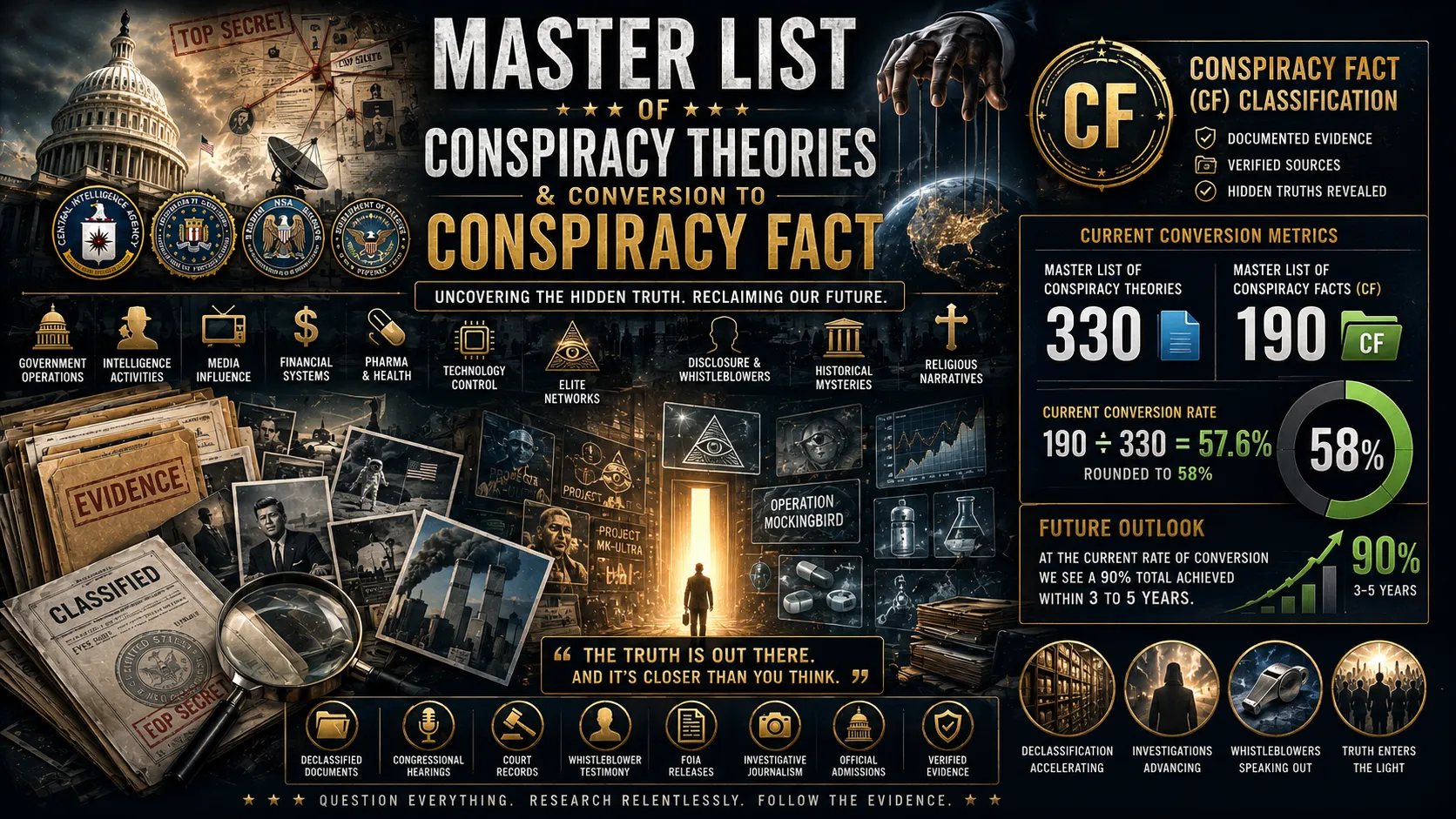
Master List of Conspiracy Theories & Conversion to Conspiracy Fact
The complete catalog of modern conspiracy theories now exceeds 667 major topics spanning government operations, intelligence activities, media influence, financial systems, health and pharmaceutical industries, technological control systems, elite networks, disclosure movements, historical mysteries, religious narratives, and the growing crisis of institutional power. While many of these subjects remain speculative, disputed, or unresolved, a growing number have transitioned from the realm of theory into the realm of documented historical fact through evidence, investigation, and public disclosure.
Our research indicates that the conversion rate from Conspiracy Theory to Conspiracy Fact (CF) now exceeds 49.7%, with many formerly dismissed claims having been validated, in whole or in part, through declassified government documents, congressional records, court records, whistleblower testimony, Freedom of Information Act (FOIA) releases, investigative journalism, and official admissions by public institutions. In this context, “conversion” does not necessarily mean every aspect of a theory was proven correct. Rather, it indicates that credible evidence emerged confirming the existence of activities, programs, operations, deceptions, influence campaigns, misconduct, or hidden information that were once publicly denied, dismissed, or ridiculed.
Perhaps the most important observation is not the percentage itself, but the pattern it reveals. History repeatedly demonstrates that information can remain hidden for years, decades, or even generations before entering the public record. Official narratives evolve. Classified programs become declassified. Witnesses come forward. Documents are released. Investigations uncover what was previously concealed. The line separating conspiracy theory from conspiracy fact is often less permanent than many people assume.
Conspiracy Fact (CF) Classification System
Within this report, theories that have transitioned from speculation to documented evidence will be designated with a “CF” (Conspiracy Fact) classification.
A “CF” designation indicates that significant supporting evidence has emerged through one or more of the following:
- Declassified government documents
- Congressional investigations
- Court records and legal findings
- Whistleblower testimony
- Freedom of Information Act (FOIA) releases
- Investigative journalism
- Official admissions
- Other verifiable forms of documentation
The “CF” designation does not necessarily validate every aspect of a theory. Rather, it signifies that key elements have been substantiated through credible evidence and now belong within the historical record.
Current Conversion Metrics Estimates
Master List of Conspiracy Theories: 667
Master List of Conspiracy Facts (“CF”): 332
Current Conversion Rate:
332 ÷ 667 = 49.7% (rounded up 50%)
Based on our current research and classification framework, approximately 49.7% of the conspiracy theories included within the Master List have now crossed the threshold into the Conspiracy Fact category through documented evidence, official disclosures, historical revelations, or verified investigative findings.
Looking forward, the pace of disclosure continues to accelerate as additional records are declassified, investigations advance, whistleblowers come forward, and previously restricted information enters the public domain. Based on current trends, we believe the overall conversion rate could approach 90% within the next three to five years, as more unresolved topics move from speculation into the realm of verifiable historical record.
While future outcomes can never be guaranteed, the broader trend remains clear: many subjects once dismissed as conspiracy theories continue moving toward greater public acknowledgment, deeper investigation, and increasing evidentiary support. Whether that trajectory ultimately reaches 90% or not, the larger lesson remains the same:
History is rarely as settled as it appears, and the search for truth is often a process of discovery rather than certainty.
Conspiracy Fact Conversion Identification: “CF”
PART I — THE HIDDEN HAND – “THE DEEP STATE”
1. ASSASSINATIONS & POLITICAL ELIMINATIONS
Core Topics
- Charlie Kirk assassination
- Malcolm X
- General Patton
- Marilyn Monroe
- Princess Diana
- John Lennon
- Paul Wellstone plane crash
- Seth Rich “CF”
- Vince Foster “CF”
- Jeffrey Epstein death
- JFK Jr.
- Whitney Houston
- Bruce Lee
- Brandon Lee
- Natalie Wood
- Bob Crane
- Elvis Presley
- Jim Morrison
- Jim Hendrix
- Janis Joplin
- John Belushi
- River Pheonix
- Kurt Cobain
- John Belushi
- Chris Cornell
- Chester Bennington
- Avicii Open
- Tupac Shakur
- Notorious B.I.G.
- Brittany Murphy
- Heath Ledger
- Anton Yelchin
- Michael Jackson
- Nikola Tesla (1943)
- GEC-Marconi Scientists (1980s)
- Dr. David Kelly (2003)
- Recent U.S. Nuclear & Aerospace Scientists (2022–2026)
- Barry and Honey Sherman (2017)
- Michael Hastings (2013)
- Political whistleblower sudden deaths
- Journalist/Correspondents; reporting war crimes
- UFO Whistleblowers (100s mysterious deaths)
- Alternative Cancer Doctors (100s mysterious deaths)
- Advanced Technology Inventors (free energy, H2O engine conversions, antigravity)
Political Assassinations Past 60 years (not a lone gunman)
1960s
- Patrice Lumumba — Assassinated during the Congo Crisis. “CF”
- Rafael Trujillo — Killed in an ambush after ruling for three decades. “CF”
- John F. Kennedy — Assassinated in Dallas, Texas. “CF”
- Malcolm X — Assassinated in New York City. “CF”
- Martin Luther King Jr. — Assassinated in Memphis, Tennessee. “CF”
- Robert F. Kennedy — Assassinated during the 1968 campaign. “CF”
1970s
- Salvador Allende — Died during the Chilean coup; circumstances remain debated though official investigations concluded suicide.
- Sheikh Mujibur Rahman — Assassinated during a military coup. “CF”
- Aldo Moro — Kidnapped and murdered by the Red Brigades. “CF”
1980s
- Anwar Sadat — Assassinated during a military parade. “CF”
- Indira Gandhi — Assassinated by members of her security detail. “CF”
- Olof Palme — Assassinated in Stockholm; case remained controversial for decades. “CF”
1990s
- Rajiv Gandhi — Assassinated during an election campaign. “CF”
- Yitzhak Rabin — Assassinated after a peace rally. “CF”
2000s
- Laurent-Désiré Kabila — Assassinated by a bodyguard. “CF”
- Zoran Đinđić — Assassinated outside government headquarters. “CF”
- Rafik Hariri — Killed by a truck bomb in Beirut. “CF”
- Benazir Bhutto — Assassinated during an election campaign rally. “CF”
2010s
- Muammar Gaddafi — Killed after capture during the Libyan uprising. “CF”
- Chokri Belaid — Assassinated outside his home. “CF”
- Boris Nemtsov — Assassinated near the Kremlin. “CF”
- Jo Cox — Assassinated during the Brexit campaign period. “CF”
2020s
- Jovenel Moïse — Assassinated at his residence. “CF”
- David Amess — Stabbed while meeting constituents. “CF”
- Shinzo Abe — Assassinated during a campaign speech in Nara. “CF”
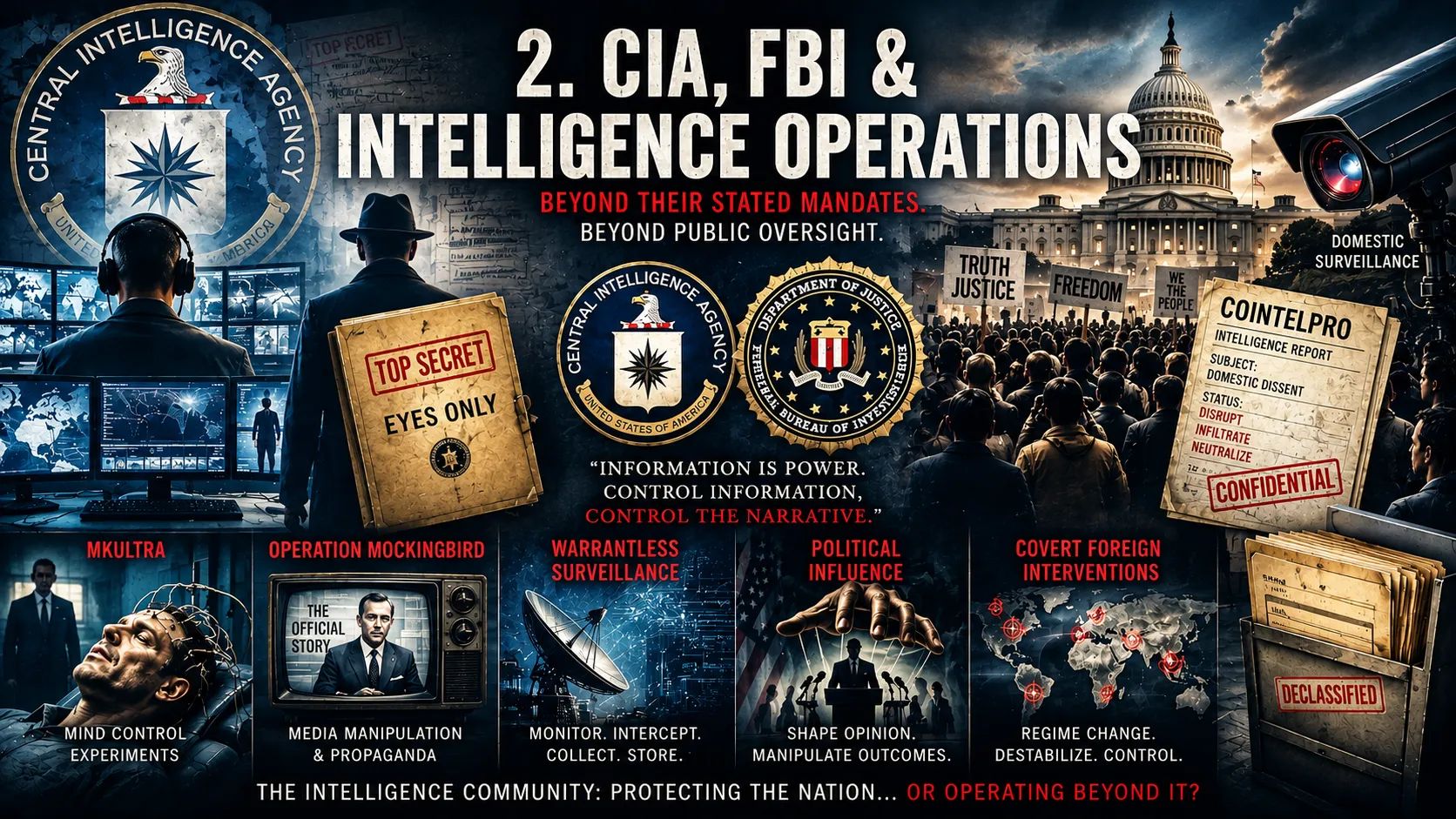
2. CIA, FBI & INTELLIGENCE OPERATIONS
VERIFIED / DOCUMENTED PROGRAMS
- MK-Ultra “CF”
- COINTELPRO “CF”
- Operation Mockingbird “CF”
- Operation Alice (Alice in Wonderland)
- Operation Northwoods “CF”
- Operation Paperclip “CF”
- Exercise Alice (Covid 19 programming)
- Tuskegee experiments
- Iran-Contra “CF”
- Gulf of Tonkin “CF”
- Phoenix Program
- NSA surveillance “CF”
- ECHELON “CF”
- CIA drug trafficking allegations “CF”
- Crack epidemic allegations “CF”
- Church Committee revelations “CF”
- FBI infiltration programs “CF”
- CIA regime-change operations “CF”
- Economic hitman “CF”
- foreign election interference “CF”
3. THE DEEP STATE & CONTINUITY OF POWER
Core Areas
- unelected power structures “CF”
- permanent bureaucratic influence “CF”
- “senior executive services” permanent bureaucracy“CF”
- intelligence overlap with finance and media “CF”
- military-industrial complex “CF”
- corporate revolving-door governance “CF”
- elite donor influence systems “CF”
- lobbist influence & control “CF”
- think tank coordination “CF”
- continuity-of-government systems “CF”
- “above top secret” classified compartmentalization “CF”
- black budget secrecy “CF”
PART II — THE INFORMATION WAR
4. MEDIA MANIPULATION & NARRATIVE CONTROL
Core Topics
- Operation Mockingbird “CF”
- wartime propaganda “CF”
- untimely deaths of wartime news reporters “CF”
- intelligence agency influence in journalism “CF”
- media consolidation “CF”
- coordinated messaging “CF”
- censorship systems “CF”
- fact-checking influence networks
- crisis narrative synchronization
- information laundering
- digital platform moderation systems
- advertiser pressure systems “CF”
- psychological priming
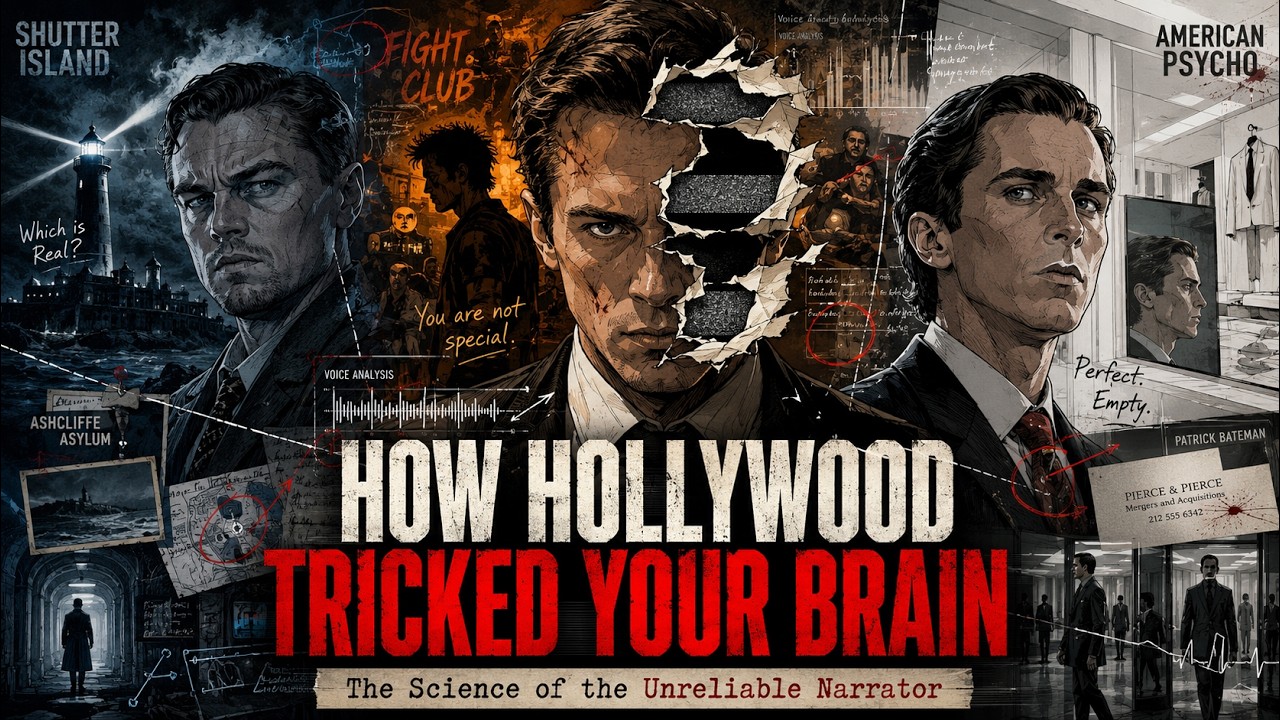
- movie industry “subliminal programming” “CF”
Modern Extensions
- algorithmic amplification “CF”
- outrage economics “CF”
- emotionally engineered media “CF”
- narrative framing systems
- AI-generated information warfare “CF”
- deepfakes “CF”
- memetic warfare
5. MASS PSYCHOLOGY & SOCIAL ENGINEERING
Core Topics
- SRI Stanford Research Institute “CF”
- MK-Ultra mind control “CF”
- Tavistock Institute theories “CF”
- behavioral conditioning “CF”
- emotional contagion systems
- crowd psychology “CF”
- subliminal programming “CF”
- fear amplification
- trauma-based social control “CF”
- predictive programming “CF”
- propaganda through entertainment “CF”
- celebrity influence systems “CF”
- culture engineering “CF”
- internet addiction architecture “CF”
- psychological warfare evolution “CF”
6. BIG TECH, AI & THE DIGITAL CONTROL GRID
Core Topics
- smartphone surveillance “CF”
- metadata collection “CF”
- social media tracking “CF”
- AI surveillance systems “CF”
- predictive policing “CF”
- facial recognition “CF”
- biometric identity systems “CF”
- smart cities “CF”
- CBDC integration “CF”
- social credit systems “CF”
- digital identity systems “CF”
- algorithmic behavioral shaping “CF”
- internet dead theory
- quantum AI narratives
- neural monitoring theories
PART III — HEALTH, SCIENCE & HUMAN CONTROL SYSTEMS
7. BIG PHARMA, MEDICAL POWER & HEALTH SYSTEMS
VERIFIED / DOCUMENTED
- opioid crisis deception “CF”
- Purdue Pharma
- tobacco industry coverups “CF”
- PFAS contamination “CF”
- lead toxicity concealment “CF”
- water contamination coverups “CF”
- chloride and chlorine water supply “CF”
- processed foods “CF”
- artificial food dyes, high-fructose corn syrup, seed oils “CF”
- preservatives, synthetic flavorings, emulsifiers, sweeteners “CF”
- pesticide residues, and chemical contaminants “CF”
- regulatory capture “CF”
- unethical medical experimentation “CF”
- eugenics movements “CF”
- forced sterilization programs historically “CF”
- LED lighting (120 Hz, cycles negative effects on health) “CF”
- Project Stoneman: exposed to radioactive “synthetic fallout” “CF”
- Project Teapot: atomic exposure “secret injection programs” “CF”
Documented U.S. Military / Intelligence Medical & Human Experimentation Programs
- Project MKUltra “CF”
- Project MKSearch “CF”
- Project Bluebird “CF”
- Project Artichoke
- Operation Whitecoat
- Operation Sea-Spray
- Project SHAD
- Tuskegee Syphilis Study “CF”
- Holmesburg Prison Experiments
- Edgewood Arsenal Experiments
- Mustard Gas Experiments on U.S. Troops “CF”
- Radiation Experiments on Humans “CF”
- Project Sunrise “CF”
Military Medical Research Programs (Known)
- Walter Reed Army Institute of Research “CF”
- USAMRIID
- DARPA “CF”
- Defense Health Agency “CF”
Frequently Cited “Black Project” Names Associated With Medical or Human Performance Research
Some of these are documented, some partially documented, and others are largely speculative:
- Project Stargate (remote viewing research) “CF”
- Grill Flame
- Center Lane
- Sun Streak
- Gondola Wish
- Scanate
- Sleep Shield
- Pandora
- Chatter
- Often
- Monarch (alleged extension of MKUltra; unverified) “CF”
- Human Enhancement Programs (DARPA initiatives) “CF”
- Brain Initiative military applications
- Silent Talk (DARPA neural communications research)
- Peak Soldier Performance Programs “CF”
- Biological Adaptation Programs
- Synthetic Telepathy Research
Frequently Mentioned in Alternative Research Communities
These names often appear in whistleblower, conspiracy, or alternative-history discussions, but evidence ranges from limited to nonexistent:
- Project Monarch “CF”
- Project Camelot
- Project Preserve Destiny
- Project Mannequin
- Project Talent
- Project Human 2.0
- Project Superman
- Project Jedi
- Project BioShield
- Project Blue Beam (not medical, but often associated with psychological operations narratives)
Categories Often Investigated
Mind Control & Behavioral Modification
- MKUltra – phase 1 – 7 “CF”
- Artichoke
- Bluebird
- MKSearch
Biological Testing
- SHAD
- Whitecoat
- Sea-Spray
Human Performance Enhancement
- DARPA soldier enhancement programs
- Brain-computer interface research
- Neural engineering initiatives
Psychic & Consciousness Research
- Stargate
- Grill Flame
- Sun Streak
- Center Lane
PARTIALLY VERIFIED / OPEN
- cancer cure suppression claims “CF”
- vaccine injury controversies “CF”
- pharmaceutical influence on media “CF”
- suppression of dissenting science “CF”
- profit-driven medicine, medical industry “CF”
- antidepressant overprescription “CF”
- chronic illness economics “CF”
- FDA capture concerns “CF”
- corruption within medical publishing “CF”
- corrupt pier review process “CF”
SPECULATIVE / DEBATED
- population reduction narratives “CF”
- engineered disease narratives “CF”
- advanced suppressed healing technologies “CF”
8. COVID-19, BIOSECURITY & GLOBAL RESPONSE SYSTEMS
Core Topics
- Wuhan lab leak theory “CF”
- gain-of-function research “CF”
- pandemic planning systems “CF”
- emergency powers expansion “CF”
- lockdown policies “CF”
- censorship coordination “CF”
- pharmaceutical lobbying “CF”
- vaccine mandates “CF”
- social pressure campaigns
- public trust collapse “CF”
- data transparency issues
- adverse event debates
- biosecurity governance “CF”
- WHO authority concerns “CF”
- WHO Global Treaty – taking control of nation states during pandemics “CF”
9. GEOENGINEERING, WEATHER MODIFICATION & ENVIRONMENTAL INTERVENTION
VERIFIED / DOCUMENTED
- cloud seeding “CF”
- weather modification research “CF”
- military weather interest historically “CF”
- geoengineering proposals “CF”
- solar radiation management research “CF”
- atmospheric aerosol experimentation “CF”
OPEN / DEBATED
- chemtrail narratives “CF”
- HAARP theories “CF”
- environmental intervention at scale “CF”
- weather warfare possibilities “CF”
- atmospheric manipulation concerns “CF”
- global wildfire use of energy weapons “CF”
- California wildfires (Paradise CA complete destruction) “CF”
- Lahaina Hawaii fires (evidence of energy weapons used)
- Acapulco wildfire destruction
- Canadian forest wildfires
- global flash flooding events
- global droughts and famine weather manipulation
- global surface water crisis (evaporation of lakes, rivers, reservoirs and aquifers) “CF”
- hurricanes & typhoons (increasing is size 5.0 and magnitude 500 miles wide) “CF”
- extreme weather (150+ mph winds, tornadoes, 10+ per storm) “CF”
- earthquakes and volcanoes (increased reported activity 100% to 500%) “CF”
- sun solar maximum cycle 25# (effects on earths core, earthquakes, volcanoes, weather patterns) “CF”
PART IV — MONEY, POWER & THE GLOBAL SYSTEM
10. CENTRAL BANKS, FIAT SYSTEMS & MONETARY CONTROL
Core Topics
- Rothschilds European Banks 1700s – 1900s “CF”
- Federal Reserve origins “CF”
- Jekyll Island “CF”
- fiat currency systems “CF”
- debt-based economies “CF”
- inflation as policy “CF”
- central banking power “CF”
- IMF and World Bank influence “CF”
- BIS coordination “CF”
- global reserve currency systems “CF”
- petrodollar structure “CF”
- sovereign debt systems “CF”
- hyperinflation collapse theories “CF”
- financial reset narratives “CF”
11. WALL STREET, CORPORATE POWER & CRISIS ENGINEERING
Core Topics
- 2008 financial crisis “CF”
- LIBOR manipulation “CF”
- derivatives systems scam “CF”
- ESG systems
- corporate lobbying “CF”
- insider trading concerns “CF”
- BlackRock influence “CF”
- Vanguard/State Street concentration “CF”
- privatization of governance “CF”
- digital currency systems “CF”
- CBDCs “CF”
- programmable money “CF”
12. RESOURCE WARS & GEOPOLITICAL POWER
Core Topics
- Iraq WMD deception “CF”
- oil wars “CF”
- petrodollar protection “CF”
- Strait of Hormuz tensions “CF”
- Ukraine proxy-war narratives “CF”
- Syria intervention narratives “CF”
- CIA regime change operations “CF”
- Economic Hitman frameworks “CF”
- NATO expansion debates “CF”
- military-industrial complex “CF”
- deep-state war economy theories “CF”
- energy pipeline conflicts “CF”
PART V — ELITE NETWORKS & SECRET STRUCTURES
13. SECRET SOCIETIES & ELITE NETWORKS
VERIFIED / DOCUMENTED GROUPS
- Skull & Bones “CF”
- Bohemian Grove “CF”
- Bilderberg Group “CF”
- Council on Foreign Relations “CF”
- Trilateral Commission “CF”
- Davos / WEF “CF”
- Freemasonry “CF”
- elite political donor networks “CF”
- think tank ecosystems “CF”
- Washington DC Lobbest Networks “CF”
OPEN / DEBATED
- informal global coordination
- policy synchronization
- transnational elite influence
- intelligence overlap
- blackmail systems
- Epstein network implications
SPECULATIVE
- Illuminati narratives
- omnipotent hidden ruler theories
- total centralized global control narratives “CF”
14. TRAFFICKING, BLACKMAIL & POWER PROTECTION SYSTEMS
Core Topics
- Epstein network “CF”
- Maxwell intelligence connections
- elite trafficking allegations historically “CF”
- kompromat systems
- intelligence blackmail operations (CIA assassinations “wet-work” teams) “CF”
- protection networks
- institutional silence (blackmail networks)
- media suppression concerns “CF”
- Pizzagate “CF”
- elite ritual allegations
- global intelligence agencies (drugs, trafficking, money-laundering programs) “CF”
15. OCCULT SYMBOLISM, ESOTERIC POWER & RITUAL CULTURE
Core Topics
- occult symbolism in institutions “CF”
- mystery schools “CF”
- secret traditions “CF”
- ritual symbolism “CF”
- Freemason symbolism “CF”
- Luciferian narratives
- elite ritual theories
- sacred geometry in architecture “CF”
- esoteric traditions in history “CF”
- symbolism in media and entertainment “CF”
PART VI — DISCLOSURE, UFOs & THE COSMIC QUESTION
16. UFO / UAP DISCLOSURE
VERIFIED / DOCUMENTED
- Pentagon UAP admissions “CF”
- AATIP “CF”
- Navy pilot encounters “CF”
- congressional hearings “CF”
- official military footage “CF”
- UAP task forces “CF”
- radar anomalies “CF”
PARTIALLY VERIFIED / OPEN
- project sigma
- crash retrieval allegations
- reverse engineering claims
- black aerospace programs “CF”
- hidden propulsion systems
- suppressed whistleblower testimony “CF”
- above top secret compartmentalized access programs
- Antarctica theories
- underground military bases “CF”
- underground cities
- underground ancient civilizations
SPECULATIVE / MYTHOLOGICAL
- galactic federations
- project solar warden
- Draco reptilian narratives (planetary controllers)
- secret interstellar treaties
- alien governance structures
- Nordic alien race
- Small Grey’s (negative humanoid avatars)
- Tall Grey’s
- Pleiadians
- Andromedans
- Sirians
- Anunnaki (progenitors / genetic gods)
- Arcturians
- Archons / Chimera (negative 5th dimensionals)
- Mantis Insectoids
- Atlantians / Murians Ancient Race
CONFIRMED & DECLASSIFIED BLACK PROJECTS (100s more unknown)
Aerospace & Aviation
- Project Manhattan “CF”
- U-2 Spy Plane “CF”
- A-12 Oxcart
- SR-71 Blackbird “CF”
- F-117 Nighthawk “CF”
- B-2 Spirit Stealth Bomber “CF”
- Have Blue
- Tacit Blue
- Senior Trend
- Senior Peg
- Senior Crown
- Senior Ice
- Bird of Prey
- RQ-170 Sentinel
- DarkStar (real prototype program)
Space & Reconnaissance
- CORONA Spy Satellite Program
- KH-Series Reconnaissance Satellites
- National Reconnaissance Office (NRO) Programs “CF”
- Dyna-Soar
- Manned Orbiting Laboratory (MOL)
- Misty Stealth Satellites
- Project Sign
- Project Grudge
- Project Moon Dust
- Project Saint
- Project Gemini
- Project Aquarius
- Project Snowbird
- Project Pounce
Intelligence & Surveillance
- ECHELON
- ThinThread
- Trailblazer
- PRISM
- Stellar Wind
- Total Information Awareness (TIA)
- Carnivore
- XKeyscore
Biological / Human Experimentation
- MKUltra – Mind-wipe Tech “CF”
- MKSearch
- MKNaomi
- Artichoke
- Bluebird
- Operation Midnight Climax
- Edgewood Arsenal Experiments
- Tuskegee Syphilis Study
- Dolce Base NM
Nuclear & Strategic Weapons
- Manhattan Project “CF”
- Project Pluto
- Project Orion
- Project Excalibur
- Strategic Defense Initiative (SDI) “CF”
- Operation Ivy
- Operation Dominic
- Operation Fishbowl
Military Technology
- Project Looking Glass (some elements classified, many claims disputed)
- Project Paveway
- Project Copper Canyon
- Sea Shadow (IX-529)
- Project Agile
- Assault Breaker
17. SECRET SPACE PROGRAMS & ADVANCED TECHNOLOGY
Core Topics
- secret space program theories
- antigravity research claims
- advanced propulsion systems “CF”
- Tesla suppression theories
- hidden energy technologies
- black budget aerospace
- free energy narratives “CF”
- Philadelphia Experiment “CF”
- Montauk Project “CF”
- time travel theories
- CERN portal theories
18. SPACE, COSMIC EVENTS & APOCALYPTIC SYSTEMS
Core Topics
- solar flash theories “CF”
- pole shift theories “CF”
- Planet X / Nibiru
- solar cycle effects “CF”
- geomagnetic instability “CF”
- Saturn-Moon matrix theories
- simulation theory
- Moon structure theories
- secret Mars missions
- hidden Antarctic civilization narratives
PART VII — HISTORY, CIVILIZATION & HUMAN MEMORY
19. HISTORICAL REVISIONISM & NARRATIVE CONTROL
Core Topics
- history written by victors “CF”
- Jesuit textbook narrative control “CF”
- Jesuit history narrative management “CF”
- 1000 years of missing/hidden history
- wartime historical revision
- false flags used to start all wars “CF”
- destruction of historical records
- Alexandria library did not burn down
- censorship of archaeological discoveries “CF”
- institutional gatekeeping “CF”
- propaganda in education systems “CF”
- selective historical memory
- empire narrative shaping
20. TARTARIA, MUD FLOODS & RESET CIVILIZATION THEORIES
Core Topics
- Tartaria narratives “CF”
- mud flood theories
- star forts “CF”
- orphan train anomalies “CF”
- world fairs “CF”
- architectural mysteries “CF”
- old-world infrastructure “CF”
- timeline inconsistencies
- hidden civilization reset theories
21. ATLANTIS, LEMURIA & LOST CIVILIZATIONS
Core Topics
- Atlantis
- Lemuria
- biblical flood myths “CF”
- Younger Dryas theory
- Gobekli Tepe “CF”
- ancient cataclysms “CF”
- submerged ruins “CF”
- megalithic engineering “CF”
- forbidden archaeology
- ancient giant theories
- Smithsonian coverup allegations
- Smithsonian hidden giant skeletons (1000s)
- hidden ancient technology
- pyramid energy theories
PART VIII — RELIGION, PROPHECY & THE COSMIC BATTLE FOR MEANING
22. RELIGIOUS CONTROL SYSTEMS & SPIRITUAL POWER
Core Topics
- Vatican archives (tunnels 80 miles long) “CF”
- institutional religion and power “CF”
- manipulation through fear and salvation narratives “CF”
- suppression of alternative spiritual traditions “CF”
- Gnostic texts “CF”
- Dead Sea Scrolls “CF”
- hidden religious history “CF”
- Council of Nicea, doctrine formation 325 AD “CF”
- spiritual hierarchy systems (lords, kingdoms, royalty, etc)
- Old Testament – history book “CF”
- Yahweh – genetic god
23. APOCALYPTIC PROPHECY & END-TIMES NARRATIVES
Core Topics
- Antichrist theories
- Book of Revelation interpretations
- Fatima secrets “CF”
- biblical prophecy timelines
- Armageddon narratives
- New Age narratives “CF”
- Spiritual Bypassing “CF”
- CIA create/funded New Age movement
- consciousness shift frameworks
- cosmic reset narratives
- Great Awakening themes “CF”
PART IX — THE MODERN CRISIS OF TRUST
24. THE COLLAPSE OF INSTITUTIONAL TRUST
Core Topics
- Global Voting Scams (rigged voting machines / 2020 US presidential election) “CF”
- USAID fraud “CF”
- US Foreign Aid fraud / kickbacks “CF”
- WEF, WHO, UN, IMF, WB, Global Reserve Banking system (unelected global governance) “CF”
- Captured Operations; FBI, DOJ, NSA, All Intelligence Agencies, US Congress, US Senate, Supreme Court, etc. “CF”
- BIG Industry Corruption (pharma, oil, stock markets, education, energy dept, tech, military, food) “CF”
- US State & Cities; Governers, AG’s, Mayors, DA’s, local judges (all elected officials in the voting system) “CF”
- Watergate “CF”
- Vietnam “CF”
- JFK “CF”
- Iraq WMD deception “CF”
- Snowden revelations “CF”
- false flag – financial crisis corruption “CF”
- engineered recession “CF”
- COVID-era distrust “CF”
- censorship backlash “CF”
- alternative media rise “CF”
- social fragmentation “CF”
- algorithmic radicalization “CF”
- post-truth culture “CF”
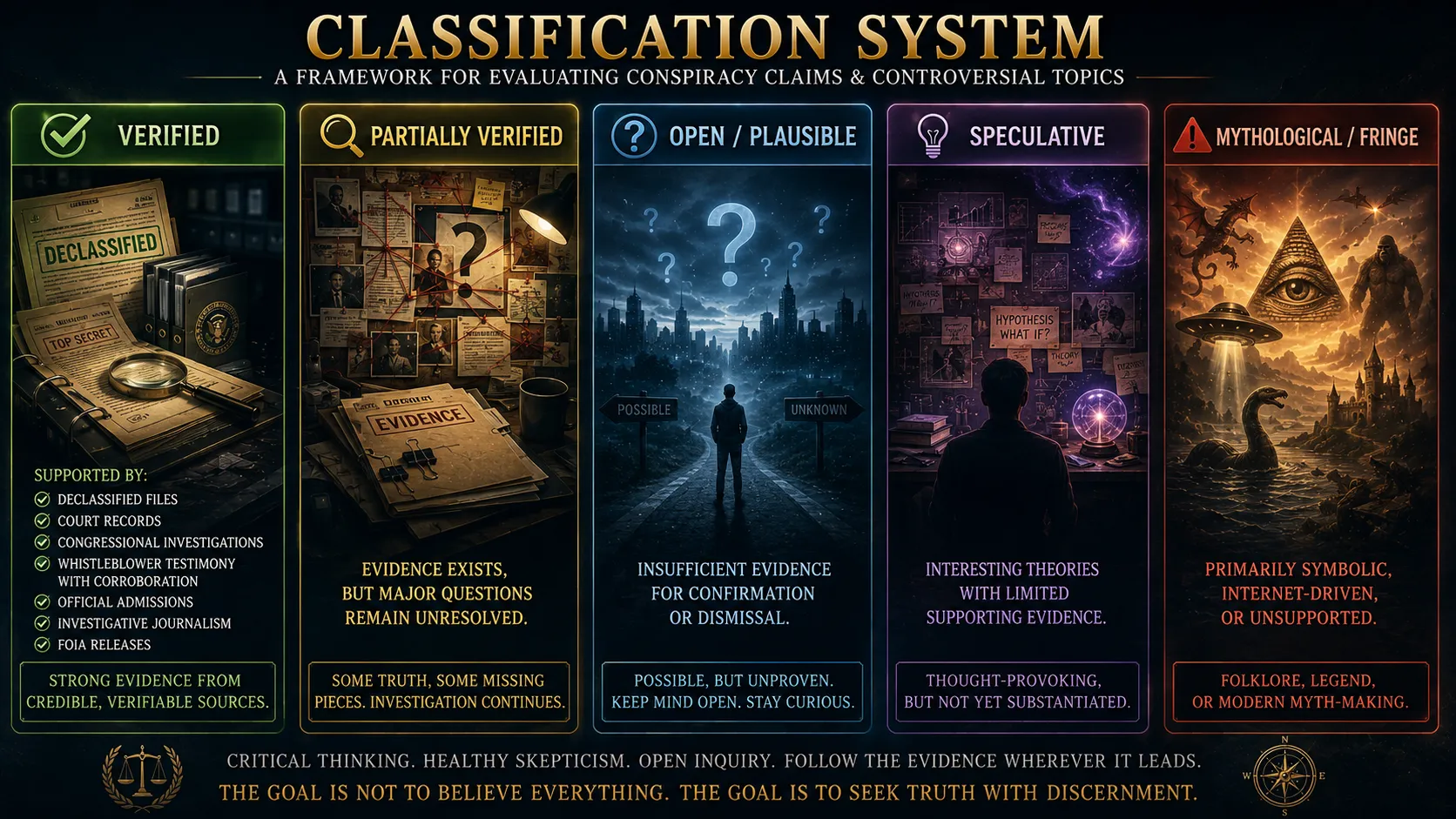
CLASSIFICATION SYSTEM
Throughout this report, topics are evaluated according to available evidence, historical documentation, public records, investigative findings, and the current state of disclosure.
VERIFIED
Supported by:
- Declassified government records
- Court proceedings and legal findings
- Congressional investigations
- Official admissions
- FOIA releases
- Investigative journalism
- Corroborated whistleblower testimony
- Publicly available documentary evidence
PARTIALLY VERIFIED
Evidence exists supporting certain aspects of the claim, but significant questions, contradictions, or unresolved elements remain.
OPEN / PLAUSIBLE
The topic cannot currently be verified or dismissed conclusively. Evidence, testimony, historical patterns, or circumstantial indicators justify continued investigation.
SPECULATIVE
Interesting theories that raise legitimate questions but currently lack sufficient evidence for meaningful verification.
MYTHOLOGICAL / FRINGE
Primarily symbolic, philosophical, internet-driven, culturally emergent, or unsupported by credible evidence at the present time.
FULL DISCLOSURE | CONSPIRACY FACT CONVERSION RATES
One of the most fascinating developments of the modern era is the growing number of subjects that have migrated from the realm of “conspiracy theory” into documented historical reality.
Over the past several decades, previously dismissed claims involving intelligence operations, government secrecy, surveillance programs, media influence, financial misconduct, public health controversies, military projects, and institutional deception have later been confirmed in whole or in part through declassified documents, congressional investigations, court records, whistleblower testimony, investigative journalism, and official admissions.
This does not mean every conspiracy theory is true, but as additional evidence, investigations, disclosures, and historical records become available, the conversion rate could possibly approach 90%.
It does demonstrate though, that public skepticism is not always irrational, and that history repeatedly shows important information can remain hidden from public awareness for years, decades, or even generations before eventually coming to light.
As disclosure accelerates and access to information continues expanding, many unresolved subjects explored within this report will likely receive increasing scrutiny in the years ahead. Some will be disproven. Some will remain unresolved. Others may ultimately move from speculation to documented fact as new evidence emerges.
In the end, the line separating conspiracy theory from conspiracy fact is often not belief. It is time, evidence, and the willingness to keep asking questions.

CONSPIRACY THEORY VS CONSPIRACY FACT AUDIO Review
This special audio review explores one of the most fascinating and controversial questions of the modern era: where is the line between conspiracy theory and conspiracy fact? Moving beyond sensationalism and simplistic explanations, the discussion examines how public trust, institutional credibility, government secrecy, intelligence operations, media influence, financial power, health systems, historical narratives, and technological control structures have shaped public perception over the past century. The review highlights numerous examples where once-dismissed theories were later supported by declassified documents, whistleblower testimony, investigative journalism, congressional investigations, or official admissions—while also emphasizing the importance of separating evidence-based inquiry from speculation, assumption, and mythology.
More importantly, this conversation explores the deeper human story beneath conspiracy culture itself. At its core, the discussion is not simply about hidden agendas, secret programs, or unresolved mysteries—it is about discernment, consciousness, and the search for truth in an age of information overload. As traditional institutions face growing scrutiny and competing narratives increasingly shape public understanding, the review encourages listeners to remain curious without becoming gullible, skeptical without becoming cynical, and open-minded without abandoning critical thinking. Ultimately, this special report invites truth seekers to move beyond belief and disbelief alike, and instead cultivate the awareness, humility, and discernment necessary to navigate an increasingly complex world.
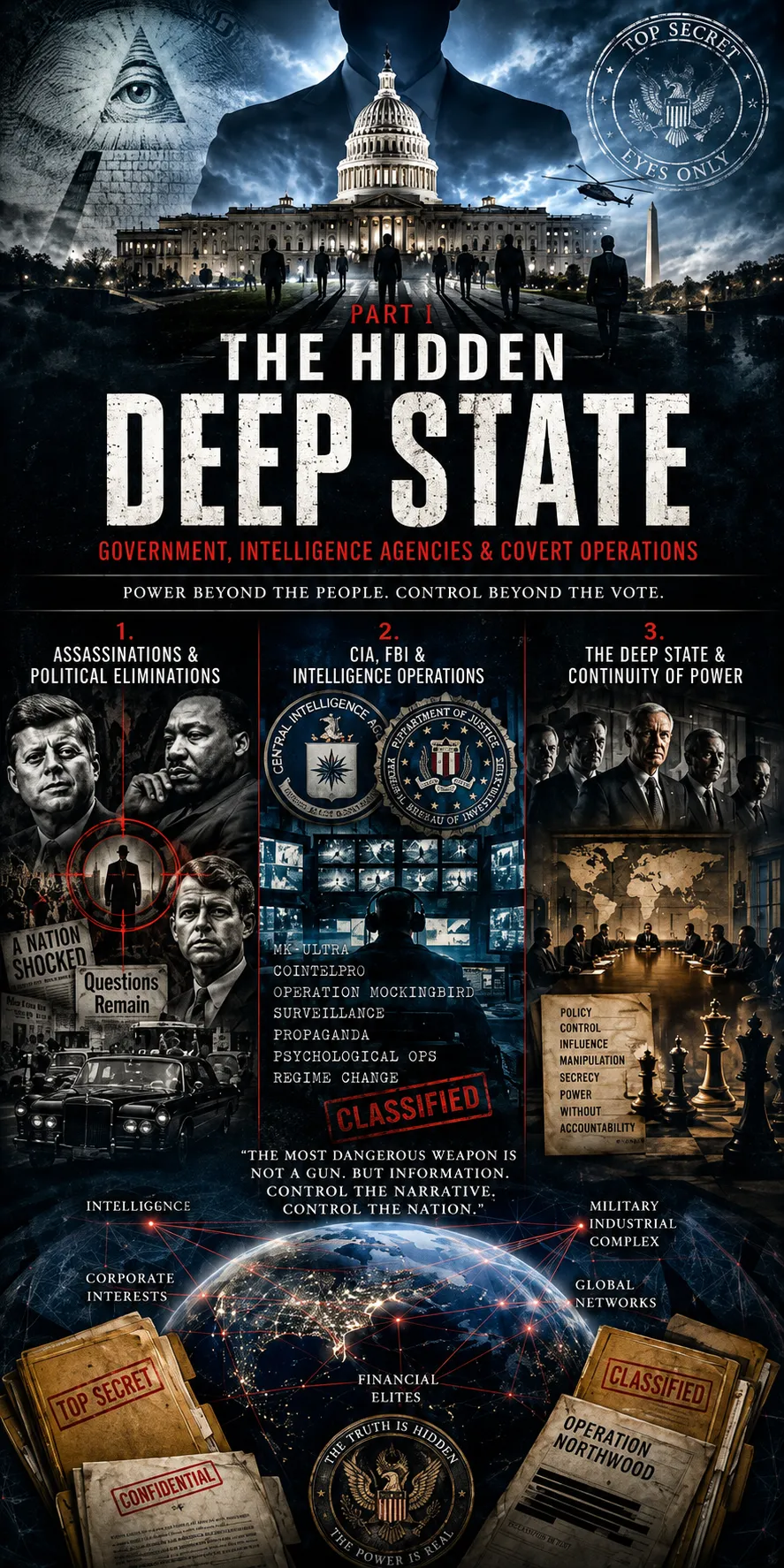
PART I — THE HIDDEN DEEP STATE
“The greatest power is rarely found in the offices people can see, but within the institutions they never elected, the networks they never voted for, and the systems they were never meant to understand.”
Government, Intelligence Agencies & Covert Operations
The Hidden Deep State is not merely a political slogan or internet theory. It is a question about the true architecture of modern power. If elected leaders come and go, but intelligence agencies, military contractors, central banks, permanent bureaucracies, defense networks, and classified programs remain embedded within society for generations, then an uncomfortable possibility emerges: perhaps the visible government presented to the public represents only the surface layer of a much larger system operating behind it. History has repeatedly shown that major institutions are capable of concealing operations, shaping narratives, withholding information, and protecting strategic interests long after public attention has moved on.
Over time, revelations involving covert intelligence programs, mass surveillance systems, propaganda operations, foreign interventions, classified experimentation, black-budget projects, and coordinated influence campaigns forced many people to reconsider how modern power actually functions. In multiple instances, concerns once dismissed as paranoia or conspiracy theory were later validated through declassified records, congressional investigations, whistleblower testimony, investigative journalism, and official disclosures. The deeper issue is not whether secrecy exists — history has already answered that question. The deeper issue is how often populations discover the truth only years or decades after decisions have already reshaped wars, politics, public perception, health systems, economies, and civil liberties.
As trust in institutions declines, citizens increasingly find themselves confronting difficult questions few previous generations had to consider at this scale. How much of modern society operates beyond public awareness? How much influence do unelected systems exert over governments, media, finance, and global policy? At what point does secrecy stop protecting nations and begin protecting power itself? These questions sit at the center of modern conspiracy culture because they touch something deeper than politics alone: the growing realization that in an age dominated by information, perception itself may be one of the most powerful forms of control ever created.
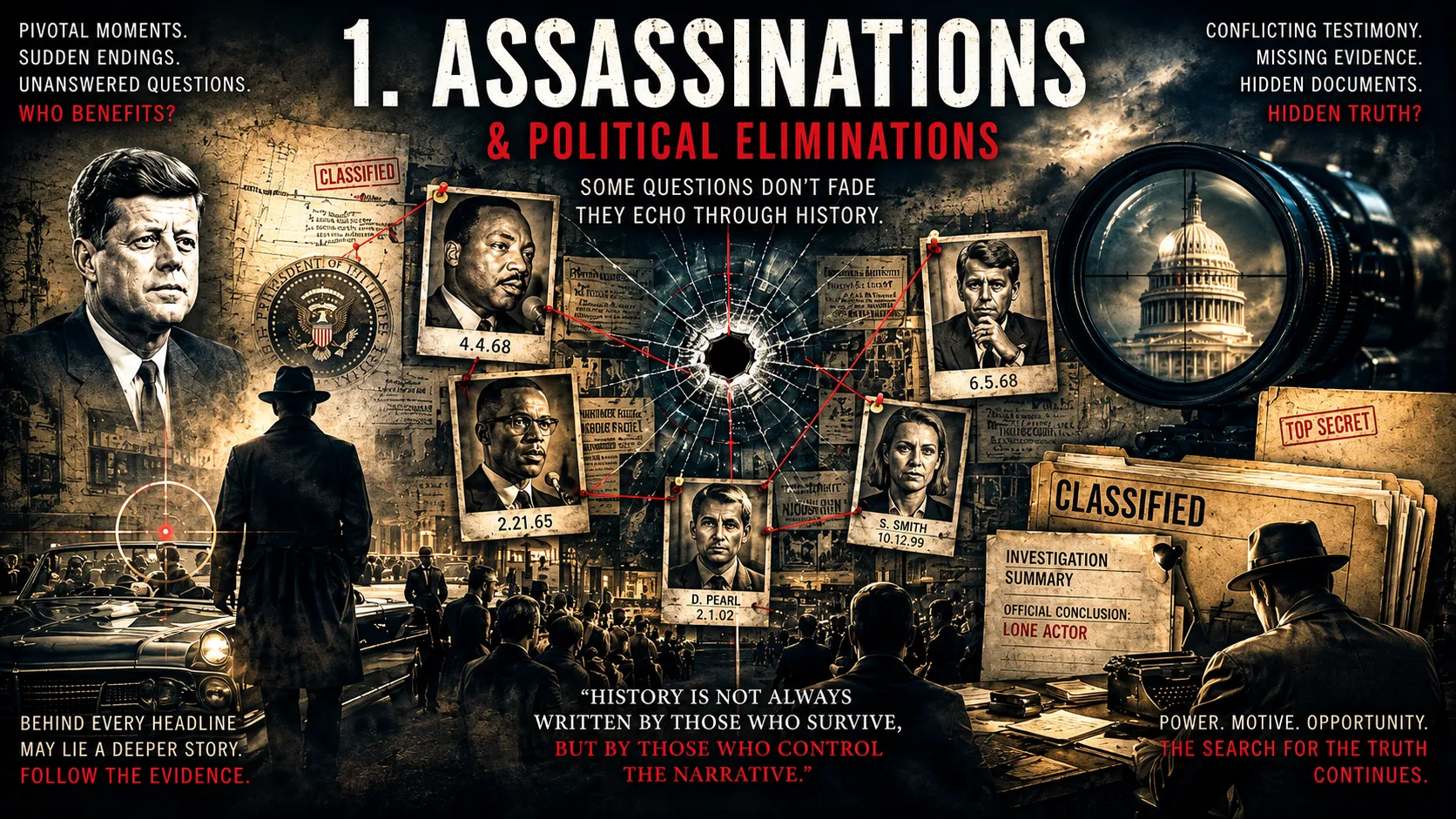
1. ASSASSINATIONS & POLITICAL ELIMINATIONS
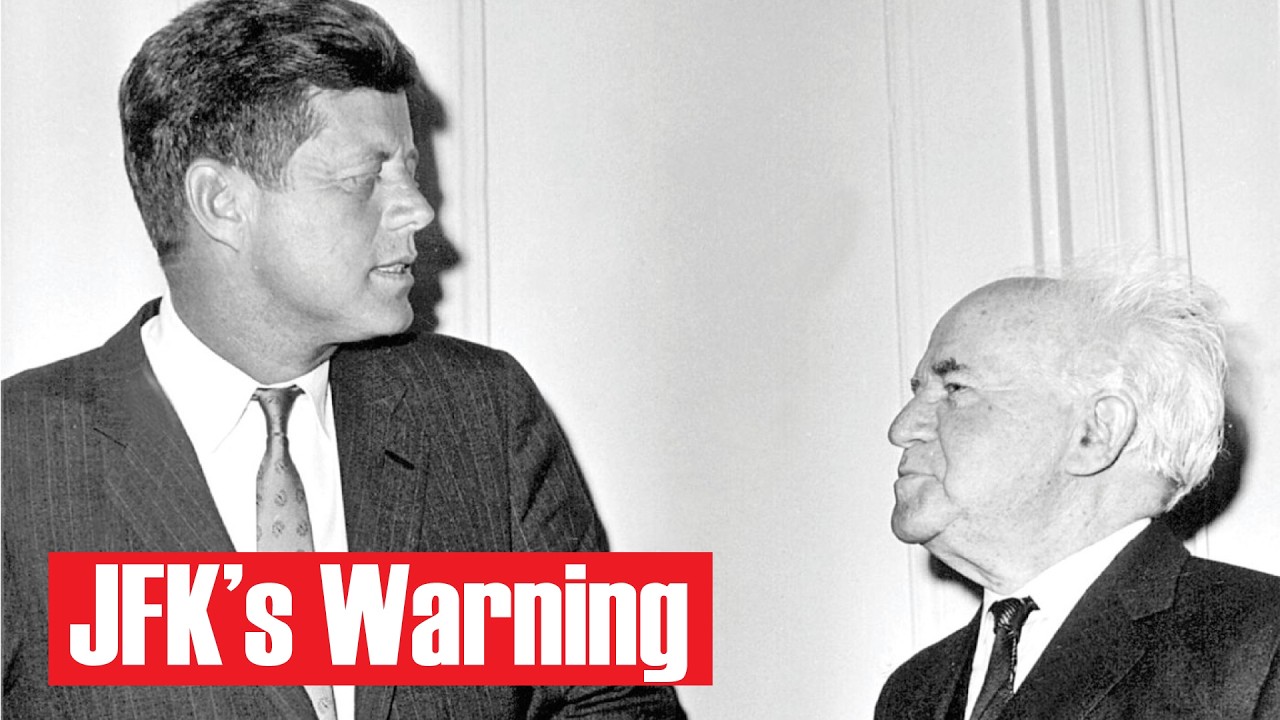
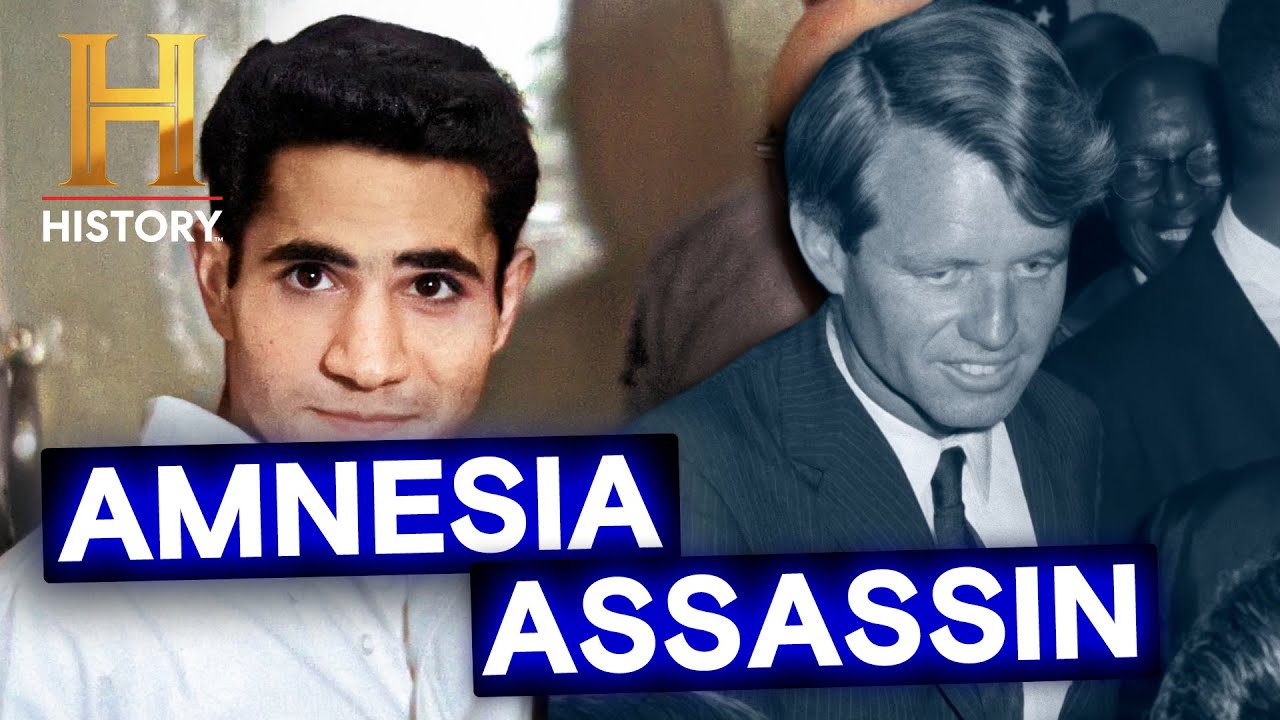
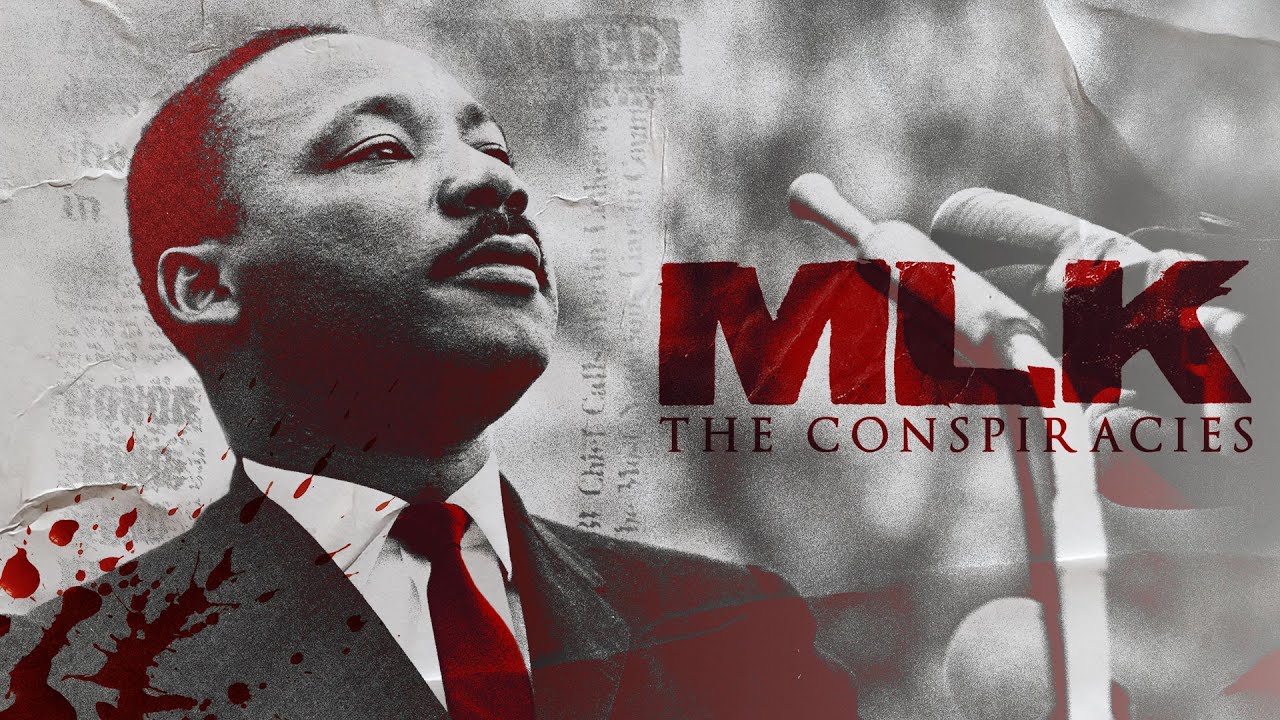
Political assassinations become permanent wounds in the public psyche because they often occur at moments when history appears ready to change direction. When figures such as John F. Kennedy, Robert F. Kennedy, Martin Luther King Jr., Malcolm X, or other disruptive political and cultural voices are suddenly removed from the timeline, the question is never only “who pulled the trigger?” The deeper question is: what future disappeared with them? Throughout modern history, major assassinations have repeatedly generated suspicion because the stakes surrounding these individuals extended far beyond the people themselves. They represented movements, reforms, exposures, ideological shifts, or possible futures that threatened existing systems of power.
The assassination of President John F. Kennedy became one of the defining psychological fractures in modern American history because it fundamentally altered public trust in official narratives. For decades, Americans who questioned inconsistencies surrounding the Warren Commission, intelligence connections, witness testimony, ballistic evidence, sealed records, or missing information were often dismissed as conspiracy theorists within mainstream discourse. Yet the controversy surrounding JFK never disappeared. Continued document releases, investigative findings, intelligence revelations, and unresolved public doubt ensured the event remained alive inside the collective consciousness for generations. Whether one ultimately believes a larger conspiracy occurred or not, the assassination permanently implanted a destabilizing question into the American psyche: if the full truth surrounding one of the most consequential events in modern history remains uncertain, then how much of history itself may be selectively shaped, managed, delayed, or hidden from public understanding?
This is why political assassinations carry such lasting psychological power. They do not merely remove individuals; they fracture trust in the continuity of reality itself. Once citizens begin suspecting that pivotal historical moments may contain hidden layers of influence, secrecy, or manipulation, the relationship between the public and authority fundamentally changes. Governments may continue functioning, institutions may continue operating, and official narratives may continue being presented — but beneath the surface, a deeper skepticism begins forming. For many people, JFK was not simply the assassination of a president. It was the moment millions began questioning whether history unfolds naturally, or whether unseen forces may occasionally intervene to redirect the course of nations.





2. CIA, FBI & INTELLIGENCE OPERATIONS
The intelligence world exists in secrecy by design. Its stated purpose is national security, yet history has repeatedly shown that intelligence agencies can operate far beyond the boundaries publicly understood by ordinary citizens. Governments often justify secrecy as necessary for protection, but secrecy also creates environments where oversight weakens, accountability disappears, and operations can continue for years without democratic consent. The deeper concern is not simply whether covert programs exist — history confirms they do — but how often the public learns about them only after the damage, manipulation, or social consequences have already occurred.
One of the most disturbing examples was MK-Ultra, a covert CIA program involving psychological experimentation, behavior modification research, hypnosis, sensory deprivation, and the use of drugs such as LSD on unwitting subjects. Before the program’s exposure in the 1970s through Senate investigations and surviving declassified records, the idea that intelligence agencies would secretly conduct mind-control experimentation on civilians would have sounded absurd to most Americans. Yet the historical record ultimately confirmed that these programs had existed, while also revealing that many related documents had already been deliberately destroyed before investigators could fully uncover the scope of the operations. Decades later, the Snowden revelations created a similar rupture in public perception, exposing surveillance capabilities far beyond what most citizens believed possible and demonstrating how rapidly intelligence systems had evolved in the digital age.
The deeper issue raised by intelligence operations is not limited to any single program. It is the realization that information itself can be managed, perception can be influenced, narratives can be engineered, and populations can be monitored in ways most citizens rarely see directly. Once people understand that governments and intelligence agencies have historically manipulated media, infiltrated movements, surveilled populations, conducted psychological operations, and concealed activities under the banner of national security, a far more unsettling question begins to emerge: how much of modern reality is experienced naturally, and how much of it is filtered, shaped, amplified, or strategically managed before it ever reaches public awareness?

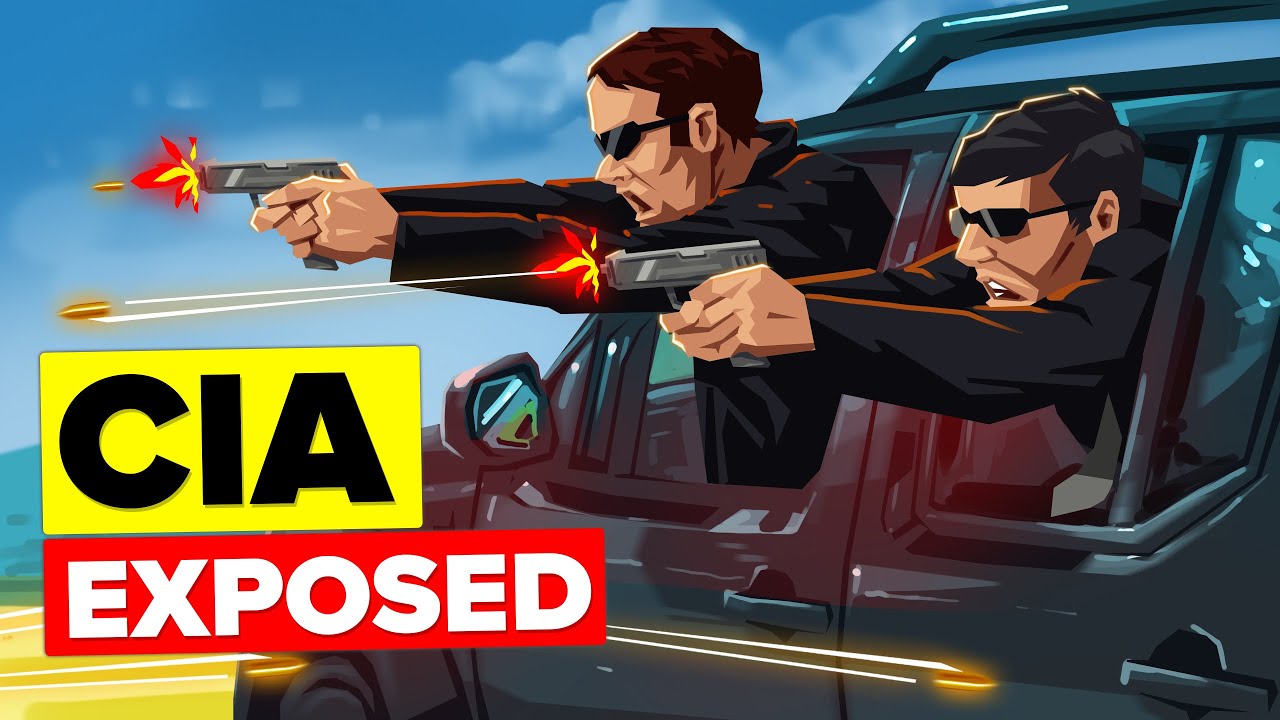
The CIA attempts to locate and eliminate a wanted terrorist suspected of being involved in the 1998 bombing of the U.S. Embassy in Nairobi, Kenya.
3. THE DEEP STATE & CONTINUITY OF POWER
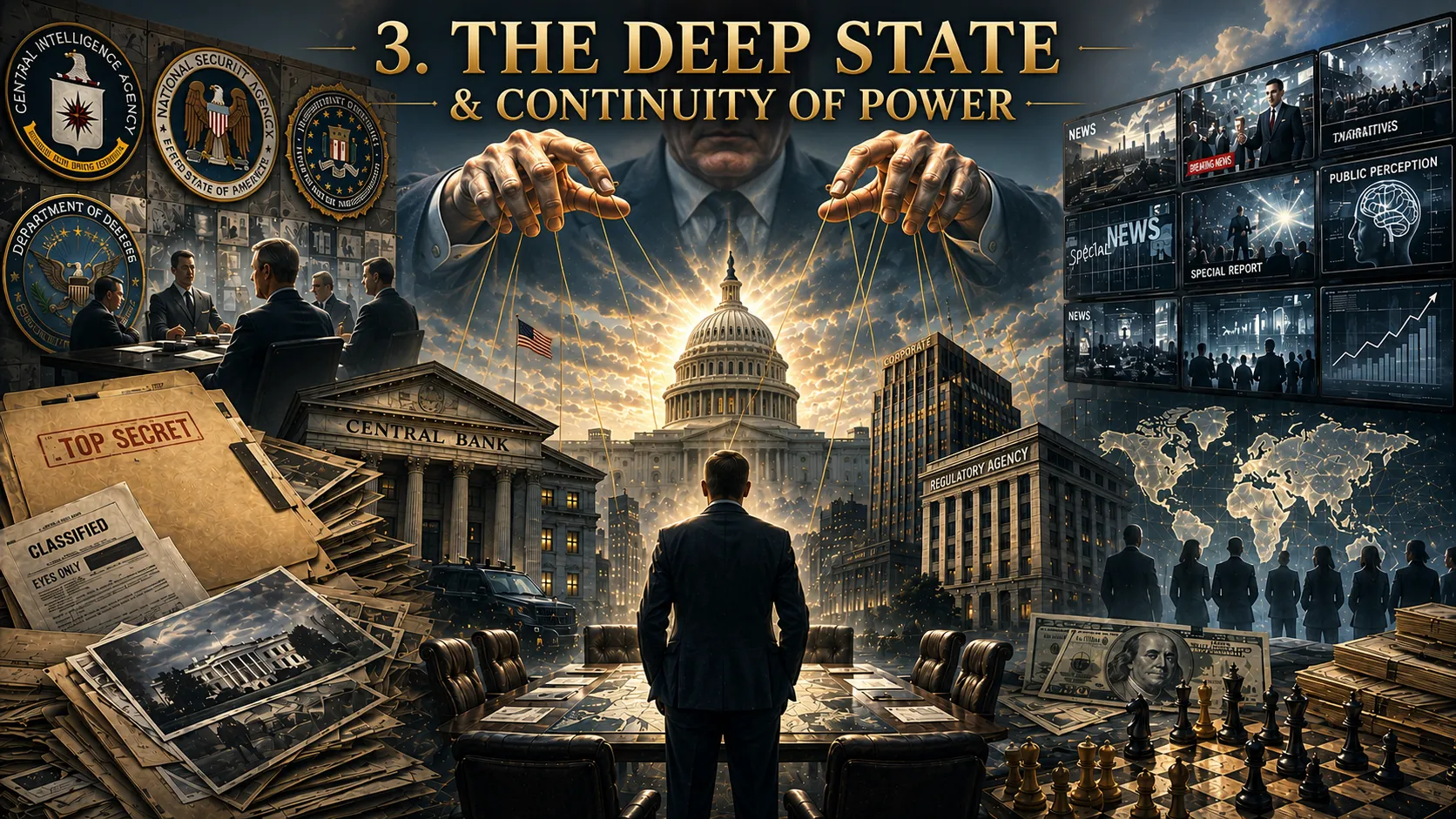
The Deep State does not need to exist as a secret council meeting in underground chambers to represent a legitimate structural concern. Its more realistic form is institutional continuity: intelligence agencies, military systems, central banks, defense contractors, regulatory bureaucracies, lobbying networks, private influence groups, donor structures, and career officials who remain embedded within systems of power regardless of which political party wins elections. Governments change publicly, but many mechanisms of influence remain remarkably permanent beneath the surface. The deeper question is not whether these systems exist — they clearly do — but how much power they exert beyond public visibility and democratic accountability.
In 1961, President Dwight Eisenhower delivered one of the most important warnings in modern political history when he cautioned Americans about the growing influence of what he called the “military-industrial complex.” Eisenhower understood that a permanent alliance between defense industries, military institutions, intelligence systems, and political influence carried the potential to acquire “unwarranted influence” over national policy. Decades later, many view that warning as increasingly prophetic. Endless wars, expanding intelligence infrastructures, massive classified budgets, revolving-door relationships between government and corporations, and the growing integration of defense, technology, finance, and surveillance systems have all intensified public concern that unelected structures may exert influence far beyond what most citizens fully understand.
This is what makes the Deep State discussion psychologically powerful. It is not fundamentally about shadowy caricatures secretly controlling every world event. It is about the possibility that modern societies have evolved systems of continuity so vast, interconnected, and self-preserving that elections alone may no longer meaningfully alter the deeper direction of power. When citizens begin suspecting that institutions are capable of protecting themselves regardless of public opinion, trust in democracy itself begins to weaken. The unsettling question that emerges is no longer whether corruption exists within systems — history already confirms it does — but whether modern civilization has quietly created permanent structures of influence operating beyond the level most populations were ever intended to see.

PART II — THE INFORMATION WAR
“In the modern age, the most powerful weapon is not a bomb, a bullet, or an army—it is the ability to shape what millions of people believe is true. He who controls information influences perception. He who controls perception influences reality.”
Media Manipulation, Propaganda & Psychological Operations
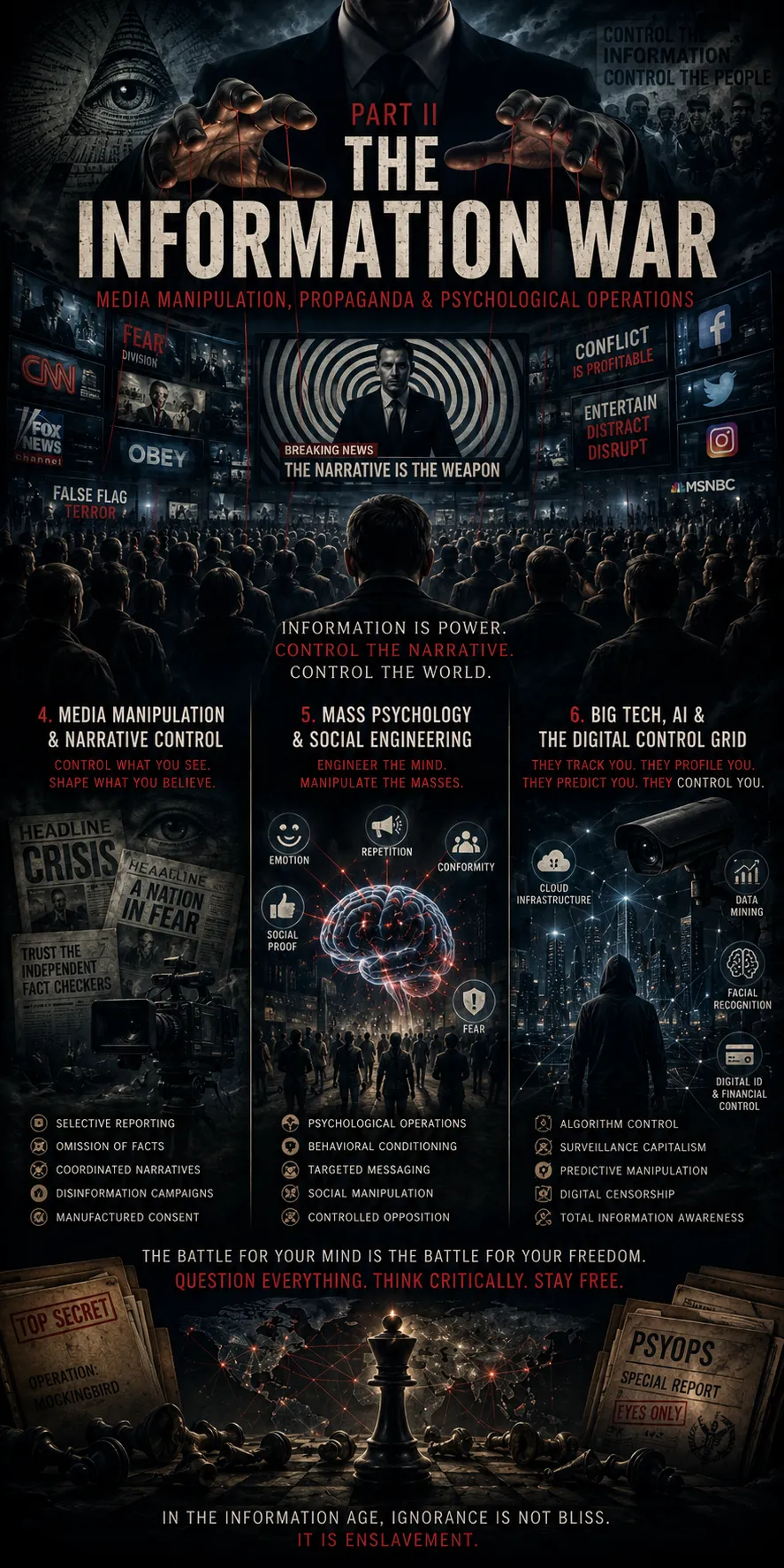
Throughout history, nations fought wars over territory, resources, religion, and political dominance. Today, the battlefield has expanded into something far less visible yet potentially far more powerful: human perception itself. In the digital age, controlling narratives can influence elections, destabilize governments, manipulate markets, ignite social movements, fracture populations, reshape cultural values, and alter collective behavior on a global scale in real time. Information is no longer simply used to inform populations. It is increasingly used to guide emotion, reinforce ideology, manufacture consensus, suppress dissent, and shape the boundaries of acceptable thought.
What makes the modern information war so psychologically significant is that most people experience it without fully realizing it is happening. News organizations, intelligence agencies, political campaigns, corporations, public relations firms, entertainment industries, social media platforms, advertisers, algorithms, influencers, and artificial intelligence systems now compete continuously to shape how reality is interpreted. Information can be amplified, suppressed, emotionally framed, redirected, censored, algorithmically prioritized, or repeated often enough to become psychologically embedded within public consciousness. In such an environment, truth itself becomes increasingly difficult to separate from persuasion, performance, propaganda, and engineered narrative.
This section examines how modern institutions influence perception through media systems, propaganda, psychological operations, social engineering, algorithmic control, artificial intelligence, surveillance infrastructure, and behavioral manipulation technologies. From intelligence-linked media influence programs and mass psychological conditioning to social media algorithms, digital surveillance systems, and AI-driven information ecosystems, the modern information war increasingly revolves around one central question: if human perception can be continuously shaped, filtered, and engineered at scale, how do individuals preserve independent thought in an age where reality itself is becoming contested territory?
4. MEDIA MANIPULATION & NARRATIVE CONTROL
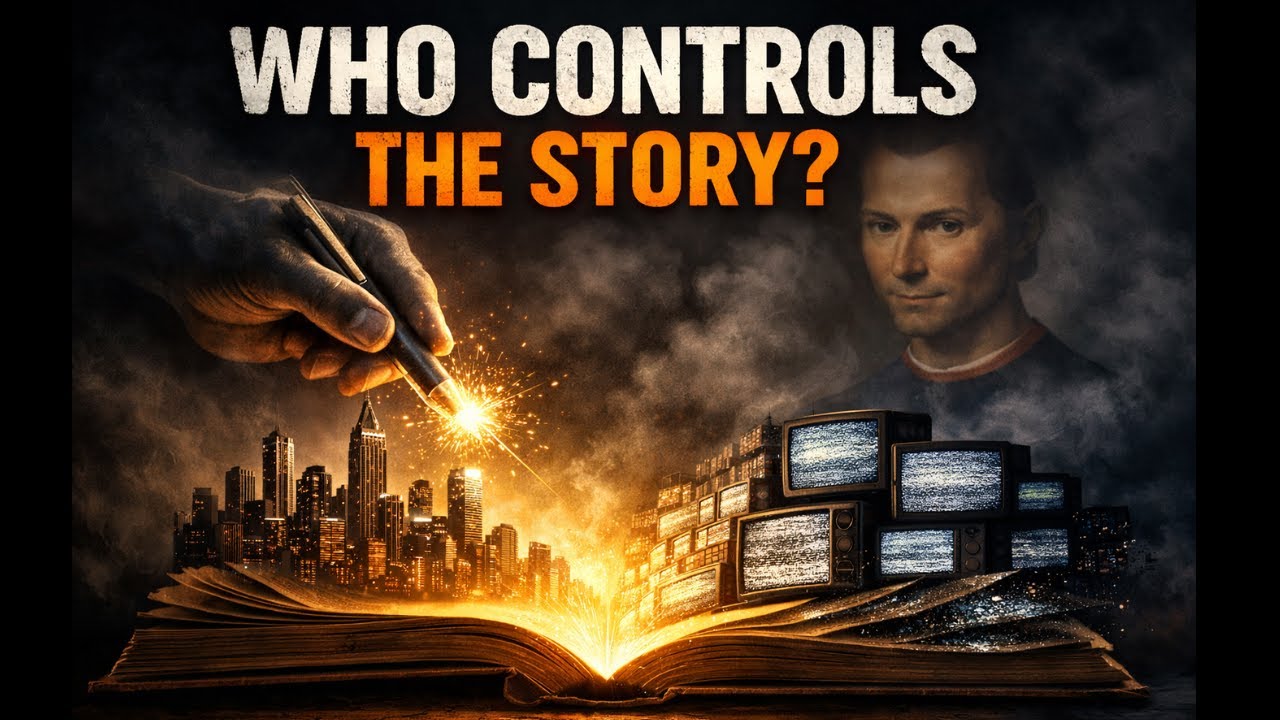
The media serves one of the most powerful functions in modern society: shaping how populations understand reality. Most people will never personally witness wars, political negotiations, economic systems, intelligence operations, scientific disputes, or global crises firsthand. Instead, their understanding of the world is filtered through media institutions that decide which stories receive attention, which perspectives are amplified, which language frames public debate, and which narratives become socially acceptable. In theory, journalism exists to inform the public and hold power accountable. In practice, the relationship between media, politics, corporations, intelligence agencies, advertisers, and ideology has often proven far more complicated.
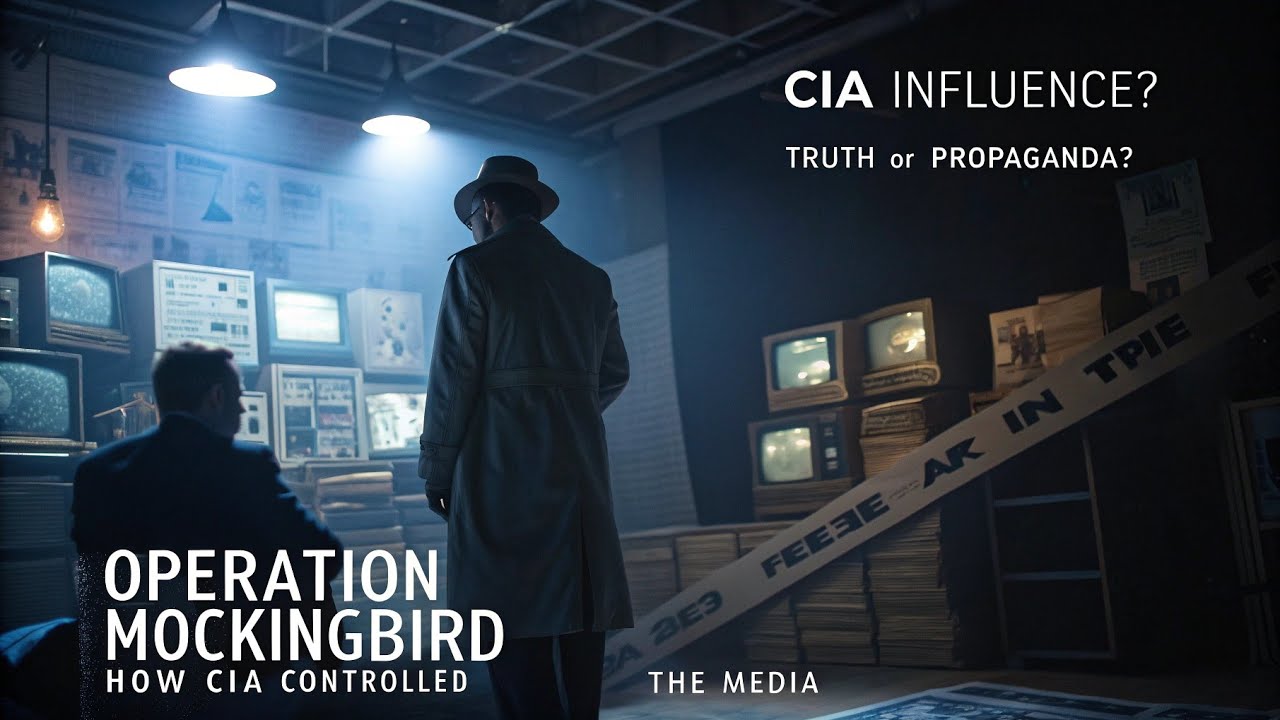
One of the most controversial examples was Operation Mockingbird, a CIA-linked program that fueled allegations of intelligence influence within major media organizations during the Cold War era. For years, concerns that intelligence agencies worked to shape public narratives through journalists and media relationships were often dismissed as paranoid speculation. Yet congressional investigations, declassified information, and investigative reporting later confirmed that intelligence agencies had, in fact, cultivated relationships with members of the press as part of broader information and psychological operations. While the full scope remains debated, the revelation permanently altered public perception by demonstrating that media systems could be influenced not only by profit and politics, but also by covert strategic interests operating behind the scenes.
The modern media environment has only intensified these concerns. Twenty-four-hour news cycles, social media algorithms, emotionally driven engagement models, corporate consolidation, partisan ecosystems, AI-generated content, and outrage-based advertising systems have transformed information into a psychological battlefield competing for attention rather than understanding. In this environment, the danger is not simply censorship or propaganda in the traditional sense. The deeper danger is that populations may gradually lose the ability to distinguish between reporting, opinion, manipulation, narrative reinforcement, and engineered emotional response. Once trust in information collapses, societies become increasingly vulnerable to confusion, division, fear, and reality fragmentation itself.

5. MASS PSYCHOLOGY & SOCIAL ENGINEERING
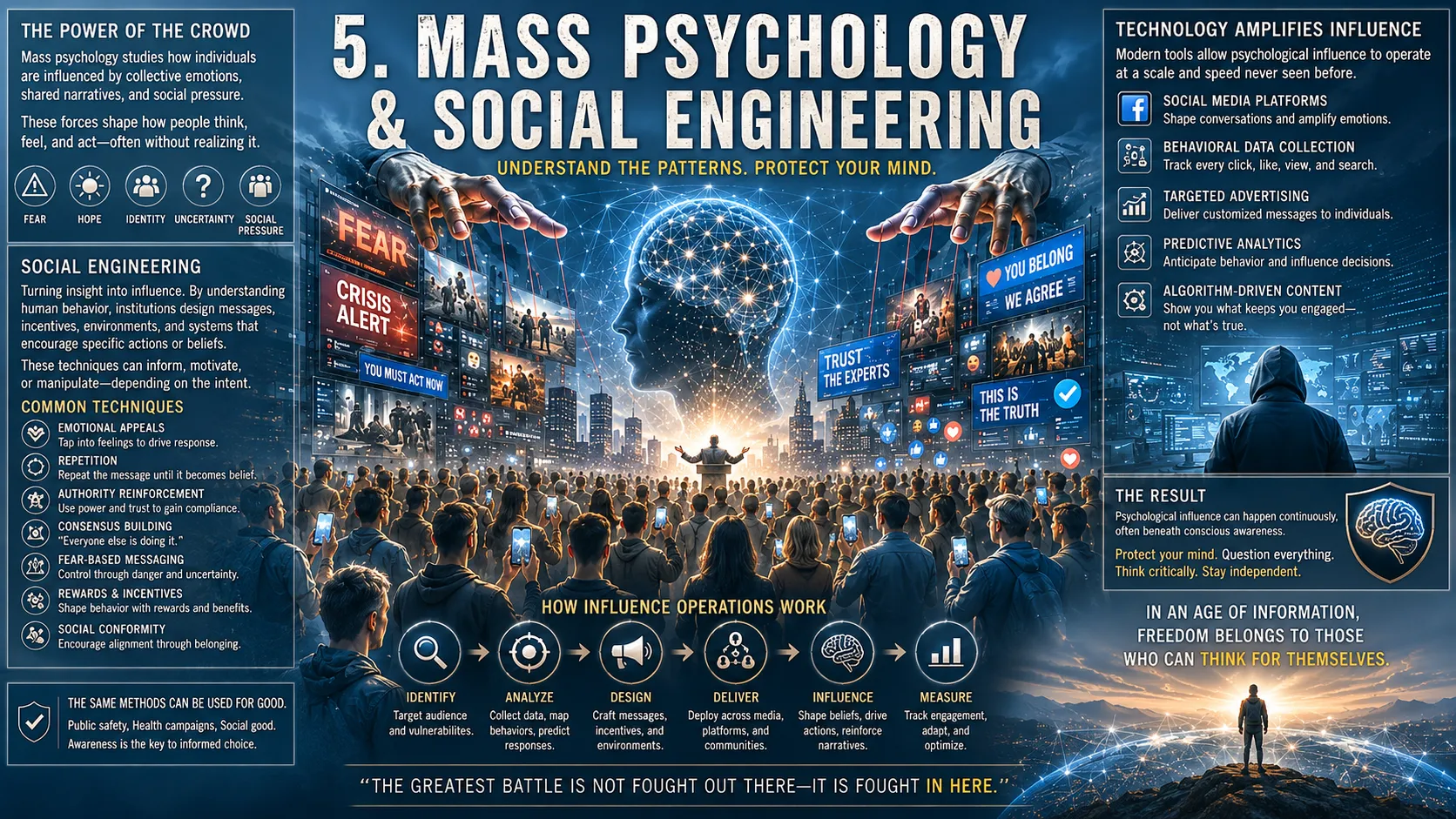
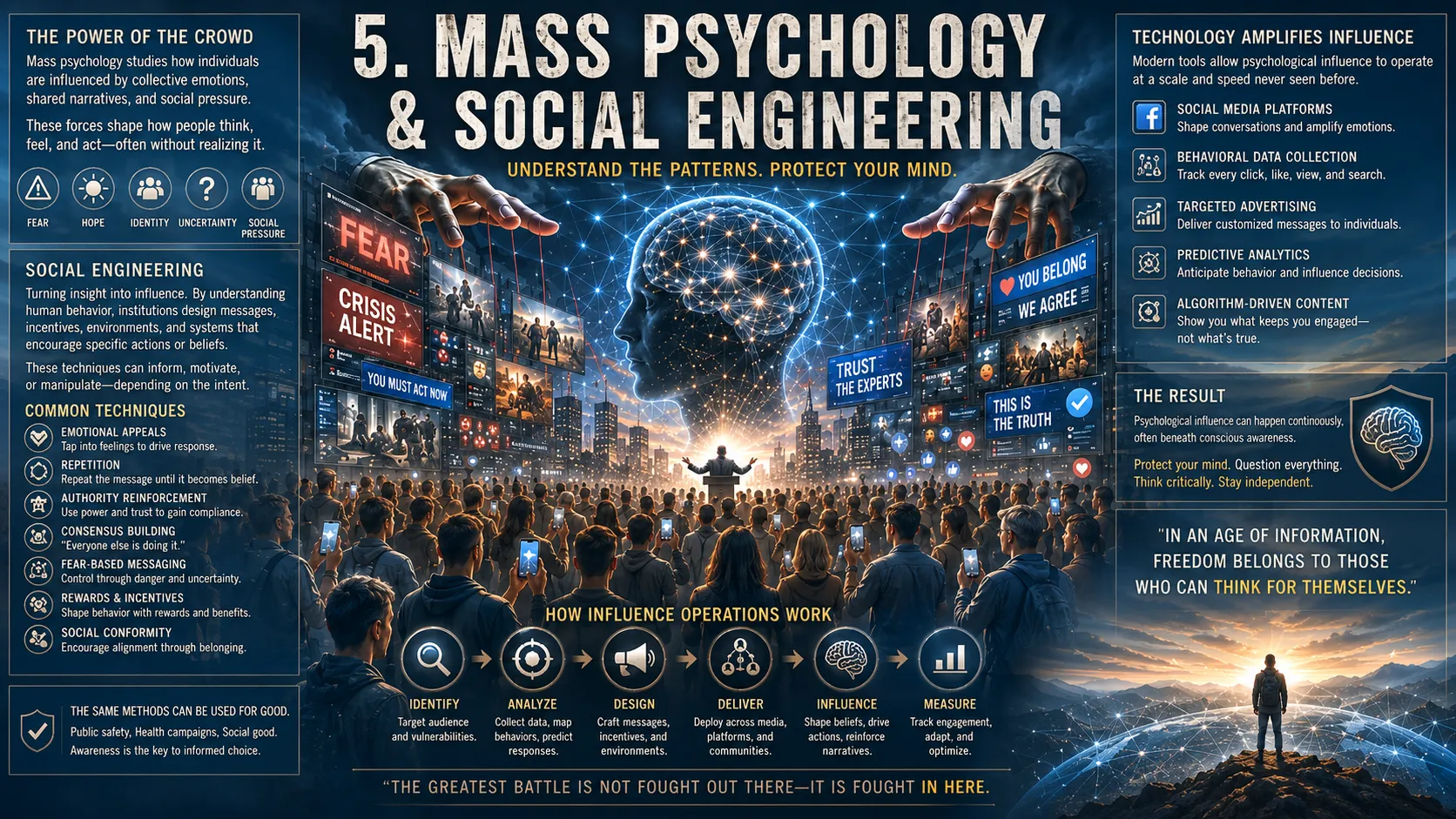
Human beings rarely make decisions in isolation. Emotions, group identity, fear, repetition, social pressure, authority figures, cultural narratives, and collective behavior all profoundly influence how populations think and act. Throughout history, governments, advertisers, propagandists, military strategists, corporations, and political movements have studied mass psychology in order to understand how human perception can be guided during periods of uncertainty, crisis, conflict, or social transformation. The realization that populations can be psychologically influenced at scale remains one of the most powerful and unsettling discoveries of the modern era.
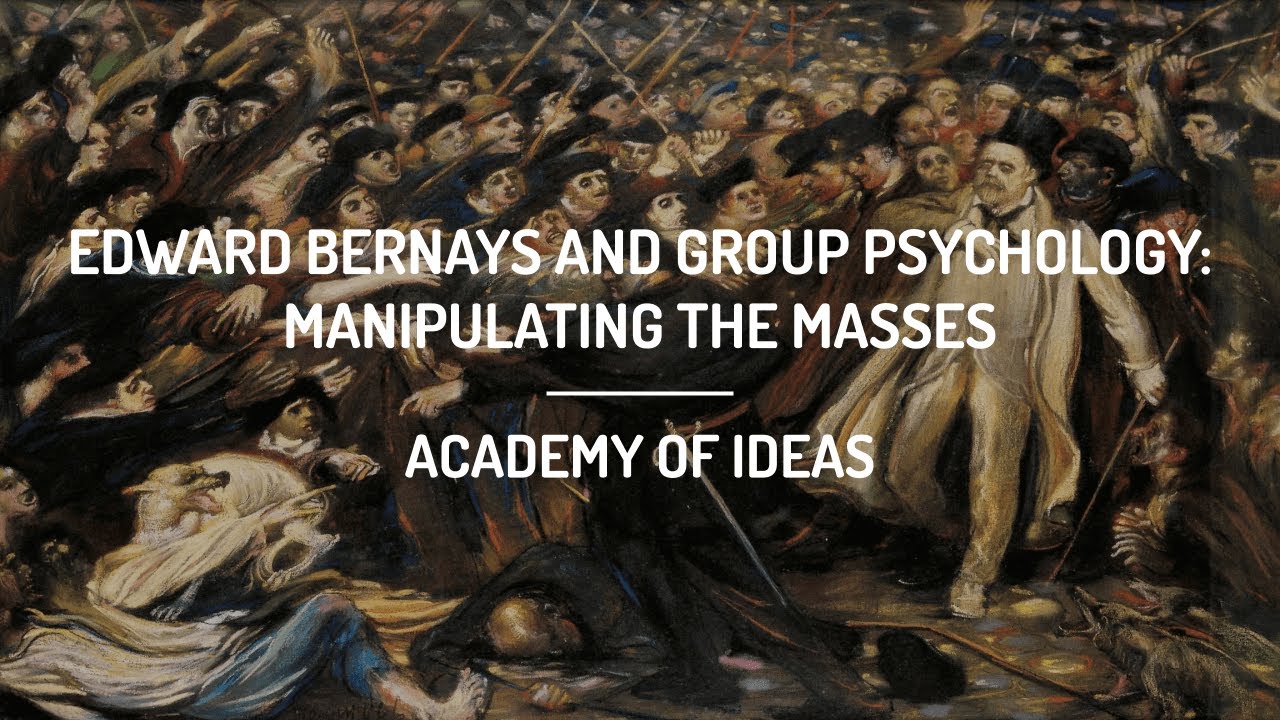
One of the foundational figures in this field was Edward Bernays, often called the father of modern public relations. Drawing heavily from the psychological theories of his uncle Sigmund Freud, Bernays openly argued that public opinion could be engineered through emotional influence, symbolism, repetition, and subconscious association. Techniques originally developed for wartime propaganda later evolved into advertising, political messaging, public relations campaigns, behavioral conditioning, and mass media influence systems used throughout modern society. What once sounded manipulative or conspiratorial gradually became normalized as standard practice across politics, marketing, entertainment, and institutional communication.
Modern technology has accelerated these capabilities to levels previous generations could scarcely imagine. Social media platforms, behavioral tracking systems, targeted advertising, predictive analytics, algorithmic recommendation engines, and AI-driven content delivery now allow institutions to influence populations continuously and often invisibly. Messages can be customized to specific psychological profiles, emotional vulnerabilities, political identities, or behavioral tendencies in real time. The deeper concern is no longer simply whether populations are influenced — all societies influence behavior to some degree. The deeper concern is whether human psychology itself is becoming a programmable environment where fear, outrage, identity, and emotion can be strategically manipulated at scale beneath conscious awareness.

6. BIG TECH, AI & THE DIGITAL CONTROL GRID
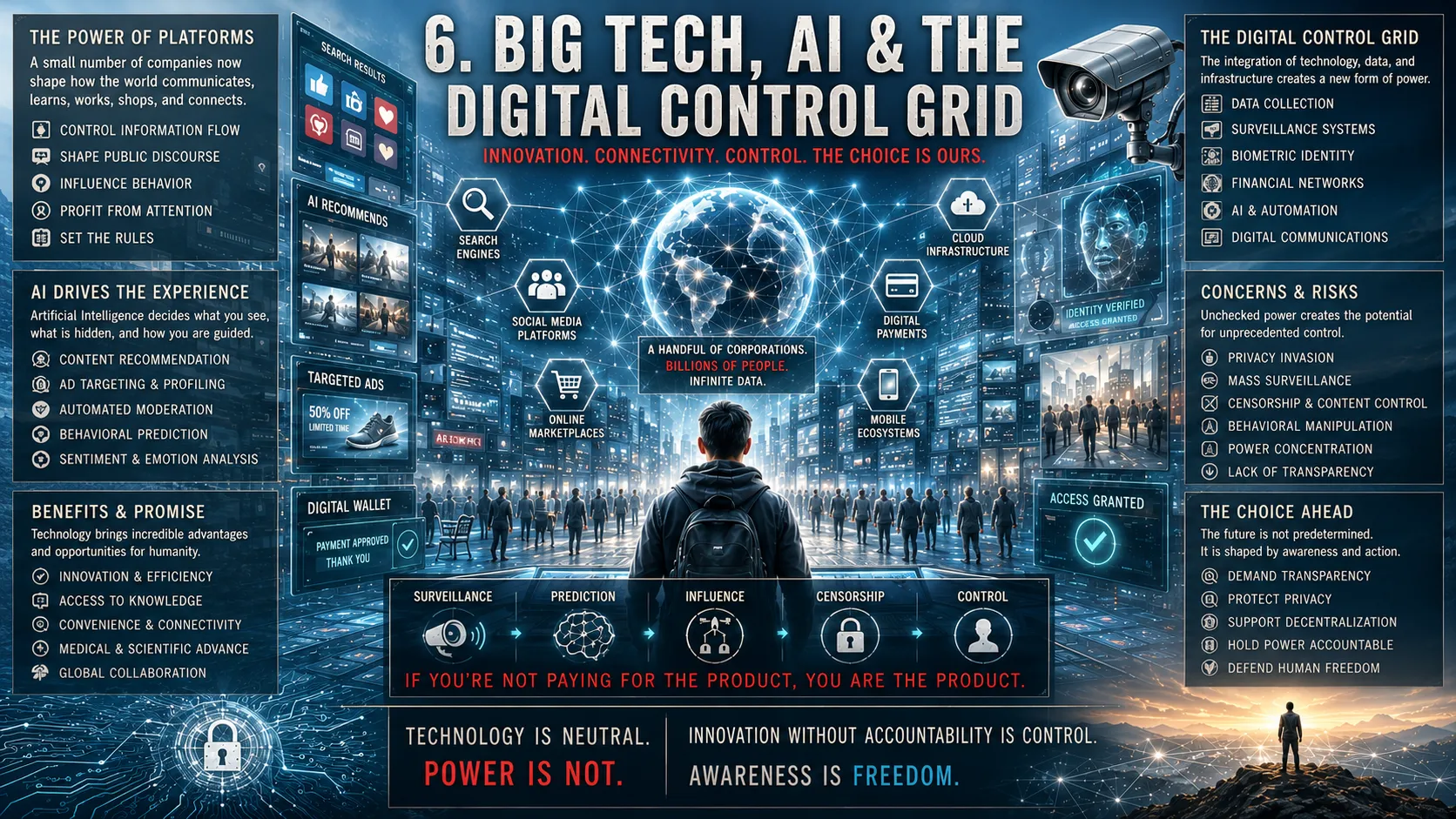
The rise of large technology companies has transformed human civilization faster than almost any force in modern history. Search engines influence what information people access. Social media platforms shape communication, identity, emotion, and public discourse. Smartphones continuously collect behavioral data, movement patterns, interests, habits, and preferences. Artificial intelligence increasingly influences what billions of people see, believe, purchase, prioritize, and react to every day. As a result, a relatively small number of corporations now possess extraordinary influence over the informational architecture of modern civilization, raising profound questions about privacy, autonomy, freedom, and the future relationship between humanity and technology itself.
For years, concerns about mass digital surveillance were often dismissed as paranoia or science fiction. That perception changed dramatically following the Edward Snowden disclosures, which revealed the extraordinary scale of surveillance capabilities operating through intelligence partnerships, telecommunications infrastructure, metadata collection systems, and digital monitoring programs. The disclosures forced society to confront an uncomfortable reality: much of modern life had already become integrated with invisible systems capable of collecting, analyzing, and storing vast amounts of personal information.
Yet surveillance may represent only the first layer of a much larger transformation. One of the most powerful and least understood aspects of the digital age is the ability of algorithms to create entirely different realities for different groups of people simultaneously. Social media platforms, search engines, AI recommendation systems, and behavioral analytics increasingly personalize information flows based on emotional reactions, political identity, browsing history, engagement patterns, and psychological profiling. Two individuals searching the same topic may receive radically different information ecosystems, reinforcing separate beliefs, fears, identities, and perceptions of reality itself.
This is where the Digital Control Grid discussion moves beyond technology and into the future of human perception. Unlike traditional propaganda, modern influence systems can personalize messaging, predict behavior, reinforce emotional reactions, and shape attention in real time. Content generating outrage, fear, conflict, validation, or addiction is often amplified because engagement has become one of the most valuable currencies in the digital economy. The result is a society increasingly fragmented into parallel informational realities, where people may inhabit entirely different psychological worlds while living in the same physical one.
Artificial intelligence is accelerating these dynamics. Combined with facial recognition, biometric systems, predictive analytics, behavioral modeling, digital currencies, and ubiquitous data collection, critics warn that humanity may be approaching an unprecedented form of soft control — one where surveillance, commerce, identity, and influence become seamlessly integrated into everyday life. The deeper concern is not technology itself, but whether civilization is gradually constructing systems capable of monitoring, predicting, nudging, and shaping human behavior at a scale never before possible.
The implications are profound. If perception can be continuously filtered through systems optimized for engagement, prediction, and influence, then the struggle for independent thought may become one of the defining challenges of the twenty-first century. The future battle may no longer center solely on territory, economics, or military power, but on who controls the informational environments through which humanity experiences reality itself.



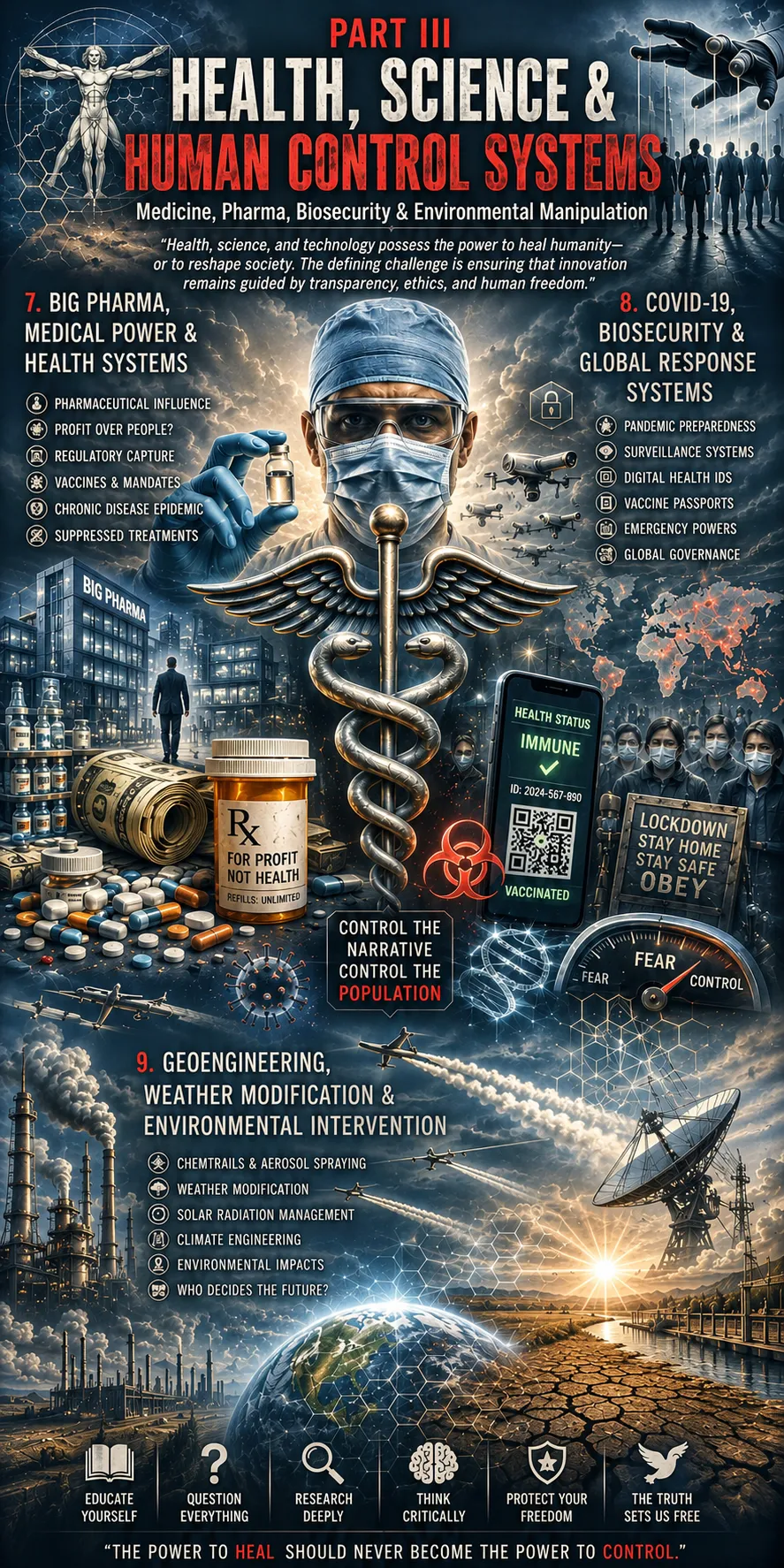
PART III — HEALTH, SCIENCE & HUMAN CONTROL SYSTEMS
“The greatest power over humanity is not merely the ability to influence what people think, but the ability to influence what they consume, how they heal, what they fear, and how they perceive risk.”
Medicine, Pharma, Biosecurity & Environmental Manipulation
Health and medicine have transformed human civilization in extraordinary ways. Modern science has eradicated diseases, expanded surgical capability, improved sanitation, reduced infant mortality, and extended life expectancy across the globe. Yet alongside these achievements, modern healthcare systems have also evolved into some of the most powerful and profitable institutional structures in human history. Pharmaceutical corporations, regulatory agencies, insurance systems, biotechnology firms, research institutions, public health authorities, and global health organizations now influence nearly every aspect of modern human life — from birth and nutrition to mental health, medication, risk assessment, disease management, and end-of-life care. As these systems expanded, so too did concerns surrounding transparency, corporate influence, regulatory capture, conflicts of interest, and the concentration of decision-making power within institutions capable of shaping the health outcomes of billions of people.
The psychological stakes surrounding health are uniquely powerful because fear of illness, disease, suffering, and death directly influence human behavior at the deepest survival level. A population that can be conditioned through fear can often be guided more effectively than one controlled through force alone. Throughout modern history, governments, corporations, and scientific institutions have repeatedly shaped public behavior through risk communication, medical authority, pharmaceutical dependency, emergency response frameworks, environmental exposure narratives, and public health campaigns. In some cases, these systems produced enormous public benefit. In others, history later revealed hidden harms, suppressed data, unethical experimentation, financial conflicts, environmental contamination, or institutional deception. Events such as the opioid crisis, the Tuskegee experiments, tobacco industry coverups, PFAS contamination, selective publication of research findings, and pharmaceutical lobbying controversies permanently altered public trust by demonstrating that scientific and medical institutions are not immune to profit motives, political pressure, or institutional self-preservation.
This section examines one of the most consequential and emotionally charged questions of the modern era: who ultimately controls human health, and how much influence do centralized systems exert over the public’s understanding of medicine, science, disease, risk, and healing itself? From pharmaceutical power and biosecurity frameworks to environmental intervention programs, behavioral conditioning through public health messaging, and the growing integration of biotechnology, surveillance, and digital health systems, the issues explored here reach far beyond medicine alone. They touch the future relationship between humanity and institutional authority itself. As scientific systems become increasingly centralized, technologically integrated, data-driven, and globally coordinated, societies may be approaching a pivotal turning point where the management of human health also becomes a mechanism for shaping human behavior, perception, dependency, and ultimately consciousness itself.
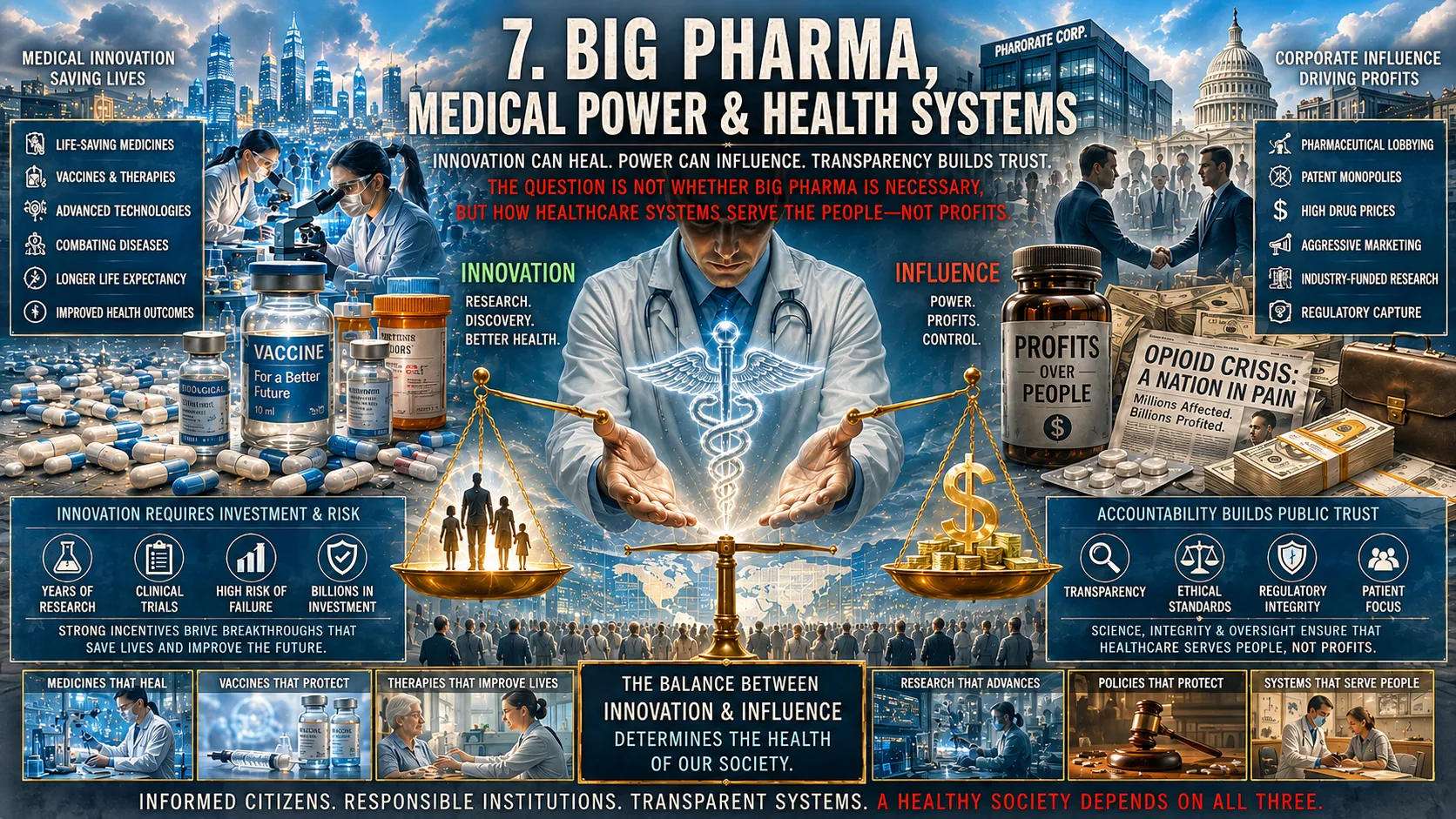
7. BIG PHARMA, MEDICAL POWER & HEALTH SYSTEMS
Health, science, and medicine have transformed human civilization by extending life expectancy, reducing disease, improving sanitation, advancing technology, and improving the quality of life for billions of people worldwide. Modern healthcare systems, pharmaceutical innovation, and scientific research have produced extraordinary breakthroughs that continue saving lives every day. At the same time, healthcare has evolved into one of the largest and most influential industries on Earth, generating trillions of dollars annually while shaping public policy, research priorities, regulatory frameworks, education systems, and global health initiatives. As the financial, political, and institutional influence of the healthcare sector has expanded, so too have questions regarding transparency, accountability, conflicts of interest, and the alignment between public health outcomes and corporate incentives.
One of the most debated questions centers on the structure of incentives themselves. Critics argue that a fundamental tension exists within modern healthcare because many of the largest financial rewards are tied to the treatment and long-term management of disease rather than the prevention of illness. A truly healthy population generally requires fewer prescriptions, fewer interventions, fewer procedures, and less ongoing medical management. Yet many of the largest institutions within the healthcare system derive substantial revenue from precisely those activities. This does not imply malicious intent, nor does it diminish the lifesaving contributions of modern medicine, but it does raise an important question: how effectively can a profit-driven healthcare system align with the long-term goal of creating a population that becomes increasingly healthy, resilient, and less dependent on intervention over time?
An important turning point in public perception came during the opioid crisis. For years, pharmaceutical companies aggressively marketed opioid medications as safe and non-addictive while internal documents and later investigations revealed awareness of significant addiction risks. What was presented publicly as responsible medical treatment ultimately contributed to one of the largest addiction crises in modern history, resulting in widespread suffering, institutional lawsuits, and profound public distrust. Similar concerns emerged surrounding selective publication of research findings, industry-funded studies, revolving-door relationships between regulators and pharmaceutical corporations, aggressive lobbying efforts, suppression of unfavorable data, and the growing influence of corporate funding within medical research and public health policy. These revelations deeply damaged the assumption that all major healthcare decisions are guided purely by patient well-being.
The deeper concern raised by Big Pharma is not whether medicine itself is valuable — it unquestionably is — but whether systems built around human health can remain truly objective when extraordinary financial incentives are involved. Modern populations increasingly find themselves dependent on institutions that define disease, shape treatment standards, influence media narratives, fund research, regulate approval systems, and market solutions simultaneously. As trust erodes, many people begin asking broader questions about nutrition, prevention, environmental toxicity, alternative therapies, holistic medicine, informed consent, and the possibility that modern healthcare systems may be optimized more effectively for managing chronic illness than cultivating long-term human wellness. The result is a growing cultural divide between institutional medicine and individuals seeking greater sovereignty over their own health, bodies, and healing decisions.




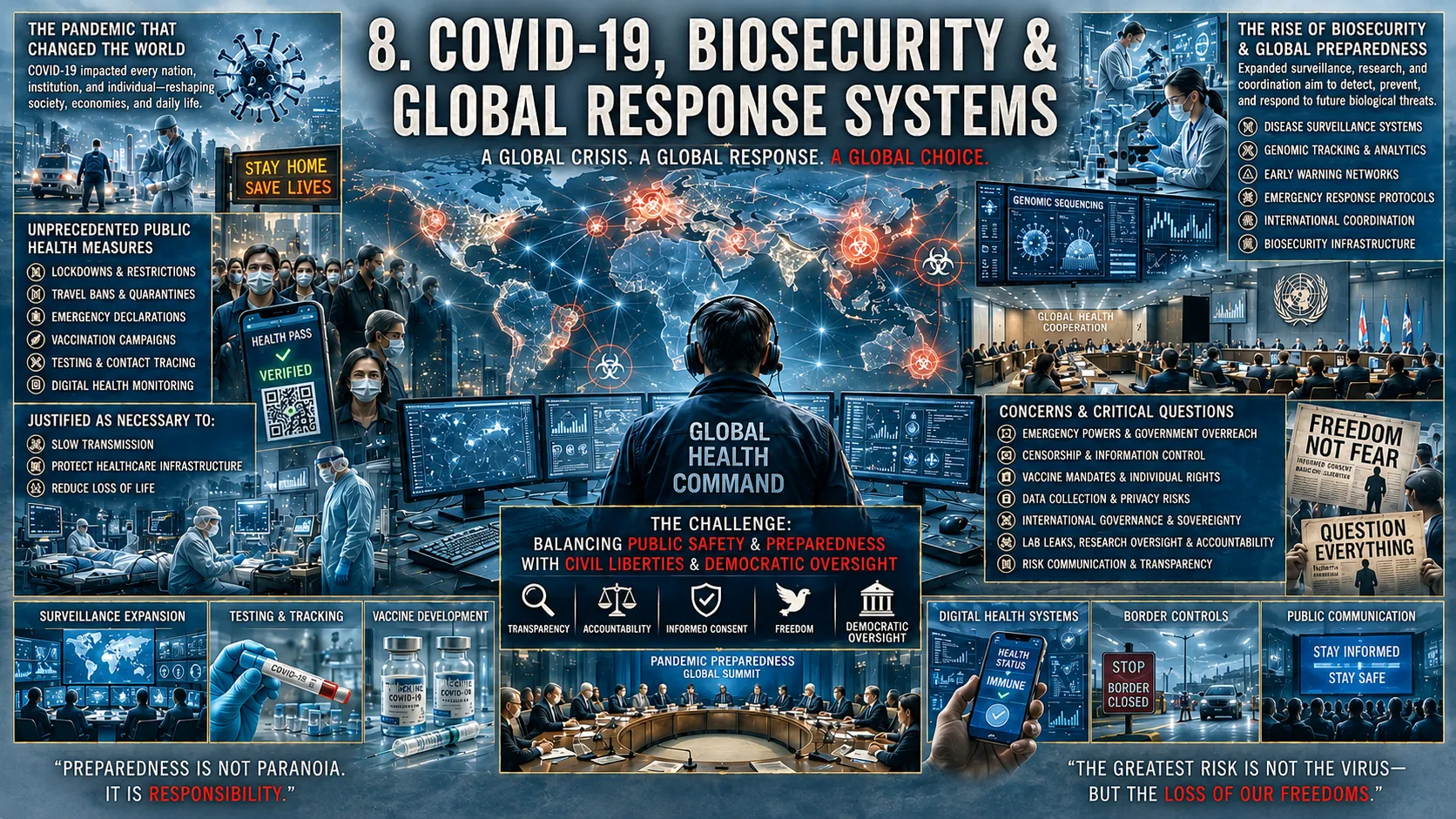
8. COVID-19, BIOSECURITY & GLOBAL RESPONSE SYSTEMS
The COVID-19 pandemic became one of the most transformative and psychologically disruptive events of the twenty-first century, reshaping nearly every aspect of modern life within a remarkably short period of time. Governments imposed lockdowns, emergency declarations, vaccine campaigns, travel restrictions, digital monitoring systems, censorship policies, and sweeping public health mandates affecting billions of people simultaneously. Entire populations experienced fear, uncertainty, isolation, economic instability, and behavioral conditioning on a scale unprecedented in the modern era. For many citizens, COVID represented the first time they witnessed how rapidly governments, media organizations, technology platforms, pharmaceutical corporations, scientific authorities, and international institutions could align to influence human behavior globally under the banner of emergency response and collective safety.
One of the most controversial aspects of the pandemic involved the unprecedented financial and political power concentrated within pharmaceutical companies such as Pfizer, Moderna, Johnson & Johnson, and others, many of which generated enormous profits during the global vaccination campaign while receiving legal protections, government contracts, emergency authorizations, and extraordinary influence over public health policy. Public narratives surrounding the vaccines evolved repeatedly regarding transmission prevention, effectiveness, adverse events, boosters, and long-term protection, while dissenting scientists, physicians, and alternative viewpoints were frequently censored, deplatformed, or publicly discredited across media and social media platforms. Questions surrounding suppressed data, adverse event reporting systems, informed consent, natural immunity, and the transparency of clinical trial information further intensified public distrust. At the same time, families watched loved ones die alone in hospitals under strict isolation protocols, while critics questioned treatment approaches involving ventilators, remdesivir protocols, and emergency policies that some physicians later argued may have contributed to preventable deaths rather than reducing them.
The origins of the virus became another major fracture point in public trust. Early discussion surrounding the possibility of a Wuhan laboratory leak connected to gain-of-function research was widely dismissed by many media organizations, technology platforms, and institutional authorities as misinformation or conspiracy theory. Yet over time, the lab-leak hypothesis moved steadily into mainstream scientific, journalistic, and intelligence discussions as additional evidence, investigations, and unanswered questions emerged. Simultaneously, public scrutiny intensified regarding gain-of-function research itself, U.S. funding relationships connected to viral research programs, the authority of organizations such as the WHO, and the broader expansion of global biosecurity frameworks involving surveillance systems, digital health infrastructure, genomic tracking, and centralized emergency powers. The deeper concern raised by COVID extends far beyond one pandemic alone. It is the realization that modern societies now possess the technological, institutional, psychological, and informational infrastructure capable of reshaping human behavior at planetary scale within remarkably short periods of time.
For many people, the pandemic fundamentally altered their relationship with institutional authority. The issue was no longer simply whether governments or pharmaceutical companies made mistakes during a crisis. The deeper rupture emerged from the realization that fear, censorship, emergency powers, corporate profit, scientific uncertainty, digital surveillance, public shaming, behavioral conditioning, and centralized narrative control could all converge simultaneously during periods of collective vulnerability. COVID exposed not only weaknesses within healthcare systems, but also the fragile balance between public safety and personal freedom in an age where biosecurity, technology, media, and state power are becoming increasingly interconnected. The questions now facing humanity are profound: when the next global crisis emerges, who decides what is true, what treatments are allowed, what risks are acceptable, and how much freedom populations are willing to surrender in exchange for security?


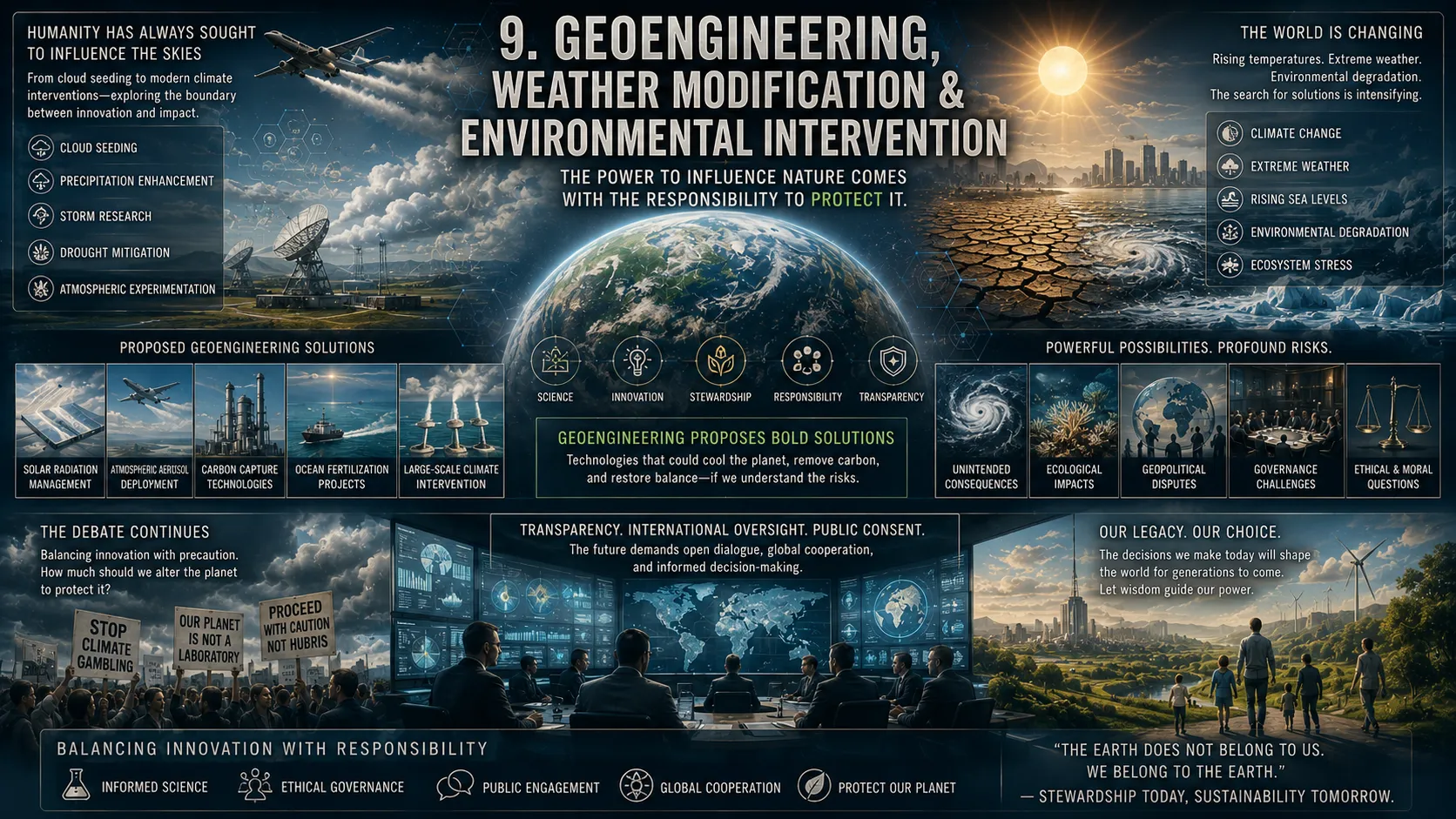
9. GEOENGINEERING, WEATHER MODIFICATION & ENVIRONMENTAL INTERVENTION
Human efforts to influence weather and environmental conditions are not merely theoretical. Governments, military organizations, and scientific institutions have explored weather modification technologies for decades through programs involving cloud seeding, precipitation enhancement, atmospheric aerosol experimentation, ionospheric research, and climate intervention projects. What was once dismissed as fringe speculation has increasingly entered mainstream scientific, governmental, and policy discussions under the broader umbrella of geoengineering and climate mitigation. As these technologies move into public view, questions surrounding transparency, oversight, long-term consequences, and public consent continue to grow.
One of the most controversial areas involves atmospheric and electromagnetic research programs such as HAARP (High-frequency Active Auroral Research Program). Although officially described as an ionospheric research facility, HAARP became a lightning rod for public suspicion because it symbolized a larger concern: if governments possess the ability to study and influence complex environmental systems, how much of that capability remains outside public awareness? While many of the more extreme claims remain speculative, the broader issue resonates because history has repeatedly shown that large-scale environmental experimentation is neither hypothetical nor unprecedented.
Recent disasters have intensified these concerns. Catastrophic flooding events in Texas and the Carolinas, along with the devastating Lahaina fires in Maui, fueled public debate regarding weather modification, infrastructure vulnerability, emergency response failures, and the growing role of environmental intervention technologies. In Lahaina, concerns extended beyond the tragedy itself to issues involving land access, redevelopment, property rights, and the future of long-established communities. For many observers, such events reinforced a deeper question: when crises occur, who ultimately benefits from the reconstruction, redevelopment, and policy changes that follow?
The deeper concern surrounding geoengineering extends beyond weather alone. It reflects a broader shift in humanity’s relationship with nature, technology, and centralized control. As scientific capabilities expand, governments, corporations, and international institutions increasingly possess the ability to influence environmental systems on larger scales than ever before. The central question is no longer whether intervention technologies exist — many clearly do — but who should possess the authority to deploy them, under what conditions, and with what level of public oversight. In an age of climate anxiety and accelerating technological power, geoengineering may represent one of the most consequential ethical debates of the twenty-first century.


Update: “Officials warn of deadly flesh-eating bacteria” (UK Independent). “The weather phenomenon that could shake the world” (UK Telegraph). “Severe thunderstorms targeting millions, flash flood threat from Texas to Missouri” (ABC News). “Storms target 50 million” (FOX Weather). Geoengineering, what could possibly go wrong? “The looming Super El Niño could be bad – but much worse is to come” (New Scientist). “Colorado River Basin sliding toward system-wide crash” (FOX). “Colorado declares statewide drought emergency”(Colorado Sun). “The Largest US Groundwater Supply Is Running Out” (Newsweek). These are but a few samples of the bad news build up unfolding and accelerating across the world, what will conditions be like by the end of 2026? All are needed in the critical battle to wake populations to what is coming, we must make every day count. Share credible data from a credible source, make your voice heard. Dane Wigington
This episode of Weathered explores the controversial world of solar geoengineering by injecting sulfate aerosols into the stratosphere, looking at both the controversial promises and profound risks associated with manipulating the Earth's climate.

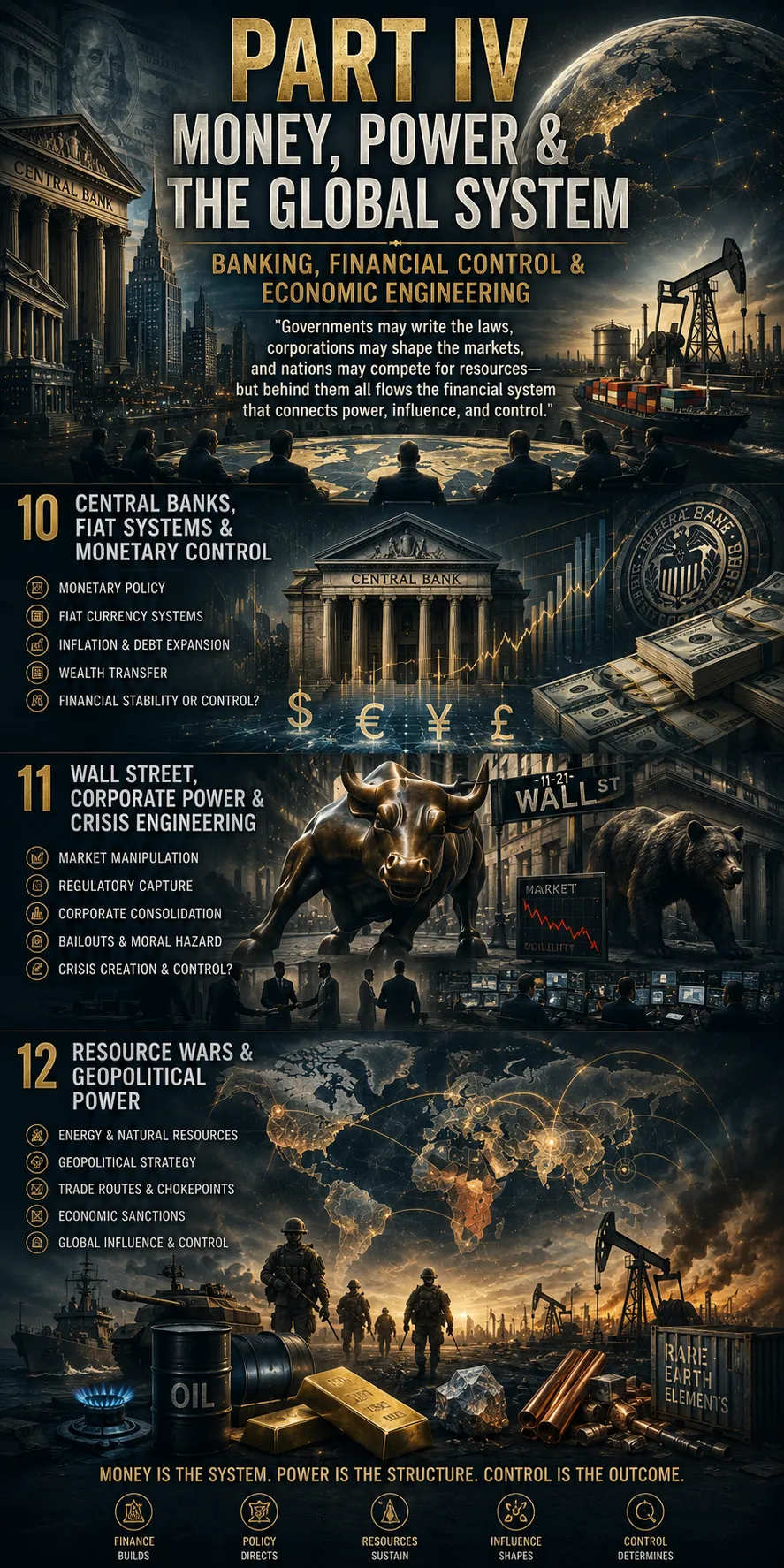
PART IV — MONEY, POWER & THE GLOBAL SYSTEM
“The most powerful institutions are not always those that command armies, but those that control currency, credit, and capital. Every financial system reflects a deeper question: Who creates the money, who controls the debt, and who benefits from the outcome?”
Banking, Financial Control & Economic Engineering
Money is often viewed as a simple tool of exchange, yet it is also one of the most powerful mechanisms of influence ever created. Nearly every aspect of modern life — housing, food, employment, healthcare, education, government spending, taxation, corporate growth, technological development, and even war — ultimately flows through financial systems. Most people spend their lives earning income, paying taxes, servicing debt, saving for retirement, and working within systems they rarely have time to fully examine. Yet relatively few ever stop to ask deeper questions. Who creates money? How is debt generated? Why does inflation persist? Why do governments continuously require greater revenue through taxation? Why do financial crises often transfer wealth upward while ordinary citizens absorb much of the cost? And who ultimately benefits from the structure of the system itself?
Over the past century, the global financial system evolved into a highly interconnected network of central banks, commercial banks, investment firms, multinational corporations, sovereign governments, and international institutions capable of influencing economies on a planetary scale. Supporters argue these systems provide stability, liquidity, growth, and economic coordination. Critics counter that financial power has become increasingly concentrated within a relatively small number of institutions capable of shaping markets, influencing policy, managing crises, and determining the economic conditions under which billions of people live. The question is no longer whether financial power exists, but how much influence it exerts over political systems, public policy, resource allocation, and the future direction of society itself.
This section explores one of the most consequential yet least understood dimensions of modern power: the architecture of money. From central banking and fiat currency systems to Wall Street influence, corporate concentration, debt creation, resource competition, digital currencies, and geopolitical economic strategy, the topics explored here challenge readers to look beyond markets and headlines and examine the deeper mechanisms through which wealth, influence, and power move throughout the modern world. Because in many ways, understanding who controls money may be one of the most important steps toward understanding who ultimately shapes the future.
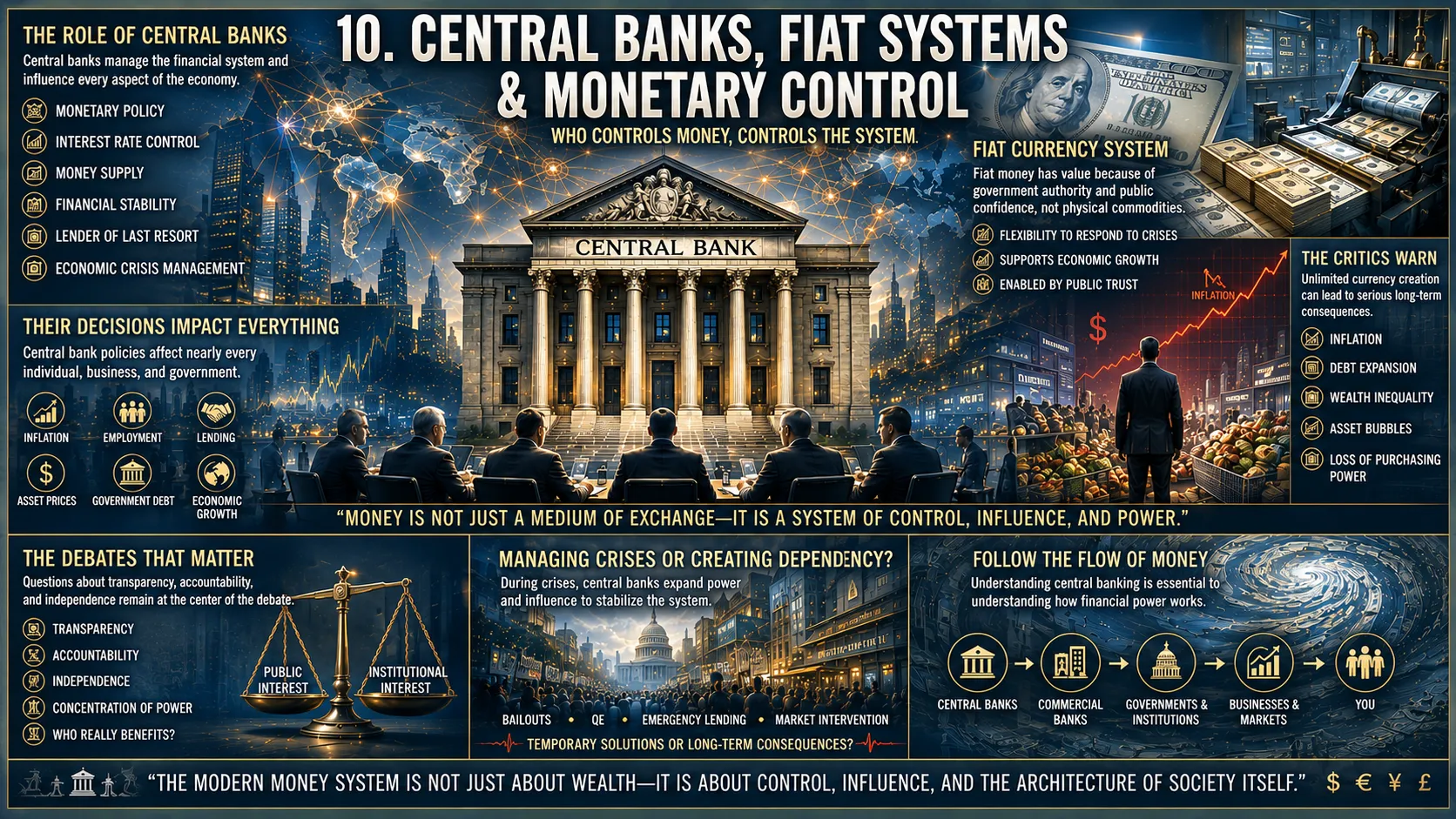
10. CENTRAL BANKS, FIAT SYSTEMS & MONETARY CONTROL
Central banks occupy one of the most powerful yet least understood positions in modern civilization. Institutions such as the Federal Reserve and other national reserve systems influence interest rates, inflation, lending, debt expansion, currency valuation, asset prices, employment conditions, and financial stability across entire nations. Their decisions impact housing markets, retirement accounts, wages, purchasing power, government borrowing, and the broader economic reality experienced by billions of people. Yet despite this enormous influence, most citizens possess only a limited understanding of how money is actually created, how monetary policy functions, or how deeply debt-based financial systems shape modern society.
Much of the modern debate surrounding central banking traces back to the origins of the Federal Reserve system itself, including the now-famous 1910 meeting at Jekyll Island, where influential bankers, financiers, and policymakers secretly gathered to design the framework for what would later become America’s central banking system. Critics have long pointed to the secrecy surrounding the meeting as symbolic of a larger concern: that modern monetary systems were increasingly being designed by financial elites operating beyond meaningful public visibility. Over time, the transition away from commodity-backed currencies into fully fiat monetary systems accelerated these concerns by allowing governments and central banks to create money through debt expansion rather than physical reserves. Institutions such as the IMF, World Bank, and Bank for International Settlements further expanded the globalization of financial coordination, while the petrodollar system and reserve-currency dominance helped solidify enormous geopolitical leverage within the modern economic order.
The 2008 financial collapse became one of the defining psychological ruptures in public trust when governments and central banks rapidly created trillions of dollars to stabilize banks and financial institutions while ordinary citizens faced foreclosures, unemployment, inflationary pressure, and economic hardship. For many observers, the crisis exposed how monetary systems can transfer wealth upward during periods of instability while insulating large institutions from the consequences of their own risk-taking. Inflation increasingly came to be viewed by critics not simply as an unfortunate economic side effect, but as a hidden mechanism of wealth erosion quietly reducing purchasing power over time while debt levels expanded across governments, corporations, and households simultaneously.

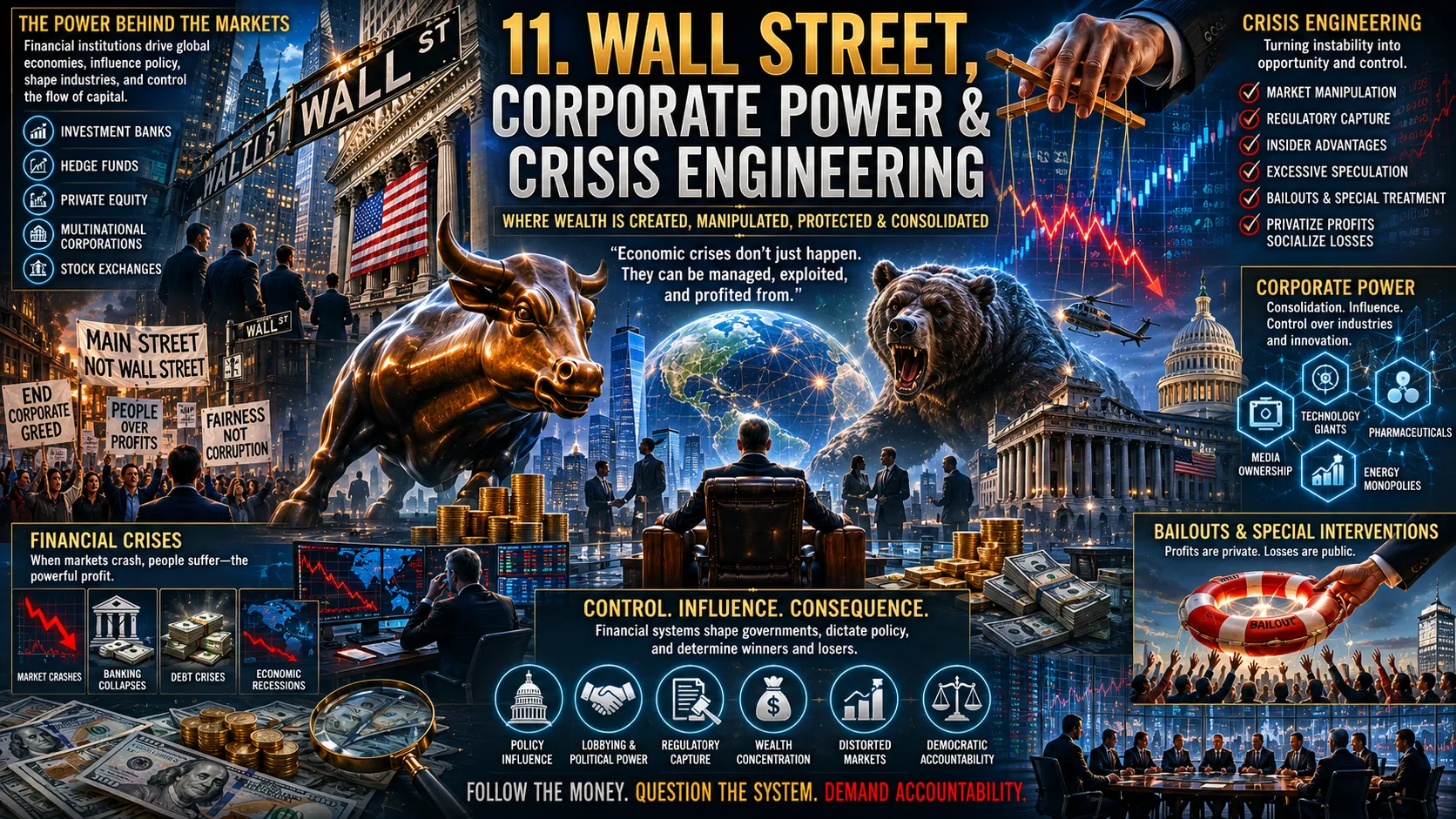
11. WALL STREET, CORPORATE POWER & CRISIS ENGINEERING
Modern financial markets possess extraordinary influence over nearly every aspect of global civilization. Investment banks, hedge funds, private equity firms, multinational corporations, and asset-management giants collectively shape housing markets, technological development, employment trends, commodity prices, healthcare systems, media ownership, political lobbying, and global investment flows. In theory, these systems allocate capital efficiently, encourage innovation, expand economic opportunity, and generate prosperity. In practice, critics argue that concentrated financial power increasingly allows a relatively small network of institutions to exert enormous influence over governments, economies, public policy, and even the direction of society itself.
The 2008 financial crisis became one of the defining psychological ruptures in modern public trust because it exposed both the fragility of the global financial system and the extent to which governments were willing to intervene to preserve institutional stability. For years, concerns regarding derivatives markets, excessive leverage, risky lending practices, and systemic instability were often minimized until the system itself began collapsing. Yet when crisis emerged, governments and central banks rapidly mobilized trillions of dollars in bailout programs, emergency interventions, and monetary expansion to stabilize financial institutions while millions of ordinary citizens lost homes, savings, businesses, and retirement security. Around the same period, scandals involving LIBOR manipulation, insider trading concerns, and coordinated banking misconduct further reinforced the perception that financial institutions often operate according to rules fundamentally different from those governing the public. To many observers, the crisis revealed a disturbing pattern: profits remained private during periods of growth, while losses became socialized during collapse.
As financial systems evolved, public scrutiny increasingly shifted toward the growing concentration of corporate and institutional ownership across global markets. Asset-management giants such as BlackRock, Vanguard, and State Street accumulated enormous influence through their holdings across banking, technology, energy, healthcare, defense, media, and consumer industries simultaneously, fueling concerns regarding corporate concentration and the gradual privatization of governance itself. ESG scoring systems, digital finance infrastructure, central bank digital currency discussions, and emerging forms of programmable money further intensified debate regarding the future relationship between finance, behavior, and institutional control. Critics warn that financial systems may be evolving beyond simple economics into mechanisms capable of rewarding, restricting, monitoring, or shaping human behavior at unprecedented scale.
The deeper concern surrounding Wall Street and corporate power is not merely corruption or greed in isolated cases. It is the possibility that modern economic systems increasingly reward consolidation, dependency, crisis exploitation, and institutional continuity above broad societal well-being. Economic shocks often accelerate the transfer of wealth upward while expanding public reliance on centralized financial systems. As digital currencies, AI-driven finance, surveillance infrastructure, and behavioral economics continue converging, many people are beginning to question whether future financial systems will simply manage economies — or whether they may ultimately manage populations themselves. In a civilization where access to money, credit, digital infrastructure, and economic participation can increasingly be centralized, monitored, and conditioned, financial control may become one of the most powerful mechanisms of influence ever created.



• PBS FrontLine, Four Part Series: Money, Power & Wall Street
In the 2012 award-winning series Money, Power and Wall Street, FRONTLINE tells the story of the struggles to repair the economy after the 2008 financial crisis, exploring key decisions, missed opportunities, and the uneasy partnership between leaders of government and finance. This journalism is made possible by viewers like you. In part one of Money, Power and Wall Street, FRONTLINE correspondent Martin Smith interviews leading bankers, government officials and journalists to chart the epic rise of a new financial order—and the trouble that followed.
As Wall Street innovated, its revenues skyrocketed, and financial institutions of all stripes tied their fortunes to one another. Smith probes deeply into the story of the big banks—how they developed, how they profited, and how the model that produced unfathomable wealth planted the seeds of financial destruction.


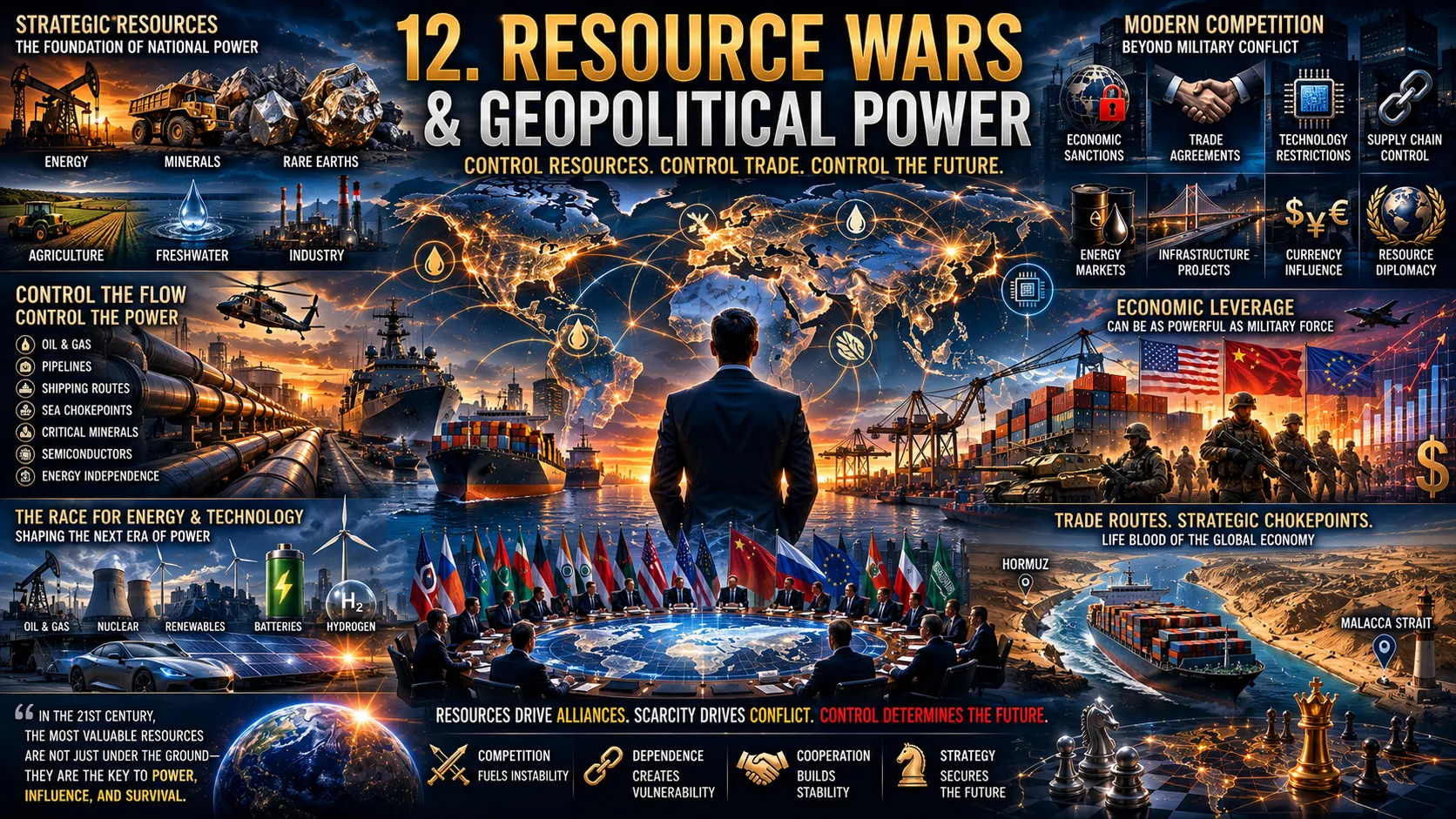
12. RESOURCE WARS & GEOPOLITICAL POWER
Throughout history, wars have rarely been fought solely over ideology. Beneath public narratives surrounding freedom, democracy, security, or humanitarian intervention, many global conflicts ultimately revolve around resources, trade routes, energy systems, strategic geography, financial dominance, and geopolitical leverage. Oil reserves, natural gas pipelines, rare earth minerals, freshwater supplies, shipping corridors, semiconductor production, agricultural land, and industrial infrastructure remain among the most strategically valuable assets on Earth. As populations grow and technological systems become increasingly dependent upon finite resources, competition for control over these systems intensifies across both economic and military spheres.
One of the defining moments in modern public distrust surrounding war narratives emerged during the Iraq conflict and the controversy over weapons of mass destruction. Governments, intelligence agencies, and major media organizations repeatedly presented WMD claims as justification for military intervention, only for those weapons to ultimately never be found. For many people, the Iraq War became a profound psychological rupture that fundamentally altered public trust in intelligence narratives, military intervention frameworks, and geopolitical messaging itself. The conflict also intensified broader discussions surrounding the protection of the petrodollar system, energy security, Middle Eastern strategic dominance, and the enormous influence of the military-industrial complex described decades earlier by President Eisenhower. Similar concerns later emerged surrounding NATO expansion debates, the war in Ukraine, proxy-war narratives, CIA-linked regime-change allegations, and long-standing tensions surrounding critical energy corridors such as the Strait of Hormuz and major pipeline routes crossing Eastern Europe and the Middle East.
Over time, these patterns contributed to growing interest in frameworks such as “Economic Hitman” theories, which argue that economic pressure, debt systems, financial leverage, covert influence operations, and geopolitical destabilization are often used to shape nations without requiring direct military conquest. Critics increasingly point to historical CIA-backed regime change operations, sanctions systems, resource-driven conflicts, and financial dependency structures as evidence that modern empire may function as much through economics, debt, intelligence influence, and energy control as through traditional warfare itself. In this environment, the line between military conflict, economic strategy, intelligence operations, and corporate interest becomes increasingly difficult to separate.
The deeper concern surrounding resource wars is that modern civilization may be evolving into a permanent state of managed instability where conflict itself sustains enormous systems of financial, political, military, and institutional power. Wars drive defense spending, energy restructuring, surveillance expansion, technological development, debt growth, and geopolitical realignment simultaneously. Economic systems themselves increasingly function as instruments of strategic pressure capable of destabilizing nations without a single shot being fired. As populations face inflation, energy insecurity, supply-chain disruption, rising geopolitical tension, and growing economic fragility, many people are beginning to ask whether the modern global system has become structurally dependent upon perpetual crisis, competition, and controlled instability in order to sustain the concentration of power operating behind it.


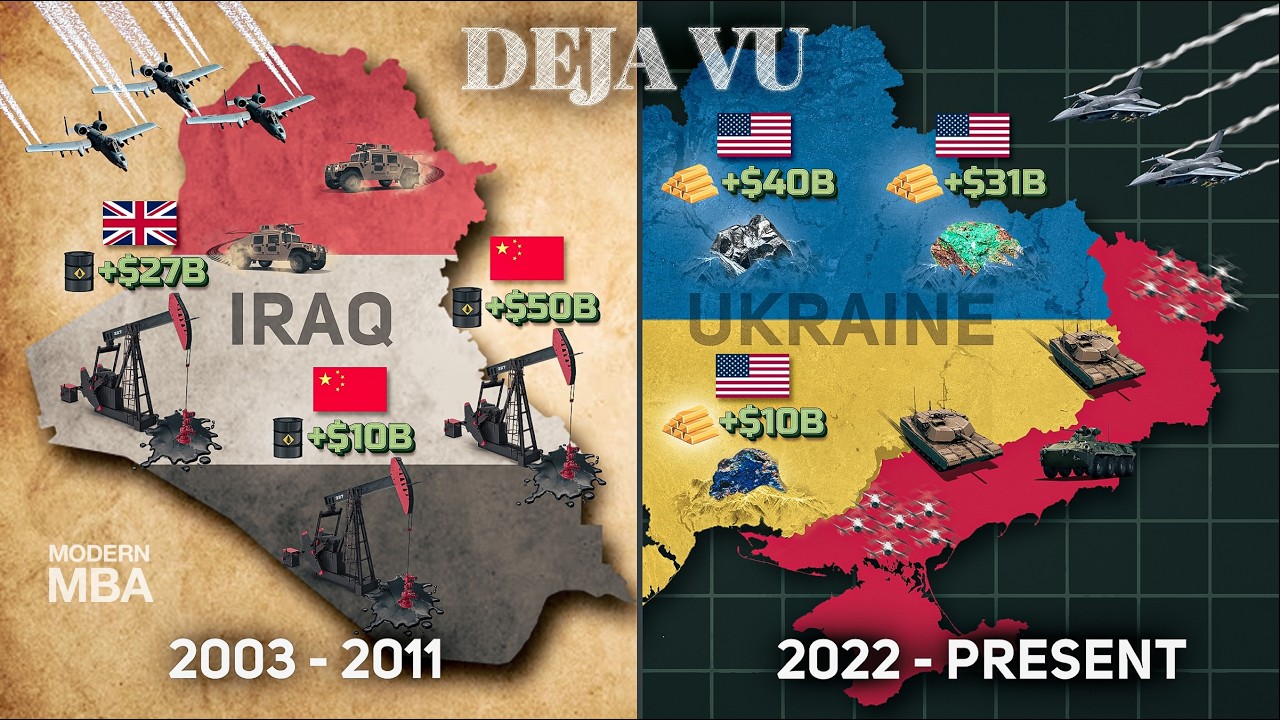


PART V — ELITE NETWORKS & SECRET STRUCTURES
“Power is often most effective when it operates beyond public view, through networks, relationships, symbols, and institutions that few fully understand. History is shaped not only by visible leaders and public institutions, but also by the relationships, alliances, and networks that exist behind them.”
Hidden Influence, Symbolism & Institutional Power
Throughout history, influential networks have existed alongside formal systems of government, commerce, religion, academia, and military power. Some operated openly as political clubs, fraternal organizations, policy institutes, donor networks, think tanks, or leadership societies. Others maintained varying degrees of secrecy, restricting membership, limiting public visibility, or conducting private gatherings away from public scrutiny. The existence of elite social structures is not controversial in itself. Powerful people naturally build relationships with other powerful people. The deeper public concern emerges when private influence networks begin shaping political, financial, technological, cultural, or geopolitical outcomes without meaningful transparency or democratic accountability.
Modern populations increasingly sense that power may not operate solely through visible institutions such as elections, legislation, or public debate. Instead, influence often appears to flow through overlapping networks involving wealth, intelligence connections, corporate leadership, media access, political relationships, academic influence, donor ecosystems, and global strategic organizations capable of shaping policy direction far beyond what most citizens directly observe. Institutions such as the Bilderberg Group, Council on Foreign Relations, Trilateral Commission, World Economic Forum, Bohemian Grove, major think tanks, and elite donor systems became focal points for public scrutiny precisely because they involve high-level coordination among political leaders, corporate executives, financial institutions, military officials, and influential technocrats operating largely outside ordinary public visibility. For many people, the issue is no longer whether elite networks exist — they clearly do — but how much influence these interconnected systems exert over the direction of modern civilization.
This section explores one of the deepest and most psychologically charged questions in modern society: how does power behave when it becomes insulated from public accountability? From elite networking systems and institutional protection structures to trafficking scandals, blackmail operations, symbolic communication systems, esoteric traditions, and ritualized expressions of hierarchy, the subjects explored here continue generating enormous fascination because they touch something ancient and deeply human — the realization that societies often contain hidden layers of influence operating beneath the visible surface of public life. Whether viewed through the lens of sociology, institutional power, psychology, corruption, symbolism, or conspiracy culture, these subjects force populations to confront the possibility that the world may be shaped as much by invisible relationships and protected systems as by the public institutions people are taught to trust.
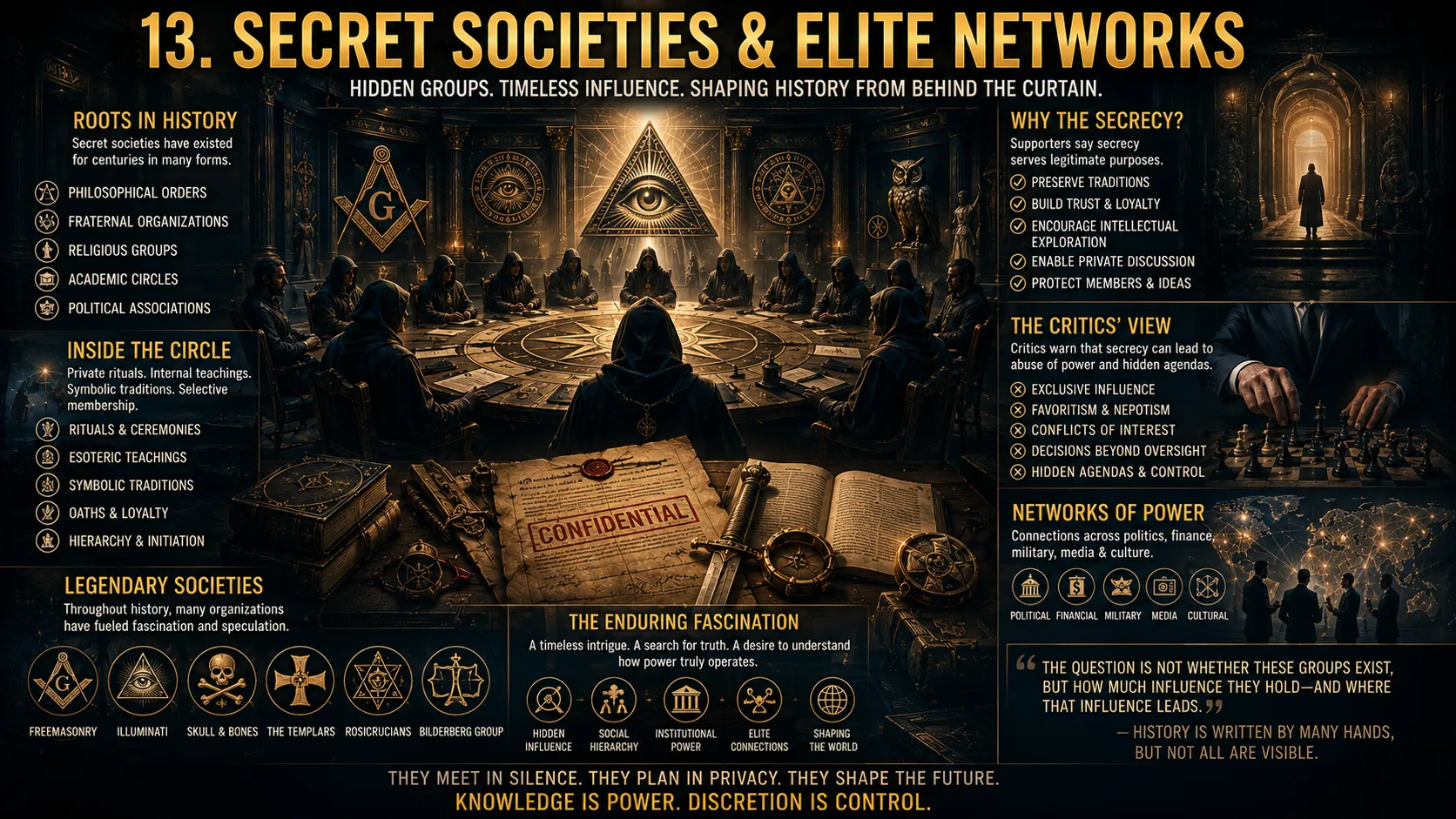
13. SECRET SOCIETIES & ELITE NETWORKS
Secret societies and elite networks have existed throughout human history in many different forms. Some emerged as philosophical orders, fraternal organizations, religious societies, academic circles, policy groups, or leadership institutions built around shared values, intellectual exchange, social trust, or strategic coordination. Others developed reputations for secrecy due to private rituals, restricted membership, symbolic traditions, or the presence of influential political, financial, military, and cultural figures within their ranks. Organizations such as Freemasonry, Skull & Bones, Bohemian Grove, the Bilderberg Group, the Council on Foreign Relations, the Trilateral Commission, and Davos/World Economic Forum gatherings became enduring subjects of public fascination because they appeared to operate at the intersection of wealth, policy, influence, and global power while remaining largely inaccessible to ordinary populations.
Supporters of these institutions often argue that private networks are a normal and necessary part of governance, diplomacy, leadership development, and strategic planning. Powerful individuals naturally seek environments where they can exchange ideas, negotiate relationships, and discuss global issues away from media spectacle and political theater. Critics, however, argue that when the same networks repeatedly connect politicians, intelligence officials, billionaires, bankers, media executives, defense contractors, academics, and corporate leaders, the line between cooperation and concentrated influence becomes increasingly blurred. The concern is not merely secrecy itself, but the possibility that major political, financial, technological, and geopolitical decisions may increasingly emerge from unelected social ecosystems operating beyond meaningful public oversight.
What makes elite-network discussions psychologically powerful is that they challenge one of the central assumptions of modern democracy: that public institutions alone determine the direction of society. Once people begin recognizing how much influence flows through private relationships, donor systems, think-tank ecosystems, intelligence overlap, elite universities, corporate boards, lobbying structures, and invitation-only forums, the visible world of politics starts appearing less like the true center of power and more like the public-facing layer of a much deeper social architecture. The unsettling realization is not necessarily that secret societies “control everything,” but that modern civilization may be far more networked, coordinated, insulated, and hierarchically structured than most populations fully understand.






From India’s legendary Nine Unknown Men to Bavaria’s suppressed Illuminati, from revolutionary Carbonari cells to the disputed Thuggee of colonial India, these groups blurred the line between documentation and myth.
In this investigation, we examine the surviving records, state archives, and historical gaps to separate verified evidence from later embellishment.

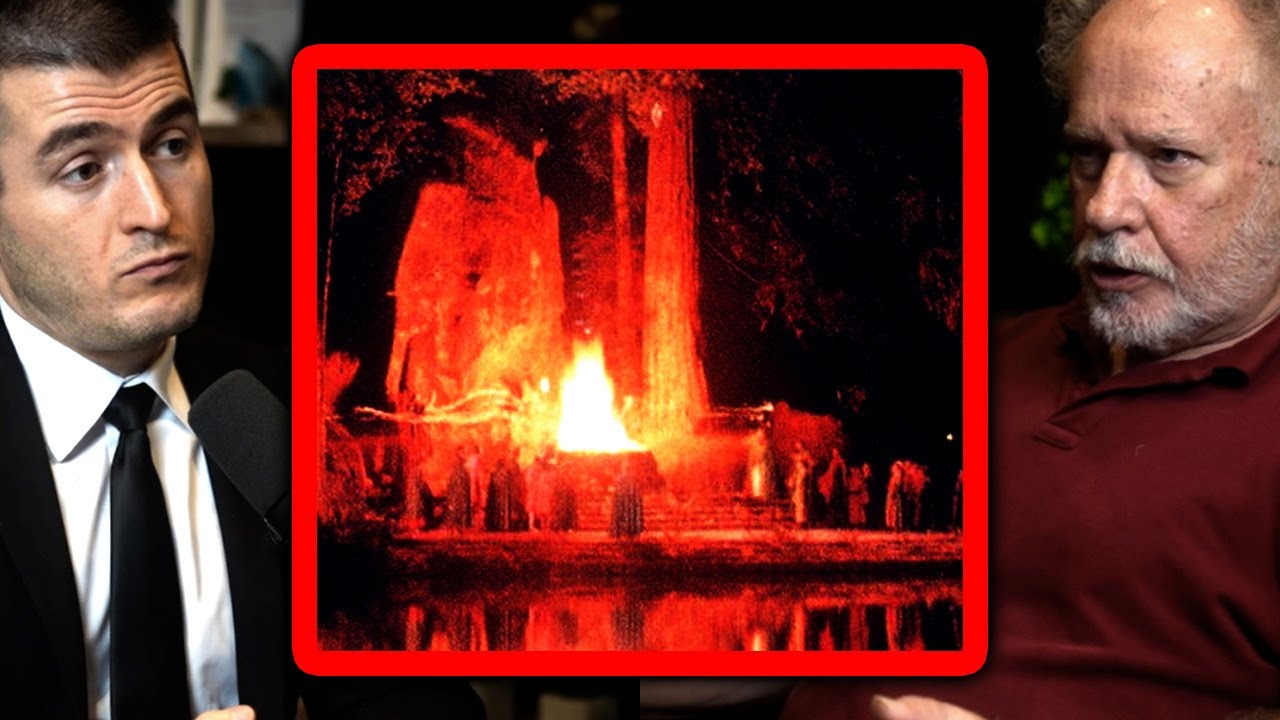



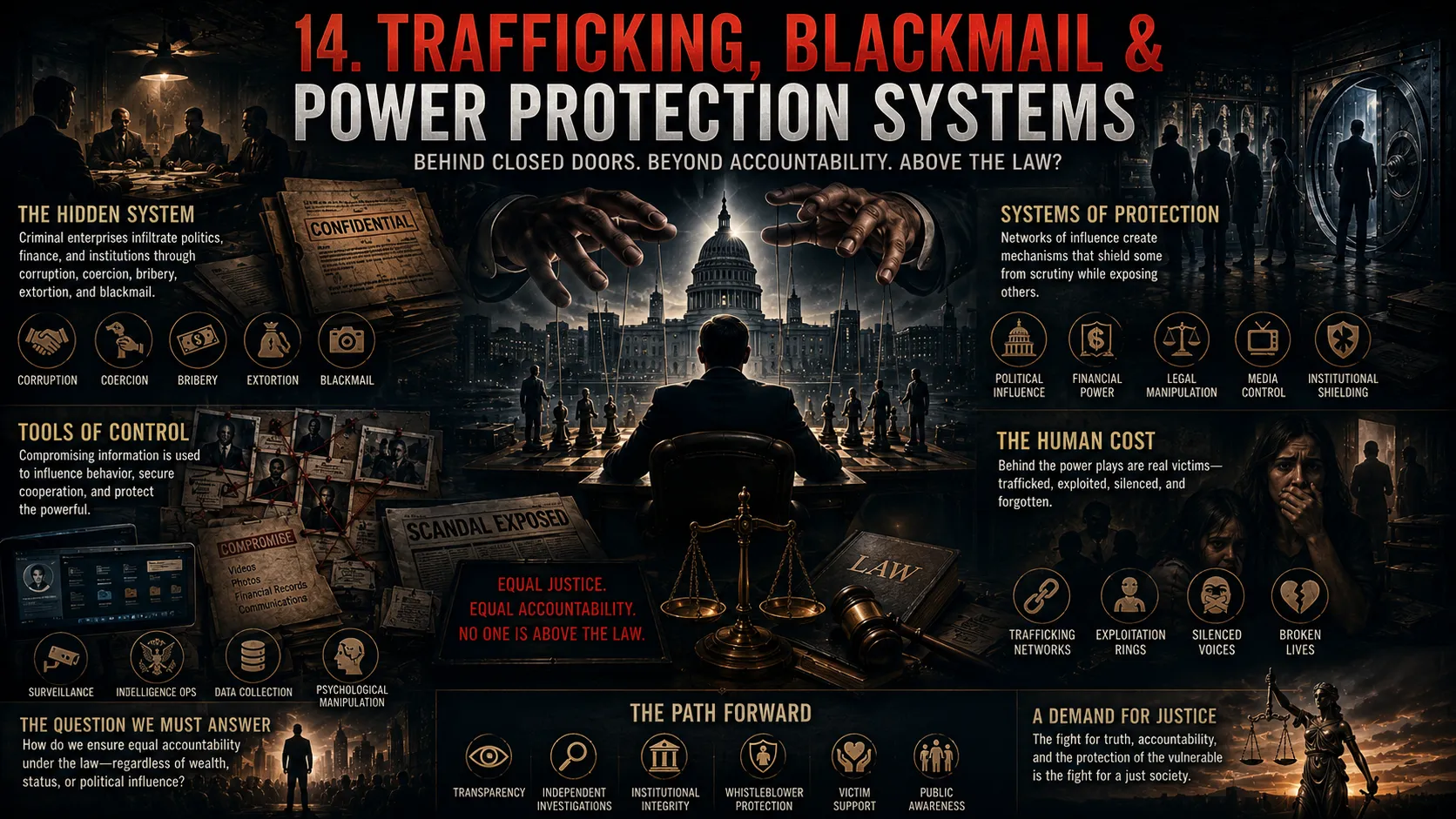
14. TRAFFICKING, BLACKMAIL & POWER PROTECTION SYSTEMS
Throughout history, systems of power have often been vulnerable to corruption, coercion, blackmail, bribery, and exploitation. Organized crime, intelligence agencies, political operatives, financial actors, and influential institutions have all historically used compromising information as leverage to influence behavior, secure loyalty, protect networks, or silence opposition. The deeper fear surrounding trafficking and blackmail allegations is not simply criminality itself, but the possibility that systems of compromise may become embedded within elite power structures capable of shielding influential individuals from accountability while preserving institutional continuity behind the scenes.
The Jeffrey Epstein scandal became one of the defining psychological ruptures in modern public consciousness because it appeared to expose a hidden world operating at the intersection of wealth, politics, intelligence, celebrity culture, academia, royalty, and alleged sexual exploitation networks. For years, Epstein maintained extraordinary access to influential figures despite previous criminal allegations and suspicious institutional protection. Public scrutiny intensified further through questions surrounding Ghislaine Maxwell’s family intelligence connections, unexplained failures within legal systems, sealed records, media silence during earlier years of the scandal, and the perception that many powerful individuals linked to the network were never fully investigated or held accountable. Regardless of which broader theories prove true, the Epstein case profoundly damaged public trust because millions of people sensed they were witnessing evidence of a protected class operating according to different rules than ordinary society.
This is why discussions surrounding trafficking, blackmail systems, kompromat operations, intelligence-linked compromise networks, and institutional silence generate such intense emotional reaction. The issue extends beyond any single case. It touches the fear that systems of power may contain internal mechanisms designed not merely to accumulate influence, but to preserve and protect it through leverage, secrecy, mutual compromise, selective prosecution, and narrative management. Public fascination with subjects such as Pizzagate, elite ritual allegations, and hidden trafficking networks often reflects something deeper than belief in any specific claim. It reflects a growing societal suspicion that modern institutions may not apply accountability equally when wealth, intelligence connections, political influence, or elite status are involved. Once populations begin suspecting that justice itself may operate differently for different classes of people, institutional trust begins eroding at a foundational level.


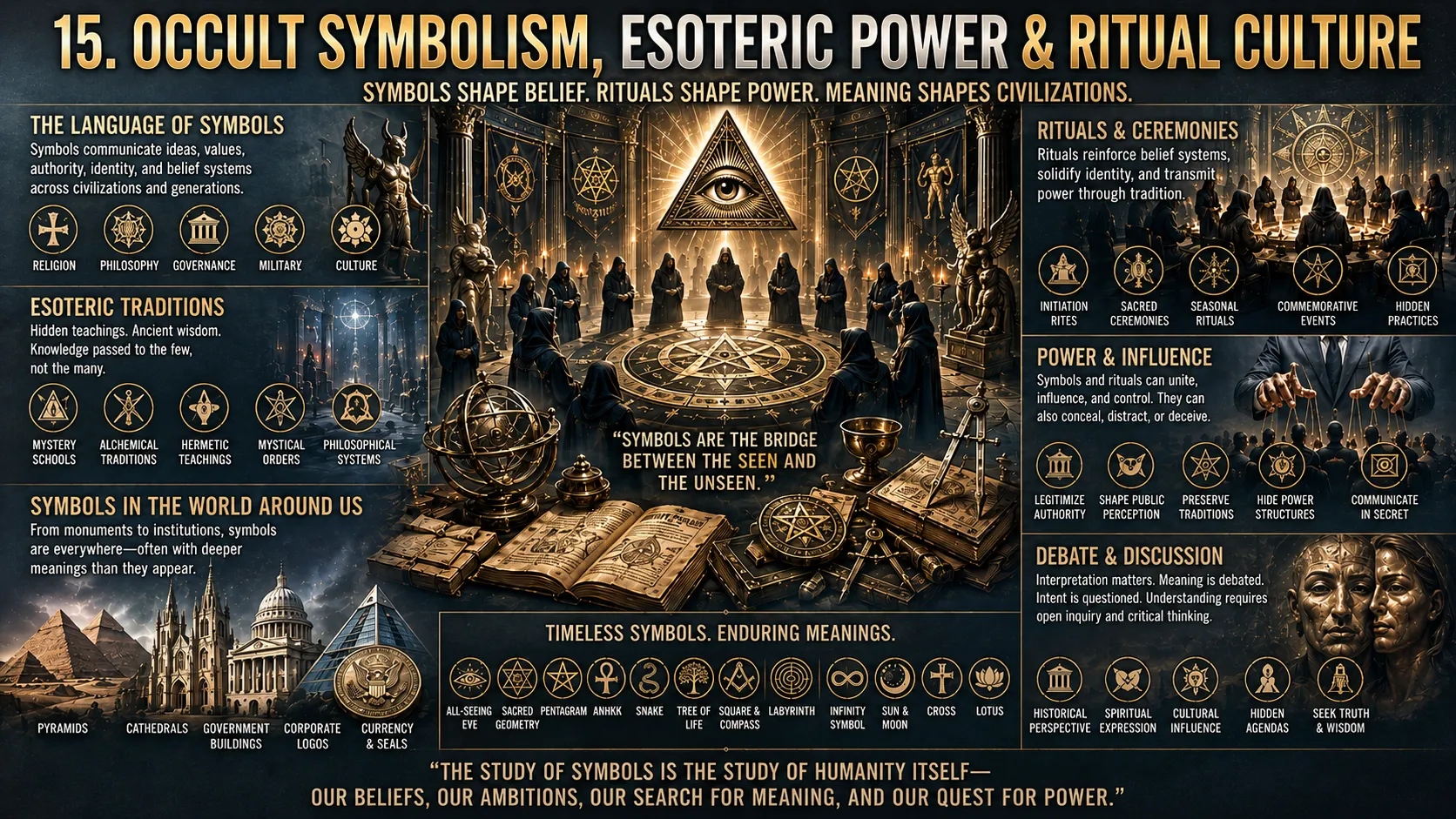
15. OCCULT SYMBOLISM, ESOTERIC POWER & RITUAL CULTURE
Symbols have always played a central role in human civilization. Ancient empires, religious institutions, monarchies, military systems, mystery schools, governments, corporations, and cultural movements all relied upon symbols, ritual, architecture, myth, and ceremony to communicate authority, identity, hierarchy, and worldview. Long before modern language systems existed, human beings encoded meaning through imagery, sacred geometry, initiation rites, monuments, ceremonial practices, and symbolic storytelling. The use of symbolism by powerful institutions is therefore not unusual — it is one of the oldest methods through which civilizations organize collective identity and reinforce structures of power.
Throughout history, esoteric traditions developed around the idea that certain forms of knowledge should remain hidden, symbolic, or accessible only through initiation. Ancient mystery schools, hermetic teachings, alchemical traditions, mystical orders, Kabbalistic systems, Rosicrucianism, Freemasonry, and other philosophical or spiritual traditions preserved symbolic systems intended to communicate deeper metaphysical, spiritual, or philosophical ideas beneath surface-level interpretation. Over time, many researchers began noticing recurring symbols, geometric patterns, ritual structures, mythological themes, and esoteric references appearing throughout government architecture, financial institutions, corporate branding, entertainment industries, monuments, and elite ceremonial culture. This led to growing public fascination with the possibility that symbolism may function not merely as decoration, but as a subtle language of power, identity, hierarchy, and influence embedded throughout civilization itself.
Debates surrounding occult symbolism become controversial when observers interpret recurring symbols, rituals, ceremonies, or media imagery as evidence of hidden elite belief systems or coordinated esoteric influence. Critics sometimes connect these patterns to broader theories involving Luciferian symbolism, elite ritual culture, hidden spiritual traditions, or symbolic conditioning within entertainment and media systems. Supporters and skeptics alike often disagree sharply regarding where meaningful symbolism ends and projection, pattern recognition, or overinterpretation begins. Yet regardless of interpretation, the deeper realization remains psychologically powerful: human civilization has always ritualized power. Institutions communicate through symbols because symbols operate beneath rational analysis and connect directly to identity, mythology, emotion, memory, and collective consciousness. Once people begin recognizing how deeply symbolism permeates religion, politics, media, architecture, entertainment, and elite culture, they often start viewing society itself through an entirely different lens — one where power is expressed not only through laws and economics, but through myth, ritual, imagery, and the hidden language of human perception itself.




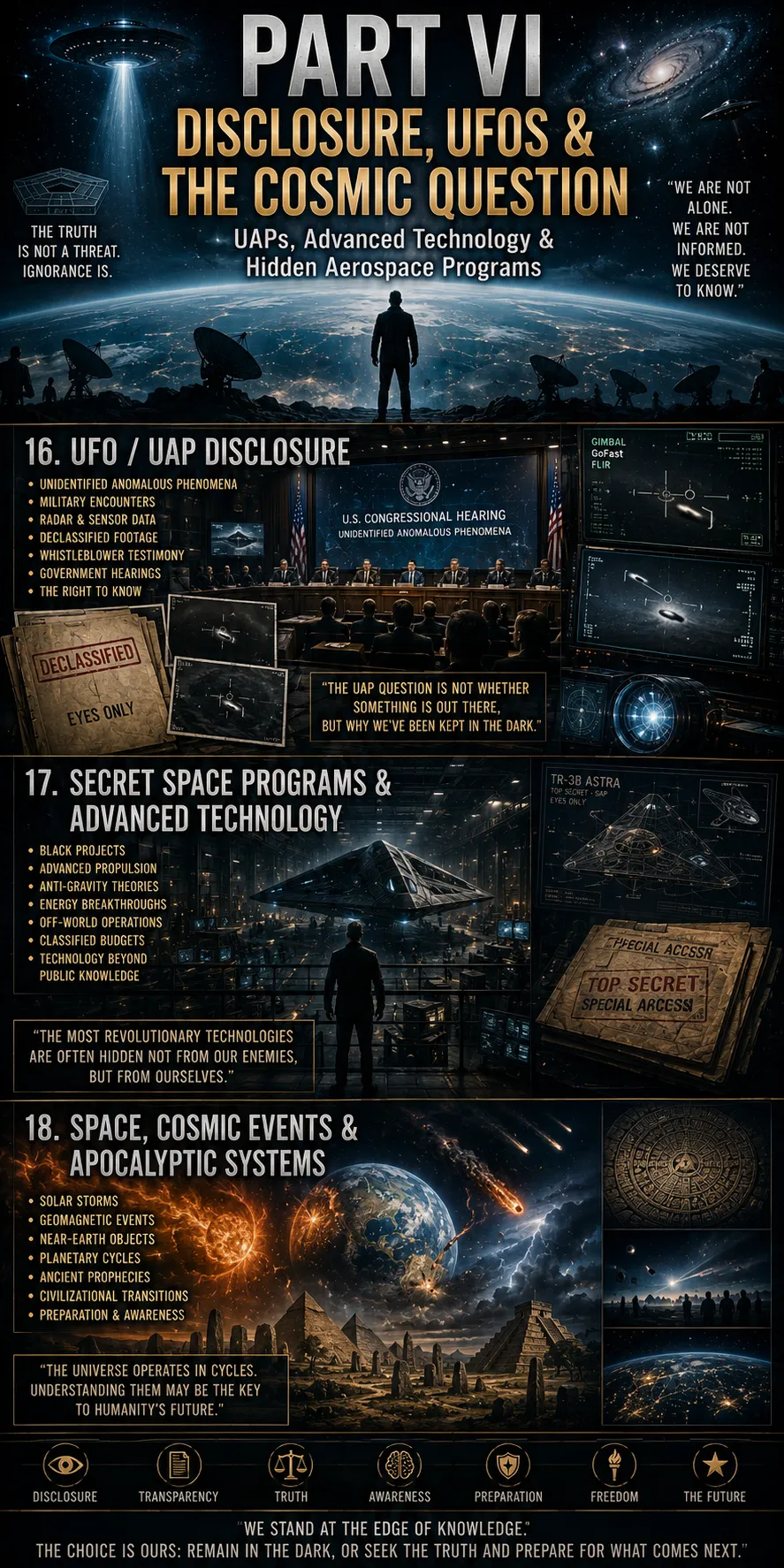
PART VI — DISCLOSURE, UFOs & THE COSMIC QUESTION
UAPs, Advanced Technology & Hidden Aerospace Programs
For decades, reports of unidentified aerial phenomena, unexplained craft, military encounters with anomalous objects, and claims of hidden aerospace technologies occupied a controversial space between science, national security, mythology, ridicule, and speculation. Mainstream culture often treated the UFO subject as fringe entertainment or conspiracy theory, despite the fact that pilots, radar operators, military personnel, astronauts, intelligence officials, and civilians around the world continued reporting encounters involving objects displaying extraordinary maneuverability, unexplained flight characteristics, and technological behavior seemingly beyond publicly acknowledged capabilities. While many sightings undoubtedly involve misidentifications, classified military projects, atmospheric phenomena, or observational error, a persistent percentage of incidents have remained unresolved even after formal investigation.
In recent years, the disclosure conversation underwent a historic transformation. The Pentagon publicly acknowledged the existence of UAP investigations. Programs such as AATIP (Advanced Aerospace Threat Identification Program) moved into mainstream awareness. Navy pilots described encounters with craft exhibiting capabilities they could not explain. Official military footage was released publicly. Congressional hearings were held. UAP task forces were established. Radar anomalies, multi-sensor tracking events, and whistleblower testimony began receiving serious public discussion from military, intelligence, and political figures previously unwilling to engage the topic openly. The cultural shift was profound: a subject once widely mocked was now being treated as a legitimate national security and scientific issue by governments themselves.
This section explores one of the most destabilizing questions of the modern era: what if humanity does not fully understand the nature of reality, technology, consciousness, or its place within the larger cosmic environment? From UAP disclosure and advanced propulsion theories to hidden aerospace programs, secret technological development, cosmic cycles, geomagnetic instability, and apocalyptic transformation frameworks, the subjects explored here extend far beyond extraterrestrial speculation alone. They challenge assumptions about institutional secrecy, scientific limitation, human perception, and the possibility that civilization may know far less about the universe — and itself — than it has long believed.
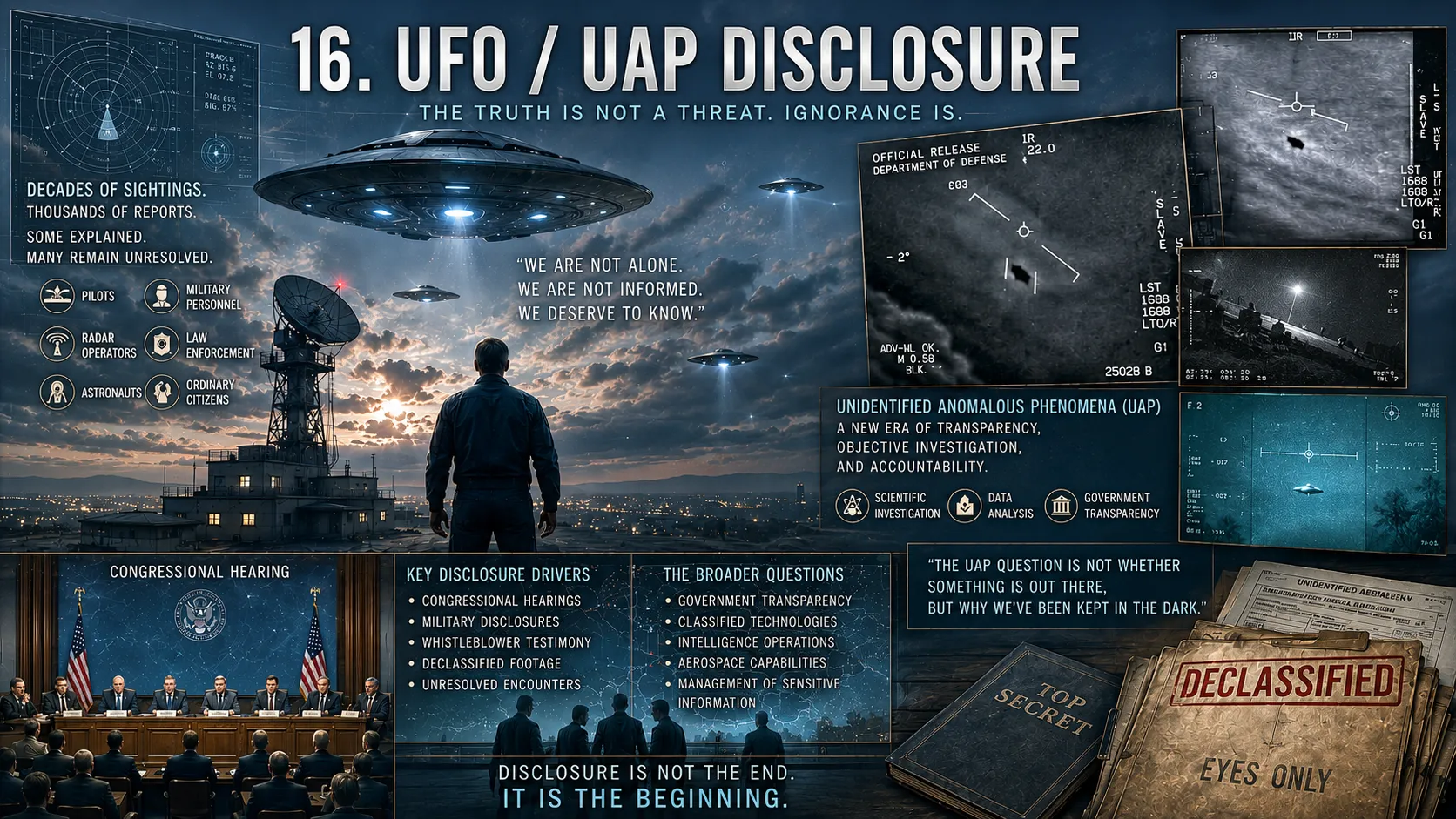
16. UFO / UAP DISCLOSURE
Reports of unidentified aerial phenomena have existed throughout recorded history, but the modern UFO era accelerated dramatically during the twentieth century alongside the rise of advanced aviation, nuclear technology, radar systems, and military surveillance infrastructure. Pilots, astronauts, military personnel, radar operators, law enforcement officers, and civilians consistently reported encounters involving aerial objects displaying extraordinary speed, acceleration, maneuverability, silent operation, transmedium movement, and flight behavior difficult to reconcile with publicly known aerospace technology. Yet for decades, the subject remained heavily stigmatized within mainstream culture. Individuals discussing UFOs were often portrayed as irrational, conspiratorial, unreliable, or detached from serious scientific inquiry, creating a powerful social barrier around the topic despite the persistence of credible reports across multiple generations.
That perception began changing dramatically after a series of verified military disclosures fundamentally altered public awareness surrounding the phenomenon. Official Navy footage was released publicly showing objects exhibiting unusual flight characteristics, while highly credible military witnesses such as Commander David Fravor described encounters with craft displaying behavior beyond conventional explanation during incidents such as the now-famous 2004 Nimitz “Tic Tac” encounter. Congressional hearings, Pentagon admissions, UAP task forces, radar anomalies, multi-sensor tracking events, and whistleblower testimony further intensified public attention. Most importantly, governments themselves stopped outright denying that unexplained aerial phenomena were being encountered within restricted military airspace. The conversation evolved from “do UFOs exist?” into a far more profound question: what exactly is being observed, and why has the subject remained surrounded by secrecy, stigma, and compartmentalization for so long?
The disclosure issue extends far beyond unidentified objects alone. It raises difficult questions surrounding classified aerospace technologies, black-budget military programs, national security secrecy, intelligence compartmentalization, and the possibility that governments may possess knowledge or data not fully shared with the public. Whistleblower allegations involving crash retrieval programs, reverse-engineering efforts, hidden technological research, and non-human intelligence claims intensified public fascination even further, though many of these assertions remain disputed and difficult to independently verify. At the same time, the sheer volume of credible military testimony and official acknowledgment has made it increasingly difficult for institutions to dismiss the phenomenon outright without further investigation.
The deeper significance of UAP disclosure is psychological as much as scientific. For decades, modern civilization operated under the assumption that humanity largely understood the boundaries of aerospace technology, physical reality, and the nature of intelligence itself. The growing acknowledgment that highly advanced and unresolved phenomena may exist within Earth’s skies challenges those assumptions directly. Regardless of the ultimate explanation — advanced human technology, foreign adversarial systems, unknown natural phenomena, non-human intelligence, interdimensional theories, or something else entirely — the disclosure movement represents one of the most profound shifts in public consciousness in modern history. It forces humanity to confront a destabilizing possibility: civilization may know far less about reality, technology, consciousness, and the larger universe than it has long believed.




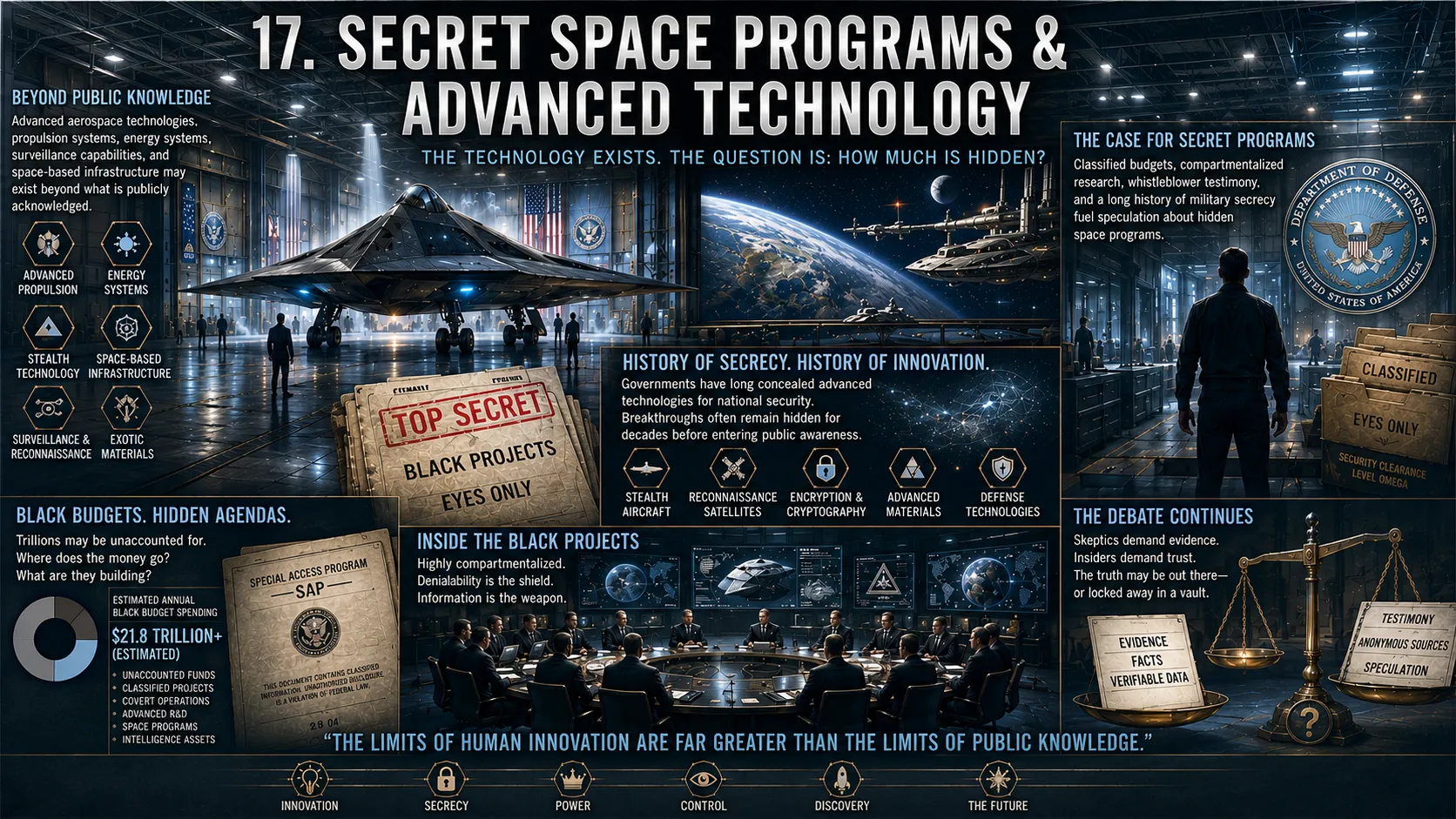
17. SECRET SPACE PROGRAMS & ADVANCED TECHNOLOGY
Claims involving secret space programs and hidden technological development remain among the most controversial subjects within the broader disclosure landscape. These theories generally propose that advanced aerospace technologies, propulsion systems, energy systems, surveillance capabilities, or off-world infrastructure may exist beyond what is publicly acknowledged. Supporters frequently point to classified defense budgets, black projects, compartmentalized military research, whistleblower testimony, historical intelligence secrecy, and the extraordinary pace of technological advancement over the past century as reasons to suspect that some capabilities may remain hidden from public view for decades at a time.
Importantly, history already confirms that revolutionary technologies are often developed in secrecy long before public disclosure occurs. Stealth aircraft, reconnaissance satellites, cryptographic systems, drone technologies, cyber warfare capabilities, and classified aerospace projects remained hidden for years or decades before entering mainstream awareness. This historical reality fuels broader speculation surrounding antigravity research, advanced propulsion theories, Tesla suppression narratives, free-energy concepts, and rumors of highly compartmentalized aerospace programs operating beyond conventional oversight. More controversial theories involving the Philadelphia Experiment, Montauk Project, time-manipulation claims, and CERN-related portal speculation occupy a far more uncertain territory, often blending documented military experimentation, speculative physics, whistleblower narratives, mythology, and internet-era amplification into a complex mixture of possibility and conjecture.
The deeper fascination surrounding secret space program theories reflects something larger than technology alone. It touches the growing public suspicion that humanity may not have full visibility into the true frontier of scientific capability. As artificial intelligence, quantum computing, advanced materials, electromagnetic research, and aerospace engineering continue accelerating rapidly, many people increasingly question whether classified systems may possess technologies significantly beyond what is publicly understood. Whether such claims ultimately prove partially true, exaggerated, or largely mythological, the broader issue remains psychologically powerful: modern civilization increasingly senses that the visible technological world may represent only a fraction of what exists behind military secrecy, corporate research, intelligence compartmentalization, and black-budget development systems.



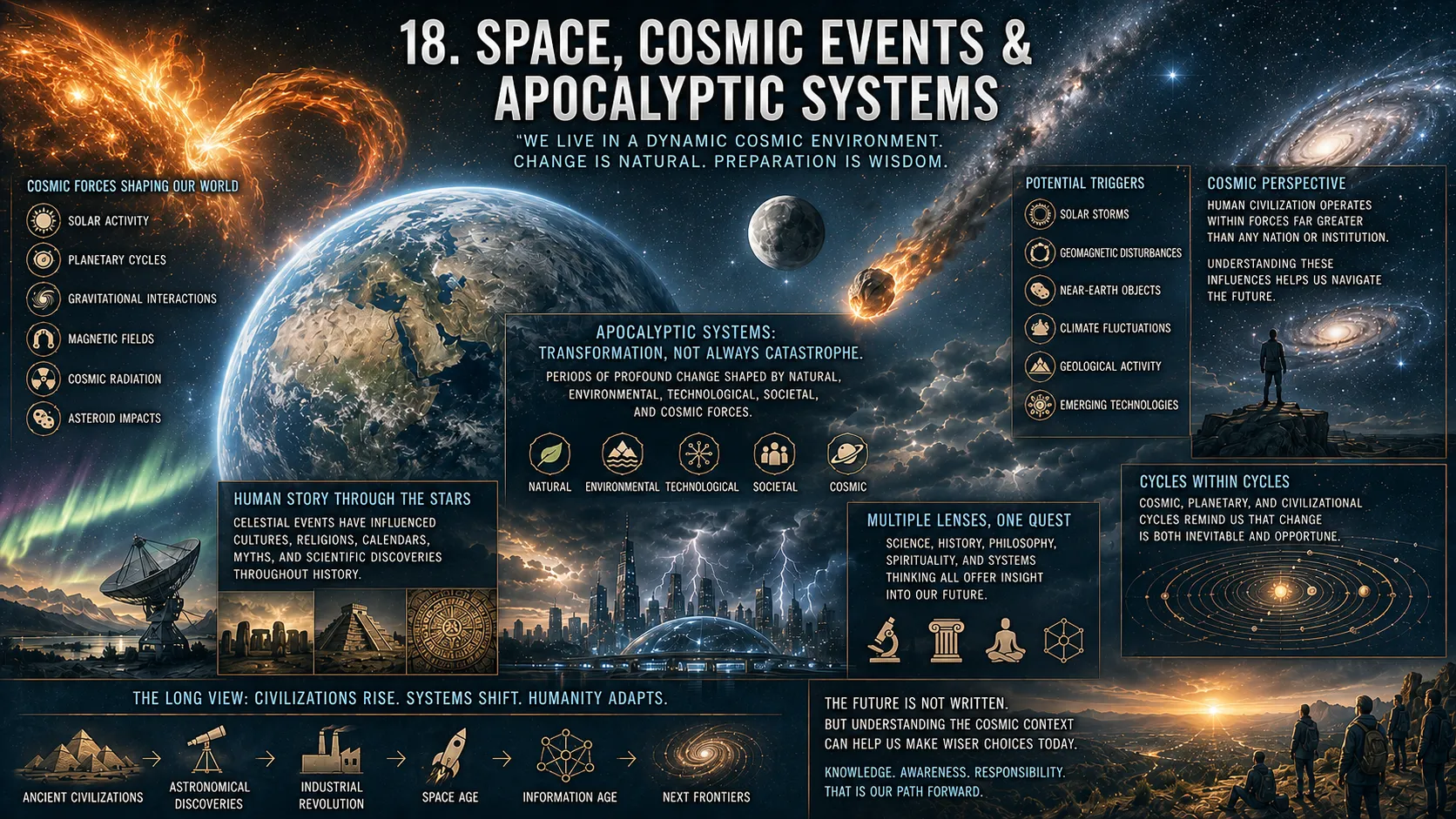
18. SPACE, COSMIC EVENTS & APOCALYPTIC SYSTEMS
Human civilization exists within a vast and dynamic cosmic environment shaped by solar activity, geomagnetic forces, planetary cycles, gravitational interactions, radiation fields, asteroid impacts, and larger galactic processes that remain only partially understood. Throughout history, celestial events profoundly influenced religion, mythology, prophecy, calendars, agriculture, navigation, and humanity’s understanding of existence itself. Ancient civilizations closely tracked the heavens because they recognized that cosmic events could dramatically affect life on Earth. In the modern era, renewed interest in solar cycles, geomagnetic instability, near-Earth objects, planetary anomalies, and civilizational vulnerability has revived broader public fascination with the relationship between cosmic systems and human destiny.
One of the most discussed modern theories involves the possibility that large-scale solar or geomagnetic events could disrupt technological civilization at unprecedented scale. Solar-flash theories, Carrington Event scenarios, geomagnetic pole instability, and concerns surrounding electromagnetic vulnerability intensified as societies became increasingly dependent upon satellites, digital infrastructure, power grids, and interconnected communications systems. Other theories — including Planet X/Nibiru narratives, Saturn-Moon matrix concepts, hidden Antarctic civilization speculation, secret Mars mission theories, and lunar anomaly discussions — occupy a far more speculative territory blending astronomy, mythology, ancient symbolism, alternative history, and disclosure culture. While many such claims remain unverified or highly controversial, their persistence reflects a growing intuition within modern populations that humanity may not fully understand either the cosmos or the long-term stability of civilization itself.
The concept of apocalypse historically did not simply mean destruction. In many ancient traditions, apocalypse meant “unveiling” or “revelation” — the collapse of one worldview and the emergence of another. This is partly why cosmic theories resonate so deeply during periods of global instability. As societies experience technological acceleration, environmental stress, institutional distrust, geopolitical instability, AI disruption, and psychological fragmentation, many people increasingly feel humanity may be approaching some form of civilizational transition point. Whether interpreted scientifically, spiritually, philosophically, or symbolically, cosmic-event theories ultimately reflect a profound existential realization: human civilization is neither as permanent nor as fully in control as it often imagines itself to be. Beneath the illusion of stability lies a species still deeply vulnerable to forces far larger than itself — both on Earth and beyond it.



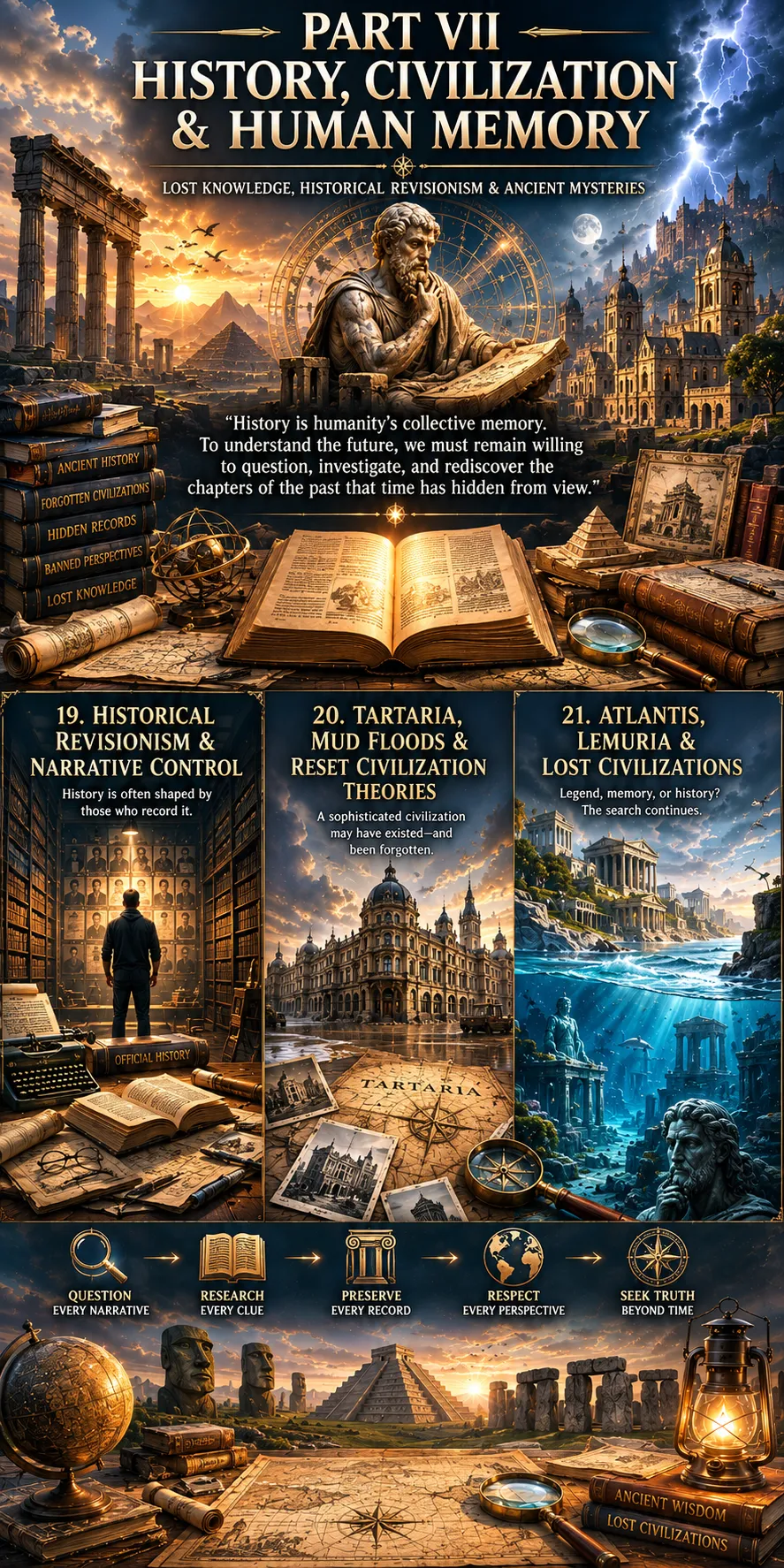
PART VII — HISTORY, CIVILIZATION & HUMAN MEMORY
“The greatest mysteries of history are not always what we know, but what may have been forgotten, buried, destroyed, or never fully understood. The deeper we explore history, the more we realize that the past is not a fixed story—it is an evolving investigation into who we are, where we came from, and what may have been forgotten along the way.”
Lost Knowledge, Historical Revisionism & Ancient Mysteries
Human civilization is built upon collective memory. The stories societies preserve shape identity, belief systems, scientific understanding, political systems, cultural values, and humanity’s perception of itself across generations. Yet history is not simply a neutral collection of facts preserved perfectly through time. It is a process of selection, interpretation, preservation, omission, destruction, and power. Empires rise and rewrite narratives. Libraries burn. Archaeological discoveries challenge accepted timelines. Oral traditions disappear. Entire civilizations collapse, taking their knowledge systems, spiritual traditions, technologies, and histories with them. The uncomfortable reality is that modern humanity may possess only fragments of its own story while assuming the historical record is far more complete than it actually is.
This possibility becomes especially destabilizing when examining how often institutions throughout history-controlled access to knowledge itself. Governments, religious authorities, academic gatekeepers, colonial powers, and political systems have all influenced which discoveries become accepted, which narratives enter textbooks, which records are preserved, and which perspectives are marginalized or forgotten. The issue is not that “everything we are taught is false.” The issue is far more profound: what if the modern understanding of history is incomplete by design, fragmented by catastrophe, or filtered through centuries of institutional control and selective preservation? Once that question enters the mind, history itself begins feeling less like a settled timeline and more like an active investigation into memory, power, and human identity.
This section explores one of the deepest existential questions in the entire report: what if humanity suffers from civilizational amnesia? From historical revisionism and narrative control to Tartaria theories, lost civilizations, forbidden archaeology, ancient cataclysms, submerged ruins, megalithic mysteries, and forgotten knowledge systems, the subjects explored here challenge the assumption that modern civilization fully understands its origins or the true capabilities of earlier cultures. Beneath these debates lies a haunting possibility: perhaps humanity has forgotten far more than it remembers — not only about history itself, but about consciousness, human potential, sacred knowledge, and the cyclical rise and collapse of civilizations across time.
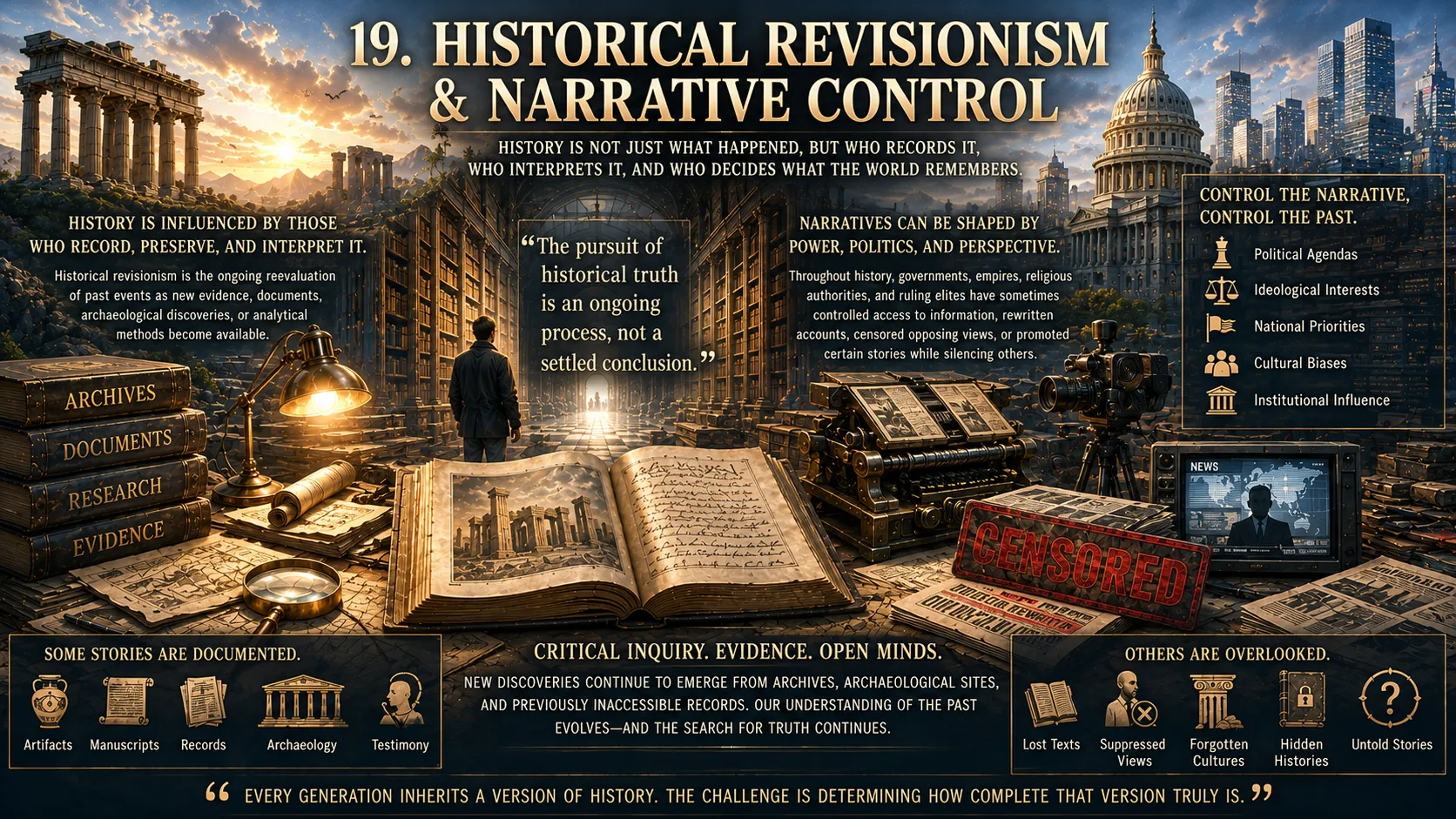
19. HISTORICAL REVISIONISM & NARRATIVE CONTROL
History is often presented as objective truth, yet the process of recording, preserving, interpreting, and teaching history has always been influenced by systems of power. The phrase “history is written by the victors” persists because throughout civilization, empires, governments, religious authorities, colonial powers, and ruling institutions repeatedly shaped collective memory in ways that reinforced legitimacy, identity, and social control. Textbooks simplify narratives. Wartime propaganda reshapes public perception. Political systems elevate certain figures while erasing others. National mythologies become institutionalized while inconvenient truths fade into obscurity. The deeper one studies history, the more one realizes that civilizations often remember selectively.
Throughout history, enormous amounts of human knowledge have been lost or destroyed. Ancient libraries burned. Indigenous histories vanished through colonization. Religious institutions restricted access to texts and sacred teachings. Archaeological discoveries challenging accepted timelines sometimes faced ridicule, suppression, or institutional resistance. Even modern academic systems can become vulnerable to gatekeeping structures that discourage challenges to deeply established paradigms. This does not mean mainstream history is fabricated wholesale, but it does raise a profound question: how much of humanity’s historical memory has been shaped not only by discovery, but by politics, ideology, empire, censorship, and institutional control over knowledge itself?
The deeper issue surrounding historical revisionism is not merely factual disagreement — it is the realization that whoever controls historical memory also influences identity, culture, morality, and humanity’s understanding of its place within time. If civilizations can selectively preserve, edit, simplify, or erase the past, then collective memory itself becomes a mechanism of power. Entire peoples disappear from historical consciousness. Ancient knowledge systems vanish. Spiritual traditions fragment. Timelines compress. And over generations, populations may gradually lose awareness not only of where they came from, but of what human civilization may once have known. The unsettling possibility is that history may not simply be incomplete because time erased it — but because systems of power throughout history often benefited from controlling which versions of the past survived into the future.
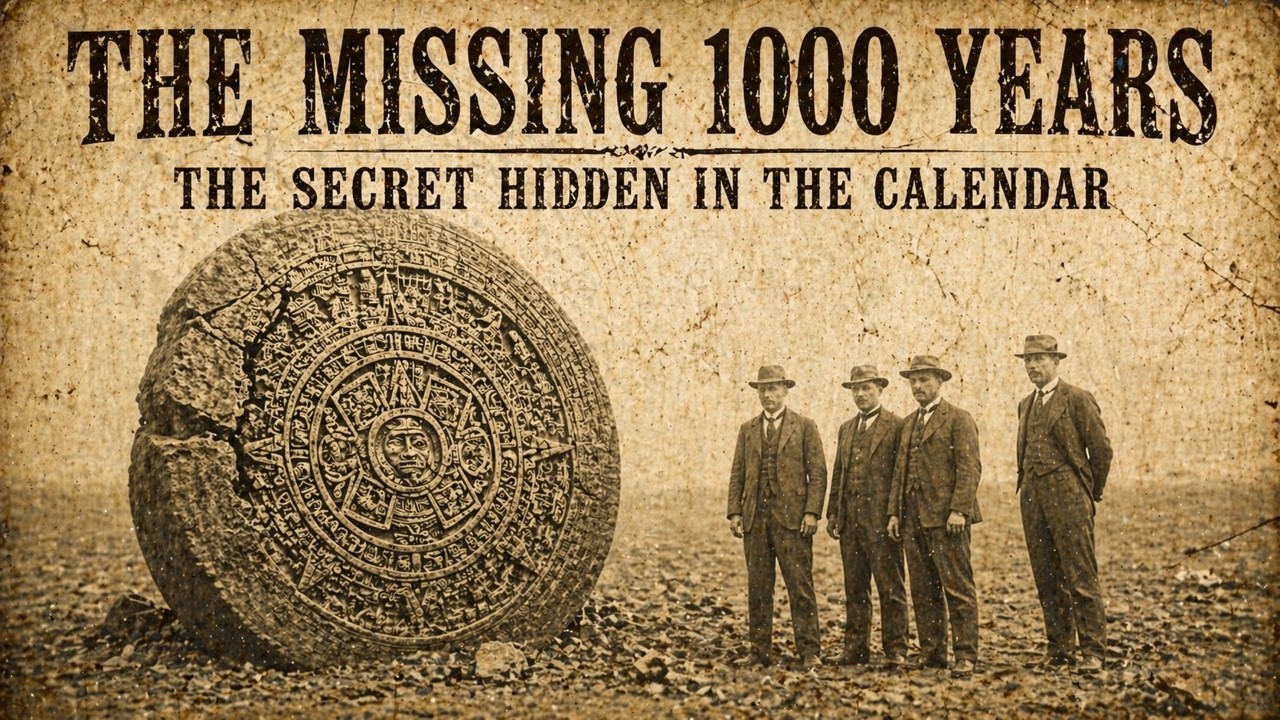


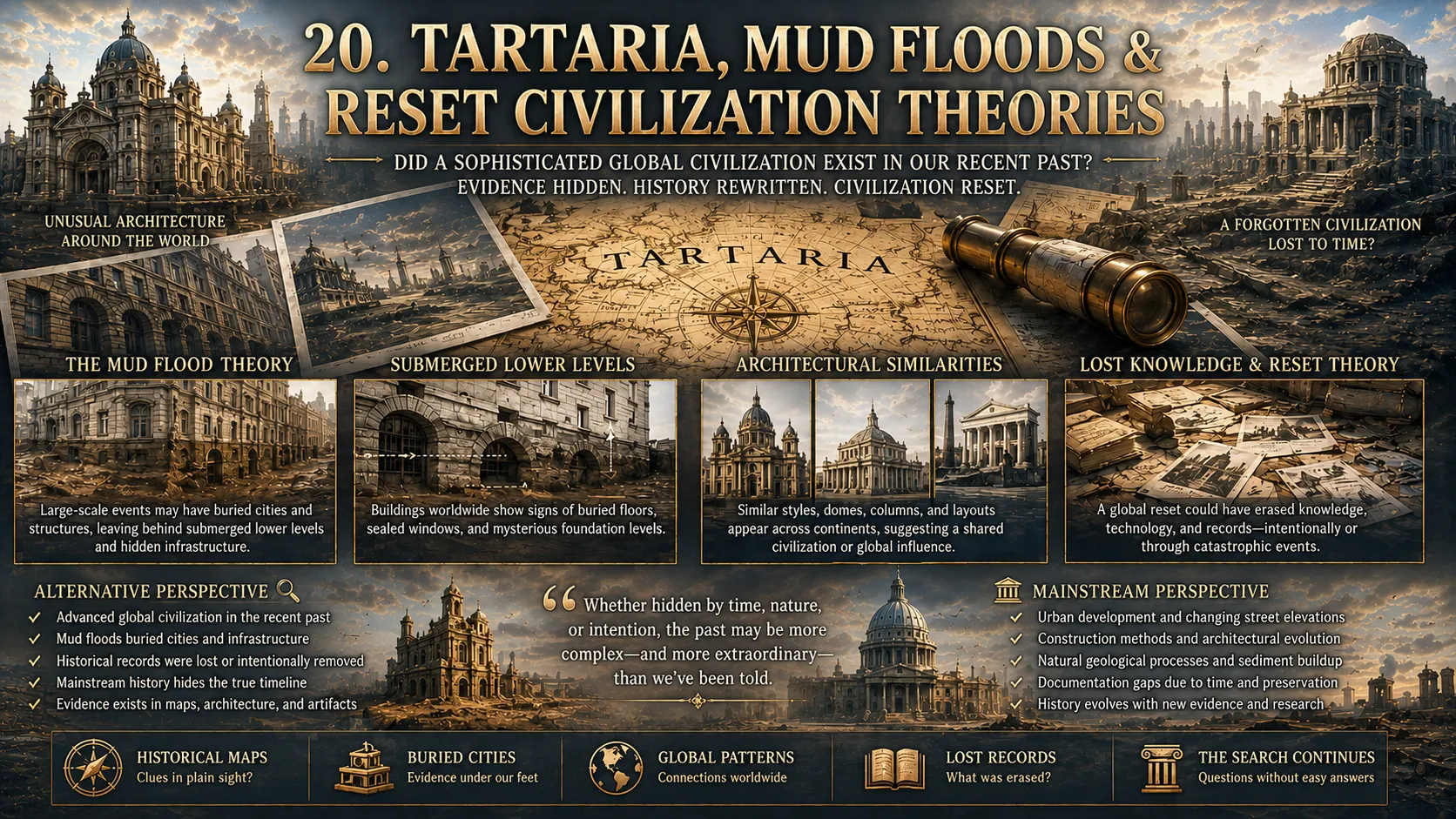
20. TARTARIA, MUD FLOODS & RESET CIVILIZATION THEORIES
Stories of lost civilizations persist across human history because they touch something ancient within the human psyche itself. Nearly every major culture preserves myths involving catastrophic floods, vanished kingdoms, fallen golden ages, sacred knowledge, divine-human interaction, or civilizations destroyed through corruption, hubris, environmental collapse, or cosmic upheaval. Atlantis, first described by Plato as a powerful civilization that disappeared beneath the sea, became one of the most enduring symbols of forgotten human potential and civilizational collapse. Lemuria later emerged through speculative scientific theory before evolving into a broader spiritual and esoteric tradition associated with lost wisdom, consciousness, and ancient human origins. Whether literal, symbolic, or archetypal, these stories continue resurfacing because humanity seems unable to fully let go of the intuition that something important may have been forgotten.
Modern discoveries have only intensified these questions. Göbekli Tepe forced archaeologists to reconsider long-held assumptions regarding the timeline of organized civilization. Flood myths appear across disconnected cultures worldwide, suggesting the possibility of ancient collective memory tied to real cataclysmic events. Submerged ruins, megalithic structures, unexplained astronomical precision, ancient engineering anomalies, Younger Dryas theories, and the enduring mysteries surrounding pyramid construction continue fueling speculation that earlier civilizations may have possessed forms of knowledge modern humanity does not fully understand. More controversial theories involving giants, forbidden archaeology, hidden ancient technology, Smithsonian coverup allegations, and pyramid-energy systems remain heavily disputed, yet their persistence reflects a growing public suspicion that important discoveries challenging accepted historical frameworks may not always receive full institutional acceptance or visibility.
The deeper power of lost civilization theories is not merely the possibility that advanced cultures once existed, but what those civilizations represent psychologically and spiritually. Atlantis and similar traditions symbolize the idea that humanity may once have possessed a different relationship with consciousness, nature, energy, spirituality, astronomy, sacred geometry, or human potential itself. They raise uncomfortable questions modern civilization rarely asks: Are we truly the pinnacle of human development? Could earlier civilizations have understood aspects of reality modern humanity has forgotten? Has technological advancement come at the cost of deeper wisdom, spiritual awareness, or connection to natural law? As modern societies experience environmental instability, institutional distrust, technological acceleration, psychological fragmentation, and growing existential uncertainty, these ancient myths increasingly feel less like fantasy and more like warnings echoing across time.
Perhaps the most unsettling possibility is not that Atlantis literally existed exactly as described, but that civilizations repeatedly rise believing themselves permanent, enlightened, and invincible before eventually collapsing into myth themselves. If that pattern is true, then modern humanity may not stand at the end of history, but somewhere within another repeating cycle of forgetting and remembering. And if fragments of ancient wisdom, consciousness traditions, sacred sciences, or hidden knowledge still survive beneath the surface of history, then humanity’s future may ultimately depend not only on innovation — but on remembrance.


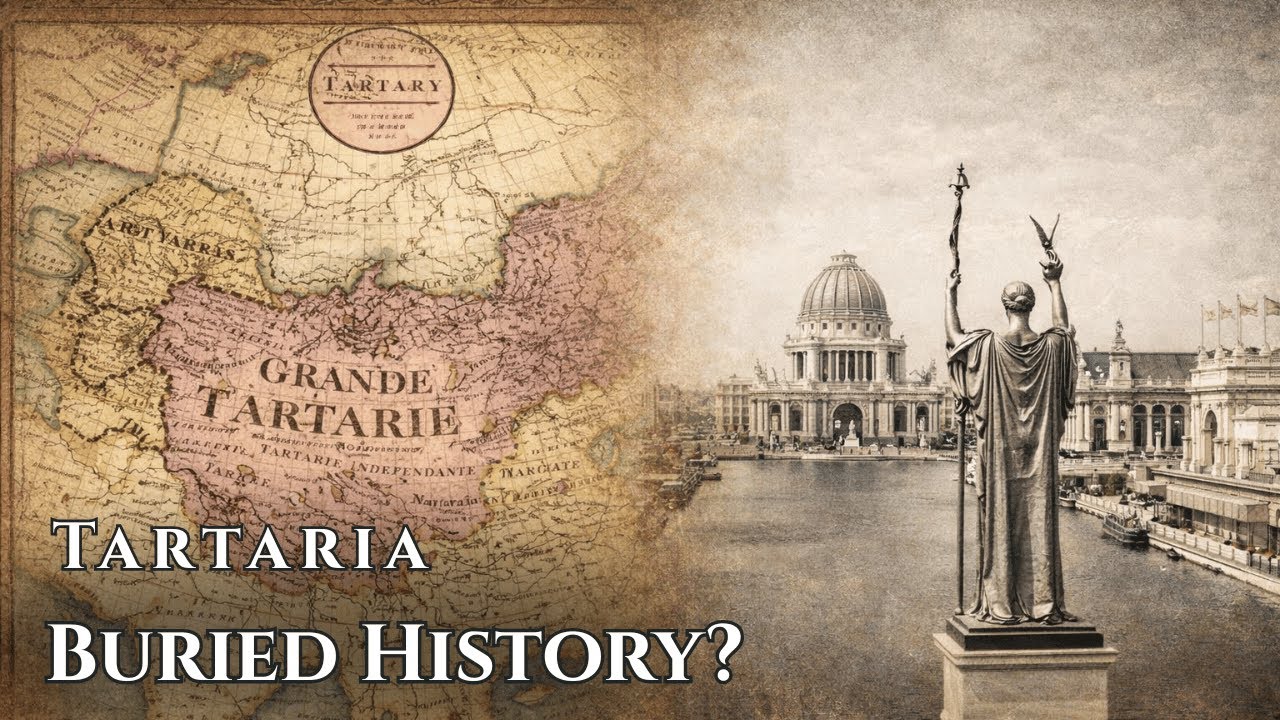
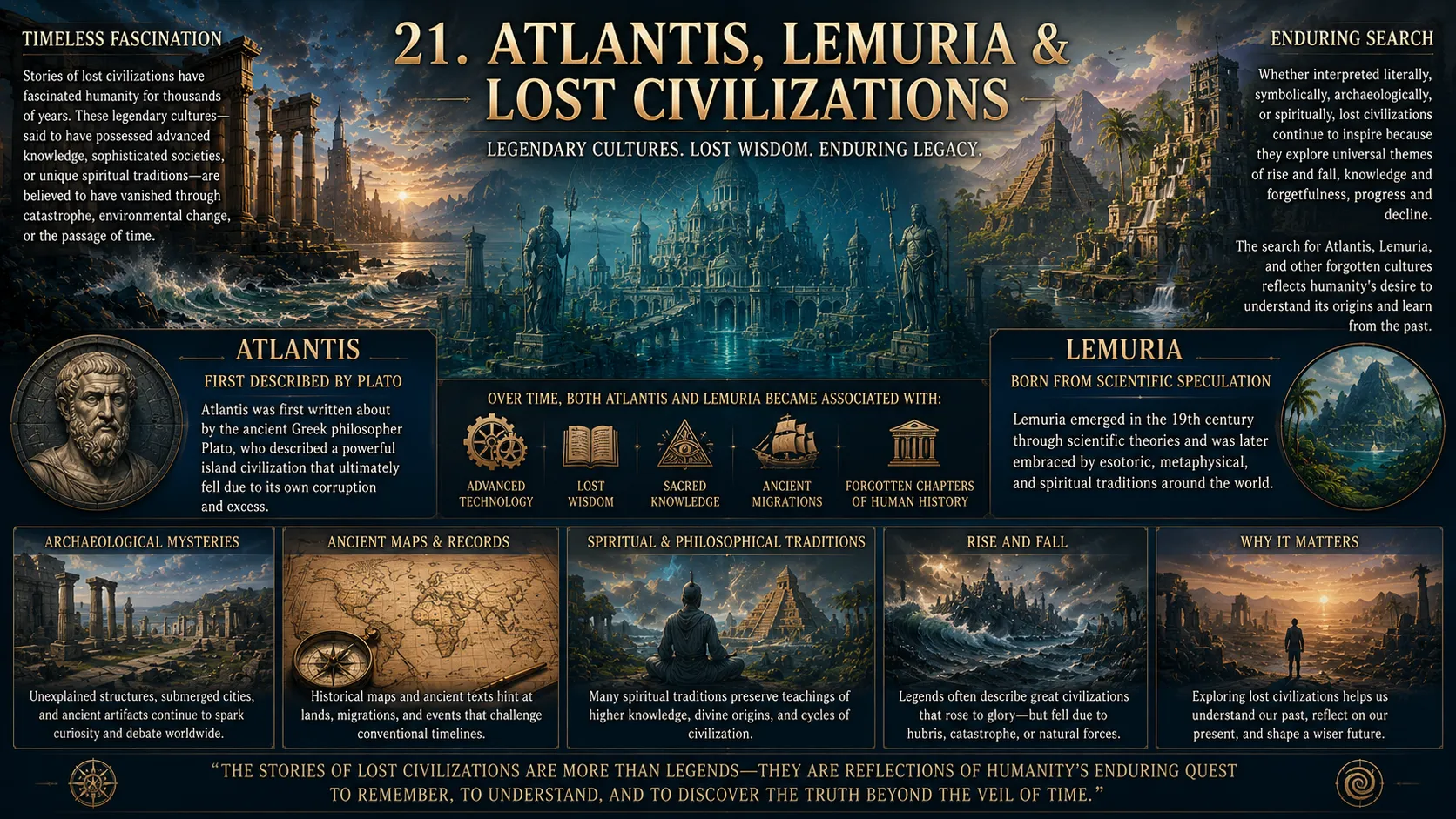
21. ATLANTIS, LEMURIA & LOST CIVILIZATIONS
Stories of lost civilizations persist across human history because they touch something ancient within the human psyche itself. Nearly every major culture preserves myths involving catastrophic floods, vanished kingdoms, fallen golden ages, sacred knowledge, divine-human interaction, or civilizations destroyed through corruption, hubris, environmental collapse, or cosmic upheaval. Atlantis, first described by Plato as a powerful civilization that disappeared beneath the sea, became one of the most enduring symbols of forgotten human potential and civilizational collapse. Lemuria later emerged through speculative scientific theory before evolving into a broader spiritual and esoteric tradition associated with lost wisdom, consciousness, and ancient human origins. Whether literal, symbolic, or archetypal, these stories continue resurfacing because humanity seems unable to fully let go of the intuition that something important may have been forgotten.
Modern discoveries have only intensified these questions. Göbekli Tepe forced archaeologists to reconsider long-held assumptions regarding the timeline of organized civilization. Flood myths appear across disconnected cultures worldwide, suggesting the possibility of ancient collective memory tied to real cataclysmic events. Submerged ruins, megalithic structures, unexplained astronomical precision, ancient engineering anomalies, Younger Dryas theories, and the enduring mysteries surrounding pyramid construction continue fueling speculation that earlier civilizations may have possessed forms of knowledge modern humanity does not fully understand. More controversial theories involving giants, forbidden archaeology, hidden ancient technology, Smithsonian coverup allegations, and pyramid-energy systems remain heavily disputed, yet their persistence reflects a growing public suspicion that important discoveries challenging accepted historical frameworks may not always receive full institutional acceptance or visibility.
The deeper power of lost civilization theories is not merely the possibility that advanced cultures once existed, but what those civilizations represent psychologically and spiritually. Atlantis and similar traditions symbolize the idea that humanity may once have possessed a different relationship with consciousness, nature, energy, spirituality, astronomy, sacred geometry, or human potential itself. They raise uncomfortable questions modern civilization rarely asks: Are we truly the pinnacle of human development? Could earlier civilizations have understood aspects of reality modern humanity has forgotten? Has technological advancement come at the cost of deeper wisdom, spiritual awareness, or connection to natural law? As modern societies experience environmental instability, institutional distrust, technological acceleration, psychological fragmentation, and growing existential uncertainty, these ancient myths increasingly feel less like fantasy and more like warnings echoing across time.
Perhaps the most unsettling possibility is not that Atlantis literally existed exactly as described, but that civilizations repeatedly rise believing themselves permanent, enlightened, and invincible before eventually collapsing into myth themselves. If that pattern is true, then modern humanity may not stand at the end of history, but somewhere within another repeating cycle of forgetting and remembering. And if fragments of ancient wisdom, consciousness traditions, sacred sciences, or hidden knowledge still survive beneath the surface of history, then humanity’s future may ultimately depend not only on innovation — but on remembrance.

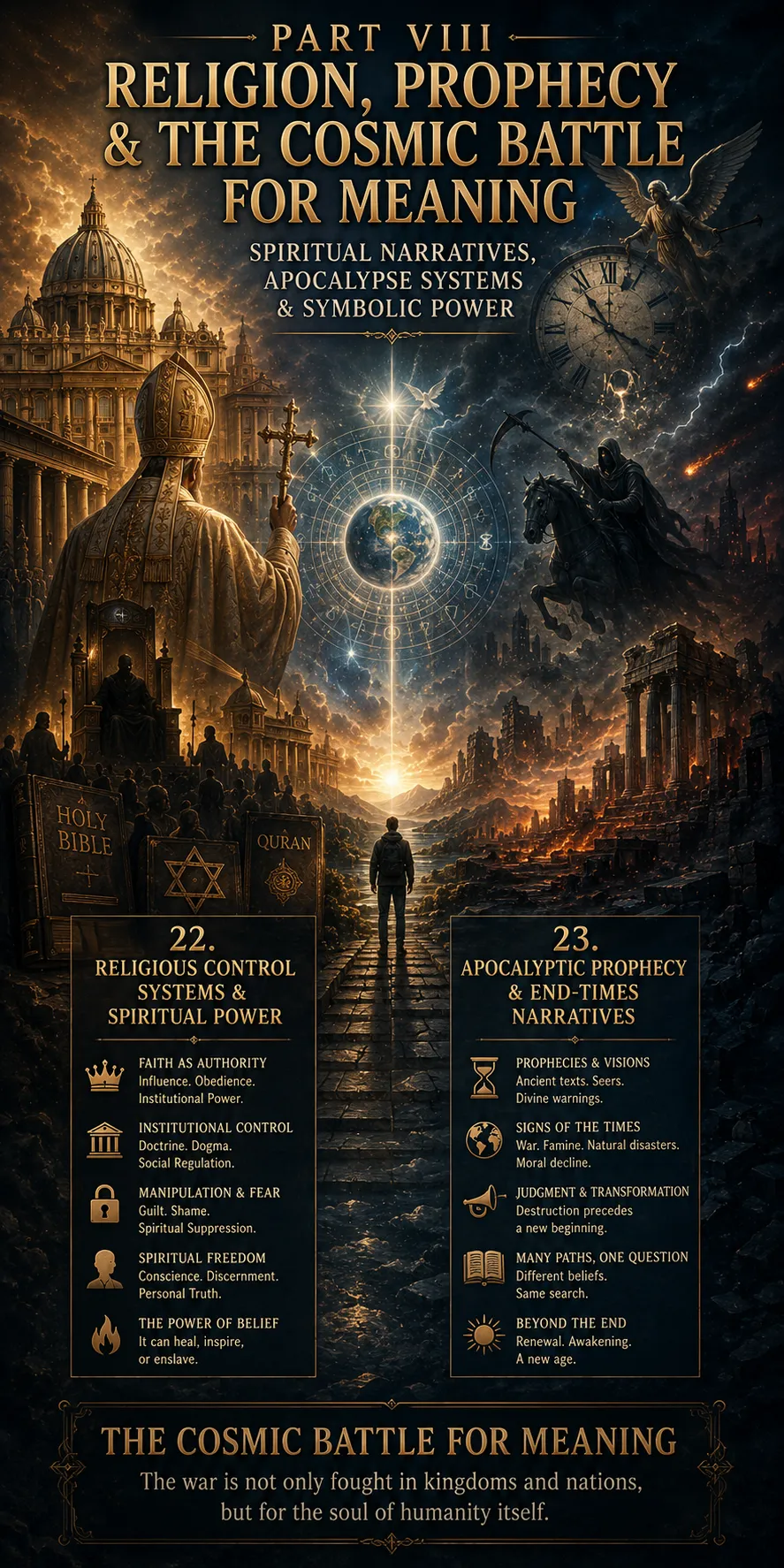
PART VIII — RELIGION, PROPHECY & THE COSMIC BATTLE FOR MEANING
“The greatest battles are not always fought over territory or resources, but over belief, meaning, and the stories people use to understand reality. Religions are the key control system for the planets elite owners.”
Spiritual Narratives, Apocalypse Systems & Symbolic Power
Since the beginning of recorded history, humanity has searched for answers to its deepest questions: Why are we here? What is consciousness? Is there a creator? What happens after death? Is reality purely material, or does existence contain spiritual dimensions beyond ordinary perception? Religions, sacred texts, mystery traditions, prophetic systems, and spiritual teachings emerged as frameworks through which civilizations attempted to understand existence, morality, suffering, purpose, and humanity’s relationship to the cosmos. These belief systems shaped cultures, empires, laws, moral codes, scientific inquiry, political systems, and collective identity for thousands of years. But alongside their spiritual role, religions also became powerful structures capable of influencing human behavior, defining acceptable belief, establishing authority, and organizing entire civilizations around shared cosmologies.
This duality lies at the center of one of the deepest tensions in human history: the difference between authentic spiritual seeking and institutional control over spiritual meaning. Throughout history, religious institutions preserved knowledge, inspired art, created systems of charity, guided morality, and offered comfort during periods of suffering and uncertainty. Yet history also reveals repeated examples where spiritual authority became intertwined with empire, governance, censorship, conquest, fear, hierarchy, and control over knowledge itself. Alternative teachings were suppressed. Competing spiritual traditions were erased or absorbed. Sacred texts were selectively canonized. Doctrine was formalized by councils and institutions often influenced by politics as much as theology. Once populations realize that religious systems not only shaped belief, but often shaped power itself, difficult questions begin emerging regarding how much of humanity’s spiritual history remains incomplete, filtered, or hidden behind institutional narrative.
This section explores one of the most existentially significant questions in the entire report: what if humanity’s understanding of spirituality, prophecy, apocalypse, and consciousness has been profoundly shaped by systems of institutional control, selective preservation, symbolic power, and psychological conditioning across thousands of years? From Vatican archives and suppressed spiritual traditions to prophetic systems, end-times narratives, ascension frameworks, hidden religious history, Gnostic teachings, cosmic-reset theories, and the battle between fear-based control and spiritual sovereignty, the subjects explored here touch the deepest layers of human identity itself. Beneath every religion, prophecy, and apocalypse narrative lies a larger struggle over meaning — the struggle to define humanity’s origins, purpose, destiny, and relationship to the unseen forces shaping existence.
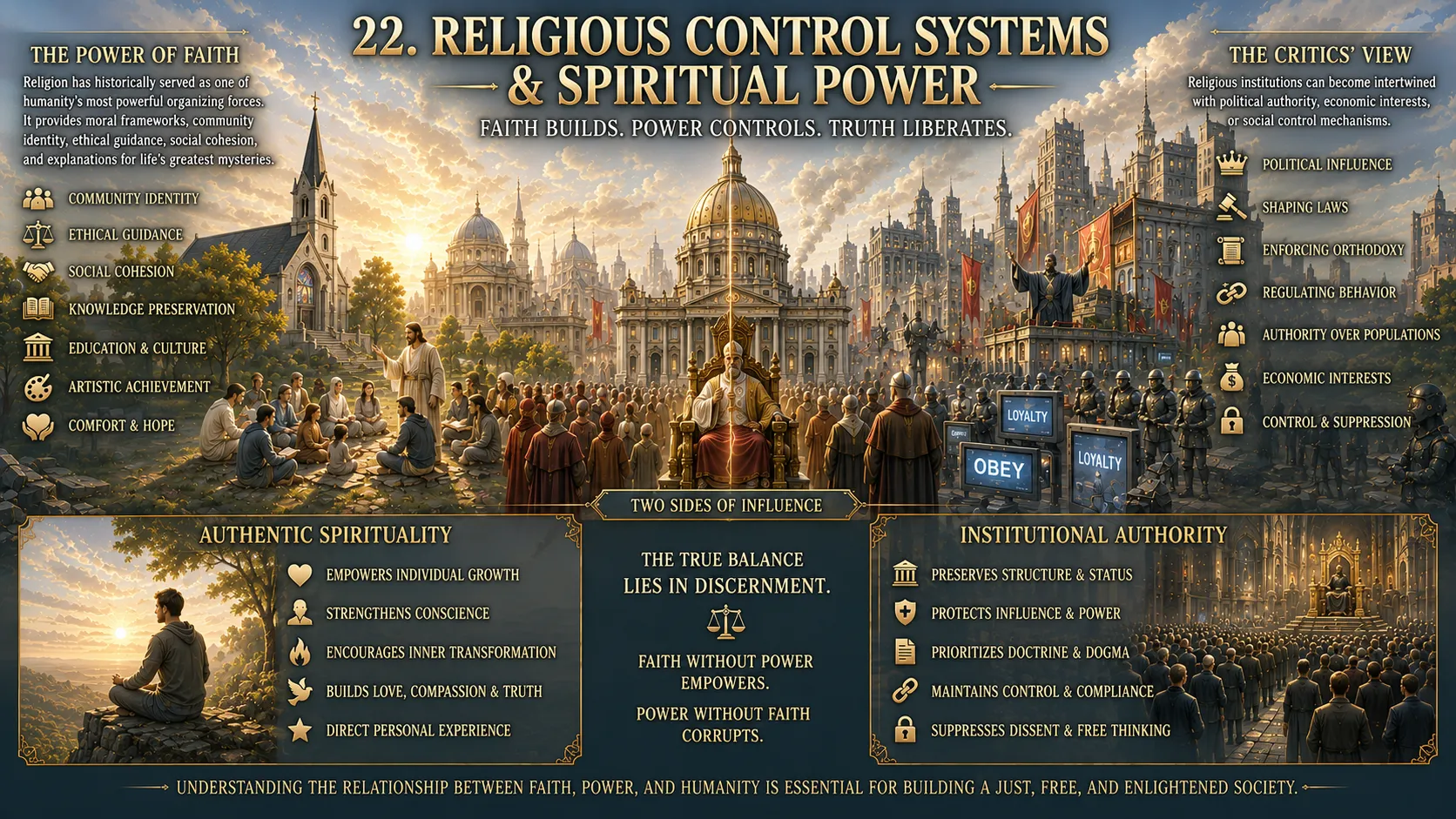
22. RELIGIOUS CONTROL SYSTEMS & SPIRITUAL POWER
Religion has historically served as one of the most powerful organizing systems in human civilization because it operates not merely at the political or economic level, but at the level of meaning itself. Religious institutions shaped morality, law, education, kingship, social order, warfare, identity, and humanity’s understanding of life and death across entire civilizations. For billions of people, faith remains a profound source of healing, purpose, transformation, community, and spiritual connection. Yet throughout history, religious authority also became deeply intertwined with political power, institutional hierarchy, social obedience, and the regulation of acceptable belief. When institutions claim authority not only over society, but over salvation, truth, morality, and the afterlife itself, spiritual systems can become among the most psychologically powerful control mechanisms ever created.
Throughout history, religious institutions frequently controlled access to sacred knowledge and alternative spiritual teachings. The formation of doctrine often involved political councils, theological disputes, imperial influence, and the selective inclusion or exclusion of texts shaping official belief systems for generations to come. Discoveries such as the Dead Sea Scrolls and Gnostic texts reignited public fascination with the possibility that early spiritual traditions may have been far more diverse, mystical, and philosophically complex than later institutional structures allowed. Questions surrounding the Vatican archives, hidden religious history, suppressed teachings, alternative gospels, and erased spiritual traditions continue generating enormous public interest because they raise a deeply unsettling possibility: what if portions of humanity’s spiritual inheritance were filtered, modified, suppressed, or hidden as religious institutions consolidated power across centuries?
The deeper issue surrounding religion is not whether spirituality itself is false, but whether institutional systems sometimes became separated from the original consciousness teachings they claimed to preserve. Critics increasingly argue that many religious systems historically governed populations through fear-based cosmologies involving sin, punishment, hierarchy, guilt, exclusivity, apocalypse, and salvation dependency, while suppressing direct personal spiritual experience, inner sovereignty, mystical traditions, and alternative paths to transcendence. This tension between institutional religion and direct spiritual awakening continues shaping modern society today. As growing numbers of people move away from organized religion while seeking deeper forms of consciousness, meditation, energy work, ancient wisdom, comparative spirituality, and personal connection to the divine, humanity appears to be entering another profound spiritual transition period. The deeper question emerging beneath the surface is both radical and timeless: what if the greatest spiritual power was never meant to belong exclusively to institutions, but existed within human consciousness itself all along?


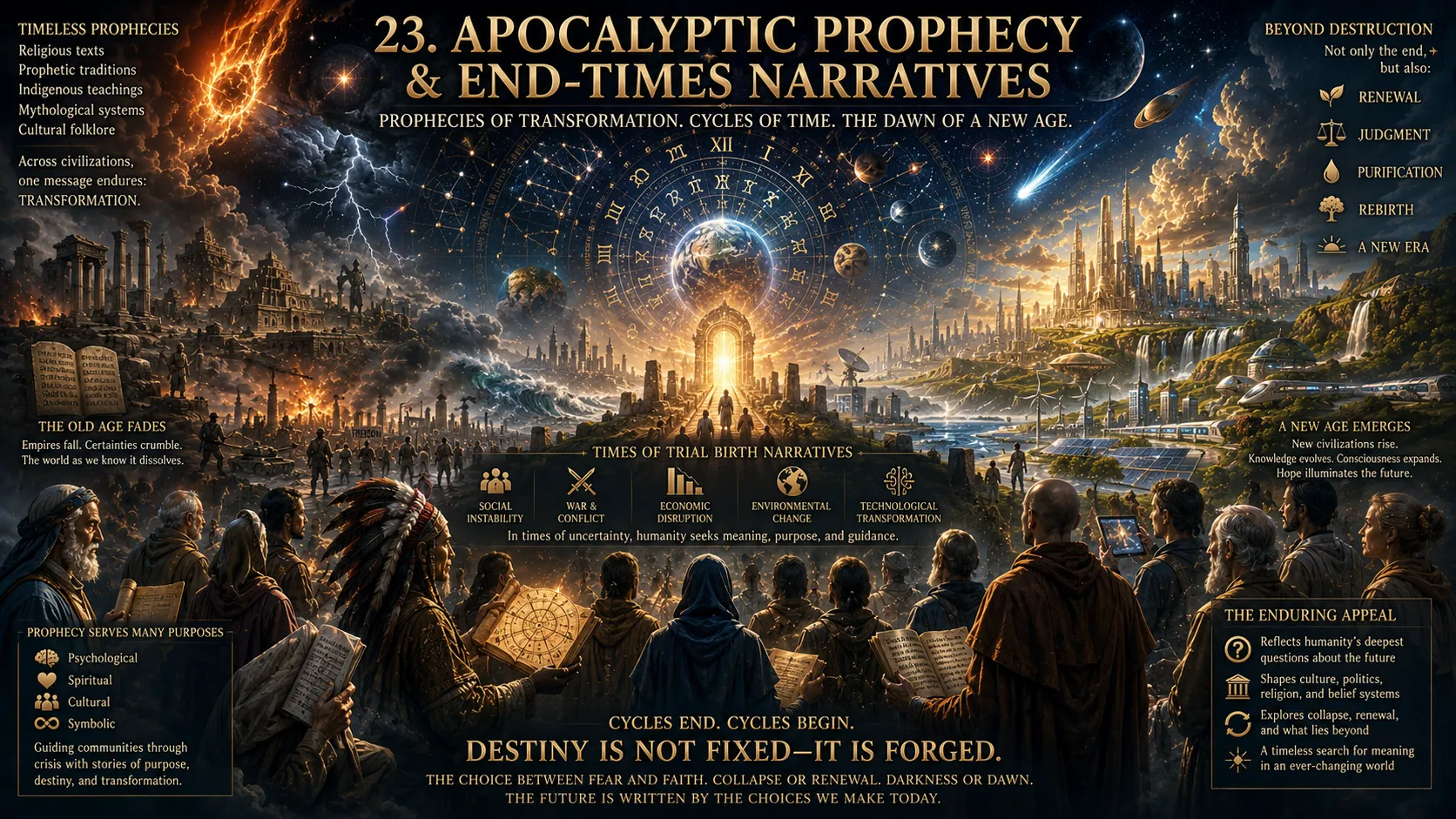
23. APOCALYPTIC PROPHECY & END-TIMES NARRATIVES
Virtually every major civilization developed narratives describing periods of upheaval, collapse, transformation, judgment, or the ending of one age and the beginning of another. These stories appear in the Book of Revelation, indigenous prophecies, Hindu cosmology, Mayan cycles, Islamic eschatology, mystical Judaism, ascension teachings, and countless mythological traditions throughout history. While modern culture often associates apocalypse exclusively with destruction, many ancient traditions understood it as revelation—an unveiling of hidden truth and the collapse of old systems preceding profound transformation. This helps explain why end-times narratives continue resonating so strongly during periods of instability, technological acceleration, institutional distrust, environmental stress, and social uncertainty.
Throughout history, prophetic movements have intensified whenever civilizations sensed they were approaching major transition points. Wars, plagues, economic crises, social fragmentation, technological disruption, and celestial events often triggered renewed fascination with destiny, prophecy, and cosmic cycles. Today, growing interest in Antichrist theories, biblical prophecy timelines, Fatima secrets, Armageddon narratives, consciousness-shift frameworks, ascension teachings, and cosmic-reset theories reflects more than religious speculation alone. It reflects a widespread feeling that humanity may be entering a period of profound transformation unlike anything experienced in recent generations. The convergence of AI, surveillance systems, geopolitical instability, economic fragility, environmental anxiety, and accelerating technological control has caused many people to interpret current events through increasingly prophetic lenses.
The deeper significance of these narratives is psychological, spiritual, and existential. Human beings naturally seek meaning during periods of uncertainty, and prophecy offers a framework through which chaos can be understood as part of a larger story. Yet prophecy can also become a mechanism of control when fear, judgment, catastrophe, and salvation dependency are used to shape behavior. This creates one of the central tensions within all end-times narratives: do they exist to awaken humanity, or to keep it trapped in fear? Perhaps the most enduring lesson is that nearly every tradition points toward the same idea—that civilizations periodically reach moments where old systems can no longer sustain themselves. Whether interpreted religiously, symbolically, psychologically, or spiritually, the deeper purpose of prophecy may be less about predicting the end of the world and more about preparing humanity for transformation, remembrance, and the birth of a new understanding of itself.
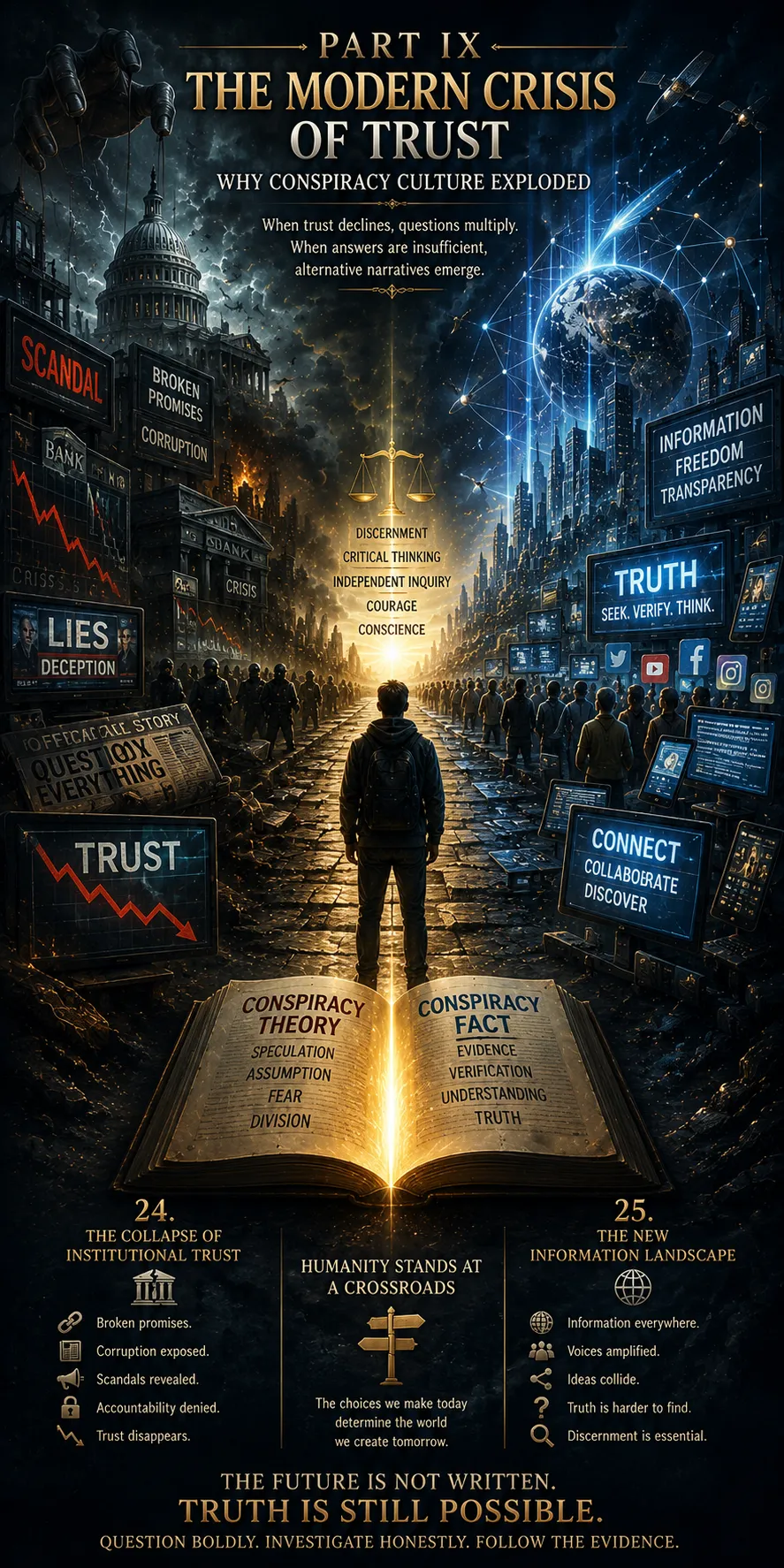
PART IX — THE MODERN CRISIS OF TRUST
“The rise of conspiracy culture is ultimately a story about trust, transparency, and humanity’s search for reliable answers in an increasingly complex world. Conspiracy culture did not emerge in a vacuum—it grew in the space created when trust in institutions began to collapse.”
Why Conspiracy Culture Exploded
The modern explosion of conspiracy culture cannot be understood simply as the spread of fringe theories or distrust of official narratives. It reflects something far deeper: a growing realization that modern institutions repeatedly concealed information, manipulated narratives, protected power structures, contradicted themselves, or failed populations during moments when trust mattered most. Over time, this produced a profound psychological shift within society. Millions of people no longer automatically assume governments, corporations, media organizations, financial systems, intelligence agencies, scientific authorities, or global institutions are fully transparent, objective, or acting solely in the public interest. The conspiracy era emerged not because populations suddenly became irrational, but because repeated institutional failures created fertile ground for skepticism, alternative explanations, and independent investigation.
The digital revolution accelerated this transformation dramatically. For the first time in human history, billions of people gained immediate access to leaked documents, whistleblower testimony, independent journalism, archived records, alternative media, competing interpretations, and decentralized global conversations occurring outside traditional gatekeepers. Information that once remained buried inside classified files, academic institutions, corporate media systems, or government archives suddenly became searchable, shareable, and globally accessible in real time. Entire generations grew up watching narratives collapse publicly as once-dismissed subjects later became partially validated through declassified documents, congressional hearings, investigative journalism, scientific reevaluation, or institutional admission. As a result, many people began reevaluating not only specific events, but the credibility of the systems responsible for explaining reality itself.
This final section explores one of the defining psychological and societal transformations of the modern age: what happens when populations lose faith in the institutions historically responsible for defining truth? Rather than focusing solely on individual conspiracy theories, this section examines the deeper forces that fueled the rise of modern conspiracy culture — declining institutional trust, censorship concerns, information warfare, algorithmic manipulation, media fragmentation, technological acceleration, political polarization, and humanity’s growing struggle to distinguish truth from narrative in an age of overwhelming information. Ultimately, the rise of conspiracy culture may reveal less about “crazy theories” and more about the condition of modern civilization itself.
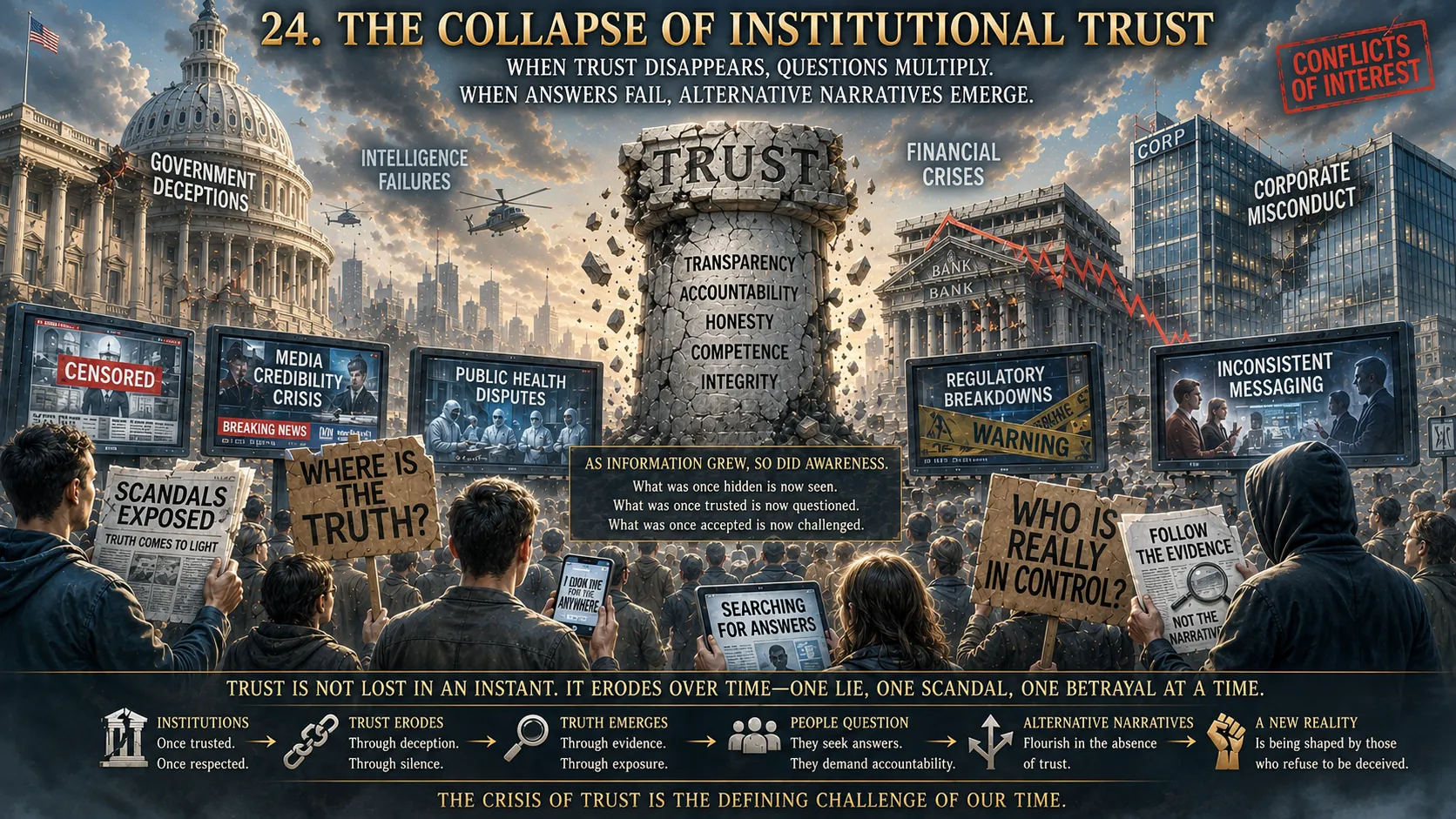
24. THE COLLAPSE OF INSTITUTIONAL TRUST
For much of the twentieth century, governments, media organizations, universities, scientific authorities, financial institutions, intelligence agencies, healthcare systems, and major corporations maintained relatively high levels of public trust. While disagreement and political conflict certainly existed, many citizens generally believed that large institutions operated with a degree of competence, legitimacy, accountability, and shared societal responsibility. Over time, however, a long series of political scandals, intelligence operations, financial crises, media failures, public health controversies, censorship disputes, corporate misconduct cases, and institutional contradictions steadily eroded that confidence. The issue was not simply that institutions made mistakes — mistakes are inevitable in complex societies. The deeper rupture emerged when populations increasingly felt they were not being told the full truth surrounding those mistakes.
Events such as Watergate, the Iraq WMD deception, MK-Ultra revelations, the 2008 financial collapse, mass surveillance disclosures, opioid scandals, censorship controversies, shifting COVID narratives, intelligence failures, media coordination concerns, and regulatory capture allegations collectively produced a cumulative psychological effect on society. Each controversy by itself may have seemed manageable. Together, they created a growing perception that many institutions often protect themselves first, manage public perception carefully, minimize accountability, and release information selectively when maintaining credibility becomes impossible. Once people witness enough examples of institutional contradiction, narrative collapse, or hidden misconduct, skepticism stops feeling irrational and begins feeling adaptive.
This collapse of trust fundamentally changed how populations interpret reality itself. Increasingly, official narratives are no longer automatically accepted as authoritative simply because they originate from governments, experts, corporations, or major media institutions. Instead, many people now instinctively search for hidden motives, conflicts of interest, financial incentives, suppressed information, intelligence influence, propaganda, or deeper explanations operating beneath surface-level narratives. This shift created fertile ground for conspiracy culture because when trust in institutional authority collapses, populations naturally begin constructing alternative frameworks to explain the world around them. Some of those frameworks uncover legitimate hidden truths. Others drift into speculation, paranoia, or psychological projection. Yet regardless of where one draws the line, the deeper reality remains undeniable: conspiracy culture exploded largely because institutional credibility deteriorated faster than humanity’s ability to replace it with trustworthy systems of transparency, accountability, and discernment.
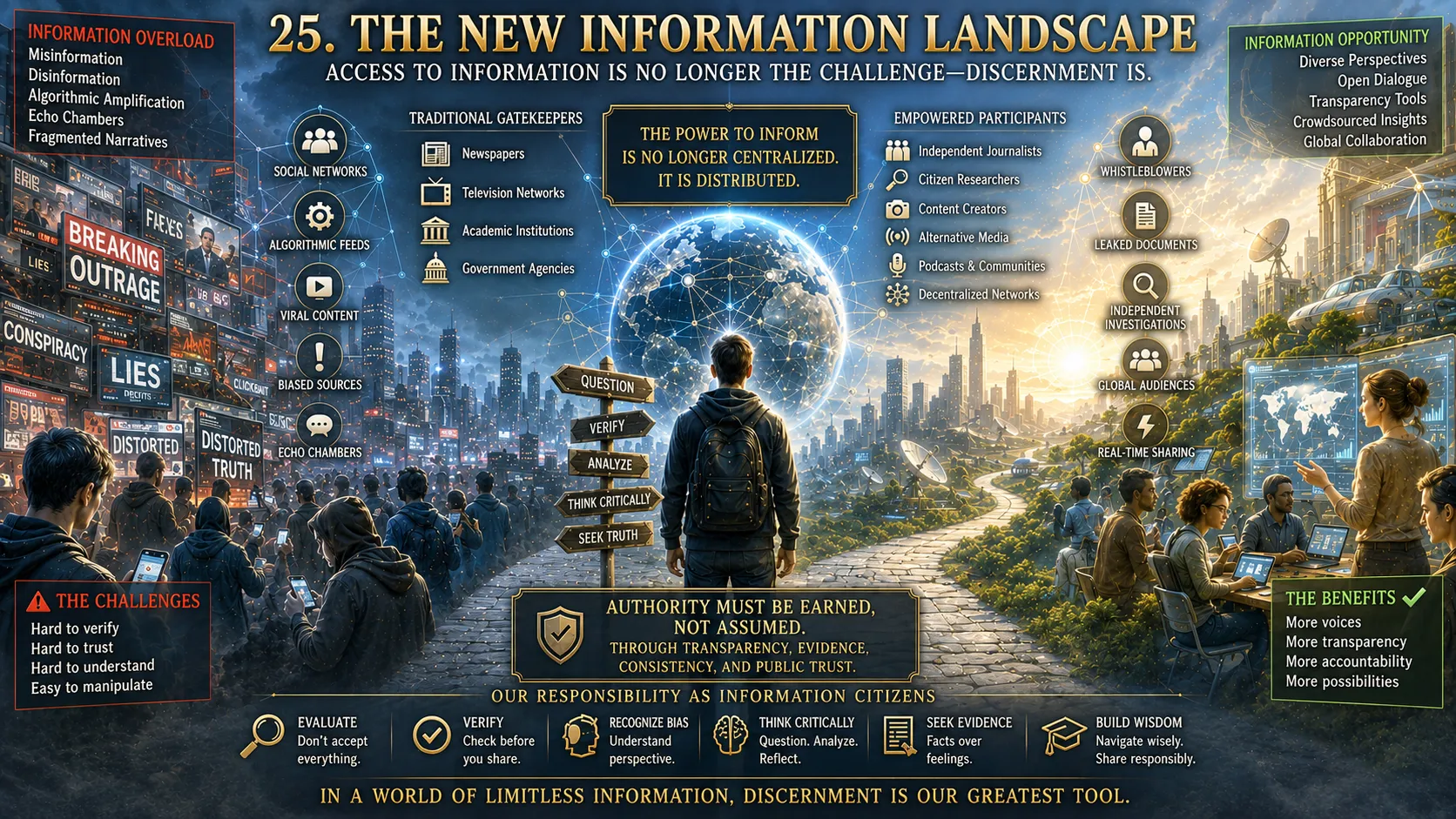
25. THE NEW INFORMATION LANDSCAPE
The internet fundamentally transformed the architecture of human communication. For most of modern history, a relatively small number of institutions controlled the flow of information to the public. Newspapers, television networks, universities, governments, intelligence agencies, and corporate media organizations largely determined which stories gained visibility, which perspectives were considered credible, and which narratives entered mainstream public consciousness. The digital revolution shattered that structure almost overnight. Independent journalists, whistleblowers, citizen researchers, alternative media platforms, leaked documents, podcasts, and decentralized online communities suddenly gained the ability to bypass traditional gatekeepers entirely.
This transformation created both extraordinary opportunity and profound chaos. For the first time in history, ordinary individuals gained direct access to competing narratives, raw source material, investigative archives, historical records, expert interviews, and global conversations unconstrained by institutional filtering alone. Whistleblower testimony, hidden footage, leaked communications, and suppressed stories could spread worldwide within hours. At the same time, the digital age introduced new challenges including information overload, algorithmic manipulation, misinformation campaigns, AI-generated content, emotional amplification, and increasingly fragmented media ecosystems. Events surrounding WikiLeaks, the Snowden disclosures, social-media censorship controversies, the Twitter Files, and competing narratives during the COVID era intensified public awareness that information itself had become a contested battlefield.
The deeper consequence of the new information landscape is that reality itself increasingly feels fragmented. Different populations now inhabit entirely different informational ecosystems shaped by algorithms, media consumption habits, psychological reinforcement loops, ideological identity, and digital tribalism. Two people can witness the same event, review the same evidence, and emerge with completely incompatible understandings of what occurred. The modern information war is no longer simply a battle over facts—it is a battle over perception itself. For many people, the defining question is no longer whether information is manipulated, but who is doing the manipulating, and to what end.
Authority itself has become decentralized and contested. Institutional status alone no longer guarantees trust, while independent voices can sometimes uncover truths traditional systems overlooked, ignored, or suppressed. Yet decentralized information also creates vulnerability to confirmation bias, emotional conditioning, manufactured narratives, foreign influence operations, algorithmic steering, and large-scale psychological manipulation. Truth now competes not only against falsehood, but against distraction, outrage, tribalism, propaganda, and endless streams of conflicting perception.
This leaves modern humanity facing one of the most difficult challenges in history. In a world where authentic investigation, propaganda, artificial intelligence, narrative management, psychological warfare, emotional manipulation, and legitimate journalism often exist side-by-side, discernment may become one of humanity’s most valuable survival skills. The greatest challenge of the twenty-first century may no longer be access to information, but the ability to evaluate it wisely. The modern crisis of trust is ultimately forcing individuals to reclaim a responsibility previous generations often outsourced to institutions: deciding for themselves what is true.




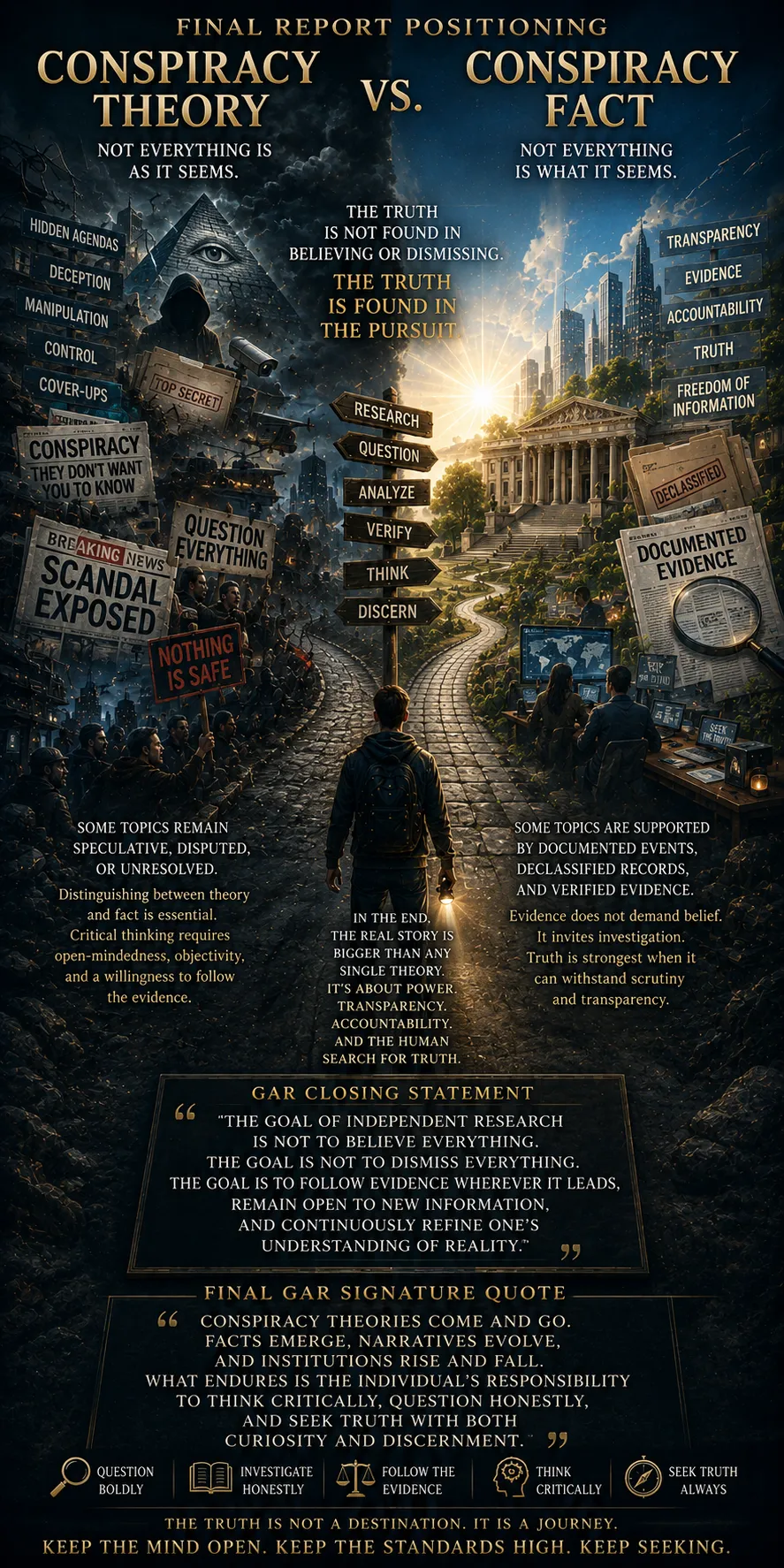
FINAL REPORT POSITIONING
Conspiracy Theory vs. Conspiracy Fact
This report was never designed to argue that every conspiracy theory is true. Nor was it designed to blindly defend institutional narratives simply because they originate from governments, corporations, media organizations, scientific authorities, or official sources. Its purpose is far more important — and far more difficult.
This report examines the growing fracture between institutional authority and public trust in the modern age. It explores why so many people increasingly question official narratives, why alternative theories continue spreading across society, why certain “conspiracy theories” later became partially or fully validated through declassified documents or historical revelation, and why millions of individuals now sense that the visible surface of the world often hides deeper systems of influence operating beneath it. Some subjects explored within these pages involve documented historical operations, verified scandals, public admissions, whistleblower testimony, or evidence-based controversy. Others remain unresolved, speculative, symbolic, exaggerated, or unsupported by verifiable evidence. Distinguishing between these categories is essential.
Because the deeper danger in the modern era is not merely deception. It is the collapse of discernment itself.
Throughout history, populations were often controlled through limited access to information. Today, humanity faces the opposite challenge: an overwhelming abundance of information mixed with propaganda, algorithms, psychological manipulation, artificial intelligence, selective censorship, institutional narrative management, and endless competing interpretations of reality. In such an environment, both blind institutional obedience and reflexive conspiratorial thinking become traps. One surrenders independent thought. The other abandons grounded discernment.
The challenge of the modern age is not deciding who to trust blindly. . . It is learning how to think clearly when trust itself has become fragmented.
Wisdom requires the ability to remain open without becoming gullible, skeptical without becoming cynical, and curious without losing contact with evidence, reality, and common sense. In the end, discernment may be the most important skill explored anywhere within this report.
The Search for Truth
One final truth must also be acknowledged.
Throughout history, many of the individuals who challenged official narratives, questioned powerful institutions, pursued hidden evidence, exposed corruption, protected whistleblowers, or refused to abandon uncomfortable questions were often mocked, censored, professionally attacked, or dismissed as irrational long before portions of their concerns were later validated. Investigative journalists, independent researchers, historians, scientists, whistleblowers, spiritual teachers, activists, and ordinary individuals willing to stand against consensus have frequently played an essential role in bringing hidden information and institutional wrongdoing into public awareness.
This does not mean every alternative theory is correct. Far from it. Discernment remains essential. Yet history repeatedly demonstrates that progress often begins with individuals willing to ask difficult questions long before institutions are willing to answer them honestly. Many truths now widely accepted were once ridiculed, suppressed, or dismissed because they challenged powerful interests, entrenched systems, or dominant worldviews.
In many ways, the modern truth seeker occupies an increasingly difficult position. They must learn how to remain open-minded without becoming gullible, skeptical without becoming cynical, questioning without losing grounding, and spiritually aware without disconnecting from evidence or reality. This balancing point is not weakness — it is maturity. It requires courage to investigate what others refuse to examine, humility to admit when evidence remains incomplete, and wisdom to recognize that both institutions and alternative communities are capable of distortion, fear, manipulation, bias, and error.
For many readers of the Great Awakening Report, this journey is deeply personal. It is not simply a search for hidden information, but a search for deeper truth, greater awareness, and a more complete understanding of the world and humanity’s place within it. The most meaningful truth seekers are not those who blindly reject every official narrative or automatically embrace every alternative one. They are those willing to follow evidence wherever it leads, remain open to new possibilities, challenge their own assumptions, and continue seeking understanding even when certainty remains out of reach.
Ultimately, the pursuit of truth is not a destination. It is a practice. A discipline. A willingness to remain curious, conscious, and discerning in a world that often rewards certainty more than inquiry. And perhaps that willingness to keep searching—with humility, courage, and an open mind—is what has illuminated hidden truths throughout history and will continue to do so in the years ahead.
“The goal of independent research is not to believe everything. The goal is not to dismiss everything. The goal is to follow evidence wherever it leads, remain open to new information, and continuously refine one’s understanding of reality. Conspiracy theories come and go. Facts emerge, narratives evolve, and institutions rise and fall. What endures is the individual’s responsibility to think critically, question honestly, and seek truth with both curiosity and discernment.”

Share This Report
Join the Discussion
Related Reports
Have questions?
At Great Awakening Report, we are dedicated to supporting your journey toward truth and enlightenment through our specialized Coaching and Consulting services.
Coaching Services: Our coaching programs are designed to guide you through personal awakening and transformation. We offer personalized sessions that focus on expanding consciousness, uncovering hidden truths, and fostering spiritual growth. Our experienced coaches provide the tools and insights necessary to navigate your path with clarity and confidence.
Consulting Services: For organizations and individuals seeking deeper understanding and strategic guidance, our consulting services offer expert analysis and solutions. We delve into areas such as global transitions, alternative news insights, and consciousness studies to provide comprehensive strategies tailored to your unique objectives.
Embark on a transformative journey with our Coaching and Consulting services, and unlock your highest potential. To learn more and schedule a session, visit our Coaching and Consulting pages.
Thank you
Thank you to our subscribers and readers for your continued support and dedication to truth and awakening. Your encouragement, engagement, and belief in our mission make everything we do possible. Together, we are expanding awareness and helping illuminate the path forward.
If you would like to further support the Great Awakening team and our ongoing efforts to share insight, knowledge, and truth, you can DONATE HERE.
With deep gratitude,
– Great Awakening Team
About the Author: Great Awakening Team

We are a community. We are cultural creatives and like minded people seeking the truth and focusing on disclosure, awakening and consciousness. Our focus is real news as researchers, reporters and truth seekers. We are here to teach, to spread the word, to serve and to help. We are a collective, a movement, free from all programing, not closed minded and not discriminatory. We are not political. We are not religious but we are spiritual. We study, research, and report on a wide range of subjects and topics, from the current geopolitical climate to health and wellness, from earth’s history to spiritual practices. We are forward thinkers and visionaries, we are guides for the transition as we usher in The Great Awakening.
THIS WEBSITE DOES NOT PROVIDE MEDICAL ADVICE: The information, including but not limited to text, graphics, images, and other material contained on this website, are for informational purposes only. No material on this site is intended to be a substitute for professional medical advice, diagnosis, or treatment. Always seek the advice of your physician or other qualified health care provider with any questions you may have regarding a medical condition or treatment and before undertaking a new health care regimen, and never disregard professional medical advice or delay in seeking it because of something you have read on this website.
DISCLAIMER: All statements, claims, views and opinions that appear anywhere on this site, whether stated as theories or absolute facts, are always presented by The Great Awakening Report (GAR) as unverified—and should be personally fact checked and discerned by you, the reader.Any opinions or statements herein presented are not necessarily promoted, endorsed, or agreed to by GAR, those who work with GAR, or those who read or subscribe to GAR.Any belief or conclusion gleaned from content on this site is solely the responsibility of you the reader to substantiate.Any actions taken by those who read material on this site are solely the responsibility of the acting party.You are encouraged to think for yourself and do your own research.Nothing on this site is meant to be believed without question or personal appraisal.
COPYRIGHT DISCLAIMER: Citation of articles and authors in this report does not imply ownership. Works and images presented here fall under Fair Use Section 107 and are used for commentary on globally significant newsworthy events. Under Section 107 of the Copyright Act 1976, allowance is made for fair use for purposes such as criticism, comment, news reporting, teaching, scholarship, and research.
COMMUNITY GUIDELINES DISCLAIMER: The points of view and purpose of this video is not to bully or harass anybody, but rather share that opinion and thoughts with other like-minded individuals curious about the subject.