
Help Us Bypass Censorship. Share This.
Sign up to receive Our Weekly Briefing Newsletter
Begin your journey with weekly insights designed to expand awareness and ground you in truth. Our free tier gives you a powerful introduction without any commitment.
Introduction: Understanding Geo-Weather Extremes in Context
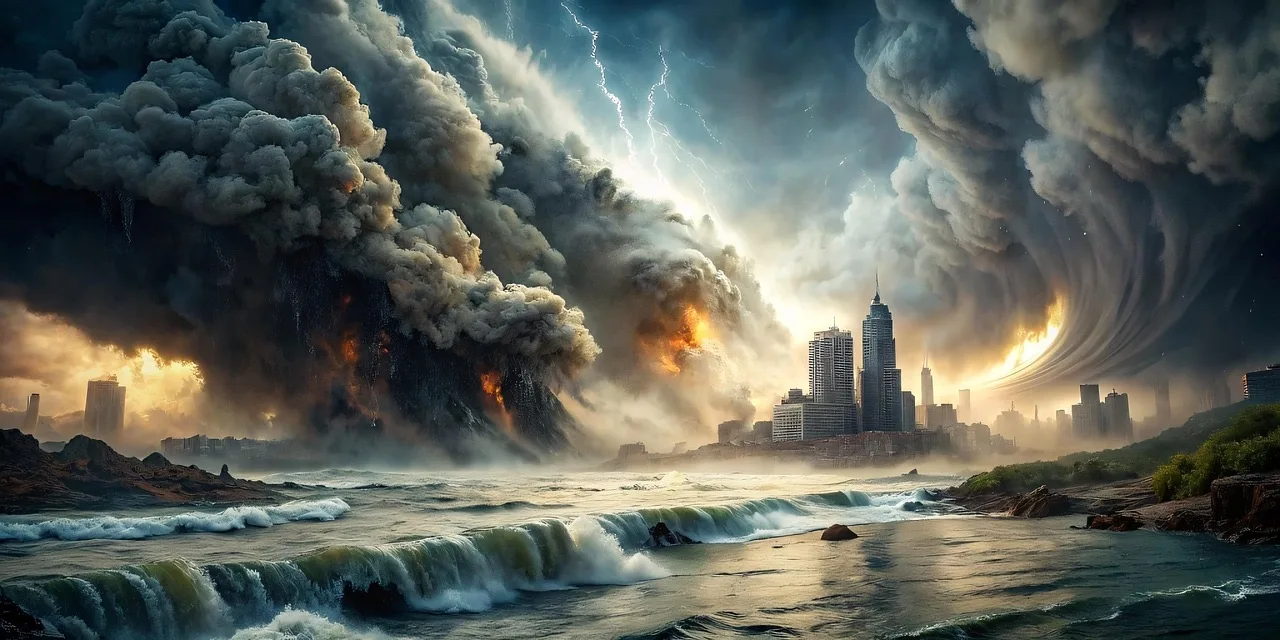
In recent years, there has been a measurable surge in geo-weather extremes across the globe. These developments include intensified storms, rapid temperature variability, prolonged droughts, widespread flooding, volcanic unrest, and increased seismic activity. Rather than occurring in isolation, many of these phenomena appear to be unfolding simultaneously across multiple regions, compounding their impact.
The accelerating pace and scale of these events have exposed growing vulnerabilities in both natural ecosystems and human systems. Agriculture, infrastructure, water resources, and energy grids are increasingly strained by environmental shifts that challenge long-standing assumptions about stability and predictability.
Understanding geo-weather extremes requires examining Earth as a dynamic, interconnected system governed by overlapping geophysical cycles, atmospheric processes, and external influences. Current conditions suggest not a singular cause, but a convergence of natural forces driving heightened volatility. For ongoing analysis of these developments, readers can explore our Global Geophysical and Weather Changes series.
Scientific Evidence: What Current Research Reveals
Recent scientific research highlights increasing instability within Earth’s interconnected systems. Studies utilizing advanced computational techniques—such as gamma test and genetic algorithm (GTGA) optimization—have improved the ability to model critical environmental variables like evaporation (Evp), particularly in semi-arid regions where water balance is highly sensitive to change.
To enhance predictive accuracy, researchers increasingly apply noise-reduction techniques such as Ensemble Empirical Mode Decomposition (EEMD), alongside deep learning architectures including Convolutional Neural Networks (CNN) and Long Short-Term Memory (LSTM) networks. These models help identify non-linear patterns, abrupt shifts, and anomalies in environmental data, offering insight into emerging Earth-system volatility [Nature].
Rather than indicating gradual or linear trends, many datasets point toward increasing variability and compression within natural cycles. This growing body of evidence suggests Earth’s geophysical, atmospheric, and hydrological systems are entering a more unstable phase—one characterized by rapid fluctuations, threshold events, and cascading effects rather than steady progression.
Mechanisms Behind the Surge: Unstable Earth Cycles Explained
The escalation in geo-weather extremes appears to be driven by a convergence of internal Earth processes and external influences. Key mechanisms include tectonic plate dynamics, volcanic activity, ocean–atmosphere coupling, and fluctuations in Earth’s magnetic field.
Solar activity and geomagnetic disturbances also play a significant role, influencing atmospheric circulation, energy transfer, and upper-atmospheric behavior. When these factors align, they can amplify weather extremes, destabilize long-standing climate patterns, and increase seismic stress along fault lines.
Importantly, Earth systems do not operate in isolation. Changes in one domain—such as ocean temperature anomalies or magnetic field variations—can cascade through atmospheric and geological systems, producing compounding effects. Volcanic eruptions, for example, can inject aerosols into the atmosphere that alter weather dynamics, while tectonic movements can influence ocean circulation and stress redistribution.
This systems-based perspective helps explain why geo-weather extremes are increasingly synchronized across regions, rather than confined to localized events. For deeper analysis of these escalating disruptions, see our coverage in The Awakening Journey: Global Geophysical & Weather and Pacific Ring of Fire Volcanoes: Recent Escalations and Impacts.
Impacts of Geo-Weather Extremes on Environment and Society
The rise in geo-weather extremes carries profound consequences for ecosystems, agriculture, infrastructure, and human well-being.
Ecosystems face mounting stress as rapid environmental changes alter habitats, migration patterns, and biodiversity balance. Species are increasingly forced to adapt to shifting temperature ranges, water availability, and seasonal timing, often with limited capacity to do so.
Agriculture is particularly vulnerable. Erratic precipitation, temperature volatility, drought, and flooding disrupt crop cycles and reduce yields—especially in semi-arid regions already under water stress. Advanced forecasting of evapotranspiration has become a critical tool for helping farmers adapt to increasingly unstable growing conditions [Nature].
Infrastructure systems are also under strain. Extreme weather and geophysical instability challenge transportation networks, power grids, and water management systems. During periods of environmental stress, even minor operational failures can escalate into major disruptions, as seen in recent incidents involving transportation safety data and procedural breakdowns [Newsweek].
Human health risks rise alongside environmental volatility. Heat stress, respiratory challenges, displacement-related trauma, and increased exposure to environmental hazards disproportionately affect vulnerable populations, compounding social and economic pressures.
Future Projections: What to Expect in the Coming Decades
Future projections based on advanced environmental modeling suggest continued volatility within Earth systems. Predictive tools such as CNN and LSTM models—combined with refined data processing techniques—are increasingly used to anticipate changes in evapotranspiration, weather variability, seismic stress, and hydrological imbalance across regions.
Rather than following a smooth trajectory, Earth’s behavior appears cyclical and multi-causal, shaped by long-term geophysical patterns, solar influences, and internal feedback mechanisms. These dynamics point toward ongoing periods of instability interspersed with recalibration phases, as Earth systems adjust to accumulated stress.
Understanding Earth as a living, evolving system—rather than a static one—will be essential for navigating the decades ahead.
Preparing for an Unstable Earth: Strategies for Mitigation and Adaptation
Responding effectively to increasing geo-weather volatility requires adaptive, forward-looking strategies grounded in observation, resilience, and preparedness:
- Enhanced Monitoring and Early Warning Systems: Expand geophysical, atmospheric, and solar monitoring using advanced analytics and AI-assisted forecasting to improve early detection of disruptive events and threshold conditions [Nature].
- Infrastructure Resilience:Invest in infrastructure designed to withstand environmental extremes and geological stress, reducing cascading failures during high-impact events.
- Community Preparedness: Strengthen local resilience through education, decentralized preparedness planning, and adaptive resource management strategies tailored to regional conditions.
- Technological Innovation: Leverage AI-driven modeling, improved communication systems, and resilient design principles to reduce vulnerability and improve response capabilities.
- Individual Awareness and Preparedness: Encourage personal emergency planning, situational awareness, and informed decision-making through reliable, independent sources.
For comprehensive insights on navigating global challenges and harnessing collective power towards resilience, explore related discussions and strategic recommendations in the Great Awakening Report Connected Series.
Sources
Sign up to receive Our Weekly Briefing Newsletter
Begin your journey with weekly insights designed to expand awareness and ground you in truth. Our free tier gives you a powerful introduction without any commitment.

Help Us Bypass Censorship. Share This.
Have questions?
At Great Awakening Report, we are dedicated to supporting your journey toward truth and enlightenment through our specialized Coaching and Consulting services.
Coaching Services: Our coaching programs are designed to guide you through personal awakening and transformation. We offer personalized sessions that focus on expanding consciousness, uncovering hidden truths, and fostering spiritual growth. Our experienced coaches provide the tools and insights necessary to navigate your path with clarity and confidence.
Consulting Services: For organizations and individuals seeking deeper understanding and strategic guidance, our consulting services offer expert analysis and solutions. We delve into areas such as global transitions, alternative news insights, and consciousness studies to provide comprehensive strategies tailored to your unique objectives.
Embark on a transformative journey with our Coaching and Consulting services, and unlock your highest potential. To learn more and schedule a session, visit our Coaching and Consulting pages.
Thank you
Thank you to our subscribers and readers for your continued support and dedication to truth and awakening. Your encouragement, engagement, and belief in our mission make everything we do possible. Together, we are expanding awareness and helping illuminate the path forward.
If you would like to further support the Great Awakening team and our ongoing efforts to share insight, knowledge, and truth, you can DONATE HERE.
With deep gratitude,
– Great Awakening Team
About the Author: Great Awakening Team

DISCLAIMER: All statements, claims, views and opinions that appear anywhere on this site, whether stated as theories or absolute facts, are always presented by The Great Awakening Report (GAR) as unverified—and should be personally fact checked and discerned by you, the reader.Any opinions or statements herein presented are not necessarily promoted, endorsed, or agreed to by GAR, those who work with GAR, or those who read or subscribe to GAR.Any belief or conclusion gleaned from content on this site is solely the responsibility of you the reader to substantiate.Any actions taken by those who read material on this site are solely the responsibility of the acting party.You are encouraged to think for yourself and do your own research.Nothing on this site is meant to be believed without question or personal appraisal.
COPYRIGHT DISCLAIMER: Citation of articles and authors in this report does not imply ownership. Works and images presented here fall under Fair Use Section 107 and are used for commentary on globally significant newsworthy events. Under Section 107 of the Copyright Act 1976, allowance is made for fair use for purposes such as criticism, comment, news reporting, teaching, scholarship, and research.
COMMUNITY GUIDELINES DISCLAIMER: The points of view and purpose of this video is not to bully or harass anybody, but rather share that opinion and thoughts with other like-minded individuals curious about the subject.