
Help Us Bypass Censorship. Share This.
Sign up to receive Our Weekly Briefing Newsletter
Begin your journey with weekly insights designed to expand awareness and ground you in truth. Our free tier gives you a powerful introduction without any commitment.
“Modern food security rests on a supply chain few consumers ever see.”
Introduction: The Invisible Foundation of the Global Food System
When food prices rise, we tend to blame what we can see. Drought. War. Supply chain delays. Fuel costs. Corporate pricing.
What we rarely consider is fertilizer.
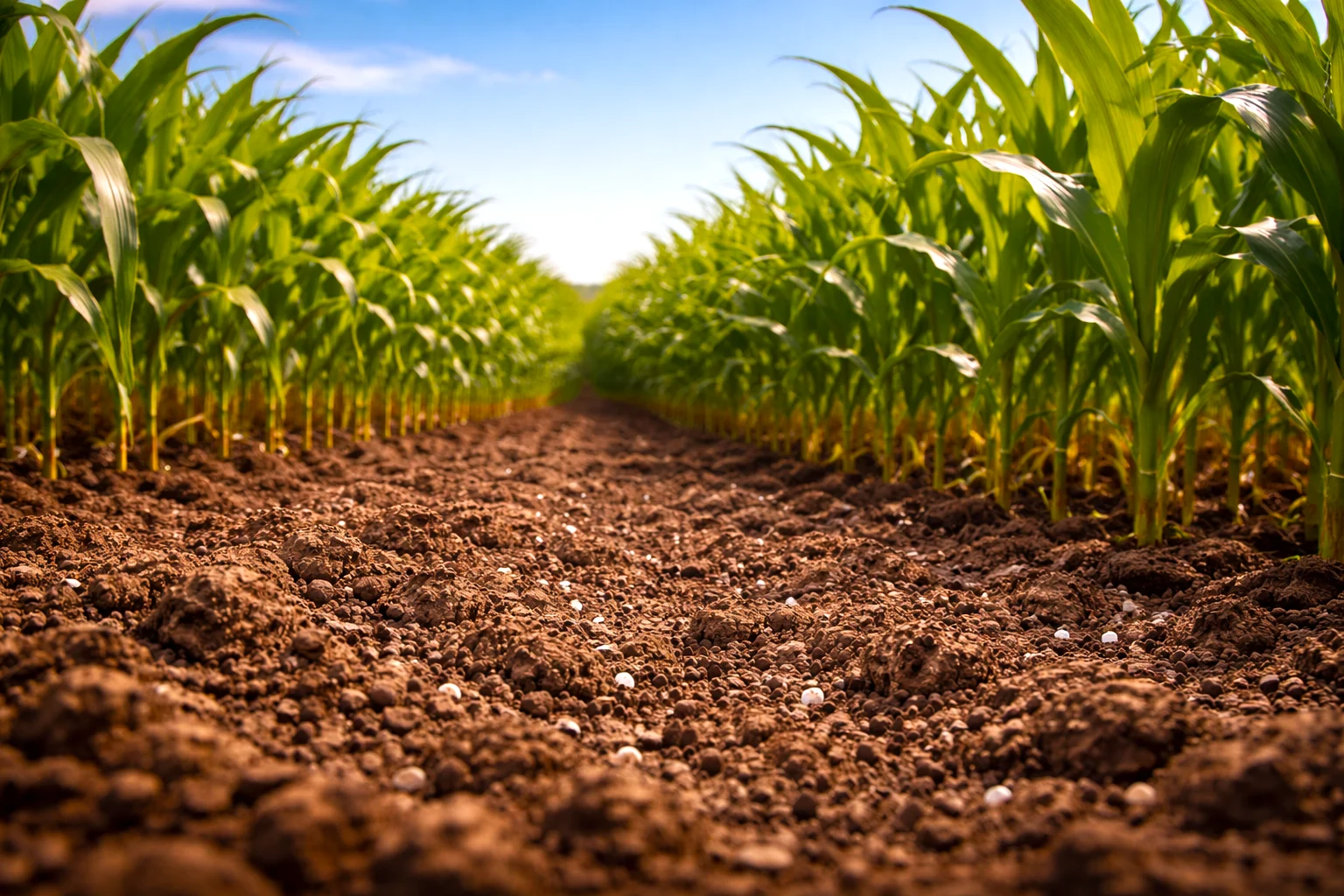
Yet fertilizer is one of the most essential — and least discussed — foundations of the modern food system. Long before food reaches a warehouse, a truck, or a grocery shelf, it begins in soil enriched with nitrogen, phosphorus, and potassium. These three nutrients quietly determine how much wheat fills a field, how tall corn grows, and how productive vegetable harvests become.
Modern agriculture is built on this chemical backbone. Nitrogen fertilizers are produced using natural gas. Phosphates and potash come from mined mineral deposits concentrated in specific regions of the world. In other words, the food system is not just agricultural — it is deeply tied to energy markets, mining operations, and global trade flows.
When fertilizer markets tighten, food markets eventually feel it. The connection is not always immediate. But it is inevitable.
For a deeper understanding of supply chain dynamics and related global issues, you may explore related insights on economic impacts and systemic risks discussed in detail at Great Awakening Report.
How Fertilizer Disruptions Translate Into Higher Food Prices
Farmers operate on margins that leave little room for volatility. When fertilizer prices spike or supply becomes uncertain, hard decisions follow.
Application rates may be reduced. Certain crops may not be planted. Fields may yield less than expected. Input costs rise, and those costs rarely stay contained at the farm gate.
Lower yields mean tighter supply. Tighter supply meets steady or rising demand. Prices adjust upward.
And the ripple effect doesn’t stop at grains. Corn feeds livestock. Soybeans support poultry and cattle production. Fertilizer affects not only bread and rice, but milk, eggs, meat, cooking oils, and processed foods.
What begins as an upstream industrial constraint becomes visible months later at checkout counters. Food inflation is rarely caused by one dramatic event. More often, it builds quietly — layer upon layer — until the pressure becomes undeniable.
Fertilizer is often one of those early layers. This topic is critical as it demonstrates the interconnectedness between agricultural inputs and global food security, illustrating how disruptions can escalate into broader economic consequences that affect millions worldwide. Source: Nature Climate Change
A Global Web Under Strain
The fertilizer system is global by design and fragile by structure.
Nitrogen production depends heavily on natural gas. When energy prices rise — whether from geopolitical conflict, supply restrictions, or infrastructure shocks — fertilizer production costs surge alongside them.
Phosphate and potash supplies are geographically concentrated. When trade tensions escalate, export restrictions are imposed, or sanctions disrupt major producers, the impact spreads quickly through global markets.
Climate adds another dimension. Droughts increase demand for fertilizers as farmers attempt to preserve yields. At the same time, extreme weather can disrupt mining and transportation routes. Volatility compounds volatility.
The result is a system that looks stable on the surface but carries multiple pressure points beneath it.
Together, these global factors highlight the fragile nature of fertilizer availability and the necessity for resilient, sustainable supply chain strategies to mitigate risks faced by the agriculture sector and global food security. For insights on related supply risks and economic impacts, see our report on Supply Chain Vulnerabilities.
The Economic Ripple Effect
Food is not discretionary. It is foundational.
When fertilizer disruptions reduce crop output or raise production costs, food prices rise. For families in developed economies, this may mean tighter grocery budgets. For lower-income households — particularly in developing nations — it can mean something far more serious.
In many regions, agriculture represents a significant share of GDP. Rising fertilizer costs reduce farmer profitability. Lower yields reduce export capacity. Food imports increase. Trade balances shift. Currency pressures build.
Historically, sustained food price spikes have coincided with periods of social tension and political instability. When a large percentage of income goes toward basic nutrition, economic resilience weakens.
Meanwhile, in advanced economies, persistent food inflation influences central bank policy, interest rate decisions, and broader consumer confidence. What begins in a fertilizer plant can end in financial markets.
The connection is indirect — but very real.
Building Resilience Before Crisis
None of this suggests inevitability. But it does suggest vulnerability.
Diversifying production capacity, investing in precision agriculture, and stabilizing energy inputs can reduce exposure. Emerging technologies, including renewable-powered ammonia production and more efficient nutrient management systems, may help buffer volatility.
Strategic reserves — similar to petroleum stockpiles — could provide temporary relief during disruptions. Greater transparency in global trade policies could dampen shock cycles.
Resilience is not about eliminating risk. It is about reducing amplification.
Because when multiple stressors converge — energy volatility, climate pressure, geopolitical fragmentation — systems strain.
And fertilizer sits quietly at the base of one of the most essential systems of all: food.
An Early Warning Signal
Fertilizer rarely makes headlines. It is not politically dramatic. It does not trend on social media. Yet it may be one of the clearest early indicators of mounting economic stress.
When fertilizer markets tighten, food prices eventually respond. When food prices rise, economic pressure follows. And when pressure builds across multiple sectors at once, systemic fragility increases.
Understanding fertilizer supply disruptions is not alarmism. It is orientation.
The stability of the food system depends not only on weather patterns or consumer demand, but on the quiet industrial processes that begin months before harvest.
Sometimes the most important risks are the ones few people are watching.
Sign up to receive Our Weekly Briefing Newsletter
Begin your journey with weekly insights designed to expand awareness and ground you in truth. Our free tier gives you a powerful introduction without any commitment.


Help Us Bypass Censorship. Share This.
Have questions?
At Great Awakening Report, we are dedicated to supporting your journey toward truth and enlightenment through our specialized Coaching and Consulting services.
Coaching Services: Our coaching programs are designed to guide you through personal awakening and transformation. We offer personalized sessions that focus on expanding consciousness, uncovering hidden truths, and fostering spiritual growth. Our experienced coaches provide the tools and insights necessary to navigate your path with clarity and confidence.
Consulting Services: For organizations and individuals seeking deeper understanding and strategic guidance, our consulting services offer expert analysis and solutions. We delve into areas such as global transitions, alternative news insights, and consciousness studies to provide comprehensive strategies tailored to your unique objectives.
Embark on a transformative journey with our Coaching and Consulting services, and unlock your highest potential. To learn more and schedule a session, visit our Coaching and Consulting pages.
Thank you
Thank you to our subscribers and readers for your continued support and dedication to truth and awakening. Your encouragement, engagement, and belief in our mission make everything we do possible. Together, we are expanding awareness and helping illuminate the path forward.
If you would like to further support the Great Awakening team and our ongoing efforts to share insight, knowledge, and truth, you can DONATE HERE.
With deep gratitude,
– Great Awakening Team
About the Author: Great Awakening Team

DISCLAIMER: All statements, claims, views and opinions that appear anywhere on this site, whether stated as theories or absolute facts, are always presented by The Great Awakening Report (GAR) as unverified—and should be personally fact checked and discerned by you, the reader.Any opinions or statements herein presented are not necessarily promoted, endorsed, or agreed to by GAR, those who work with GAR, or those who read or subscribe to GAR.Any belief or conclusion gleaned from content on this site is solely the responsibility of you the reader to substantiate.Any actions taken by those who read material on this site are solely the responsibility of the acting party.You are encouraged to think for yourself and do your own research.Nothing on this site is meant to be believed without question or personal appraisal.
COPYRIGHT DISCLAIMER: Citation of articles and authors in this report does not imply ownership. Works and images presented here fall under Fair Use Section 107 and are used for commentary on globally significant newsworthy events. Under Section 107 of the Copyright Act 1976, allowance is made for fair use for purposes such as criticism, comment, news reporting, teaching, scholarship, and research.
COMMUNITY GUIDELINES DISCLAIMER: The points of view and purpose of this video is not to bully or harass anybody, but rather share that opinion and thoughts with other like-minded individuals curious about the subject.