




Published Date: July 17th, 2026
WEEKLY REPORT
TRUTH///AWAKENING///DISCLOSURE
TRUTH SEEKERS WEEKLY BRIEFINGS, MASTER CLASS CONNECTING THE DOTS
The Great Global Convergence | Navigating the Threshold of Transformation
Global Transformation • Artificial Intelligence • Institutional Trust • Infrastructure Resilience • Human Optimization • Consciousness • Critical Thinking • Connecting the Dots • Subscriber Q&A
“As geopolitical competition, technological acceleration, institutional realignment, scientific discovery, and the search for greater human potential converge, the defining challenge of our time is no longer simply understanding individual events—it is recognizing the patterns connecting them. In an age of unprecedented complexity, those who cultivate discernment, resilience, critical thinking, and conscious leadership will be best prepared to navigate uncertainty, adapt to continuous change, and help build stronger communities, more resilient institutions, and a more informed future.”
Call to The Awakened
“Let these days be etched in history as the moment we rose to reclaim our Republic from the grip of those who have long exploited its people for their own gain. Stand strong, fight with honor, and let justice prevail. Together, we restore the nation to its true greatness.”
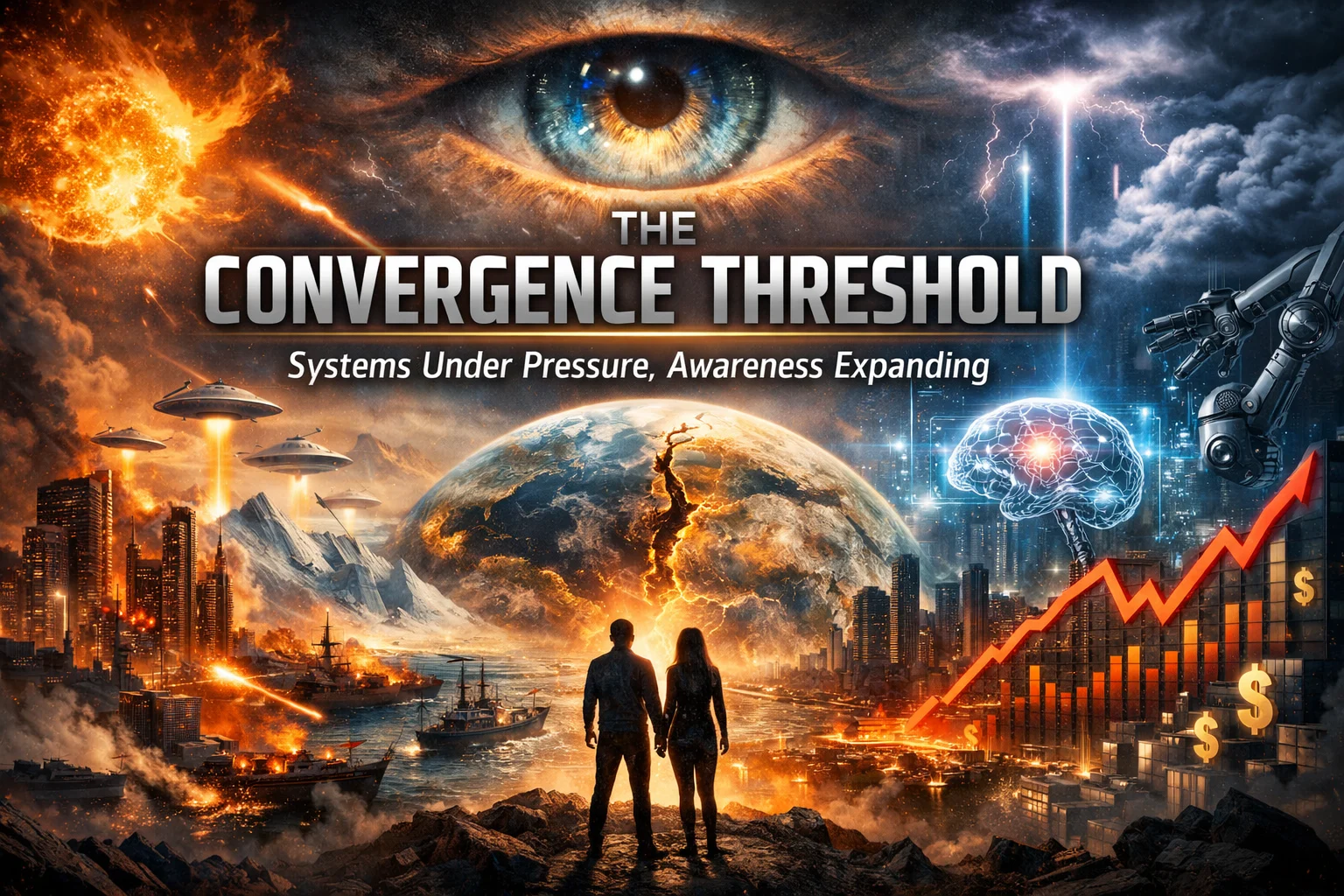
Civilizations Journey to The Precipice of Convergence Threshold
“Be Strong Enough to Stand Alone / Be Yourself Enough to Stand Apart / And When the Time Comes, Be Wise Enough to Stand Together”
The Great Reset | Roll Back Pricing of Everything
We are living through a period of profound global disruption. Institutions once viewed as stable pillars—government, finance, media, technology, and healthcare—are facing growing scrutiny as geopolitical conflict, economic instability, and political tension expose deeper systemic pressures.
Rather than isolated crises, these events point to a broader restructuring of global systems. Power structures, economic frameworks, and long-standing narratives are all being tested simultaneously, creating what many observers describe as a period of accelerated change.
This Weekly Report compiles insights from 57 independent sources, many highlighting overlapping signals across geopolitics, economics, and societal trends. By organizing these developments along a timeline of emerging events, we aim to provide a clearer view of the forces shaping this moment.
As always, we encourage readers to approach the information with discernment and calm awareness. Preparation in uncertain times is largely mental—understanding the landscape helps us remain grounded as events continue to unfold.
“We The People”
If we the people, as a nation, do not work together to restore our founding father’s visions for our Constitutional Republic, our children could be lost and our nation will be destroyed. We all have a part to play in this peaceful, faithful, informed, prayer-filled participation and with forgiveness in our hearts for the corruption of this nation that we have been a party to, either knowingly or unknowingly.

Truth Seekers Weekly Briefing | Master Class Series | Published Every Friday
Last Warning: Prepare for something that you never expected to see in your lifetime. The Media will never let you know! The things around us could change very fast. – QAnon Telegram
“Ye shall hear of wars and rumors of wars. See that ye be not troubled, for all these things must come to pass, but the end is not yet.” – Matthew 24:6
Methodology Behind the Master Class on Connecting the Dots
The Master Class on Connecting the Dots is built on a structured, multi-layered methodology designed to help individuals develop discernment, signal awareness, and pattern recognition in a world shaped by information saturation, narrative volatility, and declining institutional trust. Rather than offering conclusions, this approach trains participants to detect meaningful signals, place them in context, and orient themselves within complexity with clarity and composure.
At its core, the methodology integrates three foundational disciplines:
Analytical and Critical Reasoning – evaluating headlines, timelines, data points, and official narratives by separating signal from noise, testing claims against evidence, and identifying inconsistencies, incentives, and omissions.
Signal and Pattern Recognition – tracking weak signals, repeated motifs, coordinated messaging, symbolic cues, institutional overlap, and timing alignments that, when viewed collectively, reveal larger structural patterns or converging trajectories.
Discernment and Observer Awareness – cultivating emotional neutrality, recognizing narrative framing and psychological influence, and learning to observe unfolding events without premature conclusions or reactive interpretation.
The process begins with broad-spectrum signal intake—comparing mainstream reporting, independent analysis, historical precedent, and direct accounts. Participants are then guided to map the who, what, when, where, why, and how of events, while monitoring incentives, power dynamics, escalation markers, and cross-domain convergence across politics, finance, technology, culture, and belief systems.
Ultimately, Connecting the Dots is not about arriving at a fixed interpretation—it is about strengthening one’s capacity to track signals over time, recognize emerging patterns, and navigate uncertainty with coherence, resilience, and sovereignty. The Master Class functions as both a practical framework and an orientation lens, supporting the shift from passive information consumption to informed, self-directed understanding.
Great Awakening Featured Reports
The Great Awakening Featured Reports offer a comprehensive and multi-dimensional guide to understanding the rapidly unfolding events shaping our world. Designed for awakened minds and discerning truth seekers, these reports synthesize hard-to-find data, suppressed knowledge, and spiritual insight to help you navigate global transformation with clarity and confidence. Each report series serves a unique purpose—from decoding mainstream and alternative narratives to tracking the spiritual evolution of humanity and exposing hidden truths withheld from public view. Together, they form a powerful resource for those seeking not just information, but illumination, discernment, and alignment in the midst of chaos.
Great Awakening Featured Reports include:
📌 Monthly Reports – Covering the latest geopolitical, geoweather, economic, health, true history, suppressed technologies, ET disclosures, and seismic global shifts.
📌 Truth Seekers Weekly Briefings – Master Class in Connecting the Dots, Top 5 MSM News explained, Top 5 Alternative News reviewed, and Subscriber Q&A Top 5 most asked questions.
📌 Awakening Sleeping Giant Weekly Reports – Tracking global intelligence news and key events effecting a mass global awakening.
📌 Spiritual Practice Reports – Tools and techniques for maintaining alignment and higher heart consciousness coherence.
📌 Special Reports; New & Updated – Breaking revelations and disclosures you won’t hear or read anywhere else.
Get ready to expand your awareness, sharpen your discernment, and step fully into your sovereignty. The dots are there—it’s time to connect them.

Truth Seeker Report Audio Reviews
“When truth emerges, illusions shatter. As the old world crumbles, a new one rises—built on sovereignty, wisdom, and the unbreakable power of unity.”
At Truth Seekers Weekly Briefing, our research process begins with a comprehensive review of both Mainstream Media (MSM) and Alternative News sources. Our team tracks major stories, emerging patterns, and overlooked developments to identify the most relevant signals shaping the week’s events.
Using our “Connecting the Dots” approach, we analyze these developments through rational, critical, and logical thinking to reveal broader patterns often missed in surface-level reporting. The goal is not just to report the news, but to provide context that helps readers better understand the forces shaping the world around them.
To support this process, each section of the report includes a short audio review (approximately 12 minutes) summarizing the key findings of the week. These concise segments are designed for quick listening and help subscribers stay informed while developing their own discernment.
Our purpose is simple: not to tell you what to think—but to help you connect the dots and think for yourself.
“Truth is rarely discovered in a single headline. It emerges where evidence, experience, and thoughtful inquiry intersect. As technology accelerates, institutions evolve, and society transforms, our greatest responsibility is to remain curious, think critically, and connect the dots with both an open mind and a discerning heart. Awareness is not simply about gathering information—it is about developing the wisdom to understand what it means.”
Truth Seekers Mainstream Media Audio Recap & Review, July 17th, 2026.
Truth Seekers Alternative News Audio Recap & Review, July 17th, 2026.
Truth Seekers Subscriber Q&A Audio Recap & Review, July 17th, 2026.
Welcome, Truth Seekers Weekly Briefing — July 17th, 2026
“In a world clouded by distraction and deception, true power lies in seeing the bigger picture. When we sharpen our discernment, align with heart consciousness, and embrace the truth, we reclaim our sovereignty. The dots are there—it’s time to connect them.”
Welcome to your Master Class in Connecting the Dots.
In an era defined by information overload, narrative volatility, and engineered distraction, clarity no longer comes from consuming more content—it comes from learning how to recognize signals. Individual events rarely tell the full story on their own. But when signals repeat across different domains—politics, economics, media, and technology—they begin to form threads that reveal deeper forces shaping the world around us.
This process begins with grounded, rational thinking and the ability to separate meaningful signals from background noise. As signals accumulate, they form threads that stretch across institutions, policies, markets, and narratives. When multiple threads converge, patterns emerge—offering a clearer view of direction, momentum, and the structural shifts unfolding beneath the surface.
Discernment allows us to step into the observer position—recognizing how fear-based messaging, psychological pressure, and narrative framing are often used to keep populations reactive and divided. By focusing on signals rather than headlines, and patterns rather than personalities, we regain the clarity needed to navigate complexity without becoming overwhelmed by it.
Each week in the Truth Seekers Weekly Briefing, we track developments across geopolitics, economics, technology, and broader societal shifts—identifying signals, following threads, and revealing patterns of convergence as they emerge.
Our mission is simple:
to help you recognize signals early, follow threads intelligently, and understand patterns clearly—so you remain grounded, aware, and sovereign in a rapidly changing world.
Let’s dive in.
The following content is a compilation from various sources.
Lets Review This Weeks Featured News Stories & Events
Top Mainstream News Stories | July 2026
Understanding the Headlines Behind the Headlines
Every week, thousands of news stories compete for attention, yet only a handful shape the broader direction of world events. Rather than simply reporting the biggest headlines, this section examines the stories receiving sustained attention across mainstream media and asks a more important question: Why are these stories dominating the global conversation? Whether the subject is geopolitical conflict, artificial intelligence, economic uncertainty, supply-chain resilience, or extreme weather, each headline offers a window into larger structural changes affecting governments, businesses, and society.
One of the defining characteristics of July has been the increasing overlap between traditionally separate areas of reporting. Geopolitical developments now influence energy markets within hours. Advances in artificial intelligence are driving investment decisions while simultaneously creating new demands on electrical grids and public infrastructure. Climate events are affecting agriculture, insurance, transportation, and national budgets. Economic policy is becoming inseparable from national security as governments compete for manufacturing capacity, critical minerals, technological leadership, and resilient supply chains. The boundaries that once separated politics, economics, technology, and the environment continue to blur.
This is why we review the week’s news as an interconnected system rather than as isolated events. Every headline represents more than the event itself—it reveals part of a larger transformation taking place beneath the surface. By examining these stories together, we begin to identify recurring themes, emerging trends, and long-term patterns that are often difficult to recognize through daily news coverage alone. Understanding these connections provides greater context, allowing readers to move beyond individual events and develop a clearer perspective on the forces reshaping the global landscape.
Top 5 Mainstream News Stories | July 2026
The five leading mainstream news stories this month collectively illustrate a world adapting to multiple, simultaneous pressures rather than responding to a single defining crisis. Developments in the Middle East continue influencing global energy markets and maritime security, while artificial intelligence has entered a new phase where infrastructure demands, financing constraints, and regulatory scrutiny are reshaping expectations for future growth. At the same time, global supply chains remain under pressure from geopolitical competition, industrial realignment, and strategic resource shortages, reinforcing the importance of resilience over efficiency. Meanwhile, increasingly frequent extreme weather events continue testing infrastructure, agriculture, and emergency response systems, highlighting the growing intersection between environmental conditions and economic stability.
Viewed together, these stories reveal a broader transition taking place across the global landscape. Governments, corporations, and communities are no longer focused solely on recovering from isolated disruptions—they are preparing for an era in which energy security, technological innovation, resilient supply chains, food production, infrastructure modernization, and climate adaptation have become deeply interconnected. Rather than signaling independent challenges, these developments reflect a larger pattern of structural realignment, where long-term resilience, strategic planning, and adaptability are emerging as the defining priorities for navigating an increasingly complex and rapidly changing world.
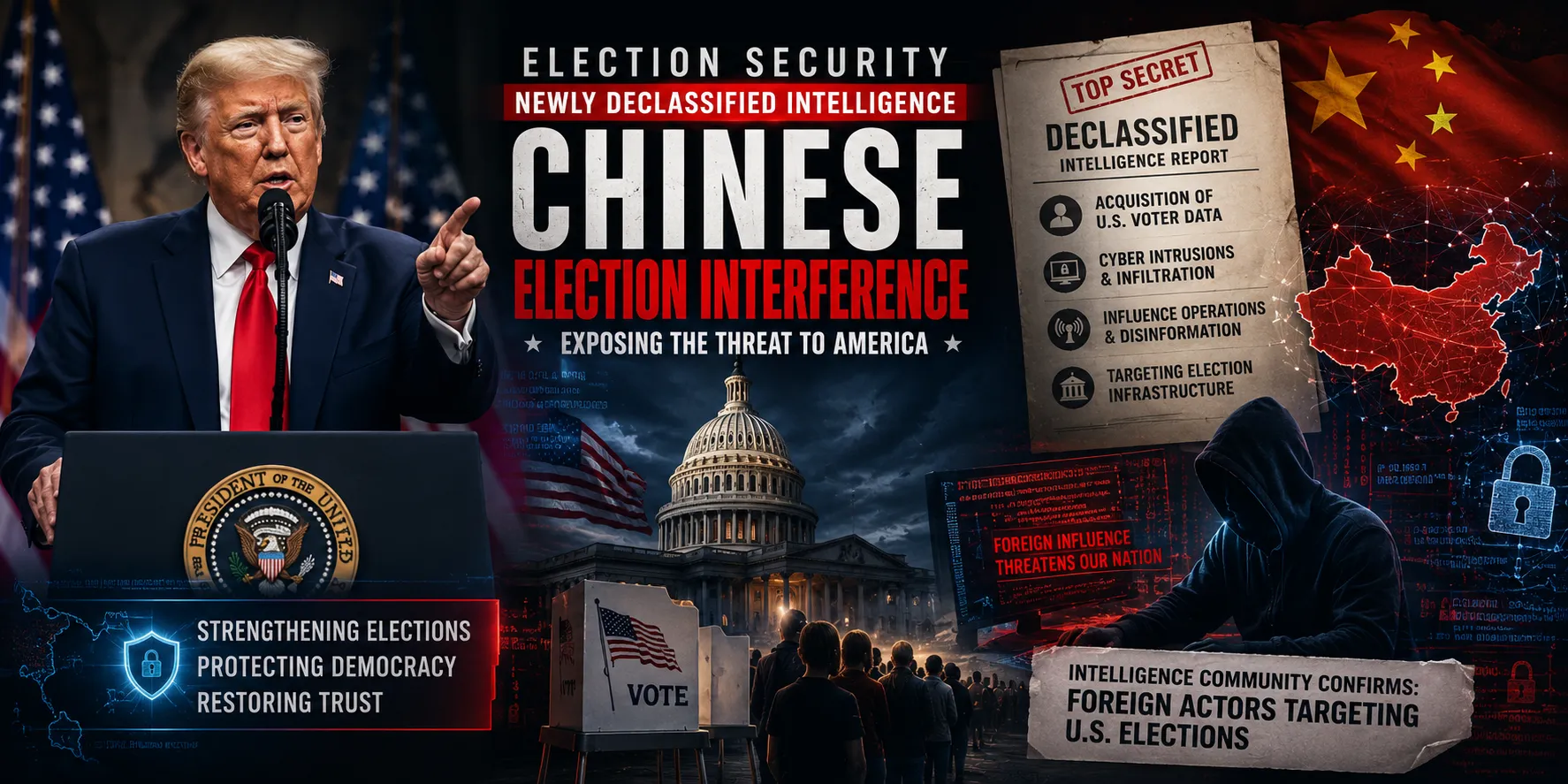
1. Trump’s National Address & Newly Declassified Intelligence on Chinese Election Interference
One of the week’s most consequential political developments came as President Donald Trump delivered a nationally televised address centered on election security and the release of newly declassified intelligence concerning Chinese activities related to the 2020 election cycle. During the address, the administration stated that recently declassified documents revealed significant foreign intelligence efforts involving the acquisition of large U.S. voter datasets, cyber capabilities, and broader influence operations. The White House presented the disclosures as part of a broader initiative to increase transparency surrounding foreign election threats and to strengthen future election security.
The speech immediately reignited one of the nation’s most significant political debates: the integrity of America’s election infrastructure and the role of foreign adversaries in attempting to influence democratic processes. Supporters viewed the declassification as long-overdue transparency regarding national security vulnerabilities, while critics argued that the released material did not substantiate all of the administration’s conclusions regarding the 2020 election. China publicly rejected the allegations, further elevating the issue into an international diplomatic dispute.
Regardless of the differing political interpretations, the event marked a major shift in the national conversation. Election security, cybersecurity, foreign intelligence operations, public trust, and government transparency have once again moved to the forefront of American political discourse ahead of the 2026 midterm elections. The release of newly declassified intelligence—and the debate surrounding its interpretation—ensures that election integrity will remain a defining issue throughout the remainder of the election cycle.
Is Election Integrity Becoming a Central Political Issue Again?
Mainstream coverage of President Trump’s primetime address has focused less on the election claims themselves and more on the media’s decision of whether to air the speech live. Much of the reporting framed the event as a debate over broadcasting responsibility, misinformation, and the potential impact of repeating disputed allegations. Coverage also emphasized that several major networks chose not to carry the speech live or interrupted it with real-time fact-checking, while highlighting criticism from Trump and his supporters over those editorial decisions.
MSM framing:
- Focus on misinformation concerns.
- Focus on network editorial decisions.
- Focus on disputed claims versus verified evidence.
- Focus on democratic norms and institutional trust.
Signals & Threads
The broader signal extends well beyond election politics. This story reflects the continuing convergence of national security, cybersecurity, foreign influence operations, intelligence transparency, and institutional trust. Whether viewed through a geopolitical, technological, or governance lens, the underlying thread is the increasing recognition that information itself has become a strategic domain of competition. As governments confront cyber threats, foreign intelligence activities, and evolving election security challenges, public confidence in democratic institutions is becoming as strategically important as the security of the voting systems themselves. Together, these interconnected developments reinforce one of the defining patterns of 2026: the growing intersection of information warfare, geopolitical competition, and the battle for public trust.

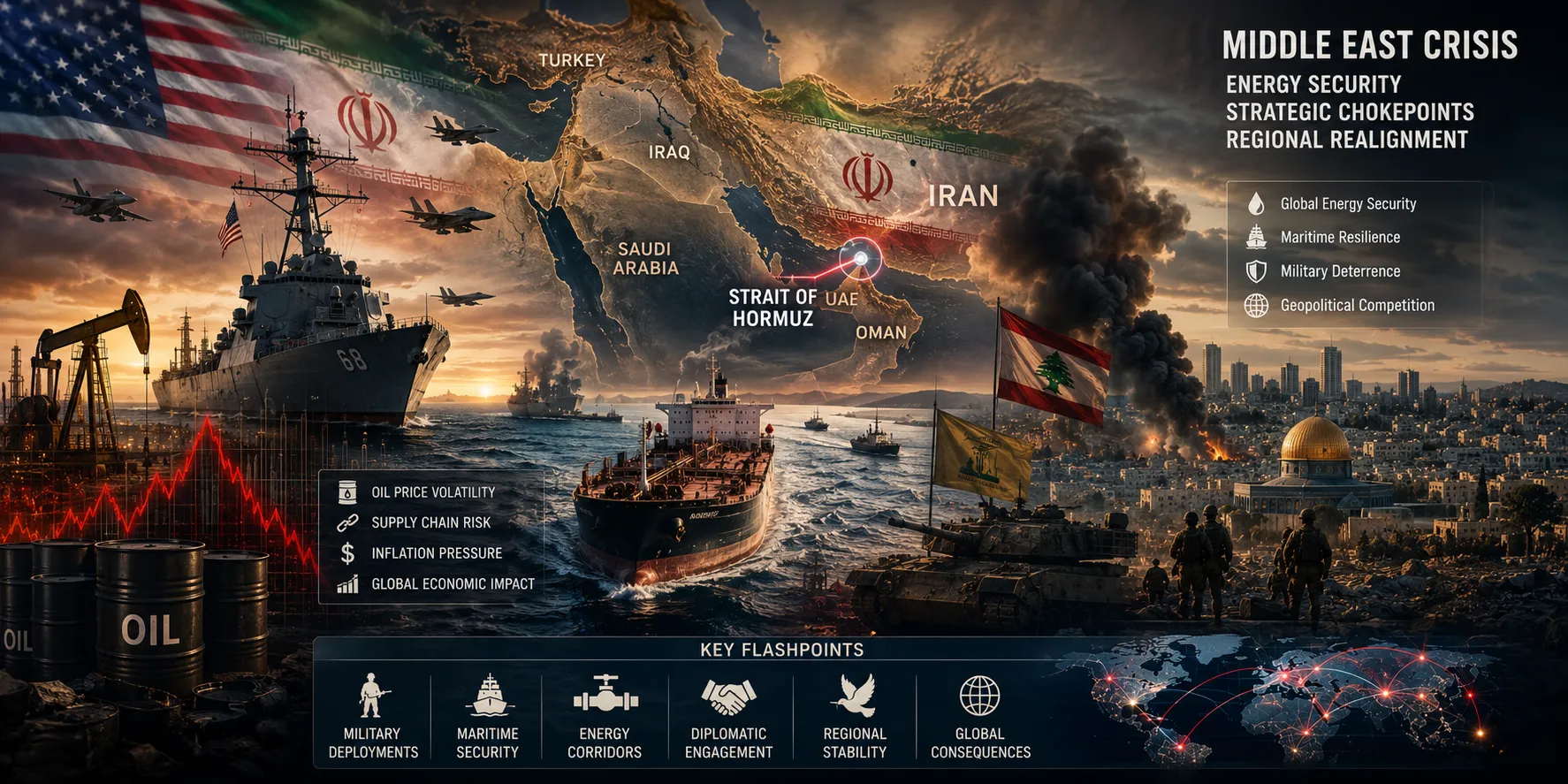
2. The Middle East Crisis: Energy Security, Strategic Chokepoints & Regional Realignment
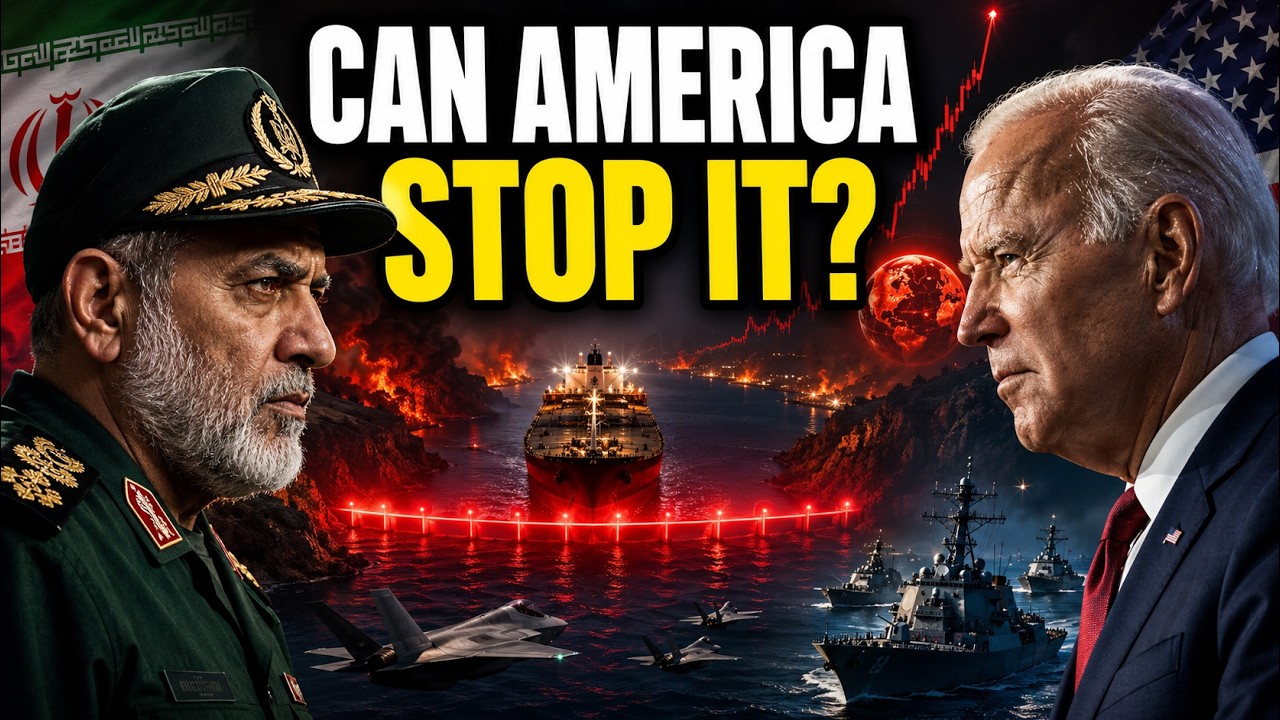
The Middle East remained the defining geopolitical story of the past several weeks as tensions between the United States and Iran continued to shape global security, energy markets, and international diplomacy. While military operations, naval deployments, and attacks on commercial shipping heightened concerns earlier in the crisis, more recent developments have shifted toward diplomatic engagement and efforts to reduce the immediate risk of wider regional conflict. Nevertheless, the Strait of Hormuz—through which roughly one-fifth of the world’s seaborne oil supply passes—remains one of the world’s most strategically important chokepoints, ensuring that even periods of relative calm continue to influence global markets and geopolitical calculations.
Although headlines increasingly suggest a period of de-escalation, the broader regional environment remains fragile. Shipping security has improved, yet energy markets continue factoring in the possibility of renewed disruptions. Insurance costs, military readiness, strategic petroleum planning, and maritime security operations all remain elevated compared with pre-crisis levels. Governments and global energy producers continue reassessing supply-chain resilience, recognizing that even localized instability in the Persian Gulf can quickly ripple across international oil prices, inflation expectations, transportation costs, and global economic growth.
At the same time, attention has shifted toward Lebanon as one of the region’s remaining pressure points. Diplomatic efforts continue alongside concerns that any renewed conflict involving Hezbollah, Israel, or other regional actors could quickly reverse recent stabilization efforts. Rather than viewing the Middle East as a single conflict, analysts increasingly recognize it as a network of interconnected flashpoints, where developments in one country can rapidly influence neighboring states, global shipping lanes, financial markets, and broader strategic alliances.
Signals & Threads
Looking beyond the daily headlines, several important signals continue to emerge. The Middle East is evolving from a series of isolated conflicts into a broader test of global energy security, maritime resilience, military deterrence, and geopolitical competition. The recurring threads include the protection of critical shipping lanes, strategic competition among major powers, the increasing importance of naval logistics, and the vulnerability of globally integrated supply chains. Together, these developments reinforce one of the defining patterns of 2026: regional conflicts now generate global consequences, where energy, economics, national security, and international diplomacy have become deeply interconnected. Those connections continue shaping not only the future of the Middle East, but the stability of the broader international system.

3. Artificial Intelligence Meets Economic Reality
The AI Infrastructure Bubble Faces Its First Major Stress Test
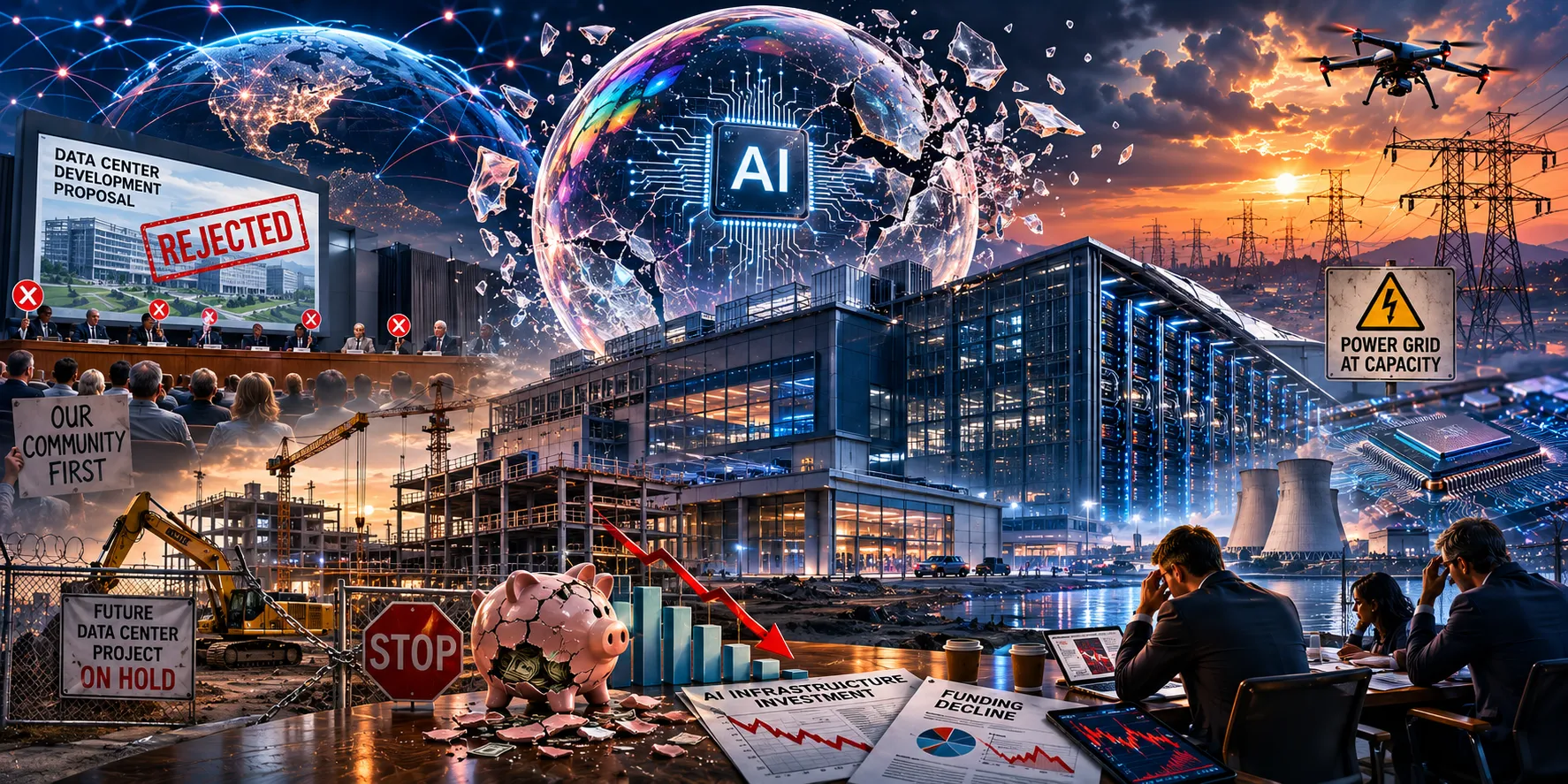
The artificial intelligence boom that has fueled record investment over the past several years is beginning to encounter its first significant economic headwinds. After an unprecedented wave of announcements involving hyperscale data centers, semiconductor manufacturing, cloud infrastructure, and AI development campuses, investors and local governments are becoming increasingly selective about which projects move forward. Rising construction costs, higher interest rates, uncertain returns on investment, and unprecedented electricity and water demands are forcing companies to reevaluate expansion plans that only months ago appeared inevitable.
One of the most significant developments has been the growing resistance from local communities and municipal governments toward new AI data center projects. Across multiple regions, city councils and planning commissions are delaying or rejecting approvals over concerns about land use, electrical grid capacity, water consumption, environmental impacts, tax incentives, and long-term community benefits. At the same time, several large-scale AI infrastructure projects have reportedly been postponed, downsized, or subjected to renewed financial scrutiny as investors demand clearer paths to profitability rather than continued expansion driven primarily by future expectations.
None of this suggests that artificial intelligence itself is disappearing. Instead, the industry appears to be entering a new phase of maturation where financial discipline is beginning to replace speculative enthusiasm. Companies are shifting their focus from building ever-larger infrastructure toward improving efficiency, reducing operating costs, increasing energy utilization, and demonstrating measurable returns from AI deployment. Similar to previous technology cycles, the transition from rapid expansion to sustainable growth often exposes weaker business models while allowing stronger companies and technologies to emerge over the longer term.
Signals & Threads
The larger signal extends well beyond artificial intelligence. This story reflects the growing convergence between technology, energy, infrastructure, finance, public policy, and community resilience. AI is no longer simply a software revolution—it has become one of the world’s largest consumers of electricity, computing infrastructure, semiconductor capacity, water resources, and investment capital. The recurring threads include rising infrastructure costs, power-grid limitations, capital allocation discipline, permitting challenges, environmental constraints, and increasing public scrutiny of mega-scale technology projects. Together, these developments suggest that the next chapter of the AI revolution will be determined not only by advances in algorithms, but by the ability to secure the physical infrastructure, energy resources, financing, and public support required to sustain long-term growth.

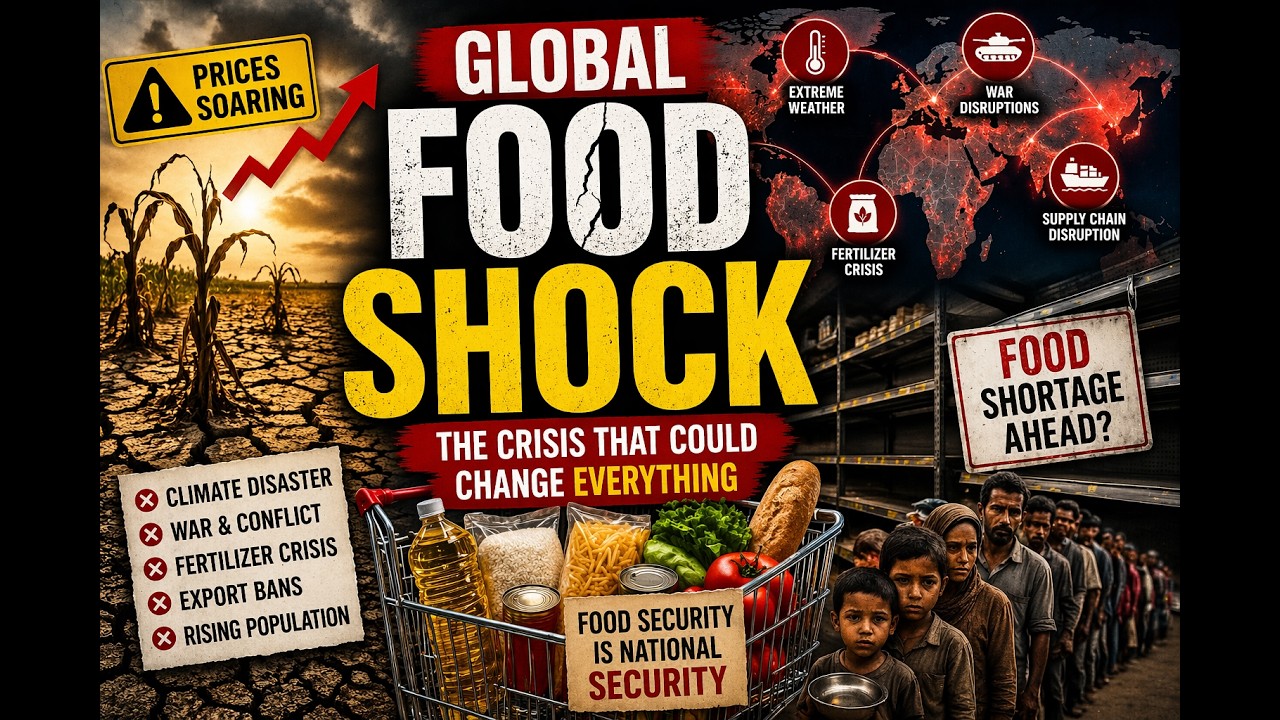
4. Global Supply Chains Under Pressure
Economic Contraction, Food Security & the Growing Risk of Global Shortages
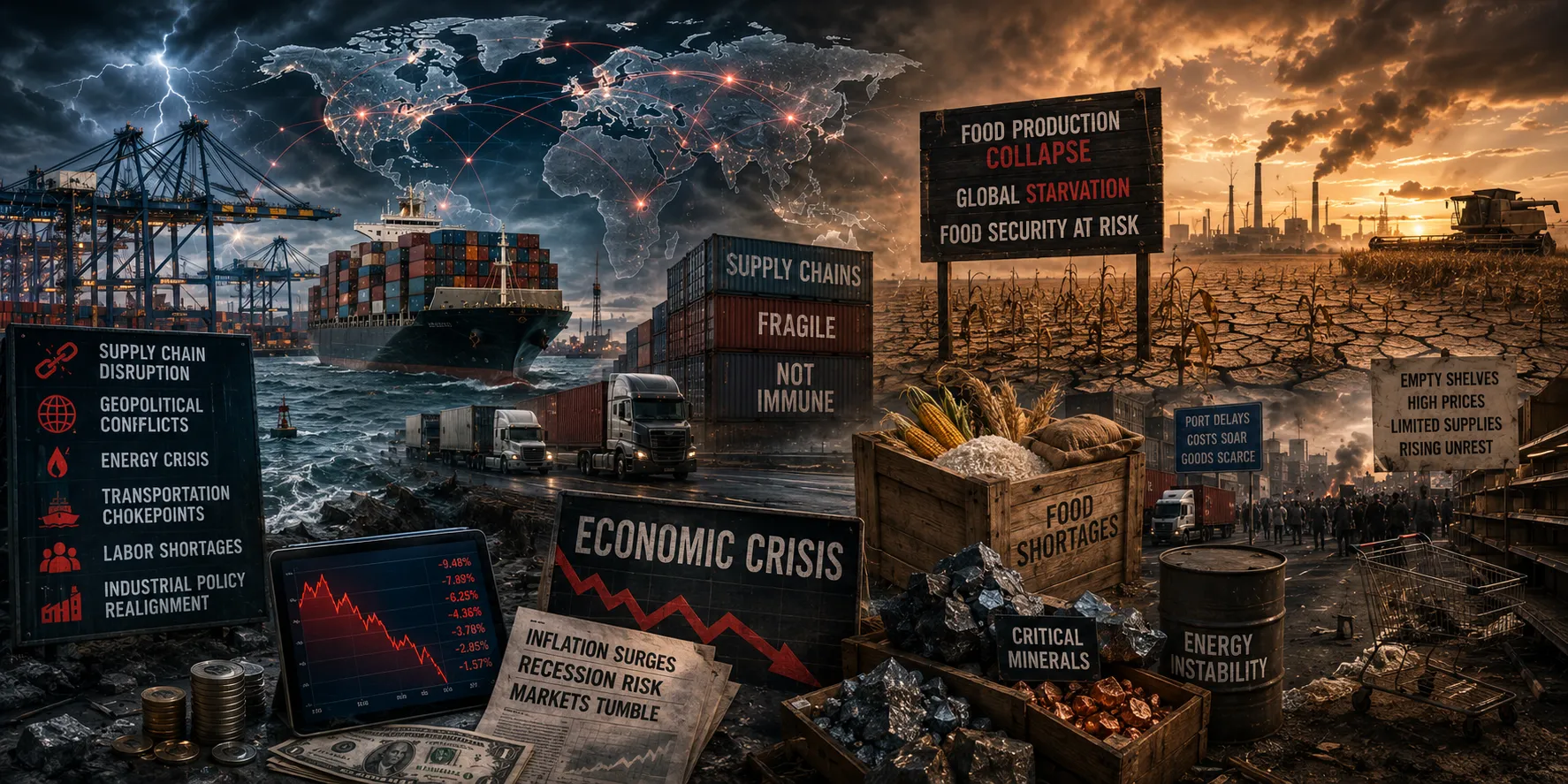
The global supply chain remains one of the most critical—and often overlooked—foundations of the modern economy. While international shipping has largely recovered from the disruptions experienced during the pandemic, governments and industries continue confronting a new generation of risks that extend far beyond transportation. Manufacturing realignment, strategic competition for critical minerals, energy costs, labor shortages, geopolitical tensions, and industrial policy are reshaping how nations produce, move, and secure essential goods. Rather than simply restoring the old globalized model, many countries are actively rebuilding supply chains around resilience, domestic production, and strategic independence.
At the same time, global food production is facing mounting pressure from multiple directions. Extreme weather events, prolonged droughts, flooding, fertilizer costs, agricultural input shortages, animal disease outbreaks, water scarcity, and regional conflicts have all contributed to increased uncertainty throughout the global food system. Many developing nations remain heavily dependent on imported grain, fertilizer, and fuel, making them particularly vulnerable to disruptions in transportation networks or commodity markets. Even modest interruptions in production or shipping can rapidly translate into higher food prices, inflation, and growing food insecurity across vulnerable regions.
These interconnected challenges are occurring against the backdrop of slowing global economic growth. As governments increase tariffs, encourage domestic manufacturing, and compete for strategic resources, businesses face higher operating costs and more complex supply networks. Shipping lanes through critical maritime chokepoints—including the Strait of Hormuz, the Red Sea, and the South China Sea—remain essential to the movement of energy, food, and manufactured goods. The result is a global economy that is becoming increasingly efficient at managing routine operations while simultaneously becoming more sensitive to major geopolitical or environmental disruptions.
Signals & Threads
Looking beyond the headlines, several powerful signals continue to converge. The recurring threads include economic nationalism, strategic resource competition, food security, energy reliability, maritime security, industrial resilience, and global logistics. Supply chains are no longer viewed simply as commercial networks—they have become instruments of national security and geopolitical influence. As climate pressures, regional conflicts, infrastructure constraints, and economic fragmentation continue to interact, the resilience of global food and industrial systems will become one of the defining challenges of the coming decade. Nations capable of securing reliable energy, resilient manufacturing, diversified supply chains, and stable food production will be better positioned to navigate an increasingly uncertain global environment.

5. Global Climate Extremes Reshape the Risk Landscape
Heat Waves, Flooding, Wildfires & Infrastructure Under Pressure
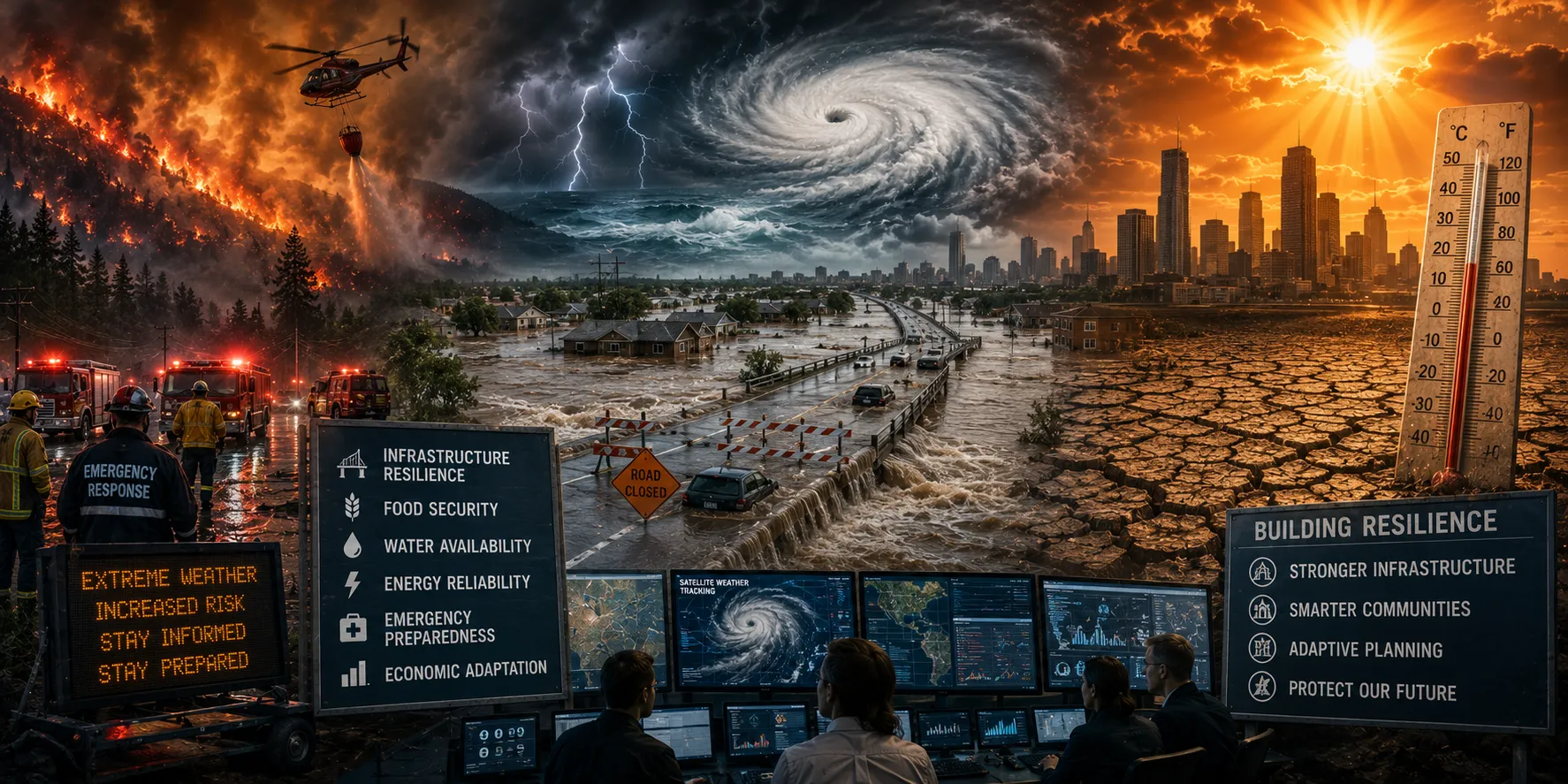
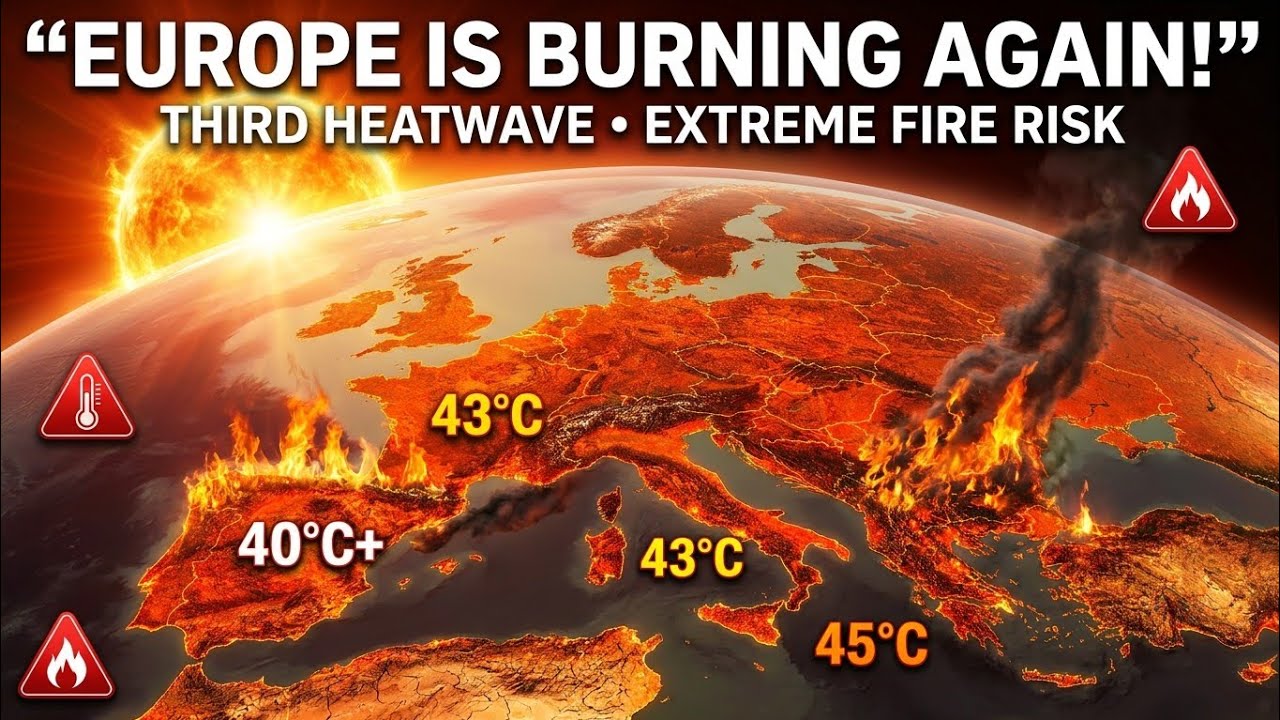
Around the world, extreme weather events continue to test the resilience of modern infrastructure, agriculture, and emergency response systems. Record-breaking heat waves, widespread flooding, severe storms, prolonged droughts, rapidly expanding wildfire conditions, and shifting seasonal weather patterns have become recurring features across multiple continents. These events are affecting transportation networks, power grids, water supplies, insurance markets, and food production simultaneously, reinforcing the growing importance of climate adaptation and long-term infrastructure planning.
Beyond the immediate damage caused by individual weather events, governments and industries are increasingly recognizing the cumulative economic impact of repeated disruptions. Flooded transportation corridors interrupt supply chains, prolonged heat stresses electrical grids, drought conditions reduce agricultural output, and major storms require billions of dollars in rebuilding efforts. Insurance companies continue reassessing risk models, while municipalities invest in flood control, wildfire mitigation, upgraded drainage systems, and more resilient energy infrastructure designed to withstand increasingly volatile environmental conditions.
The challenge extends beyond disaster response toward long-term resilience planning. Urban planners, utility providers, agricultural producers, engineers, and policymakers are reevaluating decades of infrastructure assumptions as extreme weather events become more frequent and more costly. Whether driven by changing climate conditions, natural weather variability, expanding urban development, or a combination of multiple factors, governments worldwide are accelerating investments designed to improve preparedness, reduce vulnerability, and maintain continuity during increasingly disruptive environmental events.
Signals & Threads
Looking beyond the individual headlines, several powerful patterns continue to converge. The recurring threads include infrastructure resilience, food security, water availability, energy reliability, insurance risk, emergency preparedness, and economic adaptation. Extreme weather is no longer viewed solely as an environmental issue—it has become a strategic challenge affecting national security, public safety, economic stability, and long-term investment planning. As climate-related disruptions increasingly intersect with global supply chains, agricultural production, energy systems, and urban infrastructure, resilience itself is emerging as one of the defining priorities of the coming decade. The nations and communities that invest in adaptable infrastructure, diversified resources, and proactive planning will be better positioned to navigate an increasingly complex and unpredictable operating environment.


Connecting the Dots: Unpacking This Weeks Top 5 MSM News Events
From Headlines to Patterns
One of the core objectives of the Truth Seekers Weekly Briefing is to move beyond simply reporting the week’s biggest stories and instead identify the larger patterns connecting them. Individual news events often appear isolated when viewed on their own, but when examined collectively, they frequently reveal broader trends that are reshaping geopolitics, economics, technology, society, and global security. Our goal is not to predict the future, but to recognize recurring signals that provide greater context for understanding the present.
Throughout this section, each of the week’s top mainstream stories is examined through the lens of pattern recognition. We ask what larger forces may be driving the event, how it relates to other developments around the world, and what recurring themes are beginning to emerge. In many cases, a single headline reflects multiple overlapping dynamics—technological change, strategic competition, infrastructure challenges, demographic shifts, environmental pressures, or evolving national priorities. Identifying these connections helps transform individual events into a more coherent picture of global change.
As you read the following analyses, consider each story as one piece of a much larger puzzle. Rather than viewing today’s headlines as disconnected events, we encourage readers to look for the threads that link them together. Over time, these threads form recognizable patterns, and those patterns offer valuable insight into the long-term direction of global developments. By connecting the dots, we move beyond the daily news cycle and develop a broader perspective on the forces shaping the world around us.
Connecting the Dots
Mapping the Patterns Behind This Week’s Top 5 Mainstream News Stories
Rather than viewing each story independently, we can gain a much deeper understanding by identifying the recurring patterns that connect them. Every major headline represents more than a single event—it reveals broader forces reshaping the geopolitical, economic, technological, and environmental landscape. As we move from Signals → Threads → Patterns, a much clearer picture of the world’s direction begins to emerge.

1. Election Security & Foreign Influence Operations
Pattern: Information Has Become a Strategic Battleground
The renewed focus on election security and newly declassified intelligence regarding alleged Chinese influence activities highlights a broader shift in how nations compete for strategic advantage. While traditional conflicts have centered on military power, territory, and economic sanctions, modern competition increasingly extends into cyberspace, intelligence gathering, information operations, and critical digital infrastructure. Elections, communications networks, and public information ecosystems are now viewed as strategic assets that governments seek to protect from foreign interference.
A second pattern is the growing convergence between cybersecurity, intelligence, and public trust. Modern democratic systems depend not only on secure election infrastructure but also on confidence that electoral processes remain free from undue foreign influence. Allegations of cyber operations, influence campaigns, or intelligence activities can shape public debate even before questions of attribution or impact are fully resolved. As a result, election security has expanded beyond voting systems themselves to include digital networks, social media, cyber resilience, and the broader information environment.
Connecting these dots reveals a larger transformation taking place across the geopolitical landscape. Information has become a strategic domain alongside land, sea, air, space, and cyberspace. Governments are investing heavily in intelligence capabilities, cyber defense, election security, and counter-influence operations, while citizens are increasingly challenged to distinguish verified information from misinformation, propaganda, and competing narratives. The emerging pattern is clear: the competition for influence is no longer confined to borders—it increasingly centers on the ability to shape information, public confidence, and institutional trust.

2. Middle East Crisis
Pattern: Regional Conflicts Have Become Global Economic Events
The first pattern is that modern regional conflicts no longer remain regional. The Middle East demonstrates how military activity, diplomatic negotiations, attacks on shipping, and instability surrounding strategic chokepoints such as the Strait of Hormuz immediately affect oil prices, shipping insurance, financial markets, inflation expectations, and government policy around the world. Geography has become inseparable from economics.
A second pattern is the increasing importance of maritime security. The world’s economy depends upon a relatively small number of strategic shipping corridors, making naval security and freedom of navigation essential components of global commerce. Energy security, military deterrence, and international diplomacy are now operating as a single integrated system rather than independent policy areas.
Connecting these dots reveals a broader transition toward strategic resilience. Governments are expanding energy reserves, diversifying supply routes, strengthening military alliances, and investing in domestic energy production. The larger pattern is clear: geopolitical stability has become one of the primary drivers of global economic stability.

3. Artificial Intelligence Infrastructure
Pattern: Digital Innovation Now Depends Upon Physical Infrastructure
The AI revolution is increasingly revealing that software innovation alone is no longer enough. Massive computing facilities require enormous investments in electrical grids, water resources, semiconductor manufacturing, fiber-optic networks, and financing. Technology is becoming deeply dependent upon physical infrastructure.
A second emerging pattern is the transition from speculative investment toward operational sustainability. Investors, lenders, regulators, and local governments are beginning to evaluate AI projects based not only on technological promise but also on electricity availability, construction costs, community impacts, and long-term profitability. Capital markets are becoming more selective as infrastructure limitations become increasingly visible.
Connecting these developments reveals that the future AI race will likely be determined less by algorithms alone and more by which nations can build the energy systems, manufacturing capacity, workforce, and infrastructure necessary to support long-term technological leadership.
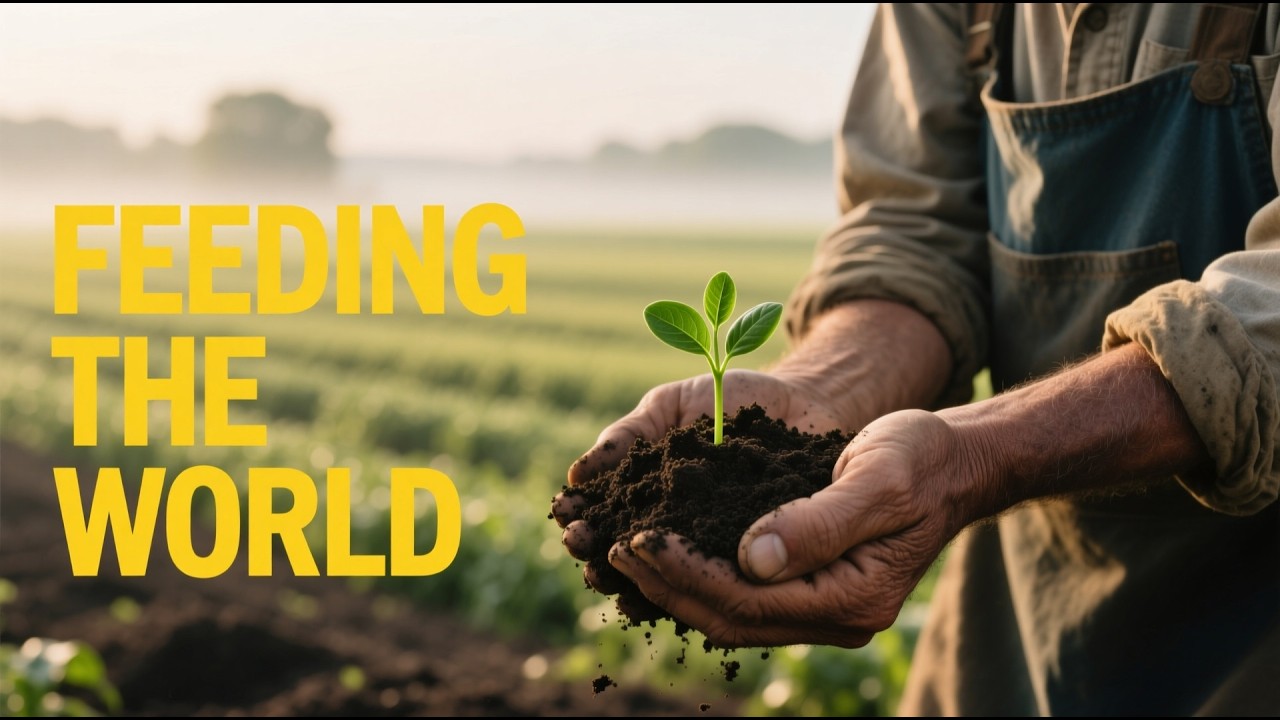
4. Global Supply Chains & Food Security
Pattern: Efficiency Is Giving Way to Resilience
For decades, globalization emphasized maximum efficiency through just-in-time manufacturing and globally integrated supply chains. That model is gradually giving way to a new emphasis on resilience, redundancy, and strategic independence as governments respond to repeated disruptions caused by pandemics, geopolitical conflicts, extreme weather, and economic uncertainty.
Food production illustrates this transformation particularly well. Agriculture depends upon fertilizer, energy, transportation, water availability, labor, and international trade. Disruptions affecting any one of these systems rapidly spread throughout the entire food supply chain. Nations increasingly recognize that food security has become inseparable from national security.
Connecting these dots reveals a long-term restructuring of global manufacturing, shipping, agriculture, and industrial policy. Countries are increasingly prioritizing domestic production, diversified suppliers, strategic reserves, and secure transportation corridors to reduce vulnerability to future disruptions.
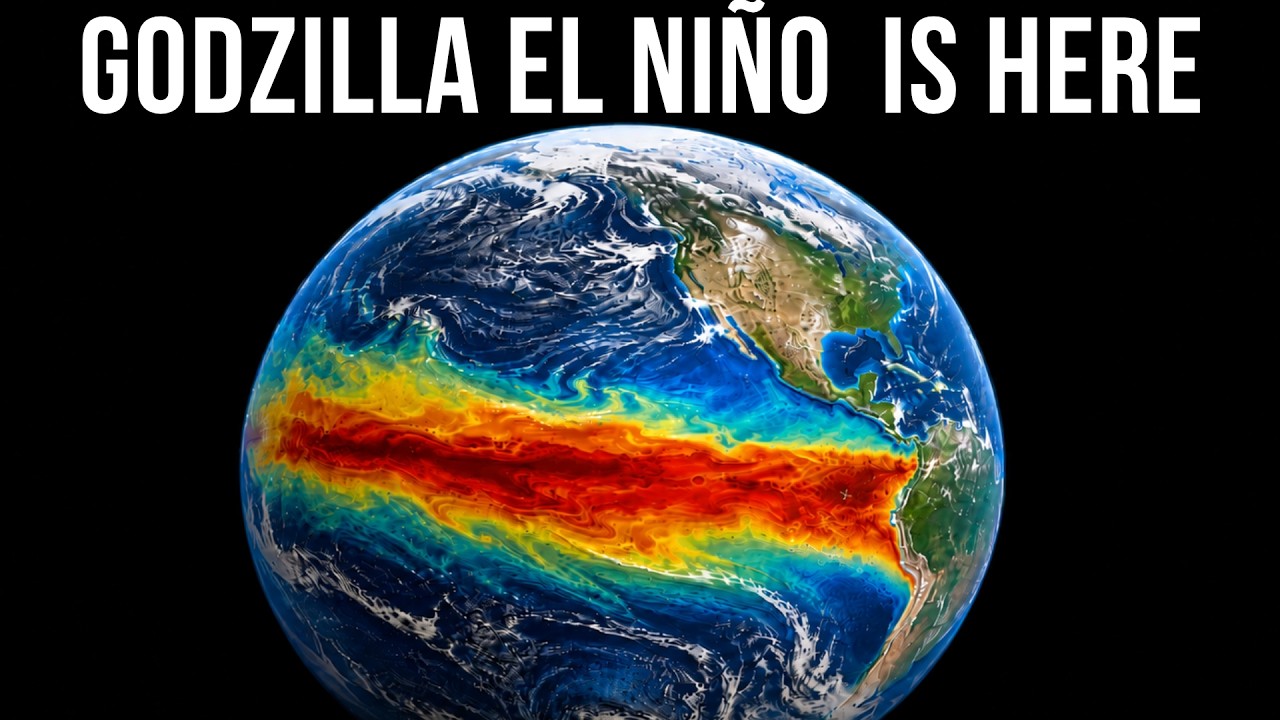
5. Global Climate & Extreme Weather
Pattern: Environmental Events Have Become Economic Events
Extreme weather is no longer viewed solely through the lens of environmental science. Heat waves, flooding, wildfires, droughts, and severe storms increasingly affect transportation infrastructure, electrical grids, insurance markets, agricultural production, public health, and government budgets. Every major weather event now produces measurable economic consequences.
Another emerging pattern is the transition from disaster recovery toward resilience planning. Governments are investing in flood protection, wildfire mitigation, electrical grid modernization, drought preparedness, emergency communications, and infrastructure capable of operating under increasingly variable environmental conditions.
Connecting these developments reveals that climate adaptation is becoming a central economic planning issue. Infrastructure resilience, water management, food production, energy reliability, and emergency preparedness are gradually becoming integrated into long-term national investment strategies.
Alternative News & Perspectives
Top 5 Stories & Events for this Week
Looking Beyond the Headlines
One of the defining characteristics of alternative media is its willingness to investigate questions that receive limited attention within traditional news coverage. Rather than concentrating primarily on daily political developments or financial markets, independent researchers often explore long-term trends involving health, consciousness, emerging technologies, historical mysteries, institutional accountability, environmental change, and the future direction of society. These discussions frequently combine established research with exploratory ideas, encouraging readers to examine subjects from multiple perspectives.
The alternative information landscape is also remarkably diverse. It includes investigative journalists, scientists, physicians, historians, engineers, economists, educators, former government officials, independent researchers, and citizen journalists, each bringing different methods, assumptions, and interpretations. As a result, the quality of evidence and the level of consensus vary considerably across topics. Some discussions build upon peer-reviewed research and newly emerging science, while others remain speculative or represent hypotheses that continue to be debated. Recognizing these distinctions is an important part of thoughtful analysis and informed discernment.
At Truth Seekers Weekly Briefing, our objective is not simply to collect unconventional stories, but to identify the broader signals, threads, and patterns emerging across the alternative research community. The value of this section lies in observing which questions continue to surface across multiple disciplines and why they are resonating with growing audiences around the world. By comparing these perspectives with mainstream reporting, readers can develop a more comprehensive understanding of the issues shaping our rapidly evolving world and strengthen their own ability to think critically, connect the dots, and reach well-informed conclusions.
Top Alternative News & Events | July 2026
Exploring Emerging Narratives, Independent Research & Alternative Perspectives Shaping the Global Conversation
While mainstream media often focuses on politics, financial markets, conflict, and breaking events, the alternative media landscape tends to explore a different set of questions—ones centered on consciousness, historical mysteries, emerging health research, institutional transparency, technological change, and the long-term direction of civilization. Some of these topics remain speculative, others are supported by evolving research, and many continue to generate active debate among independent journalists, researchers, scientists, and growing online communities. Together, they offer a window into ideas and perspectives that are receiving increasing public attention outside traditional news coverage.
The purpose of this section is not to endorse every claim presented within the alternative media ecosystem, but to examine the broader themes and recurring patterns emerging across these discussions. By identifying the questions being asked, the assumptions being challenged, and the trends gaining momentum, we can better understand how alternative narratives are influencing public discourse. Whether exploring institutional trust, human potential, ancient history, resilience, health optimization, technological transformation, or consciousness research, these stories often reflect a deeper search for meaning, context, and new ways of understanding a rapidly changing world.
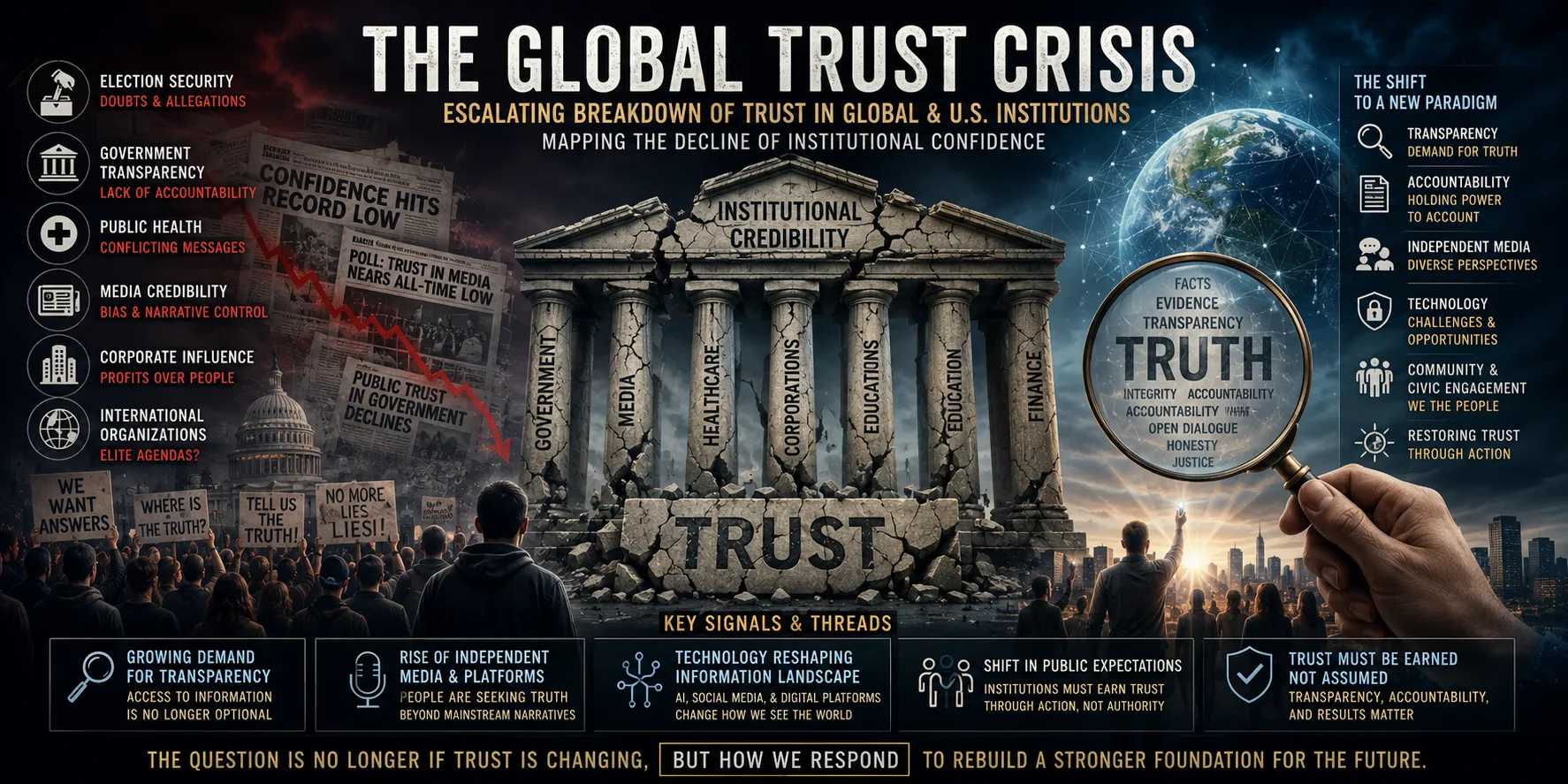
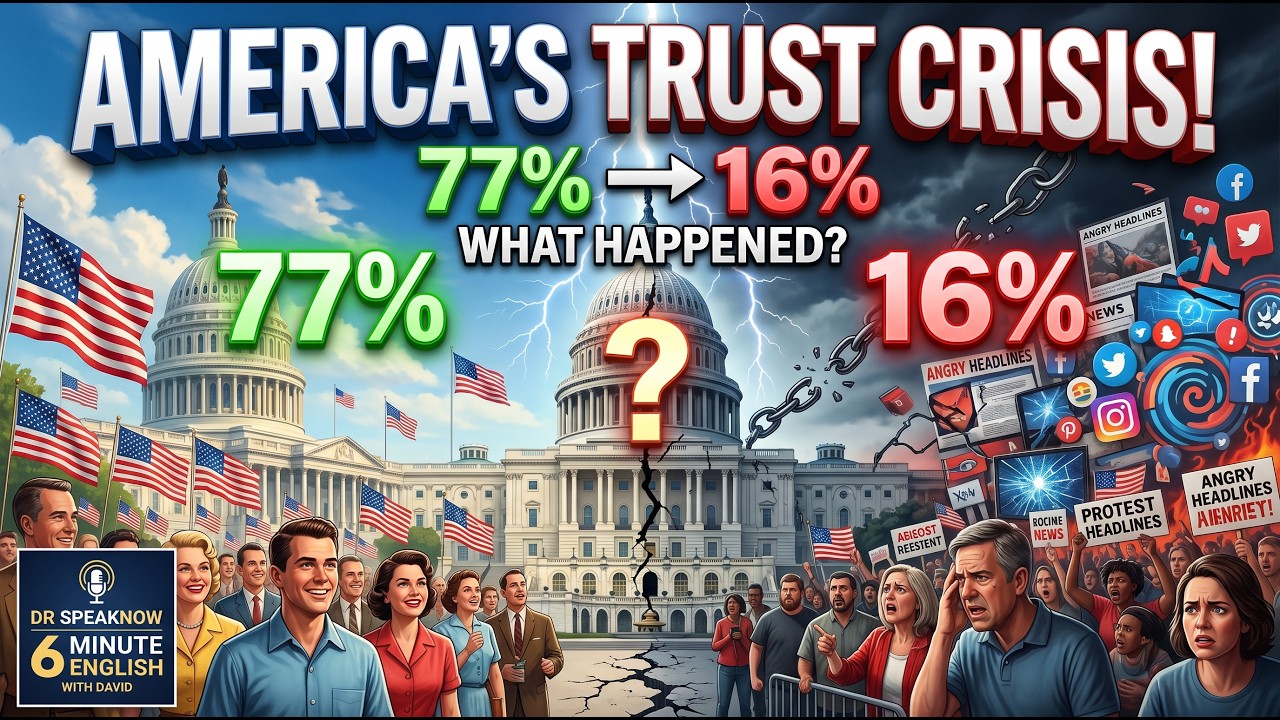
1. The Global Trust Crisis
Escalating Breakdown of Trust in Global & U.S. Institutions
Mapping the Decline of Institutional Confidence
One of the most significant trends emerging across mainstream reporting is not a single headline, but a persistent shift in public confidence toward major institutions. Stories involving election security, government transparency, economic policy, public health, corporate influence, artificial intelligence, and international organizations increasingly contain references to declining trust, political polarization, or demands for greater accountability. While each report focuses on a different subject, together they suggest that confidence in institutions has become an important issue in its own right. The discussion is no longer limited to whether institutions are functioning effectively, but whether large segments of the public believe they are acting transparently, consistently, and in the public interest.
Several factors are contributing to this erosion of confidence. Rapid technological change has dramatically increased the speed and volume of information available to the public, making it easier to compare competing narratives and question official statements. At the same time, economic uncertainty, geopolitical tensions, and highly polarized political environments have intensified public scrutiny of governments, media organizations, corporations, financial institutions, and public health agencies. Whether those concerns ultimately prove justified or not, the perception of declining credibility can itself influence behavior by affecting voting patterns, consumer confidence, investment decisions, and civic participation.
The broader implication extends well beyond politics. Trust functions as a form of social infrastructure that enables institutions, markets, and communities to operate efficiently. When confidence weakens, governments face greater challenges implementing policy, businesses encounter increased skepticism, public communication becomes more difficult, and misinformation can spread more easily through fragmented information channels. In this environment, transparency, accountability, and effective communication become increasingly important for maintaining public confidence and institutional legitimacy.
Signals & Threads
When these developments are viewed together, several recurring signals begin to emerge. First is the growing demand for transparency across nearly every sector of society. Citizens increasingly expect greater access to government records, corporate disclosures, scientific research, financial reporting, and public decision-making. Second is the expansion of independent media, digital journalism, podcasts, and alternative information platforms, reflecting a public desire to compare multiple perspectives rather than rely exclusively on traditional news sources. Third is the increasing role of technology in shaping public discourse, as artificial intelligence, social media algorithms, cybersecurity concerns, and digital communication platforms fundamentally alter how information is created, distributed, and evaluated.
Taken together, these signals point toward a broader structural transition in how societies establish credibility and legitimacy. Trust is becoming less dependent on institutional authority alone and more closely tied to openness, verifiable information, responsiveness, and demonstrated performance. Regardless of political viewpoint, the recurring pattern suggests that institutions across government, business, healthcare, media, finance, and education are operating in an environment where public confidence can no longer be assumed—it must be continually earned. Understanding this shift provides important context for interpreting many of today’s headlines, as questions of trust increasingly influence how citizens respond to events across every major area of public life.

2. Rewriting Human History?
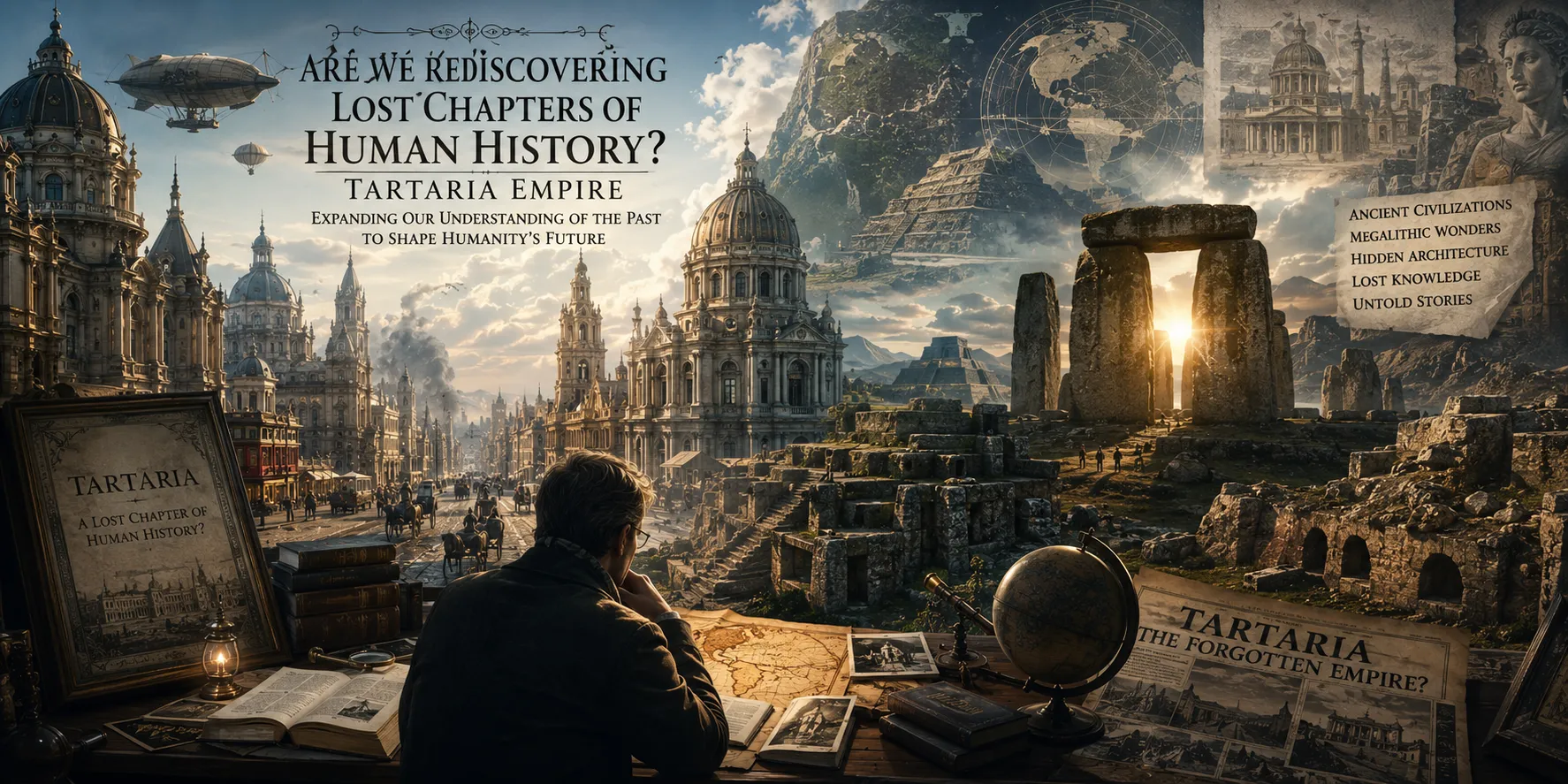
Lost Civilizations, Tartaria & the Search for Humanity’s Missing Chapters
Alternative research into Tartaria, ancient civilizations, megalithic architecture, unexplained archaeological discoveries, and historical anomalies continues to attract growing global attention. Researchers, independent historians, and curious audiences are increasingly reexamining accepted historical timelines, questioning whether some aspects of humanity’s past remain incomplete, misunderstood, or insufficiently documented. While many of the claims circulating within these discussions remain highly contested and are not accepted by the mainstream historical community, the broader movement reflects an expanding interest in investigating overlooked evidence, forgotten cultures, and unanswered questions surrounding humanity’s early development.
One reason this topic continues to resonate is the remarkable sophistication of many ancient civilizations. Massive stone structures, precisely engineered monuments, advanced astronomical alignments, and enduring architectural achievements continue to inspire both admiration and debate. Conventional archaeology explains many of these accomplishments through the gradual development of engineering, mathematics, and organized societies over long periods of time. At the same time, alternative researchers argue that some discoveries warrant further investigation and suggest that future archaeological findings could continue refining or expanding our understanding of ancient history. Regardless of where one stands on these interpretations, new discoveries regularly remind us that human history remains an active field of exploration rather than a completely finished narrative.
The larger significance extends beyond archaeology itself. Questions about humanity’s origins influence how societies understand culture, innovation, resilience, and the long arc of civilization. If future discoveries continue filling gaps in the historical record, they may not overturn established history, but they could deepen our appreciation for the complexity of human development and the diversity of civilizations that have contributed to it. The enduring fascination with lost civilizations ultimately reflects something deeper than curiosity about the past—it reflects humanity’s ongoing search to better understand who we are, where we came from, and how our collective story continues to evolve.
Signals & Threads
The recurring signal behind this growing interest is a broader willingness to revisit long-held assumptions as new archaeological discoveries, improved scientific dating techniques, digital mapping technologies, satellite imaging, and interdisciplinary research continue expanding our knowledge of the ancient world. At the same time, the popularity of topics such as Tartaria, megalithic engineering, and forgotten civilizations demonstrates a growing public appetite for exploring unanswered historical questions. Whether future research confirms, refines, or challenges existing interpretations, the larger pattern is clear: interest in humanity’s deep past is growing, and that search for understanding continues to shape conversations about civilization, culture, and humanity’s future.


3. The Fragility of Complexity
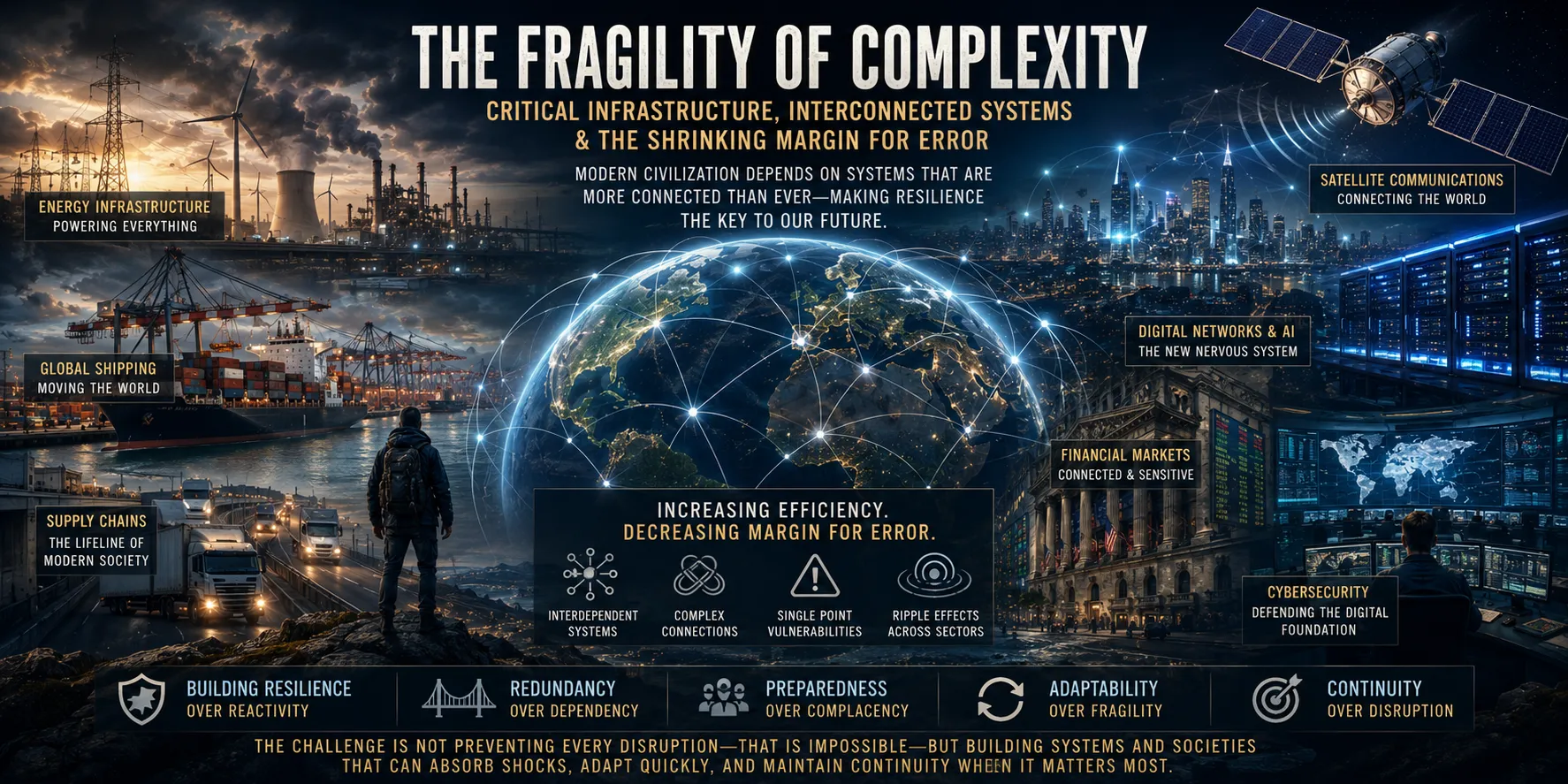
Critical Infrastructure, Interconnected Systems & the Shrinking Margin for Error
Modern civilization has been built upon an extraordinary network of interconnected systems that most people rarely notice until they are disrupted. Electricity powers communications. Communications support financial markets. Financial markets fund manufacturing. Manufacturing depends upon global shipping. Shipping relies on fuel, ports, satellites, cybersecurity, and stable geopolitical conditions. Alternative researchers increasingly suggest that while these systems have become remarkably efficient, they have also become more tightly coupled, meaning disruptions in one area can ripple rapidly across many others. The concern is not that collapse is inevitable, but that growing complexity may be reducing the margin for error that once provided greater resilience.
Recent events have reinforced this perspective. Energy infrastructure remains vulnerable to geopolitical tensions around strategic chokepoints such as the Strait of Hormuz. Electrical grids face growing demands from electrification, artificial intelligence, and expanding data centers. Cloud computing now supports everything from banking and healthcare to transportation and government services, while satellite networks increasingly underpin navigation, communications, weather forecasting, precision agriculture, and global commerce. Individually, these systems have demonstrated remarkable reliability, yet together they reveal an unprecedented level of interdependence where localized disruptions can produce consequences far beyond their point of origin.
The larger question emerging from this pattern is not whether modern infrastructure is failing, but whether society has become increasingly dependent upon a relatively small number of critical systems whose uninterrupted operation is essential for daily life. Governments, utilities, technology companies, and infrastructure operators are investing heavily in cybersecurity, grid modernization, supply-chain diversification, emergency preparedness, and redundant communications to strengthen resilience. Alternative researchers view these efforts as recognition that resilience is becoming just as important as efficiency. Whether discussing energy, transportation, finance, digital networks, or communications, the recurring theme remains consistent: the future stability of modern civilization depends not only on building smarter systems, but also on building systems capable of adapting to unexpected disruption.
Signals & Threads
Several recurring signals connect this broader pattern. Energy, transportation, communications, finance, cloud computing, artificial intelligence, and cybersecurity are becoming increasingly interconnected, meaning disruptions in one sector can quickly influence many others. Governments and businesses are responding by modernizing infrastructure, strengthening cybersecurity, diversifying supply chains, and investing in greater redundancy to improve long-term resilience.
Connecting these threads reveals a larger transition from prioritizing maximum efficiency toward building greater resilience. As modern civilization becomes more dependent on critical infrastructure and digital networks, maintaining continuity during unexpected disruptions is becoming just as important as expanding capacity. The emerging pattern suggests that future success will depend not only on innovation, but also on the ability to design systems that remain adaptable, secure, and resilient in an increasingly interconnected world.


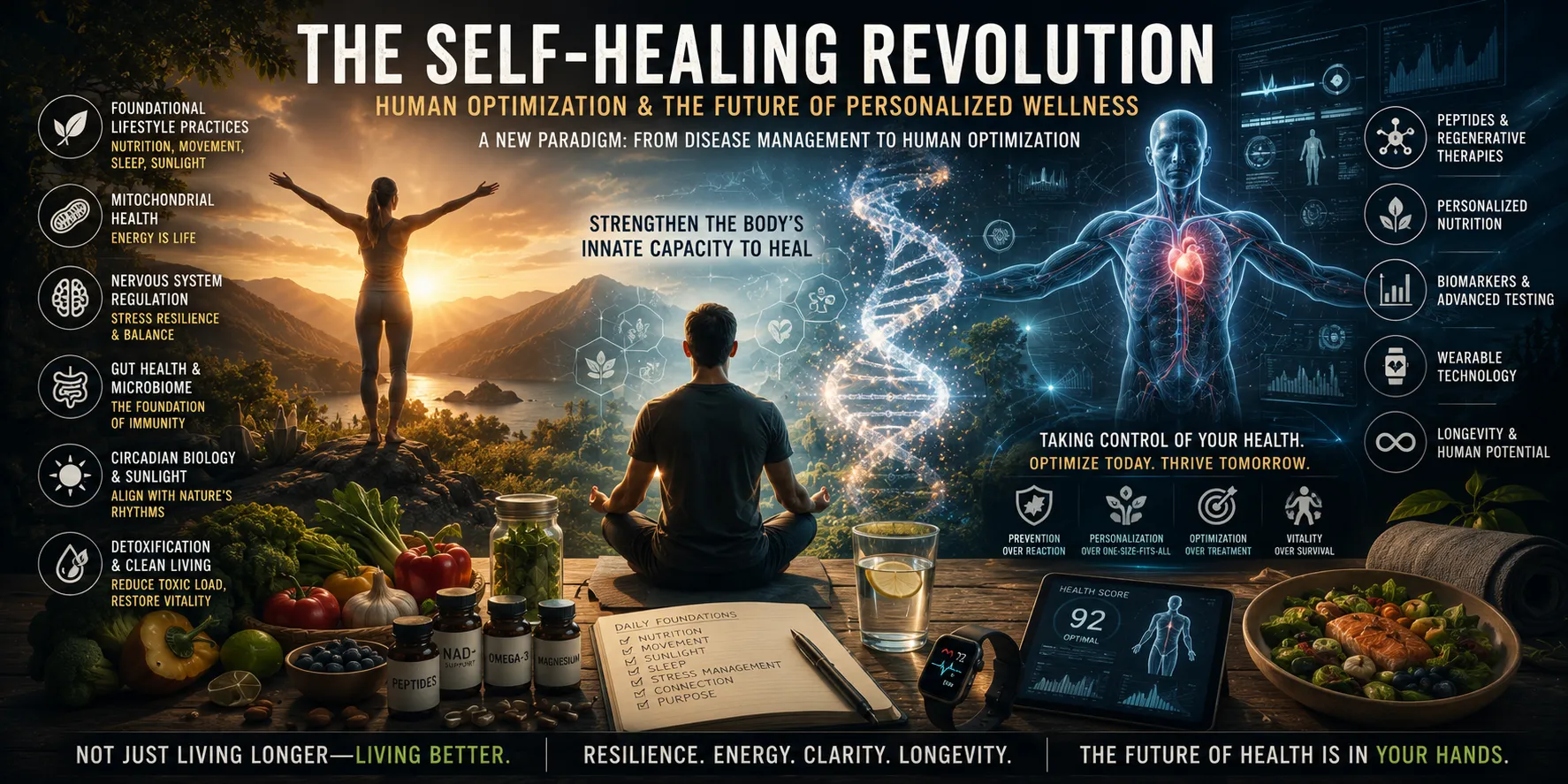
4. The Self-Healing Revolution
Human Optimization, Metabolic Health & the Future of Personalized Wellness
Alternative health communities are increasingly shifting the conversation away from simply treating disease and toward understanding how the human body maintains health in the first place. Growing interest in metabolic health, mitochondrial function, peptides, nutrition, circadian biology, nervous system regulation, gut health, sunlight exposure, movement, sleep, and detoxification reflects a broader philosophy that wellness is built through strengthening the body’s natural systems rather than focusing exclusively on managing illness after it develops. Rather than replacing conventional medicine, many practitioners advocate combining preventive lifestyle strategies with evidence-based medical care to improve long-term health outcomes.
This emerging perspective is fueled by advances in scientific research across multiple disciplines. Researchers continue exploring the connections between metabolism, chronic inflammation, stress physiology, the microbiome, immune function, hormonal balance, and cellular energy production. Personalized health technologies, wearable devices, continuous glucose monitoring, genetic testing, and biomarker analysis are allowing individuals to better understand how nutrition, exercise, sleep, environmental exposures, and daily habits influence their unique physiology. Together, these developments are encouraging a more individualized approach to health that recognizes significant differences between people rather than relying exclusively on one-size-fits-all recommendations.
The larger implication extends well beyond healthcare itself. As populations age and chronic disease continues to place increasing pressure on healthcare systems worldwide, preventive health and human performance are becoming economic as well as medical priorities. Alternative researchers frequently describe this transition as moving from disease management toward human optimization—a framework that emphasizes resilience, vitality, longevity, cognitive performance, emotional well-being, and quality of life. While many specific therapies continue to be researched and debated, the broader movement reflects growing public interest in becoming active participants in their own health rather than passive recipients of medical treatment.
Signals & Threads
Several important signals are emerging across this rapidly evolving field. Interest continues to grow in metabolic flexibility, mitochondrial health, personalized nutrition, peptides, functional medicine, longevity science, nervous system regulation, circadian biology, and lifestyle interventions that support long-term wellness. At the same time, advances in wearable technology, continuous health monitoring, artificial intelligence, and personalized data analysis are enabling individuals to measure and optimize health in ways that were previously unavailable outside research institutions.
Connecting these threads reveals a broader transformation in healthcare philosophy. Rather than asking only how disease can be treated, an increasing number of practitioners, researchers, and individuals are asking how health can be maintained, strengthened, and optimized throughout life. The emerging pattern suggests that the future of healthcare may increasingly combine preventive medicine, personalized science, technology, and foundational lifestyle practices into a more proactive model focused on resilience, longevity, and maximizing human potential.


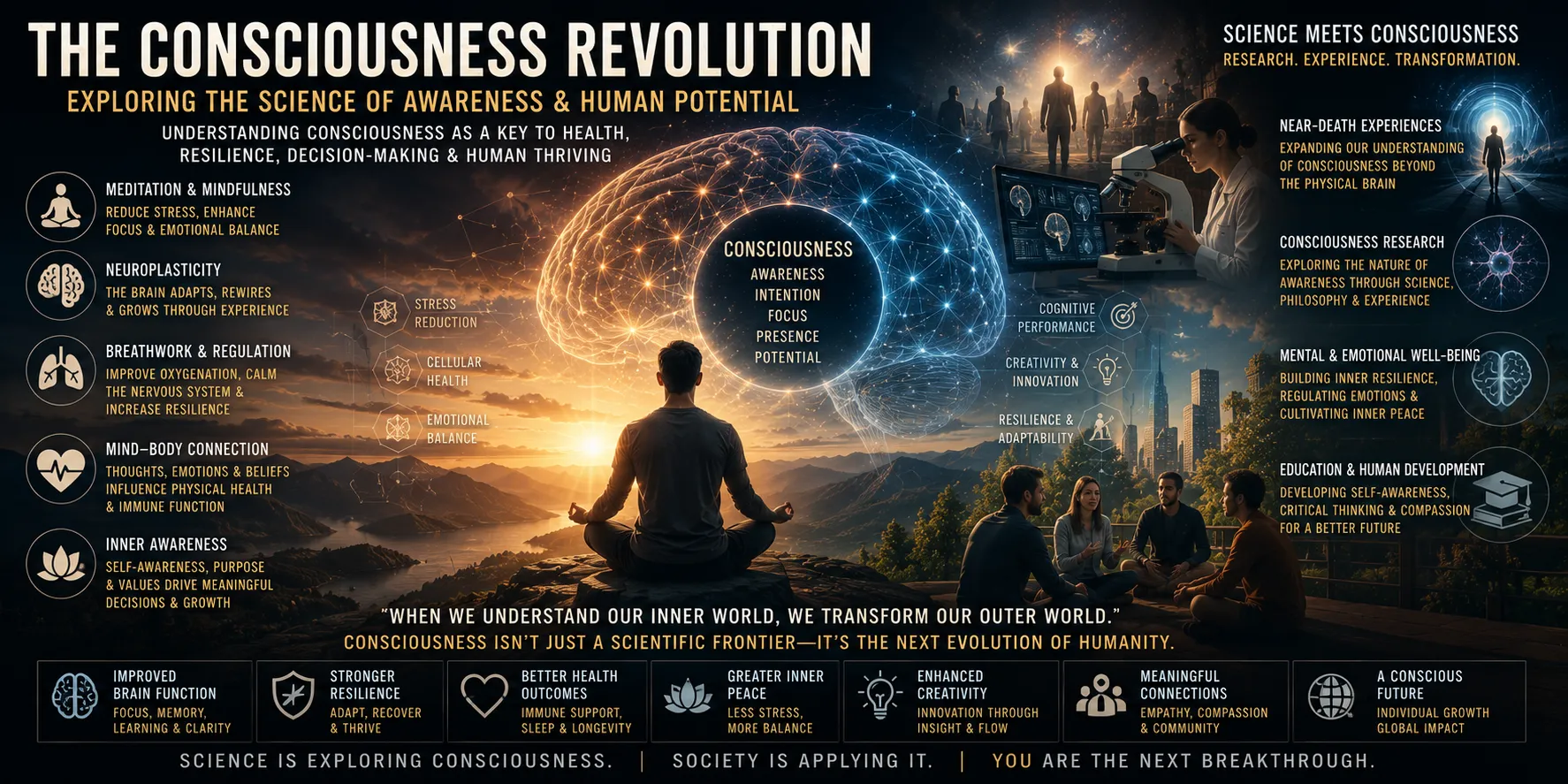
5. The Consciousness Revolution
Exploring the Science of Awareness, Human Potential & the Future of Well-Being
One of the most significant shifts occurring across science, medicine, and psychology is the growing willingness to study consciousness as a legitimate field of inquiry. Subjects once considered largely philosophical or spiritual—including meditation, breathwork, mindfulness, neuroplasticity, near-death experiences, altered states of awareness, and the relationship between the mind and body—are increasingly being explored through neuroscience, psychology, clinical medicine, and human performance research. Rather than replacing conventional scientific approaches, this growing body of work seeks to better understand how consciousness influences learning, resilience, emotional regulation, decision-making, creativity, and overall health.
Several developments are helping drive this expanding interest. Advances in brain imaging, neuroscience, biofeedback, and cognitive research are providing new tools for investigating how attention, stress, emotions, breathing patterns, and mental training affect brain function and physical health. Researchers continue exploring the effects of meditation on stress reduction, emotional resilience, immune function, sleep quality, cognitive performance, and mental well-being. At the same time, increasing interest in neuroplasticity suggests that the brain remains capable of adapting and reorganizing throughout life, opening new possibilities for learning, recovery, and personal growth.
The broader significance extends far beyond healthcare. As societies navigate rising levels of stress, information overload, technological change, and social complexity, many educators, business leaders, healthcare professionals, and researchers are recognizing that mental resilience, emotional intelligence, self-awareness, and cognitive flexibility may become increasingly valuable human skills. While many questions surrounding consciousness remain the subject of ongoing scientific investigation and philosophical debate, the overall trend reflects a growing recognition that understanding the human mind may be just as important as understanding the external world. Increasingly, consciousness is being viewed not simply as a spiritual concept, but as a practical component of health, leadership, creativity, learning, and human development.
Signals & Threads
Several recurring signals point toward this emerging shift. Scientific research into meditation, neuroplasticity, breathwork, stress physiology, sleep science, trauma recovery, mindfulness, and cognitive performance continues to expand across universities, hospitals, and research institutions. At the same time, organizations are increasingly incorporating mental wellness, resilience training, emotional intelligence, and mindfulness practices into healthcare, education, leadership development, and workplace performance programs.
Connecting these threads reveals a broader evolution in how human potential is being understood. Rather than viewing physical health, mental health, and consciousness as separate disciplines, an increasing number of researchers and practitioners are exploring how they interact as interconnected aspects of human well-being. The emerging pattern suggests that future approaches to health, education, and personal development may increasingly integrate neuroscience, psychology, physiology, and consciousness research into a more comprehensive understanding of what enables people to thrive.


Connecting the Dots
Finding the Patterns Beyond the Headlines
Alternative news often explores subjects that appear unrelated at first glance—declining institutional trust, lost civilizations, critical infrastructure, personalized health, and consciousness research. Individually, these topics can seem disconnected or even controversial. However, when viewed together, they begin to reveal larger themes about how society is changing. Connecting the dots allows us to move beyond isolated stories and recognize the broader shifts occurring across technology, culture, science, healthcare, education, and human development. It is often these recurring patterns, rather than any single headline, that provide the most meaningful insight into the direction of change.
This process is important because today’s world is increasingly interconnected. A growing interest in self-directed healthcare reflects broader questions about institutional trust. Advances in neuroscience and consciousness research intersect with discussions about human performance, education, and mental well-being. Renewed curiosity about ancient history mirrors a wider willingness to reexamine long-held assumptions as new discoveries emerge. Meanwhile, concerns about infrastructure resilience, cybersecurity, and global supply chains highlight how deeply modern civilization depends upon complex systems operating together. Looking across these subjects helps reveal not only where change is occurring, but why seemingly unrelated developments often emerge at the same time.
At Truth Seekers Weekly Briefing, connecting the dots is not about forcing every story into a single narrative or assuming every alternative claim is accurate. It is about recognizing recurring signals, evaluating evidence with discernment, and identifying the larger trends shaping our world. By stepping back from individual headlines and examining the relationships between events, readers gain a broader perspective that encourages critical thinking, independent research, and a deeper understanding of the complex transitions unfolding across society. In an age of overwhelming information, the ability to recognize patterns may be one of the most valuable skills we can develop.
Connecting the Dots
Mapping the Patterns Behind July’s Top Five Alternative Stories
The five alternative stories explored this month appear to cover very different subjects—declining institutional trust, lost history, infrastructure dependency, self-healing, and consciousness research. Yet when examined together, they reveal a consistent pattern: people are questioning inherited systems, searching for deeper explanations, and looking for new sources of knowledge, resilience, and personal agency. Each topic reflects a broader movement away from passive acceptance and toward independent investigation.

1. The Global Trust Crisis
Pattern: Institutional Authority Is Being Replaced by Demands for Verification
The first major pattern is the growing separation between institutional authority and public confidence. Governments, healthcare agencies, corporations, media organizations, universities, financial institutions, and international bodies may retain formal authority, but increasing numbers of people no longer accept their statements solely because of status or credentials. Audiences are seeking documents, data, independent analysis, firsthand testimony, and greater transparency before reaching conclusions.
This shift is being accelerated by the modern information environment. Digital platforms allow citizens to compare official statements with alternative reporting, leaked documents, historical records, expert interviews, and competing interpretations almost instantly. This creates greater access to information, but it also produces confusion, polarization, and difficulty distinguishing credible evidence from speculation. The resulting trust crisis is therefore not only about institutional failures; it is also about the fragmentation of shared reality.
Connecting the dots reveals that legitimacy is being redefined. Institutions can no longer rely exclusively on reputation, tradition, or centralized control of information. Trust increasingly depends on openness, accountability, consistency, verifiable evidence, and demonstrated results. The larger pattern is a transition from automatic trust toward conditional trust—where confidence must be earned repeatedly through transparency and performance.

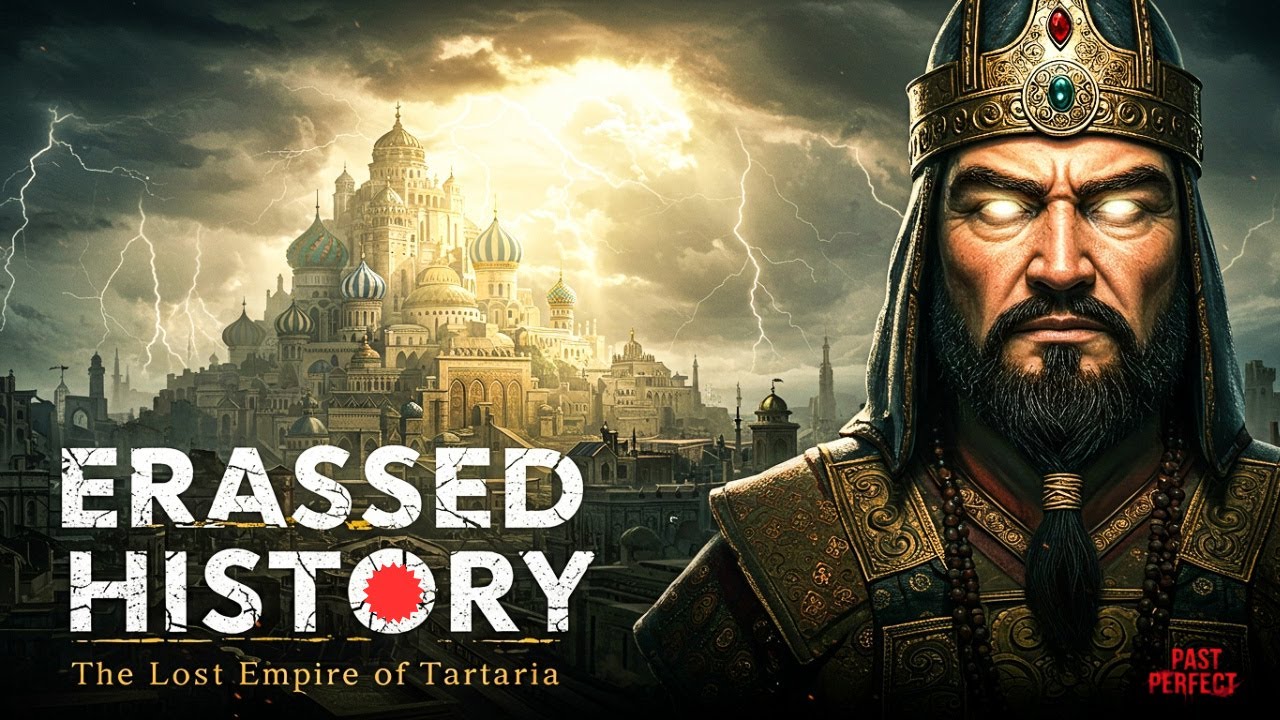
2. Lost Civilizations, Tartaria & Humanity’s Missing History
Pattern: The Public Is Reexamining Inherited Historical Narratives
The growing interest in Tartaria, lost civilizations, megalithic structures, ancient technologies, and disputed historical timelines reflects a broader willingness to question whether conventional history fully explains humanity’s past. Some claims within this field are speculative or unsupported, while others arise from genuine archaeological mysteries, incomplete records, newly discovered sites, or changing interpretations of ancient cultures. The important pattern is not that every alternative claim is correct, but that public confidence in fixed historical narratives is weakening.
This renewed investigation is being supported by modern tools. Satellite imaging, ground-penetrating radar, DNA analysis, improved dating methods, digital archives, and global information sharing are revealing new evidence and allowing researchers to compare architectural, cultural, and technological similarities across regions. These developments remind us that history is not a finished story. It is an evolving reconstruction based on surviving evidence, interpretation, and continued discovery.
Connecting the dots shows that this fascination with the past is also about the future. If earlier civilizations possessed greater sophistication, resilience, or knowledge than previously understood, humanity may need to reconsider its assumptions about progress and technological development. The broader pattern is a search for lost context—an effort to understand whether rediscovering forgotten chapters of human history could provide insight into civilization, collapse, renewal, and our own future direction.

3. The Fragility of Complexity
Pattern: Efficiency Is Increasing Dependency While Reducing Redundancy
Modern civilization depends on tightly connected systems that deliver extraordinary efficiency but also create shared vulnerabilities. Energy grids support communications, cloud computing, financial markets, transportation, healthcare, and food distribution. Shipping depends on ports, fuel, satellites, insurance, cybersecurity, and geopolitical stability. When these systems work, they appear seamless. When one fails, the disruption can spread rapidly across sectors.
The recurring pattern is the steady removal of excess capacity and redundancy in pursuit of lower costs and faster performance. Just-in-time supply chains, centralized digital services, limited inventories, concentrated manufacturing, and heavily loaded electrical grids can operate efficiently under stable conditions. However, the same optimization may leave less room for unexpected shocks, cyberattacks, weather events, conflict, equipment failure, or sudden demand surges.
Connecting the dots reveals that resilience is becoming a defining strategic priority. Governments, businesses, and communities are beginning to recognize that efficiency without backup capacity creates hidden risk. The larger transition is from systems designed only to perform under ideal conditions toward systems capable of absorbing disruption, decentralizing critical functions, maintaining continuity, and recovering quickly when conditions deteriorate.

4. The Self-Healing Revolution
Pattern: Healthcare Is Shifting From Passive Treatment Toward Personal Agency
The expanding interest in metabolic health, peptides, mitochondrial function, nutrition, circadian biology, nervous system regulation, sunlight, detoxification, and personalized wellness reflects growing dissatisfaction with healthcare models centered primarily on treating symptoms after disease develops. Many individuals are seeking ways to understand the underlying conditions that support health, energy, immunity, recovery, and longevity.
This movement reflects a broader transition from standardized treatment toward individualized health management. Wearable devices, continuous glucose monitors, advanced laboratory testing, genetic information, and health-tracking technologies are giving people access to personal data that was once limited to clinics and research institutions. At the same time, lifestyle practices such as sleep, movement, nutrition, stress regulation, and exposure to natural light are being reconsidered as core biological inputs rather than optional wellness habits.
Connecting the dots reveals that the deeper pattern is the return of agency to the individual. People increasingly want to participate in their own healing, understand their physiology, and make preventive choices before illness becomes severe. The emerging healthcare model may combine conventional medicine, personalized diagnostics, technology, lifestyle interventions, and regenerative approaches into a system focused not only on disease management, but on resilience, vitality, and human optimization.

5. The Consciousness Revolution
Pattern: The Inner World Is Becoming a Serious Field of Investigation
Meditation, breathwork, mindfulness, neuroplasticity, altered states, near-death experiences, trauma recovery, and consciousness research are gradually moving from the margins toward broader scientific and cultural discussion. Researchers are increasingly examining how attention, emotion, belief, stress, and mental training influence brain function, behavior, physical health, and decision-making. Consciousness is no longer being discussed only as a spiritual idea, but also as a practical dimension of human performance and well-being.
This pattern is emerging partly because modern life is placing unprecedented pressure on the human nervous system. Information overload, social fragmentation, economic uncertainty, digital stimulation, and rapid technological change are increasing the need for emotional regulation, mental clarity, adaptability, and resilience. Practices once associated primarily with spiritual traditions are now being used in hospitals, schools, corporations, athletic programs, and trauma-treatment settings.
Connecting the dots reveals that the study of consciousness may become increasingly central to understanding human development. As artificial intelligence expands external intelligence and technological capability, humanity may place greater value on qualities such as self-awareness, discernment, empathy, intuition, creativity, and purpose. The broader pattern is a growing recognition that the future of civilization may depend not only on what humanity can build, but on the level of awareness, maturity, and responsibility guiding those capabilities.
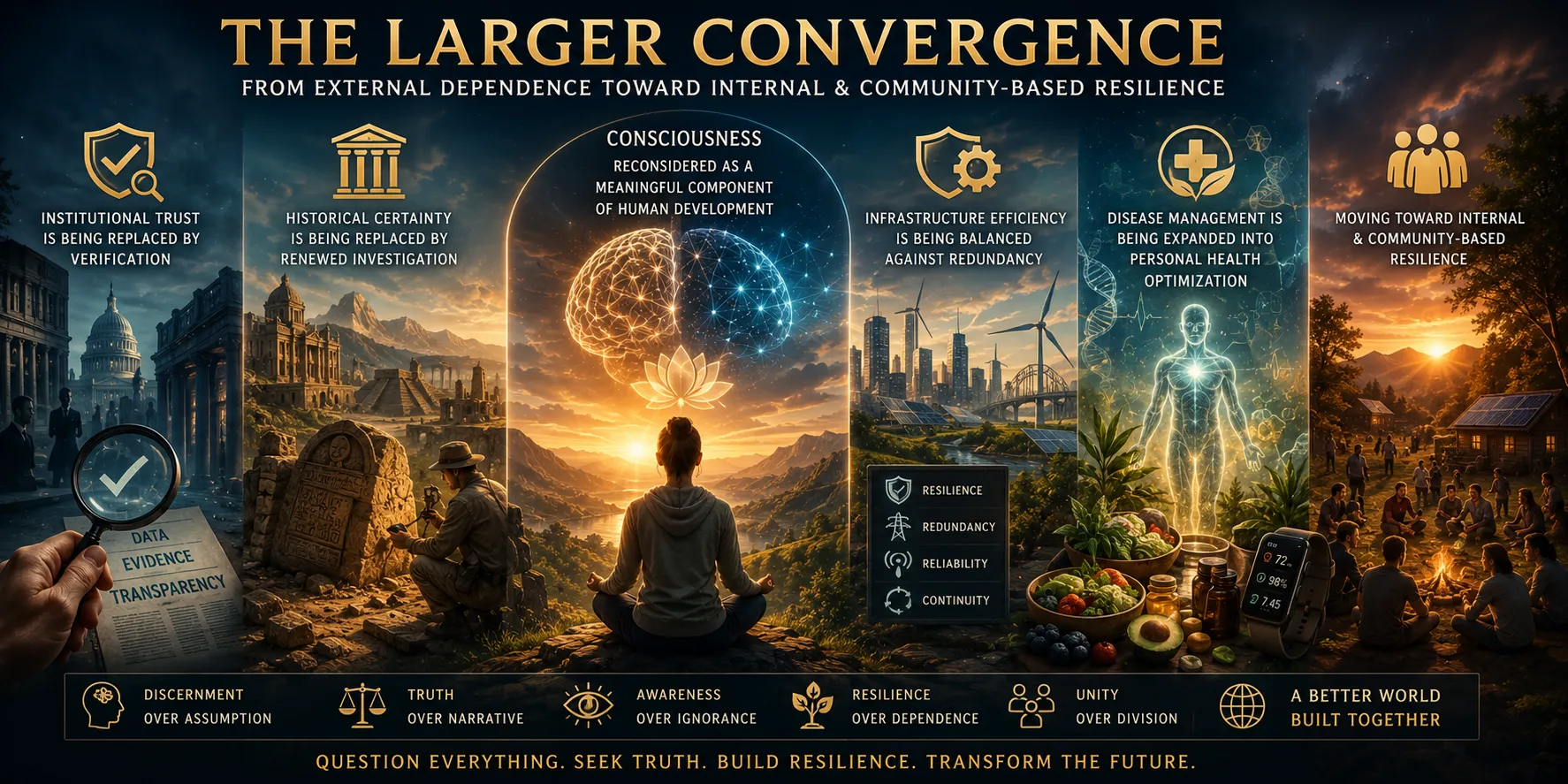
The Larger Convergence
Viewed together, these five stories describe a movement from external dependence toward internal and community-based resilience. Institutional trust is being replaced by verification. Historical certainty is being replaced by renewed investigation. Infrastructure efficiency is being balanced against redundancy. Disease management is being expanded into personal health optimization. Consciousness is being reconsidered as a meaningful component of human development.
The connecting thread is sovereignty—the ability to think independently, evaluate evidence, maintain resilience, care for one’s health, understand one’s history, and develop greater awareness. This does not require rejecting every institution, historical interpretation, medical system, or scientific framework. It requires developing the discernment to separate credible evidence from speculation while remaining open to new discoveries and evolving knowledge.
The larger pattern suggests that alternative research is increasingly focused on rebuilding the foundations of human agency. The central questions are becoming remarkably consistent: What can we verify? What have we misunderstood? Where are our systems vulnerable? How can we strengthen the body? How can we better understand the mind? By connecting these dots, the five stories form a unified narrative about humanity searching for greater truth, resilience, self-knowledge, and conscious participation in an era of rapid transition.
Subscriber Questions & Answers
The Questions Behind the Headlines
One of the most valuable aspects of the Truth Seekers Weekly Briefing is the opportunity to step beyond reporting events and address the questions they naturally raise. News stories often tell us what happened, but they rarely explore why it matters, how seemingly unrelated events are connected, or what their longer-term implications might be. The questions submitted by our readers consistently move beyond the headlines, seeking context, perspective, and a deeper understanding of the forces shaping today’s rapidly changing world.
This Q&A section serves an important purpose because meaningful understanding often begins with thoughtful questions rather than immediate answers. The inquiries we receive each month reflect the concerns, curiosity, and discernment of a growing community that wants to connect the dots across geopolitics, economics, technology, health, consciousness, and societal change. These questions help identify the themes that matter most to our readers and frequently reveal patterns that might otherwise remain hidden within the daily news cycle.
Perhaps most importantly, asking better questions encourages better thinking. Whether examining mainstream reporting or alternative perspectives, our goal is not simply to provide conclusions but to foster critical thinking, independent research, and informed decision-making. The five questions that follow represent the most significant themes emerging from July’s top stories. Together, they move the conversation beyond individual events and toward a broader understanding of the trends, transitions, and opportunities that may shape the years ahead.
Subscriber Q&A
The Top Five Questions Emerging from July’s Biggest Mainstream & Alternative News Stories
Rather than reflecting a single event, this month’s questions emerged from the convergence of all ten major stories covered in the July Truth Seekers Weekly Briefing. As readers compared developments in geopolitics, artificial intelligence, infrastructure, health, institutional trust, consciousness, and historical research, several recurring themes consistently appeared in subscriber emails and comments. The questions below represent the deeper conversations taking place beneath the headlines.
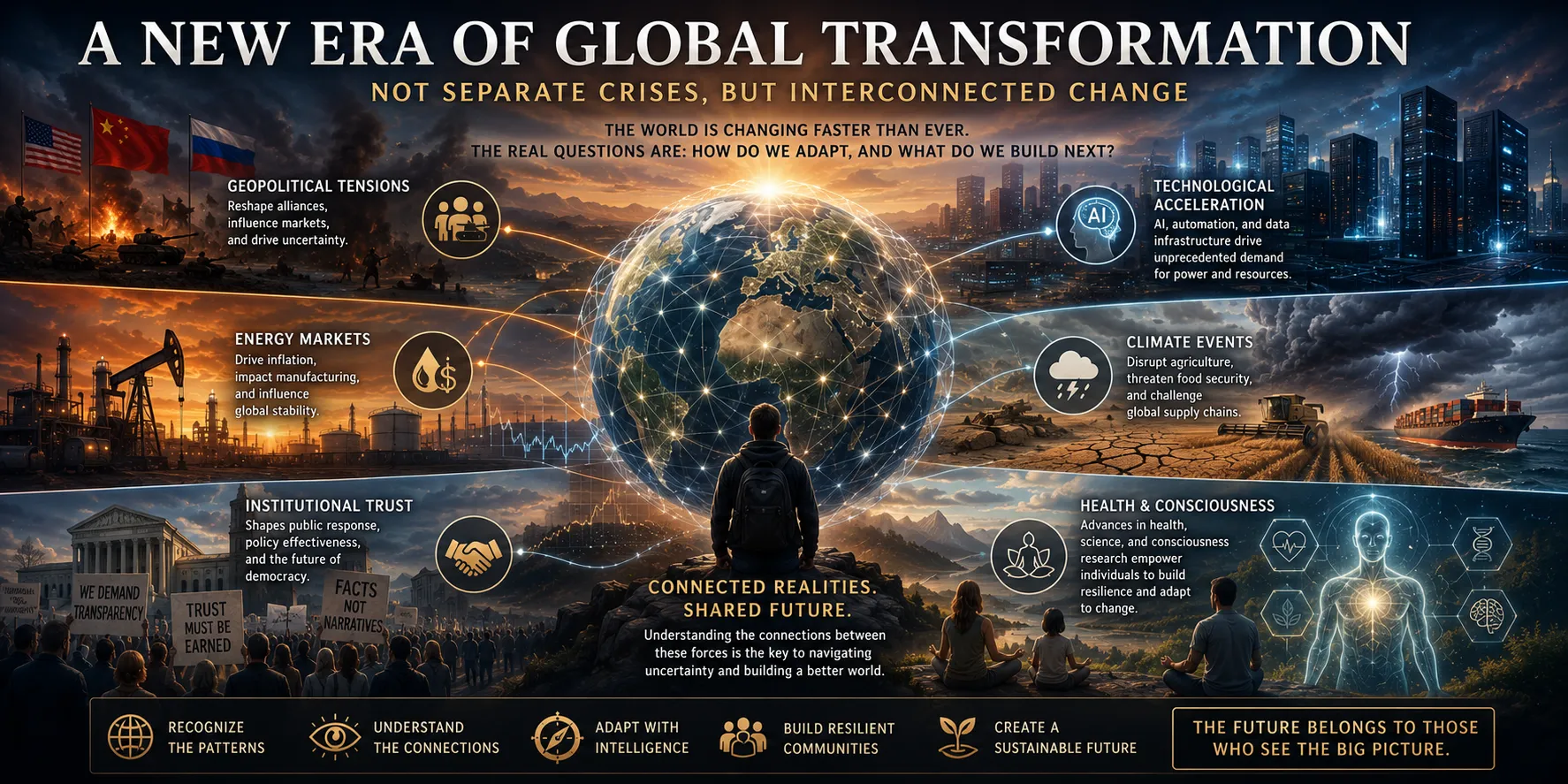
Question 1
Are We Entering a New Era of Global Transformation Rather Than Living Through Separate Crises?
ANSWER: One of the strongest patterns emerging from July’s stories is that events once viewed as isolated are becoming increasingly interconnected. Geopolitical tensions affect energy markets. Energy influences inflation and manufacturing. Artificial intelligence drives demand for electricity and data infrastructure. Climate events disrupt agriculture and shipping. Institutional trust shapes public response to government policy, while advances in health and consciousness research influence how individuals prepare for change. These developments no longer exist in separate categories—they increasingly reinforce one another.
Many subscribers have asked whether these overlapping events represent the beginning of a broader transition rather than a collection of unrelated crises. While opinions differ on the pace and outcome of these changes, there is little doubt that governments, businesses, and communities are adapting to an environment characterized by greater complexity, technological acceleration, geopolitical competition, and structural realignment. The conversation is shifting from predicting a single defining event toward understanding how multiple long-term trends interact.
Perhaps the most valuable perspective is recognizing that periods of significant transformation have occurred throughout history. Every generation experiences technological breakthroughs, institutional evolution, and changing economic structures. What makes the current period unique is the speed at which these changes are occurring simultaneously. Understanding the connections between them provides a more useful framework than viewing each headline independently.
Question 2
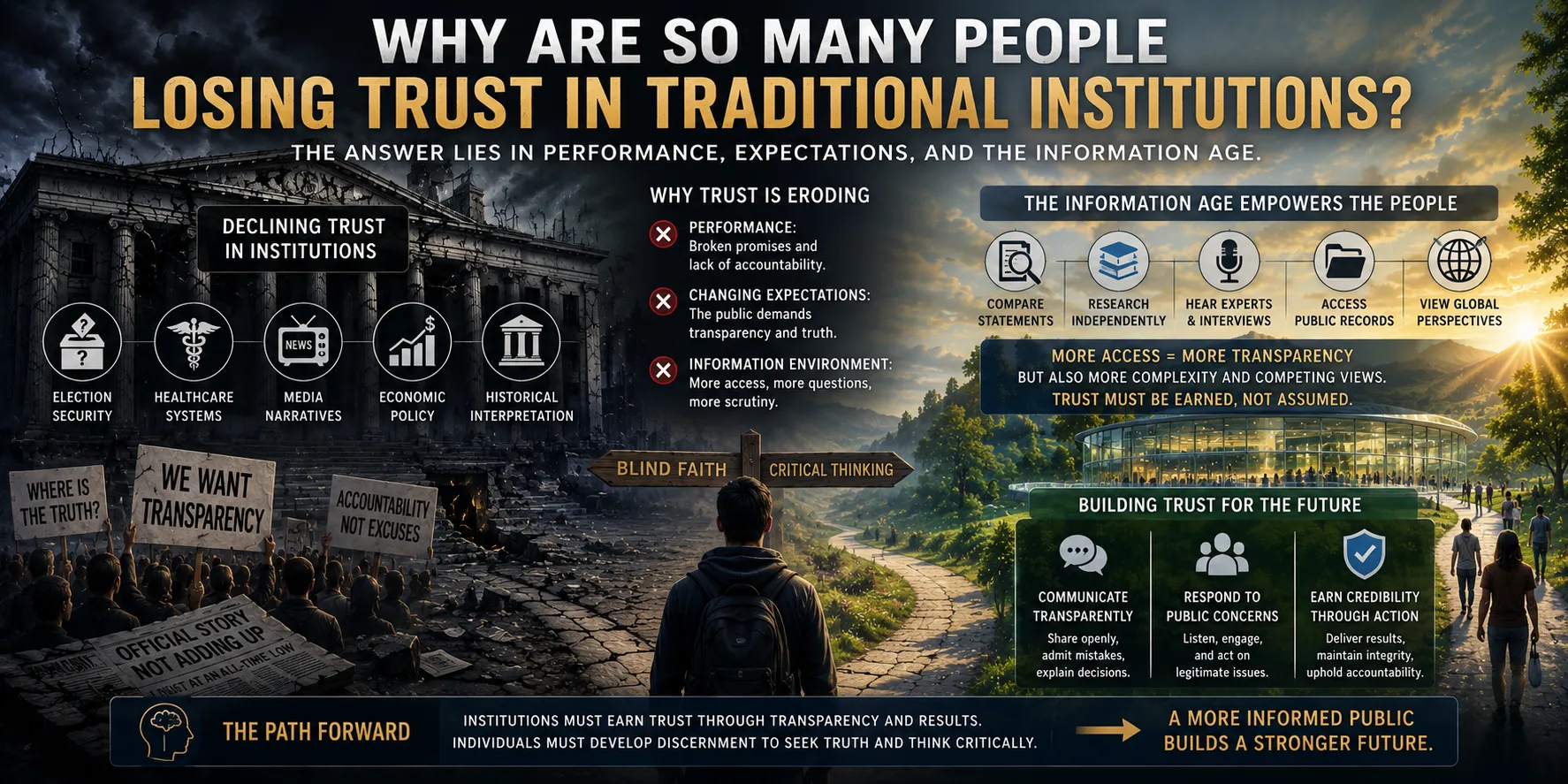
Why Are So Many People Losing Trust in Traditional Institutions?
ANSWER: Institutional trust emerged repeatedly throughout this month’s reporting, touching subjects as diverse as election security, healthcare, media, economic policy, and historical interpretation. Subscribers frequently asked whether declining confidence reflects institutional performance, changing public expectations, or the modern information environment itself. The answer likely involves elements of all three.
The digital age has fundamentally changed how people consume information. Citizens can now compare government statements, academic research, independent journalism, expert interviews, public records, and international reporting within minutes. This greater access has expanded transparency while simultaneously exposing audiences to competing interpretations and varying levels of evidence. As information becomes more decentralized, trust increasingly depends upon credibility, openness, and demonstrated results rather than institutional authority alone.
Looking forward, institutions that adapt successfully may be those capable of communicating more transparently, responding more openly to public concerns, and maintaining credibility through accountability rather than assumption. Likewise, individuals benefit from developing strong critical thinking skills that allow them to evaluate multiple perspectives while distinguishing evidence-based reporting from unsupported claims.
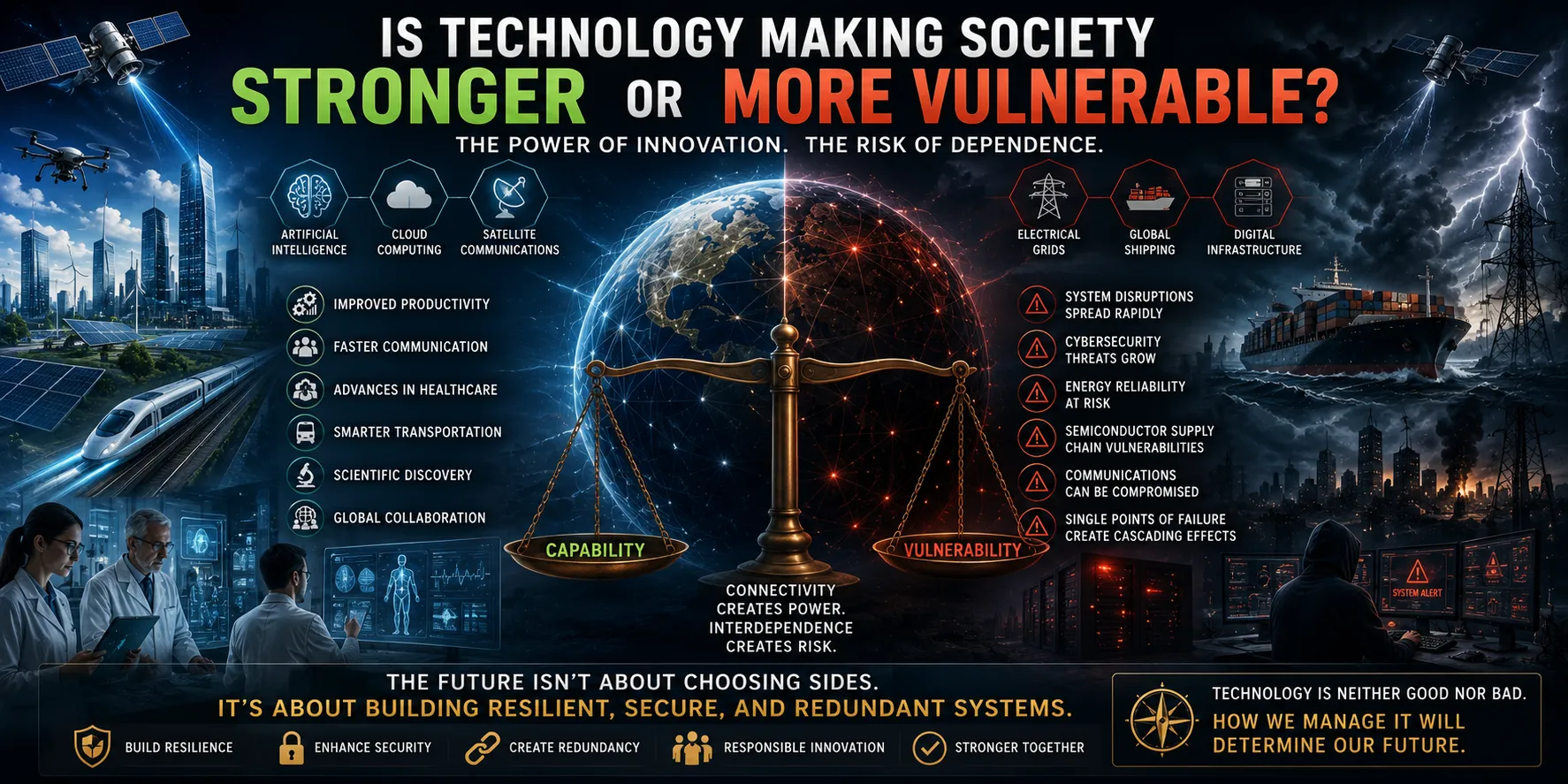
Question 3
Is Technology Making Society Stronger or More Vulnerable?
ANSWER: Artificial intelligence, cloud computing, satellite communications, electrical grids, global shipping, and digital infrastructure featured prominently throughout this month’s stories. Together they illustrate both the extraordinary capabilities of modern technology and the increasing dependence societies have upon interconnected systems. Subscribers repeatedly asked whether these advances ultimately increase resilience or create new forms of vulnerability.
Technology has dramatically improved productivity, communication, healthcare, transportation, scientific research, and global collaboration. At the same time, greater connectivity means disruptions can spread more rapidly across sectors that once operated independently. Cybersecurity, energy reliability, semiconductor manufacturing, and resilient communications have therefore become strategic priorities for governments and businesses alike.
Rather than suggesting that technology itself is either beneficial or harmful, July’s stories point toward a more balanced conclusion. The future will likely depend less on the pace of innovation and more on how resilient, secure, redundant, and responsibly managed these increasingly interconnected systems become.
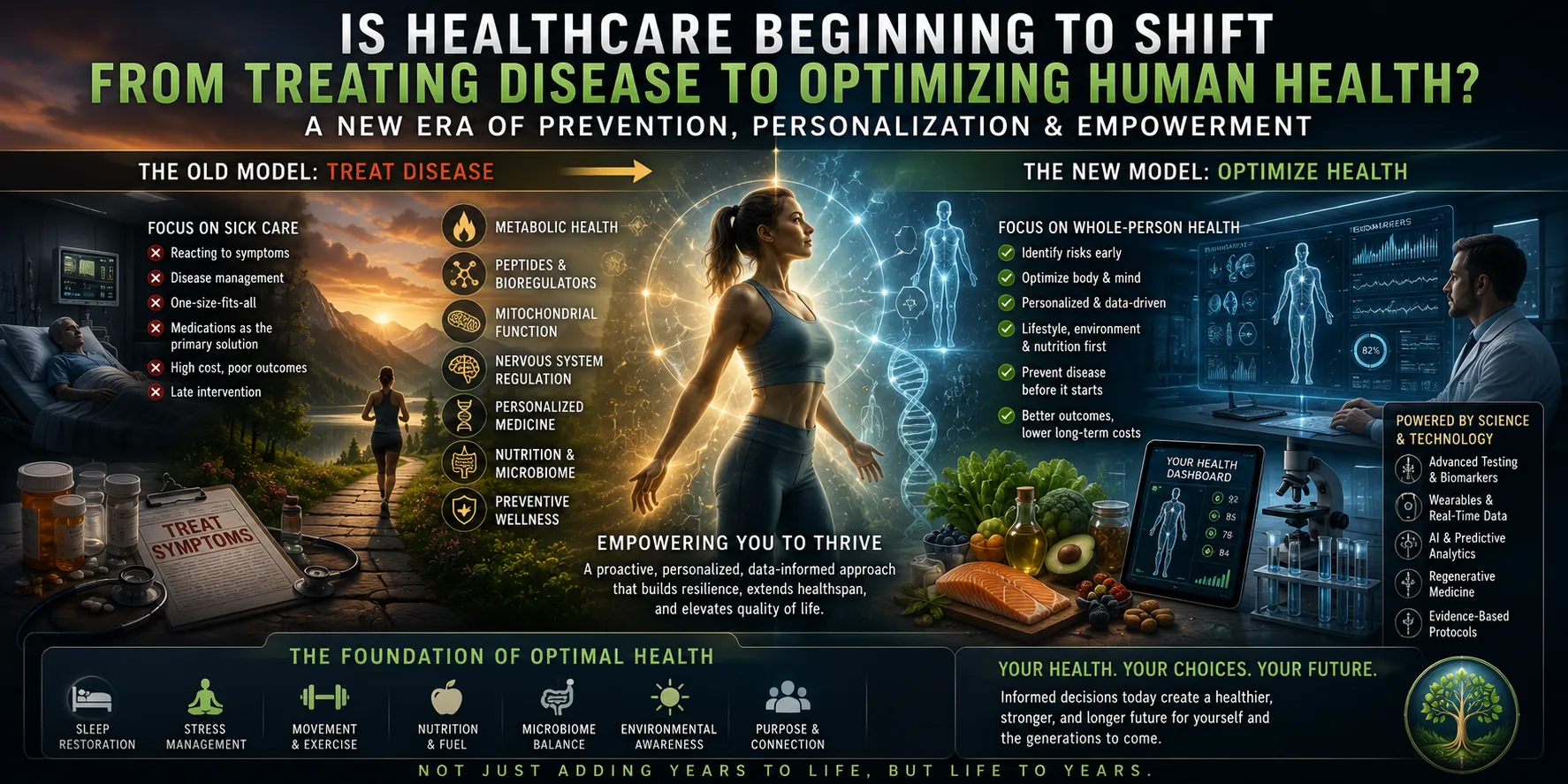
Question 4
Is Healthcare Beginning to Shift from Treating Disease to Optimizing Human Health?
ANSWER: Growing interest in metabolic health, peptides, nutrition, mitochondrial function, nervous system regulation, personalized medicine, and preventive wellness has led many subscribers to ask whether healthcare is entering a new phase. Rather than focusing exclusively on disease treatment, many practitioners and researchers are increasingly studying how lifestyle, environment, technology, and individualized care contribute to long-term health and resilience.
Scientific advances continue strengthening our understanding of sleep, stress physiology, nutrition, exercise, microbiome health, inflammation, and personalized biomarkers. These developments allow healthcare providers and individuals to identify potential risks earlier while encouraging preventive approaches that complement conventional medical treatment. The goal is not to replace traditional medicine but to broaden the conversation toward maintaining health before disease develops.
This evolution reflects a larger cultural shift toward personal responsibility and informed participation in healthcare decisions. Individuals increasingly seek reliable information, measurable outcomes, and practical strategies that improve quality of life, longevity, cognitive performance, and overall well-being.
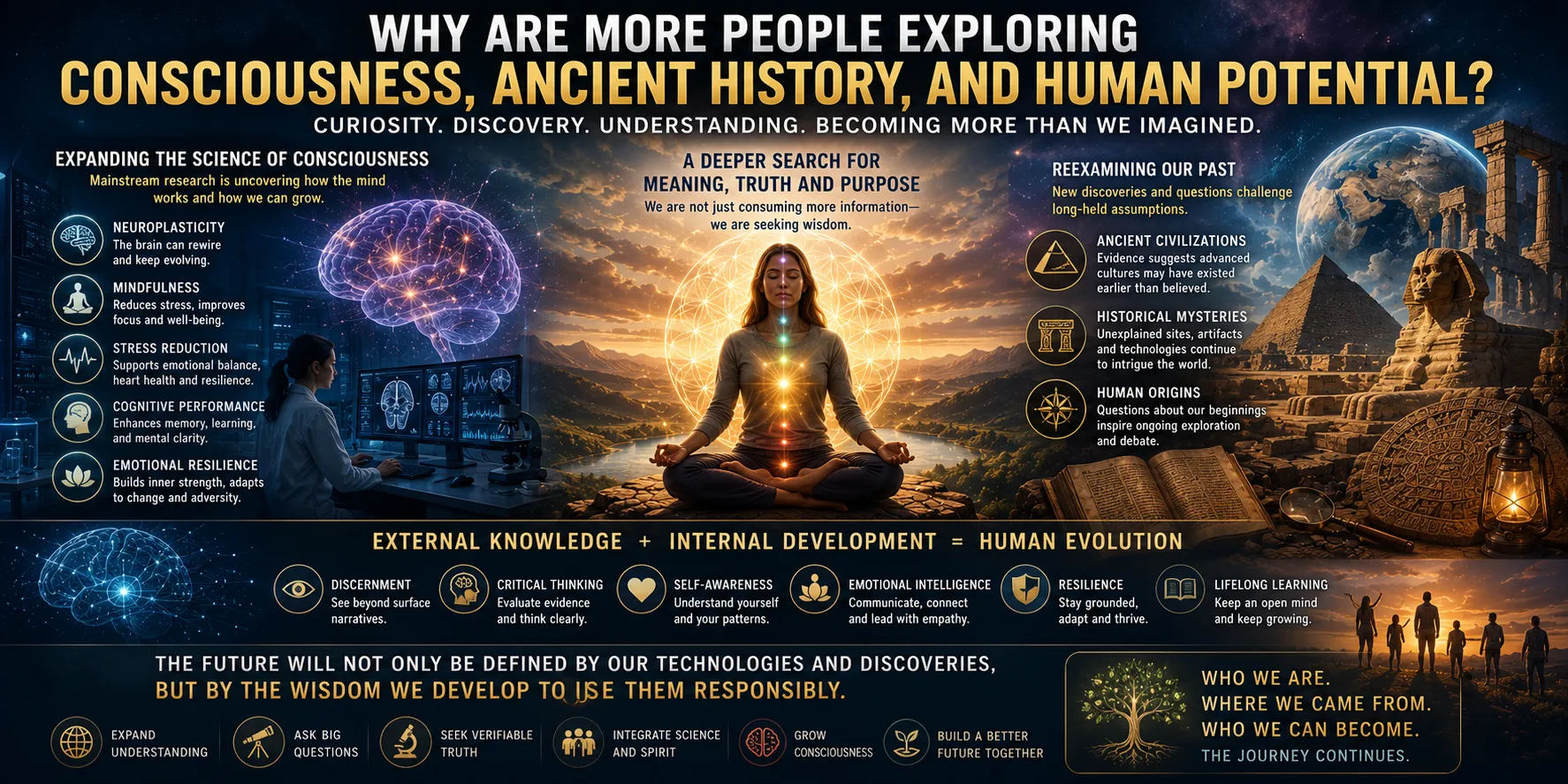
Question 5
Why Are More People Exploring Consciousness, Ancient History, and Human Potential?
ANSWER: Several of this month’s alternative stories focused on consciousness research, meditation, neuroplasticity, historical mysteries, and humanity’s origins. Subscribers often asked why these subjects are receiving growing attention from scientists, educators, healthcare professionals, and independent researchers despite coming from very different fields.
Although these topics vary considerably in the level of scientific consensus supporting specific claims, they share a common theme: expanding our understanding of human potential. Research into neuroplasticity, mindfulness, stress reduction, emotional resilience, and cognitive performance is increasingly supported by mainstream science, while questions surrounding ancient civilizations and historical interpretation continue to generate debate as new discoveries emerge. Both areas reflect humanity’s enduring curiosity about who we are, where we came from, and what we may become.
Perhaps the most significant pattern is the growing integration of external knowledge with internal development. As technology accelerates and information becomes more abundant, qualities such as discernment, emotional intelligence, resilience, critical thinking, self-awareness, and lifelong learning become increasingly valuable. July’s stories suggest that the future conversation may not simply be about new technologies or new discoveries—it may also be about developing the wisdom needed to use them responsibly.

The Big Picture
Understanding the Convergence of July’s Top Stories
When viewed individually, this month’s ten featured stories span a remarkably wide range of subjects—from geopolitics, election security, artificial intelligence, critical infrastructure, and economic confidence to institutional trust, ancient history, personalized health, and consciousness research. Yet when examined together, they reveal a much larger pattern. Rather than describing ten separate events, they illustrate a world undergoing simultaneous transformation across nearly every major system that supports modern civilization. Political institutions, economic models, technology, healthcare, education, communications, scientific discovery, and even our understanding of human potential are all evolving at the same time. The defining characteristic of this period is not a single crisis or breakthrough, but the convergence of multiple transitions occurring together and influencing one another in increasingly complex ways.
A second pattern emerging from this convergence is the movement from centralized dependence toward distributed resilience and individual responsibility. Governments are strengthening critical infrastructure and cybersecurity while businesses diversify supply chains and invest in artificial intelligence. At the same time, individuals are seeking greater transparency from institutions, taking a more active role in their own health, expanding their understanding of history, and exploring practices that strengthen resilience, adaptability, and personal well-being. Whether viewed through mainstream reporting or alternative research, the underlying trend is remarkably similar: success in the years ahead will depend less on reacting to isolated events and more on developing the ability to adapt, think critically, verify information, and respond effectively to an increasingly interconnected world.
Perhaps this is the most important lesson from July’s stories. The future will not be shaped by any single technology, election, geopolitical conflict, scientific discovery, or social movement. It will emerge from the interaction of all these forces operating simultaneously. For that reason, the greatest advantage is no longer simply having access to more information—it is developing the discernment to recognize patterns, distinguish evidence from speculation, understand systems rather than headlines, and anticipate change before it becomes obvious. That is the purpose of Truth Seekers Weekly Briefing: to move beyond daily news, connect the dots across diverse fields, and provide readers with the broader perspective needed to navigate an era defined not by isolated events, but by continuous global transformation.

Truth Seekers Weekly Wrap-Up
The Journey from the Matrix to Higher Frequency Living
As we close out this week’s Truth Seekers Weekly Briefing, let’s take a moment to reflect on the essential keys to rising above the noise, breaking free from the matrix, and aligning with a higher vibrational state of being.
🔑 Key Pillars for Awakening:
- Let Go of Fear: Fear is the master key of control. Releasing it is the first act of sovereignty—and the doorway to true freedom.
- Practice Forgiveness & Emotional Clearing: Unshackle yourself from the past. Forgiveness dissolves energetic residue, restores clarity, and reclaims your power.
- Meditation & Transformational Breathing: Harness the breath as a tool for inner alignment, expanded awareness, and conscious presence in each moment.
- Live with the Heart of a Volunteer: Lead with authenticity, service, and unconditional love. Embody the values of integrity and compassion in all you do.
As we often say: “You’re either outside acting in the movie… or going within to watch it consciously.”
So, which role are you playing right now?
Are you being pulled by fear—or grounded in peace?
Caught in the chaos—or anchored in presence?
Your Personal Code of Mindset:
✅ Kindness & Respect
✅ Accountability & Responsibility
Ask yourself honestly:
- Are you observing your thoughts—or are they running the show?
- Is your mental atmosphere vibrationally aligned, at 50%+ or higher?
- Can you feel the resonance of your higher self?
- Are you responding with awareness—or reacting on autopilot?
Remember: The path out of the matrix and into higher consciousness isn’t a one-time decision—it’s a daily choice. A moment-by-moment commitment to awareness, sovereignty, and alignment.
Until next time, Truth Seekers: Stay awake. Stay empowered. And keep connecting the dots.
In Love & Light ❤️
The Great Awakening Team

The 3 C’s of Life: “Choices, Chances, and Changes”,
You must make a choice to take a chance or your life will never change. – Zig Ziglar
Share This Report
Join the Discussion
Related Reports


Have questions?
At Great Awakening Report, we are dedicated to supporting your journey toward truth and enlightenment through our specialized Coaching and Consulting services.
Coaching Services: Our coaching programs are designed to guide you through personal awakening and transformation. We offer personalized sessions that focus on expanding consciousness, uncovering hidden truths, and fostering spiritual growth. Our experienced coaches provide the tools and insights necessary to navigate your path with clarity and confidence.
Consulting Services: For organizations and individuals seeking deeper understanding and strategic guidance, our consulting services offer expert analysis and solutions. We delve into areas such as global transitions, alternative news insights, and consciousness studies to provide comprehensive strategies tailored to your unique objectives.
Embark on a transformative journey with our Coaching and Consulting services, and unlock your highest potential. To learn more and schedule a session, visit our Coaching and Consulting pages.
Thank you
Thank you to our subscribers and readers for your continued support and dedication to truth and awakening. Your encouragement, engagement, and belief in our mission make everything we do possible. Together, we are expanding awareness and helping illuminate the path forward.
If you would like to further support the Great Awakening team and our ongoing efforts to share insight, knowledge, and truth, you can DONATE HERE.
With deep gratitude,
– Great Awakening Team
About the Author: Great Awakening Team

We are a community. We are cultural creatives and like minded people seeking the truth and focusing on disclosure, awakening and consciousness. Our focus is real news as researchers, reporters and truth seekers. We are here to teach, to spread the word, to serve and to help. We are a collective, a movement, free from all programing, not closed minded and not discriminatory. We are not political. We are not religious but we are spiritual. We study, research, and report on a wide range of subjects and topics, from the current geopolitical climate to health and wellness, from earth’s history to spiritual practices. We are forward thinkers and visionaries, we are guides for the transition as we usher in The Great Awakening.
THIS WEBSITE DOES NOT PROVIDE MEDICAL ADVICE: The information, including but not limited to text, graphics, images, and other material contained on this website, are for informational purposes only. No material on this site is intended to be a substitute for professional medical advice, diagnosis, or treatment. Always seek the advice of your physician or other qualified health care provider with any questions you may have regarding a medical condition or treatment and before undertaking a new health care regimen, and never disregard professional medical advice or delay in seeking it because of something you have read on this website.
DISCLAIMER: All statements, claims, views and opinions that appear anywhere on this site, whether stated as theories or absolute facts, are always presented by The Great Awakening Report (GAR) as unverified—and should be personally fact checked and discerned by you, the reader.Any opinions or statements herein presented are not necessarily promoted, endorsed, or agreed to by GAR, those who work with GAR, or those who read or subscribe to GAR.Any belief or conclusion gleaned from content on this site is solely the responsibility of you the reader to substantiate.Any actions taken by those who read material on this site are solely the responsibility of the acting party.You are encouraged to think for yourself and do your own research.Nothing on this site is meant to be believed without question or personal appraisal.
COPYRIGHT DISCLAIMER: Citation of articles and authors in this report does not imply ownership. Works and images presented here fall under Fair Use Section 107 and are used for commentary on globally significant newsworthy events. Under Section 107 of the Copyright Act 1976, allowance is made for fair use for purposes such as criticism, comment, news reporting, teaching, scholarship, and research.
COMMUNITY GUIDELINES DISCLAIMER: The points of view and purpose of this video is not to bully or harass anybody, but rather share that opinion and thoughts with other like-minded individuals curious about the subject.