





Published Date: March 20th, 2026
This Weekly Alternative News briefing gathers the independent reporting, suppressed stories and underreported signals that shaped the week. Every edition of our Weekly Alternative News series follows the same discipline: track the pressure, connect the threads, and show the pattern before it reaches the headlines.
WEEKLY REPORT
TRUTH///AWAKENING///DISCLOSURE
TRUTH SEEKERS WEEKLY BRIEFINGS, MASTER CLASS CONNECTING THE DOTS | WEEKLY ALTERNATIVE NEWS
Watching The Global Collapse Into Chaos | The Great Convergence Phase
“In the convergence of chaos and clarity, what was hidden becomes visible—those who see the patterns are no longer controlled by them, but guided beyond them.”
Geopolitical Flashpoints • Economic Repricing • AI Disruption Curve • Information Warfare Surge • Infrastructure Vulnerabilities • Societal Pressure Points • Awakening Through Awareness
Call to The Awakened
“Let these days be etched in history as the moment we rose to reclaim our Republic from the grip of those who have long exploited its people for their own gain. Stand strong, fight with honor, and let justice prevail. Together, we restore the nation to its true greatness.”
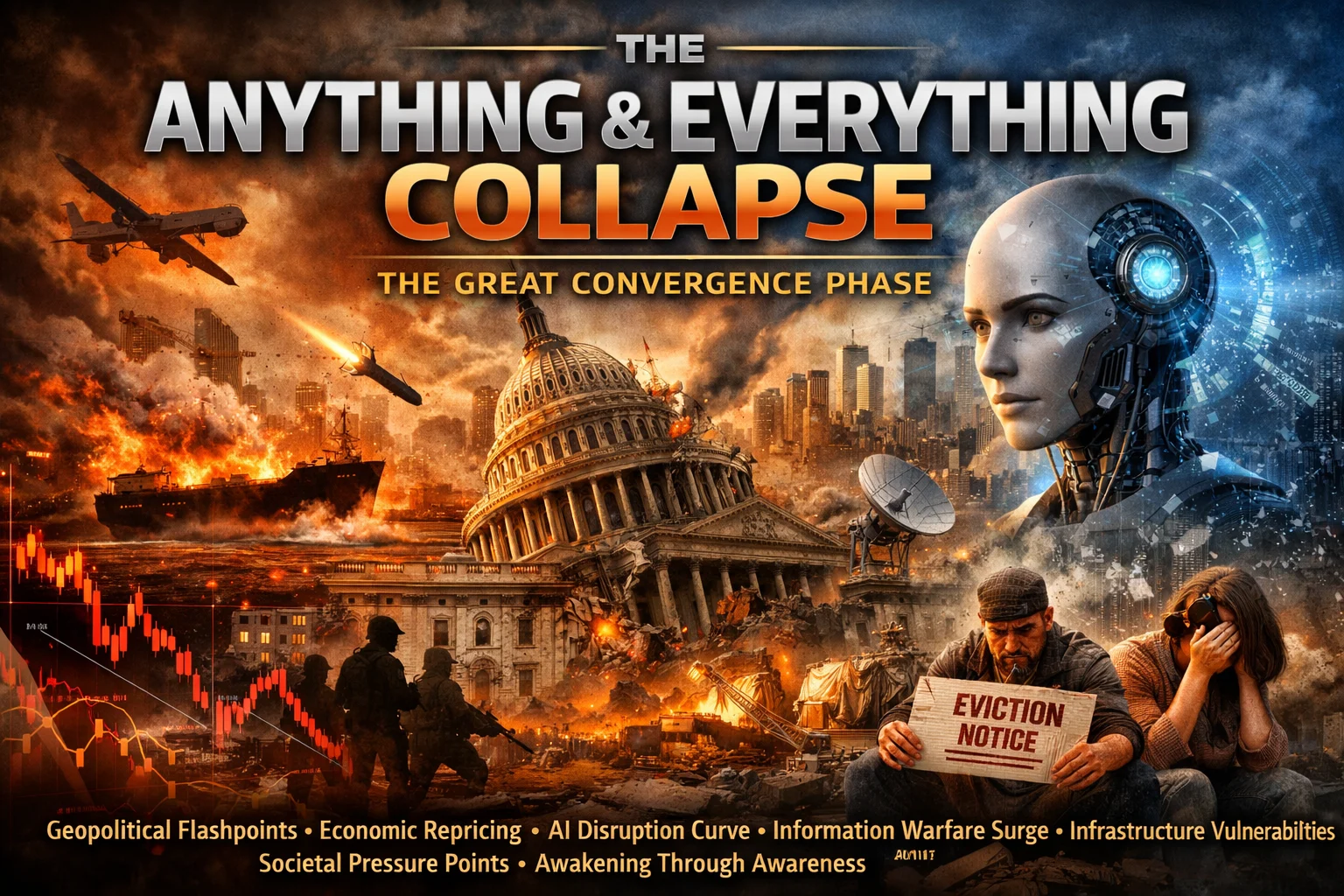
Civilizations Journey to The Precipice of Self Destruction
“Be Strong Enough to Stand Alone / Be Yourself Enough to Stand Apart / And When the Time Comes, Be Wise Enough to Stand Together”
The Great Reset | Roll Back Pricing of Everything
We are living through a period of profound global disruption. Institutions once viewed as stable pillars—government, finance, media, technology, and healthcare—are facing growing scrutiny as geopolitical conflict, economic instability, and political tension expose deeper systemic pressures.
Rather than isolated crises, these events point to a broader restructuring of global systems. Power structures, economic frameworks, and long-standing narratives are all being tested simultaneously, creating what many observers describe as a period of accelerated change.
This Weekly Report compiles insights from 57 independent sources, many highlighting overlapping signals across geopolitics, economics, and societal trends. By organizing these developments along a timeline of emerging events, we aim to provide a clearer view of the forces shaping this moment.
As always, we encourage readers to approach the information with discernment and calm awareness. Preparation in uncertain times is largely mental—understanding the landscape helps us remain grounded as events continue to unfold.
“We The People”
If we the people, as a nation, do not work together to restore our founding father’s visions for our Constitutional Republic, our children could be lost and our nation will be destroyed. We all have a part to play in this peaceful, faithful, informed, prayer-filled participation and with forgiveness in our hearts for the corruption of this nation that we have been a party to, either knowingly or unknowingly.

Truth Seekers Weekly Briefing | Master Class Series | Published Every Friday
Last Warning: Prepare for something that you never expected to see in your lifetime. The Media will never let you know! The things around us could change very fast. – QAnon Telegram
“Ye shall hear of wars and rumors of wars. See that ye be not troubled, for all these things must come to pass, but the end is not yet.” – Matthew 24:6
Methodology Behind the Master Class on Connecting the Dots
The Master Class on Connecting the Dots is built on a structured, multi-layered methodology designed to help individuals develop discernment, signal awareness, and pattern recognition in a world shaped by information saturation, narrative volatility, and declining institutional trust. Rather than offering conclusions, this approach trains participants to detect meaningful signals, place them in context, and orient themselves within complexity with clarity and composure.
At its core, the methodology integrates three foundational disciplines:
Analytical and Critical Reasoning – evaluating headlines, timelines, data points, and official narratives by separating signal from noise, testing claims against evidence, and identifying inconsistencies, incentives, and omissions.
Signal and Pattern Recognition – tracking weak signals, repeated motifs, coordinated messaging, symbolic cues, institutional overlap, and timing alignments that, when viewed collectively, reveal larger structural patterns or converging trajectories.
Discernment and Observer Awareness – cultivating emotional neutrality, recognizing narrative framing and psychological influence, and learning to observe unfolding events without premature conclusions or reactive interpretation.
The process begins with broad-spectrum signal intake—comparing mainstream reporting, independent analysis, historical precedent, and direct accounts. Participants are then guided to map the who, what, when, where, why, and how of events, while monitoring incentives, power dynamics, escalation markers, and cross-domain convergence across politics, finance, technology, culture, and belief systems.
Ultimately, Connecting the Dots is not about arriving at a fixed interpretation—it is about strengthening one’s capacity to track signals over time, recognize emerging patterns, and navigate uncertainty with coherence, resilience, and sovereignty. The Master Class functions as both a practical framework and an orientation lens, supporting the shift from passive information consumption to informed, self-directed understanding.
Great Awakening Featured Reports
The Great Awakening Featured Reports offer a comprehensive and multi-dimensional guide to understanding the rapidly unfolding events shaping our world. Designed for awakened minds and discerning truth seekers, these reports synthesize hard-to-find data, suppressed knowledge, and spiritual insight to help you navigate global transformation with clarity and confidence. Each report series serves a unique purpose—from decoding mainstream and alternative narratives to tracking the spiritual evolution of humanity and exposing hidden truths withheld from public view. Together, they form a powerful resource for those seeking not just information, but illumination, discernment, and alignment in the midst of chaos.
Great Awakening Featured Reports include:
📌 Monthly Reports – Covering the latest geopolitical, geoweather, economic, health, true history, suppressed technologies, ET disclosures, and seismic global shifts.
📌 Truth Seekers Weekly Briefings – Master Class in Connecting the Dots, Top 5 MSM News explained, Top 5 Alternative News reviewed, and Subscriber Q&A Top 5 most asked questions.
📌 Awakening Sleeping Giant Weekly Reports – Tracking global intelligence news and key events effecting a mass global awakening.
📌 Spiritual Practice Reports – Tools and techniques for maintaining alignment and higher heart consciousness coherence.
📌 Special Reports; New & Updated – Breaking revelations and disclosures you won’t hear or read anywhere else.
Get ready to expand your awareness, sharpen your discernment, and step fully into your sovereignty. The dots are there—it’s time to connect them.
New Truth Seeker Report Audio Reviews
“When truth emerges, illusions shatter. As the old world crumbles, a new one rises—built on sovereignty, wisdom, and the unbreakable power of unity.”
At Truth Seekers Weekly Briefing, our research process begins with a comprehensive review of both Mainstream Media (MSM) and Alternative News sources. Our team tracks major stories, emerging patterns, and overlooked developments to identify the most relevant signals shaping the week’s events.
Using our “Connecting the Dots” approach, we analyze these developments through rational, critical, and logical thinking to reveal broader patterns often missed in surface-level reporting. The goal is not just to report the news, but to provide context that helps readers better understand the forces shaping the world around them.
To support this process, each section of the report includes a short audio review (approximately 12 minutes) summarizing the key findings of the week. These concise segments are designed for quick listening and help subscribers stay informed while developing their own discernment.
Our purpose is simple: not to tell you what to think—but to help you connect the dots and think for yourself.
“In a world clouded by distraction and deception, true power lies in seeing the bigger picture. When we sharpen our discernment, align with heart consciousness, and embrace the truth, we reclaim our sovereignty. The dots are there—it’s time to connect them.”
Truth Seekers Mainstream Media Audio Recap & Review, March 20th, 2026
Truth Seekers Alternative News Audio Recap & Review, March 20th, 2026
Truth Seekers Subscriber Q&A Audio Recap & Review, March 20th, 2026
Welcome, Truth Seekers Weekly Briefing — March 20th, 2026
“In a world clouded by distraction and deception, true power lies in seeing the bigger picture. When we sharpen our discernment, align with heart consciousness, and embrace the truth, we reclaim our sovereignty. The dots are there—it’s time to connect them.”
Welcome to your Master Class in Connecting the Dots.
In an era defined by information overload, narrative volatility, and engineered distraction, clarity no longer comes from consuming more content—it comes from learning how to recognize signals. Individual events rarely tell the full story on their own. But when signals repeat across different domains—politics, economics, media, and technology—they begin to form threads that reveal deeper forces shaping the world around us.
This process begins with grounded, rational thinking and the ability to separate meaningful signals from background noise. As signals accumulate, they form threads that stretch across institutions, policies, markets, and narratives. When multiple threads converge, patterns emerge—offering a clearer view of direction, momentum, and the structural shifts unfolding beneath the surface.
Discernment allows us to step into the observer position—recognizing how fear-based messaging, psychological pressure, and narrative framing are often used to keep populations reactive and divided. By focusing on signals rather than headlines, and patterns rather than personalities, we regain the clarity needed to navigate complexity without becoming overwhelmed by it.
Each week in the Truth Seekers Weekly Briefing, we track developments across geopolitics, economics, technology, and broader societal shifts—identifying signals, following threads, and revealing patterns of convergence as they emerge.
Our mission is simple:
to help you recognize signals early, follow threads intelligently, and understand patterns clearly—so you remain grounded, aware, and sovereign in a rapidly changing world.
Let’s dive in.
Truth Seekers Weekly Briefing | Master Class Series | Published Every Friday
Last Warning: Prepare for something that you never expected to see in your lifetime. The Media will never let you know! The things around us could change very fast. – QAnon Telegram
“Ye shall hear of wars and rumors of wars. See that ye be not troubled, for all these things must come to pass, but the end is not yet.” – Matthew 24:6
Methodology Behind the Master Class on Connecting the Dots
The Master Class on Connecting the Dots is built on a structured, multi-layered methodology designed to help individuals develop discernment, signal awareness, and pattern recognition in a world shaped by information saturation, narrative volatility, and declining institutional trust. Rather than offering conclusions, this approach trains participants to detect meaningful signals, place them in context, and orient themselves within complexity with clarity and composure.
At its core, the methodology integrates three foundational disciplines:
Analytical and Critical Reasoning – evaluating headlines, timelines, data points, and official narratives by separating signal from noise, testing claims against evidence, and identifying inconsistencies, incentives, and omissions.
Signal and Pattern Recognition – tracking weak signals, repeated motifs, coordinated messaging, symbolic cues, institutional overlap, and timing alignments that, when viewed collectively, reveal larger structural patterns or converging trajectories.
Discernment and Observer Awareness – cultivating emotional neutrality, recognizing narrative framing and psychological influence, and learning to observe unfolding events without premature conclusions or reactive interpretation.
The process begins with broad-spectrum signal intake—comparing mainstream reporting, independent analysis, historical precedent, and direct accounts. Participants are then guided to map the who, what, when, where, why, and how of events, while monitoring incentives, power dynamics, escalation markers, and cross-domain convergence across politics, finance, technology, culture, and belief systems.
Ultimately, Connecting the Dots is not about arriving at a fixed interpretation—it is about strengthening one’s capacity to track signals over time, recognize emerging patterns, and navigate uncertainty with coherence, resilience, and sovereignty. The Master Class functions as both a practical framework and an orientation lens, supporting the shift from passive information consumption to informed, self-directed understanding.
Great Awakening Featured Reports
The Great Awakening Featured Reports offer a comprehensive and multi-dimensional guide to understanding the rapidly unfolding events shaping our world. Designed for awakened minds and discerning truth seekers, these reports synthesize hard-to-find data, suppressed knowledge, and spiritual insight to help you navigate global transformation with clarity and confidence. Each report series serves a unique purpose—from decoding mainstream and alternative narratives to tracking the spiritual evolution of humanity and exposing hidden truths withheld from public view. Together, they form a powerful resource for those seeking not just information, but illumination, discernment, and alignment in the midst of chaos.
Great Awakening Featured Reports include:
📌 Monthly Reports – Covering the latest geopolitical, geoweather, economic, health, true history, suppressed technologies, ET disclosures, and seismic global shifts.
📌 Truth Seekers Weekly Briefings – Master Class in Connecting the Dots, Top 5 MSM News explained, Top 5 Alternative News reviewed, and Subscriber Q&A Top 5 most asked questions.
📌 Awakening Sleeping Giant Weekly Reports – Tracking global intelligence news and key events effecting a mass global awakening.
📌 Spiritual Practice Reports – Tools and techniques for maintaining alignment and higher heart consciousness coherence.
📌 Special Reports; New & Updated – Breaking revelations and disclosures you won’t hear or read anywhere else.
Get ready to expand your awareness, sharpen your discernment, and step fully into your sovereignty. The dots are there—it’s time to connect them.
The following content is a compilation from various sources.
Lets Review Some of the Featured News for the Week; March 20th, 2026
This week’s mainstream headlines, when viewed together, reveal a system operating under sustained and multi-dimensional pressure. From escalating U.S.–Iran tensions and rising risk around the Strait of Hormuz, to tightening monetary policy and deepening stress in commercial real estate, the underlying theme is clear: core global systems are being tested simultaneously. Add to this China’s economic slowdown, mounting cybersecurity warnings, ongoing border strain, and the expanding mental health crisis, and a broader picture emerges—one of interconnected stress points rather than isolated events. The signal across all seven stories is consistent: stability is no longer assumed; it is being actively managed under increasingly fragile conditions.
What makes this moment different is the degree of synchronization across systems that historically moved independently. Geopolitical tension is influencing energy markets, which in turn affects inflation and central bank policy. Monetary tightening is exposing weaknesses in real estate and debt markets, while technological acceleration is disrupting labor structures at the same time cybersecurity threats are increasing. Meanwhile, social systems—seen through rising migration pressures and mental health strain—are absorbing the cumulative impact of these forces. These are not parallel developments; they are interacting dynamics, each amplifying the others in real time.
When these signals are connected, the deeper threads come into focus—liquidity tightening, geopolitical positioning, digital vulnerability, labor disruption, and psychological strain are all unfolding at once. This convergence suggests we are not in a typical news cycle, but in a phase of systemic compression, where pressures across financial, military, technological, and social domains are reinforcing one another. What matters now is not any single headline, but how they interact. Together, they point to a transition period where the margin for error is shrinking, and where resilience—at both the institutional and individual level—becomes the defining factor in navigating what comes next.
This Weeks 7 MSM News Stories & Events For The Week
1. U.S.–Iran Escalation Continues & Strait of Hormuz Risk Narrative Builds
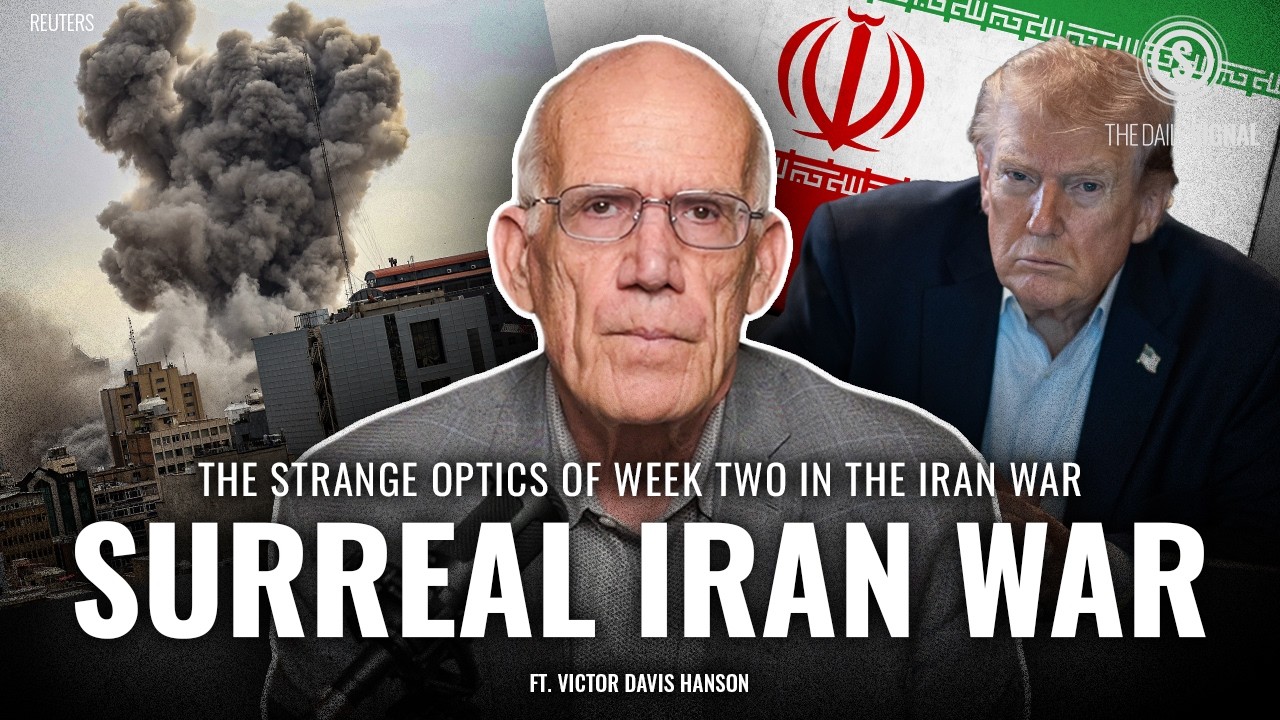
The current phase of U.S.–Iran tensions is best understood not as open war, but as a tightly managed escalation environment. Military positioning across the region—carrier groups, air defense systems, and forward-operating assets—signals readiness without full engagement. At the same time, cyber activity and proxy dynamics continue to operate just below the threshold of direct confrontation. This creates a contained but highly unstable equilibrium, where both sides are applying pressure while attempting to avoid triggering a broader regional conflict. The signal here is clear: escalation is active, but still being carefully modulated.
Layered into this is the growing focus on the Strait of Hormuz, one of the most critical energy chokepoints in the world. Rather than waiting for an actual disruption, markets are already reacting. Shipping insurance premiums are rising, naval patrols are increasing, and contingency planning is accelerating across global supply chains. The use of the word “risk” in mainstream coverage is important—it reflects a shift from hypothetical concern to priced-in probability. The signal is not closure itself, but that systems are beginning to behave as if disruption is imminent.
When we connect these signals, a deeper thread emerges: pre-positioning across multiple domains. Militarily, assets are being staged. Financially, risk is being repriced. Digitally, cyber capabilities are being tested and deployed. Informationally, narratives are being shaped to prepare public perception. None of these actions alone indicate full-scale conflict—but together they form a coordinated pattern of readiness, conditioning, and optionality. This is how modern conflicts develop: not through sudden ignition, but through layered alignment across systems before a triggering event.
The broader pattern points to a familiar structure: pressure without release. As long as the conflict remains contained, it continues to serve strategic purposes—testing alliances, stressing markets, and reshaping regional dynamics. However, this type of compression environment carries inherent risk. The more systems adapt to a “near-conflict” state, the smaller the margin for error becomes. A single miscalculation—whether military, cyber, or economic—could shift the situation rapidly from controlled tension to open disruption. For now, the dominant thread remains clear: we are in a staging phase, not a resolution phase, and the system is quietly aligning for multiple possible outcomes.

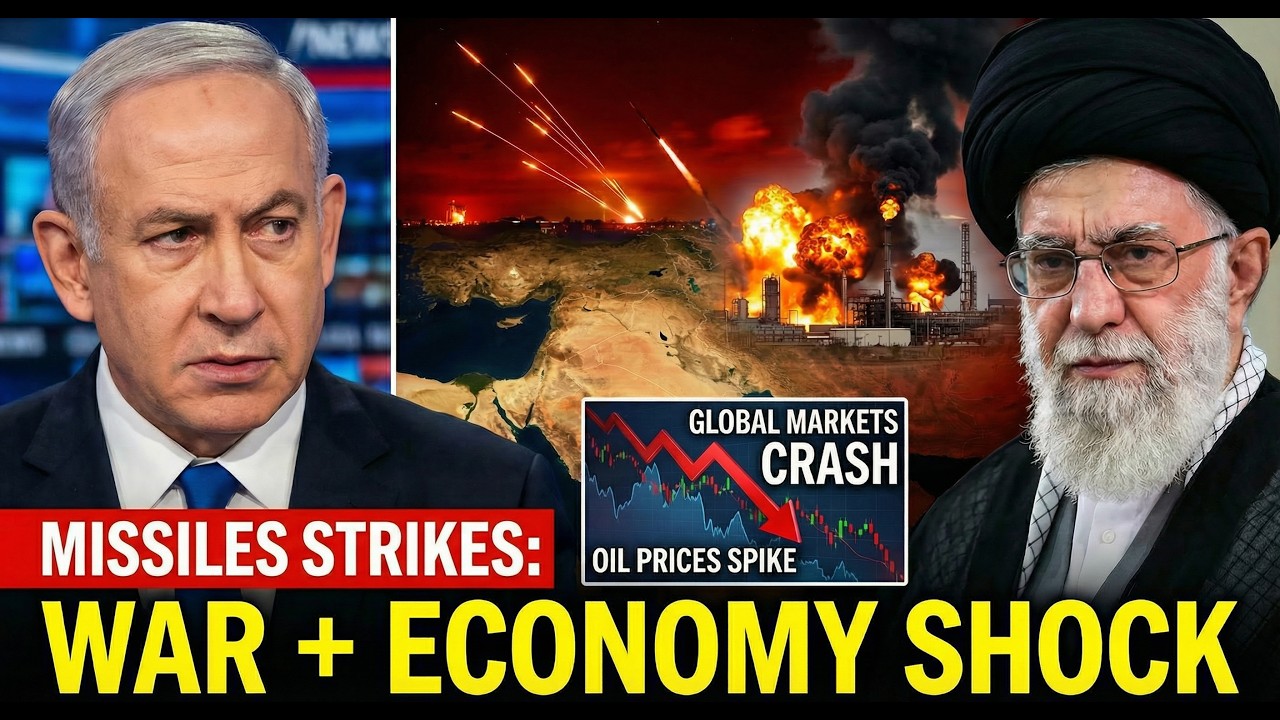

2. AI Acceleration & Job Displacement Warnings
The conversation around AI has shifted materially this week—from speculative potential to operational reality. Major corporations across tech, finance, consulting, and media are no longer speaking in hypotheticals; they are openly acknowledging workforce reductions tied directly to AI deployment. What was once framed as “augmentation” is now being implemented as replacement in specific functions, particularly across white-collar roles like analysis, customer support, coding, research, and content production. The signal is unmistakable: disruption is no longer coming—it has begun, and it is accelerating faster than most institutions initially projected.
Beneath that signal, a powerful thread is forming: the restructuring of the knowledge economy. For decades, white-collar work was considered insulated from automation, protected by education, specialization, and cognitive complexity. AI is dismantling that assumption in real time. Tasks that once required teams of trained professionals can now be executed by models at scale, with increasing speed and acceptable accuracy. This is not just job loss—it’s a redefinition of value creation, where output is decoupled from human labor in ways that challenge traditional employment structures.
A second thread emerging is corporate incentive alignment. Companies are under pressure—from shareholders, competition, and macroeconomic conditions—to increase efficiency and reduce costs. AI offers a direct path to both. That creates a feedback loop: early adopters reduce headcount and improve margins, forcing competitors to follow or fall behind. As this dynamic spreads, it accelerates adoption across entire industries, compressing timelines from years into quarters. The public acknowledgment we’re seeing now is important—it signals that leadership teams are preparing stakeholders for a transition that is already underway internally.
When these threads converge, the broader pattern becomes clear: we are entering a phase of structural labor dislocation at scale. Not a cyclical downturn, but a systemic shift in how work is performed and valued. The immediate impact will be uneven—some sectors and roles will be hit faster than others—but the trajectory is directional and difficult to reverse. The key insight is this: AI is not just a technological upgrade; it is an economic force multiplier that is reshaping the relationship between humans, productivity, and capital. The signal has now gone mainstream, which means the transition is no longer hidden—it’s moving into full visibility.


3. Federal Reserve Signals “Higher for Longer” | Commercial Real Estate Stress Expands
The Federal Reserve’s “higher for longer” posture is no longer a temporary stance—it’s becoming a defining condition of the current financial cycle. Persistent inflation, even if moderating, is forcing policymakers to keep rates elevated, which in turn tightens liquidity across the entire system. Borrowing costs remain high, refinancing windows are narrowing, and capital is becoming more selective. The signal here is clear: easy money is not returning anytime soon, and the financial system is being forced to operate under sustained pressure rather than periodic relief.
This monetary environment feeds directly into a critical thread: debt stress across interest-rate-sensitive sectors. Commercial real estate sits at the center of this dynamic. Many office and retail assets were financed during the low-rate era, often with short-term or floating-rate debt structures. As those loans reset or mature, property owners are facing dramatically higher financing costs—often without the income growth needed to support them. The result is a growing wave of distress, where refinancing becomes either prohibitively expensive or outright unavailable.
The second thread is more structural than cyclical: demand itself has changed. Remote and hybrid work have permanently reduced office utilization in many major markets, while retail continues to evolve under e-commerce pressure. This means the issue isn’t just higher rates—it’s that the underlying business models for many properties are weakening at the same time financing conditions are tightening. Rising defaults are therefore not simply a function of the rate cycle; they reflect a deeper misalignment between legacy asset structures and current economic reality.
When these signals and threads converge, the broader pattern comes into focus: a slow-moving balance sheet reset across the real economy. Banks, lenders, and investors are beginning to reprice risk, reassess valuations, and absorb losses that have been building beneath the surface. This is why the signal points to a structural, not cyclical, shift. Commercial real estate is acting as an early indicator of a wider recalibration—where leverage, liquidity, and asset values are all being renegotiated under tighter financial conditions. The system isn’t breaking all at once, but it is gradually repricing reality, and that process tends to unfold over multiple quarters, not weeks.


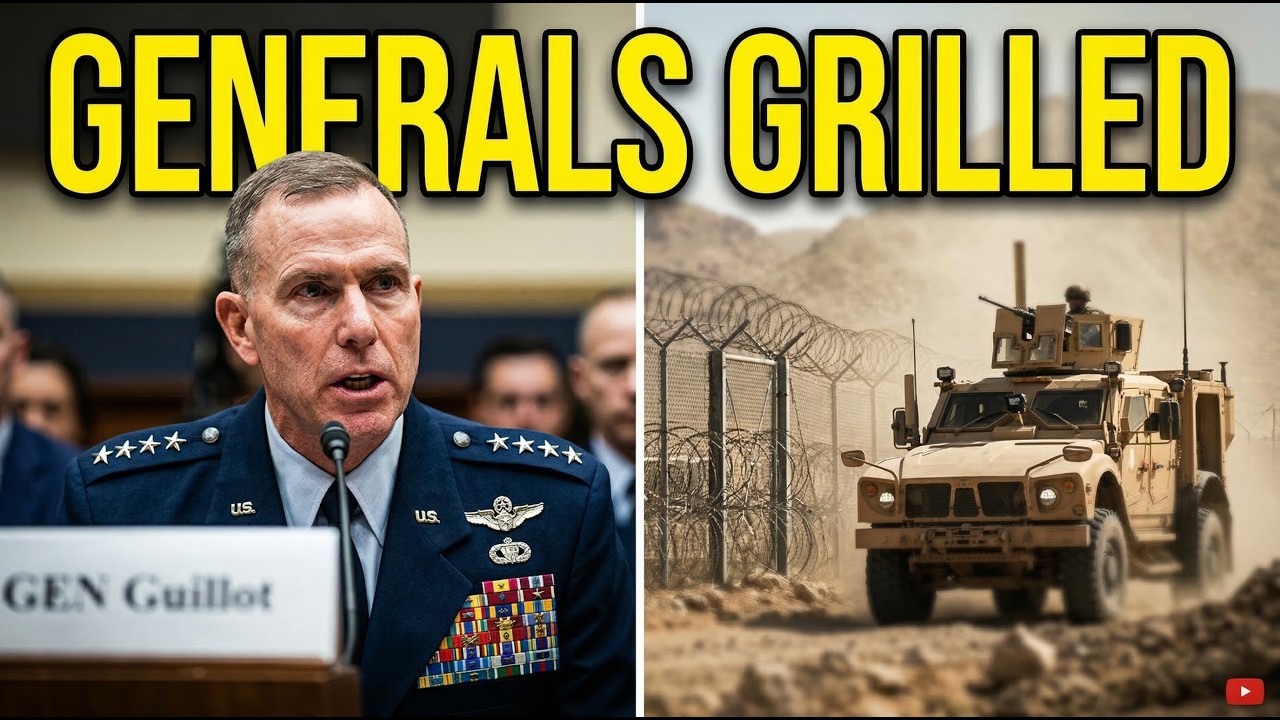
4. US Cartel Border War, Security & Immigration Surge
The situation at the U.S. border is evolving beyond a standard immigration challenge into a multi-layered security and infrastructure strain. Migrant flows remain elevated, but what’s changing is the complexity of actors and pressures converging at the border—including cartel influence over routes, logistics, and human movement. Border facilities, local municipalities, and federal systems are operating near or beyond capacity, creating bottlenecks that ripple into healthcare, housing, and law enforcement. The signal is clear: this is no longer a contained policy issue—it’s a systems-level stress point.
Beneath that signal, a critical thread is emerging around cartel operational expansion. These organizations are no longer just trafficking narcotics; they are functioning as sophisticated logistics networks, controlling migration corridors, charging fees, and leveraging human flow as a revenue stream. In some regions, they effectively act as parallel authorities, shaping who crosses, when, and how. This introduces a hybrid dynamic where immigration, organized crime, and national security intersect—blurring the line between humanitarian management and territorial control.
A second thread centers on infrastructure and governance strain at the state and local level. Border states and major destination cities are absorbing the immediate impact—shelter systems are overwhelmed, public services are stretched, and political tensions are rising as resources are reallocated. This creates a feedback loop: as capacity is exceeded, response measures become more reactive and fragmented, which in turn amplifies the perception of disorder. The issue is no longer just entry at the border—it’s the downstream ability of systems to absorb and integrate sustained inflows.
When these threads converge, the broader pattern becomes visible: political and logistical system overload occurring simultaneously. Federal policy debates, state-level responses, and on-the-ground realities are increasingly misaligned, creating friction across all layers of governance. This is why the signal matters—it indicates not just volume, but loss of equilibrium within the system itself. As long as flows remain elevated and coordination remains uneven, the environment stays unstable. The key takeaway is that this is not a short-term surge—it’s an ongoing pressure system that is testing the limits of institutional capacity and coherence.
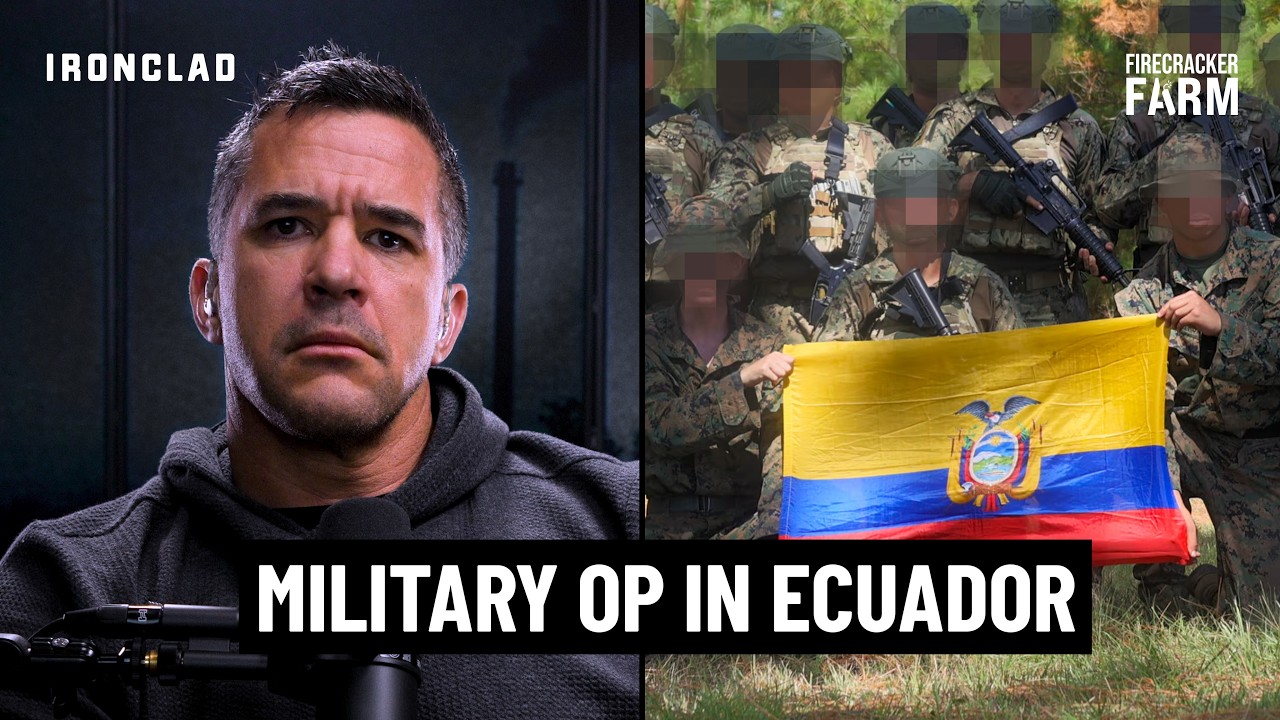
5. China Economic Slowdown & Global Concerns
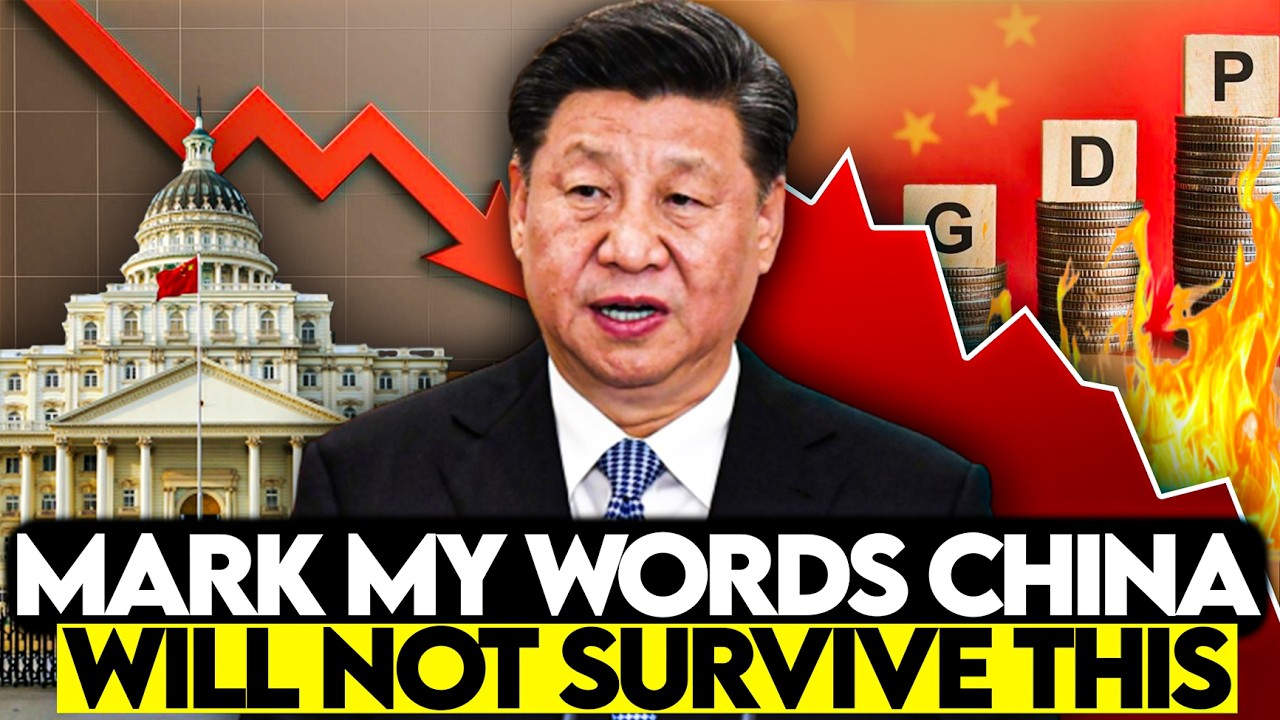
China’s economic slowdown is no longer a localized concern—it’s becoming a central variable in the global outlook. The combination of a weakened property sector, persistently high youth unemployment, and declining export demand is signaling a broad deceleration in one of the world’s primary growth engines. Real estate, which has historically driven a significant portion of China’s GDP and household wealth, is under sustained pressure from debt overhang and declining buyer confidence. The signal here is clear: China is not just slowing—it is struggling to reignite the internal momentum that powered global expansion for decades.
Beneath that signal, a key thread is the unwinding of the property-driven growth model. For years, development, infrastructure, and housing demand fueled employment, local government revenue, and consumer confidence. Now, with oversupply in many regions and tighter credit conditions, that engine is stalling. Developers are facing liquidity constraints, unfinished projects are eroding trust, and households are becoming more cautious. This is not a short-term correction—it reflects a deeper structural adjustment away from debt-fueled expansion.
A second thread centers on youth unemployment and shifting labor dynamics. A growing number of educated young workers are unable to find stable employment aligned with their expectations, creating both economic drag and social tension. At the same time, export-oriented industries are facing reduced global demand and supply chain realignment, further limiting job creation. This convergence places pressure on consumption, as households become more conservative in spending—reinforcing the slowdown from within.
When these threads converge, the broader pattern points to global demand contraction risk. China has long functioned as both a manufacturing hub and a major consumer of commodities and goods. As its growth slows, ripple effects extend outward—impacting emerging markets, commodity exporters, and multinational corporations alike. The key insight is that China’s slowdown is not isolated; it is transmissive. The signal is not just about China’s internal challenges—it’s about how those challenges propagate through trade, supply chains, and financial systems, shaping the next phase of the global economic cycle.


6. Cybersecurity Warfare & Alert Warnings Increase
The steady rise in cybersecurity warnings is not random noise—it reflects a shift in how modern conflict is being staged. Governments and private-sector operators are flagging vulnerabilities across energy grids, water systems, telecommunications, and transportation networks, all of which form the backbone of daily life. What stands out is the tone: these alerts are less about isolated breaches and more about systemic exposure. The signal is clear—critical infrastructure is being mapped, tested, and probed in preparation for potential disruption.
Beneath that signal, a key thread is persistent access and pre-positioning. Advanced actors—state and non-state—are no longer focused solely on immediate attacks. Instead, they aim to establish long-term footholds inside networks, quietly embedding themselves within operational systems. This allows for optionality: the ability to disrupt, degrade, or manipulate infrastructure at a chosen moment. It’s a strategic shift from “break in and exit” to “enter, remain, and wait.” That changes the timeline of conflict from reactive to premeditated.
A second thread is the integration of cyber operations into broader geopolitical strategy. Cyber is no longer a standalone domain—it’s coordinated with economic pressure, military positioning, and narrative shaping. For example, probing a power grid during a period of geopolitical tension sends a signal without triggering open conflict. Similarly, targeting telecom networks can disrupt communication flows during critical moments. This creates a gray-zone environment where actions fall below the threshold of war but still exert real pressure.
When these threads converge, the broader pattern becomes visible: the digital battlespace is already active, even if the physical one remains contained. The increase in warnings is not just defensive—it’s indicative of a system that recognizes it is being quietly contested. The key insight is that cyber warfare is about timing and leverage. The presence of access matters more than immediate action. The signal points to a world where disruption may not begin with missiles or markets—but with targeted, synchronized failures across critical systems, triggered at moments of maximum strategic impact.


7. Global Mental Health Crisis Expands
The expansion of the global mental health crisis is no longer a secondary issue—it is becoming a defining feature of the current environment. Across the U.S., Europe, and parts of Asia, rising levels of anxiety, depression, burnout, and social disconnection are being reported at scale. What’s different now is not just the volume, but the normalization of these conditions across all age groups and professions. The signal is clear: psychological strain is no longer episodic or isolated—it is becoming systemic.
Beneath that signal, a key thread is chronic exposure to instability and uncertainty. Individuals are navigating overlapping stressors—economic pressure, geopolitical tension, rapid technological change, and constant information flow. The human nervous system is not designed for sustained high-alert conditions, yet that has become the baseline for many. Over time, this creates cognitive fatigue, emotional dysregulation, and a reduced capacity to process new information effectively. This is not just stress—it’s prolonged nervous system overload.
A second thread is the impact of the information environment itself. The rise of algorithm-driven media, negative news cycles, and AI-generated content is amplifying confusion and eroding trust. People are not only dealing with difficult realities—they are also struggling to determine what is true. This constant ambiguity increases psychological strain, as certainty and shared understanding begin to fragment. The result is a feedback loop where information consumption both informs and destabilizes at the same time.
When these threads converge, the broader pattern becomes clear: mental health is becoming a civilizational pressure point. This has implications beyond individual well-being—it affects productivity, social cohesion, decision-making, and resilience at scale. The key insight is that psychological strain is not separate from the other systems under stress—it is interconnected with them. As financial, geopolitical, and technological pressures increase, so does the burden on the human system tasked with navigating them. The signal ultimately points to this: maintaining clarity, emotional regulation, and grounded perspective is no longer optional—it is becoming a core requirement for functioning effectively in the current phase.



Connecting the Dots: Unpacking This Week’s Top 7 MSM News Events
In a world flooded with information, it’s not just the facts that matter—it’s how we interpret, integrate, and respond to them that shapes our trajectory. This week’s top stories—spanning geopolitical tension, economic tightening, technological disruption, infrastructure vulnerability, border strain, global slowdown, and mental health expansion—are not isolated developments. They are interconnected signals forming a coherent pattern of systemic pressure. What appears fragmented at the headline level begins to align when viewed through a wider lens: multiple core systems are being stressed simultaneously, revealing both their limitations and their interdependence.
At the center of this convergence is a single unifying dynamic: compression across the global operating system. The U.S.–Iran tension and Strait of Hormuz risk reflect geopolitical pressure on energy and trade arteries. The Federal Reserve’s stance and commercial real estate stress signal financial tightening and debt fragility. China’s slowdown introduces demand-side contraction, while cybersecurity alerts expose digital vulnerabilities embedded in modern infrastructure. Border strain highlights logistical and governance overload, and the mental health crisis reveals the human cost of navigating this environment. These are not separate problems—they are different expressions of the same underlying shift.
The threads connecting these events point to a transition from a stable, growth-oriented system to one defined by constraint, recalibration, and adaptation. Liquidity is tightening. Trust in institutions is eroding. Technology is accelerating faster than societal structures can absorb. At the same time, the human system—individually and collectively—is being pushed to process more complexity, uncertainty, and contradiction than ever before. This creates a feedback loop: as external systems destabilize, internal strain increases; as internal strain rises, collective decision-making becomes more reactive, amplifying instability.
The convergence this week is not about predicting a single outcome—it’s about recognizing the phase we are in. We are moving through a period where underlying structures are being tested, repriced, and, in some cases, redefined. The real “dot connection” is this: geopolitical, economic, technological, and psychological pressures are no longer operating in silos—they are synchronizing. For those paying attention, the opportunity is not to react to each headline, but to step back, see the pattern, and navigate with clarity. Because when systems compress, truth surfaces—and how we respond to that clarity will shape what emerges on the other side.
Connecting the Dots: Unpacking This Weeks Top 5 MSM News Events
This Week’s Top 7 MSM News Stories & Events
1. U.S.–Iran Escalation Continues & Strait of Hormuz Risk Narrative Builds
Ongoing military positioning, cyber activity, and proxy tensions across the Middle East. Shipping insurance spikes and naval presence increases as الأسواق price in disruption risk before actual closure.
This environment reflects a controlled escalation dynamic, where pressure is applied without crossing into full-scale conflict. Even without direct disruption, global markets are already adjusting behavior as if a shock event is increasingly plausible.
2. AI Acceleration & Job Displacement Warnings
Major firms warn of rapid workforce reduction due to AI deployment, signaling that white-collar disruption is now openly acknowledged.
This marks a shift from experimental adoption to operational implementation across multiple industries. As adoption accelerates, competitive pressure will likely force even reluctant sectors to follow, compressing the timeline of workforce transformation.

3. Federal Reserve Signals “Higher for Longer” & Commercial Real Estate Stress Expands
Interest rates remain elevated amid sticky inflation, tightening liquidity and increasing pressure on debt markets, while defaults rise across office and retail sectors.
Many assets financed in the low-rate era are now facing refinancing challenges that may not be solvable under current conditions. This suggests a longer-term repricing of asset values as financial realities catch up with structural shifts in demand.
4. U.S. Cartel Border Pressure, Security & Immigration Surge
Continued strain on border systems and local infrastructure as migration flows persist and cartel influence expands across key transit corridors.
Cartels are increasingly acting as logistical gatekeepers, monetizing and controlling movement at scale. This adds a security dimension to what was previously framed primarily as a humanitarian and policy issue.
5. China Economic Slowdown & Global Concern
Weak property sector, rising youth unemployment, and reduced exports point to broader risks of global demand contraction.
As China recalibrates its growth model, ripple effects are being felt across commodities, manufacturing, and global trade flows. A prolonged slowdown could dampen recovery prospects in multiple regions dependent on Chinese demand.

6. Cybersecurity Warfare & Infrastructure Alert Warnings Increase
Growing warnings about vulnerabilities across energy, water, and telecom systems highlight increased cyber probing and digital threat exposure.
These activities suggest adversaries may be mapping and testing systems for future leverage rather than immediate disruption. The persistence of these intrusions indicates a long-term strategic posture rather than isolated incidents.

7. Global Mental Health Crisis Expands
Rising anxiety, depression, and societal stress indicators reflect increasing psychological strain across populations navigating economic, technological, and geopolitical uncertainty.
This trend is beginning to impact productivity, decision-making, and overall societal resilience. As pressures accumulate, mental health is emerging as a critical factor influencing how effectively individuals and systems respond to ongoing challenges.

Top 7 Alternative News Stories & Events for this Week
This week’s alternative news stories, when viewed together, point to a deeper shift unfolding beneath the surface of daily headlines. From AI-driven disinformation and drone warfare to surveillance expansion, geoengineering discussions, controlled disclosure narratives, food system fragility, and declining institutional trust, the common thread is clear: multiple layers of control and influence are being exposed simultaneously. These are not isolated developments—they are signals of a changing landscape where information, infrastructure, and authority are all being re-evaluated in real time.
A key pattern emerging across these stories is the decentralization of power and perception. Information is no longer controlled by a few gatekeepers, yet it is also more difficult to verify. Technology is empowering both innovation and manipulation at unprecedented speed. Systems once viewed as stable—food supply chains, governance structures, even environmental conditions—are now being questioned and, in some cases, actively reshaped. This creates a paradox: as access to knowledge expands, so does the complexity of discerning truth, requiring individuals to become more engaged, aware, and self-directed in how they interpret events.
When these signals converge, the broader picture becomes one of acceleration and exposure happening at the same time. What was previously hidden, dismissed, or fragmented is becoming more visible, while the pace of change continues to increase across all domains. This convergence does not point to a single outcome, but rather to a transitional phase where systems, narratives, and beliefs are being tested and redefined. The opportunity within this moment lies in the ability to connect the dots—to step back from individual stories and recognize the patterns forming between them, allowing for greater clarity, resilience, and informed decision-making moving forward.
7 Alternative News Stories & Events For The Week
1. Information Warfare / AI Disinformation Flood
The information environment is undergoing a rapid and profound shift as AI-generated content floods digital platforms at scale. Synthetic media—ranging from deepfake videos to convincingly fabricated articles and audio—has moved from niche experimentation into widespread deployment. The volume alone is enough to overwhelm traditional verification methods, creating an environment where false narratives can spread as quickly, or faster, than factual reporting. The signal is clear: the integrity of the information ecosystem is no longer assumed—it is actively contested.
Beneath that signal, a critical thread is the weaponization of narrative at scale. AI tools enable the rapid creation and distribution of tailored messaging designed to influence perception, amplify division, or obscure truth. This is not limited to state actors; non-state groups, independent networks, and even individuals now have access to capabilities that were once restricted to sophisticated operations. The barrier to entry has collapsed, transforming information warfare from a centralized activity into a decentralized and persistent battlefield.
A second thread is the erosion of shared reality. As synthetic content becomes more convincing, the line between authentic and artificial blurs, leading to a breakdown in collective trust. People are not just questioning what they see—they are beginning to question whether anything can be verified at all. This creates a destabilizing effect: when trust in information collapses, decision-making becomes fragmented, and social cohesion weakens. The environment shifts from “disagreement over facts” to uncertainty about the existence of facts themselves.
When these threads converge, the broader pattern becomes clear: truth discernment is emerging as a core survival skill in the digital age. The challenge is no longer just accessing information, but filtering, validating, and interpreting it under conditions of intentional distortion. The signal points to a long-term transformation where individuals must develop stronger internal frameworks for discernment, rather than relying solely on external authorities. In this landscape, clarity is not given—it must be actively cultivated, and those who can maintain it will be far better positioned to navigate what comes next.


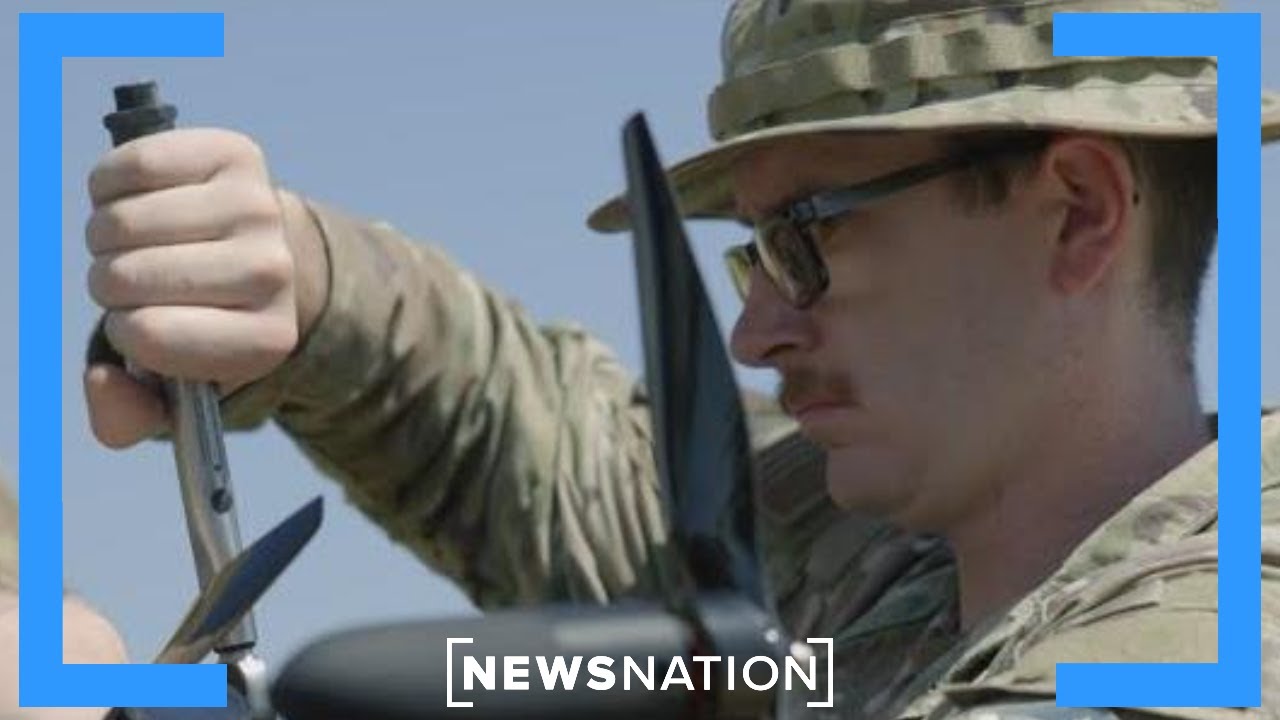
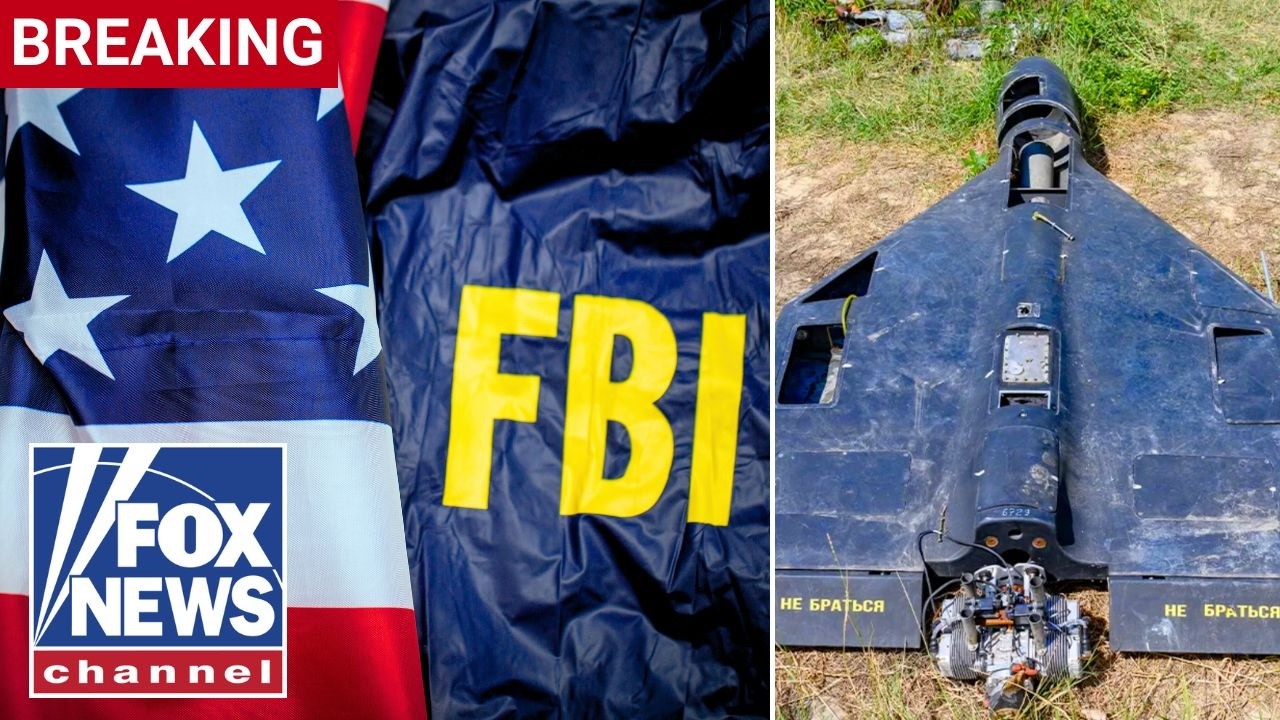
2. Drone Warfare Comes Home Warning
Conflicts abroad have demonstrated that low-cost, commercially available drones can be adapted for surveillance, targeting, and even direct attacks on infrastructure and personnel. What once required state-level capability can now be executed with relatively minimal resources and technical skill. The signal is clear: the barrier to entry for meaningful disruption has dropped dramatically, bringing asymmetric capabilities closer to home.
Beneath that signal, a key thread is the normalization of asymmetric warfare. Traditional security models were built around large-scale, centralized threats—missiles, aircraft, organized military units. Drones invert that model. They are small, decentralized, inexpensive, and difficult to detect or intercept efficiently. This creates a mismatch where defense systems are often far more costly than the threats they are trying to neutralize. The result is a persistent vulnerability, where even unsophisticated actors can generate outsized impact.
A second thread is the expansion of targeting possibilities. Critical infrastructure—power stations, transportation hubs, public gatherings, and even private facilities—becomes more exposed when threats can approach from low altitude with minimal warning. Drones also introduce flexibility in timing and coordination, allowing multiple devices to be deployed simultaneously or in waves. This shifts the security challenge from perimeter defense to continuous, adaptive monitoring across wide areas, which is significantly harder to maintain.
When these threads converge, the broader pattern becomes clear: the battlespace is decentralizing and moving closer to civilian environments. The distinction between foreign conflict zones and domestic security is beginning to blur. The signal points to a future where preparedness is not just about large-scale defense systems, but about developing layered, cost-effective responses to small, agile threats. As asymmetric tools continue to proliferate, resilience will depend on how quickly systems can adapt to a threat landscape that is no longer defined by scale—but by accessibility and ingenuity.


3. Civil Unrest Signals (U.S., Europe, Israel) | Surveillance State Expansion (AI + Biometrics)
The rise in civil unrest across the U.S., Europe, and Israel is not occurring in isolation—it is unfolding alongside a rapid expansion of surveillance capabilities powered by AI and biometric systems. Localized protests, labor strikes, political demonstrations, and social tensions are increasing in frequency and intensity, reflecting deeper fractures within societies. At the same time, governments and institutions are accelerating the deployment of digital ID systems, facial recognition, predictive policing, and data-driven monitoring tools. The signal is clear: rising instability and expanding control mechanisms are advancing in parallel.
Beneath that signal, one key thread is the emergence of a control grid architecture. AI-driven surveillance systems are being positioned as solutions for security, efficiency, and public safety, but they also introduce unprecedented levels of visibility into individual behavior and movement. Digital identity frameworks, combined with real-time tracking and predictive analytics, create the infrastructure for continuous monitoring at scale. This is not just about enforcement—it’s about building systems capable of anticipating and shaping behavior before events unfold.
Running alongside this is a second thread: internal instability is increasing as external pressures rise. Economic strain, political polarization, immigration pressures, and information warfare are all contributing to localized unrest. These tensions are not uniform—they manifest differently across regions—but they share a common pattern of growing dissatisfaction and reduced trust in institutions. As these pressures build, responses tend to become more reactive, which can further amplify cycles of protest and enforcement.
When these threads converge, the broader pattern becomes clear: a feedback loop between instability and control. As unrest increases, surveillance and enforcement mechanisms expand. As those mechanisms expand, they can heighten public awareness and resistance, feeding further instability. The signal points to a system attempting to maintain order under increasing strain, using technological tools to manage complexity. The critical insight is that both dynamics—rising unrest and expanding surveillance—are not opposing forces, but co-evolving responses within the same stressed environment, shaping the next phase of societal organization and governance.

4. Weather Modification / Geoengineering Focus
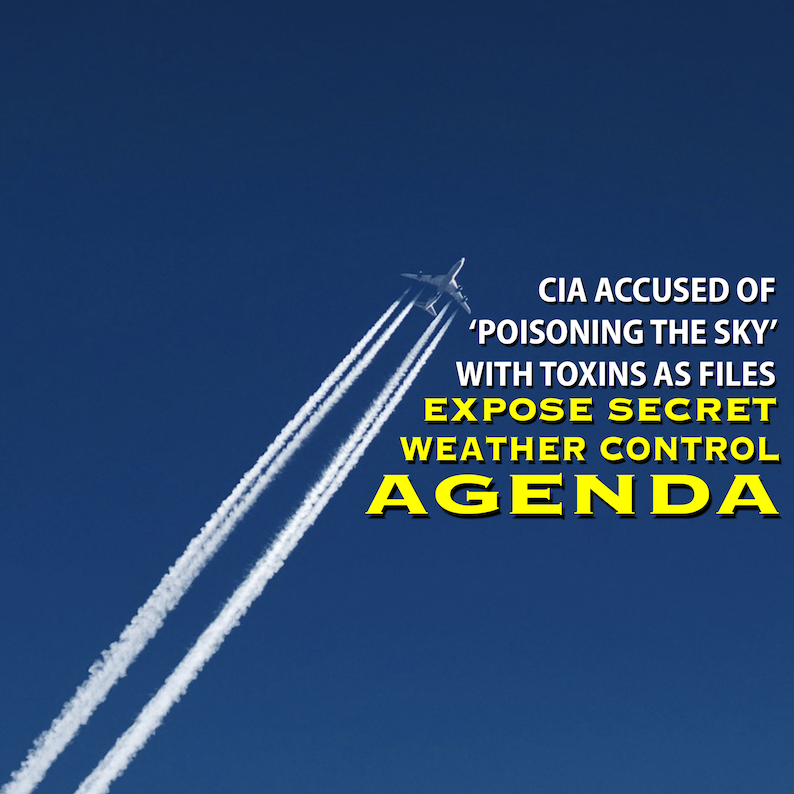
The renewed focus on weather modification and geoengineering reflects a growing awareness—and debate—around humanity’s increasing ability to influence natural systems. Discussions around programs such as cloud seeding, solar radiation management, and atmospheric aerosol injection are moving from fringe conversations into more public and academic domains. Governments, research institutions, and private entities are openly studying these interventions as potential responses to climate volatility. The signal is clear: the boundary between natural weather systems and human-directed influence is becoming less distinct. (the state of NC has legislation outlawing Chemtrails).
Beneath that signal, a key thread is the concept of environmental control as strategic leverage. Weather and climate have always shaped economies, agriculture, and geopolitical stability. The ability to influence precipitation, temperature, or atmospheric conditions—even in localized ways—introduces a new dimension of power. Whether framed as climate mitigation or technological advancement, these capabilities raise questions about governance, oversight, and unintended or intended consequences. Control of the environment, even partially, begins to resemble a strategic asset rather than a neutral force.
A second thread is the transparency gap between capability and public understanding. While research programs and patents exist, the scale, coordination, and real-world application of these technologies remain difficult for the public to fully assess. This gap fuels speculation, skepticism, and competing narratives—some grounded in legitimate inquiry, others less so. As a result, the topic becomes both a scientific discussion and an information challenge, where clarity is often overshadowed by uncertainty.
When these threads converge, the broader pattern becomes visible: the human role in shaping planetary systems is expanding, but governance frameworks are lagging behind. The signal points to a future where environmental intervention may become more exposed, especially as climate pressures intensify. The critical insight is not just whether these technologies exist, (chemtrails) but how they are managed, communicated, and understood. As influence over natural systems grows, so does the responsibility—and the potential for both solution and misuse—within an increasingly complex global landscape.

5. Controlled Disclosure (UFO/UAP Timeline)
The conversation around UFO/UAP disclosure has shifted from “if” to “how and when”, with increasing emphasis on the idea that any release of information is being carefully staged over time. Government acknowledgments, declassified reports, and official hearings have slowly introduced the topic into mainstream awareness without delivering full transparency. The pacing itself is notable. The signal is clear: disclosure, to the extent it is occurring, appears structured rather than spontaneous.
Beneath that signal, a key thread is managed information release tied to societal readiness. Complex or paradigm-shifting information—especially that which challenges existing scientific, political, or cultural frameworks—is unlikely to be introduced all at once. Instead, gradual exposure allows institutions to maintain stability while acclimating the public to new possibilities. This creates a phased narrative, where each new piece of information builds on prior acknowledgment, reducing shock while increasing acceptance.
A second thread is the role of narrative control and framing. How information is presented often matters as much as the information itself. Official channels, media coverage, and expert commentary help shape interpretation, guiding public perception toward specific conclusions or levels of concern. This suggests that disclosure is not just about releasing facts—it is about contextualizing those facts within a controlled storyline, ensuring they integrate into existing systems without causing disruption.
When these threads converge, the broader pattern becomes clear: information release is increasingly strategic, not purely transparent. Whether the topic is UAPs or other sensitive domains, the timing, sequencing, and framing of disclosure are aligned with maintaining institutional coherence. The signal ultimately points to this reality: in an era of complex and potentially disruptive knowledge, readiness—both individual and collective—becomes the gating factor for what is revealed, when, and how it is understood.


6. Global Food Supply Fragility & Famine
The growing concern around global food supply fragility reflects a convergence of pressures that are no longer isolated or temporary. Fertilizer shortages, disrupted transportation routes, and conflict-driven supply constraints are beginning to intersect in ways that threaten both availability and affordability. Key agricultural inputs—especially nitrogen- and potash-based fertilizers—have faced volatility due to energy prices and geopolitical tensions, while shipping disruptions continue to affect distribution timelines. The signal is clear: food systems are under increasing strain, and resilience is being tested across multiple layers.
Beneath that signal, a critical thread is the role of food as leverage within geopolitical and economic systems. Control over production, export routes, and pricing can influence entire regions, particularly those heavily dependent on imports. Nations facing shortages may be forced into difficult trade-offs, while exporting countries gain strategic advantage. This transforms food from a basic necessity into a tool of influence, where access can be shaped by political alignment, economic capacity, or conflict dynamics.
A second thread is the interdependence of global supply chains. Modern food systems rely on tightly coordinated networks—fertilizer production in one region, grain cultivation in another, processing and shipping elsewhere. When disruptions occur at any point—whether through war, sanctions, climate events, or infrastructure breakdowns—the effects cascade quickly. This interconnectedness increases efficiency during stable periods but creates vulnerability during times of stress, amplifying localized issues into global concerns.
When these threads converge, the broader pattern becomes clear: food security is becoming a central axis of global stability. The risk is not just immediate shortages, but sustained pressure that can lead to price spikes, social unrest, and political instability in vulnerable regions. The signal points to a system where access to food is no longer guaranteed by default—it must be actively secured and managed. In this environment, the ability to produce, store, and distribute food effectively becomes not just an economic priority, but a strategic imperative shaping the balance of power and resilience moving forward.


7. Institutional Trust Collapse


Connecting the Dots: 7 Alternative News Stories That Signal the Great Awakening
When viewed individually, this week’s alternative stories—ranging from AI-driven disinformation and drone warfare to food system fragility, surveillance expansion, geoengineering focus, controlled disclosure narratives, and institutional trust collapse—can appear fragmented or speculative. But when placed side by side, a different picture emerges. These are not isolated anomalies; they are interconnected signals pointing to a deeper systemic shift. The convergence suggests that multiple layers of reality—information, infrastructure, governance, and perception—are being simultaneously challenged, exposing cracks that were previously hidden beneath the surface.
A key thread running through all seven stories is the battle over control—of information, environment, systems, and human behavior. AI disinformation floods the digital space, making truth harder to identify. Surveillance systems expand in response to unrest, increasing visibility and influence over populations. Geoengineering discussions introduce the possibility of environmental manipulation, while food supply fragility highlights how basic resources can become leverage points. Even the concept of controlled disclosure reflects a broader pattern: information itself is being managed, timed, and framed. Together, these threads point to a world where control is both expanding and being questioned at the same time.
Another layer of convergence is the collapse of centralized authority and the rise of decentralized awareness. As trust in institutions declines, individuals are turning to alternative sources, independent research, and direct observation to form their understanding of events. This shift is not just informational—it is psychological and cultural. It represents a move away from passive consumption toward active discernment. However, this transition comes with complexity: as more voices enter the space, clarity becomes harder to maintain, requiring a higher level of personal responsibility in interpreting what is real, relevant, and reliable.
The broader pattern that connects these stories is one of simultaneous exposure and acceleration. Systems that once operated quietly—whether technological, political, or environmental—are becoming more visible, while the pace of change continues to increase. This creates a threshold moment: as more information surfaces, the ability to connect, interpret, and respond becomes critical. The convergence suggests we are entering a phase where awareness itself becomes a defining factor. Not everyone will interpret these signals the same way, but the underlying shift is undeniable—the landscape is changing, and those who can recognize patterns rather than react to isolated events will be best positioned to navigate what comes next.
7 Alternative News Stories 7 ALTERNATIVE NEWS STORIES CONNECTING THE DOTS
1. Information Warfare / AI Disinformation Flood
The rapid proliferation of AI-generated content is transforming the information landscape into a highly contested environment. Deepfakes, synthetic voices, and auto-generated articles are being deployed at scale, making it increasingly difficult to distinguish authentic reporting from fabricated narratives. This shift is not just technological—it is psychological, as individuals are forced to question the validity of what they see and hear in real time. The result is a breakdown in shared reality, where perception itself becomes a battleground and discernment becomes a critical skill.

2. Drone Warfare Comes Home Warning
Low-cost drones are redefining modern conflict by lowering the barrier to entry for surveillance and targeted disruption. What was once limited to military applications is now accessible to non-state actors, creating new vulnerabilities across civilian infrastructure and public spaces. These systems are difficult to detect, inexpensive to deploy, and capable of coordinated use, making them an efficient asymmetric threat. This evolution signals a shift toward decentralized conflict, where traditional defense systems are challenged by small, agile technologies.

3. Civil Unrest Signals & Surveillance State Expansion (AI + Biometrics)
Rising civil unrest across multiple regions is occurring alongside the rapid expansion of AI-powered surveillance systems, including facial recognition, digital ID frameworks, and predictive policing tools. Governments are increasingly turning to these technologies to monitor, anticipate, and respond to social instability. While positioned as necessary for security, these systems also introduce new questions around privacy, autonomy, and control. The convergence of unrest and surveillance suggests a feedback loop where instability drives monitoring, and monitoring influences behavior.
4. Weather Modification / Geoengineering Focus
Growing attention is being directed toward atmospheric intervention technologies such as cloud seeding, solar radiation management, and aerosol-based climate experiments. These programs, often framed as solutions to climate challenges, raise complex questions about scale, governance, and unintended consequences. As awareness increases, so does debate حول the extent to which human systems are influencing natural weather patterns. This topic highlights the intersection of science, policy, and perception, where transparency and trust remain key concerns.

5. Controlled Disclosure (UFO/UAP Timeline)
Discussions around UFO/UAP phenomena are increasingly framed within the concept of phased or controlled disclosure, where information is released incrementally over time. Government acknowledgments, declassified materials, and public hearings suggest a structured approach to introducing complex or disruptive topics into mainstream awareness. This gradual release allows for societal adaptation while maintaining institutional stability. The focus is shifting from whether disclosure is happening to how it is being managed and contextualized.

6. Global Food Supply Fragility & Famine
Concerns about global food systems are intensifying due to disruptions in fertilizer production, transportation networks, and conflict-affected agricultural regions. These pressures are exposing the fragility of highly interconnected supply chains that depend on precise coordination across multiple countries. As costs rise and availability fluctuates, food security becomes a central issue for both developed and developing nations. This dynamic underscores the importance of resilience in production and distribution systems amid growing uncertainty.

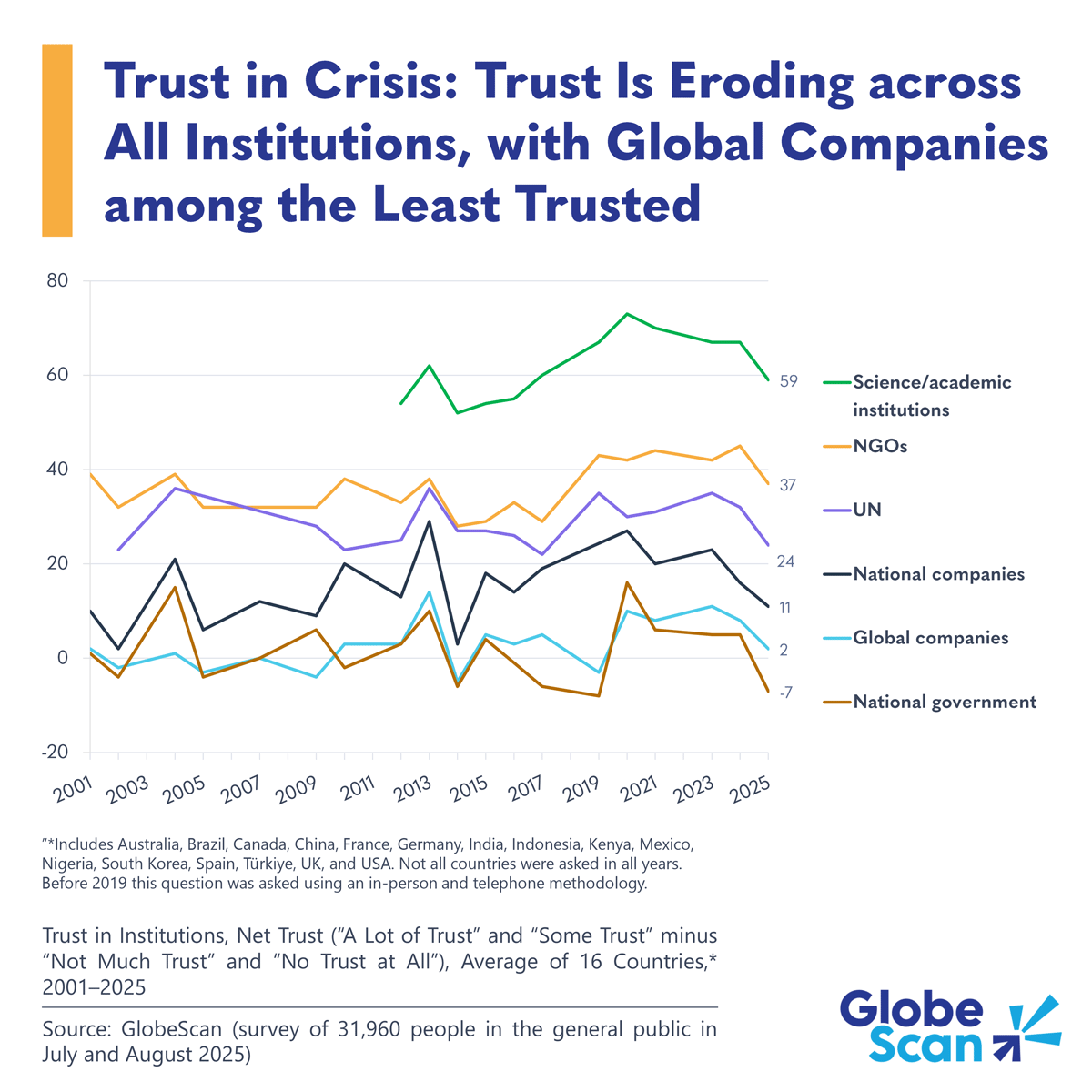
7. Institutional Trust Collapse
Public confidence in traditional institutions—media, government, and large corporations—is declining as inconsistencies, conflicting narratives, and perceived lack of transparency erode credibility. This shift is driving individuals toward alternative sources of information and decentralized networks, reshaping how knowledge is accessed and validated. While this creates opportunities for independent thinking, it also introduces challenges in maintaining shared understanding and coherence. The erosion of trust signals a broader transition in how authority is perceived and exercised in a rapidly changing world.

Truth Seekers Q&A: Answering Your Most Pressing Questions
As the volume and intensity of global events continue to rise, one thing becomes increasingly clear—people are not just looking for headlines, they are looking for understanding. This week’s developments across geopolitical tension, economic pressure, technological disruption, and societal strain have generated a new level of inquiry from our subscribers. The questions are no longer surface-level; they reflect a deeper desire to make sense of how these events connect, what they mean, and how to navigate what feels like an increasingly complex and fast-moving environment.
What stands out is that many of these questions point to the same underlying realization: these events are not isolated—they are interconnected signals of a broader shift. Whether it’s concerns about global conflict, financial instability, AI disruption, information warfare, or personal resilience, each question touches a different part of a larger pattern. This is the essence of connecting the dots—moving beyond individual stories to understand the dynamics shaping the bigger picture.
The purpose of this Q&A section is to bring clarity to that complexity. Rather than reacting to each headline in isolation, we step back and explore the patterns, threads, and implications behind the week’s most important developments. These five questions were selected because they represent the core concerns and curiosities emerging across our community right now. By addressing them directly, we aim to provide not just answers, but a framework for thinking—one that helps you stay grounded, informed, and aligned as the landscape continues to evolve.

The Big Picture: Connecting Signals, Threads & Patterns
As we conclude this week’s Truth Seeker Weekly Briefing, it’s important to step back from the individual headlines and recognize how we approach the flow of information. We don’t view news as isolated events—we see signals, the early indicators of change. When multiple signals begin to align, they form threads, revealing direction and intent. As those threads repeat and reinforce across sectors—geopolitical, economic, technological, and social—they evolve into patterns that are far more meaningful than any single story.
This is where clarity begins to emerge. By tracking signals, following threads, and identifying patterns, we create a converging effect—a moment where seemingly unrelated events begin to connect. U.S.–Iran tensions align with energy risk. AI disruption aligns with labor shifts. Financial tightening aligns with asset stress. Information warfare aligns with declining trust. Each piece, on its own, is incomplete—but together, they form a coherent structure that reveals what is actually unfolding beneath the surface.
The Big Picture is not about prediction—it’s about orientation. When you can see how signals connect into threads, and threads into patterns, you gain a clearer vision of the landscape ahead. This perspective allows you to move beyond reaction and into awareness, where decisions are made with greater confidence and less noise. As convergence accelerates, those who can connect the dots will not only understand what’s happening—they’ll be prepared for what comes next.

Truth Seekers Weekly Wrap-Up
The Journey from the Matrix to Higher Frequency Living
As we close out this week’s Truth Seekers Weekly Briefing, let’s take a moment to reflect on the essential keys to rising above the noise, breaking free from the matrix, and aligning with a higher vibrational state of being.
🔑 Key Pillars for Awakening:
- Let Go of Fear: Fear is the master key of control. Releasing it is the first act of sovereignty—and the doorway to true freedom.
- Practice Forgiveness & Emotional Clearing: Unshackle yourself from the past. Forgiveness dissolves energetic residue, restores clarity, and reclaims your power.
- Meditation & Transformational Breathing: Harness the breath as a tool for inner alignment, expanded awareness, and conscious presence in each moment.
- Live with the Heart of a Volunteer: Lead with authenticity, service, and unconditional love. Embody the values of integrity and compassion in all you do.
As we often say: “You’re either outside acting in the movie… or going within to watch it consciously.”
So, which role are you playing right now?
Are you being pulled by fear—or grounded in peace?
Caught in the chaos—or anchored in presence?
Your Personal Code of Mindset:
✅ Kindness & Respect
✅ Accountability & Responsibility
Ask yourself honestly:
- Are you observing your thoughts—or are they running the show?
- Is your mental atmosphere vibrationally aligned, at 50%+ or higher?
- Can you feel the resonance of your higher self?
- Are you responding with awareness—or reacting on autopilot?
Remember: The path out of the matrix and into higher consciousness isn’t a one-time decision—it’s a daily choice. A moment-by-moment commitment to awareness, sovereignty, and alignment.
Until next time, Truth Seekers: Stay awake. Stay empowered. And keep connecting the dots.
In Love & Light ❤️
The Great Awakening Team
The 3 C’s of Life: “Choices, Chances, and Changes”,
You must make a choice to take a chance or your life will never change. – Zig Ziglar
Share This Report
Join the Discussion
Related Reports


Have questions?
At Great Awakening Report, we are dedicated to supporting your journey toward truth and enlightenment through our specialized Coaching and Consulting services.
Coaching Services: Our coaching programs are designed to guide you through personal awakening and transformation. We offer personalized sessions that focus on expanding consciousness, uncovering hidden truths, and fostering spiritual growth. Our experienced coaches provide the tools and insights necessary to navigate your path with clarity and confidence.
Consulting Services: For organizations and individuals seeking deeper understanding and strategic guidance, our consulting services offer expert analysis and solutions. We delve into areas such as global transitions, alternative news insights, and consciousness studies to provide comprehensive strategies tailored to your unique objectives.
Embark on a transformative journey with our Coaching and Consulting services, and unlock your highest potential. To learn more and schedule a session, visit our Coaching and Consulting pages.
Thank you
Thank you to our subscribers and readers for your continued support and dedication to truth and awakening. Your encouragement, engagement, and belief in our mission make everything we do possible. Together, we are expanding awareness and helping illuminate the path forward.
If you would like to further support the Great Awakening team and our ongoing efforts to share insight, knowledge, and truth, you can DONATE HERE.
With deep gratitude,
– Great Awakening Team
About the Author: Great Awakening Team

We are a community. We are cultural creatives and like minded people seeking the truth and focusing on disclosure, awakening and consciousness. Our focus is real news as researchers, reporters and truth seekers. We are here to teach, to spread the word, to serve and to help. We are a collective, a movement, free from all programing, not closed minded and not discriminatory. We are not political. We are not religious but we are spiritual. We study, research, and report on a wide range of subjects and topics, from the current geopolitical climate to health and wellness, from earth’s history to spiritual practices. We are forward thinkers and visionaries, we are guides for the transition as we usher in The Great Awakening.
THIS WEBSITE DOES NOT PROVIDE MEDICAL ADVICE: The information, including but not limited to text, graphics, images, and other material contained on this website, are for informational purposes only. No material on this site is intended to be a substitute for professional medical advice, diagnosis, or treatment. Always seek the advice of your physician or other qualified health care provider with any questions you may have regarding a medical condition or treatment and before undertaking a new health care regimen, and never disregard professional medical advice or delay in seeking it because of something you have read on this website.
DISCLAIMER: All statements, claims, views and opinions that appear anywhere on this site, whether stated as theories or absolute facts, are always presented by The Great Awakening Report (GAR) as unverified—and should be personally fact checked and discerned by you, the reader.Any opinions or statements herein presented are not necessarily promoted, endorsed, or agreed to by GAR, those who work with GAR, or those who read or subscribe to GAR.Any belief or conclusion gleaned from content on this site is solely the responsibility of you the reader to substantiate.Any actions taken by those who read material on this site are solely the responsibility of the acting party.You are encouraged to think for yourself and do your own research.Nothing on this site is meant to be believed without question or personal appraisal.
COPYRIGHT DISCLAIMER: Citation of articles and authors in this report does not imply ownership. Works and images presented here fall under Fair Use Section 107 and are used for commentary on globally significant newsworthy events. Under Section 107 of the Copyright Act 1976, allowance is made for fair use for purposes such as criticism, comment, news reporting, teaching, scholarship, and research.
COMMUNITY GUIDELINES DISCLAIMER: The points of view and purpose of this video is not to bully or harass anybody, but rather share that opinion and thoughts with other like-minded individuals curious about the subject.