
Help Us Bypass Censorship. Share This.
Sign up to receive Our Weekly Briefing Newsletter
Begin your journey with weekly insights designed to expand awareness and ground you in truth. Our free tier gives you a powerful introduction without any commitment.
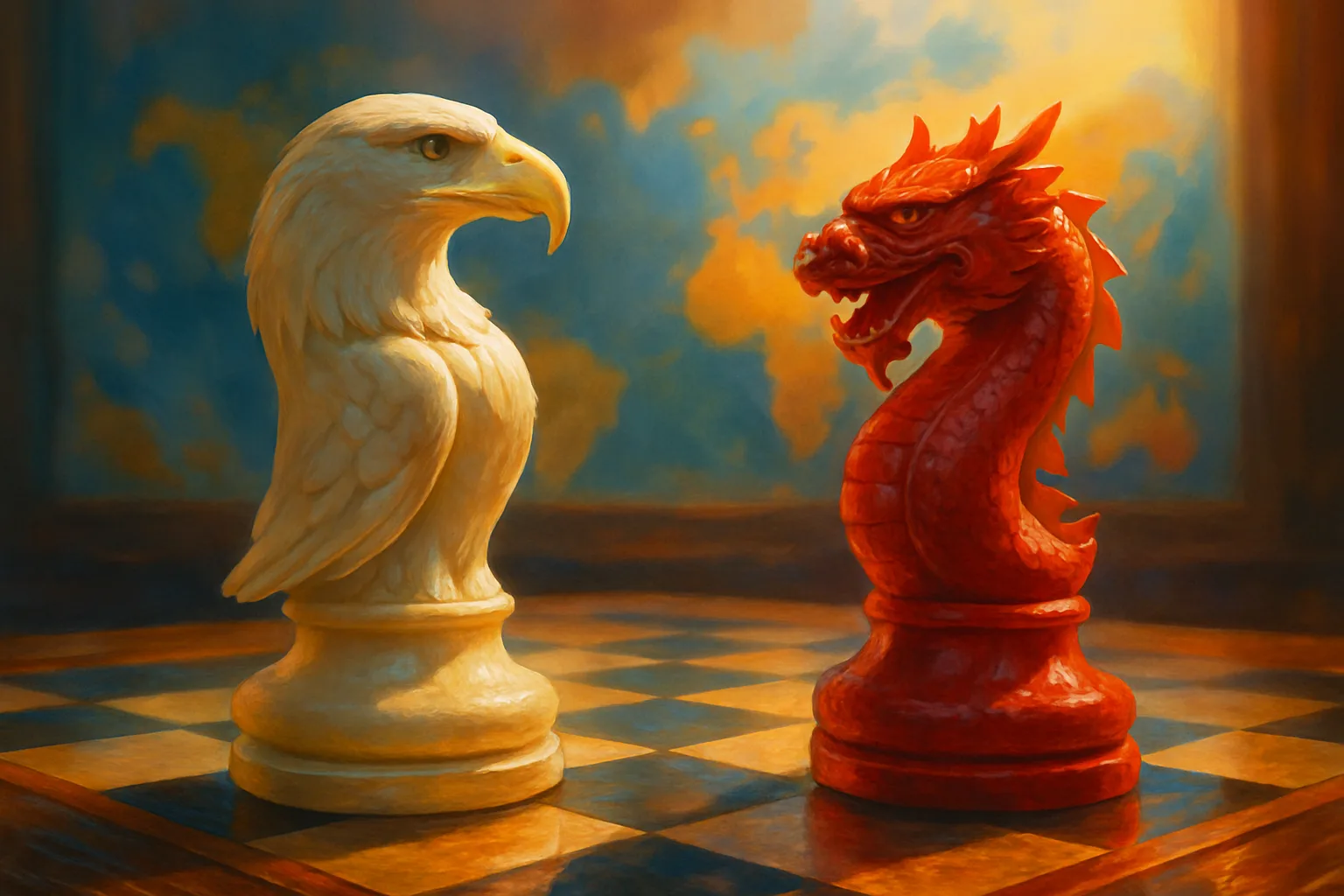
The Evolving U.S.-China Relationship
The relationship between the United States and China has a complex history marked by periods of cooperation and competition. Historically, interactions have ranged from trade partnerships to political and military tensions. In recent years, this relationship has evolved amid significant developments that have contributed to heightened tensions. Key issues include trade disputes, differing geopolitical ambitions in the Asia-Pacific region, technological competition, and disputes over human rights and security concerns. These factors combined have gradually shifted U.S.-China relations from a period of engagement and economic interdependence toward a more competitive and strained dynamic, setting the stage for ongoing challenges in bilateral cooperation and global diplomacy. For an in-depth perspective on historical and contemporary geopolitical dynamics, further exploration can be found in analytical discussions on global economic and political shifts Source: Great Awakening Report.
Understanding the 2026 Flashpoint Warning
The year 2026 has been identified by multiple analysts as a critical flashpoint in global geopolitics, particularly concerning the escalating complexities of U.S.-China relations. This warning recognizes a convergence of economic, technological, and strategic triggers that could catalyze heightened tensions or even conflict between these two major world powers.
Potential triggers include intensifying trade disputes, competition over technological dominance such as AI and cyber capabilities, and increasing military posturing in contested regions like the Taiwan Strait. Additionally, economic vulnerabilities and systemic disruptions in global supply chains may exacerbate the scenario, pushing strained relations toward a breaking point.
The significance of recognizing 2026 as a flashpoint lies in the opportunity it provides to understand underlying dynamics and develop informed strategies for diplomacy, conflict avoidance, and international cooperation. A clear-eyed awareness of these risks enables policymakers and stakeholders to better navigate the shifting geopolitical landscape.
For readers interested in deeper insight into related economic and geopolitical upheavals anticipated around this period, including how they may connect with broader themes of global systemic risk, see our comprehensive analyses in The Countdown to Collapse: Insights from 2025’s Warning Signs for Our Future and Special Report: The Threshold Event — Countdown to May 2026.
Geopolitical Implications of Rising Tensions
Rising geopolitical tensions have profound implications on regional security, alliances, and the broader global diplomatic landscape. Escalating conflicts and strategic rivalries heighten the risk of militarization in volatile regions, compelling nations to reinforce defense postures and realign military priorities. Such tensions often disrupt existing alliances, prompting shifts in partnership dynamics where countries seek new security guarantees or disengage from former commitments to safeguard national interests.
The uncertainty generated by these pressures challenges established diplomatic relations, often resulting in increased diplomatic standoffs, sanctions, and reduced cooperation on global issues like trade, climate, and security. Additionally, geopolitical friction can lead to proxy conflicts, exacerbating regional instability and complicating conflict resolution efforts.
Governments respond to these evolving threats by bolstering regional coalitions or pursuing multilateral engagements to contain conflicts and restore stability. However, the fragmentation of traditional alliances and the emergence of new power blocs reflect an increasingly multipolar world where competing interests create complex diplomatic challenges. This turbulence underscores the critical need for robust communication channels, conflict prevention mechanisms, and a renewed commitment to international diplomacy to navigate the volatile geopolitical environment effectively.
For a comprehensive insight into the ongoing geopolitical dynamics and how they reshape global power structures, related analyses can be found in The Awakening Journey – Geopolitical.
Economic Consequences and Trade Dynamics
The escalating tensions between the U.S. and China carry significant economic consequences that could deeply affect global trade, investment flows, and market stability. As the world’s two largest economies continue to clash, disruptions in trade relations may lead to increased tariffs and restricted market access, causing ripple effects across global supply chains. This could result in reduced trade volumes and elevated costs for businesses and consumers worldwide.
Investment flows are also vulnerable amid this geopolitical friction. Uncertainty surrounding regulatory environments and political risks may deter foreign direct investment between the two countries, hampering cross-border capital movement and technological collaboration. Such a reduction in investment could stall growth prospects not only for the U.S. and China but also for countries intertwined in their economic ecosystems.
Moreover, the overall global market stability faces risks as investor confidence wanes in response to sustained trade frictions and potential decoupling of supply chains. Financial markets might experience increased volatility, and multinational corporations could face strategic challenges in navigating complex geopolitical landscapes.
To better understand these dynamics, it is essential to observe how policies evolve and impact sectors heavily reliant on bilateral trade, such as technology, manufacturing, and agriculture. The search for alternative markets and localized supply chains may accelerate, reshaping global trade patterns in the process.
For insights on related economic patterns and stability concerns, readers may explore the detailed analysis in the Great Awakening Report monthly updates on economic conditions and market trends.
Military Posture and Preparedness on Both Sides
The military posture and preparedness of the U.S. and China reflect carefully calibrated strategies underscored by evolving defense readiness and mutual assessment of conflict risks.
The United States continues to emphasize power projection through its global network of military bases, advanced technological capabilities, and an extensive naval presence, particularly aimed at countering China’s regional ambitions in the Indo-Pacific. This includes maintaining alliances and partnerships to reinforce deterrence. Modernization efforts focus on cyber warfare, space defense, and artificial intelligence integration to maintain strategic superiority. The U.S. military readiness includes rapid deployment forces and continuous joint military exercises to ensure preparedness for potential escalations.
On the Chinese side, there is a concerted effort to build a formidable military posture centered on area denial and anti-access capabilities, designed to challenge U.S. influence near its borders. The People’s Liberation Army (PLA) has been rapidly modernizing, emphasizing missile technology, naval expansion, and cyber capabilities. China’s growing emphasis on asymmetric warfare, such as electronic warfare and space operations, highlights its strategic intent to counter U.S. technological advantages. Furthermore, China’s military readiness includes signaling through frequent drills and enhancing domestic defense industries to reduce reliance on foreign technologies.
Both nations assess the risks of potential conflict with caution, recognizing the high stakes of military engagement in the current geopolitical landscape. While deterrence remains the foundation of their posture, increased military activities and strategic signaling contribute to tensions. The possibility of miscalculations or accidental engagements underscores the importance of diplomatic communications and crisis management mechanisms.
This complex military environment underscores an ongoing strategic competition where readiness and posture are continuously adapted to emerging technologies and geopolitical realities. For further insights on geopolitical dynamics and defense strategies, see related information at the Great Awakening Report here.
Pathways to De-escalation and Future Outlook
De-escalating tensions between the United States and China involves a multifaceted approach centered on diplomatic engagement, confidence-building measures, and targeted negotiations. Key diplomatic measures include reopening consistent communication channels at various government levels, reinforcing existing agreements, and expanding cooperation in areas of mutual interest such as climate change and global health.
Confidence-building steps such as military transparency, joint participation in multilateral forums, and conflict management mechanisms aim to reduce misunderstandings and accidental confrontations.
Negotiation efforts focus on resolving specific contentious issues through dialogue rather than unilateral actions, emphasizing economic interdependence alongside security concerns. Both sides have incentives to avoid conflict due to deep economic linkages and the global ripple effects of any escalation. Track-two diplomacy involving academics and retired officials can supplement formal negotiations to create informal communication and problem-solving spaces.
Looking to the future, U.S.-China relations may follow several scenarios:
- Managed Competition with Stable Engagement: This scenario entails continued rivalry tempered by constructive cooperation in global governance, trade rules, and regional security, avoiding direct confrontation while maintaining strategic competition.
- Period of Strategic Tension: Heightened mistrust and competition leading to increased diplomatic and military friction, though falling short of open conflict, with sporadic crises that test crisis management abilities.
- New Framework for Cooperation: A more optimistic outlook where both nations agree on a new strategic framework recognizing each other’s core interests, leading to expanded joint efforts on global challenges such as pandemics and climate change.
- Escalation to Conflict: The least desirable scenario involves rising tensions spiraling into direct confrontation, possibly triggered by flashpoints like Taiwan or the South China Sea, with severe consequences globally.
The pathway to de-escalation depends significantly on political will, mutual recognition of strategic realities, and engagement in multilevel diplomacy integrating economic, security, and societal dimensions. Cultivating mutual understanding and trust remains a formidable but necessary endeavor for global stability and prosperity.
For more insights on geopolitical developments and strategic diplomacy, visit our detailed analyses at Great Awakening Report.
Sources
Sign up to receive Our Weekly Briefing Newsletter
Begin your journey with weekly insights designed to expand awareness and ground you in truth. Our free tier gives you a powerful introduction without any commitment.



Help Us Bypass Censorship. Share This.
Have questions?
At Great Awakening Report, we are dedicated to supporting your journey toward truth and enlightenment through our specialized Coaching and Consulting services.
Coaching Services: Our coaching programs are designed to guide you through personal awakening and transformation. We offer personalized sessions that focus on expanding consciousness, uncovering hidden truths, and fostering spiritual growth. Our experienced coaches provide the tools and insights necessary to navigate your path with clarity and confidence.
Consulting Services: For organizations and individuals seeking deeper understanding and strategic guidance, our consulting services offer expert analysis and solutions. We delve into areas such as global transitions, alternative news insights, and consciousness studies to provide comprehensive strategies tailored to your unique objectives.
Embark on a transformative journey with our Coaching and Consulting services, and unlock your highest potential. To learn more and schedule a session, visit our Coaching and Consulting pages.
Thank you
Thank you to our subscribers and readers for your continued support and dedication to truth and awakening. Your encouragement, engagement, and belief in our mission make everything we do possible. Together, we are expanding awareness and helping illuminate the path forward.
If you would like to further support the Great Awakening team and our ongoing efforts to share insight, knowledge, and truth, you can DONATE HERE.
With deep gratitude,
– Great Awakening Team
About the Author: Great Awakening Team

DISCLAIMER: All statements, claims, views and opinions that appear anywhere on this site, whether stated as theories or absolute facts, are always presented by The Great Awakening Report (GAR) as unverified—and should be personally fact checked and discerned by you, the reader.Any opinions or statements herein presented are not necessarily promoted, endorsed, or agreed to by GAR, those who work with GAR, or those who read or subscribe to GAR.Any belief or conclusion gleaned from content on this site is solely the responsibility of you the reader to substantiate.Any actions taken by those who read material on this site are solely the responsibility of the acting party.You are encouraged to think for yourself and do your own research.Nothing on this site is meant to be believed without question or personal appraisal.
COPYRIGHT DISCLAIMER: Citation of articles and authors in this report does not imply ownership. Works and images presented here fall under Fair Use Section 107 and are used for commentary on globally significant newsworthy events. Under Section 107 of the Copyright Act 1976, allowance is made for fair use for purposes such as criticism, comment, news reporting, teaching, scholarship, and research.
COMMUNITY GUIDELINES DISCLAIMER: The points of view and purpose of this video is not to bully or harass anybody, but rather share that opinion and thoughts with other like-minded individuals curious about the subject.