
Help Us Bypass Censorship. Share This.
Sign up to receive Our Weekly Briefing Newsletter
Begin your journey with weekly insights designed to expand awareness and ground you in truth. Our free tier gives you a powerful introduction without any commitment.
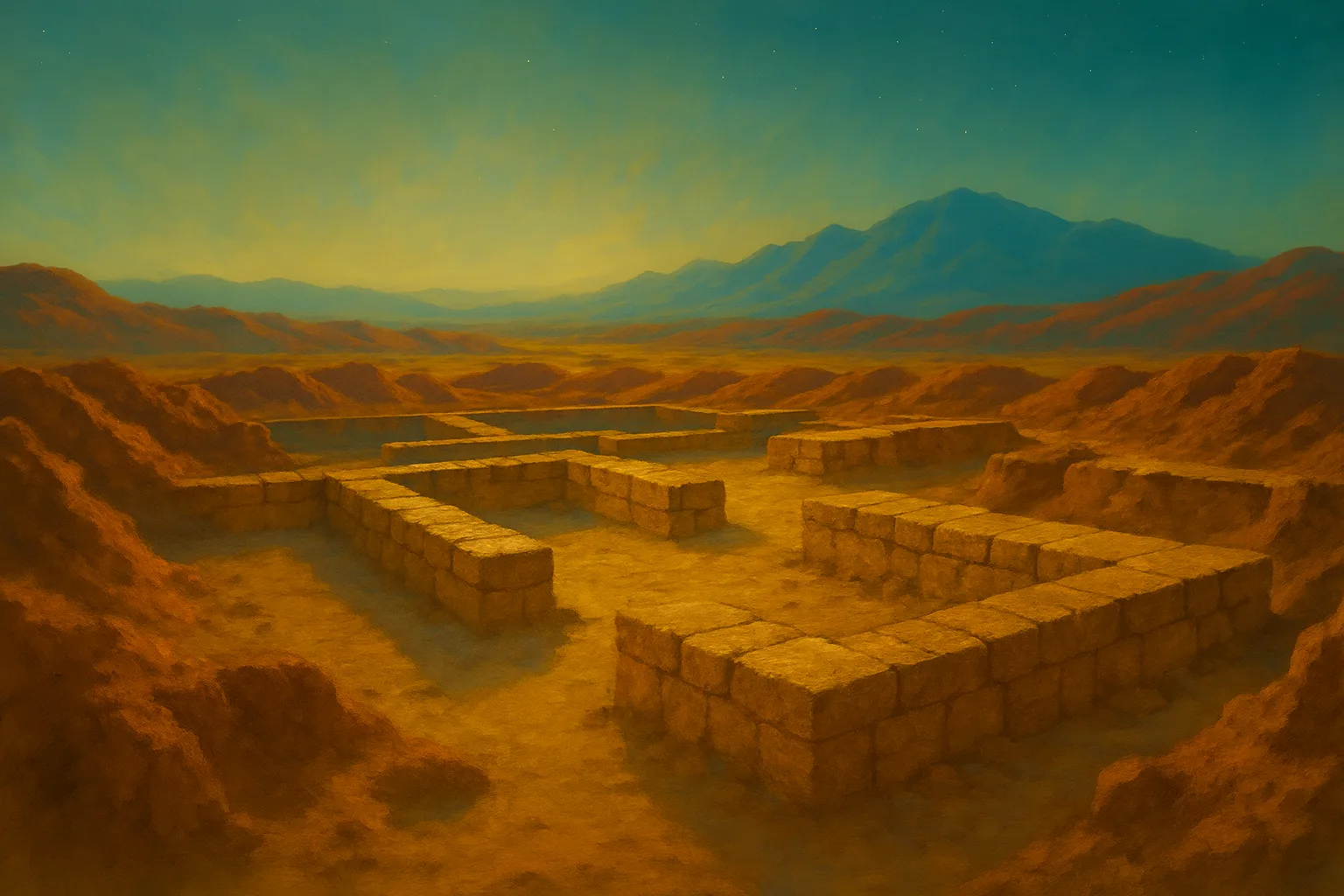
The land east of Rome holds its history differently. Unlike the monumental ruins of the Forum or the grand Etruscan tombs of Cerveteri, the city of Gabii did not leave columns or triumphal arches behind. Instead, it disappeared — absorbed, muted, and folded into the volcanic earth like a memory the land was determined to keep. For two thousand years, the once-powerful water city existed only as a name in ancient texts, its streets covered by crops, its lakes drained, its sanctuaries sealed in silence.
Yet silence is not the same as absence.
Silence is a kind of protection.
Over the last decade, as archaeologists have peeled away layers of soil and volcanic ash, the city has begun to speak again. Beneath the quiet fields, Gabii has reemerged as one of Italy’s most enigmatic archaeological landscapes — a place where civic life, ritual, and hydrology fused into a unified system, and where abandonment preserved secrets that Rome itself had forgotten.
This is the story of Gabii’s return — and the mysteries its silence has guarded for two millennia.
The Vanishing of a Rival City
In antiquity, Gabii was no provincial town.
It was an early peer — even a rival — of Rome.
Its reputation appears repeatedly in early Roman histories:
- Home to priestly lineages that predate the Republic
- A refuge for figures fleeing political turmoil in Rome
- The site of the famed Lake Regillus battle
- A city whose treaty with Rome, the Foedus Gabinum, was considered sacred
Yet unlike Rome, which expanded in all directions, Gabii did something unusual: It faded. Quietly, completely, and without catastrophe.
By the late Republic, Gabii’s population dwindled.
By the Imperial era, it was effectively deserted.
By late antiquity, even the memory of its streets had dissolved.
Historians long debated why. Theories ranged from economic decline to political absorption by Rome. But new research suggests a different, more elemental truth:
The city’s water — the very lifeblood of Gabii — left before the people did.
When Lake Gabinus receded and the water table dropped, the city lost both its agricultural sustainability and its ritual identity. The “water city” became a landscape of drought. Without its sacred basins and civic reservoirs, Gabii’s institutions collapsed.
A city built around water cannot survive when the waters disappear.
Layers of Silence: How Gabii Became Invisible
When Gabii fell quiet, nature reclaimed it with extraordinary efficiency.
Unlike stone-rich Rome, many of Gabii’s structures were built in tufo, a soft volcanic stone that erodes easily. As walls fell and roofs collapsed, dust, ash, and sediment began the slow process of burial.
Geoarchaeologists studying the site have identified four major forces behind Gabii’s disappearance:
- Volcanic Ash Deposits: Gabii sits on the Alban Hills volcanic plain. Windblown ash from ancient eruptions settled on the abandoned city for centuries, creating a soft, insulating blanket.
- A Lowering Water Table: As the region’s hydrology shifted, springs dried, channels clogged, and the city’s water infrastructure filled with fine sediment — turning basins into soil.
- Agricultural Overwrite: The area became farmland. Plows shaved down surface structures. Terrace building further masked elevation differences.
- Controlled Forgetting: Roman elites repurposed materials from the abandoned city. Stones were taken for villas, statues for estates, and inscriptions for quarries. Gabii became Rome’s silent resource.
By the medieval period, the city had vanished so thoroughly that travelers argued whether it had ever existed in the first place.
Gabii had not merely been abandoned — it had been swallowed by the land.
This is why its rediscovery is so profound.
A City in Negative Space: Rediscovery Through Technology
When excavations began in the 21st century, archaeologists were confronted with a landscape that appeared empty to the naked eye. There were no visible walls, no standing columns, no broken temples.
But something unusual happened.
Modern surveying equipment — magnetometers, georadar, lidar — lit up the earth beneath the fields like a blueprint.
What emerged was breathtaking:
- A complete city grid
- Hidden alleyways and streets
- Subsurface chambers
- Domestic courtyards, shops, workshops
- A monumental complex unlike anything seen in early Latium
- Water channels threading the city like veins
The layout was so intact that it stunned the archaeological team. The city had not eroded — it had been sealed.
Gabii was not a ruin.
Gabii was a negative city — preserved by subtraction rather than destruction.
Its silence had been its preservation.
The Secrets Beneath: What Gabii’s Stillness Protected
As excavations deepened, researchers discovered entire sections of the city undisturbed since antiquity — a rarity in Italian archaeology.
Among the most remarkable finds:
1. The Subterranean Water Chambers: Hidden chambers carved into bedrock appear to have served ritual, storage, and purification functions. Some chambers contain plastered walls and signs of repeated water flow.
2. The “Sunken Room” Structure: A mysterious building built slightly below street level, filled with layers of clay and ash that appear intentionally placed. Some believe it held ritual significance.
3. Domestic Spaces Frozen in Time: Household pottery, small amphora stands, and storage jars sit exactly where people left them before abandonment.
4. The Monumental Complex: A vast civic building with raised platforms, interconnected rooms, and controlled water basins that fed into a ceremonial courtyard.
Archaeologists still debate whether this complex was:
- A civic assembly hall
- A judicial tribunal
- A water-cult sanctuary
- A hybrid civic-ritual institution
The ambiguity is part of its power: Gabii’s identity cannot be forced into familiar Roman categories. It seems to belong to an older Italic tradition — one that Rome later eclipsed.
5. A Network of Drains and Conduits
The city’s water management system was exceptionally advanced. The drains are so well engineered that some still carry moisture after heavy rains.
These features reveal a society deeply integrated with water — technologically, spiritually, and politically.
And they reveal something else:
Gabii did not collapse from weakness. It faded because the land changed around it.
The silence was environmental, not political.
Lake Regillus and the Vanished Basin: The Sacred Waters That Defined a Civilization
Water shaped Gabii’s destiny in two ways: through abundance, and then through disappearance.
The city lay between two basins:
Lake Regillus (surviving)
- A volcanic crater lake tied to legendary Roman battles
- Long associated with divine omens and military rites
- Still present today, though altered
Lake Gabinus (vanished)
- Once a ritual and civic centerpiece
- Fed Gabii’s reservoirs and sanctuaries
- Gradually receded and disappeared by late antiquity
The disappearance of Lake Gabinus is a powerful metaphor for Gabii itself: a city erased by the silencing of its waters.
Recent sediment core studies reveal that the lake did not vanish suddenly. Instead:
- Its inflow shrank
- The basin silted up
- Marshlands formed
- Seasonal water stagnated
- Finally, the lake dried into farmland
With the lake went:
- Ritual meaning
- Aquatic ceremonies
- Civic unity expressed through water rites
- The practical infrastructure of life in Gabii
A water-built civilization cannot outlive its waters.
And so, Gabii fell quiet.
The Meaning of a Silent City: What Gabii Reveals About Ancient Italy
What makes Gabii extraordinary is not just what was found — but what its silence preserved.
From its stillness, we now understand:
1. Early Italic Cities Were More Diverse Than Previously Thought: Gabii does not resemble early Rome. Its grid is different, its water systems more integrated, its ritual spaces more aquatic.
2. Rome’s Rise Was Not Inevitable: Gabii’s early complexity suggests a competitive landscape of city-states where Rome was not yet preeminent.
3. Ritual Water Culture Was Central to Civic Life: The scale of water sanctuaries implies civic identity was rooted in shared purification, assembly, and reflection rituals.
4. Urban Decline Can Be Environmental: Gabii teaches that cities fall not only through war or politics, but through environmental shifts that unravel civic identity.
5. Silent cities tell different stories than destroyed cities: Pompeii tells a story of catastrophe.
Gabii tells a story of slow forgetting — and of memory held underground.
This distinction matters. It changes how we interpret ancient decline. It reminds us that not all lost worlds fall with a roar. Some simply fade into their own stillness.
The Return: Gabii’s Reawakening in the Modern Age
Today, as excavators, researchers, engineers, and Italy’s cultural ministry work together, Gabii has become one of the most important archaeological sites in the Western Mediterranean.
Yet what draws scholars is not only the discoveries — it is the feeling of the place.
Visitors to the dig speak of the landscape as strangely alive, even while it appears empty. Standing above the buried city, you sense the presence of something beneath your feet — an urban world intact yet unseen, waiting patiently for its return.
Gabii is not like Rome or Ostia or Pompeii. It does not overwhelm. It does not dramatize.
It whispers.
It reveals itself slowly.
It teaches through silence.
And its silence, paradoxically, is what has allowed its secrets to endure.
As archaeologists open more streets and chambers, and as the vanished waters of Gabii are reconstructed through sediment analysis and hydrological modeling, the city is returning — not as a ruin, but as a recovered memory.
A city once lost is a city now speaking again.
Its water sanctuaries, its carved channels, its ritual platforms — all are rising from the soil with stories untouched by time.
The silent city has returned.
And what it guarded is only now beginning to come to light.
Sign up to receive Our Weekly Briefing Newsletter
Begin your journey with weekly insights designed to expand awareness and ground you in truth. Our free tier gives you a powerful introduction without any commitment.






Help Us Bypass Censorship. Share This.
Have questions?
At Great Awakening Report, we are dedicated to supporting your journey toward truth and enlightenment through our specialized Coaching and Consulting services.
Coaching Services: Our coaching programs are designed to guide you through personal awakening and transformation. We offer personalized sessions that focus on expanding consciousness, uncovering hidden truths, and fostering spiritual growth. Our experienced coaches provide the tools and insights necessary to navigate your path with clarity and confidence.
Consulting Services: For organizations and individuals seeking deeper understanding and strategic guidance, our consulting services offer expert analysis and solutions. We delve into areas such as global transitions, alternative news insights, and consciousness studies to provide comprehensive strategies tailored to your unique objectives.
Embark on a transformative journey with our Coaching and Consulting services, and unlock your highest potential. To learn more and schedule a session, visit our Coaching and Consulting pages.
Thank you
Thank you to our subscribers and readers for your continued support and dedication to truth and awakening. Your encouragement, engagement, and belief in our mission make everything we do possible. Together, we are expanding awareness and helping illuminate the path forward.
If you would like to further support the Great Awakening team and our ongoing efforts to share insight, knowledge, and truth, you can DONATE HERE.
With deep gratitude,
– Great Awakening Team
About the Author: Great Awakening Team

DISCLAIMER: All statements, claims, views and opinions that appear anywhere on this site, whether stated as theories or absolute facts, are always presented by The Great Awakening Report (GAR) as unverified—and should be personally fact checked and discerned by you, the reader.Any opinions or statements herein presented are not necessarily promoted, endorsed, or agreed to by GAR, those who work with GAR, or those who read or subscribe to GAR.Any belief or conclusion gleaned from content on this site is solely the responsibility of you the reader to substantiate.Any actions taken by those who read material on this site are solely the responsibility of the acting party.You are encouraged to think for yourself and do your own research.Nothing on this site is meant to be believed without question or personal appraisal.
COPYRIGHT DISCLAIMER: Citation of articles and authors in this report does not imply ownership. Works and images presented here fall under Fair Use Section 107 and are used for commentary on globally significant newsworthy events. Under Section 107 of the Copyright Act 1976, allowance is made for fair use for purposes such as criticism, comment, news reporting, teaching, scholarship, and research.
COMMUNITY GUIDELINES DISCLAIMER: The points of view and purpose of this video is not to bully or harass anybody, but rather share that opinion and thoughts with other like-minded individuals curious about the subject.