




















Help Us Bypass Censorship. Share This.
Sign up to receive Our Weekly Briefing Newsletter
Begin your journey with weekly insights designed to expand awareness and ground you in truth. Our free tier gives you a powerful introduction without any commitment.
Introduction: The Fragility of Today’s Global Supply Chains
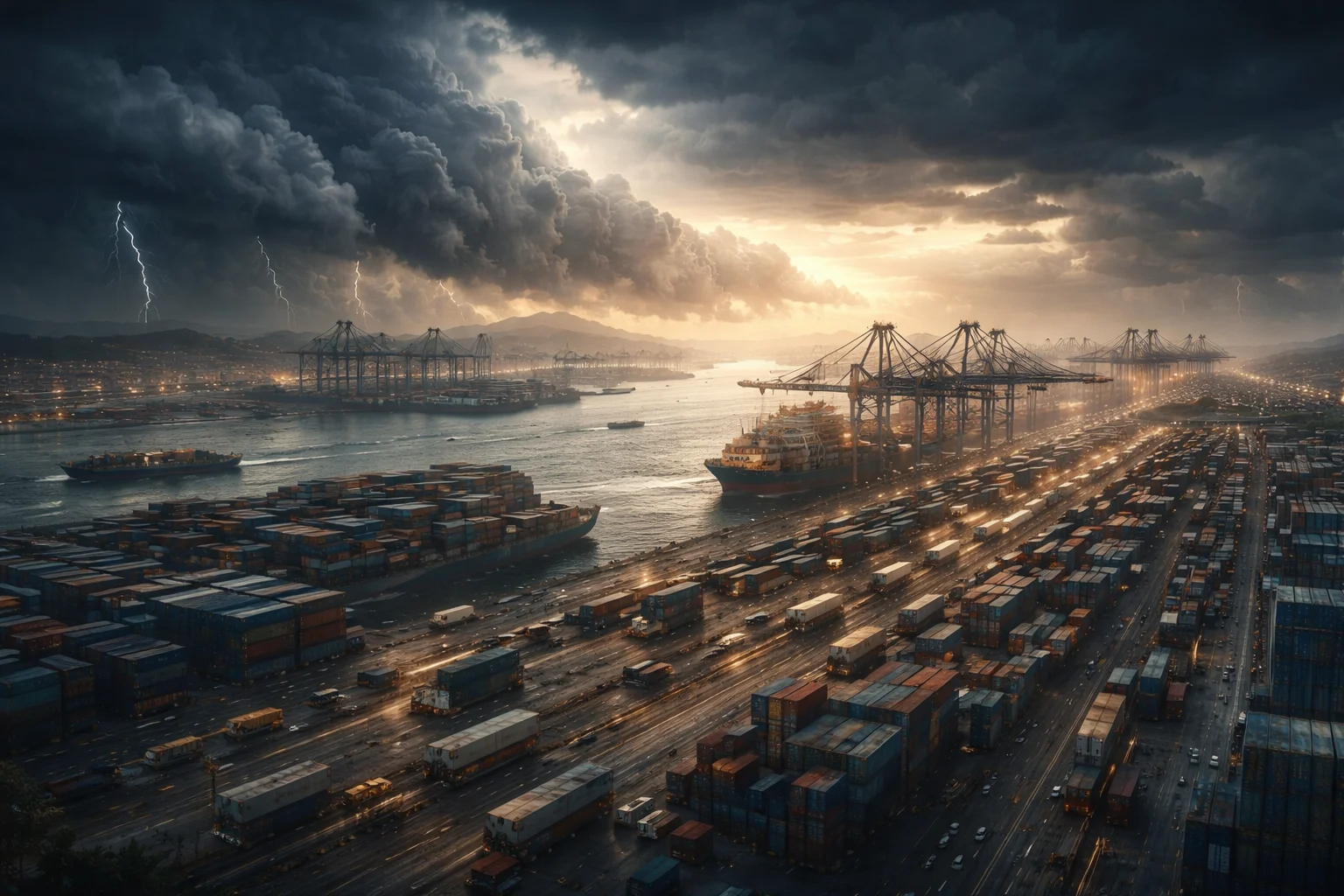
Global supply chains are highly intricate networks involving the coordination of manufacturing, transportation, and distribution across multiple countries and regions. Their complexity reflects interdependent relationships between suppliers, producers, logistics providers, and retailers worldwide. However, this intricacy also exposes these supply chains to numerous vulnerabilities that have become increasingly evident in today’s volatile economic landscape.
Recent years have highlighted how disruptions—such as geopolitical tensions, natural disasters, labor shortages, and technological failures—can cascade through the system, causing significant delays, scarcity of critical goods, and economic ripple effects. For example, errors in operational data or miscommunication within a single link can lead to substantial operational risks, as even seemingly minor mishaps accumulate to disrupt entire supply chains. These vulnerabilities underscore the fragile nature of global supply networks and the importance of resilient, adaptive strategies to mitigate risks in an unpredictable global environment. Understanding and addressing these fragilities is essential for sustaining economic stability and meeting the demands of a connected world.
For insights on the implications of systemic vulnerabilities and how they intertwine with broader economic and geopolitical challenges, see our related analysis on The Supply Chain Abyss: Understanding How One Link Breaks Everything.
Key Factors Driving Supply Chain Disruptions
Key factors driving supply chain disruptions include geopolitical tensions, natural disasters, and pandemics, each significantly impacting the global flow of goods and services.
Geopolitical tensions, such as trade wars, sanctions, and regional conflicts, create uncertainty and barriers that disrupt supply routes and manufacturing schedules. These conflicts can lead to rerouting of shipments, increased costs, and delays in production timelines, as companies adapt to shifting political landscapes.
Natural disasters like hurricanes, earthquakes, and floods can abruptly damage critical infrastructure including ports, transportation networks, and manufacturing facilities. Such events cause immediate interruptions and long-term recovery periods, severely affecting supply chains. For instance, major storms can halt shipping operations and block critical supply routes essential for delivering raw materials and finished products.
Pandemics, as starkly demonstrated by COVID-19, profoundly disrupt supply chains by shutting down factories, restricting labor availability, and limiting transportation options worldwide. These health crises cause widespread delays and shortages, especially when demand spikes unpredictably or supply-side restrictions persist.
Understanding these primary drivers—geopolitical instability, environmental catastrophes, and global health emergencies—is essential for developing resilient supply chain strategies that can withstand and adapt to these frequent and impactful disruptions. For deeper insights on systemic risks and resilience strategies, consider exploring articles such as The Supply Chain Abyss.
The Impact of Supply Chain Failures on Global Markets
Supply chain failures have significant ripple effects across global markets, disrupting the flow of goods and services and impacting both businesses and consumers worldwide. These breakdowns can occur due to errors in logistics data, production delays, transportation issues, or unexpected disruptions in supply chain inputs. For instance, errors in crucial data handling can cause operational inefficiencies, as seen in the case of a Qantas Airways flight where faulty data about passengers led to dangerous takeoff conditions. Such mistakes highlight the vulnerability of complex systems dependent on accurate and timely information flow to maintain smooth operations.
When supply chains fail, companies face inventory shortages, increased costs, and reduced production capacity, leading to higher prices for consumers and delays in product availability. The interconnectedness of global supply networks means a disruption in one part of the world quickly affects multiple industries and markets, causing widespread economic instability. Additionally, as businesses struggle to predict and manage supply chain volatility, market uncertainty grows, further impacting investment and financial performance.
Understanding the dynamics and vulnerabilities of supply chains is crucial for predicting and mitigating their economic impacts. Advanced analytical methods such as deep learning and data noise reduction techniques are being explored to improve forecasting and responsiveness to disruptions, which could help stabilize supply chains and their effects on global markets.
For a deeper exploration of systemic shocks and institutional breakdowns affecting markets, see related coverage on infrastructure dysfunction and global shocks at our website GreatAwakeningReport.
Early Signs of Economic Stress Leading to 2026 Collapse
As we approach 2026, numerous early indicators suggest a looming economic downturn rooted in escalating stress factors evident between 2022 and 2025. Key trends include:
- Inflation Surge: Persistent inflation has eroded consumer purchasing power globally. Rising costs in energy and essential goods have contributed to stagnant wage growth and heightened economic inequality.
- Supply Chain Disruptions: Ongoing breakdowns in global supply chains have led to scarcity of raw materials and finished goods, inflating prices further and disrupting manufacturing and distribution networks.
- Ballooning Debt Levels: Both sovereign and private sector debt have reached historically high levels, straining financial stability. This debt overhang limits governments’ ability to stimulate economies and increases vulnerability to shocks.
- Financial Market Volatility: Increased market fluctuations and uncertainty have shaken investor confidence, fueled by geopolitical tensions and unpredictable policy shifts.
- Corporate Defaults: A rising tide of bankruptcies and insolvencies, particularly in vulnerable sectors, signals weakening economic foundations.
- Geopolitical Instability: Heightened global tensions have introduced risks to trade and investment, exacerbating economic fragility.
- Energy Crises: Supply constraints and political conflicts have led to significant energy price spikes, pressuring both consumers and industries.
- Food Shortages: Disruptions in agricultural production and distribution have raised concerns about food security in multiple regions.
These warning signs collectively paint a picture of systemic stress that could precipitate a broader collapse as 2026 approaches. The convergence of these factors demands vigilant monitoring and proactive measures to mitigate impacts.
For a deeper exploration of unfolding economic challenges and strategies for resilience, see our analysis on The Great Economic Awakening: Reclaiming Sovereignty in a System Built on Debt.
Case Studies: Major Supply Chain Breakdowns in Recent Years
Recent years have witnessed several notable supply chain breakdowns with profound real-world consequences, underscoring vulnerabilities in logistics, data management, and operational coordination.
One significant case occurred in December 2024, involving a Boeing 737 operated by Qantas Airways departing Canberra Airport. A faulty data input mistakenly marked 51 passengers as not onboard, which led the flight crew to receive incorrect information about the aircraft’s weight. This error risked critical issues during takeoff, such as insufficient speed or improper runway use. The Australian Transport Safety Bureau (ATSB) highlighted that the cause was a Qantas staff member inadvertently entering a smaller aircraft type into the flight plan, which triggered an automated system response removing passengers from the manifest. The incident prompted procedural revisions to improve direct communication between load control personnel and flight crews when load sheet errors arise, pointing to the importance of accurate data in supply chain and operational safety environments.
This event exemplifies how digital and human errors in information systems can cascade into significant supply chain and safety disruptions. It demonstrates the ongoing need for vigilance, integrated communication protocols, and technology improvements in managing complex logistical operations.
For more context on supply chain mechanisms and how singular breakdowns can propagate broader systemic effects, you may find insightful analysis in The Supply Chain Abyss: Understanding How One Link Breaks Everything, Crumbles on our site, which explores the fragility and interdependence of modern supply networks.
Predictions and Economic Models Forecasting 2026 Challenges
As we look toward 2026, several economic models and expert analyses forecast significant challenges for the global economy. One major concern arises from structural weaknesses amplified by the ongoing effects of the COVID-19 pandemic, supply chain disruptions, and geopolitical tensions, which together threaten to trigger widespread instability. Experts warn of continuing inflationary pressures linked to energy costs and stagnant wages, likely to strain household incomes and reduce consumer spending power.
Financial markets are also expected to face volatility as central banks grapple with tightening monetary policies to control inflation without triggering recession. Traditional fiscal stimuli may be less effective due to high global debt levels and limited government spending flexibility. Additionally, disruptions in critical infrastructure and technology sectors, coupled with the growing influence of AI and automation, are predicted to reshape labor markets, potentially increasing unemployment or underemployment in specific industries.
Economic models highlight risks of cascading failures in interconnected global supply chains, which could exacerbate shortages and price spikes, notably in food and energy sectors. Climate-related disasters and increasing geopolitical conflicts, such as supply uncertainties stemming from resource competition, may further complicate recovery efforts.
Addressing these predicted challenges will require coordinated international policy responses emphasizing economic resilience, diversification, and social protections. Strategies incorporating innovation in sustainable energy, adaptive fiscal frameworks, and robust risk management will be crucial to cushioning the impact on vulnerable populations and stabilizing growth trajectories.
Strategies for Mitigation and Resilience in Supply Chains
To enhance the resilience of supply chains and mitigate future disruptions, businesses can implement several practical strategies and best practices:
- Diversification of Suppliers and Inventory: Avoid dependence on a single source or region by diversifying suppliers across different geographic locations. This reduces risk exposure to localized disruptions.
- Enhanced Communication and Data Transparency: Establish direct communication channels between all stakeholders including suppliers, logistics, and operations teams. Tools that allow real-time load control and accurate data sharing prevent errors like misreported cargo or inventory, which can critically impact supply chain flow. Implementing advanced communication systems aids rapid response in case of anomalies [Source: Newsweek].
- Utilization of Advanced Predictive Analytics: Leverage machine learning and AI models such as Convolutional Neural Networks (CNN) and Long Short-Term Memory (LSTM) networks integrated with noise reduction techniques like Ensemble Empirical Mode Decomposition (EEMD) for accurate demand forecasting and event prediction to improve supply chain responsiveness [Source: Nature Scientific Reports].
- Establishing Robust Risk Management Frameworks: Continuously evaluate supply chain vulnerabilities through scenario planning and regular stress testing. Having contingency plans, including alternative transport routes and emergency suppliers pre-identified, ensures faster adaptation.
- Investment in Technology for Real-Time Visibility: Employ blockchain and IoT-enabled sensors for end-to-end visibility, ensuring that disruptions can be detected early and resolved swiftly.
- Building Collaborative Relationships and Flexibility: Foster strong partnerships with suppliers and logistics providers that encourage transparency and adaptive collaboration during crises. Agile operational practices allow for quick pivoting when disruptions occur.
By integrating these strategies, businesses can not only mitigate risks but also boost the resilience and agility of their supply chains to withstand future shocks effectively. For a deeper exploration of systemic vulnerabilities, see our article on The Supply Chain Abyss.
Conclusion: Preparing for a Potential Economic Downturn
As we conclude this newsletter, the looming prospect of an economic downturn underscores the critical need for preparedness. Key themes highlighted include the importance of awareness of systemic vulnerabilities, proactive financial and resource planning, and cultivating resilience in the face of uncertainty. Staying informed about unfolding economic realities and taking concrete steps—such as securing essential supplies, diversifying income streams, and fostering supportive community networks—can mitigate the impacts of potential crises. Our collective readiness not only safeguards individual well-being but also strengthens societal stability during turbulent times. For deeper insights on economic trends and strategies to navigate these challenges, explore related reports on economic awakenings and societal resilience at the Great Awakening Report
Sources
Sign up to receive Our Weekly Briefing Newsletter
Begin your journey with weekly insights designed to expand awareness and ground you in truth. Our free tier gives you a powerful introduction without any commitment.
STOP DROWNING IN THE NOISE. START SEEING THE TRUTH. Join over 99,000 truth seekers. Get the essential intelligence, alternative news, and disclosure updates that the mainstream media won’t touch.
Latest Reports
 Weekly ReportAwakening The Sleeping Giant · October 12th EditionOctober 12, 2026
 Monthly ReportConscious Practices · October 2026 EditionOctober 5, 2026
 Weekly ReportAwakening The Sleeping Giant · October 5th EditionOctober 5, 2026
 Weekly ReportAwakening The Sleeping Giant · September 28th EditionSeptember 28, 2026View all weekly reports
Special Reports
 Special ReportTHE AWAKENING JOURNEY: Hero’s Journey Part II · Week 1October 3, 2026
 Special ReportGlobal Everything Collapse · Economic Chaos · Part IOctober 1, 2026
 Special ReportCreating A Conscious Culture · Part ISeptember 3, 2026
 Special ReportThe Great Healing: Detox, Defense & Sovereignty In an Engineered World · Part ISeptember 1, 2026View all special reports
Help Us Bypass Censorship. Share This.
Join the Discussion
Related Posts



Have questions?
At Great Awakening Report, we are dedicated to supporting your journey toward truth and enlightenment through our specialized Coaching and Consulting services.
Coaching Services: Our coaching programs are designed to guide you through personal awakening and transformation. We offer personalized sessions that focus on expanding consciousness, uncovering hidden truths, and fostering spiritual growth. Our experienced coaches provide the tools and insights necessary to navigate your path with clarity and confidence.
Consulting Services: For organizations and individuals seeking deeper understanding and strategic guidance, our consulting services offer expert analysis and solutions. We delve into areas such as global transitions, alternative news insights, and consciousness studies to provide comprehensive strategies tailored to your unique objectives.
Embark on a transformative journey with our Coaching and Consulting services, and unlock your highest potential. To learn more and schedule a session, visit our Coaching and Consulting pages.
Thank you
Thank you to our subscribers and readers for your continued support and dedication to truth and awakening. Your encouragement, engagement, and belief in our mission make everything we do possible. Together, we are expanding awareness and helping illuminate the path forward.
If you would like to further support the Great Awakening team and our ongoing efforts to share insight, knowledge, and truth, you can DONATE HERE.
With deep gratitude,
– Great Awakening Team
About the Author: Great Awakening Team

We are a community. We are cultural creatives and like minded people seeking the truth and focusing on disclosure, awakening and consciousness. Our focus is real news as researchers, reporters and truth seekers. We are here to teach, to spread the word, to serve and to help. We are a collective, a movement, free from all programing, not closed minded and not discriminatory. We are not political. We are not religious but we are spiritual. We study, research, and report on a wide range of subjects and topics, from the current geopolitical climate to health and wellness, from earth’s history to spiritual practices. We are forward thinkers and visionaries, we are guides for the transition as we usher in The Great Awakening.
THIS WEBSITE DOES NOT PROVIDE MEDICAL ADVICE: The information, including but not limited to text, graphics, images, and other material contained on this website, are for informational purposes only. No material on this site is intended to be a substitute for professional medical advice, diagnosis, or treatment. Always seek the advice of your physician or other qualified health care provider with any questions you may have regarding a medical condition or treatment and before undertaking a new health care regimen, and never disregard professional medical advice or delay in seeking it because of something you have read on this website.
DISCLAIMER: All statements, claims, views and opinions that appear anywhere on this site, whether stated as theories or absolute facts, are always presented by The Great Awakening Report (GAR) as unverified—and should be personally fact checked and discerned by you, the reader.Any opinions or statements herein presented are not necessarily promoted, endorsed, or agreed to by GAR, those who work with GAR, or those who read or subscribe to GAR.Any belief or conclusion gleaned from content on this site is solely the responsibility of you the reader to substantiate.Any actions taken by those who read material on this site are solely the responsibility of the acting party.You are encouraged to think for yourself and do your own research.Nothing on this site is meant to be believed without question or personal appraisal.
COPYRIGHT DISCLAIMER: Citation of articles and authors in this report does not imply ownership. Works and images presented here fall under Fair Use Section 107 and are used for commentary on globally significant newsworthy events. Under Section 107 of the Copyright Act 1976, allowance is made for fair use for purposes such as criticism, comment, news reporting, teaching, scholarship, and research.
COMMUNITY GUIDELINES DISCLAIMER: The points of view and purpose of this video is not to bully or harass anybody, but rather share that opinion and thoughts with other like-minded individuals curious about the subject.