

















Help Us Bypass Censorship. Share This.
Sign up to receive Our Weekly Briefing Newsletter
Begin your journey with weekly insights designed to expand awareness and ground you in truth. Our free tier gives you a powerful introduction without any commitment.
Introduction to the National Guard Response Force
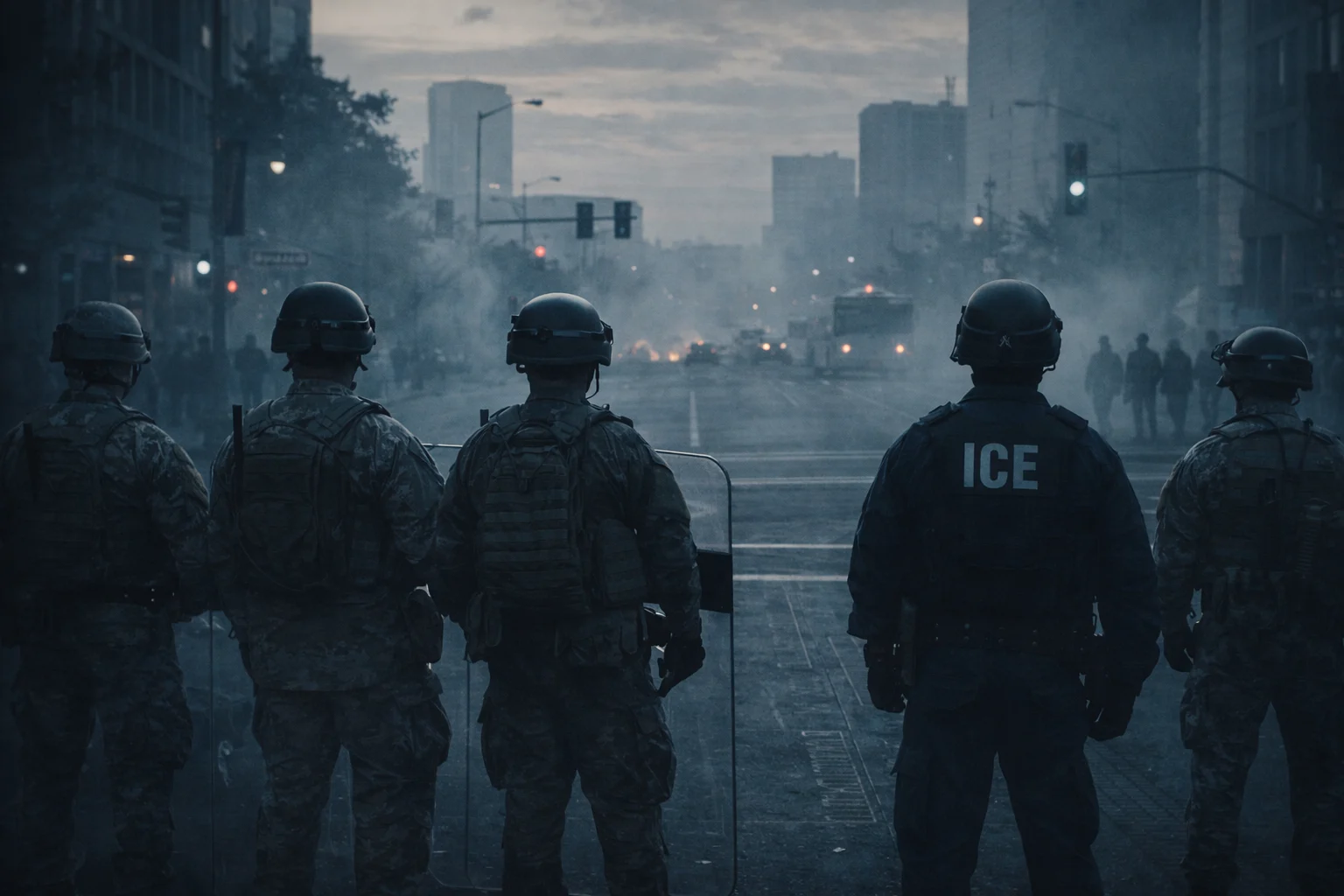
The National Guard Response Force (NGRF) is a vital component of the United States’ defense and emergency mobilization system, designed to address modern challenges that America faces. Its primary purpose is to provide rapid, highly trained, and well-equipped units capable of responding to a broad spectrum of domestic emergencies and national security threats. The significance of the NGRF lies in its readiness to mobilize quickly for disaster relief, counter-terrorism, civil unrest, and other crises impacting communities across the nation. By integrating the flexibility of the National Guard with specialized training and resources, the NGRF plays a crucial role in enhancing America’s resilience and security in an increasingly complex and unpredictable environment.
Historical Context and Evolution
The National Guard Response Force (NGRF) traces its origins to the broader role and evolution of the National Guard within the U.S. military framework. Historically, the National Guard has functioned as a dual state-federal force, providing domestic emergency response while supplementing the active military in international conflicts. The NGRF was developed in response to the need for a rapidly deployable, highly trained force within the National Guard to address homeland defense, counterterrorism, and emergent national threats with increased agility.
Its evolution accelerated in the early 2000s, influenced by the global shift in security priorities post-9/11, reflecting the changing nature of threats from conventional warfare to asymmetric and domestic security challenges. The NGRF was tasked to provide enhanced readiness and operational capability, integrating advanced training, rapid mobilization protocols, and coordination with federal agencies such as the Department of Homeland Security and FEMA.
Significant historical events that shaped the NGRF include the heightened focus on homeland security after September 11, 2001, the global war on terror, and domestic natural disasters requiring swift National Guard responses. Over time, the NGRF has evolved to incorporate not just military assets but also critical infrastructure protection, cyber defense measures, and pandemic response capabilities, adapting to the multi-dimensional nature of modern threats.
This development reflects a strategic pivot in National Guard operations from traditional militia roles to a highly adaptive, multifunctional force integral to national resilience and crisis response. More detailed discussions on related national security themes and evolving defense strategies can be found in our coverage, especially in articles exploring emergency preparedness and security dynamics.
Structure and Organization
The National Guard Response Force (NGRF) is organized under a clear command structure designed for rapid and coordinated deployment during emergencies. Typically, the NGRF is composed of specialized units across various states, each structured to provide scalable and flexible response capabilities based on mission needs.
### Command Structure
The NGRF operates under both state and federal authorities, with a dual-command system that allows it to respond to local disasters as part of a state’s National Guard and also to federal mobilizations when ordered. Command generally flows from the Governor or state Adjutant General during state activations, escalating to the President and Department of Defense for federal activations. This structure ensures that the NGRF can maintain a strong state presence while integrating into national defense and emergency response frameworks as needed.
### Units Composition
Within the NGRF, units are typically delineated by roles such as medical support, engineering, logistics, law enforcement augmentation, and civil affairs. These units are designed for interoperability, allowing them to operate cohesively under unified command while fulfilling specialized functions. Each unit trains for rapid deployment, maintaining readiness to be the first military responders during natural disasters, civil emergencies, or homeland defense operations.
### Deployment Strategies
The deployment of the NGRF is strategically planned to optimize speed and efficiency. Units are dispersed across various regions to enable quick mobilization to affected areas. The NGRF utilizes a tiered response strategy, deploying initial rapid response teams to assess and stabilize situations, followed by more comprehensive support forces as required. This approach minimizes response times and allows for flexible scaling depending on the severity and scope of incidents.
Coordination with local emergency management agencies and other military branches is integral to the NGRF’s deployment strategy, ensuring efforts are complementary and resources are effectively allocated. The force’s ability to operate under joint command enhances its efficiency in multi-jurisdictional emergencies.
This structure and deployment strategy make the National Guard Response Force a critical component in national and state-level emergency preparedness and response, capable of both independent action and integration within larger defense and disaster relief operations. For further insights on related topics of national emergencies and preparedness, see our Weekly Briefing on Emergency Preparedness.
Roles and Responsibilities
The National Guard Response Force (NGRF) plays a critical role in disaster relief and homeland security within the United States. Key missions and responsibilities include:
1. Disaster Relief: The NGRF is tasked with rapidly responding to emergencies such as natural disasters (hurricanes, wildfires, floods, earthquakes), providing humanitarian assistance, and supporting recovery efforts. They perform search and rescue, deliver essential supplies, establish temporary shelters, and assist in restoring essential services to affected communities.
2. Homeland Security: The force supports homeland defense by protecting critical infrastructure, defending against terrorist threats, aiding in border security operations, and enhancing the nation’s readiness for any domestic crises. This includes coordination with federal, state, and local agencies to ensure an integrated response.
3. Emergency Preparedness: The NGRF maintains readiness through training and exercises to quickly mobilize when called upon. This preparedness ensures they can effectively support civil authorities and mitigate the impact of emergencies on the populace.
By blending military capabilities with community-focused disaster management, the National Guard Response Force serves as a versatile and crucial element in strengthening national resilience and security. For more detailed insights into emergency preparedness and response strategies, see related resources on Great Awakening Report.
Recent Deployments and Initiatives
The National Guard Response Force has been actively involved in various critical deployments and initiatives throughout 2023 and 2024, emphasizing their integral role in crisis response and national security. Notably, they have participated in disaster relief operations during natural calamities such as hurricanes and wildfires, providing vital support in evacuation, medical aid, and infrastructure restoration. Their initiatives include enhancing rapid deployment capabilities to address sudden emergencies efficiently and collaborating with federal and local agencies to augment response effectiveness.
Furthermore, the force has undertaken specialized training exercises to prepare for diverse scenarios, including cybersecurity threats and biohazard incidents, reflecting a comprehensive approach to modern crisis management. These efforts demonstrate the National Guard Response Force’s commitment to safeguarding communities and supporting national resilience amid evolving challenges.
Training and Preparedness
The National Guard Response Force maintains a high level of readiness through comprehensive training programs and preparedness efforts designed to ensure they are mission-capable at all times. These training programs include rigorous physical conditioning, tactical exercises, and simulations that replicate real-world scenarios, enabling members to respond effectively to a variety of emergency situations.
Regular drills emphasize interoperability with other military and civilian agencies to streamline coordination during joint operations. Additionally, the preparedness framework involves continuous assessment and enhancement of skills, equipment readiness, and logistics support to adapt to evolving threats and mission requirements.
This holistic approach guarantees that the National Guard Response Force remains a versatile and reliable force ready to execute any mission promptly and efficiently.
Collaboration with Federal and State Agencies
The National Guard Response Force plays a vital role in emergency response by collaborating closely with various federal and state agencies. This partnership enhances the effectiveness and coordination of response efforts during crises, ensuring rapid mobilization and resource sharing across jurisdictions. The National Guard works alongside entities such as FEMA, state emergency management offices, local law enforcement, and public health departments to provide support ranging from logistics and security to medical aid and disaster relief.
Interagency collaboration facilitates unified command structures and communication networks, improving situational awareness and operational efficiency. This coordination enables the National Guard to supplement federal and state capabilities, particularly during large-scale emergencies or natural disasters. State governors can deploy their National Guard units under state authority, while federal activation allows integration with broader federal efforts, enhancing interoperability.
The result of such collaboration is a more resilient emergency response framework that leverages each agency’s strengths and resources to protect communities and save lives effectively. This unified approach is critical in addressing complex challenges posed by natural disasters, pandemics, and security threats. National Guard Emergency Management
Challenges and Future Outlook
The National Guard Response Force faces several key challenges that shape its current and future landscape. Chief among these challenges are maintaining readiness and adaptability amid fluctuating resource availability and budget constraints. The rising costs of essential materials and equipment, influenced by global supply chain disruptions and tariffs on metals like iron, steel, aluminum, and copper, impact the procurement and maintenance of critical infrastructure and gear. [Source: Construction Dive]
While the National Guard Response Force is often discussed in the context of disaster relief and emergency preparedness, its expanded scope reflects broader shifts in how governments prepare for domestic instability. As economic pressures, infrastructure stress, cyber threats, and large-scale civil disruptions increase globally, rapid-response forces like the NGRF are becoming central to national contingency planning. Understanding how these units operate is less about speculation and more about recognizing how modern states adapt to complex, overlapping crises in real time.
Technological advancement is another significant focus area for the National Guard Response Force’s future outlook. Embracing artificial intelligence, machine learning, and predictive modeling can enhance operational efficiency, such as using AI to anticipate equipment maintenance needs and optimize resource deployment. For example, techniques like artificial neural networks are being explored for predictive analytics in various operational contexts, which could translate into improved decision-making and rapid response capabilities in the field.
Additionally, partnerships with technology leaders and the adoption of cutting-edge AI hardware and software platforms will help modernize command and control systems, ensuring the force remains agile and capable in dynamic threat environments.
Looking forward, the National Guard Response Force aims to strengthen its mission readiness by investing in advanced training, infrastructure modernization, and resilient supply chains. The organization is also focused on fostering interagency cooperation and community partnerships to better integrate during domestic emergencies and national crises. With a vision of leveraging technology and strategic resource management, the force aspires to not only respond more effectively to immediate threats but also to contribute proactively to national resilience and homeland security in the years ahead.
Sources
Sign up to receive Our Weekly Briefing Newsletter
Begin your journey with weekly insights designed to expand awareness and ground you in truth. Our free tier gives you a powerful introduction without any commitment.
STOP DROWNING IN THE NOISE. START SEEING THE TRUTH. Join over 99,000 truth seekers. Get the essential intelligence, alternative news, and disclosure updates that the mainstream media won’t touch.
Latest Reports
 Weekly ReportAwakening The Sleeping Giant · September 21st EditionSeptember 21, 2026
 Weekly ReportTruth Seekers Briefing · Master Class Connecting The Dots · September 18th EditionSeptember 18, 2026
 Weekly ReportAwakening The Sleeping Giant · September 14th EditionSeptember 14, 2026
 Monthly ReportSeptember 2026 • Volume IX • Chapter IXSeptember 7, 2026View all weekly reports
Special Reports
 Special ReportCreating A Conscious Culture · Part ISeptember 3, 2026
 Special ReportThe Great Healing: Detox, Defense & Sovereignty In an Engineered World · Part ISeptember 1, 2026
 Special ReportThe Newly Released Fauci DiariesAugust 8, 2026
 Special ReportPersonal Meditation Protocols for Manifestation Series · Part 1August 5, 2026View all special reports
Help Us Bypass Censorship. Share This.
Join the Discussion
Related Posts



Have questions?
At Great Awakening Report, we are dedicated to supporting your journey toward truth and enlightenment through our specialized Coaching and Consulting services.
Coaching Services: Our coaching programs are designed to guide you through personal awakening and transformation. We offer personalized sessions that focus on expanding consciousness, uncovering hidden truths, and fostering spiritual growth. Our experienced coaches provide the tools and insights necessary to navigate your path with clarity and confidence.
Consulting Services: For organizations and individuals seeking deeper understanding and strategic guidance, our consulting services offer expert analysis and solutions. We delve into areas such as global transitions, alternative news insights, and consciousness studies to provide comprehensive strategies tailored to your unique objectives.
Embark on a transformative journey with our Coaching and Consulting services, and unlock your highest potential. To learn more and schedule a session, visit our Coaching and Consulting pages.
Thank you
Thank you to our subscribers and readers for your continued support and dedication to truth and awakening. Your encouragement, engagement, and belief in our mission make everything we do possible. Together, we are expanding awareness and helping illuminate the path forward.
If you would like to further support the Great Awakening team and our ongoing efforts to share insight, knowledge, and truth, you can DONATE HERE.
With deep gratitude,
– Great Awakening Team
About the Author: Great Awakening Team

We are a community. We are cultural creatives and like minded people seeking the truth and focusing on disclosure, awakening and consciousness. Our focus is real news as researchers, reporters and truth seekers. We are here to teach, to spread the word, to serve and to help. We are a collective, a movement, free from all programing, not closed minded and not discriminatory. We are not political. We are not religious but we are spiritual. We study, research, and report on a wide range of subjects and topics, from the current geopolitical climate to health and wellness, from earth’s history to spiritual practices. We are forward thinkers and visionaries, we are guides for the transition as we usher in The Great Awakening.
THIS WEBSITE DOES NOT PROVIDE MEDICAL ADVICE: The information, including but not limited to text, graphics, images, and other material contained on this website, are for informational purposes only. No material on this site is intended to be a substitute for professional medical advice, diagnosis, or treatment. Always seek the advice of your physician or other qualified health care provider with any questions you may have regarding a medical condition or treatment and before undertaking a new health care regimen, and never disregard professional medical advice or delay in seeking it because of something you have read on this website.
DISCLAIMER: All statements, claims, views and opinions that appear anywhere on this site, whether stated as theories or absolute facts, are always presented by The Great Awakening Report (GAR) as unverified—and should be personally fact checked and discerned by you, the reader.Any opinions or statements herein presented are not necessarily promoted, endorsed, or agreed to by GAR, those who work with GAR, or those who read or subscribe to GAR.Any belief or conclusion gleaned from content on this site is solely the responsibility of you the reader to substantiate.Any actions taken by those who read material on this site are solely the responsibility of the acting party.You are encouraged to think for yourself and do your own research.Nothing on this site is meant to be believed without question or personal appraisal.
COPYRIGHT DISCLAIMER: Citation of articles and authors in this report does not imply ownership. Works and images presented here fall under Fair Use Section 107 and are used for commentary on globally significant newsworthy events. Under Section 107 of the Copyright Act 1976, allowance is made for fair use for purposes such as criticism, comment, news reporting, teaching, scholarship, and research.
COMMUNITY GUIDELINES DISCLAIMER: The points of view and purpose of this video is not to bully or harass anybody, but rather share that opinion and thoughts with other like-minded individuals curious about the subject.